
An updo pulls a wedding party look together faster than matching dresses do, and the right one is rarely the most complicated. It’s the one that suits the neckline, the hair, the weather and the mood of the day. This year I’m putting a lot of soft low buns, braided details, sculpted knots and glossy finishes on bridesmaids, usually with a few pieces left at the face. The twenty below cover every length and texture, and for each I’ve said what I do to make it last and when I’d choose something else.
Which Updos Survive Rain, Sea Air and Summer Heat?
Weather does more damage to updos than anything else, and it’s worth checking the forecast before the bridal party settles on a style. Different weather breaks different hair.
- Humidity makes curls drop and smooth hair frizz. Sleek buns and tight chignons hold best; loose tendrils lose their shape first, so I keep them few and spray them well.
- Wind pulls loose pieces across the face and lifts the surface of a messy bun. Braids and twists pinned close to the head barely move.
- Heat makes everyone want hair off the neck. High buns and crown braids keep the nape cool; low buns trap warmth under them.
- Rain mostly attacks the hairline. A smooth, sprayed front survives a dash across a car park better than soft curled pieces do.
If the forecast is uncertain, I’d choose a textured low updo with a braided anchor. It looks soft in good weather and still holds when it turns.
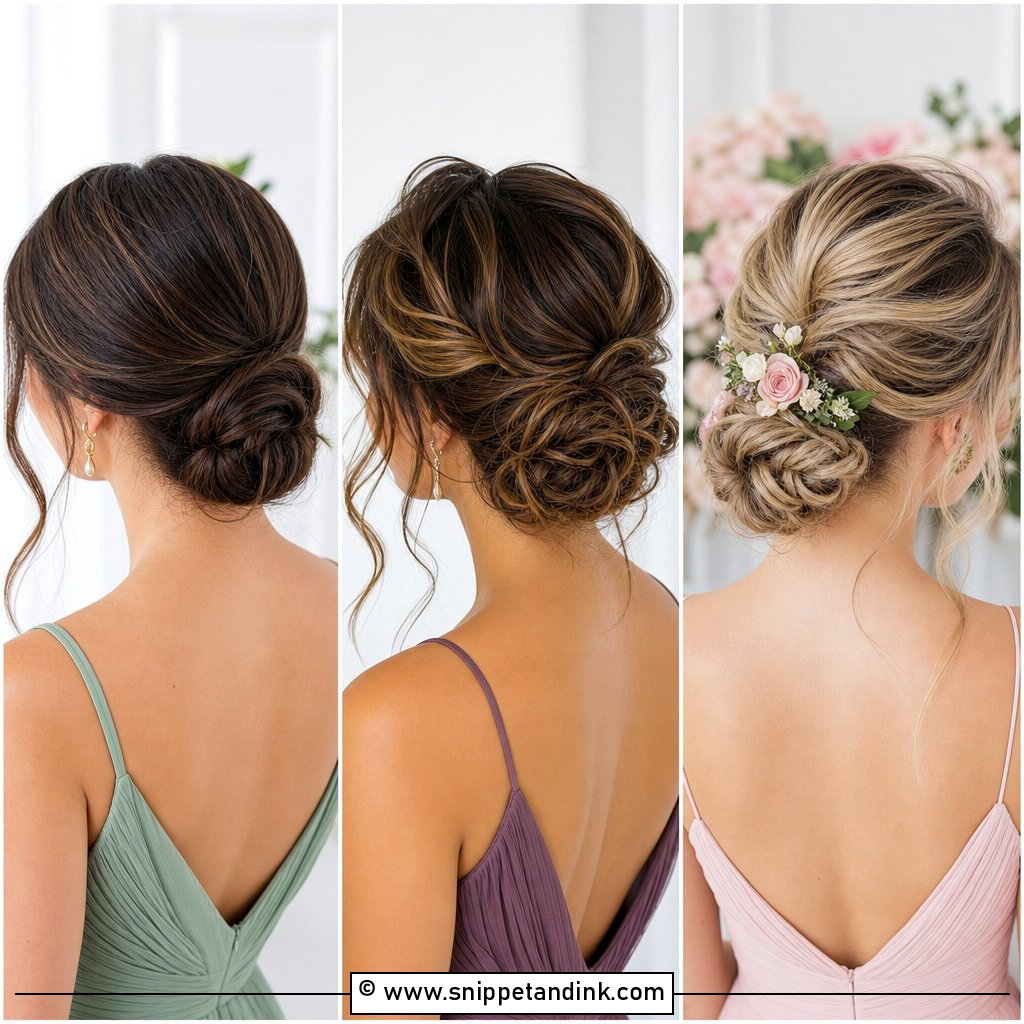
1. Low Bun Bridesmaid Updo
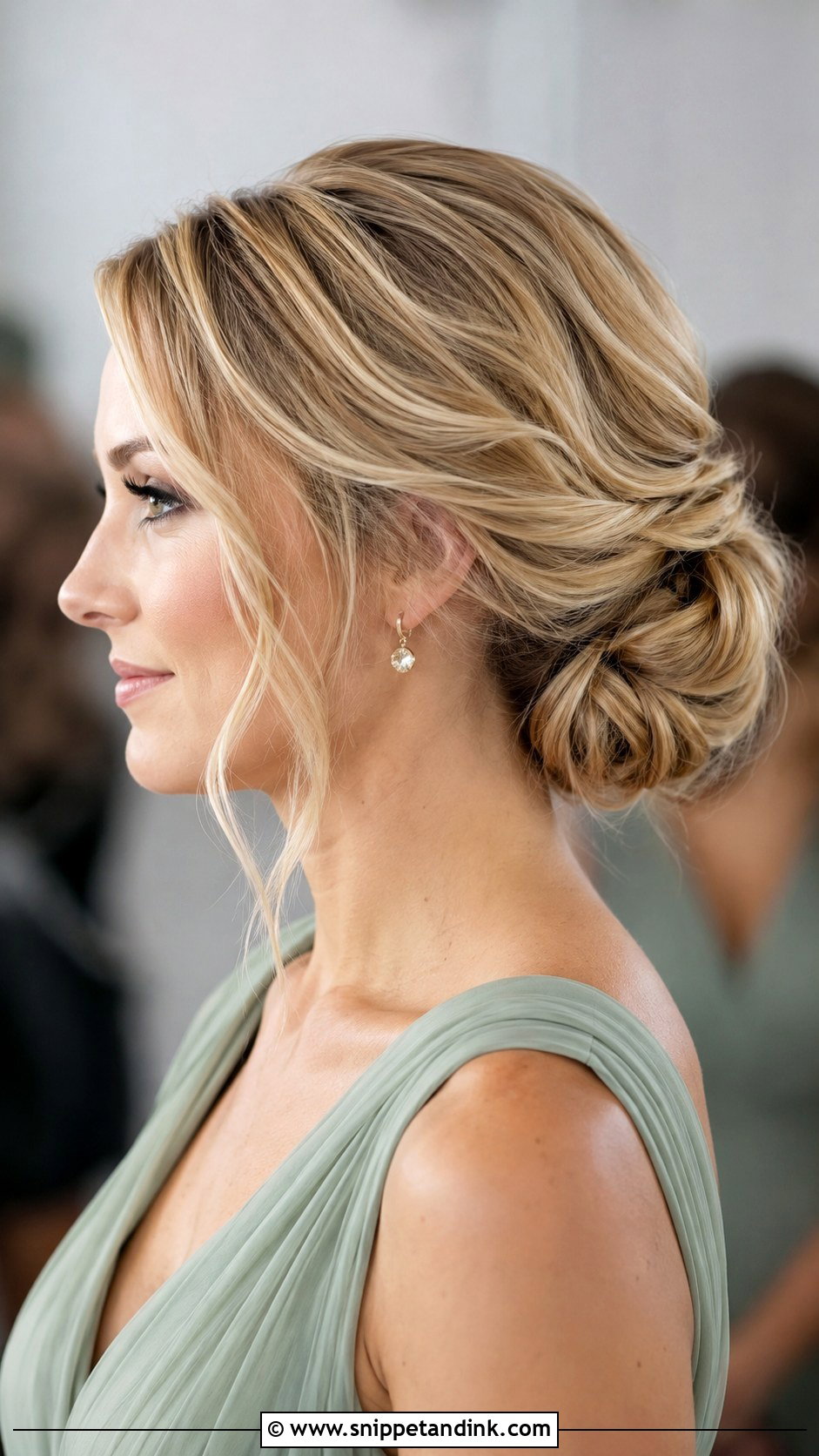
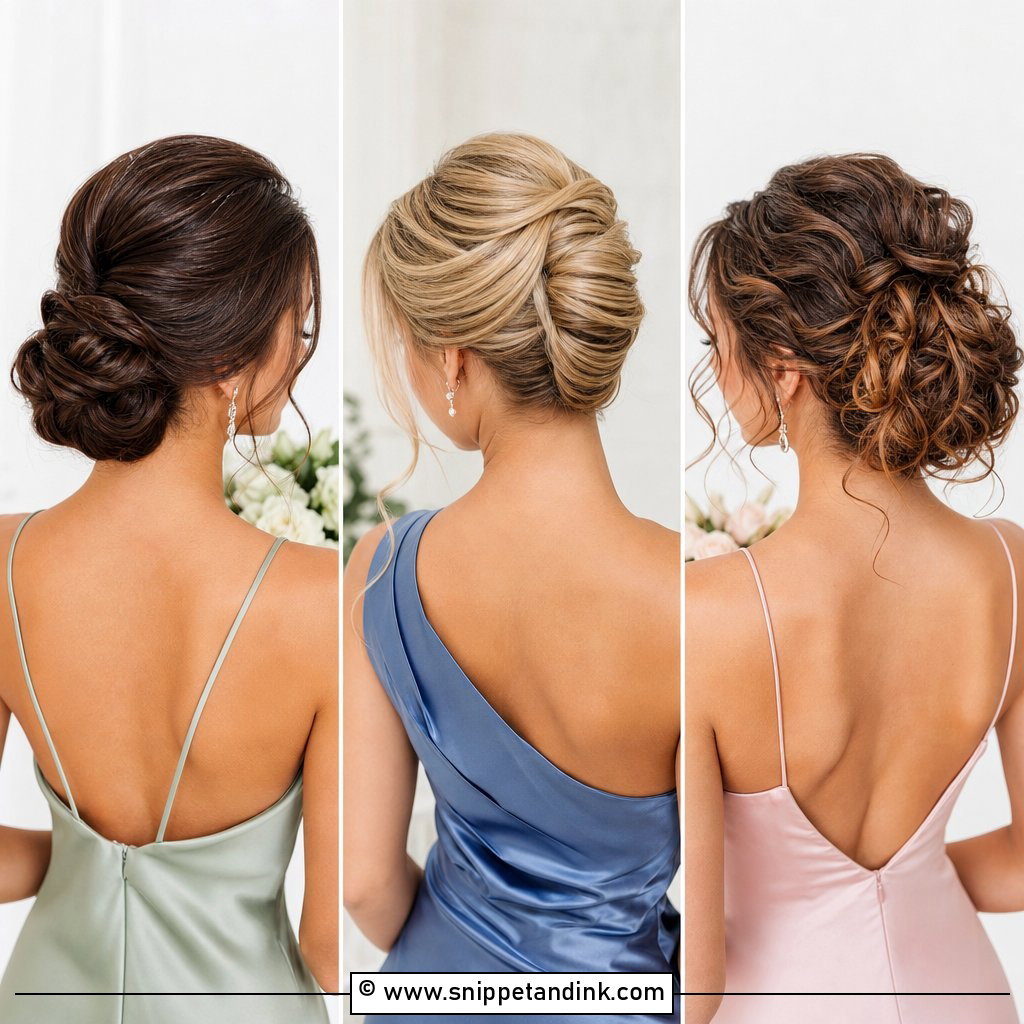
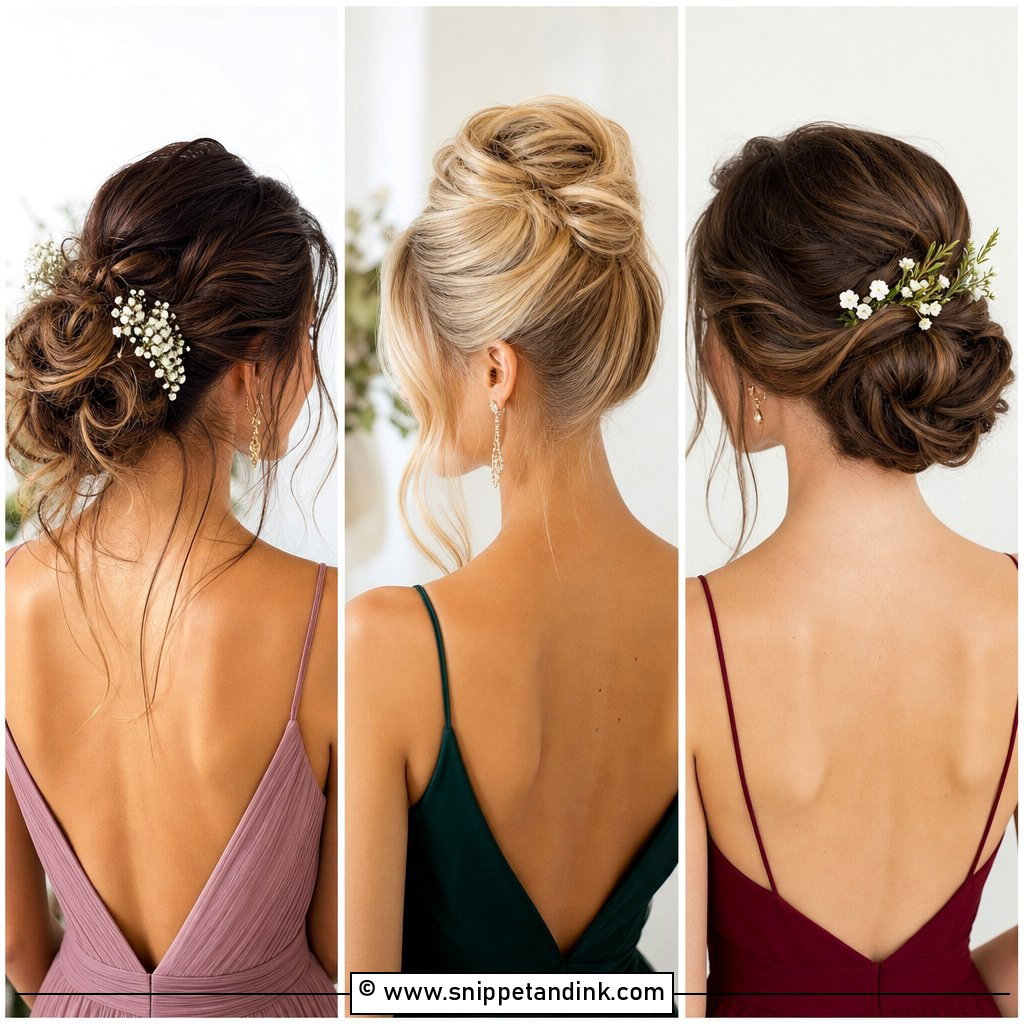
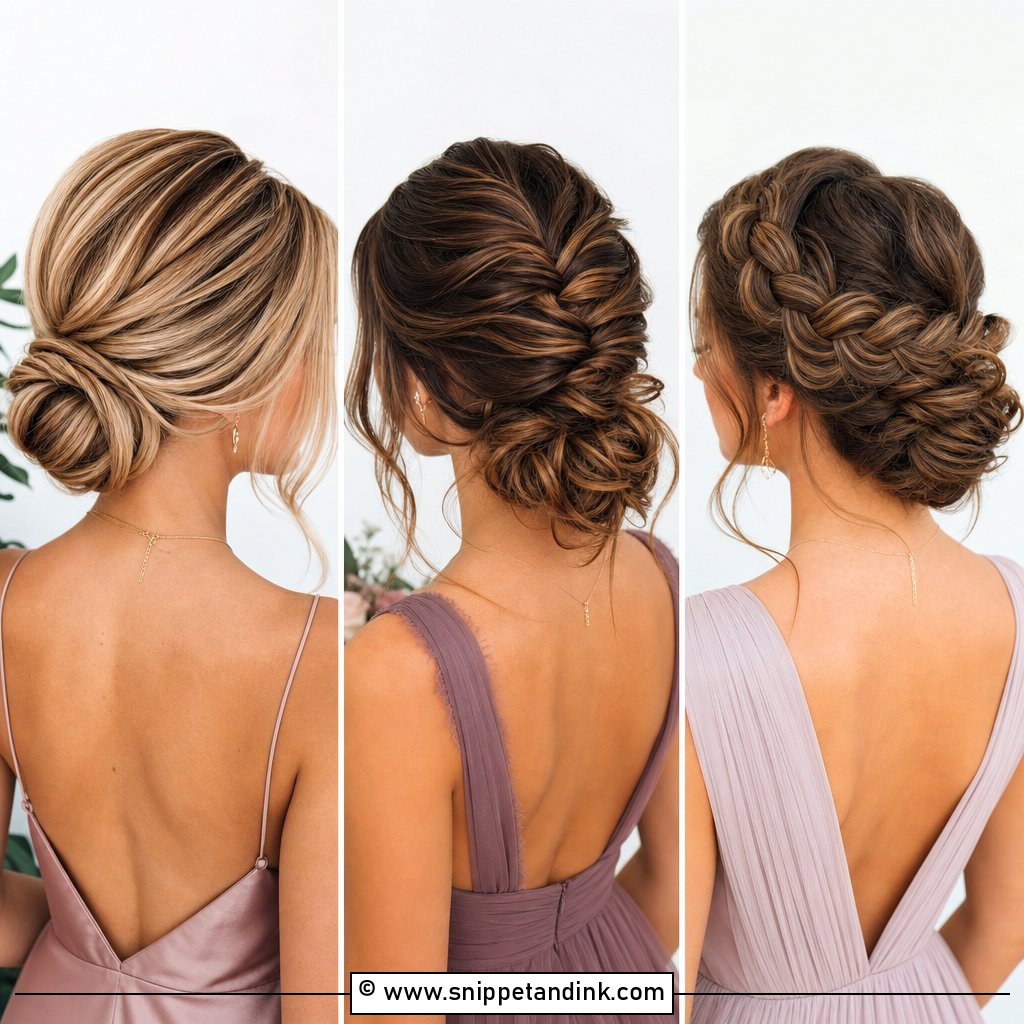
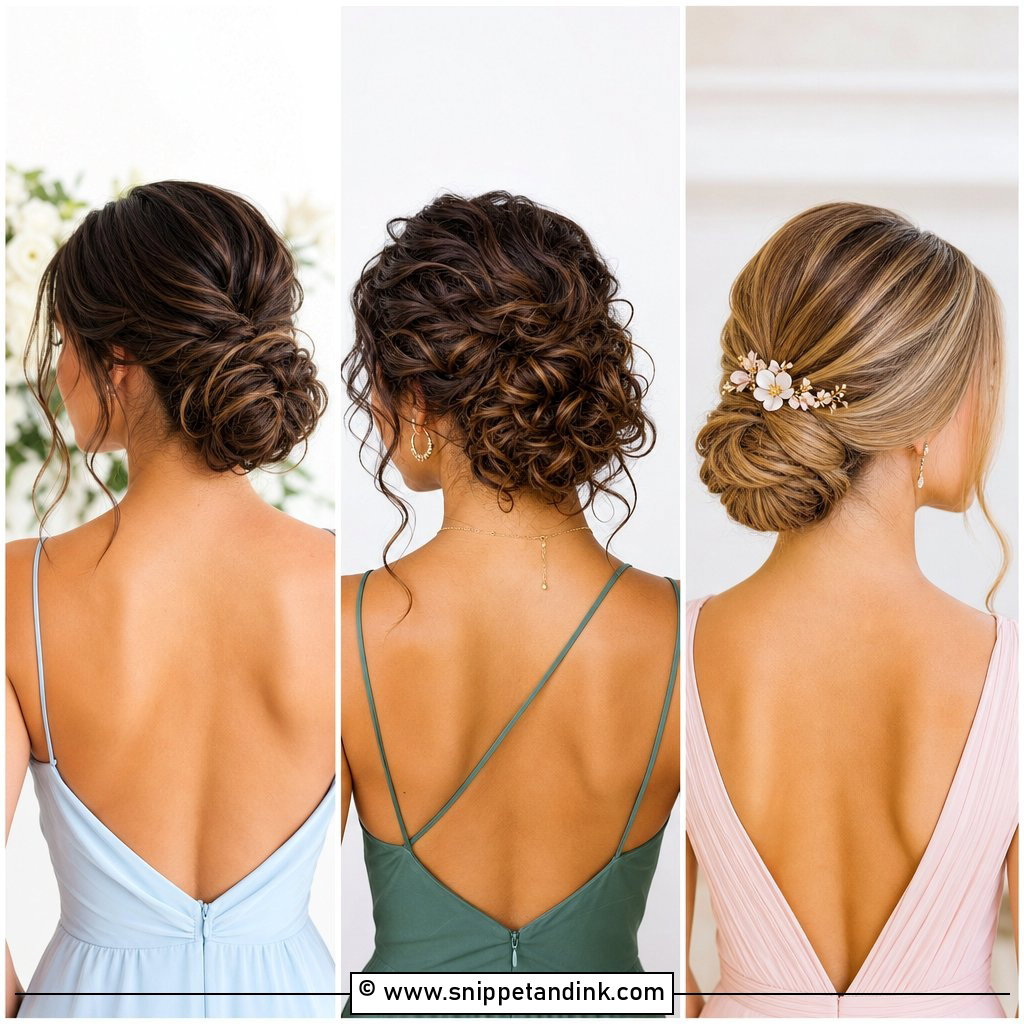
There’s a reason the low bun bridesmaid updo is the default: it sits at the nape, out of the way of everything, and almost no neckline fights it. I adjust the crown to the dress. Fine hair gets a little lift there; a dress with ruffles or detail at the shoulders gets a flatter crown so the two don’t compete. A small hidden pad adds fullness when the hair is thin. Smooth for formal, textured for a garden.
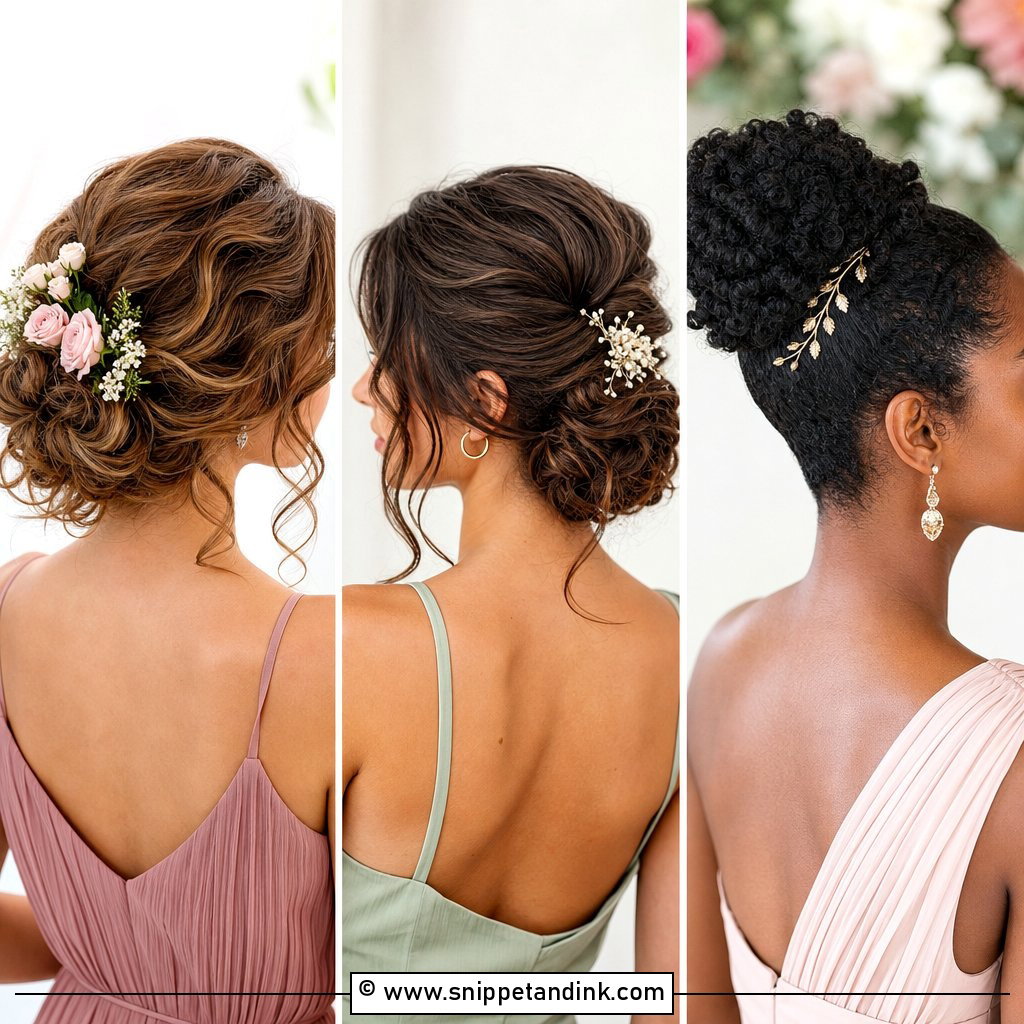
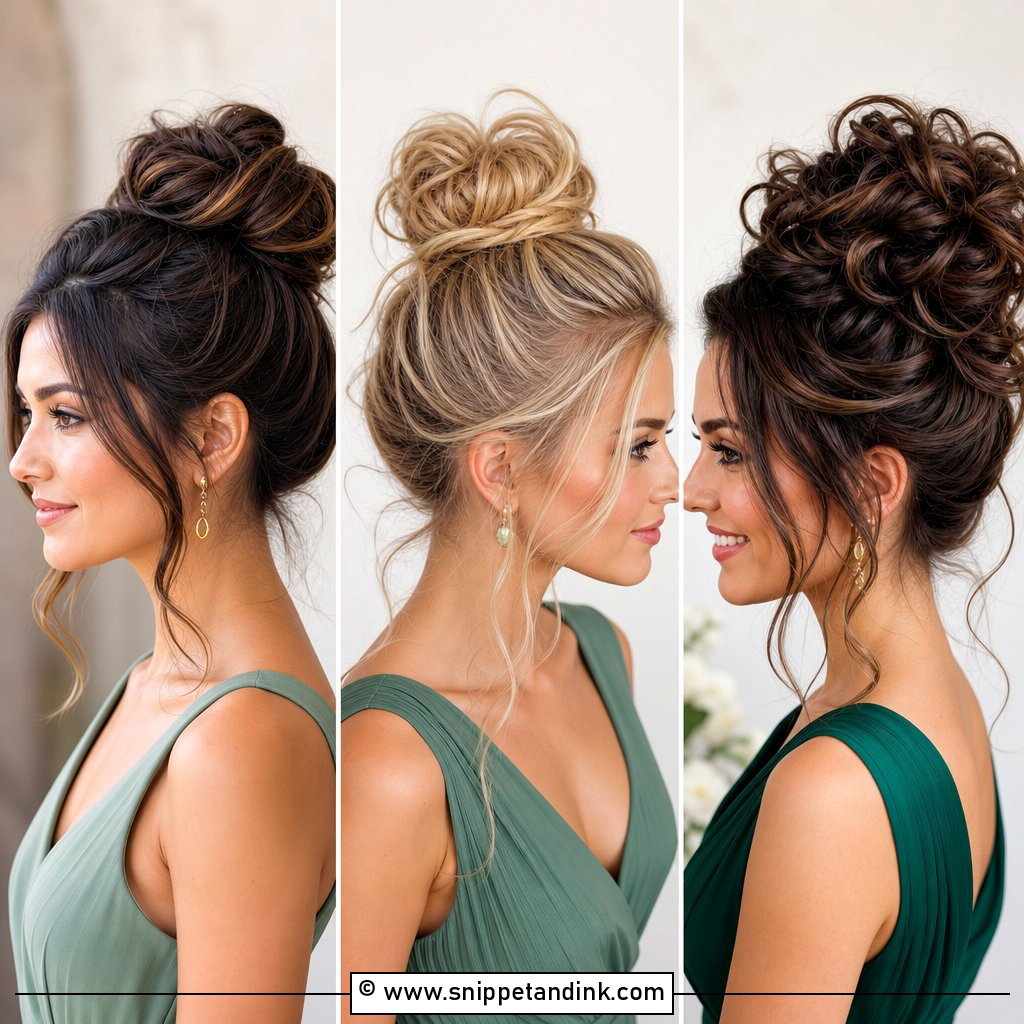
2. Messy Bun Bridesmaid Updo
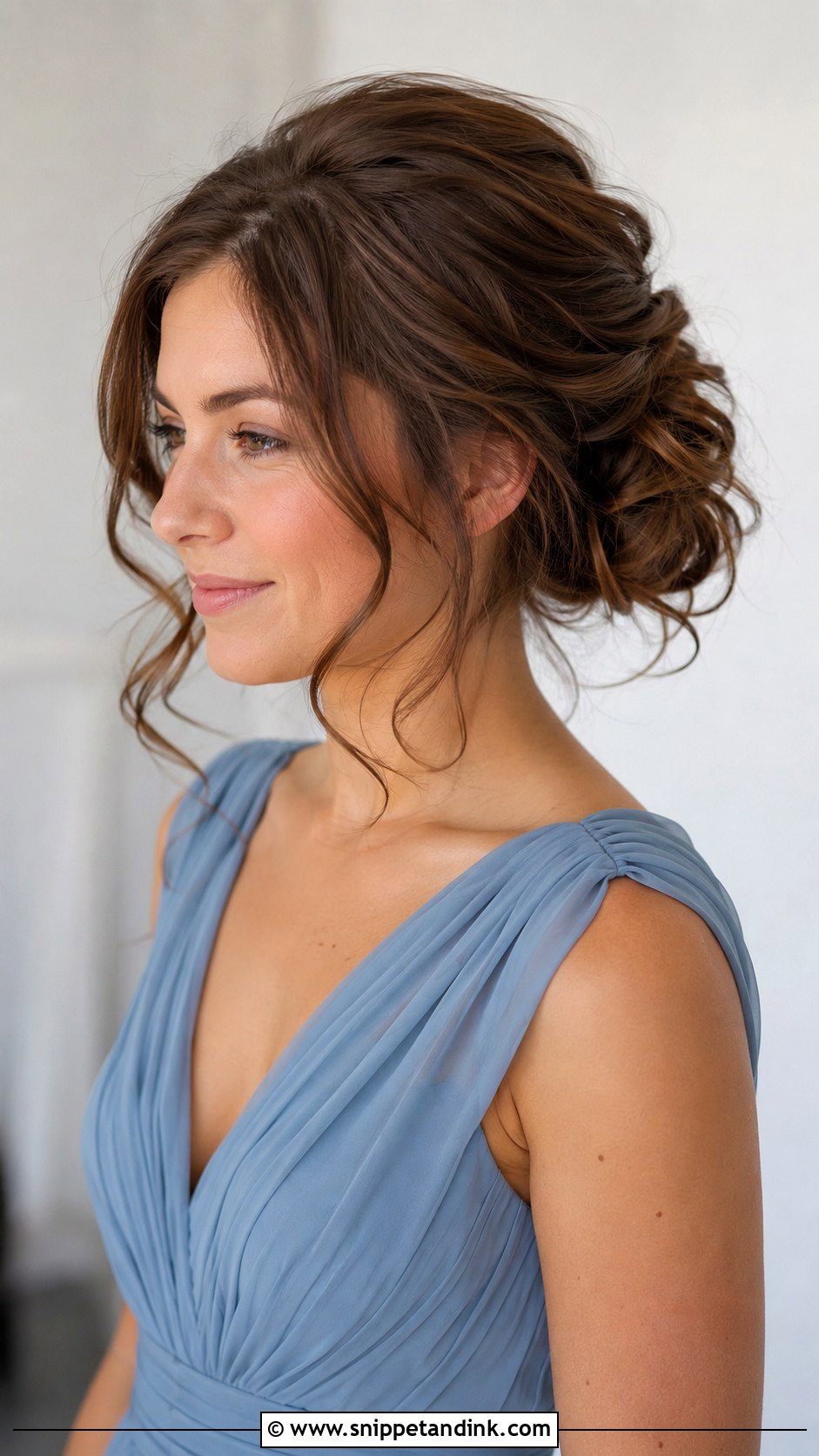
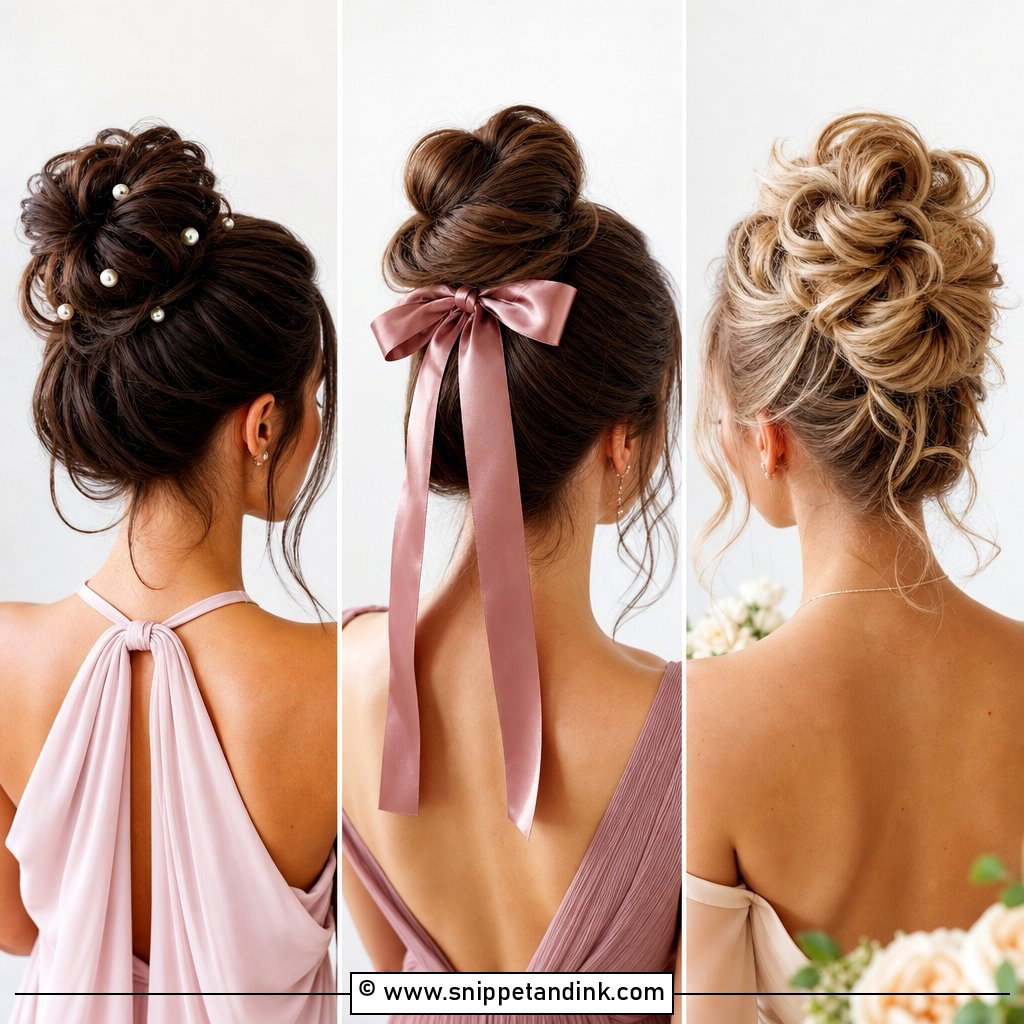
Nobody wants a messy bun that looks rushed. I build mine in small sections, especially on thick hair, so each part is pinned on its own and the whole thing can’t slide as one block. Fine hair gets texture spray first, or the pins have nothing to grip. Medium to long hair suits it best, and it’s at its most flattering against a plain or satin dress, where the texture gives contrast. Outdoors, a little movement only helps.
3. Braided Low Bun Bridesmaid Updo
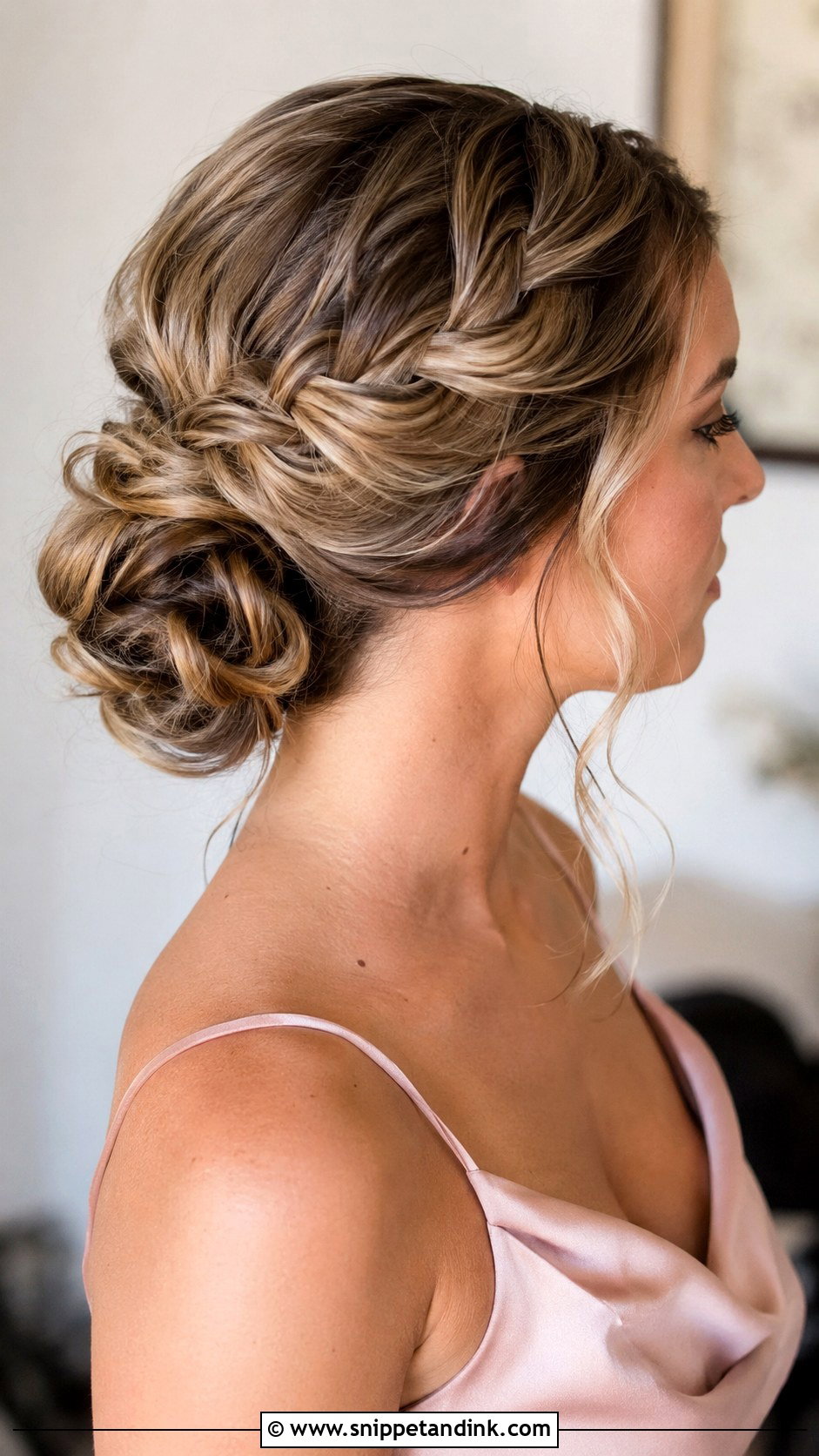
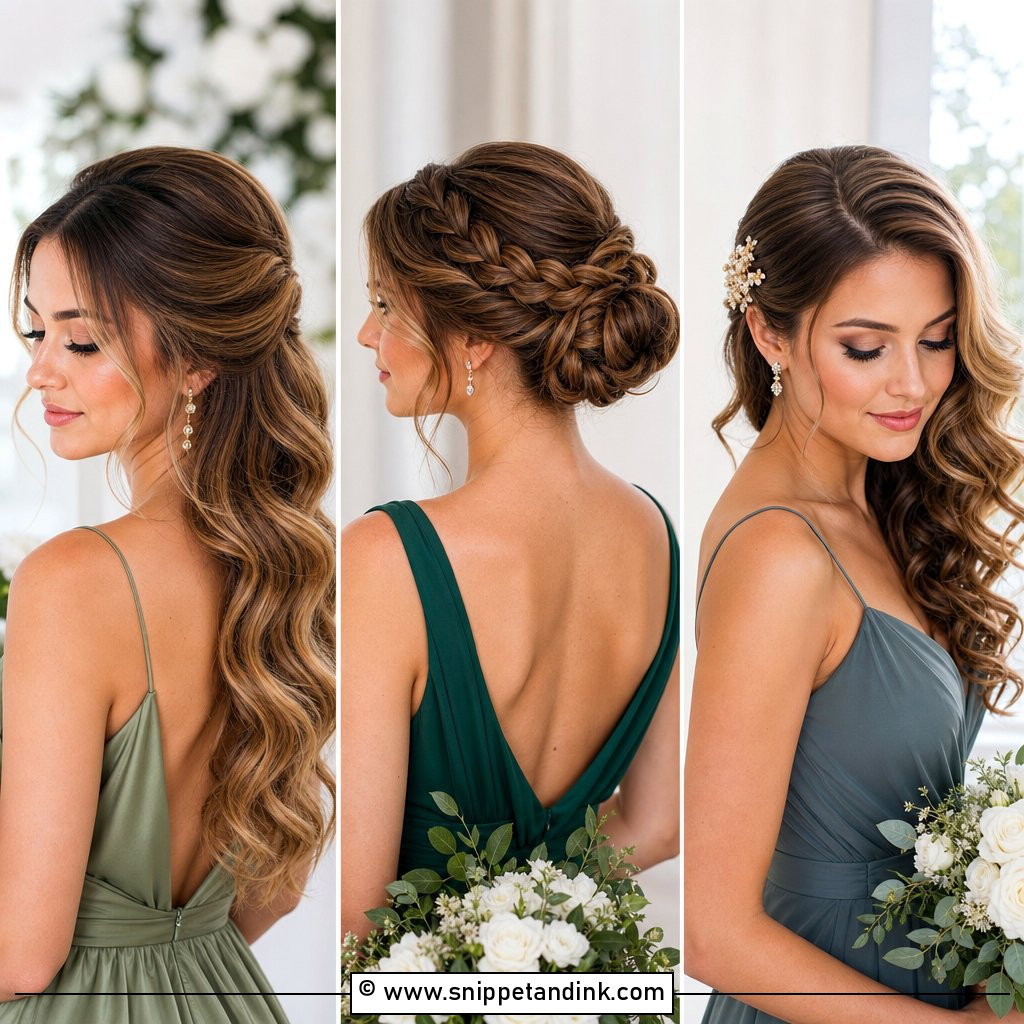
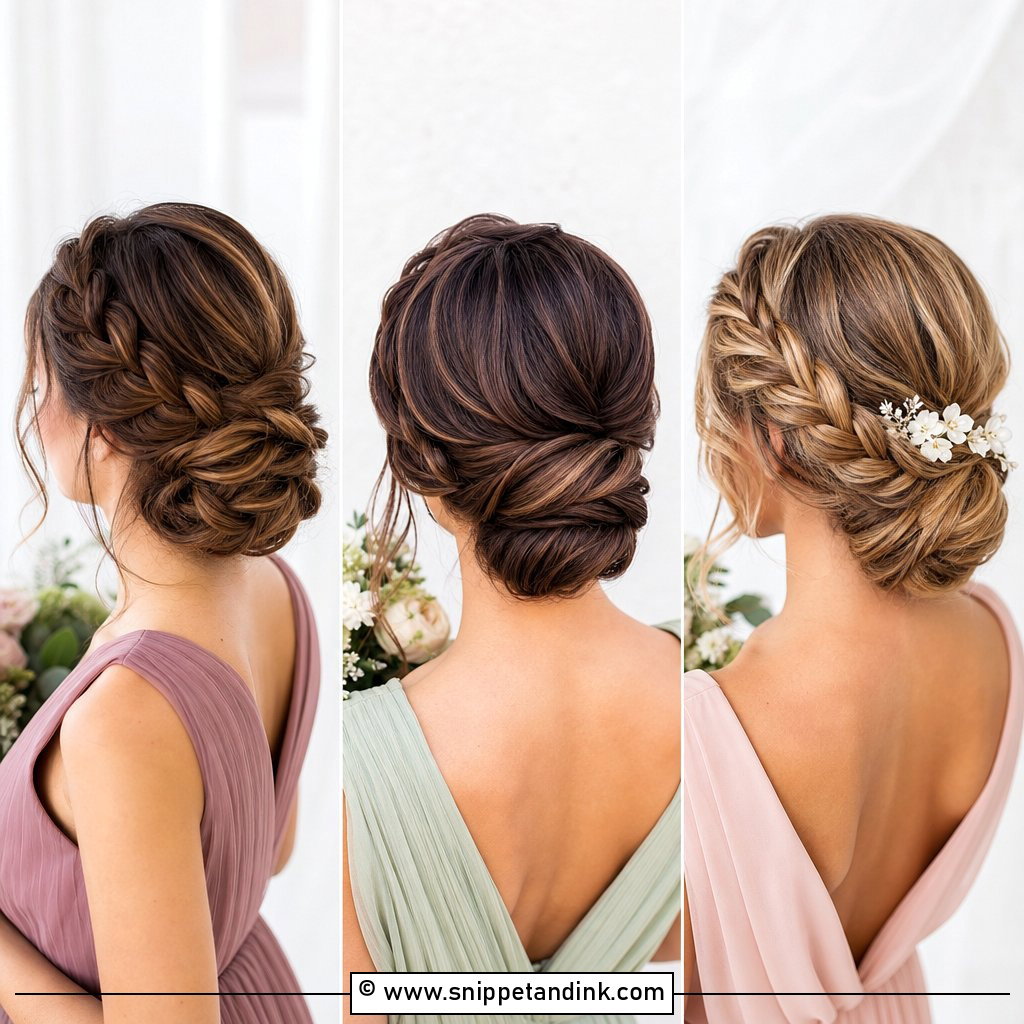
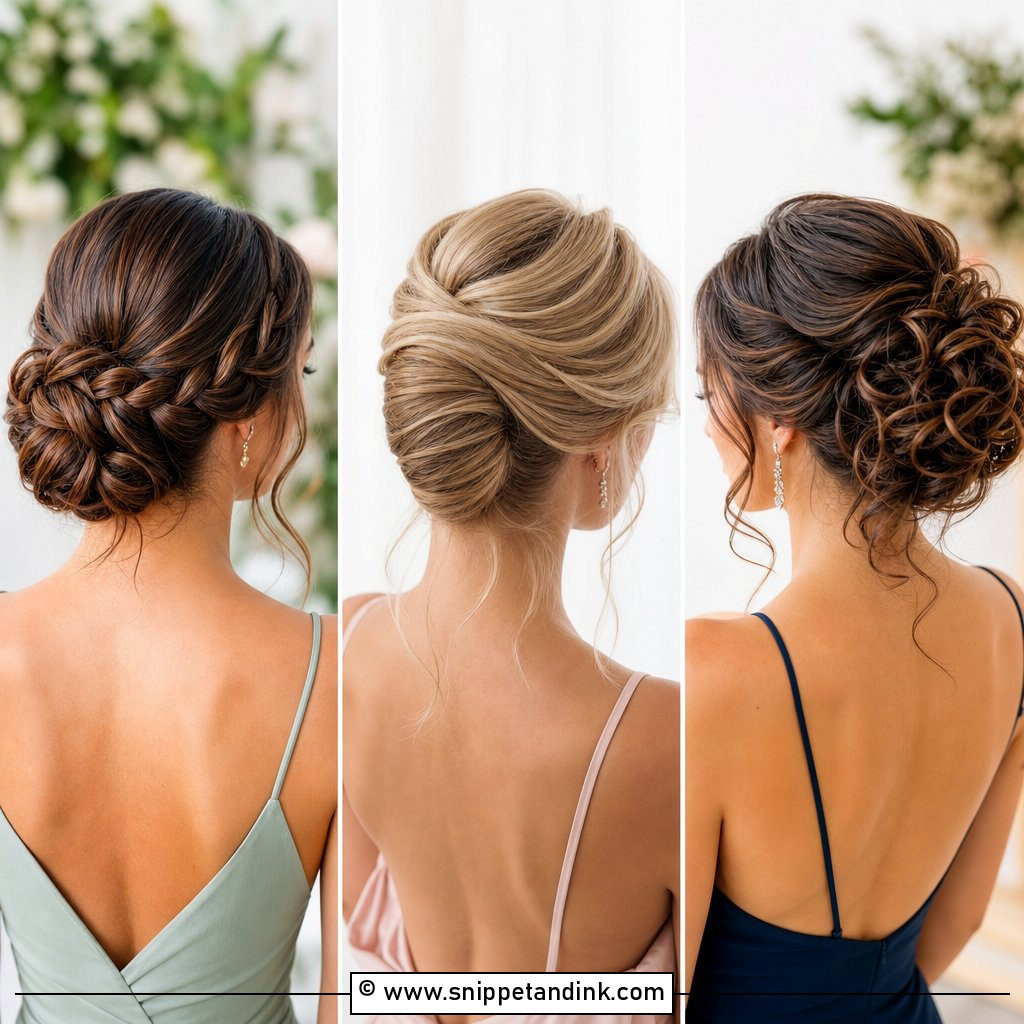
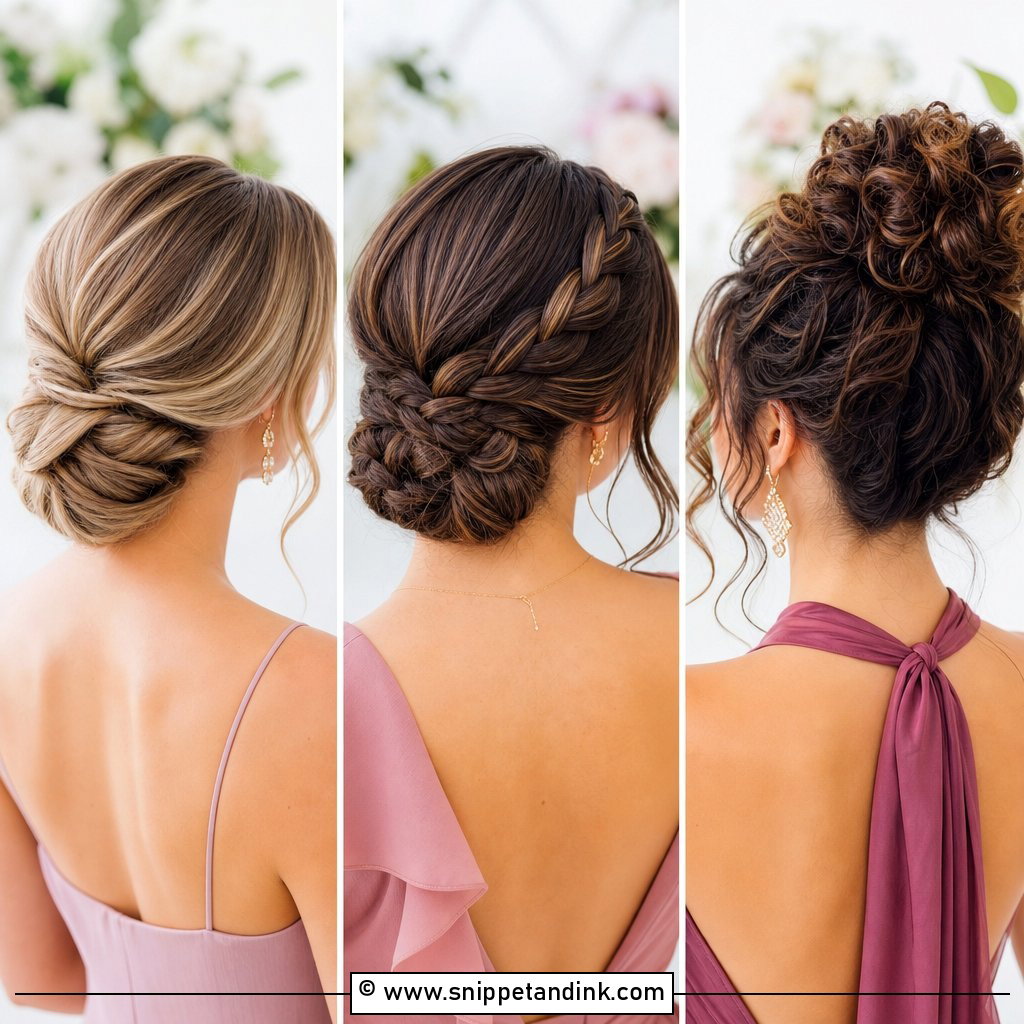
I usually start the braid behind one ear and run it diagonally toward the nape so it disappears into the bun, which reads as one connected shape from the side. The braid also catches short layers and keeps the front secure, so it’s practical as well as decorative. Highlighted hair shows nicely in each section of the plait. I keep the bun slightly loose against the braid. Pins are optional here.
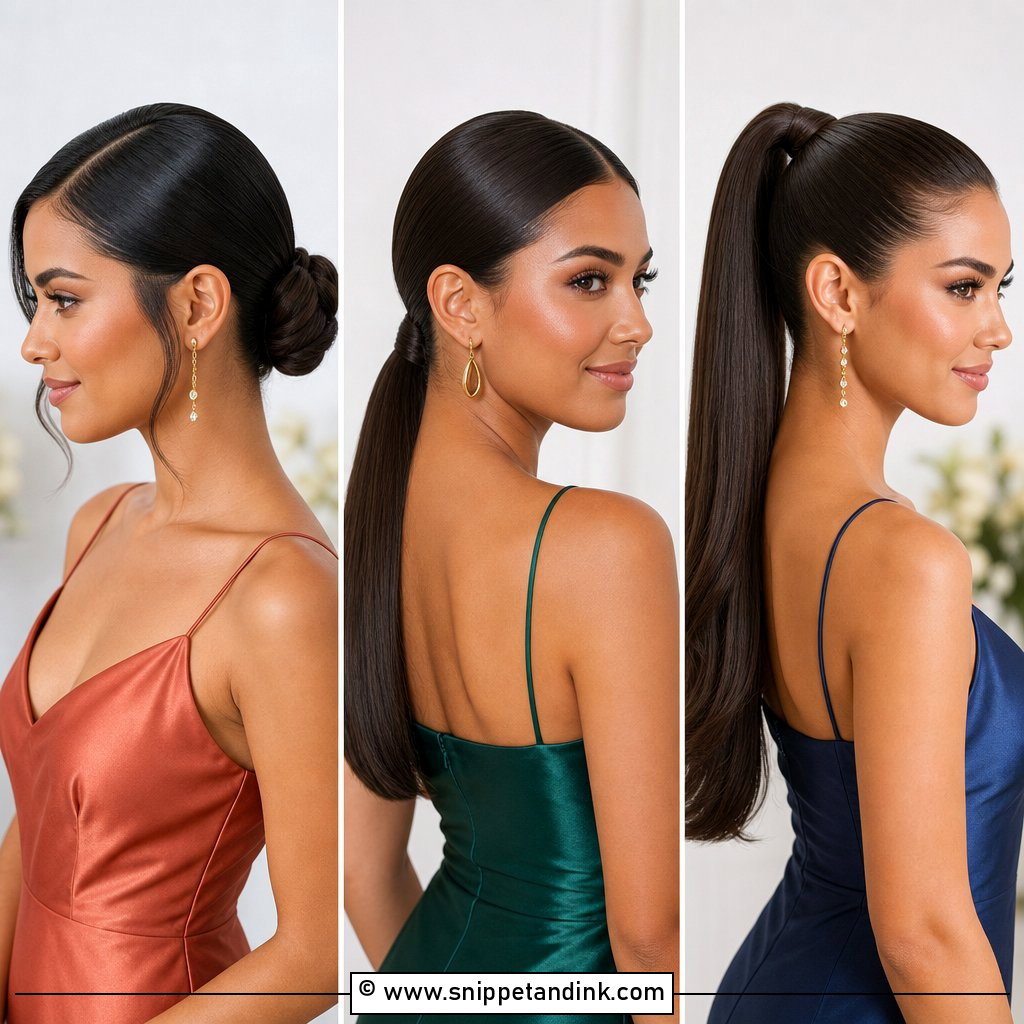
4. Sleek Bun Bridesmaid Updo
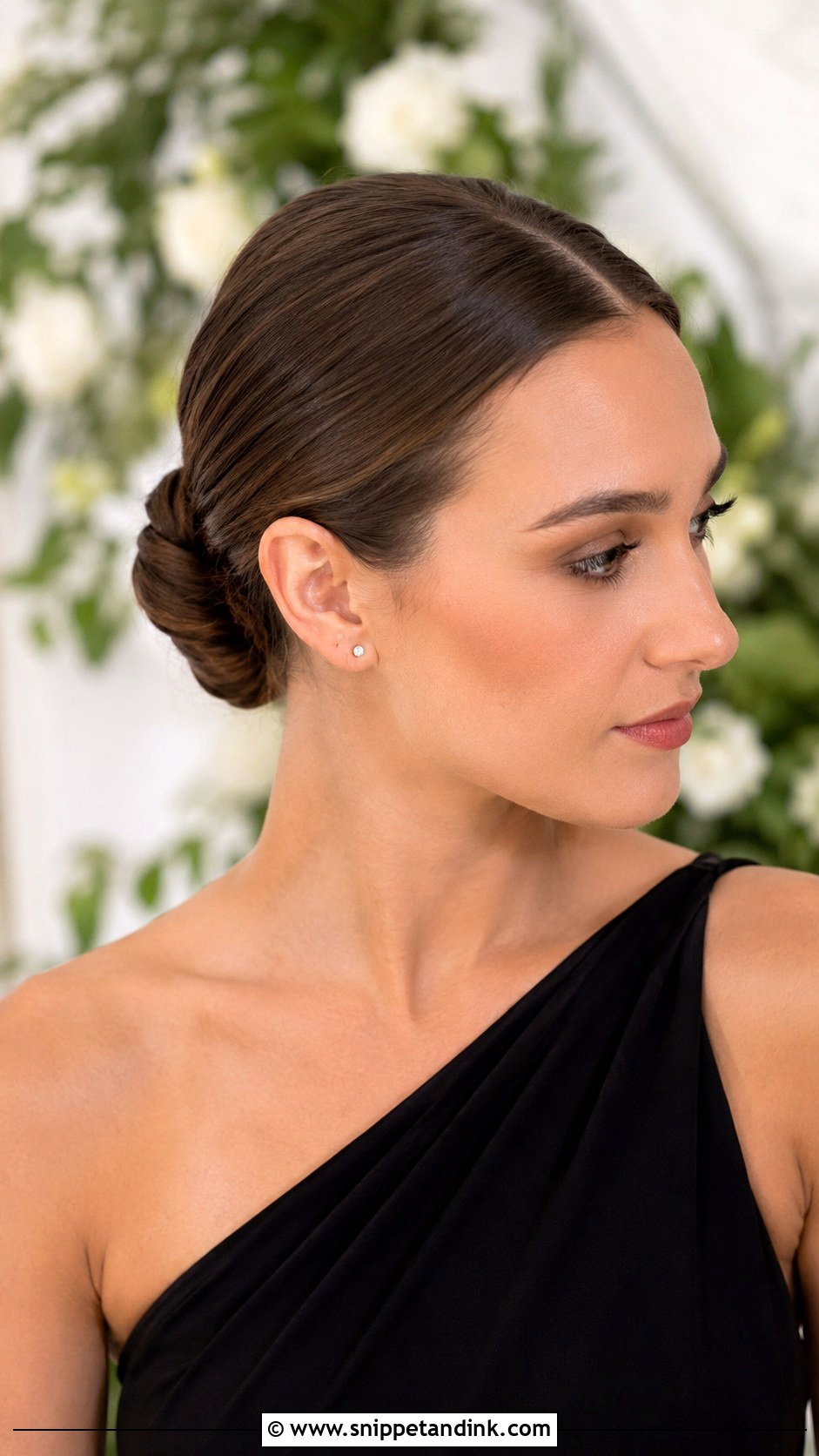
A sleek bun bridesmaid updo suits black-tie weddings, square necklines and structured gowns, and a row of them looks very unified in group photos. The work is in the prep: a smooth blow-dry, a strong smoothing product, a fine-tooth comb for the hairline. Flyaways show up on a sleek surface more than anywhere else. It’s also one of the better choices for humidity, since sealed, smooth hair frizzes less than curls do.
5. High Bun Bridesmaid Updo
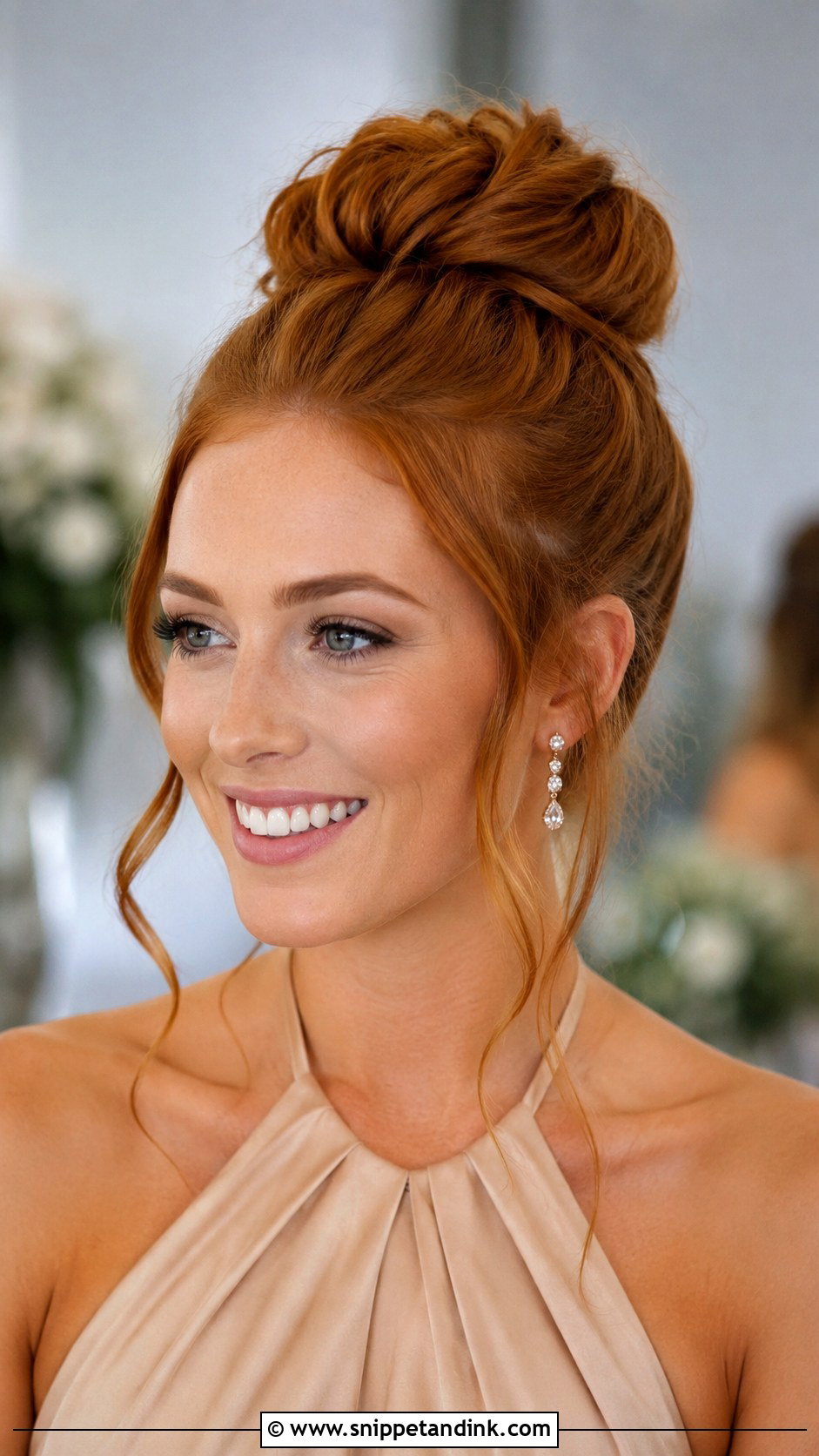
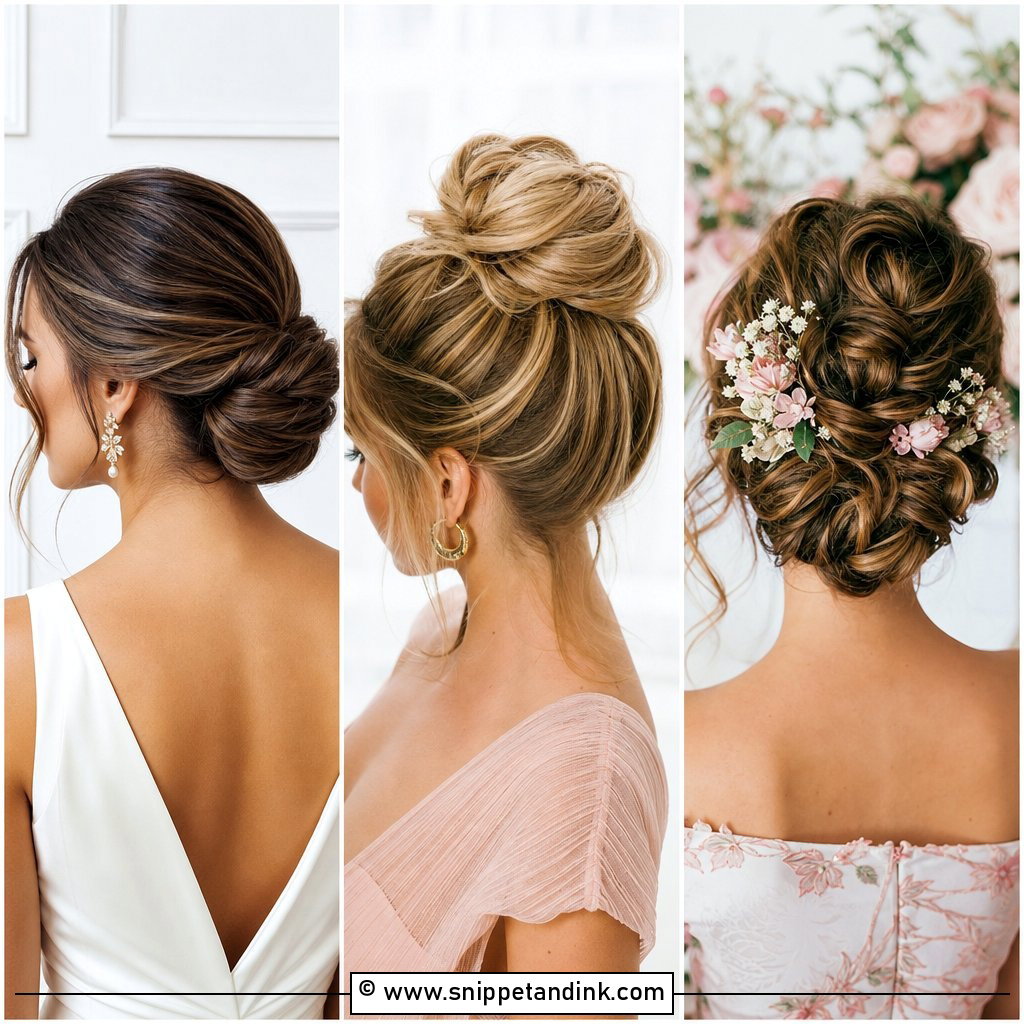
Height lengthens the neck and lifts the face, which is why high-neck dresses, halters and statement earrings suit this one. The bun can be round and smooth like a ballet bun or slightly textured. Where it sits makes or breaks it: visible from the front, but not so far forward it looks severe. I check it from the side before spraying. It’s the coolest option in hot weather because nothing touches the neck.
6. Twisted Bun Bridesmaid Updo
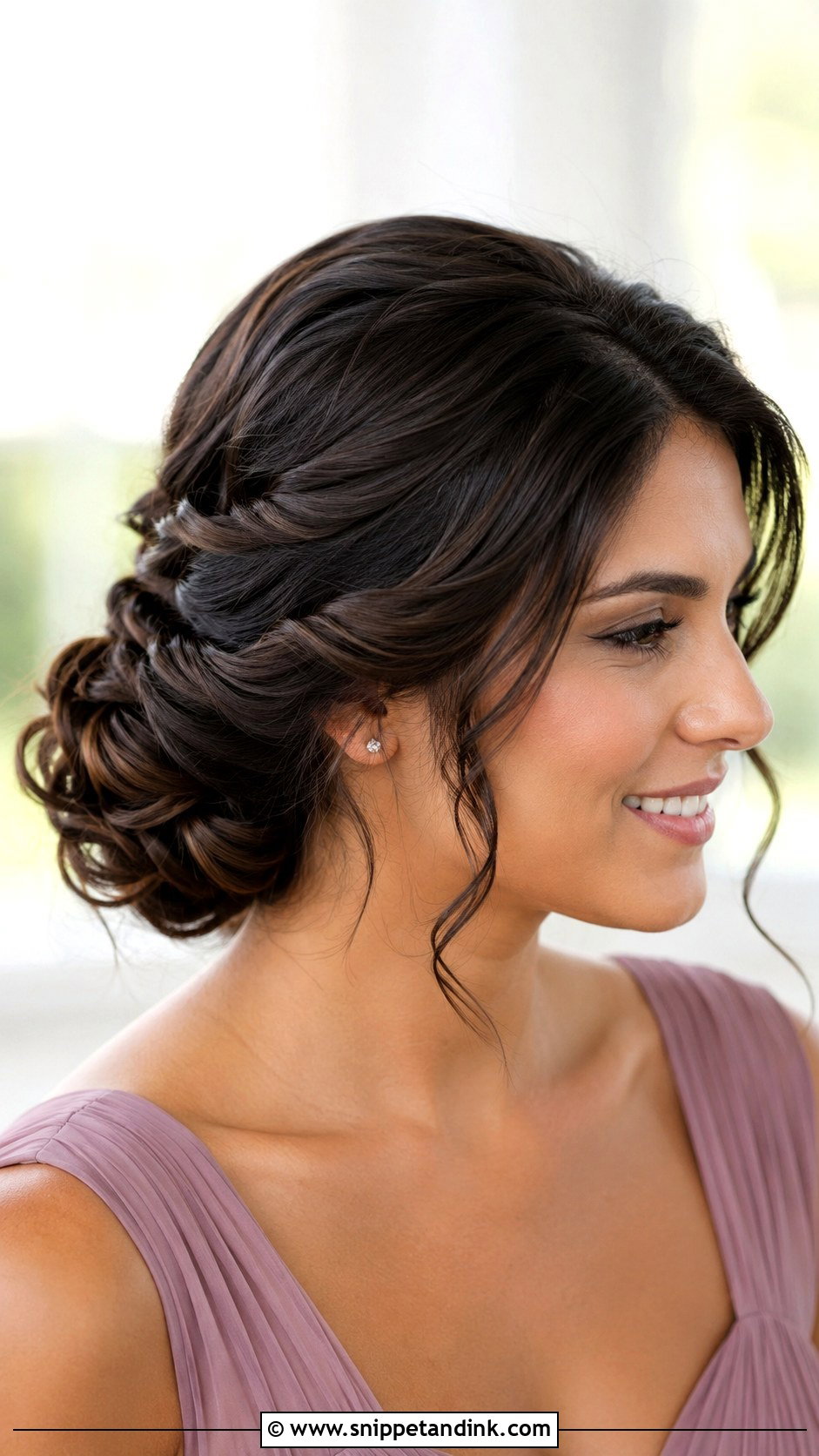
Instead of one coil, the hair is split into sections, each twisted and pinned into the bun, which adds depth to hair that looks flat in photos. It works on straight, wavy and softly curled hair. I’d recommend it to bridesmaids who don’t want a braid but want more than a plain bun; it’s just as secure and takes less time. A center part reads clean, a side part softer.
7. Chignon Bridesmaid Updo
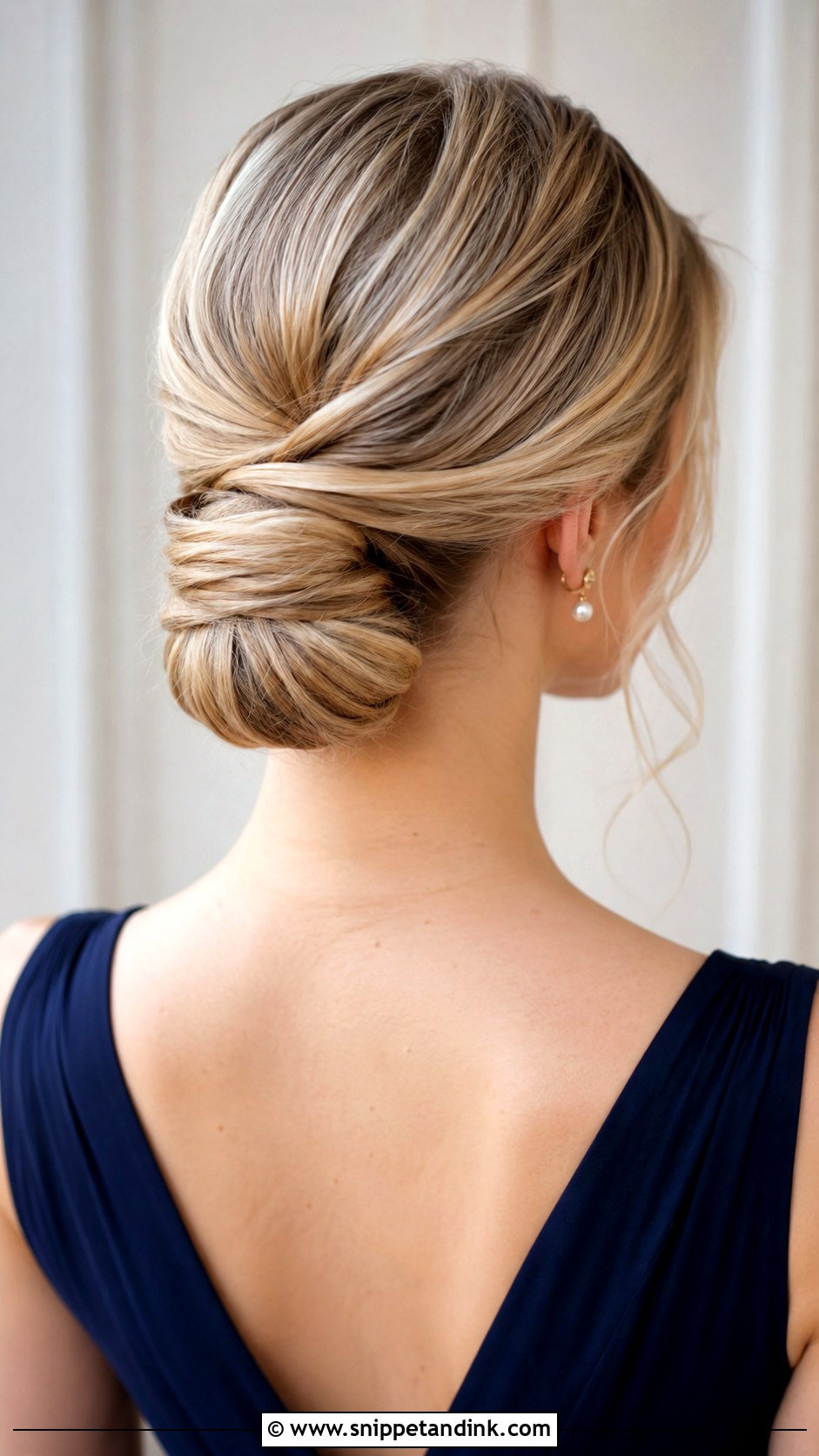
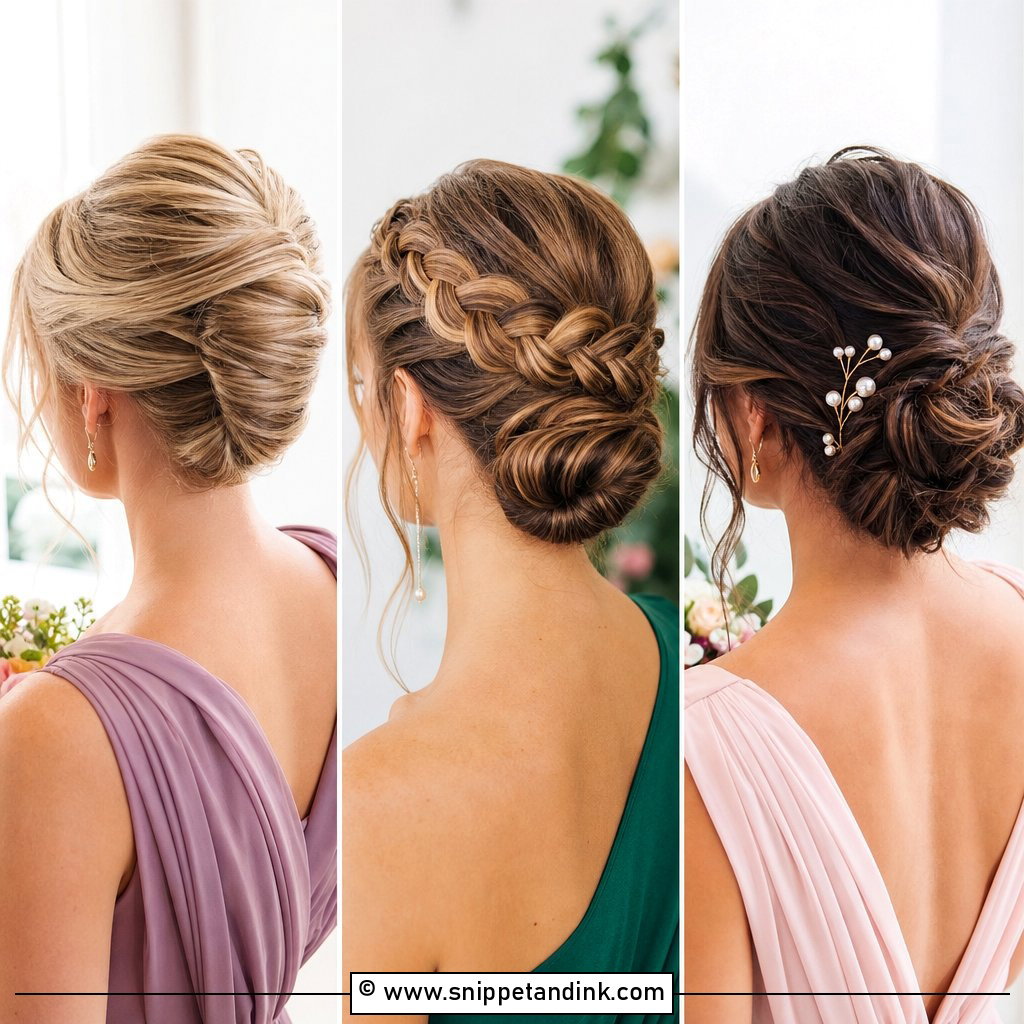
A chignon is lower and closer to the neck than most buns, usually a smooth roll or tuck. It’s my answer for bridesmaids who find a messy bun too casual and a sleek one too strict. It shows well from the side, which matters in ceremony shots taken from the aisle. With layered hair, I curl everything first and tuck the pieces into the roll so they don’t spring out by the reception. Classic gowns and pearls suit it.
8. French Twist Bridesmaid Updo
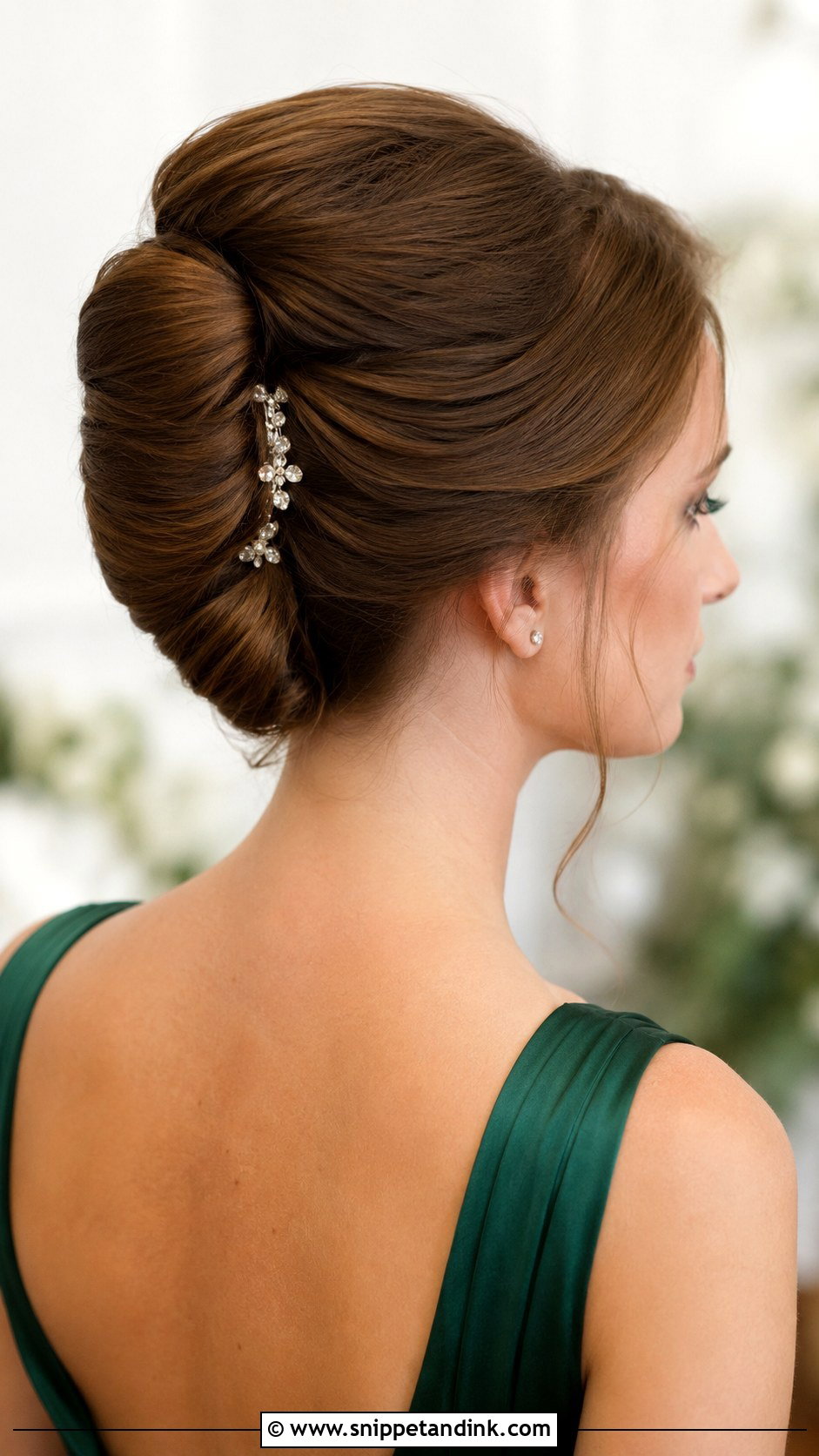
A French twist rolls the hair upward into a vertical shape that shows off the neck and shoulders. Medium-length hair suits it surprisingly well, because the twist doesn’t need a long ponytail base. Tight and glossy or slightly loose at the crown, it suits formal weddings and plain satin dresses. I keep the front clean and add one comb or pin along the fold. Too many accessories on a twist look fussy.
9. Side Bun Bridesmaid Updo
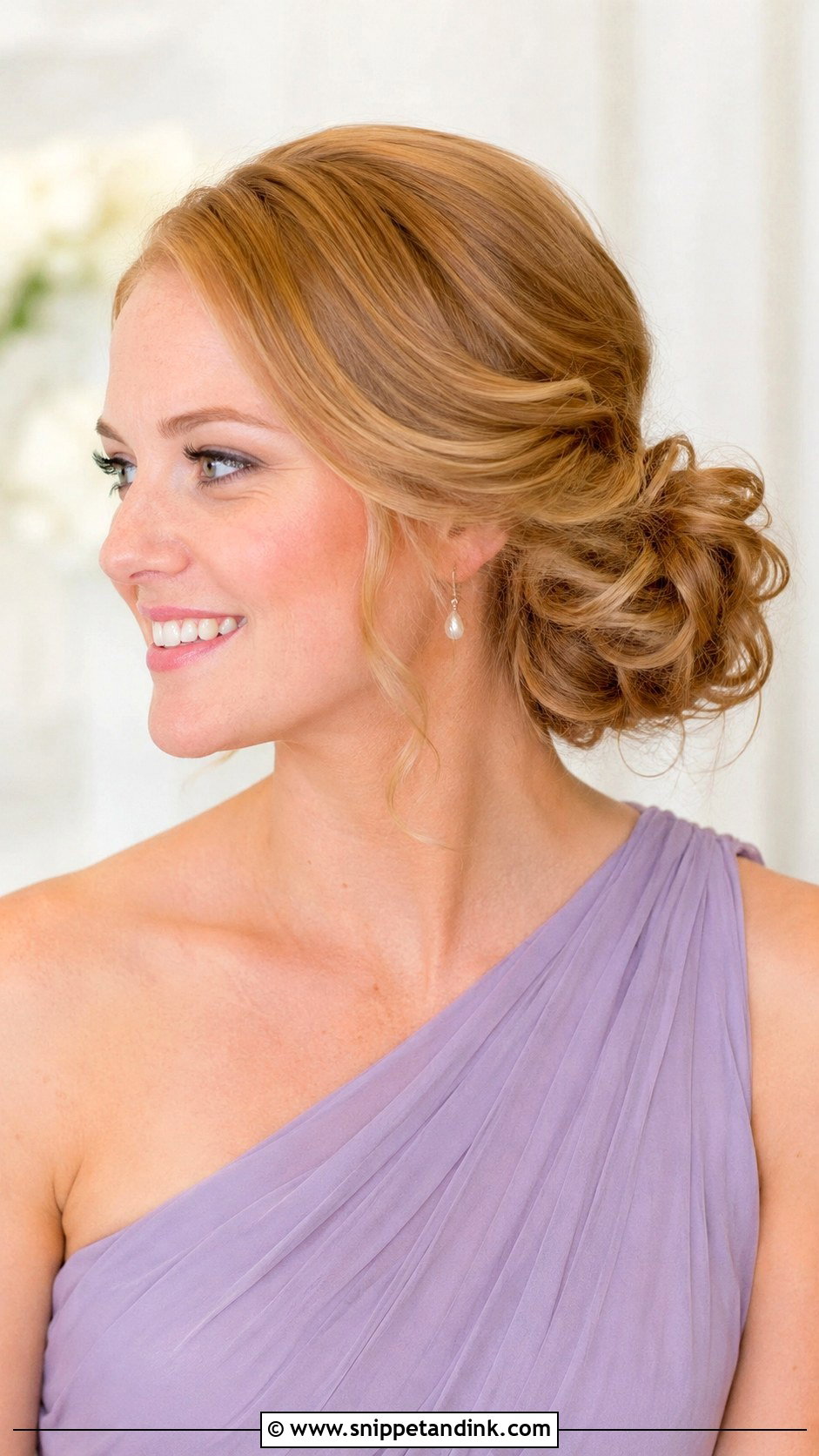
The side bun sits behind the ear or low near the jawline, so it’s visible from the front, and it’s the natural partner for an asymmetrical neckline. It can be smooth, braided, twisted or curled. A deep side part on the bun side gives it glamour; a center part keeps it modern. My worry with side buns is comfort: all the tension sits on one side, so I spread the pins across the back of the head rather than clustering them by the bun.
10. Curly Bridesmaid Updo
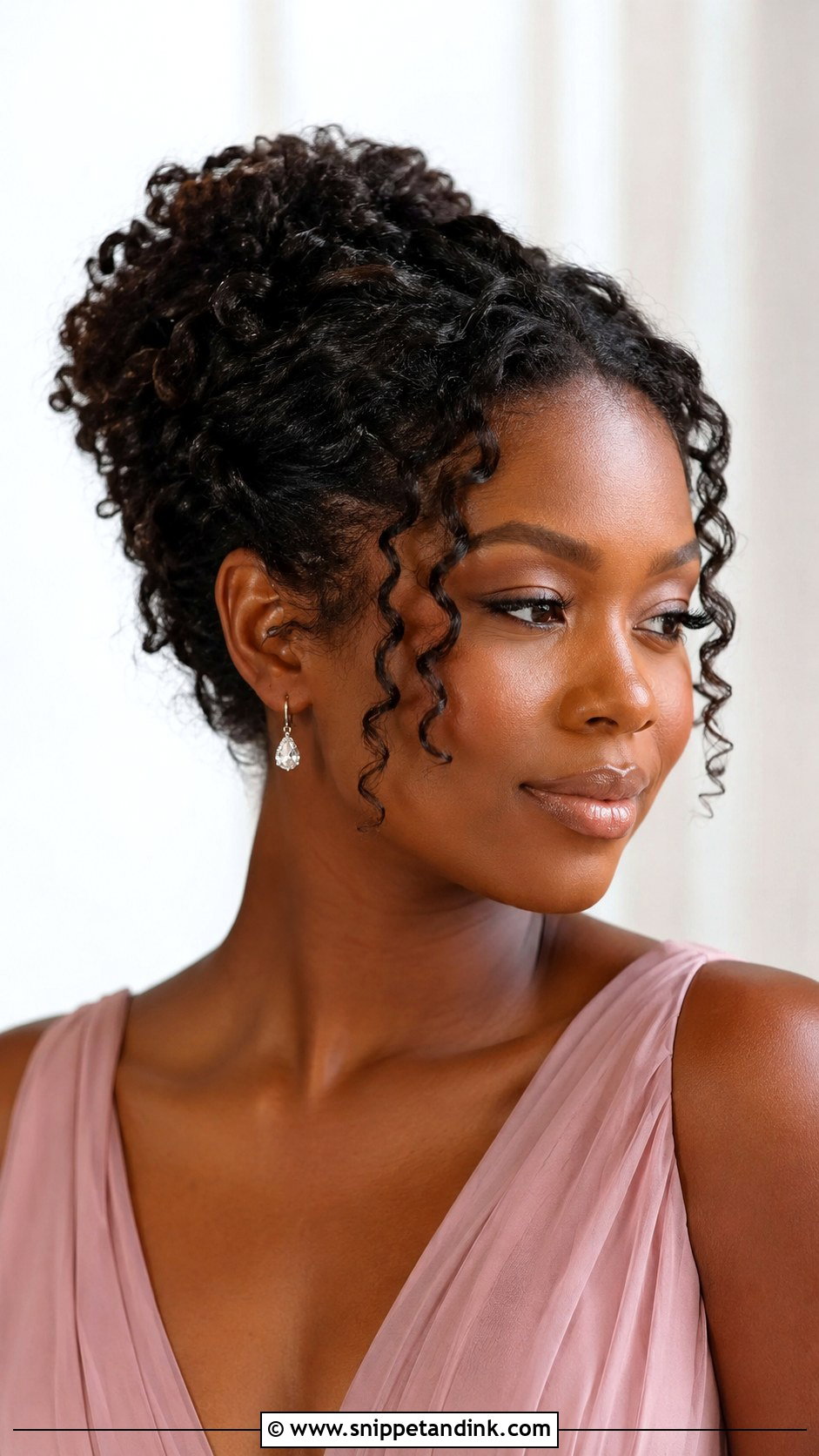
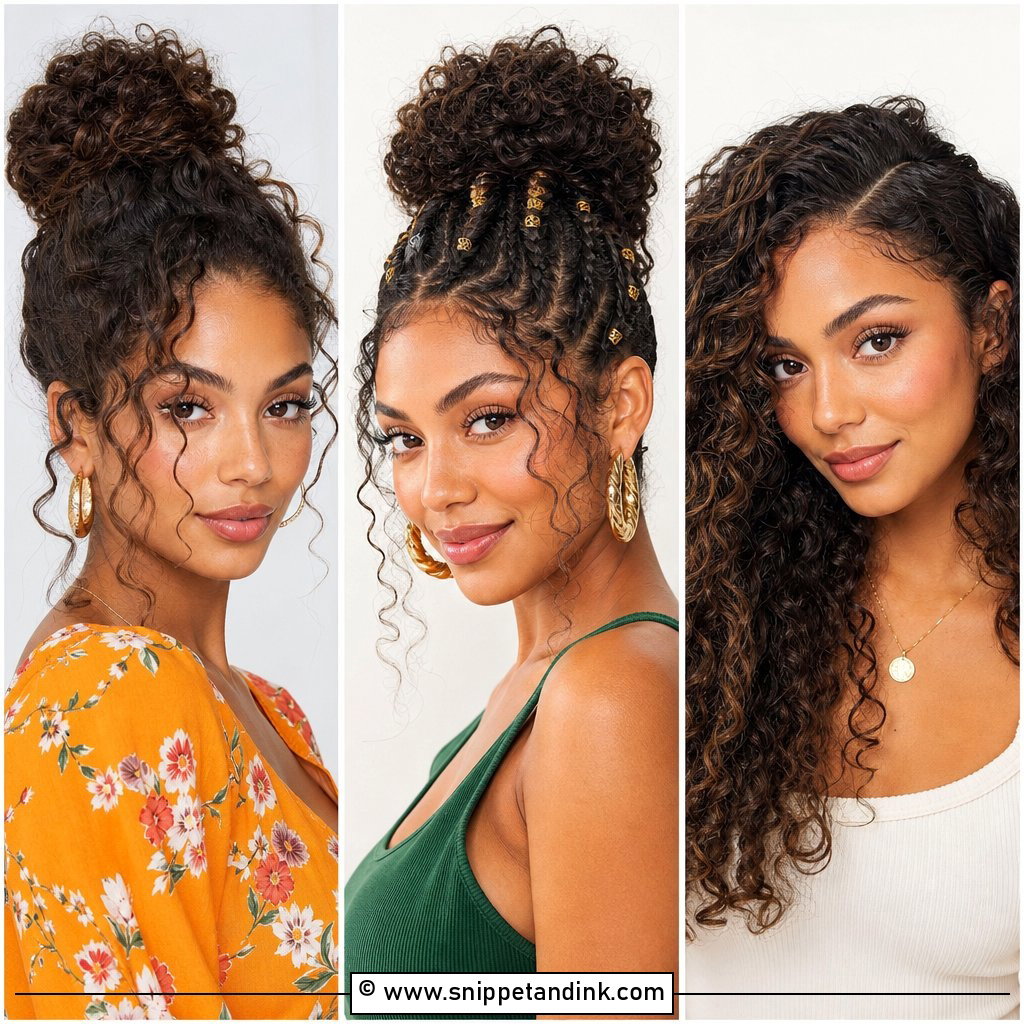
Curly hair needs definition before it’s pinned, not after. I work curl cream or gel through wet hair, let it dry fully, then pin the curls into a rounded bun, a soft crown shape or a low knot. Mousse can add hold without crunch. A few curls at the temples or ears keep it soft. Bridesmaids with natural curls tend to feel most themselves in this, because it still looks like their own hair.
11. Textured Bridesmaid Updo
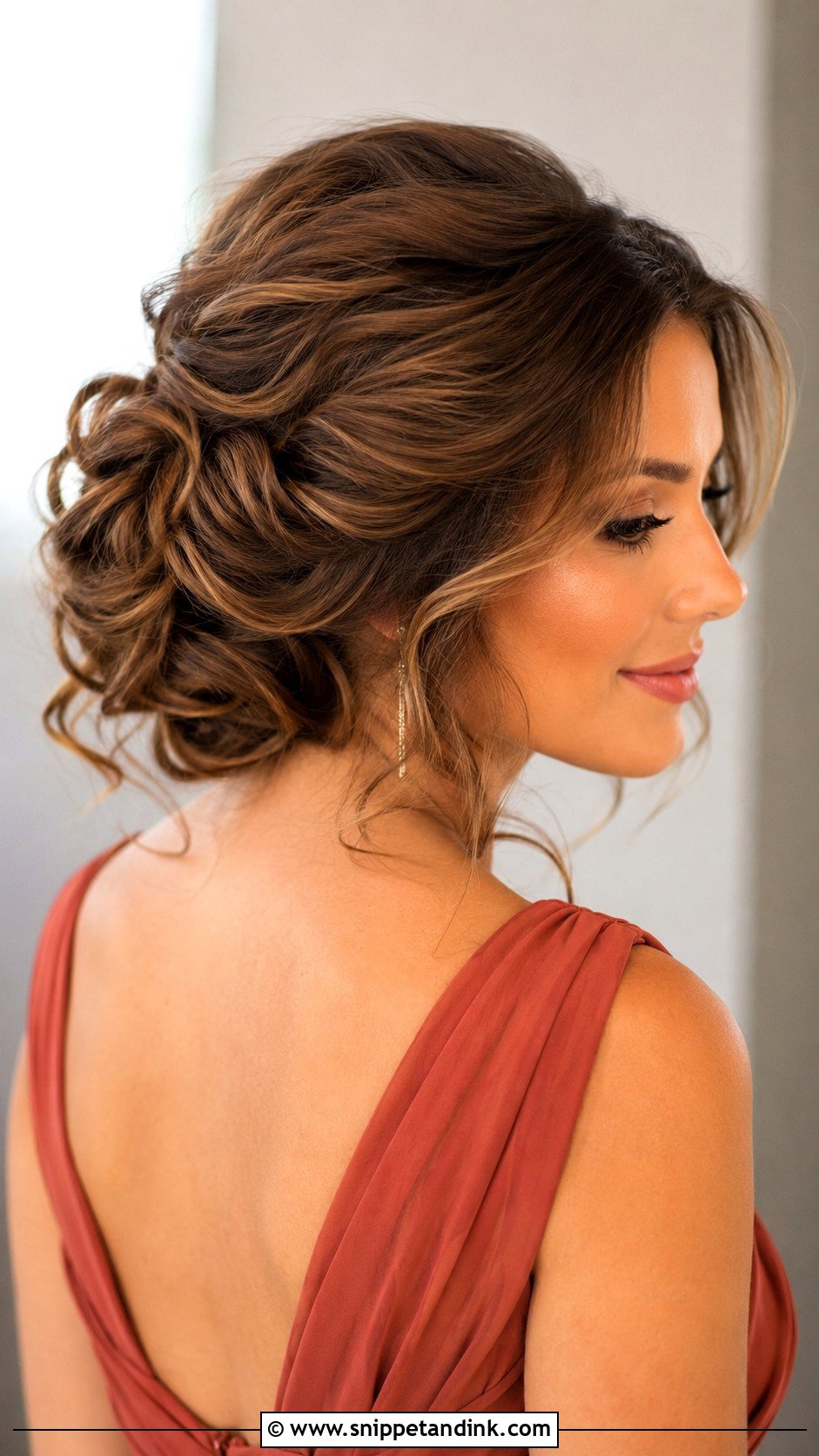
Texture is the most forgiving finish for fine hair, because bends and volume hide how much hair there is. I curl first, then pin the hair loosely into a bun, knot or gathered shape. Thick hair needs smaller pinned sections so the updo doesn’t get heavy. It suits boho, rustic, garden and modern weddings. Keep the front soft, but limit the loose face pieces; too many and it starts to look unfinished.
12. Boho Bridesmaid Updo
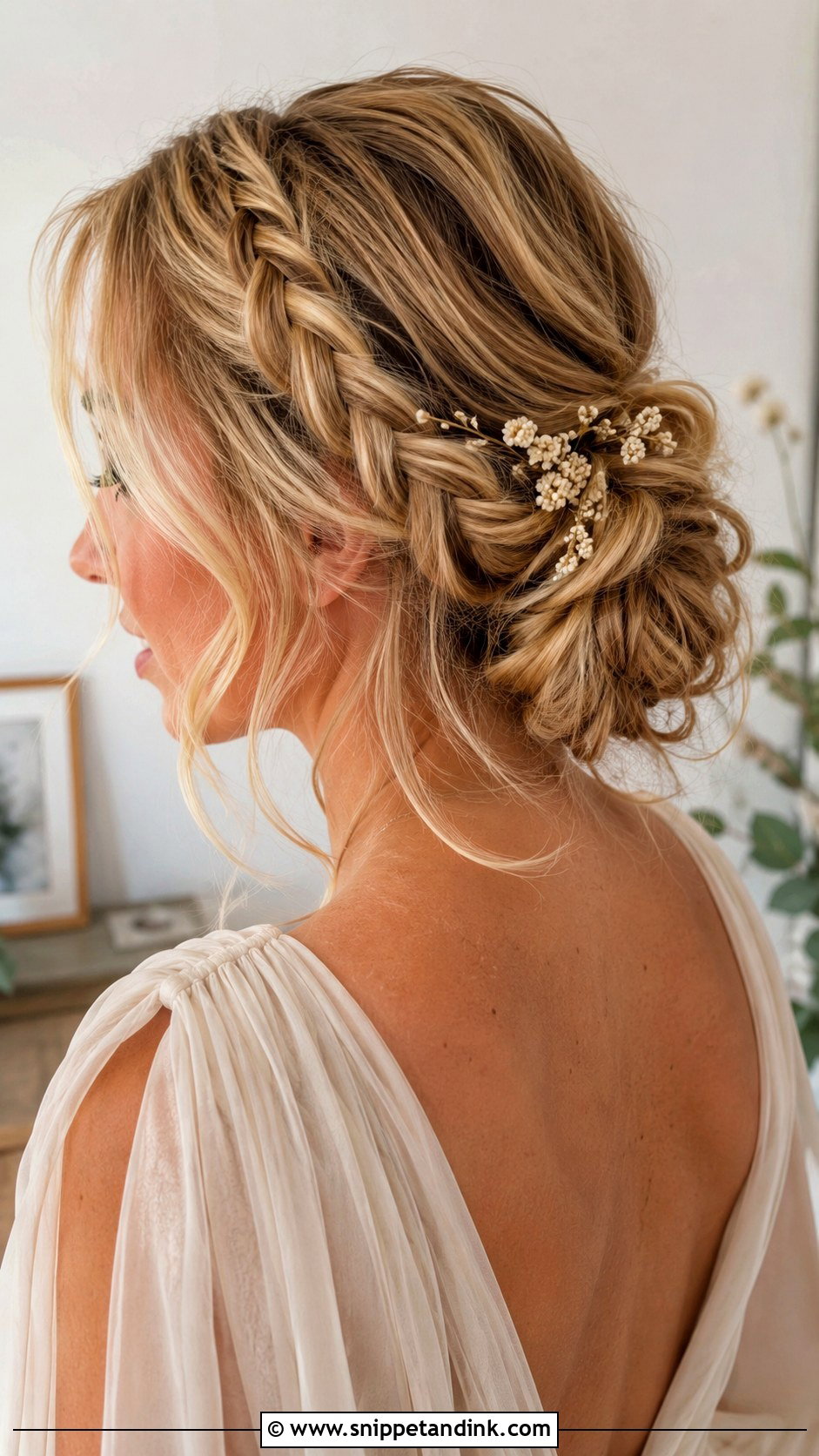
Boho styling is relaxed: loose waves, small braids, twists and a low undone bun. The line between romantic and tangled is thin, so I prep every section with texture spray and set it with a flexible spray, which keeps it touchable without collapsing. Dimensional color shows every shade in the texture. Tiny floral pins or pearls work if they match the theme. Soft dresses and natural makeup suit it best.
13. Half Up Bridesmaid Updo
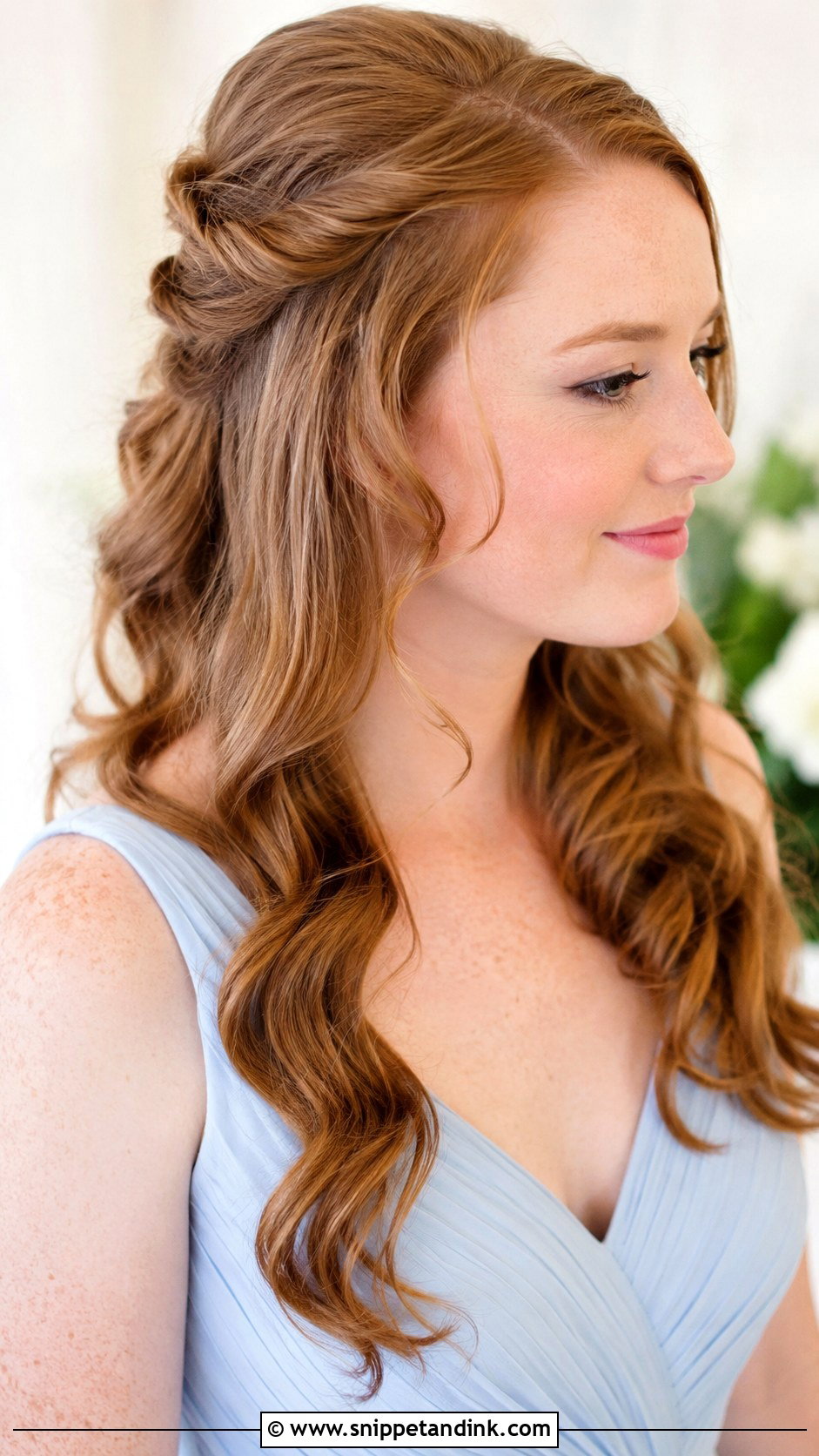
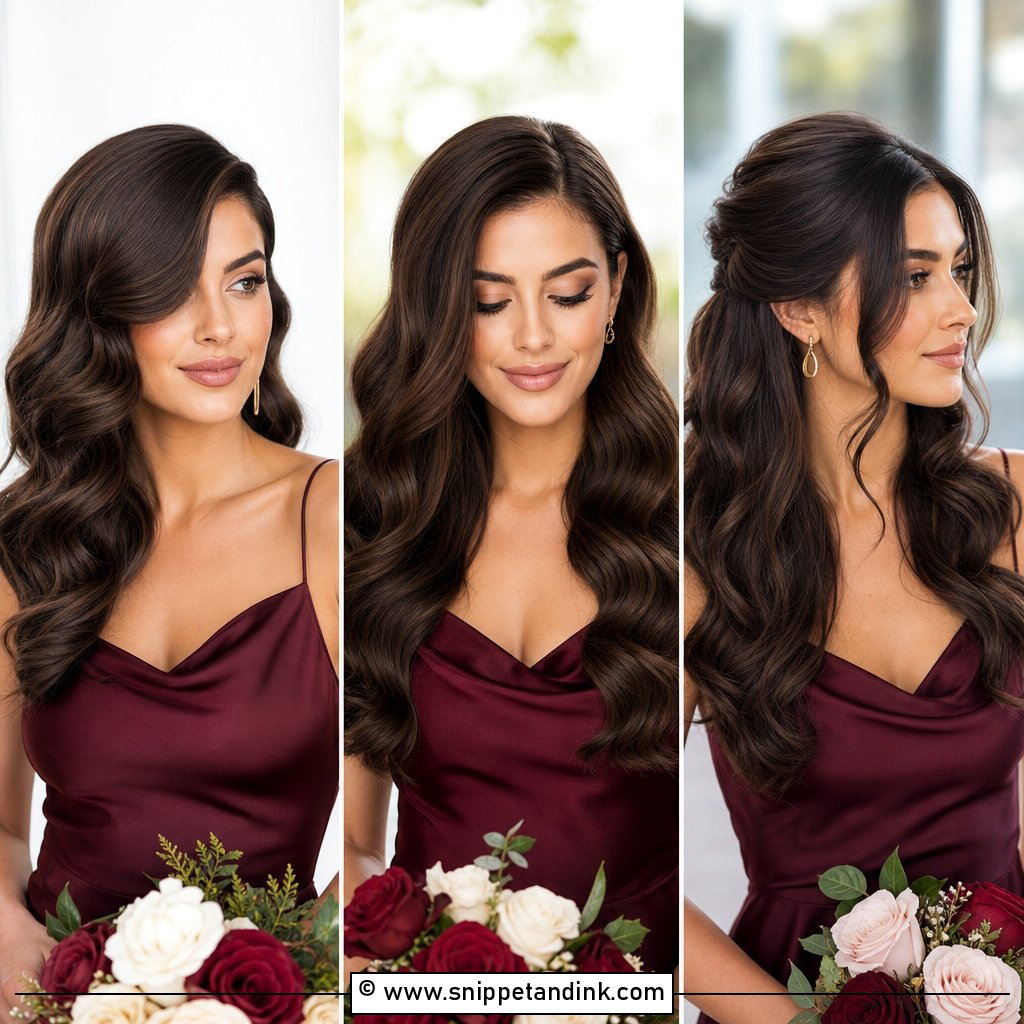
Not a full updo, but a half-up style gives a polished wedding finish while leaving length at the shoulders. The top section is lifted and twisted, braided or pinned, and the rest falls in waves. Long hair and layered cuts suit it best. For a bridal party, everyone can wear the same half-up shape, adjusted for length and texture. I’d keep it for cooler or indoor weddings; in humidity the loose curls fall first.
14. Updo With Face Framing Pieces
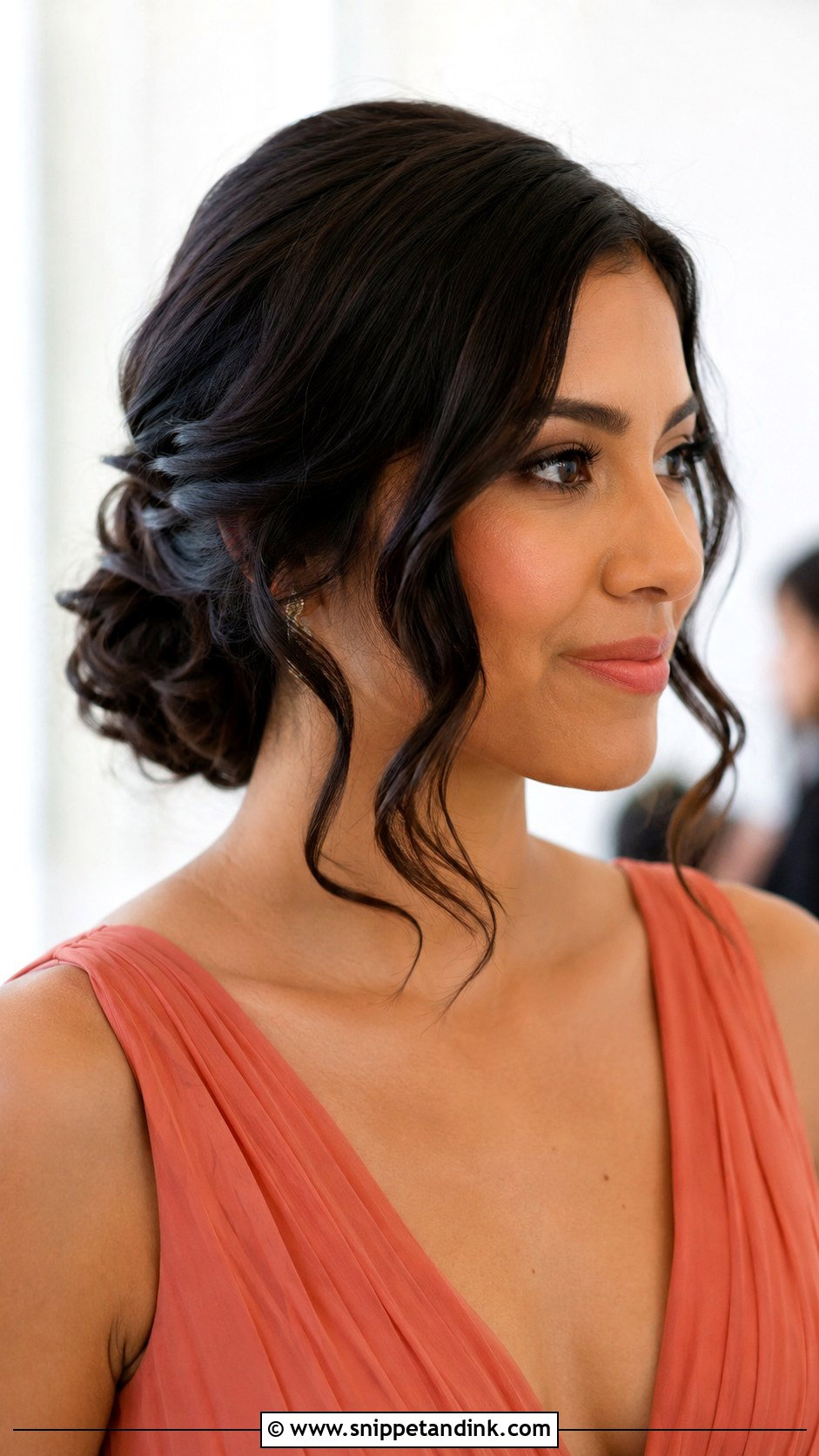
Face-framing pieces take the formality out of any bun or twist and soften the cheeks and jaw. They help bridesmaids who feel exposed with everything pulled back. I style them in soft waves, which blend into the updo better than straight strands, and keep them short enough to move but long enough not to fall across the dress. The difference between framing pieces and flyaways is intention: they should look placed.
15. Updo With Curtain Bangs
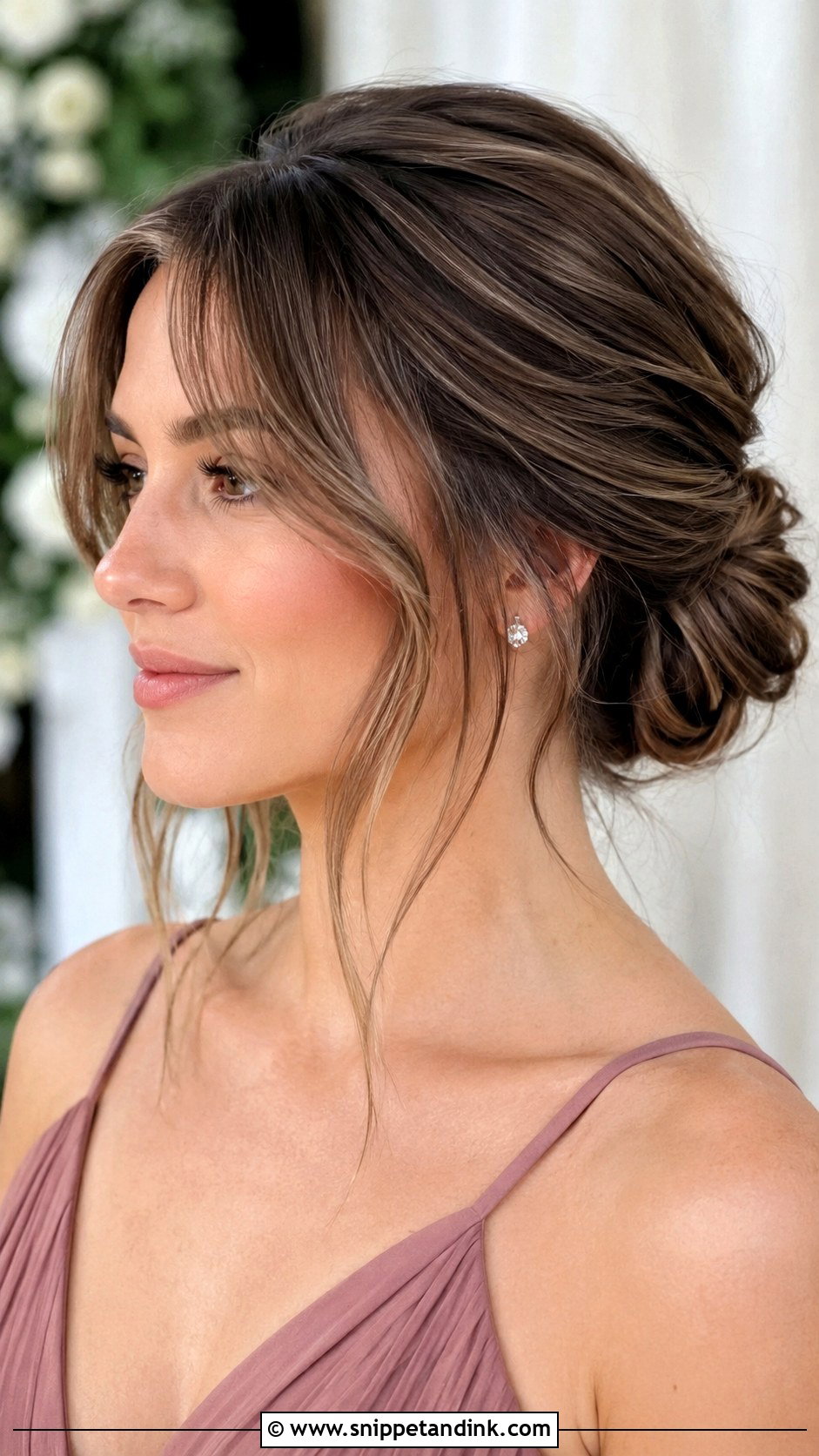
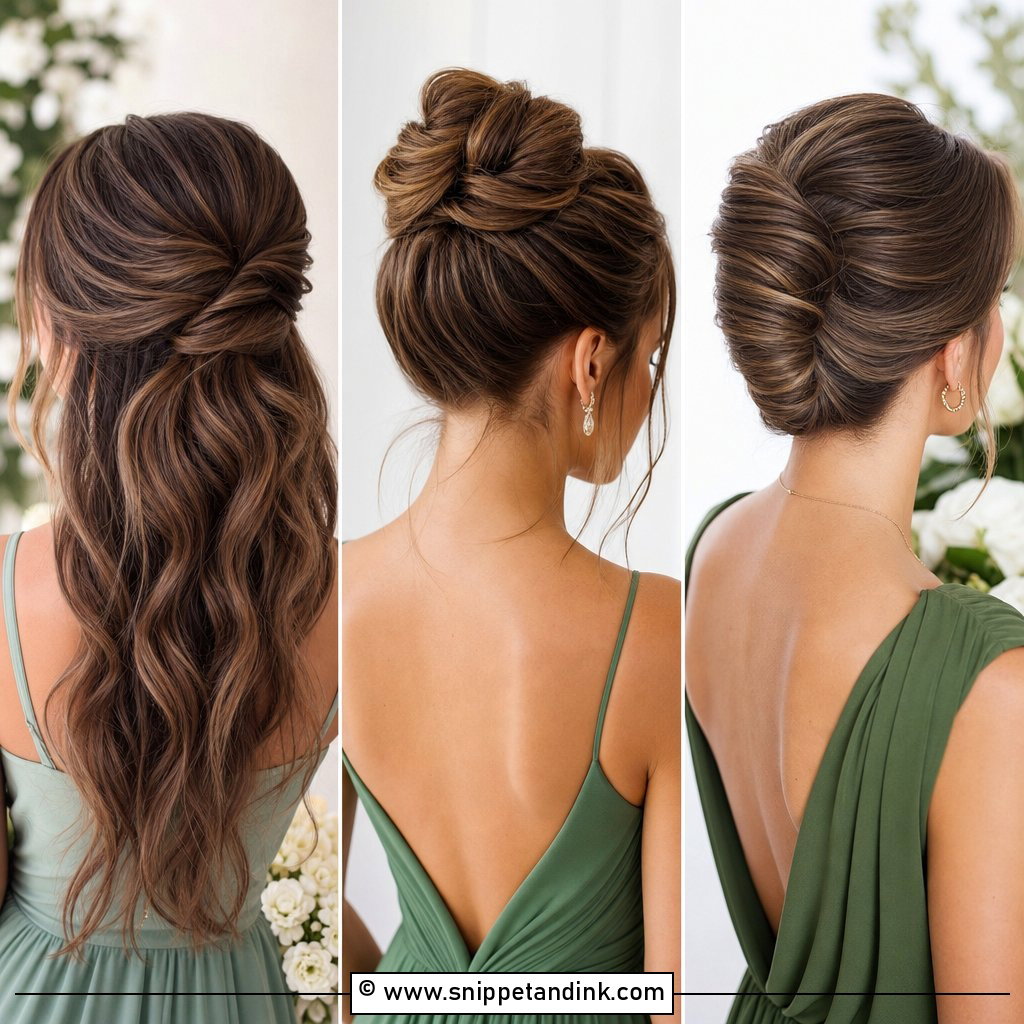
Because Curtain bangs already split around the face, they pair naturally with low buns, textured knots and relaxed chignons. The rest of the hair goes up neatly while the bangs carry the shape at the front. I blow them dry with a round brush, bending them away from the face. Heavy product makes them separate into strands, so a light spray is all they need. Medium and long layers blend into this most easily.
16. Updo For Short Hair Bridesmaid
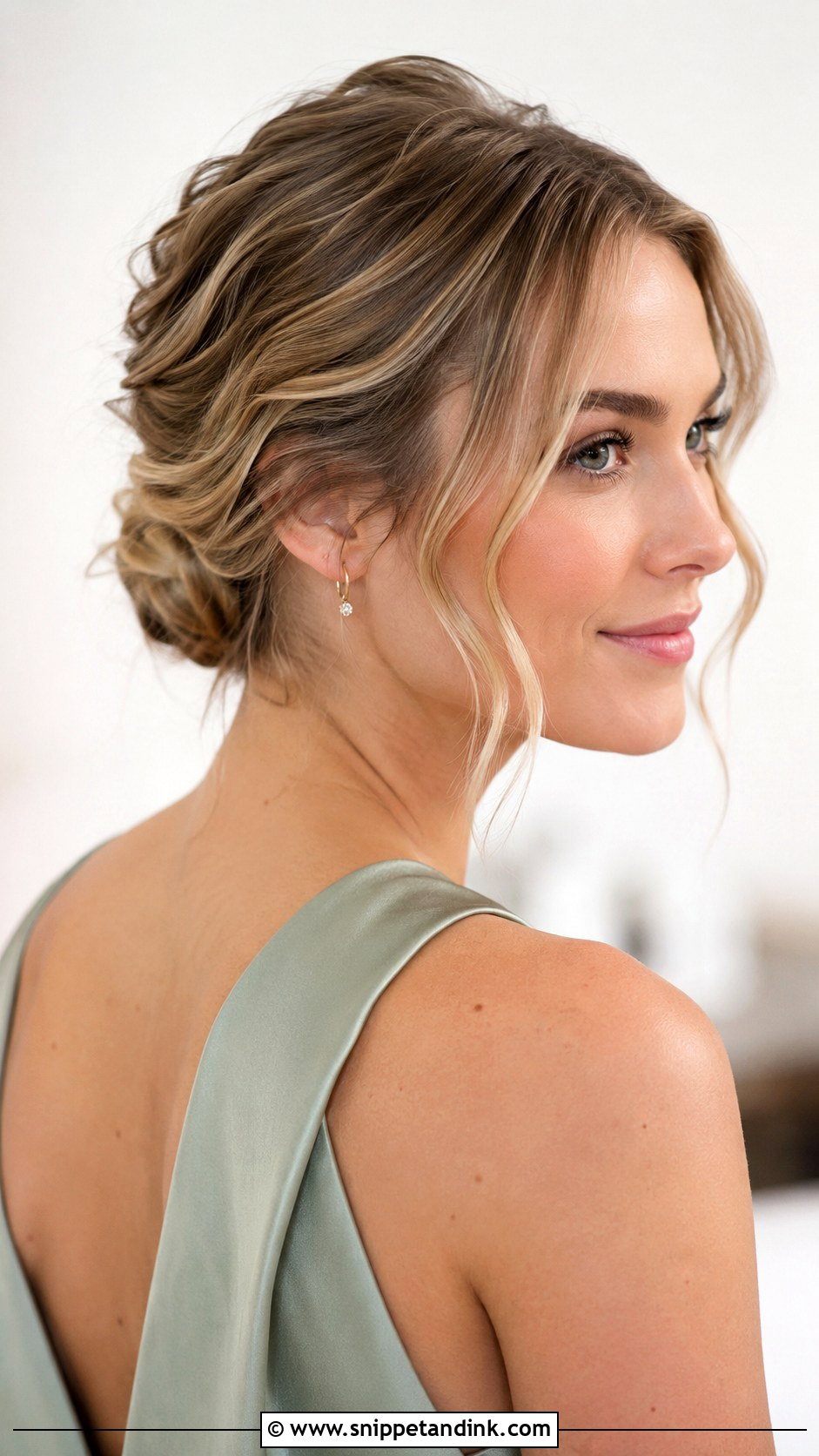
Short hair goes up with smart pinning rather than length. Even a bob or lob can be curled and pinned in small sections at the nape into a tucked twist or a mini bun. I leave face-framing strands out for balance and hide the pins at the back. It lets bridesmaids with shorter cuts match the rest of the party. A slim comb or a few pins can fill the shape, but the result should still feel light.
17. Updo For Long Hair Bridesmaid
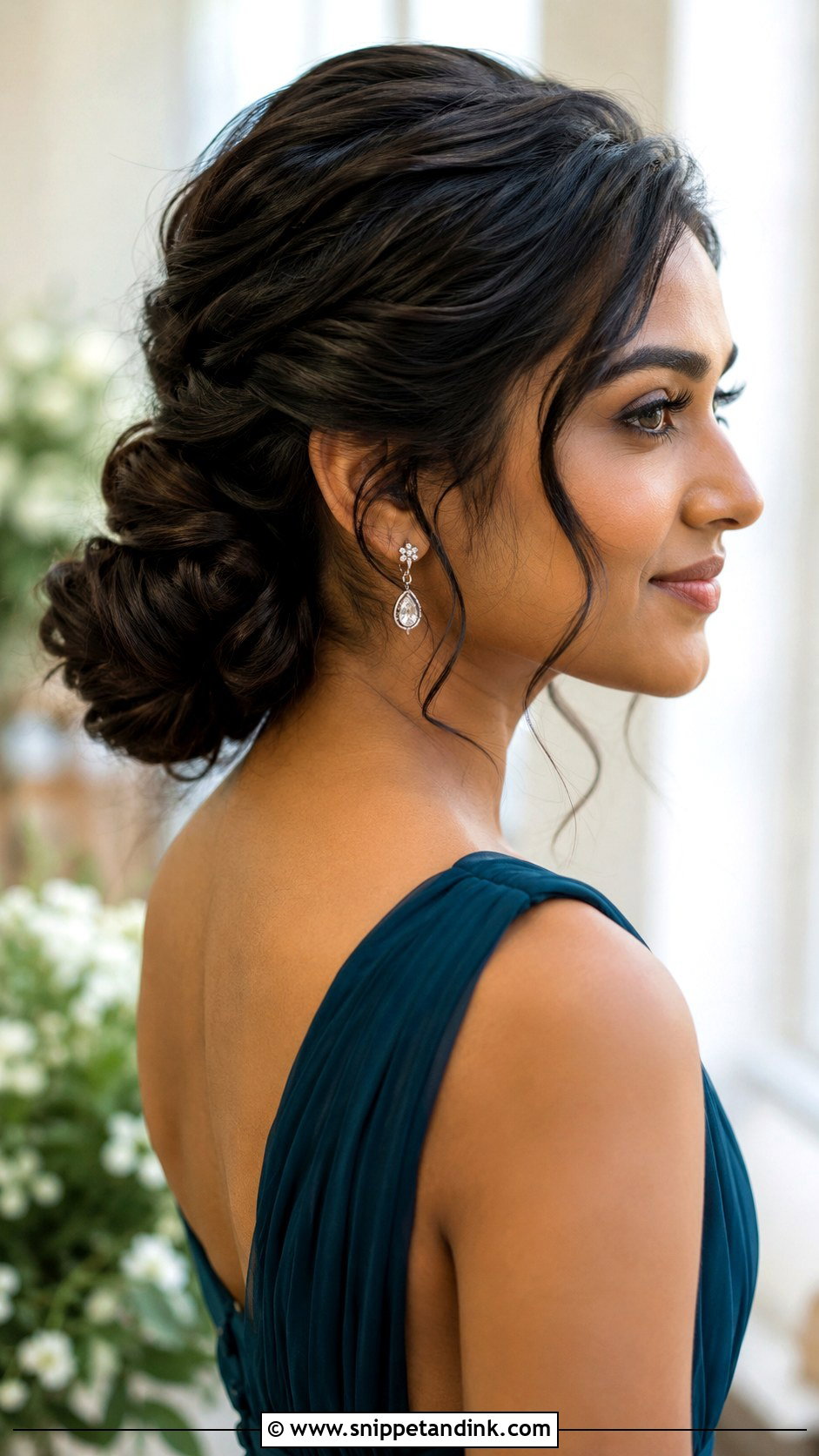
Long hair has every option, but the weight needs a strong base, so I set elastics and pins before shaping anything. A low textured bun, twisted chignon or braided bun wraps the length securely. Very thick hair is more comfortable when I split it into sections with separate anchors, rather than forcing it all into one heavy knot. From the back, long-hair updos show the most dimension of any length.
18. Updo For Medium Hair Bridesmaid
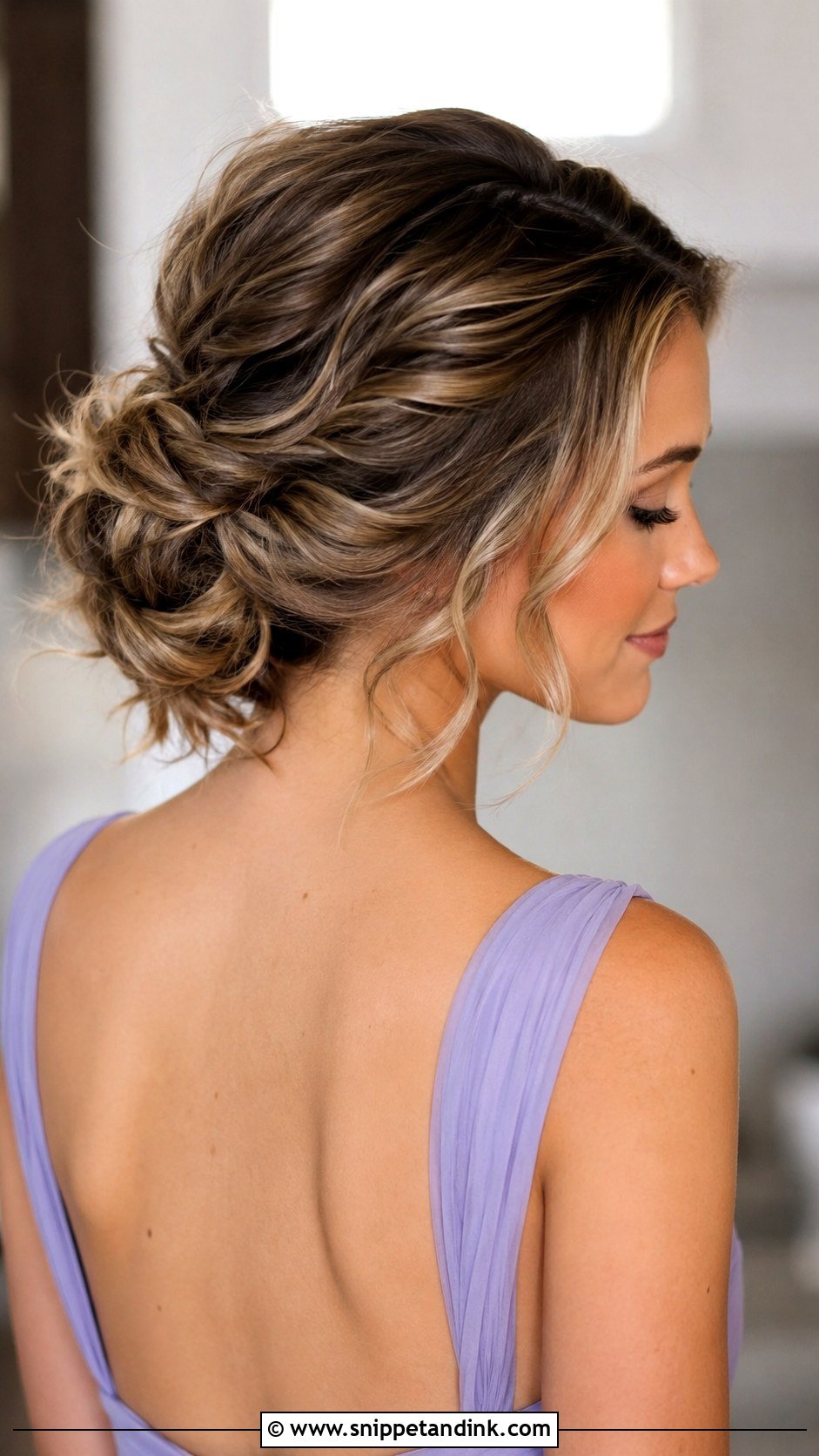
Medium hair is the easiest length to customize. There’s enough to pin but not enough weight for the style to drop quickly, so textured low buns, side updos and French twists all hold well. Shoulder-length hair should be curled first for grip and fullness. Extensions can make a bigger bun but are rarely essential. Face-framing layers at this length fall naturally into a soft finish.
19. Updo With Hair Accessories
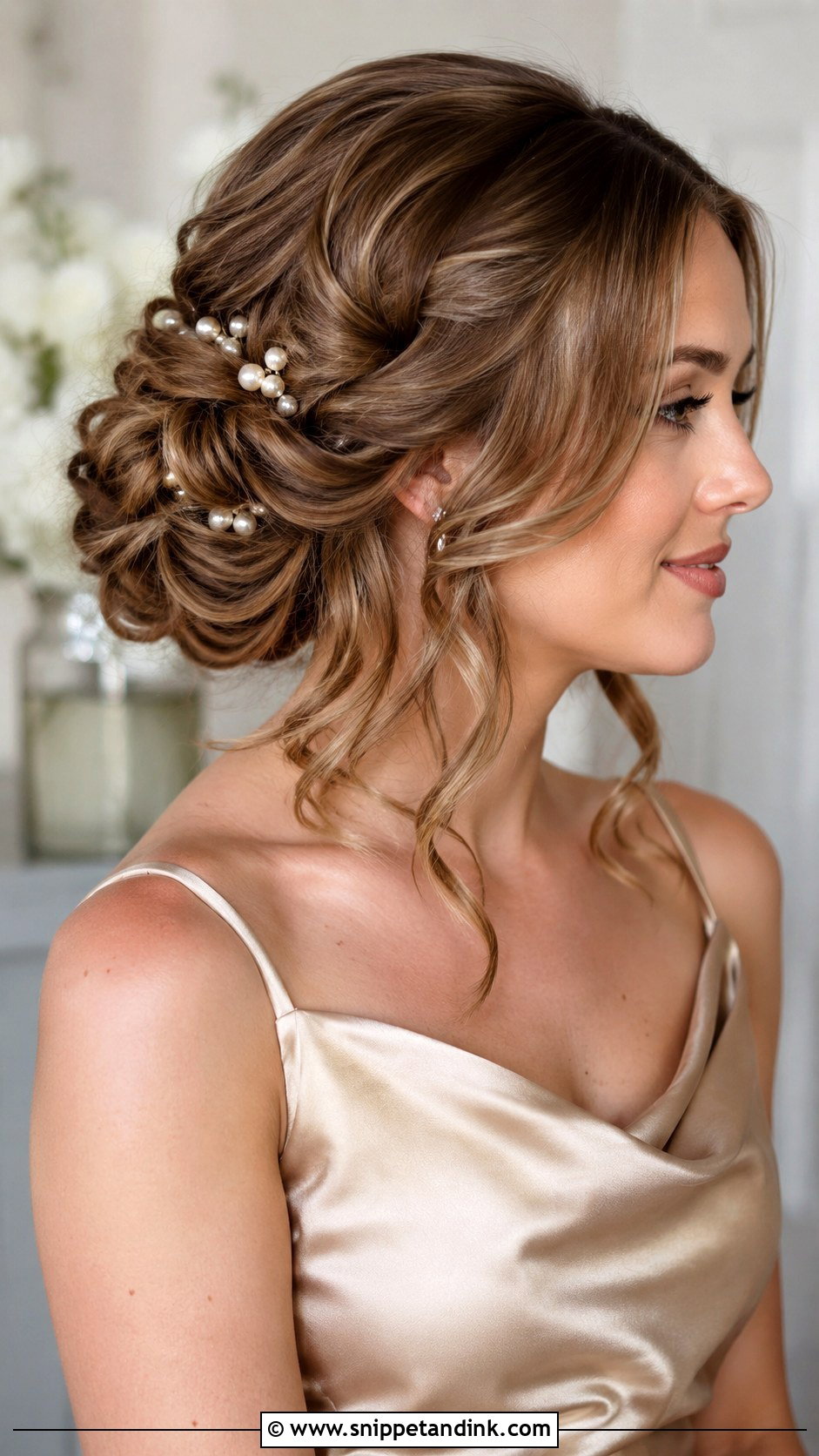
A small accessory can finish a simple updo. Pearl pins, metallic clips, floral combs or barrettes sit well around a low bun, chignon or textured updo. Keep them small enough that they support the look and don’t compete with the bride’s. Bridesmaids can match exactly or wear different pieces in the same finish. Every accessory needs a pin or two through it into the base; pushed into hair alone, it’ll be on the floor by the speeches.
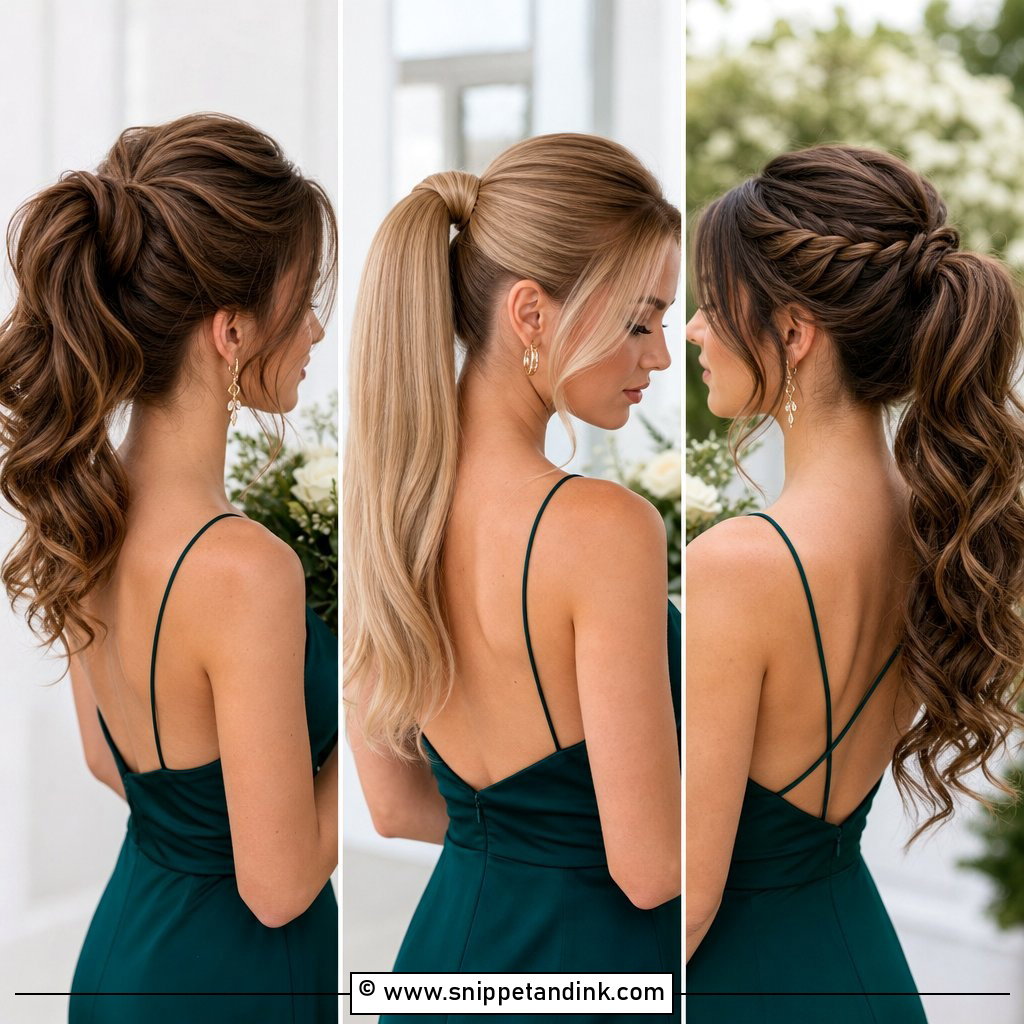
20. Updo For Thin Hair Bridesmaid
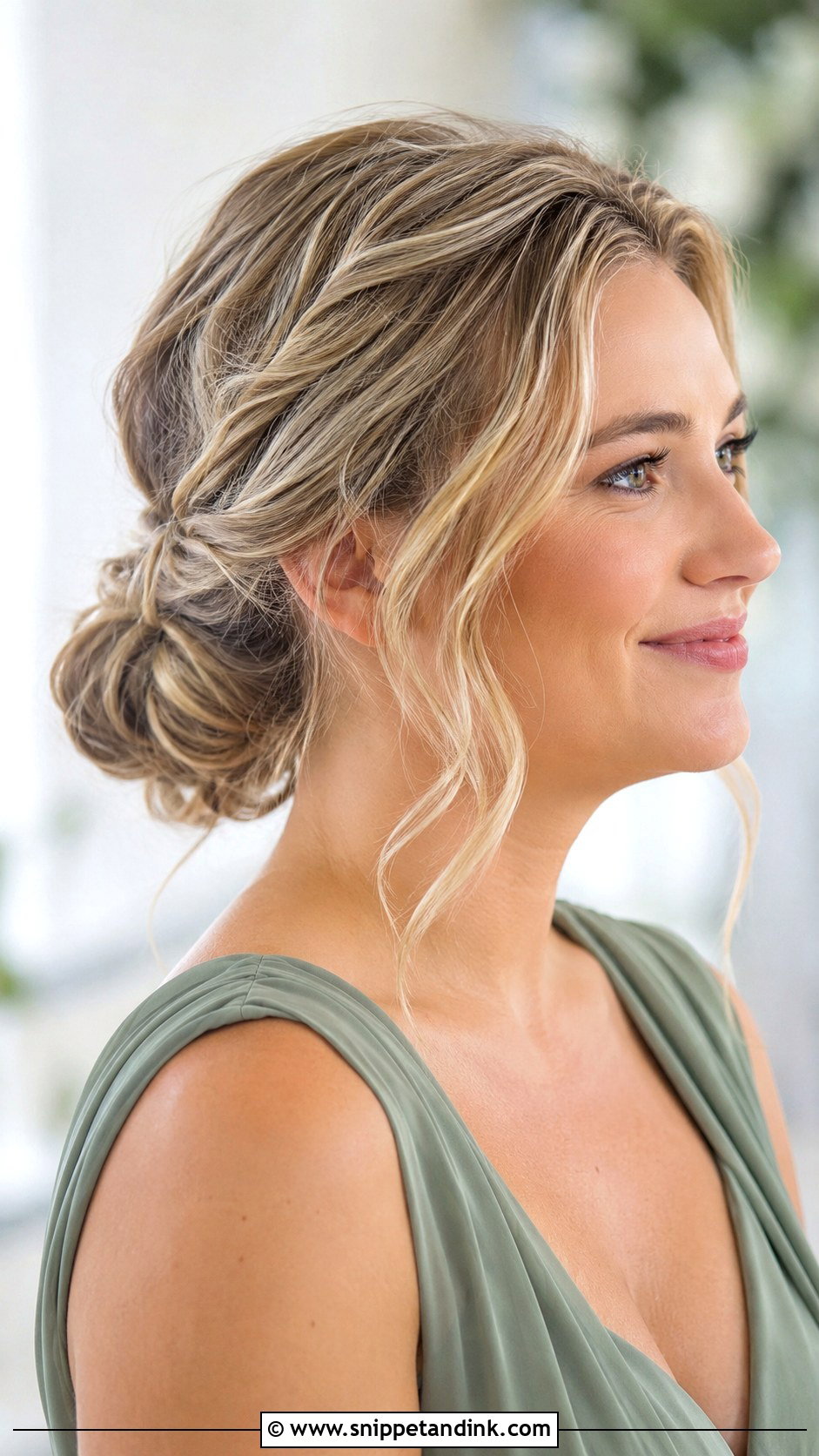
Thin hair needs volume built in from the start: curl it, tease lightly at the roots and use a dry texture spray. A low messy bun, twisted bun or soft chignon will make the hair look fuller; a tight sleek style shows the scalp. A small bun filler or a couple of clip-ins add fullness if she wants it. I keep the front lifted, never flat against the scalp. Prepped properly, thin hair holds an updo well.
Pinning Your Own Bun When There’s No Stylist Booked
Plenty of bridesmaids do their own hair, and a simple low bun or chignon is very achievable at home. Practice it at least twice before the wedding, with the same pins and products you’ll use on the day.
Start with hair washed the day before and curled with a medium barrel. Gather a ponytail at the nape and secure it with an elastic, then twist the tail and wrap it round the base. Pin it by sliding each bobby pin through the edge of the bun and into the hair at the base of the ponytail, not just into the bun itself. That’s what keeps it from sliding.
Use pins that match your hair color, and buy more than you think you’ll need. Loosen the surface gently with your fingertips after pinning, not before, and finish with a flexible spray held at arm’s length. If something feels tight after ten minutes, fix it then; it won’t get more comfortable over the day.
Do it in a button-front top so nothing goes over your head afterward, and leave yourself a full hour the first time on the day. Rushing is when pins go in at the wrong angle and the bun starts to slip before you’ve left the house.
One Direction for the Party, Adjusted for Each Bridesmaid
Updos should be comfortable and realistic for a full wedding day. Low buns and chignons are classic, sleek buns read modern, braids add detail and textured buns soften the look in photos. Short, medium, long, curly and thin hair can all go up with the right prep and pinning. For a cohesive bridal party, agree on one general direction, then let each stylist adjust it to the person wearing it.
You'll Like These Ideas:


Leave a Reply