
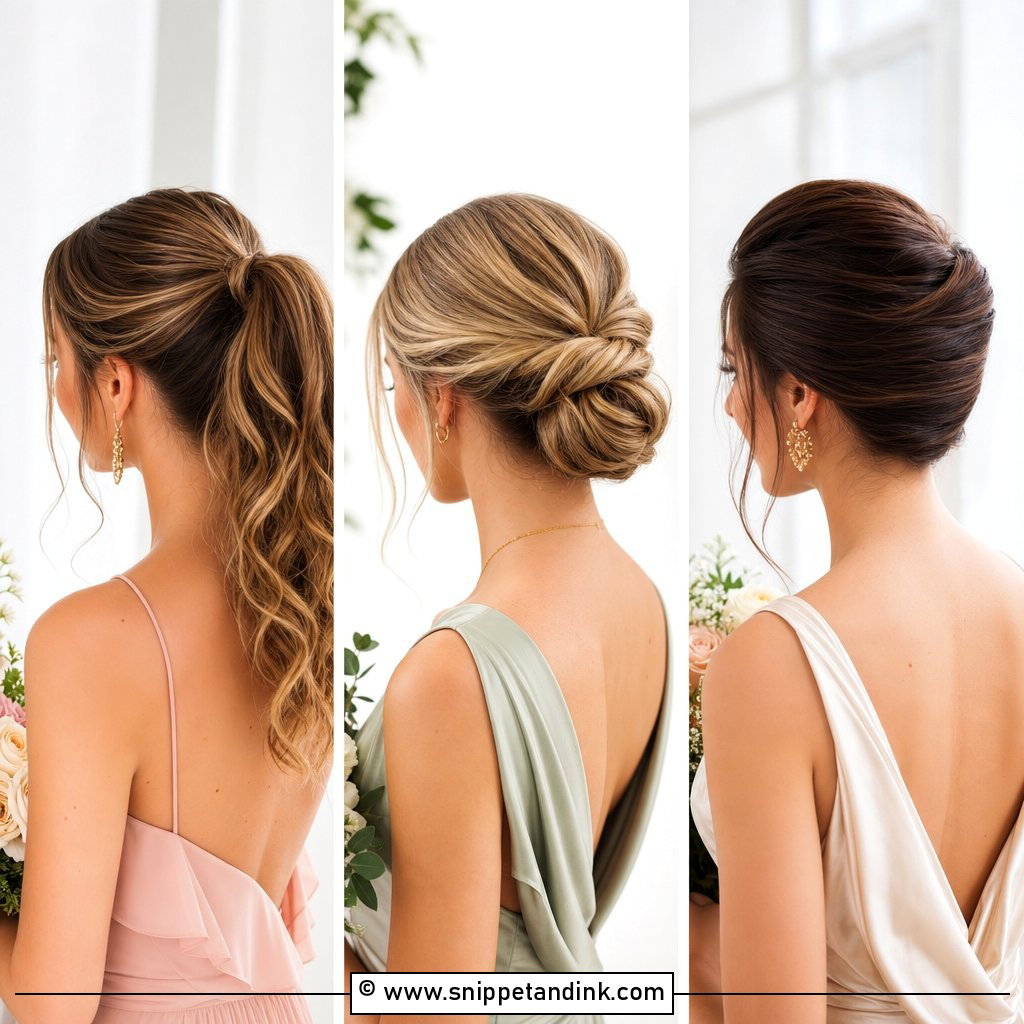
An updo has to survive a lot on a bridesmaid: hugs in the receiving line, a crouch to fix a train, hours of dancing and a damp evening on the terrace. The ones I trust do more than lift hair off the shoulders. They frame the face, answer the neckline and still look soft when someone touches them. Most of what I’m asked to do for wedding parties right now lands somewhere between a low bun, a loose chignon, a twist and a braid, kept relaxed enough to suit different hair types in the same row. Below are 35 updos I’d recommend for bridesmaids, from classic to modern to simple enough to do yourself, with notes on who each one suits and where it tends to struggle.
Fitting Every Updo Into One Getting-Ready Morning
The schedule shapes the hairstyles more than most brides expect. A soft low bun on medium hair takes me roughly 40 minutes to an hour; braided crowns, long-hair chignons and anything with extensions can take longer, and a stylist working alone can only do so many before the photographer arrives. Times vary between stylists and hair types, so ask yours for an estimate per person, not a total.
The order I’d set
- Bridesmaids with the simplest styles go first, so the stylist warms up and the room fills up gradually.
- Anyone with the most hair or the most complicated style goes in the middle, when there is still slack in the schedule.
- The bride sits last but one or last, so her hair is freshest for the first look and the ceremony.
- Leave a 20 minute buffer at the end for touch-ups and putting in flowers or accessories.
Ask everyone to arrive with clean, completely dry hair washed the day before, not that morning. Day-old hair grips pins far better, and blow-drying wet hair in the chair eats into everyone’s time. Tell your stylist beforehand who has extensions, a recent color or a fresh cut, as each changes how long the work takes.
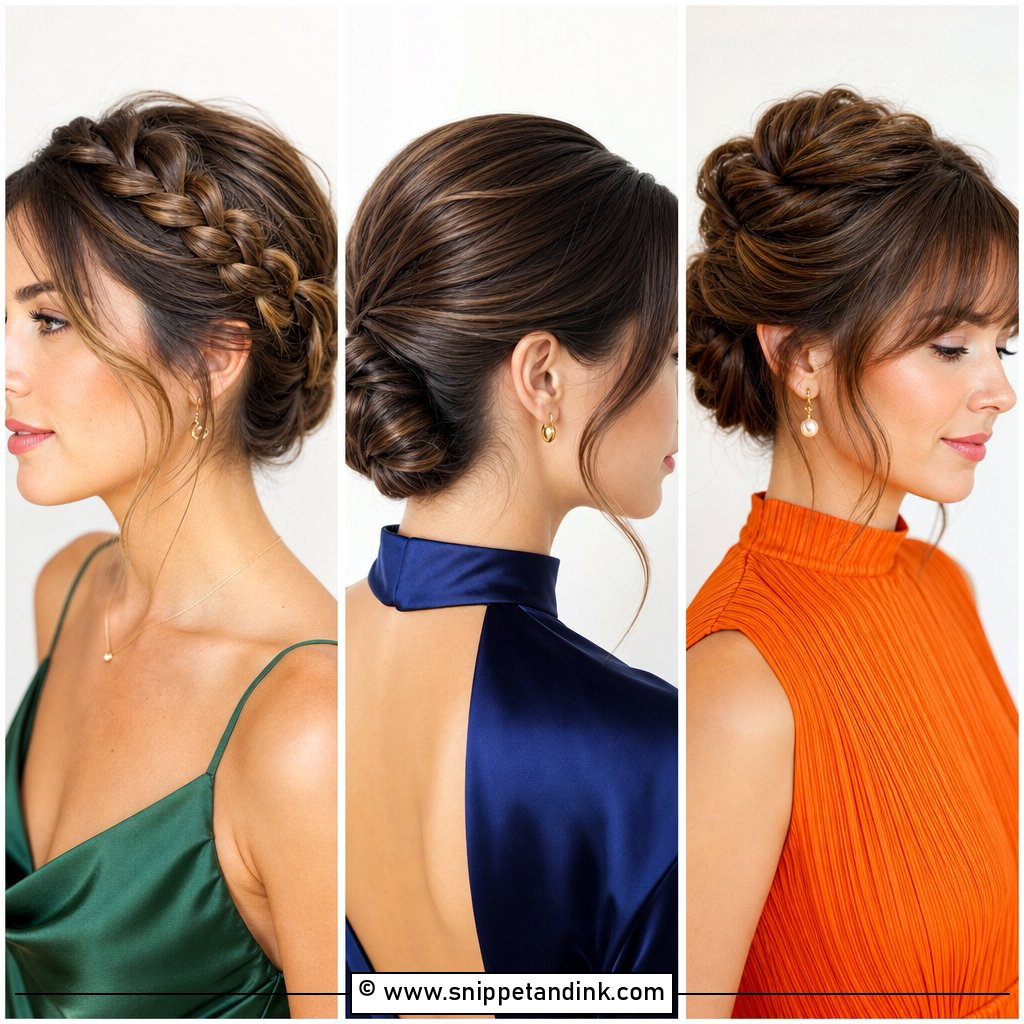
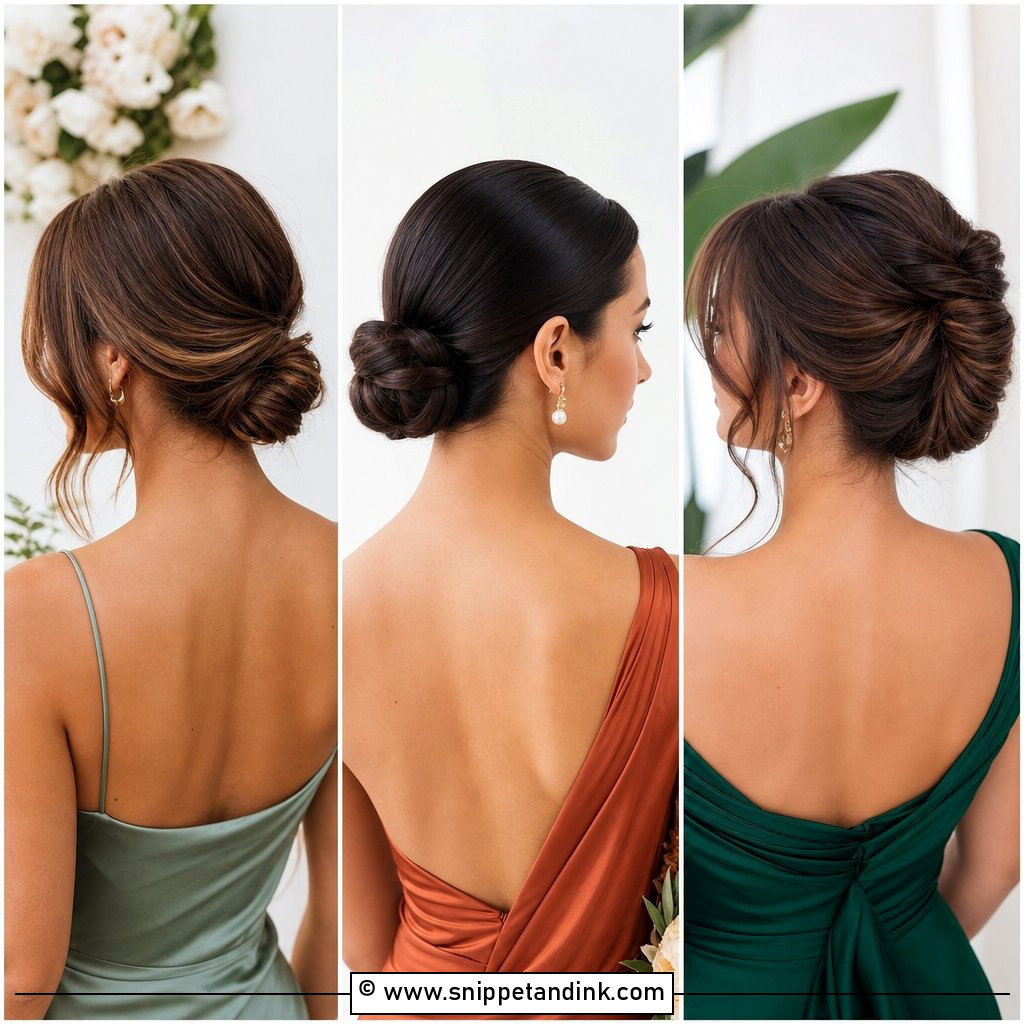
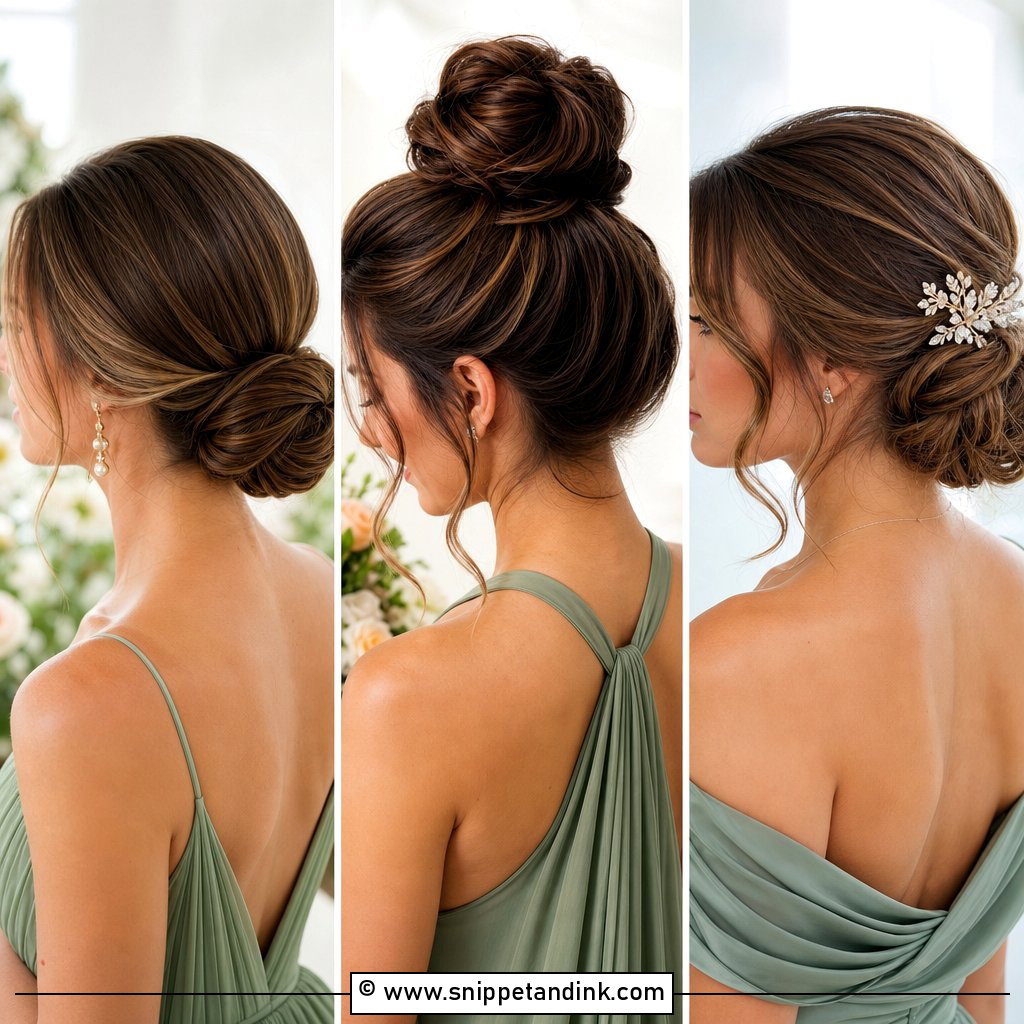
1. Low Bun Bridesmaid Updo
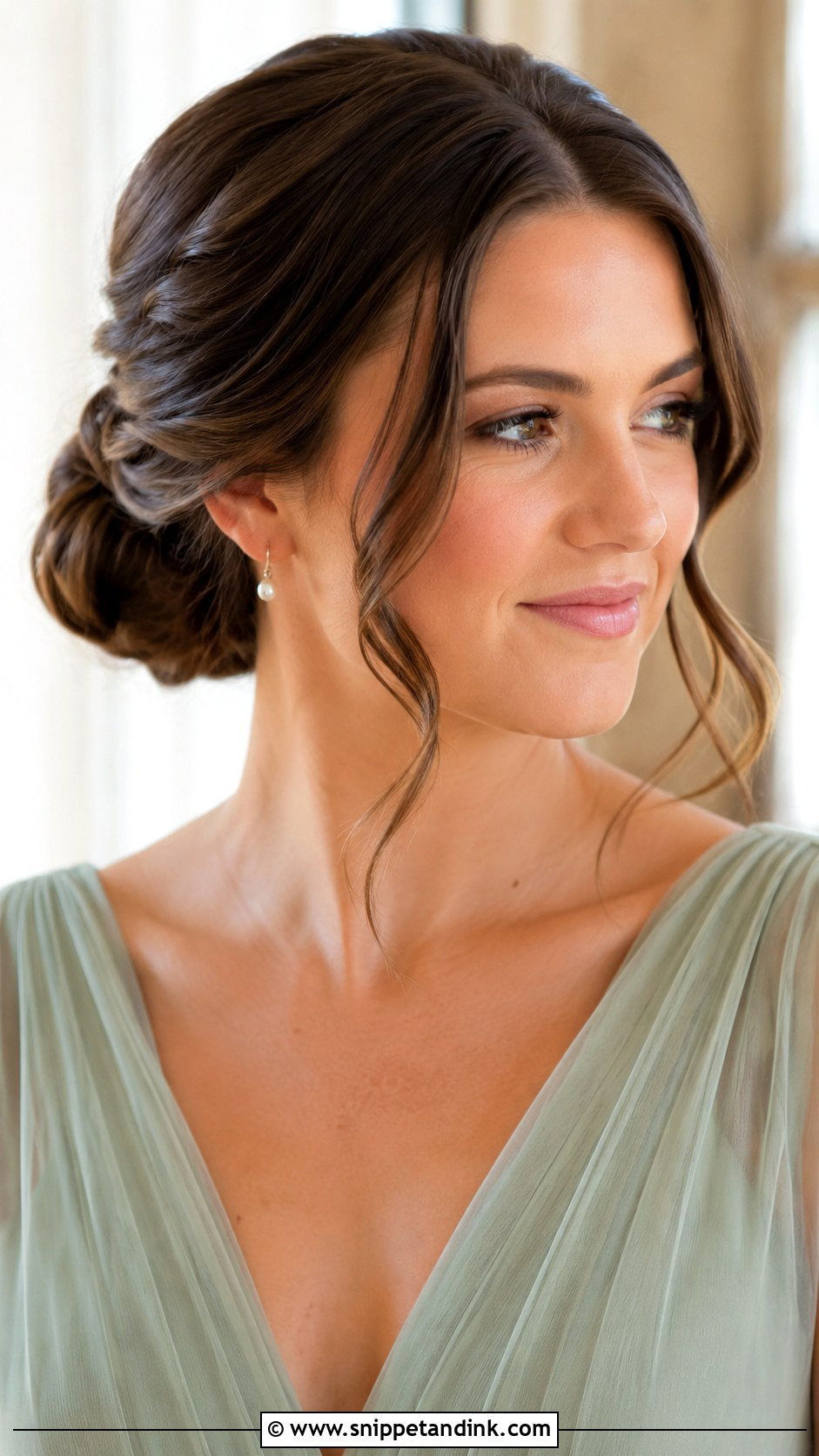
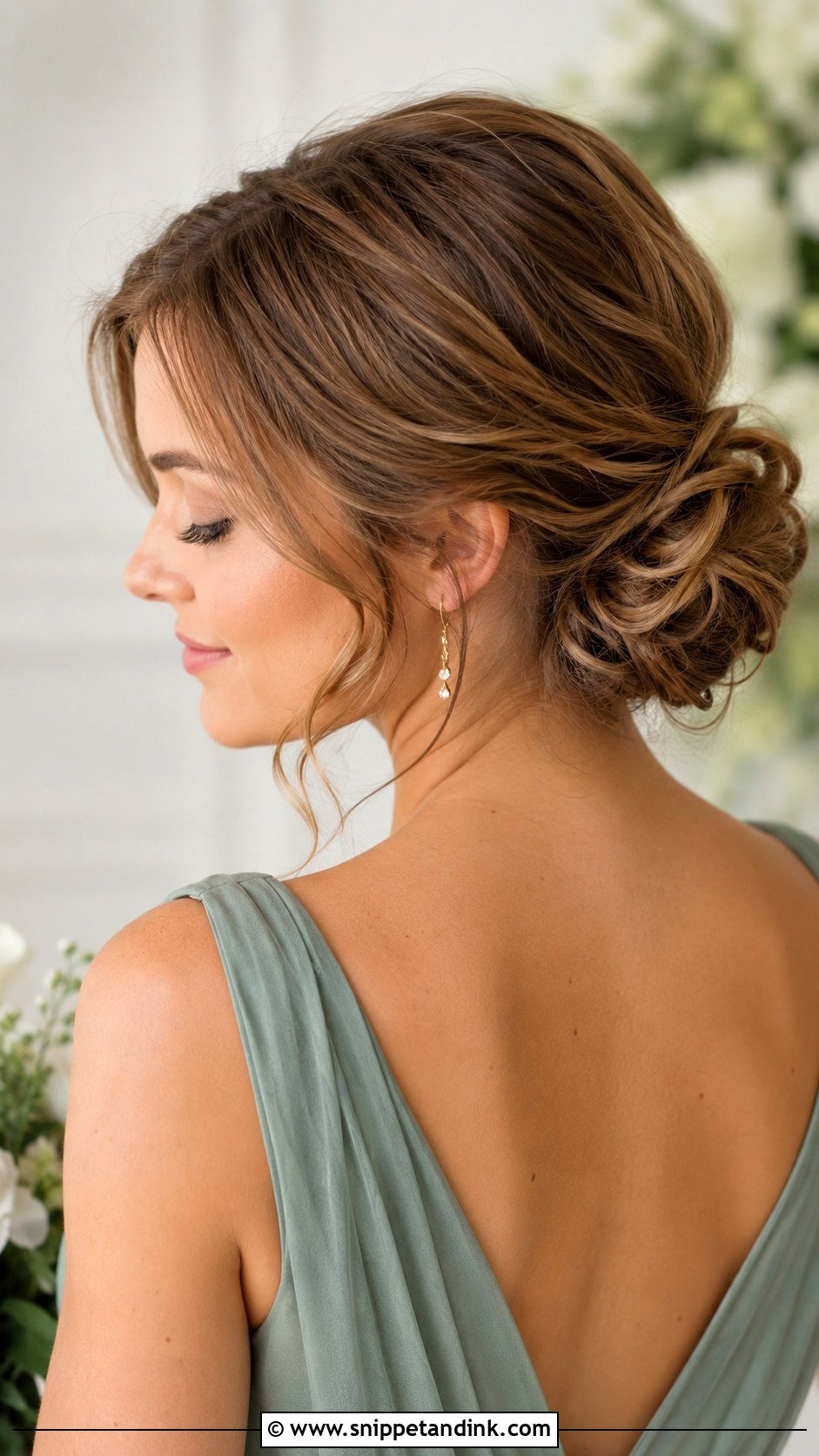
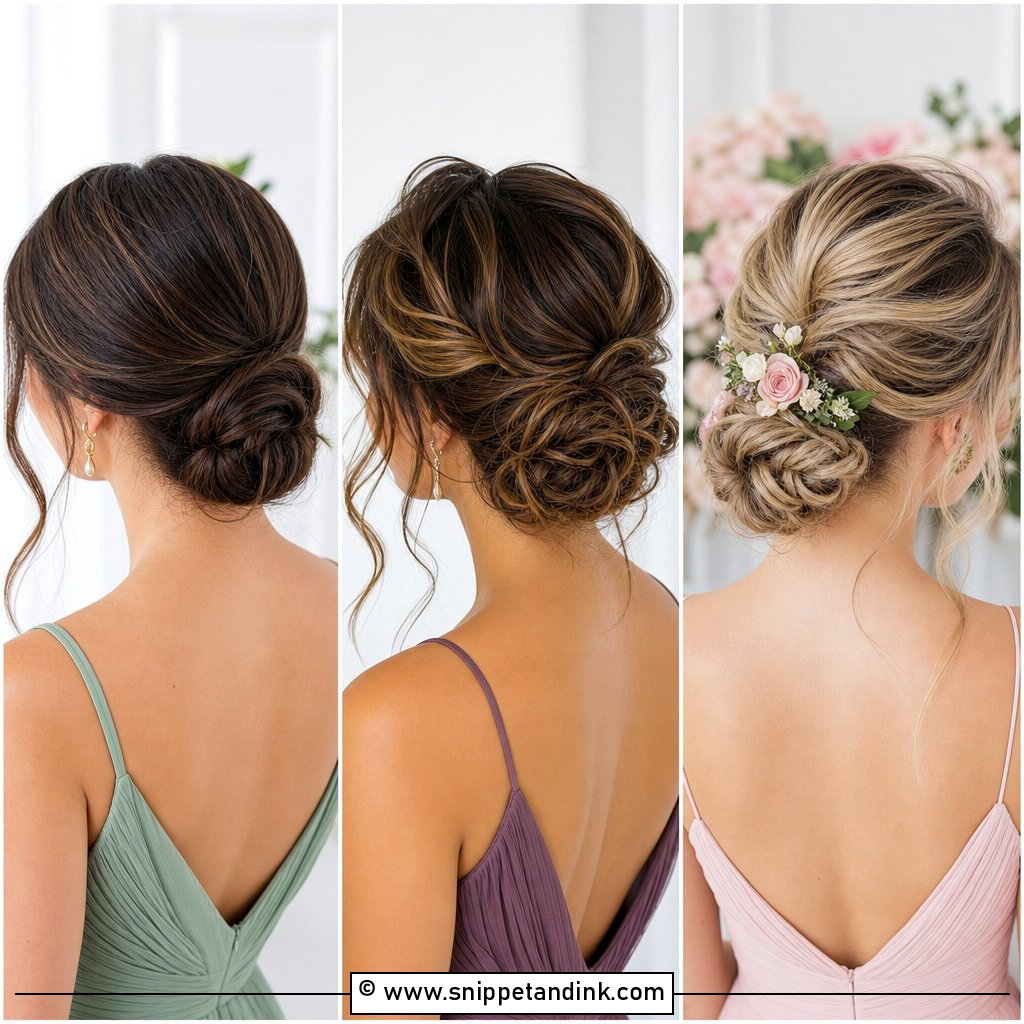
If a bridal party can’t agree on anything, a low bun is where I’d start. It sits at the nape, away from the bride’s own style, and it suits satin, florals, high necks and off-the-shoulder gowns alike. Ask for a little lift at the crown for a softer finish, or keep the top smooth for a clean one. I anchor a low bun with two bobby pins crossed in an X underneath it, which is why it rarely sags after hours of hugging. A couple of face-framing pieces stop it looking severe in photos.
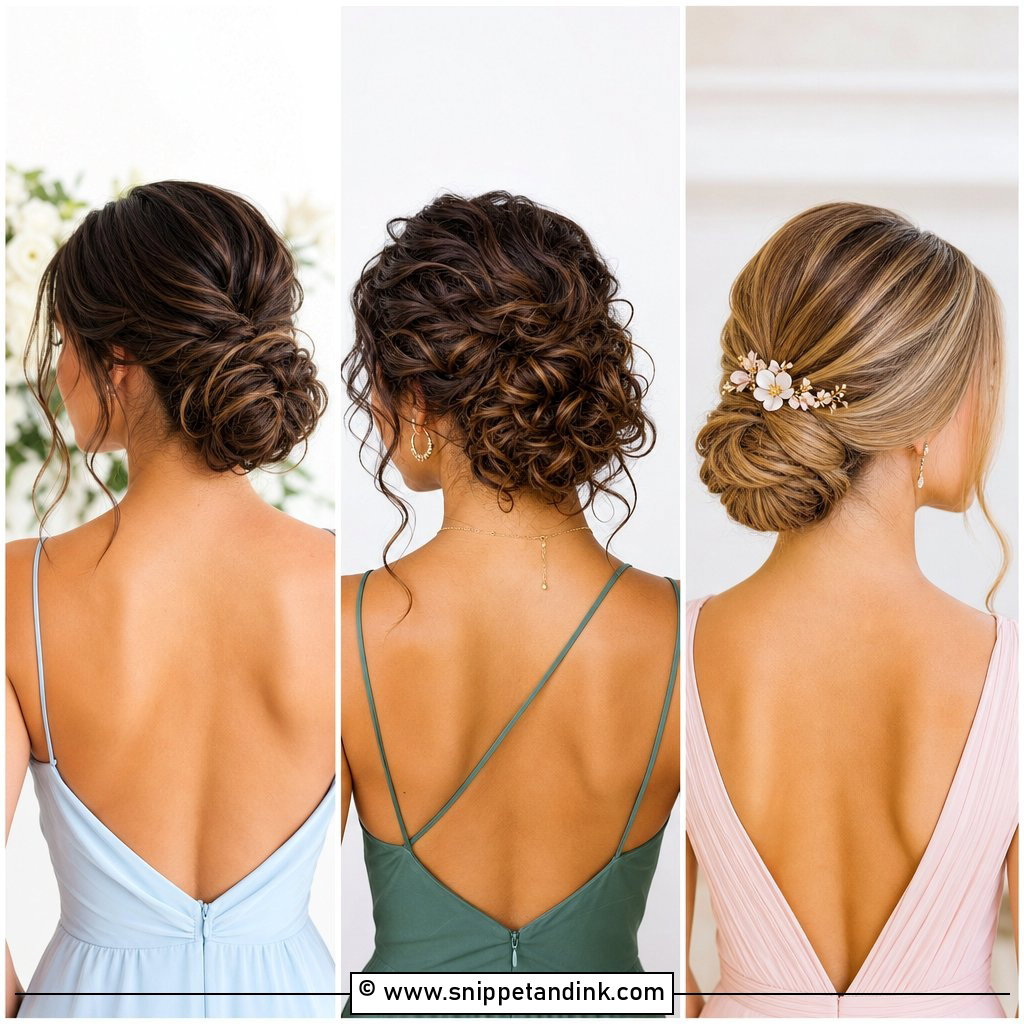
2. Textured Low Bun Bridesmaid Updo
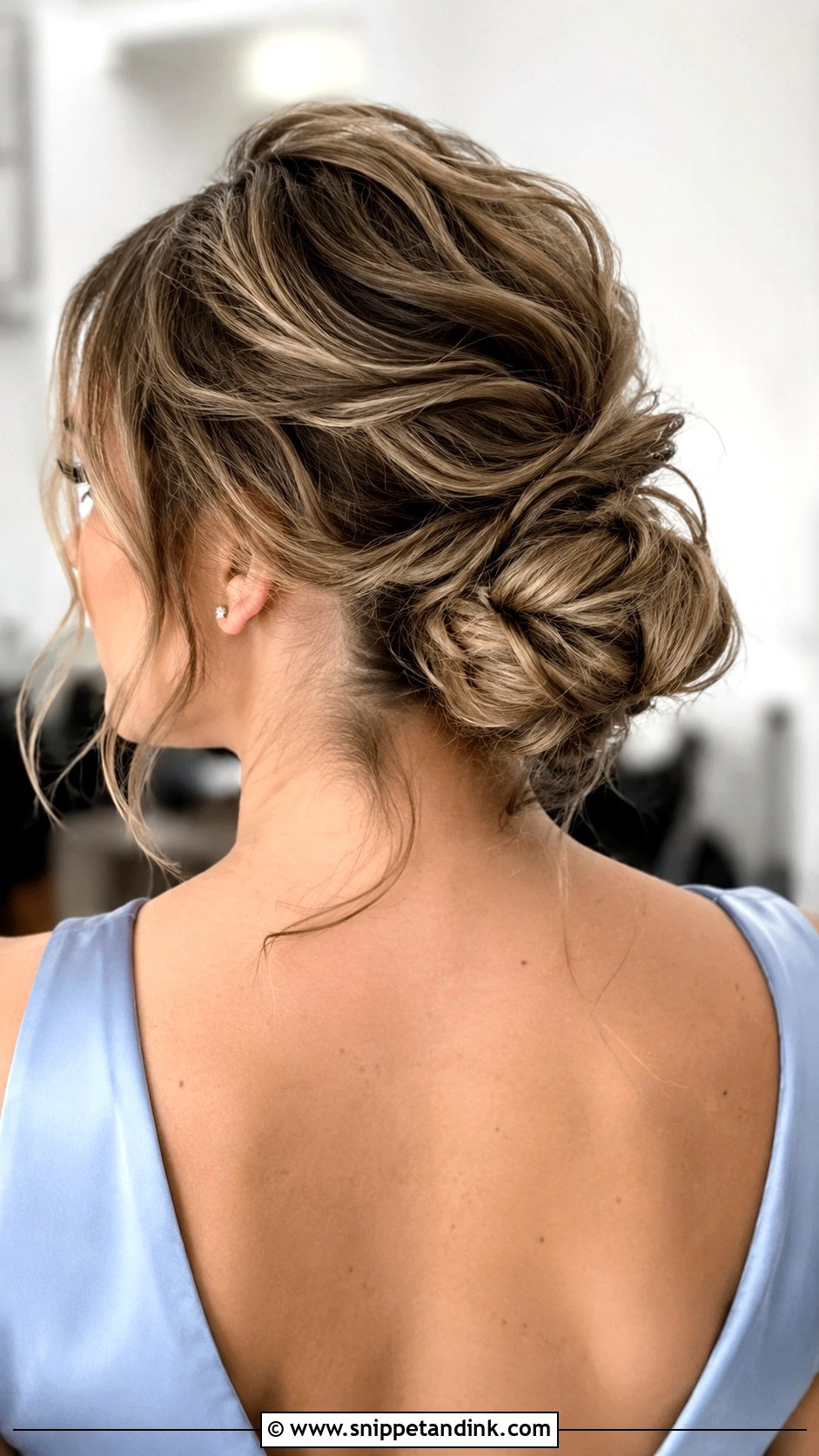
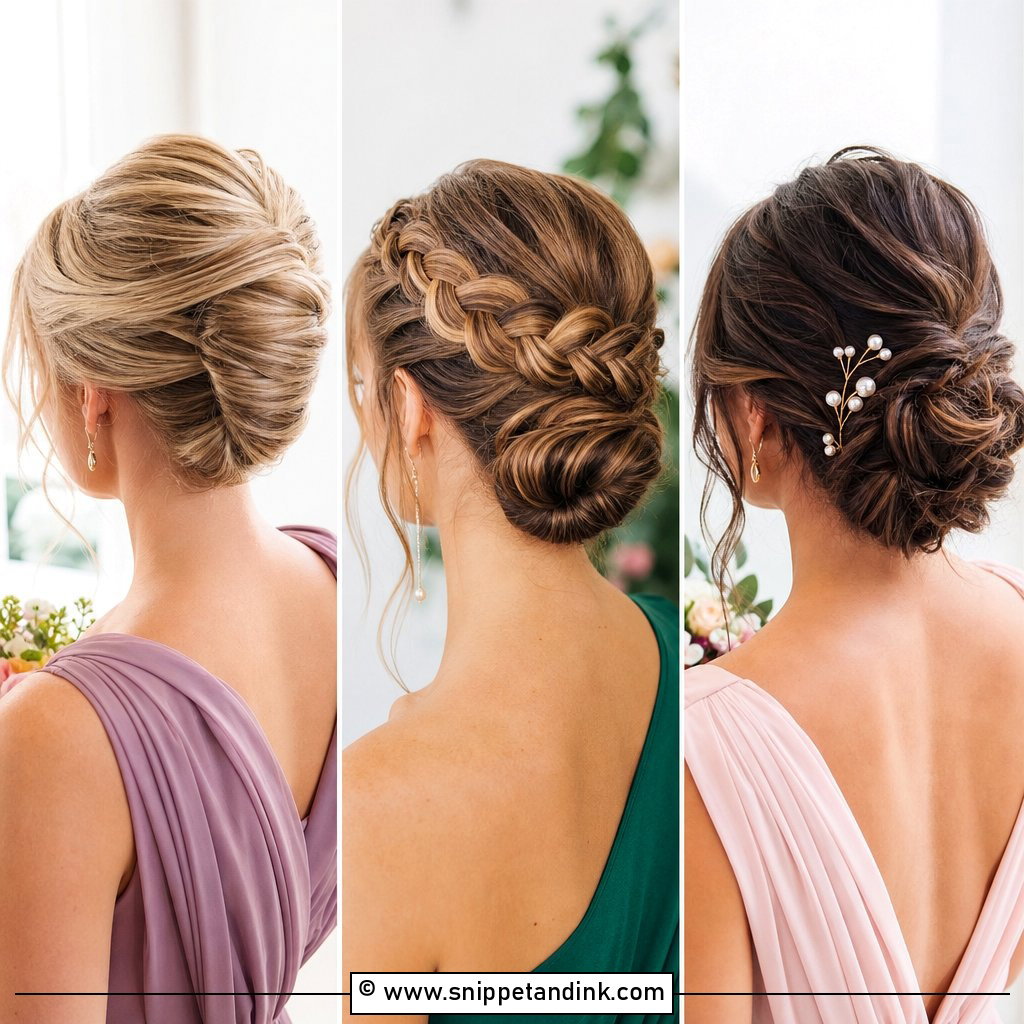
The textured low bun is the one everyone saves on Pinterest: loose bends, visible sections and dimension instead of a tight, flat knot. It shows off highlights, balayage and natural waves, because every twist catches a different tone. On very fine or freshly washed hair, though, it can collapse into a flat lump, so I add dry texture spray and a little backcombing at the base of each section before pinning. Keep the front pieces deliberate, not random. Garden, beach and barn weddings suit it, and it stays touchable rather than crunchy.
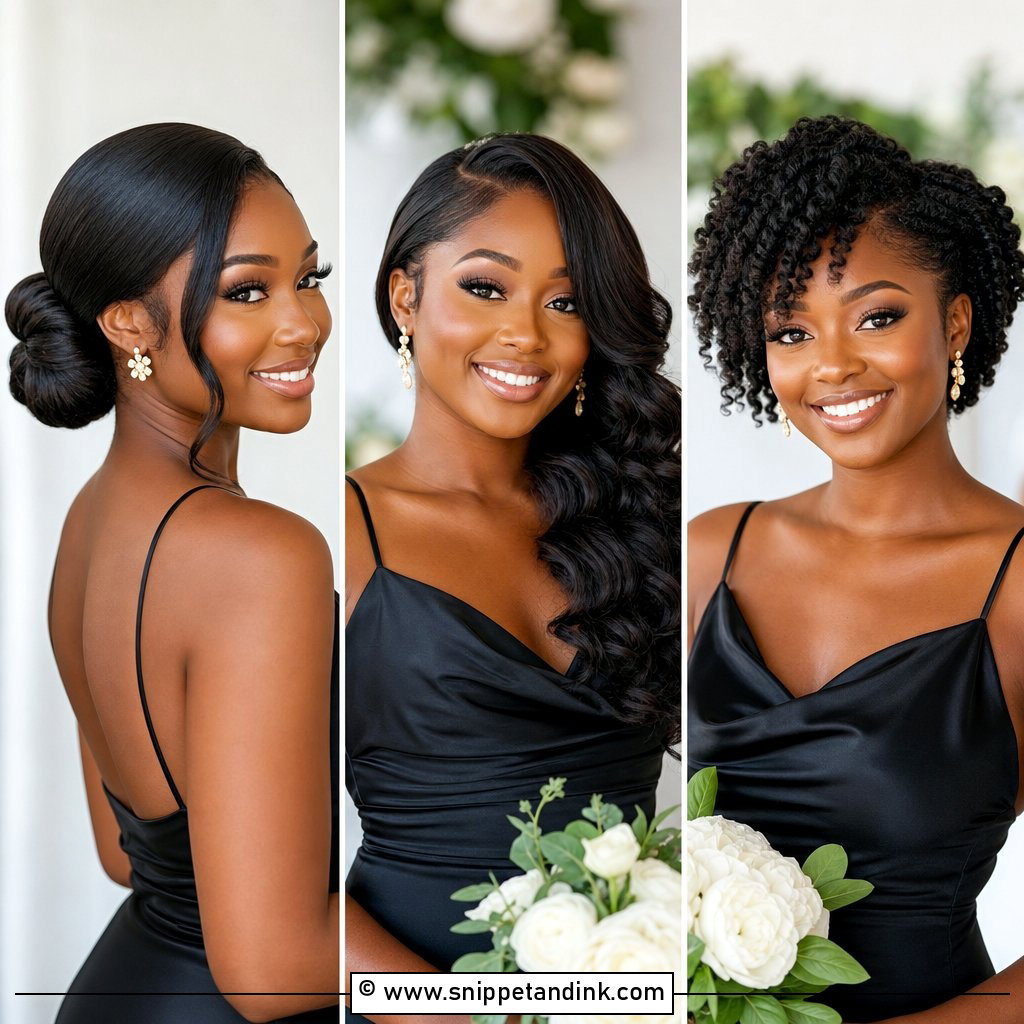
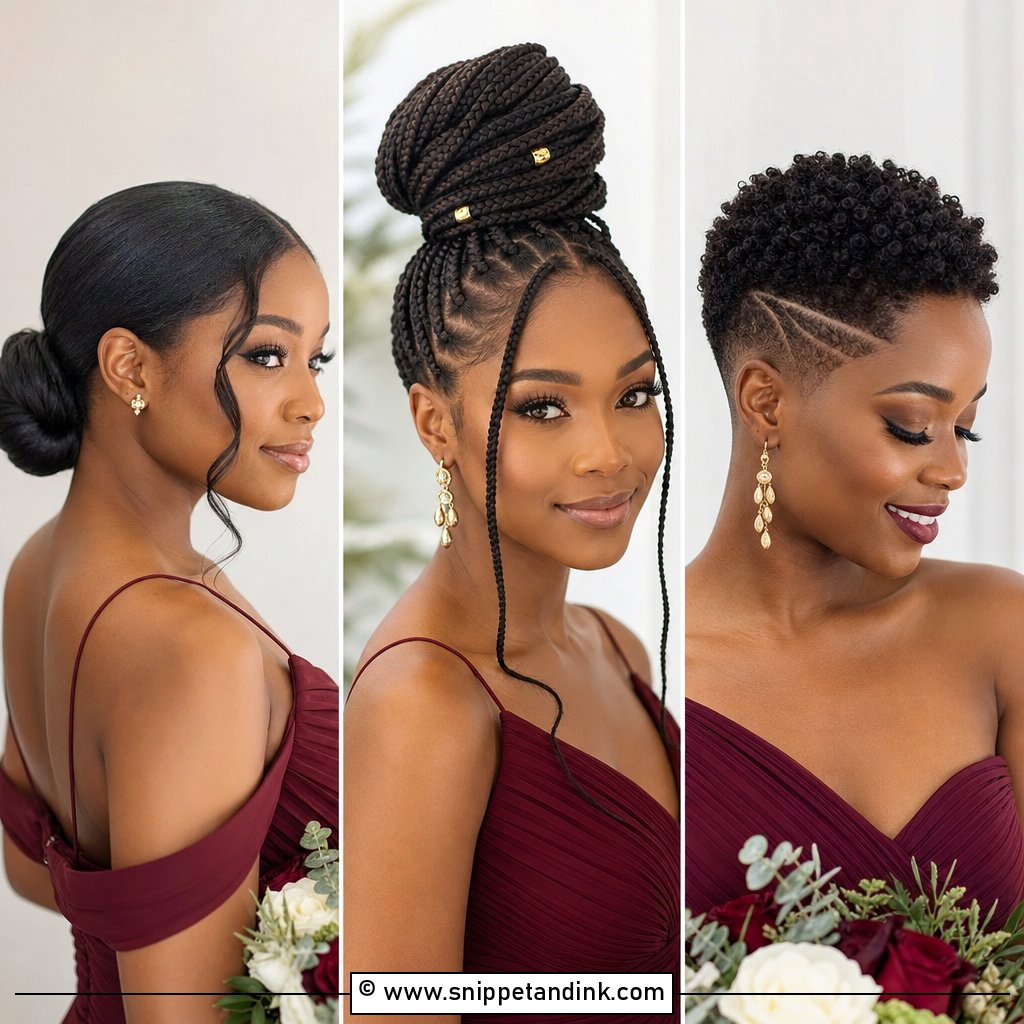
3. Sleek Low Bun Bridesmaid Updo
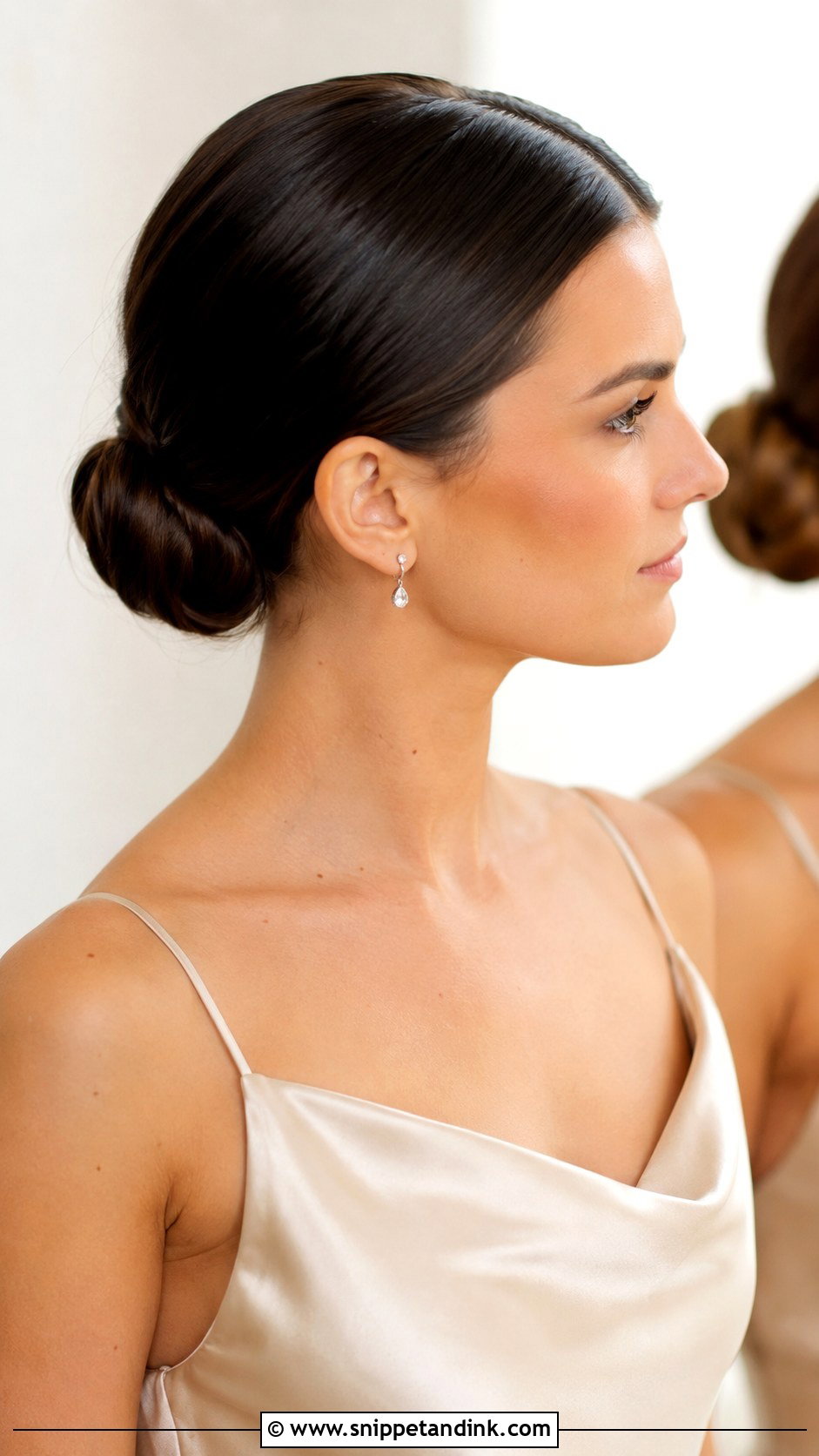
A sleek low bun is the formal choice: smoothed back, neatly parted and pinned tight at the nape. It looks sharp with minimalist dresses, black-tie gowns, pearl earrings and stronger makeup, and it’s the easiest way to make a group look uniform. In humidity it holds better than any curled style, as long as the hair is prepped with smoothing cream and finished with firm spray. A middle part feels modern; a side part softens it. I’d steer anyone with a lot of short layers around the hairline away from this one, since those pieces pop out within the hour.
4. Classic Chignon Bridesmaid Updo
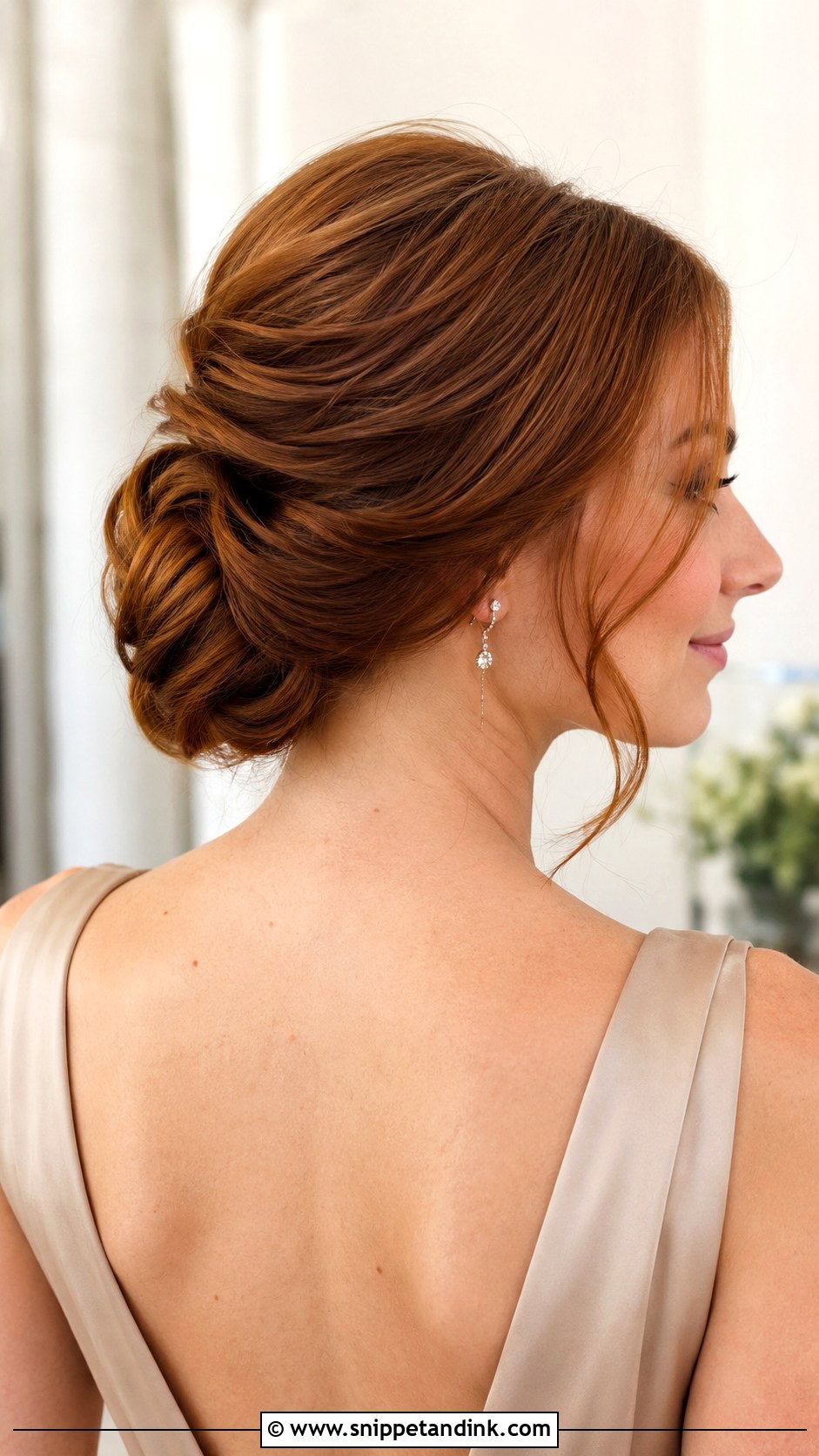
A chignon is gathered low and tucked into a smooth roll or knot, so it looks graceful from the front, the side and the back. Church ceremonies, ballrooms and evening weddings suit it, and an open neck and jawline leave room for delicate earrings. Medium and long hair both work; clip-in extensions can add fullness for thinner hair. The skill is in keeping it structured without making it stiff. I build the shape over a small amount of padding if the hair is fine, so it doesn’t have to be pinned tight to hold.
5. Messy Bun Bridesmaid Updo
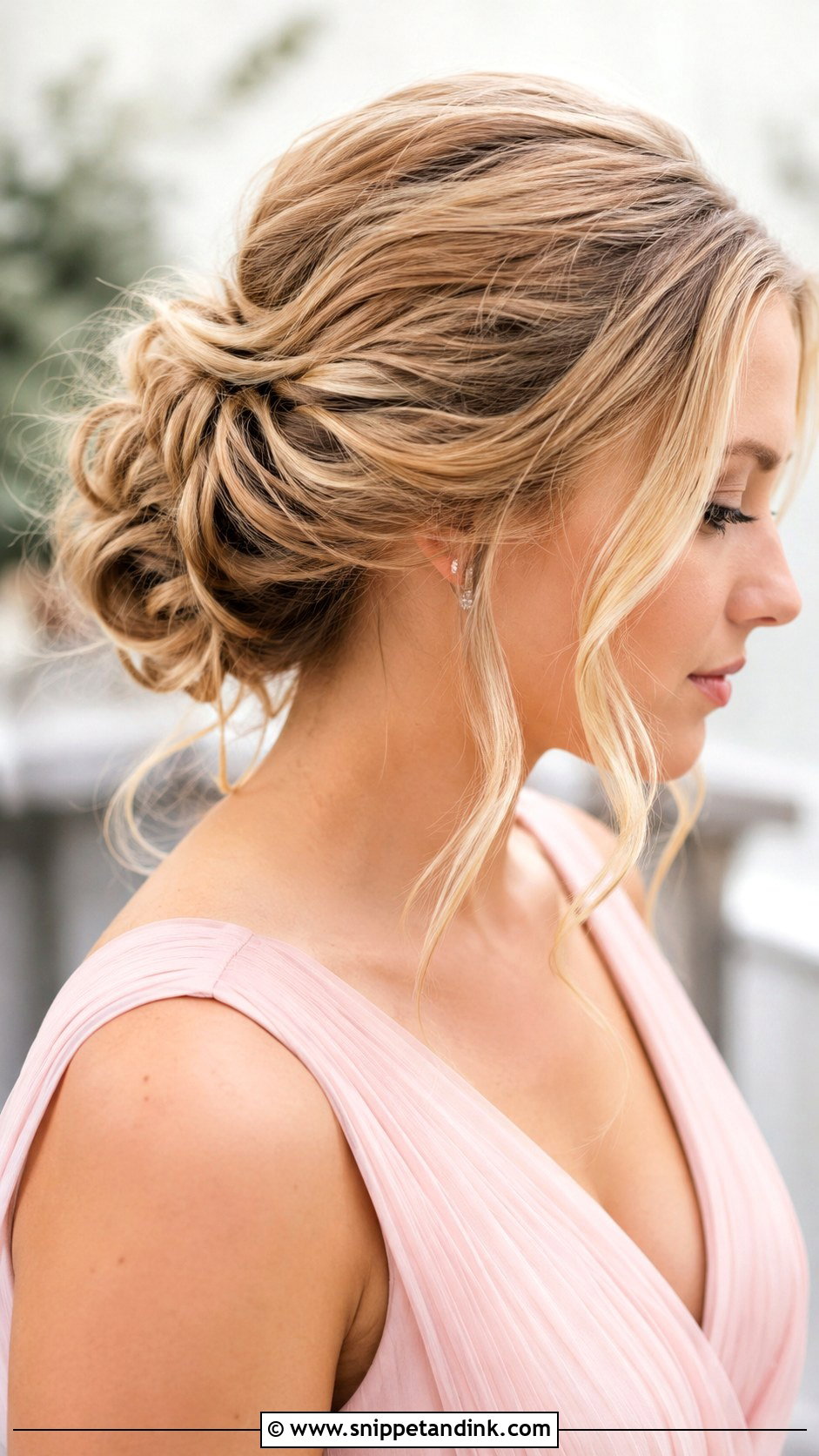
A messy bun is not actually messy. It’s soft movement placed on purpose: loose waves, airy volume and a bun set low or slightly off-centre. Outdoor ceremonies, rustic venues and flowing dresses suit it. Fine hair needs texture spray first or it slides apart; thick hair needs more pins than you’d expect to stop the weight dragging it down. I leave a few strands at the temples to soften it, but I curl them separately so they don’t hang limp by the speeches.
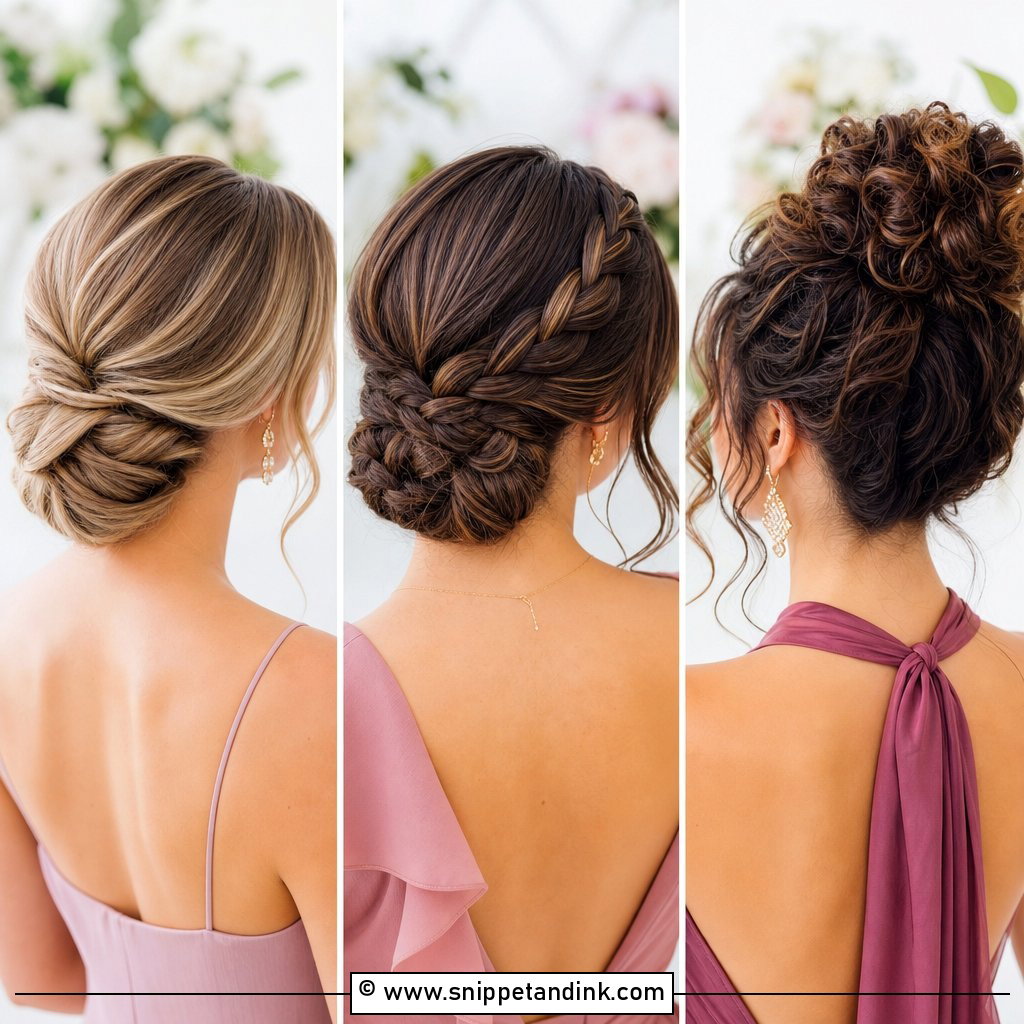
6. Braided Low Bun Bridesmaid Updo
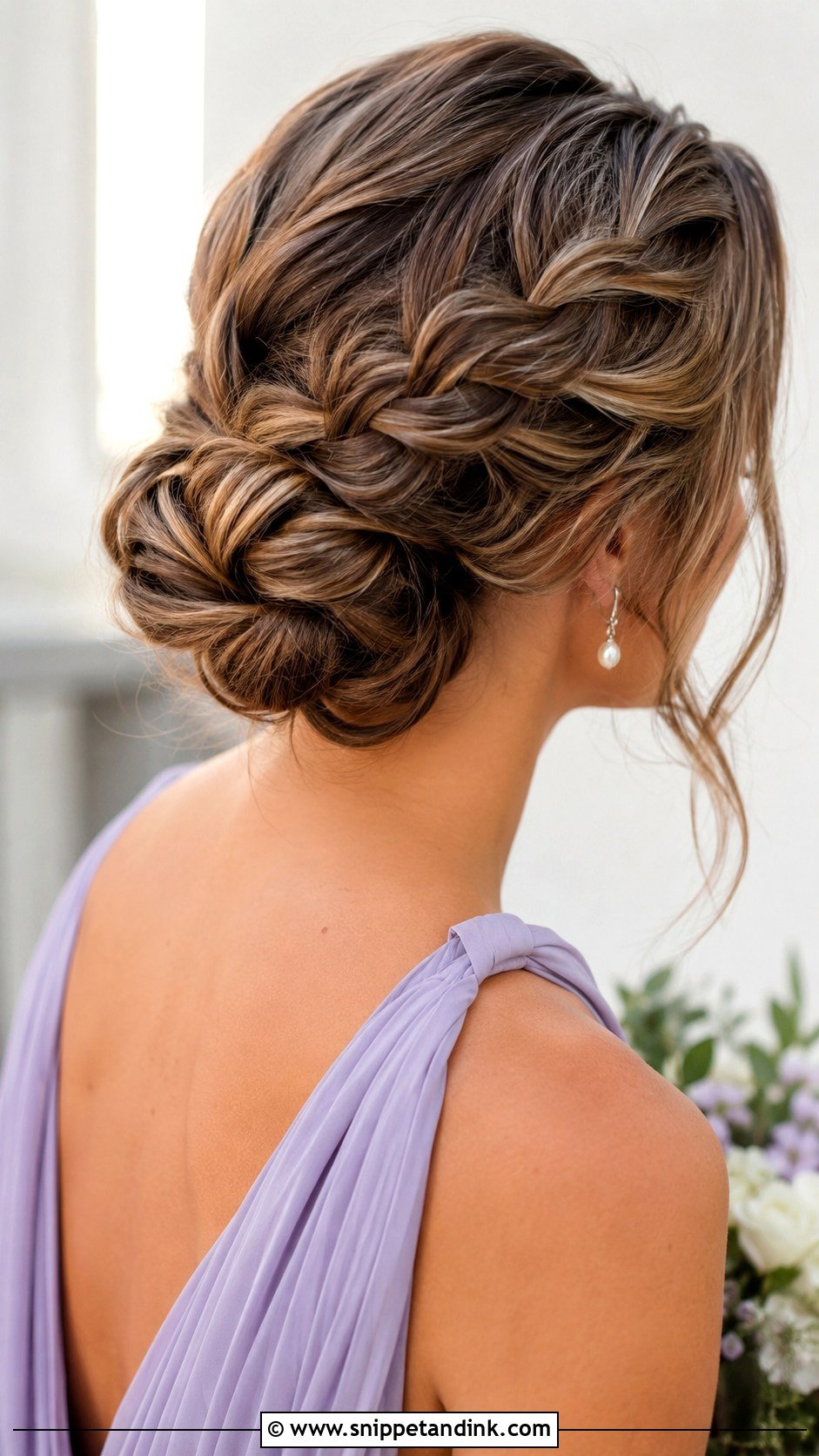
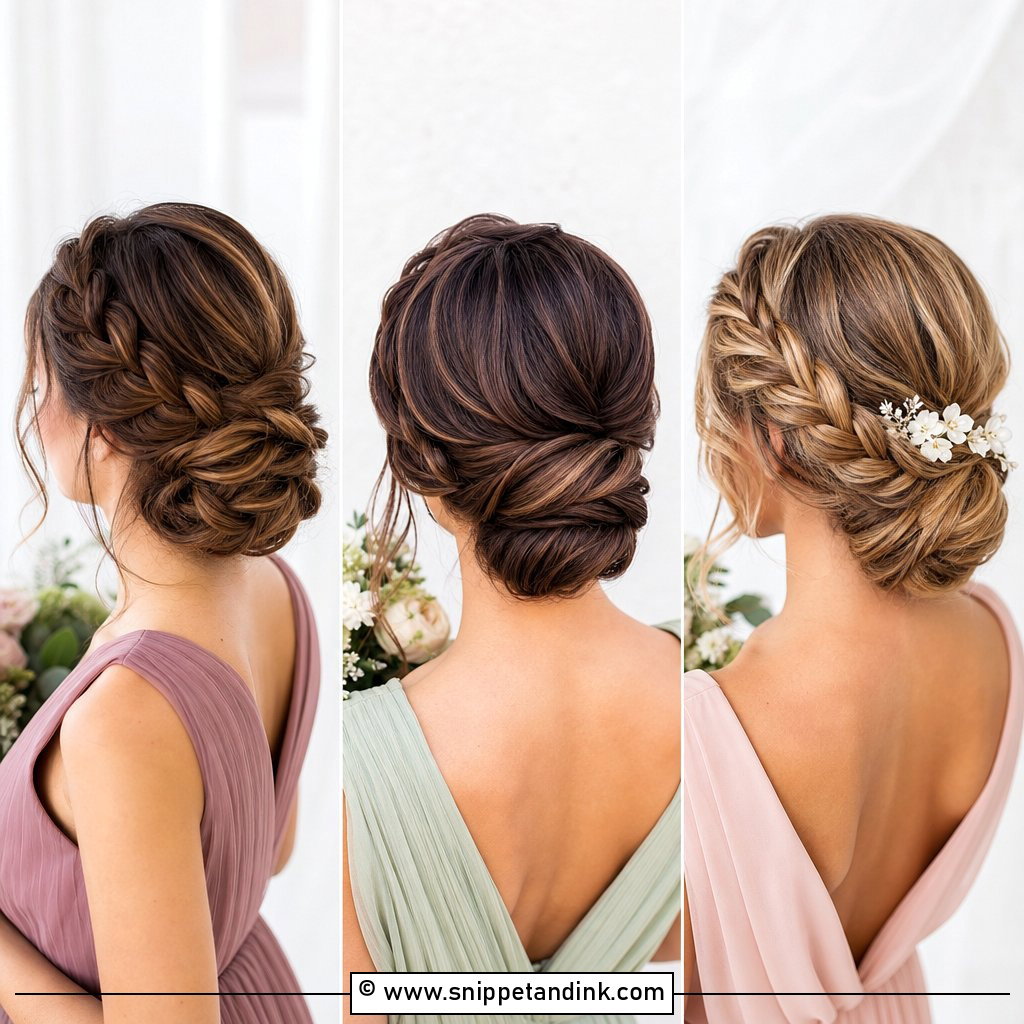
Wrapping a braid into a low bun adds detail without making the style busy. The braid can circle the bun, run along one side or start near the crown before it disappears into the shape. There’s a practical reason I like it too: a braid catches the short layers that would escape from a plain bun. Dimensional color shows up well in the plaiting. I loosen the braid by gently pulling at the edges after it’s secured, which makes it look fuller and keeps it from reading as school-day hair.
7. Side Bun Bridesmaid Updo
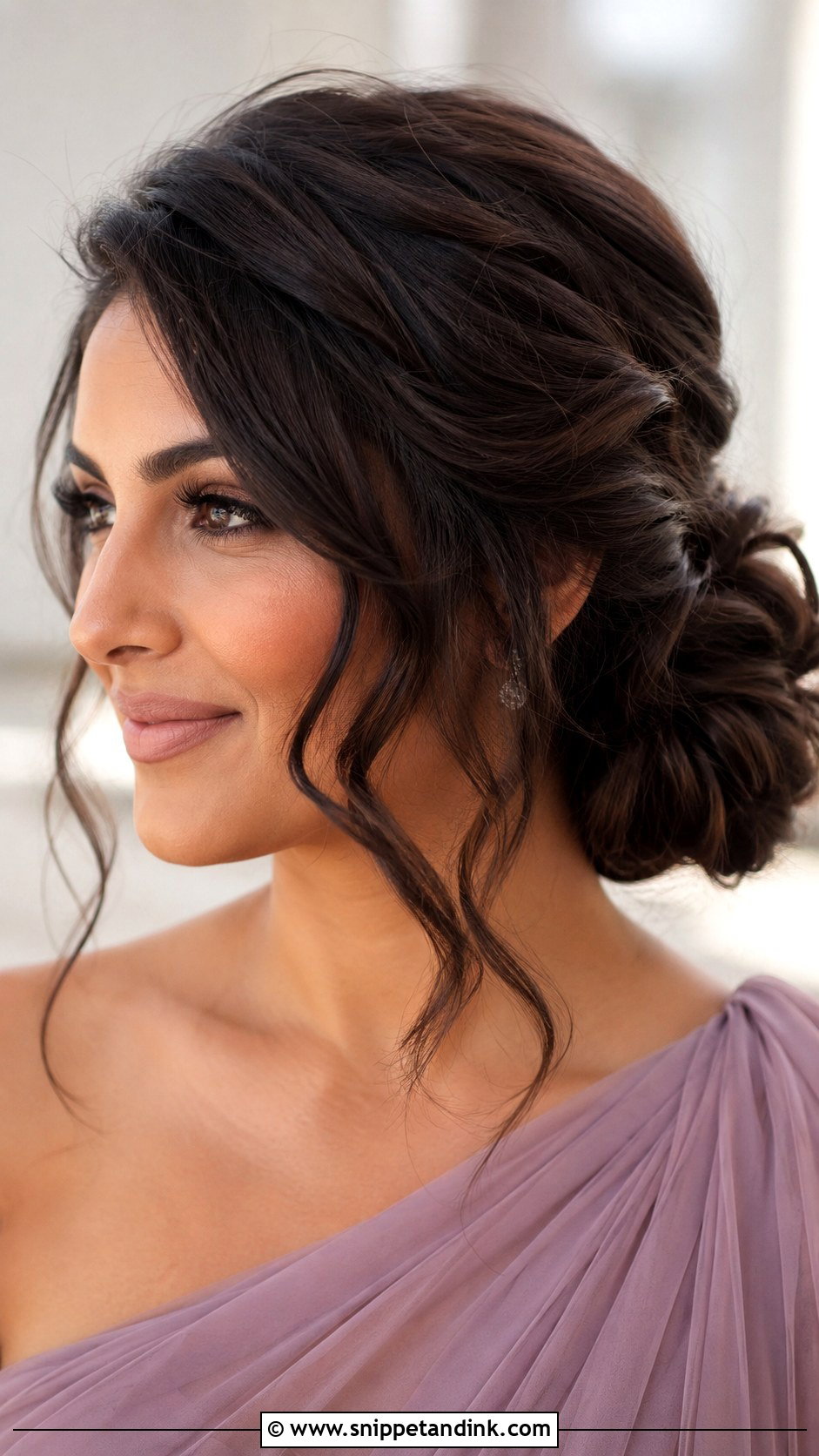
A side bun gives a flattering angle when bridesmaids stand turned toward the bride. It sits low near one side of the neck and pairs naturally with one-shoulder dresses, side parts and soft curls around the face. It can be smooth and formal or textured and romantic. Because the bun sits on the side that faces the camera, it reads clearly in portraits. Add some height at the crown, otherwise the head looks lopsided once the weight sits on one side. I’d check which side each bridesmaid stands on before deciding where the bun goes.
8. French Twist Bridesmaid Updo
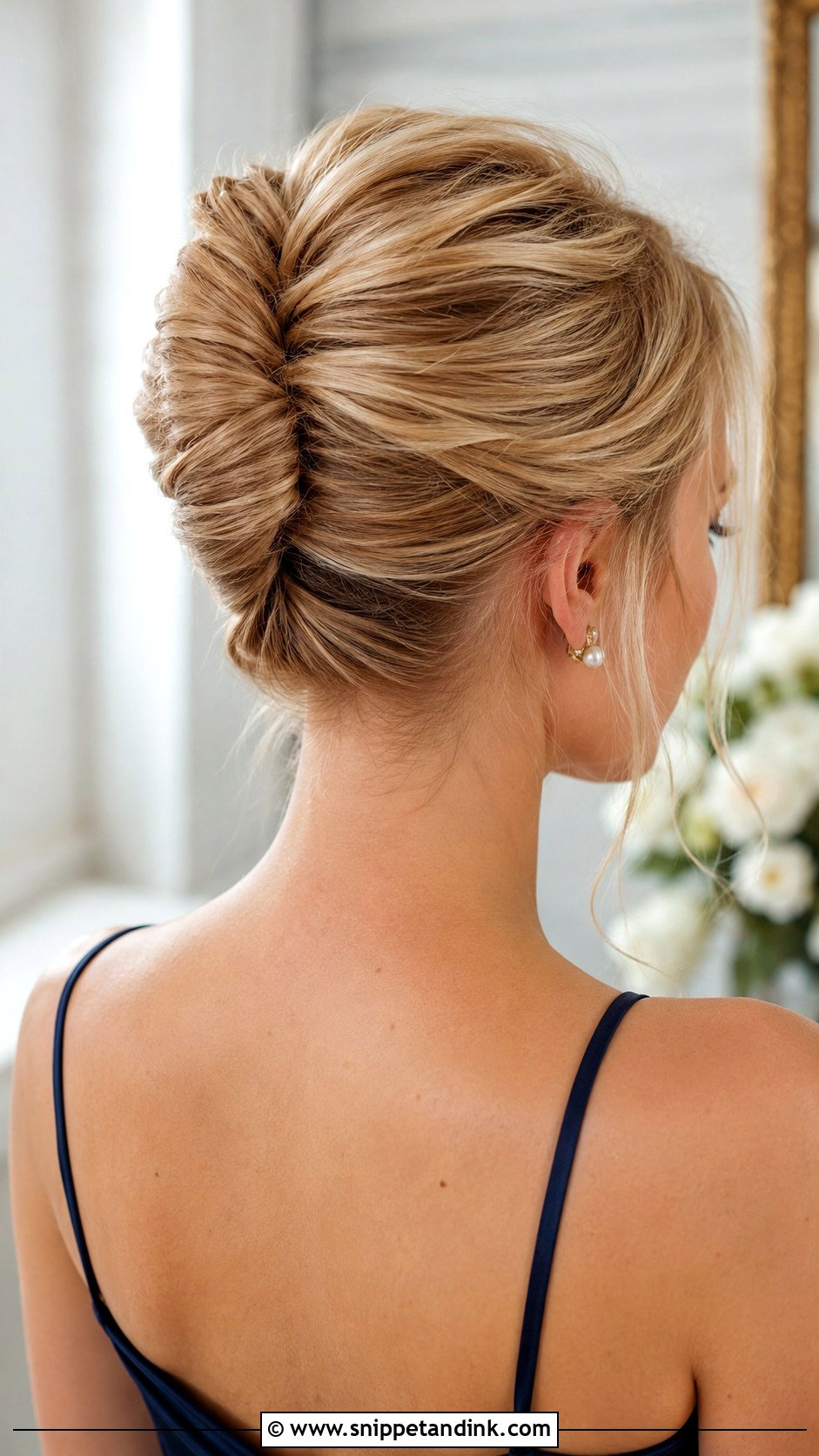
A French twist sweeps the hair up and tucks it into a vertical roll, giving a long line down the back of the head. Medium to long hair works, sleek or softly undone. It lengthens the neck, so it’s flattering with strapless, square and high necklines. The twist is held with pins inserted along the seam and turned back into the roll, not pushed straight in, which is what keeps it from unravelling. For a bridesmaid, I loosen the front a little so it doesn’t look like the bride’s look. Pearl or plain metal pins can add detail.
9. Soft French Twist Bridesmaid Updo
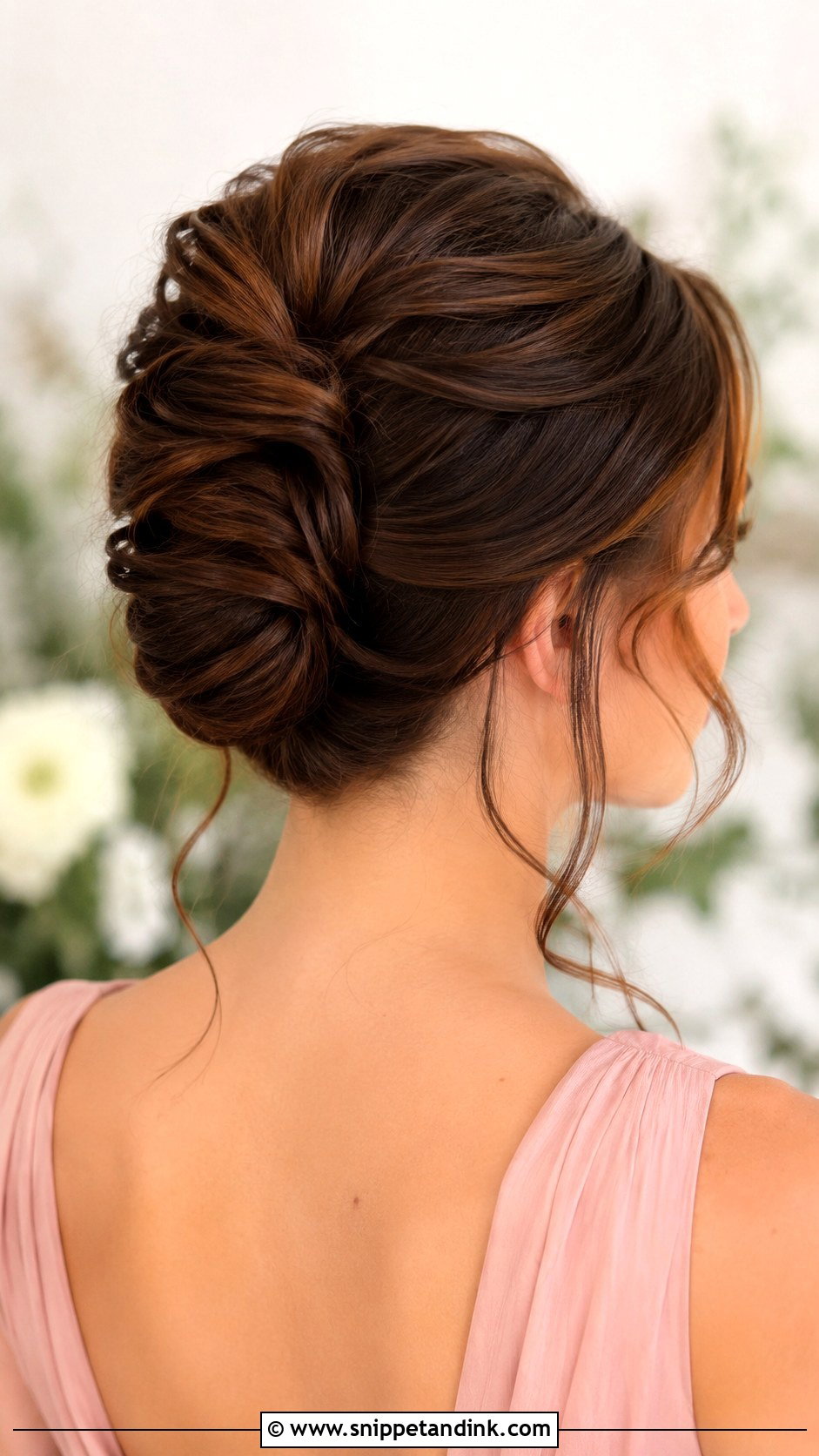
The softer French twist keeps the tucked structure but adds gentle volume at the crown and some movement at the front. It feels less severe, which helps when a bridal party spans different ages. Estate weddings, vineyards and evening receptions suit it. Side-on, the tucked shape gives dimension in photos. I add volume by backcombing the crown before the twist is formed, then smoothing just the top layer, so the lift doesn’t fall when the twist is pinned. Plain dresses get some interest from it; busy dresses get balance.
10. High Bun Bridesmaid Updo
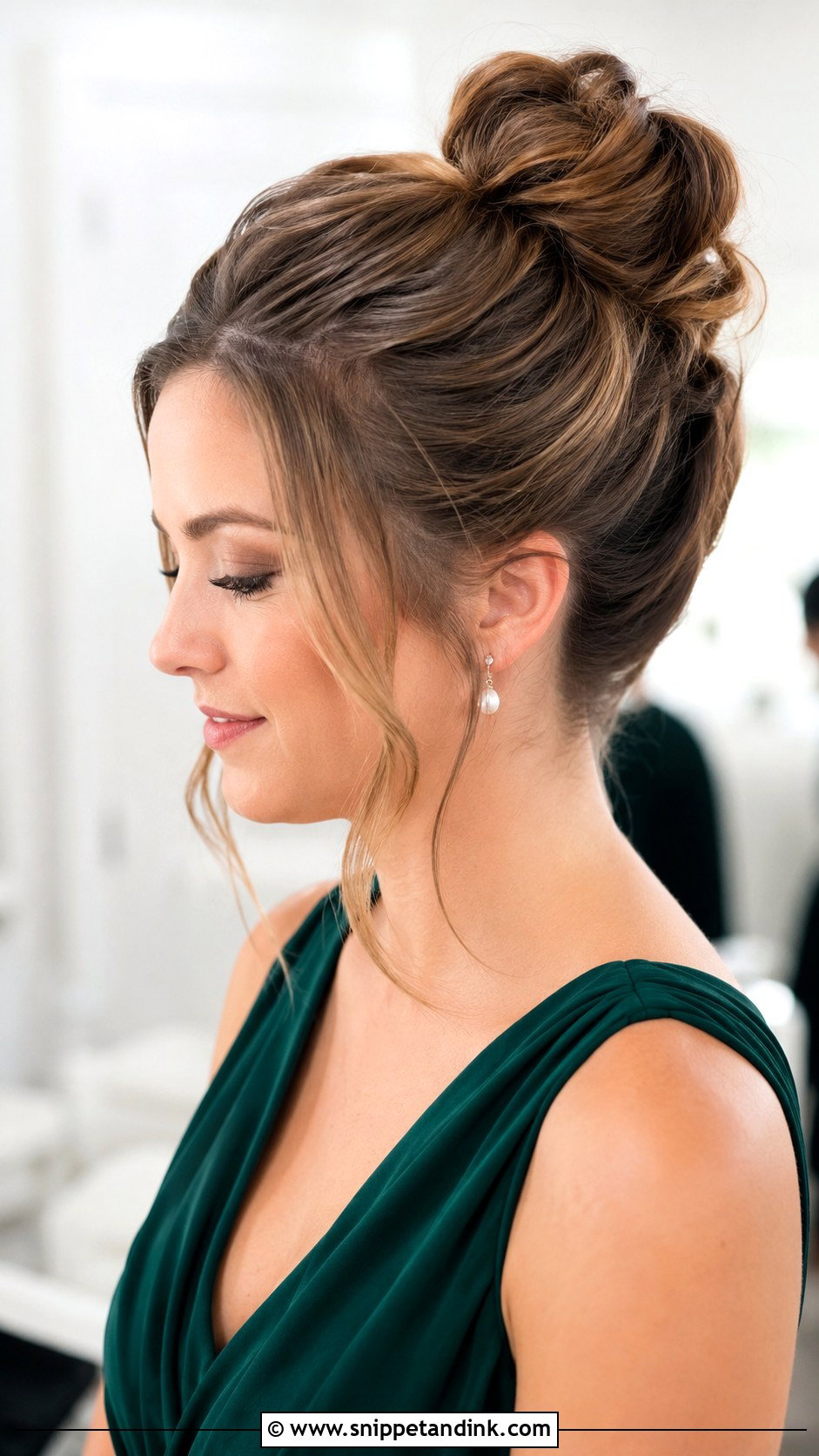
A high bun keeps dramatic necklines, open backs and detailed shoulders completely visible. It can be sleek for a formal ceremony or textured for something softer, and it adds a little height in group rows. Comfort is where high buns go wrong. A bun pinned too tight at the crown gives a headache by mid-afternoon, so I secure the ponytail base firmly and keep the pins themselves loose against the scalp. A few soft pieces near the ears stop it looking strict.
11. Ballet Bun Bridesmaid Updo
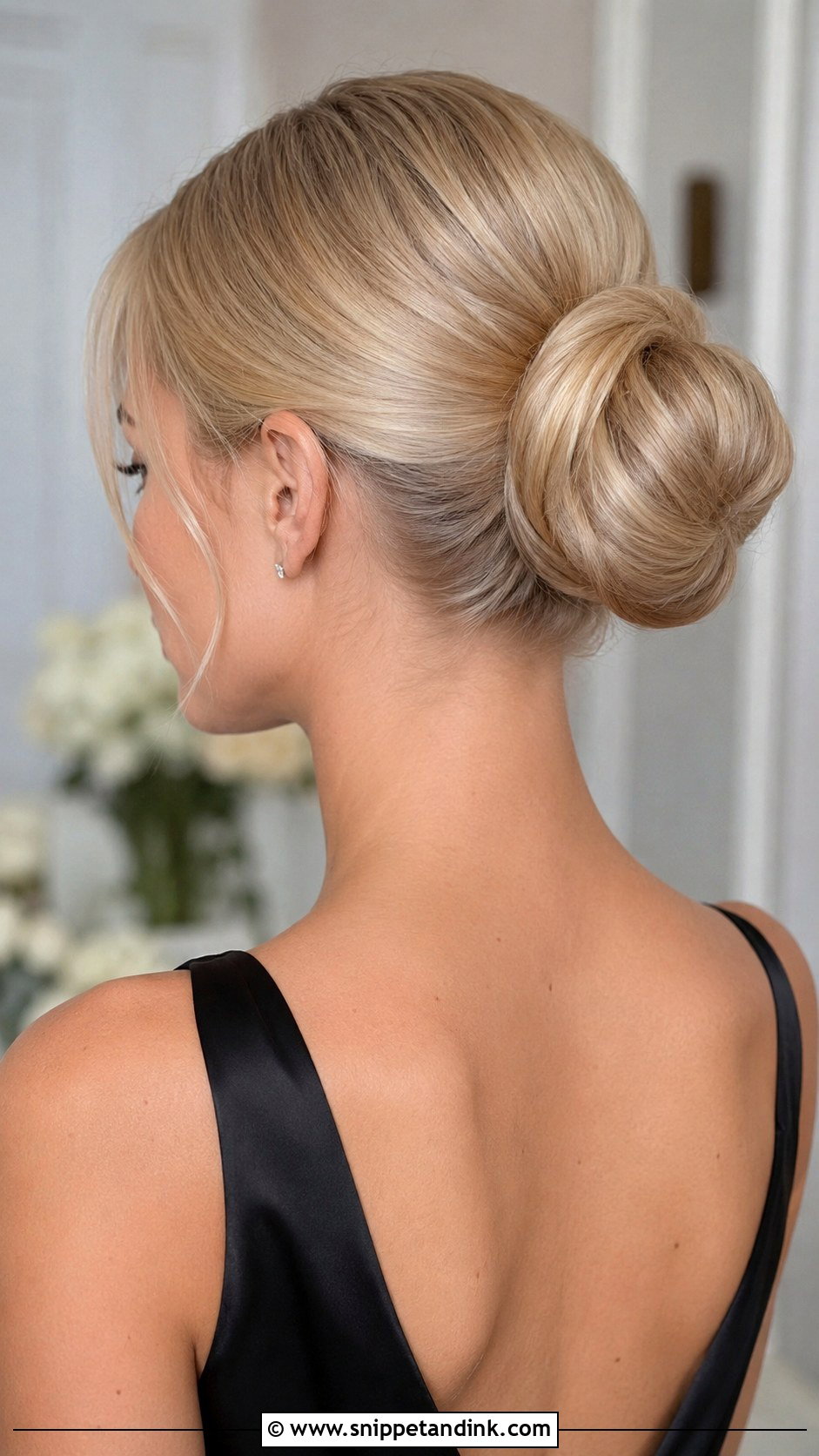
A ballet bun is smooth and rounded and can sit high, mid-height or low depending on face shape and dress. Formal venues and matching gowns suit it, since it never competes with jewelry or flowers. Shine spray makes it look polished in photos. For outdoor weddings I’d use an anti-frizz cream underneath rather than relying on spray alone, because a ballet bun has nowhere to hide flyaways. Hair that’s shorter than shoulder length usually can’t make a full round bun without a padding insert.
12. Twisted Bun Bridesmaid Updo
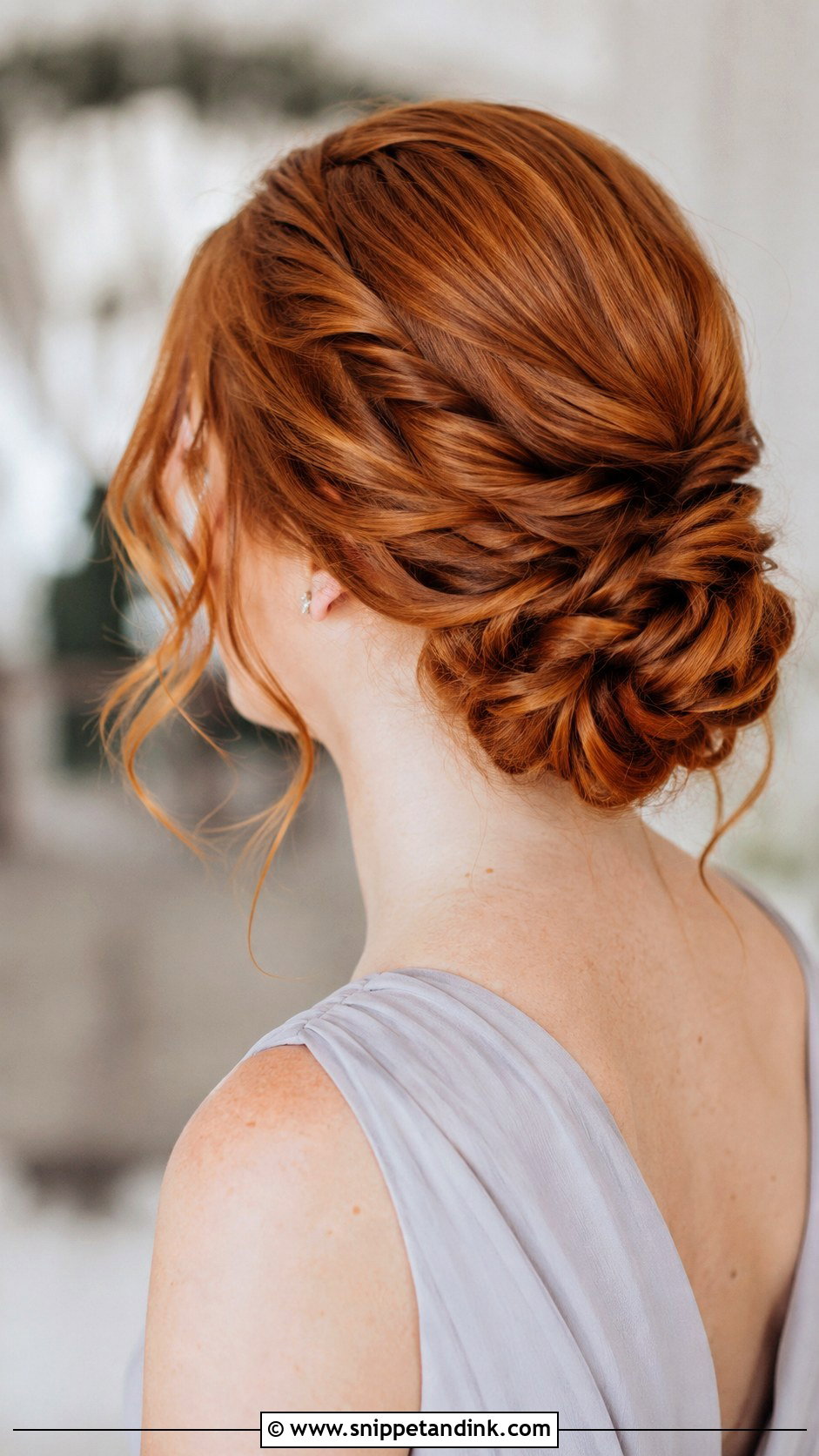
Twisting sections back into the bun sits halfway between a plain bun and a braided one. It adds movement while catching loose layers, so it suits medium hair, long hair and layered cuts. Side parts, middle parts and curtain bangs all work with it. Where this one earns its place is in mixed groups: I can twist fine, thick and wavy hair into roughly the same shape, so the row looks coordinated even when the textures differ. It stays neat enough for formal photos.
13. Low Knot Bridesmaid Updo
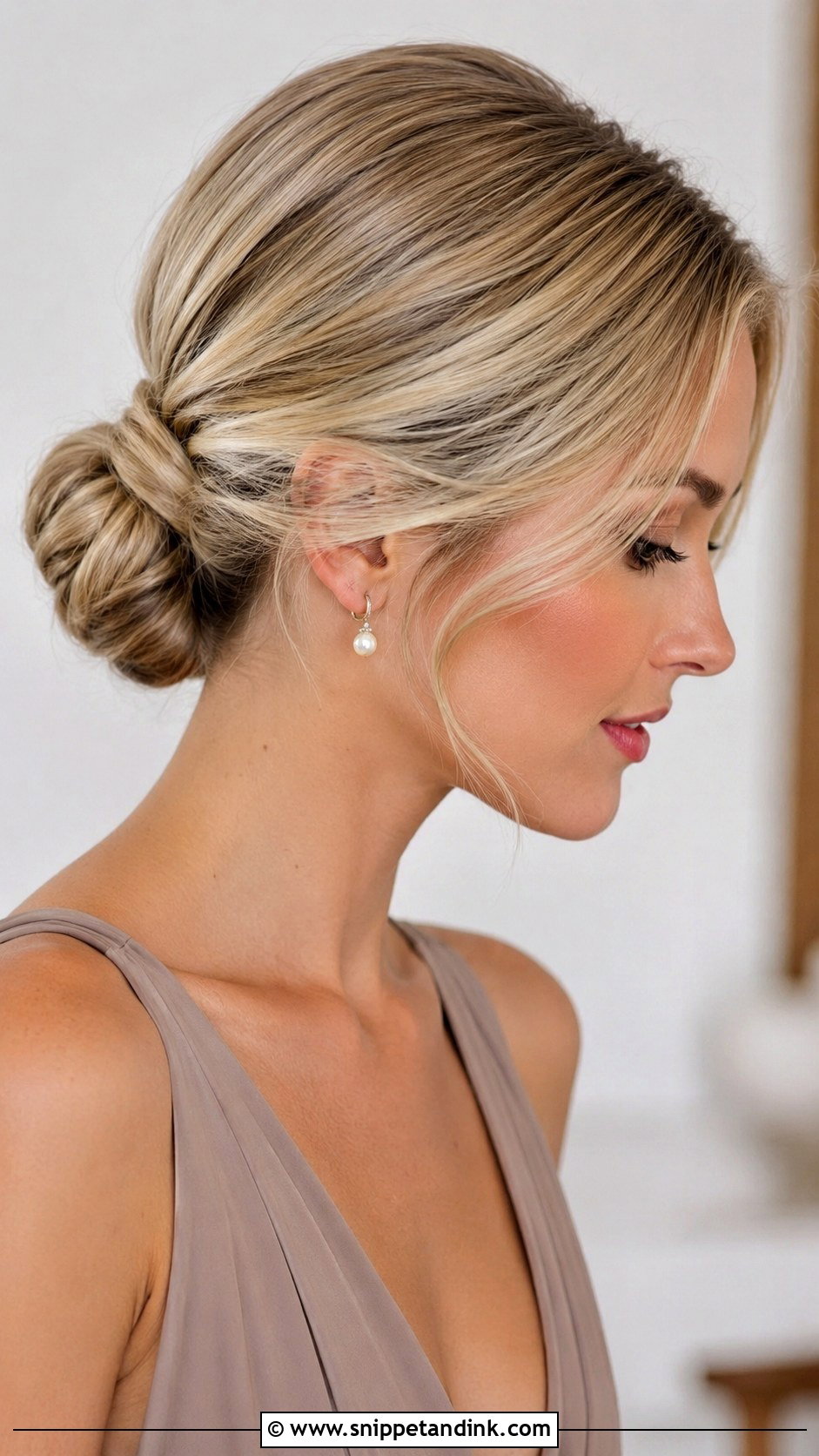
A low knot bridesmaid updo is minimal and modern: the hair is gathered low and tied into a knot shape rather than a round bun. It feels a little editorial, yet it’s soft enough for a wedding, and it sits well with satin, crepe or chiffon dresses. A clean part keeps it sleek; loose waves before pinning make it textured. Because the knot uses the hair’s own length to lock itself, it needs fewer pins than a bun and is less bulky at the nape, which suits anyone with very thick hair who hates a heavy bun.
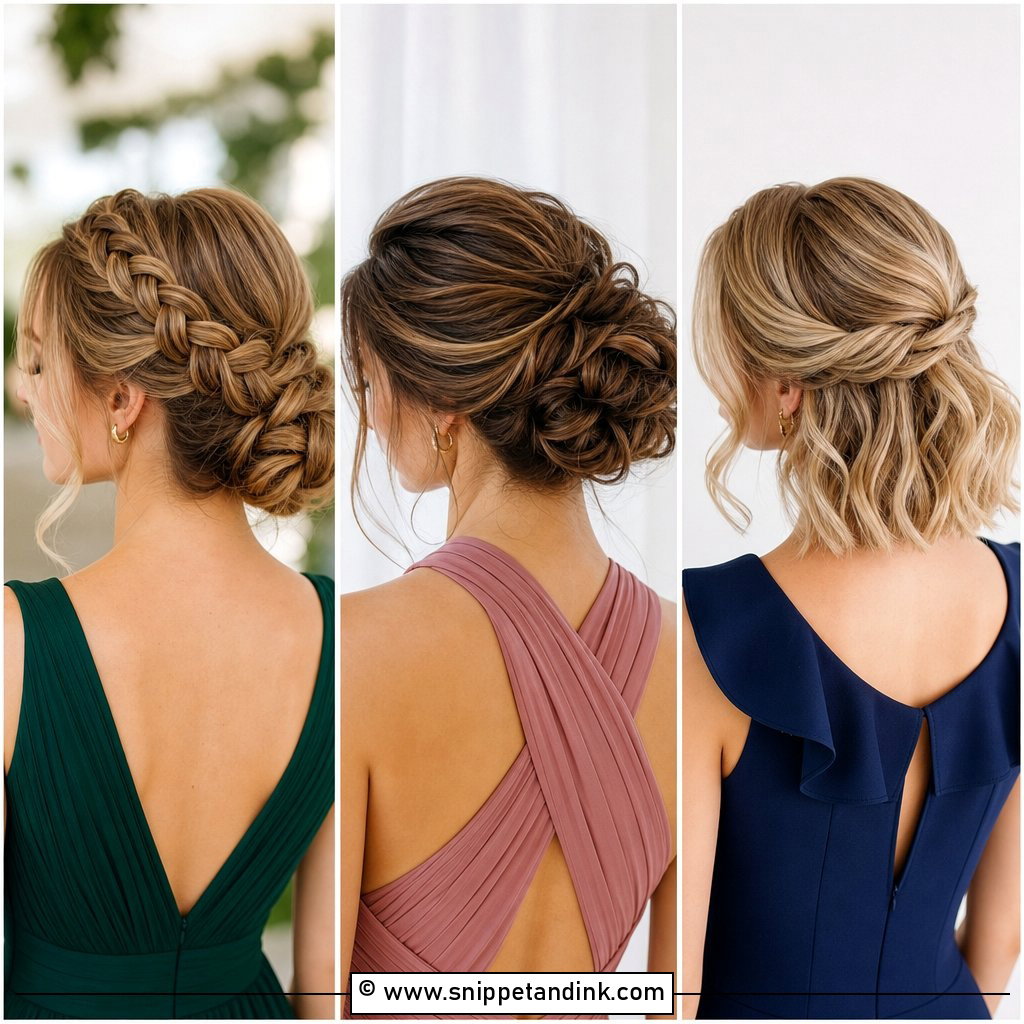
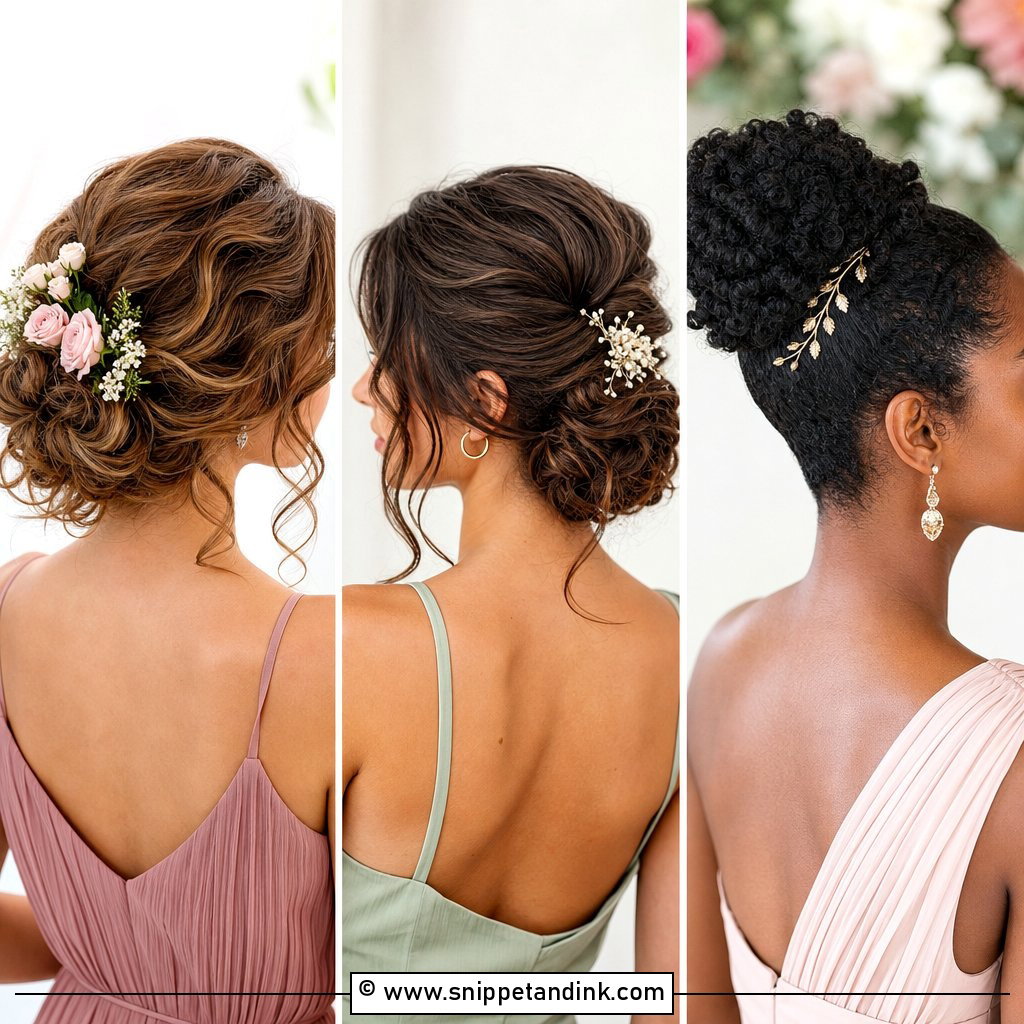
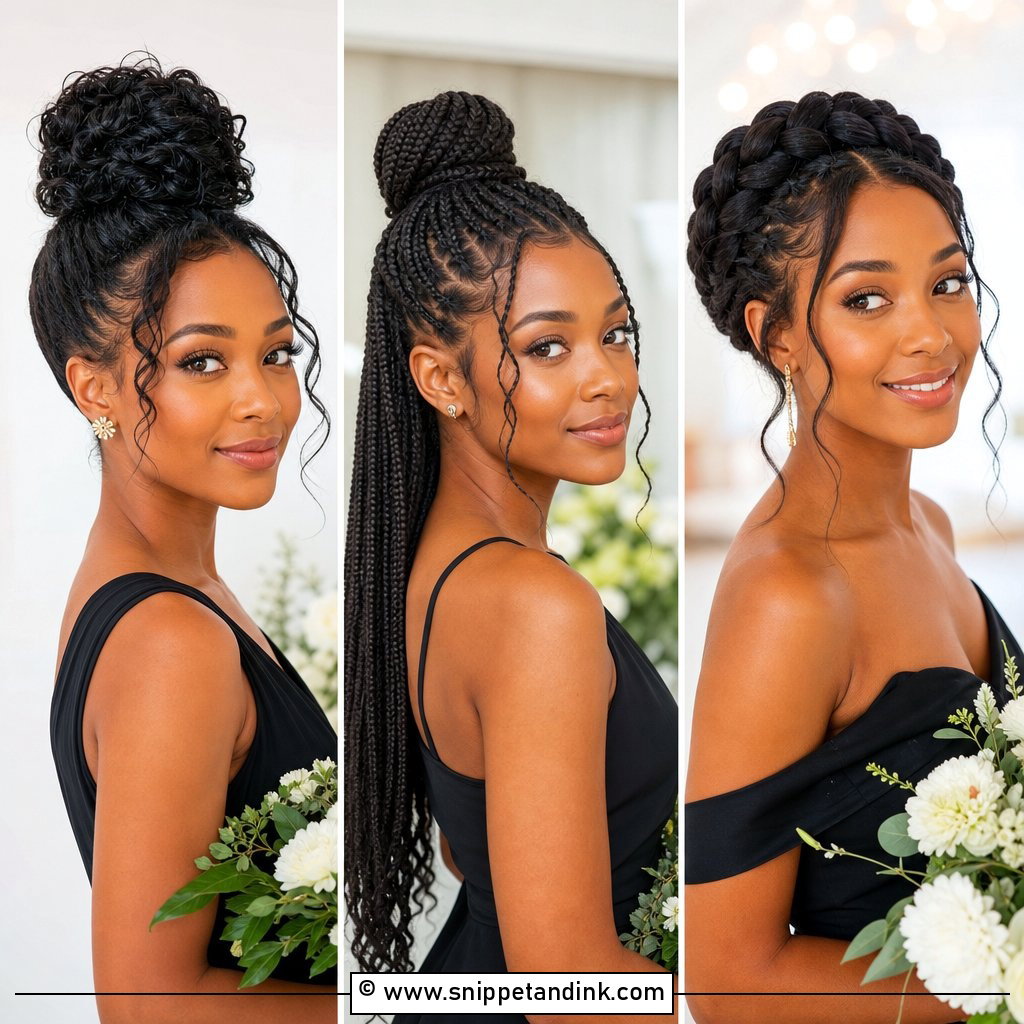
14. Curly Bun Bridesmaid Updo
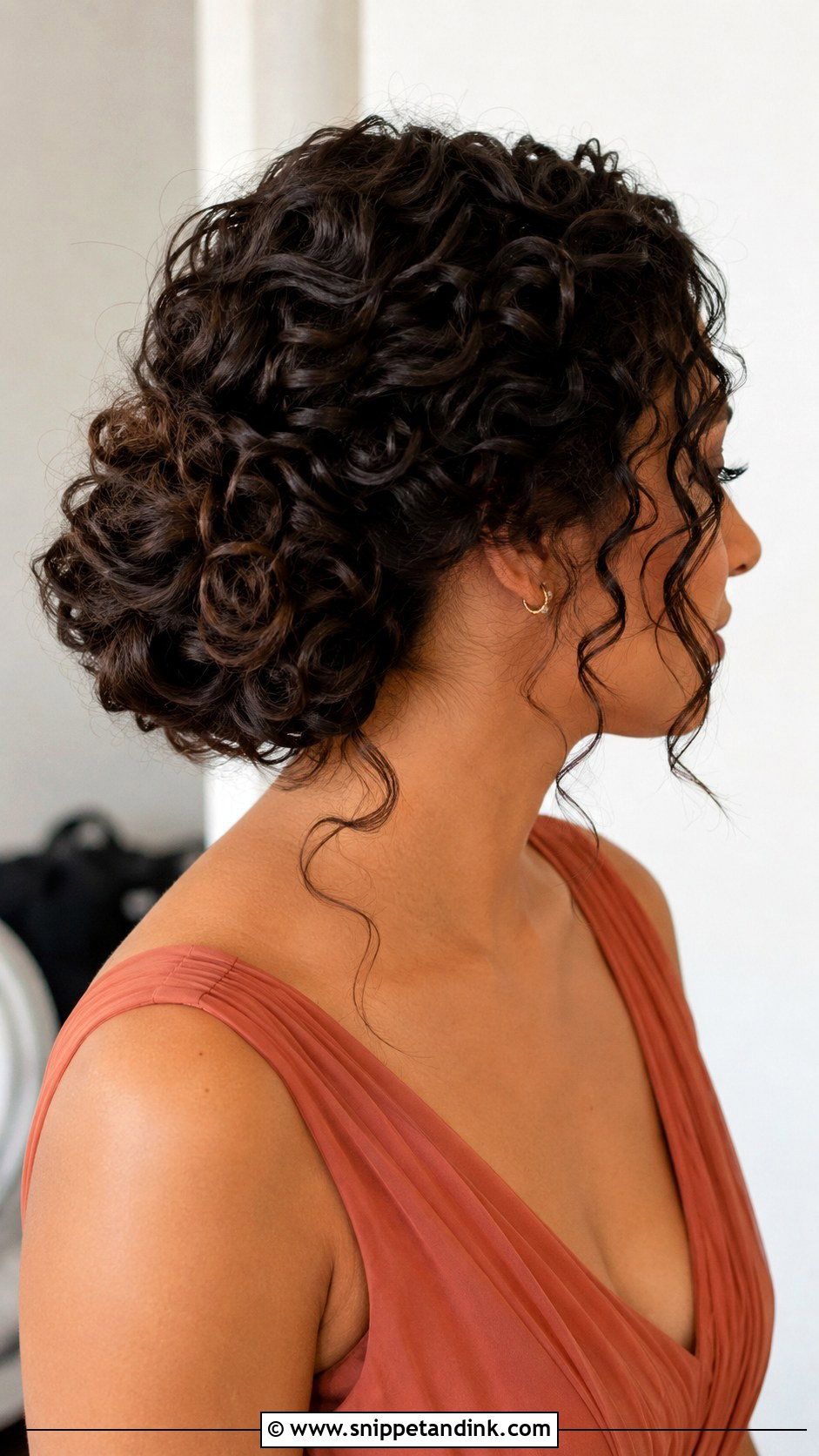
A curly bun keeps the hair’s natural volume and definition instead of smoothing every curl flat. It suits curly, coily and wavy textures and can sit low, mid-height or high. Hydration is what makes or breaks it. I apply a leave-in and curl cream before shaping, otherwise the curls dry dull and frizz within hours. A few defined tendrils around the face keep it soft. I don’t brush curls through while styling; I separate and pin them with fingers so they keep their pattern.
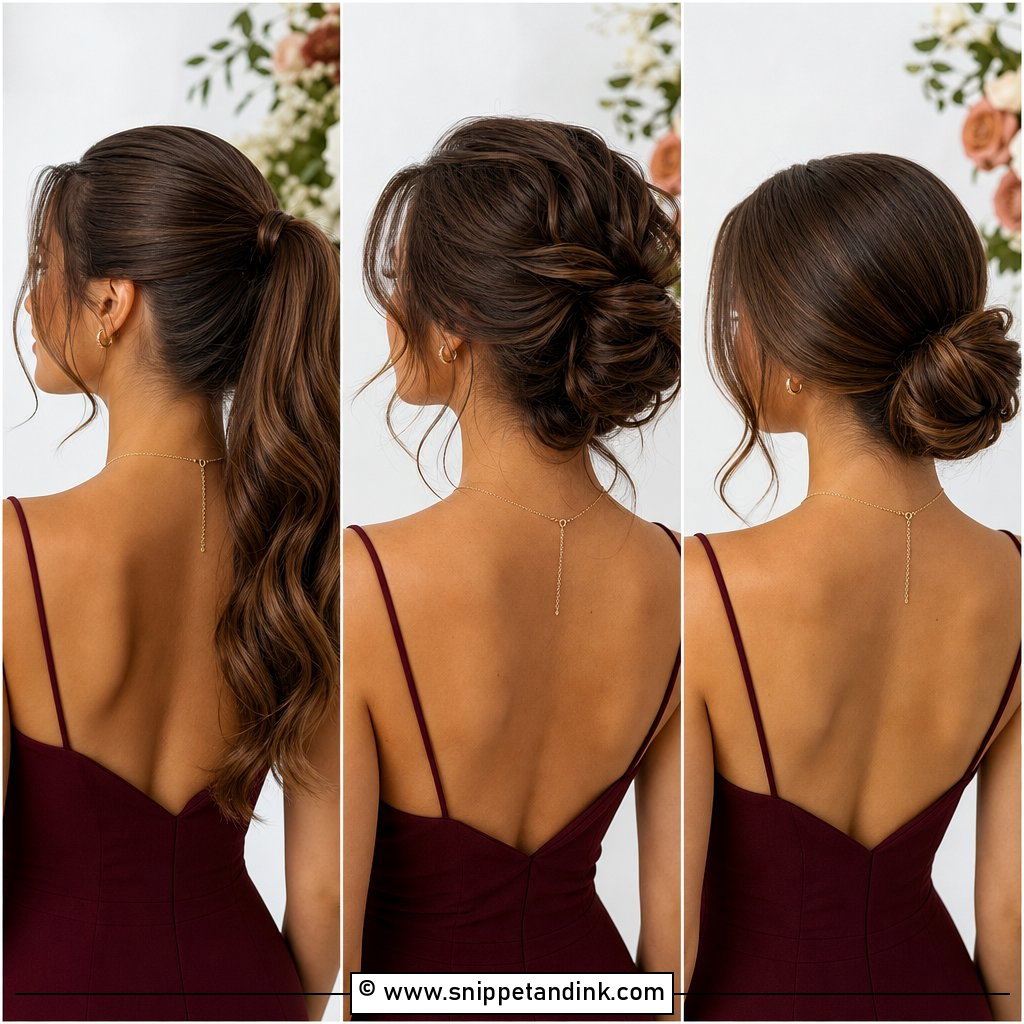
15. Natural Hair Bridesmaid Updo
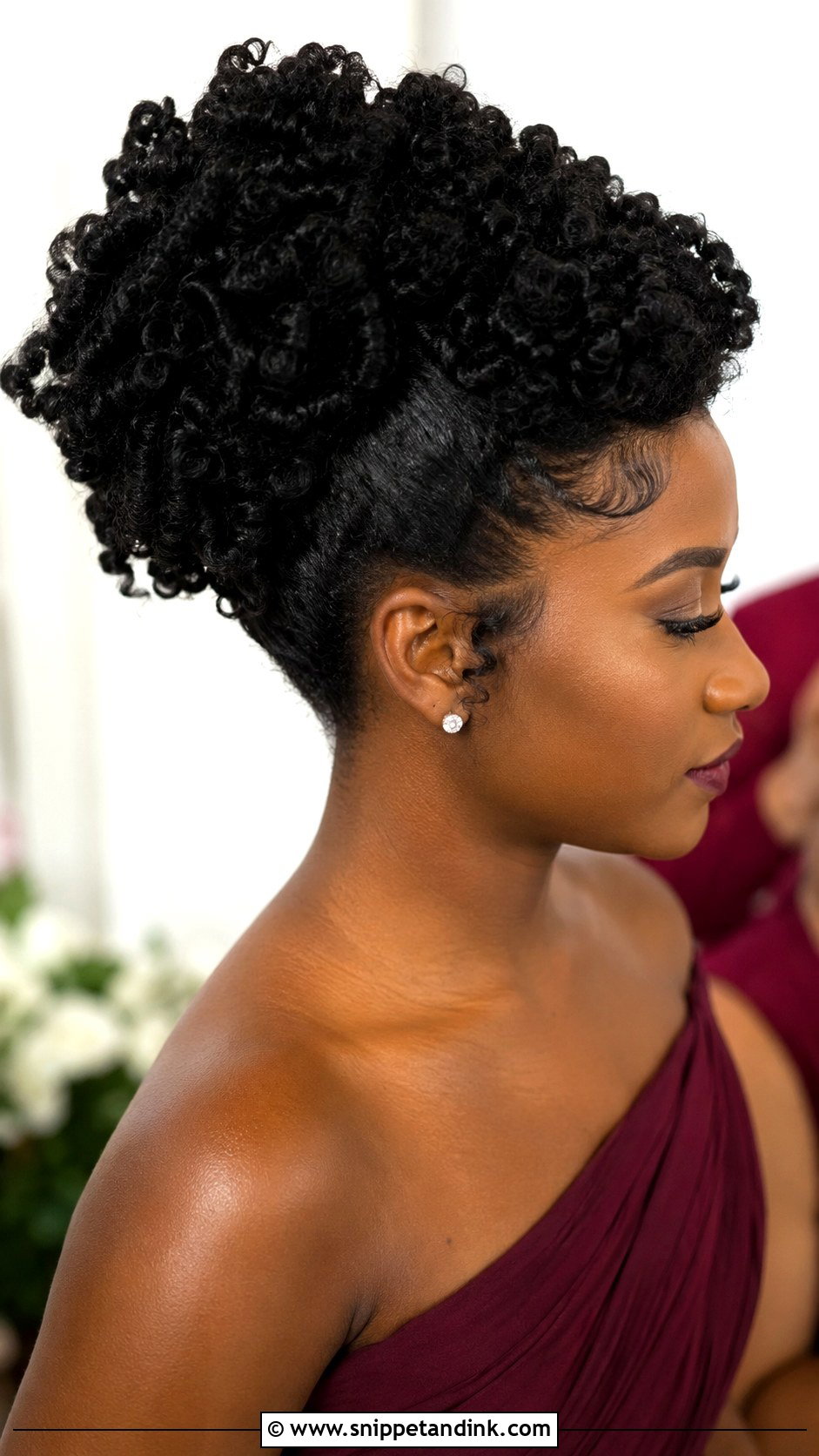
A natural hair updo keeps the full shape of textured hair and still looks formal: a sculpted puff, pinned curls, flat twists or a low tucked shape. It suits formal ceremonies and outdoor parties alike, since everything is secured off the face. Moisture, edge control and careful pin placement are what make it last. On textured hair I use larger, sturdier pins and place them so they grip a section rather than pulling at the root, which avoids tension along the hairline. Gold pins, pearls or tiny flowers add a wedding finish.
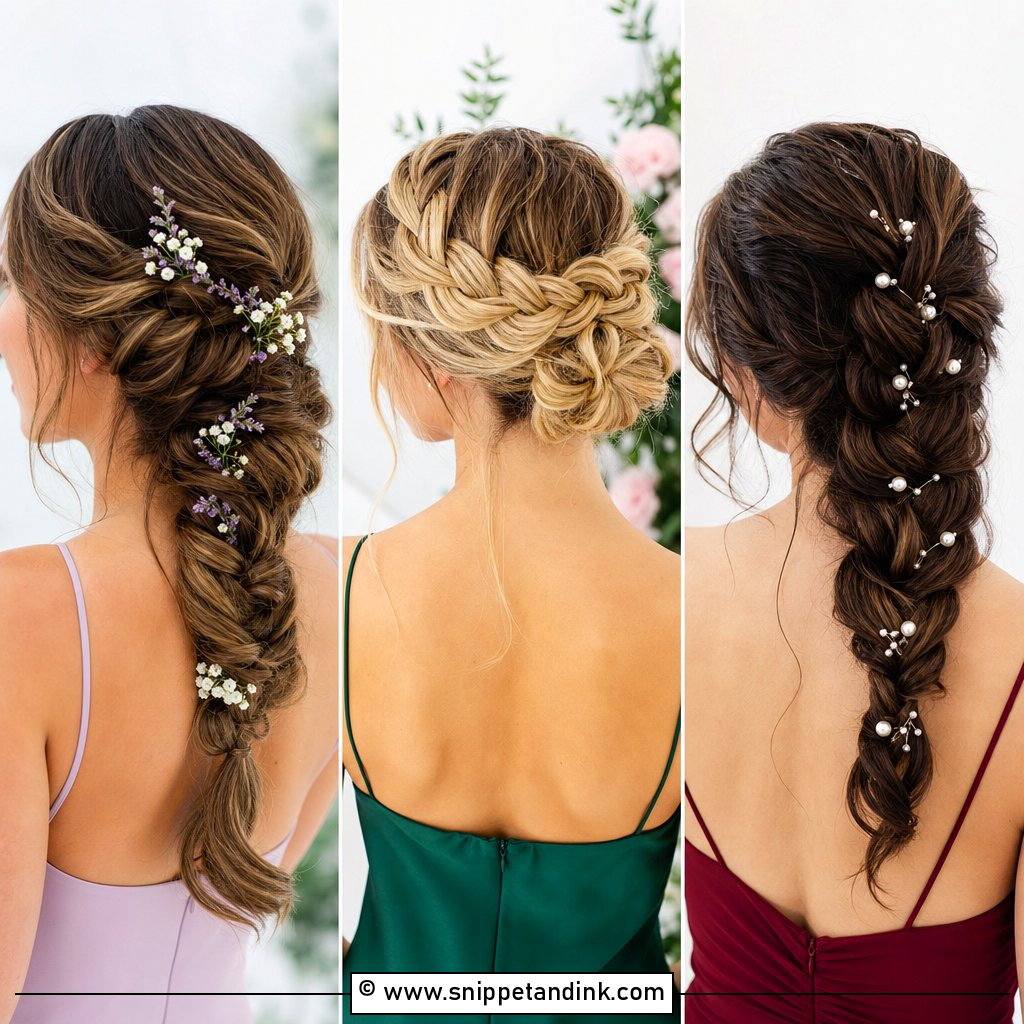
16. Braided Crown Bridesmaid Updo
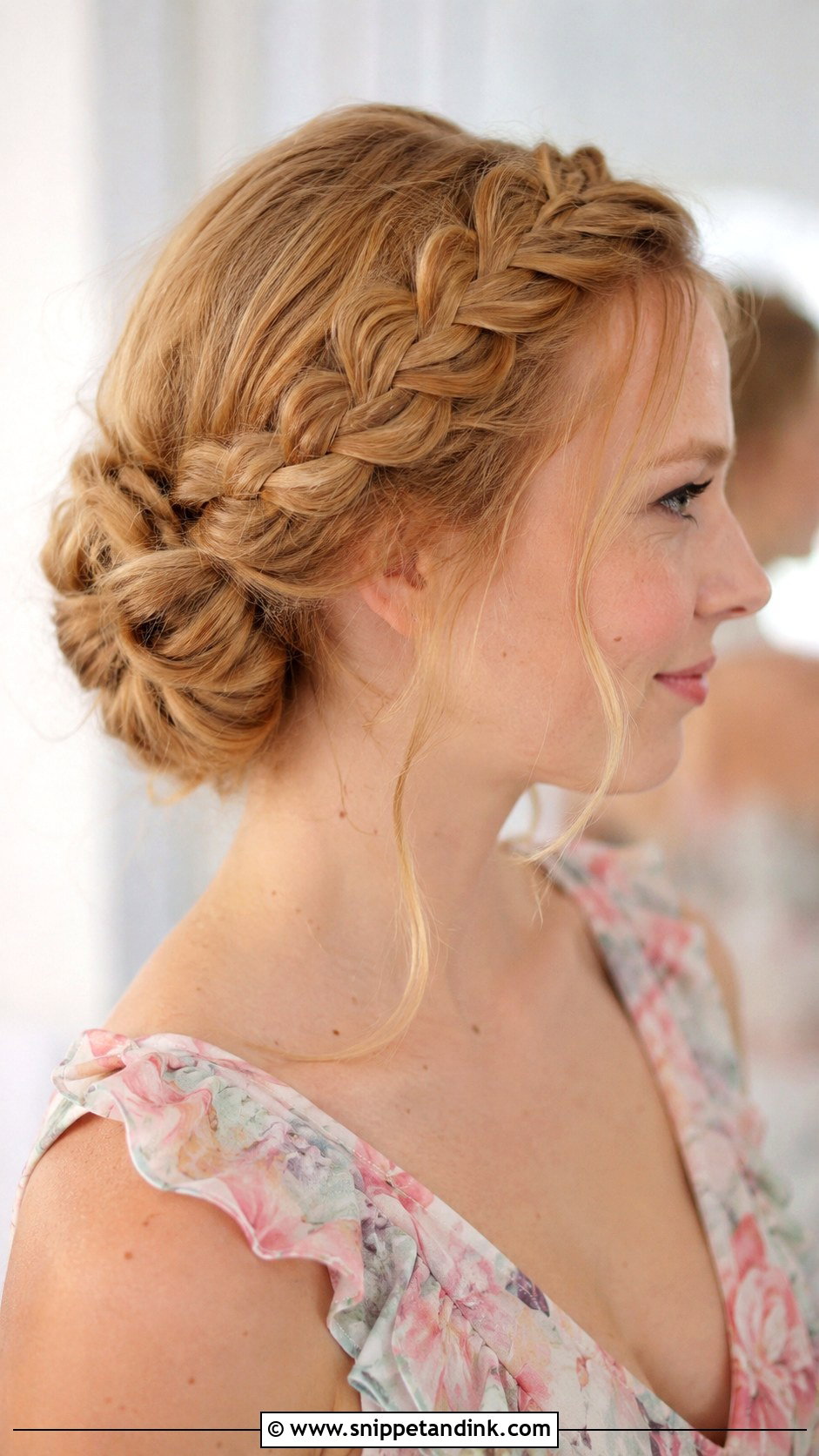
A braided crown wraps over or around the head and ends in a bun or tuck. Done softly it reads romantic rather than childlike, and it suits garden and countryside weddings with soft floral palettes. Medium to long hair is easiest, though clip-ins can bulk up a thin braid. I pancake the braid after it’s pinned, pulling each loop outward a little, which roughly doubles how full it looks. Keep the temples soft so the braid frames the face instead of looking tight.
17. Fishtail Braid Bridesmaid Updo
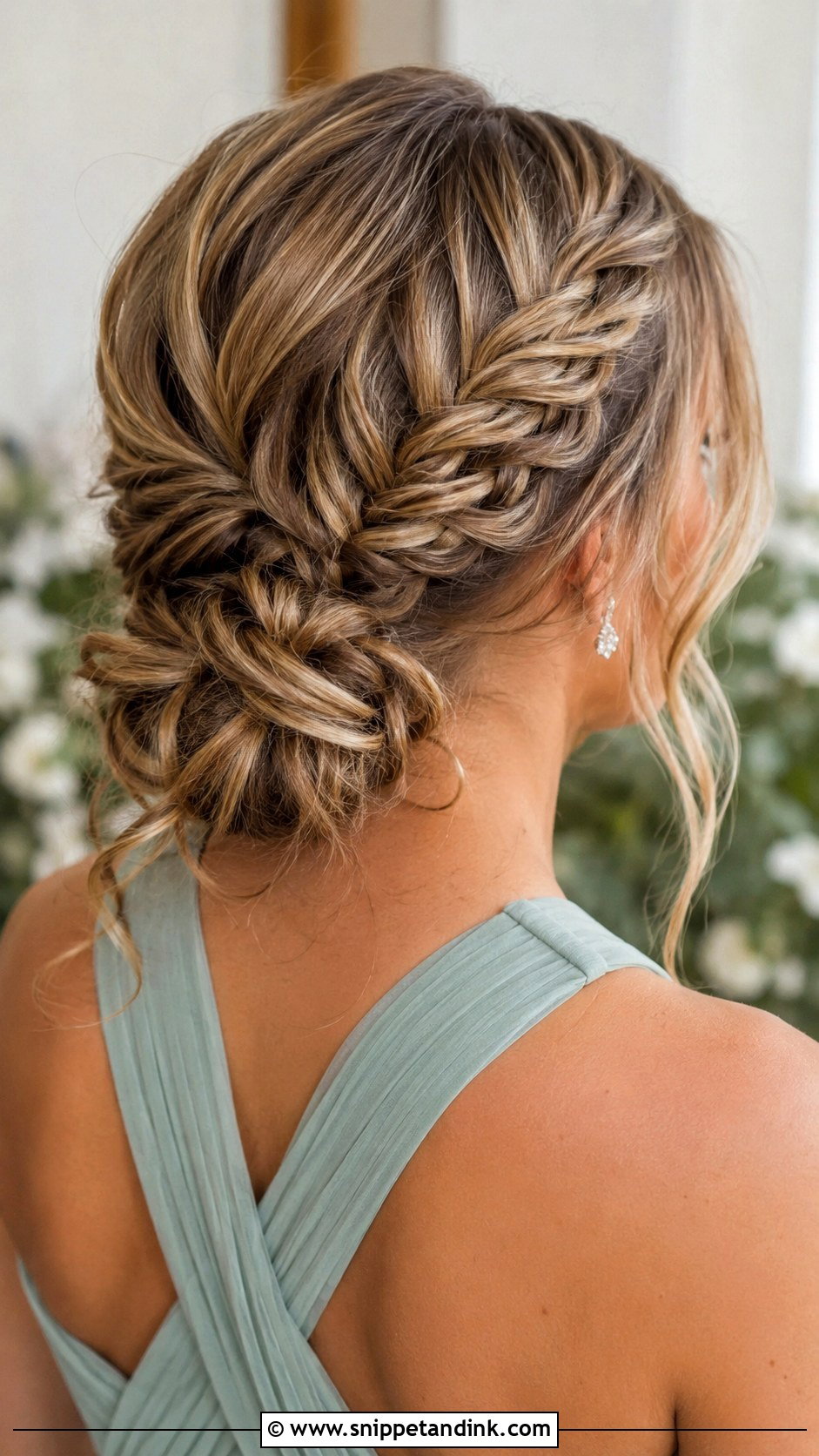
A fishtail has many small crossovers, so the texture shows in close-up photos. It can run along one side, wrap into a low bun or weave a crown before being pinned. Balayage, highlights and multi-tonal hair show every shade in it. Boho, coastal and outdoor weddings suit it. Fishtails are slow to plait and hard to redo quickly if they slip, so I secure the end with a small clear elastic before tucking it in. Pull the braid gently apart so it looks full, and curl a few pieces near the face to balance it.
18. Dutch Braid Bridesmaid Updo
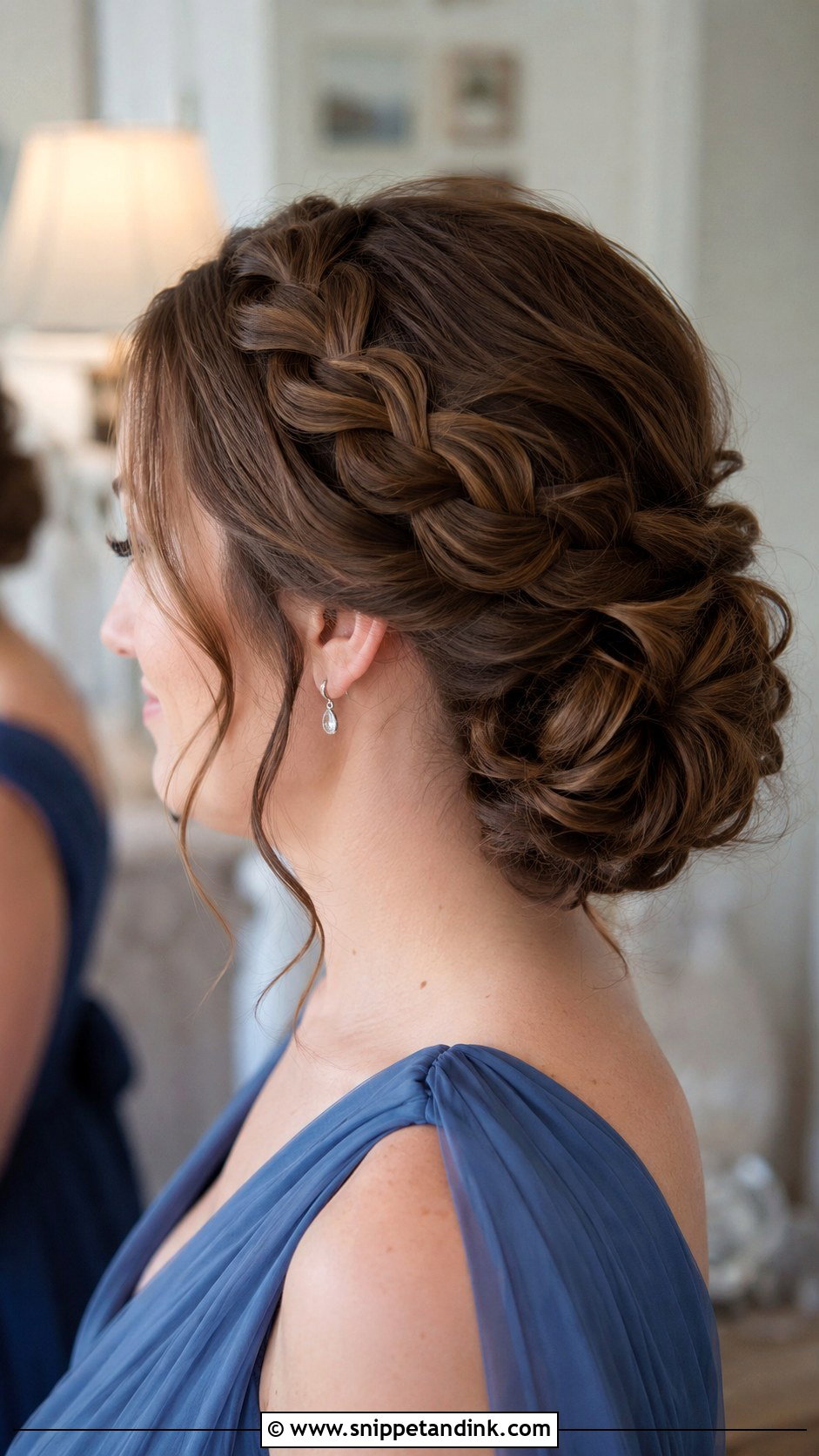
A Dutch braid is plaited under, so it sits on top of the hair and stands out more than a regular braid. It can lead into a low bun, wrap the crown or form a side-swept updo. Thick hair suits it particularly well, because the braid controls the bulk and still looks decorative. It’s also the one I’d pick for a windy cliff or beach ceremony, since a tight braid along the scalp barely moves. Keep the bun soft and rounded so the result looks romantic rather than gym-ready.
19. Waterfall Braid Bridesmaid Updo
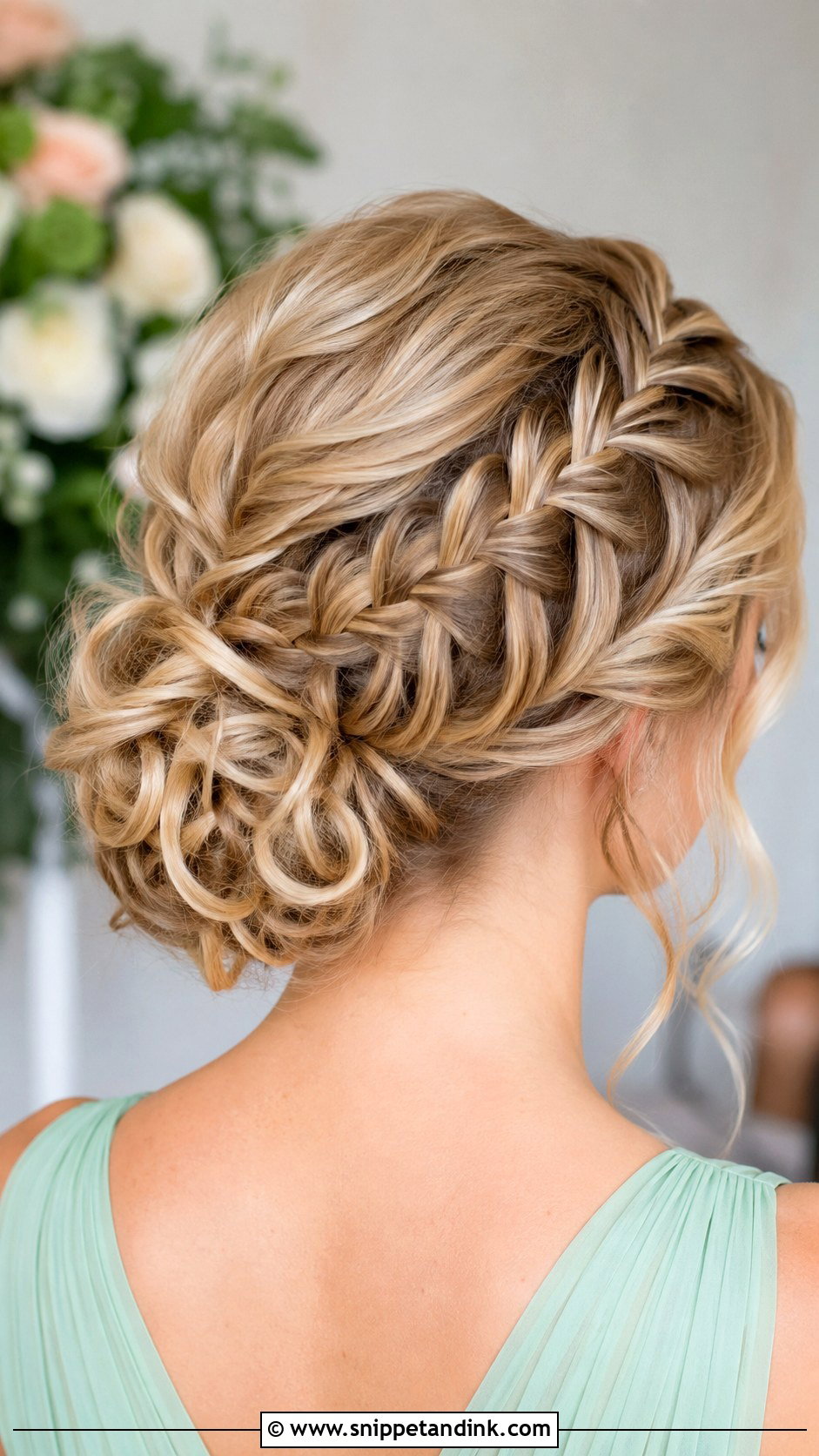
A waterfall braid bridesmaid updo runs a delicate braid across the back or side of the head, with strands dropping through it before being gathered into a low bun or twist. It suits bridesmaids who like a gentle look, and garden venues with floral dresses. Waves first are essential. On straight hair the dropped strands go flat and the braid almost disappears. Keep accessories minimal so the braid stays the main detail.
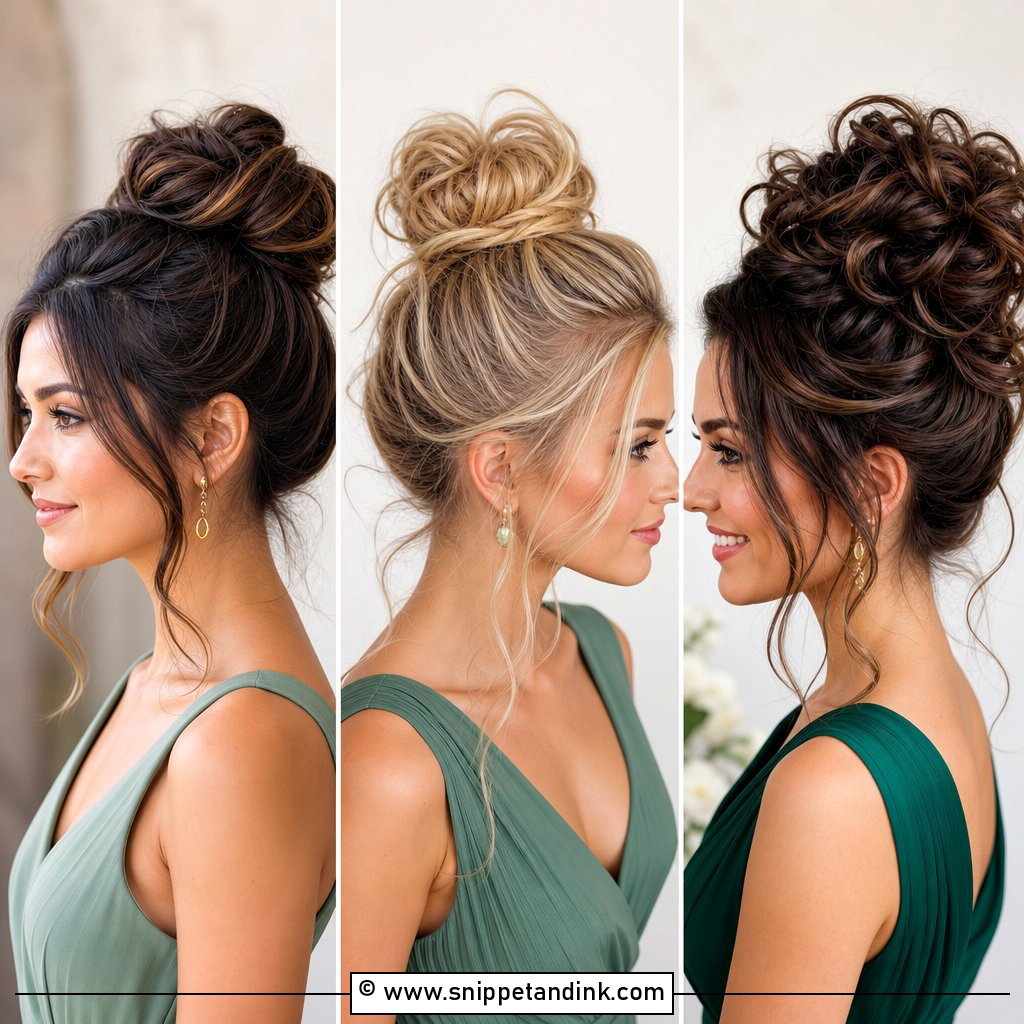
20. Rolled Updo Bridesmaid Hair
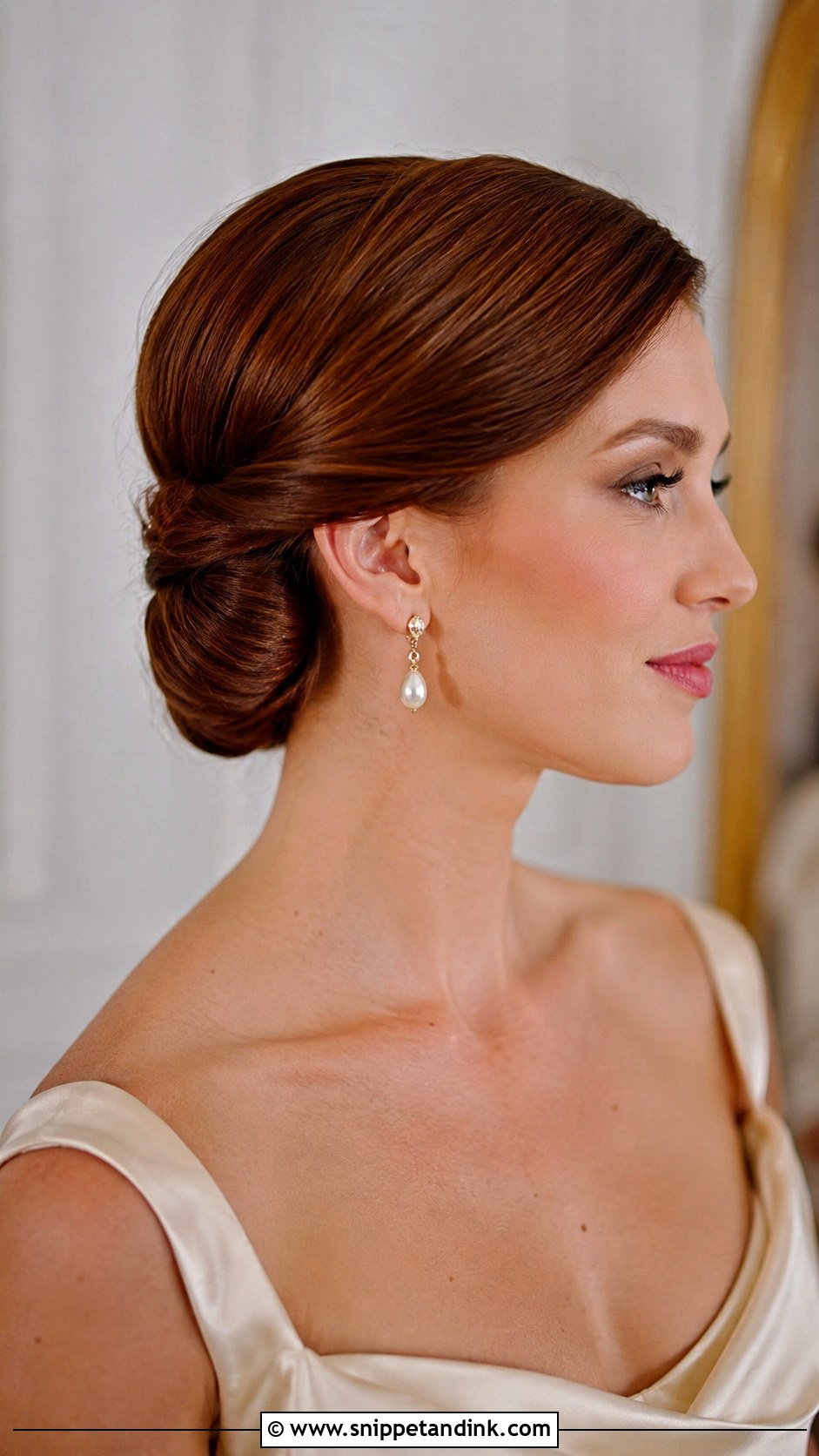
Rolled updos have a vintage shape: the hair is rolled under and tucked at the nape for a smooth, rounded finish. Medium length is enough, which makes it useful for hair that can’t manage a full bun. Classic weddings, retro gowns and formal receptions suit it. I set the hair in rollers first so the roll has a curve to follow; rolling straight, flat hair gives a shape that slowly slides out. A side part adds old-Hollywood charm, a middle part looks more current.
21. Tucked Updo Bridesmaid Hair
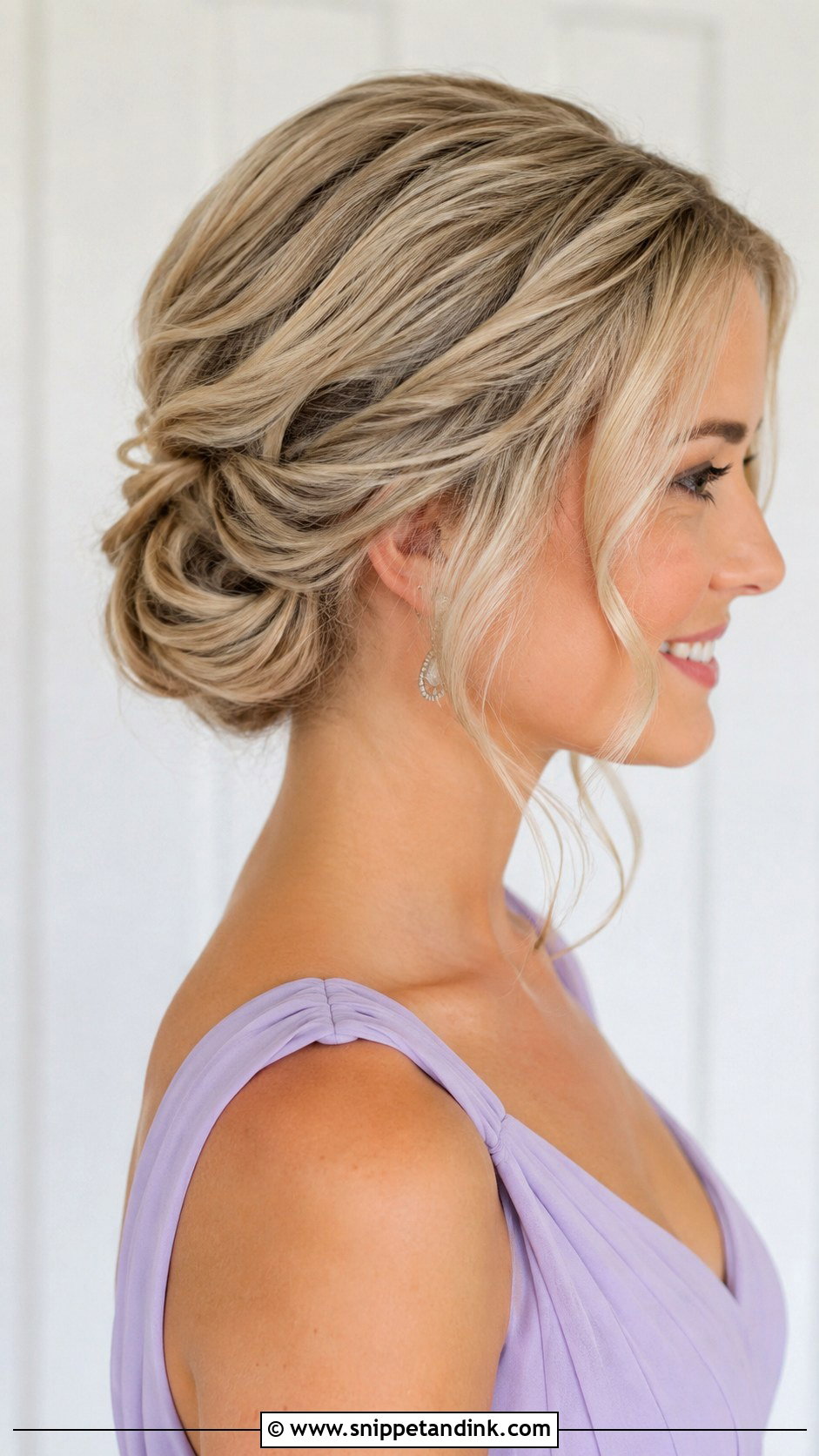
Tucking the ends under and pinning them creates a low bun or roll effect without much bulk. That makes it the updo I use most for short, fine or shoulder-length hair that can’t make a big shape. Open necklines and delicate earrings suit it. Fine hair needs texture spray to hold, and soft waves before pinning add fullness. The pins go in the direction of the tuck, hidden inside it. Leave a little movement around the face so it doesn’t look stiff.
22. Low Ponytail Bridesmaid Updo
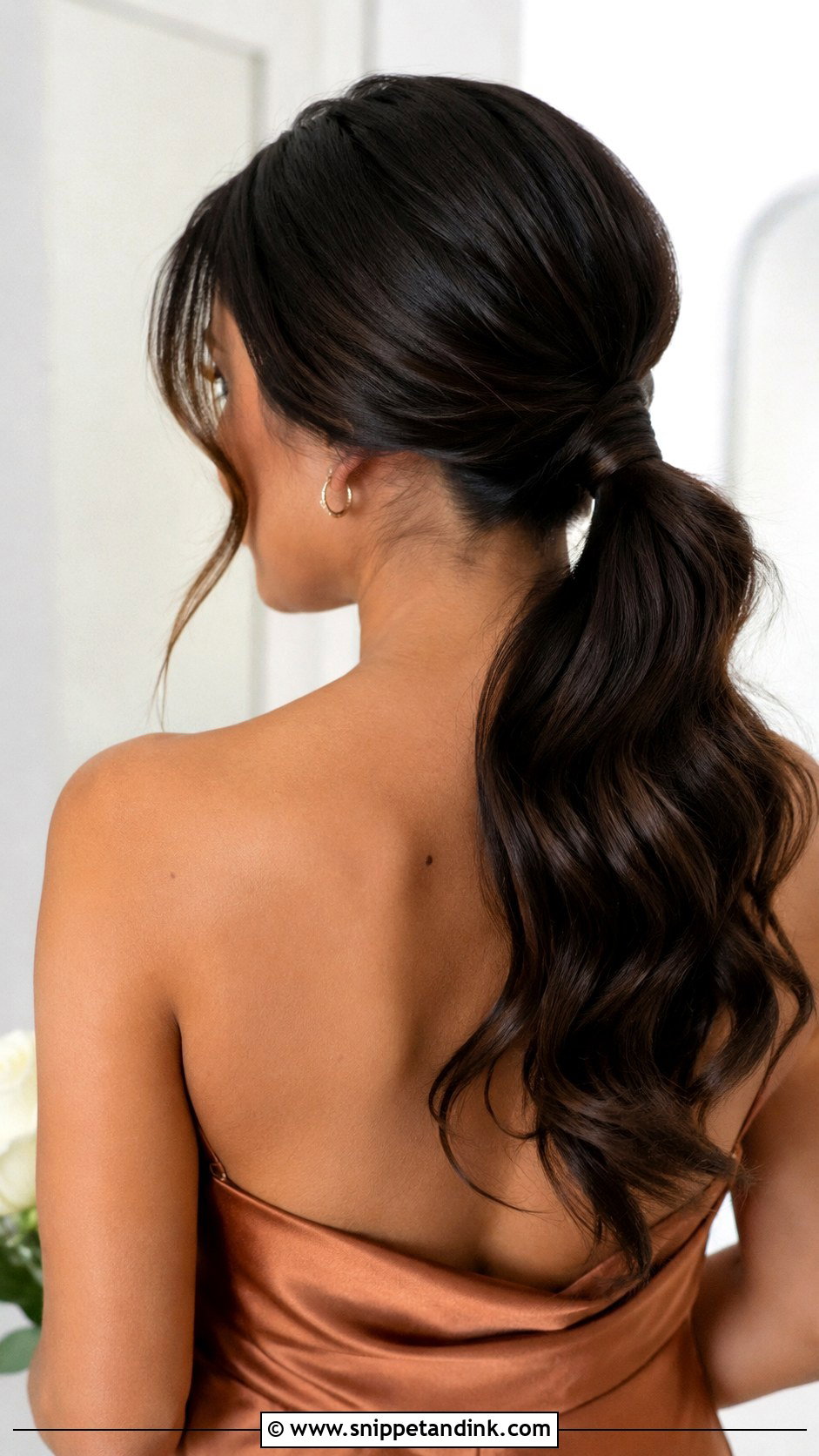
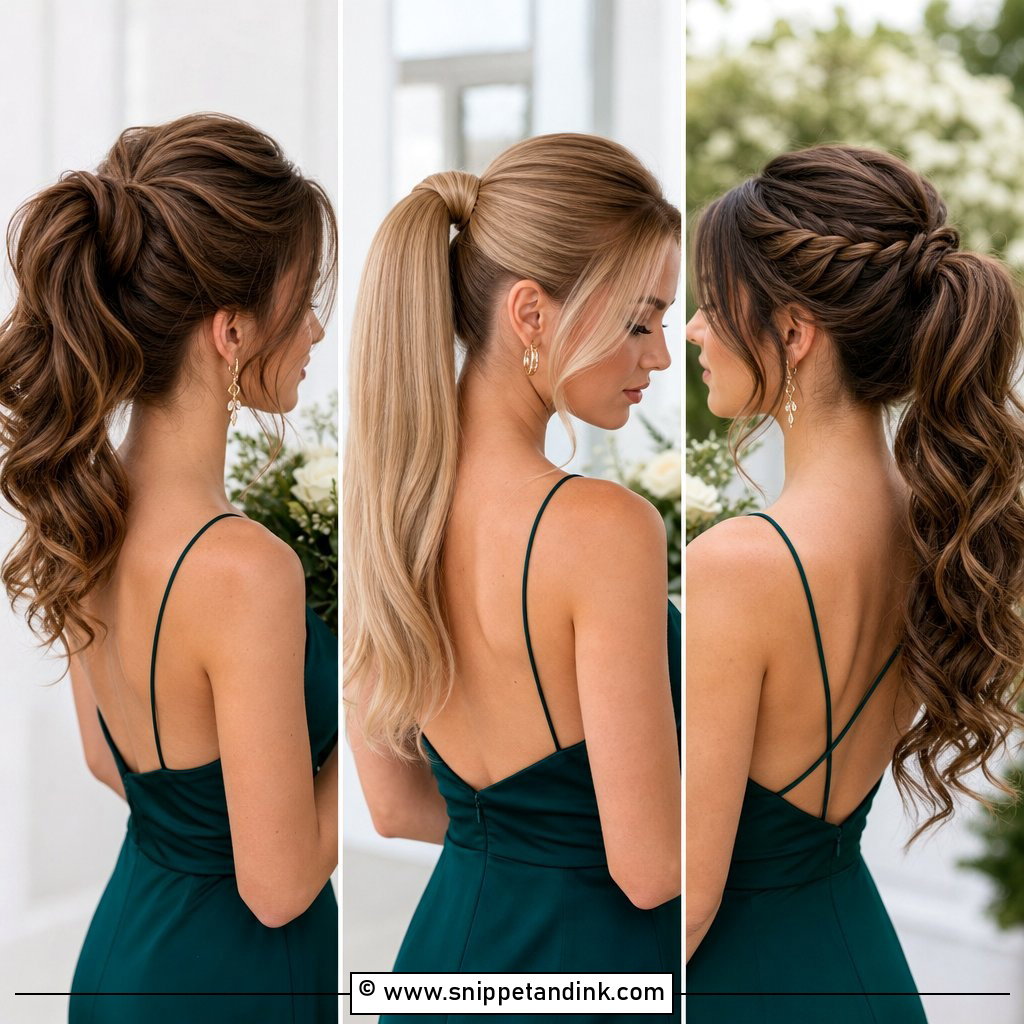
A low ponytail lifts the hair without hiding it all in a bun. It sits at the nape and can be sleek, wavy or textured, with a section of hair wrapped around the elastic to finish it. Long hair shows off its length this way, and it suits contemporary dresses and statement earrings. Set the curls with heat and let them cool before the ponytail is secured, otherwise the weight of long hair pulls the waves out by the reception. I pin the wrap from underneath so no metal shows.
23. Sleek Ponytail Bridesmaid Updo
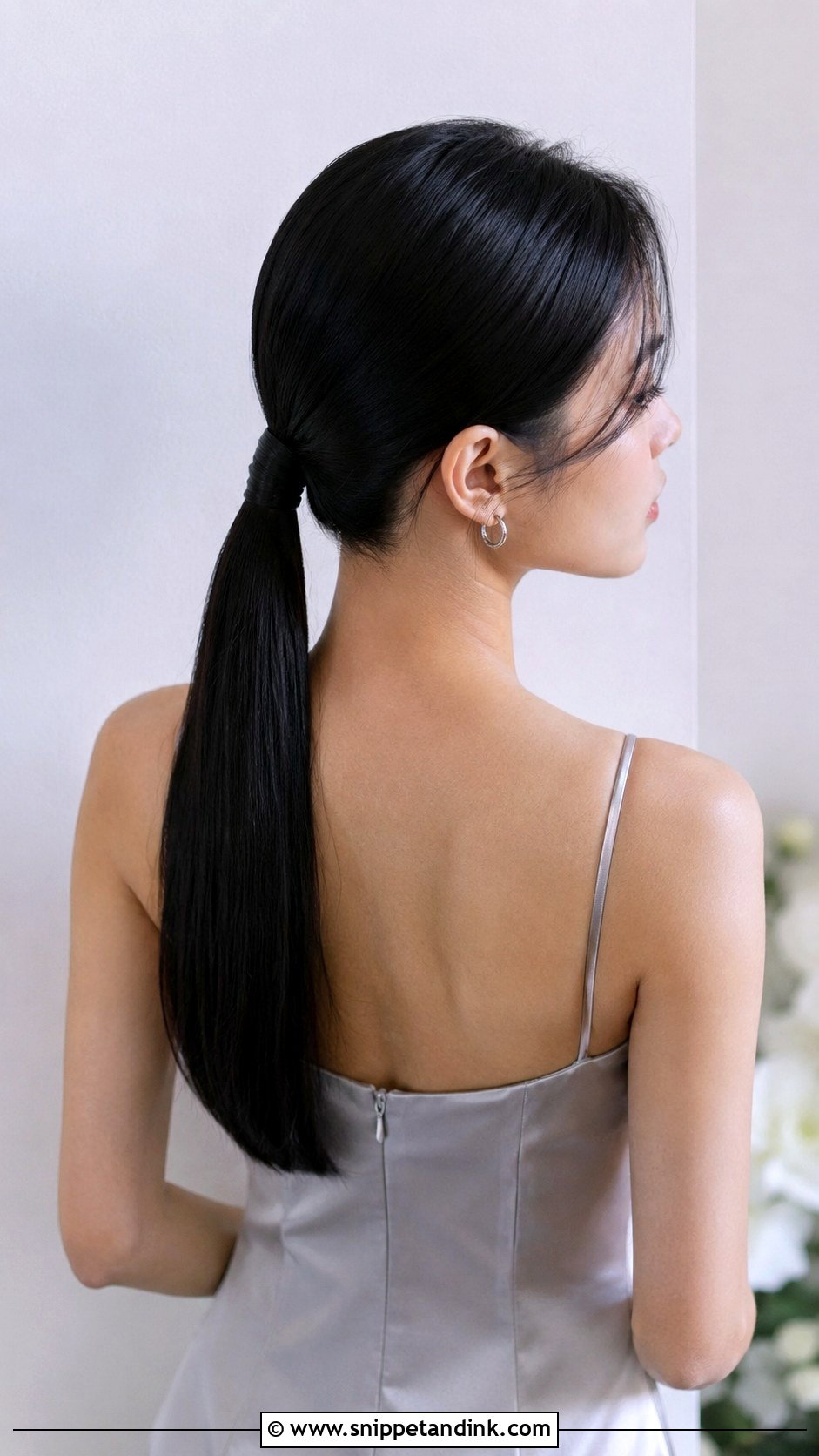
A sleek ponytail bridesmaid updo is sharp and modern, at home at city weddings and formal receptions with clean, simple dresses. The hair is smoothed close to the head and tied low, mid or high, with ends left straight, softly curled or flipped under. With the face fully open, it reads clearly from the front. The weak spot is the base, so I use a smoothing cream, a firm elastic and two pins through the wrap to stop it slipping down. It’s a good fit when the bride wants a uniform look without buns.
24. Bubble Ponytail Bridesmaid Updo
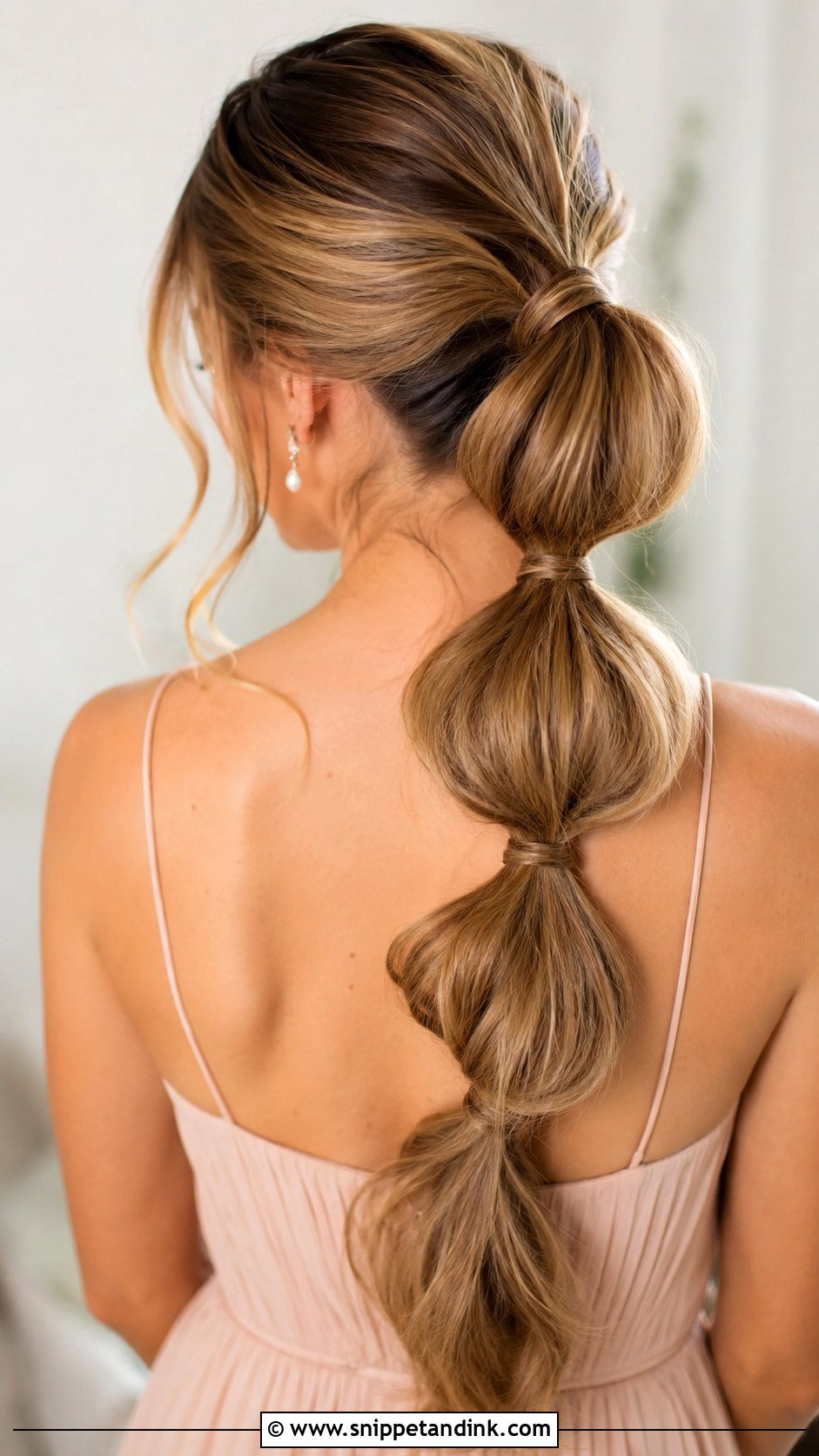
Bubble ponytails divide the length into rounded sections with clear elastics down the tail. Styled well it’s fashion-forward rather than playful, and on a simple dress it becomes the main detail. Long, thick hair gives the fullest bubbles; on fine hair I gently tug each section wider to make up for it. Keep the bubbles even in size. A low bubble ponytail feels elegant, a high one bolder, and both keep the hair controlled through hours of dancing.
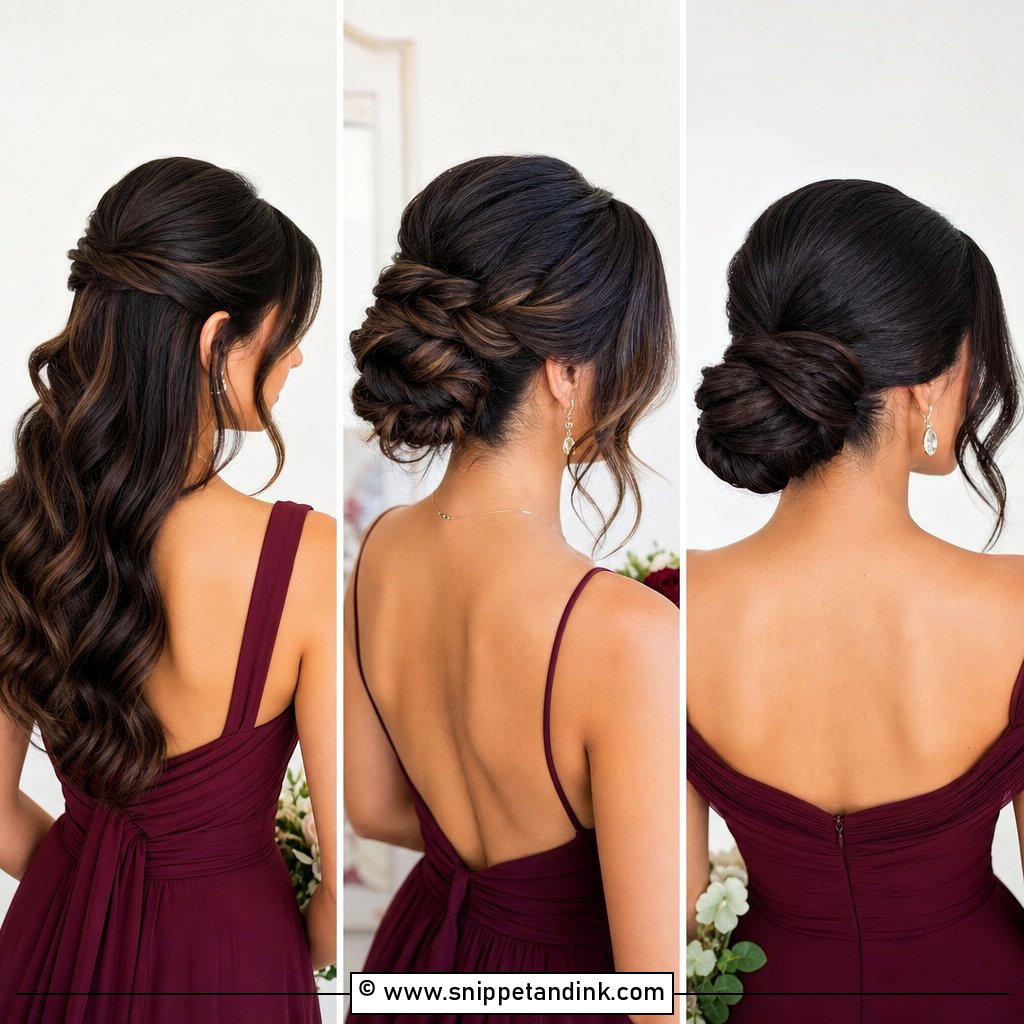
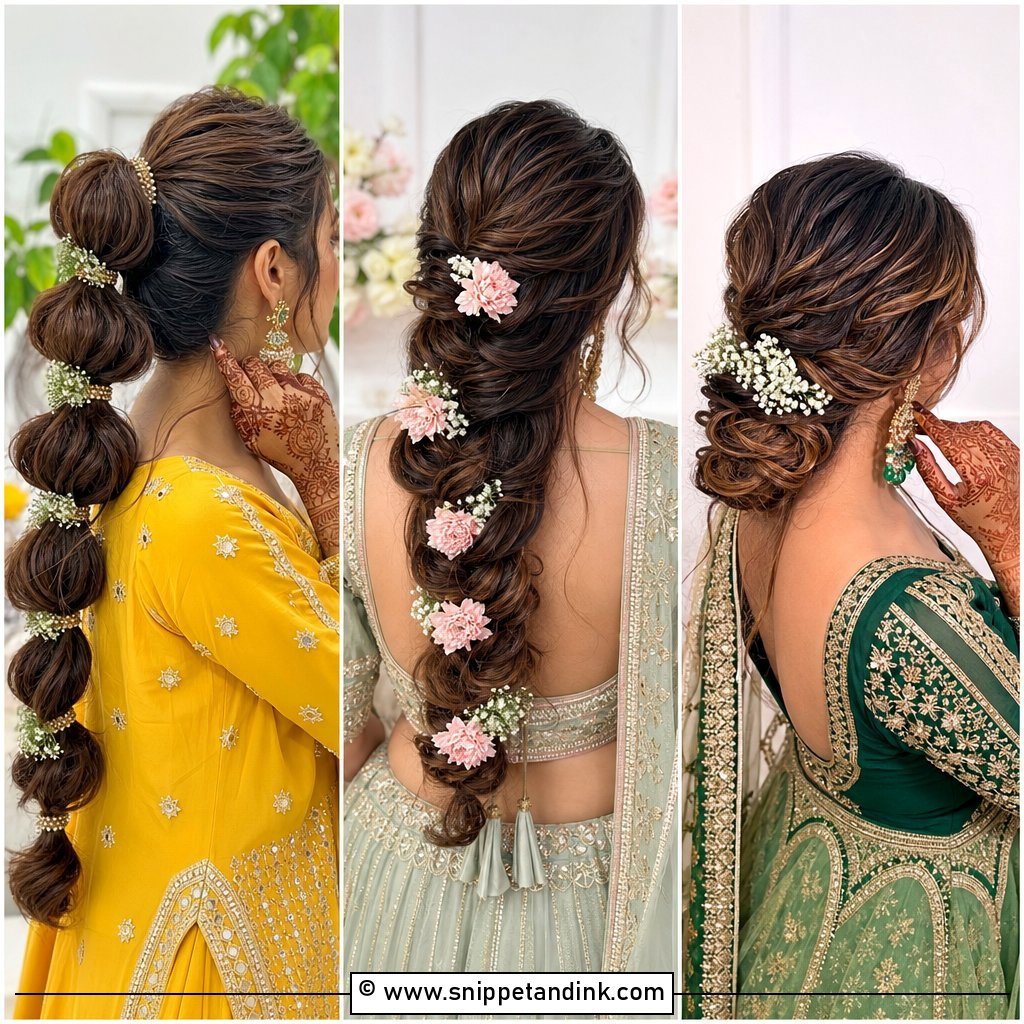
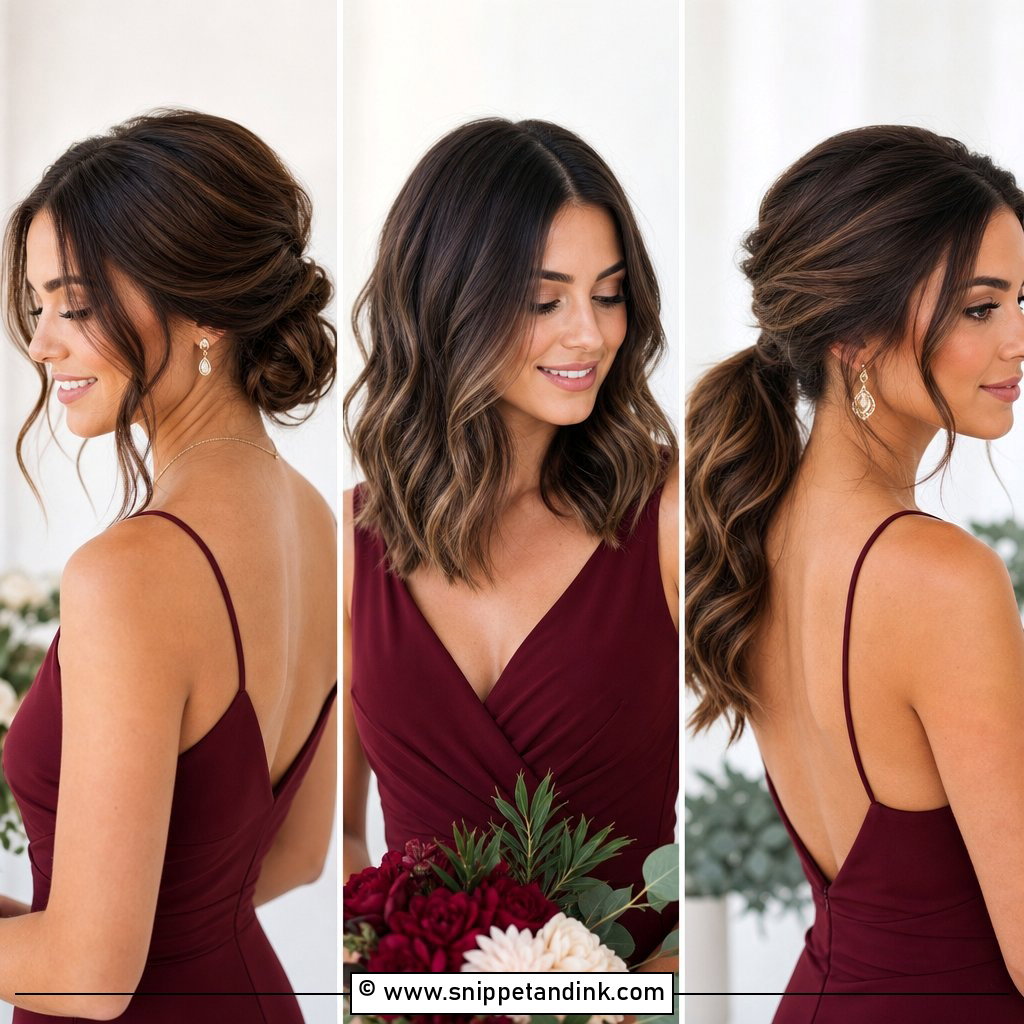
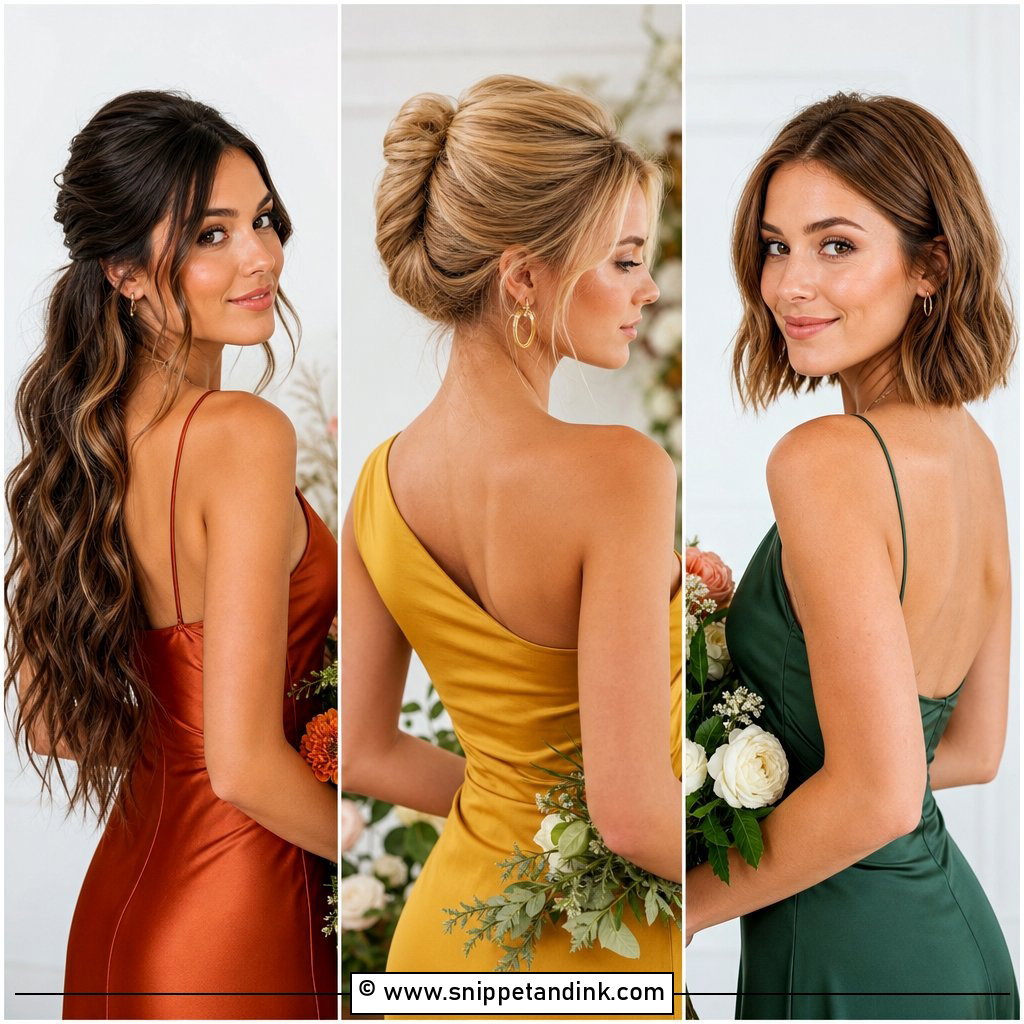
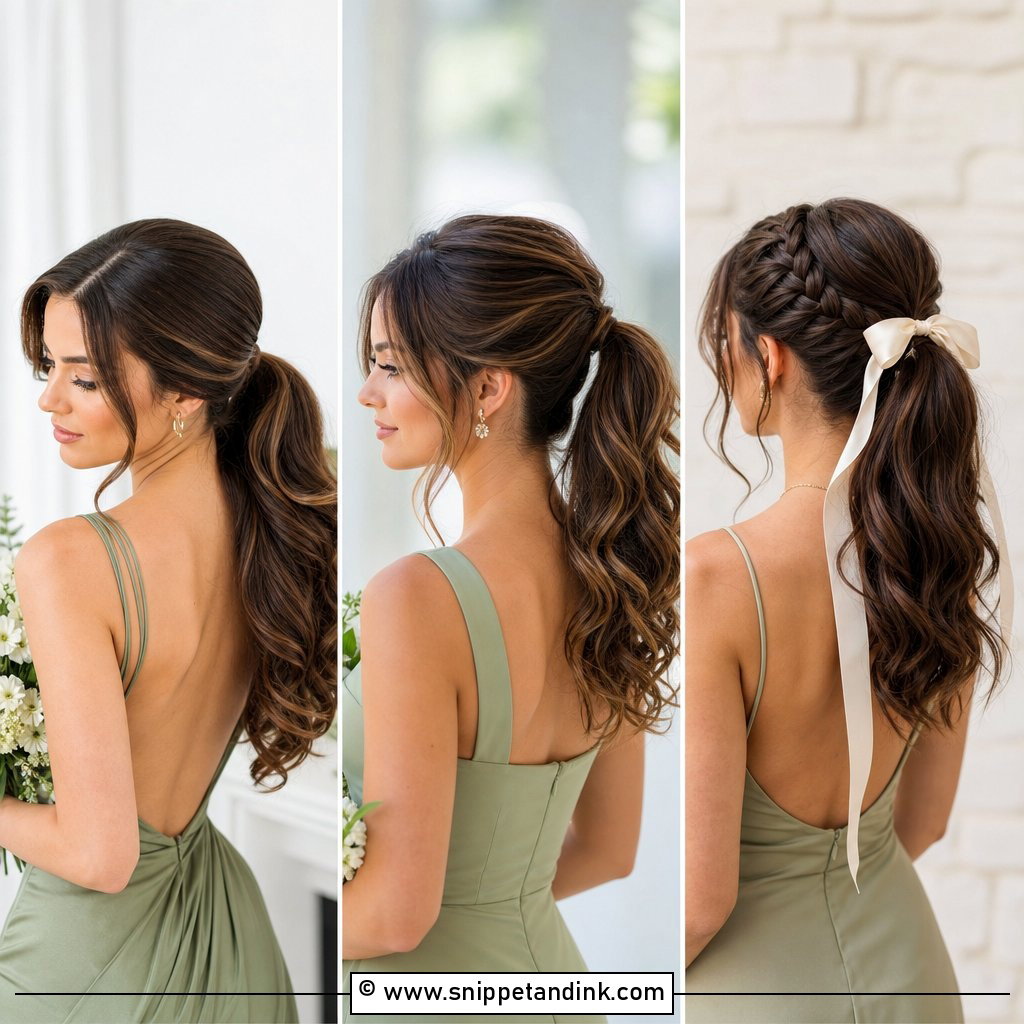
25. Half Up Bridesmaid Updo
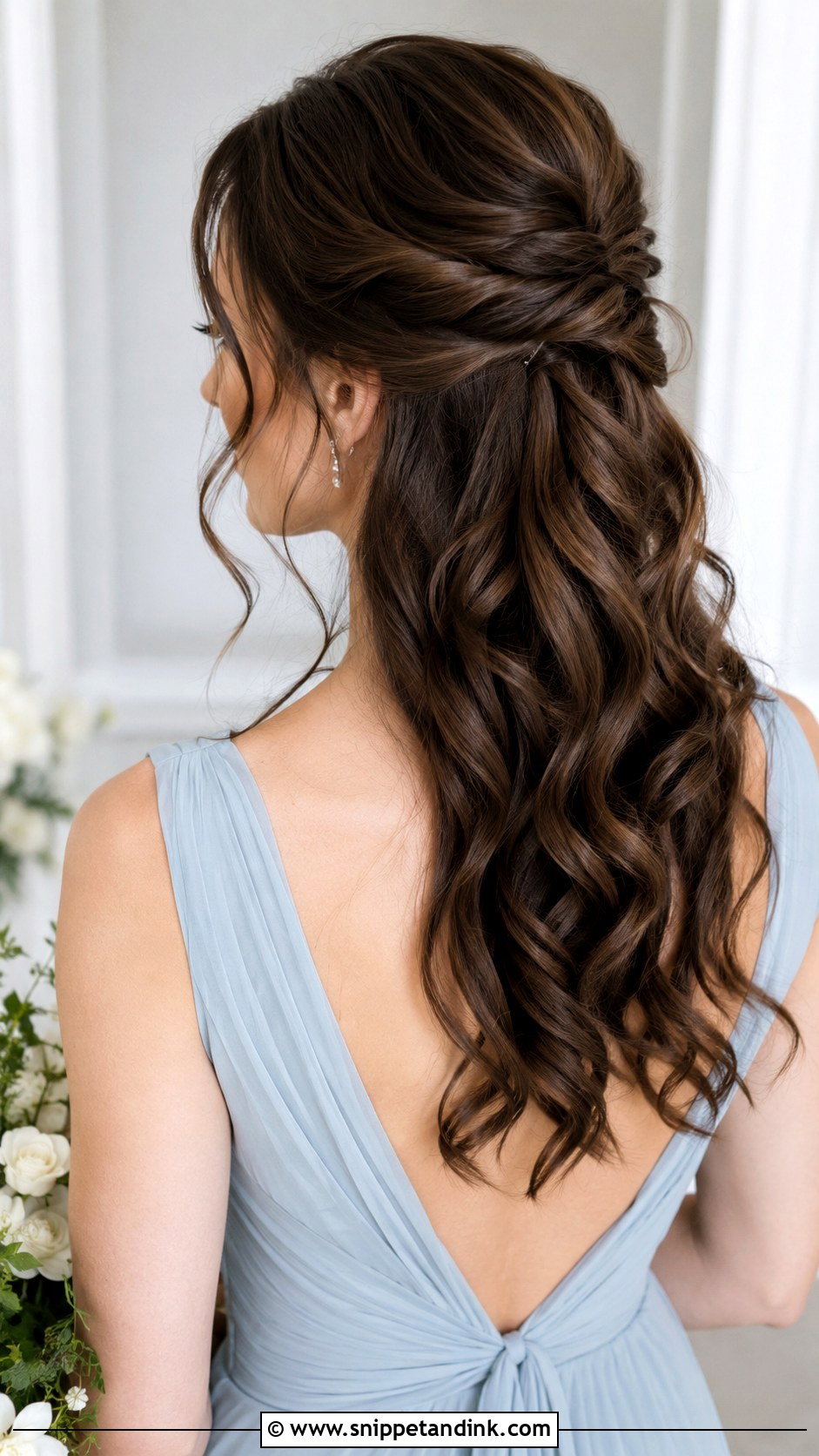
A half up bridesmaid updo keeps softness around the shoulders while giving the top some structure. The upper section is pinned into a small bun, twist, braid or knot, and the rest is curled. It’s a good middle path for a group with different lengths and comfort levels, and it frames the face while showing length. The loose curls are what fail first, so I set them firmly and spray each one as it cools. Soft waves, curtain bangs and floral pieces all suit it.
26. Half Up Bun Bridesmaid Updo
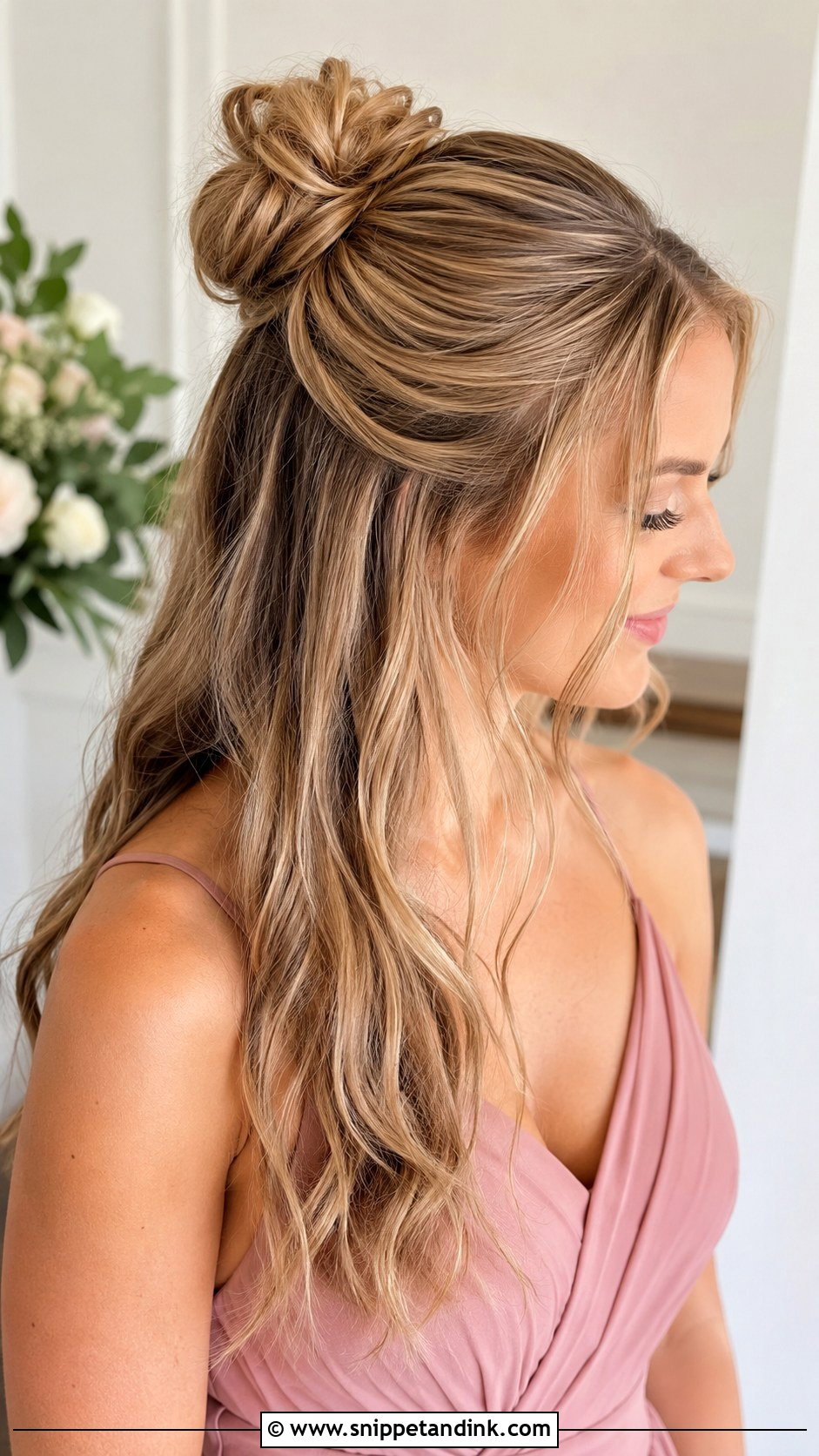
A half-up bun gathers the top section into a small bun while the rest falls in waves. It feels younger and more relaxed, and it suits outdoor and beach weddings, or bridesmaids who don’t want everything pinned up. Keep the bun neat and balanced so it doesn’t look like a quick gym bun. A little backcombing at the crown adds height. On very thick hair the bun can feel heavy on top, so I make it from a smaller section than you’d expect.
27. Short Hair Bridesmaid Updo
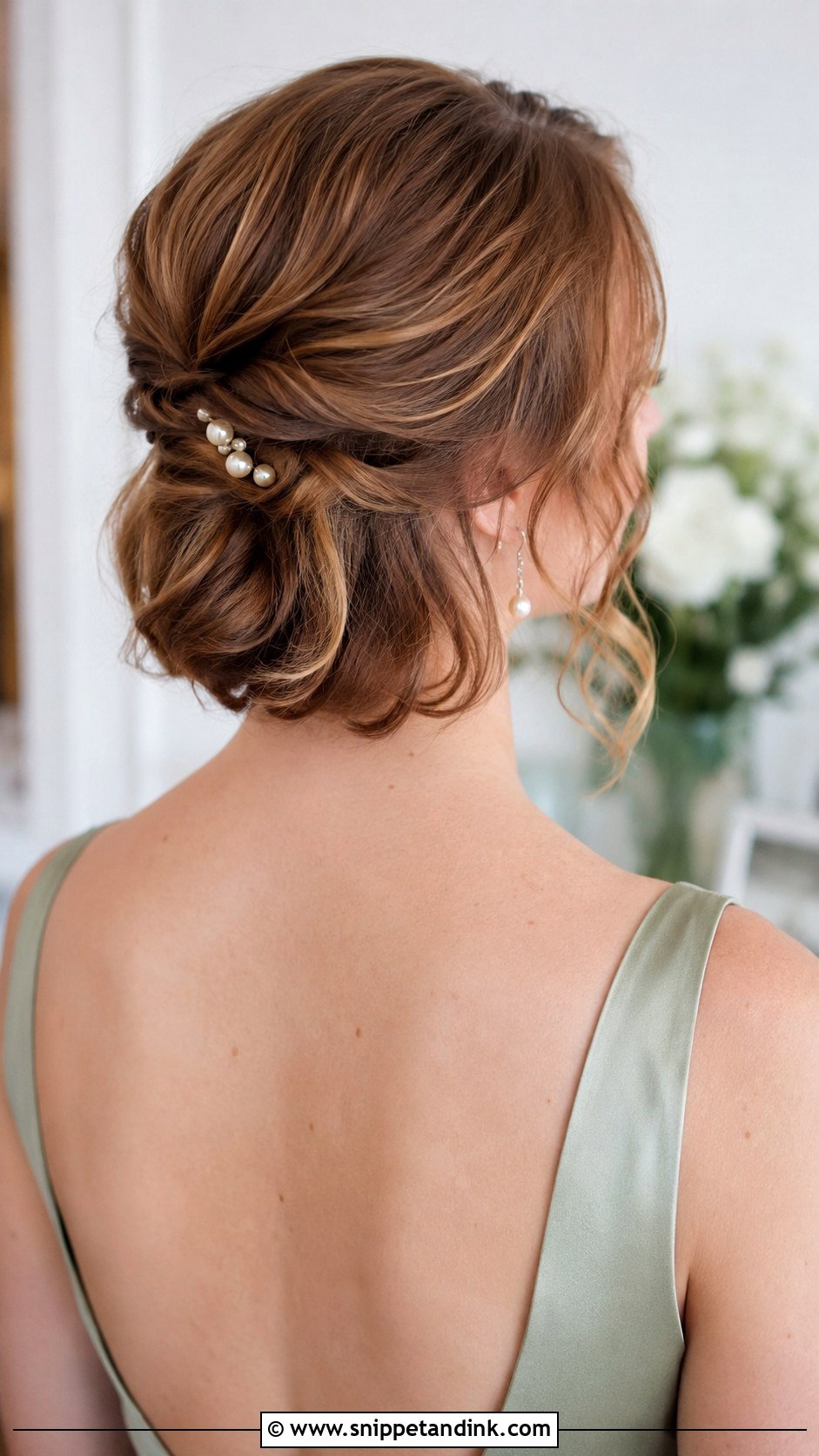
Short hair can look as finished as a long updo with the right shape. For a bob or shoulder-length cut I’d suggest a tucked bun, pinned waves, mini twists or a low roll. The aim is to create the impression of an updo while keeping it secure. Texture matters most here: freshly washed short hair is too slippery to hold pins, so I prefer day-old hair with texture spray. Small pearl pins or a delicate comb finish it and help a short-haired bridesmaid match the rest of the group.
28. Medium Hair Bridesmaid Updo
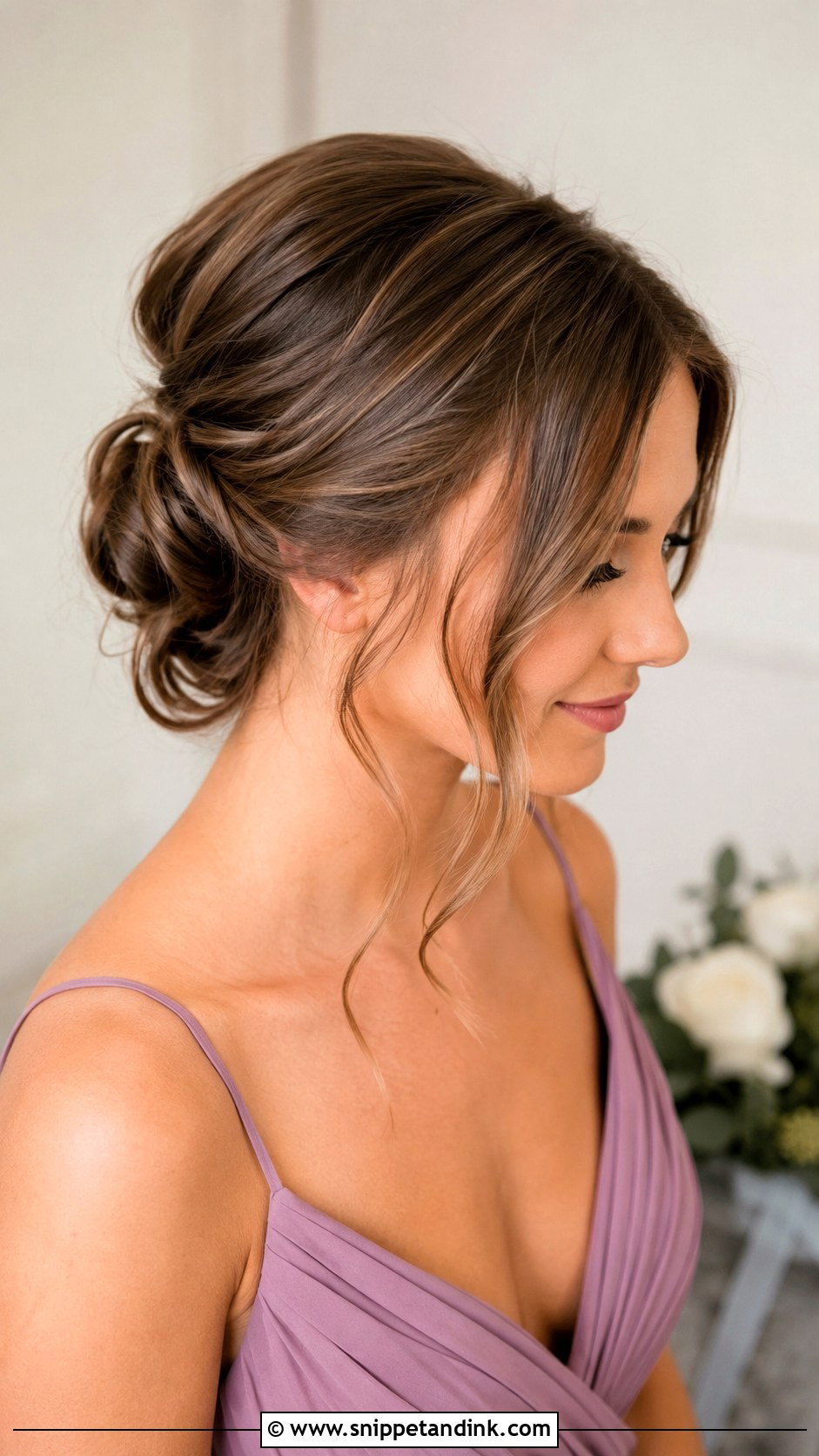
Medium hair, from shoulder to collarbone, is the easiest length to put up. There’s enough to build structure without the weight that pulls long updos down, so low buns, tucked rolls, braids and twists all stay comfortable for a full day. Waves before pinning give volume and grip. Shorter face-framing layers can be curled as tendrils instead of forced back. I’d say medium length is the one most likely to hold up through the evening.
29. Long Hair Bridesmaid Updo
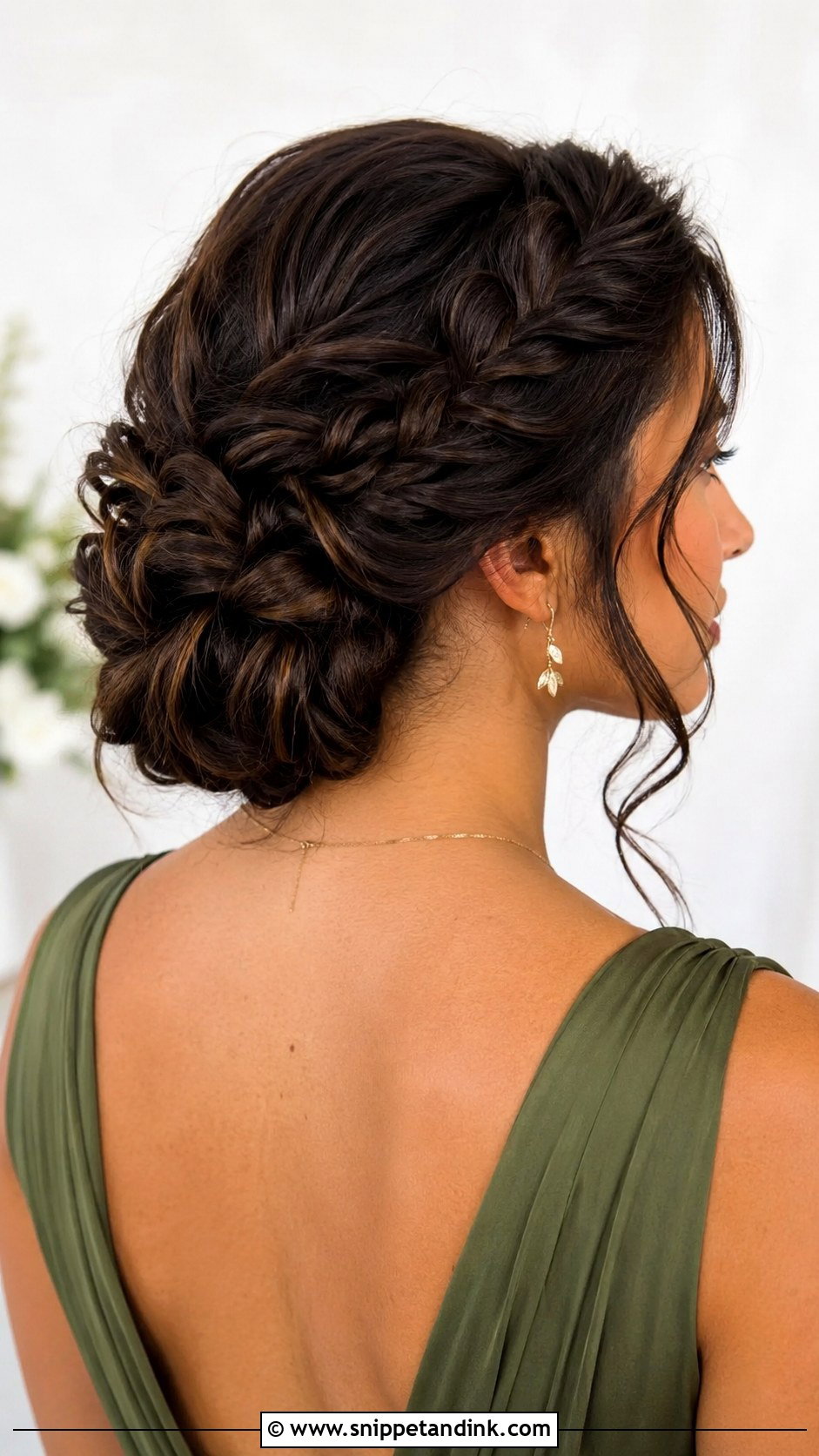
Long hair gives room for volume, braids, twists and bigger buns, but the challenge is weight. A lot of long hair pulled into one shape drags down and starts pulling at the scalp by the evening. I split the hair into sections and pin each one separately so the weight is spread. Prep matters, because freshly washed, silky hair won’t grip pins well, and soft curls first add texture. Low buns, braided chignons, French twists and ponytails all suit long hair. Keep the volume in proportion to the neckline.
30. Side Swept Bridesmaid Updo
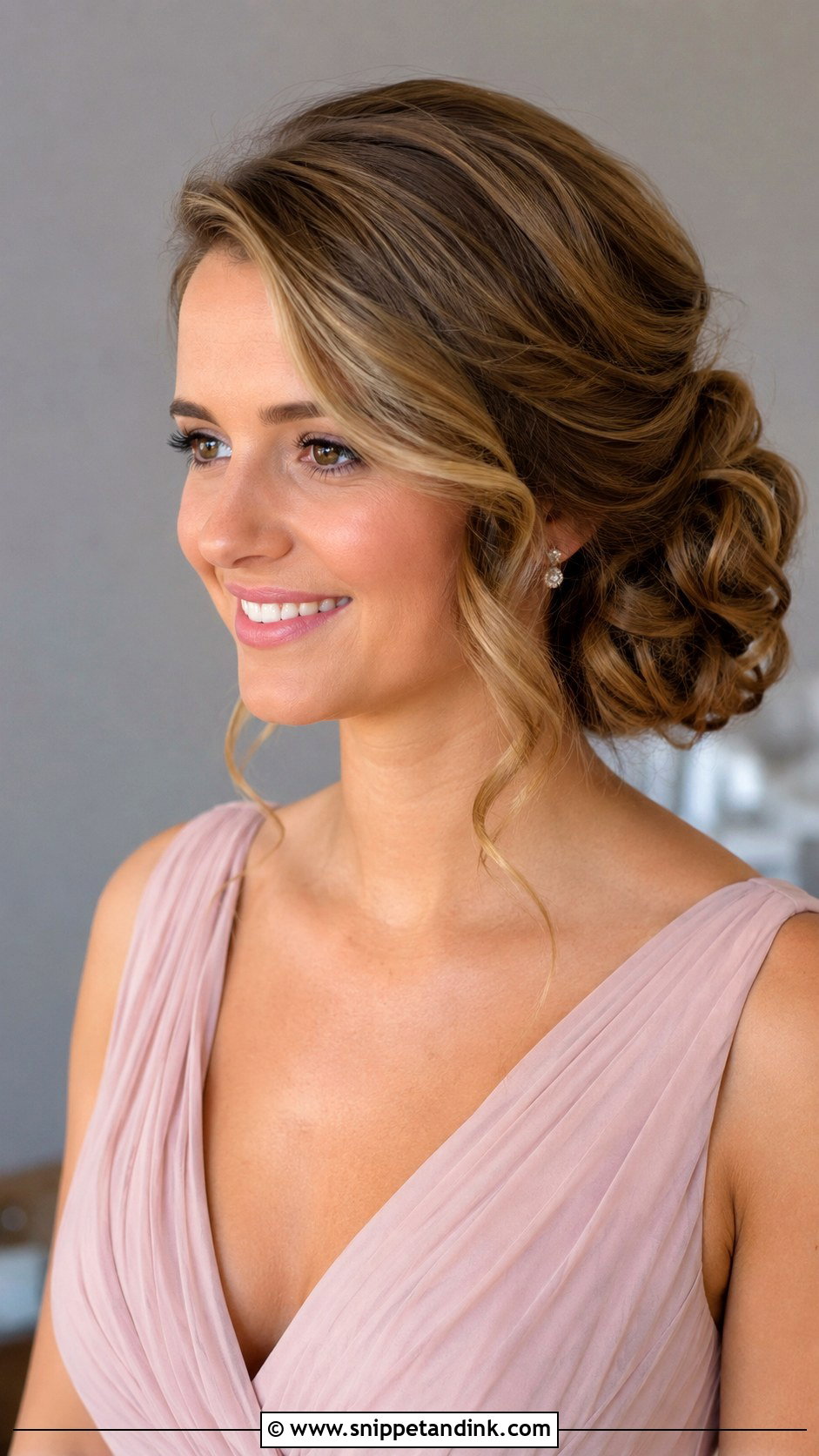
Sweeping the hair to one side before pinning it into a bun, twist or curled cluster creates movement around the face. It pairs naturally with side parts, asymmetrical and one-shoulder dresses, and vintage-inspired weddings. The crown can be sleek or lifted. Layered hair works well here, as the front pieces blend into the sweep instead of escaping. A small accessory on the opposite side helps balance the weight visually. I’d sweep toward the side that faces the camera during the ceremony.
31. Pearl Pin Bridesmaid Updo
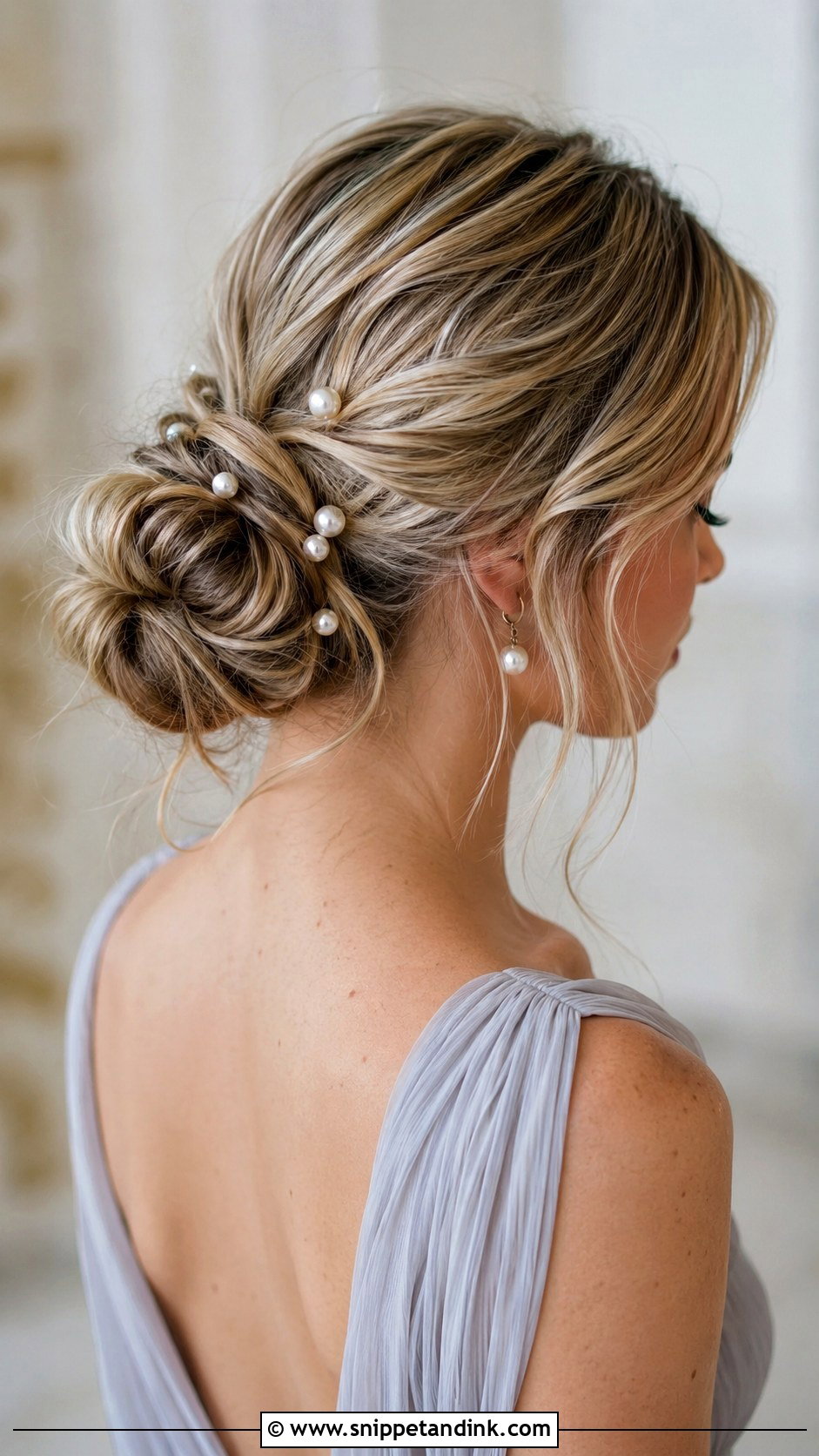
Pearl pins add a wedding detail without looking bridal. The base can be a low bun, chignon, twist or textured updo, with small pearl pins dotted through it. Classic weddings, soft palettes and simple dresses suit it. Space the pearls naturally; a tight cluster looks like a hair slide. Pearl pins usually hold poorly by themselves, so I secure the style with standard bobby pins first and add the pearl pins as decoration. They catch the light on dark, blonde, red and highlighted hair alike.
32. Flower Bridesmaid Updo
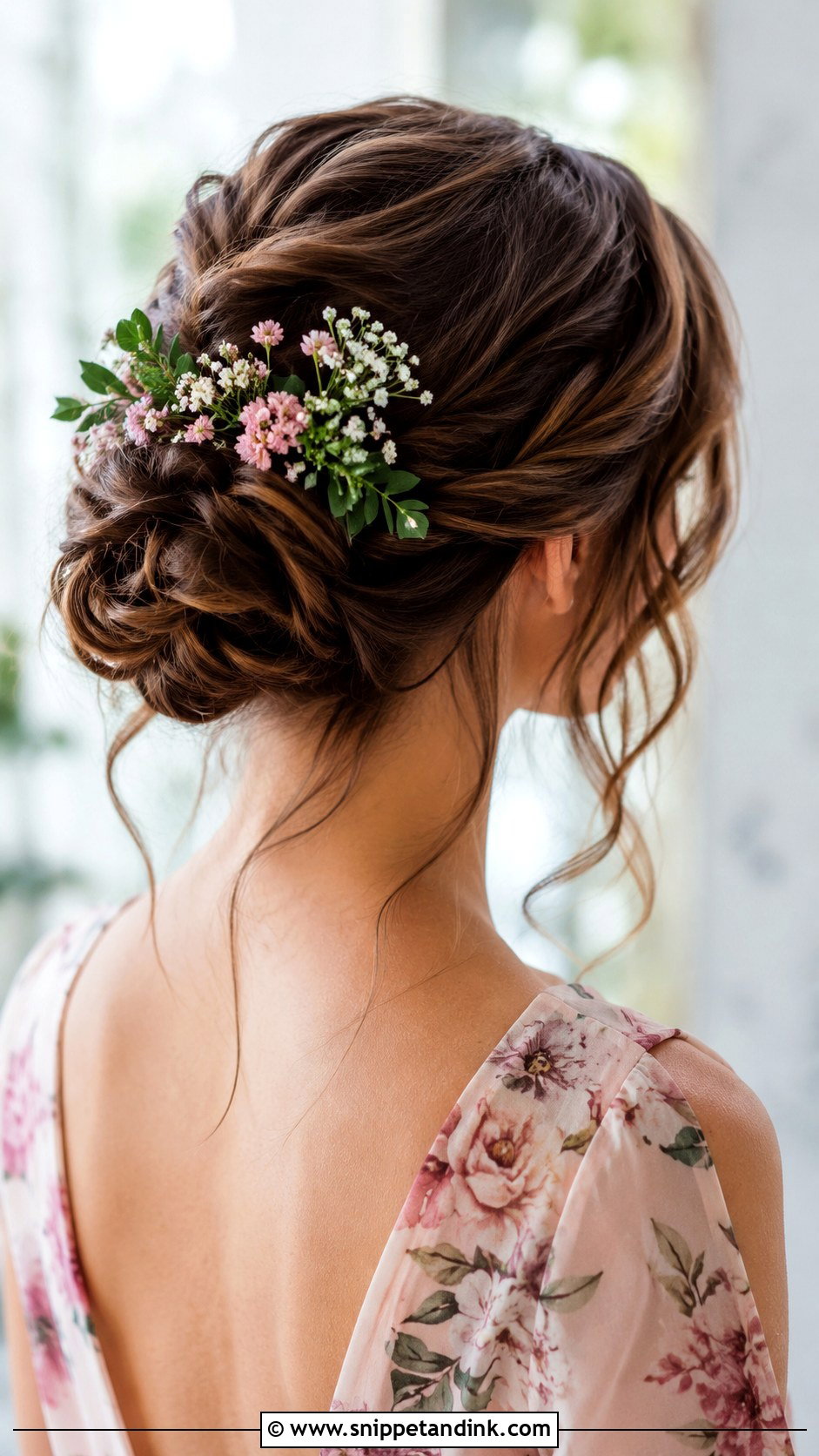
Small blooms, baby’s breath or greenery tucked into a low bun, braid or twist suit spring, summer and garden weddings. Choose flowers small enough to sit securely and in the wedding palette. Coordinate with the florist early. Hardy flowers like spray roses and waxflower last much longer out of water than delicate blooms, and I ask for stems wired or prepared for hair. I put them in at the very end of styling, and the updo itself should be soft and textured so the flowers look like they belong there.
33. Claw Clip Bridesmaid Updo
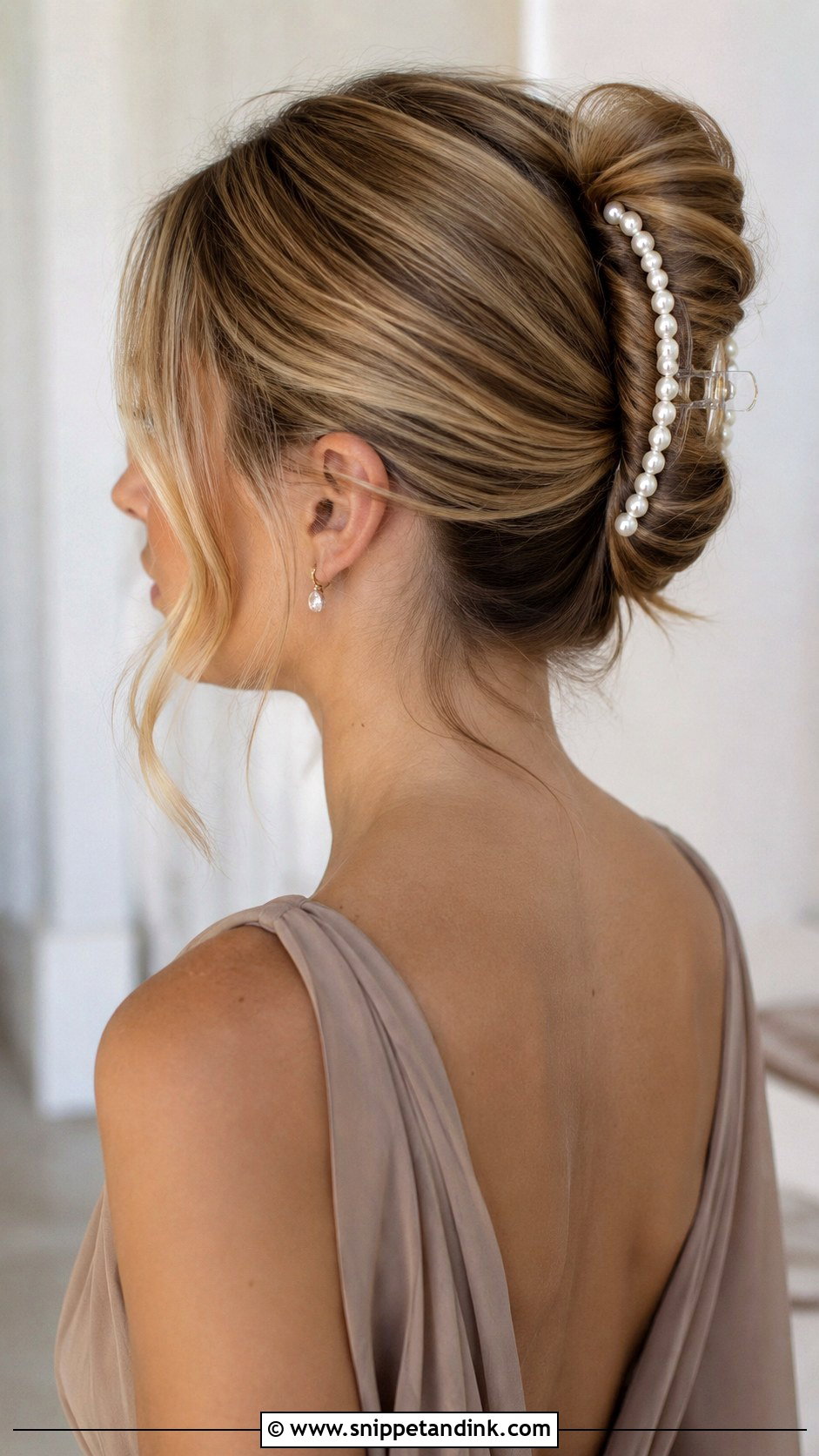
A claw clip bridesmaid updo can look polished rather than casual once the hair is smoothed and shaped into a neat vertical or low twist. Relaxed weddings and modern parties suit it, and so do bridesmaids who don’t like lots of pins. The clip itself has to look refined: pearl, tortoiseshell, gold or matte metal, never a cheap plastic one. Medium to long hair with decent density holds the shape best. On fine hair, the clip tends to slide by the evening unless I hide two pins under it.
34. Veil Friendly Bridesmaid Updo
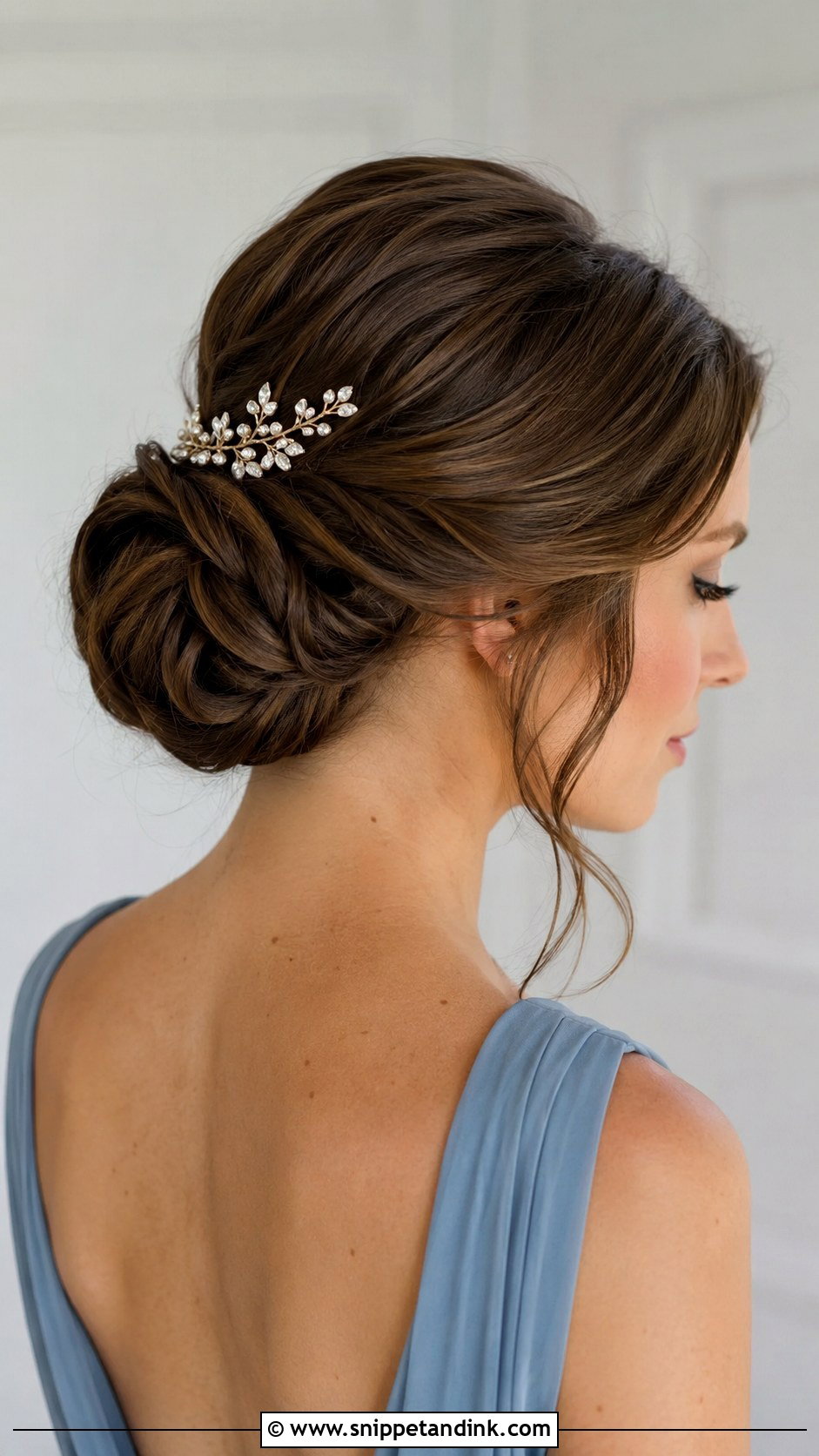
When bridesmaids wear hairpieces, mantilla-style accessories or matching tulle, the updo has to give them a secure place to sit. Low buns, chignons and tucked rolls are best because they support combs and pins without pulling. They also keep the neck and shoulders clear. I build a firm base first, often with crossed pins or a small braid hidden underneath, and slide the comb into that rather than into loose hair. Even if the finish looks soft, the structure inside has to be strong enough for hours of photos.
35. Easy Bridesmaid Updo
An easy bridesmaid updo is right for simple mornings, small bridal parties and bridesmaids doing their own hair. A low twisted bun, tucked ponytail or soft pinned knot can look polished without being complicated. Start with curled or waved hair, because texture makes shaping much easier. Clear elastics, bobby pins, texture spray and a flexible hairspray are all you need. Practise it at least once before the wedding, a few days ahead, so the morning holds no surprises, and smooth any frizz before the final spray.
When a Bridesmaid’s Hair Refuses to Hold Pins
Most updos are drawn on medium-thick hair with a bit of natural wave. Real bridal parties include all sorts, and the same style needs different handling for each.
Fine or silky hair
It slips. I add dry texture spray and a little backcombing at the roots of each section, use smaller pins in an X, and choose shapes with a padding insert or a braid hidden underneath for grip.
Very thick or heavy hair
The risk is weight and headaches. Splitting the bun into several pinned sections instead of one big twist spreads the load, and a low placement is kinder than a high bun on a long day.
Curly and coily hair
I work with the pattern, not against it. Moisture first, fingers instead of a brush, and sturdier pins that hold a section without tugging at the hairline. Silk-pressing curly hair for a sleek style is possible, but humidity can revert it before the reception, so I talk that trade-off through at the trial.
Taking it down at the end of the night
Pull every pin out before touching a brush, then work a little conditioner or oil through and detangle from the ends upward. Brushing straight through a sprayed updo tears hair and is the main reason bridesmaids find breakage the next morning.
Same Wedding, Five Heads of Hair, One Coordinated Row
Updos can be sleek, soft, braided, curly, simple or detailed. What matters is that each one suits the dress neckline, the venue, the weather, the hair’s length and texture, and the number of hours it has to last. Low buns and chignons are always reliable; ponytails, soft twists and textured knots feel more modern. Braids, pearls, flowers and clips personalize a look without overwhelming it. The bridesmaids don’t have to look identical. They should look like they belong together, and feel comfortable enough to forget about their hair once the ceremony starts.
You'll Like These Ideas:


Leave a Reply