
Most bridal parties settle on updos, and for good reason: they hold up through hugs, heat and hours of photos far better than loose hair does. But a group can look coordinated without every bridesmaid wearing the same bun. Below are 20 updos, from low buns and chignons to braided, twisted and sleek knots, followed by five versions built around hair length and thickness. For each one I’ve noted the detail that decides whether it lasts, in a formal ballroom or a relaxed garden.
Sending Your Stylist the Right Photos Weeks Ahead
Most bridesmaids don’t get a trial, so their first time in the stylist’s chair is the wedding morning itself. That makes the brief you send beforehand the closest thing to a rehearsal, and the most useful briefs are short and visual.
Send two photos of the updo you like, one of the back and one of the side, because front views hide how a style is actually built. Add a clear photo of your own hair, down and dry, in daylight. That single picture tells the stylist whether the style is realistic for your length and density, or whether it needs padding, a clip-in piece or a slightly different shape.
Mention anything that changes the plan: a recent cut, a sensitive scalp, extensions, a dress with a high neck or a big bow at the back, or glasses you’ll wear all day. Glasses arms sit exactly where many low buns and tucked sides go, so pins have to be placed around them.
If the bride has picked one style for everyone and it won’t suit your hair, say so early and privately. A good stylist can suggest a close version that still fits the group, and that conversation is far easier two weeks out than at seven in the morning.
1. Bridesmaid Low Bun Updo
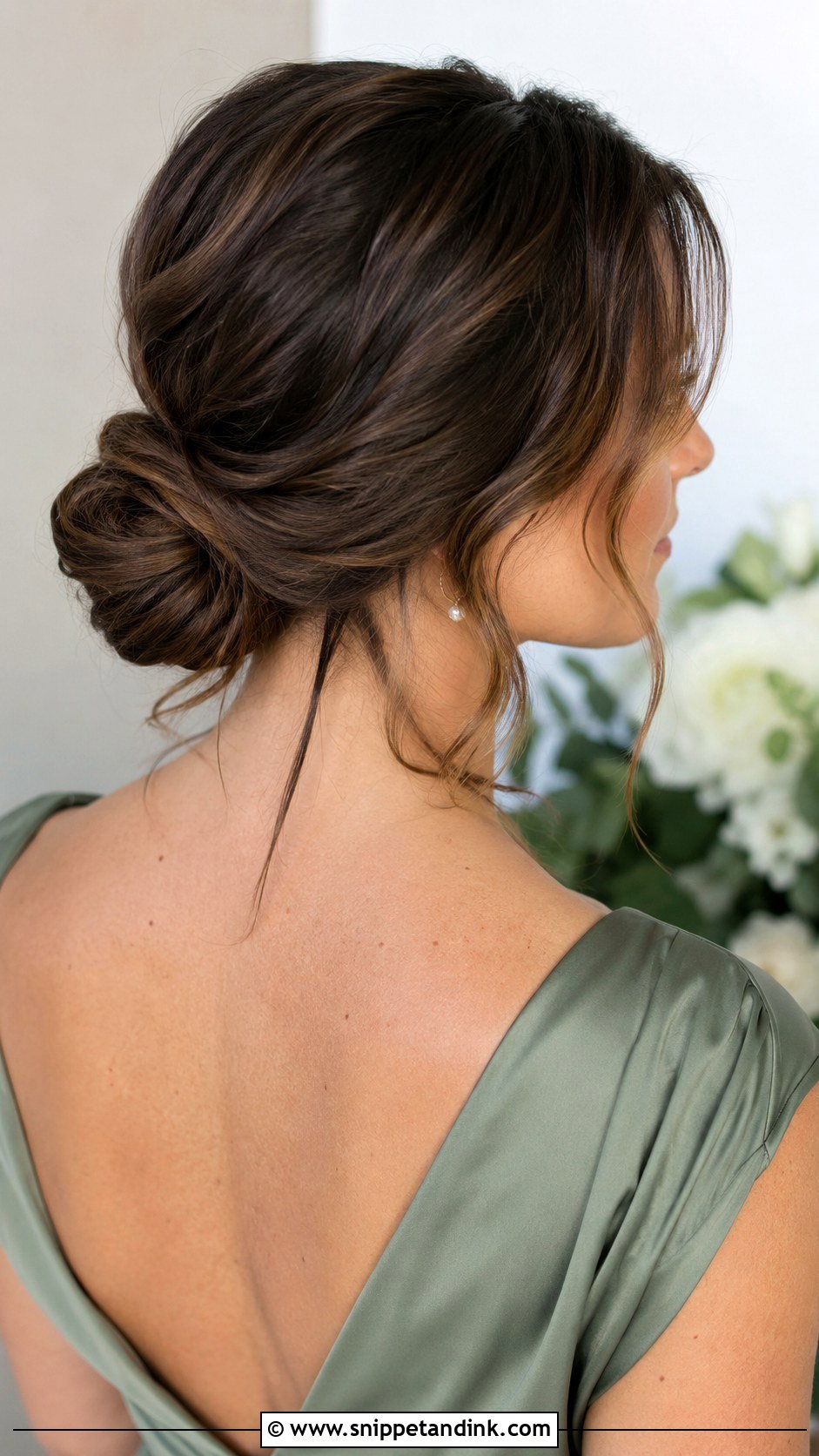
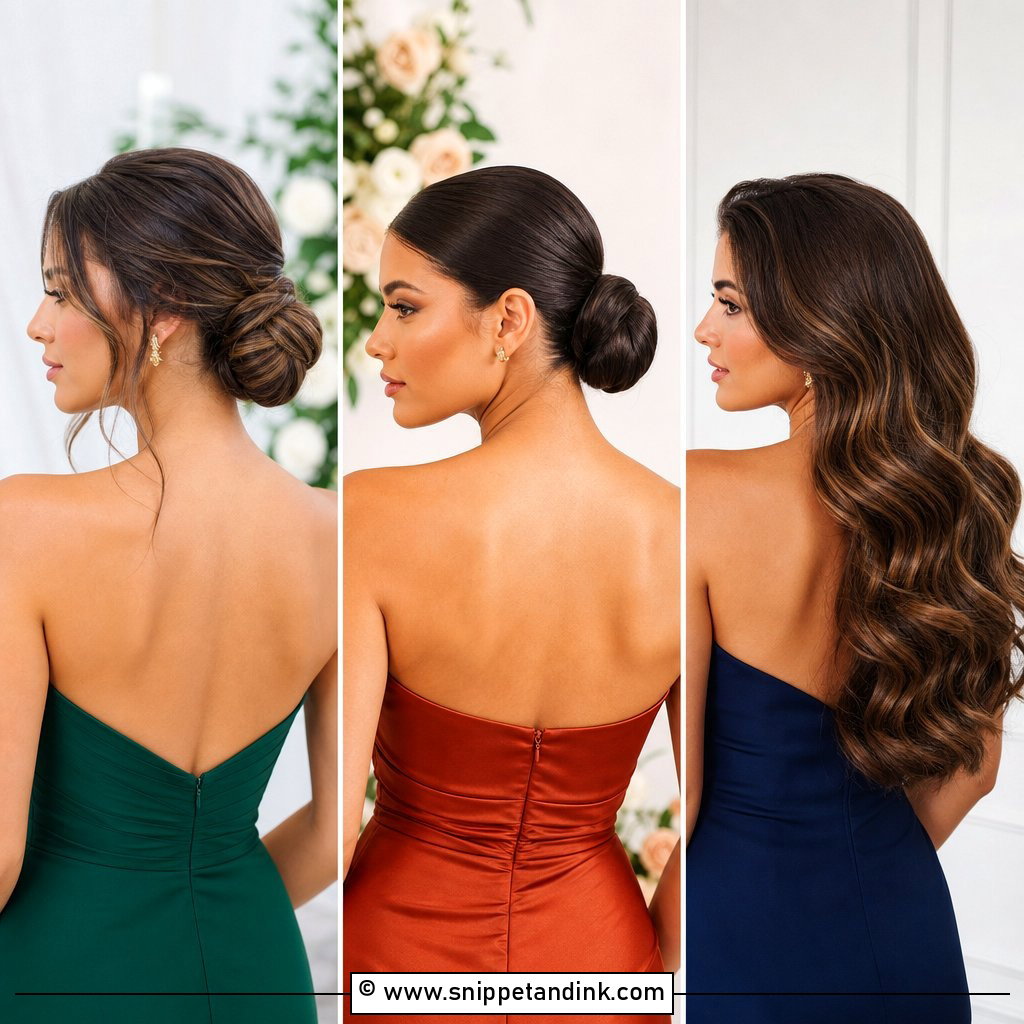
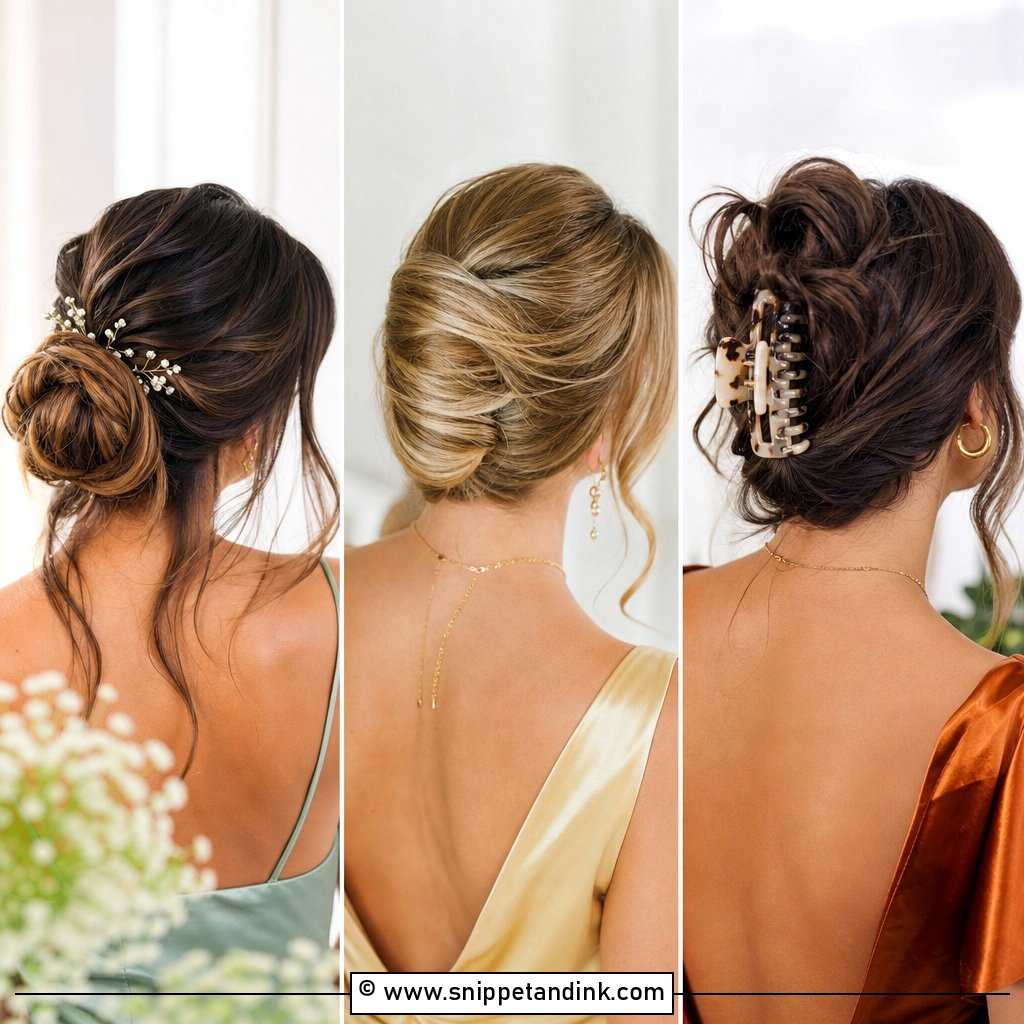
Of all the shapes I put on bridesmaids, the bridesmaid low bun updo is the one I trust most. Sitting at the nape, it keeps the weight low, so nobody’s scalp aches by the speeches, and it leaves open backs, square necks and halters fully visible. A middle part looks current; a soft side part looks gentler. Smooth or with a few pieces out at the front, the base underneath is the same: a firm ponytail at the nape and pins pushed in toward the center.
2. Bridesmaid Chignon Updo
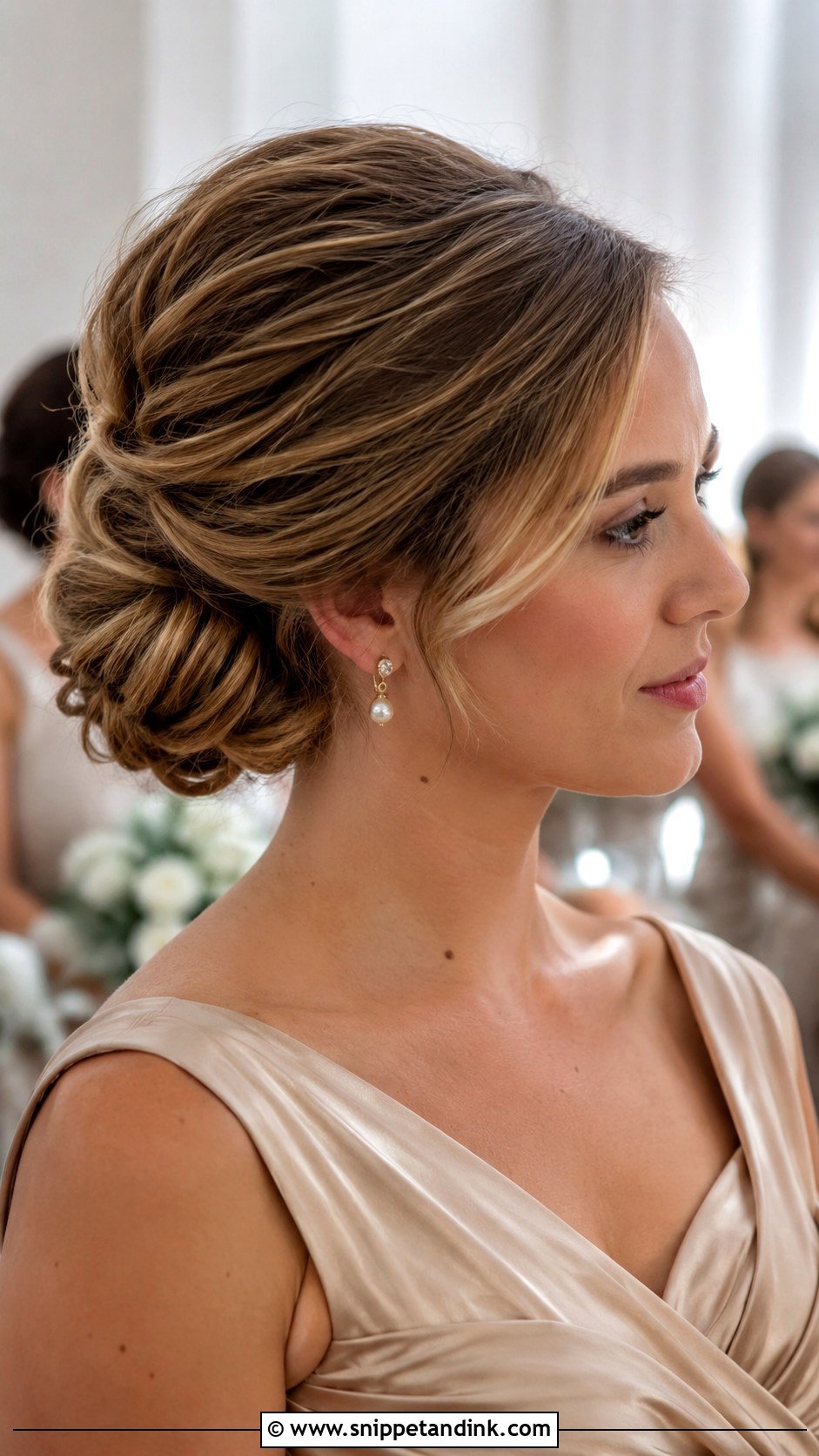
Formal weddings call for something quieter than a bun. A bridesmaid chignon updo is rolled, tucked or pinned low at the back of the head, and it looks just as good from the side, which matters during a ceremony when guests mostly see profiles. It won’t compete with the bride’s hair. Medium and long hair manage it alone; shorter lengths need a small pad inside the roll. Keep a little lift at the front or the whole shape looks flat in photos. A pearl pin or tiny comb is all the decoration it needs.
3. Bridesmaid Messy Bun Updo
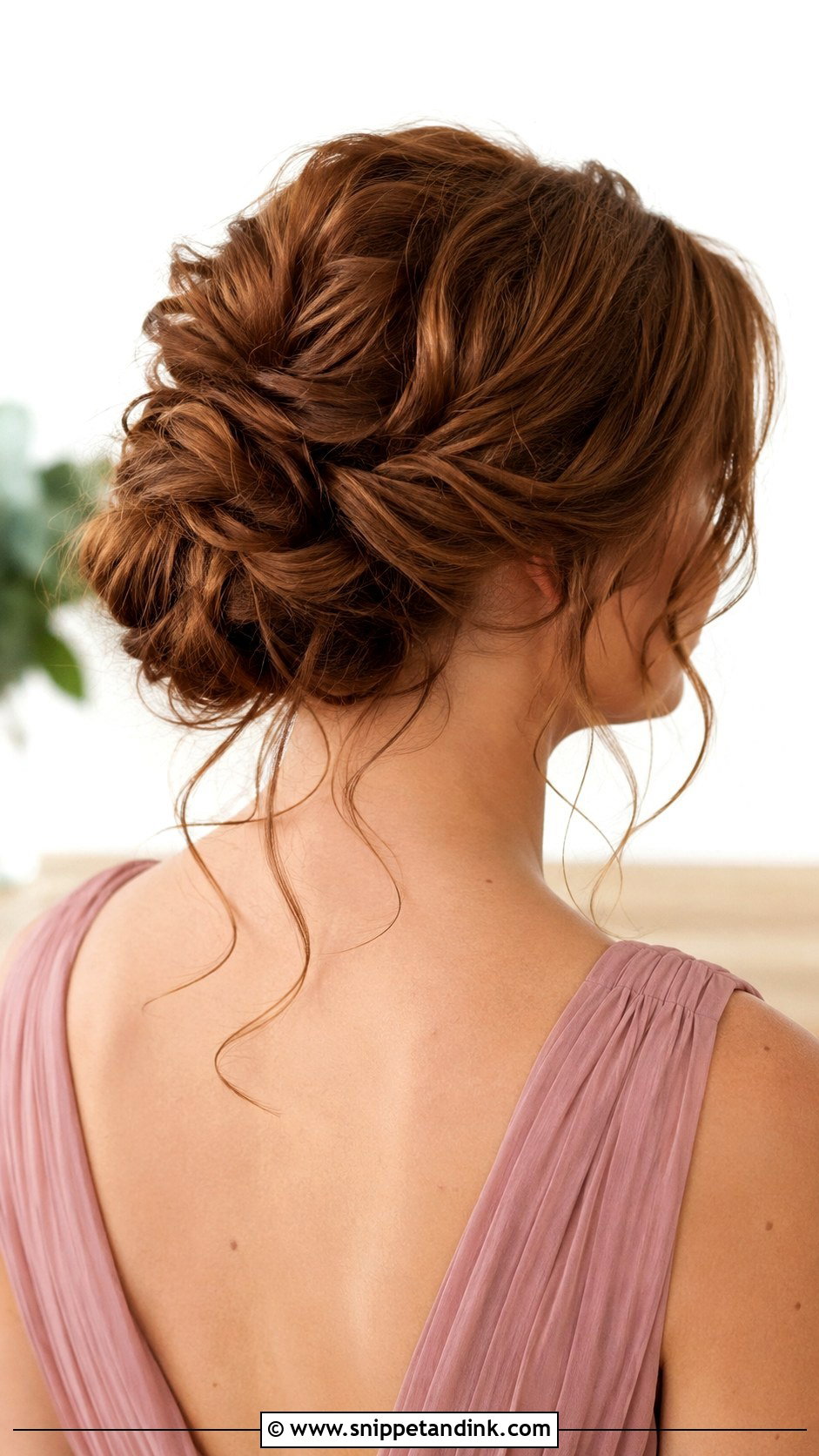
Messy only looks messy. Underneath, a good messy bun is pinned as carefully as a sleek one, because it still has to survive hugs and dancing. It suits wavy, curled, or layered hair best, since the movement fills out the shape. Fine hair gets texturizing spray or a small bun filler. Low or mid-height is the flattering zone. Up on the crown, paired with a flowing dress, it starts to look like a gym bun.
4. Bridesmaid Sleek Bun Updo
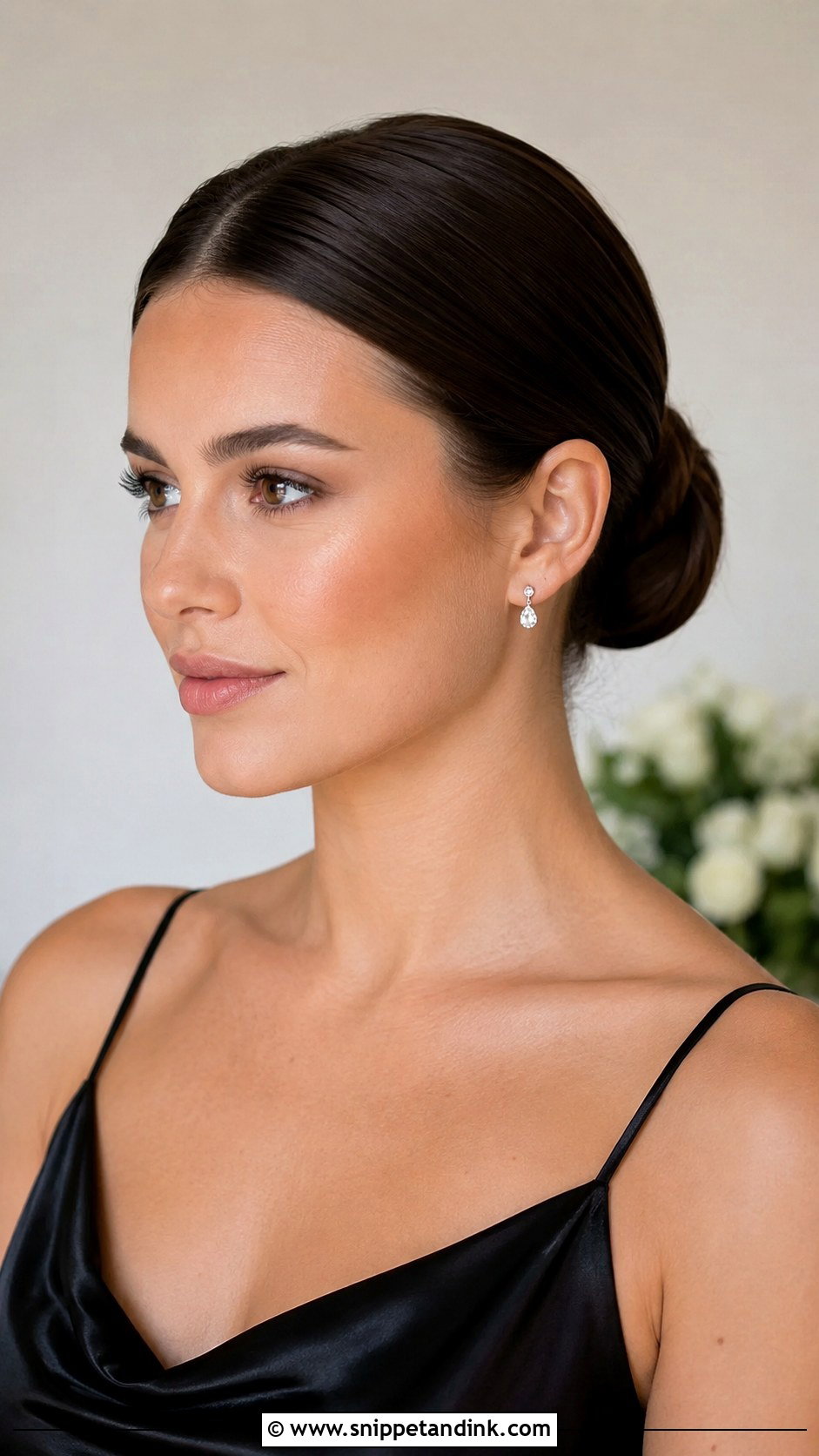
Sleek buns start at the part. I set a precise line, smooth the hair with cream, and place the bun low or just above the nape, wrapping a strand of hair around it to hide pins and the elastic. The finish should look glossy, not crunchy, which means firm gel at the base and only a light spray on top. Satin gowns, minimal dresses and black-tie suit it. Layers are its weak spot: short pieces spring loose by evening unless they’re smoothed down before the bun goes in.
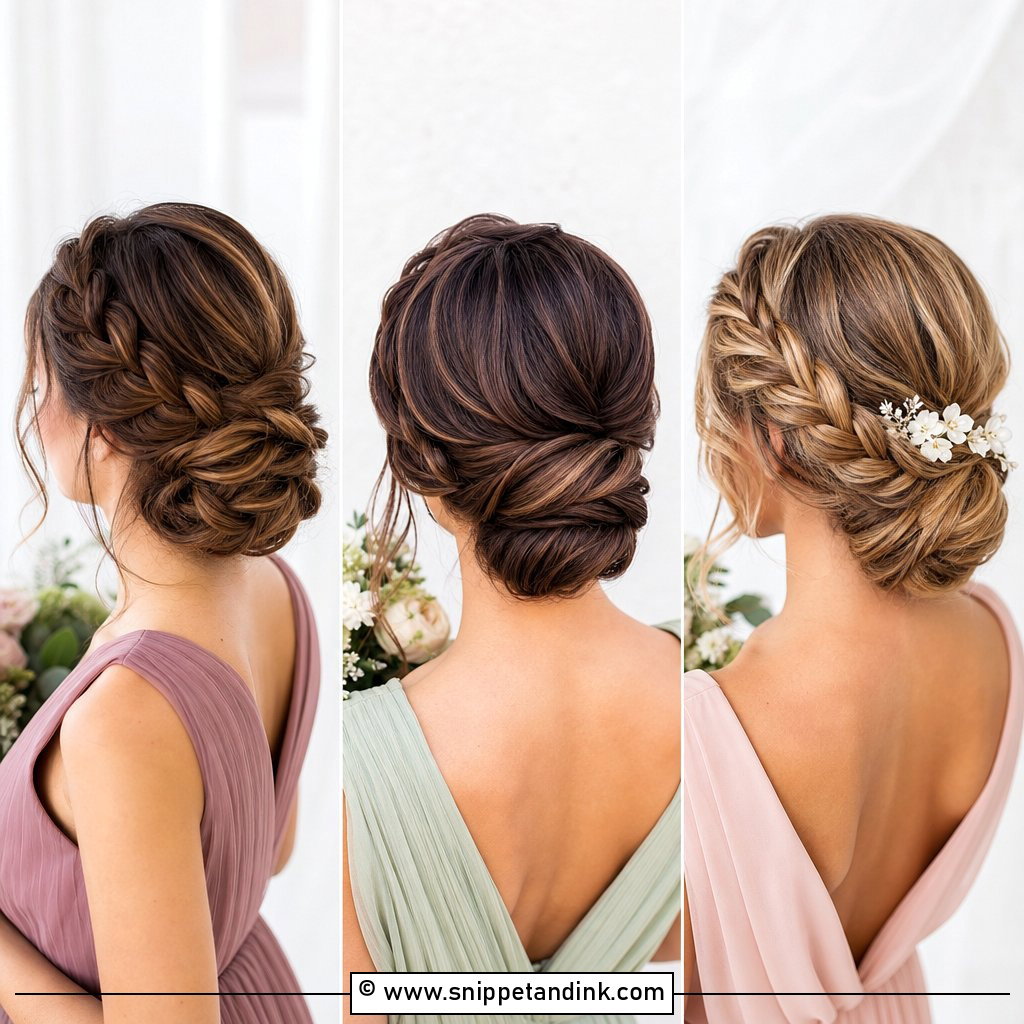
5. Bridesmaid Braided Bun Updo
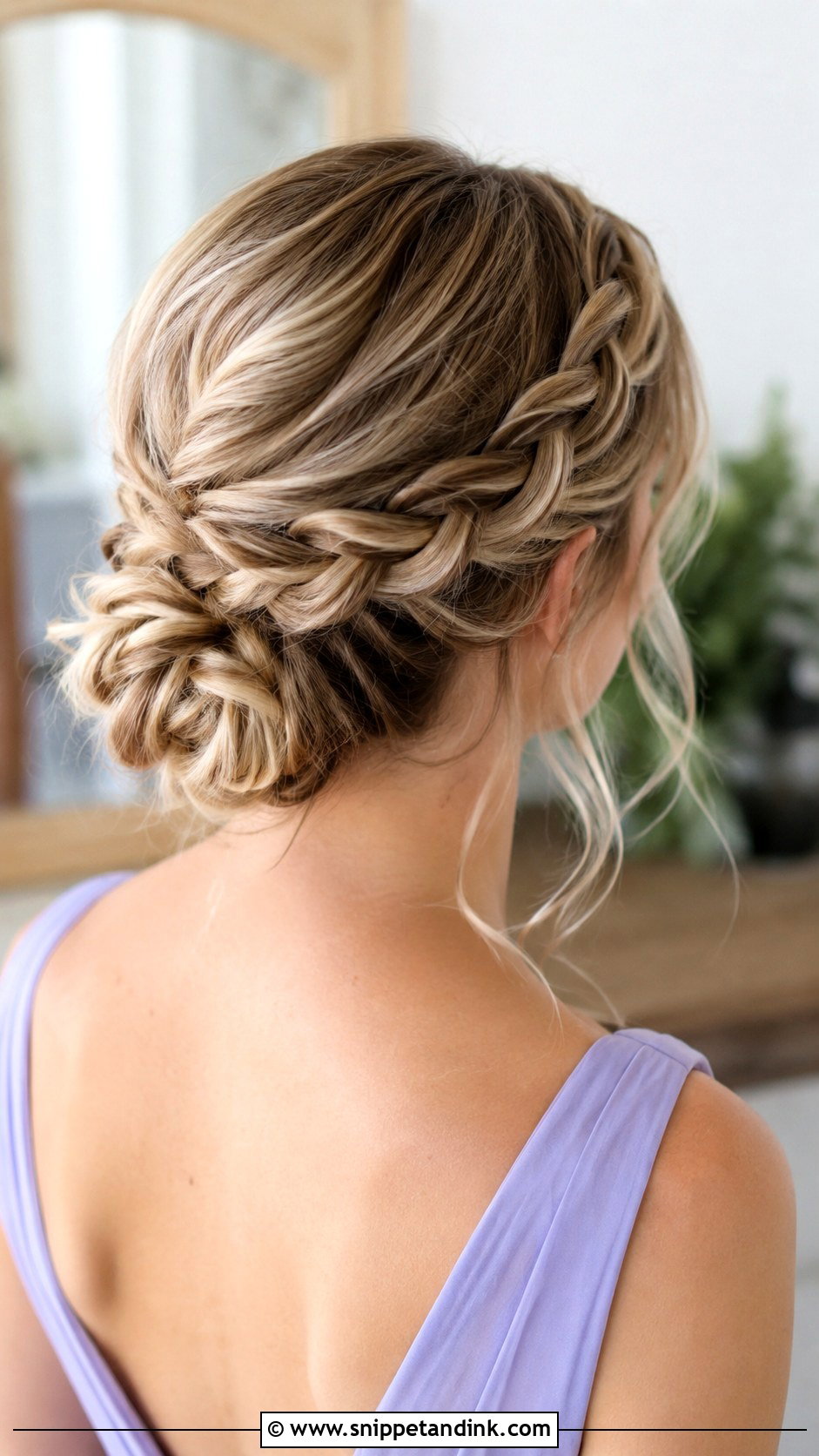
A braid can wrap the bun, feed into it, or run along one side. I’d pick this for the bridesmaid who wants more than a plain bun but nothing dramatic. Outdoors, braids control flyaways better than smooth hair, because the loose ends are woven in rather than left to lift. A tight braid looks polished and a pulled-apart one looks softer; highlighted hair shows off the most dimension either way.
6. Bridesmaid Twisted Low Bun Updo
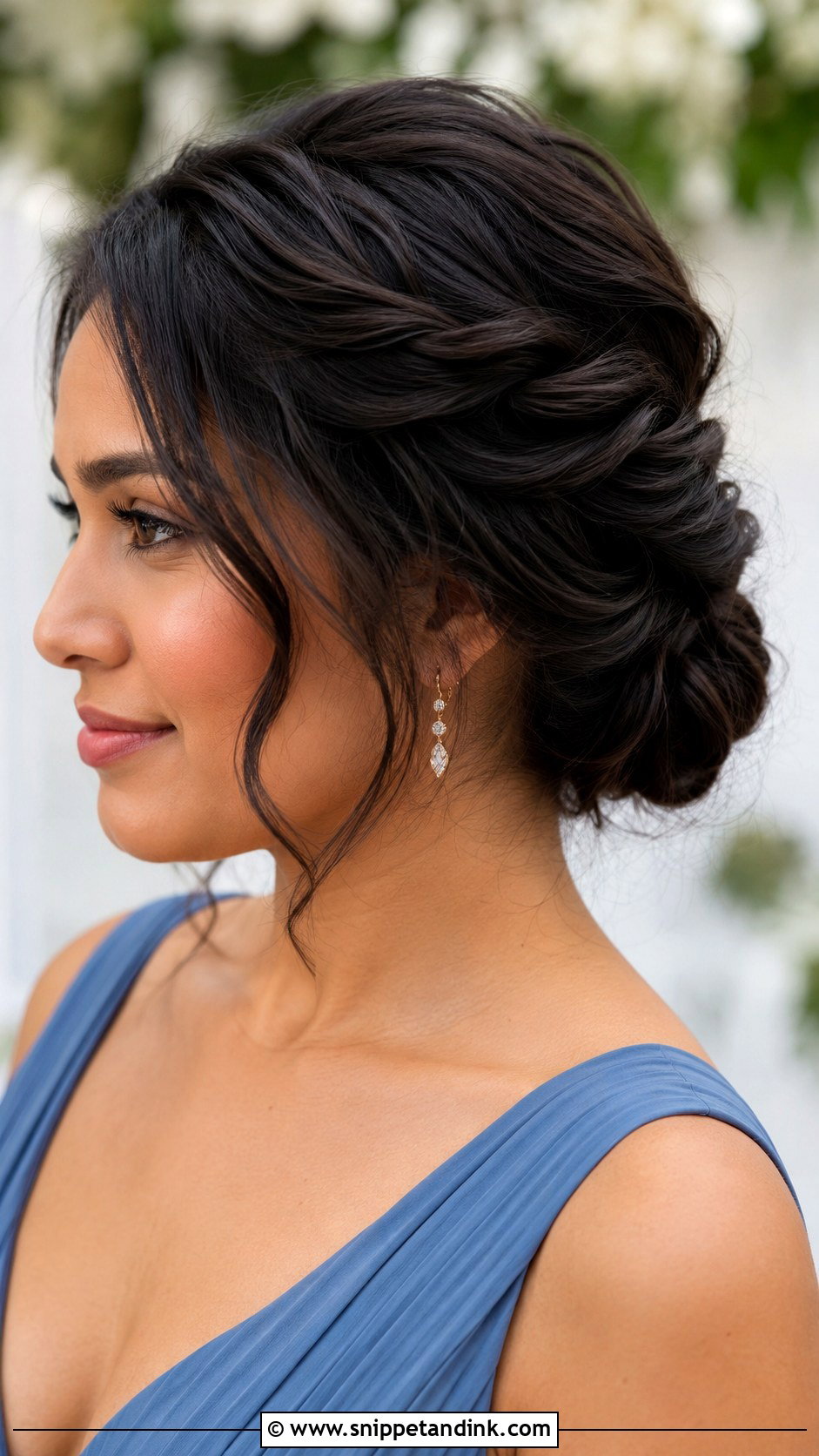
Twisting the sides back into a low bun gives movement around the crown without needing anyone who can braid. It also makes fine hair look fuller, since each twist adds thickness. The front is where you personalize it, with more volume, a few tendrils or a side part depending on face shape. For a group, it’s an easy style to vary: the same low twisted shape at the back, and a different front for each bridesmaid.
7. Bridesmaid Curly Updo
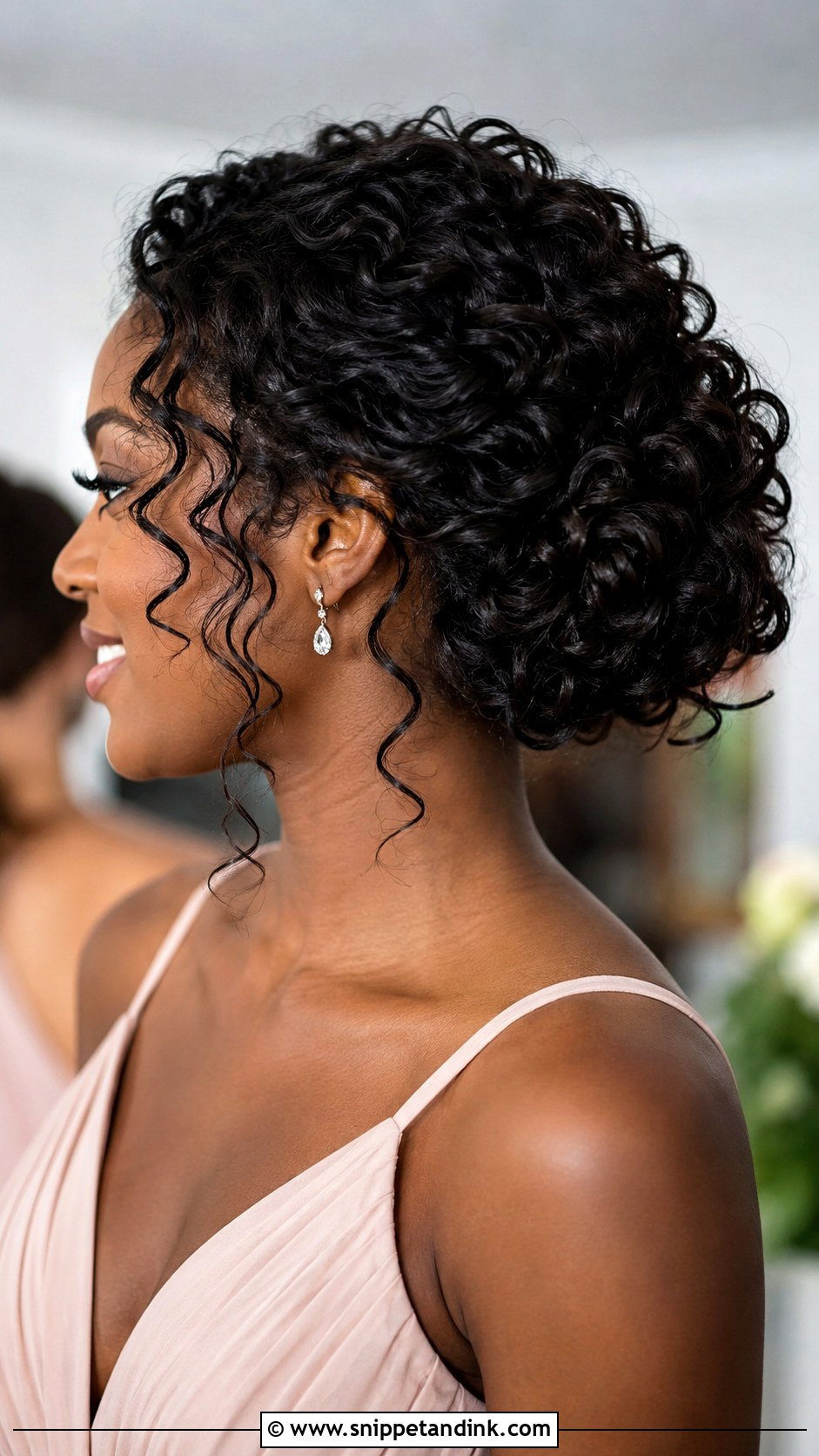
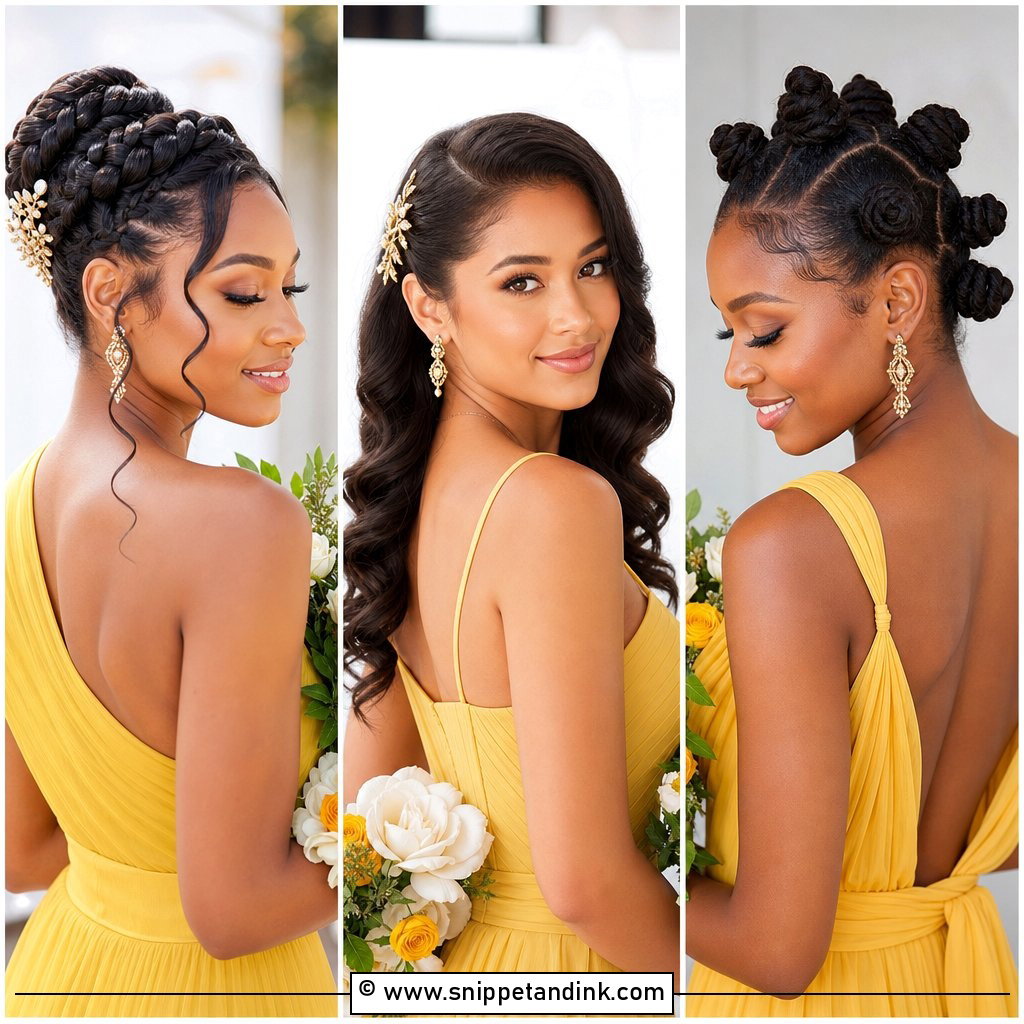
With curly or textured hair, I gather the curls up loosely and keep the pattern visible rather than brushing it into a smooth shape. The updo can sit low, high or slightly to one side, depending on the dress. Hydrating curl cream and a flexible spray cut frizz while leaving the curls soft to the touch. Leave a few defined curls near the face, but pin the back well, because curly updos are heavier than they look.
8. Bridesmaid High Bun Updo
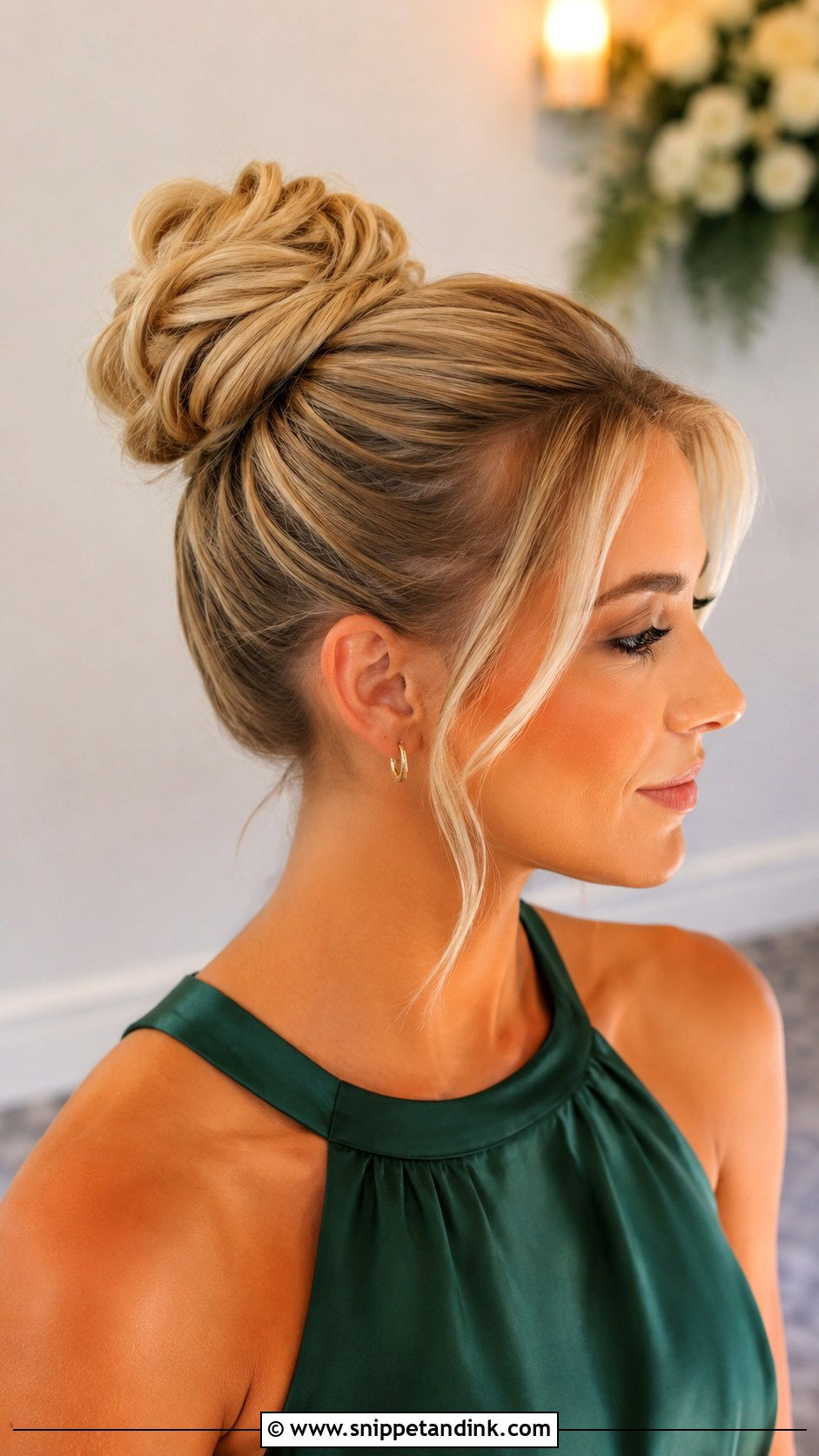
A high bun keeps hair completely off the shoulders, which is why I suggest it for high necklines, one-shoulder gowns and detailed bodices that deserve to be seen. It’s also the coolest option in summer heat. Where it sits matters: too far forward and it looks casual, while near the crown it looks poised. Round and smooth suits a formal room, and a looser, textured version suits a softer theme.
9. Bridesmaid Side Bun Updo
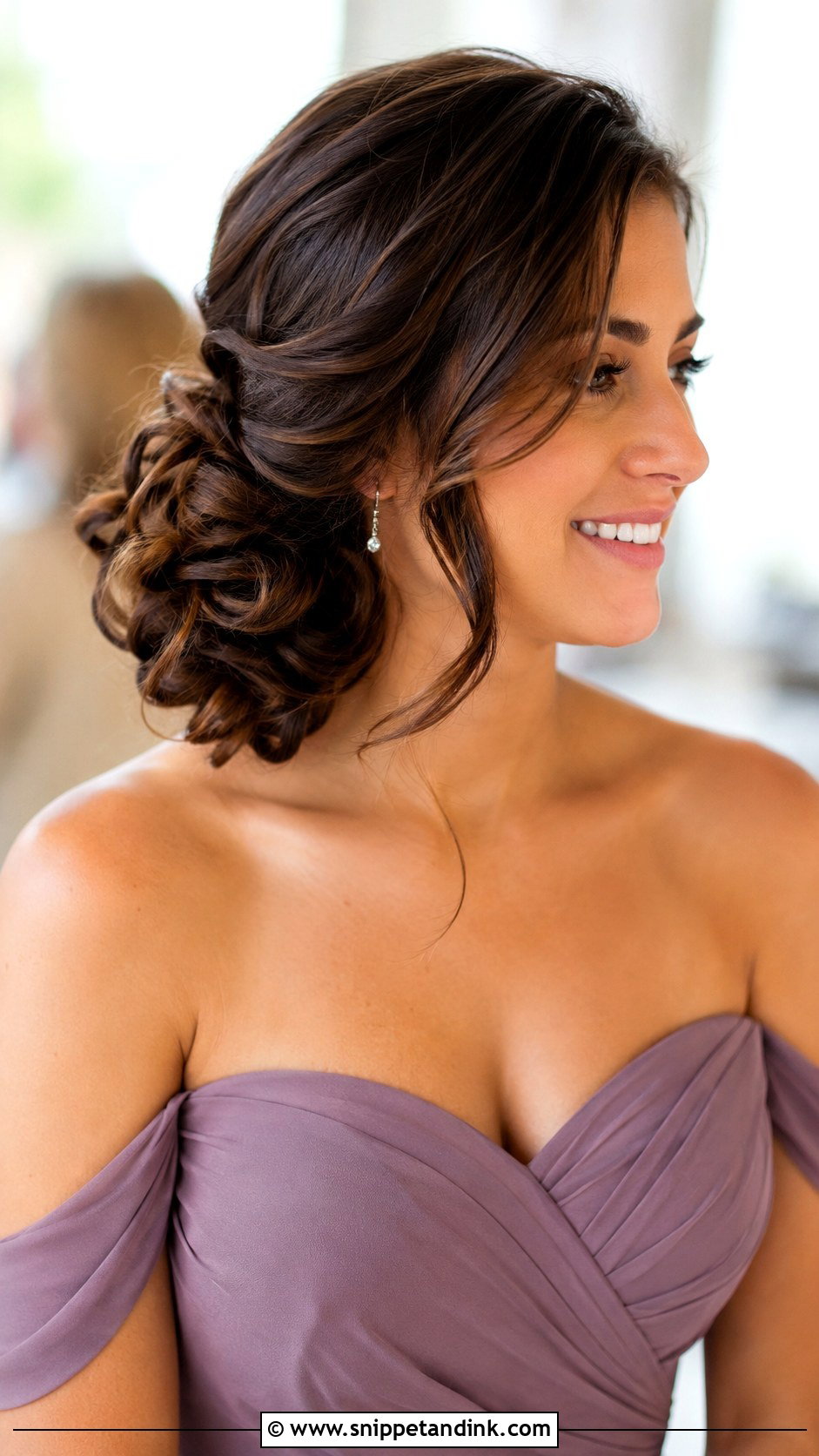
Placing the bun low near one side of the neck pairs naturally with asymmetric dresses, off-the-shoulder gowns and side-swept bangs. In profile shots the bun shows clearly, and the bare side leaves room for an earring or small hairpiece. Smooth, twisted or curled all work. Keep the opposite side swept back cleanly, otherwise the shape looks lopsided rather than deliberate. For a lineup, put every bun on the side the guests will see during the ceremony.
10. Bridesmaid French Twist Updo
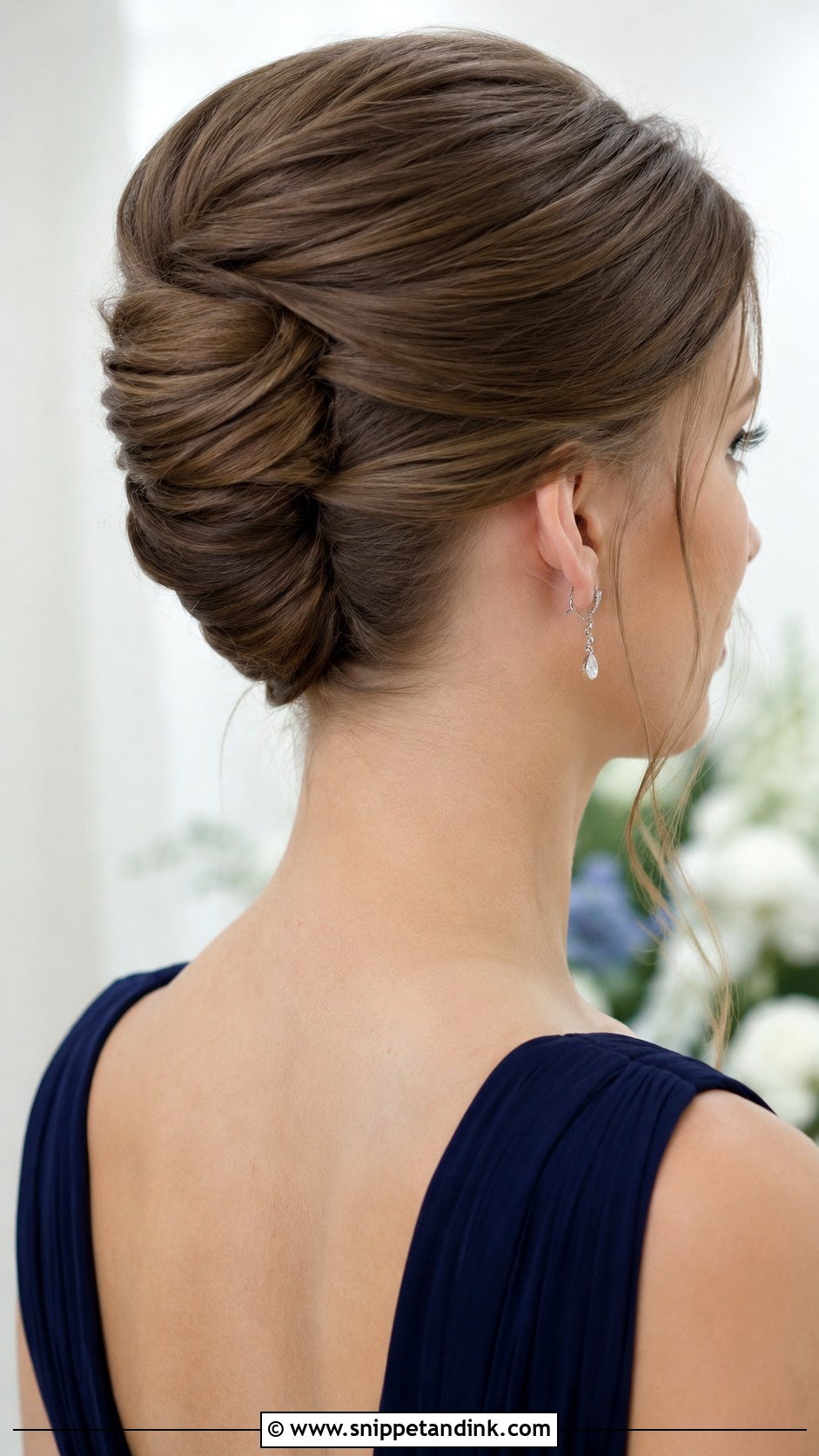
Swept up and pinned into a vertical roll, a French twist gives a clean profile and leaves the neckline open. Formal venues and evening ceremonies suit it best. I tease the crown lightly first, since the roll needs something to grip, then run strong pins down the seam. Traditional versions are smooth, while a modern one can carry soft texture or face-framing pieces. It needs medium to long hair to roll properly.
11. Bridesmaid Loose Updo
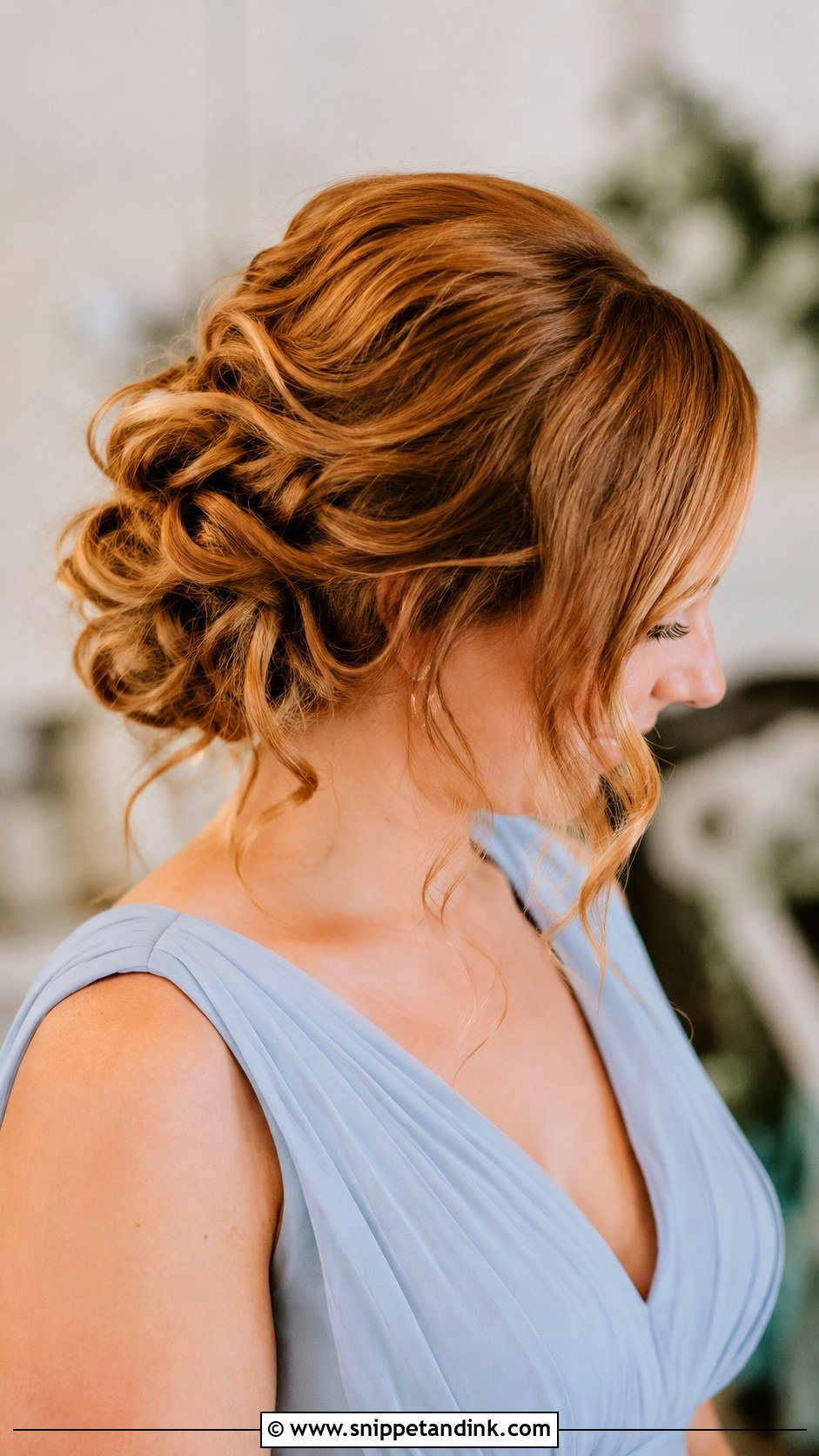
Looser updos suit the bridesmaid who never wears slick hair and would feel stiff in it. The hair is pinned up without pulling, keeping movement around the face and crown, which sits well with chiffon dresses and garden venues. The skill is controlled looseness. I curl everything first so the pieces have shape, then hide the pins. If the curls weren’t set properly, a loose updo slides from airy to unfinished within a couple of hours.
12. Bridesmaid Textured Updo
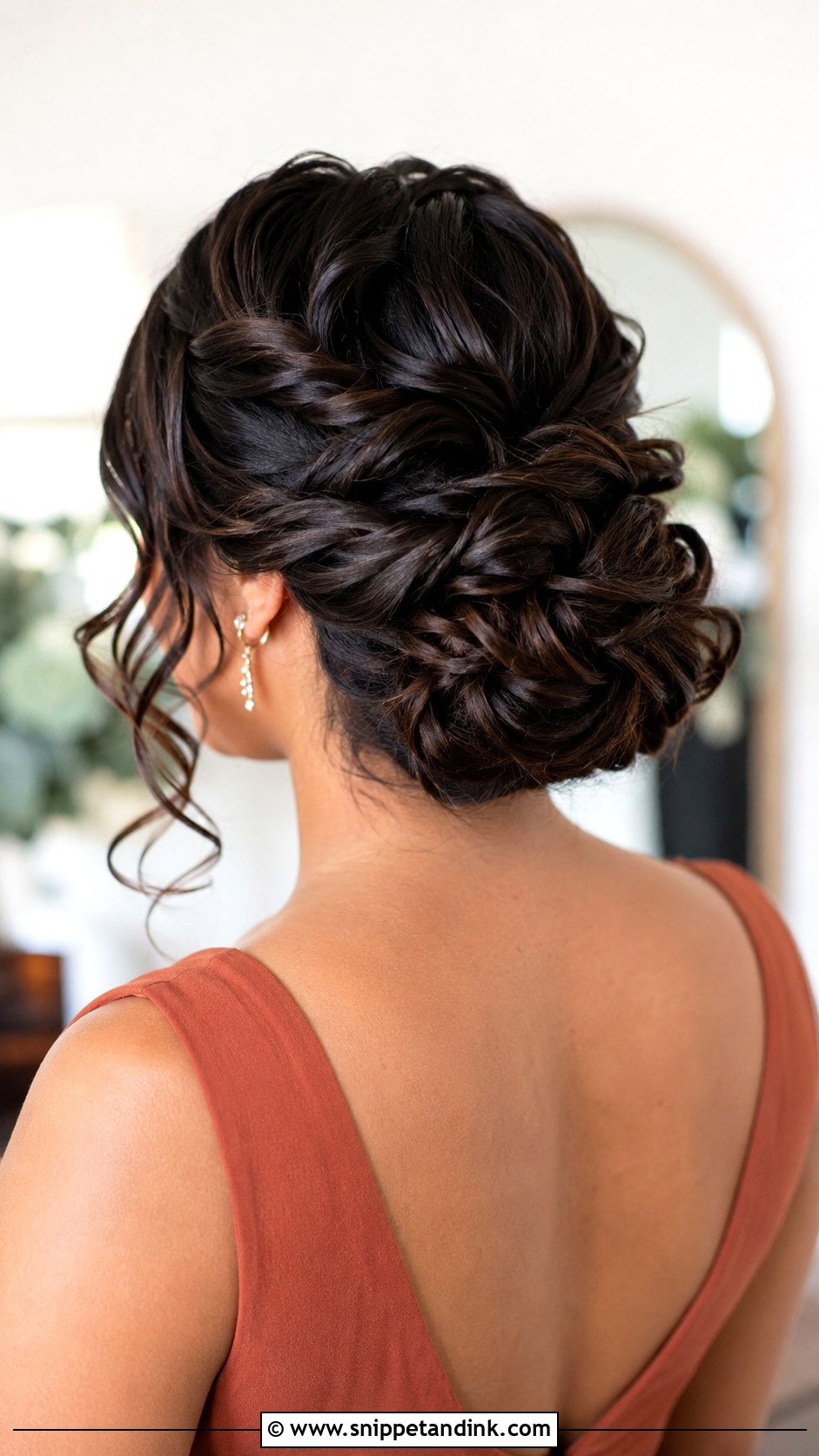
Fine, layered or highlighted hair benefits most from a textured updo. The hair is curled, lifted and pinned in sections into a soft sculpted shape, and every twist catches the light. Texture spray goes in before pinning so the pins grip. It’s also the most weather-proof style on this list, because a little frizz or movement simply blends in. Worn low it looks soft; higher, it gets a little more dramatic.
13. Bridesmaid Updo With Face Framing Pieces
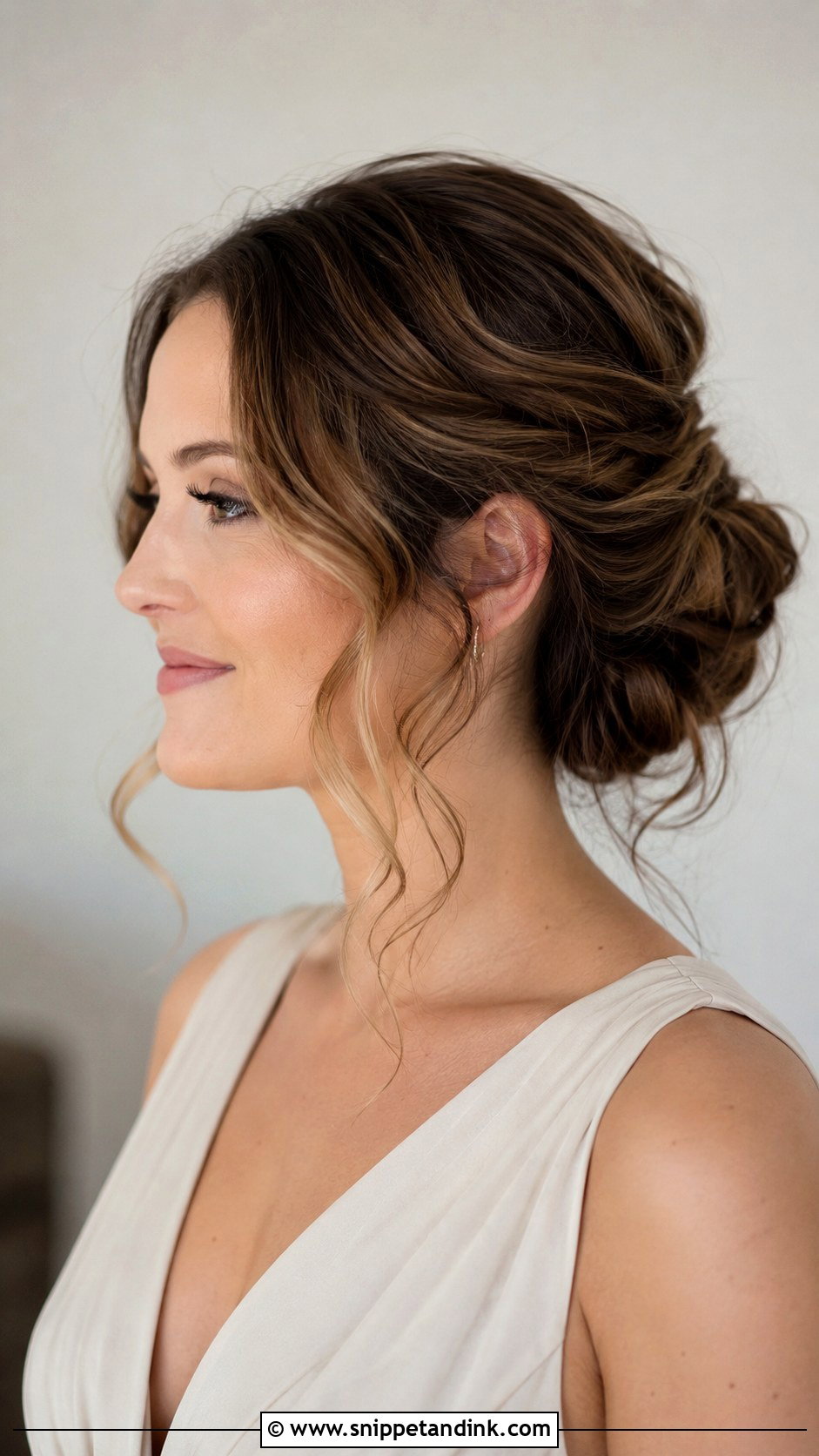
Leaving the front out softens the cheeks, jaw and forehead while the rest goes up into a bun, chignon or twist. How much to leave out is the real decision. Too many pieces go heavy and flat by mid-afternoon and start sticking to lip gloss. Two or three slim curled strands on each side usually look better than a thick curtain. Strapless, sweetheart and V-neck dresses suit this best.
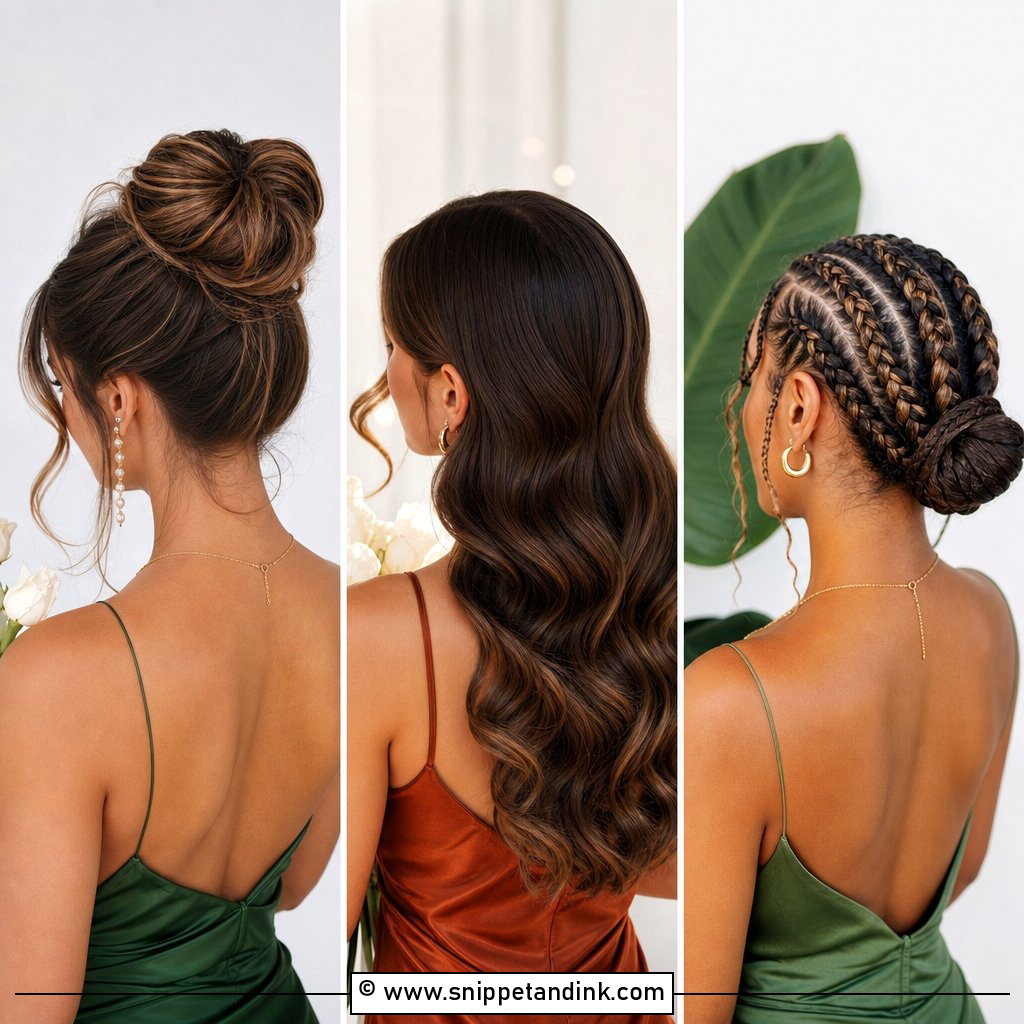
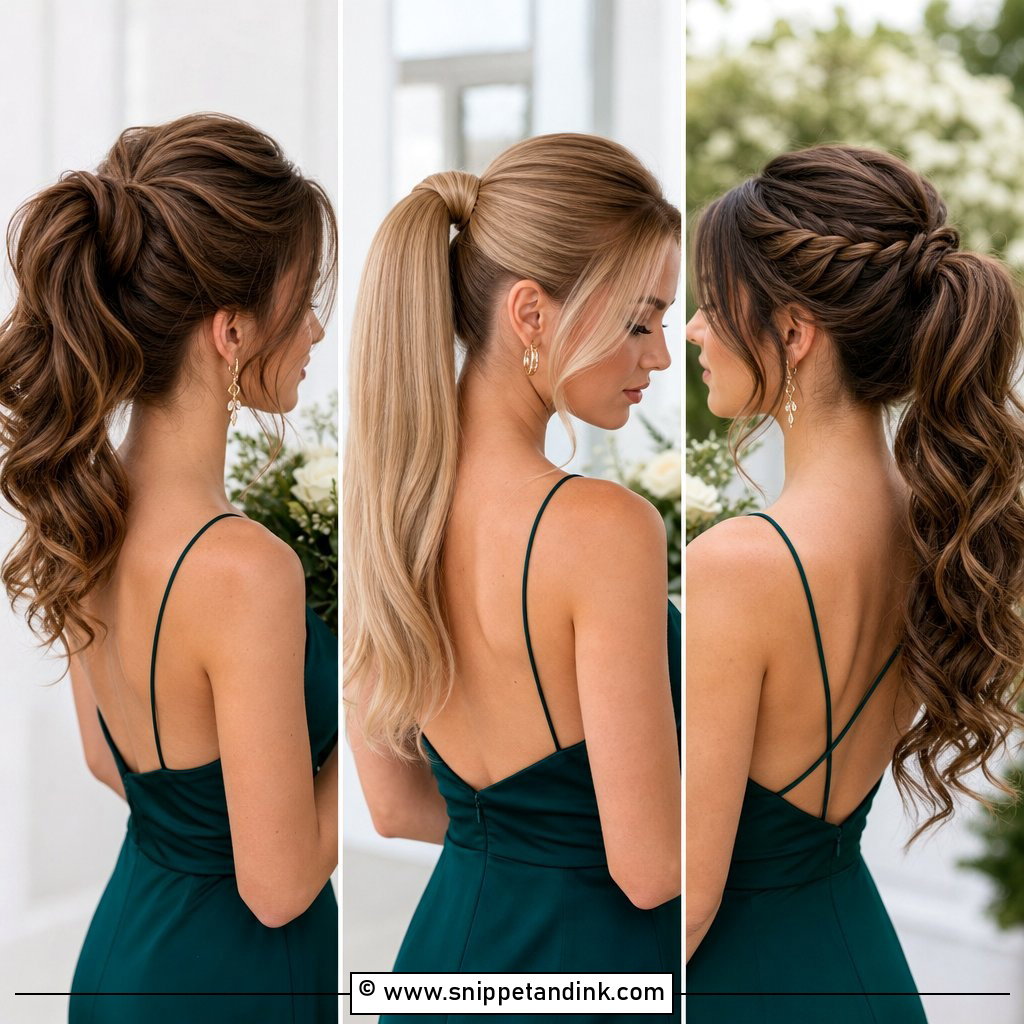
14. Bridesmaid Updo With Pearl Pins
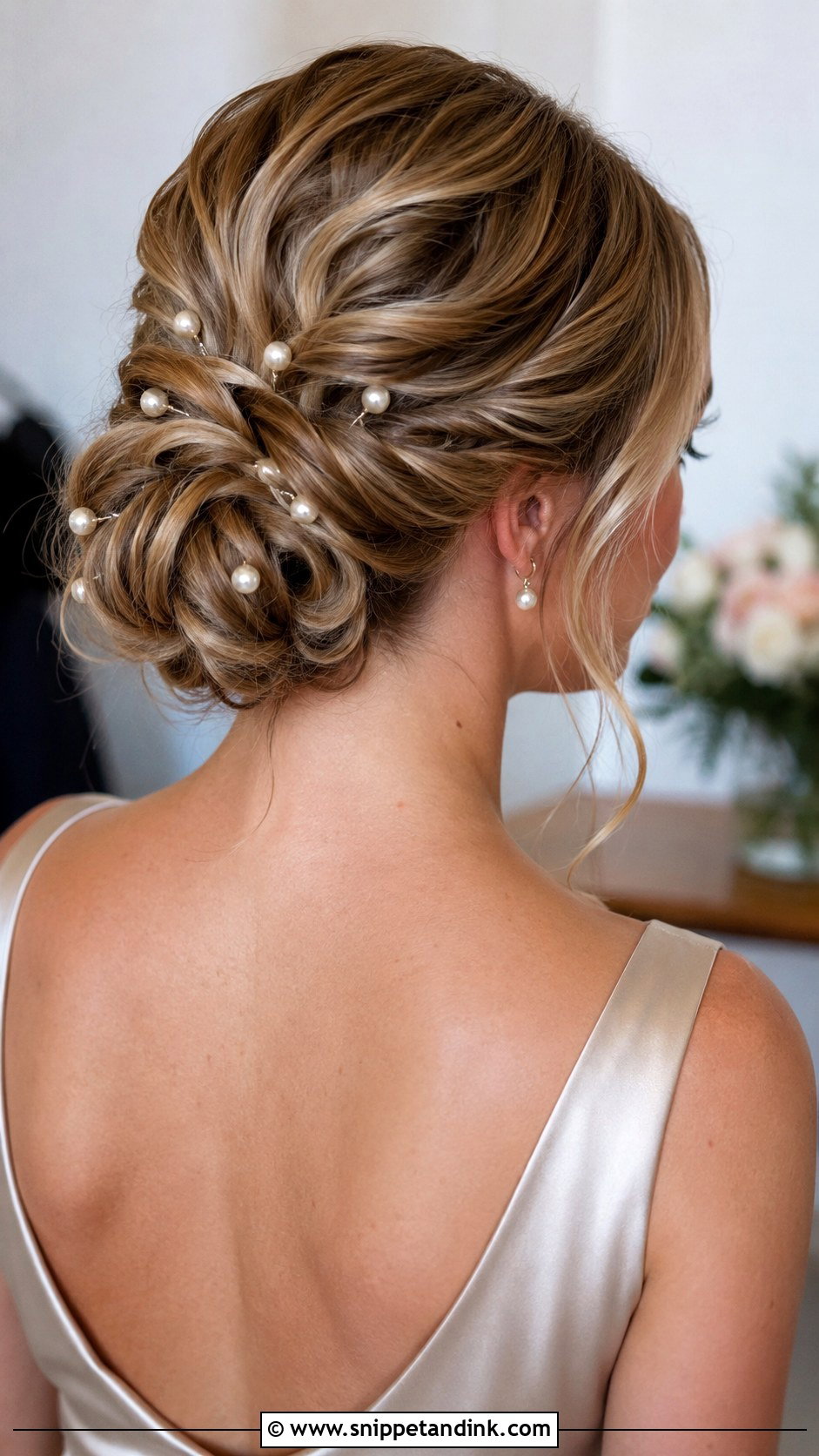
Pearl pins make bridesmaid hair look finished without competing with the bride. They show best against texture, such as twists, curls or soft volume; on very smooth hair they can look stuck on. Scatter them through a low bun, tuck them into a braid, or line them along one side of a chignon. They go with most dress colors, from blush and champagne to navy and sage. Five or seven pins per head is usually plenty.
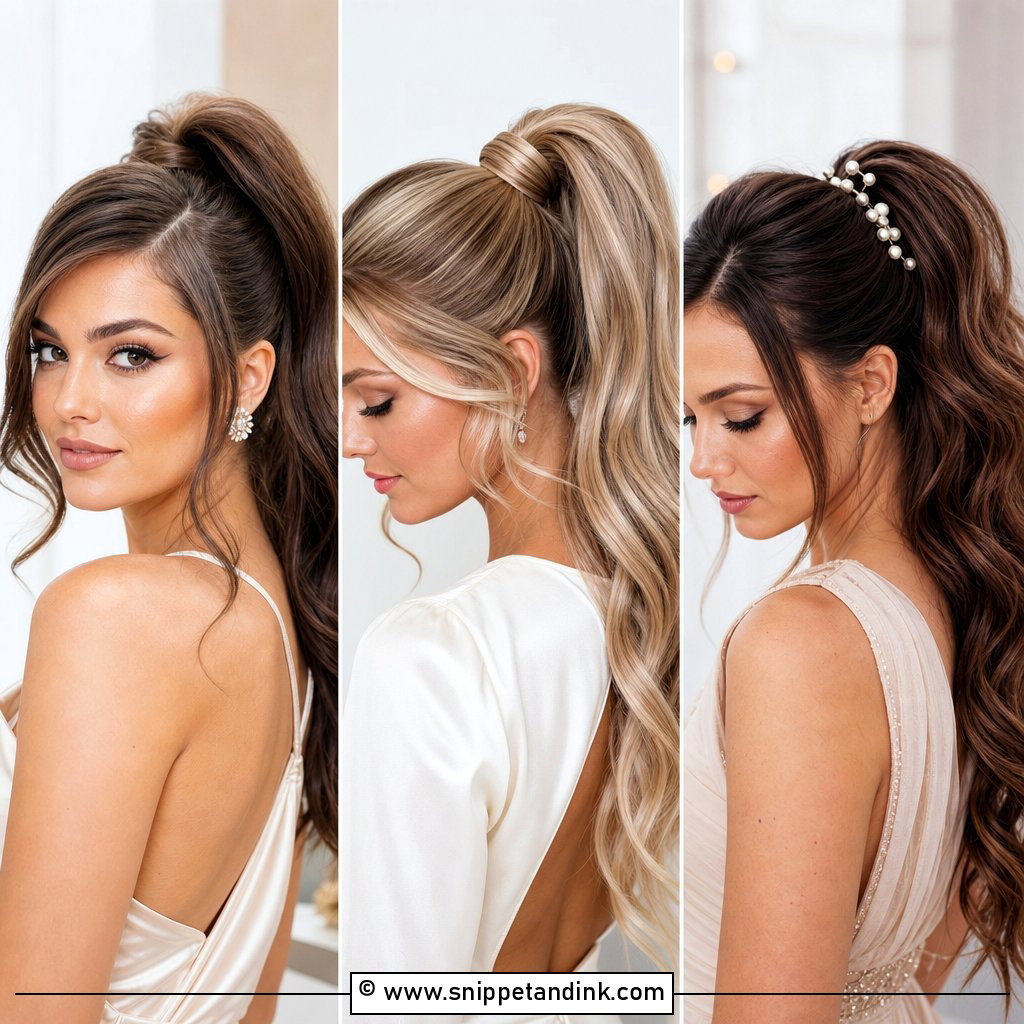
15. Bridesmaid Updo With Flowers
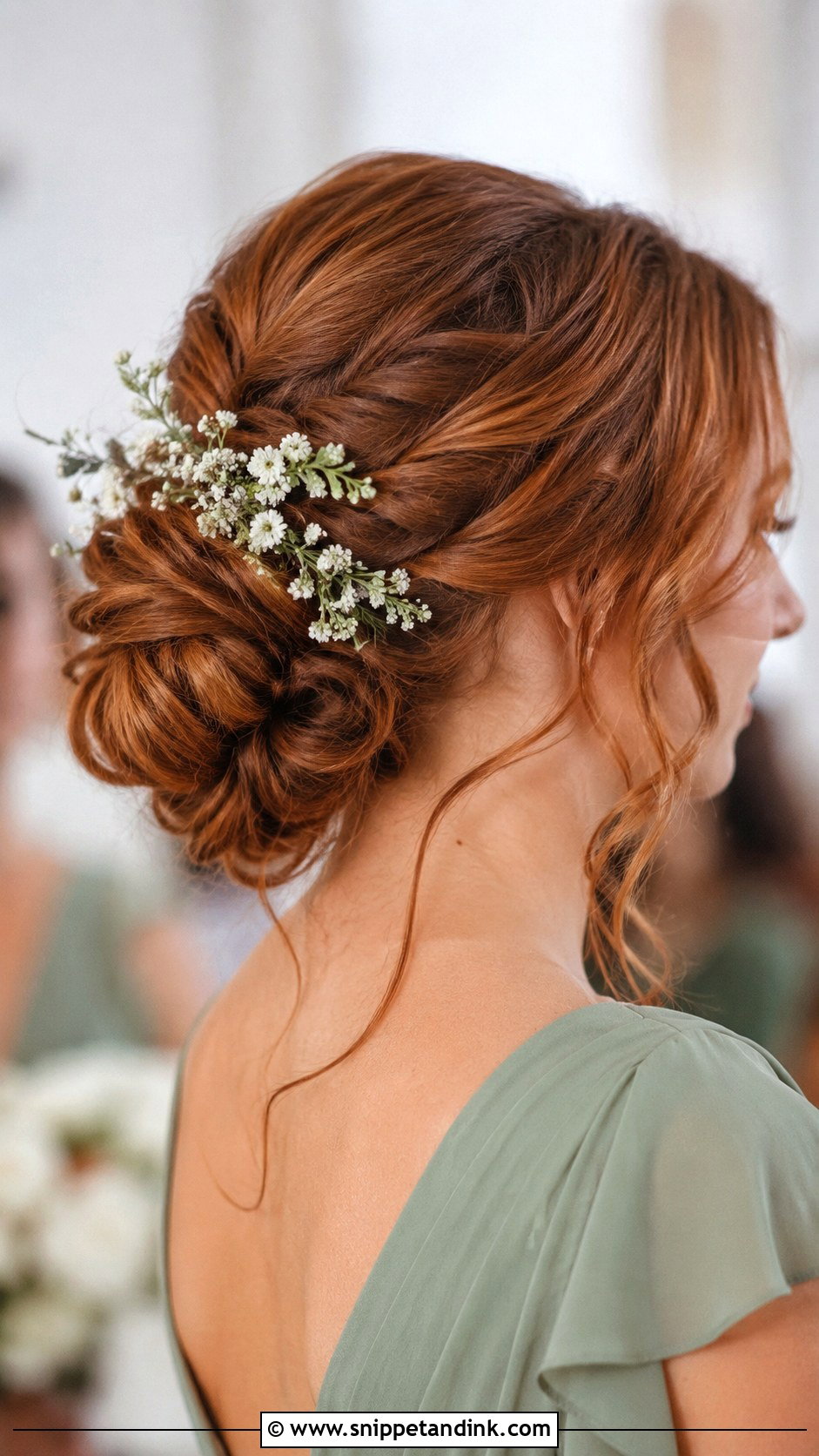
Small blooms tucked into a low bun or woven through a braid suit garden, beach and spring weddings. Keep them smaller than the bride’s hair flowers, if she’s wearing any, and within the wedding palette. Fresh flowers look softest but wilt fastest in heat, so on a hot day I’d choose silk or preserved stems, or hardy fresh ones like spray roses and waxflower. They sit best in textured buns and loose twists, where there’s enough hair to grip the stems.
16. Bridesmaid Updo For Long Hair
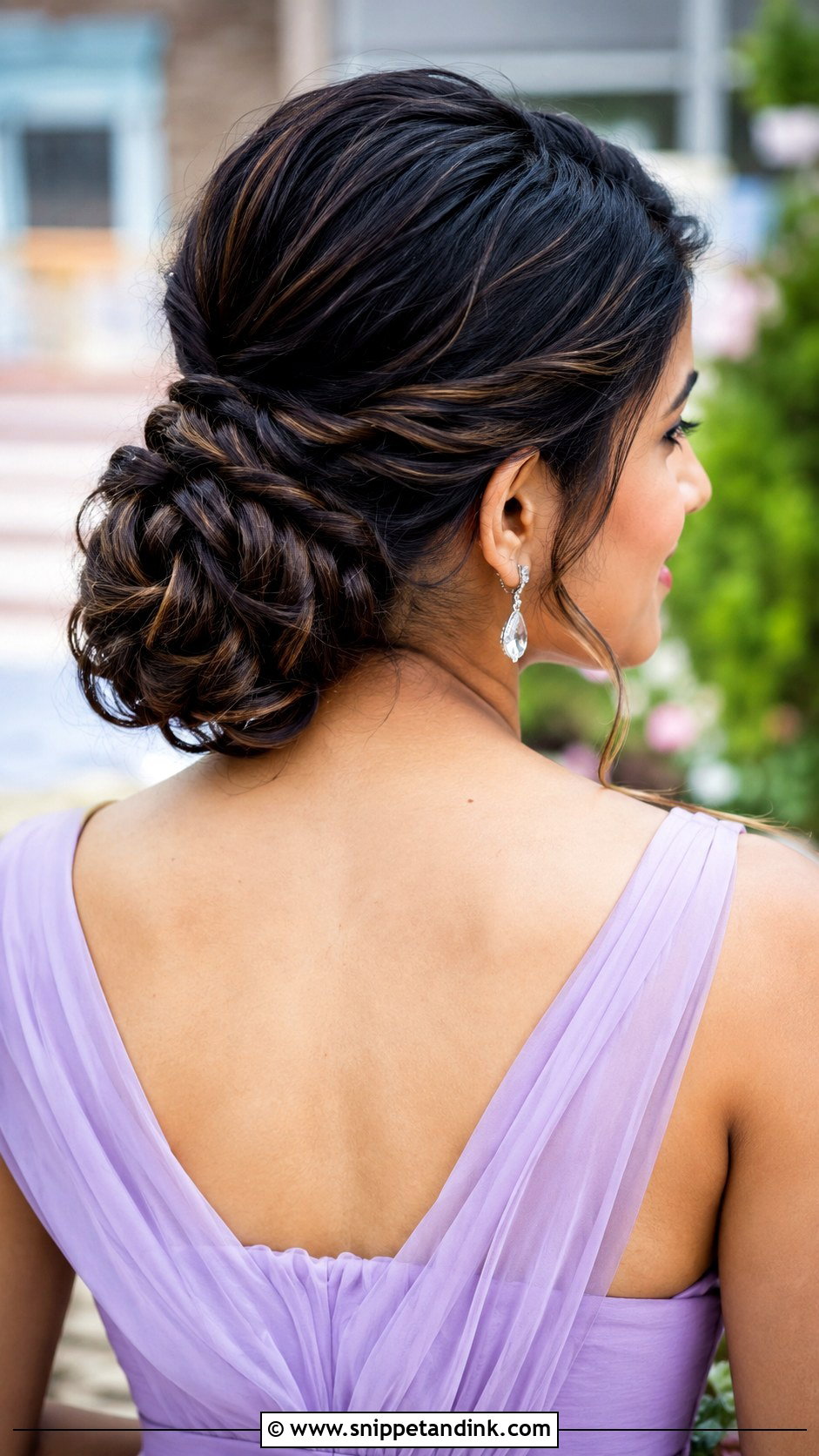
Long hair gives me the most to work with: braids, loops, twists and full buns. The challenge is weight. Without a strong base and plenty of hidden support, a long-hair updo drags downward through the evening and starts to ache. Low buns, textured chignons and braided updos spread the hair comfortably. Thick long hair needs extra pins and a firmer setting spray. Leaving lots of length loose sounds lighter, but it usually feels heavier on the neck.
17. Bridesmaid Updo For Medium Hair
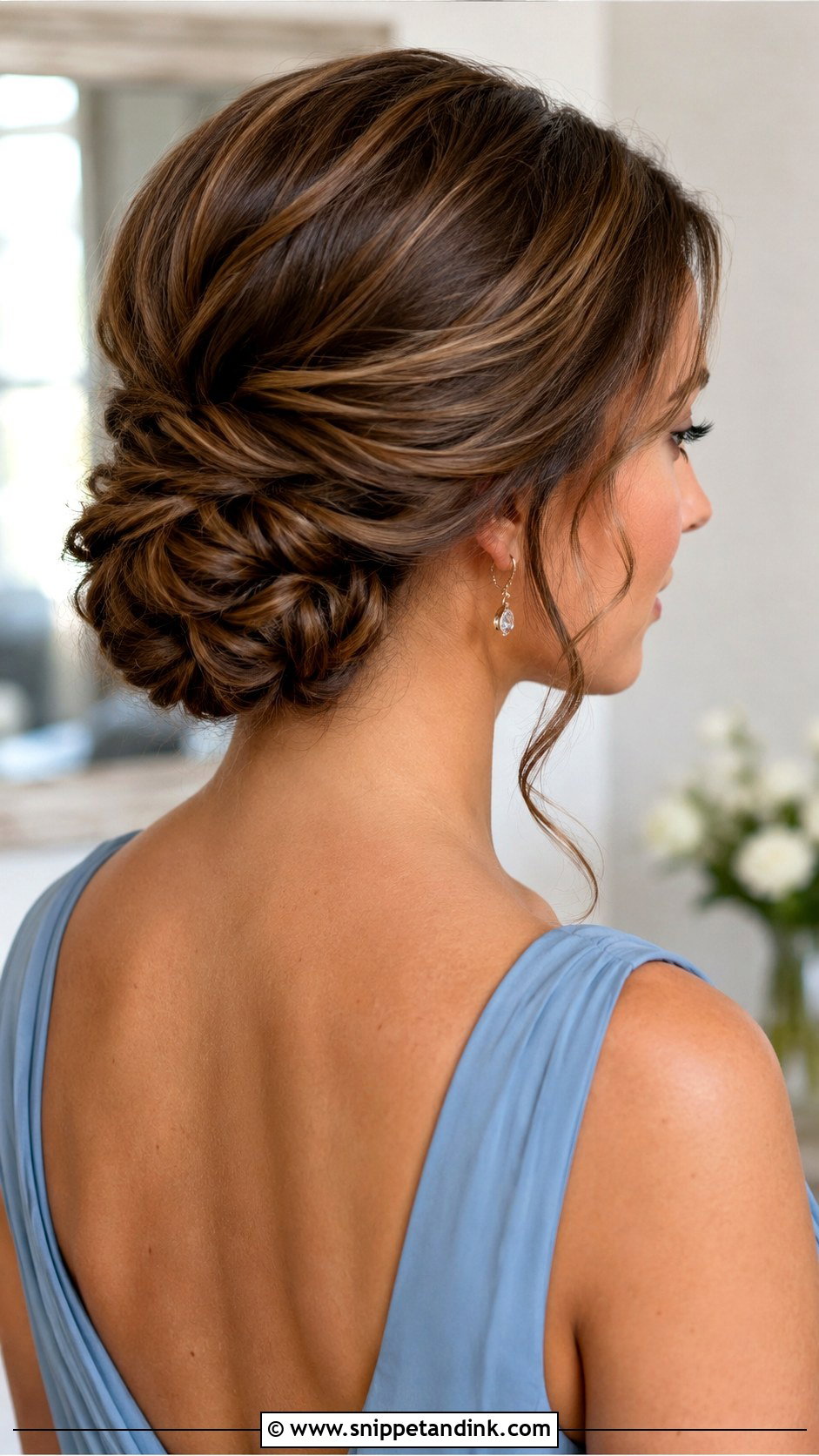
Medium hair is the easiest length to put up. It’s long enough to pin and not heavy enough to pull the style down. Low buns, soft chignons, twists and small braided buns all work. Its weakness is fullness, since a bun made from shoulder-length hair can look small, so I curl everything first to add body and help the layers blend. A small comb or a few delicate pins finish it.
18. Bridesmaid Updo For Short Hair
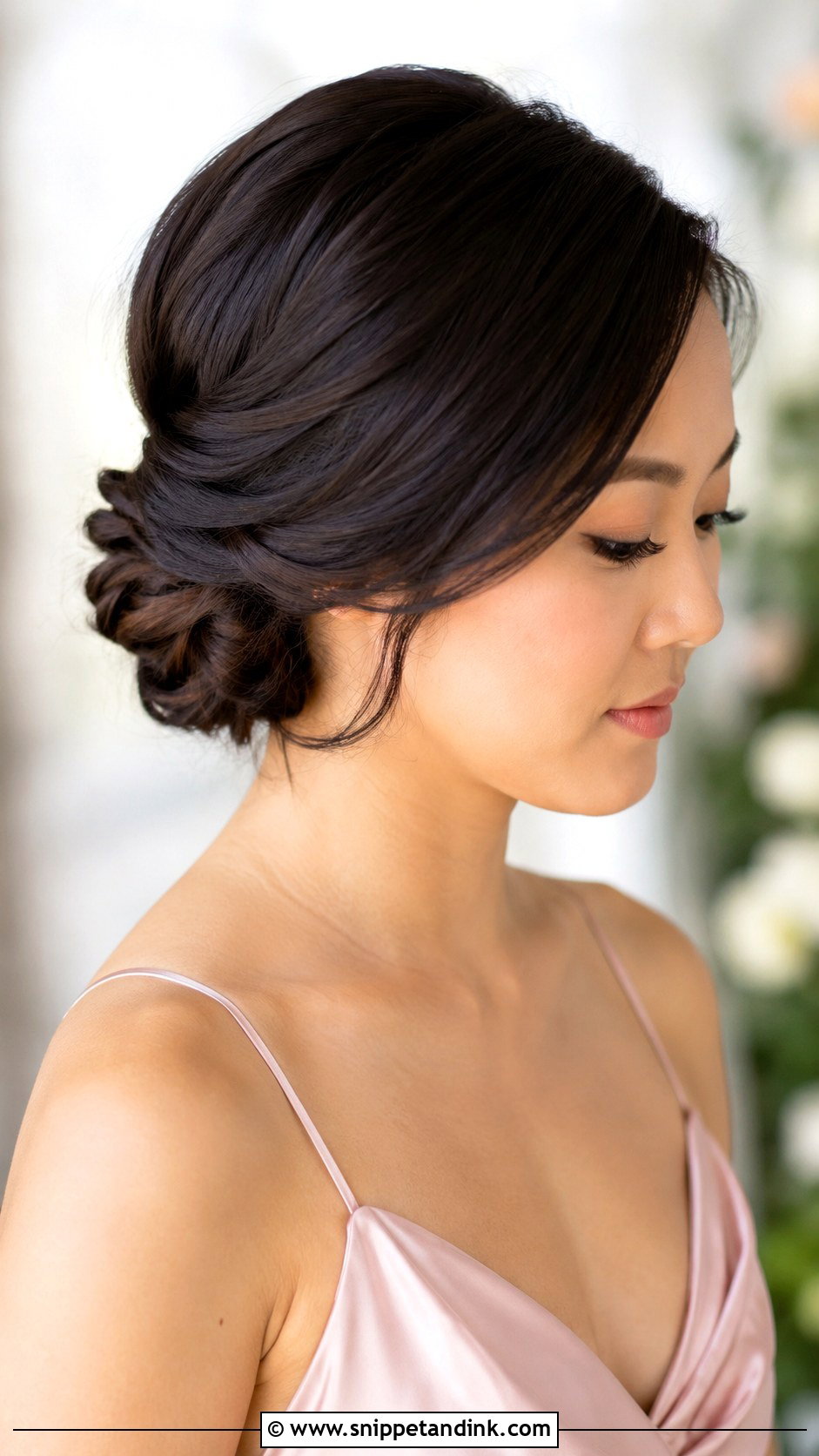
Short hair can still join an updo party; a bridesmaid updo for short hair just works on a smaller scale. With a bob or slightly shorter, I curl the pieces, twist them back and pin them into a petite low shape, sometimes a faux chignon. Short layers will try to escape, so flexible hold spray and small pins matched to the hair color matter more here than anywhere. Pearl pins or a slim comb connect her to the rest of the party without extensions.
19. Bridesmaid Updo For Thin Hair
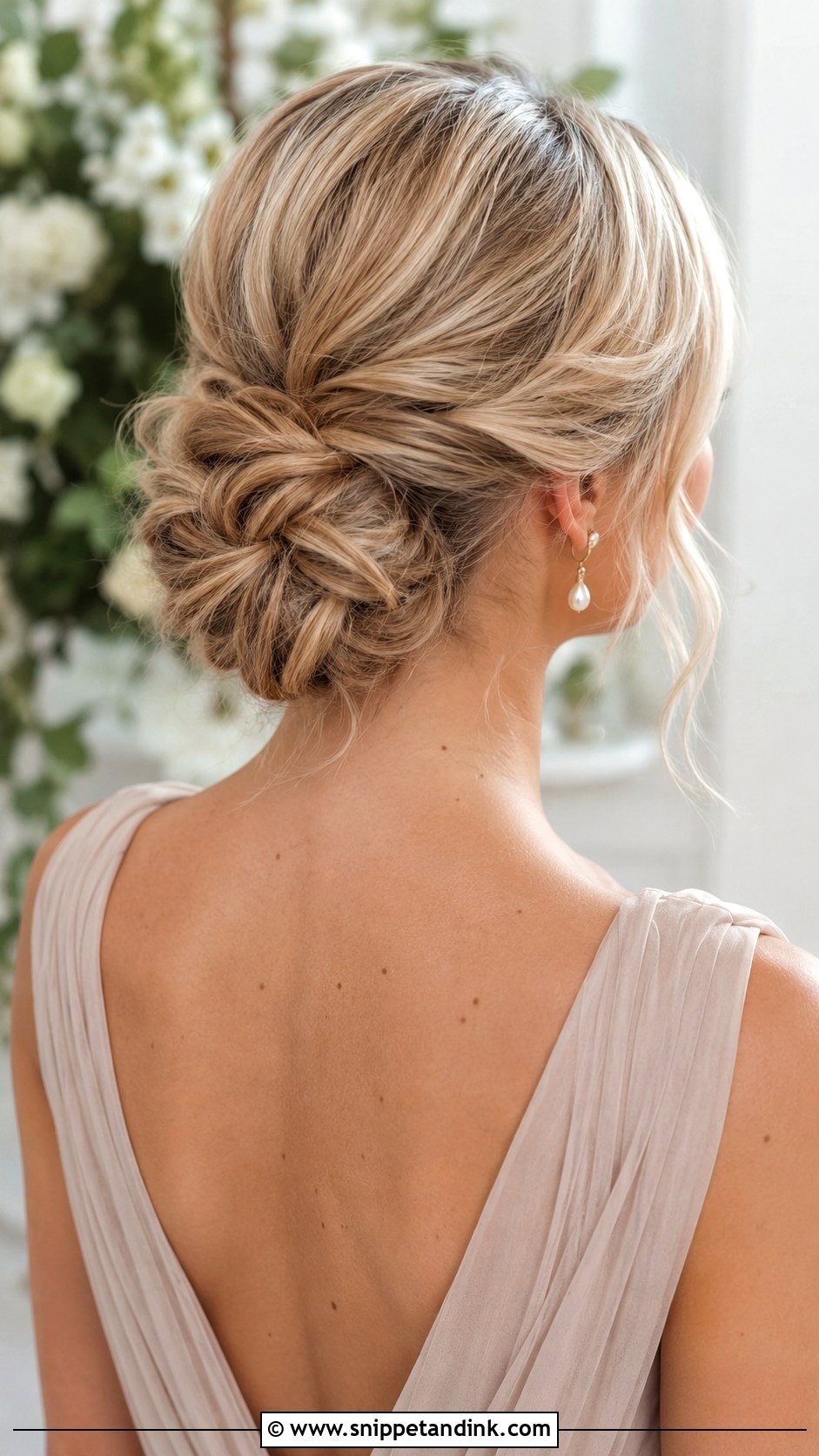
Pulling thin hair tight is the mistake I see most, because it exposes the scalp and makes thin areas obvious. A low textured bun, a loose chignon or a twisted updo looks fuller. Curling first creates body, root powder or texture spray gives the pins something to grip, and a small padding piece adds shape. Gentle lift at the crown and a couple of face-framing pieces keep it balanced.
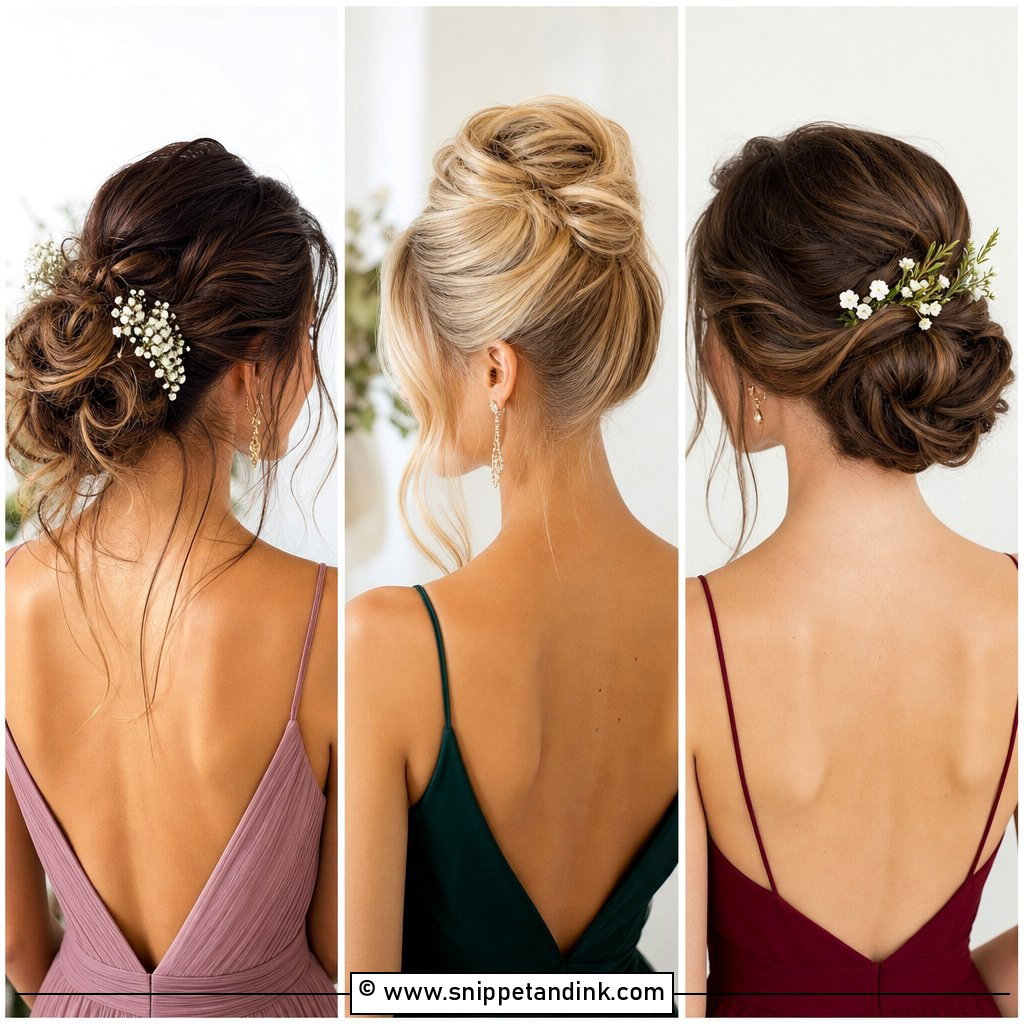
20. Bridesmaid Updo For Thick Hair
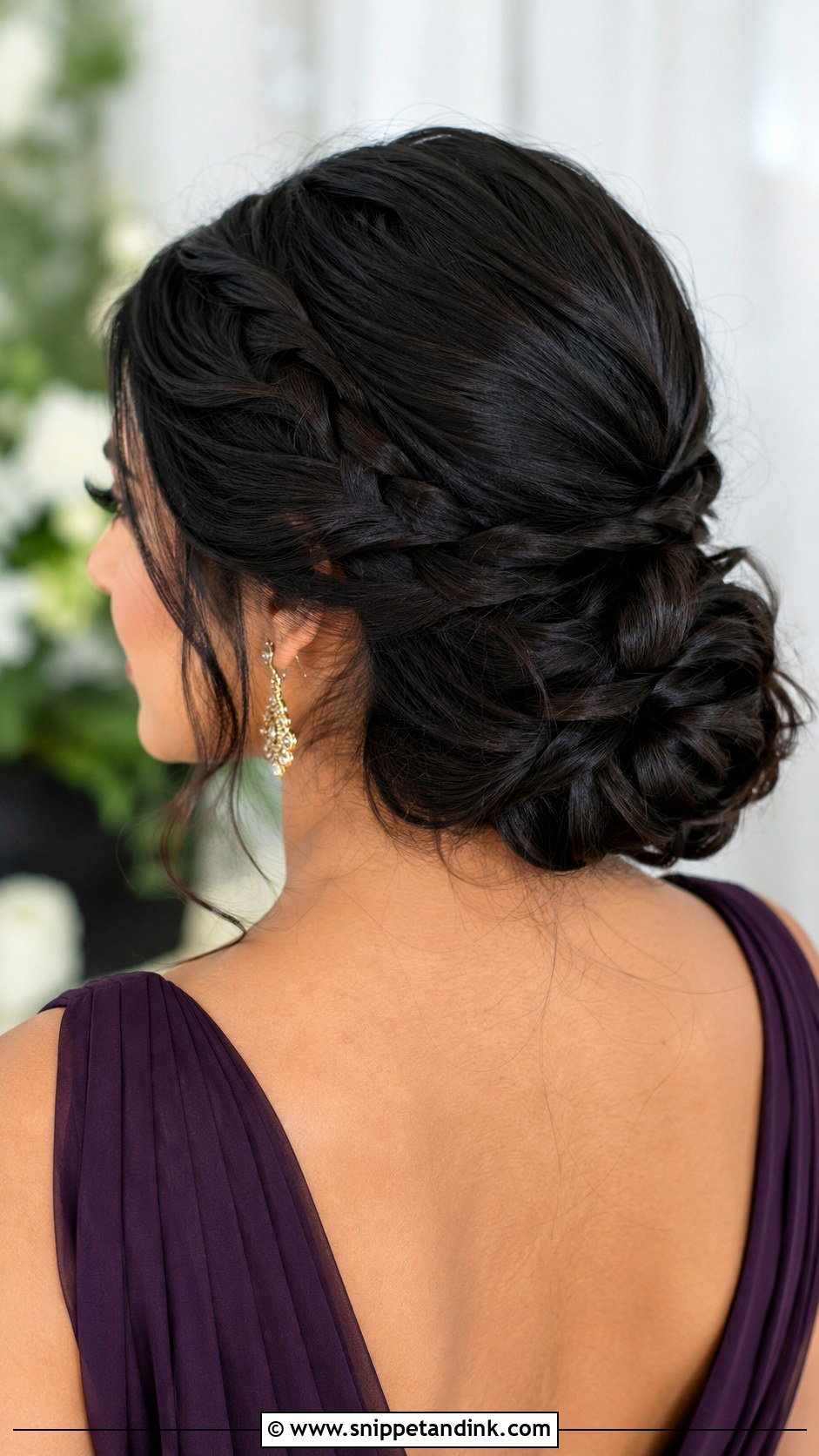
Thick hair makes a big, full bun with ease, but one bun of very thick hair can feel like a weight hanging off the back of the head by the reception. I divide it instead, into braided or twisted sections, or two anchors, so the weight spreads across the head. Sleek buns are possible but take more smoothing and stronger pins. At outdoor weddings, textured versions forgive humidity better than polished ones.
Unpinning at Midnight Without Snapping Your Hair
A well-built updo can hold a few dozen pins, and pulling them out in a hurry is how hair breaks. Give yourself ten quiet minutes at the end of the night instead of tugging at it in the car.
- Find the pins by feel, starting from the outside of the bun, and slide each one out along the direction it went in.
- Take elastics out last, snipping them with small scissors if they’re wrapped tight rather than dragging them off.
- Work a little oil or conditioner through the hair before any brush touches it, because hairspray and back-combing knot easily.
- Brush in small sections, starting at the ends and working up toward the roots.
Expect to shampoo twice the next day to clear out the spray and texture products. If your scalp is tender after a tight style, that usually settles within a day once the hair is down.
An Updo Everyone in the Lineup Can Wear
Low buns and chignons suit a formal party. Braided, twisted, curly and textured updos bring more personality, sleek buns read modern, flowers read romantic, and pearl pins add a classic note without overdoing it. Pick one overall direction for the group, then let each bridesmaid adapt it to her length, texture and face shape. The group looks cohesive in photos, and nobody spends the day in a style that fights her hair.
You'll Like These Ideas:


Leave a Reply