
Worn-down hair is the style I get asked for most by bridesmaids, and it is also the one that falls apart fastest if nobody plans for it. An updo is held by pins; loose hair is held only by the set you put in that morning, so heat, humidity and a dozen hugs all work against it. The good news is that a down style done properly lasts through the ceremony and well into the reception, and it lets each woman look like herself while the group still reads as one party. These bridesmaids hair down ideas run from glossy waves to natural curls and pinned accessories, and below each one I’ve noted what I actually do at the chair to make it hold.
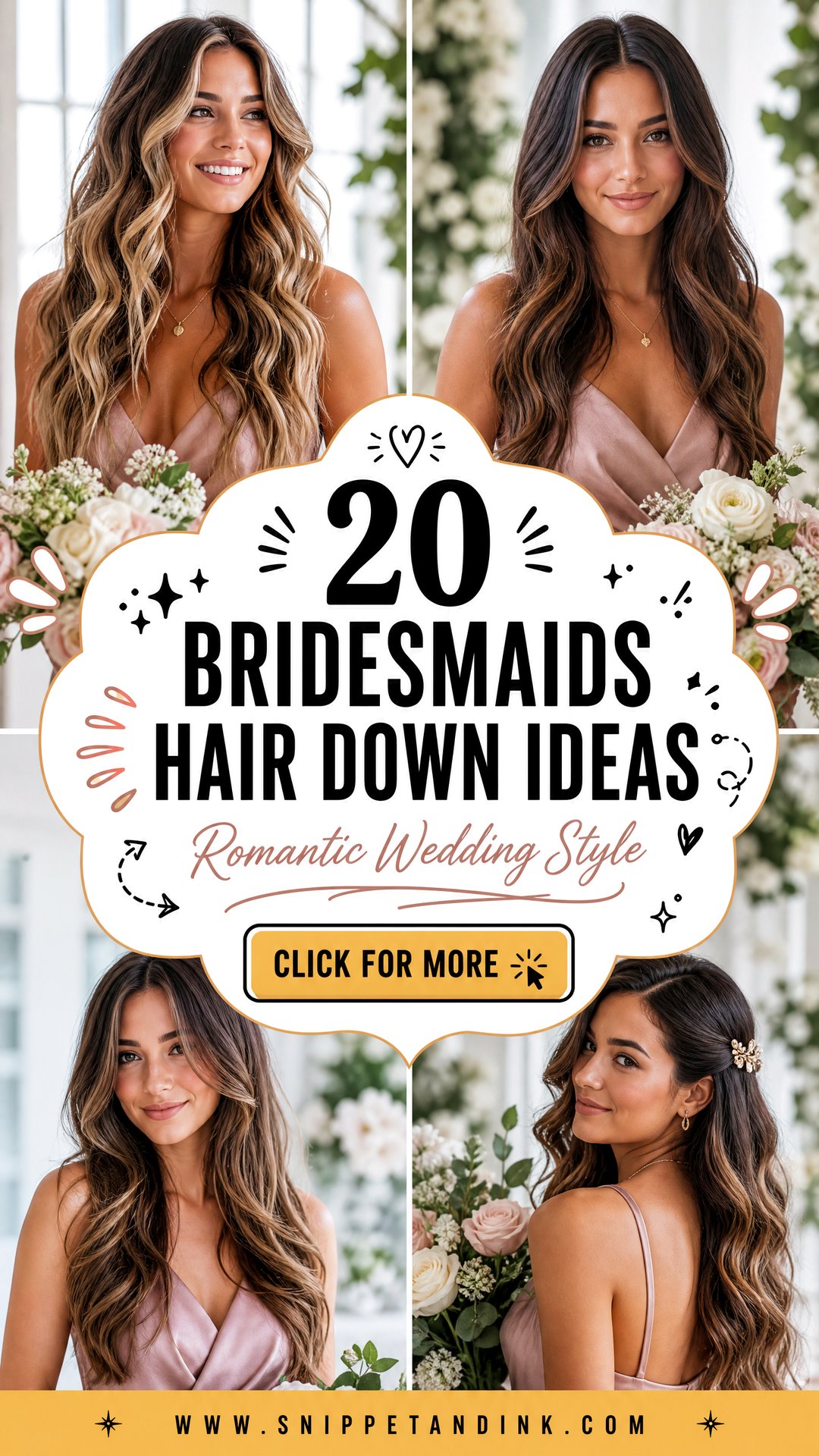
Making One Wave Pattern Work on Six Different Hair Types
A bridal party is almost never six women with the same hair, and that’s the first thing I sort out when I’m booked for a group. The bride usually shows me one photo. My job is to translate it so it suits fine hair, coarse hair, curls and a fresh bob without anyone looking out of place.
- Fine, straight hair needs grip before heat: a texture or volume spray on damp roots, smaller curling sections and a full cool-down. Without that, it is straight again within two hours.
- Thick or coarse hair holds a curl but takes longer per section, so I schedule these bridesmaids first and give them a few extra minutes.
- Naturally curly or coily hair should be styled in its own pattern, refined rather than ironed out. Matching the group means matching the finish and the part, not forcing everyone into the same curl.
- Short or shoulder-length cuts wear the same wave on a smaller scale; I drop to a smaller barrel so the bend still shows.
What actually makes a group look matched in photos is the part side, the shine level and where the movement starts. If those three agree, different textures look intentional.
The Morning Prep That Decides How Long the Style Lasts
Loose styles fail mostly because of how the hair arrives. Hair washed that morning and left slightly damp at the roots won’t hold heat well, and hair loaded with conditioner or oil slides out of a curl. I ask bridesmaids to wash the night before or early that morning, dry it fully and skip the leave-in serum.
Then there’s the order of the day. Down styles drop with time, so I style the women with the most stubborn hair first and the ones with grippy texture last, closer to the ceremony. If the venue is humid or the photos are outdoors in summer, I’d rather start the curl a little tighter than the final look, because it will relax. A bridesmaid who knows this won’t panic when her curls look too bouncy at nine in the morning.
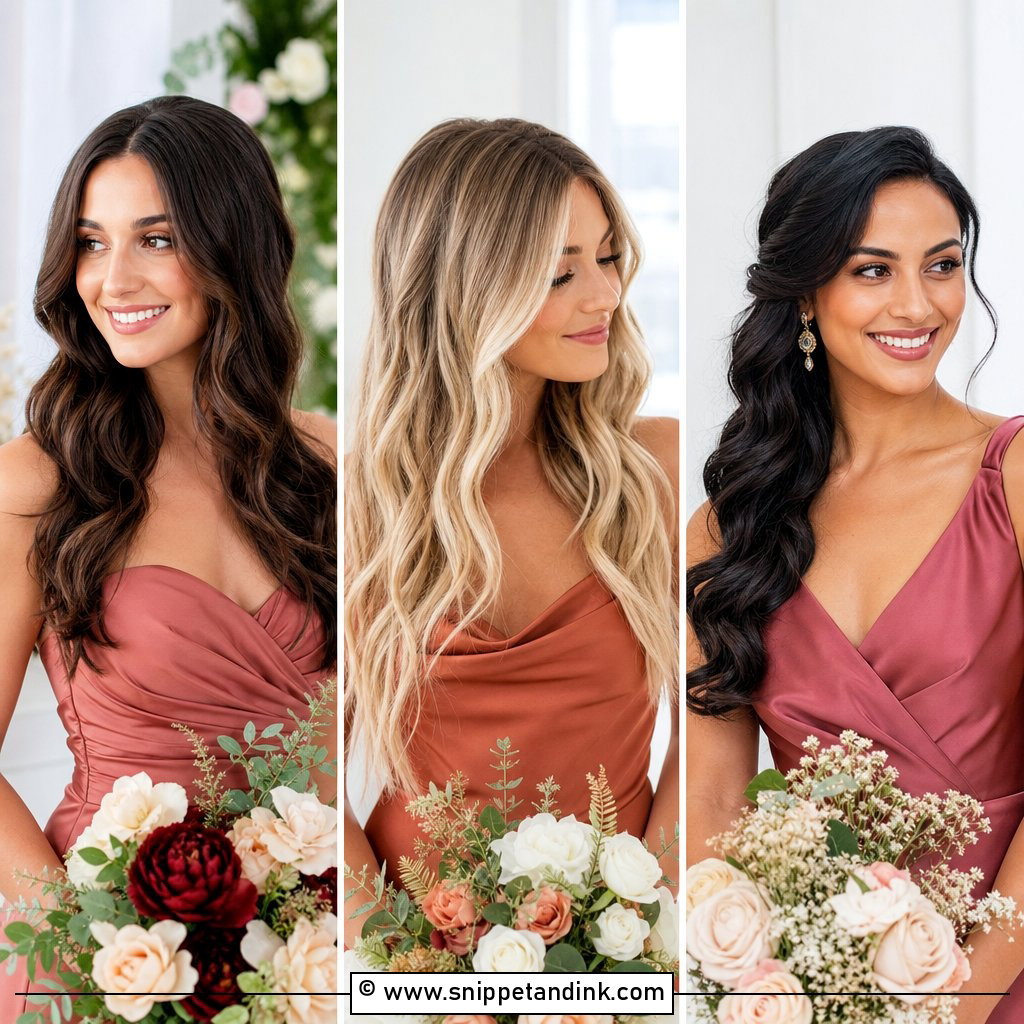
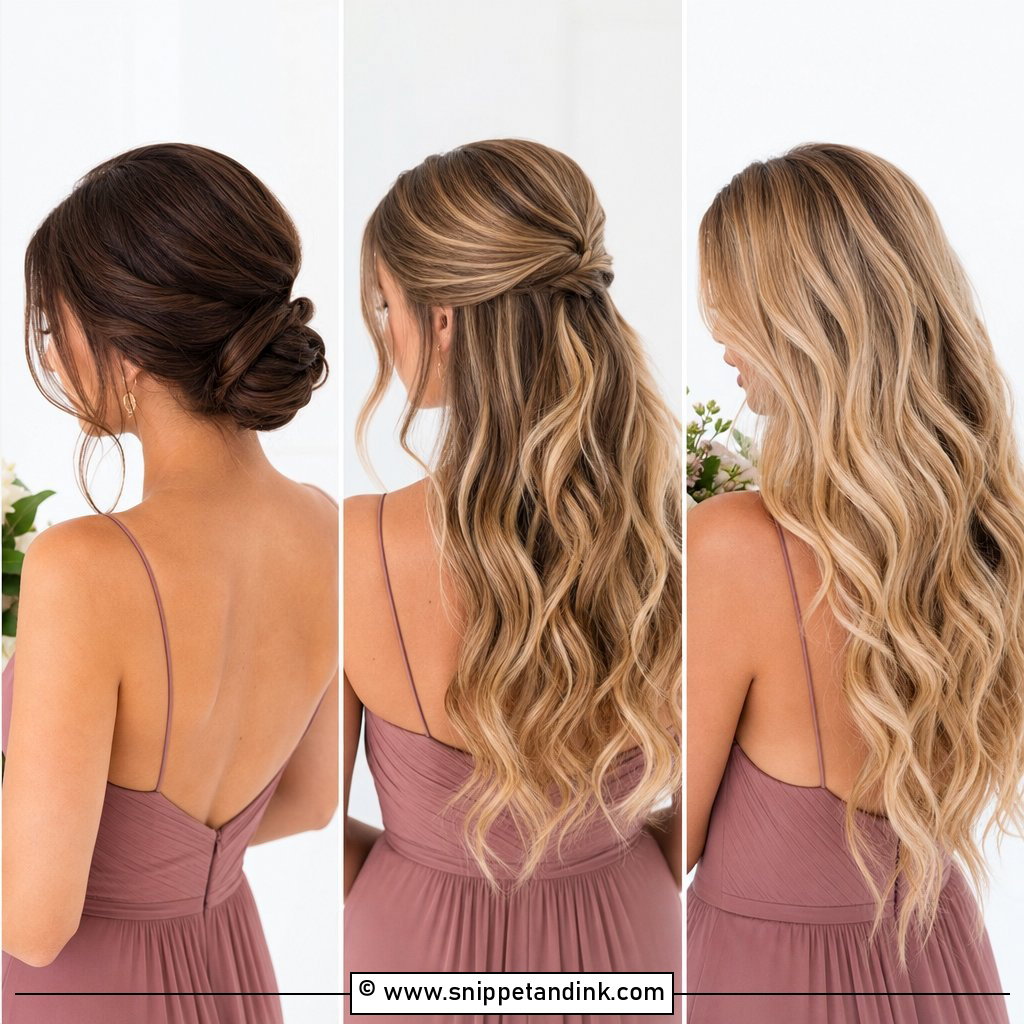
1. Bridesmaid Hair Down With Soft Waves
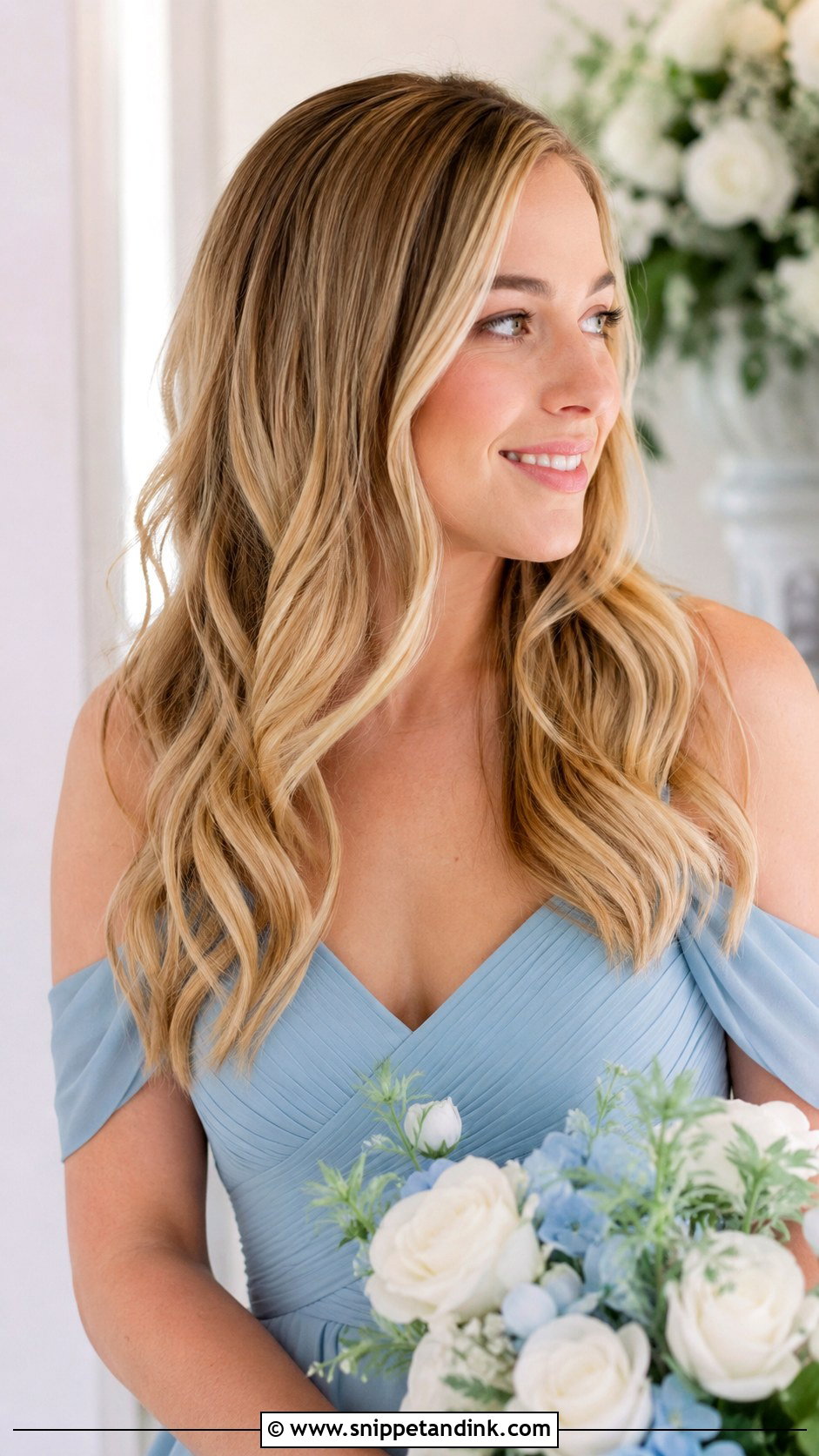
Soft waves are the easiest look to match across a group, because the shape is simple enough to work on long hair and shoulder-length hair alike. I start the bend around cheekbone height so the top stays smooth and the movement sits where cameras notice it. On fine hair I curl smaller sections than you’d expect, since a wide section on fine hair relaxes into nothing by the first dance. It pairs well with satin dresses, chiffon gowns and light makeup. Finish with a brushable spray, never a stiff one, so the waves still move when she walks down the aisle.
2. Bridesmaid Hair Down With Loose Curls
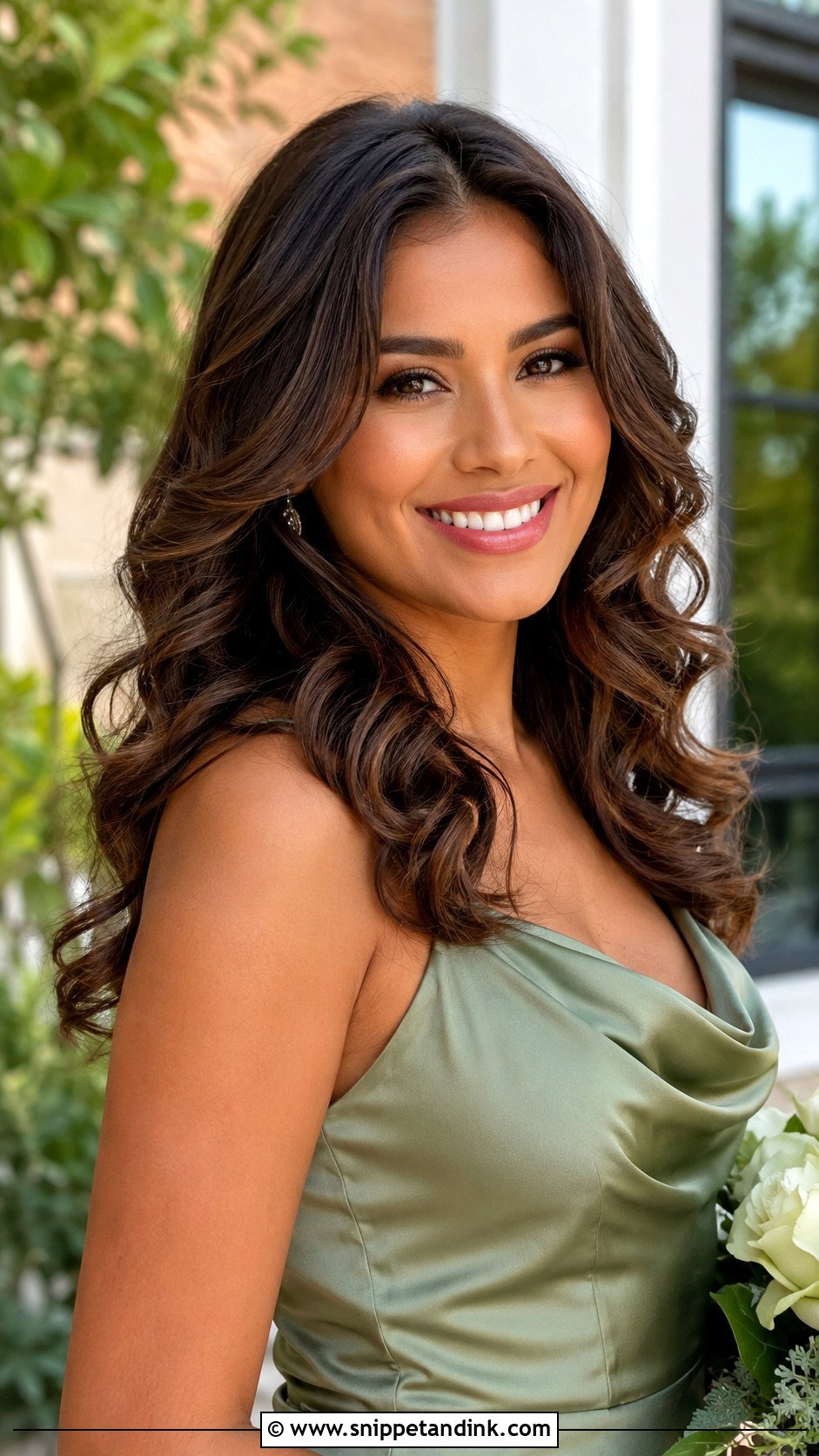
Loose curls sit between waves and a set curl: more shape than a bend, less structure than ringlets. I brush them out once they’ve fully cooled, not before, because a curl brushed while warm loses half its spring. Outdoors they relax through the afternoon, which is fine as long as you start a little tighter than the finish you want. For finer hair I add texture spray at the roots and work in smaller sections.
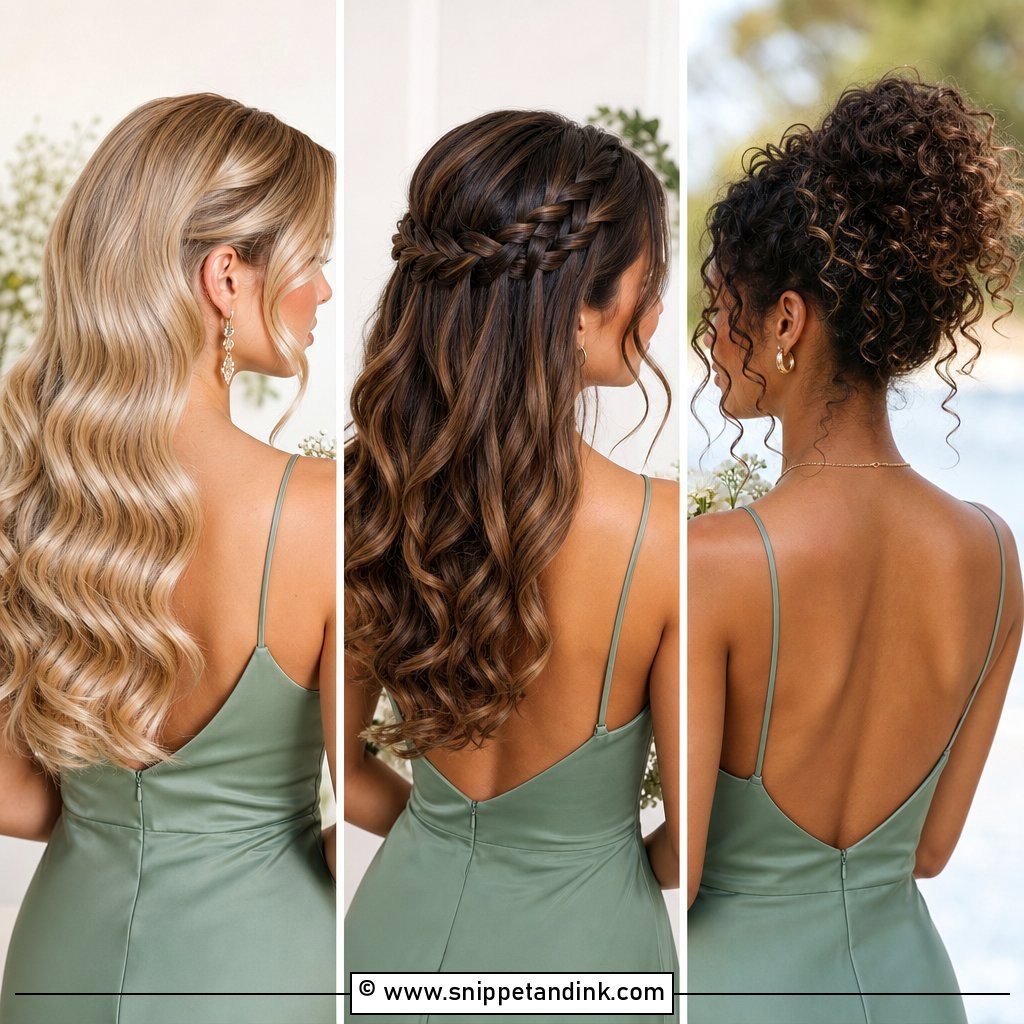
3. Bridesmaid Hair Down With Hollywood Waves
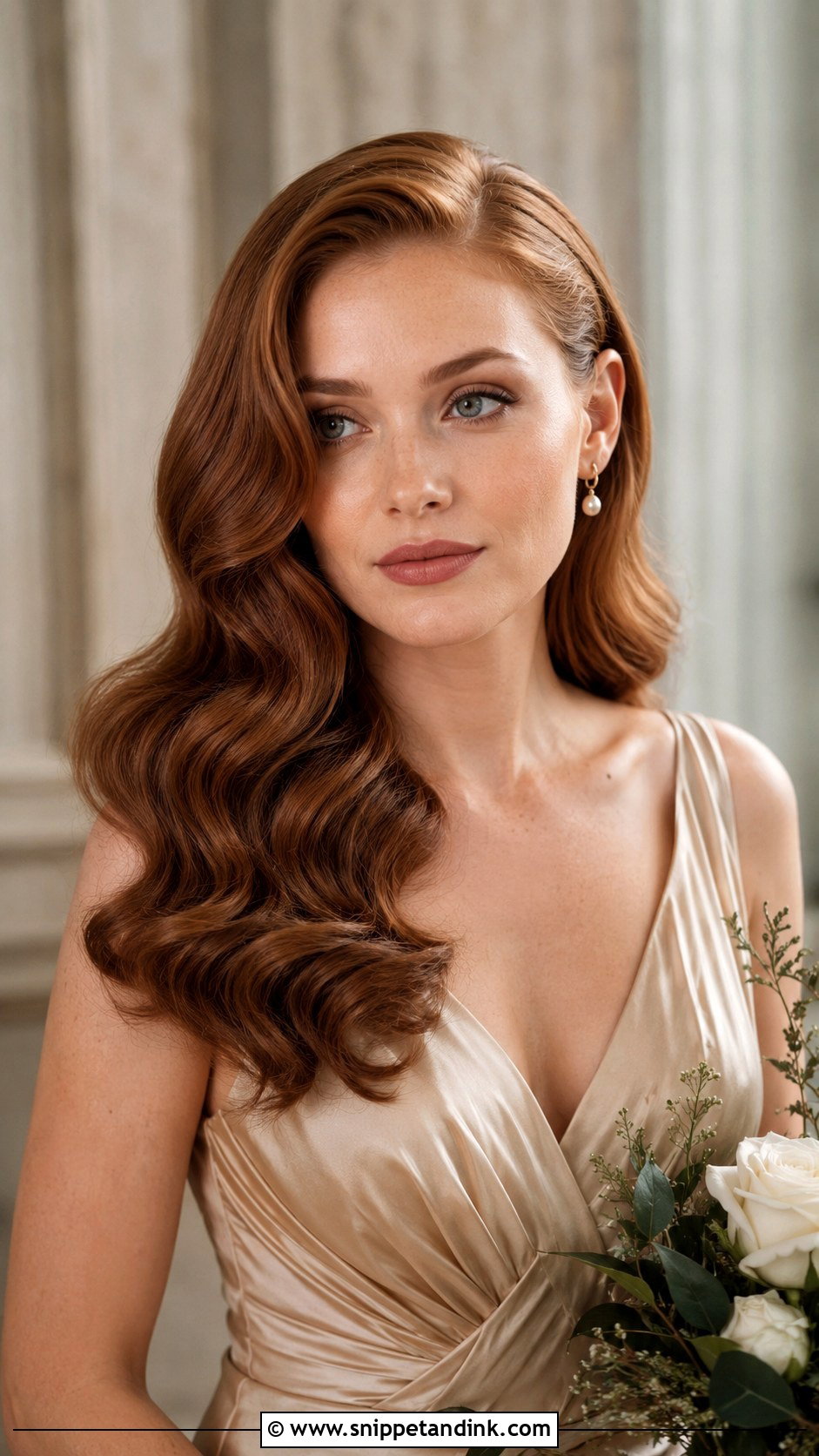
Hollywood waves are the most formal down style on this list, and the most demanding. Every section has to be curled in the same direction and then brushed into one continuous S-shape, so I set them with clips while they cool. They need medium to long hair to show the pattern, and they suit one-shoulder or strapless dresses where nothing competes at the neck. My warning to bridesmaids: keep your hands out of it after styling, because fingers split the wave into separate pieces. Shine spray goes on the surface only, misted from a distance.
4. Bridesmaid Hair Down With Beach Waves
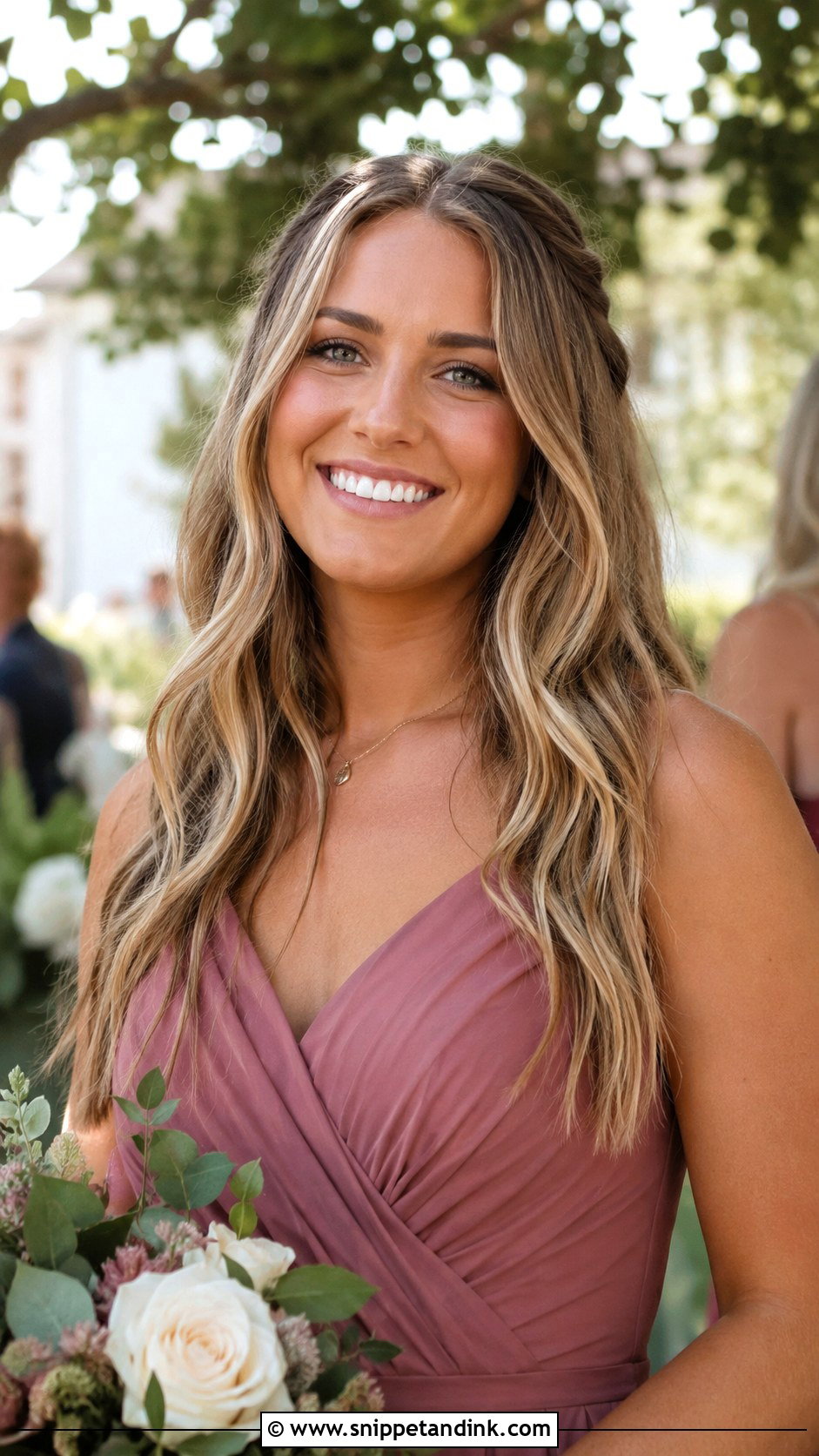
Beach waves look casual, which is exactly why they need more care than people assume. Messy and textured are different things, and the difference is leaving the last inch of each section straight so the ends look modern rather than frizzy. I make the bends with a flat iron on thicker hair and a wand on finer hair, depending on how the hair takes heat. They suit coastal and rustic venues and summer ceremonies. If the dresses are plain, a small side braid gives the style a finished detail.
5. Bridesmaid Hair Down With Side Part
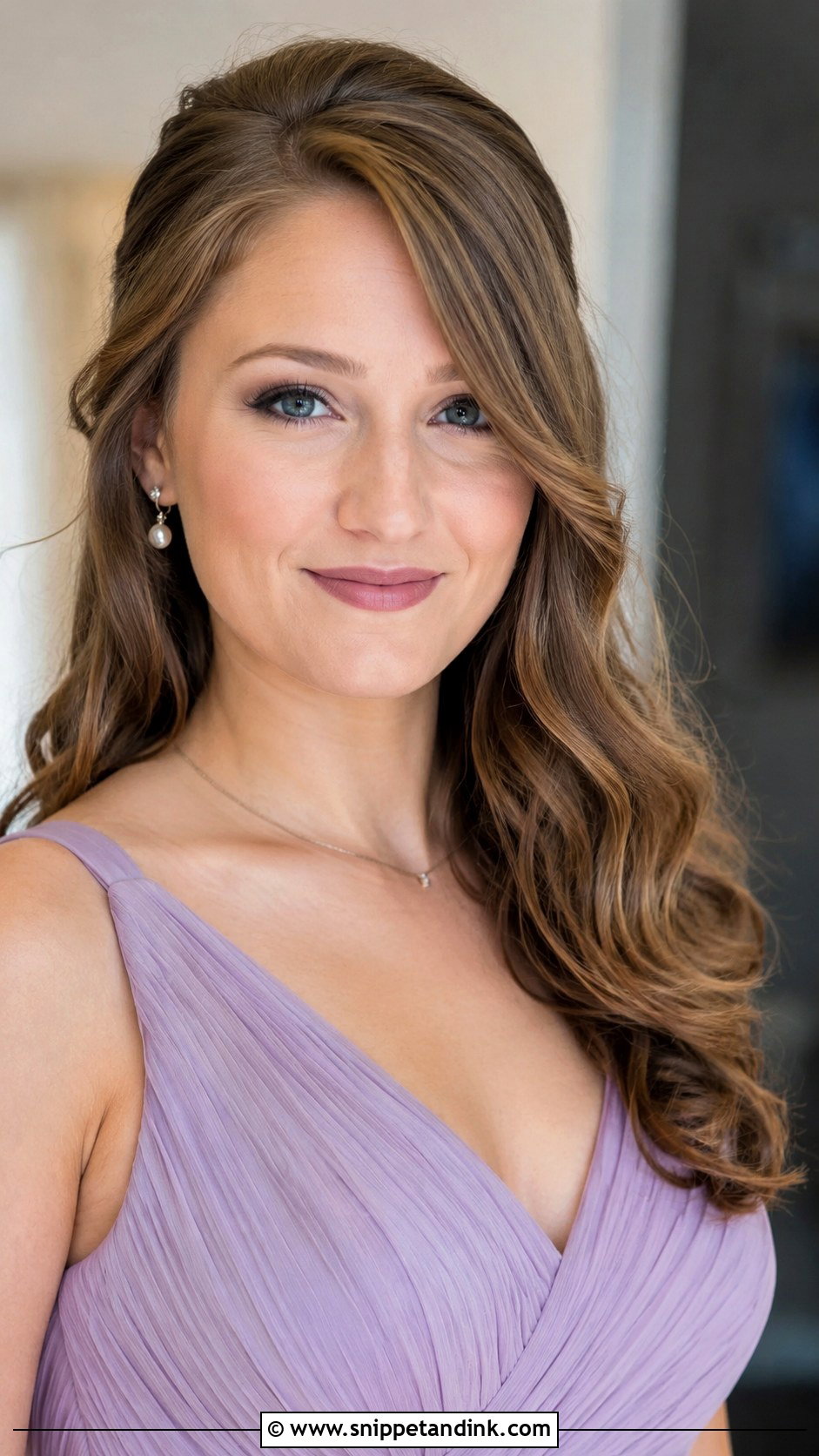
Moving the part is the cheapest change you can make to a down style, and it alters the whole face shape. A deep side part adds lift at the front and reads glamorous; a gentle one is softer and suits rounder faces. The front section is where these looks fail, so I pin it flat with a clip while it cools and only release it right before photos. That one step keeps the face-framing pieces smooth through hugs, ceremony and a long wedding schedule.
6. Bridesmaid Hair Down With Middle Part
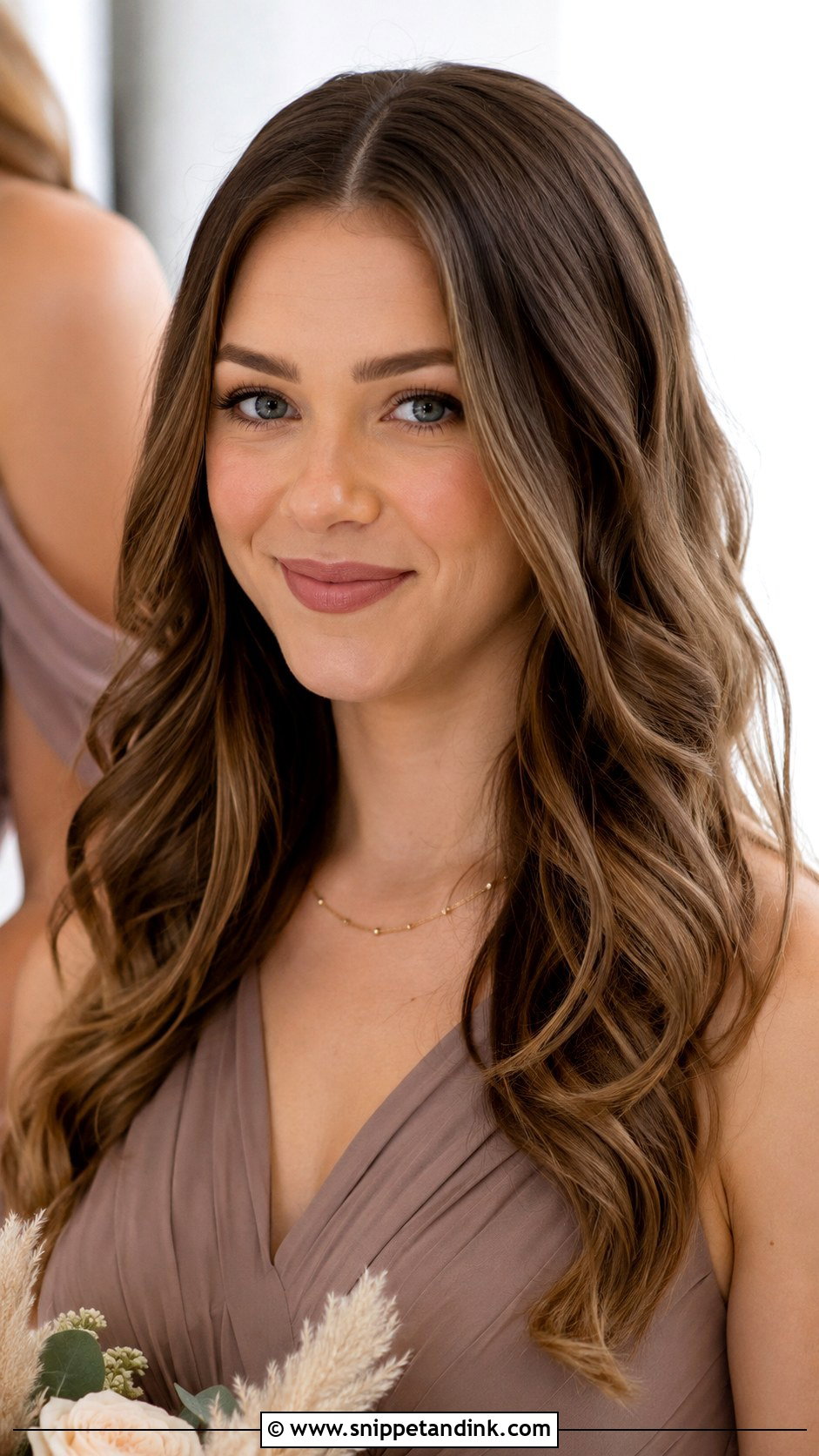
A center part frames both sides evenly, which is why it looks so organized when six women stand in a row. It works best with polished bends or a sleek blowout. The risk is flat roots: a middle part on fine hair can make the crown look pressed against the scalp, so I lift the roots with a round brush before any curling starts. I’d choose this when the dresses already carry detail like ruffles or beading, because the hair stays quiet and lets the gown do the talking.
7. Bridesmaid Hair Down With Face Framing Layers
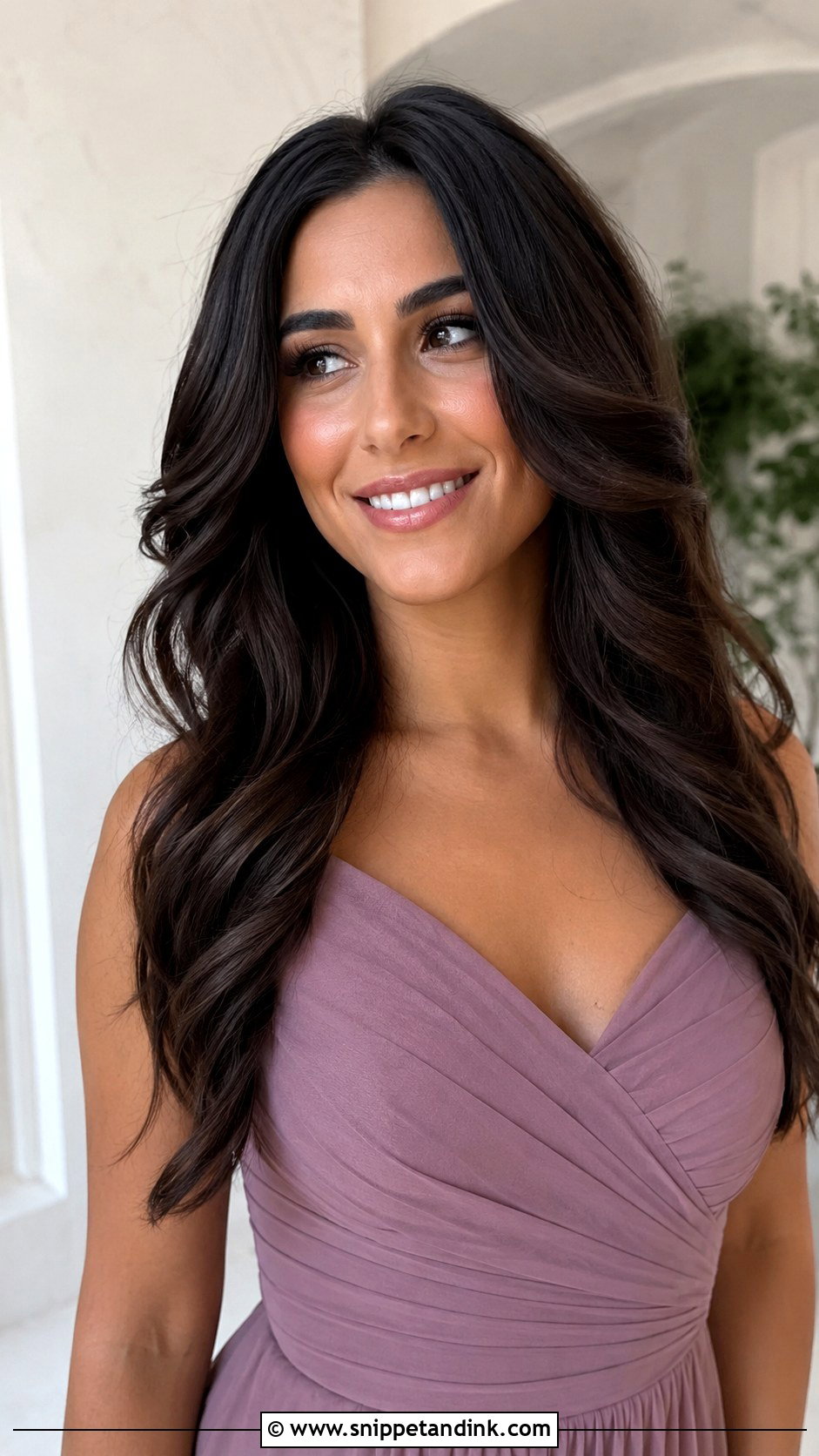
Face-framing layers open the face and keep long hair from hanging heavy around the shoulders. I curl the front pieces away from the cheeks, never toward them, because a curl turned inward closes the face off in photos. They show best with loose waves or soft curls. The cut matters here: choppy, separated layers look unfinished at a formal wedding, so if a bridesmaid is getting a trim, ask for the layers to be blended. A flexible spray holds them without freezing.
8. Bridesmaid Hair Down With Curtain Bangs
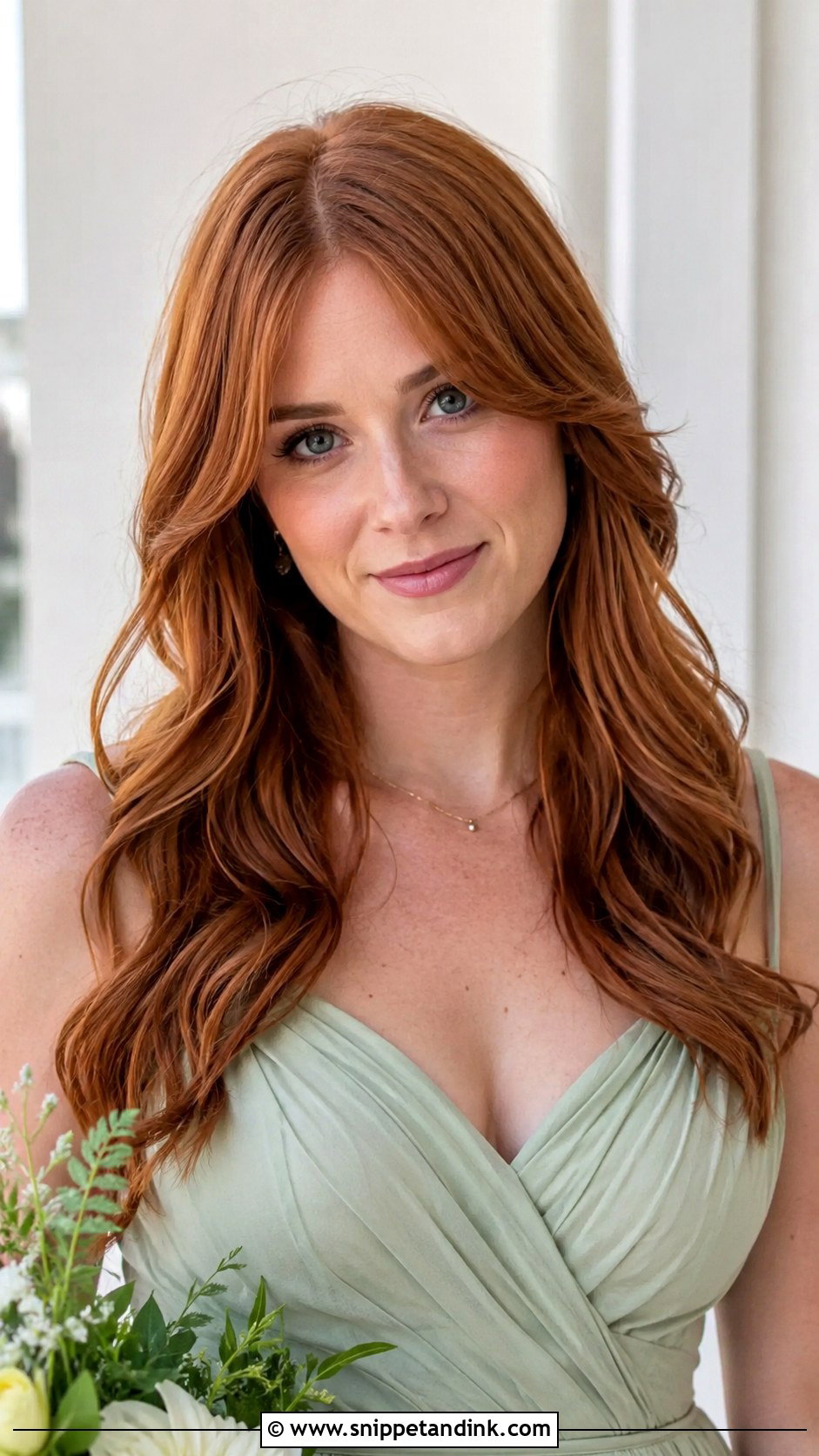
Curtain bangs are the piece that most often falls flat by the reception. I style them with a large roller or round brush so there’s lift at the root, then keep heavy serum away from the fringe completely, since oil on short hair sits right against the forehead and separates it. Swept from center and blended into the longer layers, they keep hair near the face without it falling into the eyes. A light mist of hairspray is all they need.
9. Bridesmaid Hair Down With Braided Crown
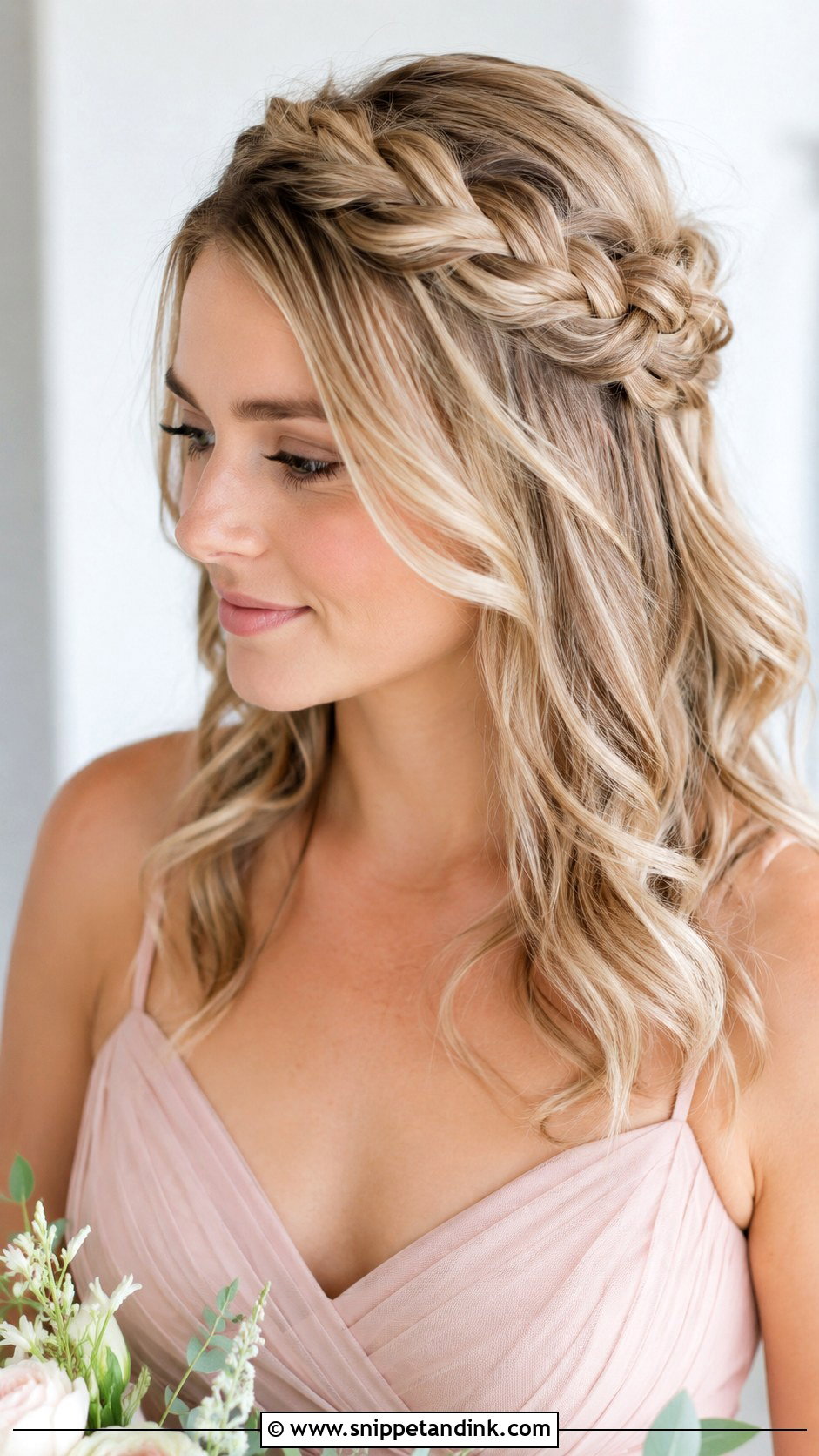
A braided crown is my quiet favorite for outdoor weddings, because the braid does structural work: it holds the front sections back while the lengths stay loose. I hide the pins inside the braid itself, crossing them so they grip both the braid and the hair underneath. The braid can run straight across the top or wrap from both sides to meet at the back. Waves underneath make the whole thing look fuller. It suits boho dresses and garden ceremonies, and it’s forgiving on wind.
10. Bridesmaid Hair Down With Small Side Braid
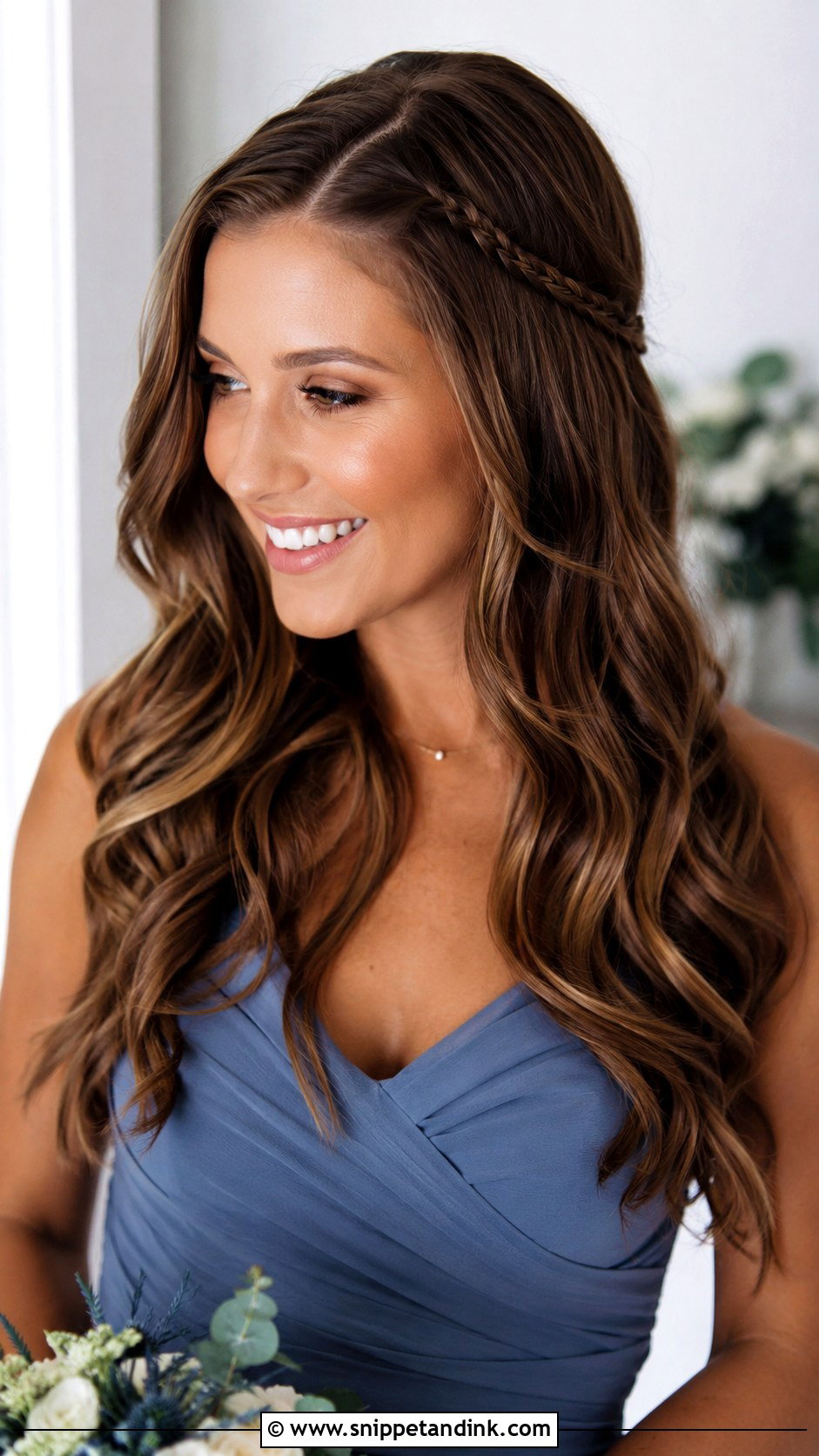
A small side braid starting at the part keeps one side tidy without committing to a half-up look. Tight and sleek reads polished; pulled apart gently reads softer. Pancaking the braid works on thick hair but can make fine hair look thin and patchy, so I go easy on that step if the hair is fine. It’s the practical choice for bridesmaids who don’t want to keep pushing hair out of their eyes at the altar. A tiny pearl pin at the end hides where the braid disappears into the waves.
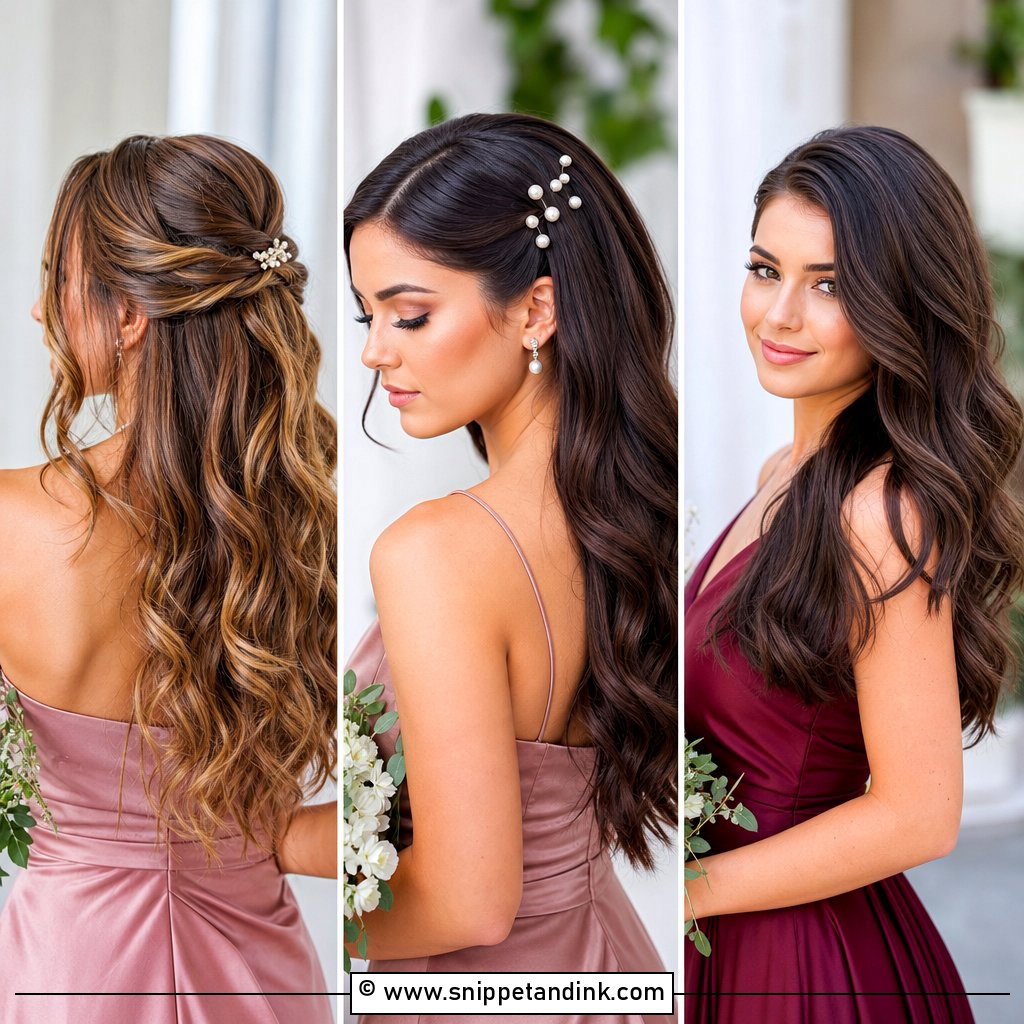
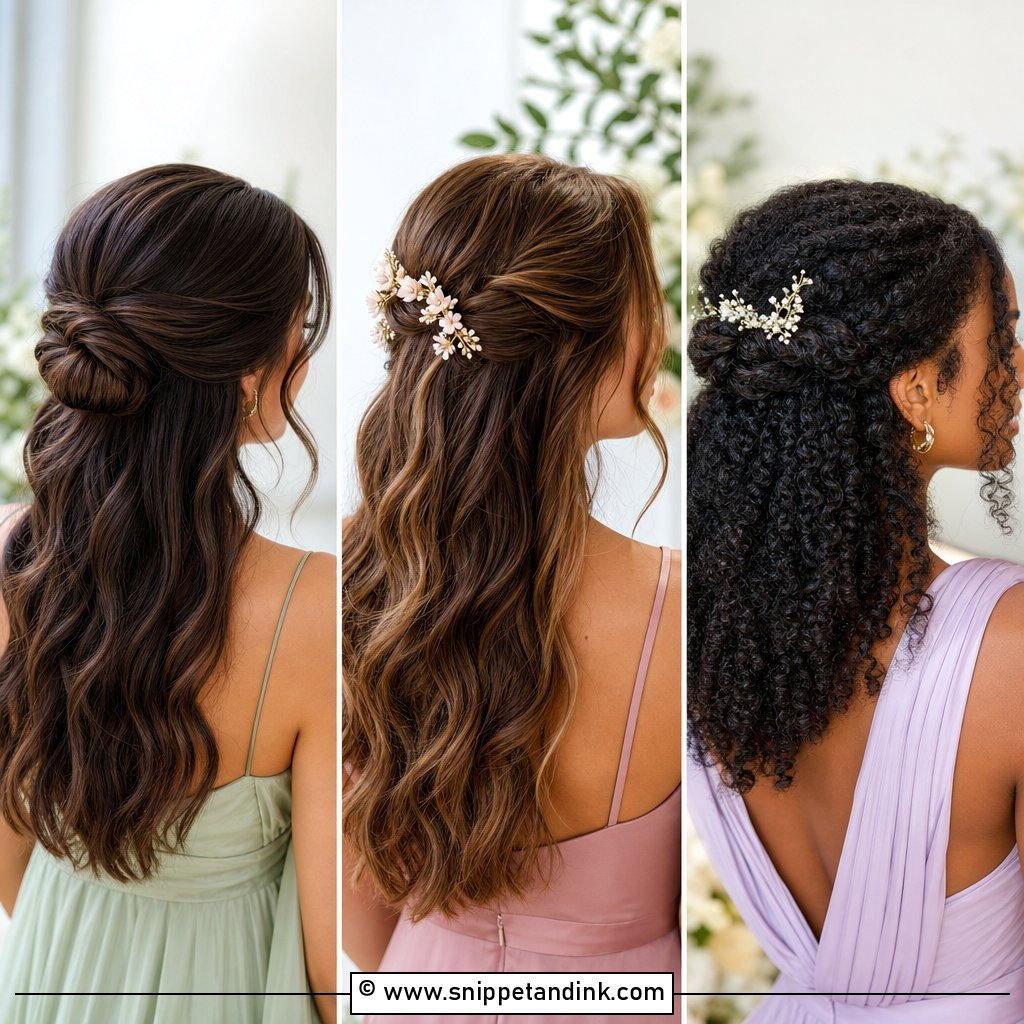
11. Bridesmaid Hair Down With Pearl Pins
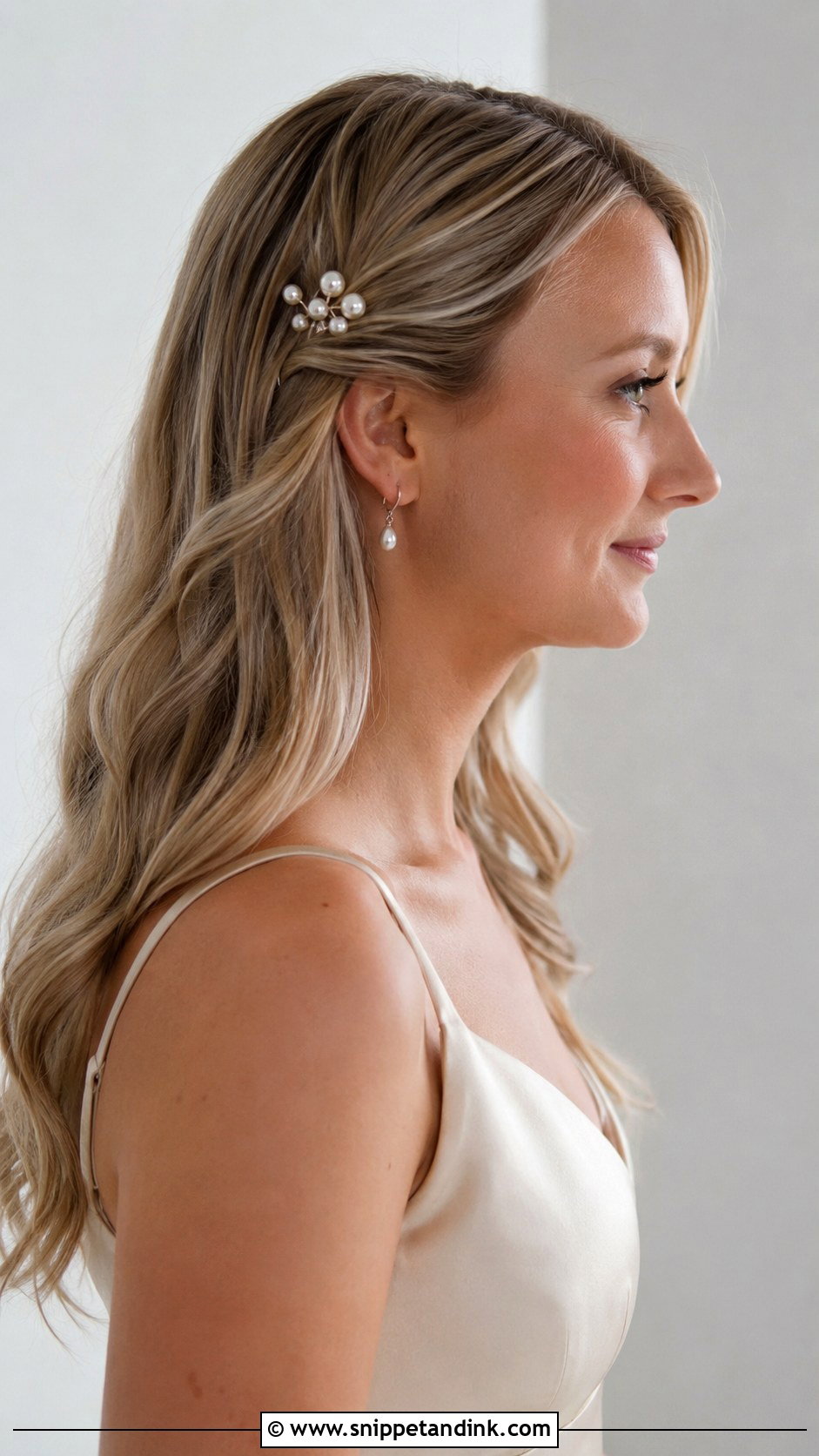
Pearl pins turn a simple wave into something formal. The mistake I see most is scattering them everywhere, which looks busy from a distance; a small cluster behind one ear is cleaner. Pins grip best on hair with a little texture, so I add dry texture spray before placing them on silky hair. Keep the surface smooth enough that the pearls stand out. If the dresses are beaded, go smaller with the pearls so the two don’t fight.
12. Bridesmaid Hair Down With Floral Clips
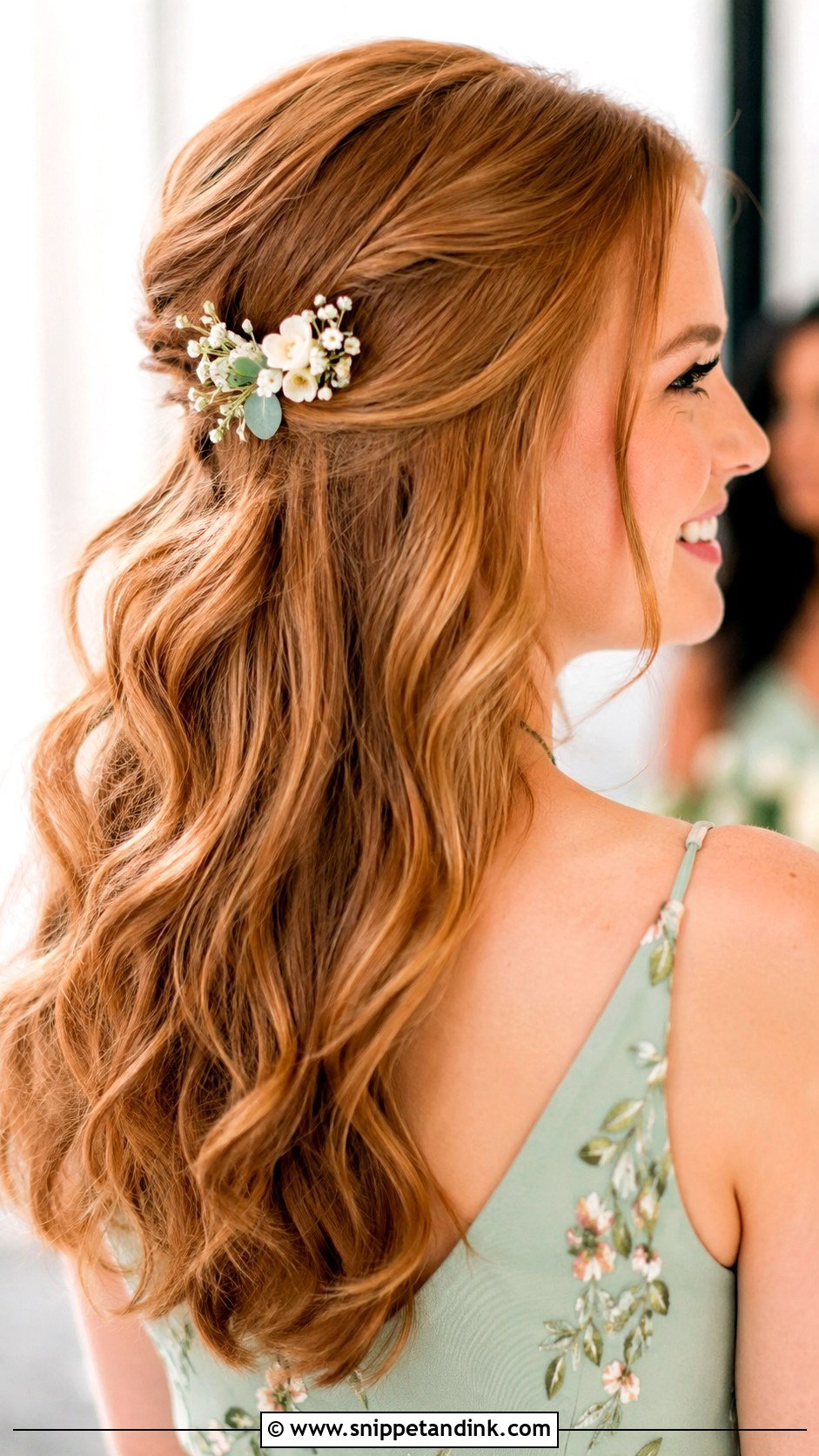
Floral clips belong to spring, summer and garden weddings. I tell bridesmaids to echo the bouquet rather than copy it, since an exact match looks costume-like. Fresh blooms wilt against warm hair by evening, so for a long day I prefer silk or dried flowers. Loose curls give the clip something to sit in. In a large bridal party, keep the flowers small; ten big blooms in a row pull the eye away from faces in group shots.
13. Bridesmaid Hair Down With Hair Vine
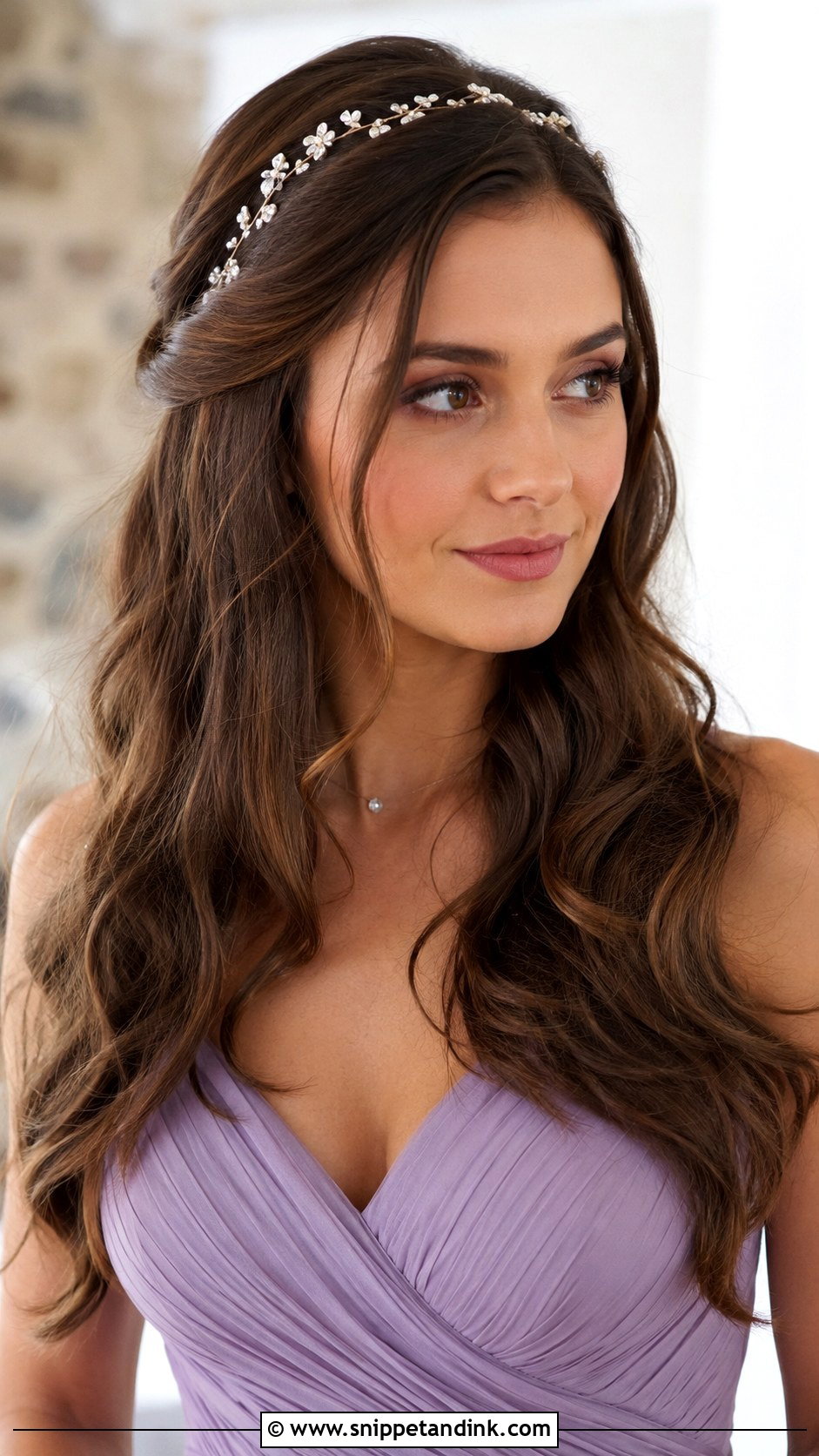
A hair vine lies along the back, side or crown and adds detail without an updo. It should look like it’s resting on the hair, which means the anchoring is hidden: I pin it through its own loops into a small section of backcombed hair underneath. Textured waves give the pins grip; sleek straight hair lets a vine slide. Keep everything else simple so the accessory gets the attention.
14. Bridesmaid Hair Down With Sleek Straight Hair
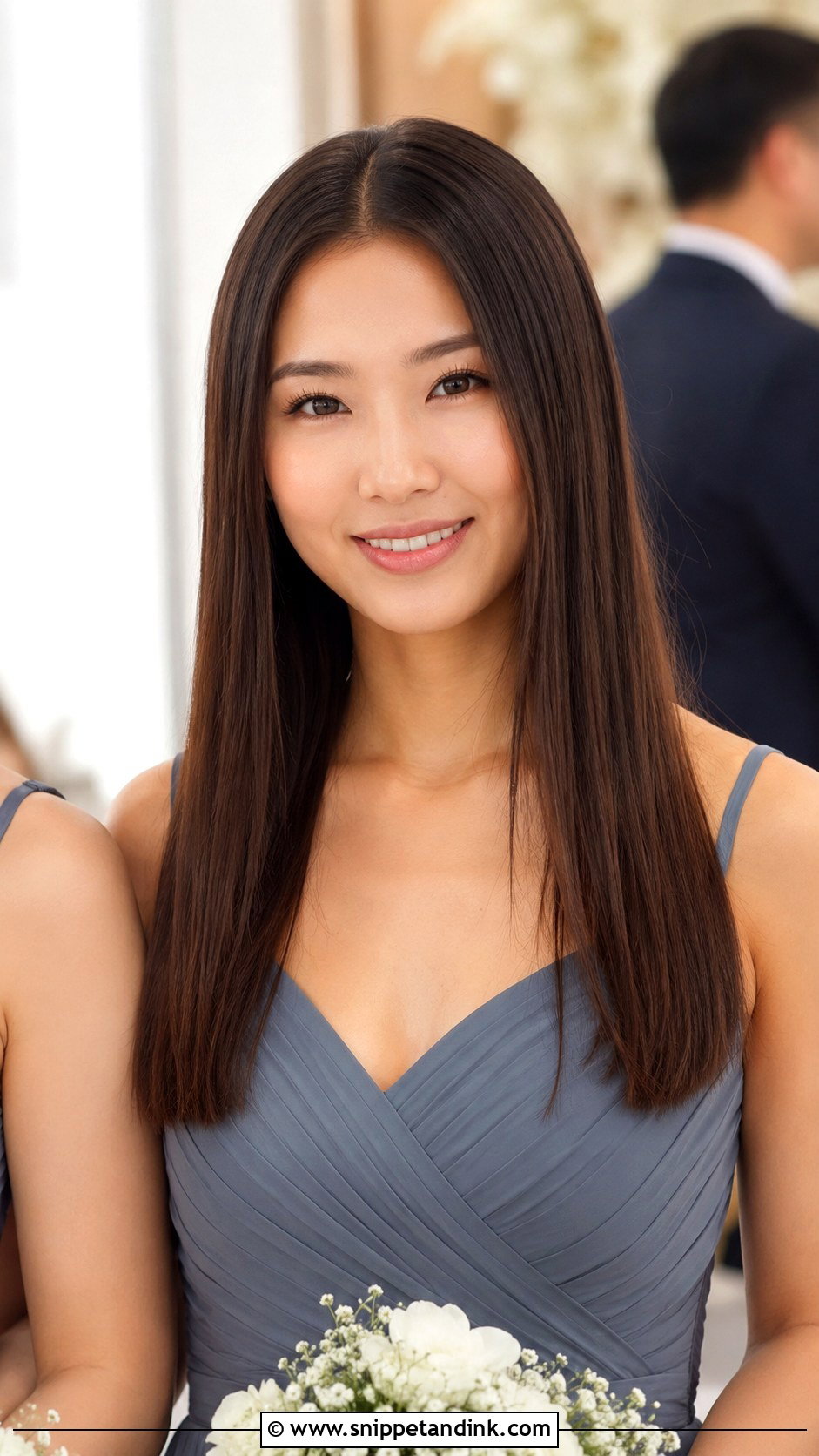
Sleek straight hair is the modern option for minimal dresses and structured necklines, and it’s the least forgiving on the list. Every flyaway shows. I smooth from root to tip and bevel the ends slightly under so they don’t look blunt or flat. Outdoors, anti-humidity product is not optional, because straight hair puffs at the first damp breeze. I’d steer anyone with overdue split ends away from this one; a fresh trim a week or two before makes all the difference.
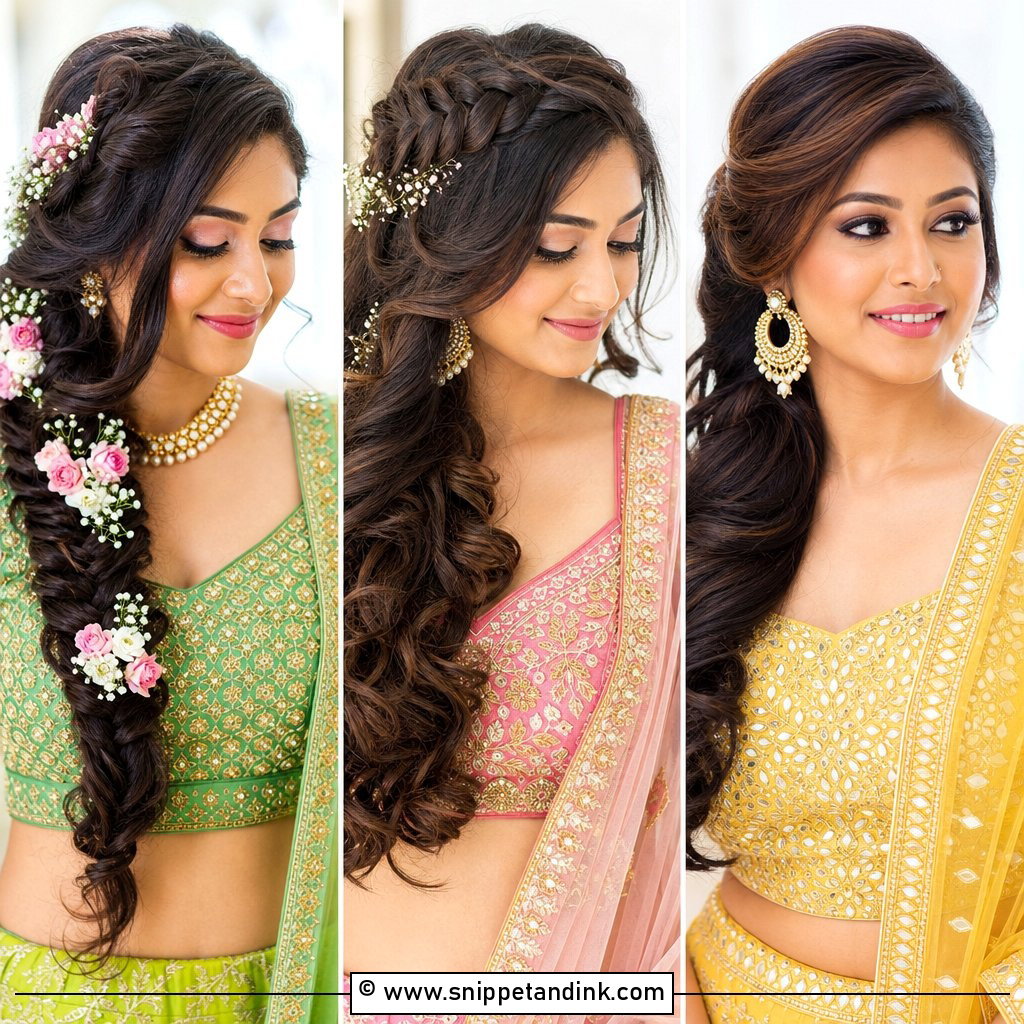
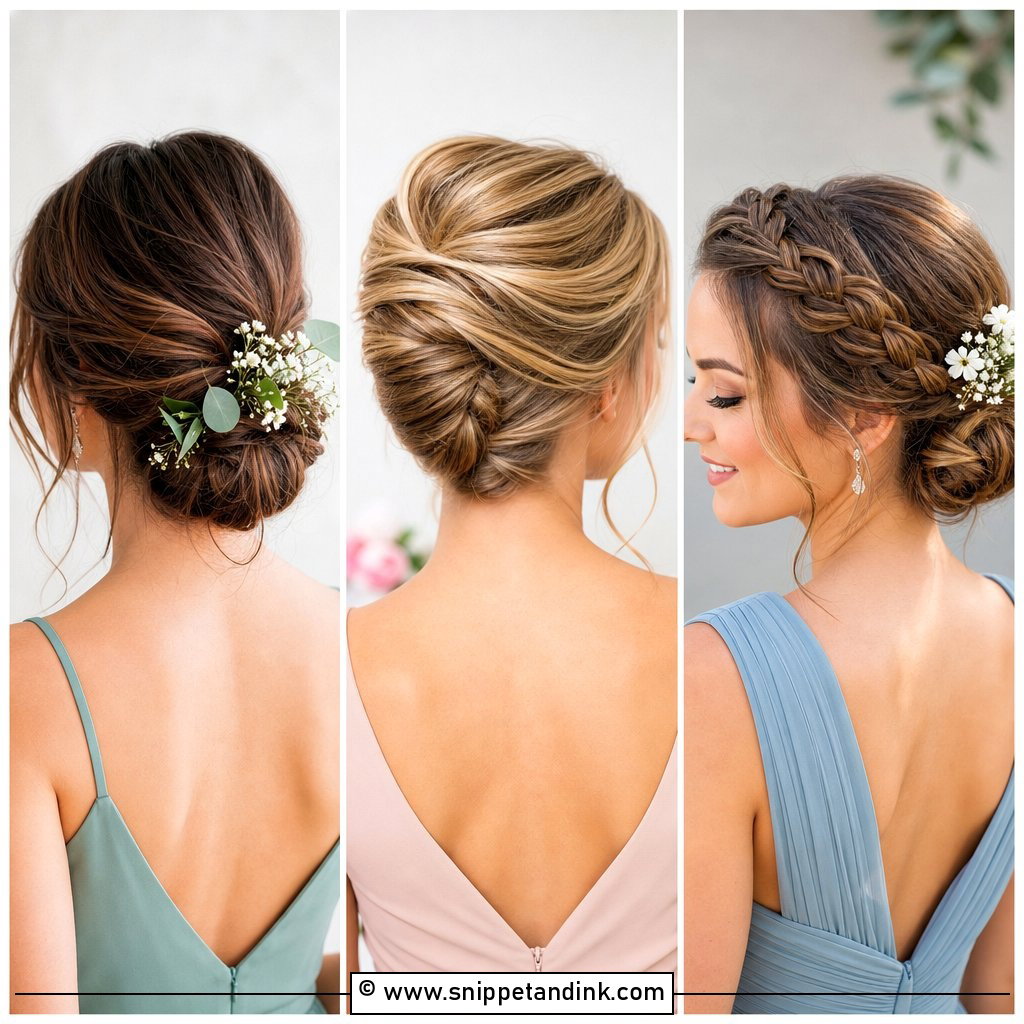
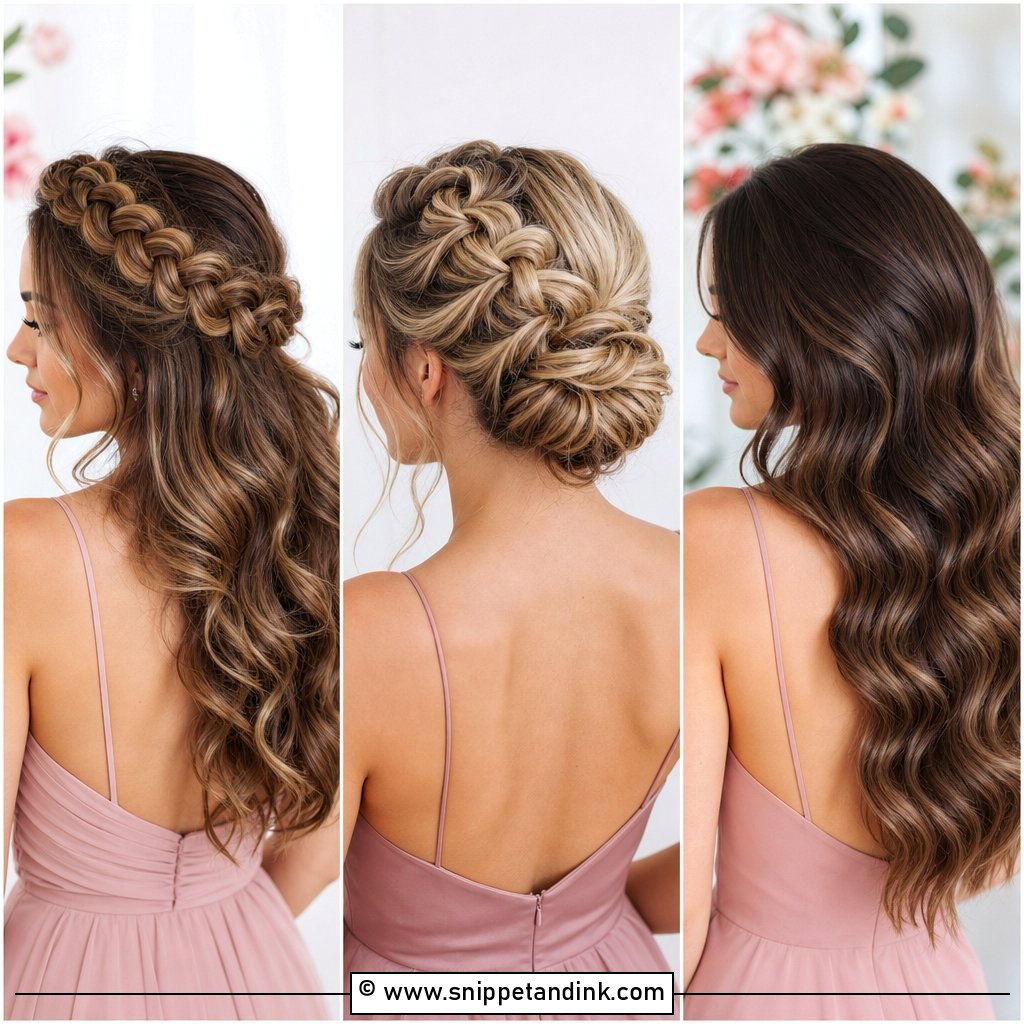
15. Bridesmaid Hair Down With Bouncy Blowout
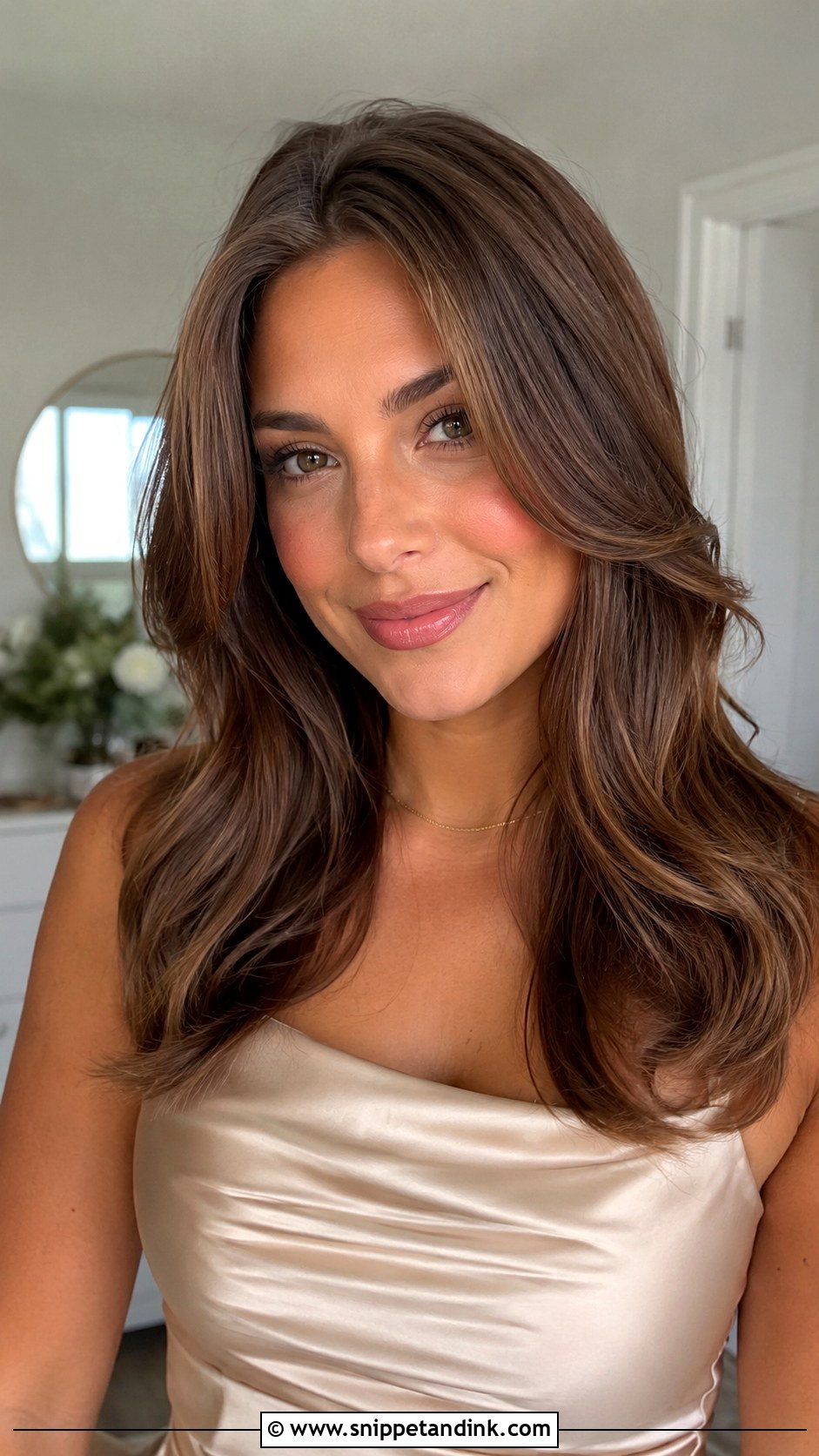
A bouncy blowout gives volume without defined curls: smooth roots, rounded layers and ends that flip away from the face. The hold comes from setting it. I put each warm section into a velcro roller and let it cool completely before removing them, which is how a blowout survives the ceremony. It suits medium and long hair and a simple neckline. A light finishing spray keeps the bounce from going stiff.
16. Bridesmaid Hair Down With Old Money Waves
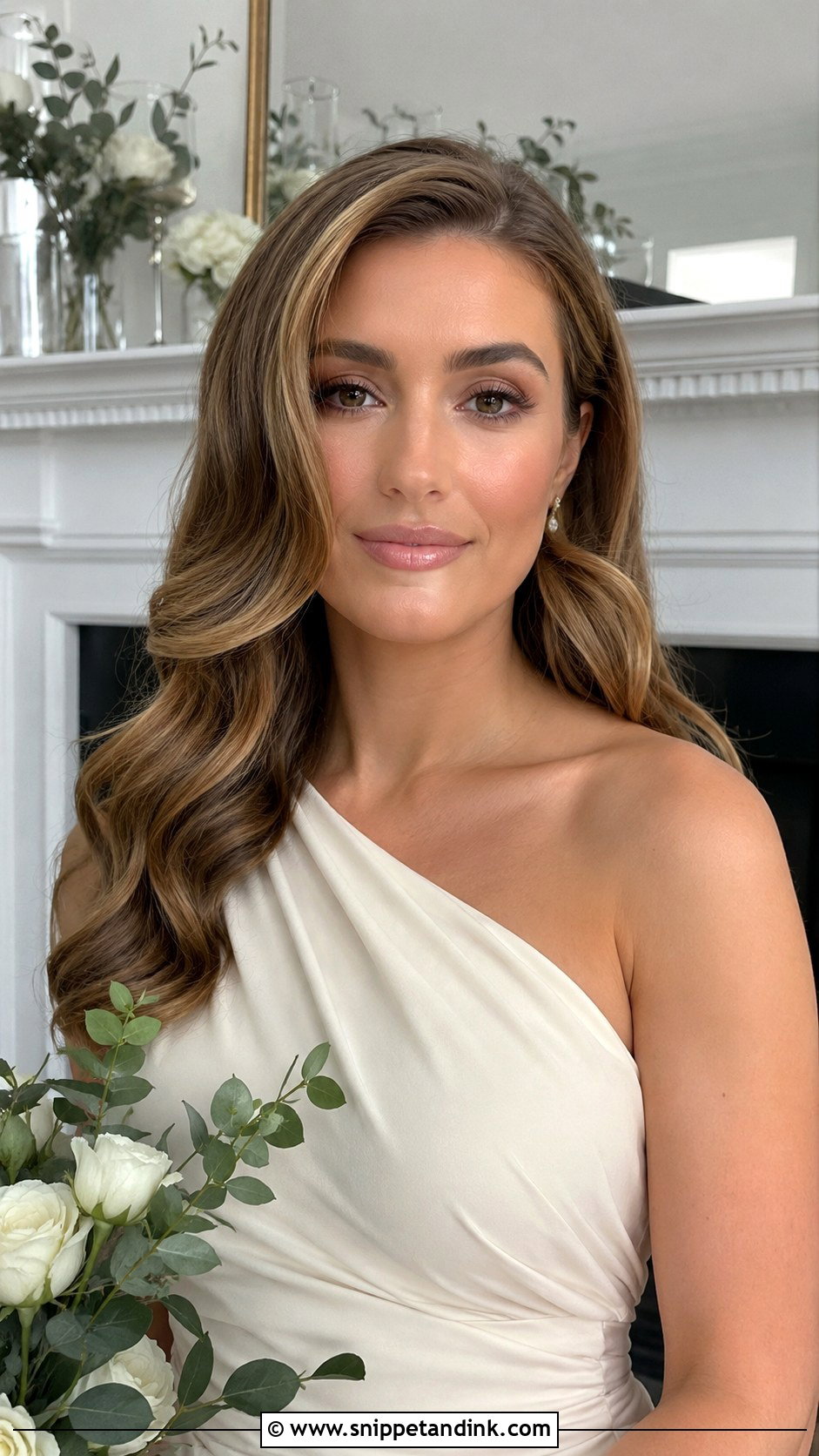
Old money waves are calmer than Hollywood waves and more polished than beach waves: soft bends, a clean part, a glossy surface. They pair well with satin, crepe, or tailored dresses. I use a large barrel, brush the curls out with a boar bristle brush and finish with shine spray. Healthy ends matter more than technique here; frayed tips ruin the expensive look faster than anything I can do with an iron.
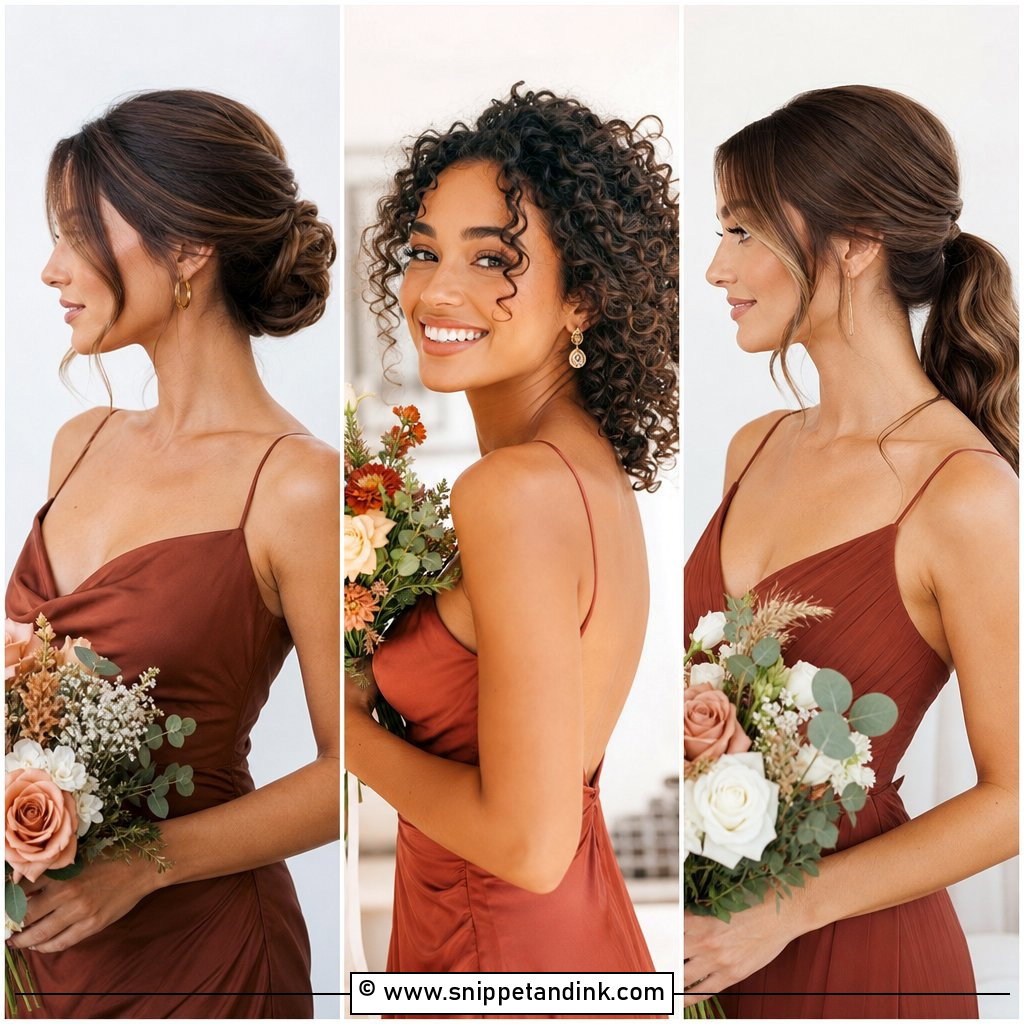
17. Bridesmaid Hair Down With Natural Curls
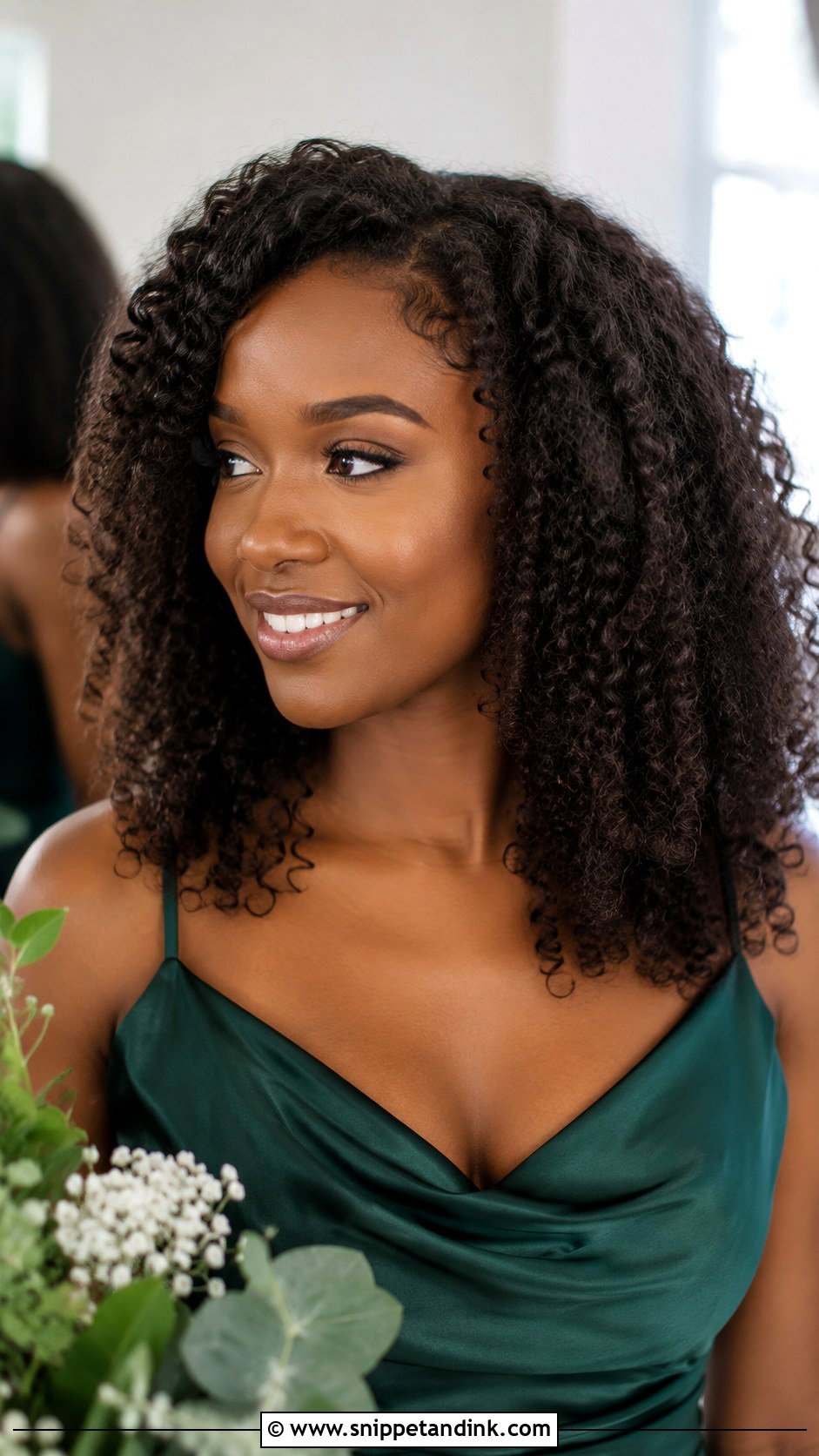
Natural curls are a wonderful choice when the bridesmaid already knows how her hair behaves, and I’d never push her into a different pattern for a wedding. Defined curls start with hydration: I refresh with water and curl cream, then diffuse on low so the clumps stay intact. Layers stop the hair from forming a heavy triangle at the bottom. Any front pieces that need control get pinned discreetly. Don’t brush dry curls before the ceremony; it turns definition into frizz instantly.
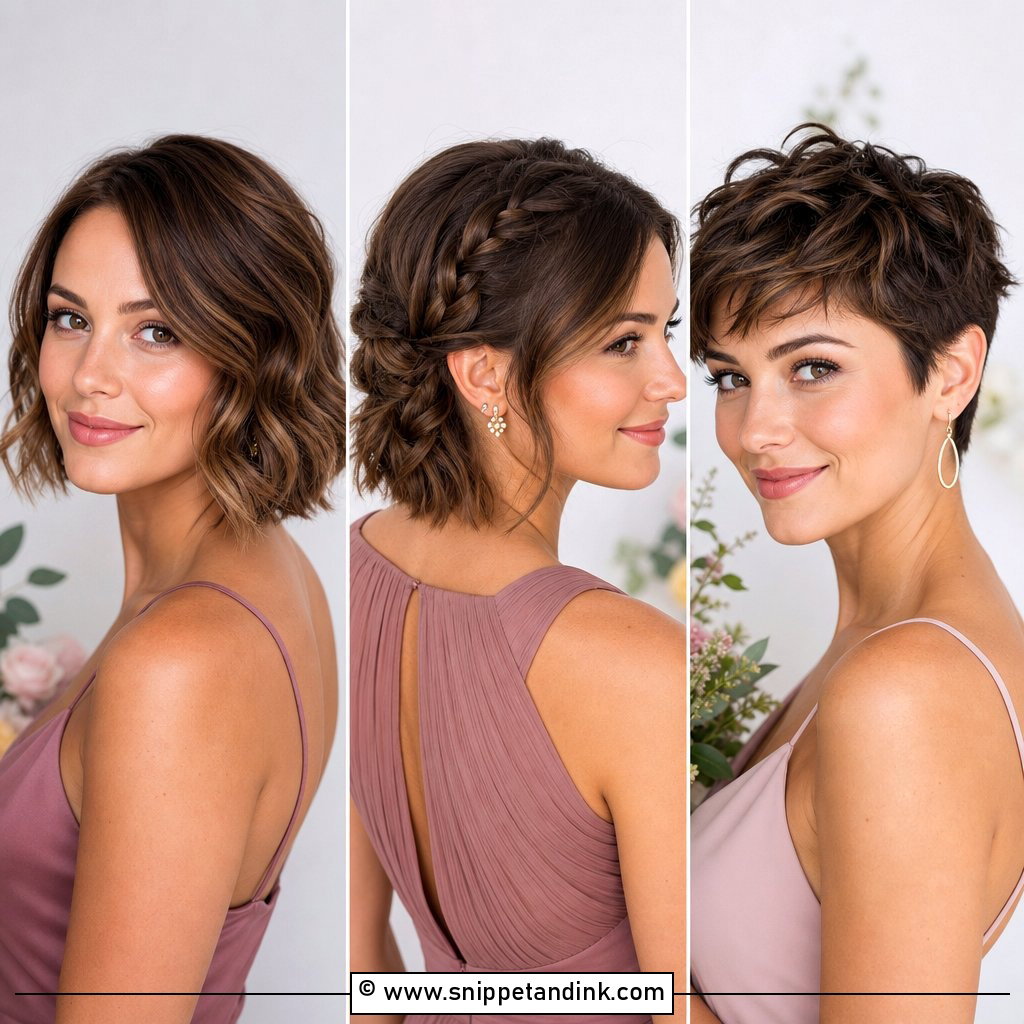
18. Bridesmaid Hair Down With Shoulder Length Waves
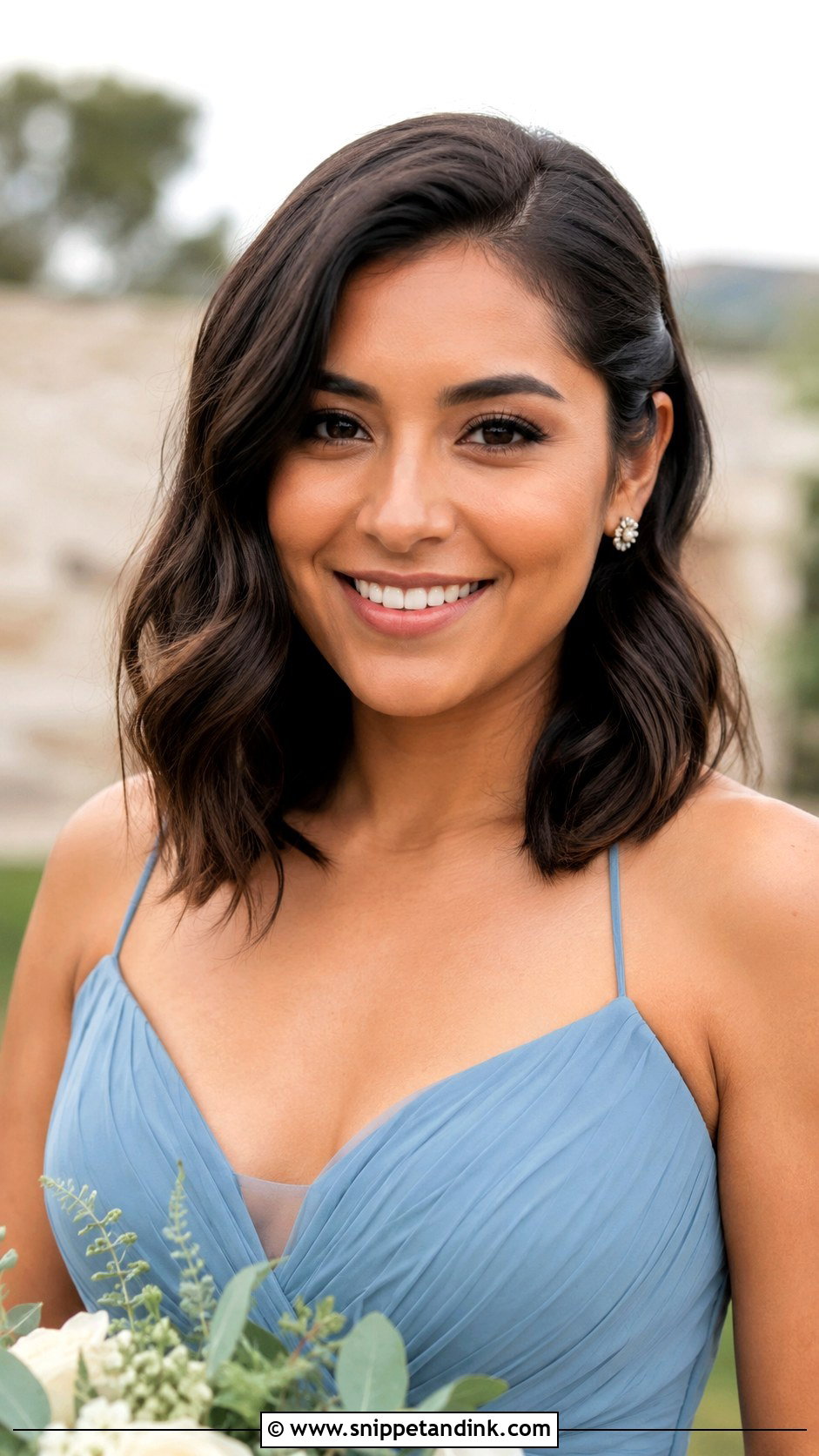
Shoulder-length hair can feel tricky for formal styling, but waves make it look fuller than it is without extensions. The ends sit at the collarbone, so I curl them away from the face to stop them flipping out against the dress straps. Smaller sections and full cooling time give a defined bend that still brushes soft. Tucking one side behind the ear shows off an earring and adds a little polish.
19. Bridesmaid Hair Down With Long Layers
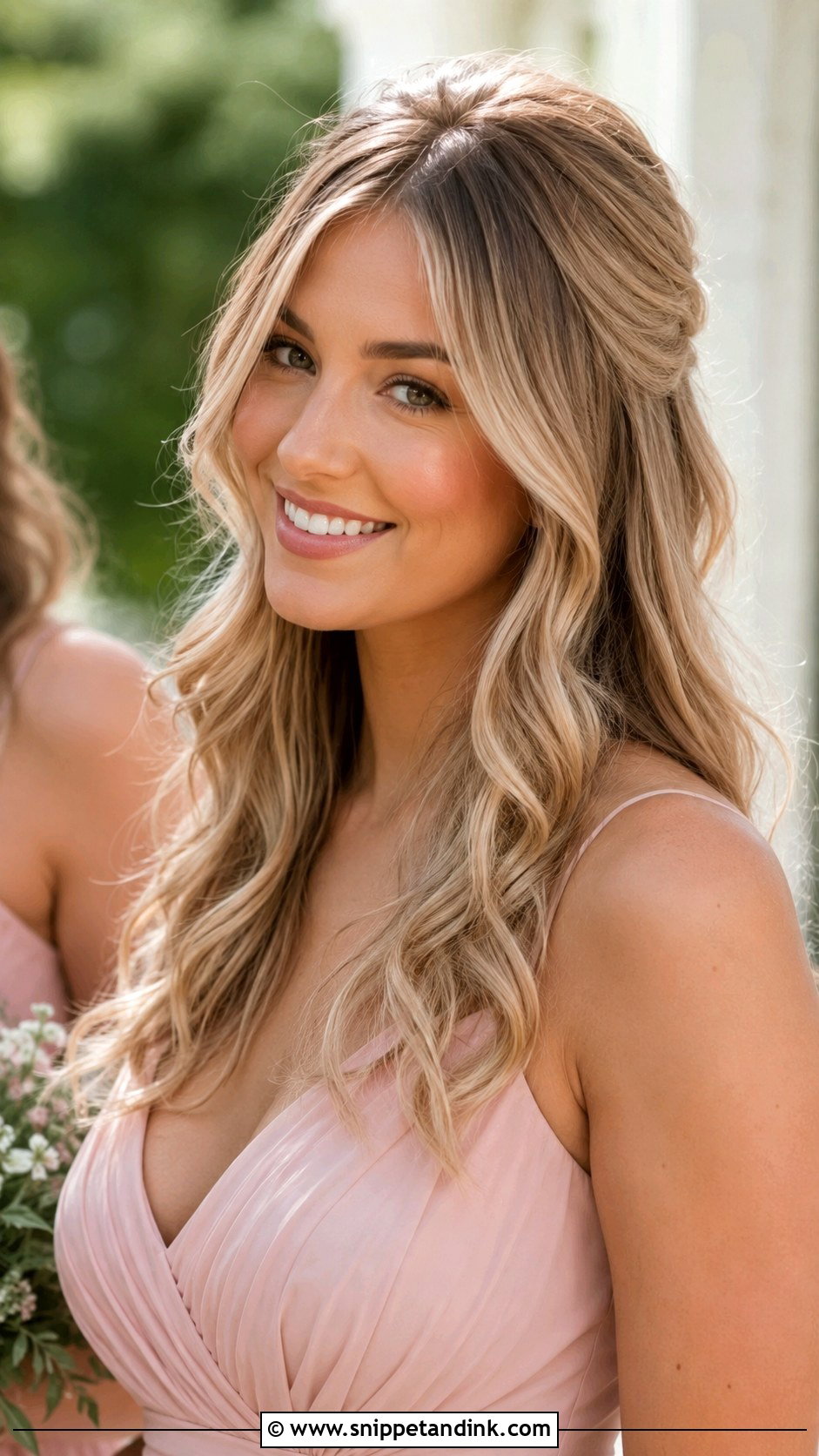
Long layers show off movement best when the curl reveals each length instead of blending them all into one. The shortest pieces frame the face; the longer ones shape the back. On thick hair, layers take out weight so curls don’t drag straight by lunchtime. On fine hair, soft long layers fake fullness. I keep the surface glossy rather than heavily textured, so the style still looks finished up close.
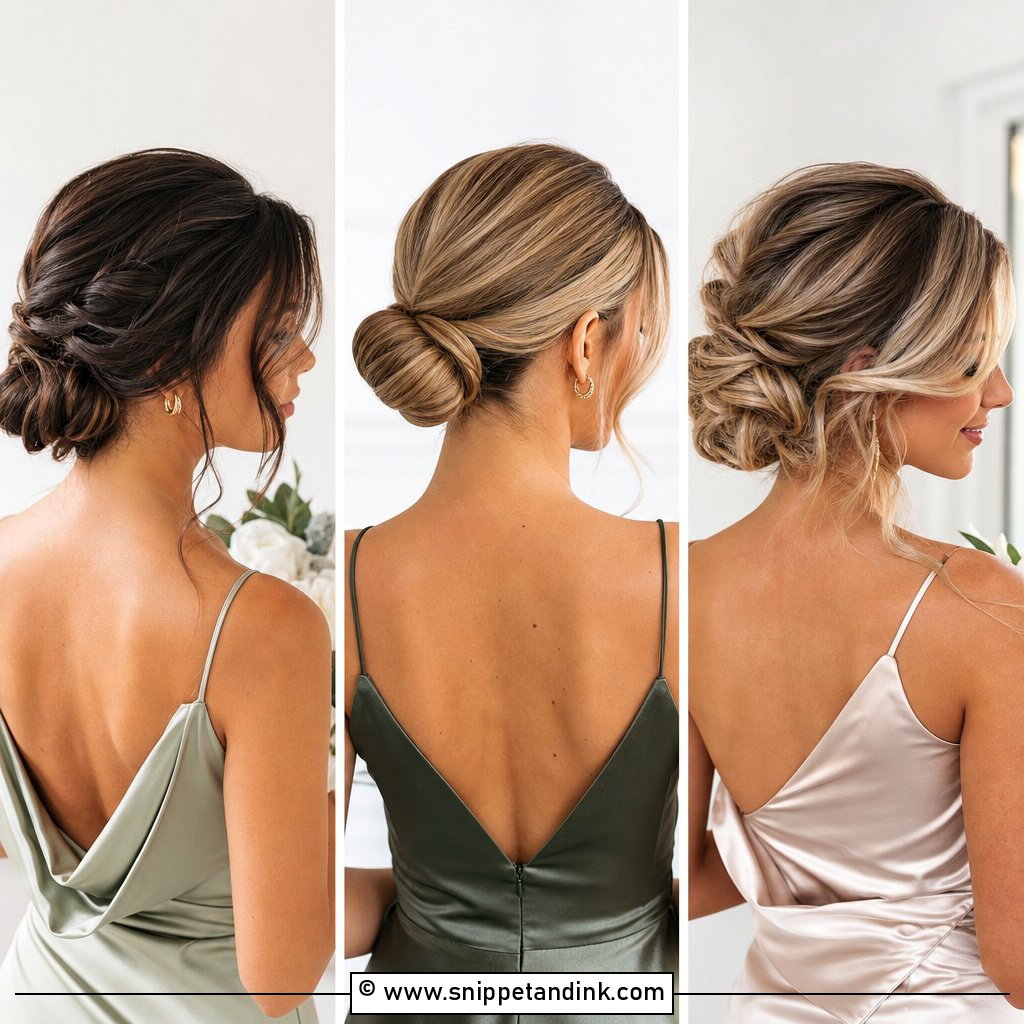
20. Bridesmaid Hair Down With One Side Pinned Back
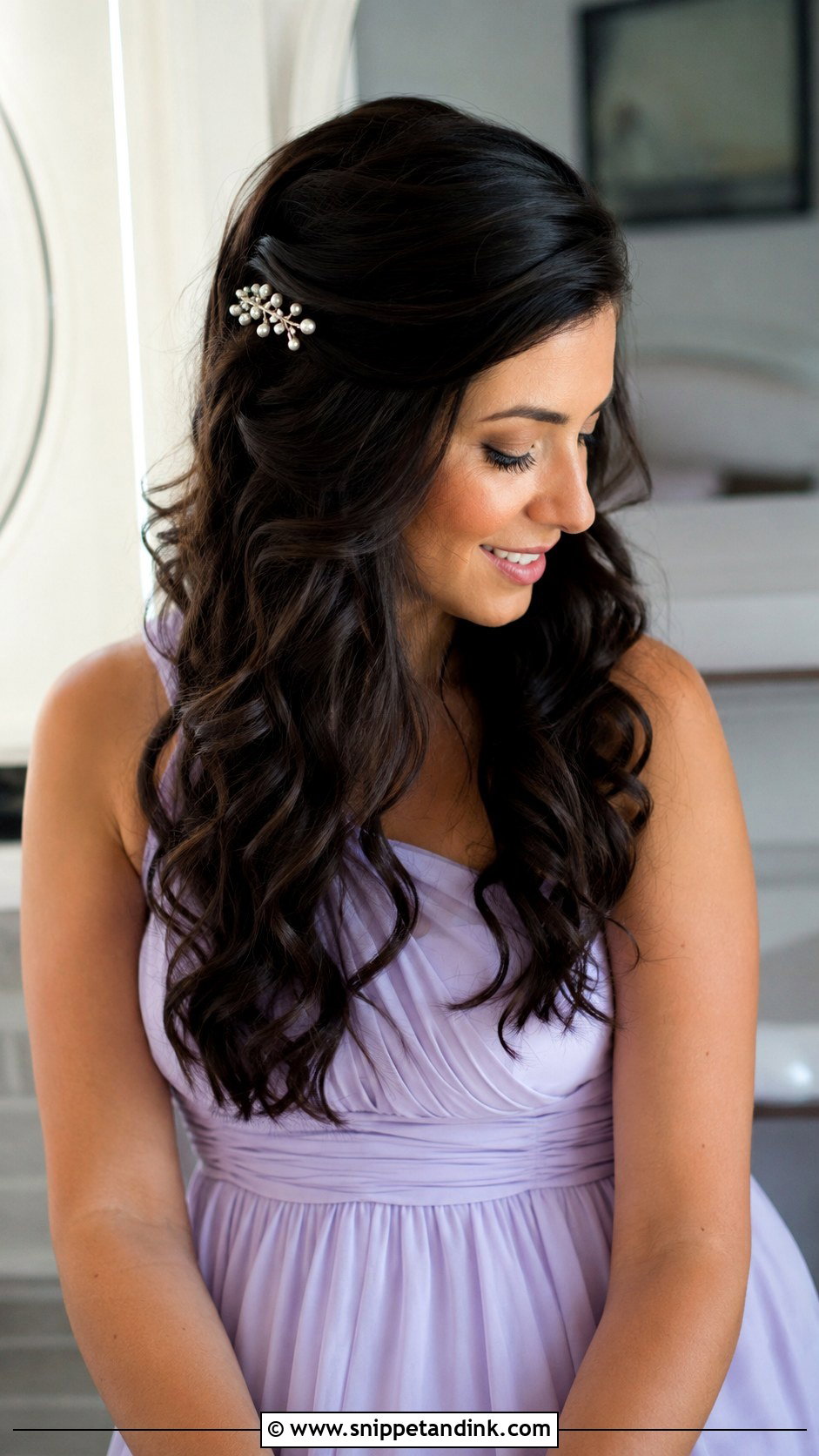
Pinning one side back is the practical answer to a windy ceremony. Most of the length stays loose, but the front can’t blow across the face during the vows. I secure the pinned side with crossed bobby pins first and only then add the decorative clip or comb on top, since a decorative piece alone rarely holds hair against wind. Curl the loose side away from the face for balance. It’s comfortable to wear and easy to fix in a restroom mirror later.
What Goes in a Bridesmaid’s Clutch for Afternoon Touch-Ups
Nobody needs a full kit, and a stylist usually isn’t staying past the ceremony. A few small things handle almost every problem I’ve seen loose hair run into after I leave.
- Four or five bobby pins in the hair color, for a front piece that falls or a clip that loosens.
- A travel-size flexible hairspray, sprayed onto the palm and pressed over flyaways rather than misted onto the whole head.
- Blotting papers, which also take the shine off a greasy fringe in a pinch.
- A small claw clip for dinner, so long hair stays out of the plate and comes out with the bend still in it.
If curls have dropped completely, twist the section around a finger, pin it flat for ten minutes during speeches and release it before the dancing starts. It won’t look freshly curled, but it brings the shape back enough for evening photos.
Agree on One Wave, Then Let Each Bridesmaid Adjust It
Hair worn down can look every bit as finished as an updo when the set, the products and the timing are planned. For a cohesive group, I suggest the bride choose one direction, such as waves or curls, and then let each bridesmaid change her part, accessory or front pieces to suit her face and texture. That keeps the photos consistent while nobody feels styled into someone else’s hair.
You'll Like These Ideas:


Leave a Reply