
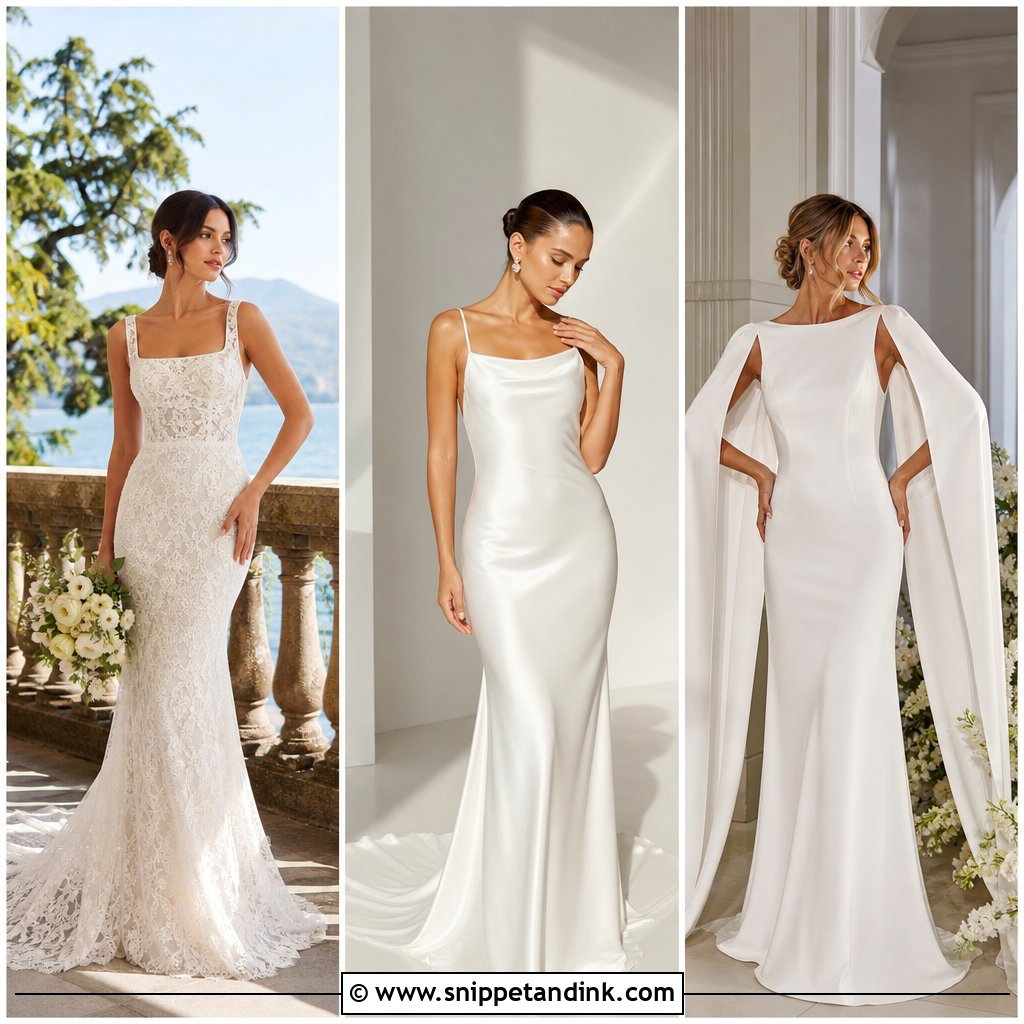
The old money look in bridal is mostly about what’s left off. Silk mikado, satin, crepe, fine lace, a bateau neck, a few pearls and a long plain veil: none of it is new, and that is the point. When I dress a bride in this style, I’m thinking about how the photos will look to her grandchildren, not how the dress will look on a feed next month. It suits an estate lawn, a ballroom and a registry office equally, as long as the fit is exact. The thirty gowns below run from a Grace Kelly-inspired lace gown to a bias-cut slip and a modern structured ball gown, with my notes on what each one needs to work.
What Separates an Expensive-Looking Gown From an Expensive Price Tag
The old money look depends on quality you can see from a metre away. A price tag doesn’t guarantee that, and a modest budget doesn’t rule it out. At an appointment, I check four things before I ever think about style.
Fabric weight and hand
Hold a fold of the skirt and let it drop. Good satin and crepe fall straight with weight; thin fabric floats and wrinkles. Rub it lightly between finger and thumb. Polyester satin has a glassy, slippery shine, while silk or a good blend has a softer glow.
Seams, lining and finishing
Turn the dress inside out if the shop allows it. Seams should lie flat, the lining should be smooth and fully attached, and lace should be matched across seams rather than cut off mid-motif. Covered buttons should have real loops, even if a hidden zip does the work underneath.
How it behaves in movement
Walk, sit and lift your arms. A well-built bodice stays where it is; a poorly built one creeps up or gapes at the back. That movement test tells me more about how a gown will photograph across a long day than any amount of standing in front of a mirror.
1. Old Money Satin Ball Gown
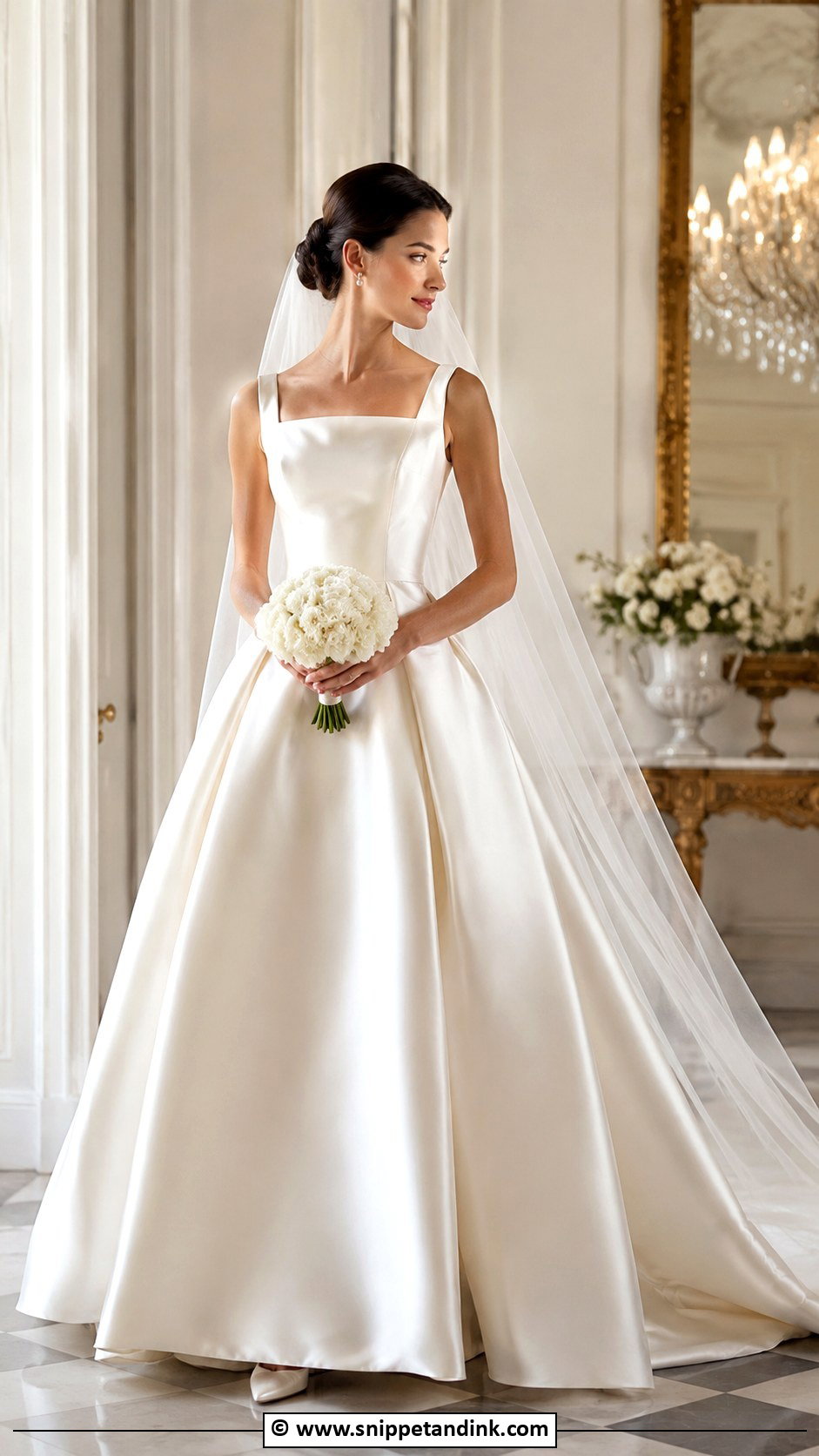
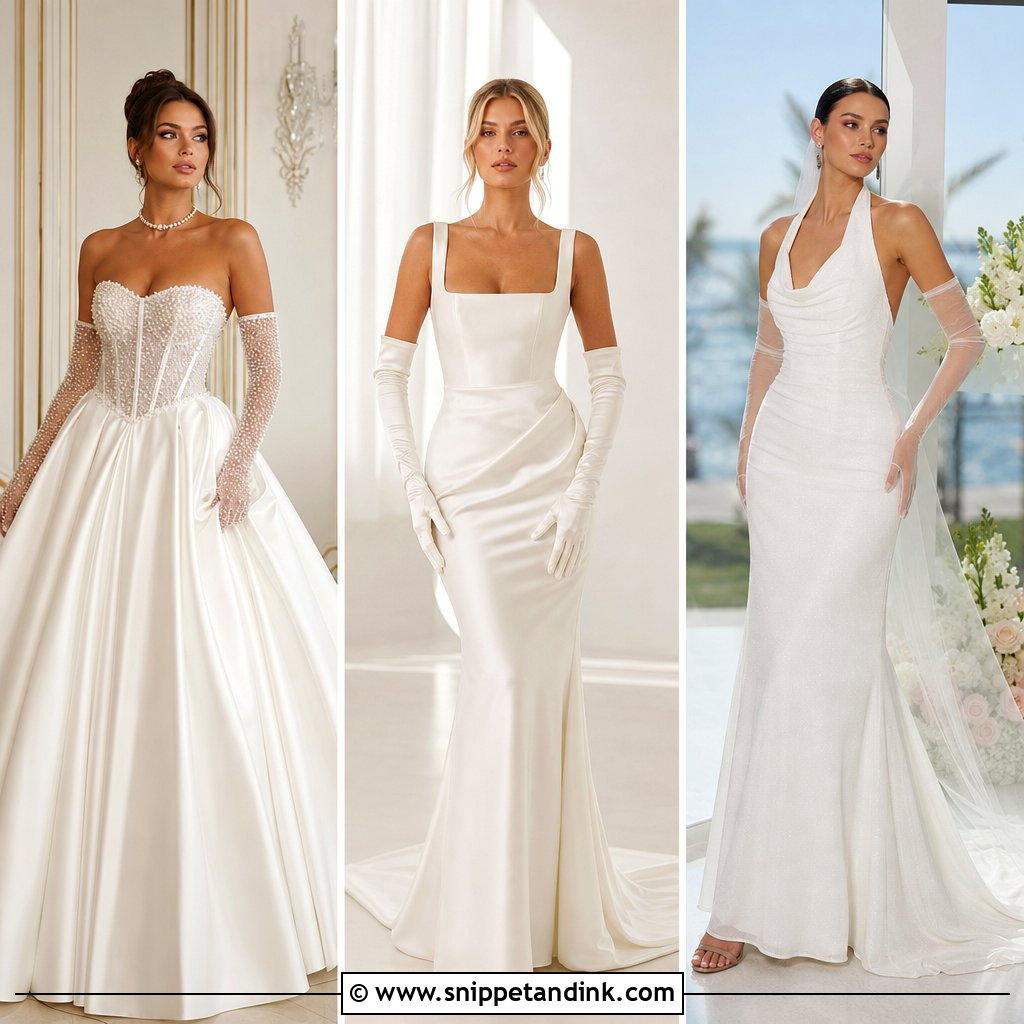
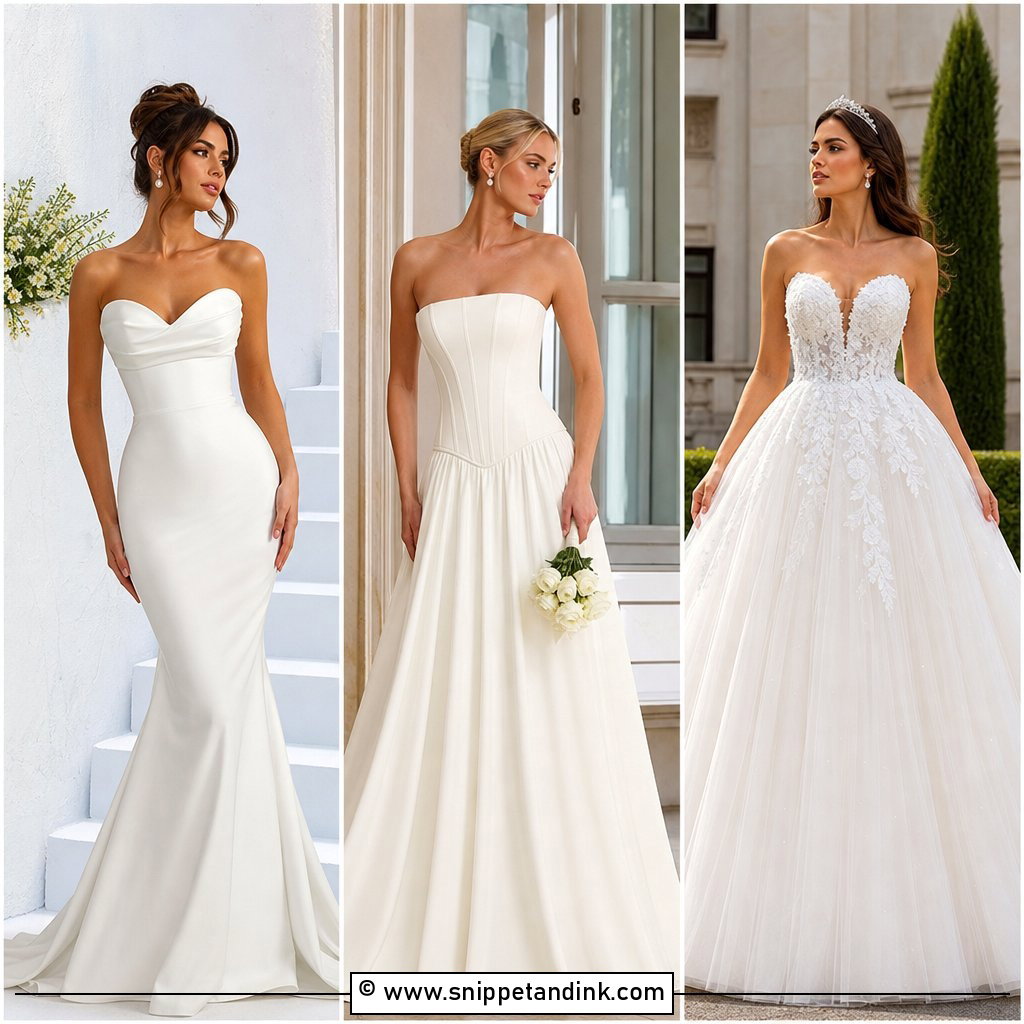
A satin ball gown gets its presence from the fabric, not from sparkle. I look for a structured bodice at the natural waist and a neckline with no fuss: strapless, square or bateau. The veil should be long, sheer and plain. Gloves and pointed satin pumps finish it, but add them one at a time in the mirror, because the line between heirloom and costume is thinner than people expect. Grand rooms and evening receptions suit the scale.
2. Old Money Long Sleeve Lace Wedding Dress
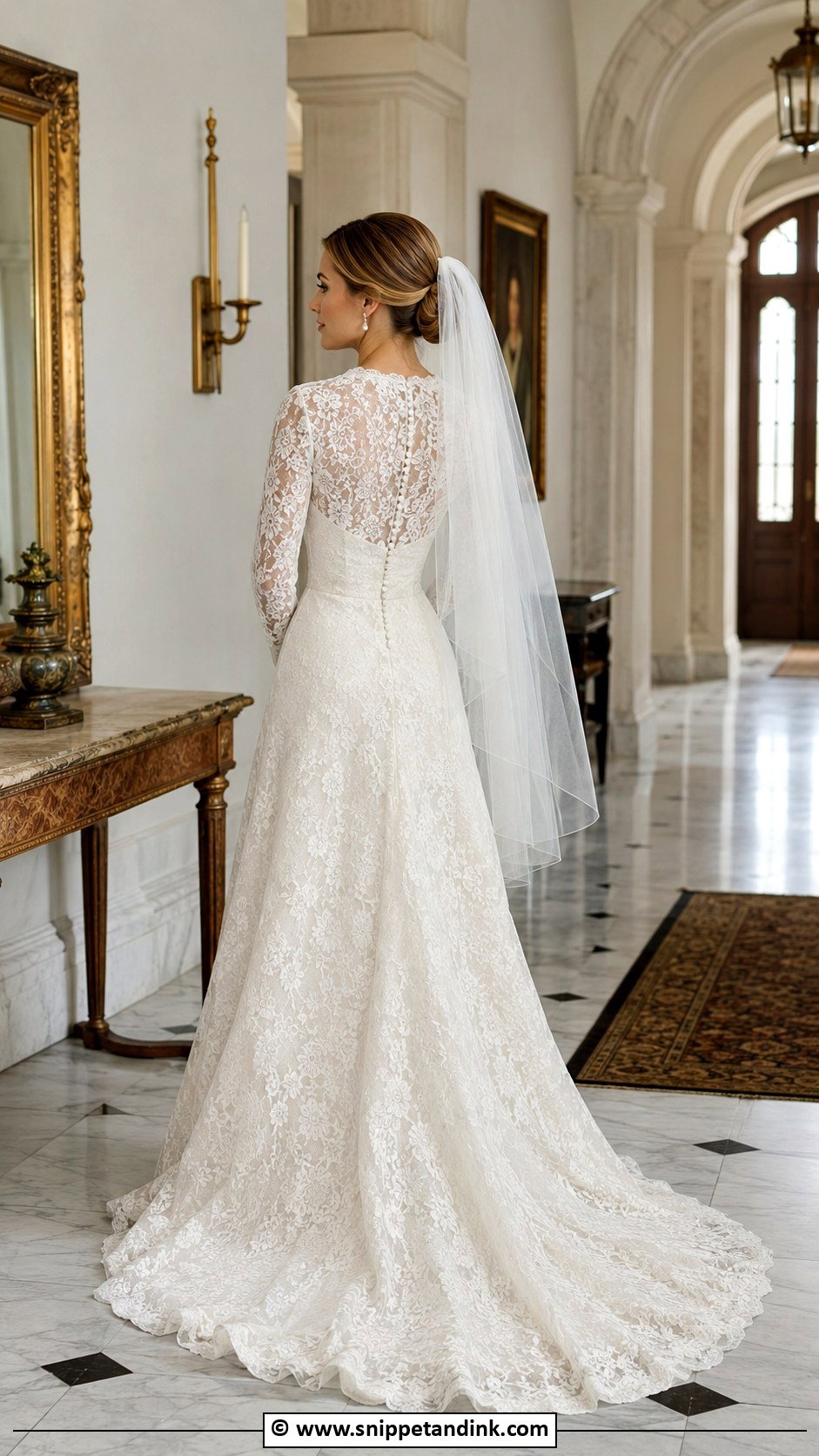
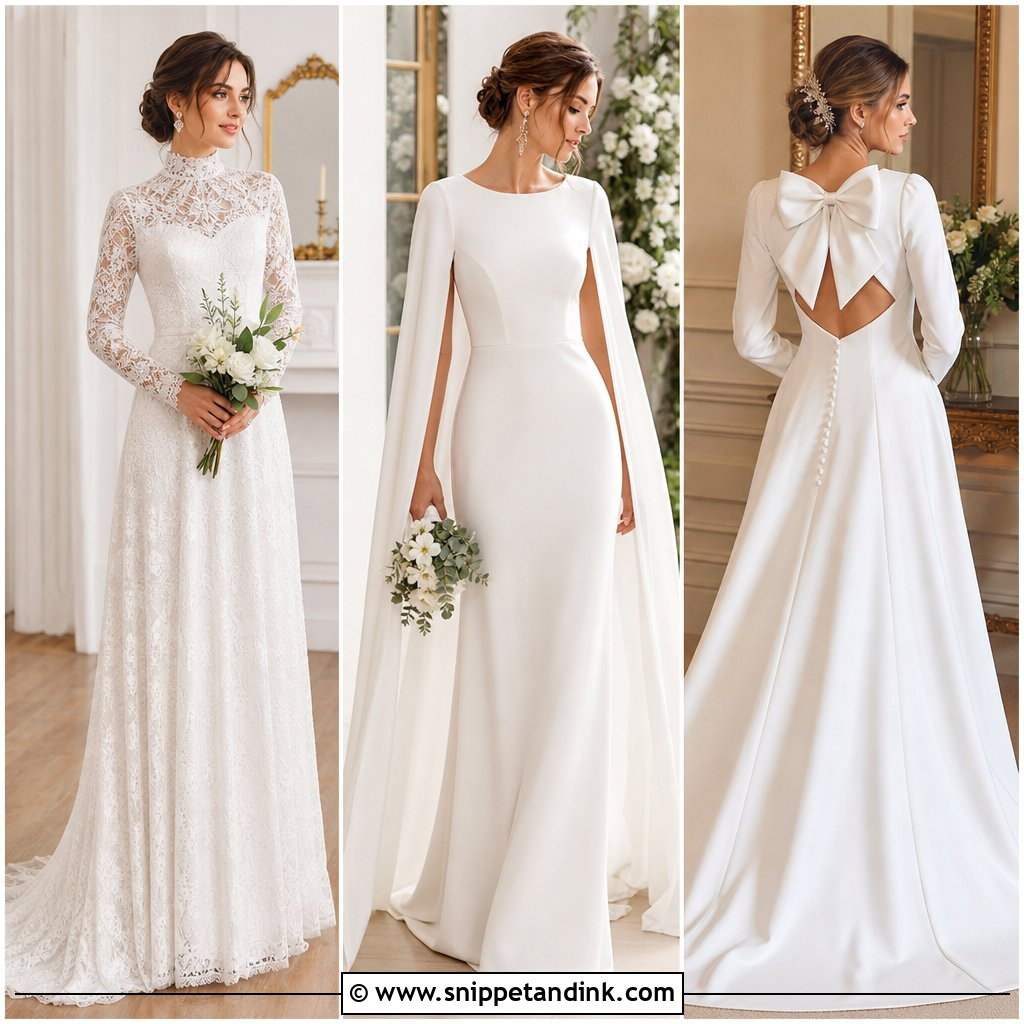
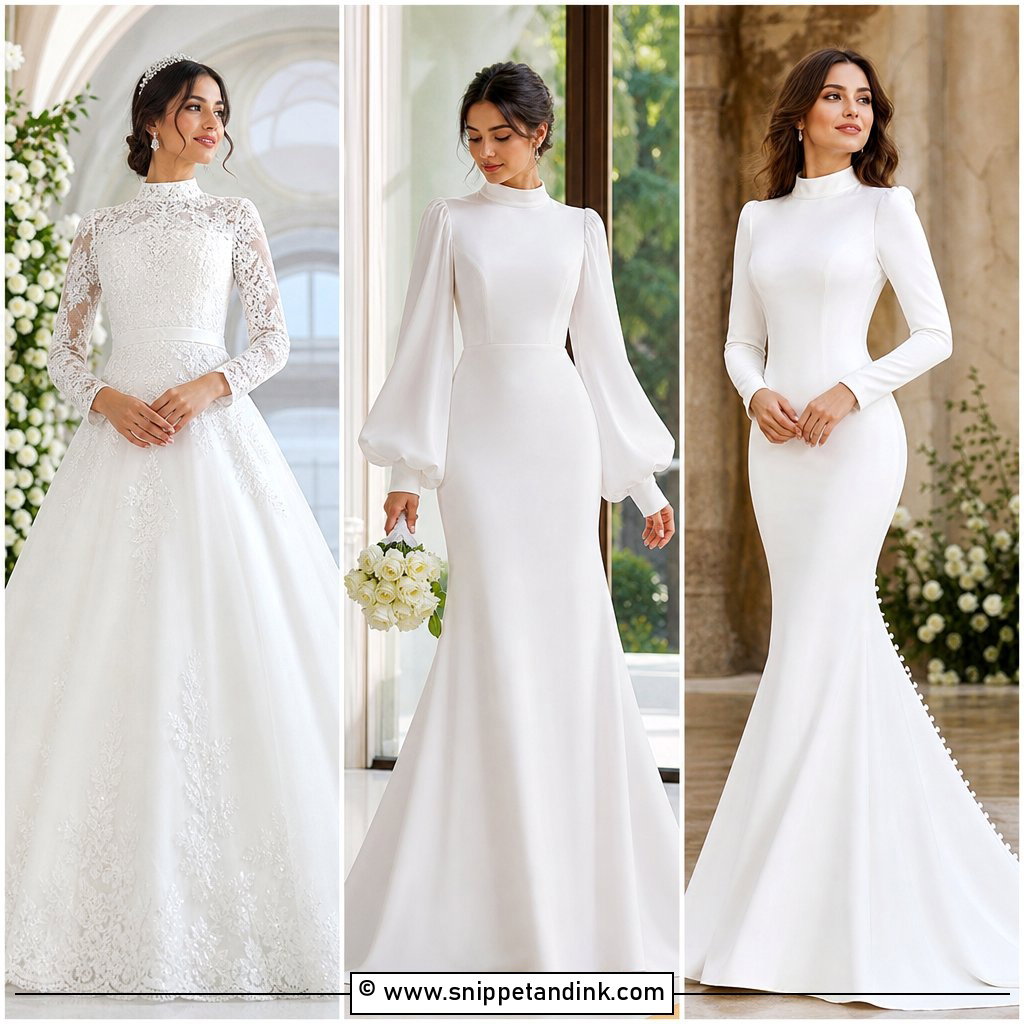
Fine lace is the difference between this looking inherited and looking bought last week. Large, heavy motifs read as costume from across a room; a delicate Chantilly-style lace reads as quality up close. I pair it with a soft A-line and covered buttons down the back. High and bateau necklines both suit it. Check how the sleeve lace meets the bodice at the shoulder, since a badly matched seam there is the first thing a photographer’s lens picks up.
3. Old Money Silk Slip Wedding Dress
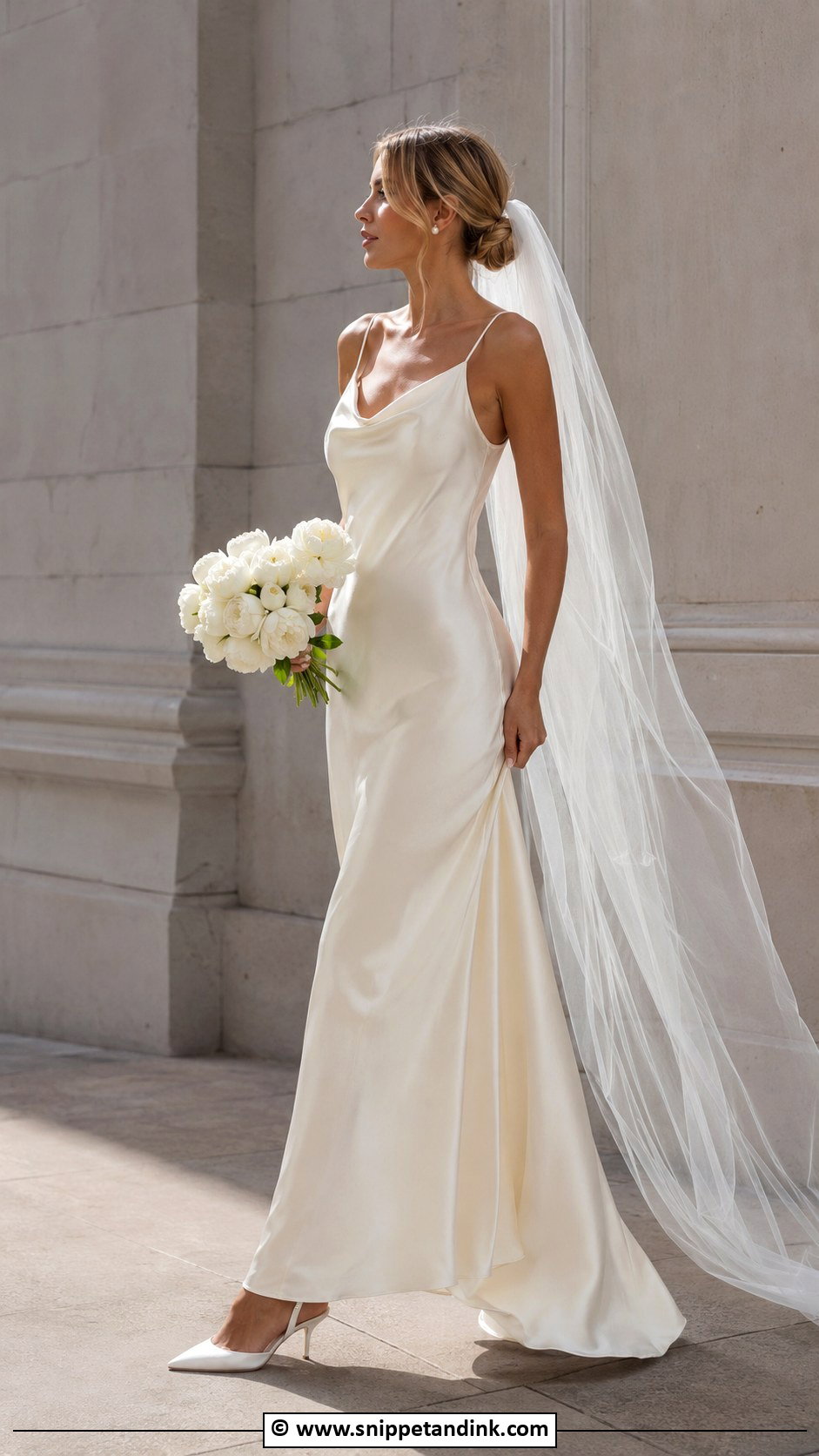
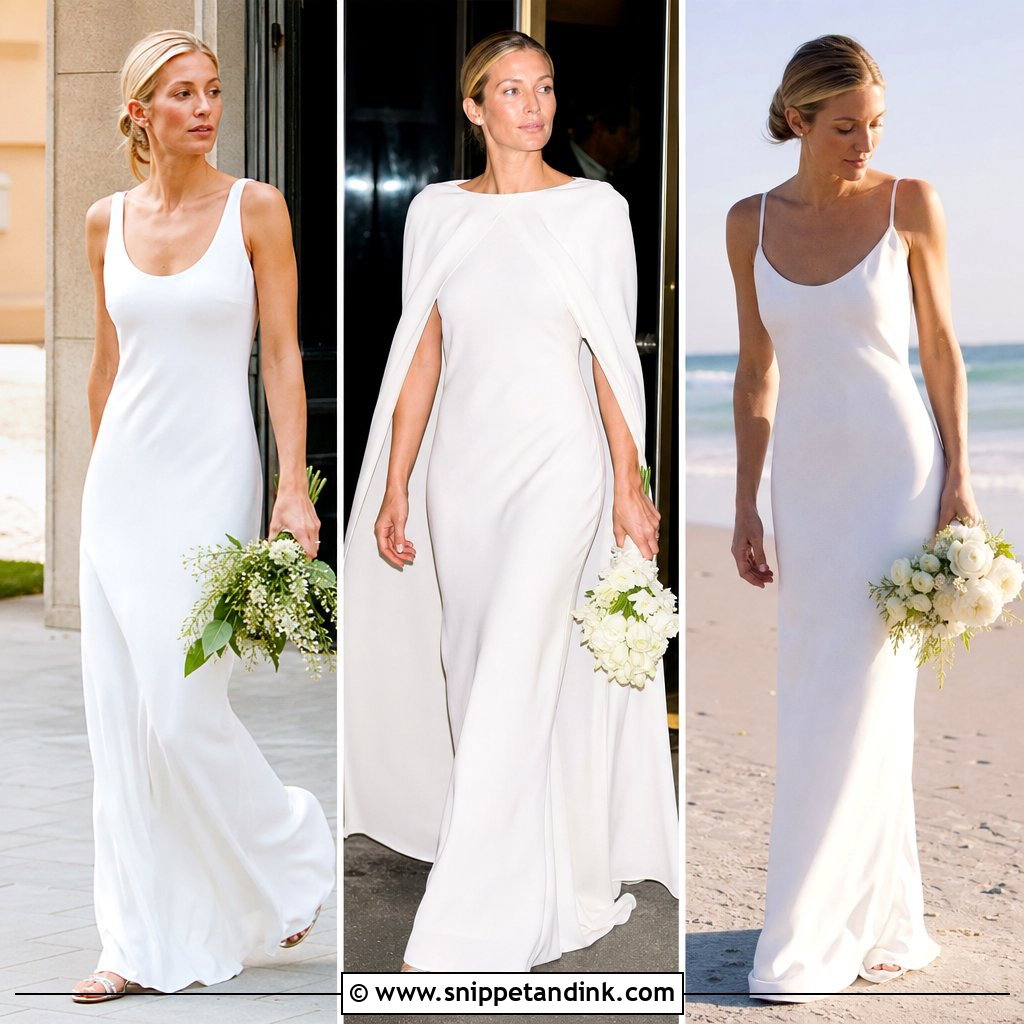
A silk slip has nowhere to hide, so the fabric and the fit carry everything. The bias cut should skim, not cling, and that depends on the silk being heavy enough. Thin, cheap satin shows every seam and line underneath. I’d pair it with a long sheer veil, small diamond studs and pointed slingbacks, plus a low chignon or soft waves. In a city or a summer estate garden, it looks expensive precisely because there’s so little of it.
4. Old Money Off Shoulder Wedding Dress
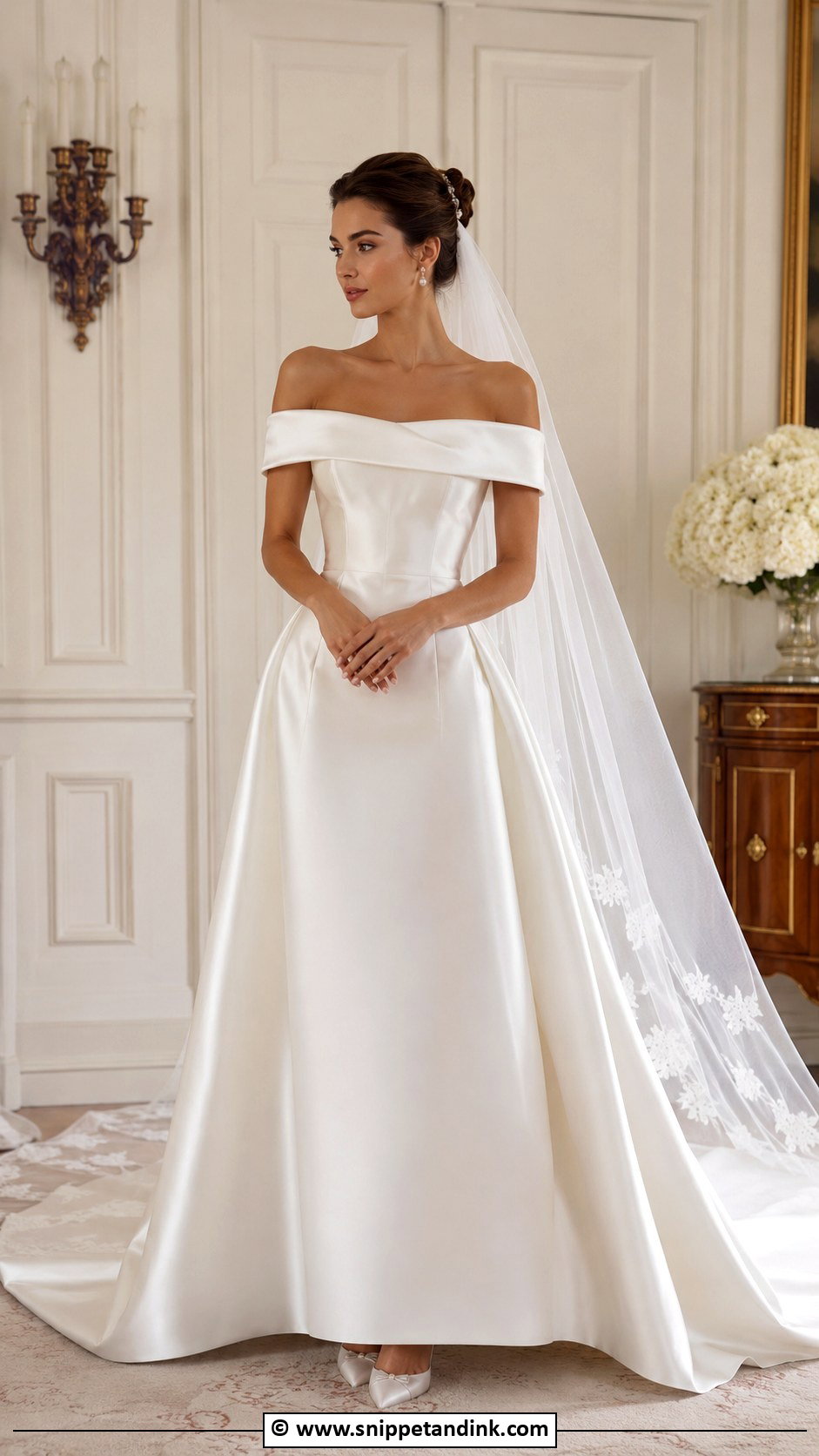
Folded off shoulder necklines sit across the upper arm and frame the collarbone. For the old money version I choose structured satin, mikado or crepe, so the fold keeps its crease all day instead of drooping. No cutouts, no heavy beading. Posture matters more with this neckline than any other; it shows if you round your shoulders. A cathedral veil and satin pumps keep it formal.
5. Old Money Bateau Neck Wedding Dress
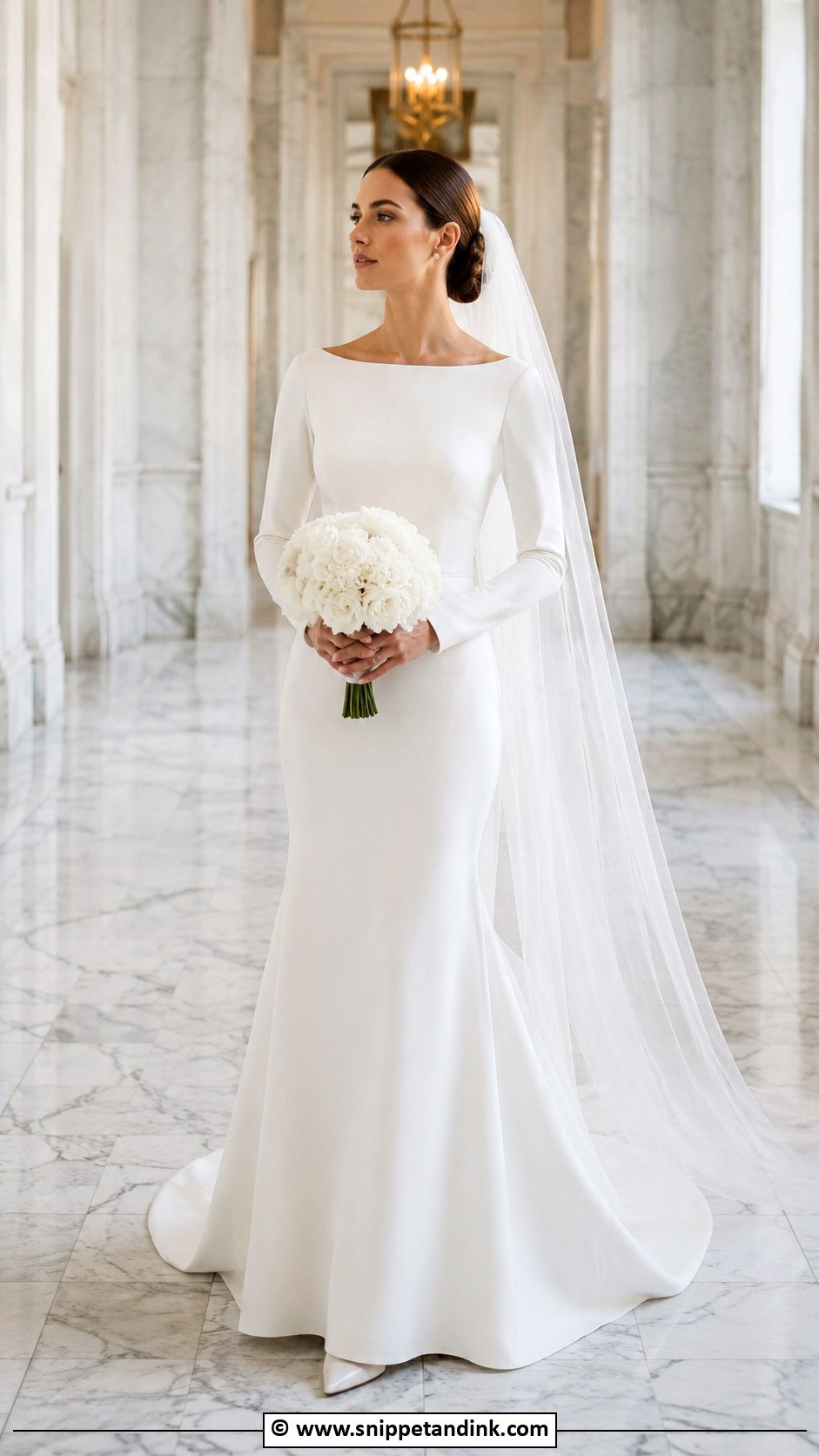
The bateau line runs high and wide from shoulder to shoulder, almost straight across the collarbone. It’s the neckline I associate most with this style, and it looks its best in crepe, satin or mikado that can hold a firm edge. Skip the necklace; pearl or small diamond studs are enough. It takes long sleeves, cap sleeves or no sleeves at all. Brides who want modest coverage without a high collar tend to settle on this one.
6. Old Money Square Neck Wedding Dress
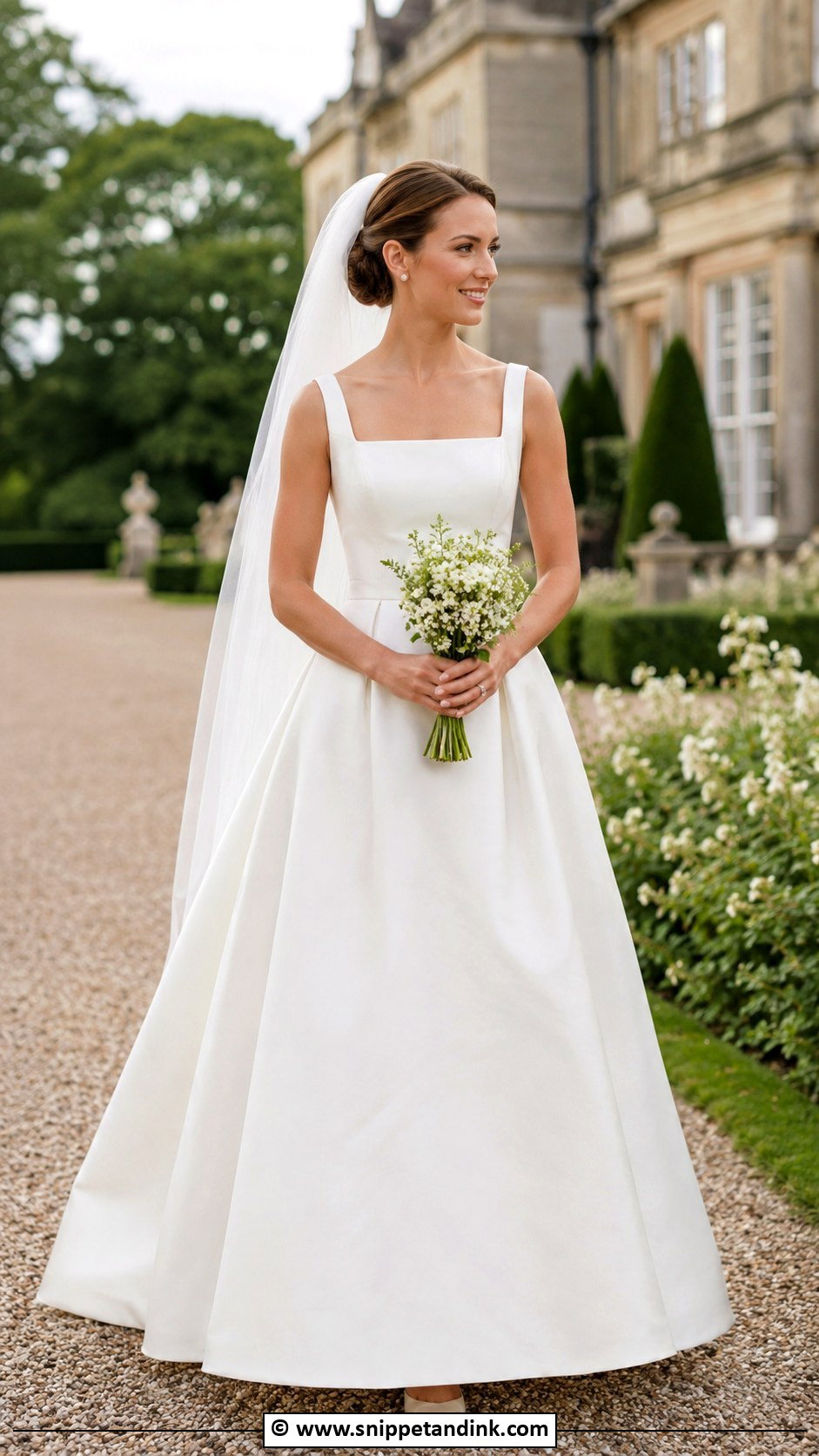
A square neck frames the shoulders cleanly and pairs naturally with a structured bodice. Satin, crepe and mikado keep it smooth. With a full A-line skirt it turns formal; with a slimmer skirt it’s more modern. If the ceremony needs covered arms, detachable sleeves or a simple shawl solve it without changing the dress. The straight line suits a wide range of figures because it adds shape across the chest.
7. Old Money Crepe Column Wedding Dress
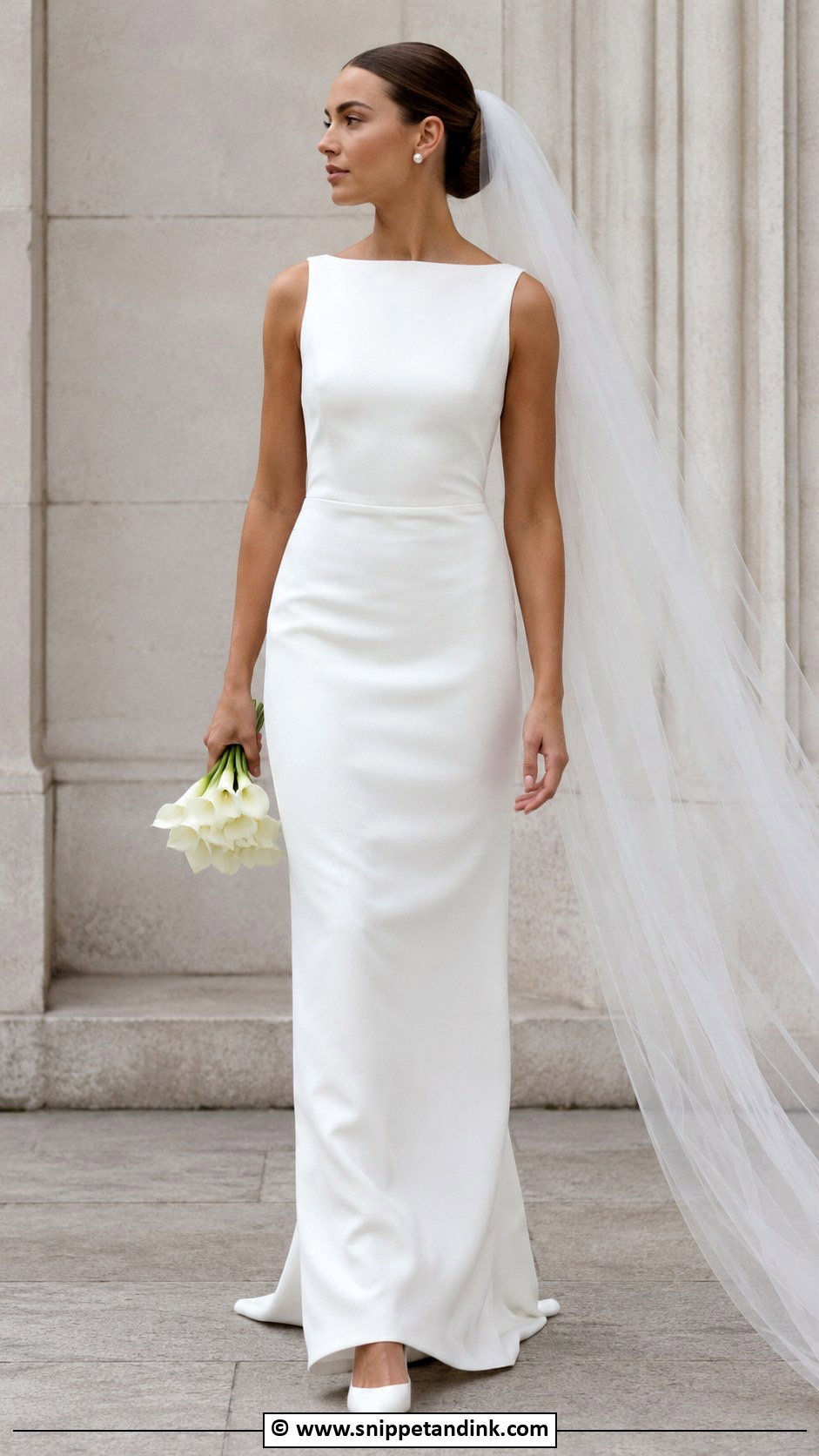
Column gowns in crepe are where tailoring earns its money. The fabric is weighty and matte, so the line falls straight, but any pull at the hip or bust shows immediately. I’d look for a strong shoulder or a bateau, square or soft scoop neck. A low back can work if the front stays plain. My usual advice: budget for two or three fittings, not one, because a column is only as good as its last fitting.
8. Old Money High Neck Wedding Dress
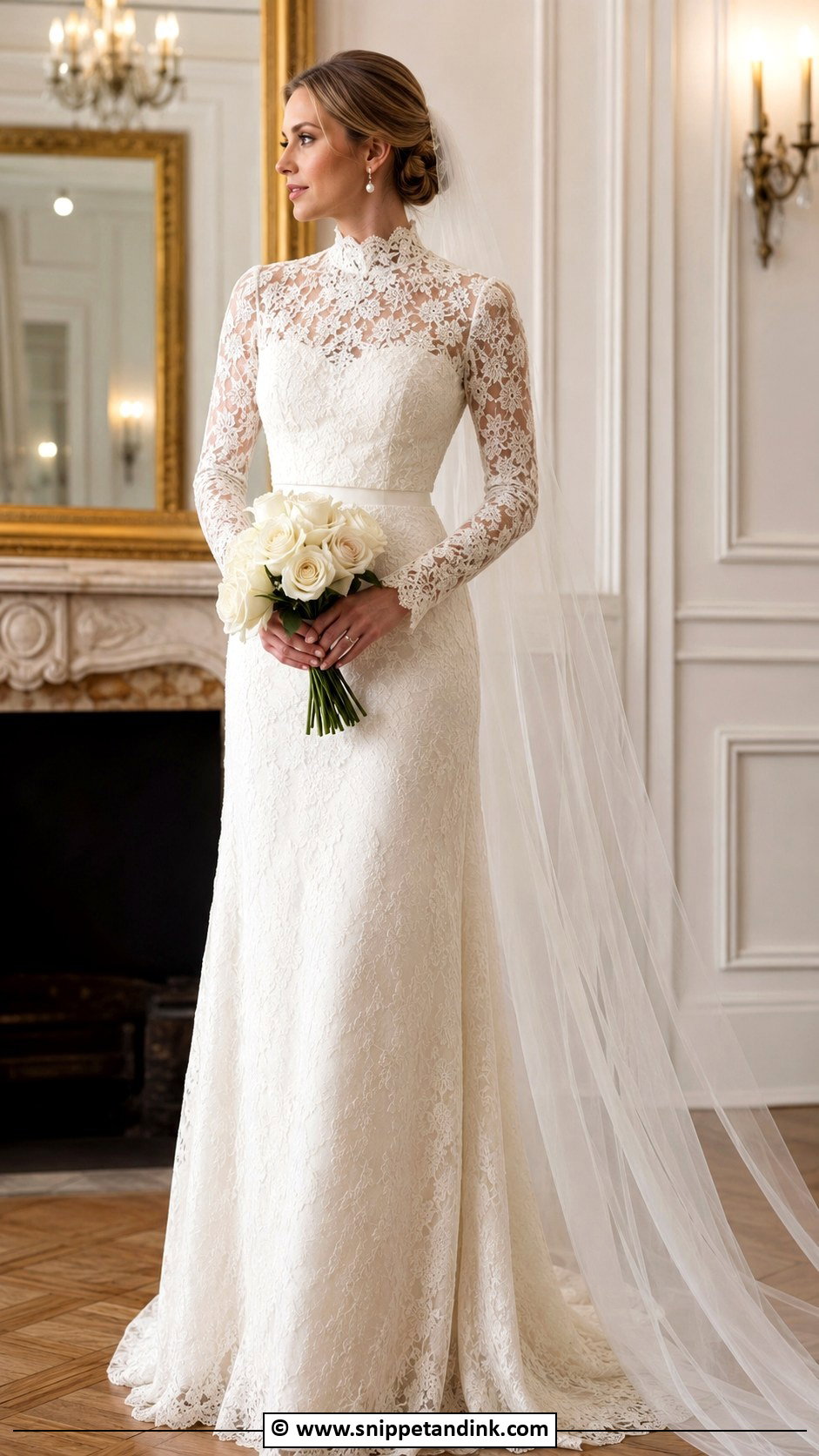
High necks bring a formal, slightly aristocratic air. In lace they read romantic; in crepe they read sharp and modern. Balance the coverage with a fitted waist so the dress doesn’t look boxy. I always check the collar sits flat when the bride turns her head, since a stiff collar that rides up looks uncomfortable in every candid photo. Pearl studs, a neat bun and a long veil are plenty.
9. Old Money Drop Waist Wedding Dress
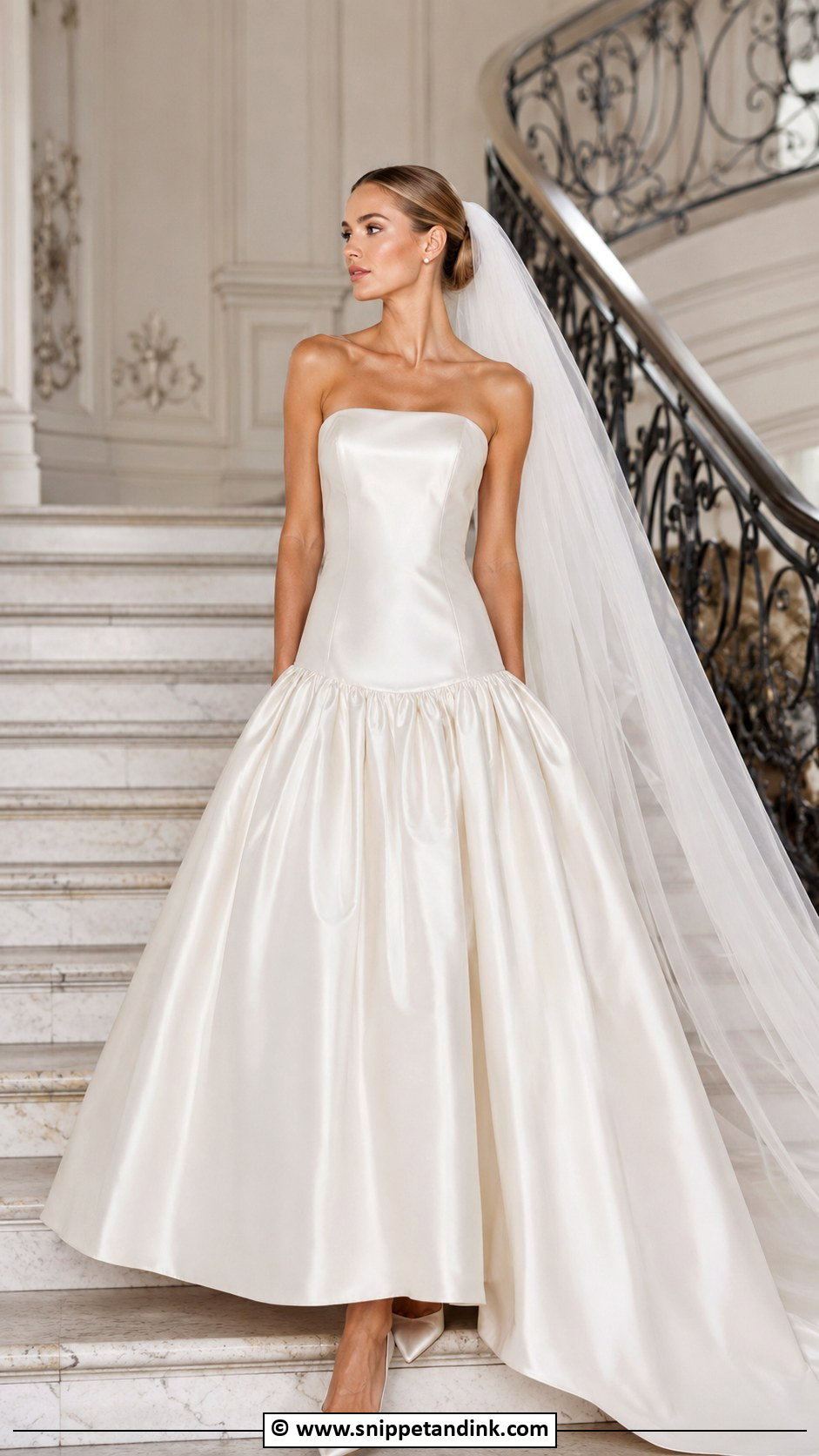
A drop waist wedding dress carries the bodice below the natural waist before the skirt opens, which gives a long, lean line. Satin, taffeta and silk mikado hold it crisply. Strapless or bateau necklines keep the top clean. The honest warning: it lengthens the torso visually, so on a petite bride with a short torso I try a natural waist alongside it before deciding.
10. Old Money Basque Waist Wedding Dress
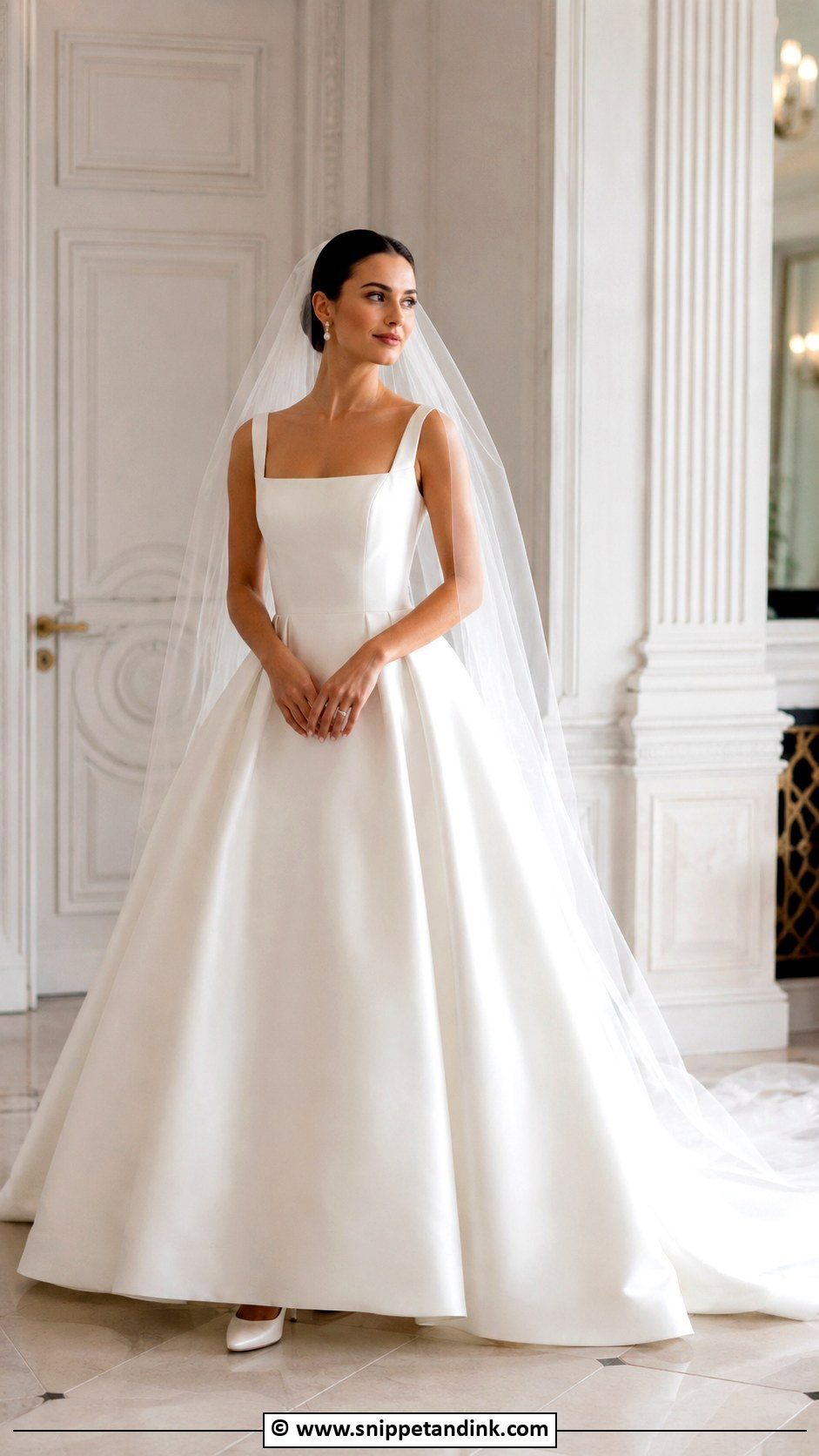
Basque waists dip into a gentle point at centre front, which gives the bodice a regal shape without any decoration. Satin, mikado and fine lace suit it, over a full or softly gathered skirt. Strapless, square and off shoulder necklines all pair well. I keep the bodice structured but plain. The point must sit exactly on the centre line, so I check it with the bride seated and standing.
11. Old Money A Line Wedding Dress
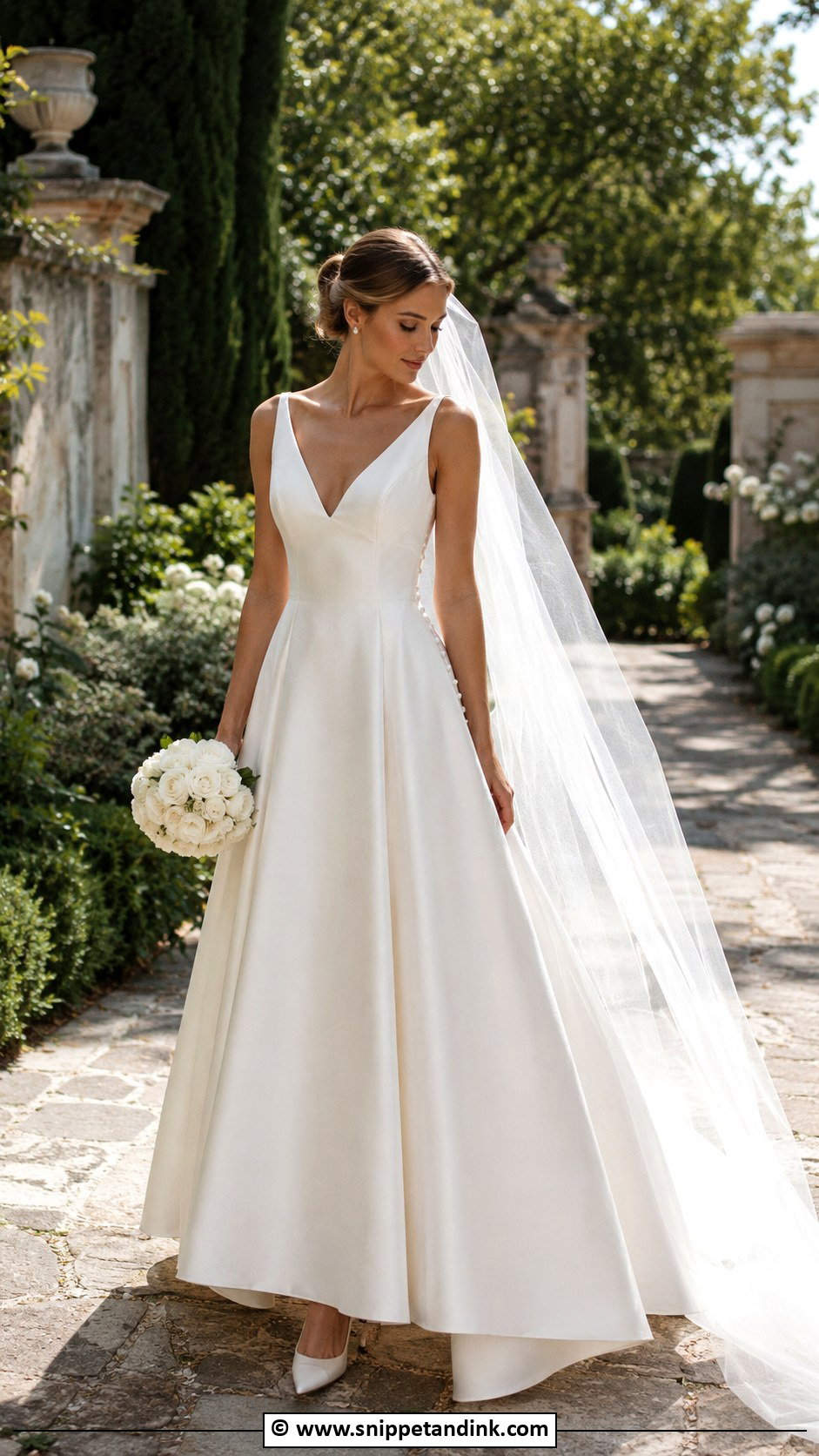
An A-line flatters more figures than any other shape I put brides in, which is why it’s so often where we end up. Satin, crepe, lace and mikado all work. A square neck, bateau or soft V keeps it clean. covered buttons or a small bow at the waist add polish without fuss. It’s comfortable for long days, from garden ceremonies to family estate receptions.
12. Old Money Mikado Wedding Dress
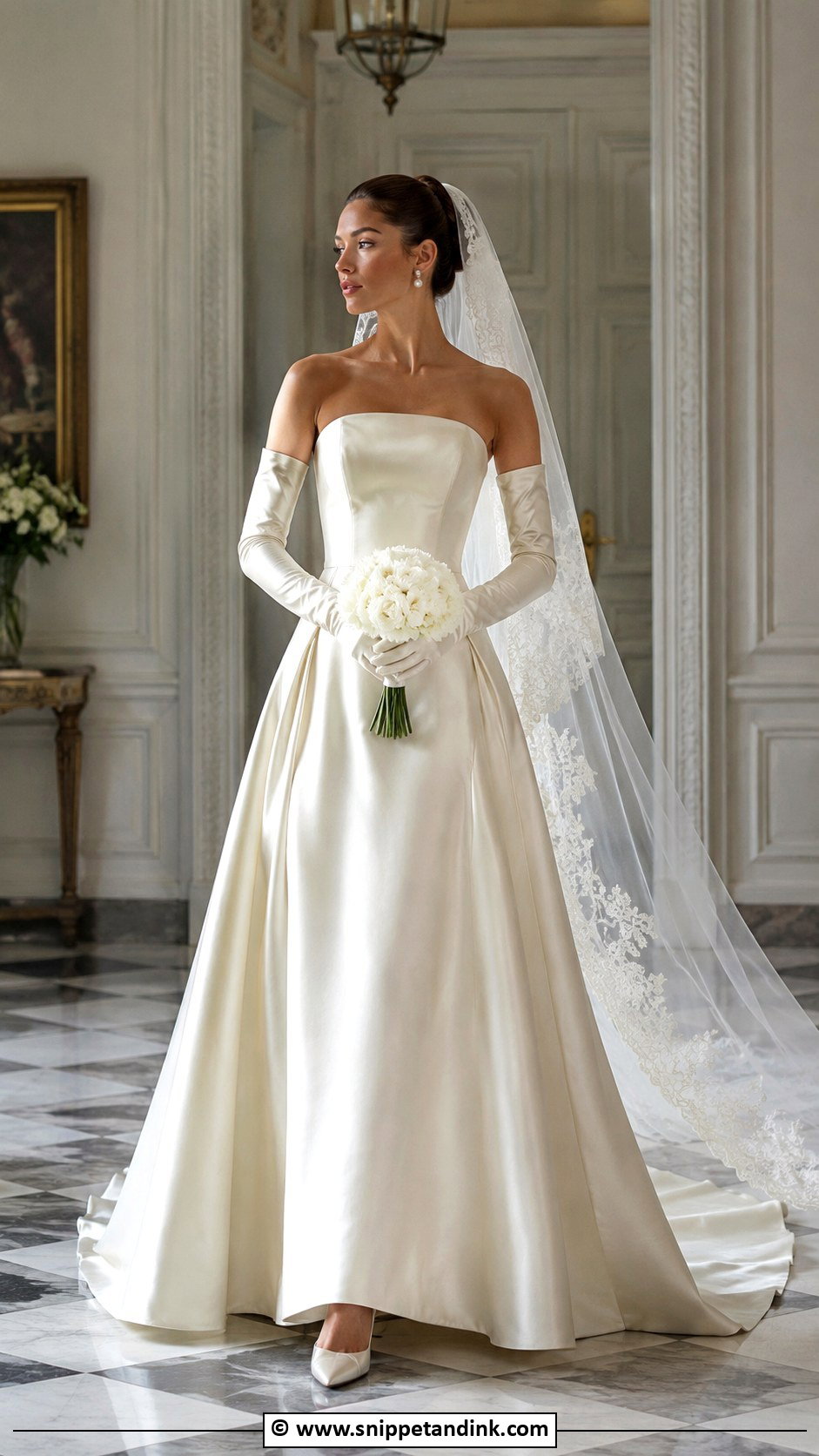
Mikado is a heavy silk blend with a subtle sheen and real body, so it holds a sculpted bodice and a ball gown skirt without layers of netting underneath. That structure is what makes it look grand. It also resists creasing better than plain satin. Keep accessories quiet; a long veil, pearl earrings and a structured bouquet are enough. It’s warm to wear, though, so I’d think twice about it for a hot July garden.
13. Old Money Taffeta Wedding Dress
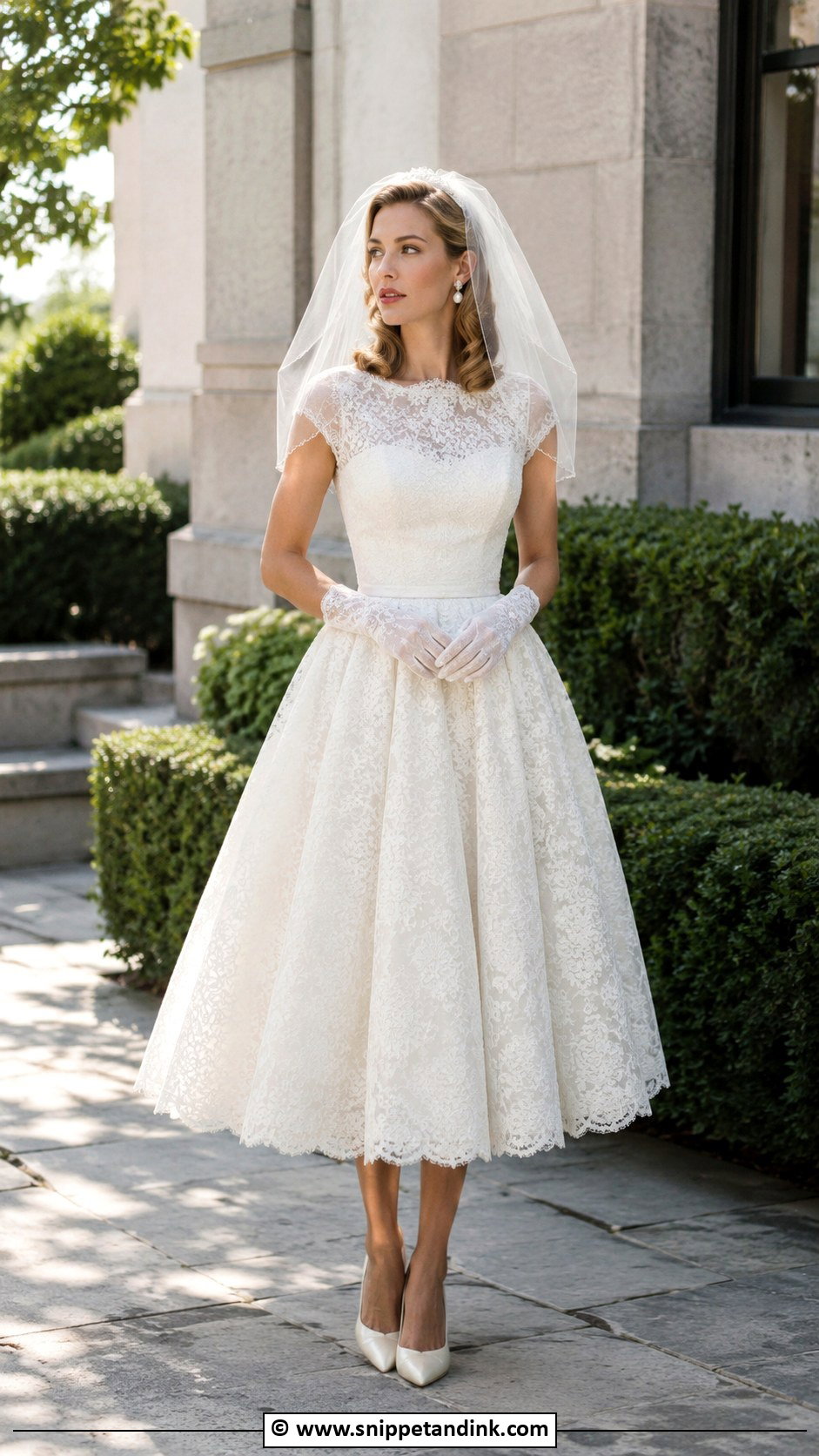
Taffeta rustles when you walk, and that crisp sound is part of its charm. It holds gathered waists and full skirts with a slightly nostalgic shape. Ivory or soft white, with minimal decoration, keeps it in the old money register. Strapless, off shoulder and bateau tops all suit it. Taffeta can mark if it’s crushed, so it needs hanging space on the way to the venue.
14. Old Money Pearl Detail Wedding Dress
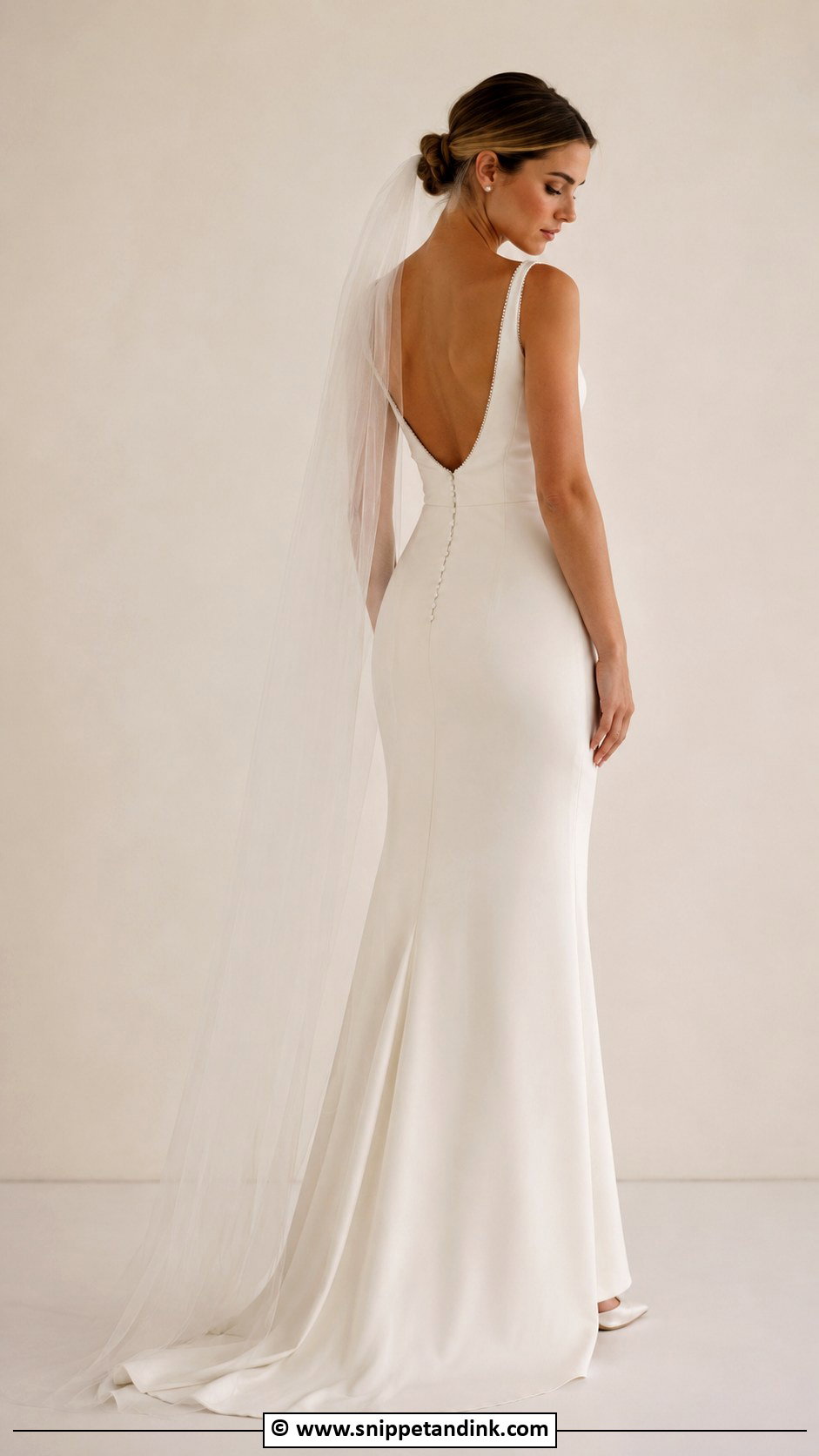
Pearls look old money when there are few of them. I’d place them along the neckline, at the cuffs, on the veil edge or as back buttons, never scattered everywhere. The base dress should be plain satin, crepe or fine lace. Wear matching pearl studs and leave the statement necklace at home. If you’re buying, ask whether the pearls are sewn or glued; glued ones fall off during the hugs.


15. Old Money Wedding Dress With Gloves
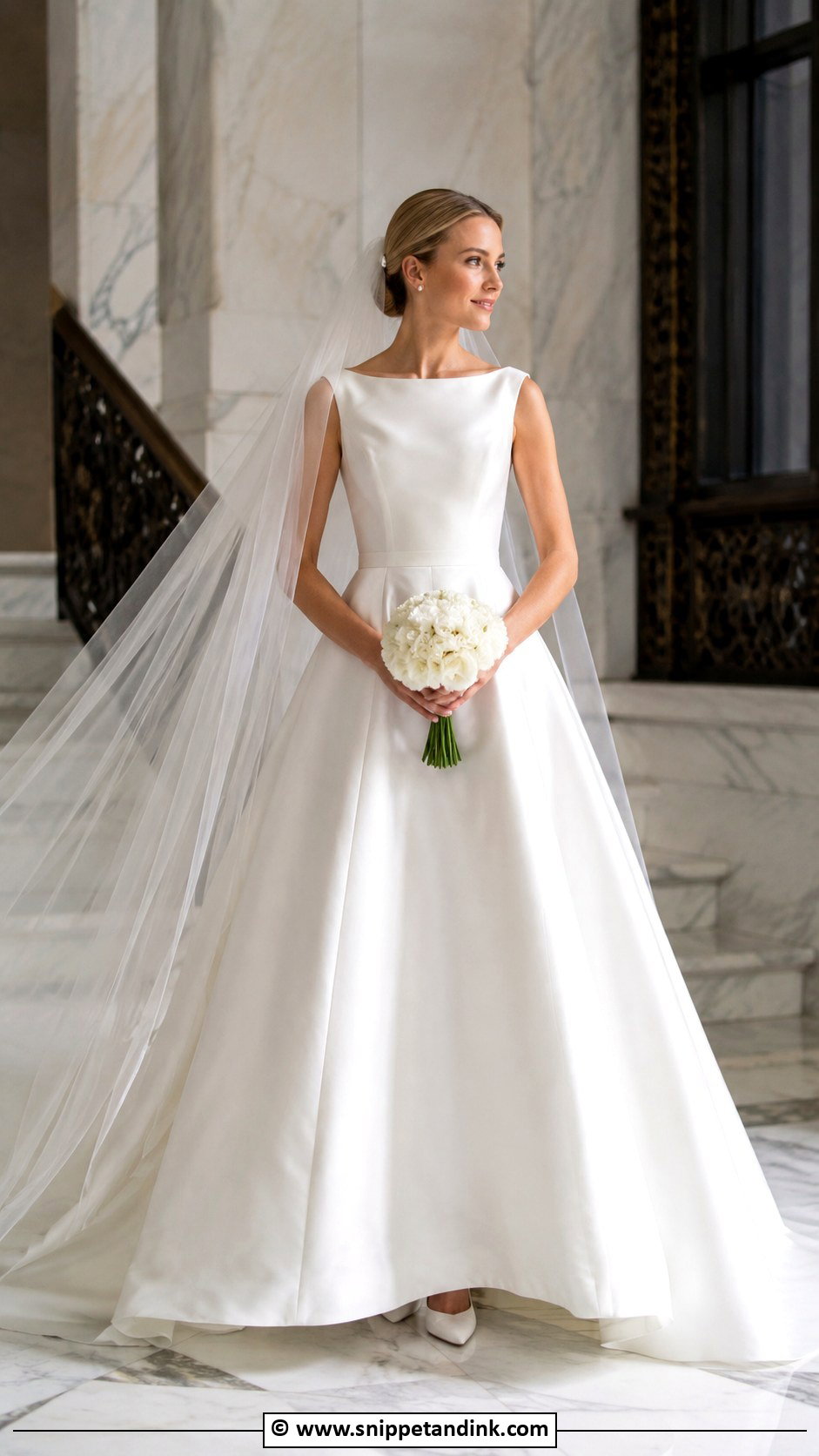
Gloves give that society-portrait feel, but only if they match the dress in tone and fabric. Long satin opera gloves suit strapless and off shoulder gowns; short wrist gloves suit tea length and simple A-lines. The practical part brides forget is the ring. Either wear gloves with a discreet slit at the ring finger, or plan to slip the left glove off and hand it to someone before the vows.
16. Old Money Wedding Dress With Cape
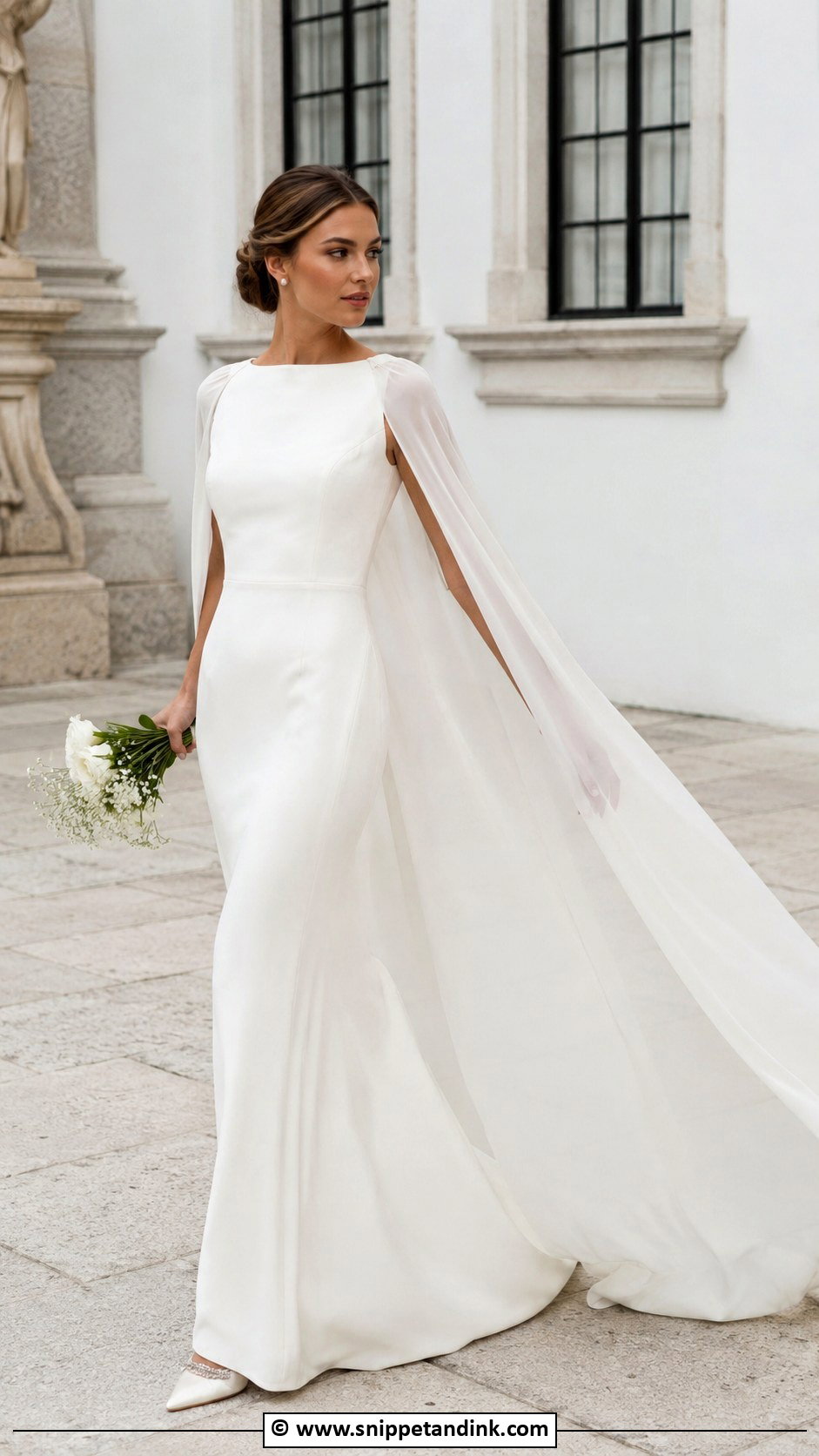
A cape attached at the shoulders gives a strong silhouette in photos and covers the arms during a church ceremony. A sheer tulle cape, a silk capelet or a clean crepe cape all work over a column, satin A-line or crepe dress. Let it replace a detailed veil rather than adding to it. I check how it hangs when the bride sits, because a long cape bunches under you at dinner.
17. Old Money Wedding Dress With Bow
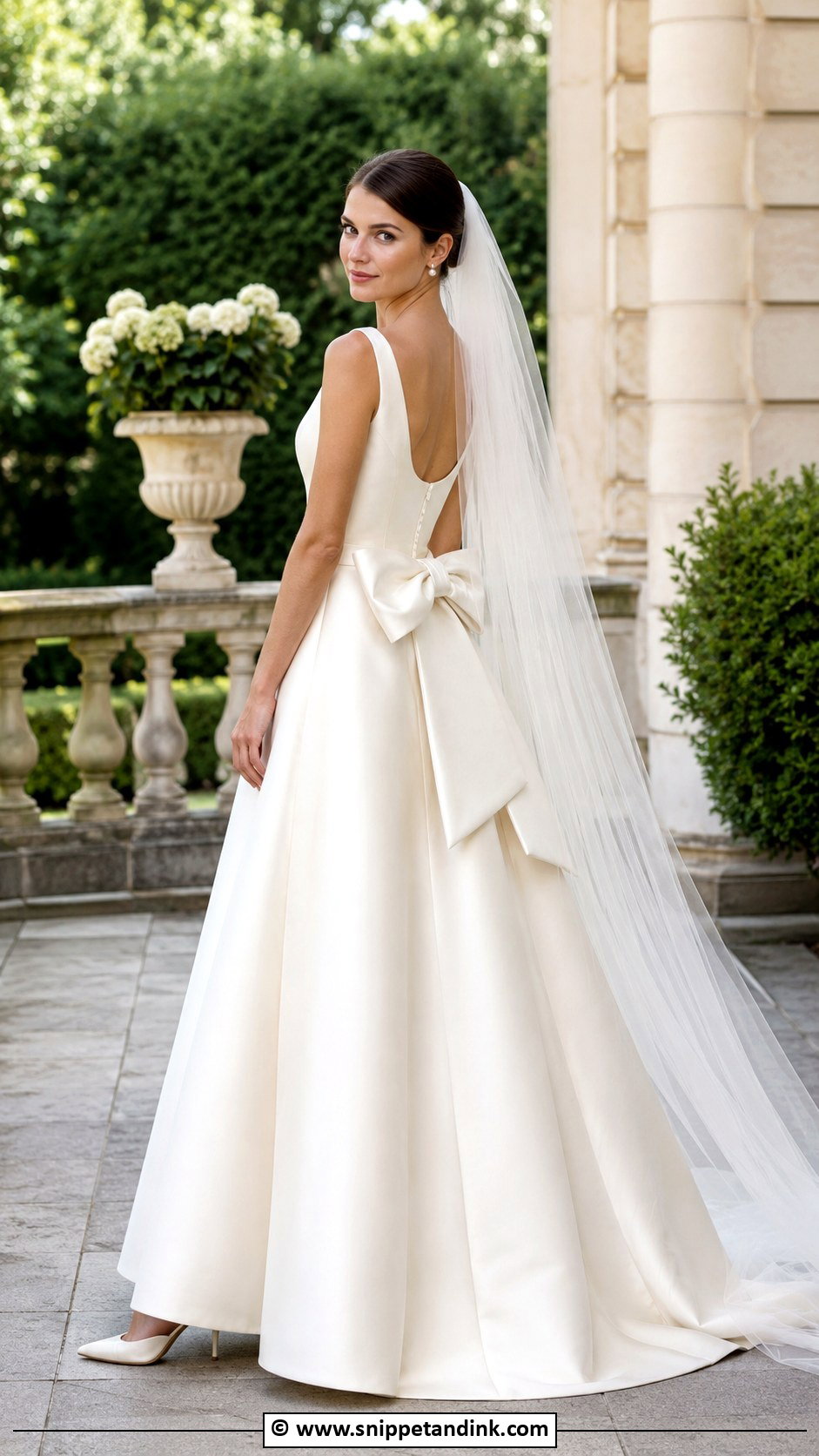
Bows look refined when they’re small and placed with intent: at the back waist, on one shoulder or as a narrow belt. An oversized bow quickly reads as a trend. Satin and mikado hold the loops crisply; softer fabrics flop by the afternoon. Keep the gown itself a plain A-line or column. It’s a good route to something feminine without any lace or sparkle.
18. Old Money Wedding Dress With Long Veil
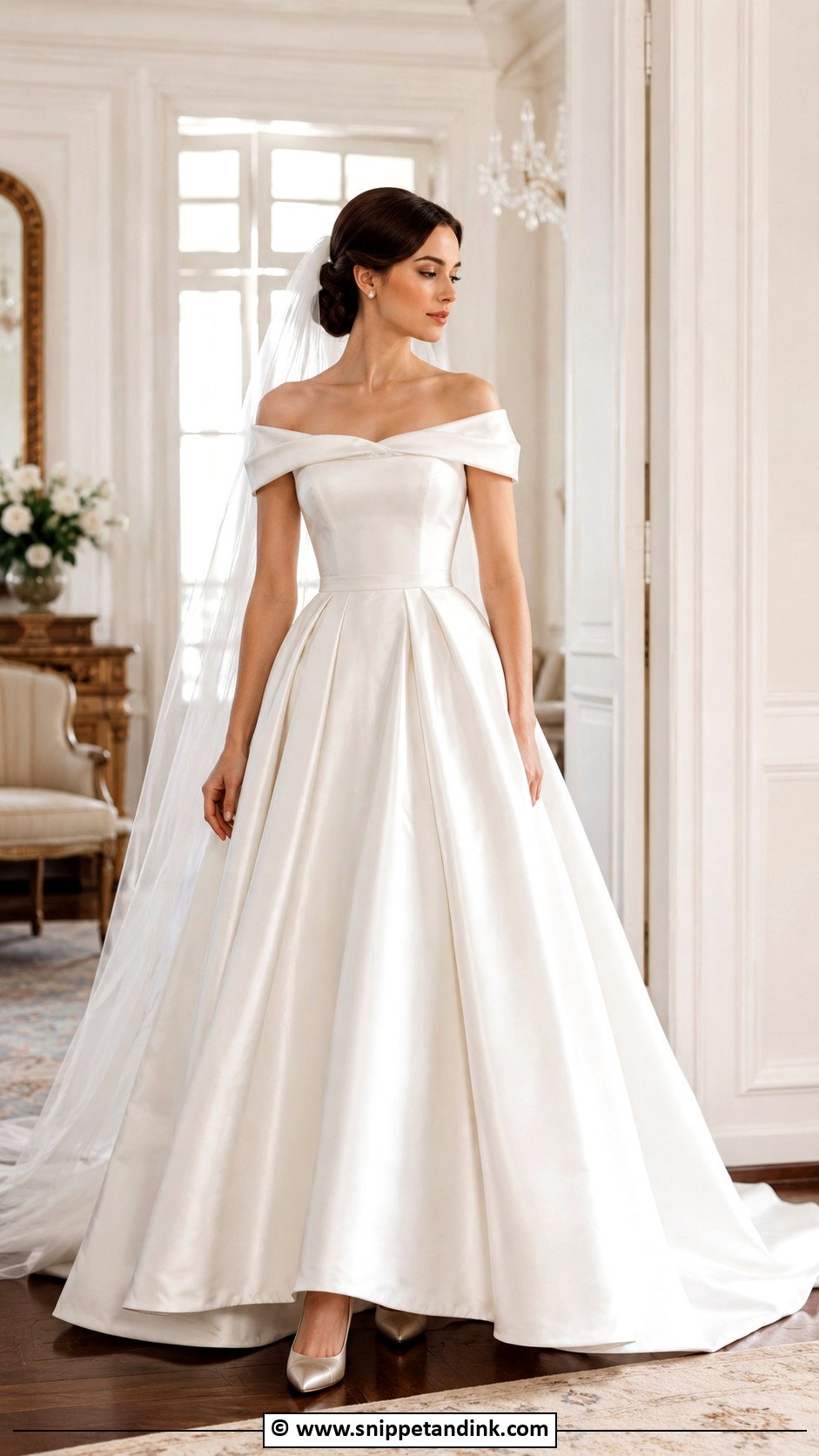
A long veil turns even a plain gown formal the moment you walk in. A plain cathedral veil, a lace-edged one or a subtle pearl veil each change the mood. Keep it sheer enough to show the dress underneath. I always rehearse the walk with the veil on, and I appoint someone to arrange it at the altar, since a long veil twists as you turn to face your partner.
19. Old Money Tea Length Wedding Dress
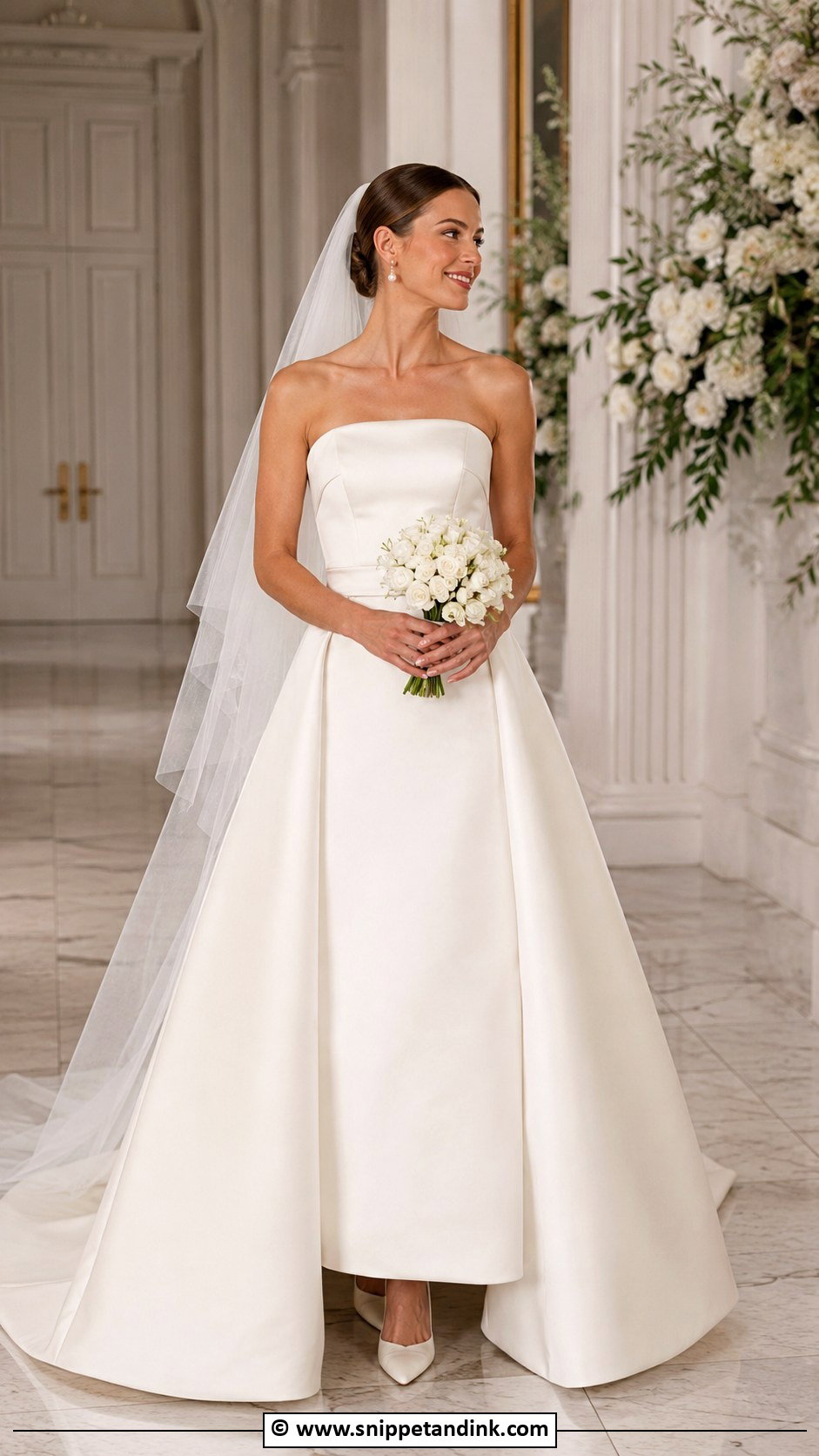
A tea length wedding dress stops between knee and ankle, which makes it easy to move in and easy to wear for a courthouse ceremony or a second look. Structured satin, lace and taffeta give it shape. A fitted bodice and full skirt is the classic line. Short gloves add polish; a birdcage veil works, but a simple shoulder-length veil feels more restrained. Your shoes will be seen, so choose them before the hem is finished.

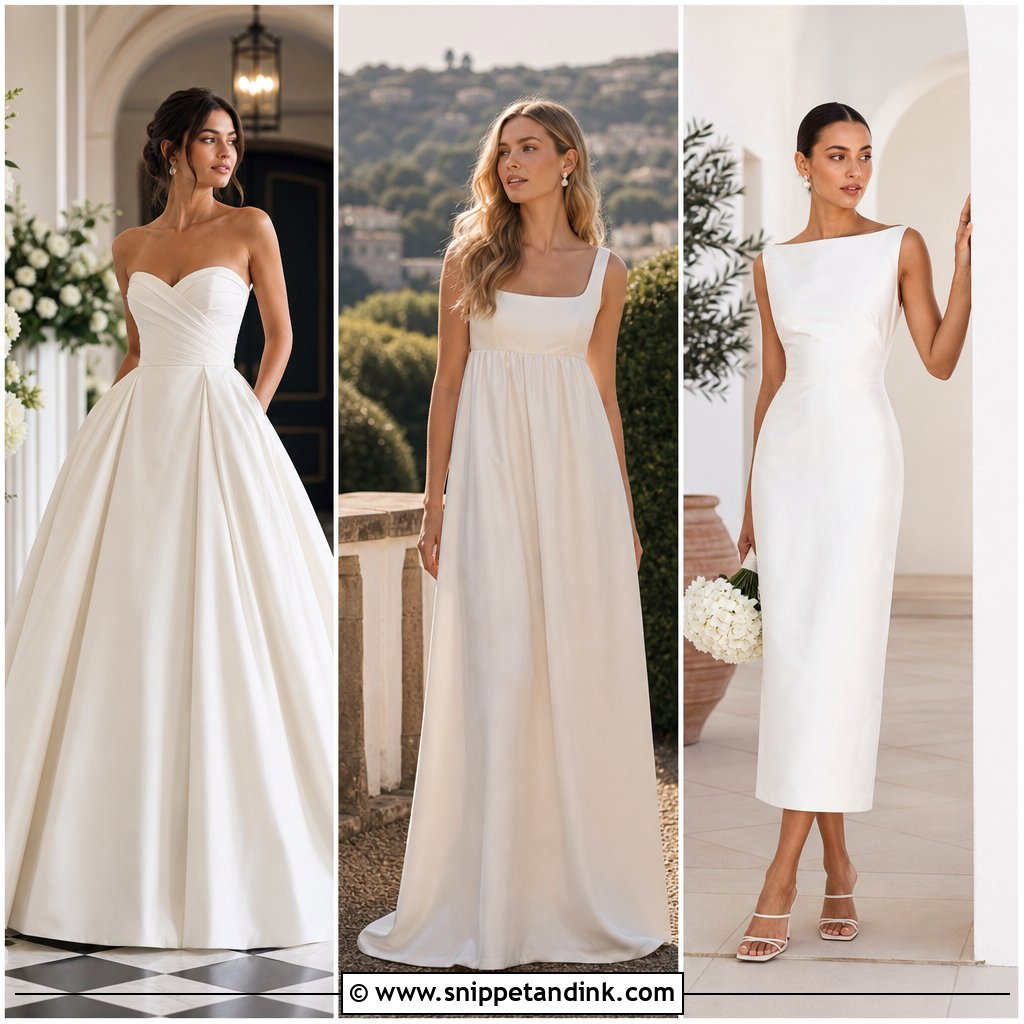
20. Old Money Courthouse Wedding Dress
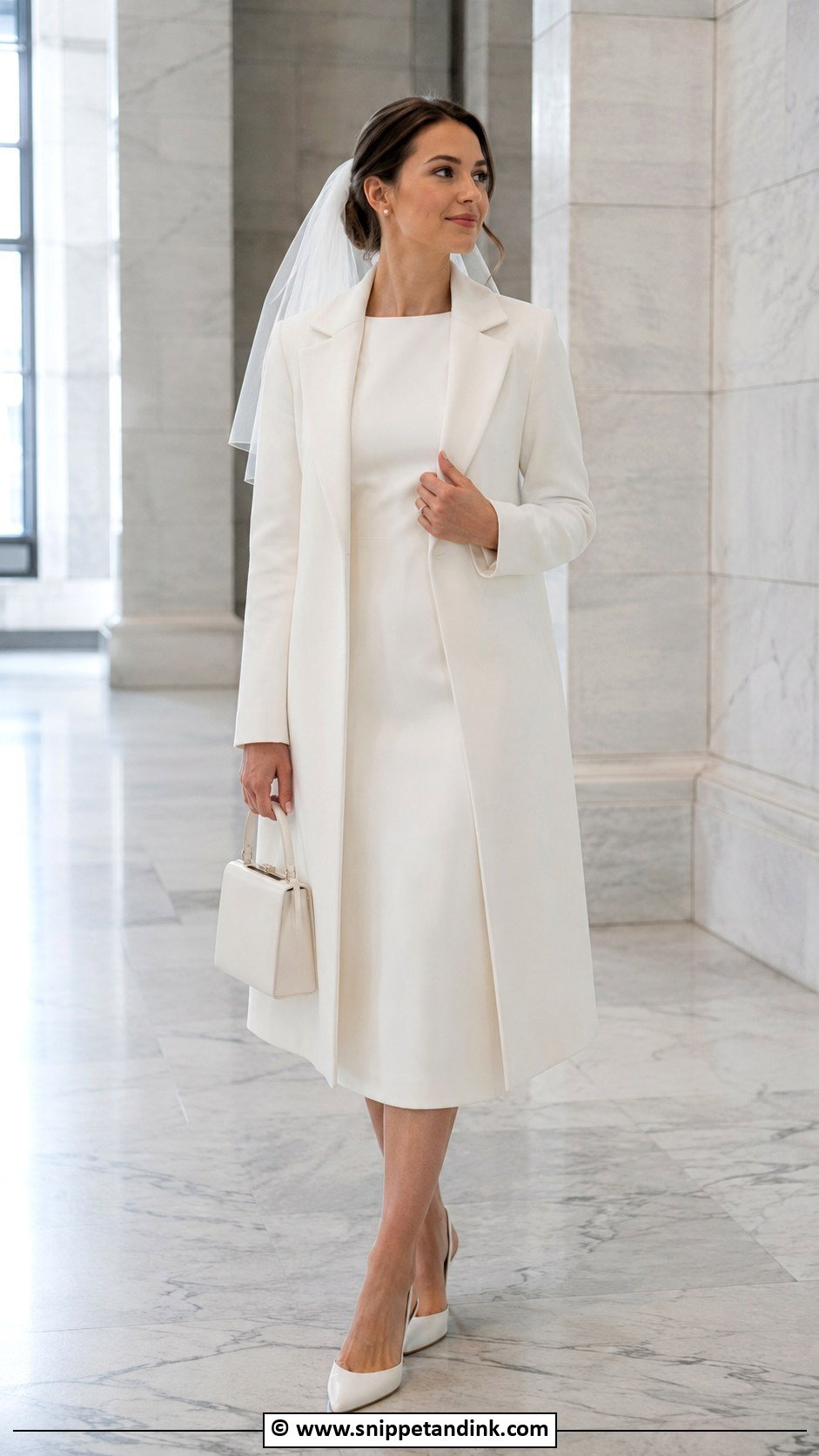
A courthouse wedding dress in this style is all about tailoring at small scale. A crepe midi, a short column, a silk slip or a white suit all work if the fit is precise. Slingbacks, pearl studs, a small top-handle bag and a short veil or hair bow finish it. A white coat or blazer over the top is my favourite trick for a cold registry office. A small ceremony doesn’t need a small point of view.
21. Old Money Garden Wedding Dress
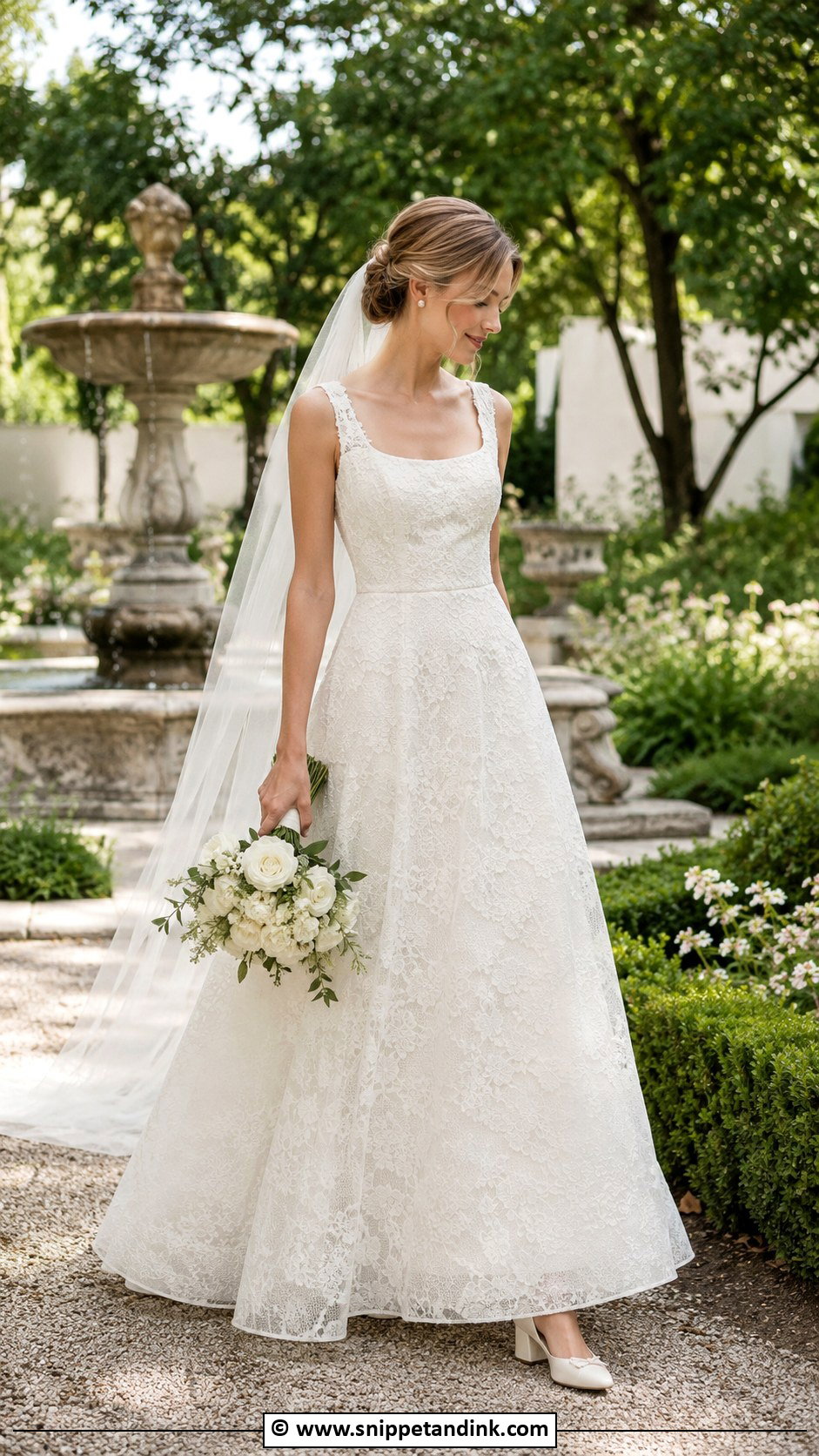
Outdoors, old money styling means keeping the lightness without sliding into casual. Light lace, silk organza, crepe and soft satin all suit a garden. I keep floral detail to fine embroidery rather than bold appliqué. Grass is the real problem: stilettos sink, so I send garden brides to refined block heels. A sheer veil that moves in the breeze and a low bun or soft waves suit spring and summer lawns.
22. Old Money Estate Wedding Dress
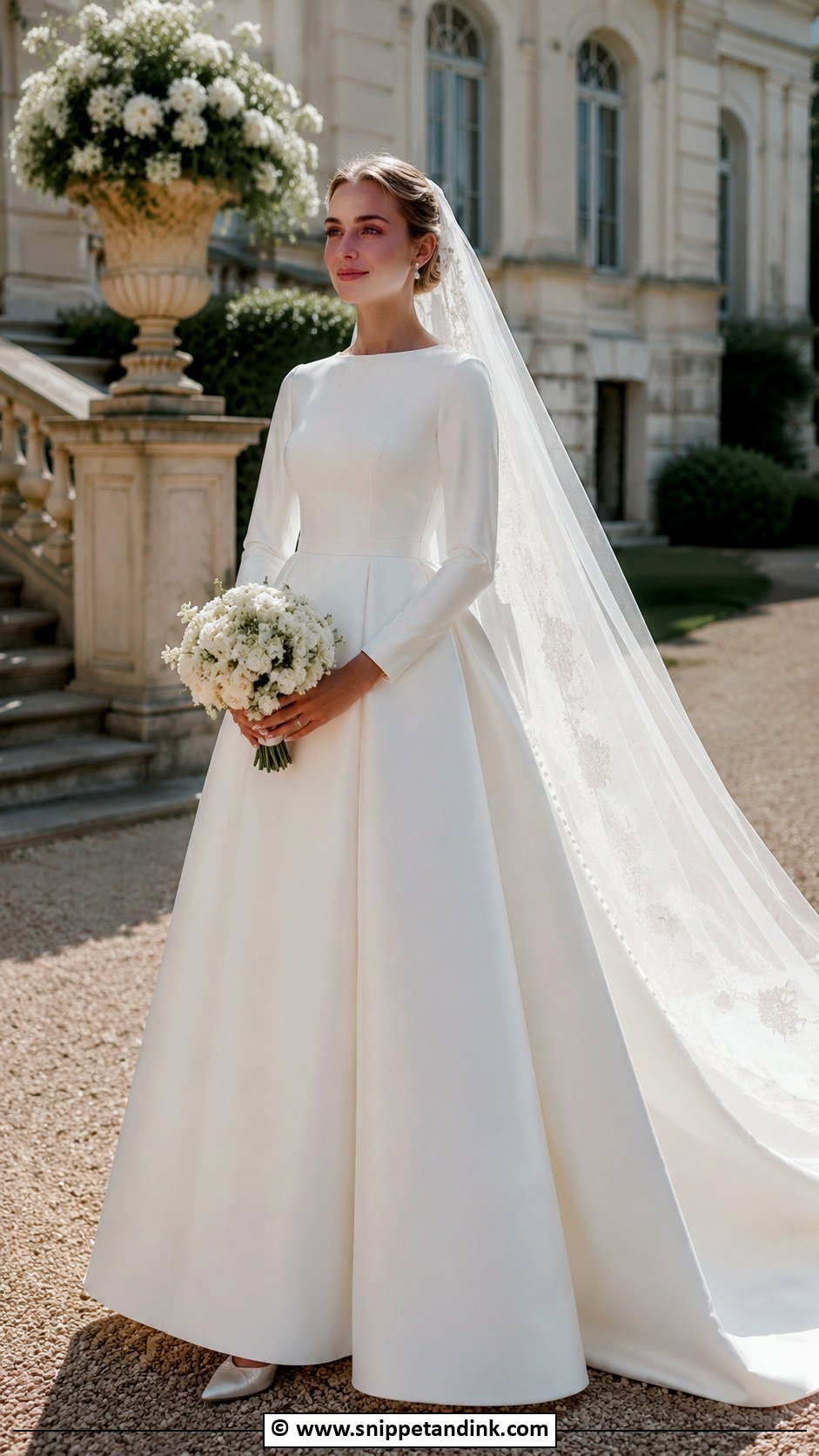
Estate weddings are photographed wide, so the dress has to hold its shape from far away as well as close up. Satin ball gowns, mikado A-lines and lace long sleeve dresses all have that strength. Covered buttons and a clean train are the finishing details people notice in close portraits. Pearl earrings, satin heels and a cathedral veil match the formality without shouting. Picture it framed in a family hallway; that’s the test.
23. Old Money Ballroom Wedding Dress
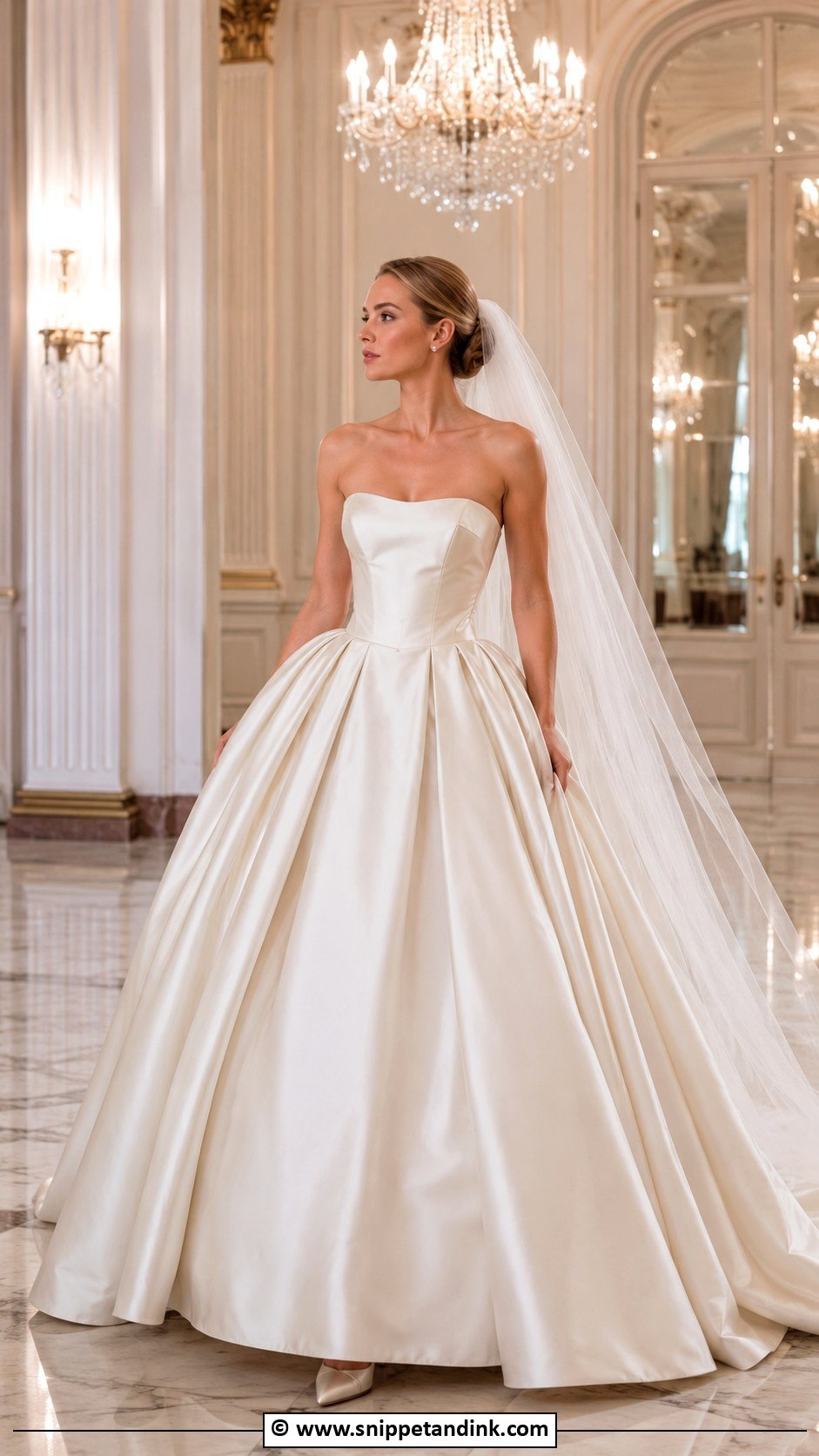
Ballroom gowns can be big and still restrained. A full skirt, structured bodice and heavy fabric like satin, mikado or taffeta do the work; heavy beading pushes it toward flashy. Strapless, off shoulder and bateau necklines all feel classic under a chandelier. A neat updo keeps the neckline crisp. Practise your entrance on a staircase if the venue has one, as full skirts need a hand to lift at the front.
24. Old Money Beach Wedding Dress
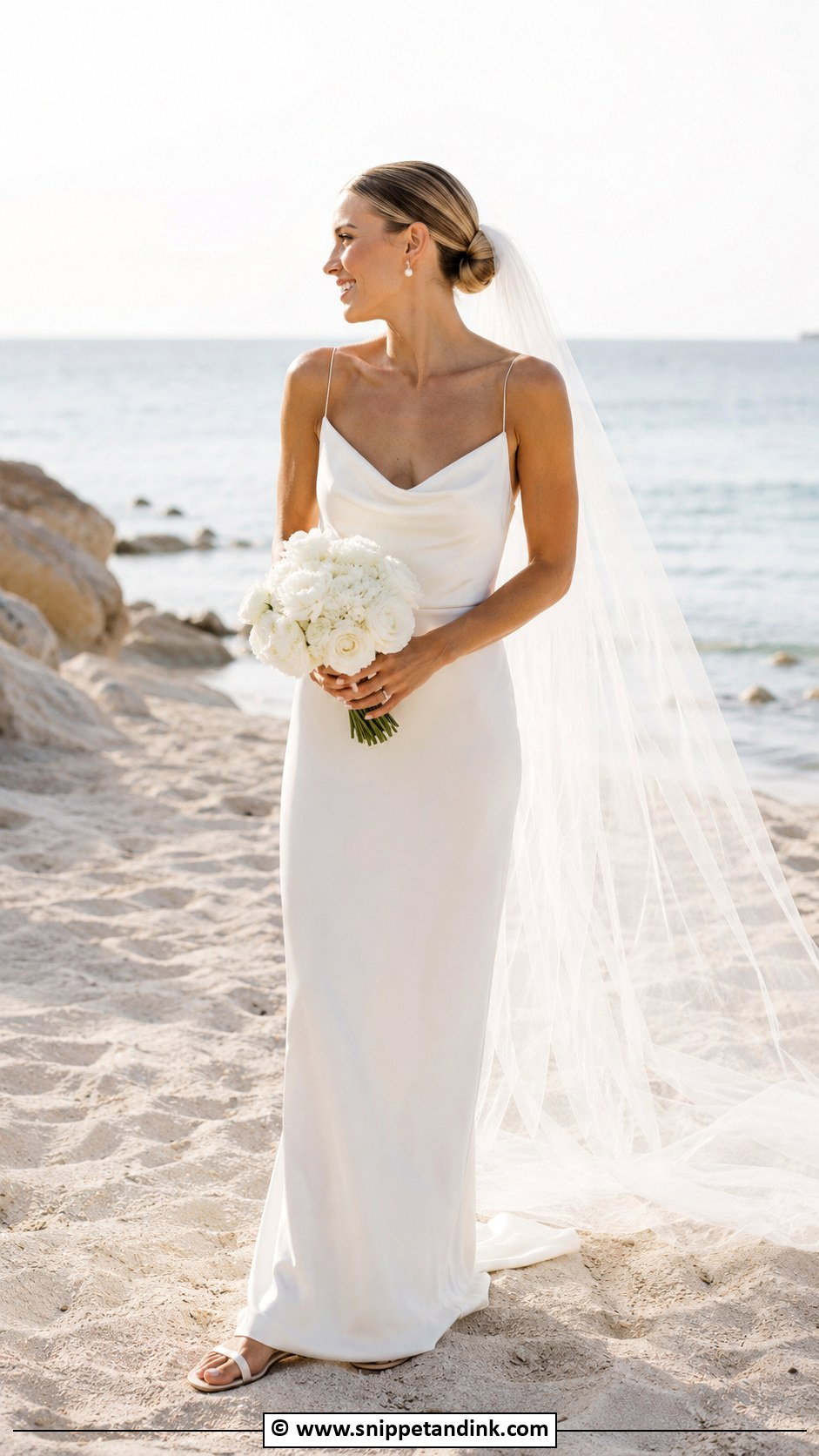
On a beach, the trick is to stay polished while dropping weight. Silk, crepe and light satin in a clean cut work far better than structured gowns. A slip dress, simple column gown or a soft A-line moves in the breeze without fighting it. Skip any heavy train; sand clings to fabric and adds weight by the hour. Pearl studs, sleek sandals, a low bun and a light veil keep it closer to a resort than to a bohemian festival.
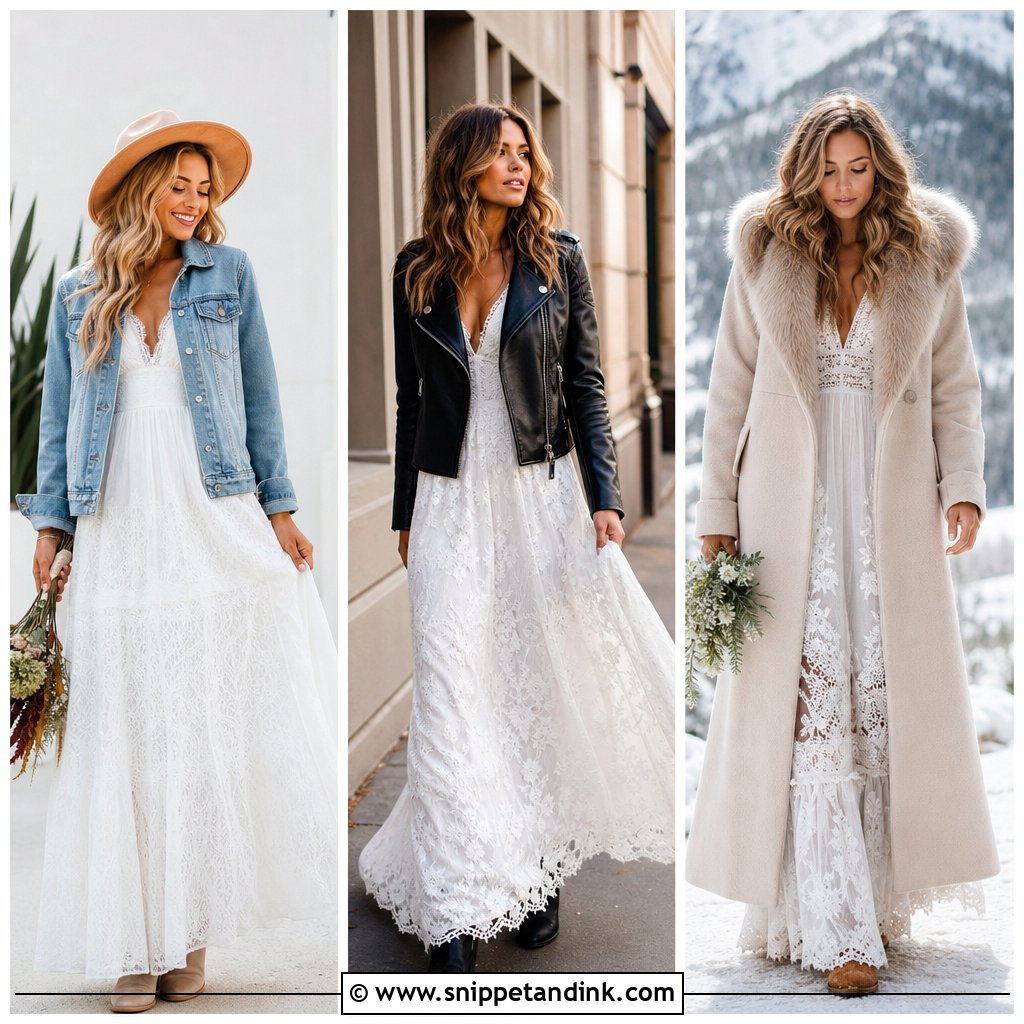
25. Old Money Winter Wedding Dress
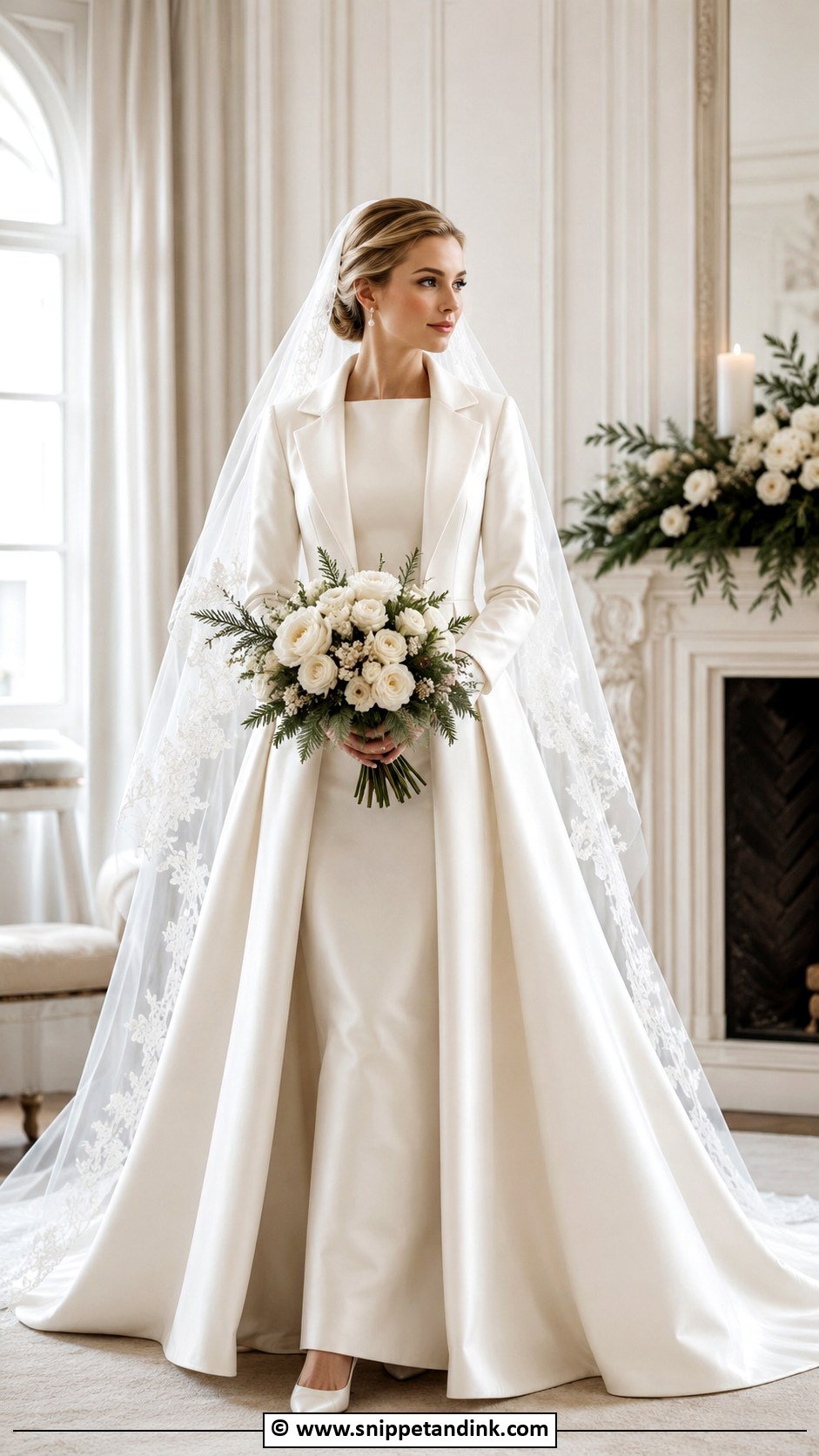
Winter is when this style comes most naturally. Long sleeves, high necks, heavier satin, crepe, mikado and lace all keep you warm and look right in low light. A tailored bridal coat or a structured cape gives you something to wear for outdoor photos in the snow. I prefer a clean coat over faux fur, which can shed onto dark suits. Closed-toe pumps and a sleek updo balance the heavier fabrics.
26. Old Money Summer Wedding Dress
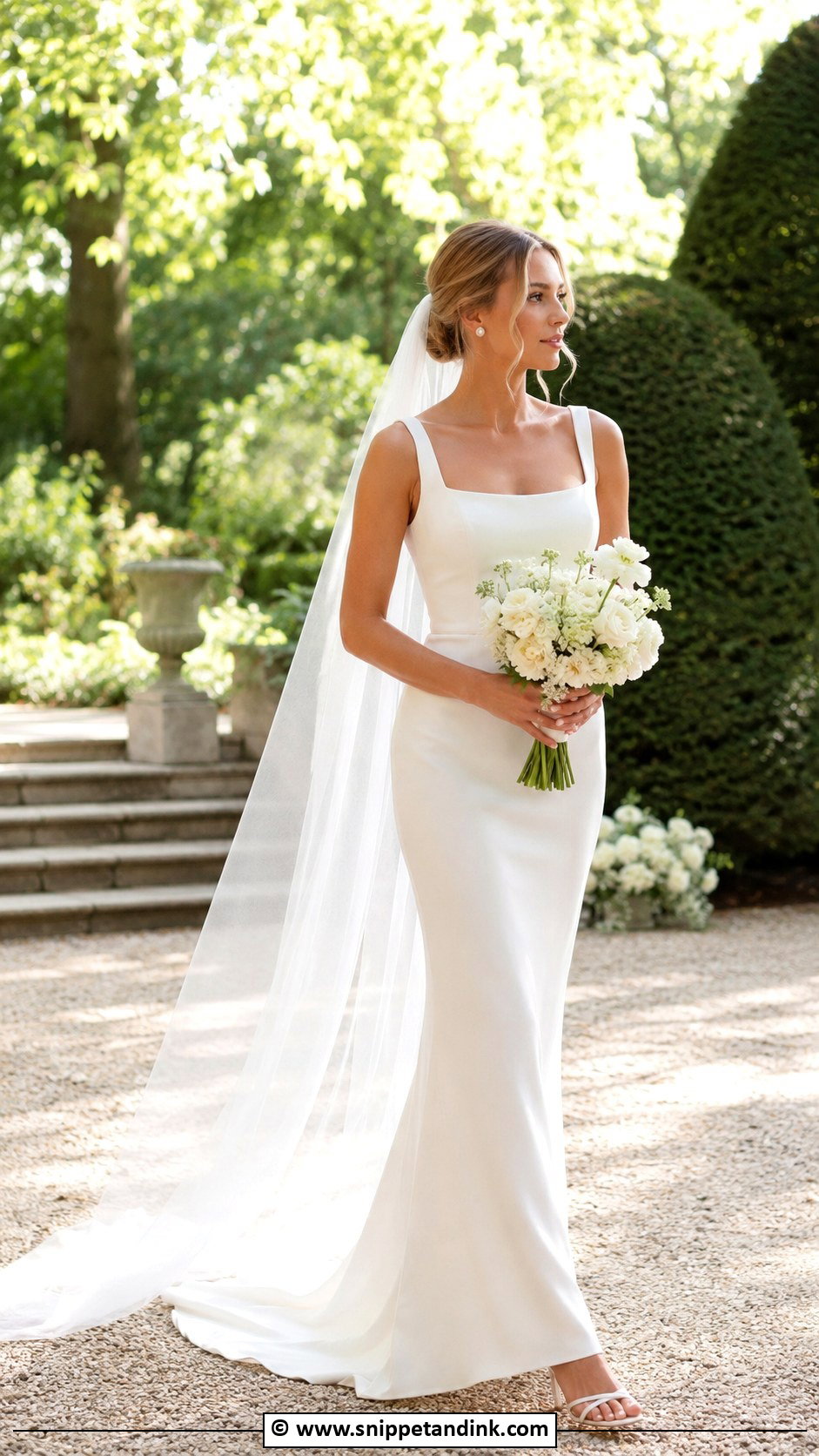
Heat changes my fabric choices more than anything else. Silk crepe, light satin, organza and fine lace let air through; heavy mikado and fully lined ball gowns don’t. A square neck A-line, a silk slip or a sleeveless column all stay polished in warm weather. Pearl studs and slingbacks or simple sandals are enough. Watch out for satin in direct sun, as sweat marks show on it faster than on crepe.
27. Old Money Plus Size Wedding Dress
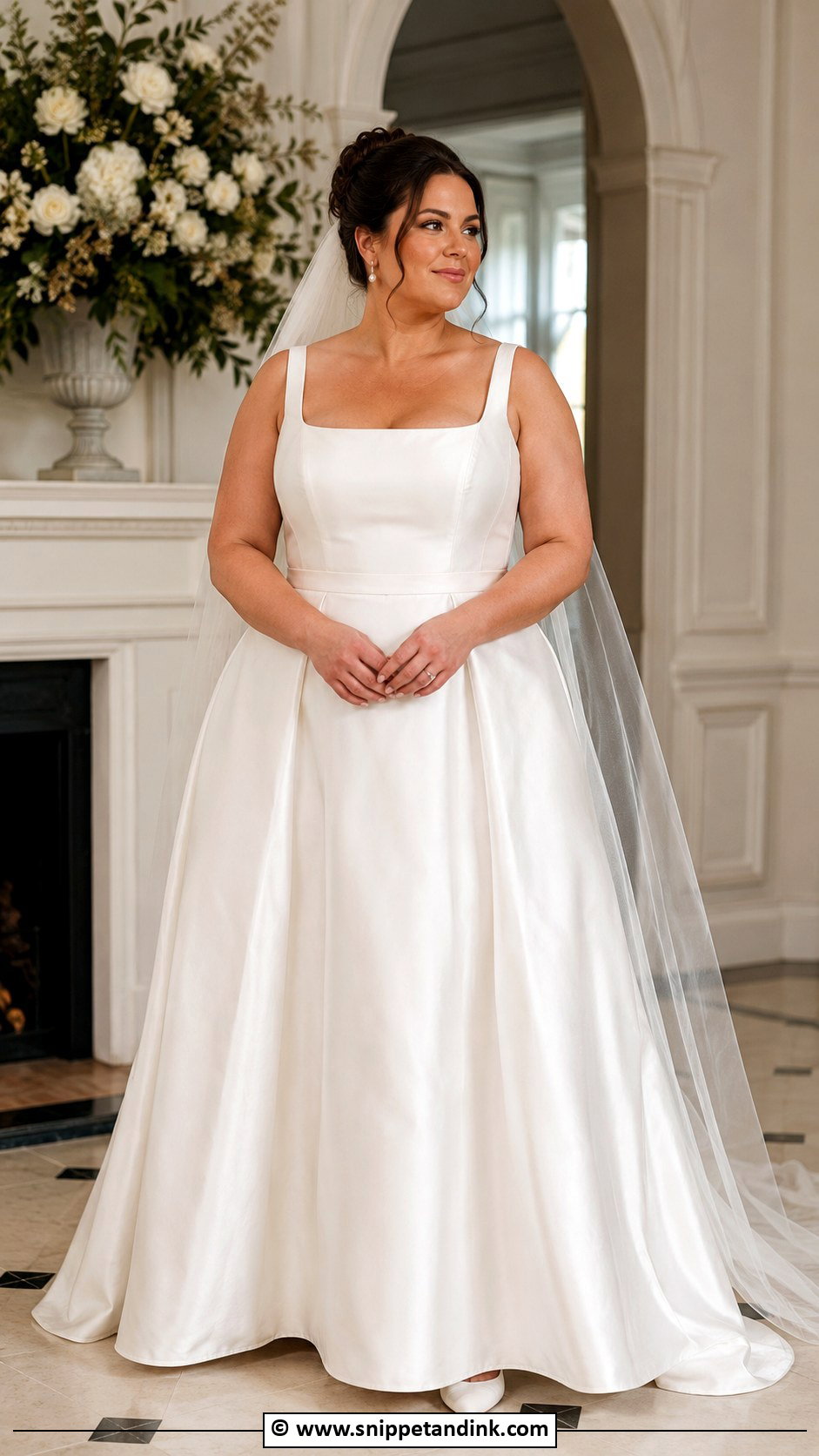
For plus size brides, structure and fabric quality matter even more, because a cheap fabric shows strain at the seams. A-lines, ball gowns, basque waists, square necks and off shoulder shapes all look exceptional in satin, crepe, mikado or a supportive lace. The waist should be defined where it feels comfortable to you, not where a sample happens to sit. I always add a waist stay and ask about built-in support before alterations begin. Old money style was never about one body type; it’s about fit and confidence.
28. Old Money Mature Bride Wedding Dress
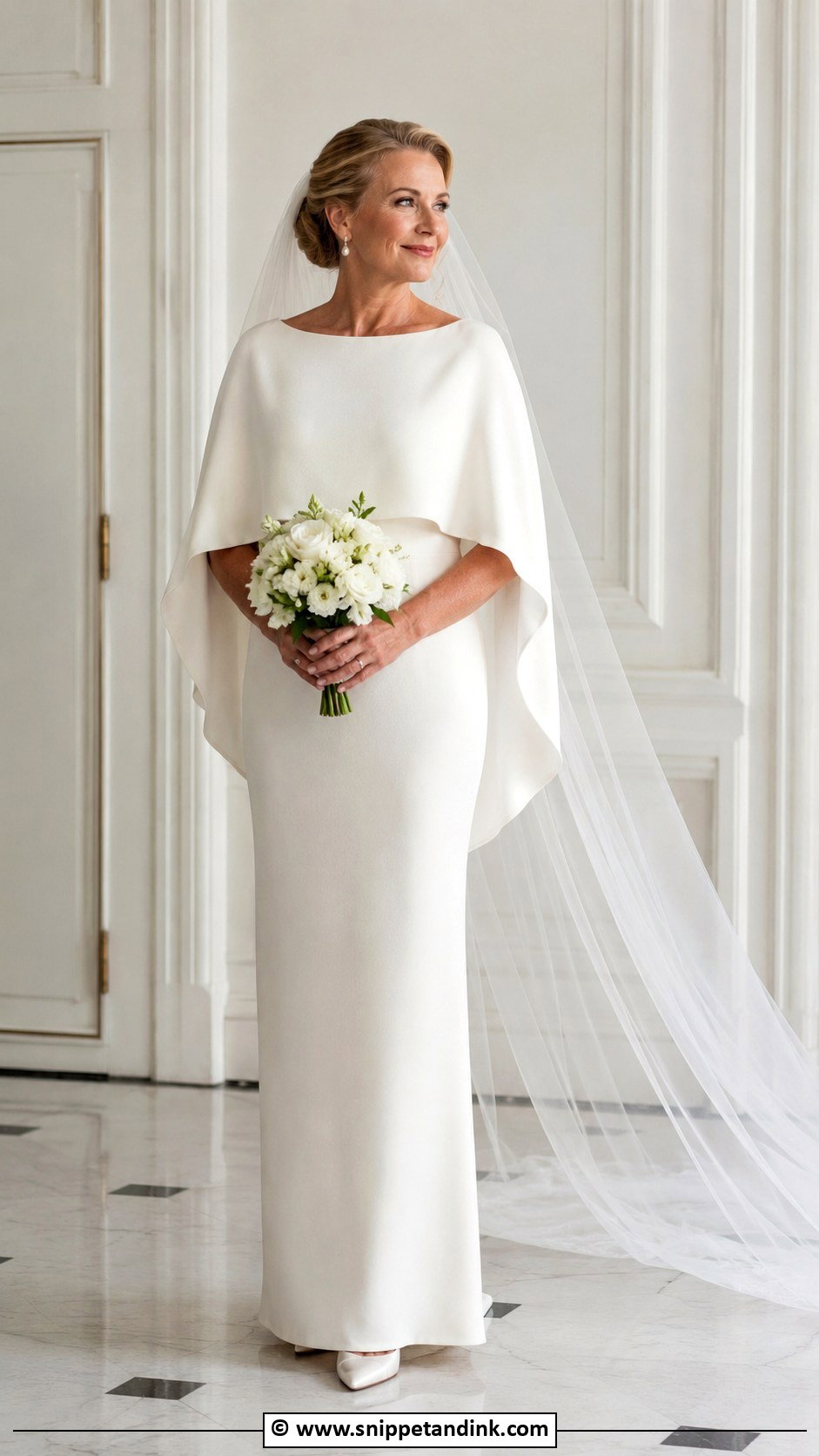
Older brides often have the clearest idea of what suits them, and my job is mainly to confirm it. Crepe columns, lace long sleeve dresses, tailored A-lines and tea length dresses all work. Choose coverage by comfort, not by an imagined rule. A bateau, high neck, square neck or soft V can all look sophisticated. A capelet or tailored bridal coat adds polish without making the look older than you are.
29. Old Money Minimal Wedding Dress
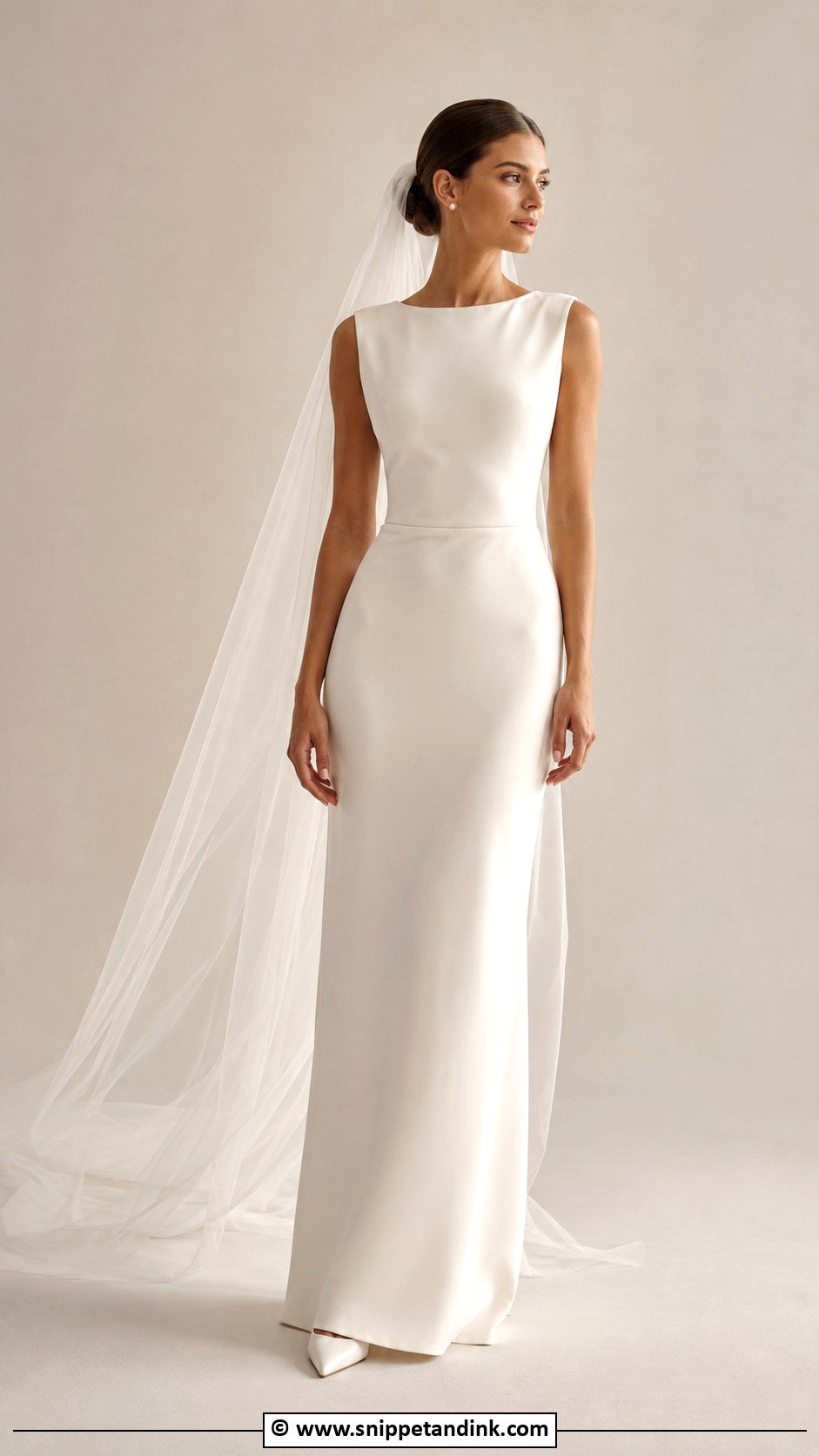
Minimal dresses are the hardest to get right. With no lace or beading, every seam, dart and hem is visible. Silk, crepe, satin and mikado in a clean column, A-line or slip all work, but only with a controlled train and a neckline that sits perfectly flat. I’d put more of the budget into alterations than into the dress itself here. Pearl studs, a long veil and a sleek bun or soft blowout are all it needs.
30. Old Money Vintage Wedding Dress
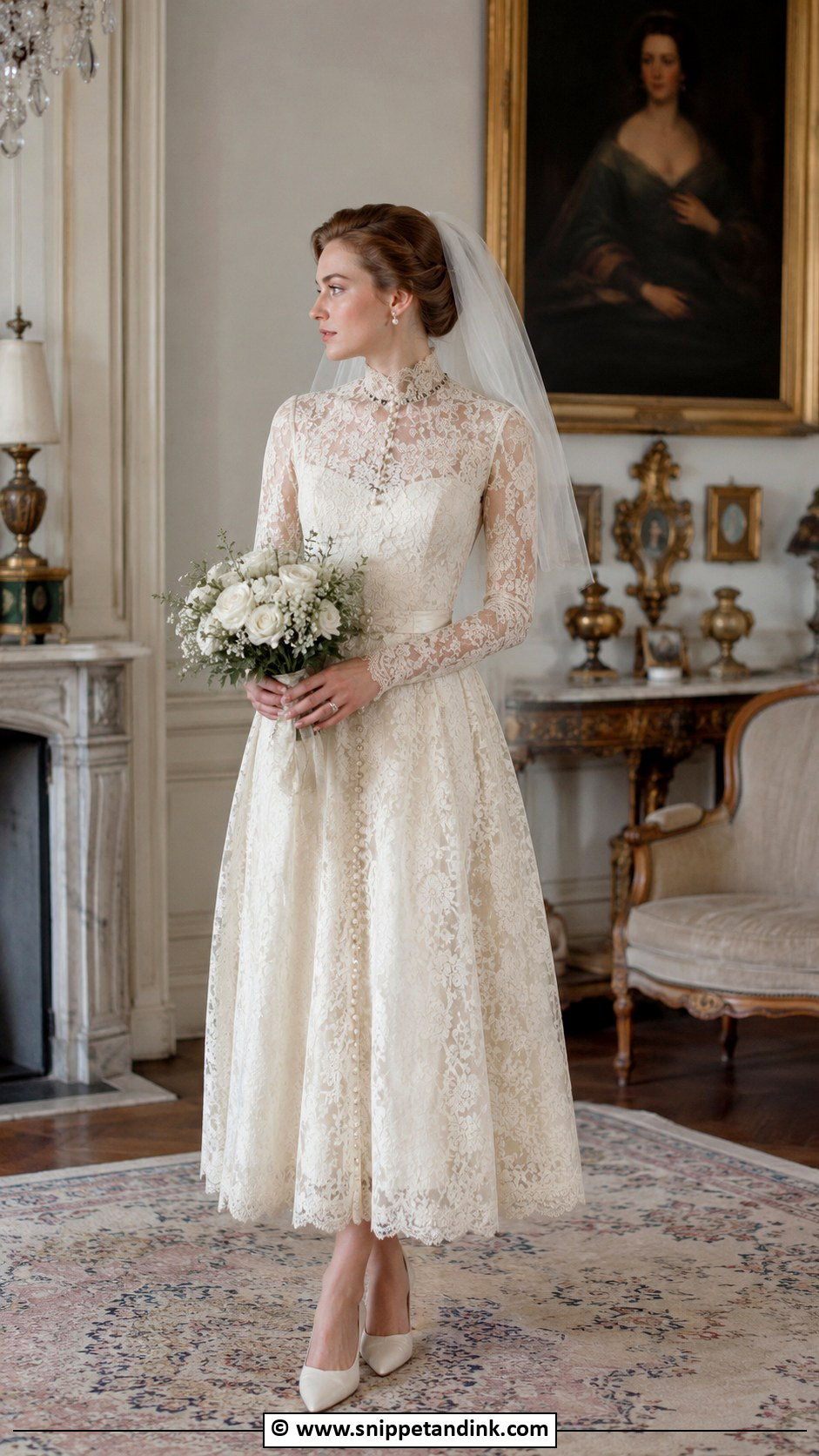
Vintage gowns bring history the moment you put them on. Fine lace, silk satin, covered buttons and modest necklines are the details to look for. A true vintage piece, a restored family dress and a new gown with vintage details all have the same job: the fit has to feel current. With an heirloom, have a specialist check the fabric before any cutting, because aged silk can tear at old seams. Keep everything else quiet if the lace or sleeves are ornate.
Where to Spend if Your Budget Is Fixed
Quiet luxury rewards spending in the places nobody notices consciously. When a bride has a fixed amount, this is the order I’d put it in.
- Alterations. A mid-price dress tailored perfectly looks more expensive than a designer dress that pulls at the bust. Allow for several fittings, especially with columns and slips.
- Fabric. Pick the better fabric in a simpler design over a cheaper fabric with more detail.
- The veil. A long, plain veil in good tulle adds more formality per pound than any jewellery.
- Shoes you can stand in for ten hours. A wince in every photo undoes the polish.
- Jewellery last. Pearl or small diamond studs, often borrowed, are all this style needs.
What I’d cut first is anything trend-led: statement sleeves, heavy beading, novelty trains. They cost the most to make and date the fastest, which is the opposite of what this look is for.
Would You Still Wear It in Thirty Years?
None of this is about looking plain or following strict rules. Satin, silk, lace, mikado and crepe can all get you there, through a ball gown, a slip, a column or a tea length dress. What ties them together is restraint: the right fabric, an exact fit and accessories that step back. If you can look at the photos in thirty years and not wince at a trend, you’ve done it.
You'll Like These Ideas:







Leave a Reply