
Bridesmaids at an Indian wedding work harder than anyone except the bride. You’re in the photos, carrying things, helping with rituals and dancing at the end of it, often in two or three outfits. A good bridesmaid hairstyle has to survive all of that. Long hair gives you plenty of options, but it also brings weight, tangles and heat. Below are the 20 styles I reach for most often with long-haired bridesmaids, with notes on the outfit, the dupatta and the weather each one handles best.
Six Bridesmaids, One Stylist and a Long Morning
When I’m booked for a bridal party, the bride is always styled last so her hair is freshest for the ceremony. That means bridesmaids are in the chair early, sometimes several hours before the photos, and their styles have to hold that long before the event even starts.
This changes which styles make sense. Braids and buns hold for hours. Open curls done at seven in the morning will have lost much of their shape by an evening ceremony. If you’re among the first in the chair, ask for something structured, or ask to have your curls set and left in pins until you dress.
- Agree on the order with the stylist the week before.
- Arrive with hair washed and fully dried; drying long, thick hair can take longer than the styling itself.
- Put your outfit’s top on before your hair is done if it goes over the head.
- Have your jewelry ready so the tikka or hair chain goes in during styling, not afterward.
If you’re doing your own hair, choose from the simpler styles here: the side braid, low ponytail, rope braid or half-up curls. Practise once the week before, with the accessories.
1. Indian Bridesmaid Low Bun With Gajra
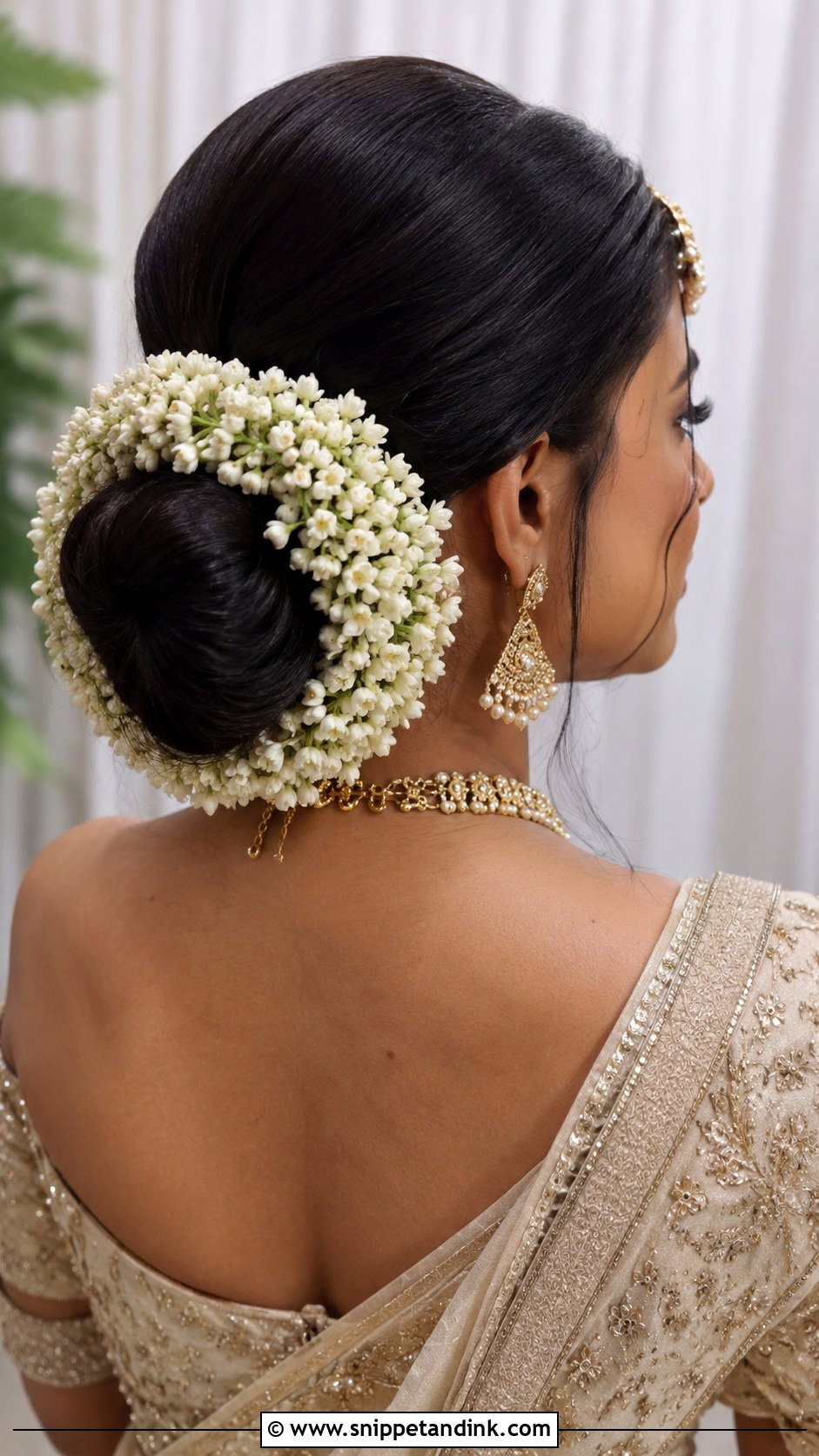
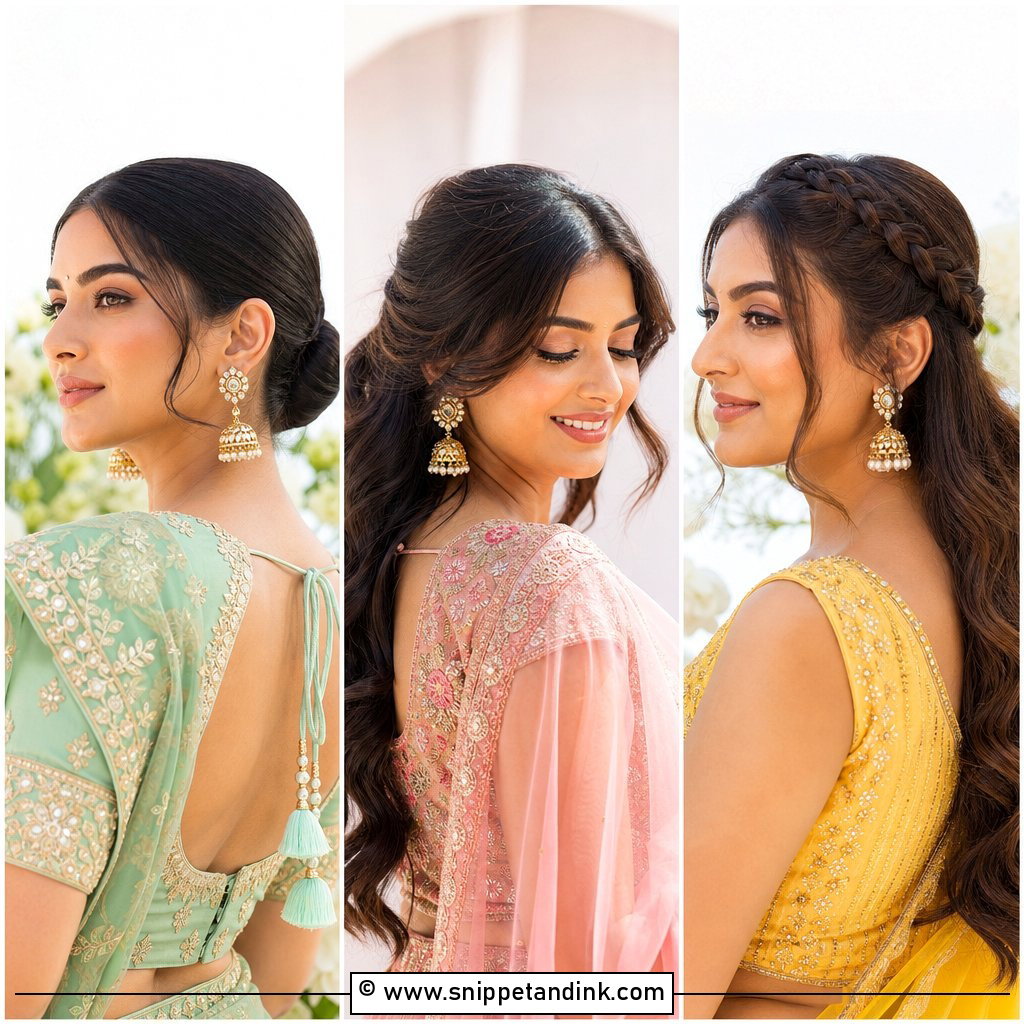
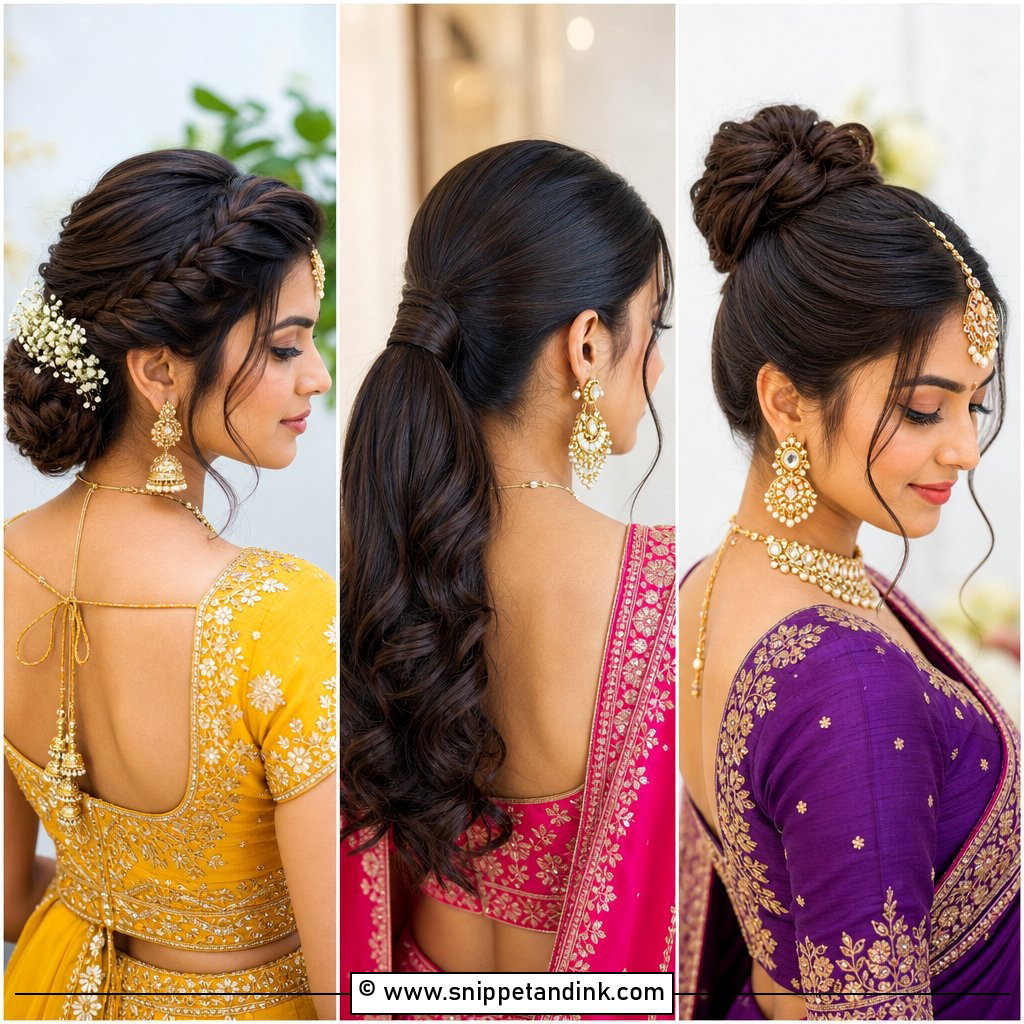
If I had to put a whole bridal party in one style for the ceremony, this would be it. A low bun at the nape doesn’t fight a dupatta pinned over the shoulder or a saree pallu, and it holds through hours of sitting. With long hair I twist the length into a rope before coiling it, so the bun comes out round and full instead of flat. Fresh jasmine or a good faux gajra wraps the outside. A small maang tikka on a center part is enough; anything bigger starts competing with the bride.
2. Indian Bridesmaid Loose Curls With Maang Tikka
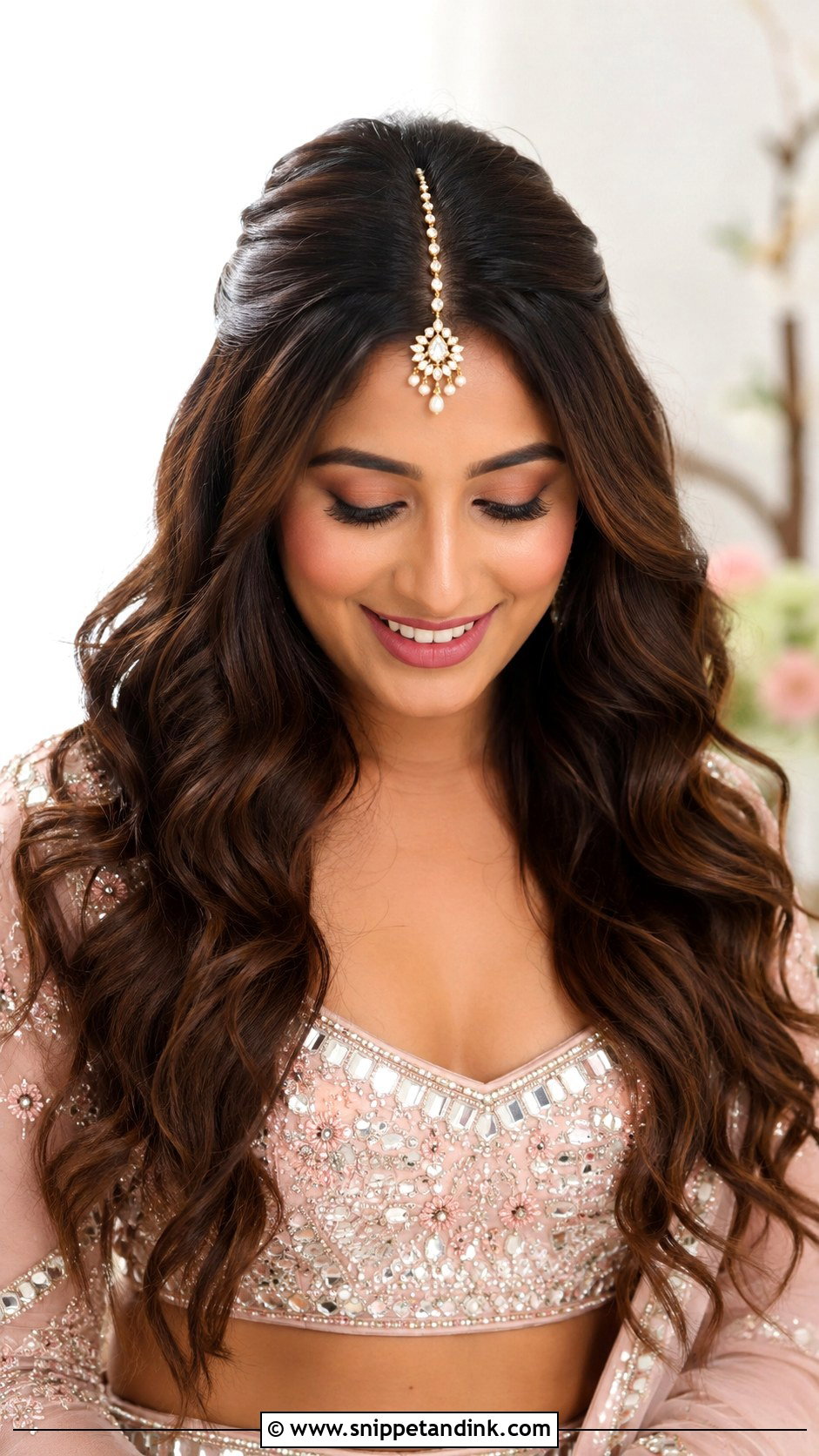
Starting the curls with a maang tikka below the cheekbones is the detail that makes this work. The top stays smooth so the tikka lies flat on the parting, and the curls carry the movement below. A little lift at the crown stops it looking flat from the front. I finish with a drop of serum on the ends rather than spraying the lengths stiff. It suits lehengas with embroidered blouses or wide necklines, at the sangeet, the reception or an engagement. On fine hair in a humid hall, expect the curls to loosen by the evening.
3. Indian Bridesmaid Side Braid With Flowers
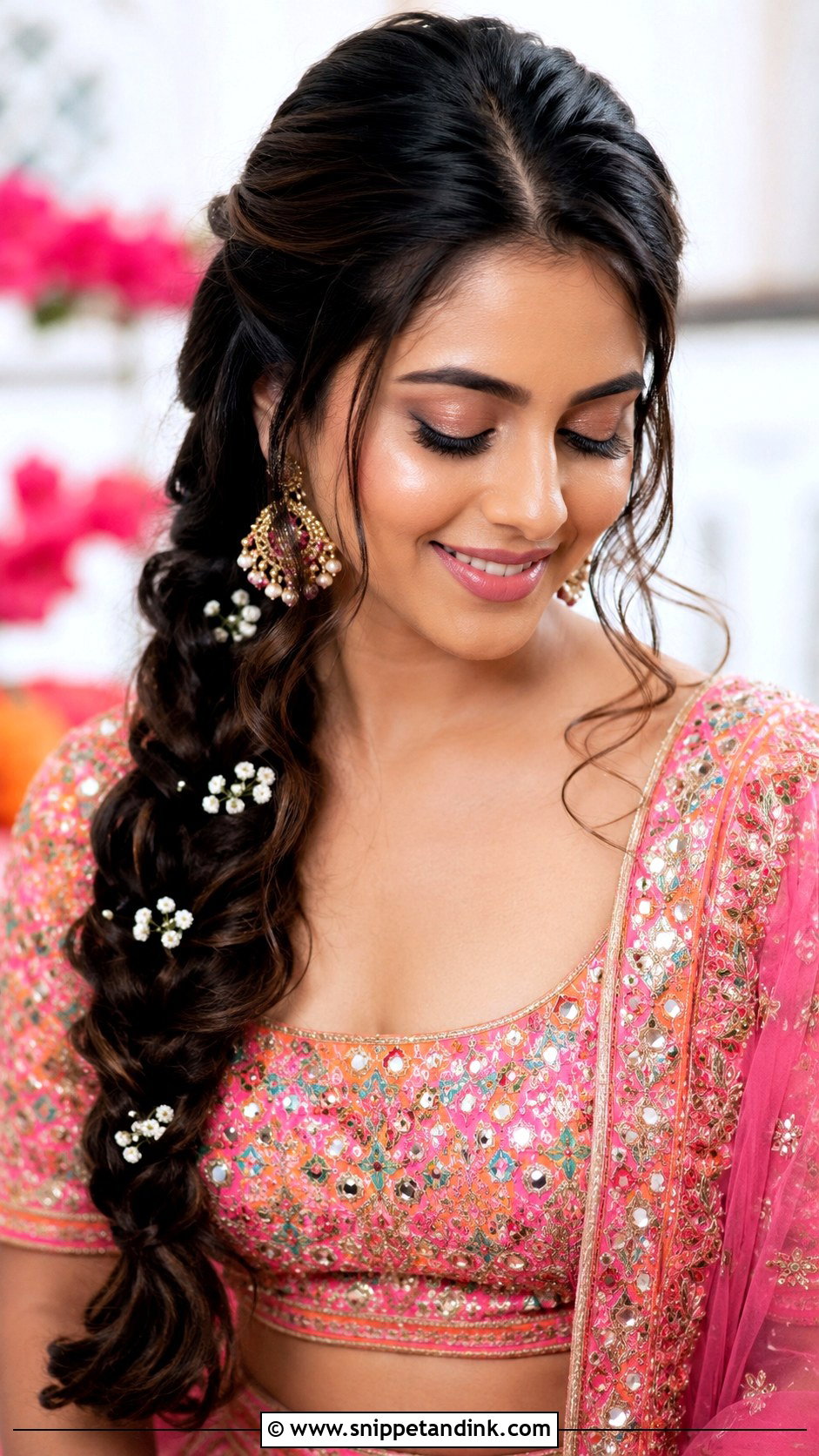
A side braid is the easiest look on this list to wear all day. Pulling the edges out gently after braiding adds width, and that gives small jasmine buds or baby’s breath something to sit in. It falls over one shoulder, so it stays in photos even when you’re standing beside someone. Set the parting smooth before you braid. A passa or a thin hair chain fits on the opposite side if the outfit can take the extra shine. Lehengas, anarkalis and sarees all work with it.
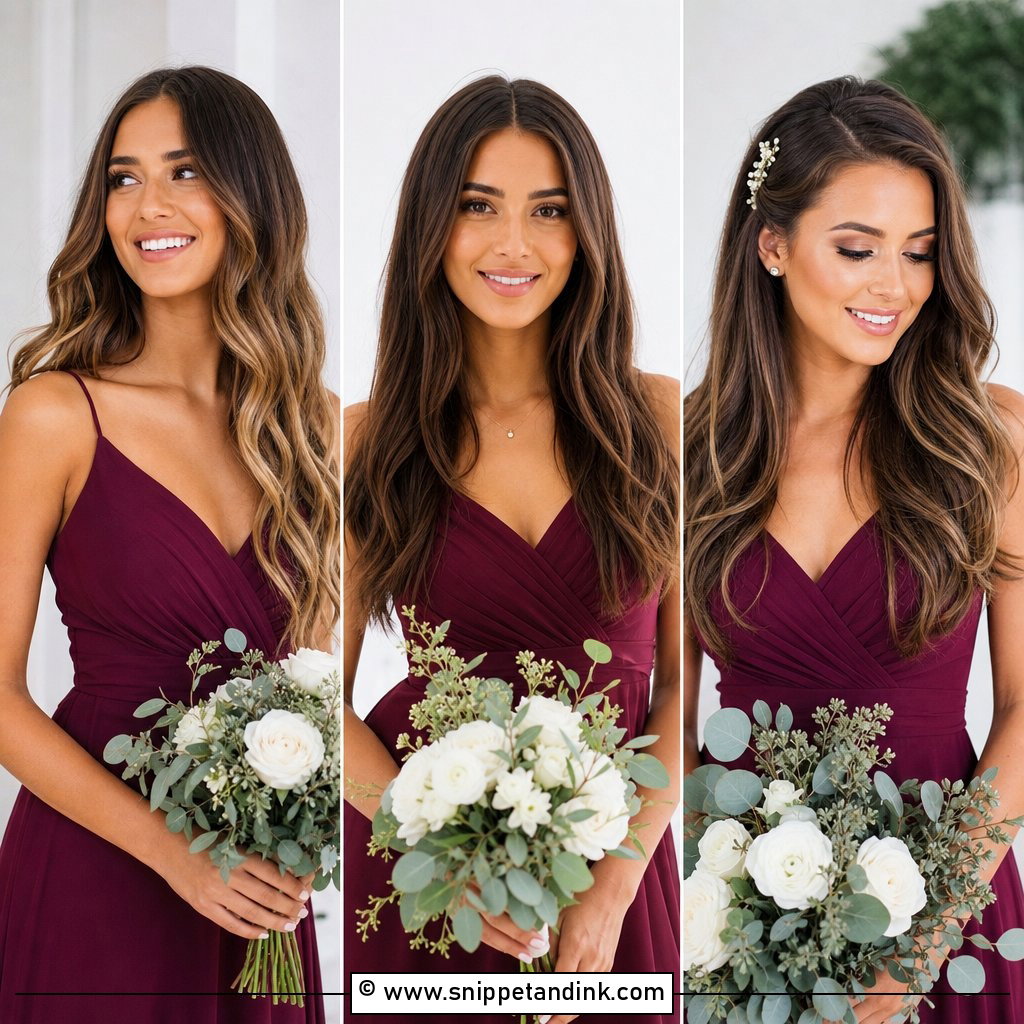
4. Indian Bridesmaid Half Up Curls
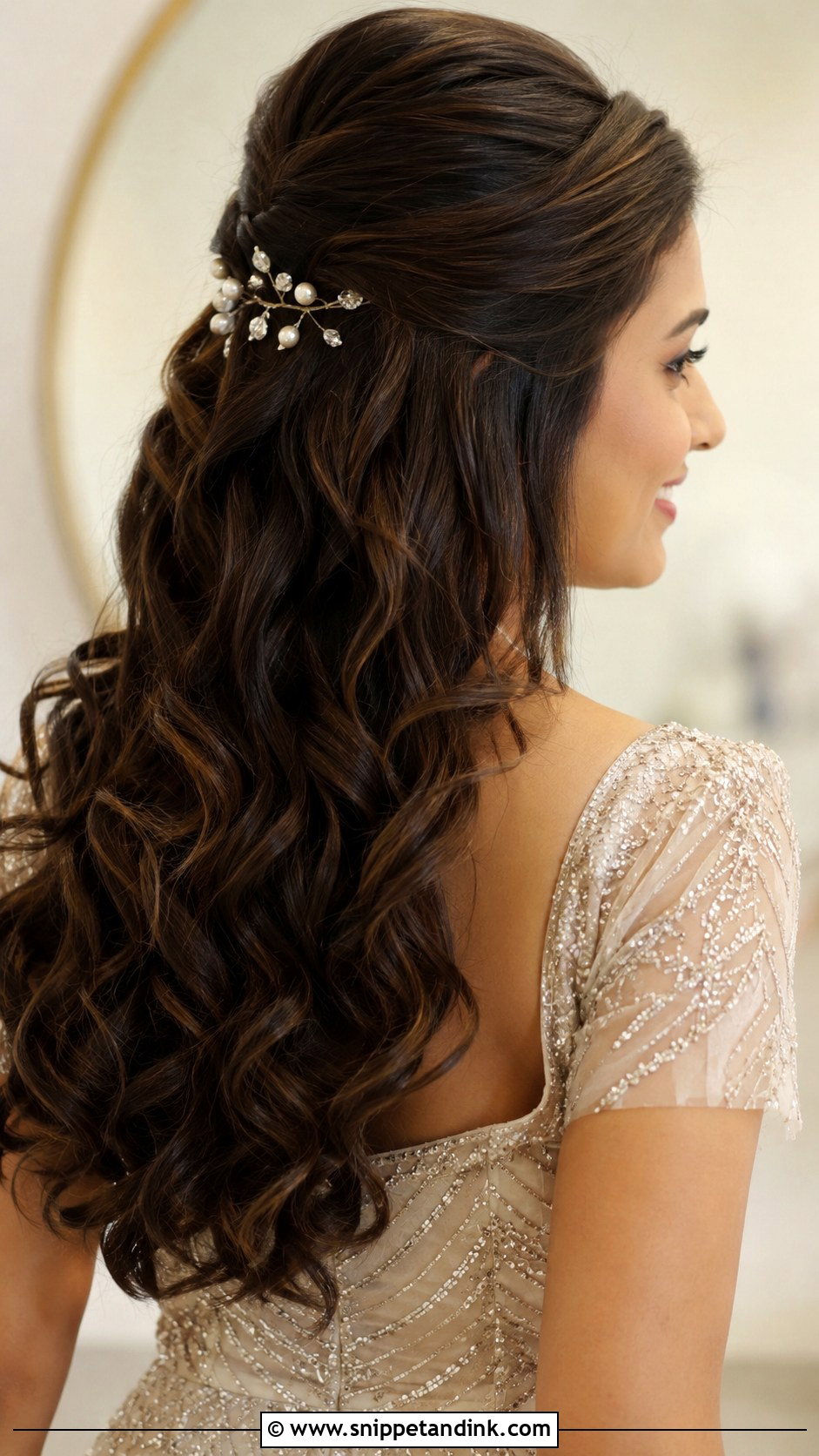
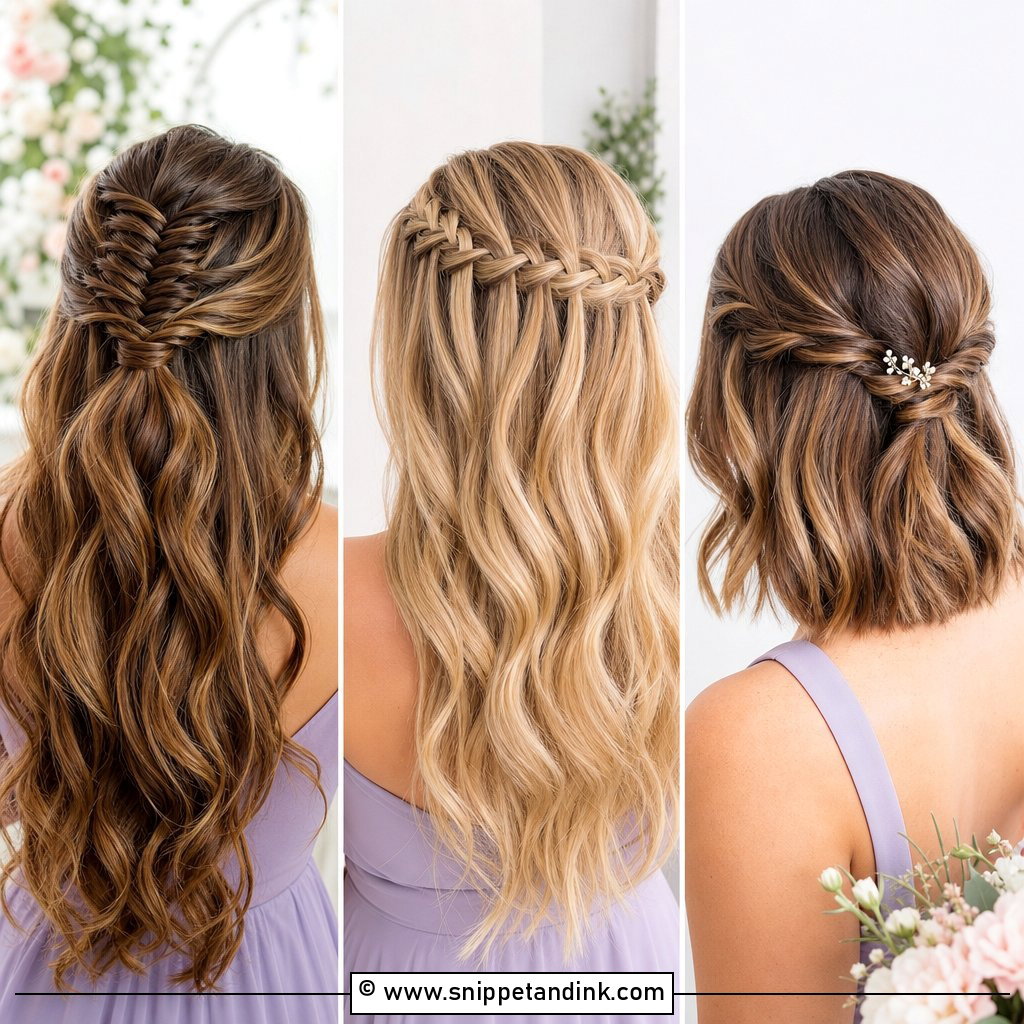
Half-up curls are what I suggest for bridesmaids who hate having hair on their face but still want it down. The top section is lifted and pinned back; the lengths are curled. With very thick hair, pinning the top removes a lot of weight from the face and keeps the makeup clean. I hide the pins with a small pearl or floral comb at the back. The front stays neat for jewelry and for a dupatta draped over one shoulder.
5. Indian Bridesmaid Sleek Low Ponytail
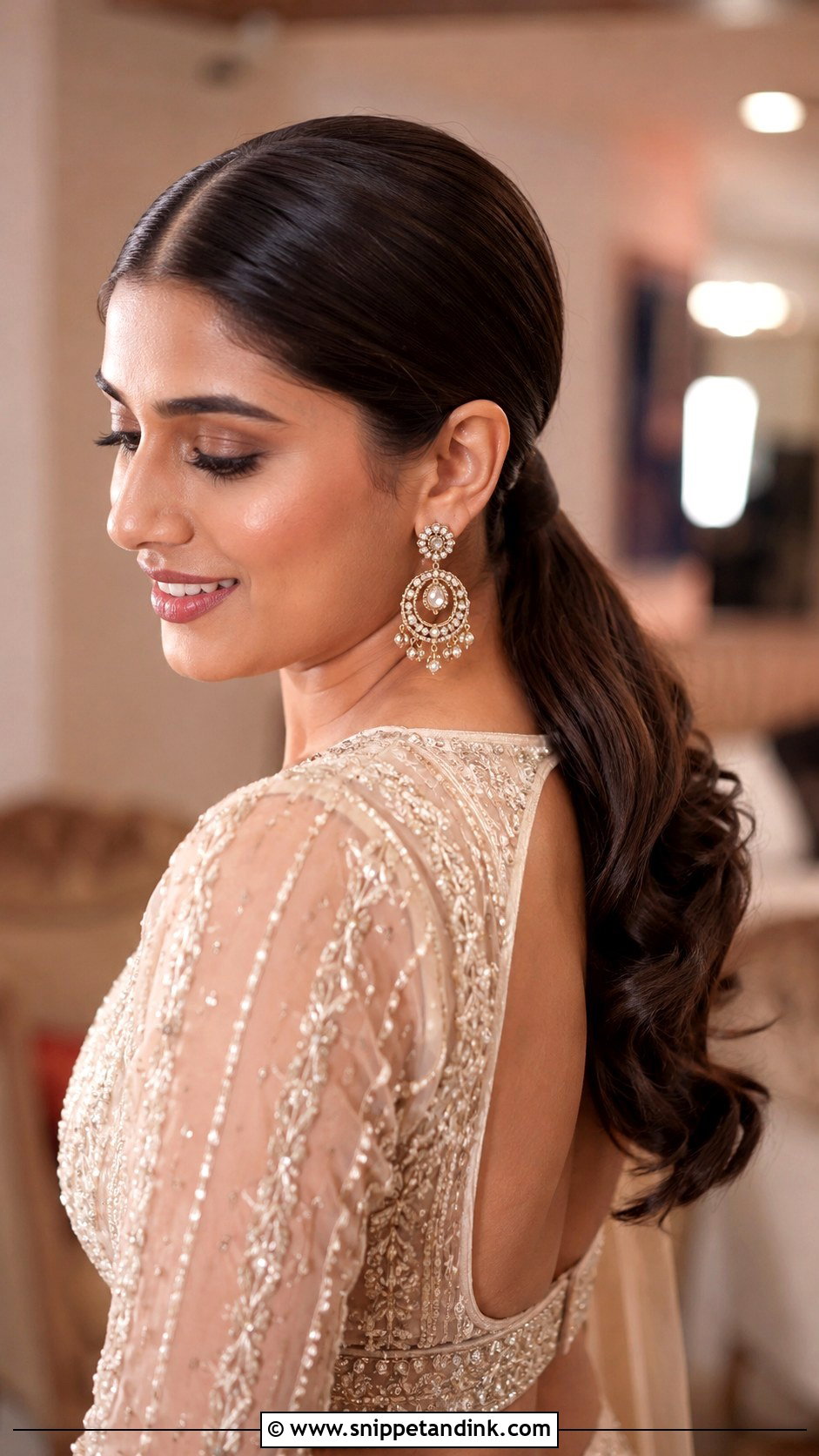
Underrated, and one of my favourites with Indian wedding outfits that have a strong structure: a sleek low ponytail. Pre-draped sarees, structured lehengas and Indo-western gowns all suit it. I part cleanly, smooth the hair close to the head and tie it at the nape. The lengths can be left straight or curled only at the ends. In a humid venue, this is the style that stays closest to how it looked when you left the chair, because there’s no crown volume for frizz to ruin. Wrap a section around the elastic and let statement earrings do the rest.
6. Indian Bridesmaid Fishtail Braid
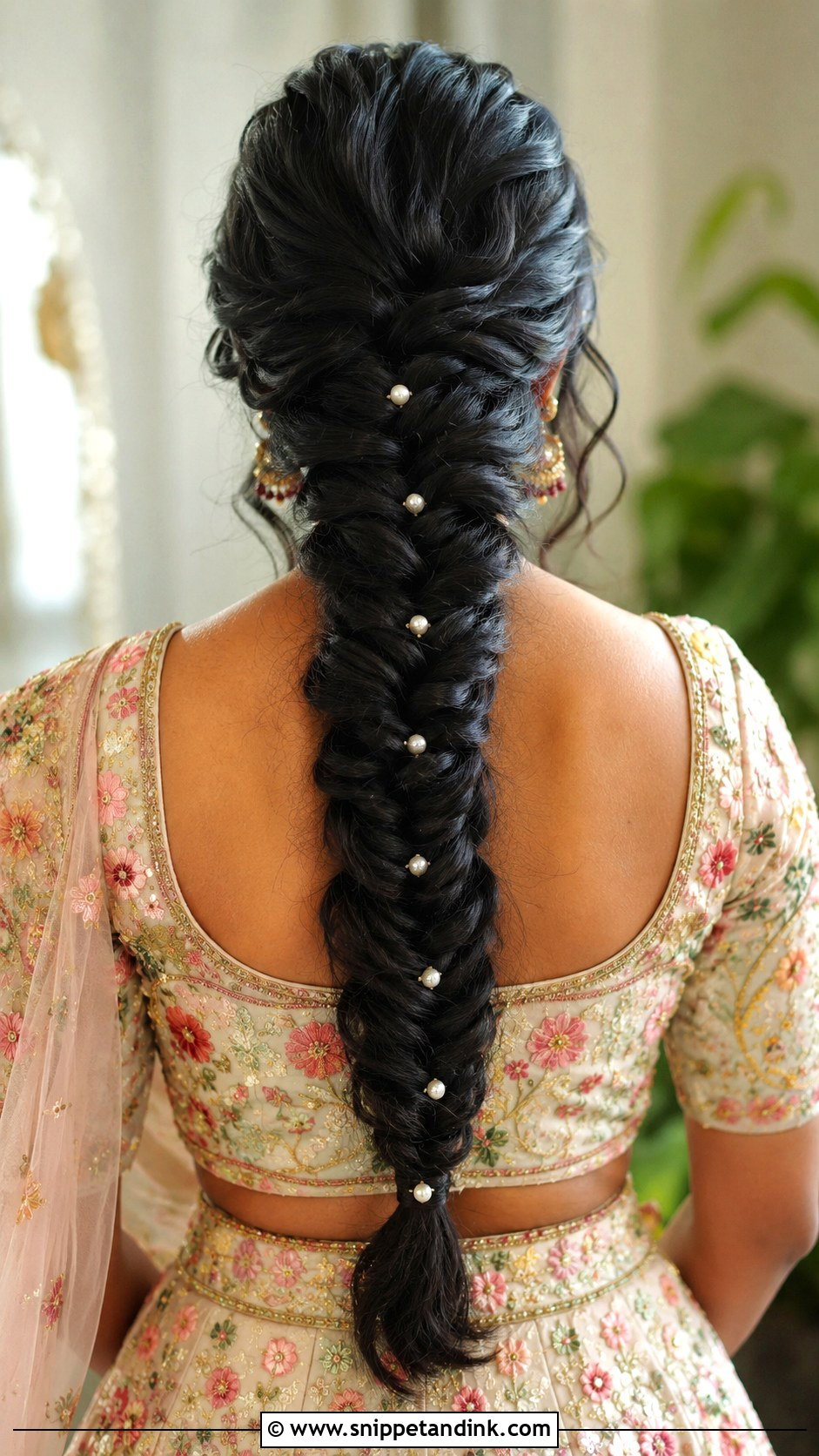
A fishtail braid takes longer to weave than a regular plait, and the reward is a pattern that doesn’t loosen as you move. For bridesmaids I keep it thick and lightly pulled apart; a tight, flat fishtail looks too formal next to a bridal look. It suits mehndi outfits, pastel lehengas and floral jewelry. Down the back is classic, over the shoulder is better for photos. Pearl pins should go in along the braid, not across it, so they grip two sections at once.
7. Indian Bridesmaid Open Waves With Hair Chain
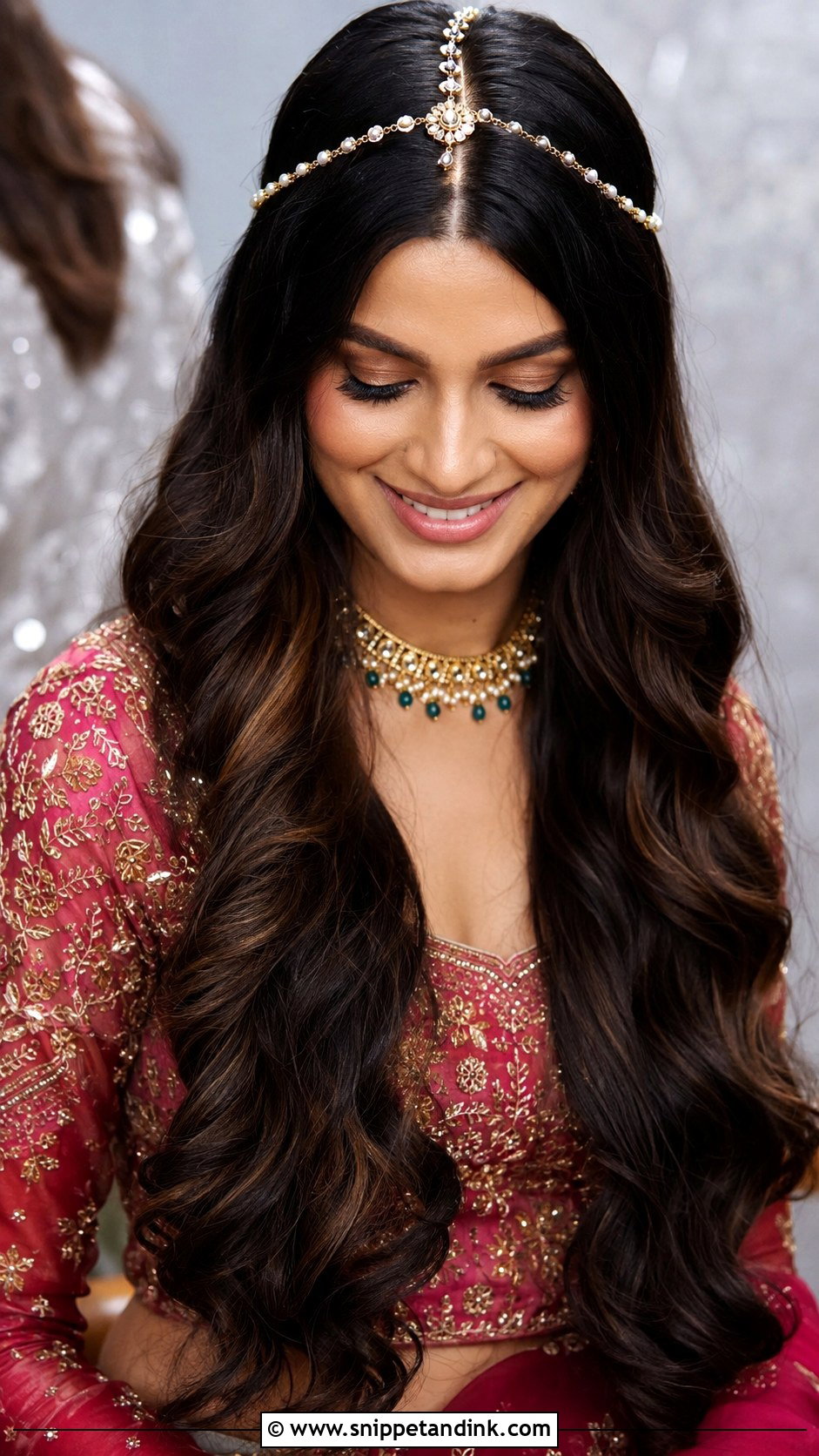
Open waves with a hair chain are for indoor or cool-weather events, full stop. Outdoors in heat, open hair sticks to the neck within an hour. I set the waves in one direction, brush them lightly so they join together, and set the chain or matha patti along the center part. This works with lehengas and sarees when the dupatta is pinned away from the hair. A flexible-hold spray keeps the waves moving for dancing without turning them crunchy.
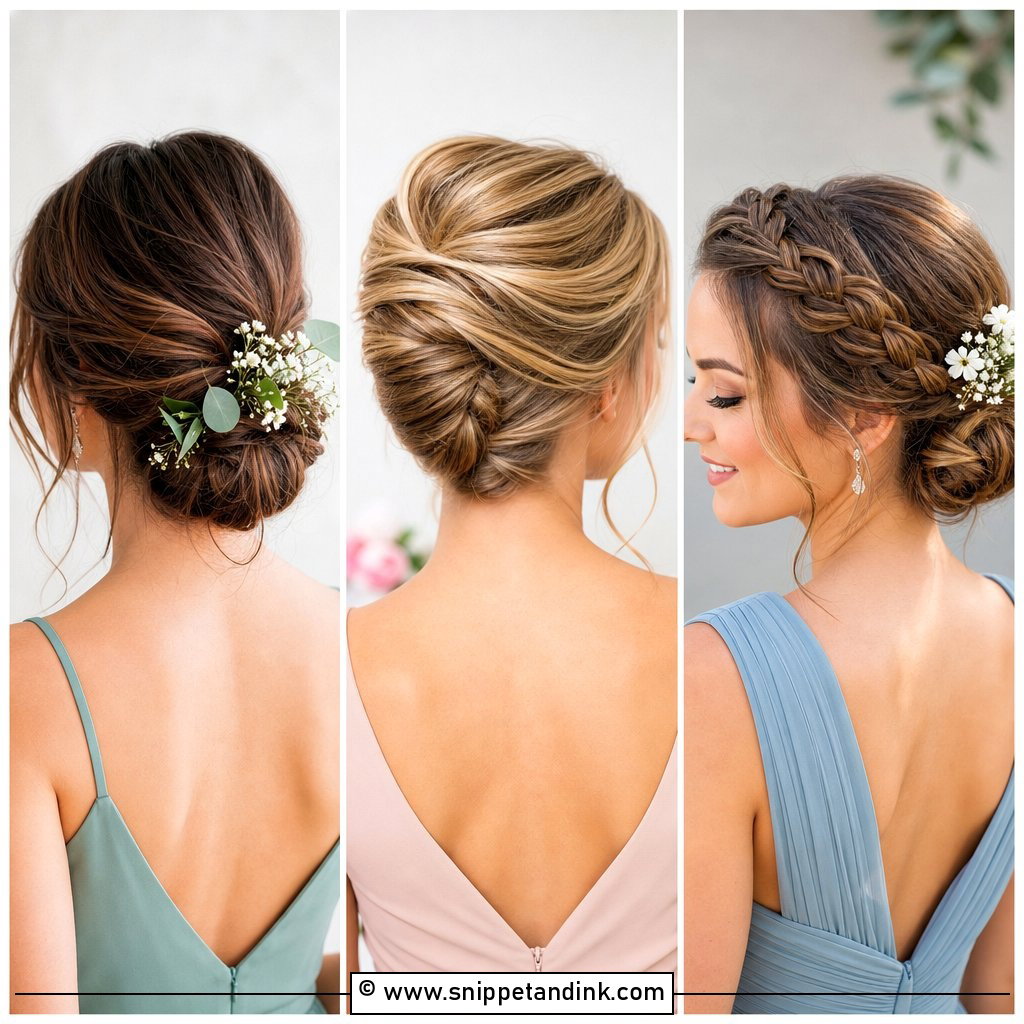
8. Indian Bridesmaid Braided Bun
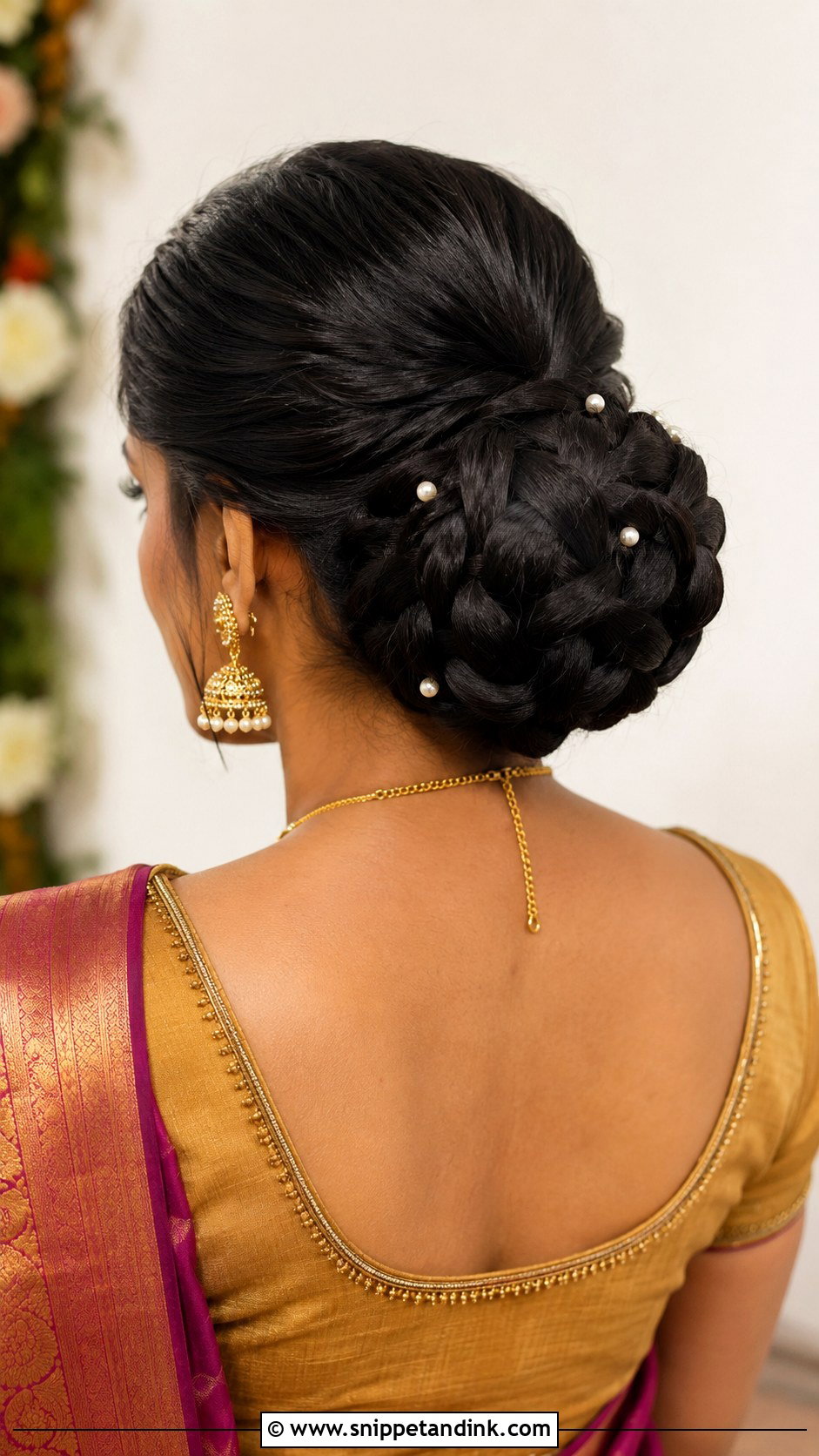
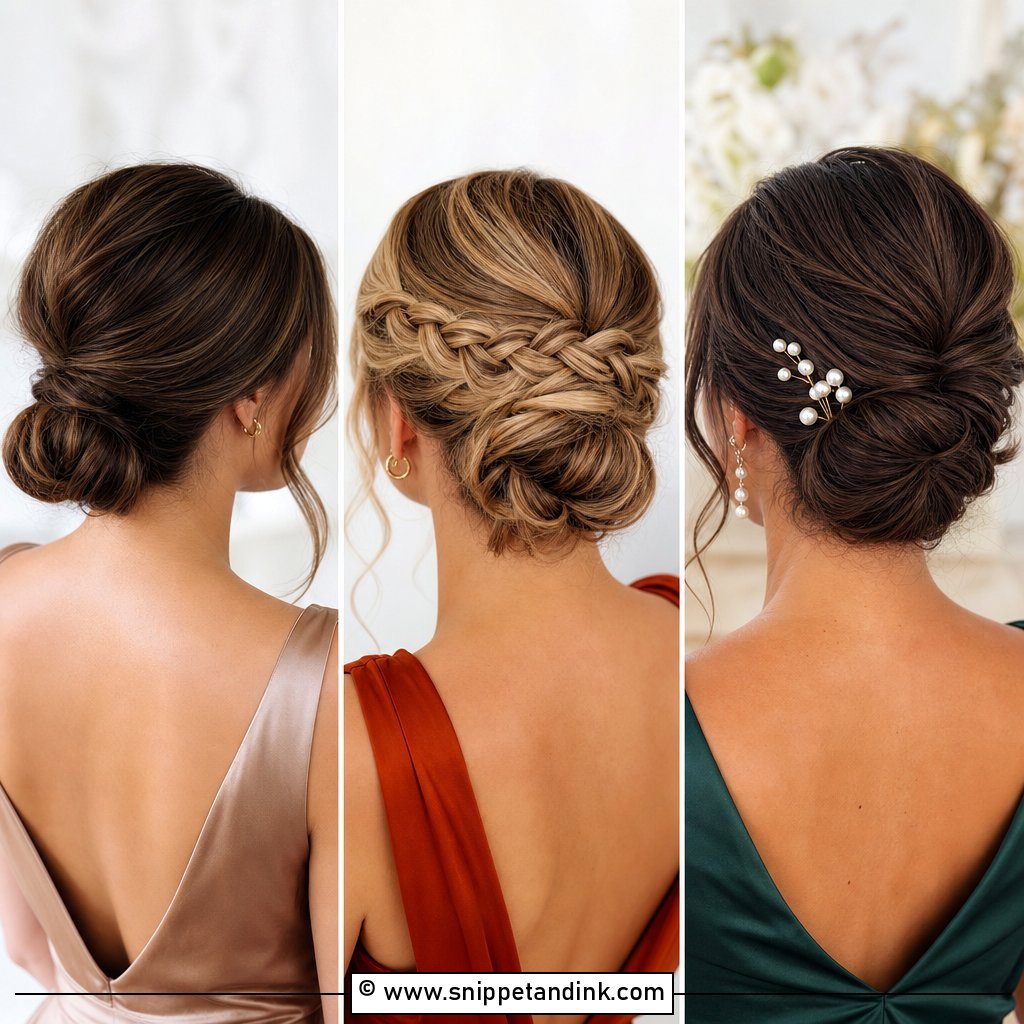
The braided bun is the safest choice for a bridesmaid who’ll be running around all day. Braiding before coiling gives a firm, textured base that holds pins far better than smooth hair. Low or mid-height both work. It pairs well with silk sarees, heavy lehengas and traditional jewelry. Gajra around the base, pearl pins through the braid or a single juda pin at the center: pick one, not all three, so the bride’s look stays the most ornate in the room.
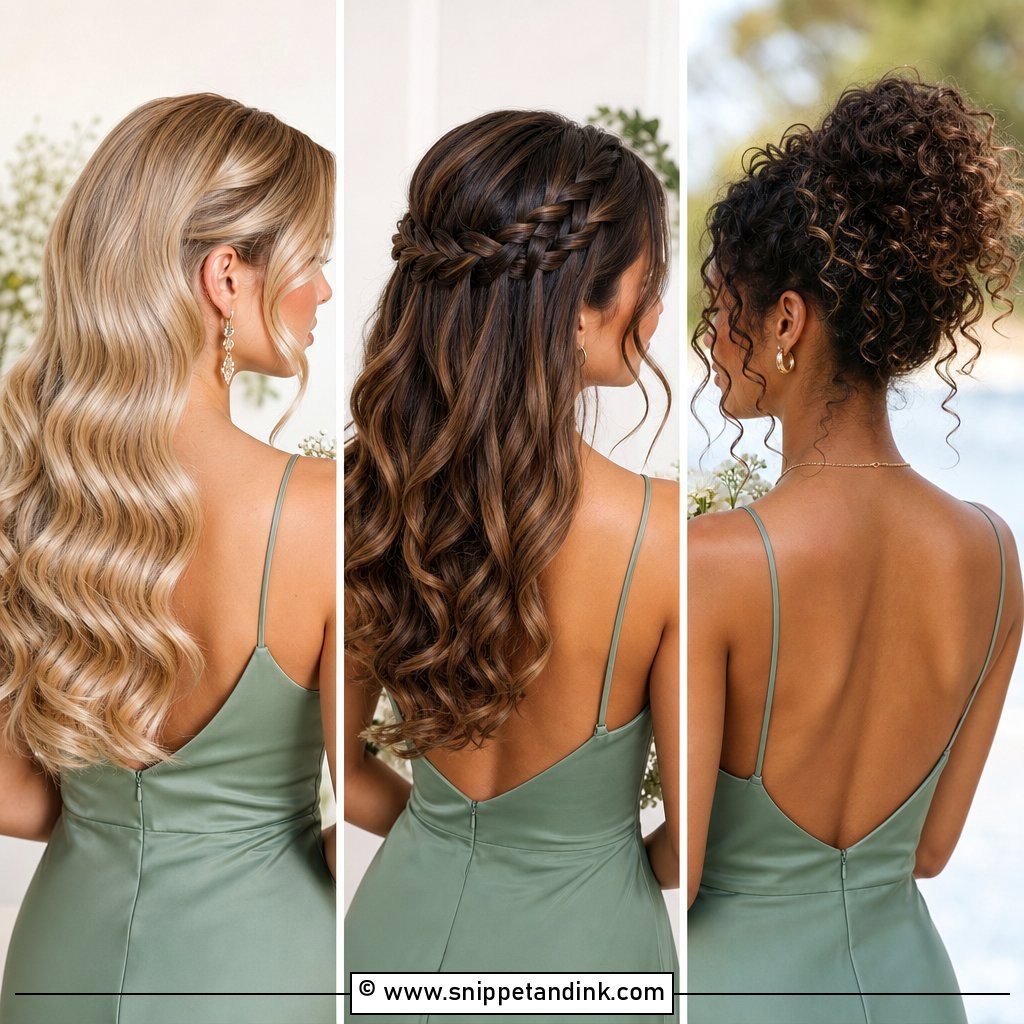
9. Indian Bridesmaid Waterfall Braid Curls
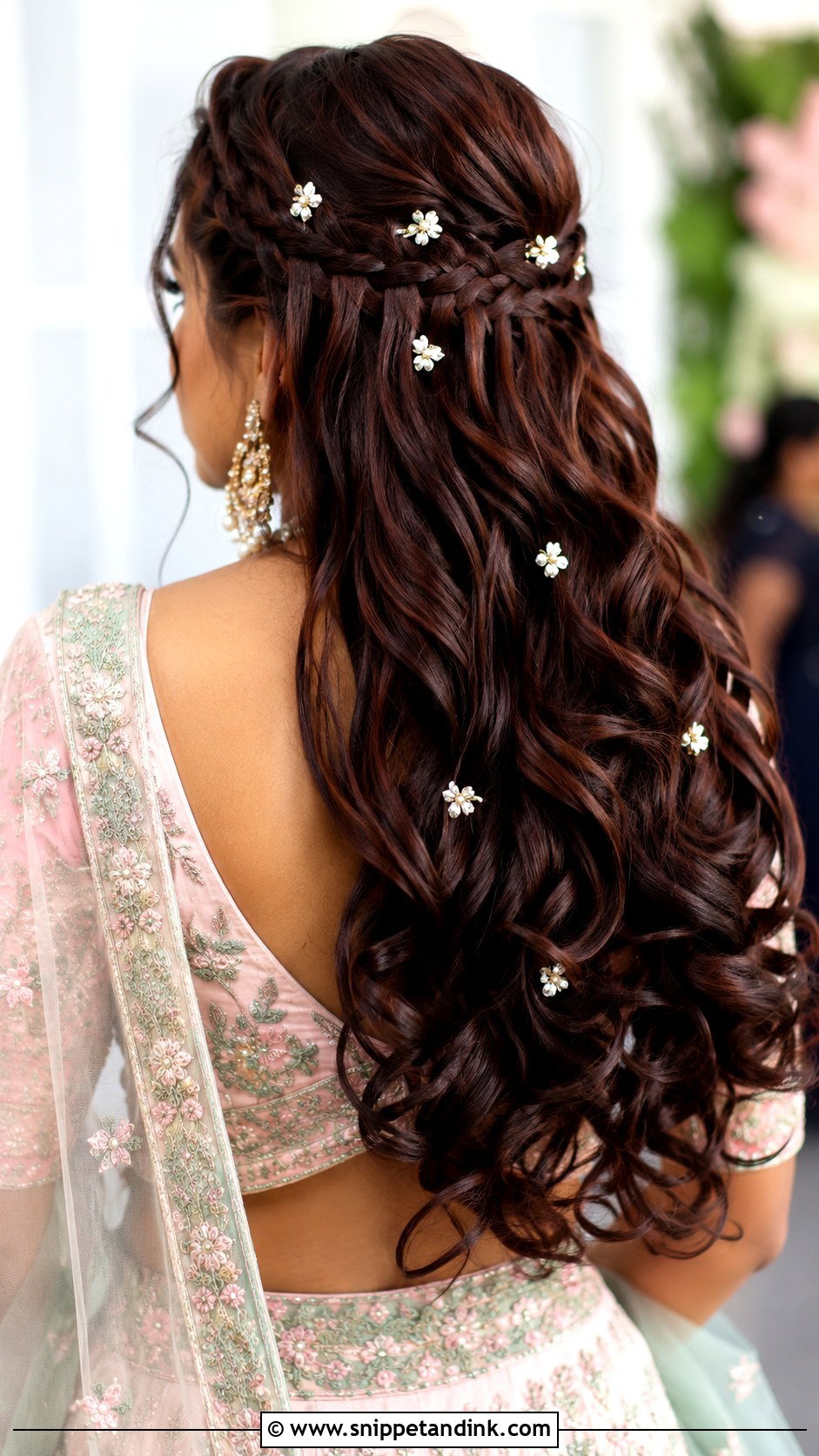
A waterfall braid runs across the crown and drops sections into the curls below it, so the back of the head has a lot of detail without the weight of a bun. It suits daytime functions, pastel outfits and floral lehengas. The weak point is the drop sections: on slippery hair they slide out of the braid, so I prep with a little texture spray first. Keep the curls smooth. Small pins work better here than large hair jewelry.
10. Indian Bridesmaid South Indian Braid
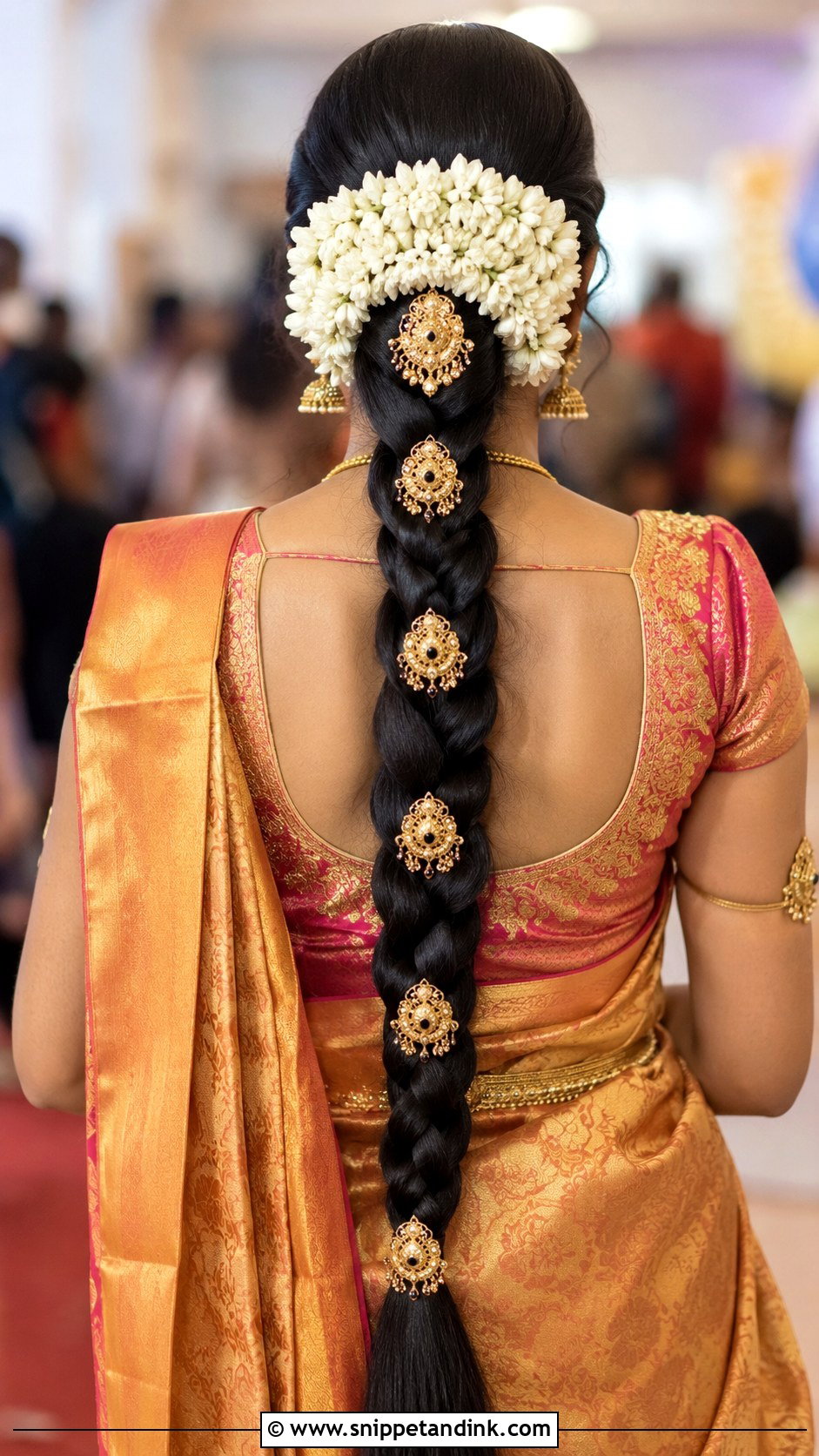
A South Indian braid shows off length, and for a bridesmaid it can be a lighter version of the bridal style. Worn down the back with jasmine, gold accessories or braid ornaments, it pairs with silk sarees, temple jewelry and deep colours. Braid it tight for a clean finish or pancake it for width. Heavy braid ornaments pull on the scalp over a long ceremony, so I secure the top ones with pins into the hair, not only into the braid. It keeps the face clear through every ritual.
11. Indian Bridesmaid Messy Low Bun
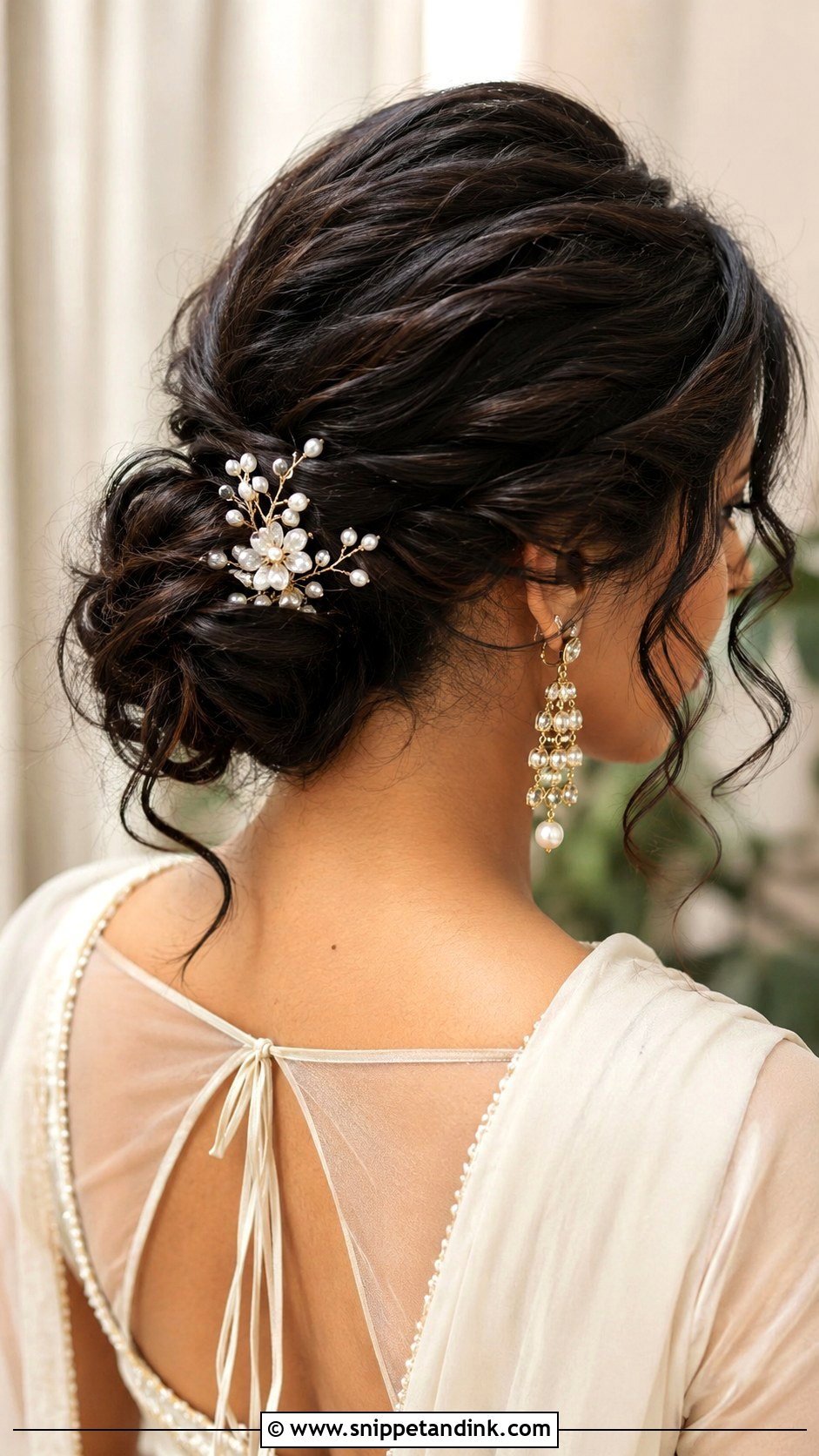
A messy low bun is only messy on the surface. Underneath, I pin it firmly with hidden pins inside the bun and only then pull out soft strands. Done the other way round, it does fall apart. It works with modern lehengas, chiffon sarees and gowns. Pearl pins, small flowers or a comb on one side add the wedding touch. Avoid this one if your hair is very silky and freshly washed; it needs some grip.
12. Indian Bridesmaid Bubble Braid
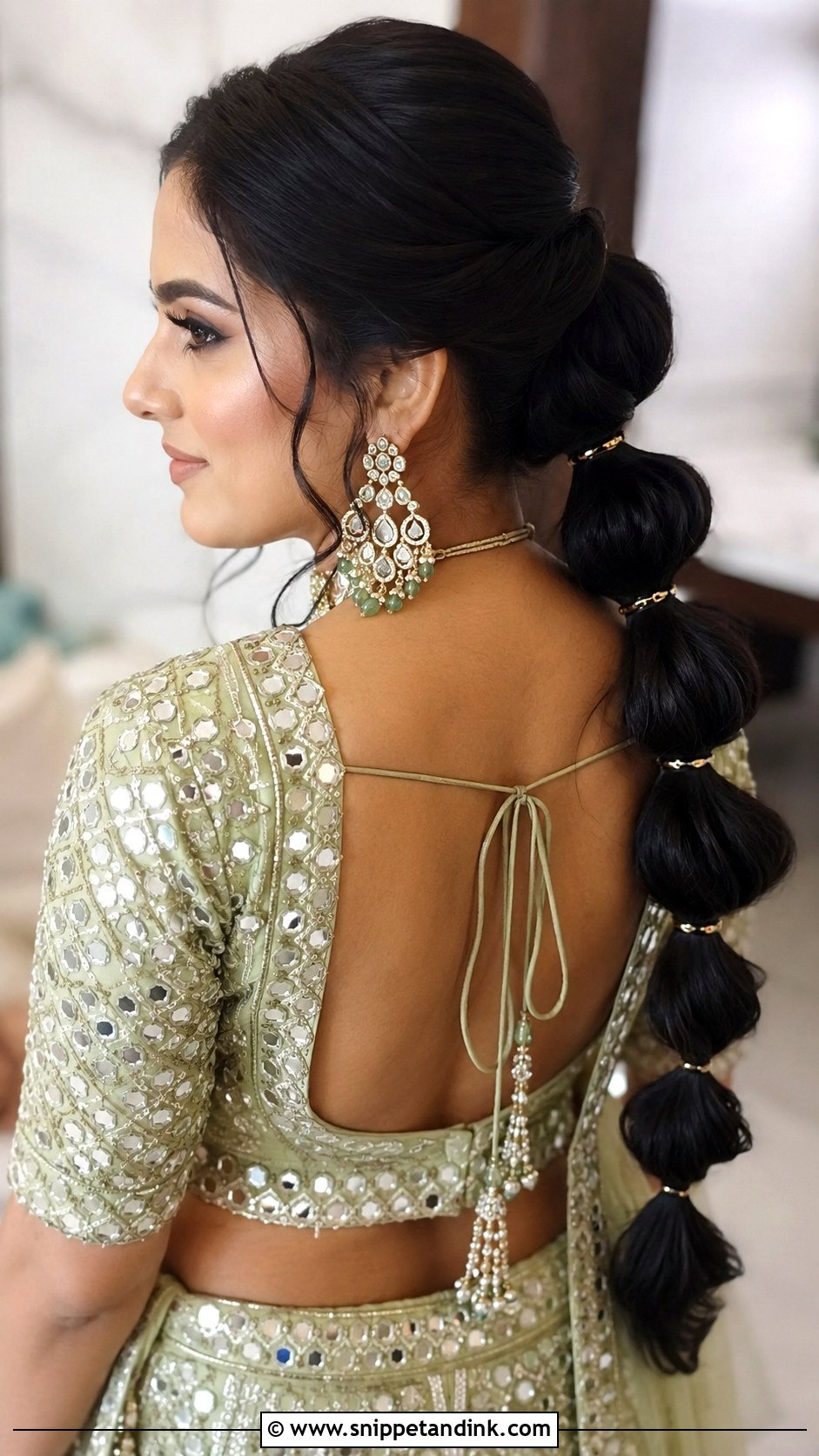
A bubble braid is playful, and practical for the dance floor. I gather the hair into a ponytail, add small clear elastics down the length, and pull each section out into a rounded bubble. It looks great with mirror-work lehengas and bright colours. Gold thread, pearl pins or tiny flowers between the bubbles make it festive. The elastics can snag fine hair when removed, so cut them out at the end of the night instead of pulling.
13. Indian Bridesmaid Side Swept Curls
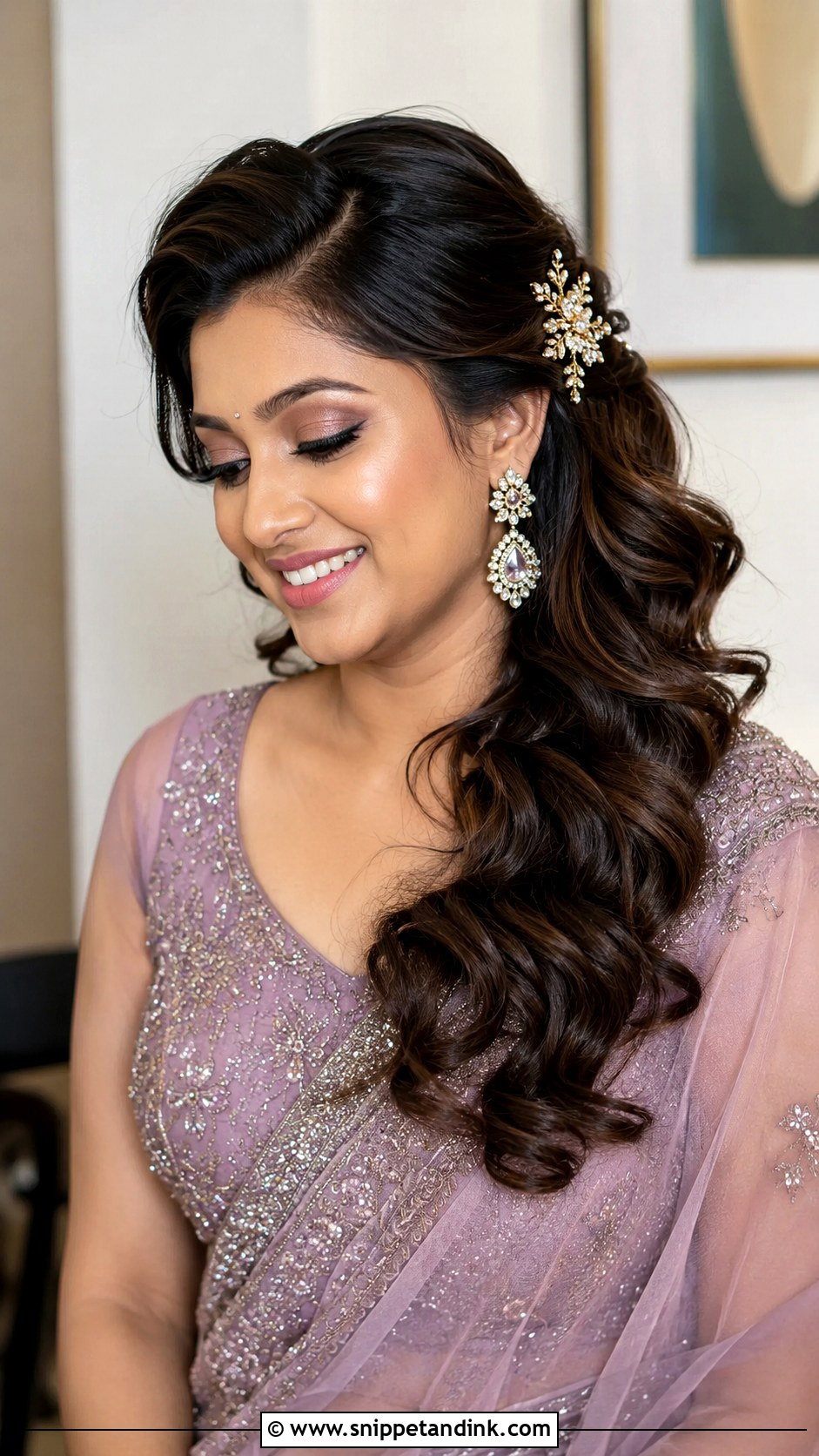
With a saree, place side swept curls on the side opposite the pallu, so the shoulder line stays balanced. I curl the whole head, brush it into waves and pin it at the back of one side so it falls over the shoulder. A decorative clip, passa or small floral piece covers the pins. It shows earrings and blouse detail well and suits reception and cocktail events. You get the feel of open hair with much more control.
14. Indian Bridesmaid Crown Braid Bun
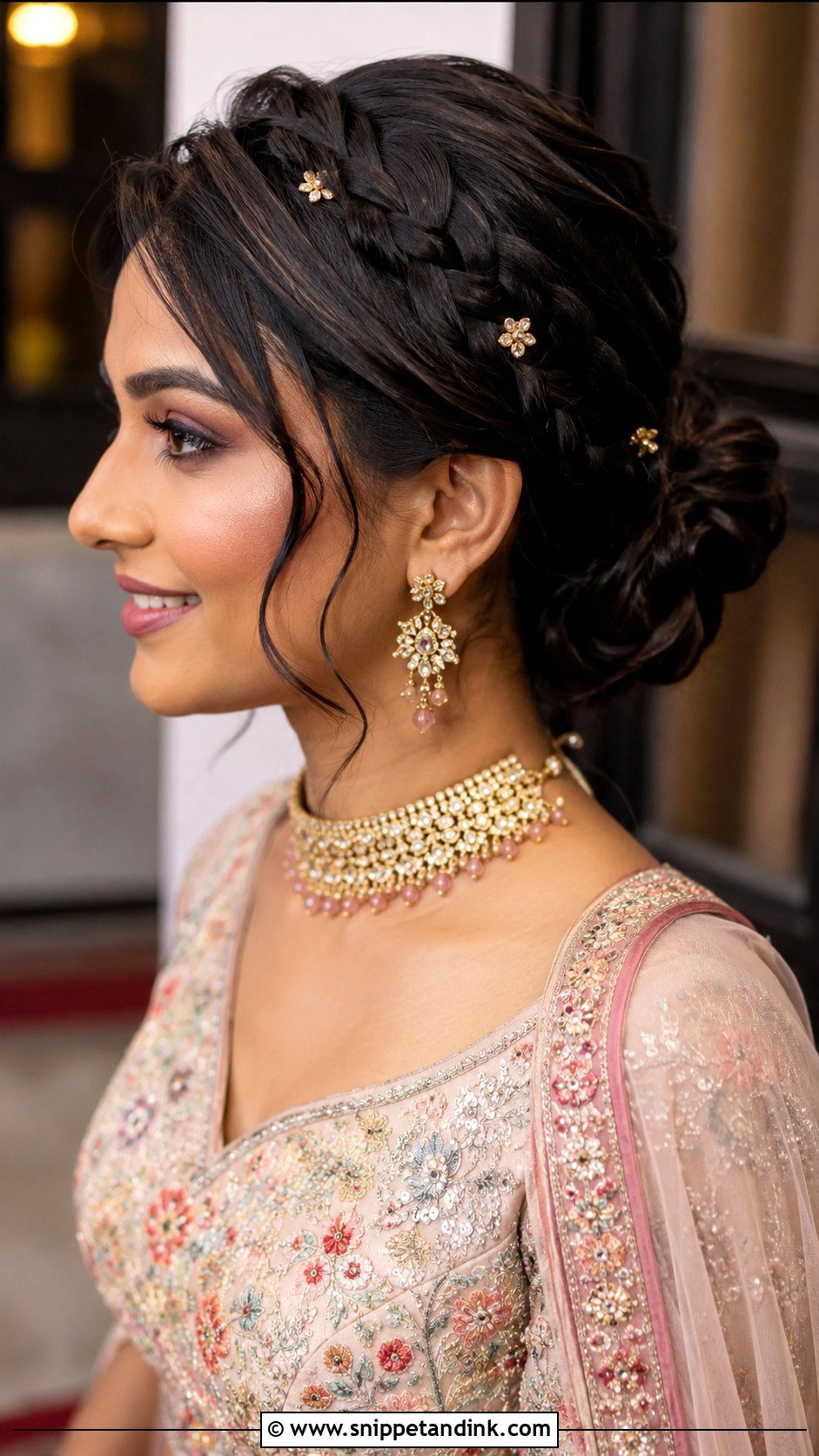
A crown braid bun puts the detail at the hairline and the hold at the back. The braid runs along the front or around the head and merges into a bun. Under a light dupatta, the braid still shows, which is why it’s my pick for bridesmaids who have to cover their heads during rituals. Add tiny flowers or gold pins along the braid. It holds well over a long day.
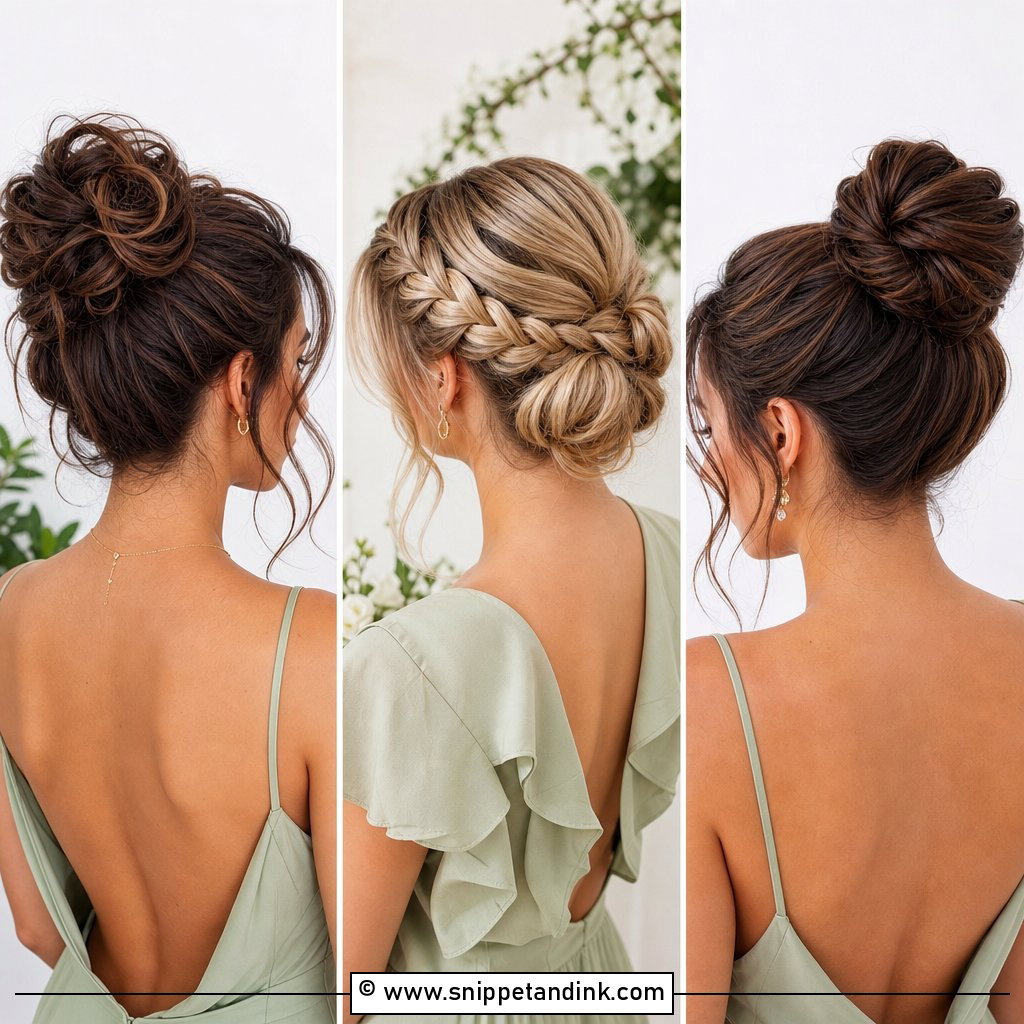
15. Indian Bridesmaid Straight Hair With Center Part
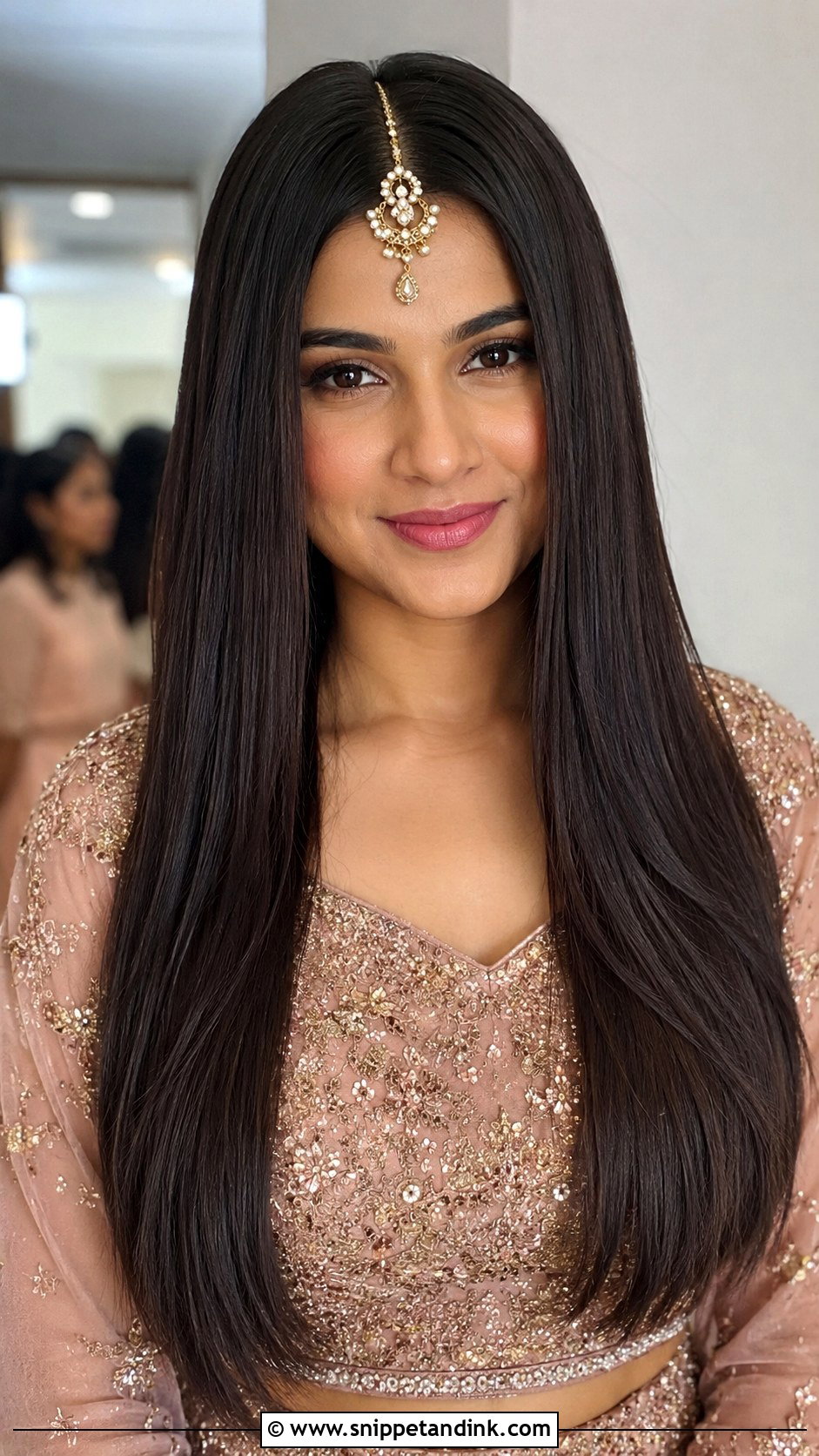
Straight hair with a center part depends entirely on the condition of the hair. Split ends show immediately, so a trim two or three weeks before the wedding matters more than any product. I straighten in fine sections, apply serum only on the lengths, and leave some natural movement at the ends so it doesn’t look ironed. A maang tikka, matha patti or jeweled headband makes it ceremonial. It’s the best choice for heavily embroidered outfits, where the hair should stay quiet.
16. Indian Bridesmaid Voluminous High Bun
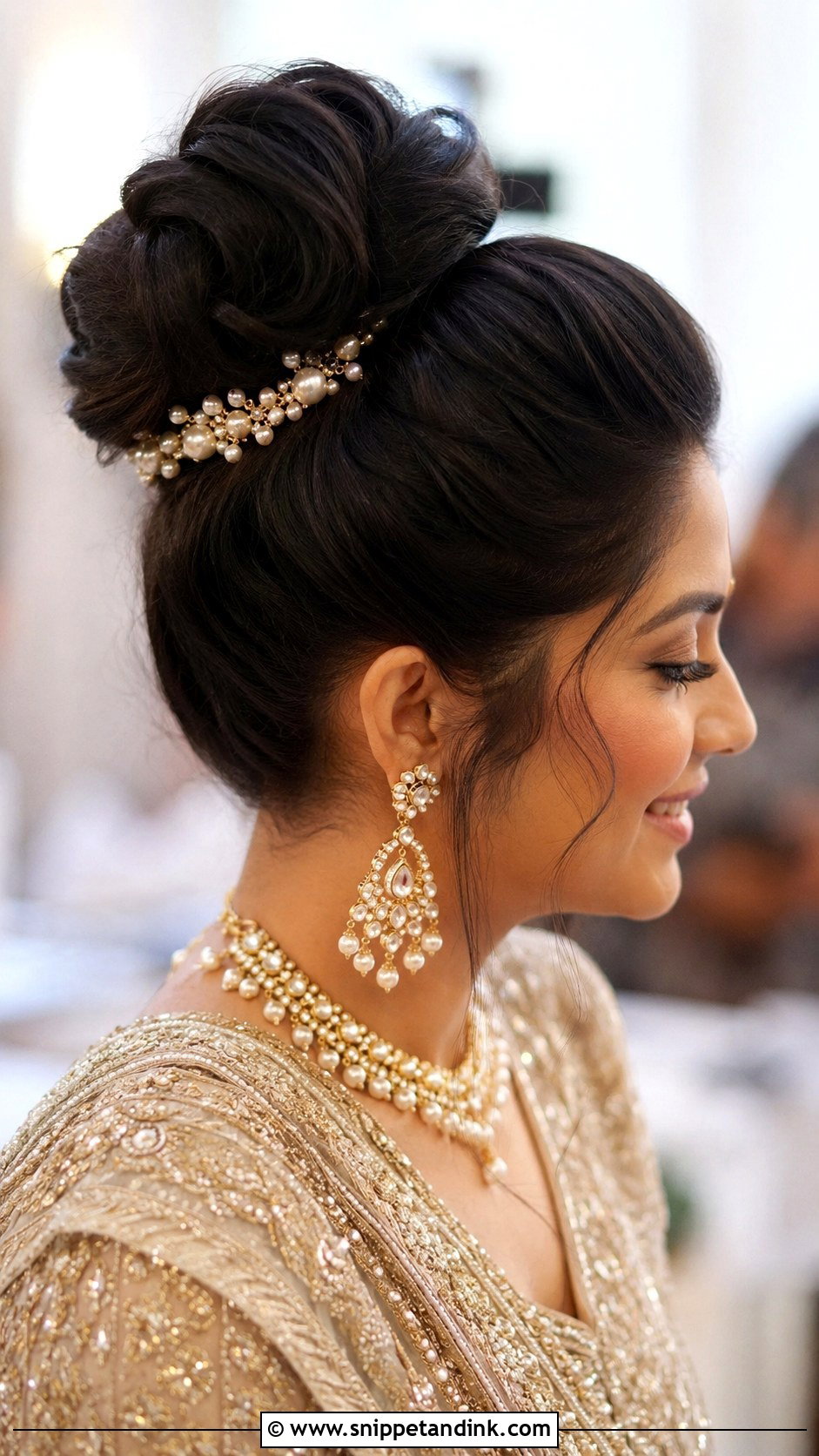
A high bun clears the neck and shoulders entirely, which makes sense with a high-neck blouse or a dupatta that sits on the shoulders. Its height balances heavy lehengas and statement jewelry in grand venues. With long hair, the bun can get very heavy, so I split the length in two and pin each half separately rather than winding everything into one coil. The front can be sleek or softly puffed. A decorative pin or a thin ring of flowers finishes it. Group portraits from the front and side show its shape well.
17. Indian Bridesmaid Rope Braid
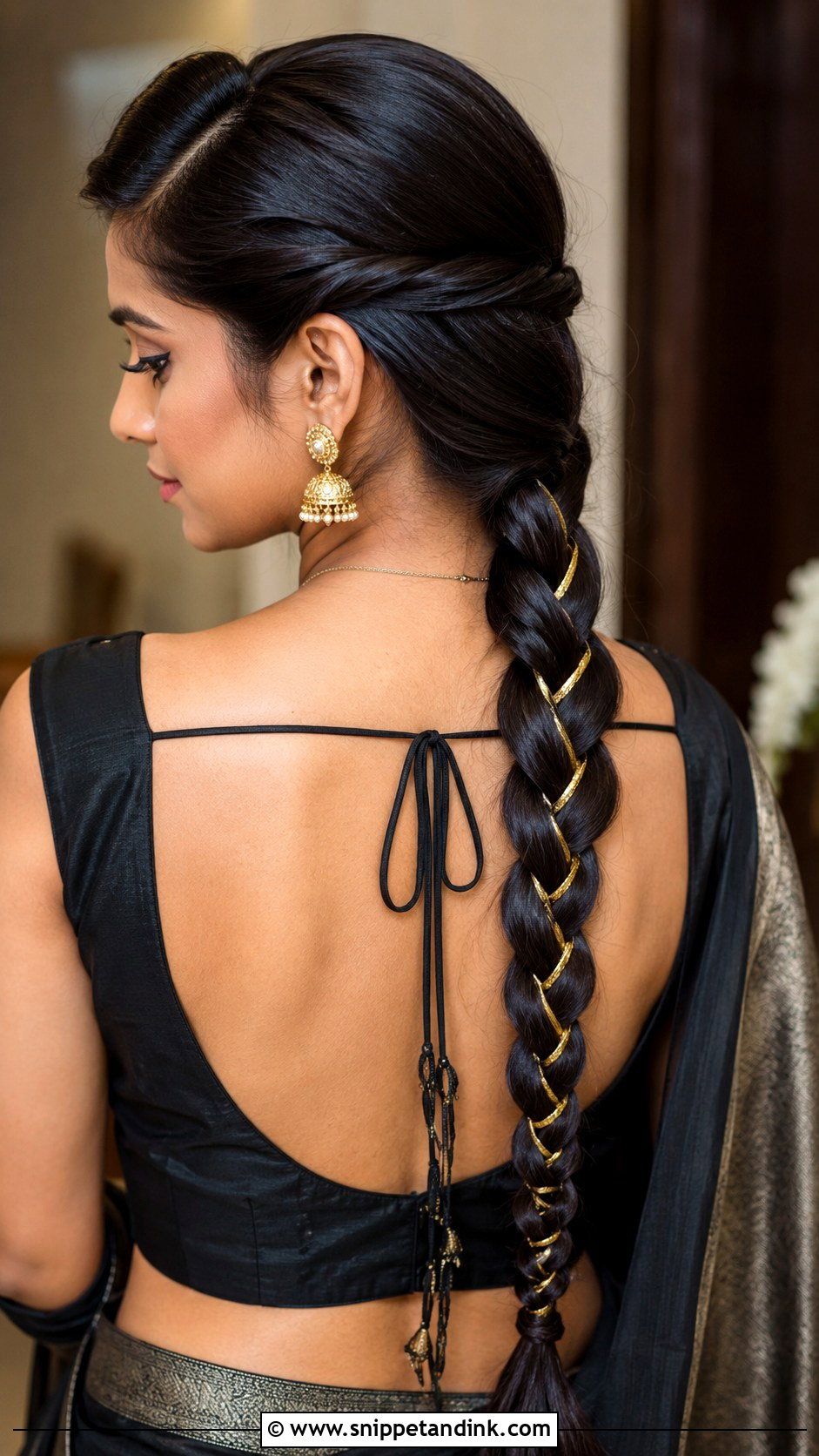
A rope braid is two twisted sections wound around each other, which gives a cleaner, more modern line than a plait. It looks good with modern sarees, lehengas and fusion outfits. Gold thread, tiny pearls or small flowers can be woven into the twist. Frizz shows on a rope braid more than on any other style here, so I smooth the hair with a light cream before twisting. Twist each section in the same direction and wind them the opposite way; that’s what keeps it from unravelling.
18. Indian Bridesmaid Curly Half Ponytail
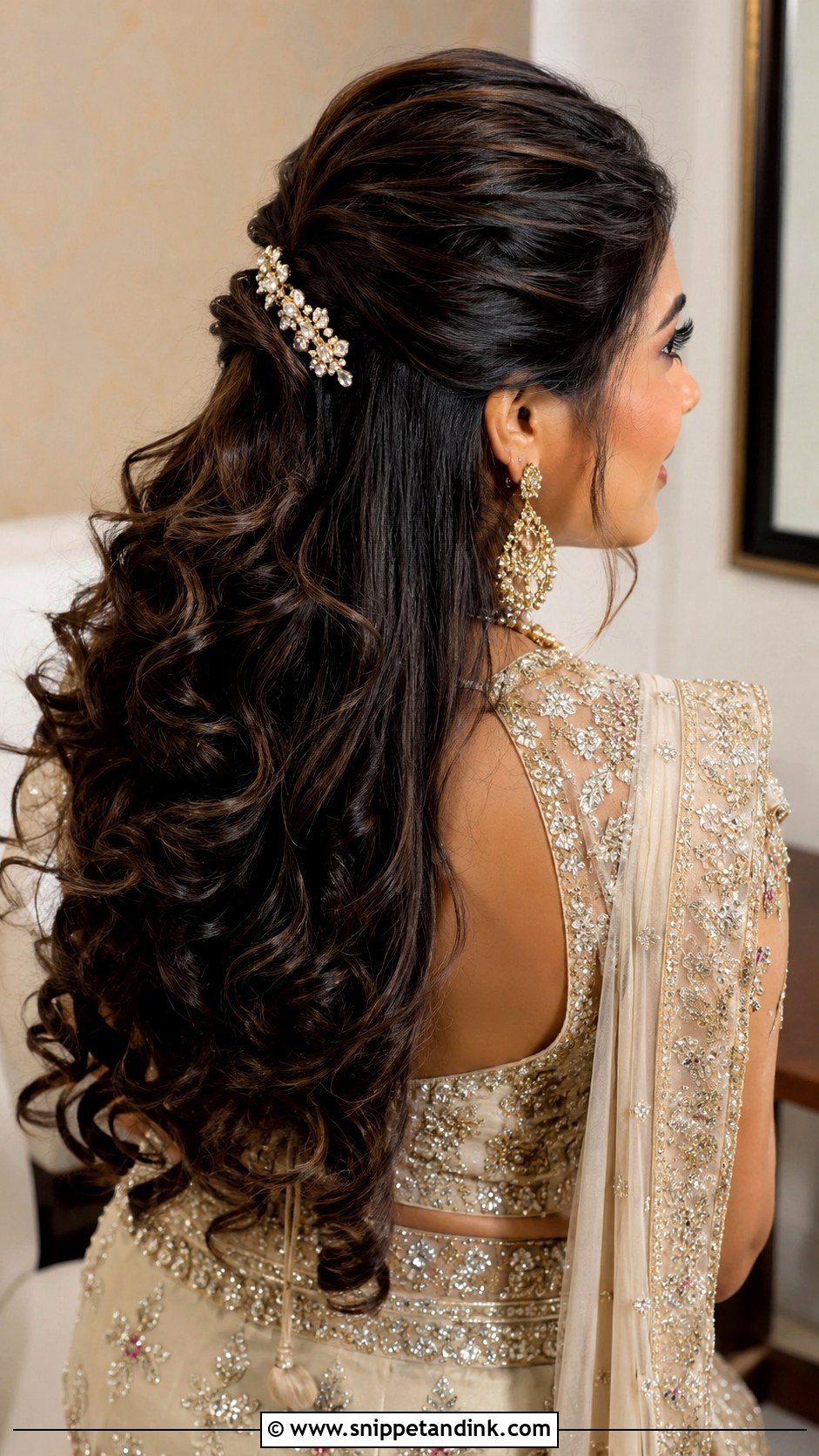
A curly half ponytail lifts the crown and keeps the front neat. The top section goes into a small ponytail, the rest falls in defined curls. Wrap hair around the base or clip something decorative over it. It suits lehengas, shararas and festive gowns, and moves well at a sangeet or reception. If the ponytail is too tight, it pulls at the hairline after a few hours; I tie it snug, not tight.
19. Indian Bridesmaid Floral Bun
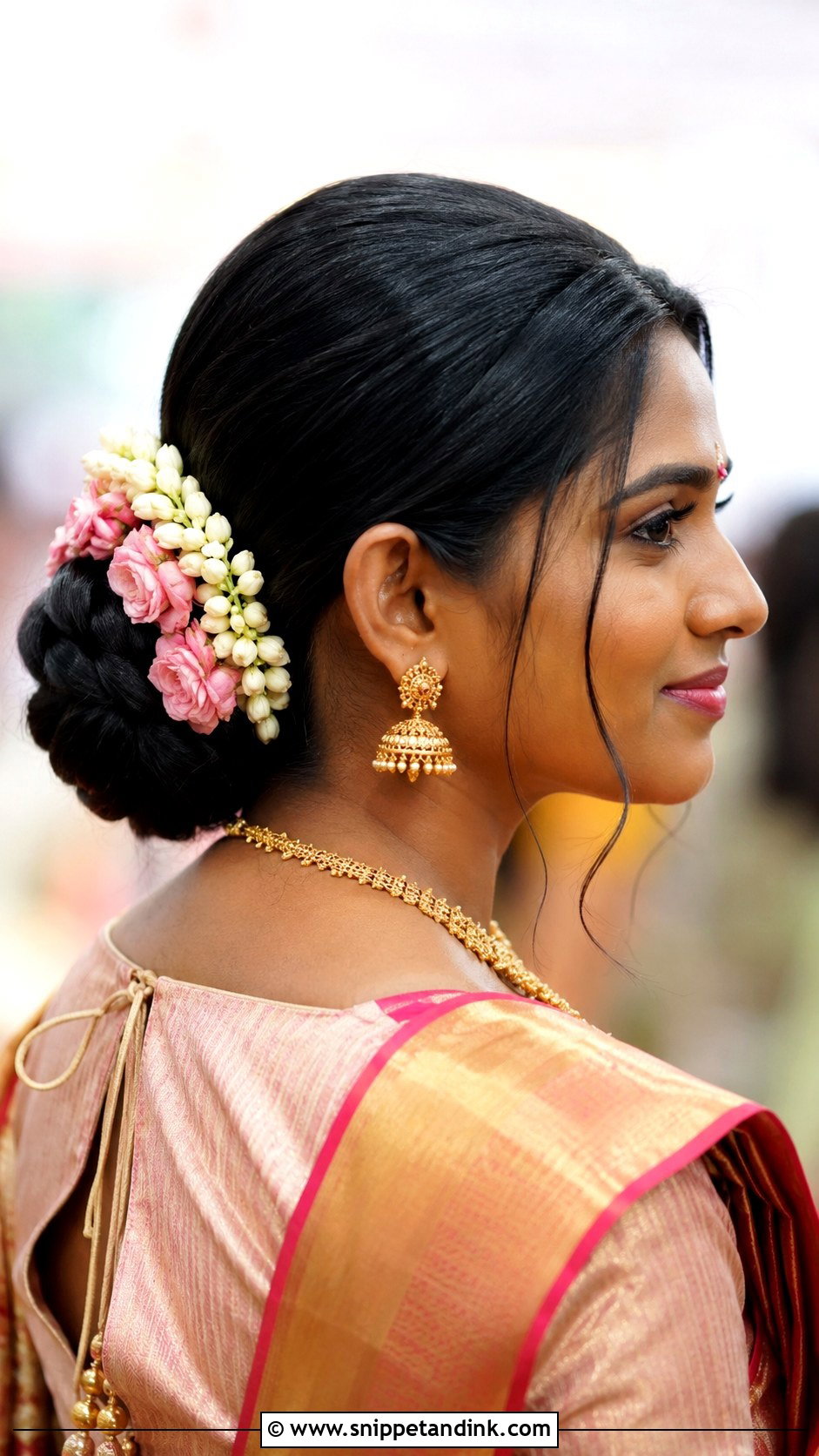
A floral bun can sit low, at mid-height or slightly high, and the flowers should follow the wedding palette. Jasmine is classic; roses, orchids or small white blooms read more modern. It keeps the neckline open with sarees, lehengas and long gowns, and it’s practical for warm weather. I keep the flowers to one side or around the base. A bridesmaid’s bun covered all the way round tends to look more bridal than the bride’s.
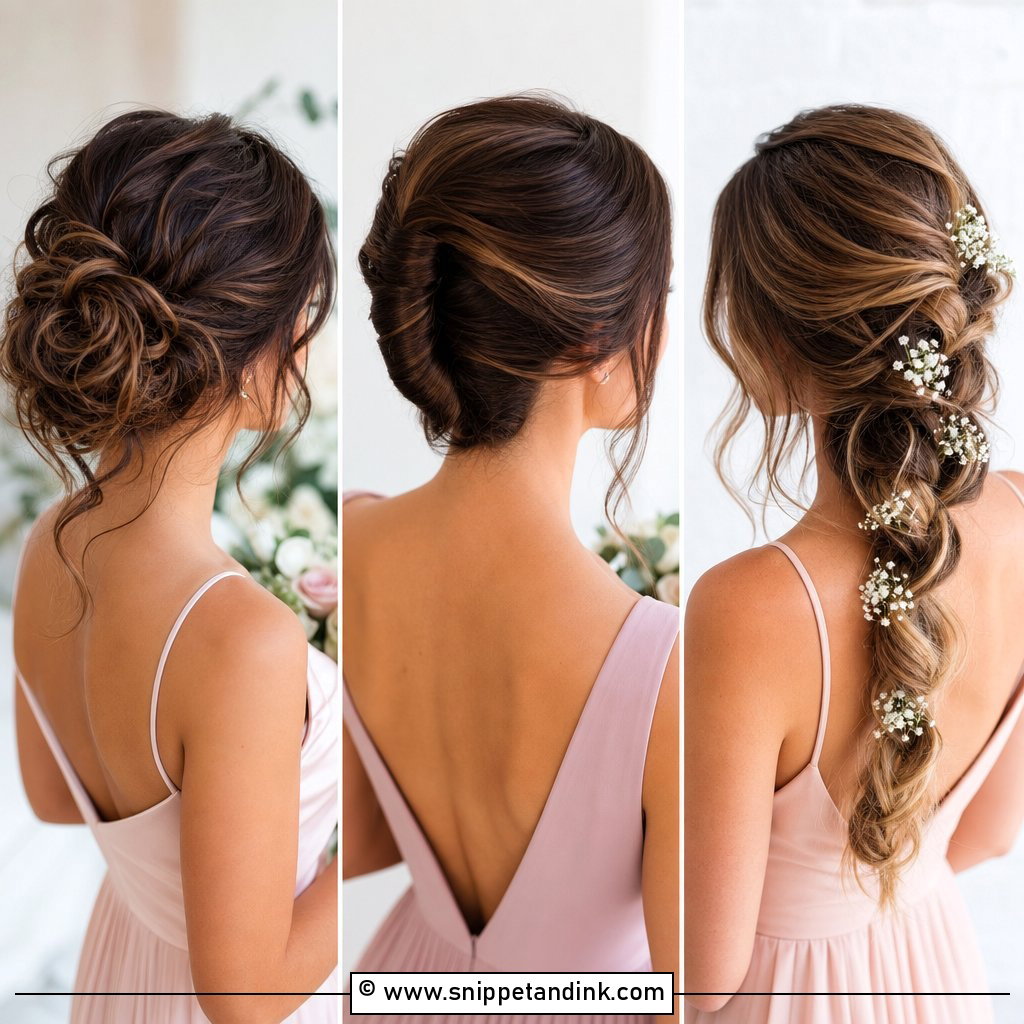
20. Indian Bridesmaid Long Braid With Paranda
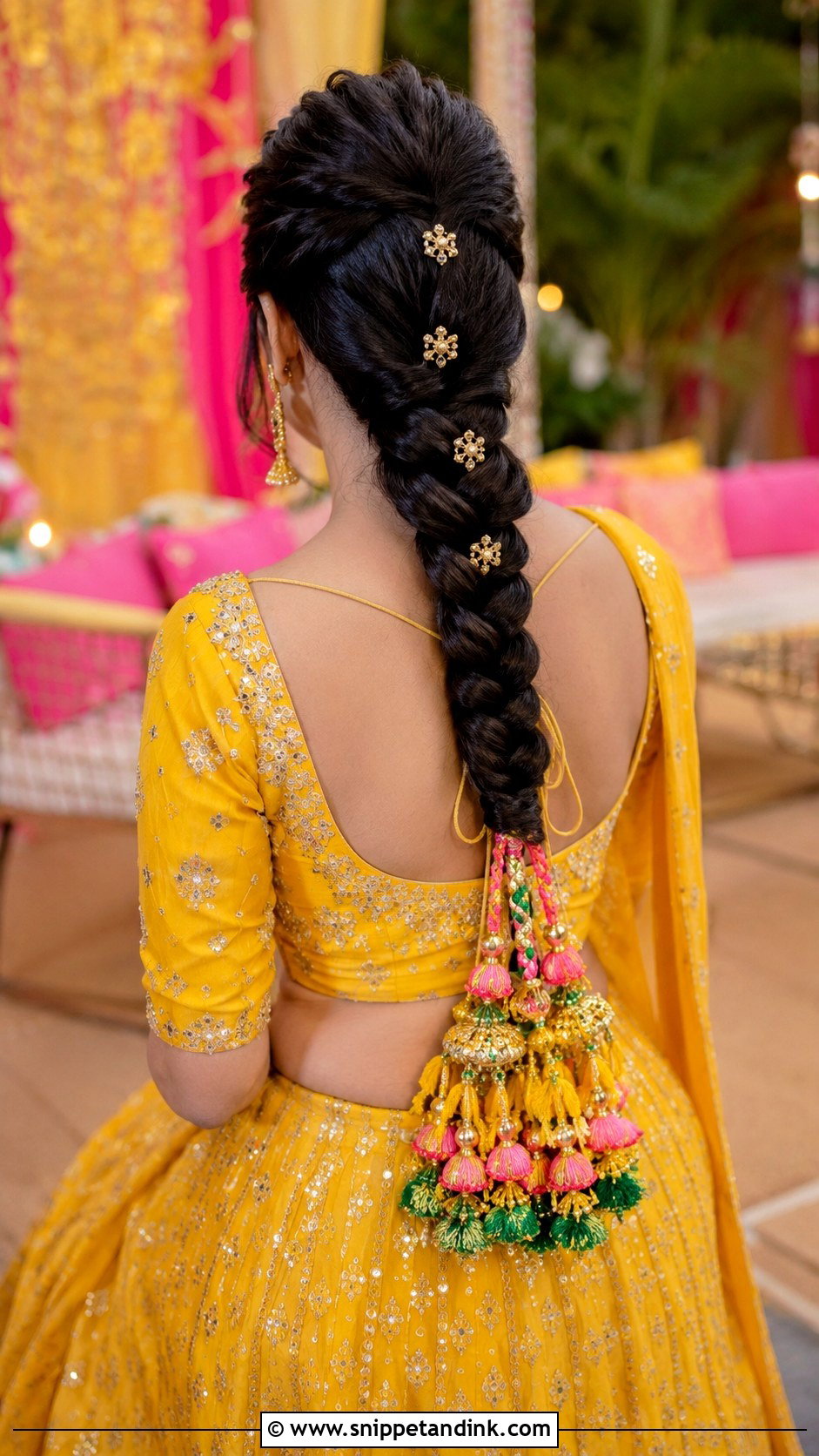
A long braid with paranda is the most fun look here, especially at Punjabi and North Indian mehndi and sangeet functions. The paranda adds colour, length and swing. Match it to the lehenga or dupatta, and let it be the only big feature; small clips are fine, but floral details on top of a paranda get busy. I braid the paranda in from the nape so its threads blend into the hair. The braid can be tight or loose. Expect it to swing into things on the dance floor, which is part of the charm.
Standing Next to the Bride Without Copying Her
Bridesmaids often show me the bride’s own hair reference and ask for something close. I steer them away from it gently. The bride’s hair should be the most detailed in every group photo, so I keep bridesmaids one step simpler: if she has a full gajra bun, the bridesmaids get a gajra band at the base only, or flowers on one side.
The group doesn’t need to match exactly. What reads well in photos is a shared element, such as the same flower or a common parting, across different styles that suit each person’s hair. Thick, curly hair and fine, straight hair will never look identical in the same style anyway.
Heavy Lengths and the Headache by Hour Four
Long, thick hair is heavy, and with flowers and jewelry pinned into it, the weight pulls on the scalp all day. The usual sign is a headache midway through the event. I spread the weight with more pins placed at different angles rather than relying on a single tight elastic, and I keep high styles lighter than low ones.
If you already feel tension in the first hour, say so then. Loosening one pin or the elastic early is easy; redoing a bun in the middle of a ceremony is not. Pack a few spare pins and a small comb in your clutch.
A Bridesmaid Look That Lasts Until the Vidaai
Most of the decision comes down to the event. A low gajra bun suits the ceremony, curls and half-up looks suit the reception and the sangeet, braids hold best when you’re busy, and sleek ponytails or straight hair go with modern outfits. Check the weather, where your dupatta will sit, the jewelry you’ll wear and the length of the event. If you can, do a quick test with your outfit before the wedding, even if it’s just at home in front of a mirror.
You'll Like These Ideas:


Leave a Reply