
Anniversary orders are some of my favourite work, because the cake is usually for a table of family rather than a ballroom. Two sponge layers with a filling between them is the right scale: tall enough to look celebratory, small enough to cut neatly at home, and easy to carry in a standard cake box. That modest size also means the decoration has to be chosen with care. Below are twenty ways to finish one, from a ganache pour to sugar roses, with notes on flavour pairings and how each finish holds up between the bakery and the party.
Decorating for the Year You’re Celebrating
There’s a traditional material for each anniversary, and it gives you a ready-made design idea that means something. I don’t follow the list rigidly, but it’s a useful place to start a brief.
- 1st, paper: a wafer paper flower or a printed edible image of your invitation.
- 5th, wood: a wood-grain finish on the sides, or a carved wooden topper.
- 10th, tin: brushed silver lustre or a small tin heart on top.
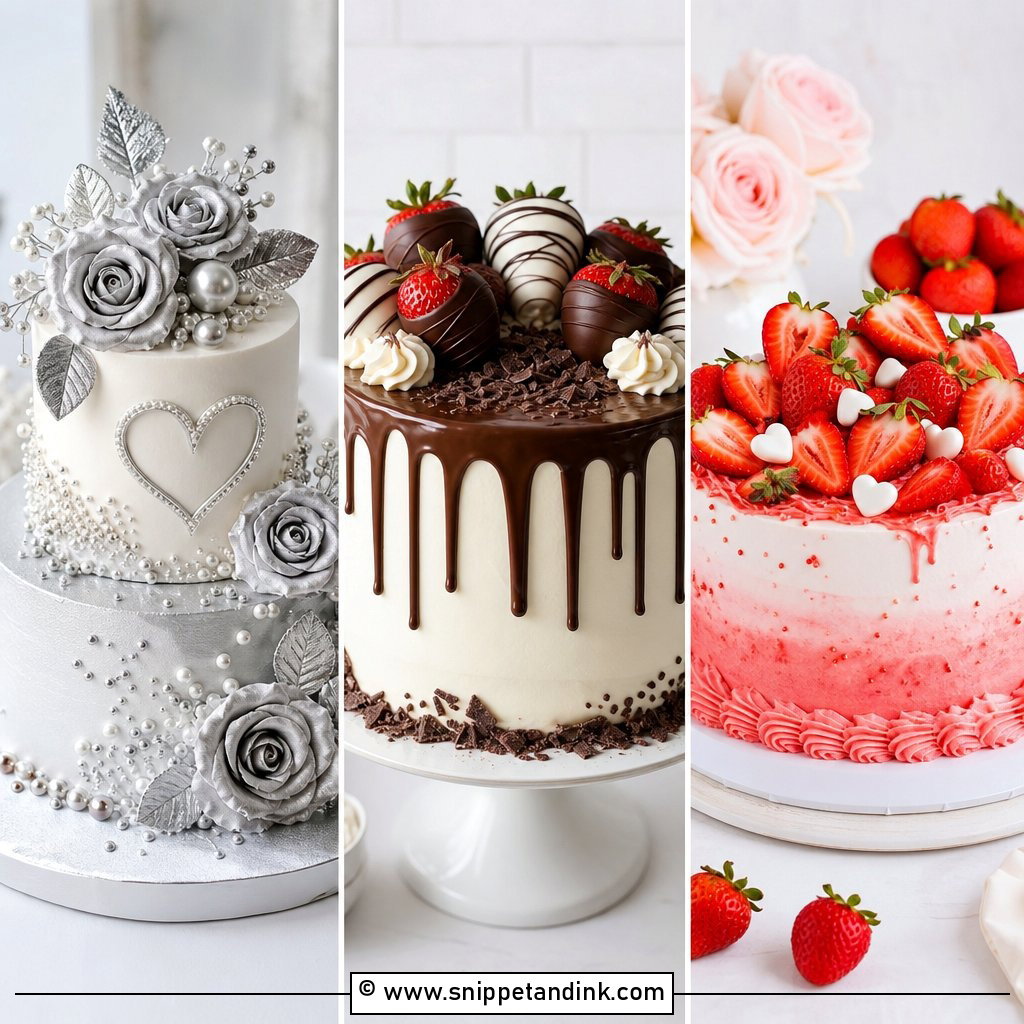
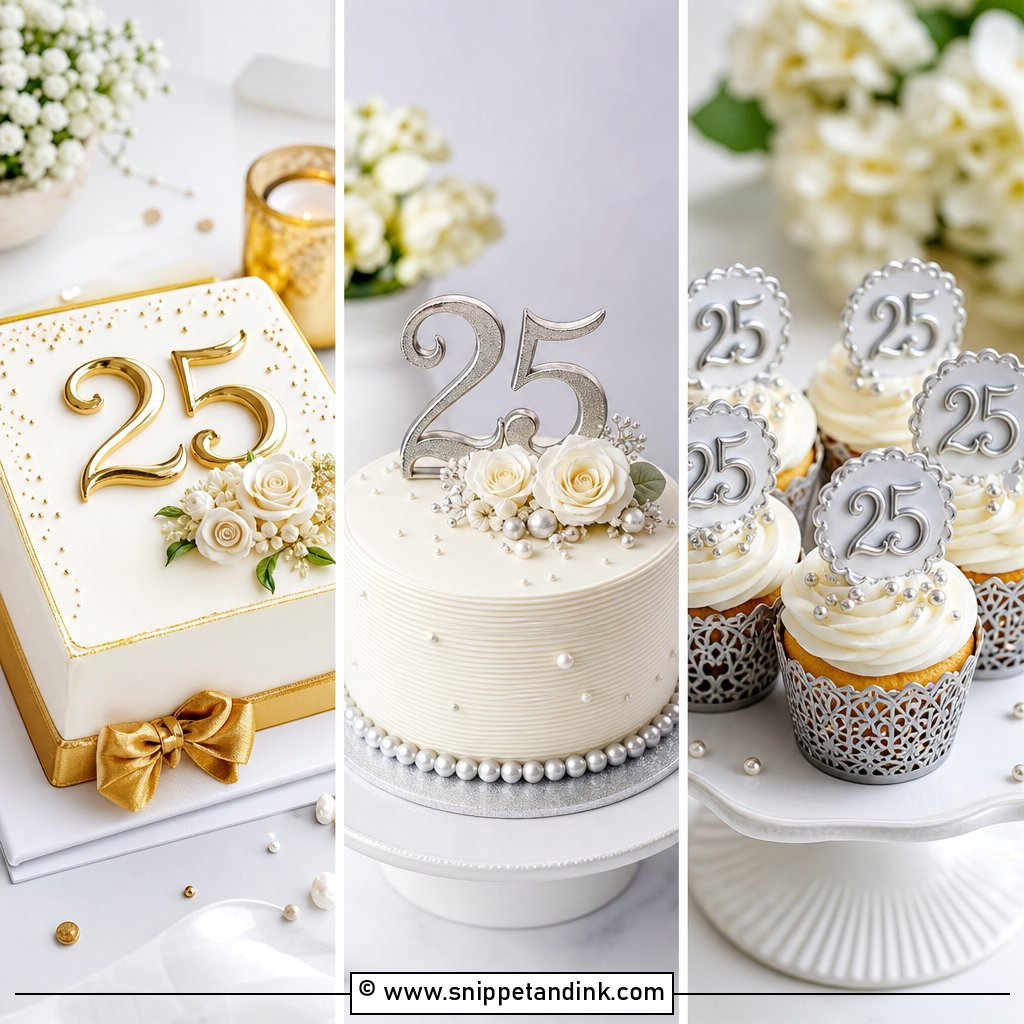
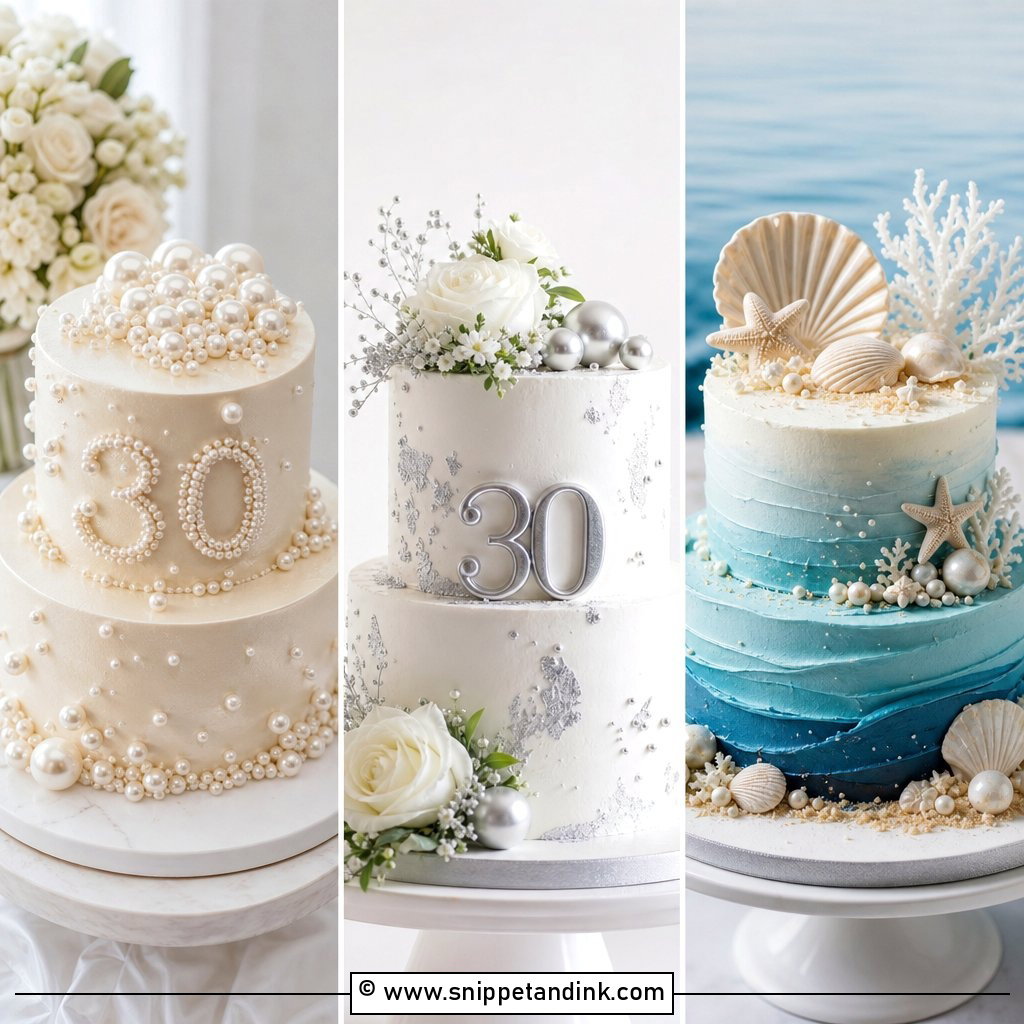
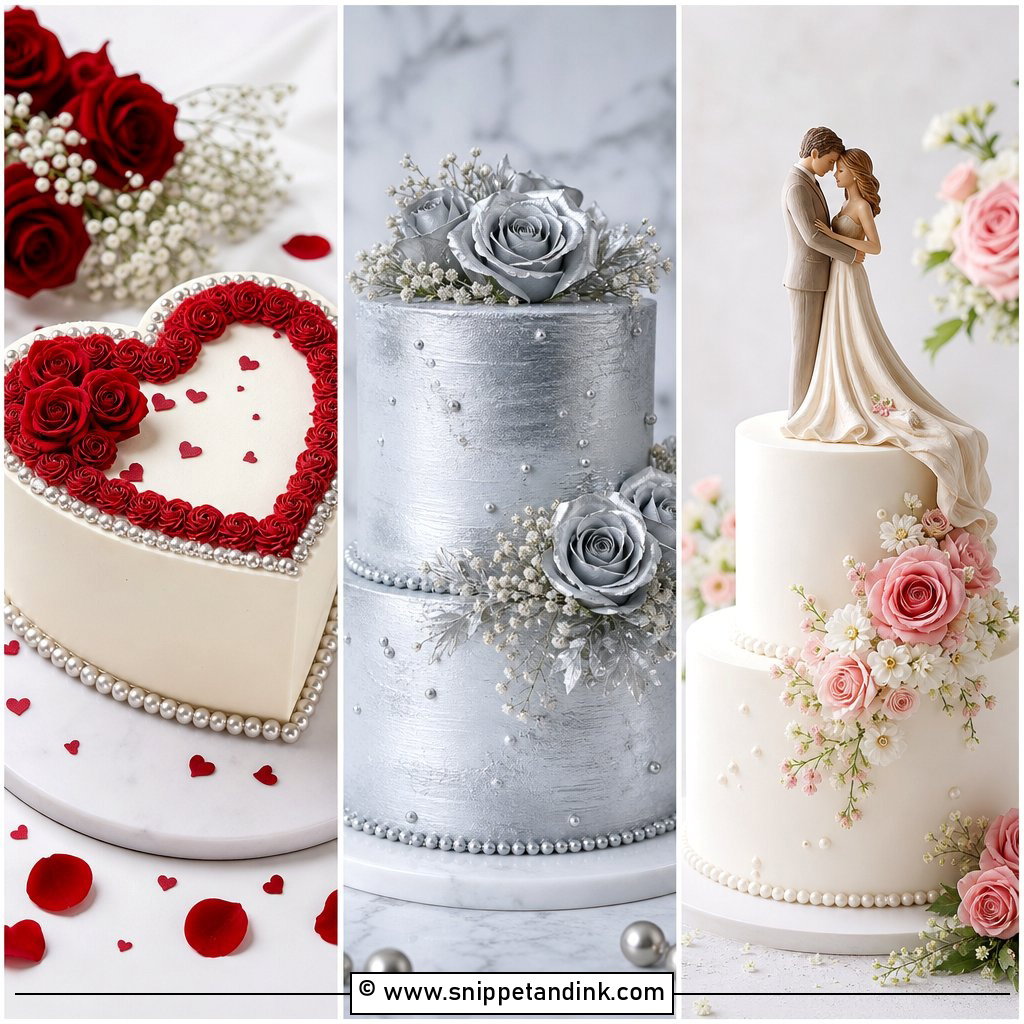
- 25th, silver: silver leaf, silver dragees or a silver number.
- 30th, pearl: rows of soft edible pearls.
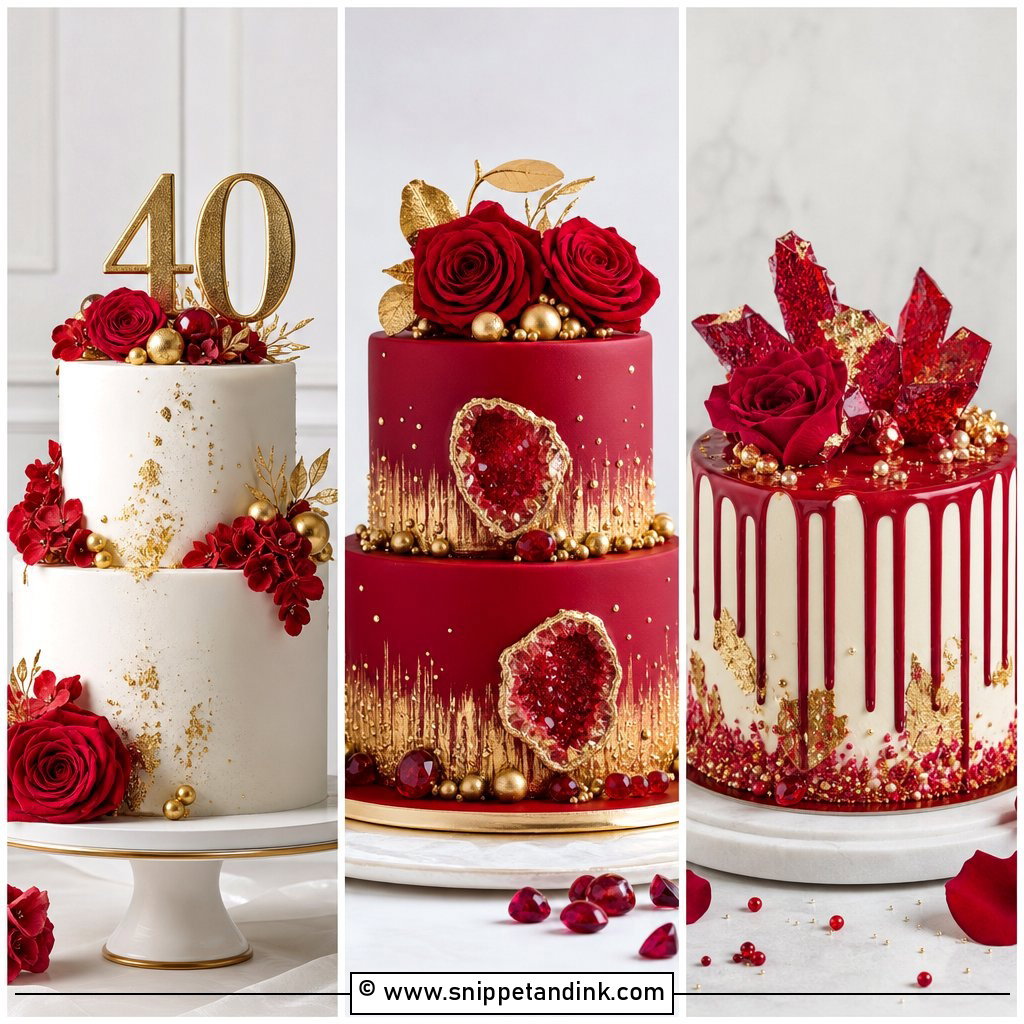
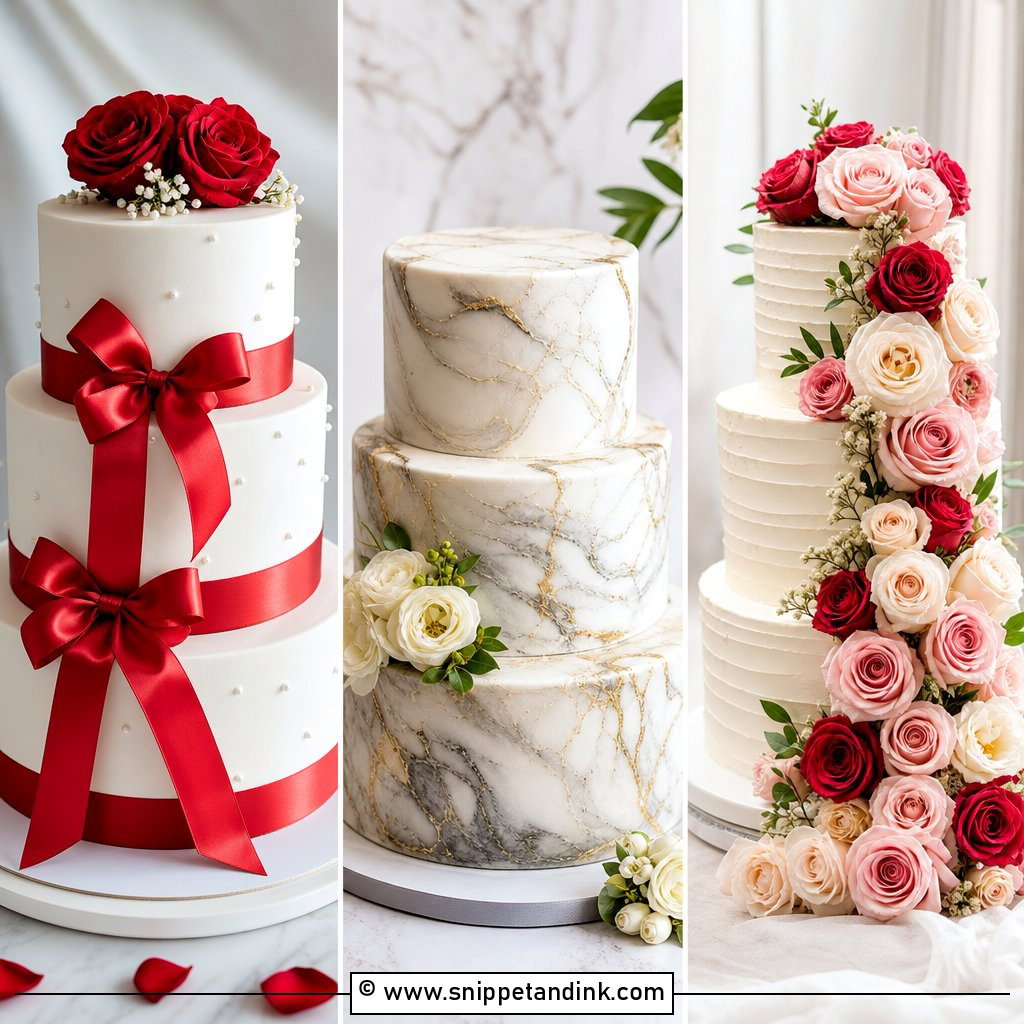
- 40th, ruby: red velvet inside, deep red roses or a ruby-red drip outside.
- 50th, gold: gold leaf, a gold drip or gold-painted sugar flowers.
- 60th, diamond: sugar crystals or isomalt gems that catch the light.
Pick one theme and give it to one feature of the cake, such as the drip, the topper or the border, rather than using it everywhere. One silver detail reads as a 25th; silver on every surface just reads as shiny.
1. Double Layer Anniversary Cake With Gold Accents
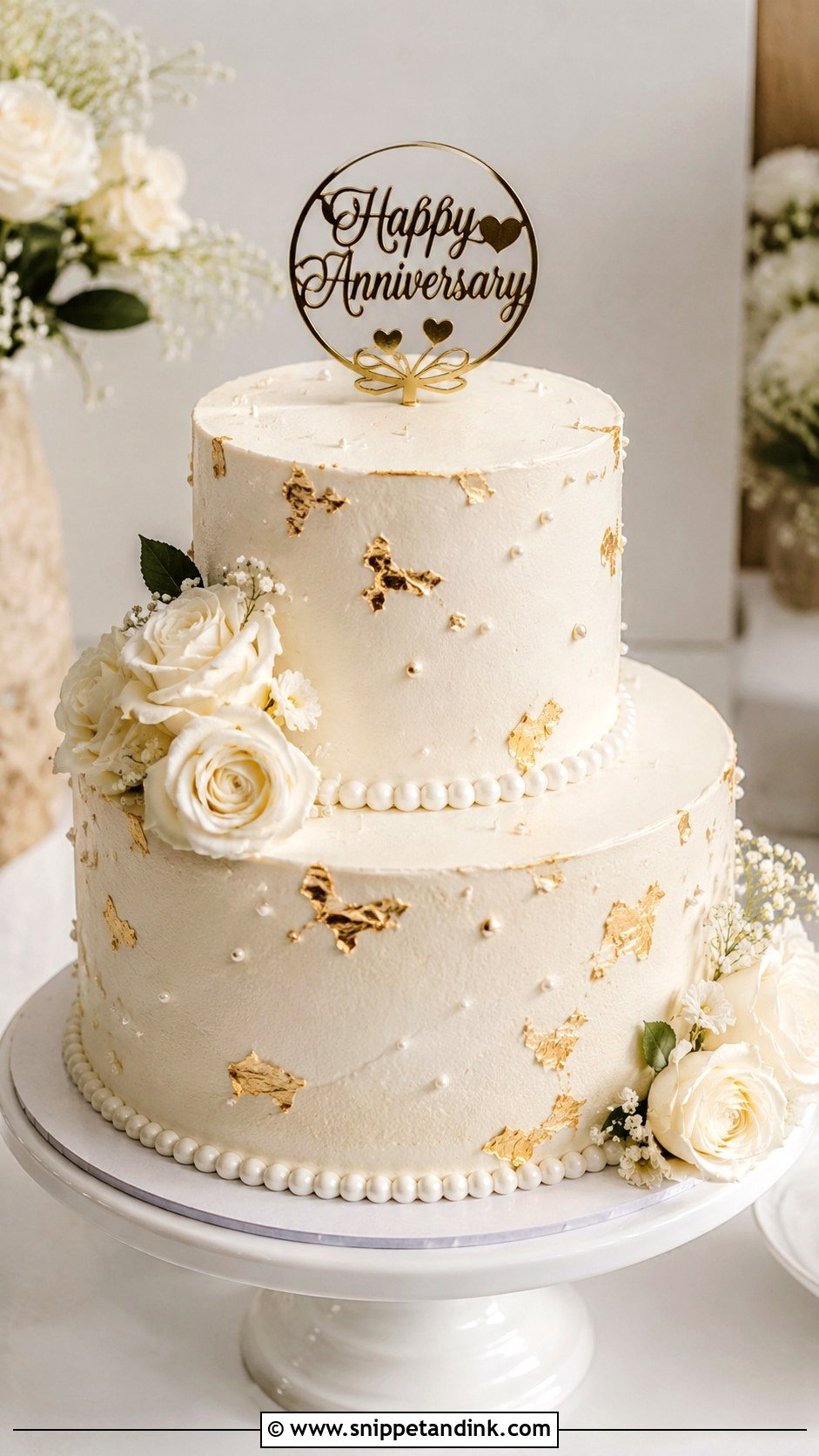
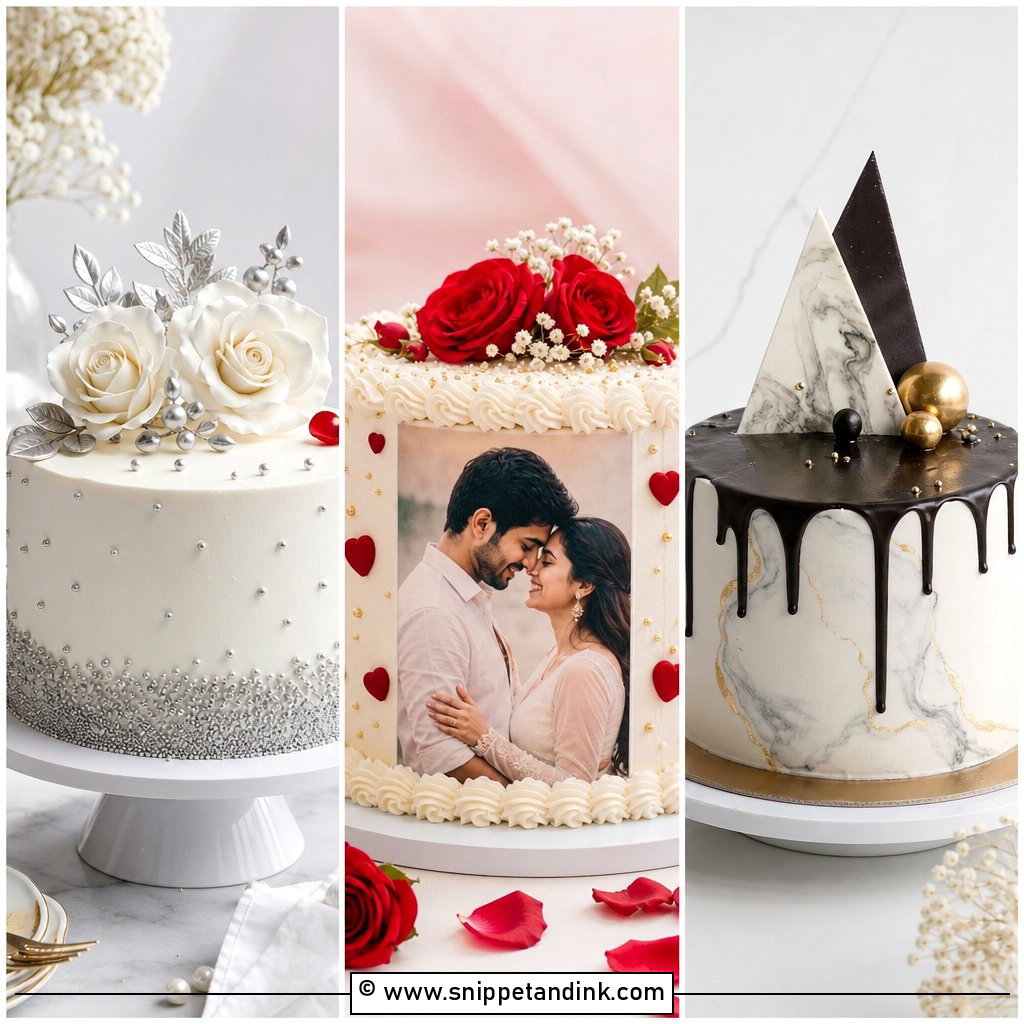
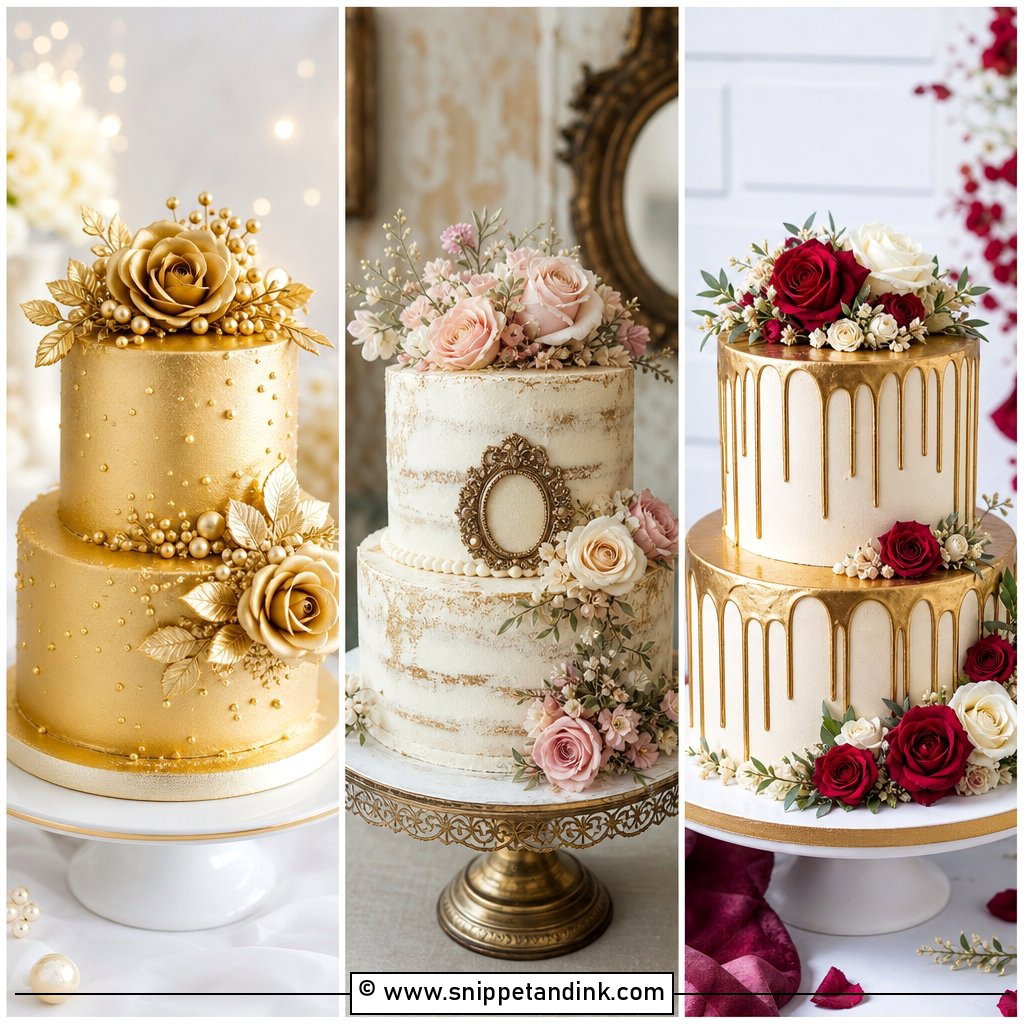
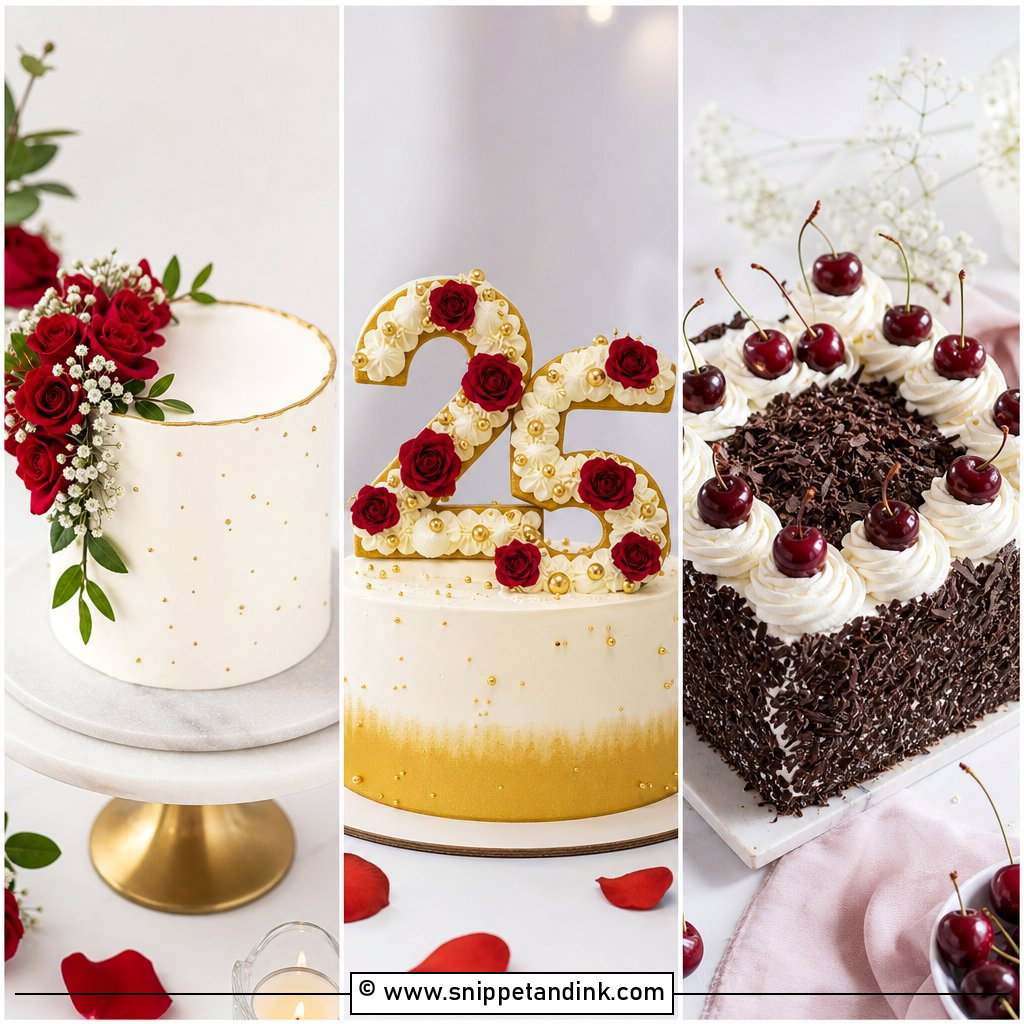
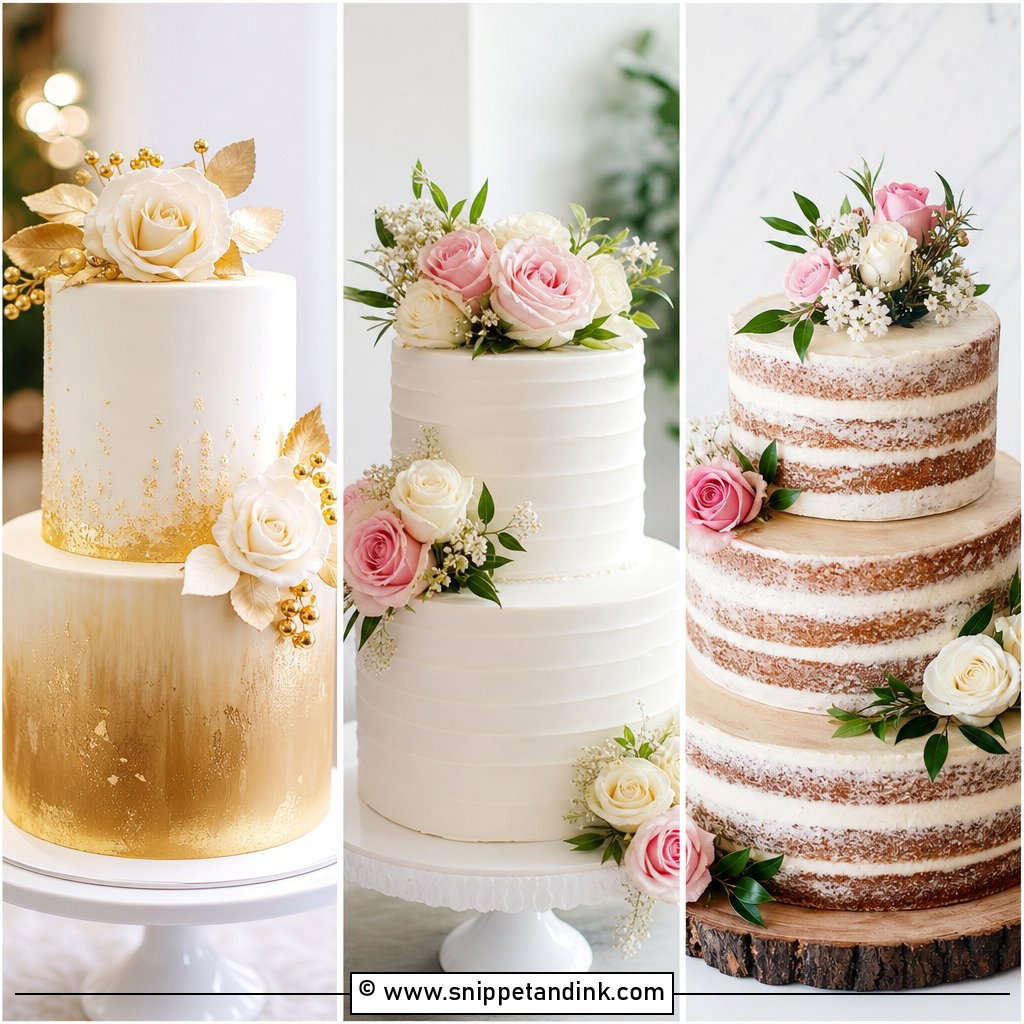
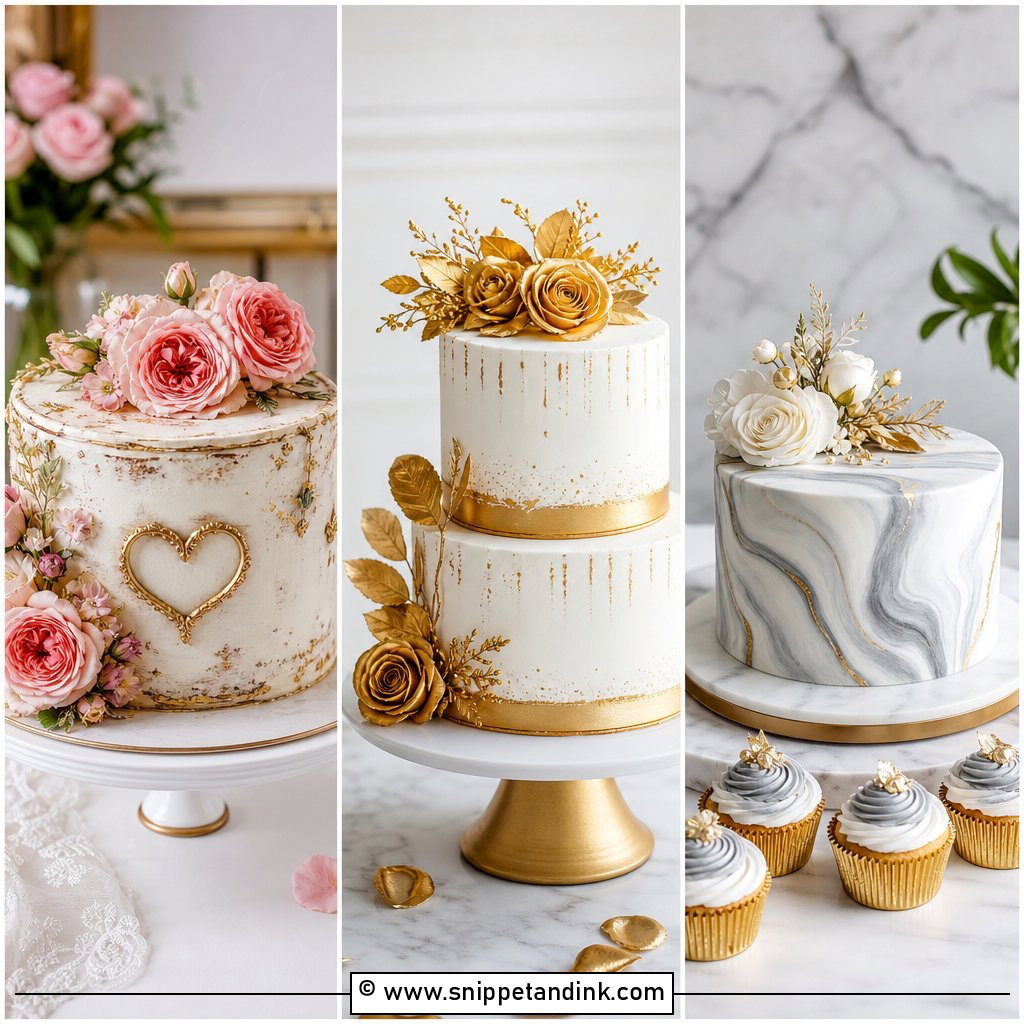
Gold works best in small amounts. I start with smooth ivory buttercream or fondant and lay edible gold leaf in one place only: down one side, around the top edge, or in a loose broken patch. Gold leaf is so thin it tears if you handle it with warm fingers, so it goes on with a dry brush. A pale sponge such as vanilla almond or a champagne-style cake keeps the inside light to match. Finish with a few white flowers or piped pearls. It’s a natural choice for a 50th, where gold is the traditional theme.
2. Double Layer Anniversary Cake With Fresh Flowers
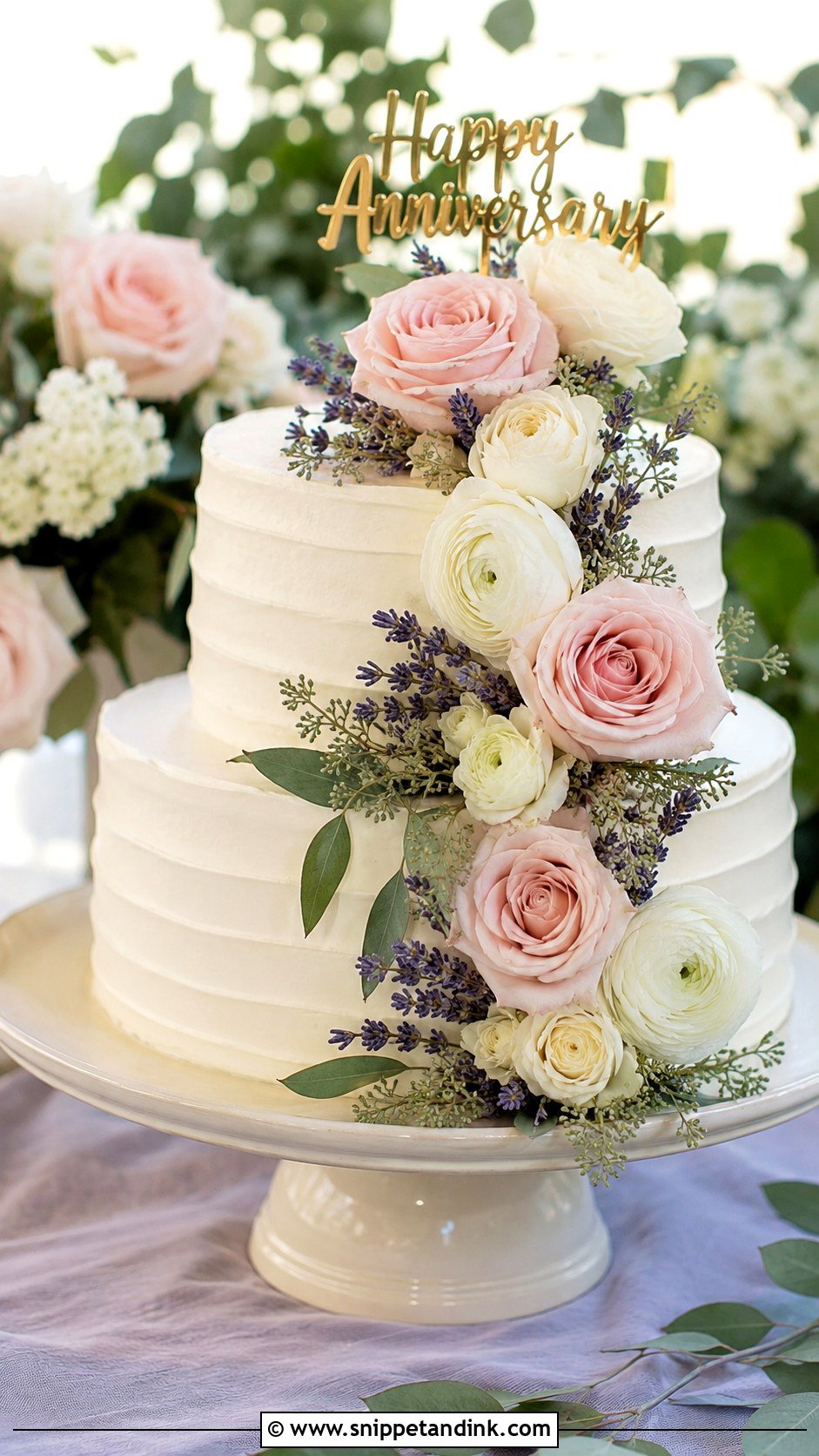
Fresh flowers make a small cake look generous almost instantly. Blush roses, ivory ranunculus, sprigs of lavender and soft pink carnations all sit well on a two-layer cake, and carnations last surprisingly long out of water. Ask your baker for food-safe picks or a barrier wherever a stem meets the icing, and buy unsprayed flowers from a florist rather than a supermarket bunch. A crescent from the top edge down one side looks graceful without covering the whole cake. Vanilla, lemon or almond sponge keeps the flavour as light as the look.
3. Double Layer Anniversary Cake With Buttercream Roses
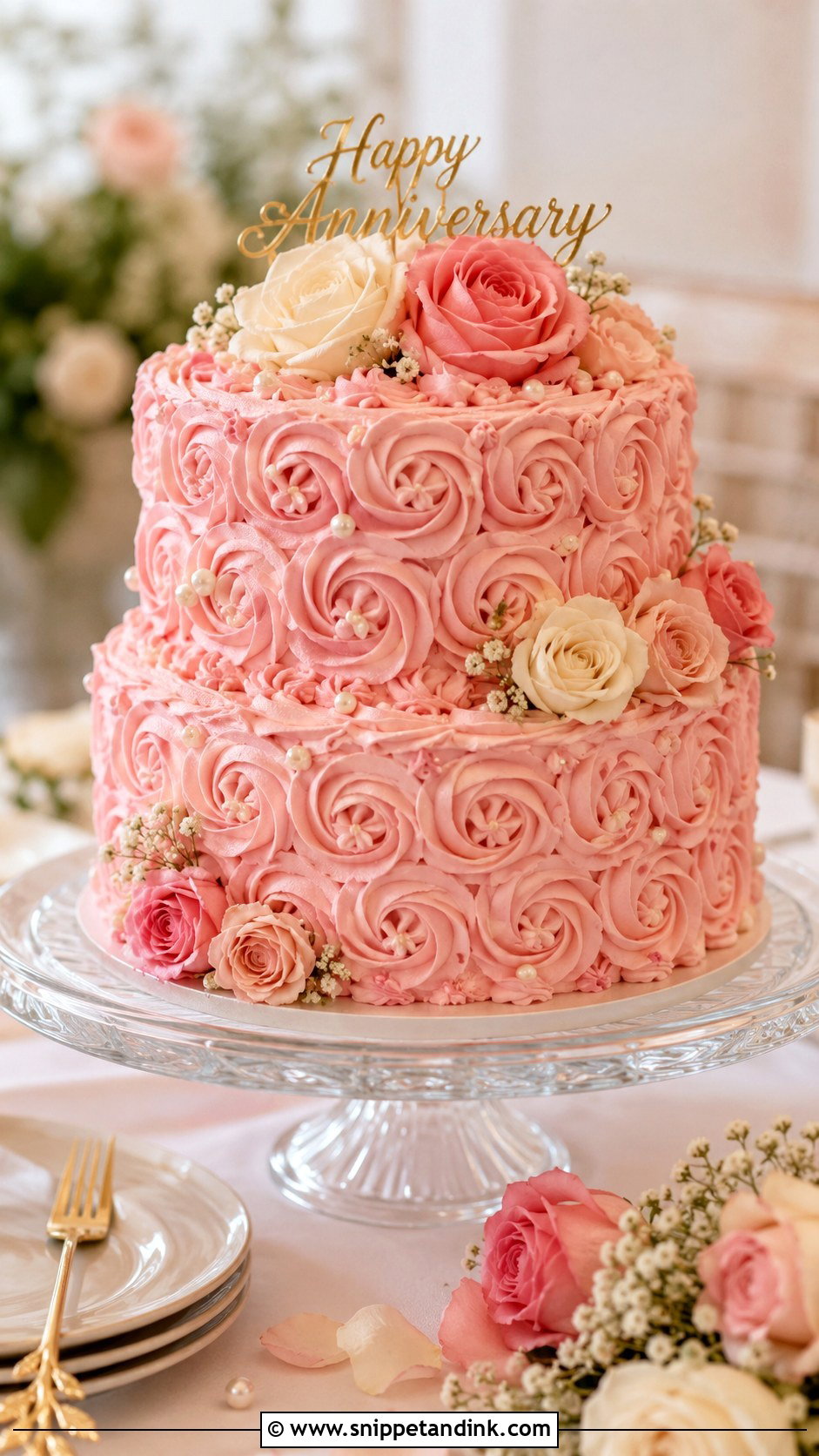
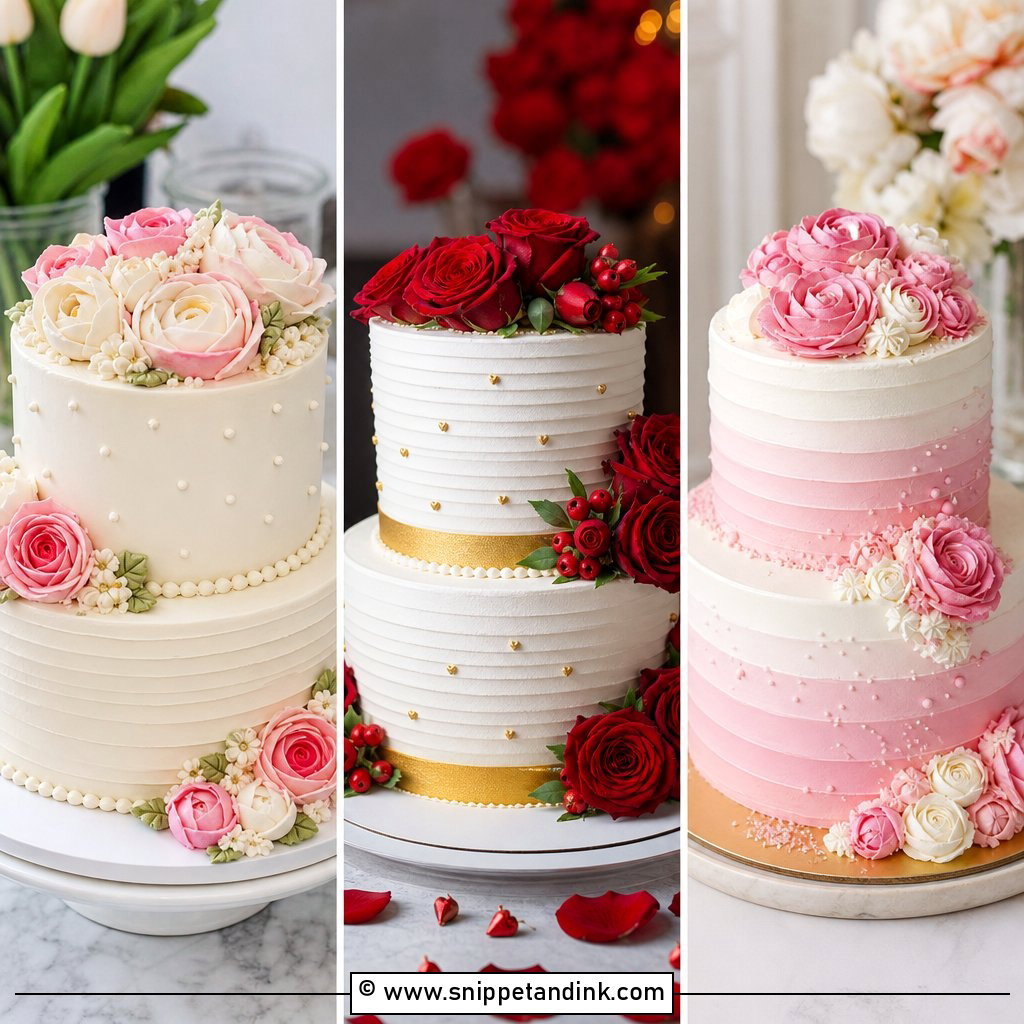
Piped buttercream roses have a nostalgic, bakery-window charm. Covering the entire top in roses gives a lush look; a ring of them around the crown and base is more restrained. I pipe them with a petal tip straight onto the cake or onto squares of parchment, chill them, then place them, which is the trick to keeping their shape crisp. Ivory, blush, peach or pale pink buttercream suits them. Vanilla bean, strawberry or red velvet with cream cheese frosting all go well underneath.
4. Double Layer Anniversary Cake With Chocolate Ganache
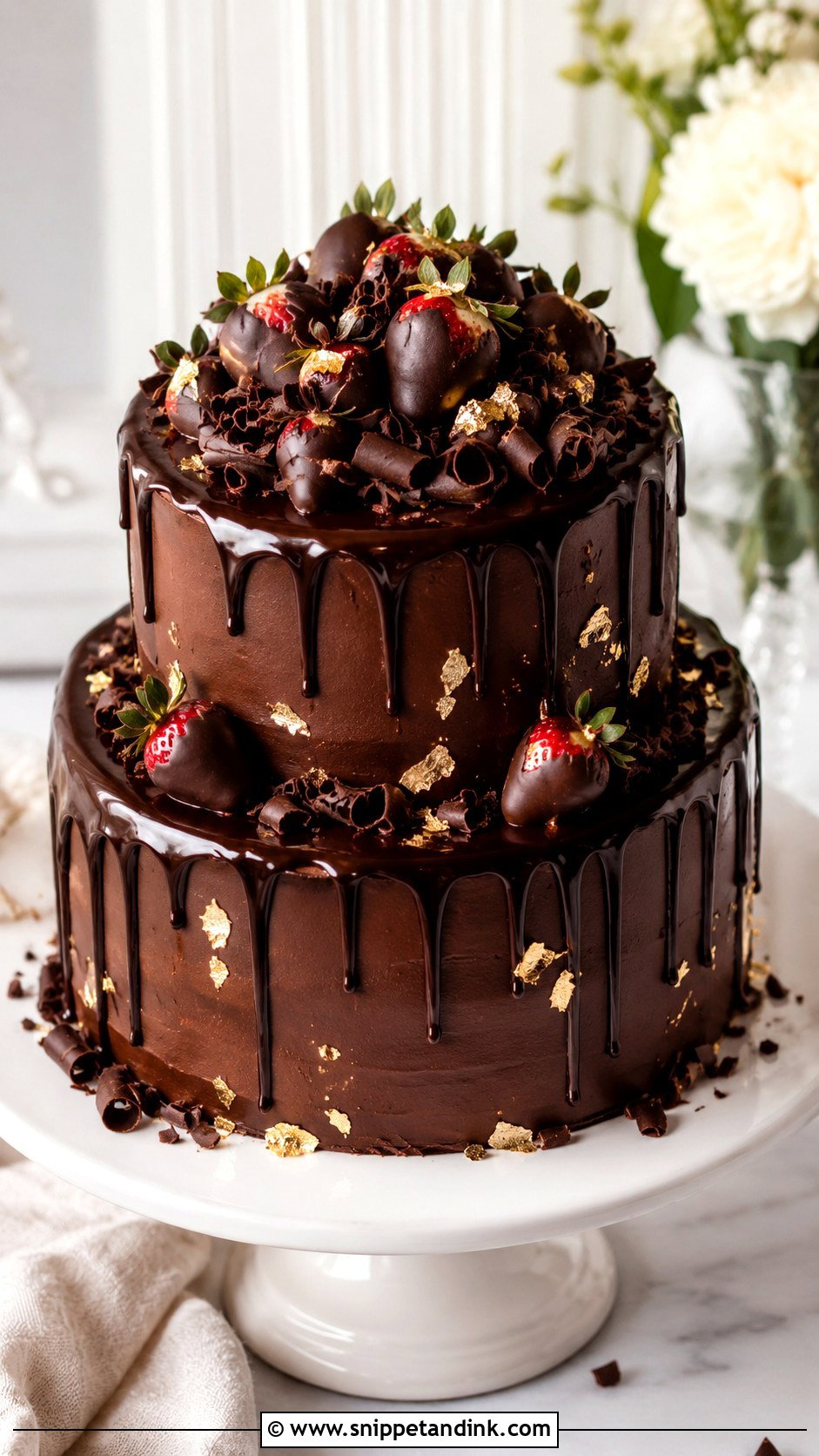
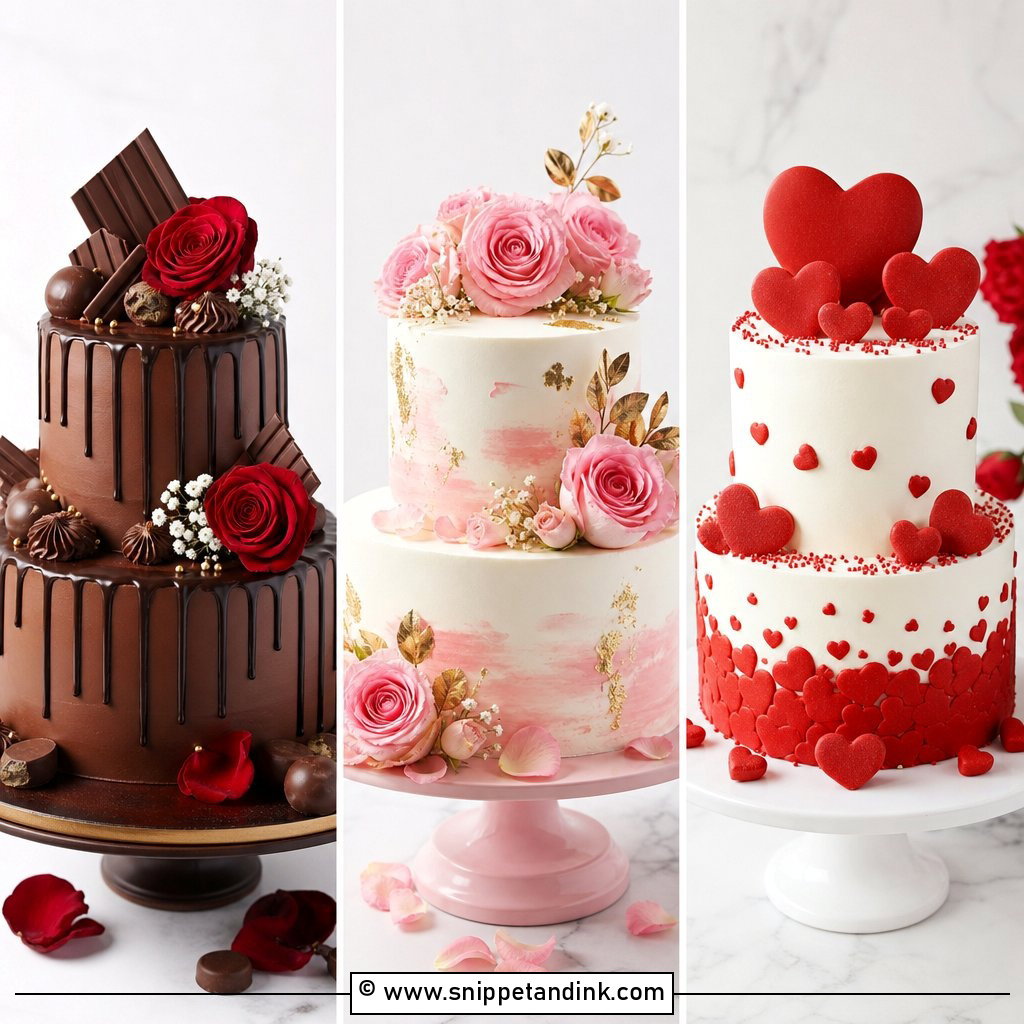
Ganache is the right finish for the chocolate lover. Moist chocolate layers, chocolate buttercream in the middle, then ganache poured over the top and nudged to the edge so it runs down the sides. The ratio matters: more cream gives a loose drip, more chocolate gives a firm coat that sets. Chocolate curls, a few dipped strawberries or a scattering of gold flakes finish it. For couples who’d rather have deep chocolate flavor than flowers, it’s hard to beat. A white cake stand makes the dark gloss pop.
5. Double Layer Anniversary Cake With Heart Shape
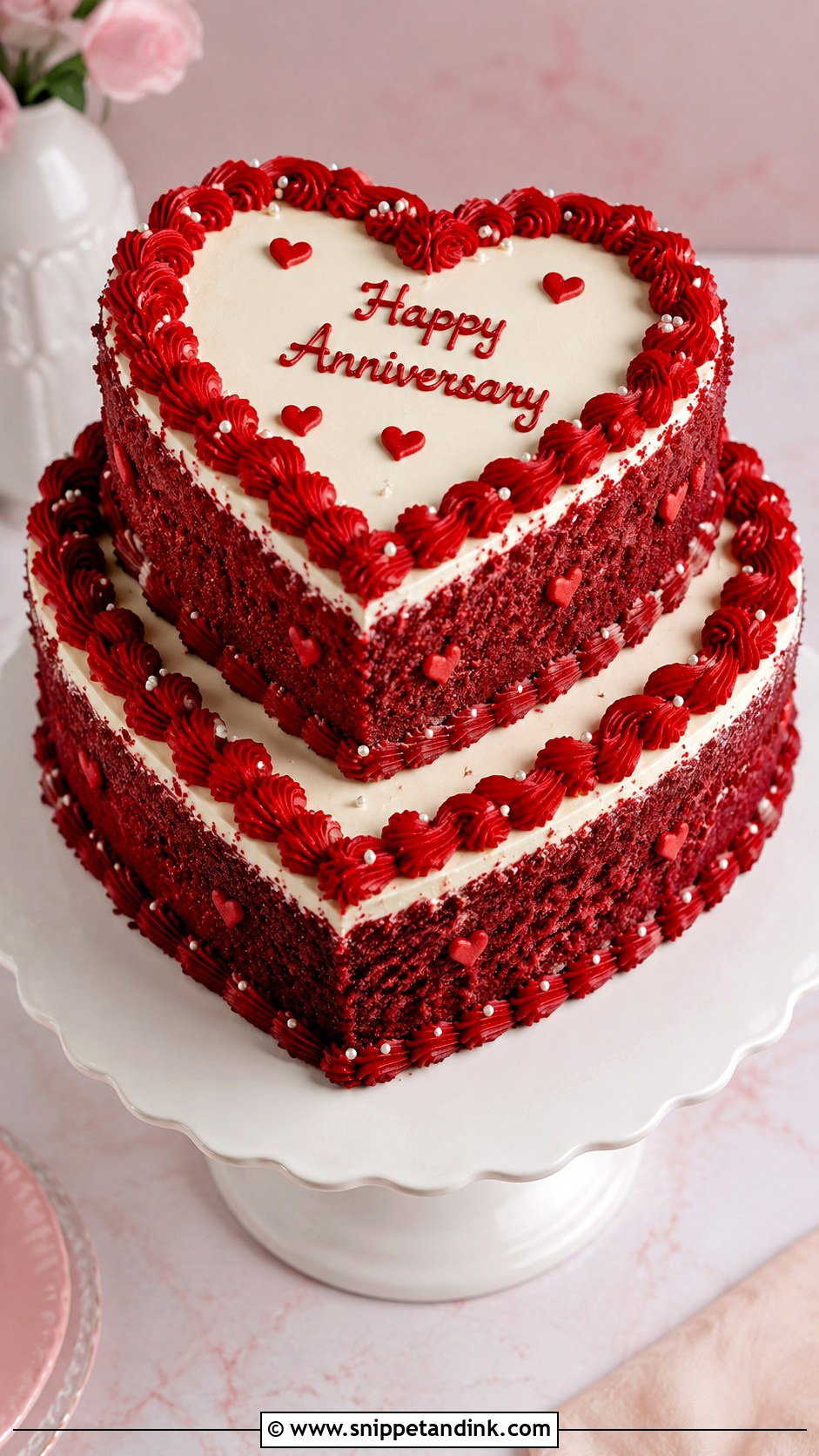
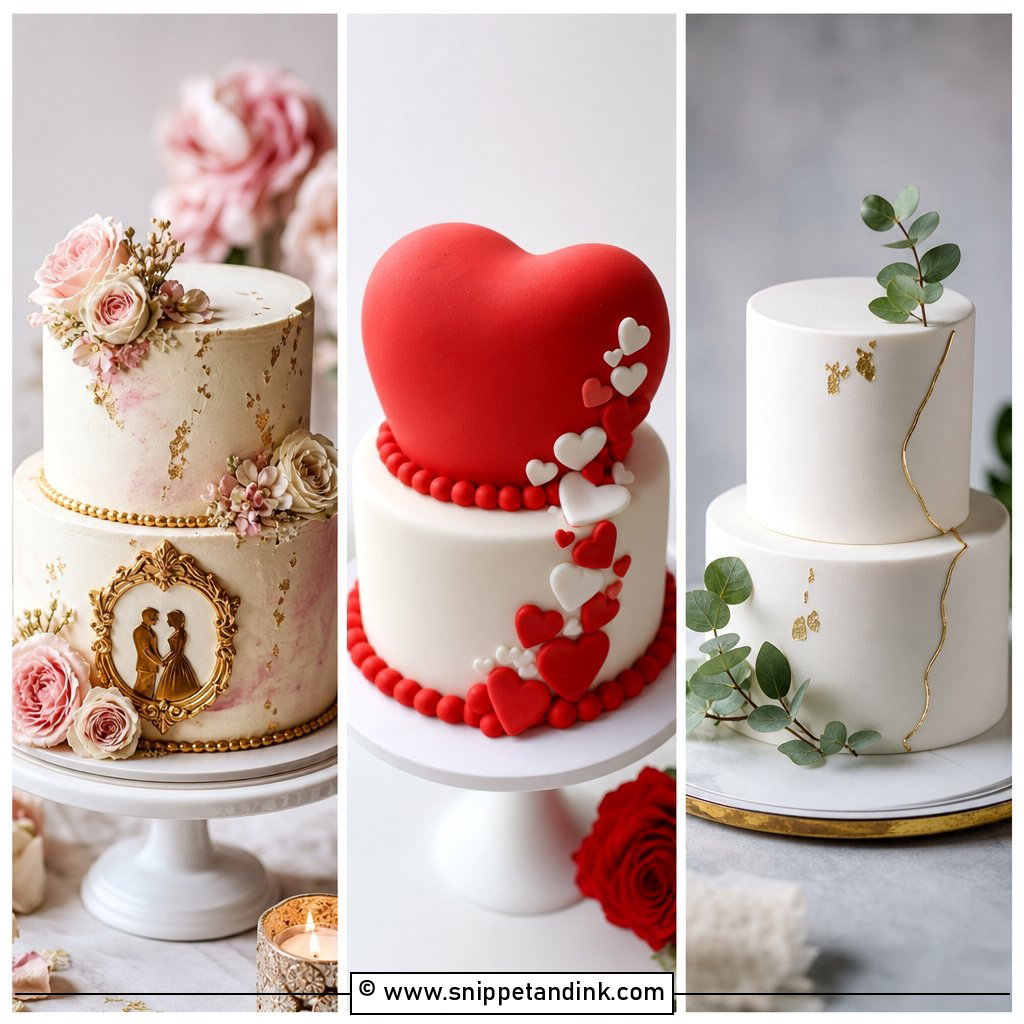
A heart tin does the decorating for you. With two layers stacked, the sides are tall enough for a neat border, and the outline itself carries the romance. White, blush, red and soft pink buttercream all suit it. Keep the extras small: a piped border, a few pearls, a short message. A heart cake is lovely for a dinner at home for two. The point at the bottom is the fiddly part to ice sharply, so a crumb coat and a short chill before the final layer makes all the difference.
6. Double Layer Anniversary Cake With Pearl Details
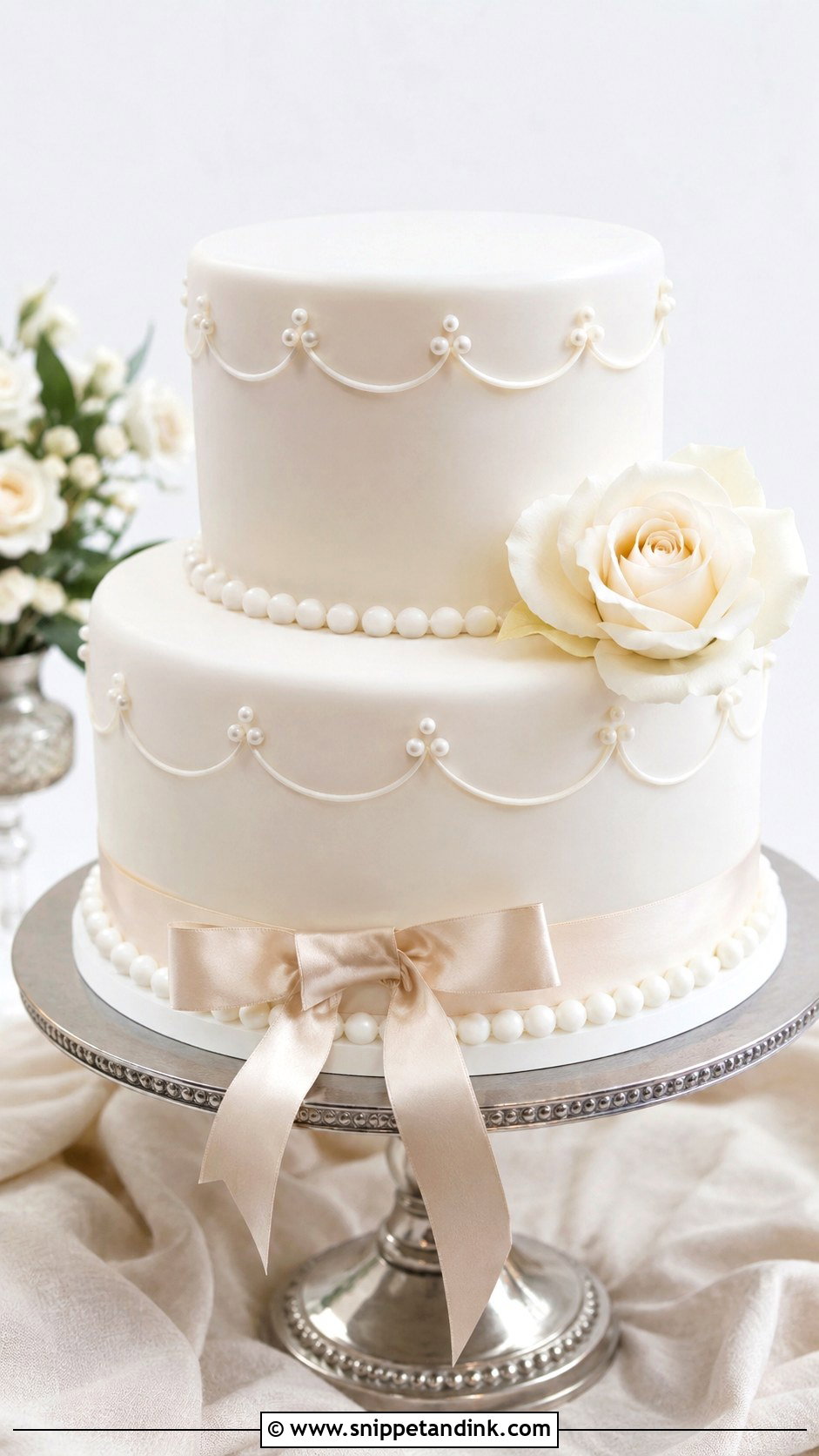
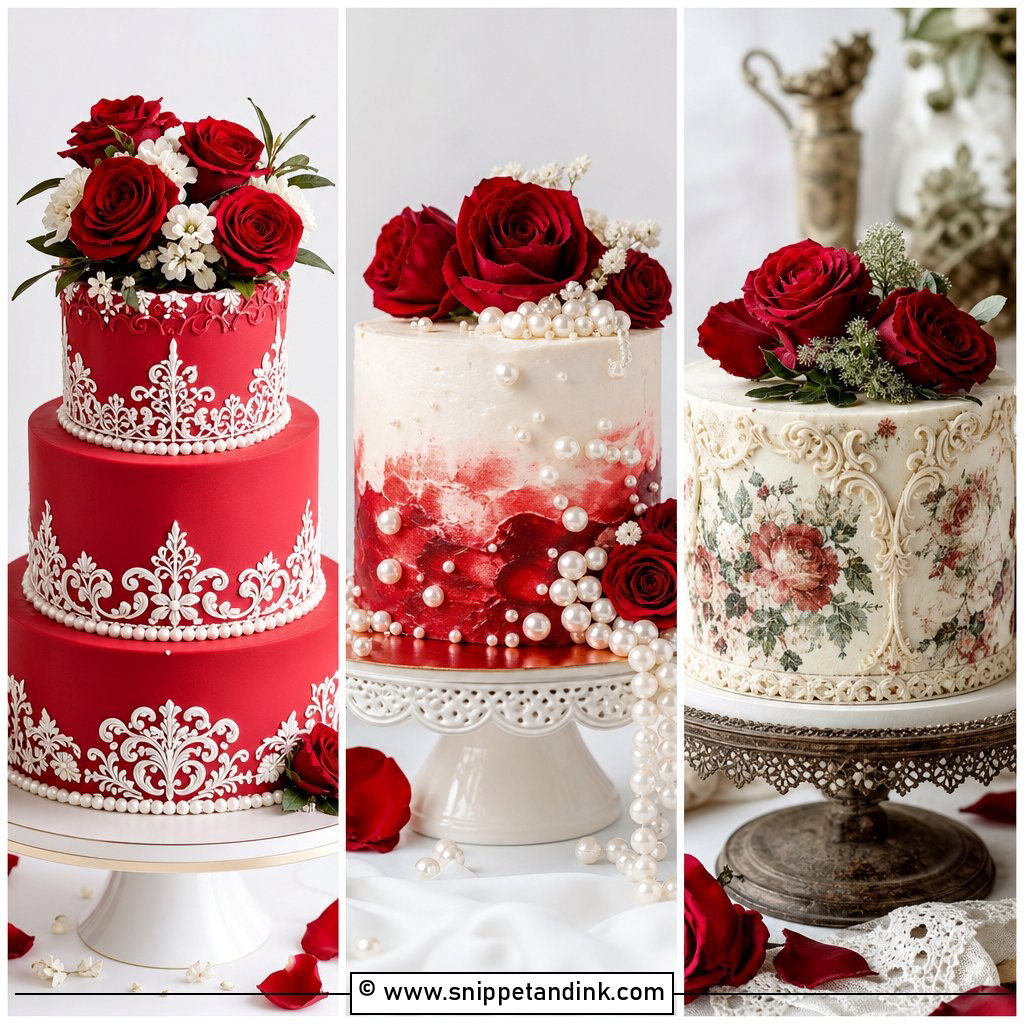
Edible pearls fit almost any anniversary, and they’re the traditional theme for a 30th. Line them around the base, scatter them lightly up the sides or set them in neat rows for something formal. They need a smooth ivory or white background. Vanilla, almond, coconut or lemon sponge keeps the flavour delicate. One sugar flower or a ribbon at the base is plenty. A small note: hard sugar pearls can be crunchy on the teeth, so I use the softer types where they’ll be eaten.
7. Double Layer Anniversary Cake With Red Velvet
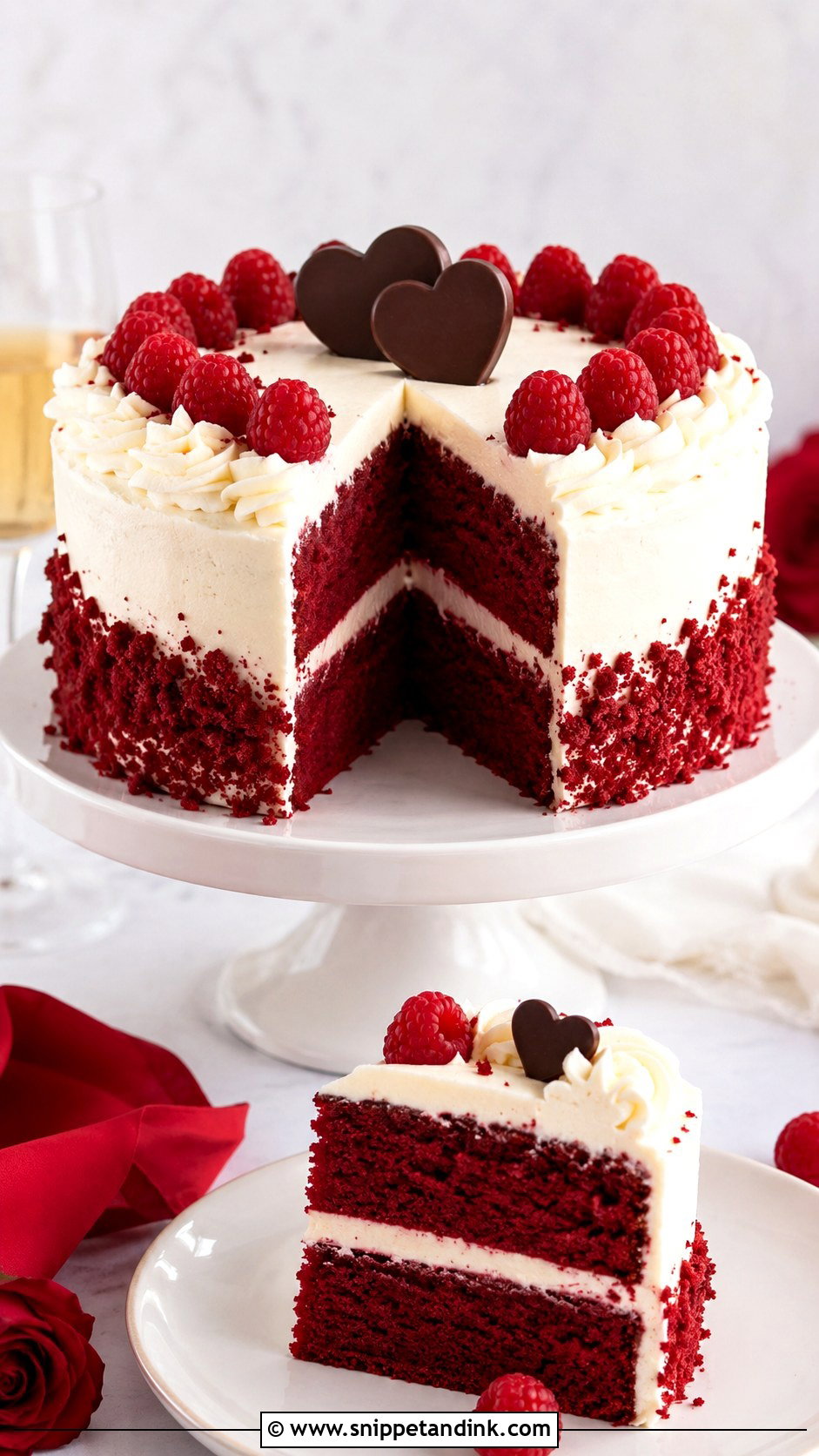
Red velvet gives the anniversary its colour on the inside, so the outside can stay quiet. Cream cheese frosting is the classic pairing, and a smooth white finish with a few red crumbs pressed on top hints at what’s coming. Small roses, chocolate hearts or fresh berries can decorate it. Cream cheese frosting is soft and doesn’t hold sharp edges as well as buttercream, and it needs to stay chilled until shortly before serving. For the 40th, ruby year, it’s an obvious and welcome fit.
8. Double Layer Anniversary Cake With Blush Pink Frosting
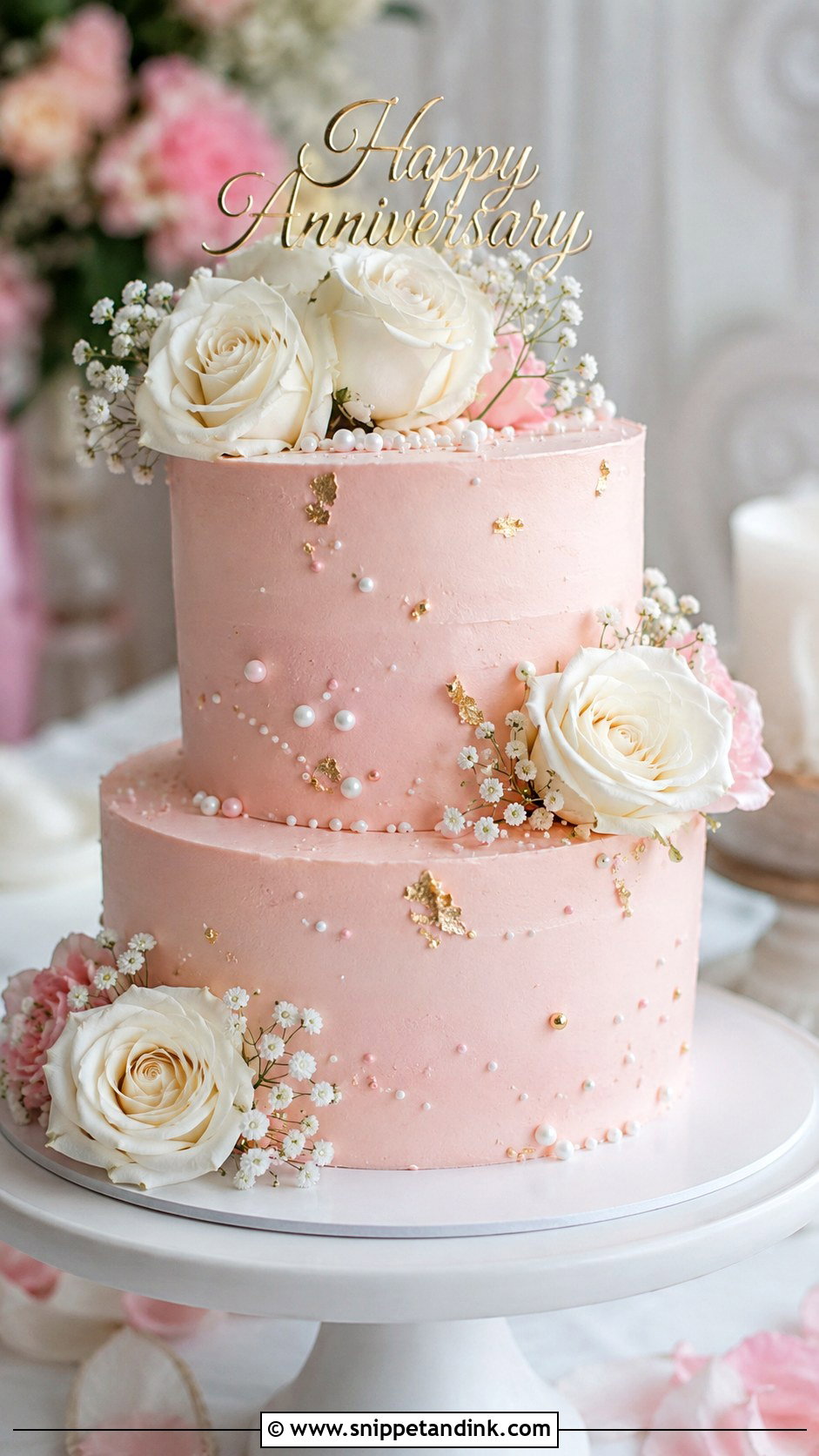
Blush is the most adaptable colour on this list: smooth for modern, piped borders for vintage, fresh flowers for a garden look. It pairs with vanilla, strawberry or almond sponge. Getting a true blush rather than a bubblegum pink takes a tiny amount of colour, sometimes with a touch of brown or peach mixed in. White roses, pearl sprinkles or a small gold accent finish it; keep the extras light so the shade stays soft.
9. Double Layer Anniversary Cake With White Buttercream
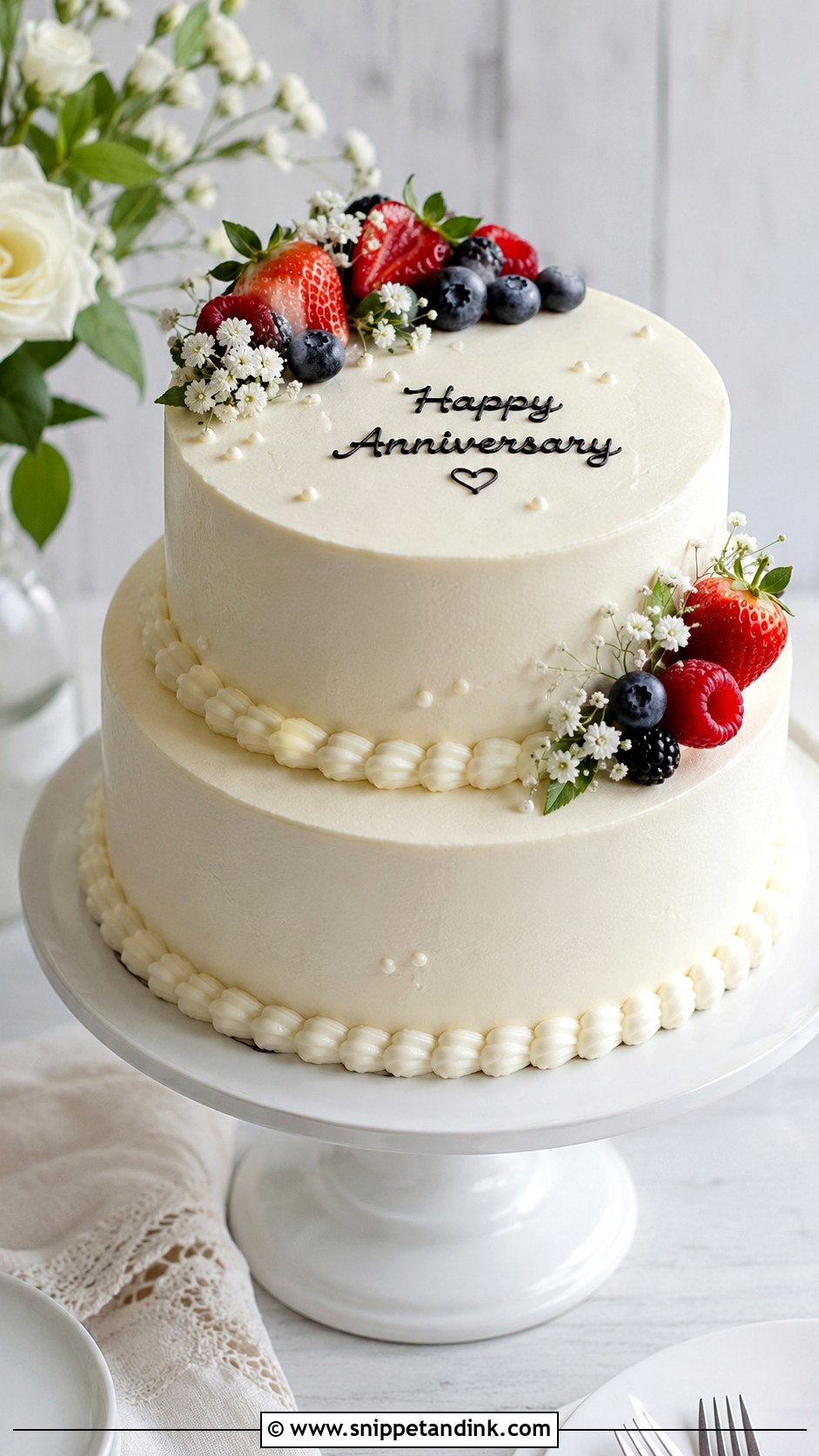
Plain white buttercream is the most flexible base there is. Add fresh flowers, piped borders, gold splatter, berries or a message, and it changes character completely. Vanilla bean is the safe flavour, though lemon, coconut, almond or funfetti can make it more personal. Smooth sides look modern; swirls look homemade in the best sense. I’d choose this when the party has a mixed crowd, since everyone eats it.
10. Double Layer Anniversary Cake With Floral Wreath
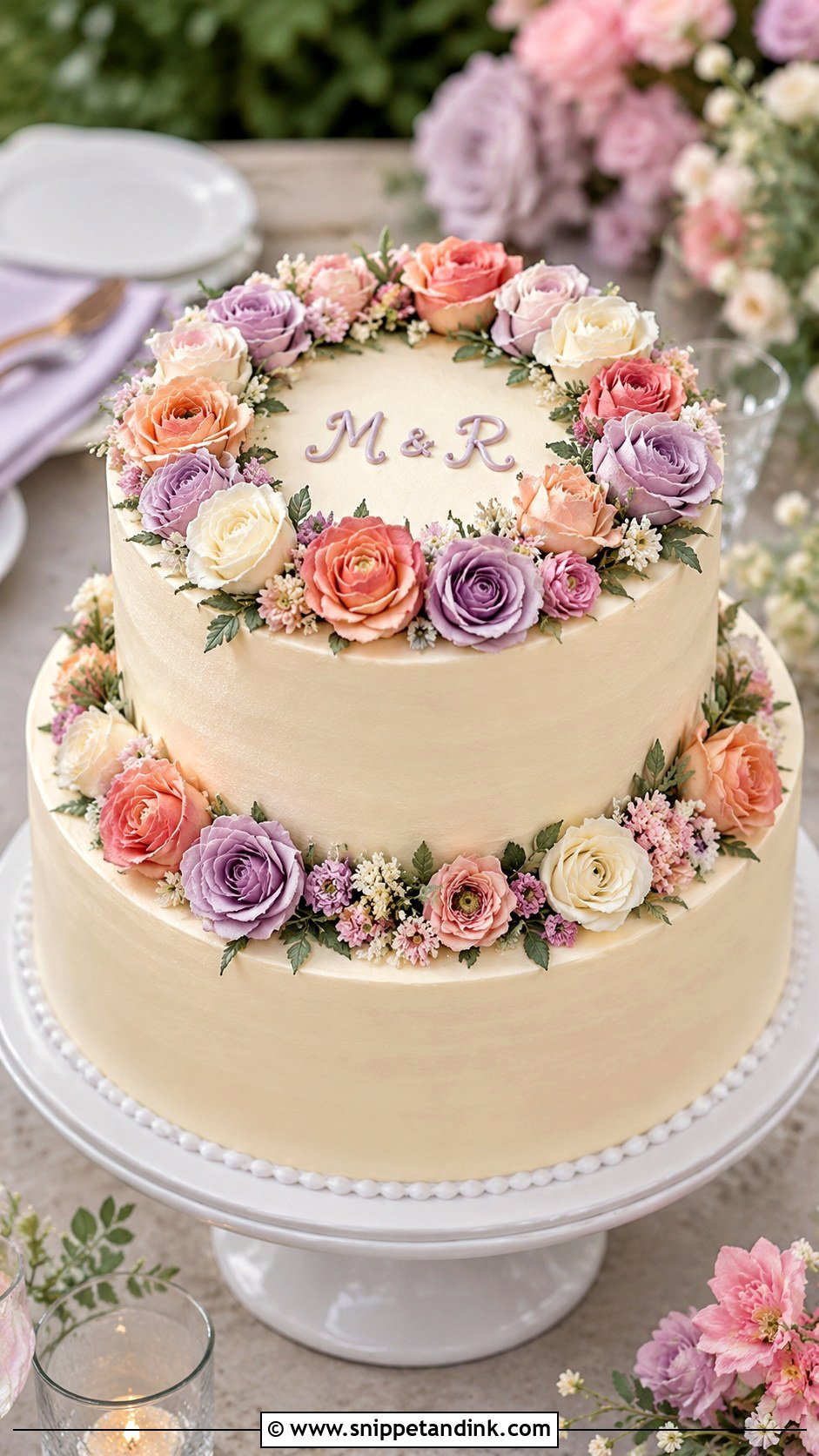
A wreath on top turns a two-layer cake into a table centrepiece. It can be piped buttercream flowers, sugar flowers or placed fresh blooms, with smooth sides so the top stands out. Ivory icing with blush, lavender, peach or soft yellow flowers stays gentle. Lemon elderflower, vanilla or almond sponge suits the garden mood. The open centre of the wreath is the perfect spot for the anniversary number or your initials. Shoot it from above as well as from the front.
11. Double Layer Anniversary Cake With Drip Icing
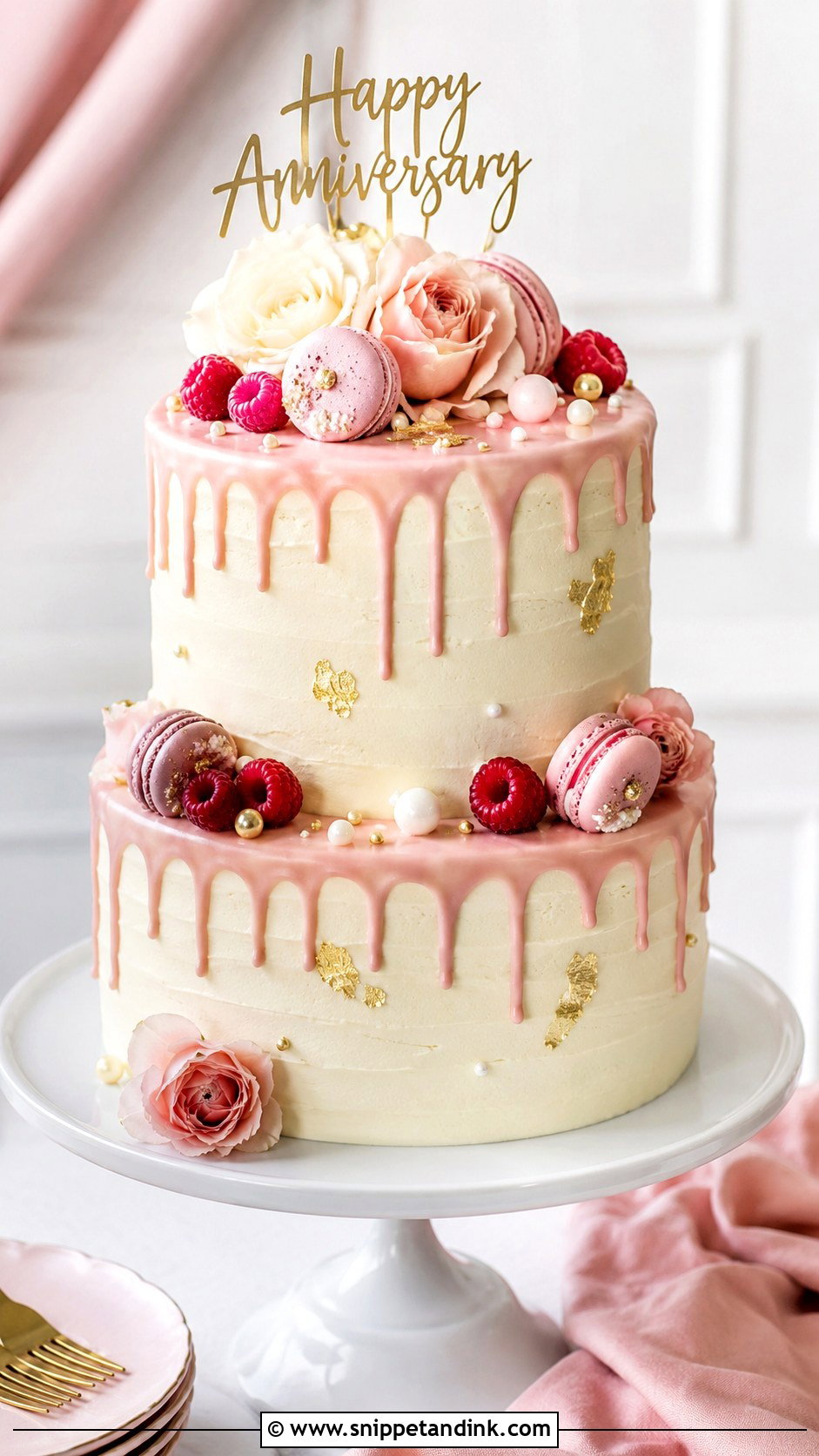
Drips look casual, but a neat one takes control. The cake must be well chilled and the drip just warm, so it runs a short way and stops; too hot and it pools at the base. White chocolate, caramel, pink candy melt or classic chocolate ganache all work, matched to the sponge. Macarons, berries, flowers or a few gold pieces on top give height. White chocolate is the trickiest to colour and set, so test it first.
12. Double Layer Anniversary Cake With Minimal Topper
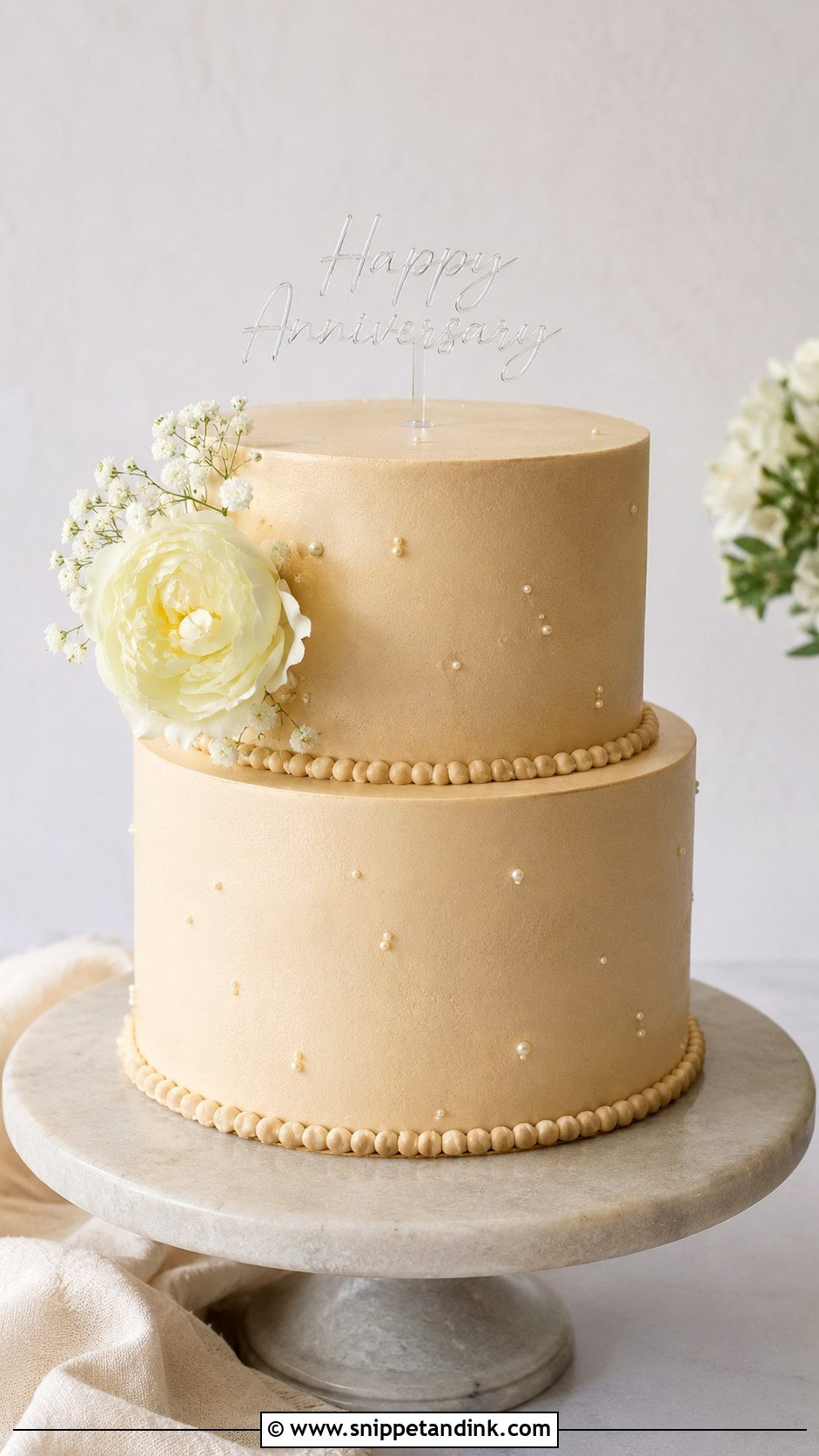
Sometimes a single topper says it best. A small “Happy Anniversary” topper, your initials or just the year number sits on smooth ivory, beige, soft grey or pale pink buttercream. Vanilla almond or lemon sponge keeps it light. If the cake looks too bare, add one small flower cluster or a few pearls. Acrylic and wooden toppers have stakes that go straight into the cake, so wipe them clean and wrap the stake in a little food wrap first.
13. Double Layer Anniversary Cake With Fresh Berries
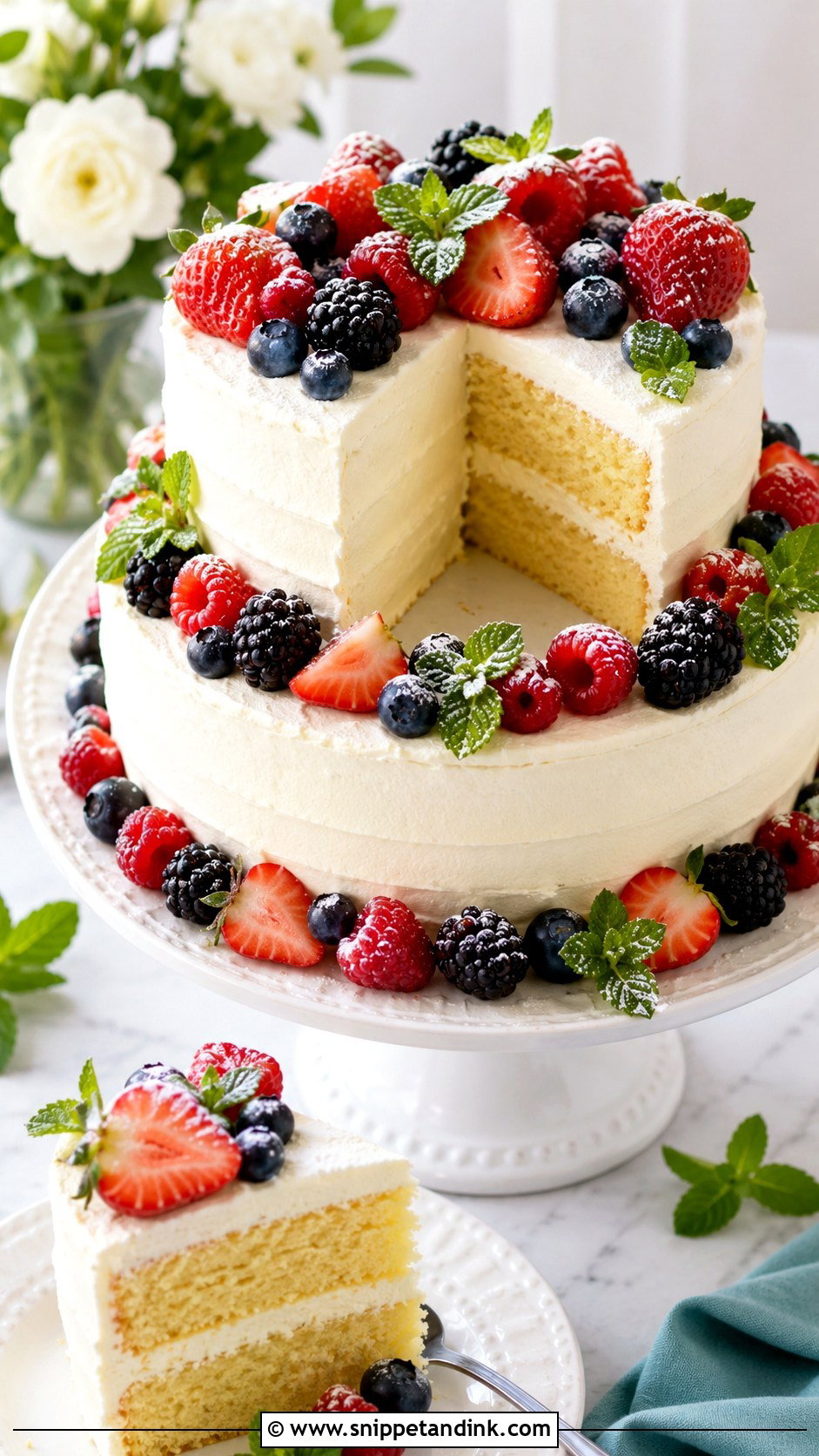
Fresh berries are the cheerful option for a daytime party. Strawberries, raspberries, blueberries and blackberries bring colour with almost no decorating effort. A vanilla sponge, lemon or almond cake with berry filling suits them. Whipped cream frosting tastes freshest but has to stay in the fridge, so for anything outdoors I’d use a light vanilla buttercream instead. Pile berries on top in a crown and add a few at the base. Put them on as close to serving as you can; cut berries weep juice into the icing.
14. Double Layer Anniversary Cake With Marble Frosting
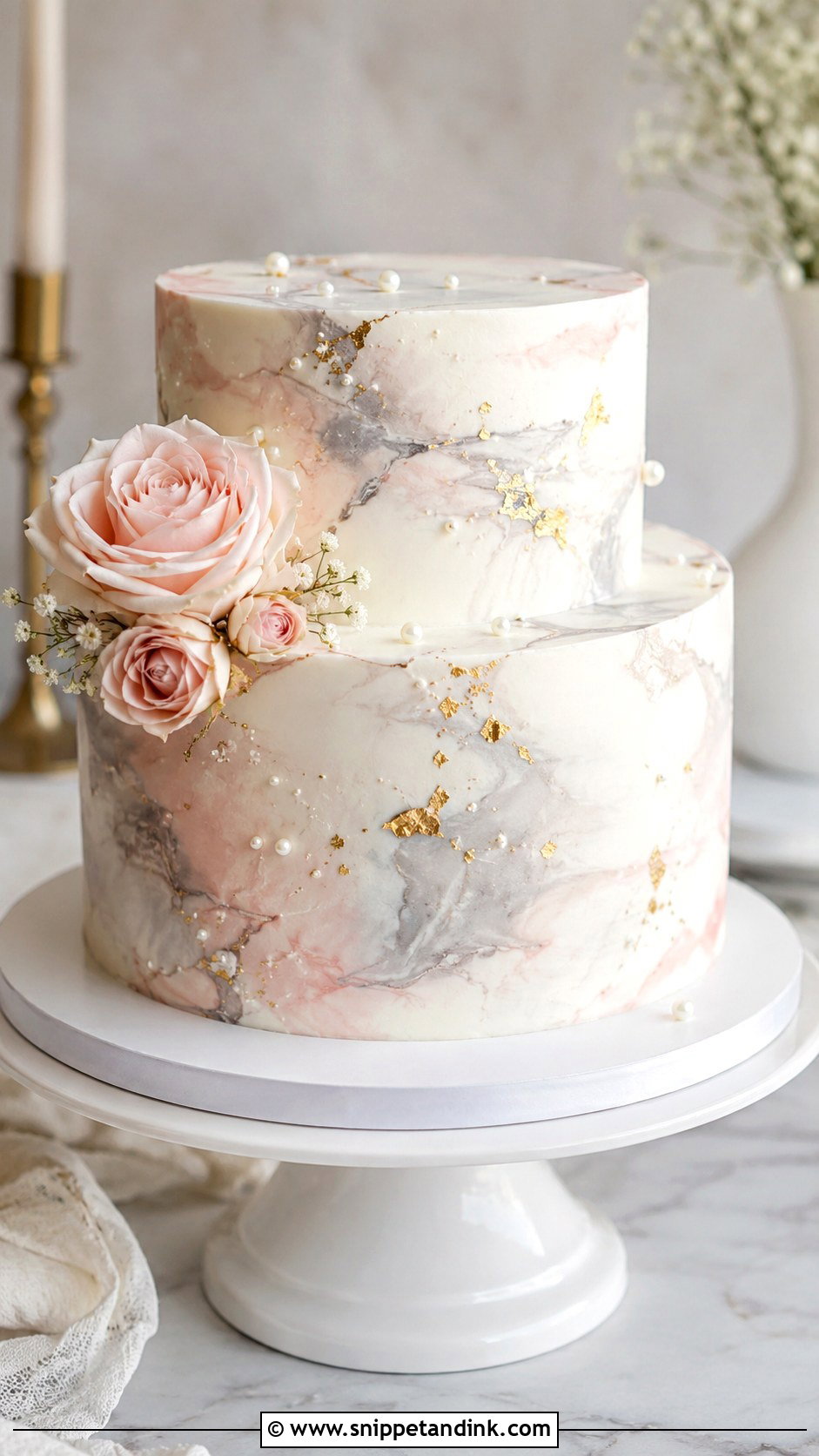
Marbled buttercream looks like soft stone and is made by swiping two or three tints of icing together with a scraper so they blend only partly. White with grey, blush, beige or pale gold works well. Choose the sponge for how it looks when sliced: red velvet or chocolate gives drama against pale marble, vanilla keeps everything soft. A strip of gold leaf or a small flower cluster warms the cool pattern. The one rule is to stop scraping early, before the colours blend into a muddy single shade.
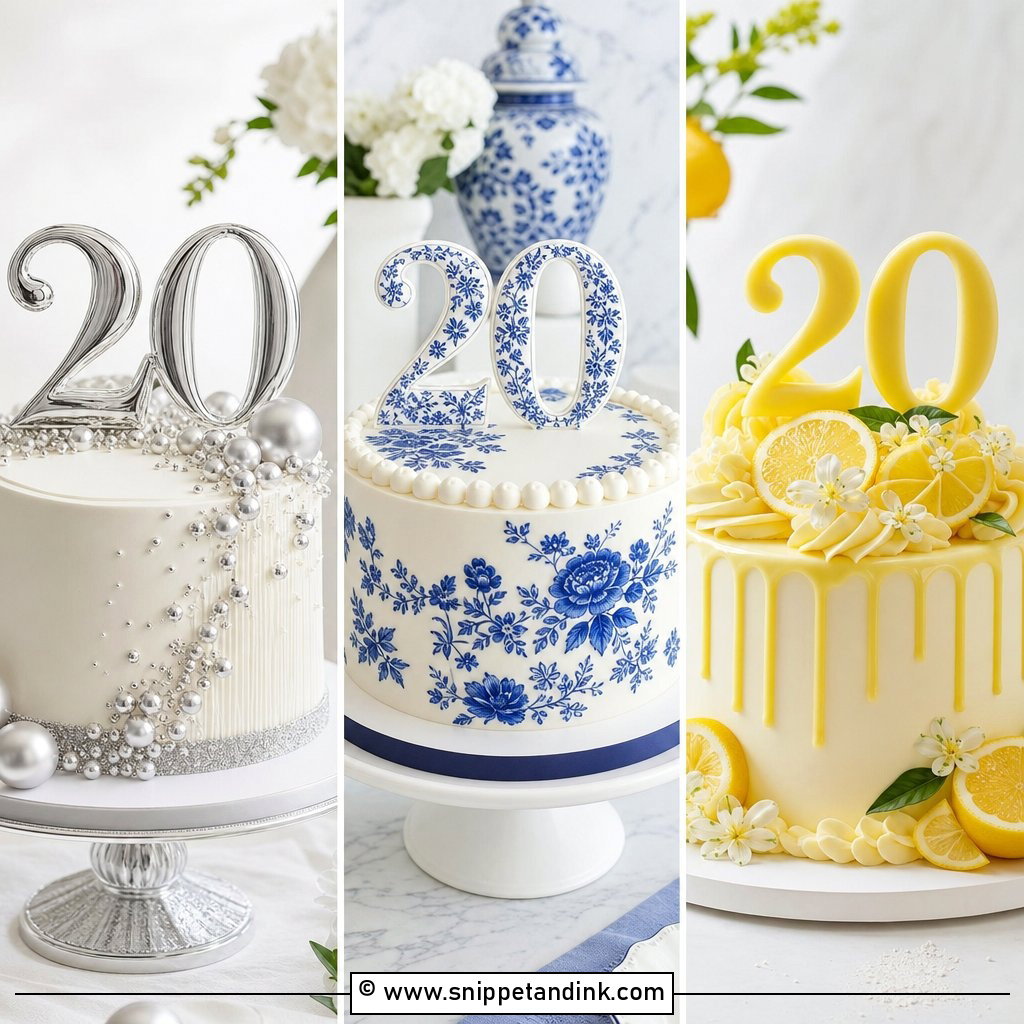
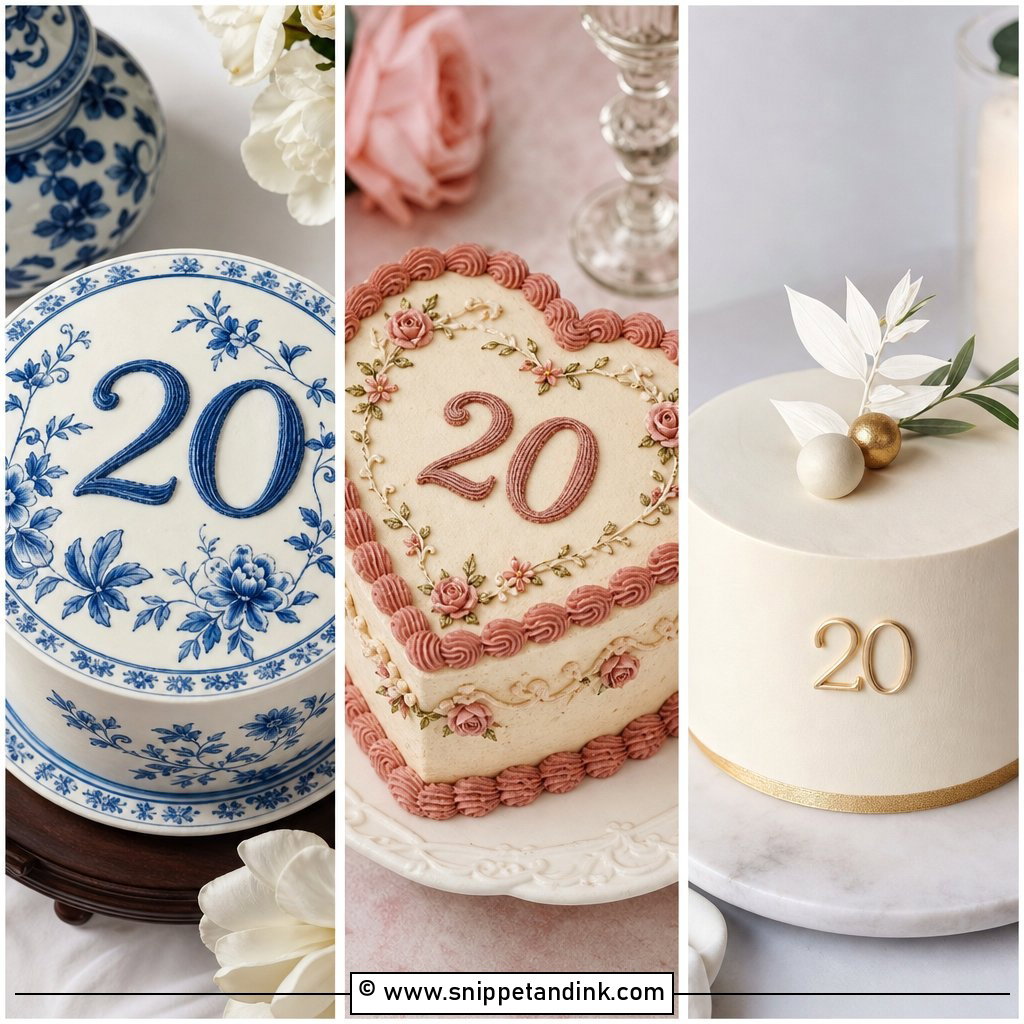
15. Double Layer Anniversary Cake With Number Topper
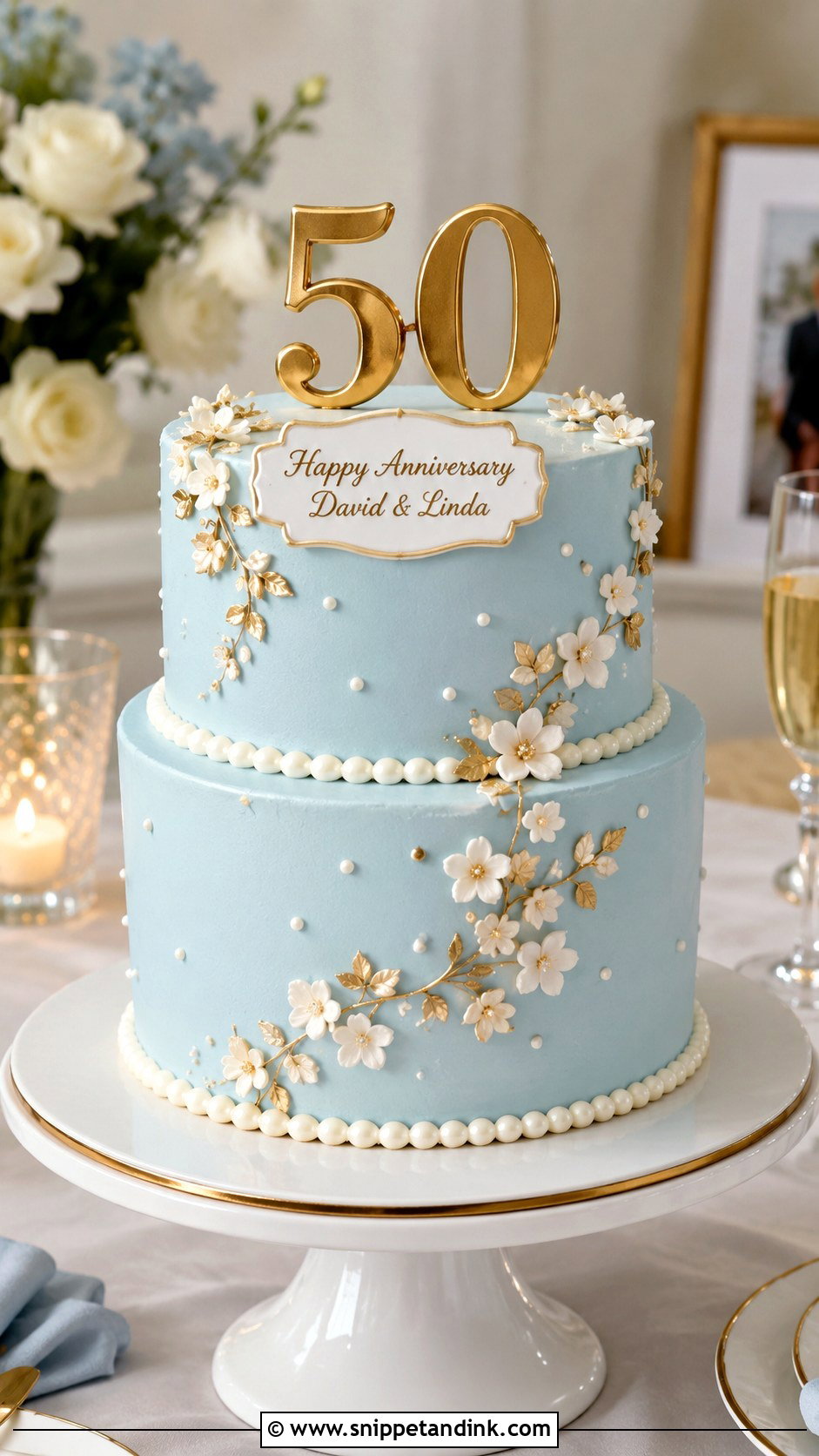
A number topper puts the milestone front and centre, whether it’s the first year or the sixtieth. Gold, silver, white acrylic and wood are the common materials; I’d match the metal to the traditional year if you can, such as silver for 25, gold for 50. Smooth ivory, blush or pale blue icing gives the number room. A few flowers, piped dots or pearls at the base finish it.
16. Double Layer Anniversary Cake With Ombré Frosting
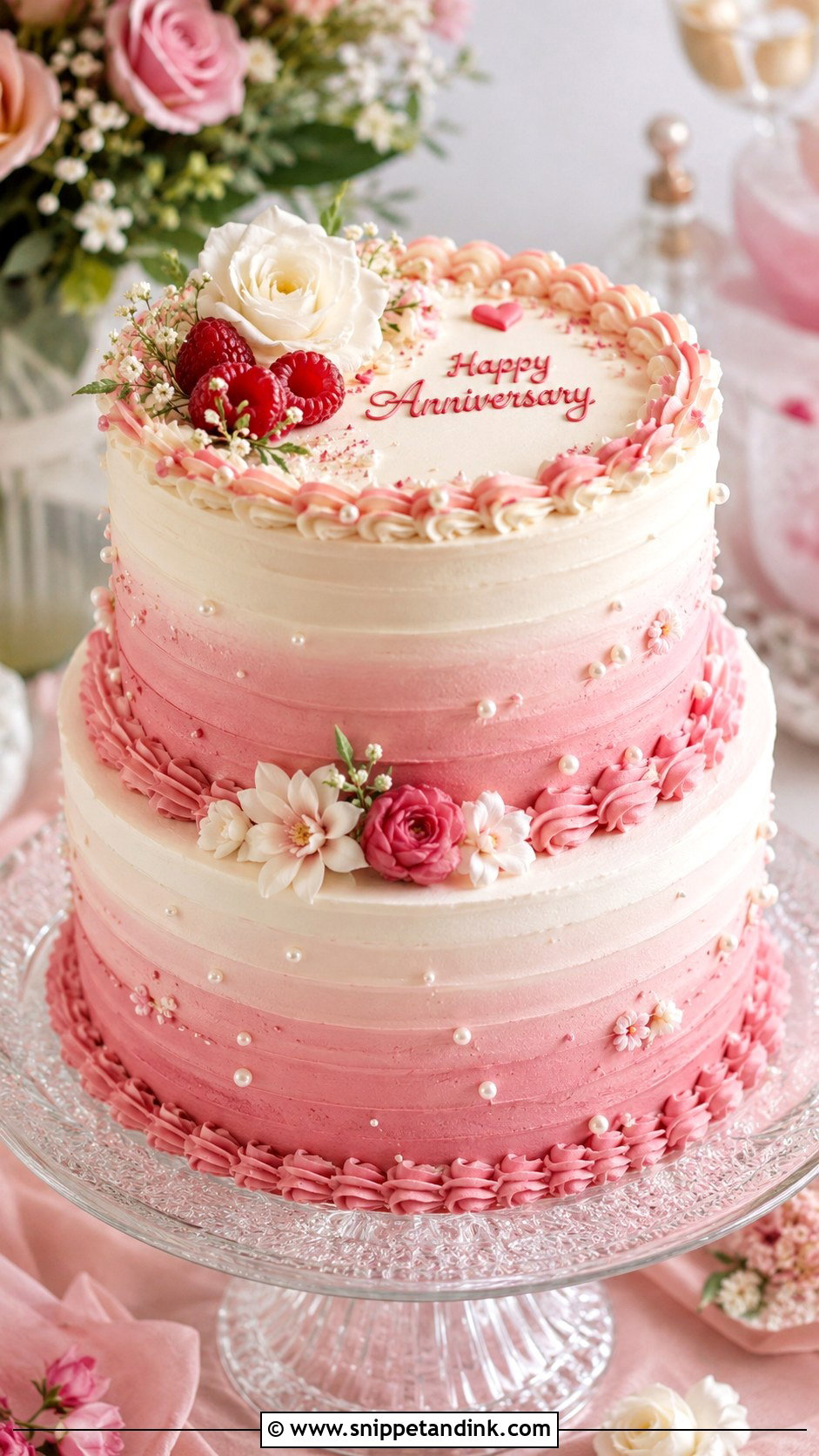
Ombré fades from one shade to the next up the cake: white to blush, ivory to peach, pale pink to rose. Buttercream blends best for this. I mix three or four tints from one batch, spread them in bands, then smooth them together in one pass. Strawberry, vanilla or raspberry sponge goes with pink tones; lemon suits peach and yellow. Keep the decoration light, perhaps a few flowers or pearls, so the gradient stays the feature.
17. Double Layer Anniversary Cake With Gold Drip
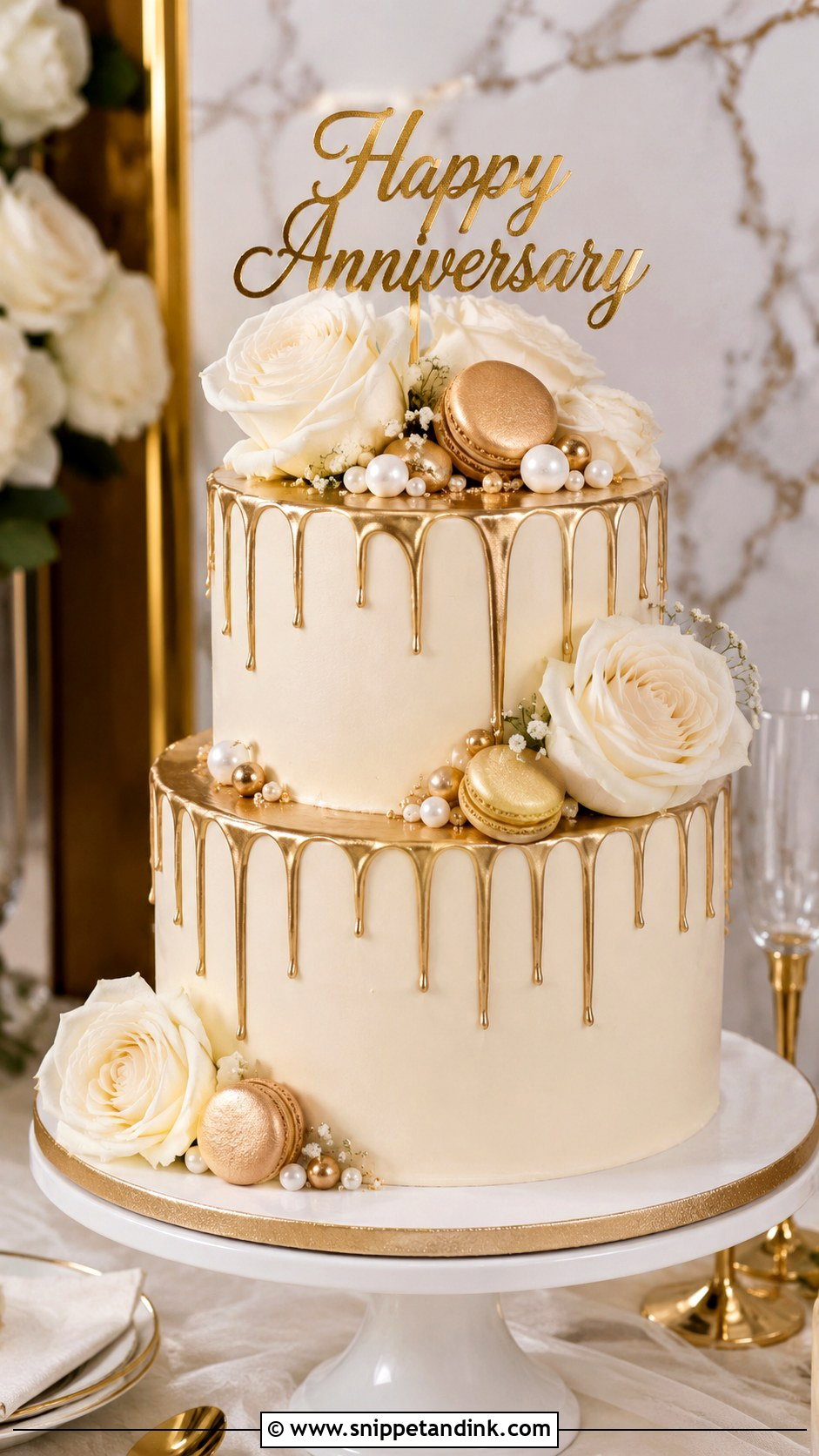
A gold drip is the more festive cousin of the plain drip. The cake is iced smooth white or ivory, a white chocolate drip goes on and sets, then it’s painted with edible gold mixed into a little alcohol so it dries fast and bright. Keep the drips short and even. Vanilla, almond, coconut or white chocolate sponge suits it. White roses, macarons, pearls or a gold topper on top finish the look. It suits milestone years and catches the light well on a plain white stand.
18. Double Layer Anniversary Cake With Rustic Buttercream
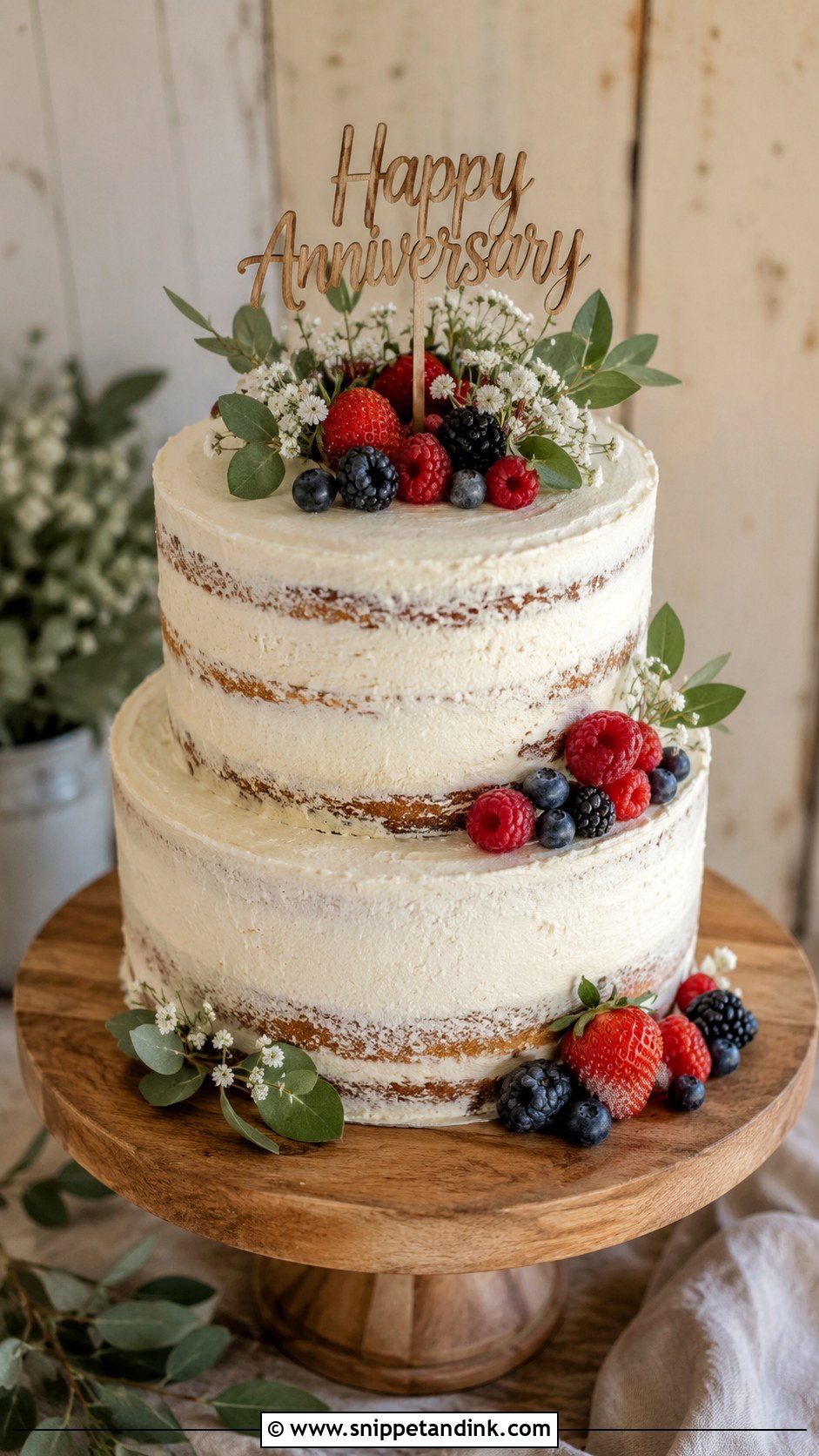
Rustic buttercream forgives a lot, which is why it’s ideal if you’re baking at home. Soft swipes, ridges or semi-naked edges that show a hint of sponge look intentional even if your hand isn’t perfectly steady. Vanilla, carrot, spice or lemon sponges suit it. Add fresh flowers, greenery, berries or a small wooden topper. It’s at home on a backyard table or farmhouse kitchen. The exposed edges dry out quicker, so ice it on the day or keep it covered.
19. Double Layer Anniversary Cake With Sugar Flowers
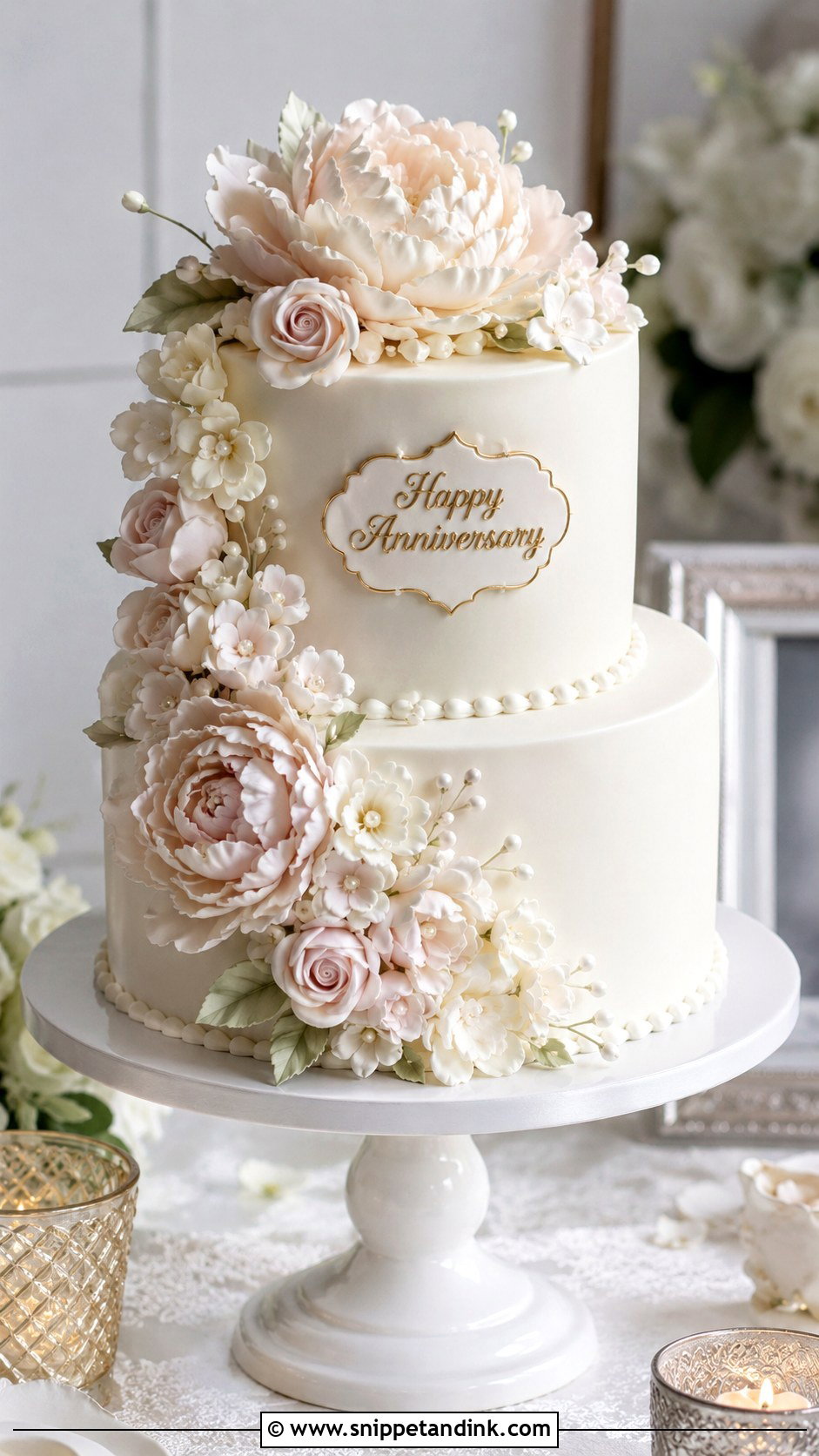
Sugar flowers are the keepsake on this list. They’re shaped petal by petal from gum paste, dried and dusted, so they can be coloured to match anything and kept long after the party if they’re stored dry and out of sunlight. Roses, peonies, orchids and small blossoms are typical. One bigger cluster on the top edge with a few smaller pieces trailing down the side looks balanced. Vanilla, almond, lemon or coconut sponge suits the polished look. They are decorative, though, and not meant to be eaten, as most contain wires.
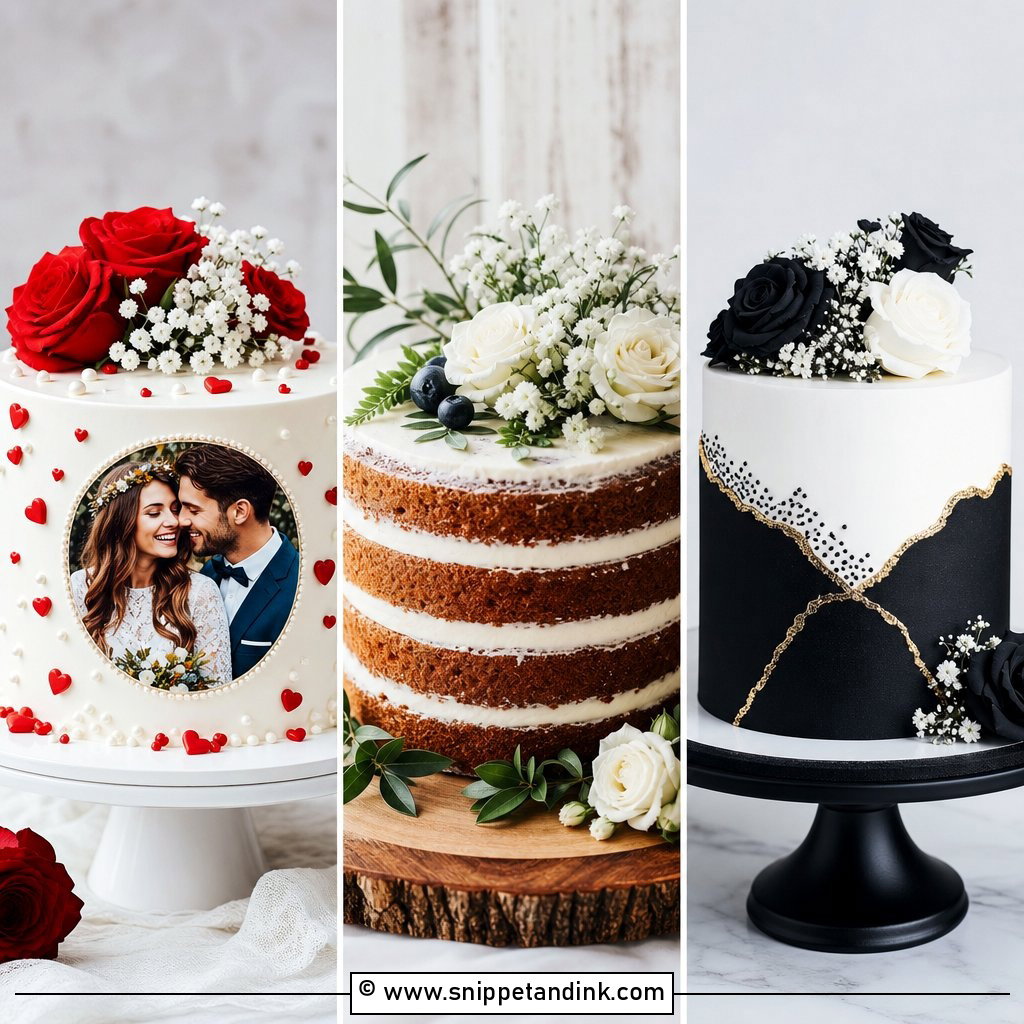
20. Double Layer Anniversary Cake With Chocolate Strawberries
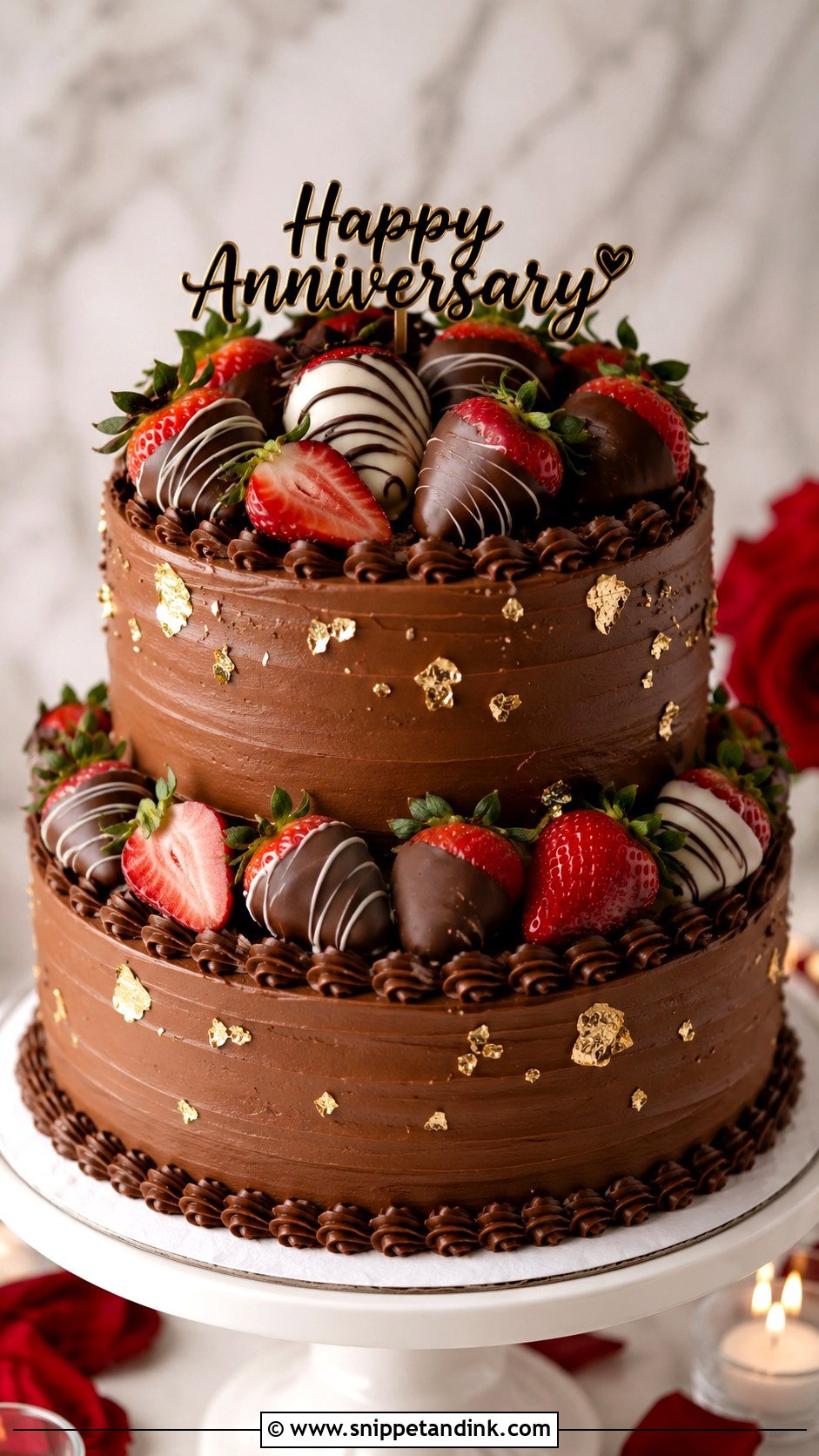
Chocolate-dipped strawberries make the cake feel like a box of treats. A chocolate, vanilla or strawberry cake with smooth buttercream or ganache works as the base, and the berries go around the top, along the base or in a neat crescent. Mixing dark and white chocolate gives contrast. Dip them the same day and dry the berries completely first, because any moisture makes the chocolate seize or slide off. A few gold flakes are optional.
Bringing Back the Wedding Cake Flavour
The request I love most is a couple asking for the flavour they had at their wedding. If you still have the menu or the original order, bring it; otherwise describe what you remember about the sponge, the filling and the icing, and your baker can get close. Even a small two-layer version of the wedding flavour lands harder than any decoration.
Size and servings
A two-layer 6 inch cake serves a small family dinner, roughly eight to twelve slices. An 8 inch serves around twelve to twenty depending on how you cut it, and a 10 inch suits a bigger party. If you’re expecting more people, a matching sheet cake in the kitchen is easier than going taller.
Making it ahead
Sponges can be baked a day or two before, cooled fully, wrapped tightly and chilled; they’re easier to level and stack cold. Buttercream and ganache cakes can then be finished the day before and kept in a cool room or fridge, while whipped cream and fresh berry cakes should be finished on the day. Take a buttercream cake out of the fridge an hour or so before serving so the icing softens and the sponge tastes its best.
Which Flavour Tasted Like Your Wedding Day?
Gold and pearls feel formal, flowers feel soft, chocolate feels rich, and berries feel fresh. Buttercream keeps a cake approachable; fondant and sugar flowers make it more polished. Start from the couple, not the decoration: the flavour they love, the year they’re celebrating, and how many people will be at the table. Bring that, plus one photo you love, to your baker, or use it as your plan if you’re baking yourself.
You'll Like These Ideas:


Leave a Reply