
A Victoria sponge is the cake couples tend to ask for when they tell me they don’t really like wedding cake. It’s equal weights of butter, sugar, eggs and flour, sandwiched with jam and cream, and nearly every guest has eaten one at a kitchen table. That familiarity is the whole appeal. The catch is that a sponge made for afternoon tea isn’t made to stand in tiers for five hours, so a lot of what follows is about dressing it for a wedding without losing the soft crumb people expect. Below are thirty ways I’d present it, from a bare two-layer sandwich to square tiers and a decorated sheet cake.
What Changes Between a Teatime Sponge and a Tiered One
The home recipe is creamed butter, sugar, eggs and self-raising flour, baked in two shallow tins and eaten the same afternoon. It’s tender, and tenderness is exactly why it struggles under weight and hours of display. For wedding tiers I make a handful of changes that guests never notice in the slice:
- A slightly firmer batter, so the bottom tier doesn’t compress overnight under the ones above.
- A thin vanilla syrup brushed on every layer, because a firmer bake and long exposure both dry the crumb.
- A piped buttercream dam around the edge of each layer, with the jam spread inside it.
- A board under every upper tier and dowels in the tier below, cut level with its top.
- Jam that is set firm rather than runny, so it holds a line instead of soaking into the sponge.
None of this changes the taste. It simply means the cake you cut late in the evening still looks like the one that was delivered in the afternoon.
1. Classic Victoria Sponge Wedding Cake
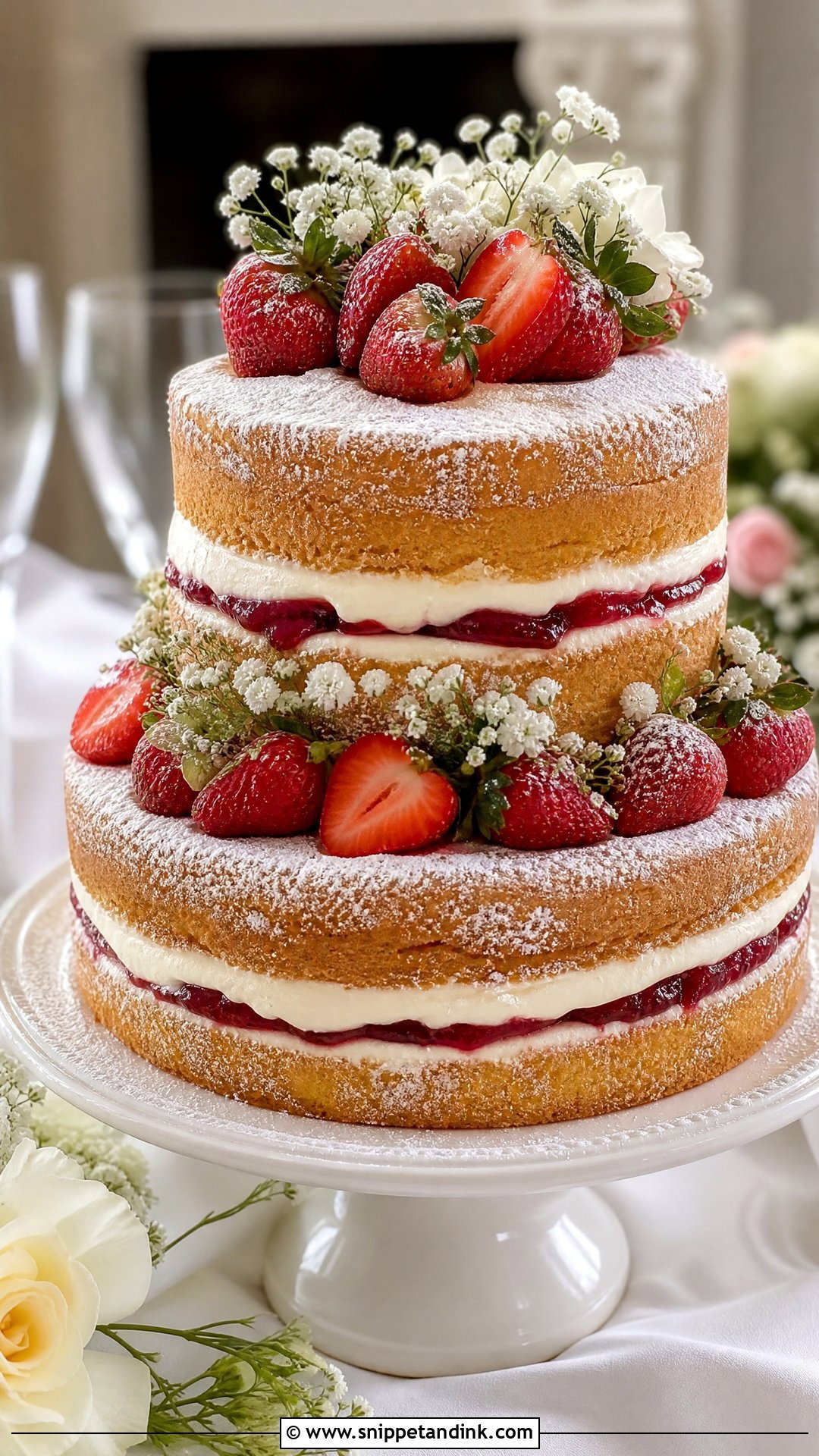
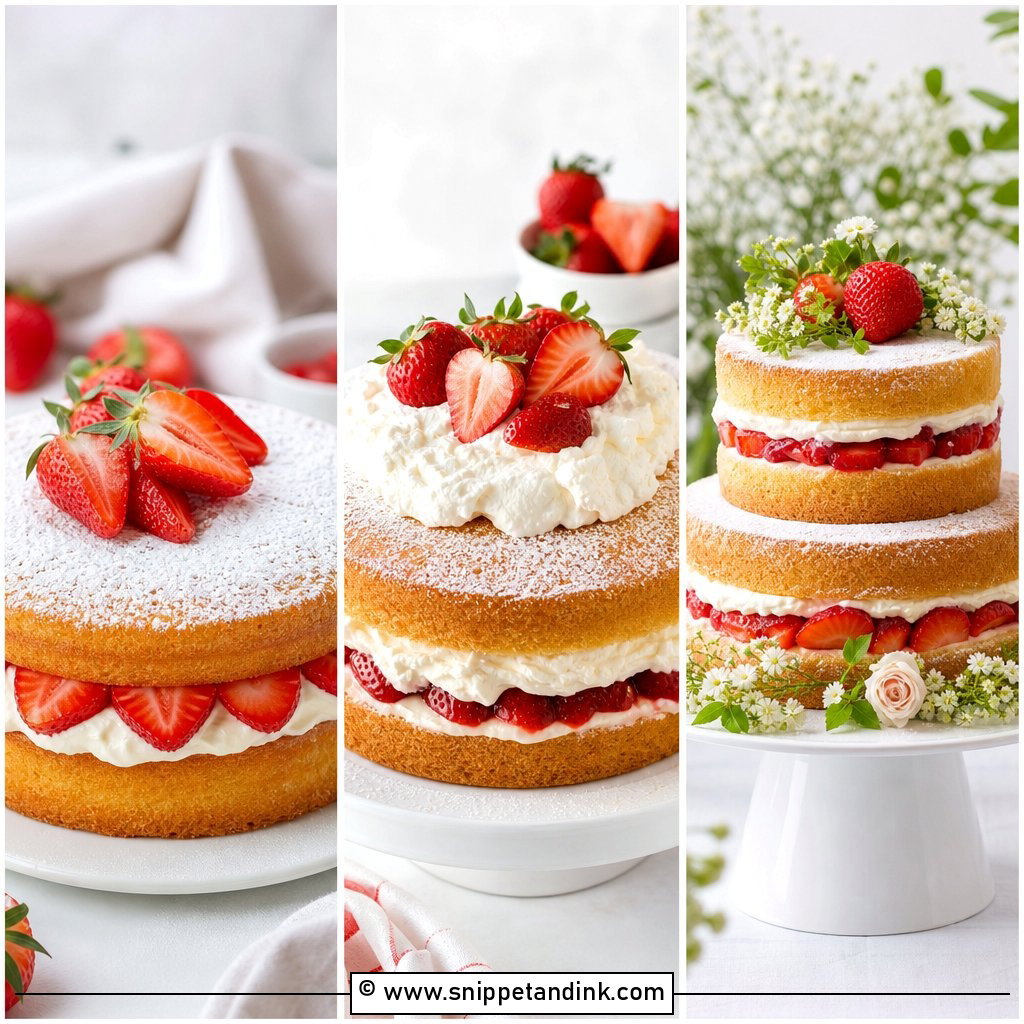
Start with the version everyone recognises: pale vanilla sponge, a stripe of raspberry or strawberry jam, and vanilla buttercream or whipped cream. I keep the outside plain on purpose. A dusting of icing sugar on the top tier, a few strawberries and some small white flowers are enough to stay faithful to the original Victoria sandwich style. One thing I always add for a wedding version is a ring of buttercream piped around the edge of each layer before the jam goes in, so the jam can’t creep out of the sides under the weight of the tier above.
2. Naked Victoria Sponge Wedding Cake
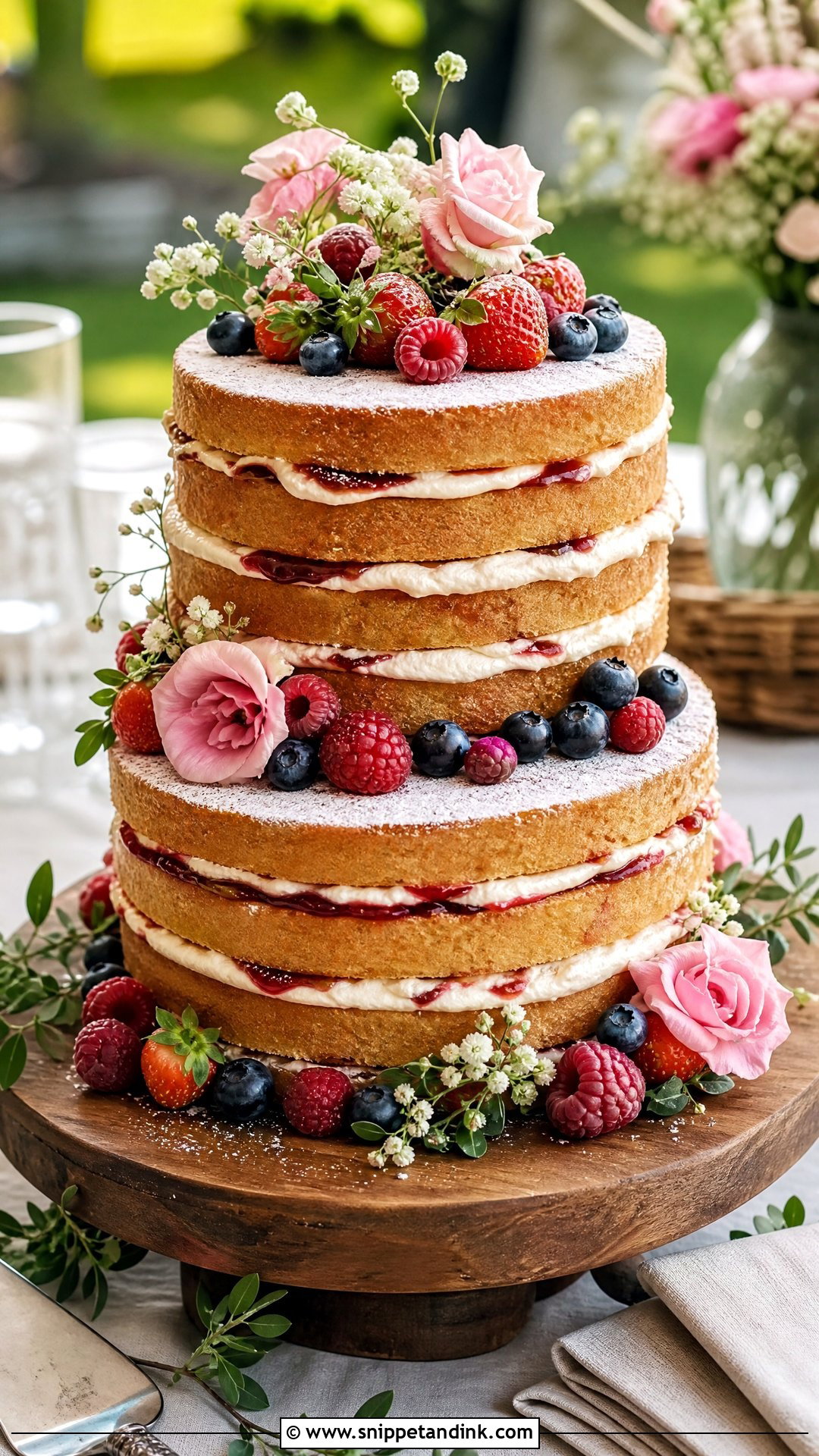
Leaving the sides bare shows off the golden sponge and the jam lines, which is the point of this style. It’s also the version that dries out fastest. With nothing sealing it, the outer crumb starts to stale after a few hours in open air, so I brush every layer with a light vanilla syrup and assemble as close to the event as I can. Berries pressed into the filling and a wooden or ceramic stand give it the countryside feel. I’d steer you away from it for a long outdoor display on a hot afternoon.
3. Semi Naked Victoria Sponge Wedding Cake
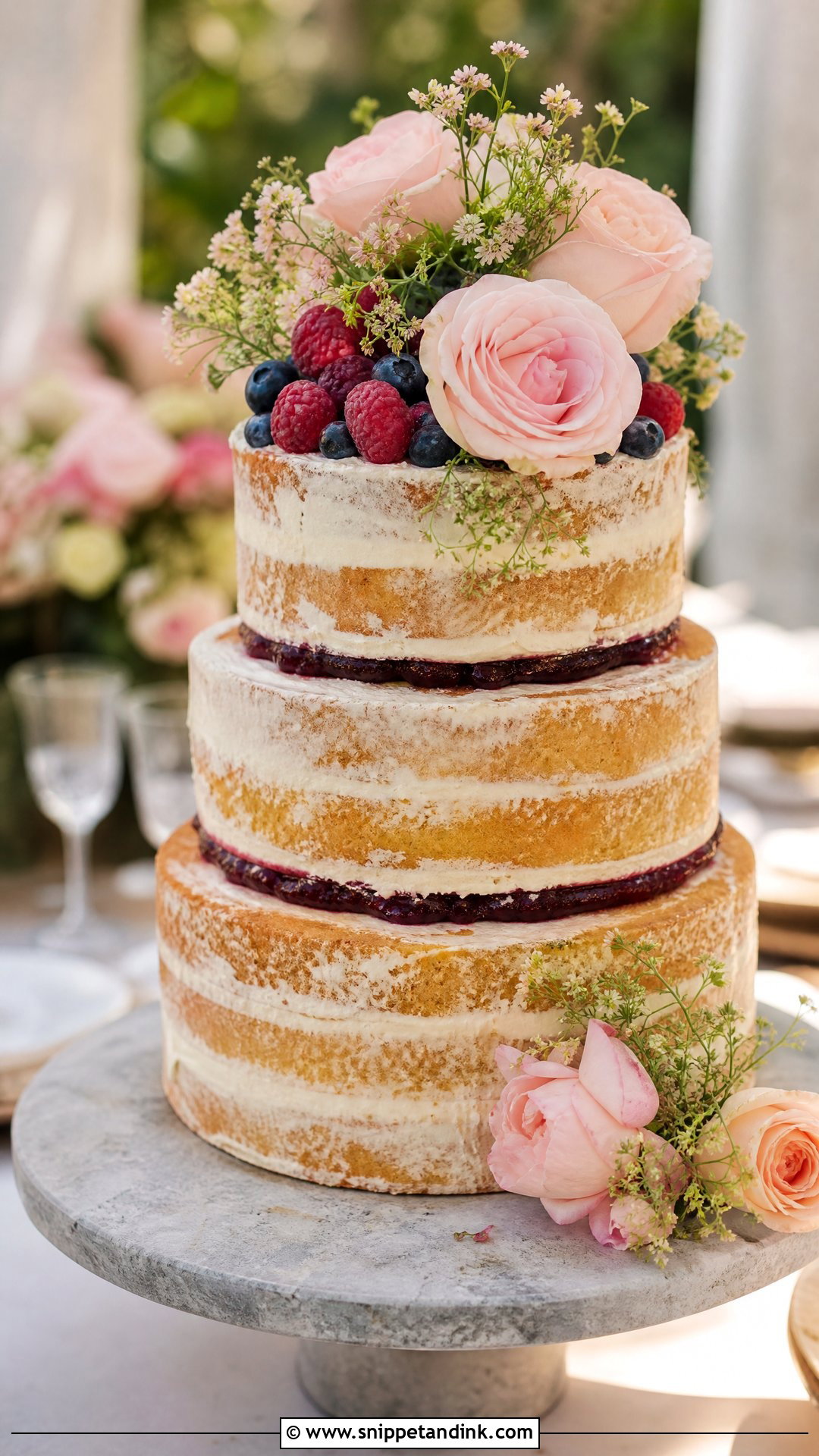
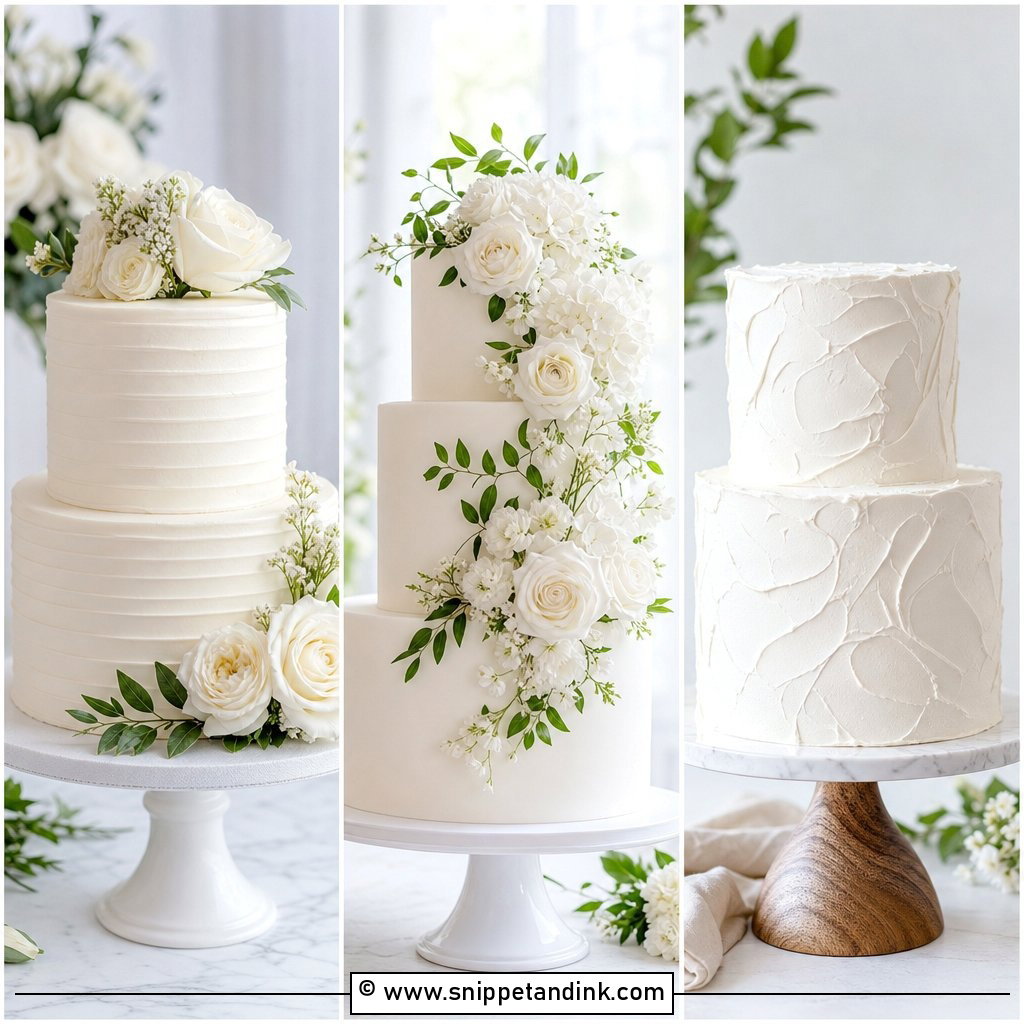
Semi naked means a thin coat of buttercream scraped back until the sponge shows through in patches. For weddings I prefer it to a fully naked cake, because that thin layer slows drying and holds loose crumbs in place, so the edges still look neat by the time you cut. Jam peeks out between the layers, and roses, small berries and trailing greenery fill the gaps. Barns, gardens and relaxed venues suit it; under a ballroom chandelier it can look half-finished.
4. Three Tier Victoria Sponge Wedding Cake
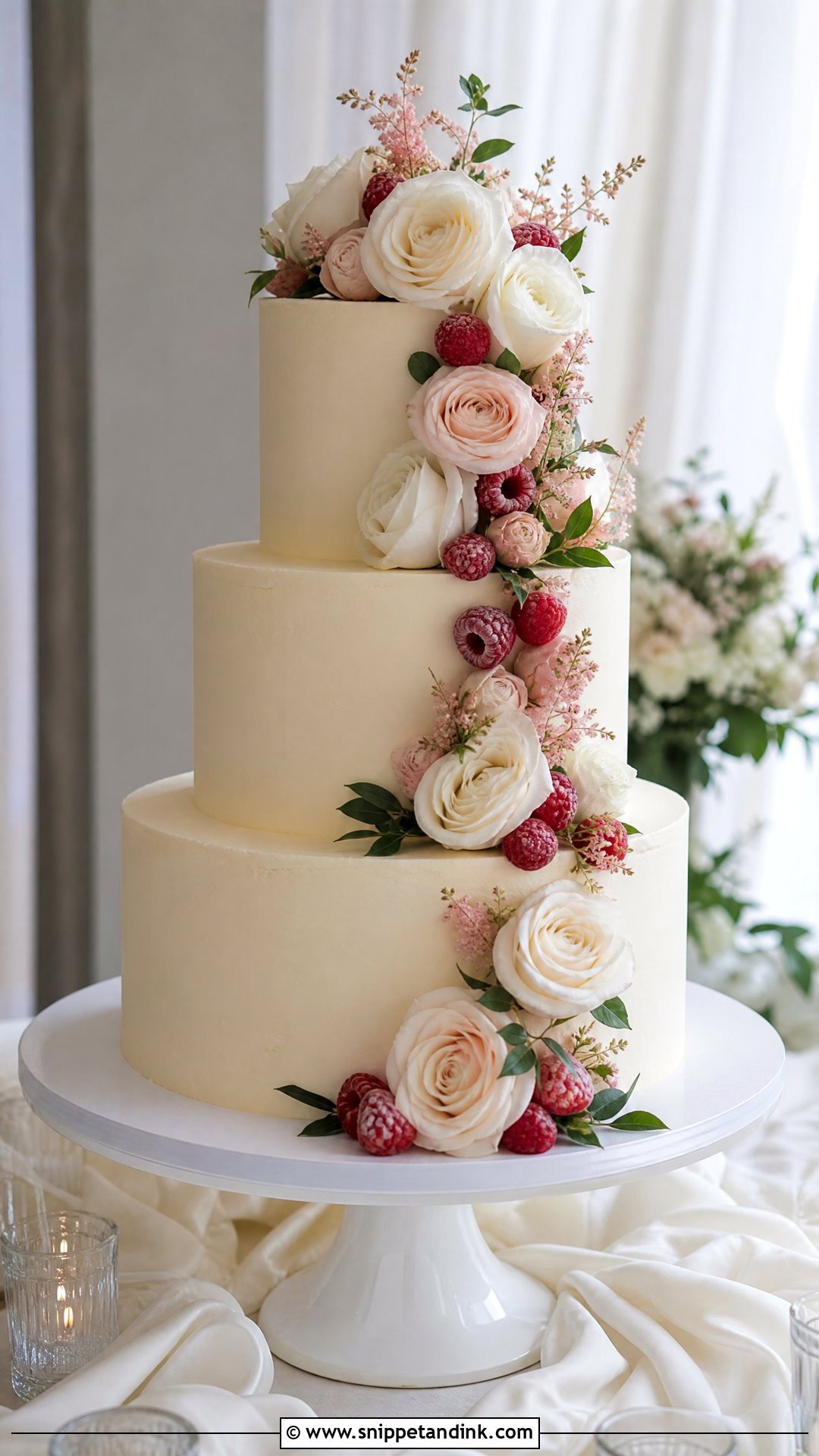
A three tier Victoria sponge wedding cake is where structure gets serious. A traditional Victoria crumb is soft and compresses easily, so each upper tier sits on its own thin board, with dowels pushed into the tier below to carry the weight. Skip them and the bottom tier slowly squashes while the jam bulges out. You can vary fillings tier by tier, say strawberry, raspberry and lemon curd, which gives guests a choice at the dessert table. Flowers set on a diagonal from top to base stop three tiers looking like a stack of hatboxes.
5. Two Tier Victoria Sponge Wedding Cake
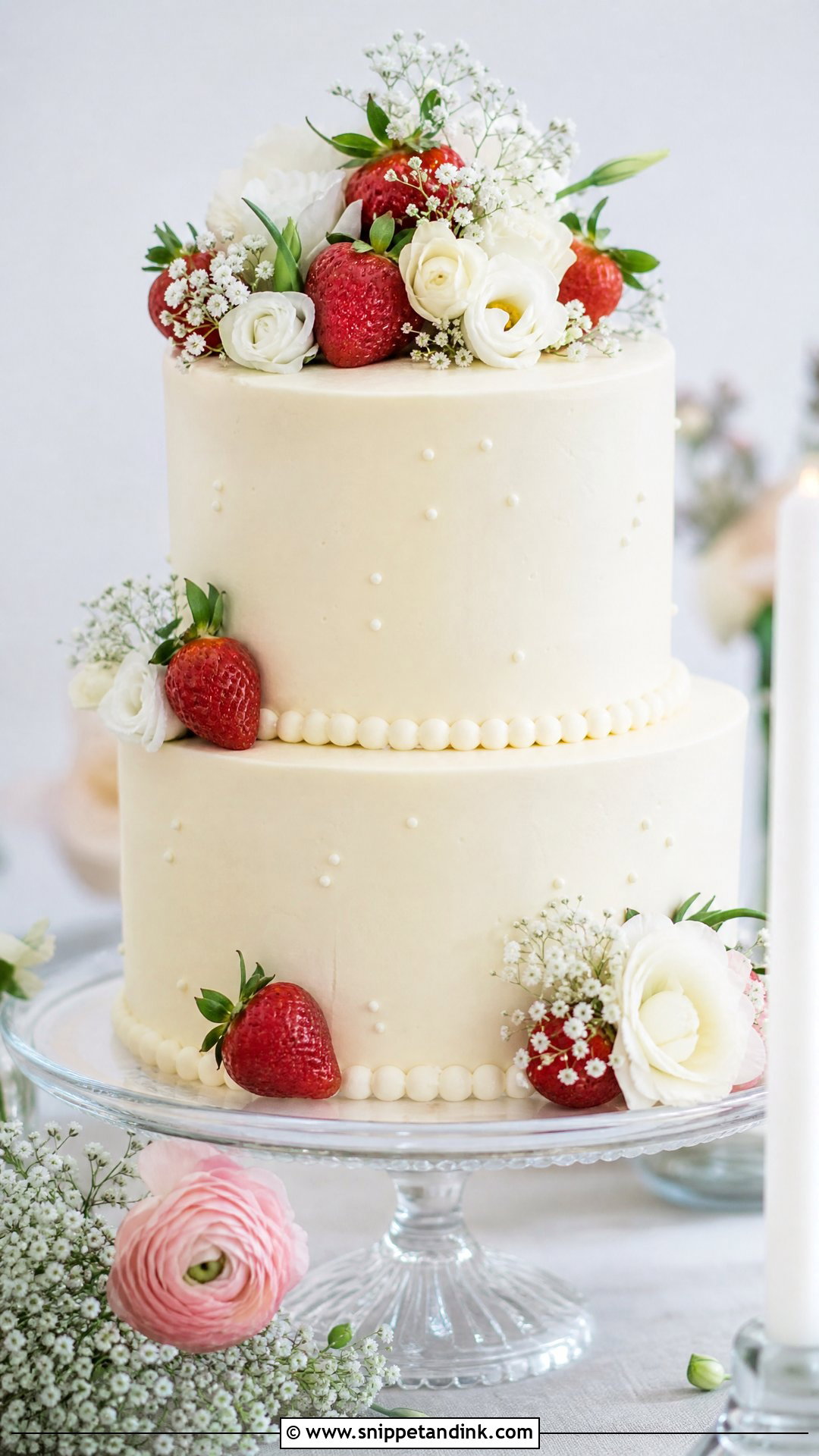
Two tiers give you enough height for a proper cutting moment without making more cake than a small wedding will eat. I’d use a slightly firmer sponge here, with buttercream rather than fresh cream in the middle, so each slice comes off the knife cleanly. A smooth ivory finish, a few strawberries and some pale pink roses are all it needs. If your numbers are borderline, top up with cupcakes or a tray of sliced sponge rather than adding a third tier just for portions.
6. Single Tier Victoria Sponge Wedding Cake
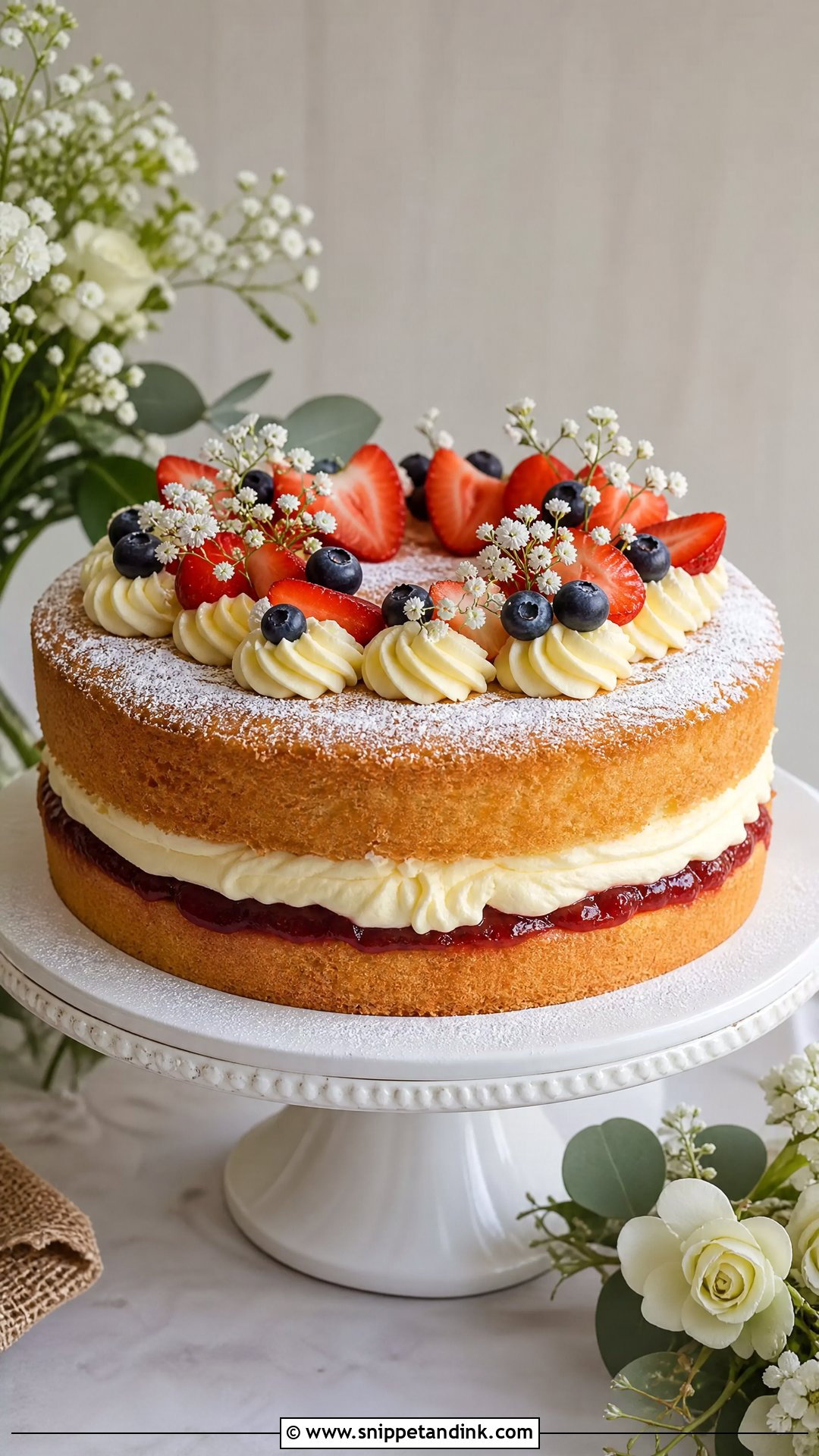
One tier can look as deliberate as five if it’s wide and deep. For elopements and micro weddings I build it four layers tall instead of the usual two, which gives real height and a generous jam and cream cross-section when it’s cut. Finish it with smooth buttercream, a sugar dusting or soft piped edges, then raise it on a stand with flowers around the base so it doesn’t vanish on a long table.
7. Victoria Sponge Wedding Cake With Strawberries
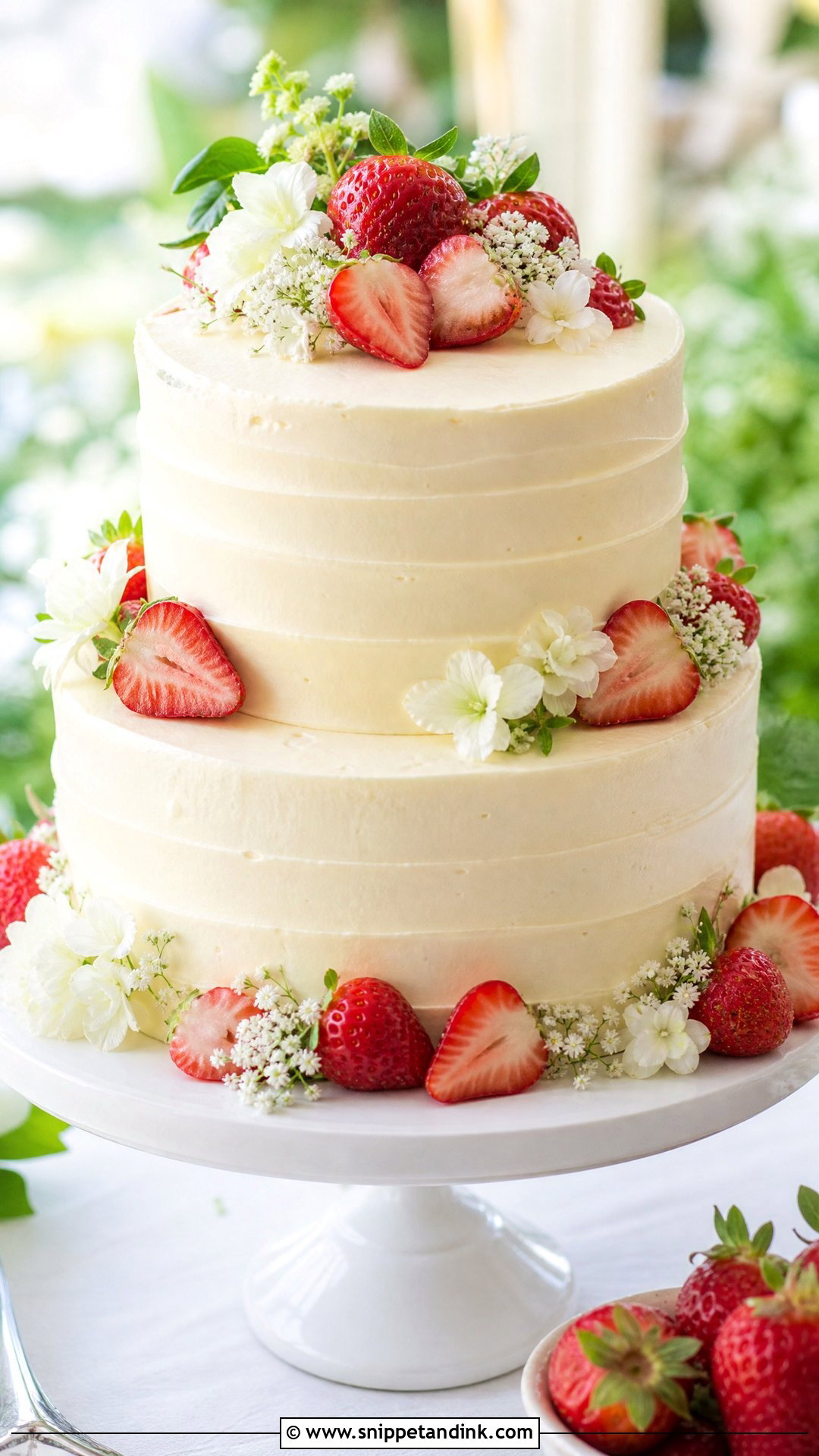
Strawberries are the fruit most people picture with this cake: strawberry jam inside, whole and halved berries outside, a few small white flowers. The trap is cut fruit. Sliced strawberries start weeping juice onto buttercream within an hour or two and leave pink streaks down the tiers, so I use whole berries on the sides and keep any cut faces turned inward. Group them in tight clusters rather than scattering them. Against ivory frosting, the red reads clearly from across the room.
8. Victoria Sponge Wedding Cake With Raspberries
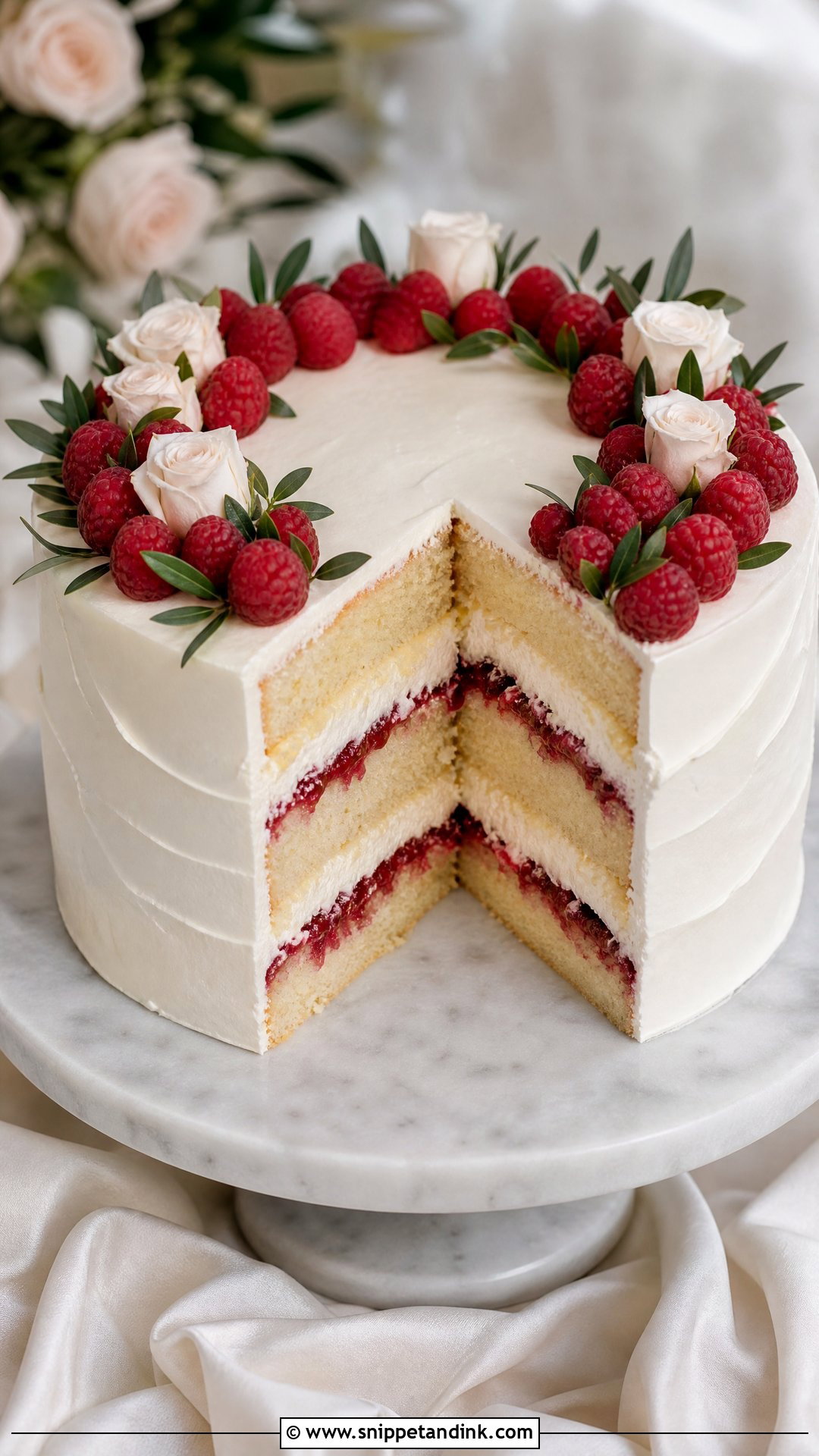
Raspberries are sharper than strawberries, and that tang cuts through buttercream in a way I find more grown-up. Ask for seedless raspberry jam if you can; seeds stuck in teeth bother guests more than you’d think. Fresh raspberries bruise if they’re piled up, so I ring them around the base of each tier or tuck small clusters in with roses and greenery. The deep pink holds its colour well against pale sponge.
9. Victoria Sponge Wedding Cake With Fresh Flowers
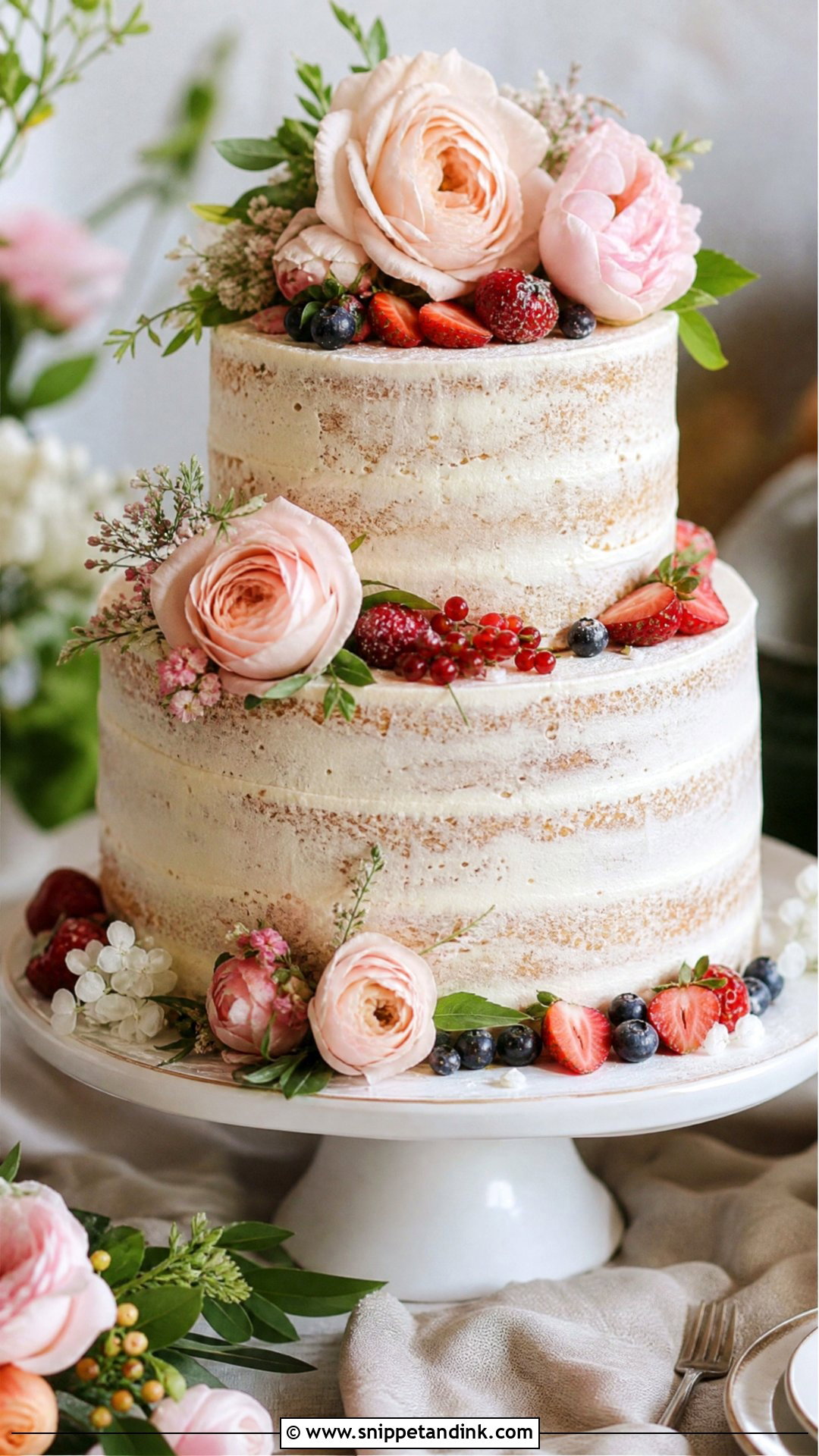
Fresh flowers are the quickest way to make a plain sponge look like a wedding cake, and the area where I’m most careful. Not every bloom is safe near food, some popular wedding flowers are toxic, and most florist stems have been treated with something. I wrap each stem in florist tape and set it into a posy pick so nothing touches the buttercream directly. Roses, peonies or ranunculus matched to the bouquet work well, and a smooth or semi naked finish lets the flowers carry the design. Get your baker and florist talking early so the stems arrive clean and short.
10. Victoria Sponge Wedding Cake With Buttercream Flowers
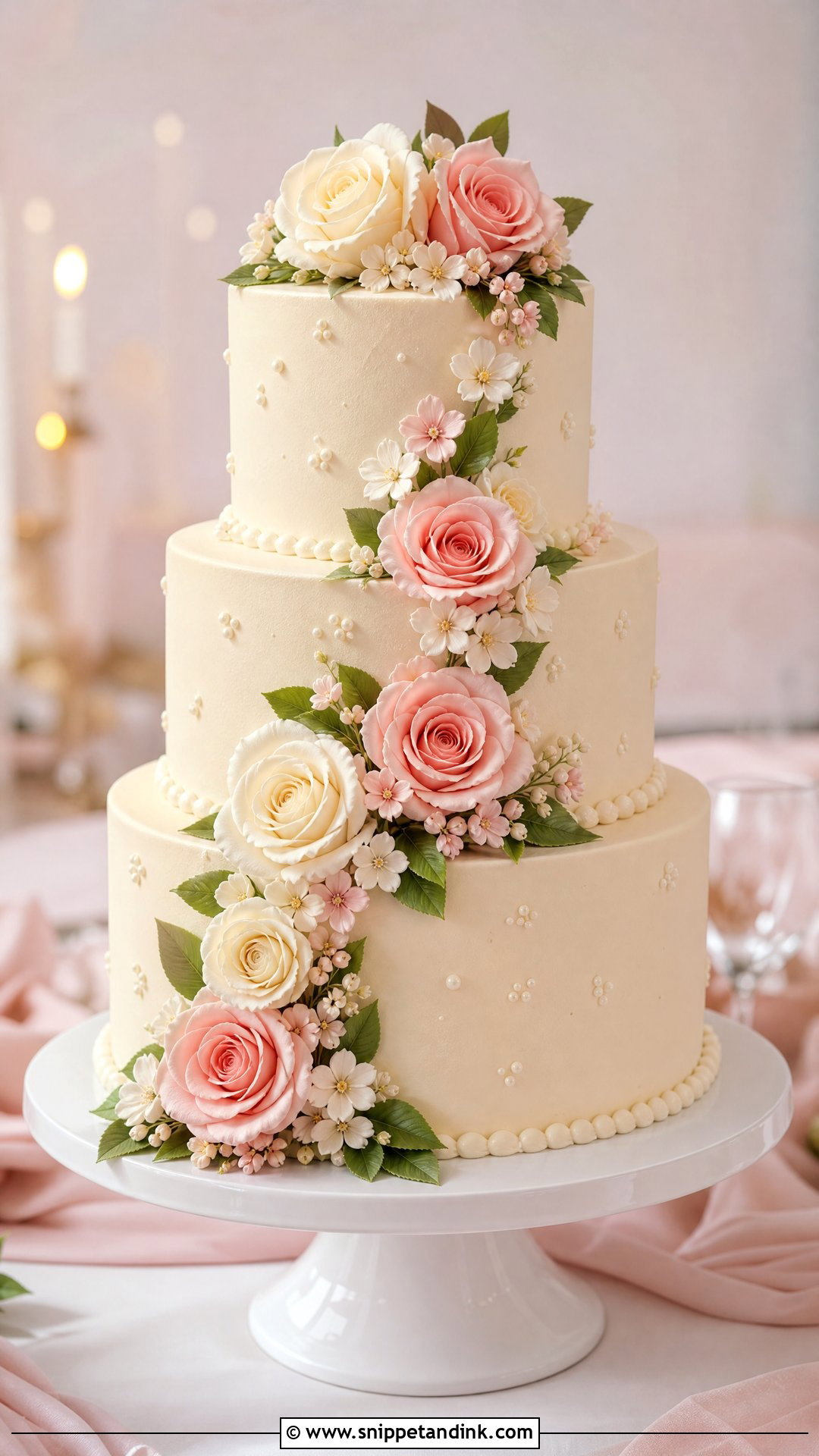
Piped buttercream flowers give you florals that are entirely edible, and they cut with the cake. Their softness suits a tender sponge better than stiff sugar work. What I watch is temperature. Piped petals slump in a warm room, so for a summer marquee I pipe with a firmer buttercream and keep the cake chilled until it goes out. Ivory reads quiet; blush, lavender and peach make a brighter cascade down one side.
11. Victoria Sponge Wedding Cake With Rose Buttercream
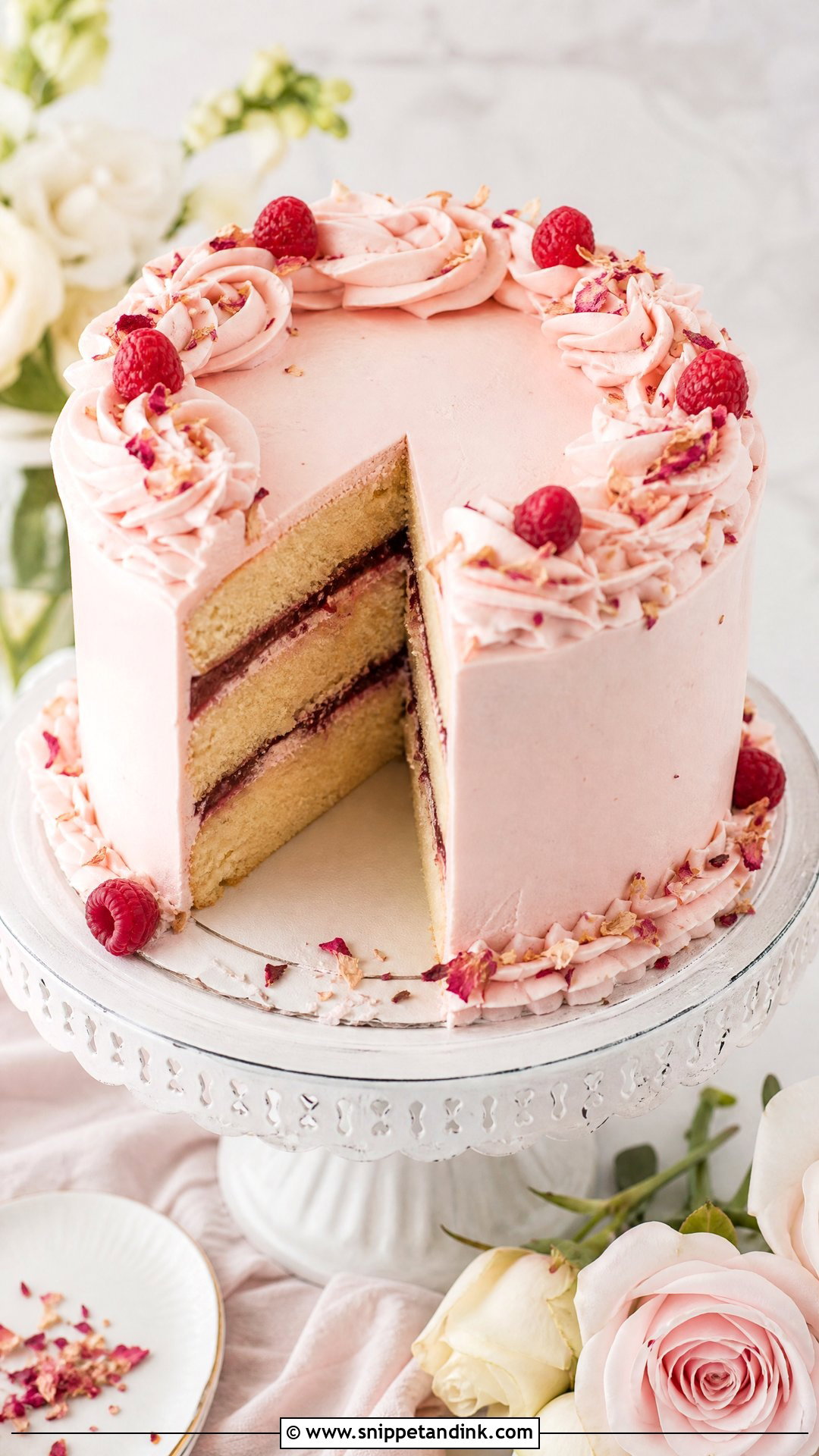
Rose is an easy flavour to overdo. Rosewater varies hugely in strength between bottles, and a heavy hand makes buttercream taste like soap, so I add it a few drops at a time and taste it against the sponge, never on its own. Raspberry or strawberry filling keeps it fresh. Outside, pale pink buttercream, soft piped borders and a few edible rose petals on top. Kept this light, even guests who distrust floral flavours tend to finish their slice.
12. Victoria Sponge Wedding Cake With Lemon Curd
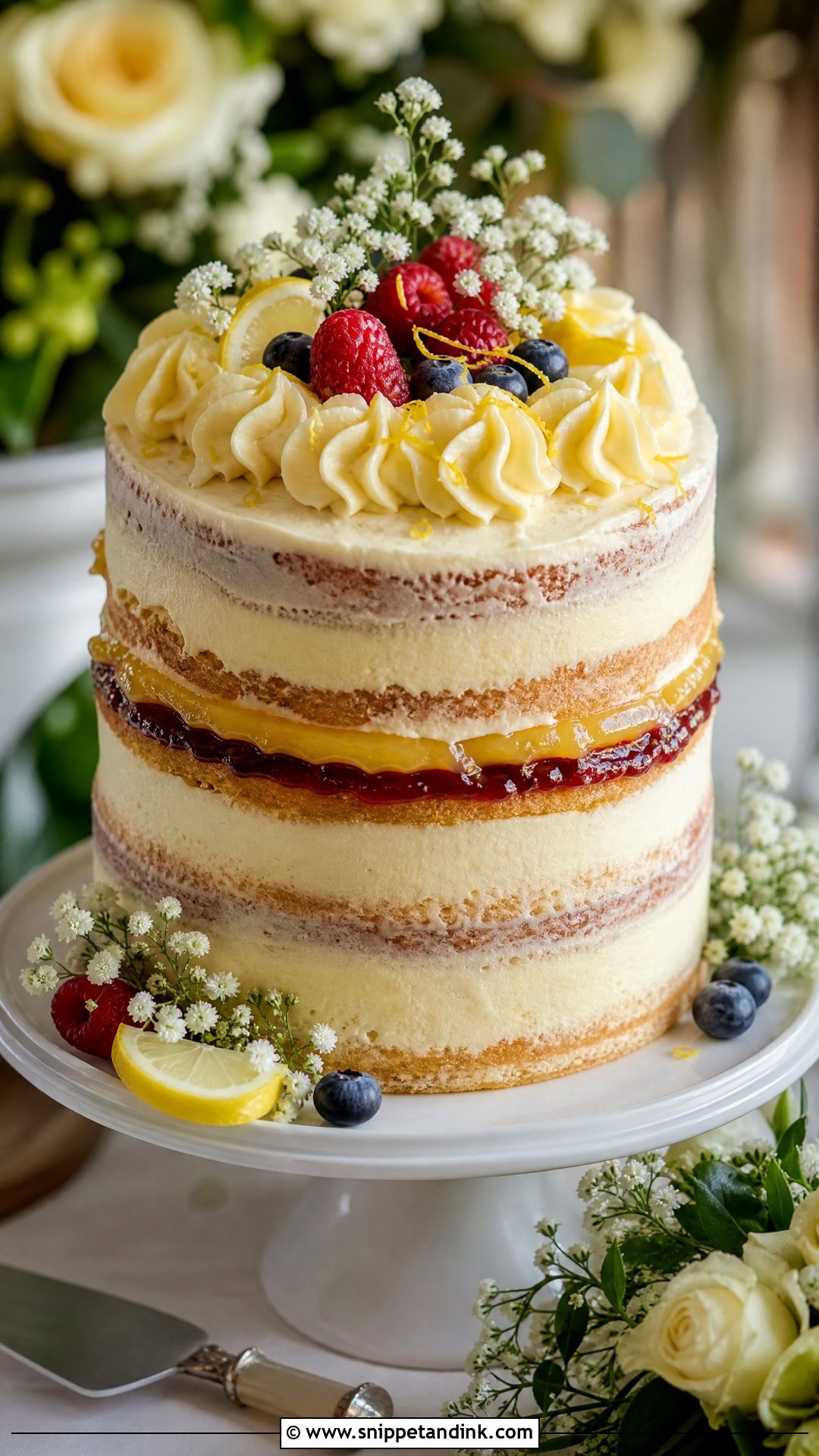
Lemon curd adds a sharp citrus layer that stops the buttercream feeling heavy after a big meal. It’s also a soft, wet filling. Without a firm buttercream dam around each layer it squeezes out under the weight of the next tier, and because curd is egg-based, the cake should stay chilled until it’s set out. Pair it with raspberry jam for a fruitier slice, or keep it to lemon and vanilla, with a pale yellow finish and a few berries on top. I’d reach for it first for brunch and warm-weather receptions.
13. Victoria Sponge Wedding Cake With Jam And Cream
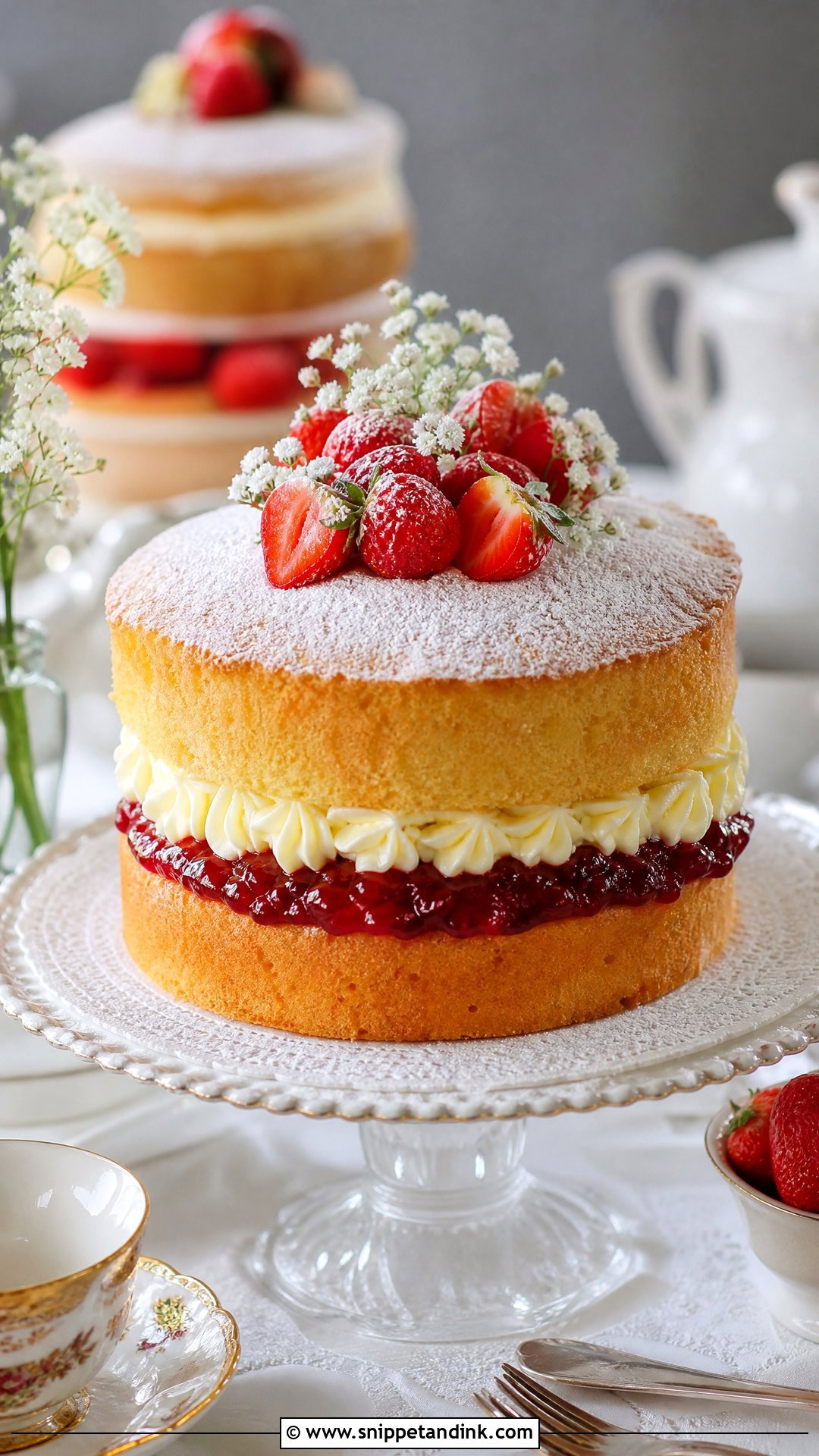
Jam and cream is the filling the cake is known for, so every cut should show a clean stripe of each. Plain whipped dairy cream isn’t stable enough to hold up a stacked tier, so for weddings I stabilise it, usually with mascarpone or a little gelatine, and still keep the cake refrigerated until shortly before serving. Outside, icing sugar, piped cream or a thin buttercream coat, then berries and flowers. It tastes like childhood in the nicest way.
14. Victoria Sponge Wedding Cake With Jam And Buttercream
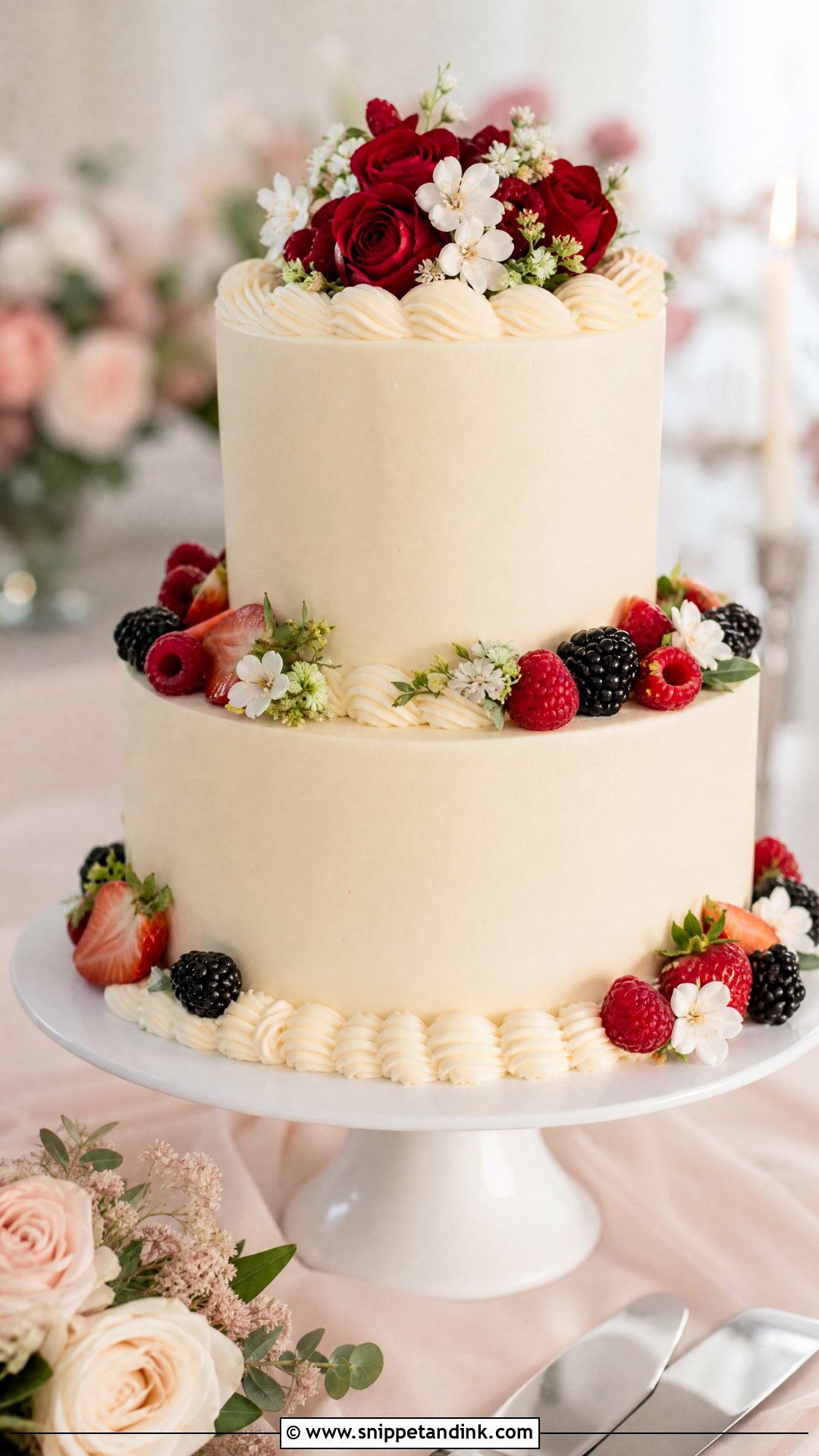
When couples ask me which filling will survive their venue, this is usually my answer. Buttercream holds its shape far longer than fresh cream at room temperature, so it copes with long displays, warm rooms and tall tiers. Jam still gives the fruit hit people expect. I like a thin line of jam visible at the cut edge, ivory frosting with soft piping outside, and strawberries, raspberries or sugar flowers on top.

15. Victoria Sponge Wedding Cake With Powdered Sugar
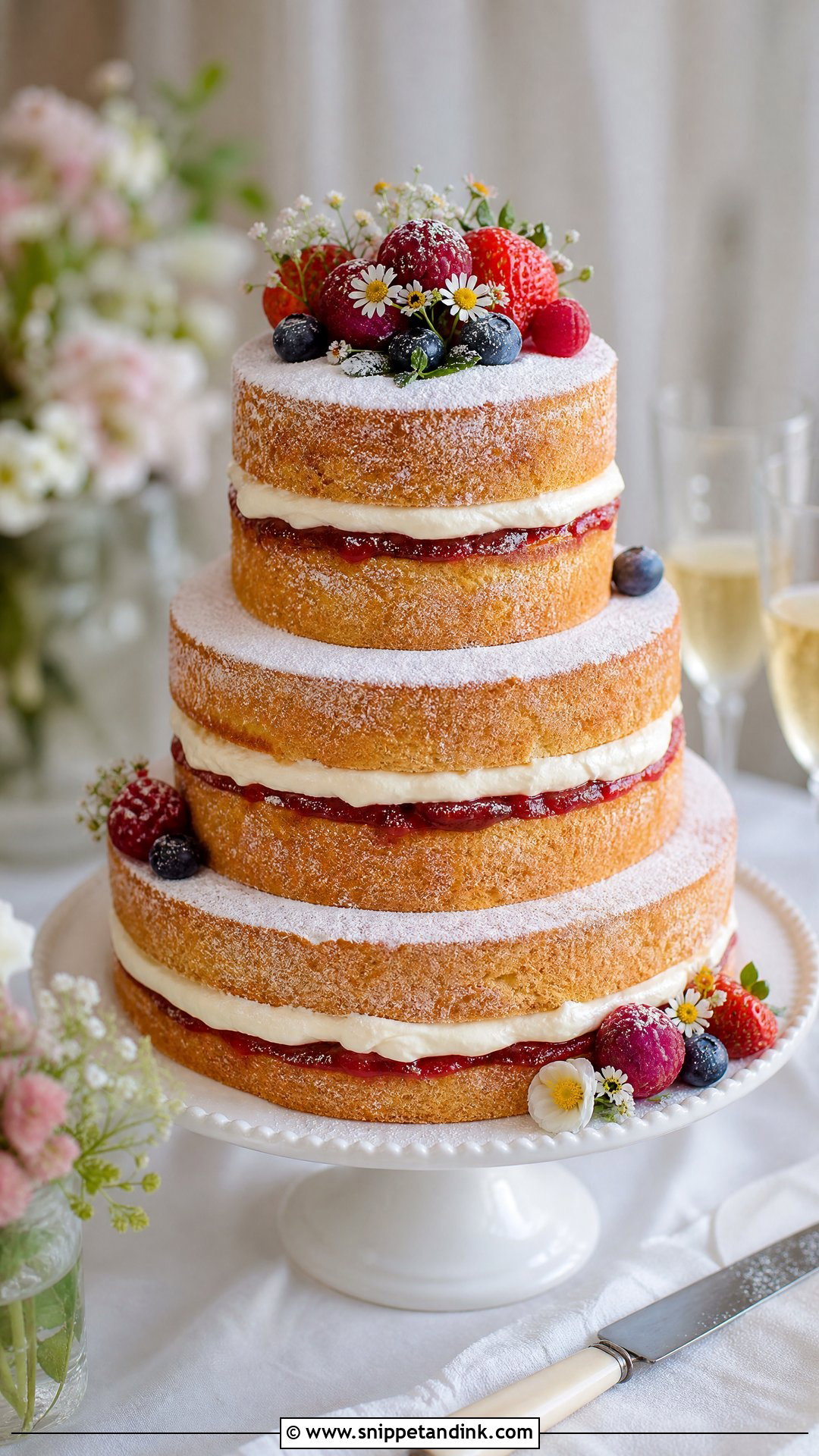
Icing sugar is the original finish, and a fine dusting over a golden top looks quietly right. Moisture is its enemy. On fresh sponge or near cream, the sugar dissolves into damp patches within the hour, so I sieve it on at the venue just before guests see the cake, or switch to a non-melting decorating sugar if it must stand longer. It works best on a single tier, a wide table cake or a naked tiered cake, finished with berries and a few small flowers.
16. Victoria Sponge Wedding Cake With Edible Flowers
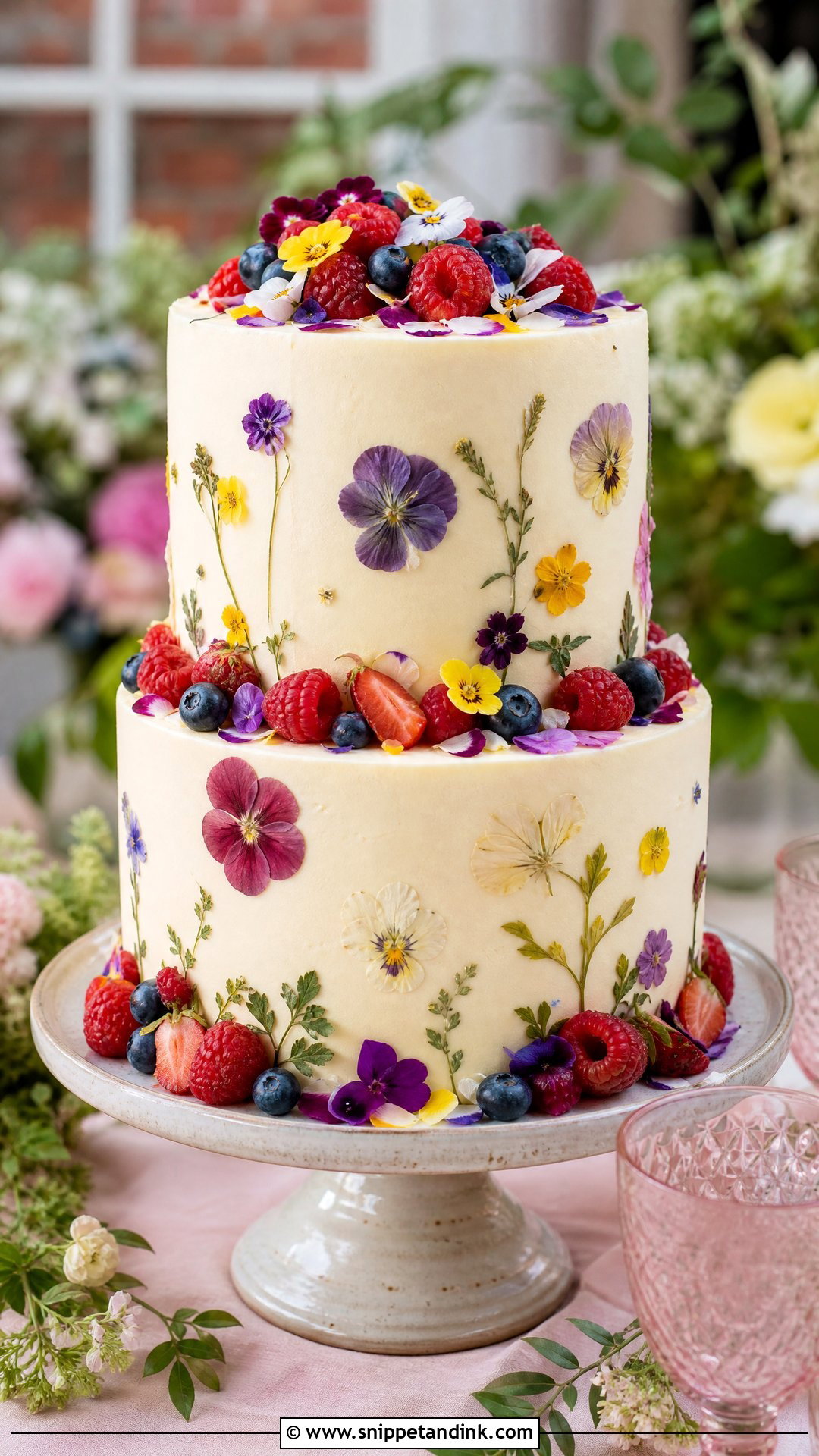
Pressed or scattered edible flowers can make a simple sponge look as if it came straight from the garden. Pansies, violas and calendula petals are the usual choices, and they have to be grown for eating, without sprays, so I buy from food-grade growers rather than a florist. Fresh petals wilt after several hours on moist buttercream. That’s why I either place them late or use pressed ones, which stay flat. Smooth or semi naked frosting both work, with raspberry jam inside and petals picked to match your palette.
17. Victoria Sponge Wedding Cake With Gold Leaf
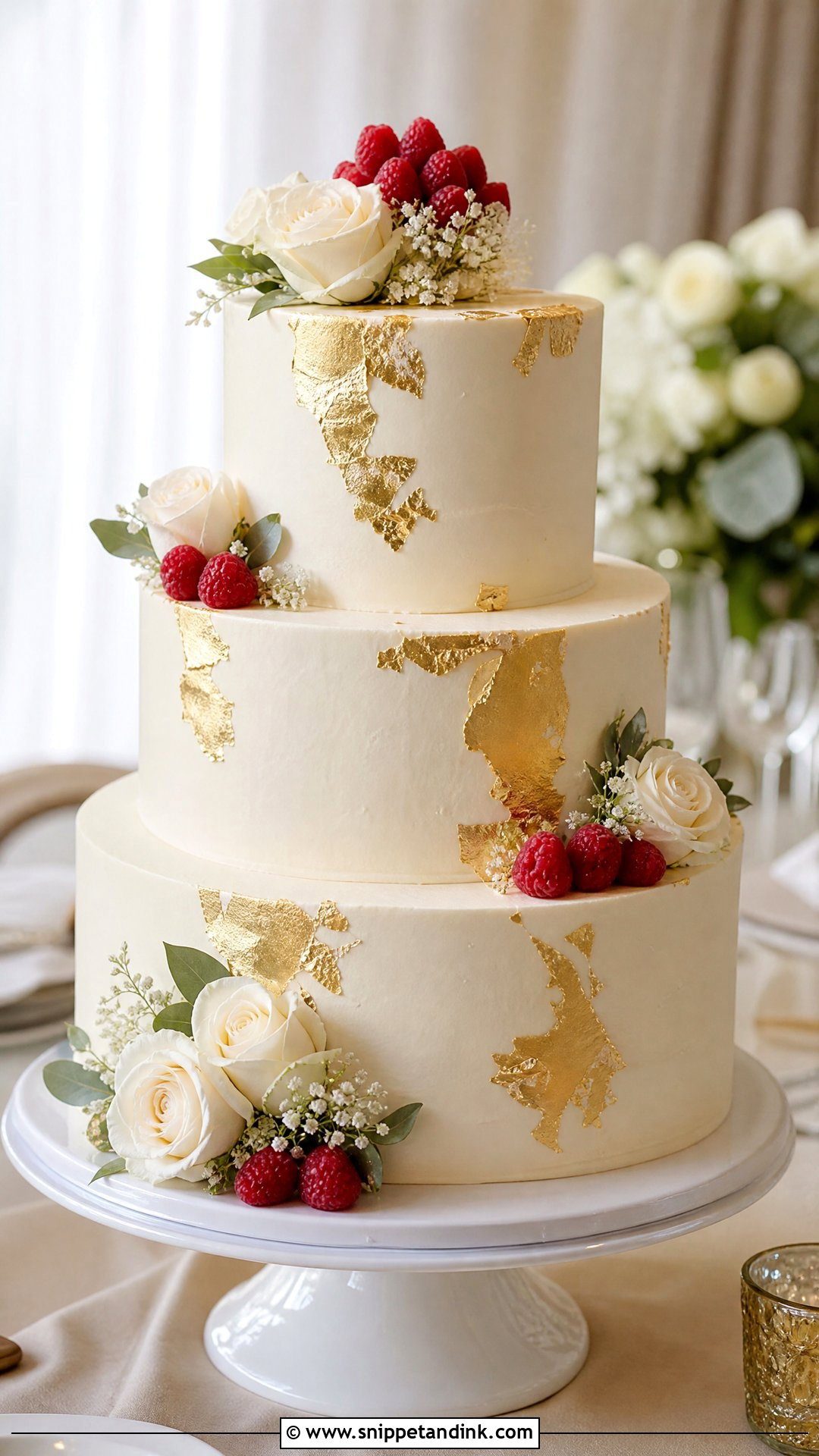
Gold leaf adds formality to a cake that is otherwise homely, and that contrast is exactly what makes it work. Check it’s sold as edible gold, which is high-carat and safe to eat; craft leaf looks identical and isn’t. I lay it with a dry brush onto smooth ivory buttercream, along tier edges, down one side or around the flowers. A few flakes catch candlelight better than a fully wrapped tier, which quickly looks busy. Inside, keep the vanilla sponge, jam and buttercream exactly as they are. Evening and ballroom receptions suit it best.
18. Victoria Sponge Wedding Cake With Pearl Details
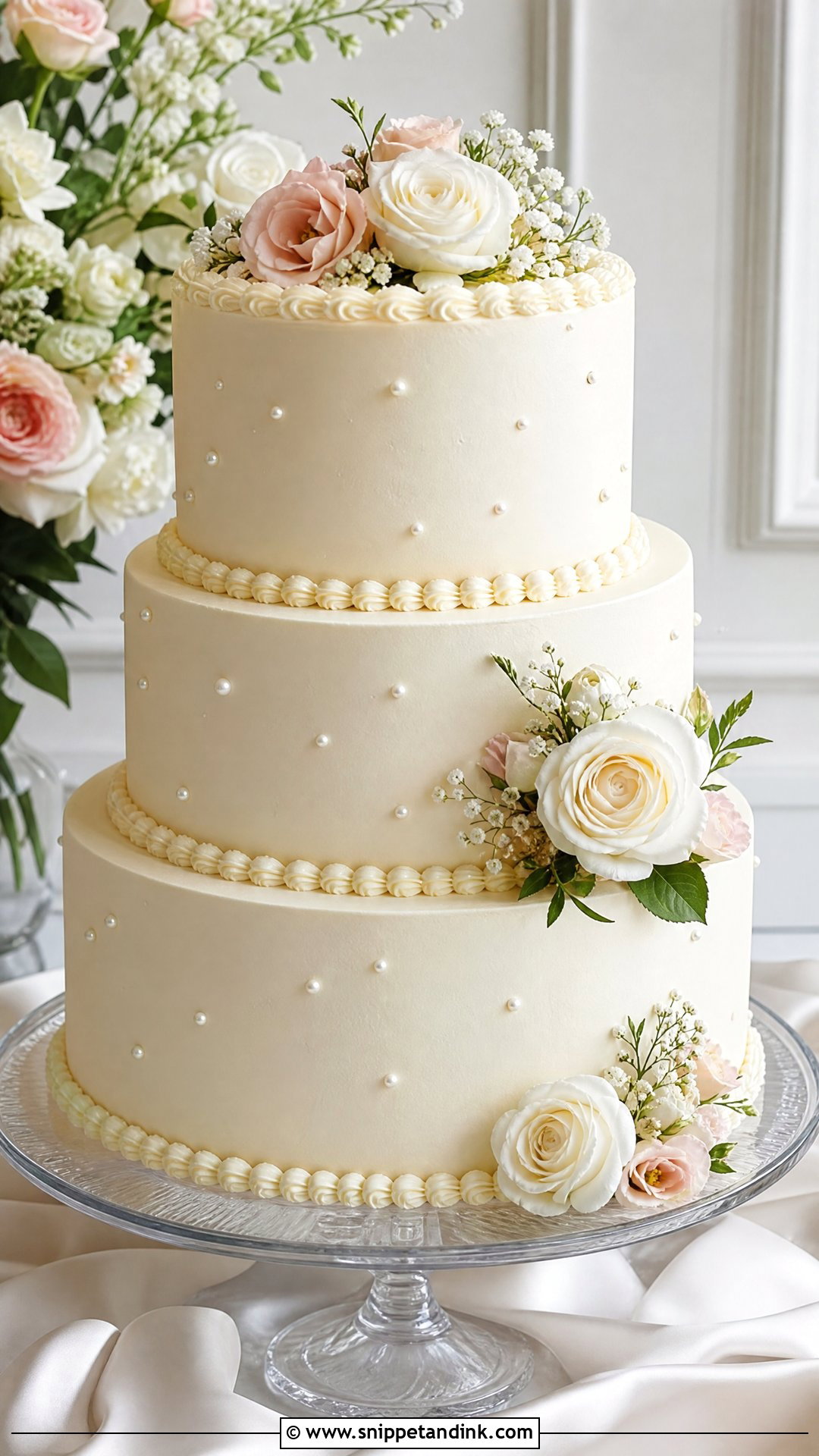
Edible sugar pearls are small and hard, so placement matters more than quantity. I set them around the base of each tier with a dot of buttercream, or scatter a few over smooth ivory frosting, and add them near the end because pearlised finishes can dull in humid air. Paired with blush flowers or white roses, they give a traditional look without a heavy fondant shell. Underneath, the slice is still proper sponge, jam and cream.
19. Victoria Sponge Wedding Cake With Lace Piping
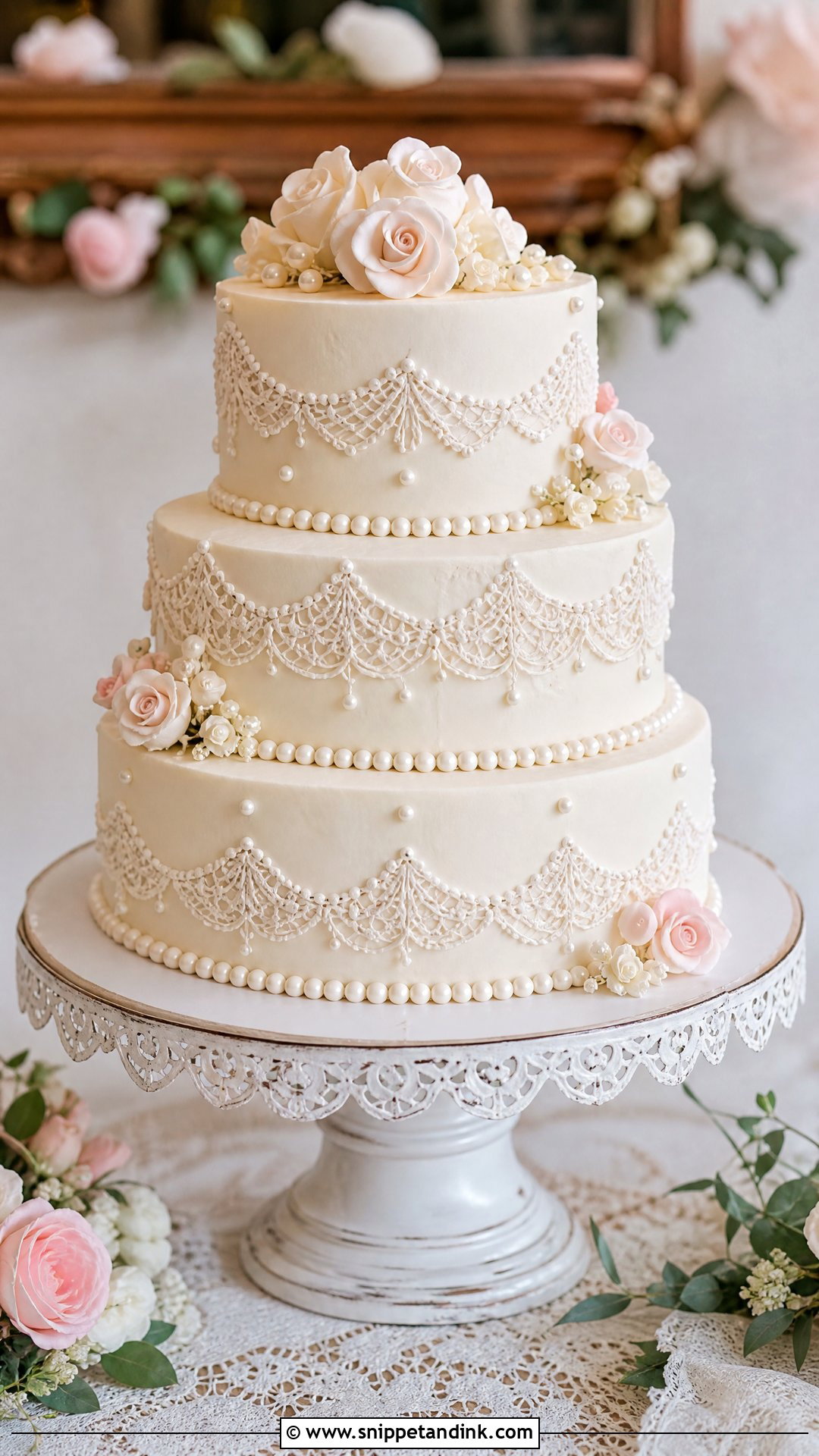
Lace piping is fine lines of royal icing or buttercream over a smooth coat, built up to resemble the lace on a gown. Royal icing sets crisp and holds detail. Buttercream lace is softer to eat but blurs in a warm room. If your dress has a distinctive lace motif, bring a close-up photo to the tasting so the pattern can echo it. Ivory, cream and soft blush suit this, with a few sugar flowers or none at all.


20. Victoria Sponge Wedding Cake With Ruffle Buttercream
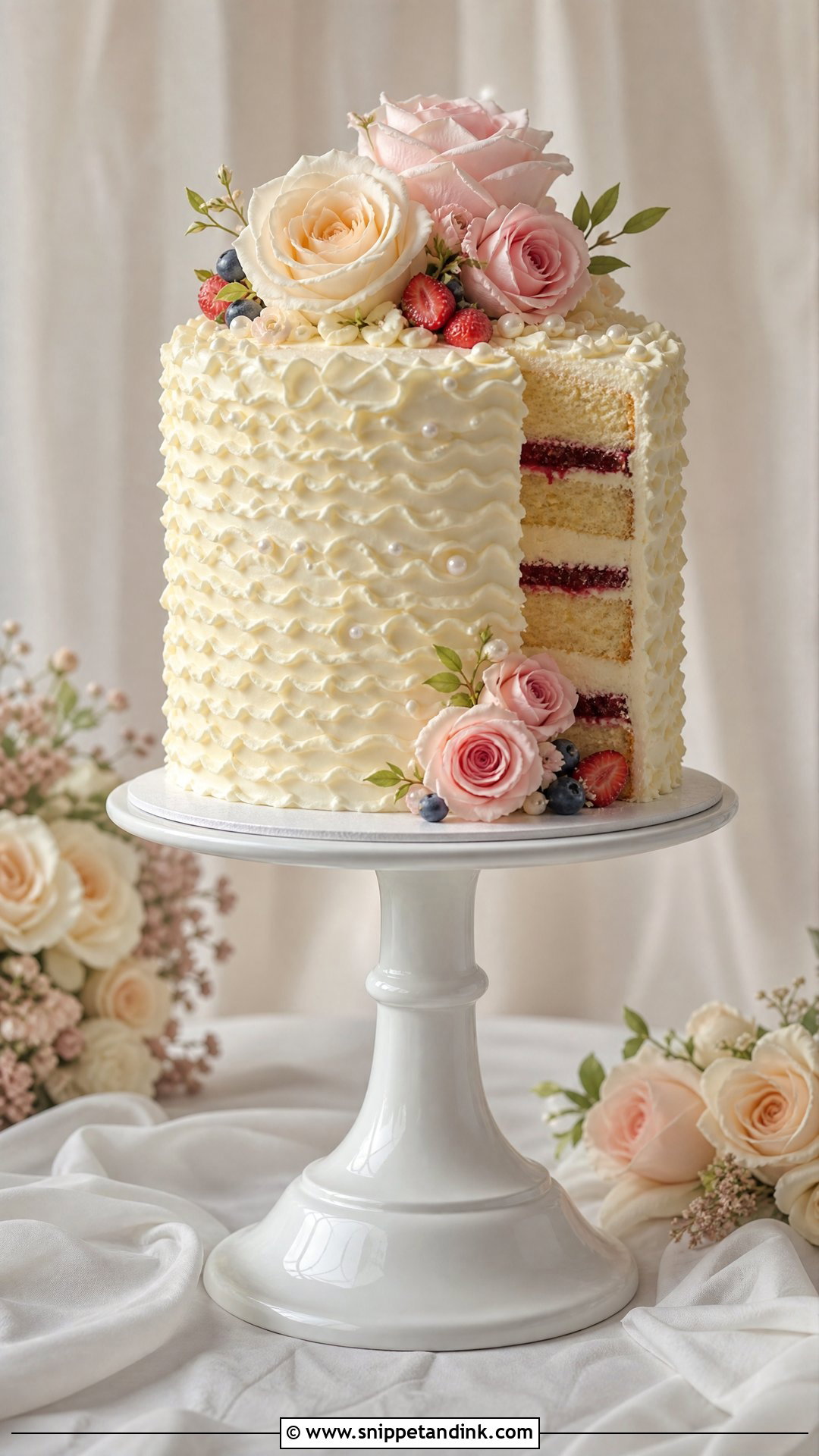
Ruffles take a lot of buttercream, and on a light sponge that matters. Thick frills can outweigh the cake in every bite, so I pipe them thin with a petal tip and keep each one close to the side. Strawberry jam and vanilla buttercream inside keep the slice familiar. Because the texture already catches light and shadow, a couple of flowers is plenty, and leaving the ruffles bare often looks better still.
21. Victoria Sponge Wedding Cake With Floral Cascade
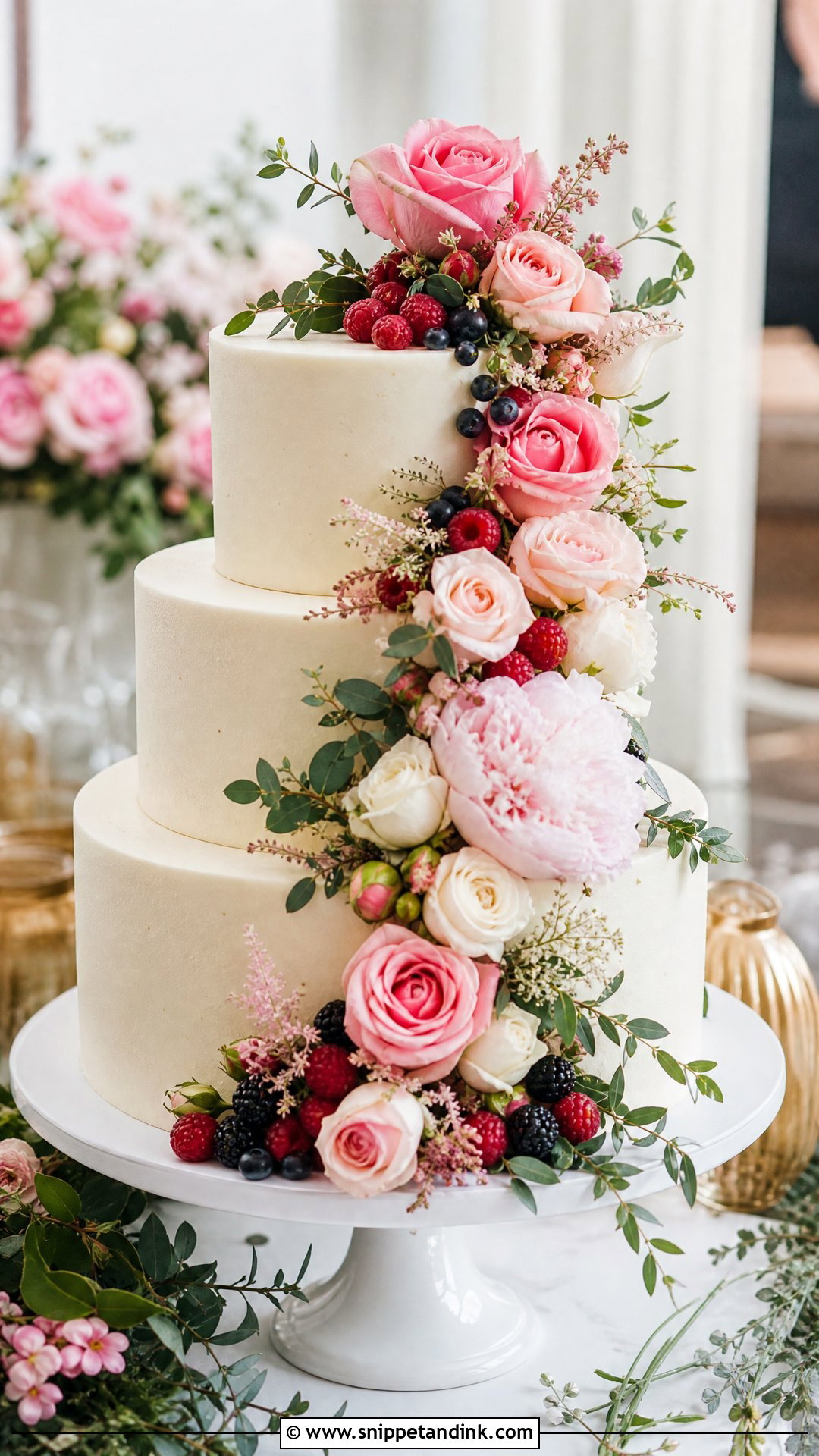
A Victoria sponge with a floral cascade gets its drama from direction: flowers start near the top tier and sweep down one side. The finish underneath can be smooth, semi naked or lightly textured. I sketch the cascade before the day so the heaviest blooms sit over the dowels rather than on unsupported sponge. Vanilla and raspberry jam stay in the background flavour-wise, while small berries and greenery fill out the line.
22. Victoria Sponge Wedding Cake With Berries
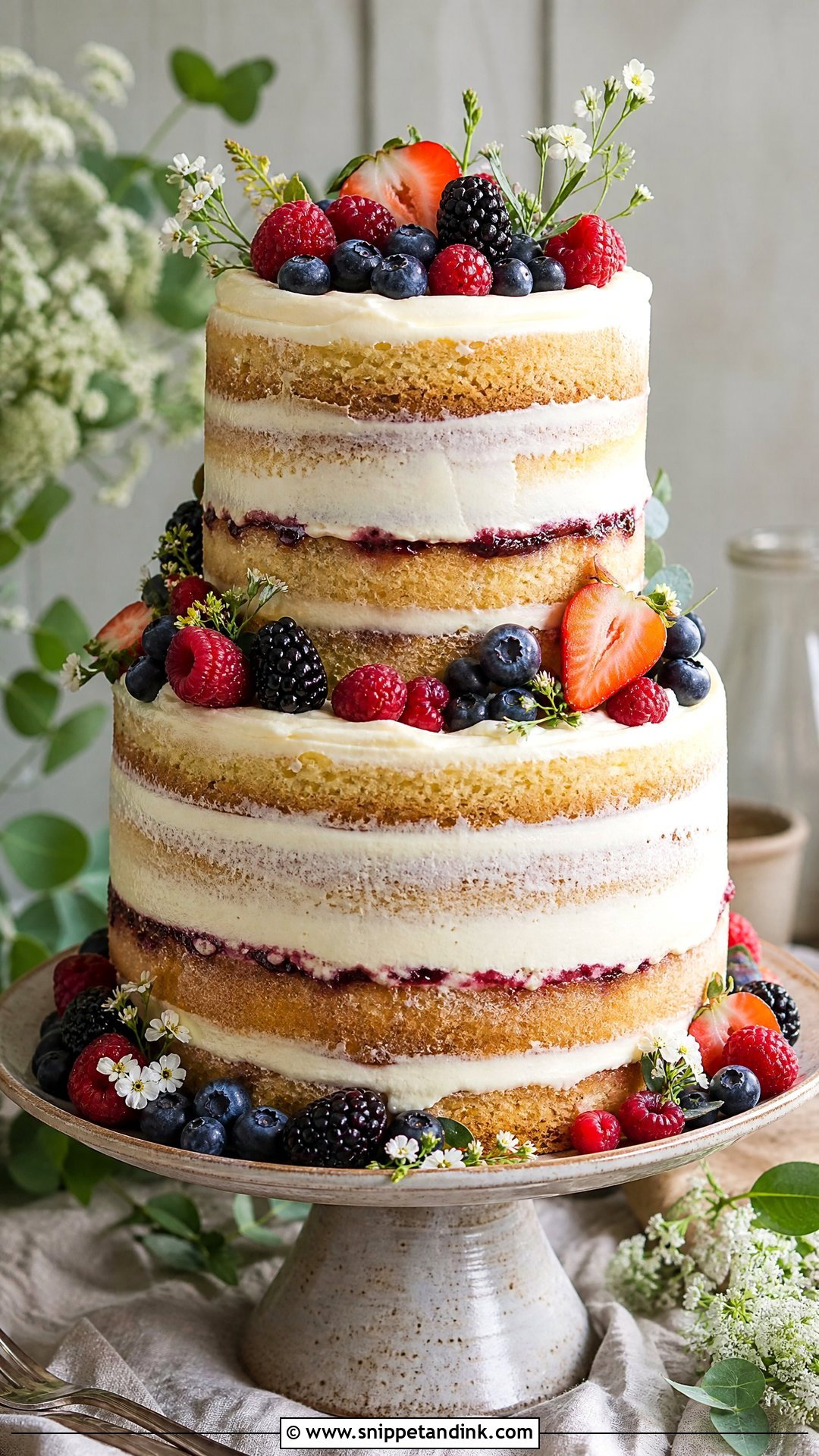
Mixed berries look abundant with very little styling. Strawberries, raspberries, blueberries and blackberries together give more colour than any single fruit. Blackberries and blueberries stain cream purple where they touch, so I set them on buttercream rather than whipped cream and add them on site. A semi naked finish keeps it relaxed, and a few mint leaves stop it looking like a fruit bowl. Summer weddings and brunch receptions are its natural home.
23. Victoria Sponge Wedding Cake With Blush Flowers
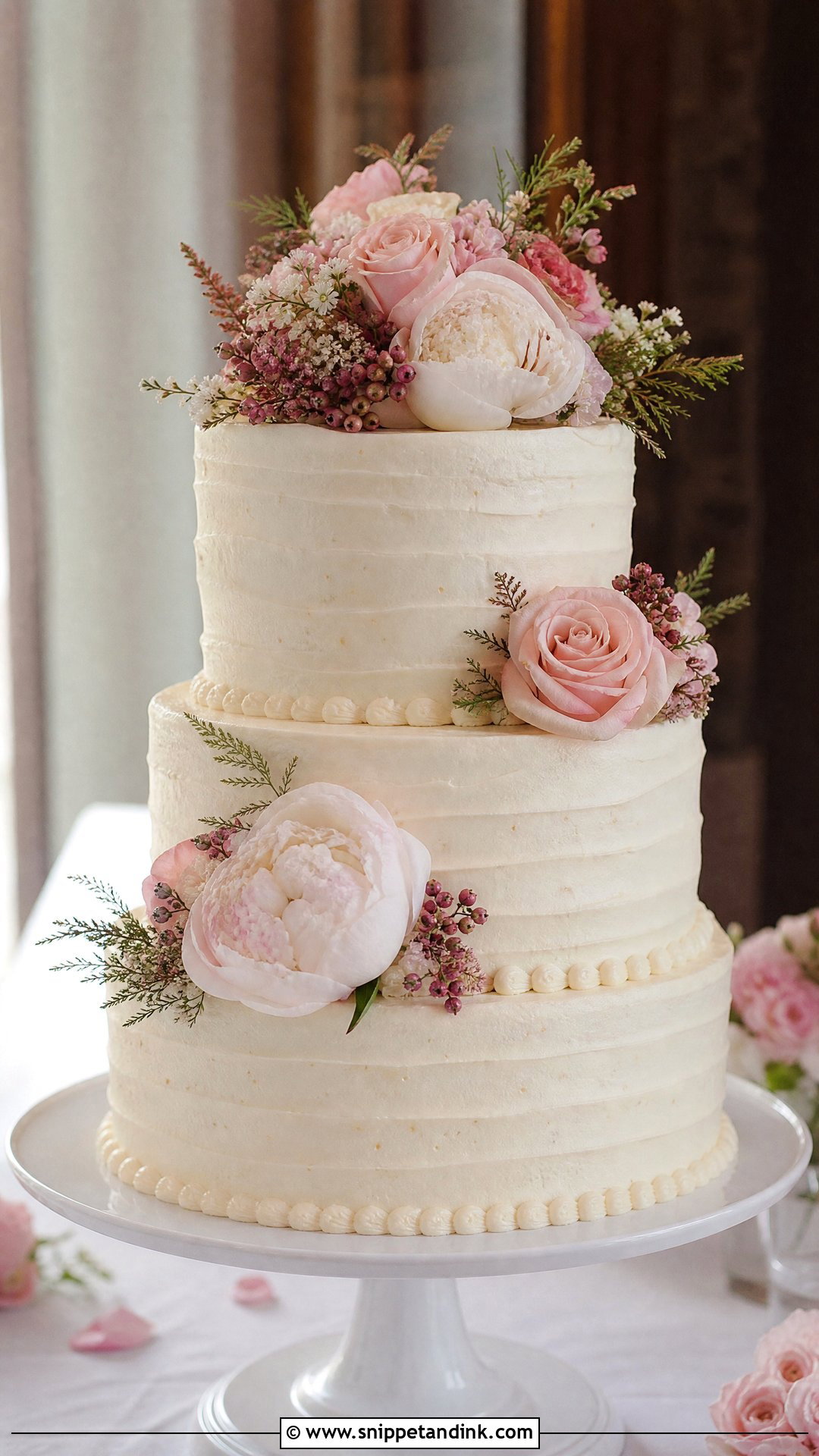
Blush roses, pale peonies and small pastel blooms give a gentle colour story that sits with most decor. On two or three tiers I place them in balanced clusters, often one larger group with a smaller echo on the opposite side, rather than spacing them evenly all the way round. Even spacing tends to look like polka dots from a distance. Inside, ivory buttercream, pale sponge and strawberry or raspberry jam.
24. Victoria Sponge Wedding Cake With White Roses
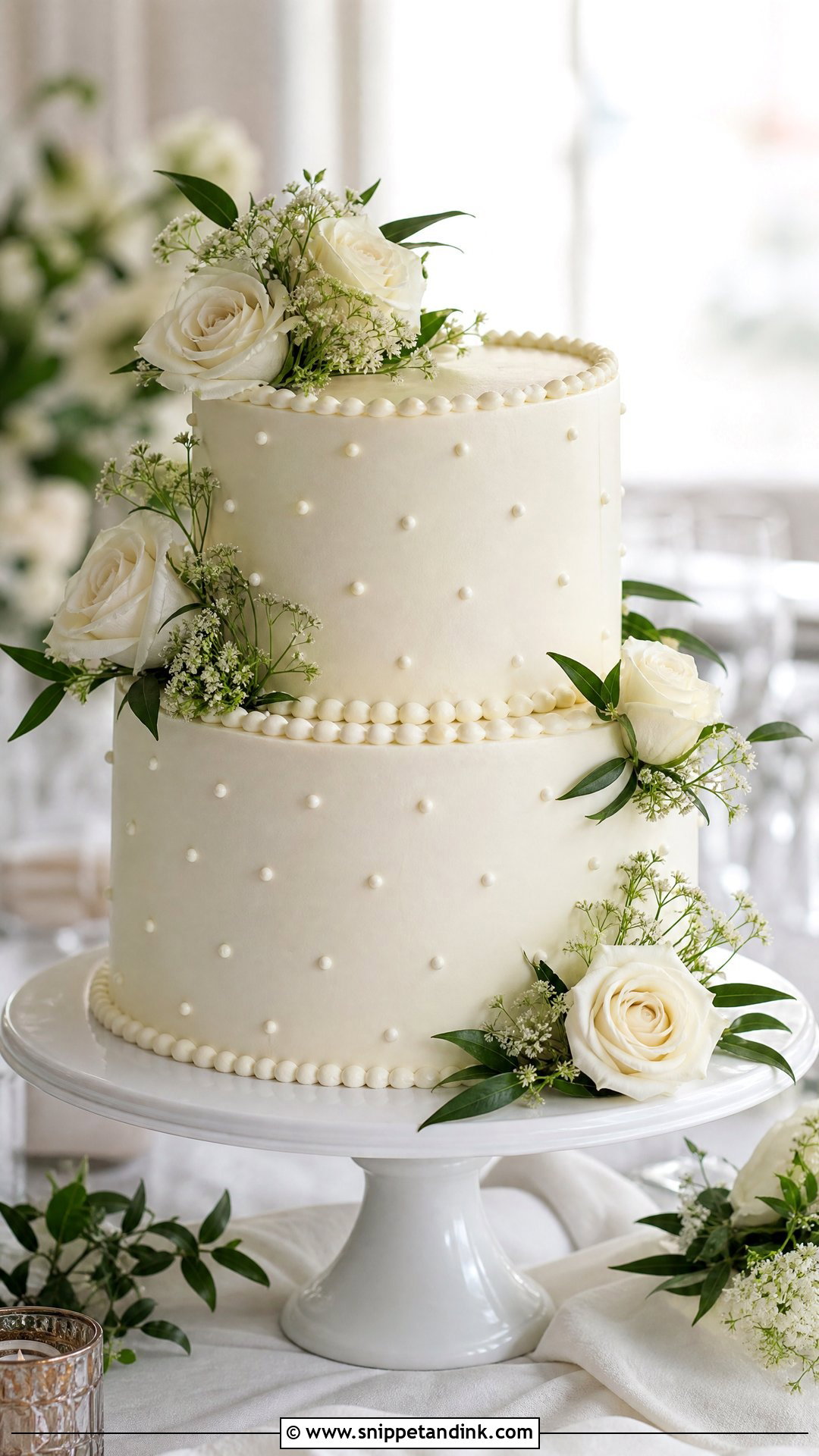
White roses keep the cake bridal and sit with any palette. On a smooth ivory finish they can go on top, between tiers or in a small side arrangement. One practical catch: bright white roses beside ivory buttercream can make the frosting look yellow in photos, so I either choose a warmer ivory rose or whiten the buttercream slightly. Strawberry jam and vanilla buttercream inside keep it traditional. Formal and church receptions are where it’s chosen most.

25. Victoria Sponge Wedding Cake With Lavender
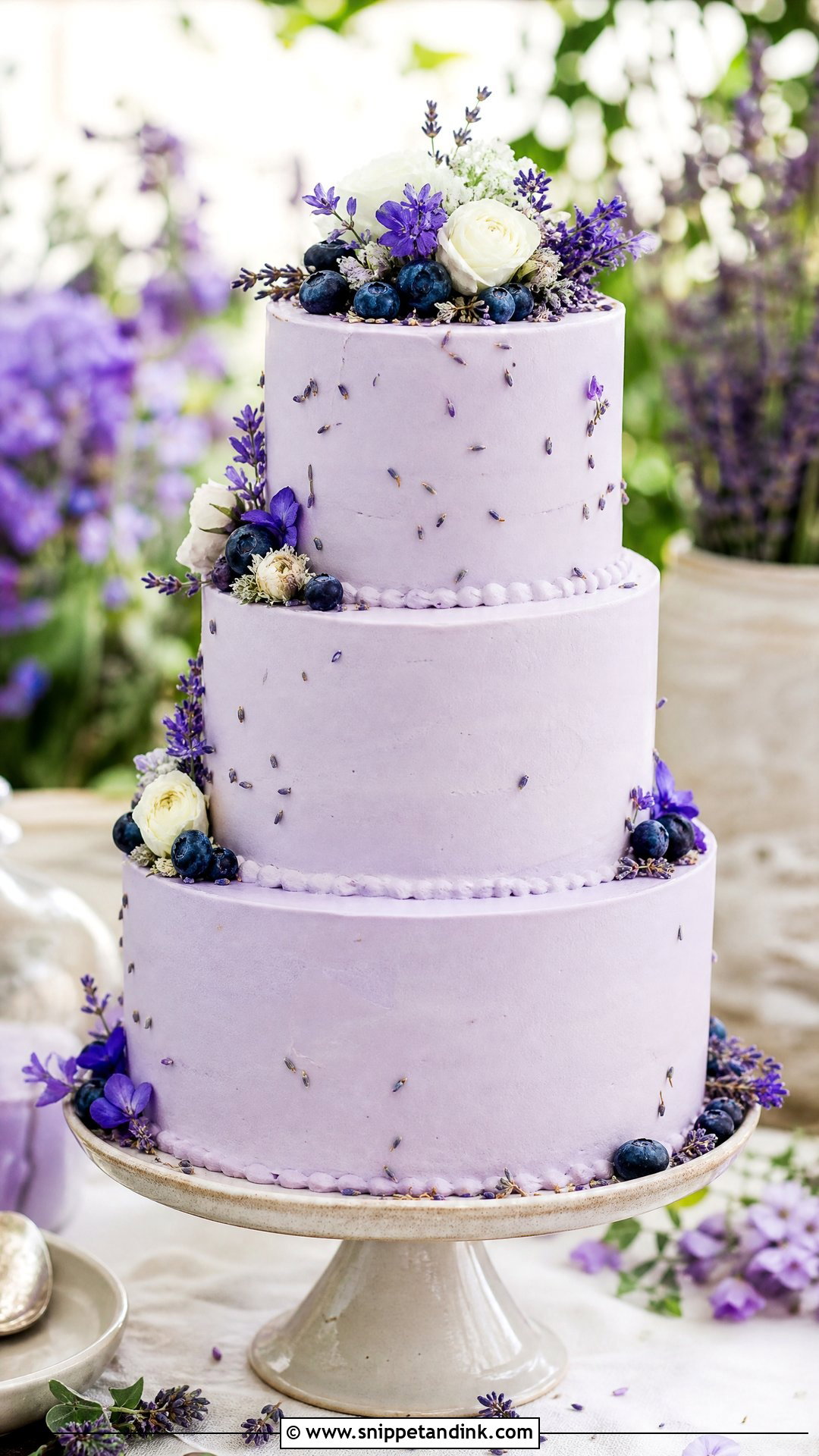
Lavender is gentle until it isn’t. Only culinary lavender belongs in buttercream, and a small amount goes a long way; overdo it and the slice tastes like a drawer sachet. A berry jam layer keeps it bright. Outside, pale lavender or ivory frosting with tiny edible buds, soft purple flowers or a few blueberries for contrast. Late spring garden weddings suit it, and it’s a sensible first step away from plain vanilla.
26. Victoria Sponge Wedding Cake With Elderflower
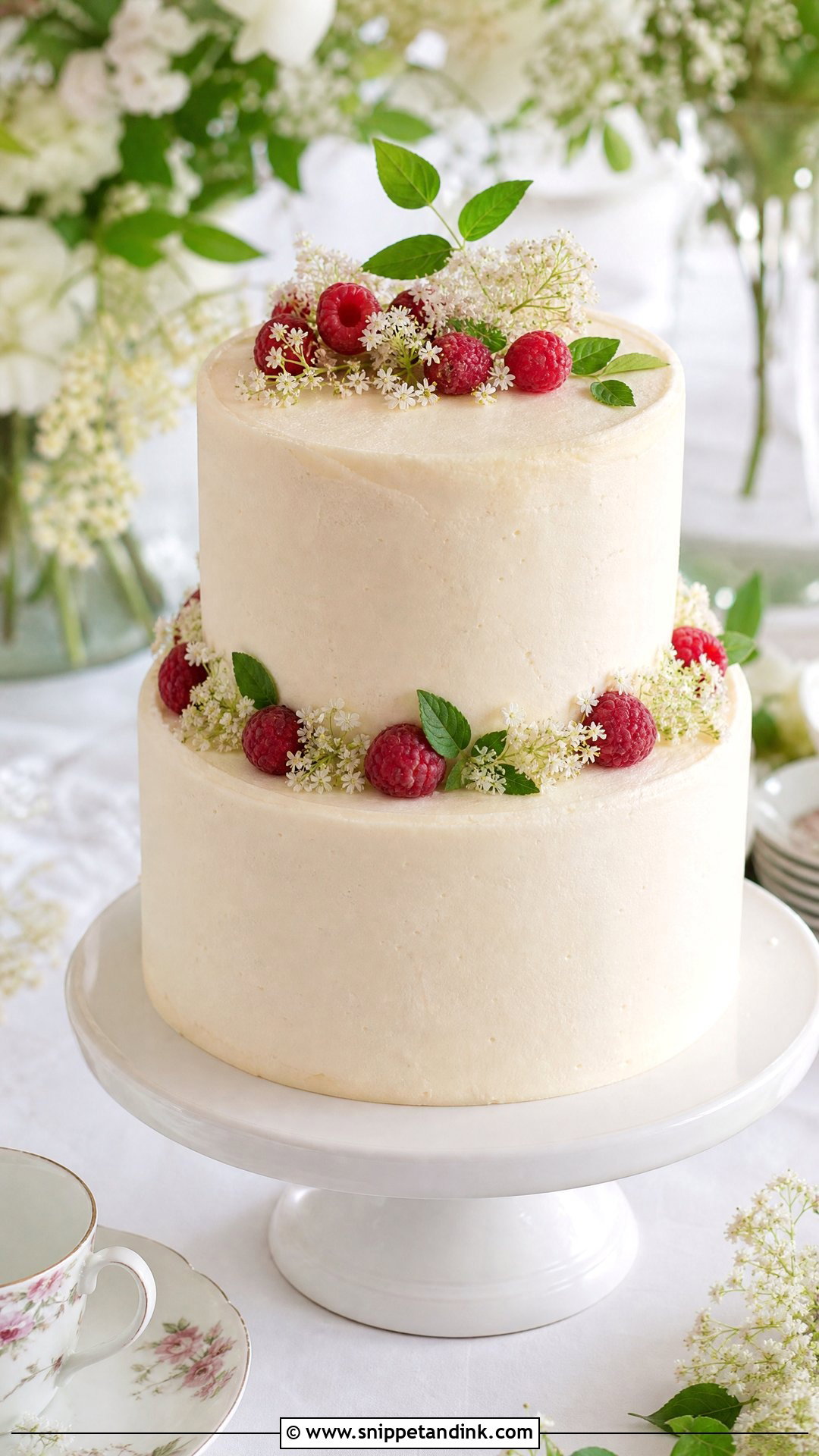
Elderflower is what I suggest to anyone who wants a floral note without risk. A light elderflower syrup brushed on the sponge, or a little cordial in the buttercream, gives a soft perfume that pairs well with raspberry jam and still tastes like a Victoria sponge. Smooth ivory frosting, small white flowers and a few pale berries keep it airy. After a heavy wedding meal it eats much lighter than chocolate or caramel.
27. Victoria Sponge Wedding Cake With Whipped Cream
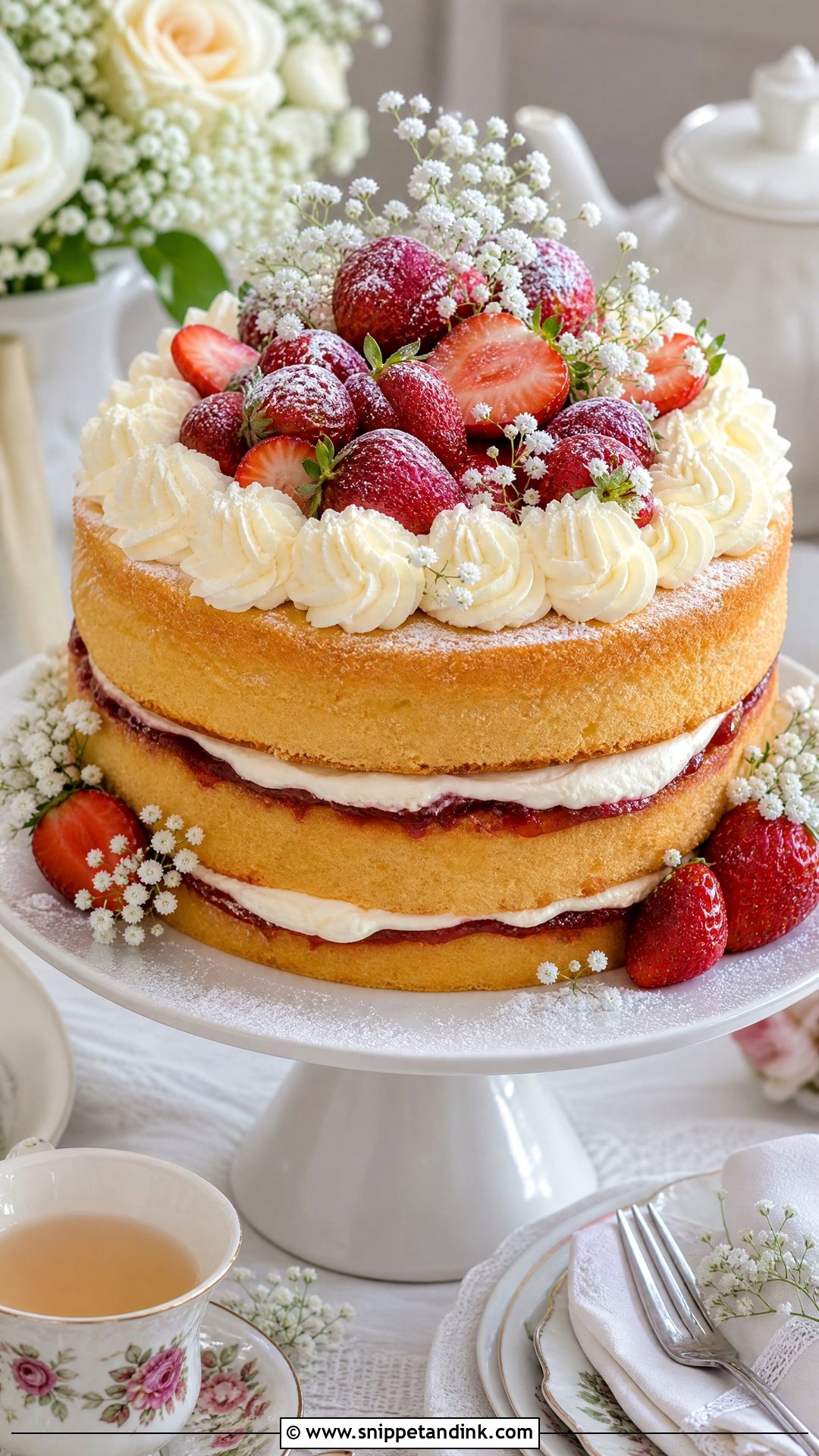
Whipped cream is the most authentic finish and the least forgiving. Even stabilised cream softens at room temperature, and a dairy cake shouldn’t sit out for hours, so this belongs at cooler indoor receptions with a short display before cutting. I pipe borders with stabilised cream, add berries and a sugar dusting, and agree fridge space with the venue in advance. If the cake will be out for more than an hour or two, I’d move to buttercream on the outside and keep cream only in the filling.
28. Victoria Sponge Wedding Cake With Square Tiers
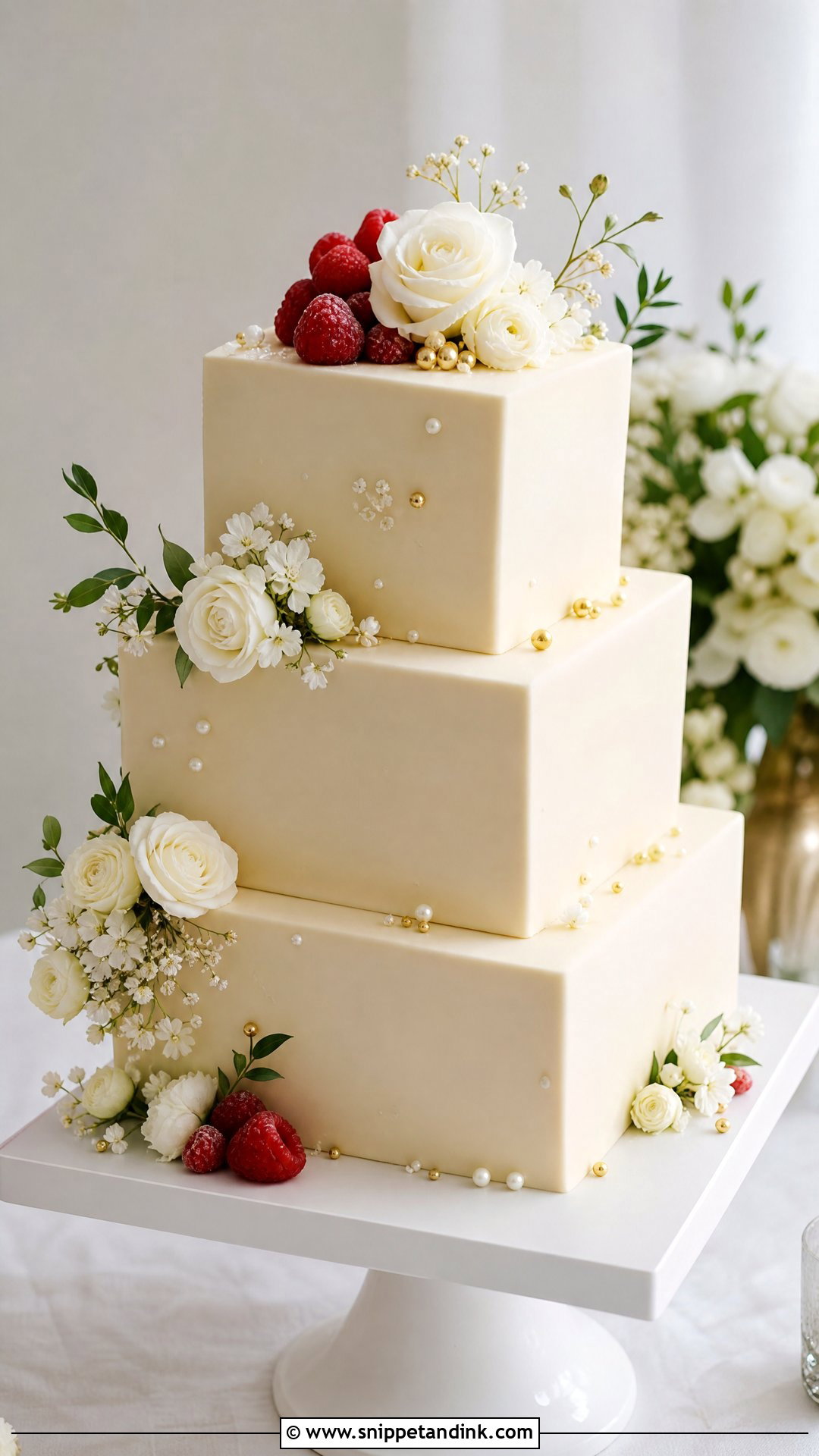
Square tiers give the sponge a cleaner, more modern outline, and they cut into more even portions than rounds of the same width, which helps with bigger guest lists. The corners are the hard part. Soft sponge loses a sharp edge easily, so the buttercream has to be chilled and scraped crisp at each corner. Flowers, edible pearls or a small fruit arrangement soften the lines, while the inside stays vanilla, jam and buttercream.
29. Victoria Sponge Wedding Cake With Heart Shape
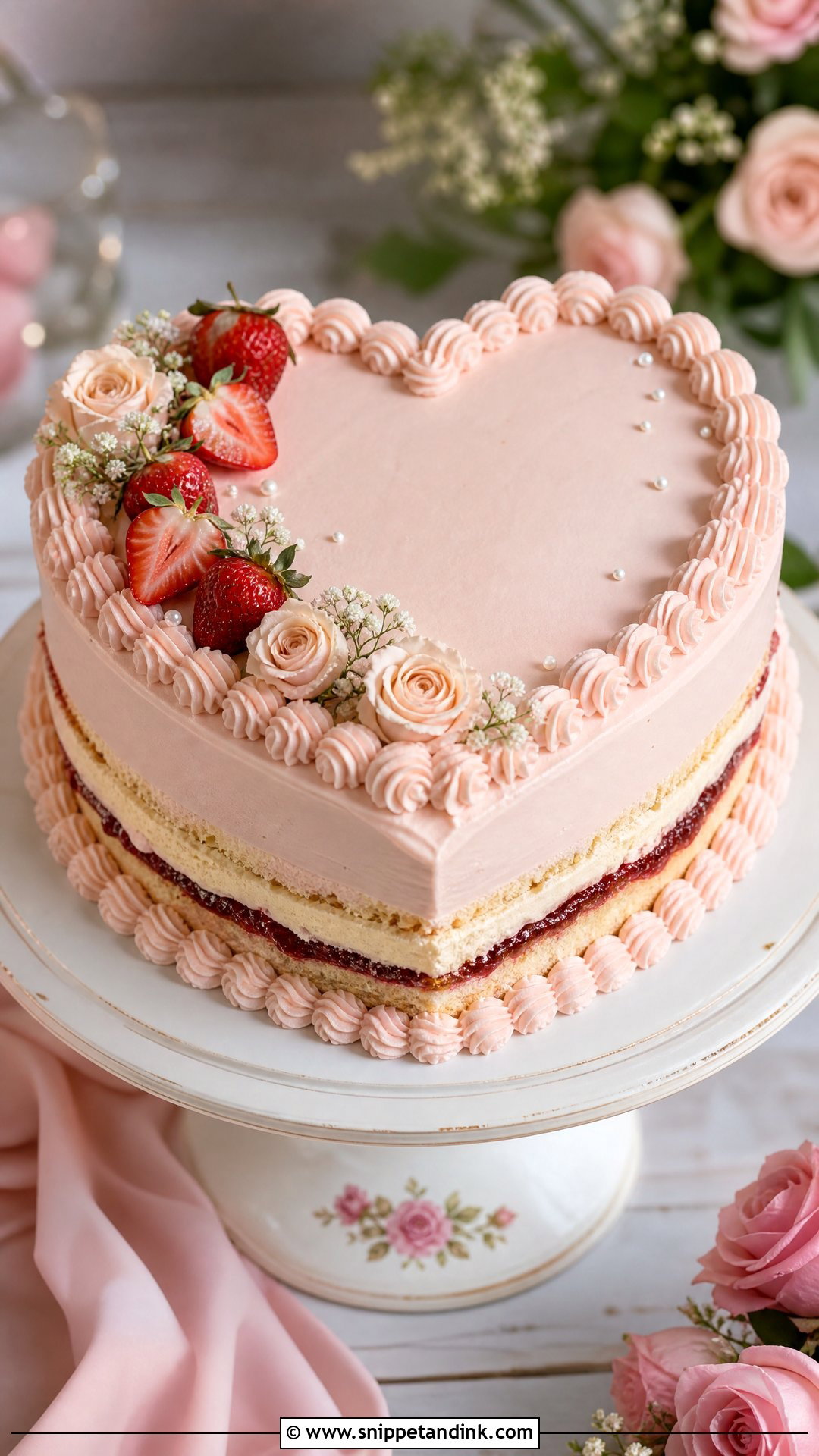
A single heart-shaped tier suits an intimate wedding, while stacked hearts make a bolder centrepiece. I fill it with strawberry jam and vanilla buttercream, cover it in smooth ivory or blush, and add piped borders, strawberries and tiny flowers. Hearts are awkward to portion, though. The point and the two lobes give uneven slices, so I usually suggest the heart as the cutting cake with plain sponge waiting in the kitchen.
30. Victoria Sponge Wedding Sheet Cake
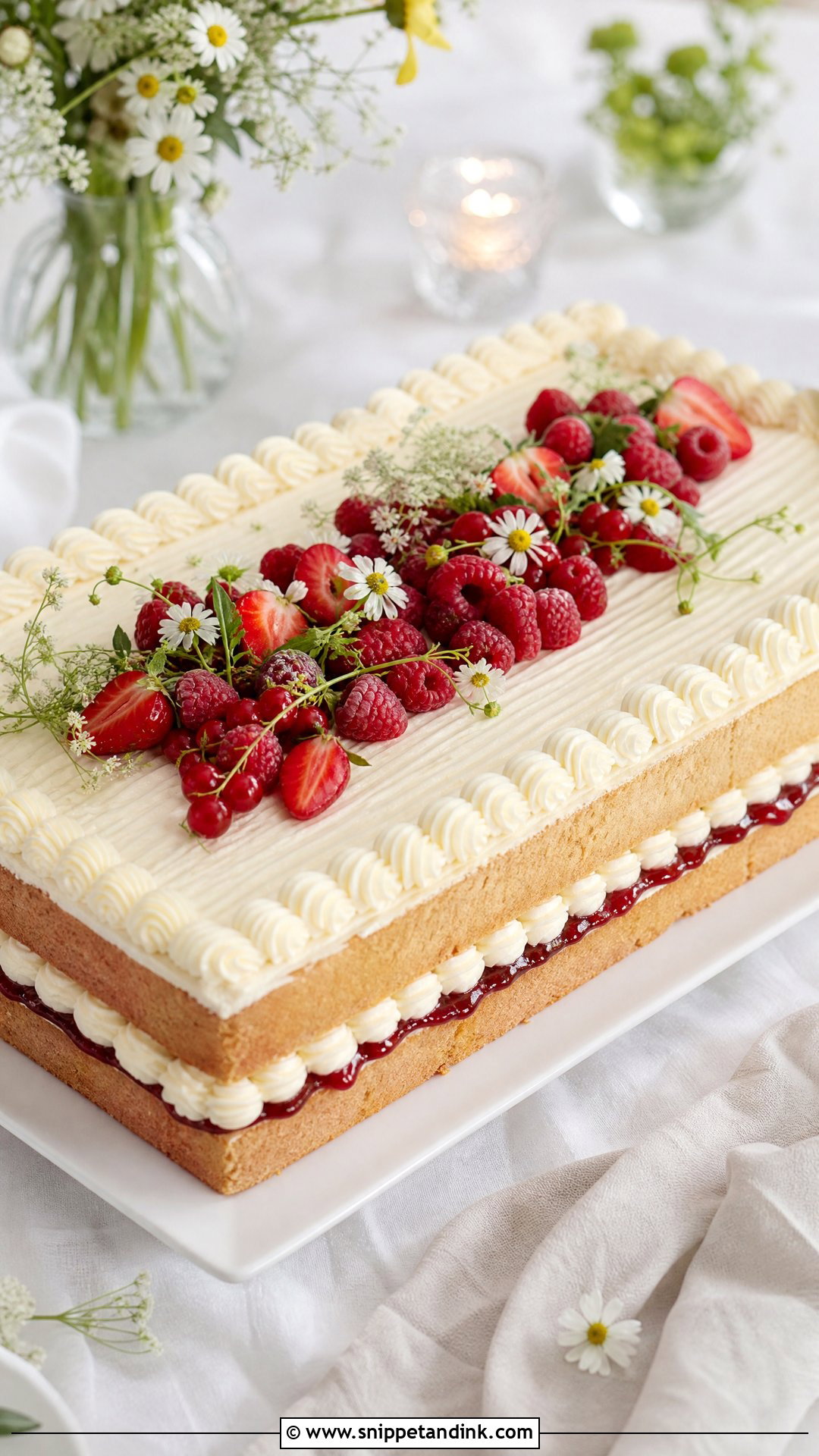
A Victoria sponge wedding sheet cake is the most practical shape here. Rather than hiding extra cake in the kitchen, decorate it and put it on the dessert table. The sponge is baked in a wide rectangle, filled or topped with jam and buttercream, then finished with piped borders, berries and flowers. Caterers like it because it slices into neat squares fast, and it travels far more easily than stacked tiers.
How Long Can a Cream Sponge Sit on Display?
Not as long as most couples assume. A sponge filled with fresh or stabilised cream is a dairy cake, and I treat it like one: chilled until it goes out, kept out of direct sun, and cut within roughly a couple of hours. Buttercream fillings and coatings are far more relaxed and will happily stand through a long reception in a reasonably cool room.
If your venue is a glasshouse, a summer marquee or anywhere near a heater, tell your baker at the tasting rather than the week before. I can plan around heat if I know about it early: a buttercream outer layer, cream only in the middle, fruit added on site, and a delivery slot timed close to the cutting.
Portions, Cutting and the Top Tier
A soft sponge layered with cream doesn’t cut into the tiny finger portions that suit a dense fruitcake; they squash and smear. Plan on larger dessert-sized slices and size the tiers to match, which usually means more cake than a guest-count chart suggests.
- Ask the caterer to use a long knife dipped in hot water and wiped dry between cuts.
- Keep any cut strawberries off the cake until it’s been plated, or the juice runs into the sponge.
- If you want to save the top tier, order that tier with buttercream rather than cream, then wrap it tightly and freeze it; cream-filled sponge doesn’t thaw well, and it isn’t one to keep for a year like the old fruitcake tradition.
A Sponge Your Guests Already Know, Dressed for the Day
Victoria sponge takes personal touches well because the base is so familiar. Keep it simple with jam, cream and a sugar dusting, or add tiers, flowers, gold leaf, pearls, ruffles and new shapes. The right version comes down to your guest count, how warm the room will be and how long the cake will be on show. In a warm room, buttercream is the safer outer layer, and whipped cream is for when conditions really allow it. A naked sponge, a floral cascade and an elegant three tier cake all keep the flavour your guests already know.
You'll Like These Ideas:











Leave a Reply