
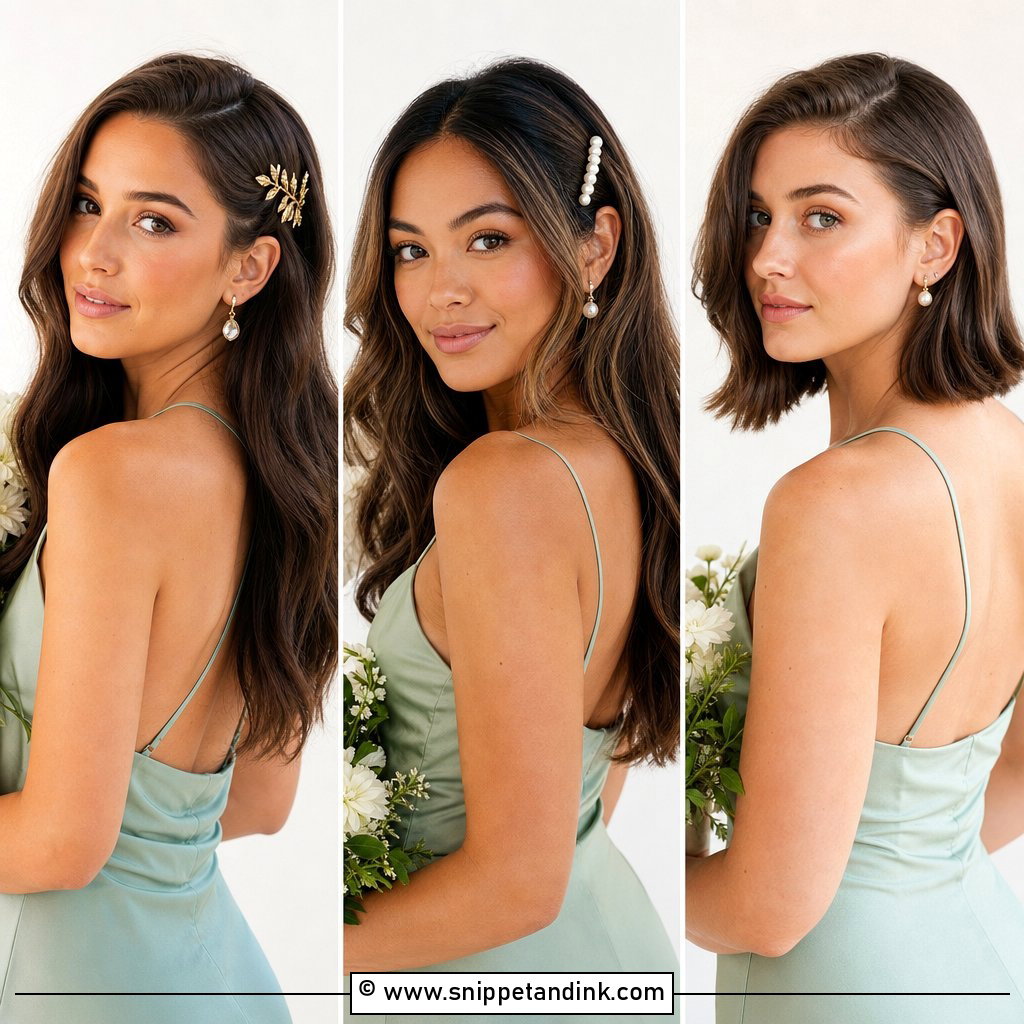
Hair down suits bridesmaids who want to look polished without feeling done up, and it’s the request I get most from bridal parties. The work is all in the hold: loose hair has to survive hugs, a breezy courtyard and hours of dancing with no pins doing the heavy lifting. Loose waves, brushed curls, side parts, a small half-up detail or natural texture all sit happily with satin, florals and simple necklines. I match each style to the dress, the weather and the person’s hair length first, and to the bride’s overall picture second. These 20 down hairstyles for wedding bridesmaids are the ones I’d actually suggest at a consultation, with notes on what makes each one last.
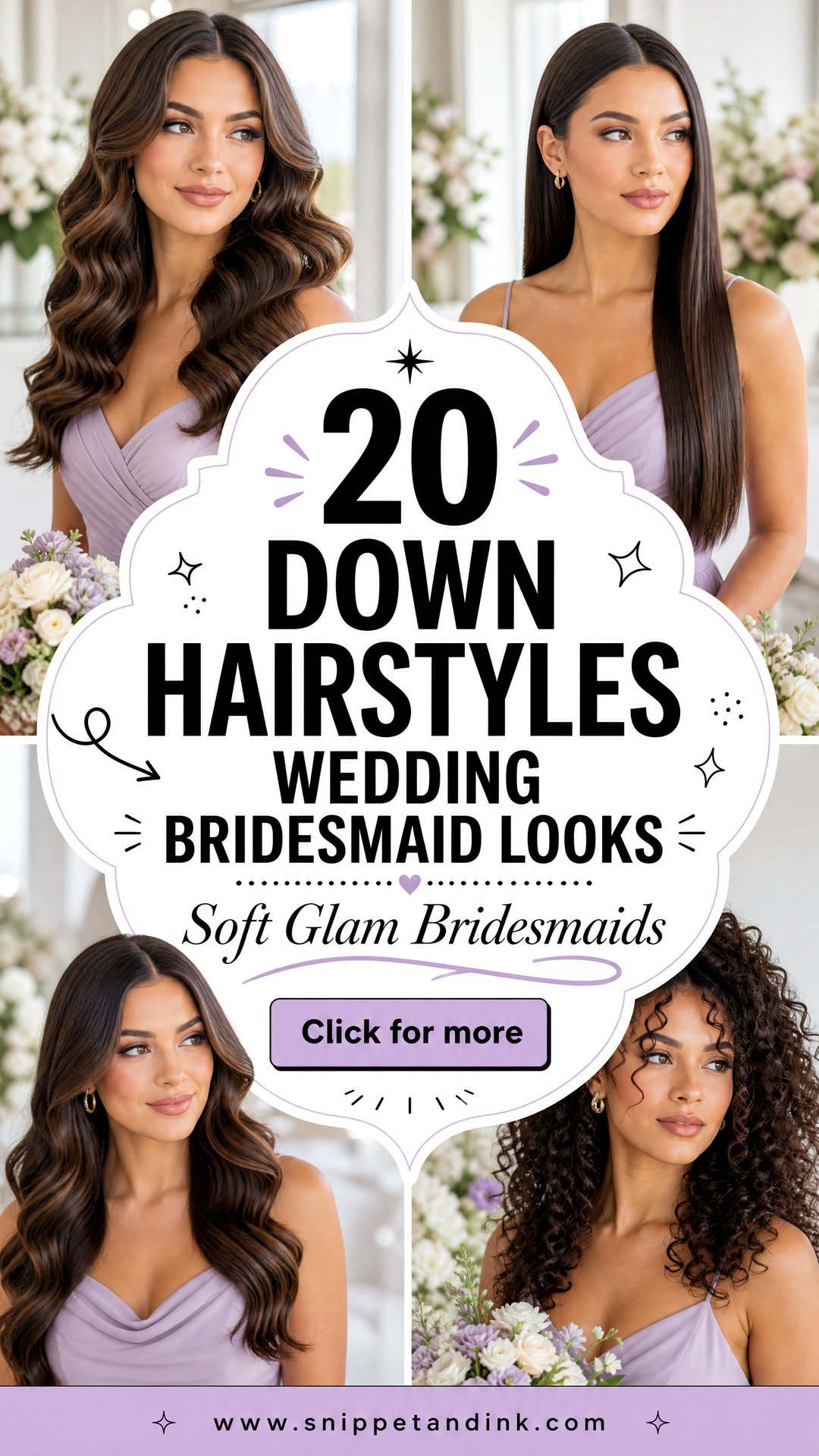
Making Five Different Hair Types Read as One Bridal Party
Bridal parties rarely share a hair type. One bridesmaid has a bob, another has hair to her waist, another has tight curls she has no intention of straightening. Asking them all for the identical style usually means somebody looks uncomfortable in the photos. What I do instead is keep two or three things consistent and let the rest flex.
- The part: everyone on the same side, or everyone in the center. It’s the first thing the eye reads in a lineup.
- The finish: all glossy and smooth, or all soft and brushed out. A sculpted wave standing next to a beachy one looks unplanned.
- A single shared accessory, such as a pearl pin or a sprig of greenery, placed on the same side of every head.
- Roughly the same bend. A bob can’t hold the curl that long hair can, but waves of a similar shape tie the group together.
Within those limits, each style adapts. Short hair gets a bent wave and a tuck. Coily hair stays in its own pattern and gets shaped rather than curled. Very fine hair might wear the half up version so the crown doesn’t flatten. I’d rather a bridesmaid look relaxed in a variation than stiff in a copy.
1. Loose Waves Bridesmaid Hair Down
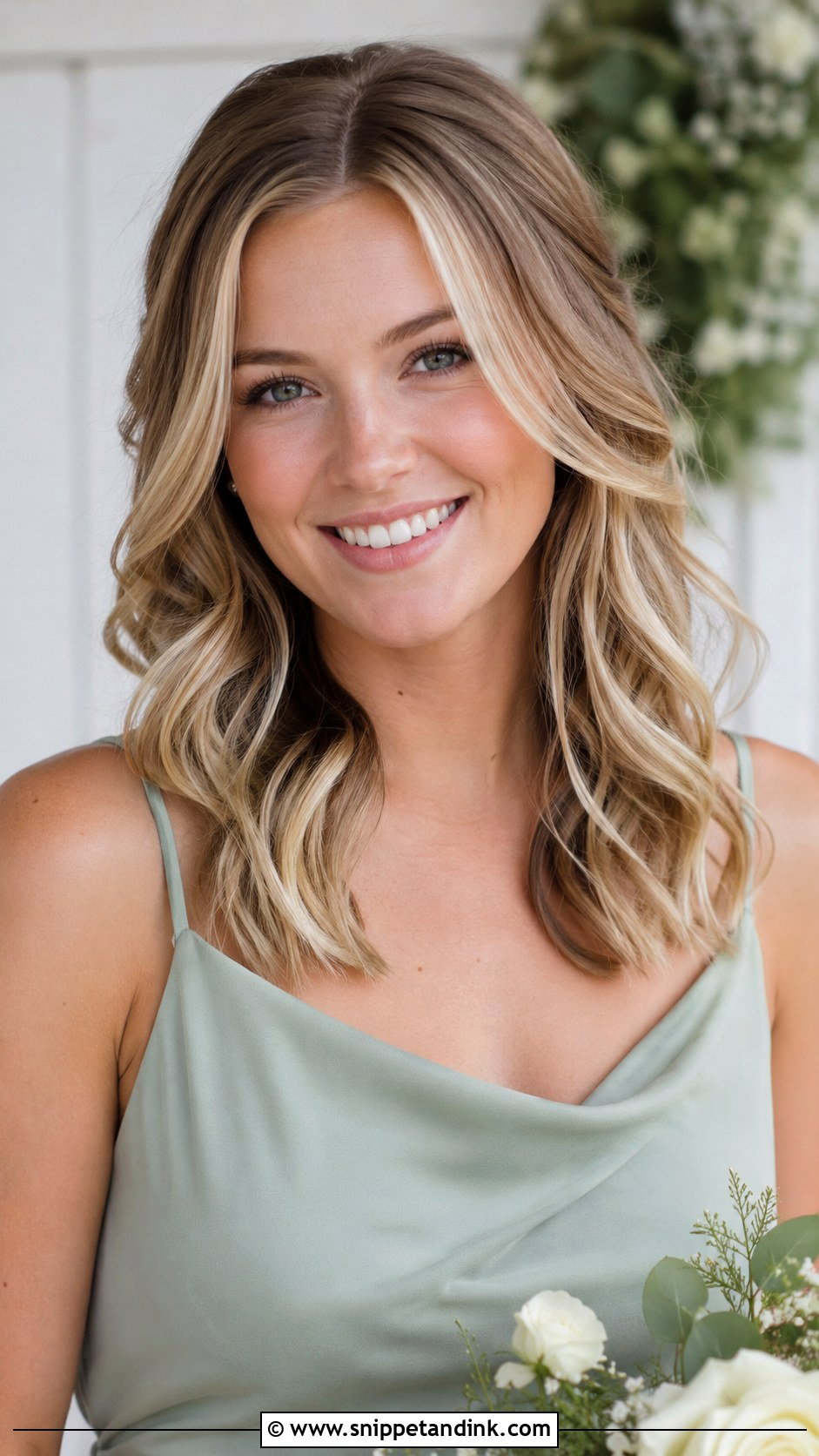
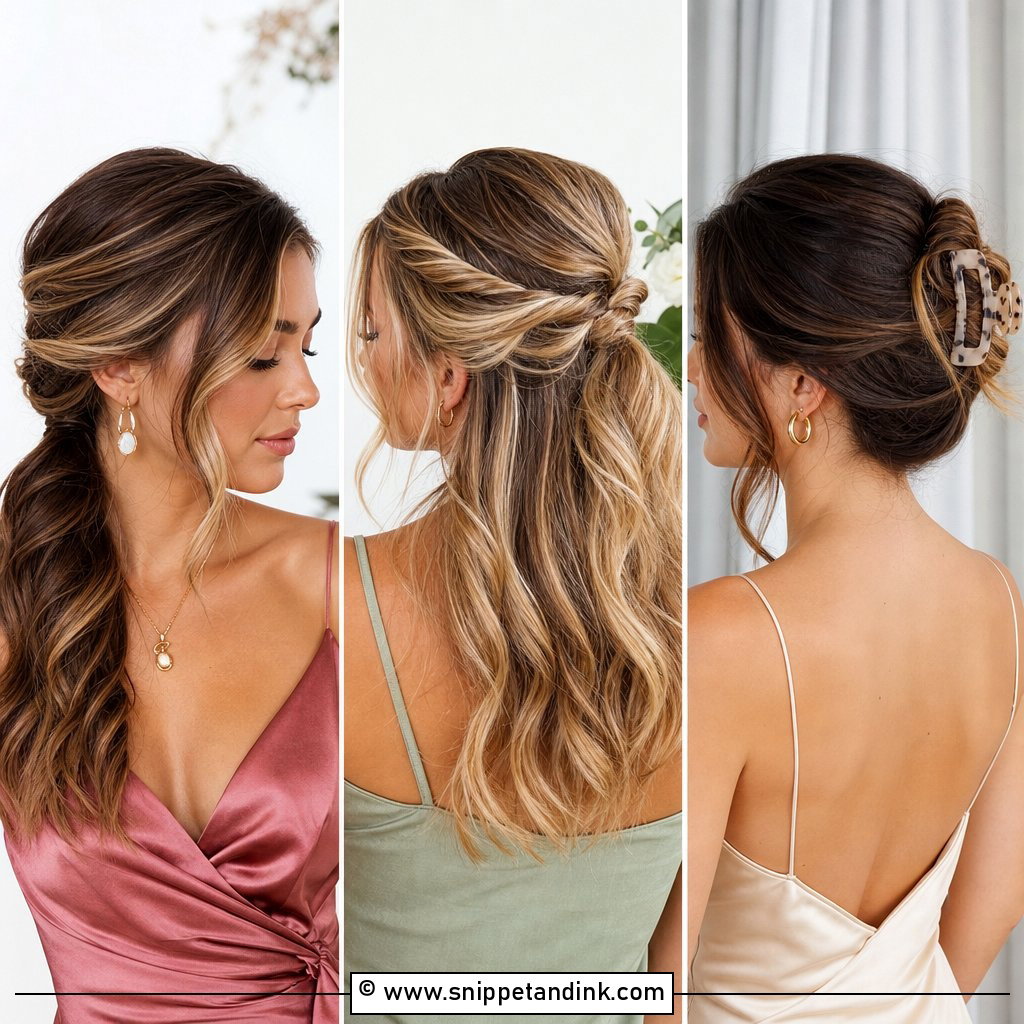
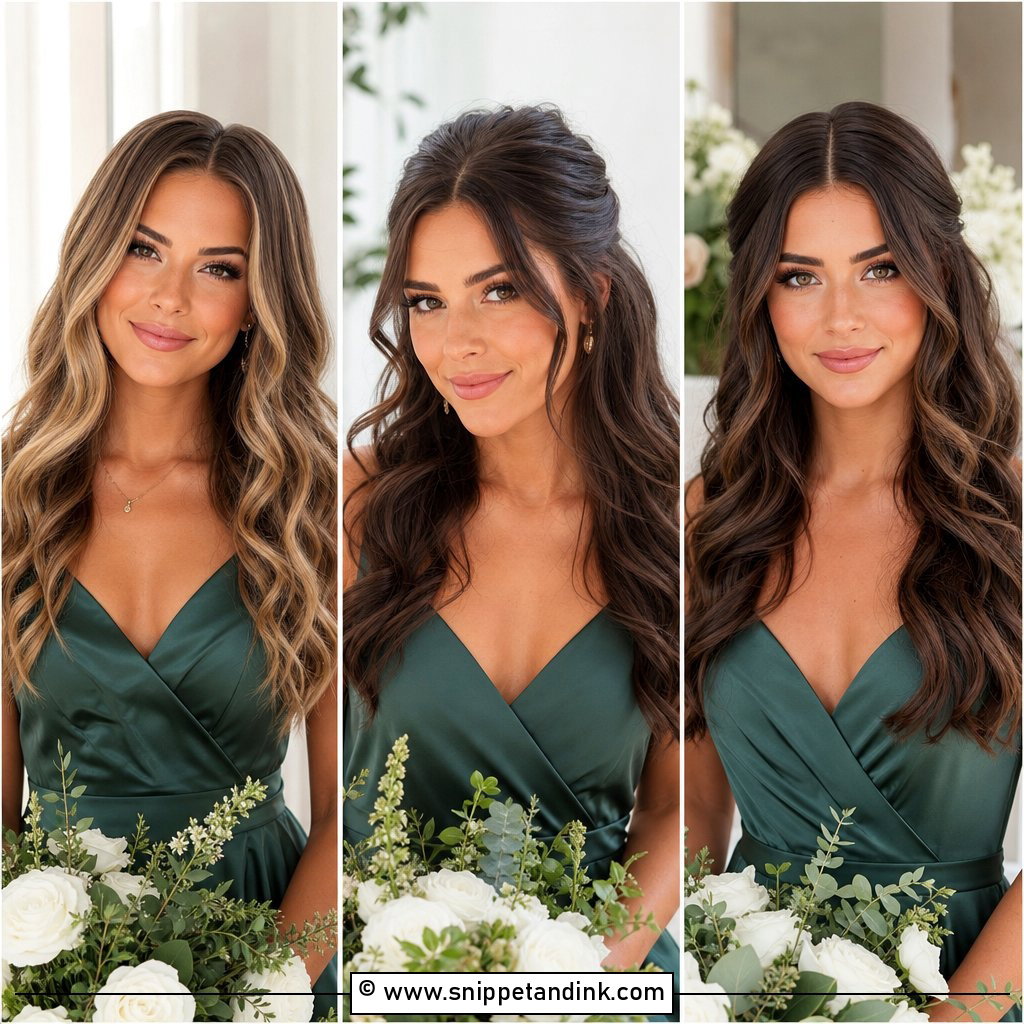
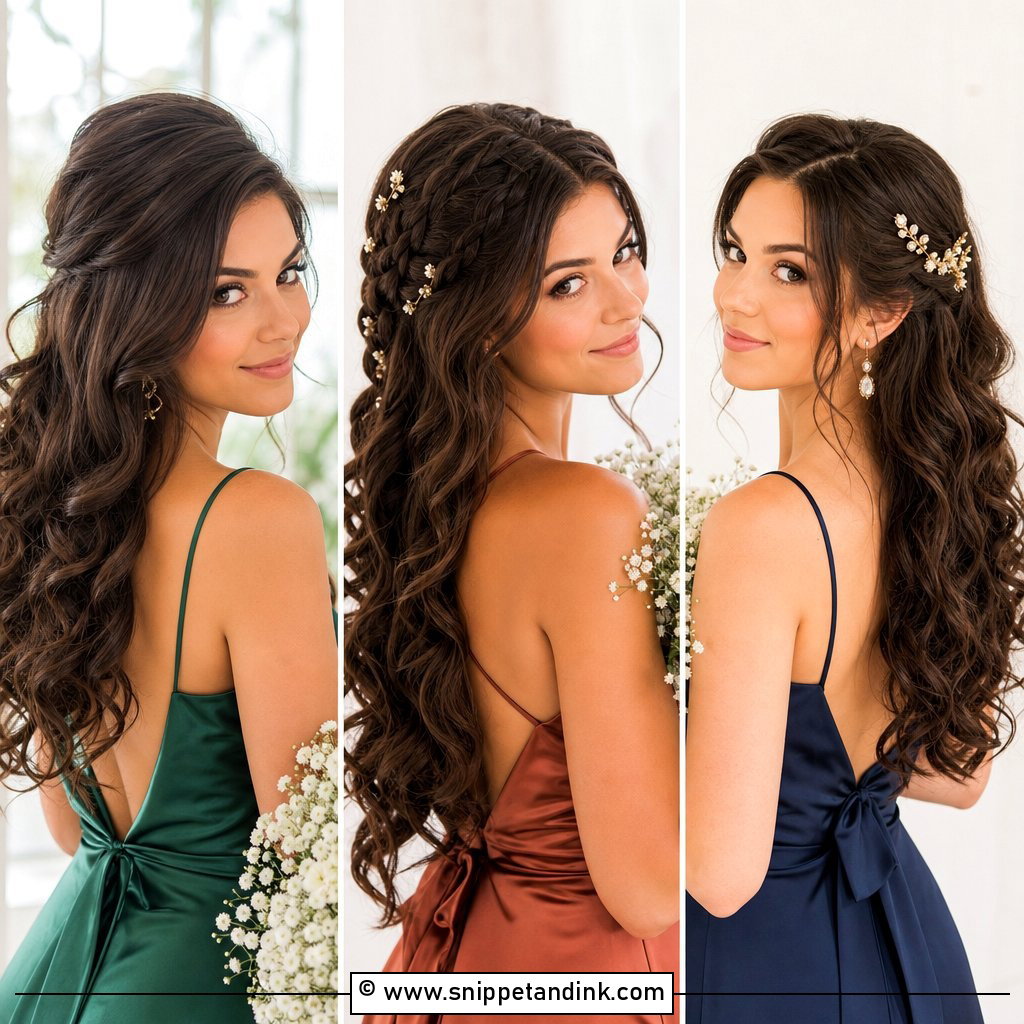
Loose waves are my default suggestion when a bridal party can’t agree, because almost every hair length can wear them. I keep the top smooth, start the bend at the mid-lengths with a medium iron, and brush the curls out only once they’ve cooled. A few soft pieces around the cheeks stop it looking flat in a front-on photo. For an outdoor wedding, ask for a flexible-hold spray so the waves stay touchable but don’t collapse before the reception. On very layered hair the shortest pieces drop first, so I curl those a size smaller.
2. Hollywood Waves Bridesmaid Hair Down
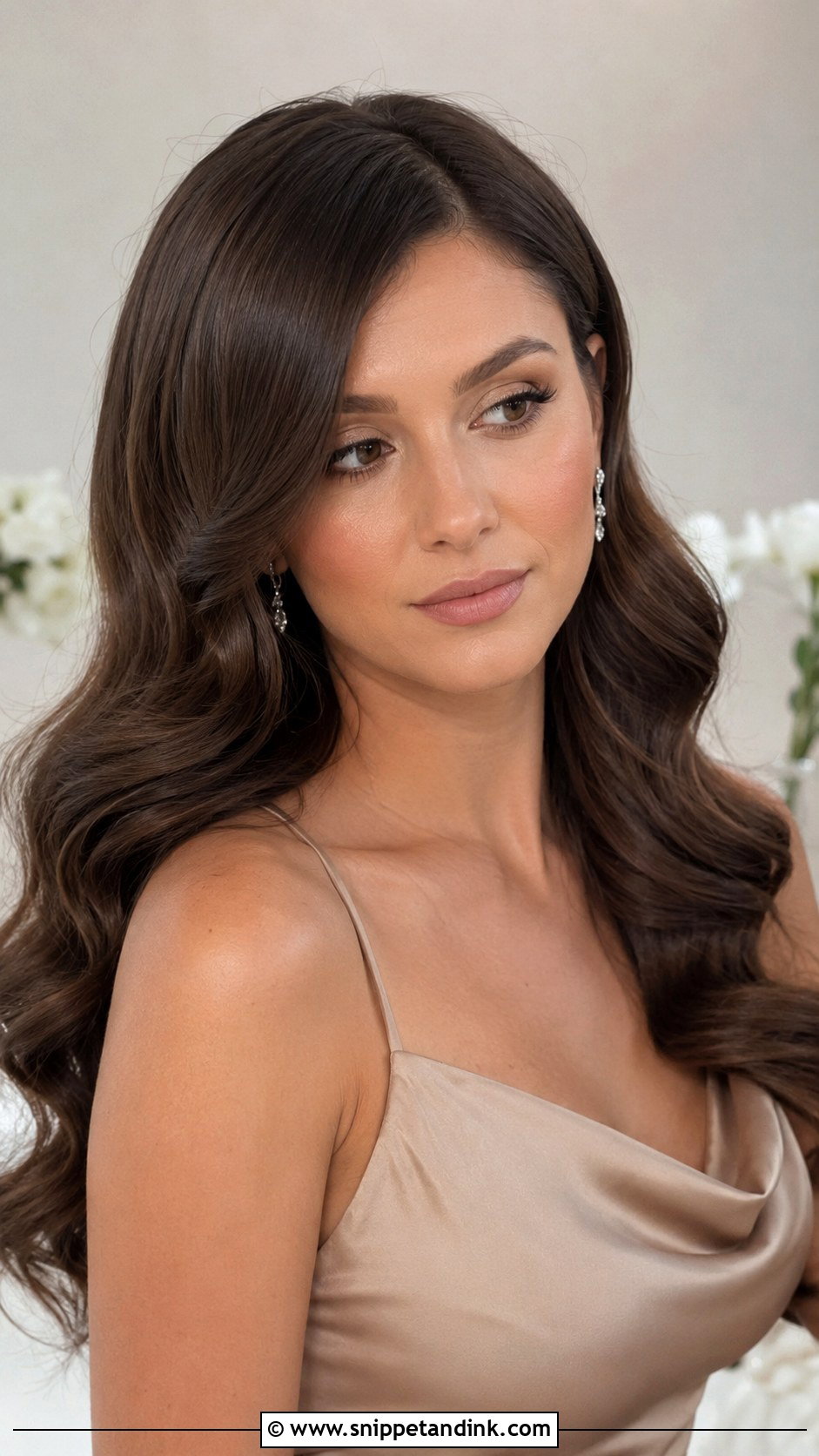
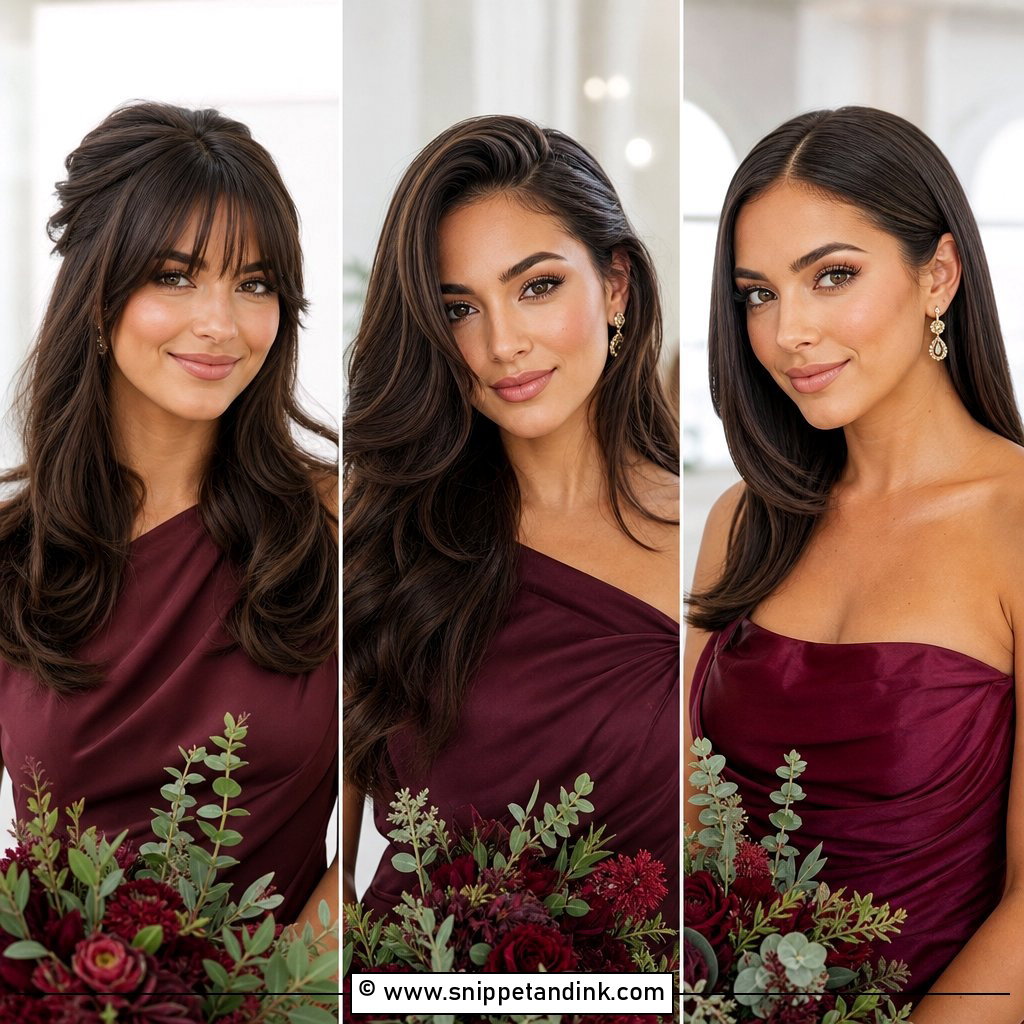
Hollywood waves give bridesmaid hair down a formal polish without the stiffness of a set style. Every wave sits in one pattern, a glossy curve from the part to the ends, which is why each section has to be curled in the same direction. Minimal layers help; heavy layering breaks the pattern into separate ripples. A deep side part adds drama for black-tie dresses and satin. I brush the waves while the spray still has a little slip rather than after it has set hard, which keeps the finish shiny instead of crunchy.
3. Side Part Curls Bridesmaid Hair Down
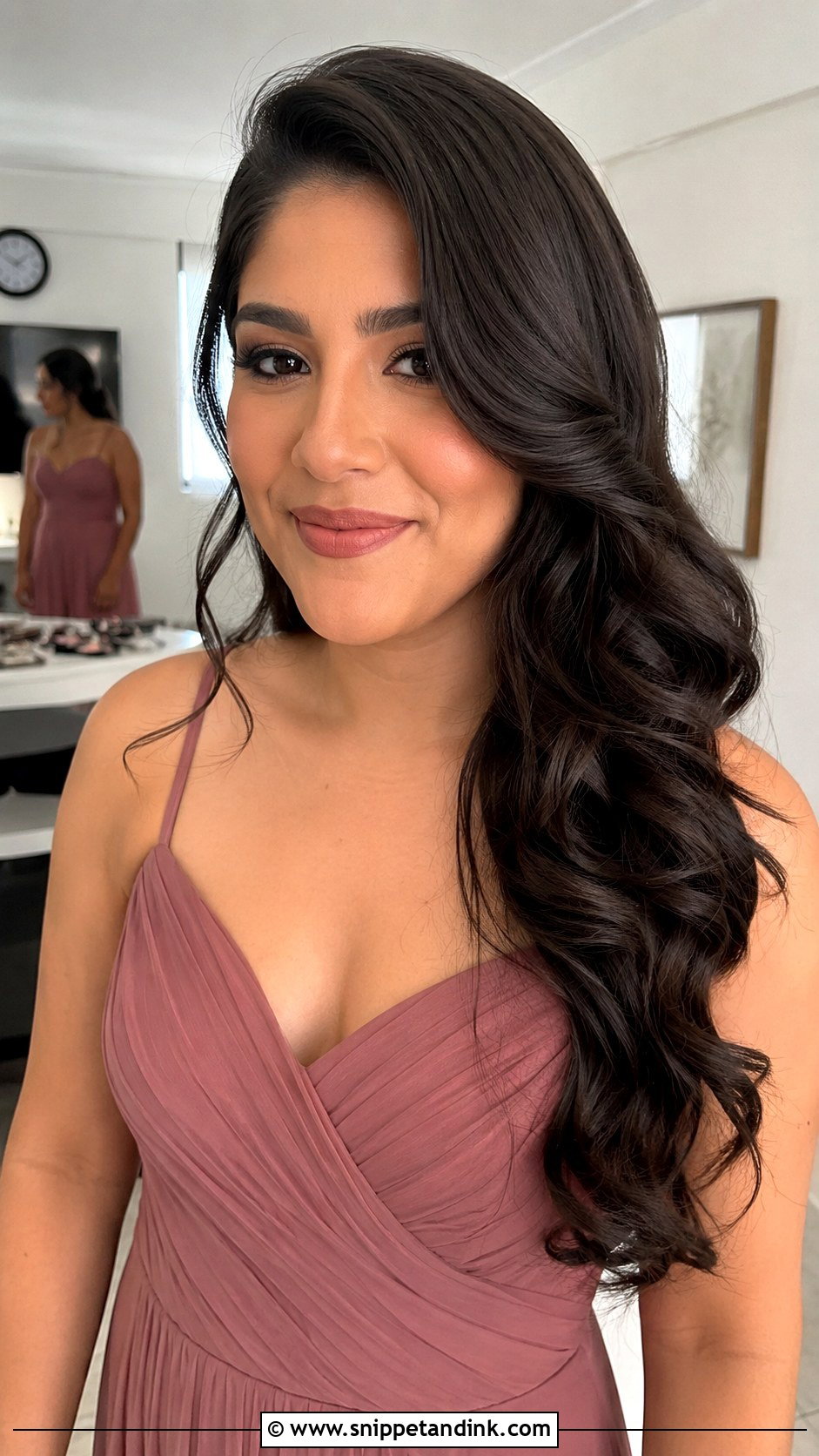
A side part with soft curls lifts the crown and pushes movement toward the shoulders, useful if you want volume but hate the feel of pins. One-shoulder dresses, square necklines and simple earrings all sit well with it. I keep the heavier side smooth near the root and curl it away from the face, otherwise the curls tip forward across your cheek halfway through the ceremony. Curl size can go looser or tighter to suit the wedding. A light shine spray last thing stops curls looking dry in close-ups.
4. Center Part Waves Bridesmaid Hair Down
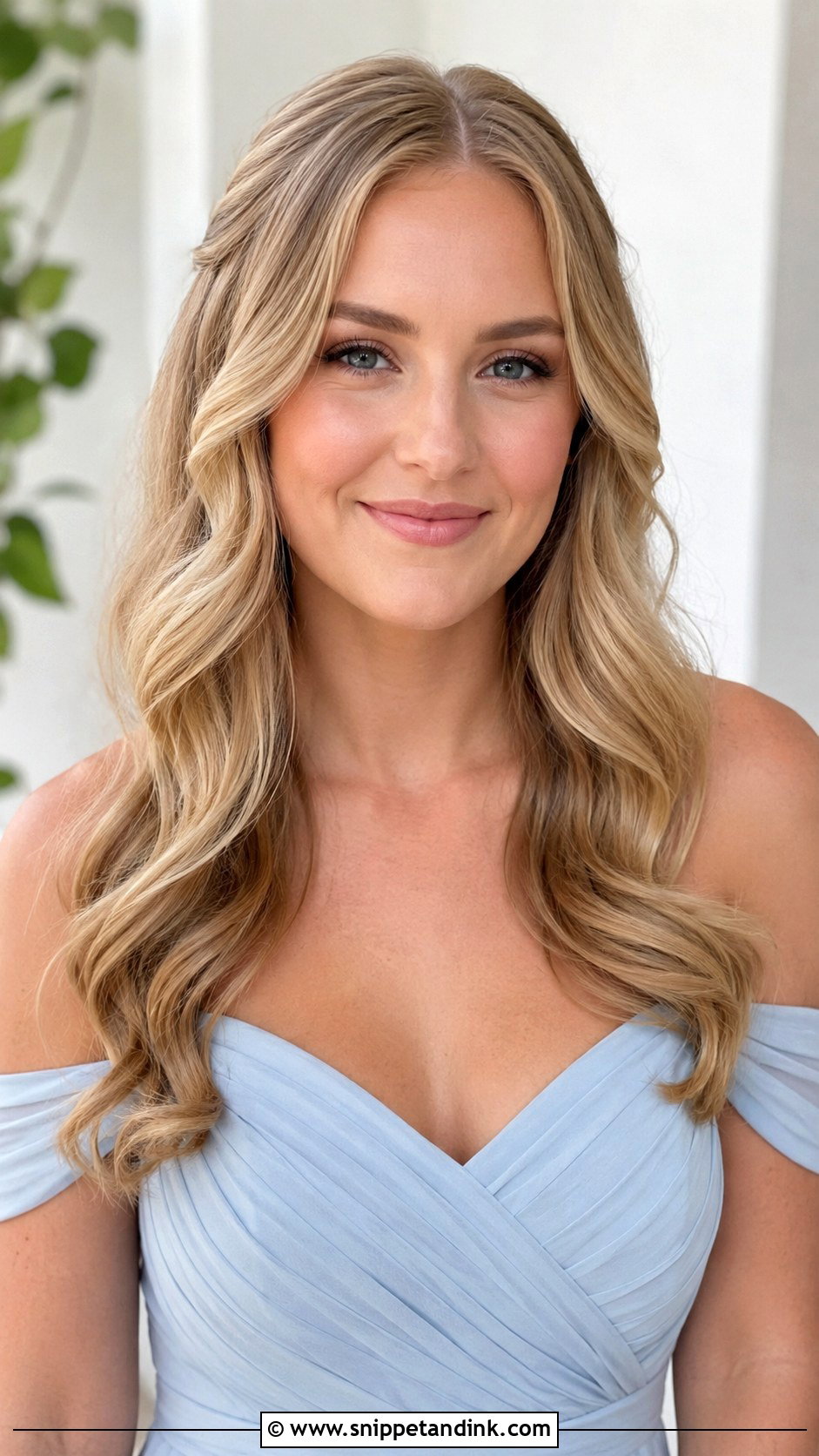
Center part waves are clean and modern, and the symmetry suits group photos where everyone stands in a row. The front pieces should be waved away from the face. A center part isn’t everyone’s friend, though: if your natural part sits to one side, the hair fights back by afternoon, so I blow-dry the root into the new part before any curling starts. For a sleek wedding I keep the roots flat and just bend the ends. At a garden wedding I loosen the waves with my fingers instead of a brush.
5. Half Up Waves Bridesmaid Hair Down
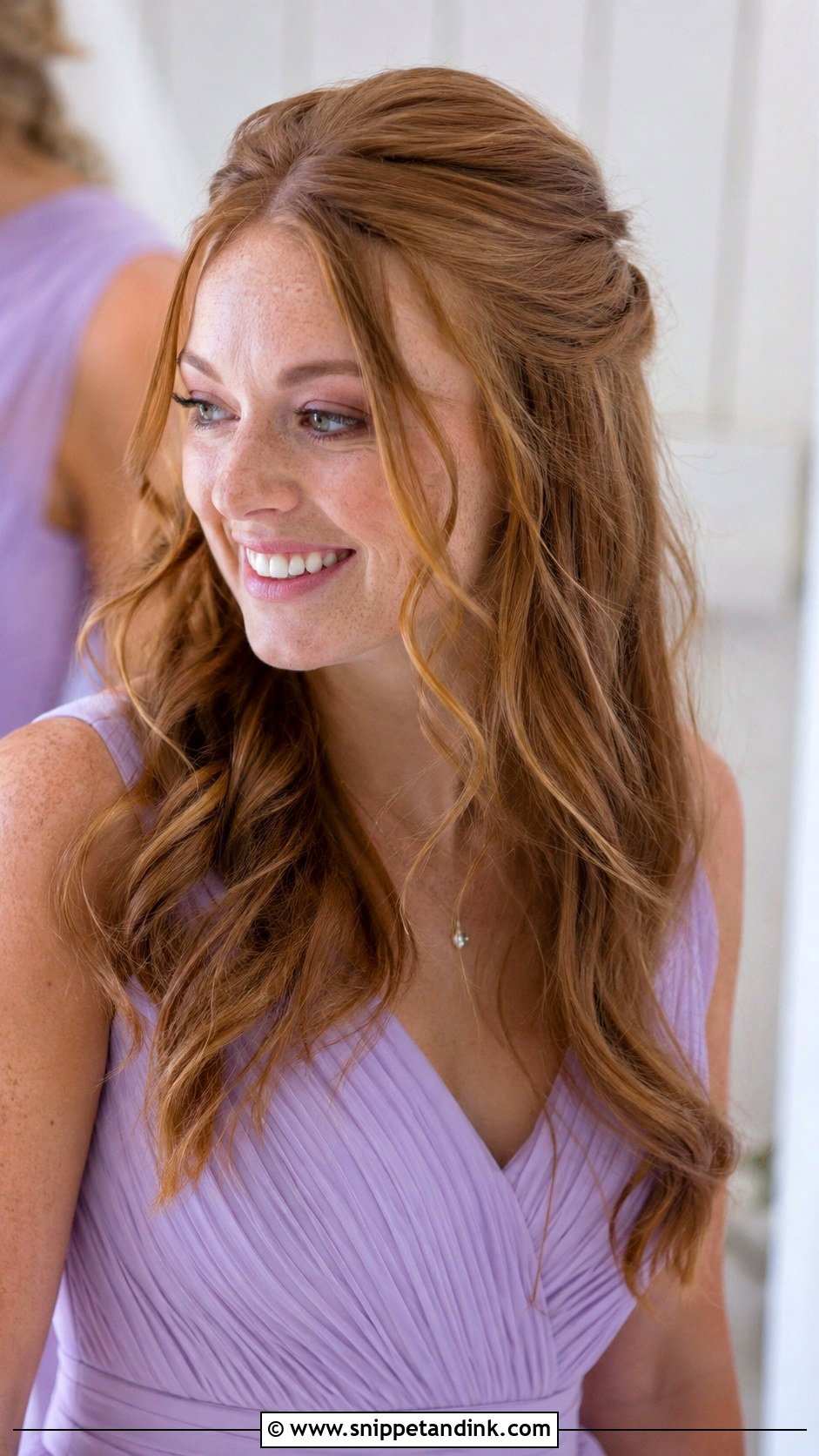
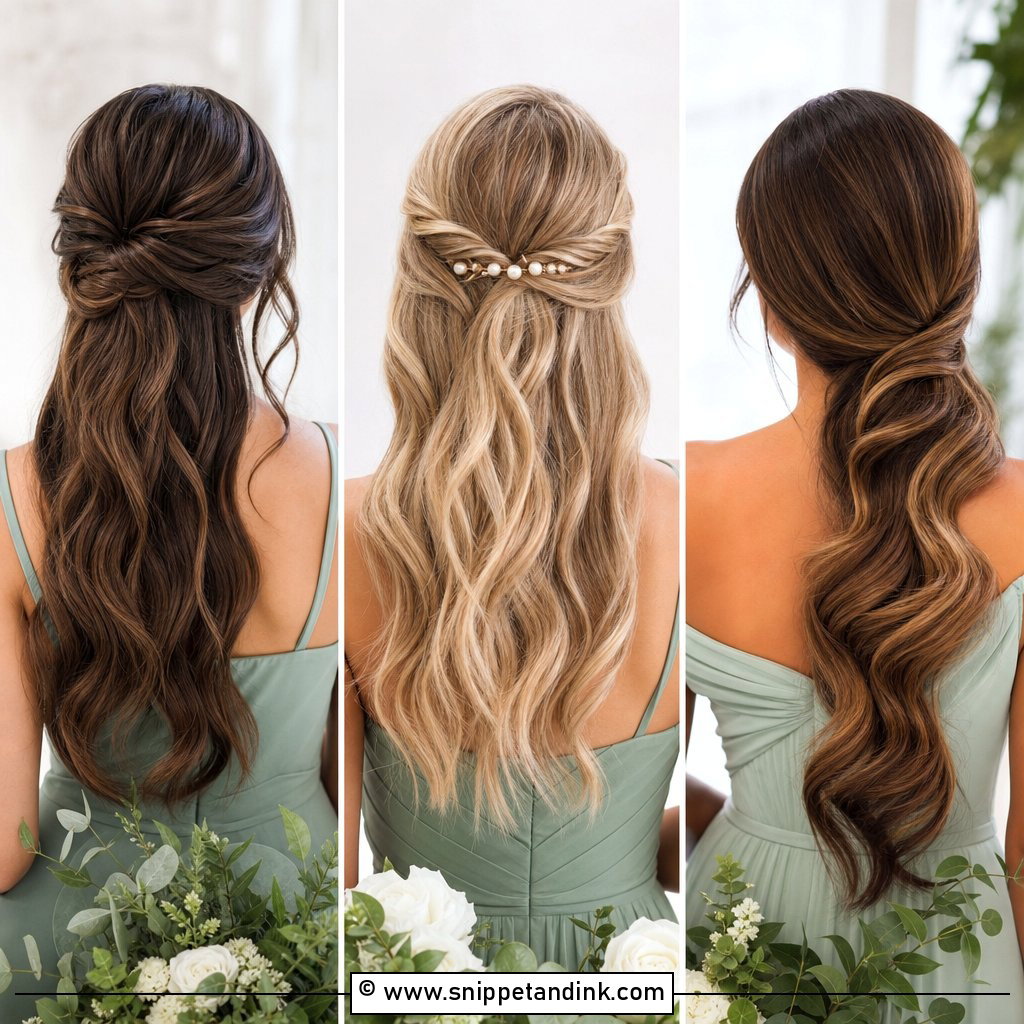
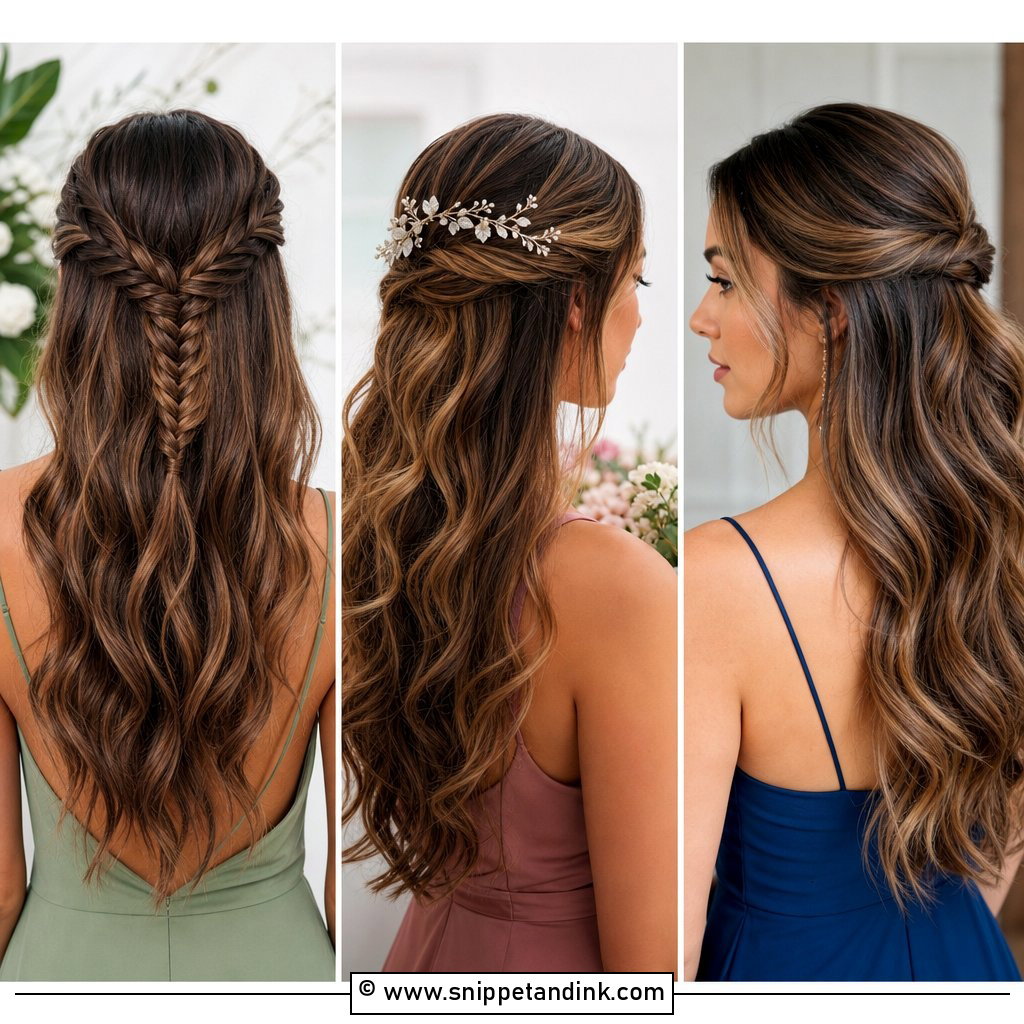
Front pieces that keep falling into your face? Half up waves solve exactly that. The top section is pulled back softly while the rest falls loose, which keeps your face open for photos and helps the style survive hugs, dancing and wind. It also gives me a secure base for pins, small florals or a single pearl detail. I tease the crown slightly before pinning so there’s gentle volume instead of a tight, slicked pull. Medium and long hair with soft layers suit it best.
6. Half Up Curls Bridesmaid Hair Down
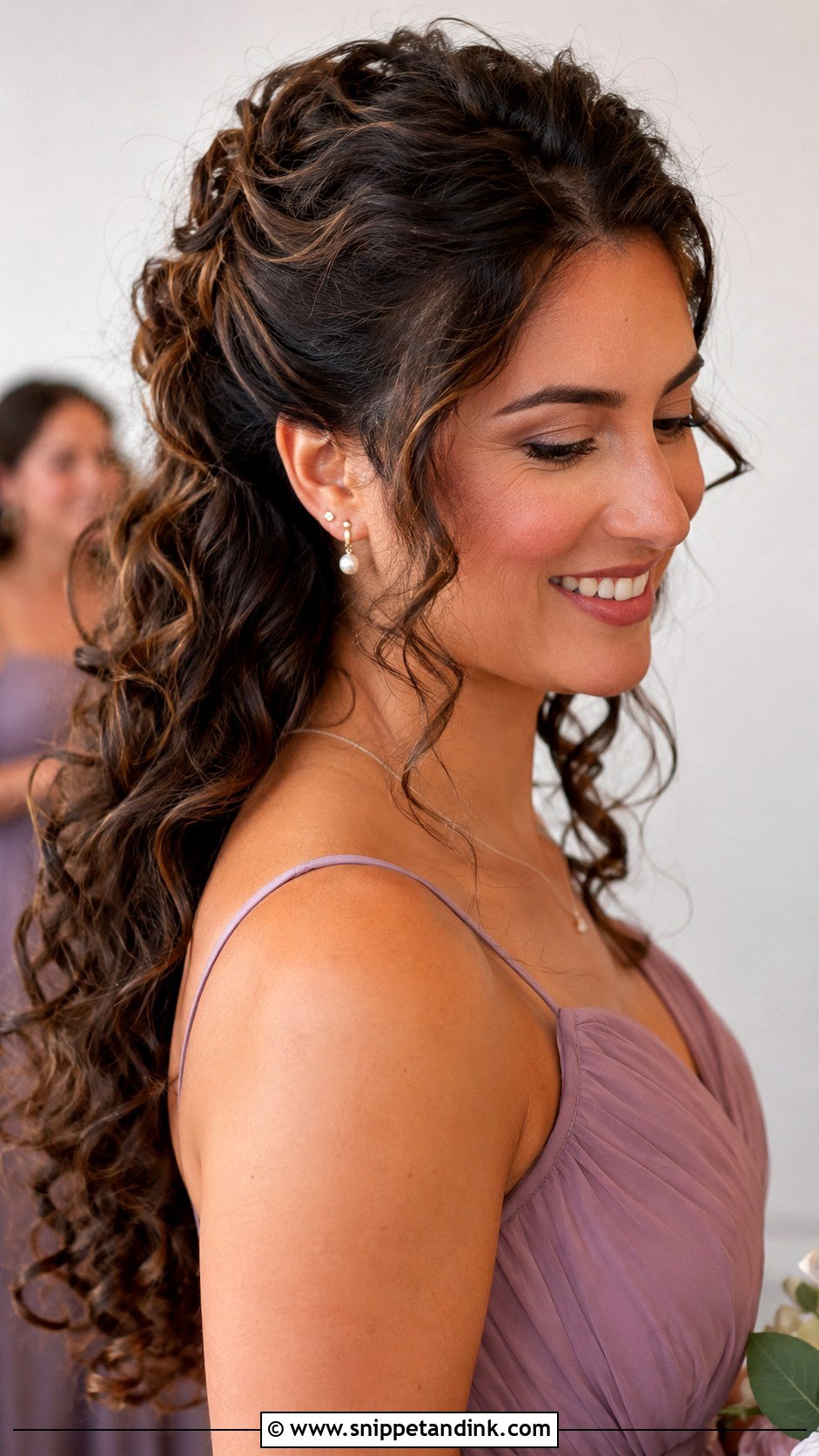
Half up curls are the dressier sister of the style above, and a strong choice for thick hair. Pinning the top back takes weight off the face without hiding your length, and the curls give body underneath. The pinned section can be twisted, braided or simply gathered depending on the dress. Thick hair is heavy, so I hide a small elastic under the pins; pins alone tend to slide by the first dance. A few soft pieces left at the temples keep it from looking tight.
7. Twisted Half Up Bridesmaid Hair Down
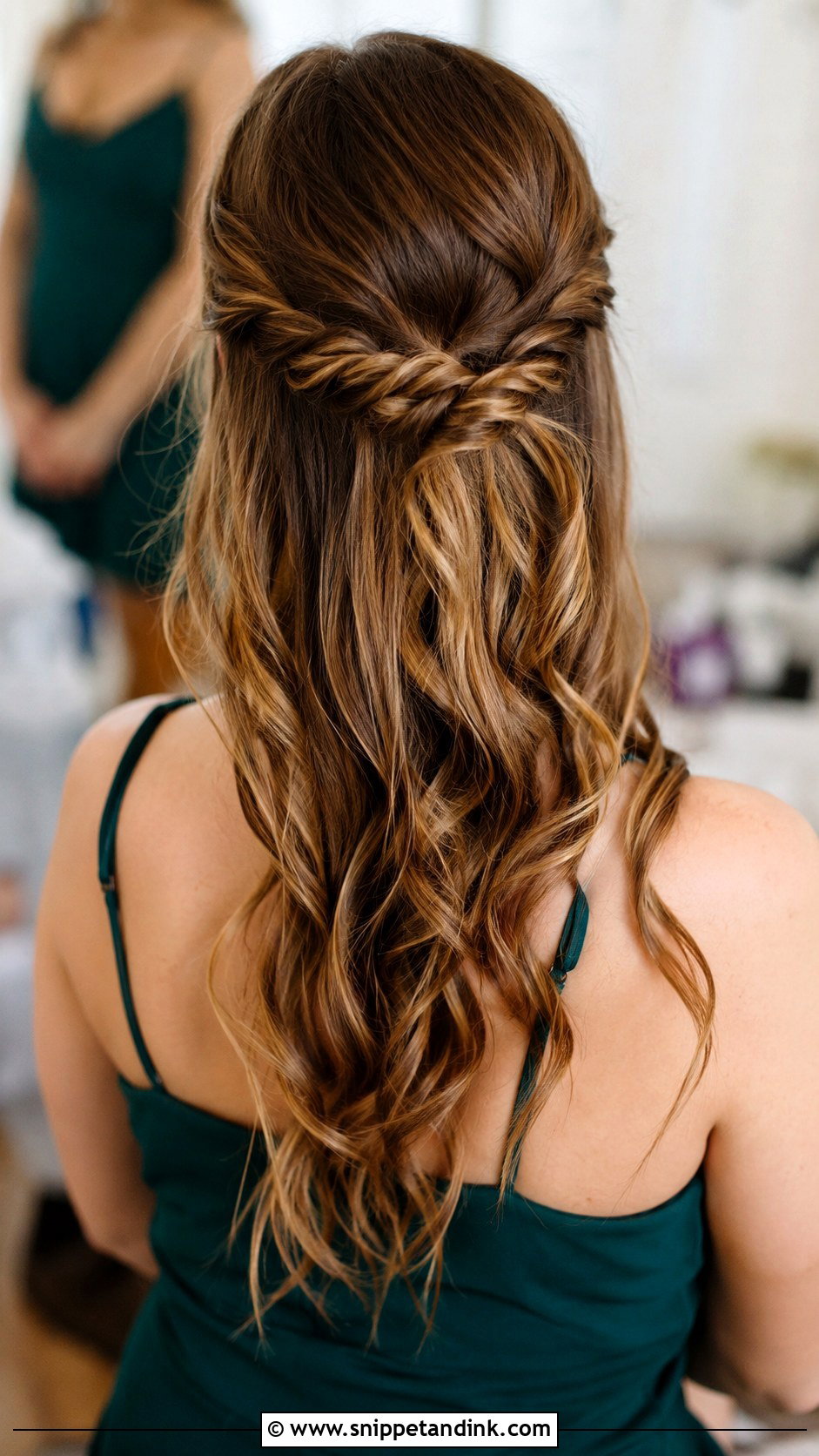
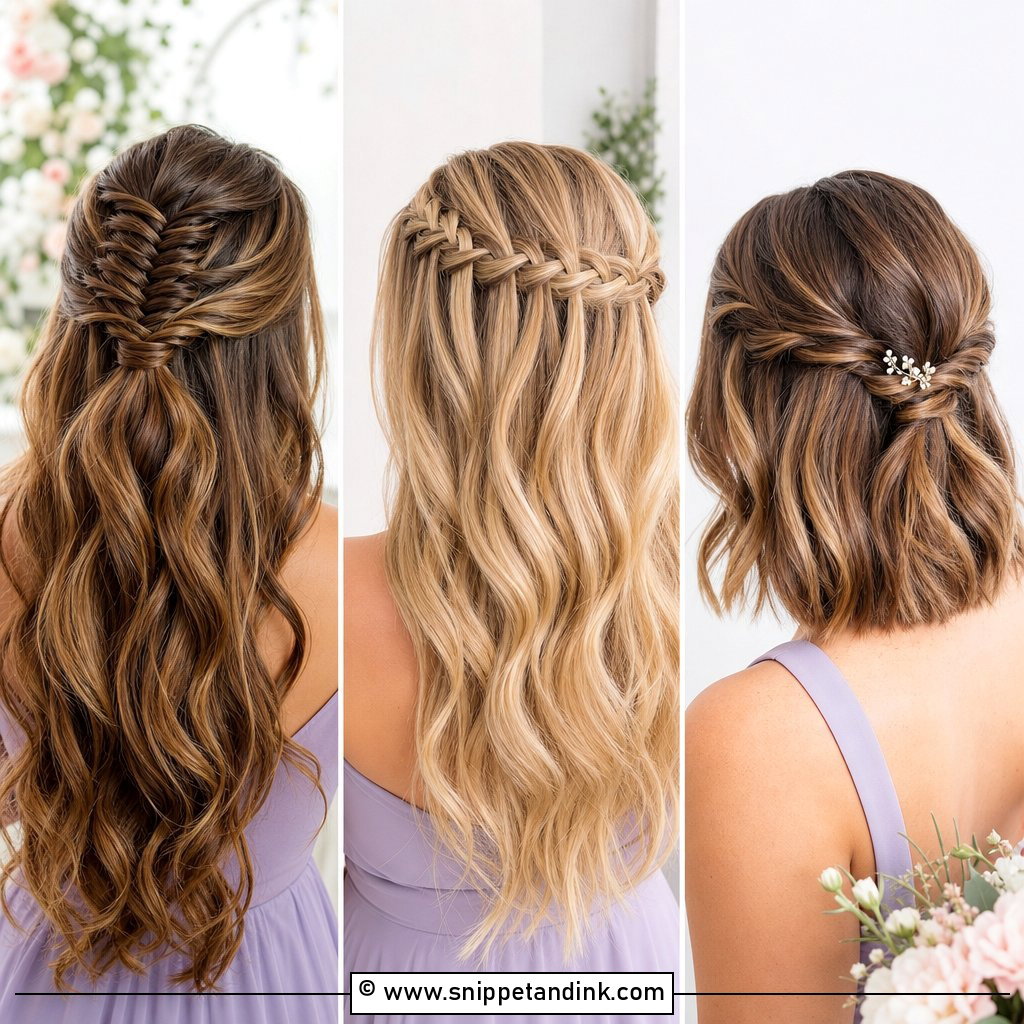
Two small front sections are twisted back and secured at the crown, then the rest falls in waves or curls. It’s quick, which matters when I have a whole bridal party to get through, and comfortable over a long day. The twists also hold shorter front layers in place, handy at an outdoor ceremony where warm weather makes them stick to the forehead. I twist loosely and pull at the edges after pinning. Match the curl pattern to the rest of the bridal party so the group reads as one.
8. Braided Half Up Bridesmaid Hair Down
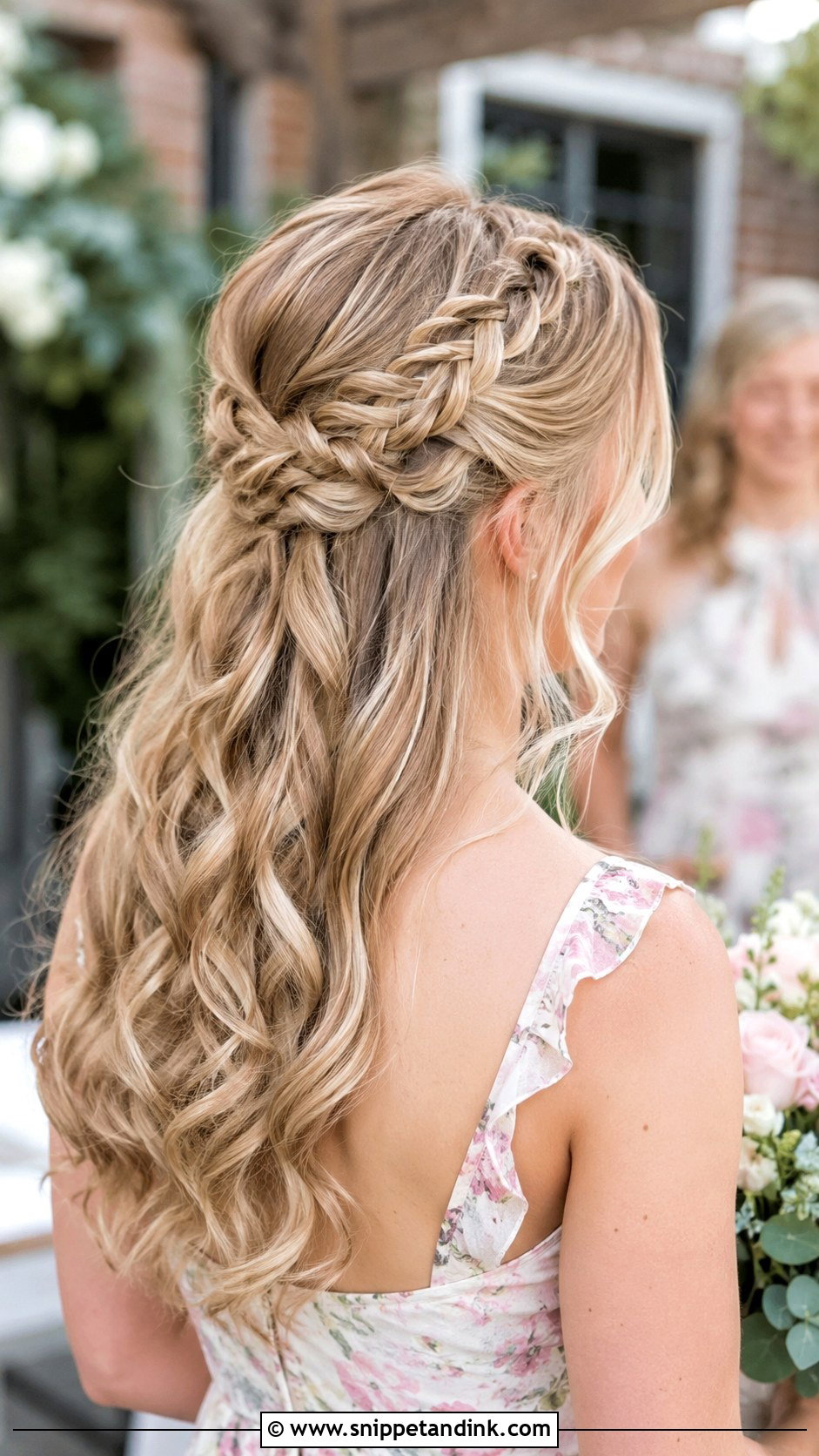
Small braids can frame the crown, meet at the back or melt into the waves. Garden, beach and relaxed outdoor venues suit this, and it keeps hair off the face while still showing length. I braid fairly loosely on purpose; a tight braid pulls at the scalp over a long day, and by evening it can give you a headache. Loose curls and natural waves sit well beneath it, especially on medium-length hair. Add a tiny pin or floral accent only if it matches the bride’s own styling.
9. Waterfall Braid Bridesmaid Hair Down
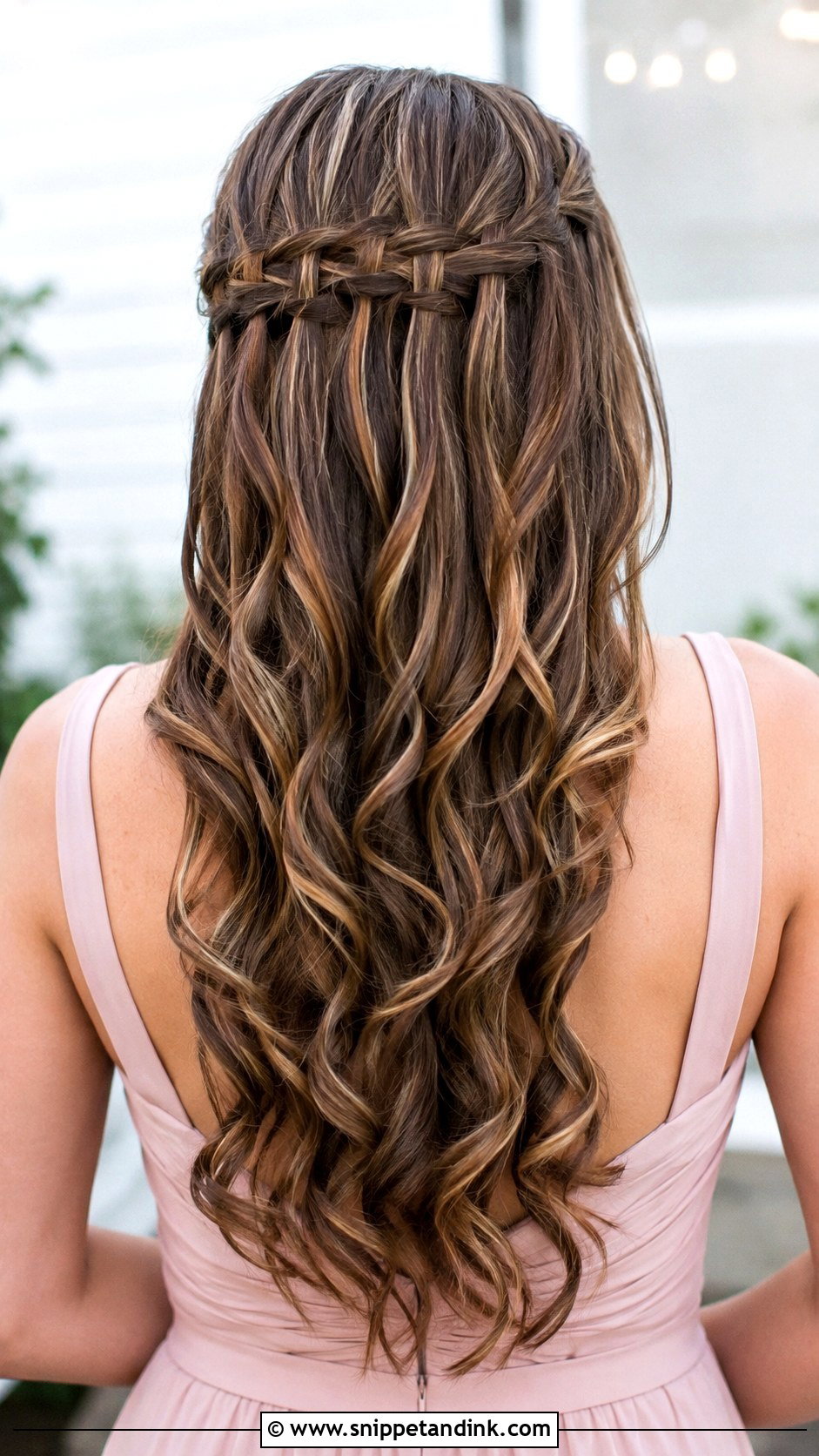
A waterfall braid travels across the side or back of the head, dropping a section at each stitch so hair falls through it. You need medium to long hair for the pattern to show. I curl the dropped pieces after braiding so they blend into the waves below. The top has to be smooth and the braid fairly firm before I loosen it at all, because this braid has no anchor except its own tension. Done well, it reads slightly boho without looking messy.
10. Soft Curls Bridesmaid Hair Down
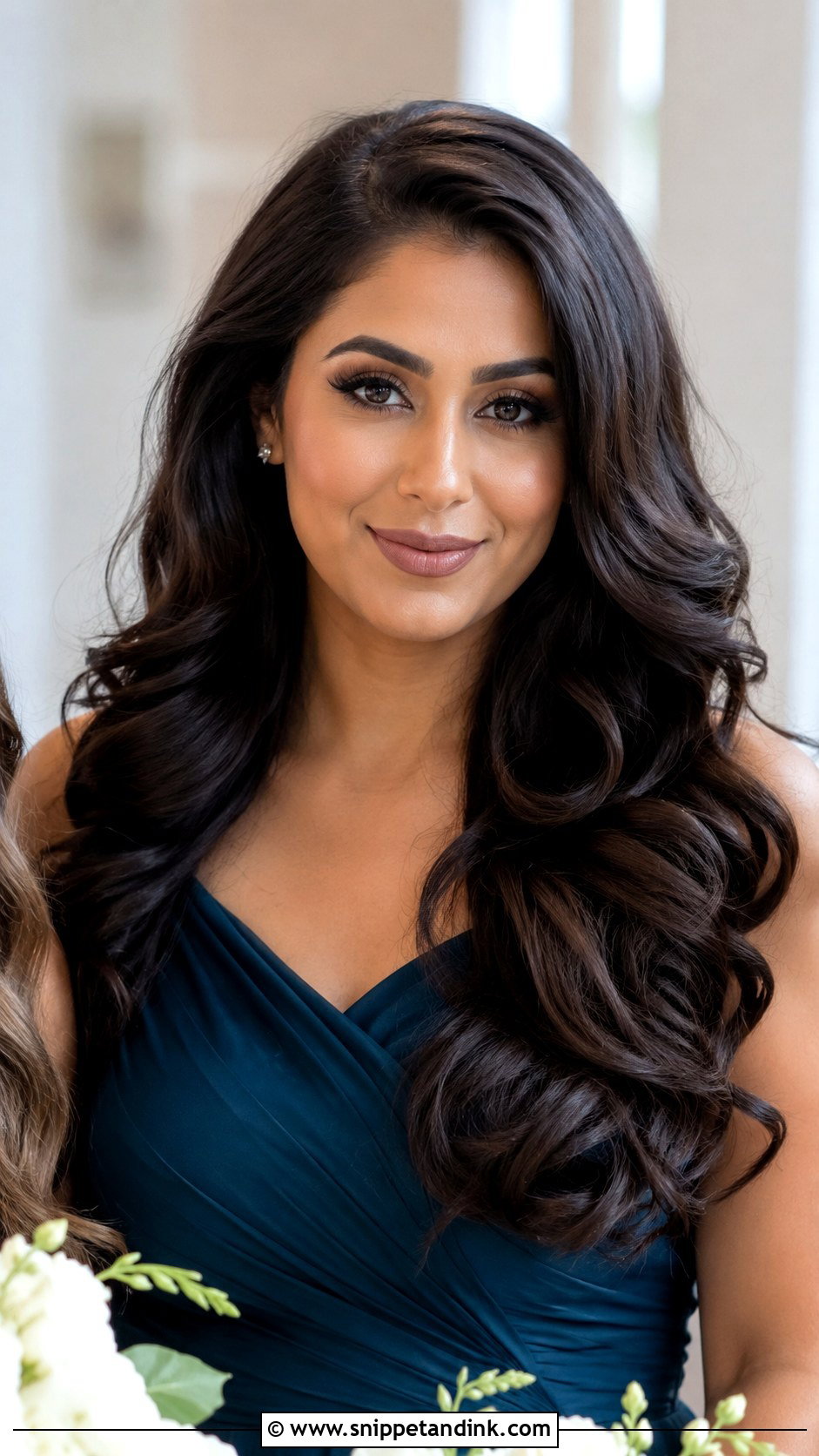
Soft curls have a rounder, more formal finish than beach waves, and they’re my safe bet when dresses vary across the party, since they suit chiffon, satin, lace, and floral dresses equally. I brush them lightly so they blend but keep their definition. Layered hair does well here because each layer gets its own movement. If photos are outdoors or the reception runs humid, ask for a flexible spray with humidity protection.
11. Long Curls Bridesmaid Hair Down
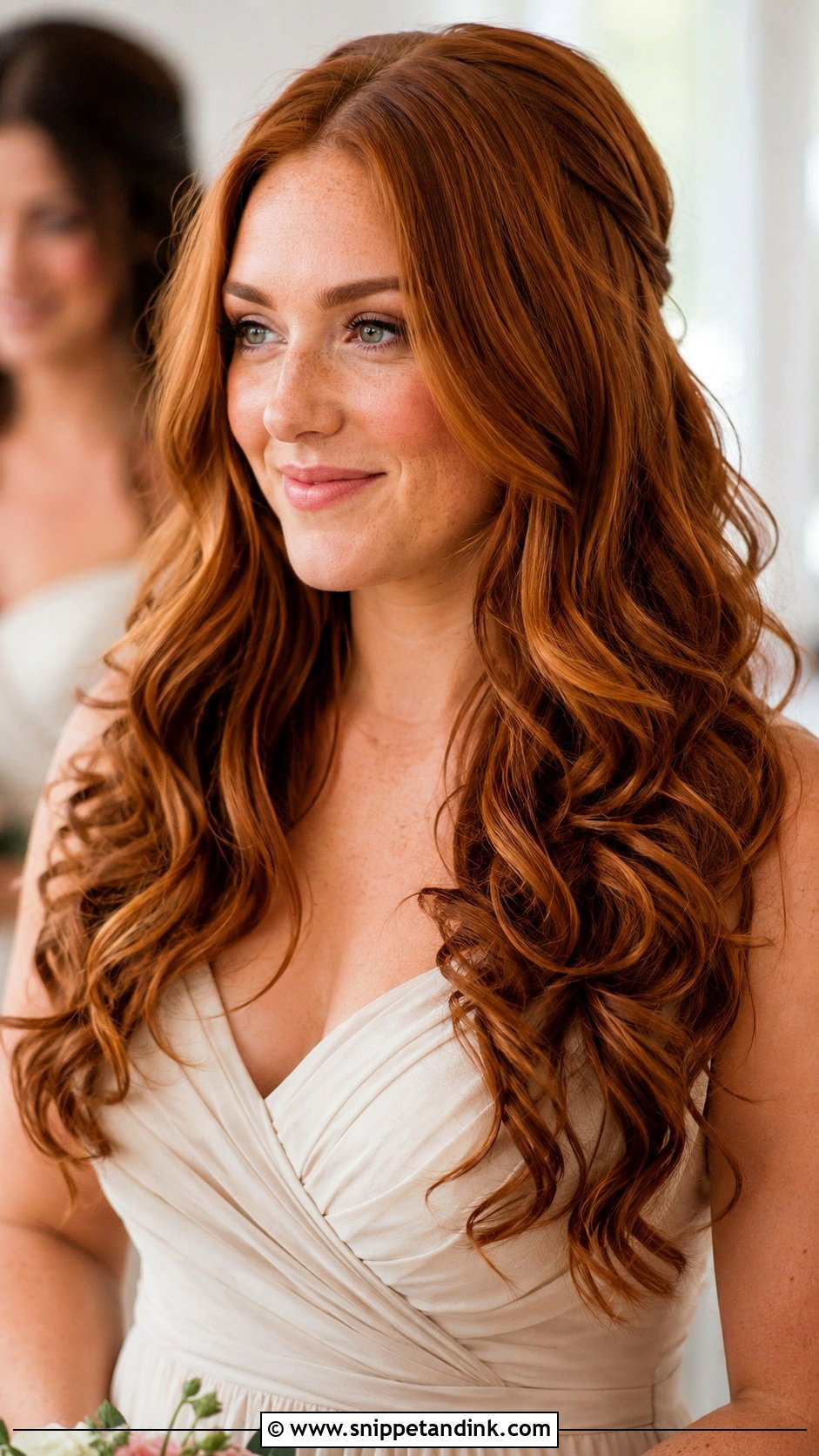
Long curls need hair past the shoulders so they have room to cascade. I start the curl below the cheekbones for a modern shape, or higher up for more volume. The risk with very long hair is weight: it can pull a curl straight within a couple of hours. So I pin each curl up while it cools and release them only just before the dress goes on. Smooth roots and movement concentrated in the ends keep it from feeling heavy against a simple dress.
12. Medium Length Waves Bridesmaid Hair Down
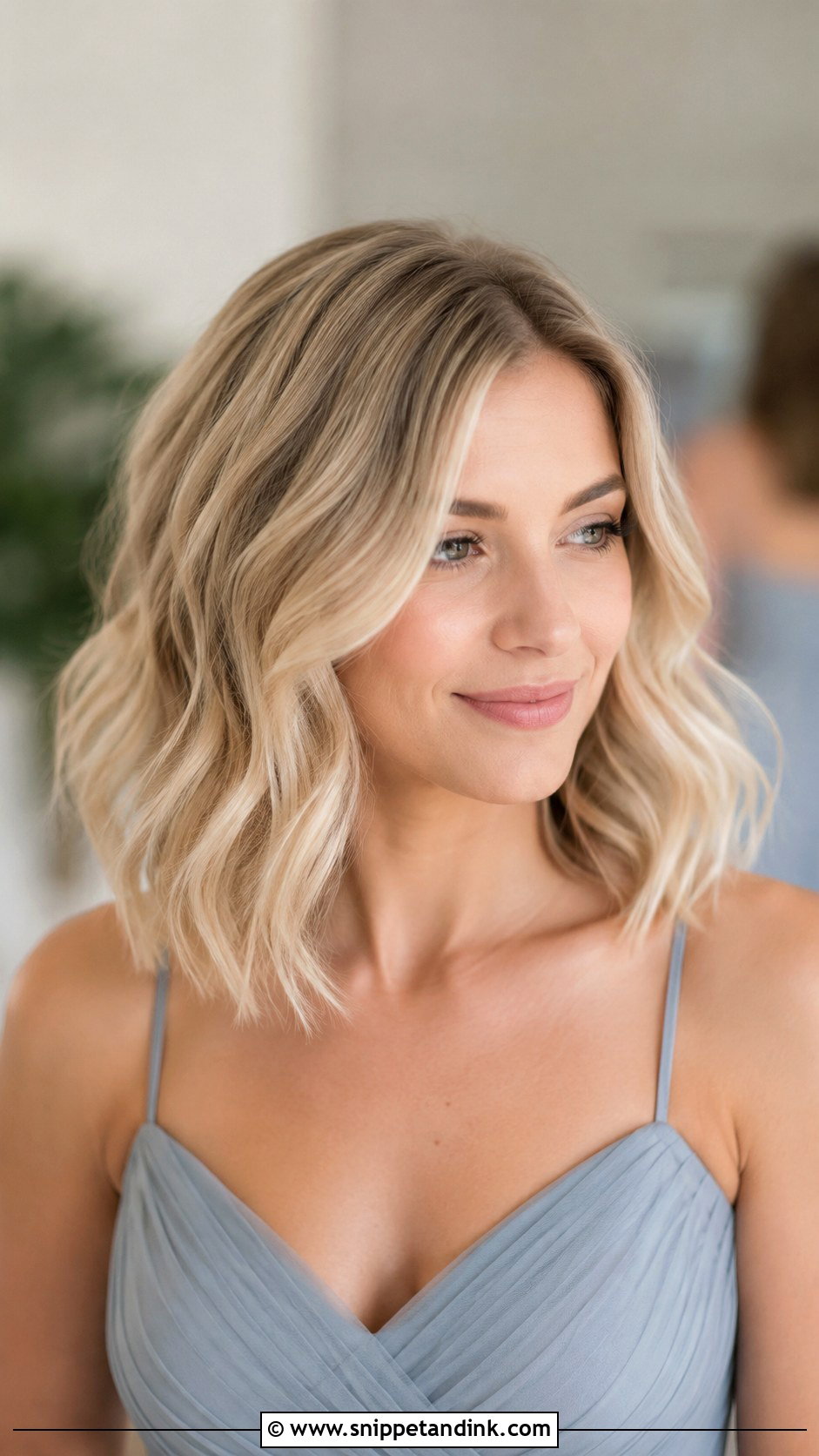
Shoulder-length hair and lobs suit waves that start around the cheekbone or jawline and bend softly through the ends. A center part looks modern; a side part gives more volume. No extensions needed. To make shorter hair look fuller, I alternate curl directions, one section toward the face and the next away, then finish with texture spray. Hair that just grazes the shoulders flips outward when it hits a strap, so I turn the last inch under.
13. Short Hair Waves Bridesmaid Hair Down
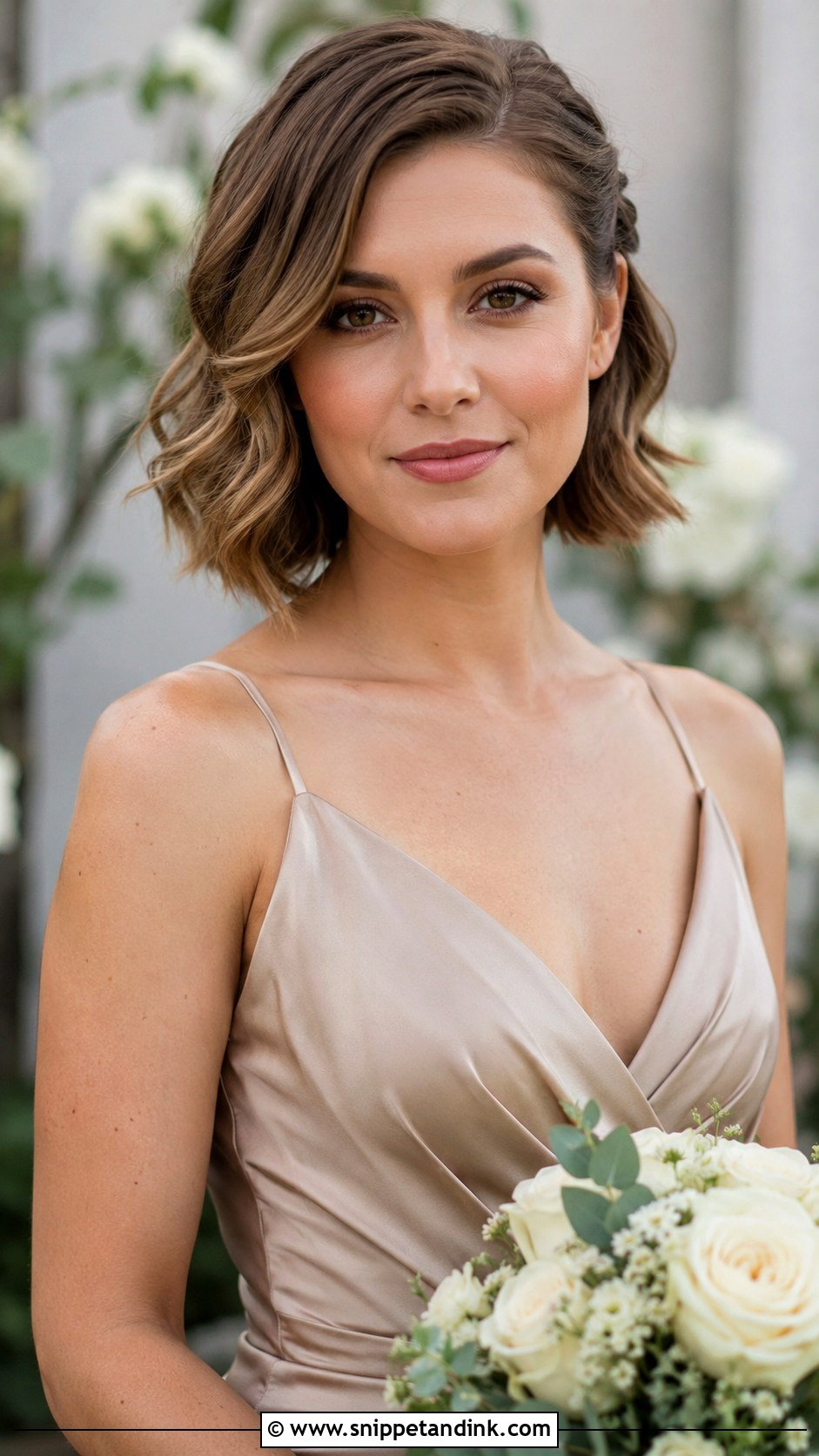
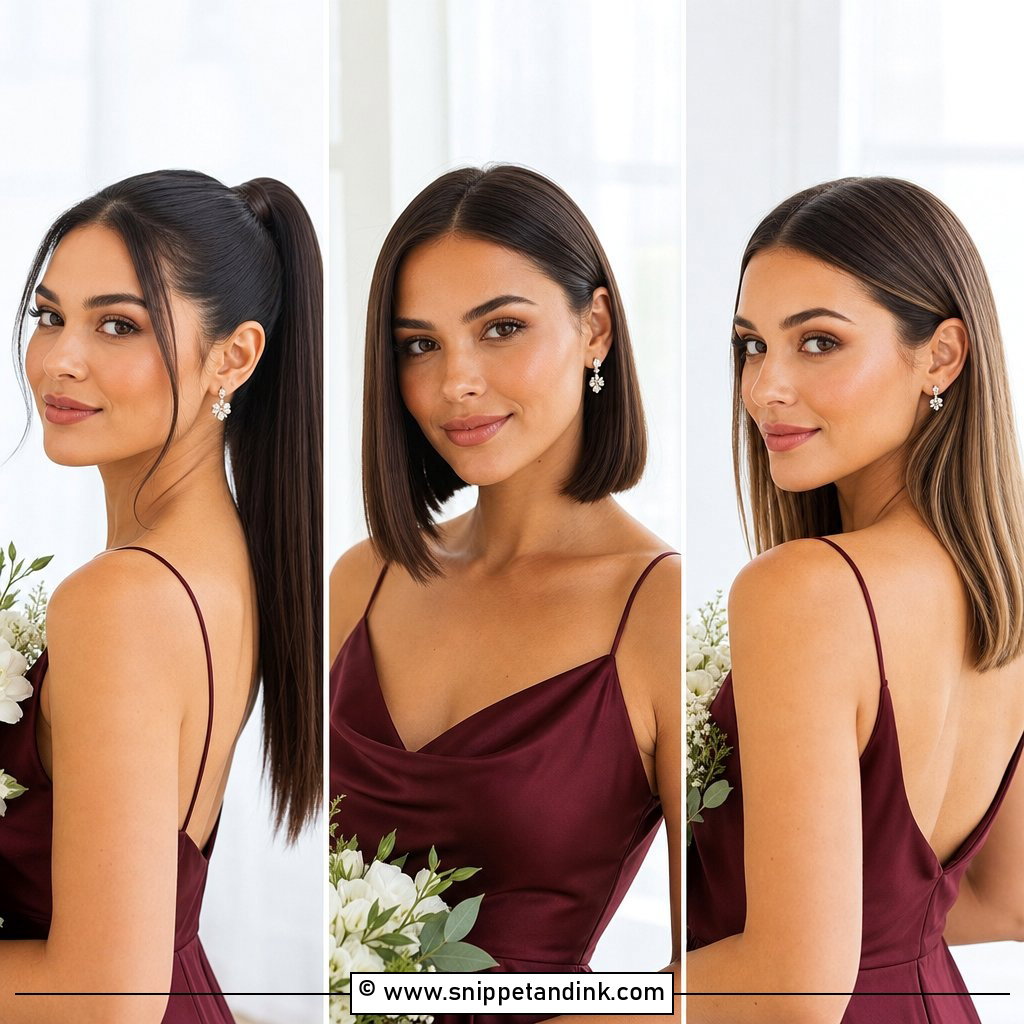
Bobs, lobs and chin-length cuts can wear waves just as well as long hair, as long as the bend stays gentle. Curl a short cut too tightly and it shrinks up into a helmet. I work a lightweight mousse through before styling, then use a flat iron to press in bent waves rather than round curls. Tucking one side behind an ear with small earrings gives a neat bridesmaid finish. It should look soft and shiny, not stiff.
14. Sleek Straight Bridesmaid Hair Down
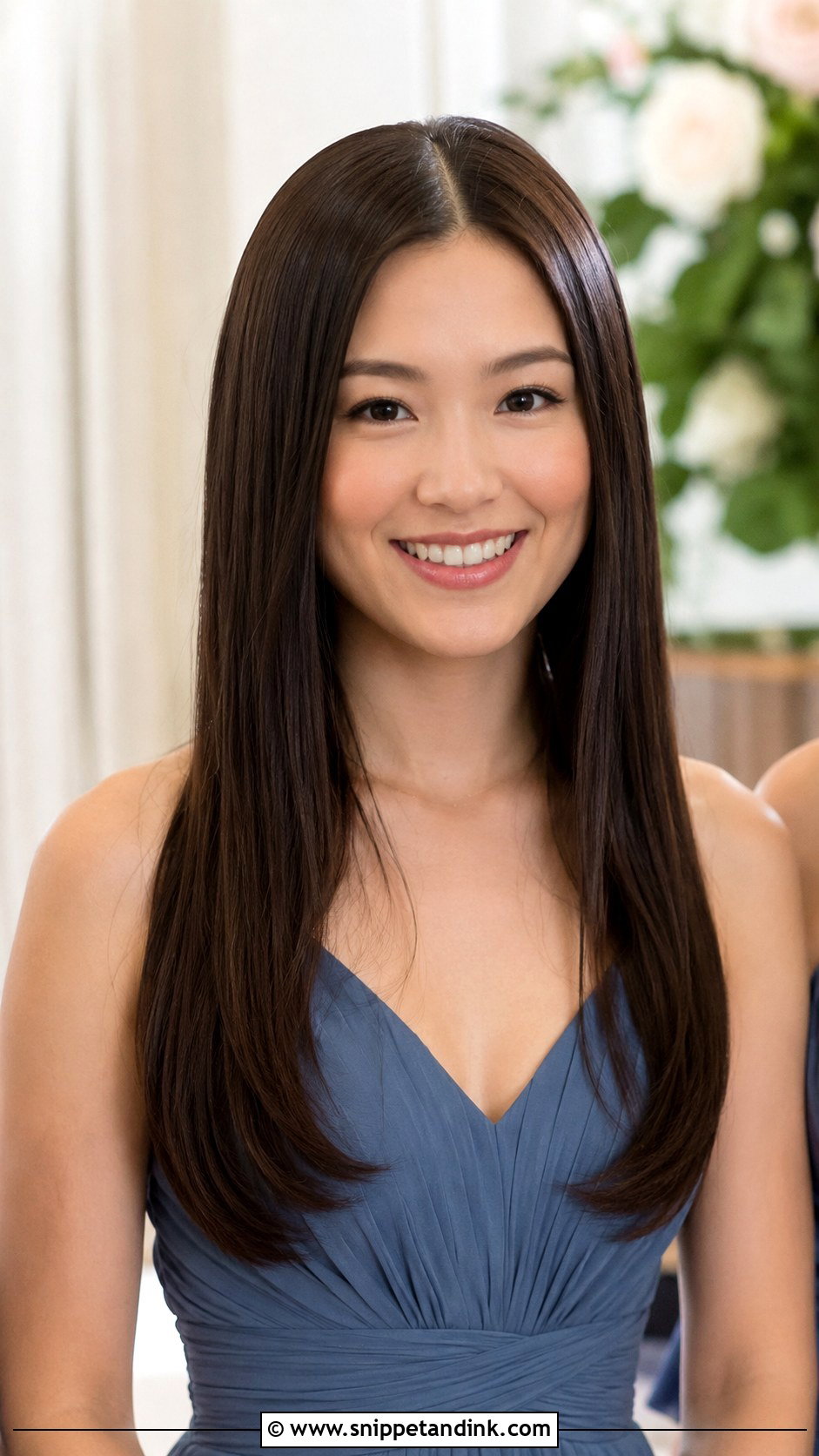
Sleek straight hair works for bridesmaids who prefer a minimal look, with structured dresses, simple satin gowns and city weddings. What separates wedding-ready from rushed is the prep: heat protectant, an anti-frizz product, a flat iron in thin sections and a light serum through the ends. A center part looks modern; a deep side part is more dramatic. I bend the very tips under slightly, which stops it looking like it was straightened in the car on the way.
15. Sleek Waves Bridesmaid Hair Down
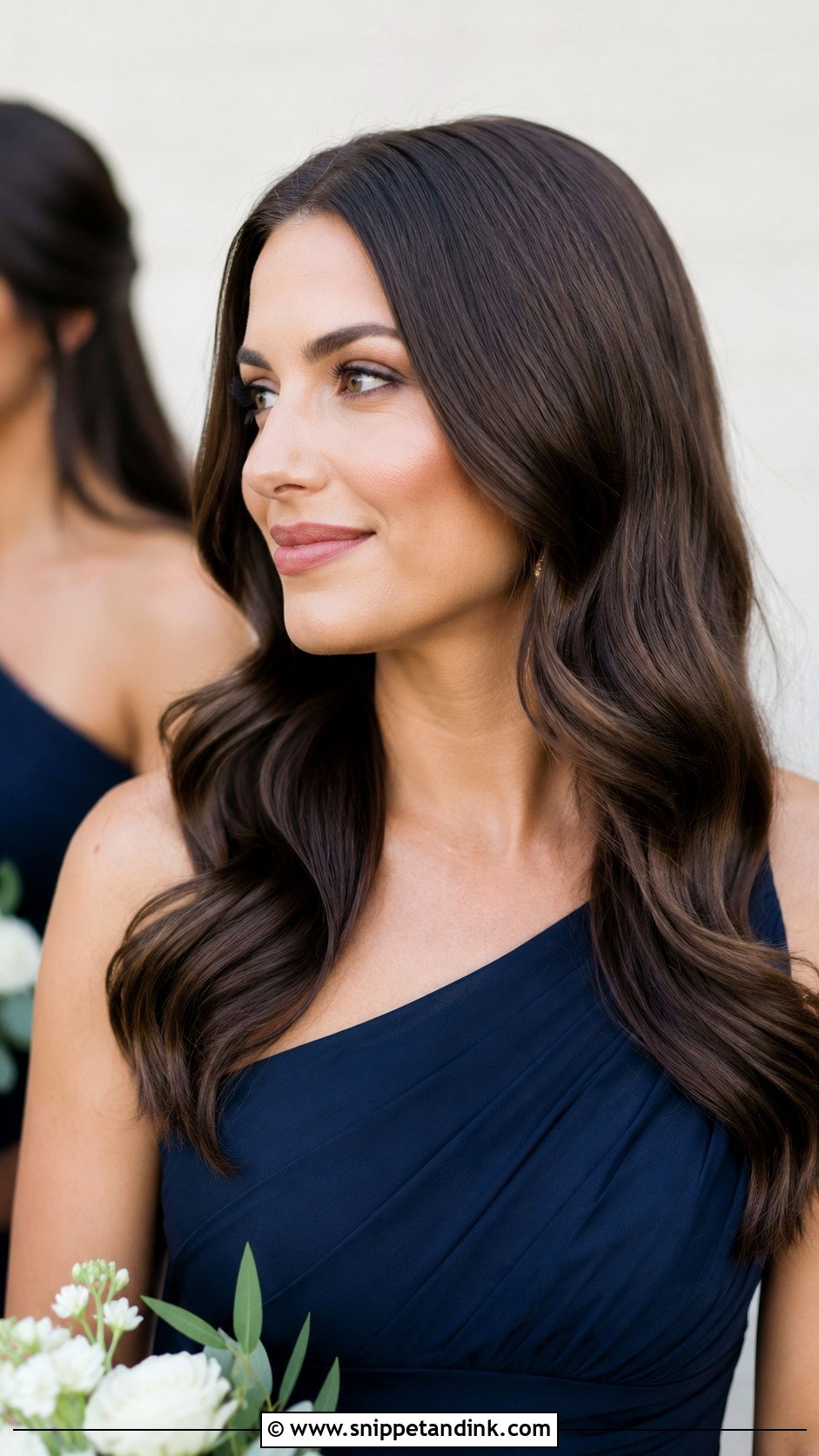
Sleek waves sit between loose waves and full Hollywood: smooth roots, then clean bends through the length. I curl with a larger iron, then smooth the shape with a brush and shine spray. Fitted dresses, simple necklines and pearl or metallic accessories suit it. The pattern should look controlled but still swing when you turn your head; if it doesn’t move, there’s too much spray in it. Indoor weddings and evening receptions are where it does best, since humidity loosens the smoothness first.
16. Natural Curls Bridesmaid Hair Down
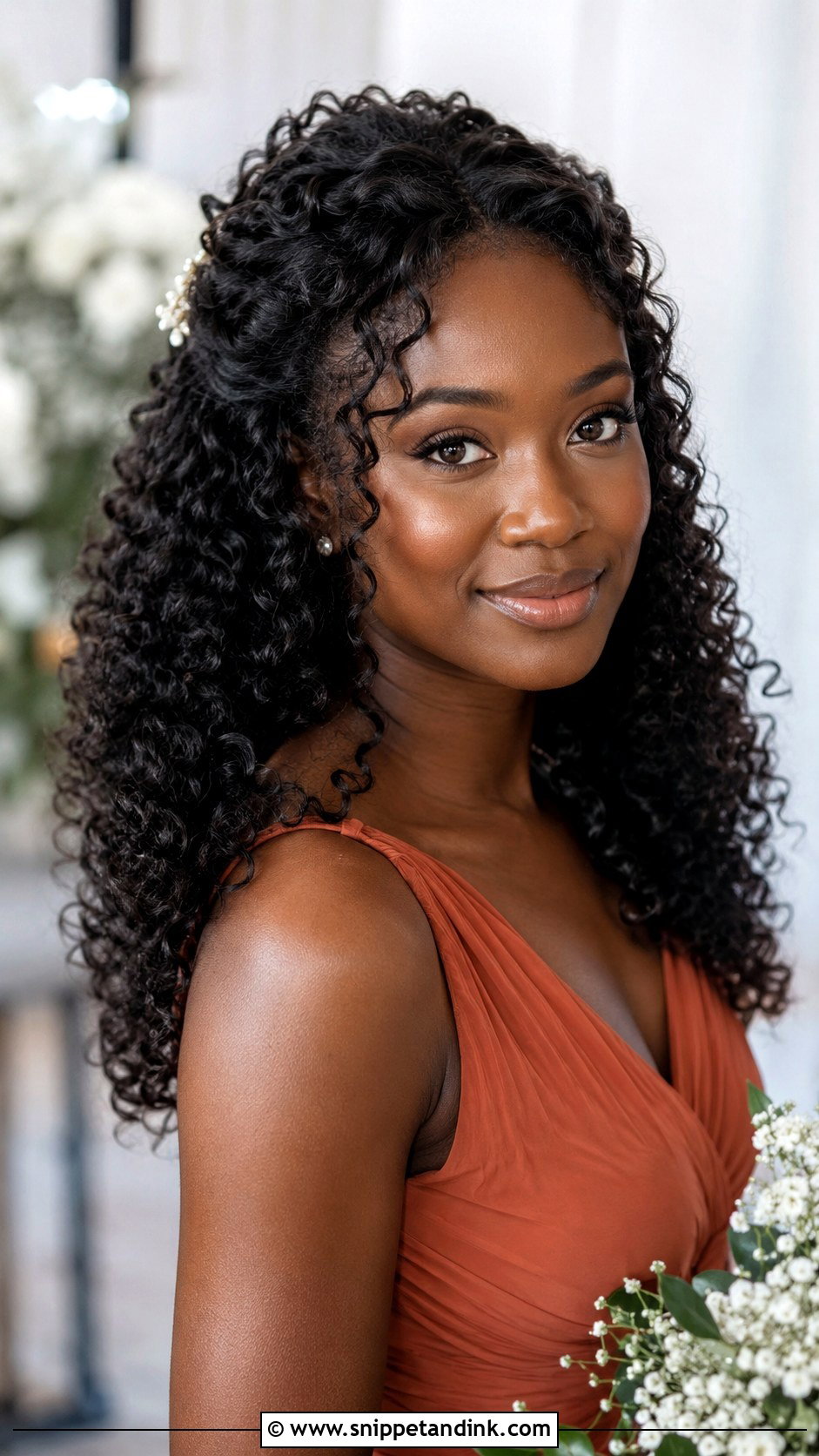
Natural curls worn down suit bridesmaids with curly or coily hair who want to feel like themselves all day. Prep makes the difference: leave-in conditioner, curl cream and an anti-humidity gel worked into wet hair. I define curls that have clumped unevenly, lift the roots with a pick and shape the front so the face stays open. A few pinned pieces add control without turning it into an updo. If you’re the only curly-haired bridesmaid, ask whether the stylist works with your texture regularly; a technique built for straight hair usually means frizz on curls.
17. Natural Waves Bridesmaid Hair Down
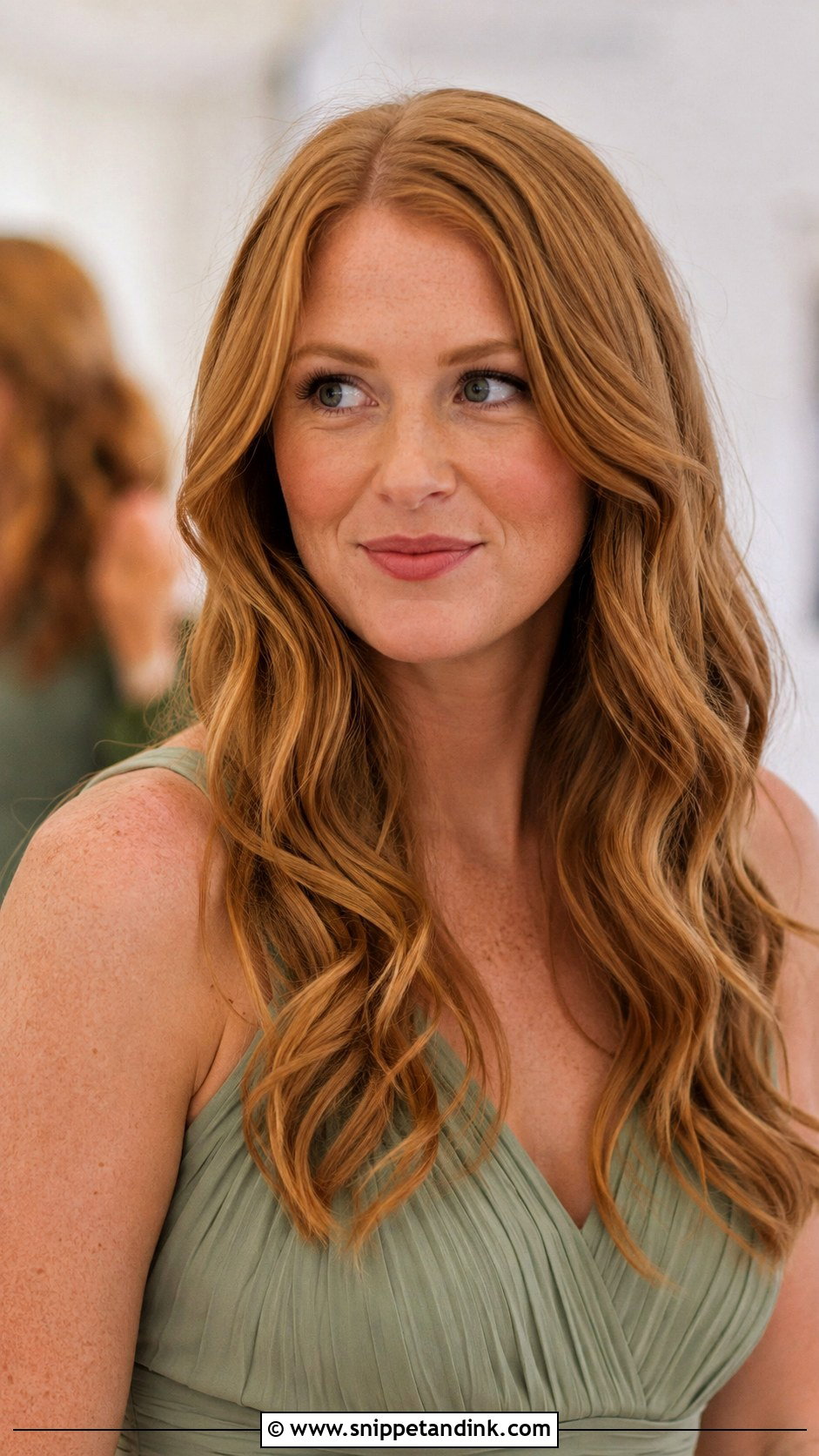
Natural waves enhance the bend you already have instead of forcing it into curls, and they’re at home at beach weddings, garden ceremonies and barn venues. It still takes care: wave cream or a light mousse scrunched in, then a flexible spray to keep frizz down. I curl the face-framing pieces with an iron so the front looks finished even if the back is mostly natural. It’s a lovely option when a bride wants her bridal party cohesive but not identical.
18. Deep Side Part Waves Bridesmaid Hair Down
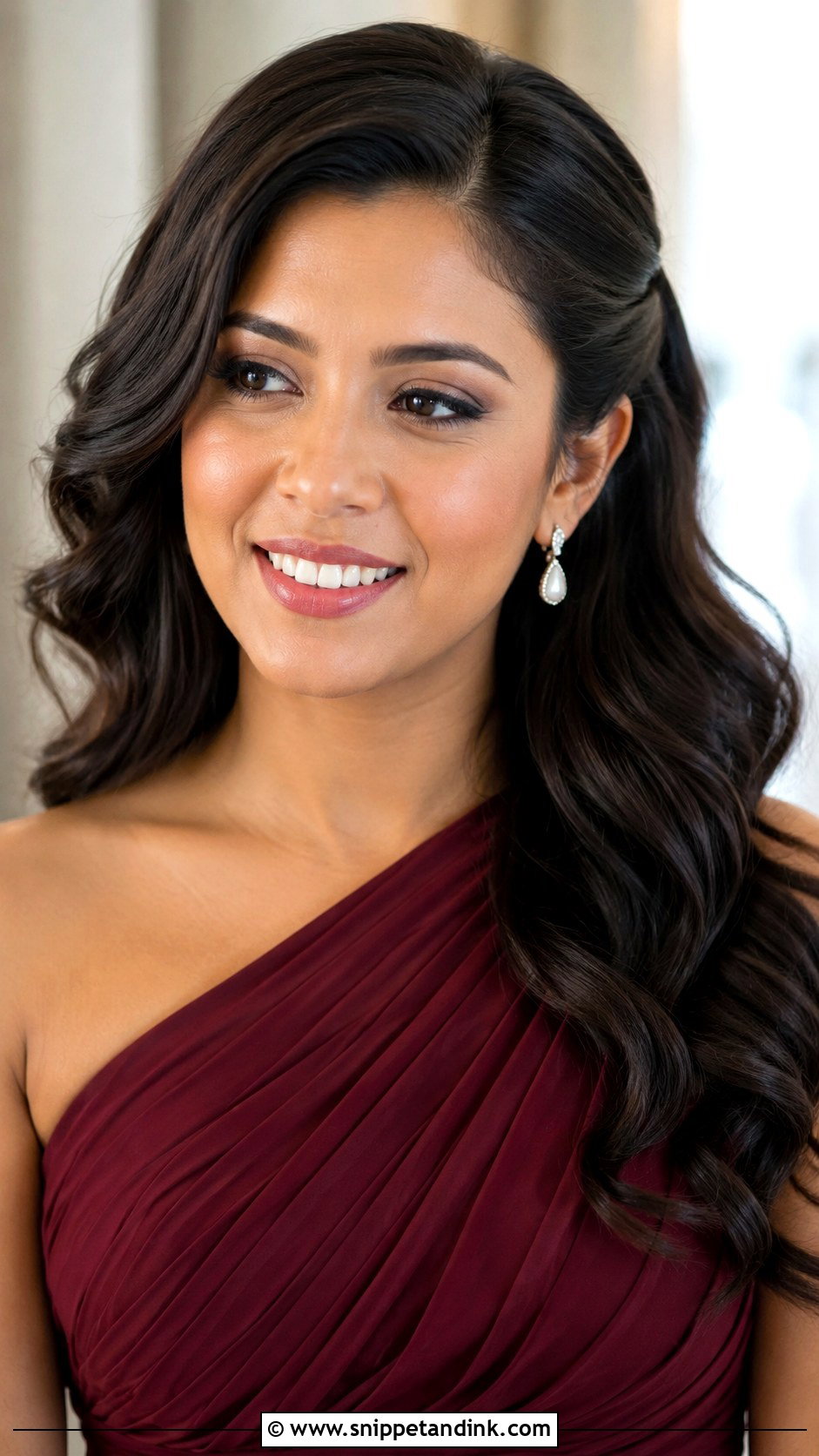
Deep side part waves give instant shape and volume. The heavy side softens the face while the lighter side tucks behind the ear, and the diagonal line flatters a lot of face shapes in photos. For formal weddings I sculpt the waves; for relaxed ones they go softer. I place the part where your hair naturally lifts, never forced too far over, because a forced part slides back by lunch. A little root spray under the heavy side keeps the volume up.
19. Pinned Back Waves Bridesmaid Hair Down
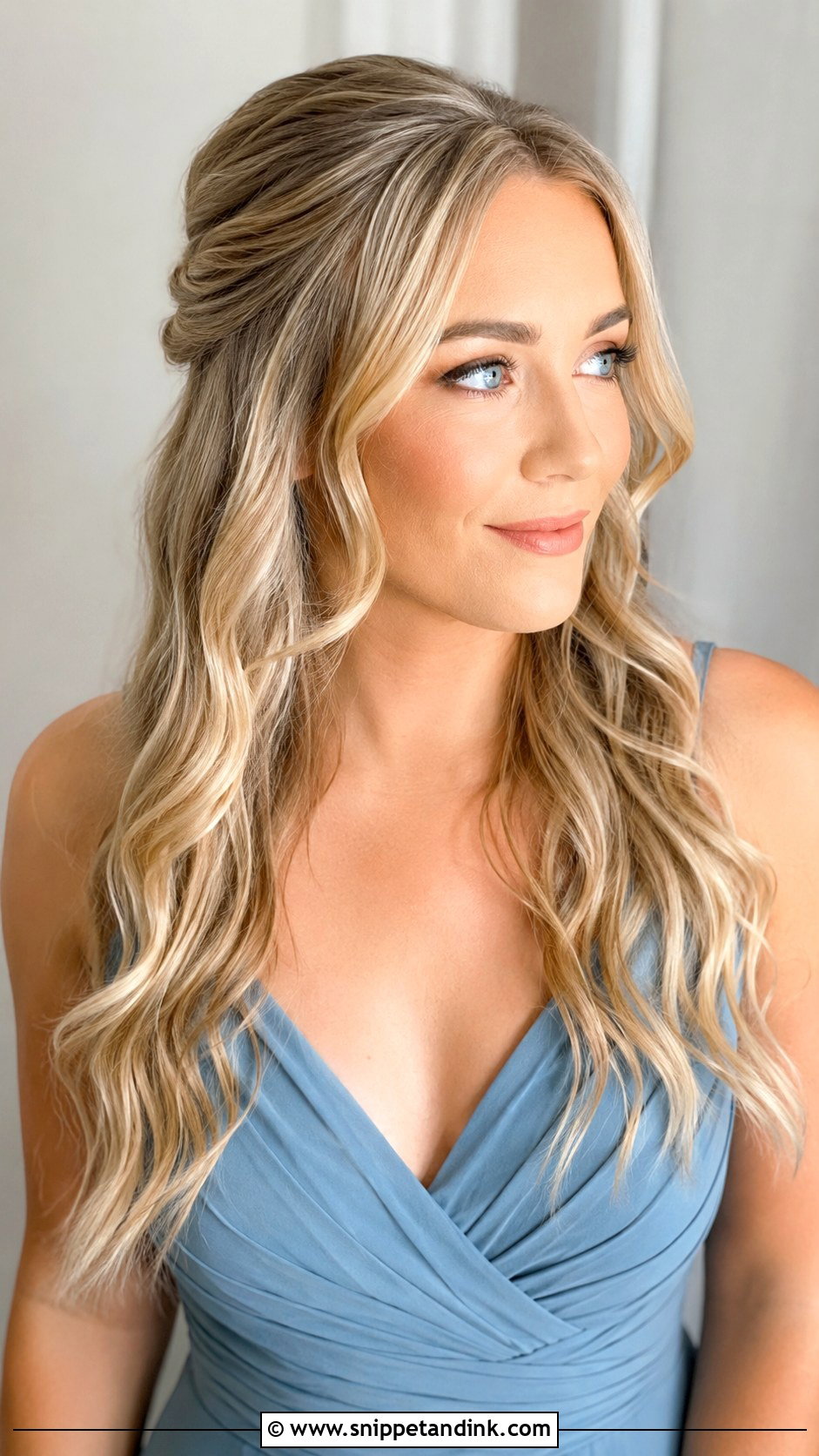
Windy venue, or short face-framing layers that won’t behave? Pinned back waves give hair down some security. One or both front sections are softly pinned away and the rest falls in curls or waves, comfortable through the ceremony, dinner and dancing. There’s room for small pins, pearls or a barrette if the bridal party is sharing an accessory. I curl the pinned sections along with everything else before pinning, so the join blends into the wave pattern instead of looking stuck on.
20. Pearl Clip Waves Bridesmaid Hair Down
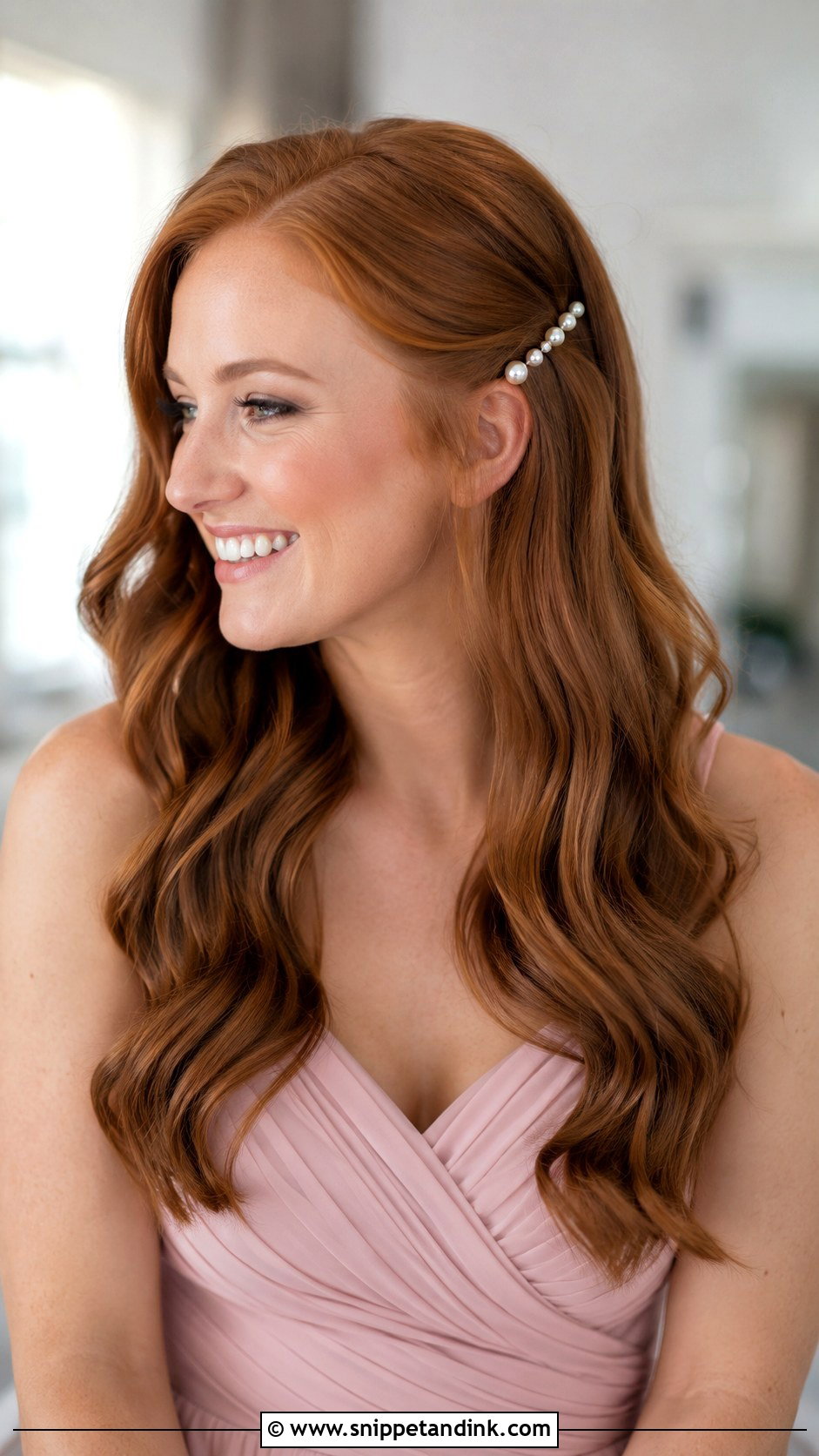
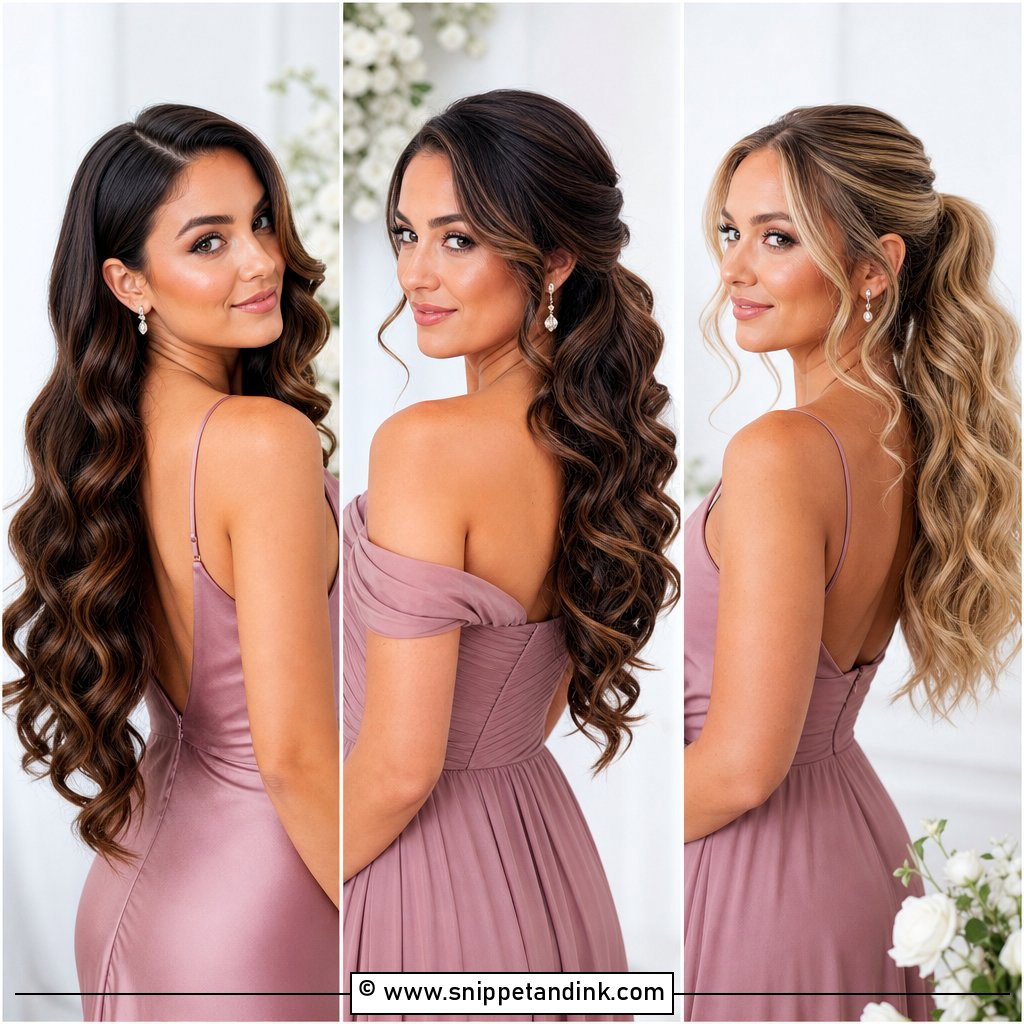
The hair is styled in loose curls or soft waves, then one side is clipped back with a pearl barrette or a few small pearl pins. It gives the bridal party a coordinated detail without competing with the bride. Size matters: visible in group photos, but never big enough to rival her headpiece. I always criss-cross two bobby pins underneath for the barrette to grip, because barrettes slip out of freshly curled hair. Coastal, garden and formal weddings all suit it.
The Running Order on the Morning, Chair by Chair
Down styles are the ones that drop, so where each bridesmaid sits in the schedule matters more than it does with updos.
Who goes first
I start with the thickest or most stubborn hair, since it sets firmly and holds for hours. Fine, silky hair goes closer to the end so it’s freshest for the ceremony. The bride usually sits last or second to last, which leaves time for the veil and a final check.
How long to allow
Plan on roughly 45 minutes to an hour per down style, more for very long or very thick hair, and add a buffer if anyone is having clip-ins blended. When a morning runs late, it almost always started with an unplanned extra person in the chair.
What each bridesmaid should arrive with
- Clean, completely dry hair. Damp hair adds a blow-dry to the schedule.
- No oils or heavy serums that morning; they stop curls from gripping.
- A button-up shirt, so finished hair never gets dragged over the head.
- Any clip-ins already color-matched and tried, plus a photo of how she normally wears them.
Once you leave my chair, don’t brush your curls. If you have to touch them, use your fingers, and only after they’ve fully cooled.
Settle the Finish Before the Hairstyle
Bridesmaid hair down can lean soft or sculpted depending on how it’s finished. Loose waves are the easiest to share across a group, Hollywood waves bring polish, half up details tame front pieces, and natural curls or waves keep texture front and center. Start from the dresses, venue, weather and how much hold each person needs, then pick the style. A trial for whoever has the trickiest hair, or at least a clear inspiration photo for each bridesmaid, saves a lot of time on the morning.
You'll Like These Ideas:


Leave a Reply