
Most bridesmaids I style ask to keep their hair loose, and it’s a fair request: it’s comfortable, quick to do and easy to recognise yourself in later. Bridesmaid hair down still needs a plan, though. The looks that hold best start with one simple shape and add a single detail, such as a defined part, a twist or a pin, that keeps the hair neat in photos. Below are twenty I’d use for a bridal party, with notes on which hair each one suits and what usually comes undone first.
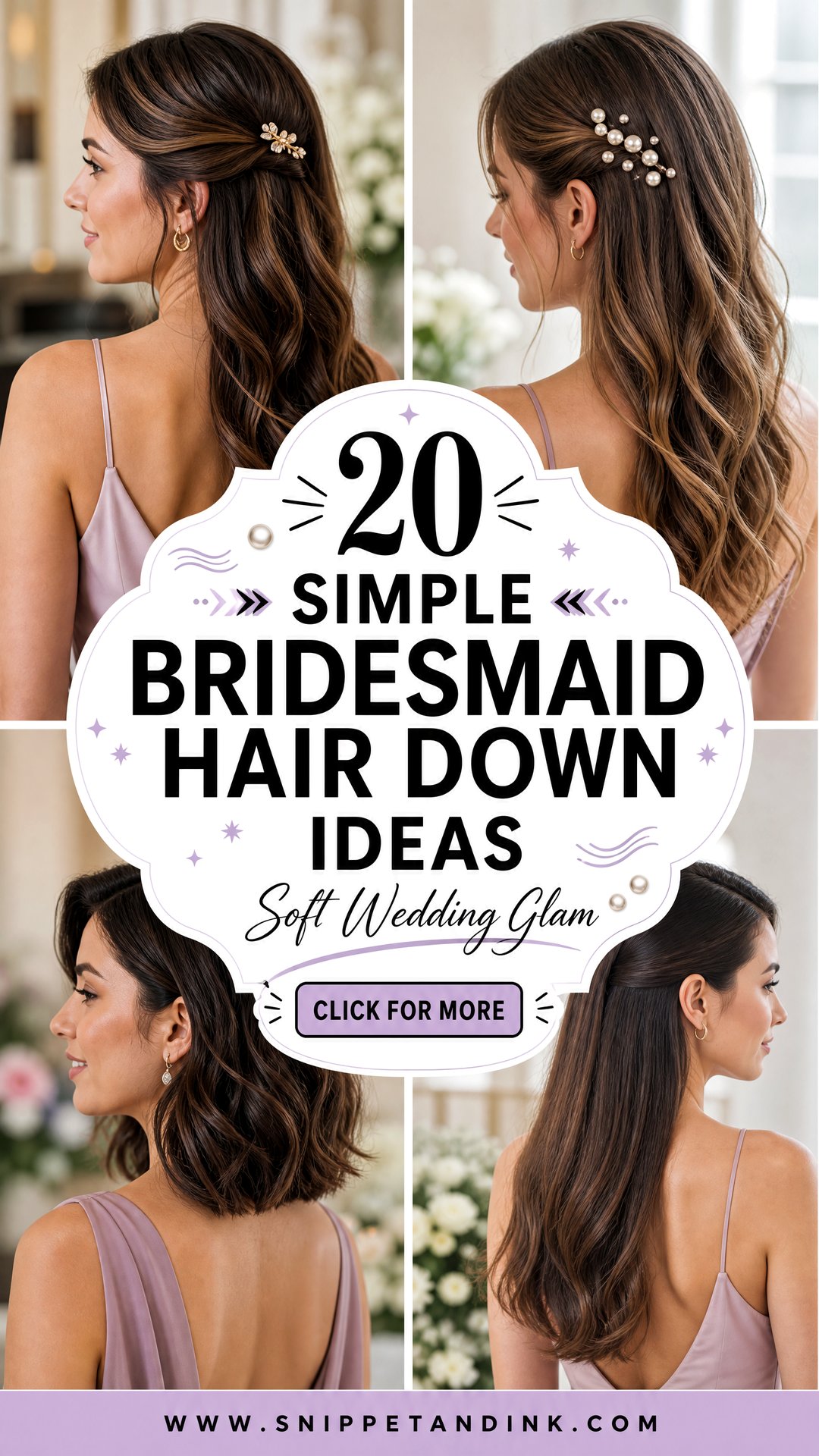
Mixing Six Hair Types Under One Look
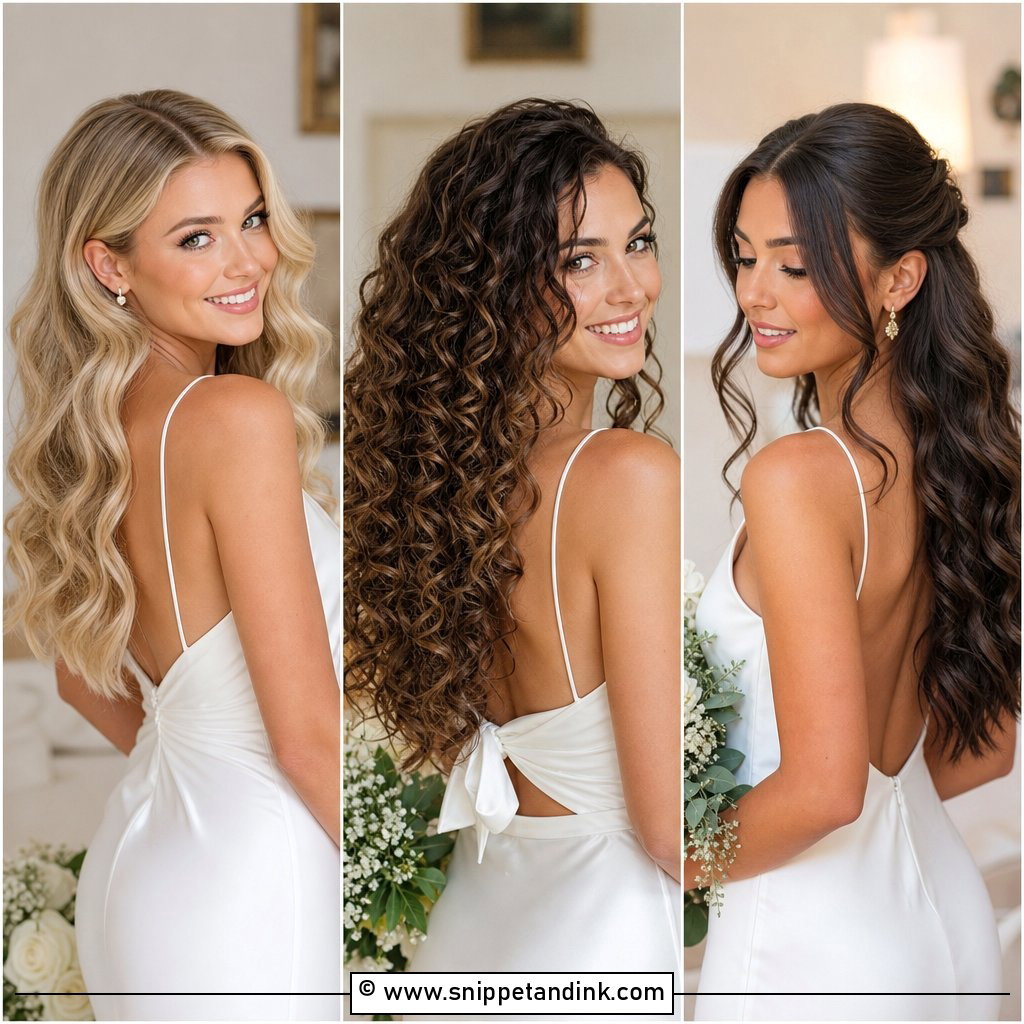
A bridal party rarely shares a hair type. One bridesmaid has fine straight hair, another thick curls, another a fresh bob. Putting them all in the same wave usually means someone looks flat by noon. What I coordinate instead is the finish.
Agree on a single common thread
Pick one thing the whole group follows: the same part, the same accessory or the same level of polish. Six different textures look deliberate when every head has a pearl pin behind the left ear.
Let texture decide the shape
Fine hair gets a half-up or a pinned side so the style has something to grip; thick hair can stay fully down; curls stay curly. A bob gets bends rather than a forced curl. That way each bridesmaid wears the version her hair will actually hold.
Send photos ahead of the morning
A few weeks out, each bridesmaid should send the stylist a photo of her hair, front and back, and mention extensions, recent colour or any chemical straightening. It lets the stylist plan the running order and pack the right tools.
1. Soft Wave Bridesmaid Hair Down
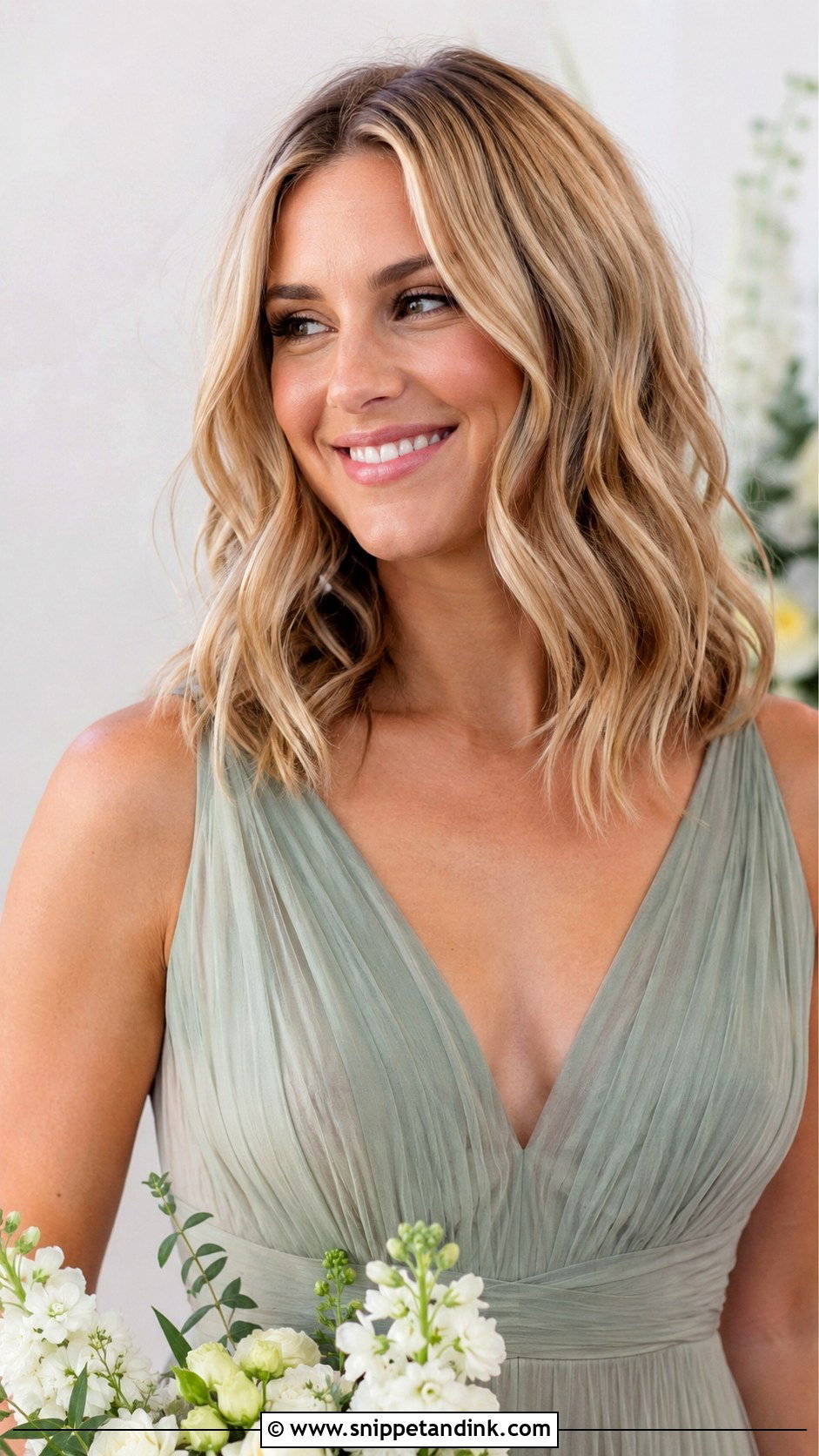
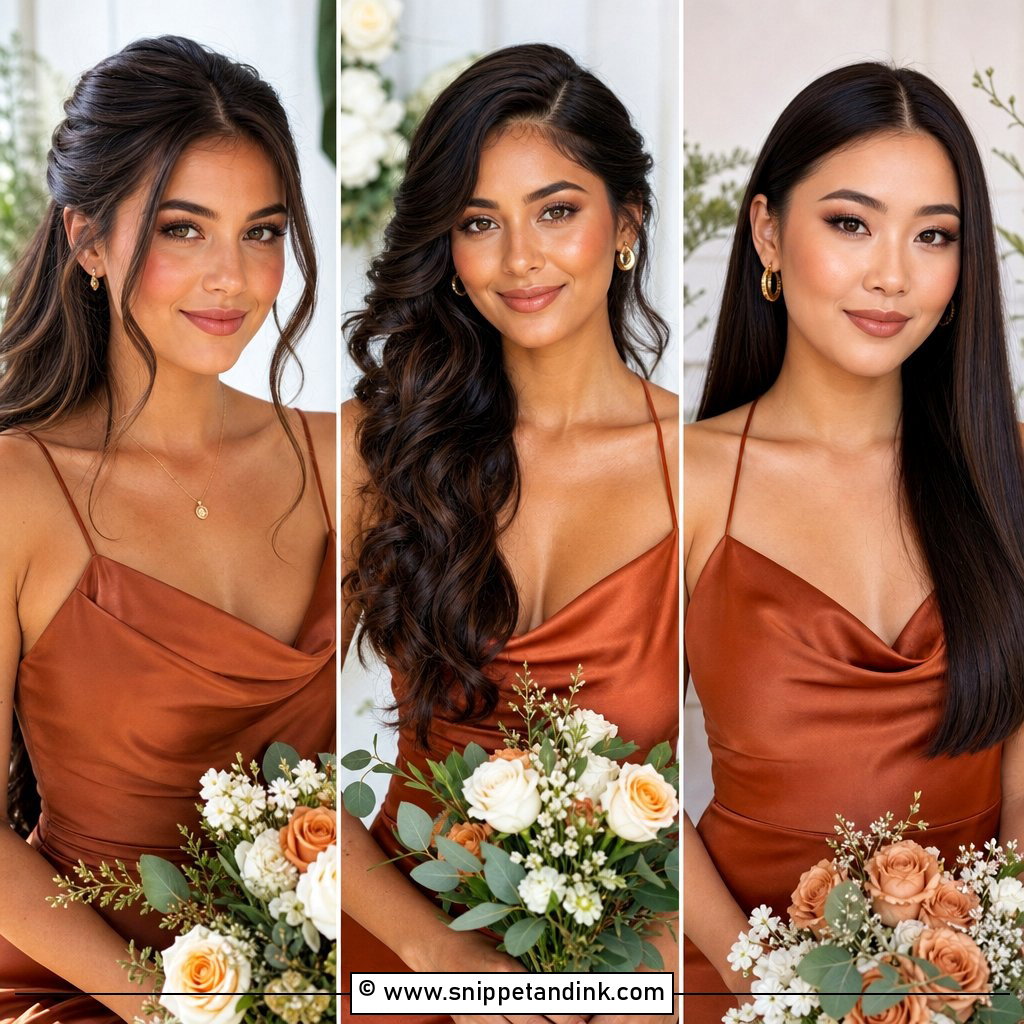
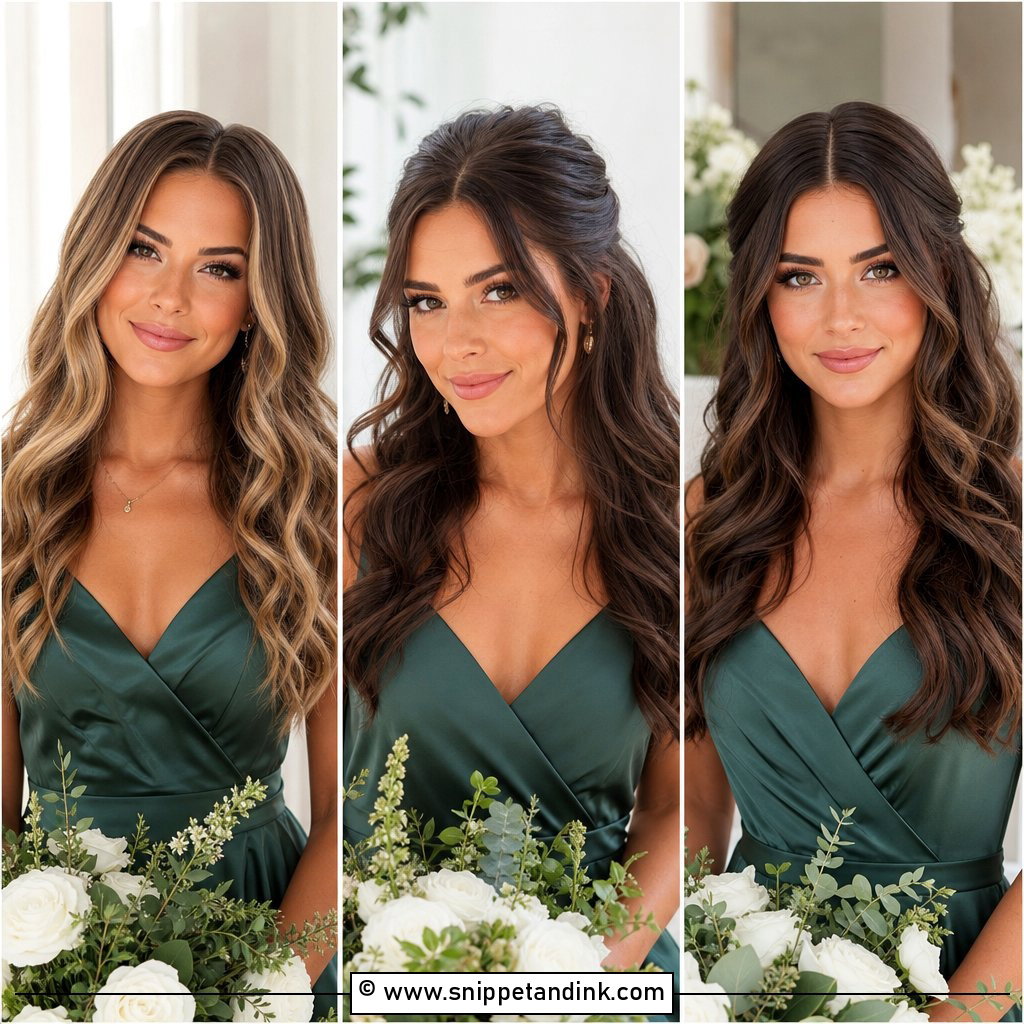
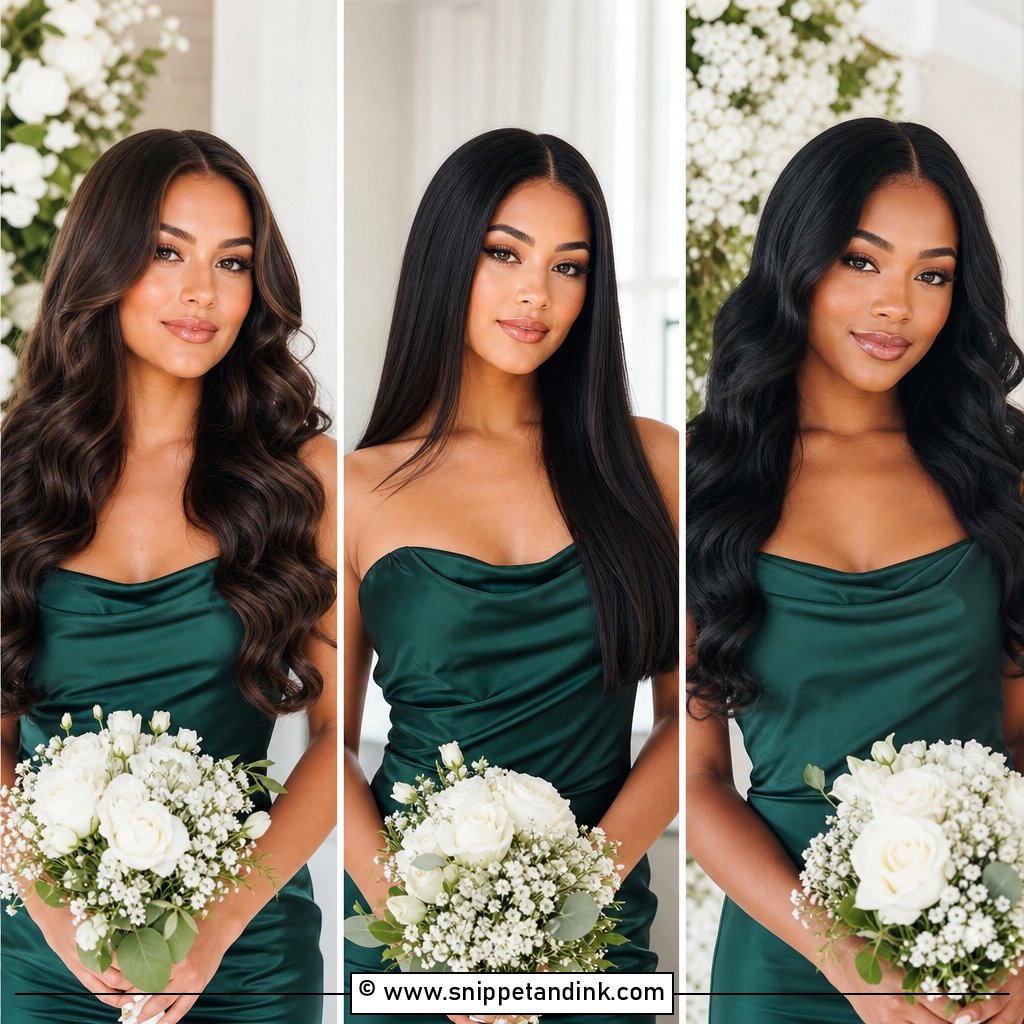
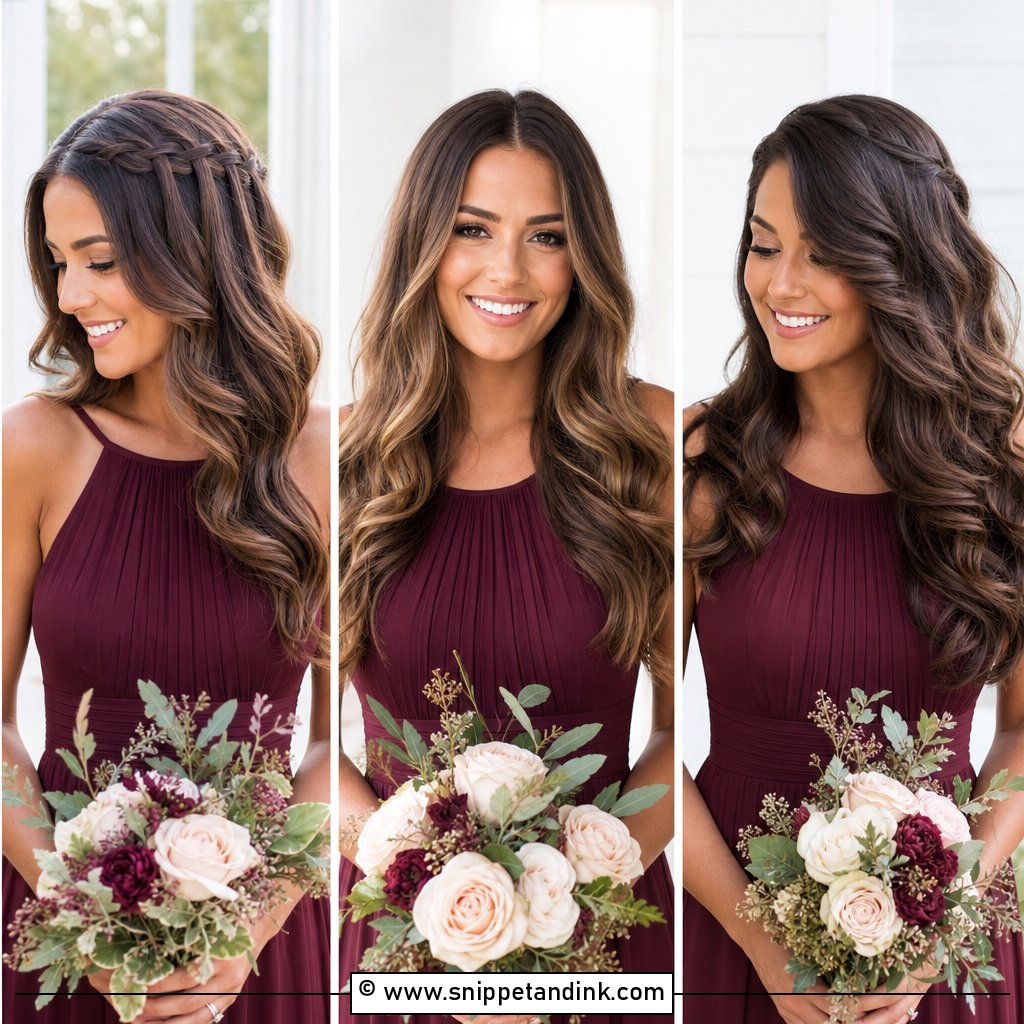
Loose bends through the mid-lengths and ends, with the root left smooth, is the base I start most bridal parties on, because it suits long hair, medium hair and layered cuts alike. I wrap the hair around the iron flat, like a ribbon, which gives a wave rather than a ringlet. Satin and chiffon dresses sit well with it. Outdoors I finish with a flexible spray instead of a firm one, so the wave still moves and can be reshaped by hand later.
2. Hollywood Wave Bridesmaid Hair Down
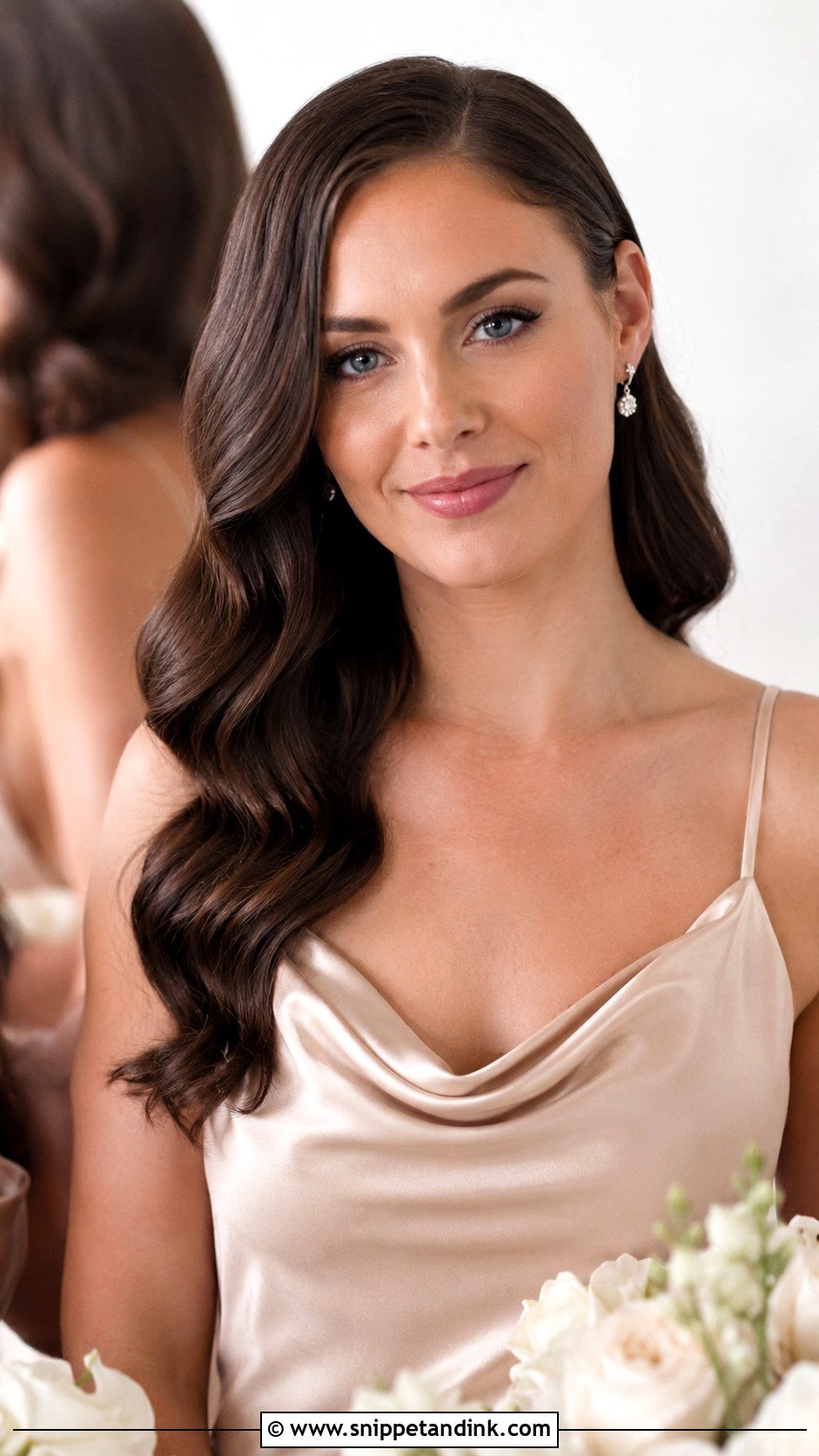
This is the dressier cousin of a soft wave: every curl set in the same direction, then brushed until the waves join into smooth ridges. I’d keep it for black-tie and ballroom evenings. Shine matters more than hold here, since a stiff Hollywood wave looks like a wig. A deep side part reads classic and a soft middle part more current. Heavily layered hair is a poor match, because the short pieces break out of the ridges.
3. Loose Curl Bridesmaid Hair Down
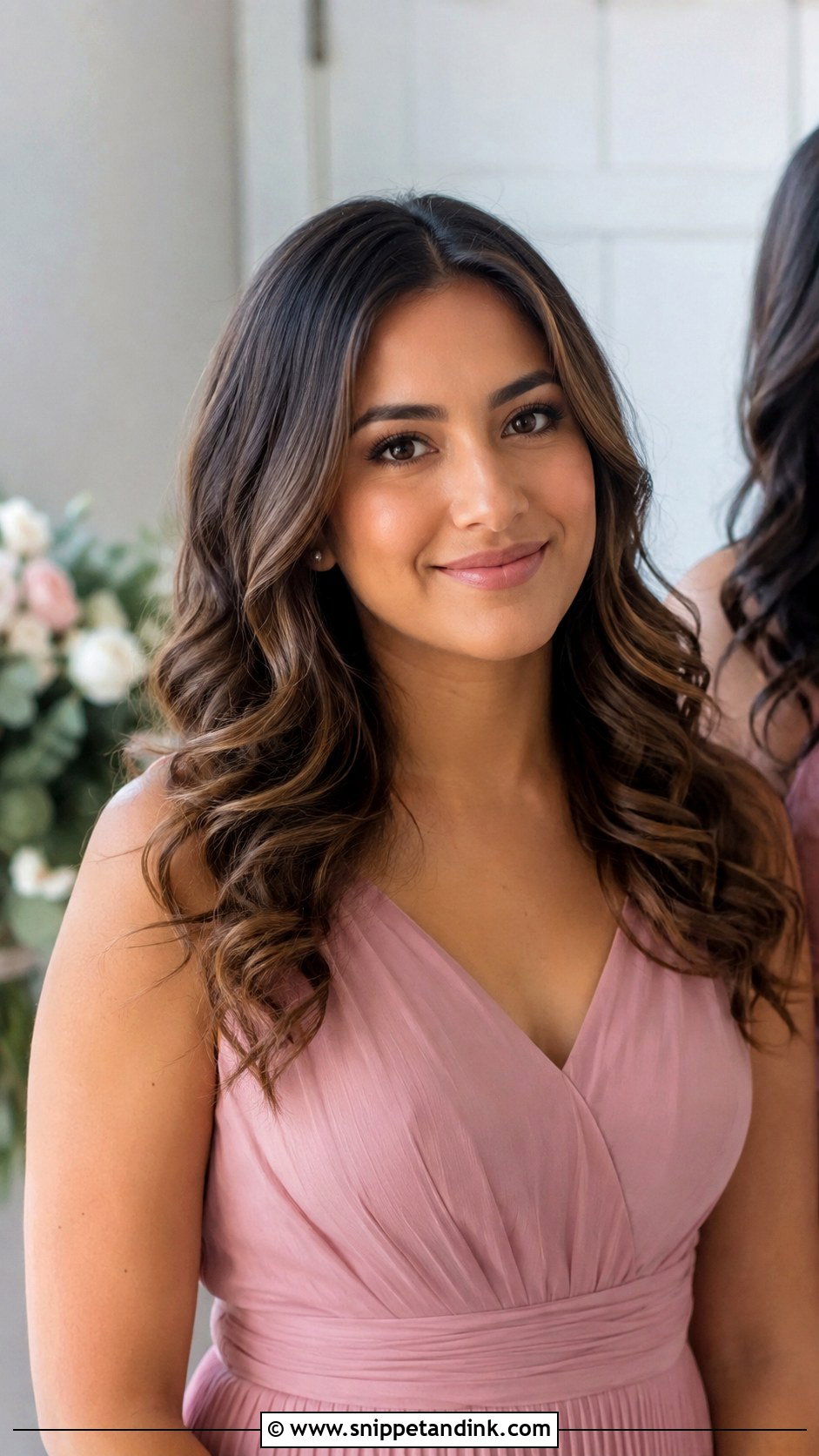
When a bridesmaid wants more bounce than a wave, I start the curls around the cheekbones or lower and leave the top smooth. Where they begin depends on her face and neckline; on a deep V I start them lower so they don’t crowd the collarbone. Layered hair shows this off well, since each layer finishes in its own curl. A few soft pieces at the front are all the decoration it needs.
4. Straight Bridesmaid Hair Down
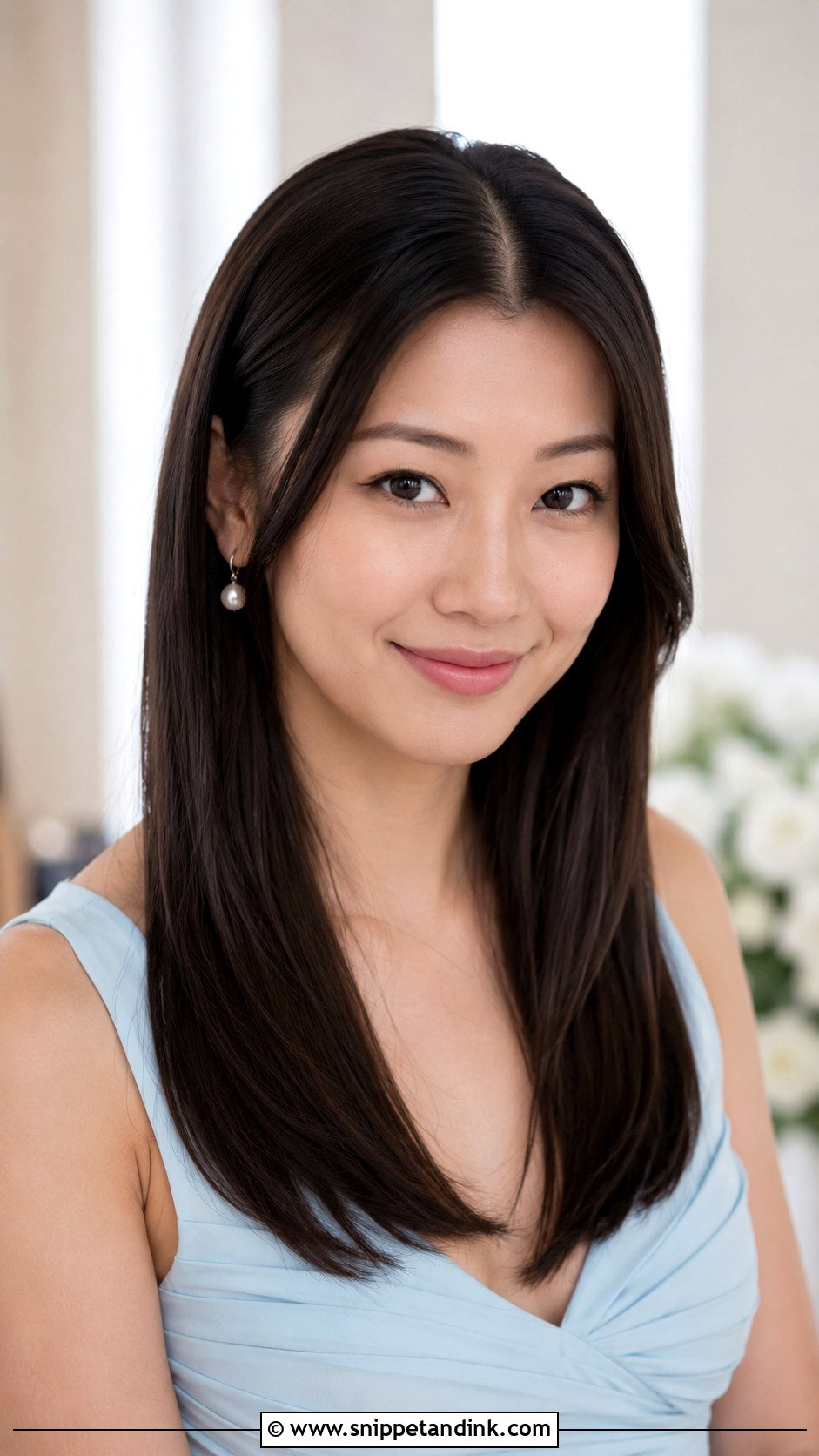
Straight hair worn down is the hardest to fake on a wedding morning, because any kink from sleeping or a ponytail shows. I blow-dry it smooth with a paddle or round brush and bevel the ends slightly under so they don’t look blunt. A centre part feels sleek and a side part softens it. It suits high, square and minimalist necklines. A pea-sized amount of smoothing cream is plenty; more than that and the hair separates into strands by the afternoon.
5. Side Part Bridesmaid Hair Down
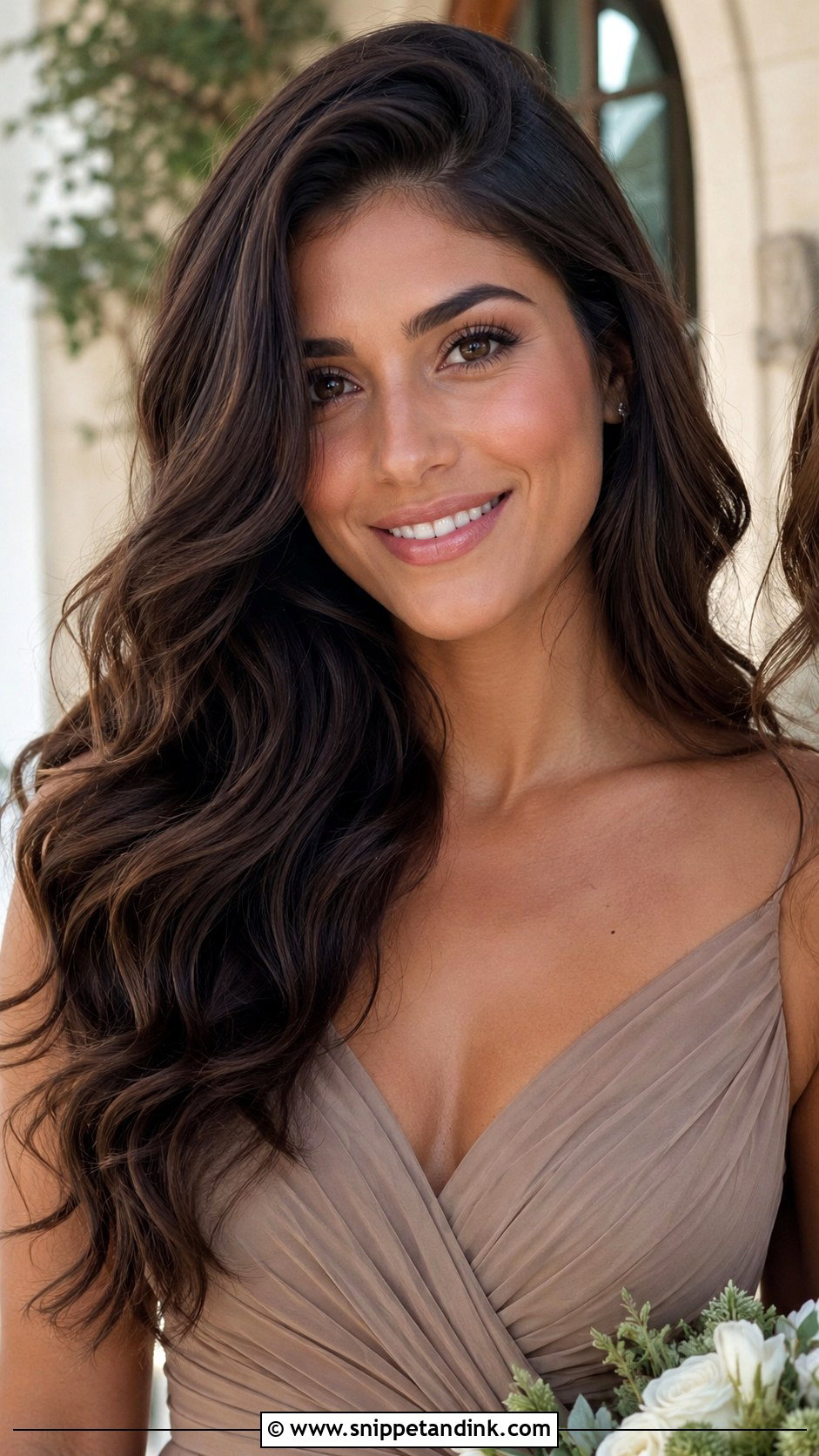
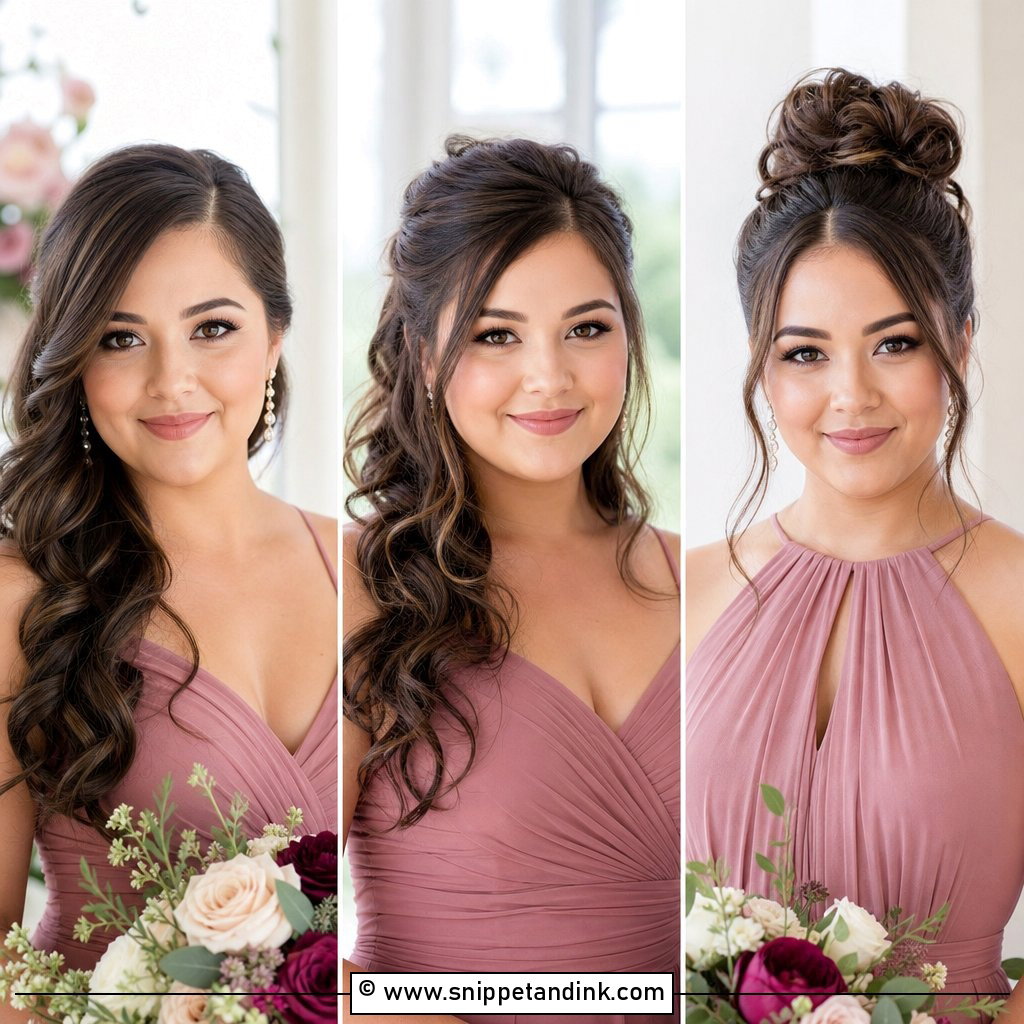
Switching the part is the smallest change on this list, and it shifts the whole look. A side part gives lift at the crown without teasing, which helps fine hair, and it softens a strong jaw. It works on curls, waves, straight hair and natural texture. The catch is habit: if someone has worn a centre part for years, a deep side part fights back, so I set it with a little heat and a clip while the rest of the group is being styled.
6. Middle Part Bridesmaid Hair Down
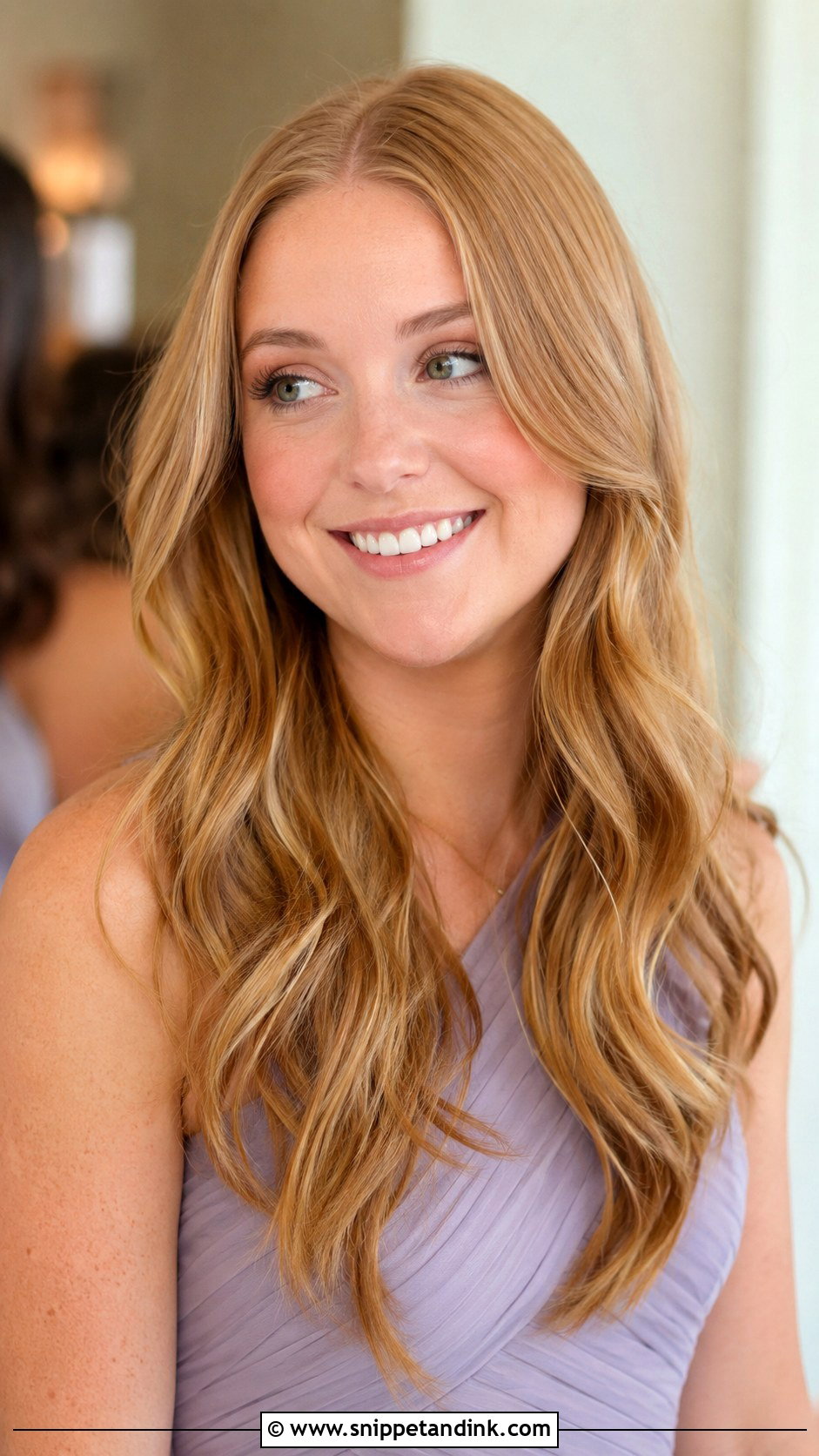
A centre part keeps a row of bridesmaids looking symmetrical in group photos, which is why I like it for larger parties. Glossy and controlled, it reads formal; with undone texture it feels casual. Watch the pieces around the face. Hair pulled flat down both sides of a centre part can look severe on a long or narrow face, so I keep those front sections light and slightly lifted.
7. One Side Pinned Bridesmaid Hair Down
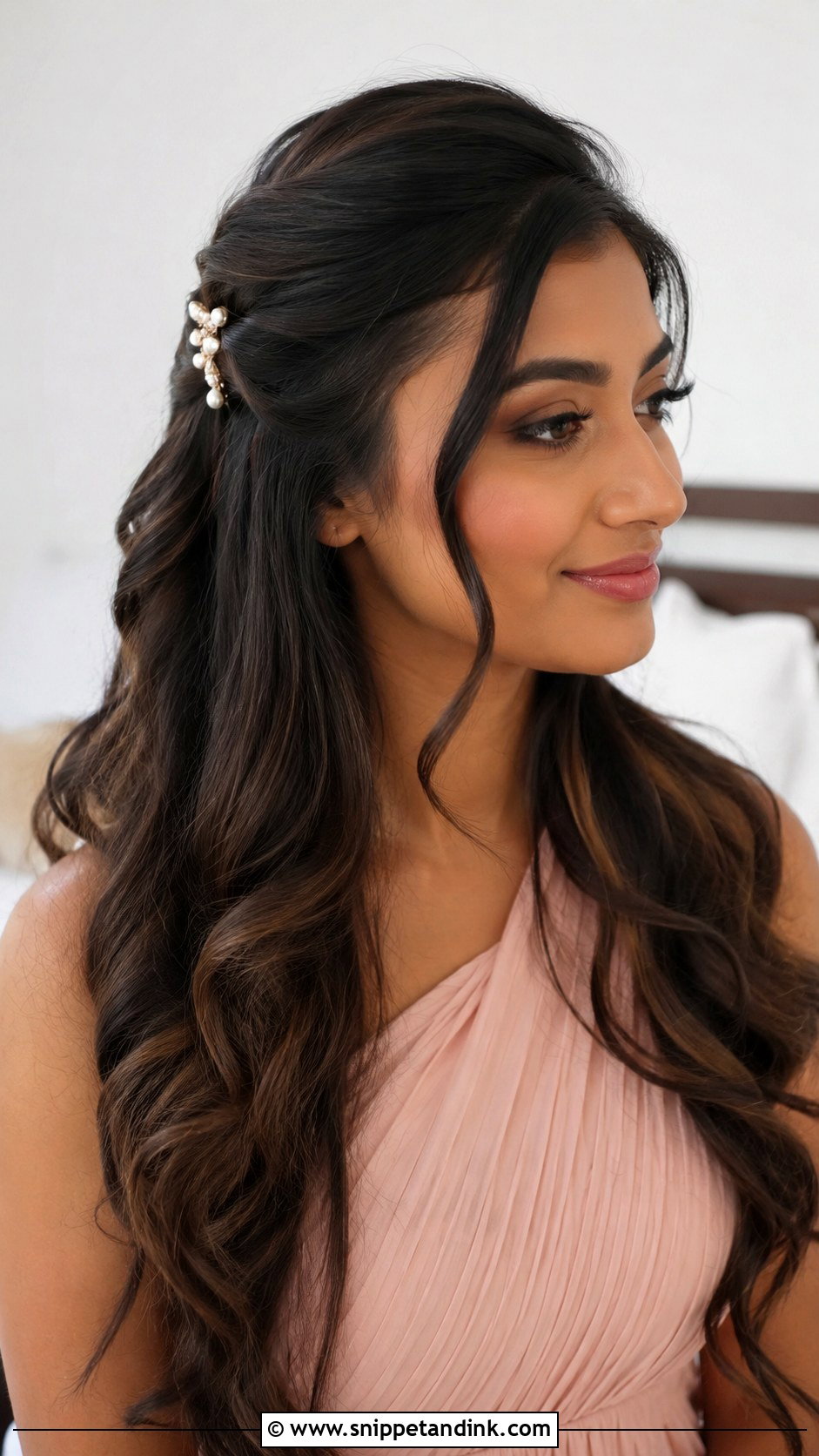
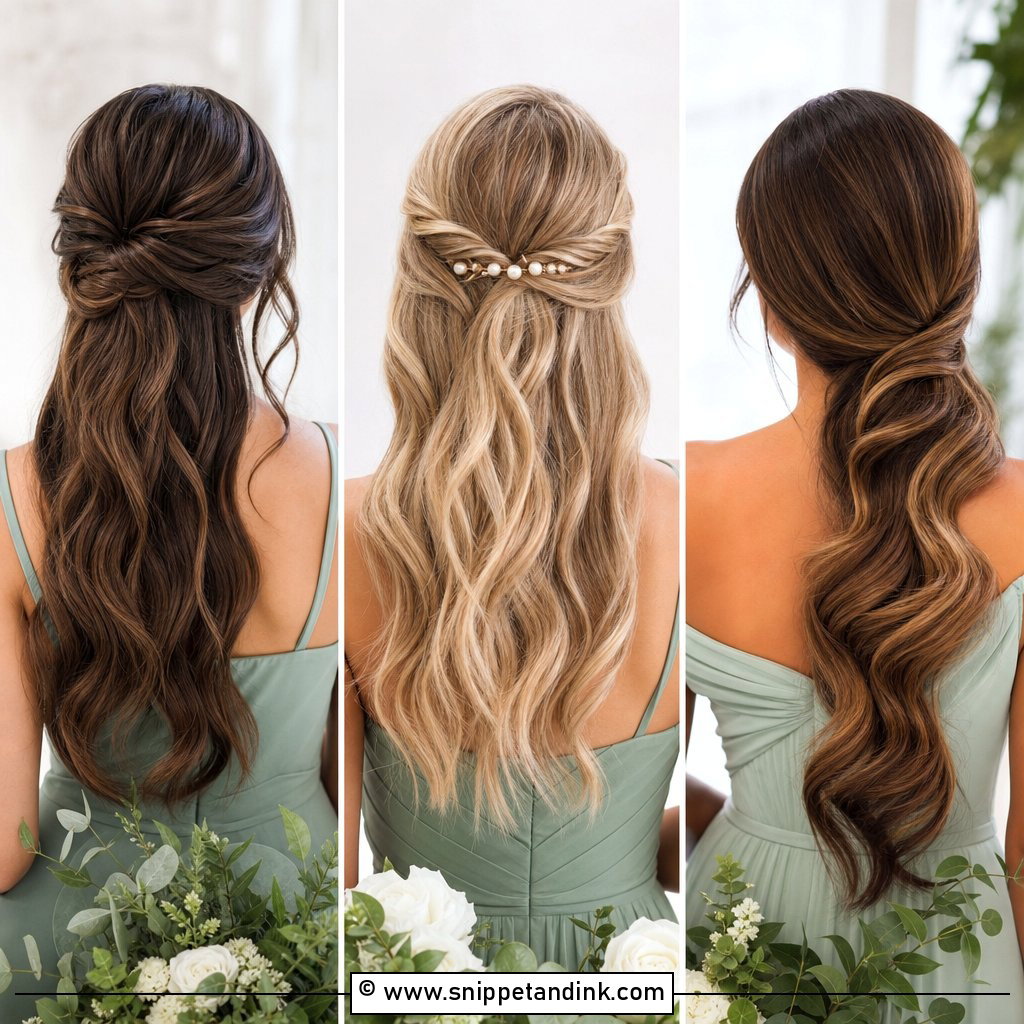
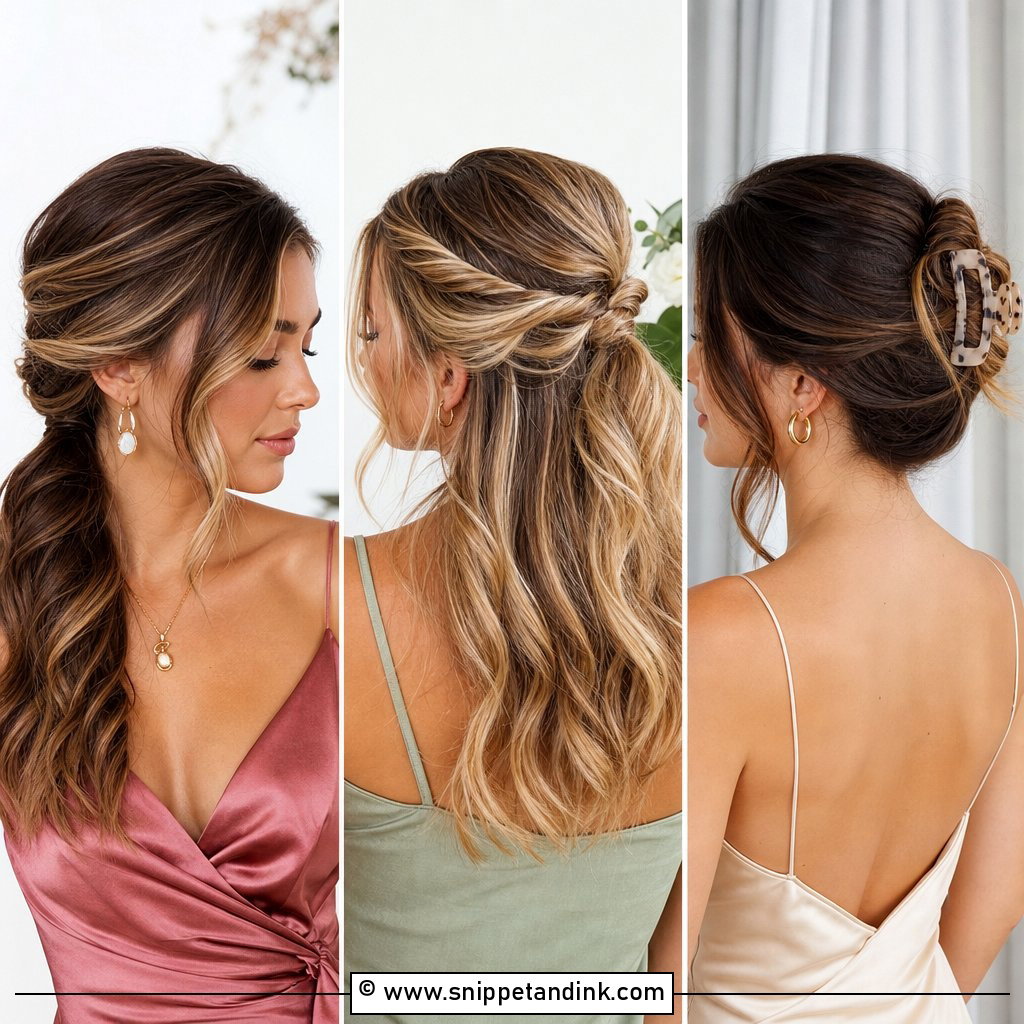
Pinning one side back keeps hair out of the face through the processional and the dancing, and the asymmetry looks more styled than waves alone. I cross two bobby pins into an X under the section before any accessory goes on, so a pearl clip or small floral comb sits on a solid base instead of carrying the weight itself. It balances a one-shoulder dress when the pinned side matches the bare shoulder.
8. Twisted Front Bridesmaid Hair Down
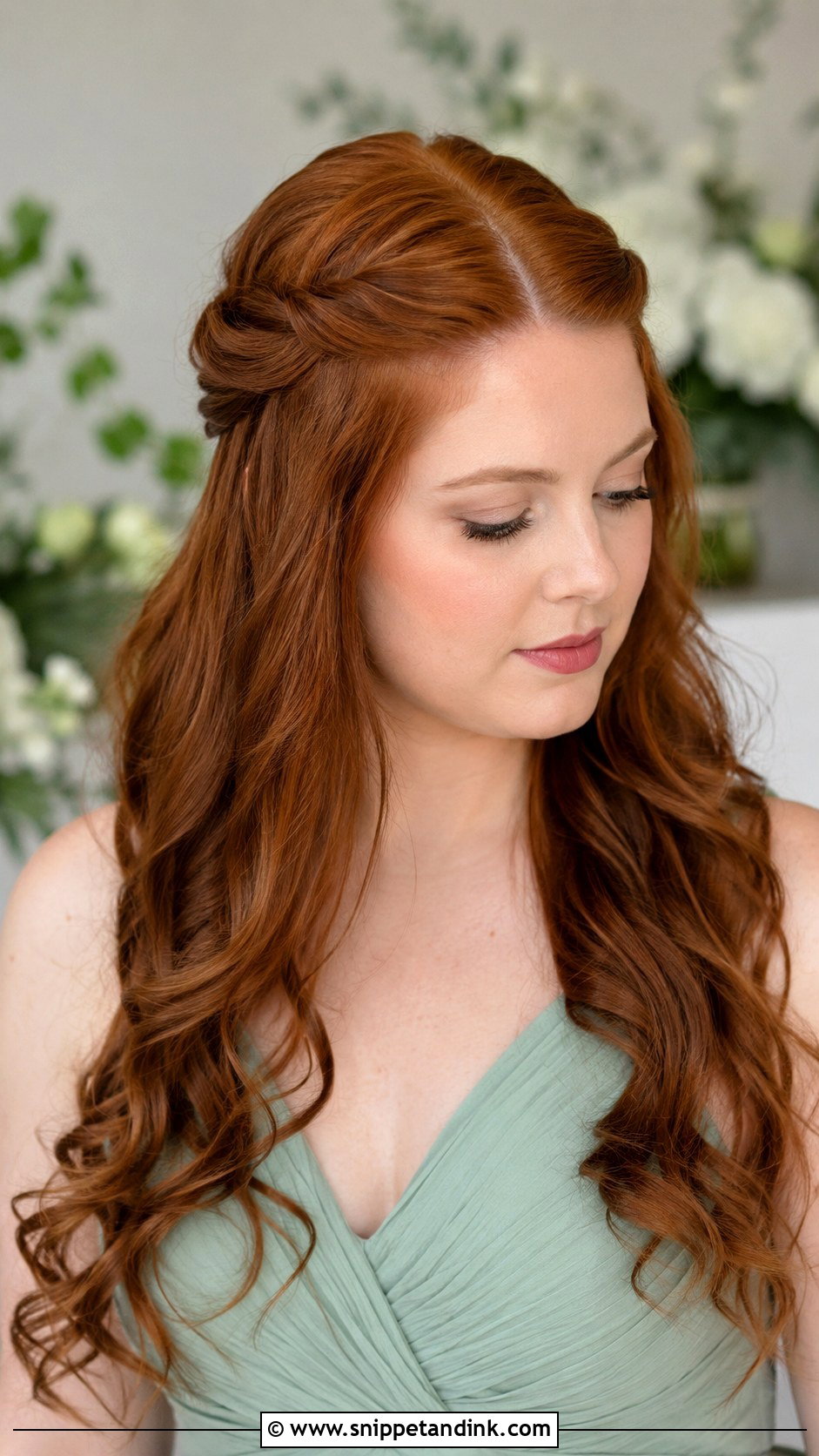
Two small front sections twisted away from the face and pinned behind give a half-up feel without pulling the hair back. It’s my go-to for bridesmaids with growing-out layers that keep falling forward. A smooth twist suits a formal wedding and a looser one a garden party. I slide each pin in against the twist so it grips the base, and a light mist of spray locks it without any crunch.
9. Half Up Bridesmaid Hair Down
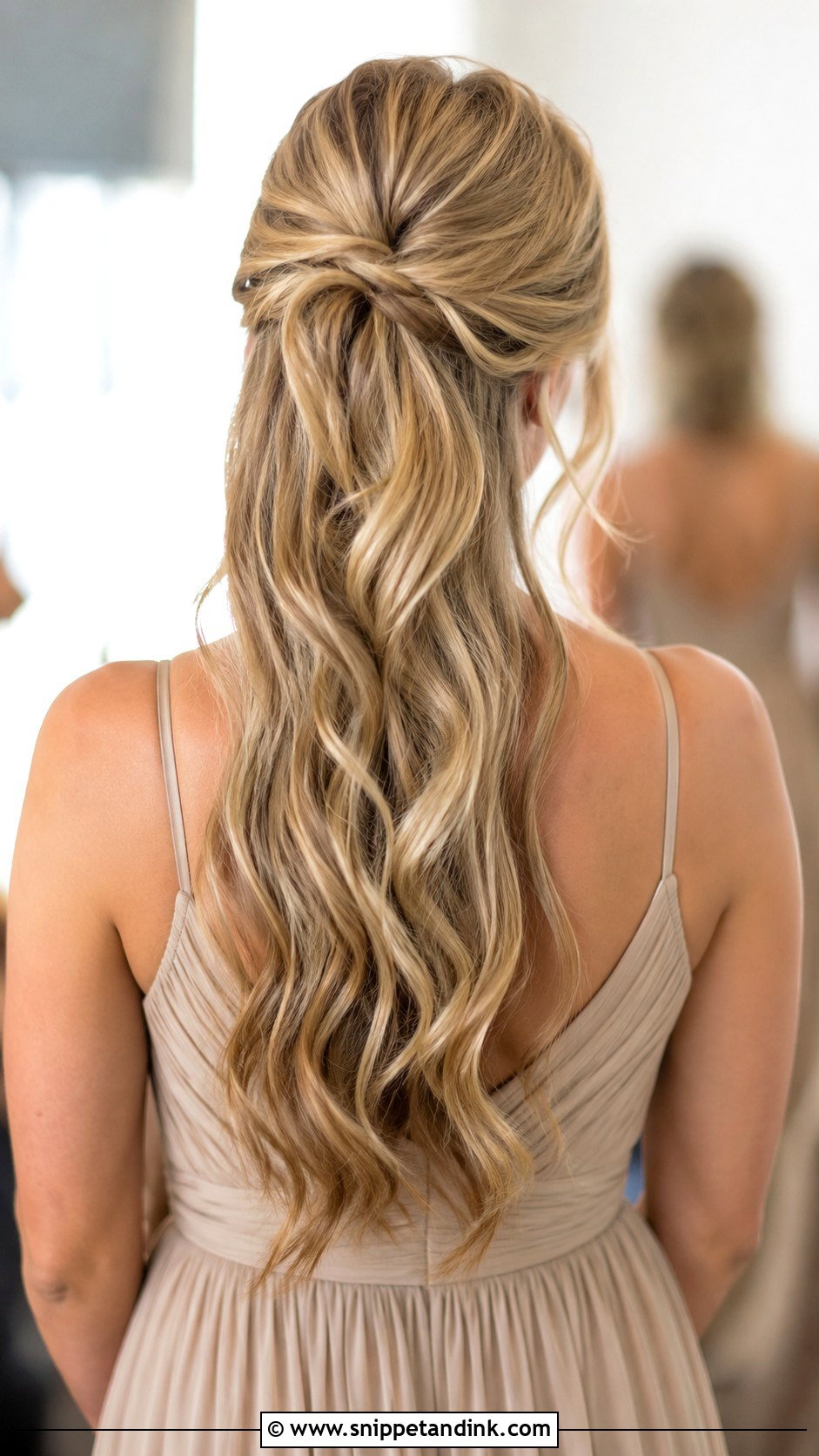
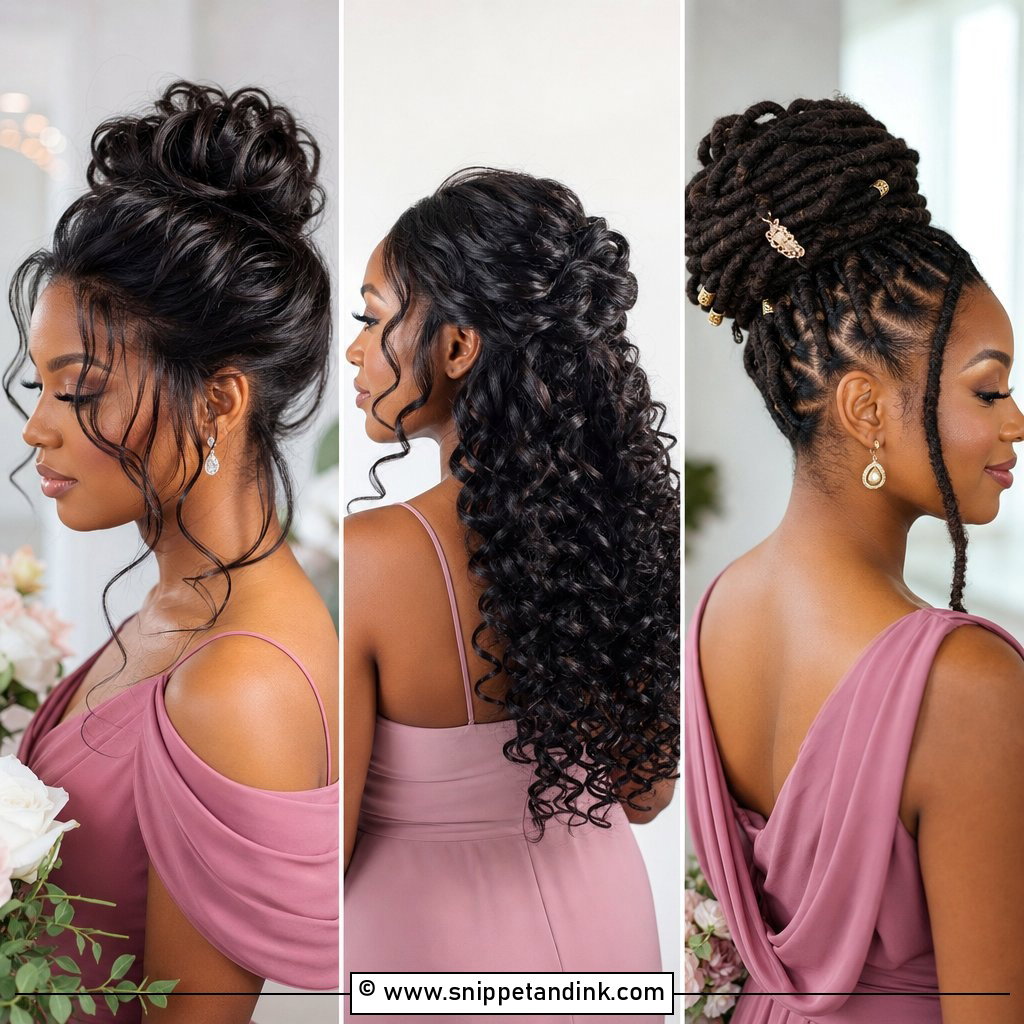
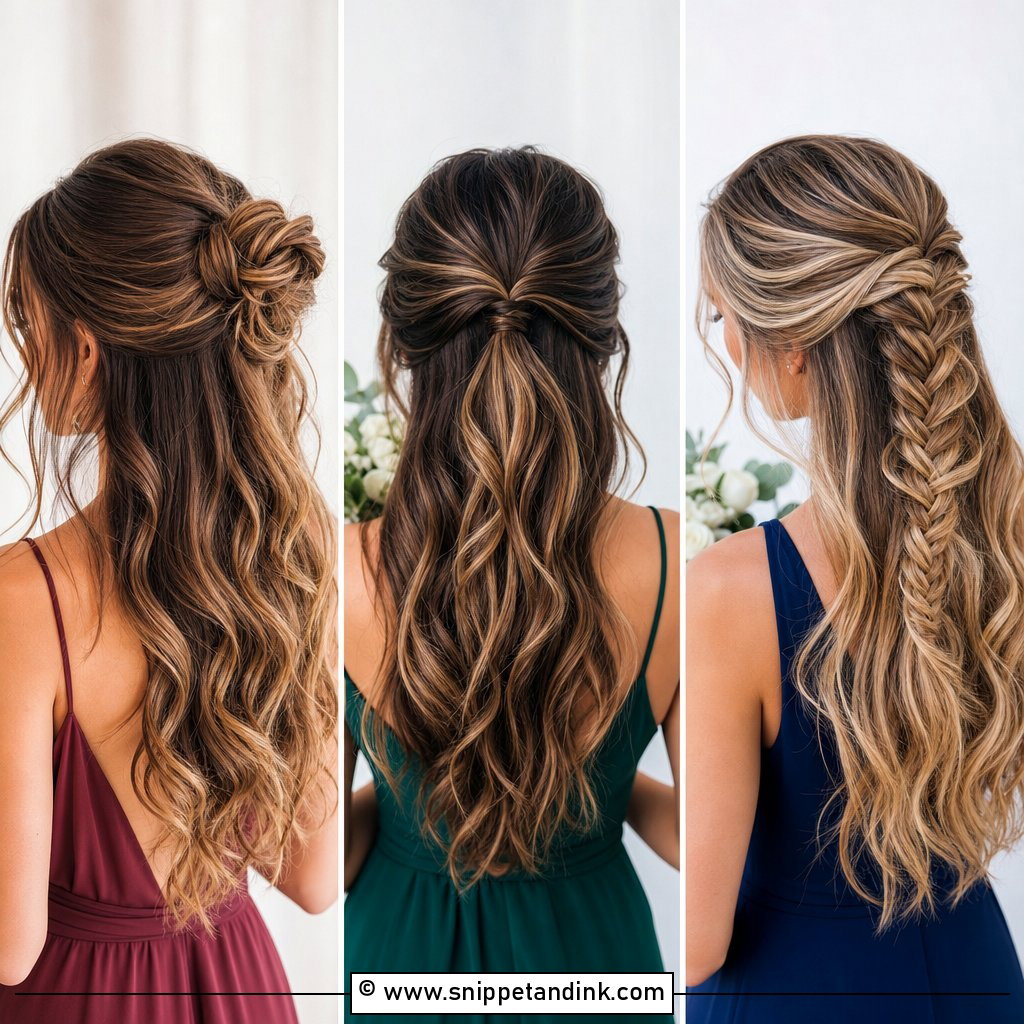
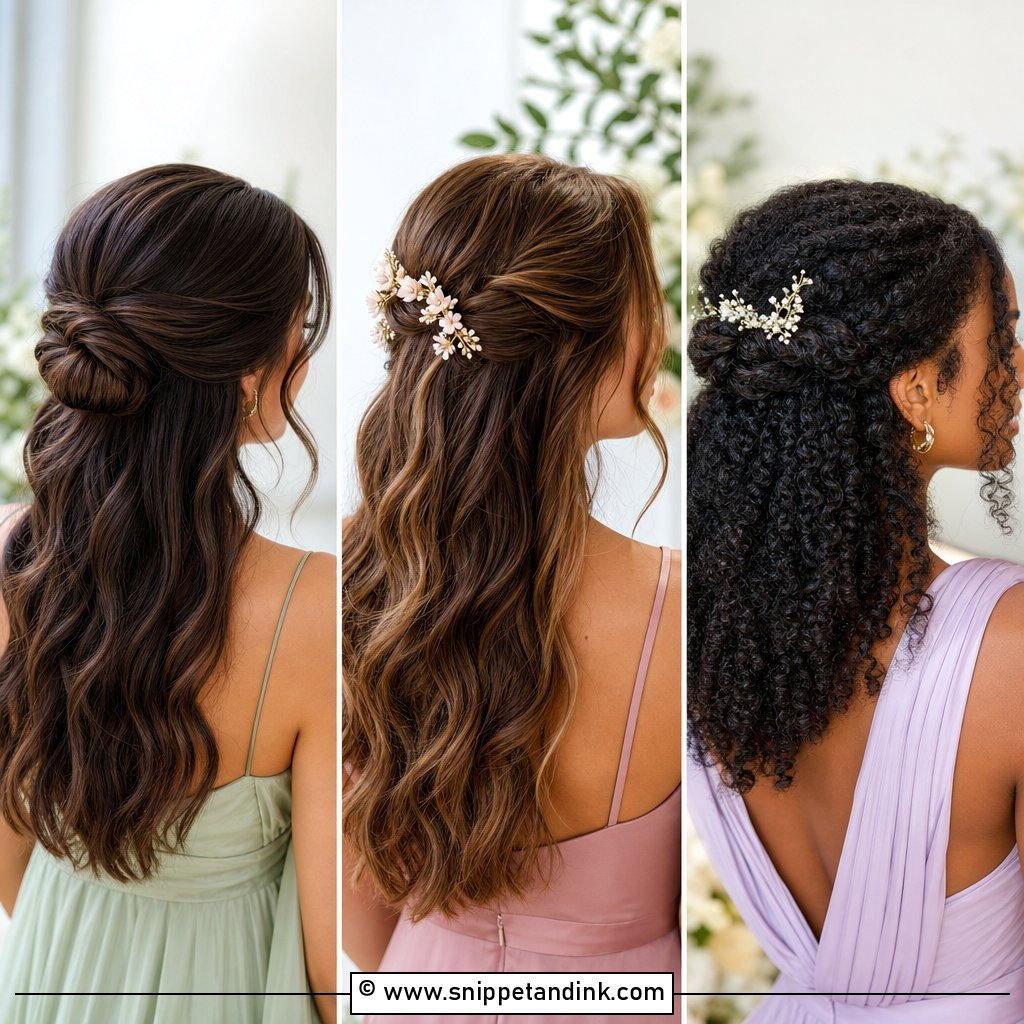
Half up shows length and texture while keeping hair off the face, and it’s the style I do most for bridal parties. The top section can be twisted, pinned or tied with a small clear elastic hidden underneath. For bridesmaids I keep the crown soft and low, because a big teased bump starts competing with the bride. Waves, curls and straight hair all suit it.
10. Braided Crown Bridesmaid Hair Down
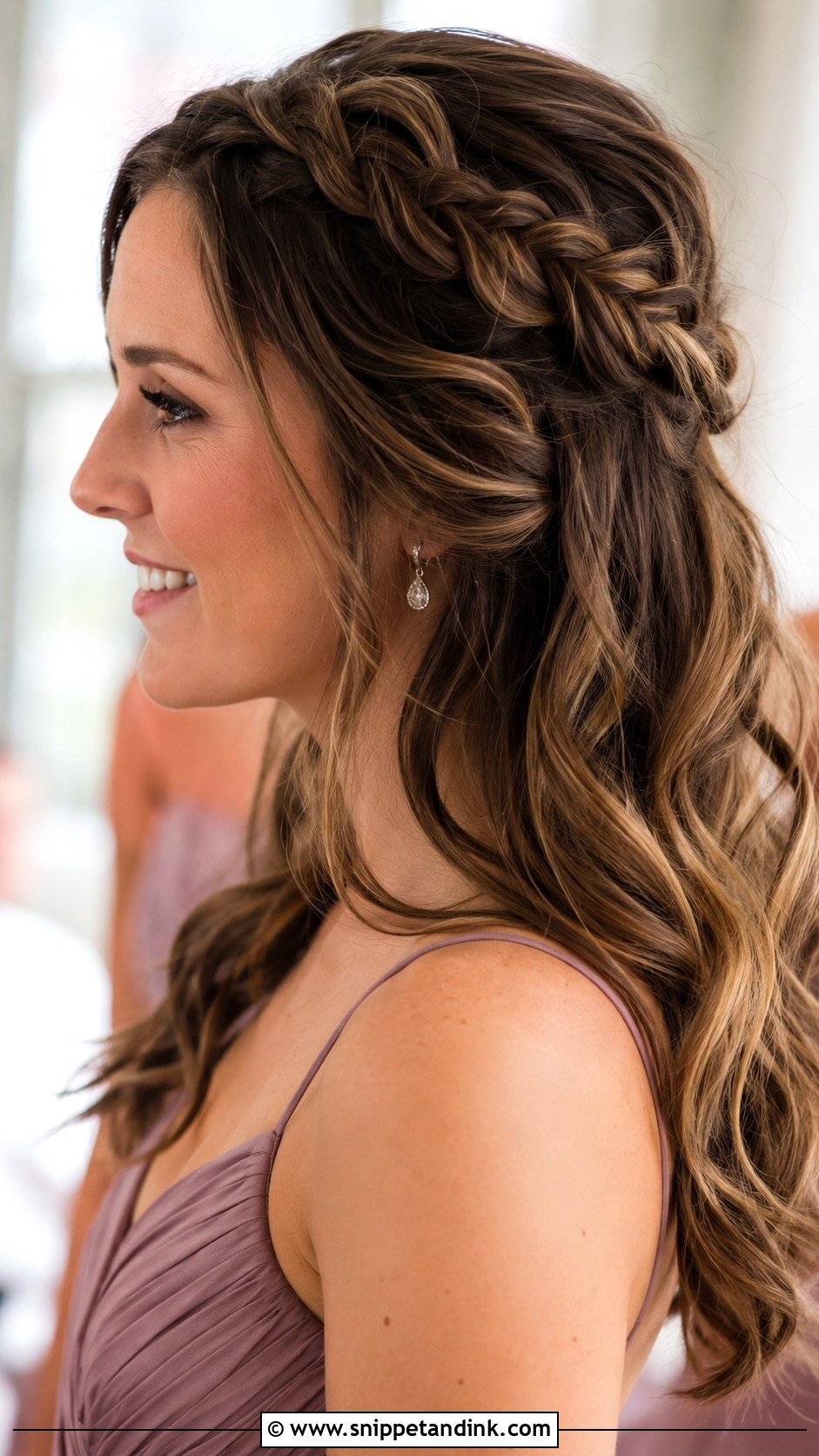
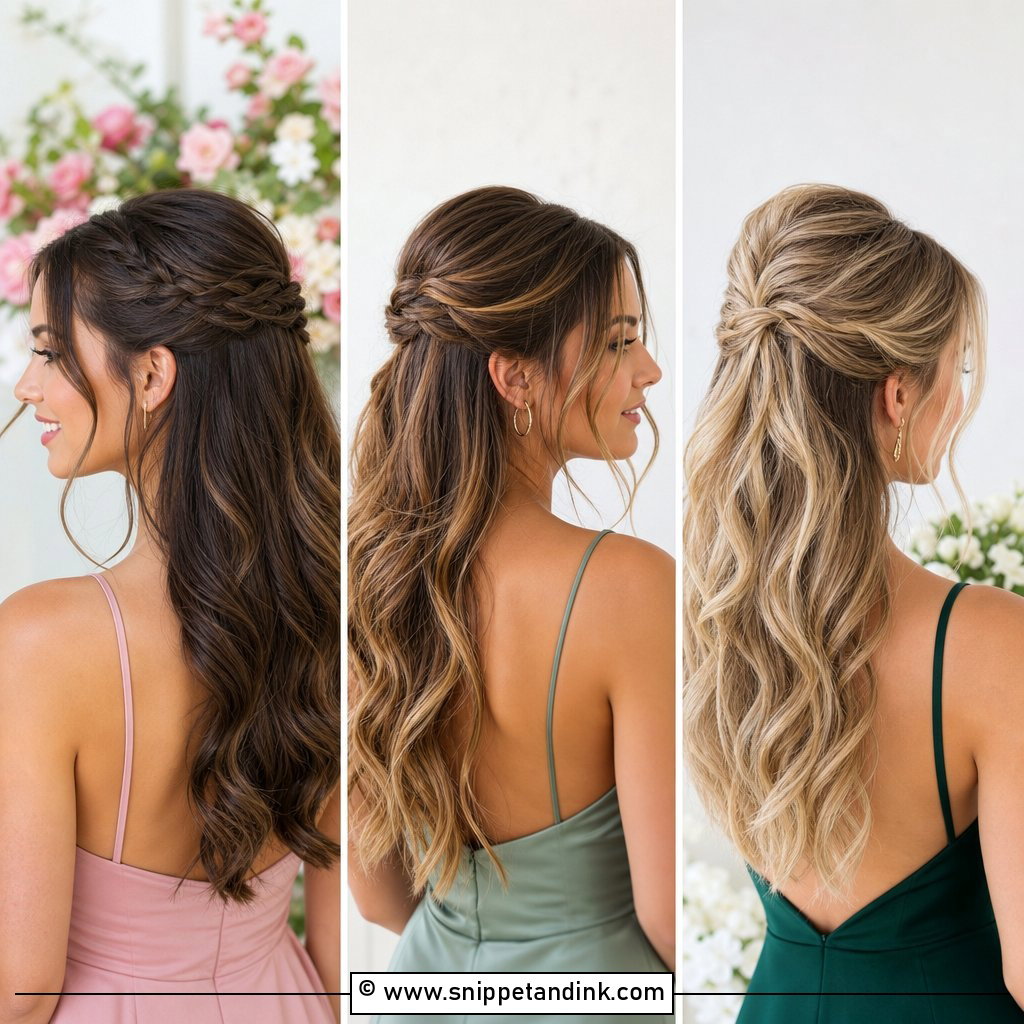
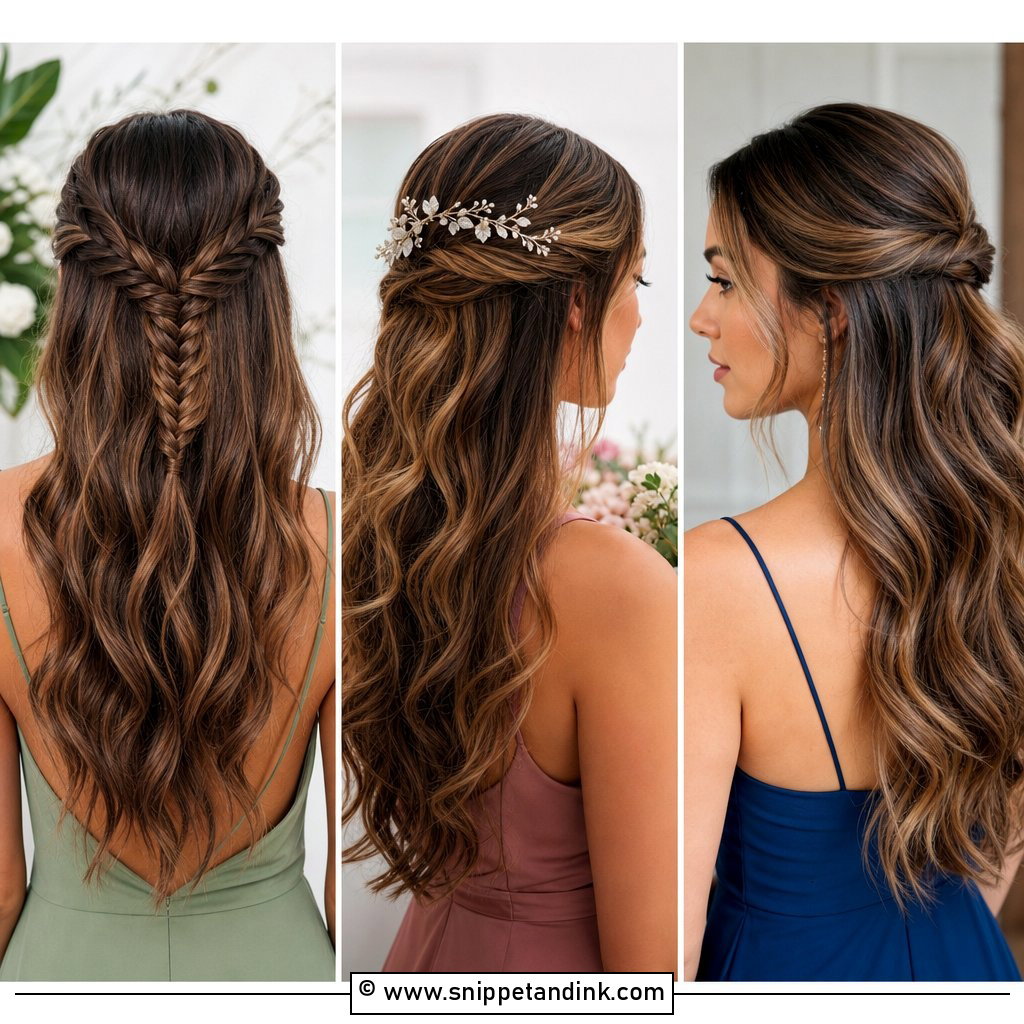
A small braid across the crown or along both sides gives a garden-wedding feel without an updo. It’s practical for bridesmaids with front layers too, since the braid catches shorter pieces that would otherwise fall out. I keep it snug at the root but pancake the edges so it melts into the loose hair rather than sitting on top like a headband. Waves or loose curls underneath balance it out.
11. Waterfall Braid Bridesmaid Hair Down
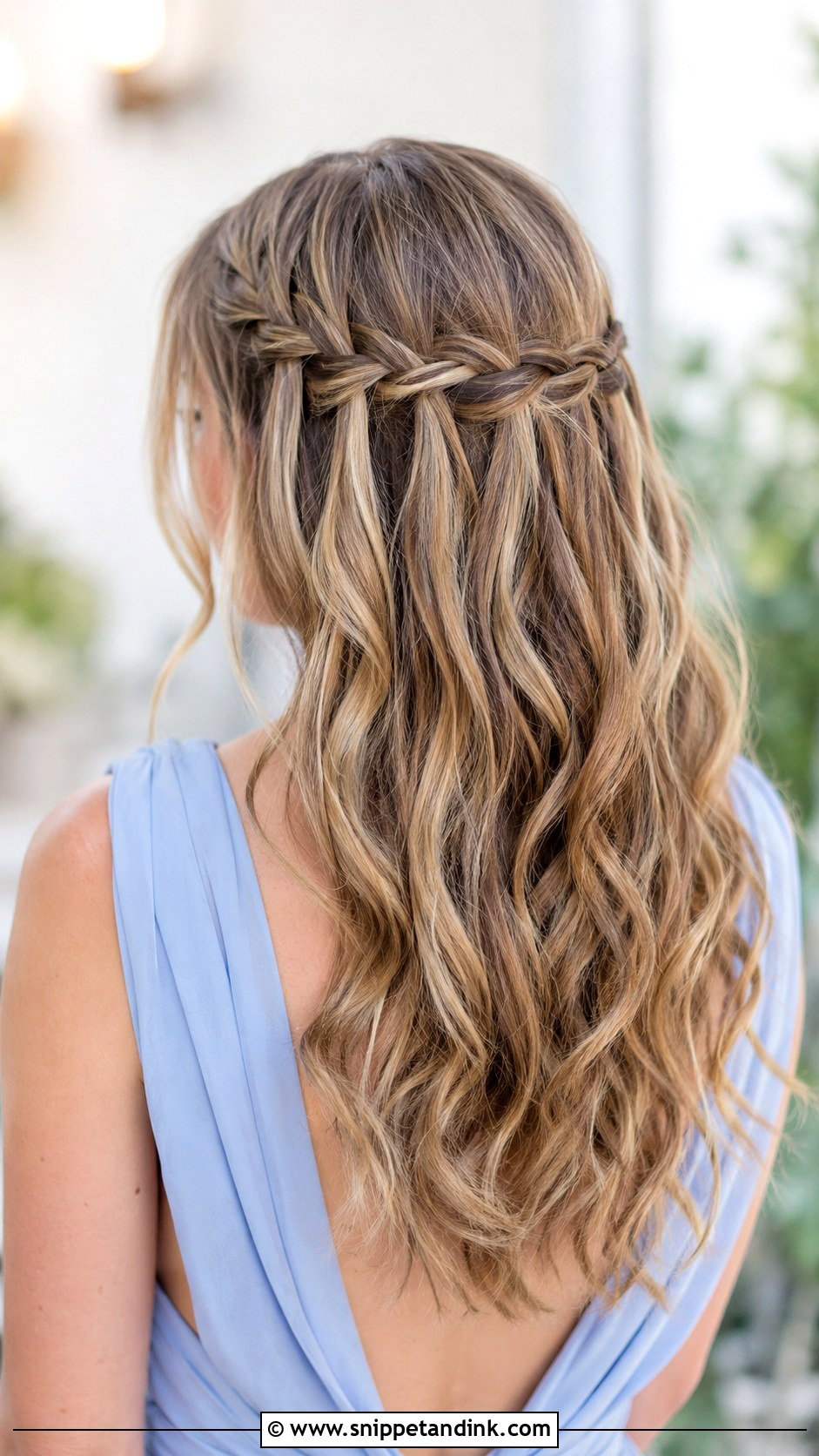
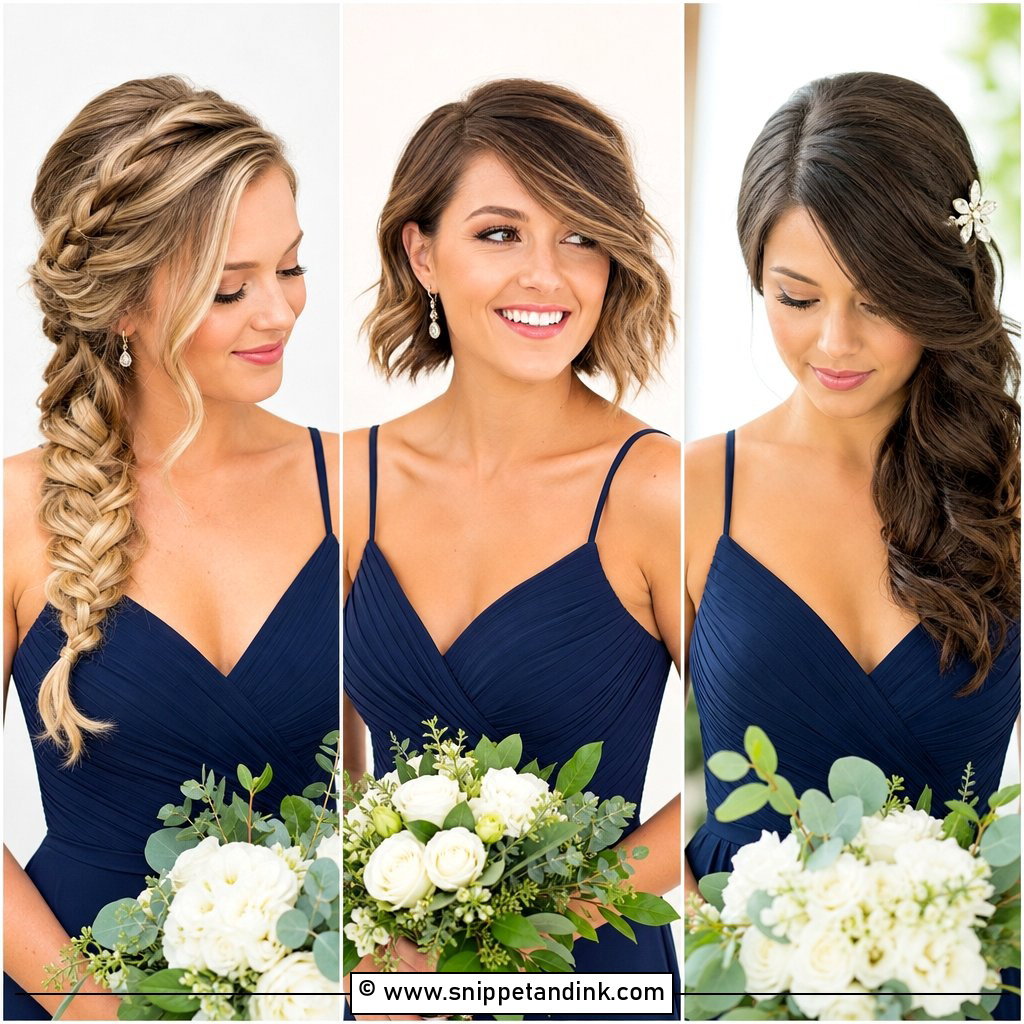
Dimensional colour is where this braid earns its place. Waterfall braid bridesmaid hair down runs across the back or side of the head, dropping strands through as it goes, and on highlighted or balayage hair the woven section shows every tone. The rest gets a loose curl or wave. I keep the braid visible rather than tight, because a tight waterfall braid hides the very strands that make it interesting.
12. Pearl Pin Bridesmaid Hair Down
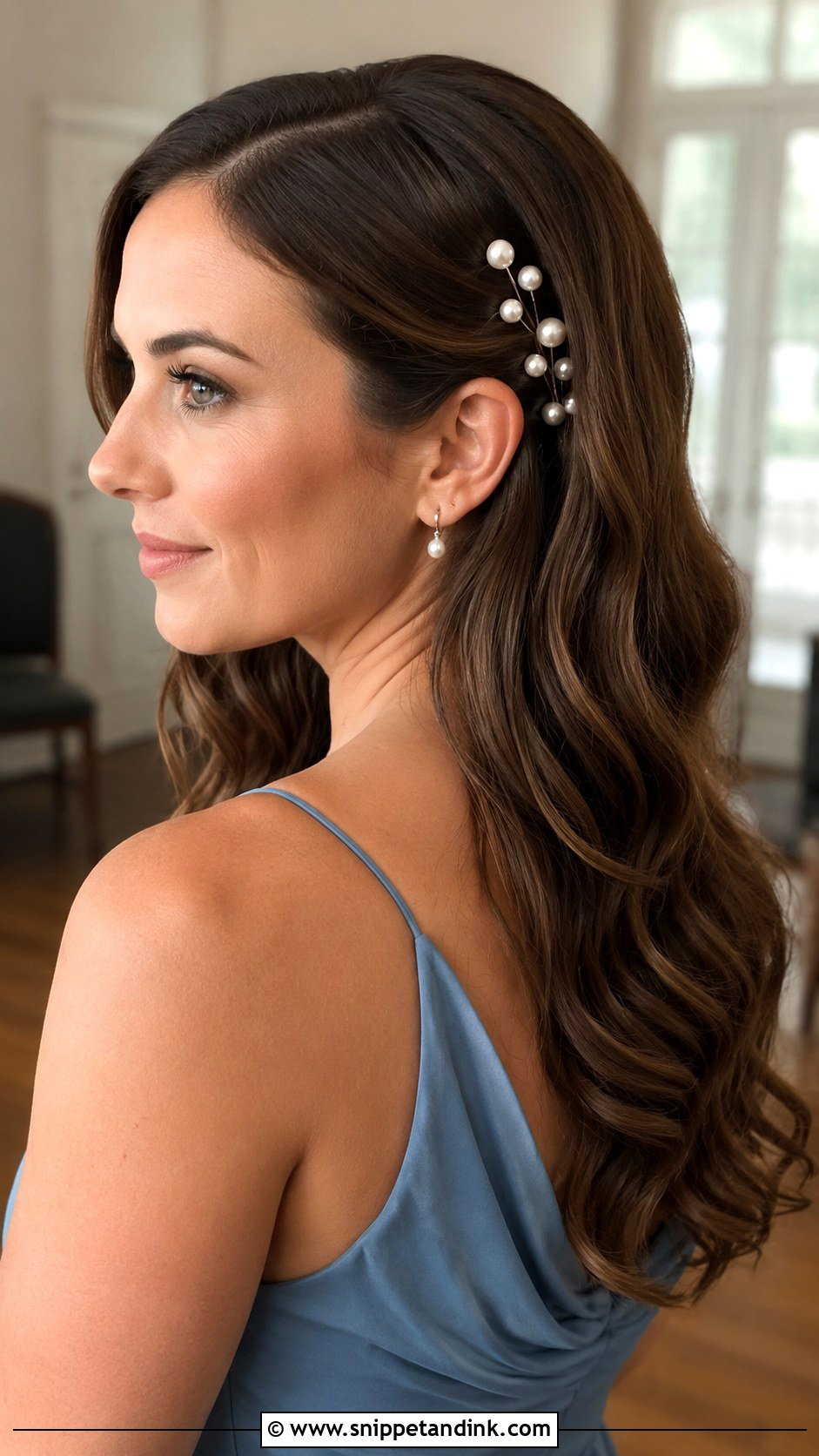
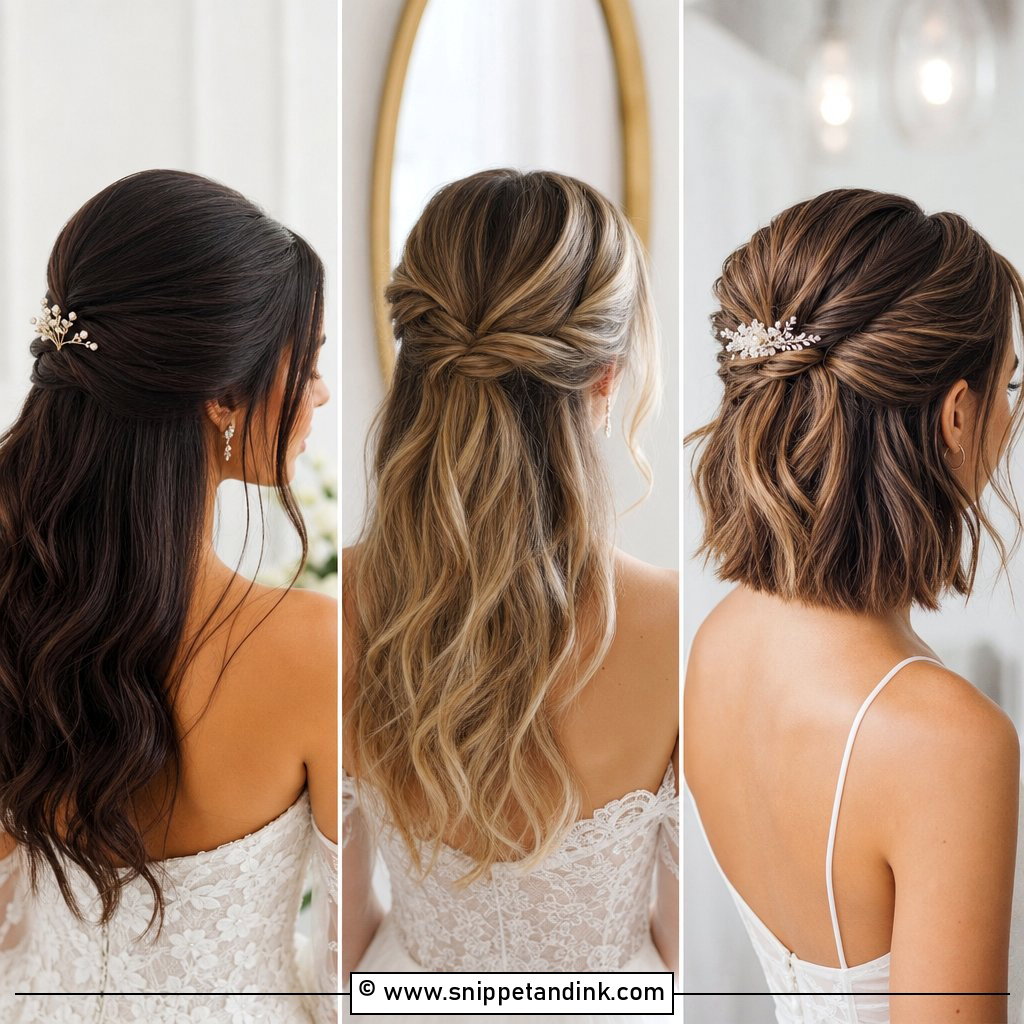
A few pearl pins near one side, behind the ear or around a small twist turn plain waves into wedding hair. Three to five pins is usually enough; past that the hair looks crowded and the pins start competing with jewelry. I slide them in against the direction the hair falls so its weight holds them. Pearls suit classic and coastal weddings and add a detail to a plain dress without pulling focus from the bride.
13. Flower Clip Bridesmaid Hair Down
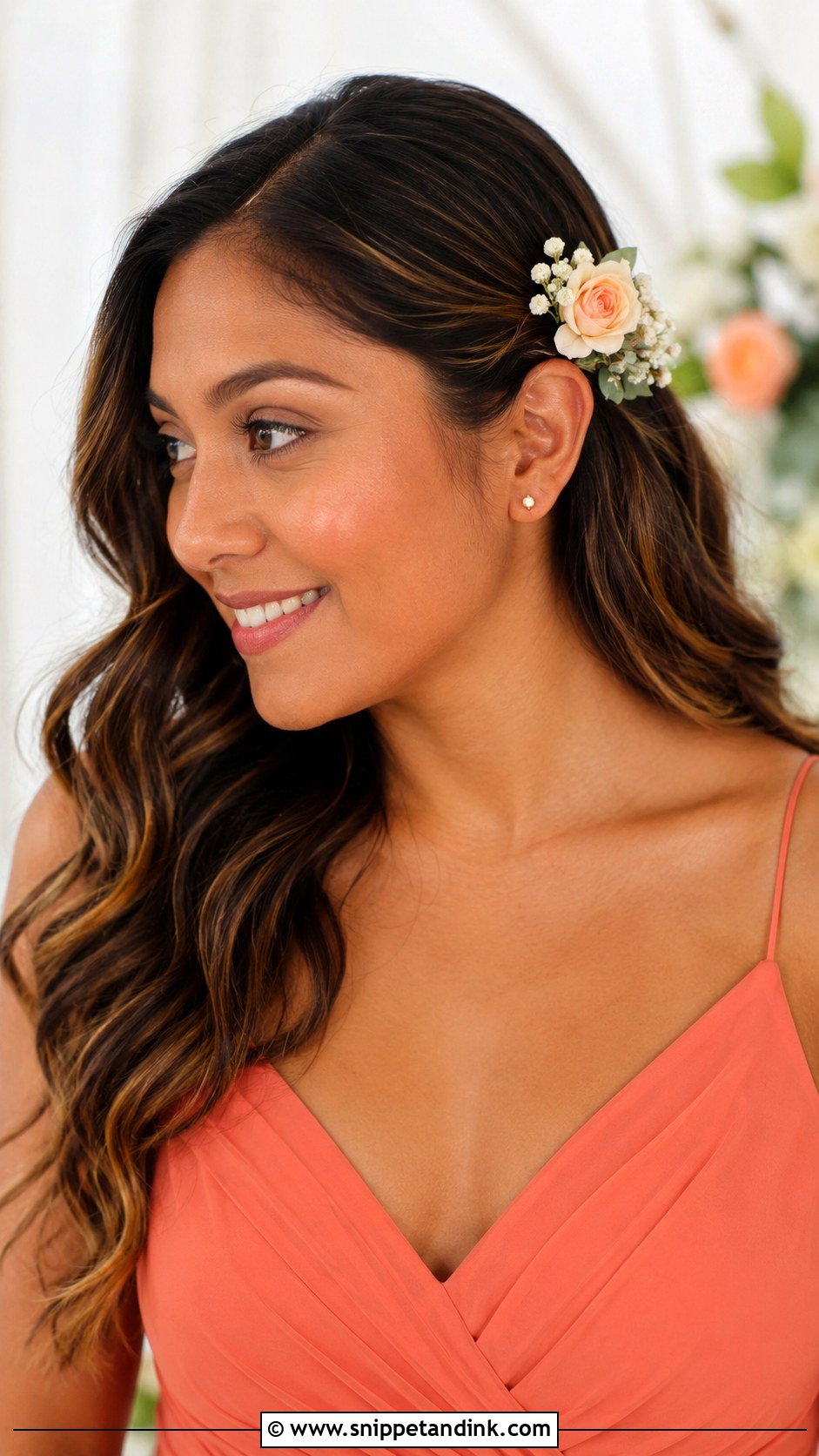
One small flower clip or floral comb finishes loose waves or natural curls at a spring or summer wedding. Keep the blooms small and in the wedding palette; anything larger than the bride’s flowers looks out of place. Behind one ear is the simplest spot, while beside a twist adds more detail. On warm days silk or dried flowers outlast fresh ones, and I leave the hair around them slightly soft so the flower doesn’t look glued on.
14. Bow Bridesmaid Hair Down
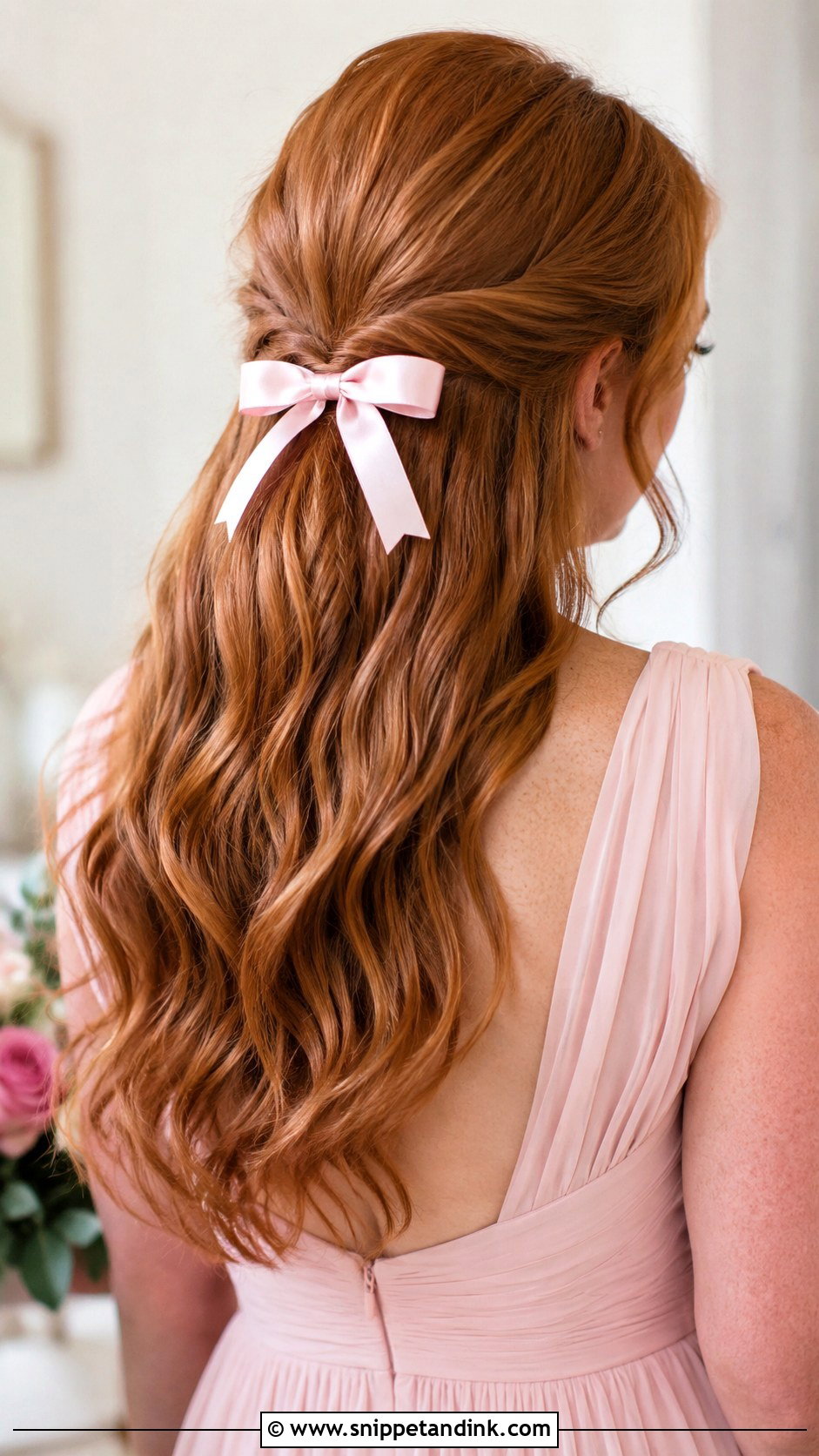
Bows are back, and they suit a bridal party when they’re kept small. Bow bridesmaid hair down means a satin or velvet bow on a half-up section, a small twist or one pinned side, in ivory, blush, sage or the dress shade. I fix the bow to a clip rather than tying it straight into the hair, so it can be straightened during the day without redoing the style. The hair underneath stays relaxed, either waved or blown out.
15. Curtain Bang Bridesmaid Hair Down
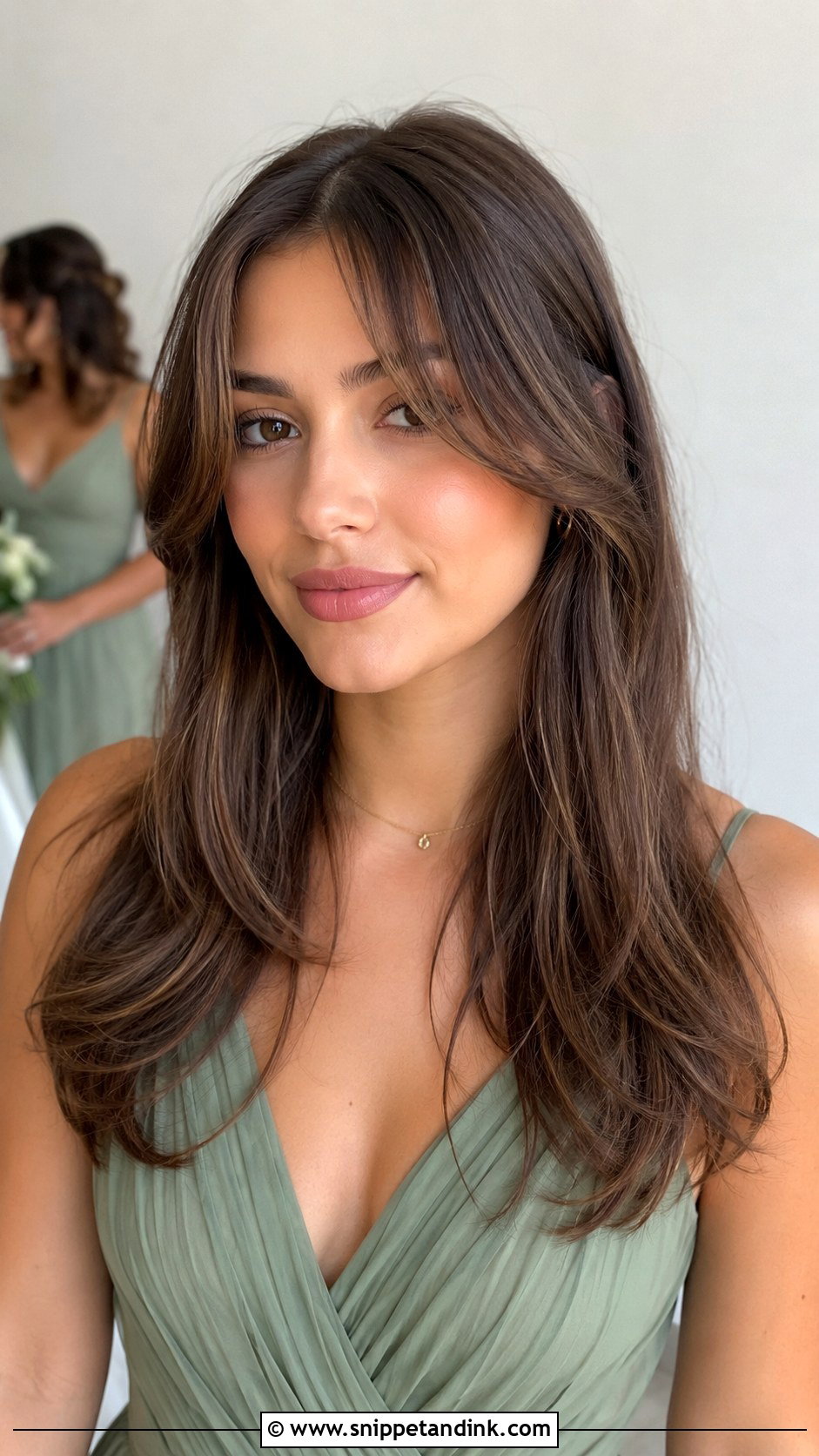
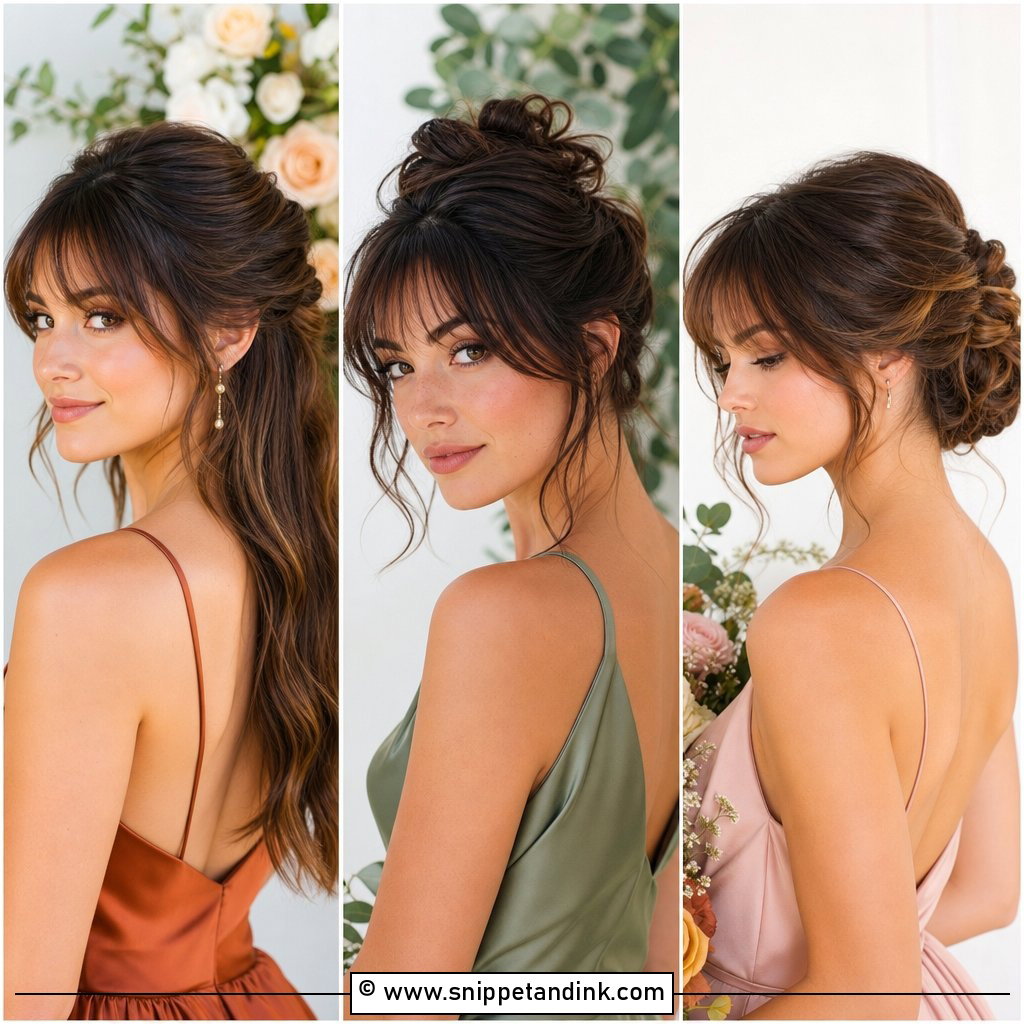
Bangs are worth keeping rather than pinning back. Curtain bang bridesmaid hair down frames the face with the front pieces while the rest stays loose. I round-brush the bangs away from the face so they open up the eyes and blend into the longer layers; brushed the other way, they collapse onto the lashes by the reception. Ask anyone with bangs to skip a trim in the final week, since freshly cut bangs sit shorter for a few days.
16. Short Bob Bridesmaid Hair Down
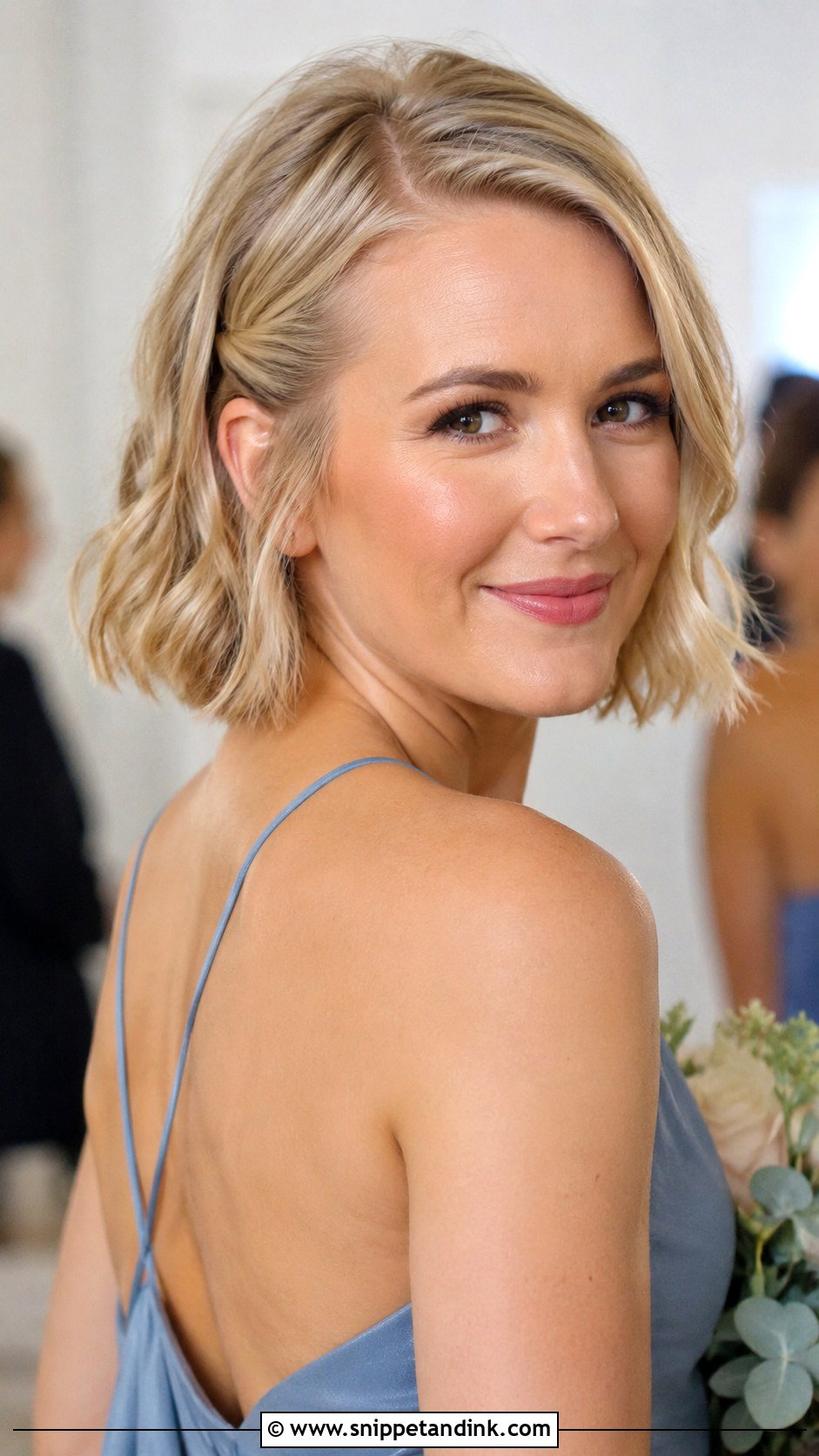
A well-styled bob looks every bit as finished as long hair. I give chin- or jaw-length hair soft bends with a flat iron, or smooth the ends and tuck one side, rather than forcing it into a tiny updo full of pins. A side part adds volume, while a centre part gives a cleaner outline. A small clip dresses it up for a formal wedding. The first thing I check is the ends, because a bob that’s overdue for a trim shows it in every close-up.
17. Lob Bridesmaid Hair Down
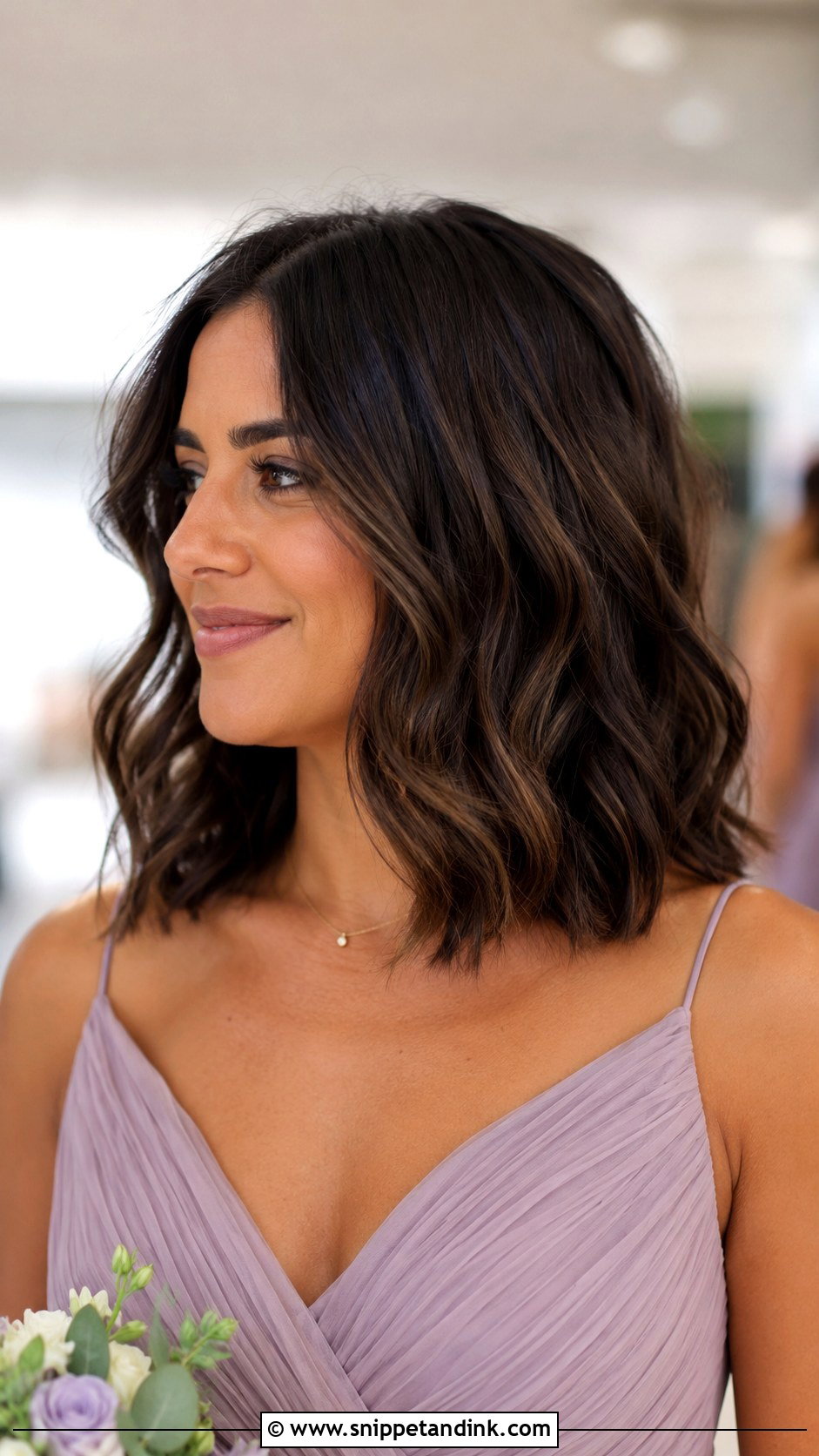
A long bob has enough length to wave, curl or half-up while still feeling light. Lob bridesmaid hair down with loose waves gives movement around the collarbone, which pairs well with strapless, square-neck and off-the-shoulder dresses. I leave the last inch of the ends straight so it looks current. If the hair is fine, texture spray at the roots and mid-lengths stops it falling flat before dinner.
18. Natural Curl Bridesmaid Hair Down
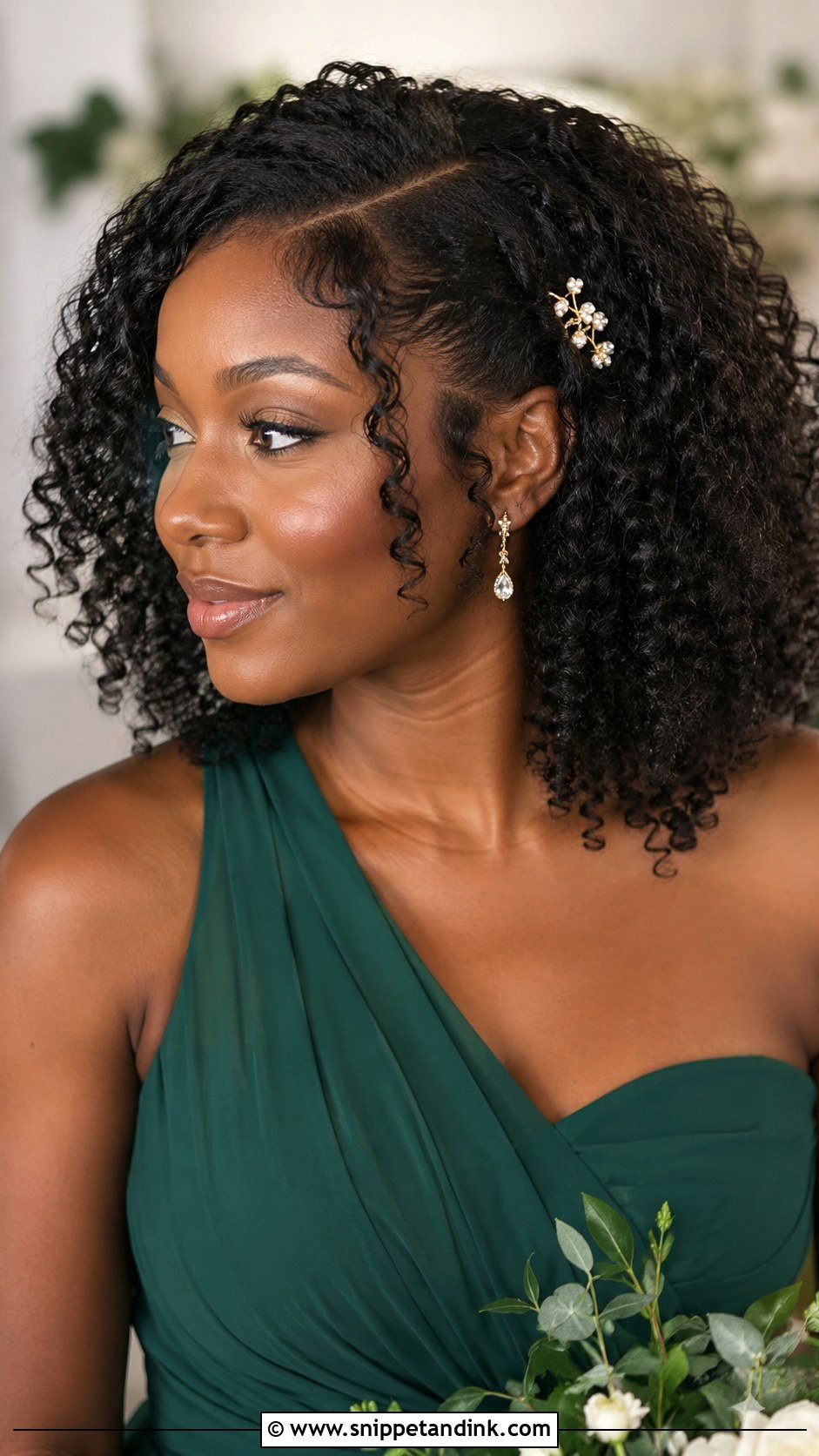
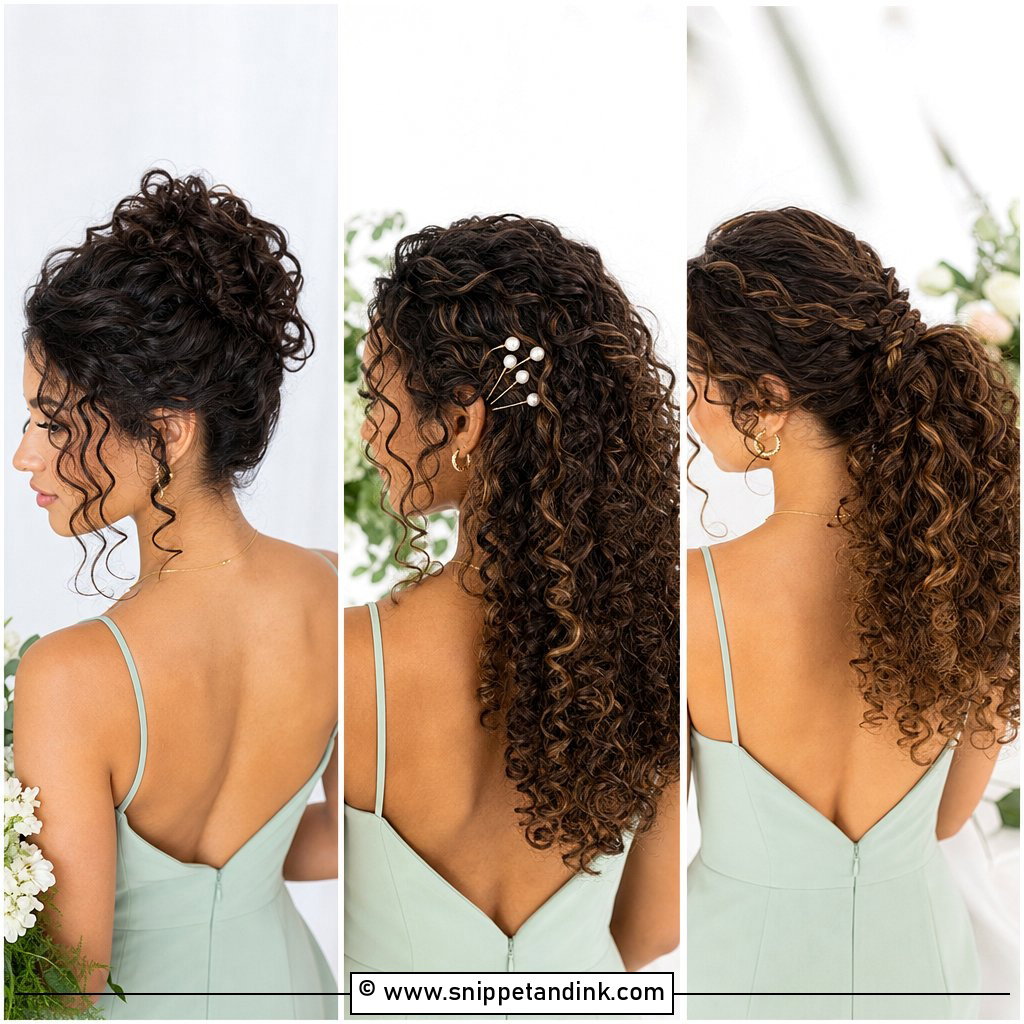
Natural curls look their best hydrated and free to move, not stretched into someone else’s pattern. I define them with a curl cream, gel or mousse suited to the curl type, then diffuse or let them air-dry, and nobody brushes them once they’re dry, since that turns definition into frizz. A side part, middle part or a few front pieces pinned back gives it a wedding finish. Before booking, ask whether your stylist works with curly hair regularly.
19. Beach Wave Bridesmaid Hair Down
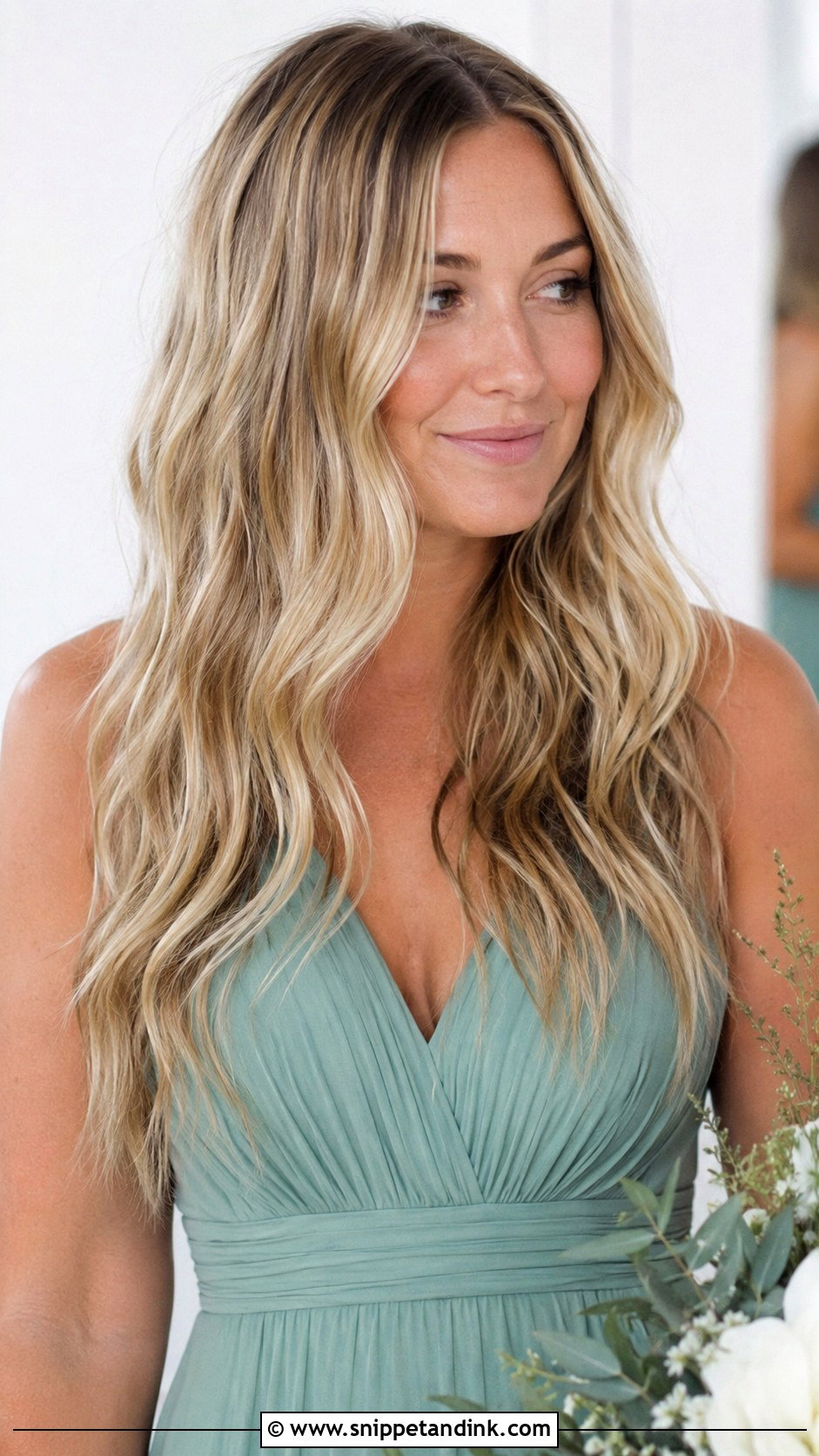
Coastal, garden and casual weddings suit a looser wave than most. Beach wave bridesmaid hair down should look airy rather than curled, and it works on long layers, lobs and medium hair. I use a flat iron or a large wand, leave the ends straight and scrunch in texture spray so the waves don’t collapse, while the top stays smooth enough to look polished. Salt sprays dry some hair out, so try one at home on a weekend first.
20. Sleek Tucked Bridesmaid Hair Down
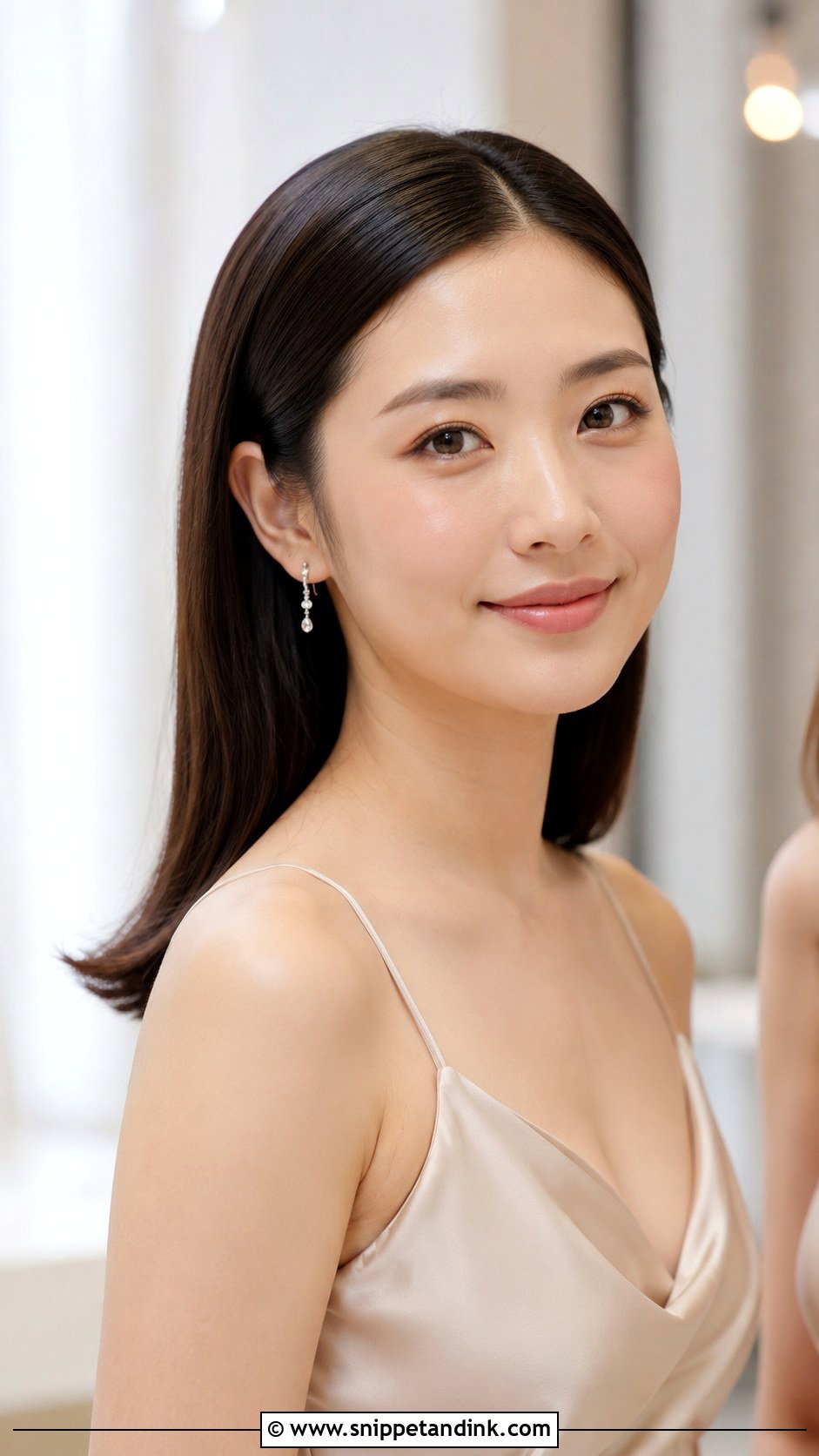
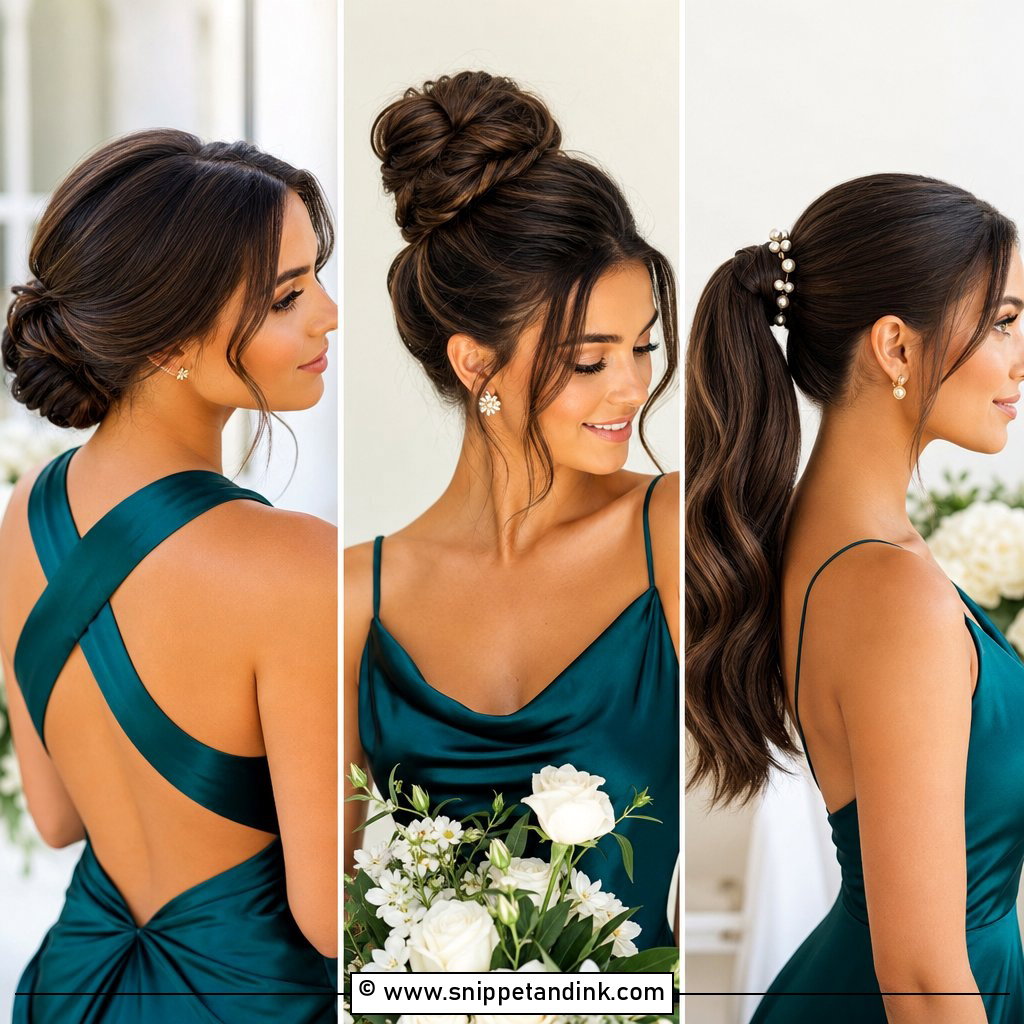
Smooth hair tucked behind one or both ears shows the face and the earrings, and it looks modern with minimalist dresses and structured necklines. Straight hair or very gentle bends at the ends work best. The tucks are what slip, so I hide a bobby pin behind each ear, pointing down, which holds through hugs. A little smoothing serum and a light spray handle the flyaways.
What Drops First, and What to Carry for It
Hair worn down moves all day, so it changes more than any updo. Curls relax, the crown flattens and front pieces drift into lipstick. Nearly all of it is a two-minute fix if someone in the party carries a small kit.
- A travel-size flexible hairspray and a small round brush for lifting a flat crown.
- A dozen bobby pins in the group’s hair colours, plus a few clear elastics.
- A cordless curler or straightener for a humid or outdoor venue, charged the night before.
- Blotting papers and a little smoothing balm for flyaways along the part.
Humidity does the most damage. On a muggy day, ask your stylist to set the curls a little tighter than your reference photo and leave them alone for the first hour; they’ll relax to the right shape around the time the ceremony starts.
If one curl gives up, wrap it around a finger, pin it flat against the head for ten minutes while you sit, then release it. It won’t be identical, but it will blend with the rest by the time the camera comes out.
One Finish, Different Heads of Hair
A loose style can hold its own beside a detailed updo when the shape and finish suit the person wearing it. Let the neckline, the venue and each bridesmaid’s length decide the details. Waves soften, straight hair sharpens, and a pin, twist, flower or bow adds the wedding touch. Agree on one direction for the group, then adjust each look to suit the person under it.
You'll Like These Ideas:


Leave a Reply