
Shoulder-length hair is easier to style for a wedding than most brides expect. There’s enough of it for curls, twists and braids, and not so much that a bun turns heavy or waves fall flat under their own weight. These twenty medium wedding hairstyles run from quick, low-effort looks to a few that need a skilled pair of hands. Most work for bridesmaids too, and I’ve noted which ones carry a veil, pearls or fresh flowers well, plus the hair type each one suits and where I’d be cautious.
Fifteen Minutes or Ninety? How Long These Styles Take
A wedding morning runs on a timetable, and hair is usually the biggest block in it. I find brides often underestimate how long a style takes, especially if several people are being styled. Here’s roughly how I’d group the looks below by time in the chair, though your stylist’s pace and your hair’s thickness will change these.
Quick, often under half an hour
Curled low ponytails, bubble braids, low twisted buns and messy updos with face-framing pieces. These are also the ones I’d suggest if you’re doing your own hair, since none of them depend on a perfectly even curl or a precise pin line. A little unevenness actually suits them.
Moderate, around 45 minutes to an hour
Half-up curls, braided half-updos, twisted styles with pearls, and sleek buns that need thorough blow-drying first.
Longer, often an hour or more
Hollywood waves, French twists, crown braids and Dutch braid updos. These take setting time and precise pinning. If your heart is set on one, schedule it with buffer time and tell your stylist when booking.
1. Half-Up Half-Down With Loose Curls
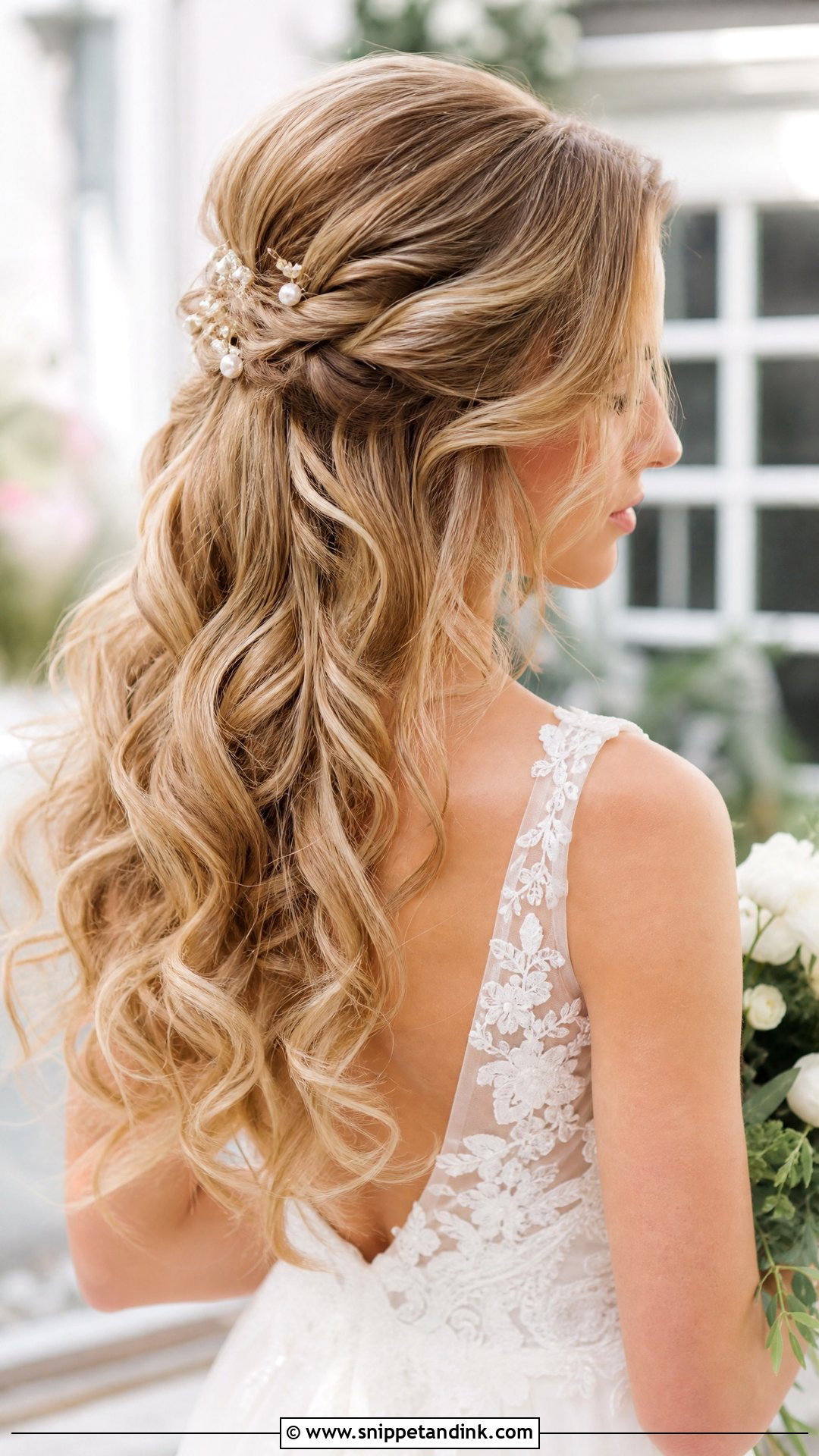
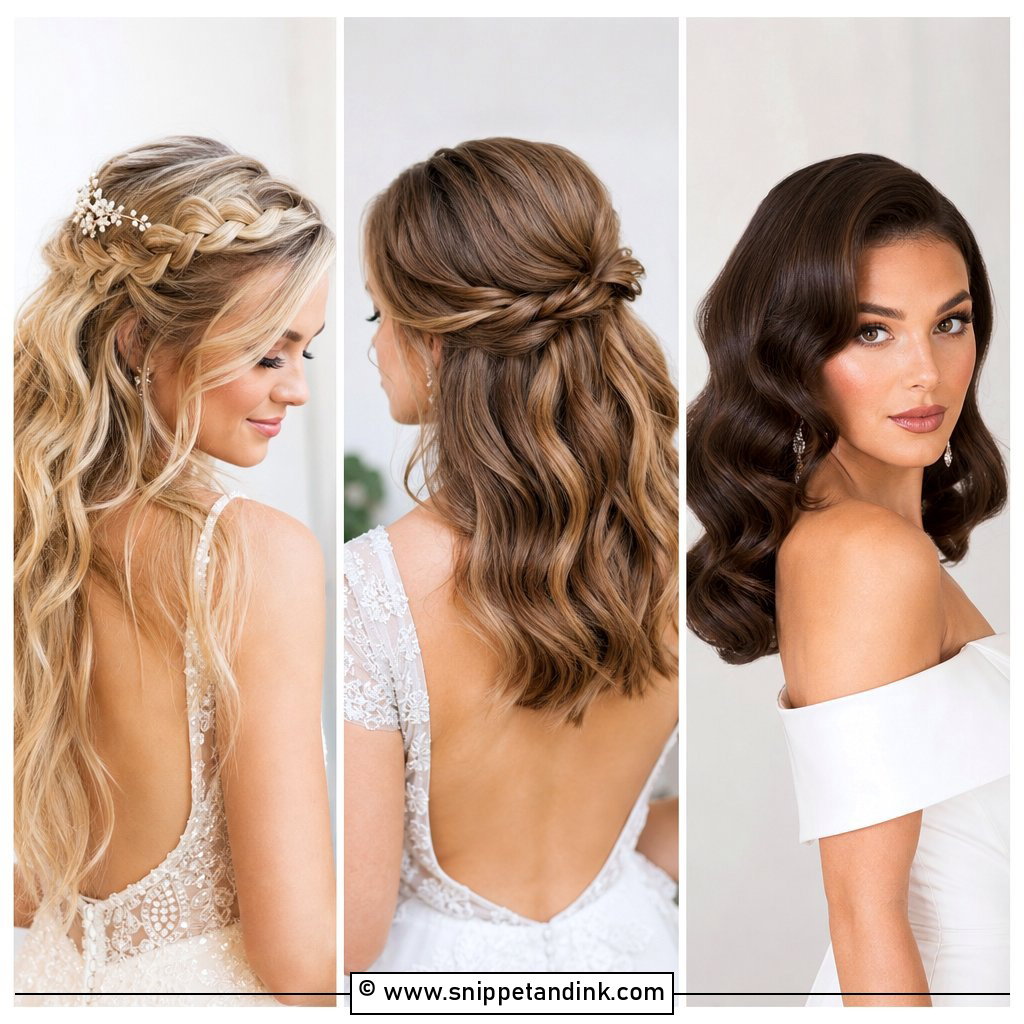
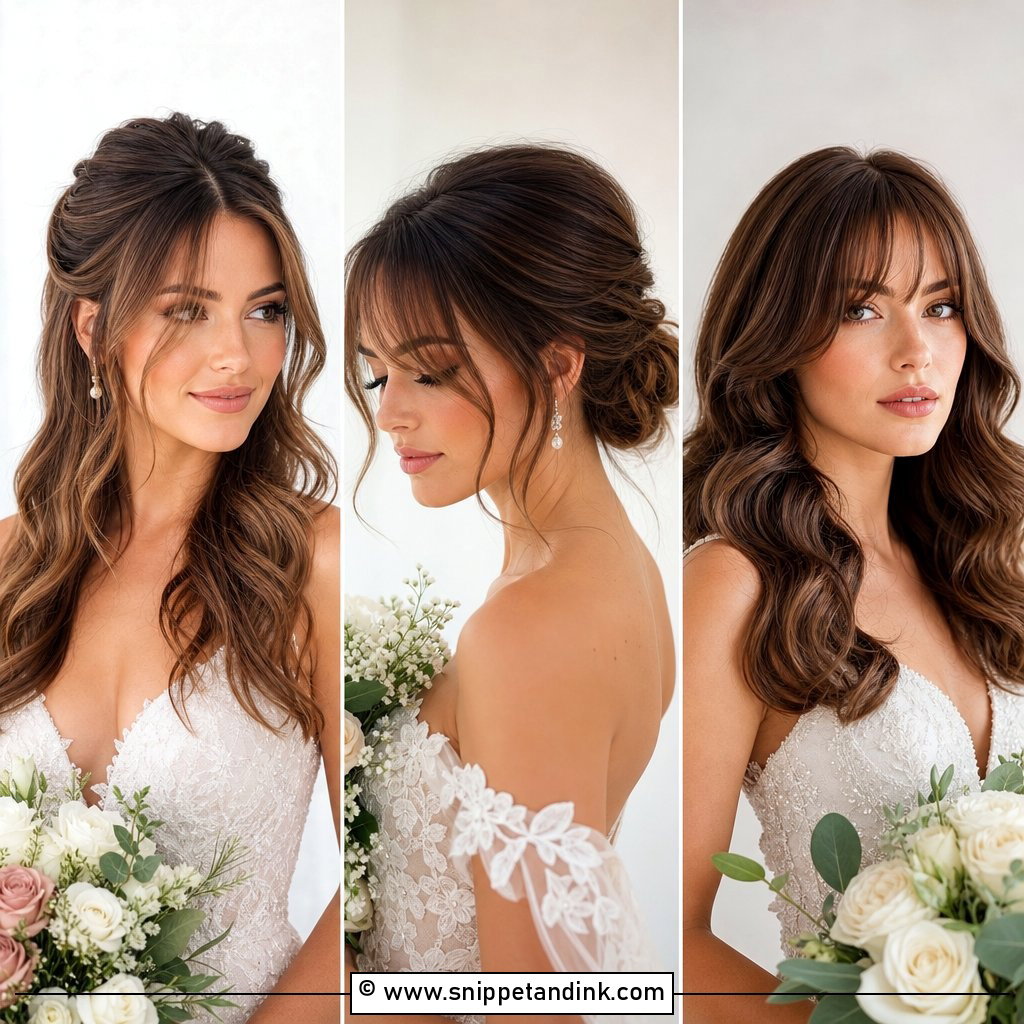
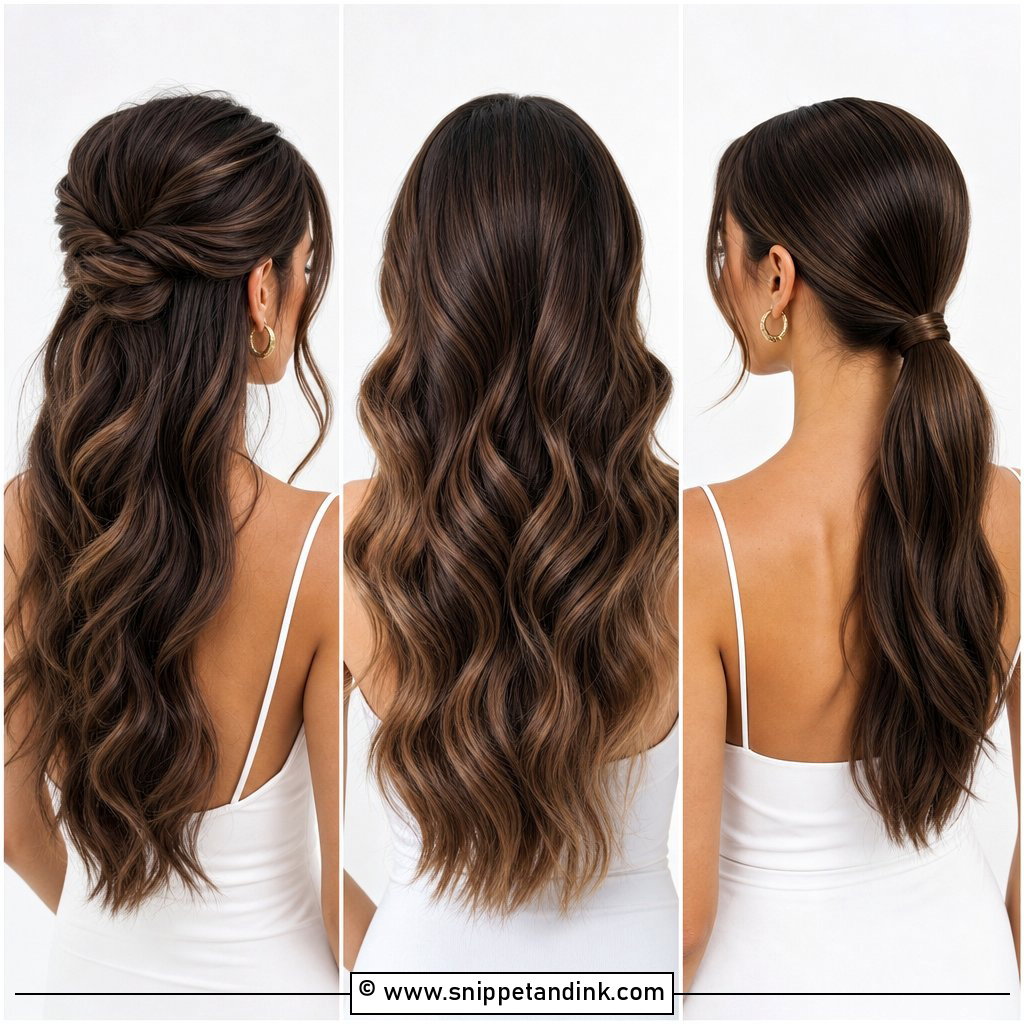
This is the most requested style in my chair for a reason: it keeps your face clear without hiding your length. I curl everything first with a medium barrel, then pull the top section back and secure it with crossed pins under a small twist. The curls stay loose rather than tight. Pearl pins or a small clip can cover the anchor. Almost any neckline suits it, though a high collar will flatten the ends faster than a strapless bodice.
2. Low Twisted Bun
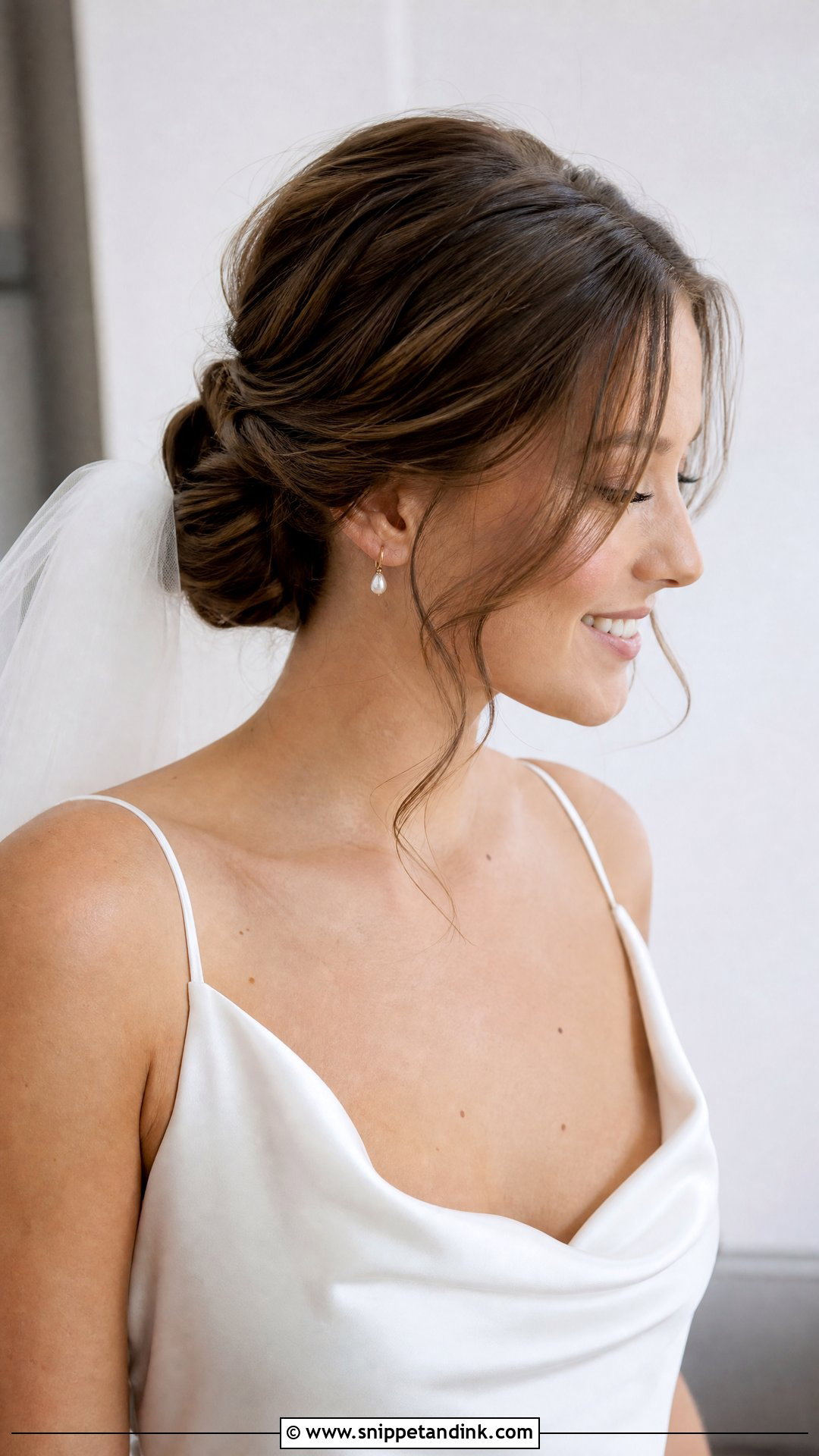
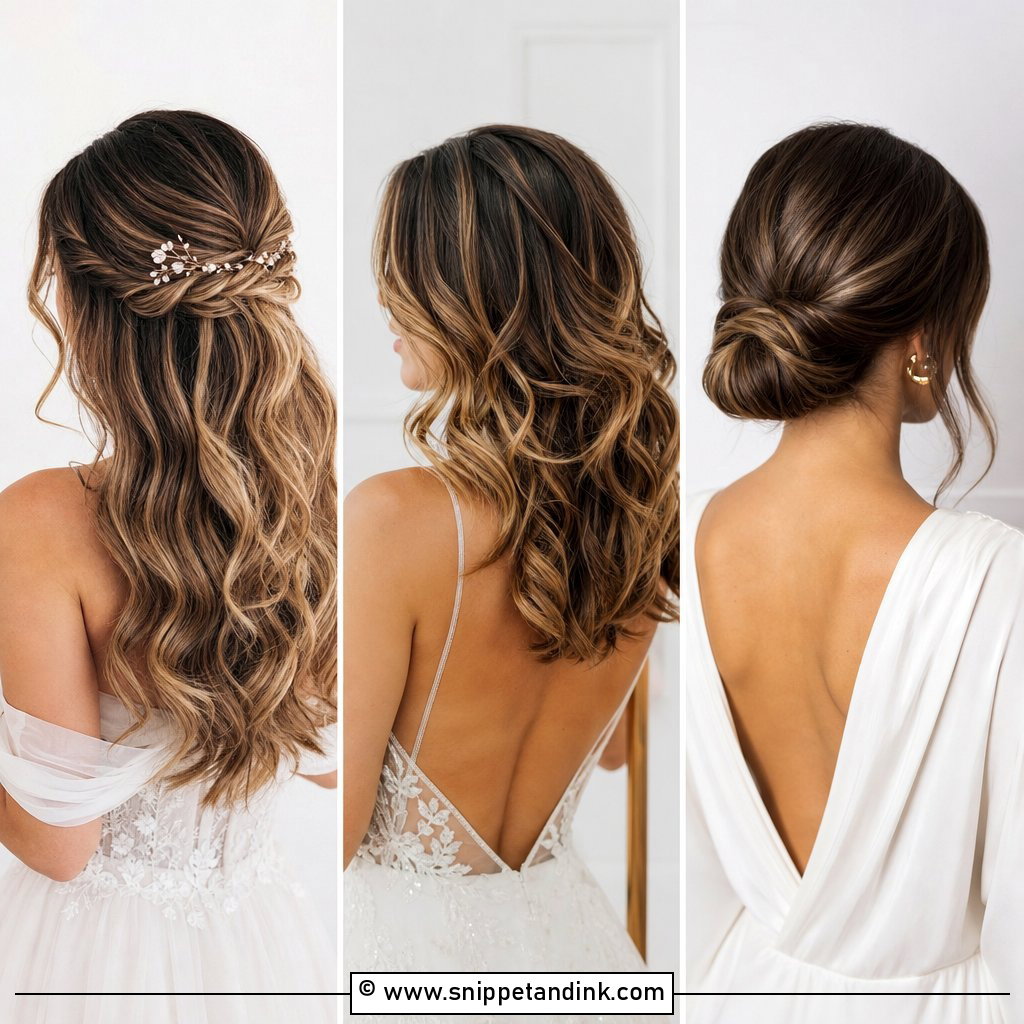
I build a low twisted bun from three or four sections, twisting each one and wrapping it round the last before pinning. That layered construction is what gives the texture, and it’s also why it holds: no single pin carries the whole weight. Medium hair tucks in neatly with few loose ends. A veil can sit above or below the bun, though for a heavier veil I’d put the comb just above it.
3. Soft Romantic Waves
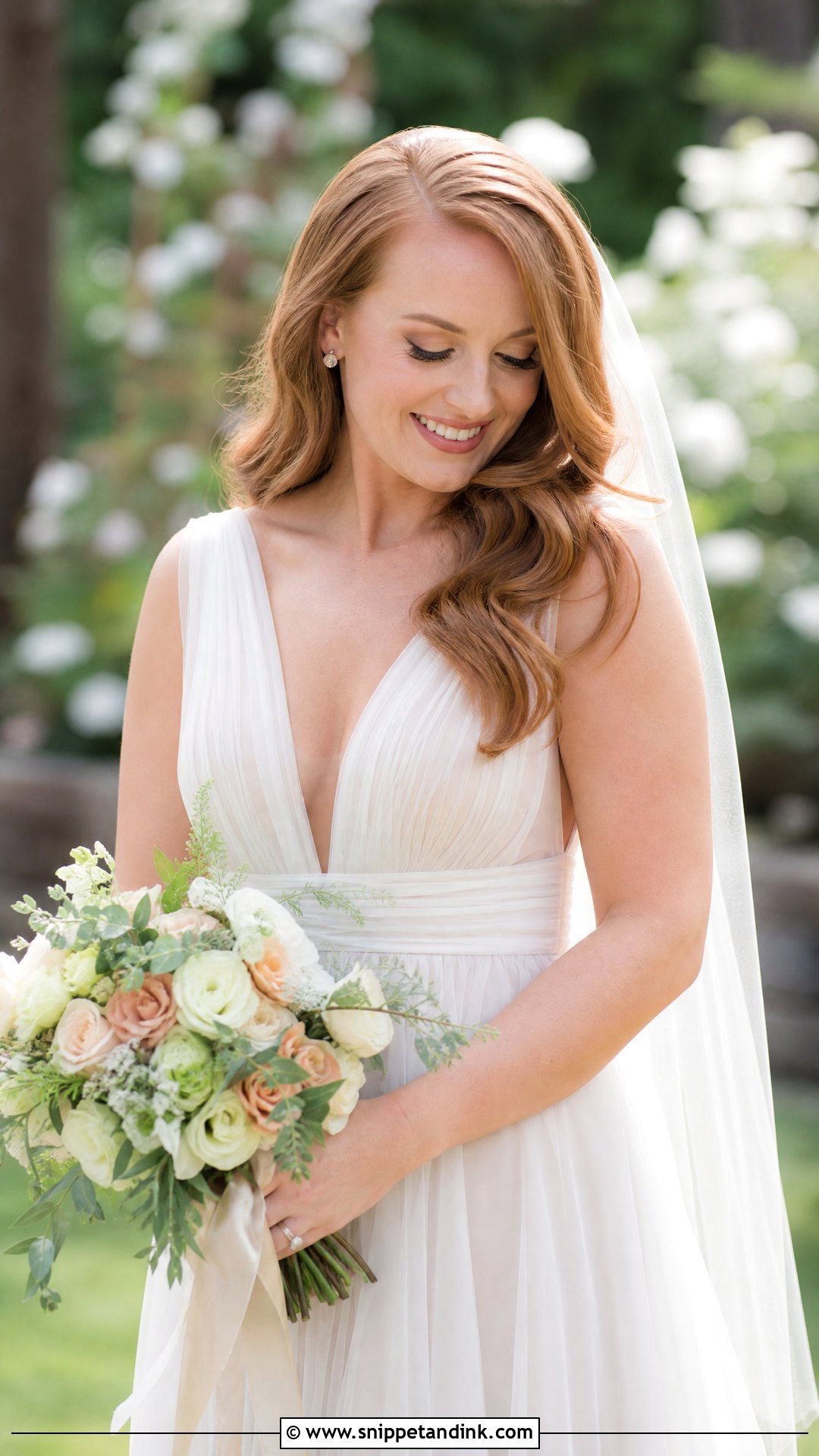
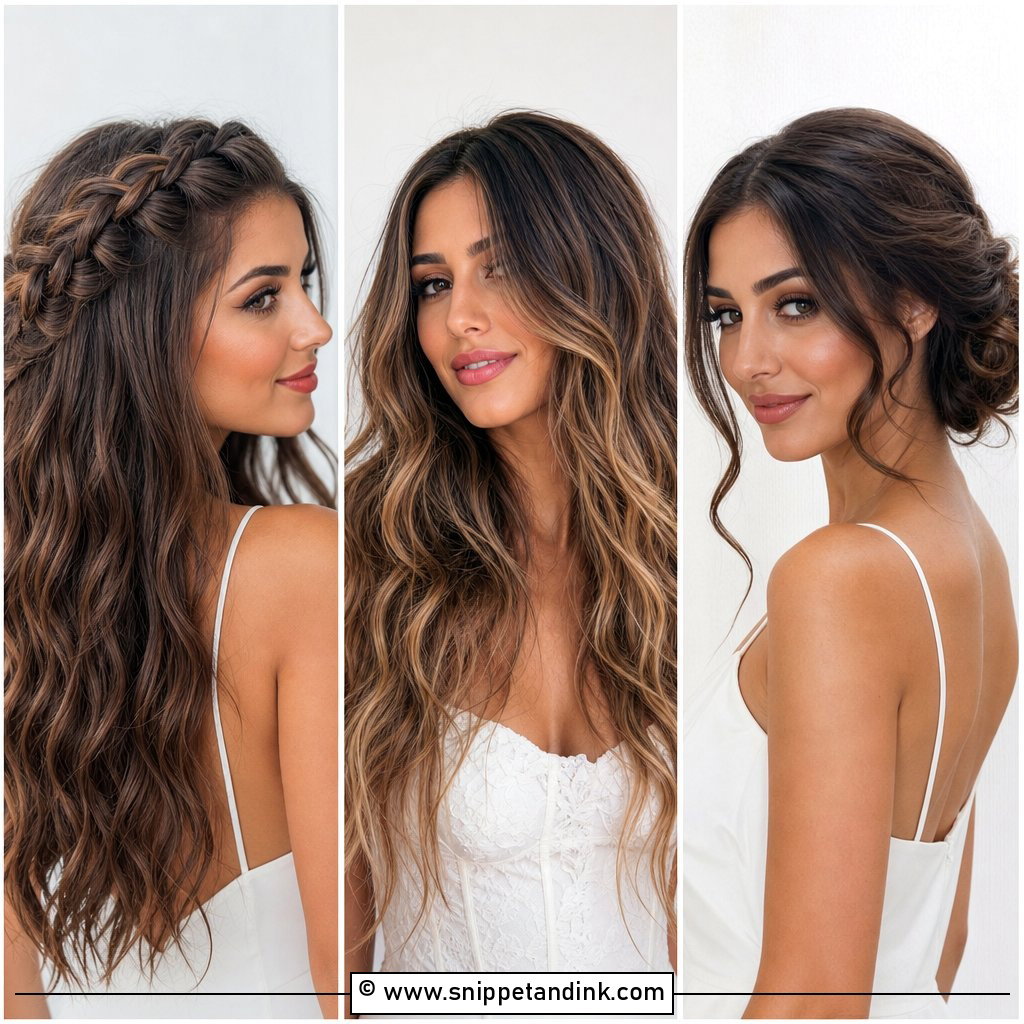
Waves worn fully down look simple, but they’re the style I fuss over most, because loose hair has no structure to fall back on. I curl with a larger barrel, alternate direction around the head so the waves don’t merge into one big curl, and let them cool completely before brushing. A flexible hairspray, misted from a distance, keeps them moving without crunch. If the forecast is humid, I’d tuck one side back with a pin from the start rather than wait for the waves to drop.
4. Side-Swept Curls
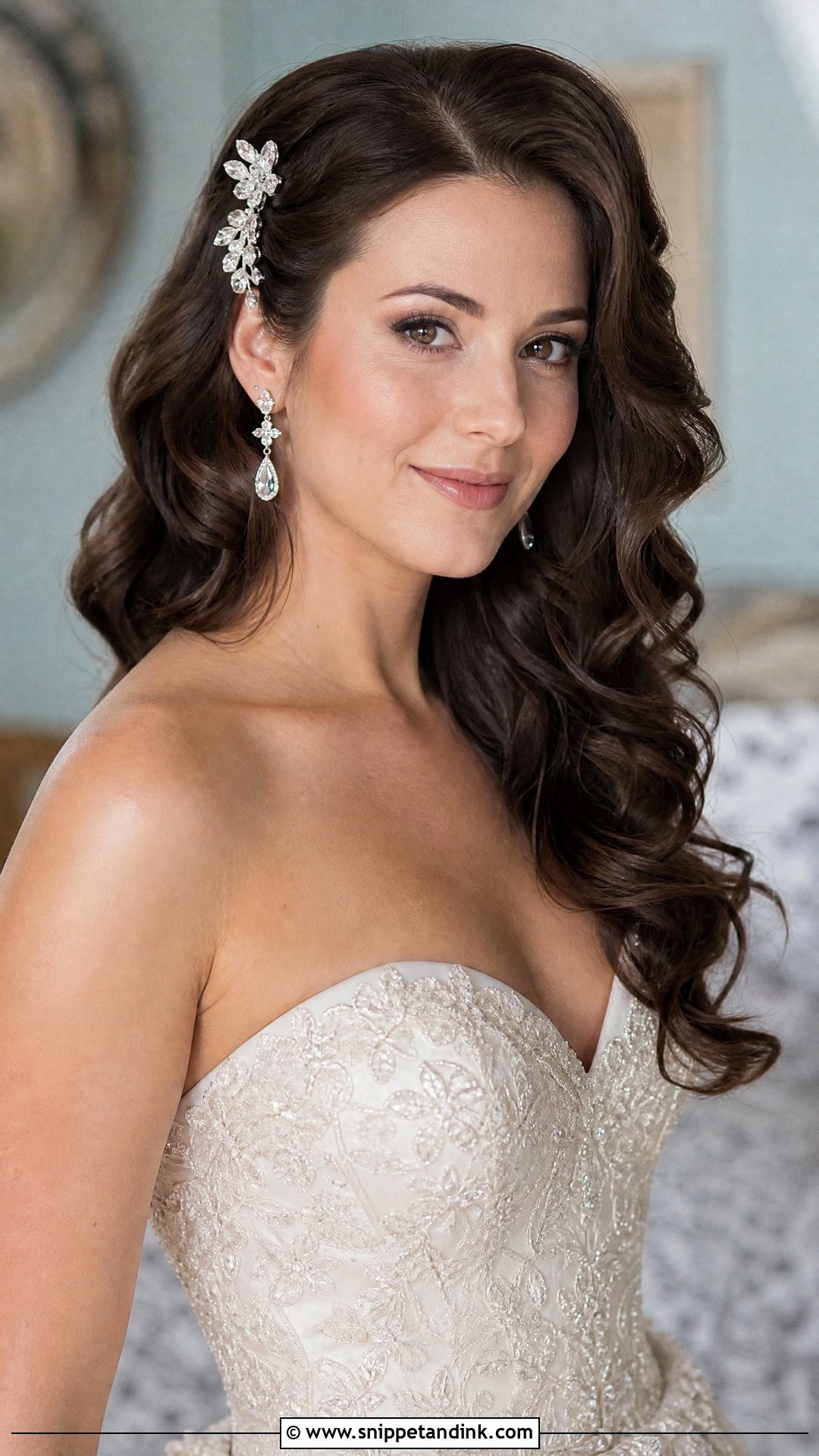
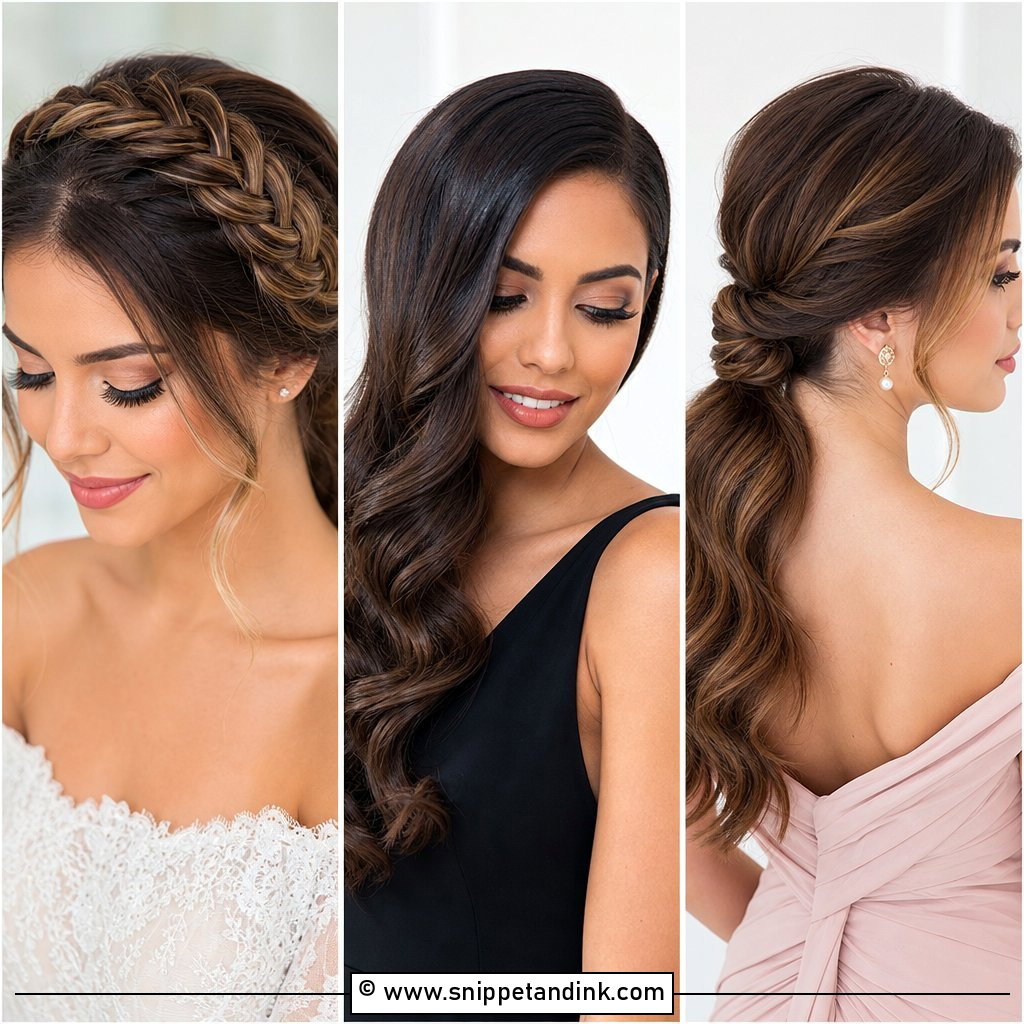
Side-swept curls need a hidden anchor. I curl the hair, sweep it over one shoulder and pin the opposite side flat behind the ear with crossed bobby pins, so the weight doesn’t drift back to the center during the first dance. A jeweled comb can cover the pins. It works especially well with strapless and off-shoulder gowns, where the curls rest against bare skin. Check which side faces guests during the ceremony before you pick a direction.
5. Braided Half-Updo
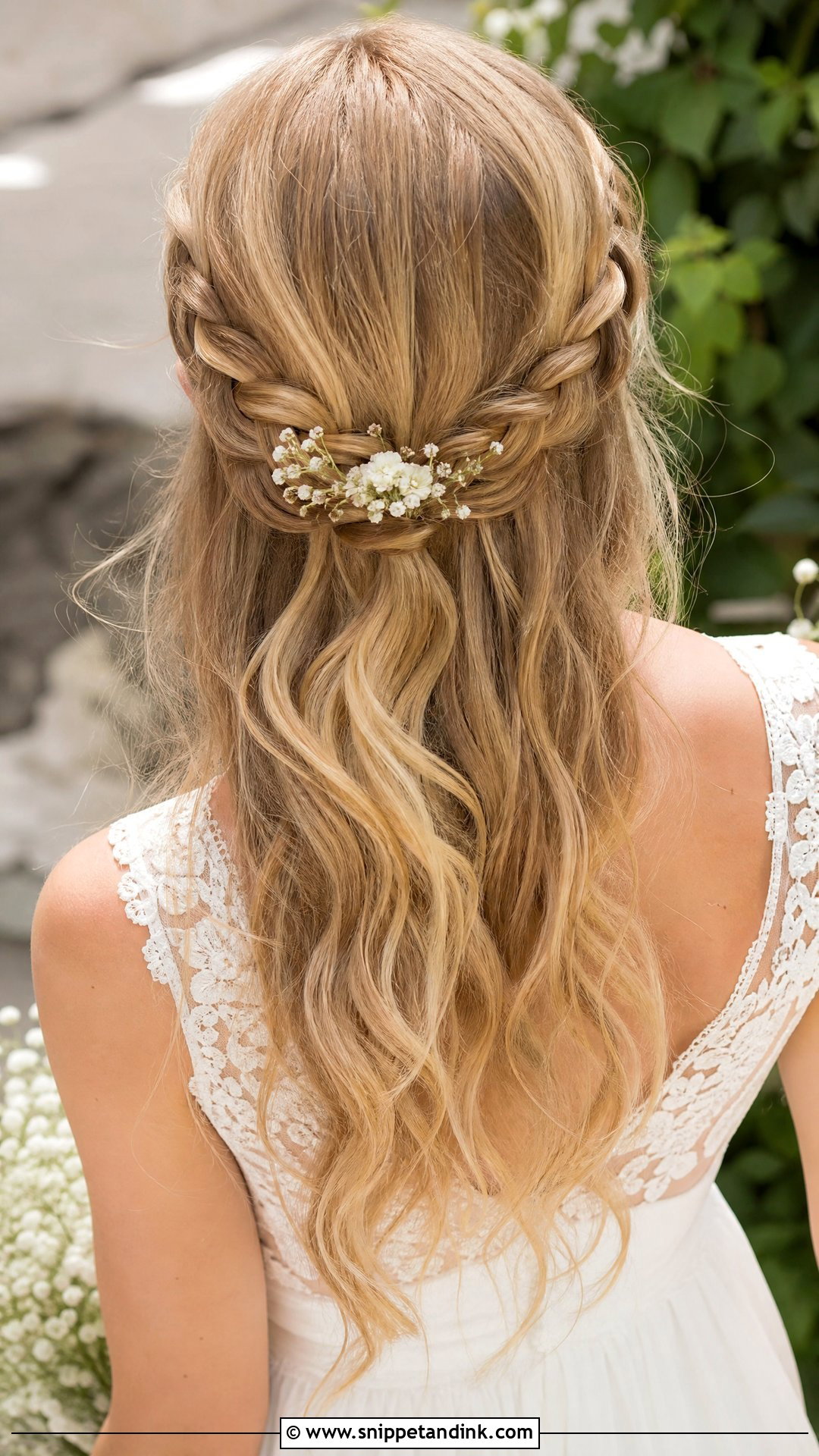
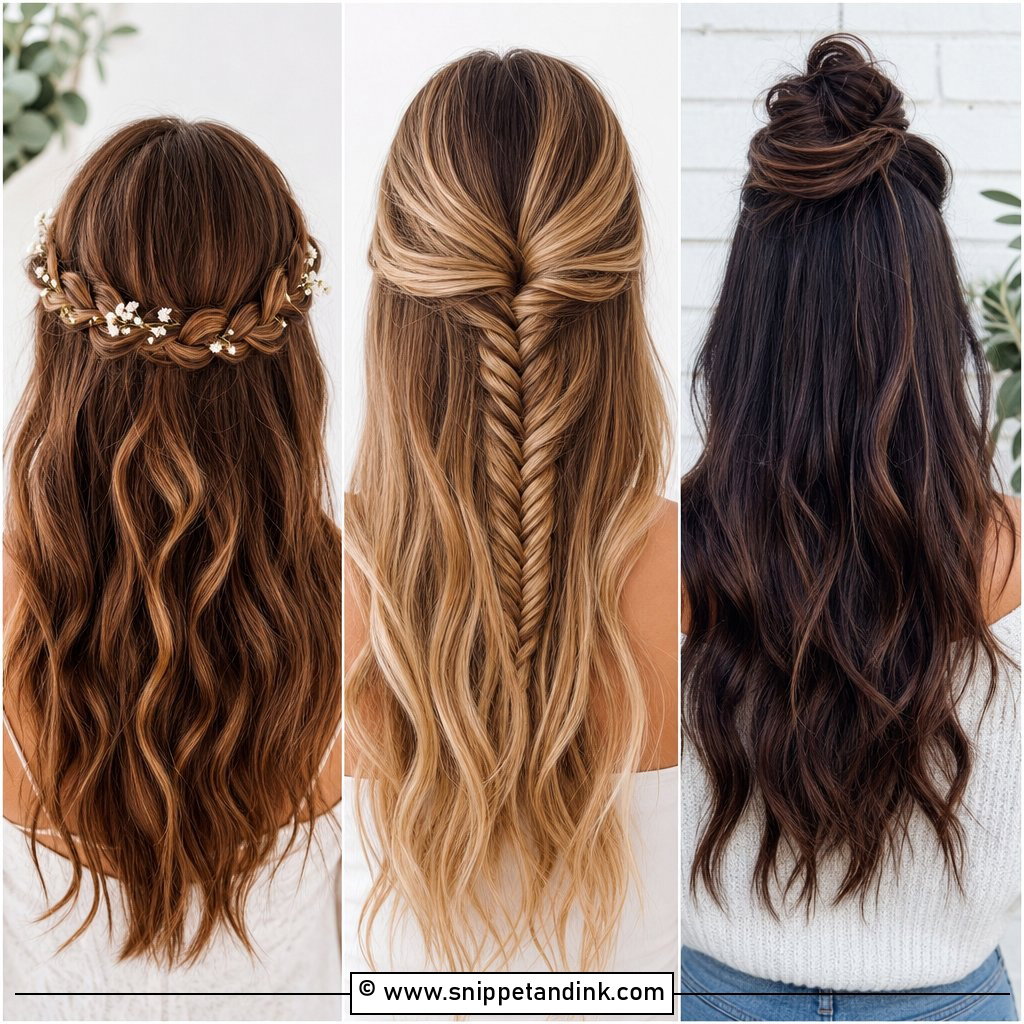
Two braids, one from each side, meet at the back while the rest of the hair falls in waves. It’s a good solution for medium hair because the braids don’t need much length. I secure where they meet with a small clear elastic, then pin over it, since a braided join held only by pins is the first part to loosen. Tight braids look neat; pulled-apart braids look softer. Tiny flowers or pearl strands can be woven in.
6. Classic Chignon
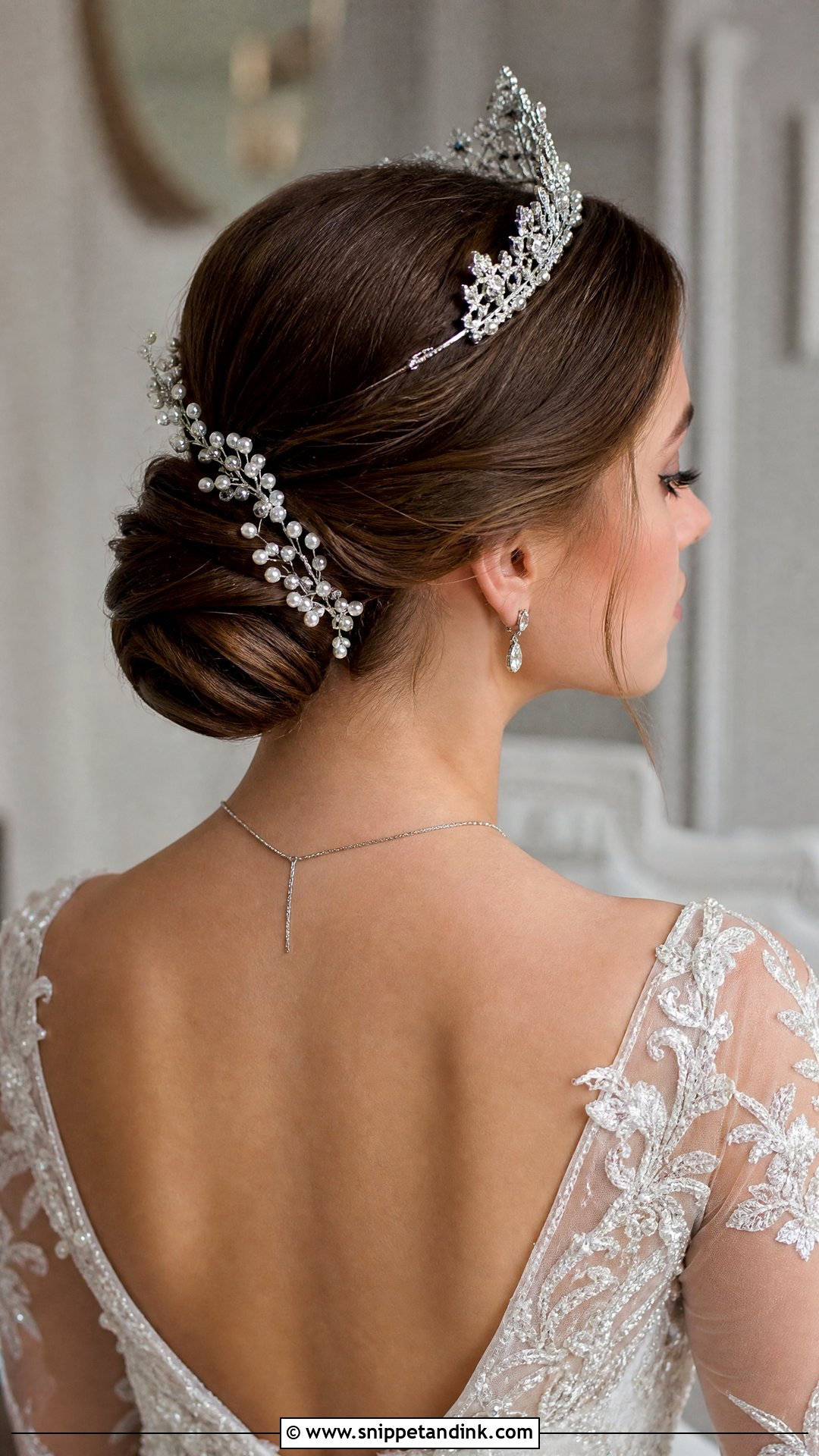
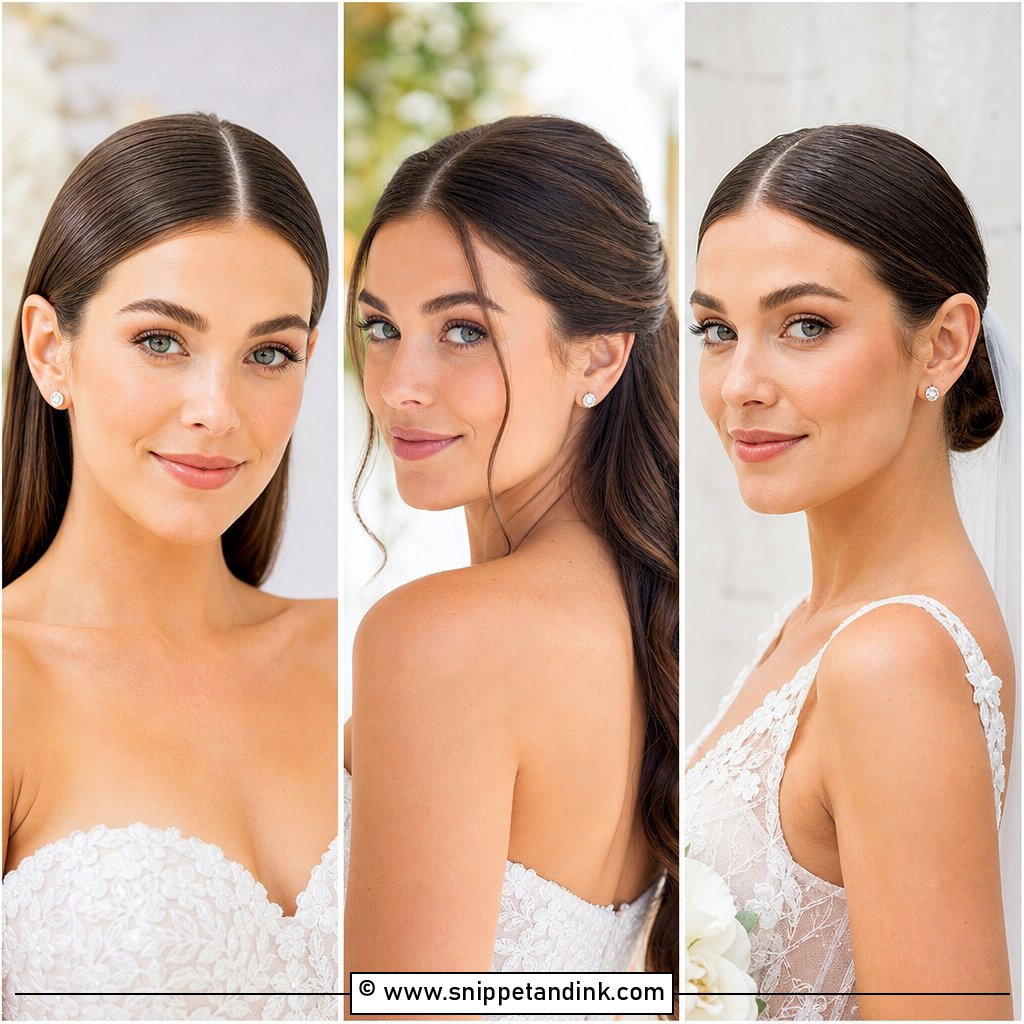
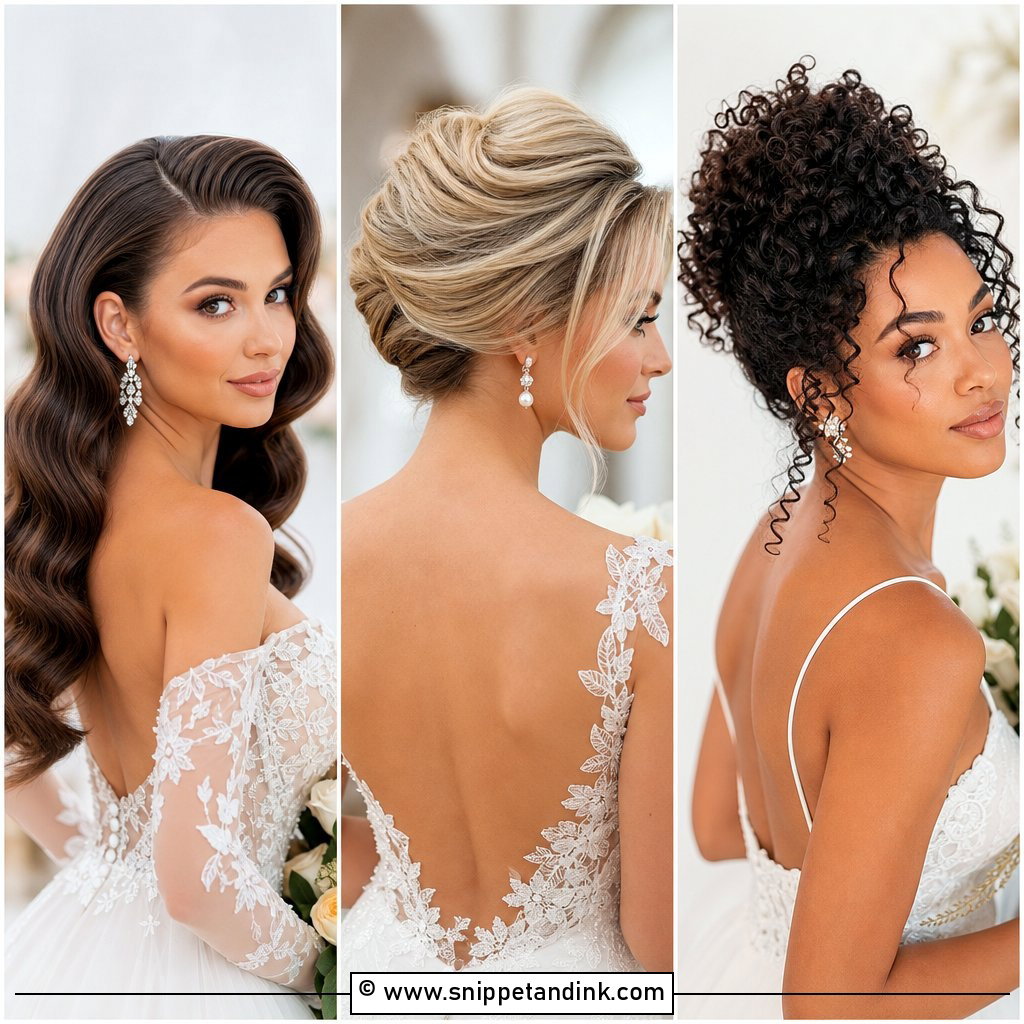
A classic chignon is a smooth, rolled bun sitting low on the neck. On medium hair the roll is compact, which I actually prefer under a tiara or long veil, because a large chignon can push the veil away from the head. I smooth the hair with a paddle brush, gather it, then roll and pin from underneath so no pins show. It stays put for many hours and works with almost any formal dress.
7. French Twist Updo
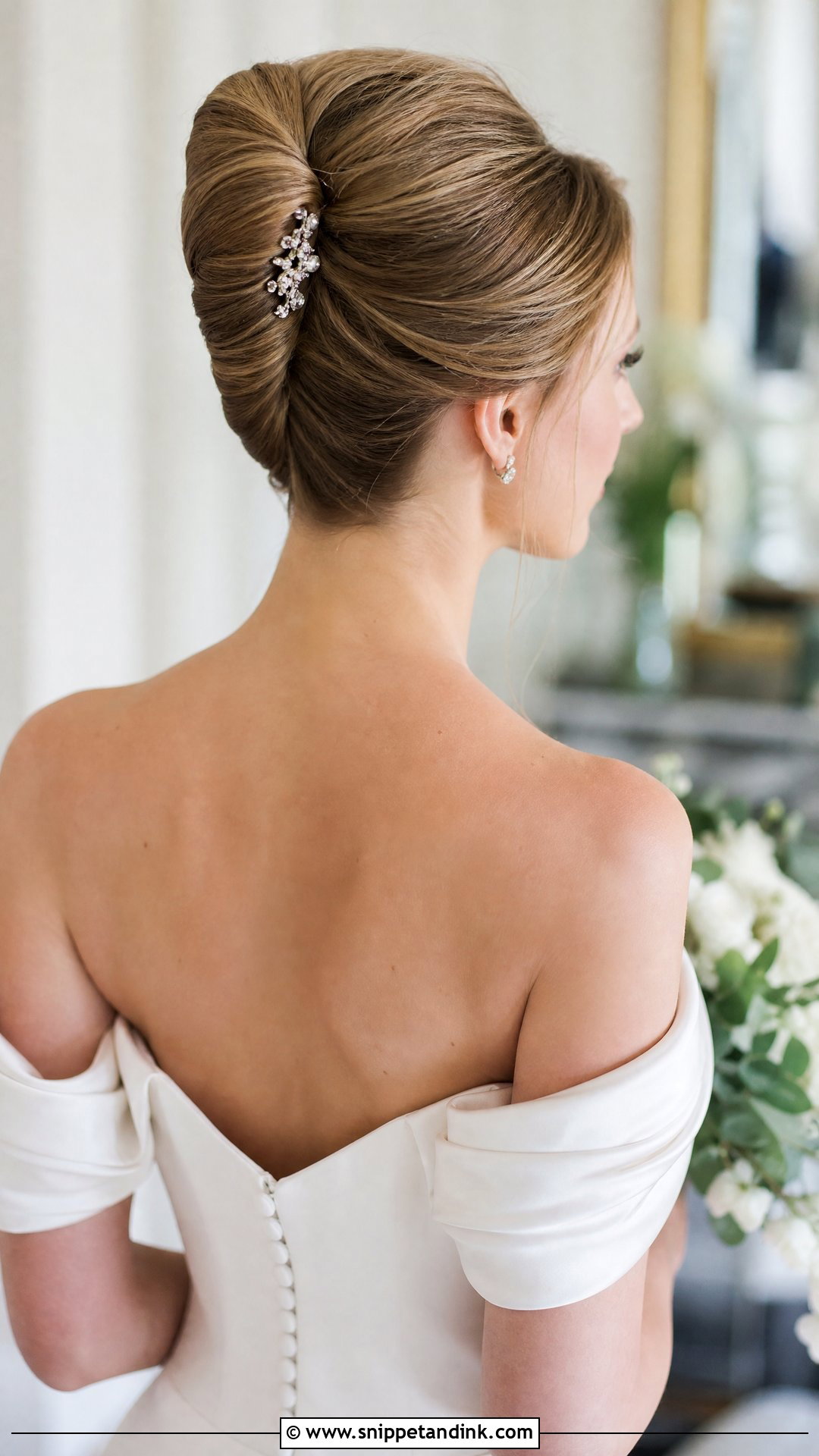
A French twist needs hair at least to the shoulders, so medium length is right on the line. I sweep everything to one side, pin a row of crossed pins up the back of the head as an anchor, then twist the hair over those pins and tuck the ends in. That pin wall is the part people skip when doing it themselves, and it’s why their twist falls out. Adding height at the crown gives a vintage feel. A jeweled pin can hide the seam.
8. Fishtail Braid Half-Up
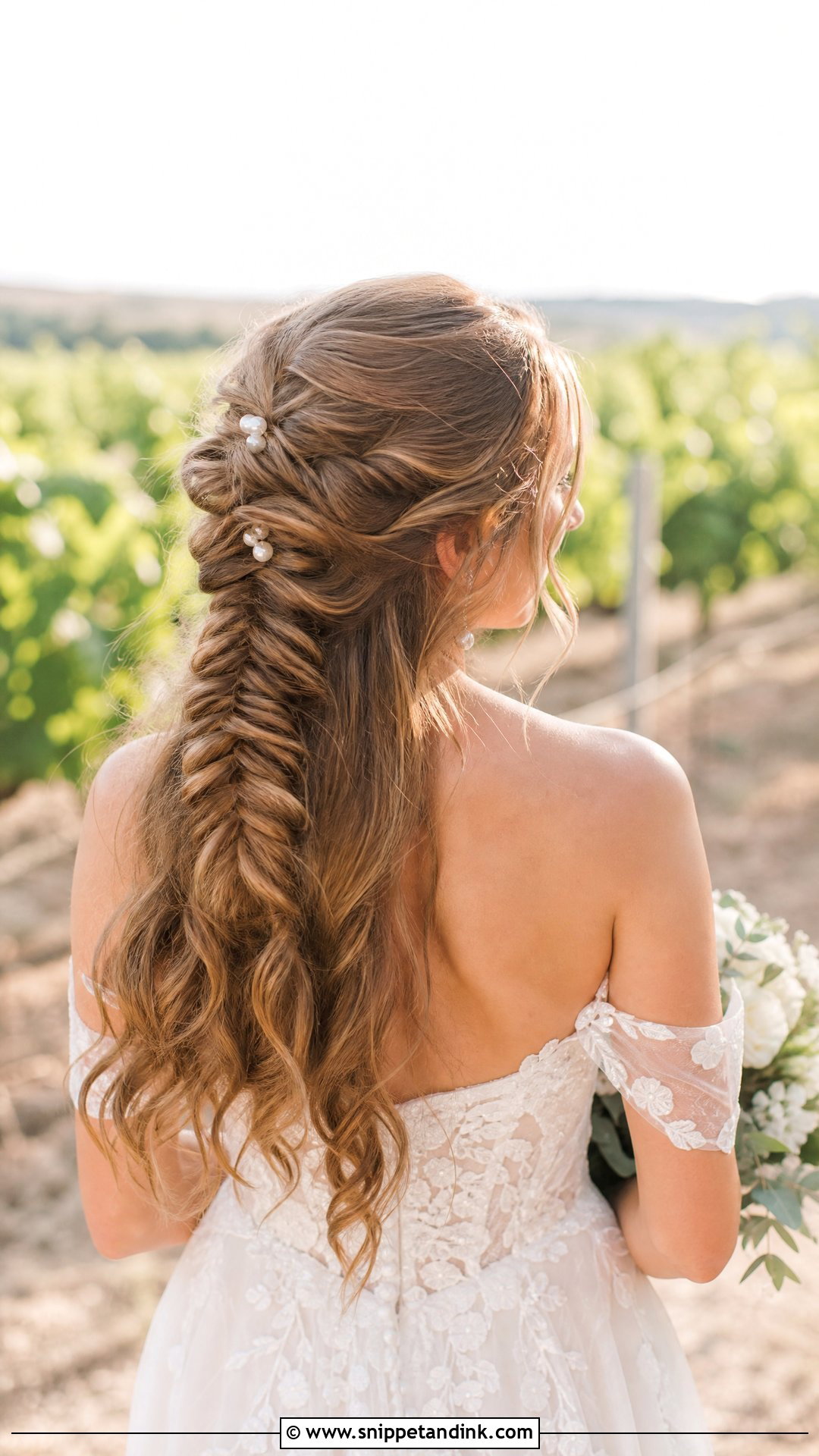
A single fishtail running down the back or off to one side gives a half-up style more texture than a regular braid. I take the top section and fishtail it slightly tighter than I want, then pull the edges out afterward to widen it. Small blooms or pearl pins tuck along the braid. On fine hair, a texture spray beforehand helps the strands grip each other and keeps the braid from sliding.
9. Hollywood Glamour Waves
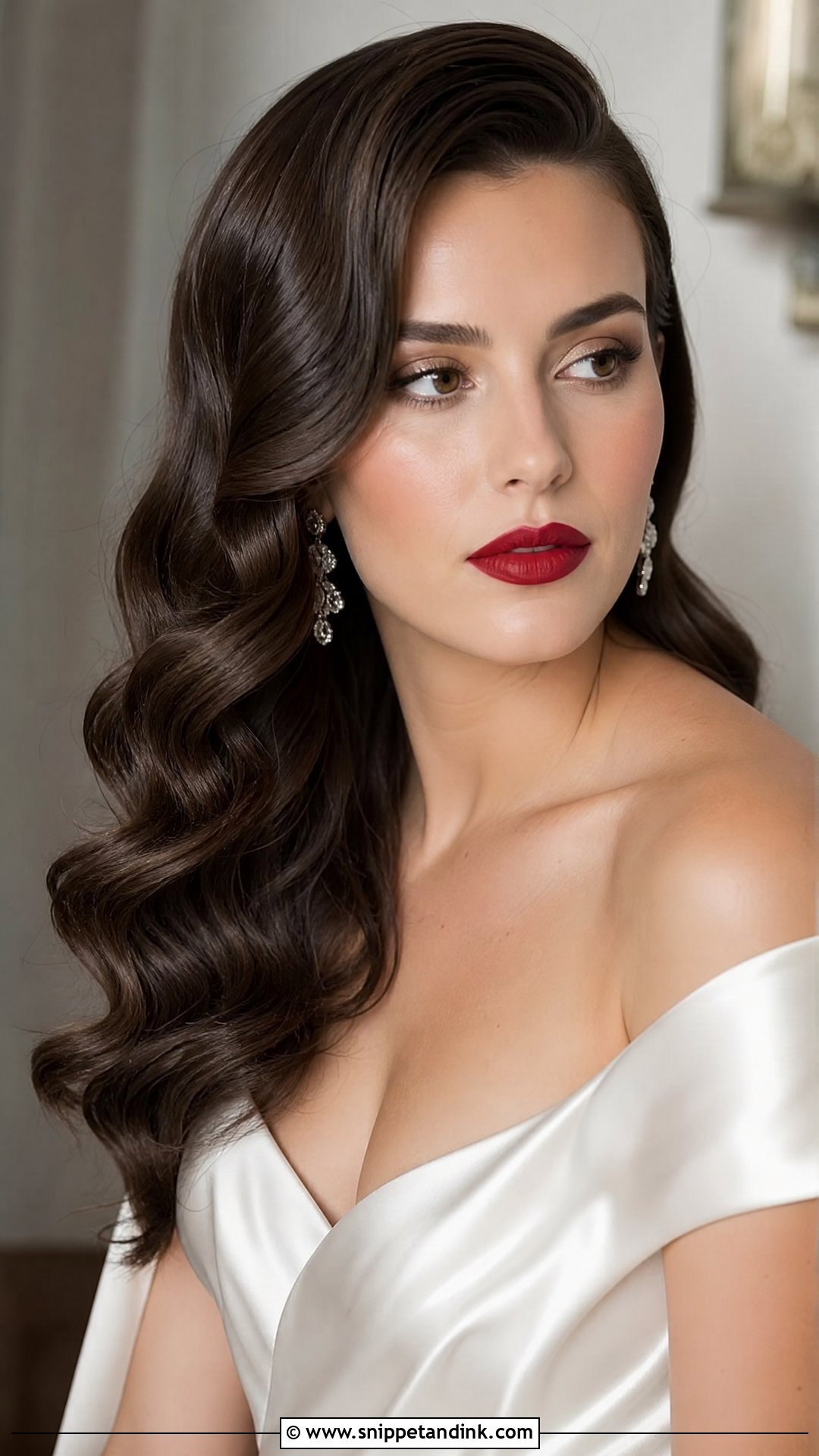
Hollywood waves are a precise style, not a loose one. I set the hair in uniform curls, all rolled the same direction, let them cool completely, then brush them out with a boar-bristle brush so they join into one smooth S-shaped ripple. A deep side part frames the face. A shine spray finishes it. Paired with red lips and statement earrings, you get full retro glamour. Brides with very layered hair should know the waves won’t form a clean ripple; the layers break the pattern.
10. Boho Braided Crown
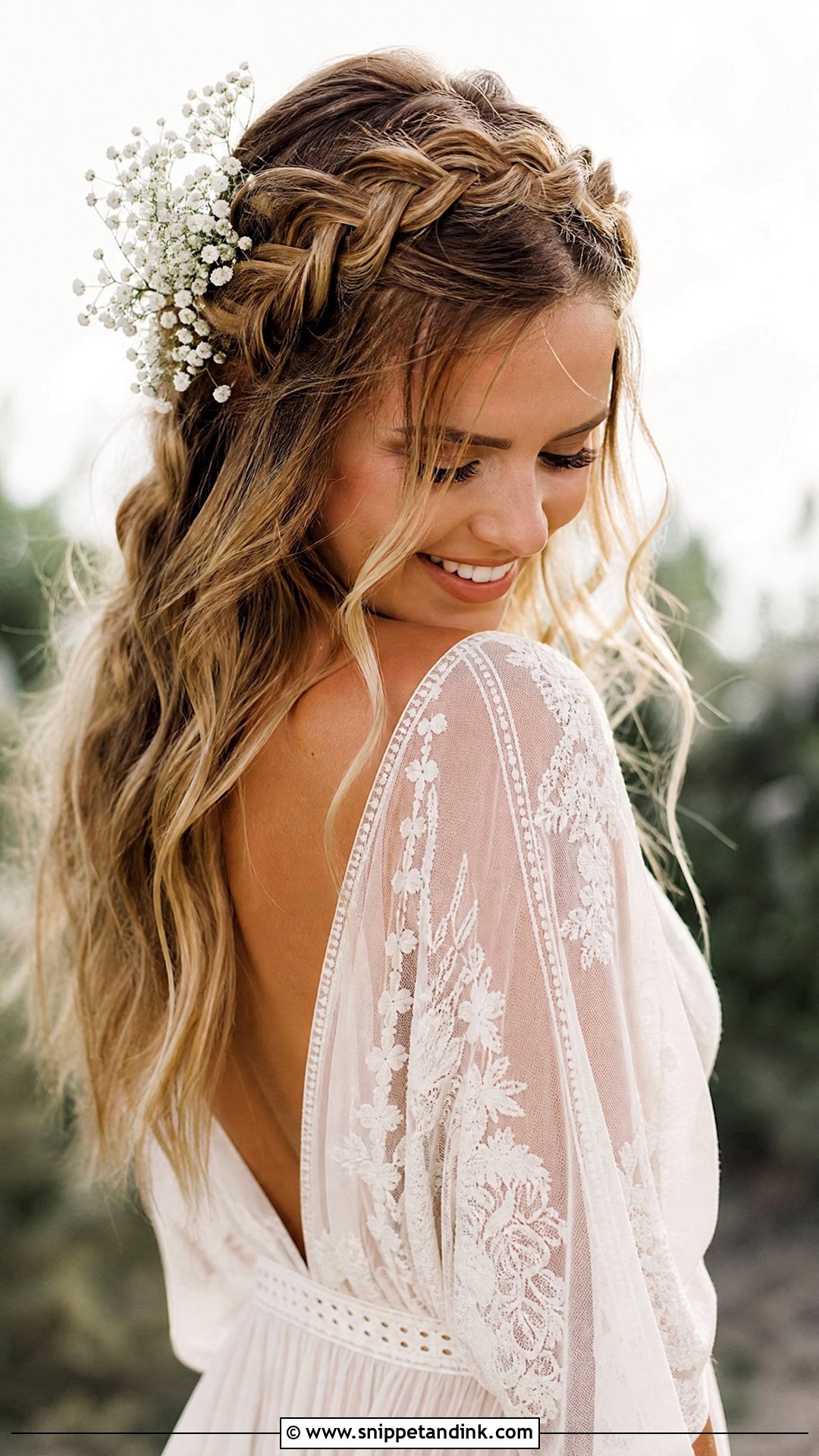
This crown braid sits around the head with the rest of the hair falling in waves below. It goes naturally with floral headpieces and flowing bohemian gowns. I braid from behind one ear, over the top, and down to the other side, pinning the end under the braid. Loosening it slightly makes it look airy. Baby’s breath or small wildflowers can tuck into the braid without extra pins, though I’d pick sturdy stems that won’t wilt by the reception.
11. Curled Low Ponytail
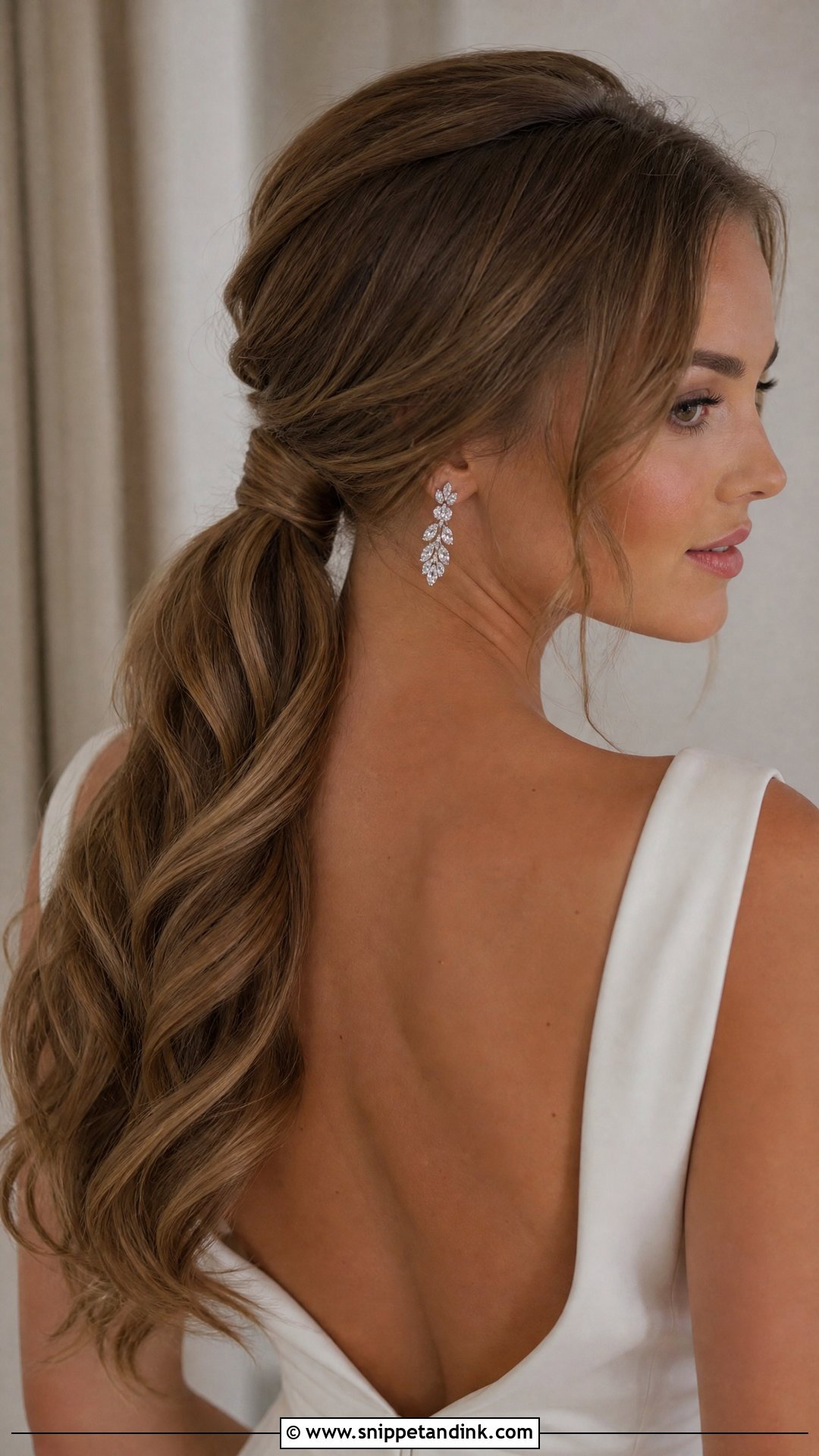
A low ponytail looks deliberate when it has curl and a clean base. I curl the hair first, gather it at the nape, and wrap a strand around the elastic, pinning it underneath. Medium hair gives a short ponytail, so I keep the curls fairly full to give it presence. A ribbon or jeweled cuff at the base dresses it up. It’s very comfortable and shows earrings clearly.
12. Messy Updo With Face-Framing Pieces
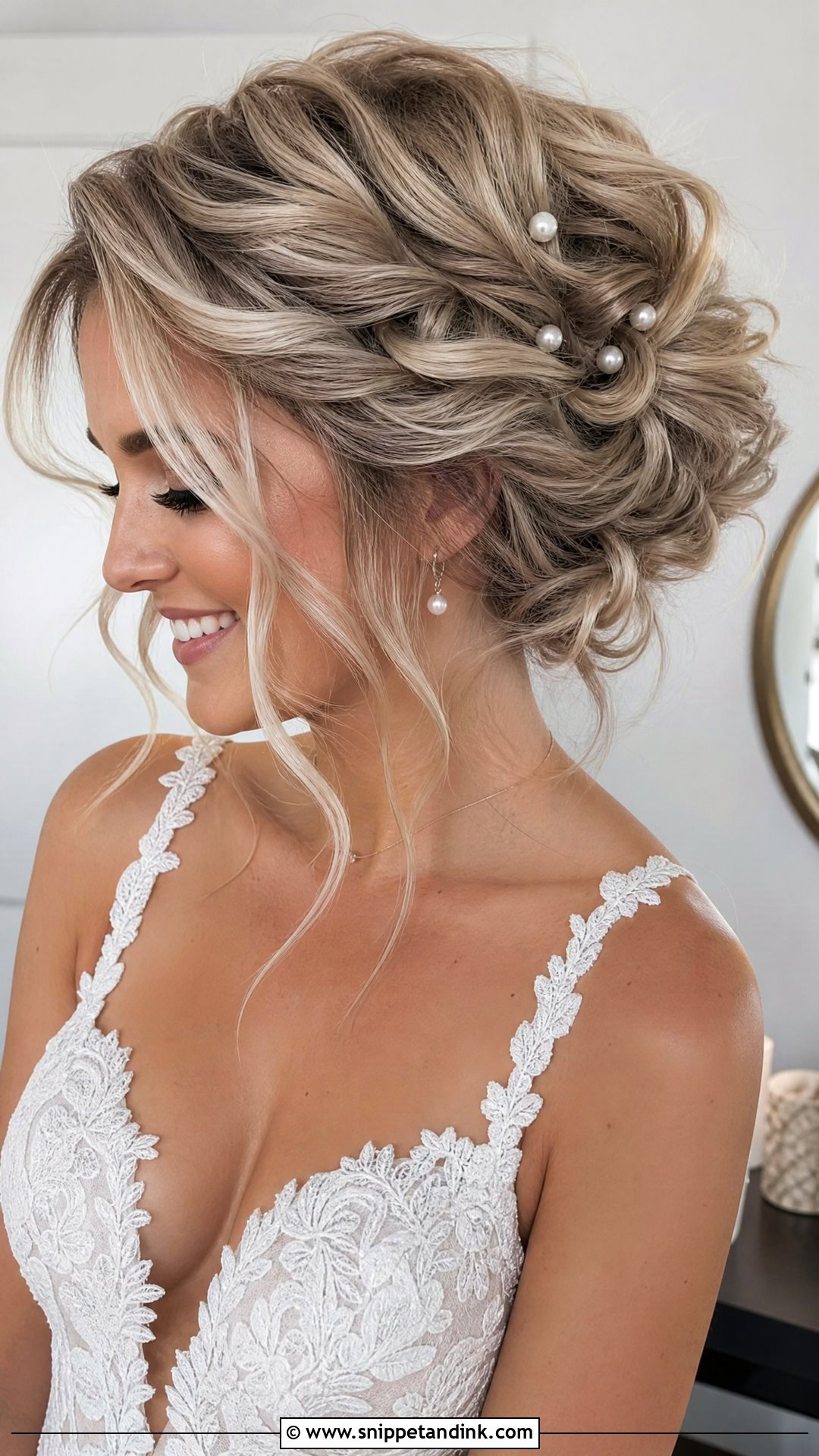
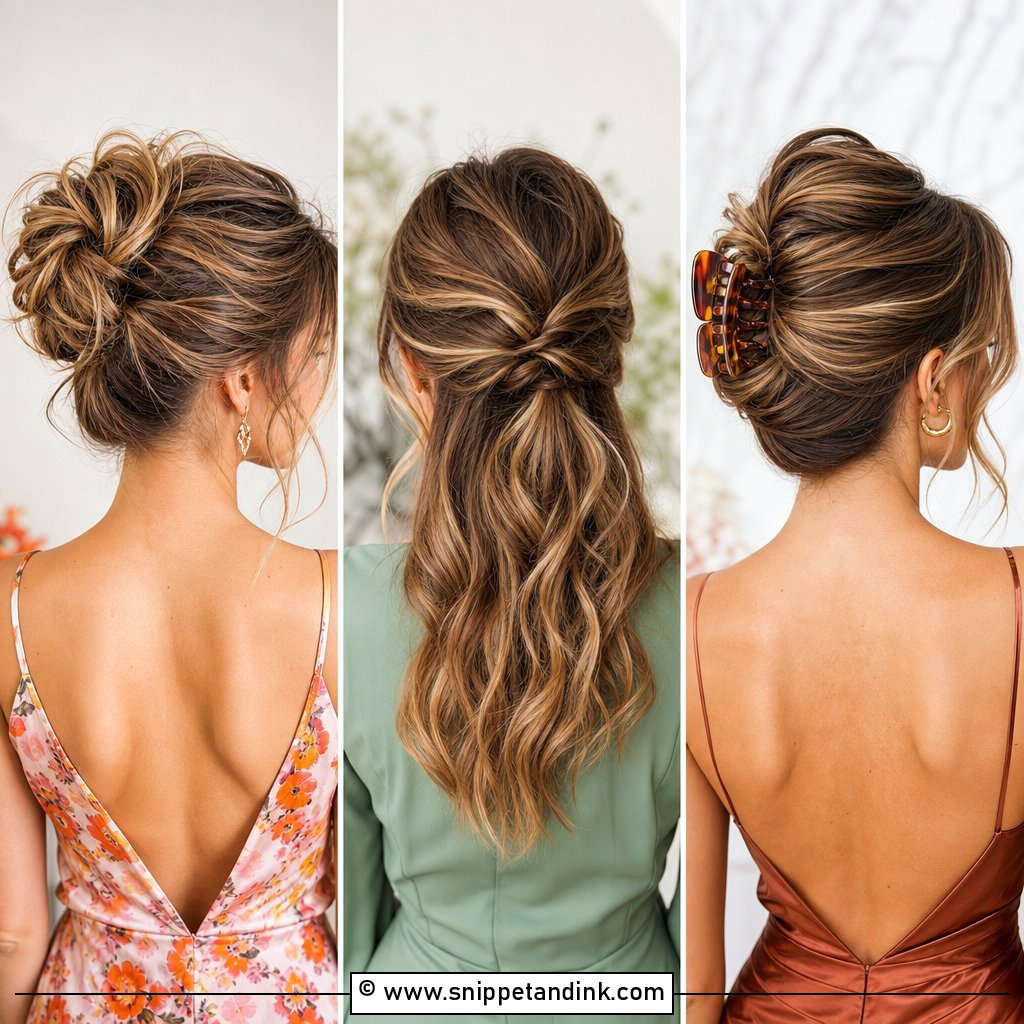
An undone updo still needs a secure base. I pin the bulk of the hair up in a relaxed shape first, then pull pieces out so it looks gently tousled rather than perfectly polished. Tendrils around the face get a quick curl, or they hang straight. Pearl pins or a delicate hair vine finish it. It suits most hair textures and works for both boho and modern weddings.
13. Floral Half-Up
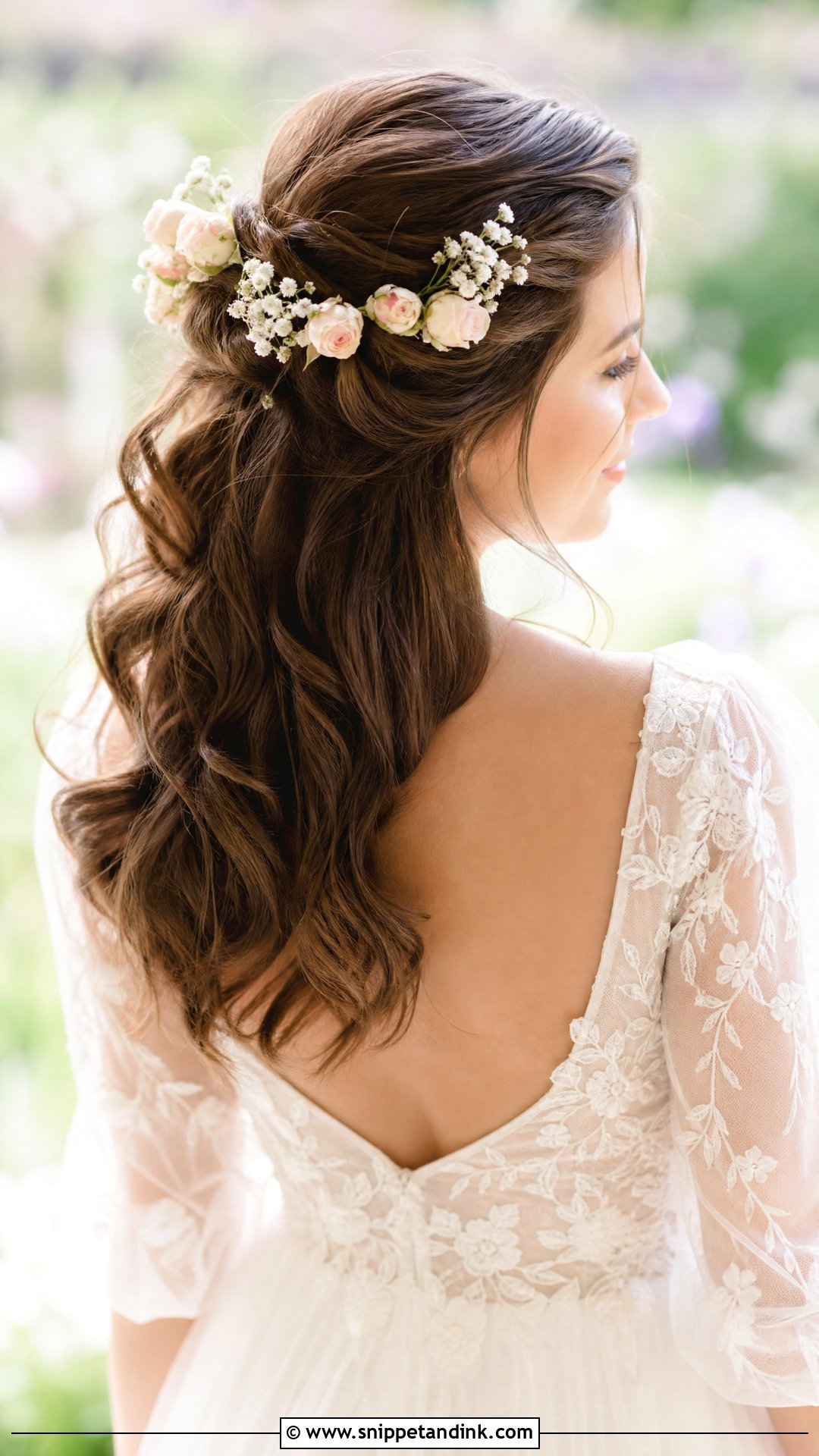
Fresh flowers in a half-up style need sturdy choices. Tiny spray roses, baby’s breath and waxflower hold up for hours; delicate garden blooms often wilt once they’re out of water. I ask the florist to wire small picks so they tuck straight into the pinned top section. It’s a natural fit for spring and summer garden weddings. Add them last, after hairspray, so the petals don’t get coated.
14. Sleek Low Bun
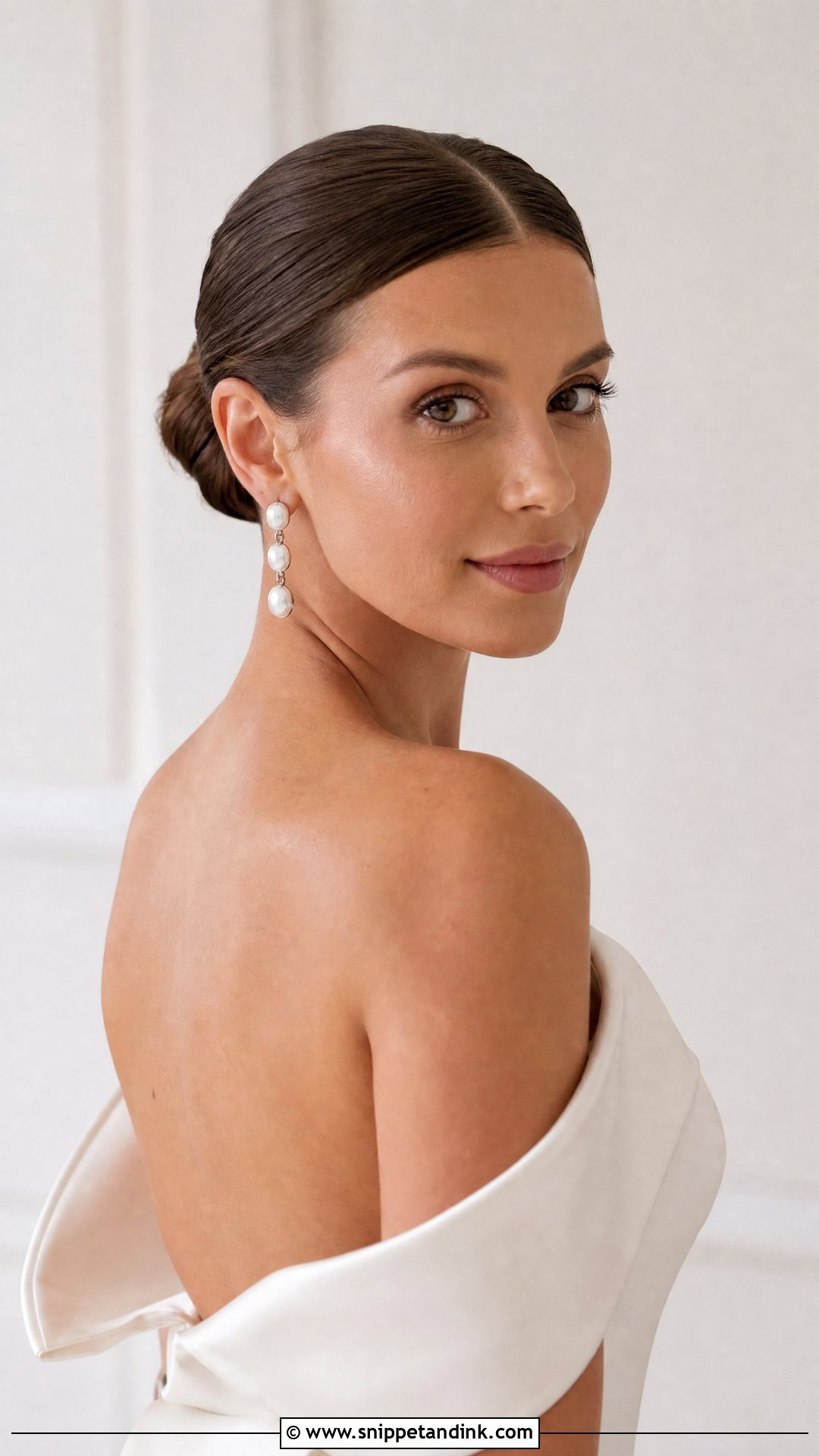
A sleek low bun depends on preparation more than styling. I blow-dry the hair completely smooth, use a small amount of smoothing cream, then gather it into a tight bun at the nape. A center part keeps it sharp. A shine serum gives the glossy finish. It pairs well with structured gowns and modern venues, and it’s the look I’d suggest if you want bold earrings or a statement necklace to stand out.
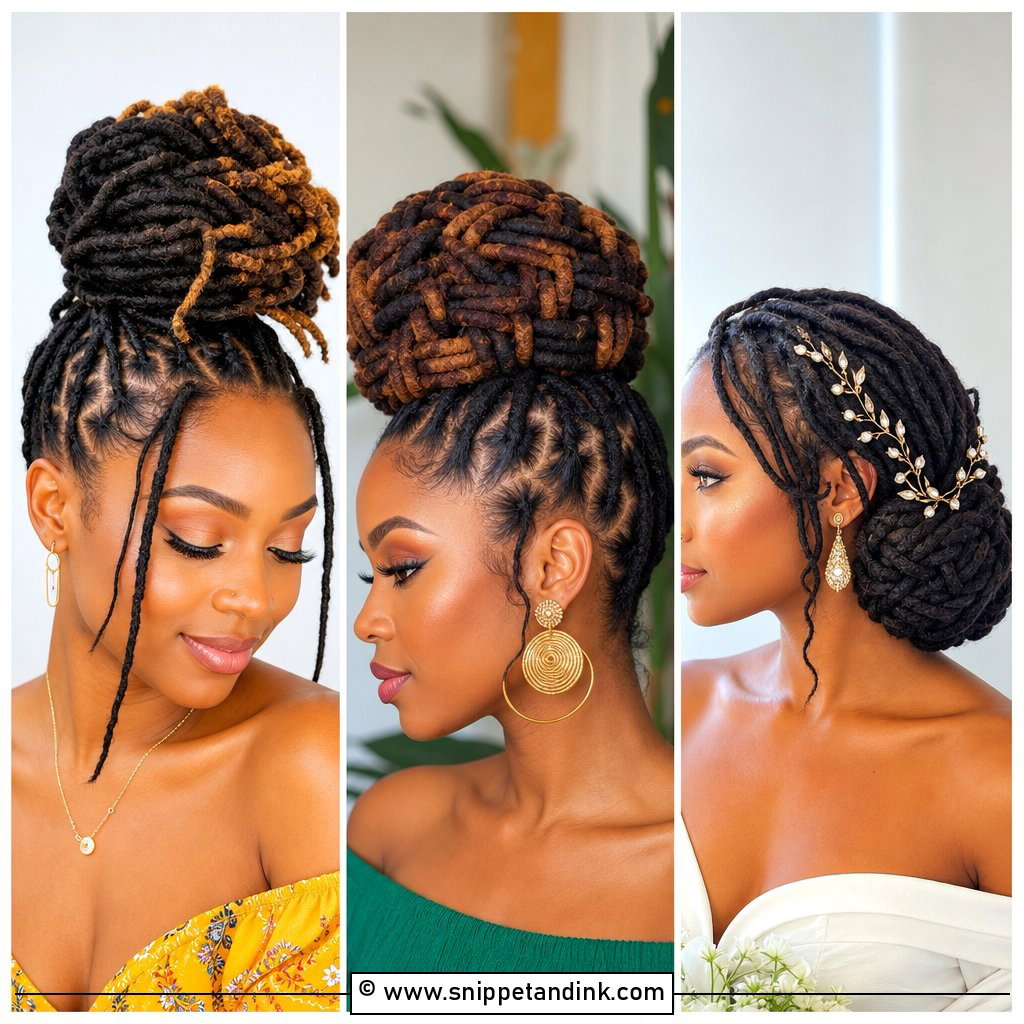
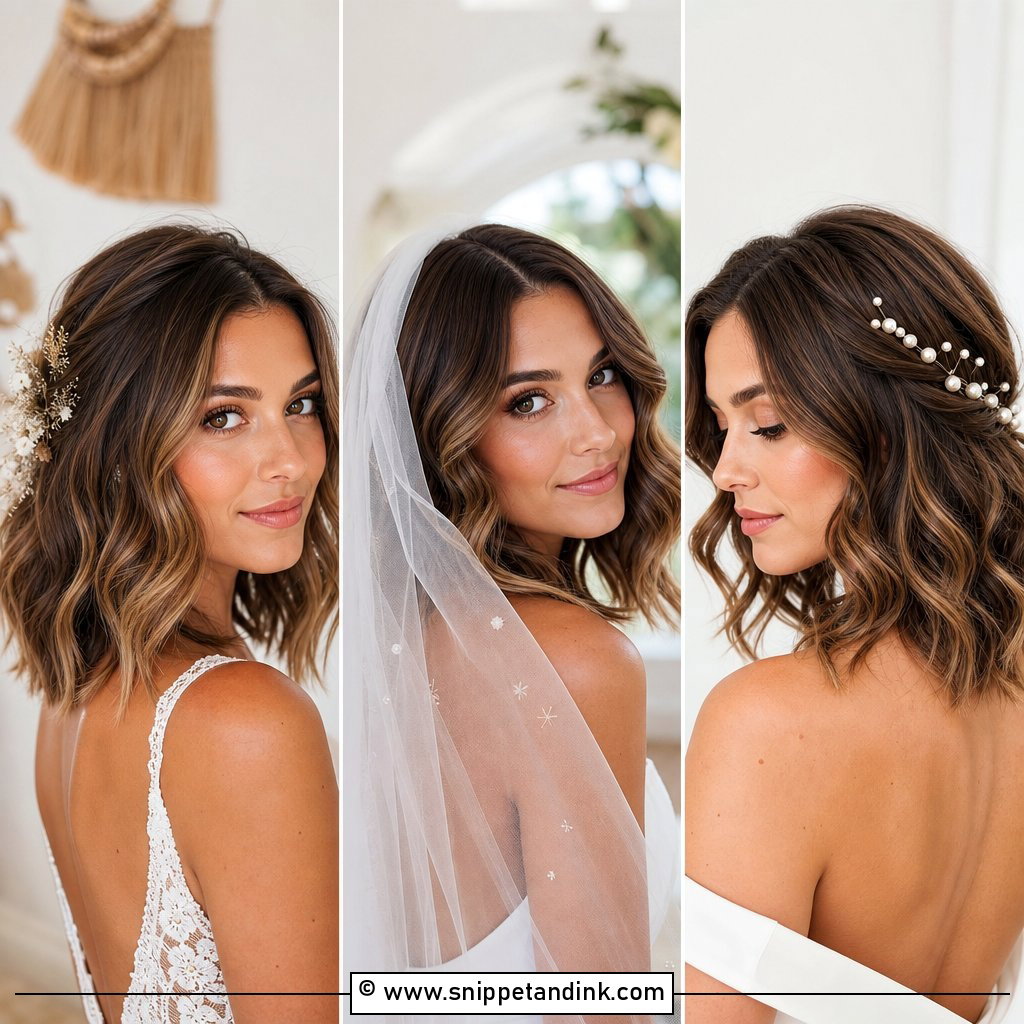
15. Twisted Half-Up With Pearls
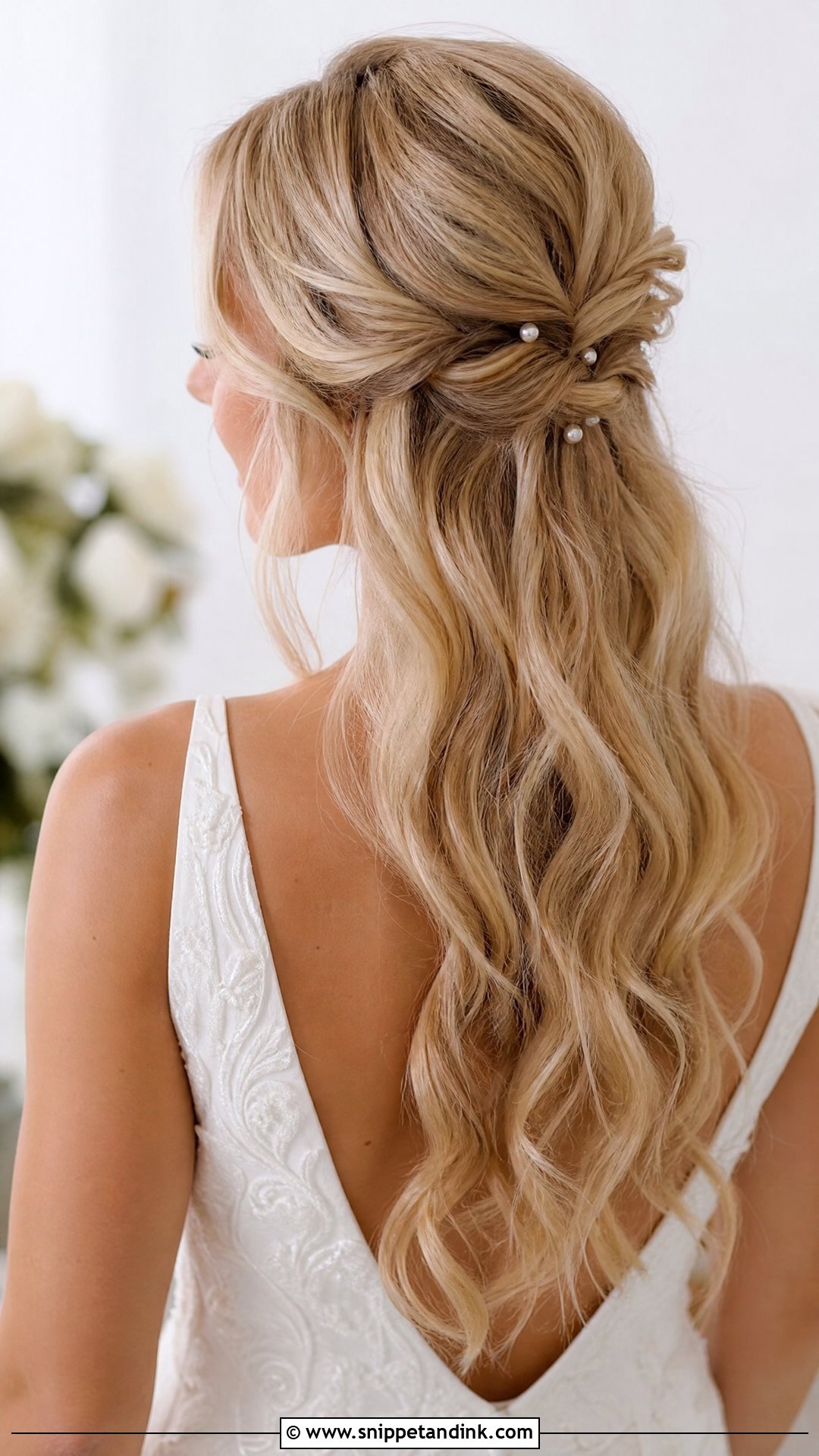
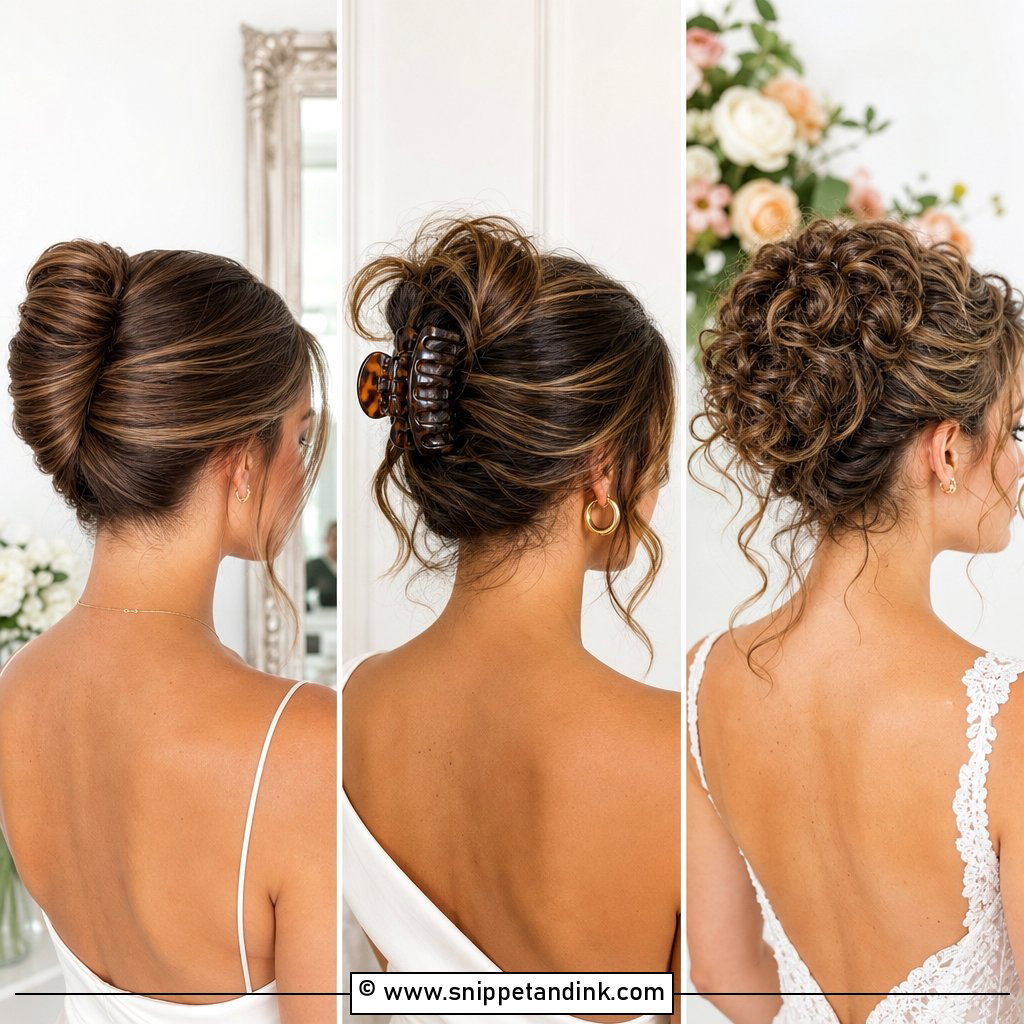
Twisted sections from each side meet at the back and are dotted with pearl pins, while the rest of the hair falls in waves. I put each pearl into the twist, not the smooth hair beside it, because the twist gives the pin something to grip. Loose twists look soft; tight twists look more structured. Medium hair has just enough length to show off the cascading waves below.
16. Tousled Waves With Veil
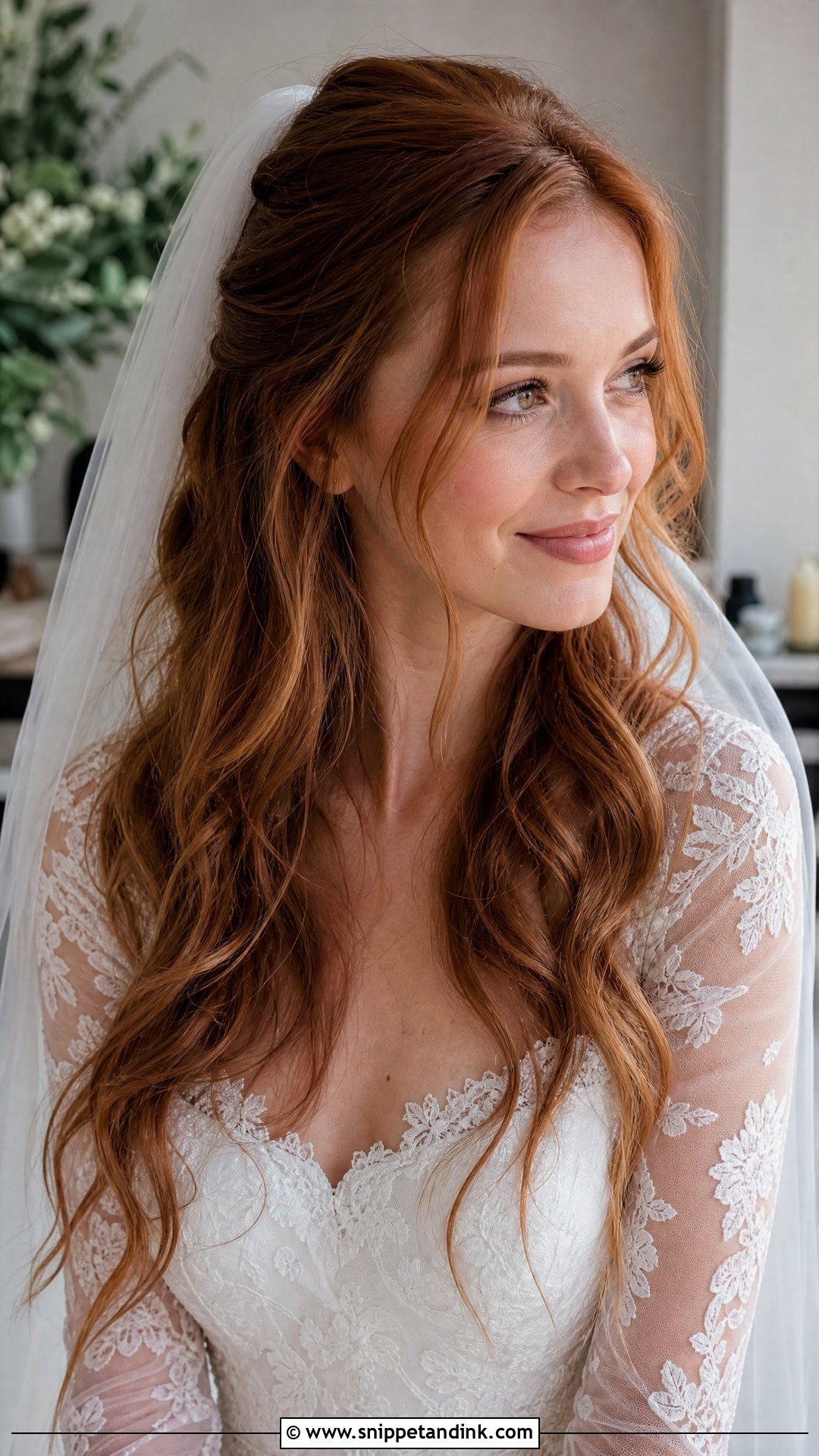
Tousled waves with a veil is the classic combination, but the veil needs an anchor. Loose waves alone won’t hold a comb, so I tuck a small hidden twist or a few crossed pins under the crown and slide the veil comb into that. Once the veil comes off for the reception, the waves are still there. Keep the waves piecey rather than heavily defined so they look natural with and without the veil.
17. Dutch Braid Updo
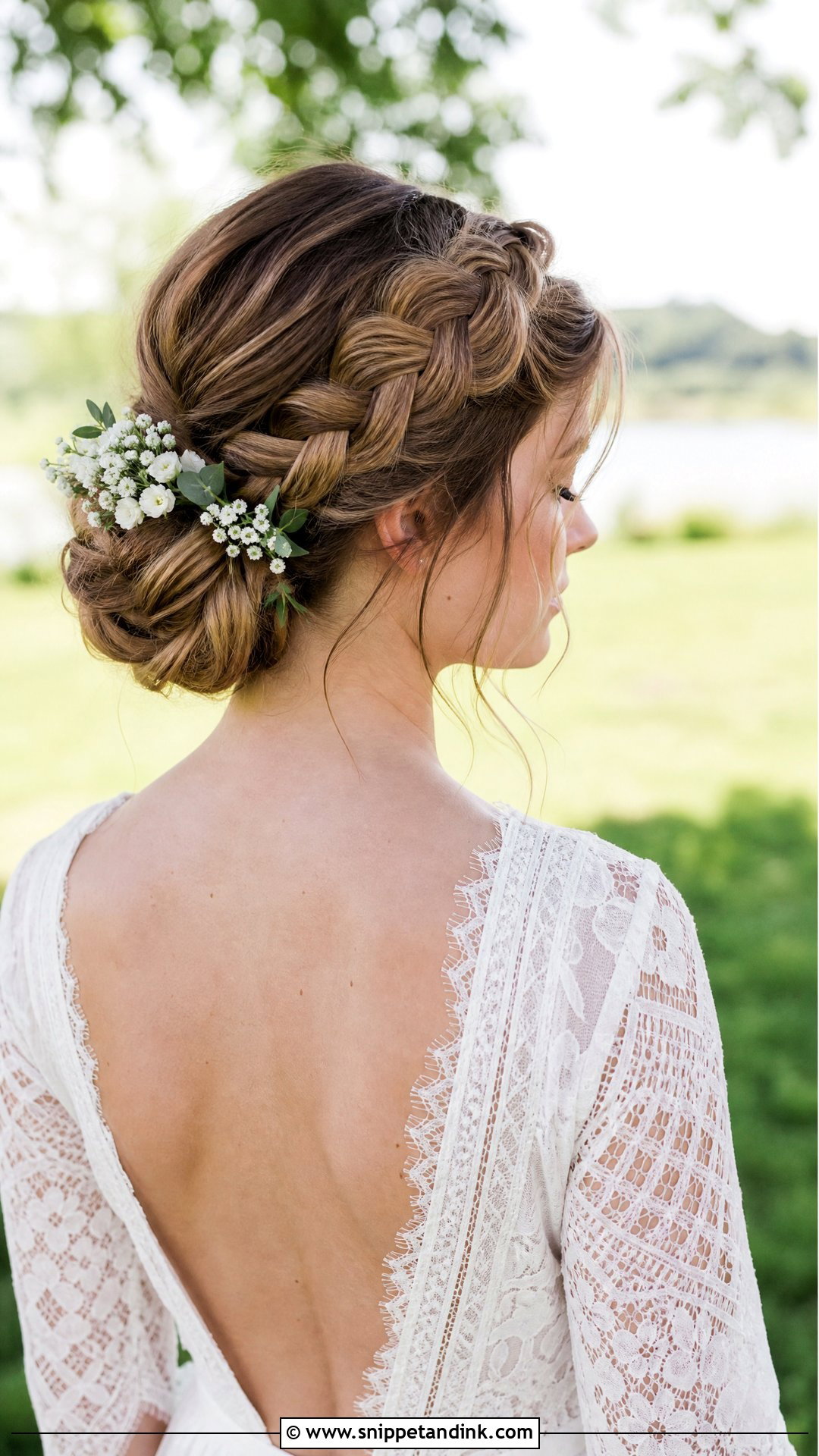
A Dutch braid is an inside-out braid: strands cross underneath rather than over, so the plait stands up off the head. I braid toward the nape and wrap the end into a low bun or twist. It’s one of the most secure styles in this list, which makes it practical for a bride who plans to dance hard. Pull the edges for width. Small flowers or pearl pins along the braid add detail.
18. Curtain Bangs With Waves
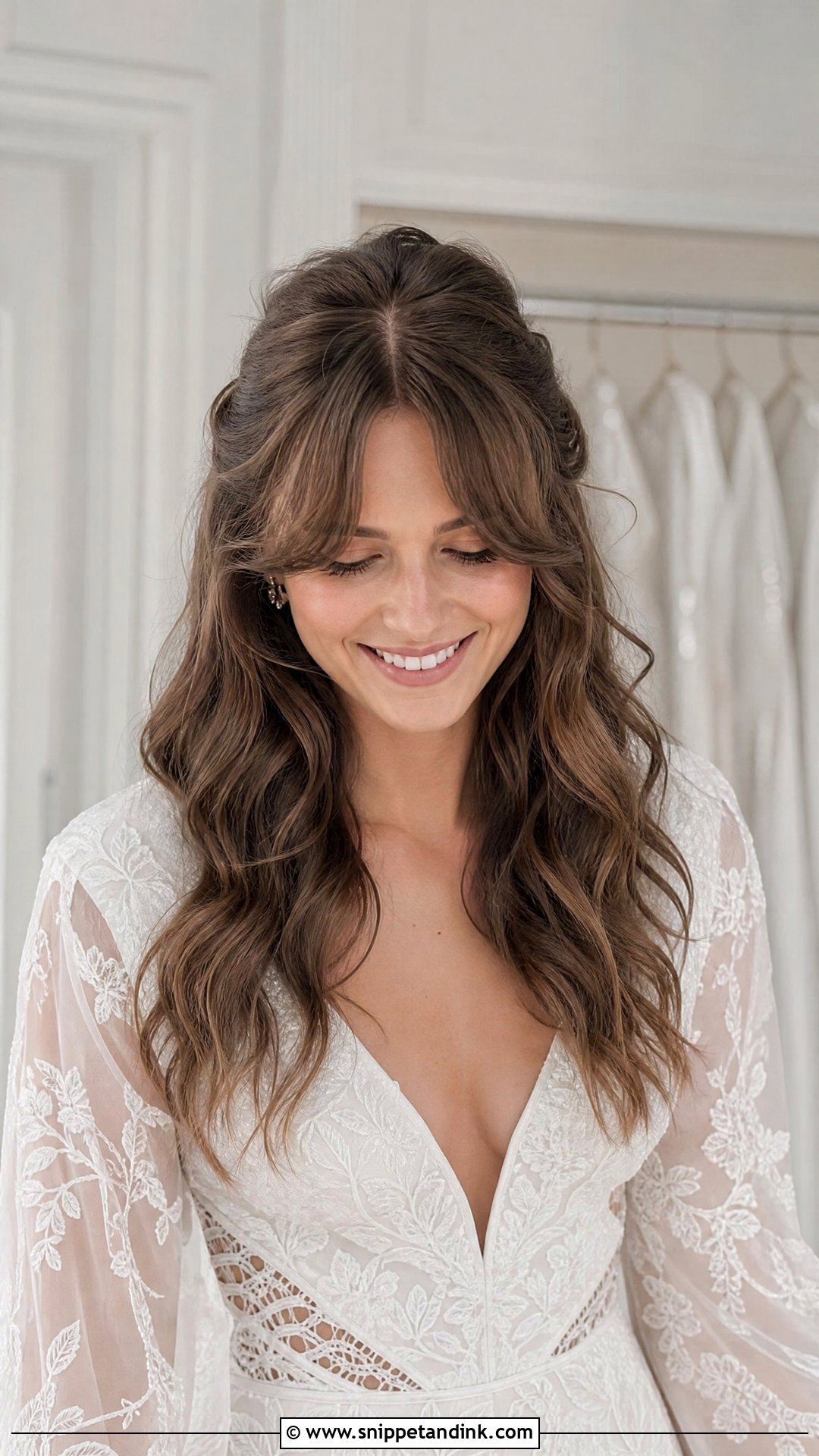
Curtain bangs part in the middle and sweep toward the cheeks, blending into the rest of the waves. I style them with a round brush or small barrel, bending them away from the face. If you’re thinking of getting curtain bangs for the wedding, cut them at least a month before so they’ve settled. A fresh cut often sits too short and too blunt. The rest of the hair can be worn down in loose waves.
19. Knotted Low Bun
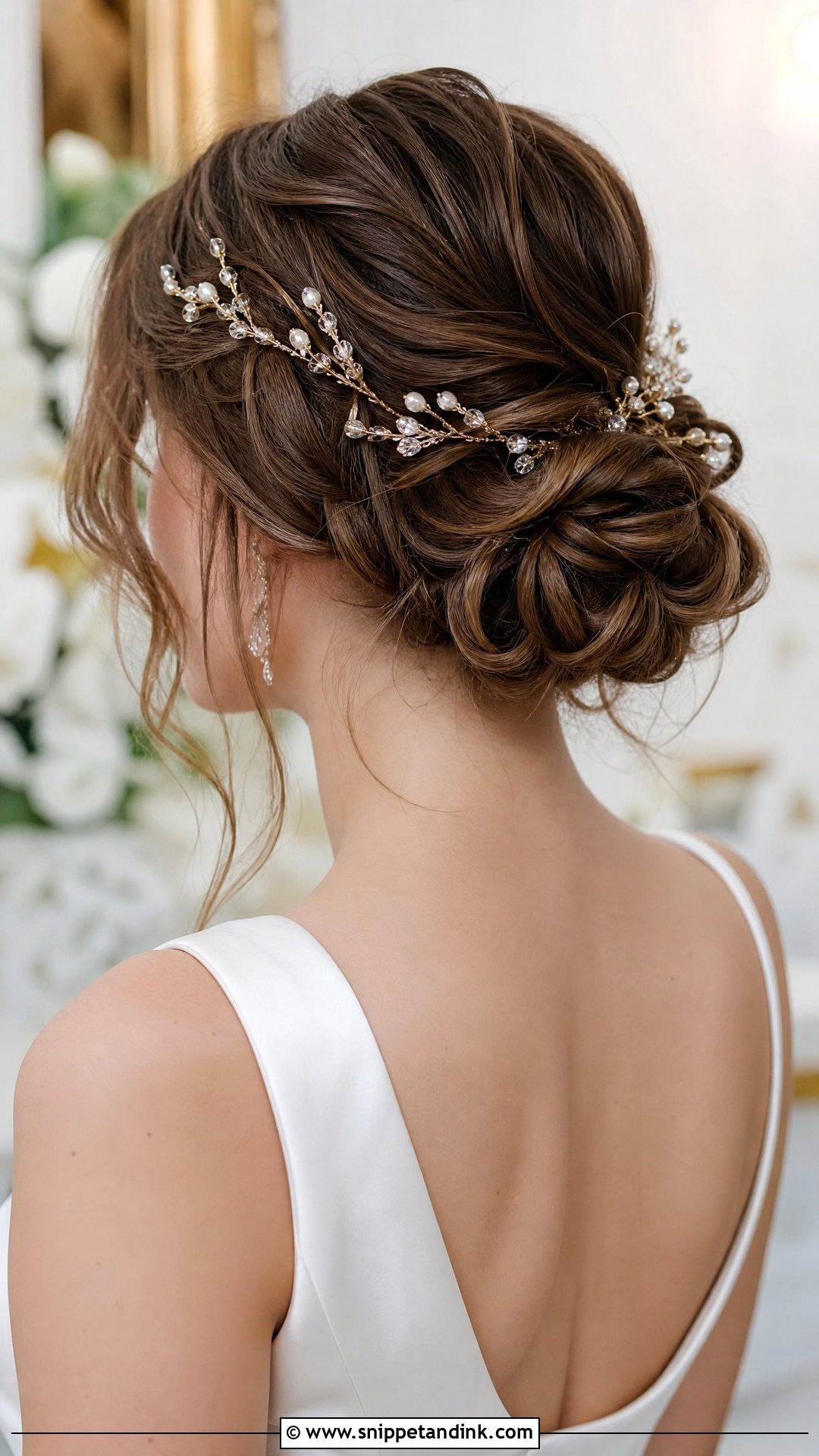
A knotted low bun is made by tying several sections into small, soft knots and gathering them at the nape. The knots give texture without looking fussy. I pin through each knot so they hold as one piece. Medium hair forms knots easily, but freshly washed, slippery hair can slide out of them; I prefer second-day hair here. A few loose tendrils and pearl accents finish it.
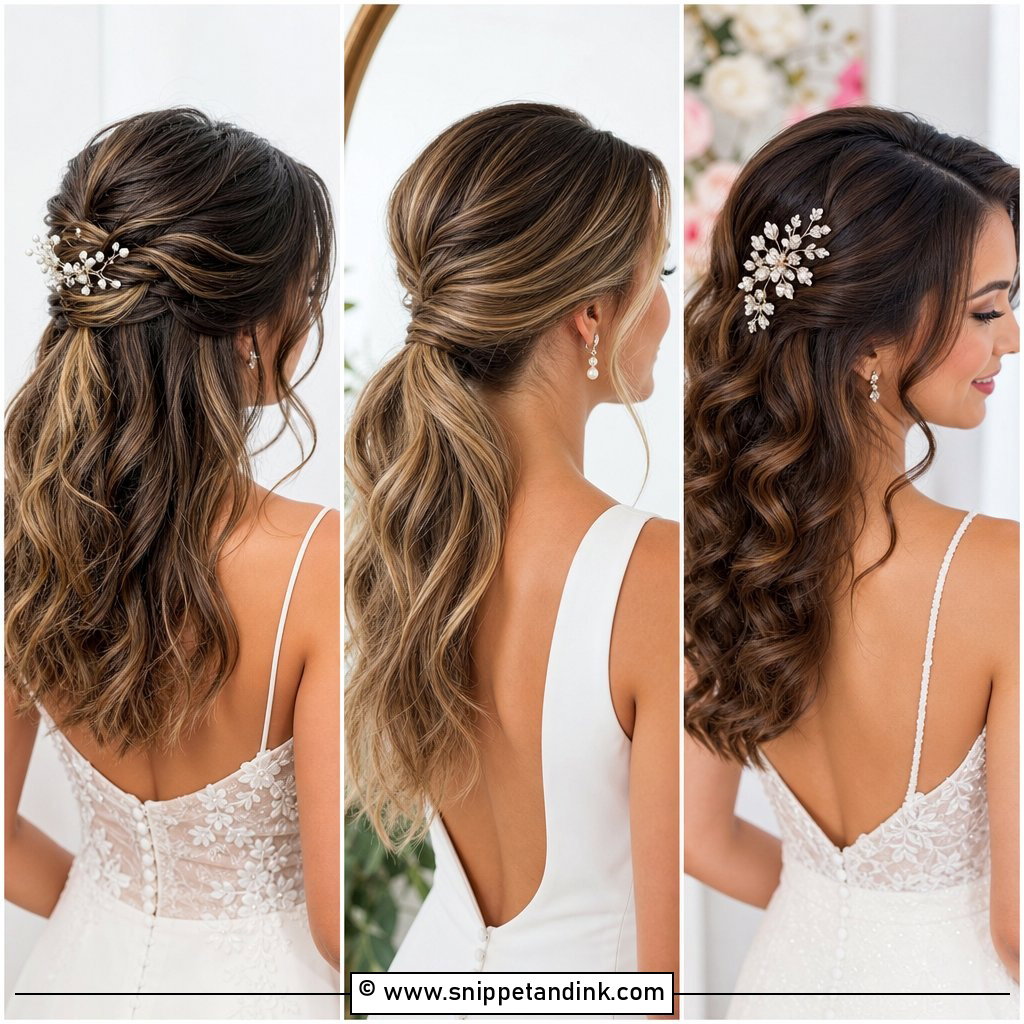
20. Bubble Braid
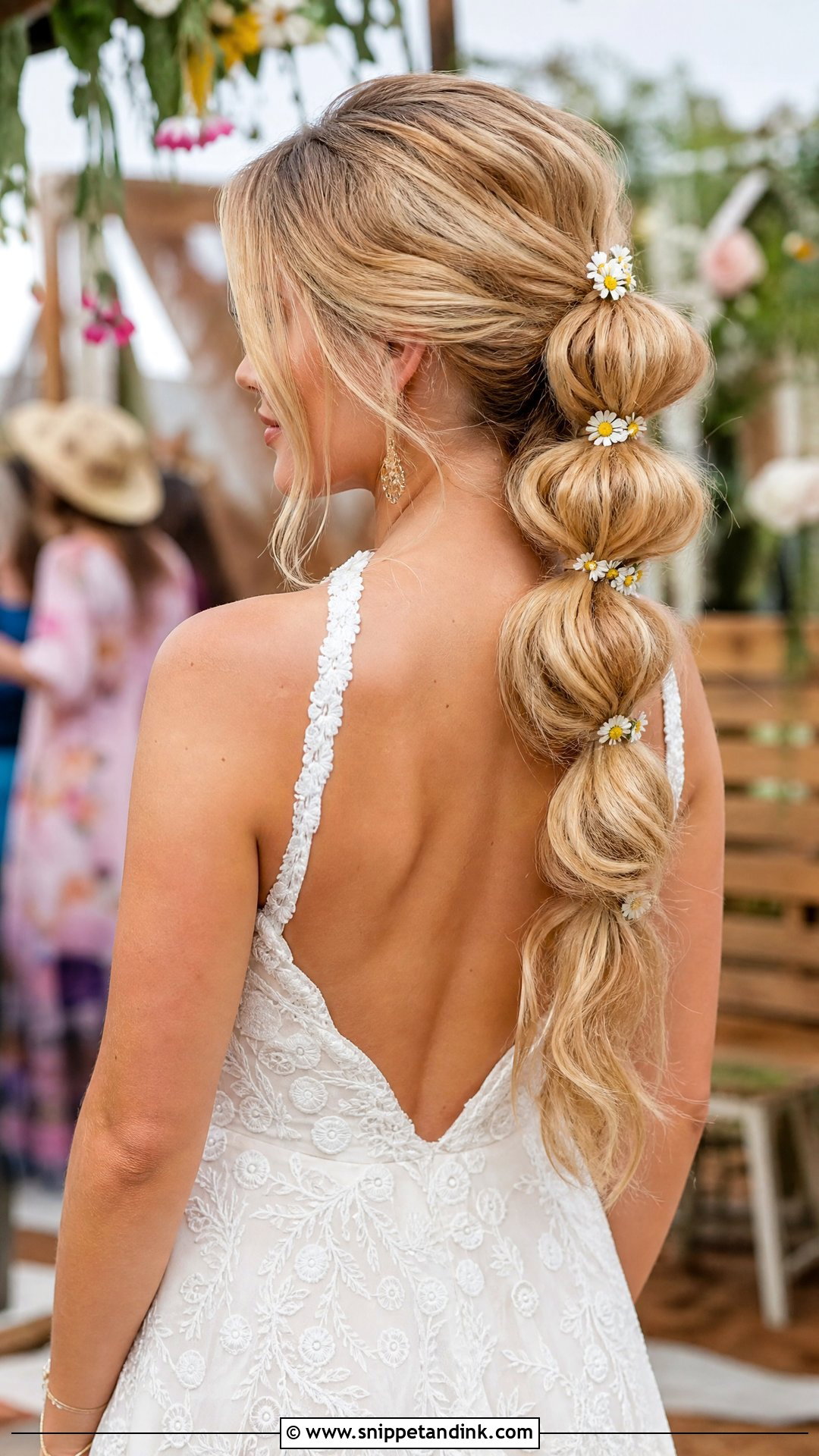
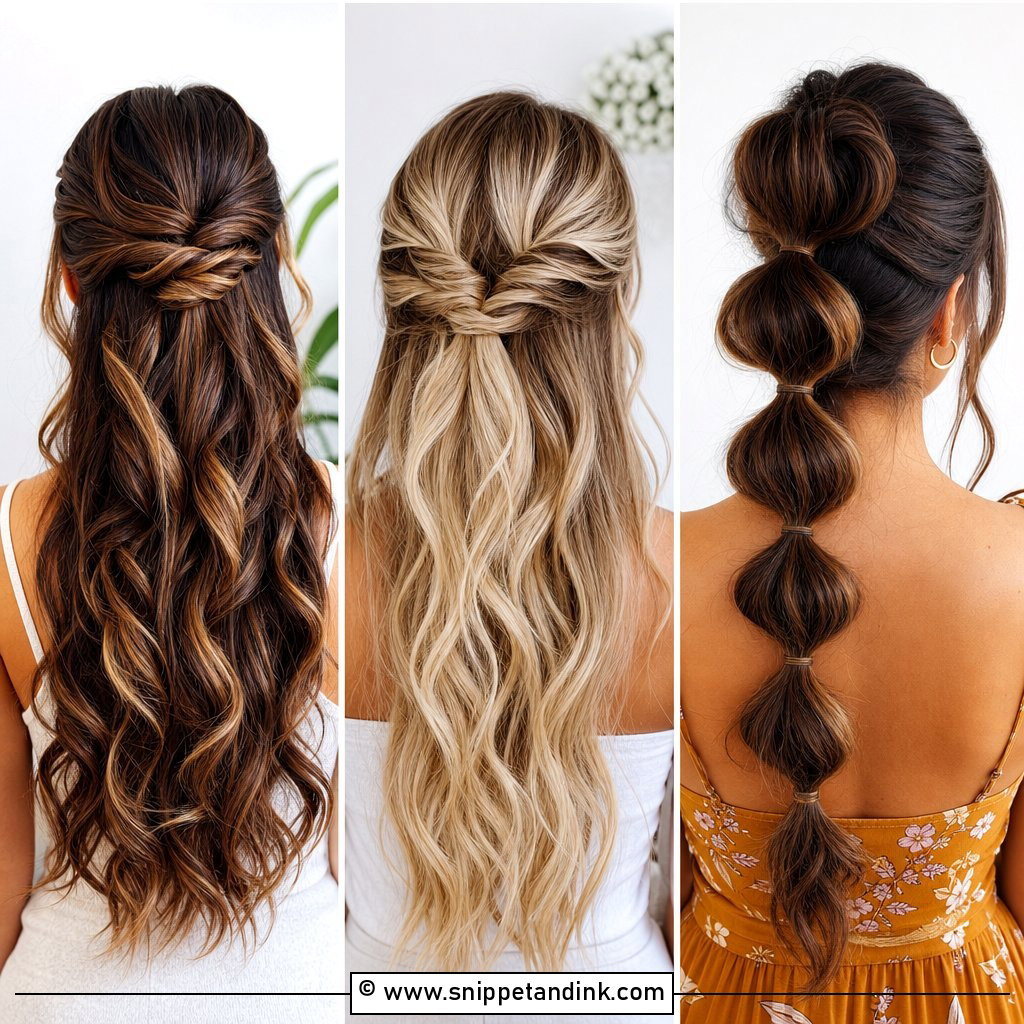
Bubble braids are the playful one here, and the easiest to do yourself. Gather a ponytail or half-up section, then add small elastics at intervals and tug each segment outward to make the bubbles. Clear elastics disappear in the hair; tiny flowers or pearl pins can hide them. Medium hair makes a short bubble braid of three or four sections. It suits a relaxed or festival-style wedding more than a formal one.
Cut, Color and Treatments in the Weeks Before
Most problems I see on a wedding morning trace back to something done in the last fortnight: a fringe cut too short, a toner that went brassy, a treatment that left hair too smooth to grip a pin.
The best styling can’t fix poorly timed salon work, so I always ask brides what they’ve booked in the run-up.
- Trim two to four weeks ahead. Fresh cuts can look blunt and make ends harder to curl smoothly.
- Color about a week or two before, so any tone settles and you have time to fix a shade you don’t like.
- Be careful with new smoothing or keratin treatments close to the wedding. They can make hair so slippery that curls and pins don’t hold.
- Skip heavy conditioning masks the night before, which can leave hair too soft to style.
On the wedding morning, come with clean, dry hair, usually washed the day before, unless your stylist asks otherwise. Bring any extensions or accessories you’ll be wearing. Wear a button-up shirt so you don’t pull anything over your finished hair.
One more thing I ask about: medication or a new diet that has changed your hair recently, and any big change in water if you’re traveling for a destination wedding. Hard water and a different climate can make familiar hair behave differently, so if you can, do a quick test style once you arrive.
Matching Your Hair to the Dress, the Venue and You
Medium-length hair can carry everything from Hollywood waves to a bubble braid, so the deciding factors are your dress, your venue and how you want to feel. Add one personal detail, like fresh flowers, pearl pins or a family veil. Book a trial and bring your accessories, a photo of the dress and any pieces you plan to wear, so the stylist can test everything together before the wedding.
You'll Like These Ideas:


Leave a Reply