
Waves are the style I’m booked for most on medium hair, and they’re also the one with the widest gap between a good version and a tired one by evening. At this length there’s enough hair for a clear wave pattern, a half up section, a veil or a comb, and not so much weight that the bends fall out by the speeches. Waves sit naturally with strapless gowns, off-the-shoulder necklines, lace sleeves and plain modern dresses. Which wave you choose should follow your texture and your venue more than a mood board. Below are twenty versions, from sculpted Hollywood waves to beachy texture, with what each one needs to last.
Three Tools, Three Different Waves
When a bride shows me a wave she loves, the first thing I work out is which tool made it, because no amount of brushing turns one kind of wave into another. On medium hair the differences are easy to spot once you know them.
- Curling iron with a clamp: gives an even curl from root to tip. Curled all in one direction and brushed out, it makes Hollywood and glam waves.
- Curling wand: no clamp, so the hair wraps around a tapered or straight barrel. It makes rounder, looser bends and suits soft and loose waves, especially curled in alternating directions.
- Flat iron: twisted as it glides down, it creates flatter S-shaped bends with straight ends, which is the true beach wave and the most modern look on a lob.
Barrel size matters as much as the tool. On medium hair a barrel around one inch gives defined waves, and around an inch and a quarter gives looser ones. Anything much bigger barely bends shoulder-length hair, so the wave you see in a long-hair photo may need a smaller barrel on yours. If you’re unsure which you want, take two photos to your trial and ask your stylist to curl half your head each way.
1. Medium Hair Hollywood Waves
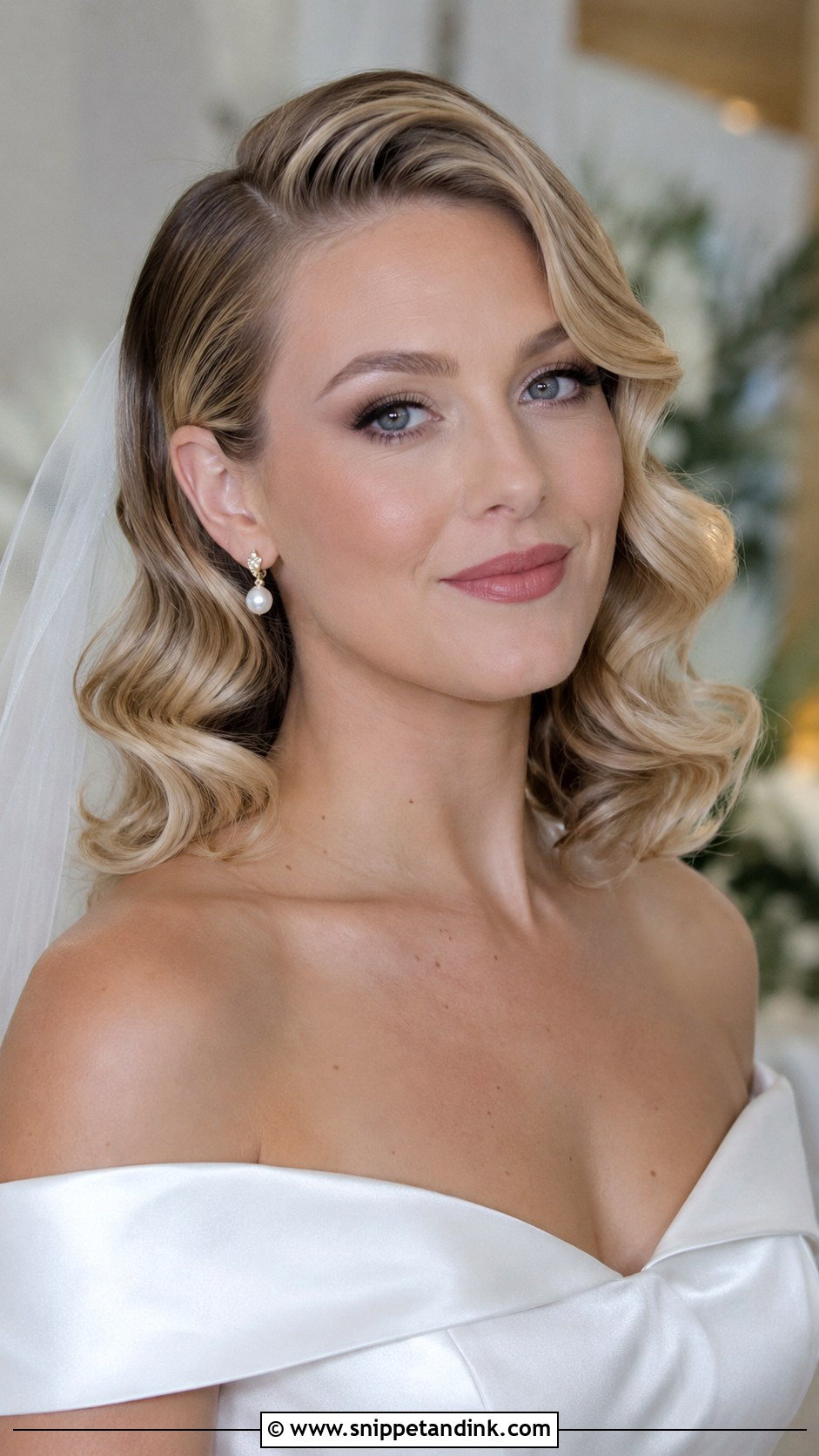
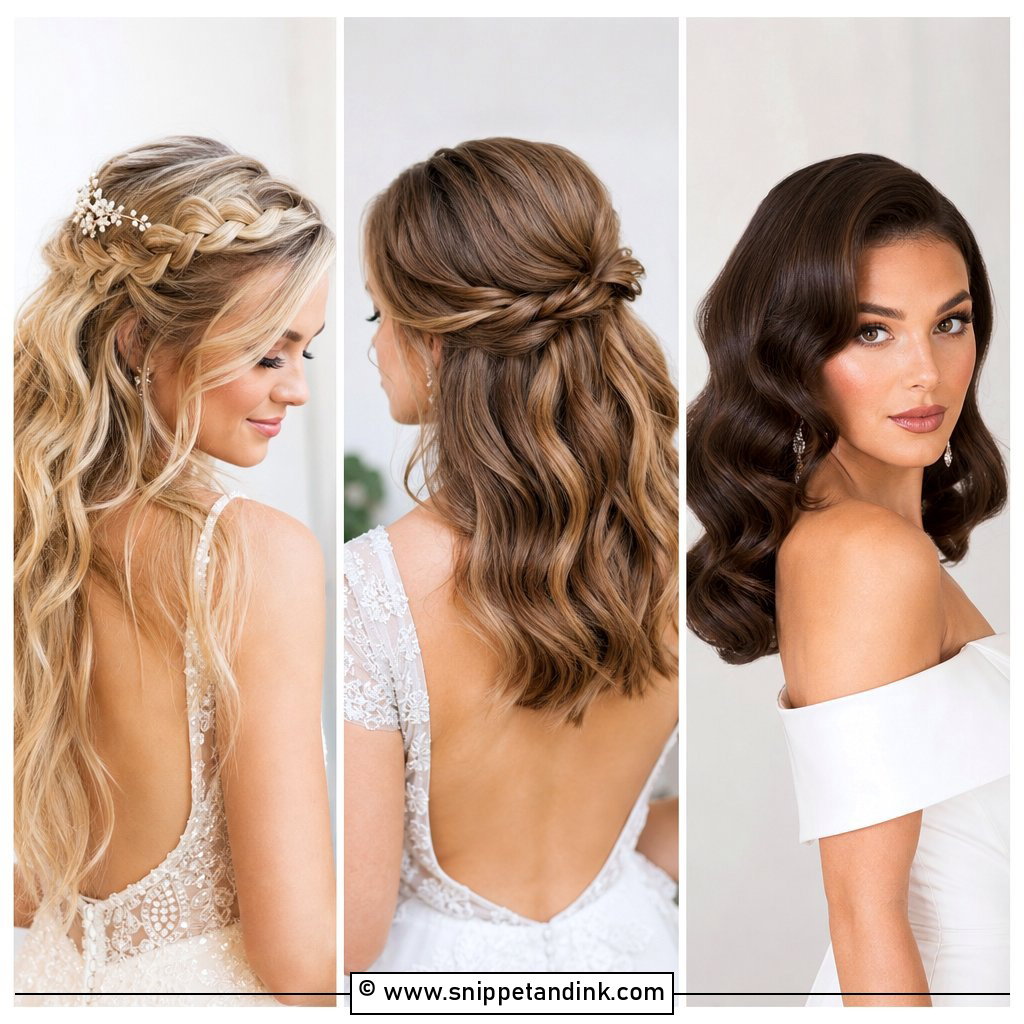
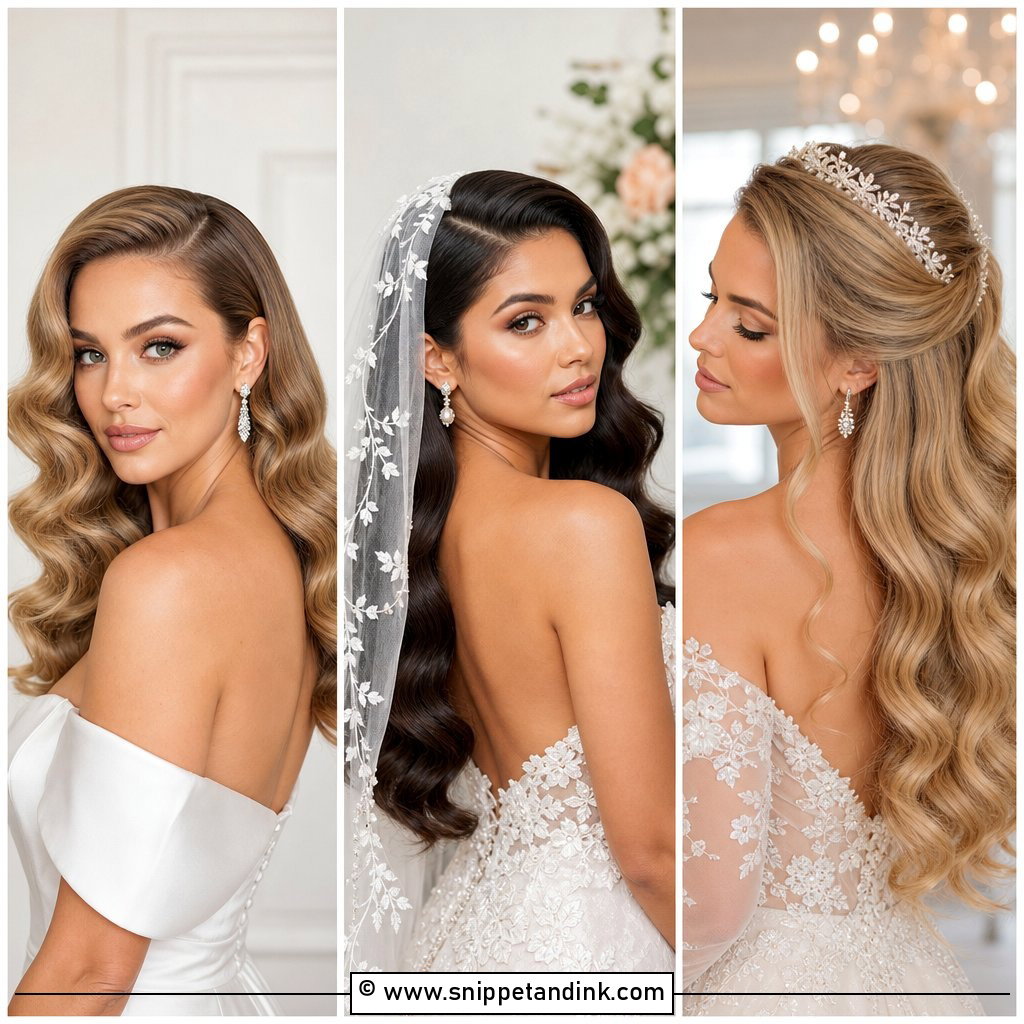
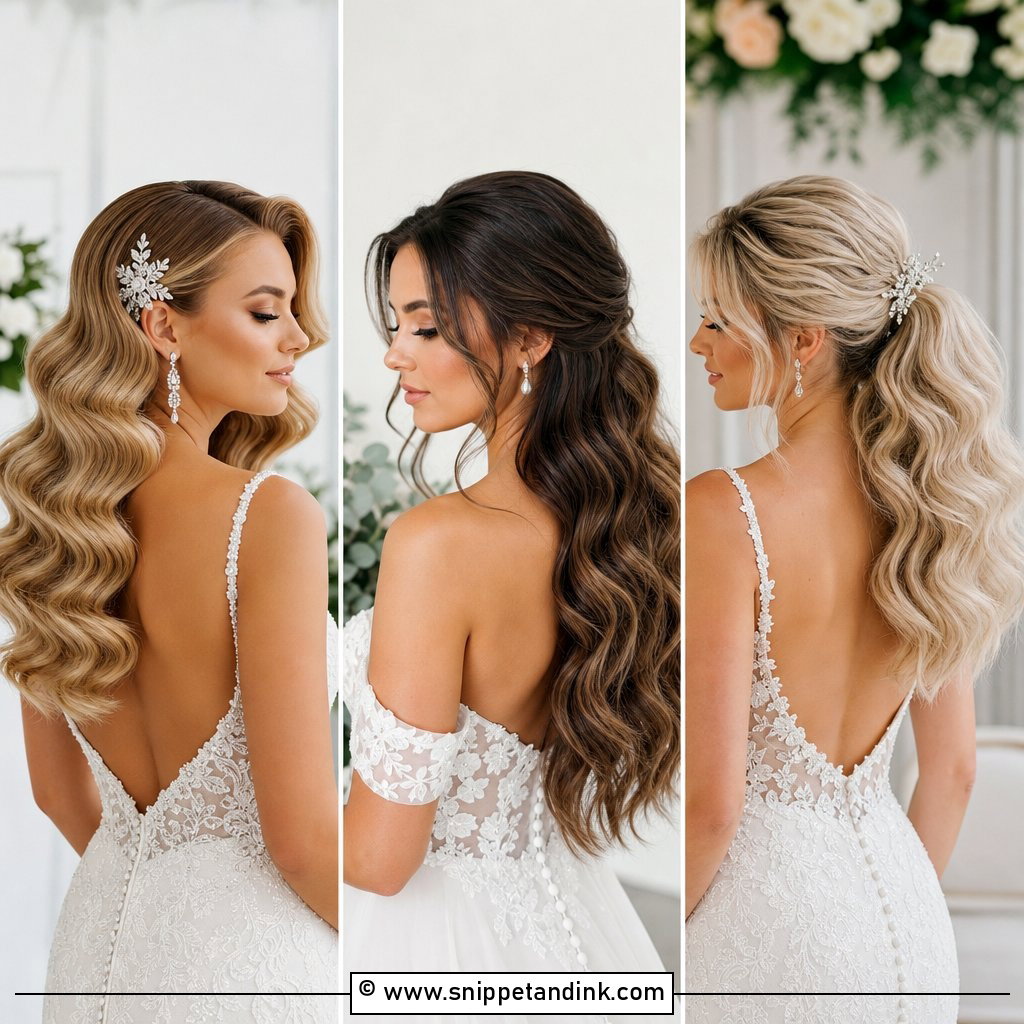
Hollywood waves on shoulder-length hair are close to the original, since the classic red-carpet versions were rarely long. Every curl goes in the same direction so that, once brushed, the curls lock together into one smooth ripple. The ends stay full at this length rather than stretching out. A deep side part brings drama; a centre part makes it cleaner and more current. I set each curl, let it cool completely while pinned, and only then brush, finishing with a shine mist. Pearl earrings, a satin gown and a plain veil tucked underneath are all it needs.
2. Medium Hair Soft Bridal Waves
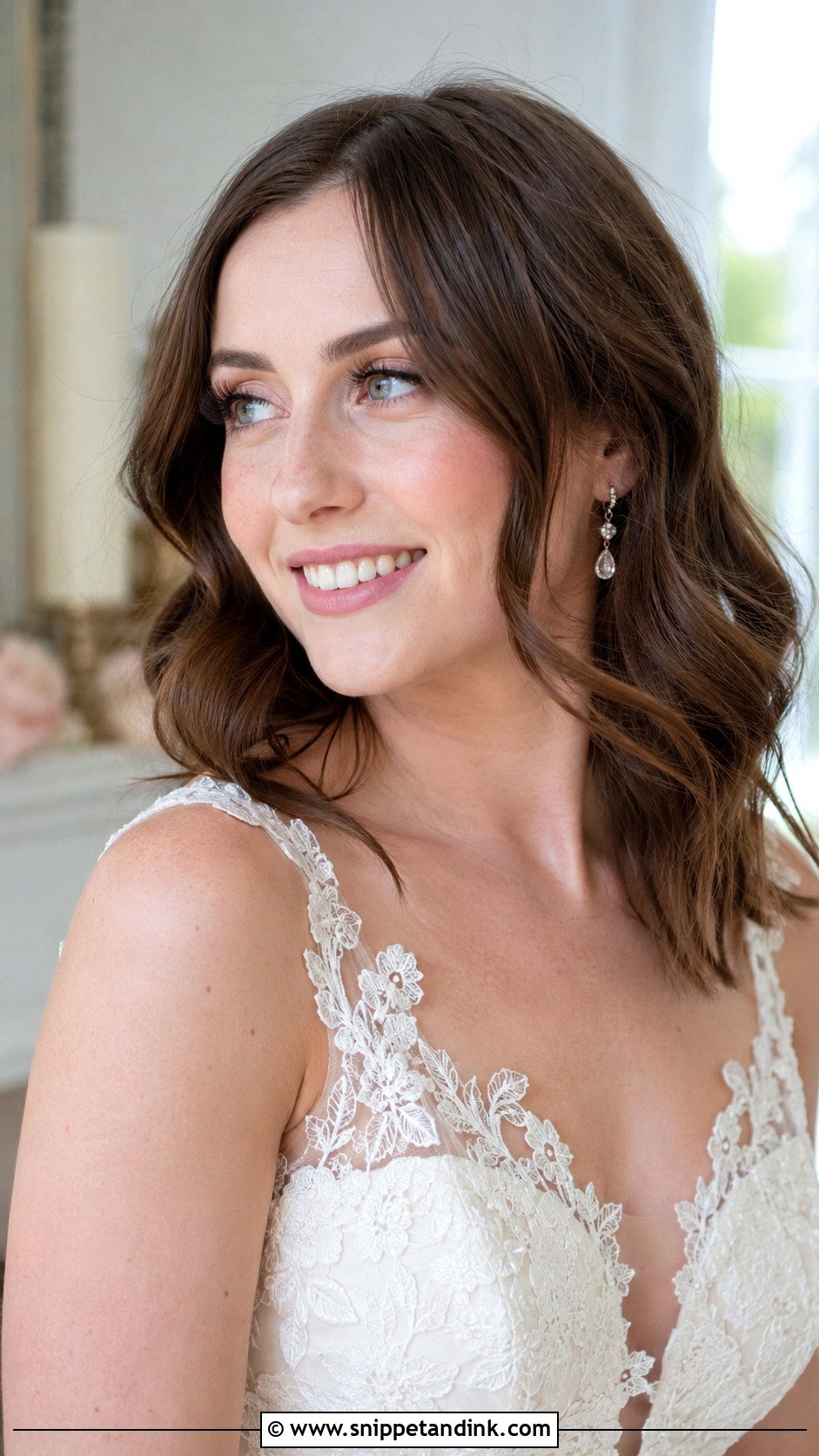
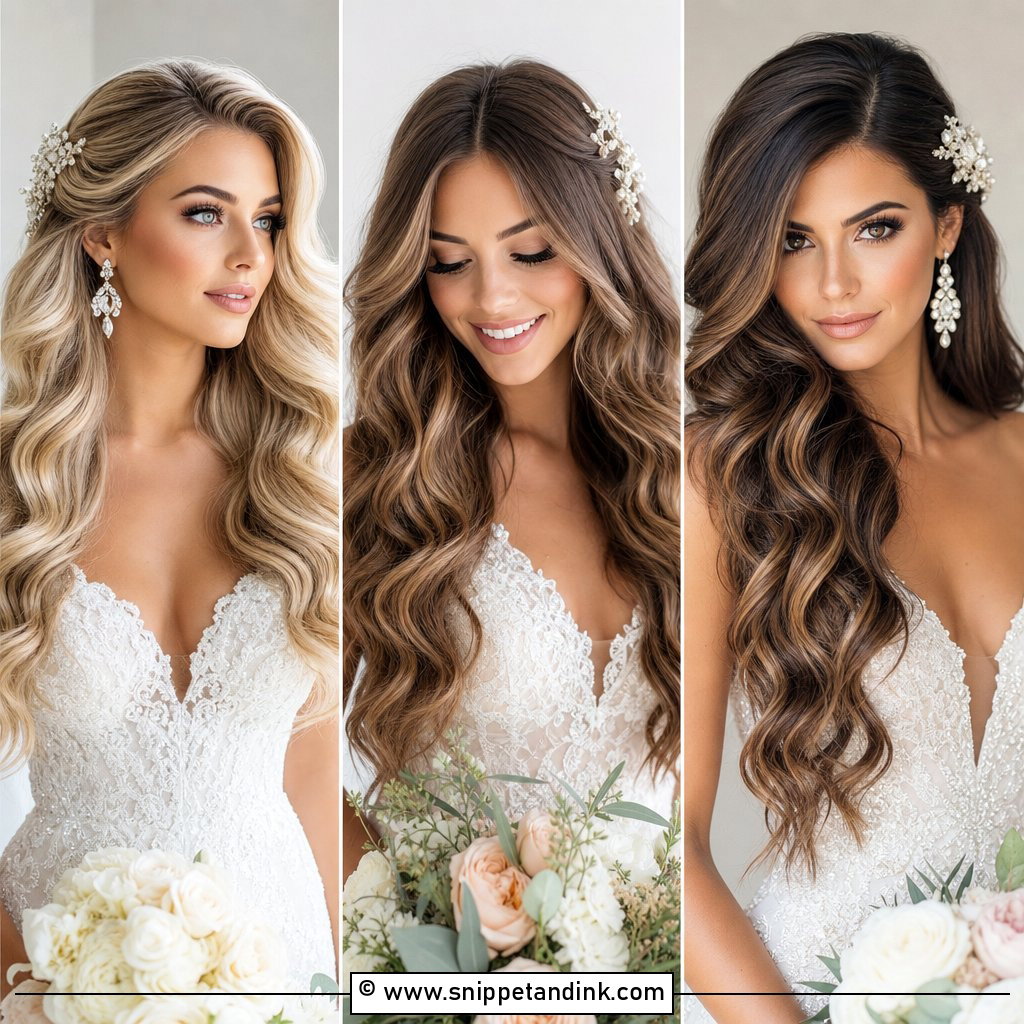
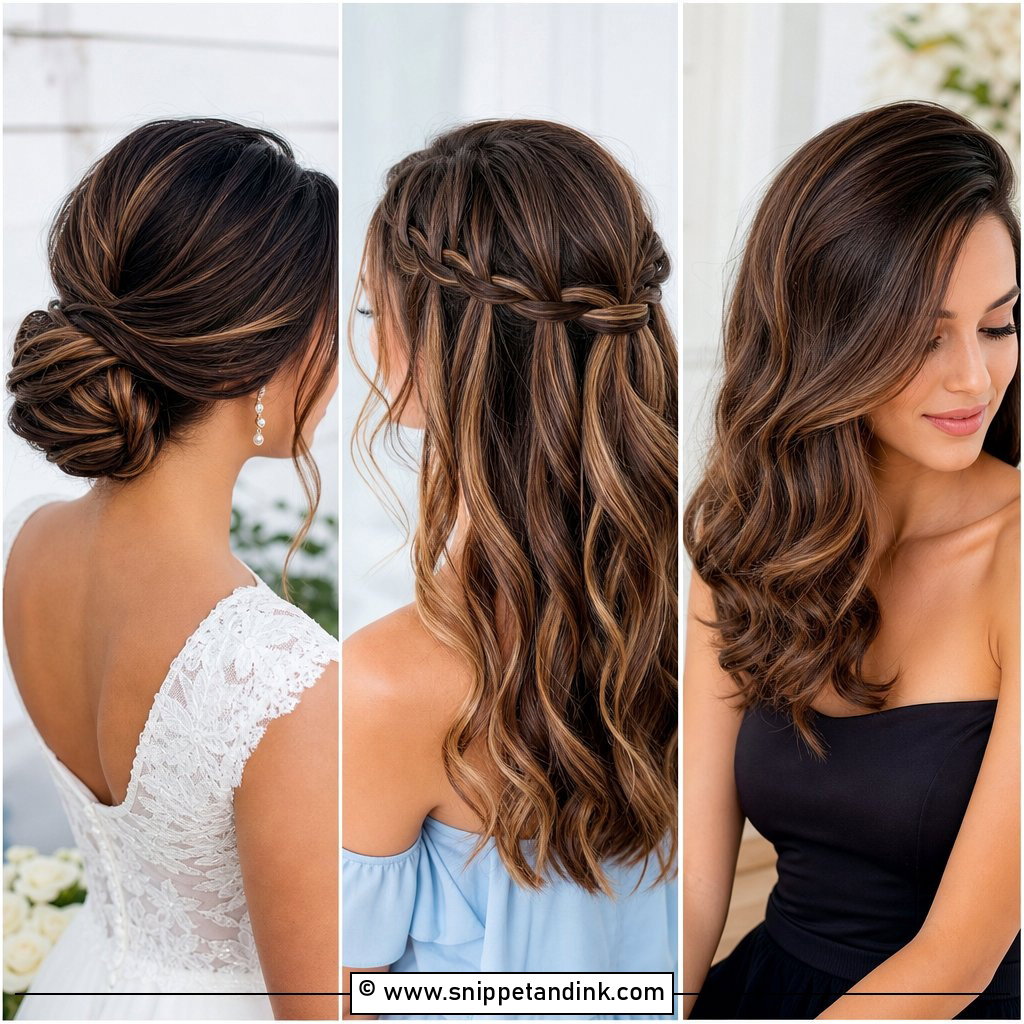
Soft waves are the least formal option here and the one most guests would call natural. They’re loose and slightly brushed out, so they frame the face rather than sitting in rows. On medium hair they keep the length airy while adding body. I prep with a light mousse at the roots before curling and finish with a flexible spray; anything crunchy undoes the point of the style. A few face-framing pieces soften the cheeks and jaw. Works in a garden, a chapel, on a beach or in a ballroom.
3. Medium Hair Beach Waves For Wedding
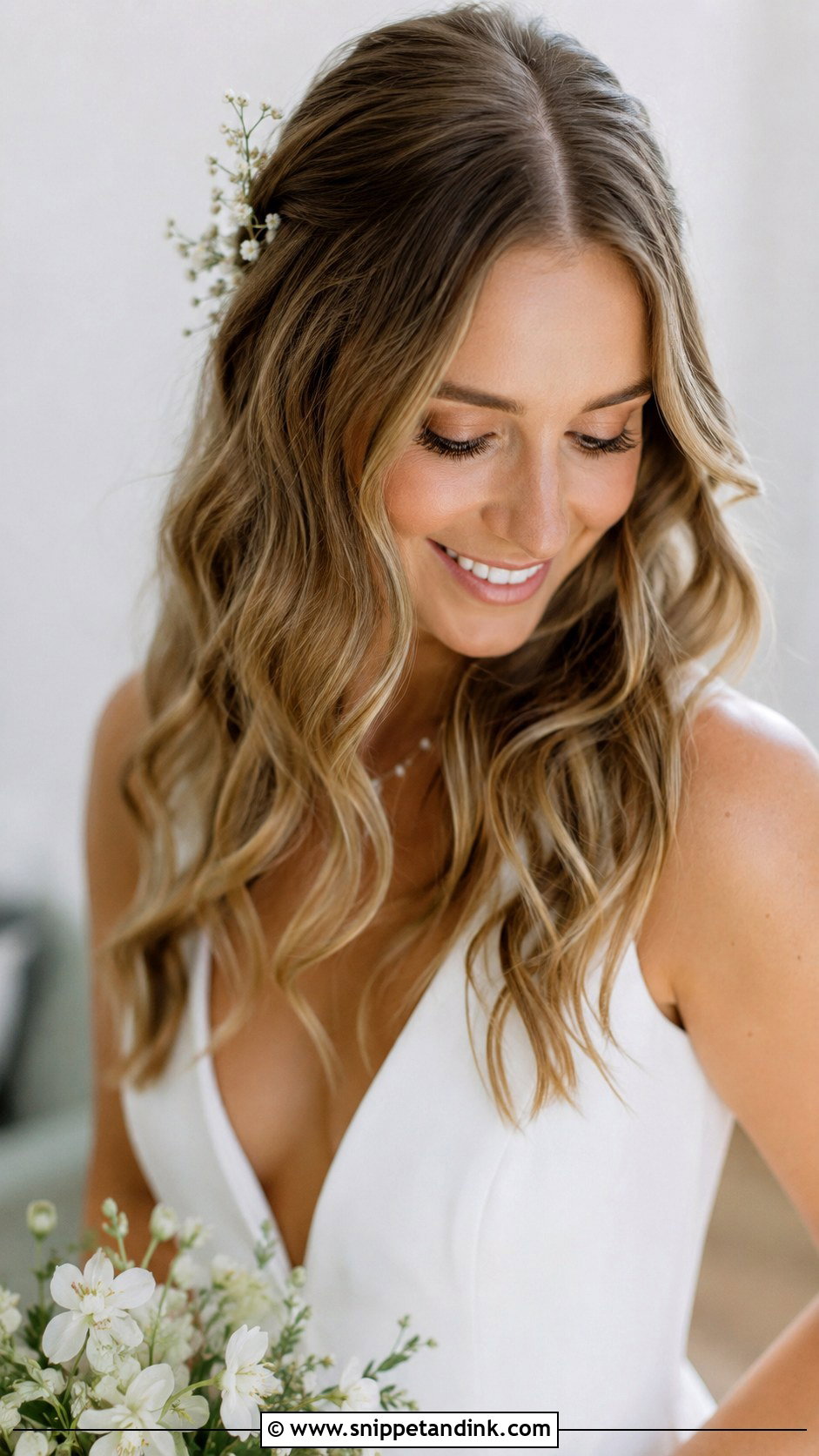
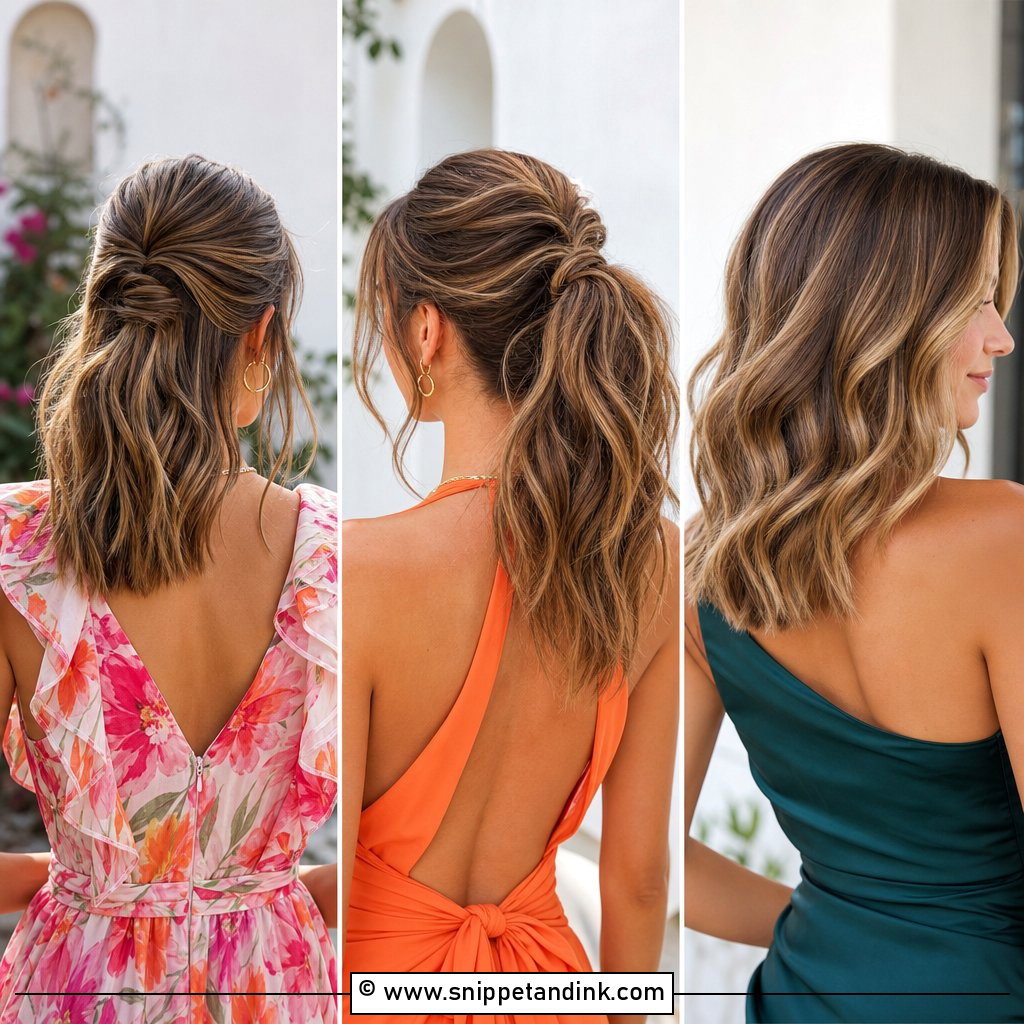
Beach waves at a wedding need a little more finish than they get on holiday. I want soft texture, light volume and separated bends that still look placed. They’re made with a flat iron or a wand with the last few centimetres of the ends left straight, which is what stops them looking like ringlets. Smoothing cream on the ends keeps them from looking dry. A centre part reads modern; slightly off centre feels more natural. They suit destination weddings and simple slip dresses, and a small pin or a veil adds the bridal polish.
4. Medium Hair Half Up Bridal Waves
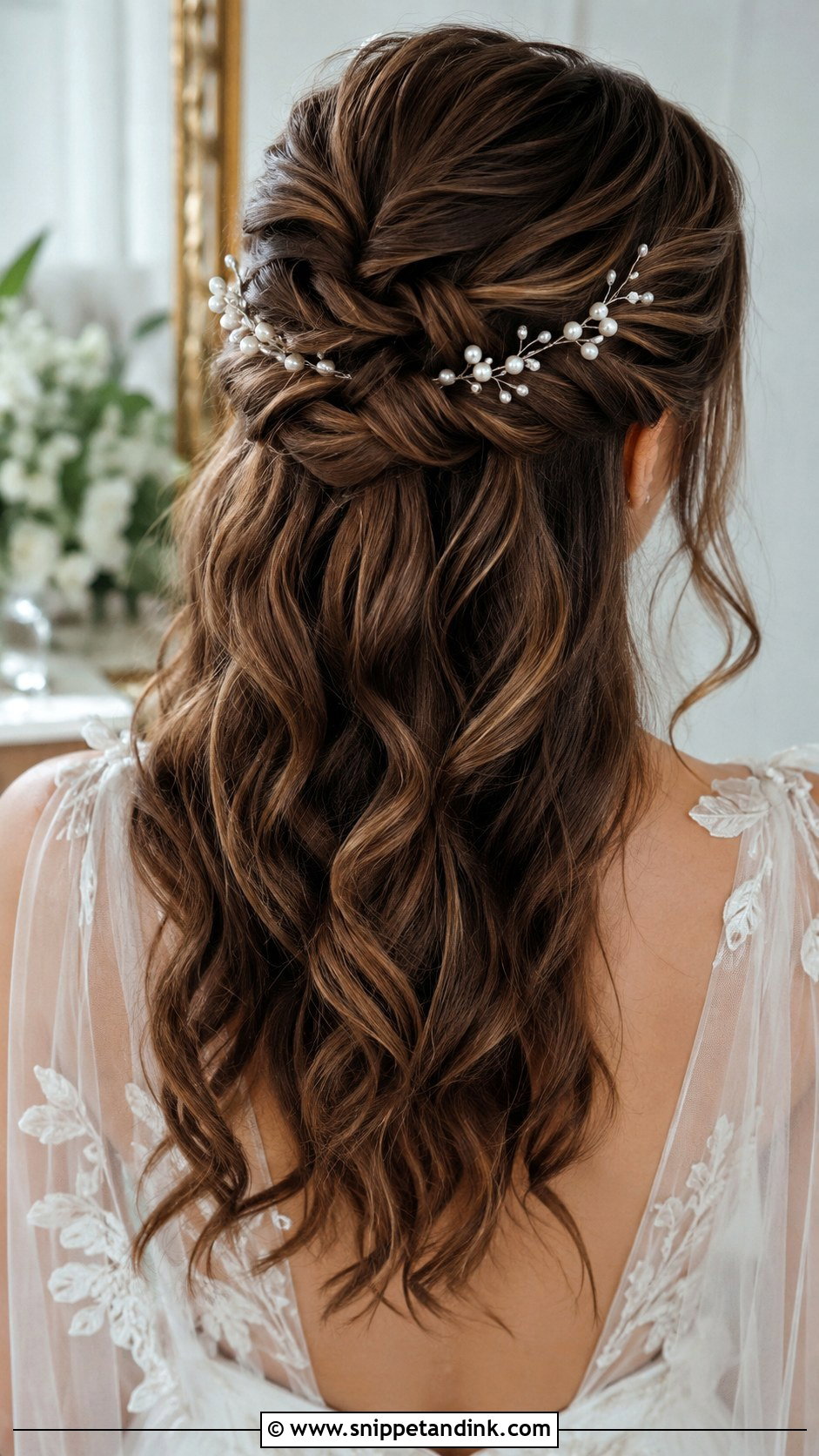
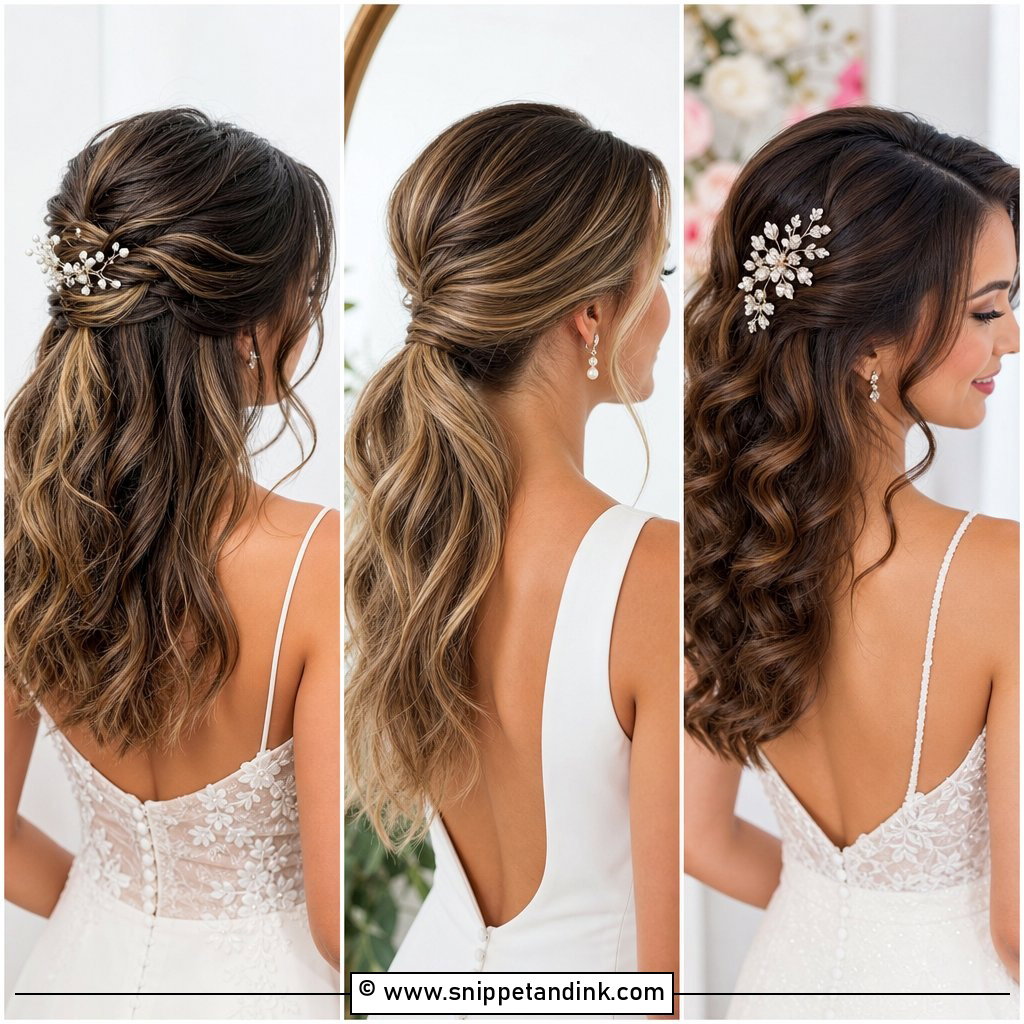
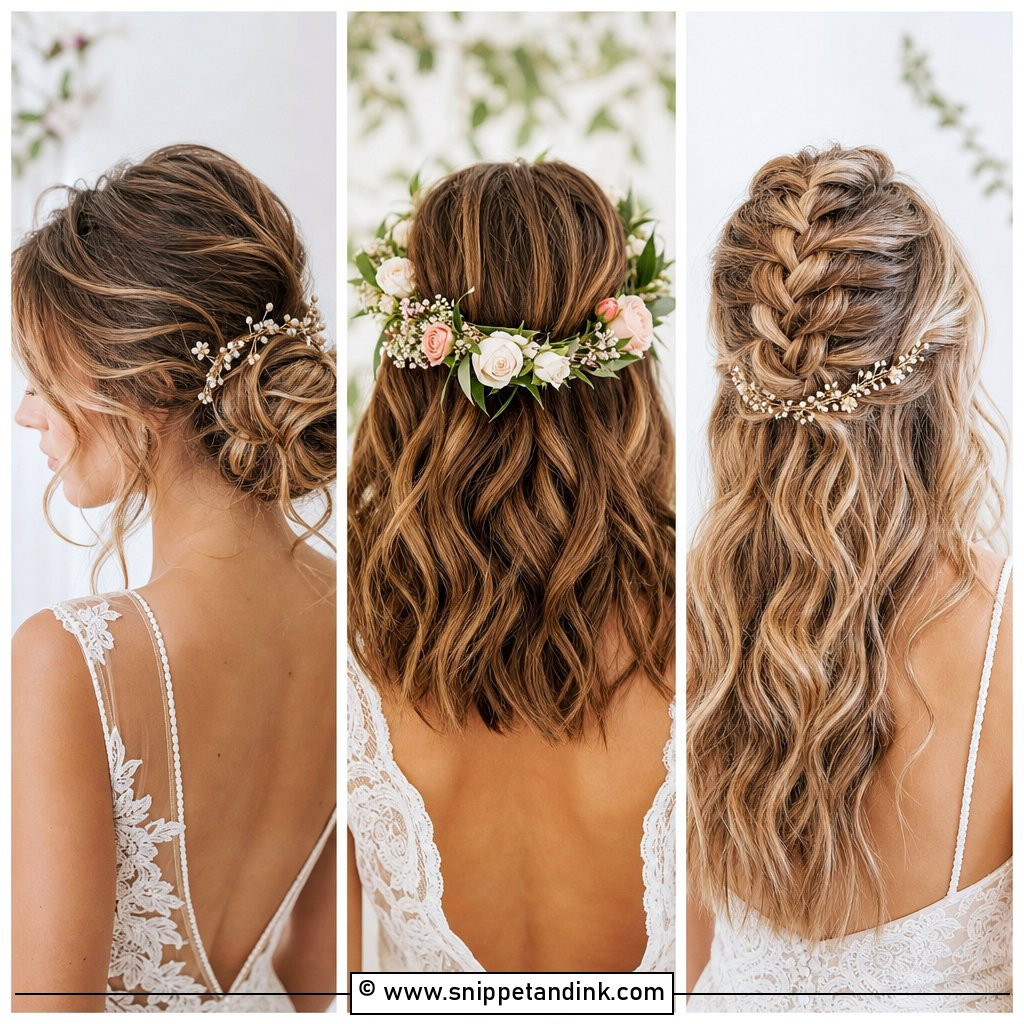
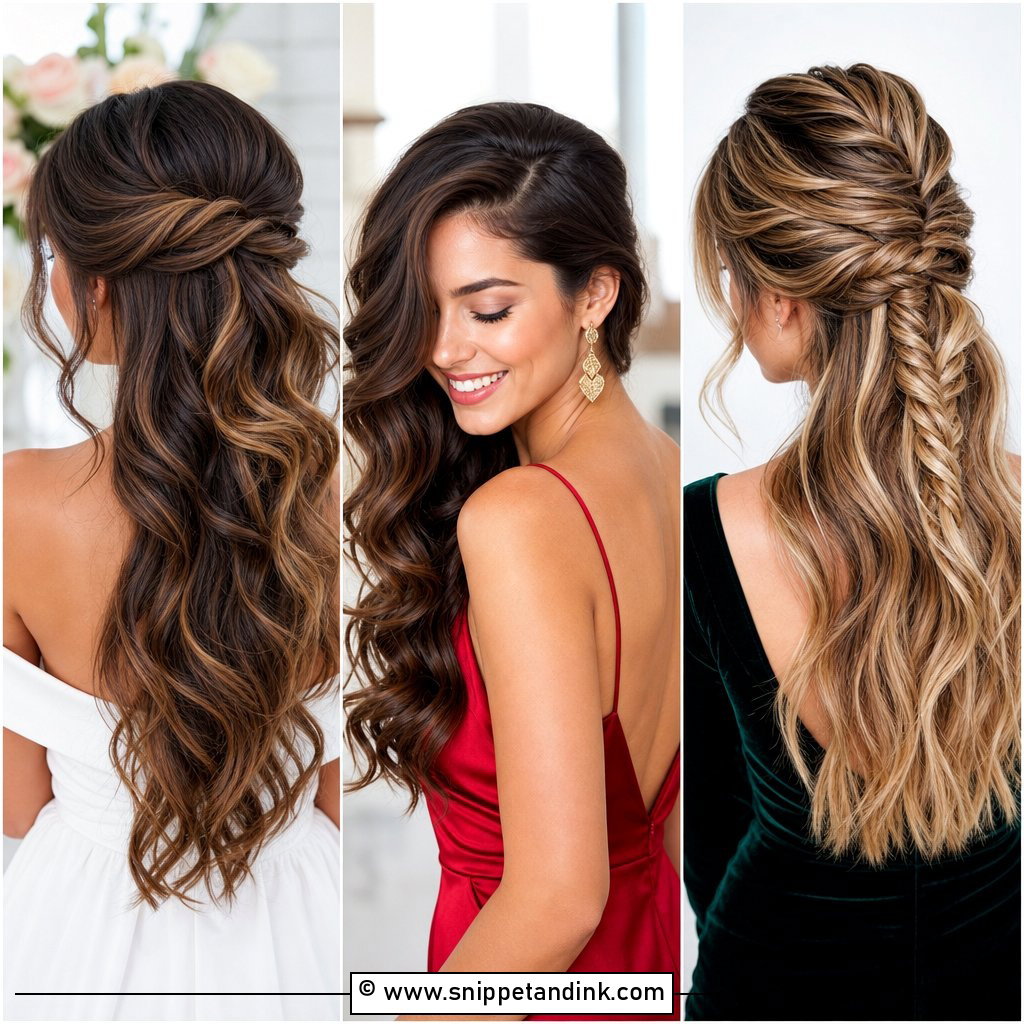
Pulling the top section back keeps your face clear while the waves carry on behind. For medium hair, it’s often the better compromise than a full updo because it adds shape and lift at the crown. The top can be twisted, pinned, braided or simply drawn back with volume. That pinned point is the best anchor on the head for a veil, combs or pearl pins. The lower waves should stay loose and shiny, not tightly curled, or the back starts to look shorter than it is.
5. Medium Hair Side Part Bridal Waves
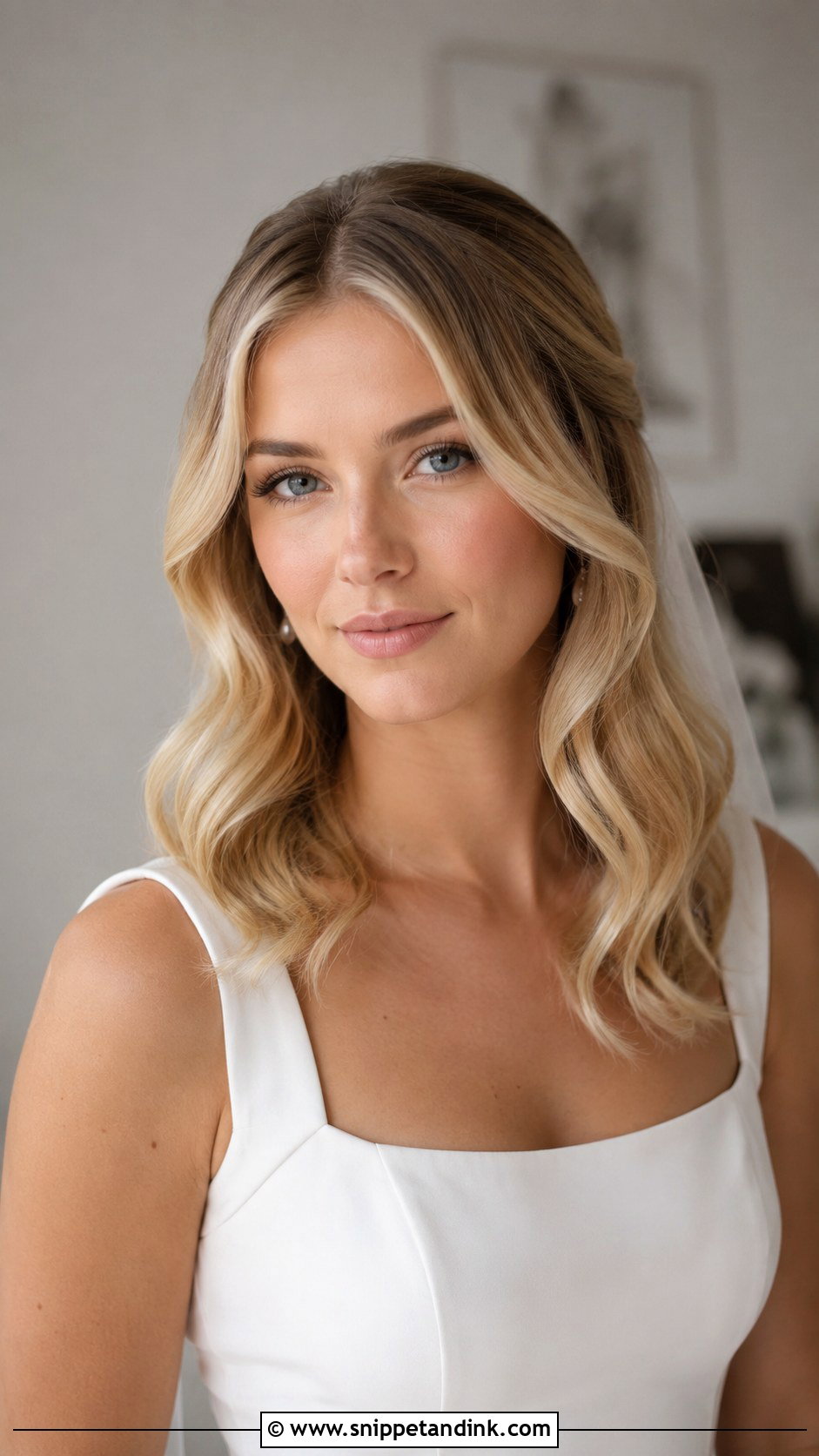
Moving the part to one side changes the whole silhouette: it lifts the crown and creates a soft sweep across the forehead that flatters many face shapes, including a higher forehead. Vintage gowns and fitted modern dresses both carry it well. Sculpt the waves for the ceremony and brush them softer for the reception, if you like. The heavier side needs a hidden pin behind the ear, or the sweep slowly falls across your eye during the day. A small bridal clip can do the same job in view.
6. Medium Hair Middle Part Bridal Waves
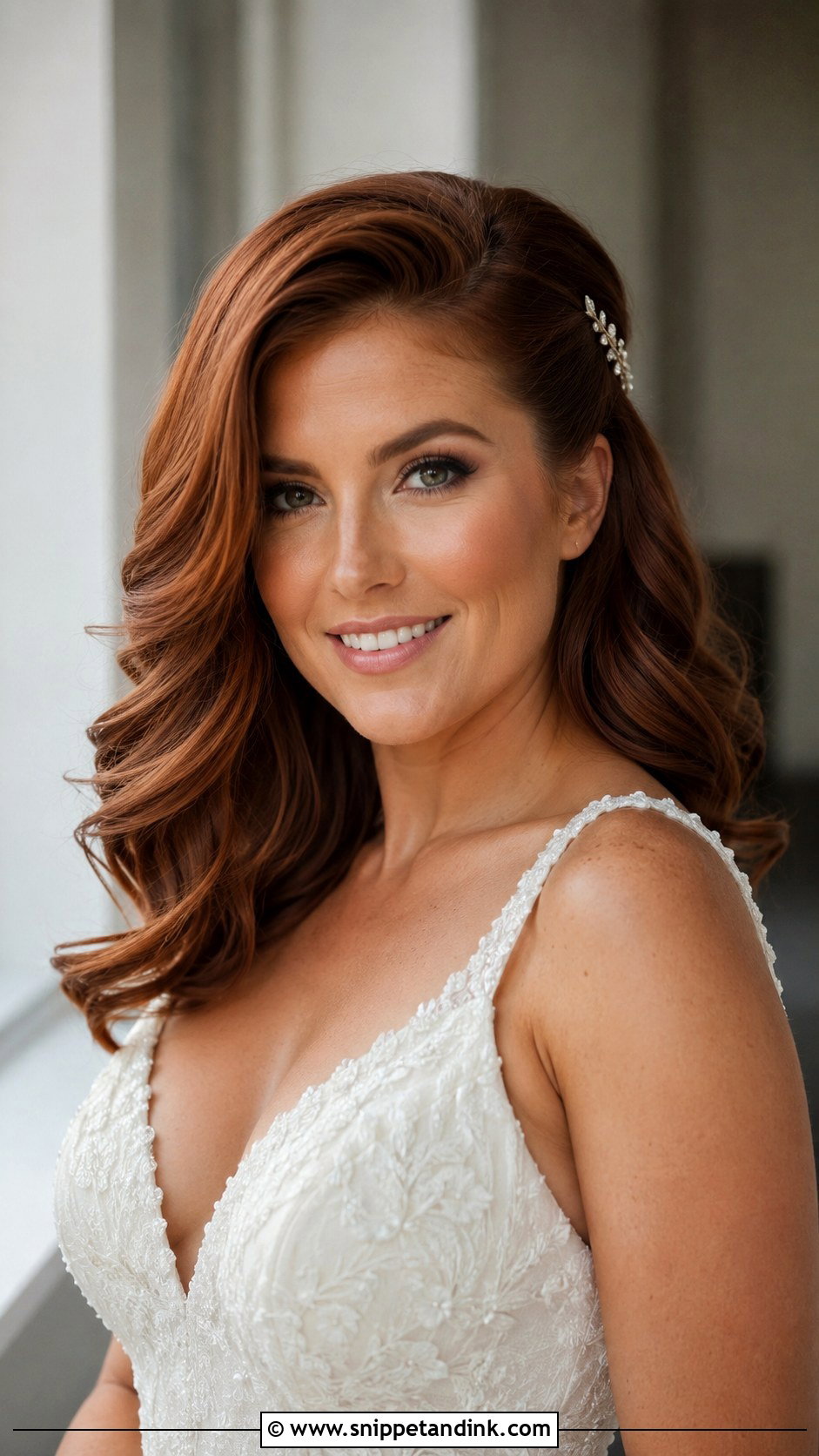
A middle part looks clean and balanced but shows any unevenness straight away, so I check the part line in a mirror held behind the head before curling anything. Roots stay smooth, and the waves start just below the cheekbones; begin them higher and the face looks wider. That lower start gives a longer, flattering line. Sleek gowns, square necklines and high necks all suit it. A little shine spray and softly curled ends finish it.
7. Medium Hair Loose Bridal Waves
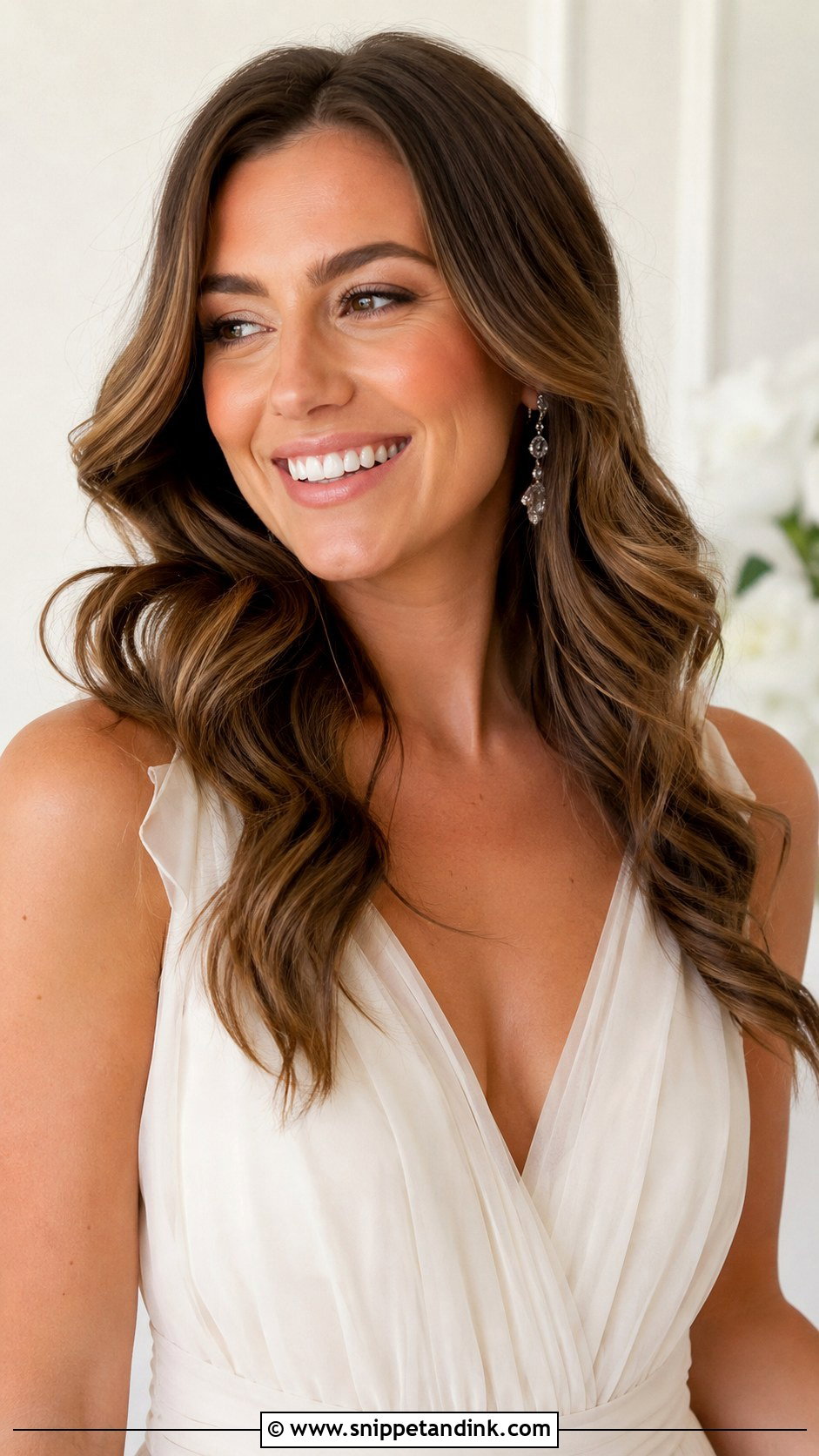
Loose waves are the answer when you want your hair down but tight curls feel like too much. The bends sit through the mid-lengths and ends and are brushed out gently. Layered medium hair suits them well, since the layers move without breaking into separate pieces. Almost any accessory works, from a veil to pearl pins. My trick for making them last is curling smaller sections than the finished look suggests, letting them cool, then brushing them out bigger. A loose wave built from a loose curl rarely survives the afternoon.
8. Medium Hair Glam Waves
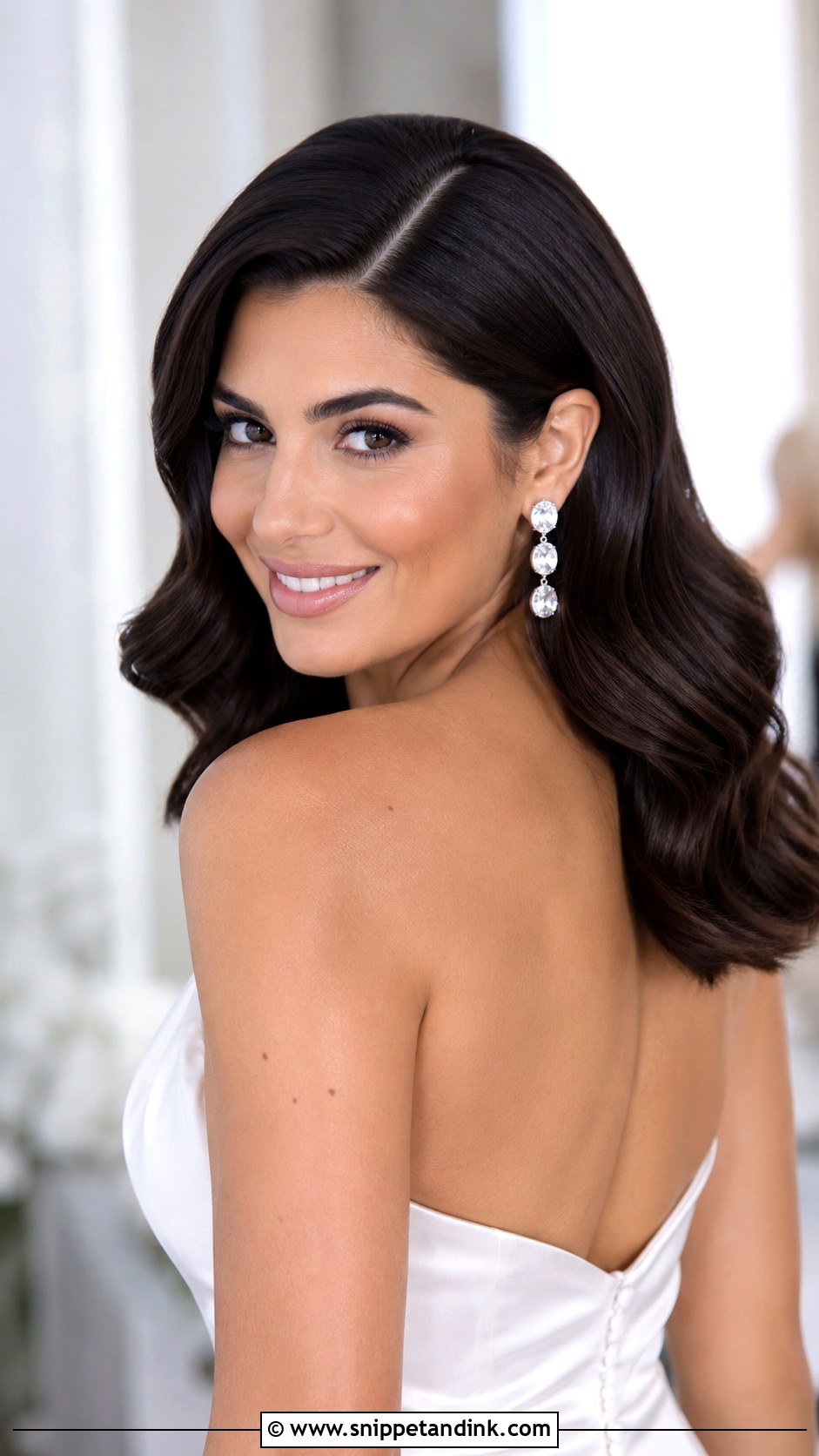
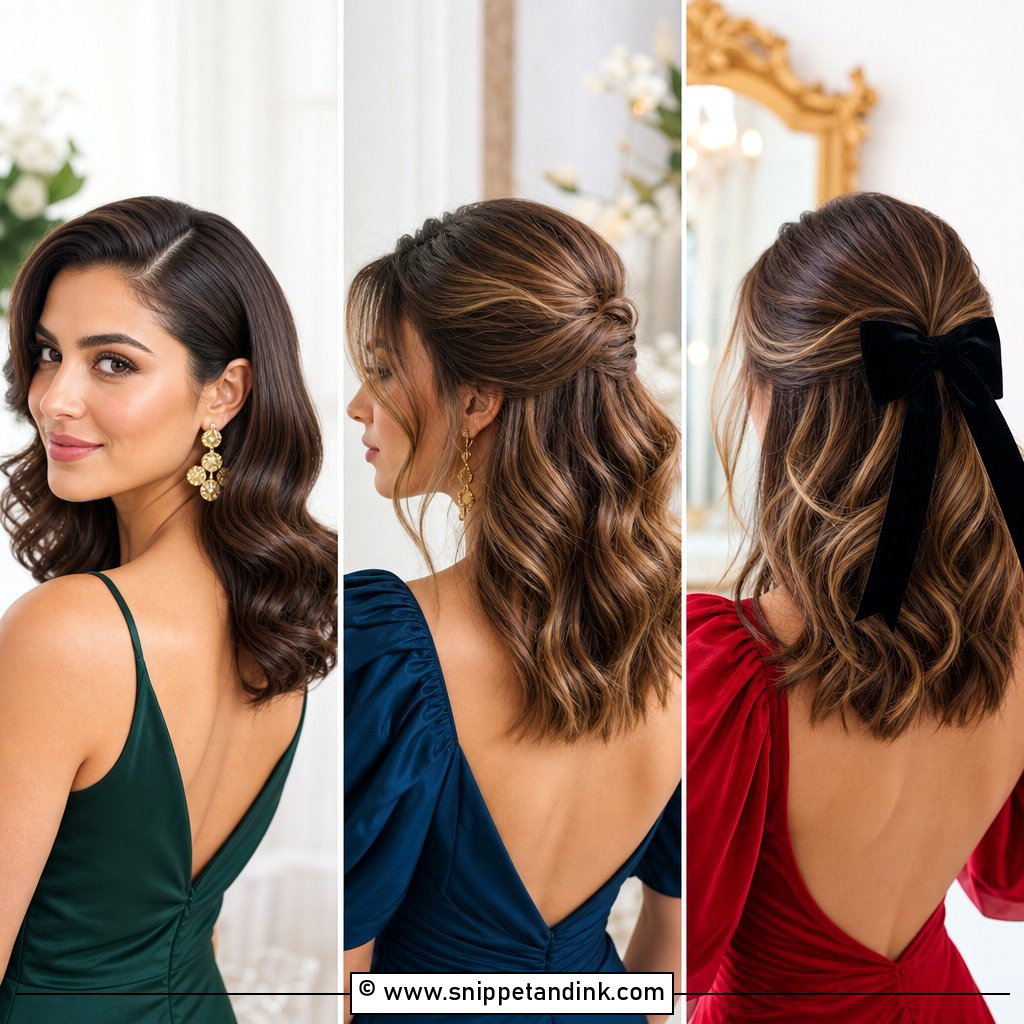
Glam waves trade softness for shine and structure. They’re smooth, controlled and brushed into a single pattern. On medium hair the shape looks full without overwhelming the face. Satin, crepe and beaded gowns suit them, as do dramatic earrings, and a deep side part adds impact. This is the style where the trial matters most, because it shows whether your hair needs clip-in extensions, a texture spray or a stronger setting product to hold a pattern this precise for a whole day.
9. Medium Hair Boho Bridal Waves
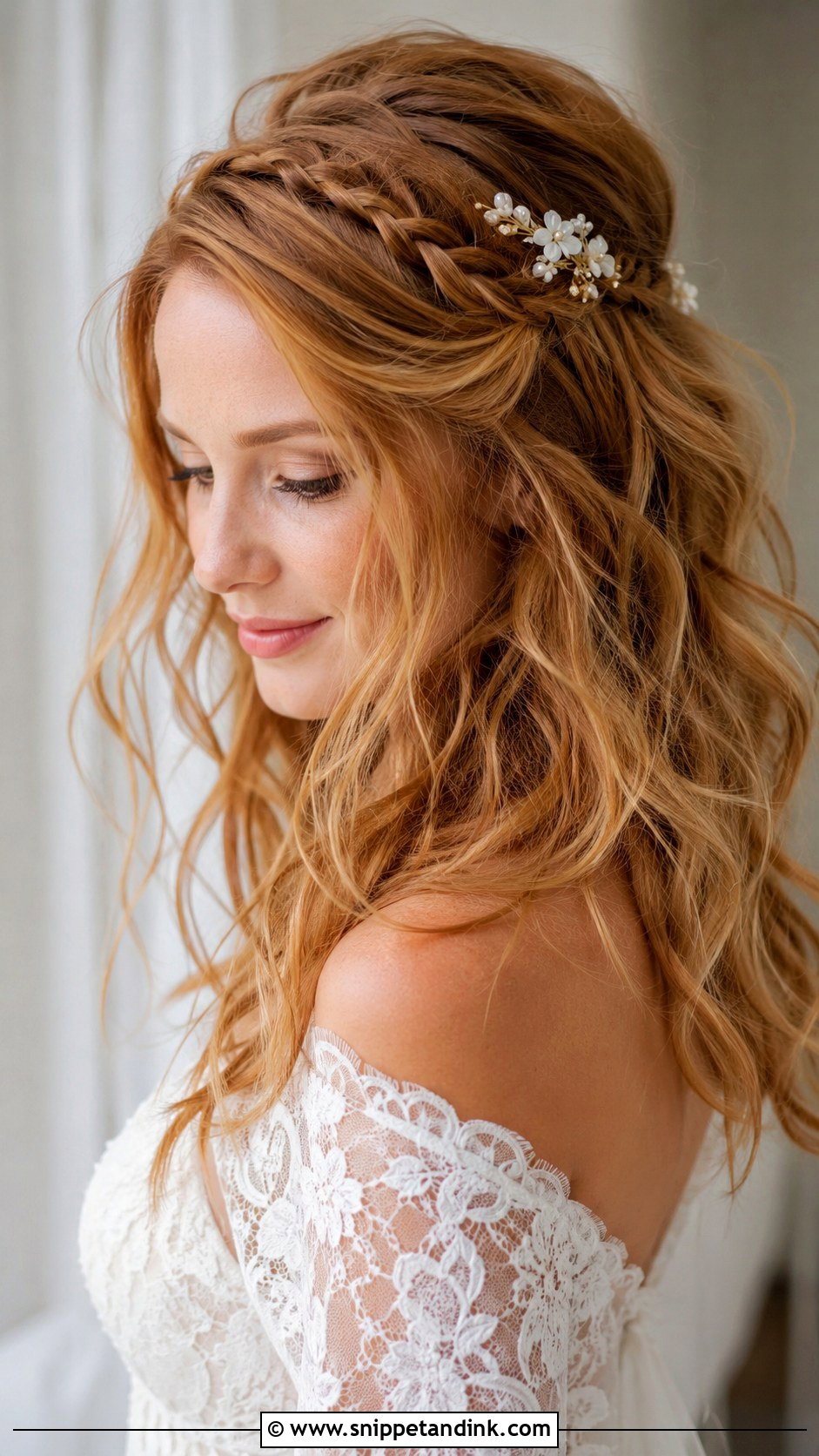
Boho waves should feel loose and airy, a little undone, yet still be secure enough to survive an outdoor day. I use texture spray instead of shine products and break the waves apart with my fingers rather than a brush. Lace gowns, outdoor venues and wildflower bouquets suit them. Tiny braids, floral pins or a delicate hair vine can go in without overpowering the waves. The balance I watch for is shape: the outline still needs to look bridal from a distance, even if the texture is relaxed up close.
10. Medium Hair Waves With Veil
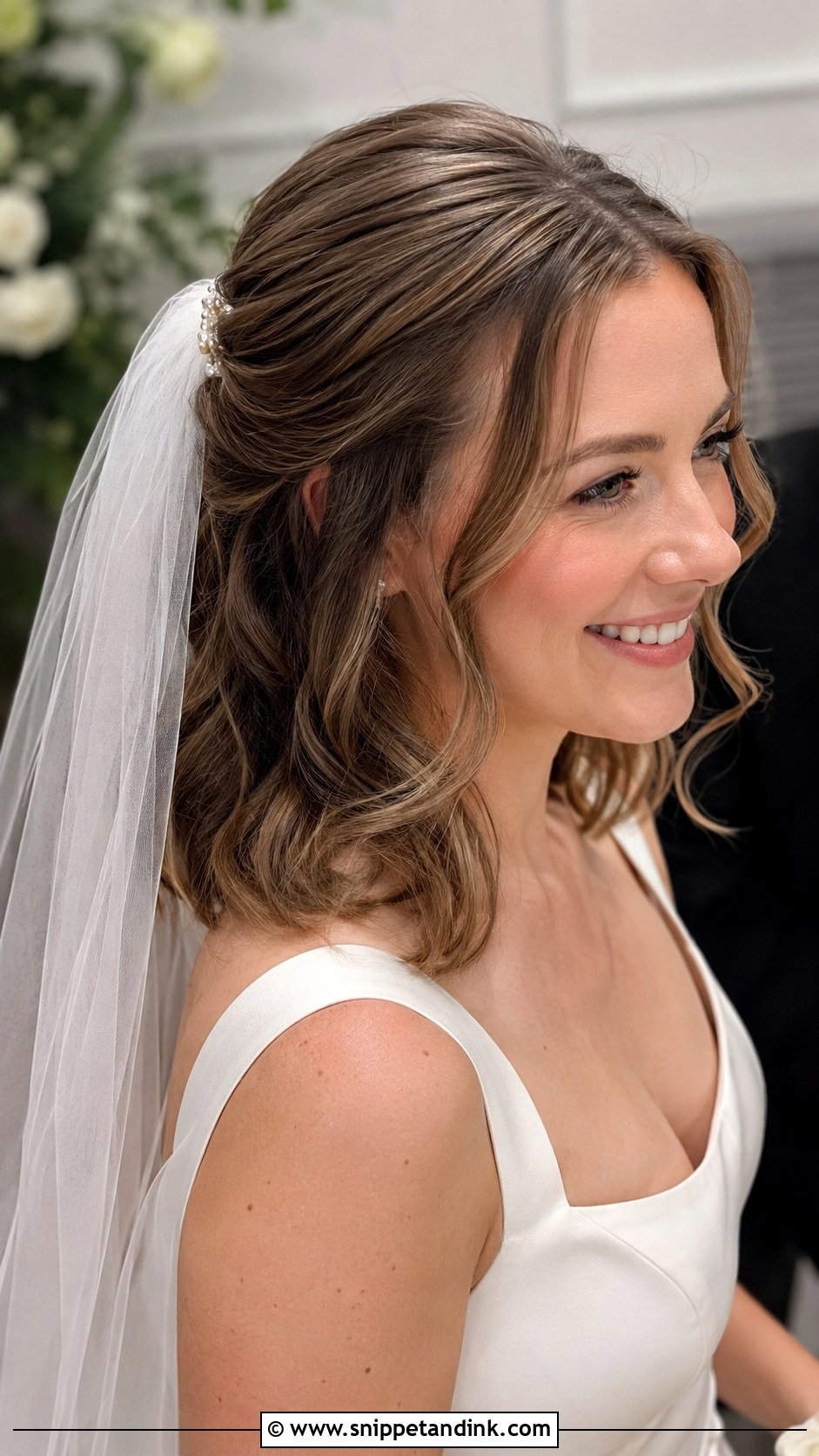
Waves and a veil work together when the placement is decided before curling, not after. The veil can sit at the crown, beneath a half up section, or lower at the back for a delicate look. Loose waves help it blend in instead of sitting on top. On fine hair I’ll tease a small area and cross two pins where the comb will go, so it doesn’t slide down the back. Chapel, fingertip and simple tulle veils all suit waves. Keep the waves smooth enough that the comb can come out later without snagging.
11. Medium Hair Waves With Pearl Pins
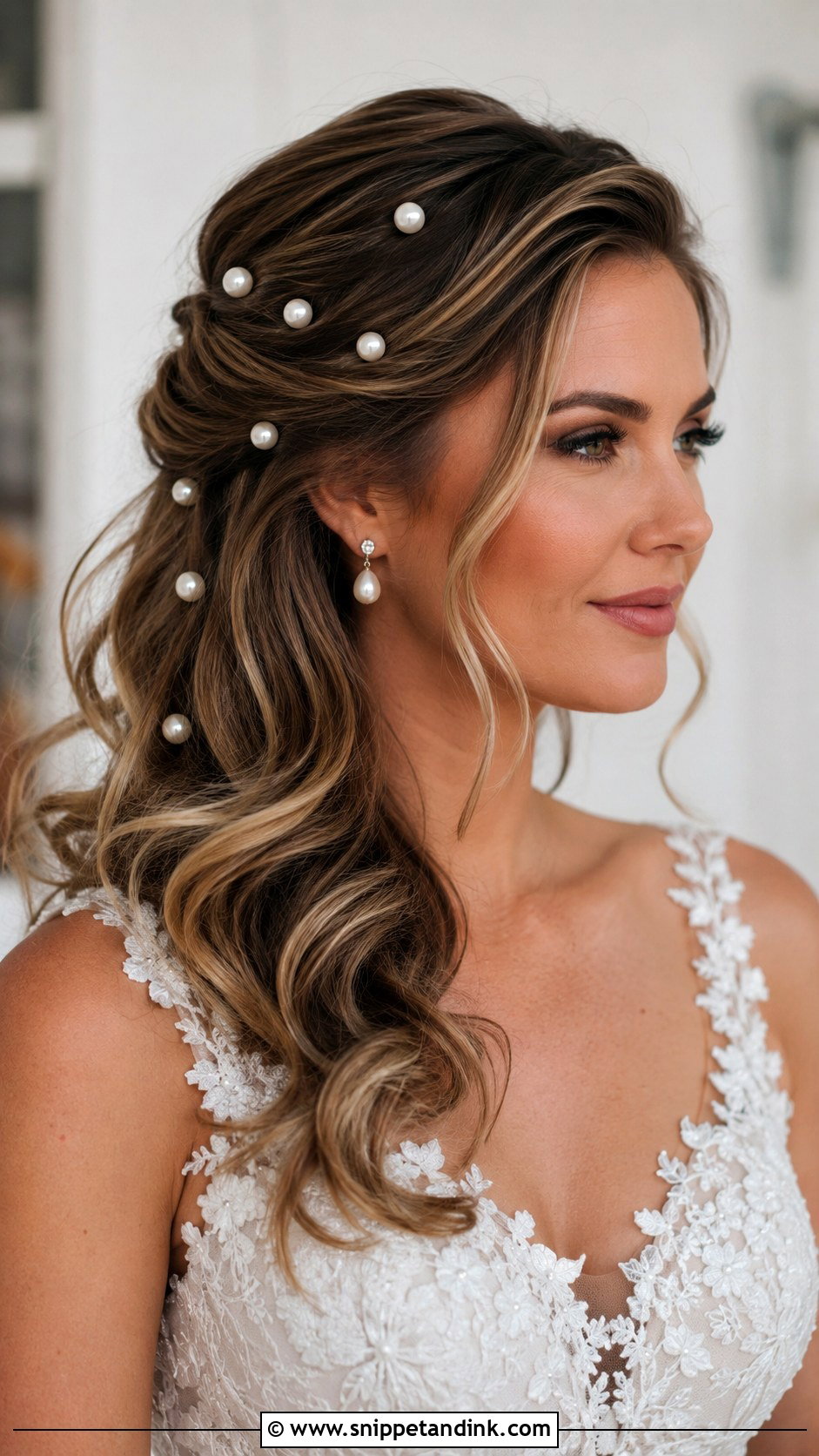
Pearl pins add small points of light that show up in close-ups and side profiles. They need a clean base, so I make the waves slightly more structured where the pins will sit. Cluster them on one side, scatter a few through a half up section, or tuck them along a twist. At medium length they don’t disappear into the hair the way they can on very long, thick hair. Matching the pearls to your earrings or dress trim ties everything together.
12. Medium Hair Waves With Floral Comb
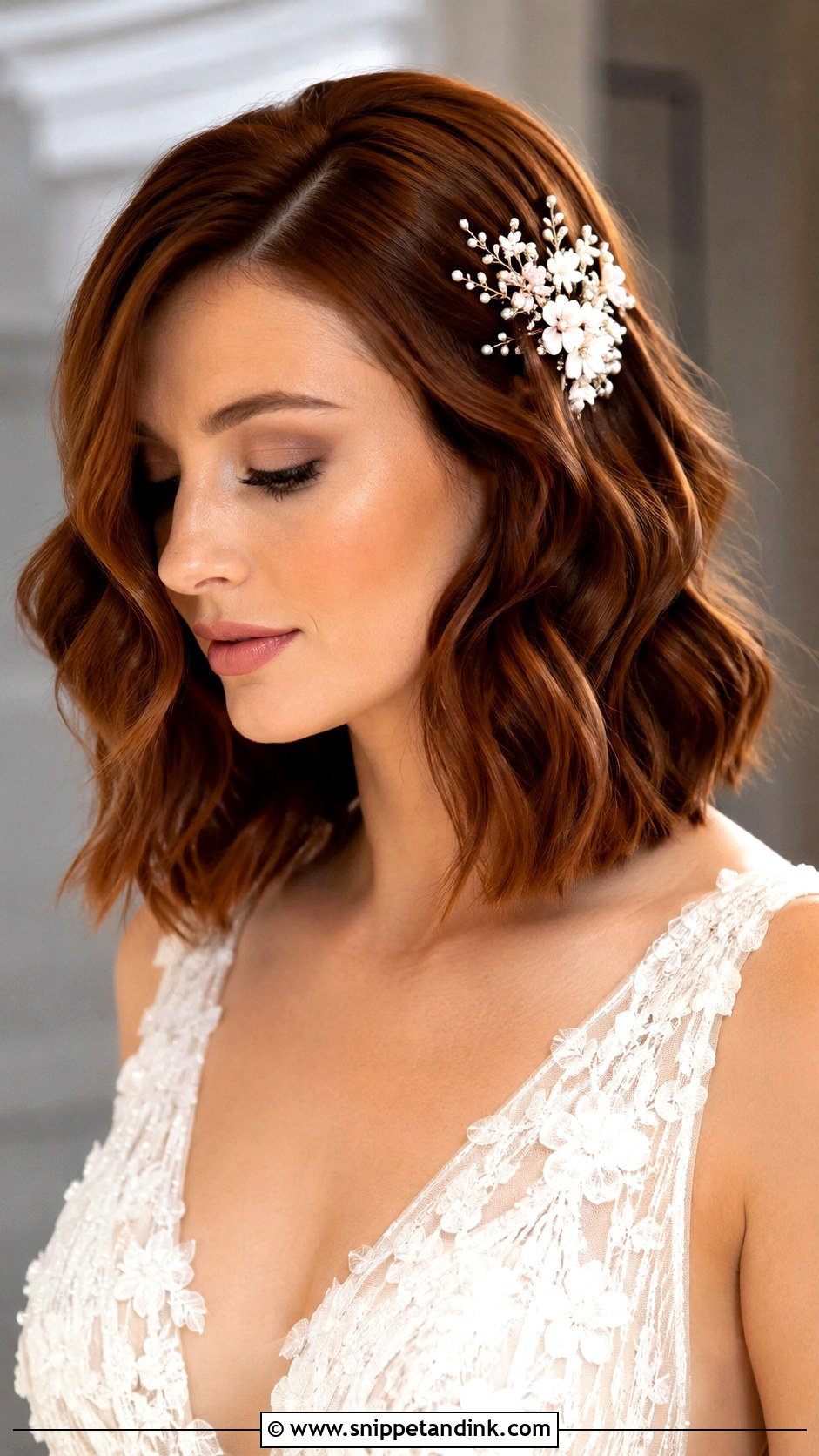
A floral comb turns plain waves into something seasonal, which is why it’s so popular for spring and summer weddings outdoors. Place it above one ear, at the back of a half up section, or near the veil comb. Keep it modest in size; a large comb dwarfs medium hair. Fresh flowers look delicate but wilt in heat, while silk ones hold up through a long, warm day. I’d keep the waves loose and glossy so the comb remains the focal point.
13. Medium Hair Waves With Curtain Bangs
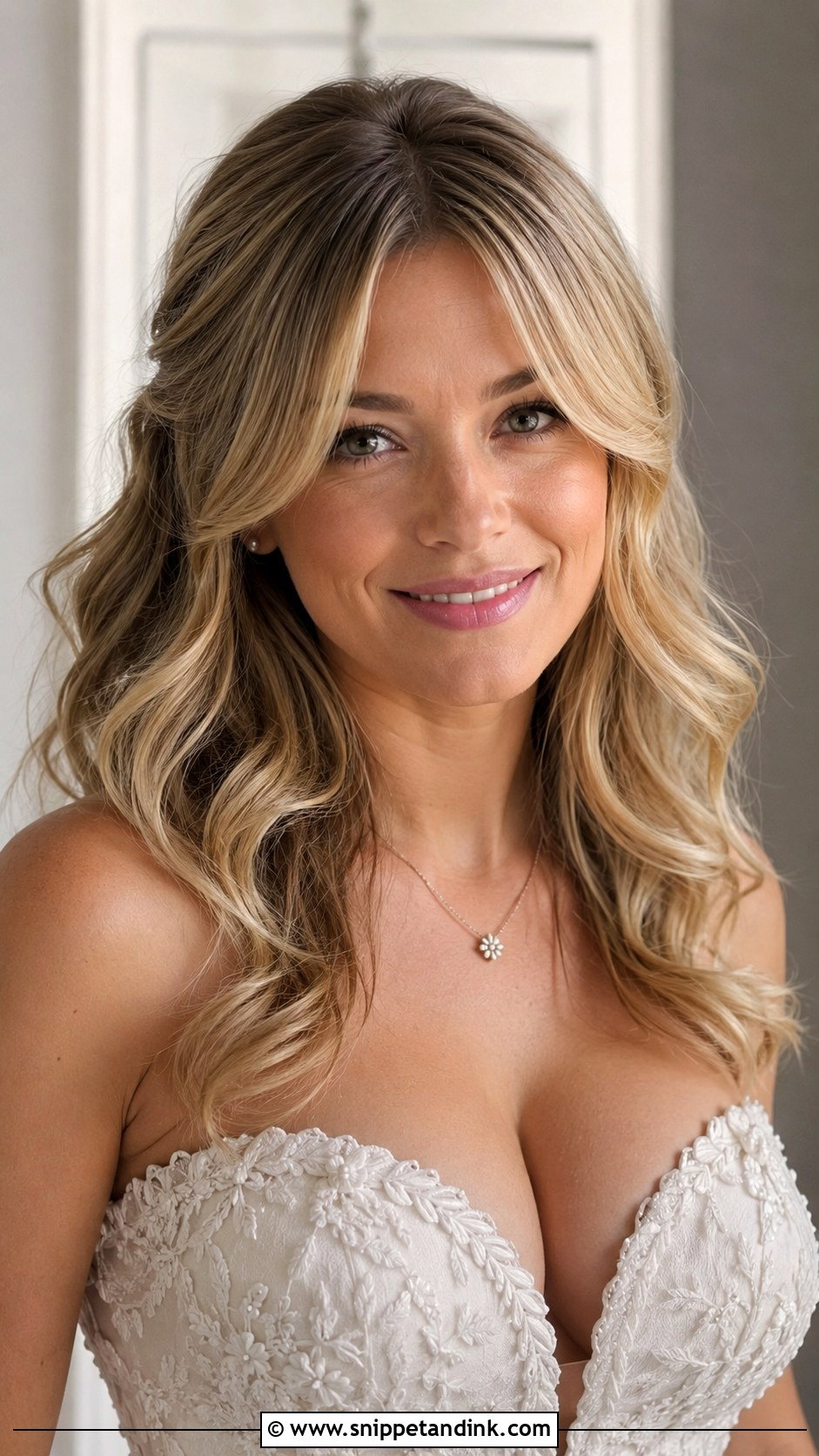
Curtain bangs look beautiful with waves because they create softness around the face without lots of loose pieces. I blow-dry them away from the face with a round brush, then blend them into the waves at the sides. That gives face framing while the rest of the hair stays controlled. They pair with a middle part or a soft side part, and with veils and small clips. A light spray near the front keeps them shaped but moving. Trim them a week or two ahead, never the night before.
14. Medium Hair Waves With Face Framing Layers
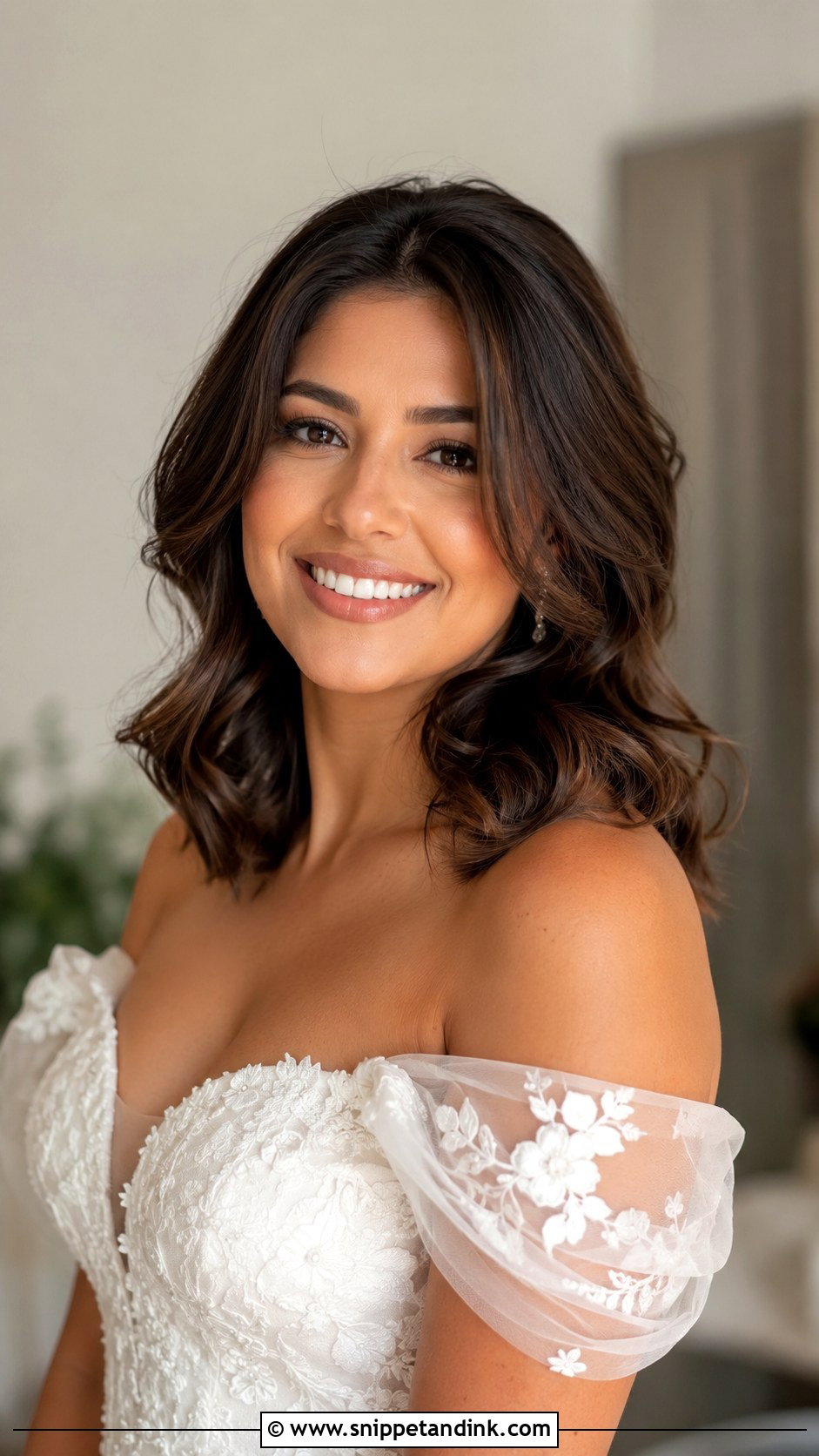
Face-framing layers add movement around the cheeks, jawline and collarbone, and they help a lot in close portraits. Start the waves around the cheekbones and blend them down into soft ends. Too many very short pieces fall forward into the eyes, so I shape the front carefully at the trial and decide which layers to wave toward the face and which to sweep back. A pea-sized amount of smoothing cream keeps them neat. They work with a veil or with a simple accessory.
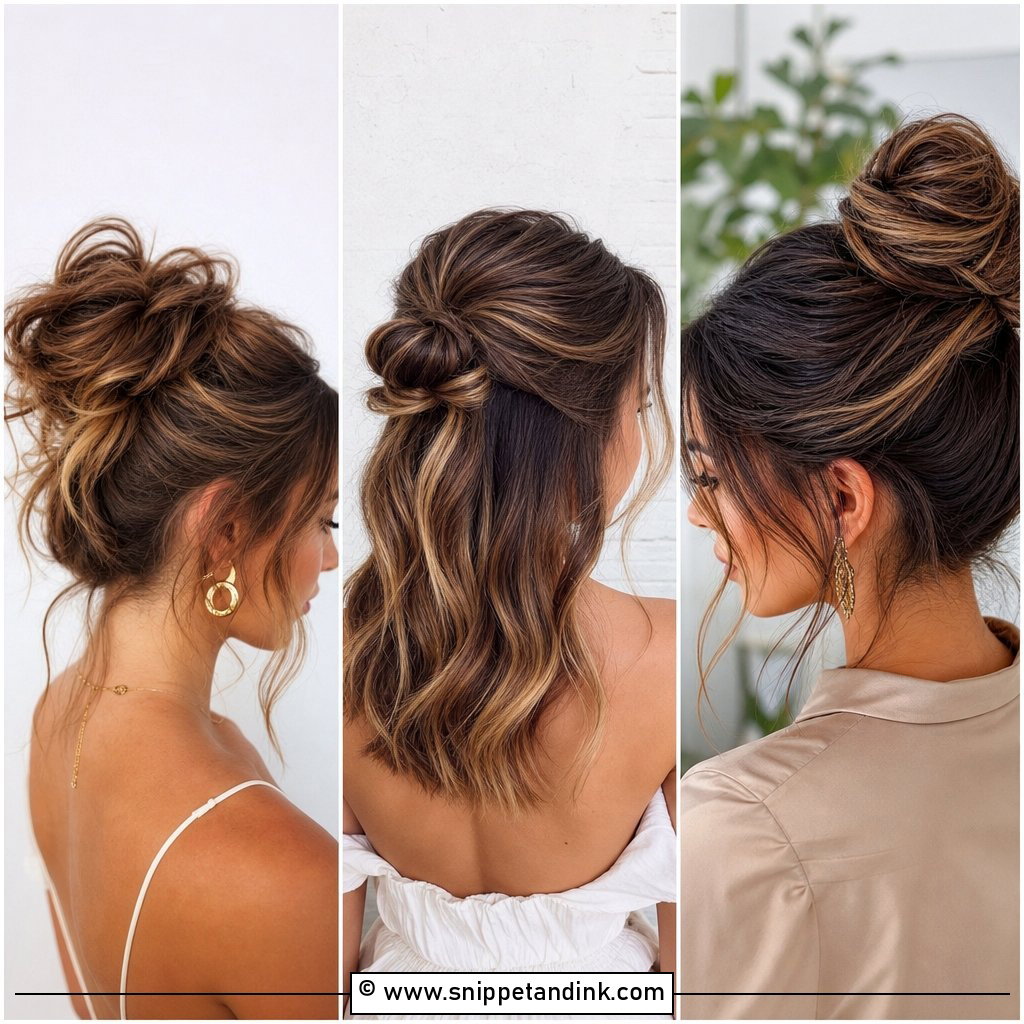
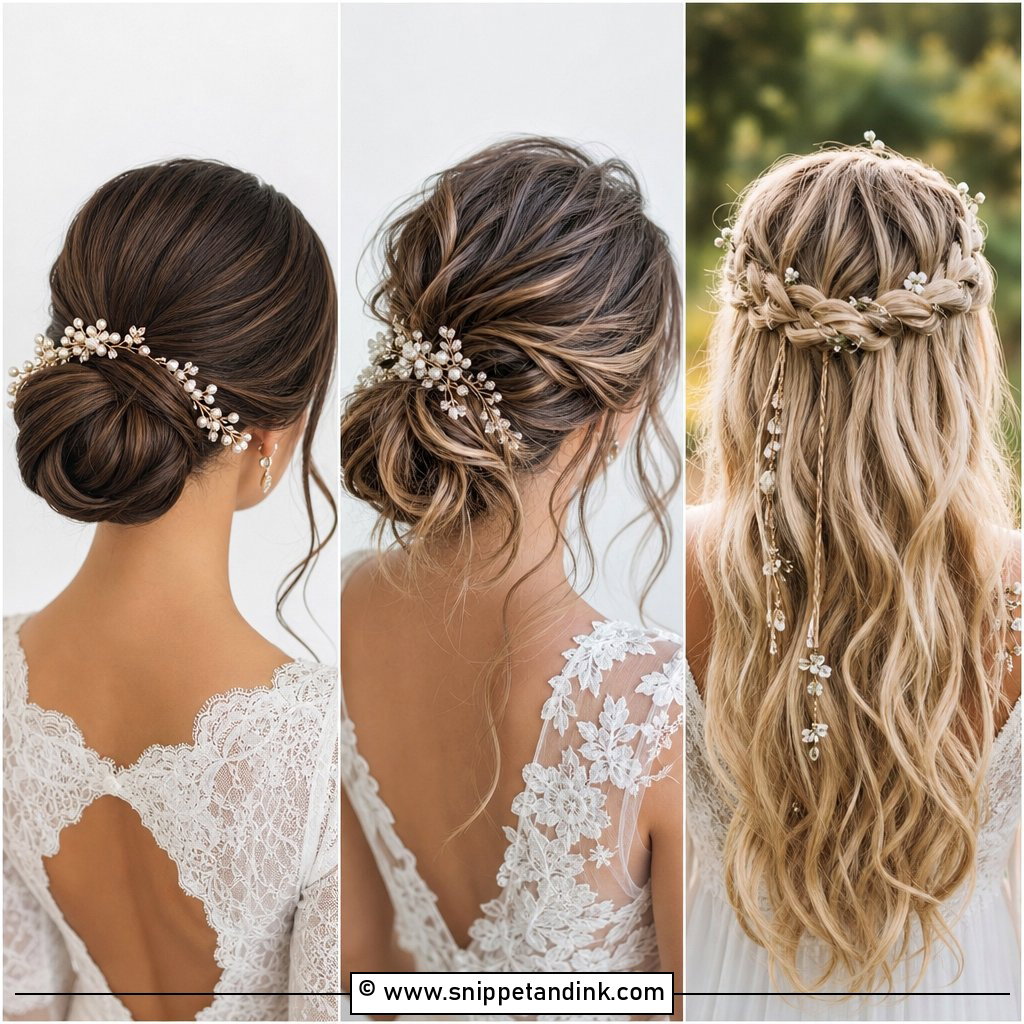
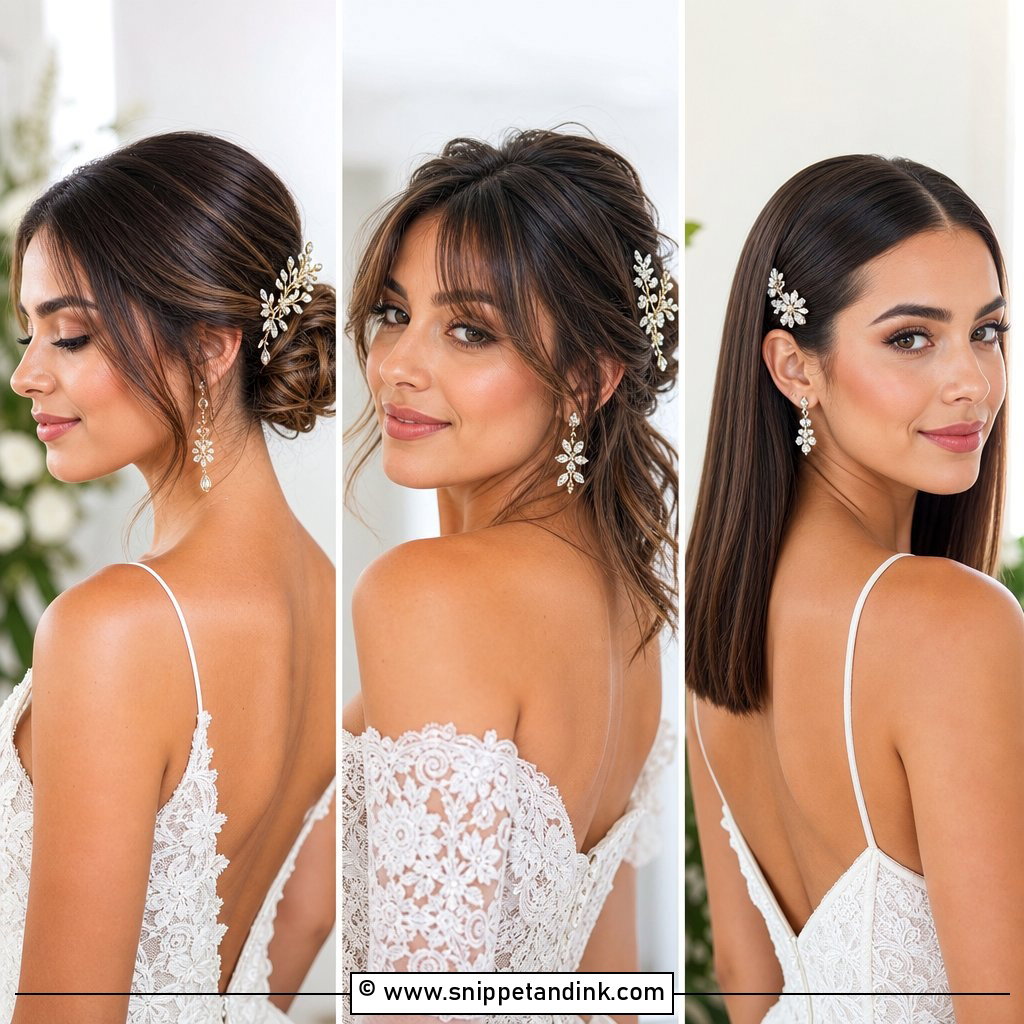
15. Medium Hair Textured Bridal Waves
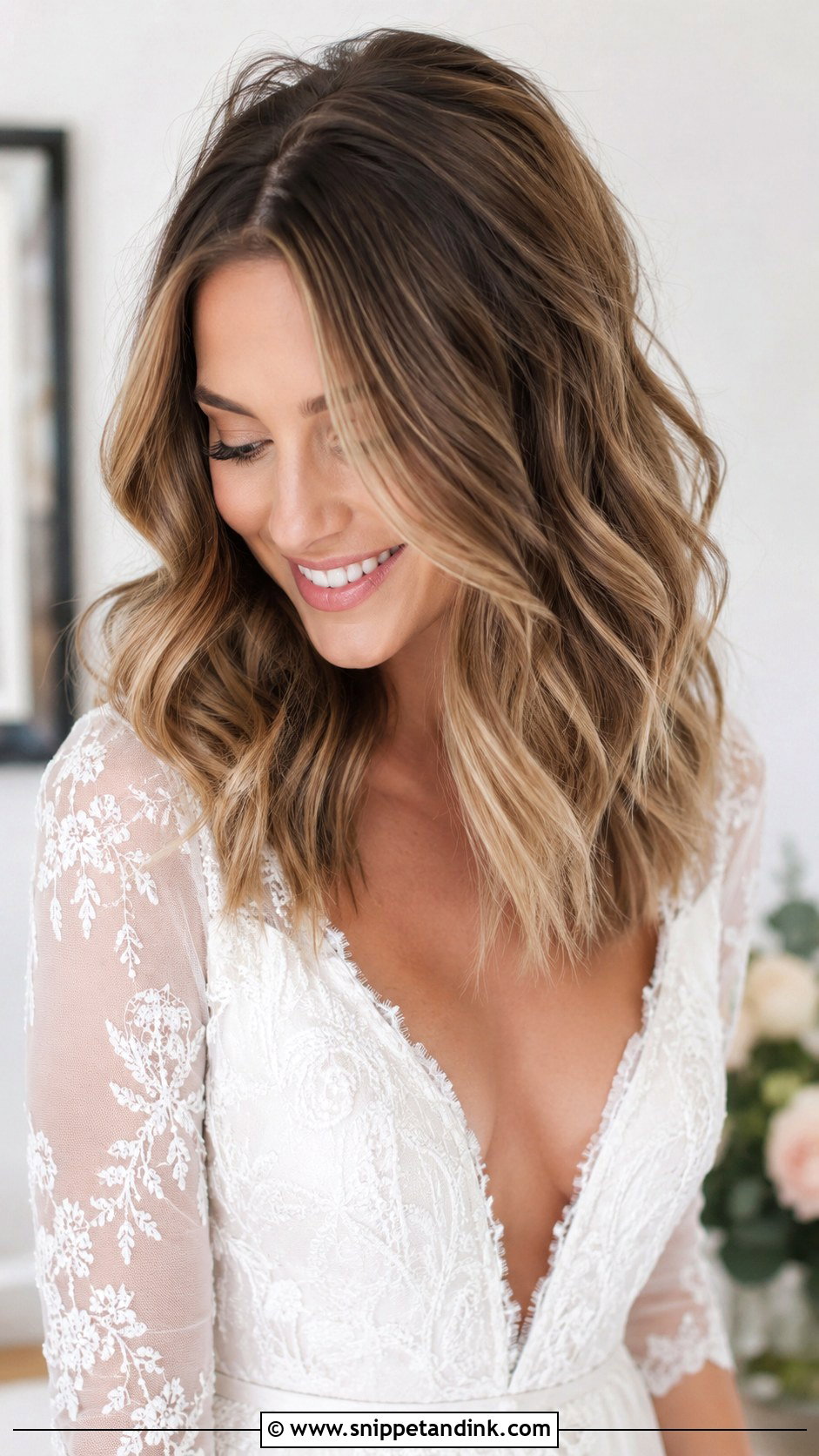
Textured waves get their look from separation and root lift, not from tight curls. Medium hair takes texture well and looks fuller for it. The risk is frizz, so prep decides the result: volumising mousse on damp roots, a heat protectant, then a light texture spray at the end. Rustic venues and relaxed modern weddings suit it. Keep the very ends polished with a touch of cream so the overall effect reads styled, not casual.
16. Medium Hair Vintage Waves
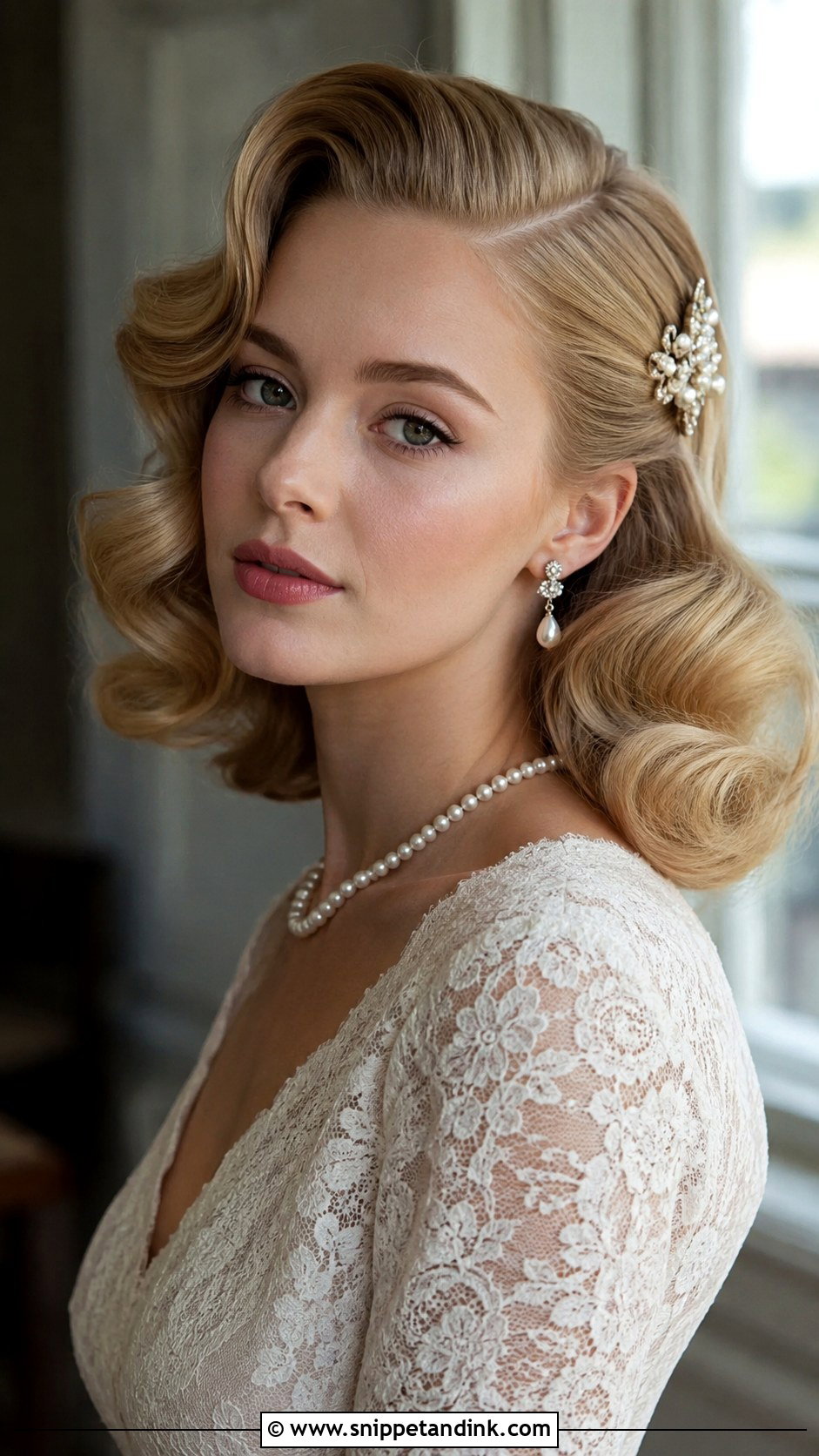
Vintage waves give medium hair a graceful, old-soul feel. The pattern is more sculpted than loose curls, with defined ridges that sit near the shoulders and keep their bounce at this length. Lace gowns, cap sleeves, birdcage veils and pearls all belong with it. A side part with one side tucked neatly behind the ear is the traditional shape. For a modern version I keep the finish glossy but flexible, so the waves still move when you turn your head.
17. Medium Hair Waves With Braided Crown
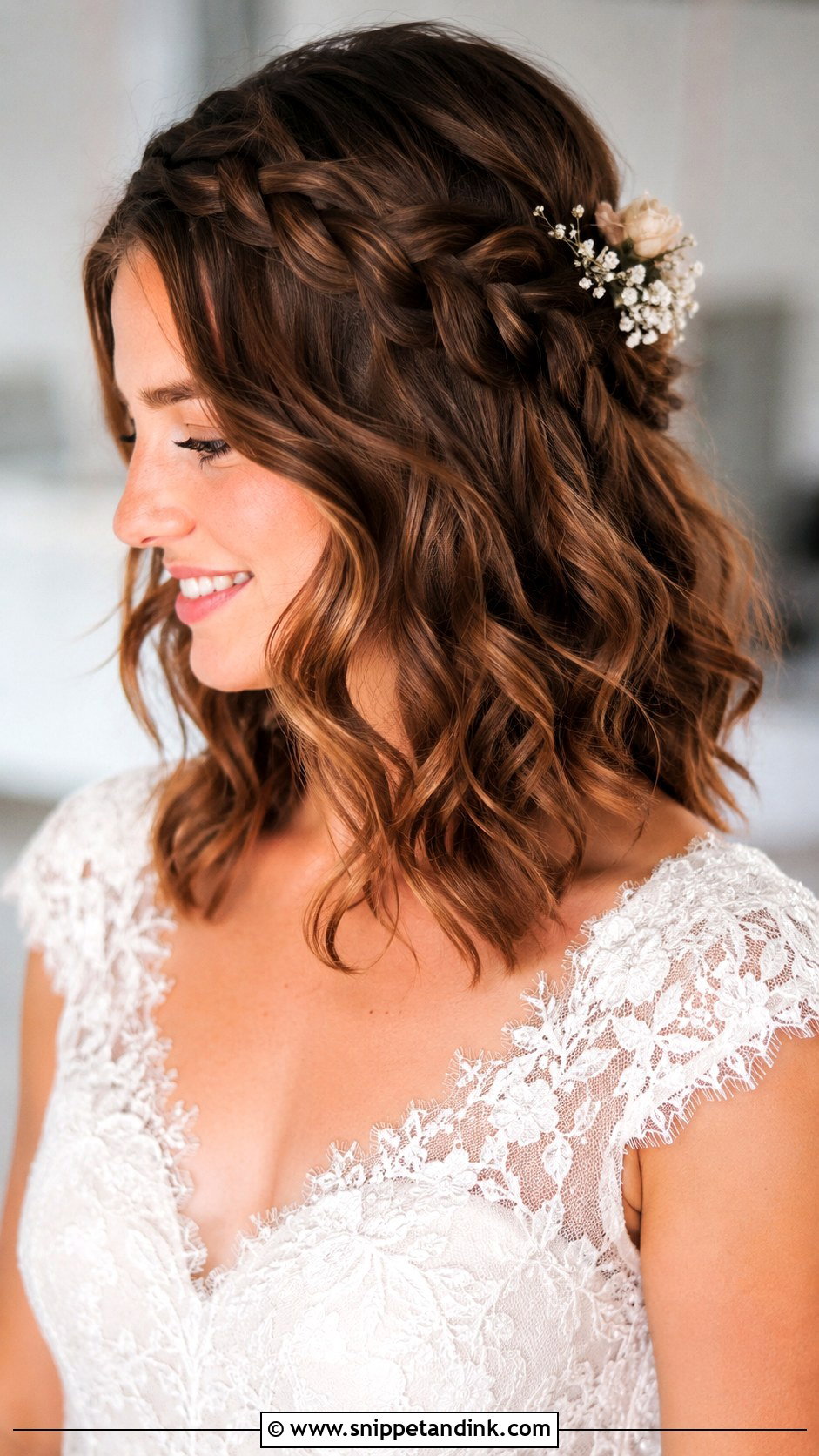
A braided crown over waves keeps the front controlled without committing to an updo. The braid can cross the crown, wrap from one side or merge into a half up section, while the rest falls in loose waves. Boho gowns, lace and floral accessories sit naturally with it, and it’s dependable outdoors. Medium hair has enough length for a slim braid at the crown and still keeps the waves full at the ends. I braid it soft, not tight, and pull the edges out a little so it doesn’t look bulky.
18. Medium Hair Waves With Low Twist
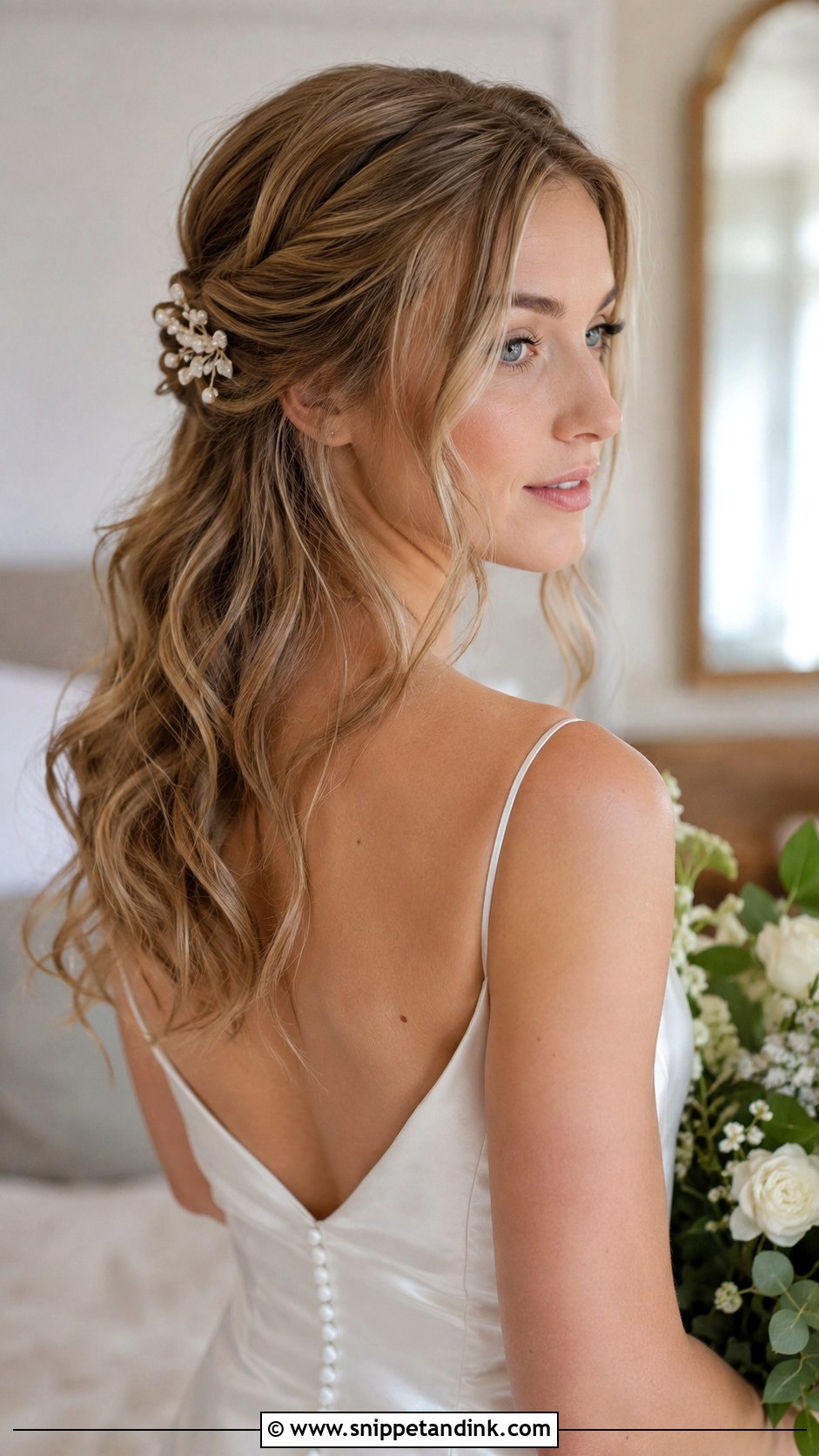
Two sections twisted back from the front and pinned low is what I suggest if you love loose hair but worry it will fall forward during the vows. The rest stays down in soft waves. The twist holds the face clear and gives guests something to look at from behind. Veils, decorative combs and simple pins all sit well at the meeting point. At medium length the twists stay neat and easy to pin. Leave a couple of soft pieces at the face.
19. Medium Hair Waves For Thin Hair
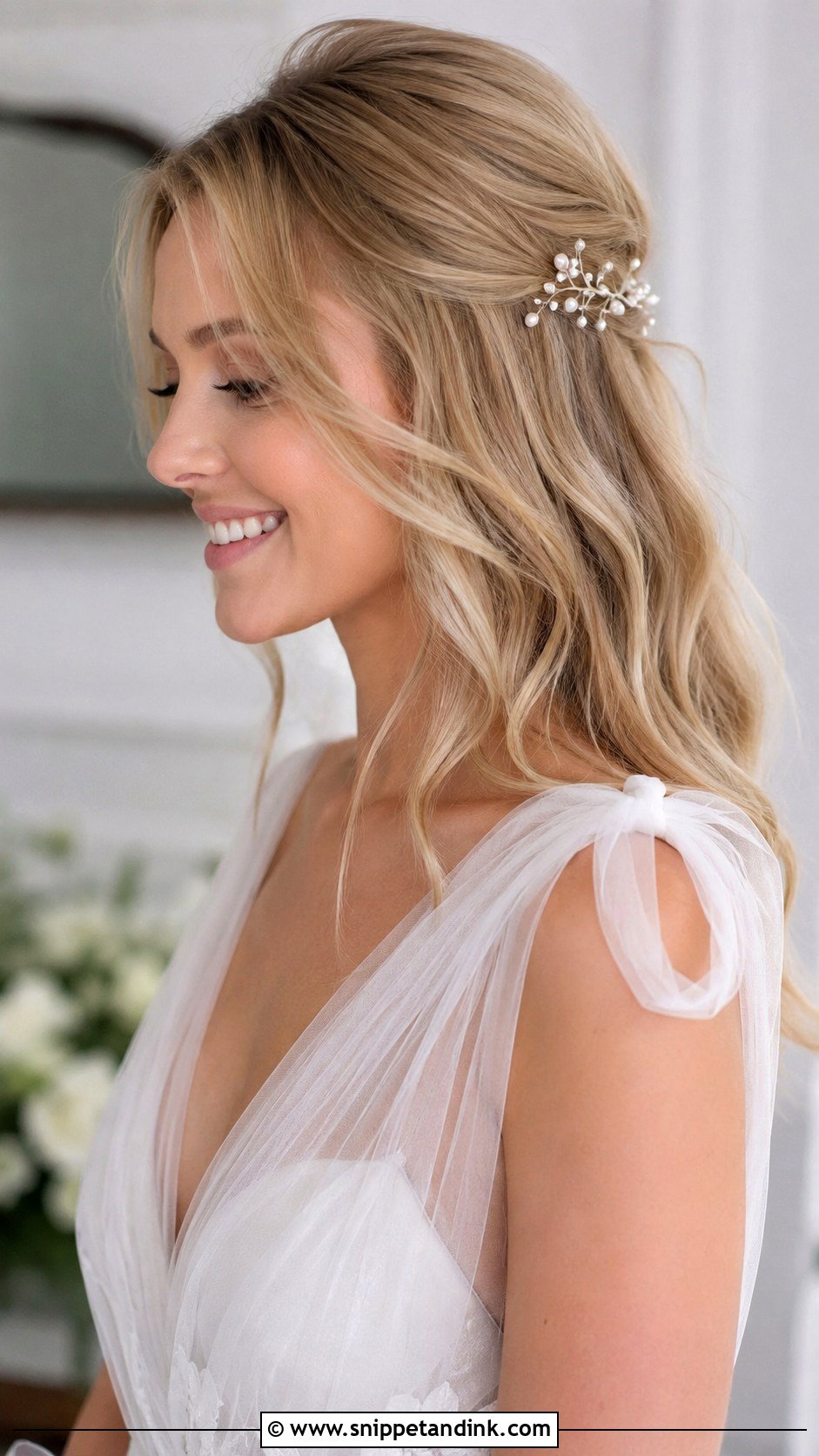
Thin hair can look noticeably fuller in waves, as long as the prep is right. Waves add body through the sides, and a bit of root lift at the crown suggests more density. I use volumising mousse and texture spray, and often a couple of clip-in wefts placed low, where they add bulk without showing. Thin hair tends to look thicker at medium length than long. Avoid heavy oils and rich masks in the days before the wedding, because they weigh the hair down and the waves drop faster.
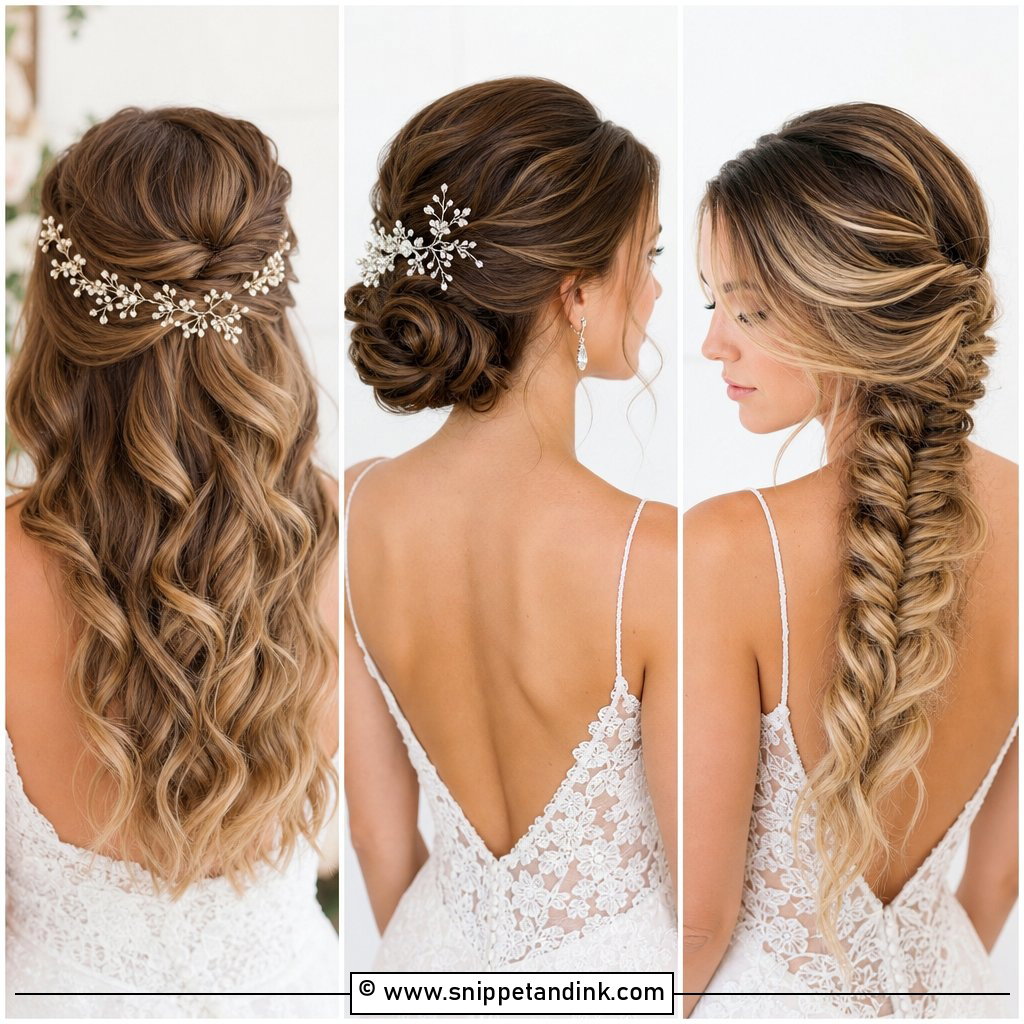
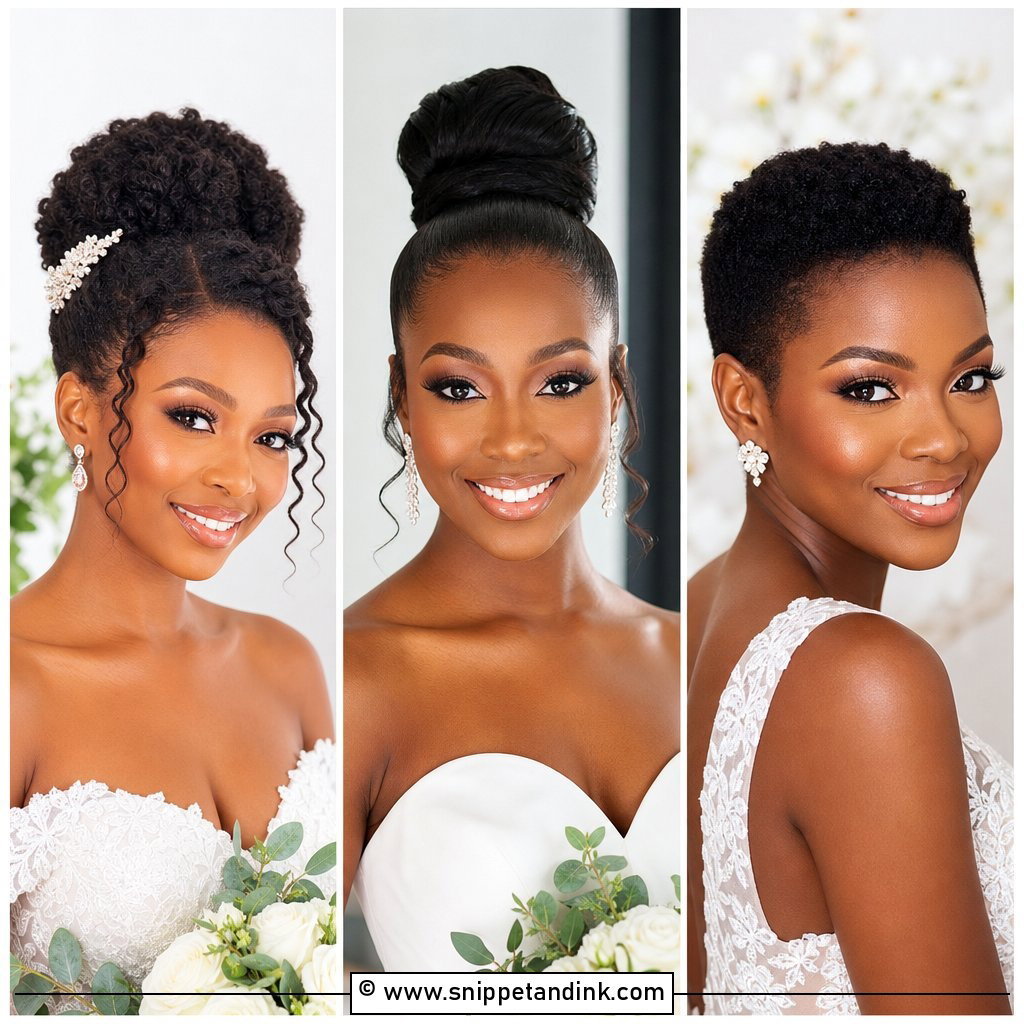

20. Medium Hair Waves For Thick Hair
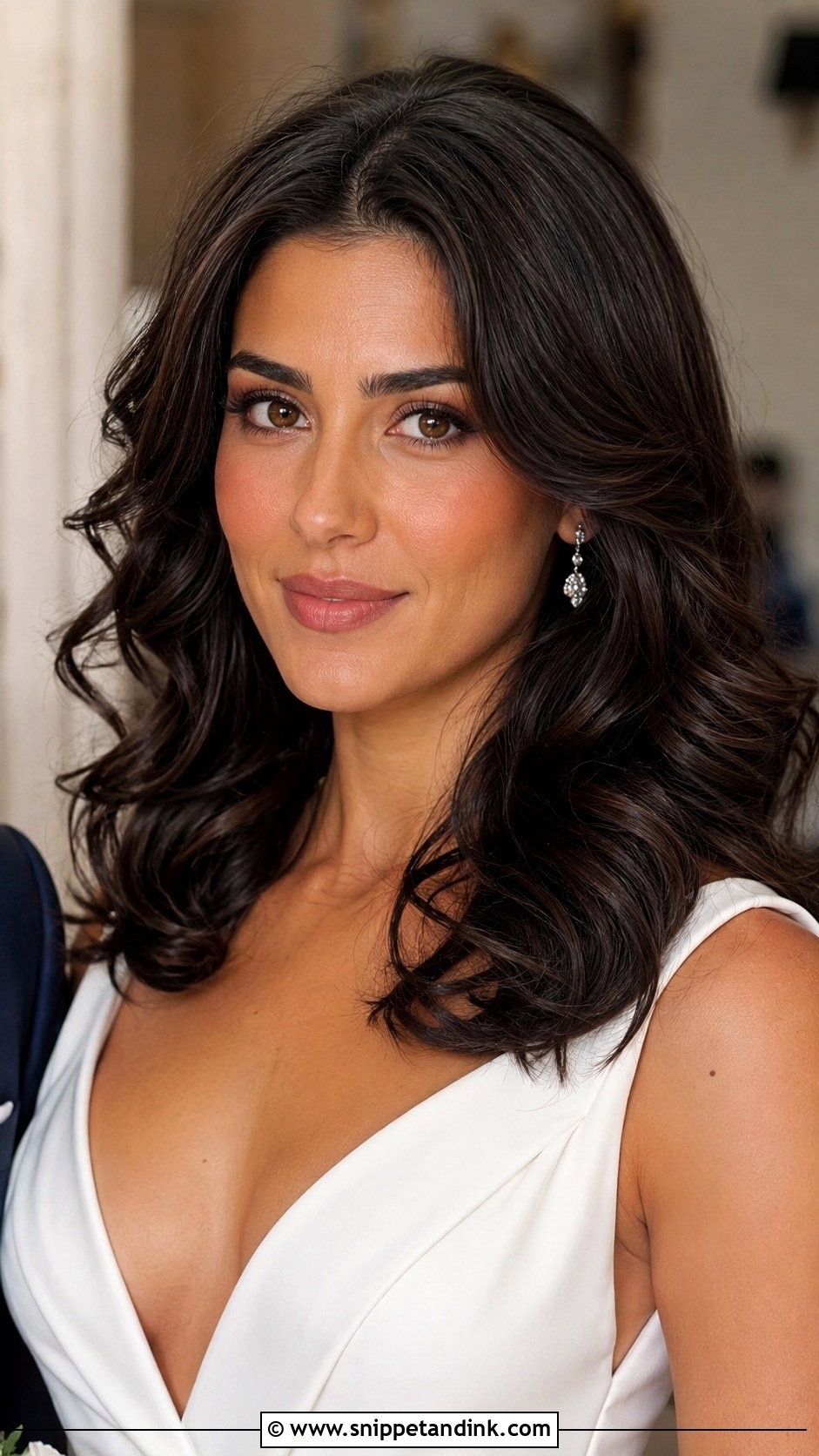
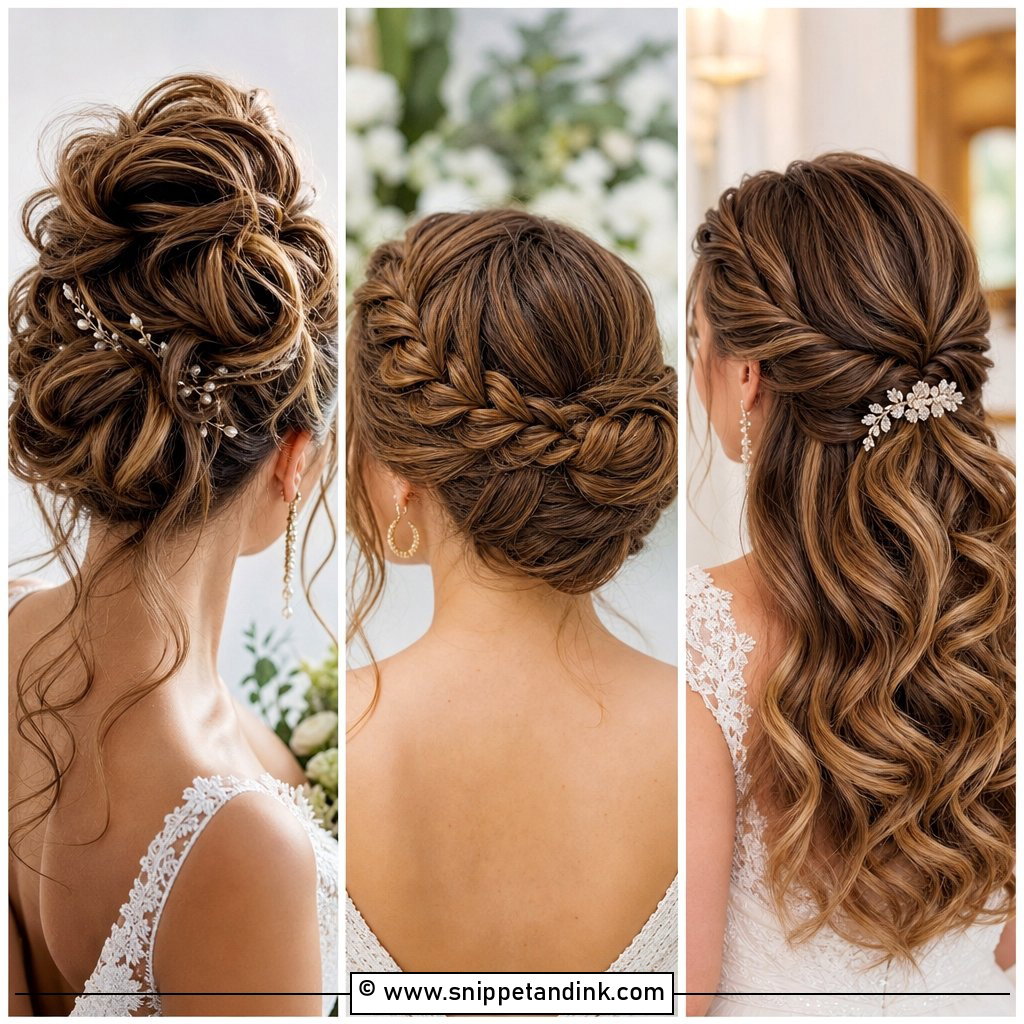
Thick medium hair already has fullness, so the work is in controlling it so the waves look soft instead of bulky. Long layers cut in a few weeks ahead help the waves fall better at the ends. A smoothing blow-dry before curling reduces puffiness and gives a polished base. Glossy Hollywood waves, loose waves or a half up style that takes weight off the front all suit thick hair. The pins I use for thick hair are longer and stronger than the ones I use on fine hair, and a flexible spray keeps the hold comfortable rather than stiff.
Rain, Sea Air and a Wave That Wants to Drop
Waves fail for one main reason: moisture. Hair takes up water from the air, and the bonds that heat set into it relax, so curls loosen and frizz. Fine hair and slippery straight hair go first. Coastal venues, summer heat and rain are the conditions I plan hardest for.
What I change on a humid day
I set the waves tighter than the finished look and let them relax into place, rather than brushing them out fully at the start. I use a humidity-resistant spray and skip heavy creams at the roots. If the forecast is grim, I’ll often suggest a half up version, since it keeps the front, where frizz shows most, pinned and calm.
If the waves fall anyway
Don’t re-curl on the day with someone’s travel iron; damp-ish hair and a hot iron is a bad mix. Twist a fallen section around two fingers, pin it flat against the head for ten minutes, then release and finger through it. A low twist pinned at the back is the graceful exit if the whole style has softened by evening.
Ask for the Wave Your Hair Can Hold
Waves suit medium hair because they adapt to nearly any dress, venue and level of formality. Keep them polished with a Hollywood set, relax them into beach waves, or add detail with pearls, flowers, braids or twists. What matters most is choosing a version that works with your natural texture and density, and with the weather you’re likely to get. Bring clear inspiration photos to your trial, talk honestly about hold, and test every accessory there. Then ask your stylist to show your maid of honour how to pin back a dropped wave.
You'll Like These Ideas:



Leave a Reply