
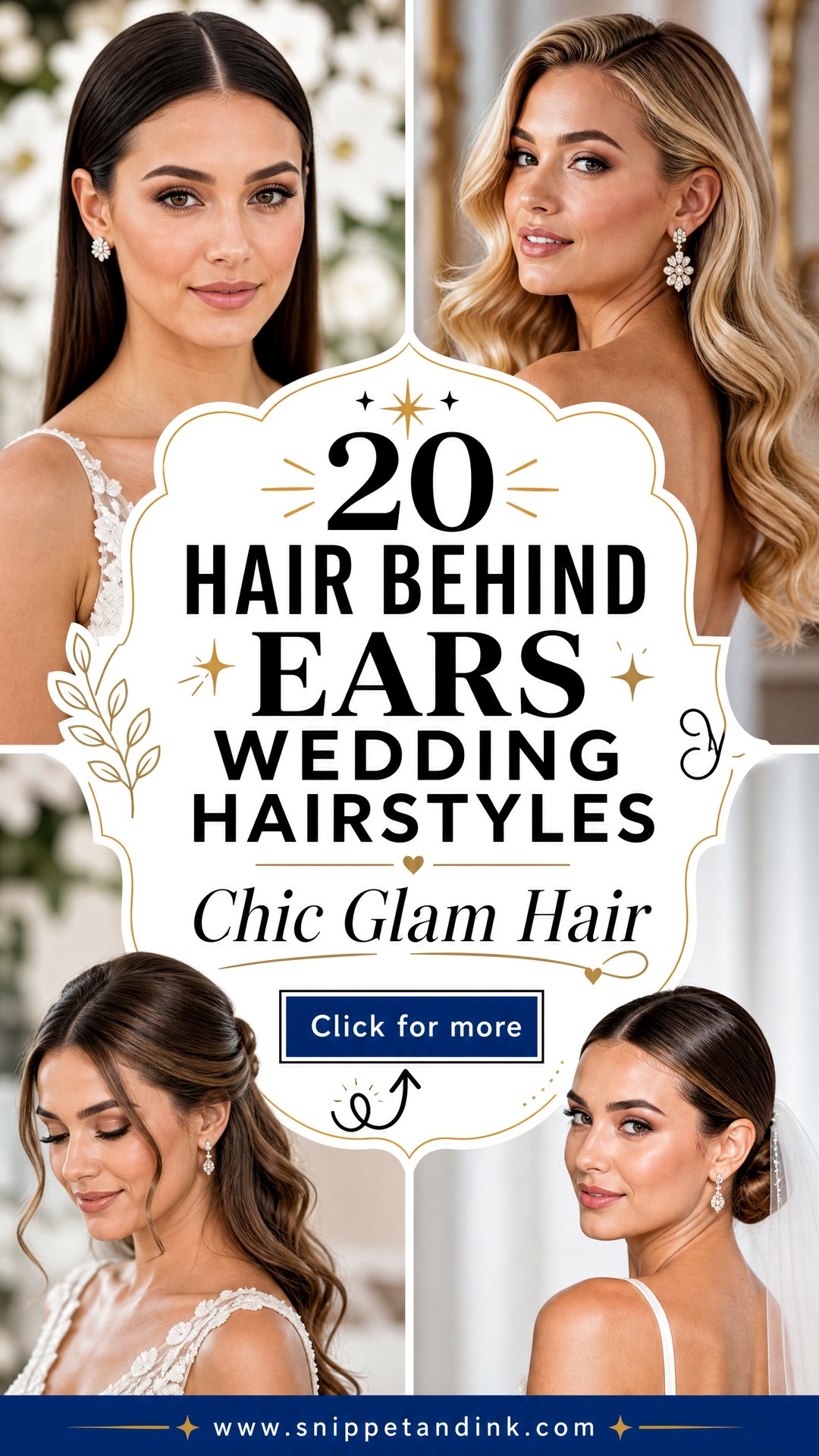
Tucking hair behind the ears sounds like the simplest thing a bride can ask for, and it’s one of the trickiest to make last. Hair wants to fall forward, especially once it’s been curled, hugged and danced in for eight hours. When it stays put, though, the payoff is real: your face is open, your earrings are visible and nothing sticks to your lip gloss. I’ve laid out twenty versions below, from glossy Hollywood waves to braided half-up styles, and for each one I’ve added what makes the tuck hold and who it suits best.
Why a Tuck Slips Forward and What Holds It Back
Hair tucked behind the ear by hand usually lasts until the first hug. It springs forward because the section is still straight at the root and has no reason to stay bent. I fix that in layers, so no single trick has to do all the work.
- Train the section. I run a flat iron over the front piece and bend it gently backward as I go, so it cools in the shape of the tuck.
- Add grip. A little pomade or wax stick on the underside of the section stops it sliding on smooth skin.
- Pin from behind. One bobby pin slid in behind the ear, pointing down toward the nape, holds the section against the head. On thick hair I cross a second pin over it.
- Set it last. A firm-hold spray on the brush, not straight onto the hair, smooths flyaways without leaving a wet patch.
Layers shorter than chin length are the usual problem. If your front pieces barely reach your ear, ask your stylist about leaving them a few weeks longer before the wedding, or plan for a tiny pin that sits hidden in the hair.
1. Sleek Middle Part Tucked Behind Ears
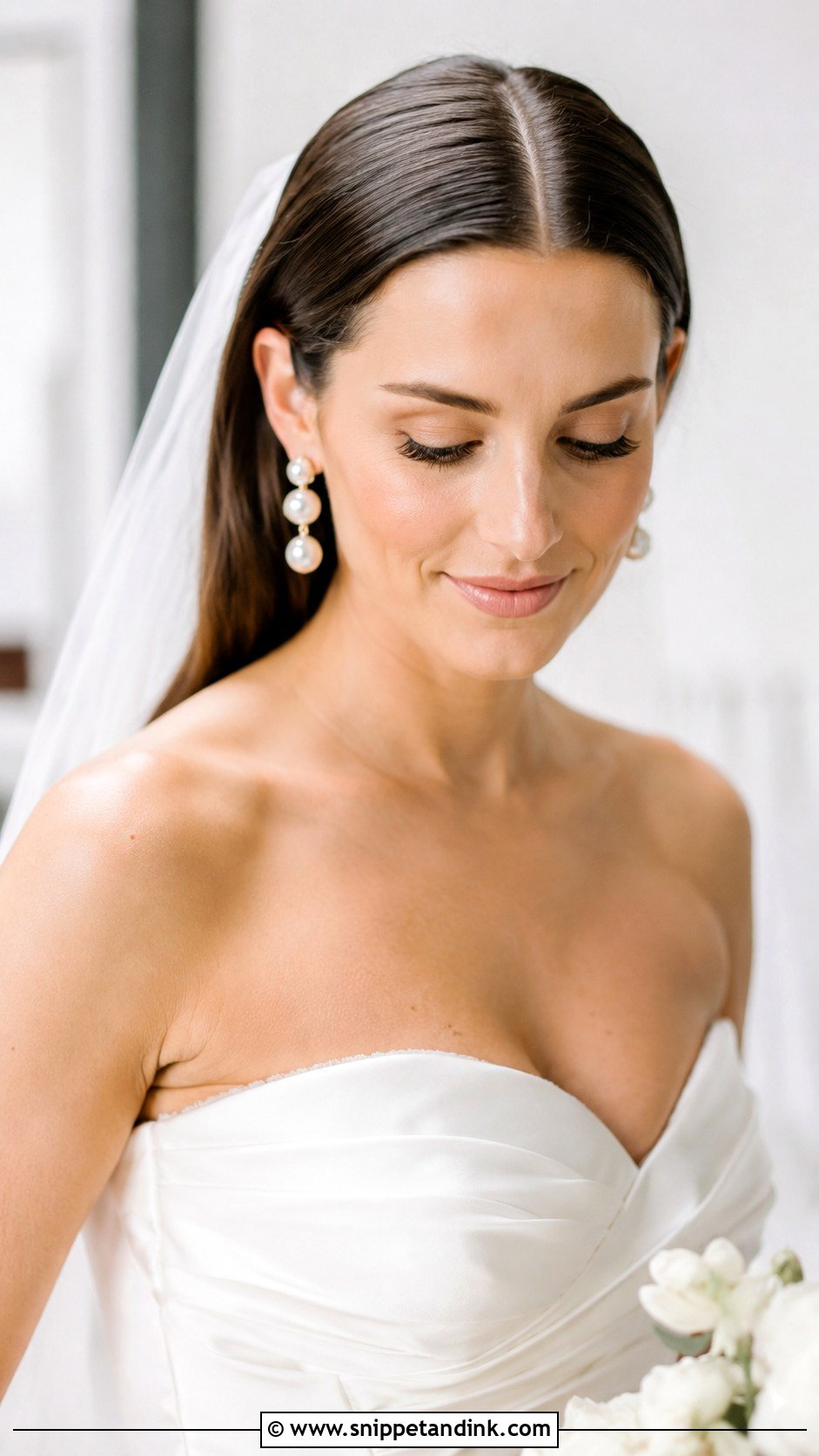
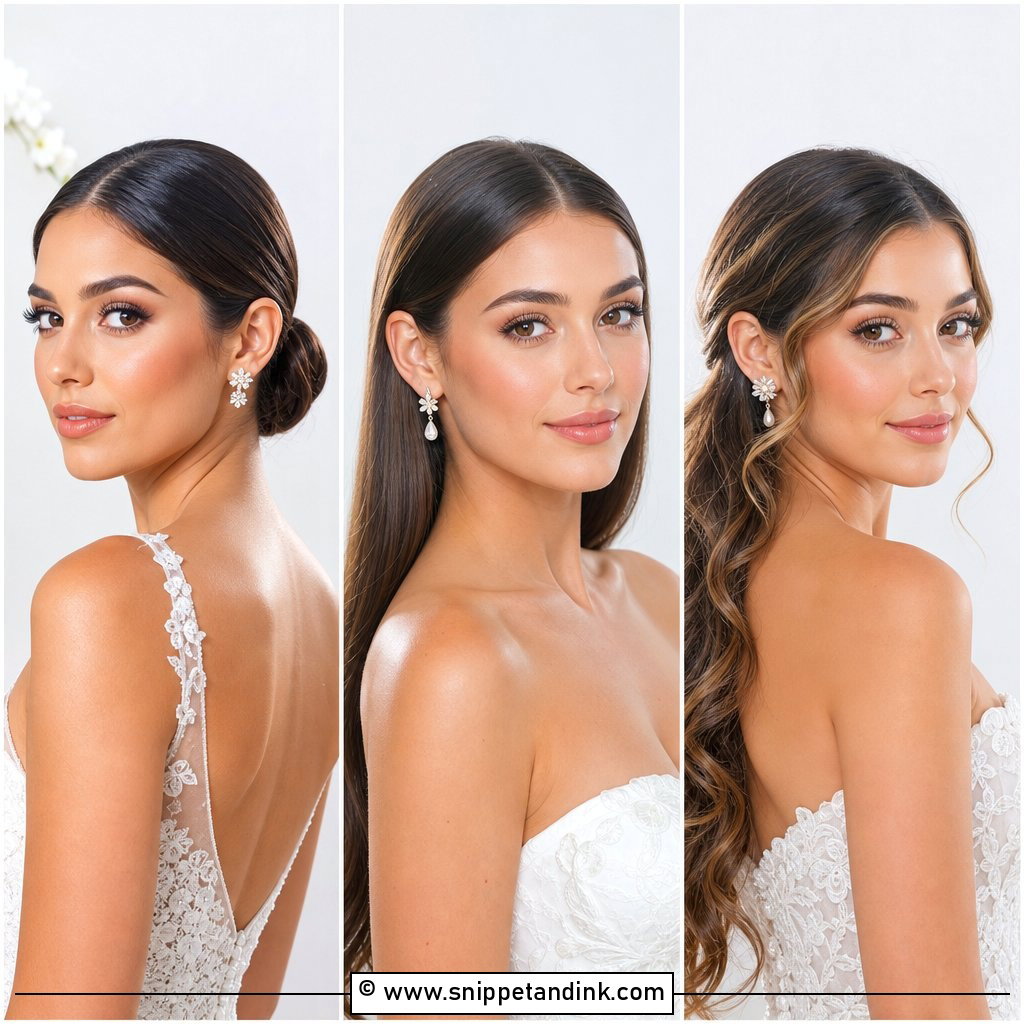
A sleek center part with hair tucked behind both ears is the cleanest look here, and it shows everything, so the part has to be dead straight. I set it with a tail comb while the hair is still slightly damp, smooth each side back with a flat brush and a drop of serum, then tuck. Statement earrings sit fully on show with nothing catching them. It suits minimalist weddings. If your hairline has a strong cowlick at the front, a center part will fight you all day, so I’d test it at the trial first.
2. Loose Hollywood Waves Tucked Back
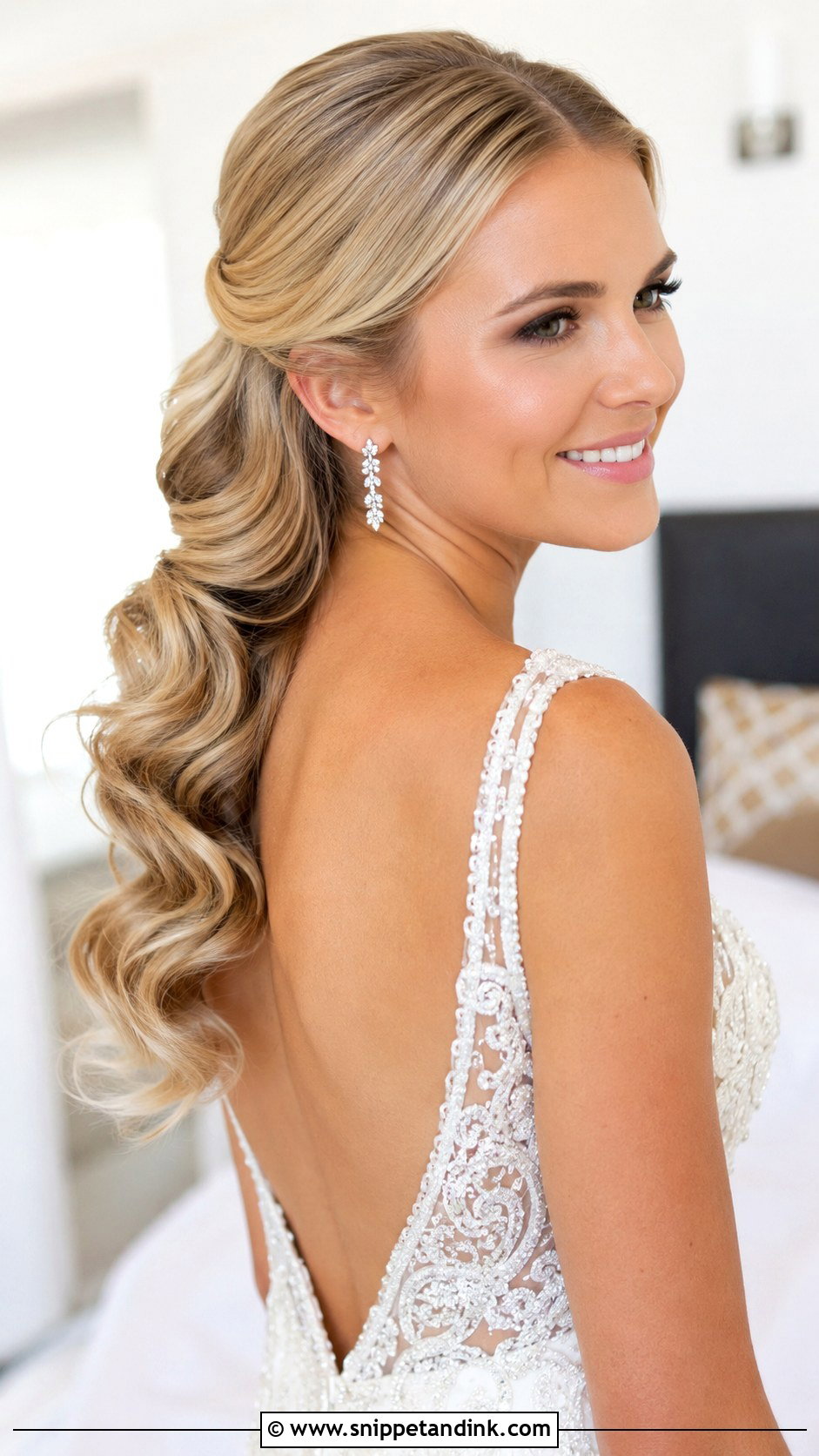
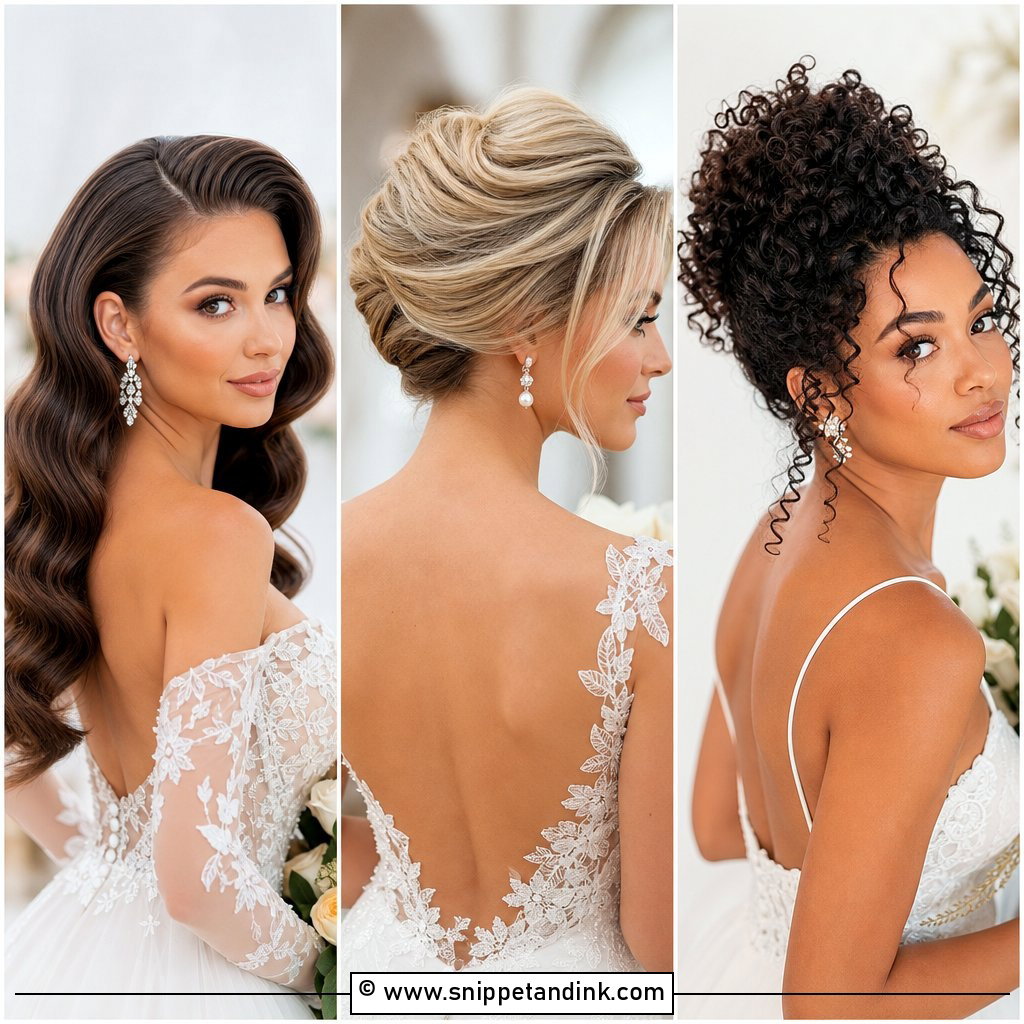
Hollywood waves tucked behind the ears give you the red-carpet shape without hair covering your face. The top stays smooth and close to the head, and the sculpted waves start low, just below the ear. I set the curls with a large barrel, let them cool completely in pin curls, then brush them out into one continuous wave. That cooling step is what makes the shape last. Tucking the front keeps the line neat and the earrings visible. It needs medium to long hair with some weight; very layered hair breaks the wave into separate curls.
3. Half Up Half Down With Tucked Sides
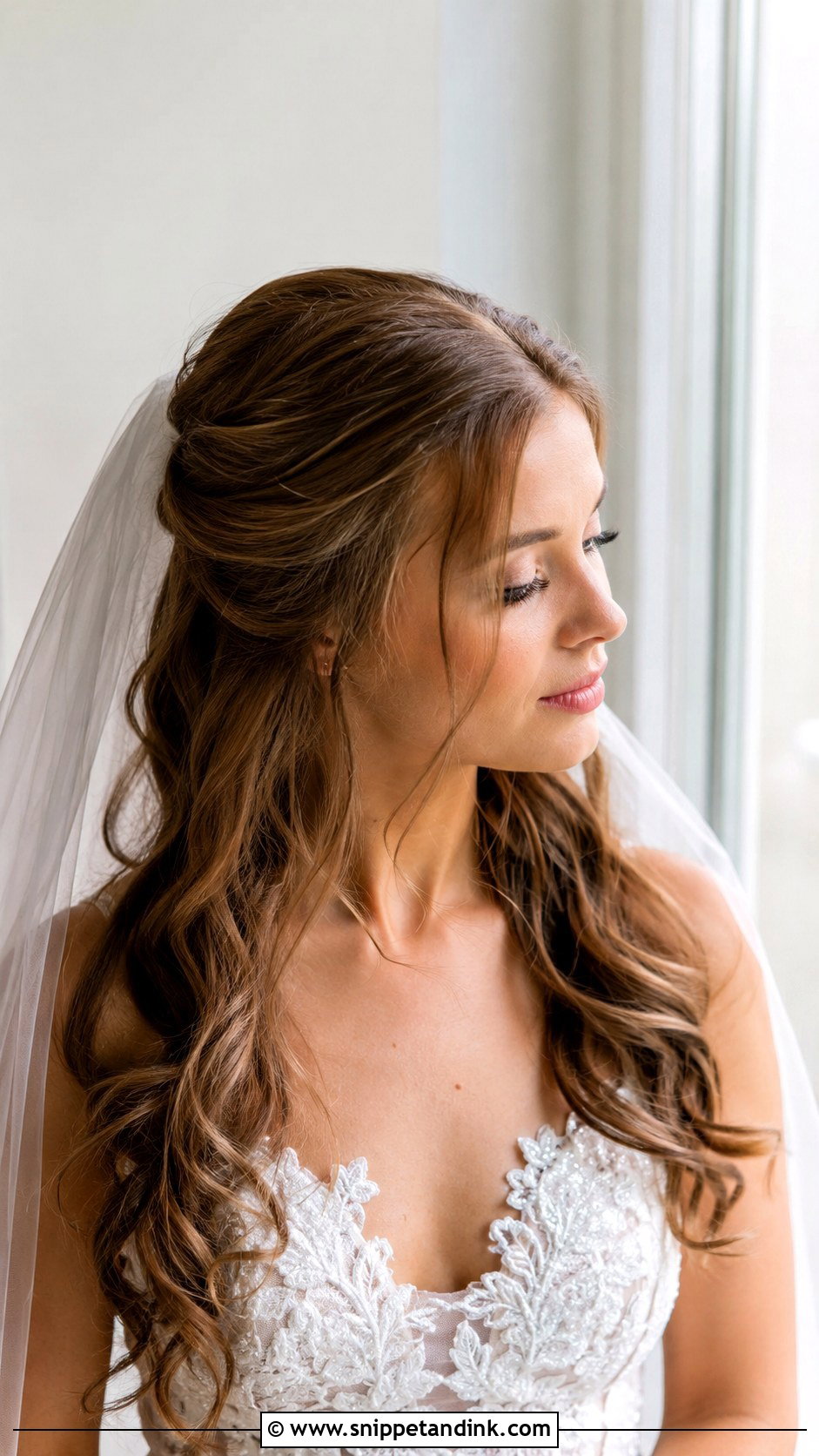
Half up gives you an updo’s security and the softness of hair down. I pin the crown section softly, let the lengths fall, and tuck the front pieces behind the ears so they stay off your cheeks through all the hugging. Waves through the loose lengths add movement, and a small clip or pearl pin can sit where the sections meet. Hidden underneath, I anchor the crown with crossed bobby pins rather than a single clip, since a clip can slide on silky hair once the veil’s weight pulls on it.
4. Low Bun With Hair Tucked Behind Ears
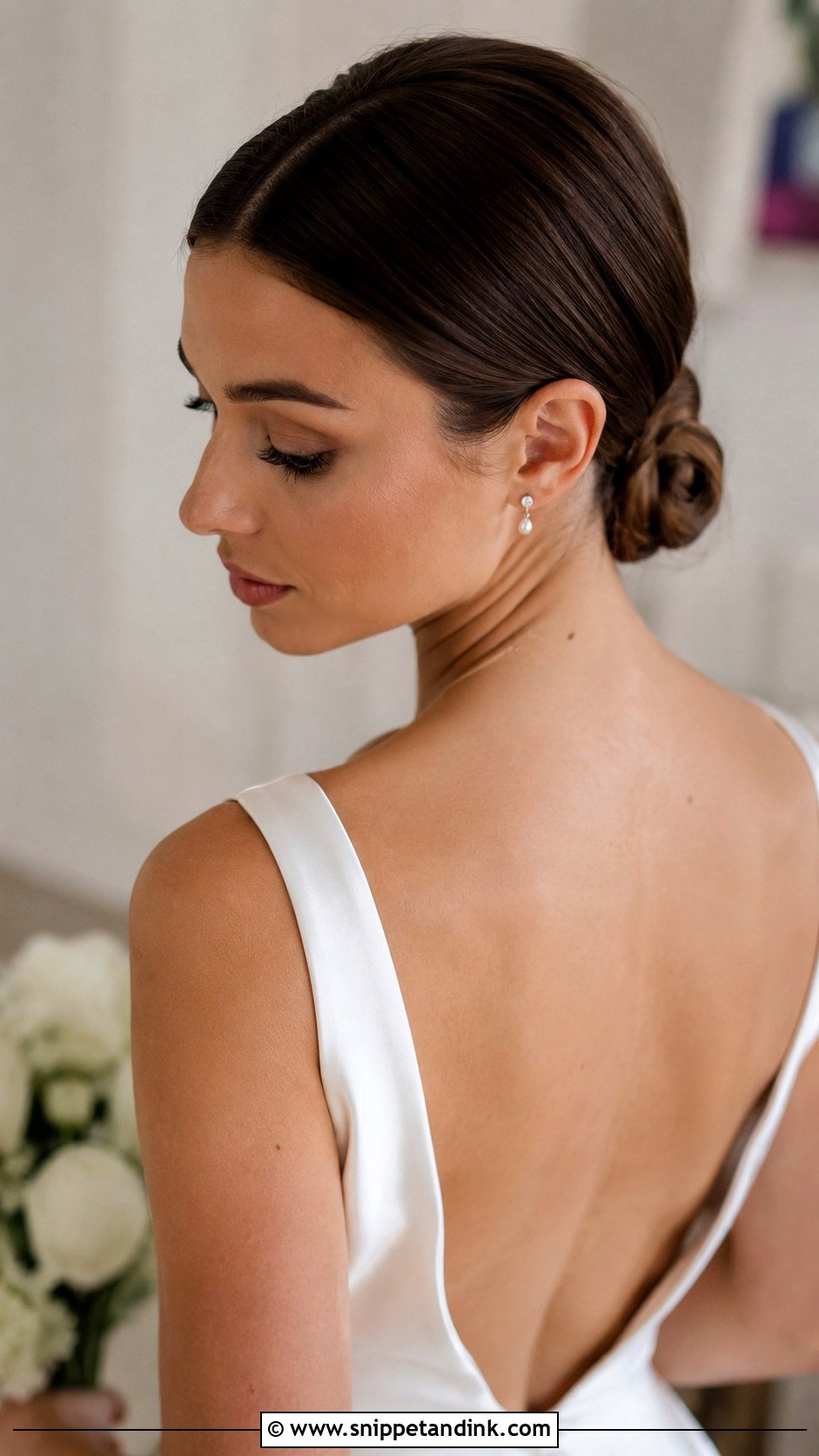
A low bun with smooth tucked sides is about as reliable as bridal hair gets. I gather the hair low at the nape, twist it into a bun that’s sleek or soft depending on the dress, and keep the front sections smooth and tucked to show the jaw and neck. It suits a dress with an open back or a fine necklace. It holds for a full day because the weight sits close to the head. With very thick hair, I thin the bun’s base slightly with a smaller section underneath so it doesn’t pull at the nape by evening.
5. Sleek Low Ponytail Behind the Ears
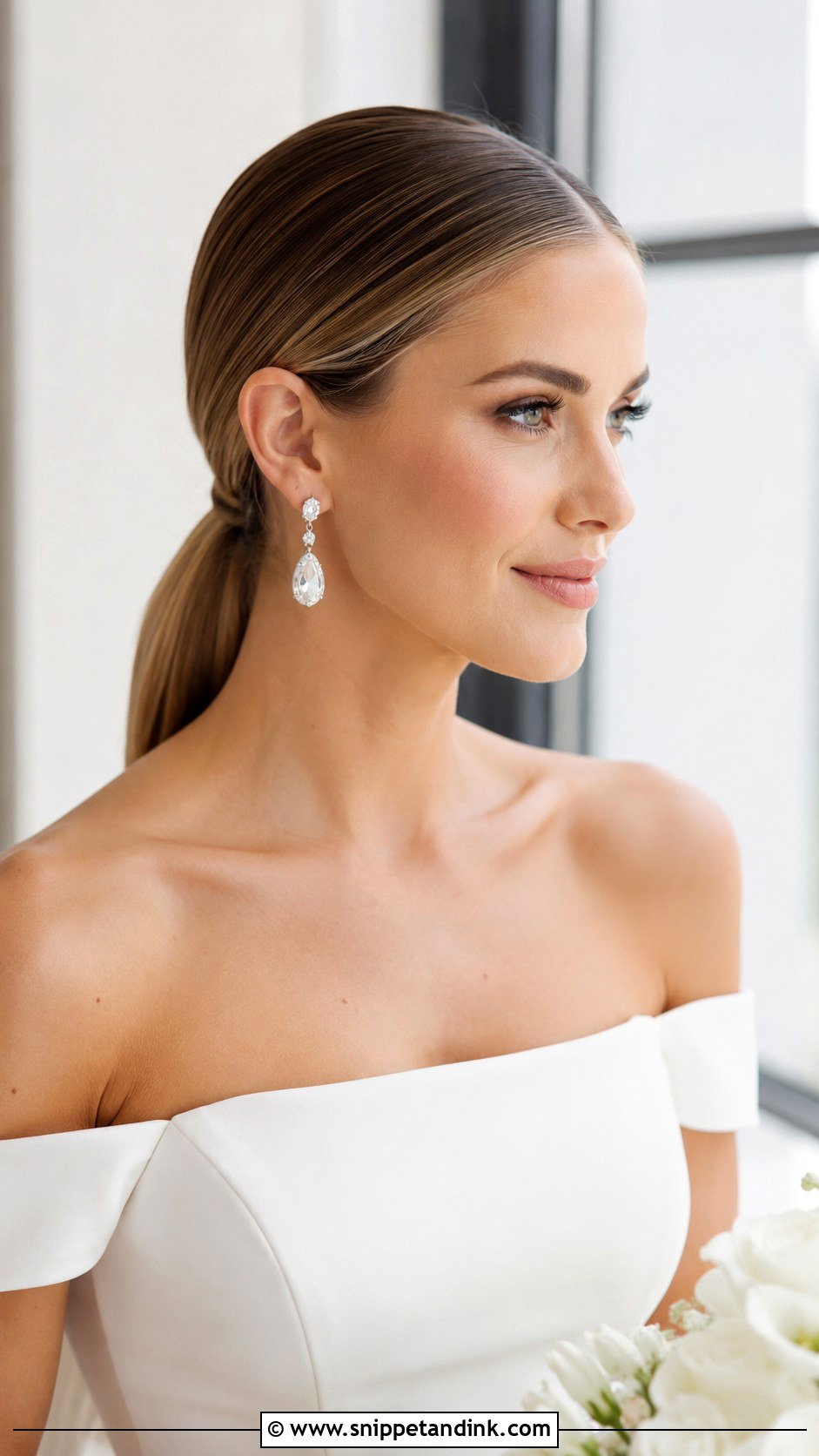
The sleek low ponytail is editorial and modern, and it’s quick to do, which makes it a good choice when the morning schedule is tight. Everything is brushed back, sides tucked behind the ears, and secured low at the nape. I wrap a small section around the elastic and pin it underneath to hide it. The ponytail’s own weight helps hold the tuck in place. It needs reasonably long hair to look intentional. Fine hair often benefits from a small clip-in piece hidden in the ponytail for fullness.
6. Soft Waves With Deep Side Part
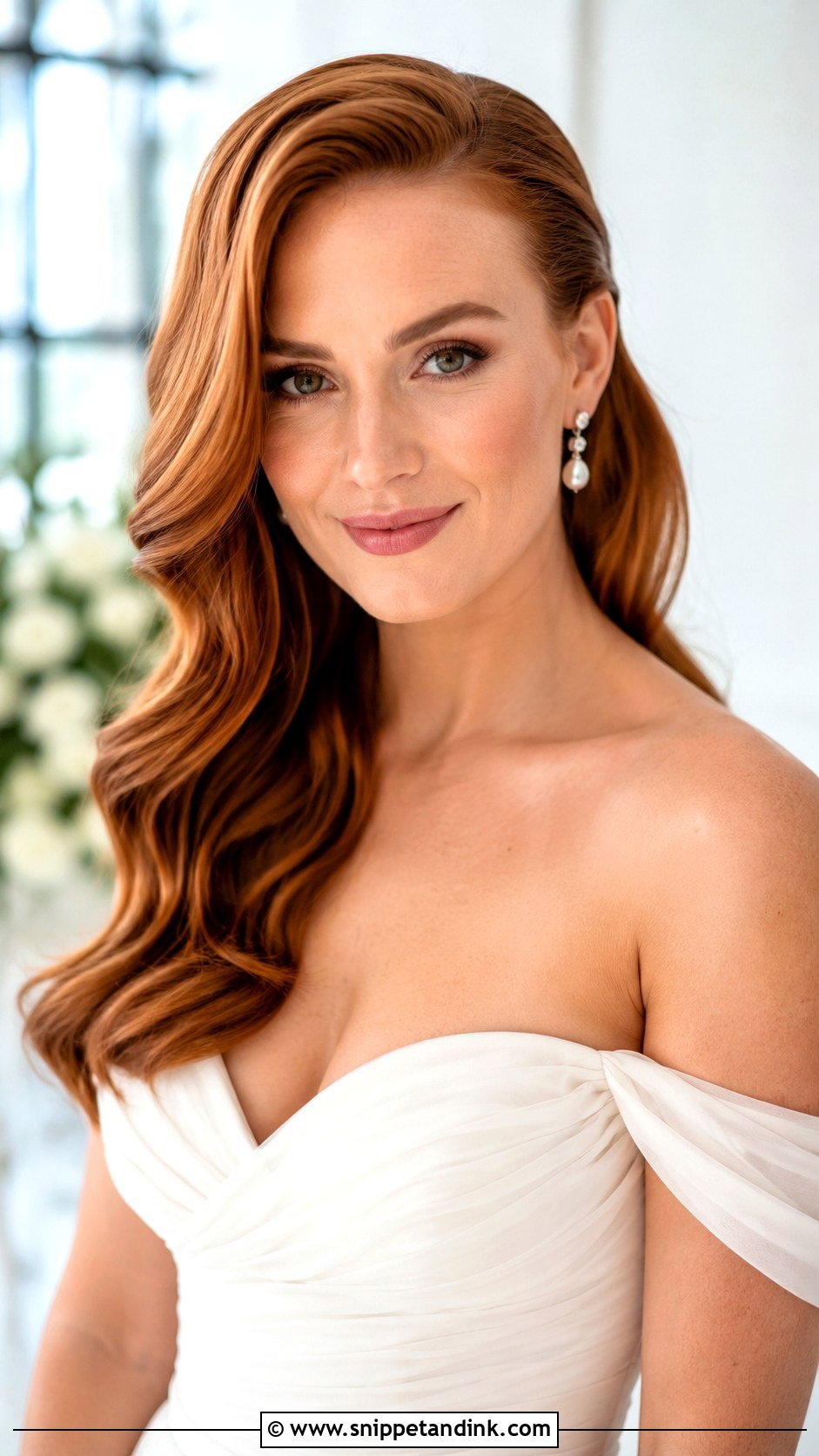
A deep side part puts most of the hair over one shoulder and tucks the shorter side behind one ear. That asymmetry softens a strong jaw or a long face and shows off a single statement earring on the tucked side. The waves fall over the other shoulder. Before the ceremony I always check which side the officiant will stand on, because guests and the photographer spend the vows looking at one side of your face, and that should be the open, tucked one. Medium to long hair works best.
7. Braided Crown With Tucked Strands
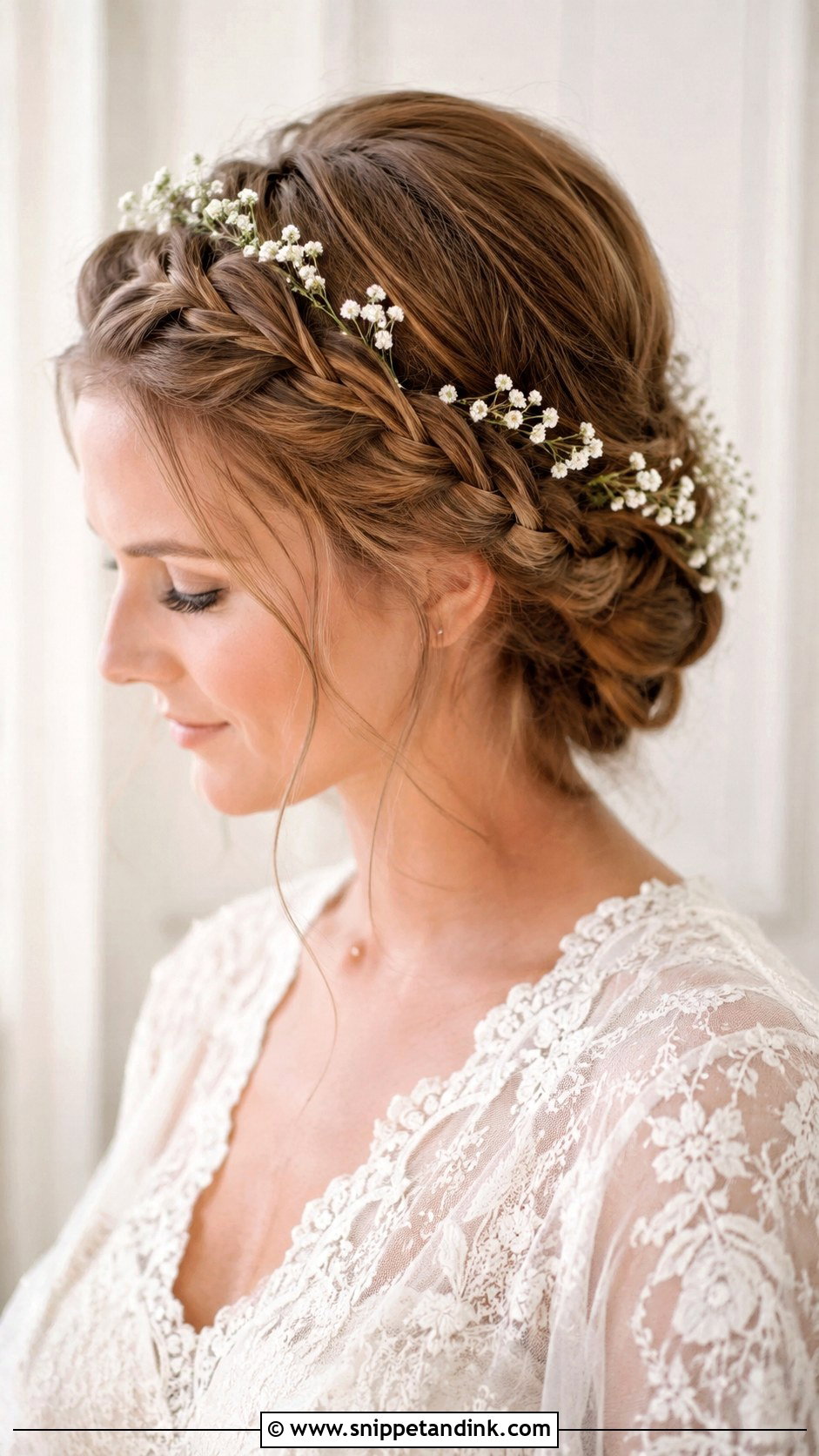
For a fairy-tale feel, a braided crown wraps the head like a halo while the front sections tuck behind the ears. It’s one of the most secure styles in this list, which is why I like it outdoors. The back can be left loose in waves or pinned up for a tidier finish, and tiny flowers or pearl pins can be tucked along the braid. Shoulder-length hair can just about manage it, but layers shorter than the braid’s path will poke out, so I sometimes add a thin clip-in braid to complete the circle.
8. Slicked Back Wet Look for Brides
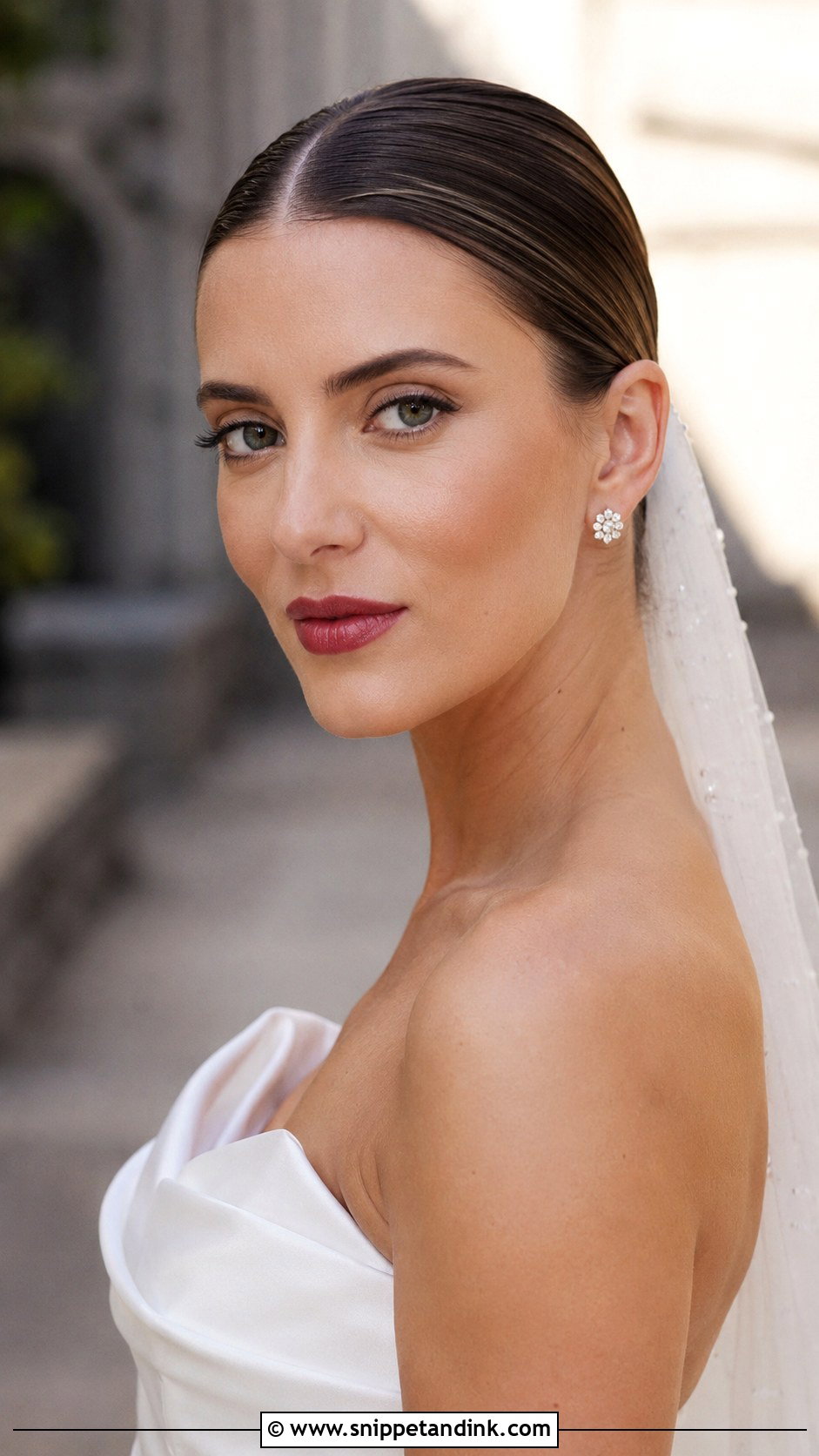
Brides who like a fashion edge often ask for the slicked-back wet look. Everything is pulled straight back, tightly tucked behind the ears, with a glossy finish. I use a strong-hold gel mixed with a little shine serum so it doesn’t dry crunchy or flake, then set it with a firm-hold spray. It puts all the focus on your face and earrings, so it needs a confident bride and makeup to match. The honest trade-off: once it’s set you can’t soften it later without washing it out, so make sure you love it at your trial.
9. Textured Updo With Face Framing Tuck
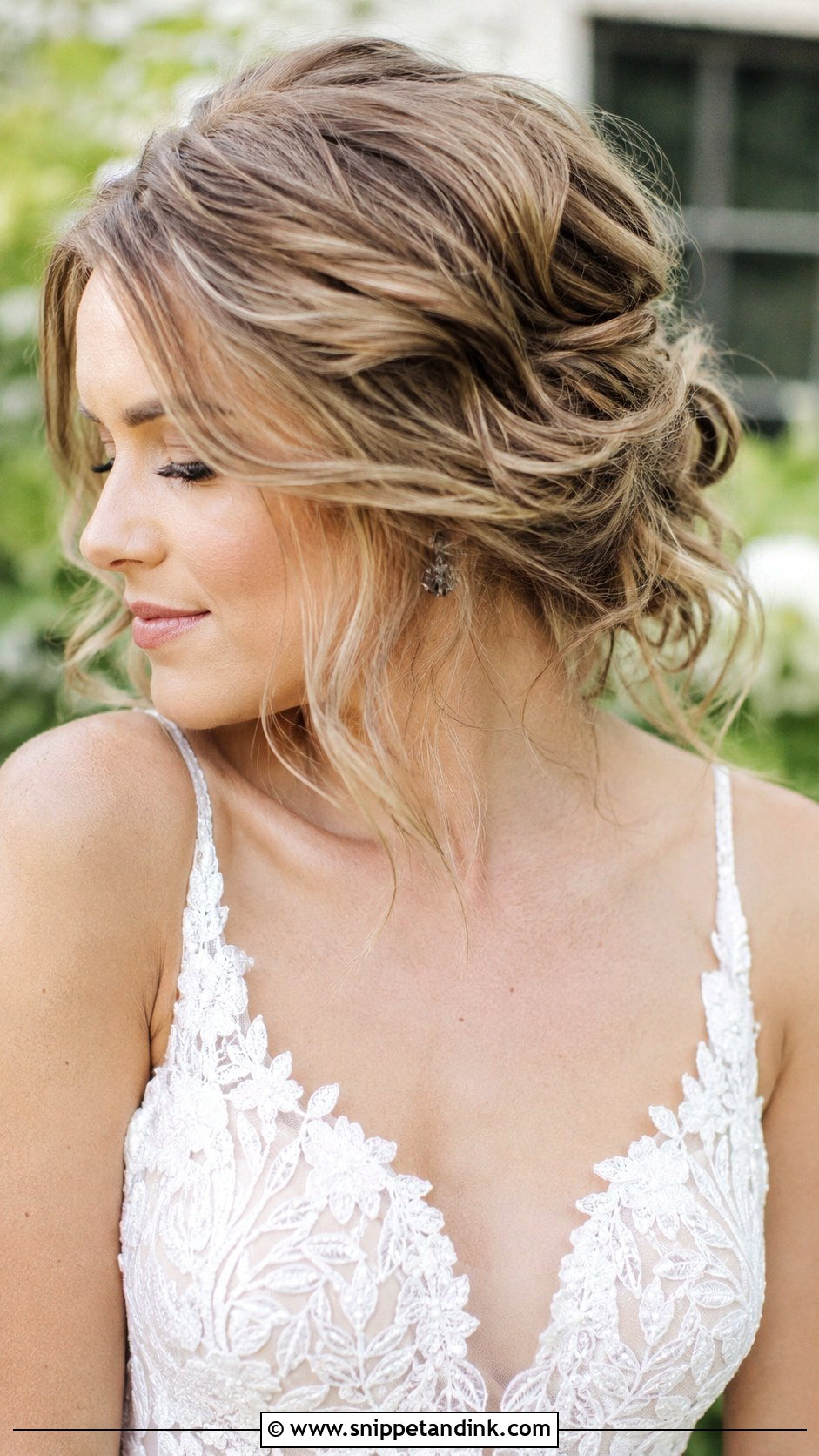
A textured updo looks relaxed, but the undone pieces are placed on purpose. I prep with texture spray, tease small sections at the root for volume, and pin loosely at the back while the front sections tuck behind the ears. A few tendrils can be left out for softness, though I keep them away from the face itself, otherwise they stick to lip gloss and undo the point of a tuck. It suits garden and boho weddings. Very silky, freshly washed hair won’t hold this texture, so I ask brides to wash it the day before, not that morning.
10. Straight Sleek Hair Behind Ears
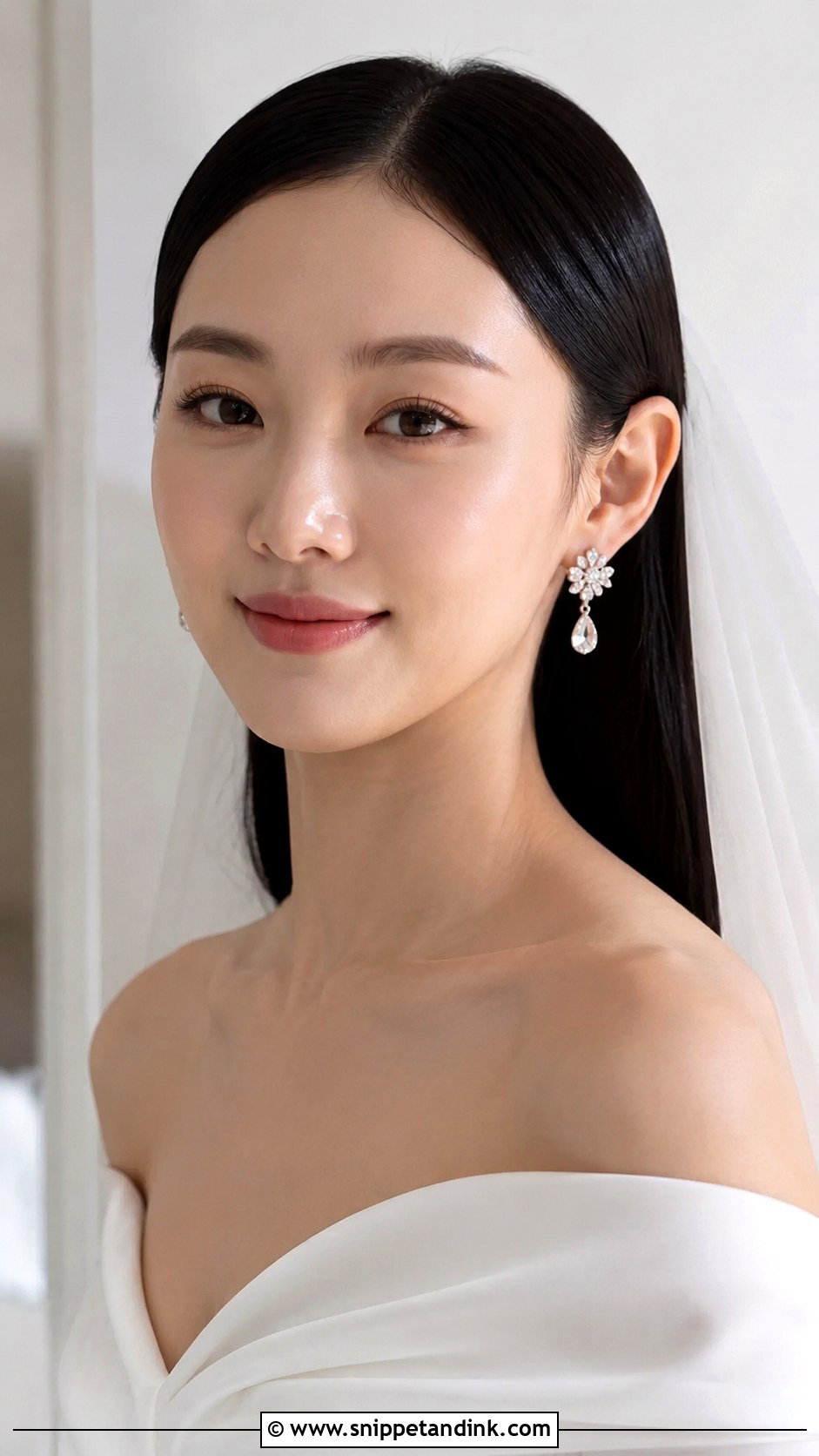
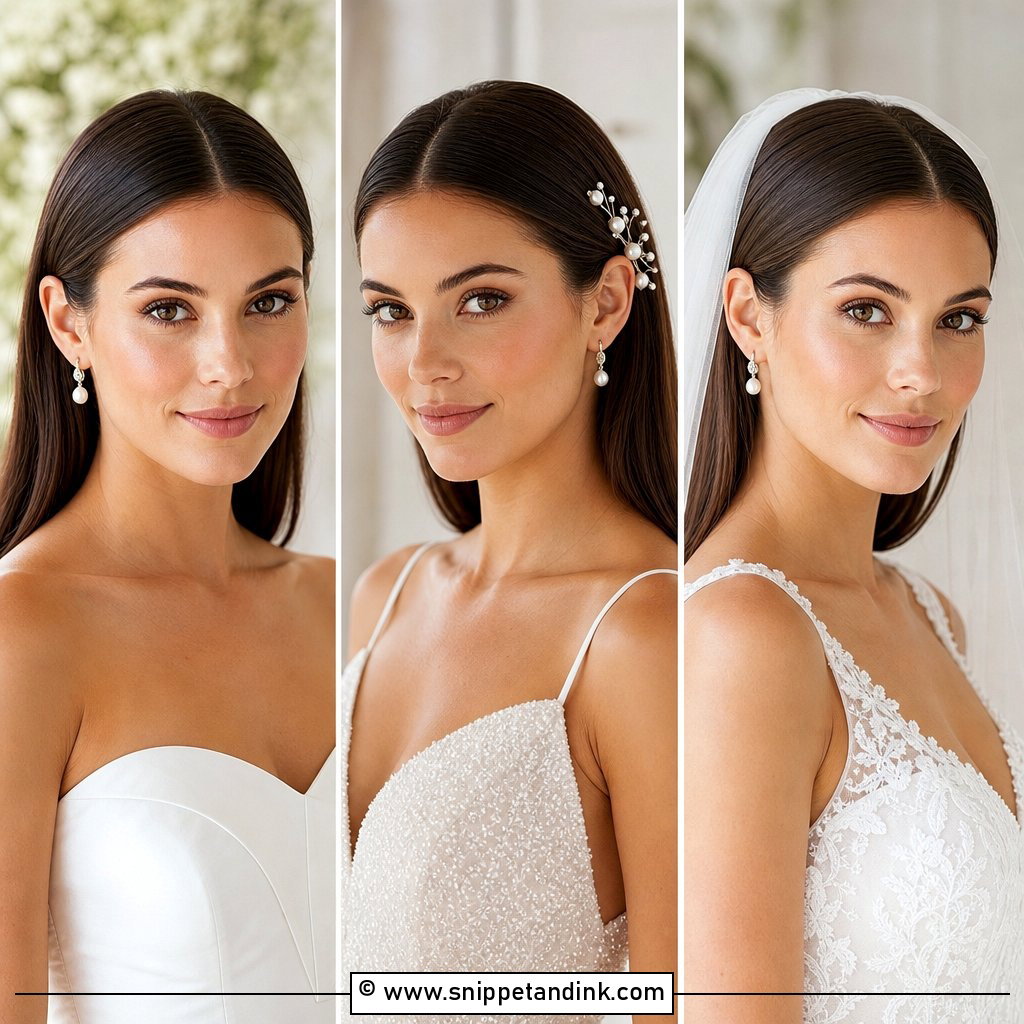
Sometimes the simplest look has the most presence. Pin-straight hair tucked behind both ears is clean and modern, and it lets earrings stand out completely. I flat iron in small sections for shine, then use the iron to gently bend the front section backward so it naturally wants to sit behind the ear. That small bend does more than any amount of spray. It suits naturally straight or fine hair and city venues. Humidity is its enemy, so for a summer outdoor wedding I’d keep an anti-humidity spray handy.
11. Romantic Low Chignon With Tucked Sides
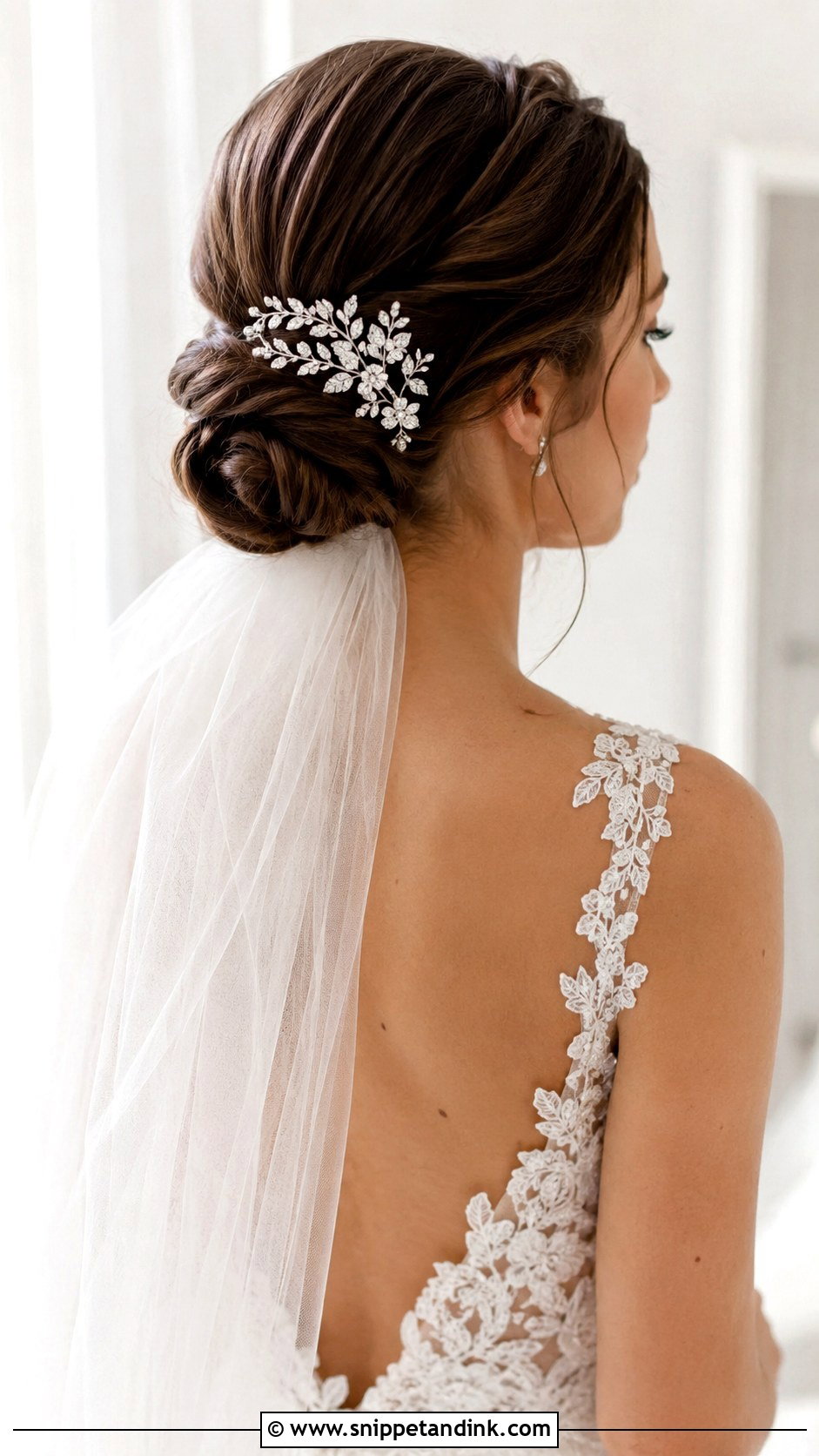
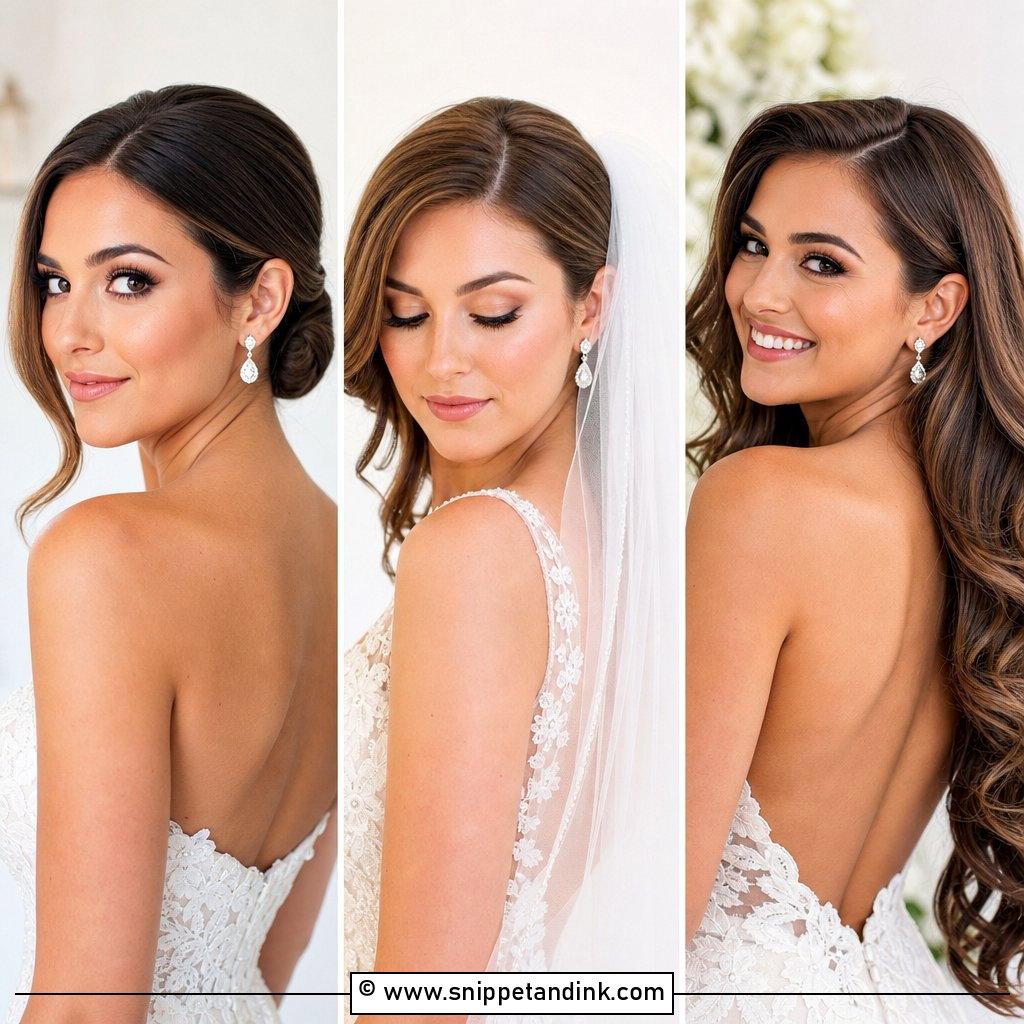
The low chignon is a bridal classic for a reason. This elegant knot sits softly at the nape, and the front sections tuck behind the ears to frame the face. It can be kept sleek or loosened with a few pieces pulled out. A jeweled comb or fresh flower sits well above it, and it’s a natural partner for a veil, since the comb slides in just above the knot. I build the chignon around a padded base for fine hair so it looks full in profile photos.
12. Half Up Bun With Hair Tucked Back
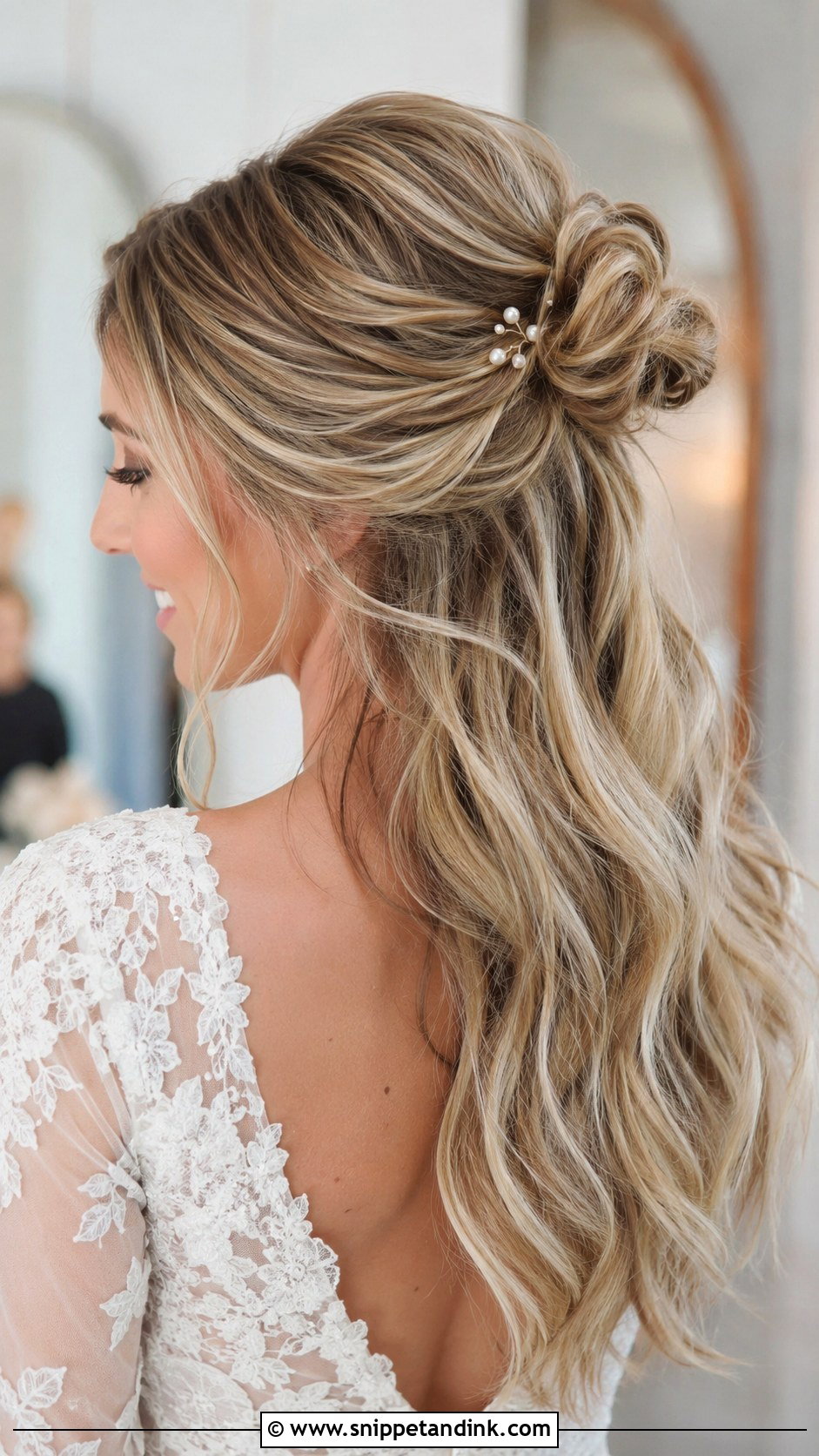
Here the top section is gathered into a soft bun or knot while the rest of the hair flows below, and the front pieces tuck back. It’s a little playful but still polished. Waves through the loose lengths add movement, and a few pearl pins around the bun add sparkle. I place the bun slightly back from the crown rather than right on top, otherwise it can look too casual for a wedding and gets in the way of a veil comb.
13. Wavy Lob Tucked Behind the Ears
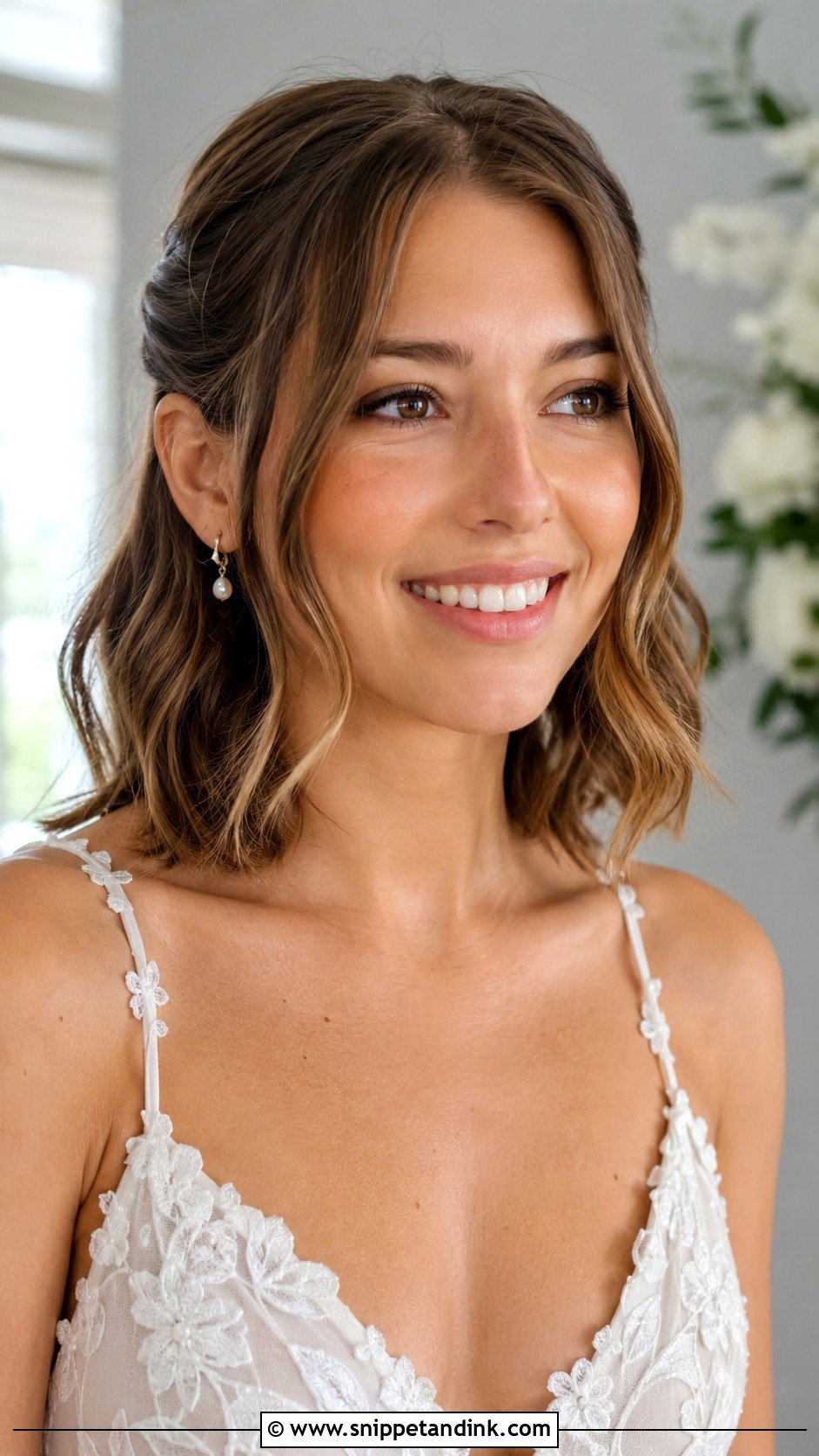
Short hair works well with a tuck. A wavy lob tucked behind the ears looks chic and modern, with soft tousled waves for texture and each side tucked back to open the face. I use a medium wand and leave the ends straight so the waves look current, not prom-like. The one thing to check is length at the sides: if the front pieces don’t quite reach behind the ear, a small bobby pin hidden in the wave holds them. Finish with a light texture spray and it stays fresh all day.
14. Braided Half Up With Tucked Front
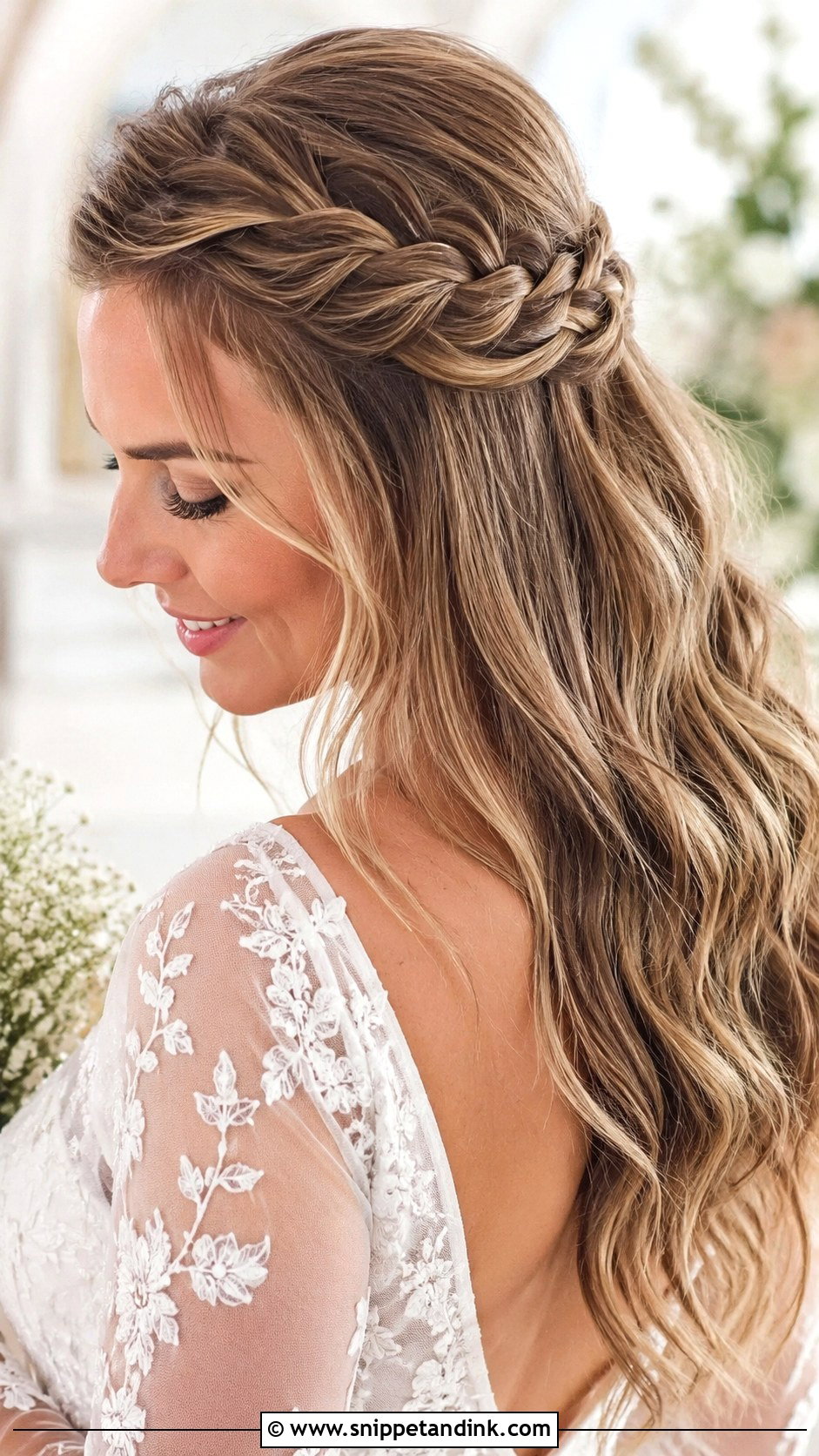
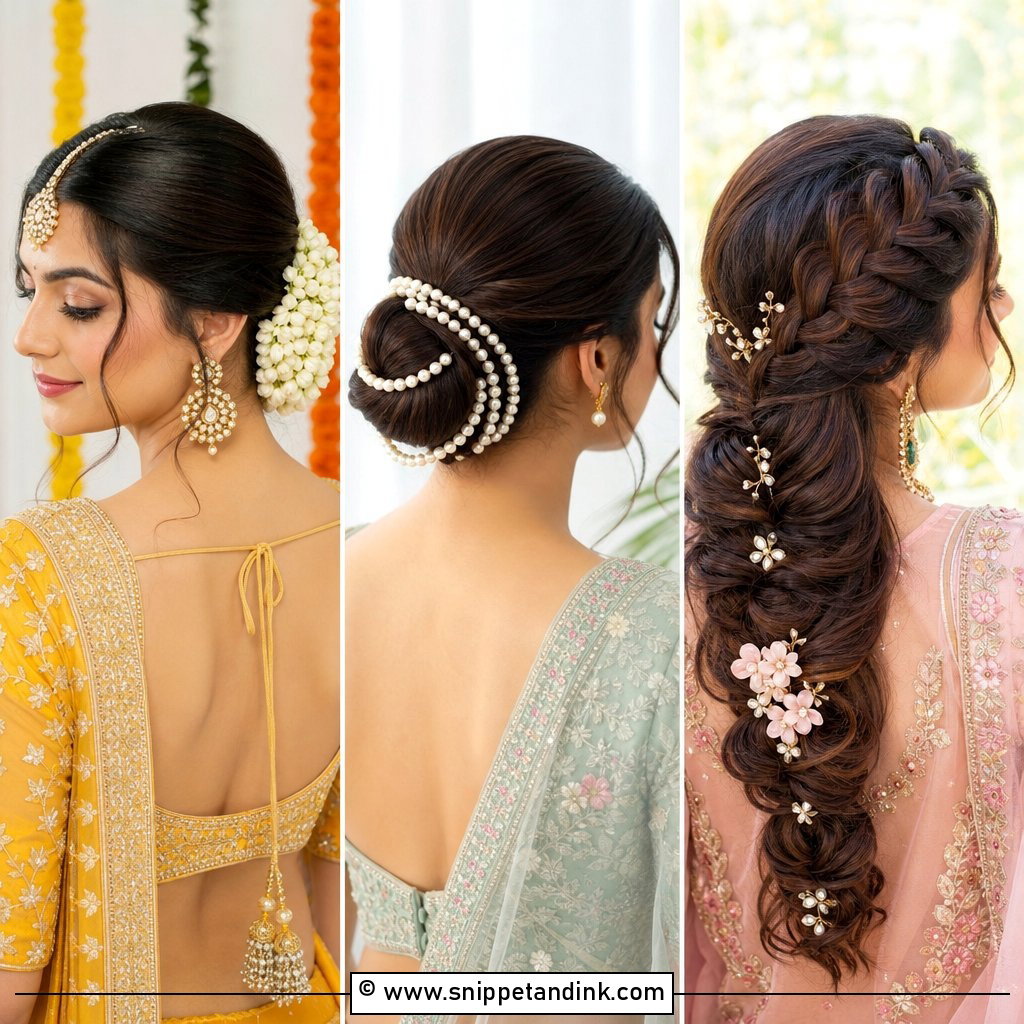
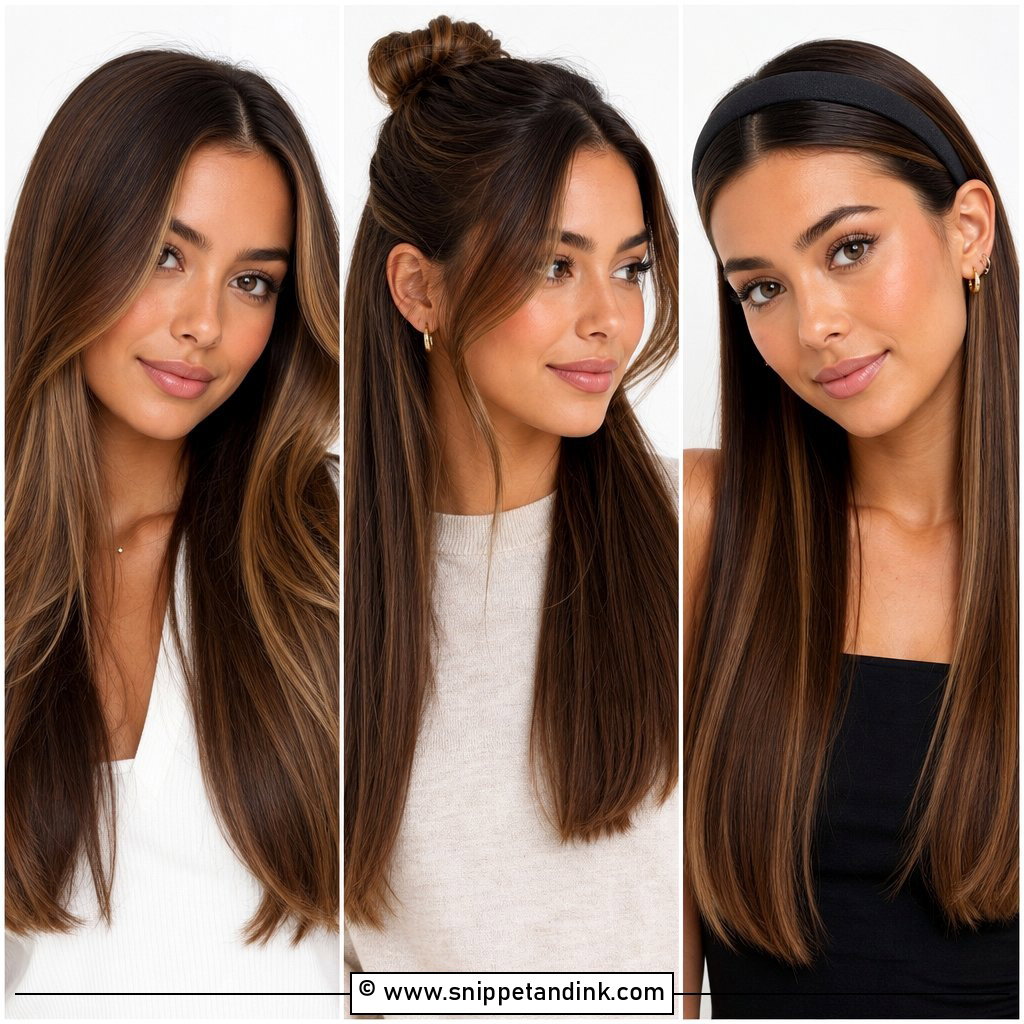
Two small braids start at the hairline, run back behind the ears and meet at the back to form a soft crown, with the rest of the hair falling in waves. The braids do the tucking for you, which makes this one of the most dance-proof styles in this list. Tiny blooms can be pushed into the braid for outdoor and rustic weddings. If your hair is very fine, I pancake the braids gently, pulling the loops wider, so they read as detail and not two thin lines.
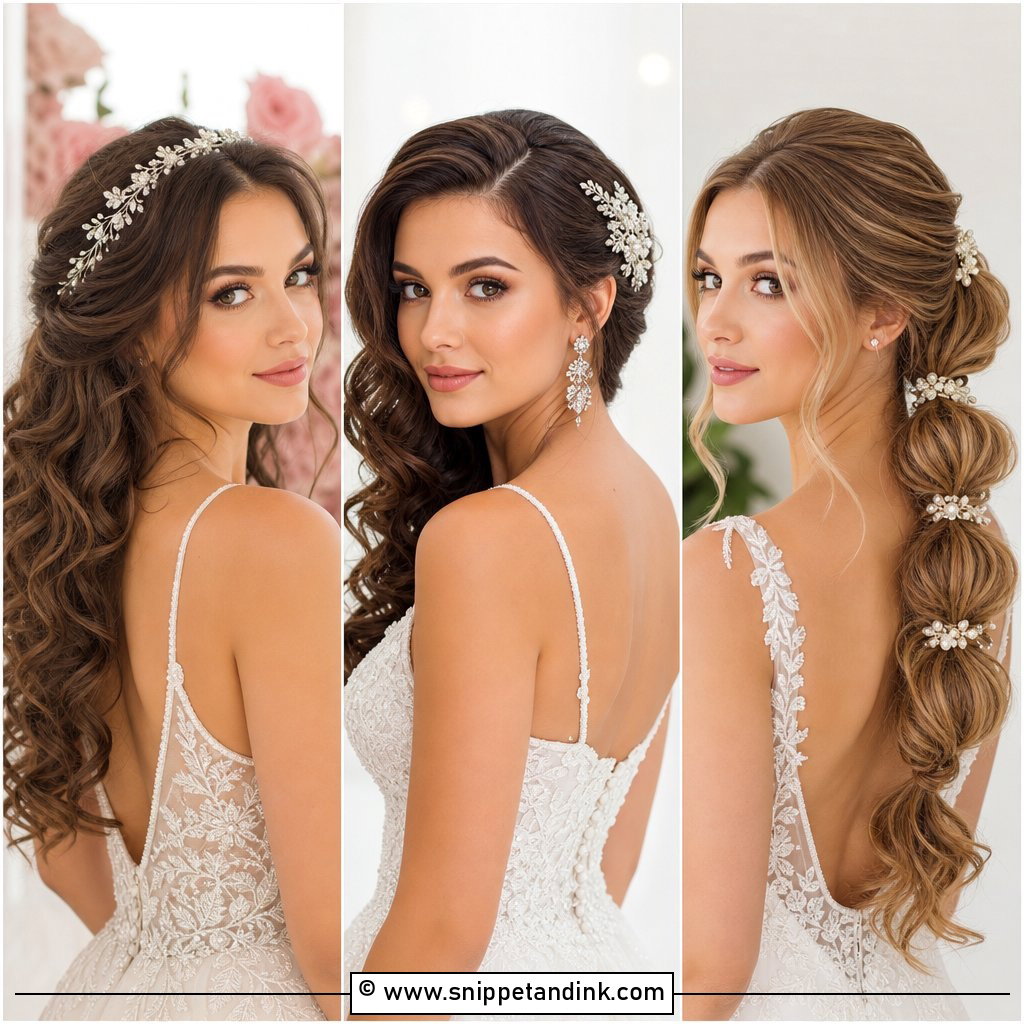
15. Sleek Bob With Center Part Tuck
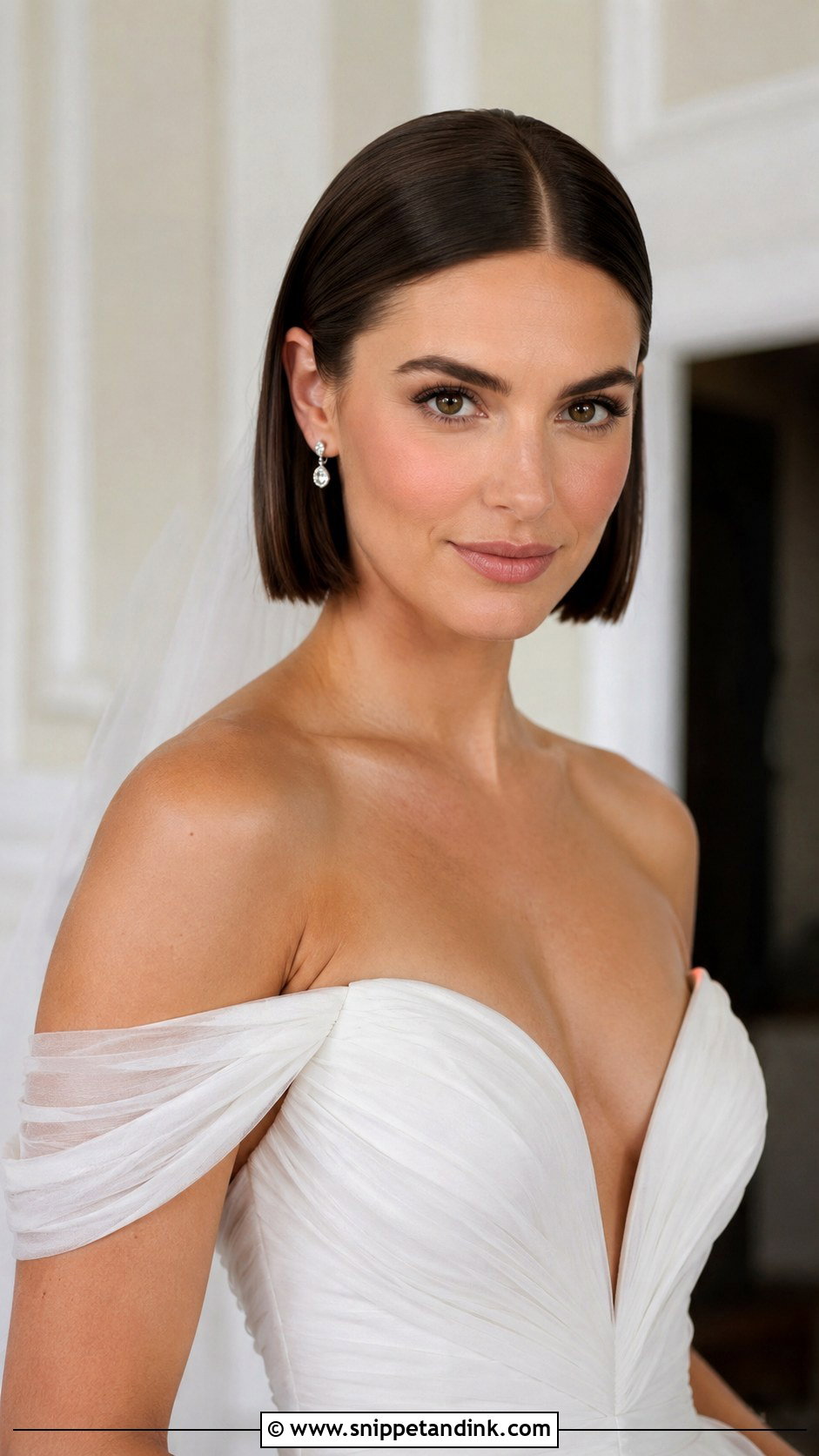
A sleek bob with a sharp center part is precise and modern. Each side is smoothed down and tucked neatly behind the ears, and the symmetry of the part balances the face. It needs a fresh cut, ideally a week or two before the wedding, because the line of a bob shows any growing-out unevenness. I finish with shine spray and a quick pass of a flat iron at the ends. Contemporary venues and city weddings suit it. Simple, sleek styling can carry as much presence as an elaborate updo.
16. Curly Hair Tucked Behind Ears
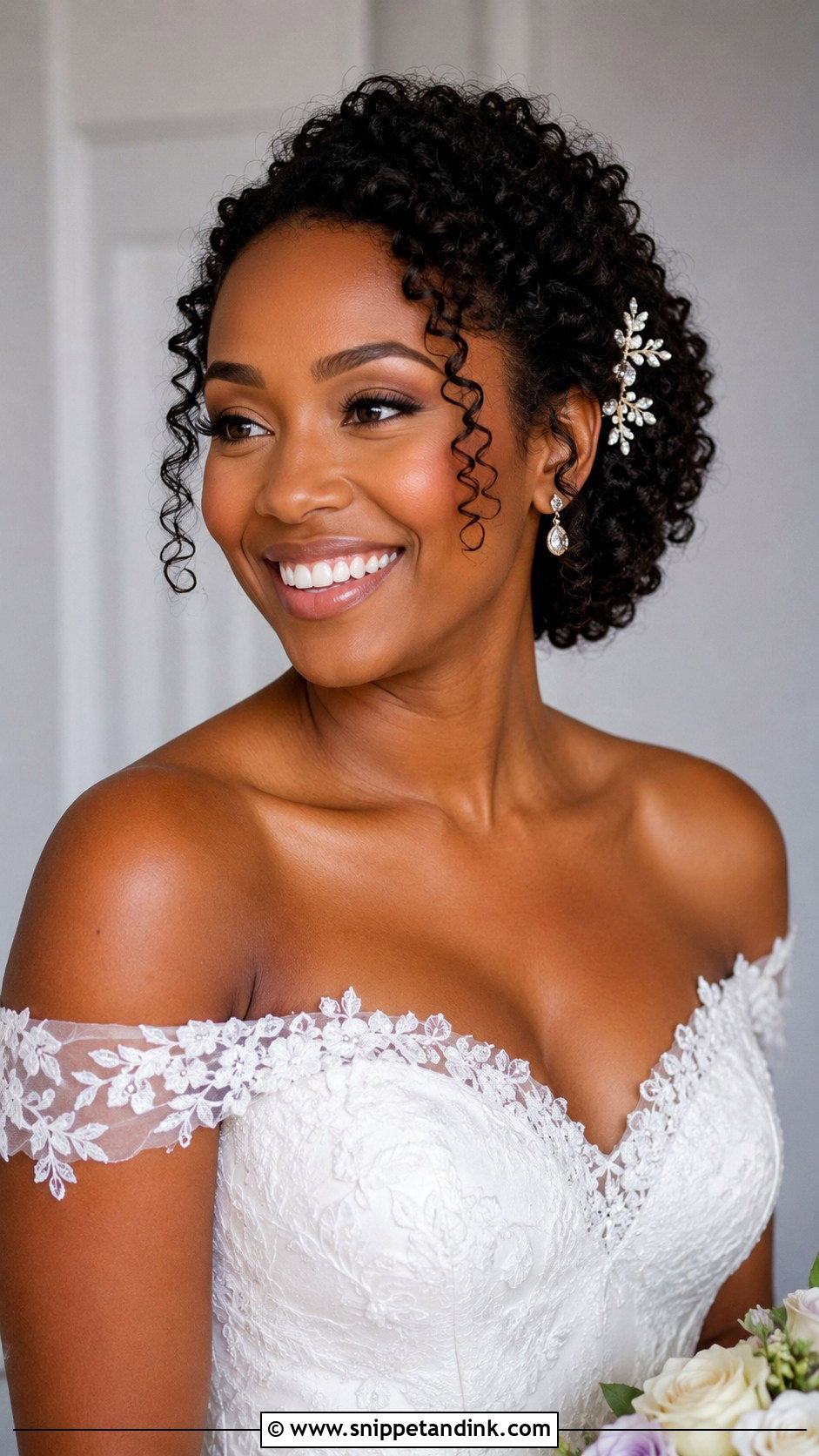
Natural curls deserve to be the feature. Tucking them behind the ears keeps volume back from the face while the spirals stay on show. I define the curls with a curl cream on damp hair and let them dry fully before touching them, since tucking damp curls stretches them out. Curly hair is springy, so the tuck needs a pin: I slide a bobby pin in from behind the ear in the same direction the curl falls so it disappears. A sparkly pin or fresh flower adds a bridal touch.
17. Glam Side Swept Waves With Tuck
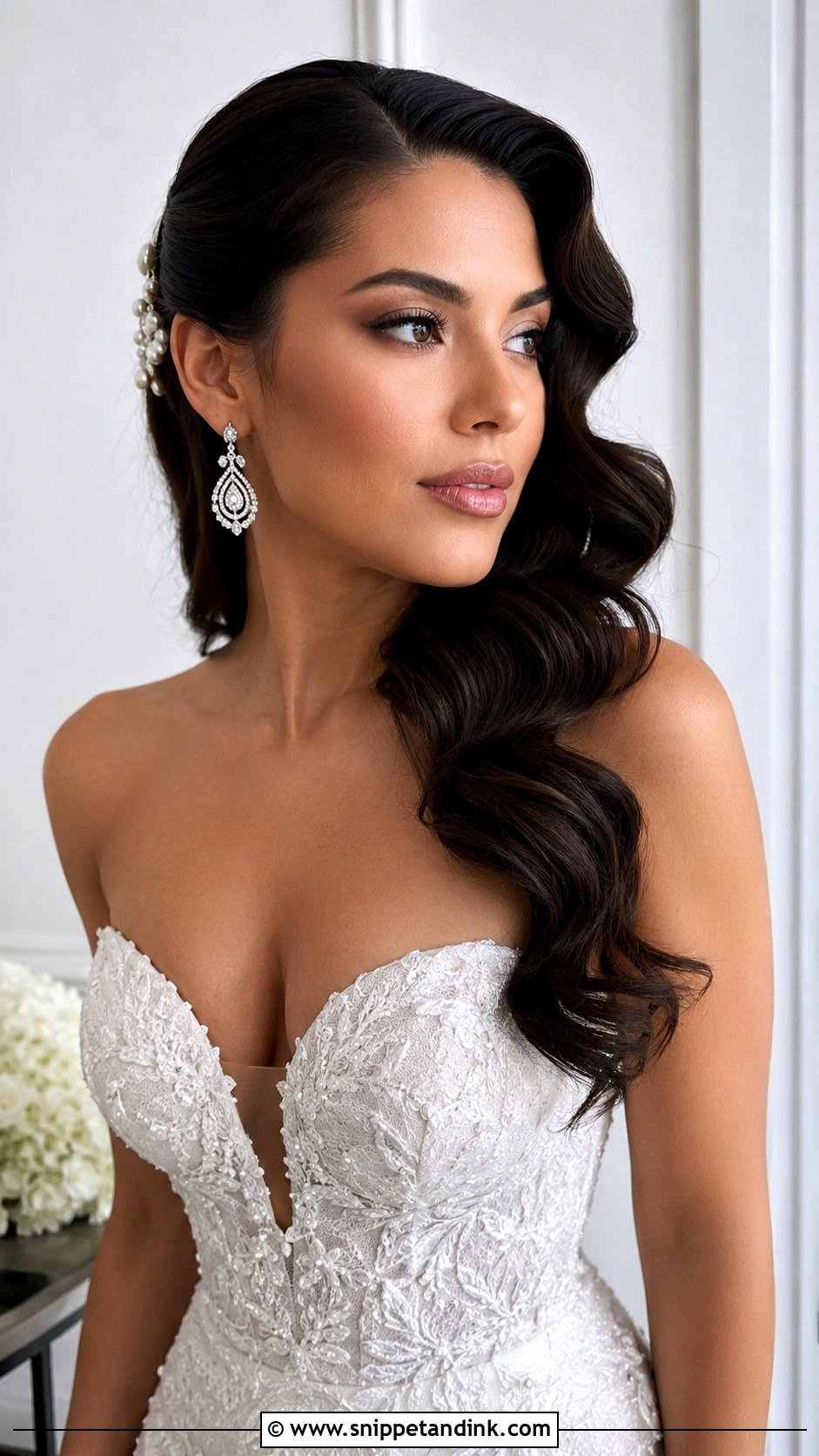
Side-swept waves are Hollywood glamour with one side tucked. The waves sweep to one side and cascade over the shoulder, the opposite side tucks behind the ear, and a single statement earring shows on the clean side. Medium to long hair works best. Behind the tucked ear I hide two crossed pins, because the weight of the waves on the other side naturally pulls the hair across. A little shine spray at the end gives the polished finish.
18. Twisted Half Up With Tucked Sides
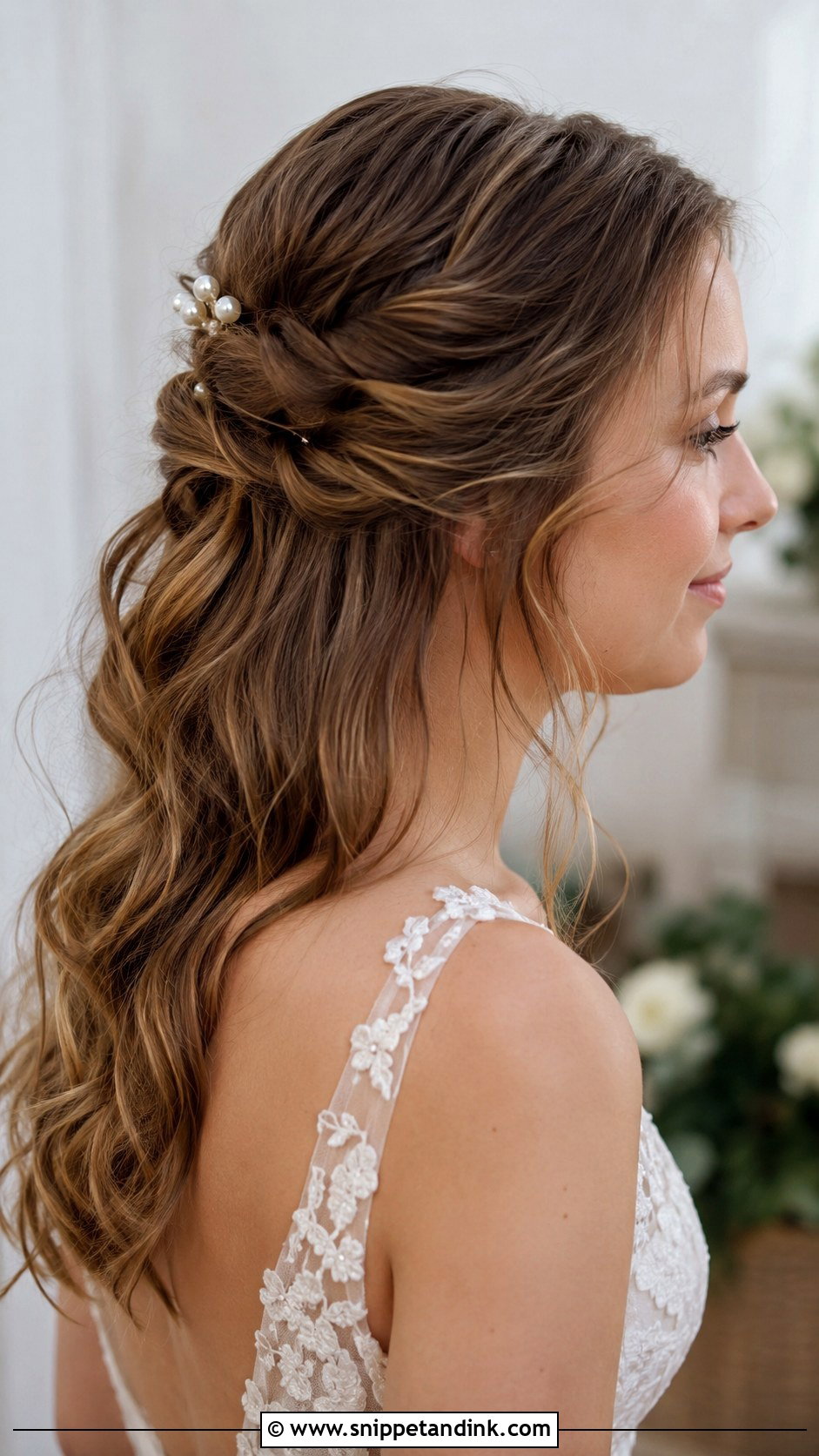
Twists are the quick cousin of braids. I take small sections from each side, twist them back and secure them at the crown, tucking the front behind the ears, while the rest of the hair falls in soft waves. It adds pretty texture at the back without much fuss. Twists can unravel on silky hair, so I add texture spray first and pin each twist in two places. Pearl pins or a small comb at the meeting point add sparkle.
19. Low Sleek Bun With Veil Behind Ears
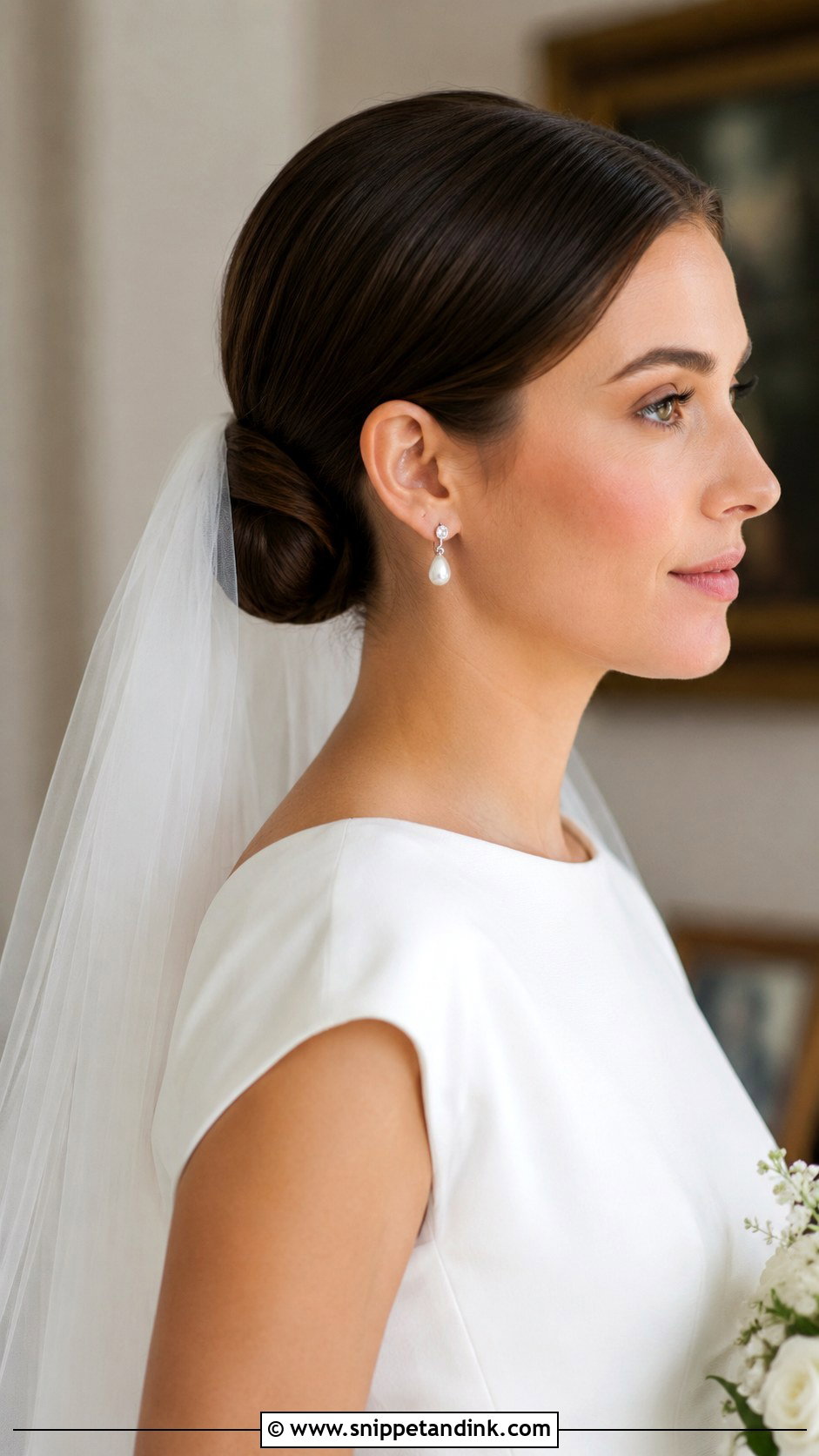
A low sleek bun with a veil is a timeless pairing. Hair is smoothed back, tucked behind the ears and gathered into a tight, polished bun at the nape. I place the veil comb just above the bun, angled into it, so the comb grips the base rather than loose hair. That stops the veil dragging the bun loose during photos. Traditional and formal weddings suit it. After the ceremony the veil comes out and the bun still looks finished.
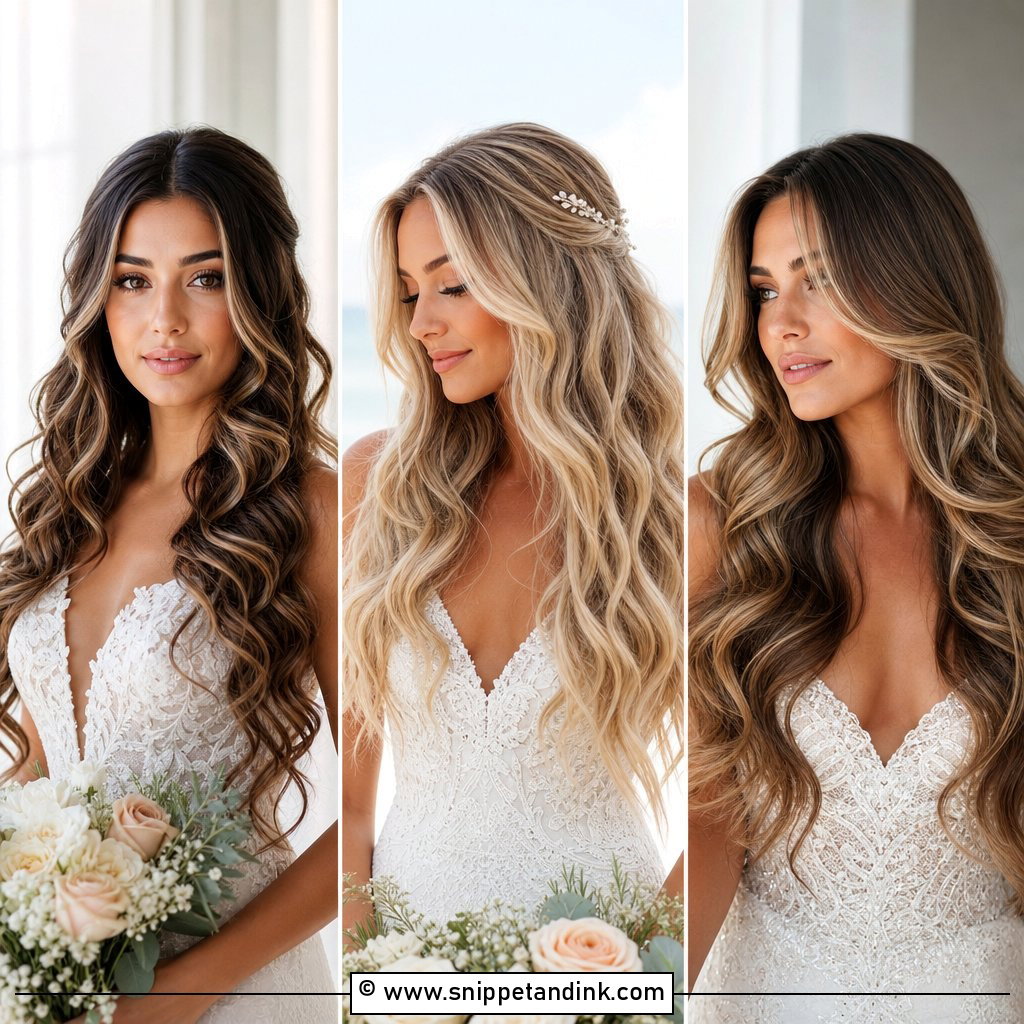
20. Soft Waves With Pearl Hair Pins
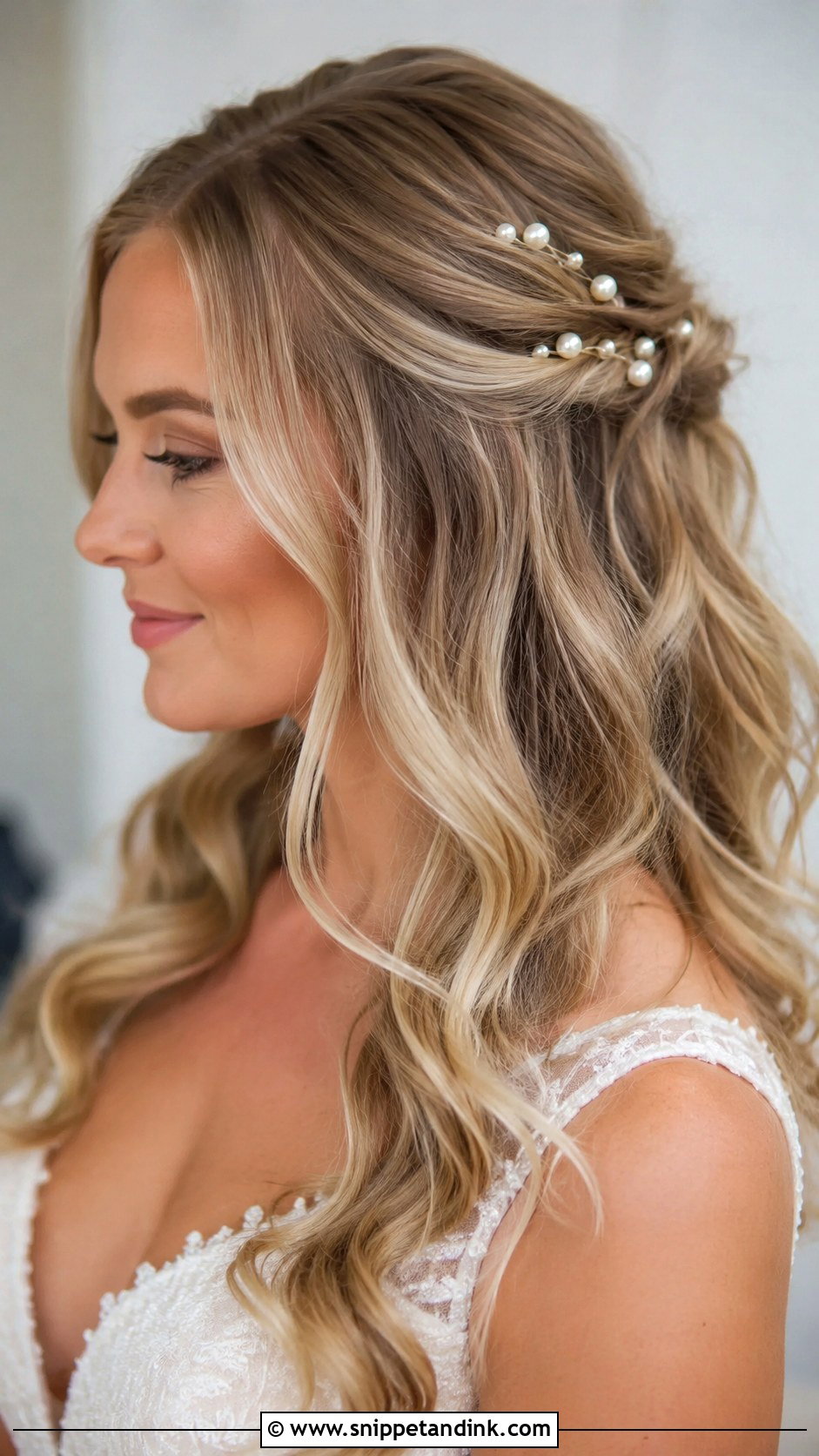
Soft waves with pearl pins are a pretty, detailed alternative to an updo. I style loose waves, tuck the front sections behind the ears and secure them with pearl pins that do double duty as decoration. The pins can be scattered or lined up neatly depending on how formal you want it. On fine hair, I slide a plain bobby pin underneath each pearl pin, because decorative pins rarely grip as well as the real thing.
If Your Ears Stick Out, or You Wear Glasses
Brides sometimes tell me they love tucked hair but hate their ears. It’s a fair worry, because a tight tuck pushes the ear forward. I adjust instead of abandoning the look. A loose tuck that covers the top third of the ear and sweeps behind it keeps the line but softens the shape, and a deep side part means only one ear is fully on show.
Glasses change things too. The arms sit exactly where the hair is tucked, so I tuck the hair under the arm of the frame rather than over it, which keeps the glasses steady and the hair flat. Bring your glasses to the trial so I can place pins where the frame won’t press on them.
Earrings Decide Half of This Look
With hair tucked away, earrings stop being an accessory and become part of the hairstyle. A long drop earring needs a sleek tuck so it doesn’t tangle in waves. A heavy statement piece can drag the lobe forward and loosen the tuck from below, so I set heavier earrings with silicone backs that sit flatter. Put the earrings in before the final pass of hairspray, then check in the mirror that hair isn’t caught in the hook or post.
If you’re choosing between two pairs, wear both at the trial with the finished hair. The right ones will look like they were designed with the style; the wrong ones will look borrowed.
Open Your Face and Let the Earrings Talk
Hair behind the ears is practical and pretty at once: your face stays open, your earrings show and nothing blows into your lip gloss. Some brides love sleek lines, others want waves or braids, and every style here can be adjusted to your length and texture. What makes the difference on the day is the hidden work, the pins, the bend at the front section and the products, so bring two or three photos you love to your trial and ask your stylist how they’ll keep the tuck in place.
You'll Like These Ideas:


Leave a Reply