
A short-haired bride usually asks me the same thing first: can my hair actually go up? Often it can, but a short updo is built section by section rather than gathered into one bun, and it depends on where your shortest layers fall. With a pixie, bob, or lob, there’s a version that will hold a veil, a tiara or a few pins. The styles below run from sleek chignons and pinned twists to braids and half up shapes, and each one notes what length and texture it needs. One bonus: short hair takes less chair time on the morning.
The Ponytail Test Before You Fall for an Updo
Before a trial, I ask short-haired brides to do one quick check at home. Brush your hair back and gather it at the nape with your hand, as if making a low ponytail. Then look at what’s left loose.
- If almost everything stays in your hand, most of these updos are possible, including a chignon or a low bun.
- If the nape layers fall out but the rest stays, twisted, braided and pinned styles will work, with extra pins at the nape.
- If most of your hair falls out, think half up, pinned back or headband styles, which look like updos from the front.
Also check the shortest piece at the back of the neck. Those nape layers are where short updos fail, because they don’t have enough length to tuck into anything. A good stylist will pin them individually, but very short ones may need a little gel and a well-placed comb.
Clip-ins for a fuller bun
If you love a fuller bun, a small clip-in piece hidden inside the shape can help. I’d only use it when your own hair can cover the clips, and I’d always buy it in time to color-match at the trial.
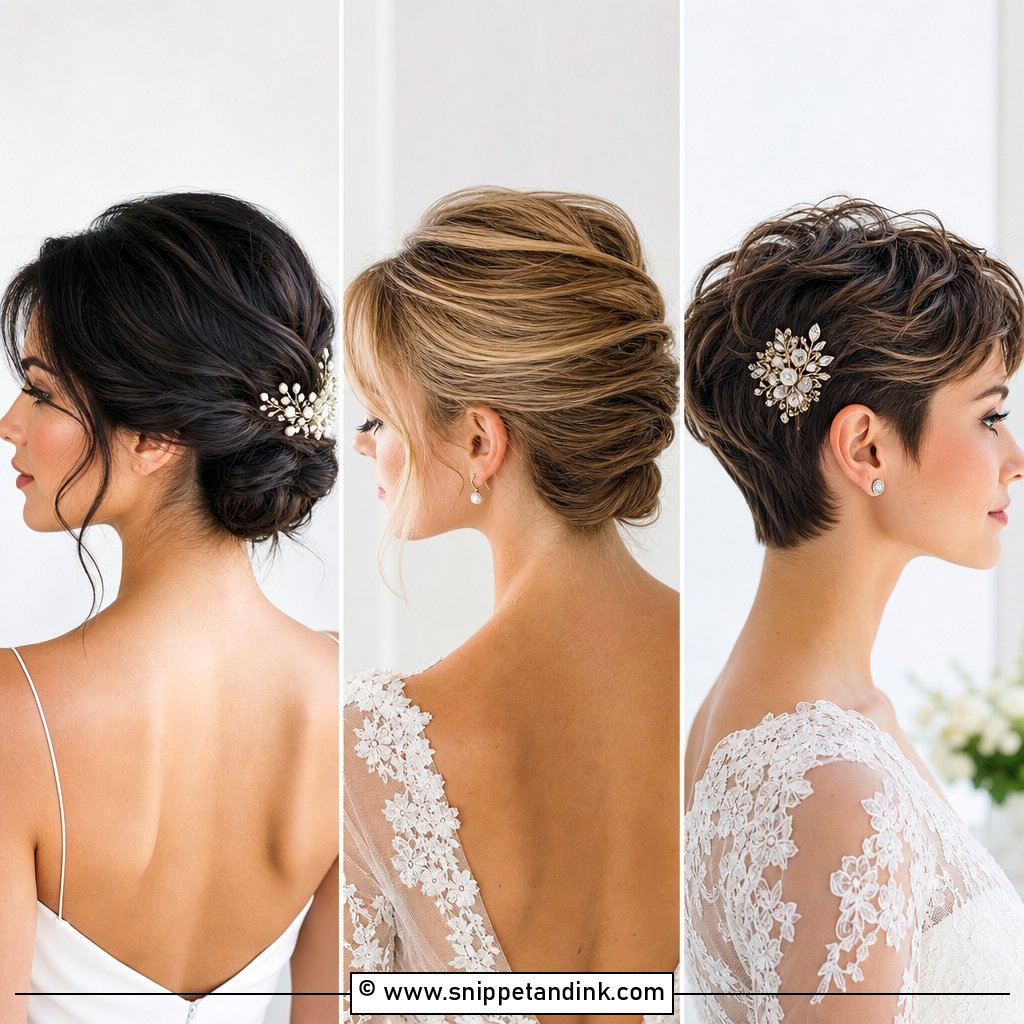
1. Classic Low Chignon for Short Hair
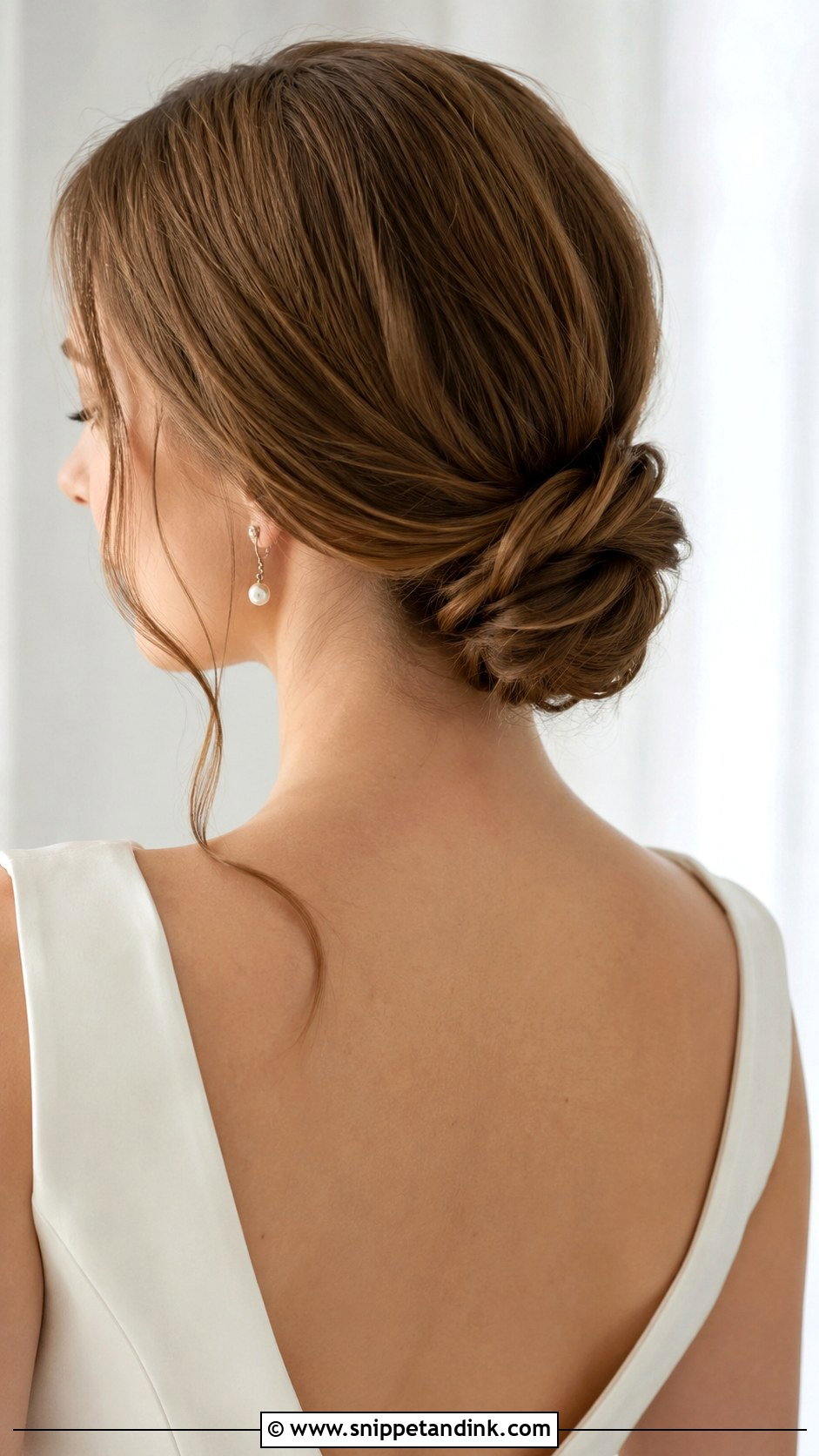
A low chignon on short hair is really a series of small rolls pinned together at the nape. I backcomb the crown lightly for height, then twist each section toward the center and pin it, overlapping the next section to cover the pins. Hair needs to reach at least the jaw for this. The clean shape sits well under a veil or with delicate hairpins. A few loose tendrils at the face keep it from looking severe, and it suits formal weddings best.
2. Braided Updo for Short Hair
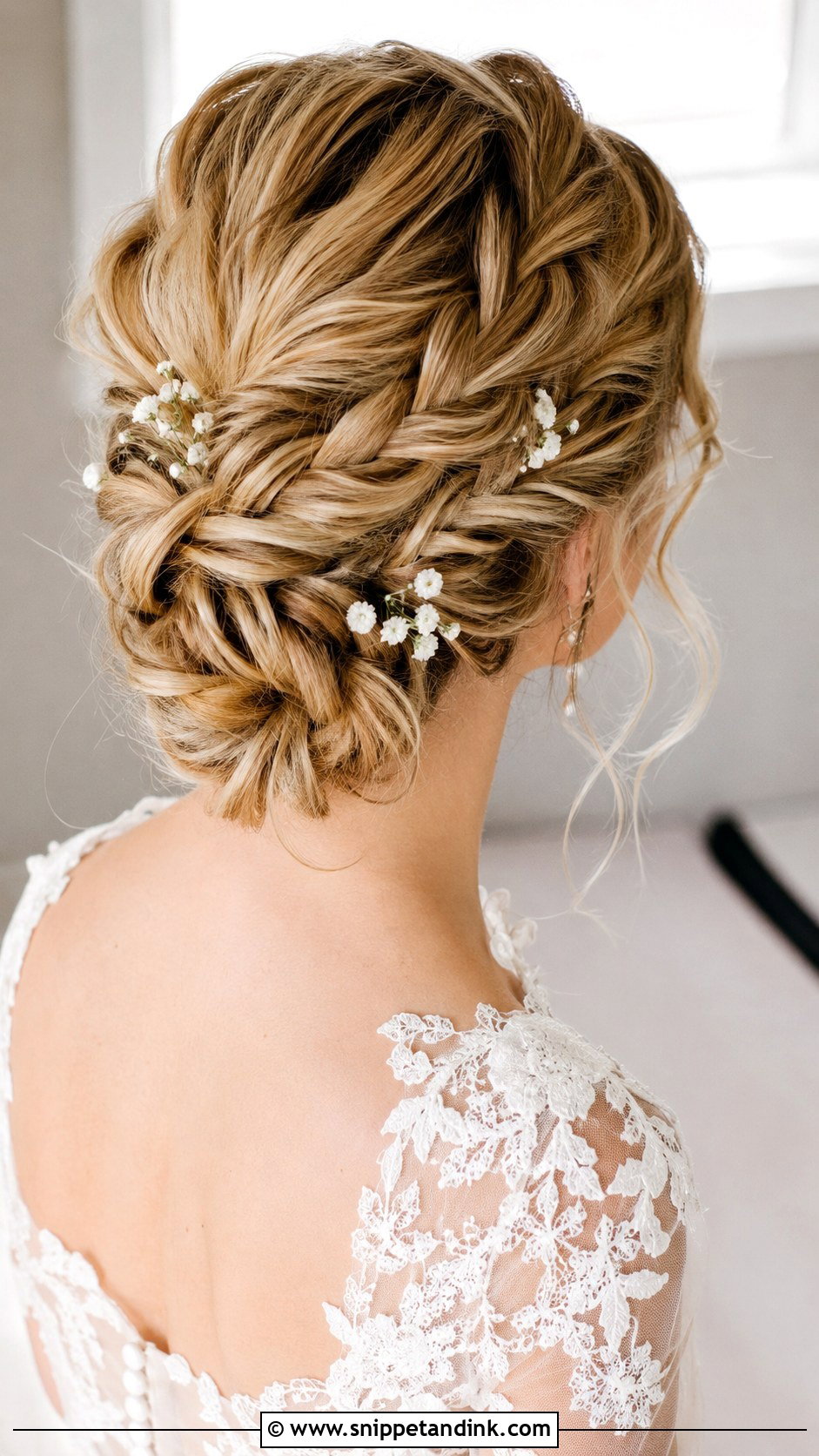
Braids hide short lengths better than any other technique, because each braid gathers the ends inside itself. I braid small sections, French, fishtail or three-strand, then pin them up into a textured shape, which looks fuller than the hair really is. Texture spray before braiding stops short pieces from poking out. Tiny flowers or pearl pins tucked between the braids suit boho and garden weddings. It looks complicated, though in practice it’s mostly patience.
3. Twist and Pin Updo for Short Hair
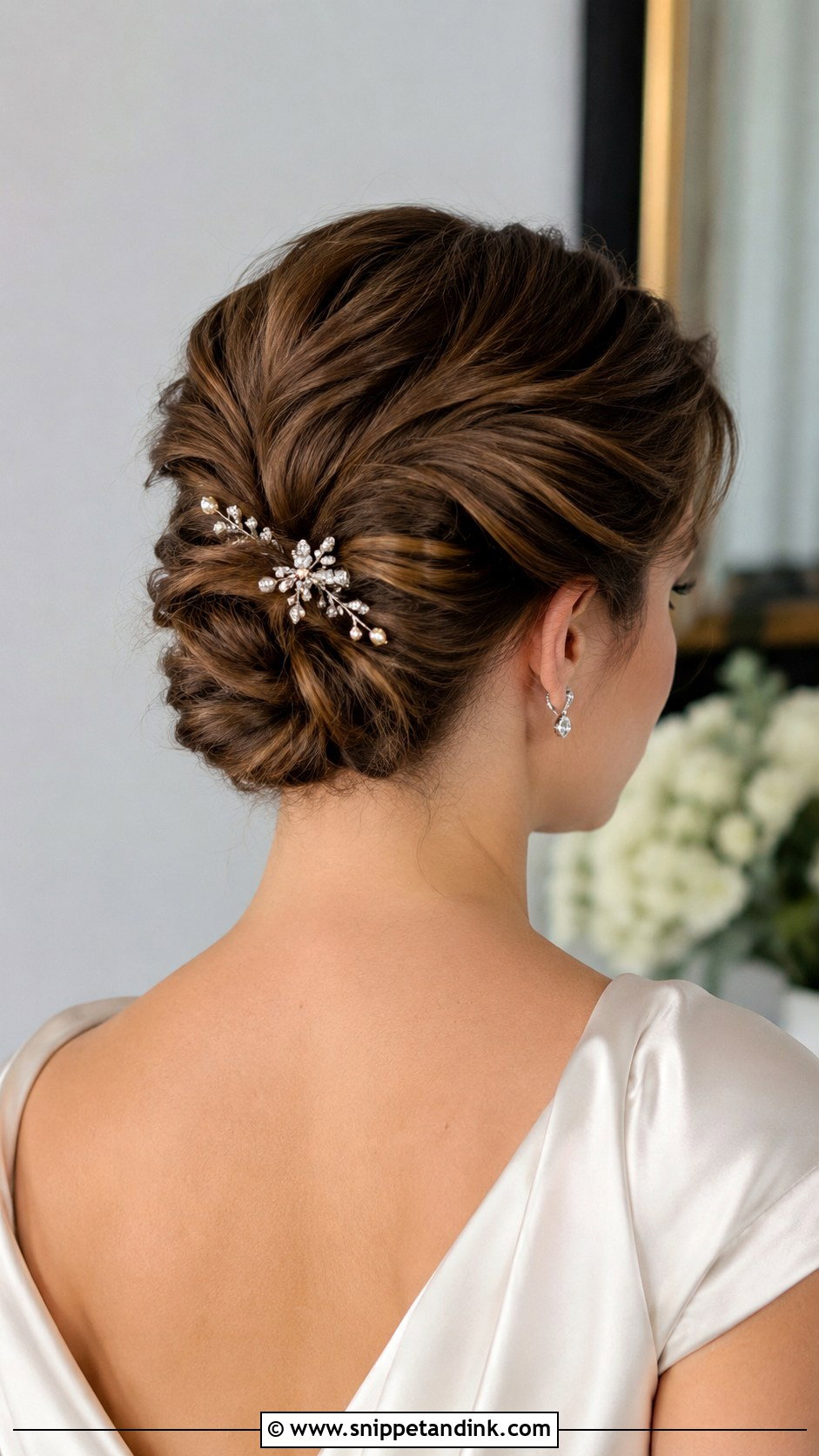
Small sections, twisted and pinned close to the head, give short hair a sculpted shape. I like it on bobs and lobs because every twist is anchored separately, so if one loosens after hours of dancing, the rest stays put. Leave a few strands at the face for softness. A decorative pin or small clip at the end of the last twist finishes it. Of all the short updos, it holds up the longest.
4. Sleek Slicked-Back Bun for Short Hair
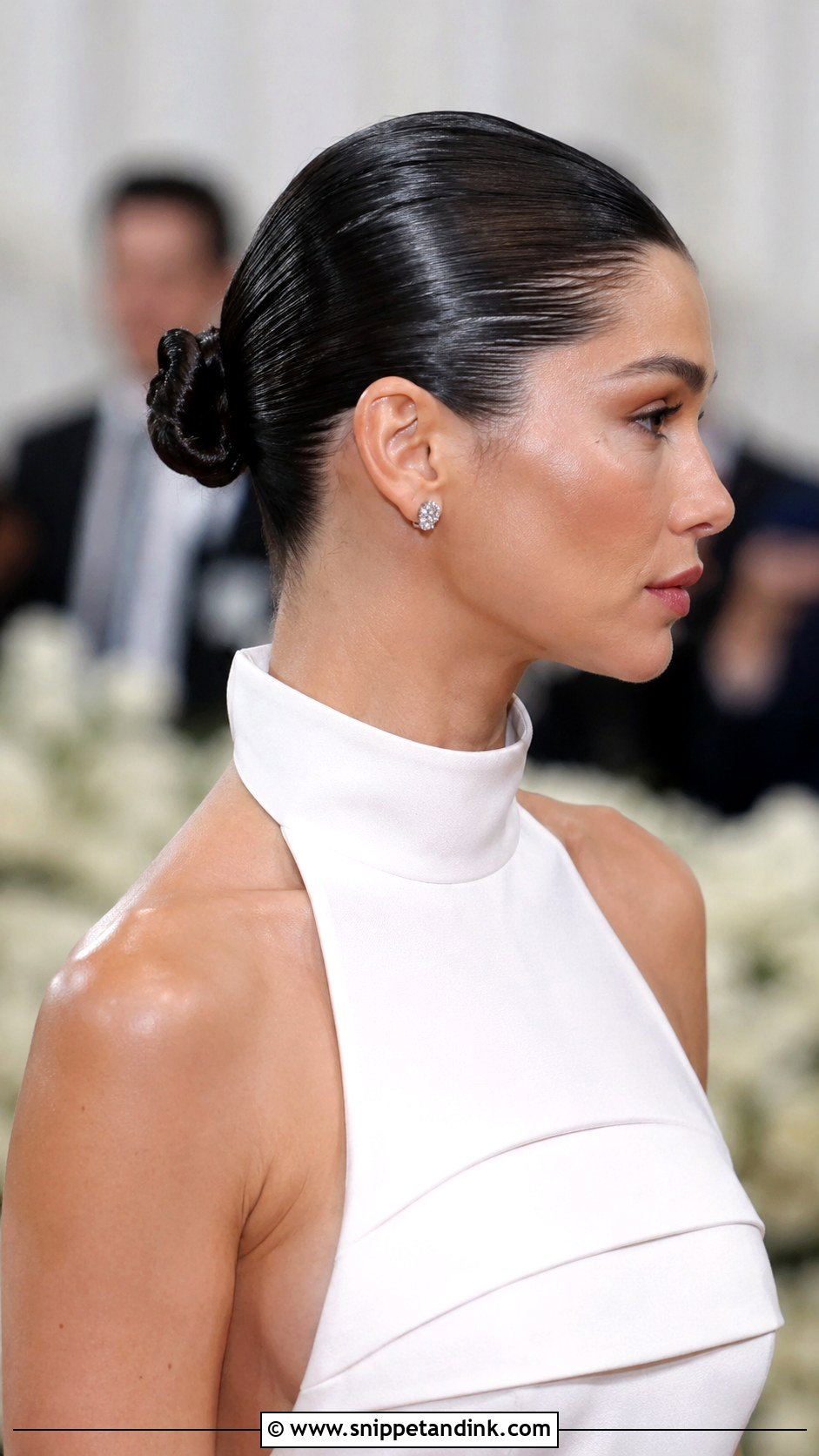
A slicked-back bun is minimal and modern, and it’s also the most honest about length. Everything is pulled back with a strong-hold gel and smoothed into a glossy finish, which shows off the face and neckline. On short hair the bun will be small, a mini bun rather than a big knot, and I’d set expectations at the trial. Shorter layers at the nape may need a little gel and a pin each. Bold jewelry and a structured gown suit it, and I’d steer away from it if you’re self-conscious about your hairline, since it hides nothing.
5. Half Up Half Down for Short Hair
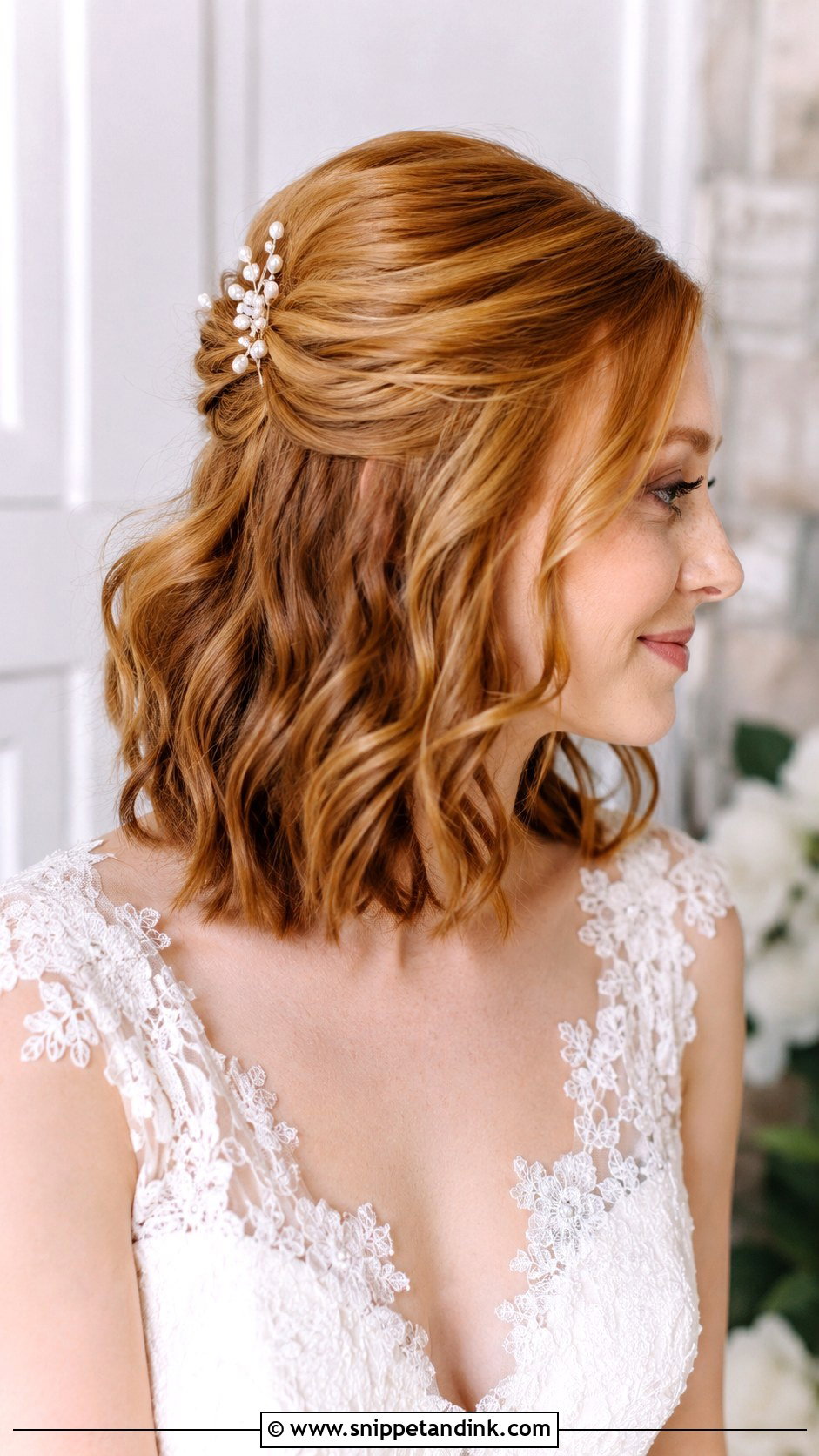
Half up works on lengths that won’t go fully up. I take the top section from the temples back, pin it with crossed bobby pins, and leave the rest in soft waves or curls. It frames the face and shows natural texture. Decorative clips or pins cover the anchor point neatly. It suits short and medium lengths and fits rustic barns as easily as ballrooms. It’s also the easiest short style to attach a veil comb to.
6. French Twist for Short Hair
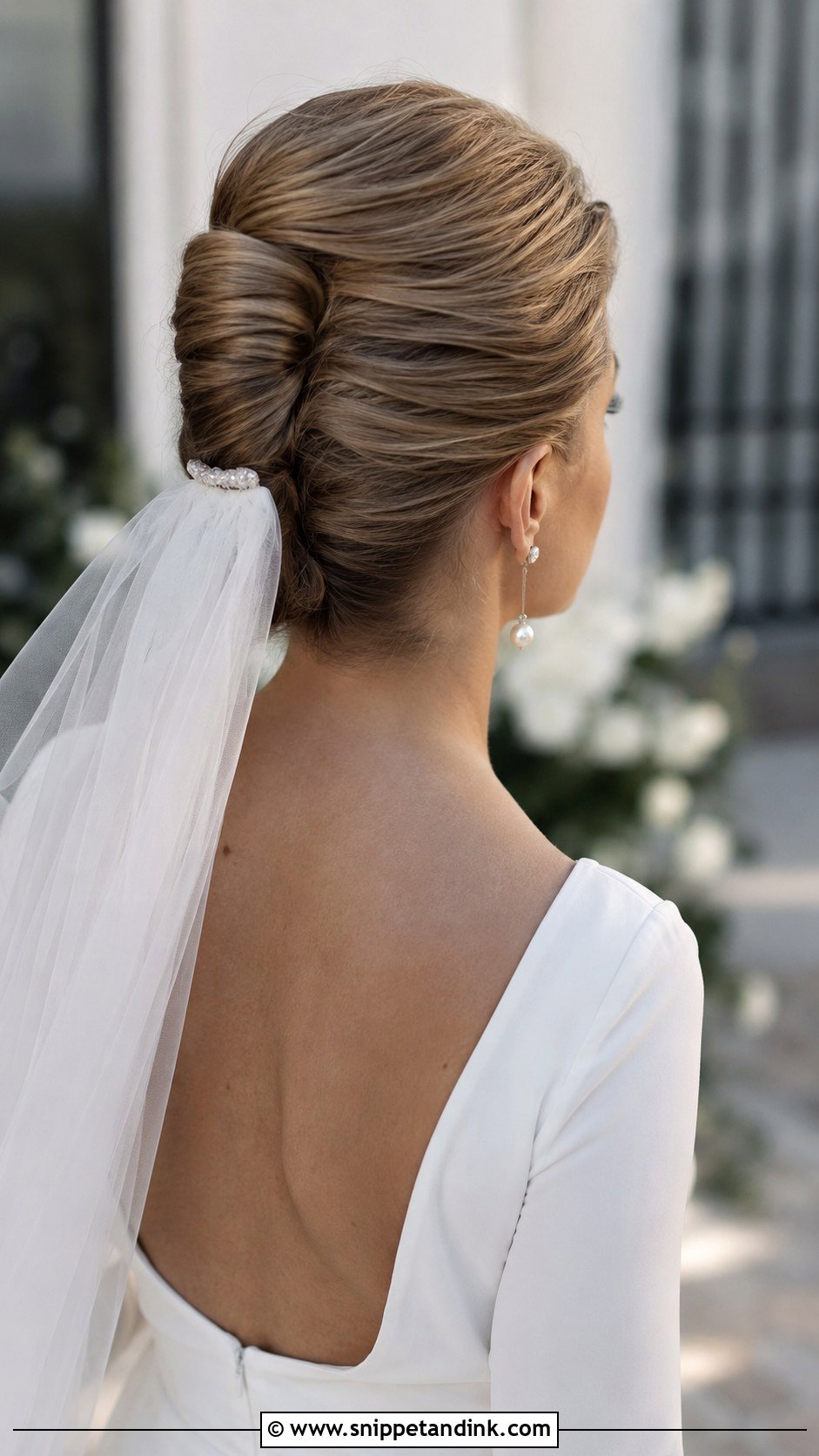
The French twist rolls the hair vertically along the back of the head. On short hair, I secure a line of crossed pins up the center first, then fold one side over the other to hide them. Shorter ends get tucked into the fold with extra pins. Worn smooth it looks structured; slightly tousled it looks softer. The vertical shape lengthens the neck and shows the jawline. It suits formal weddings and vintage-inspired brides.
7. Messy Low Bun for Short Hair
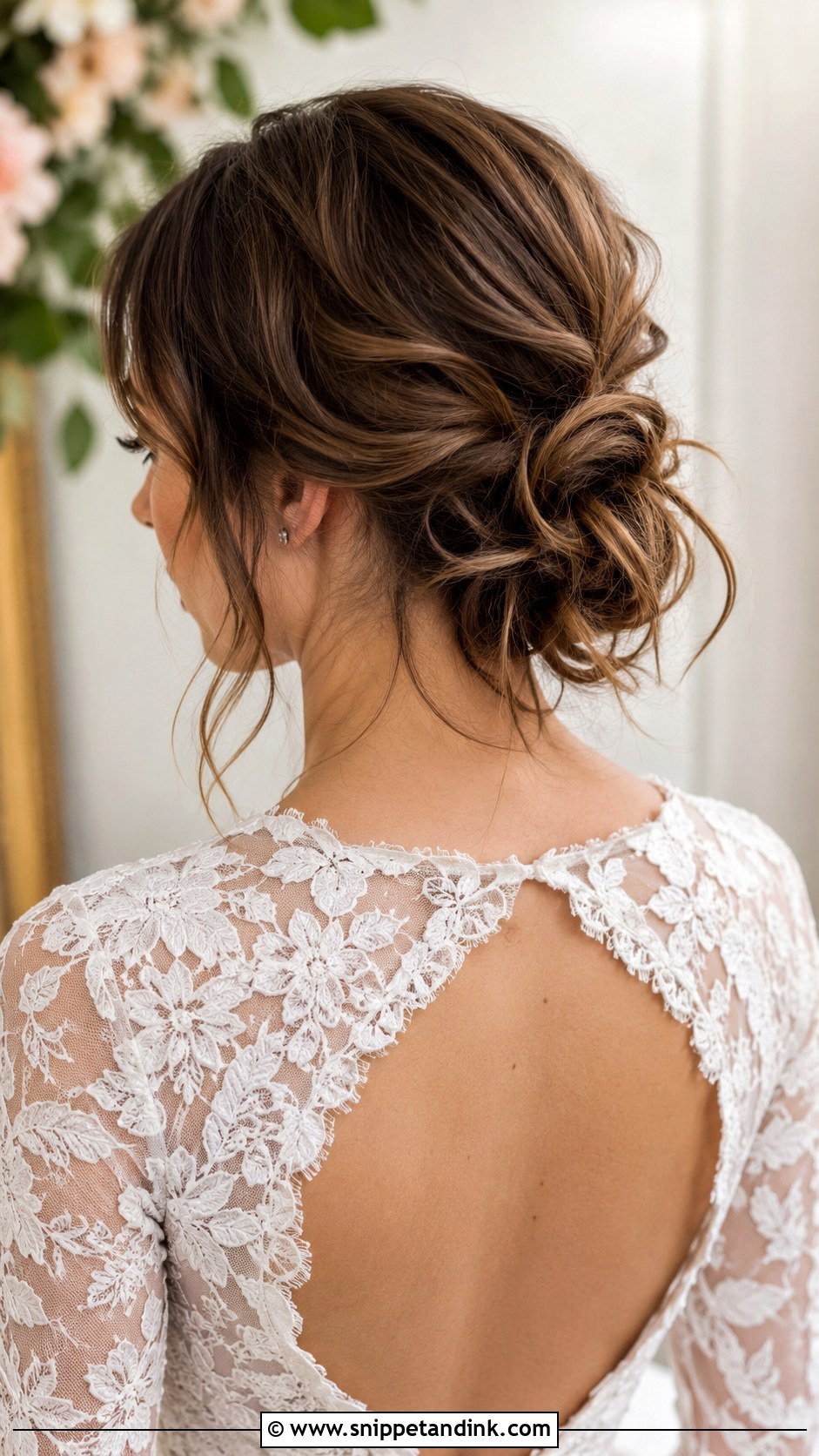
A messy bun forgives uneven layers, which is why I suggest it for growing-out cuts. Curl the hair first for texture and volume, gather it loosely at the nape, and pin the pieces where they land. Pull out a few face-framing strands. The trick is keeping it loose on the surface but secure underneath, otherwise it really does come apart. Boho and outdoor weddings suit it, with delicate florals or a flowing veil.
8. Curly Updo for Short Hair
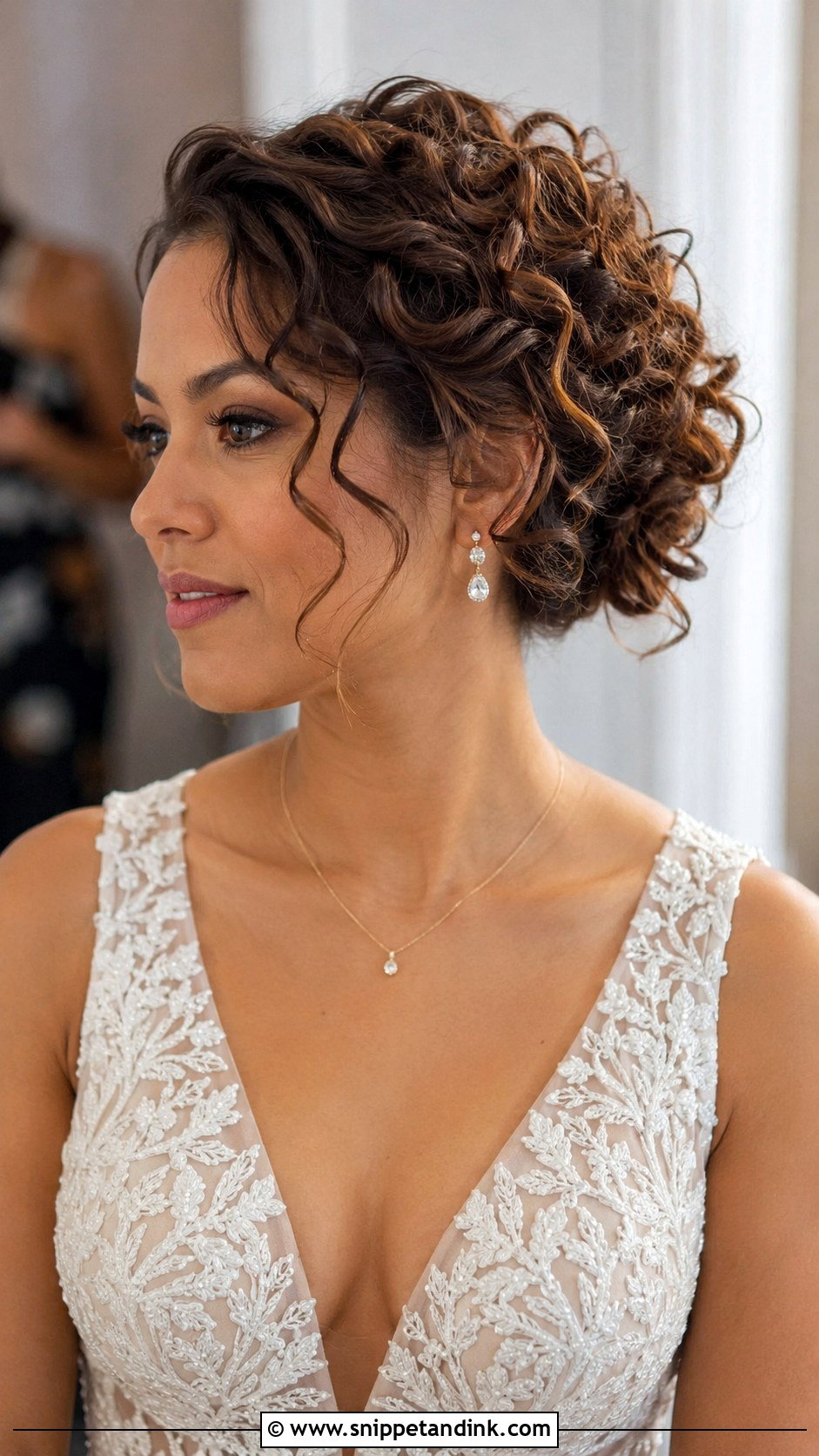
Curls make short hair look more abundant than it is, and curly textures have the advantage that pins hold well in them. I curl with a wand for uniform shape, or define natural curls, then pin them into a soft, rounded shape and leave a few hanging near the ears. Pin each curl from underneath so the pins disappear. Naturally curly or wavy brides suit this most. A sparkling pin or a fresh flower finishes it.
9. Vintage Pin Curl Updo for Short Hair
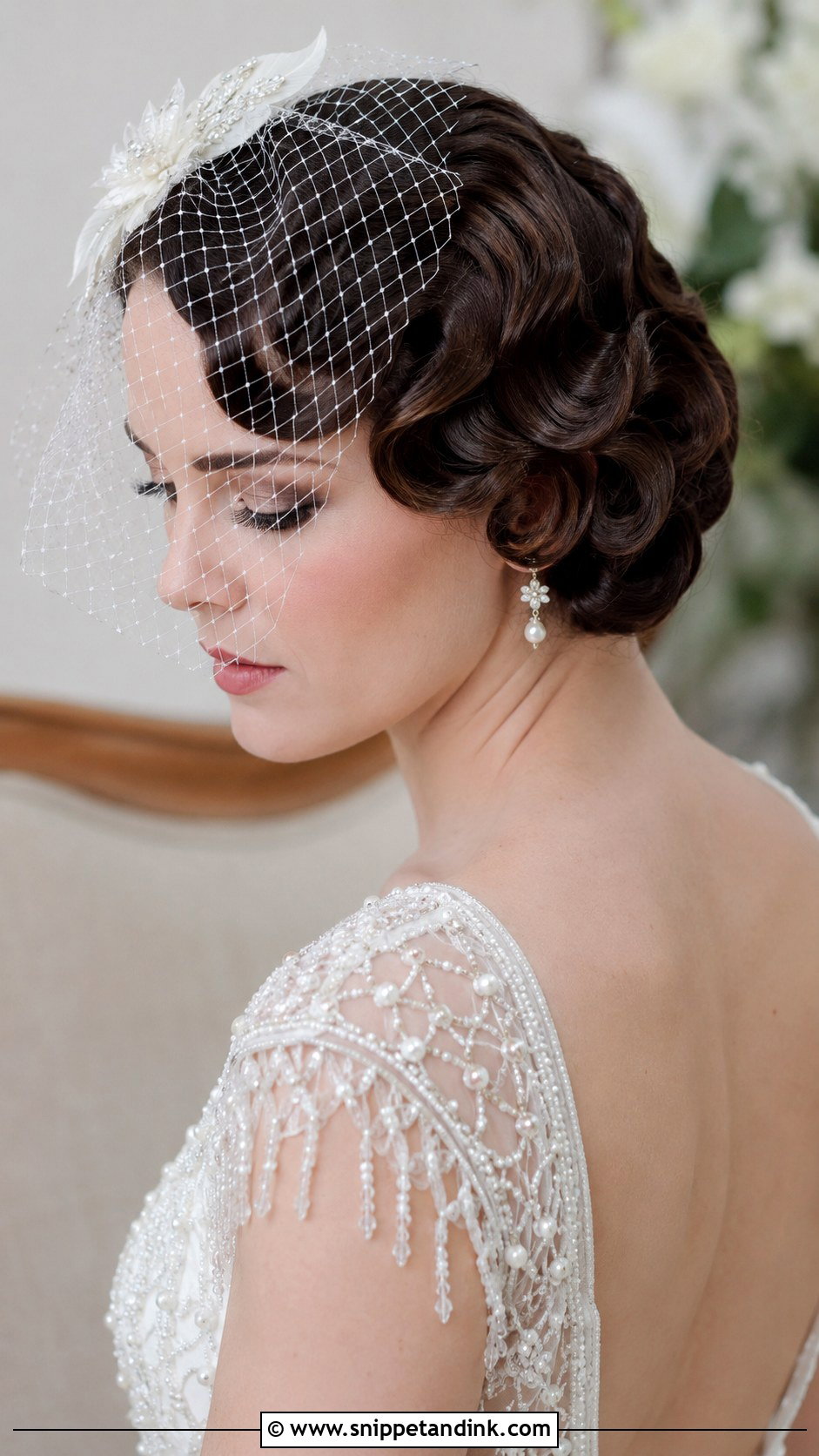
Vintage pin curls bring old Hollywood glamour to short hair. Each curl is set flat, wound in a circle and clipped while it cools or dries, then brushed and arranged into a structured shape inspired by the 1920s to 1940s. The set takes time, so I schedule it early on the morning. Hairspray locks it in for the day. A birdcage veil or art-deco accessories suit it, and vintage-themed weddings are where it feels most natural.
10. Braided Crown for Short Hair
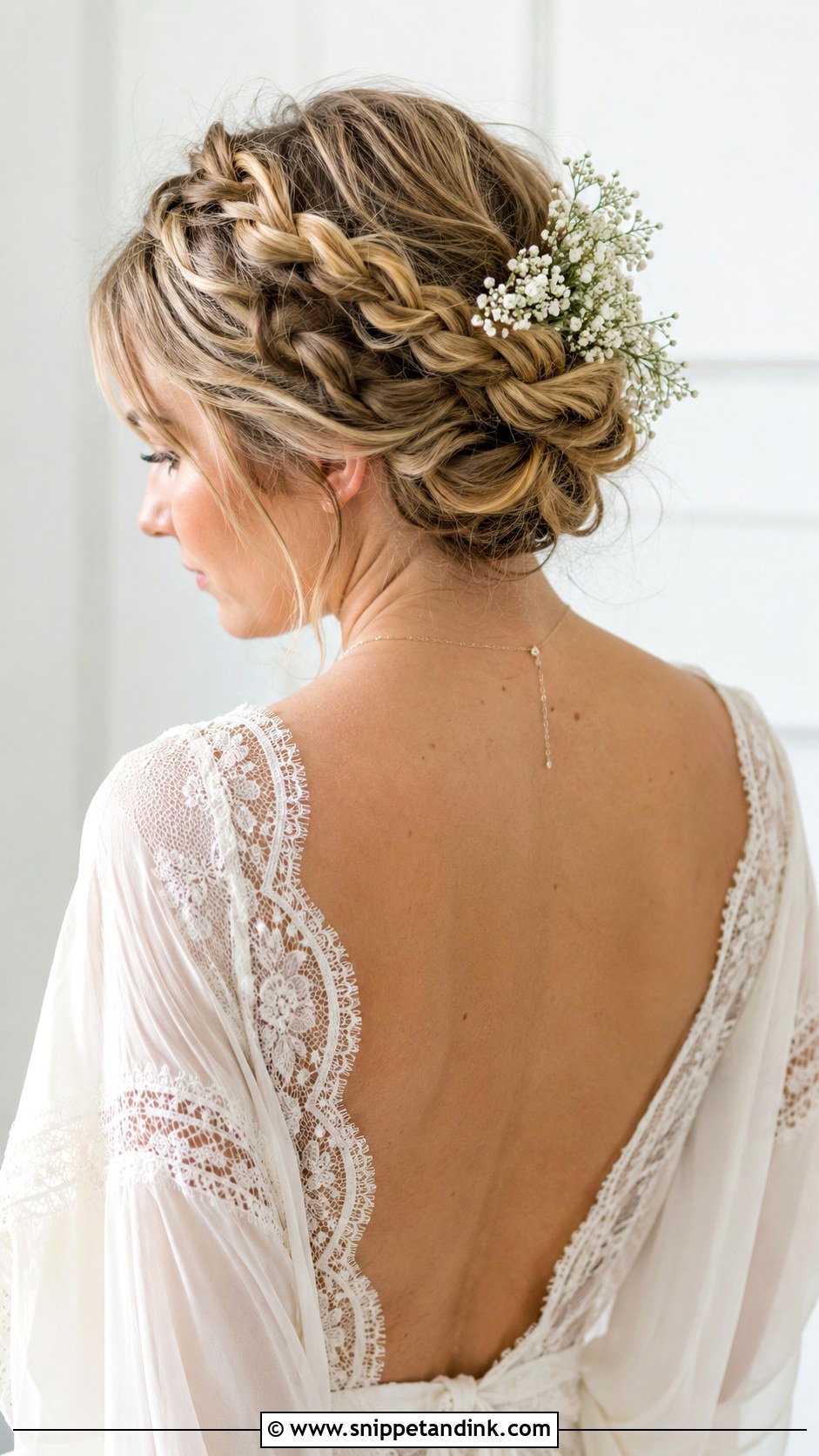
A braided crown on short hair uses small braids rather than one thick plait. I braid two sections from behind the ears up toward the top of the head, cross them and pin, tucking the ends under the opposite braid. Short layers that escape get pinned individually. It keeps hair off the face and gives a regal shape. Tiny flowers or baby’s breath suit garden and bohemian weddings. Hair needs to reach at least the chin for the braids to meet.
11. Twisted Updo With Headband for Short Hair
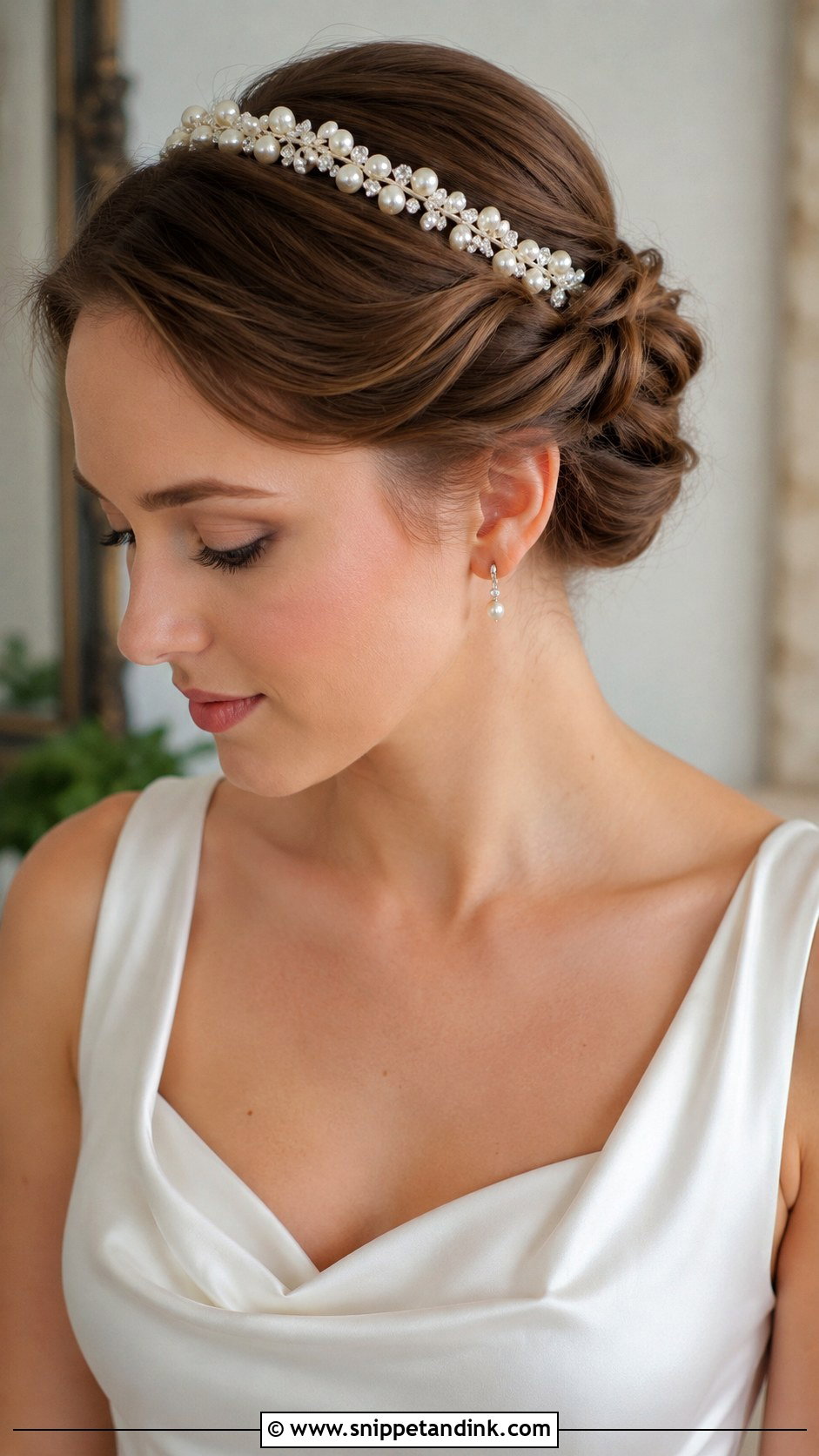
A headband helps short hair that won’t stay pinned. I twist sections back and tuck them around and under the band, so the band holds the twists in place as well as decorating them. A pearl or crystal band to match the theme is easy. The twists add texture and the band adds structure. It’s a low-fuss option, and it also looks finished from every angle without dozens of pins.
12. Tousled Updo With Face-Framing Pieces
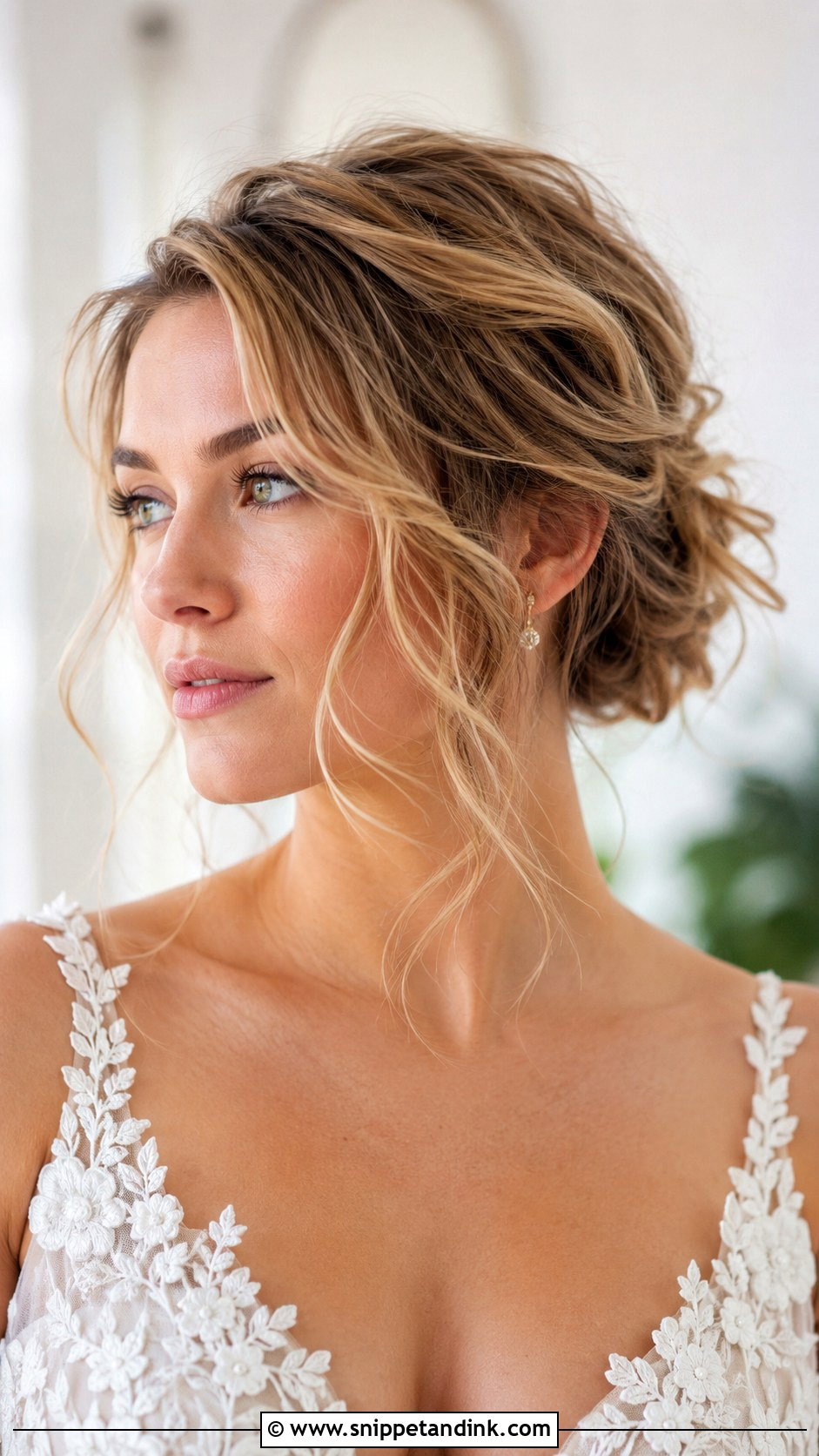
This is the softest updo here. I tease the crown gently, pin sections loosely, and pull out tendrils near the ears and temples to frame the face. The tendrils should be curled separately, because straight wisps from a short cut look stringy in photos. Short and medium hair suit it, and so do flowing veils and delicate floral accents. Relaxed celebrations are where it fits best.
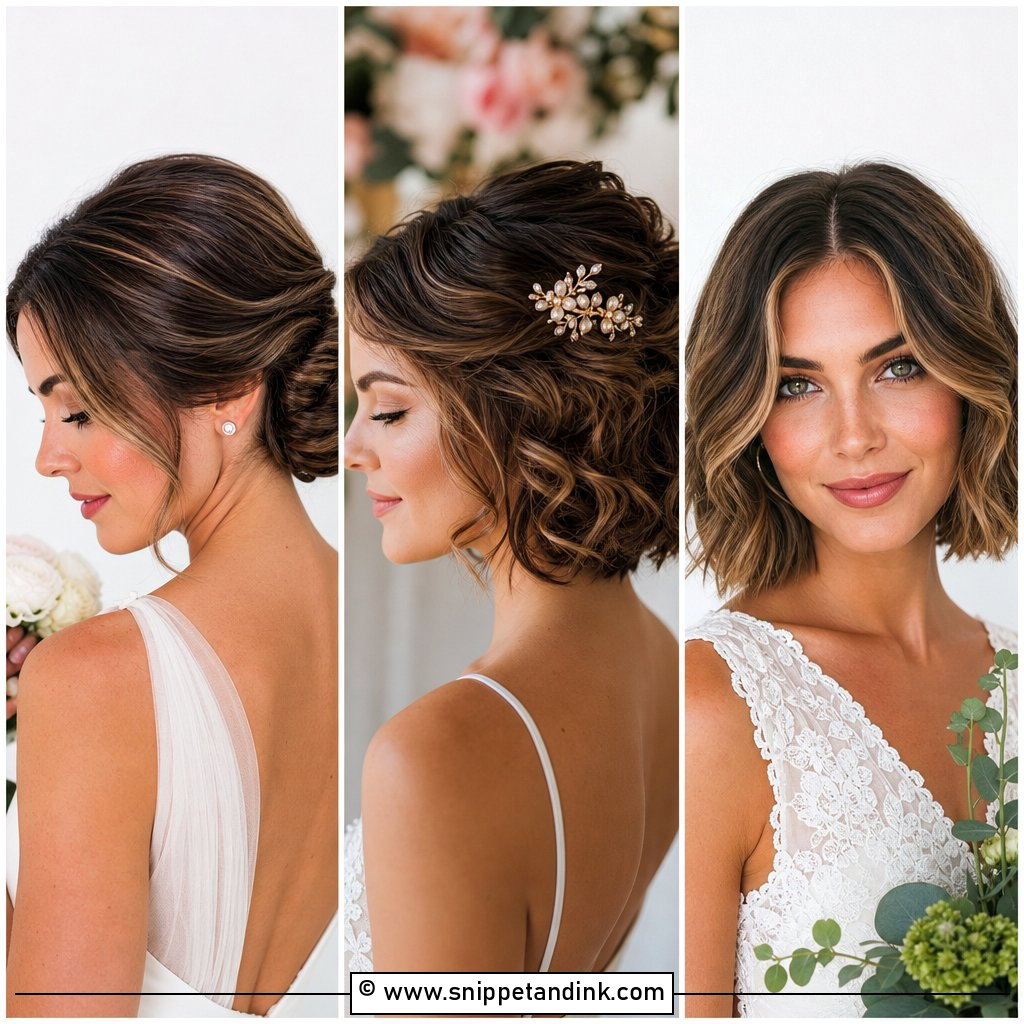
13. Low Knotted Bun for Short Hair
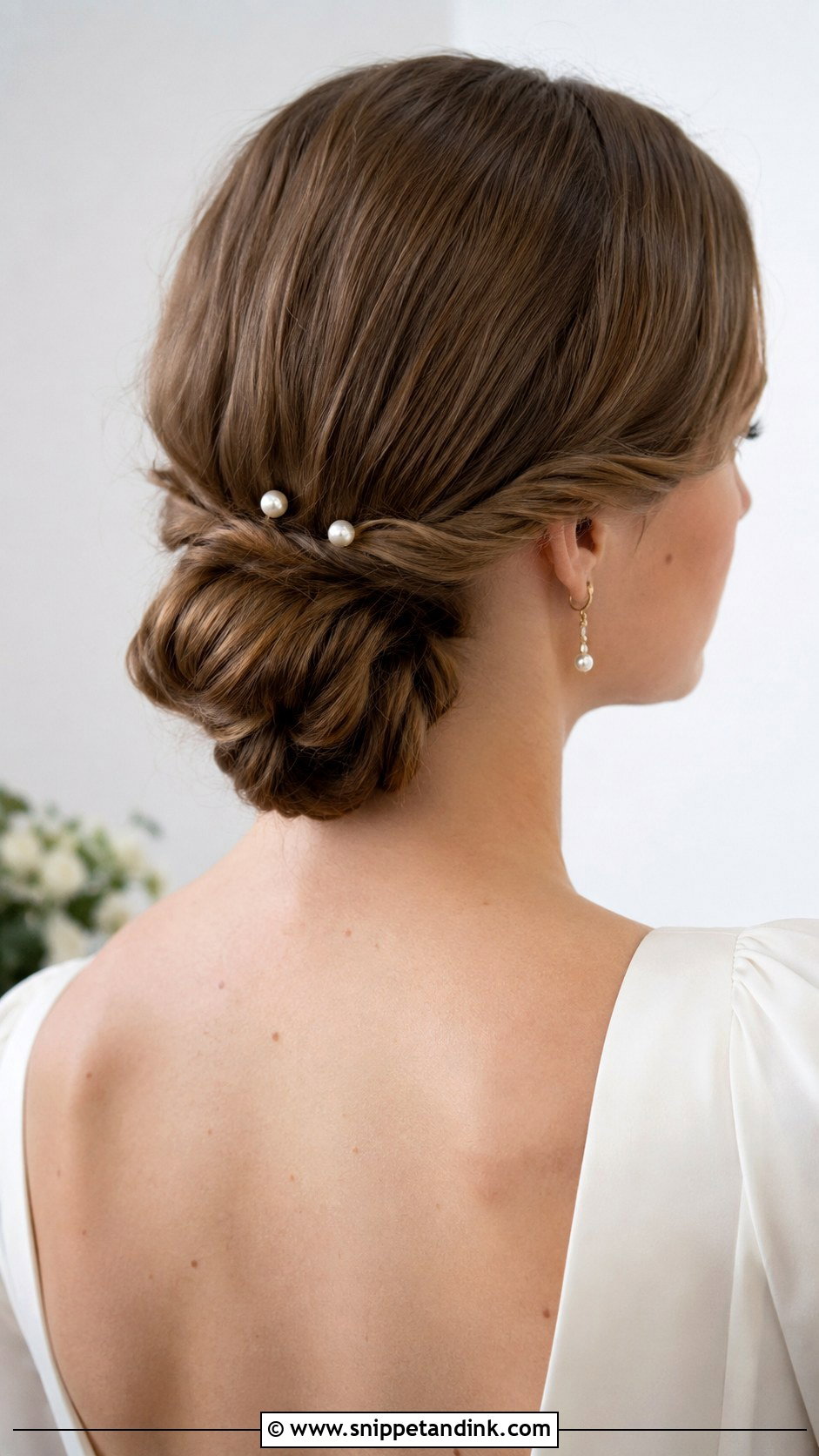
A knotted bun ties small sections into soft knots and pins them together at the nape. The knots have more texture than a smooth roll, and they grip each other, which suits short hair well. Bobs and longer short hair work. Leave a few strands loose. Pearl pins between the knots add detail. It holds up well through a long day, and the knots photograph with plenty of depth.
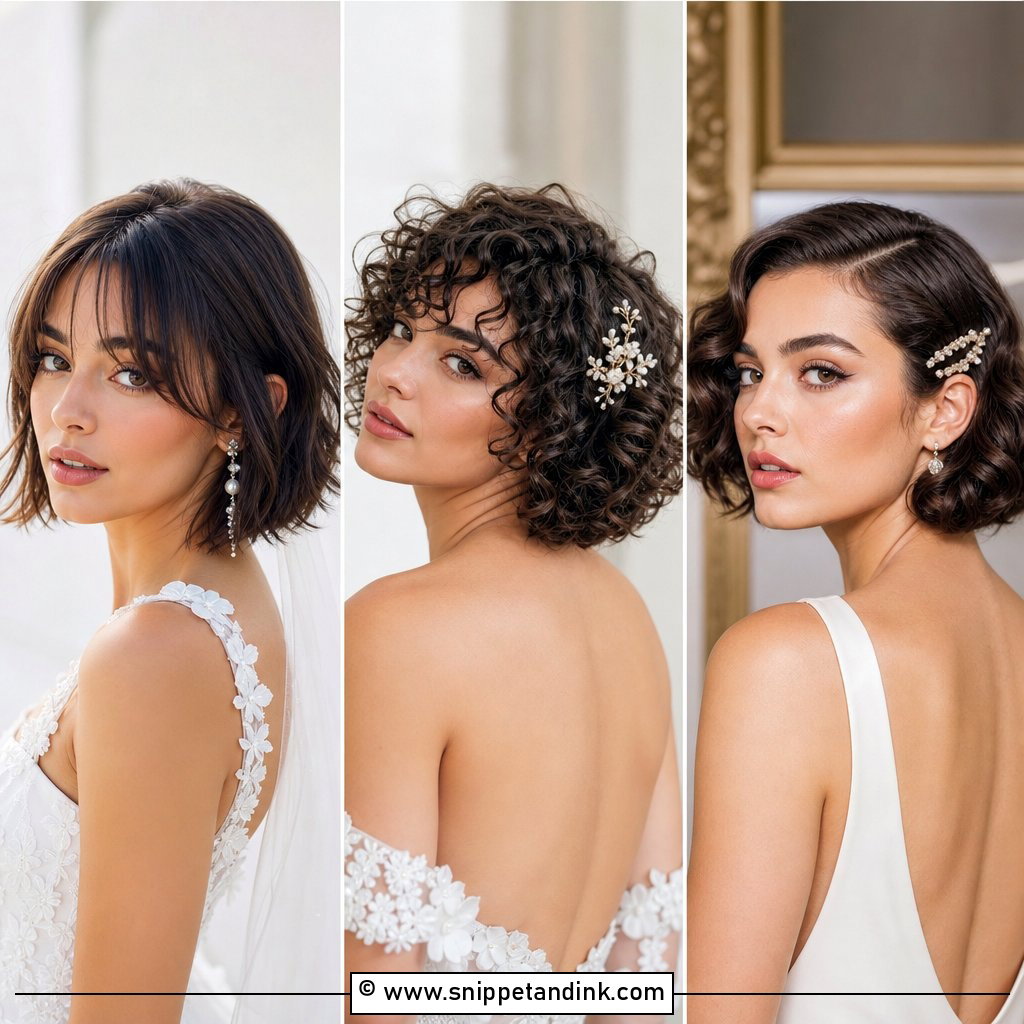
14. Side Swept Updo for Short Hair
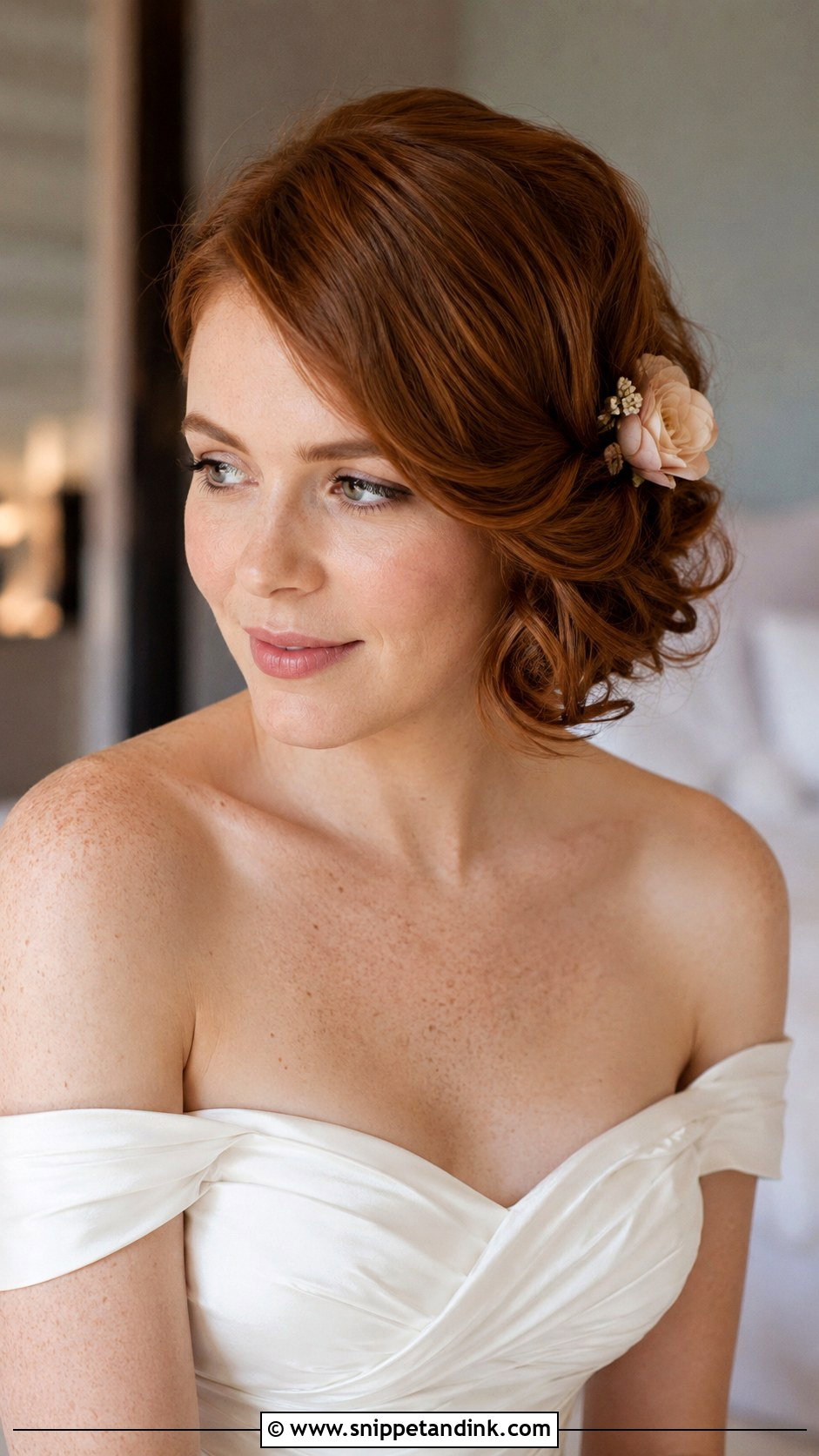
An off-center shape suits a bride wearing statement earrings or a one-shoulder dress. I add soft waves first, then sweep everything to one side and pin it behind the ear or low at the side of the nape, leaving a few face-framing pieces loose. The pins have to go in against the direction of the sweep or the weight pulls them out. A side-placed flower or clip adds detail. The asymmetrical silhouette looks modern and soft.
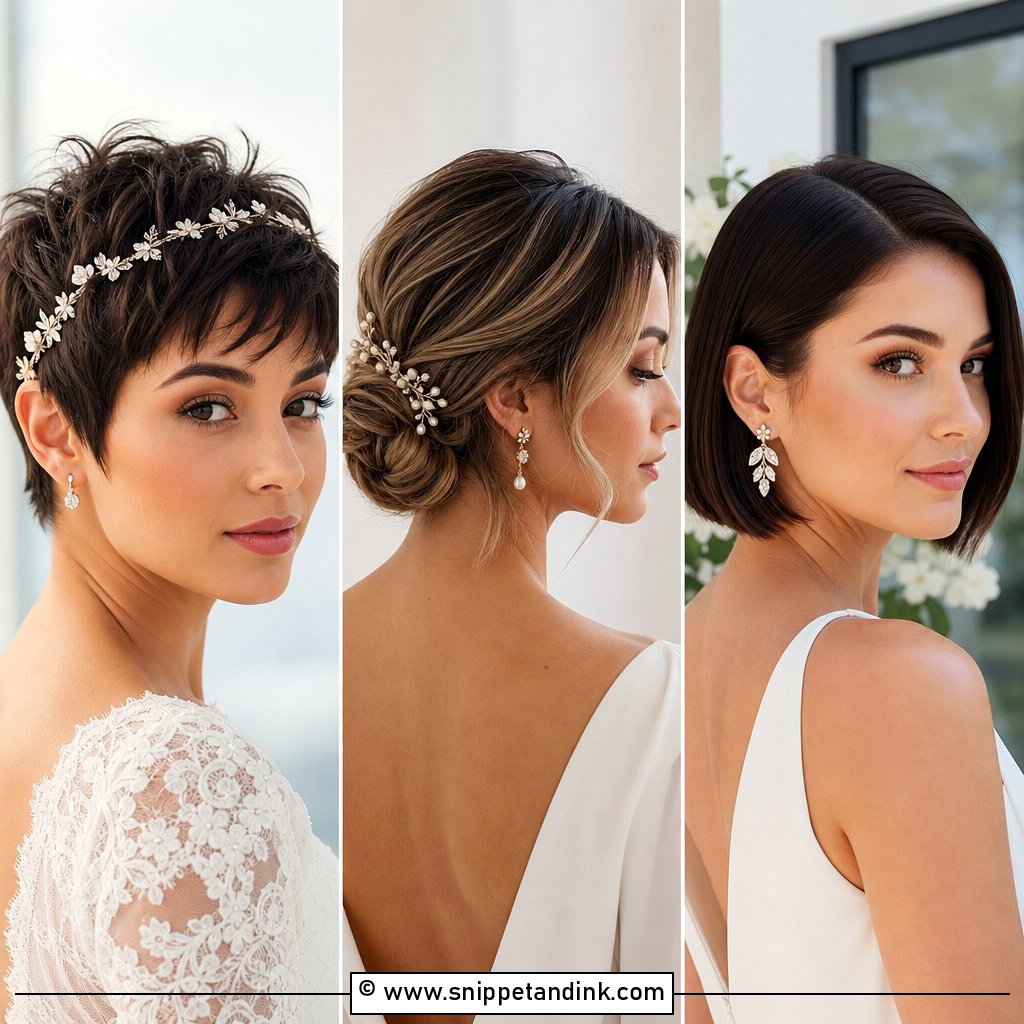
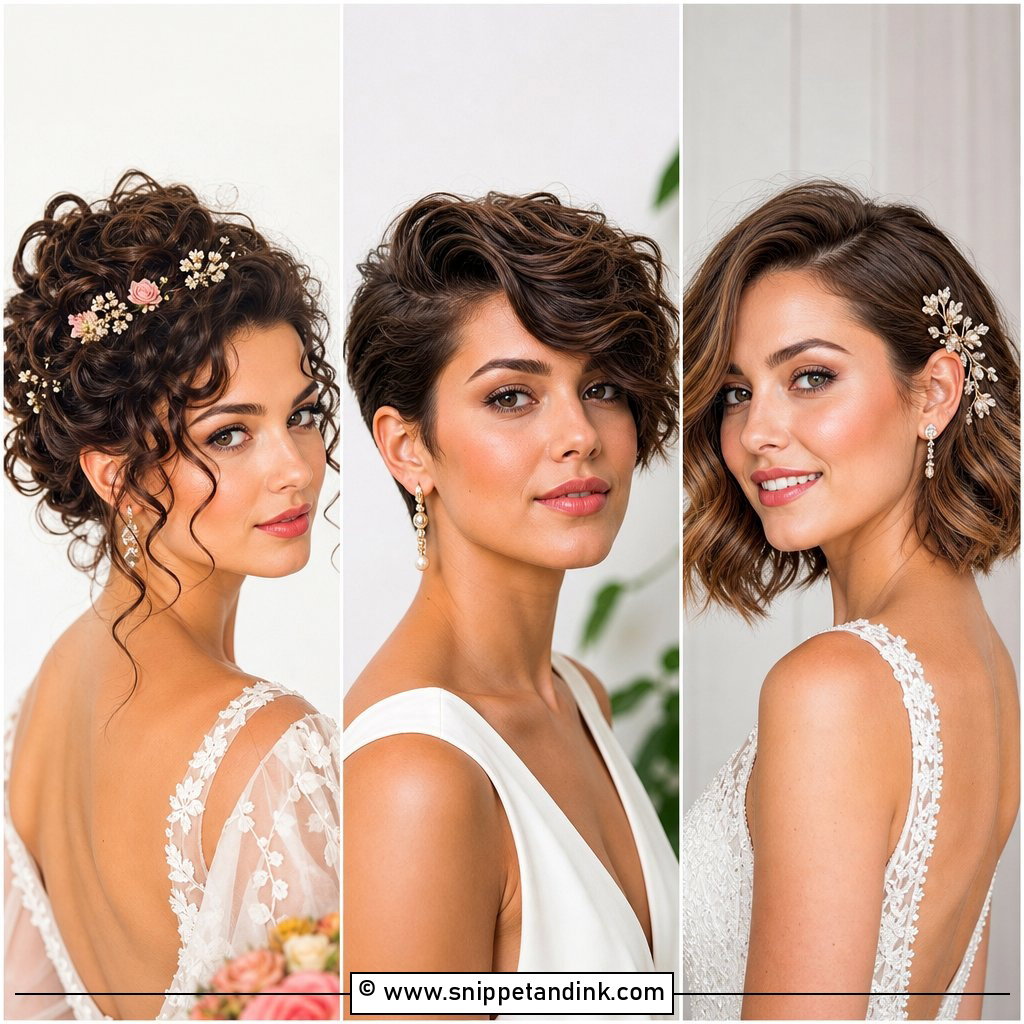
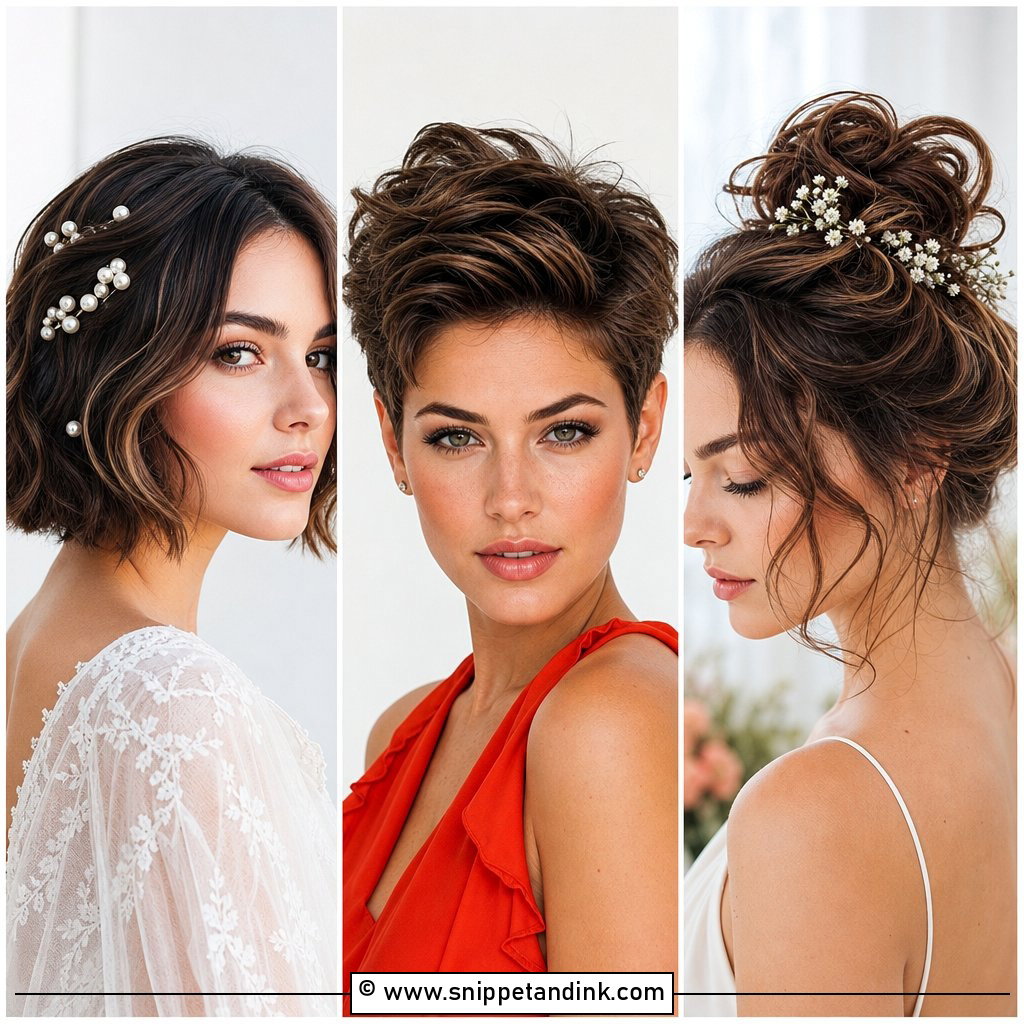
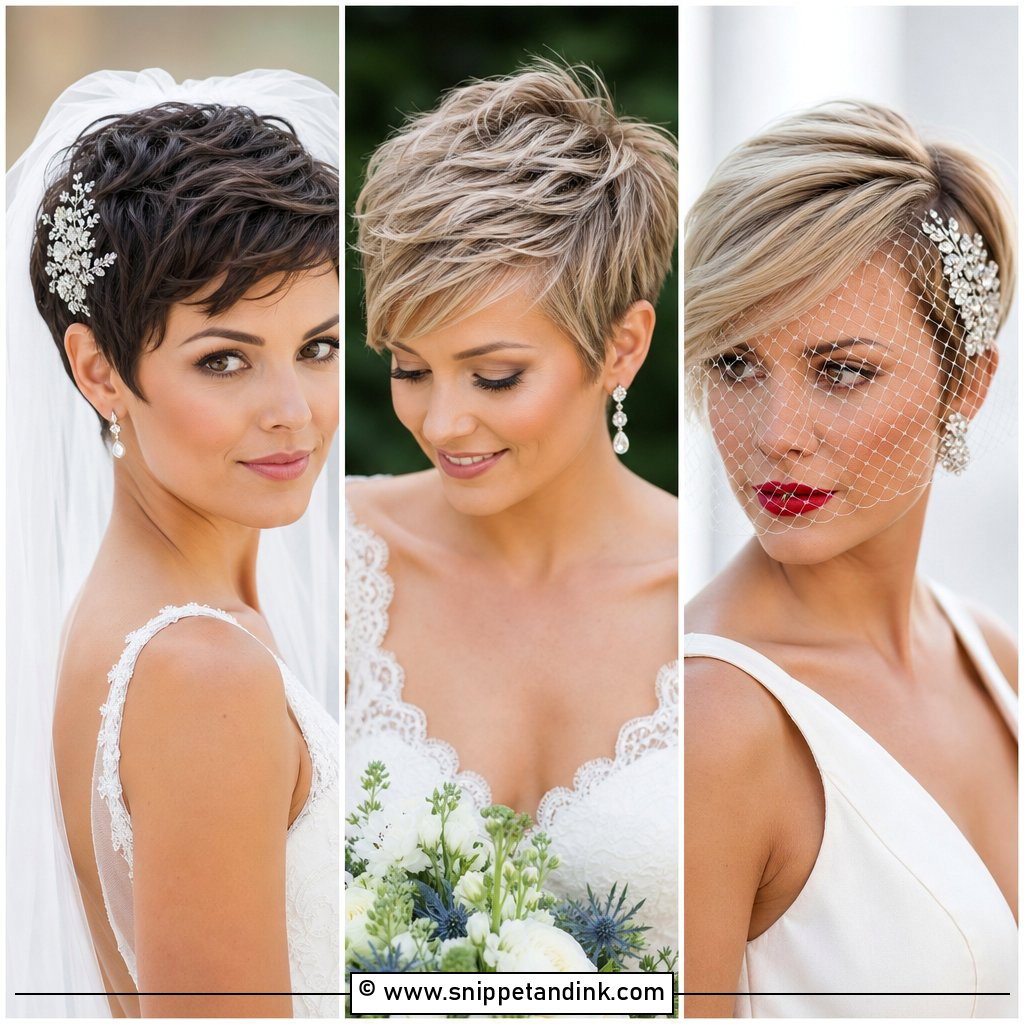
15. Pinned Back Pixie for Wedding
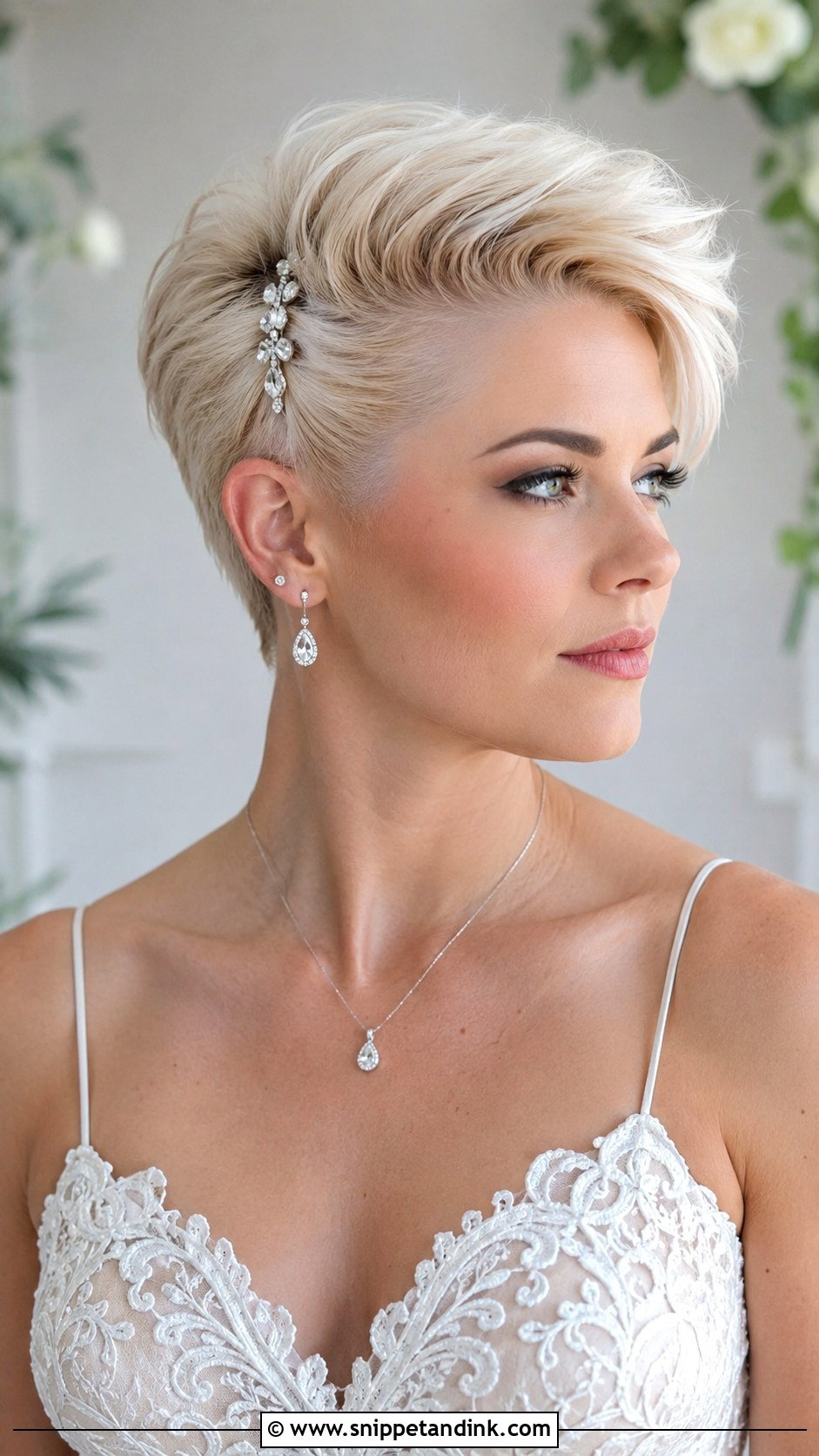
Even the shortest hair can be dressed for a wedding. For a pinned back pixie, I sweep the front and sides back and secure them with decorative pins, small combs or sparkling clips. Pins grip better if I mist the hair with a little texture spray first. A bit of volume on top gives the shape dimension. Statement earrings and a bold lip complete it. It’s low maintenance and confident.
16. Romantic Wavy Updo for Short Hair
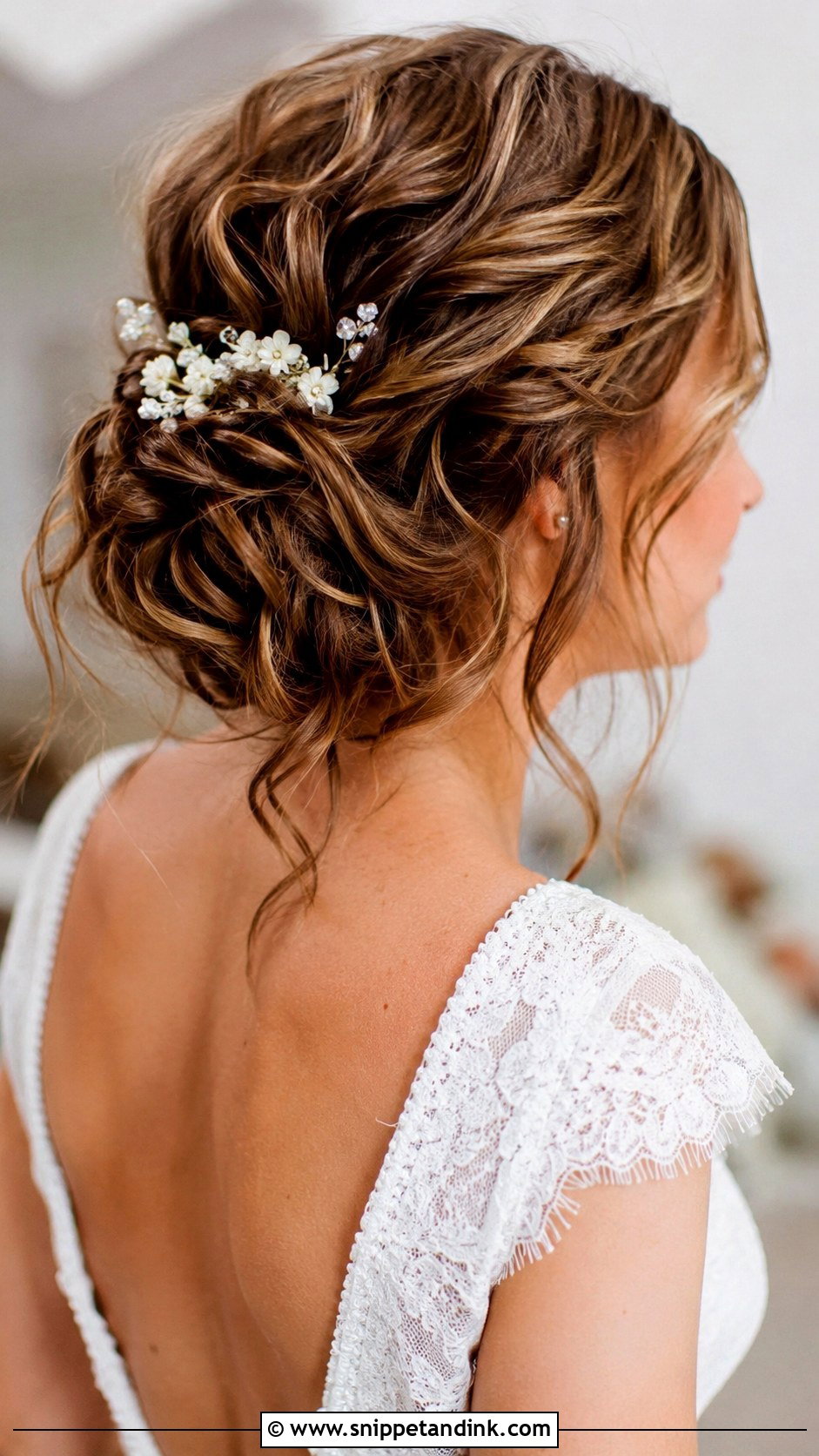
Waved hair pinned loosely into a soft shape looks fuller than straight hair pinned the same way. I curl into loose waves, let them cool completely, then pin sections up softly, leaving a few wavy tendrils at the face. Bobs and lobs work well. A delicate floral pin or pearl accent finishes it. It suits romantic weddings and fits brides who want softness rather than structure.
17. Sleek Low Bun With Center Part
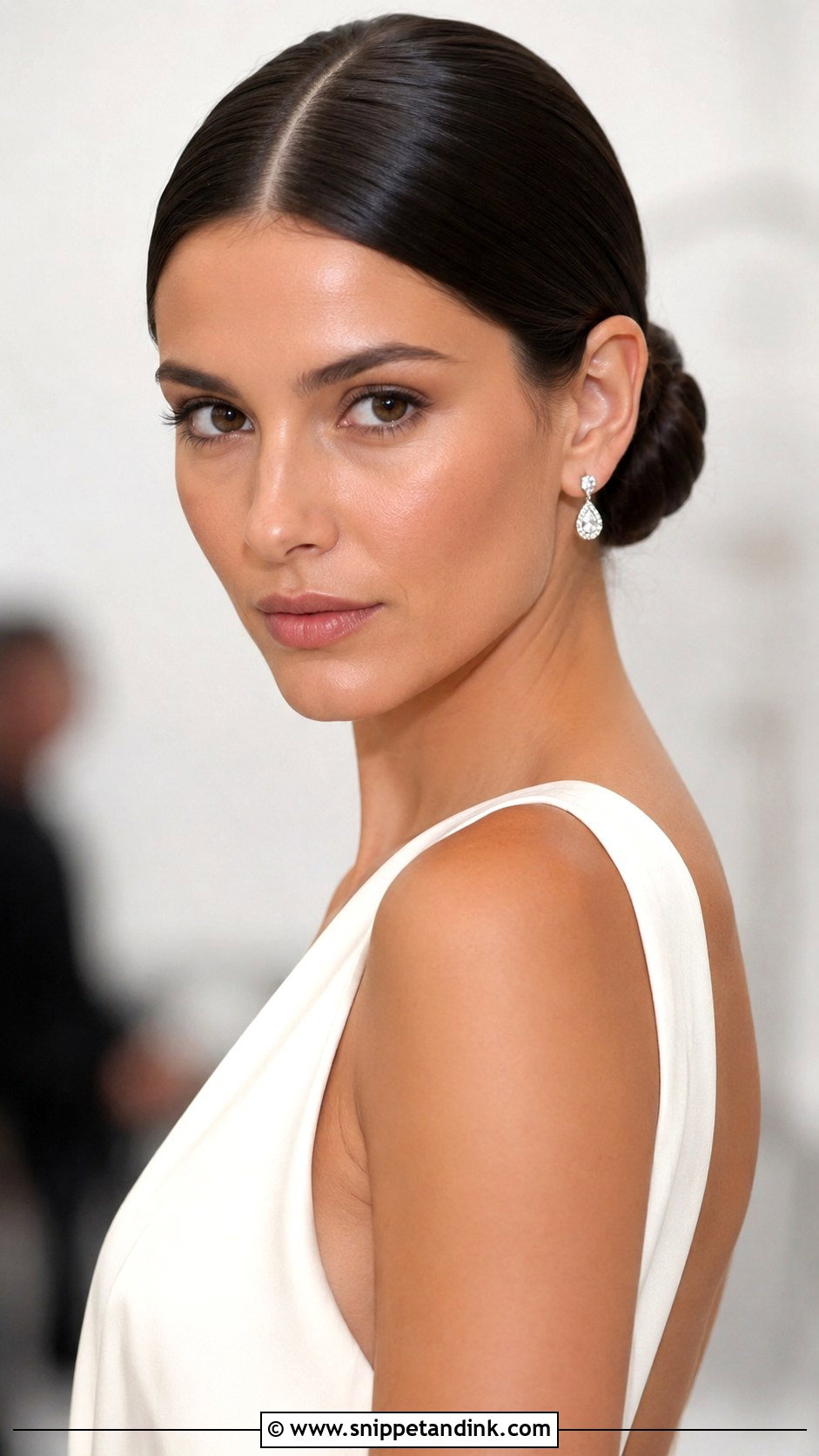
A center part with a low, sleek bun is symmetrical and minimal. It works best on bobs and longer short hair, since the bun needs some length to form. I smooth the hair with a serum and a boar bristle brush, secure it at the nape with an elastic, then wrap and pin. The center part is unforgiving: any cowlick shows, so check yours at the trial. Simple gowns and statement jewelry suit it.
18. Floral Accented Updo for Short Hair
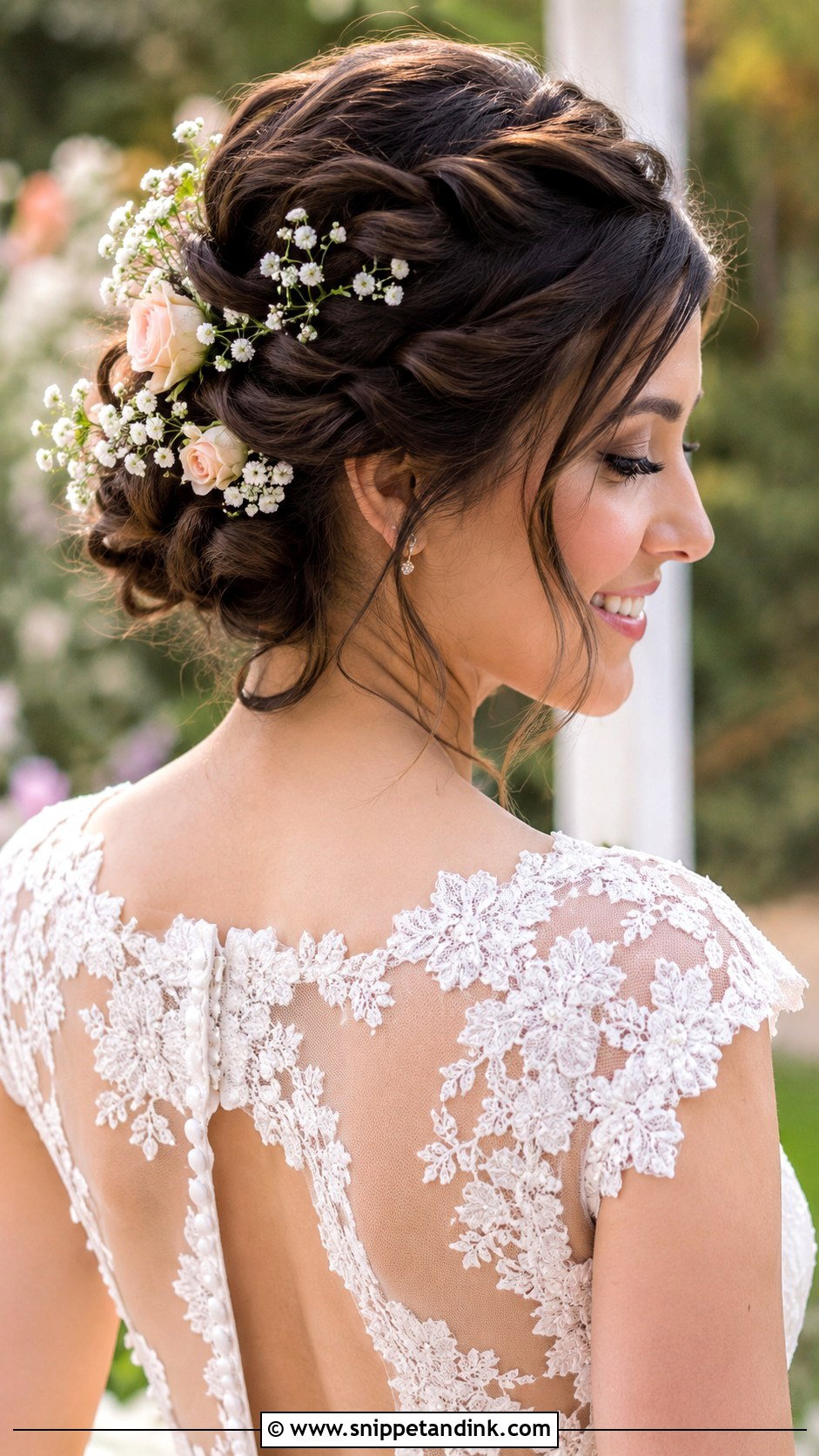
Fresh flowers add color and softness to a short updo. Pin the hair into a soft shape, then tuck blooms between twists, braids or curls. Baby’s breath, small roses and seasonal blossoms that match the bouquet work best. I’d ask your florist for sturdy, wired stems, and keep them cool until the last moment, since thin petals wilt quickly in heat against a warm head. Spring and summer weddings suit it, and so do boho and outdoor themes.
19. Twisted Halo Updo for Short Hair
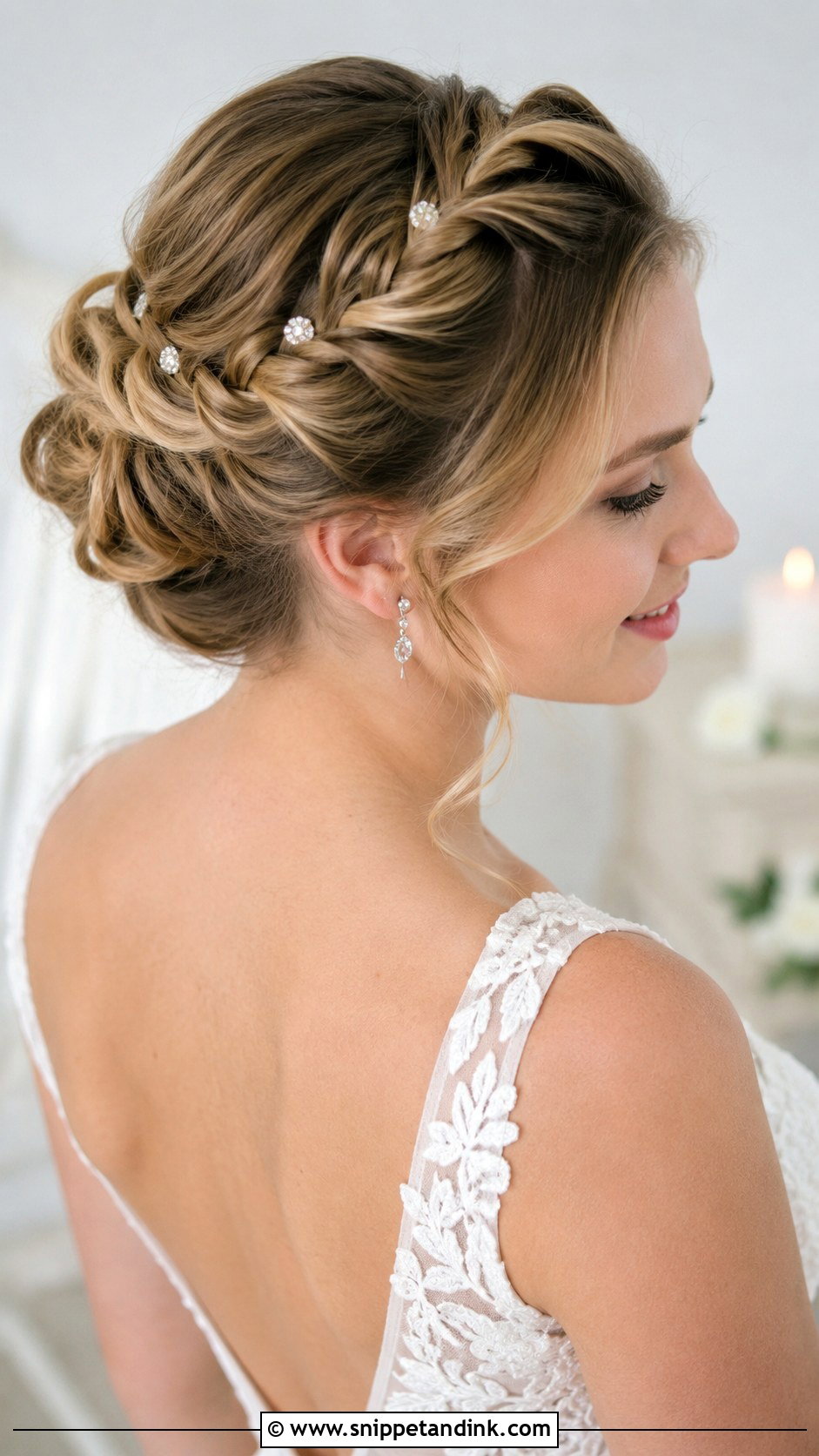
A twisted halo runs small twists in a circle along the crown and pins them in place. It frames the face and keeps hair off the neck. On short hair I use more twists than on long hair, each one smaller, so the ends are hidden inside the next twist. Tiny pearls or crystal pins along the twists add a little sparkle. It’s soft and structured together, which suits brides who want both.
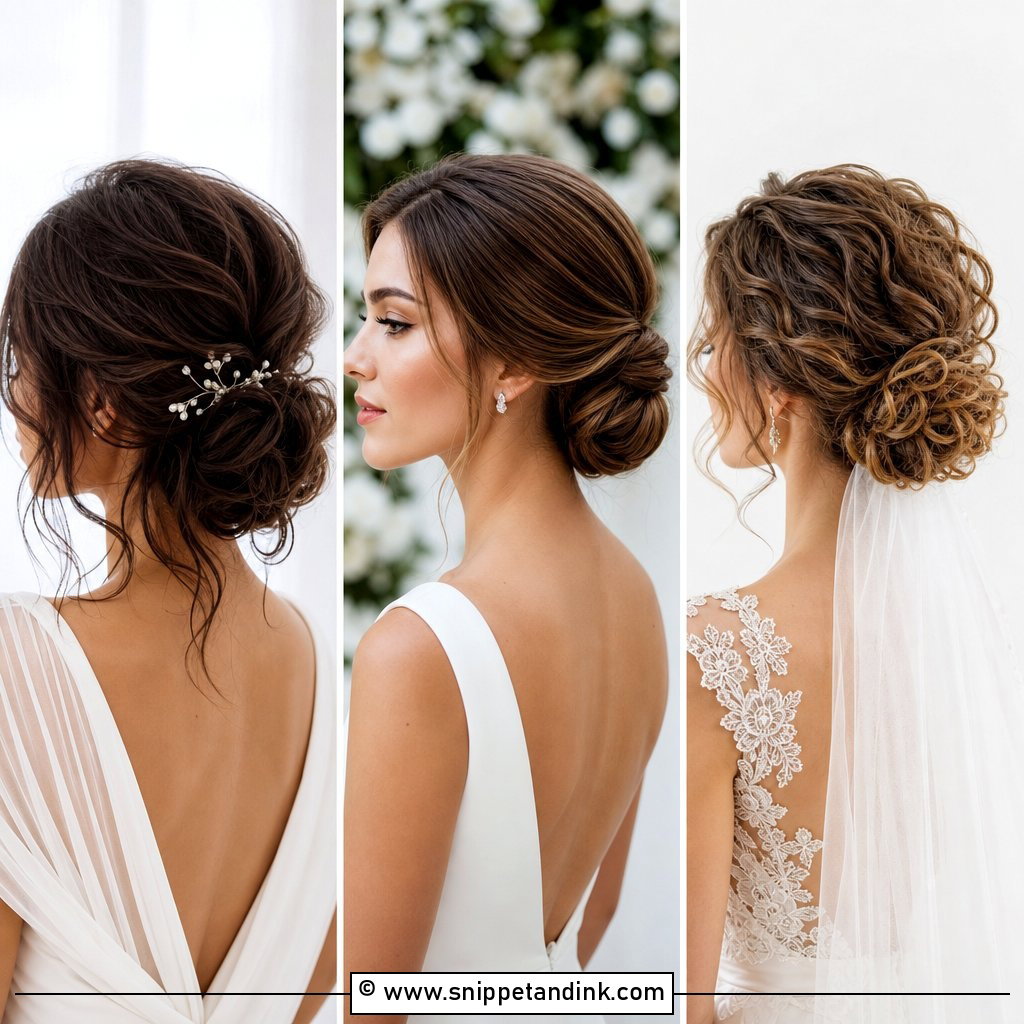
20. Accessorized Updo With Tiara for Short Hair
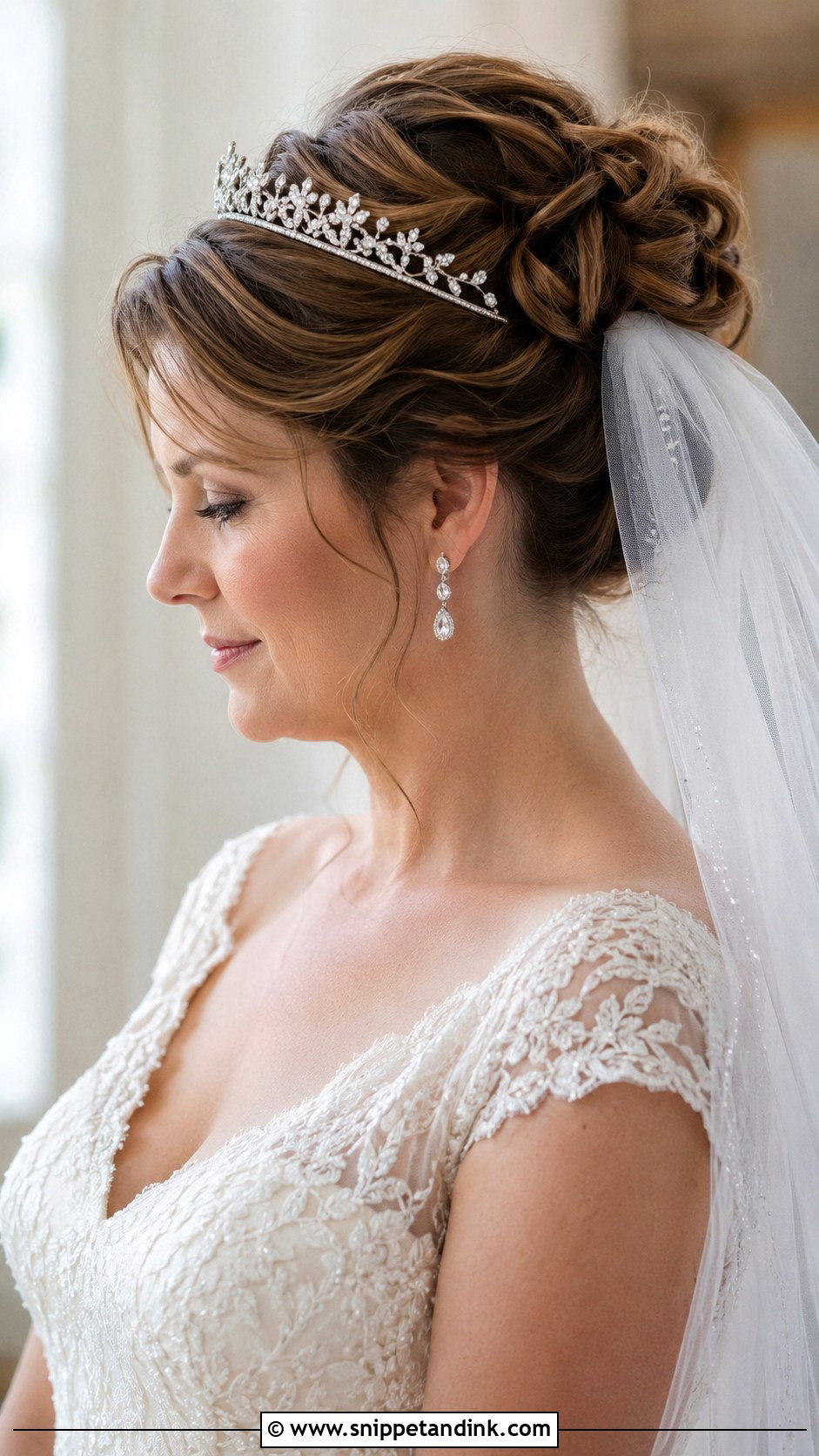
A tiara needs a firm base, so I build the updo first, waves, twists or a low bun, and backcomb a small section where the tiara sits. The tiara’s combs slide into that teased section and are secured with bobby pins woven through the frame. Without that base, a tiara slides forward on short hair within an hour. A veil can be tucked beneath it. Formal, traditional and luxurious weddings suit it.
Growing Out for a Bigger Updo
If your wedding is a year away and you want more options, growing out is realistic. Hair grows roughly half an inch a month on average, so a bob that sits at the chin can reach the shoulders in about a year. That opens up chignons and fuller buns.
Tell your stylist early that you’re growing for the wedding. Small trims every couple of months keep the shape tidy without taking off length. The nape grows out unevenly, so ask them to shape it rather than leaving it alone. If you’re keeping your cut, go for one of the styles above that already suits it, rather than chasing length you won’t have.
Whatever length you have, I’d book a trial with your veil or headpiece. A short updo holds weight differently, and the trial is where we find out where the comb sits and how many pins it needs.
A Short Updo Is Built, Not Gathered
Short hair isn’t a limitation for a wedding updo. Sleek chignons, braids, soft waves and tiaras all work in a short-hair version. Match the style to your theme, dress and how you want to feel. Accessories like pins, flowers or headbands add detail where the hair has less length. Short hair styles faster too, so you have more time on the morning. Bring your favorite photos and your current cut to a trial, and let your stylist show you which versions will hold.
You'll Like These Ideas:


Leave a Reply