
Short hair is often the easiest bridal hair I style, and also the least forgiving. There is nothing to hide a crooked part under, and a pin placed a few millimetres off shows. The upside is real: a well-cut crop won’t sag by the first dance the way a heavy updo can, and it leaves your neckline and earrings in plain view. Everything below works on a pixie, a bob or a chin-length crop, and for each idea I’ve added what I actually do in the chair and who I’d gently talk out of it.
Cutting, Coloring and Testing on the Right Calendar
With short hair, the timing of the cut matters almost as much as the style. A pixie can lose its shape in three weeks, and a cut done the day before can look too sharp, with visible lines at the nape. I suggest the final trim one to two weeks before the wedding, so the edges have softened but the shape is still exact. Color works the same way: refresh it about two weeks out so the tone settles and any patchy overlap can still be corrected.
What I ask you to bring to the trial
- Hair washed the day before, the way you plan to have it on the morning
- The veil, headpiece or pins you intend to wear, because short hair grips each of them differently
- Your earrings, since a short style is built around what shows at the ear
- Your phone, for one photo in daylight and one with flash before you leave the chair
Tell your stylist when the final trim is booked. If the cut after the trial takes off more than expected, a half-up or a twist that worked at the trial may no longer reach, and it’s far better to know that in advance.
1. Soft Waves for Short Bob
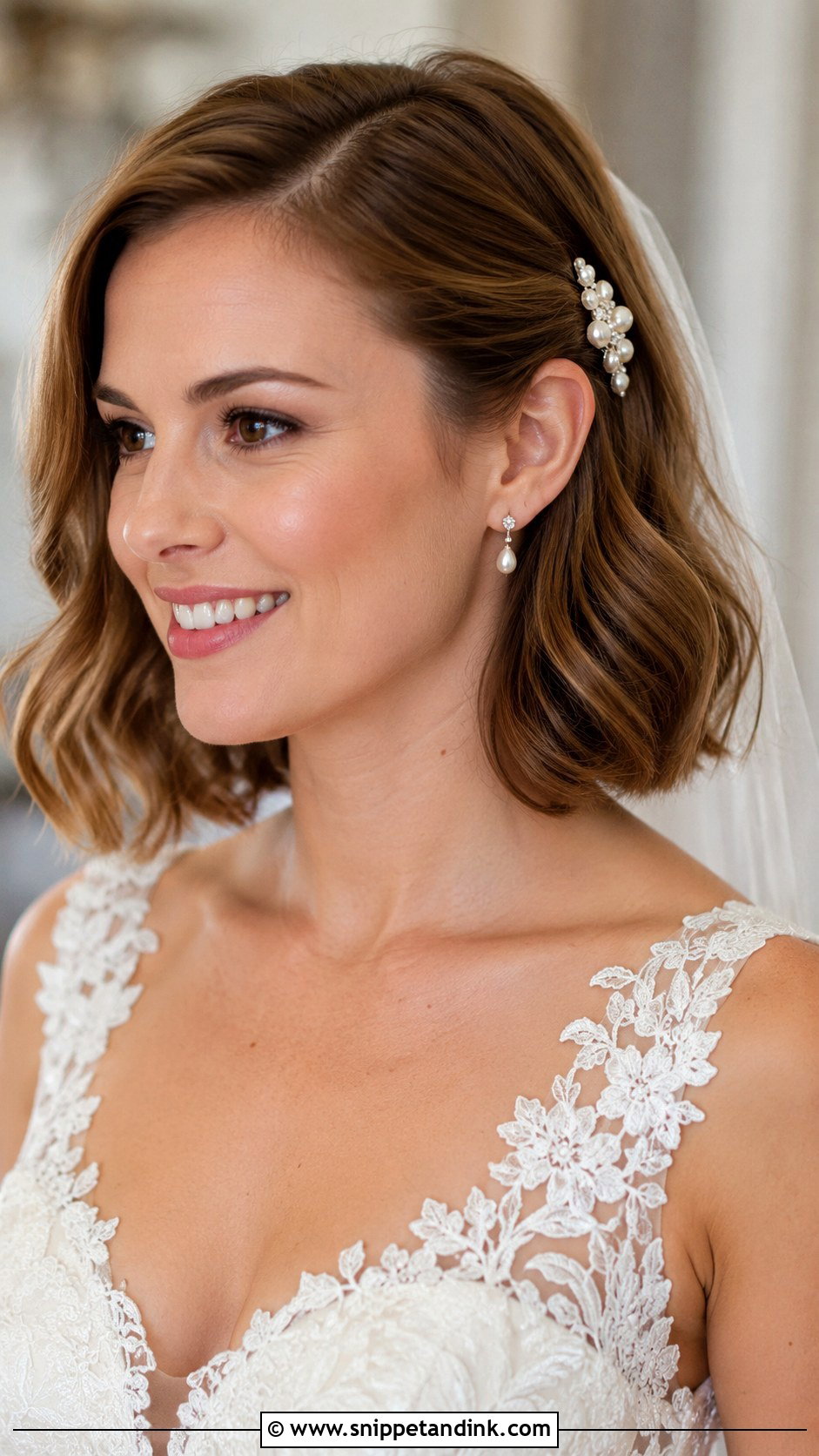
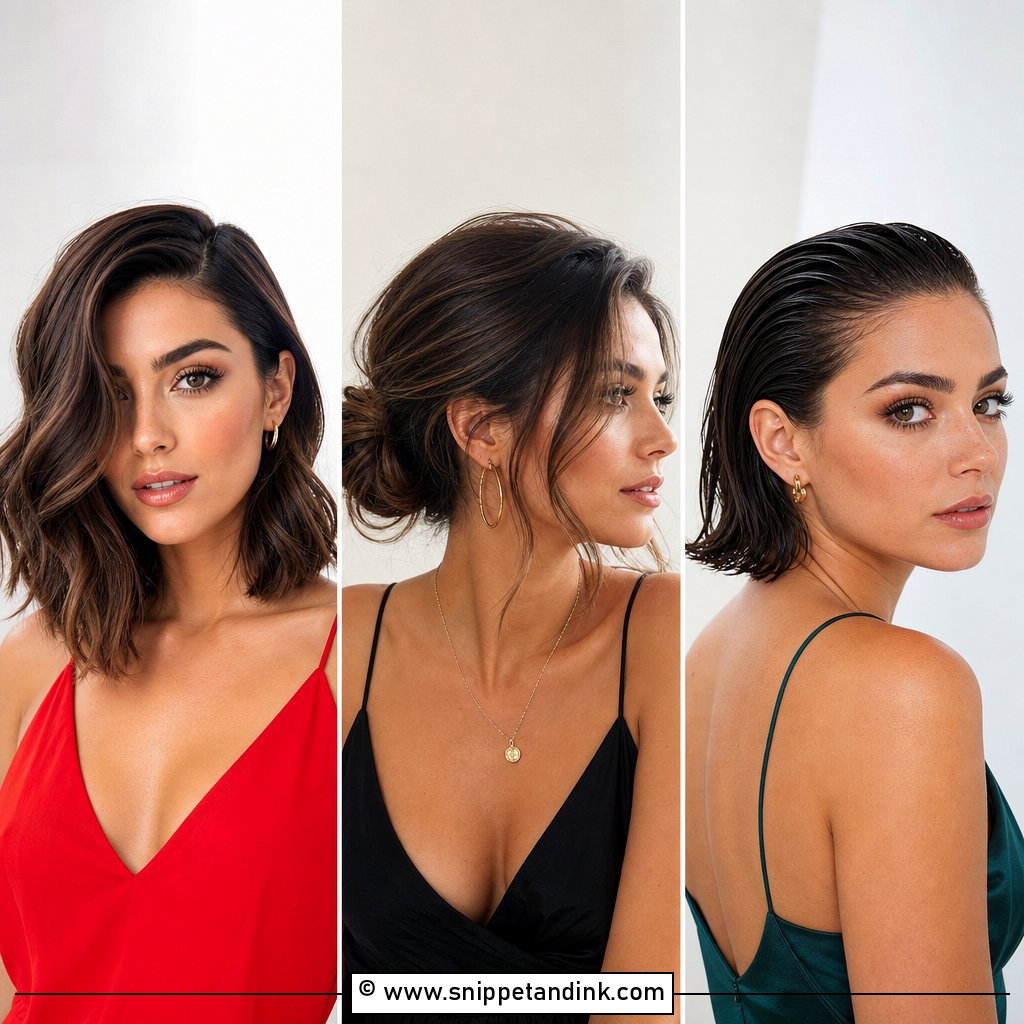
A wand bend is the quickest way to make a bob look finished. I curl in alternating directions, leave the last inch straight so the ends don’t flip into a 1960s curl, then brush through with a wide paddle brush once everything has cooled. Cooling matters more than the iron’s temperature; brush out warm curls and they drop before the ceremony. A light spray and a single pearl pin behind one ear keep it from looking like everyday hair. On very blunt, thick bobs I’d take a little bulk out at the cut beforehand, or the waves just add width.
2. Vintage Finger Waves
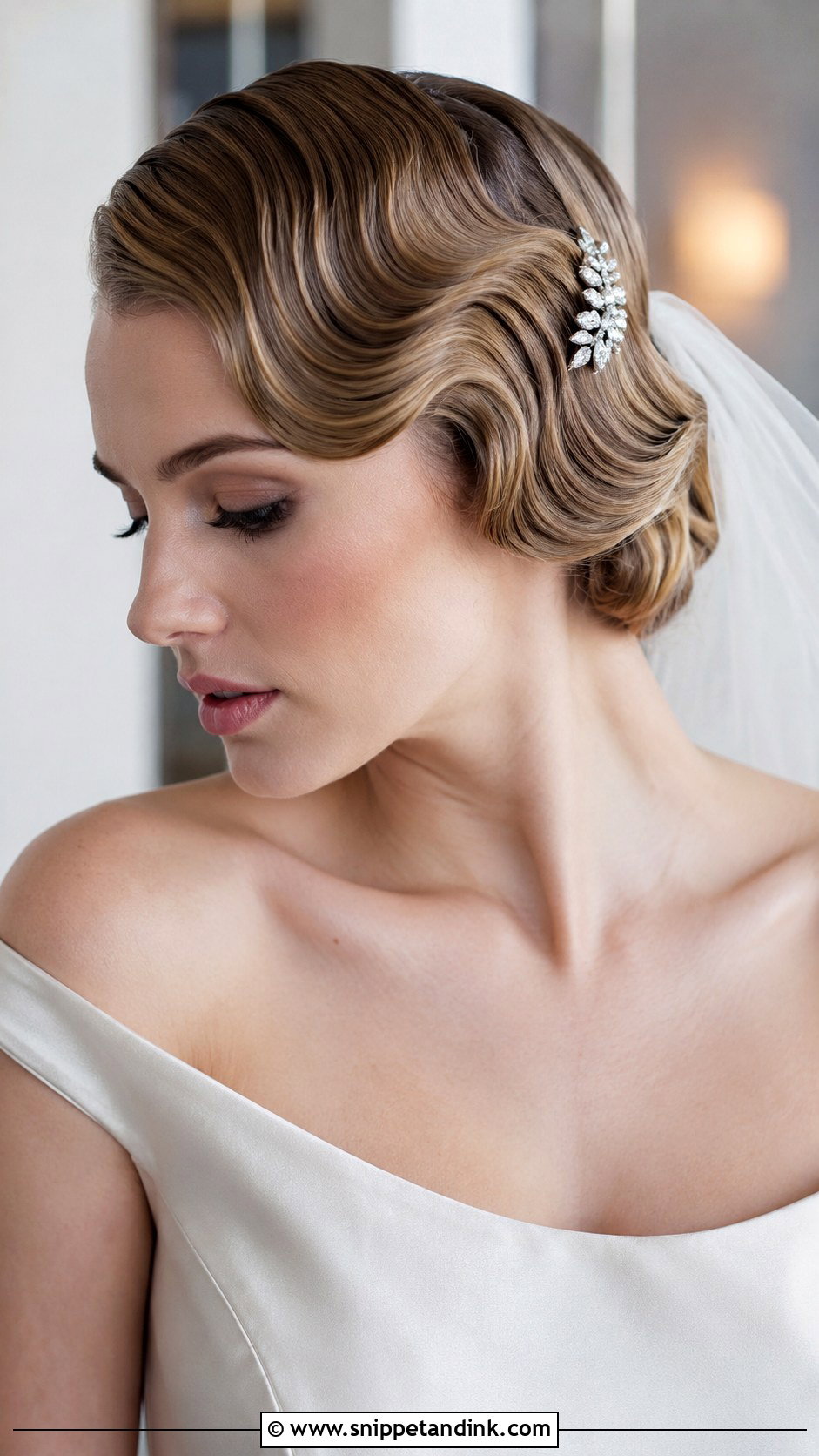
Finger waves are a real setting job, not a quick style. I work gel into damp hair, push each ridge with my fingers and a fine-tooth comb, and clip it while it dries, which can take close to an hour under a diffuser on low. They hold best on smooth, straight hair cut around jaw length. Very curly or heavily layered hair resists the S shape. Once set, the finish is glossy and won’t move at all, so a jeweled pin at the deepest wave or a short veil is all it needs to read as 1920s rather than costume.
3. Tousled Pixie Cut
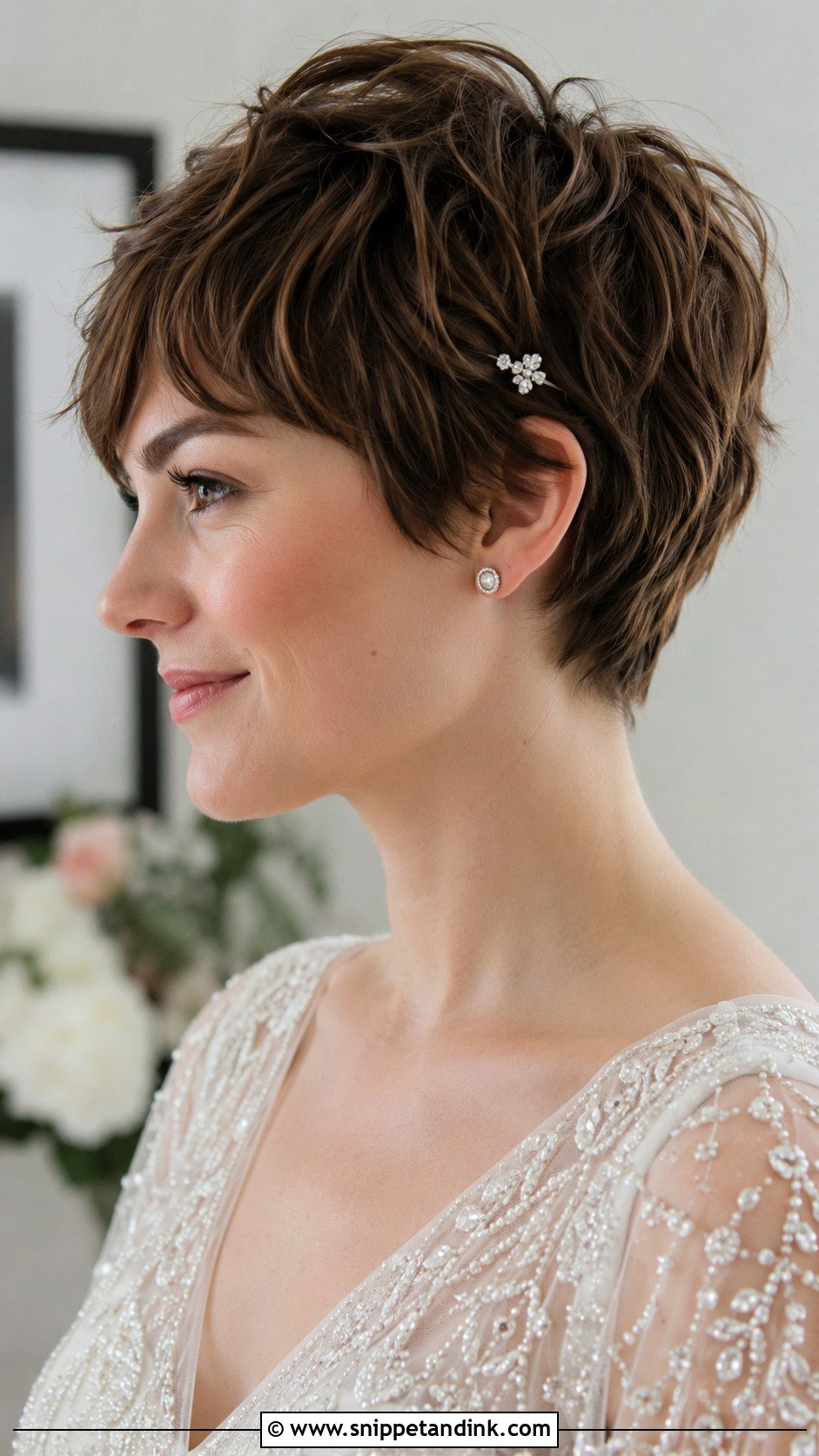
Short pixie cuts need texture more than styling. I rough-dry, warm a pea-sized amount of matte pomade between my palms, and twist small pieces at the crown so it looks lived-in rather than set. Too much product reads greasy by evening, so start with less than you think. A small crystal clip above the ear is about the only accessory a pixie needs, since your face is already the focus.
4. Half-Up Half-Down for Short Hair
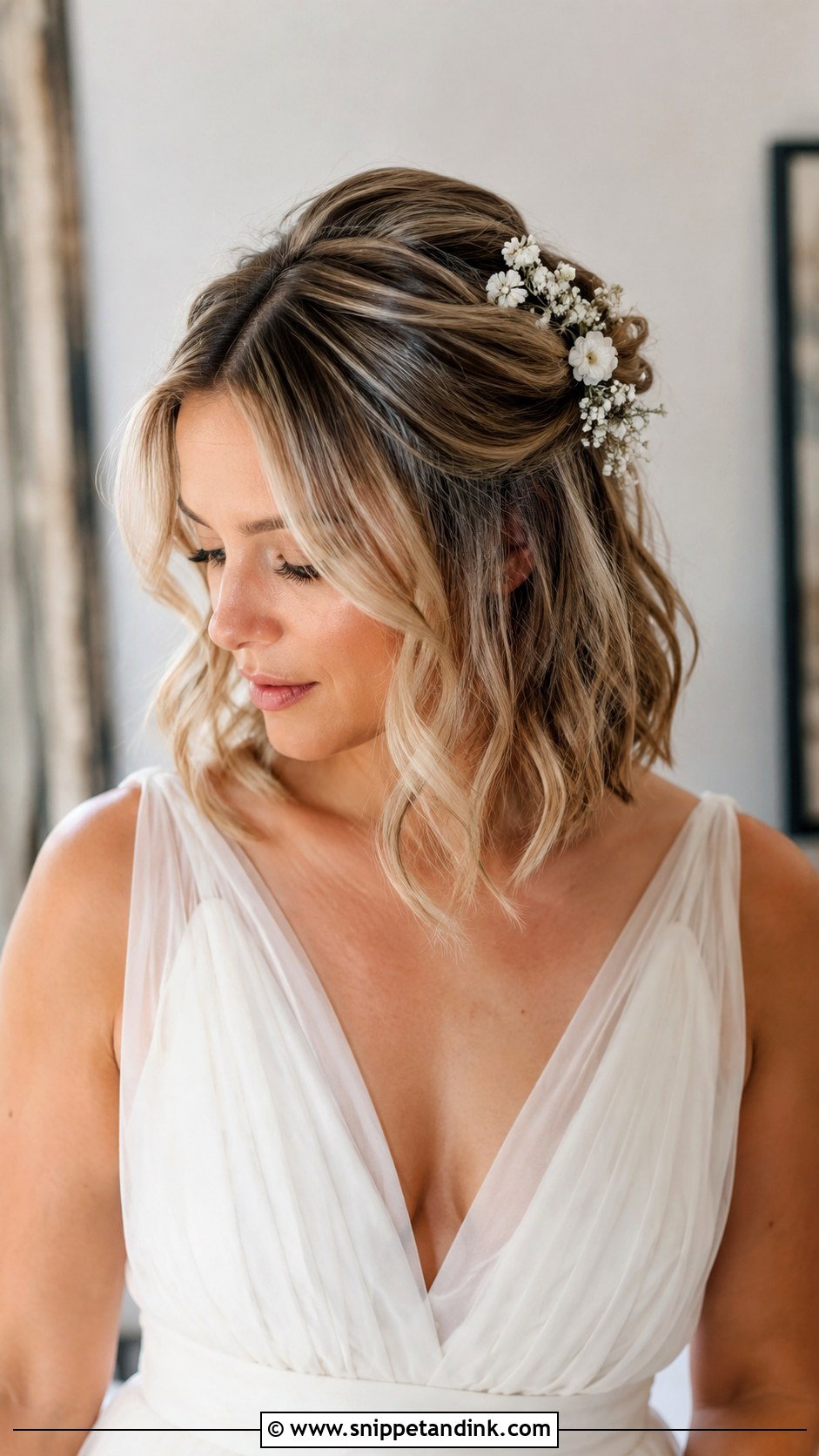
On short hair, half-up only works if the top section is long enough to reach the back of the head, so that’s the first thing I check. Bobs past the chin usually manage; a cropped pixie usually doesn’t. I tease the base of the section lightly, lock it with two crossed bobby pins so it can’t slide, and pull a few wisps loose at the temples. Texturizing spray underneath holds the lift. A small floral pin or a narrow tiara hides the join.
5. Classic French Twist
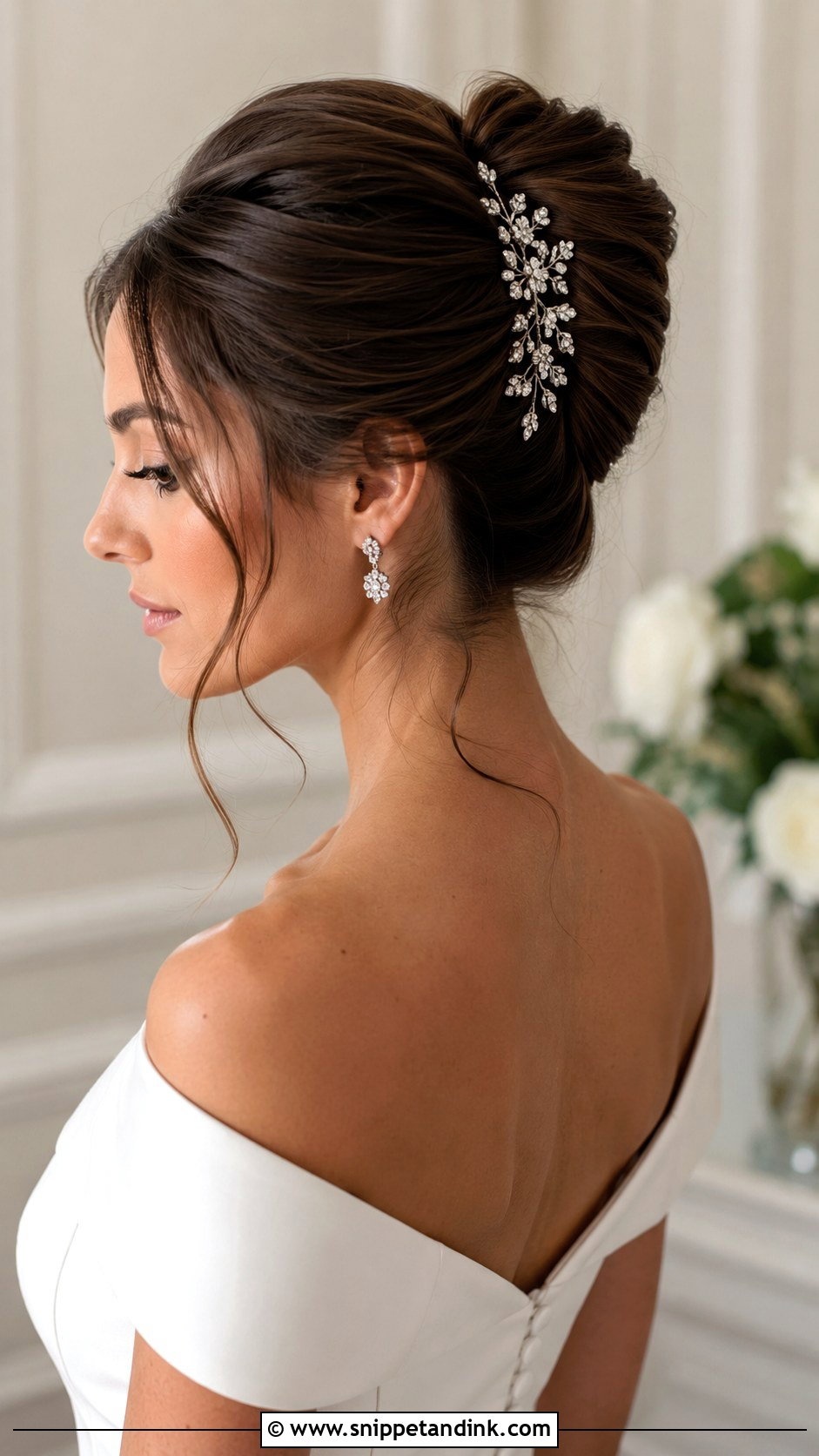
I’ll be honest about the French twist: it needs hair that at least grazes the collar. On a chin-length bob I can fake it with a small padded insert and a lot of pins, but the short nape pieces will keep trying to escape. When the length is there, it’s the most formal option here. I roll the twist vertically, push each pin in against the direction of the roll so it bites, and spray each section as I go rather than all at the end. A comb tucked at the base also makes a solid anchor for a veil.
6. Low Bun for Bob-Length Hair
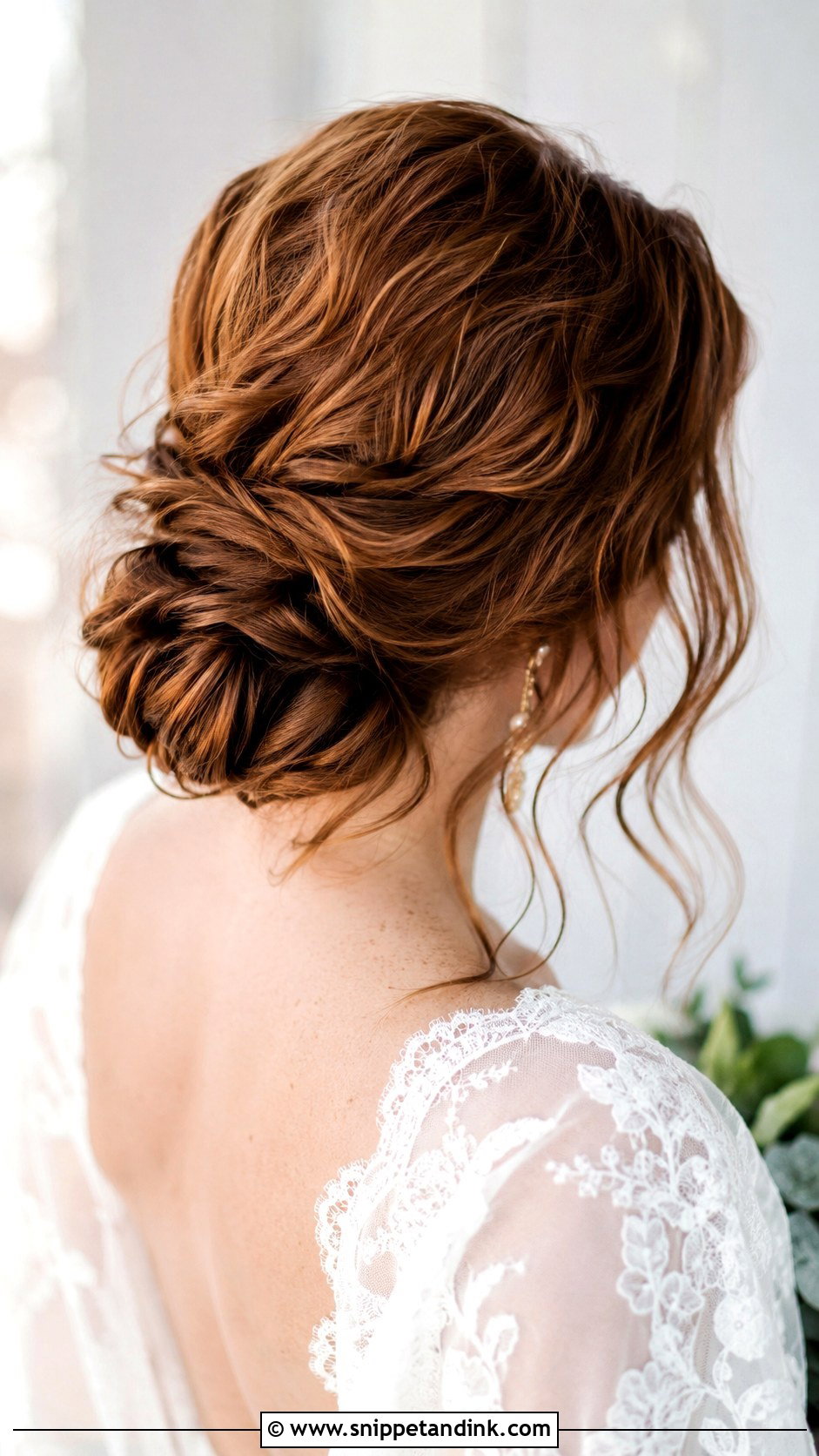
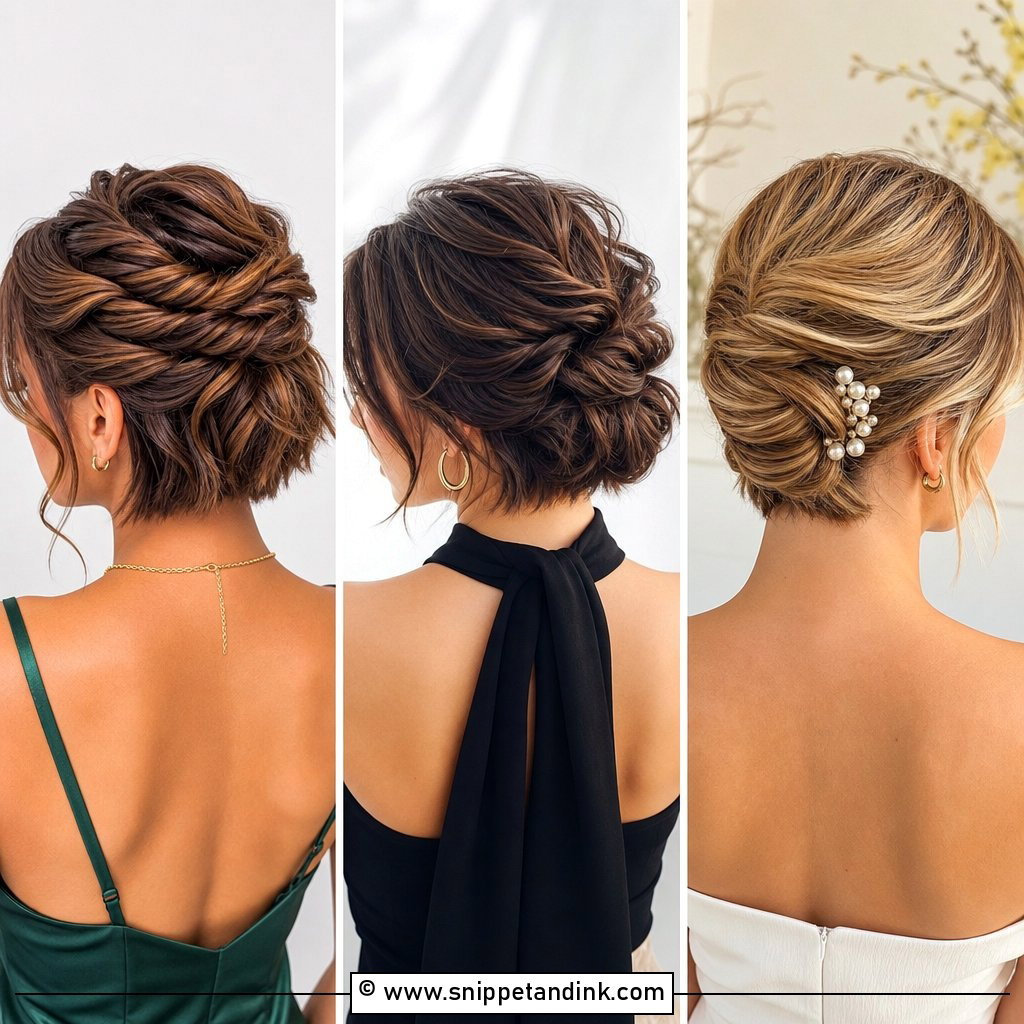
A low bun on bob-length hair is really a cluster of pinned curls, not a true bun. I curl everything first so the hair has grip, then wrap each section toward the nape and pin it where it lands. The shortest layers at the nape are the trouble spot, so I secure them with a couple of mini clips before building the shape. Leave a few face-framing pieces loose. A long veil sits well over it and hides any ends that won’t tuck in.
7. Floral Crown on Short Hair
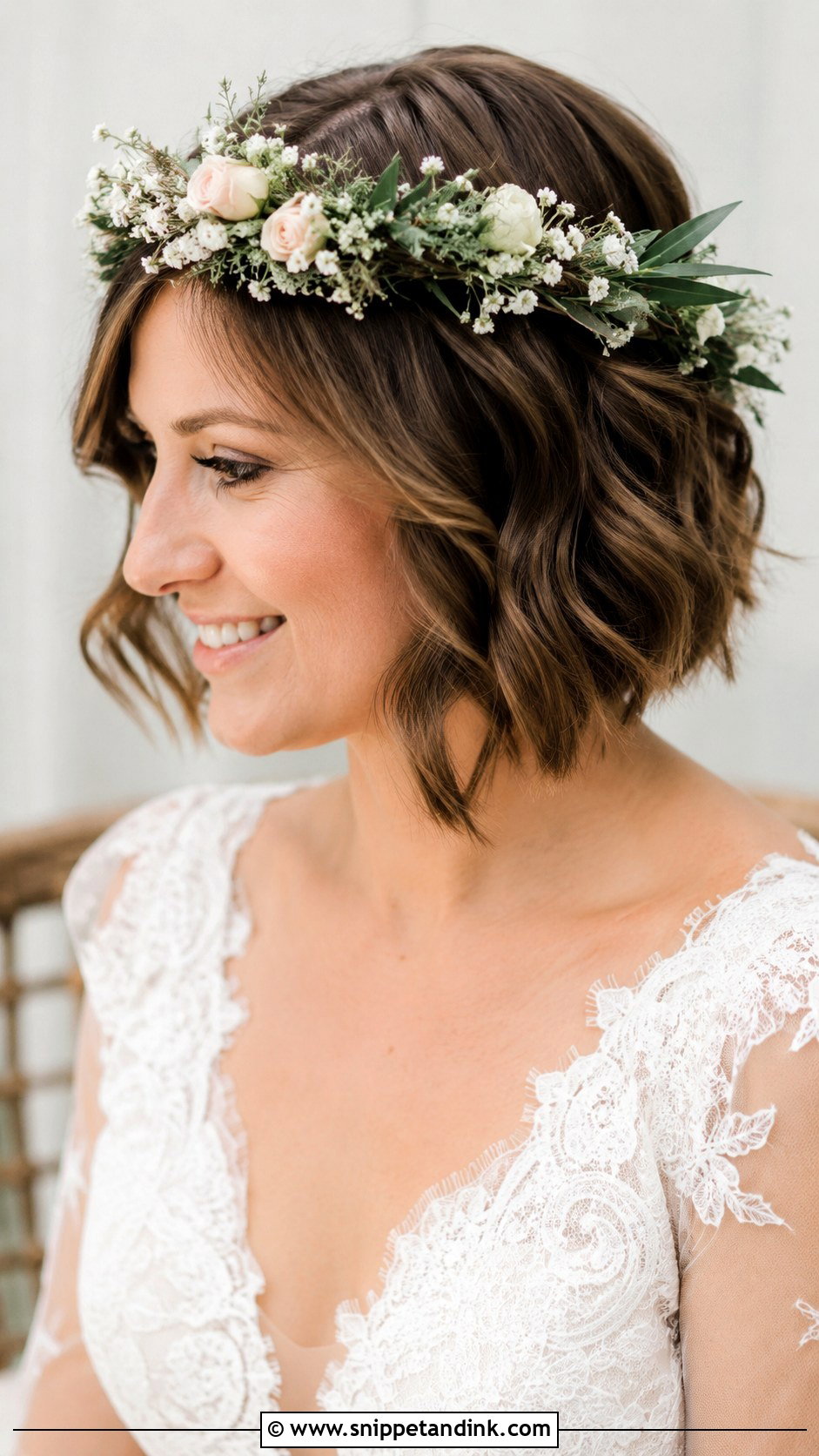
A floral crown turns a short style into a boho dream, but fresh flowers wilt faster than people expect when they sit on a warm head in the sun. I ask the florist for hardy stems like spray roses or waxflower, delivered that morning rather than the night before. On a pixie the crown wants to slide backwards, so I hook bobby pins through the wire frame at both temples. Echo the bouquet loosely; an exact copy can look like a matching set.
8. Sleek Straight Bob
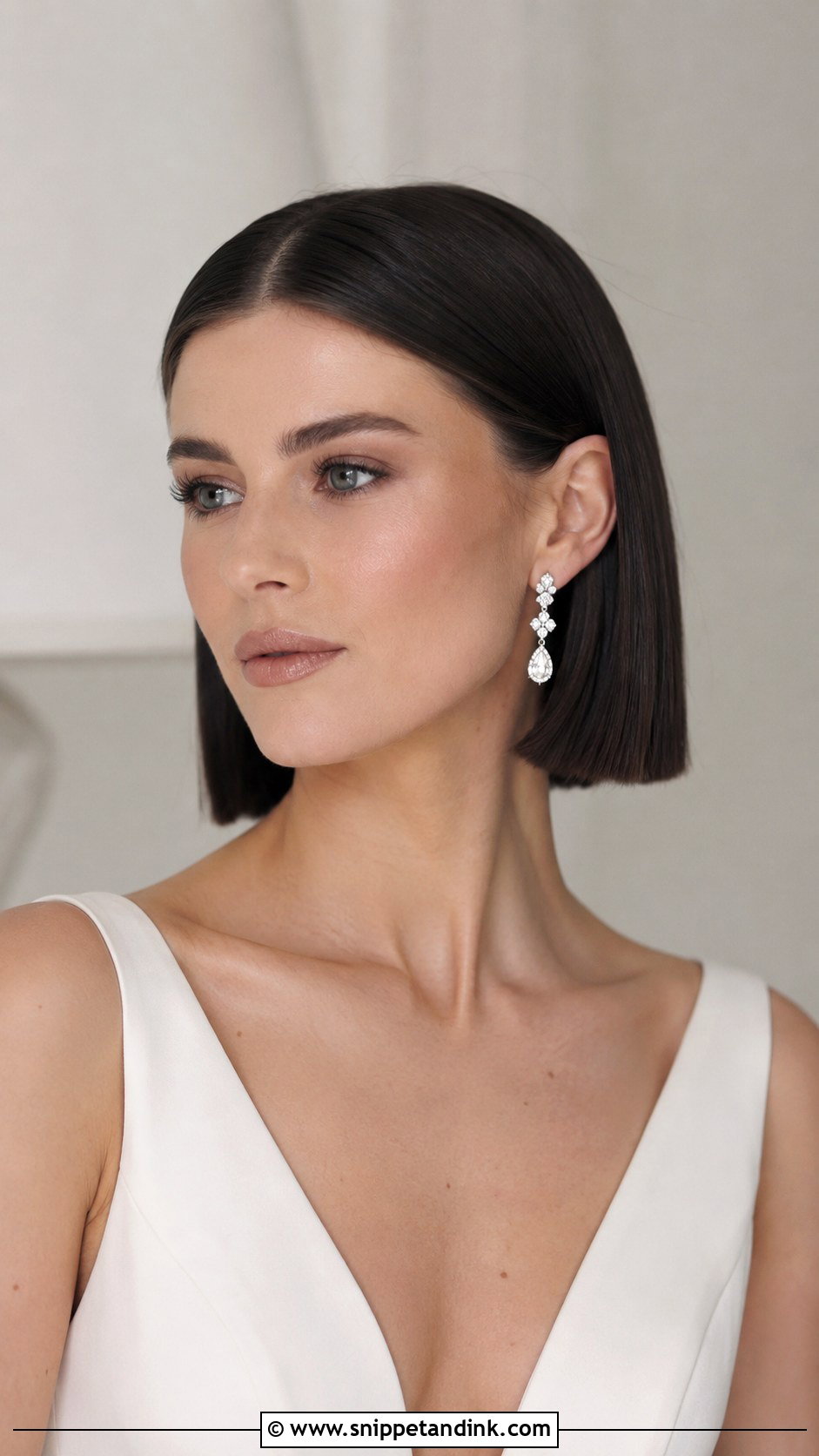
A sleek straight bob has nowhere to hide, which is exactly why I like it with a structured gown. I blow-dry with a round brush first, then flat-iron thin sections at moderate heat so the ends keep a little movement instead of looking pressed. Humidity is the enemy here, and a drop of frizz serum through the mid-lengths does more than any hairspray. Choose your part at the trial and stay with it. Center and side parts change the whole face.
9. Braided Updo for Short Hair
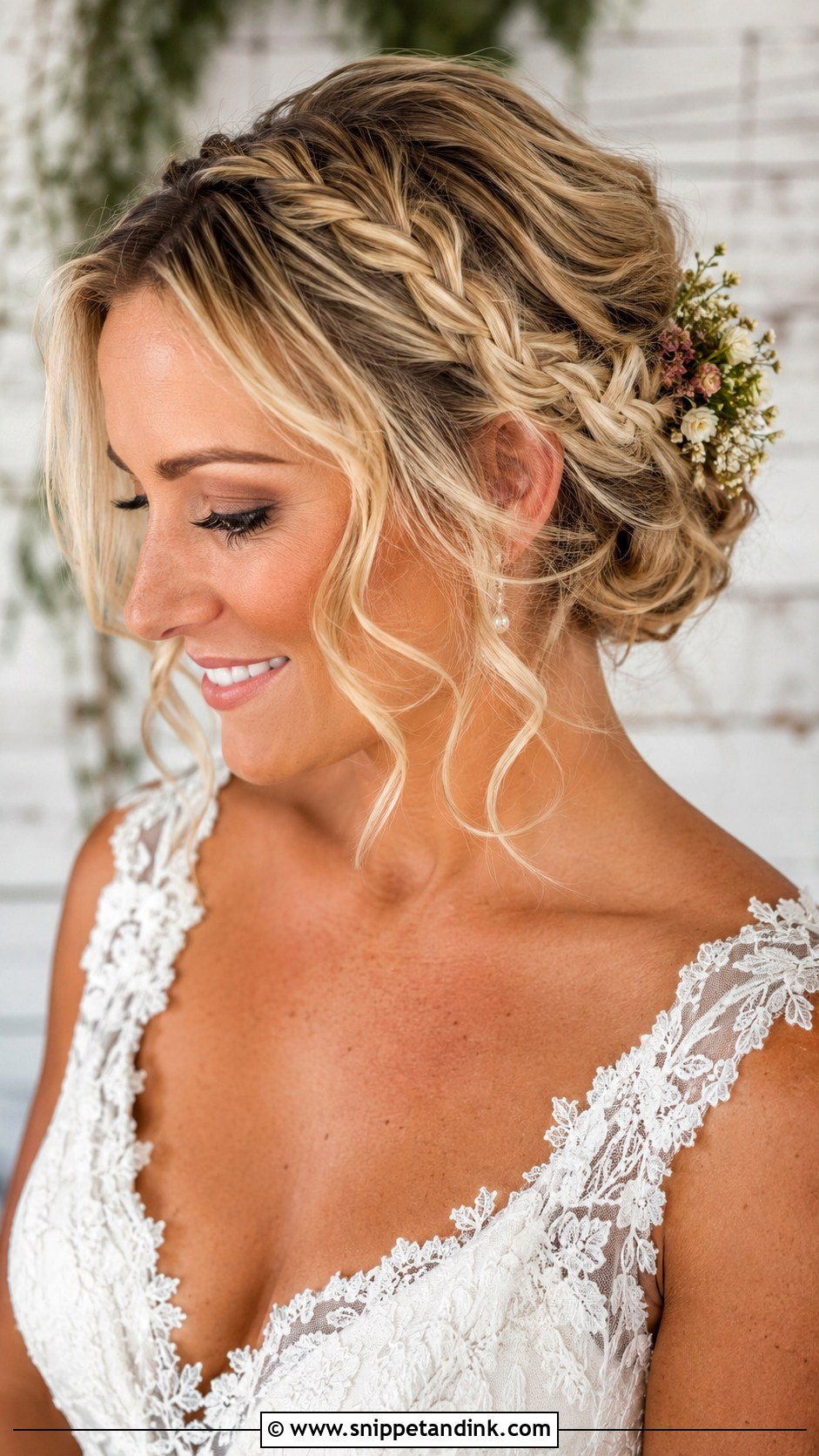
Braids are how I give short hair something to hold on to. I work small Dutch braids along each side from the hairline, then pin the tails underneath at the back where the hair is shortest. On a bob above the chin there isn’t much tail to hide, so the braid has to stay tight close to the scalp. Freshly washed, slippery hair is hard to braid neatly, and day-old hair with a dusting of dry shampoo behaves far better. Tiny flowers tucked into the braid gaps stay put better than they would in loose hair.
10. Pixie Cut with Crystal Pins
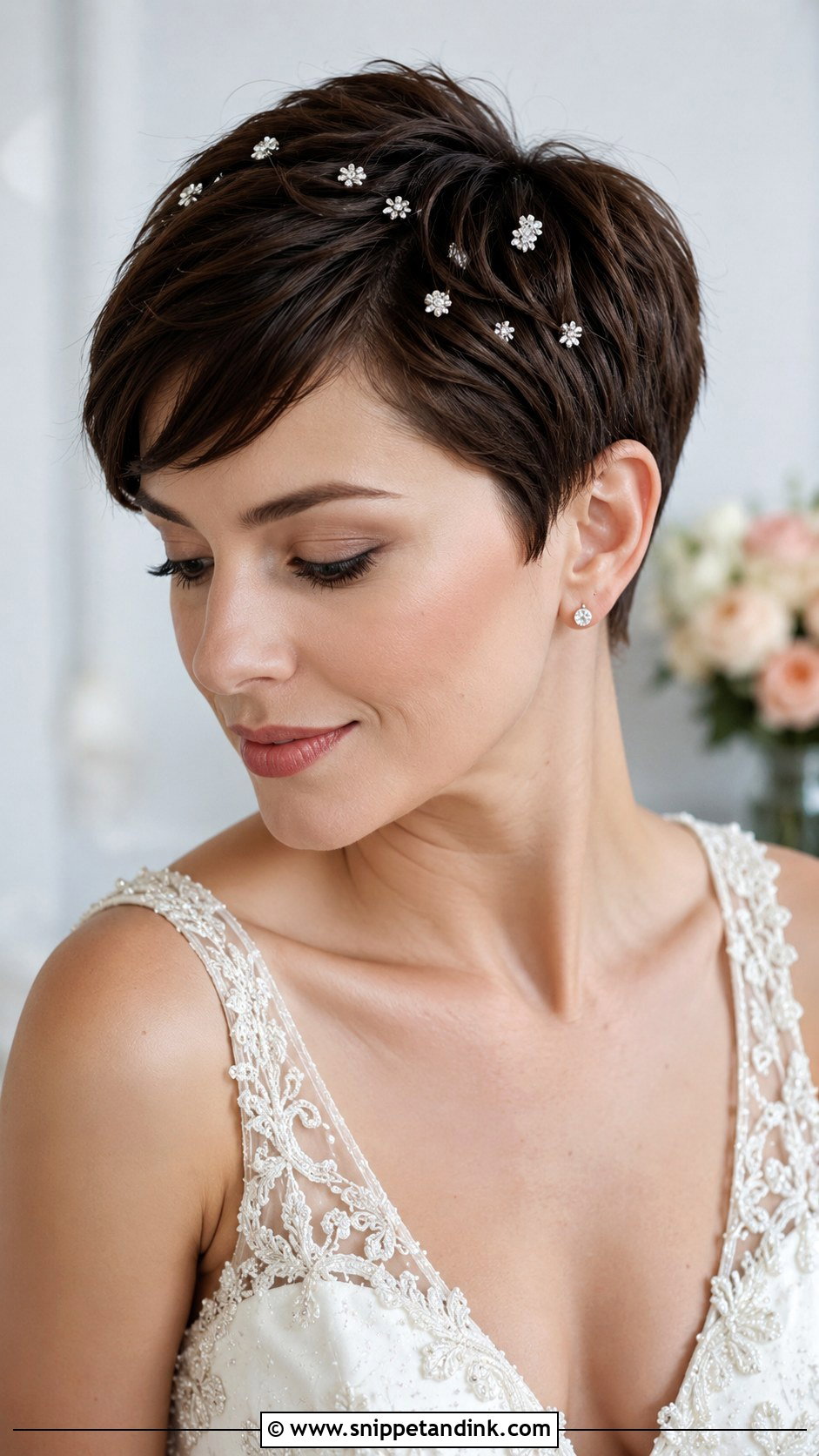
Crystal pins are the simplest way to make a pixie look bridal without restyling it. I place three to five in a curve along the side part, and I slide each one over a bobby pin that’s already locked in, because decorative pins on their own slip out of short hair within an hour. It costs very little and takes minutes. Keep your earrings in proportion; big earrings plus a lot of crystals start to compete.
11. Soft Curls for Pixie Cut
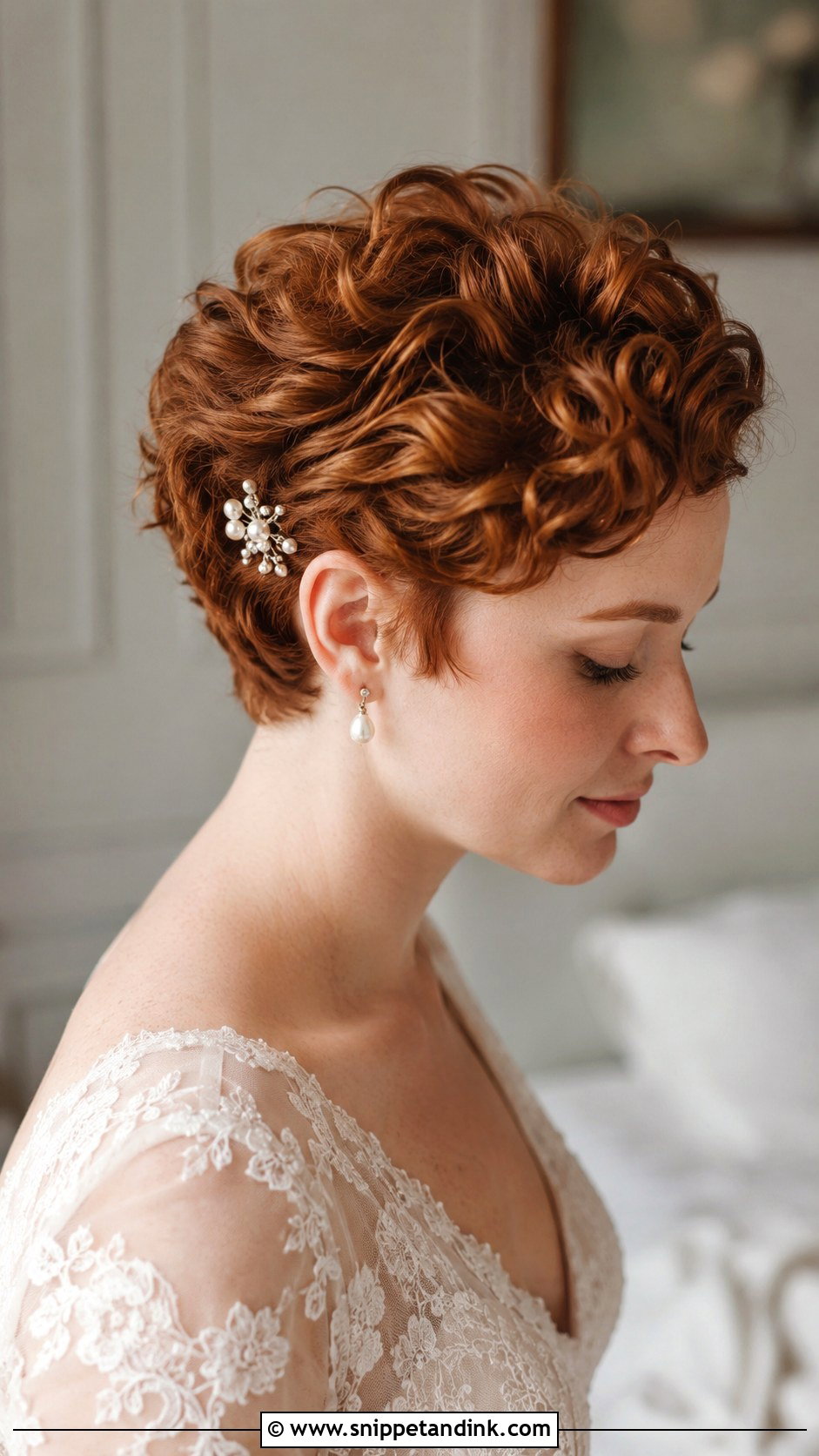
Pixie curls need a small barrel, around half an inch, or the iron can’t wrap the hair at all. I curl only the top and crown and leave the sides smoother, otherwise the whole shape turns round. A flexible spray keeps them bouncy where a strong one would make them crunchy. A pearl pin behind the ear is optional. The curls take the edge off a sharp cut, which some brides love and others miss, so try it at the trial before committing.
12. Vintage Pin Curls
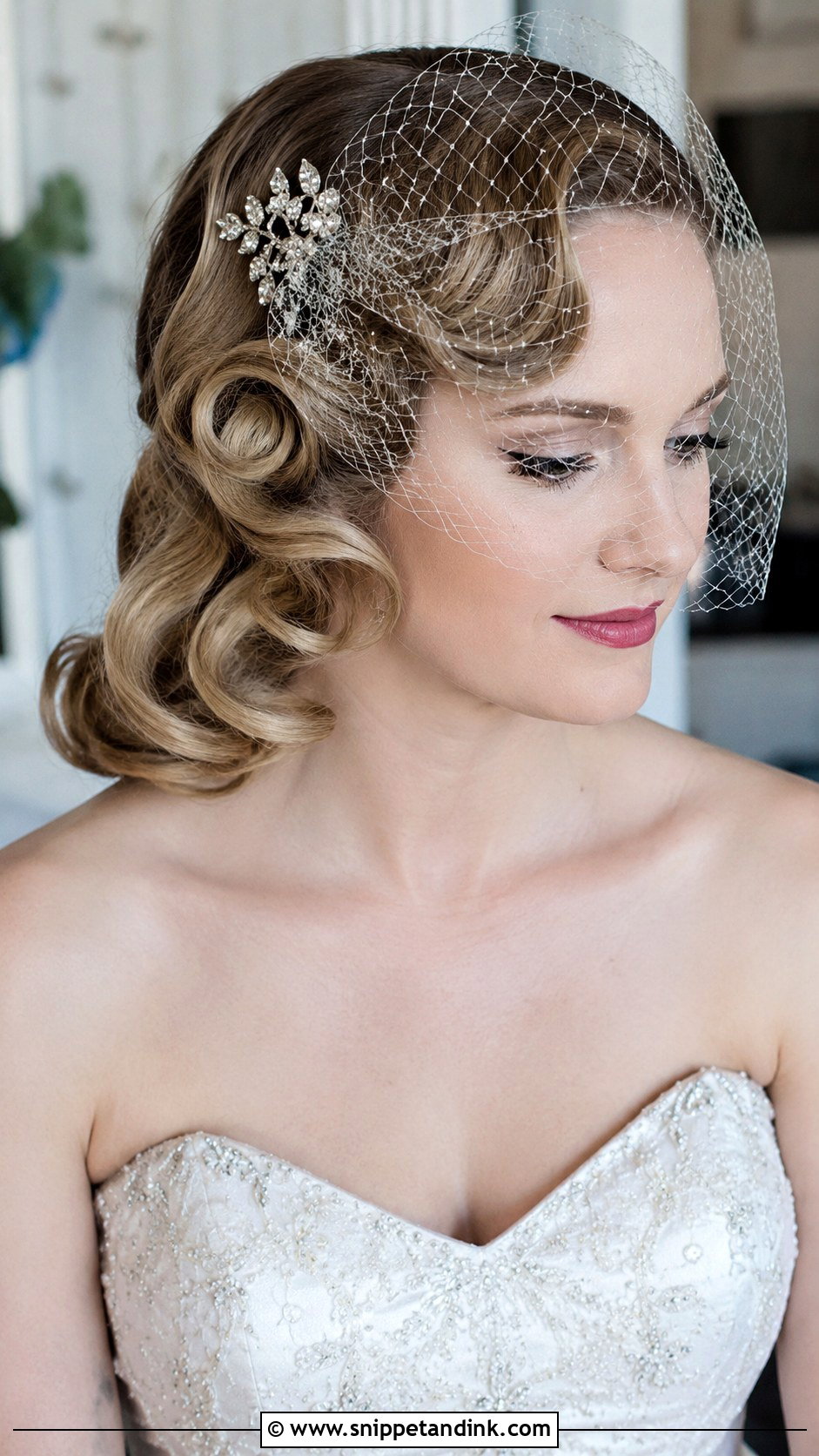
Pin curls are set, not curled, so they need time. I wrap small sections around a finger, clip them flat while they’re damp with setting lotion, and let them cool or dry completely before brushing out. Brush too early and they fall; brush too long and you get frizz instead of waves. On bobs and longer pixies they give that 1950s volume at the crown, finished with a jeweled clip or a birdcage veil. A proper set like this usually outlasts a quick iron curl over a long day.
13. Side-Swept Bob
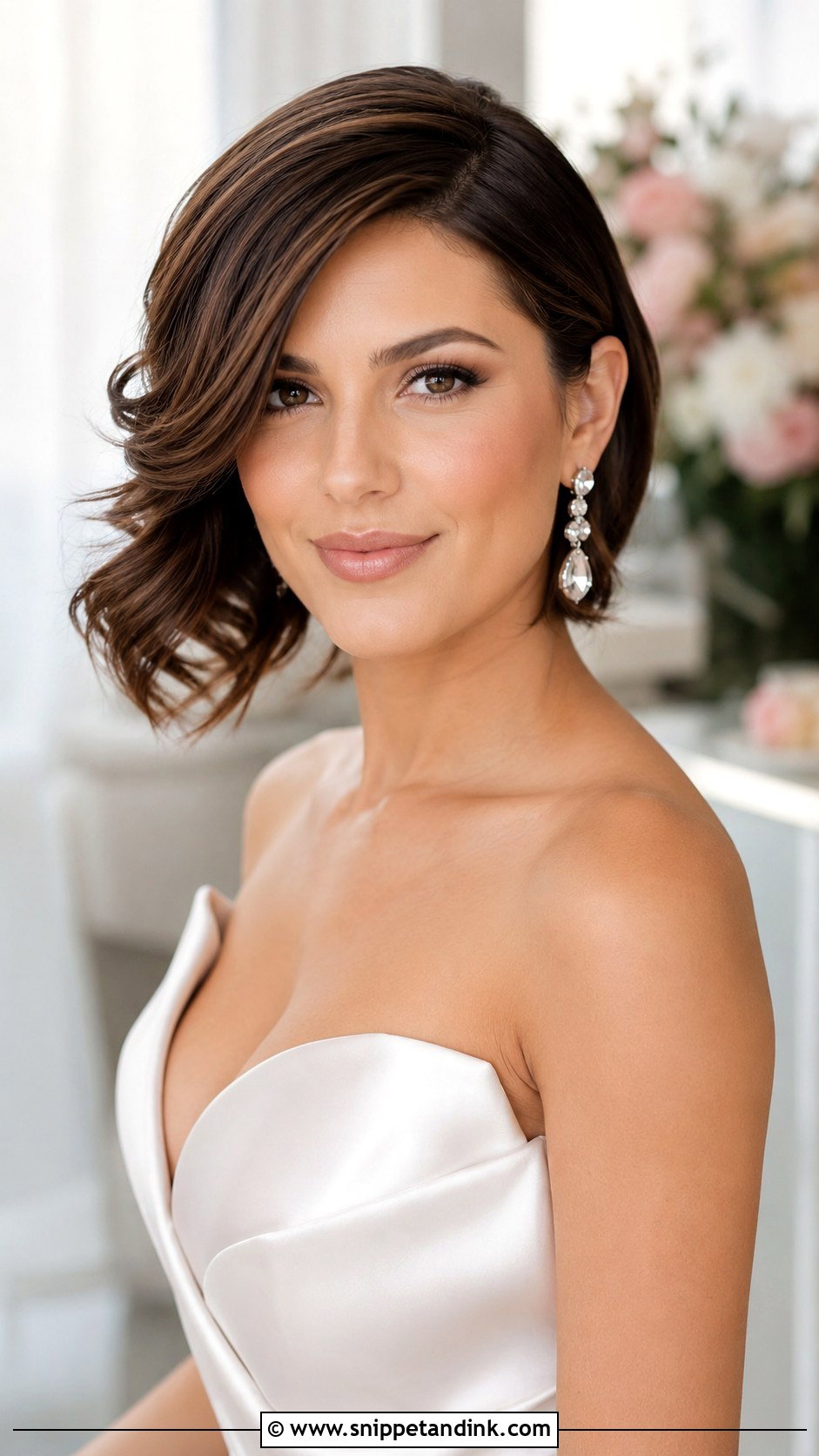
A side sweep is really just a strong part and a few well-hidden pins. I take a deep side part, smooth the heavier side behind the ear and pin it from underneath with the pin pointing toward the face, which is the direction that grips. A soft wave on the fuller side stops it looking flat. This is my pick for a statement earring or a one-shoulder neckline because it opens one side completely. Shine spray goes on last, held well back so it doesn’t spot.
14. Boho Headband on Short Hair
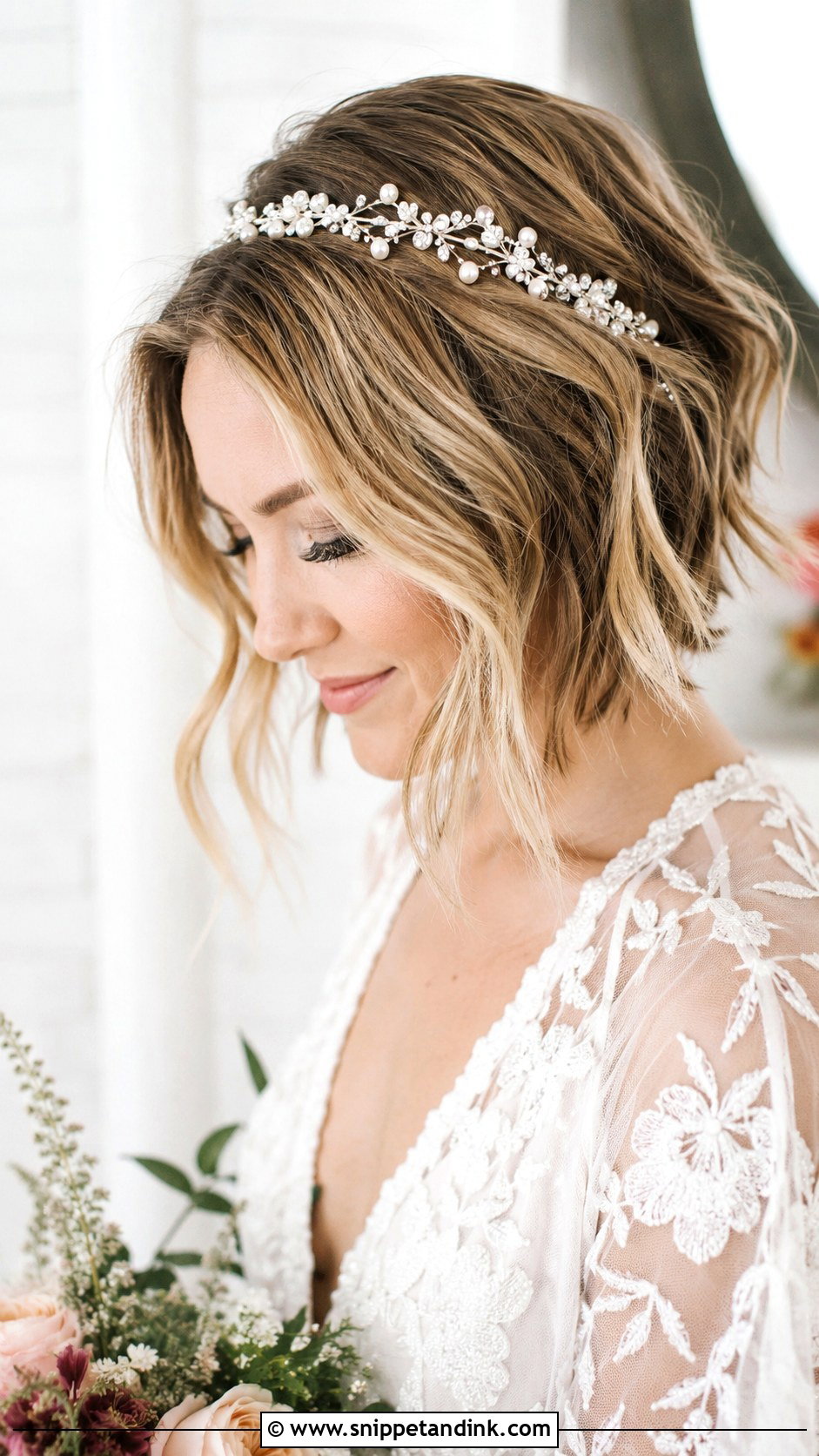
A boho headband does most of the work on short hair, so what sits underneath can stay simple. Fit matters more than decoration. A band that’s slightly tight gives you a headache by the reception, and a loose one slides forward on fine hair, so I put two crossed bobby pins behind each ear under the band. Pearl or flower bands suit garden and beach weddings. Pair it with dewy skin rather than heavy matte makeup.
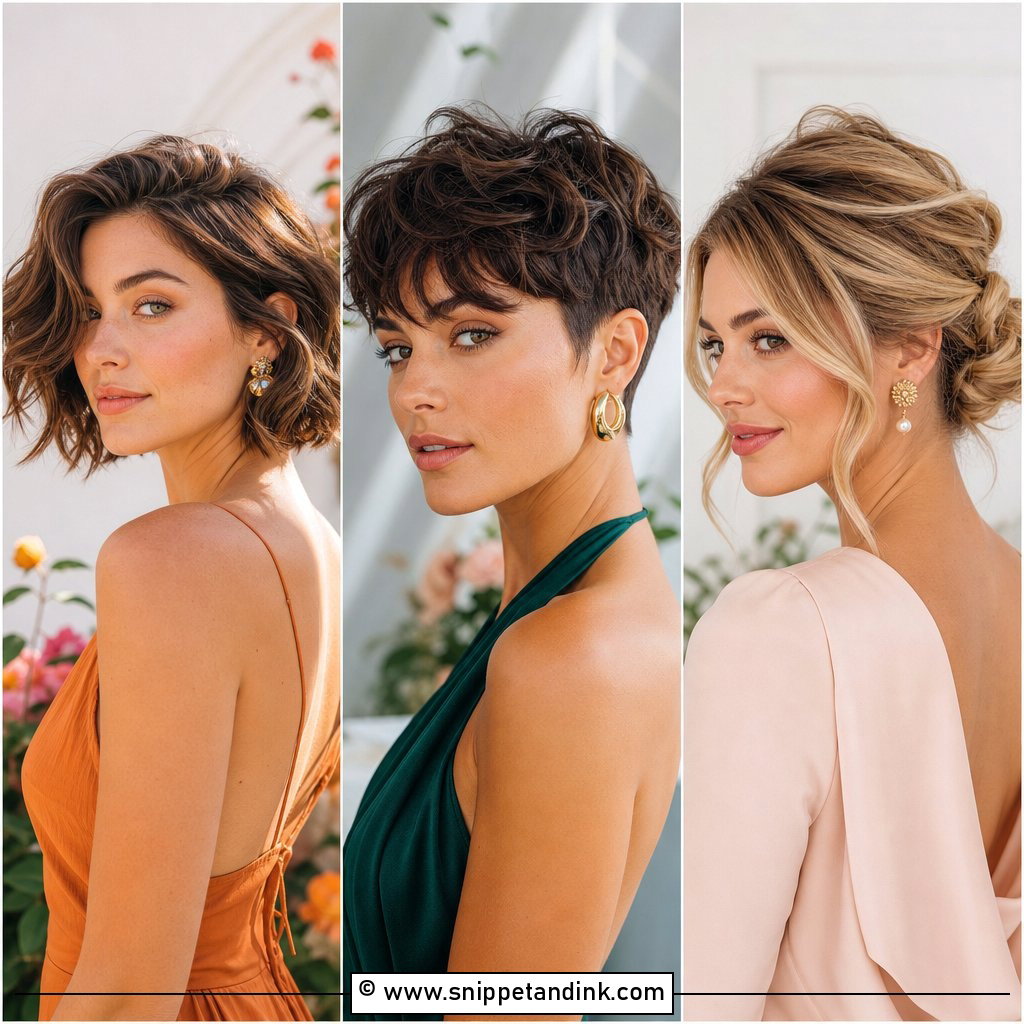
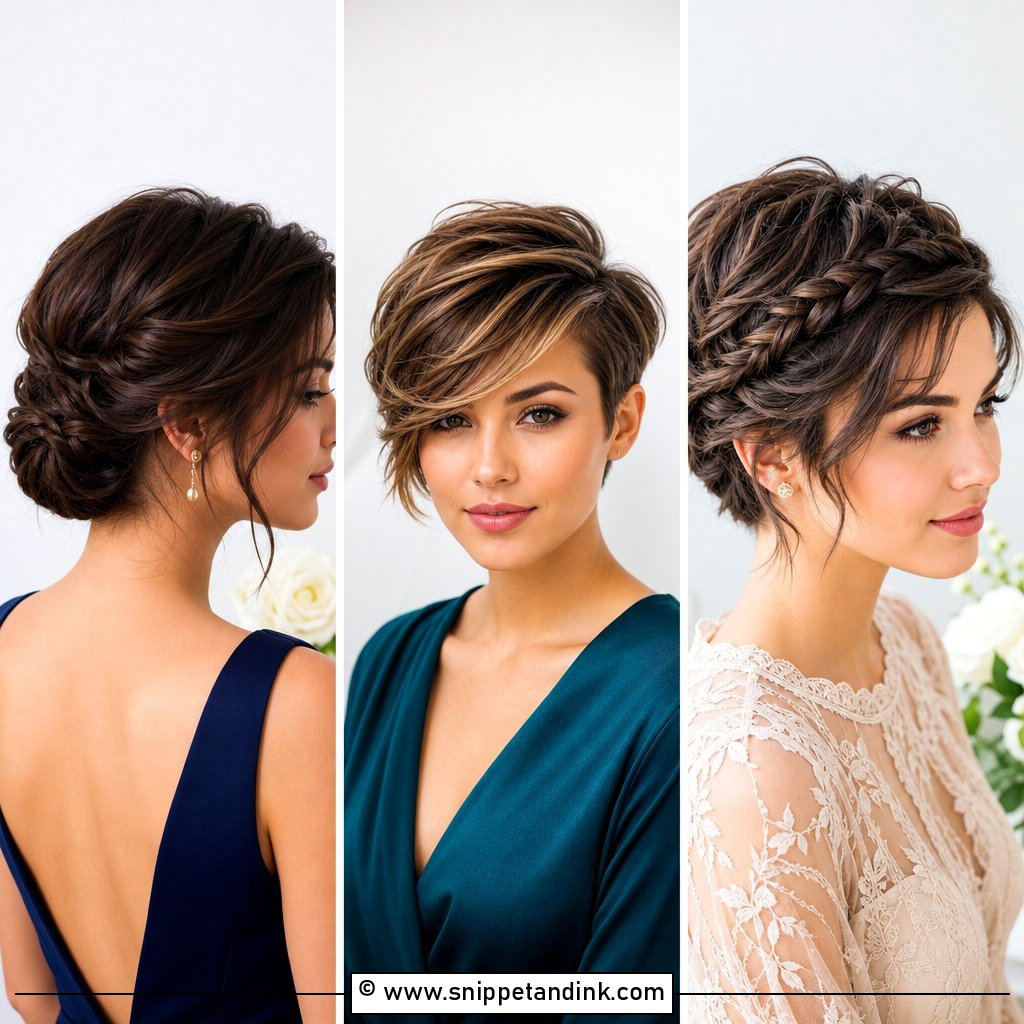
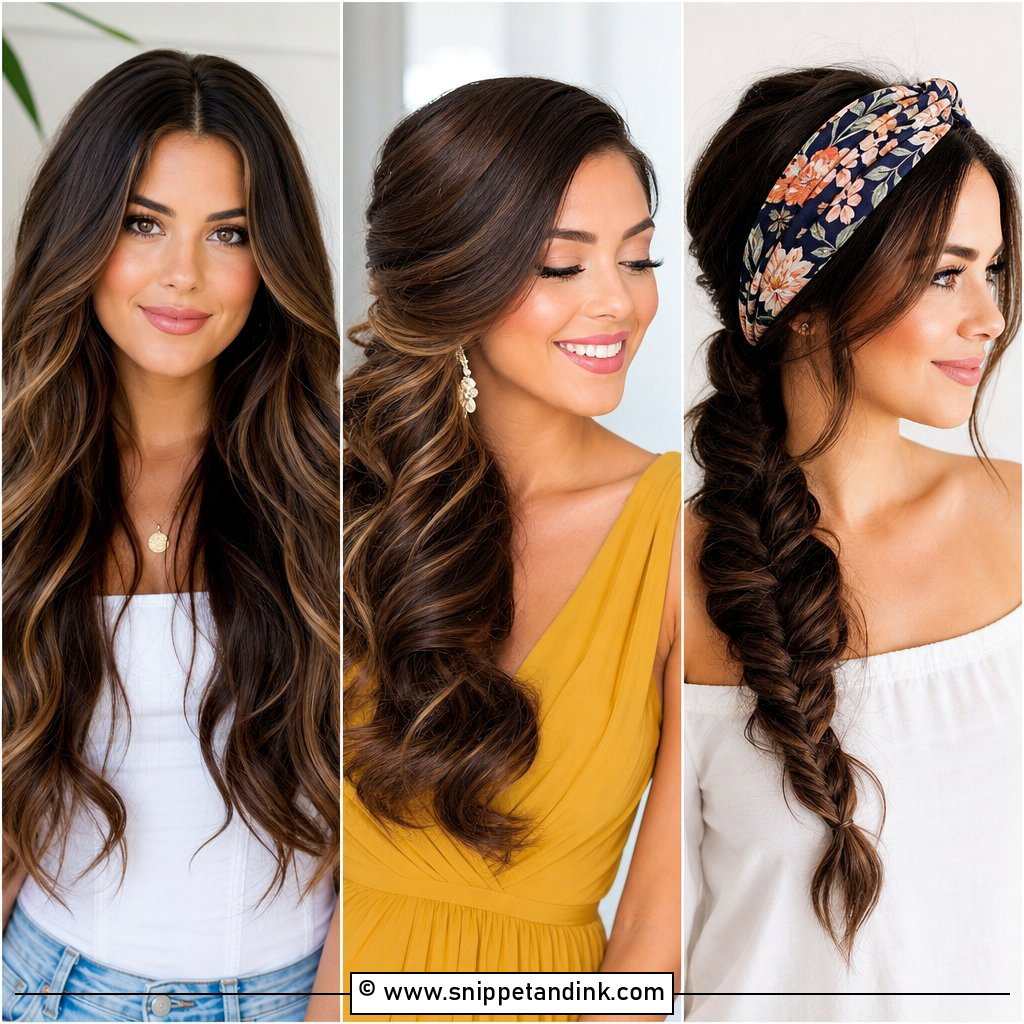
15. Chignon for Short Hair
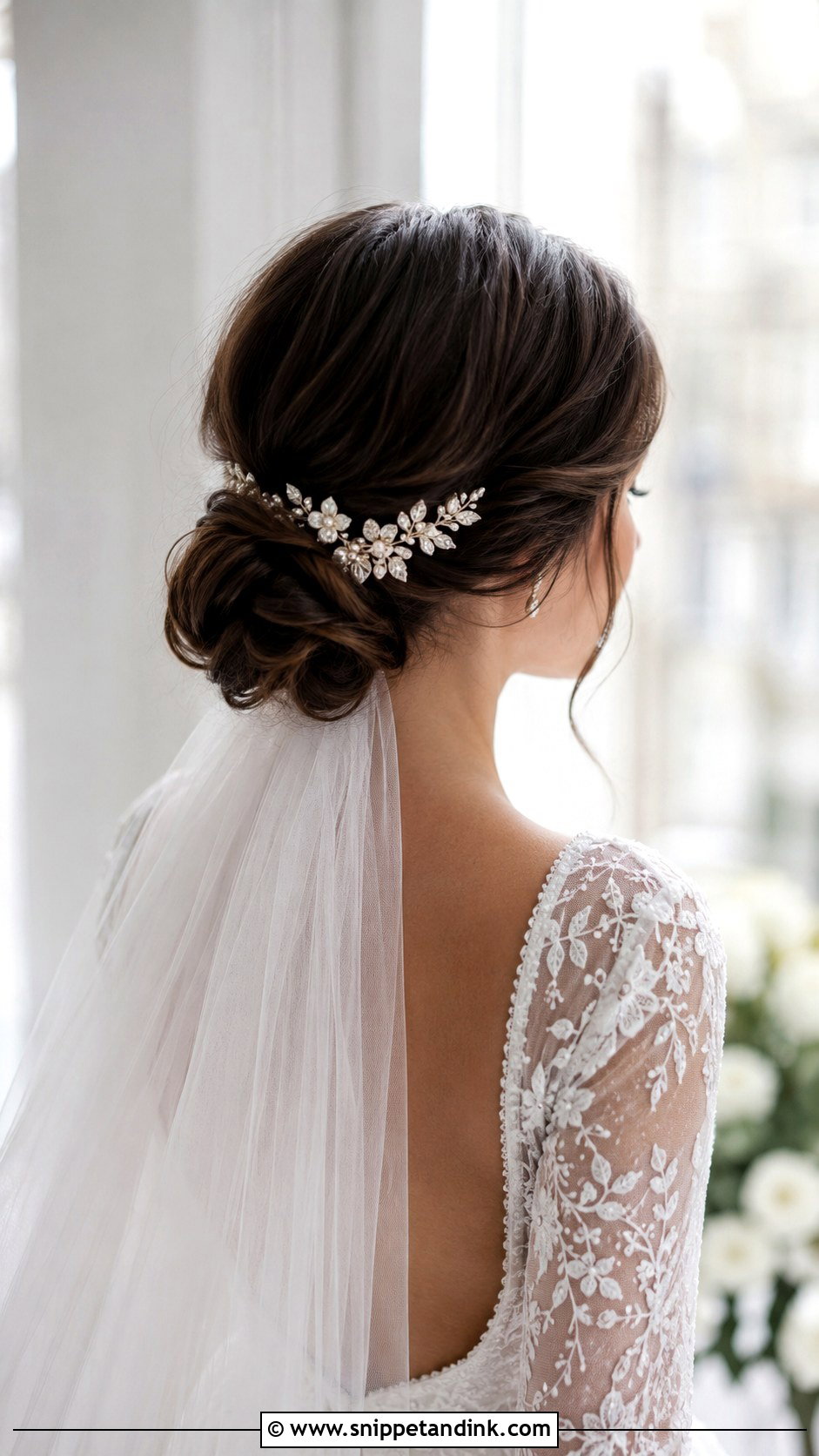
A chignon on short hair needs enough length to reach the nape when gathered. Shorter than that, and you’re really building a cluster of pinned curls, which is fine but different. I tease the crown slightly for height, gather everything low, loop it and pin through the loop into the base. If the loop looks thin, a small piece of padding in your hair color fills it out. A few tendrils at the front soften it, and the base is where I’d fix a veil comb.
16. Wavy Lob with Center Part
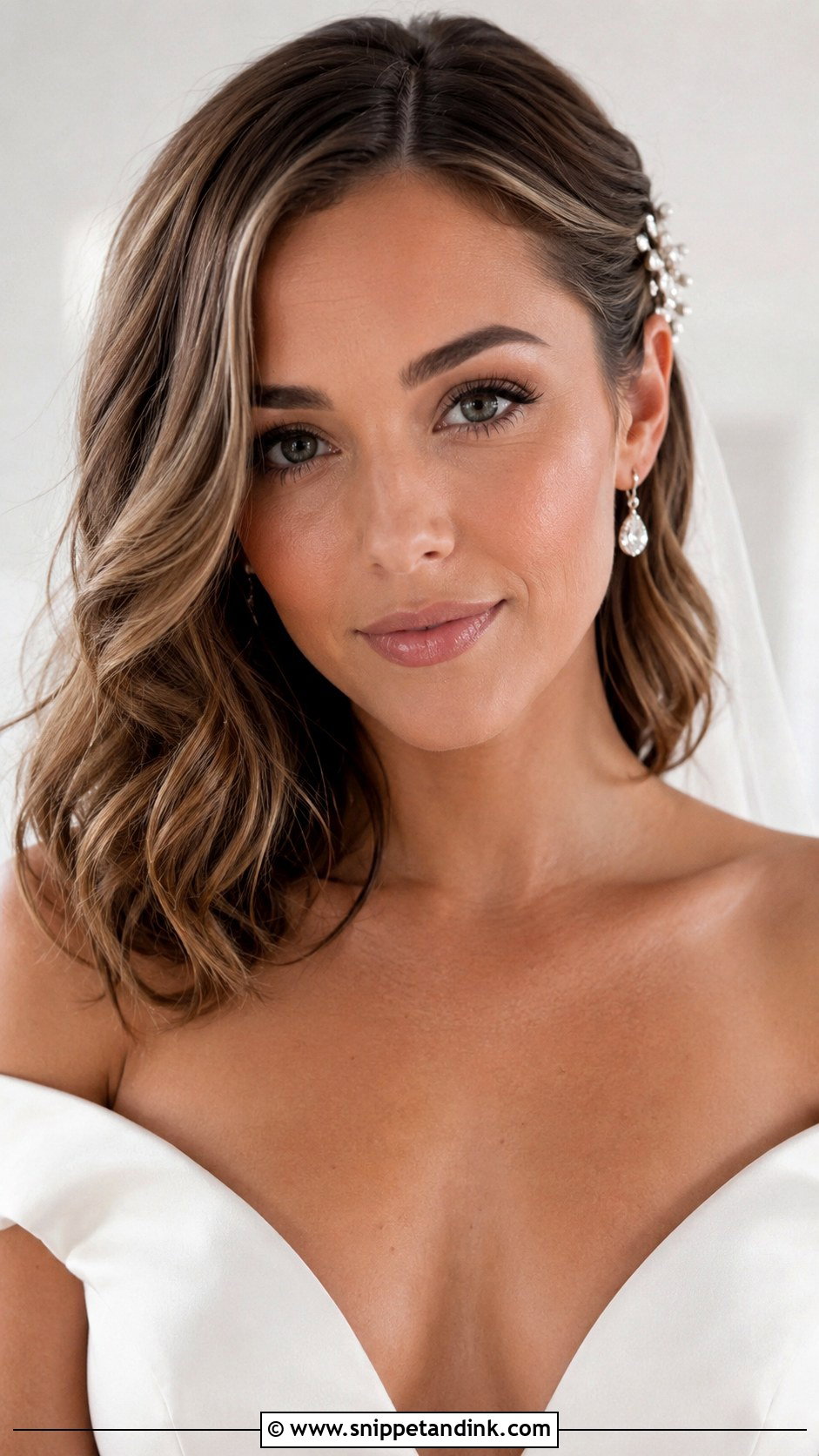
A lob is long enough to give real movement. I add loose, beachy waves with a large barrel, leave the ends straight, and use texturizing spray instead of hairspray so it still swings. A center part looks balanced on most oval and long faces; on rounder faces I sometimes nudge it slightly off-center. It sits halfway between hair down and an updo, and it’s what I suggest if you’d rather nothing is pinned up at all.
17. Twisted Pixie Cut
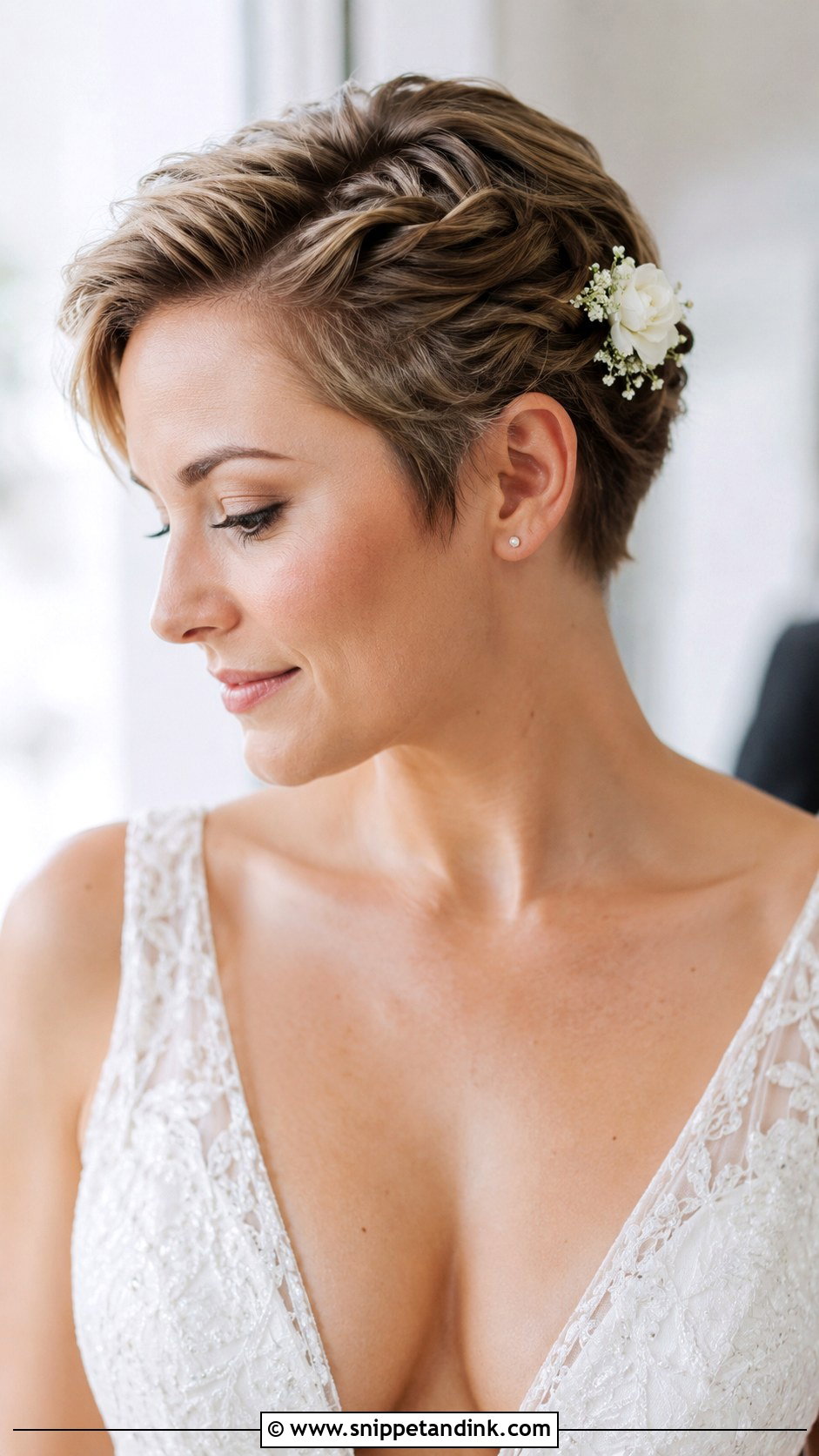
Small twists give a pixie detail without adding bulk. I take narrow sections along the sides, twist them back toward the crown, and hide each pin under the next twist. Pixies with an inch and a half or more on top twist best, while very short clipper-cut sides won’t hold a twist at all. One flower or delicate pin where the twists meet is plenty. It’s a quiet change, but in photos it reads as deliberately styled.
18. Slicked-Back Short Hair
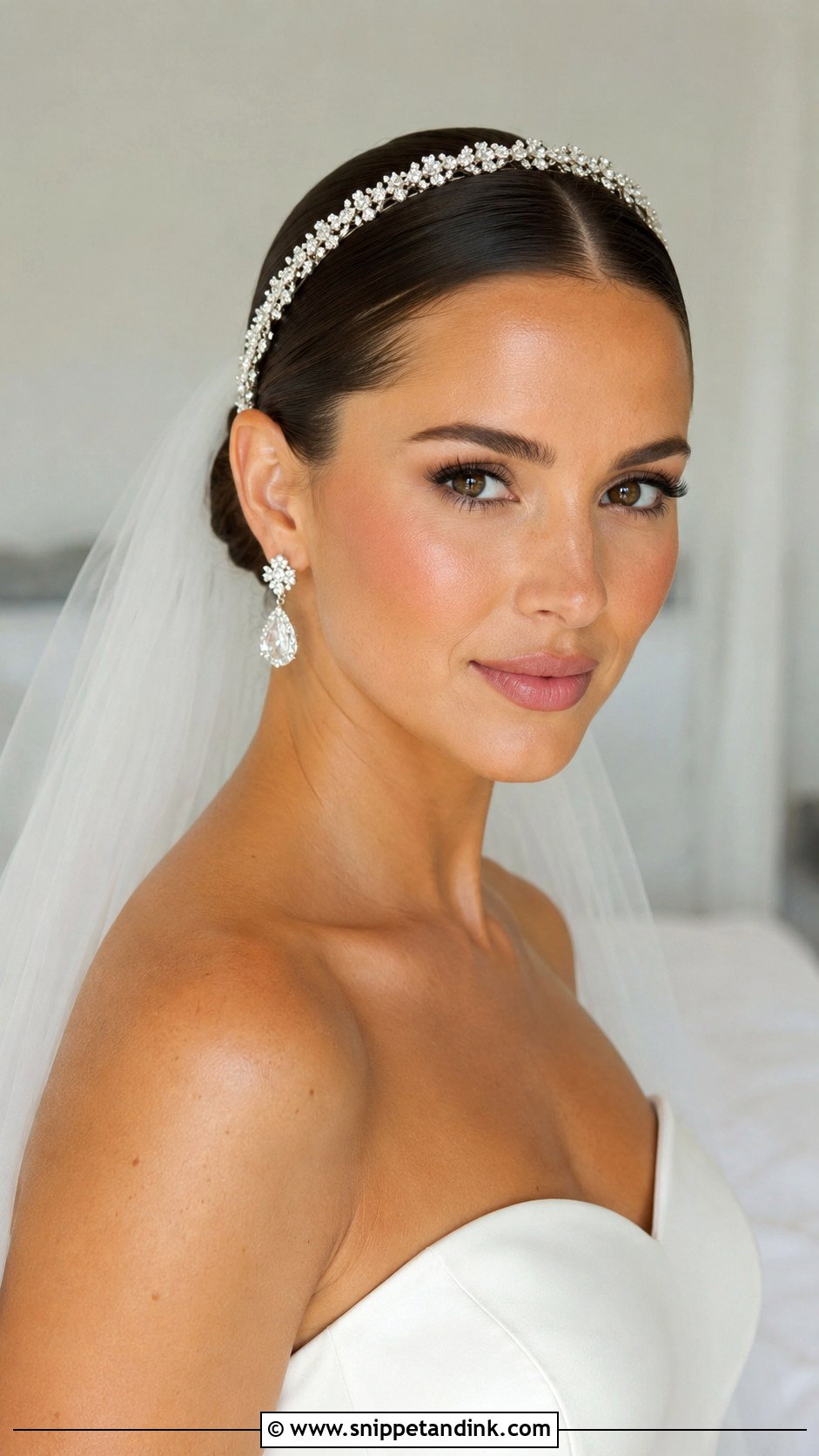
Slicked-back hair looks simple and is surprisingly technical. I apply gel to damp hair, comb it back with a fine comb, then blow-dry on low with the nozzle pointing backwards so the shape sets. Pomade on top adds shine. The catch is that a slick shows every cowlick and any patchy regrowth, so check your hairline in good light at the trial. With a jeweled headband and a minimal gown, it barely moves all night.
19. Romantic Updo with Tendrils
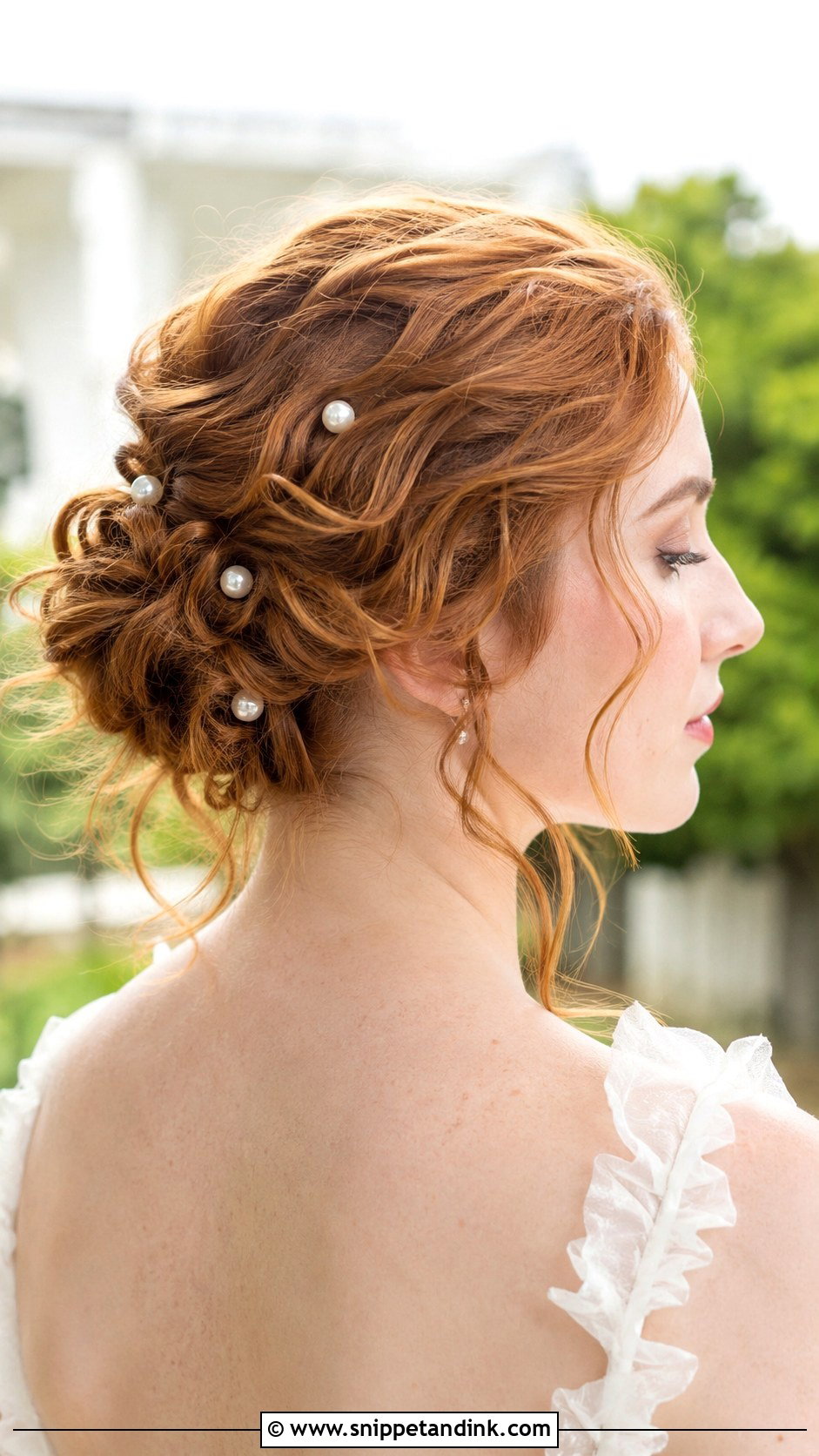
Tendrils are where most short updos go wrong. I pin the hair into a textured knot first, then pull out only two or three pieces on each side and curl them separately; pull out too many and the updo looks like it’s falling down. Fine tendrils flatten in humidity within a couple of hours, so I curl them a little tighter than they’ll end up. Pearl pins or tiny flowers in the knot add detail without weight.
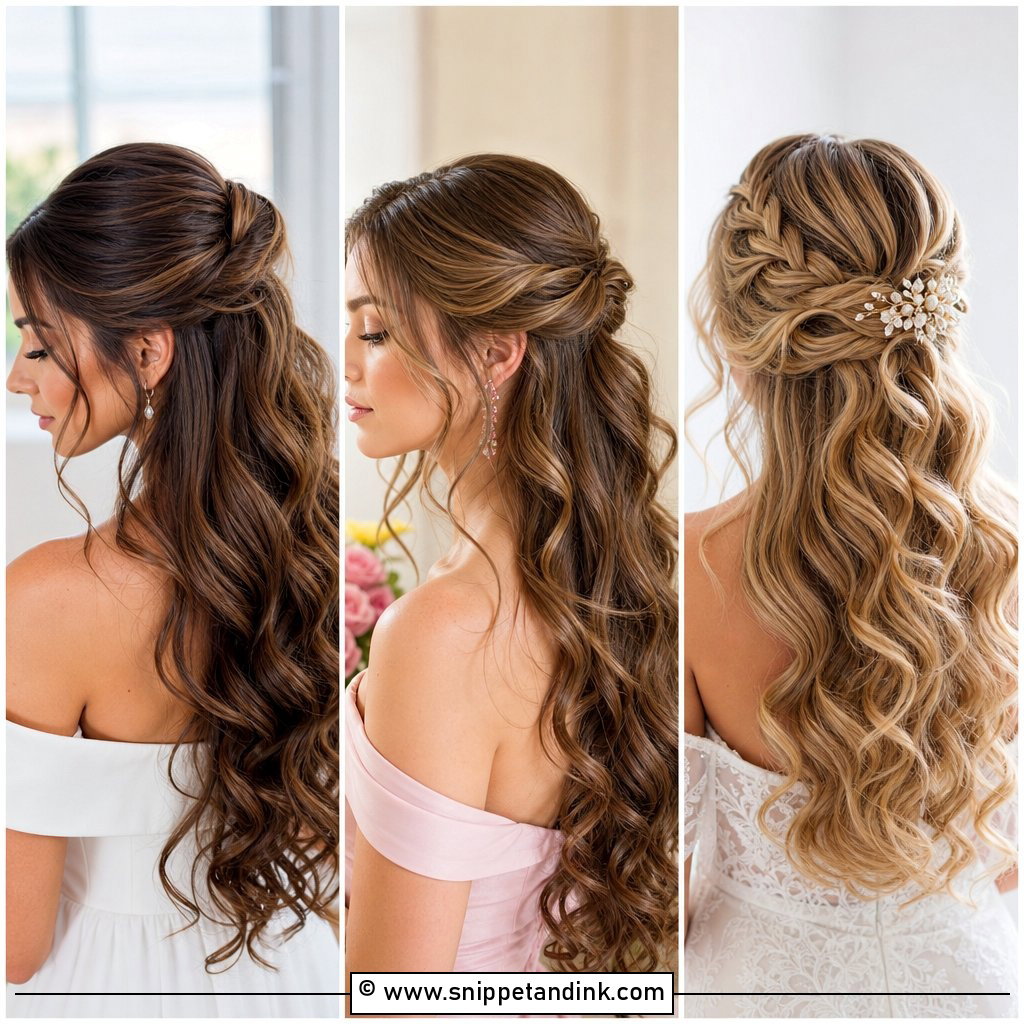
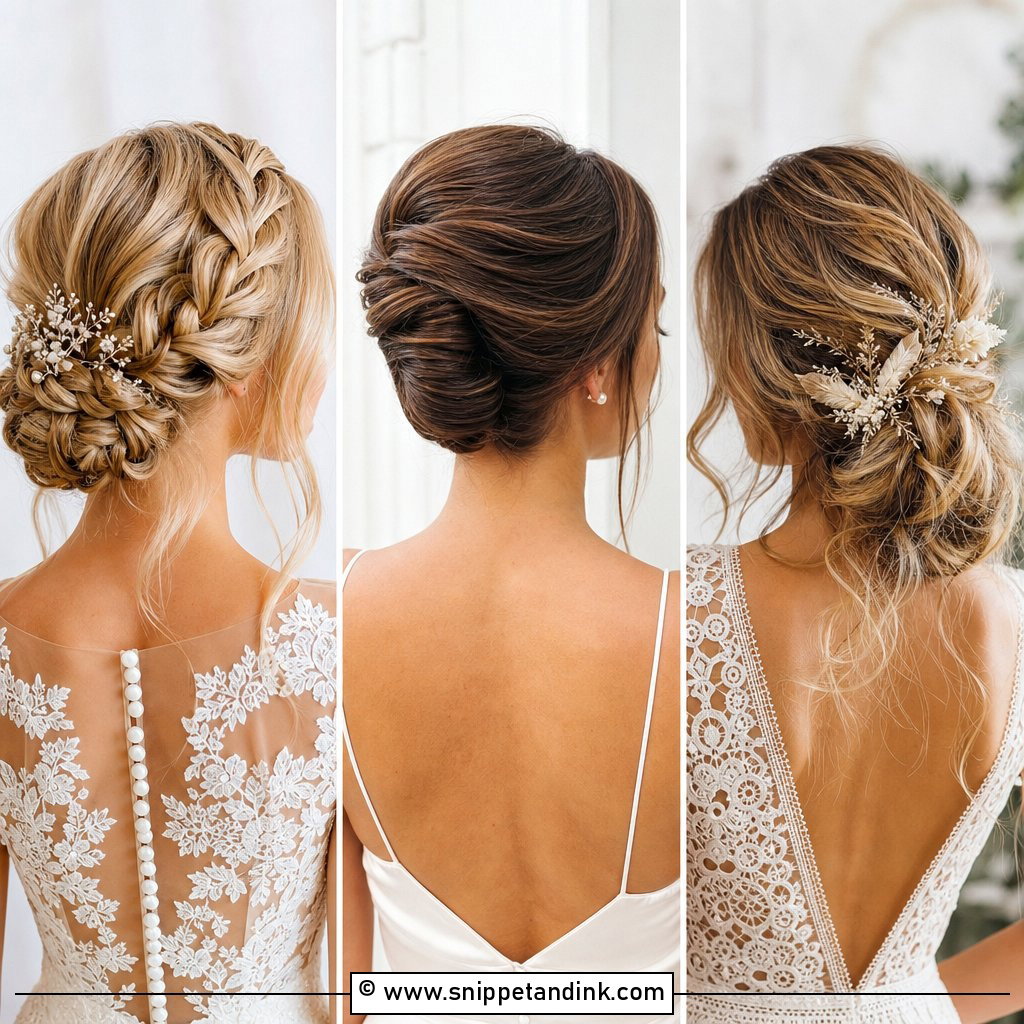
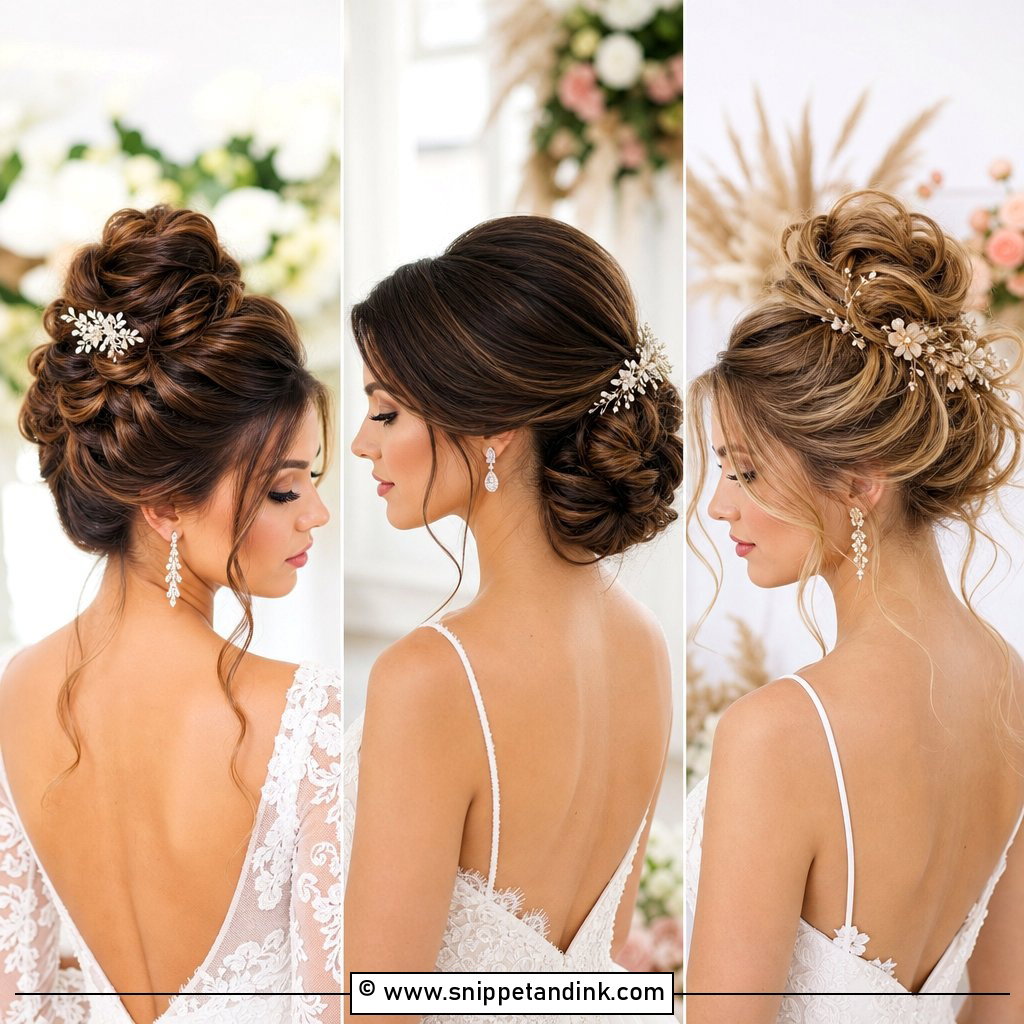
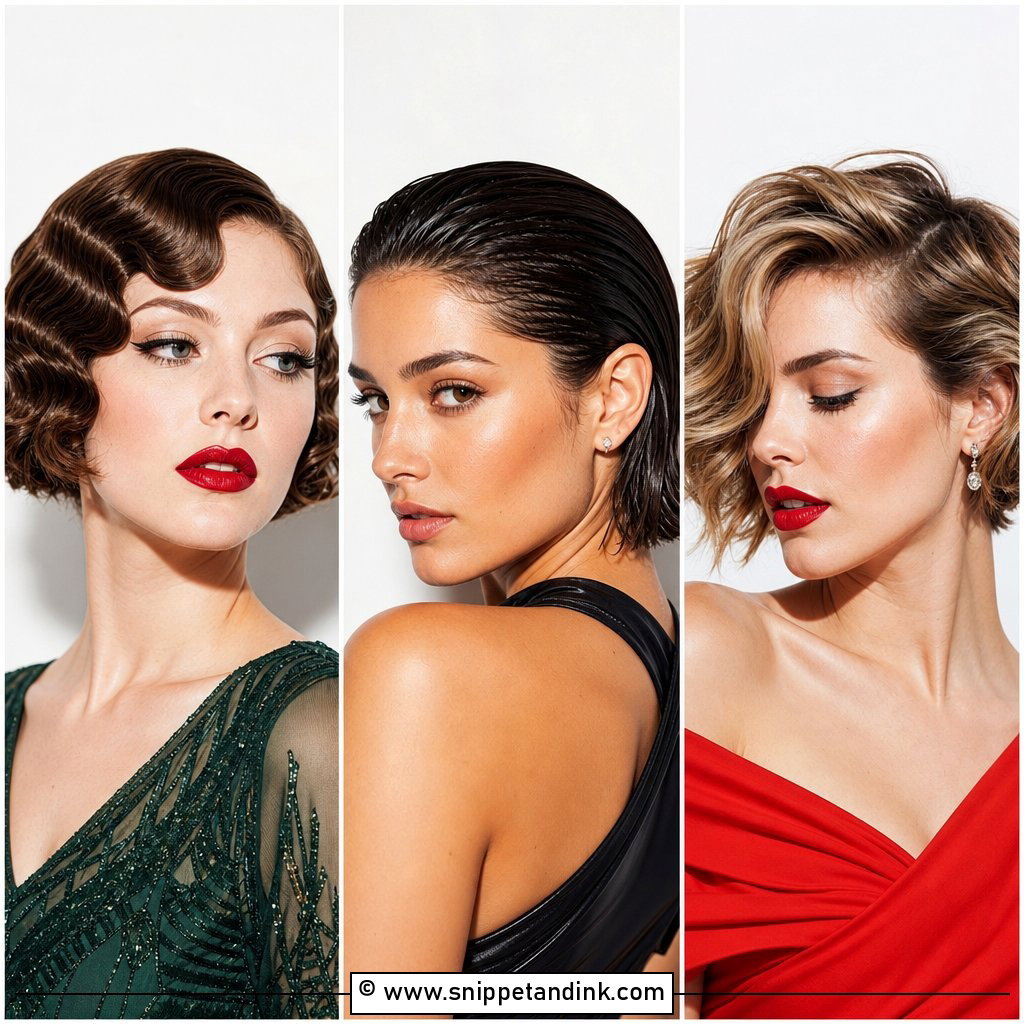
20. Bob with Pearl Hairpins
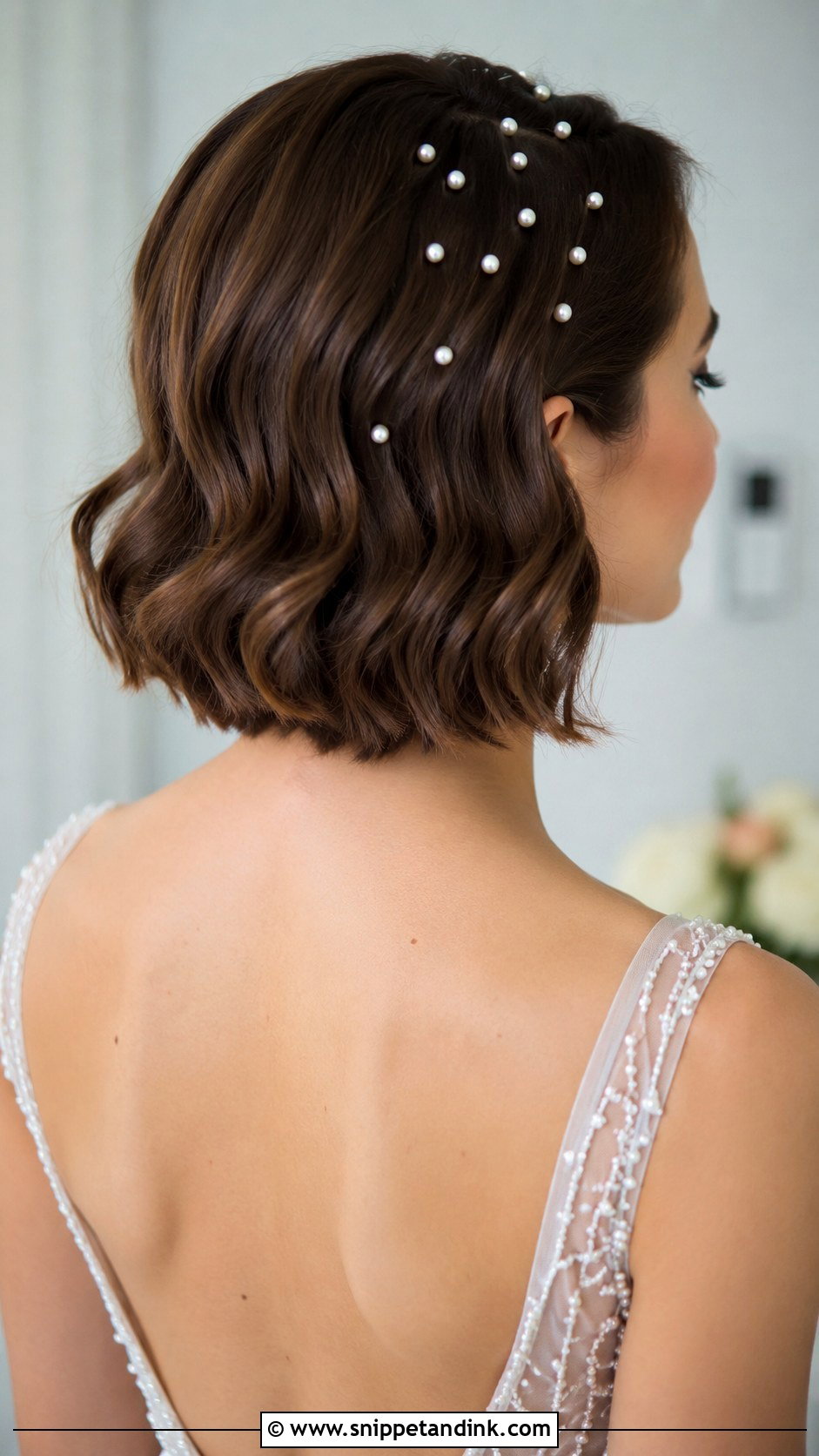
Pearl hairpins are what I reach for when a bride wants her everyday bob, only more finished. I scatter them along one side or near the part. Pearls are heavier than crystals, so each one needs a locked bobby pin underneath or it drifts down by evening. They suit classic gowns and smaller jewelry, and they’re inexpensive. Keep the hair smooth so the pearls read clearly.
21. Curly Bob with Volume
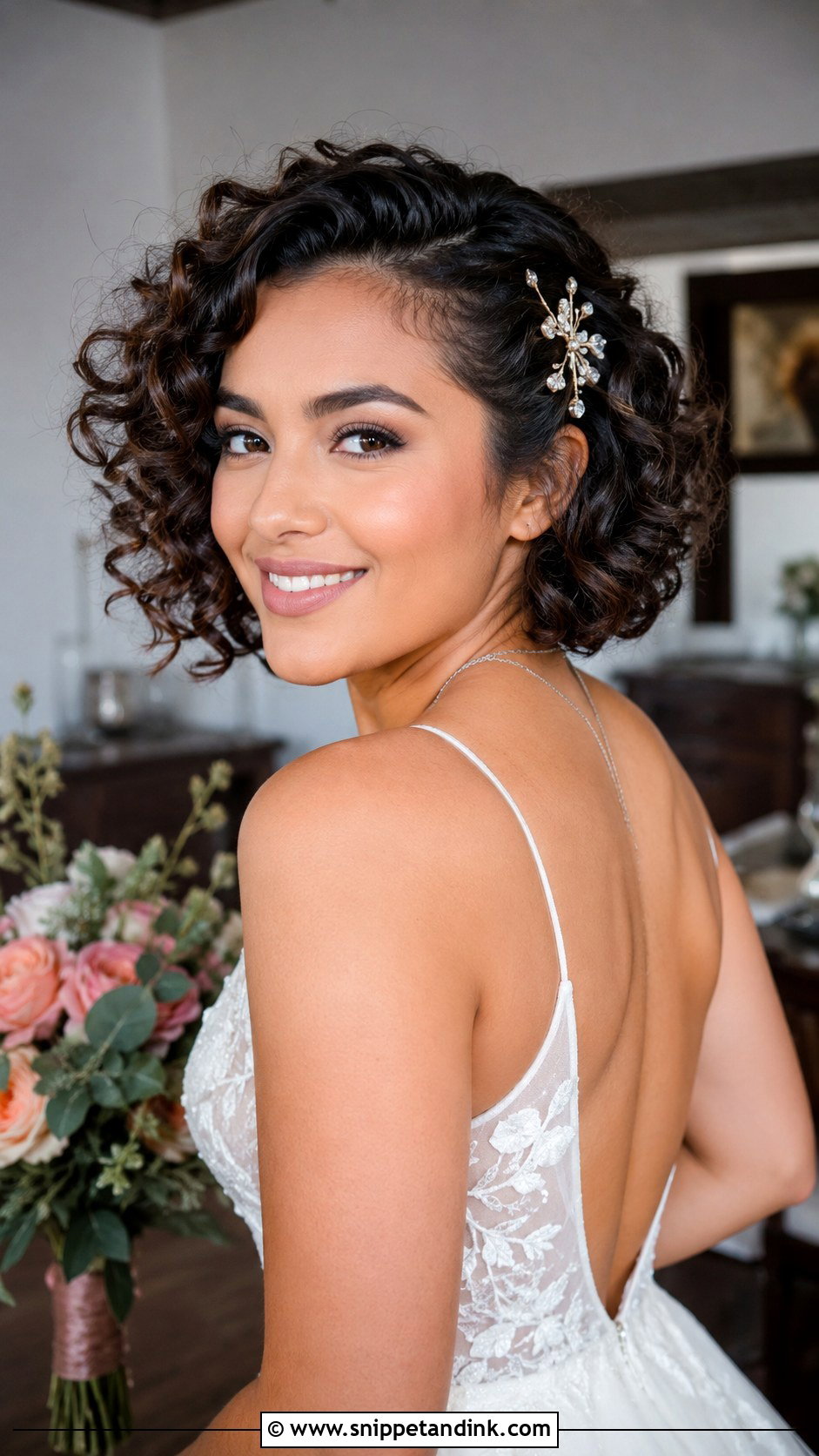
Natural curls on a bob shouldn’t be fought. I diffuse on low heat with a light cream and don’t touch the curls while they dry, since handling is where frizz starts. If a few curls need reshaping, I wrap them around a finger with a little gel instead of restyling the whole head. Volume changes over a day, and curls usually expand in humid air, so pick an accessory that still fits if the shape grows. A pin or a small flower nests neatly inside the curl pattern.
22. Faux Bob for Wedding
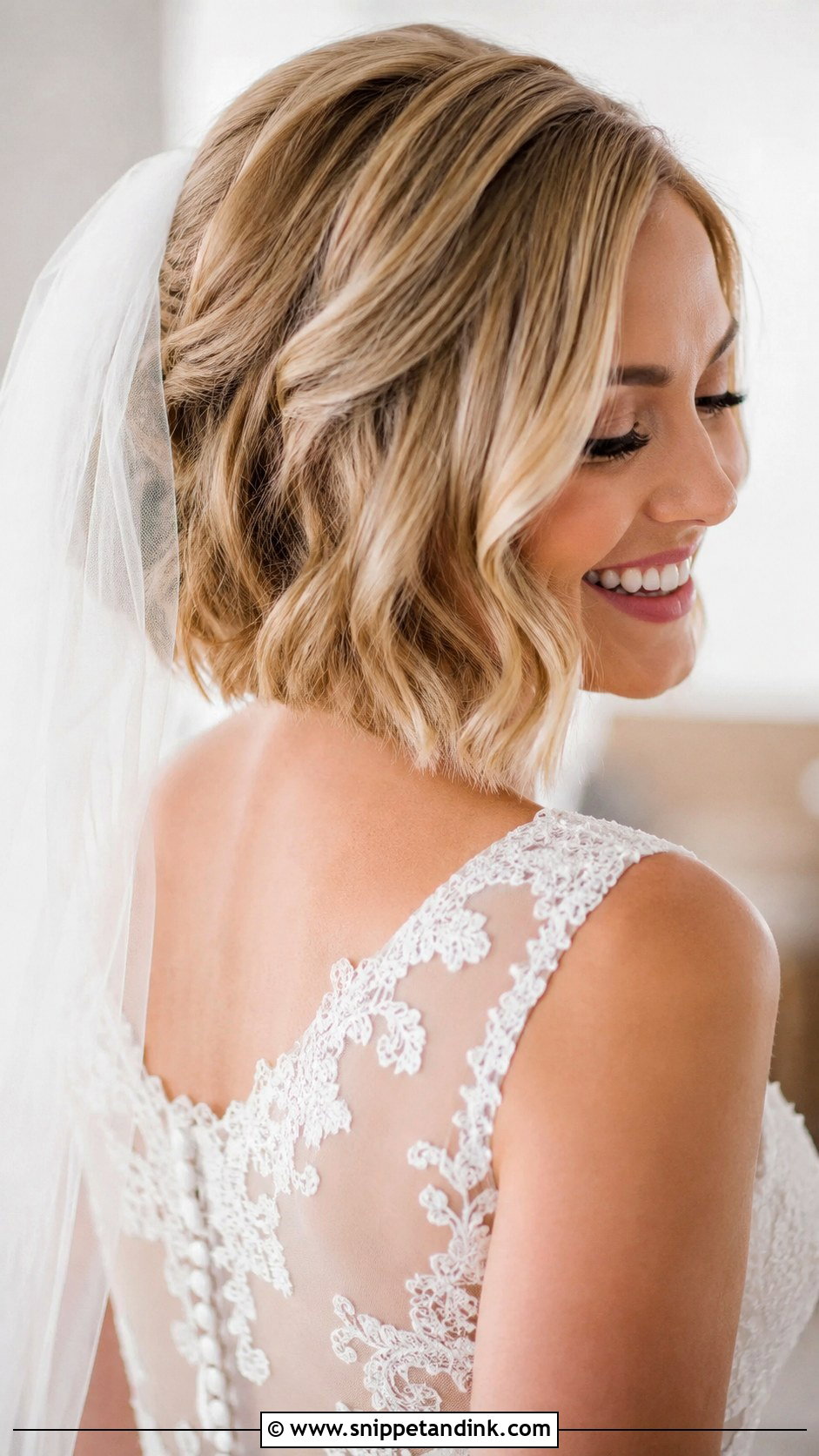
A faux bob is for longer hair, which is why it earns a spot on a short-hair list. I curl everything, roll the lengths under at the nape and pin them up toward the hairline so the shape ends around the jaw. It needs a lot of pins and at least shoulder-length hair; very thick hair can look bulky at the back. If you’re debating a real cut before the wedding, try this at a trial first and see whether you actually like yourself shorter.
23. Wet-Look Short Hair
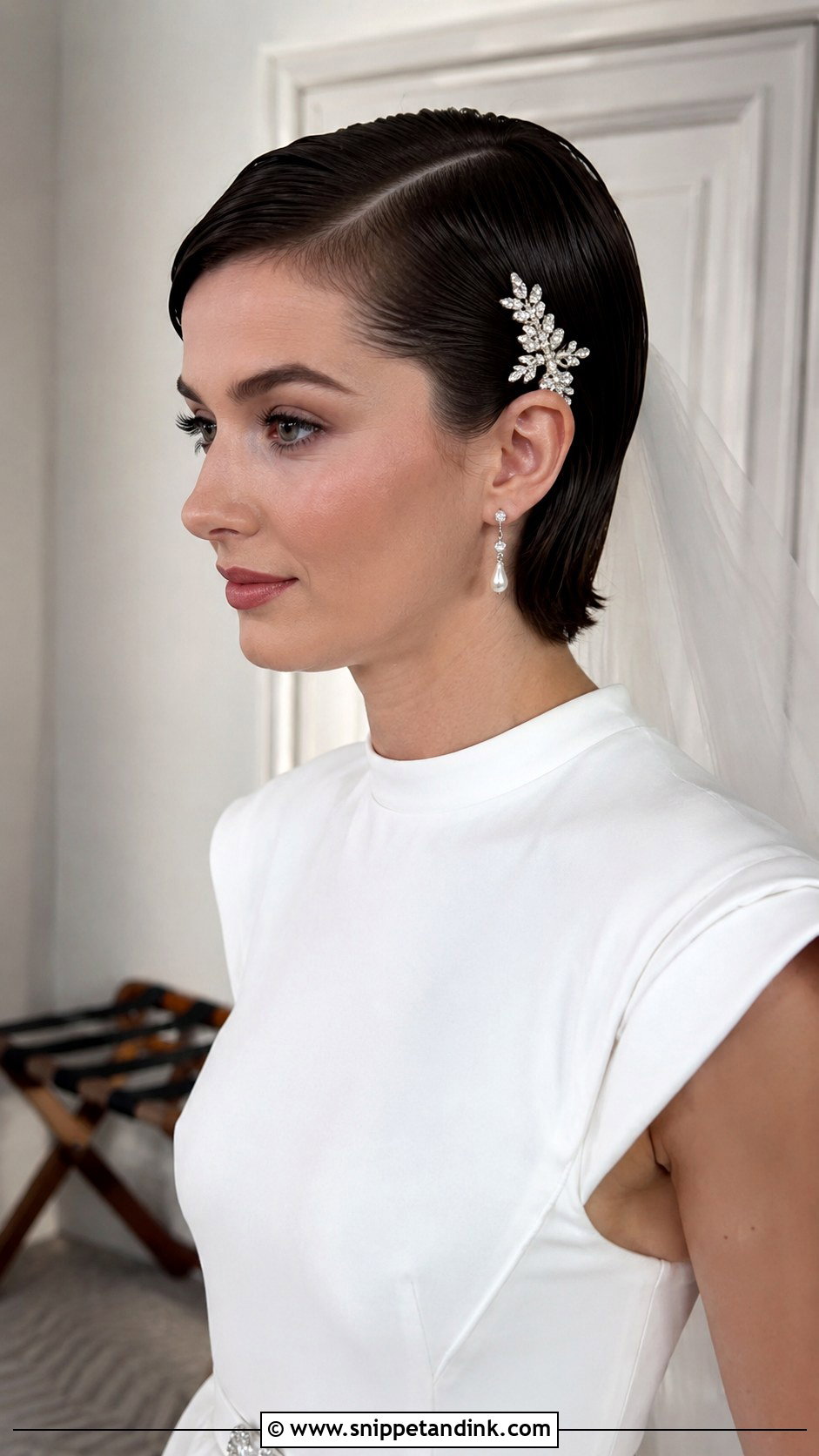
The wet look is gloss over structure. I comb a strong gel through damp hair in the direction it should sit, then finish with shine spray or a drop of oil so it doesn’t dry matte. It suits pixies and sleek bobs, a structured gown and a jeweled pin. Gel can flake over many hours if it goes on in one thick layer, so I build it in thin coats. I’d skip it for a hot outdoor ceremony, where sweat at the hairline breaks the finish.
24. Short Hair with Birdcage Veil
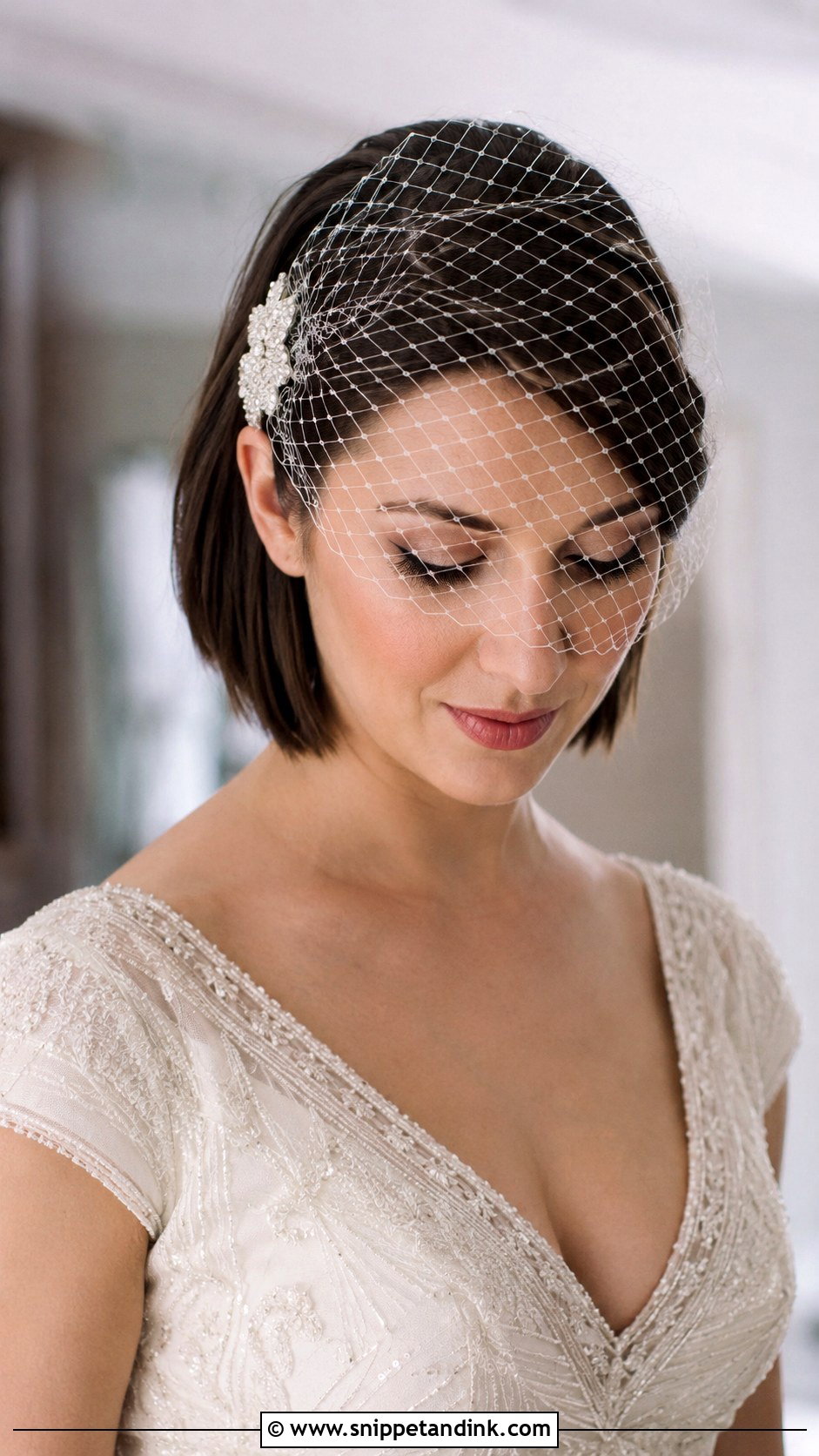
A birdcage veil was made for short hair; on long hair the little netted shape tends to get lost. I attach it with the comb sewn onto it, sliding the comb in against the direction of the hair over two crossed bobby pins so it doesn’t rotate when you turn your head. Finger waves or pin curls underneath suit the vintage feel. Check it at the trial with your lashes on, as netting that sits close to the eyes can catch on long falsies.
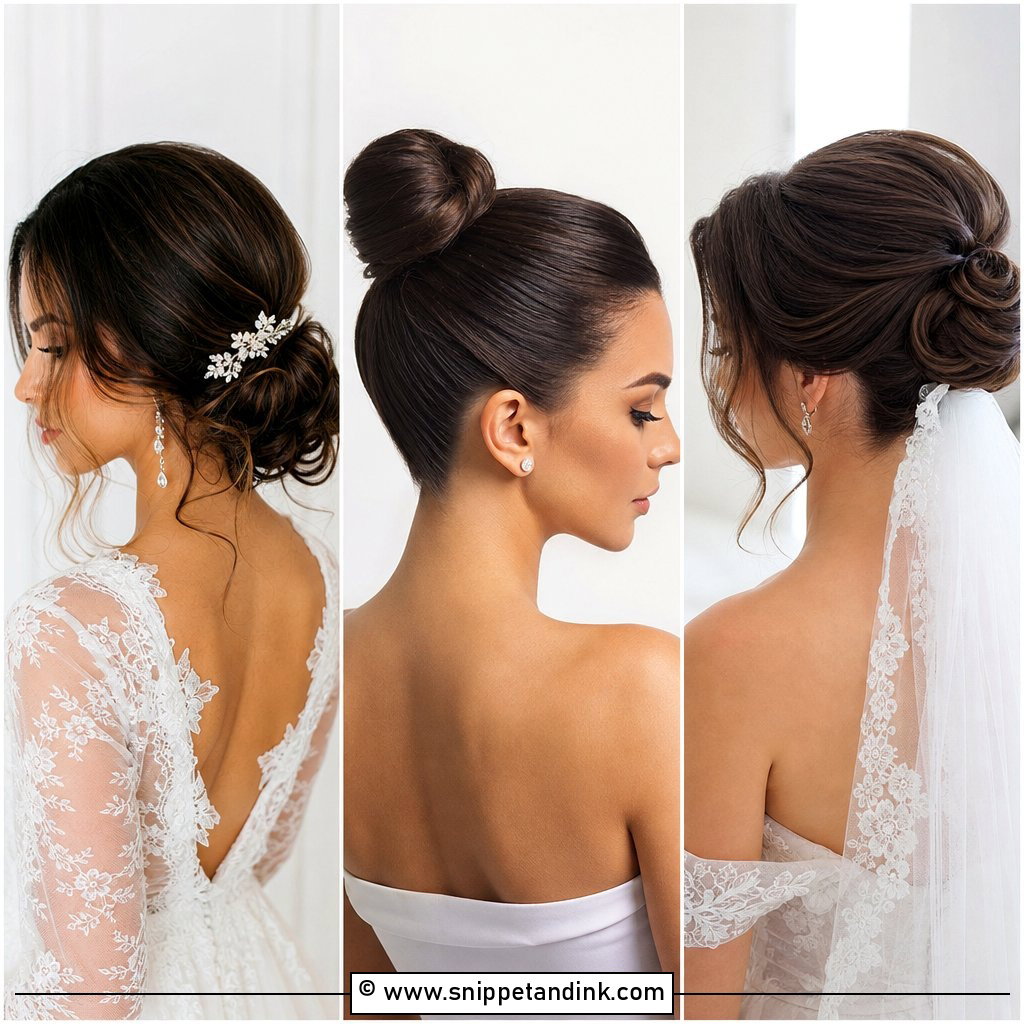
25. Textured Crop with Flowers
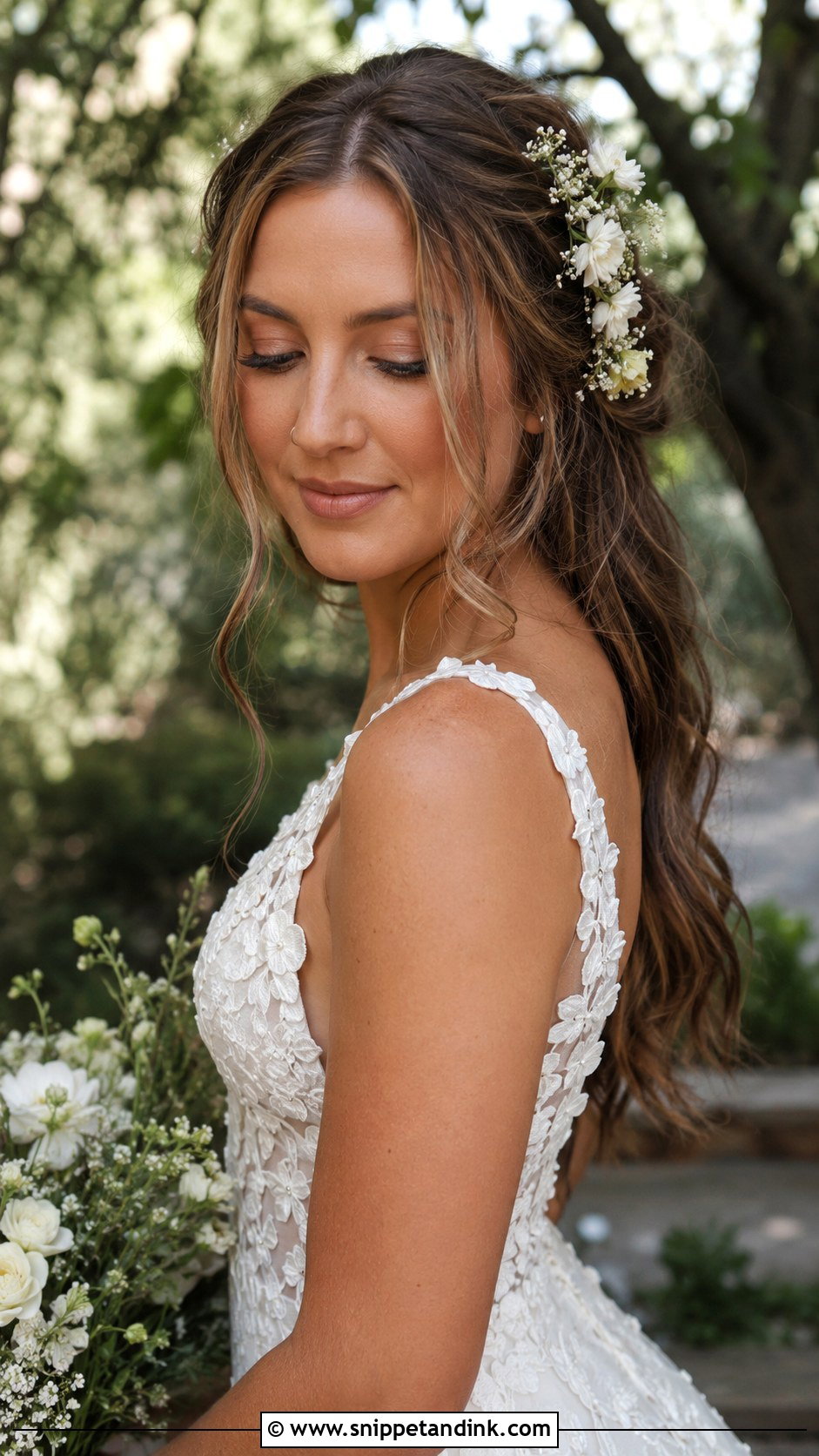
Flowers on a textured crop need somewhere to sit. I build a little piecey texture with pomade, then pin small blooms in a curved line along one side, wiring each stem or fixing it to a bobby pin first. Pick sturdy small flowers that already appear in your bouquet. The texture keeps it relaxed and the flowers make it bridal, and it’s easy to refresh in the evening by swapping out one tired stem.
Pins Slide Out of Short Hair Unless You Build a Base
The most common short-hair problem I see on the day isn’t the style dropping. It’s accessories migrating. Short hair gives a pin very little length to grip, and silky, freshly washed hair is the worst of all. So before any decorative piece goes in, I mist a little dry shampoo or texture spray at the roots and cross two bobby pins in an X exactly where the accessory will sit. The comb or jeweled pin then slides through that X and stays.
Veils, hugs and a humid reception
Pixies and bobs fail in different ways. A pixie gets pressed flat at the crown under a veil comb or after a long run of hugs, while a bob tends to frizz at the ends once the room warms up. A tiny kit in your bag fixes most of it.
- A travel-size flexible hairspray
- A pea-sized pot of the same pomade or cream used that morning
- Four or five bobby pins in your hair color
- A small comb for resetting your part
If the veil comes off after the ceremony, ask your stylist to show you how. Pulling a comb straight out drags short hair with it. Slide it back out along the path it went in, then lift the crown with your fingertips.
Your Cut Already Does Half the Work
Short hair gives you a head start: it holds its shape, shows off your neckline and won’t collapse halfway through dinner. Take two or three of these ideas to your trial, wear your earrings and veil, and ask your stylist to tell you honestly which ones your cut can support. A good wave, a proper set or a few pins in the right places is usually all a short cut needs to be ready for the aisle.
You'll Like These Ideas:


Leave a Reply