
A South Indian bride’s face has a lot to stand next to: silk with heavy zari borders, layers of temple gold, strings of jasmine, and usually a start time well before sunrise. The makeup has to hold its own without fighting any of it. Which face is right for you depends on the hour of the muhurtham, the saree color, how much gold you’re wearing, your skin, and how dramatic you want the photos to feel. Some brides want the red lip and kohl their mothers wore; others would rather have dewy skin, peach cheeks and a soft nude. I’ve laid out both ends below, along with the in-between looks I build most often: classic ceremony faces, reception glam, pastel and gold saree pairings, and a pared-back natural face.

Running Your Trial Like the Real Muhurtham Morning
Most of the decisions below get easier after a proper trial, and a trial only helps if it copies the actual day. If your muhurtham falls at 6 or 7 in the morning, your artist may be starting on you at 3 or 4. I time the full face at the trial so the bride knows exactly when to set the alarm, and so I know whether hair and makeup can run side by side.
Bring more than a photo of the saree. Bring the saree itself, or at least the pallu, plus the main necklace set and the earrings. Zari reads very differently against skin in person than on a phone screen, and a lipstick that looked rich on its own can turn orange next to a mustard border.
- Wear the blouse neckline you’ll actually have, so I can blend the base down onto the neck and chest where the jewelry sits.
- Photograph the finished face by a window, under a warm indoor bulb, and once with flash. Flash is where a shade that’s too light, or an SPF-heavy base, shows up as a pale cast.
- Keep the makeup on for four or five hours afterward and check it at midday. Note where it creases, where it shines and what has faded.
- Count your outfit changes, so we can plan whether the reception needs a fresh face or just deeper eyes and a new lip.
If the trial makes you feel like someone else, say so in the chair. Toning down a liner or swapping a lip is easy at the trial and stressful at dawn on the wedding morning.
1. Traditional South Indian Wedding Makeup
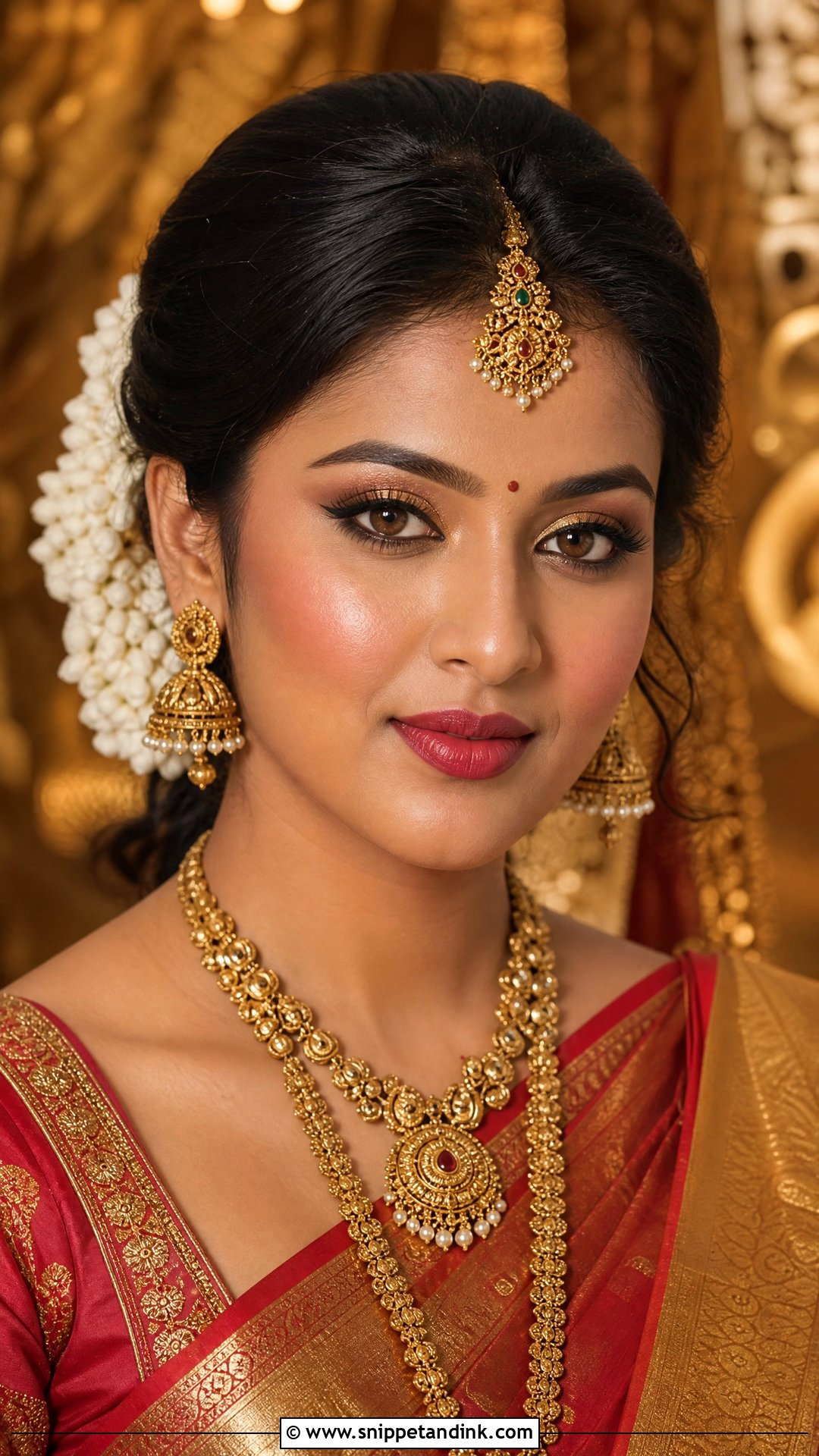
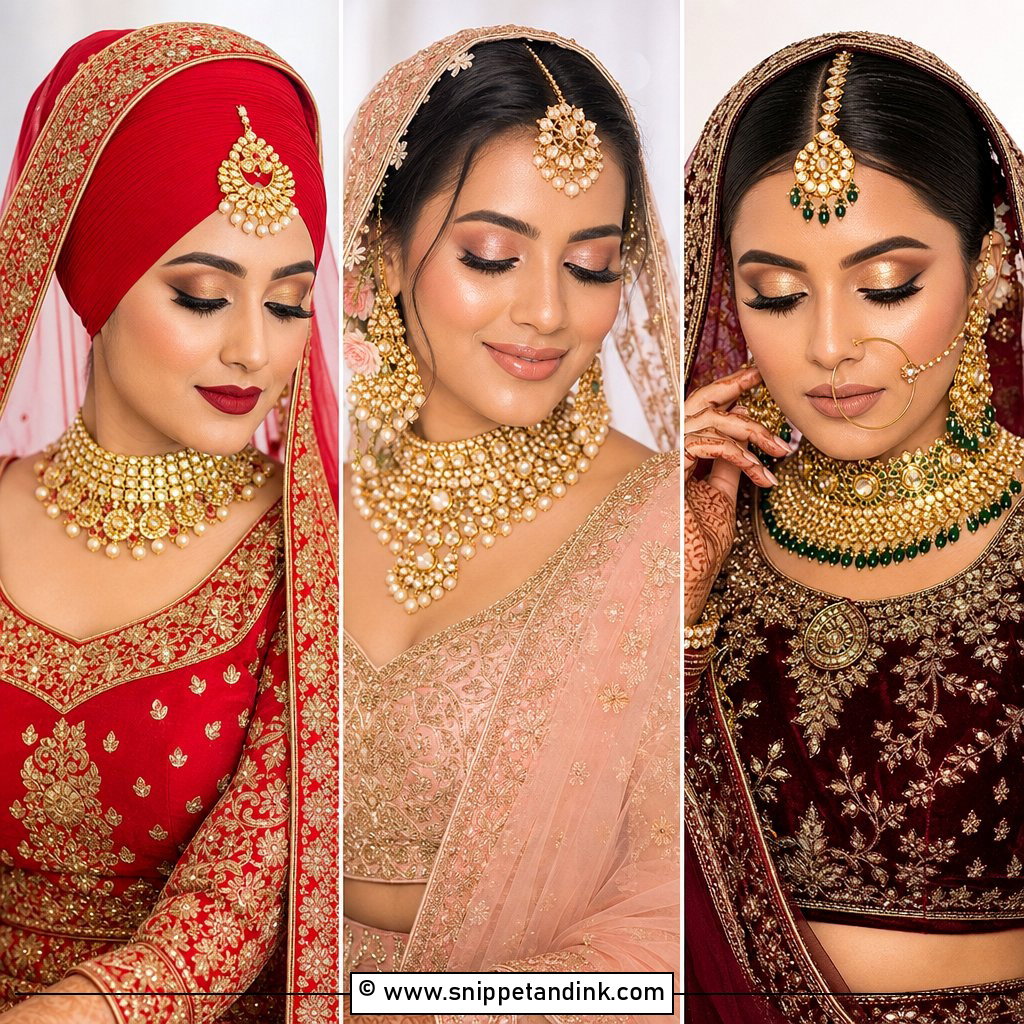
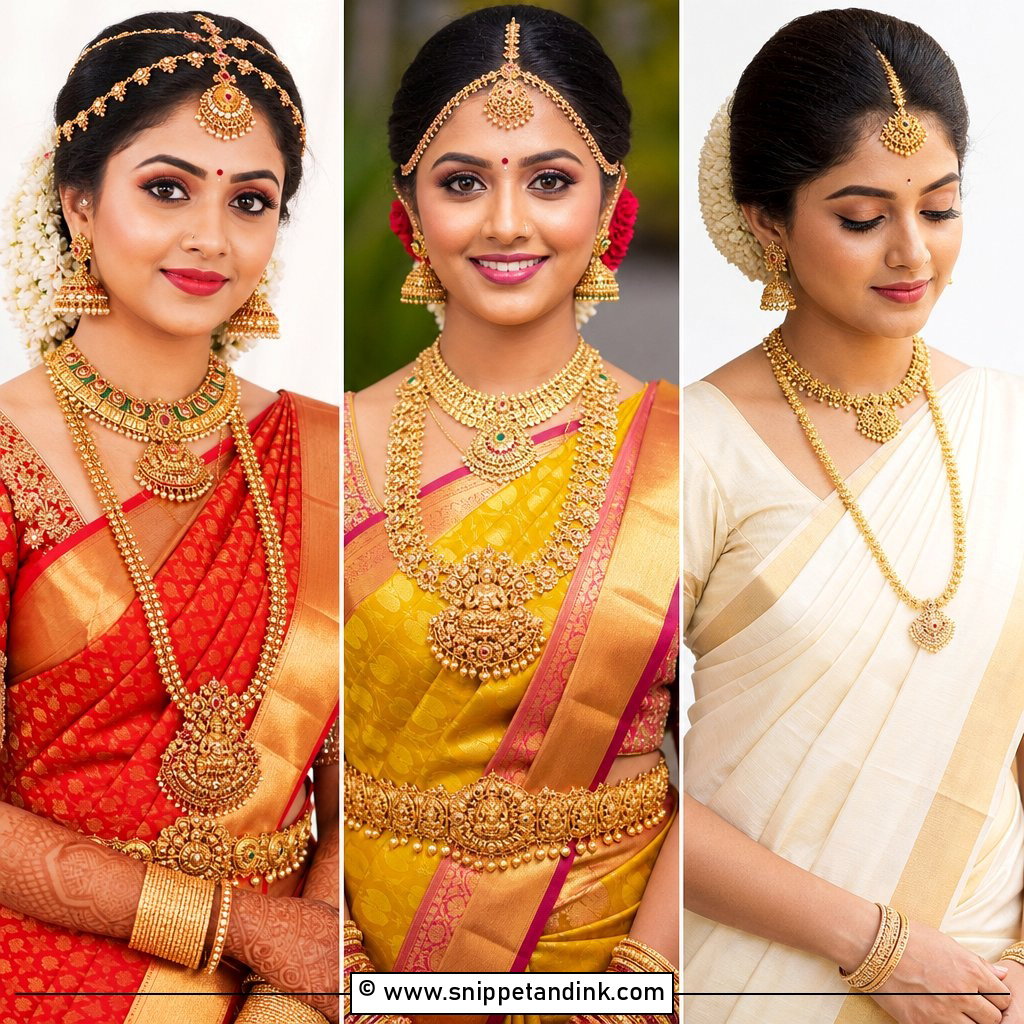
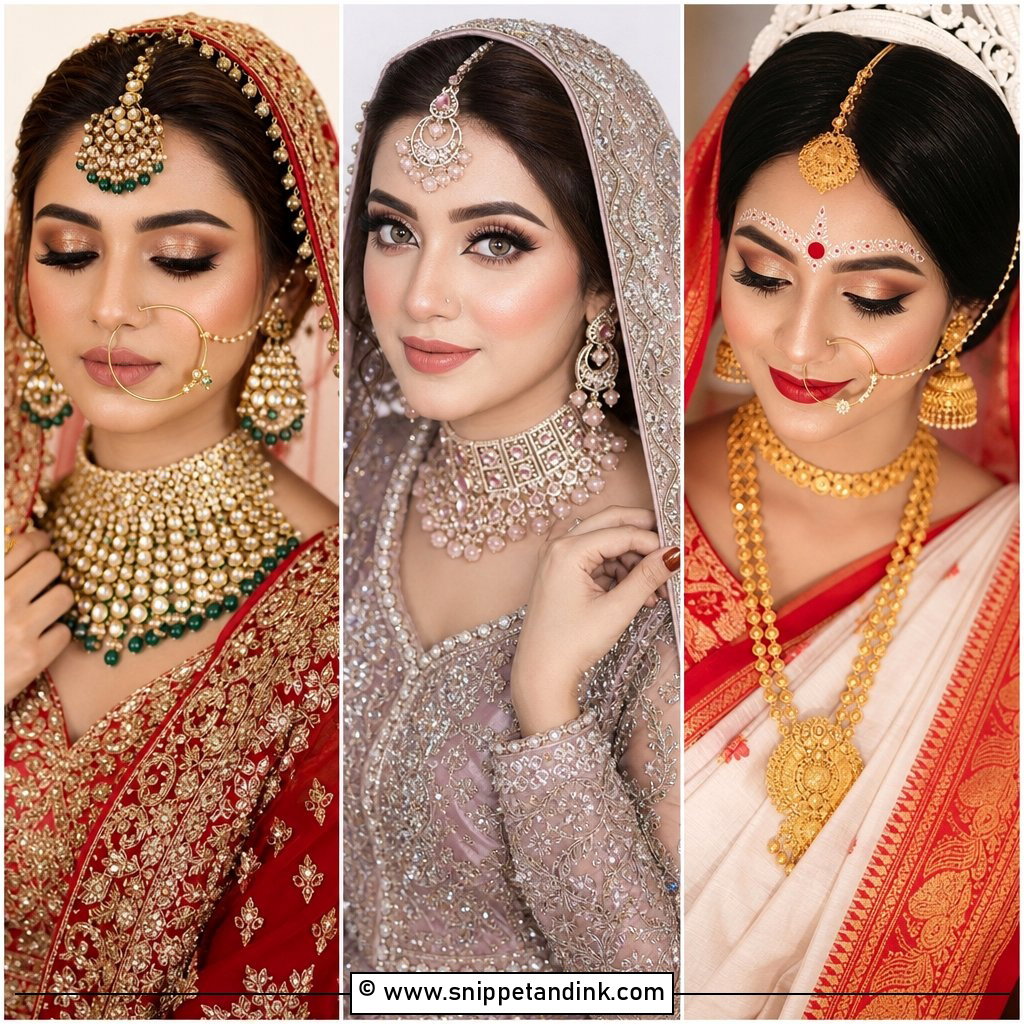
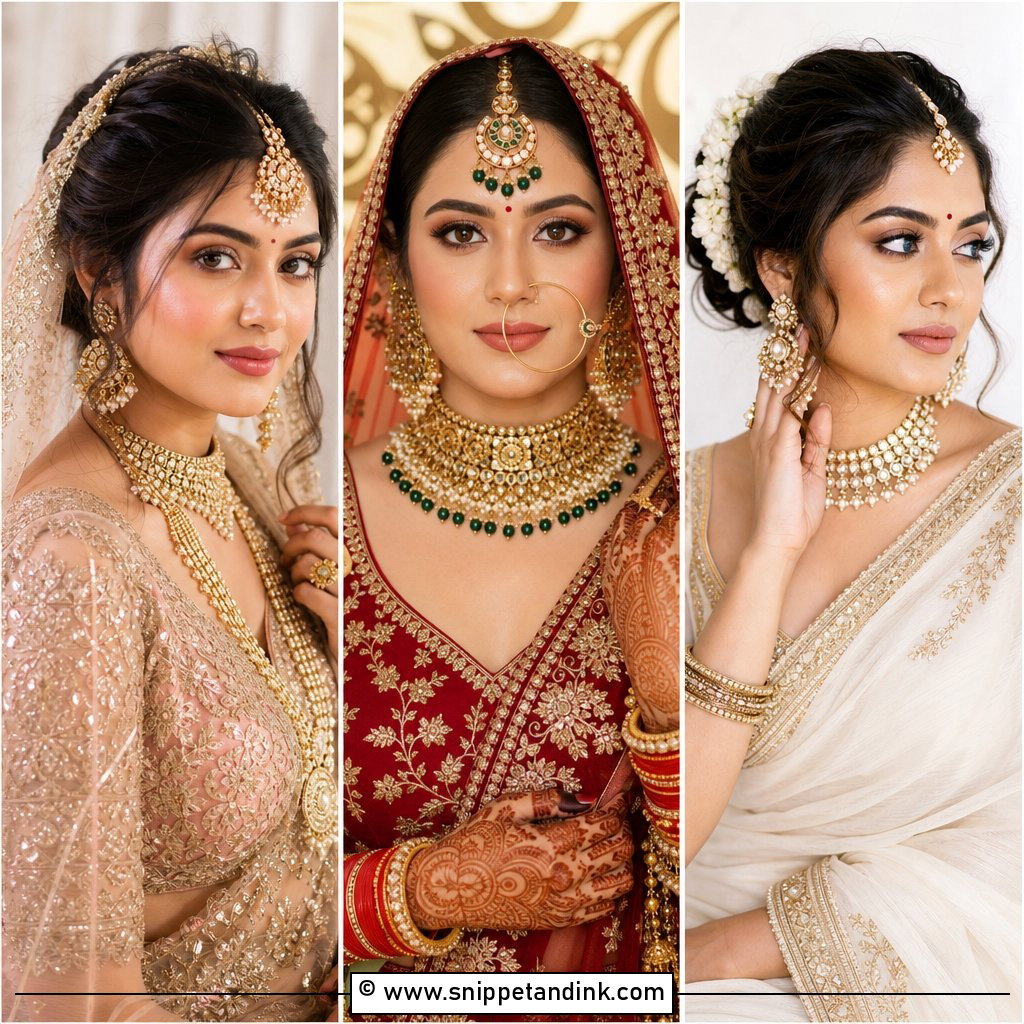
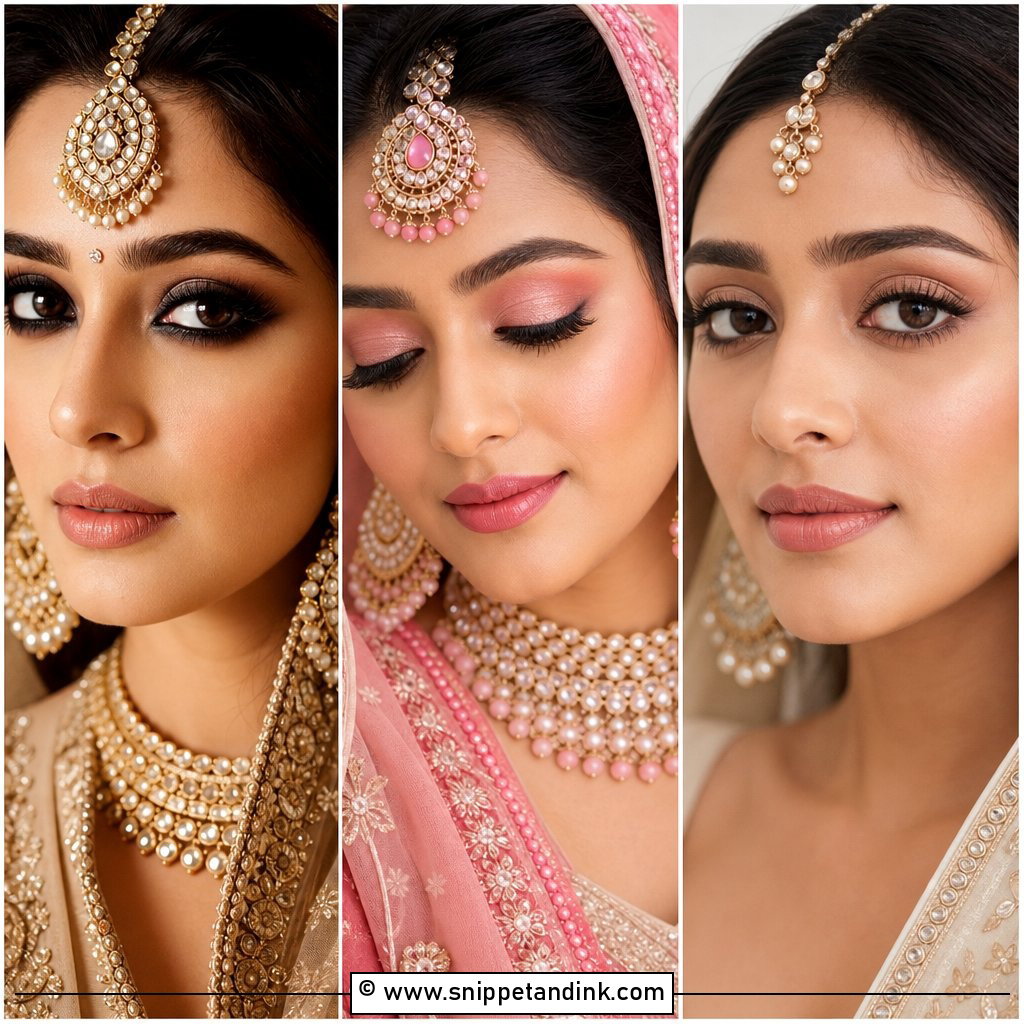
Start here if you’re unsure. Traditional South Indian wedding makeup gives the face enough structure to sit under heavy jewelry, a full hairstyle and a richly woven saree. I begin with a long-wear satin base, smooth but never flat, then warm gold on the lid, soft brown in the crease, black liner, full lashes and defined brows. Cheeks get rose or coral blush, and I keep the golden highlight to the very tops of the cheekbones. A classic red or deep rose lip finishes it without competing with the temple pieces. Red, maroon, green, mustard and gold silks all suit it, and satin skin reads well in both morning daylight and warm hall bulbs, which is why I trust it for the muhurtham.
2. South Indian Wedding Makeup With Red Lip
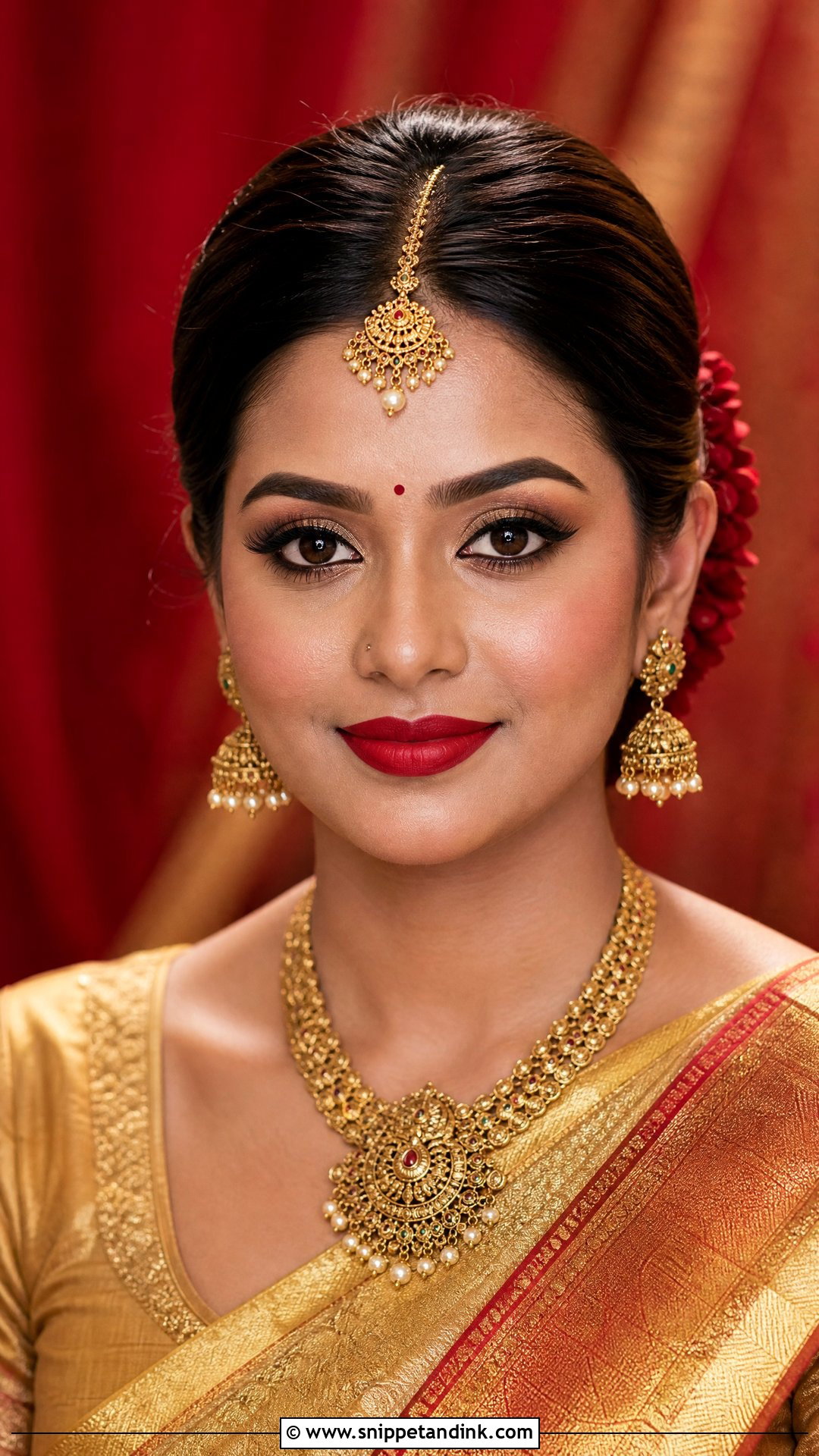
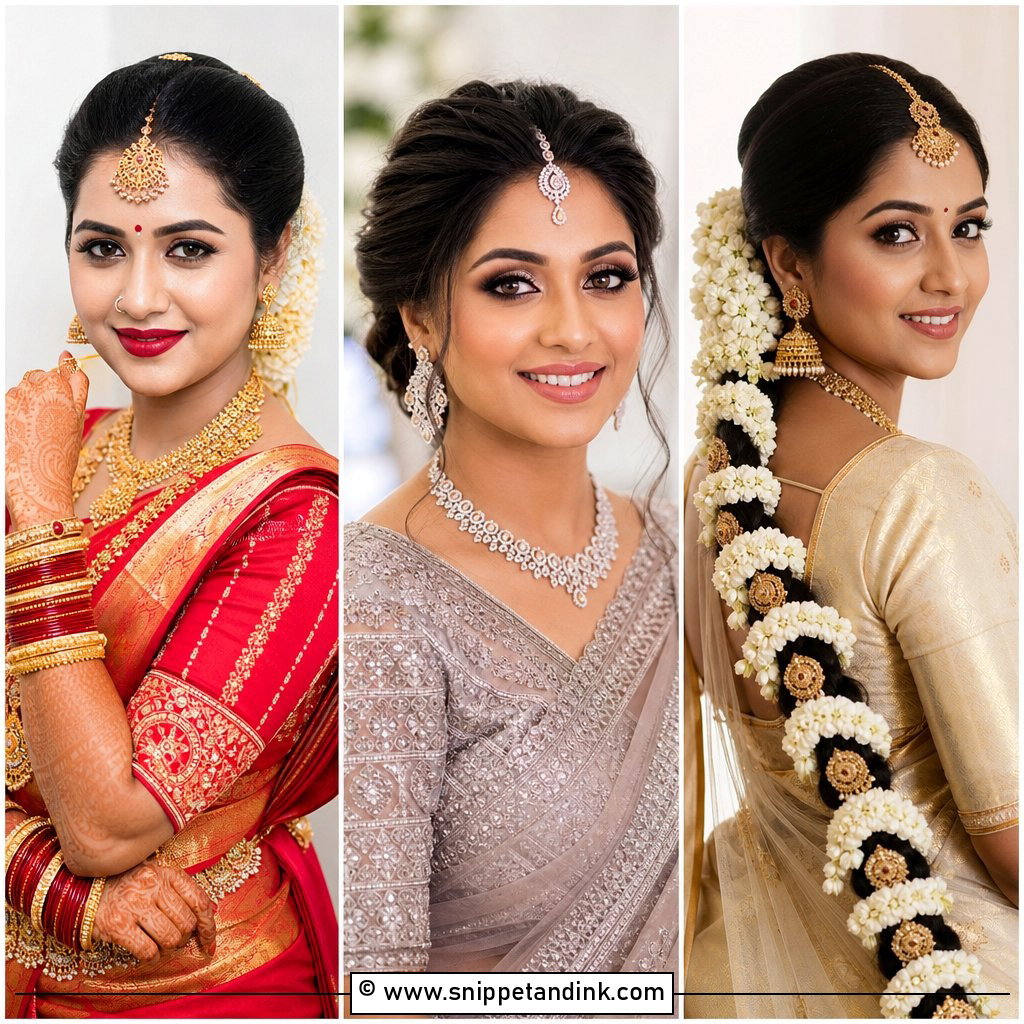
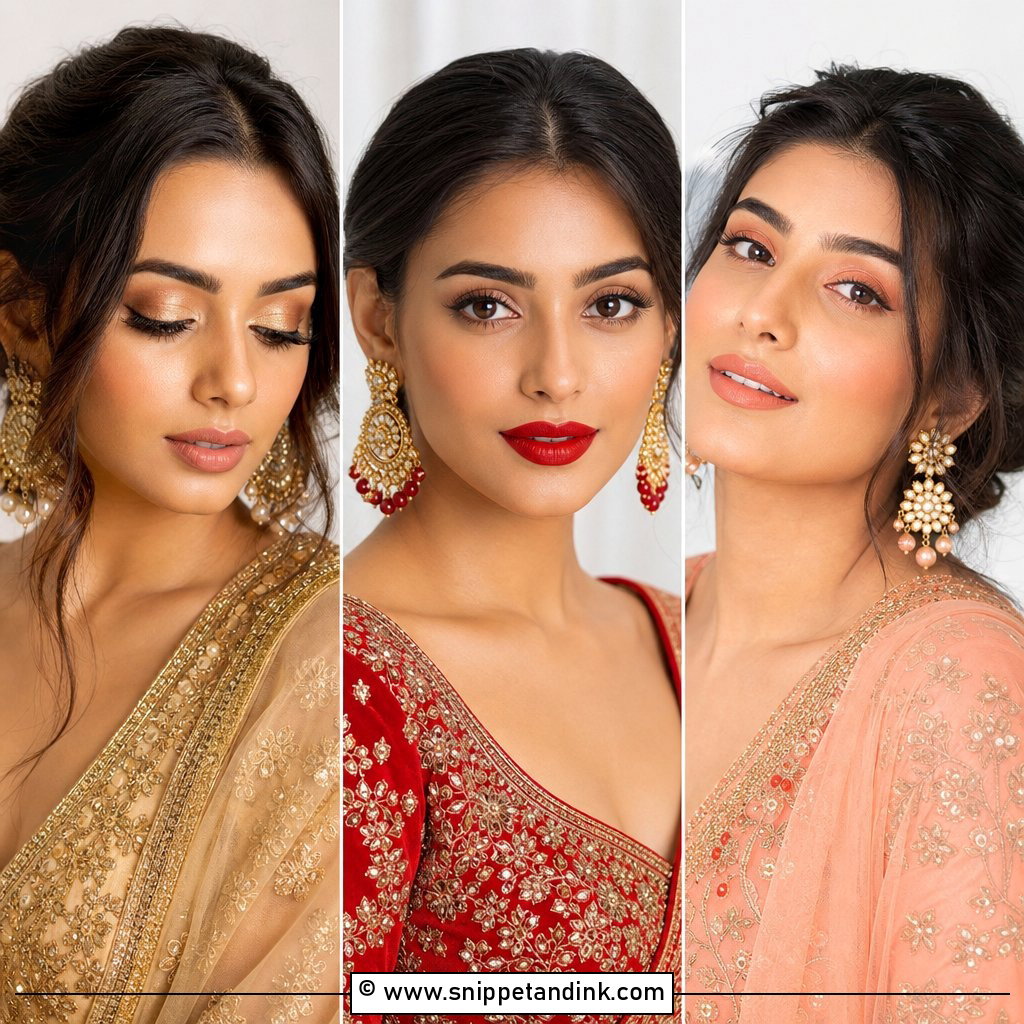
Red is the lip I’m asked for most at South Indian weddings, and it only looks intentional when everything around it is restrained. Match the red to your undertone: blue-red for cooler skin, brick for warm skin, ruby for deeper skin. I keep the lid to soft gold or champagne with black gel liner, curled lashes and a clean brow, and the blush stays in the same warm family as the lip. What actually ruins a red lip on the day is transfer, not color. I line and fill the whole lip with pencil first, blot, then apply the lipstick so it survives sips of water and the garland exchange. Gold Kanjeevaram, red silk and antique gold jewelry all sit comfortably with it.
3. South Indian Wedding Makeup With Gold Eyes
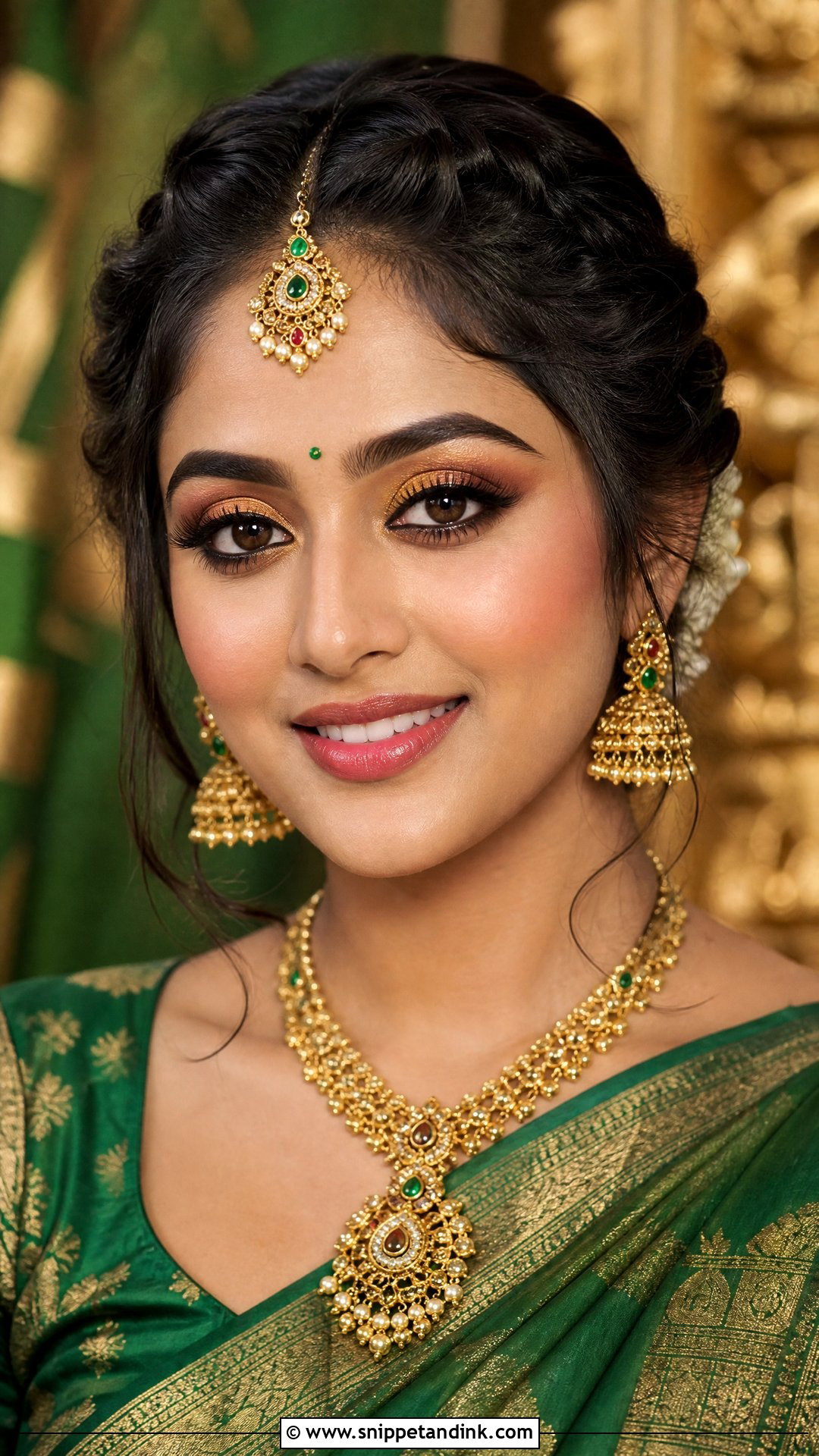
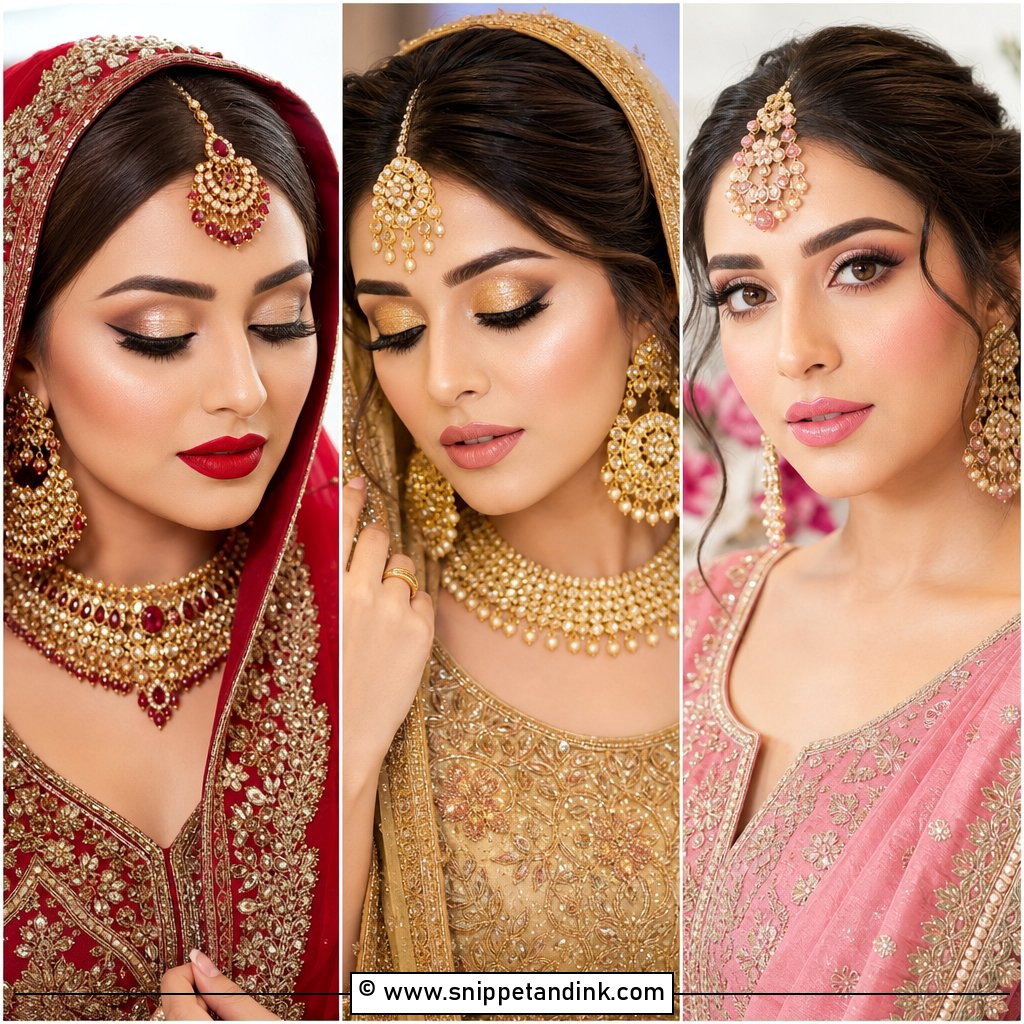
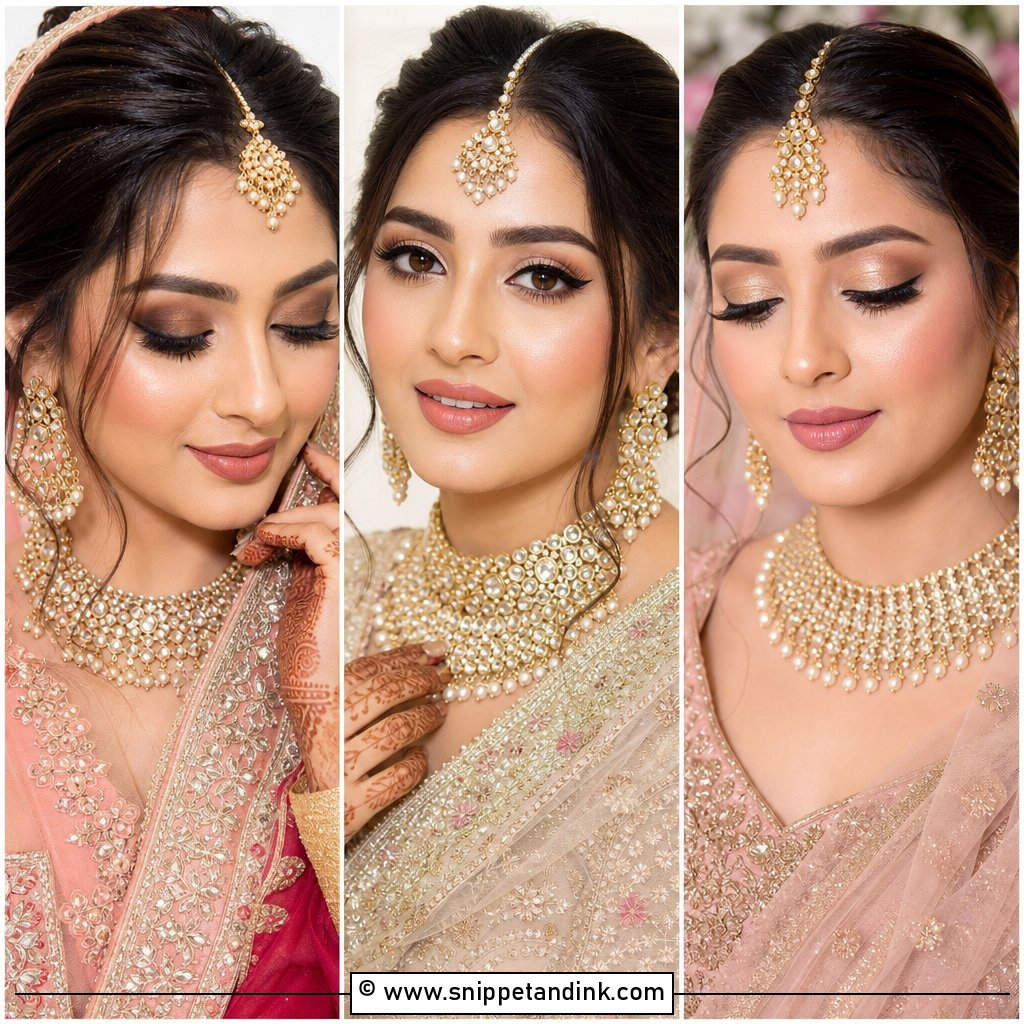
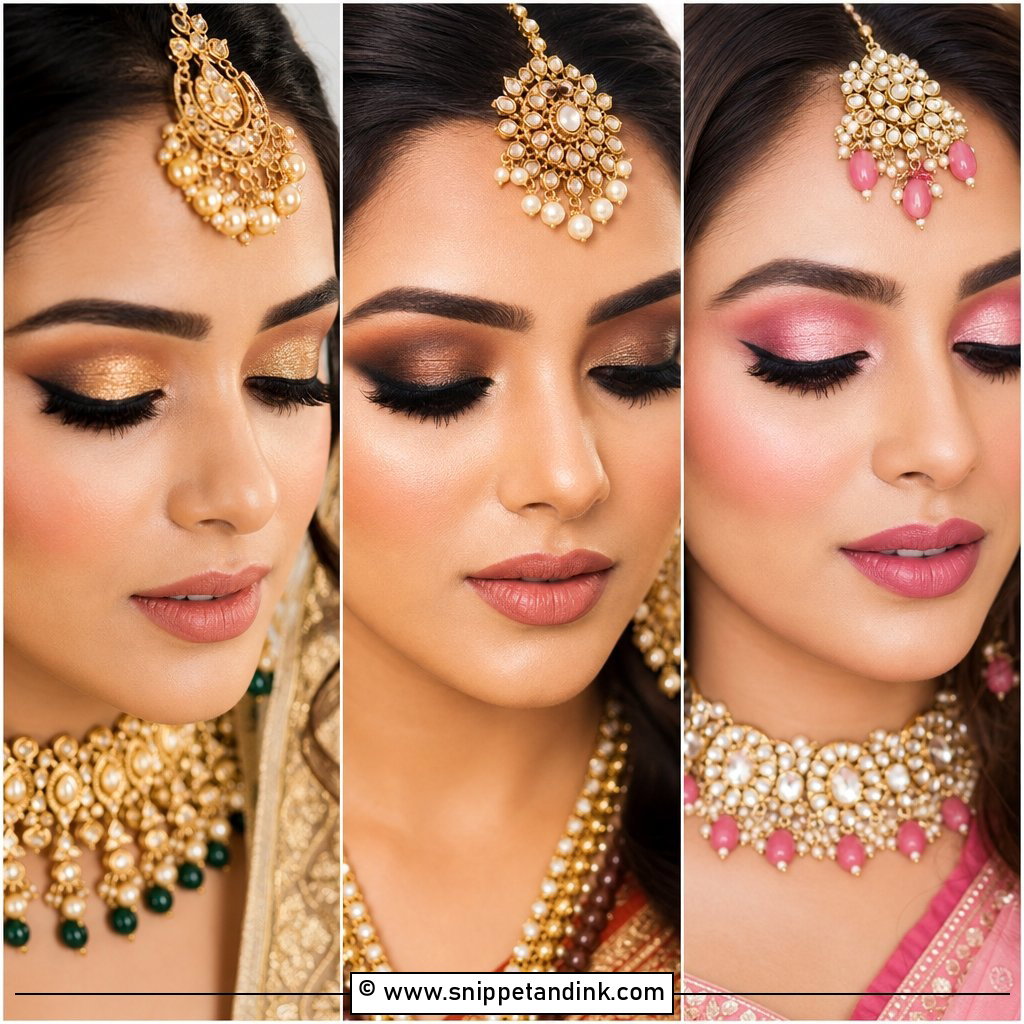
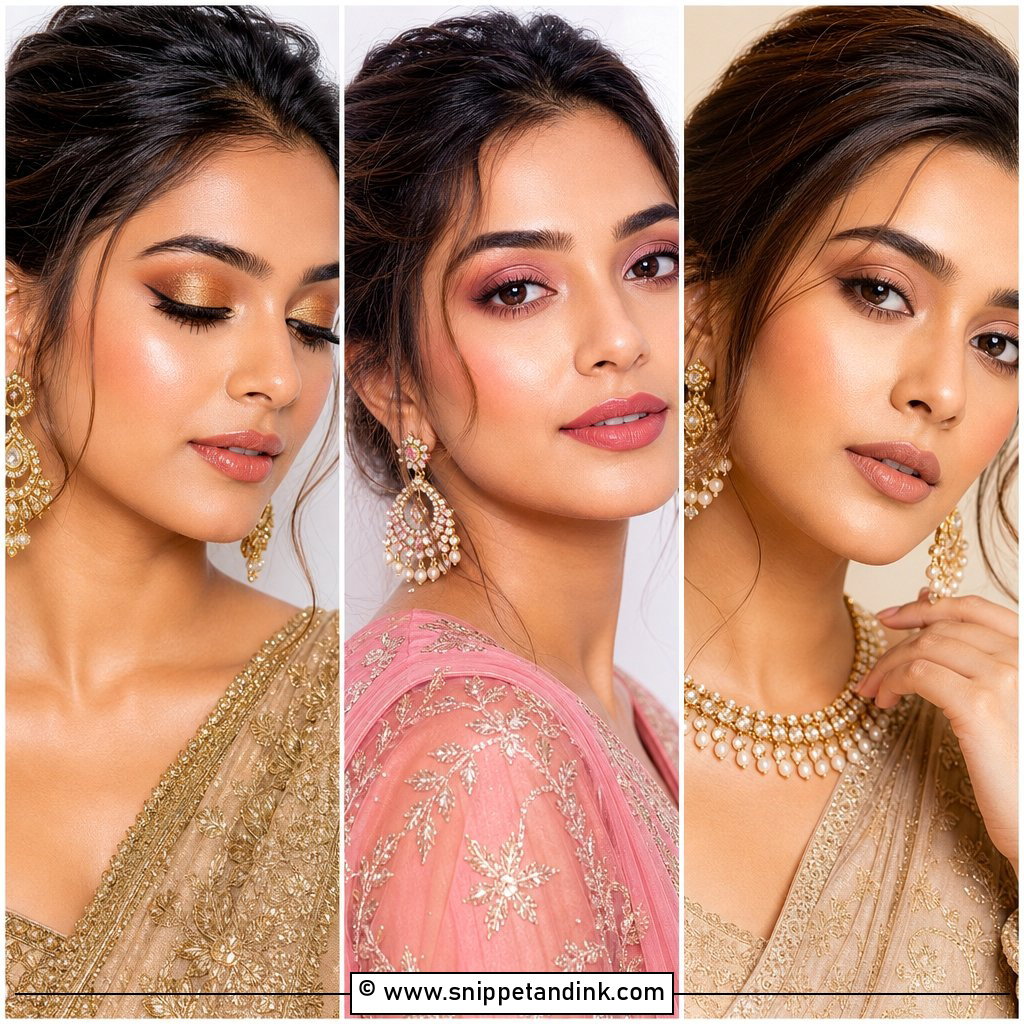
Gold on the lid mirrors the zari and the jewelry, so it rarely looks out of place. My layering is simple: smooth gold shimmer on the lid, warm brown through the transition, bronze at the outer corner, black liner tight to the lashes, and fluttery lashes that don’t hide the shimmer. One caution. A chunky glitter gold looks fine in a mirror and grainy in close-up photos, so I use a finely milled metallic and press it on with a fingertip instead of sweeping it. Keep the face radiant with peachy blush and champagne highlight, and let the lip go quieter in nude brown, caramel pink or muted rose. Green, maroon, orange, ivory and gold sarees all take it well.
4. South Indian Wedding Makeup With Bold Eyes
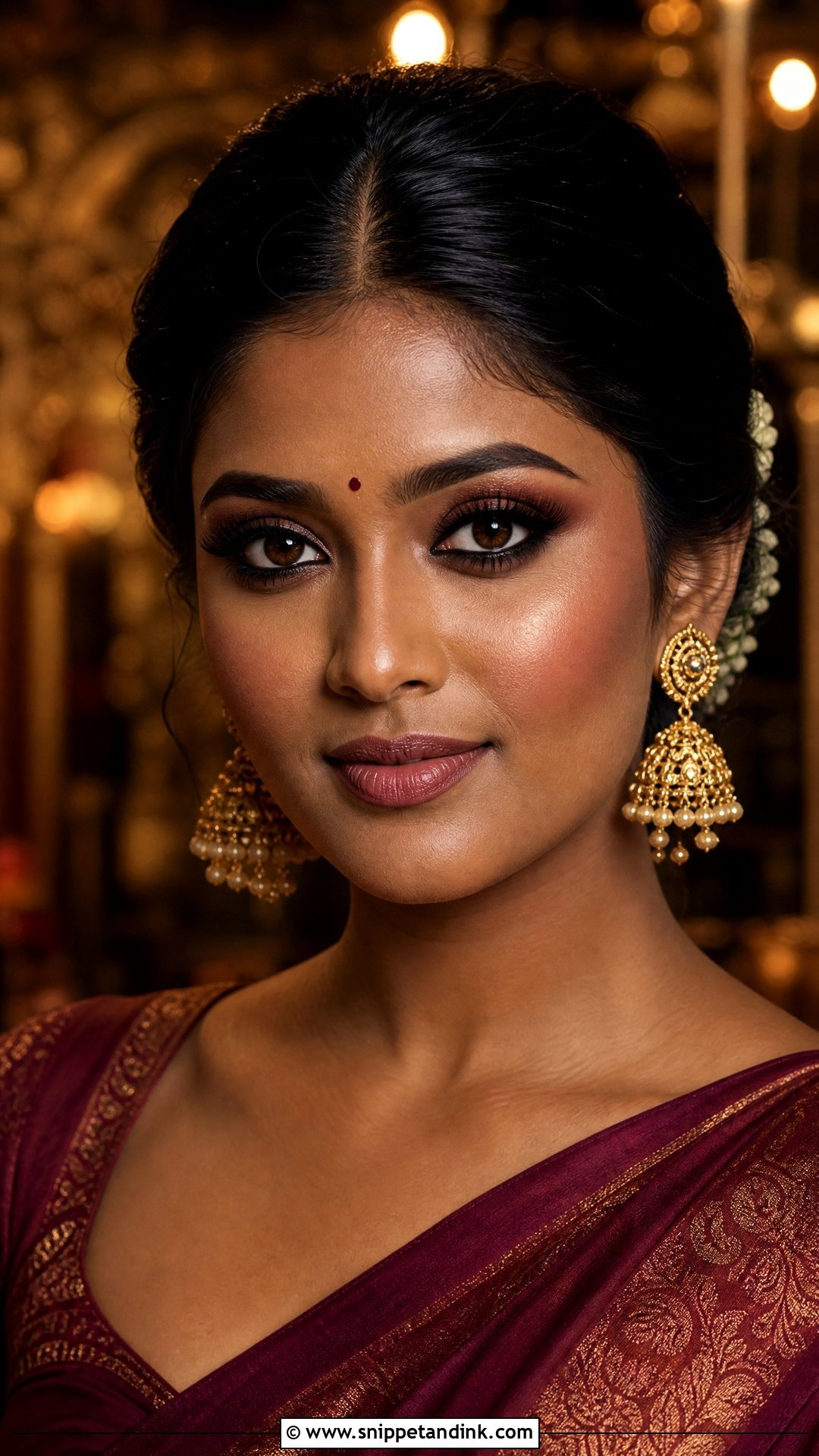
Heavy jewelry and a traditional hairstyle can swallow a quiet eye, so a bolder eye earns its place in photos. I build depth with bronze, brown, copper or plum, run black kajal along the upper and lower waterline, and smudge the lower lash line just slightly. The waterline is where I’d warn you: if your eyes water easily, kajal migrates within the hour, so I press a matching powder shadow underneath to hold it. The base should be medium to full coverage that still reads as skin, with warm blush, gentle contour and a soft highlight. Keep the lip in nude rose, terracotta or brown-pink. Save this face for evening receptions, indoor ceremonies and deeply colored silks.
5. South Indian Wedding Makeup With Dewy Skin
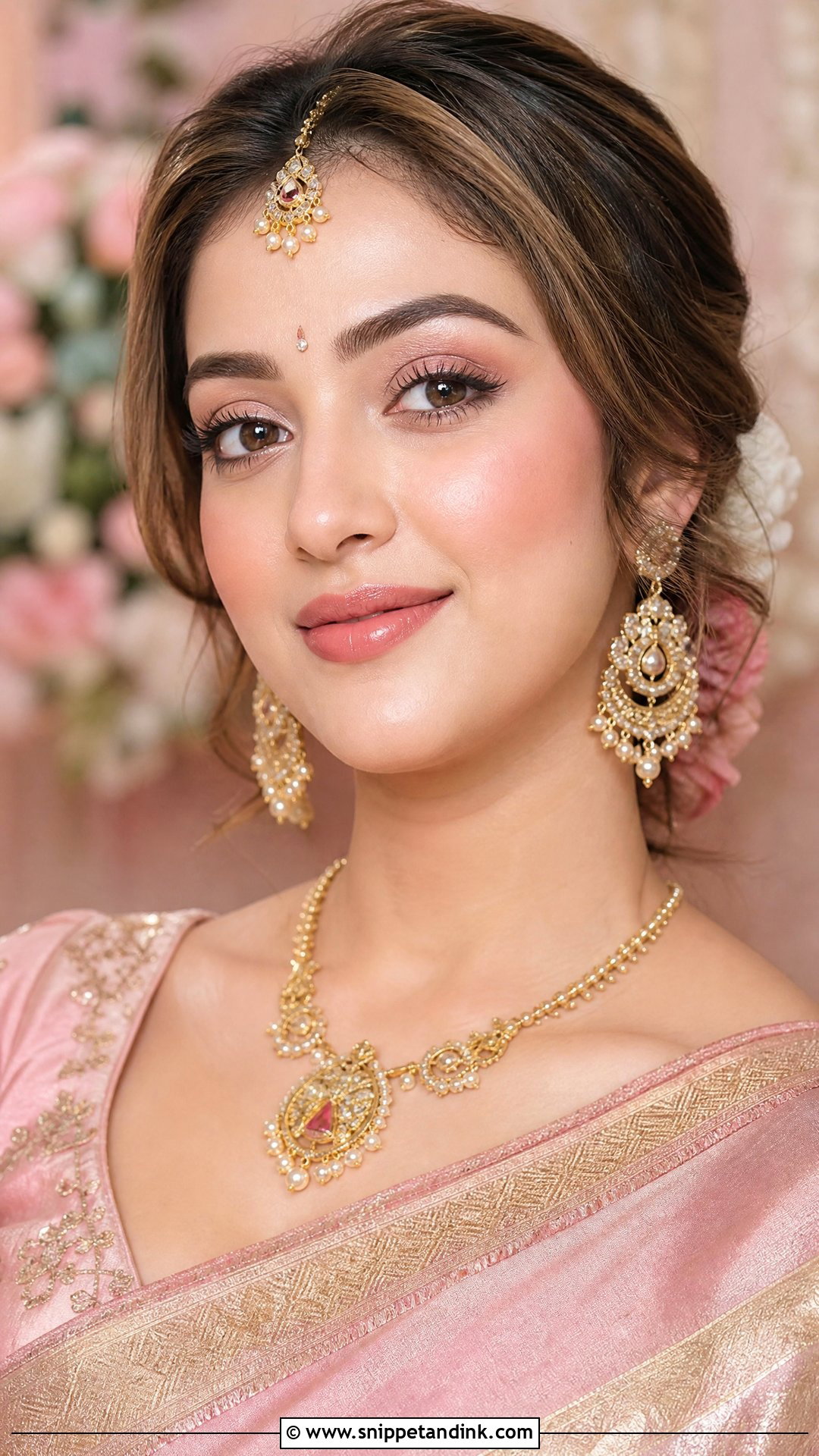
Dewy skin is the finish I’m most careful with in a South Indian summer, because glow and grease are only a few hours apart. I keep the base hydrated with thin layers of foundation, concealer only where it’s needed, cream blush and liquid highlight on the high points, then set the nose, forehead and chin so the shine stays exactly where I placed it. Eyes go champagne, soft gold or rose-gold with brown liner and natural lashes, and the lip is a peach, pink or nude gloss. Morning weddings, outdoor portraits and pastel silks suit it. If your skin is oily by lunchtime on an ordinary day, I’d choose satin instead.
6. South Indian Wedding Makeup With Matte Base
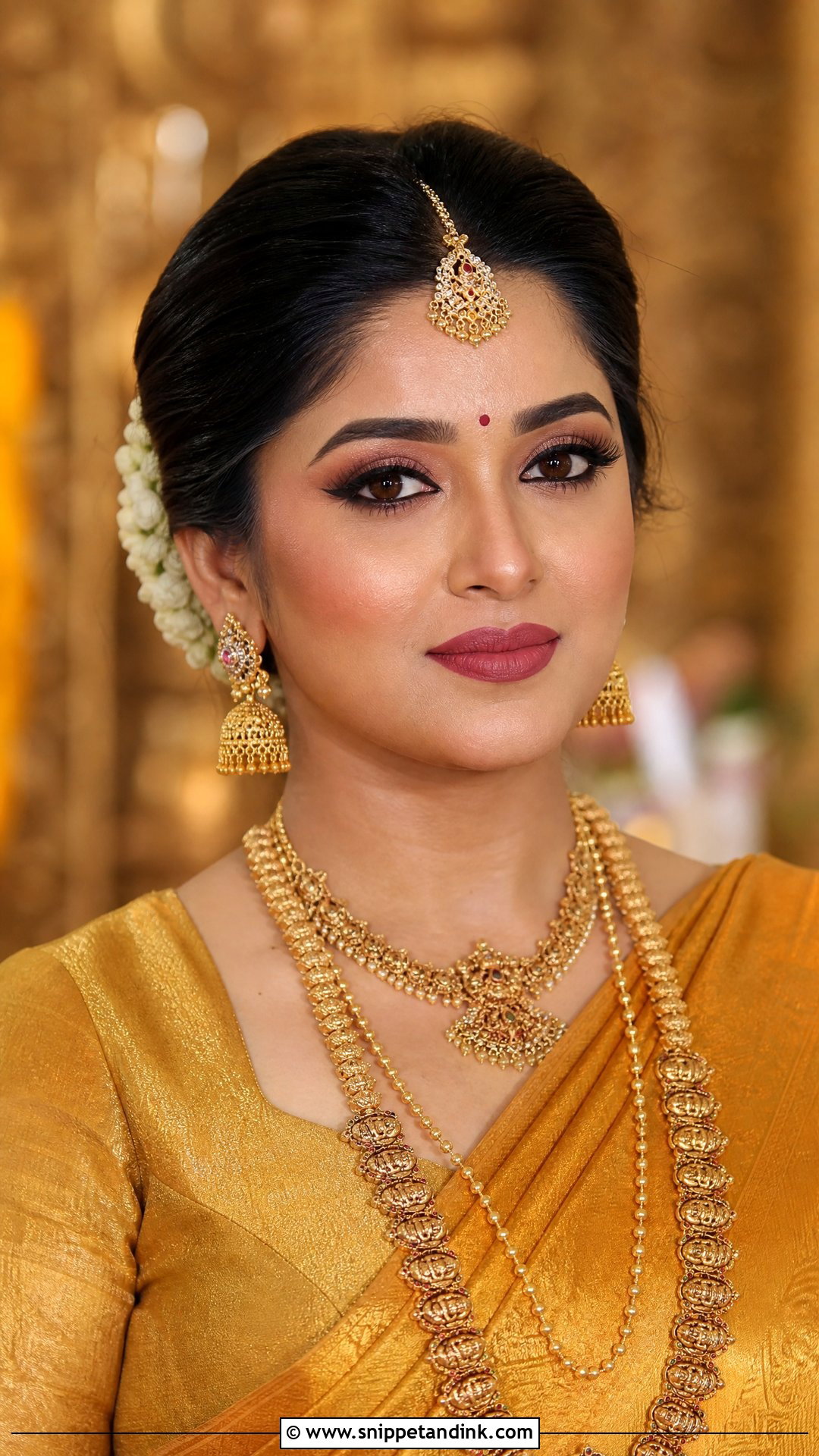
Long rituals, heat and endless photographs are where a matte base earns its keep. The aim is soft matte, never dry, and that comes down almost entirely to prep: if the skin underneath is dehydrated, powder settles into every line by noon. I hydrate first, then apply a long-wear foundation and a brightening concealer, and powder only the areas that actually shine. Eyes take copper, brown or antique gold with a sharp black liner. Cheeks get peach-brown blush, subtle contour and a controlled highlight, and the lip is matte rose, brick or nude. Oily skin, humid weather and harsh hall lighting are the conditions I pick it for.
7. South Indian Wedding Makeup For Muhurtham
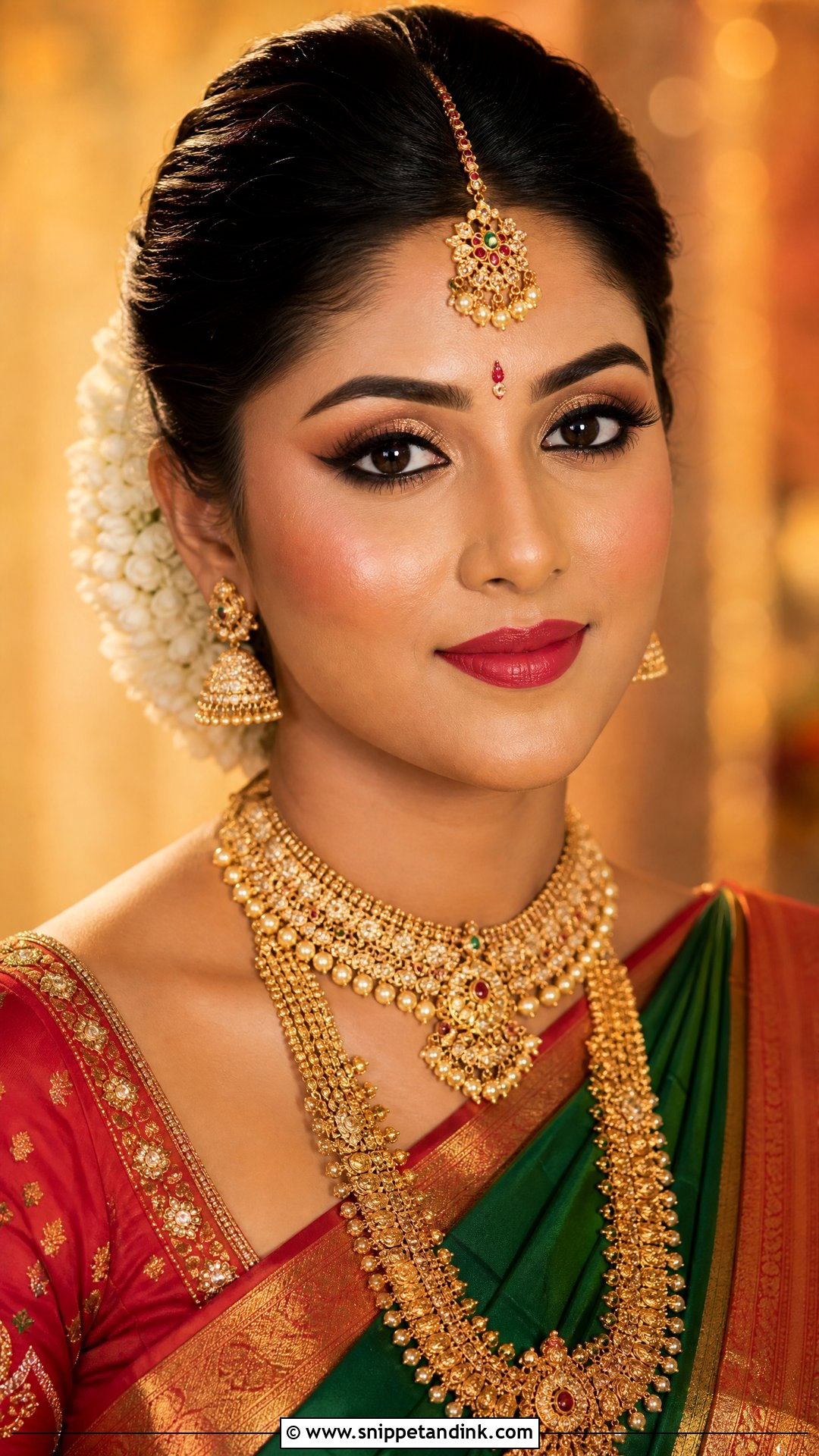
Early light is honest and the rituals are long, so Muhurtham makeup has to look graceful at arm’s length and stay put through tears, garlands and the warmth of the sacred fire. I almost always use a soft satin base here; it covers well without the heaviness daylight exposes. Gold, bronze or soft copper on the lids, black liner, defined lashes and tidy brows, then peach or rose blush and a highlight that glows rather than glitters. The lip is red, rose or muted coral depending on the saree. With temple jewelry, a jasmine bun and Kanjeevaram silk, I keep this face classic and skip anything trend-led, because these are the photographs families frame.
8. South Indian Wedding Makeup For Reception
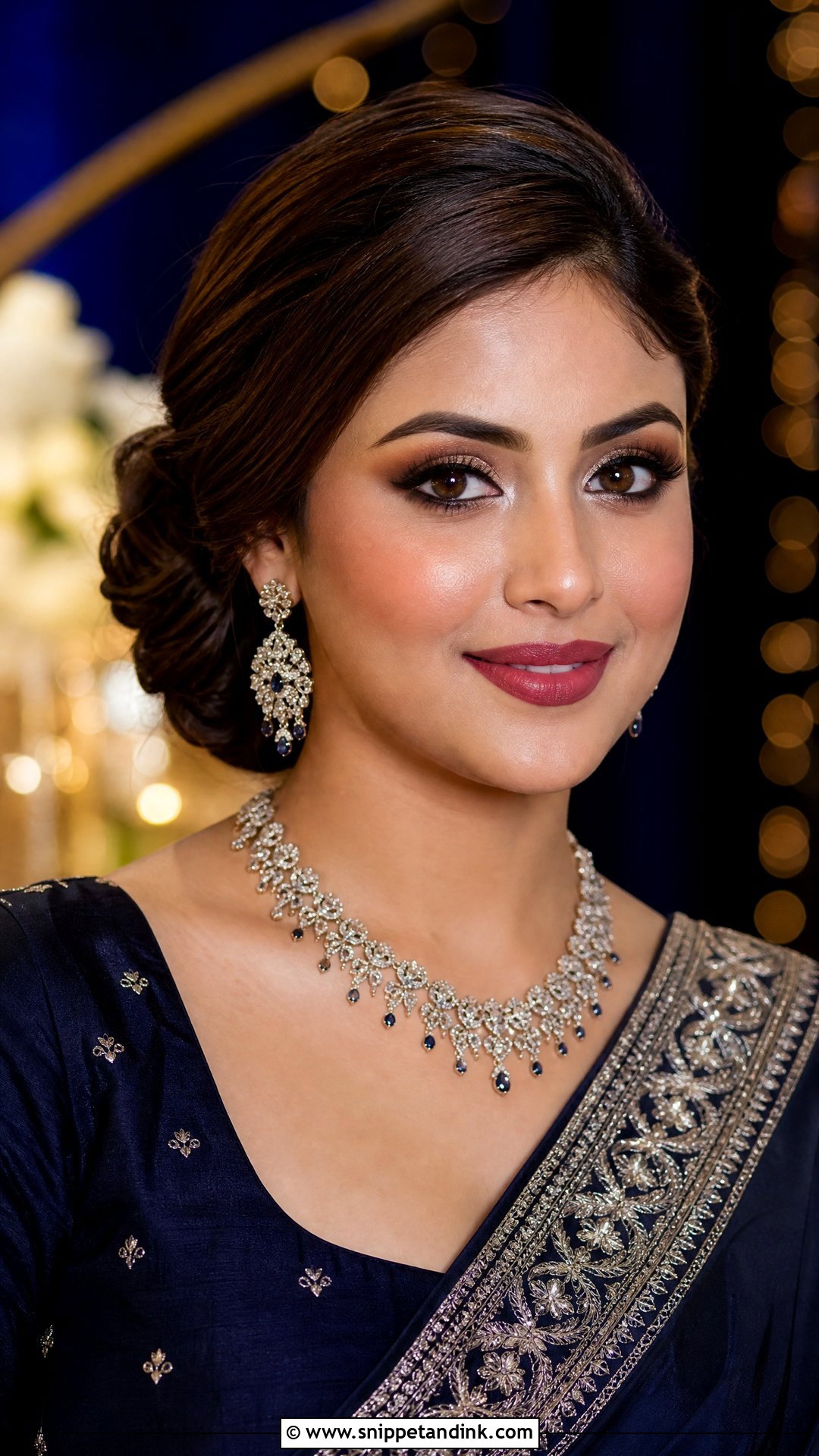
Evening lighting and an outfit change give you room to go further than the ceremony face. A flawless base with soft contour gives the face dimension under flash, and I’ll add a bronze smoked lid, winged liner, fuller lashes and a bright inner corner, sometimes with a touch of shimmer on the lid for a polished party finish. When the reception follows the ceremony on the same day, I don’t strip the face. I blot, rebuild the eyes and change the lip, which keeps the skin from getting overloaded. Sculpt the cheeks in rose, mauve or terracotta to suit your tone and finish with satin nude, berry or deep rose. Lehengas, silk sarees, gown-style outfits and diamond or antique sets all carry it.
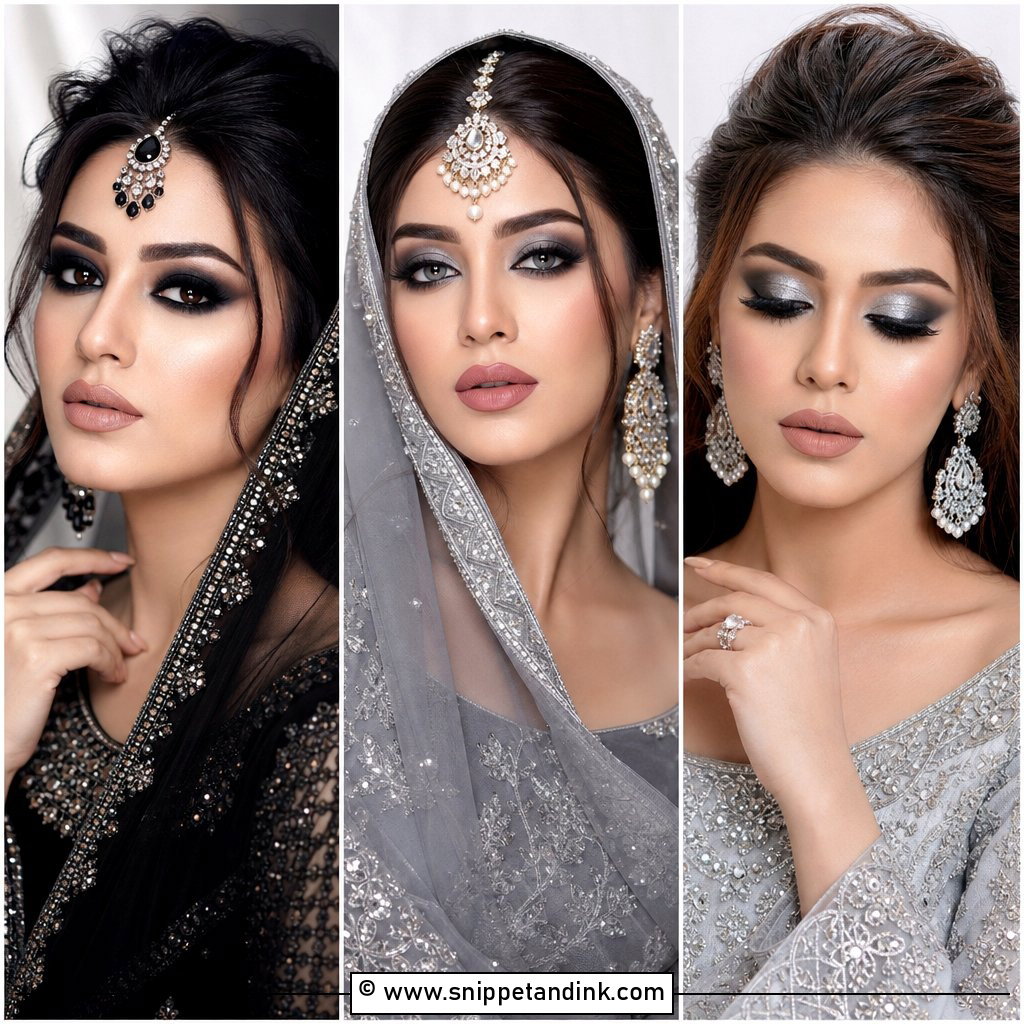
9. South Indian Wedding Makeup With Smokey Eyes
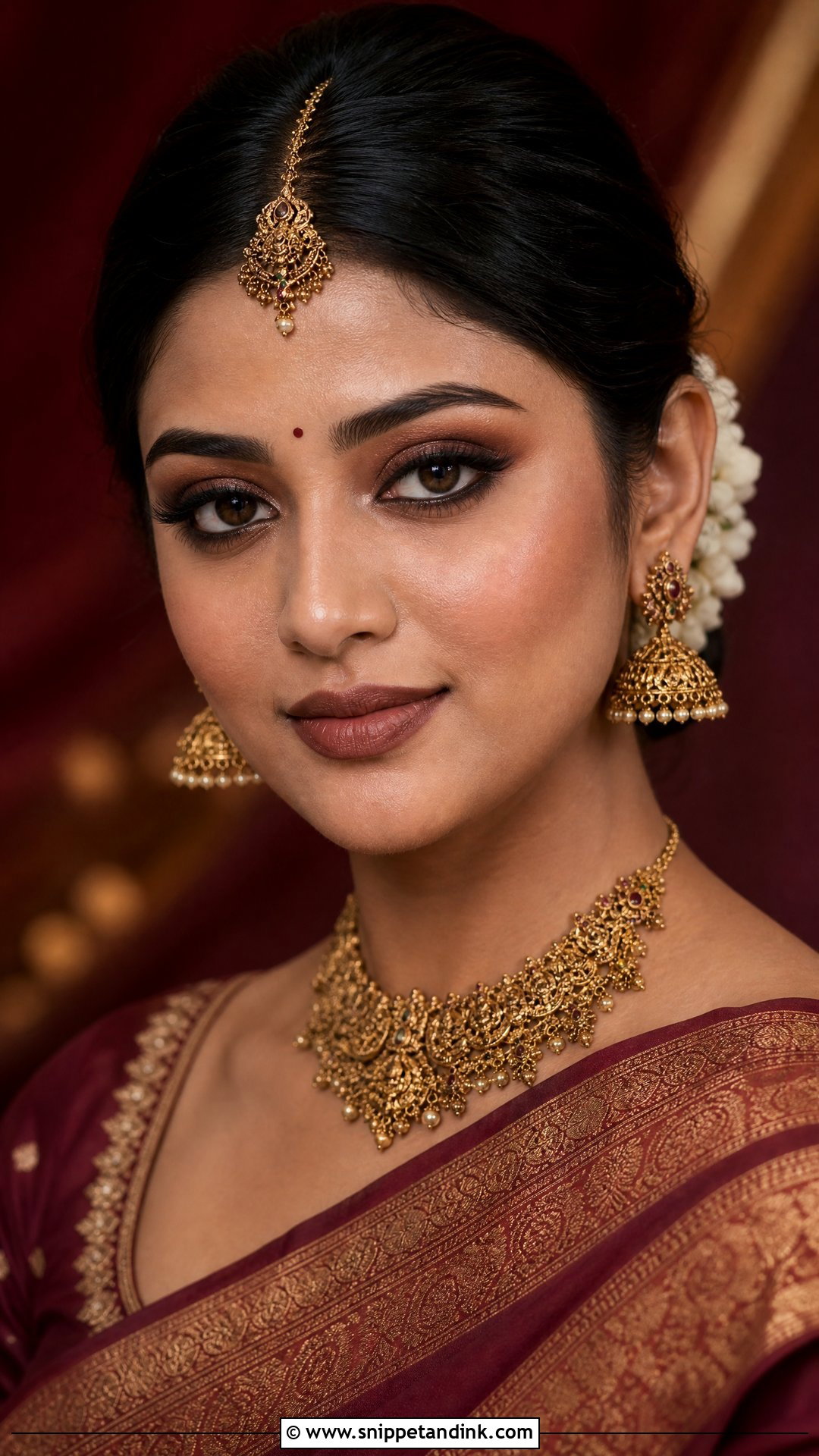
On a South Indian bride a smoked eye needs warm colors and real blending, not black packed across the lid. I work in chocolate brown, bronze, copper or deep plum, keep the darkest tone along the lash line and outer corner, and diffuse upward until no edge is visible. Kajal, liner and lashes add the definition. Because the eyes carry the face, the complexion stays smooth with natural blush and soft contour, and the lip drops back to nude brown, pink-beige or muted rose. Under flash an unblended edge shows up as a muddy band, so I check it through a phone camera before I call it finished. Wine, emerald, navy and maroon sarees at evening ceremonies are where it belongs.
10. South Indian Wedding Makeup With Nude Lip
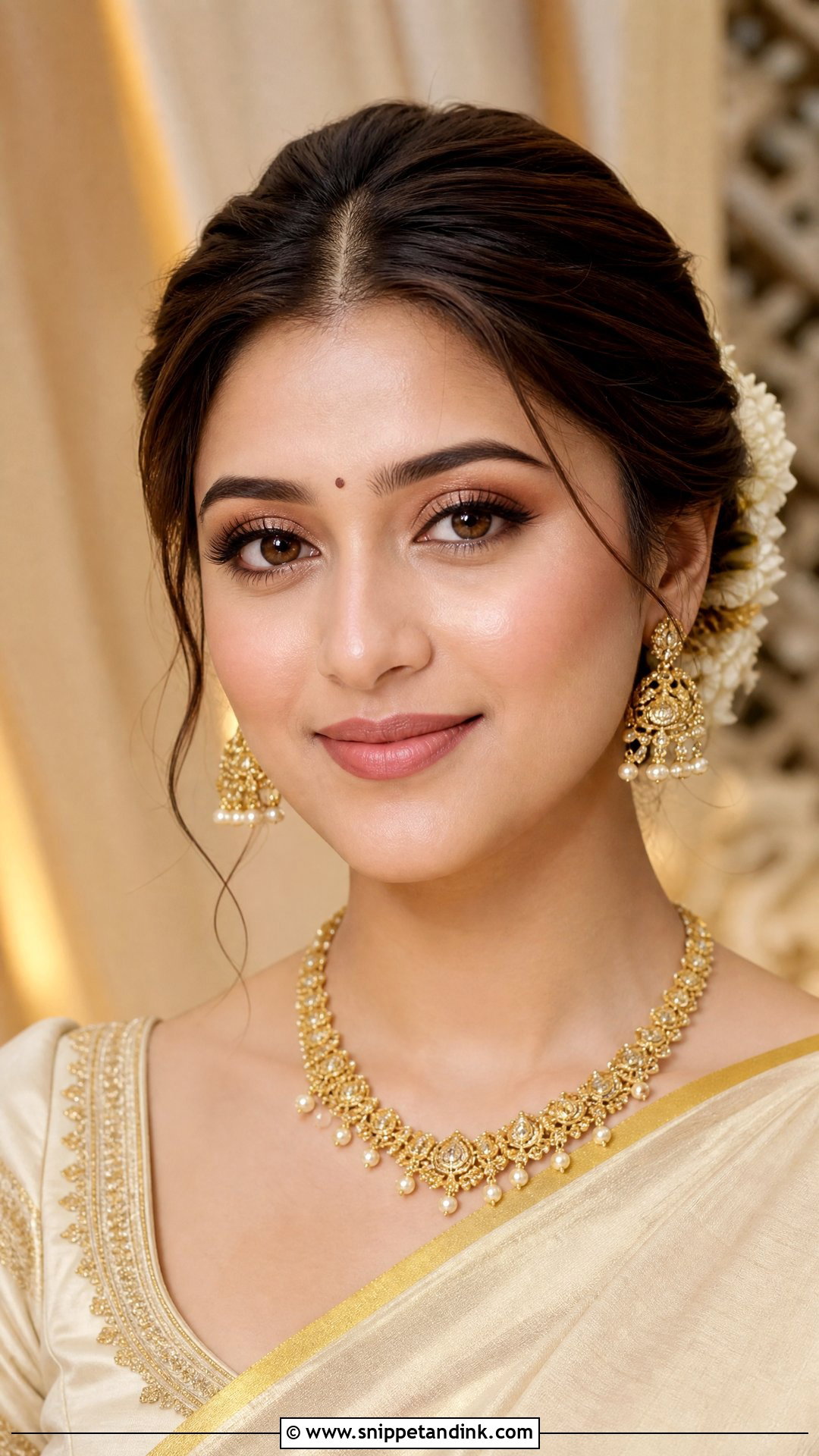
A nude lip lets bold eyes and heavy gold take the lead, but the wrong nude makes a bride look washed out in pictures. Pink beige suits fair skin. Caramel rose or peach brown suits medium and olive skin. Cocoa rose, chestnut or warm brown suits deep skin. I always line with a pencil one step deeper than the lipstick, otherwise the lip edge disappears in daylight. Pair it with defined eyes, soft gold shimmer, black liner and full lashes, and use a little more blush than you think you need so the face keeps some life. Pastel sarees, ivory silk and heavy temple sets all sit happily with it.
11. South Indian Wedding Makeup With Pink Saree
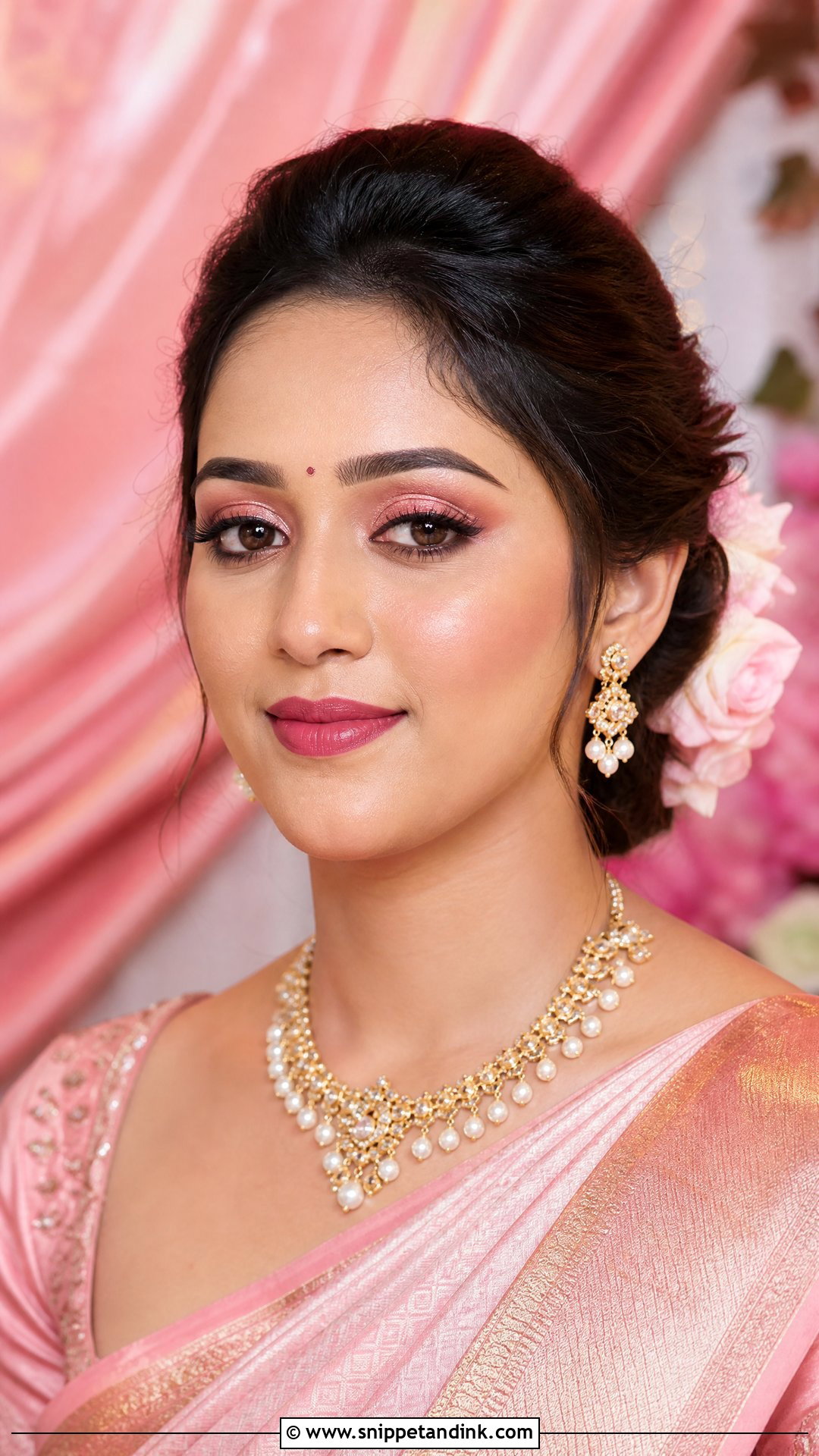
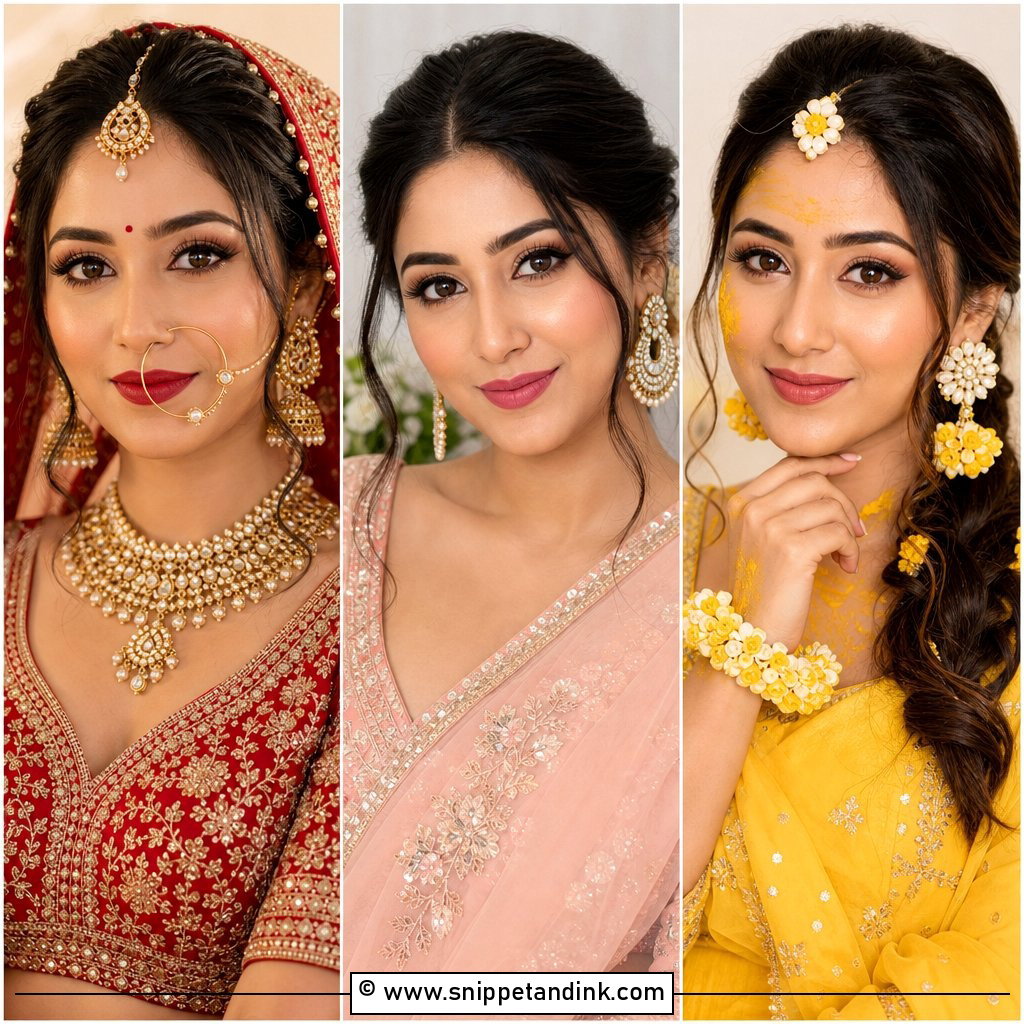
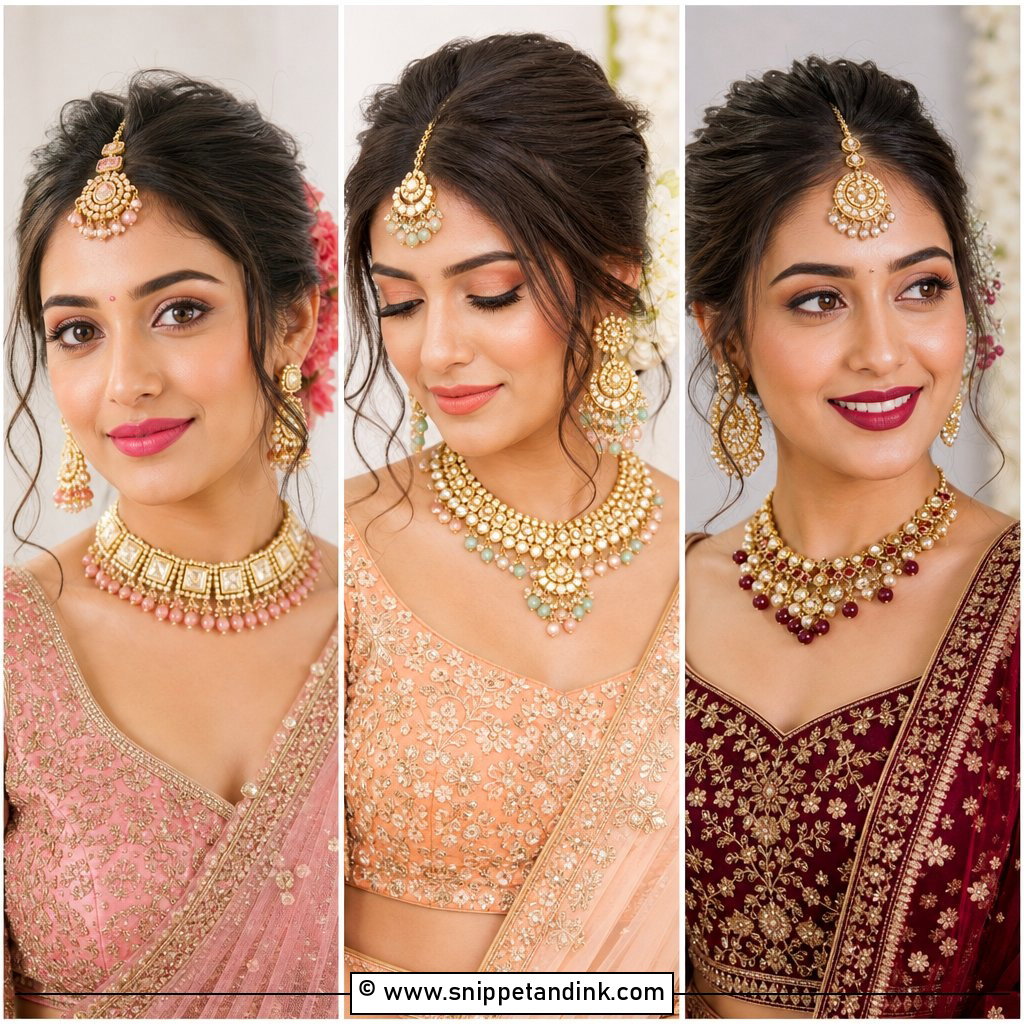
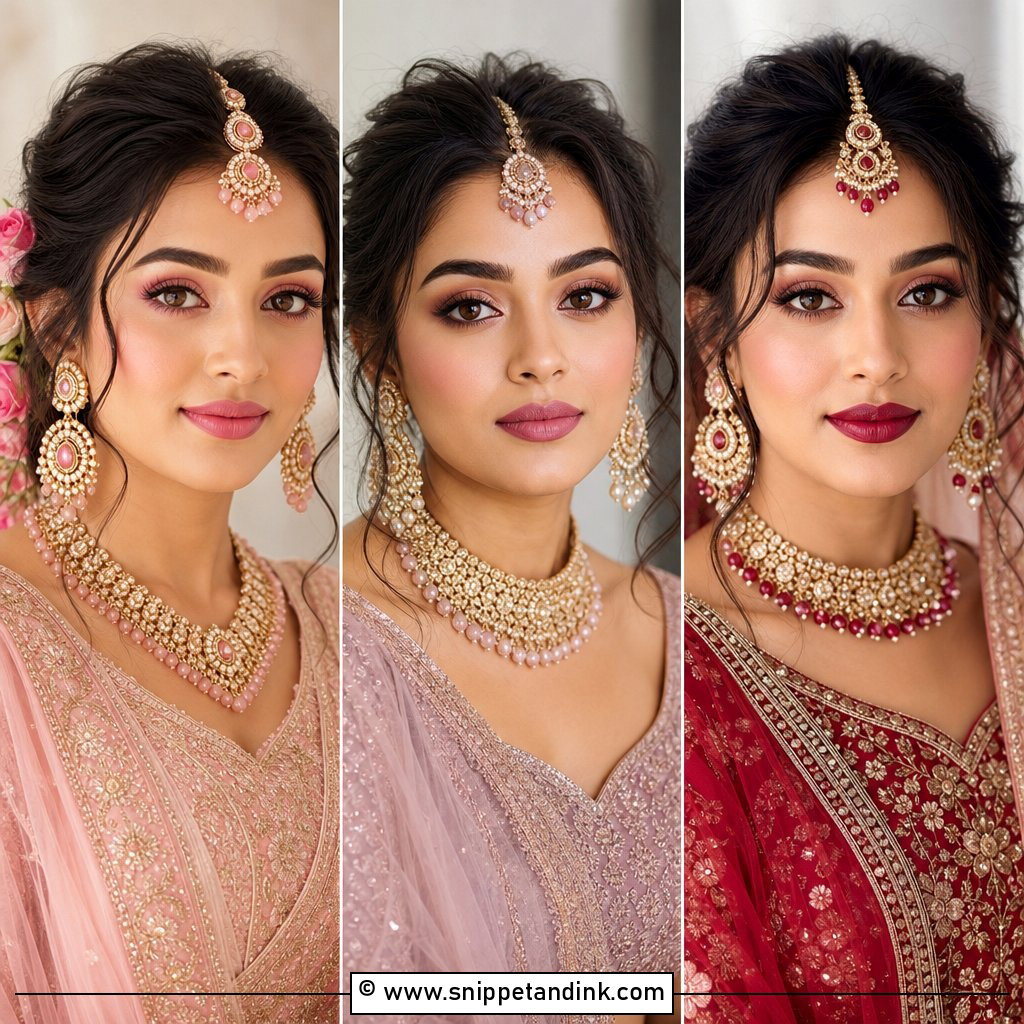
Pink silk throws color back onto the face, so I keep the eyes in rose gold, champagne, mauve or soft bronze with a fine black or brown liner, and lashes that lift without weight. Blush goes high on the cheek in pink-peach; highlight stays modest because the fabric already shines. A rose, pink nude or muted berry lip ties it together. Watch for a lipstick cooler than the saree, since next to a warm fuchsia it reads purple in photos. Engagement ceremonies and receptions are natural fits, and it’s a strong route if you’d rather not wear red or maroon at all.
12. South Indian Wedding Makeup With Green Saree
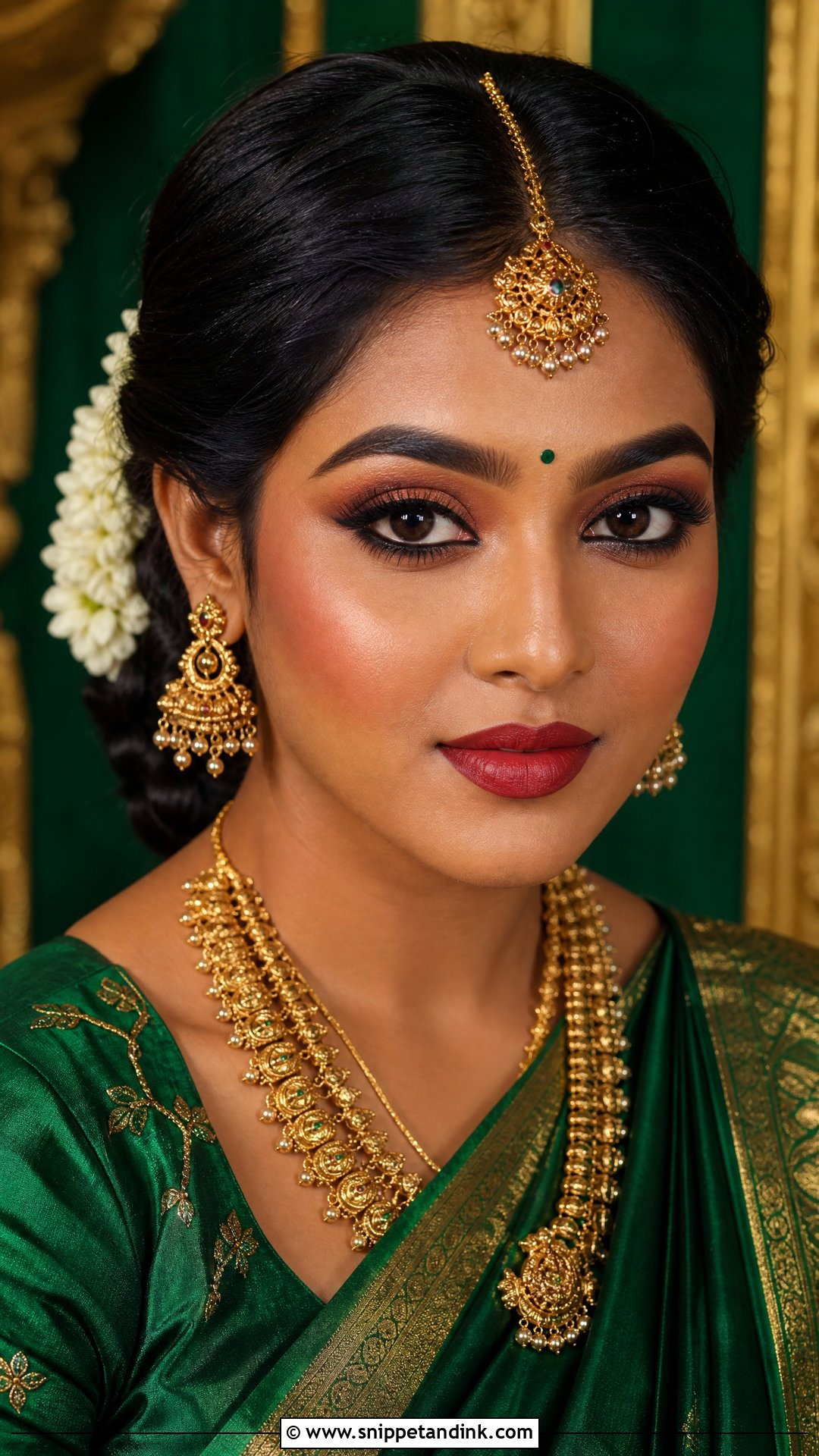
Matching green shadow to a green saree is the instinct I talk most brides out of. Green silk usually carries heavy gold, and warm gold, bronze, copper or brown eyeshadow picks that up far better than green on green, which tends to look costume-like. Black liner, kohl and soft lashes give classic definition. Choose a satin or soft matte base for your skin type, with terracotta, peach or warm rose on the cheeks. Emerald, parrot, bottle green and olive silks all take a brick red, deep rose, brown nude or muted coral lip, and next to gold jewelry and jasmine the face reads traditional without looking dated.
13. South Indian Wedding Makeup With Maroon Saree
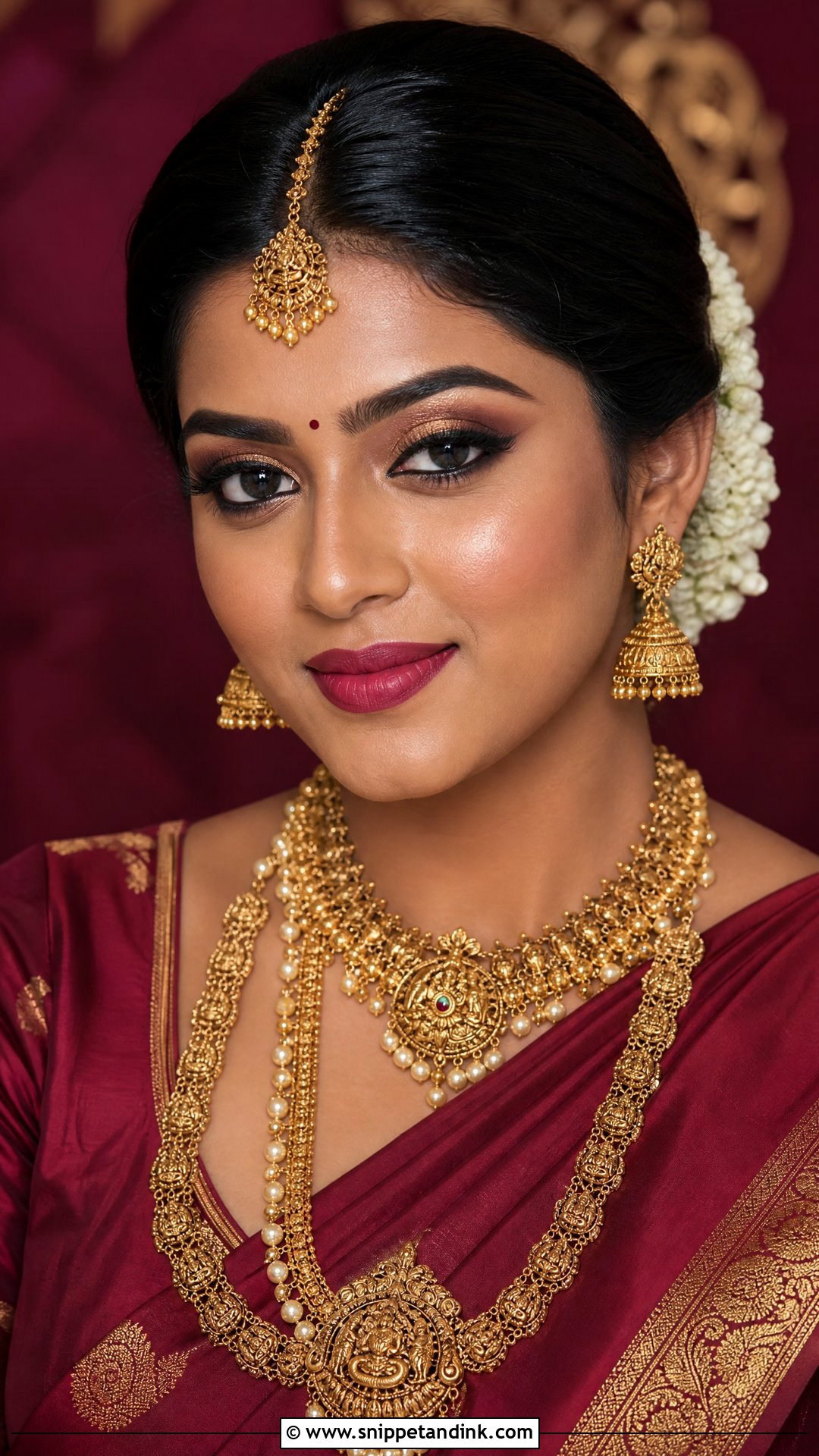
Maroon is already rich, so the job here is depth with control. I use bronze, antique gold or warm brown with a softly smoked outer corner, black liner and kajal for that classic definition, and lashes separated rather than clumped. Satin base, rose-brown blush, subtle contour. A maroon lip can work, but I choose one a touch softer or brighter than the saree; an exact match lets lip and fabric merge into one flat block in photographs. Deep rose, brick red and berry brown are safer. Traditional portraits and evening ceremonies suit it best.
14. South Indian Wedding Makeup With White Saree
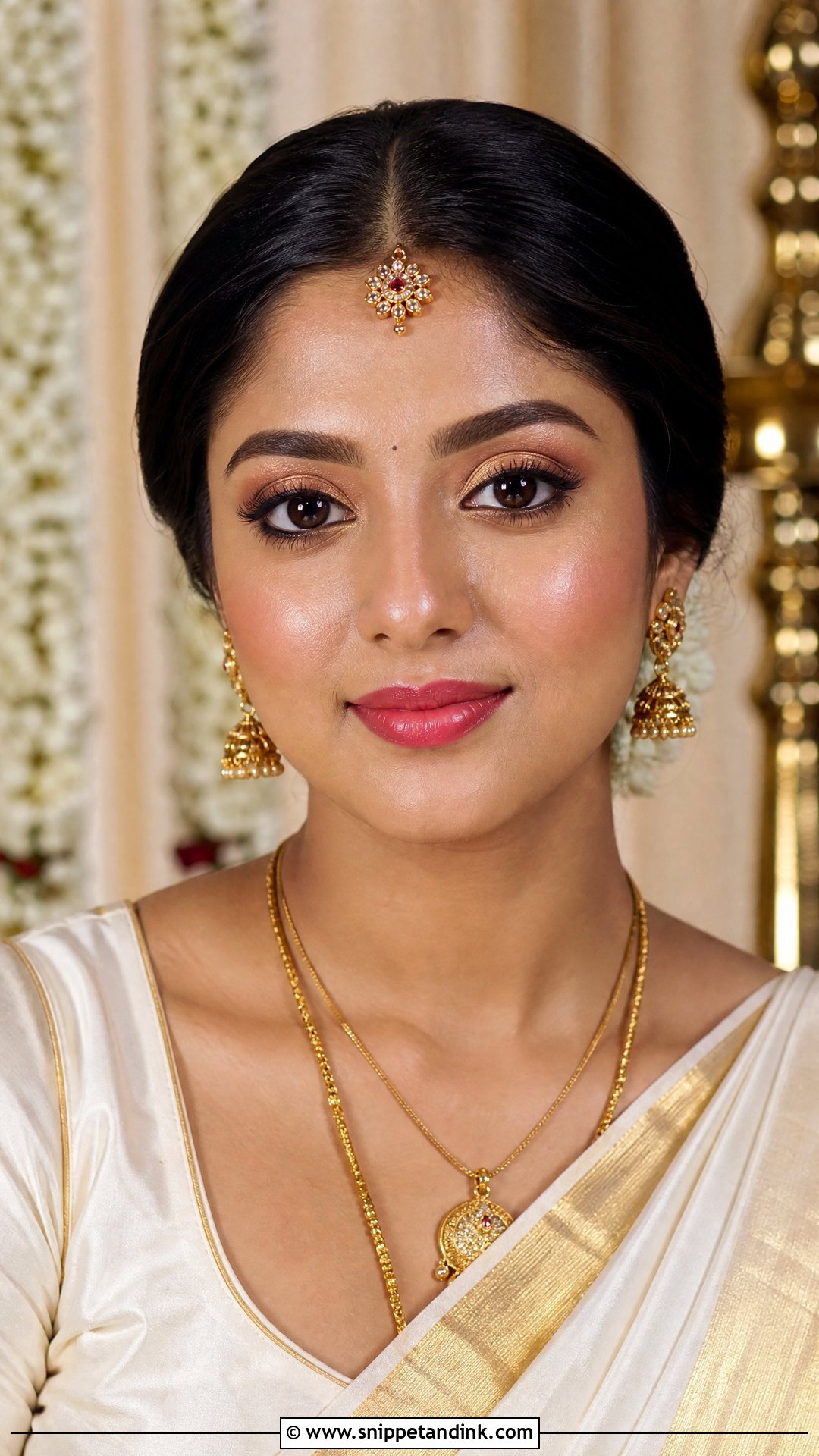
Ivory and gold, especially Kerala-style kasavu, leaves nowhere for heavy makeup to hide. I keep the skin fresh with a luminous satin base, light concealer, peach blush and a soft golden highlight, and the eyes in champagne, pale gold or soft brown with thin black liner and natural lashes. I’d skip a dark eye unless the jewelry is very heavy. Coral, peach pink, rose or soft red adds warmth to the lips. One practical point: white fabric bounces light up under the chin, so I check the blend along the jaw and neck twice, because any line shows in close-ups.
15. South Indian Wedding Makeup With Orange Saree
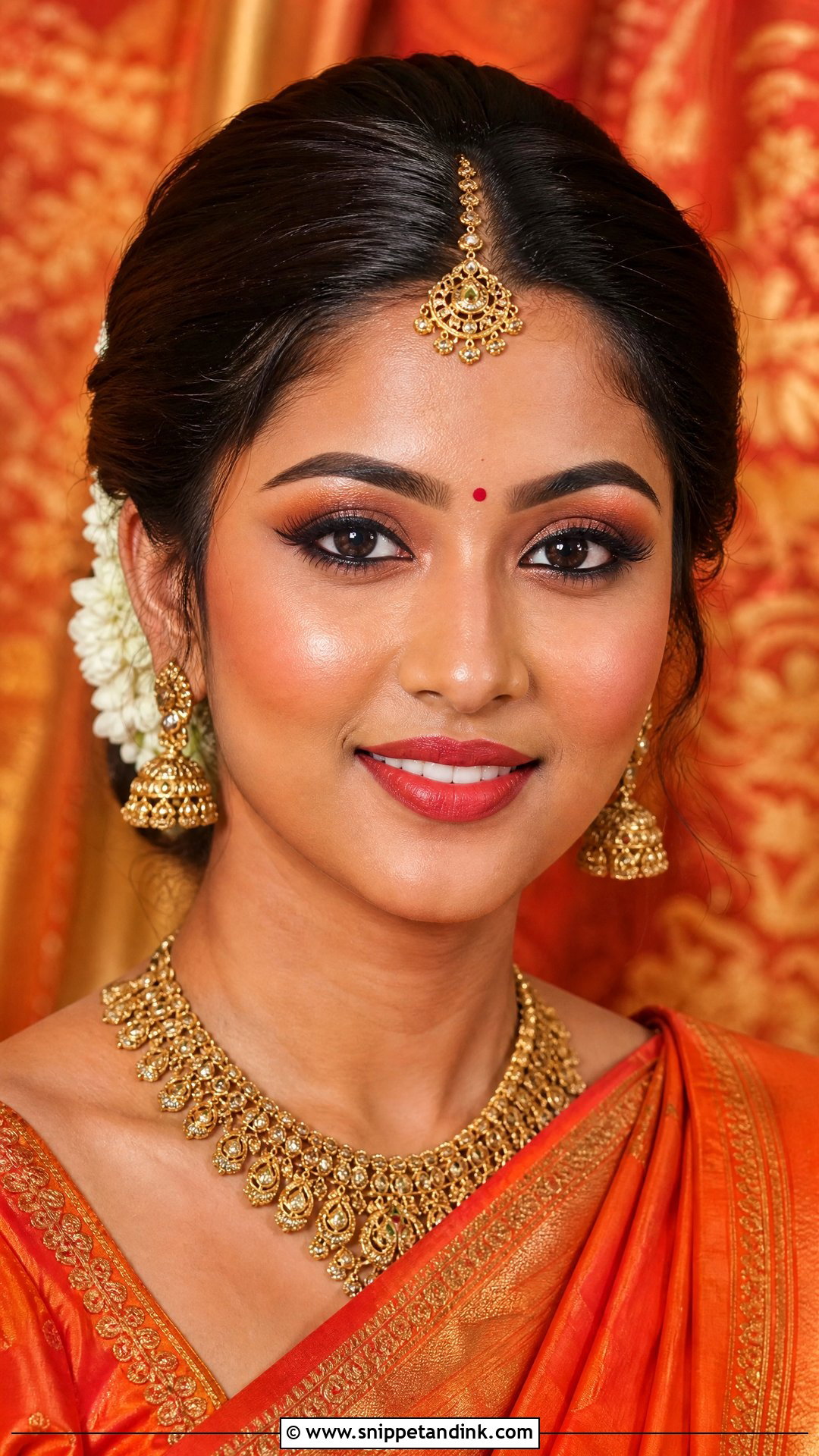
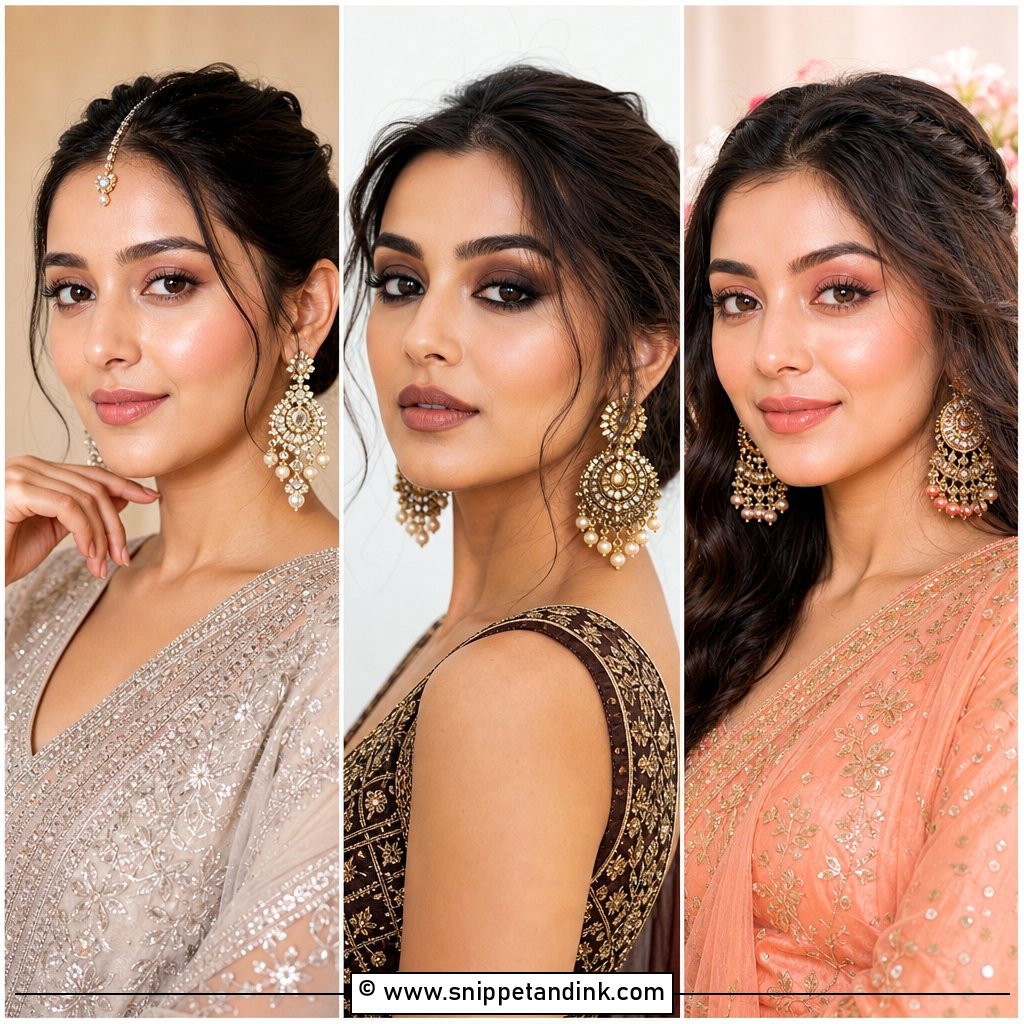
Orange silk is loud on its own. The makeup should warm the face, not add more volume. Copper, bronze, soft gold and caramel brown on the eyes pull out the richness of the fabric, with black liner and lashes blended upward so the eye looks lifted. A warm satin base takes peach, coral or terracotta blush and a golden highlight applied lightly. Lips go coral rose, brick, peach brown or warm red. I’d steer away from cool pinks here; pink against orange is the clash that shows up most in daylight photographs.
16. South Indian Wedding Makeup With Pastel Saree
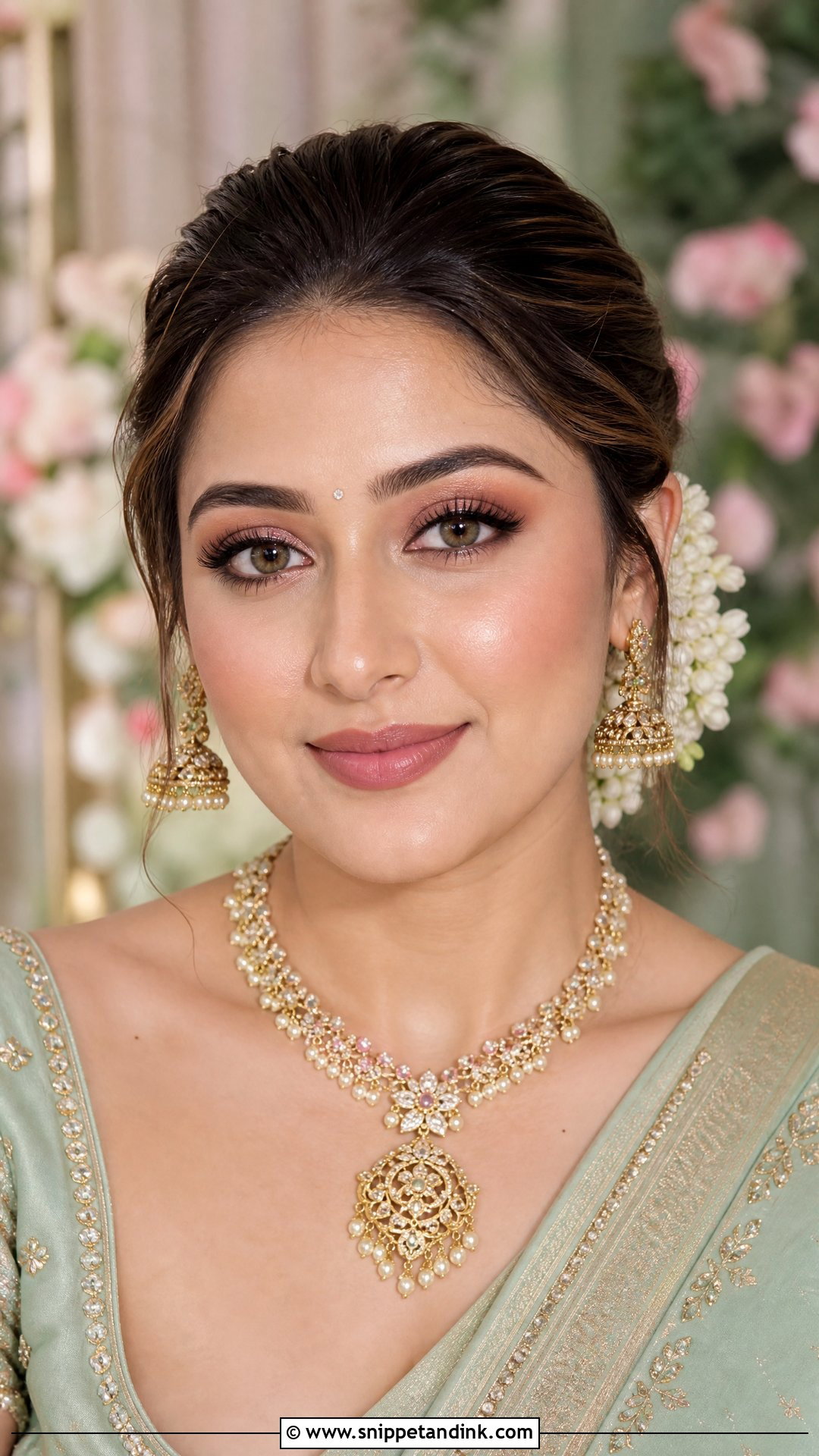
Soft shouldn’t mean invisible, and that balance is what pastel sarees ask for. A sheer glow, gentle definition and fresh lip color keep the face bridal. I use champagne, rose gold, soft peach or light bronze on the eyes, with brown or black-brown liner rather than a thick black wing. Skin should look smooth and hydrated with pink-peach blush and a refined highlight, and a rose nude, peach pink or soft mauve lipstick sits well against pastel pink, mint, lavender, powder blue and ivory. My one warning: pale fabric makes under-eye shadows and redness easier to see, so color correction matters more here than with a jewel-toned silk.
17. South Indian Wedding Makeup With Temple Jewelry
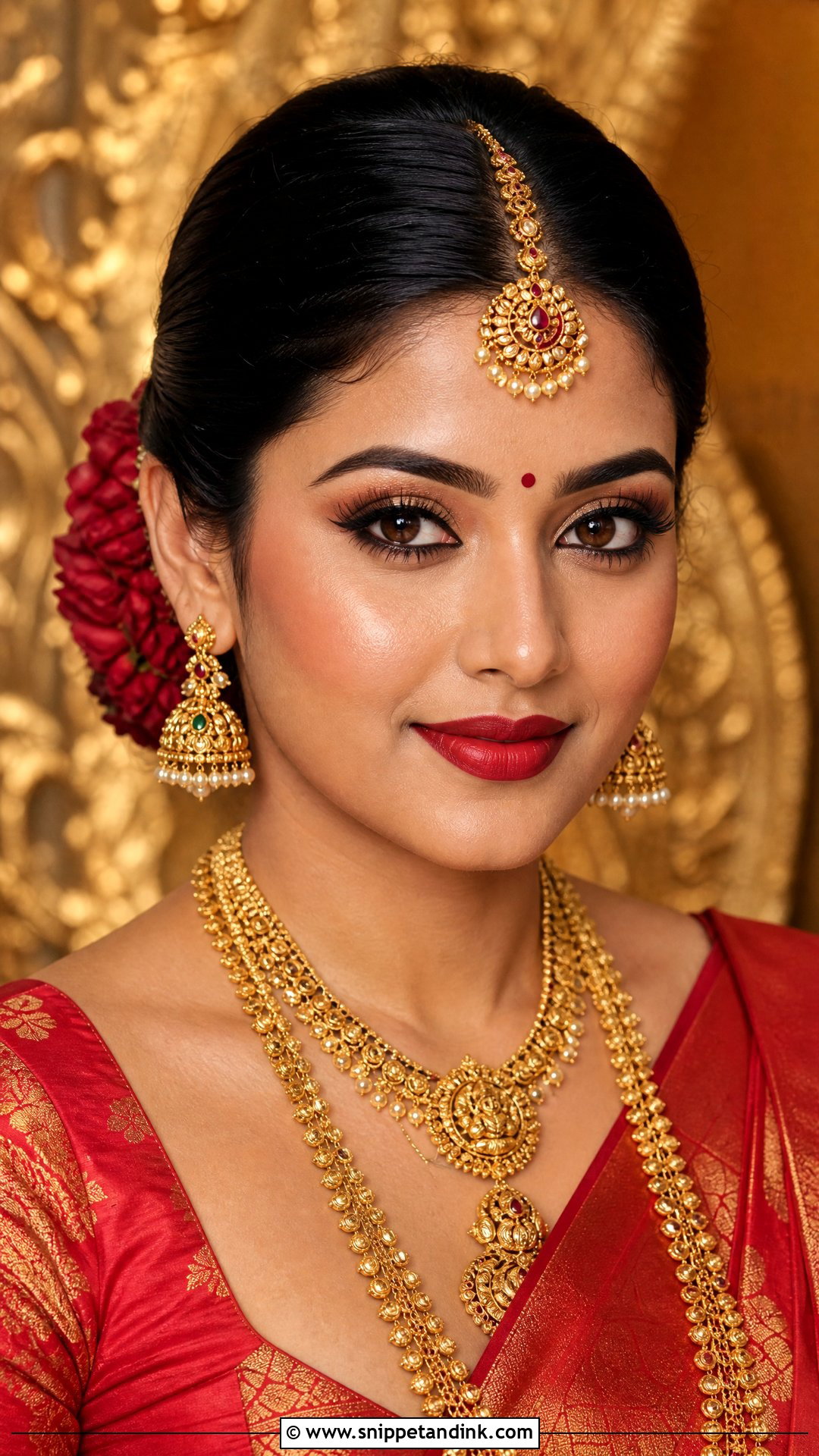
A face that’s too soft simply disappears under temple jewelry. A polished satin base, structured brows, black liner and defined lashes give the features enough presence beneath all that gold. Antique gold, bronze, copper or warm brown on the eyes, not bright color. A little contour, then rose, peach or terracotta blush, and a red, brick, rose or deep nude lip. Something I do every time: finish and set the base before the necklaces go on, because layered chains rub foundation off the collarbones and leave patches that show in every portrait. Traditional buns, jasmine and silk complete the picture.
18. South Indian Wedding Makeup With Jasmine Hair
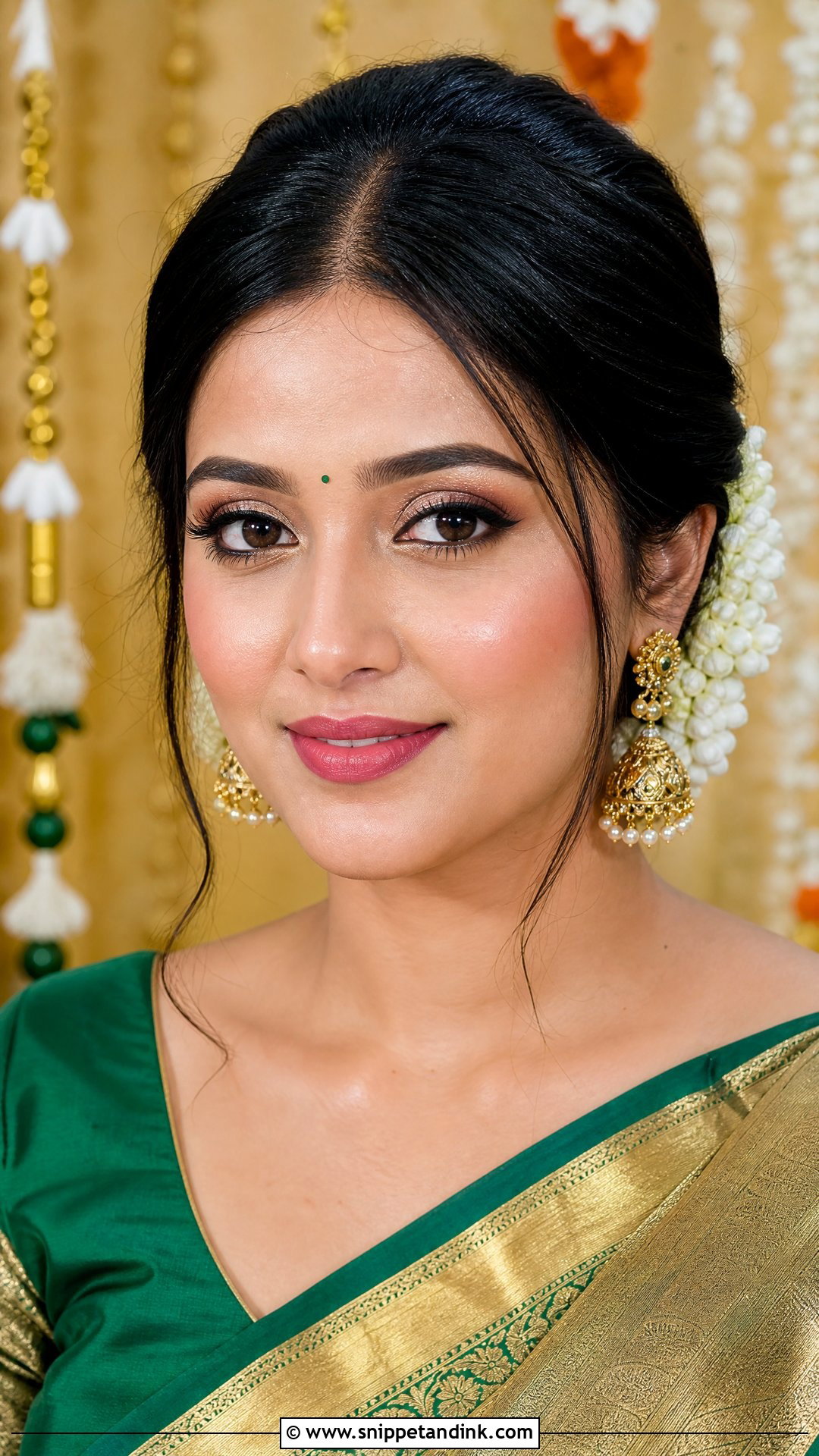
Jasmine softens the whole silhouette, and I let the face echo that. Skin goes radiant in satin or dewy with peach or rose blush; eyes take soft gold, bronze or champagne with black liner and curled lashes; brows are defined without hard edges. The lip follows the saree, from pink rose and coral to red or warm nude. Fresh strings are heavy, sit close to the neck and ears, and carry moisture, so I set the base well along the hairline and behind the jaw where the flowers rest. Braids, low buns and floral garlands all suit this face, and it holds up in close portraits.
19. South Indian Wedding Makeup For Dark Skin
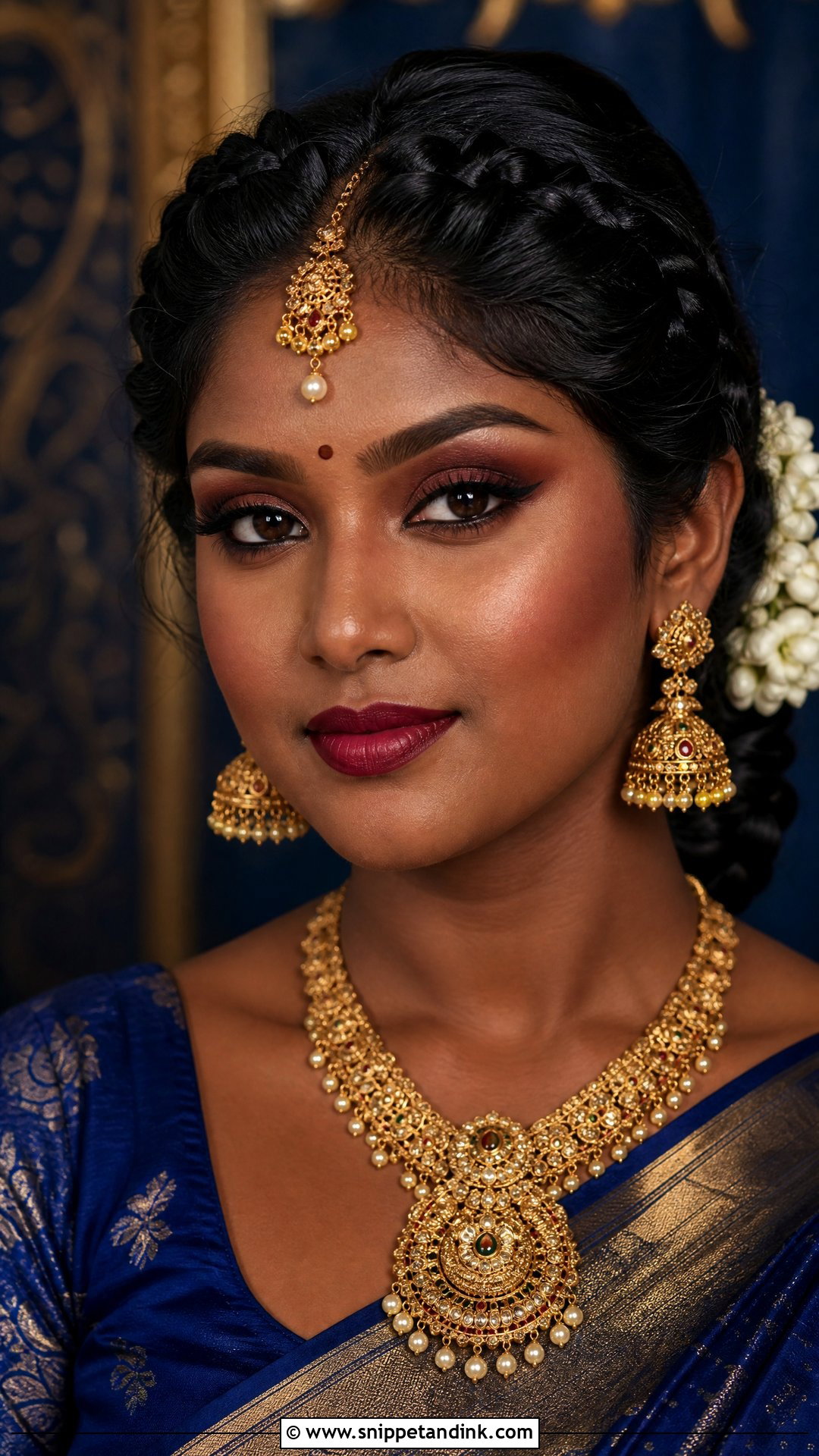
Deeper skin carries rich pigment and warm metallics wonderfully, and South Indian wedding makeup for dark skin works when the base truly matches. The problem I correct most often is a foundation chosen a shade or two light, which turns grey under flash. Match the undertone exactly, then brighten only the center of the face with concealer. Gold, copper, bronze, chocolate, burgundy and plum shadows look gorgeous on deeper skin, with black liner, full lashes and softly filled brows. Blush in berry, terracotta, deep coral or warm rose; lips in ruby, wine, brick, cocoa nude or deep rose.
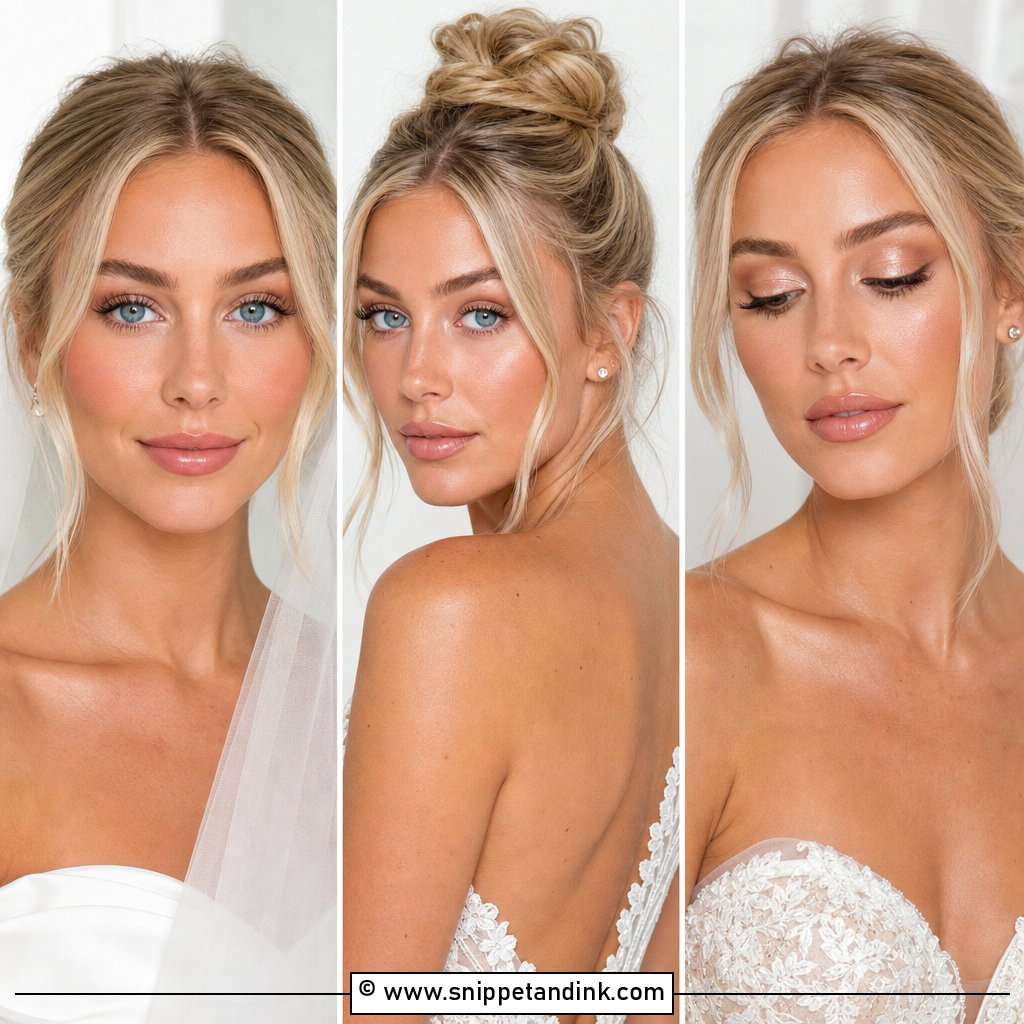
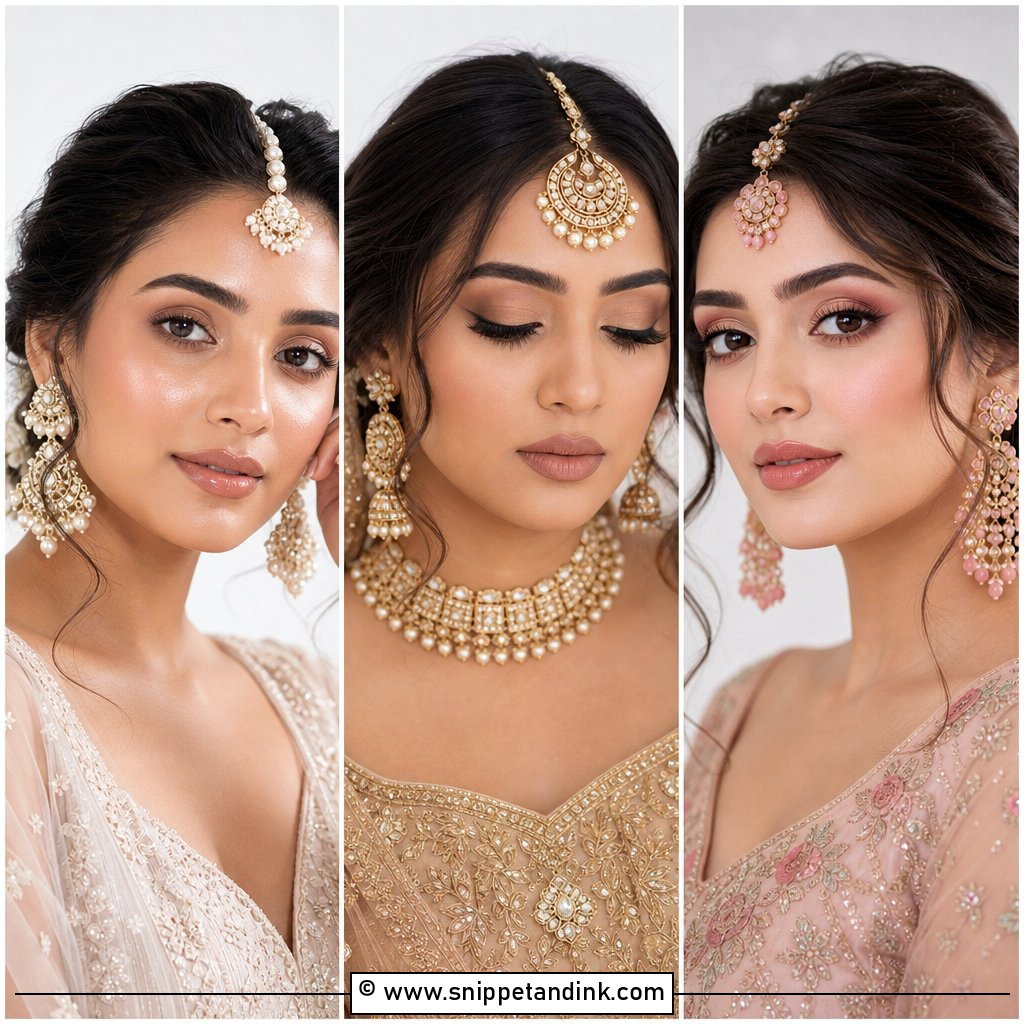
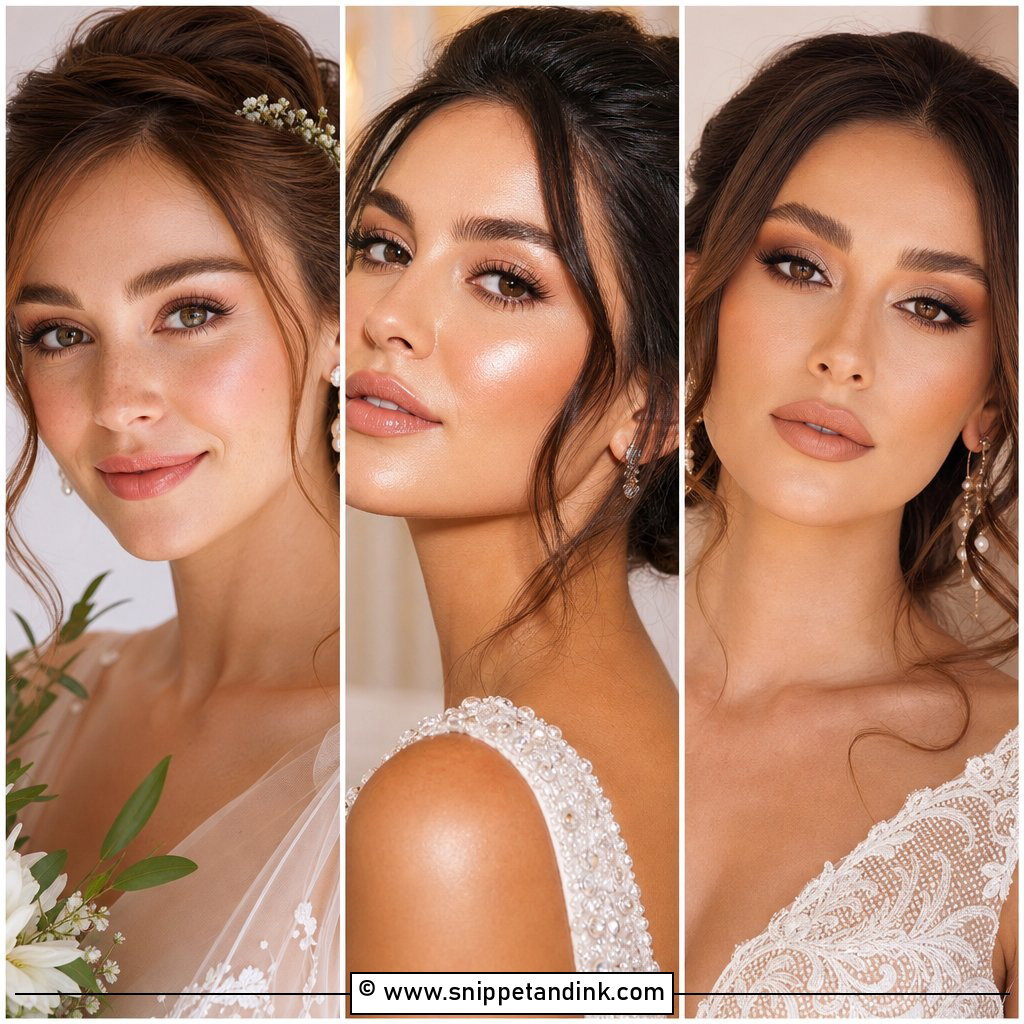
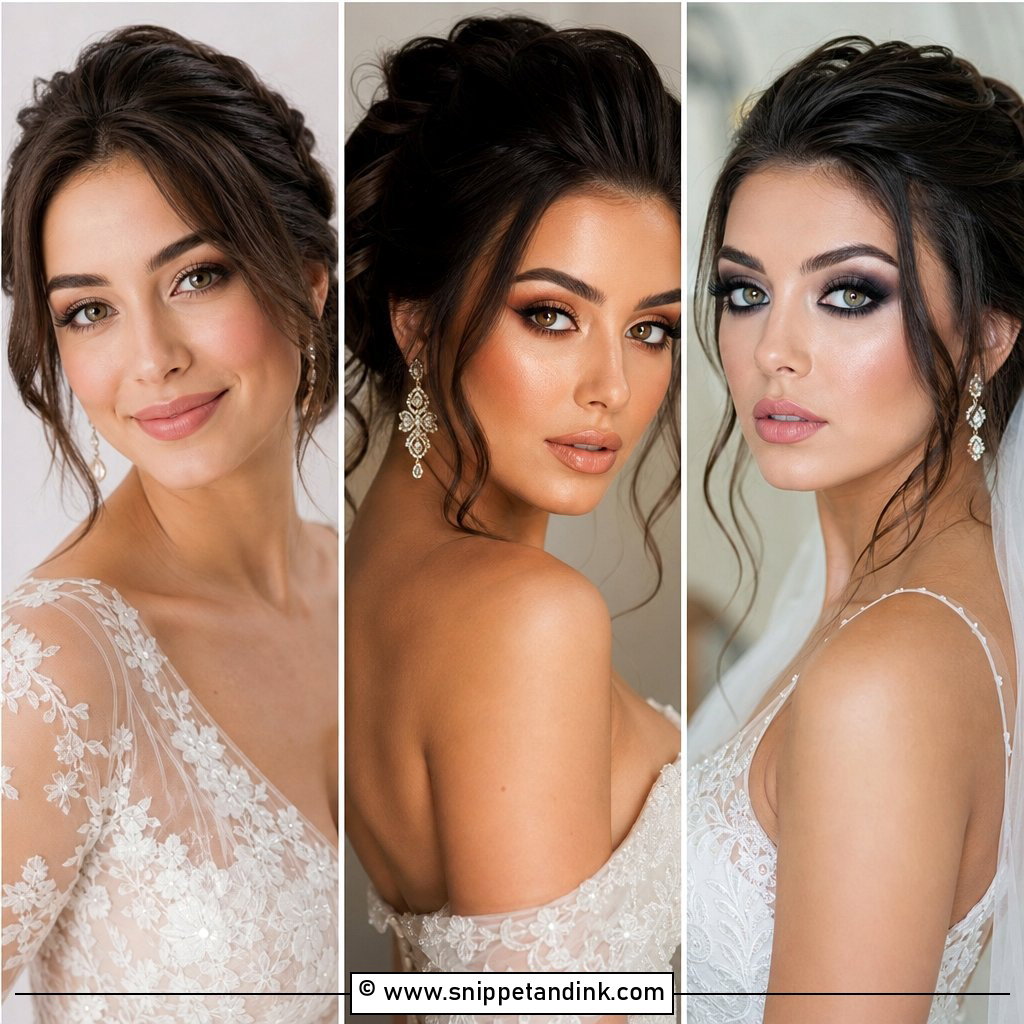
20. South Indian Wedding Makeup For Natural Look
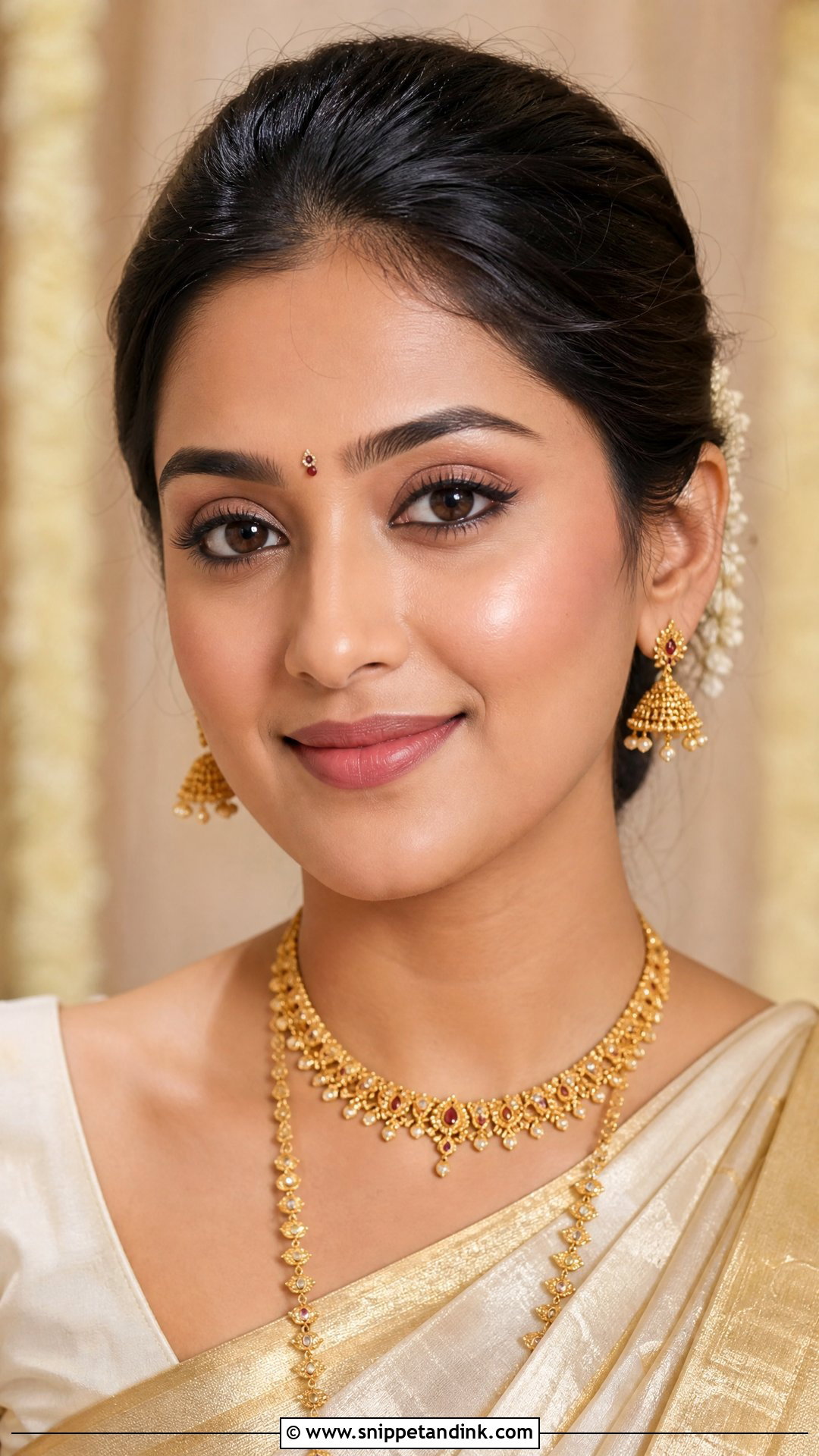
Natural bridal makeup is not bare skin. It’s careful, thin layering so you still look like yourself in photos, only rested and defined. Prep the skin, use light-to-medium coverage and conceal only where needed. Soft brown, champagne or muted gold on the lids with thin liner and natural lashes; brows brushed and lightly filled. Cream blush in peach, rose or soft coral, a subtle highlight, and a tinted nude, rose or peach lip. Even if you dislike the feel of makeup, I’d keep a waterproof mascara and a setting spray, because a minimal face shows tears and shine sooner than a full one does. Smaller ceremonies, daytime weddings and simple jewelry suit it.
What Gives Way First Between the Homam and the Thali
South Indian ceremonies are long and physical. You sit close to the homam fire, garlands go over your head and shoulders, relatives hug you, and there are almost always tears around the kanyadaanam and the thali tying. In my experience the base around the nose and the lower lash line are the first things to go.
I keep the lower lash line to a waterproof kajal with very little shadow, since that’s where tears and sweat travel. Misting setting spray between layers does more than piling on powder, which looks dry and grey by afternoon. And I ask the hairstylist to keep the jasmine and heavy hair ornaments clear of the hairline so they don’t drag foundation off the temples.
The small pouch your sister or cousin should carry
- Blotting papers, which lift shine without adding another layer
- Your exact lipstick and its matching liner
- Cotton buds and a little micellar water for smudged kajal
- A pressed powder for the T-zone only
- Spare lash glue in case an outer corner lifts
Where the Album Shows What the Mirror Hid
The most common problem is a face that doesn’t match the neck and hands. With a deep blouse and layered necklaces, a lighter face is obvious in every portrait, so the base must be the right undertone and carried down to the collarbones. The second is shine everywhere: gold lids, gold highlighter and gold zari together flatten the face in daylight. I pick one place for shine and keep the rest satin.
Brows drawn too sharp and lips overlined well past the natural edge also look harsher in close-ups than in a mirror. Then there’s the forehead. Kumkum and a maang tikka sit there all day, so the base underneath needs to be set firmly or it smears the moment the tikka shifts.
A Face Planned Around the Saree, Not a Trend
There isn’t one correct South Indian bridal face. Red lips with gold lids have lasted for good reason, but a nude lip, a dewy base or a warm smoked eye can be just as right for the bride wearing it. I always start from the saree, the jewelry and the hour of the muhurtham, then ask how much makeup you actually enjoy wearing. Plan the base, eyes, cheeks, lips, hair and jewelry as one picture rather than separate choices. If the face still looks like you at the trial and still looks fresh a few hours later, you have your look.
You'll Like These Ideas:


Leave a Reply