
Kohl-rimmed eyes, a glowing base and a lip that holds its own against heavy gold are still at the heart of an Indian bridal face. What’s changed is how the face is built. Brides now want makeup that breathes through a long muhurat, matches the specific lehenga and jewelry rather than a generic idea of bridal, and still looks like them in close-up portraits. Some want the classic red lip and gold lid. Others ask me for soft glam, a nude mouth or pastel tones for a modern reception. The Indian bridal makeup looks below run from traditional regional faces to minimal and contemporary ones, with the reasoning I use when I build each of them.
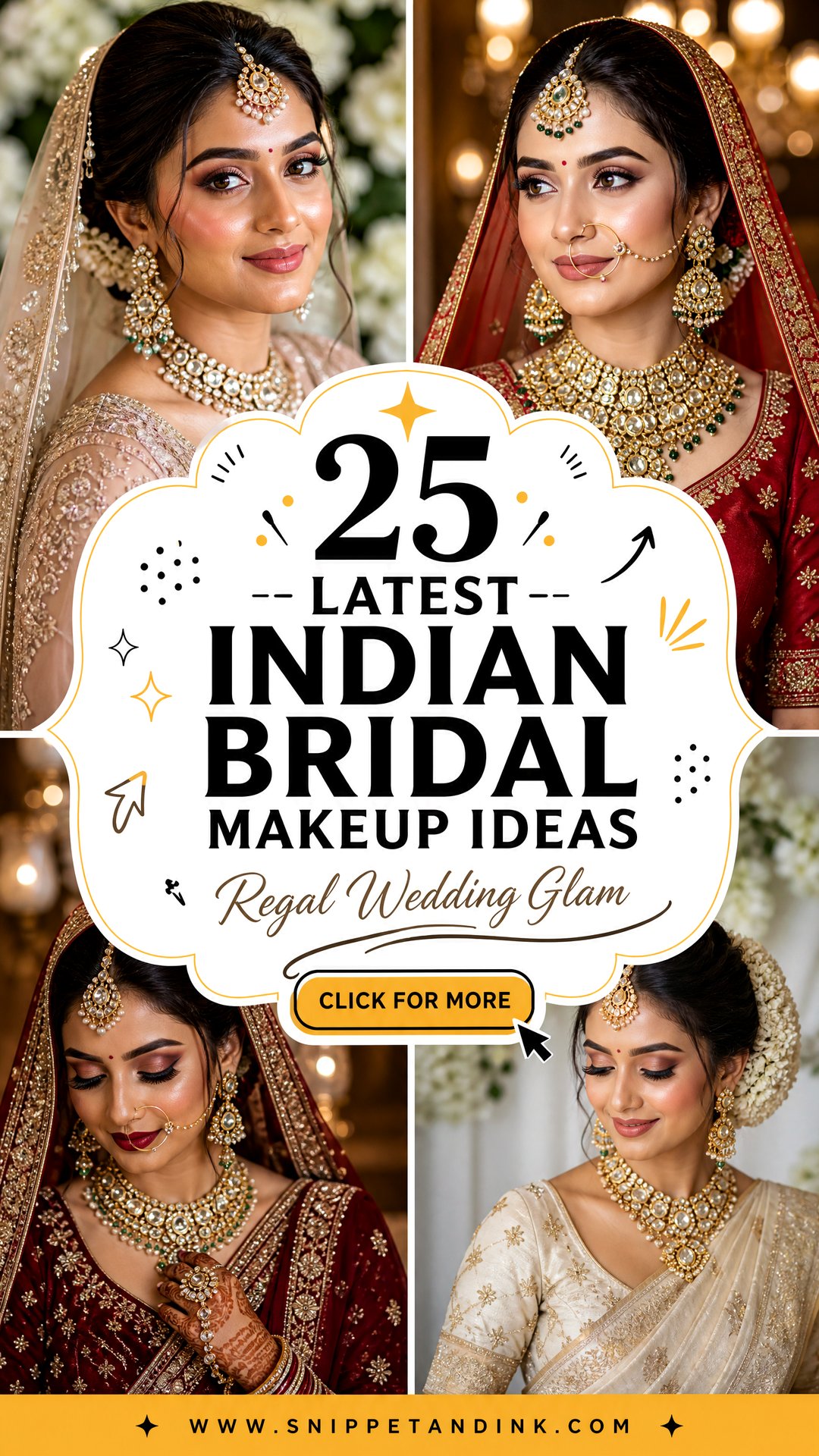
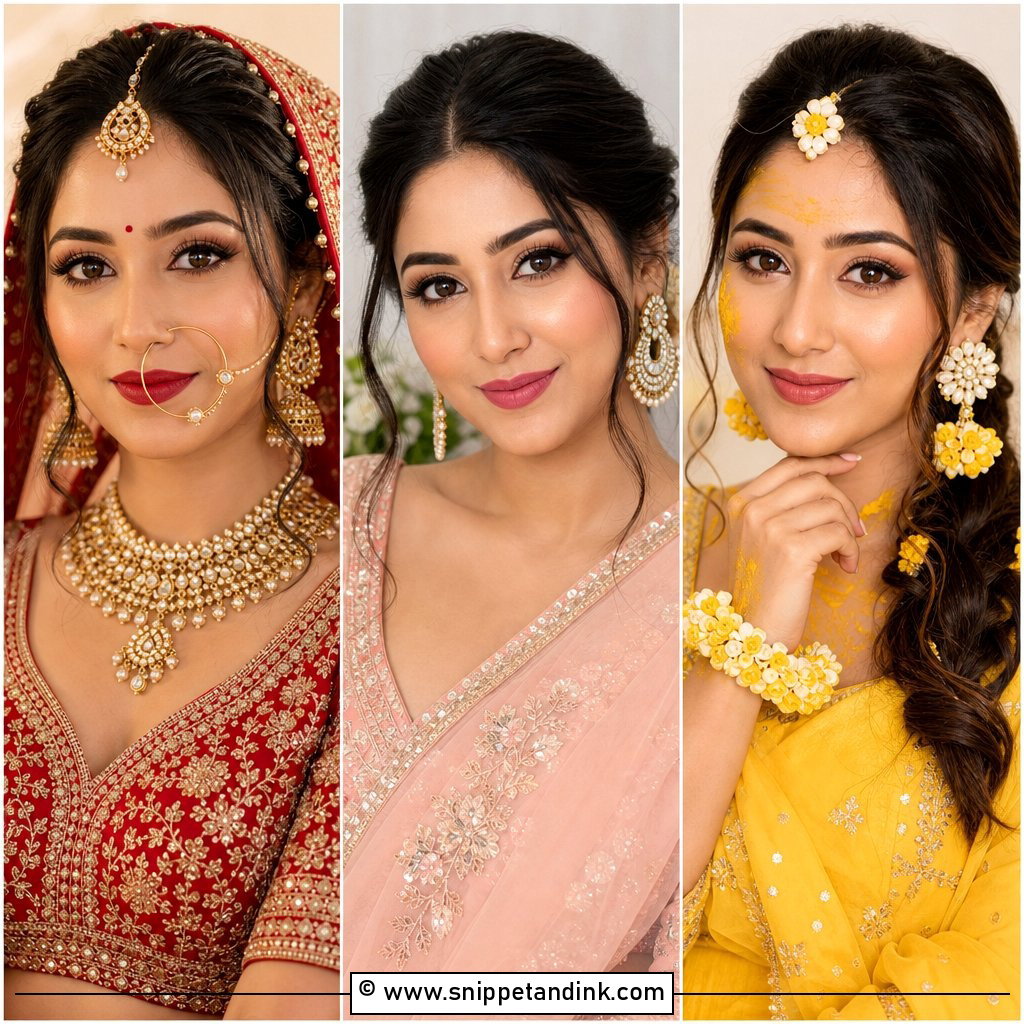
One Bride, Five Functions, Five Different Faces
Most Indian weddings I work on aren’t one look but several, spread over two to four days. Planning them together saves money and avoids five versions of the same face in your album. I sketch a rough order first, then decide where to go bold and where to hold back.
- Haldi: light, waterproof and cheap to lose. The paste goes everywhere.
- Mehndi: long-wearing, done before the henna, because your hands will be out of action for hours.
- Sangeet: sweat-proof and built for coloured stage light and dancing.
- Wedding: the most structured face, matched to the outfit and jewelry, built to last through rituals and photographs.
- Reception: the place to be modern, with a different lip, a sharper eye or a gown-friendly glam.
When you book, tell your artist how many functions fall on the same day. A morning ceremony followed by an evening reception usually means a rework rather than a fresh start, which needs time scheduled between them. I also ask brides to bring the actual outfits, or at least clear photos in daylight, to the trial.
1. Classic Red Lehenga Indian Bridal Makeup
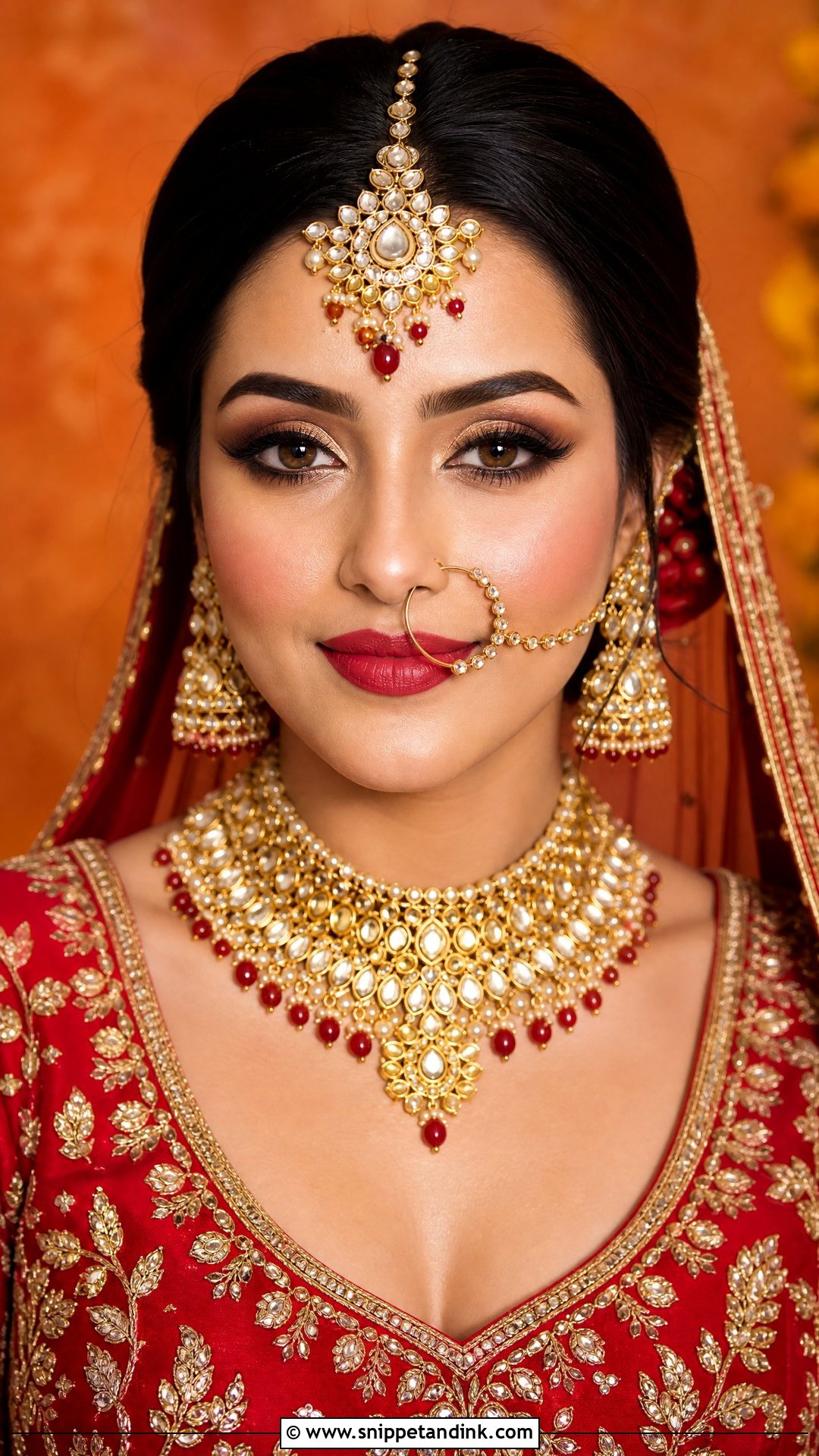
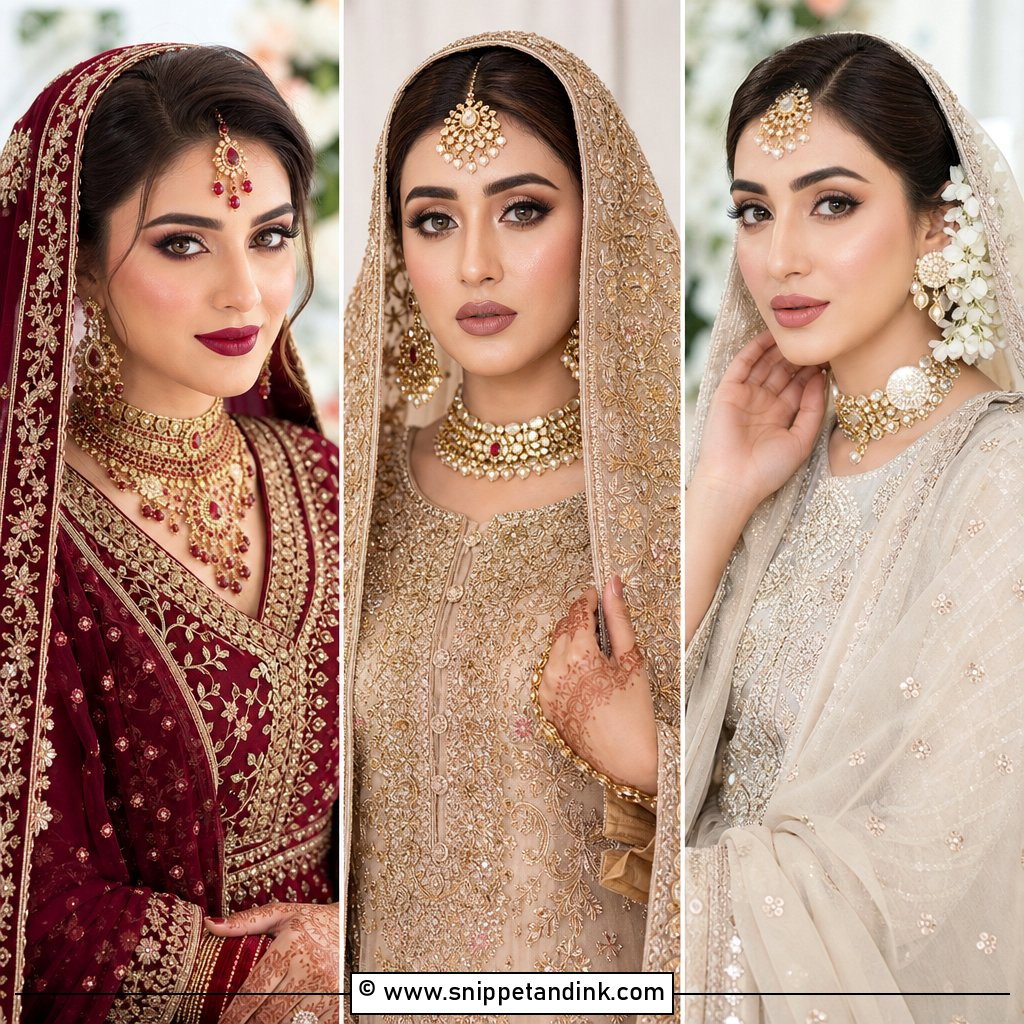
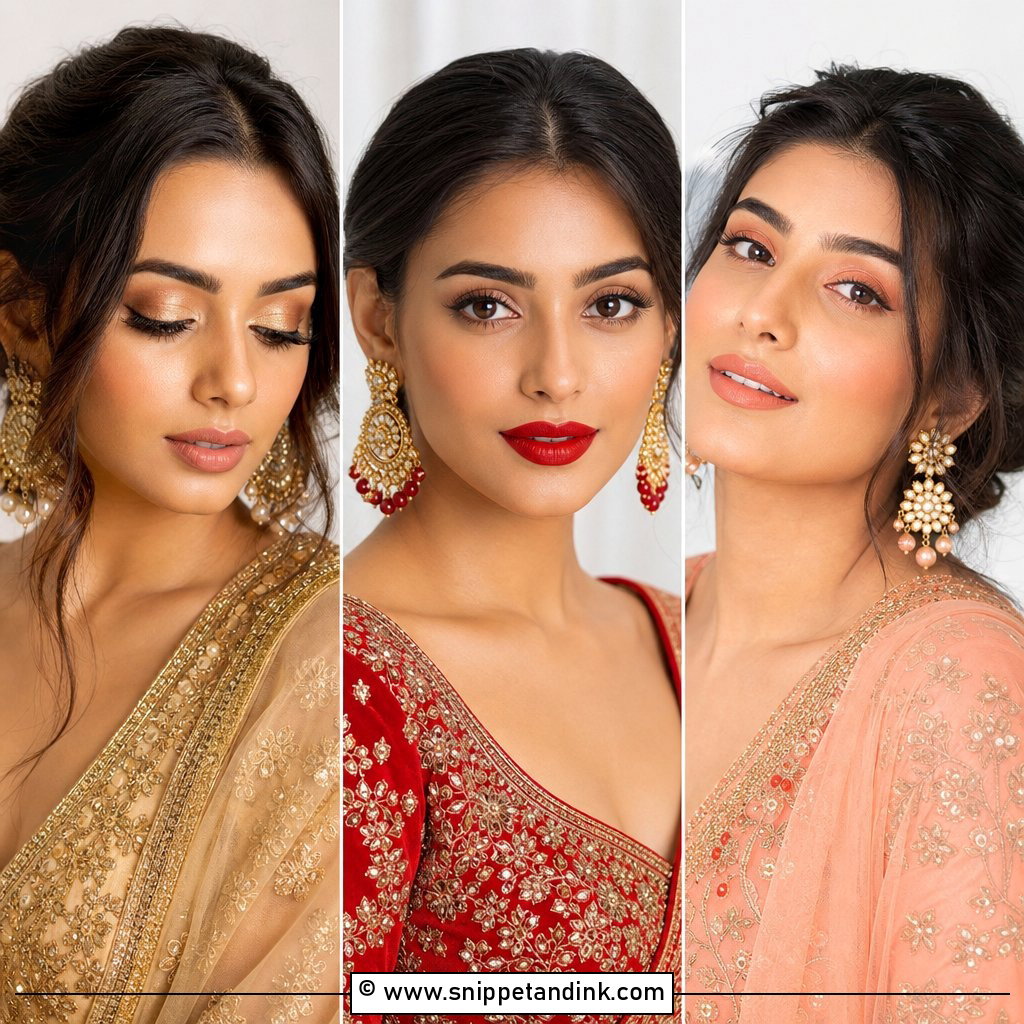
A red lehenga is already loud, so my job is to match its richness without stacking weight on the face. Warm gold on the lid, soft brown in the crease, a defined black line and full but feathery lashes. The base is a long-wear satin foundation with warm peach blush and a controlled golden highlight, because a strong strobe next to kundan or ruby jewelry turns into a shine spot under flash. A deep red or rose red lip ties the face to the outfit. I check the lipstick against the actual fabric in daylight, since a red that looks perfect in the shop can sit orange or pink beside the lehenga.
2. Dewy Skin Indian Bridal Makeup
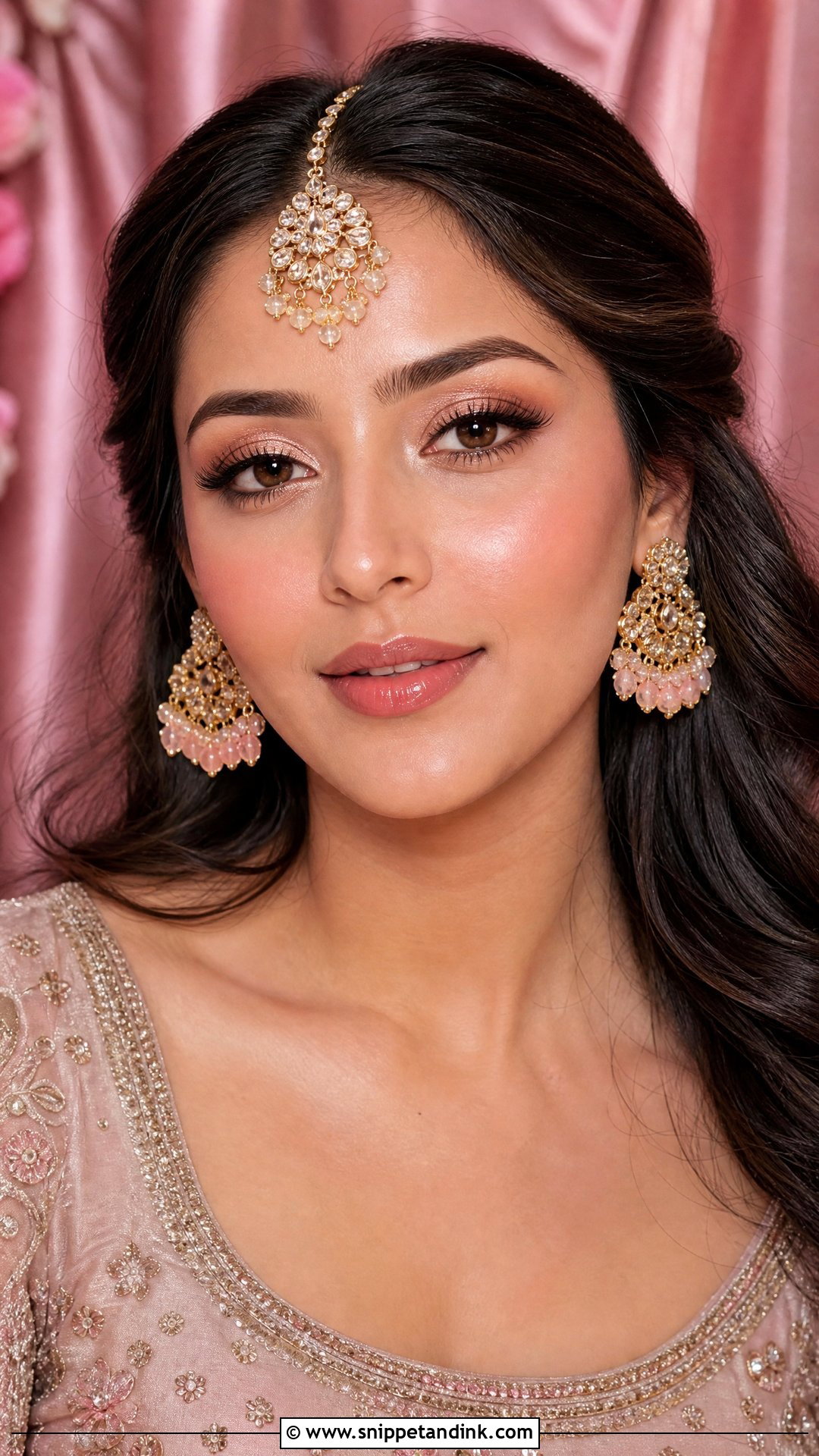
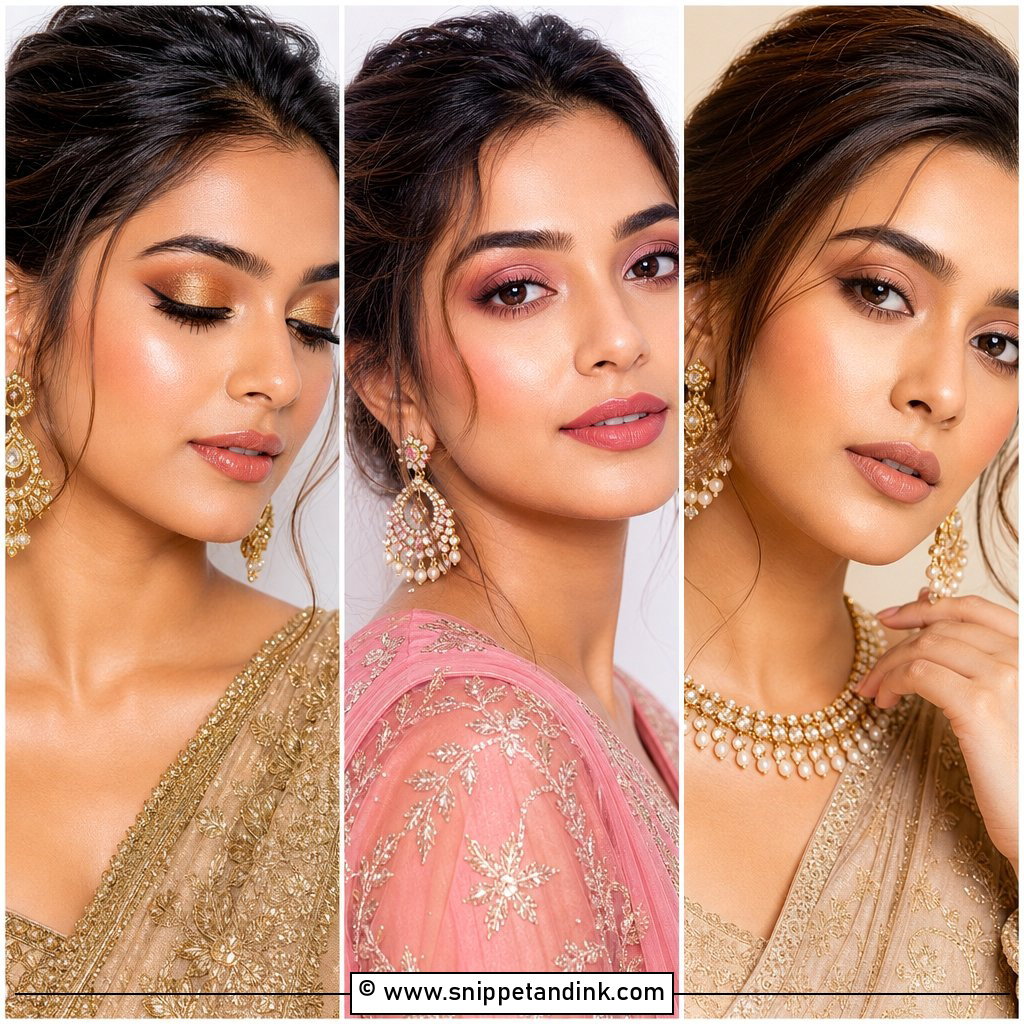
Glowing skin under a heavy outfit looks fresh, but only if the glow is planned. I start with a thorough skin prep, a hydrating primer, thin foundation layers and cream blush pressed into the cheeks. Champagne shimmer, a soft brown liner and lifted lashes keep the eyes light, and a nude rose or peachy pink lip balances it. Then I set only the T-zone and smile lines and place highlight on the cheekbones, brow bone and inner corners. On oily skin in a summer wedding I’d scale this back to satin, because true dew under a mandap and a heavy dupatta becomes shine by the pheras.
3. Matte Indian Bridal Makeup
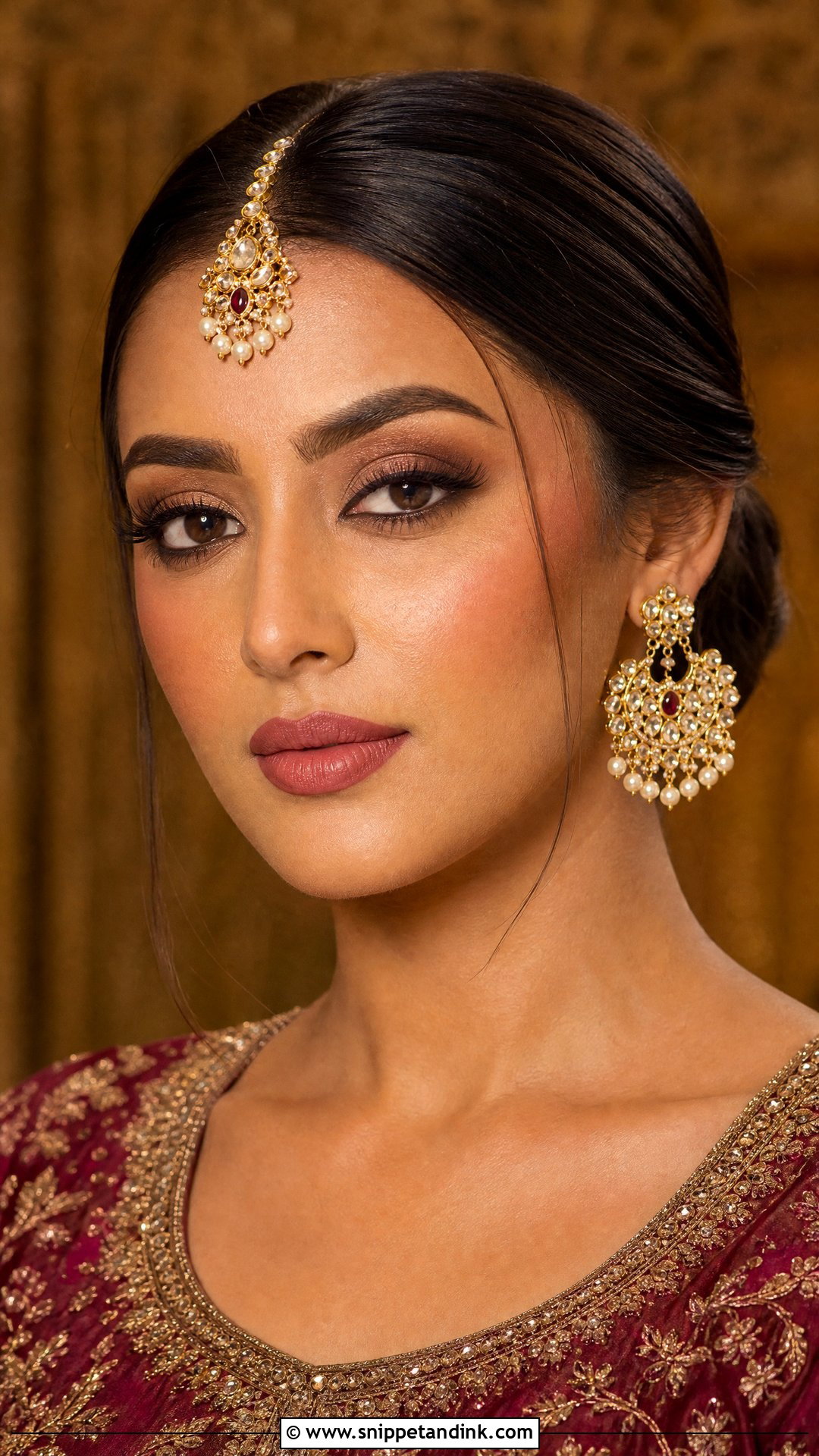
Matte is the finish I reach for when the ceremonies are long, the weather is humid or the bride’s skin gets oily by noon. A smoothing primer, a transfer-resistant foundation and a finely milled powder build the base, and I bring shape back with soft contour and matte blush so the face doesn’t flatten. Warm brown or bronze shadow defines the eyes with little sparkle, and a sharp wing or smoked kohl line adds structure. A long-wear matte lip in rose brown or brick red finishes it. It holds through rituals and hugs better than any other finish, though very dry skin needs extra prep so powder doesn’t catch on texture.
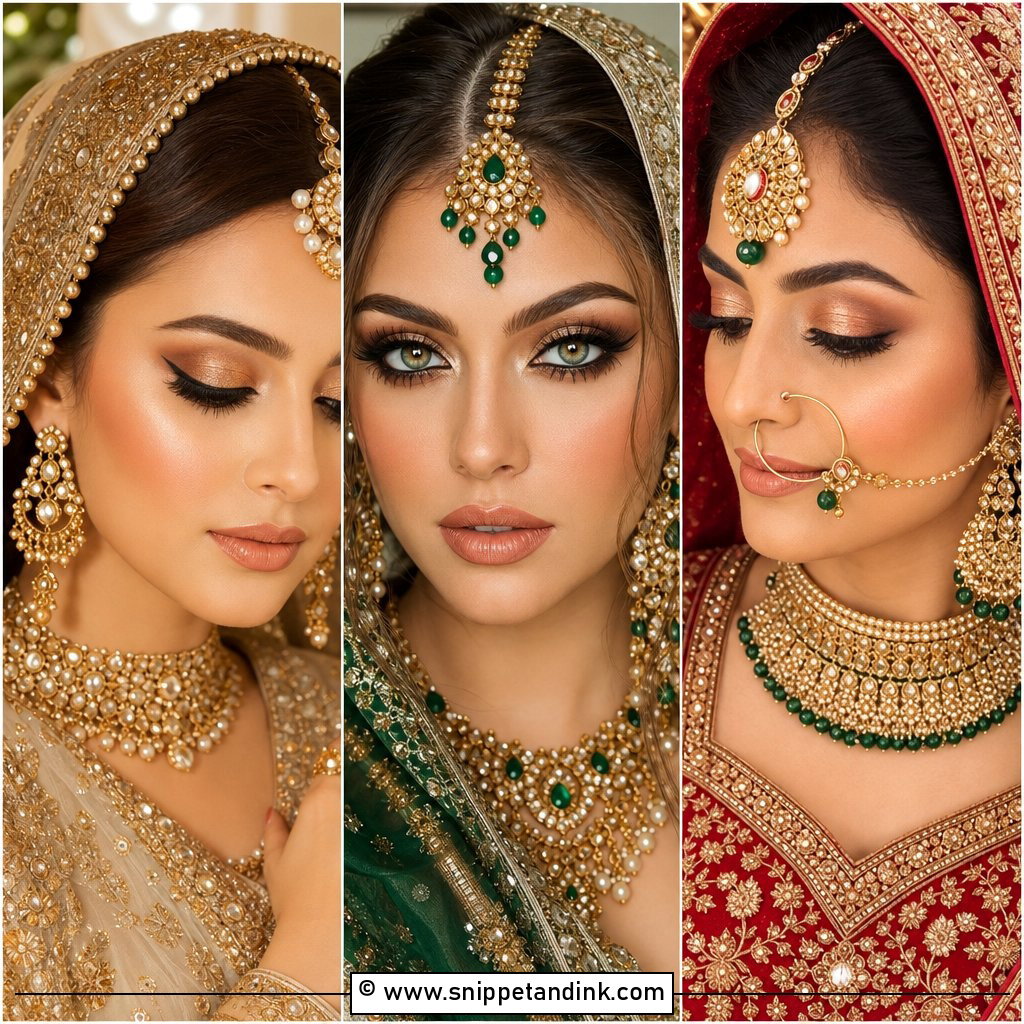
4. Gold Eye Indian Bridal Makeup
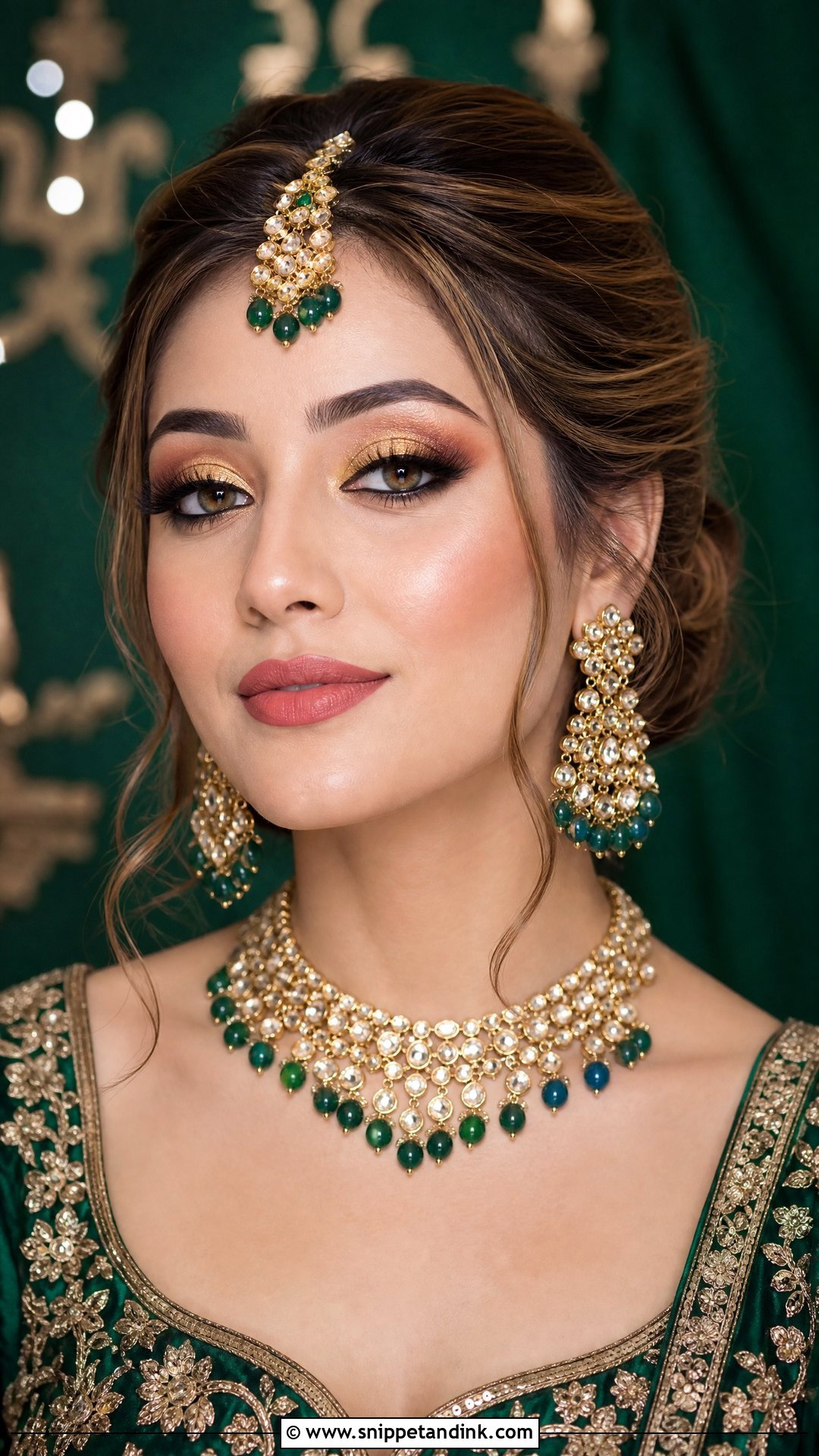
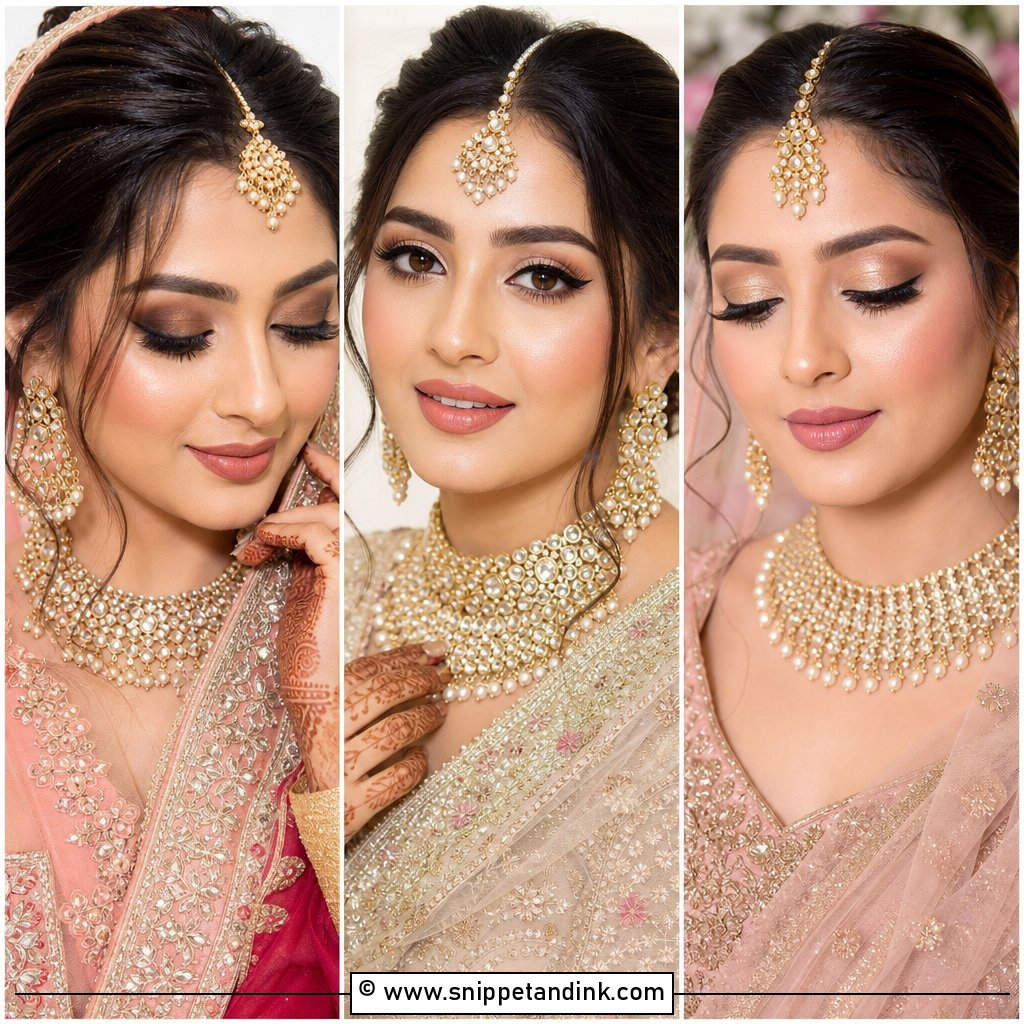
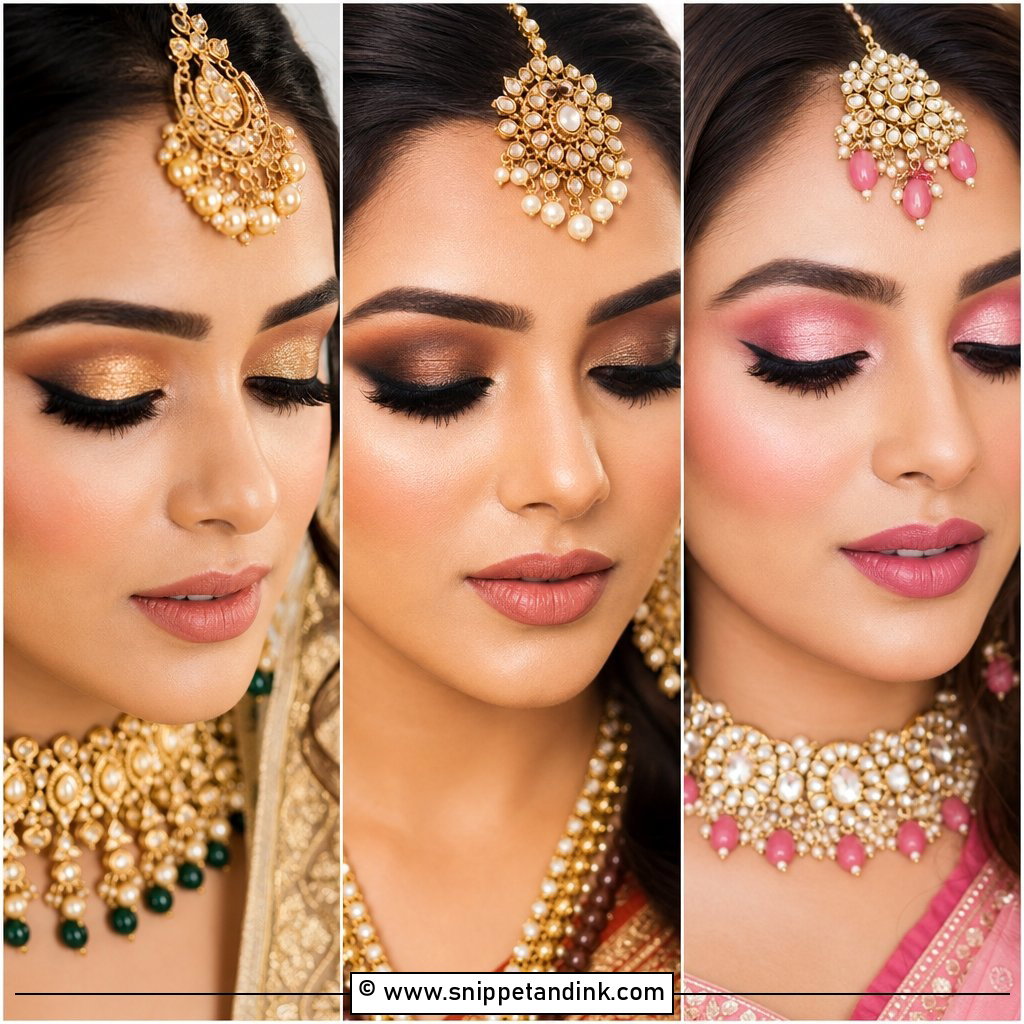
Gold eyes earn their popularity: they work with red, maroon, ivory, emerald, orange and champagne outfits alike. The lid gets a glowing gold, the crease a warm brown, and black kohl hugs the lash line. I choose the gold by skin depth: paler champagne gold on fair skin, a yellow gold on medium skin, a deep antique gold on darker skin, where pale gold can look ashy. Individual lashes or a soft strip keep the eye open. Satin or dewy skin depends on the ceremony time, and a nude brown or soft red lip sits easily with it.
5. Smokey Eye Indian Bridal Makeup
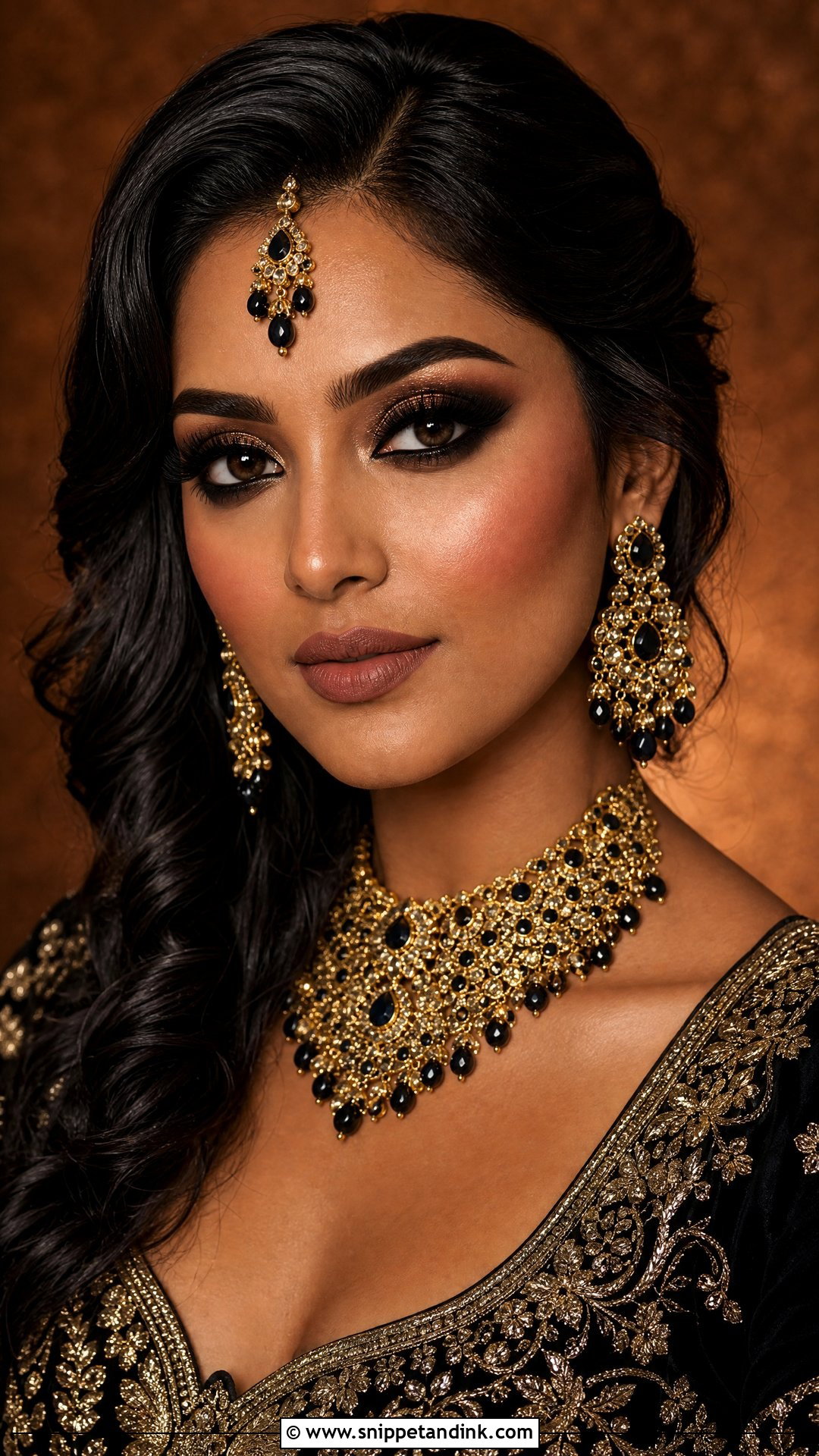
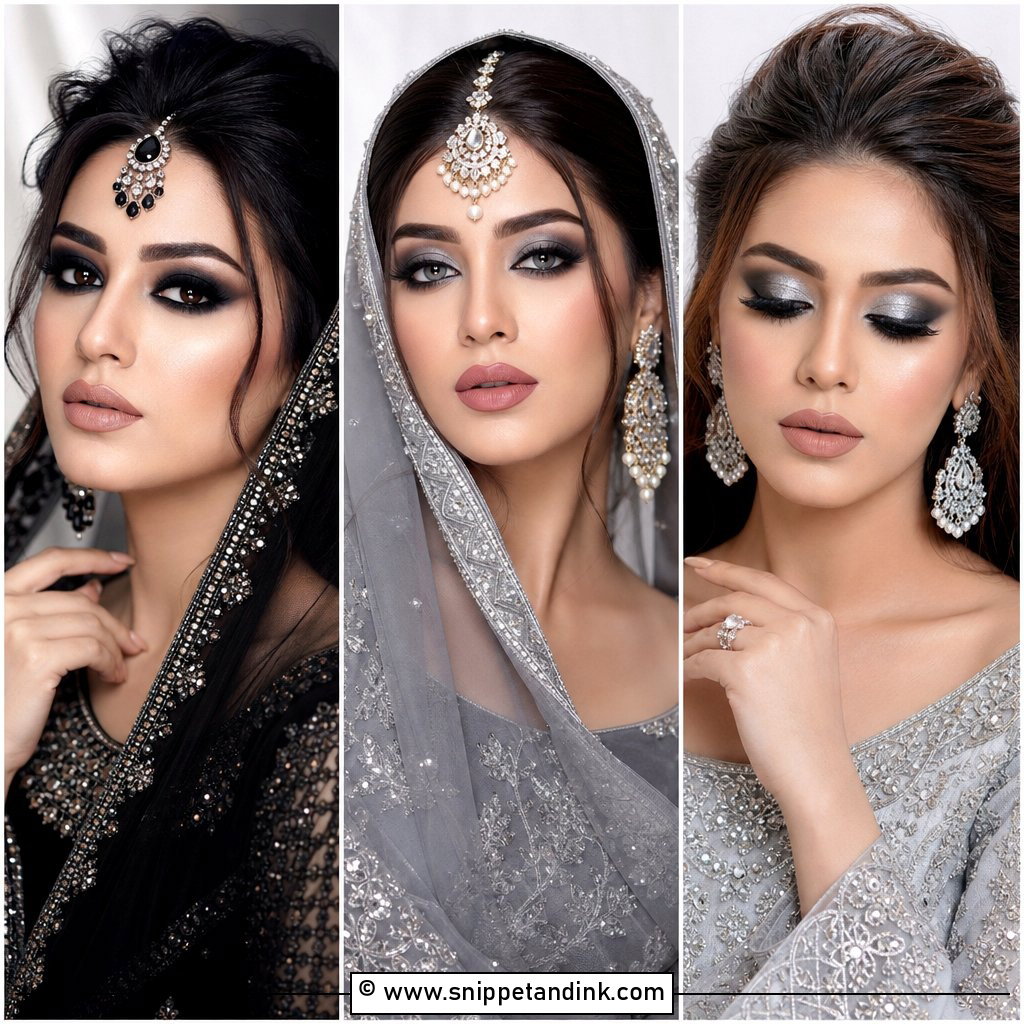
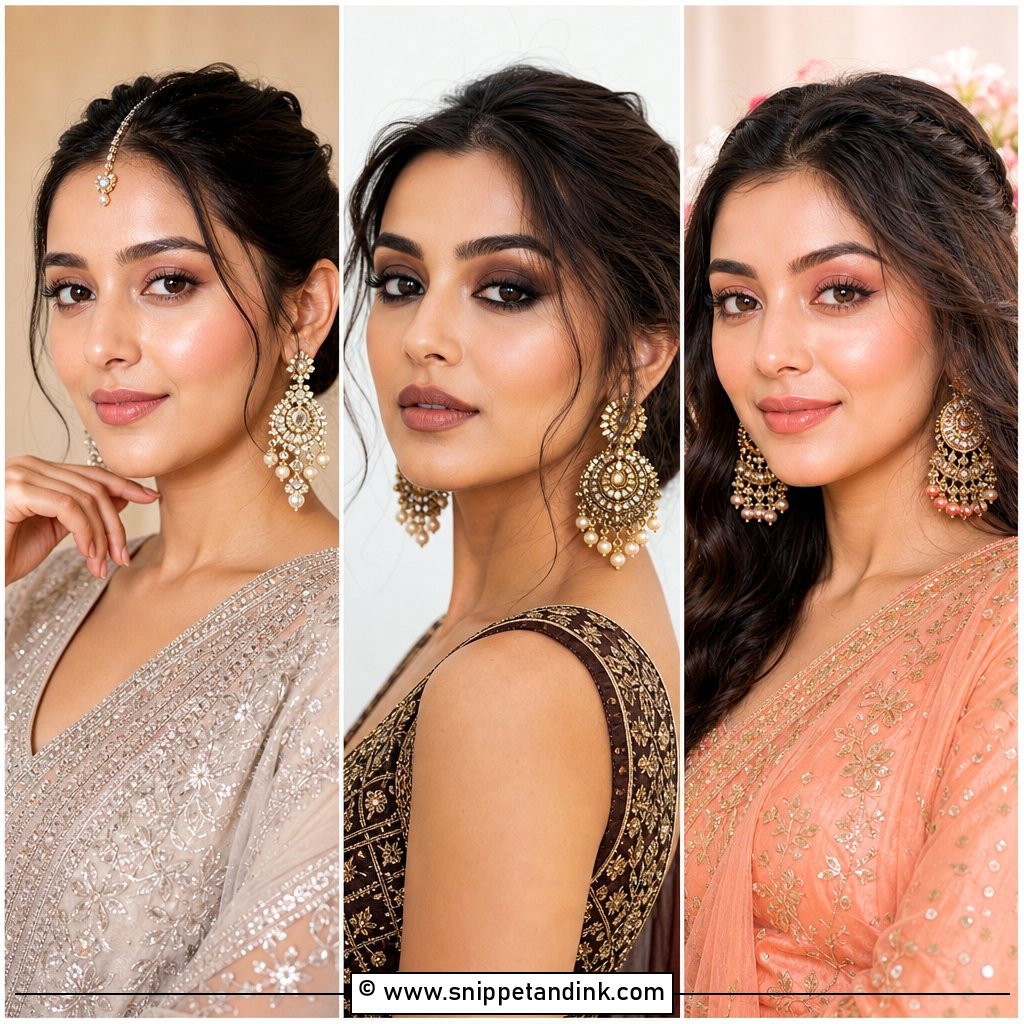
When a bride tells me she wants her eyes to do the talking, a smoked eye is where we go. I rarely use pure black; dark brown, bronze, plum or charcoal give depth without the tired, bruised look black can create in daylight. The lower lash line is the delicate part. I smoke it with a small pencil brush and set it with matching shadow, otherwise kohl travels into the under-eye after a few hours of tears and heat. Brows stay structured but soft, and the rest of the face stays clean with warm blush and a nude or muted rose lip. It’s my choice for evening pheras, velvet lehengas and reception gowns.
6. Nude Lip Indian Bridal Makeup
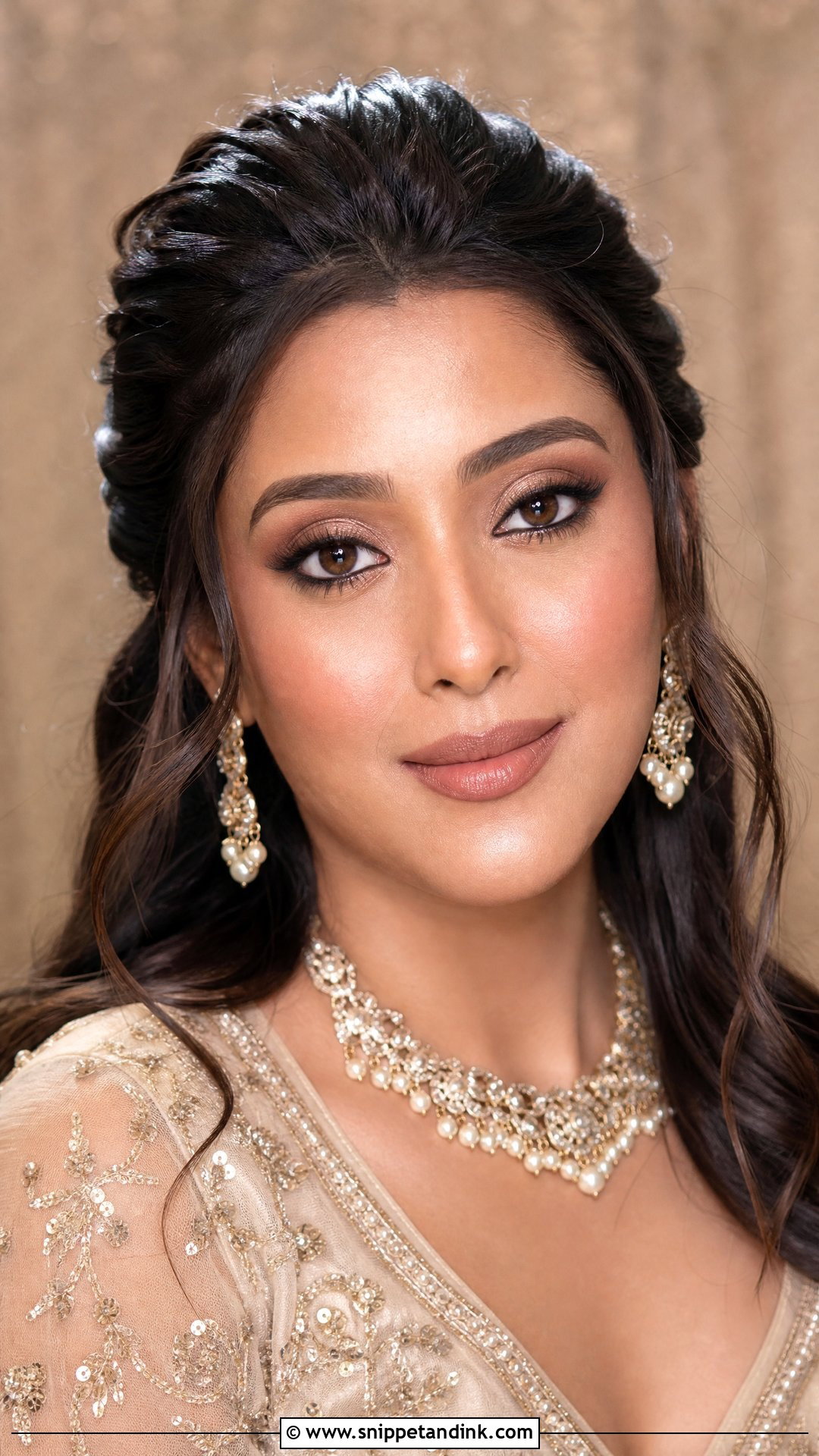
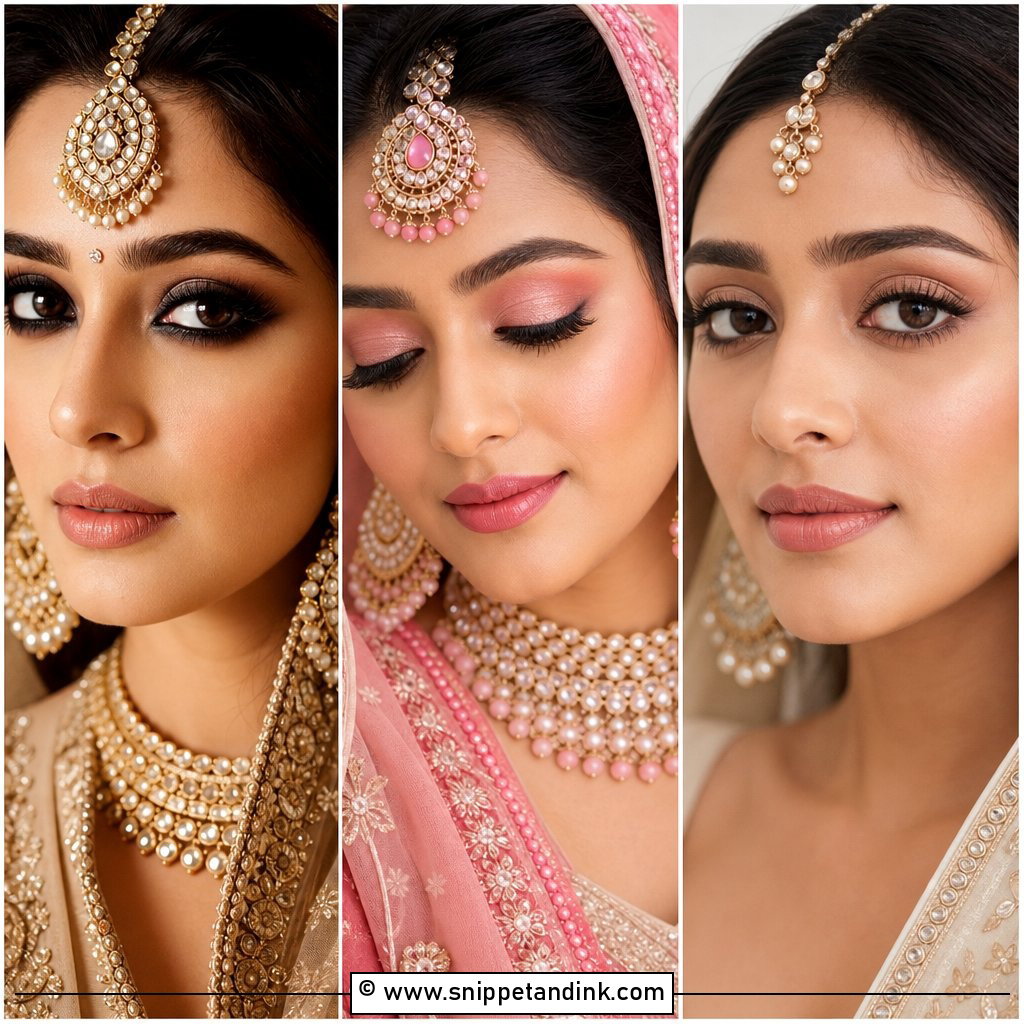
A nude lip reads as bridal only if the rest of the face has enough shape. I sculpt the skin, define the eyes with bronze shadow, black liner and curled lashes, and use blush more generously than usual. The lip shade follows undertone: pink beige or peach nude on fair skin, and caramel, rose brown, terracotta or mocha nude on medium to deep skin. The mistake I correct most often is a nude too pale for the bride’s skin, which makes her look unwell in photos. Line the lip a shade deeper and it holds its shape even when the lipstick fades.
7. Bold Red Lip Indian Bridal Makeup
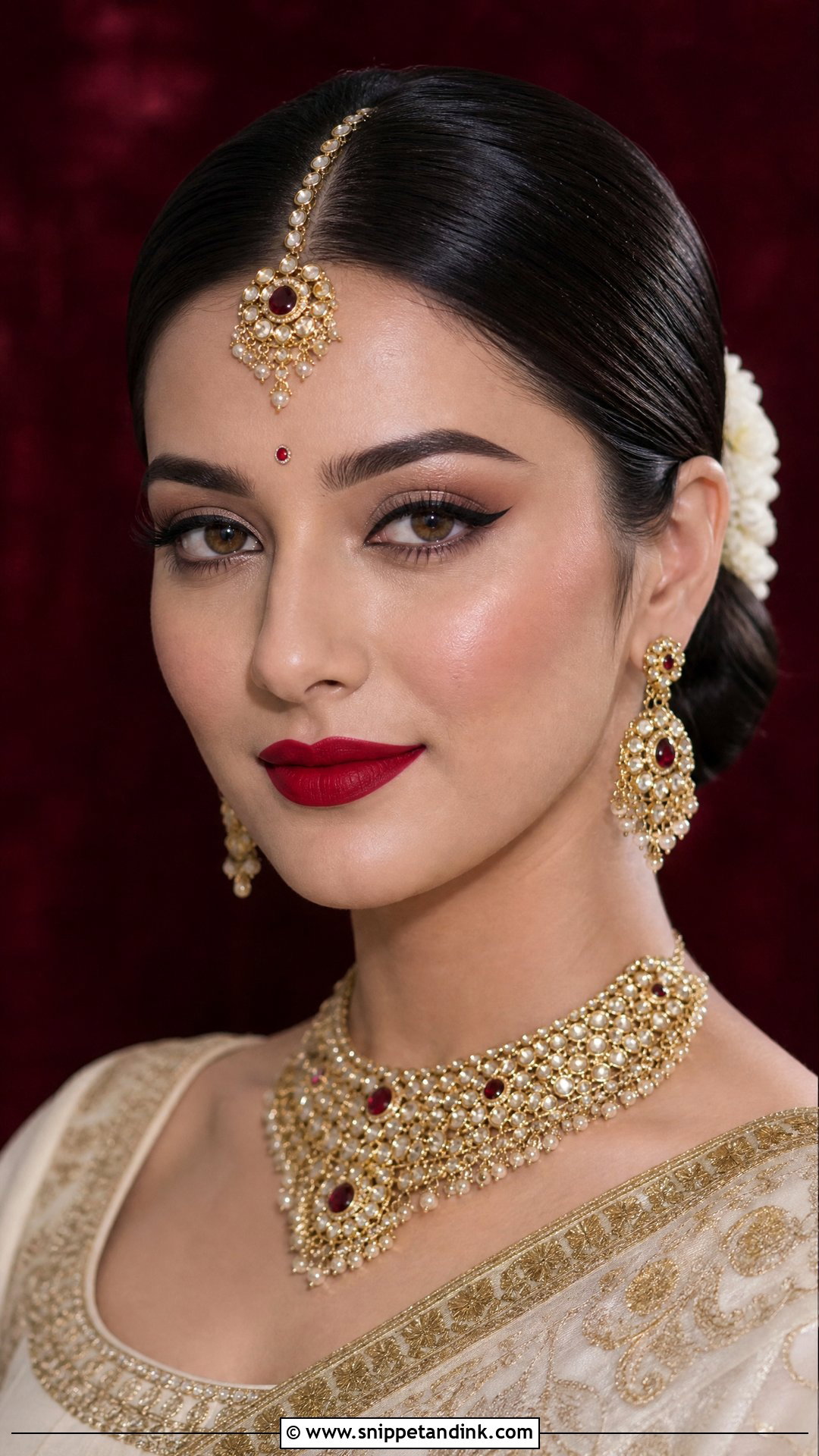
Few faces feel as powerful as a red lip with a perfected base, neat brows and eyes that stay out of its way. The red needs to match outfit and undertone together: blue red looks crisp, while brick, chilli and maroon reds feel warmer and more traditional. Eyes stay in soft gold, matte brown or a clean wing. I line and fill the whole lip with liner first, which stops bleeding into fine lines, then apply a satin matte formula. A nath sitting against the upper lip will rub red off the corner, so I check its position during the trial.
8. Soft Glam Indian Bridal Makeup
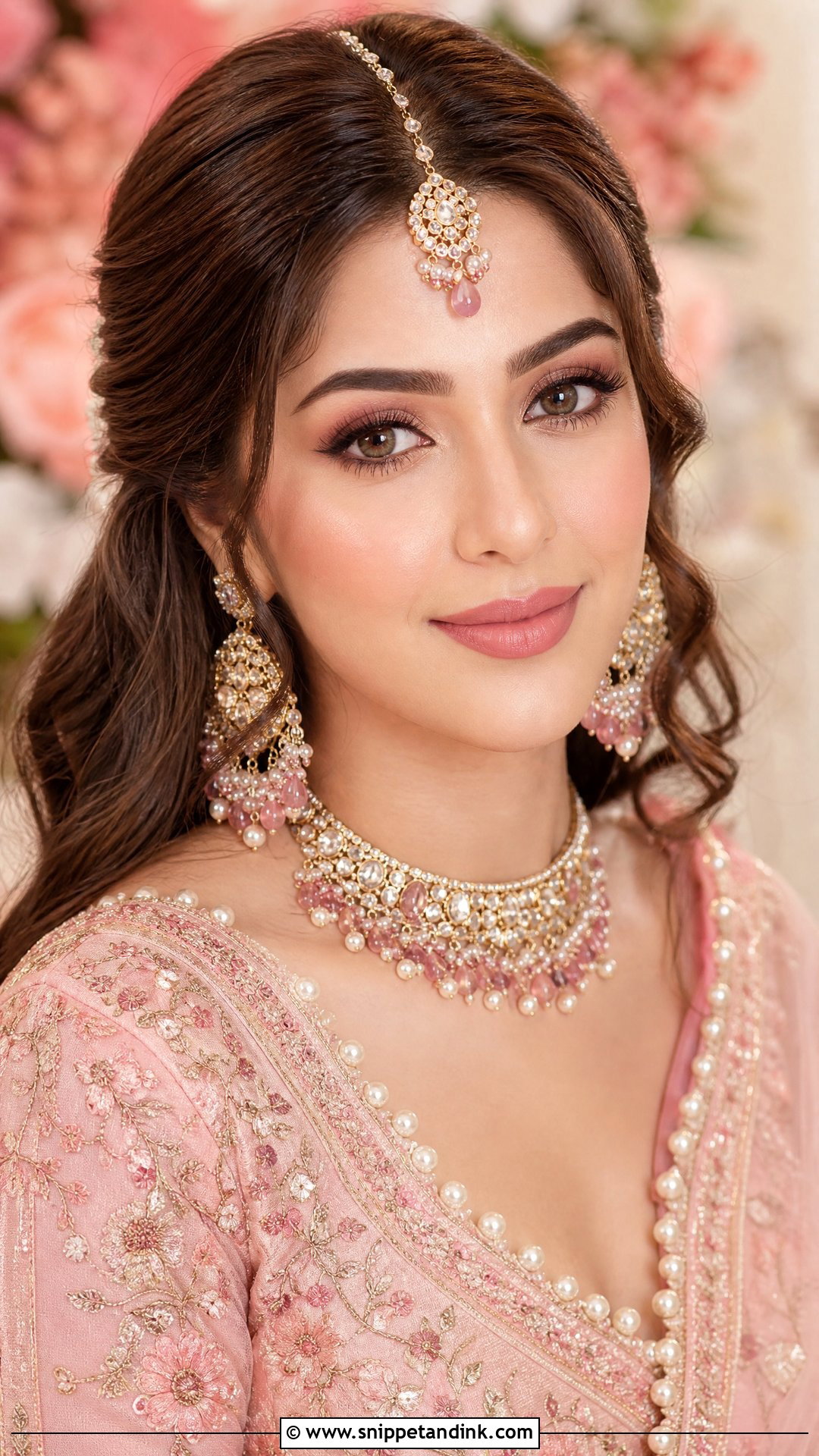
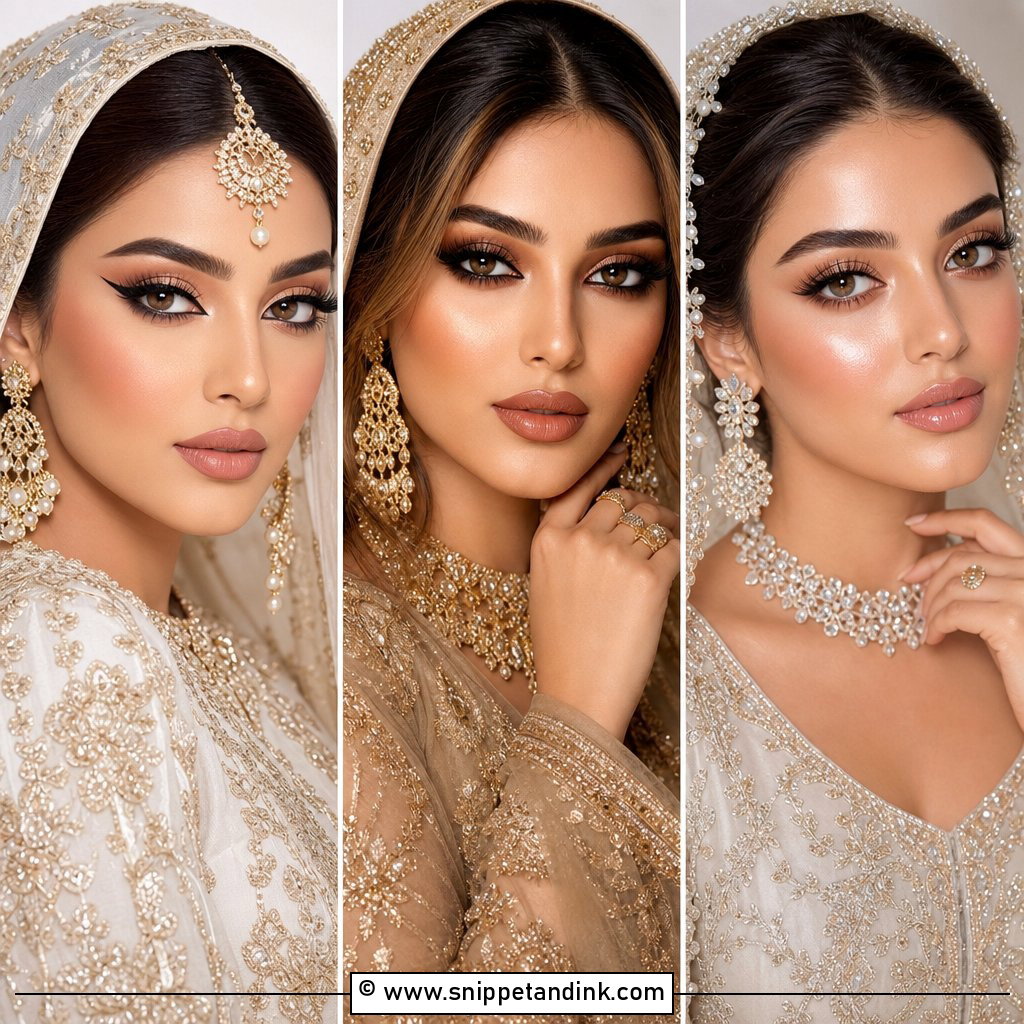
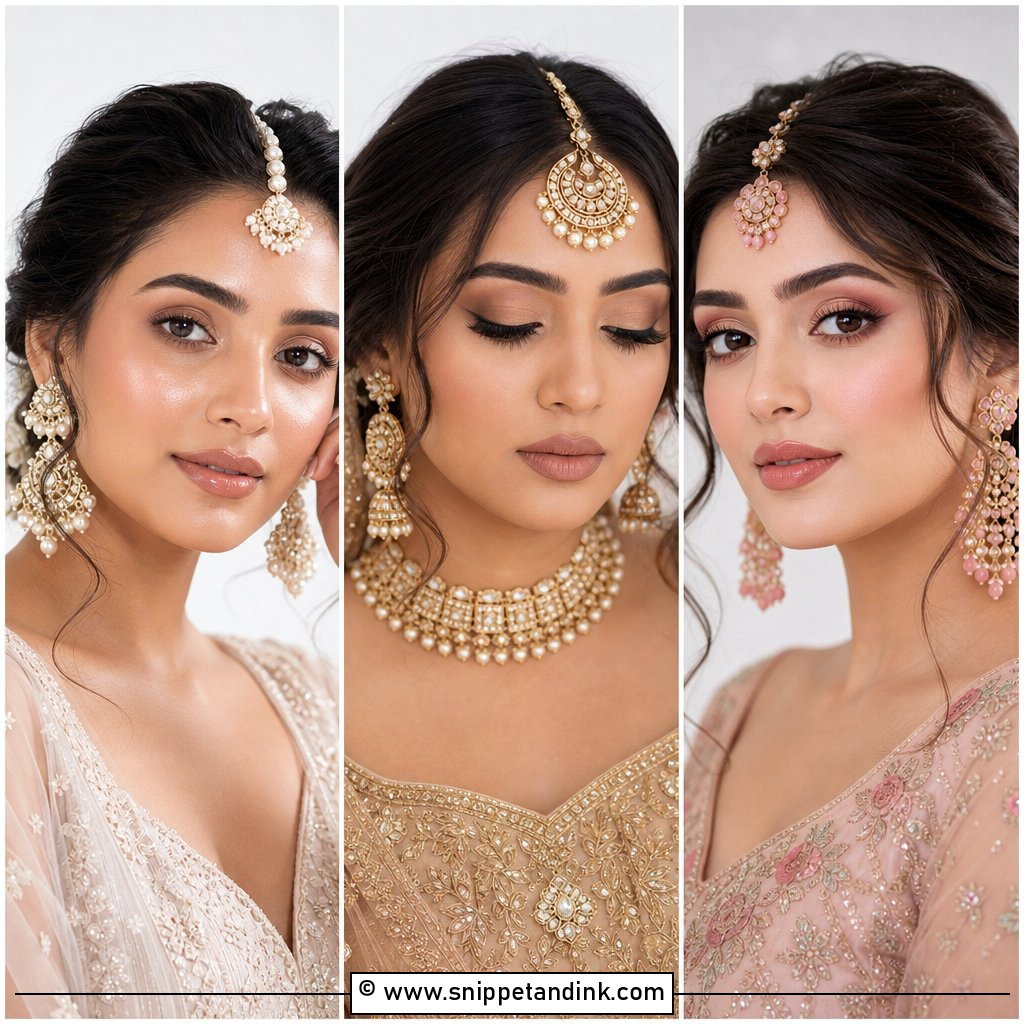
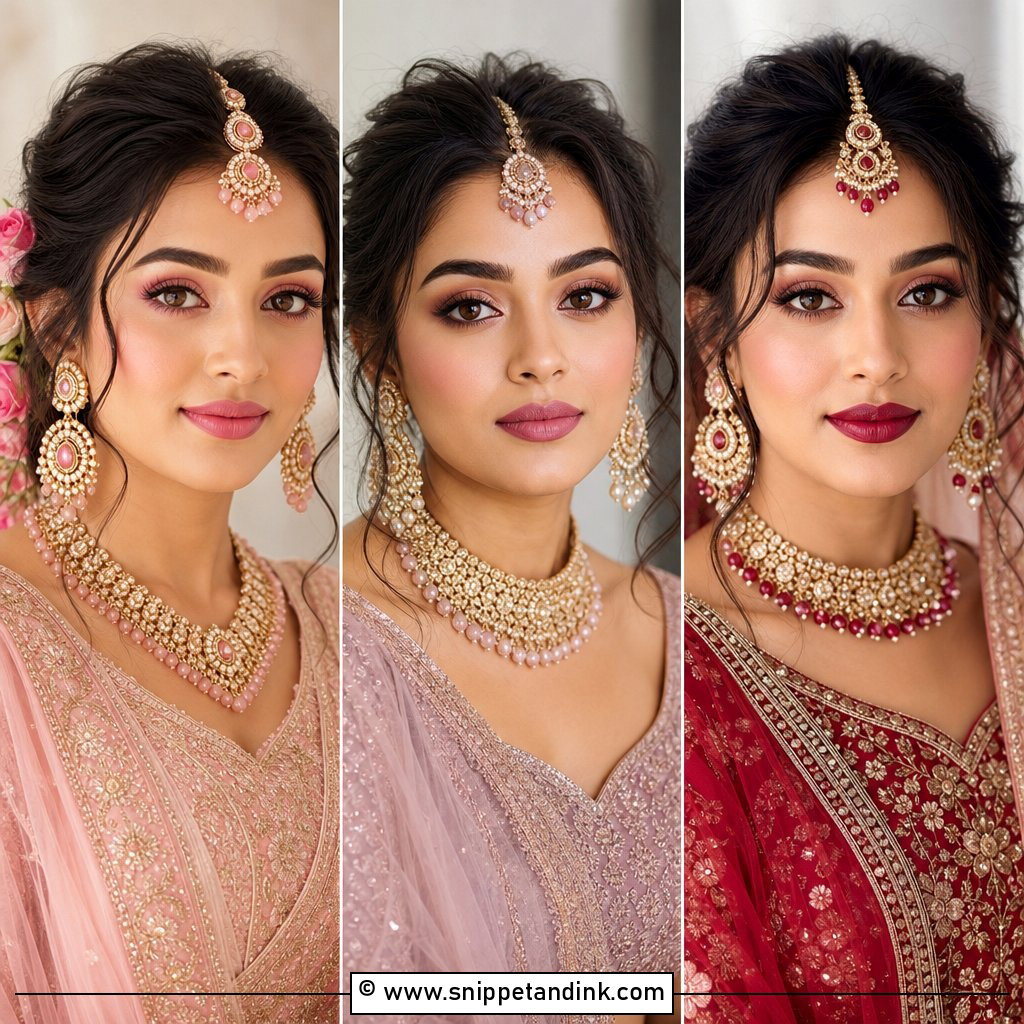
Soft glam suits brides who want polish without heavy contour, glitter or dark eyes. Smooth skin, softly sculpted cheeks, blended neutral shadow, wispy lashes and a pink nude or rose brown lip. It needs to read from across the mandap and still look like skin close up, so I blend more than I build. I see it most with pastel lehengas, ivory sarees and pearl jewelry at daytime ceremonies. It flexes easily too: add kohl for a traditional edge or a glossy nude for a modern one.
9. Minimal Indian Bridal Makeup
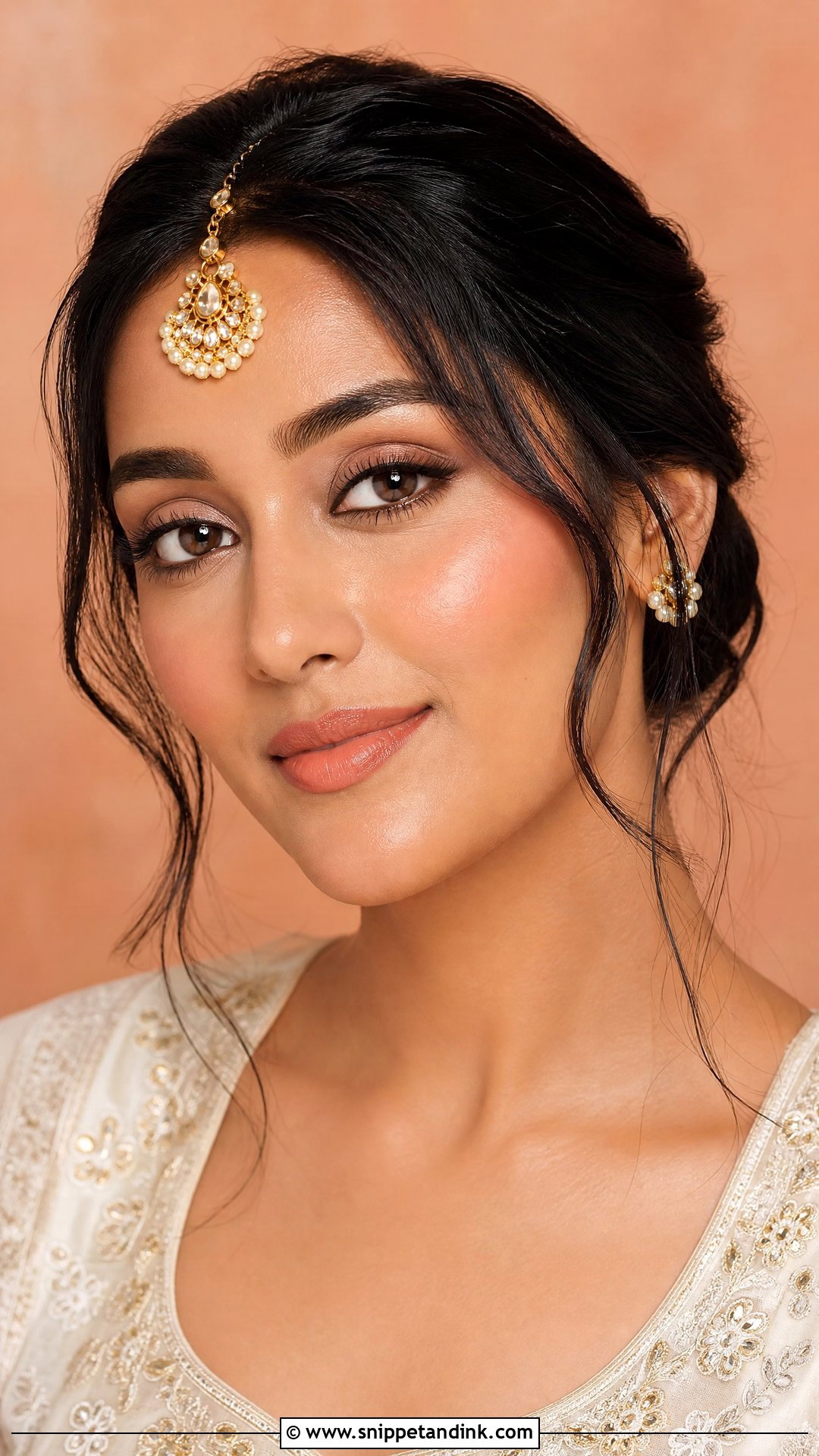
Minimal doesn’t mean bare. It means every product is placed on purpose: light foundation, spot concealing, cream blush, a soft glow, beige or taupe shadow, brown liner and curled lashes. A rosy nude or soft mauve lip keeps it polished. I suggest it for intimate weddings, registry ceremonies and morning rituals, and for brides wearing heavily embroidered outfits, where a simpler face gives the eye somewhere to rest. One honest caution: minimal makeup can disappear under bright stage lights, so I add a touch more definition at the lash line for evening events.
10. South Indian Bridal Makeup
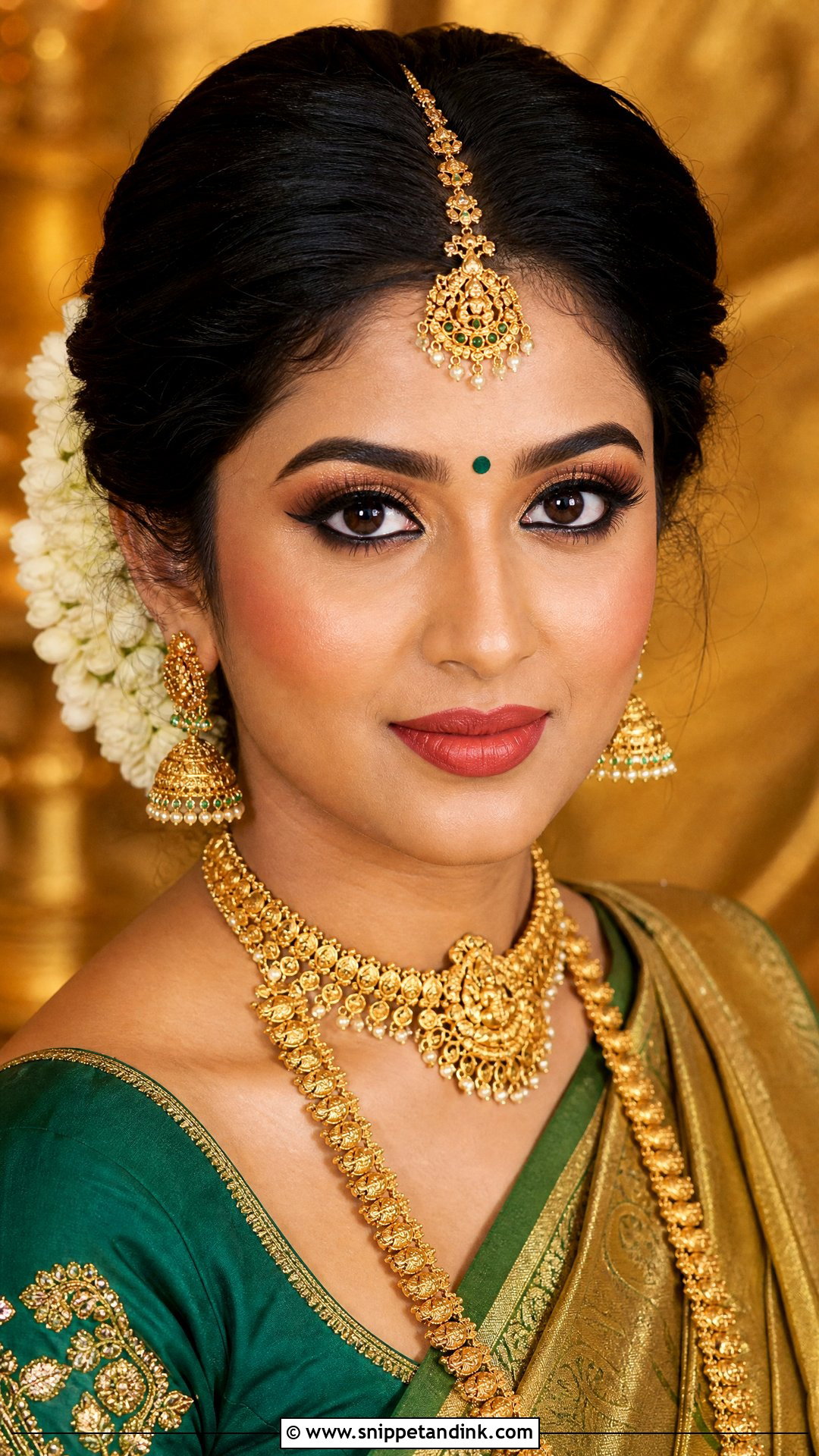
South Indian weddings often start with an early muhurat, which can mean I’m painting a face before sunrise and it has to last through a long, hot ceremony. The base needs to be smooth and long-lasting. Gold, copper or bronze shadow sits naturally beside temple jewelry and silk sarees, and strong kohl, defined brows and full lashes carry the eyes. Classic red, deep rose or berry lips work with kanjivaram sarees in most colours. I keep shimmer off textured areas and use a warm, not cool, highlight so the skin doesn’t turn grey beside the gold zari in photos.
11. North Indian Bridal Makeup
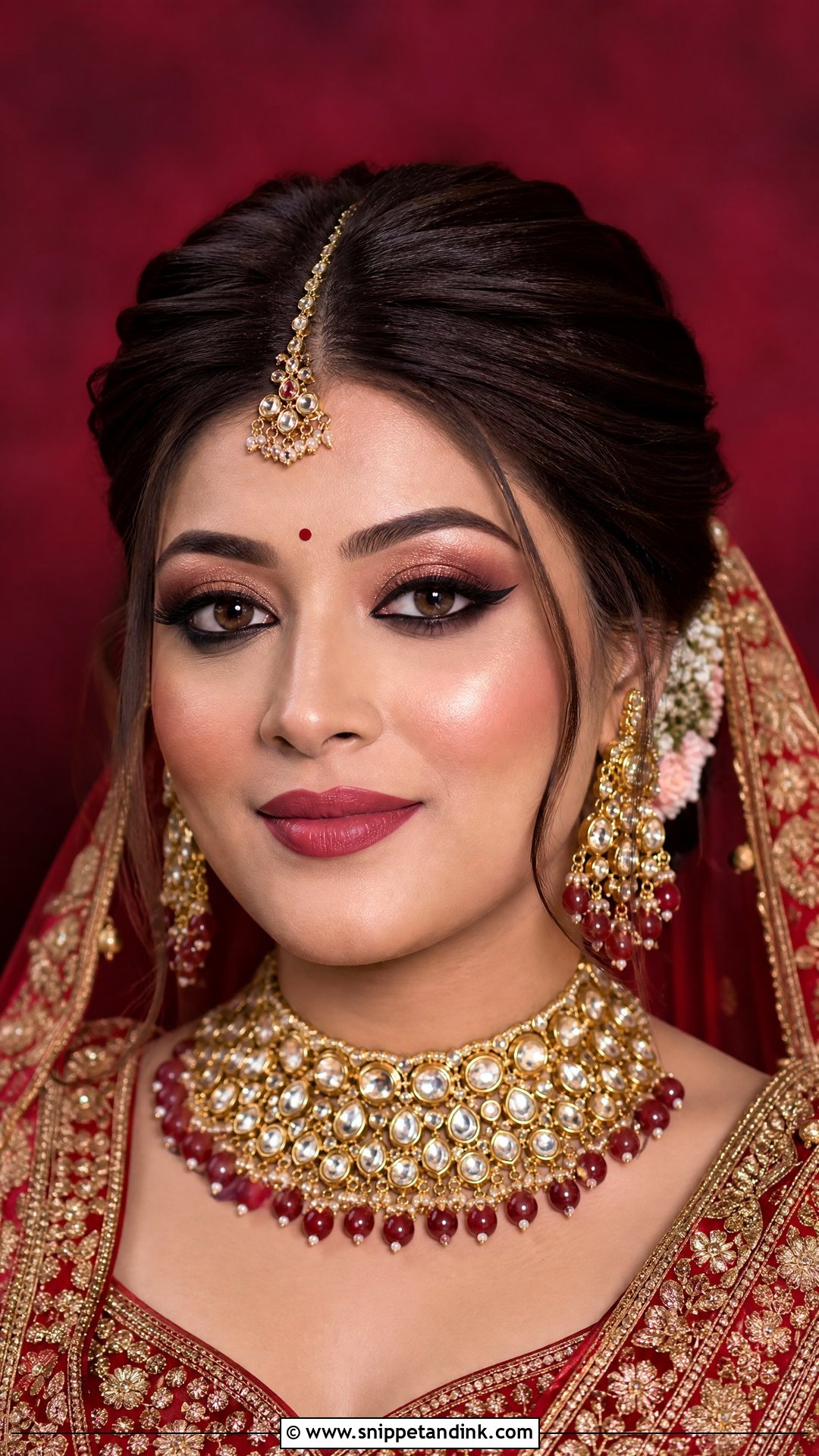
North Indian brides often wear a dupatta that frames the face closely, which changes how I apply makeup. The fabric throws shadow across the forehead and cheeks, so I brighten the under-eyes slightly more and keep blush placed a little higher than I would otherwise. Start with a flawless satin base, soft contour and warm blush. The eyes take gold, bronze, plum or champagne depending on the lehenga, with black liner and kohl for intensity. A rose red, maroon or nude brown lip completes it, and kundan or polki pieces sit well with warmer tones.
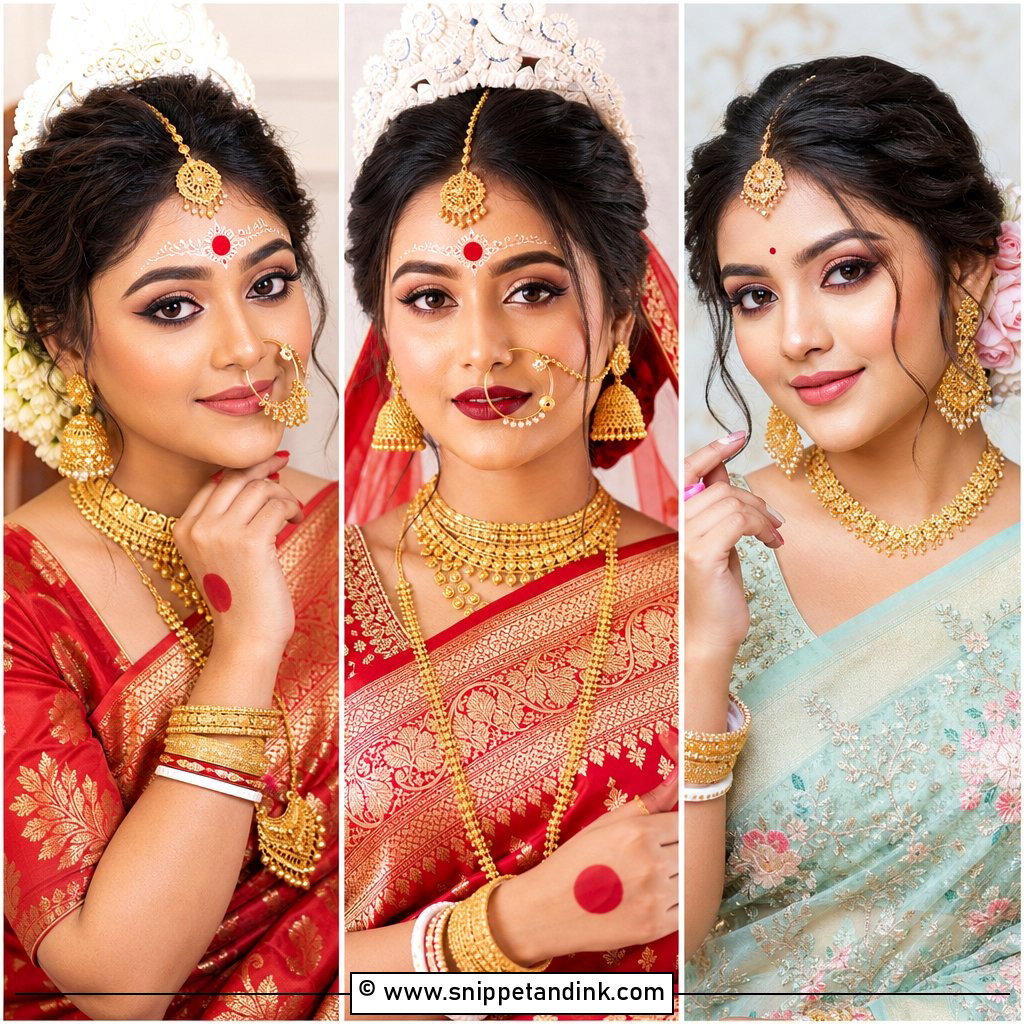
12. Bengali Bridal Makeup
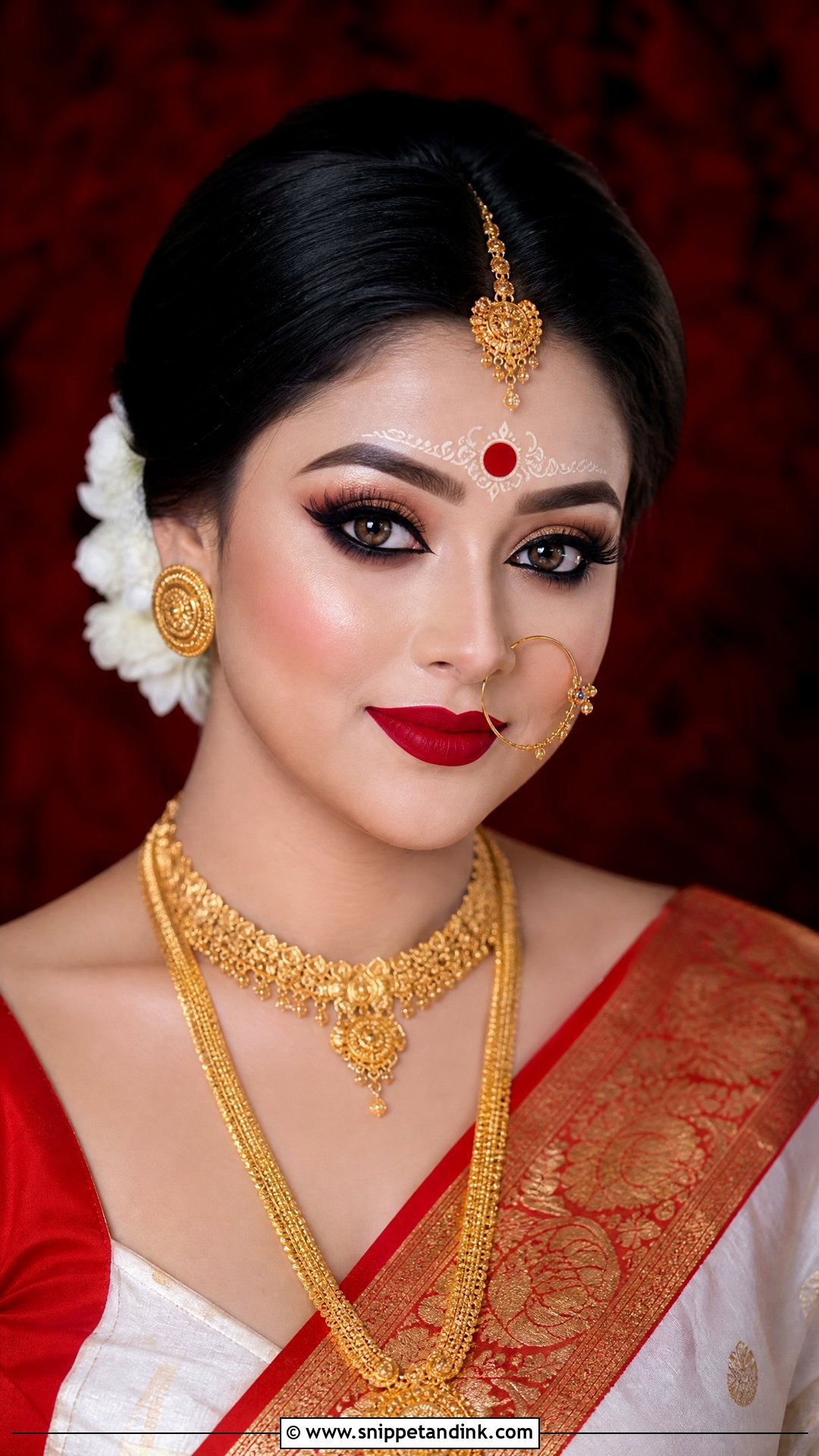
Bengali bridal makeup builds around the red or red-and-white saree and the decorative chandan dots drawn above the brows. The eyes lead, with black kohl, a winged liner and warm shades like gold or copper. I plan the brows and the chandan pattern together, since the dots follow the brow arch and need a clean, even surface. Skin should look smooth and luminous, with rose blush placed softly and a bold red or deep crimson lip. For a modern take, I lighten the base and use a soft-focus finish so the face reads well in close portraits.
13. Punjabi Bridal Makeup
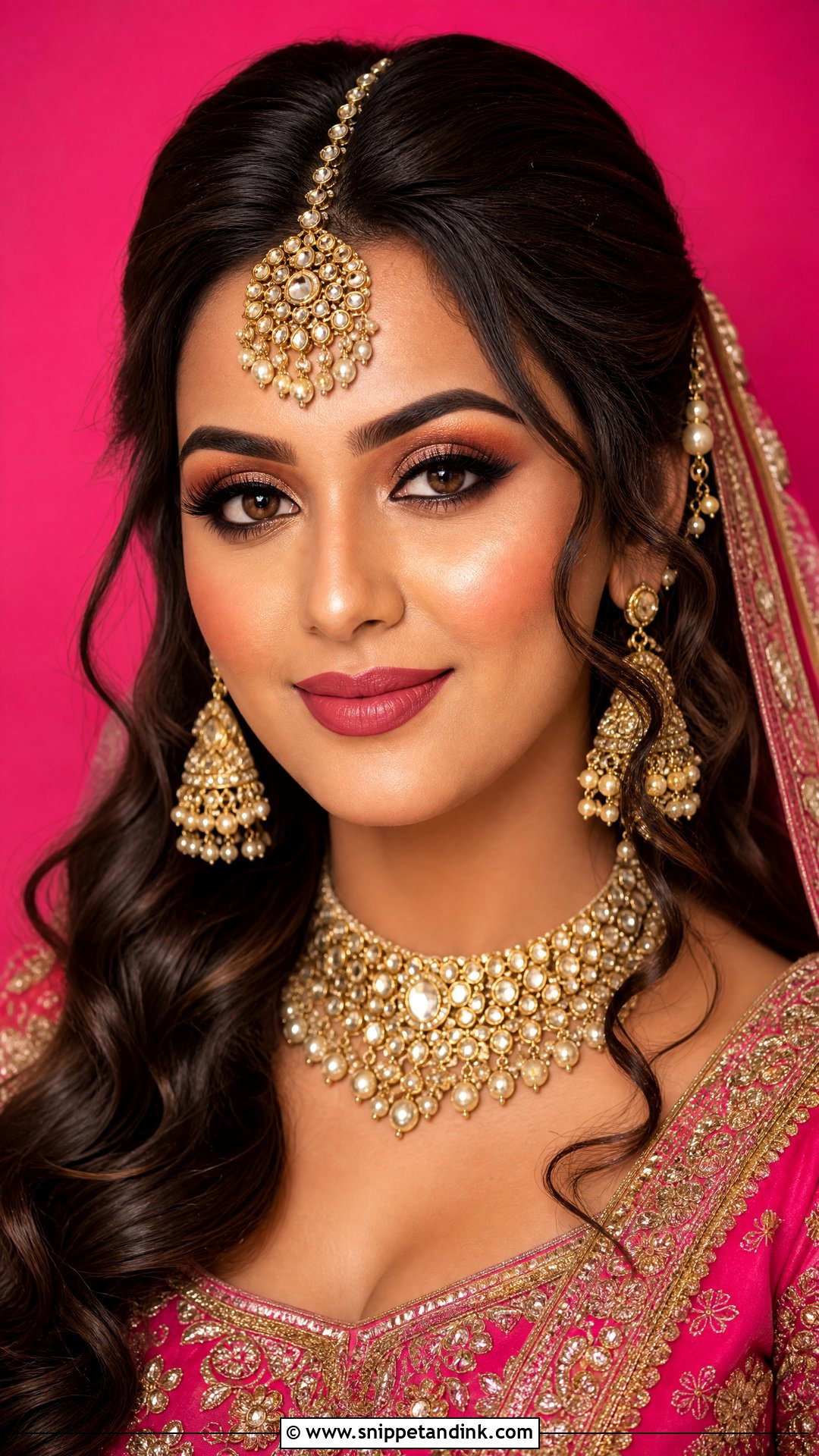
Punjabi bridal makeup leans festive and warm, matched to lehengas in red, pink, maroon, orange or emerald. Bronze shimmer, smoked brown edges, black liner and fuller lashes give the eyes presence. The complexion should look perfected but alive, with peach or rose blush and a golden highlight. Lips can be rose pink, berry, brick red or nude brown depending on the outfit. Punjabi weddings tend to involve a lot of dancing, so I set in layers with spray between them and use lashes with a strong band that won’t lift when the bride sweats.
14. Gujarati Bridal Makeup
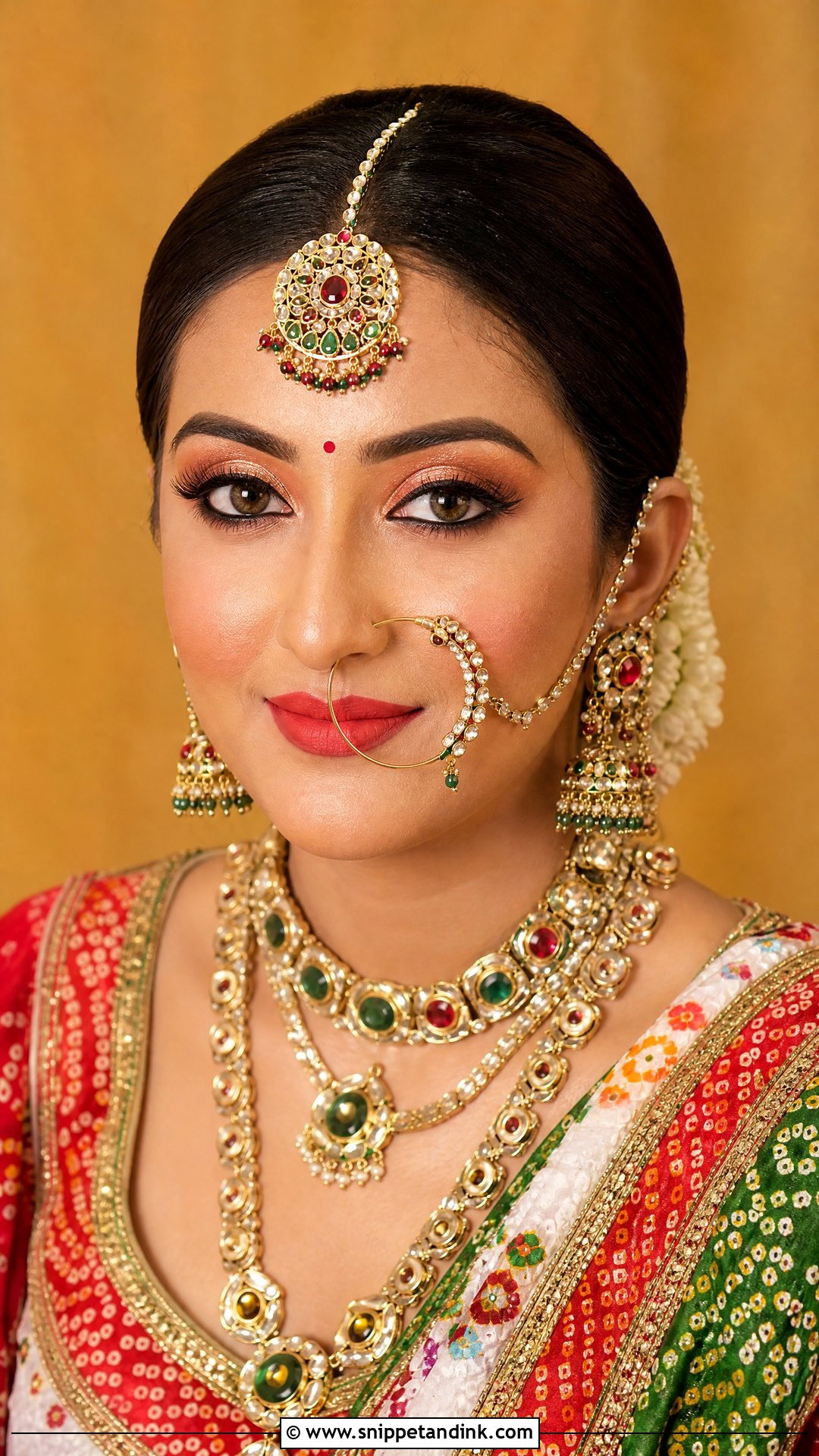
Gujarati brides often wear a panetar or gharchola in red, white and gold, sometimes with bandhani work, and the makeup should support those tones rather than compete with them. I use warm gold or copper shadow with brown blending, black liner and soft kohl, on a satin matte base that stays comfortable through long rituals. Peach or coral blush brightens the face. A red or warm rose lip fits a traditional look, while nude brown feels more modern. With a white-and-red saree, I keep the base very neutral, since any pink cast in the foundation shows up against the white.
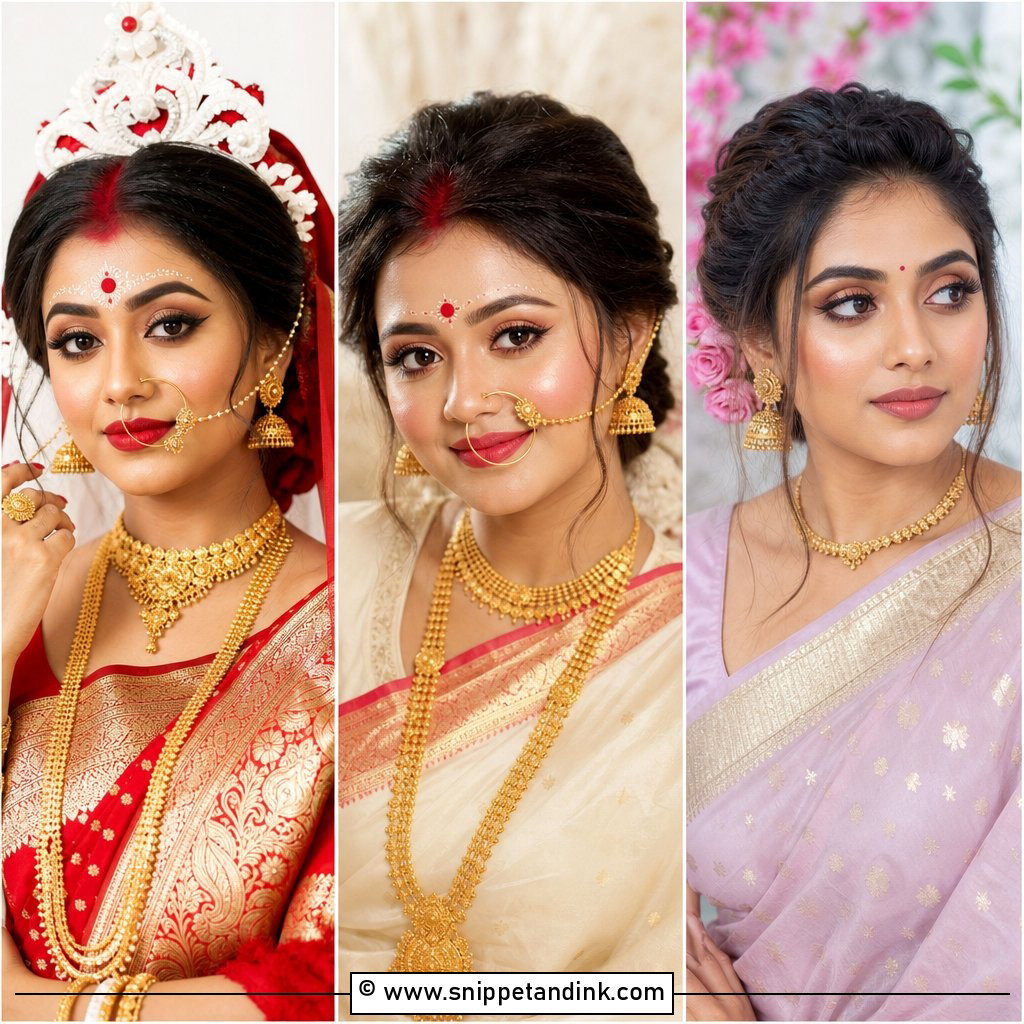
15. Maharashtrian Bridal Makeup
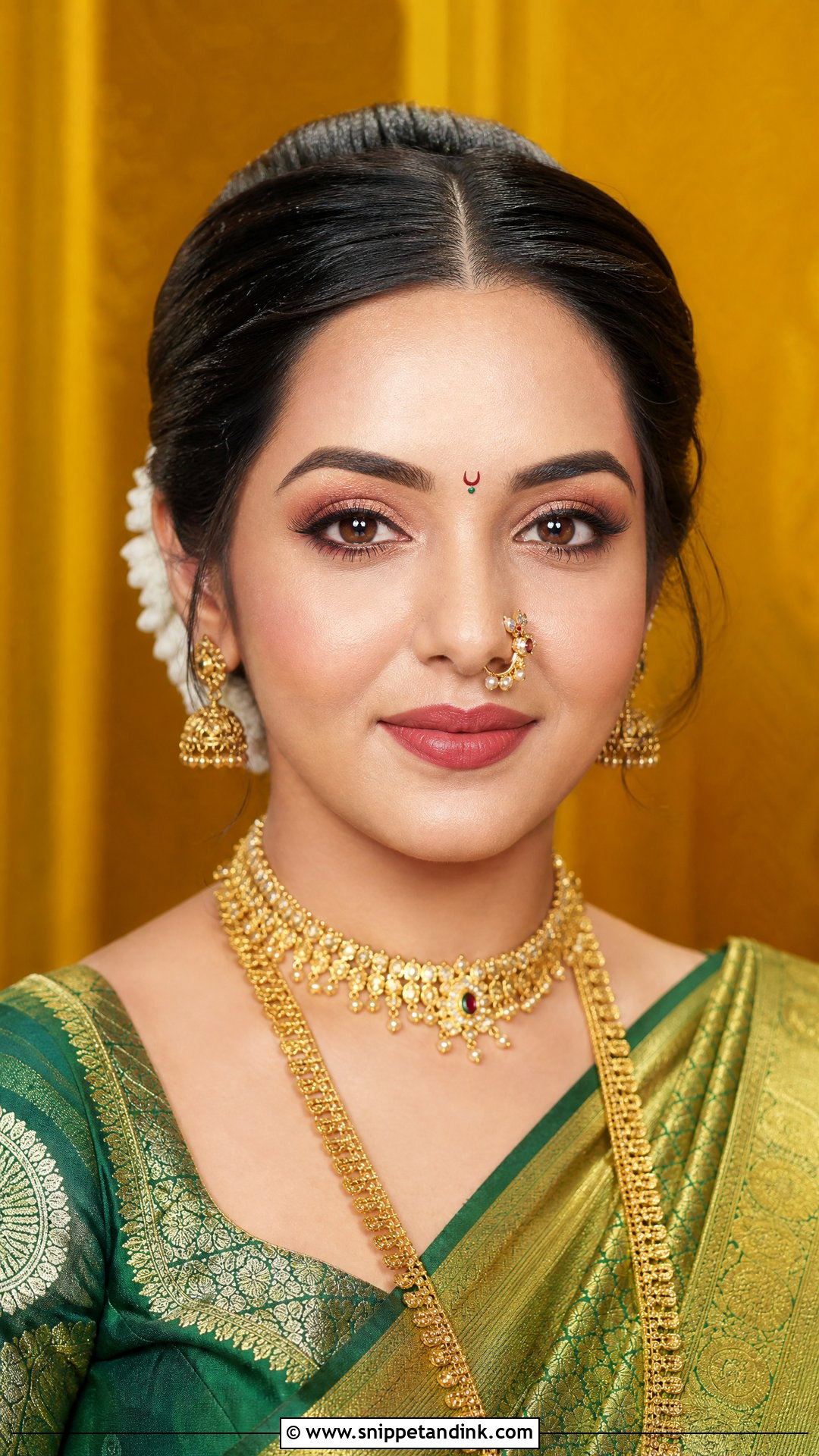
Maharashtrian brides often wear a nath across the nostril and lip line and strings of pearls (mundavalya) across the forehead, which means two parts of the face are partly covered. I keep the complexion even and softly radiant, and I make sure the lipstick sits clean where the nath rests. Gold, copper or soft brown shadow with a clean liner and defined lashes suits the silk sarees, and a small amount of kohl adds depth. Peach or coral blush keeps the cheeks fresh, and red, coral or brick lips work with green, yellow or red sarees. The look stays graceful rather than dramatic.
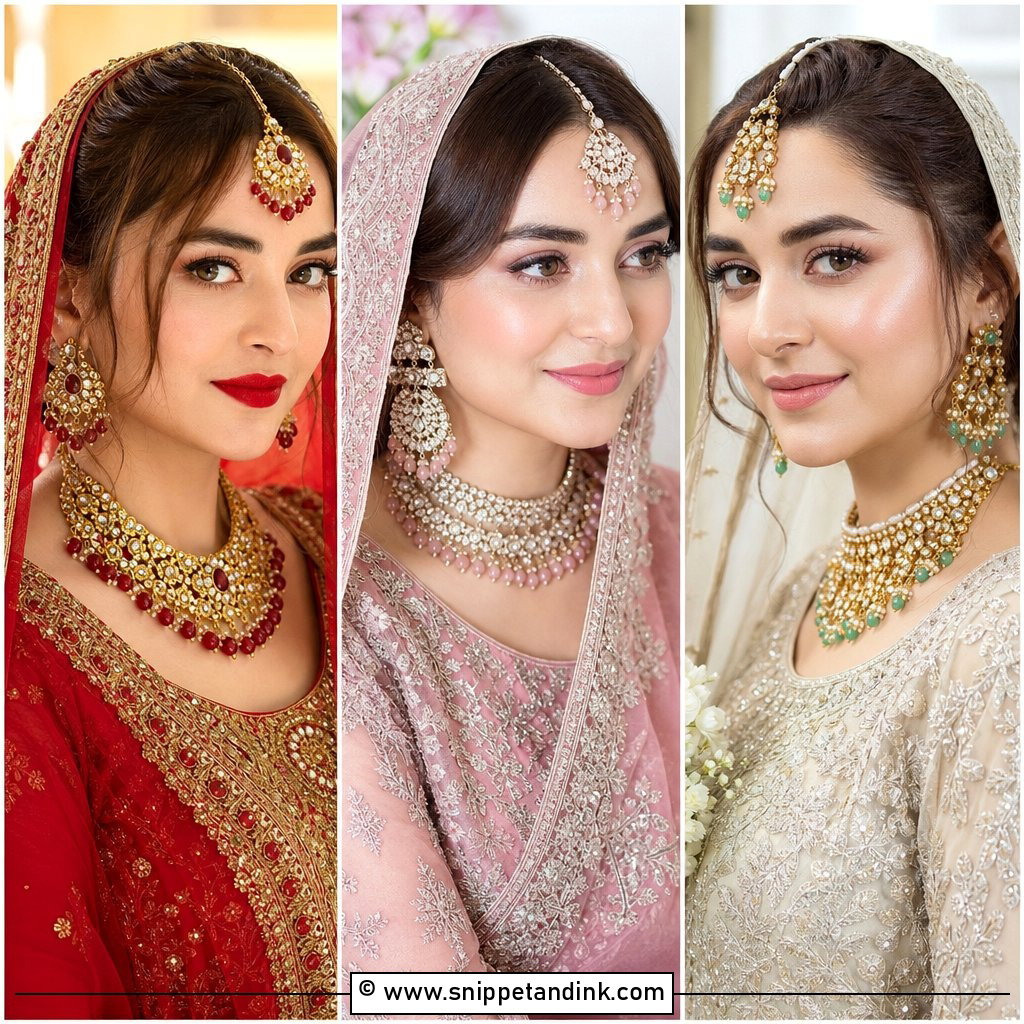
16. Muslim Indian Bridal Makeup
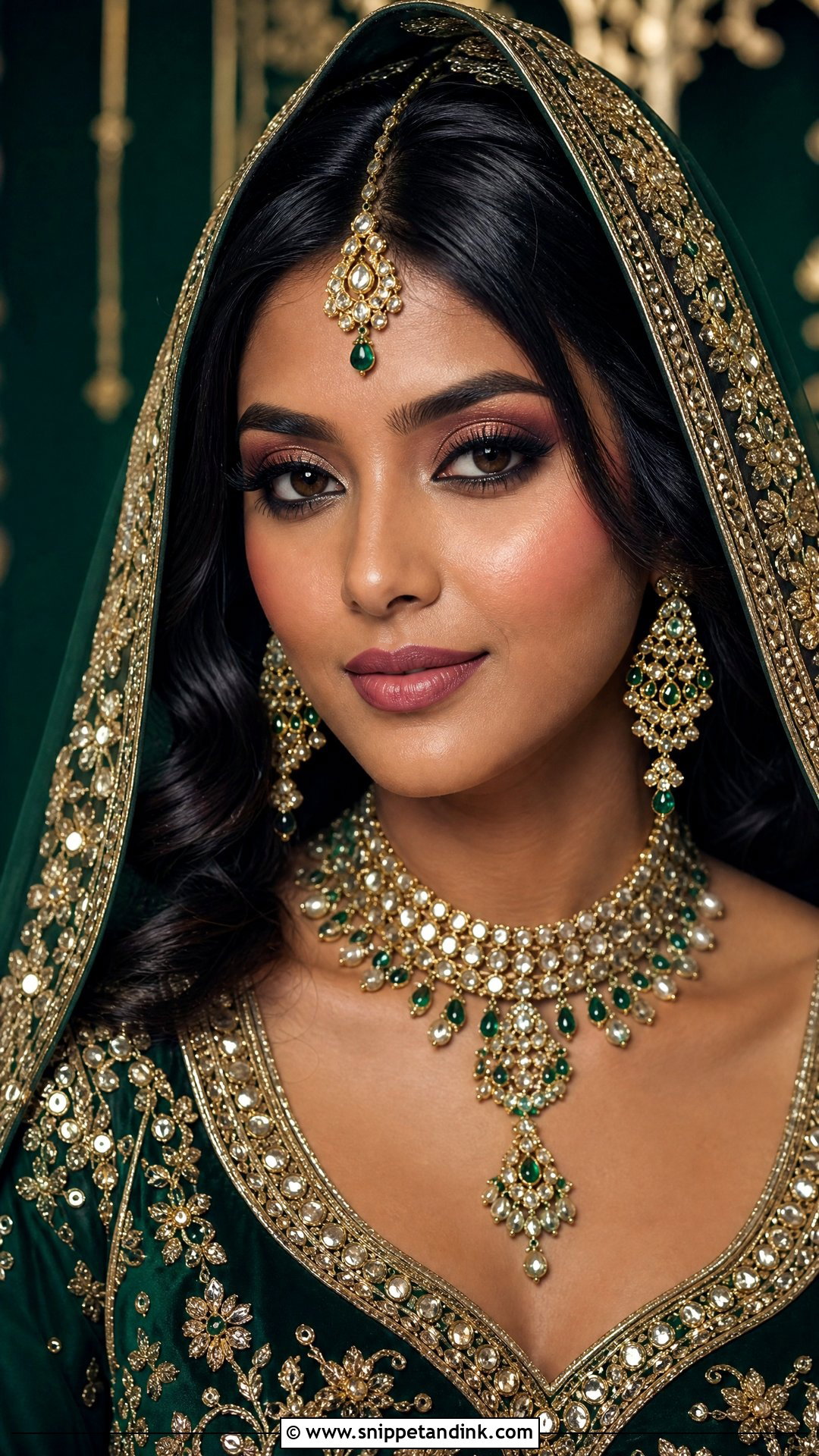
Muslim brides often pair shararas, ghararas or lehengas with a dupatta, detailed embroidery and passa jewelry at the side of the head. Because the dupatta and jewelry sit so close to the face, I keep the base smooth and bright and the highlight controlled, especially on the side where the passa falls. Soft smoked eyes in bronze, taupe, plum or rose gold suit most outfits, with black liner, fluttery lashes and gently filled brows. Lips can be nude rose, mauve, berry or deep red. Since nikah and walima can fall on different days, I often plan two related faces.
17. Pastel Lehenga Indian Bridal Makeup
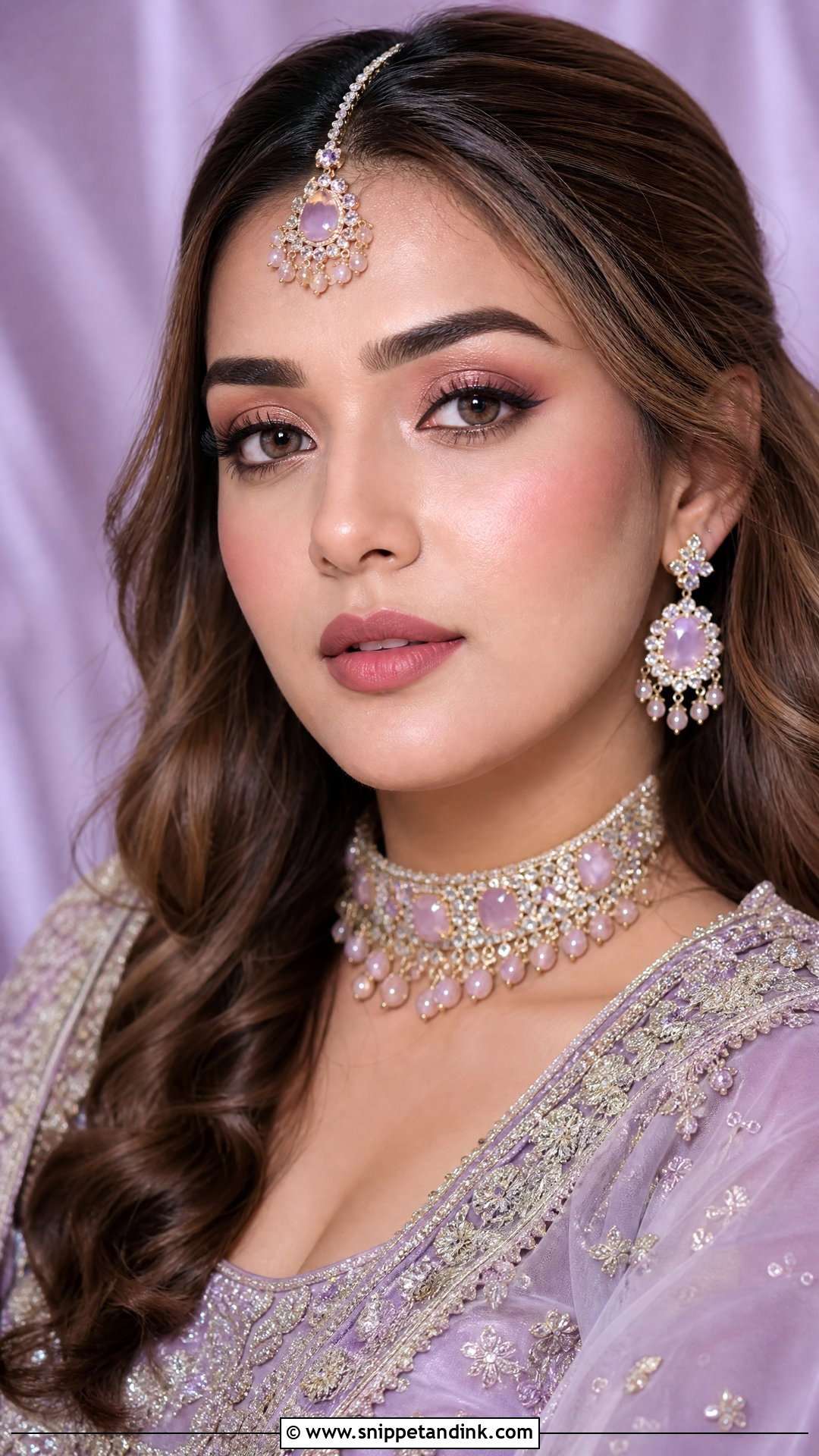
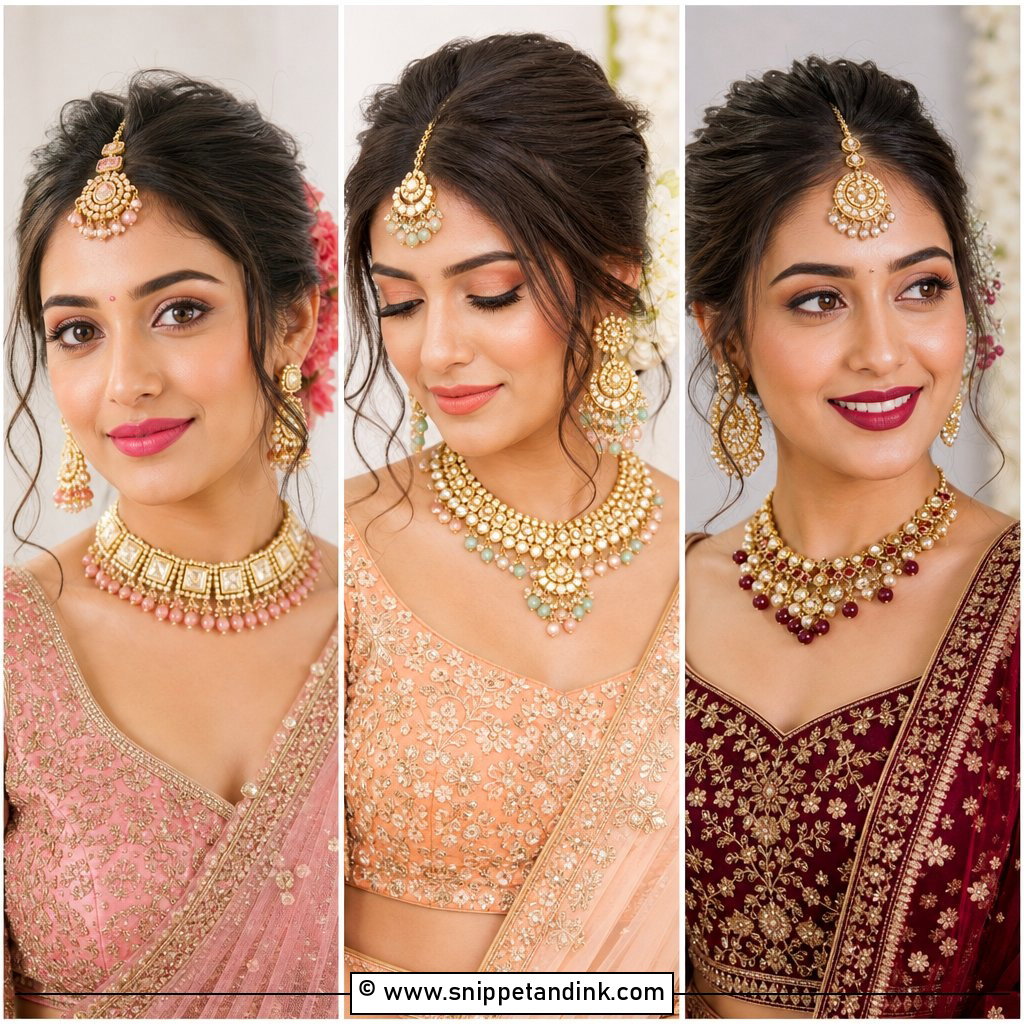
Pastel lehengas need makeup that’s soft without leaving the bride looking washed out, and that balance is trickier than it seems. Champagne shadow, rose gold shimmer, brown liner and lifted lashes give the eyes definition. Pink, peach or mauve blush, matched to the outfit’s undertone, keeps the complexion fresh. Lips sit in rosy nude, peach pink or beige rose. I avoid very dark eyes for daytime with pastels, because heavy makeup overwhelms light fabric. Evening is a different story; there I’d add a soft brown smoke to hold up under stronger lighting.
18. Maroon Lehenga Indian Bridal Makeup
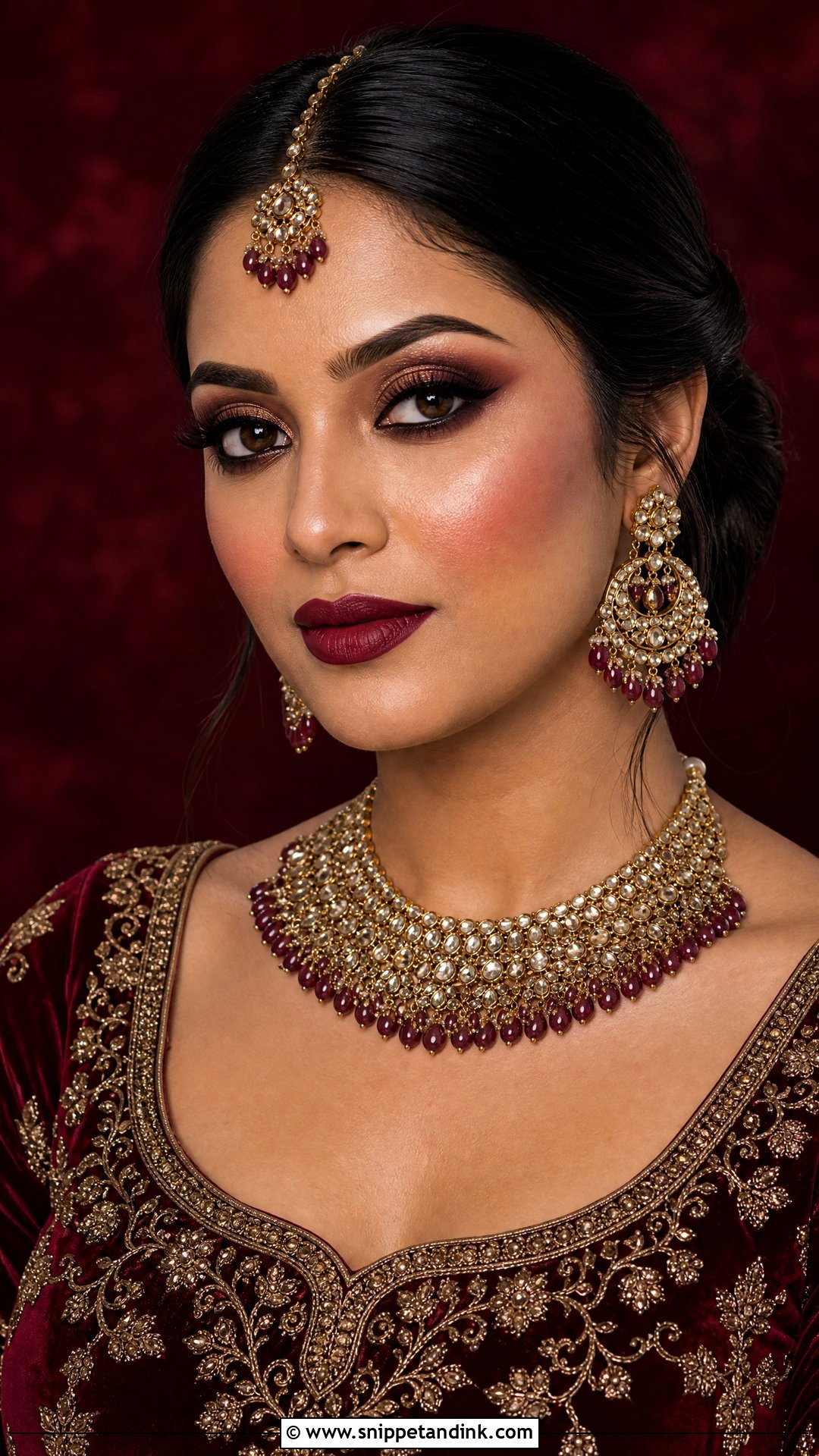
Maroon carries depth, so the makeup should too. Bronze eyes with plum brown smoke, black kohl and full lashes suit it, on a satin base with soft contour and berry or rose blush. For the lips, deep berry, wine rose or muted maroon all work. I apply a simple rule: if the eyes are heavily smoked, keep the lip softer; if the eyes are clean, a deeper lip carries the drama. Maroon also reflects a little warmth back onto the face, which helps on cooler skin tones. It’s the outfit I see most at evening and winter weddings.
19. Pink Lehenga Indian Bridal Makeup
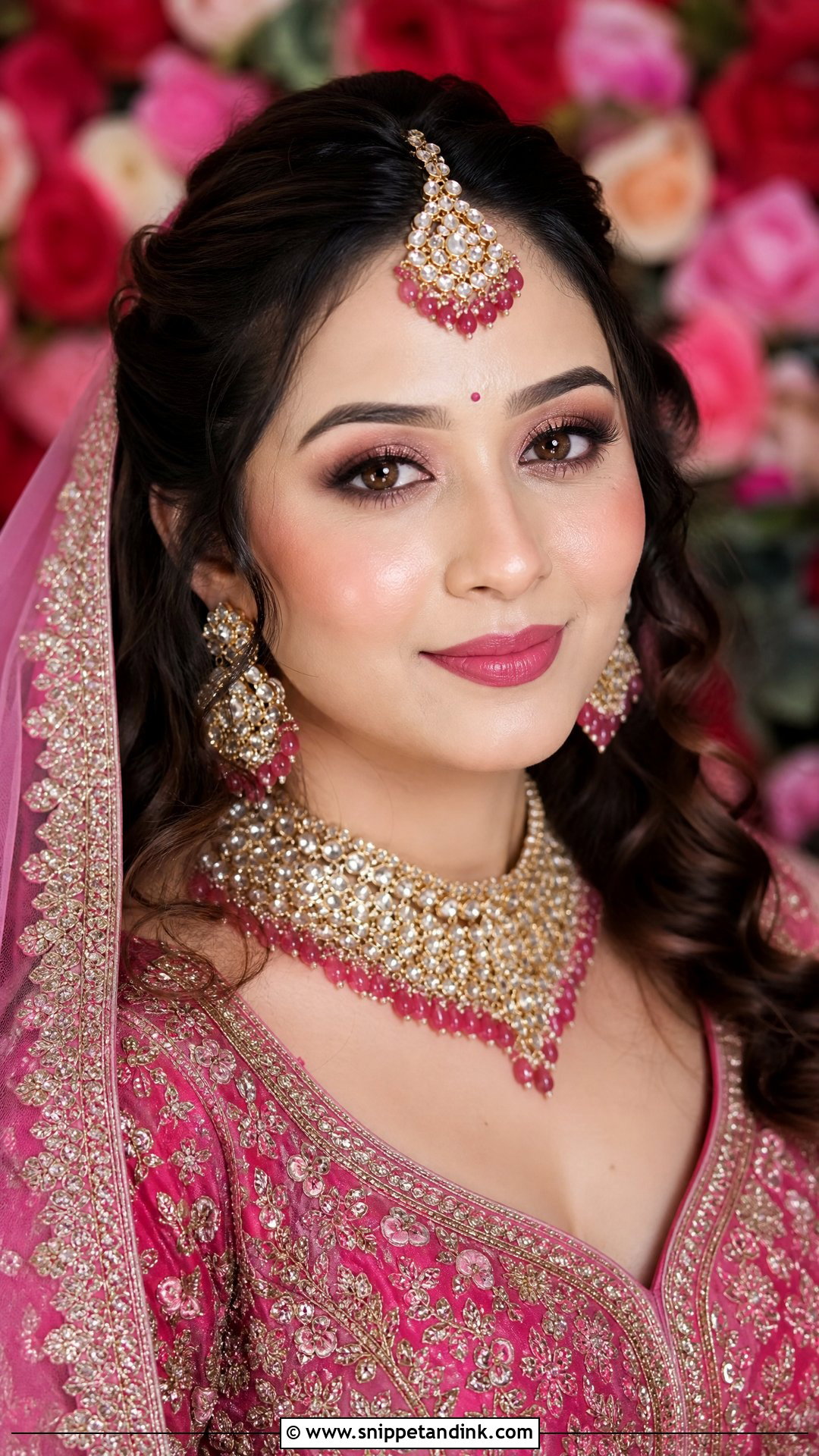
Pink lehengas range from blush to rani pink, and the makeup should follow the shade, not the word. For blush pink, I use soft rose eyes, champagne shimmer, pink blush and a rosy nude lip. For hot pink or rani pink, I add brown smoky depth, black liner and a deeper rose or berry lip so the face isn’t overpowered. Bright pink reflects strongly onto the skin, so I keep the base clean and slightly warm to avoid a flushed look. Matching every product to the fabric looks costume-like; colours from the same family with some contrast work better.
20. Ivory Saree Indian Bridal Makeup
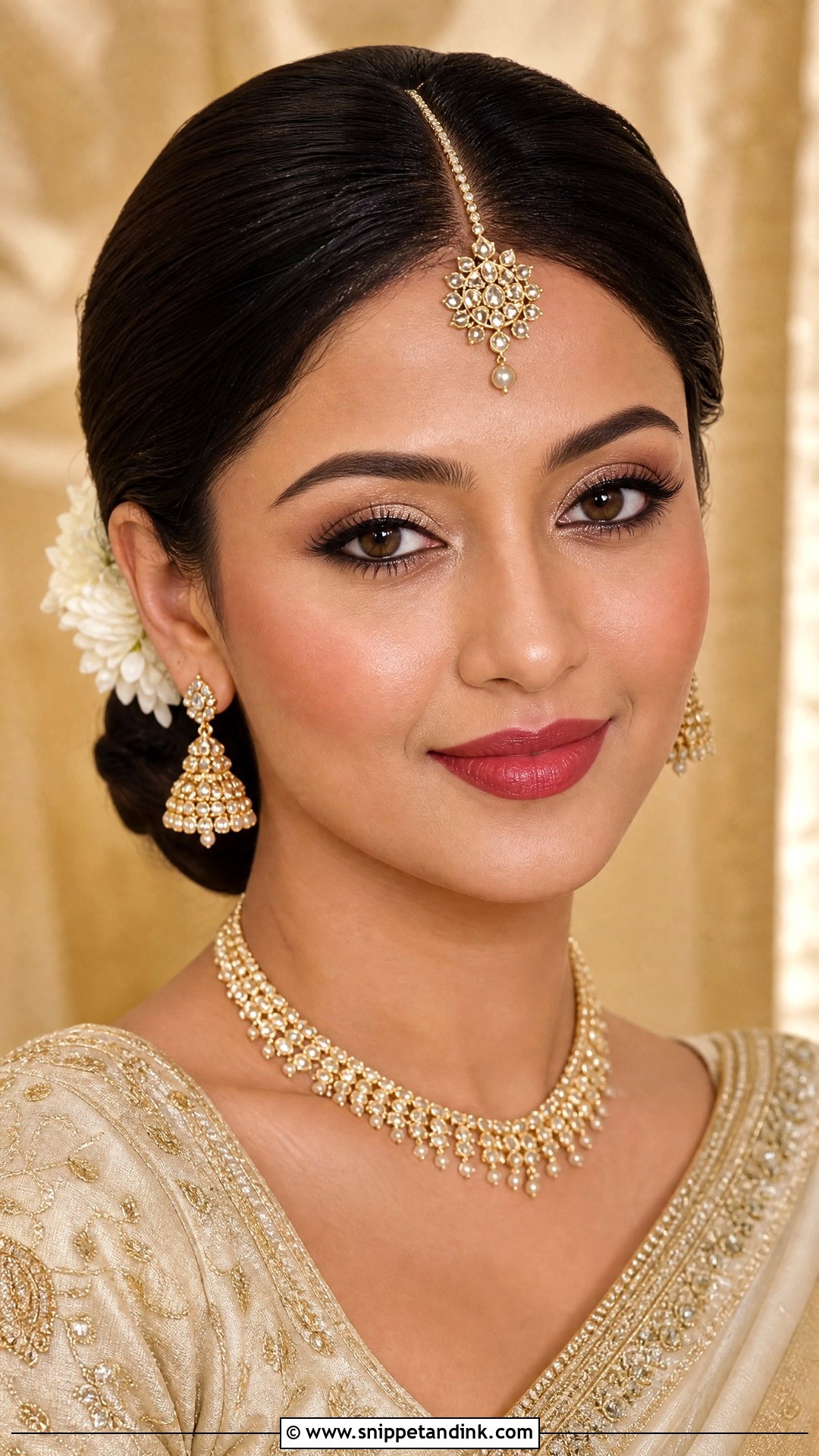
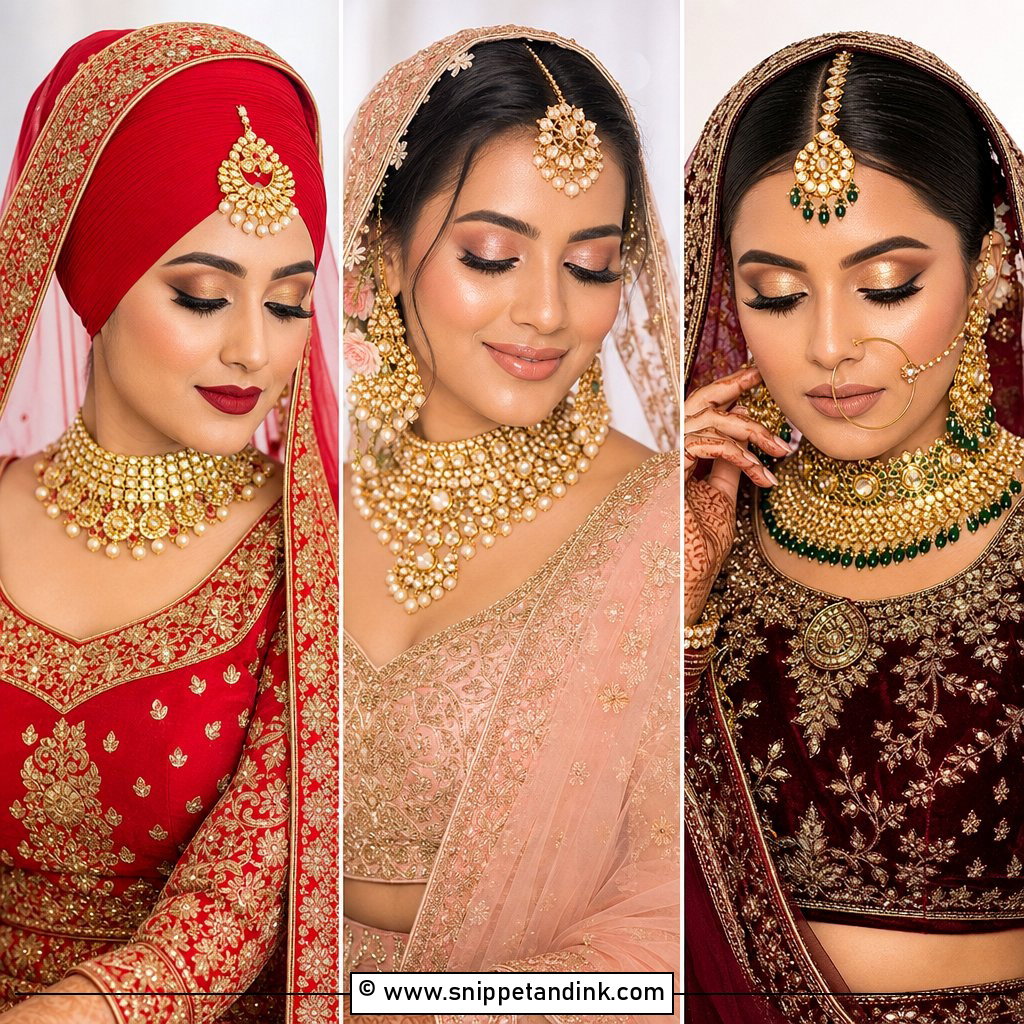
An ivory saree gives a clean canvas, and makeup can go soft or classic on it. Luminous skin, champagne-gold eyes, brown liner and soft lashes suit it well. Ivory near the face can make skin look sallow under bright lights, so I add peach or rose blush and a little warmth to the base. Red lips create a classic contrast; nude rose or caramel pink feels modern. I match the metal too: gold borders call for warm highlight and gold inner-corner shimmer, pearl or silver work for champagne or soft taupe.
21. Reception Indian Bridal Makeup
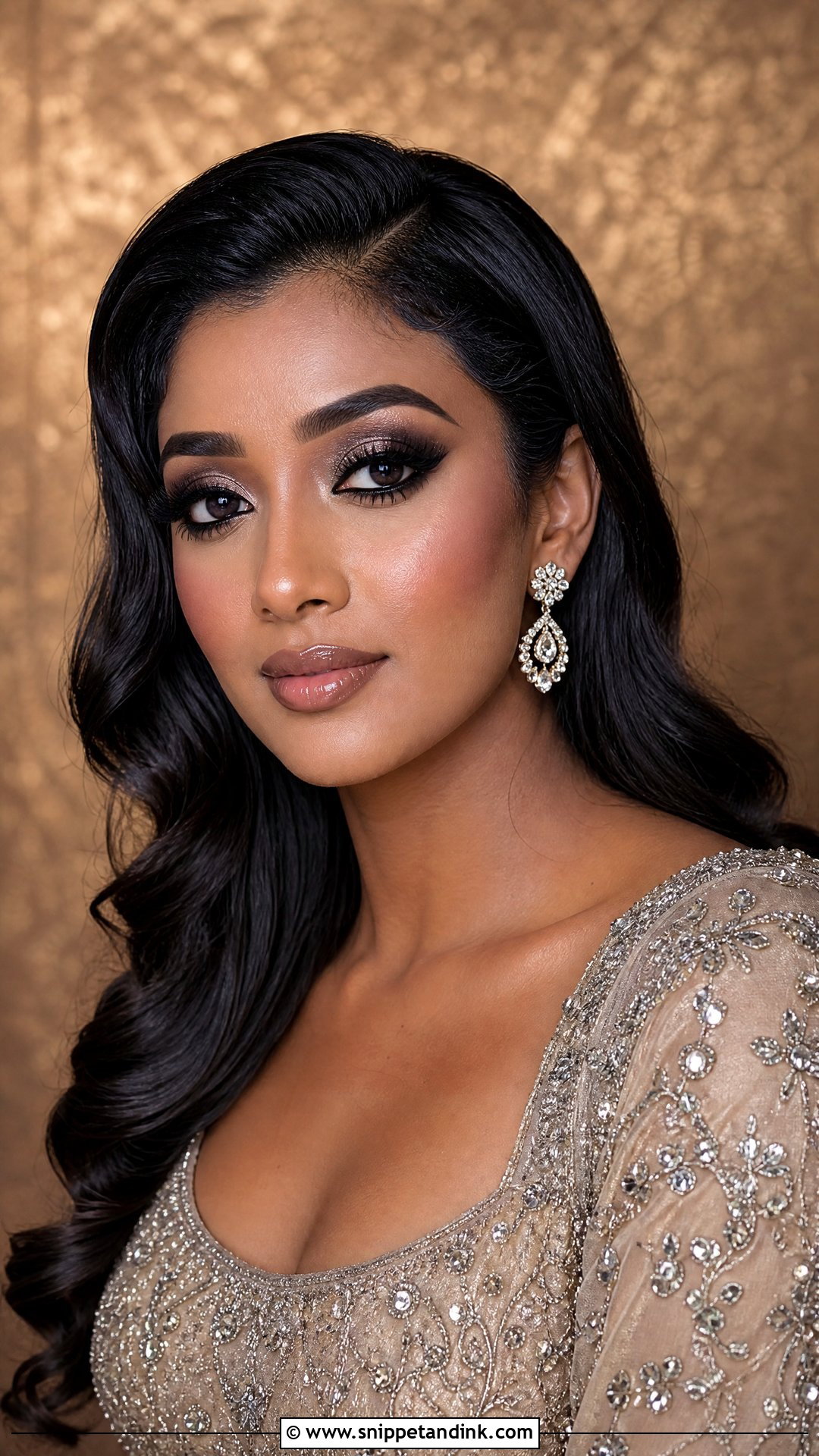
The reception is where most brides want to switch to something more modern, often a gown, a contemporary lehenga or a sleek saree. Sculpted skin, a soft smoky eye and either a glossy nude or bold berry lip suit that change. A satin matte base handles flash better than dew in a hall full of photographers. Metallic shadows in bronze, rose gold or pewter add evening glamour, and this is a good event to try fuller lashes or a sharper wing. If the reception follows the wedding on the same day, I usually rework rather than remove: lift the eyes, change the lip and refresh the base.
22. Haldi Indian Bridal Makeup
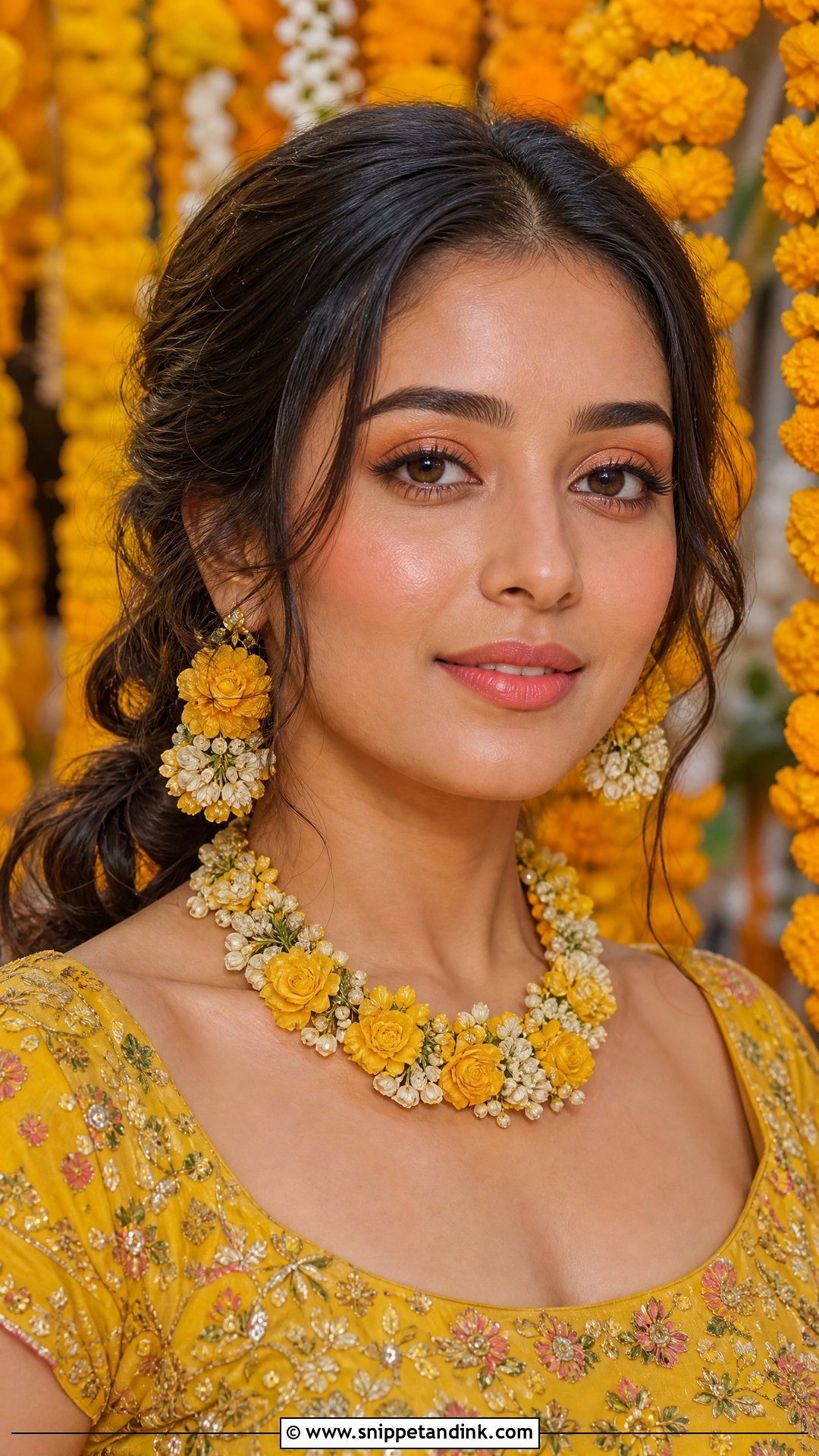
Haldi is the event where makeup has to survive turmeric paste. The face, arms and feet often get covered, so I use a light base, cream blush, waterproof mascara and soft definition, and nothing expensive I’d mind losing. Gold, peach or warm beige shadow suits yellow or orange outfits. Liner stays thin and lashes natural. A coral pink or peach nude lip finishes it. Skip heavy powder and glitter, since the paste sticks to both and lifts in patches. The real goal is a face that still photographs well before the haldi goes on.
23. Mehndi Indian Bridal Makeup
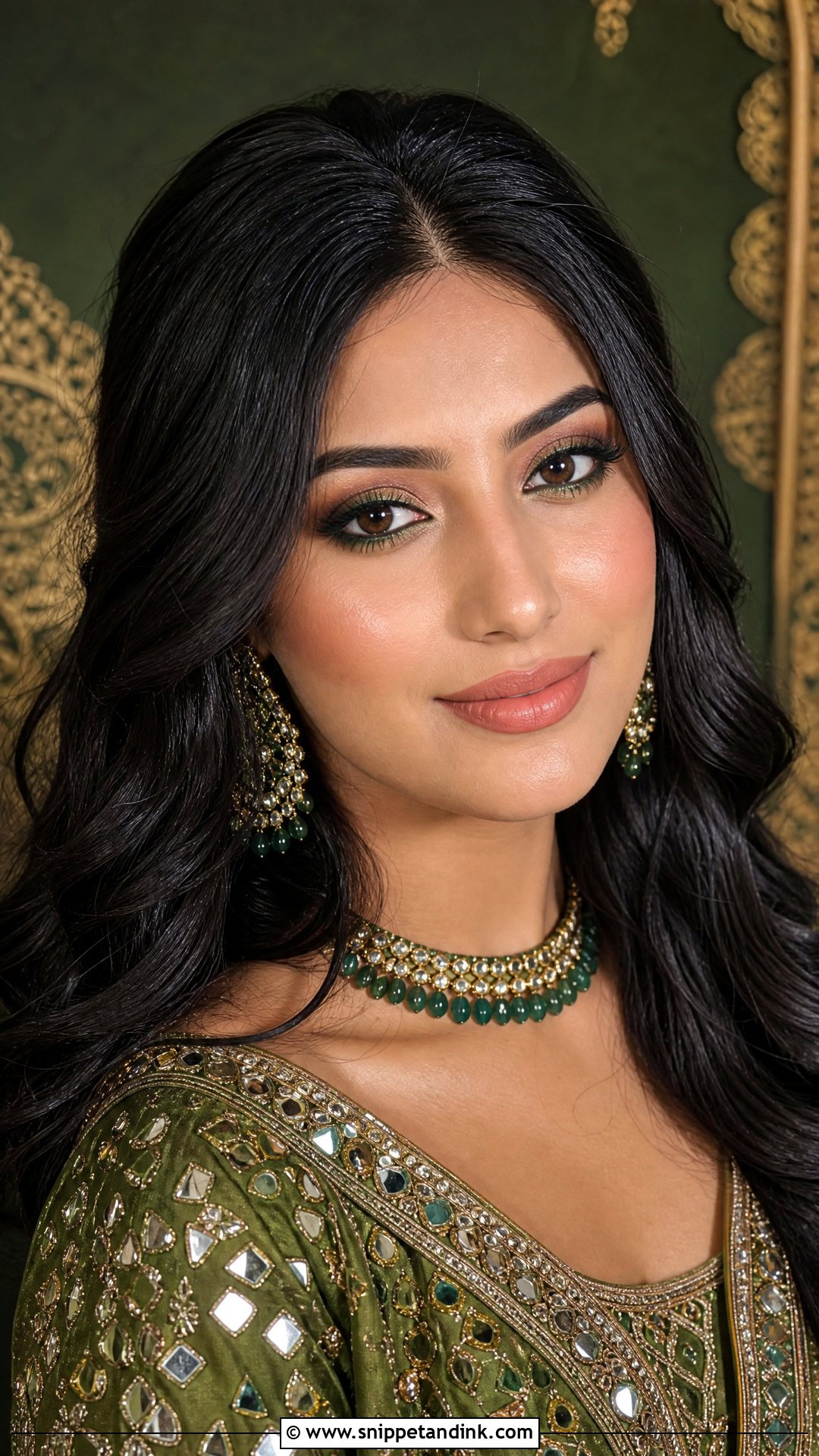
Mehndi day has its own problem: once the henna is applied, the bride can’t touch her face for hours. Makeup has to be long-wearing and set well before her hands are occupied, which is why I schedule it first and keep the base breathable. Green outfits, floral jewelry and mirror work suit copper, gold, olive or bronze eye makeup. A soft pop of green liner is a fun option if the rest of the face stays warm. Peach or coral blush and a nude brown or terracotta lip finish it. Tell your mehndi artist when your makeup will be done so the timing works for both.
24. Sangeet Indian Bridal Makeup
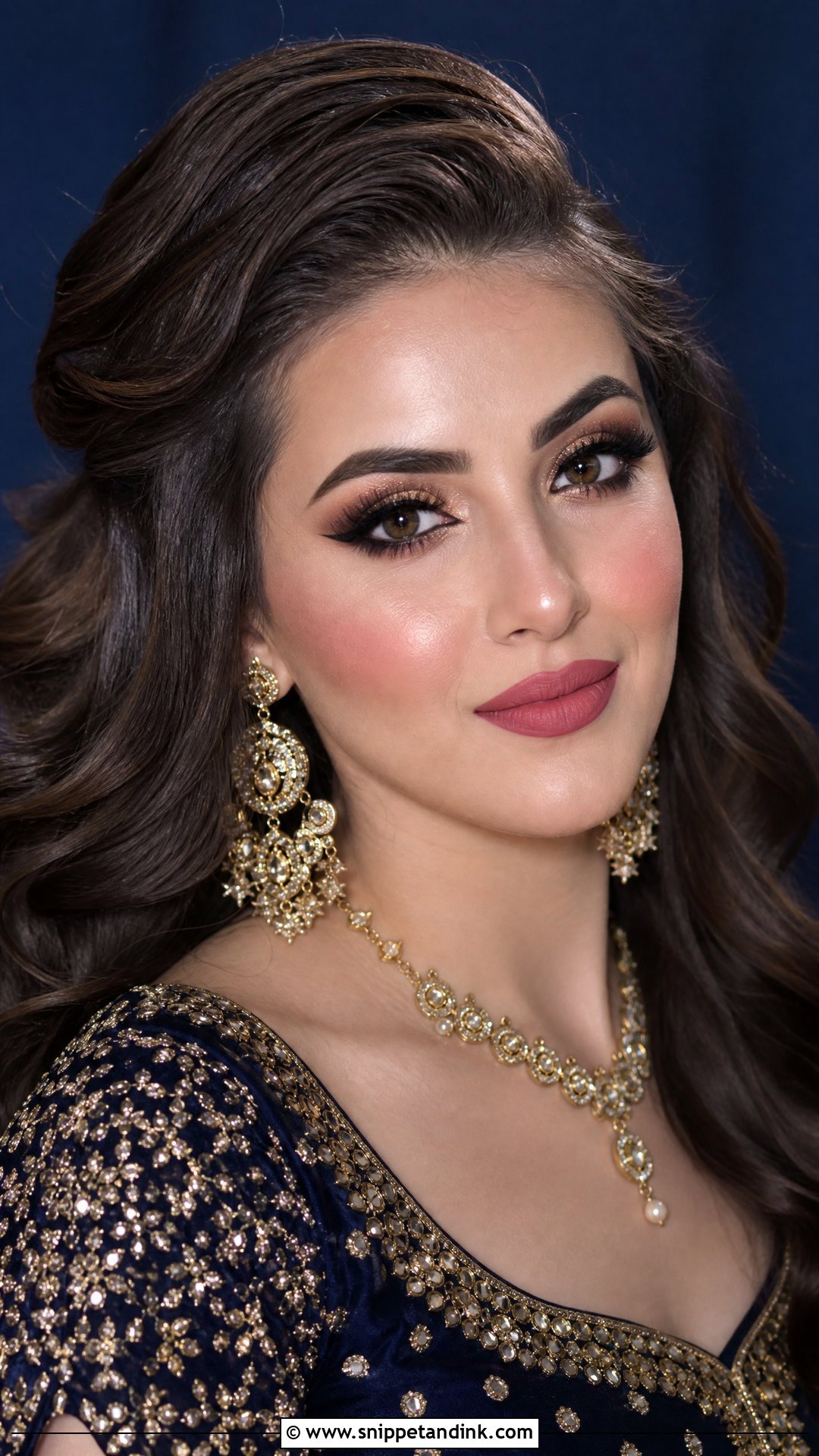
Sangeet Indian bridal makeup needs to survive dancing, heat and stage lights. I start with a gripping primer, a long-wear foundation and setting spray between layers. Bronze smoked shadow, some glitter, a winged liner and full lashes give the eyes impact. I keep the lower lash line soft so sweat doesn’t drag kohl down. A sculpted cheek, warm blush and placed highlight help the face hold its shape under coloured stage lighting. Matte nude, rose brown, berry or soft red lips all work. Bring blotting paper; powder over sweat only builds cake.
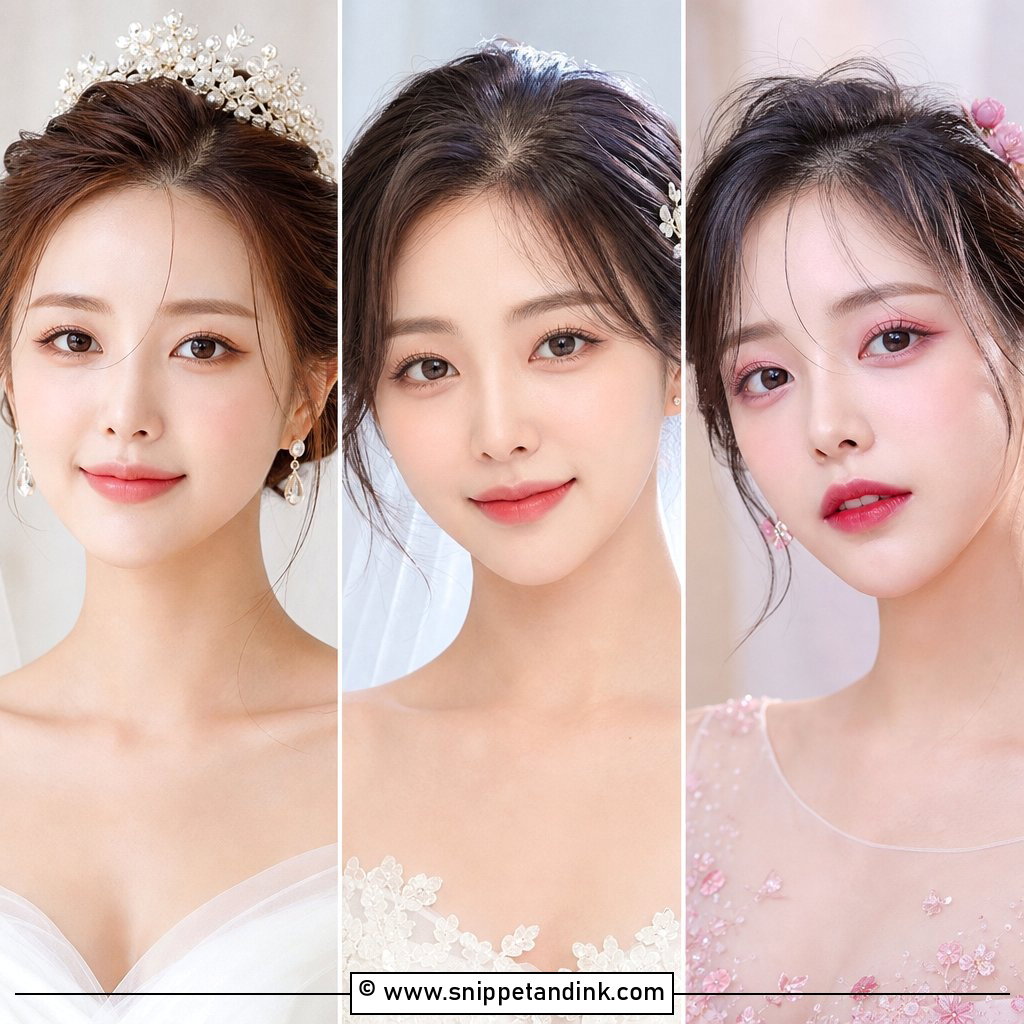
25. Modern Indian Bridal Makeup
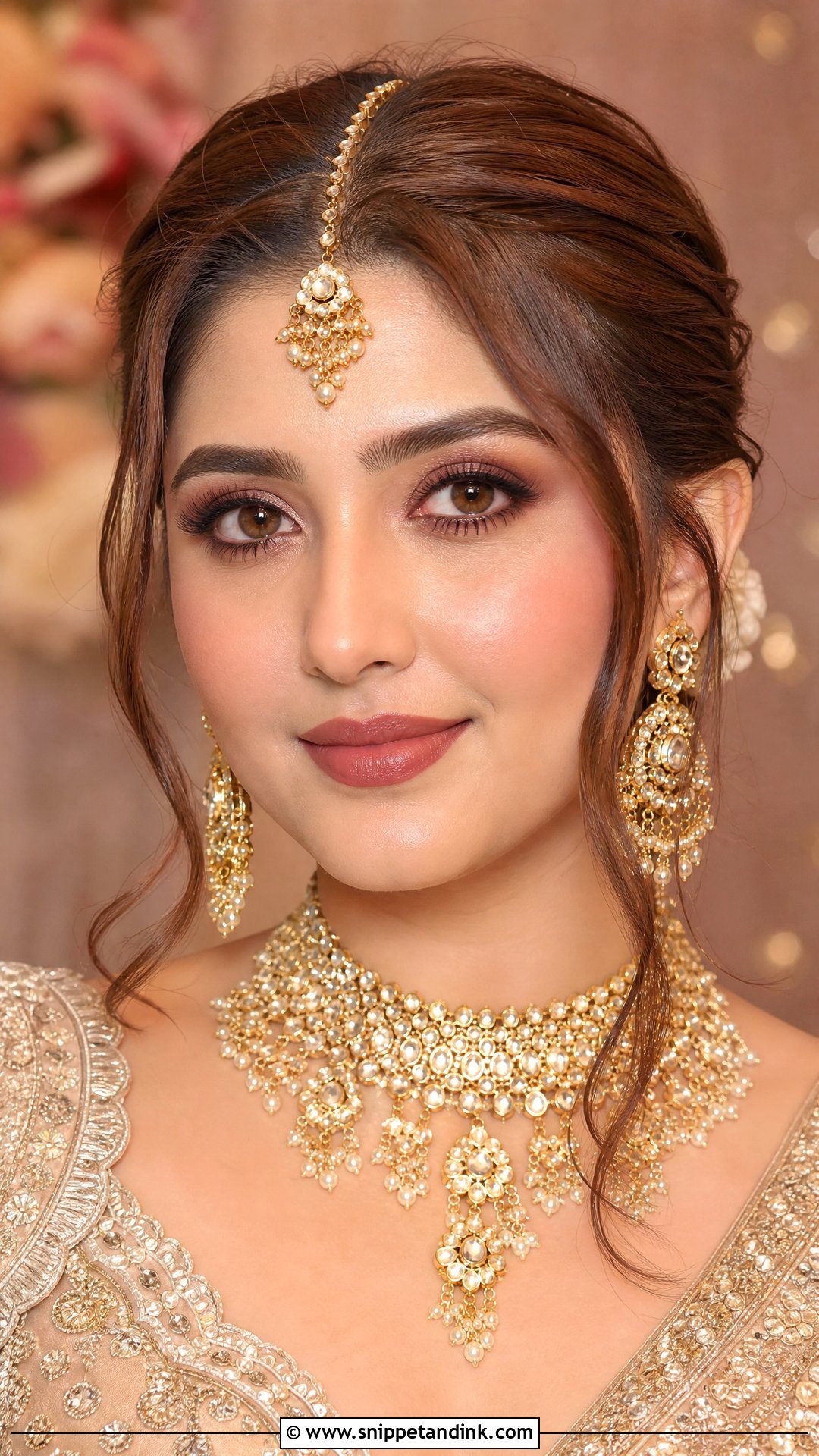
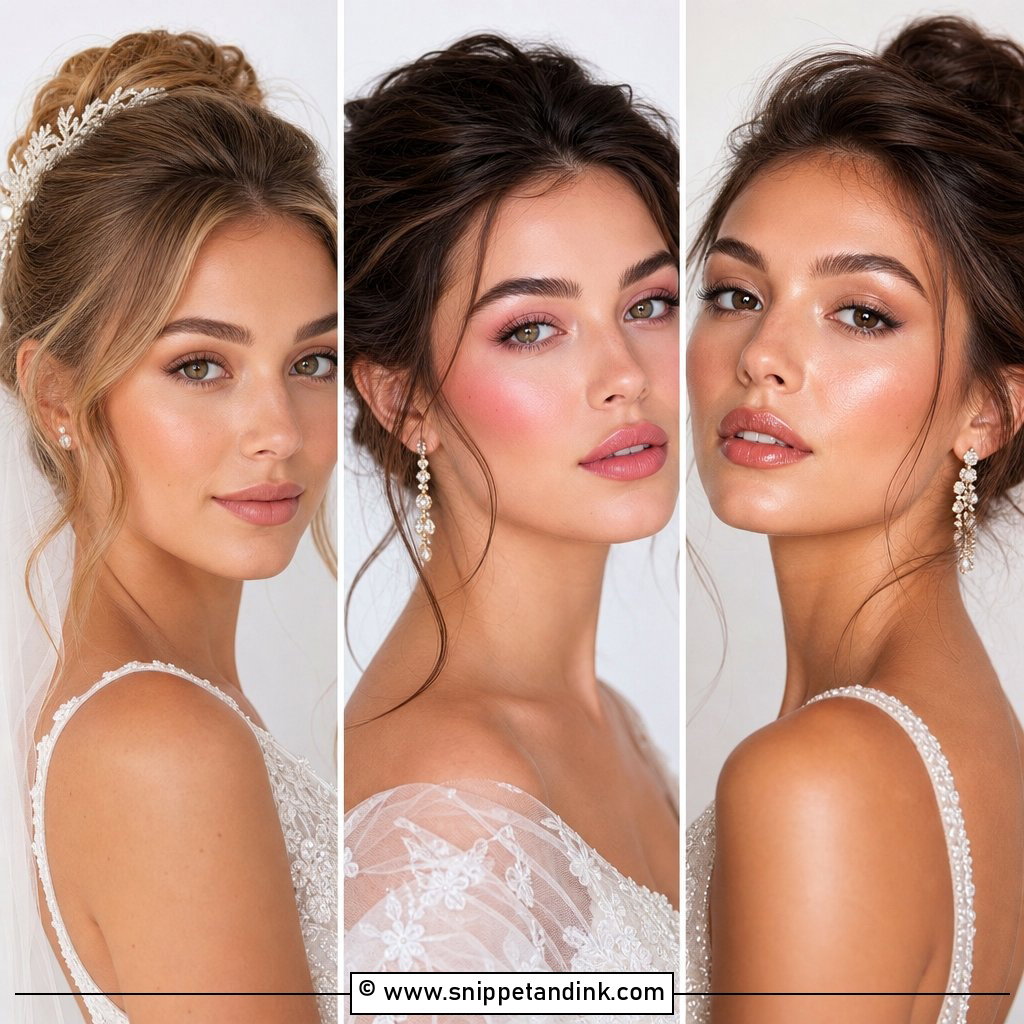
Modern Indian bridal makeup keeps the tradition but drops the heavy layers and the one-size approach. The base is skin-like but perfected, the eyes softly smoked or cleanly lined, and the cheeks lifted with blush and subtle contour. Lips follow undertone: rose brown, peach nude, berry, red or caramel are all possible. I ask brides for photos of themselves on a good day rather than of other brides, because the brief is to look current but recognisable. It adapts to lehengas, sarees, gowns and fusion outfits, which makes it useful across a multi-day wedding.
Where Heavy Jewelry Changes My Plan
Bridal jewelry sits right on the face, and it changes what I do in specific places. That’s why I ask for a trial with the real pieces, or at least the nath and tikka, rather than borrowed ones.
The nath
A large nose ring rests on the upper lip and cheek. Lipstick transfers onto it and the chain can rub highlight away. I set the cheek on that side more firmly and use a lip formula that dries down completely before the nath goes on.
Maang tikka, matha patti and dupatta pins
Anything at the hairline presses against the base and the brows. I keep foundation thin near the parting and set it well, so pins and a heavy dupatta don’t drag it into a visible line. If sindoor is part of the ceremony, keep the parting clean of product.
The ceremony itself
Sitting near the sacred fire for a long phera brings real heat to the face. A setting spray applied in layers and blotting paper kept with a bridesmaid handle most of it. Ask your planner for a short break before the main photographs, which is where I’d do a quick touch-up of lips and under-eyes.
Your Lehenga, Your Jewelry, Your Face
A good Indian bridal face is not about trends alone. It’s about a full look matched to the outfit, the ceremony time, the lighting, your skin and how much you’re comfortable wearing. A red lehenga may call for gold eyes and a classic lip, while a pastel outfit might want soft glam and dewy skin. Some brides feel most themselves in bold kohl and red, others in a nude lip and gentle definition. Take the looks here to your trial, then adjust colour and intensity there until the result feels flattering and yours.
You'll Like These Ideas:


Leave a Reply