
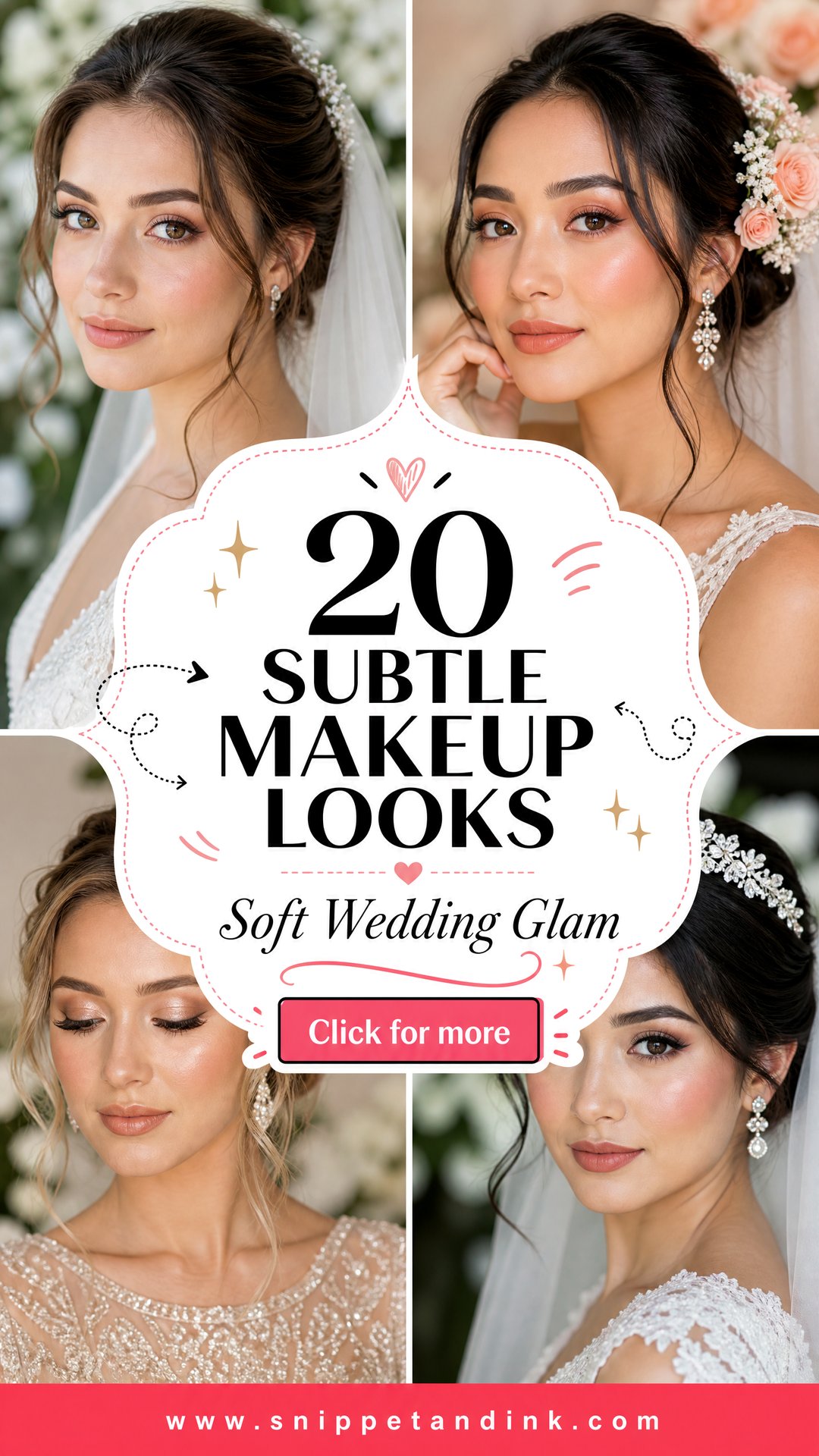
On a wedding morning I might do a bride, three bridesmaids and two mothers in one room, and almost all of them ask for the same thing: look like me, but better. That brief sounds simple and isn’t. Soft makeup has to survive hugging, crying, eating and a camera flash, so the skill is in texture and placement more than colour. Below are twenty quiet looks, dewy to matte and peach to berry, with the details I adjust depending on who’s wearing them and where.
How Much Makeup Each Role Usually Wears
The same soft look doesn’t suit every person in the wedding photos. I adjust intensity by role, because each one spends the day in a different light and a different amount of time in front of the camera.
The bride
She’s photographed close up for hours, so she needs more longevity than intensity: a primer suited to her skin, a base that’s been set where it creases, and a lip with a liner underneath. Even a very natural bridal face usually has more product on it than it appears to.
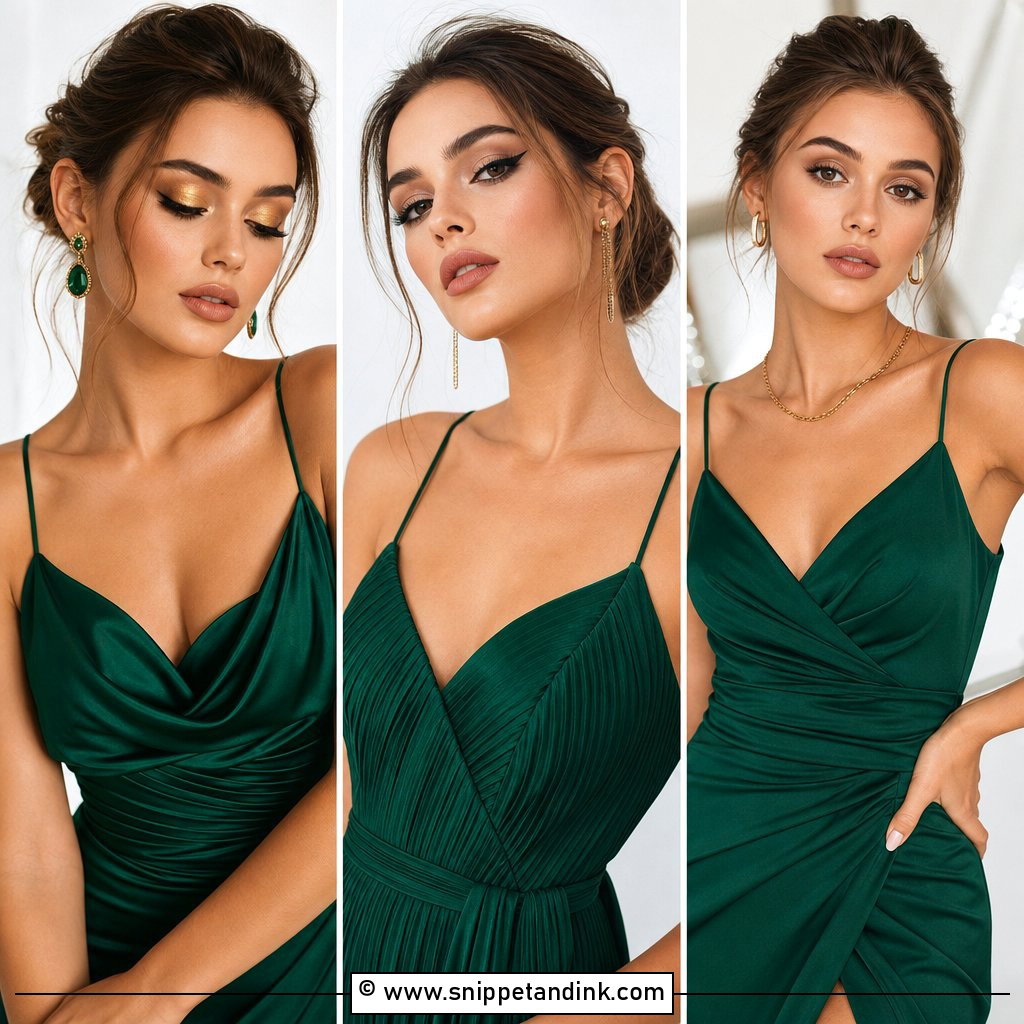
Bridesmaids
They stand in a line, so consistency matters more than matching. I keep similar depth on the eyes and a lip family that agrees with the dress colour, then adapt shades to each woman’s skin.
Mothers and grandmothers
Mature skin generally looks better with cream products, very little powder and satin rather than glitter-based shimmer, which sits in fine lines. A defined brow and a lip with some colour do more than heavy eye makeup.
Guests
You’re mostly seen across a table and in group shots. A fresh base, a bit of warmth on the cheeks and a lip you can reapply without a mirror is all you need.
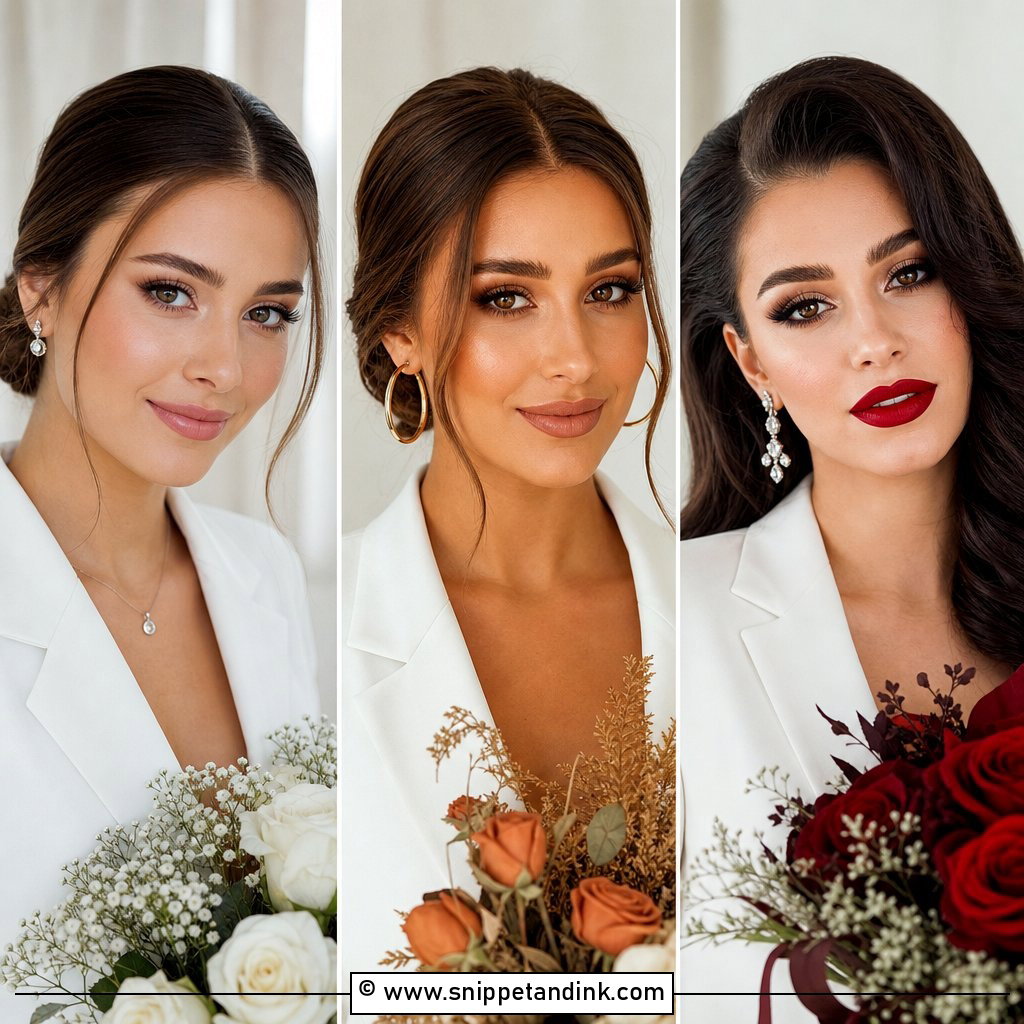
1. Natural Wedding Makeup
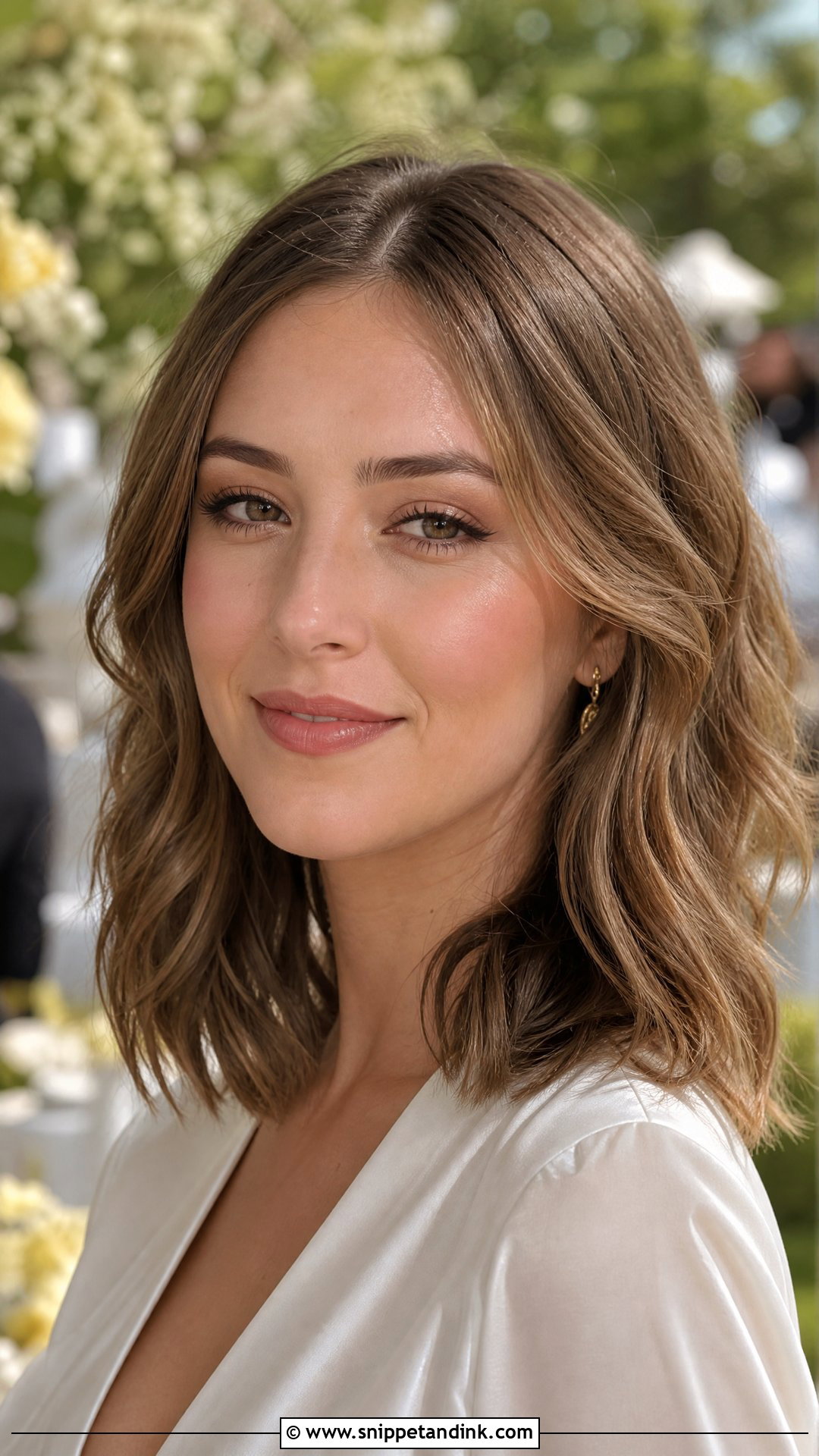
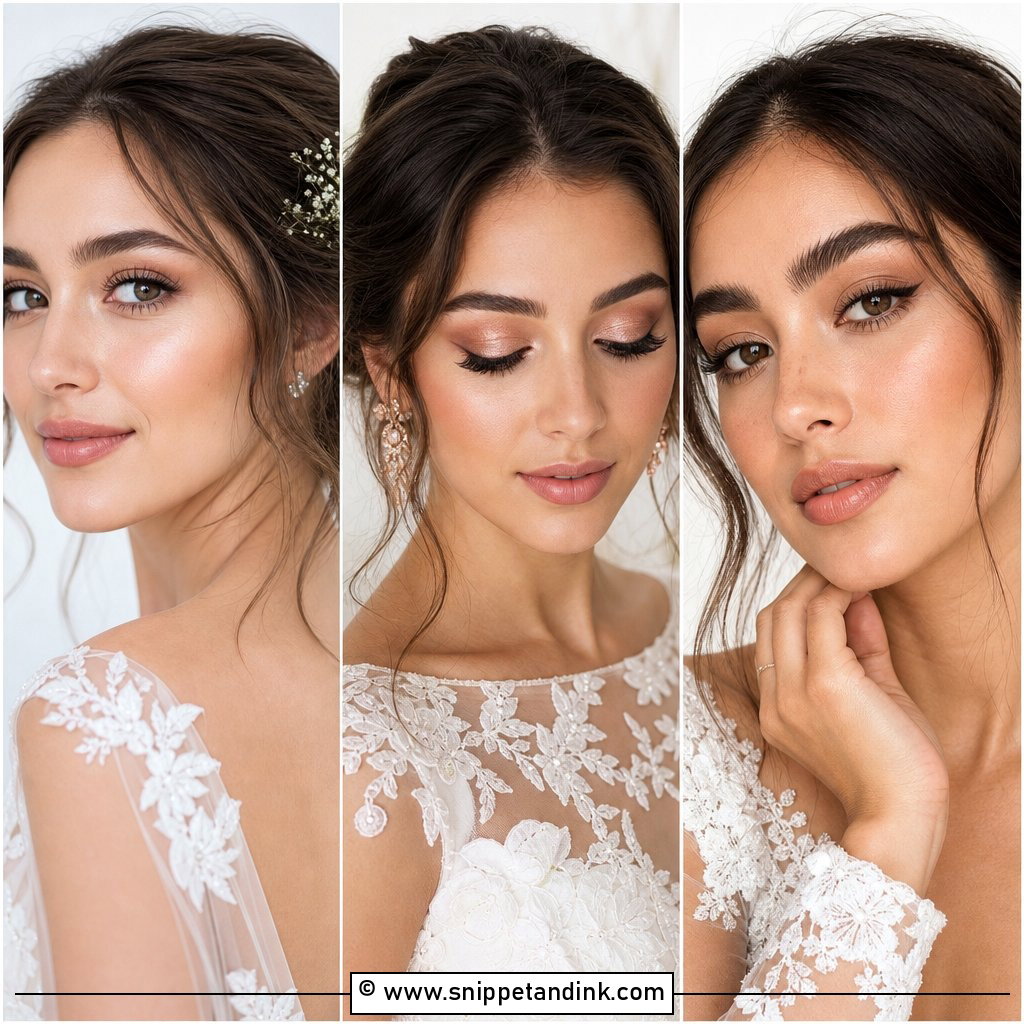
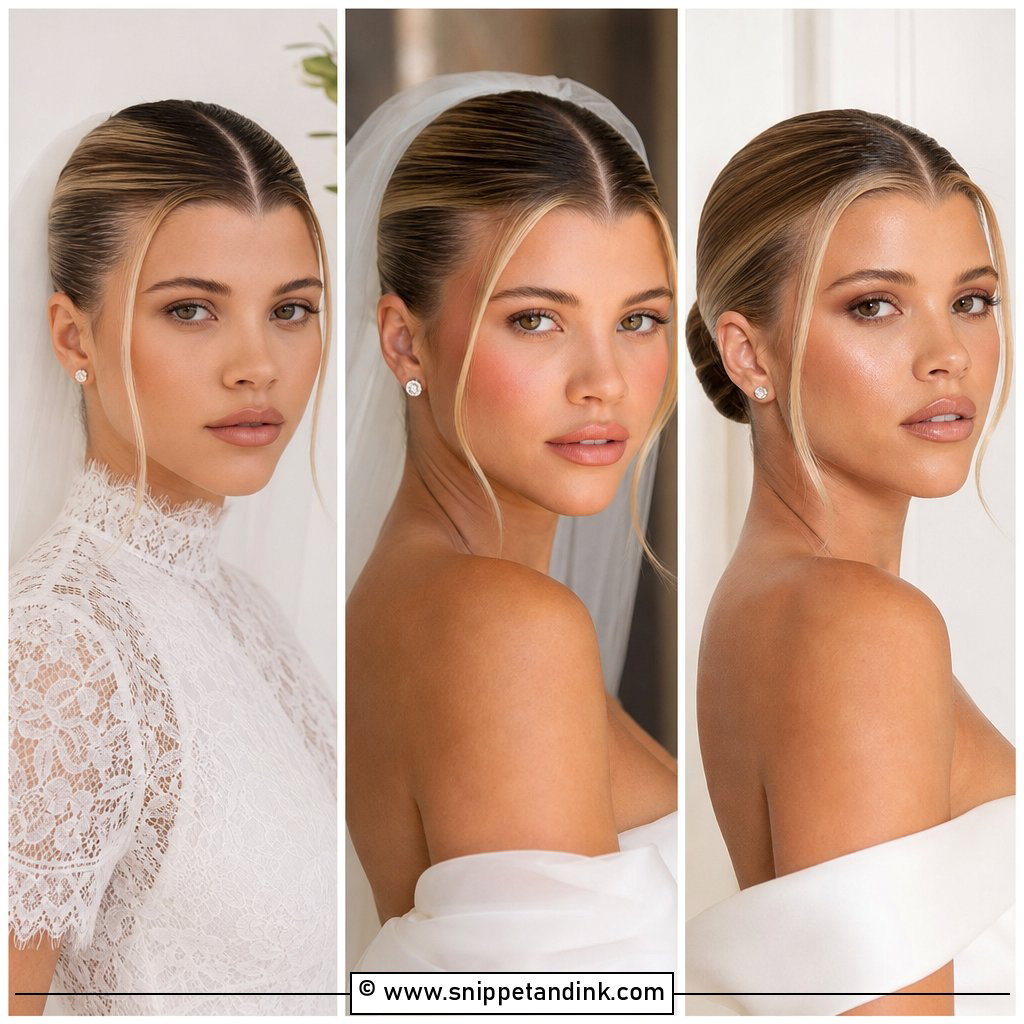
Natural makeup starts with skin that doesn’t need much covering. I use a skin tint or sheer foundation and spot-conceal only redness and shadows, then place soft pink or peach cream blush high on the cheek, never on the apple alone, because low blush drags the face down in photos. Taupe on the lid and a brown liner pressed into the lashes keep the eyes defined without a visible line. Tinted brow gel, natural mascara and a lip close to your own colour finish it.
2. Soft Glam Wedding Makeup
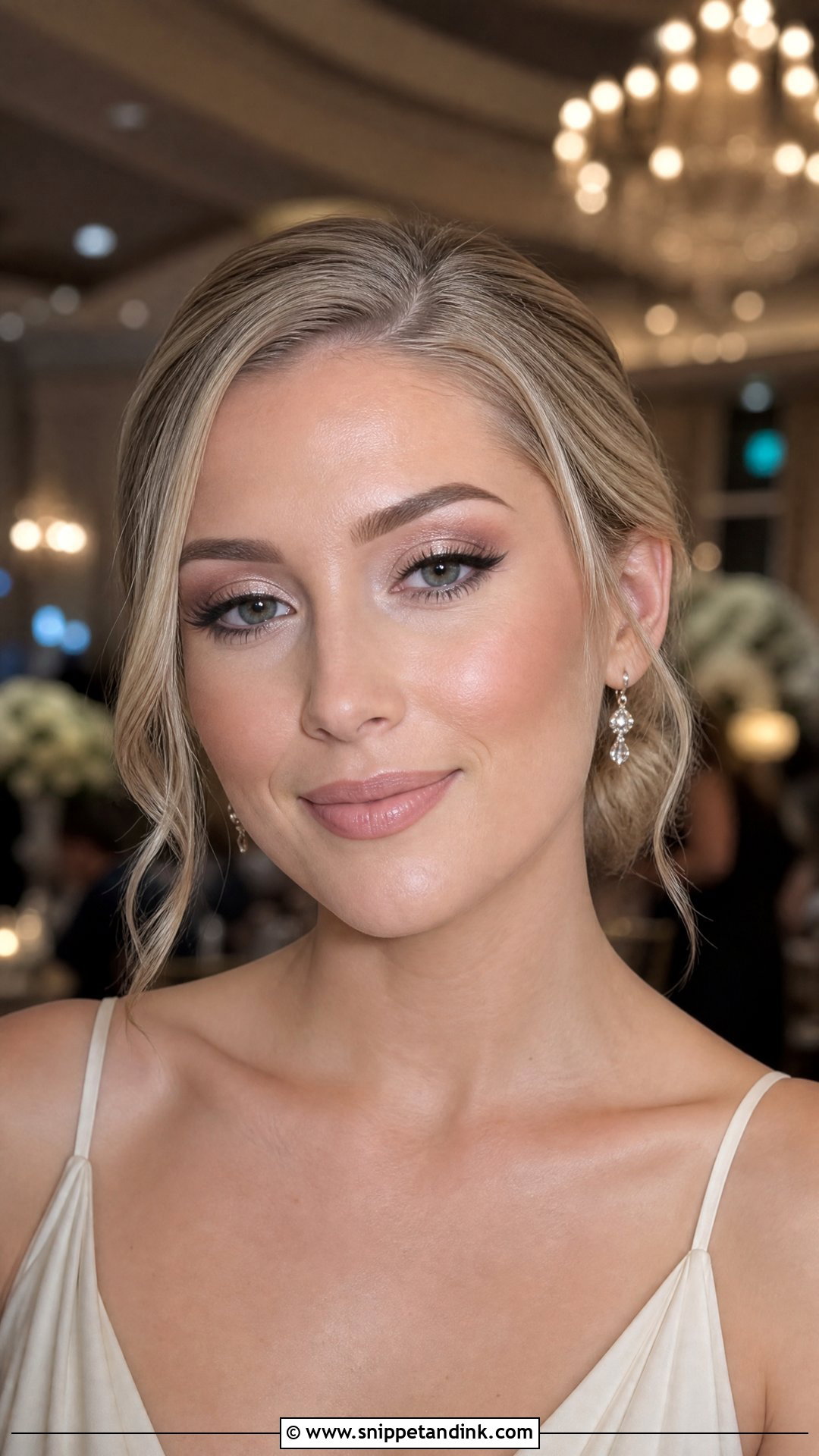
Soft glam is where I go when someone wants to look finished in photos but still recognisable at dinner. A satin, medium-coverage base gives structure, bronzer warms the hairline and cheekbones, and a gradient of champagne into warm brown shapes the eye. A short brown wing and a few individual lashes give lift. Peachy blush and a beige-pink lip keep it from tipping into evening glam. It’s the look most bridesmaids end up choosing after a trial.
3. Dewy Wedding Makeup
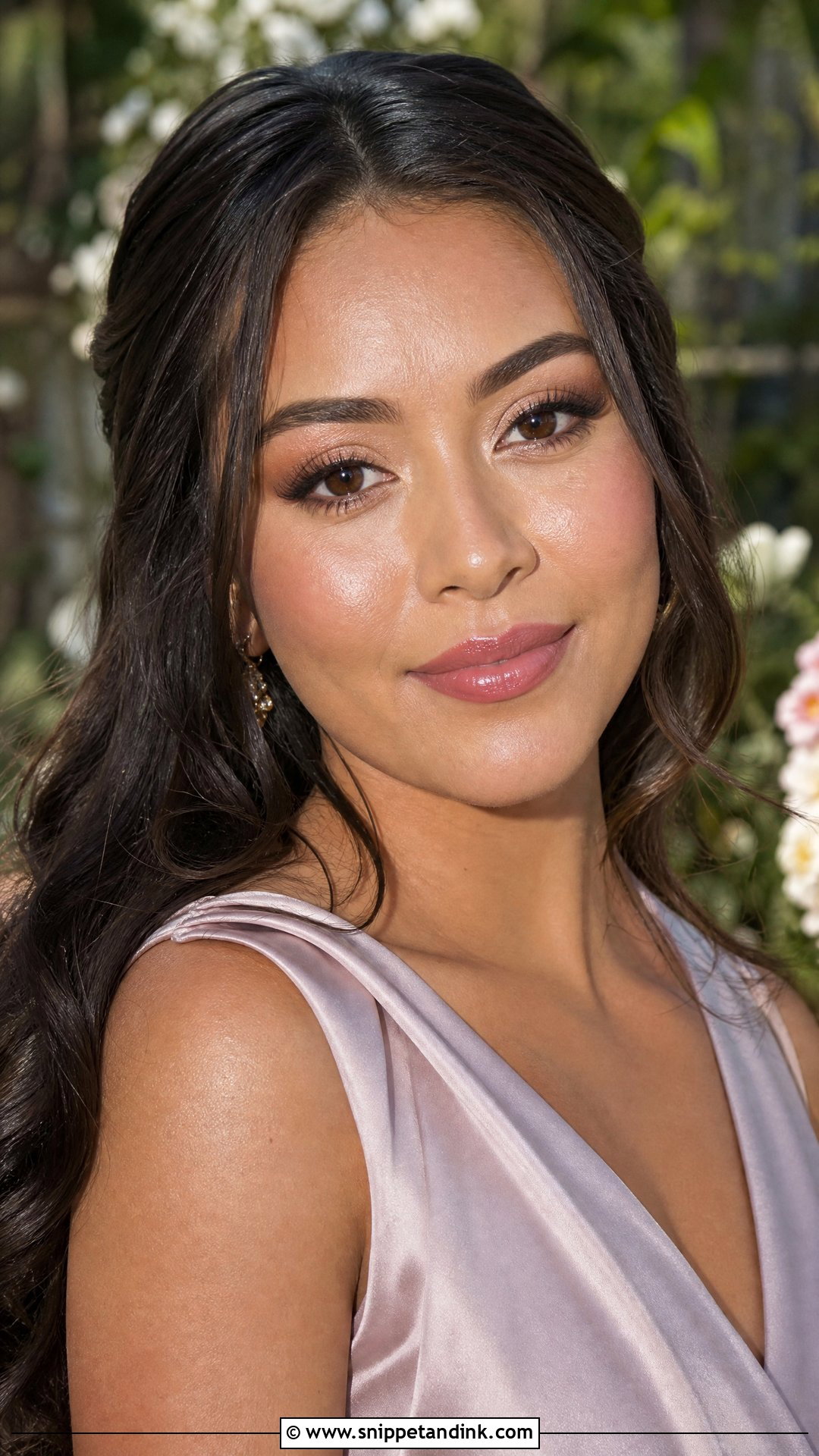
Dewy makeup is about controlled glow. If everything shines, the camera reads it as sweat. I prep with hydration, use a luminous base only where coverage is needed, then powder the centre of the face, the nose, forehead and smile lines, and leave the cheekbones alone. Cream blush in rose, peach or soft berry sits naturally on dewy skin. Champagne at the inner corners and a glossy nude lip complete it. Daylight is where it shines; in a hot venue, keep blotting papers handy.
4. Matte Wedding Makeup
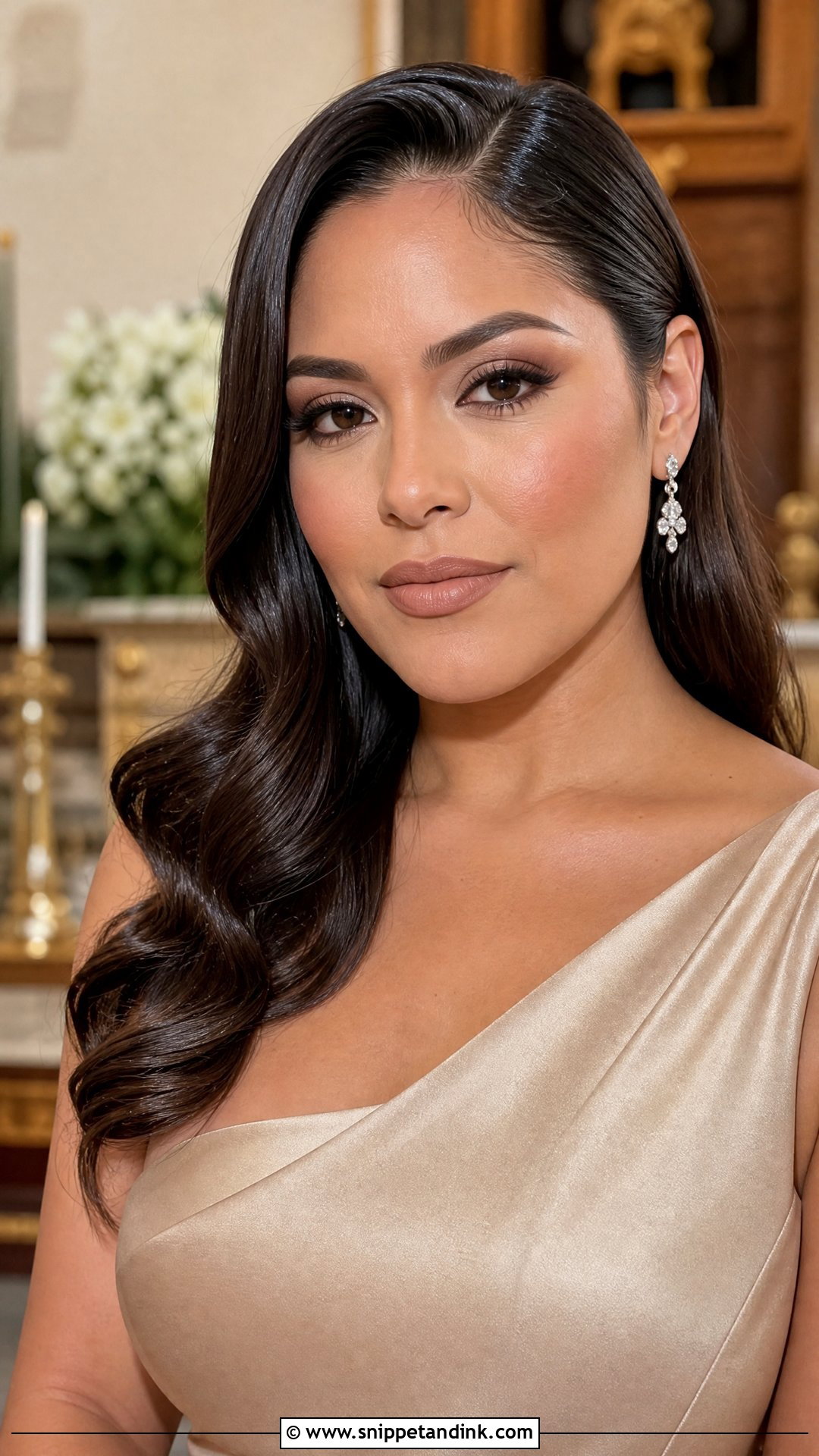
Matte makeup suits oily skin and long days, but a fully matte face can look flat and older under flash. I use a soft matte foundation, press it in with a damp sponge so texture still shows, and choose a powder blush in muted rose rather than cream, which would break up the matte base. Matte beige on the lid, soft brown in the crease and a blurred liner keep the eyes simple. A satin-matte nude lip stops the whole look feeling dry.
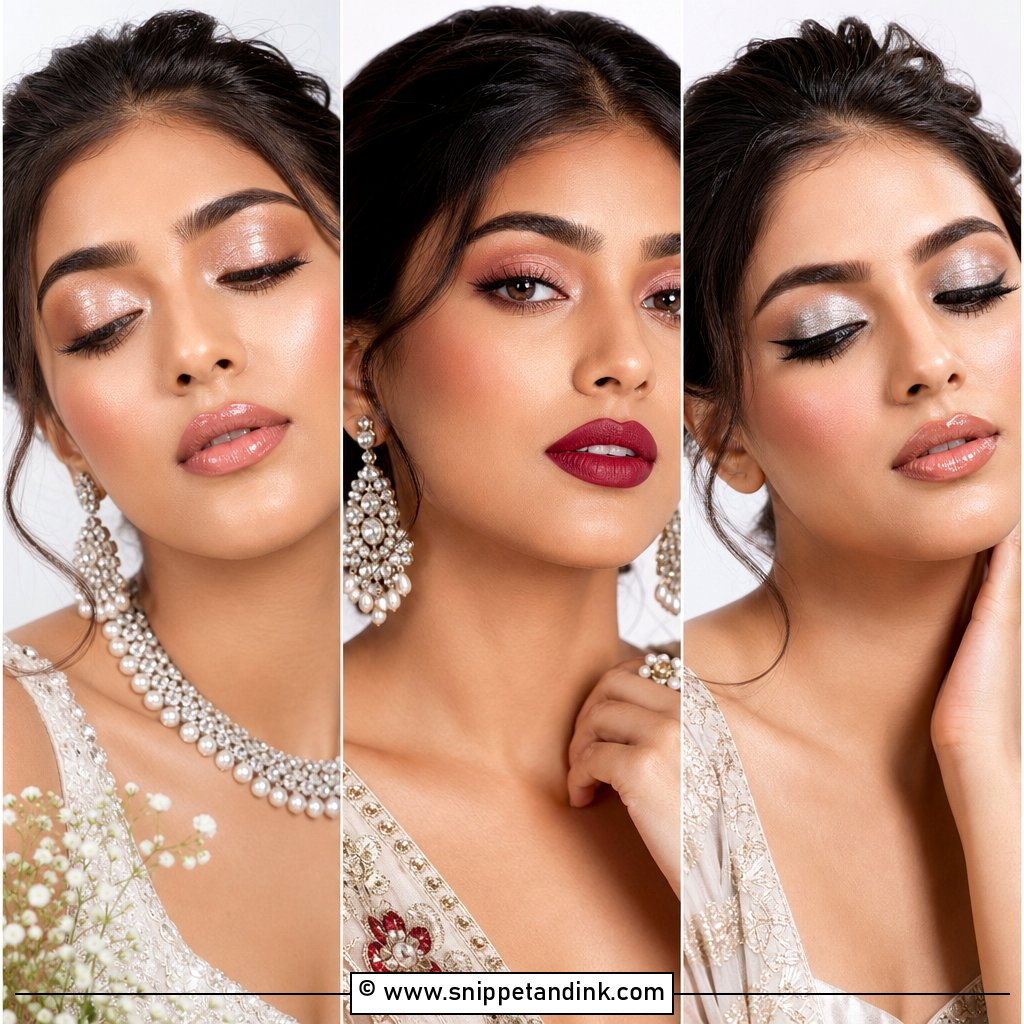
5. Rose Gold Wedding Makeup
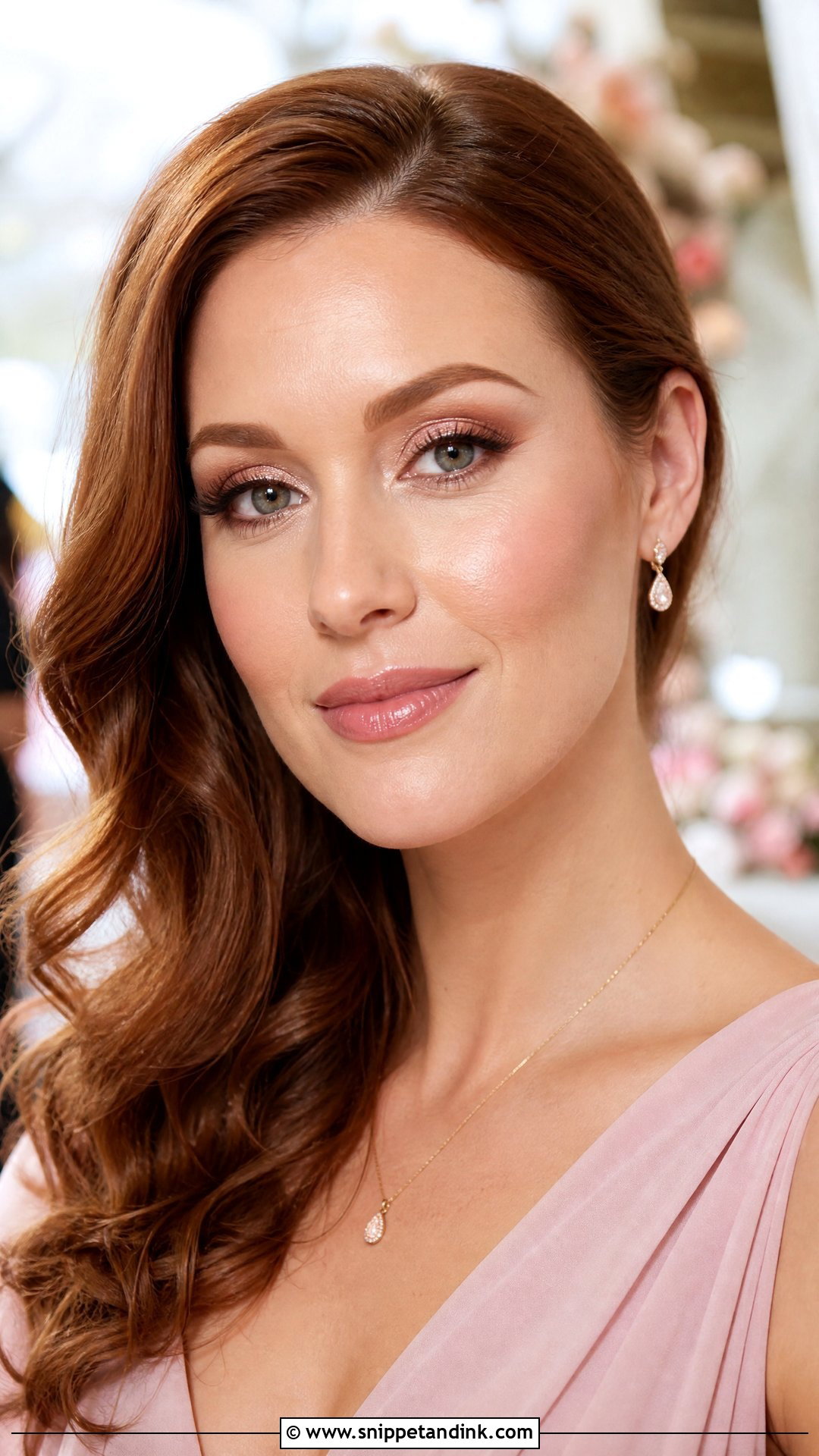
Rose gold mixes pink, gold and a little bronze, which is why it flatters so many skin tones. I apply a sheer rose gold shimmer to the lid with a fingertip, since a brush can kick up fallout onto the cheeks, and blend soft brown through the crease. Thin liner keeps the shimmer delicate. A warm highlight on the cheekbone links eyes to face, and a pink or mauve nude gloss finishes it. It catches light without looking sparkly.
6. Peach Wedding Makeup
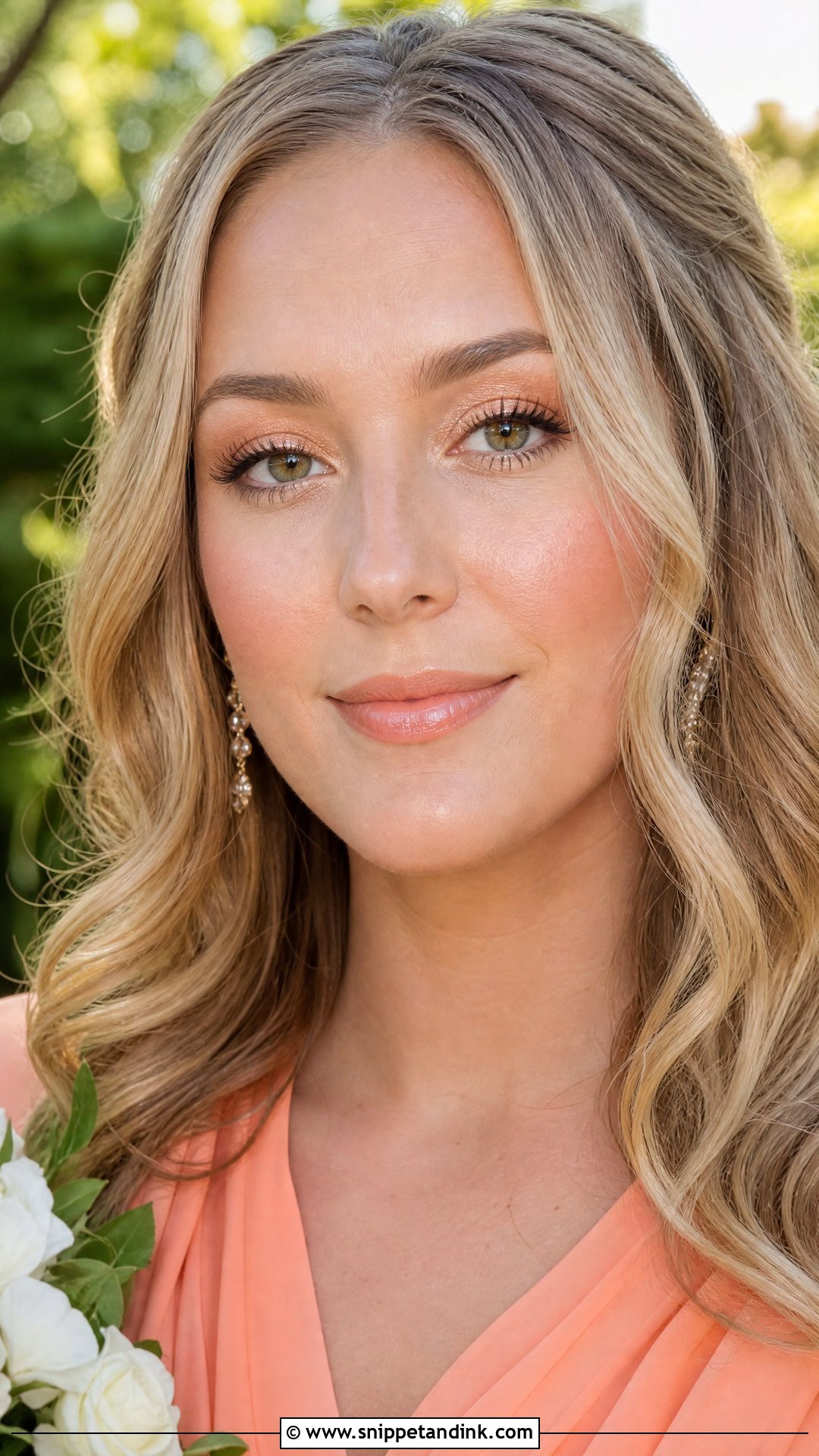
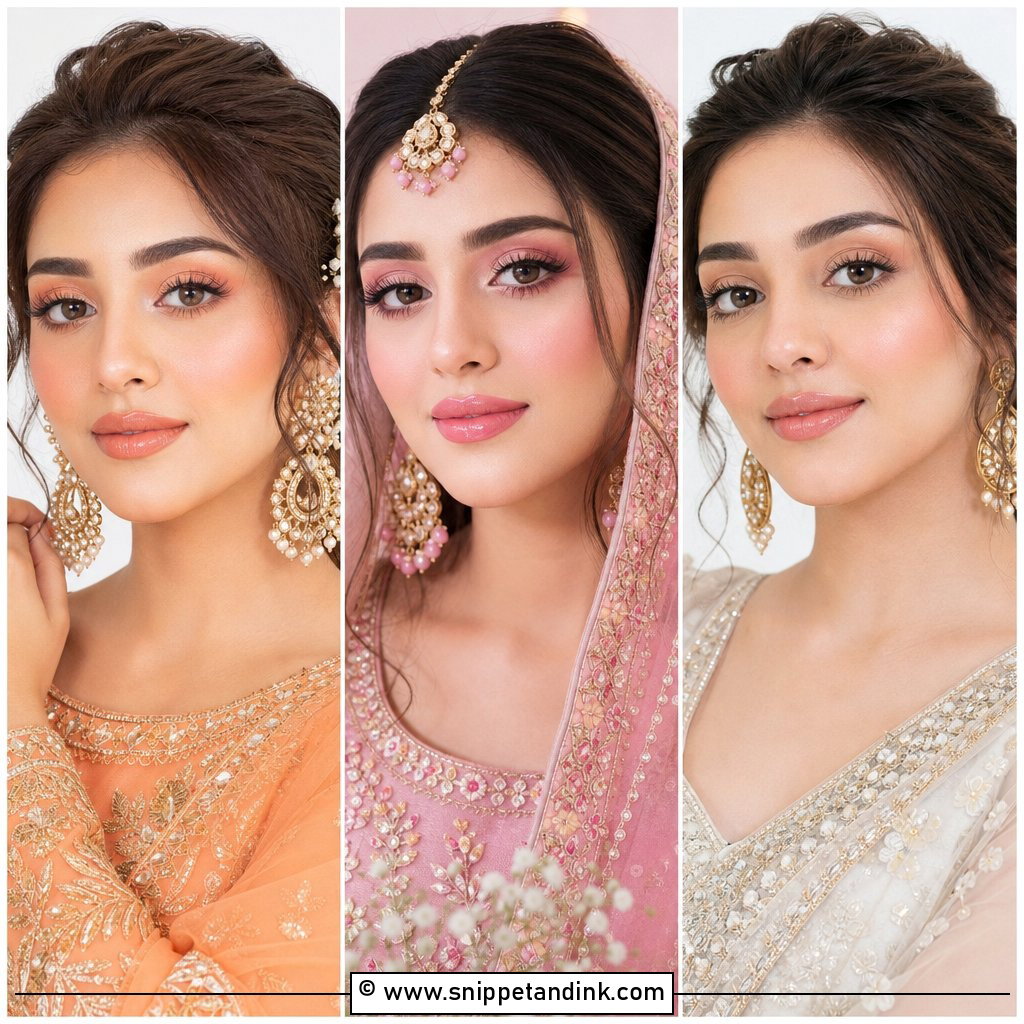
Peach is my first suggestion for outdoor spring and summer weddings, because it looks like warmth from the sun rather than makeup. Cream blush blended upward from the cheek, tan and apricot on the lids, and brown mascara on fair lashes keep it soft; on dark lashes, black is fine. Brush the brows up and fill sparingly. A peachy nude lip oil or gloss pulls it together. It’s easy to touch up from a small bag.
7. Pink Wedding Makeup
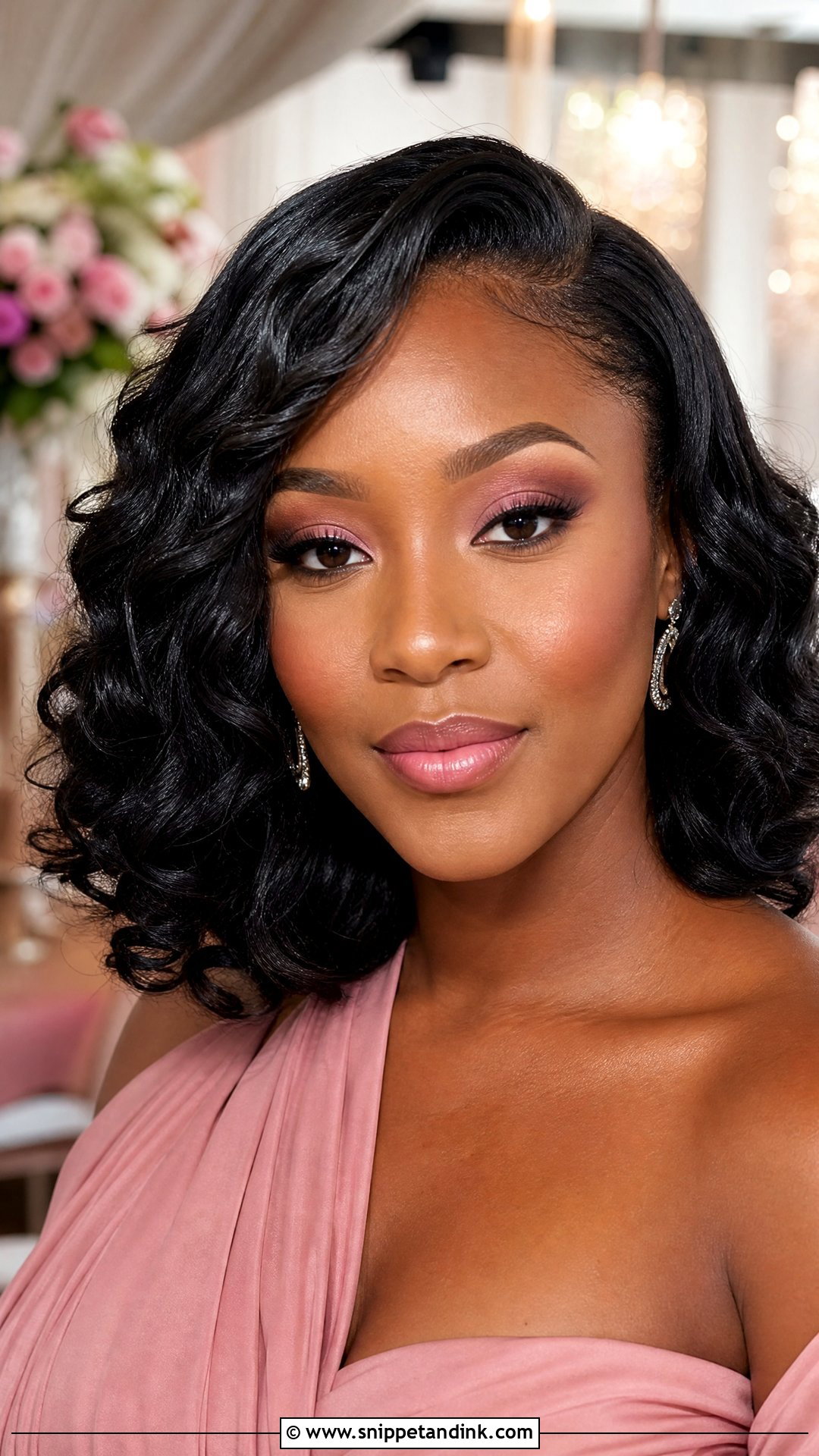
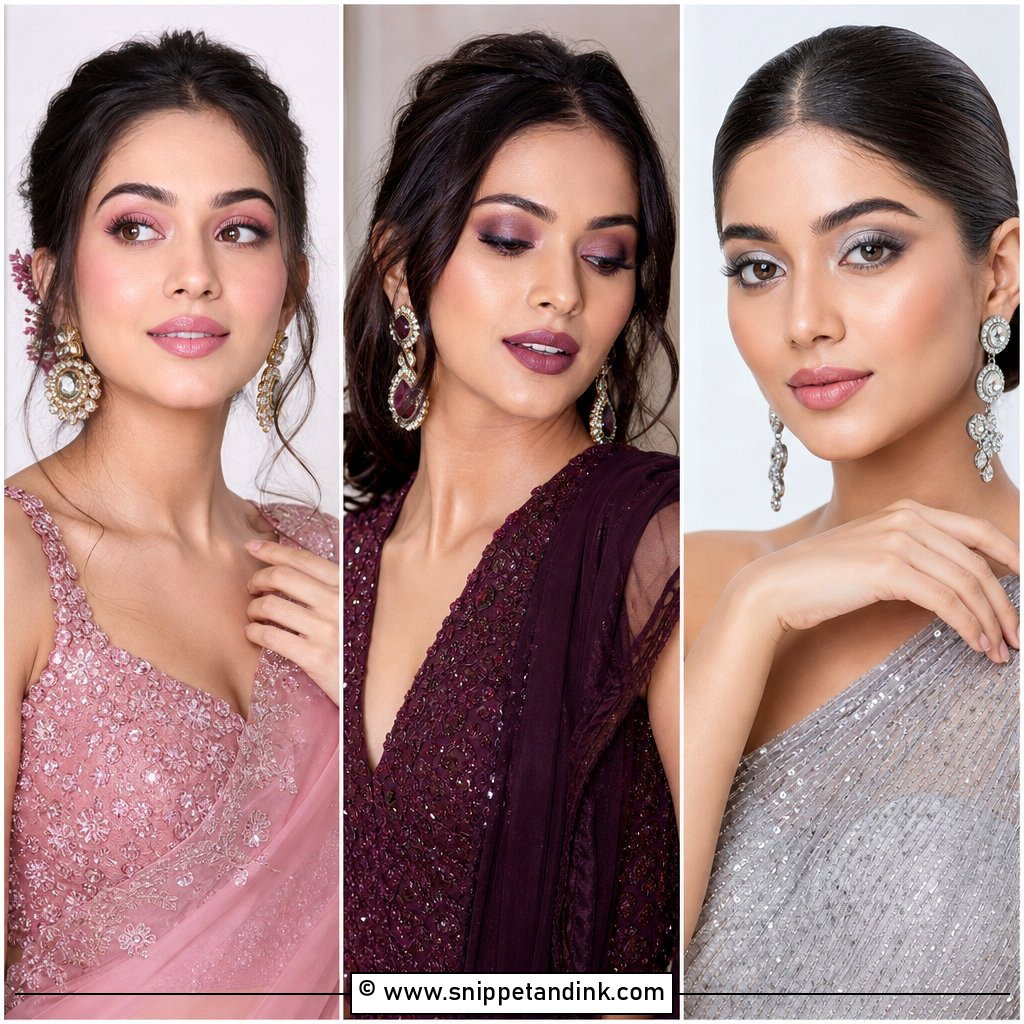
Pink is classic, and the undertone question decides whether it works. Cool skin usually suits baby pink or rose; warm skin tends to glow with coral pink or peachy pink. I build blush in thin layers, because pink blush that goes on too heavy is hard to soften without disturbing the base. Pale pink and taupe on the eyes with brown pencil instead of black liner keep it gentle. A rosy stain lasts longer than a satin lipstick through a meal.
8. Brown Smokey Wedding Makeup
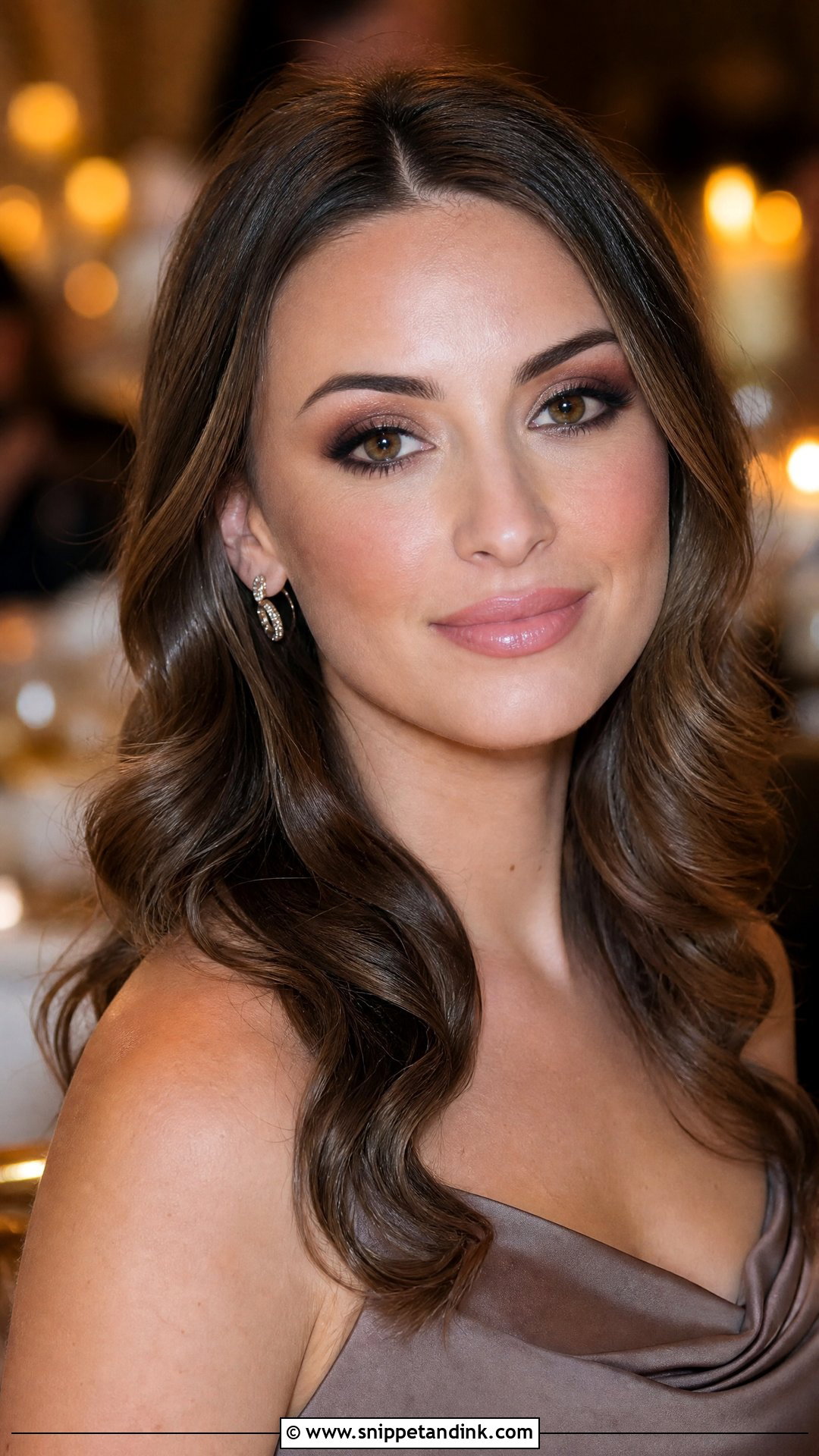
Brown smokey wedding makeup gives definition without the weight of black. I layer light brown on the lid, medium brown in the crease and espresso tight along the upper lashes, then blend until no edge can be found. Keep the cheeks neutral so the eyes lead. Lashes and a beige or pink-brown lip balance it. Evening receptions with warm lighting are where it looks best; in harsh midday sun, I’d soften it further.
9. Bronze Wedding Makeup
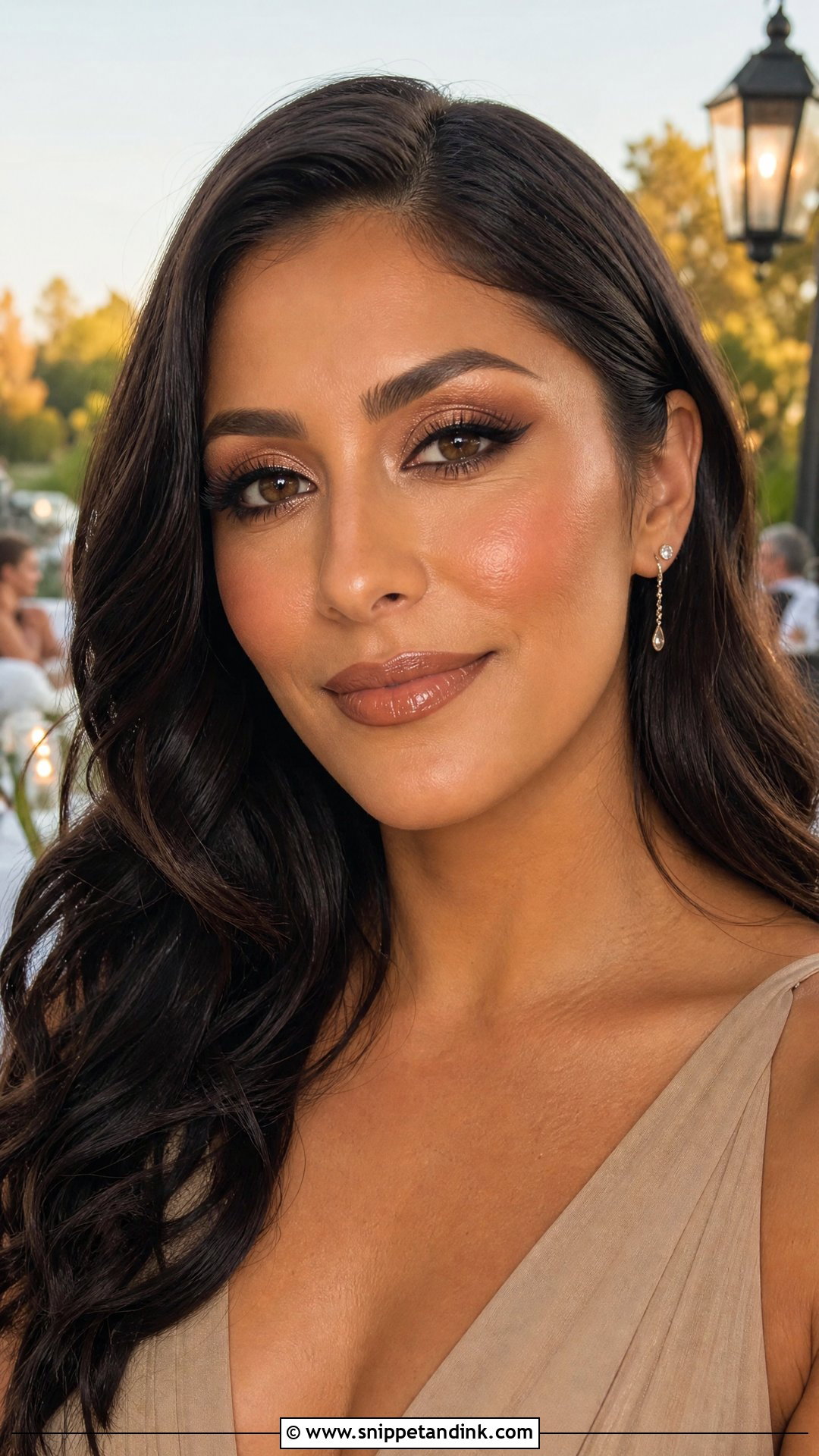
Bronze gives shape and warmth. The rule I follow is that bronzer and contour sit only one or two shades deeper than the skin, because anything darker turns muddy in photos. I sweep it lightly at the temples, cheeks and jaw over a satin base. Bronze and caramel shadows with a touch of shimmer on the centre of the lid, a peach or terracotta blush and a nude brown lip keep it relaxed rather than heavy.
10. Nude Wedding Makeup
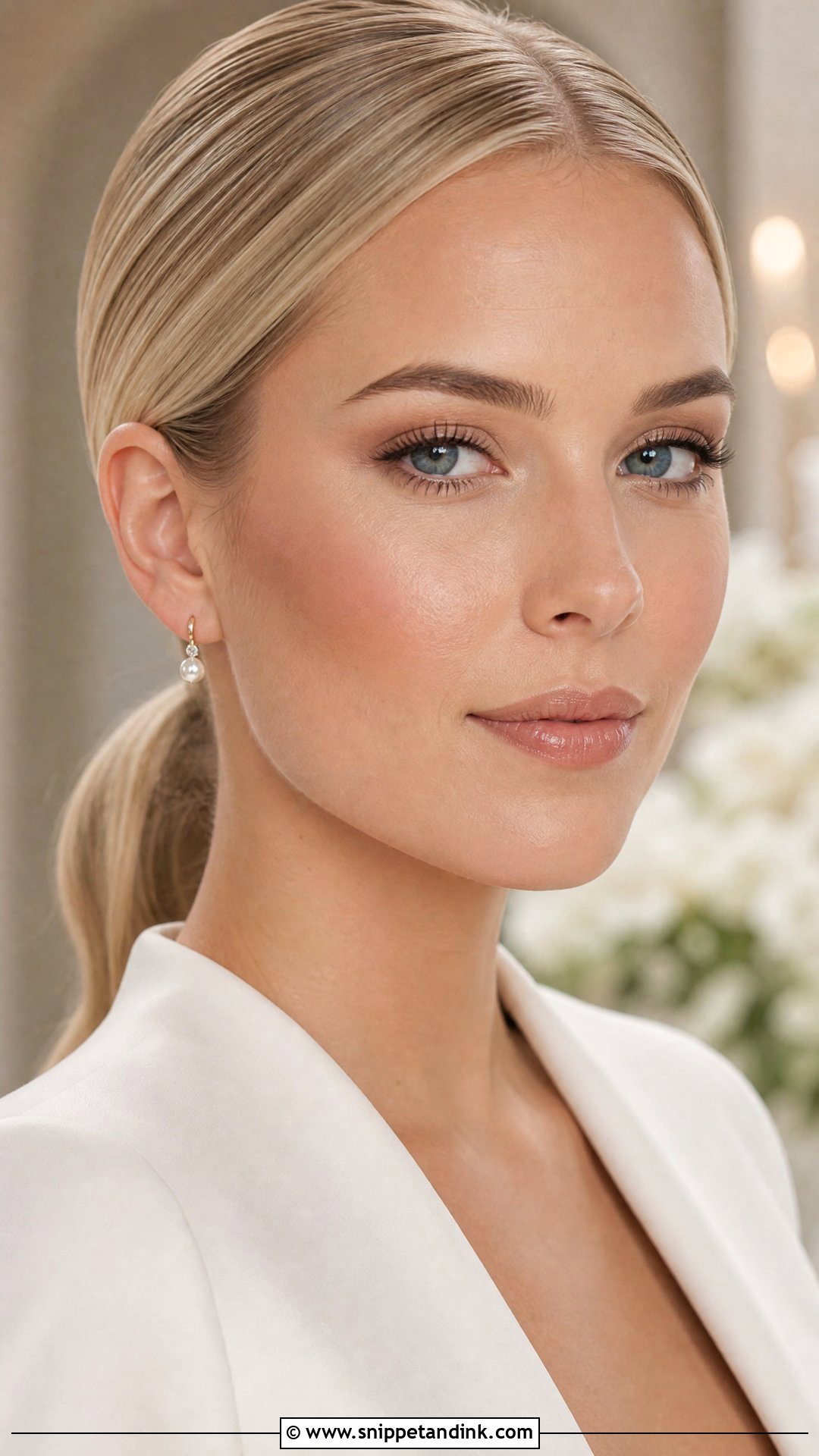
Nude makeup is the easiest to get wrong. A lipstick matched exactly to your natural lip often vanishes in photos, so I go a shade deeper. The same goes for the base: it should even out, not erase. Beige-rose blush, a sweep of bronzer, a quiet highlight and cream-to-brown eyes with a tight line at the lashes keep the face balanced. Brows groomed, not blocky. It ends up calm and modern.
11. Champagne Wedding Makeup
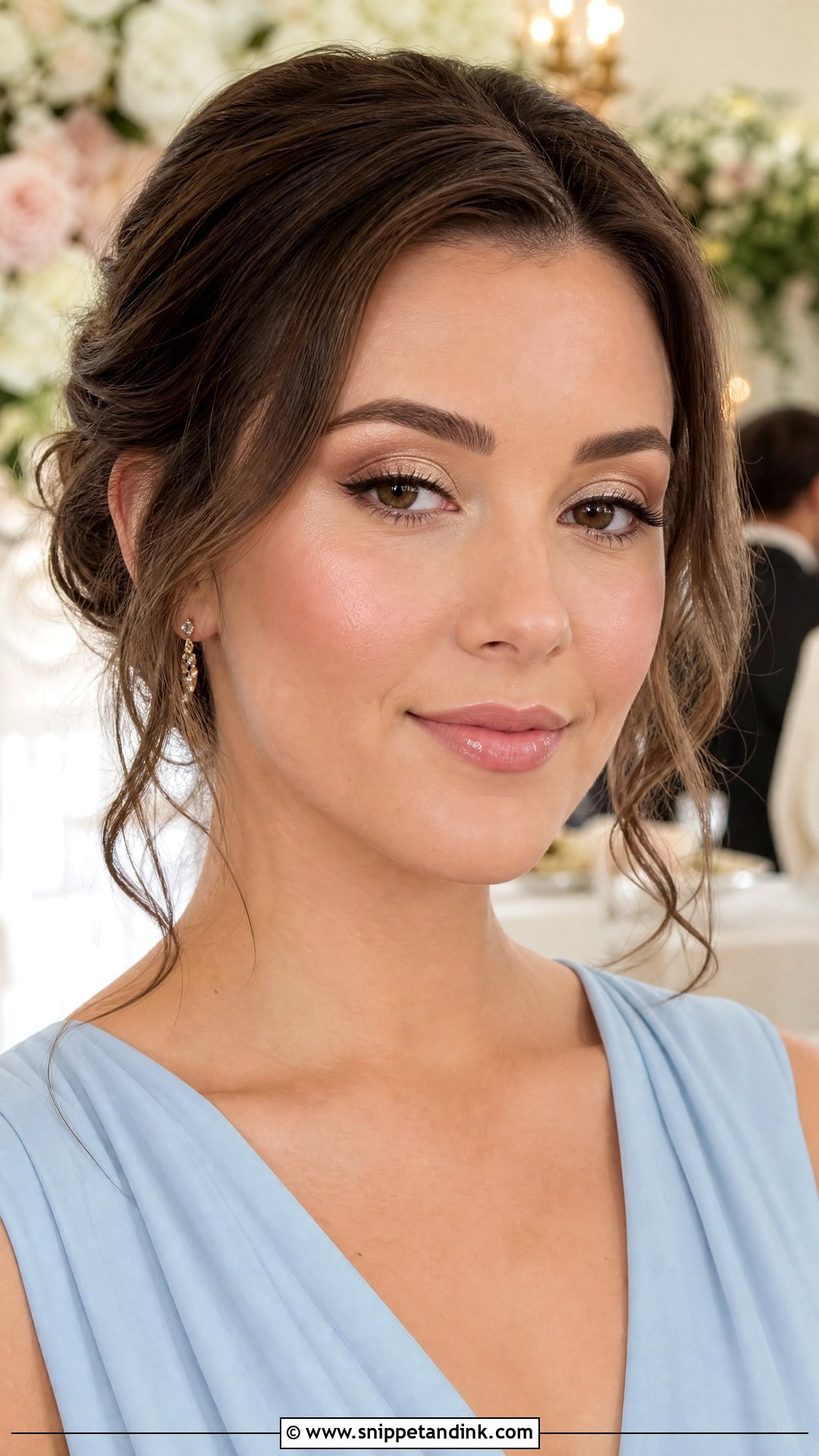
Champagne brightens without adding colour. I place it at the centre of the lid and the inner corners, nowhere else, and use taupe in the crease for shape. That small, deliberate placement makes tired eyes look awake. Satin skin, light pink blush, a thin brown liner and a sheer rose lip keep the rest refined. It suits simple dresses and sleek hair, where a lot of colour would feel out of place.
12. Taupe Wedding Makeup
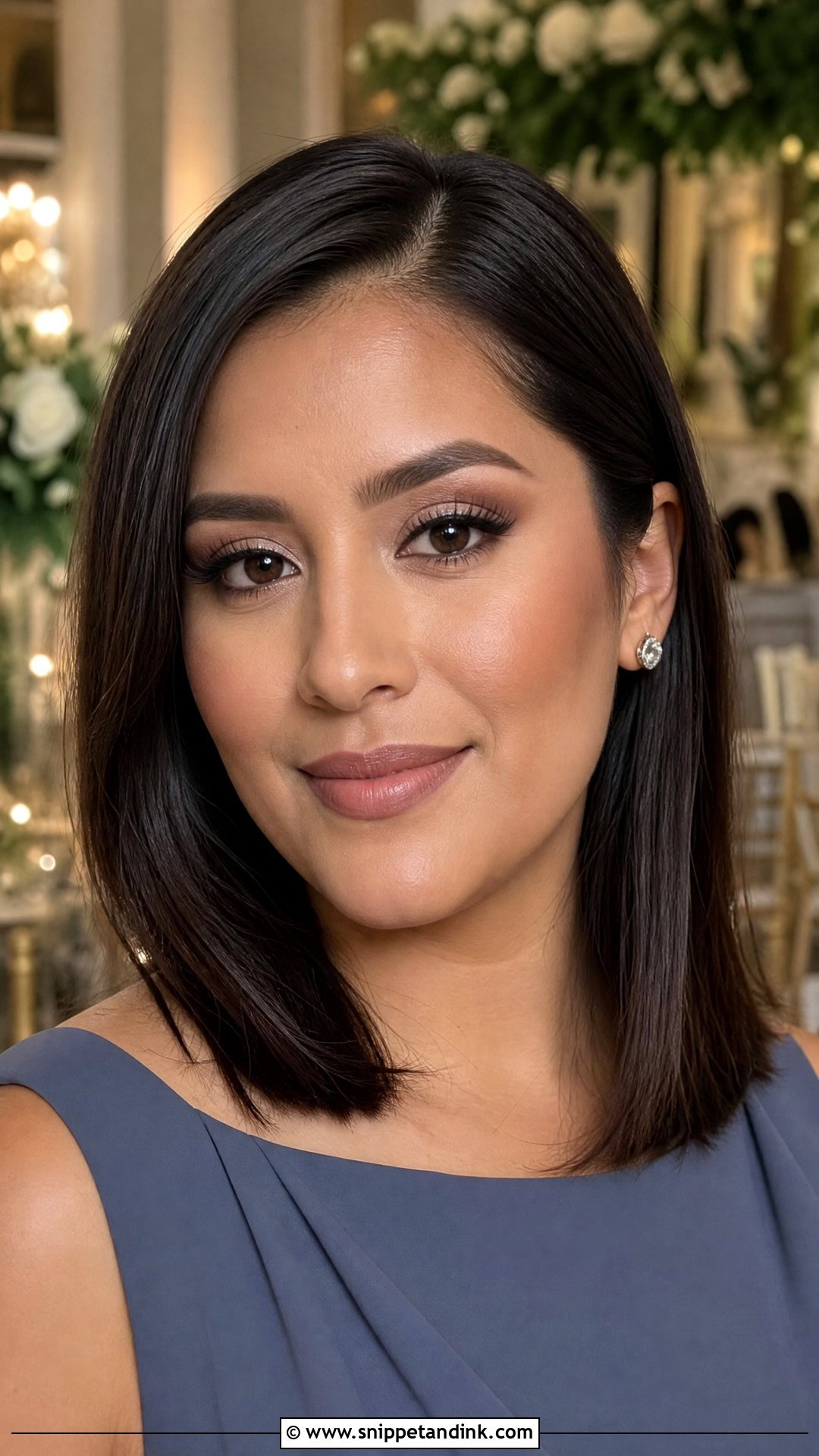
Taupe wedding makeup sits between warm brown and cool grey, so it adapts to nearly every undertone, and it makes blue eyes look especially clear. I blend taupe across the lid, a deeper brown-taupe through the crease and smudge a charcoal-brown liner at the lashes. Muted rose blush and a light contour if you want it. A mauve or pink-brown lip completes a palette that looks quietly polished at any hour.
13. Mauve Wedding Makeup
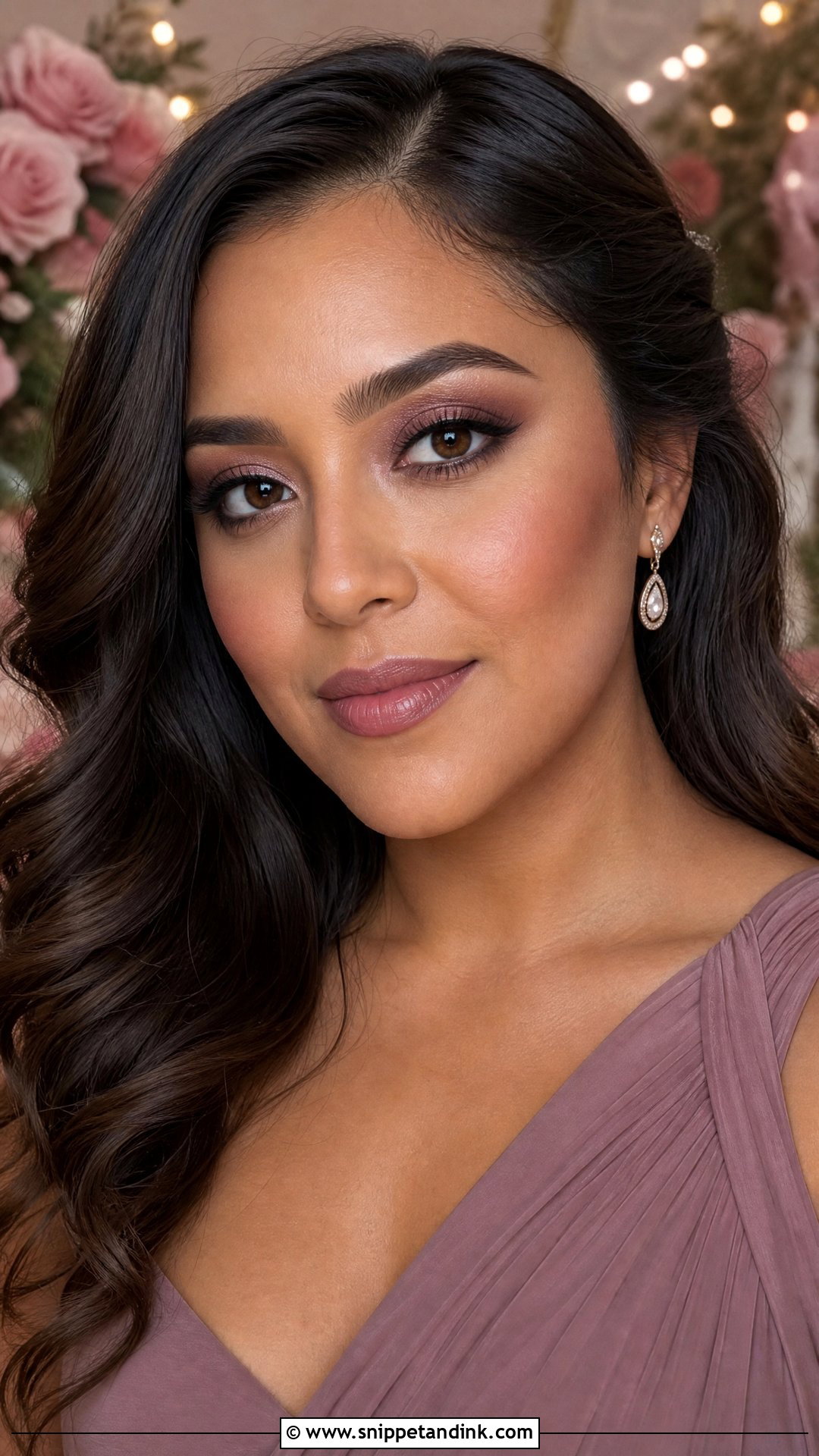
Mauve gives colour while staying more muted than bright pink, and it’s one of my go-to shades for mothers of the couple, since rose-plum tones flatter mature skin without emphasising lines. Satin base, a little powder through the T-zone, and mauve blush blended until it reads as a flush. Dusty rose and plum-brown on the eyes, darkest at the lash line. A mauve nude lipstick or blurred stain finishes it.
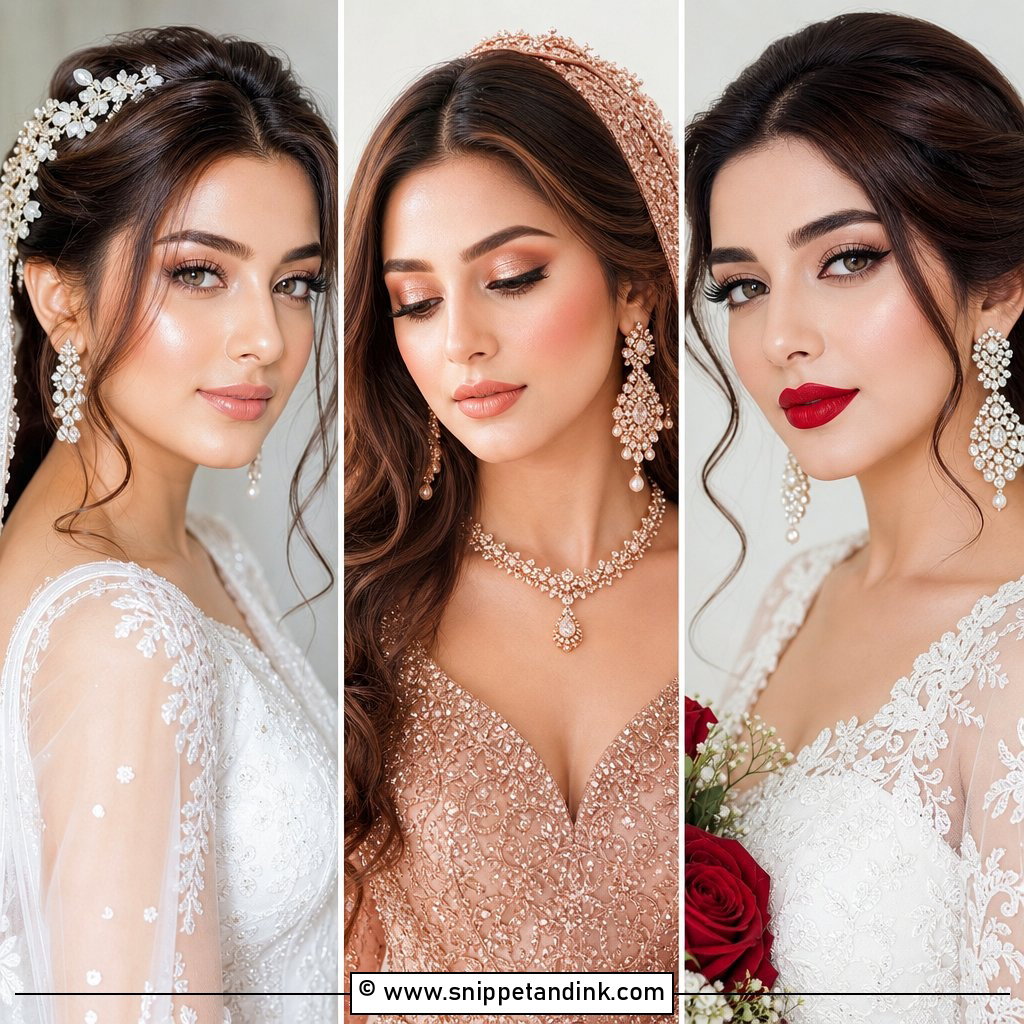
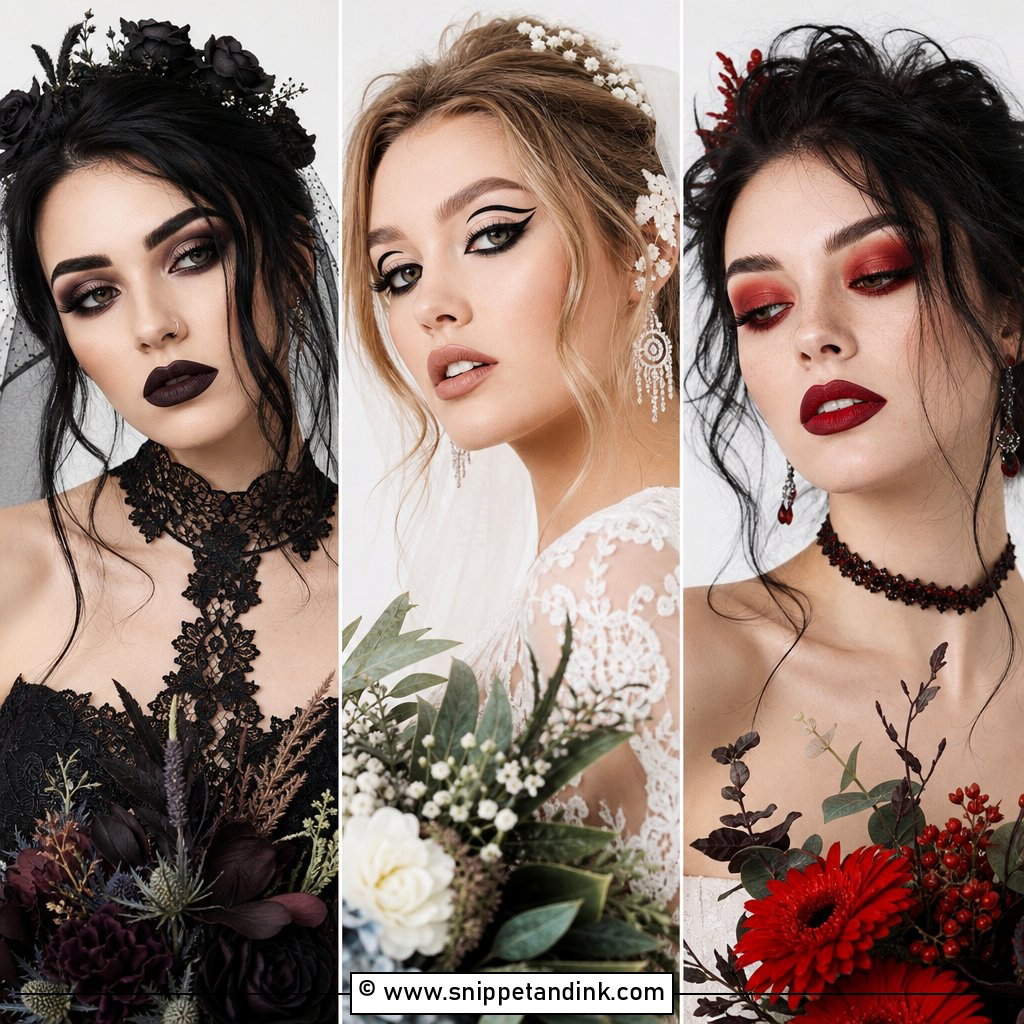
14. Soft Wing Wedding Makeup
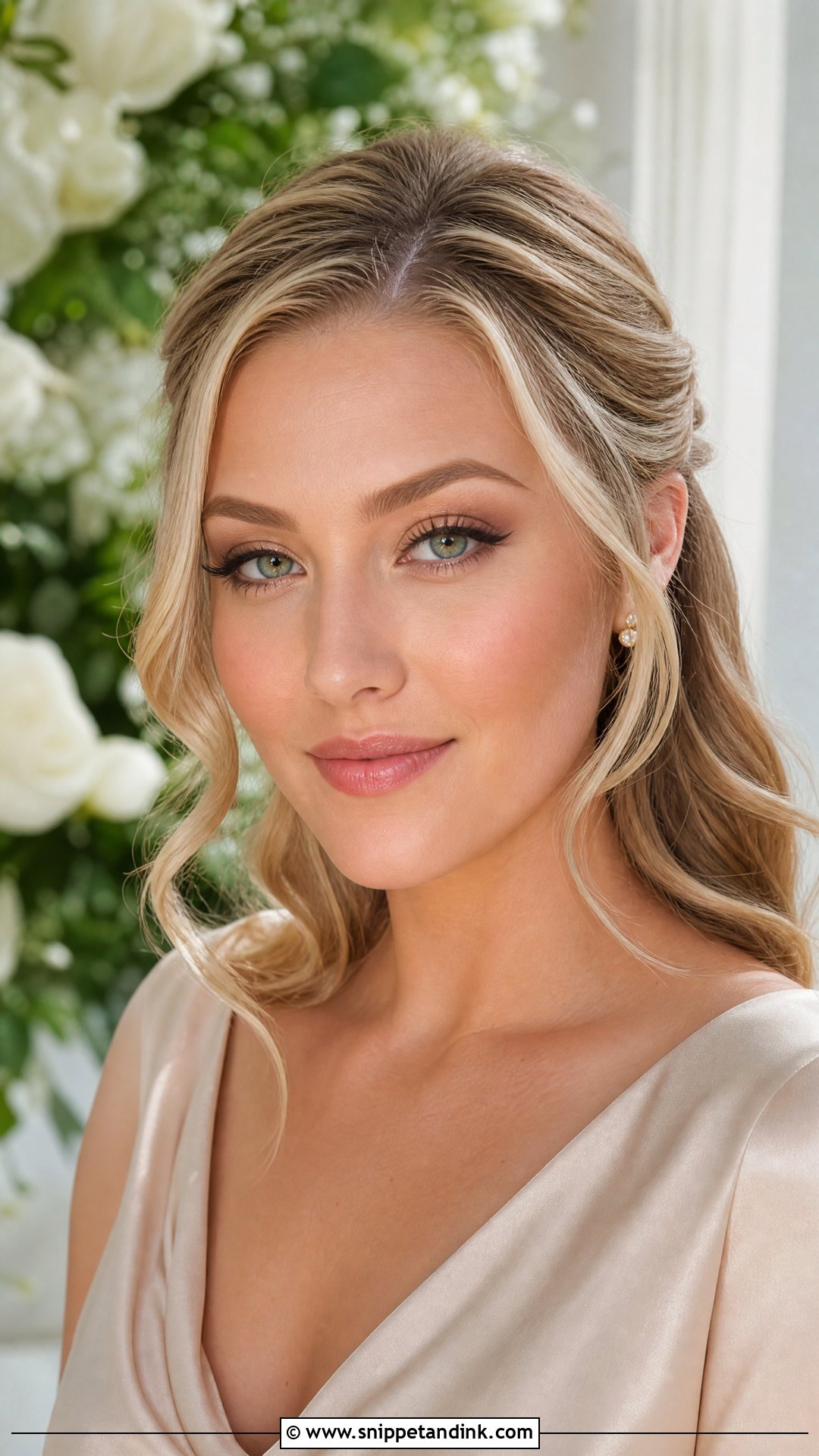
A soft wing lifts the eye without the commitment of black liquid. I draw a thin line in brown or espresso close to the upper lashes, extend it slightly upward at the outer corner with the eyes open, and smudge it with a small brush. Two or three individual lashes at the outer corner exaggerate the lift. Neutral lids, fresh blush and a peach or pink nude lip keep everything else quiet.
15. No Makeup Wedding Makeup
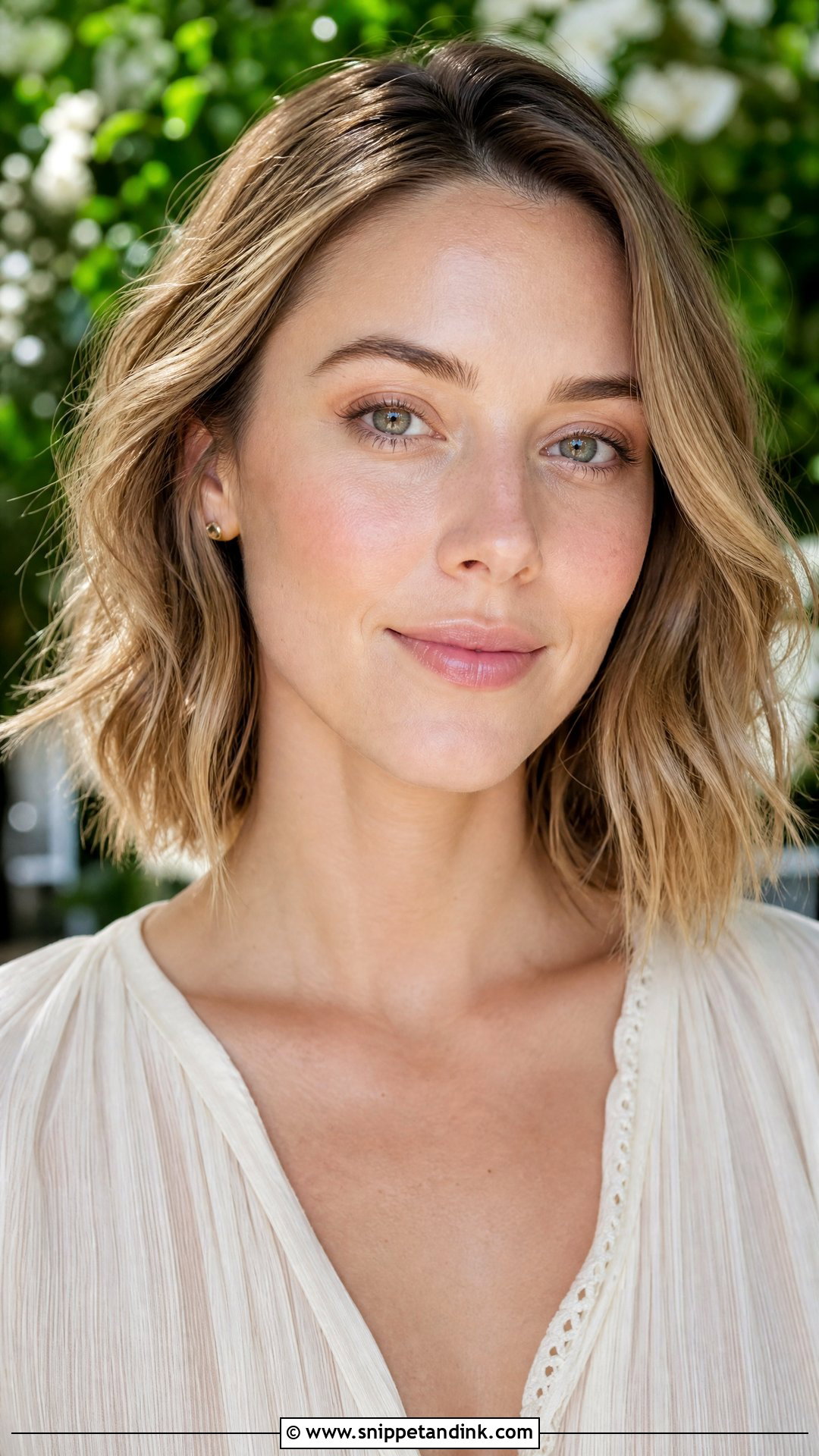
No-makeup makeup takes more care than it looks. With so little product, everything has to be placed well: skin prep, a sheer base, concealer only where needed, brows brushed up with a tinted gel and brown mascara. A wash of cream shadow evens out lid discolouration, cream blush gives a flush and a fine, non-glittery highlight adds life. A tinted balm or sheer lipstick keeps lips healthy. It’s honest and fresh, and it still holds up in photos.
16. Glowy Skin Wedding Makeup
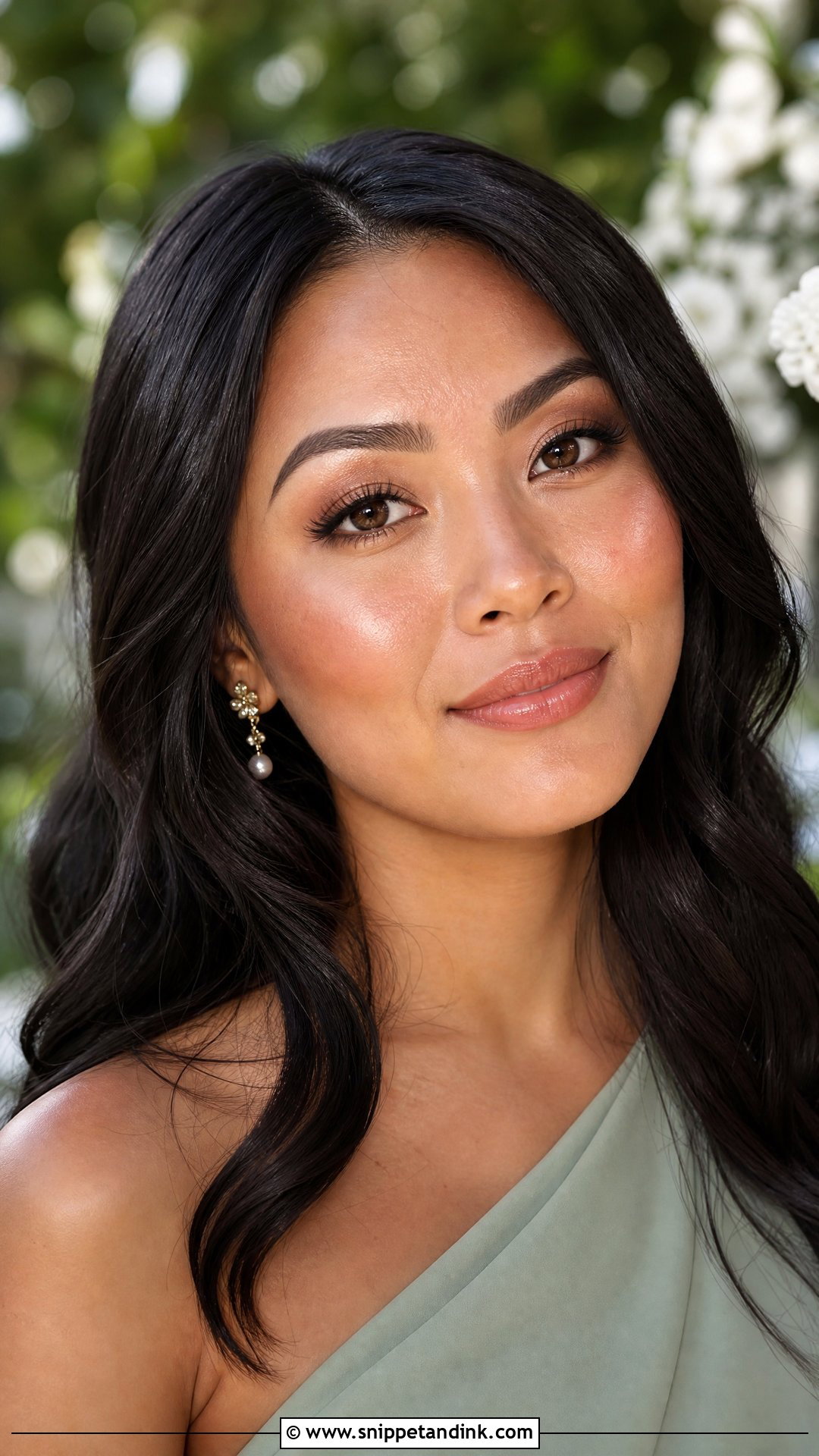
Glowy skin keeps the face as the focus and everything else simple. I use a luminous primer only on the high points, a flexible foundation thin around the eyes and smile lines, then cream bronzer, soft blush and a liquid highlight pressed in with fingers so it melts into skin. Warm neutral eyes and curled lashes. The lip stays glossy but not sticky. Glow placed with intention looks radiant; glow everywhere looks oily by dessert.
17. Soft Blush Wedding Makeup
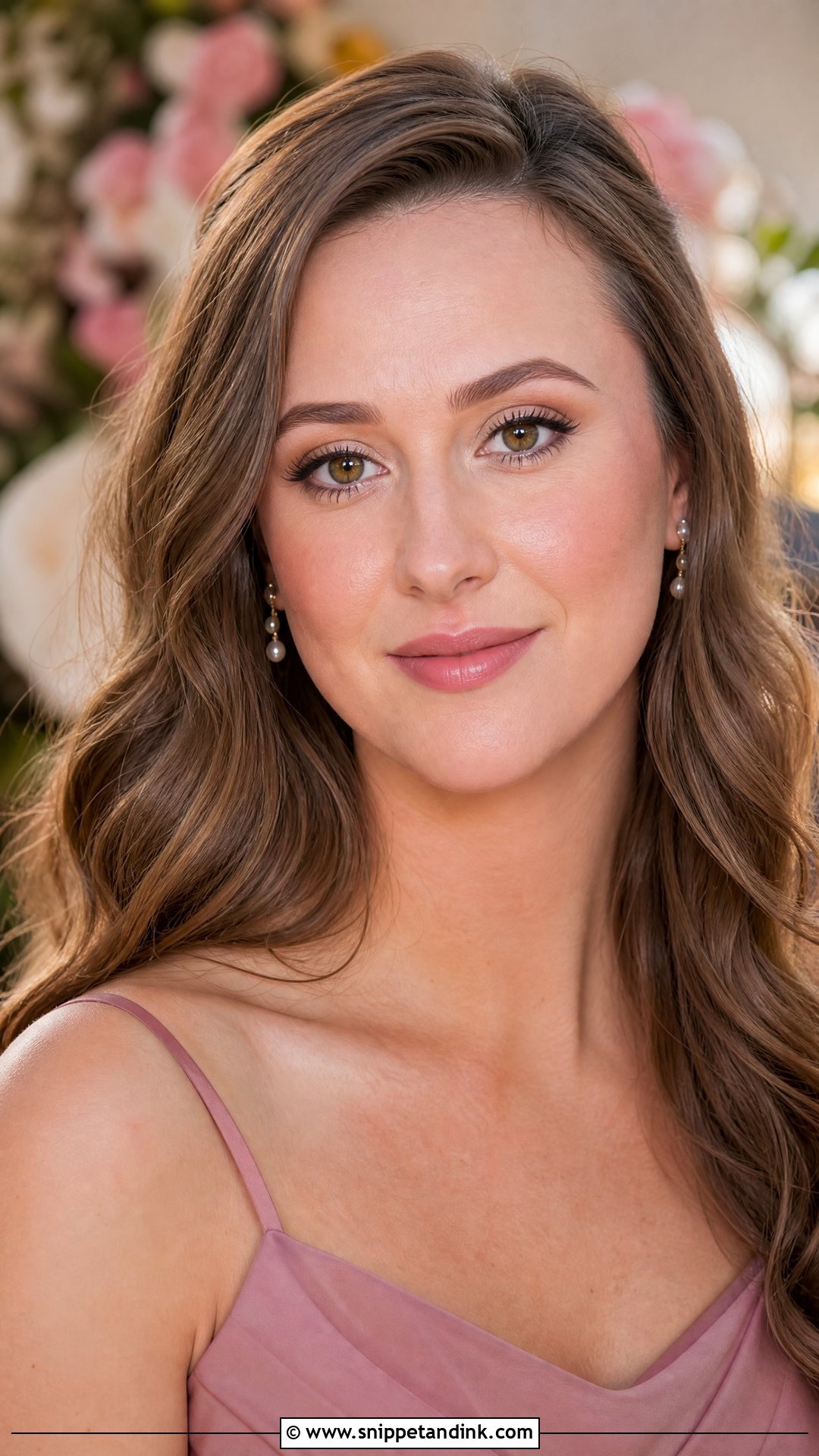
When blush is the focus, the rest of the face steps back. I use cream or liquid blush in thin layers, high on the cheek and blended towards the temple, then keep the eyes to beige shadow, brown liner and mascara. Highlight goes only where light naturally lands. A matching stain on the lips makes the colour story feel complete. Rose, peach, berry and coral can all work; your undertone decides which.
18. Soft Berry Wedding Makeup
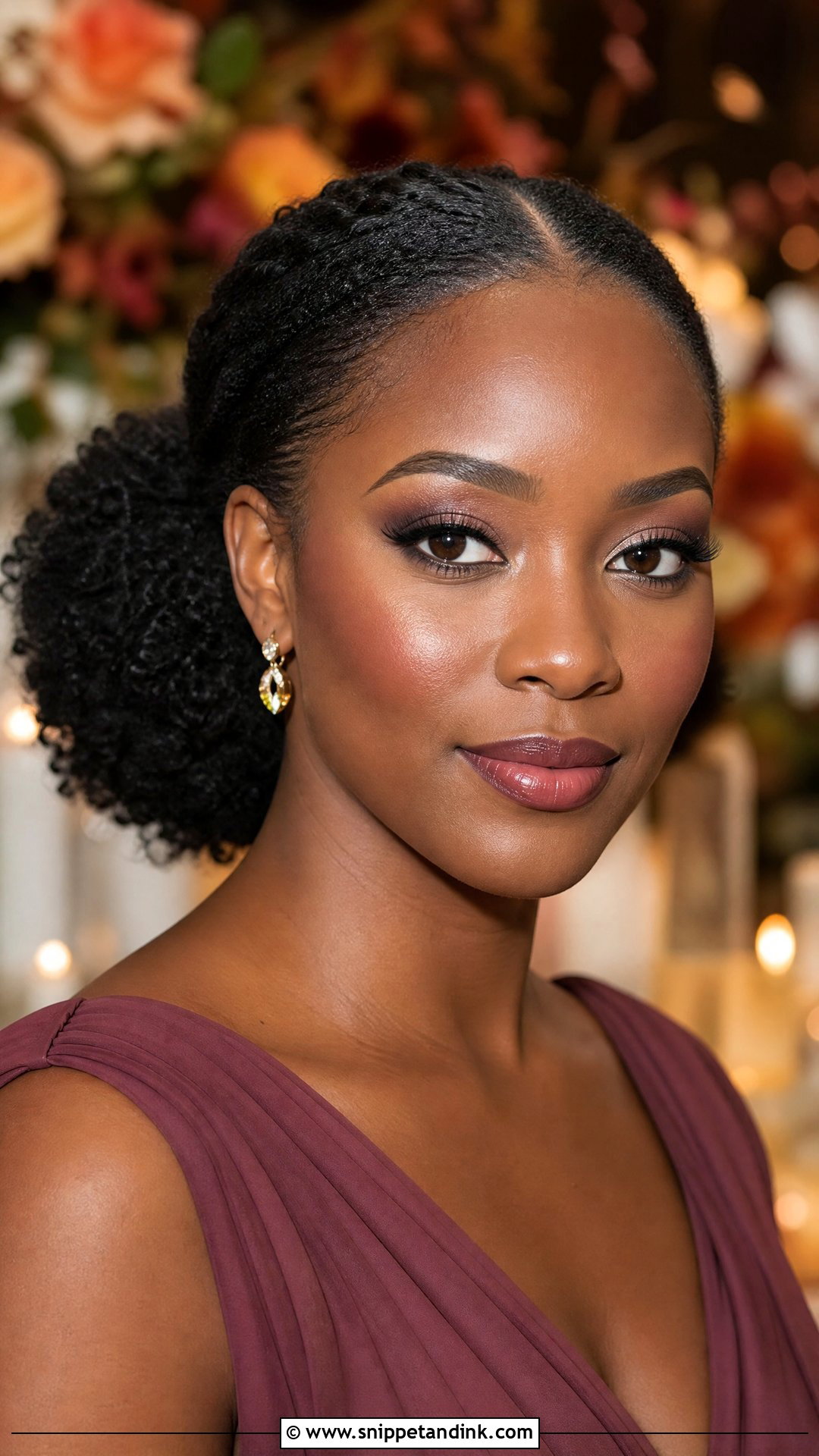
Soft berry is my answer for anyone who looks washed out in pale nudes, especially deeper skin tones and autumn weddings. Berry blush goes on lightly and builds slowly. Taupe or mocha shadow with dark brown mascara keeps the eyes understated, and I skip heavy liner so the colour on the cheeks and lips leads. A sheer berry stain wears off evenly rather than leaving a ring, which matters through a long dinner.
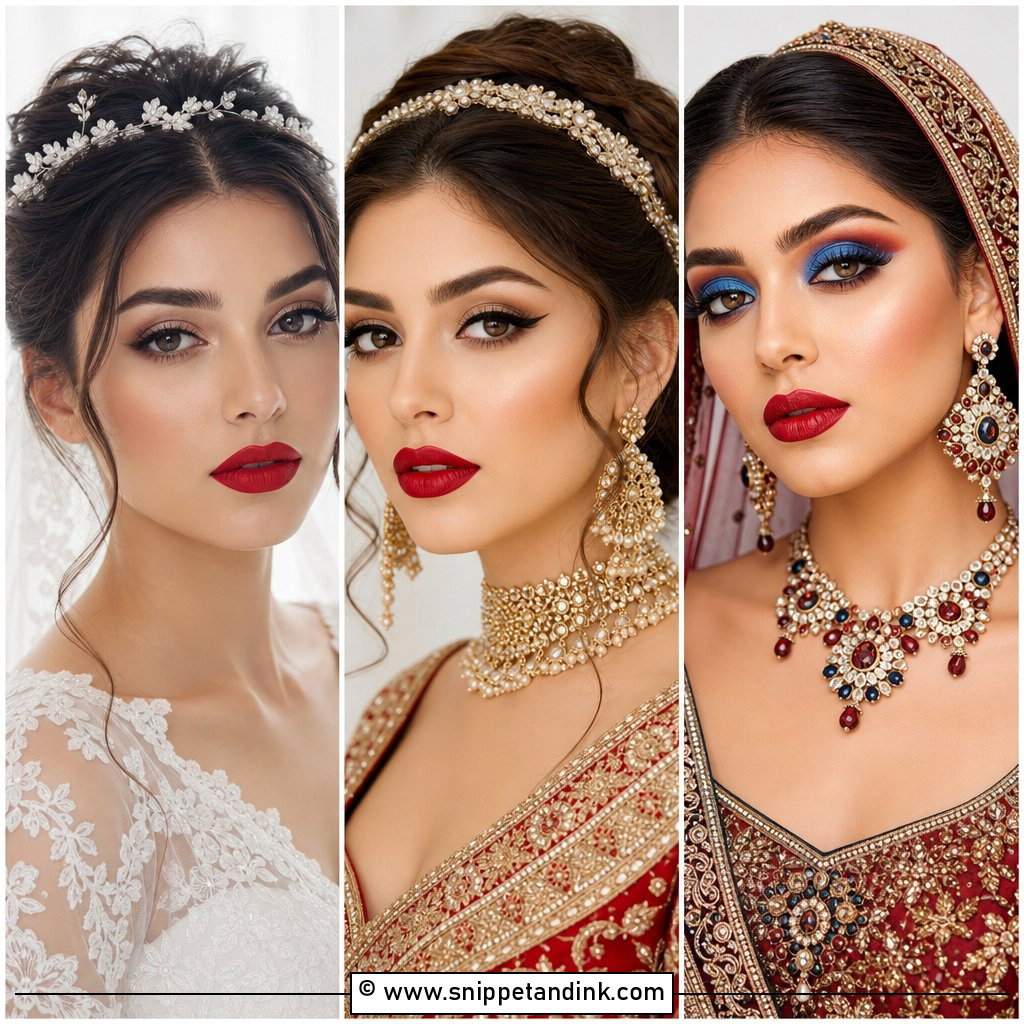
19. Classic Bridal Wedding Makeup
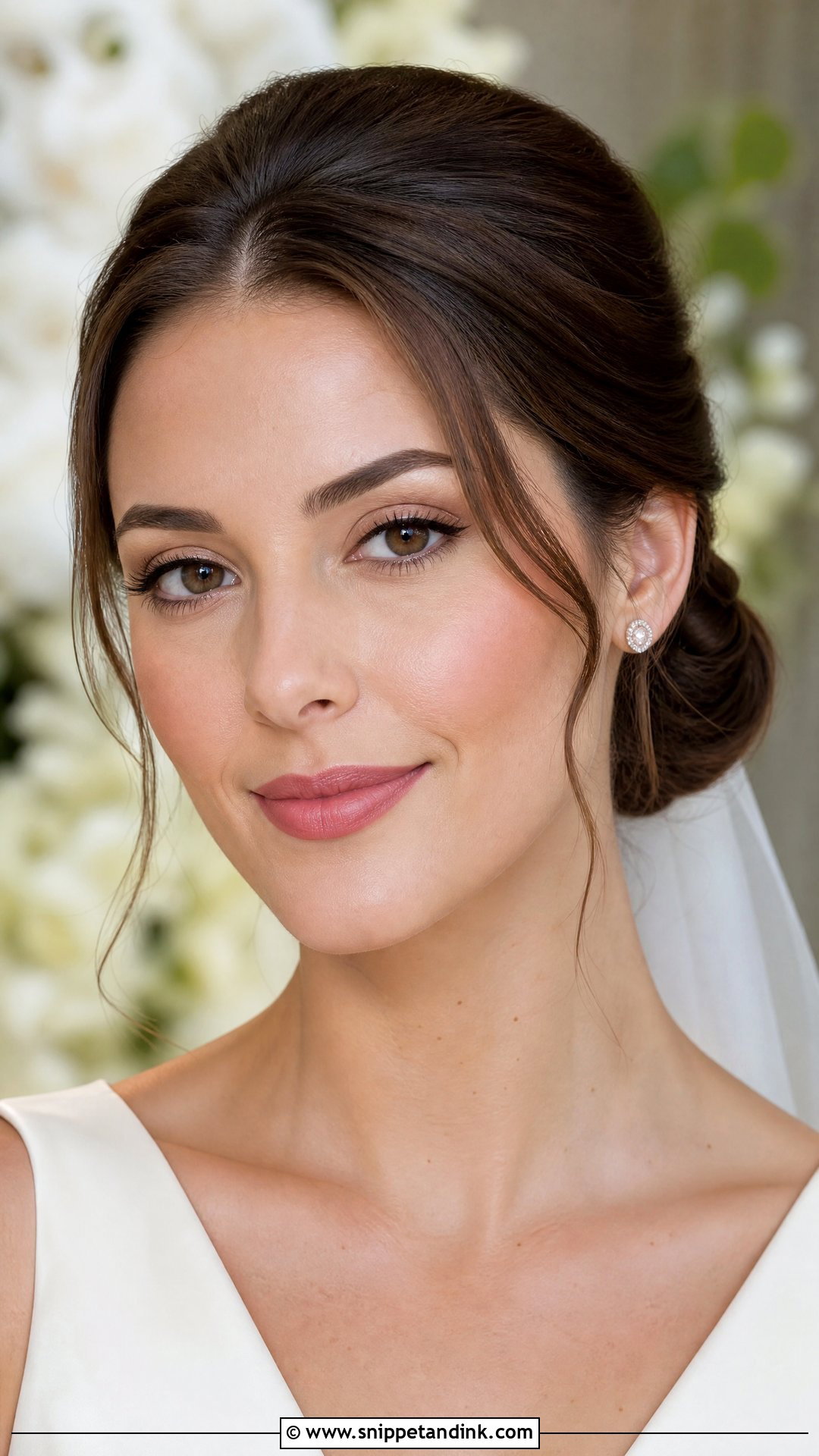
Classic bridal makeup balances every feature so nothing dominates. Long-wearing satin foundation, concealer and powder only where you need it, then soft contour, rosy blush and a refined highlight. Neutral matte eyes, thin liner and natural lashes, with brows that look brushed rather than drawn. A satin rose nude or warm beige lip completes it. It’s the look that ages best in an album, which is why I still recommend it to brides who can’t decide.
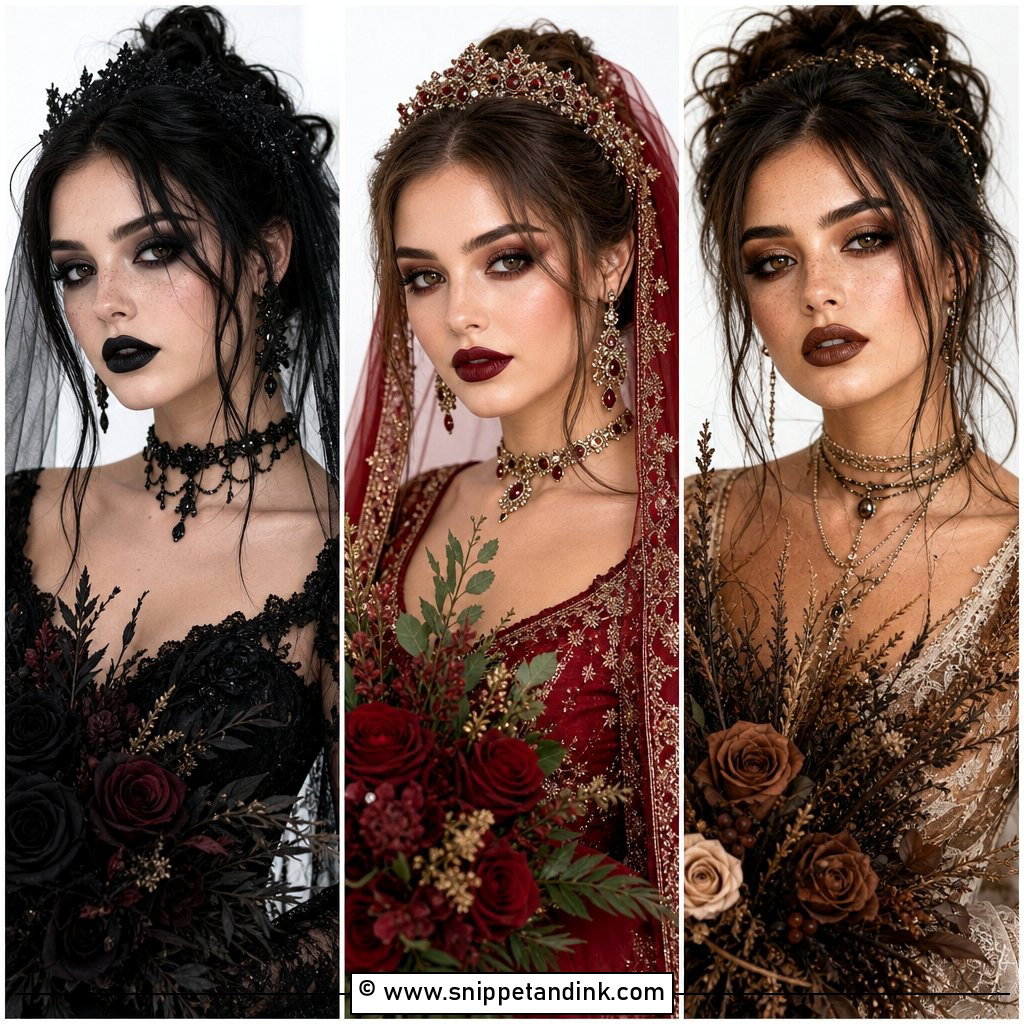
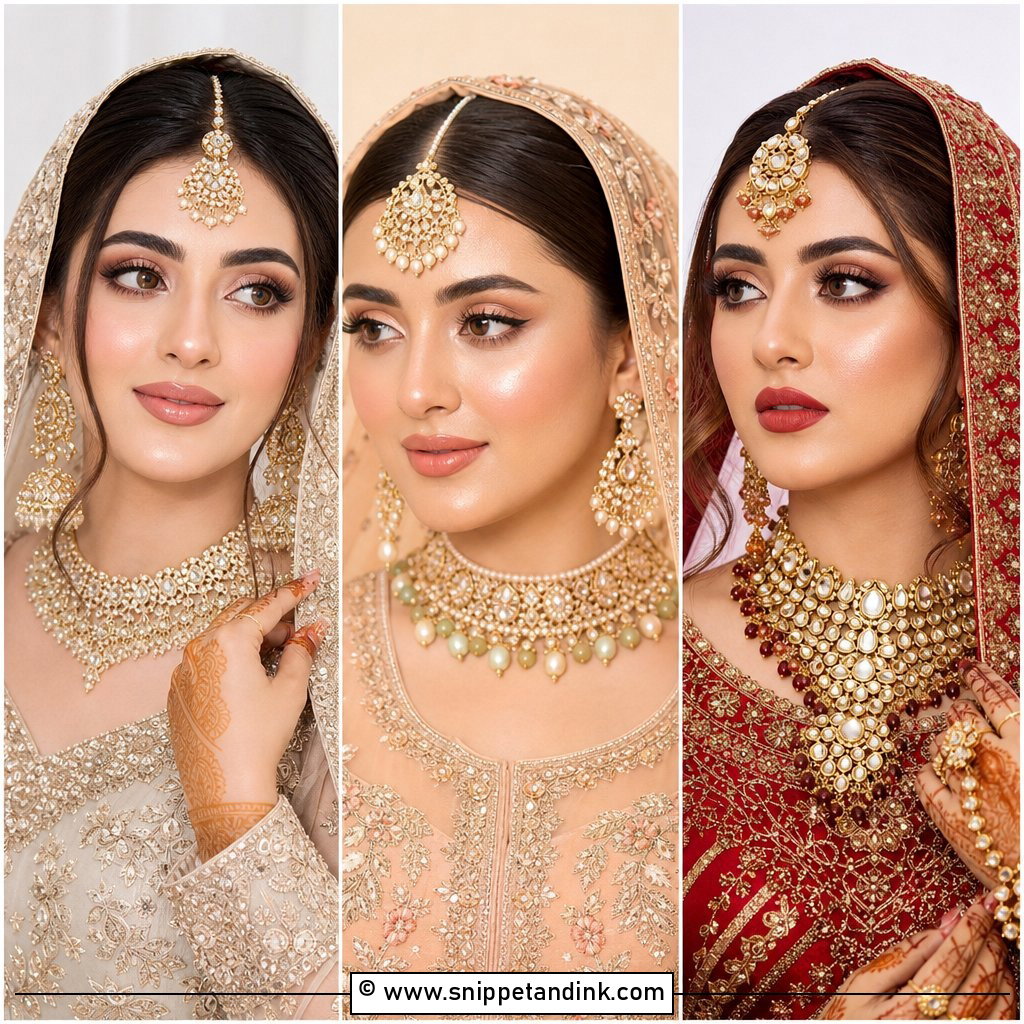
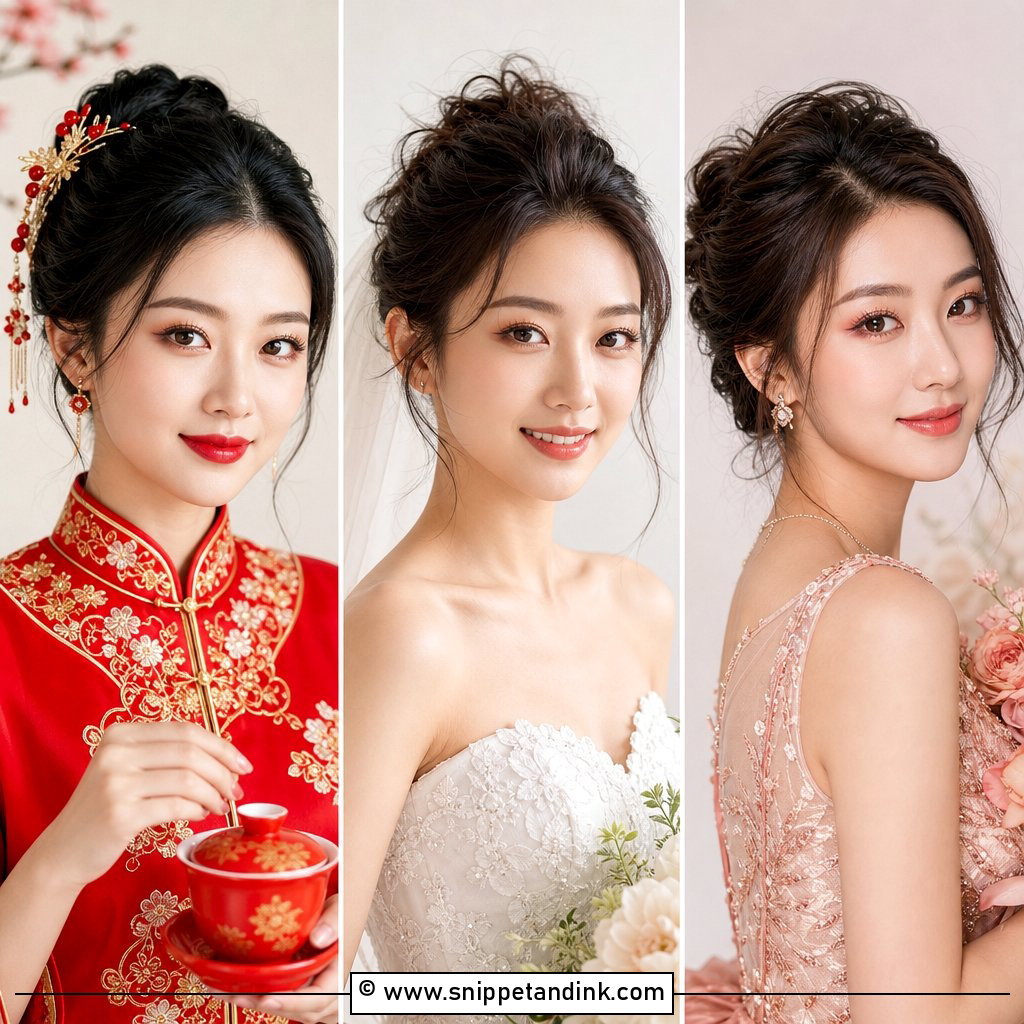
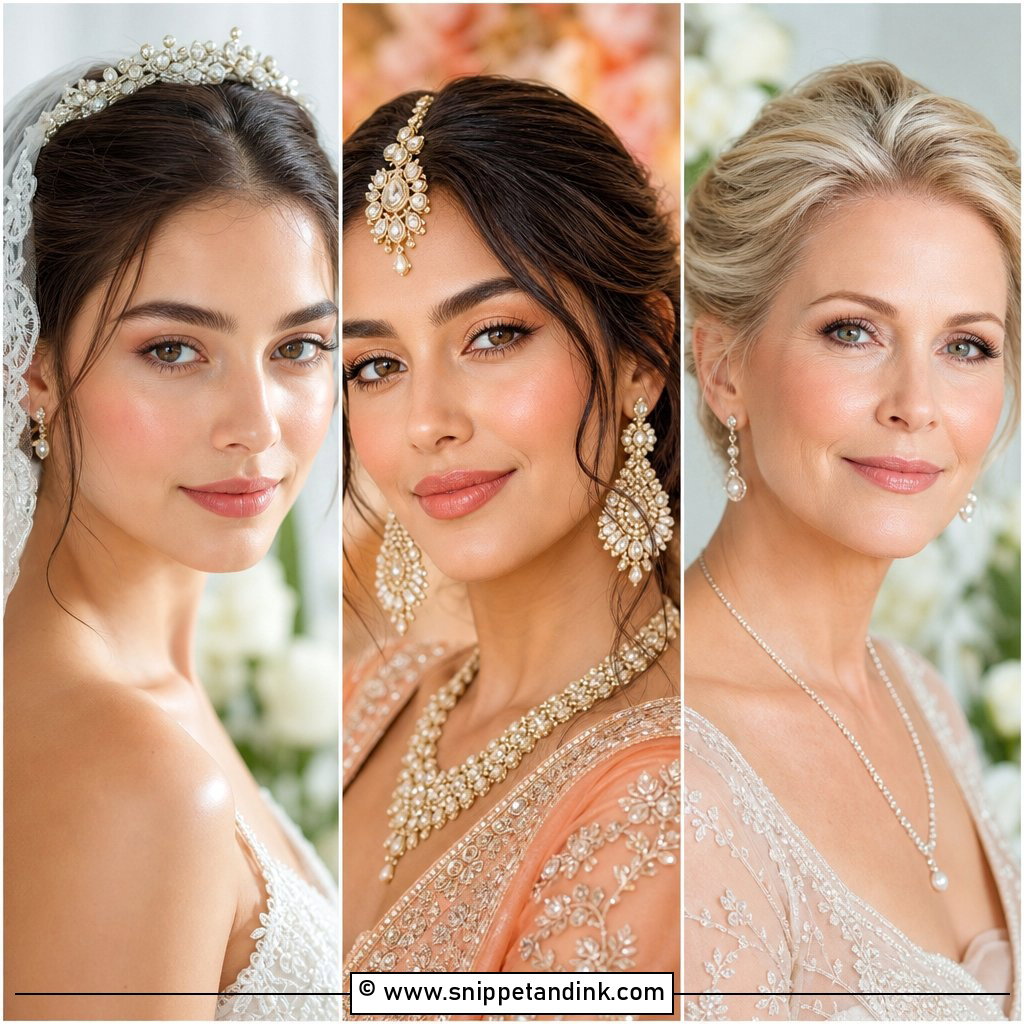
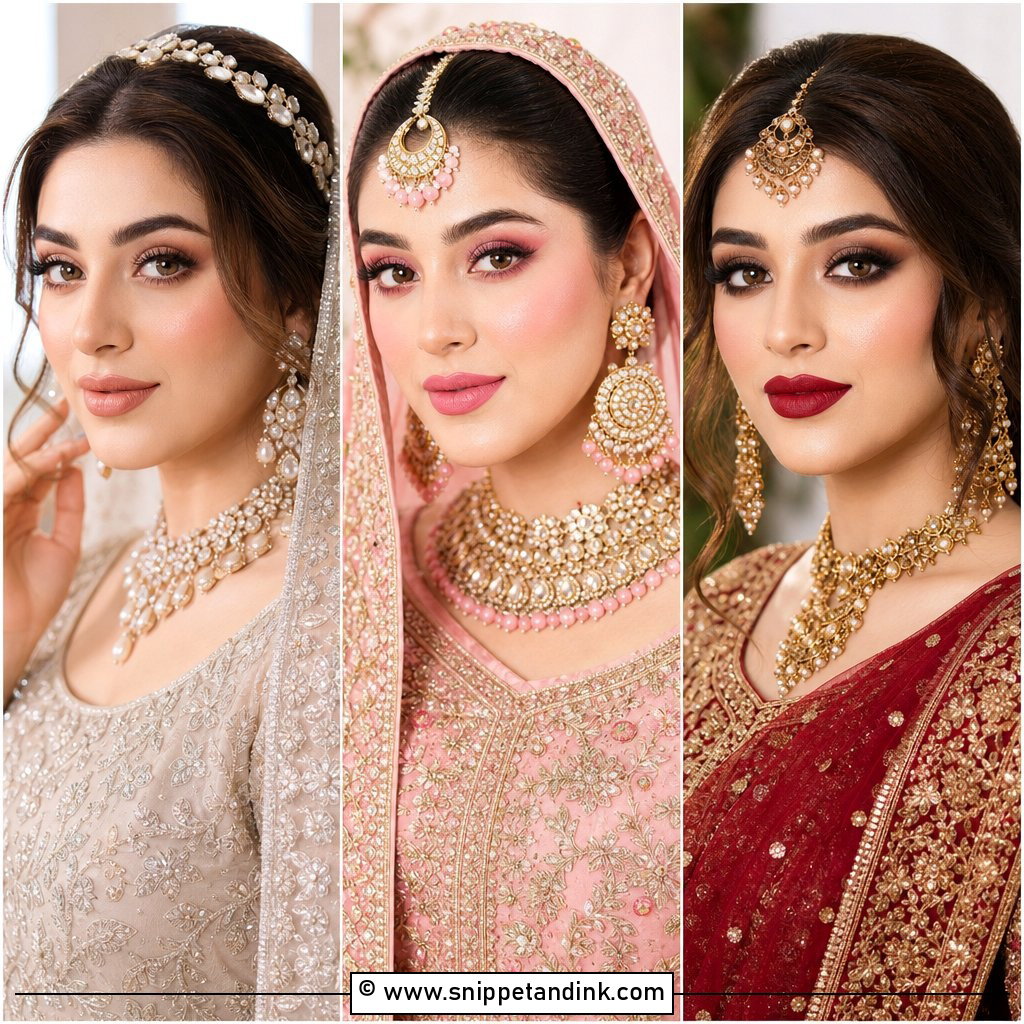
20. Wedding Guest Makeup
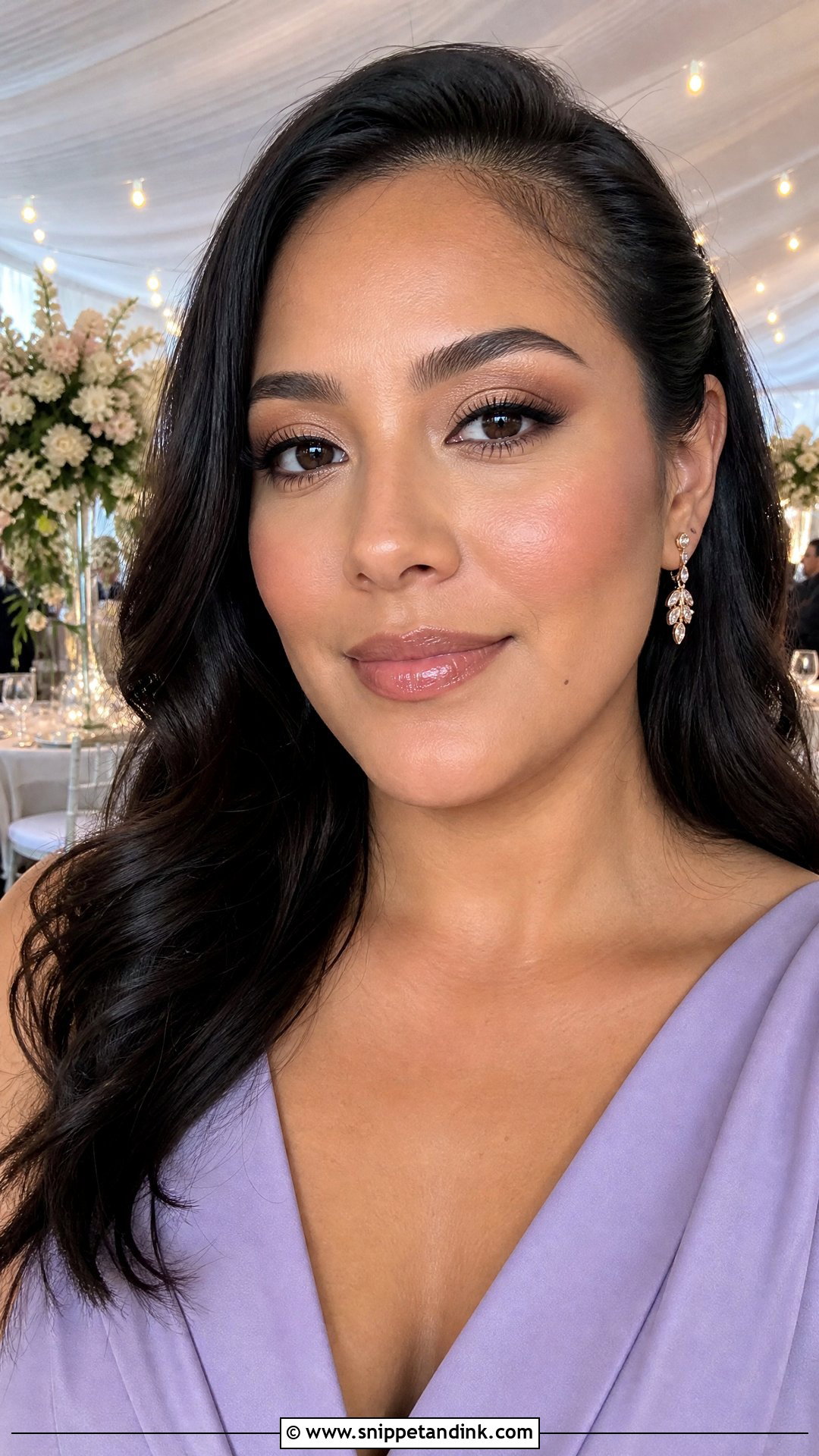
Guests should look polished without drawing attention from the couple, and subtle is always safe for daytime or formal venues. A fresh base with enough coverage to last, blush and bronzer for warmth, and champagne or taupe on the eyes. Choose wispy lashes over dramatic volume. A satin or glossy nude lip is the easiest to top up from a clutch. It stays comfortable through a long celebration, which counts for more than people think.
Twenty Minutes at Your Own Mirror
Not everyone has an artist booked, and most guests do their own. This is the order I’d follow for a soft look that lasts from ceremony to the last dance.
- Moisturise and let it sink in for five minutes before anything else. Base on damp-feeling skin slides and patches.
- Prime only where you need it: a mattifying one on oily zones, a hydrating one on dry cheeks.
- Foundation thin, concealer only where there’s discolouration. Set the under-eye and sides of the nose with a little powder.
- Eyes next, then clean any fallout before blush, so cheeks don’t get muddy.
- Blush and bronzer in cream if your skin is dry, powder if it’s oily, built up gradually.
- Line the lips with a pencil close to your lip colour and fill them in completely; the liner keeps colour in place after the first drink.
- Finish with a setting spray held at arm’s length.
Then pack a small kit: blotting papers, the lip liner and lipstick you actually wore, a few cotton buds and a mini powder. Blotting before powdering keeps the base from building up as the day goes on.
A Ten-Minute Rehearsal the Week Before
Soft makeup works when texture, colour and placement are planned, not when you simply use less. Browns, muted pinks, peach, taupe, rose gold and soft berry all flatter when they’re blended well, and the right one depends on your skin tone, eye shape, outfit and venue. Whatever you choose, do it once the week before at the same time of day as the event, take a photo by a window and one with flash, and wear it for a few hours. You’ll see exactly what needs adjusting.
You'll Like These Ideas:


Leave a Reply