
Soft makeup is not less work. In my kit it often means more products, used in thinner layers, so the skin still moves like skin while lasting through hugs, happy tears and twelve hours of photographs. The looks brides ask for right now share a direction: real texture showing through, airy lashes, lips with a blurred edge and colour that warms the face rather than sitting on it. Below are 25 soft full-face looks. Each one names the product or placement that makes it work, and the type of bride or venue it suits less well.
Describing Soft So Your Artist Hears It
“Natural” means something different to every person who says it. To one bride it means no foundation at all; to another it means full coverage that just looks smooth. The most useful thing you can do before a trial is translate the word into specifics.
- Coverage: sheer, medium or full. Tell me which freckles, marks or textures you are happy to see.
- Finish: dewy, satin or matte, and whether your skin is oily by lunchtime.
- Focus: pick one feature to lead, eyes, cheeks or lips. Soft looks fail when all three compete.
- Lashes: none, individuals or a light strip. If you have never worn lashes, a full strip will feel heavy.
- No-go zones: glitter, dark lips, sharp brows, anything you dislike on yourself.
Bring two kinds of photos: inspiration pictures of soft looks you like on faces similar to yours, and one or two of yourself on a day you felt you looked your best. The second tells me more. At the trial, ask me to do slightly different versions on each half of the face, then compare them side by side in a photo.
1. Natural Wedding Makeup
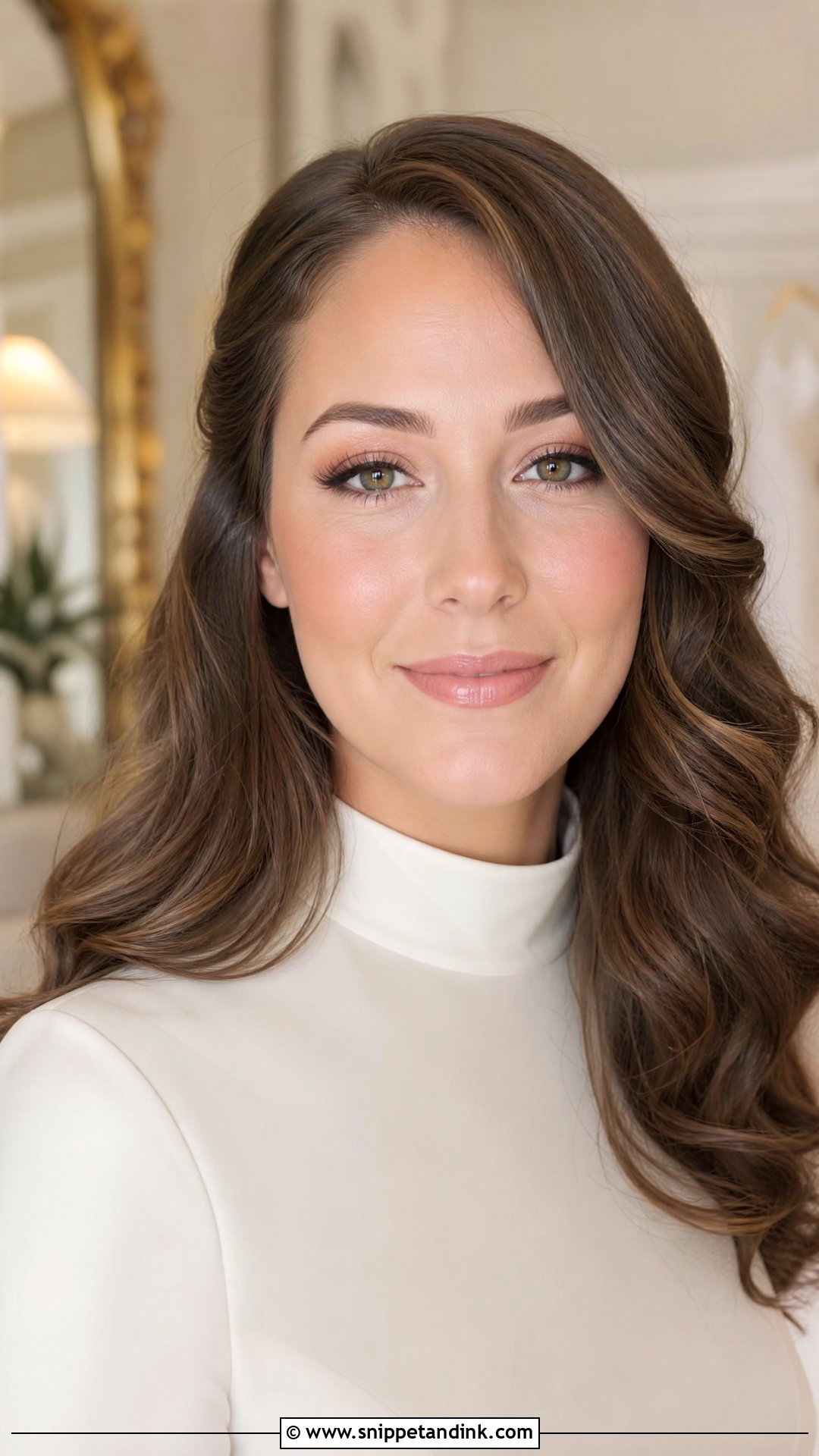
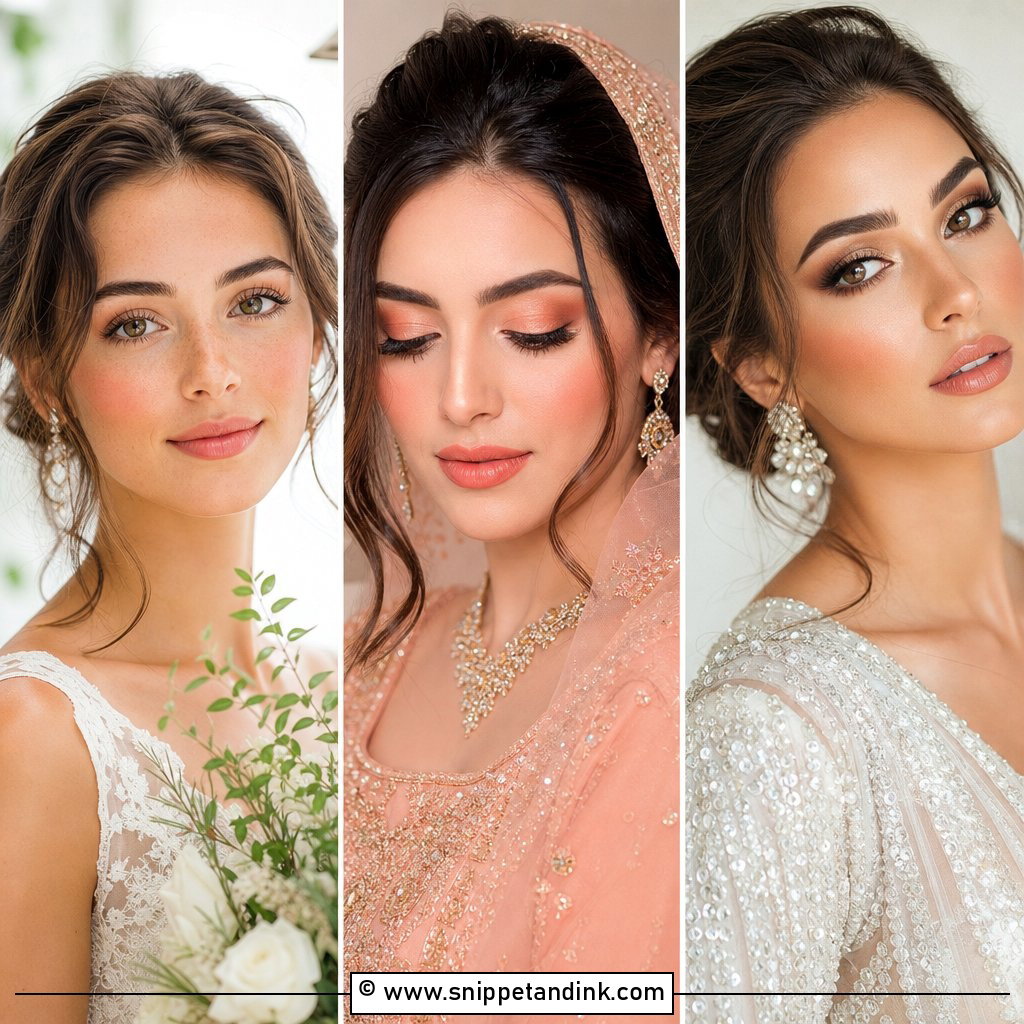
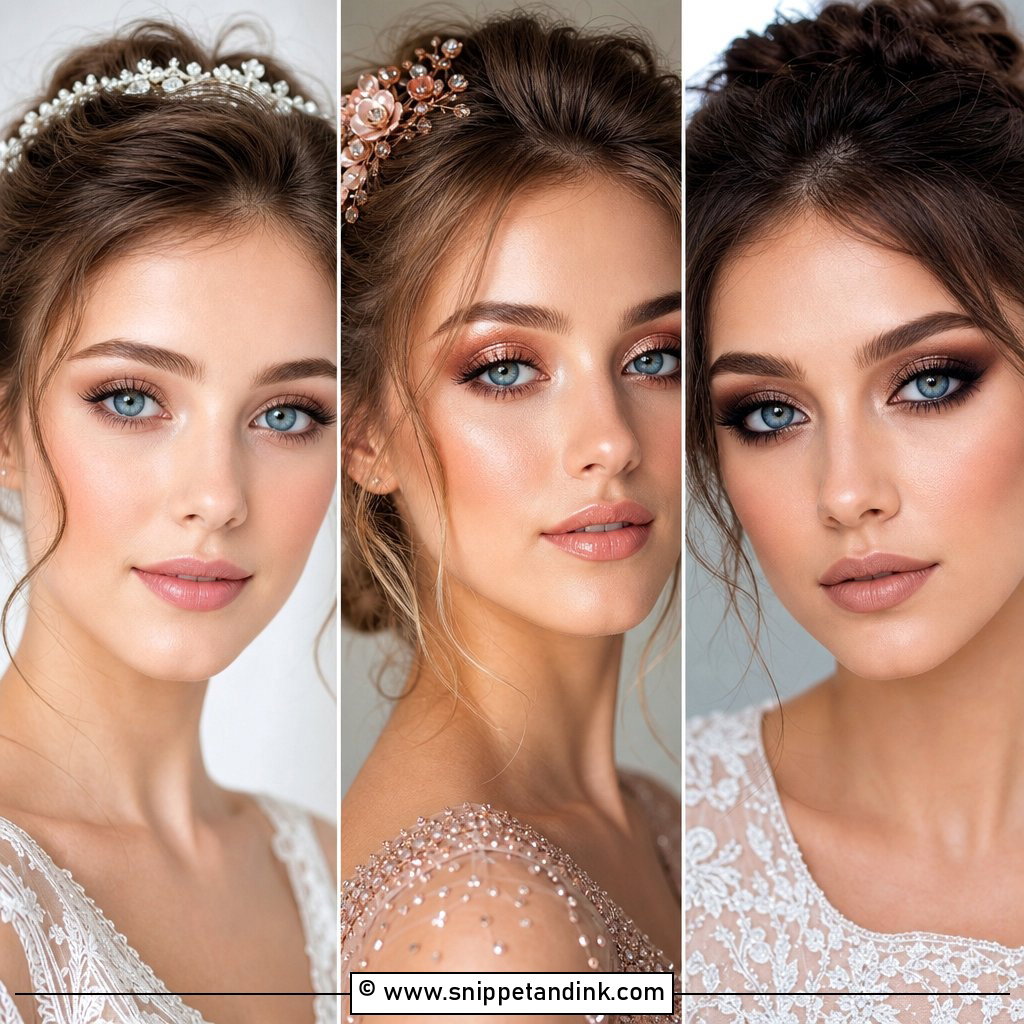
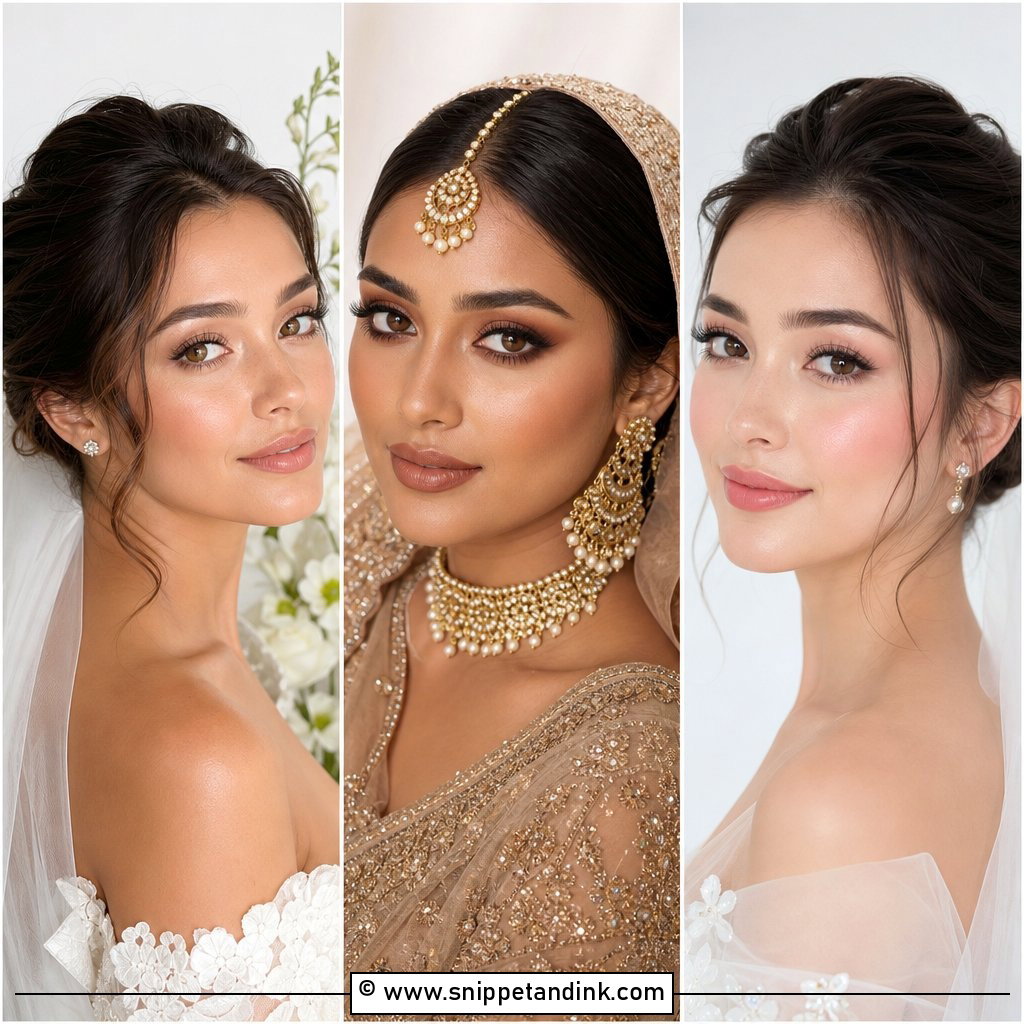
Natural makeup asks me to decide what to leave alone. I even out redness around the nose and chin, brighten under the eyes and keep freckles and texture visible on the cheeks. Taupe on the lid, brown liner pressed into the lash roots and brushed brows give quiet shape. Peachy-pink blush and a natural rose lip finish it. It suits a morning ceremony and a bride who rarely wears much makeup, though I’d still curl the lashes, since uncurled lashes vanish in photos.
2. Soft Glam Wedding Makeup
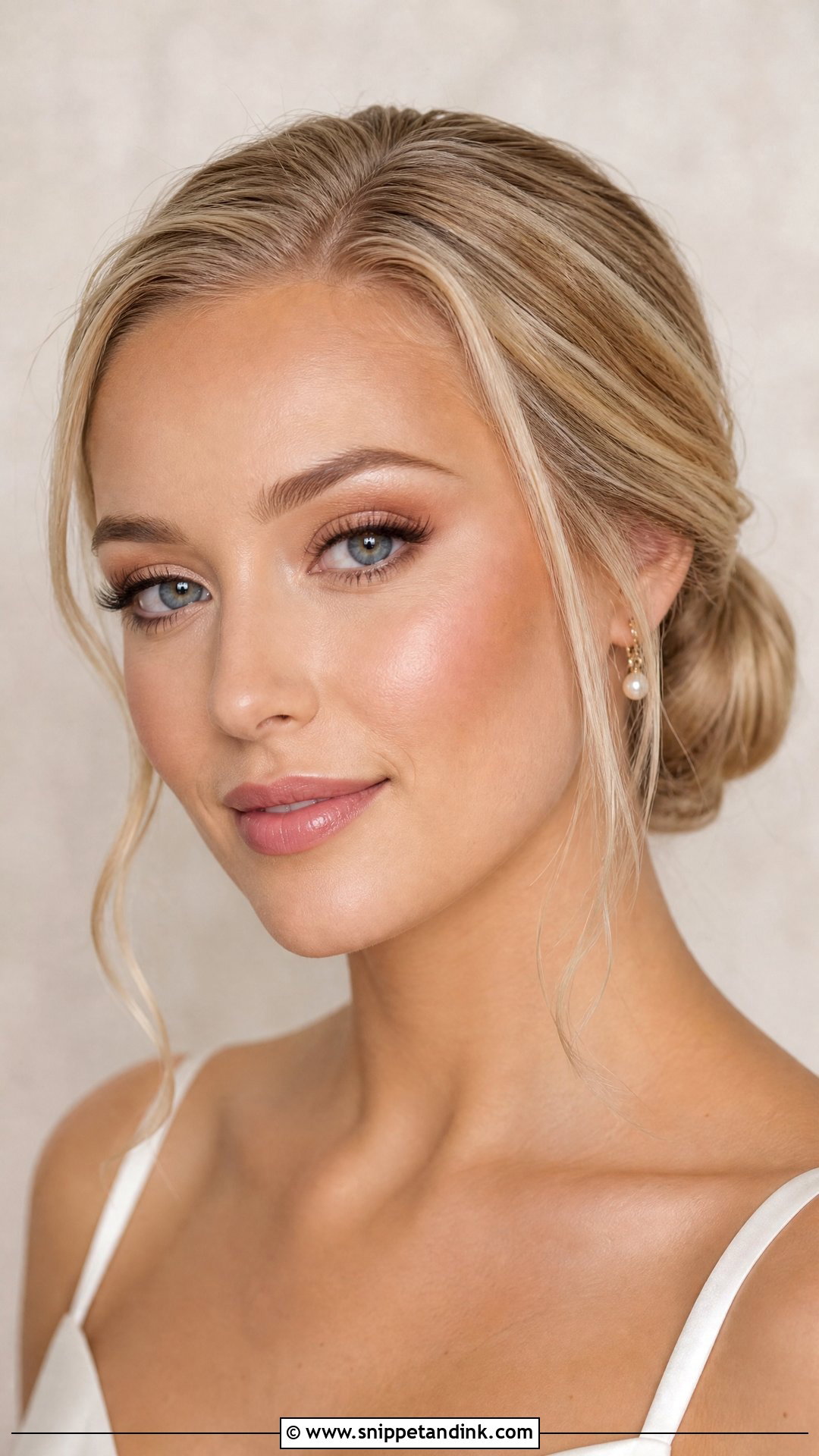
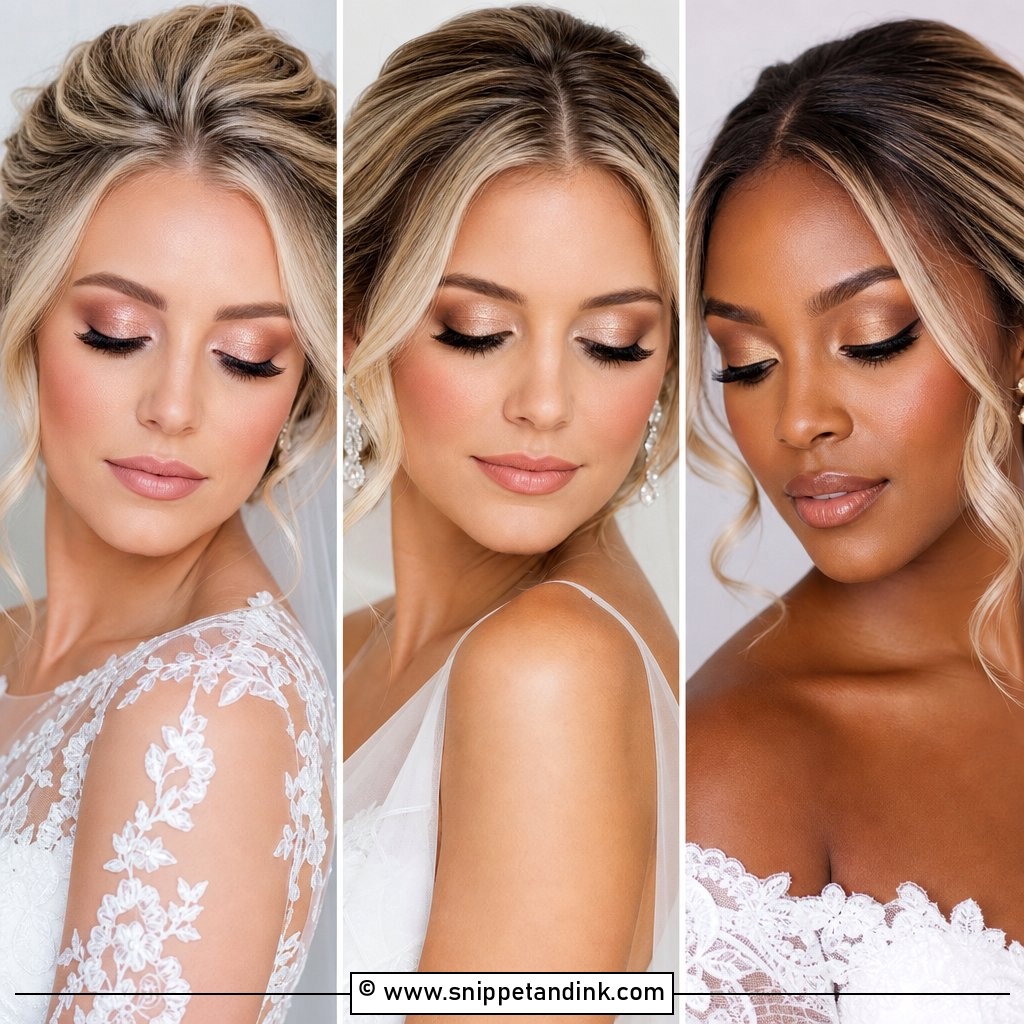
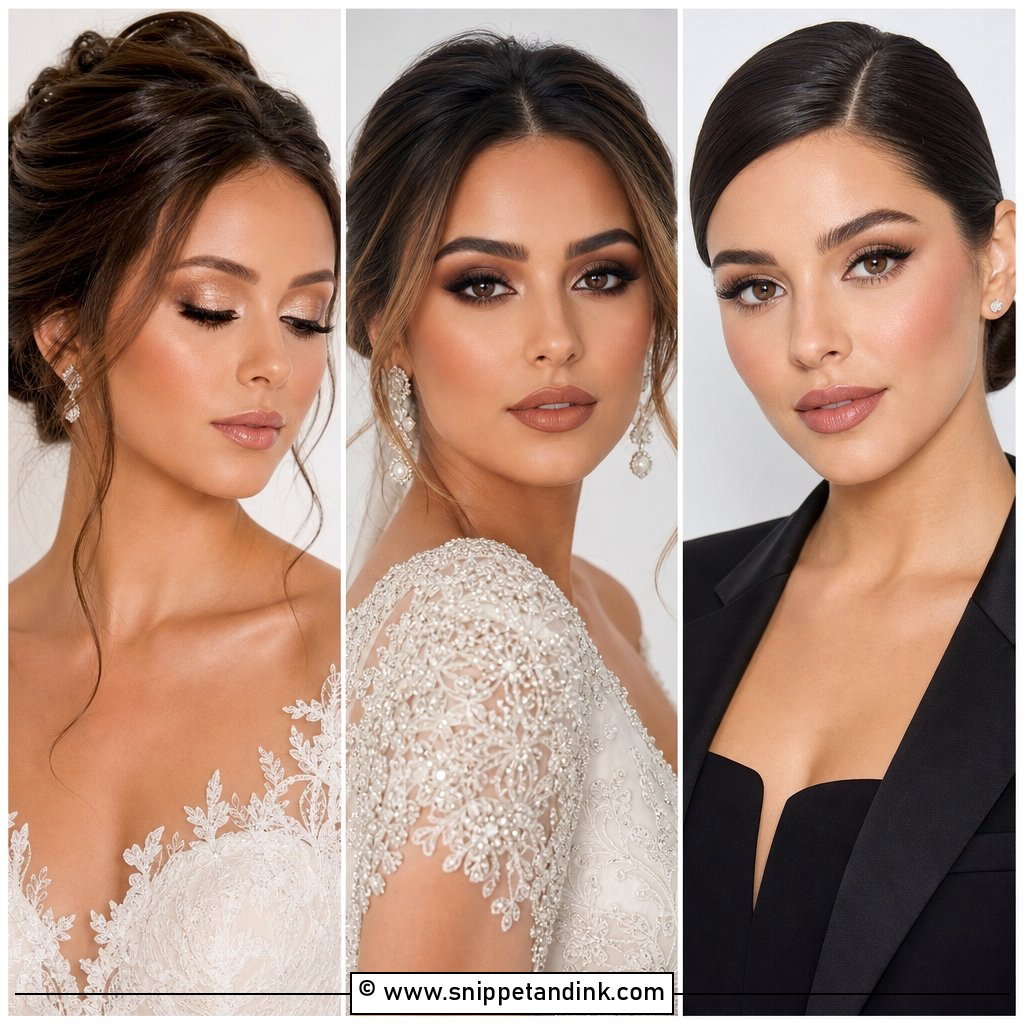
Soft glam is where most of my brides land. It has visible definition, a sculpted cheek, a thin brown wing, but every edge is blurred. The order matters: I contour before blush, blush before highlight, and blend each step until I can’t find a line. Wispy half lashes give lift without the weight of a full strip. A beige-rose lipstick keeps it from tipping into evening glam. It holds up well next to satin gowns and sleek hair.
3. Dewy Wedding Makeup
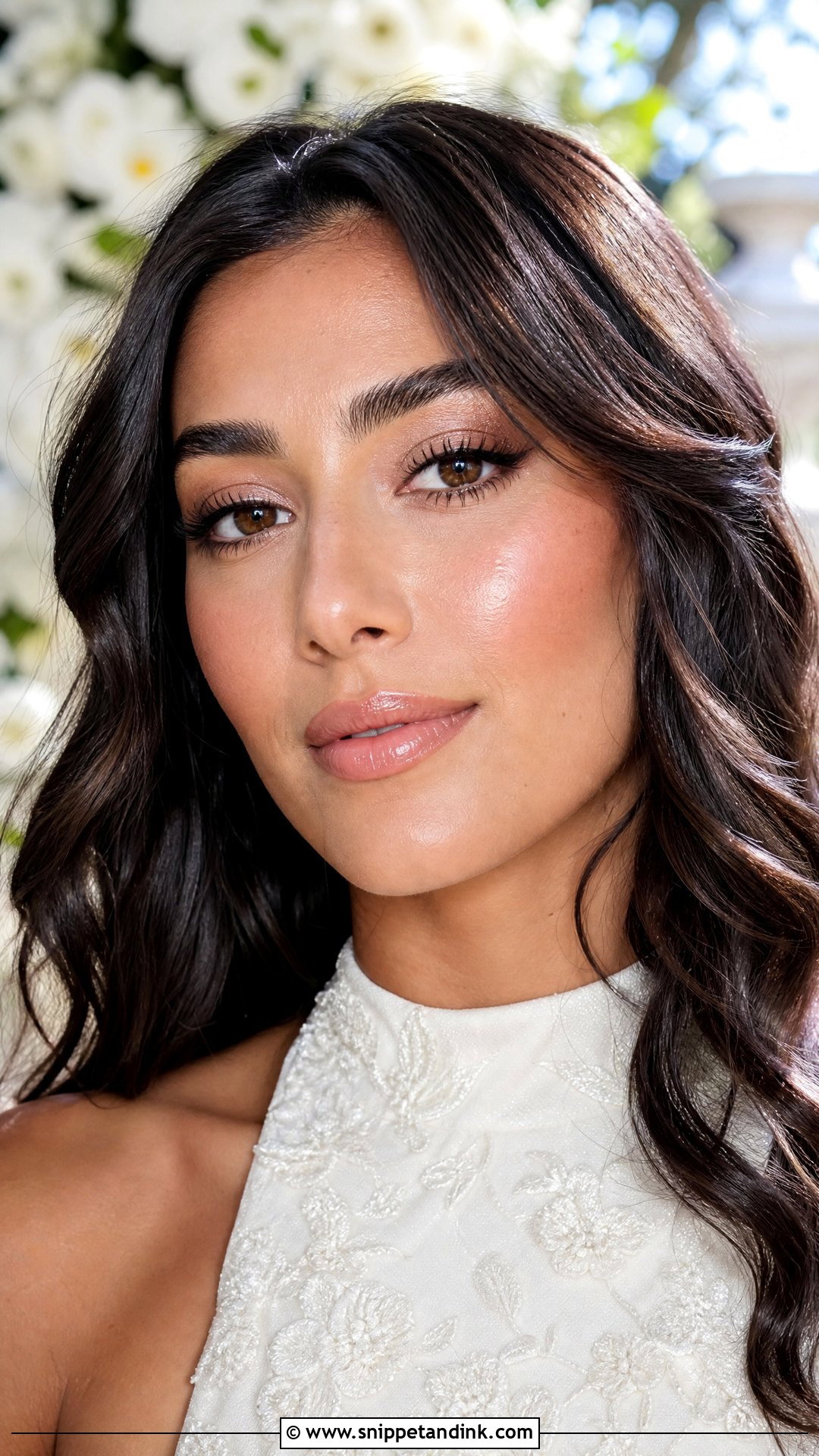
Dewy wedding makeup needs a plan for where the shine is allowed. Cheekbones, yes. Nose and forehead, no, because those catch flash and look oily. I prep with a hydrating serum, use a luminous foundation, then press powder only through the T-zone. Cream blush and champagne shimmer on the lids keep everything soft. Oily skin in July heat is the wrong match for this; a satin look will survive longer.
4. Matte Wedding Makeup
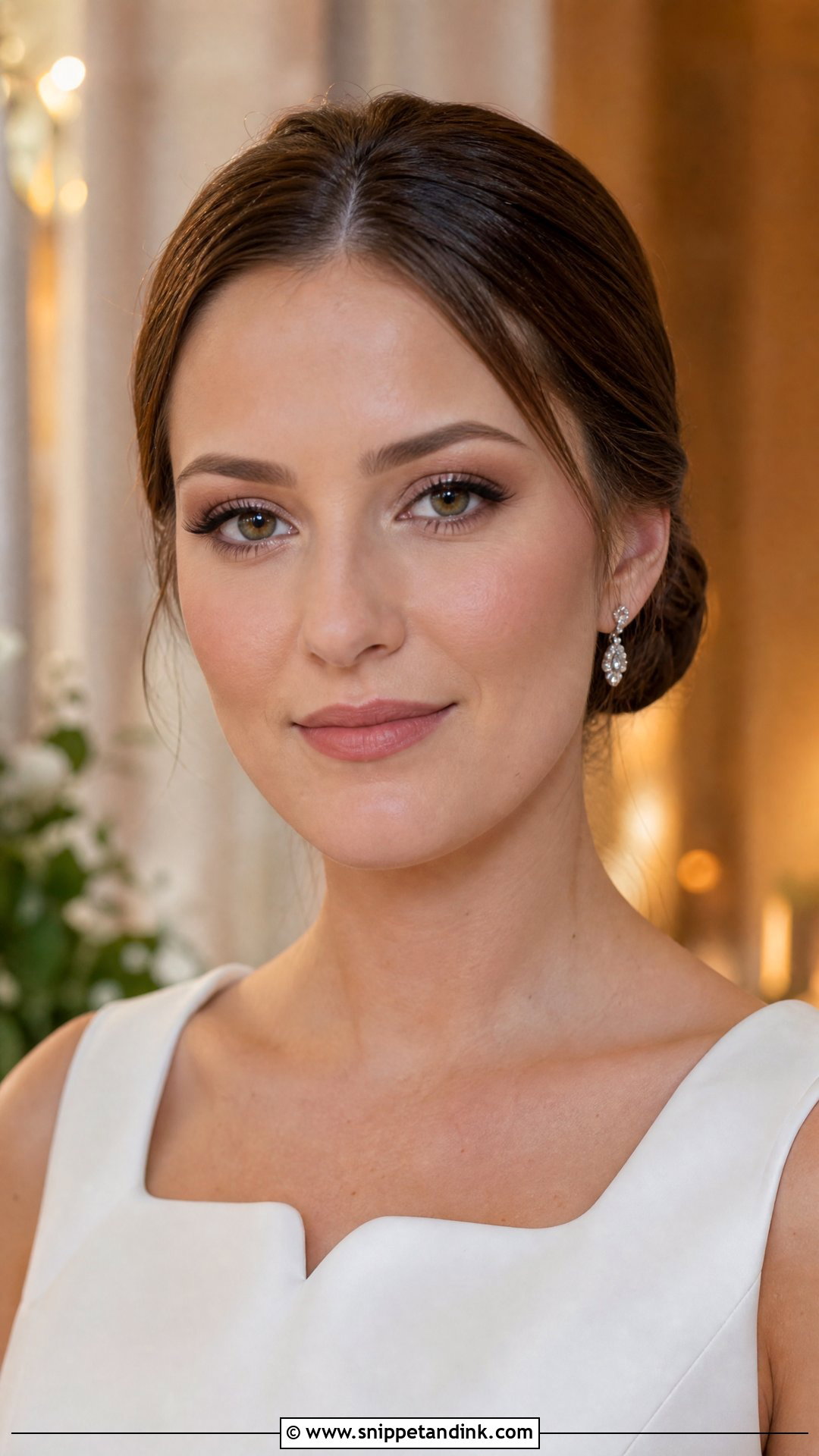
Matte makeup gets a bad name because people picture a flat, chalky face. The way I build it, the base is matte but the blush, lip and eyes still have life. I apply a long-wear foundation thinly and set it with a light powder where shine appears first, usually the sides of the nose. Powder blush in muted rose on top. For oily skin or a hot venue it is the practical choice. Dry skin, though, will look flaky under it, so I’d skip it if your cheeks get tight in winter.
5. Pink Wedding Makeup
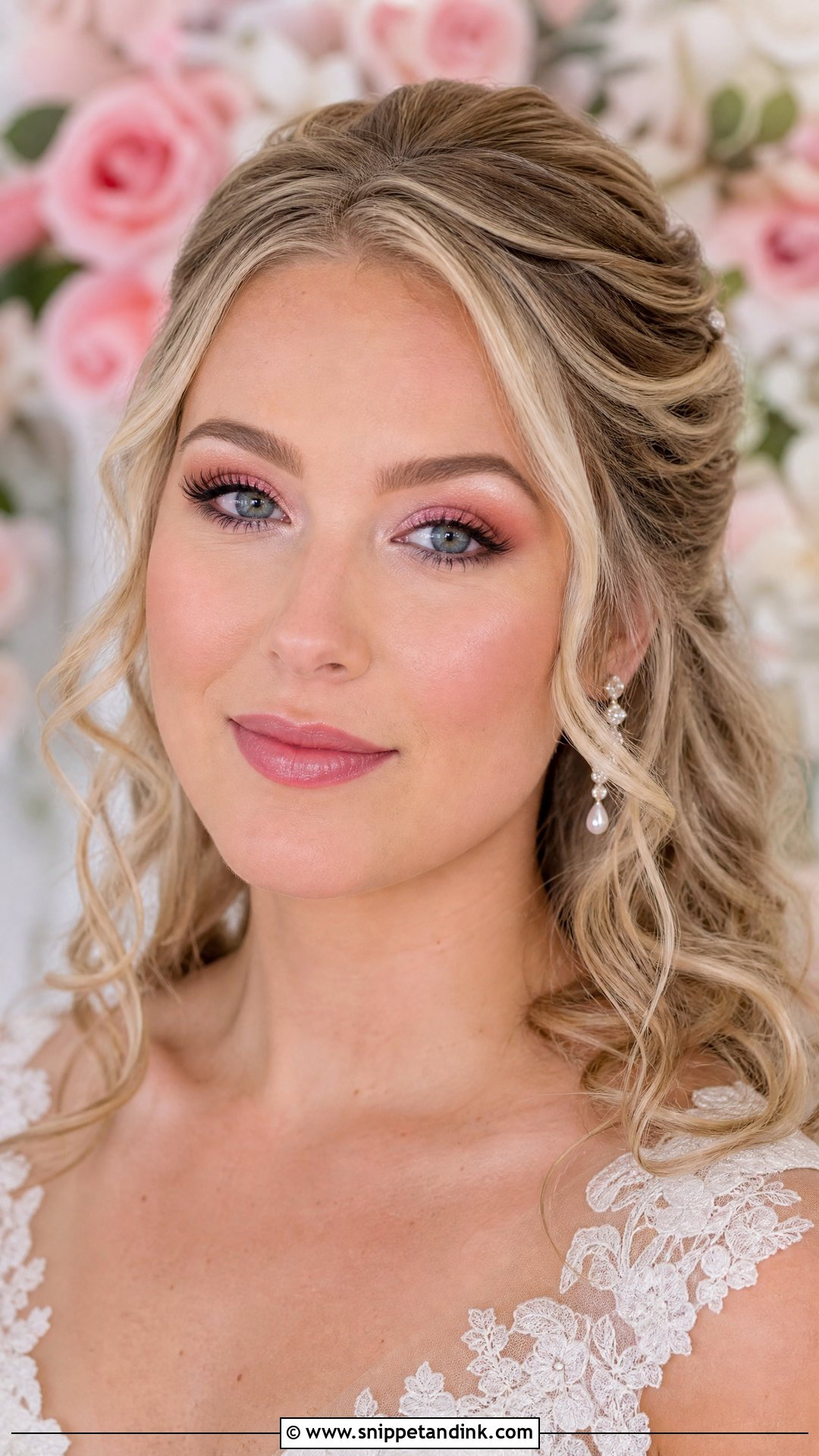
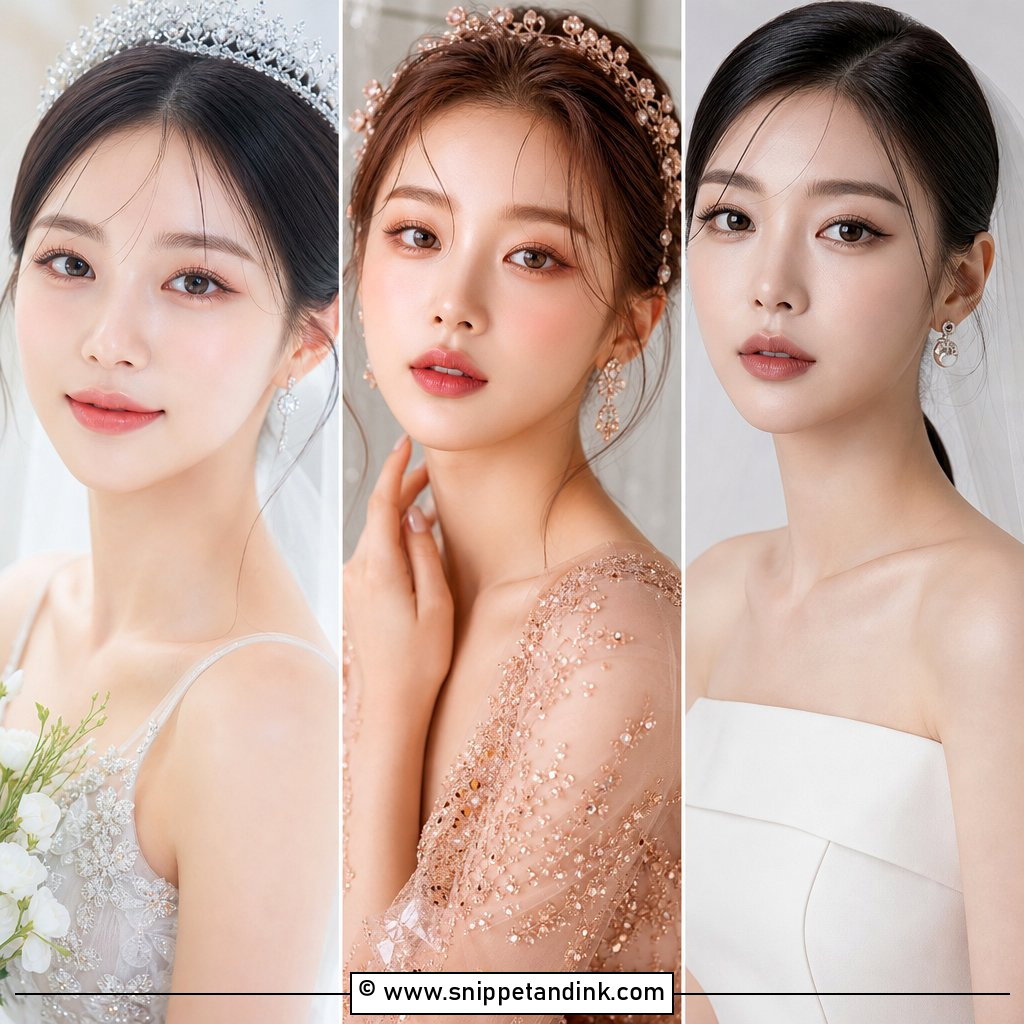
Pink makeup reads sweet when it is too saturated and romantic when it is sheer. I place pink blush high, almost on the cheekbone, and keep the eyes in pink-beige with a little brown in the crease so they don’t look sore. That last part matters: pink shadow right up to the lash line can make eyes look red after crying. Choose the pink to match your undertone, cooler pinks for cool skin, warmer pinks for warm skin.
6. Peach Wedding Makeup
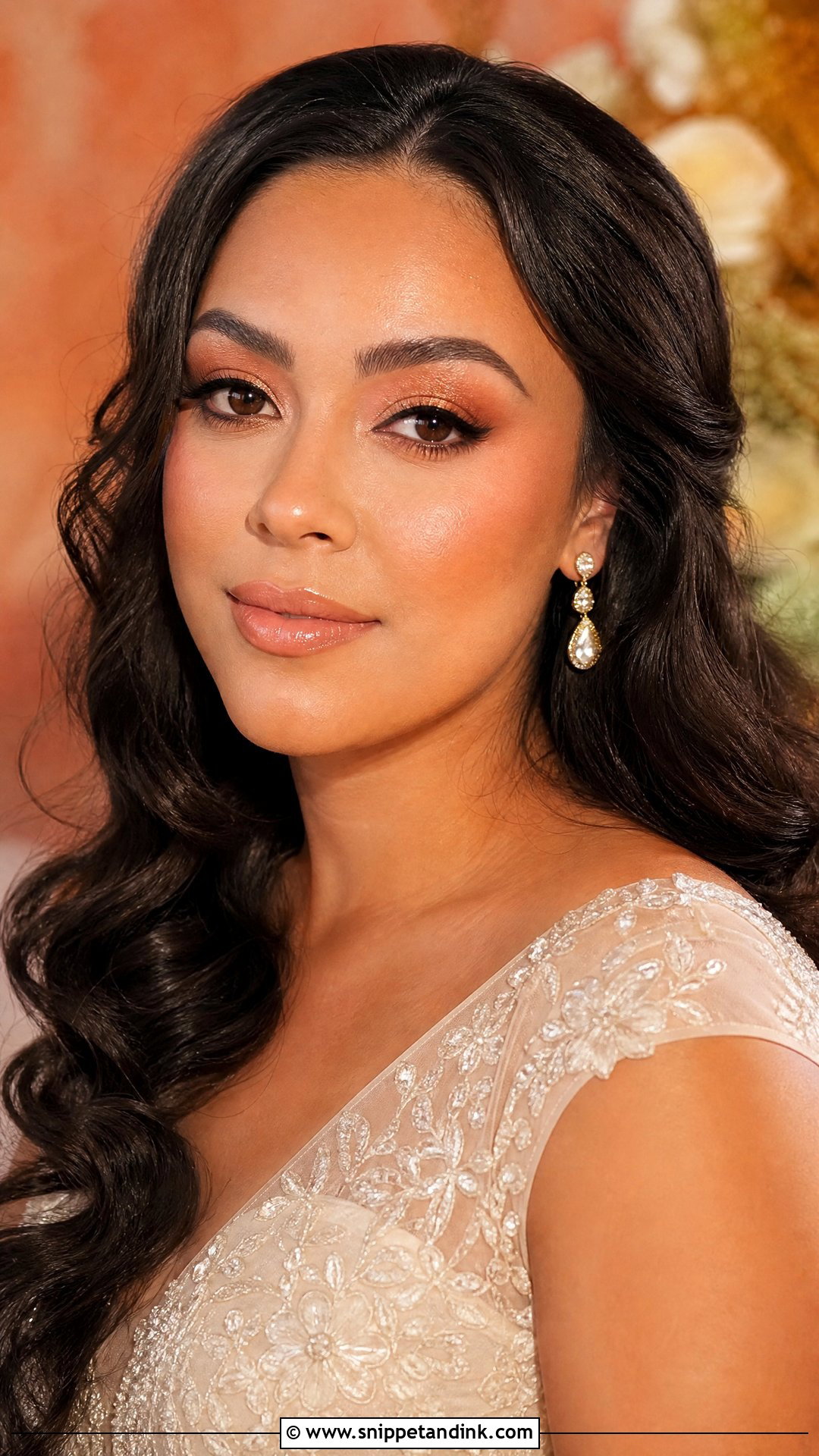
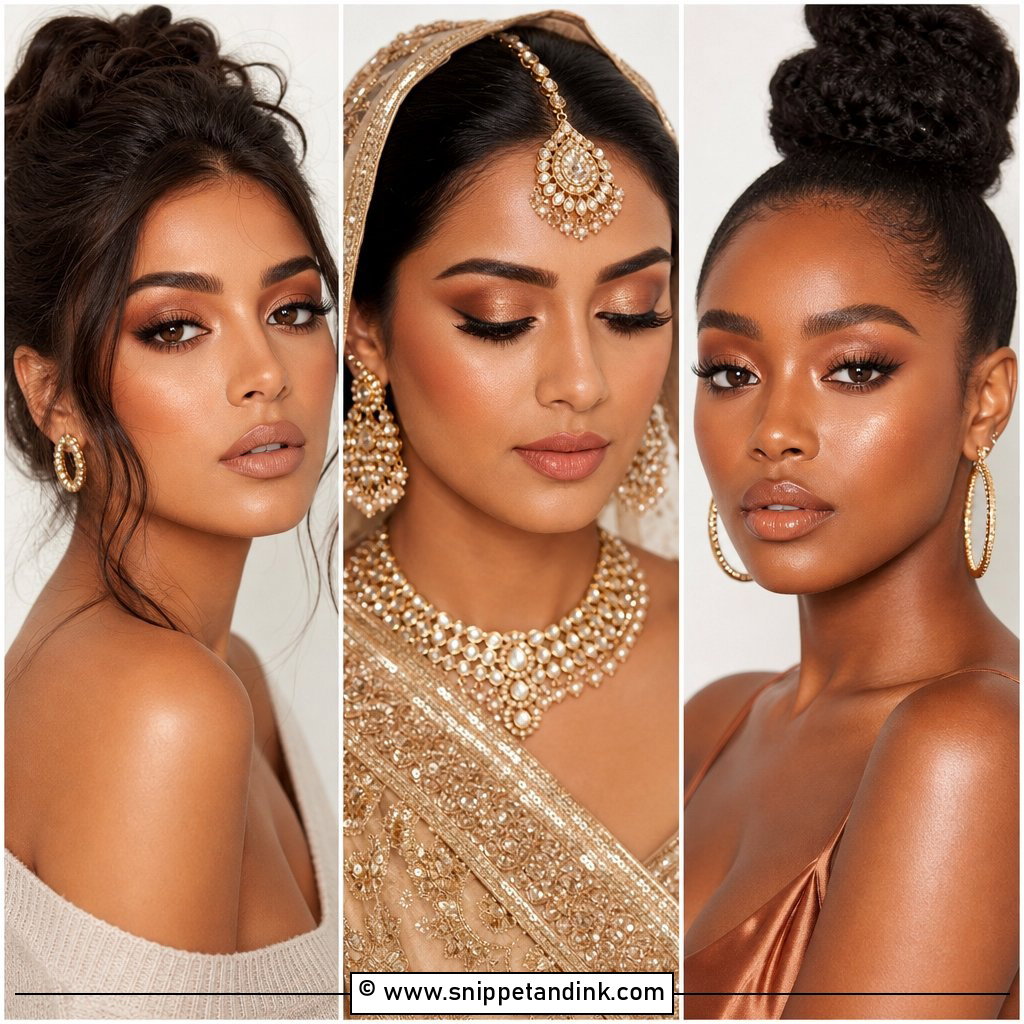
Peach is my fix for brides who find pink too obvious. It warms the face without announcing itself. Cream blush in peach goes across the cheeks; apricot on the lids; brown mascara for a soft eye. A peachy nude gloss keeps the lip in the same family. The shade itself needs adjusting by skin depth: pale apricot on fair skin, warm coral or deep peach on tan and deep skin, or it turns grey.
7. Brown Smokey Wedding Makeup
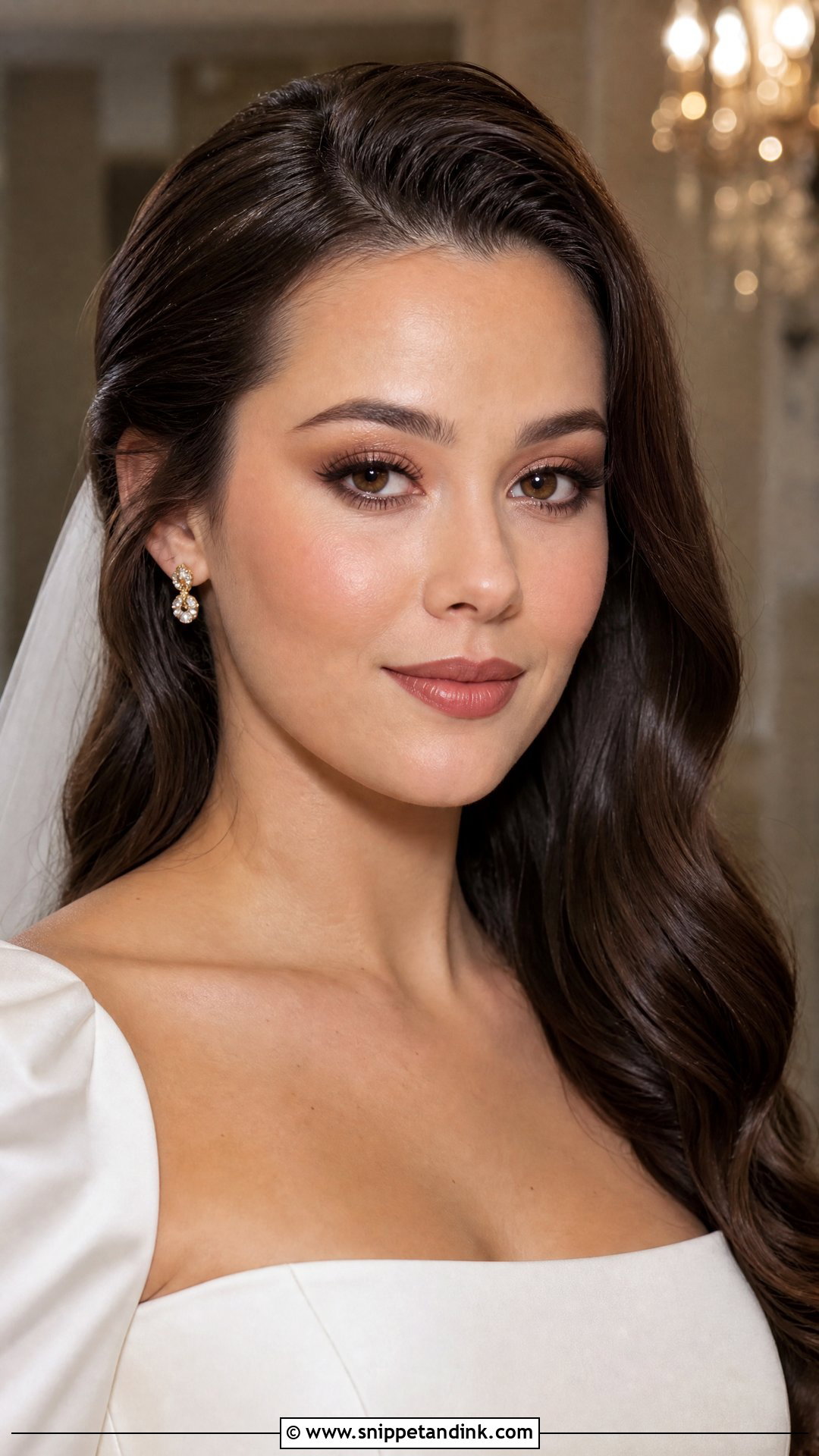
A brown smokey eye gives evening depth without the harshness of black. I lay a light brown through the crease first, then bronze on the lid, then espresso tight at the lash line, blending each one into the last. The darkest colour stays at the outer third so the eye lifts. Separated lashes keep it refined; clumped ones make it heavy. It belongs with a ballroom or a structured gown more than a sunny garden at noon.
8. Champagne Wedding Makeup
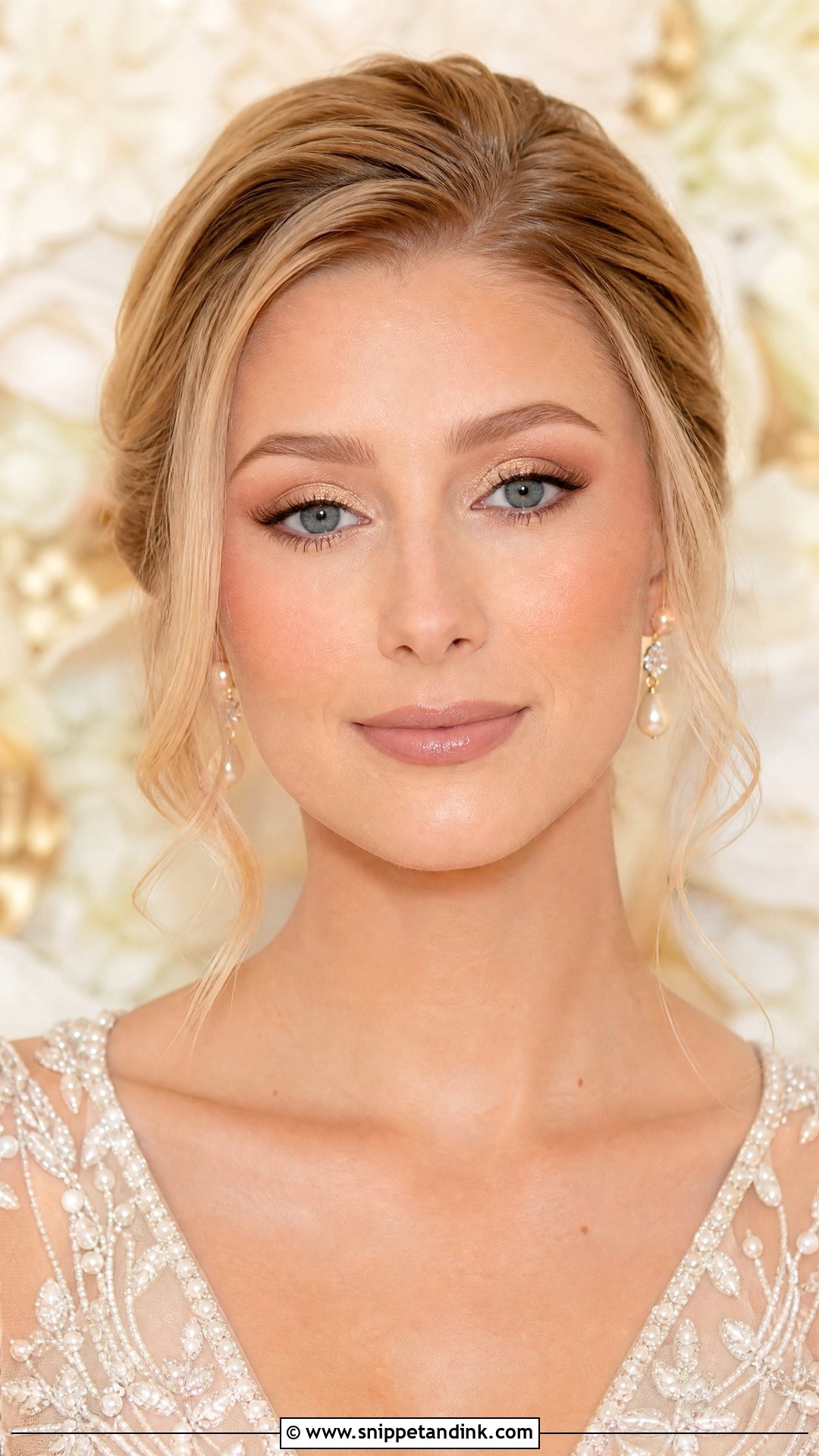
Champagne is the colour I use most on tired eyes. A fine shimmer at the centre of the lid and in the inner corner reflects light toward the eye and makes it look more awake. Beige blends into the crease. Chunky glitter reads as specks in close-ups, so I choose the finest finish available. Satin skin, pink-beige blush and a nude gloss keep the face balanced around it.
9. Rose Gold Wedding Makeup
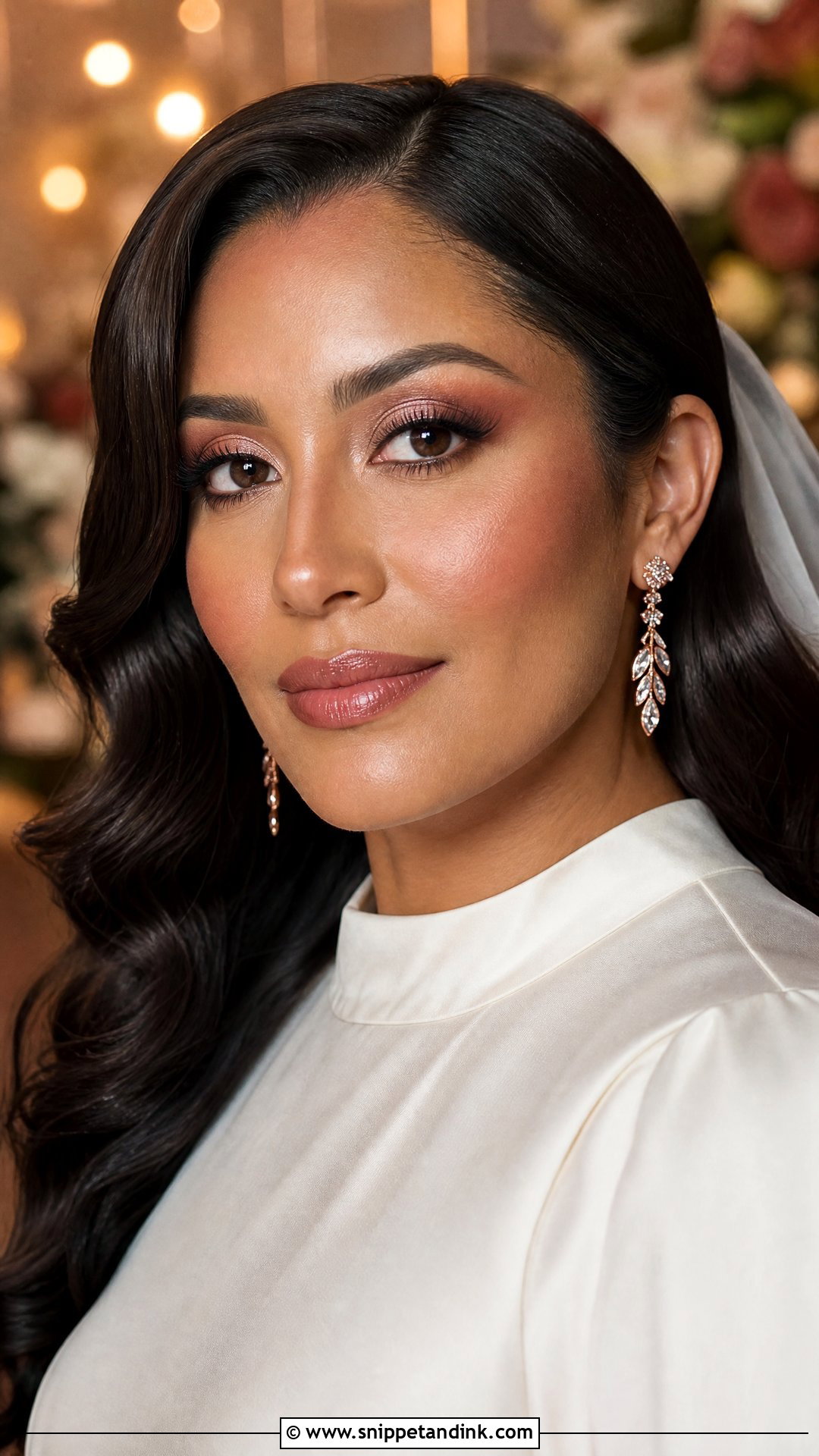
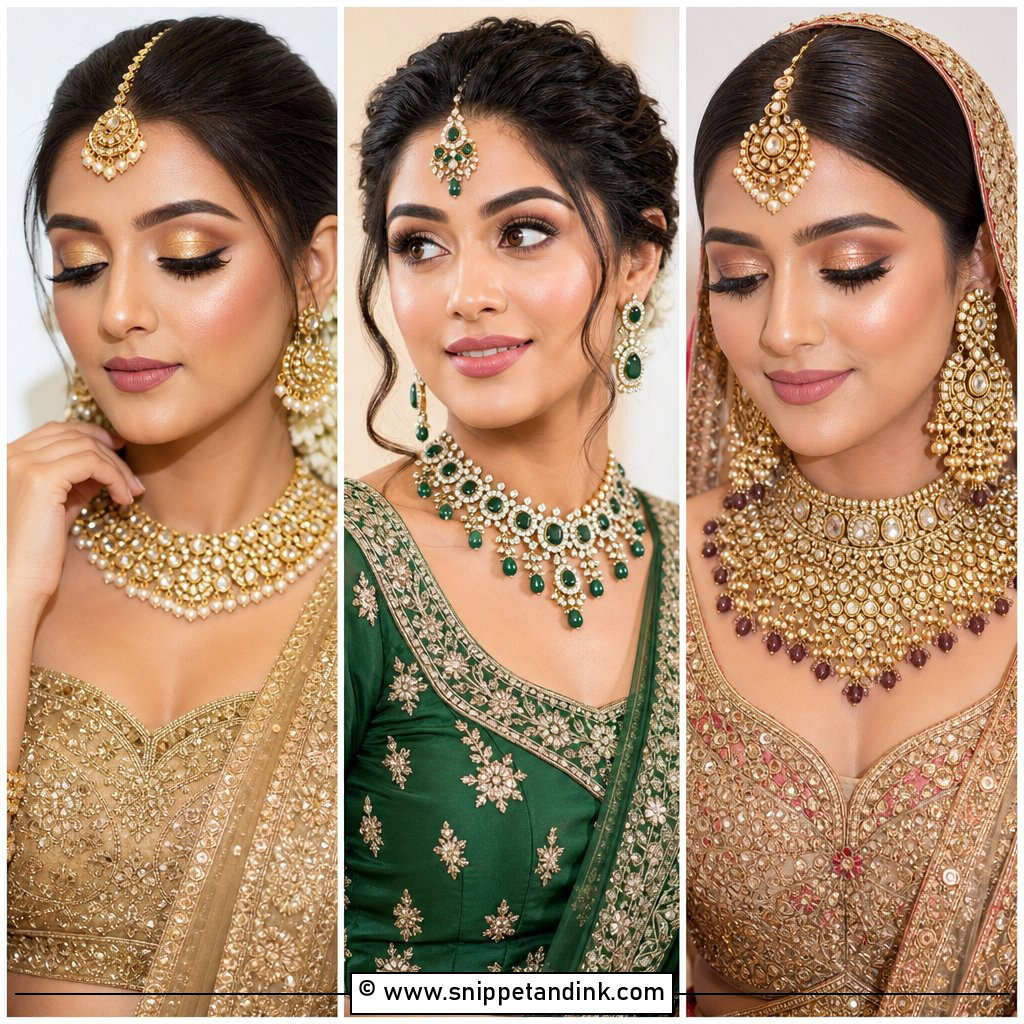
Rose gold sits between pink and gold, so it warms the eye without taking over. I tap a sheer shimmer onto the lid with a fingertip, which gives a smoother finish than a brush, and warm brown into the crease. Tightlining with brown pencil makes the lashes look thicker without visible liner. Rose blush and a golden highlight tie the face to the eyes. It pairs well with beaded dresses and warm-toned jewelry.
10. Nude Wedding Makeup
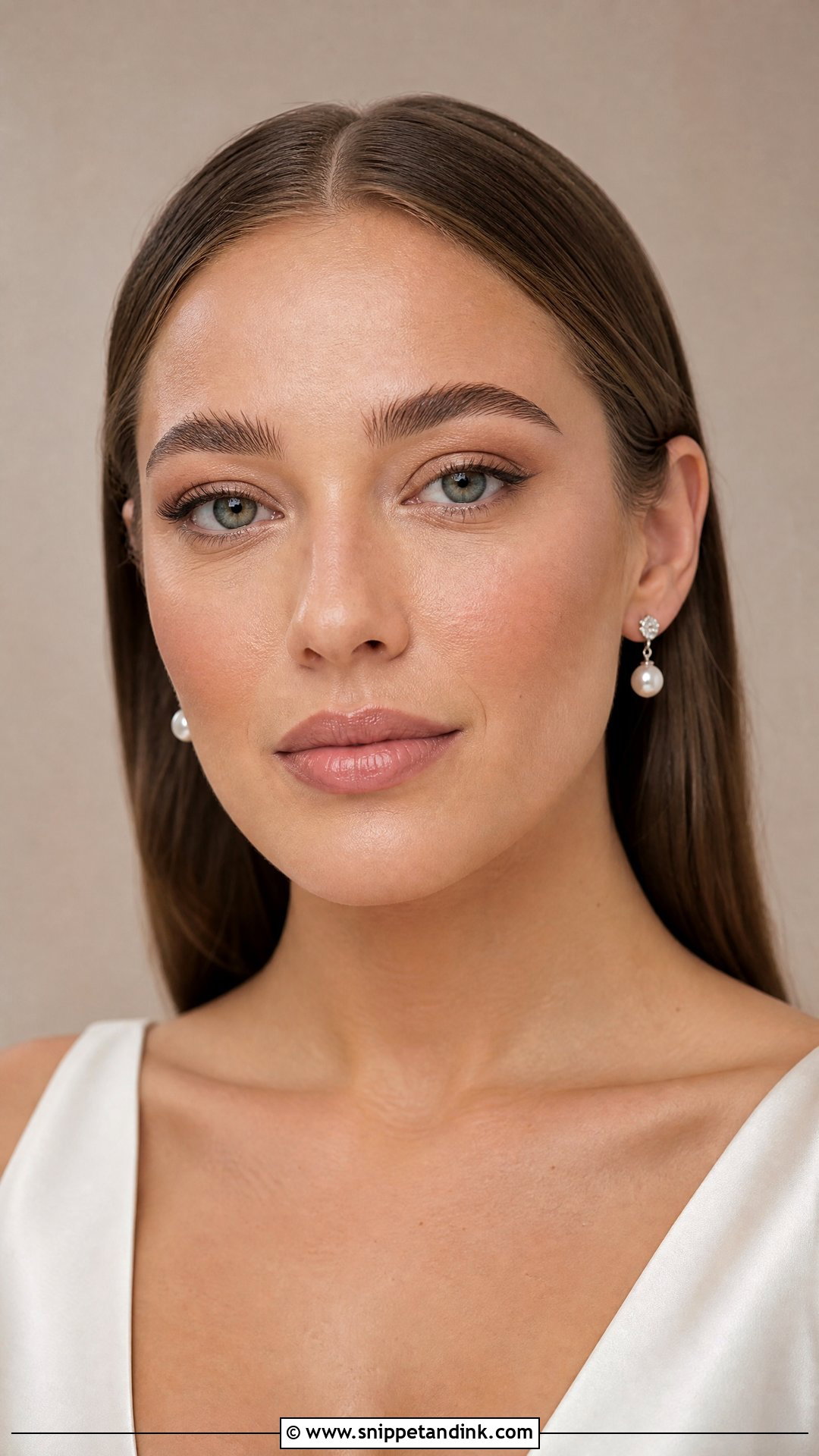
Nude makeup only works when each nude is chosen for your skin, not picked from a palette. A blush that matches your skin disappears, so I go for soft peach, muted rose or terracotta to put life back. The lip needs to be one or two shades deeper than your natural colour or it vanishes in photos. Beige-brown shadow and brushed brows keep the eyes simple. It is the clean option for a modern venue and a minimalist dress.
11. No Makeup Wedding Makeup
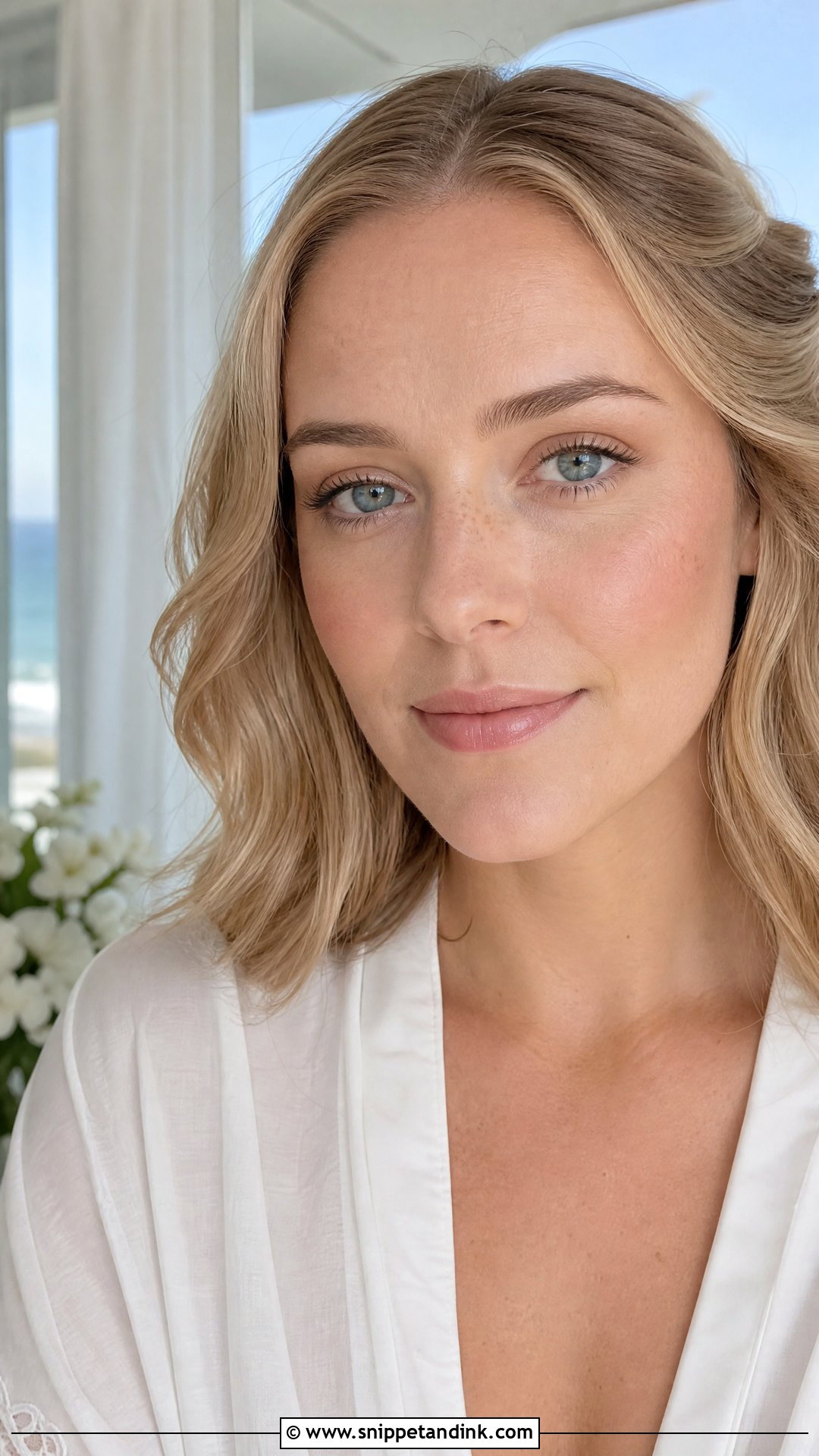
The no-makeup look is really a careful skin job. I spend most of the time on prep, then use concealer only where needed, cream blush and a clear brow gel. A light wash of taupe on the lids gives shape. Lash tint or one coat of mascara keeps the eyes defined. A tinted balm or stain on the lips finishes it. Even this look needs some layering, or it won’t show in photos; I’d describe it as invisible, not absent.
12. Classic Wedding Makeup
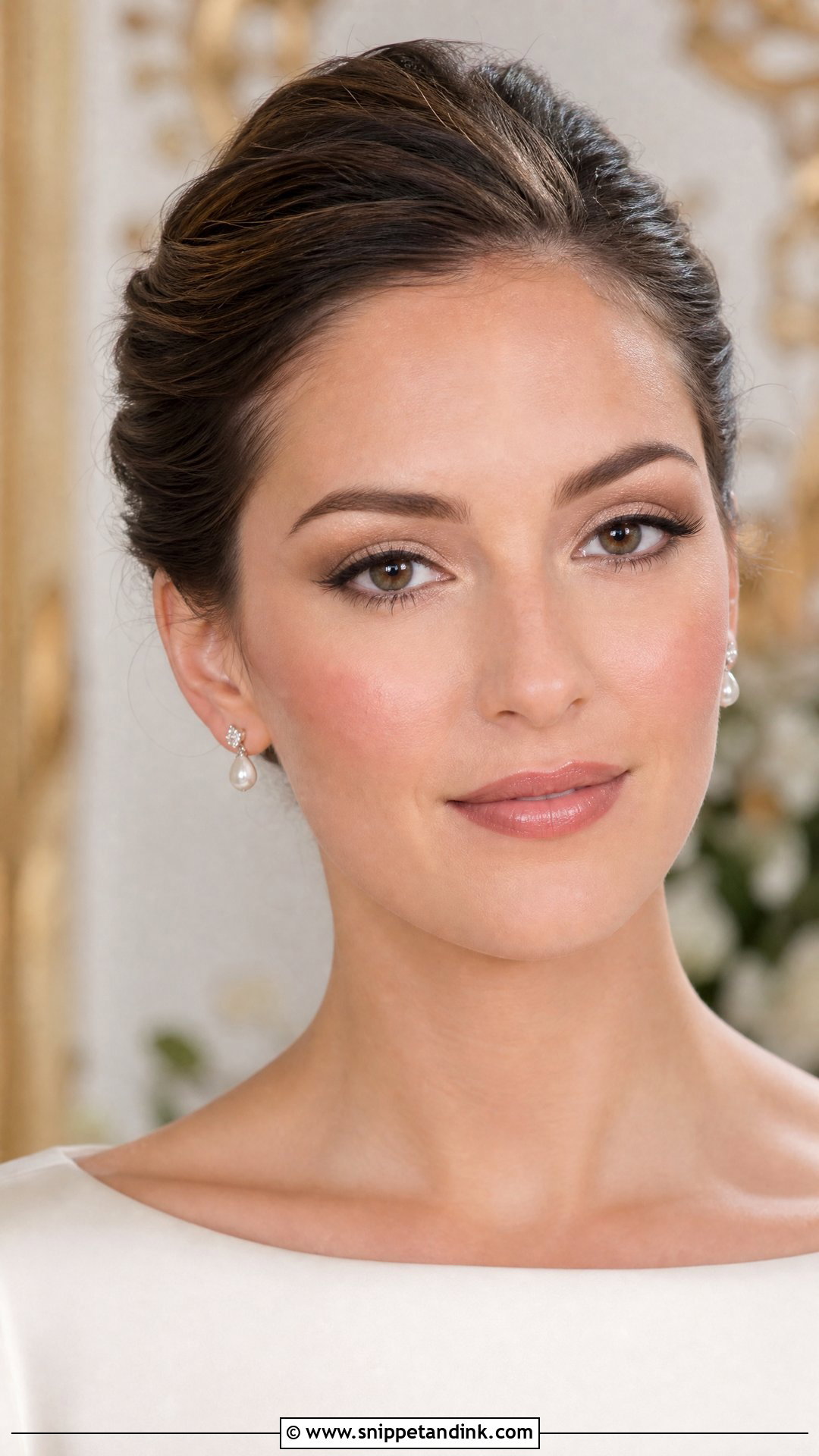
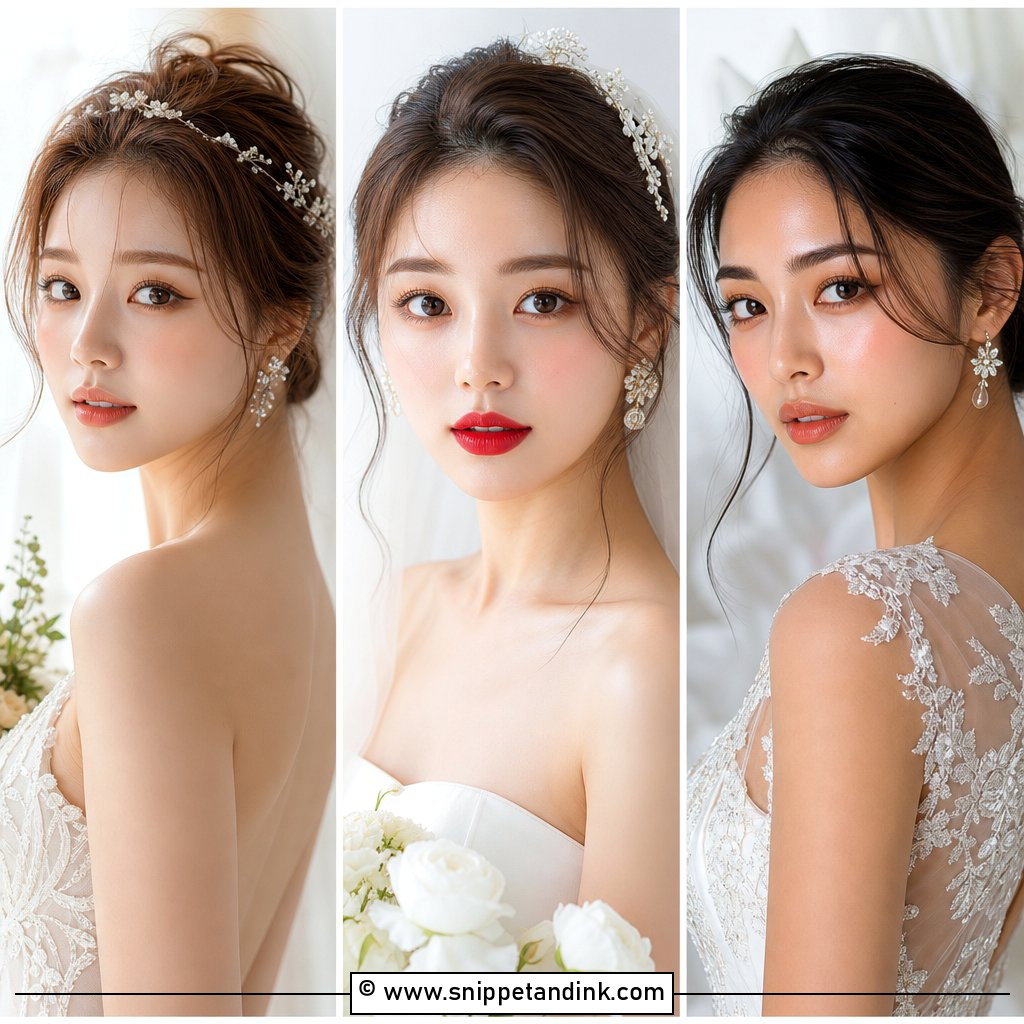
Classic makeup avoids anything that will date the photos: no heavy cut crease, no frosted lips, no extreme brows. I use satin foundation, a soft brown crease, a thin liner following the lash line and individual lashes at the outer corners. Rosy cheeks and a rose or pink-beige lip complete it. It suits almost every dress and setting. If you have no clear preference, this is my default recommendation.
13. Minimal Wedding Makeup
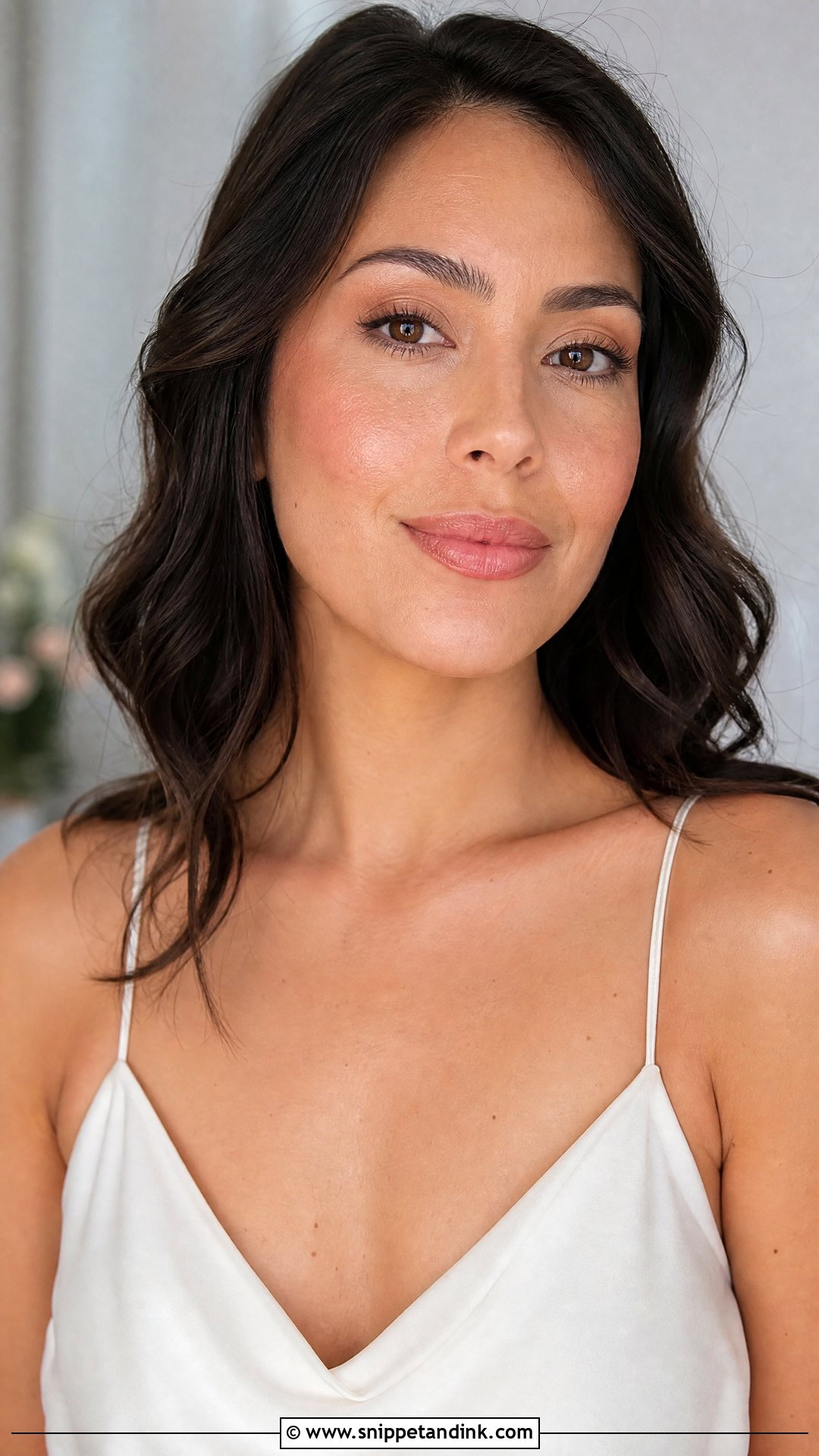
Minimal makeup suits brides who hate the feeling of foundation. Tinted moisturiser or a sheer base, spot concealer, cream bronzer and cream blush are often all I use. Curled lashes, brushed brows and a single neutral shadow keep the eyes clean. A lip tint finishes it. The catch is that minimal makeup depends completely on good skin, so it needs weeks of steady prep: hydration, sunscreen and gentle exfoliation, not anything new or harsh.
14. Glowy Wedding Makeup
A glowy finish layers light rather than slapping on shimmer. I tap a cream highlighter on the high points first, then a whisper of powder highlighter over it, which makes the glow last and look like it is coming from the skin. Keep it off the nose tip and the centre of the forehead. Neutral eyes, rosy blush and a glossy nude lip balance the face. It is made for golden-hour portraits and outdoor venues.
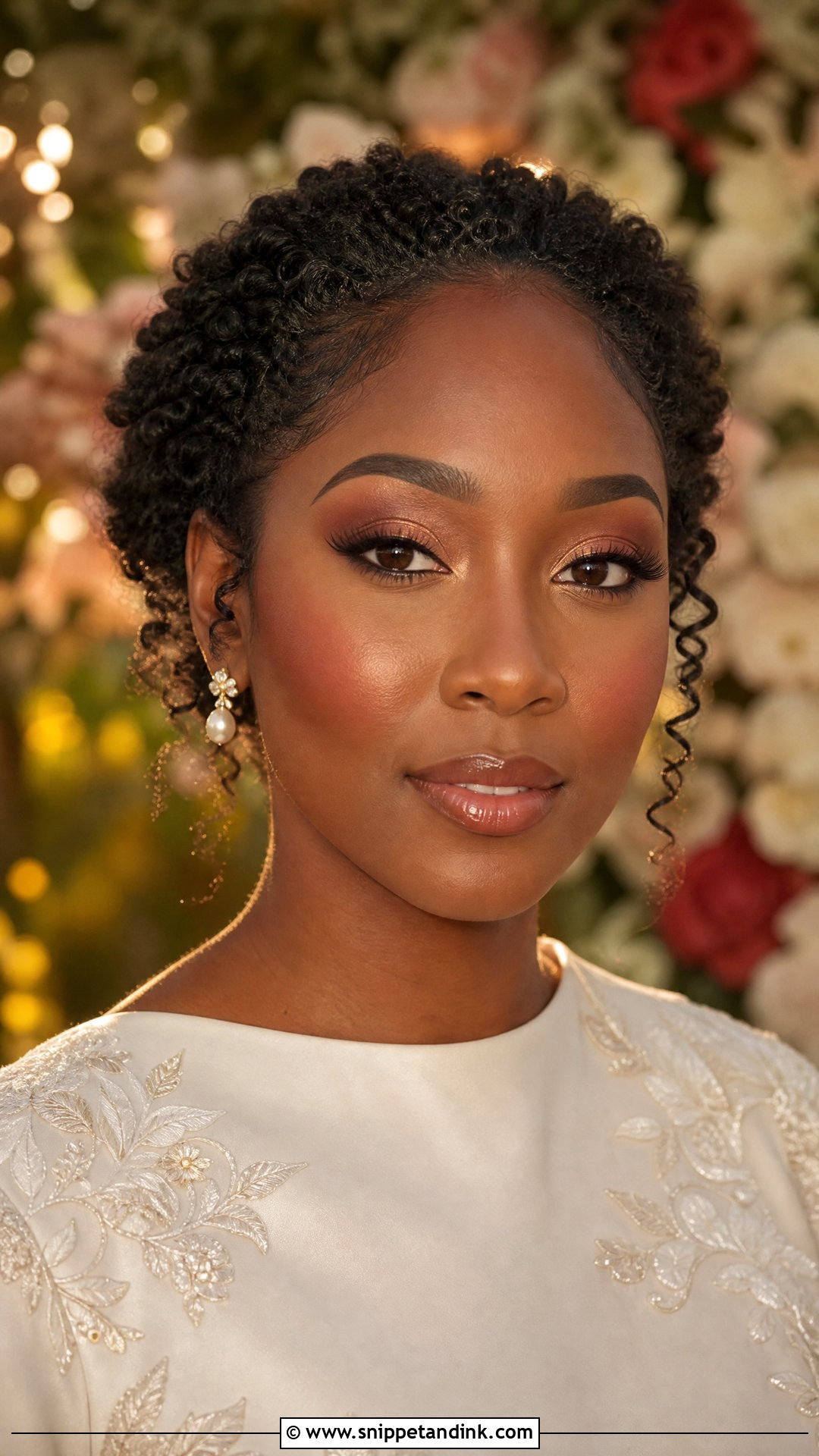
15. Neutral Wedding Makeup
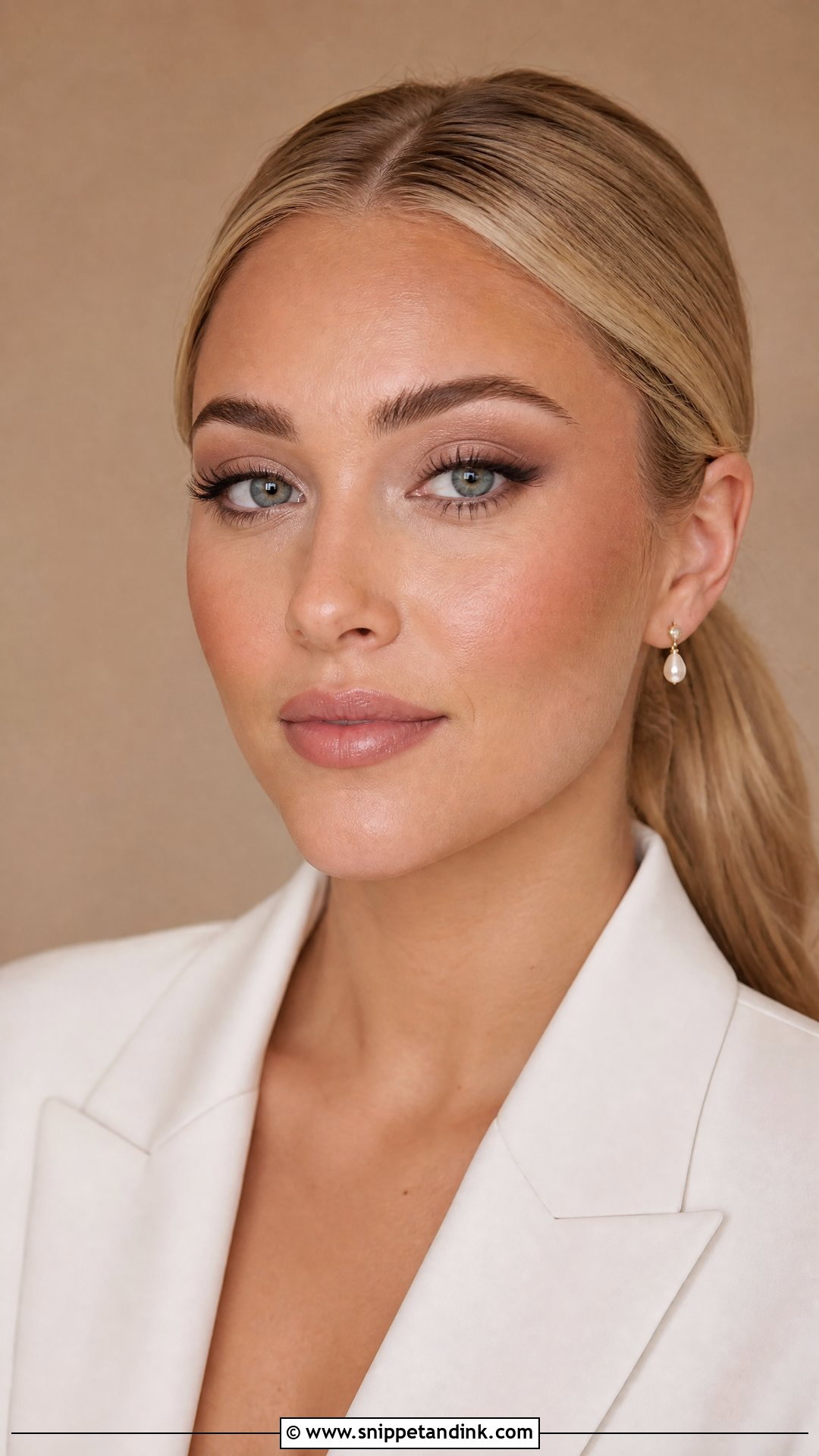
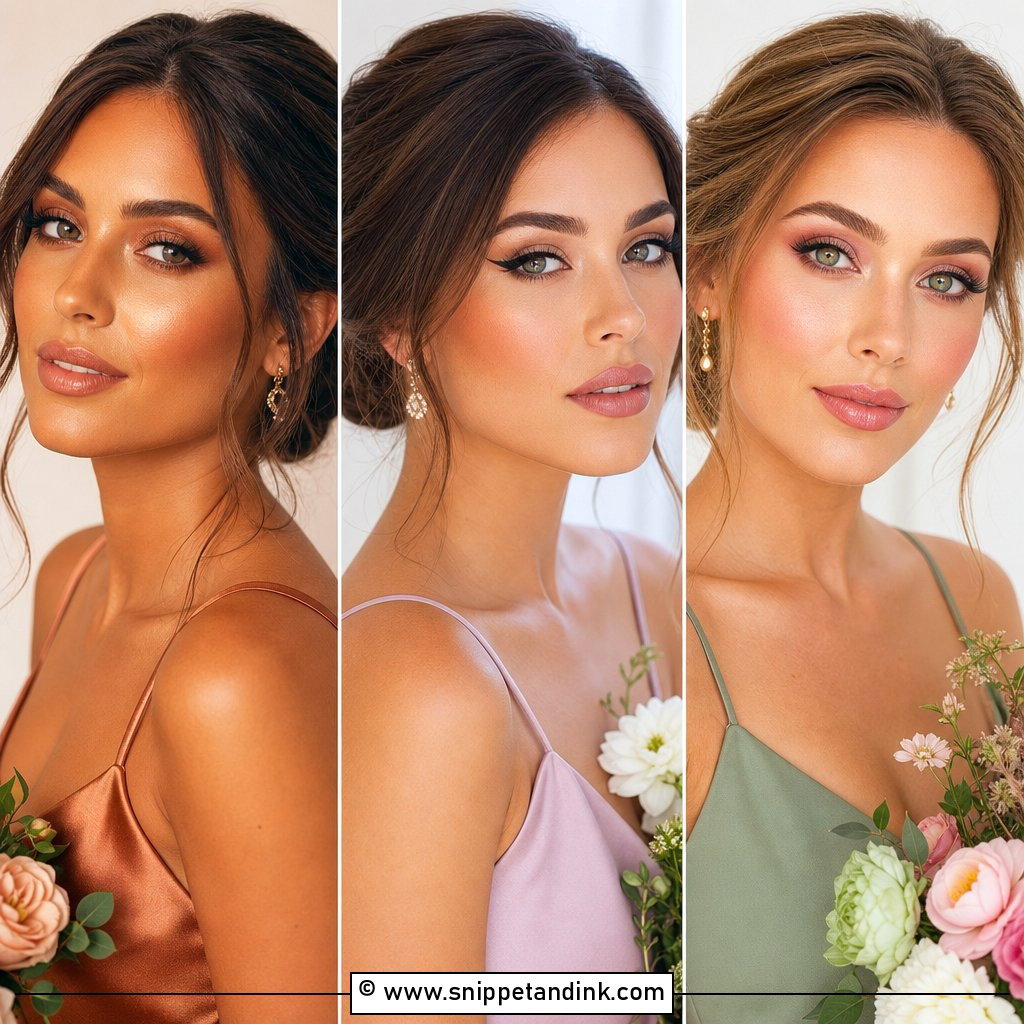
Neutral makeup is the easiest to adjust for a whole bridal party, because beige, brown and taupe flatter almost everyone. I use matte taupe in the crease and a satin beige on the lid, with soft brown liner for structure. Light contour and a blush that suits the undertone add warmth. A nude-pink lip finishes it. It works for every season, and it keeps bridesmaids and mothers looking cohesive in group shots.
16. Bronzed Wedding Makeup
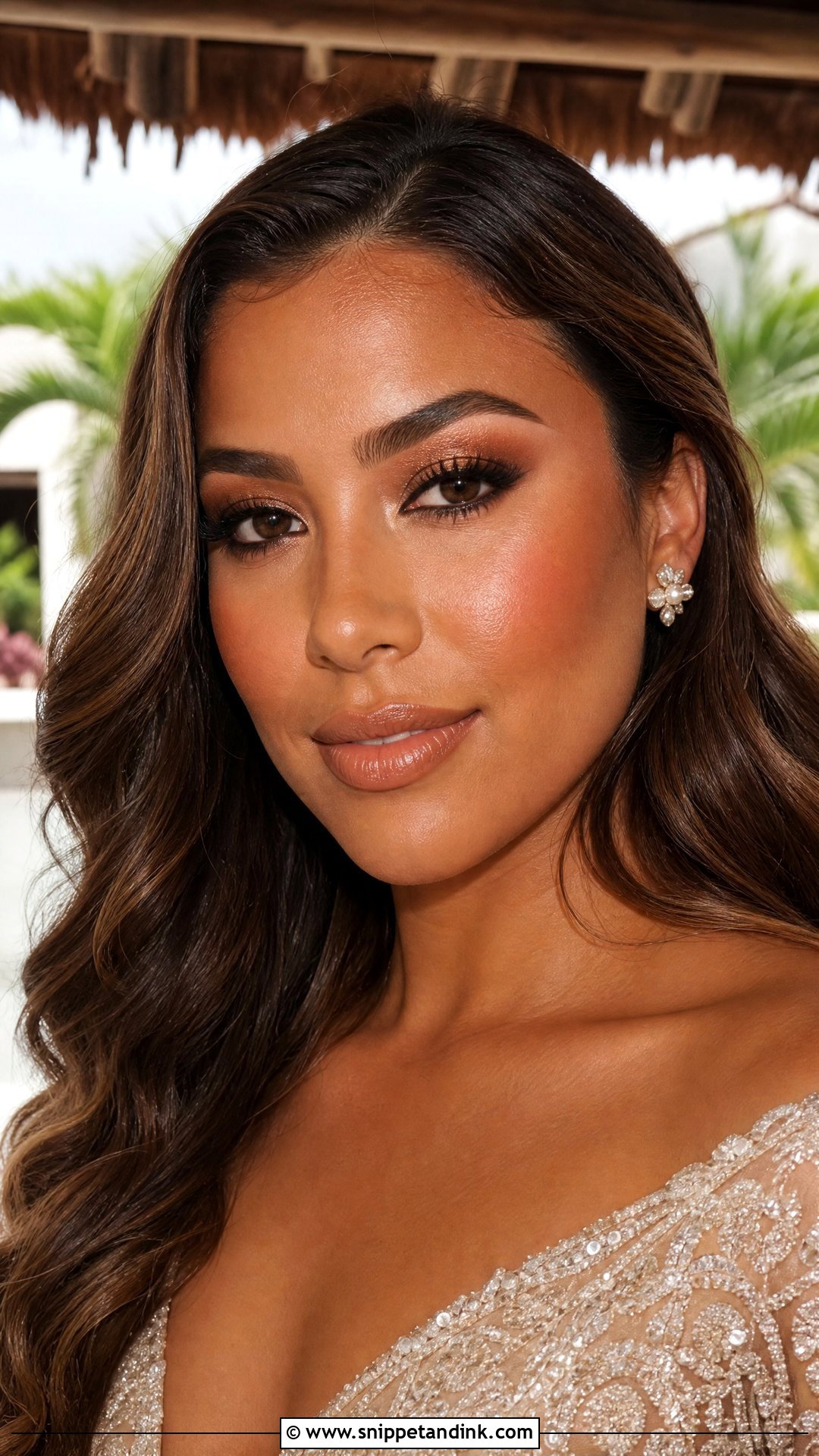
Bronzed makeup should look like warmth from the sun, not like a contour. I apply bronzer around the forehead, cheekbones and jaw with a large brush and blend it until it melts into the base. Warm brown shadow and fluttery lashes add definition. Peach or terracotta blush keeps the cheeks alive. This is the look I’d suggest for a summer or destination wedding and a bride who wants a sun-kissed finish. A soft golden highlight is enough; strong shimmer next to bronze can look oily in flash.
17. Soft Wing Wedding Makeup
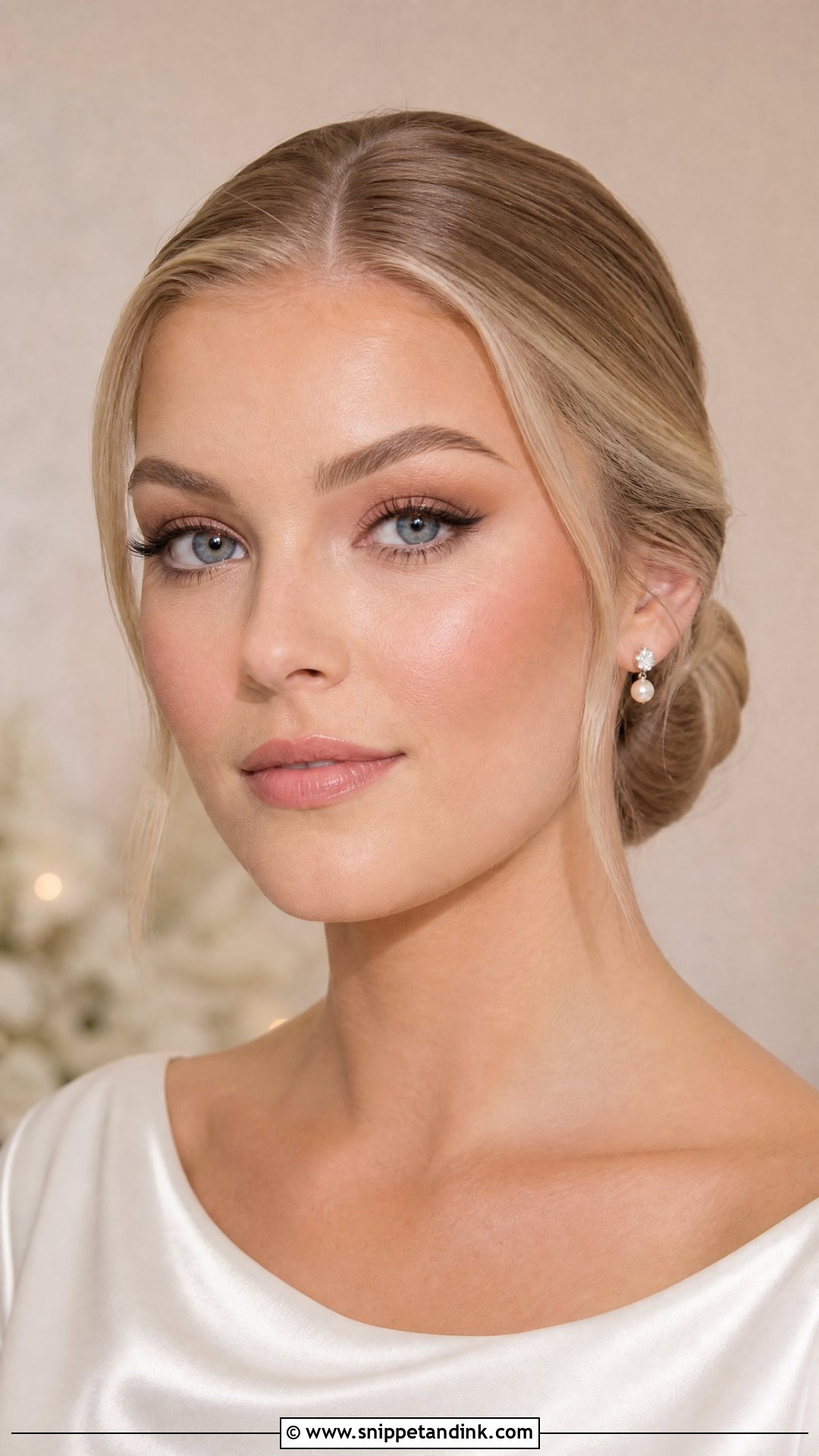
A soft wing lifts the eye without the hard edge of liquid liner. I use brown pencil or gel and smudge it outward with a small brush, keeping the wing short. On hooded eyes, I draw it with the eye open so it shows when you are looking at the camera. Neutral shadow and separated lashes keep it soft. Choose this if you want definition but not a full cat eye. The angle adjusts to round, almond or downturned eyes.
18. Soft Smokey Wedding Makeup
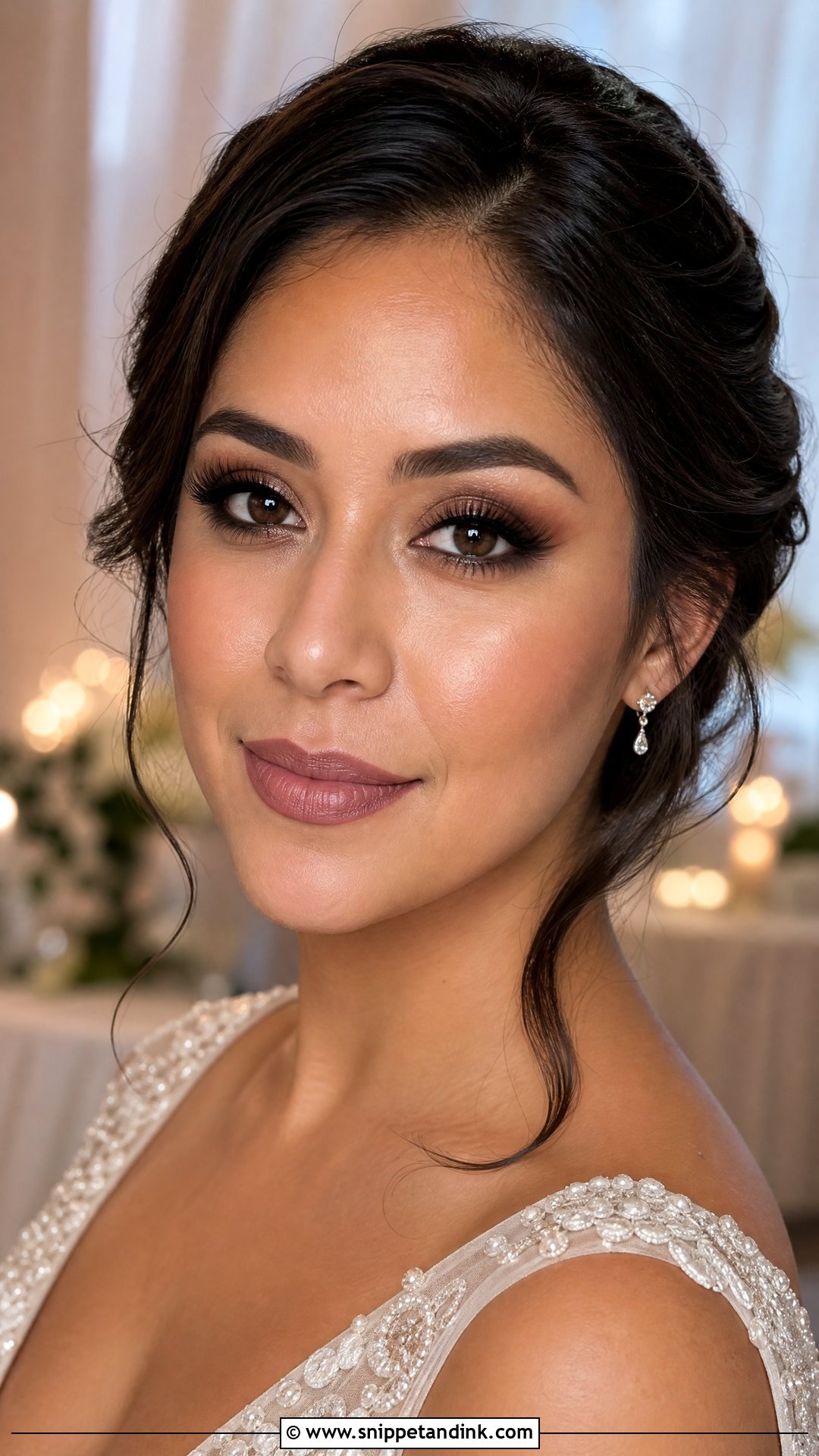
A soft smokey eye uses taupe, mocha or plum-brown and keeps every edge diffused. The deepest colour sits close to the lashes and blends upward, while the lid stays satin. Wispy lashes and a thin liner add shape. Plum-brown is particularly flattering on green and hazel eyes. If you ask an artist for this, say “diffused and soft” rather than “smokey”, or you may get an evening look heavier than you wanted.
19. Blush Wedding Makeup
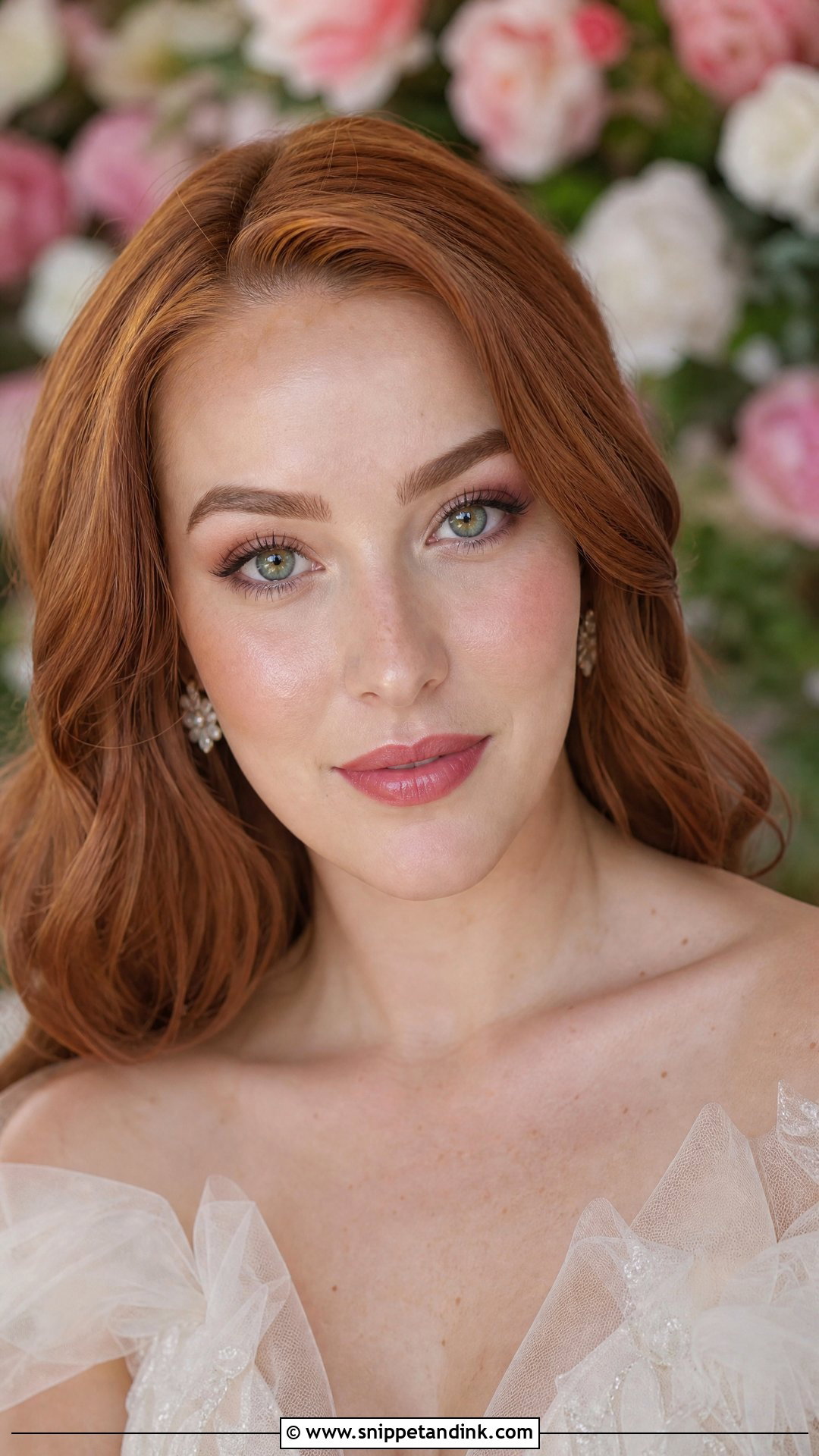
Here blush is the main feature. I layer cream blush first and set it with a light powder blush in the same shade, which keeps the colour for hours. Placement decides the effect: high and blended toward the temple for lift, never low on the cheek. Keep eyes simple and the lip in the same family as the blush. It suits a romantic or outdoor wedding and a bride who wants a fresh, flushed face.
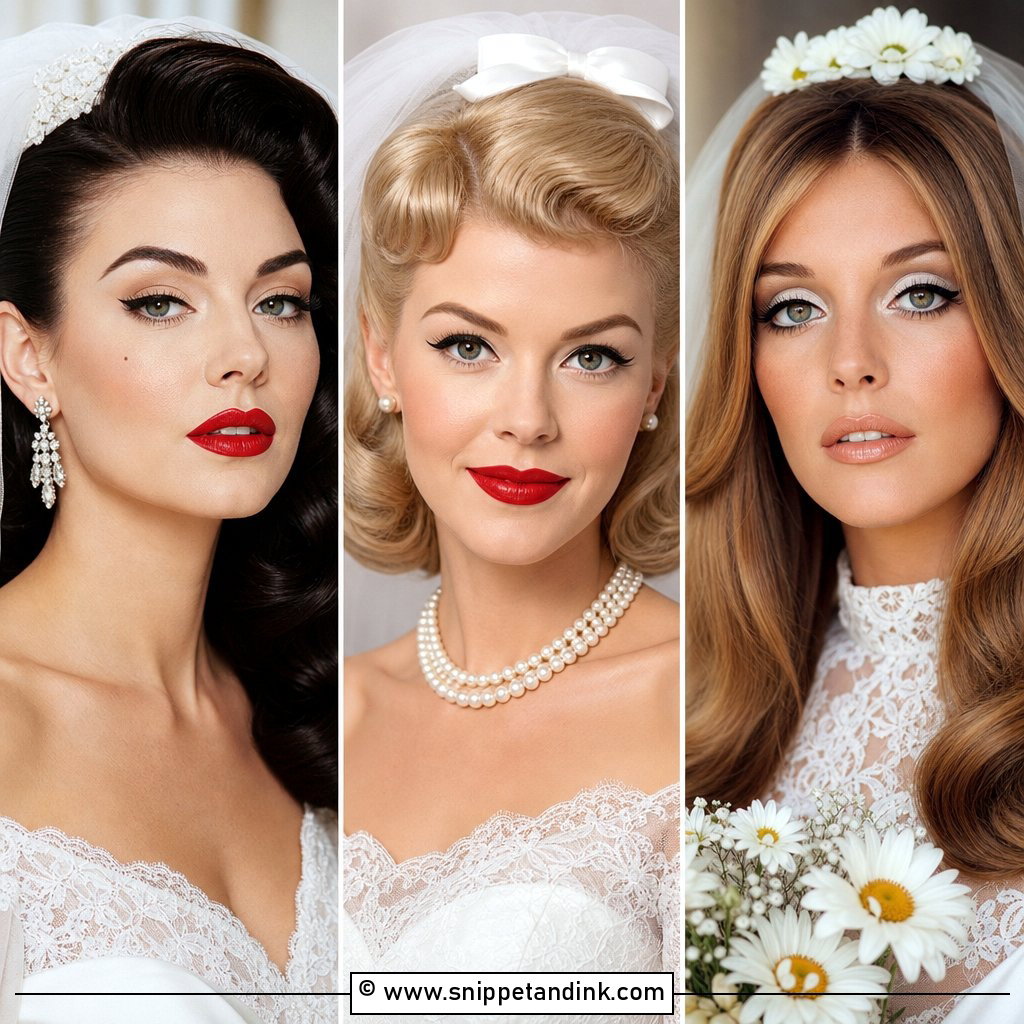
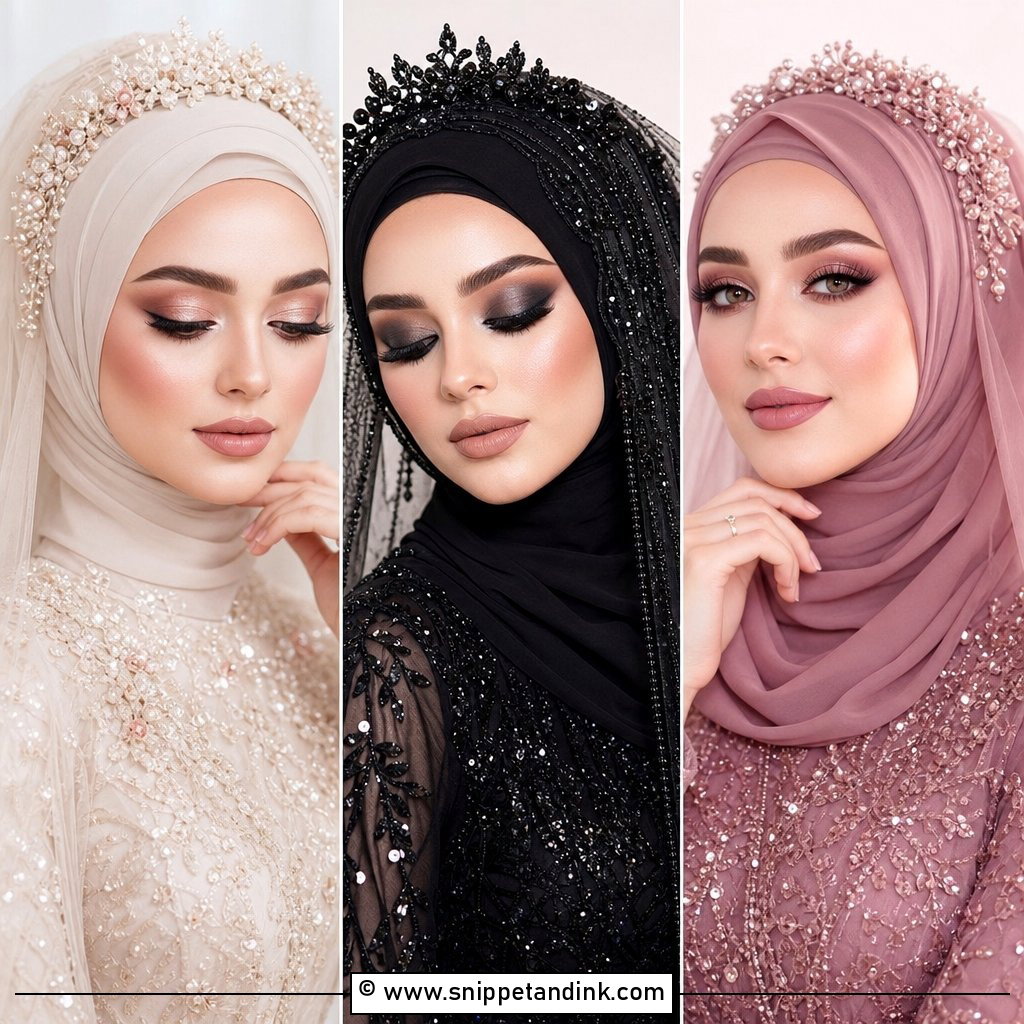
20. Glossy Wedding Makeup
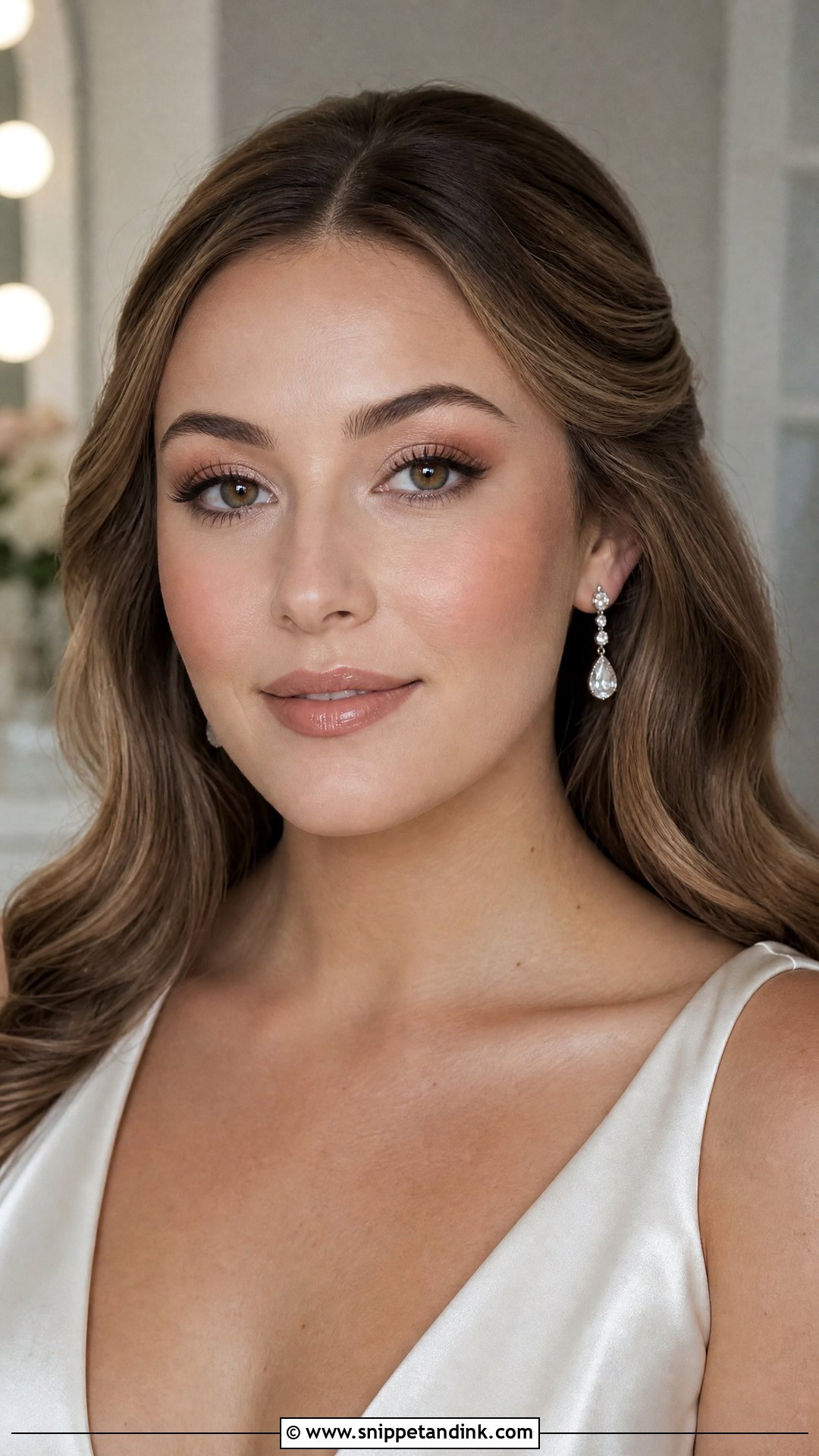
Glossy makeup needs discipline. I set the centre of the face lightly so the only shine is on the lips and the top of the cheekbones. Gloss on the lids looks lovely for ten minutes and then creases, so I leave the eyes satin. Line the lips with a long-wear liner under the gloss to keep the shape when the gloss wears off. Pink or nude gloss makes lips look fuller.
21. Mauve Wedding Makeup
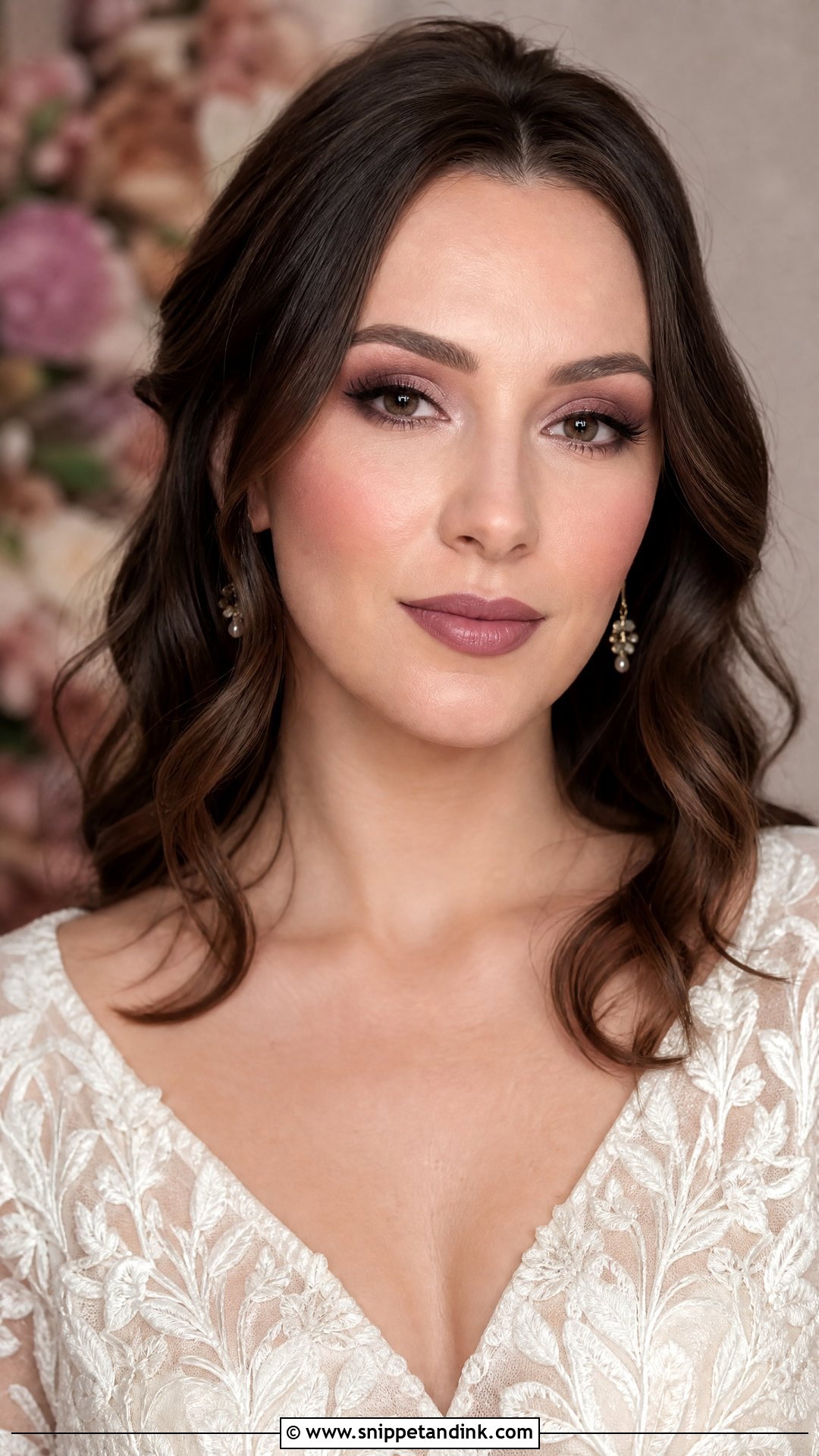
Mauve is a colour that pretends to be neutral. On the eyes, I blend dusty mauve with taupe for depth; on the cheeks, a mauve blush; on the lips, a muted rose-mauve. Keeping all three in the same family gives a soft, monochrome finish. It flatters many undertones since mauve leans pink, plum or brown. It suits autumn weddings well. Very fair, cool skin should test it under indoor light, as it can look grey.
22. Coral Wedding Makeup
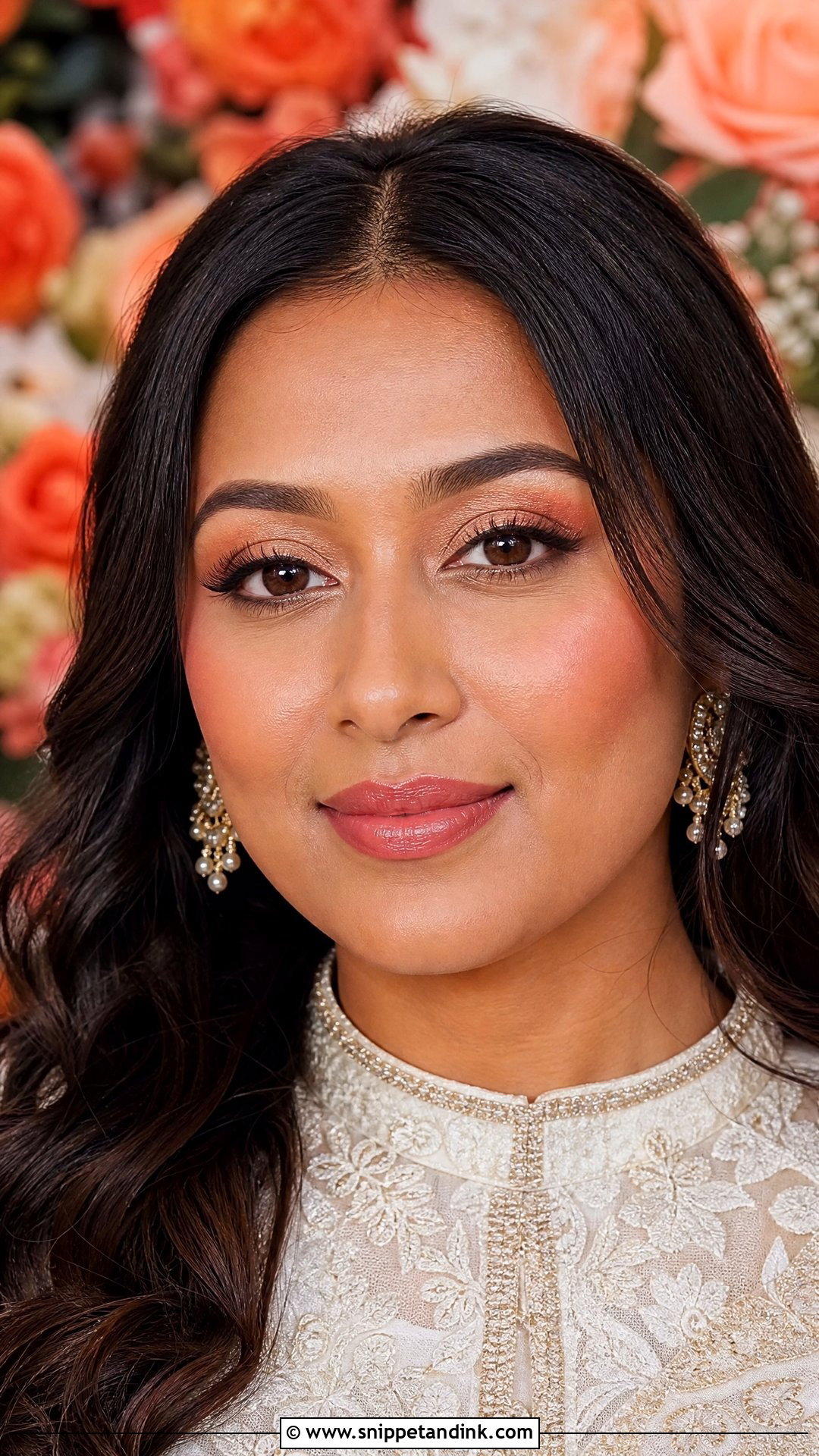
Coral brings brightness, best in spring and summer daylight. I blend coral blush high on the cheeks, warm peach-beige on the eyes and keep liner brown. A coral-pink or peachy lip keeps the face fresh. On deeper skin, I go for a richer coral or warm melon so the colour doesn’t sit ashy on top. It suits warm ivory and champagne dresses better than bright white.
23. Taupe Wedding Makeup
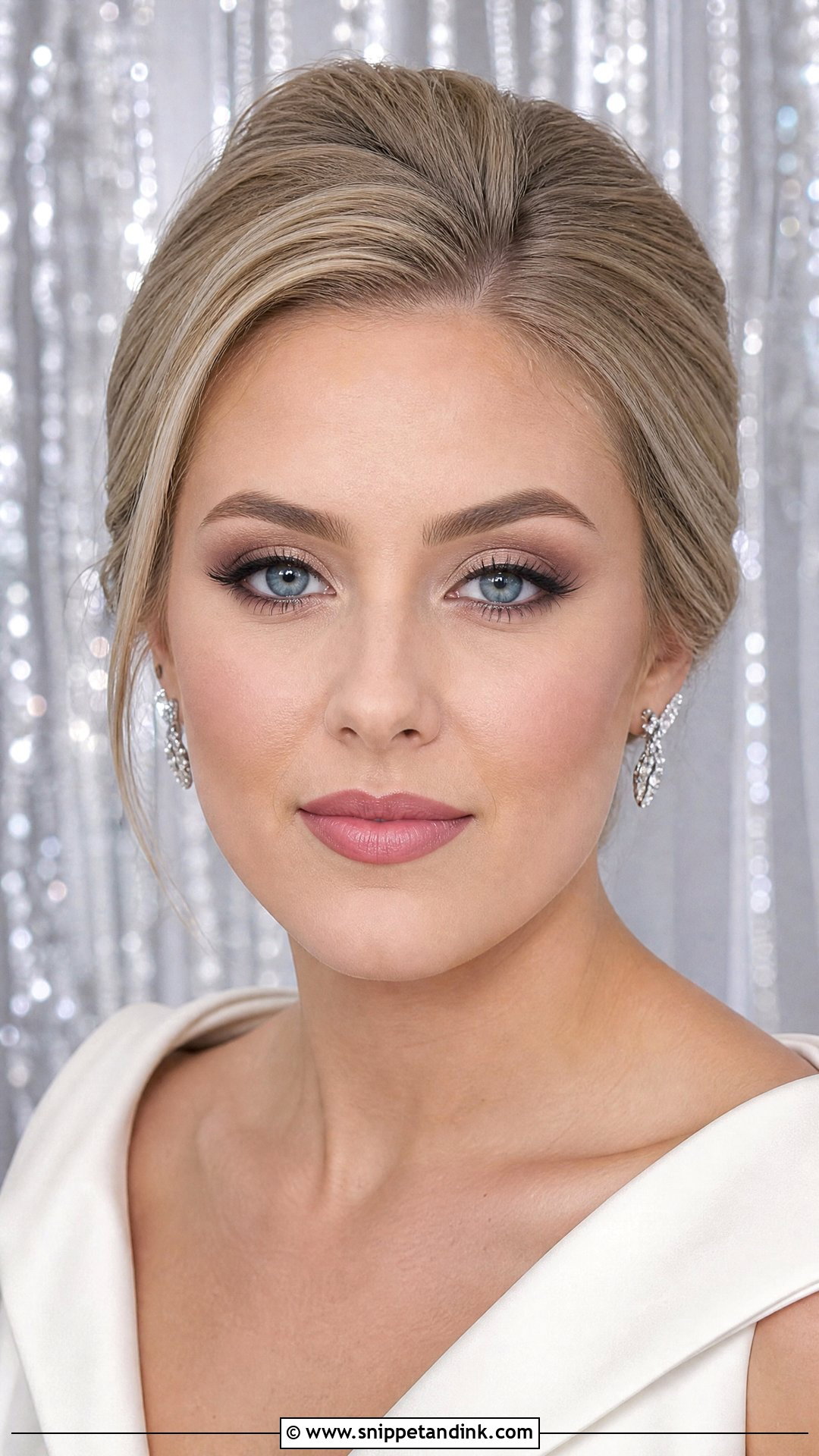
Taupe is the cool-toned neutral, and it is my choice for brides who look muddy in warm browns. A matte taupe in the crease and satin beige on the lid give shape without warmth. Cool espresso liner defines the lashes. Neutral blush and a pink-nude lip keep the face balanced. It pairs well with silver jewelry, a cool white gown and a winter or city wedding.
24. Fresh Skin Wedding Makeup
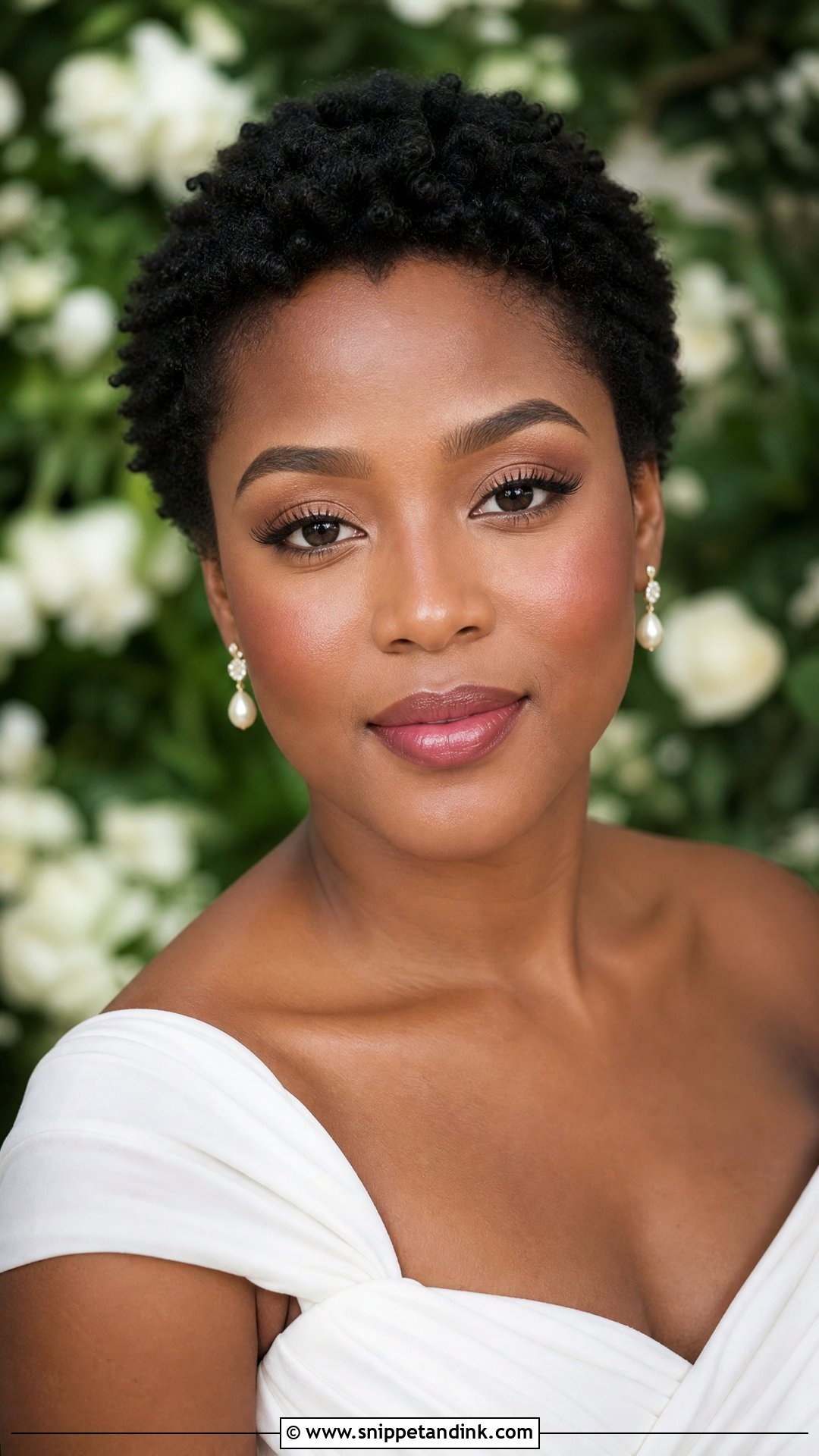
Fresh skin is the look most brides ask for and the hardest to make last. I use thin layers of base and set only where the face creases or shines, so the rest of the skin stays flexible. Cream bronzer and blush blend into the base instead of sitting on top. Clean eyes, curled lashes and brushed brows keep the focus on the complexion. A lip stain or sheer lipstick finishes it. Close-up portraits will show real skin, so prep matters for weeks before.
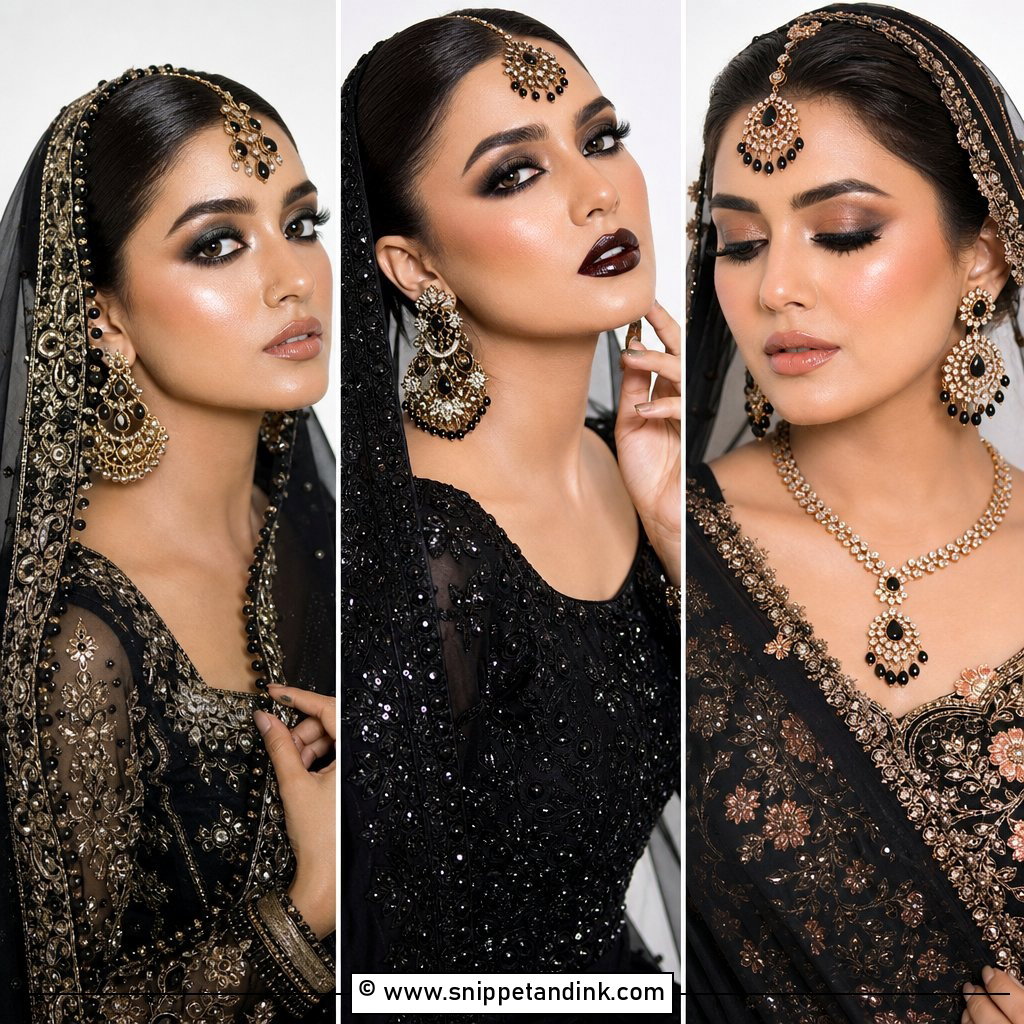
25. Timeless Wedding Makeup
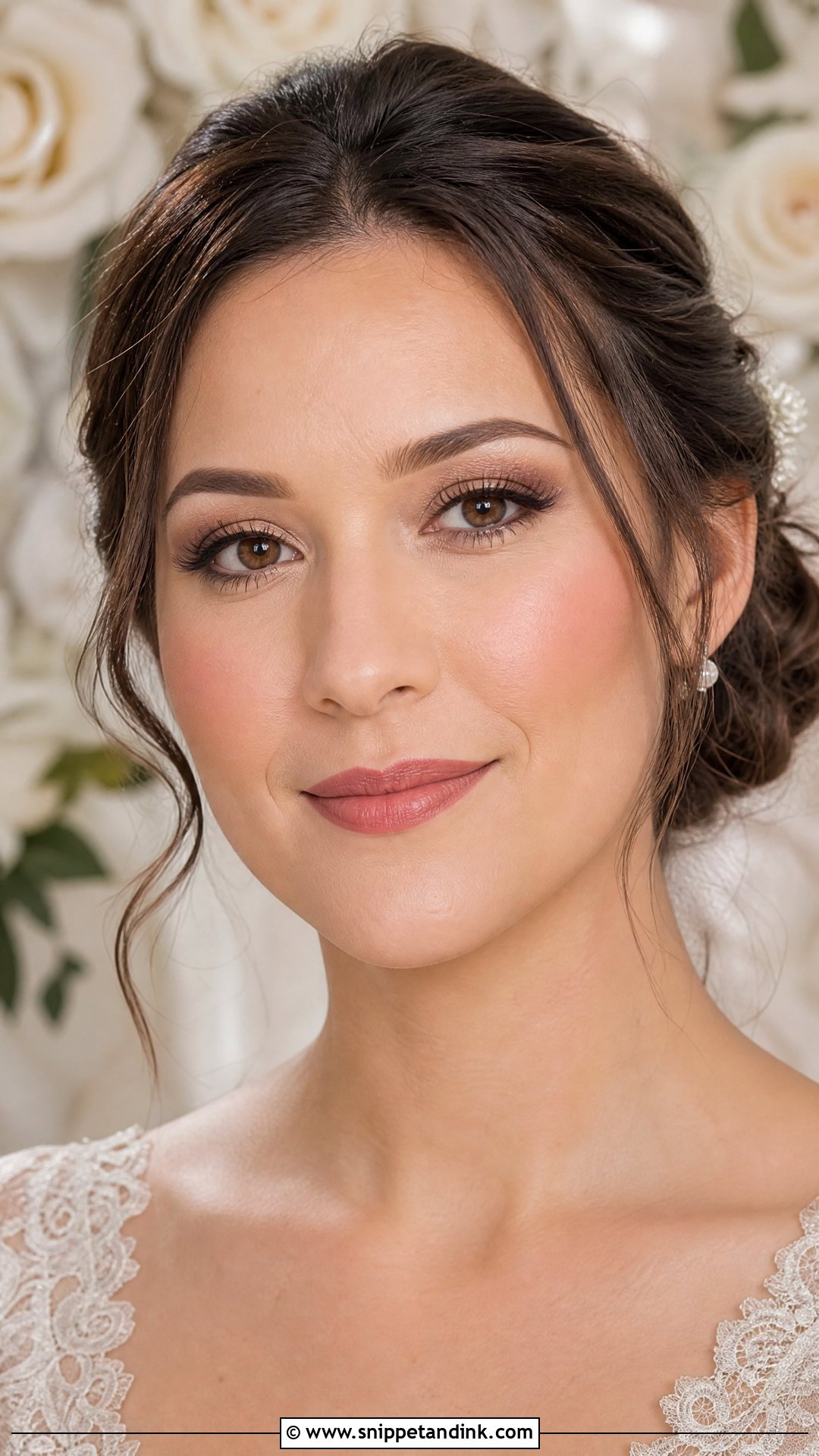
A timeless face mixes the best of natural, classic and soft glam. I use a satin base, soft contour, neutral eyeshadow and a brown-black liner, plus natural lashes. A lipstick close to your lip shade but a little richer finishes it. It suits almost any season and dress. When a bride is overwhelmed by choices, this is where I suggest we start, then adjust one feature at a time at the trial.
Adjusting a Soft Face for Glasses, Hooded Lids and Mature Skin
If you wear glasses
Short-sighted lenses make eyes look smaller, so I define the lash line a little more. Long-sighted lenses magnify, so blending has to be perfect and shimmer stays fine. Frames cast a shadow under the eyes; a touch more brightening concealer there helps. Set the bridge of the nose firmly, since nose pads rub foundation off within an hour. Ask your optician about an anti-glare coating if you’ll wear them for portraits.
If your lids are hooded
Shadow placed in your actual crease disappears when your eyes are open. I place the transition shade just above the crease, with your eyes open and looking ahead, so the depth shows in photos. Waterproof formulas matter even more, since hooded lids press shadow and liner onto the brow bone.
If your skin is mature
Cream products move with the skin, while powder settles into lines. I use cream blush and highlight, set only the T-zone and under the eyes with a very fine powder, and keep shimmer off crepey lids. A satin lip with a liner keeps colour from bleeding into fine lines. Soft makeup is usually the most flattering choice here, because heavy layers tend to look older, not younger.
Soft Should Still Look Finished
Soft makeup is about texture, colour and placement chosen for your face, not about using less. Skin that still looks like skin, gently shaped eyes, real blush and a lip that ties the face together are the pieces every look above shares. Book a trial and look at it in daylight, in indoor light and through a phone camera with flash. Adjust from there. The goal is a face your family recognises instantly in every photo.
You'll Like These Ideas:


Leave a Reply