
An aesthetic is a starting point, not a recipe. When a bride shows me a mood board, I’m reading three things: how much skin finish she wants (matte, satin or glow), where she wants the attention (eyes, lips or skin), and how much product she can tolerate on her face for twelve hours. Get those right and the look will survive the ceremony, the tears and the late-night dance floor. The twenty directions below run from barely-there to full glam, with notes on how I build each one and where it struggles.
Translating a Pinterest Board Into a Face Your Artist Can Build
Most brides arrive with twenty saved photos that pull in different directions: a dewy skin from one, a red lip from another, a smoky eye from a third. I don’t mind that at all, but I’ll ask you to sort them before we start.
- Pick the one image you’d keep if you could only keep one. That sets the finish of the skin.
- Mark what you love in each of the others in a word or two: “the brows”, “the blush placement”, “the lip shade”. Specific beats vague every time.
- Add one photo you dislike. Knowing what you don’t want saves more trial time than anything else.
- Check whether the saved faces share your eye shape and skin depth. A cut crease on a deep-set eye won’t look the same on a hooded one, and that’s fine, but it changes the plan.
I’d also suggest a dull, practical step: wear your usual makeup to the trial, or take a photo of it. It tells me how much product feels normal on your face, which is the honest limit of how far we can push the look.
1. Soft Glam Bridal Makeup
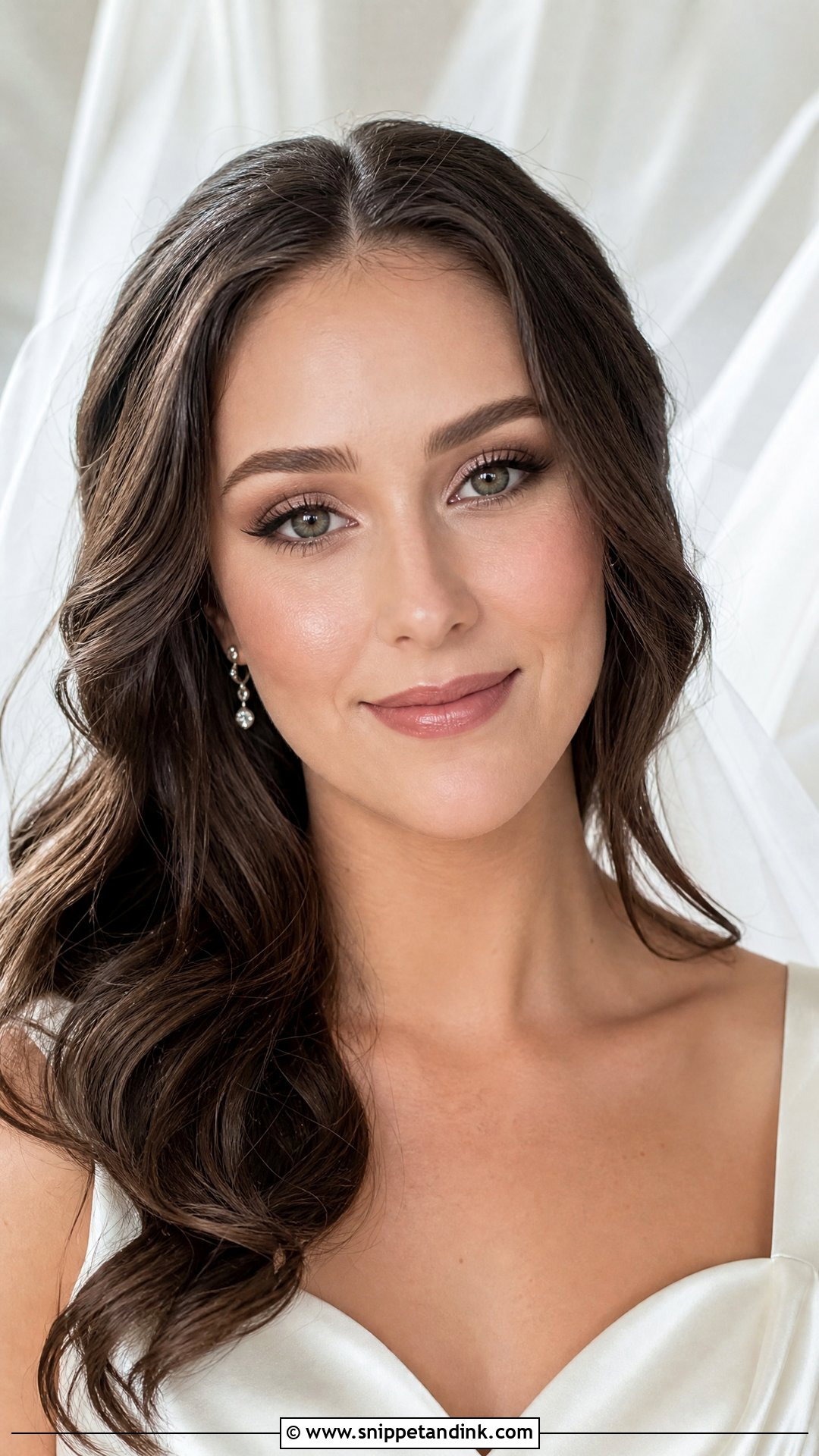
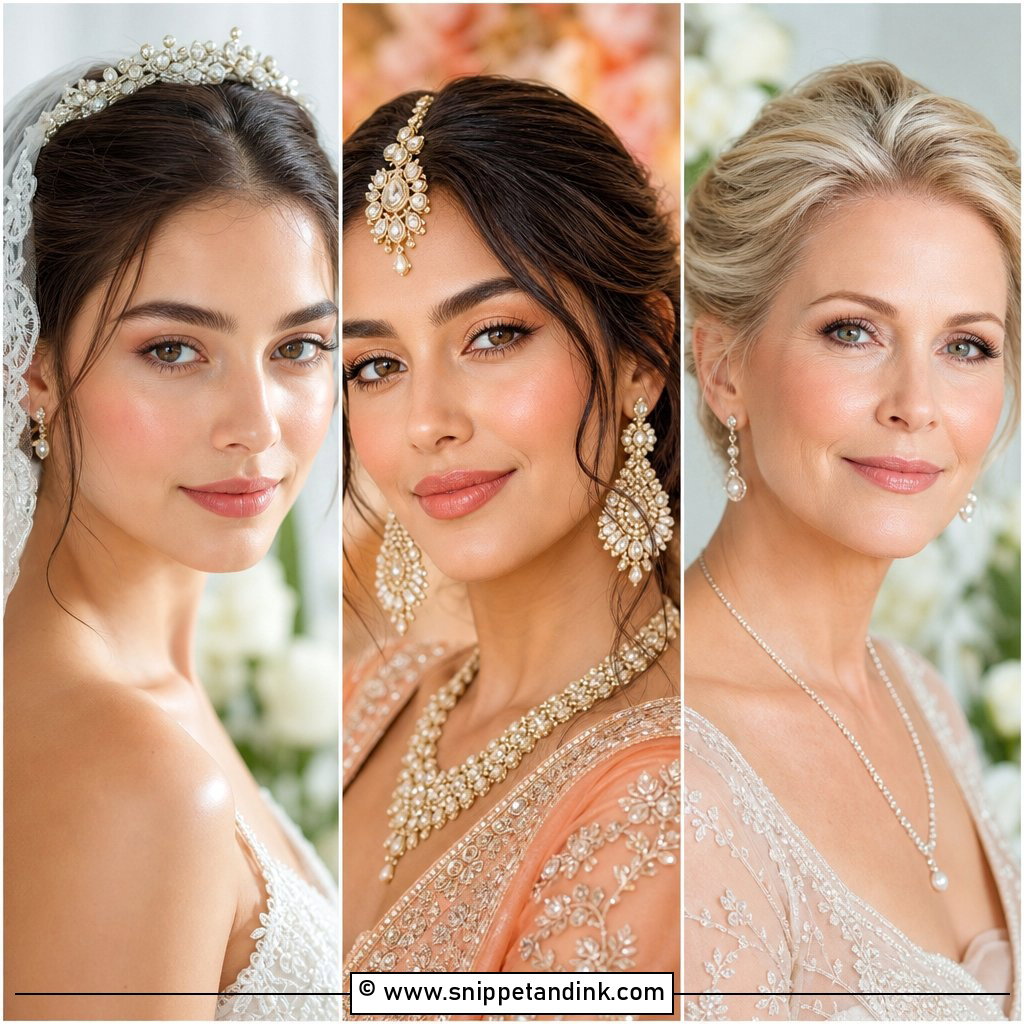
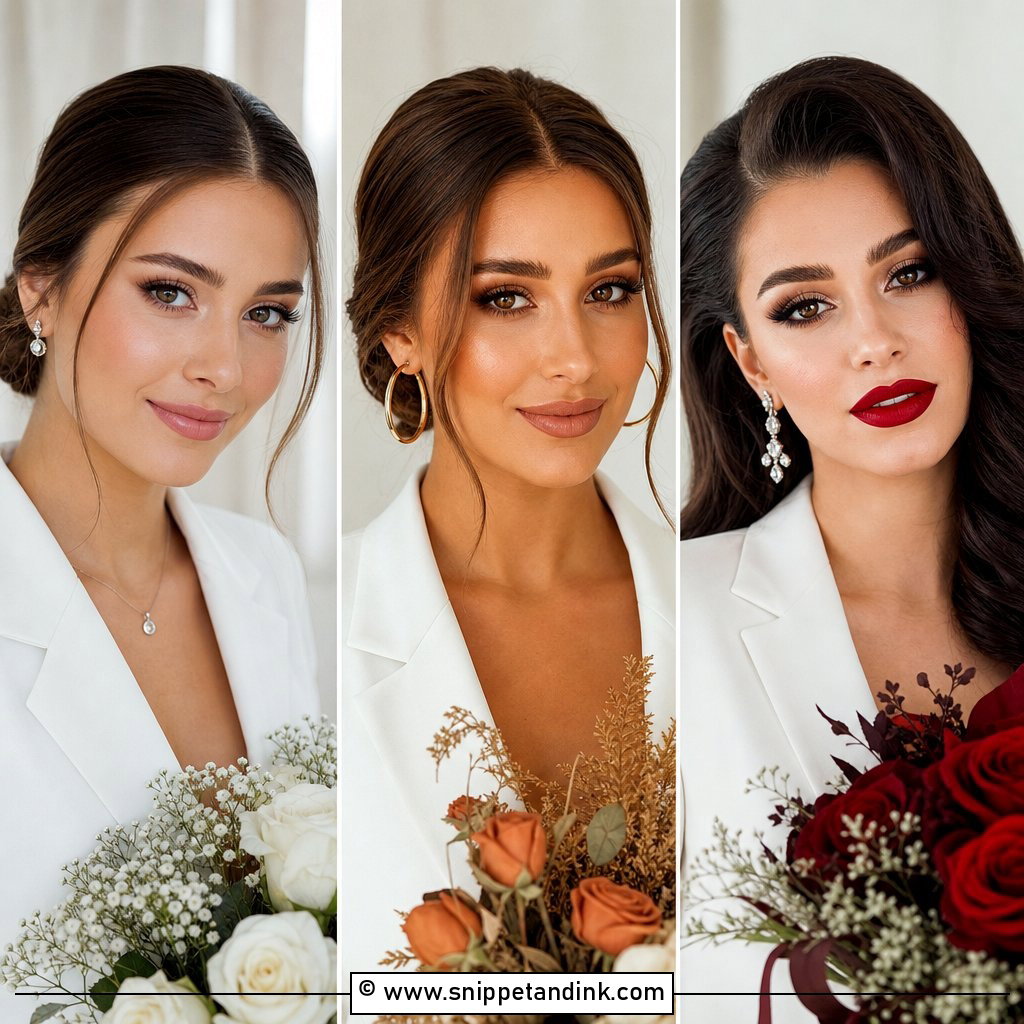
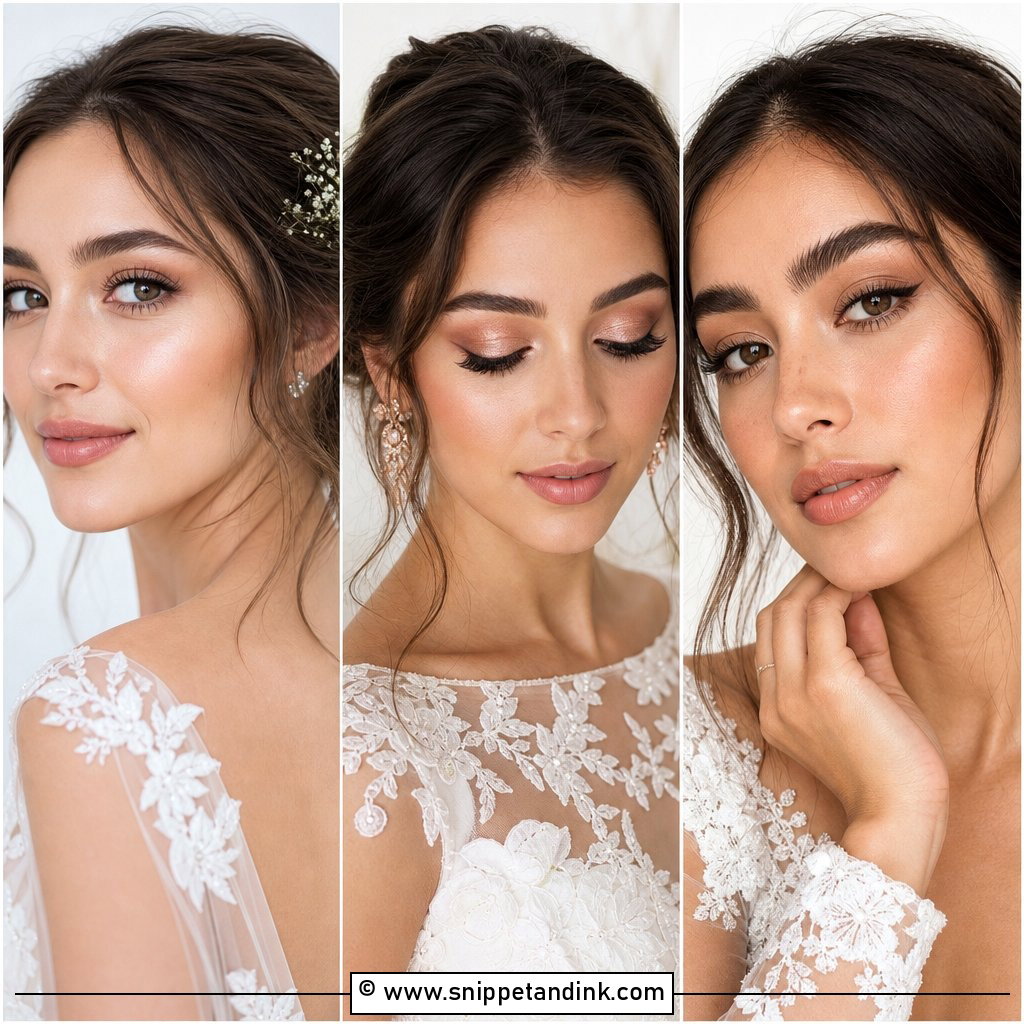
Soft glam is the most requested look at my trials, mostly because it reads clearly from across a room and still looks like skin up close. I blend champagne or taupe on the lid, add fluttery lashes, groom the brows and lay down a satin complexion. Blush goes high, in peach, rose or a soft bronze, and contour stays diffused so nothing looks carved. A nude pink or beige-rose lip adds shape and is the easiest shade to reapply from a compact. It sits comfortably with satin, lace or a minimalist gown.
2. Natural Bridal Makeup
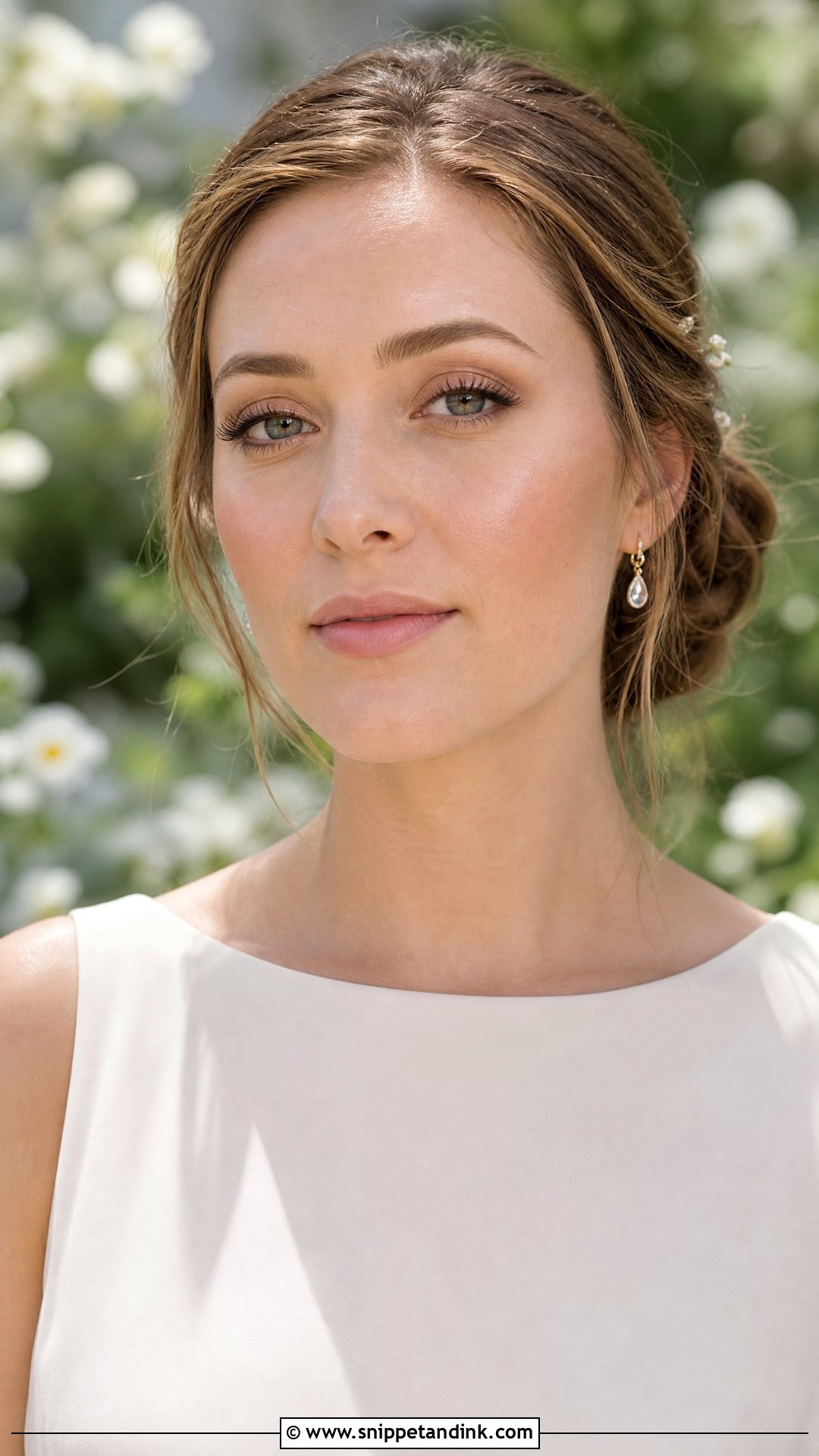
The goal with natural makeup isn’t bare skin, it’s skin that’s been quietly corrected. I use lightweight foundation or skin tint, then spot conceal only the areas that need it, usually around the nose and under the eyes. Brown mascara, brushed brows, cream blush and a sheer highlight on the cheekbones do the rest, and a tinted balm or satin nude near your own lip color finishes it. My honest caution: natural looks lose more in flash photos than any other style, so I add about a third more blush and lash definition than feels necessary in the mirror.
3. Dewy Bridal Makeup
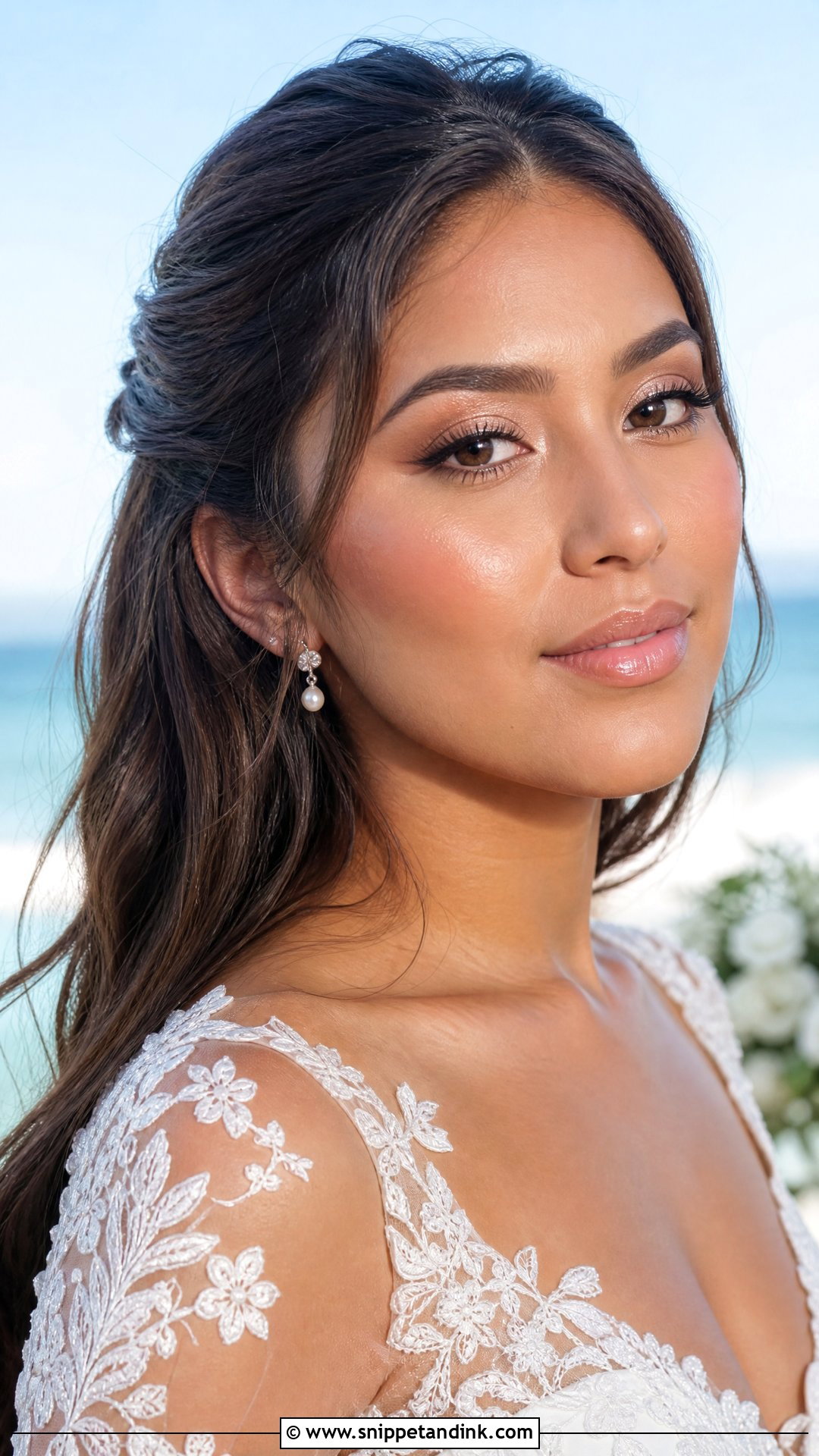
Dewy makeup is all about where you let the light land. I set the center of the forehead, the sides of the nose and the chin with a fine powder, then place glow on the cheekbones, the brow bone and just above the cupid’s bow. Cream blush in rose, peach or berry keeps the skin fresh, and a soft shimmer on the lid ties the eyes to the complexion. A glossy nude or pink lip completes it. On oily skin in July heat, I’d rather do a satin finish with glow only on the cheeks, because full dew turns into shine before the cocktail hour.
4. Matte Bridal Makeup
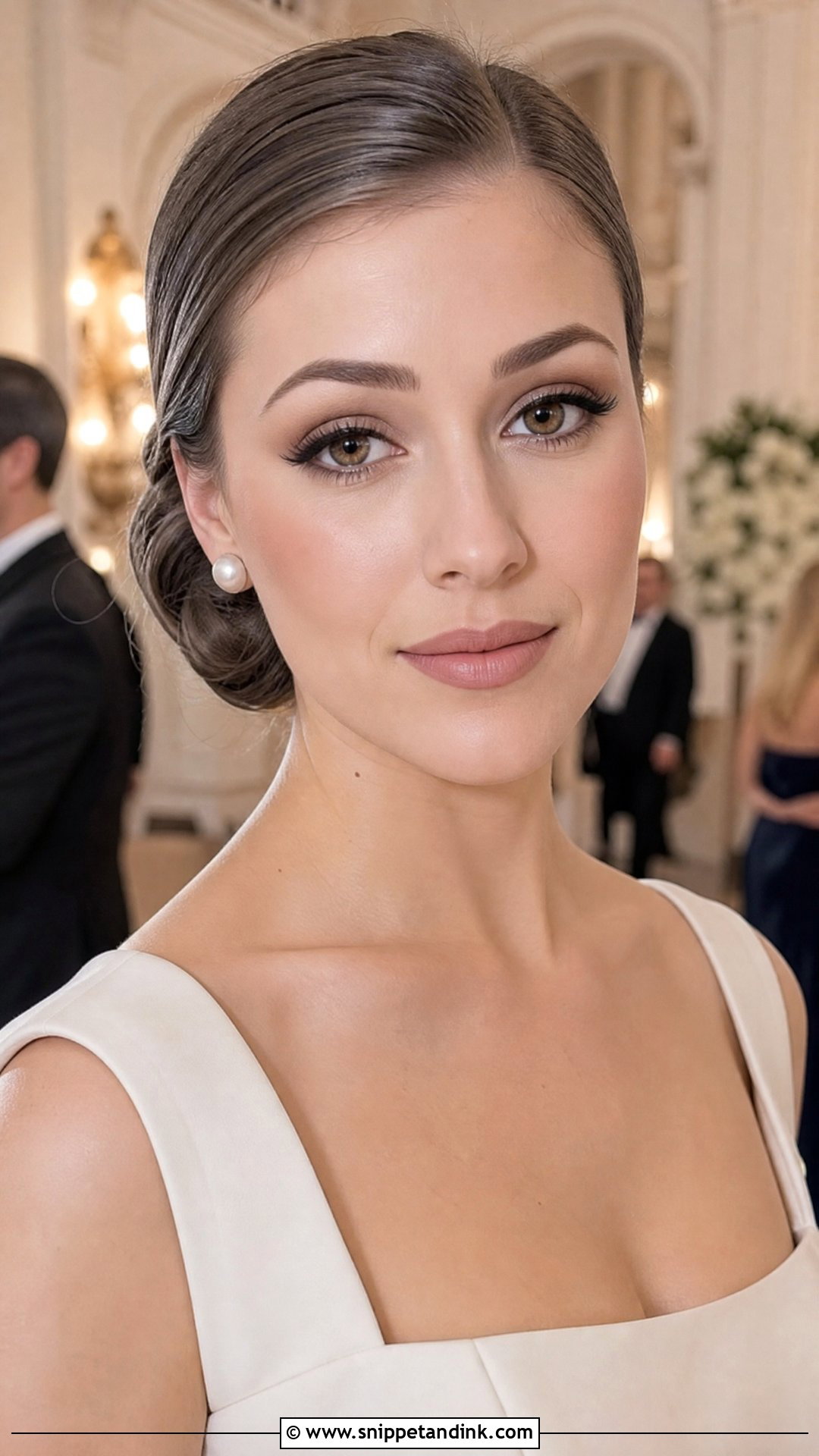
Matte is the most durable finish I do, and the modern version never looks dry or flat. That starts with hydration: a moisturizer that has fully sunk in before a soft matte foundation goes on. I add dimension back with powder blush, a little bronzer and a highlight only where the light naturally hits. Matte beige, taupe, brown or mauve shadow and a clean lash line keep the eyes crisp, and a satin-matte nude, rose or soft brown lip finishes it. It’s my default for oily skin, black-tie ballrooms and summer timelines with outdoor portraits.
5. Classic Red Lip Bridal Makeup
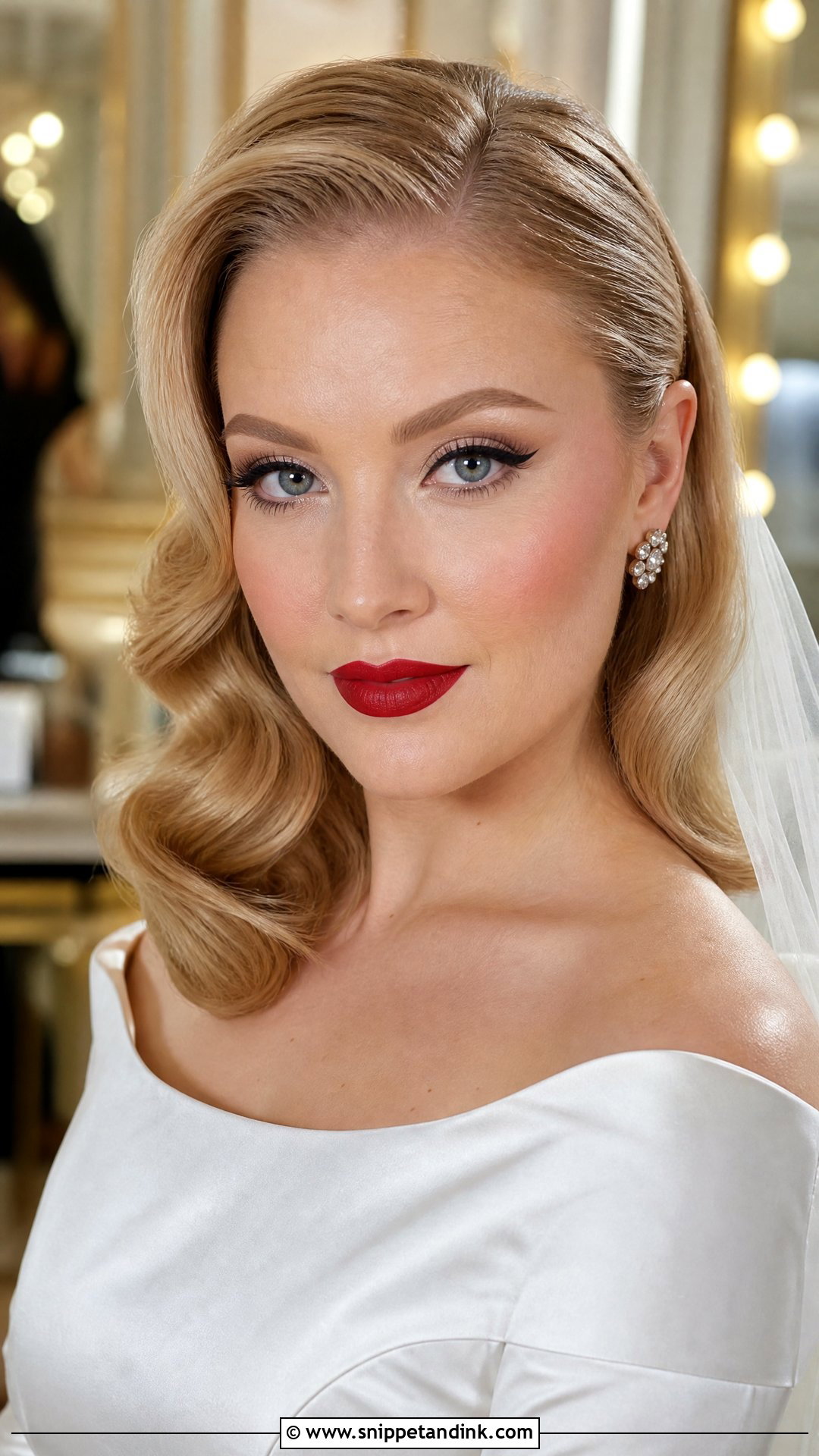
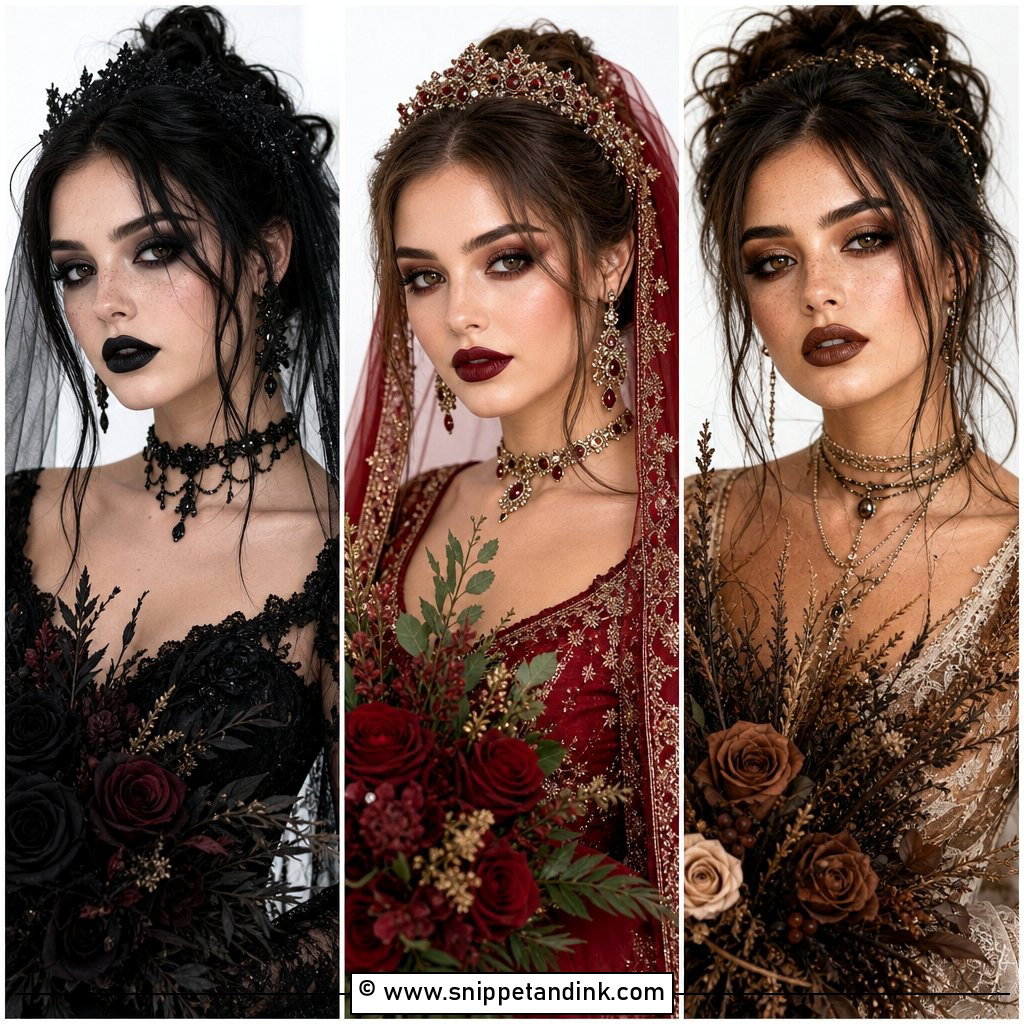
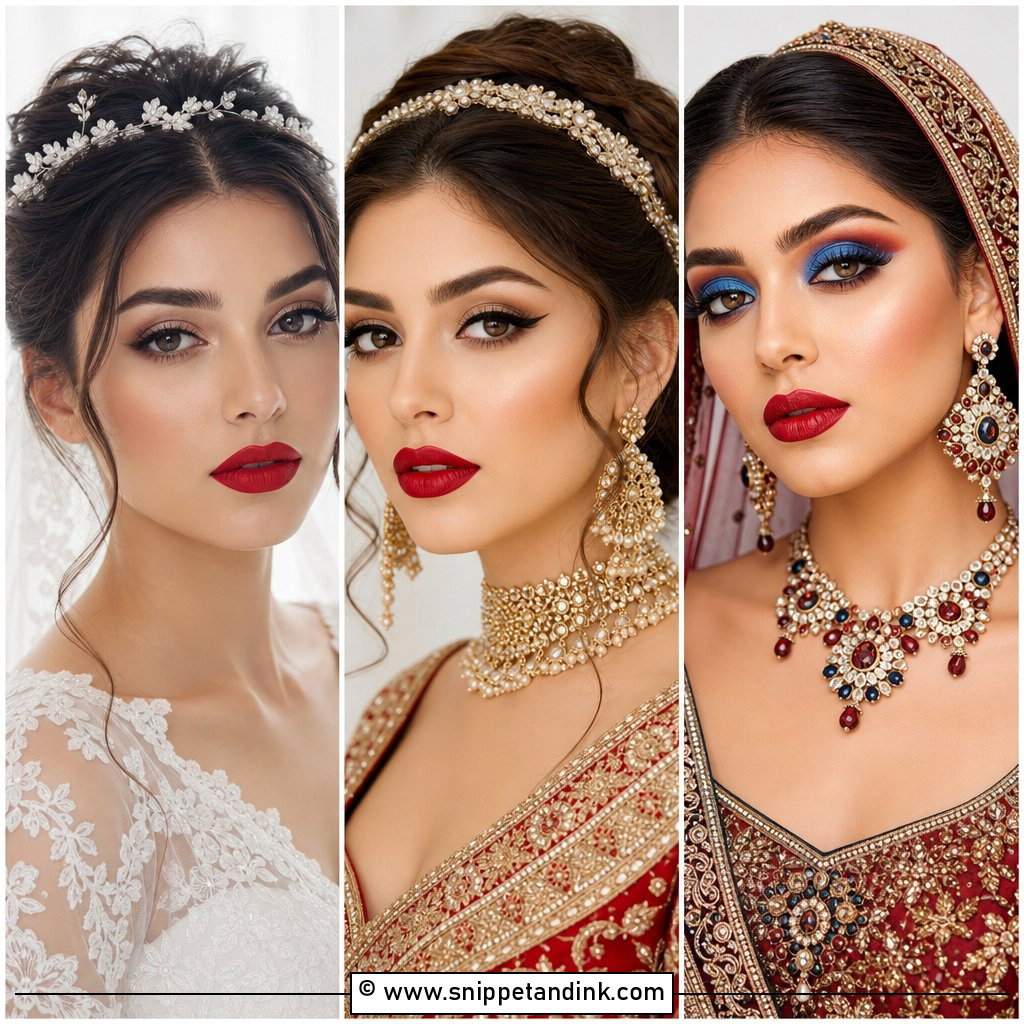
A classic red lip is the most confident bridal face there is, and it only works when everything else steps back. I keep the skin clean, sculpt the cheeks softly, brush the brows up and do a neutral eye in champagne, ivory or soft brown with a thin black or brown wing. The shade is chosen by undertone: blue-based reds suit cool and deep skin, brick and orange-reds suit warm skin, and a true red flatters most people. I always line and fill the whole lip with liner first, so when the top layer fades during dinner, the color underneath doesn’t leave a ring. Sleek buns, satin and vintage gowns are its natural home.
6. Pink Bridal Makeup
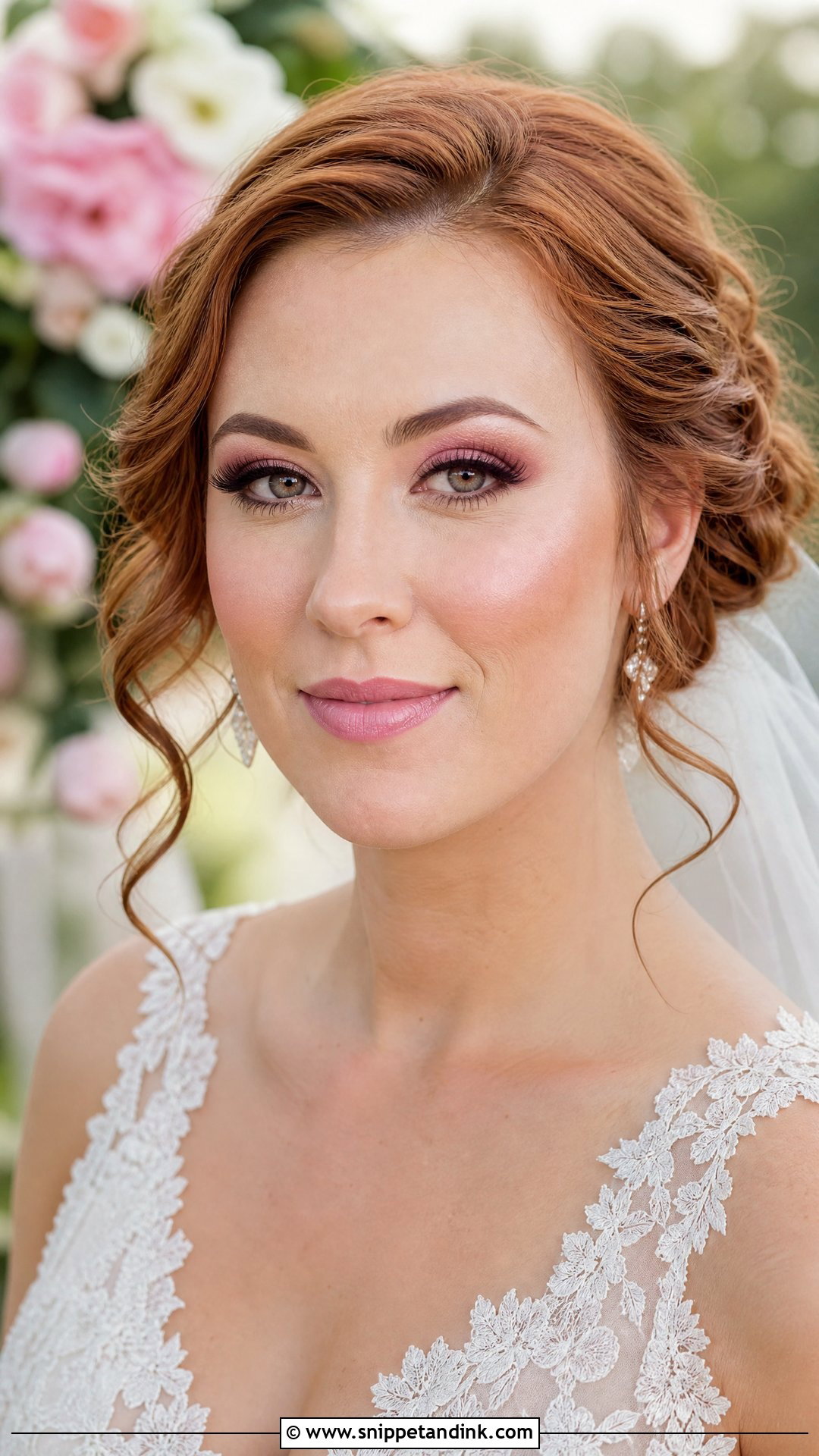
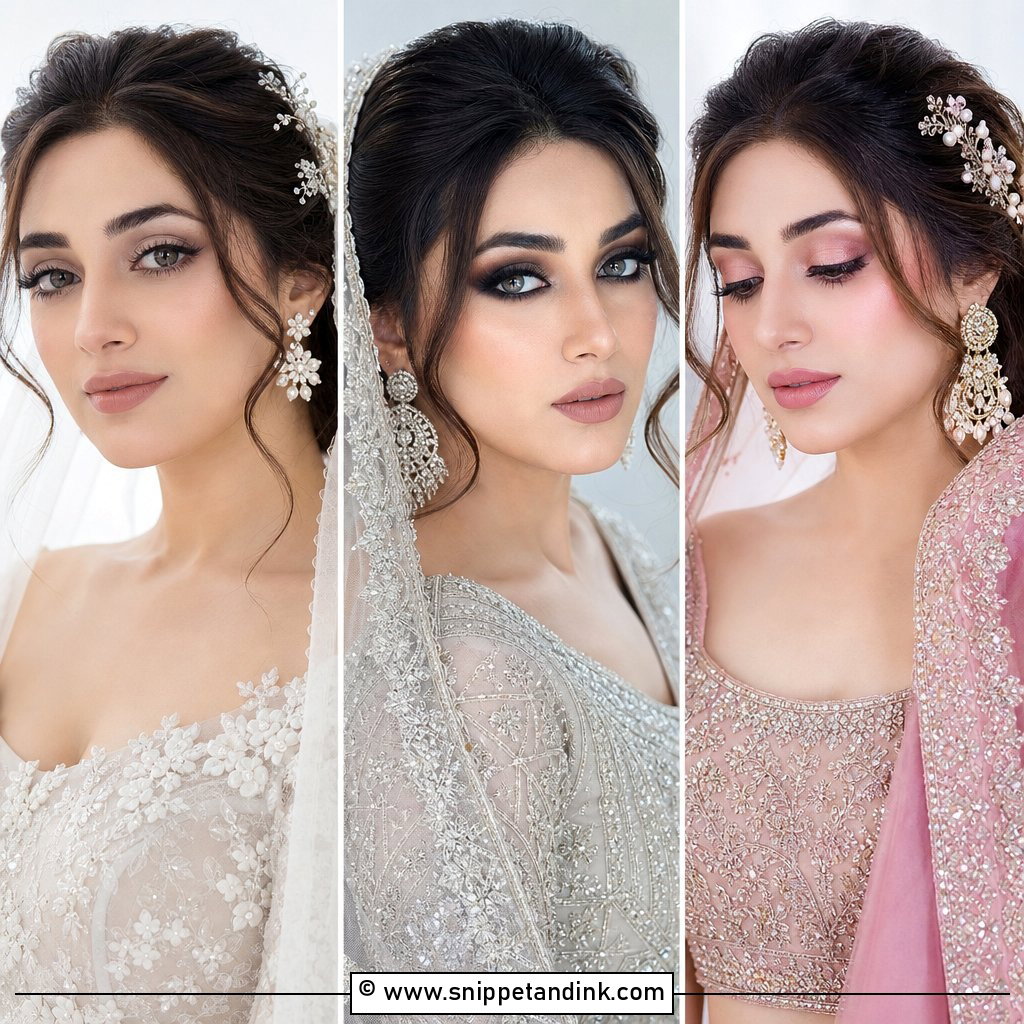
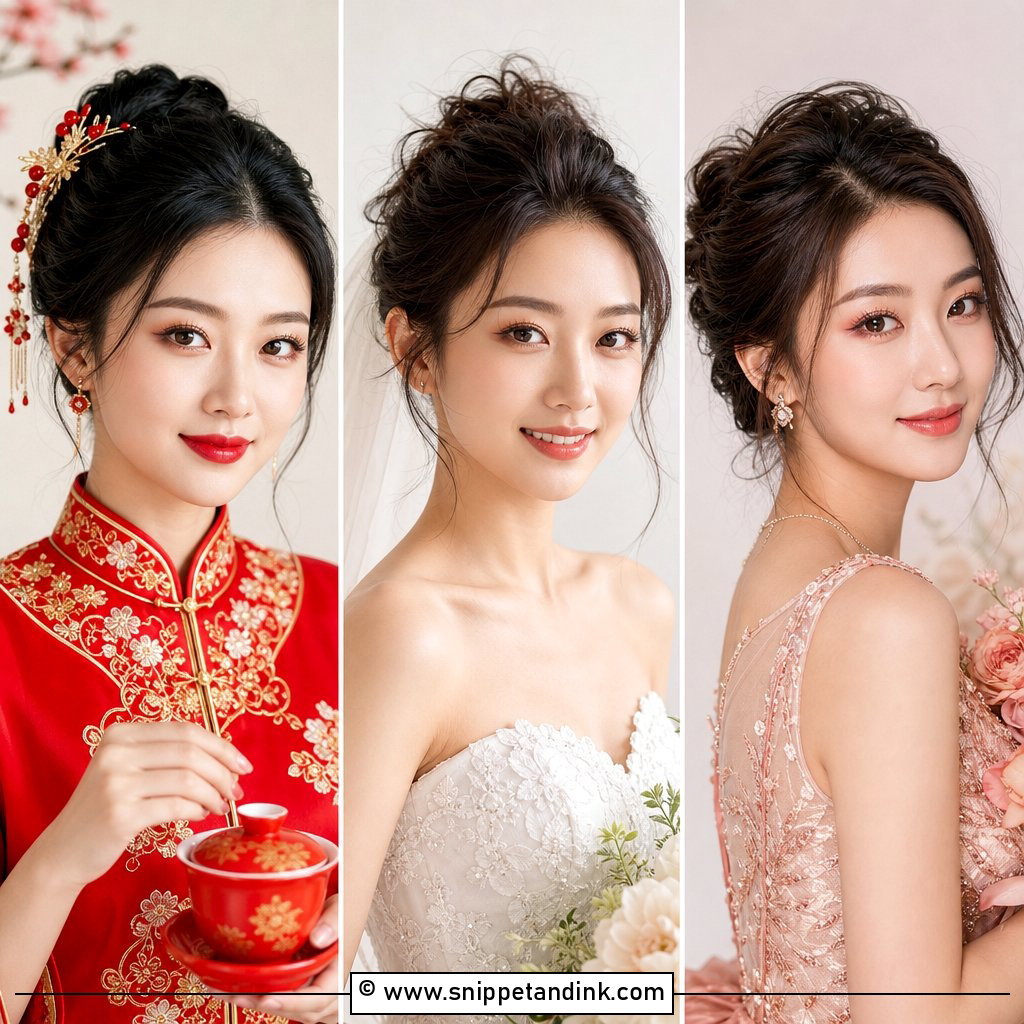
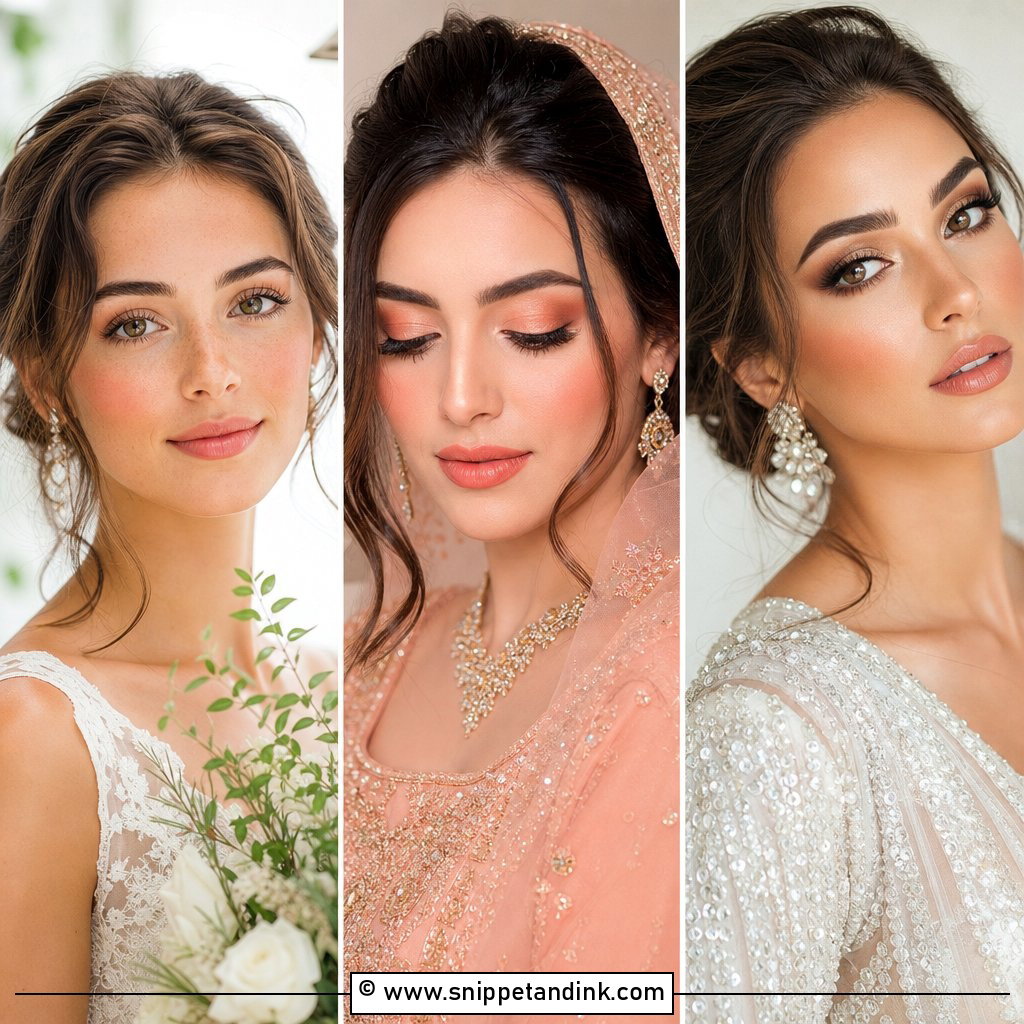
The difference between pink makeup looking grown-up and looking sweet comes down to the shade of pink. I use dusty rose on the eyes, soft brown liner, lifted lashes and a petal-pink blush placed high on the cheekbones, then keep the complexion radiant without obvious shine. A satin or creamy pink lip gives the face structure. If cool pinks make you look sallow, which happens a lot on olive and golden skin, I’d switch to warmer rose or peach-pink. It suits blush bouquets, lace and spring weddings.
7. Peach Bridal Makeup
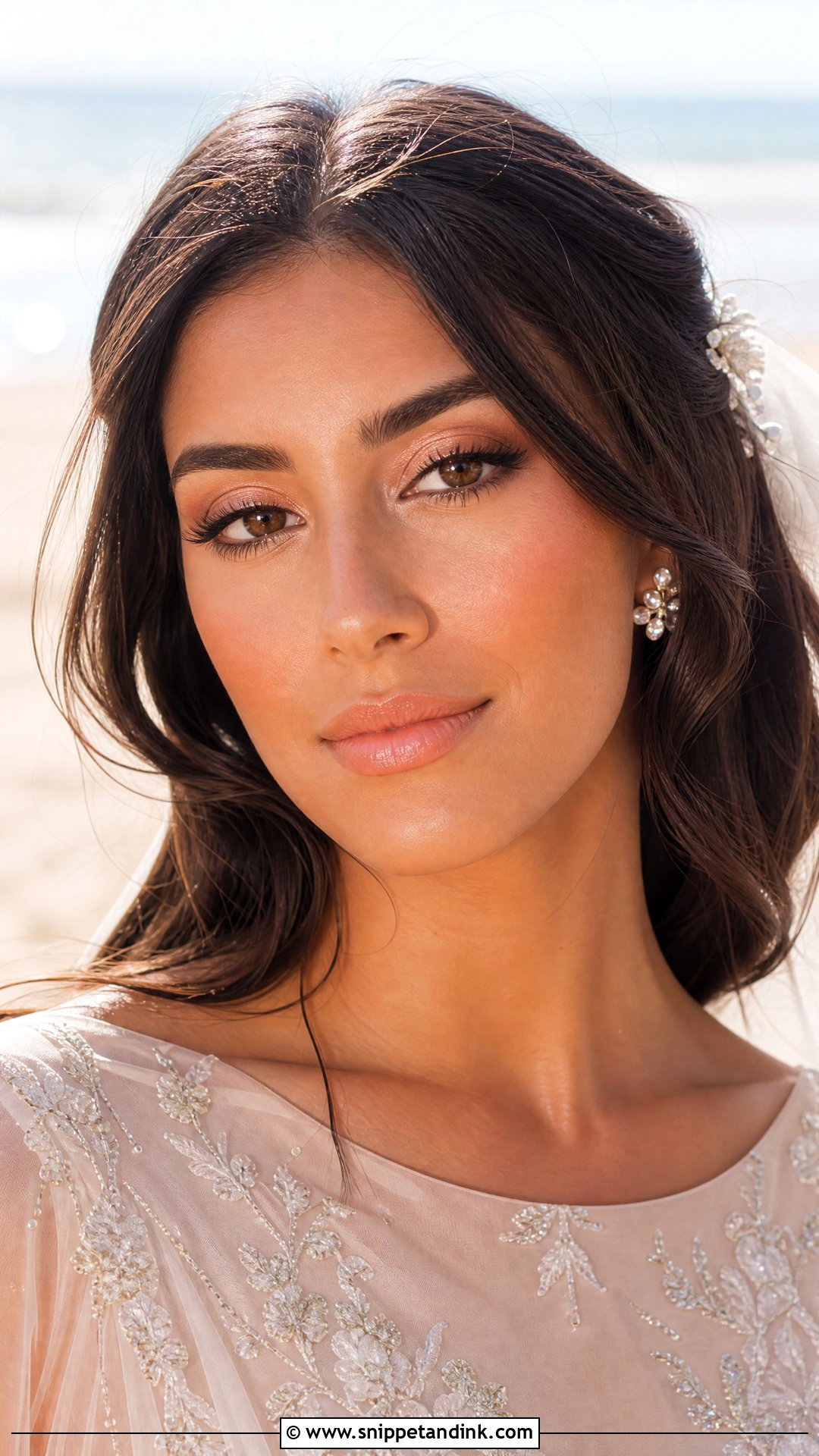
Peach flatters a wider range of skin tones than almost any other color family, which is why it’s often my fallback when a bride can’t decide. Peach and champagne go on the eyes with soft brown liner for definition, and a peach cream blush gives the cheeks a sun-warmed look. I keep bronzer light around the forehead and cheekbones so the face stays bright. A peach-nude or coral-pink lip pulls it together. Very deep skin may need a richer apricot or terracotta to show up at all, so I adjust the depth rather than drop the idea.
8. Rose Gold Bridal Makeup
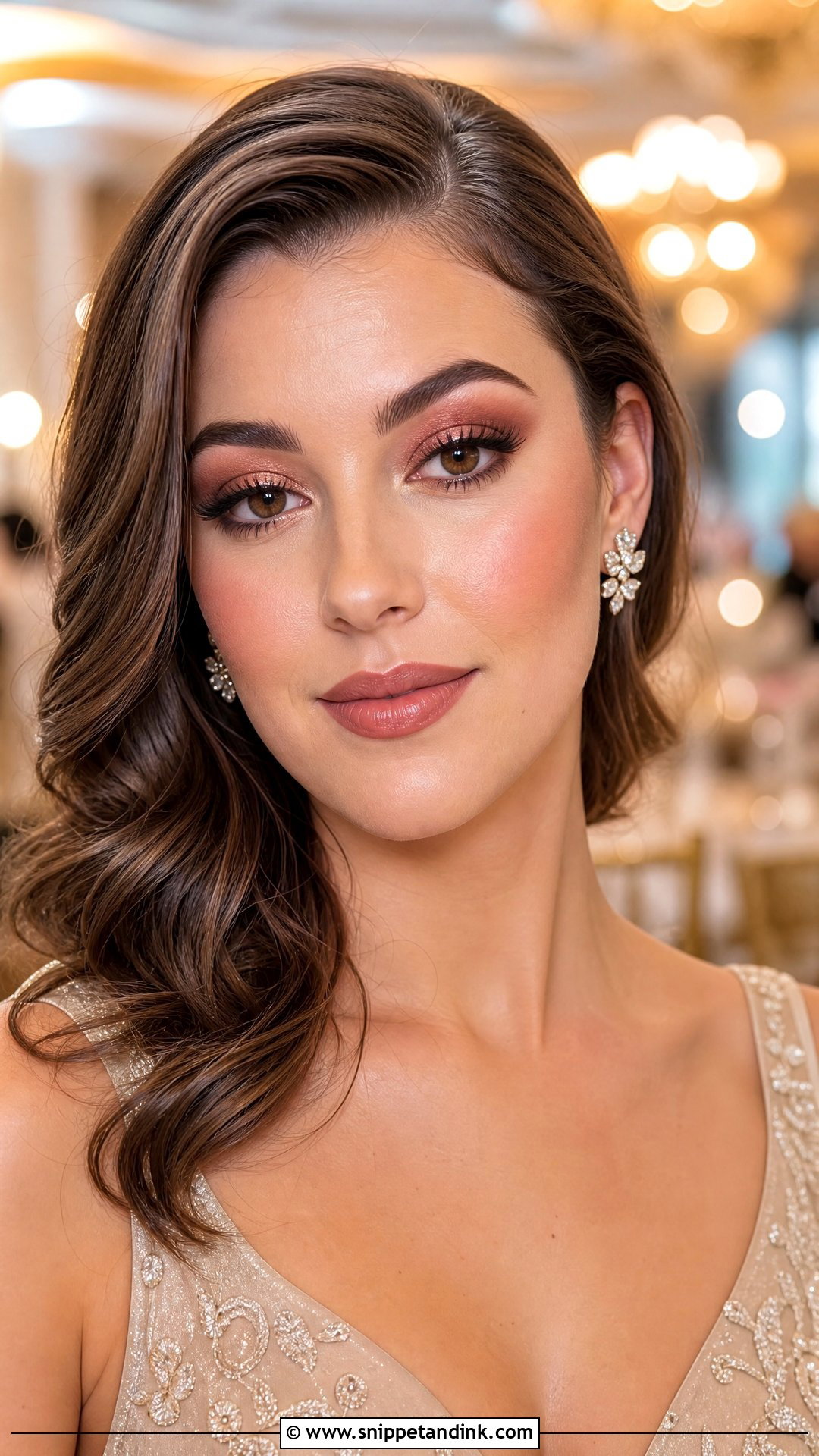
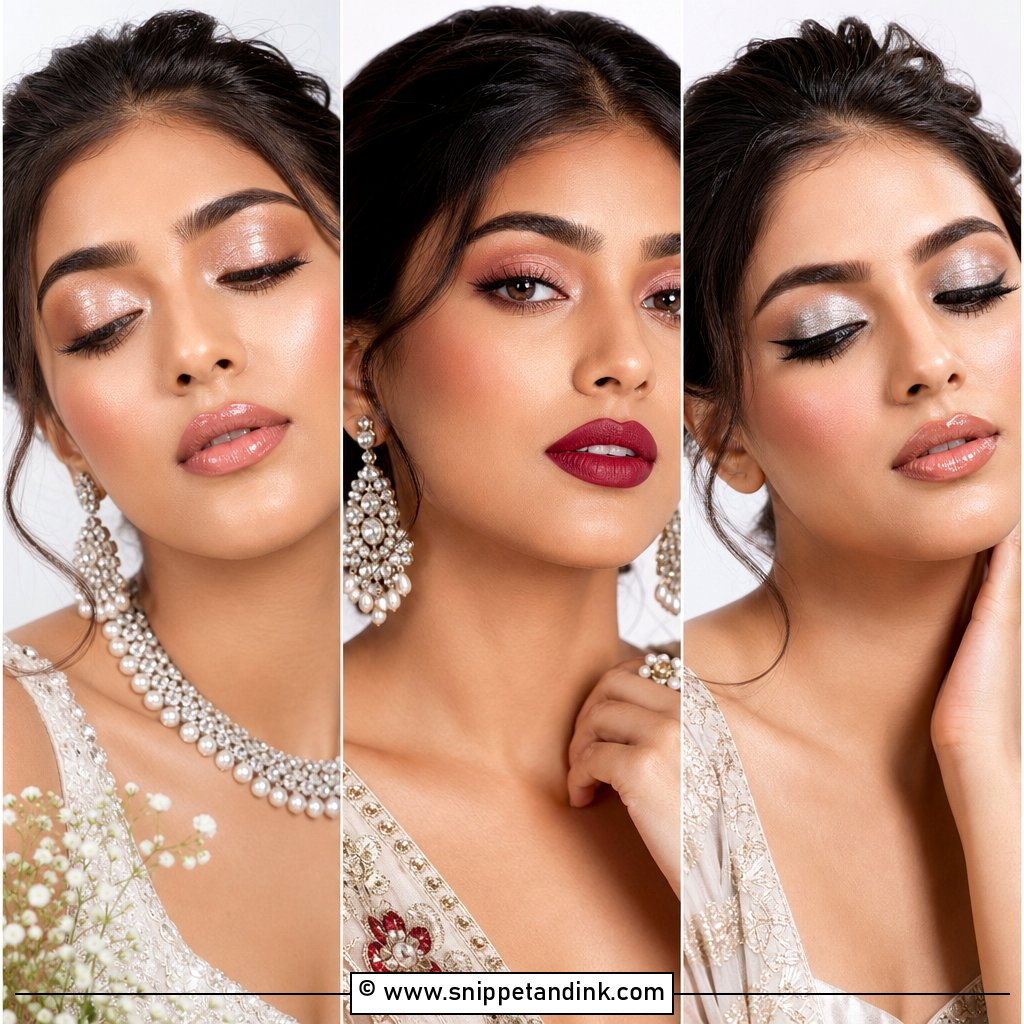
Rose gold gives you shimmer without visible glitter, as long as the texture is a fine pressed pigment rather than a loose sparkle. The eyes take the focus: rose gold on the lids, soft mauve or brown through the crease, and blended liner along the lashes. The complexion stays smooth with rose blush and a gentle champagne highlight, and a rosy nude lip keeps it balanced. It pairs naturally with gold jewelry, champagne-toned dresses and candlelit receptions. Lid shimmer also catches light without overwhelming the face in photos, which is why I like it for low-light venues.
9. Smokey Eye Bridal Makeup
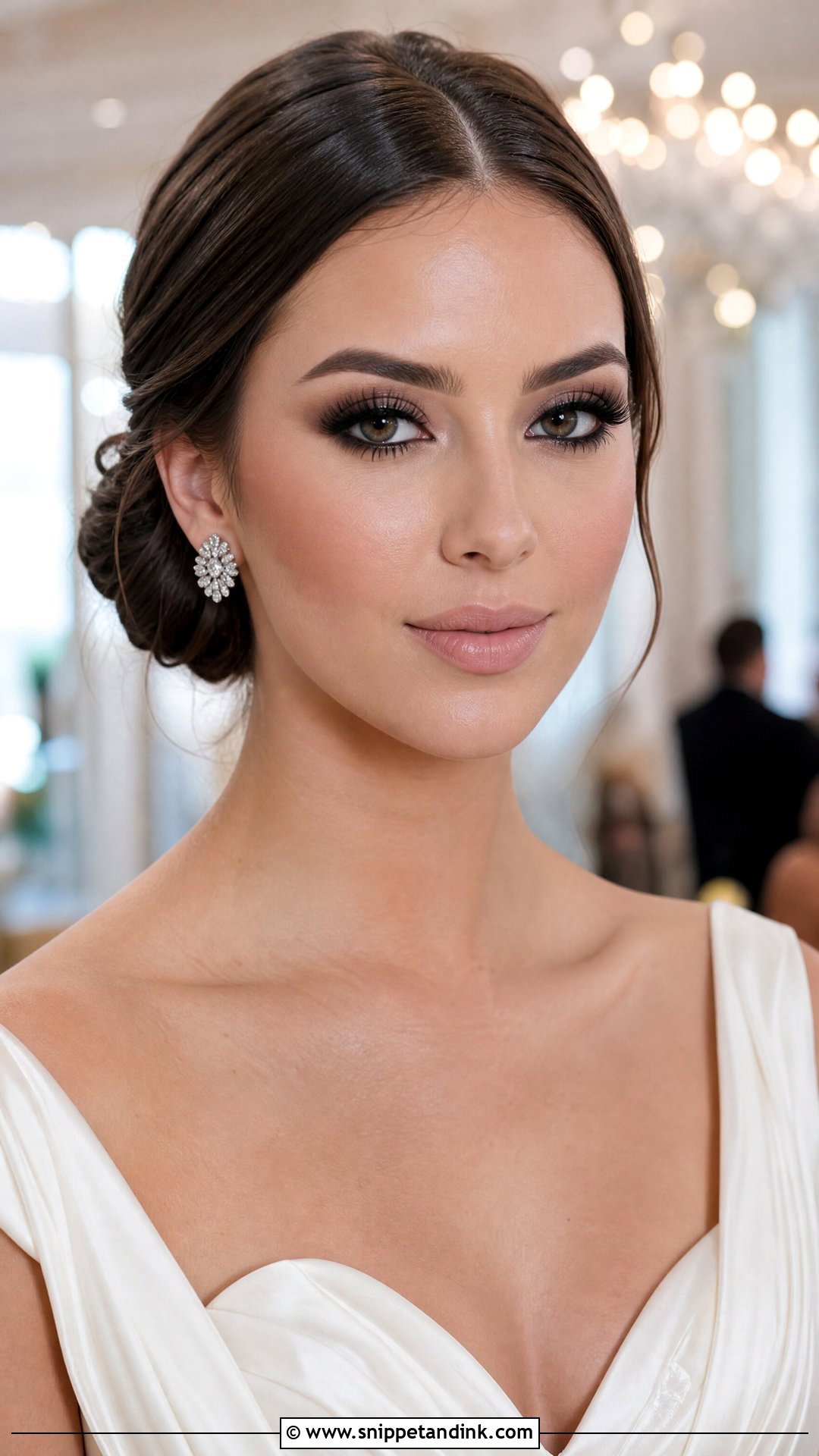
Smokey eye bridal makeup looks bridal when the edges are soft and the skin stays fresh. I skip heavy black and work with bronze, taupe, espresso, plum-brown or soft charcoal, blended up and out, then brighten the inner corners so the eyes still look open. Fluttery lashes, sculpted brows and satin skin keep it balanced. Cheeks stay warm, and the lip is nude, beige-pink or muted rose. On hooded lids I build the smoke slightly above the natural crease, otherwise it disappears into the fold when the eyes are open. It belongs at evening weddings and formal venues.
10. Brown Smokey Bridal Makeup
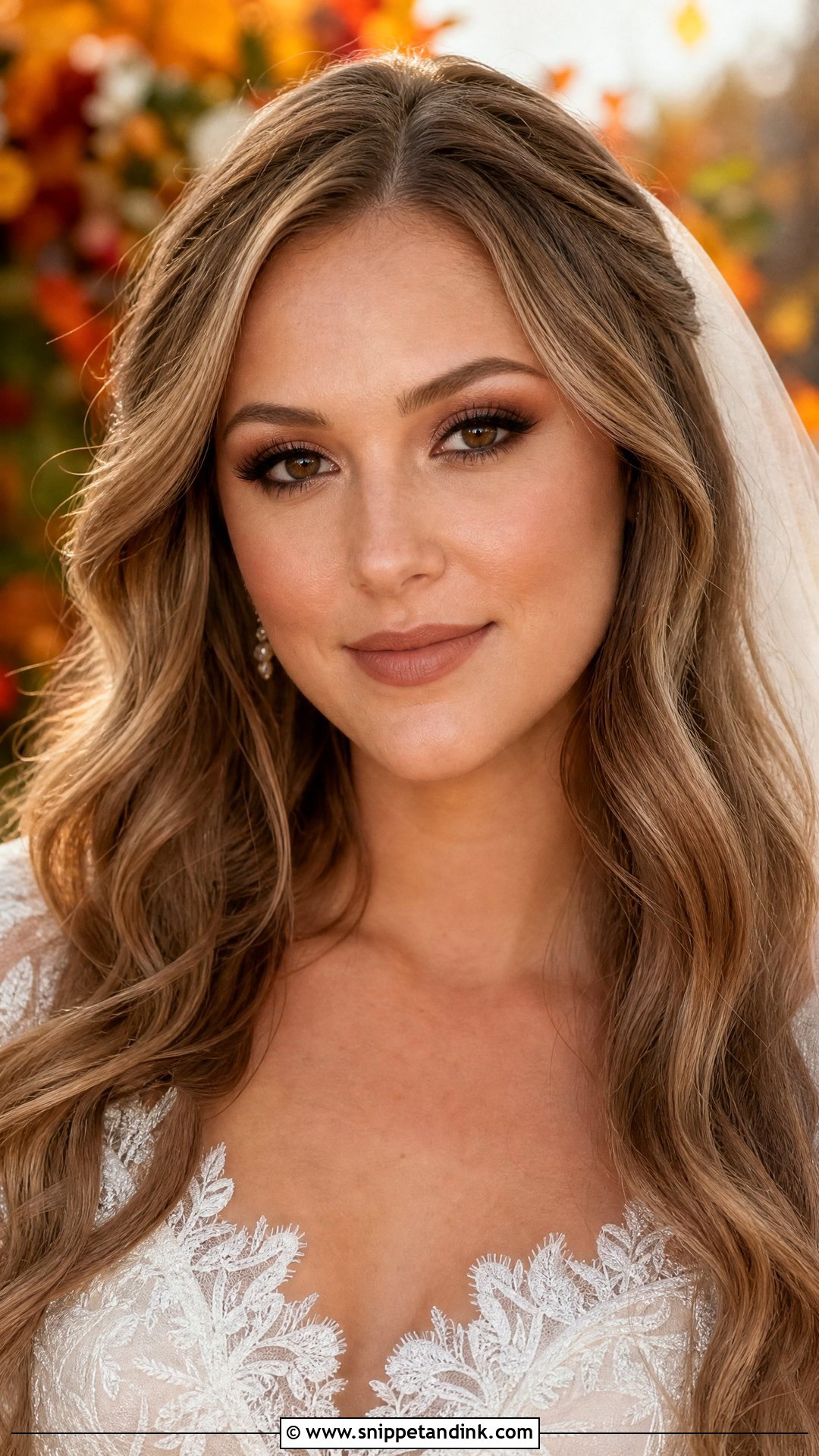
Brown smoke is the version I recommend to brides who love depth but are nervous about looking heavy in daylight. Chocolate, bronze, caramel and espresso go around the eyes, and I blend until there’s no visible edge anywhere. Brown liner and individual lashes keep the shape lifted. The face gets warm blush, subtle bronzer and a natural satin base, and the lip stays nude brown, peachy nude or rosy beige so the eyes lead. Ivory gowns, autumn weddings and soft waves suit it.
11. Champagne Bridal Makeup
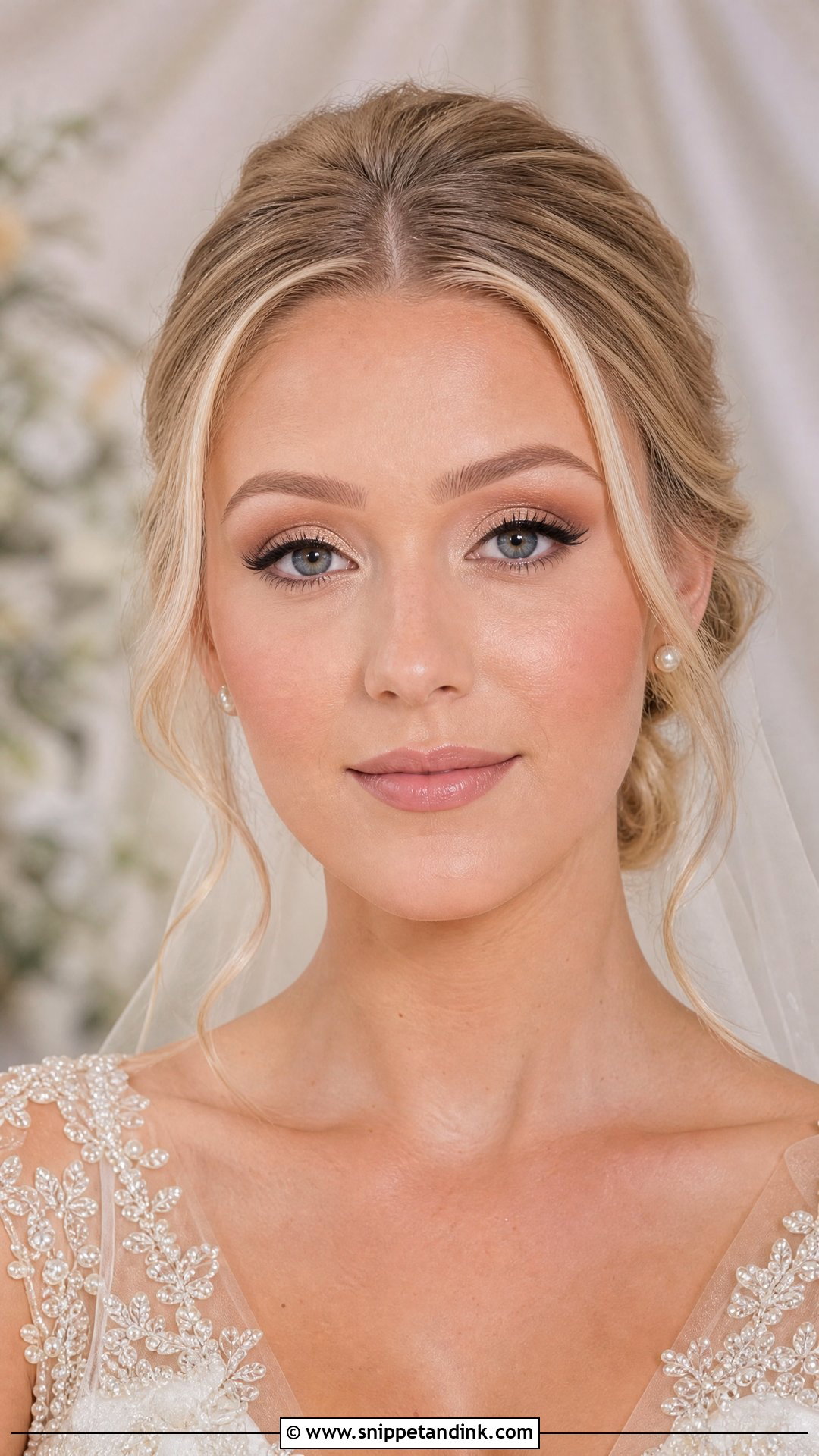
Champagne is about brightness without color. I put the shimmer across the lids and keep soft taupe or light brown in the crease for shape, then add a thin liner and wispy lashes. The complexion needs to be smooth and fresh, with highlight used lightly so the eyes stay the brightest point. A neutral pink or beige satin lip finishes it. This is the look I’d point to for anyone worried about photos looking dated in a decade, and it suits ballrooms, pearls and classic ceremonies.
12. Bronze Bridal Makeup
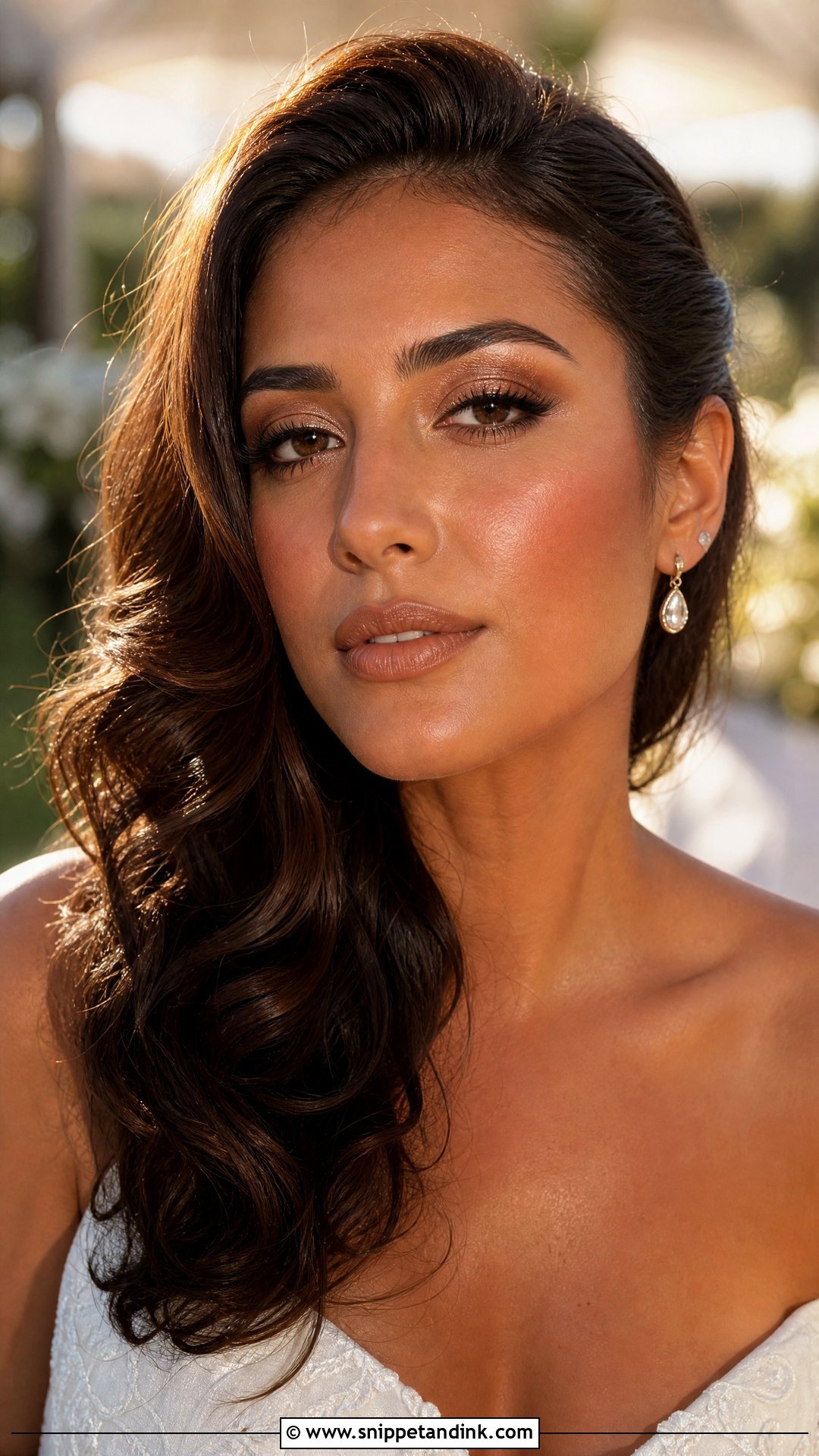
Bronze is warmth and glow, and it really comes alive in golden-hour photos. On the eyes I use bronze shimmer, warm brown in the crease and smudged liner for a slightly sultry effect. Bronzer goes on the temples and cheeks, then peach or terracotta blush brings back life so the skin doesn’t look flat. A nude caramel, warm pink or soft brown lip keeps it cohesive. The skill here is blending: on fair skin I build bronze in thin layers, because one heavy pass reads as orange stripes in flash.
13. Clean Girl Bridal Makeup
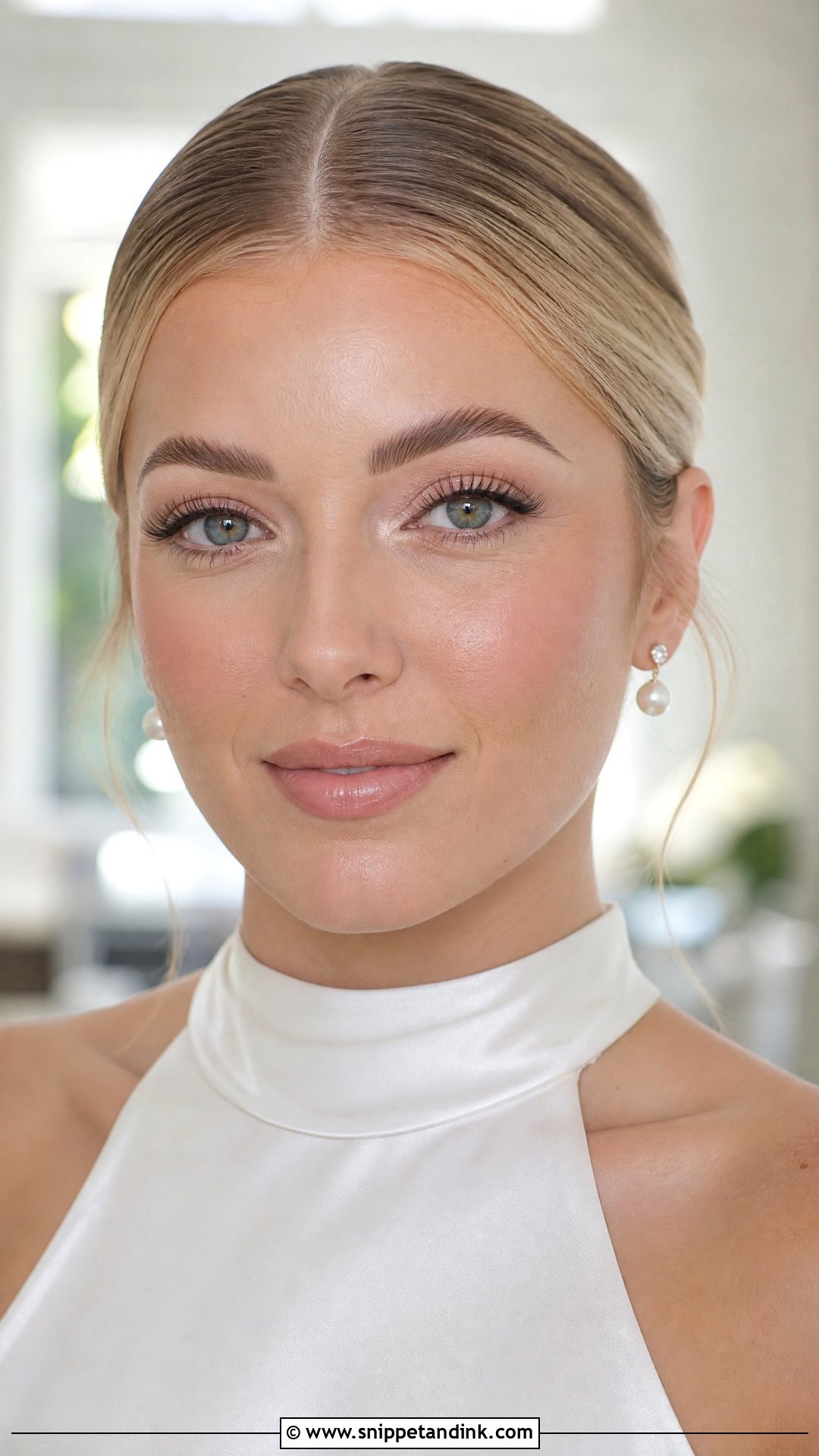
Clean-girl makeup is simple and glossy, but a wedding version needs more structure than the everyday one, or it vanishes in photos. I start with a skin-like base, brushed-up brows and light cream contour, then a neutral cream shadow or beige wash on the lids, curled lashes and brown mascara or a few individual lashes. Cream blush in pink or peach gives a natural flush. A glossy nude lip or pink lip oil finishes it. The gloss will need topping up after every drink, so I tuck it in the bride’s clutch rather than hoping it lasts.
14. Full Glam Bridal Makeup
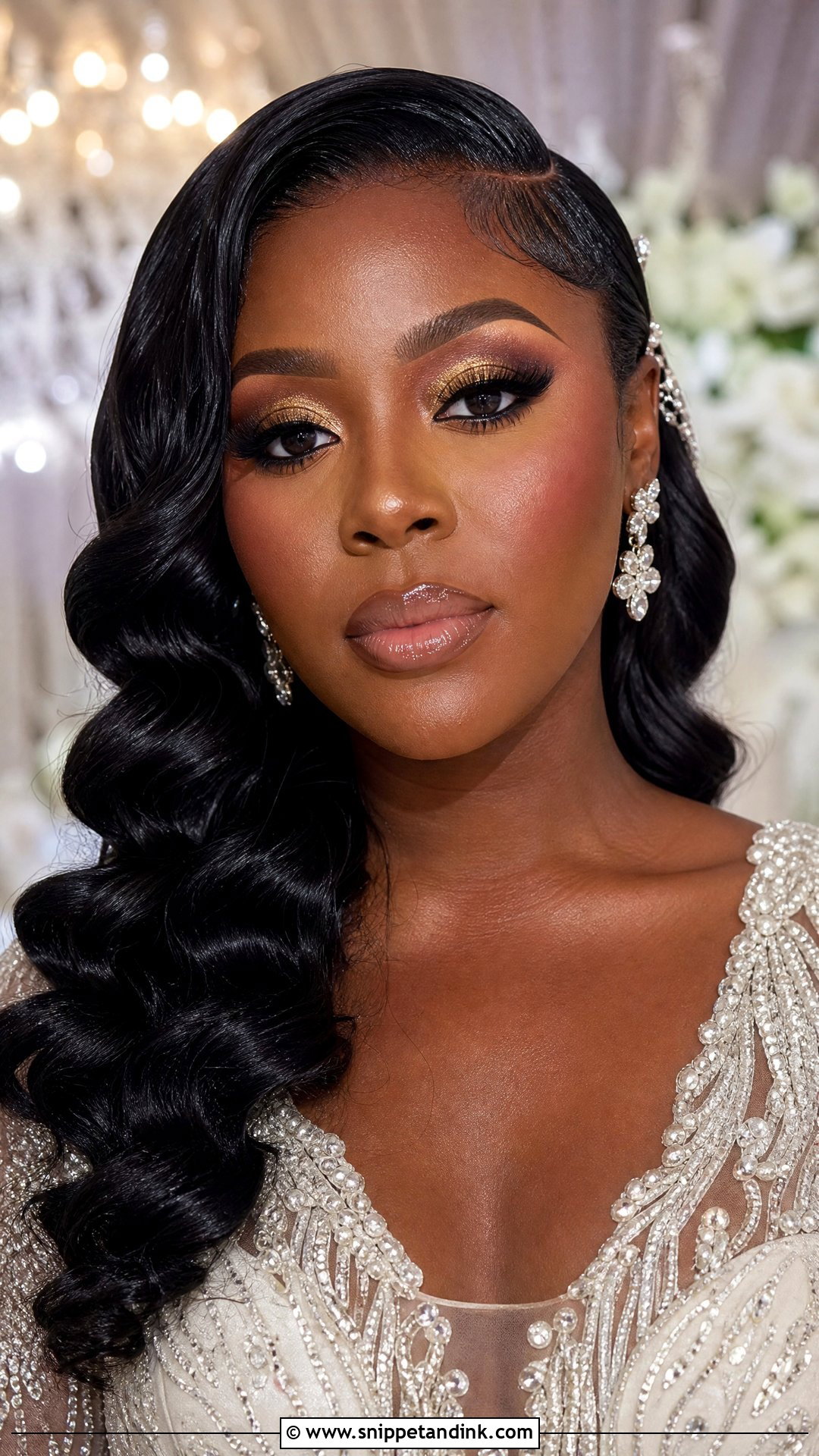
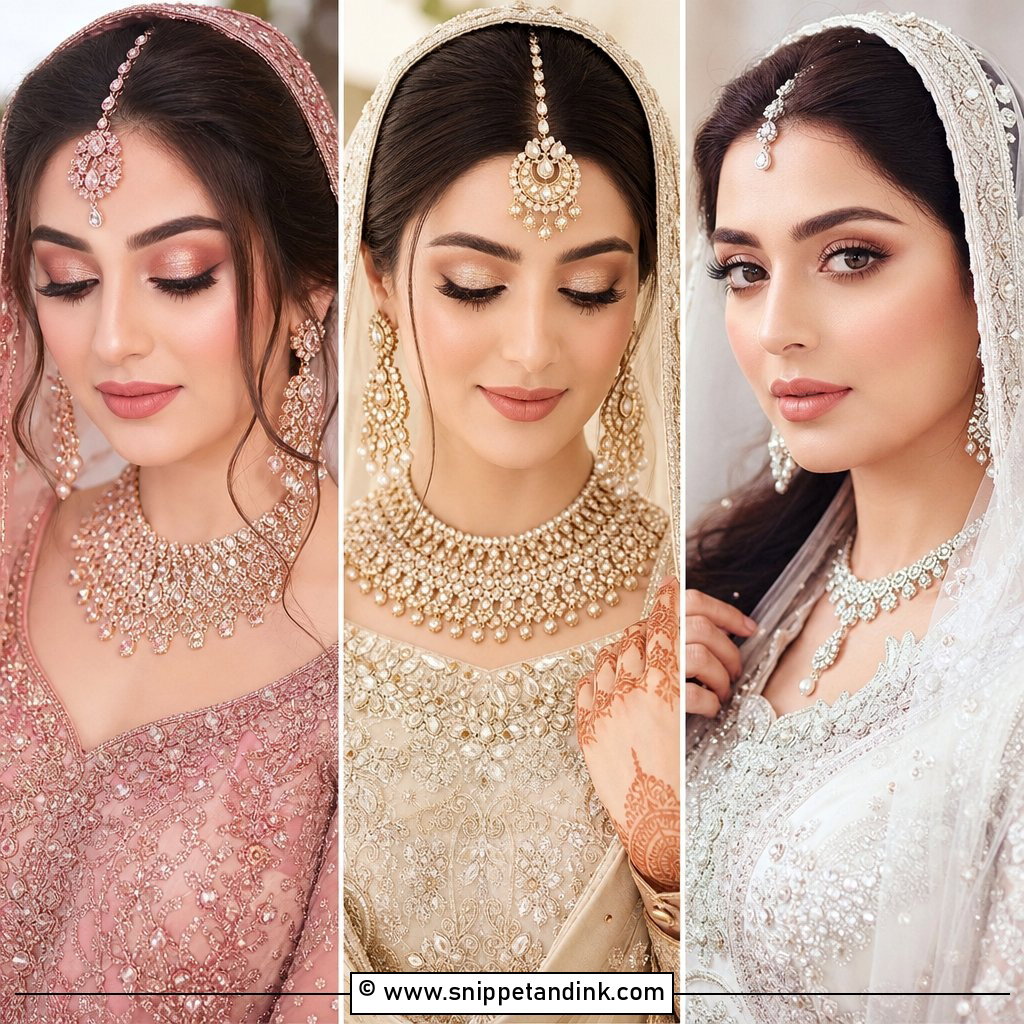
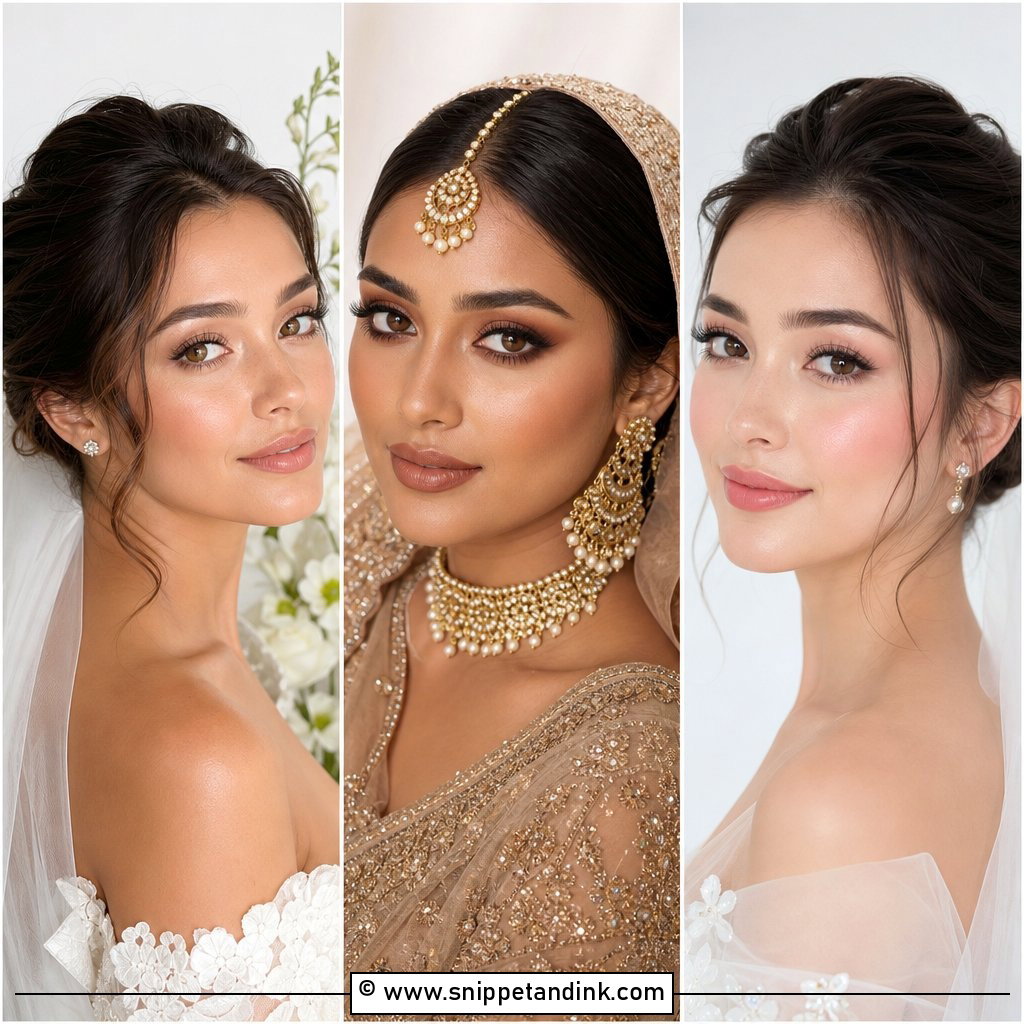
Full glam is for the bride who enjoys makeup and wants every angle defined. It usually means perfected foundation, sculpted cheeks, defined brows, dramatic lashes and visible eye makeup, whether neutral, bronze or soft smoky. I keep the base long-wearing with powder only where needed and a setting spray between layers. The rule I hold to is one main focus, either the lashes or a stronger lip, never both at full volume. If you never wear makeup, I’d talk you out of this one; brides who aren’t used to lashes often blink and rub at them all day.
15. Minimal Bridal Makeup
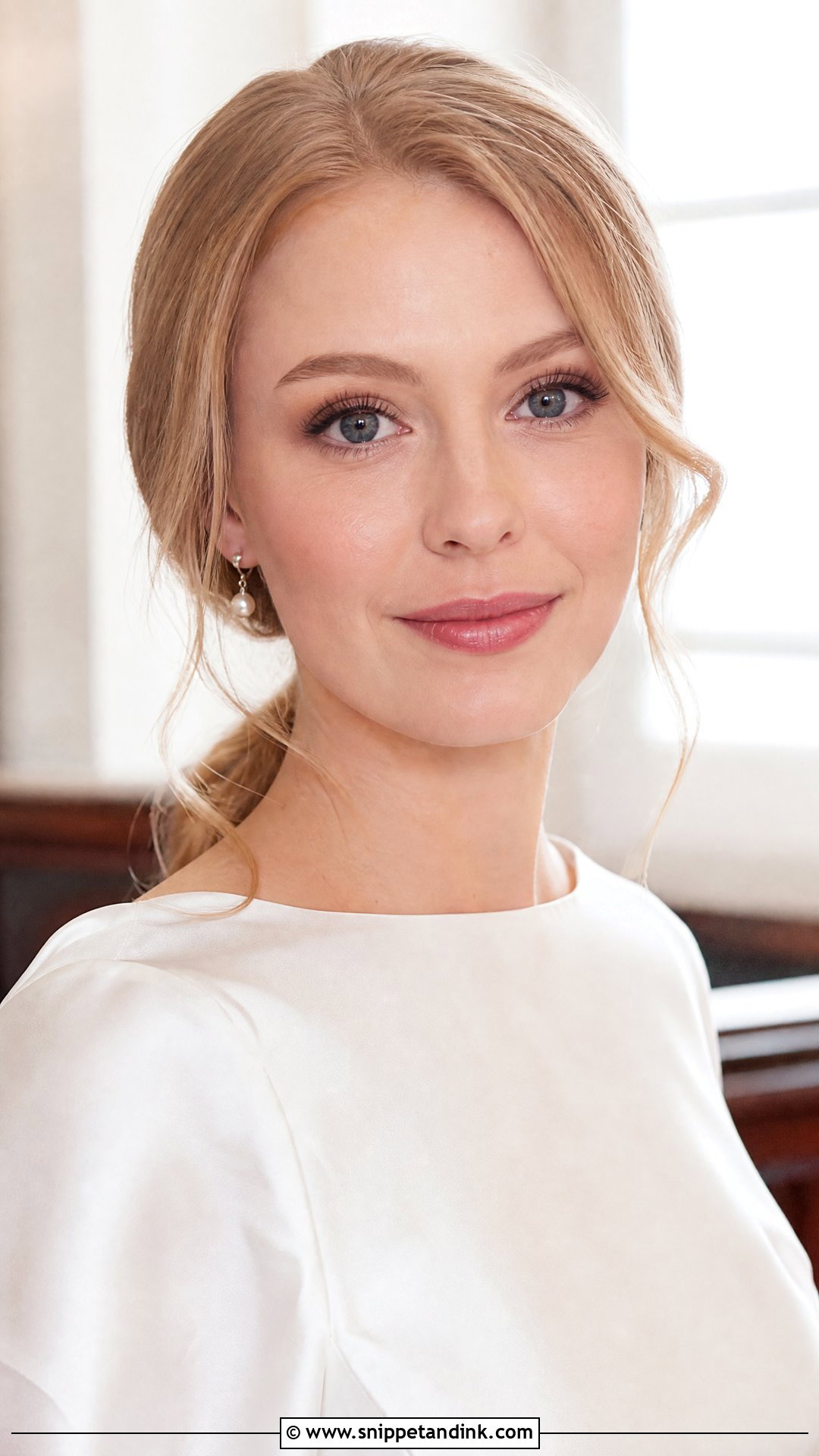
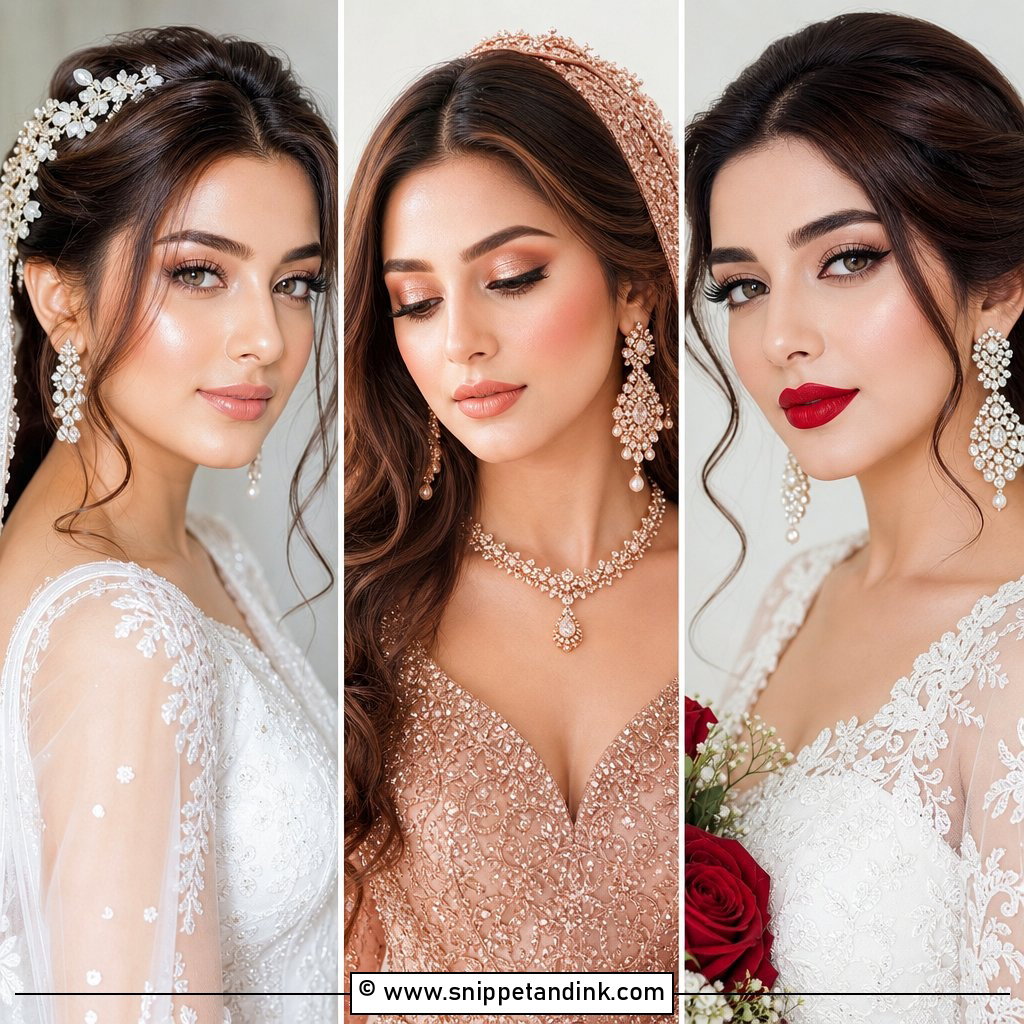
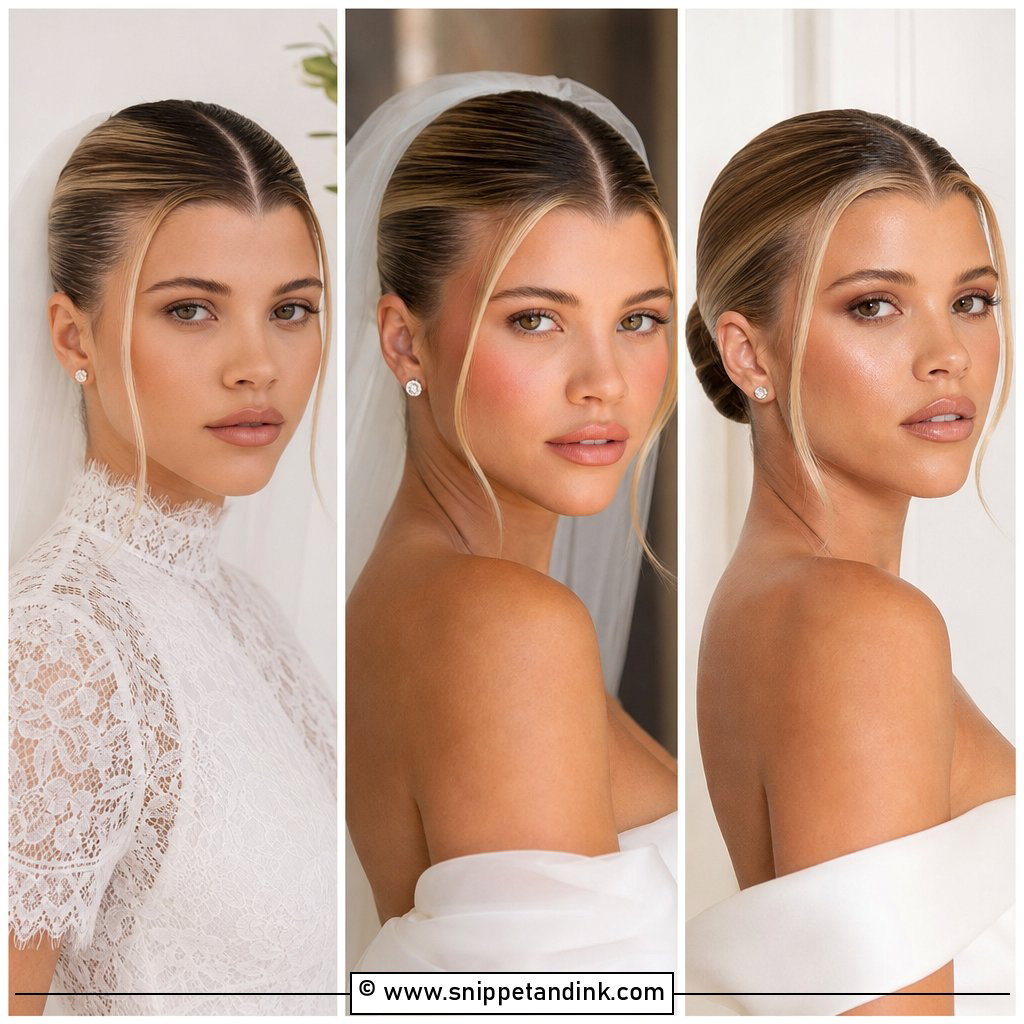
Minimal makeup means very little visible product, yet it still has to read in a photo taken from ten feet away. I use sheer foundation, spot concealer and powder only where the skin shines. A soft wash of beige, taupe or peach shapes the eyes, and brown mascara, cream blush and a tinted lip balm finish the face. To keep it from disappearing on camera, I add a bit more blush and lash definition than for everyday wear. Intimate weddings, courthouse ceremonies and elopements suit it best.
16. Vintage Bridal Makeup
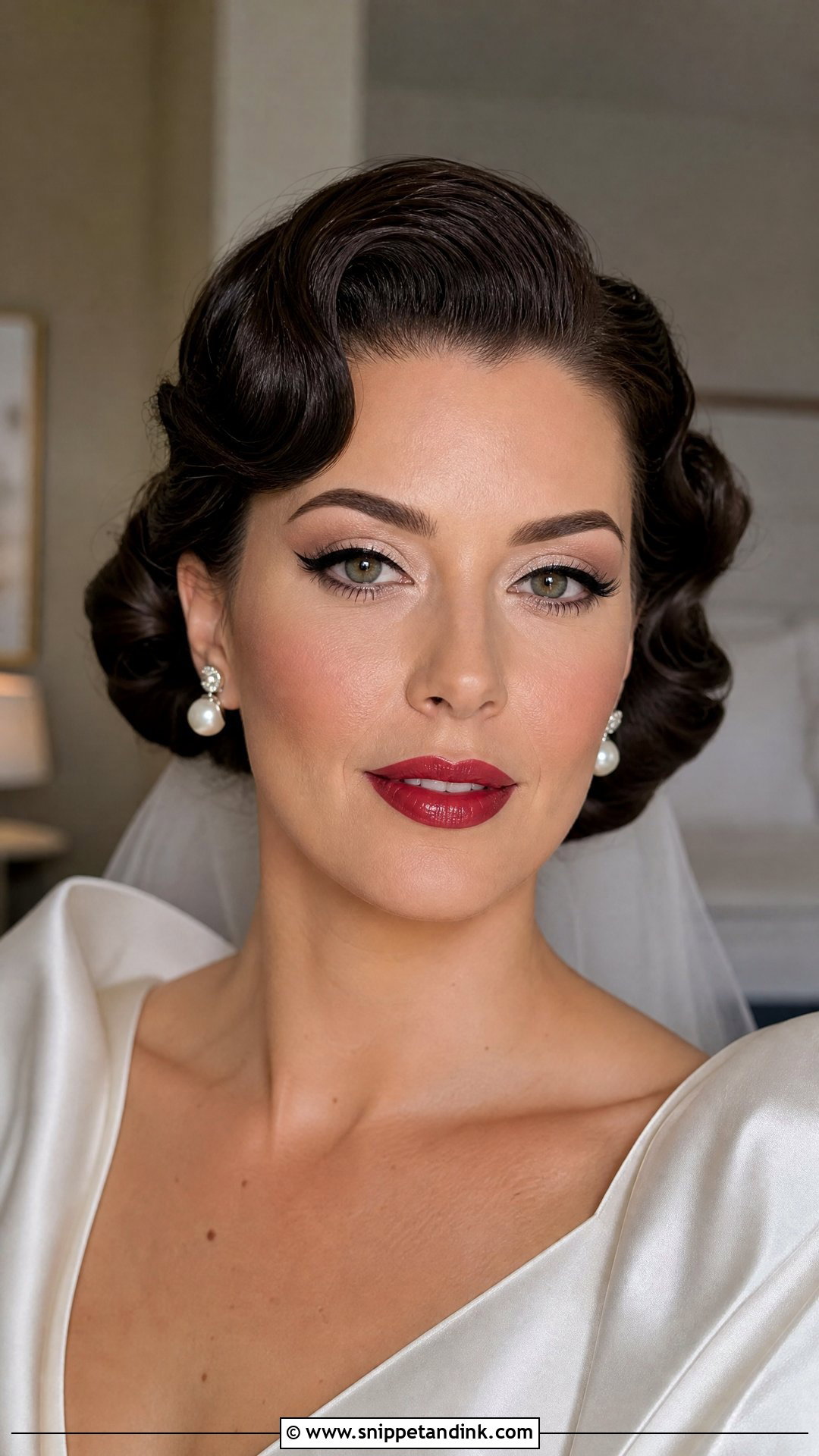
Vintage makeup should feel classic, not like a costume. The wearable version has satin skin, softly arched brows, winged liner, defined lashes and a statement lip in red, berry, rose or deep pink, picked by skin tone and dress. I keep the eyes neutral with ivory, beige or taupe so the liner and the lip stay crisp. Soft contour and natural blush keep the face from looking flat. Structured gowns, birdcage veils, pearls and old-Hollywood waves are its partners. It does ask for confidence; if a winged liner isn’t part of your normal routine, try it at the trial and wear it home for the day.
17. Glowy Nude Bridal Makeup
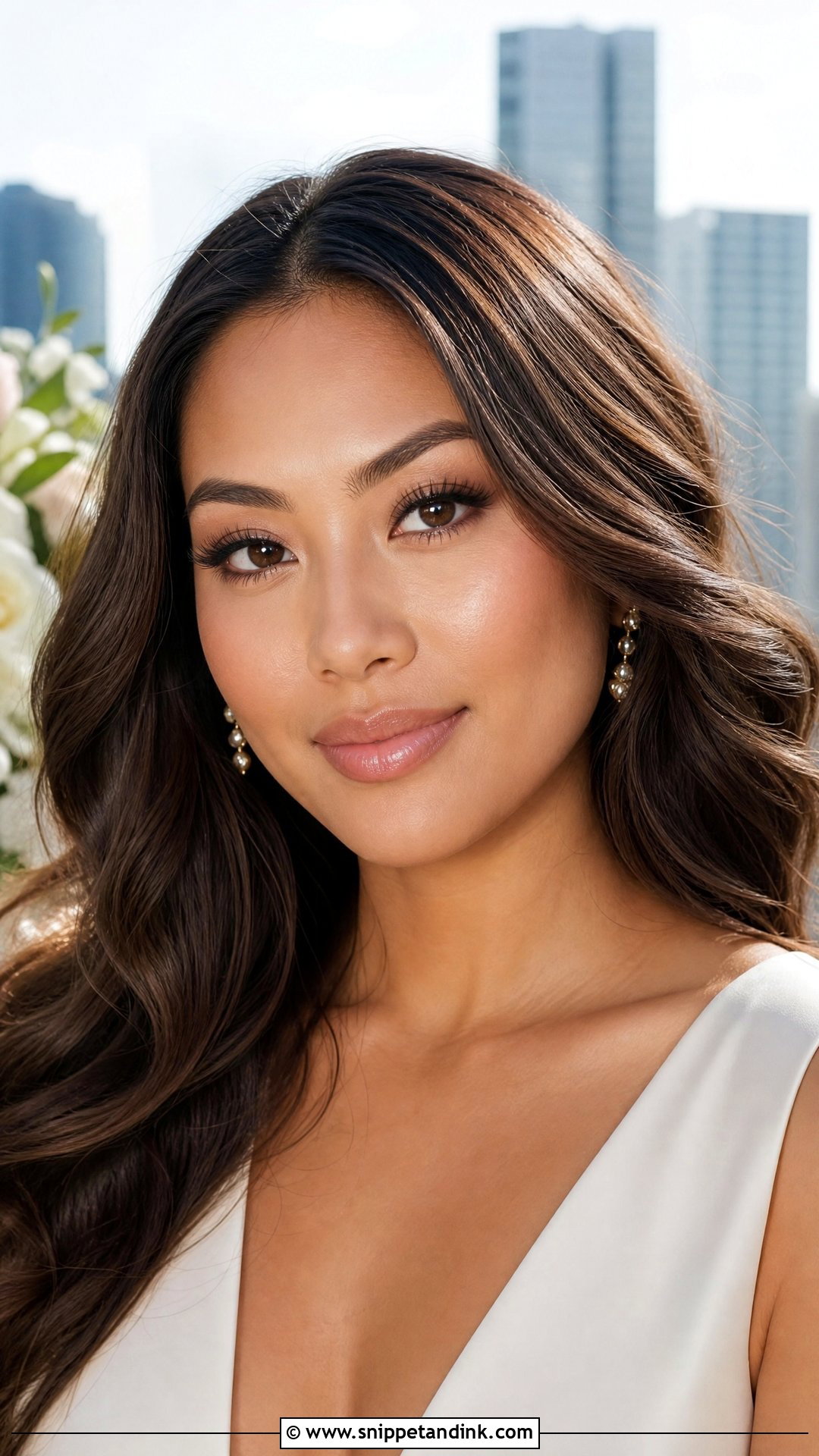
Glowy nude bridal makeup uses neutral shades but relies on finish so it doesn’t look flat. I choose beige, taupe, caramel or soft brown shadow with subtle shimmer on the lid, lift the lashes and fill the brows softly. The skin should look hydrated, with bronzer, a nude blush and highlight held to the cheekbones. The lip is where nudes go wrong: a shade too close to your skin tone erases your mouth in photos, so I pick one with enough pink, peach or brown to hold its own. It goes with nearly any gown, hairstyle or season.
18. Berry Bridal Makeup
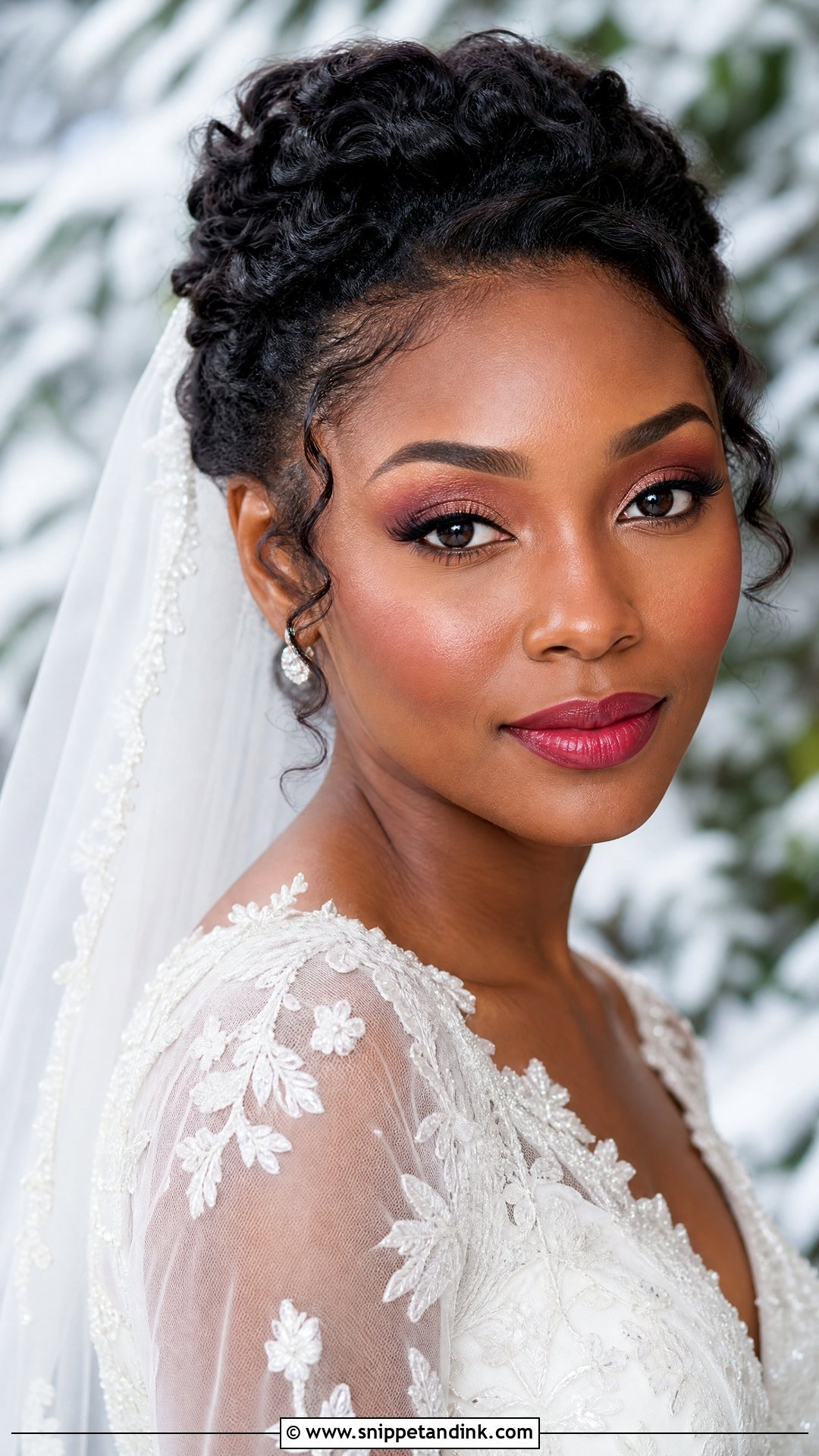
Berry bridal makeup is rich without having to be dark. A soft berry stain, muted plum lip or raspberry satin lipstick adds color while still looking bridal. The eyes stay soft with mauve, taupe, bronze or brown, and black-brown liner and fluttery lashes balance the lip. The cheeks echo it with a sheer berry or rose blush blended high. I set a smooth satin base under it. Deep lip colors bleed on fine lines around the mouth, so I always use a matching liner all around the edge. Fall and winter weddings, deeper bouquets and evening receptions suit it.
19. Soft Cut Crease Bridal Makeup
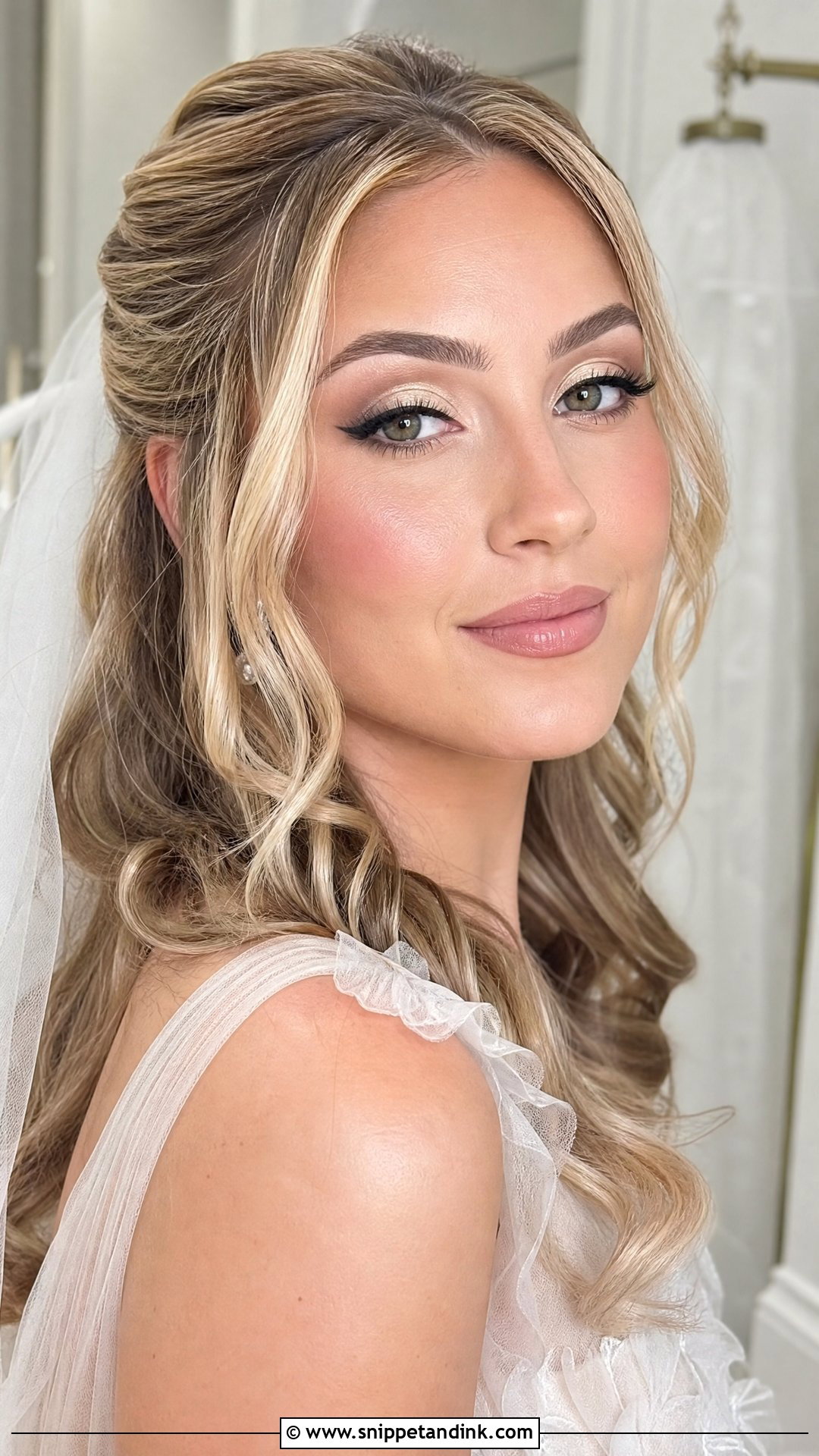
A bridal cut crease is softer than the graphic version you see online. I place a matte neutral in the crease, carve the lid space with concealer, and then blur that line slightly so it doesn’t look stamped. The lid is brightened with ivory, champagne or rose shimmer, and the lash line gets brown or black liner. Wispy lashes help open the eye. I keep the skin balanced with soft contour, rosy blush and a nude or pink lip. Hooded lids are the exception: the crease line folds away when the eyes open, so I adapt it into a halo shape instead.
20. Golden Bridal Makeup
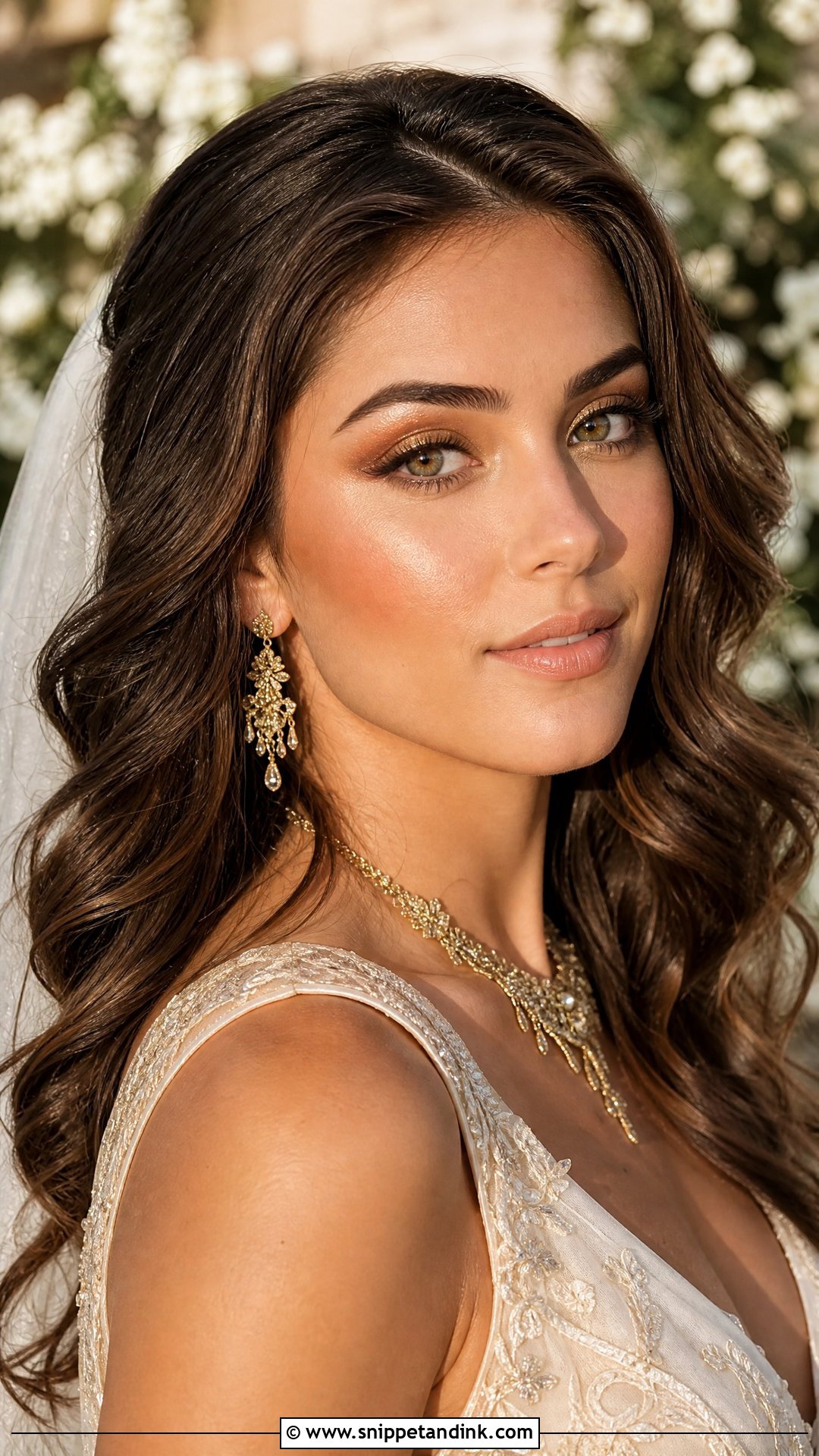
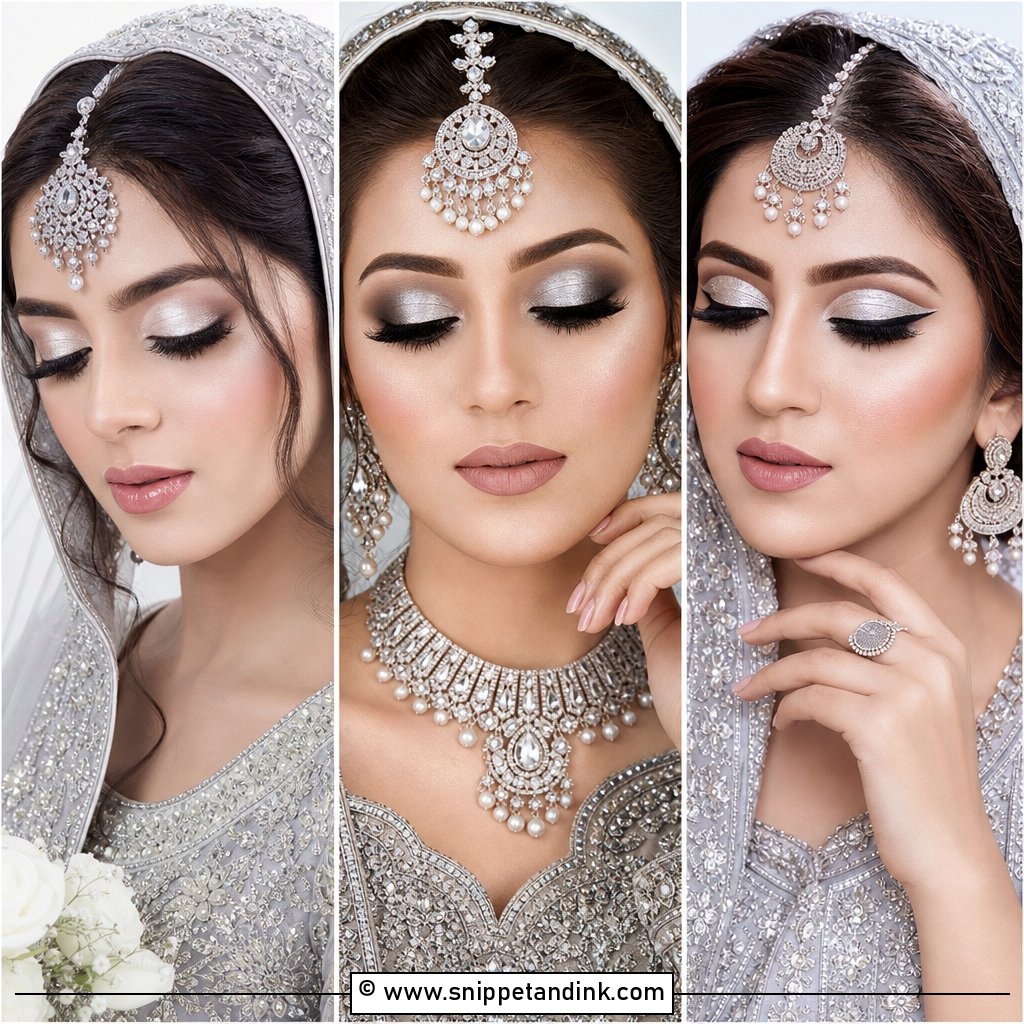
Gold makeup feels celebratory without needing bold color. The eyes carry gold shimmer, warm brown blending and softly defined liner, and I avoid chunky glitter in favor of fine shimmer or a metallic satin texture, which looks smoother on camera and doesn’t fall onto the cheek. The skin glows in a controlled way with warm blush, golden highlight and soft bronzer. A peach nude, caramel nude or rosy beige lip keeps the face balanced. Gold jewelry, cream gowns and warm reception lighting all help it glow.
How Matte, Satin and Dewy Skin Behave Over a Twelve-Hour Day
Finish matters more for longevity than color does. These are the patterns I see again and again on long wedding days.
Matte
Holds longest on oily skin and in heat, but on dry skin it can cling to flakes and look tired by evening. Hydrating prep and a light hand with powder solve most of that.
Satin
The safest middle ground for most brides. It softens as the day goes on in a way that usually looks better, not worse, by the reception.
Dewy
Looks freshest in the morning portraits and is the first to turn shiny. Blotting papers do more than powder for touch-ups, because powder over a glowy base builds up a cakey layer quickly.
The Month Before: What to Change in Your Skin Routine and What to Leave Alone
The best makeup sits on calm skin, and the most common problem I see on wedding mornings is irritation from something new tried in the final weeks.
- Do any facial, peel or new active product at least four weeks out, so a reaction has time to settle.
- If you use retinoids, talk to your skin care provider about pausing them a few days before, as freshly irritated skin can flake under foundation.
- Get brows shaped about a week before rather than the day before, so redness has gone down.
- Keep a self-tan test for a full trial run, and do the final application two days ahead so any patchy spots can be evened out.
- Drink water and sleep. It sounds trite, but dehydrated skin shows every foundation edge.
Your Everyday Makeup Bag Is the Best Clue
The look that serves you best is the one you’ll feel like yourself in, both in the mirror and in photos. Before settling, think about your dress, venue, lighting, season, hairstyle and the makeup you normally wear. A trial is worth booking, because small changes in foundation finish, blush placement, lashes and lip color make big differences you can’t predict from a picture. Whichever direction pulls you, soft glam, natural skin, a red lip or bronze warmth, the makeup should show your features off rather than cover them. Use these looks as starting points, then adjust them to your face.
You'll Like These Ideas:


Leave a Reply