
Wedding makeup has to look right at arm’s length, in a close-up portrait and twelve hours after I put it on, through hugs, crying and a lot of eating. That is a harder brief than most everyday makeup. These days most brides ask me for polished skin and soft definition rather than heavy one-size glam, but a smoky eye, a red lip or full glam can still be right for the right face and room. Below are the bridal looks I’m booked for most, with what each one needs from your skin and where it can go wrong.
Your Skin Type Narrows This List Faster Than Your Dress Does
Brides usually come to a trial with photos of a look. I start somewhere else: what your skin does over a normal day. That tells me which of the looks below will still be intact at the last dance.
Oily or combination skin
Matte, soft glam, classic and red lip looks hold best. Dewy and glossy finishes are possible, but only with a mattifying primer in the T-zone and glow placed very precisely.
Dry or dehydrated skin
Dewy, glossy, natural and romantic looks sit well. Full matte and heavy powder cling to dry patches and show texture in close-ups, so start hydrating your skin in the weeks before, not the night before.
Mature skin or visible texture
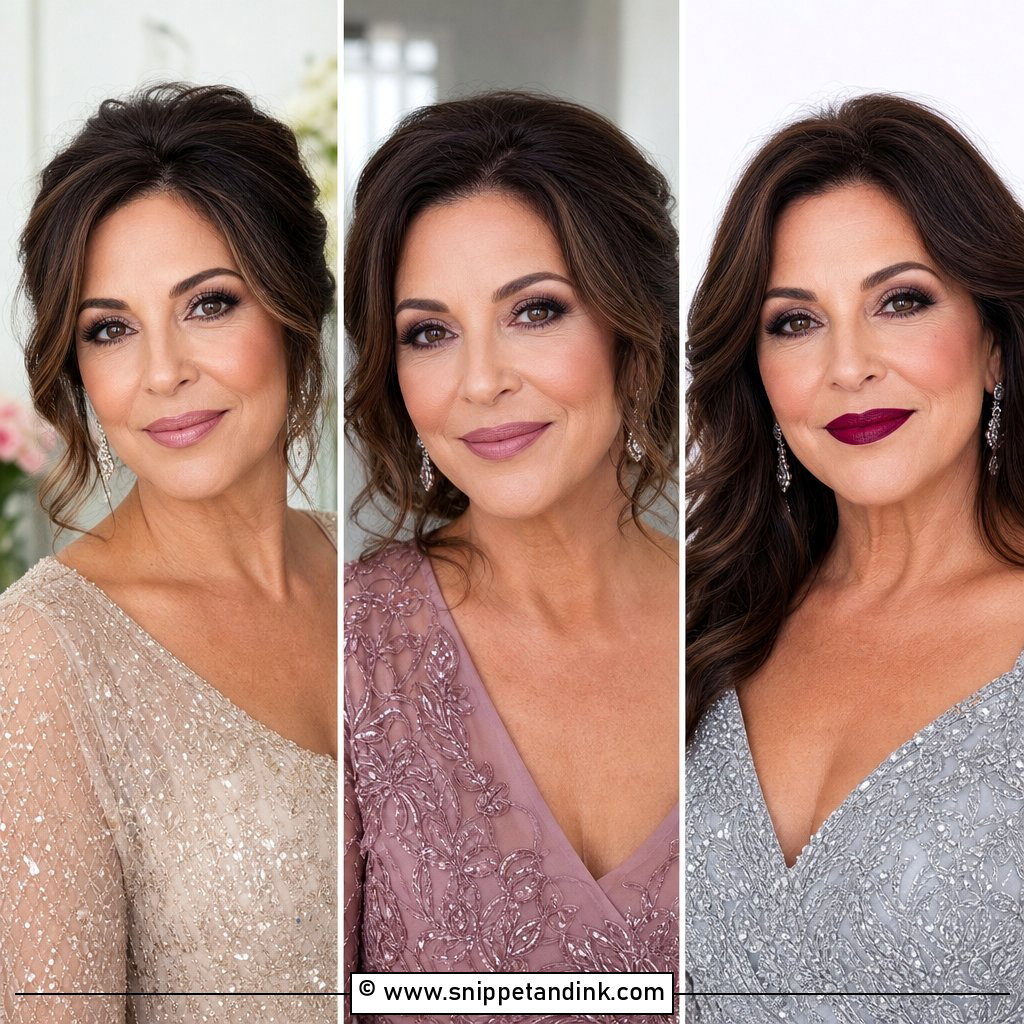
Thin layers, cream products and shimmer only in the center of the lid. Champagne, soft glam and classic looks work well; glitter and very heavy coverage do not.
Bring a skincare list to your trial, too. Retinoids and exfoliating acids can make skin sensitive, and any new treatment should be done well before the wedding, never in the final week.
1. Natural Bridal Makeup
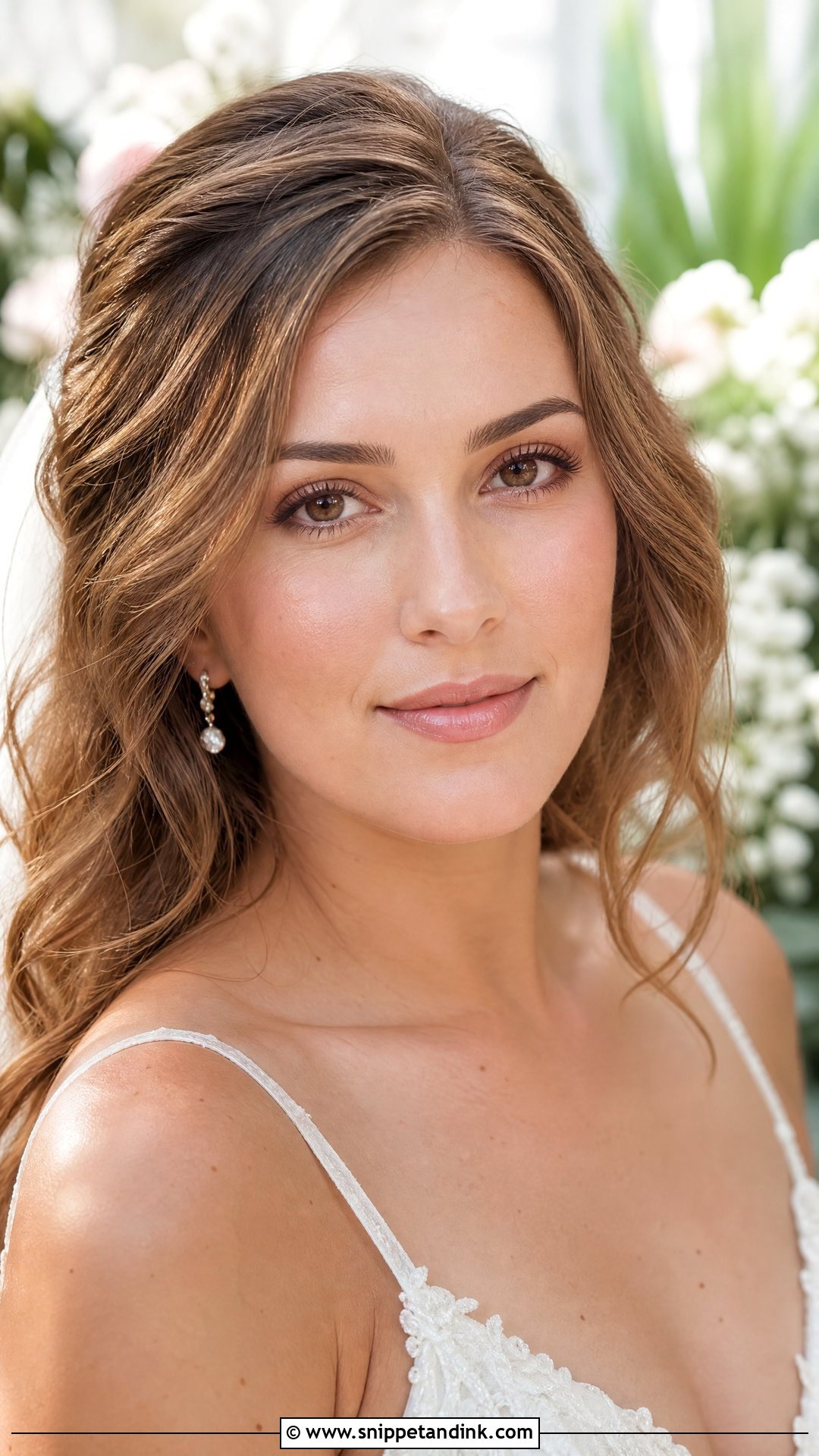
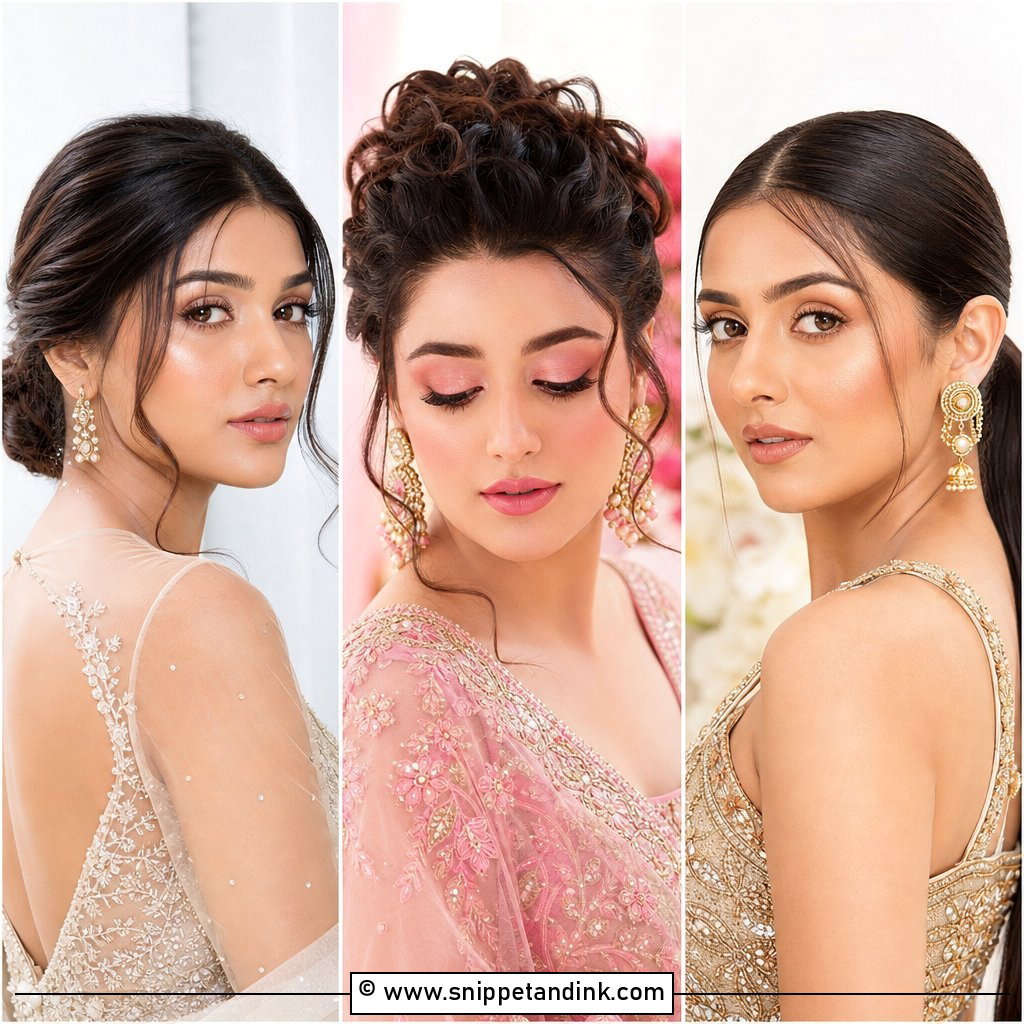
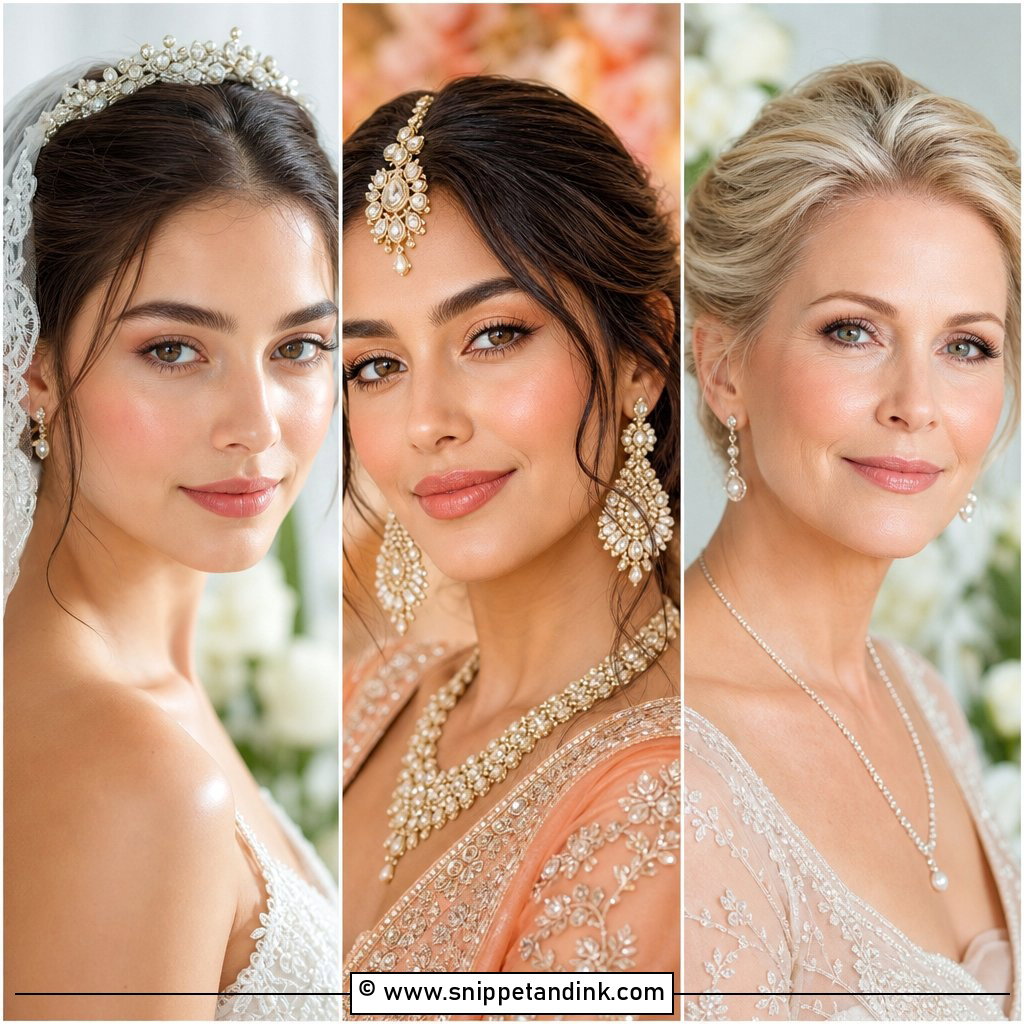
The goal here is you after a good night’s sleep. I use a skin tint or light foundation, conceal only where needed, then add cream blush and a touch of highlight on the cheekbone. Eyes stay in beige or soft brown, with tightlined lashes and brushed-up brows, and a satin rose or nude lip. The hidden work is longevity. Light bases wear off faster, so I prime carefully and use a few individual lashes instead of a strip, which looks natural up close and won’t lift at the corners.
2. Soft Glam Bridal Makeup
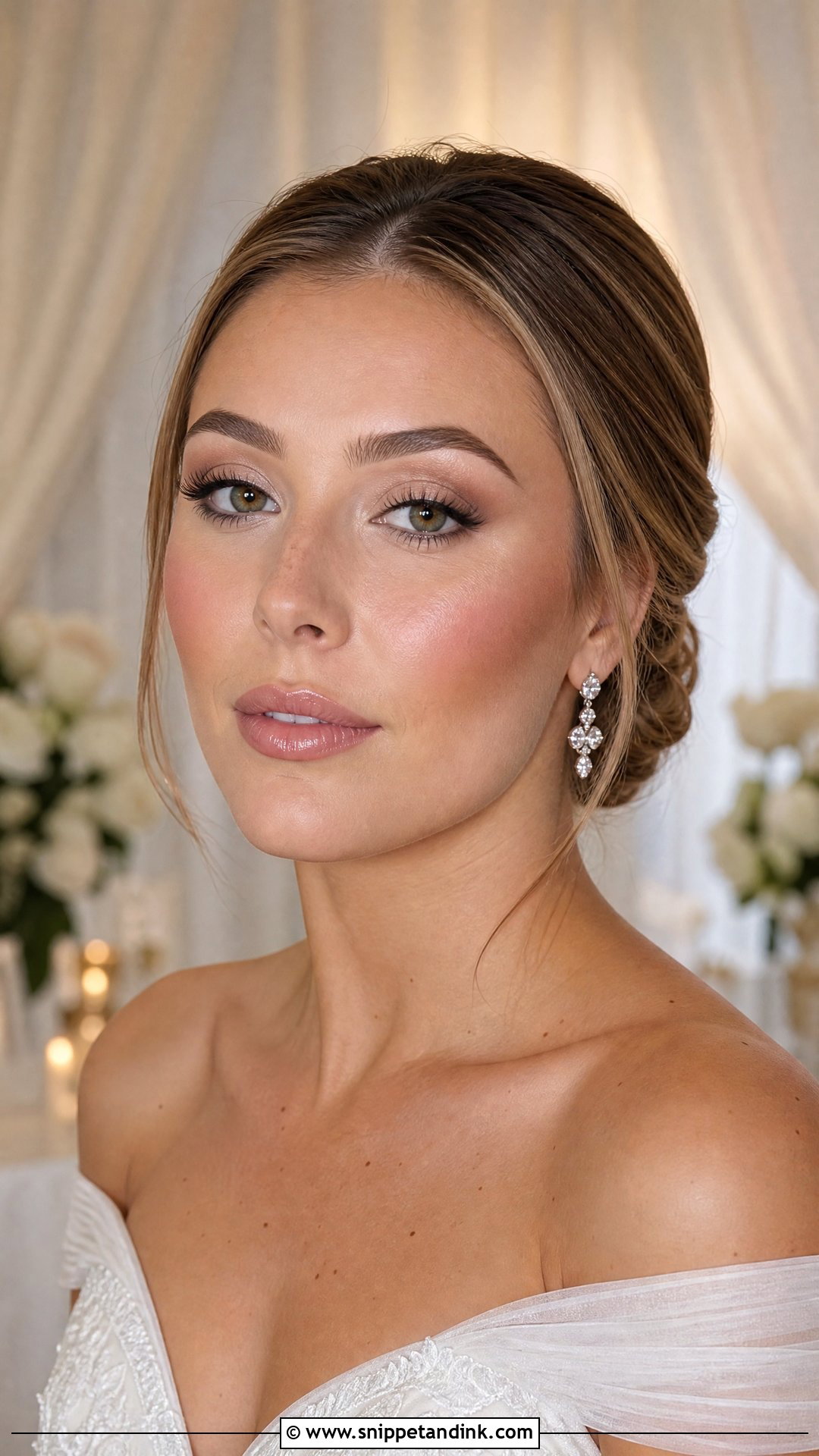
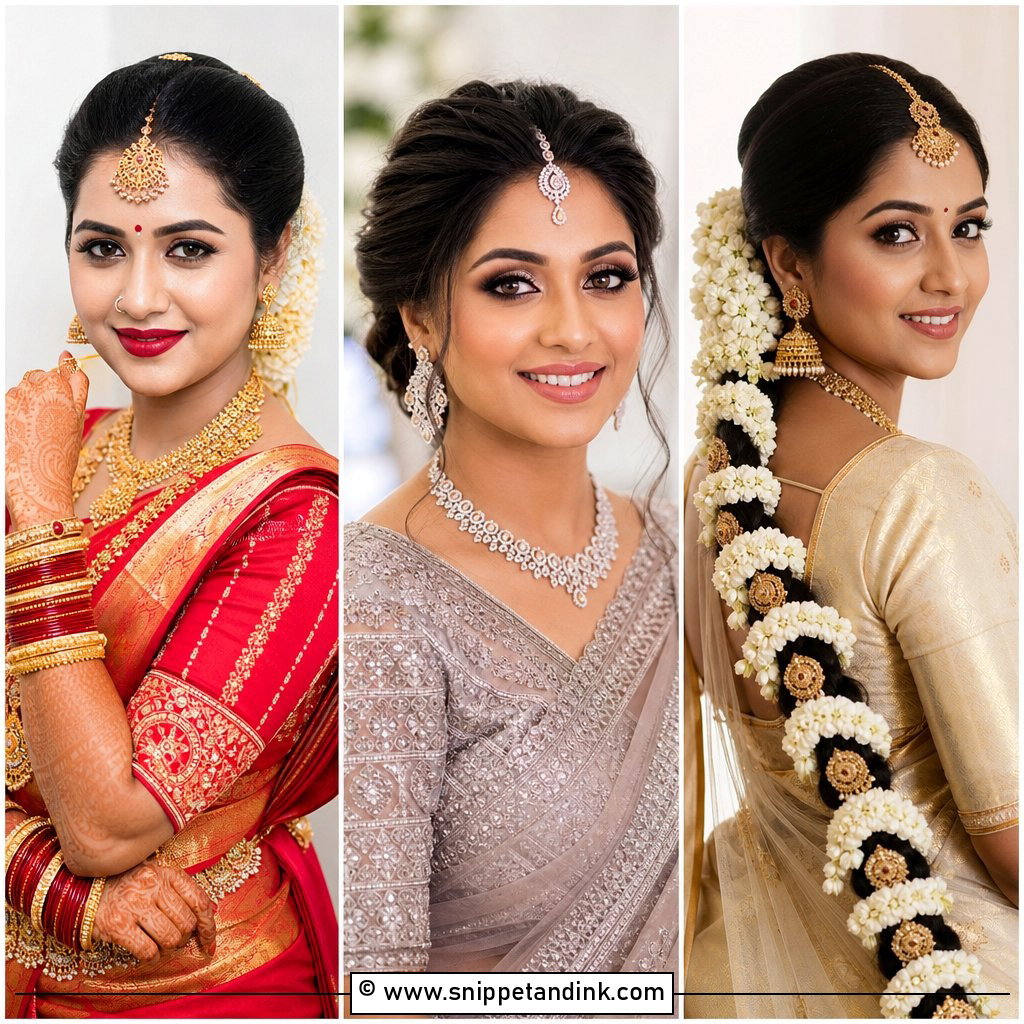
Soft glam is the look I’m asked for most often, and it sits between natural and full glam. The skin is smooth and satin, cheeks lightly sculpted, and the eyes blended in champagne, taupe or soft bronze shades without hard lines. A wispy lash and a nude or pink lip finish it. I keep the T-zone matte and the glow only on the top of the cheekbones, because shine across the forehead is what ruins flash photos.
3. Dewy Bridal Makeup
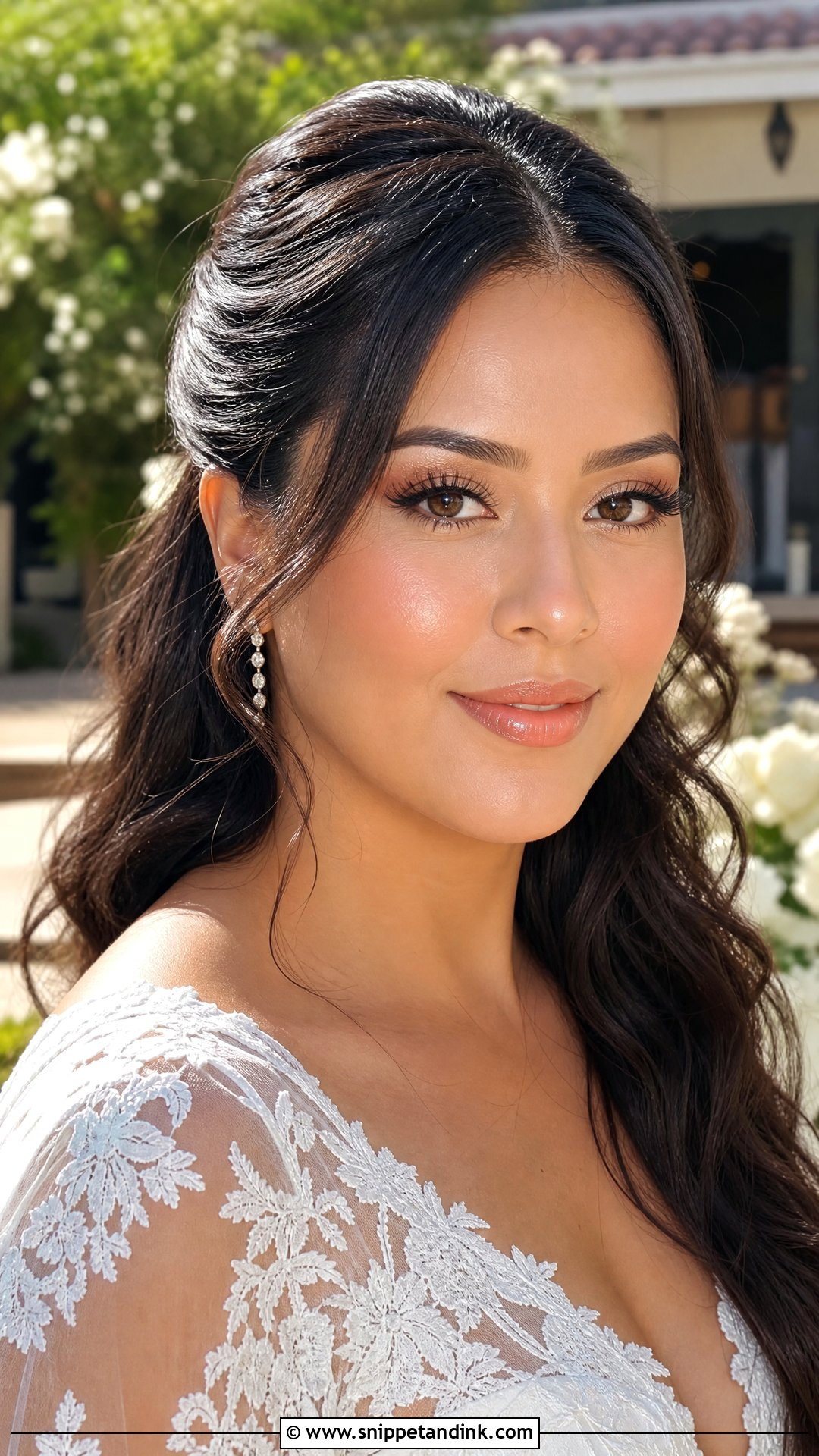
Dewy skin is about controlled glow, not oil. I start with a radiant primer and a skin-like foundation, use cream blush and liquid highlight, then powder only the sides of the nose, the chin and under the eyes. Champagne shimmer on the lid and a glossy nude or rose lip keep it fresh. If your skin is oily by lunchtime on a normal day, this look needs long-wear layers underneath and blotting during the day, or by the reception you’ll look shiny rather than dewy.
4. Matte Bridal Makeup
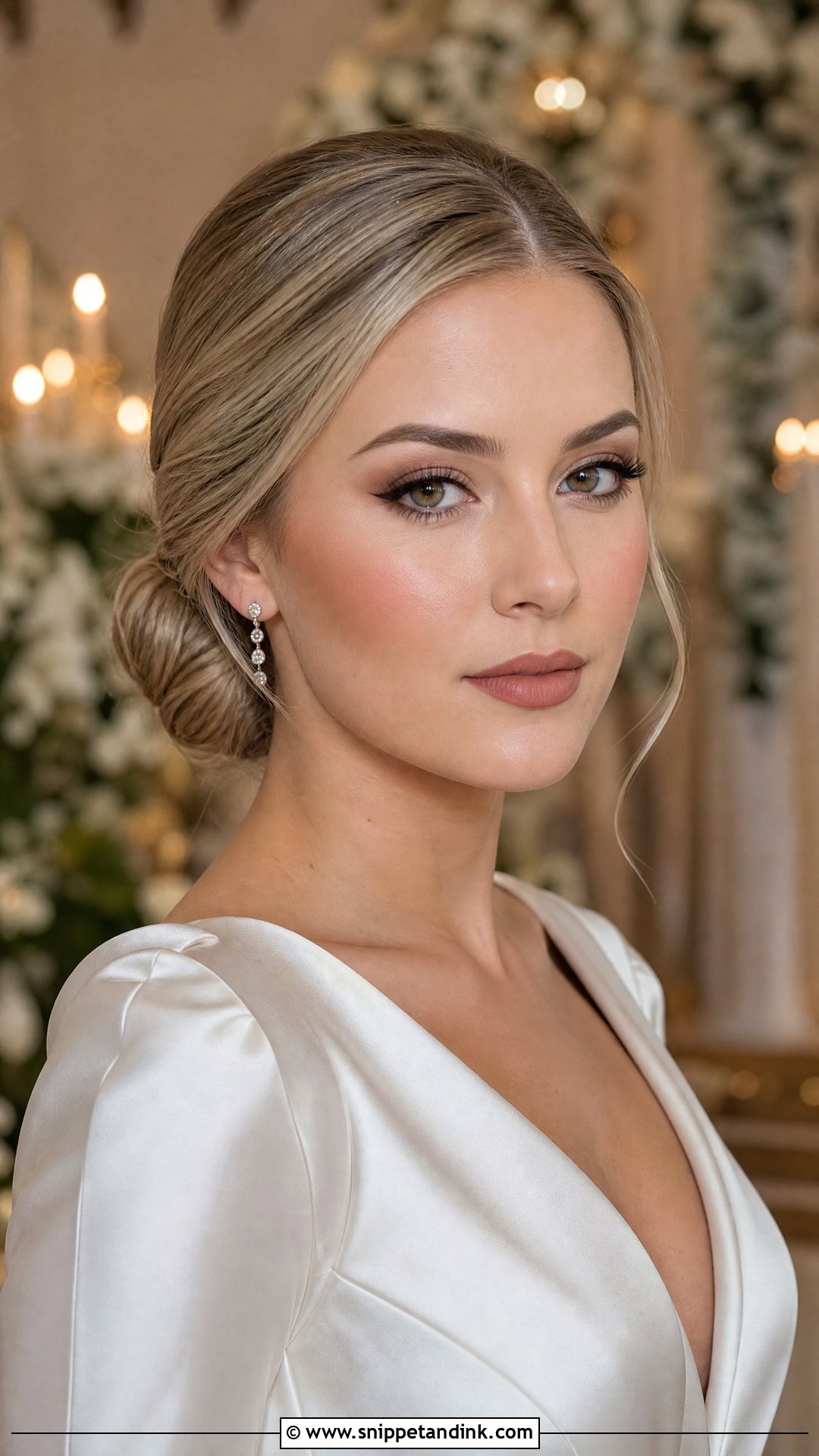
Oily skin, hot weather and a long photography schedule are the usual reasons brides ask for matte. I use a long-wear foundation, a soft contour and powder pressed in only where the skin gets shiny. The mistake is going completely flat; a fully matte face can look dry and older on camera. So I leave a little highlight on the inner corners and high cheekbones. Warm brown eyes and a matte rose or berry lip suit it.
5. Classic Bridal Makeup
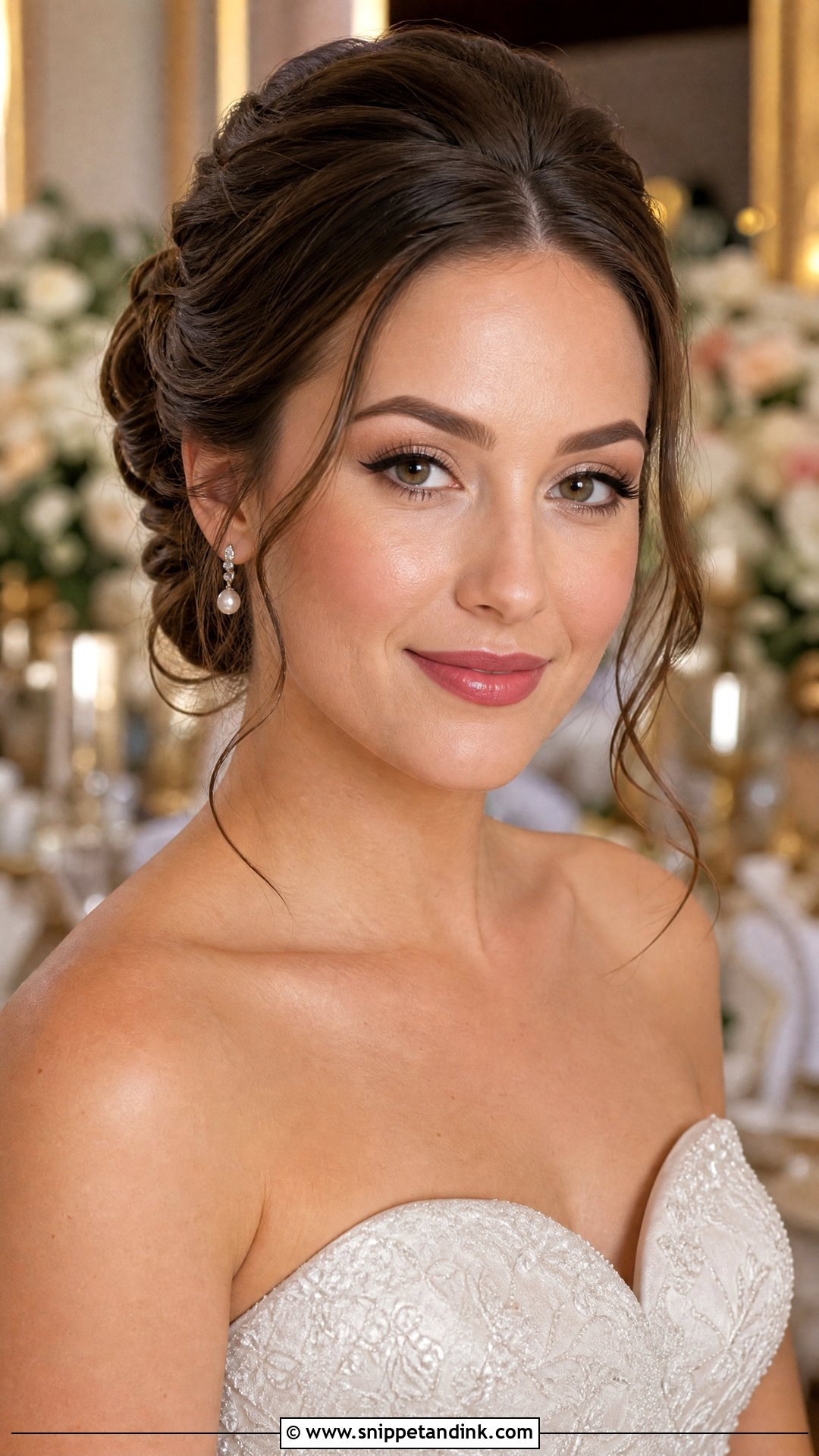
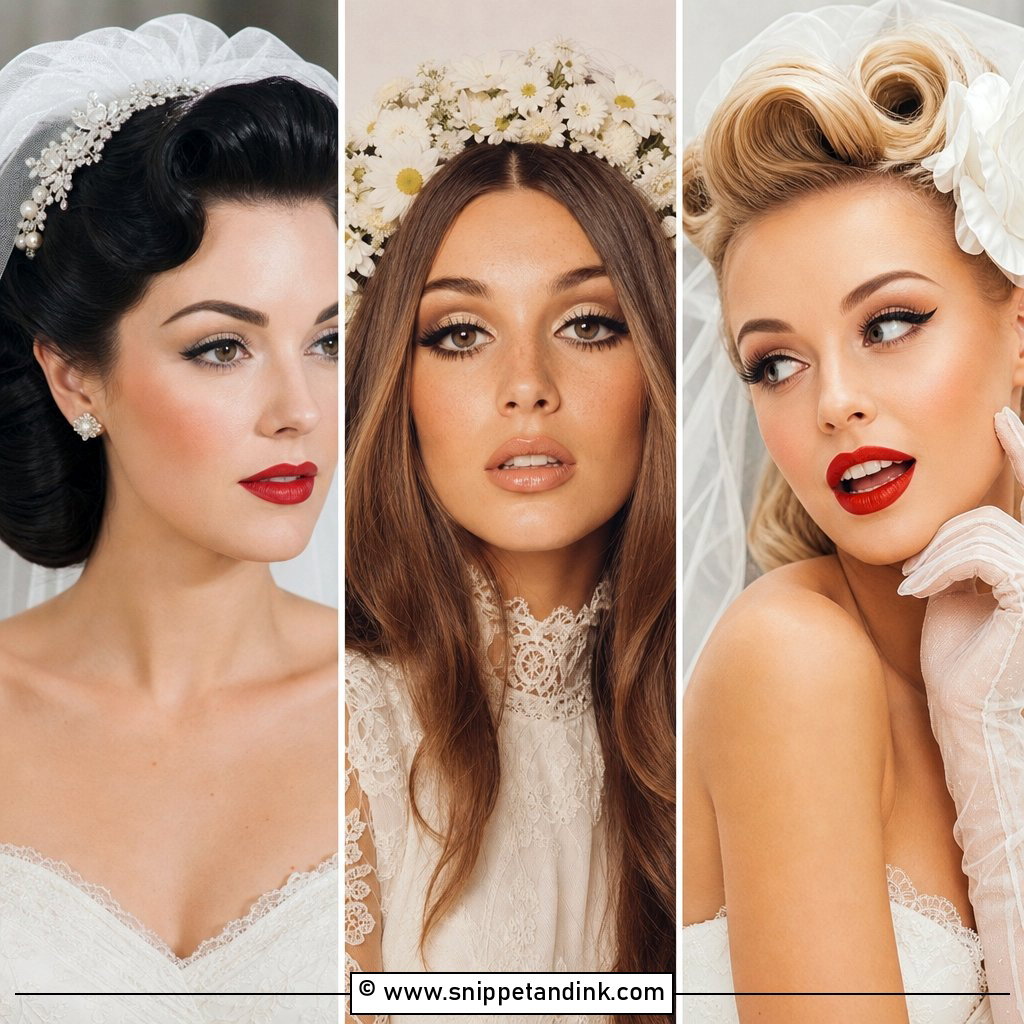
Classic makeup is about balance: even skin, a soft flush, defined but quiet eyes and a polished lip in pink, rose, nude or red. A thin black or brown liner and neutral shadow do the defining. It pairs naturally with structured gowns, veils and updos, and it is the safest option if you don’t want your photos to date to one trend. I describe it to brides as the look nobody will question in twenty years.
6. Romantic Bridal Makeup
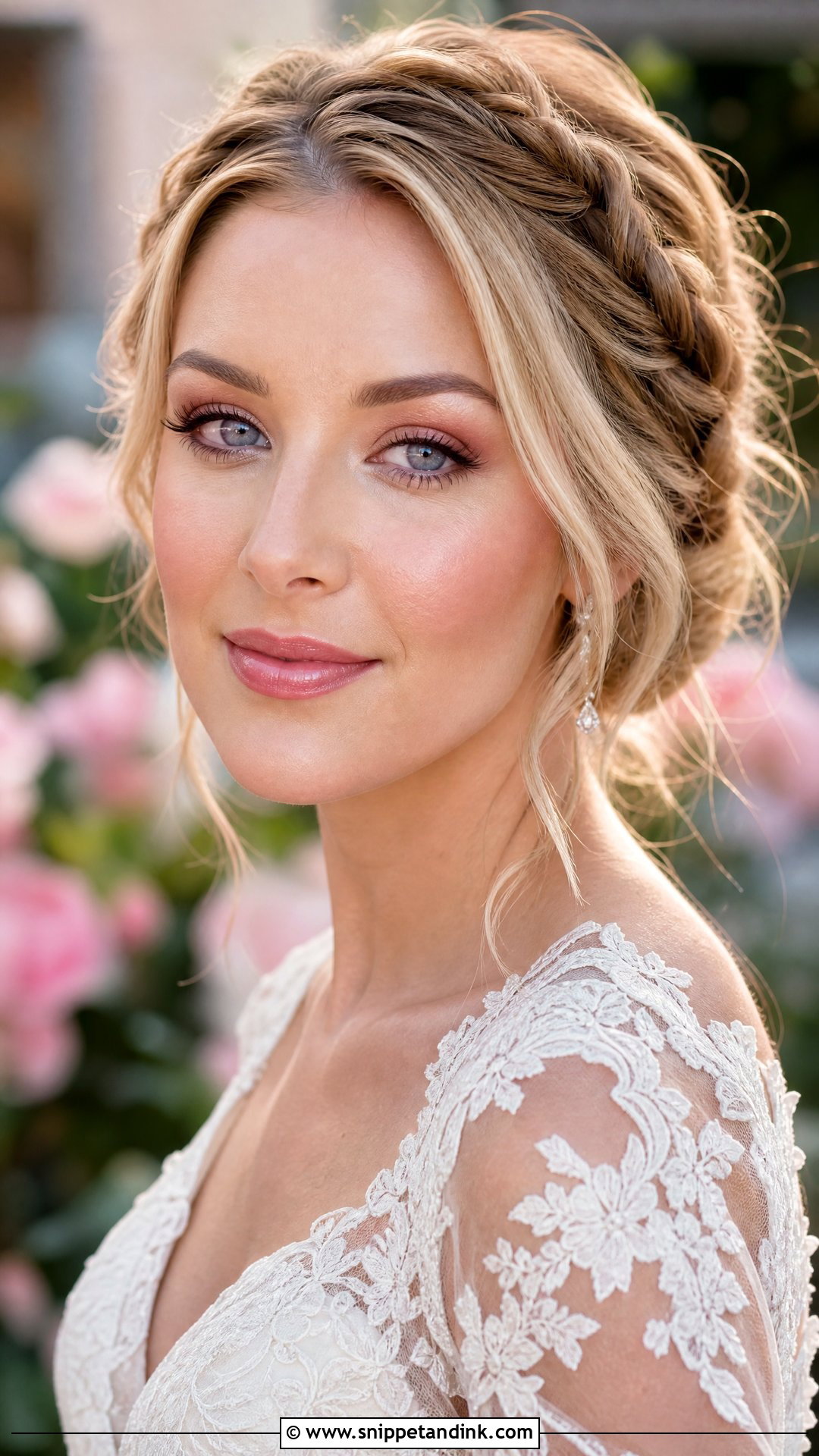
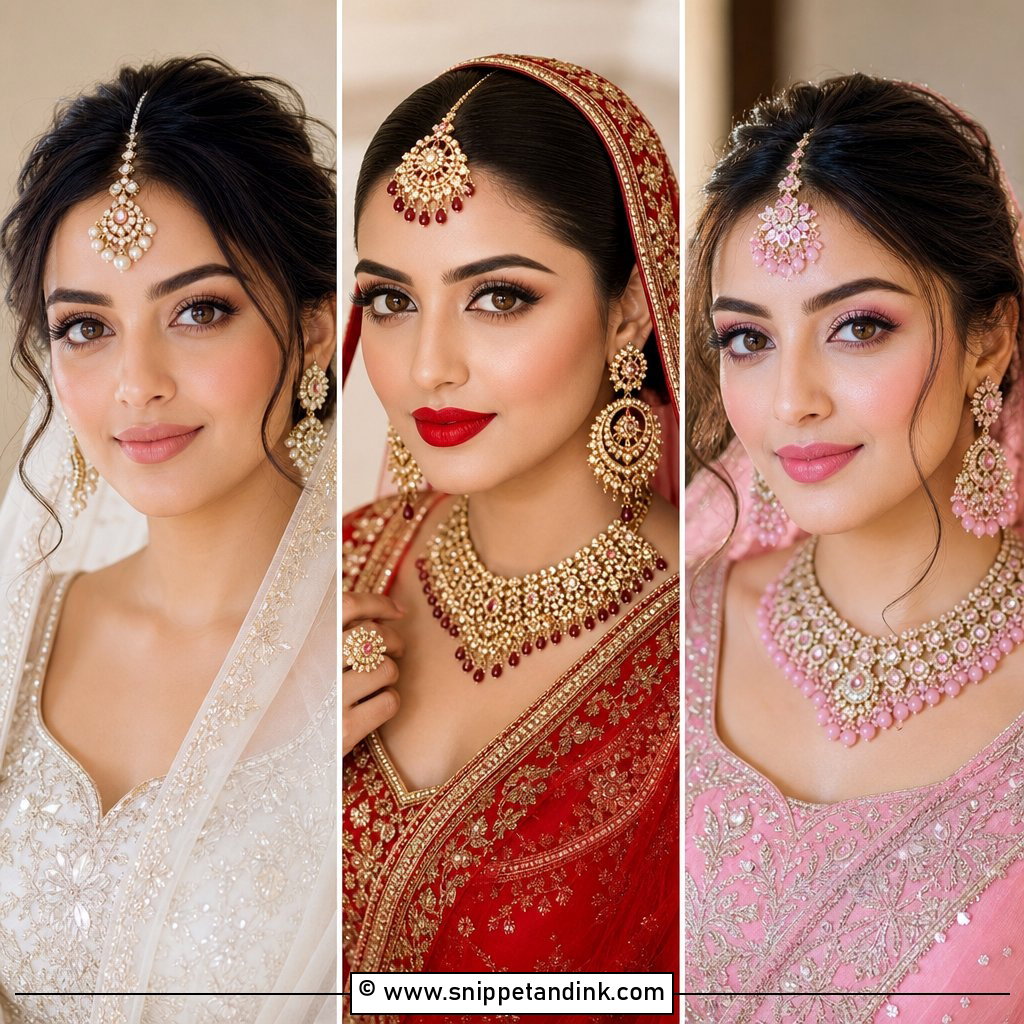
Romantic makeup uses one soft color family, pink, rose, mauve or peach, across the eyes, cheeks and lips. The skin stays light with a gentle glow, lashes are fluttery and the liner is brown or smudged rather than sharp. It suits lace dresses and daytime weddings. The color is easy to adjust: pale pink on fair skin, warm rose on medium skin, deep berry on darker skin, so it suits almost every complexion if I pick the right depth.
7. Full Glam Bridal Makeup
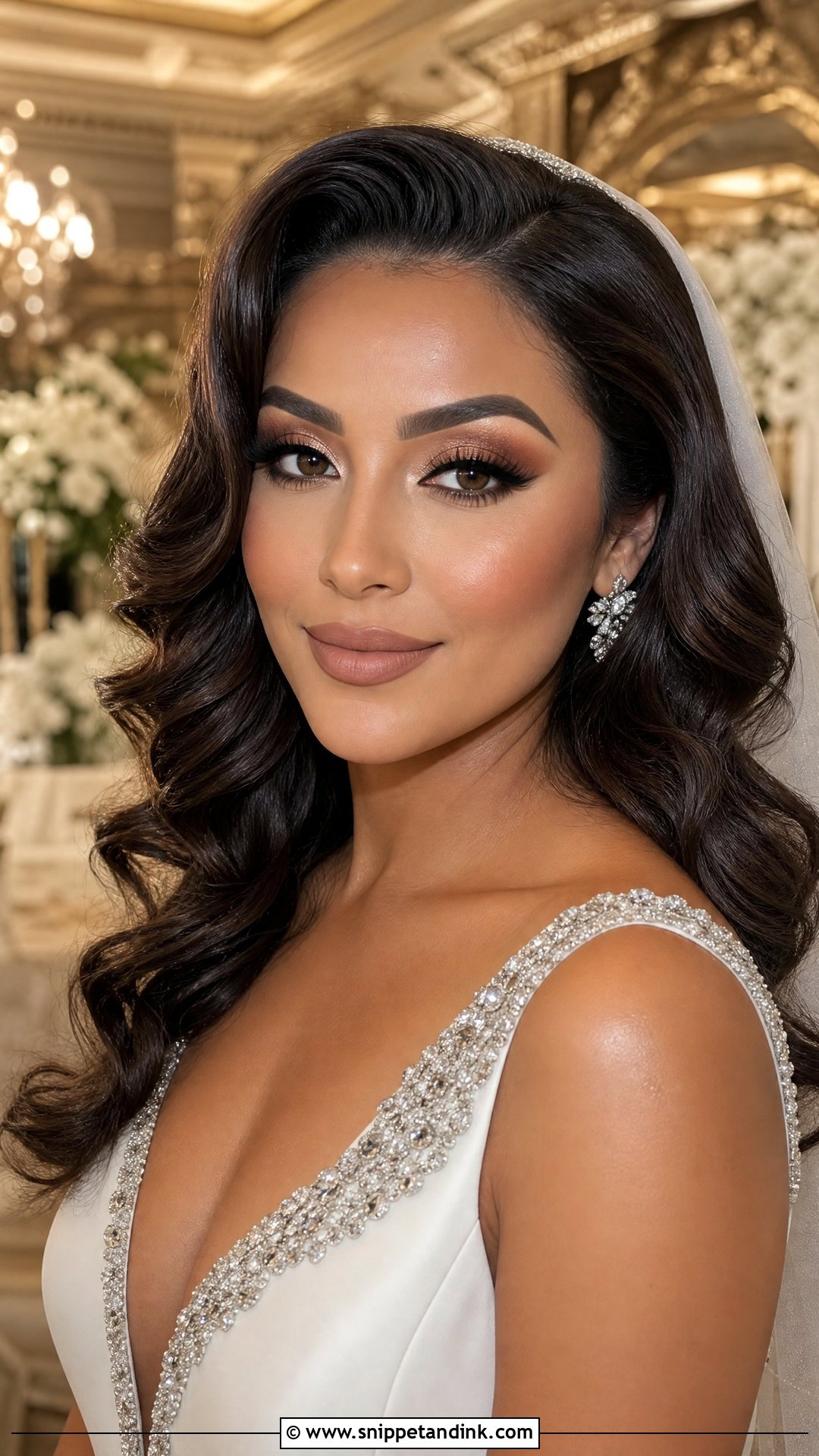
Full glam means fuller coverage, contour, highlighted cheekbones, bold lashes and stronger eyeshadow. The skill is building it in thin layers so it doesn’t look heavy in person. I always take a test photo with flash before finishing, because full glam can look perfect in the mirror and very different on camera. Waterproof products are not optional here. It belongs with dramatic gowns and evening receptions, and it suits brides who already wear makeup confidently.
8. Smokey Eye Bridal Makeup
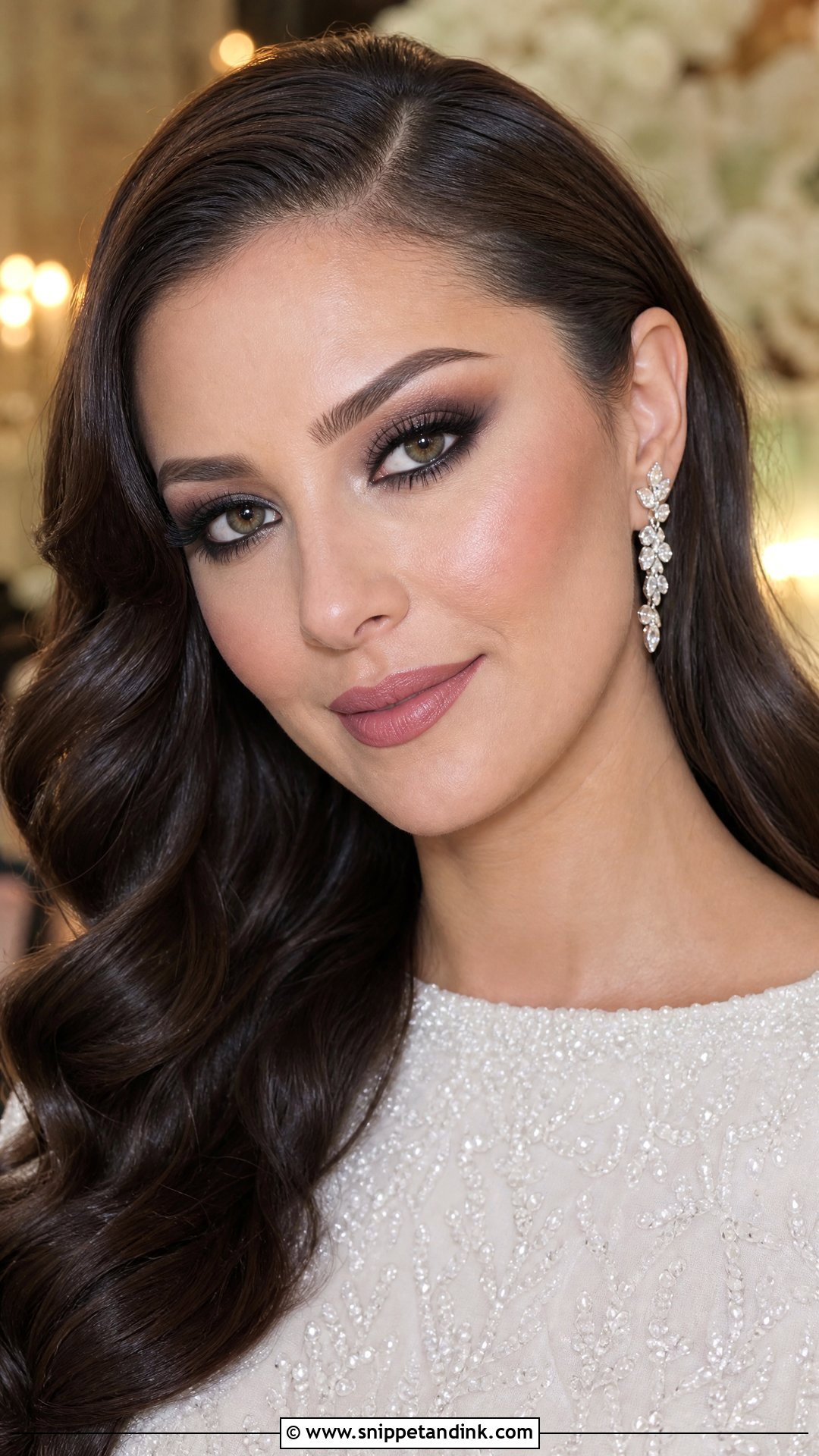
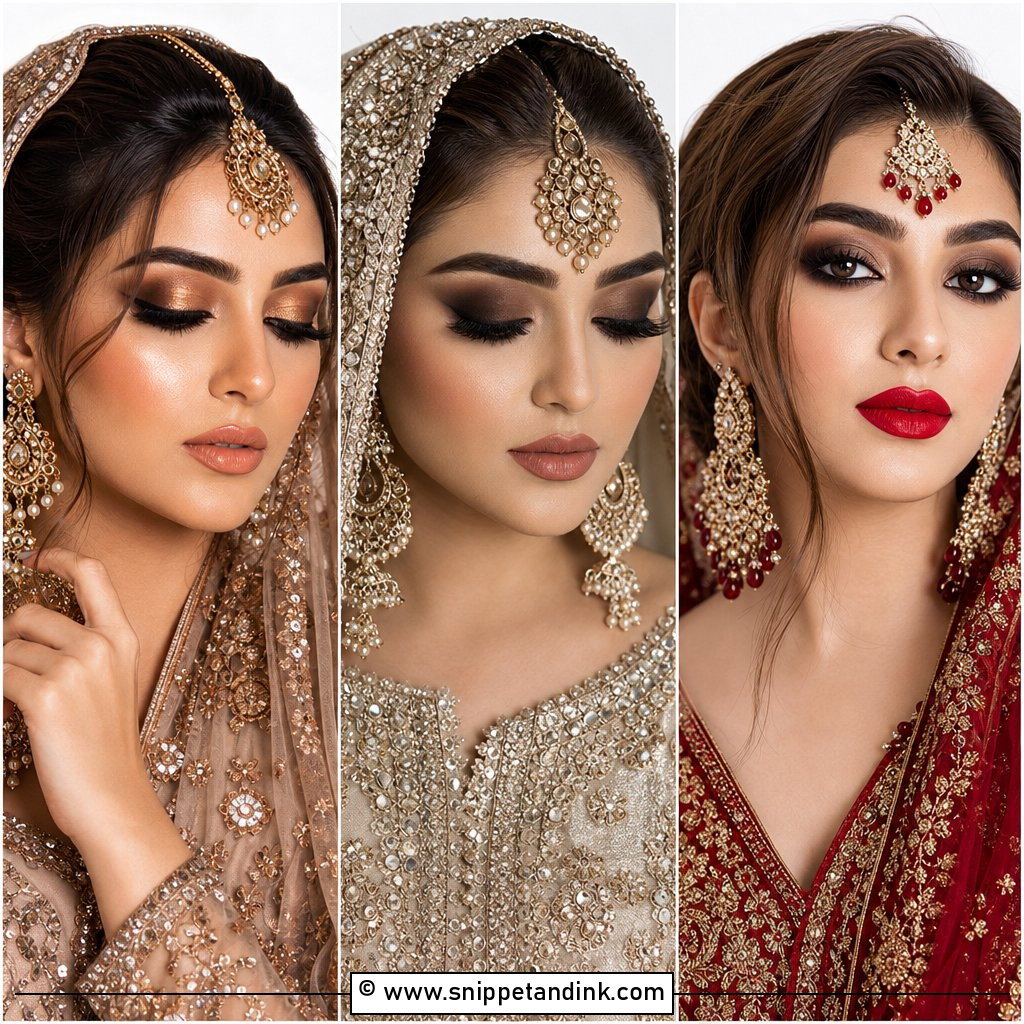
Smokey eye bridal makeup rarely needs black. Bronze, brown, plum or charcoal blended around the lash line gives the drama with less risk. I do the eyes before the foundation on smoky looks, so any fallout can be cleaned off without ruining the base. Keep the cheeks and lips neutral. If you are nervous about it, ask for shimmer on the lid and depth only on the outer corner.
9. Bronze Bridal Makeup
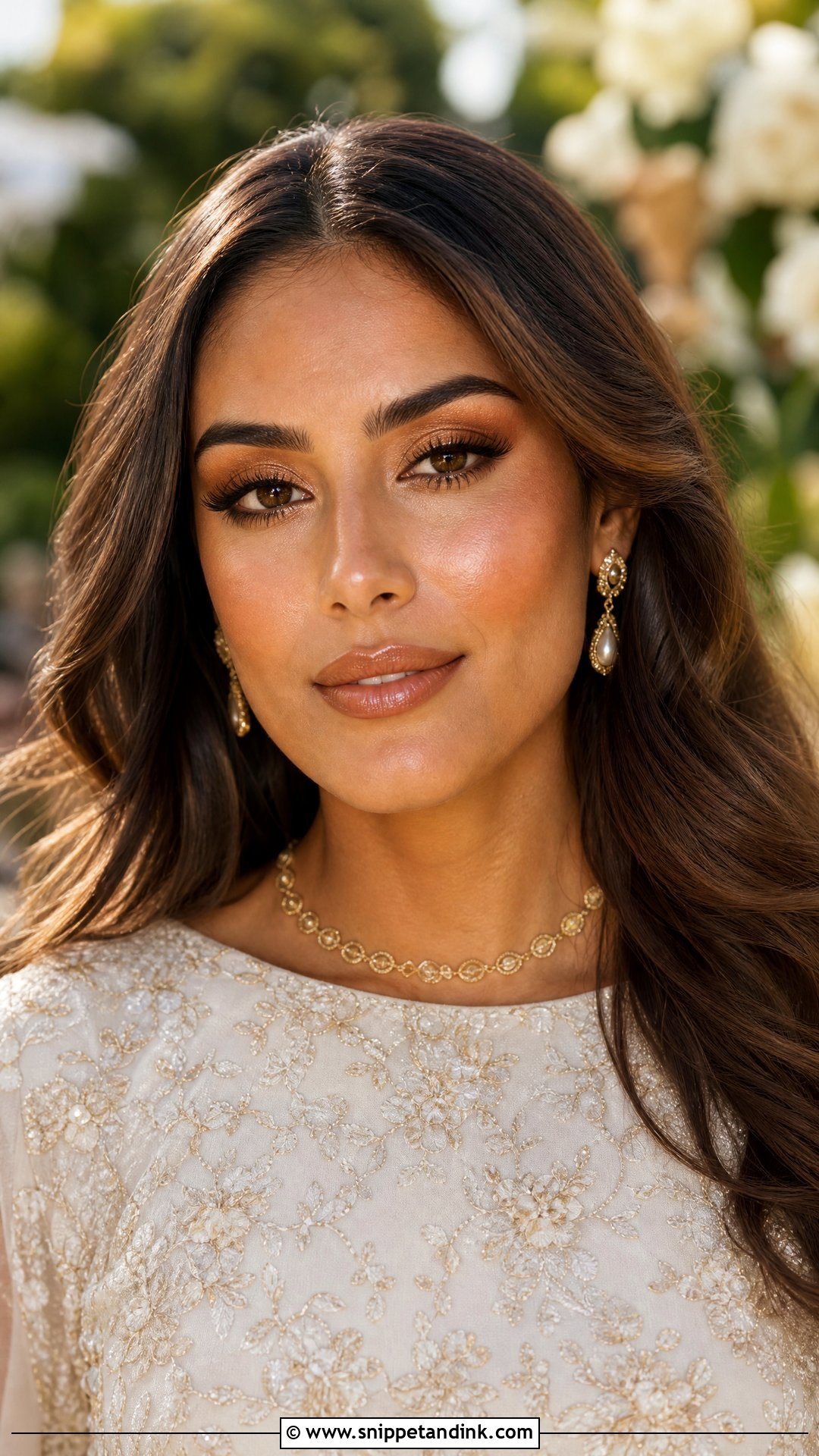
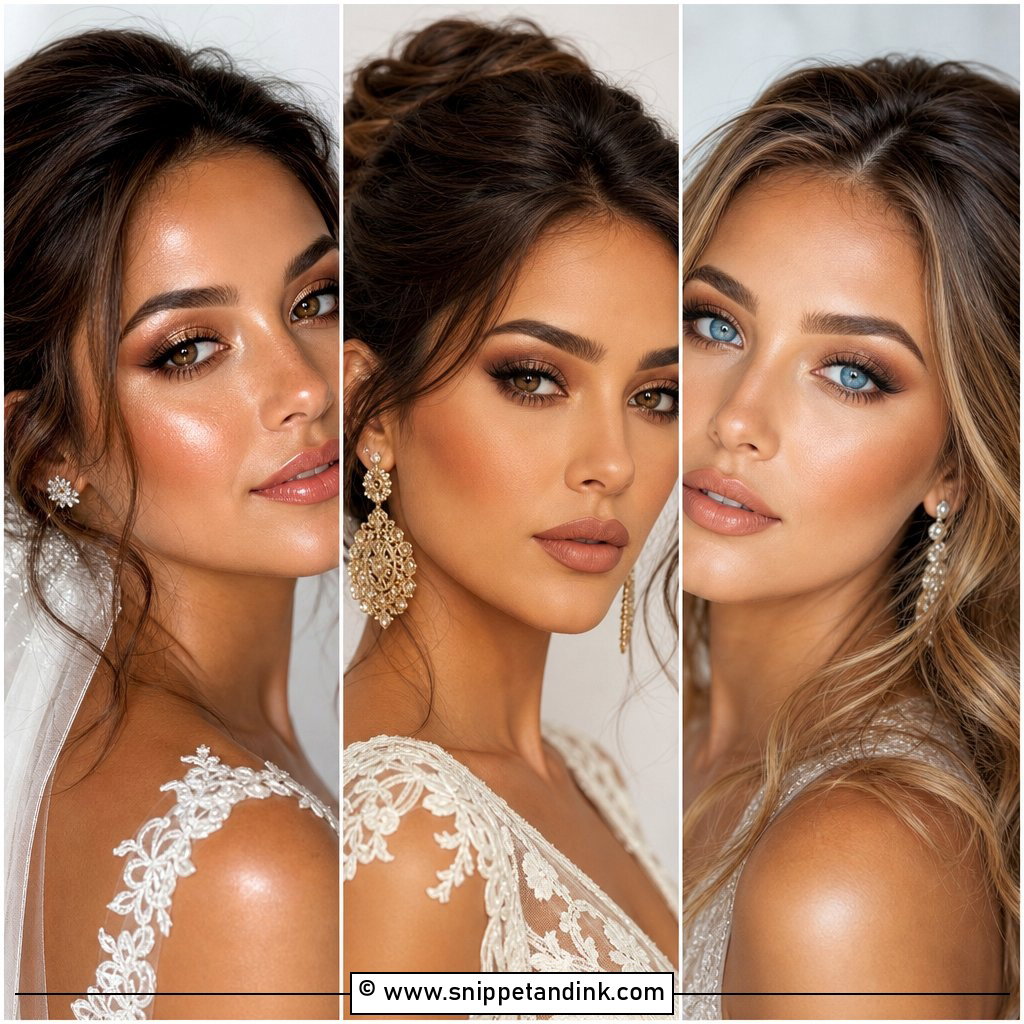
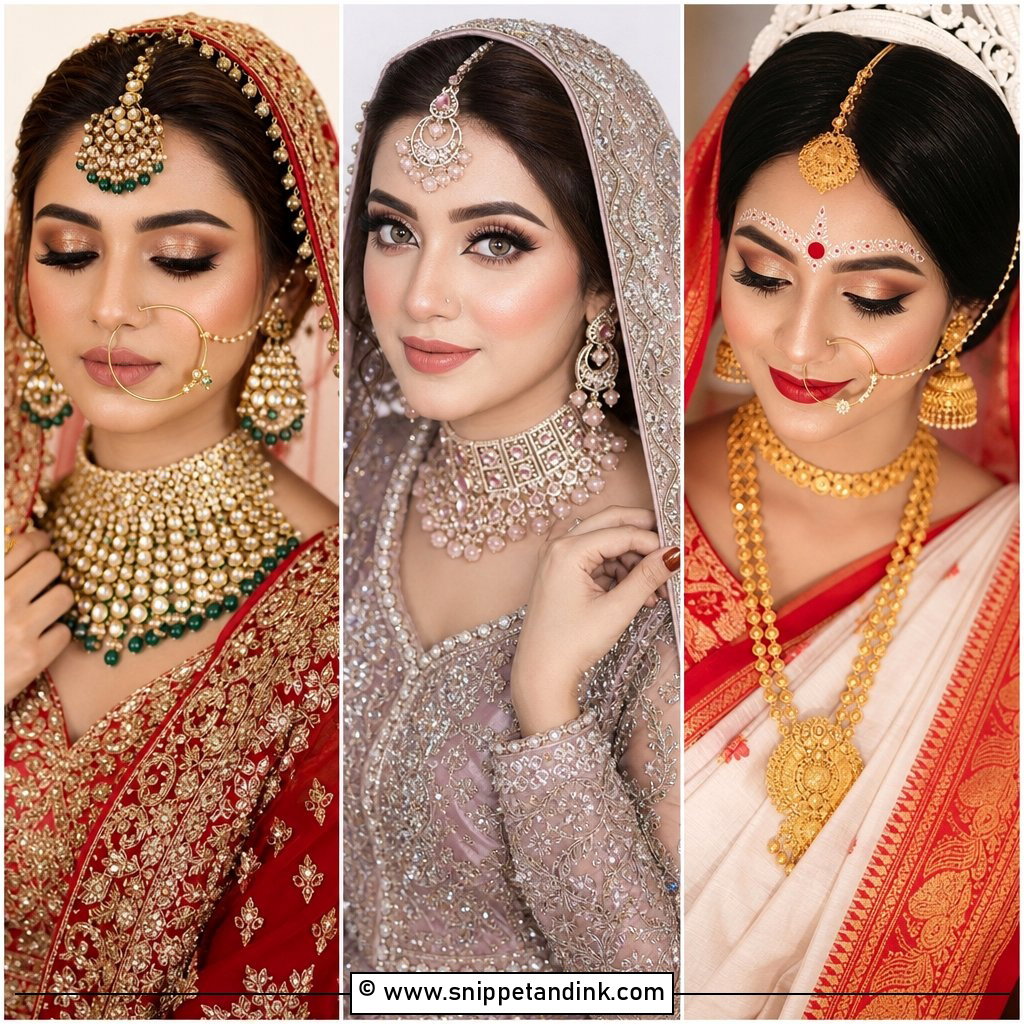
Bronze bridal makeup is sun-warmed makeup: golden-brown eyes, bronzed cheeks, peach blush and a caramel or nude lip. It suits summer and destination weddings, gold jewelry and warm-toned gowns. It flatters tan, olive and deep skin with very little adjustment; fair skin needs a lighter champagne-bronze. The common mistake is placing bronzer in stripes. I blend it around the temples, cheekbones and jaw so the warmth looks like it came from the sun, never from a brush.
10. Nude Bridal Makeup
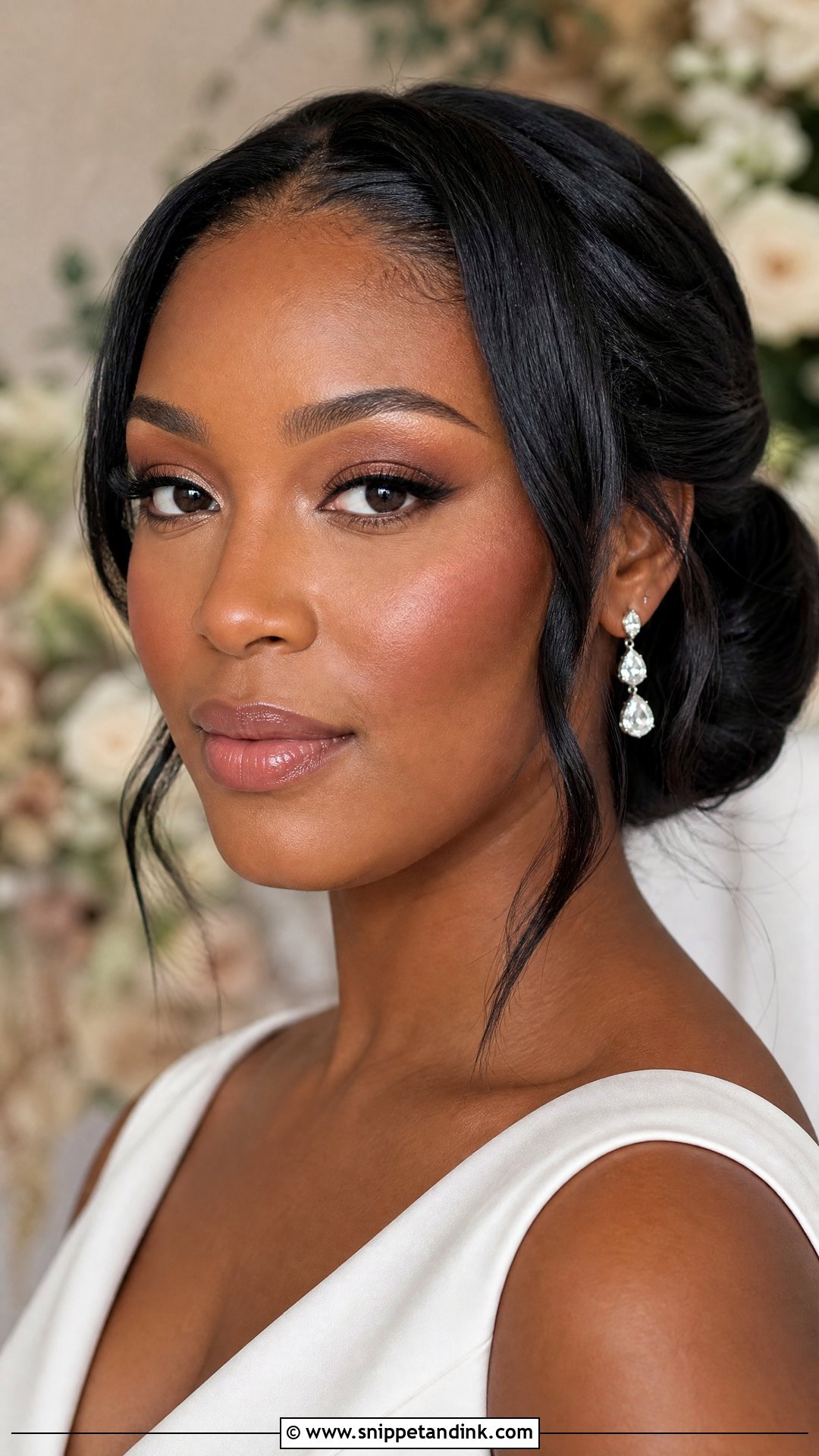
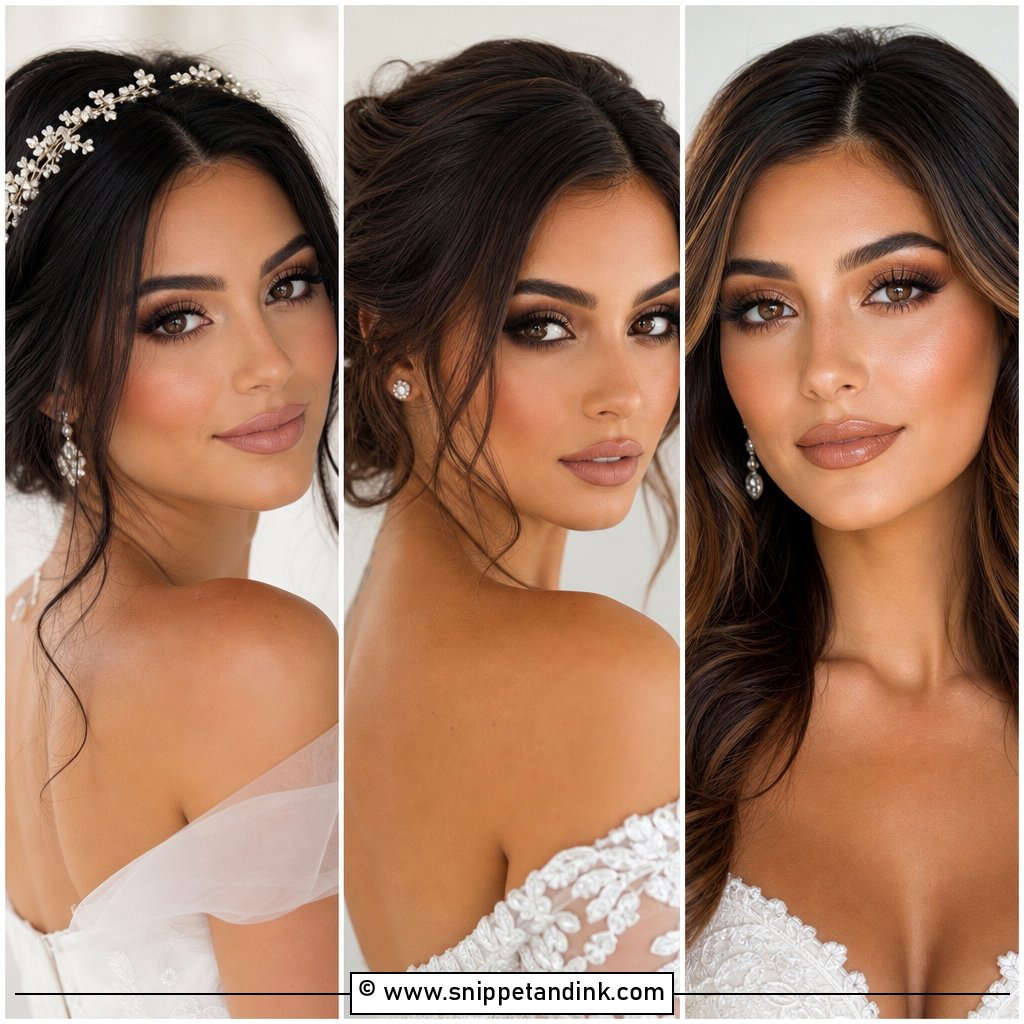
Nude doesn’t mean colorless; it means shades close to your own skin and lips. Getting the shade right is everything. Fair skin often suits pink nudes, light skin peach nudes, olive skin beige rose, tan skin caramel, and deep skin cocoa, rose-brown or espresso. A lip that is too pale for your skin can make you look washed out in photos. Soft brown or champagne eyes, defined lashes and clean brows keep it modern, and a little bronzer stops the face going flat.
11. Pink Bridal Makeup
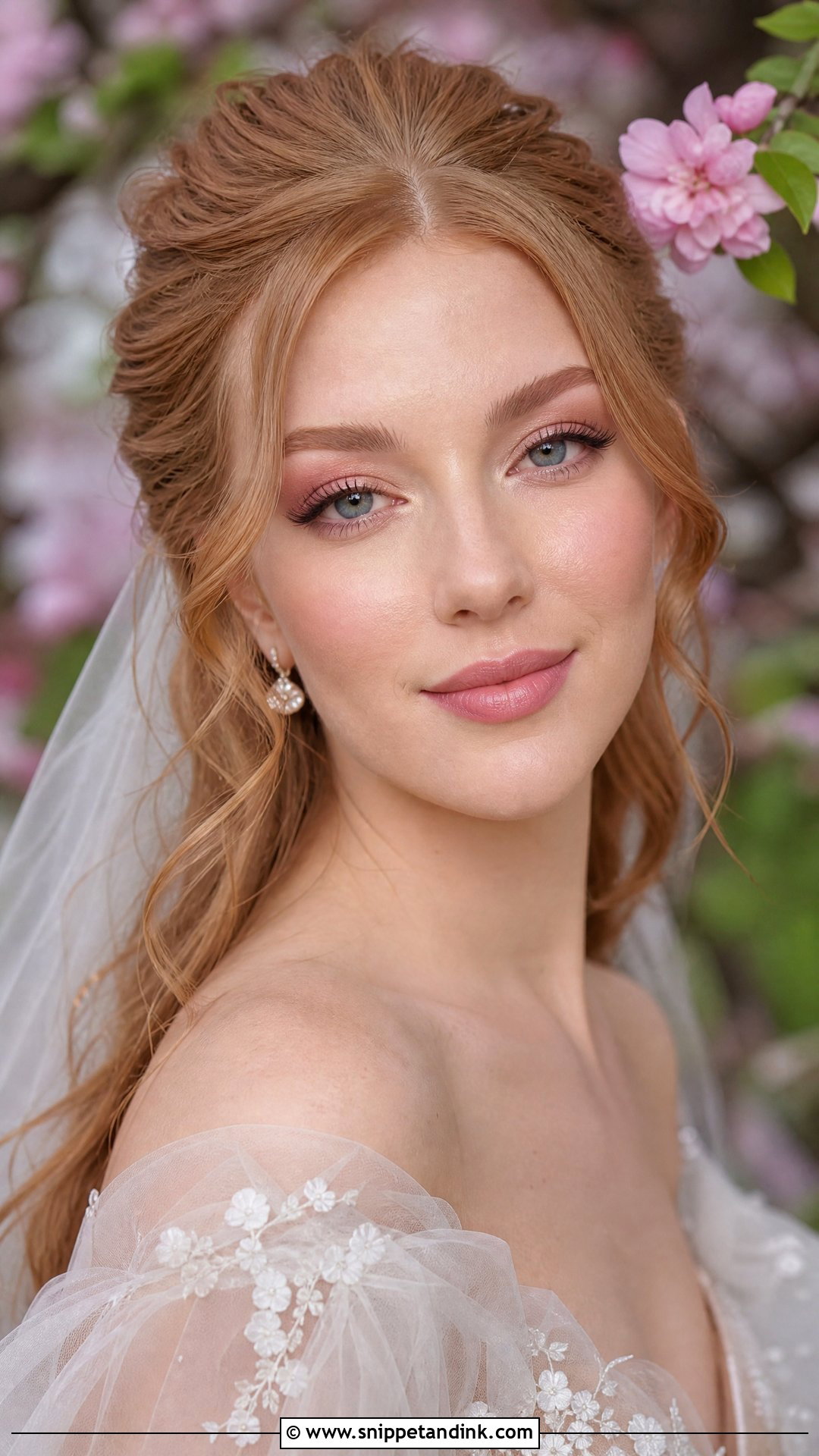
Pink makeup gives a healthy flush. I stick to muted rose and petal pinks rather than bright bubblegum, which can look childish in photos. Pink shadow can make eyes look tired or irritated if it sits too close to the lash line, so I keep a brown liner there to frame them. For deeper skin, rose, raspberry and berry-pink shades give the same effect with better depth. Matching the blush and lip in the same family keeps it calm.
12. Peach Bridal Makeup
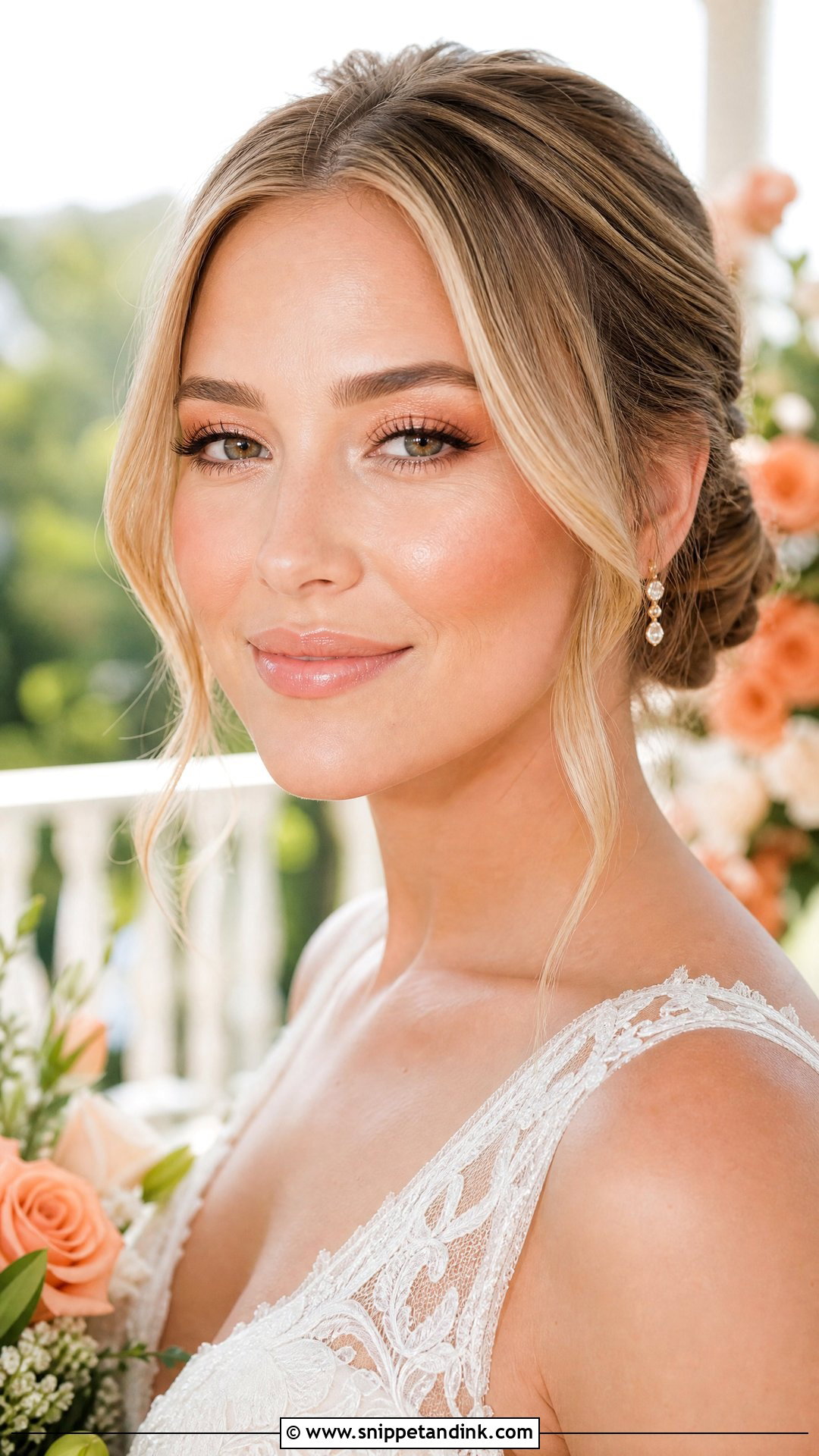
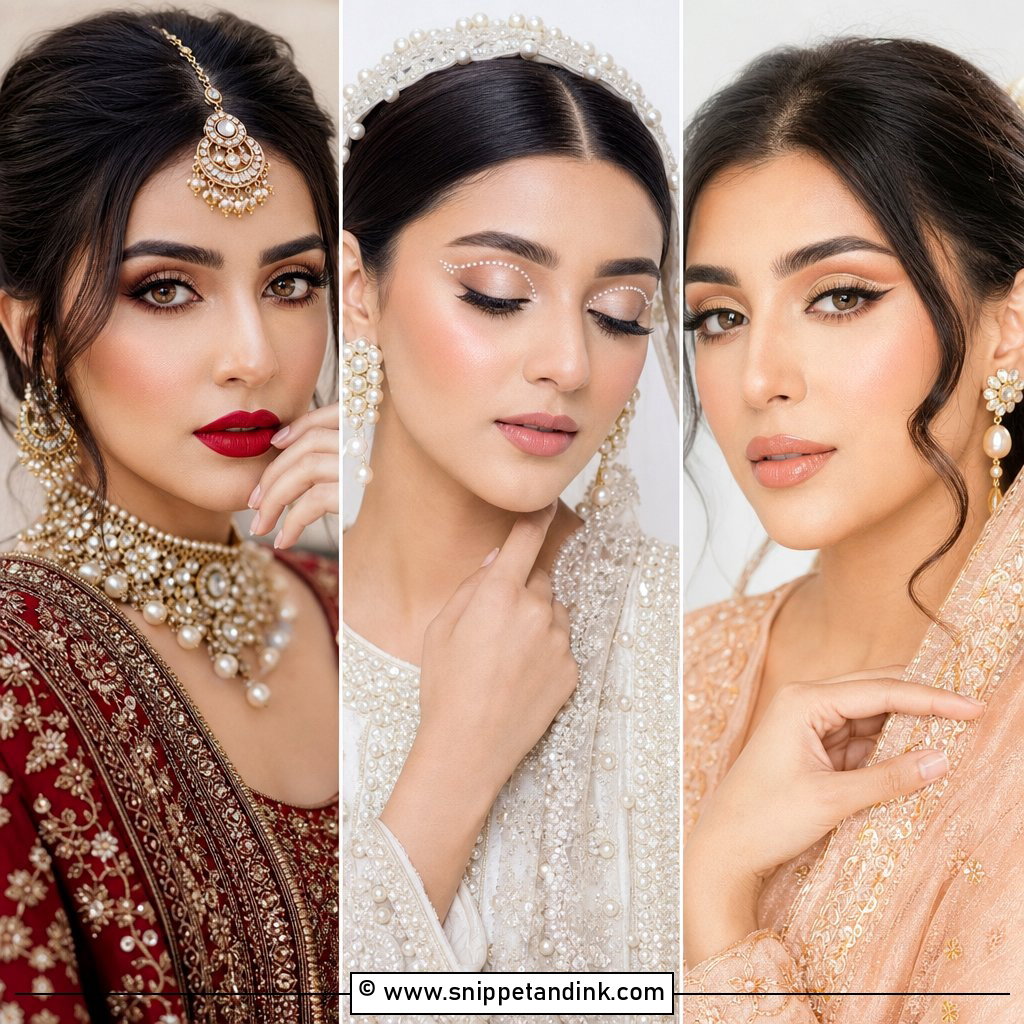
Peach is warmer and lighter than pink and less bold than red. Peach shadow, apricot blush, a warm highlight and a peachy nude lip suit gold jewelry and outdoor light. It flatters light, medium, olive and tan skin; deeper skin wears it best in richer coral-peach. I’d steer very cool, pink-toned skin away from orange-leaning peach, because it can make redness look stronger. Brown liner and wispy lashes keep the eyes defined.
13. Rose Gold Bridal Makeup
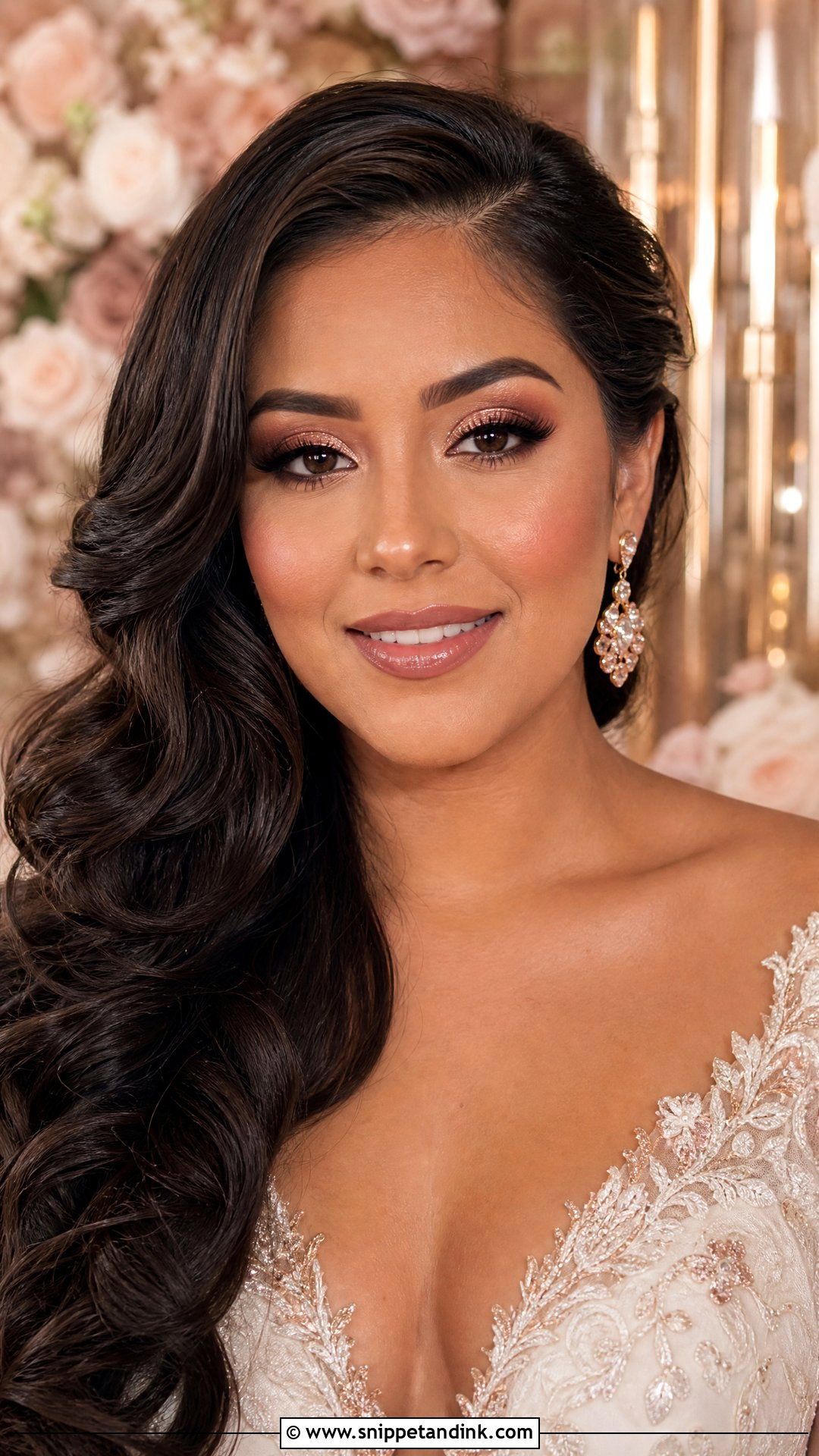
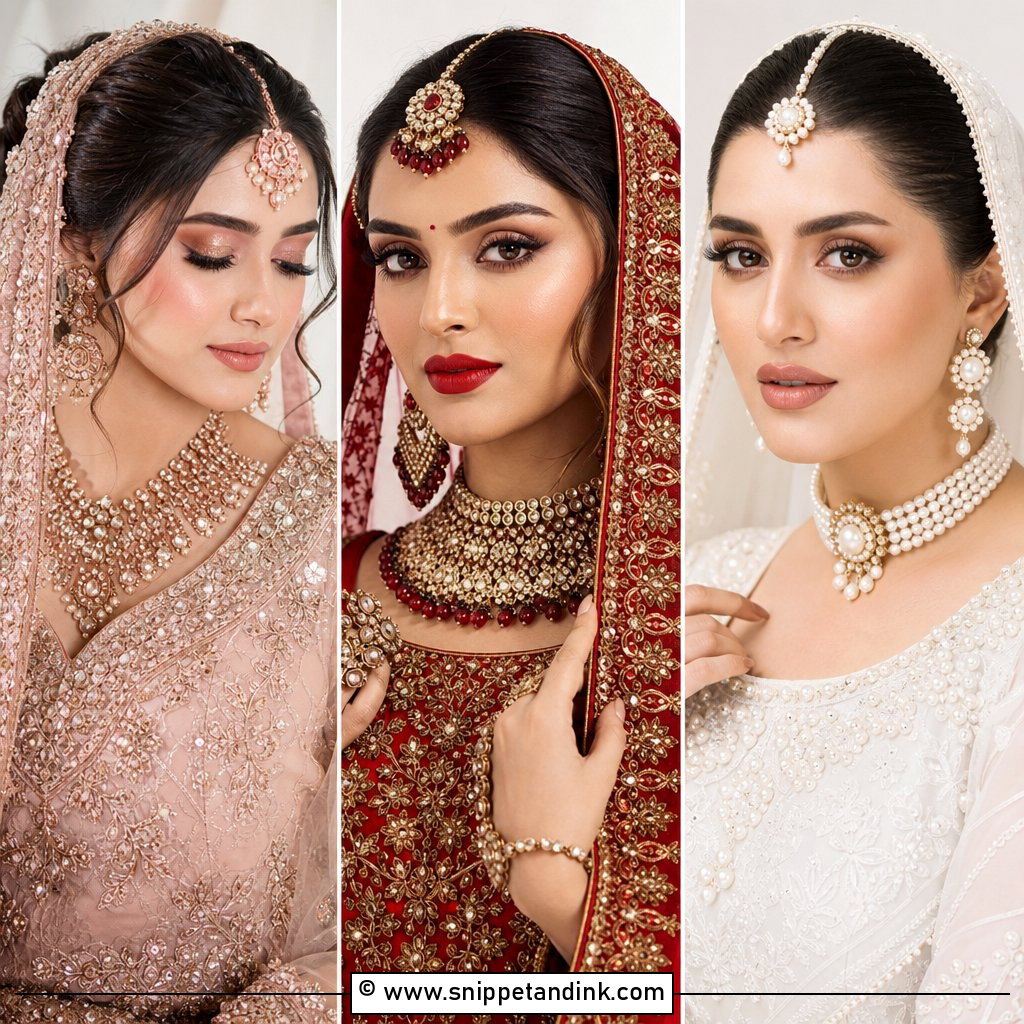
Rose gold sits between pink and bronze. On the eyes it means rose, copper-pink or golden-pink shimmer blended with soft brown; on the face, a rosy blush and pink-gold highlight. The thing I watch is shimmer size. Fine shimmer reflects light and brightens the eyes, but chunky glitter settles into lines and texture and looks rough in close-up photos. It pairs well with rose gold jewelry and blush dresses.
14. Red Lip Bridal Makeup
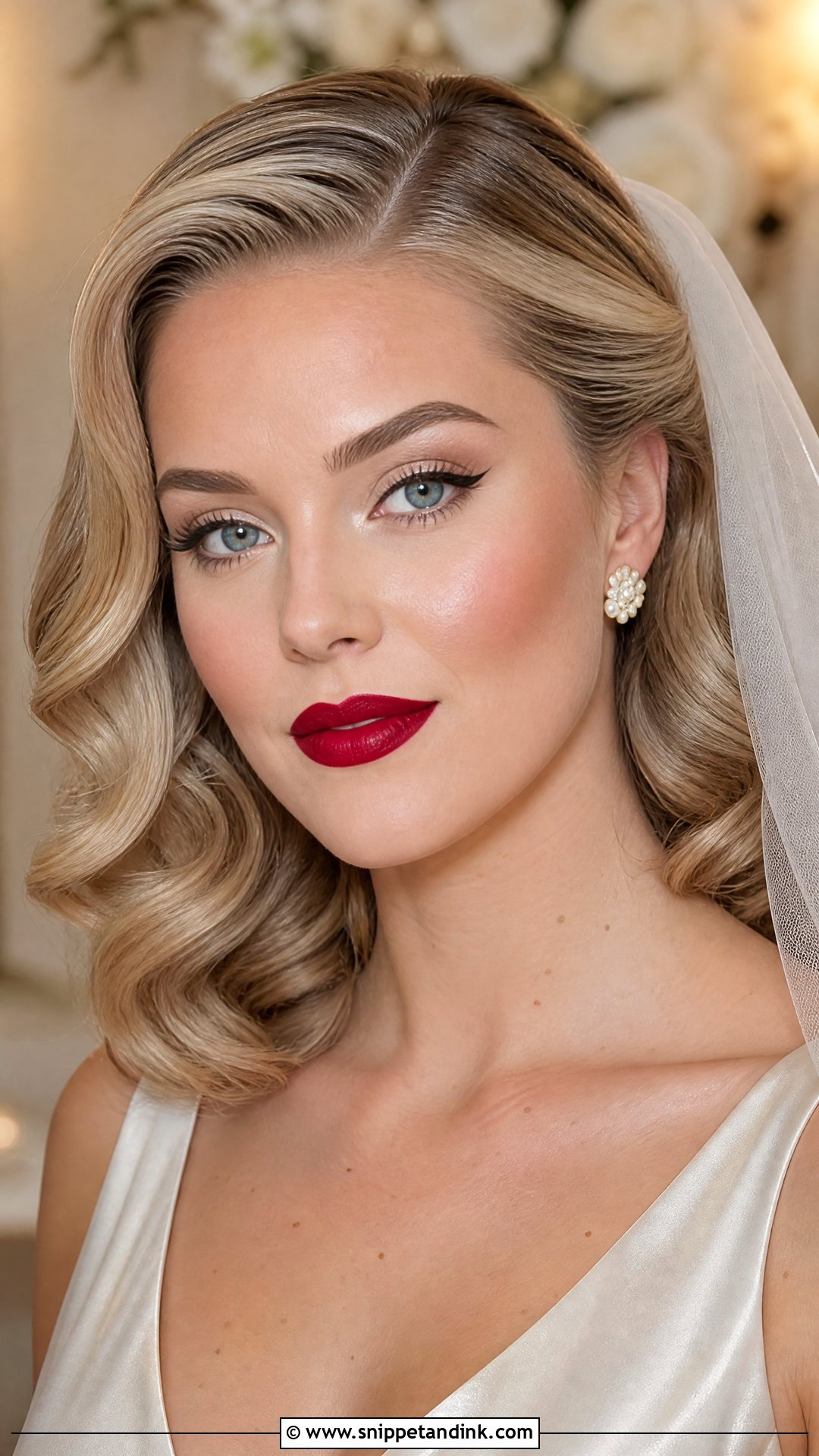
A red lip only works when everything else stays quiet: smooth skin, softly defined cheeks and simple eyes. Blue-reds look classic, orange-reds feel warm and lively, and deeper reds suit richer skin. A long-wear lip liner applied over the whole lip before the lipstick is what keeps it there through meals and greetings. Keep a liner, the lipstick and a cotton bud in your bag for touch-ups, and check your teeth before every photo.
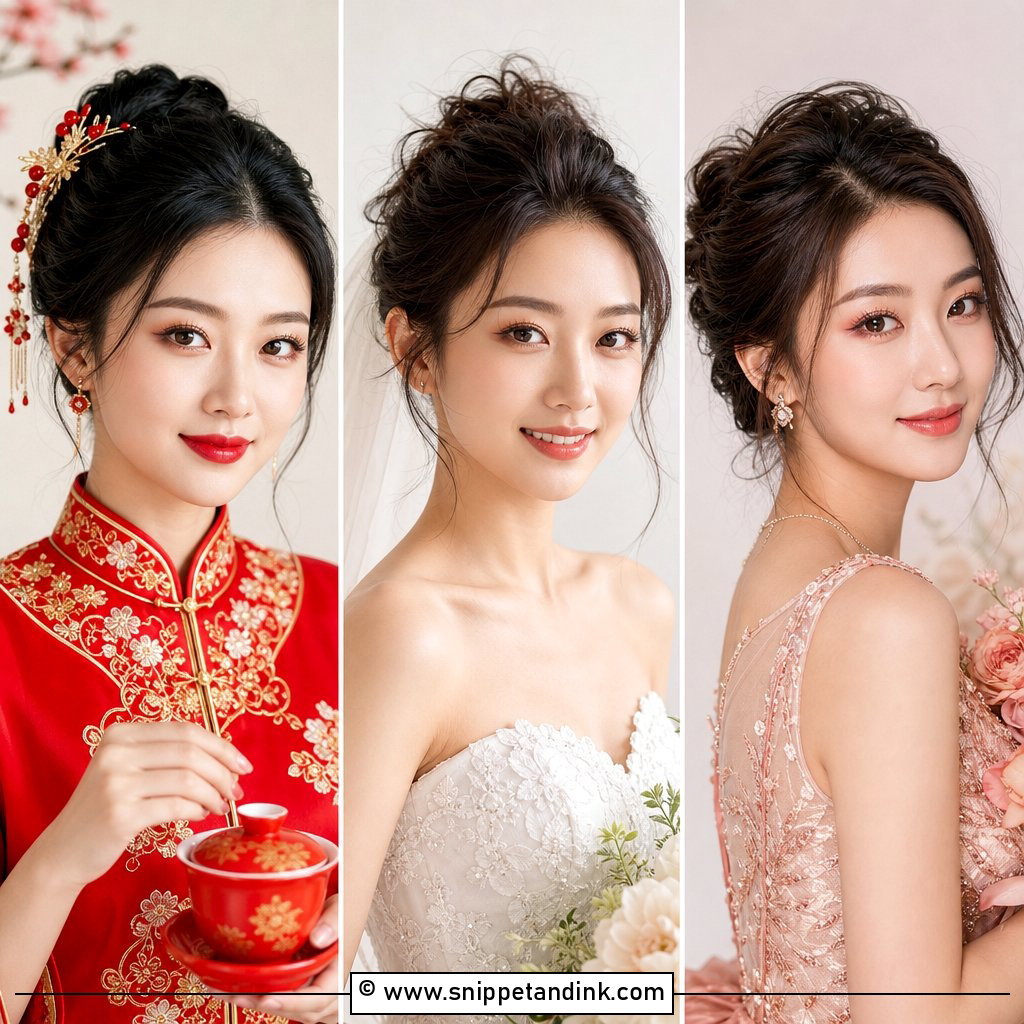
15. Winged Liner Bridal Makeup
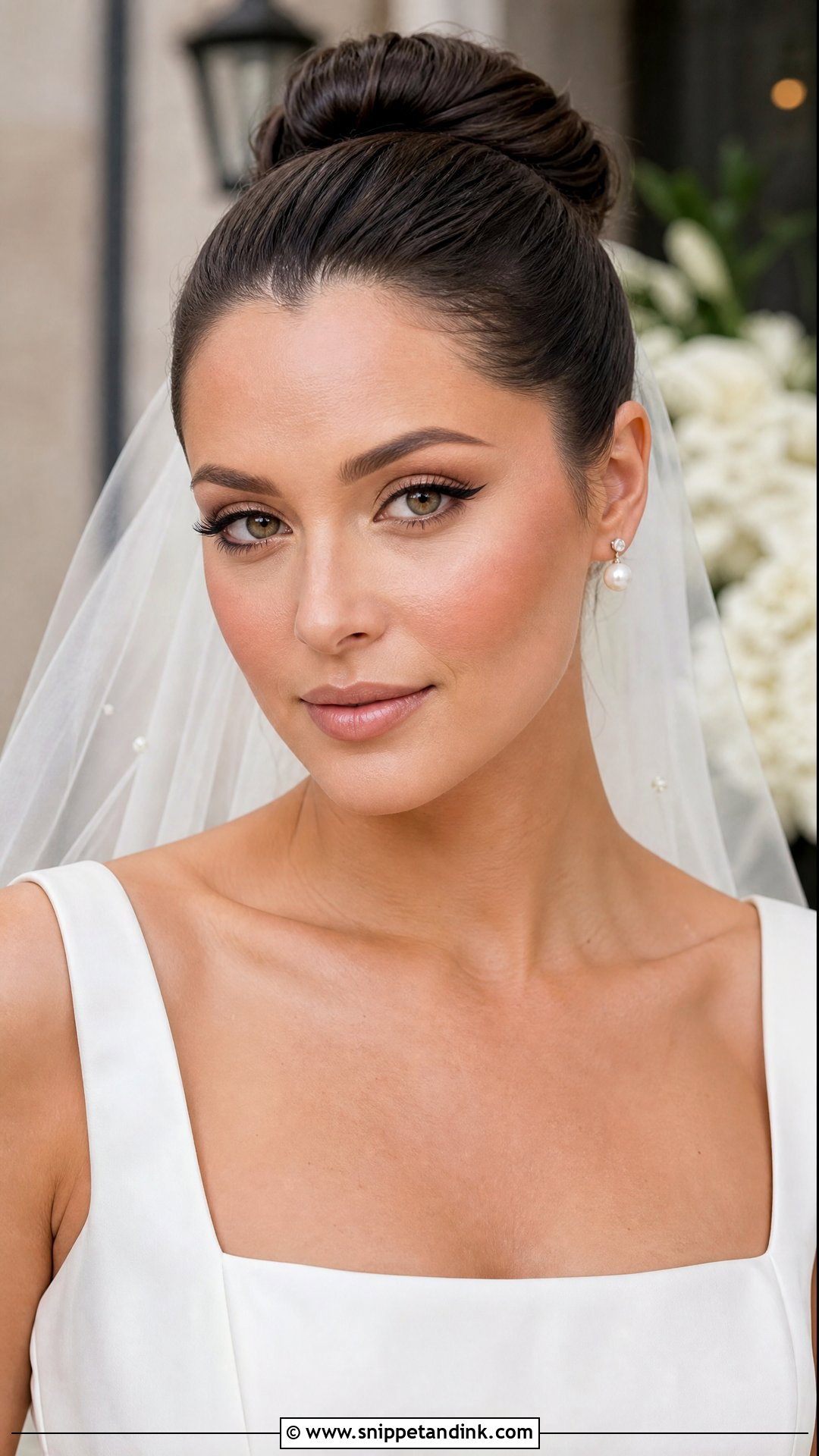
A wing lifts the eye and makes the lash line look fuller in photos. Its thickness changes the mood: thin reads modern, thicker reads vintage. Brown liner is softer, black gives sharper contrast. The rest of the face stays simple, with a nude, pink or red lip. The wing has to follow your eye shape. On hooded eyes I draw it with the eye open, looking straight ahead, otherwise it folds and disappears once you open your eyes.
16. Brown Smokey Bridal Makeup
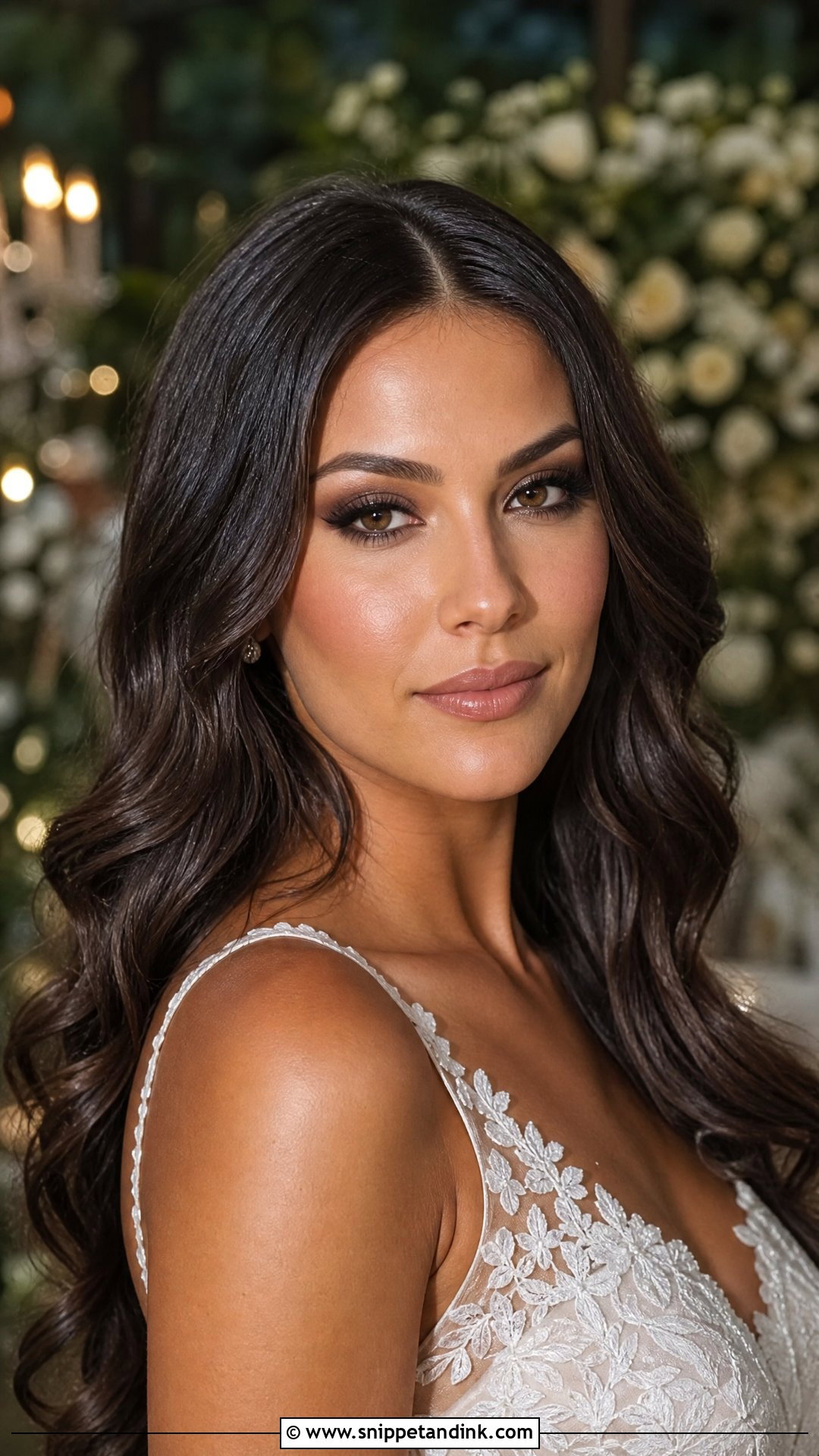
Brown smoky eyes give depth without the intensity of black. Chocolate, espresso, caramel and bronze shades define the eye in a warm way, and the skin can be satin or glowing with bronzer and neutral blush. A nude brown, mauve or rosy lip balances it. It suits nearly every eye color; blue and green eyes look especially bright against warm brown because of the contrast.
17. Champagne Bridal Makeup
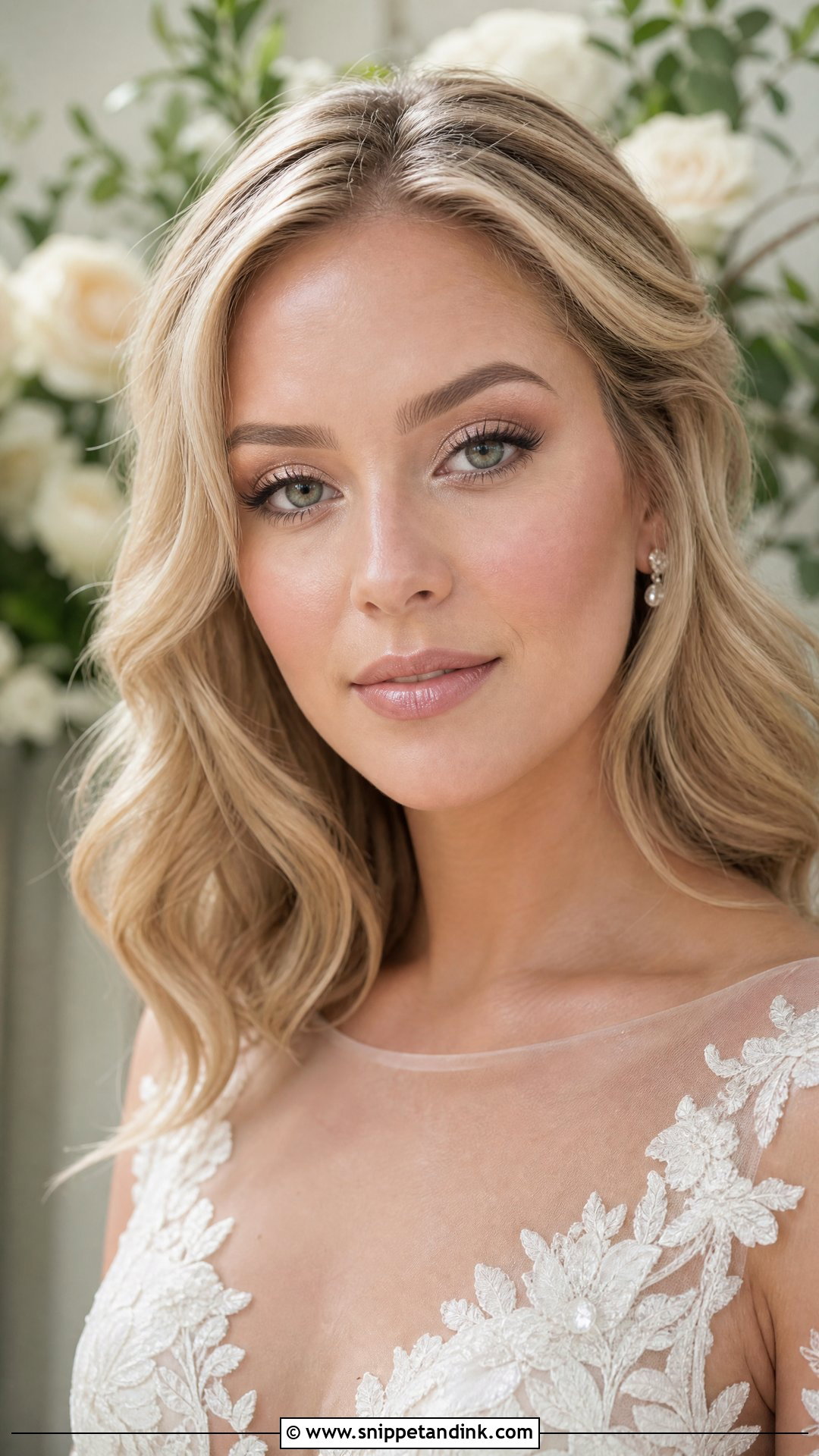
Champagne shimmer on the lid or inner corner opens the eyes, especially in daytime light. I pair it with soft brown in the crease, fluttery lashes, a satin base and a nude pink or peach lip. It is one I often suggest for mature brides, because a small amount of shimmer placed only in the center of the lid brightens without highlighting texture on the crease or under the brow.
18. Mauve Bridal Makeup
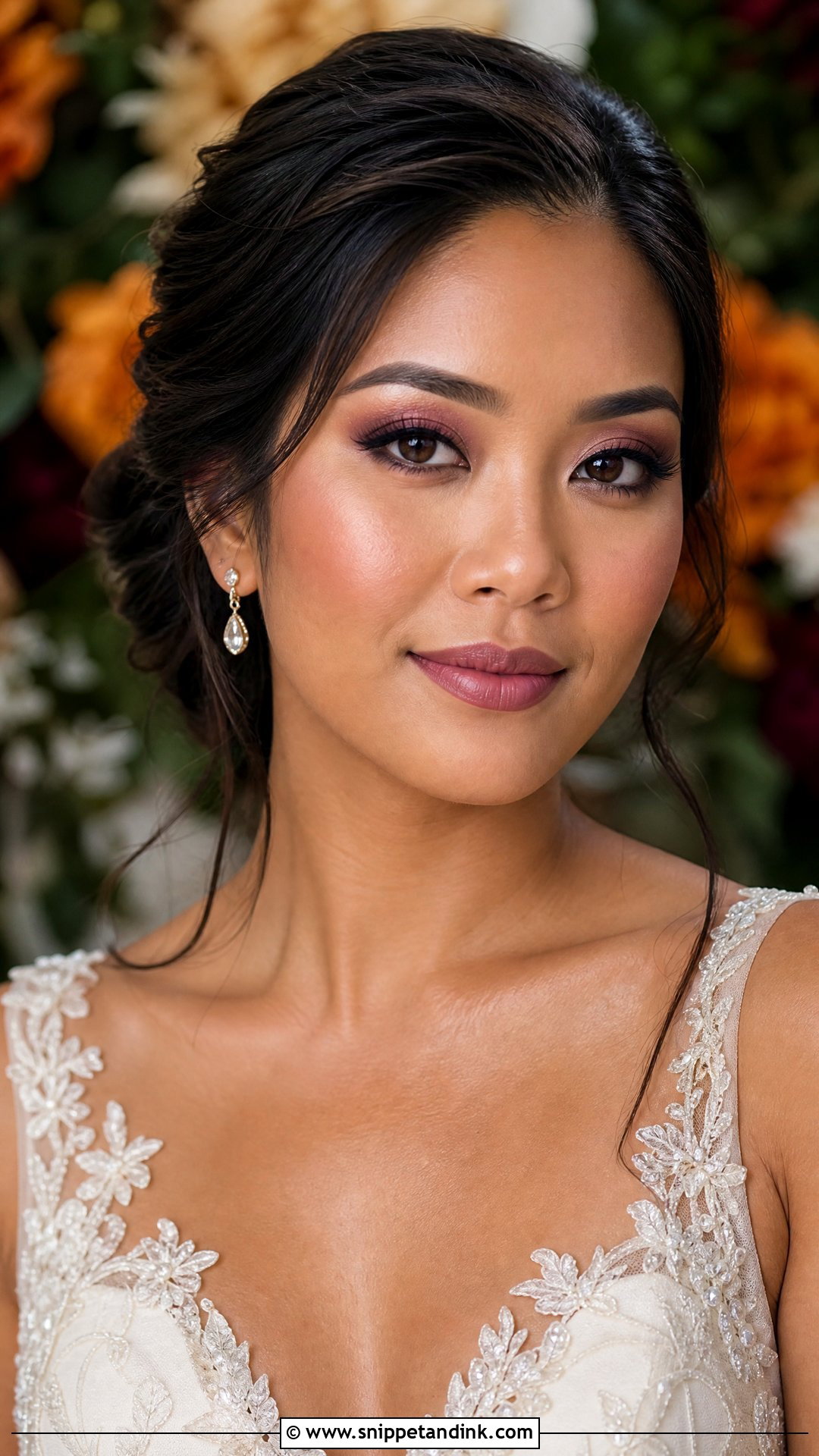
Mauve bridal makeup is a little moodier than pink, using dusty rose, taupe-mauve and plum-brown across the eyes, cheeks and lips. It suits fall weddings and evening receptions. Cool and neutral undertones wear it easily; on olive and tan skin I use warmer mauves so the skin doesn’t look grey. A mauve lip liner under a creamy lipstick or gloss keeps the shape clean.
19. Glossy Bridal Makeup
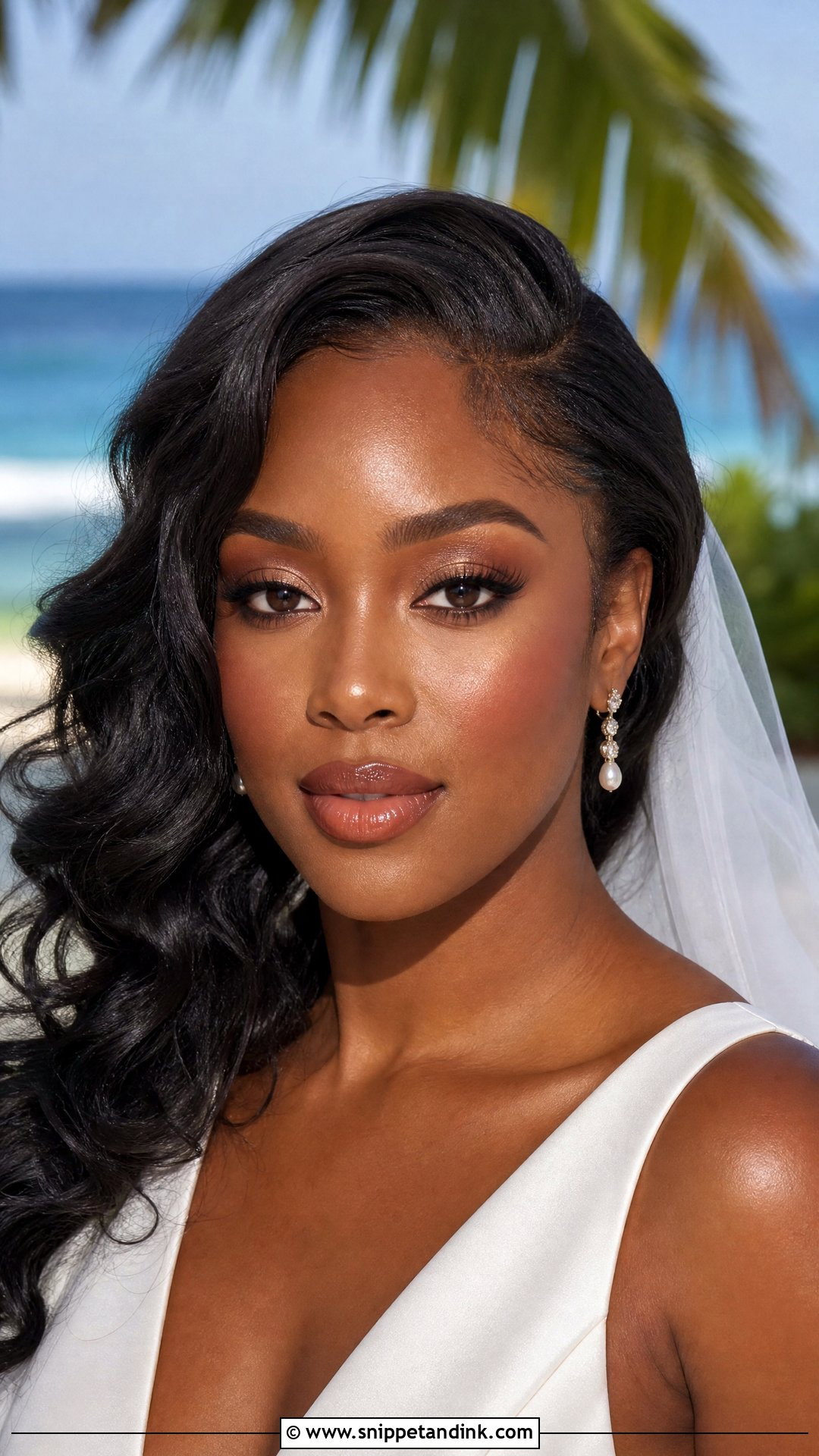
Glossy makeup means hydrated skin, shiny lips and light-reflecting points rather than heavy powder. A sheer base, cream blush, soft eye shimmer and clear or tinted gloss make up the look. Gloss is the least durable lip product there is, so I place it on top of a long-wear stain or liner; when the shine wears off, the color stays. I powder the T-zone lightly so the glow stays where we want it. Spring, beach and relaxed garden weddings suit it.
20. Minimal Bridal Makeup
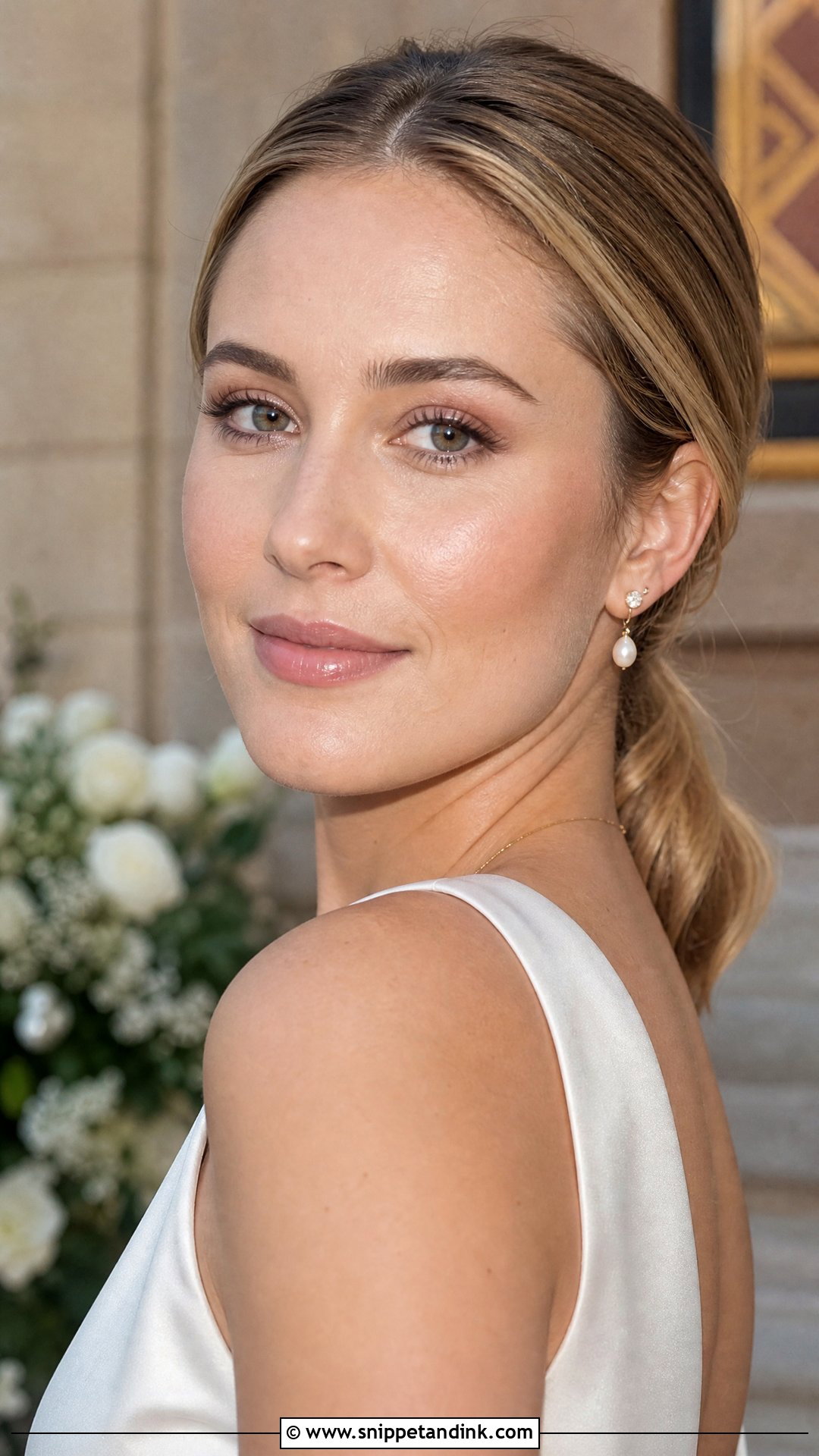
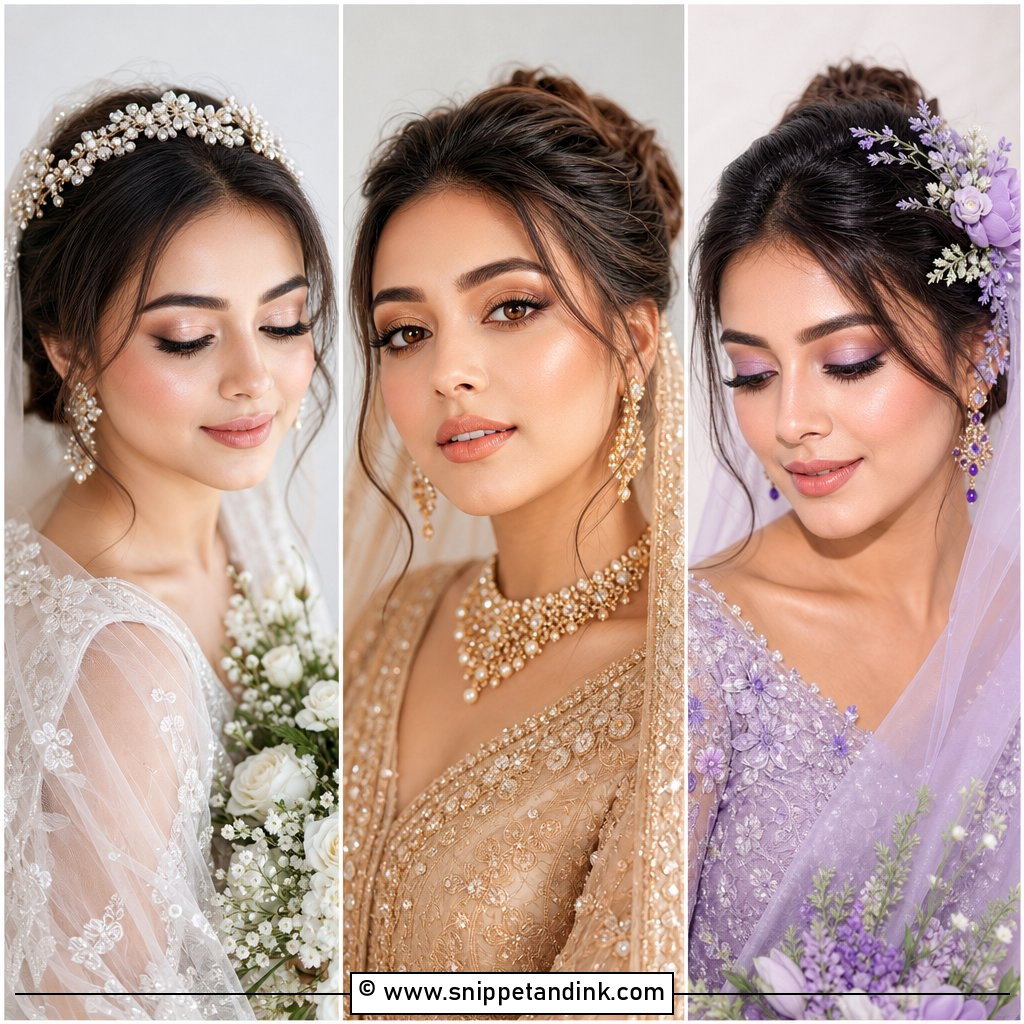
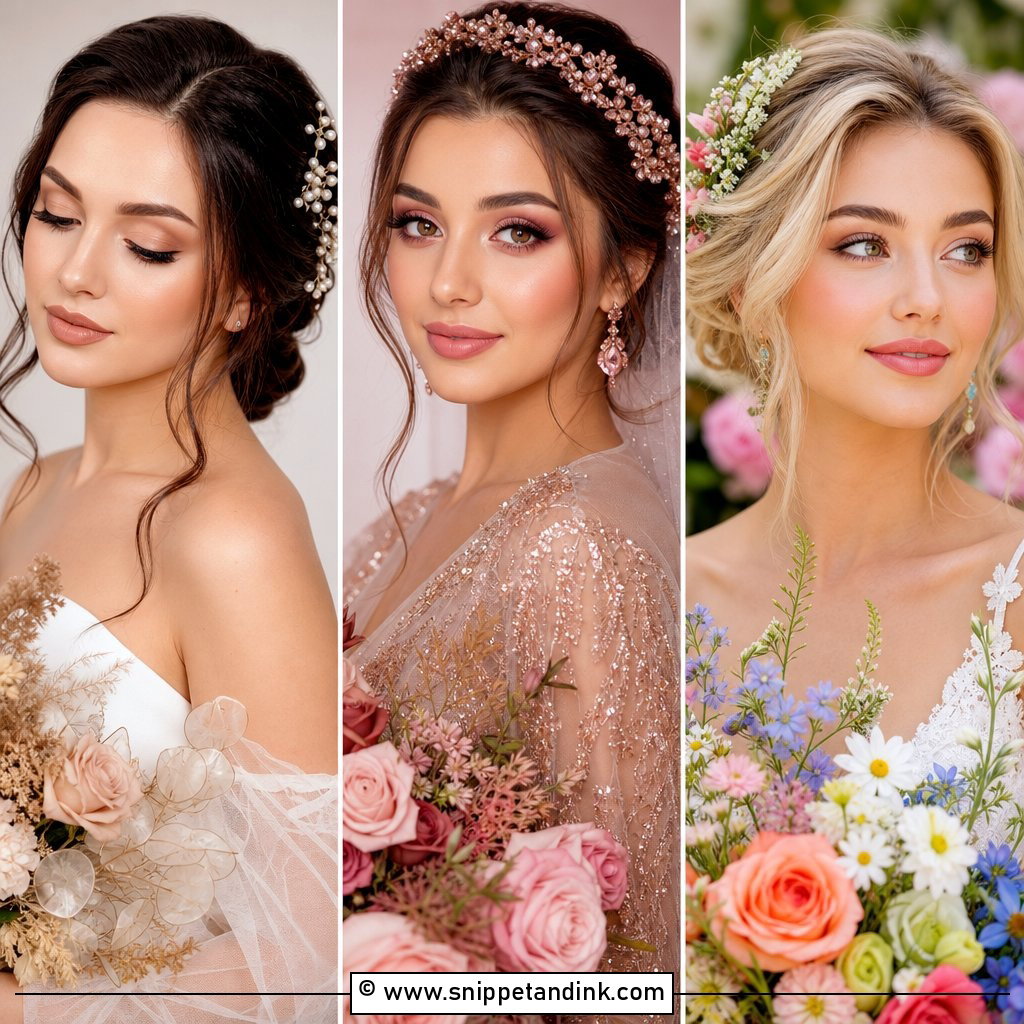
Minimal makeup is not unfinished makeup. It needs the most careful skin prep, precise concealing and blending of any look on this list, because nothing is there to hide mistakes. The base is sheer, brows are brushed and shaped, lashes lifted, cheeks lightly flushed and the lip close to its natural color. I’d still use waterproof mascara and long-wear concealer. It suits small ceremonies, modern dresses and brides who hate the feel of heavy products.
Flash, Daylight and the Early Evening Touch-Up
A bridal face is judged mostly in photographs, so I plan for the camera as much as the mirror.
- Some sunscreens and very fine white setting powders can reflect flash and leave a pale cast under the eyes. I test the exact base with a flash photo at the trial.
- Daylight shows texture and color edges; indoor warm light hides them but flattens contour. Check the trial makeup in both.
- Heavy shimmer on the forehead or nose reads as sweat in photos. Glow belongs on the cheekbones and inner eyes.
- Lip color looks lighter on camera than in person, so I often take a lip one shade deeper than the bride would pick at a counter.
Then plan the touch-up. Most makeup needs one quick refresh, usually after dinner and before the evening photos. Pack a small kit: blotting papers, a pressed powder, the exact lip liner and lipstick, a cotton bud and a tiny concealer. Hand it to a bridesmaid, because the dress rarely has a pocket big enough.
Wear the Trial Face Until Dinner, Then Decide
Trends give you words for what you like, but your skin type, undertone, dress and venue should decide the final face. Book a trial, wear the makeup for the rest of that day, and photograph it in daylight and with flash. Most of the fine-tuning happens after that: a softer lash, a deeper lip, more or less powder. Those small adjustments are what make the look last and still feel like yours.
You'll Like These Ideas:


Leave a Reply