
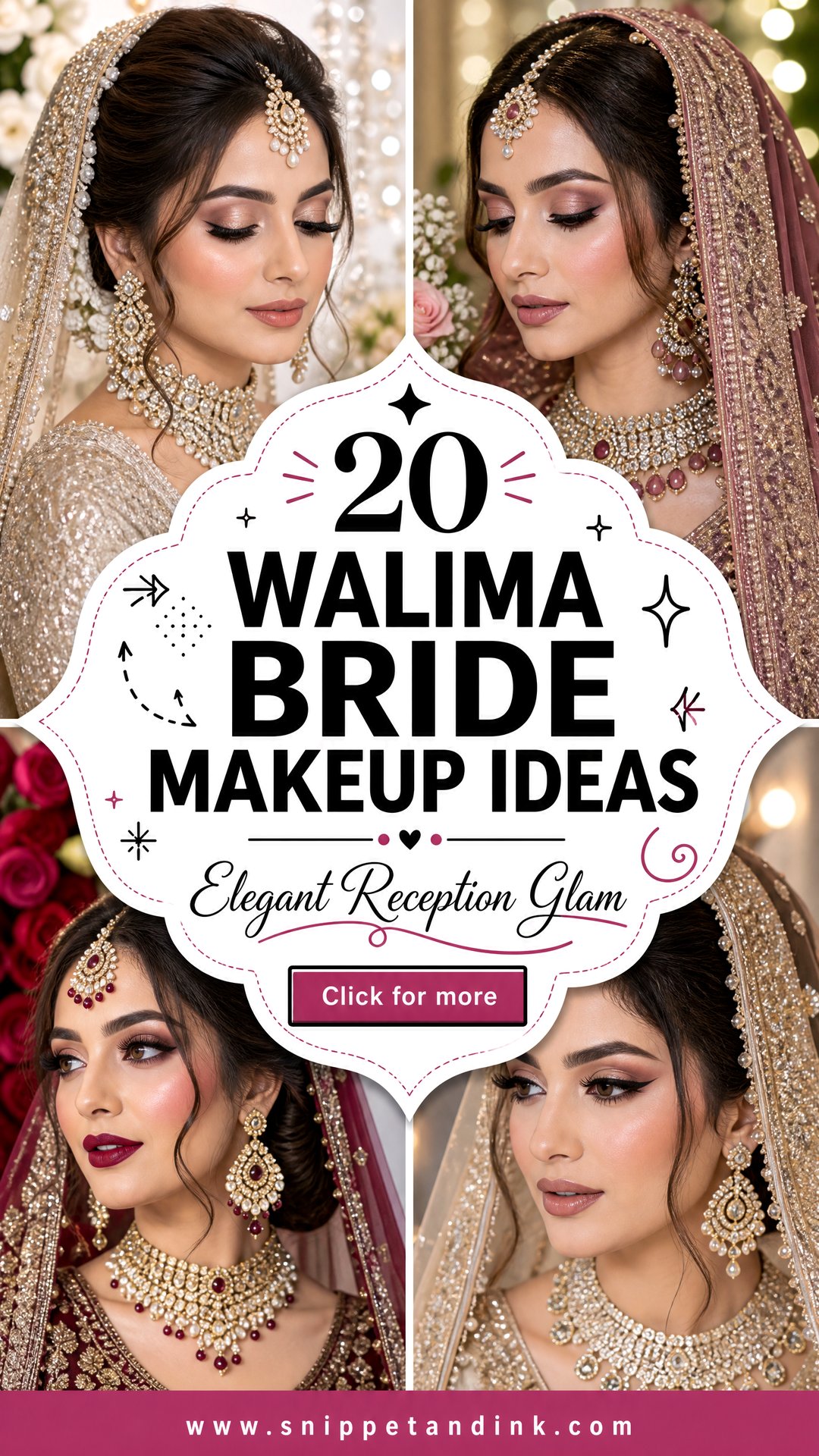
A Walima face is usually a step lighter than the Barat one, but it still has to hold up under stage lights, a photographer’s flash and several hours of greeting guests. When I plan a reception look, I start from the outfit colour and the venue lighting, then decide where the face should carry the glow: skin, eyes or lips, rarely all three. Pastel, champagne, ivory, silver and powder-blue outfits each pull the palette in a different direction, so the twenty looks below are grouped around finish and colour rather than trend. Some lean on classic Pakistani bridal beauty, others are lighter reception glam, and I’ve noted who each one suits and who should skip it.
The Day After the Barat: Resetting Your Skin for Round Two
Most Walima receptions fall a day or two after the Barat, and the skin I work on is rarely the skin I saw at the trial. Heavy foundation, long hours, tears and a late night all show up as dullness, dryness around the nose and sometimes small breakouts along the jaw where the dupatta rubbed. I plan the Walima face around that, not against it.
The single most useful thing a bride can do is remove the Barat makeup properly that night. I recommend an oil or balm cleanser first to break down long-wear base and waterproof mascara, then a gentle second cleanse. Skip anything new: no peel, no fresh active serum, no face mask you’ve never tried. The day of the Walima, I’d rather see a plain moisturiser and a well-rested face than any treatment.
- Drink water and sleep as much as the schedule allows; dehydrated skin takes foundation unevenly.
- Tell me about any spot or irritation when I arrive, so I can colour-correct it rather than pile base on top.
- If your eyes are puffy, a cold compress before I start helps more than extra concealer.
- Leave lip balm on while I do the base, so the lips are smooth by the time colour goes on.
This is also why I usually go lighter on the base for the second night. Thinner layers sit better on tired skin and are far less likely to crack around the mouth by the end of the evening.
1. Soft Glam Walima Bride Makeup
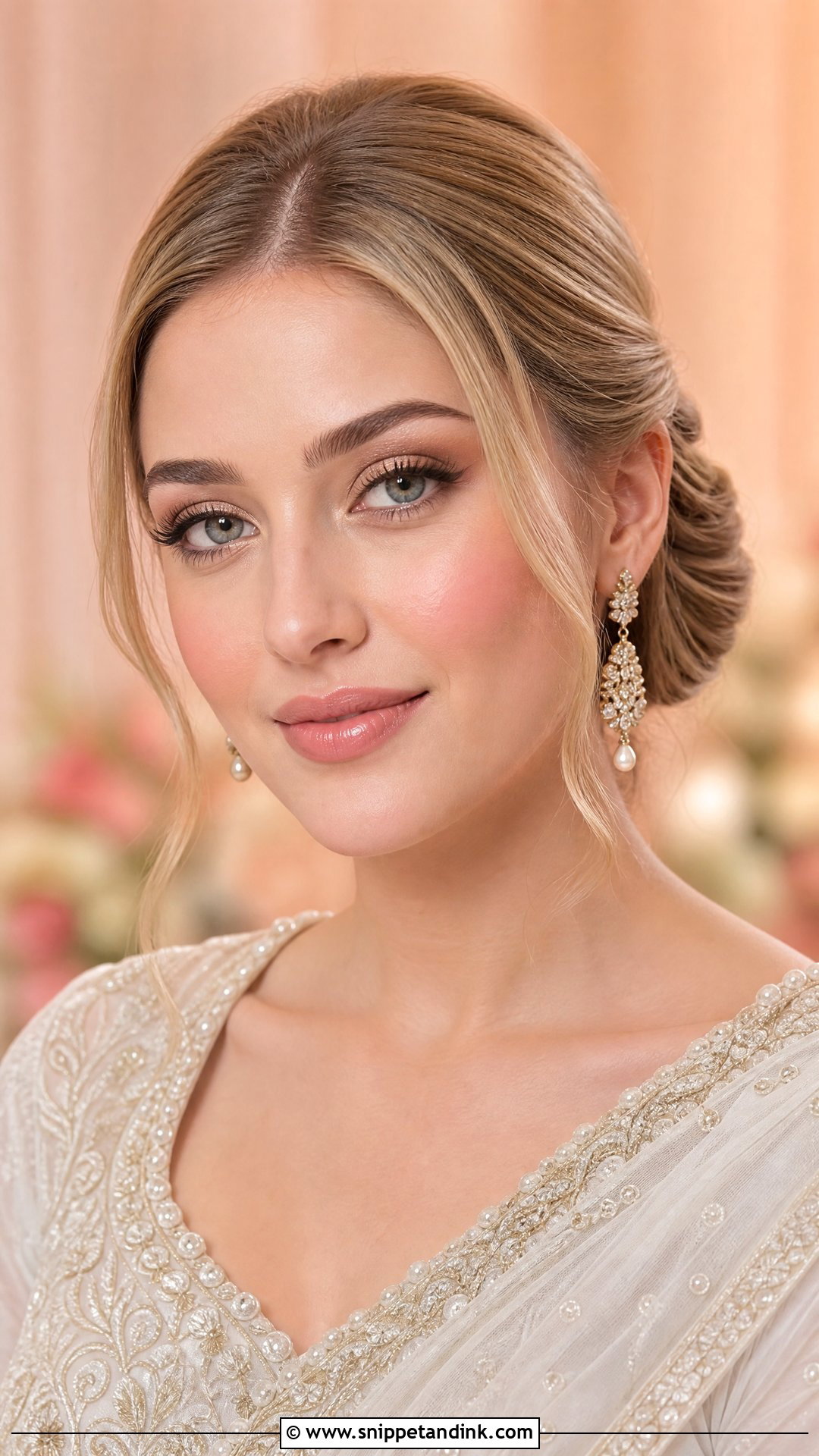
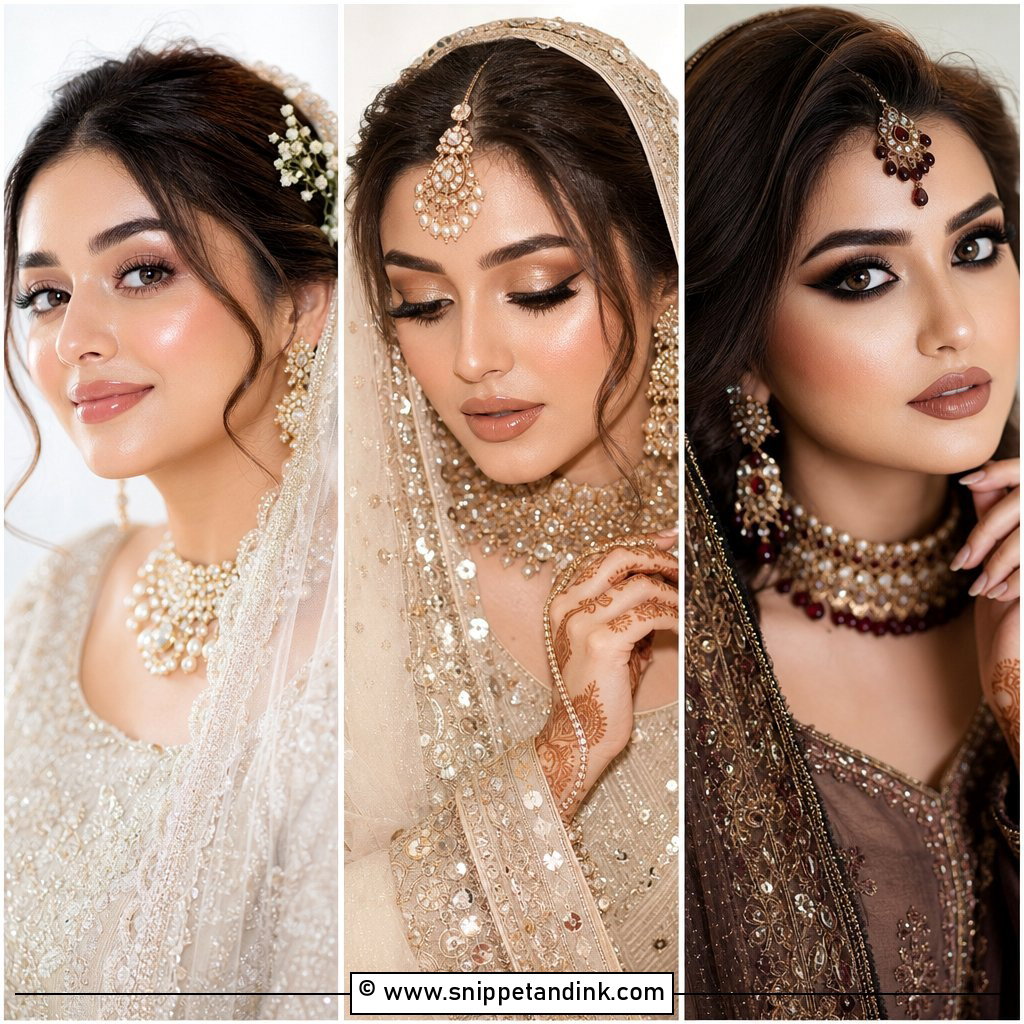
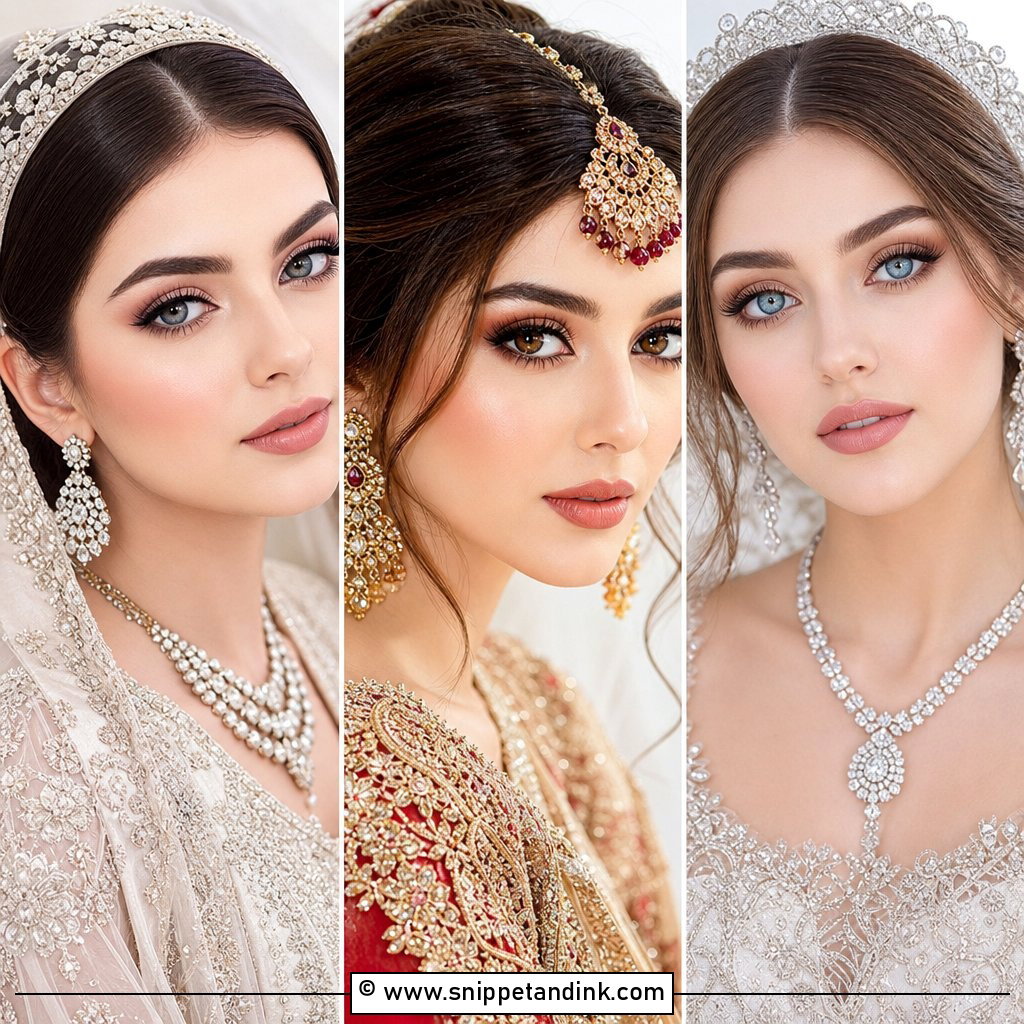
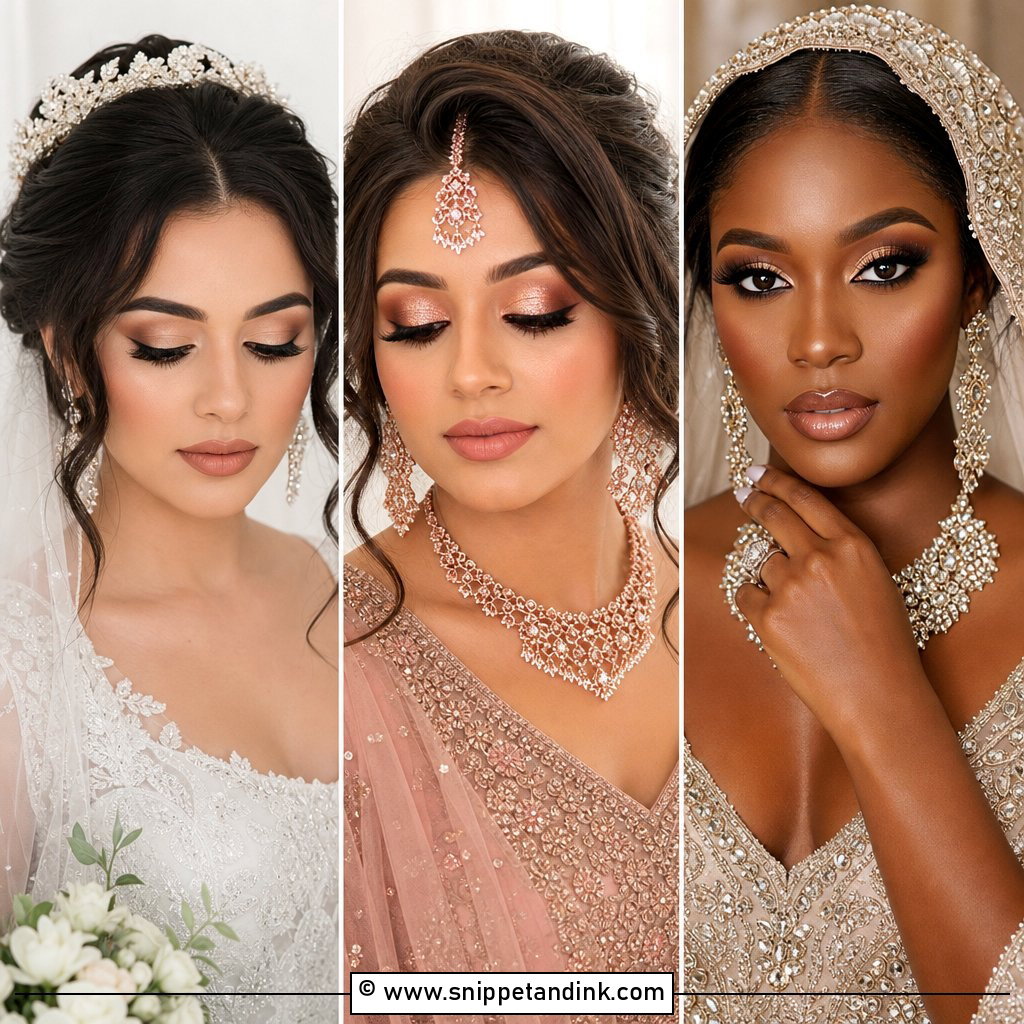
Soft glam is the look I reach for most often after a heavy Barat, because it reads bridal without needing much coverage. I build it on a satin or soft-matte base, with champagne shimmer pressed onto the centre of the lid and brown liner instead of black so the eye is defined but not sharp. A peach-pink blush keeps the face warm. The thing I watch for is under-eye concealer: after a late Barat night it creases easily, so I use less than you’d expect and set it with a very fine powder. It sits well with ivory, blush and gold outfits.
2. Dewy Walima Bride Makeup
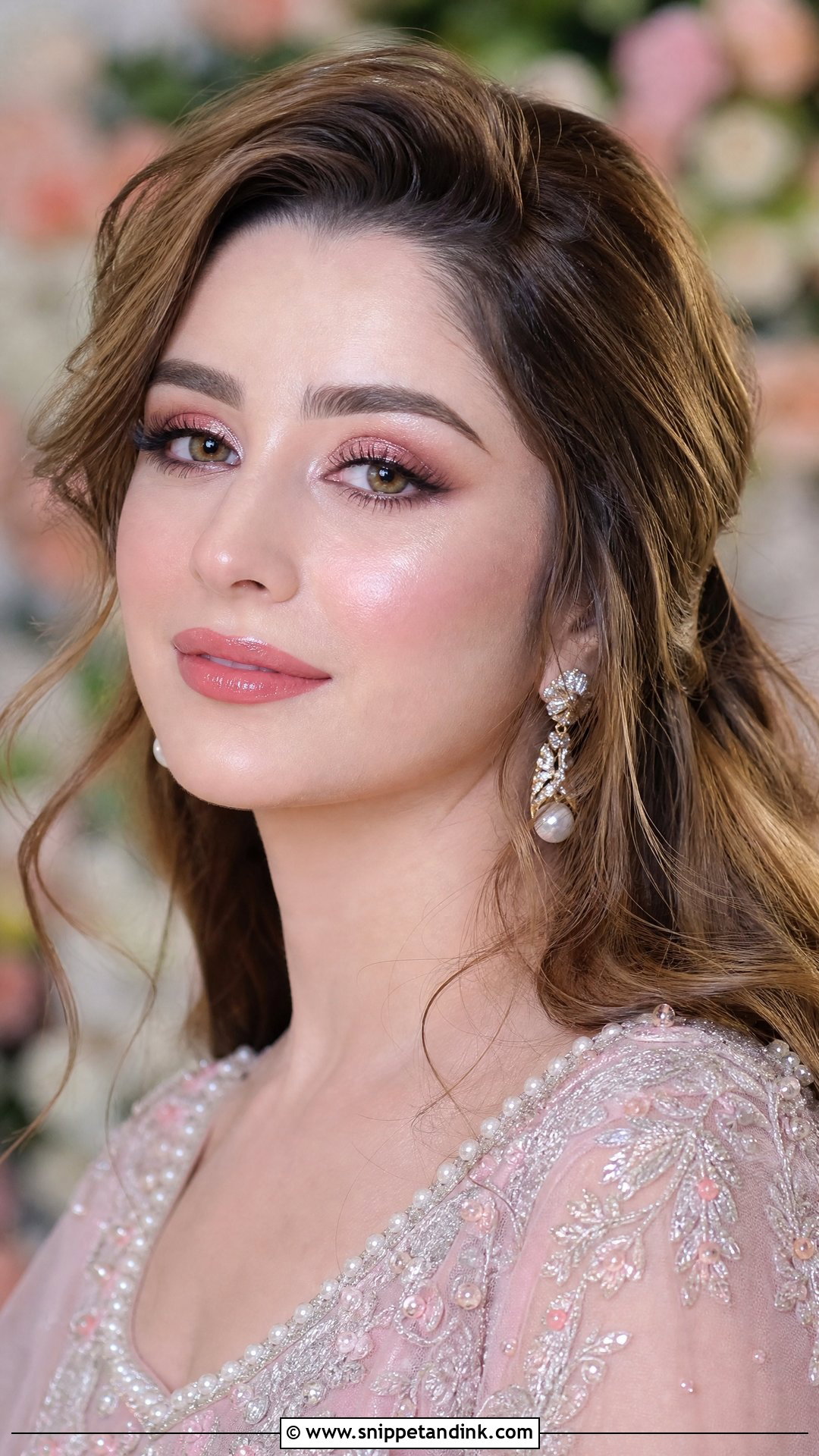
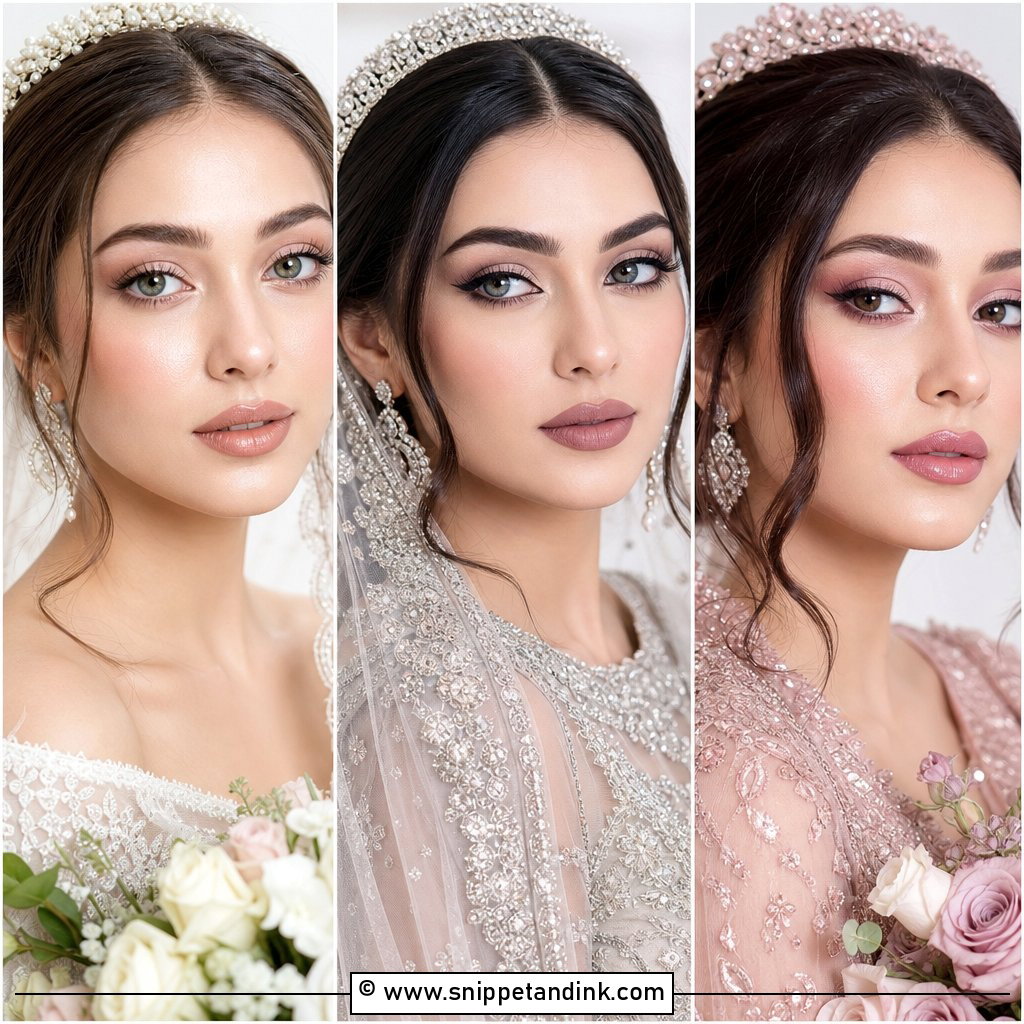
A dewy finish is about controlled shine, and the control is where most people go wrong. I use a long-wear foundation with a natural glow, then powder only the centre of the face, the sides of the nose and the chin, leaving the cheekbones to catch light. Highlight goes on the cheekbones, nose bridge, brow bone and inner corners and nowhere else. Rose shadow, wispy lashes and brushed brows keep it delicate, and a glossy nude lip finishes it. I’d steer an oily-skinned bride away from this unless the venue is air-conditioned, because by the second hour the glow turns into a sheen. It suits pastel pink, mint, lilac and powder-blue outfits best.
3. Matte Walima Bride Makeup
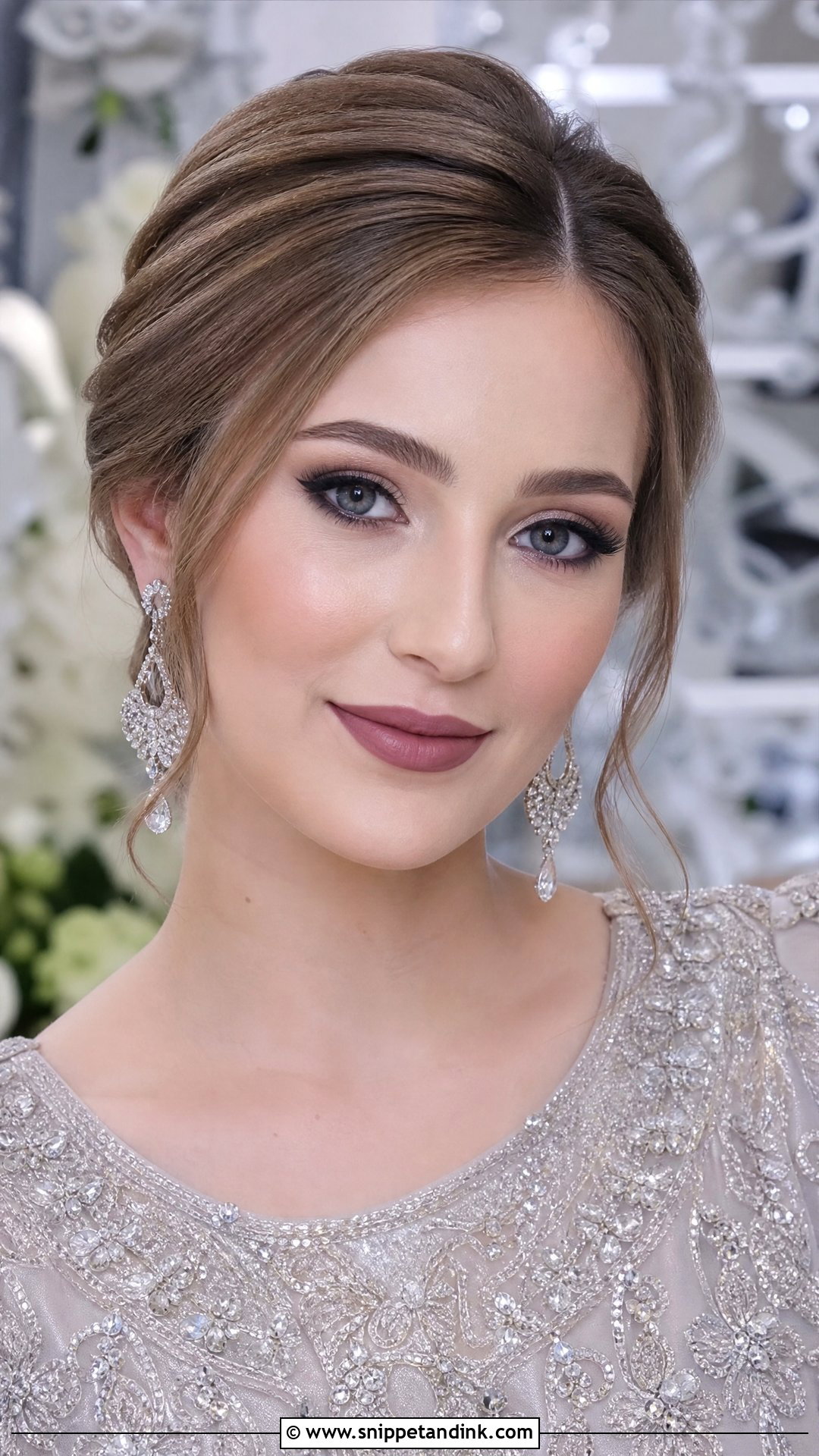
Modern matte should look blurred, not flat, and that difference comes down to how thinly the base goes on. I work a soft-matte foundation in thin layers, set under the eyes with a finely milled powder, and sculpt gently along the cheeks and jaw. Taupe, beige and warm brown shadows give depth, with a thin wing and a muted mauve lip for balance. Oily and combination skin holds this finish longest. On dry or mature skin I’d add a hydrating primer first, because matte foundation clings to any dry patch and shows it under flash. Heavily embellished dresses pair well here since the face stays calm against all that work.
4. Pink Walima Bride Makeup
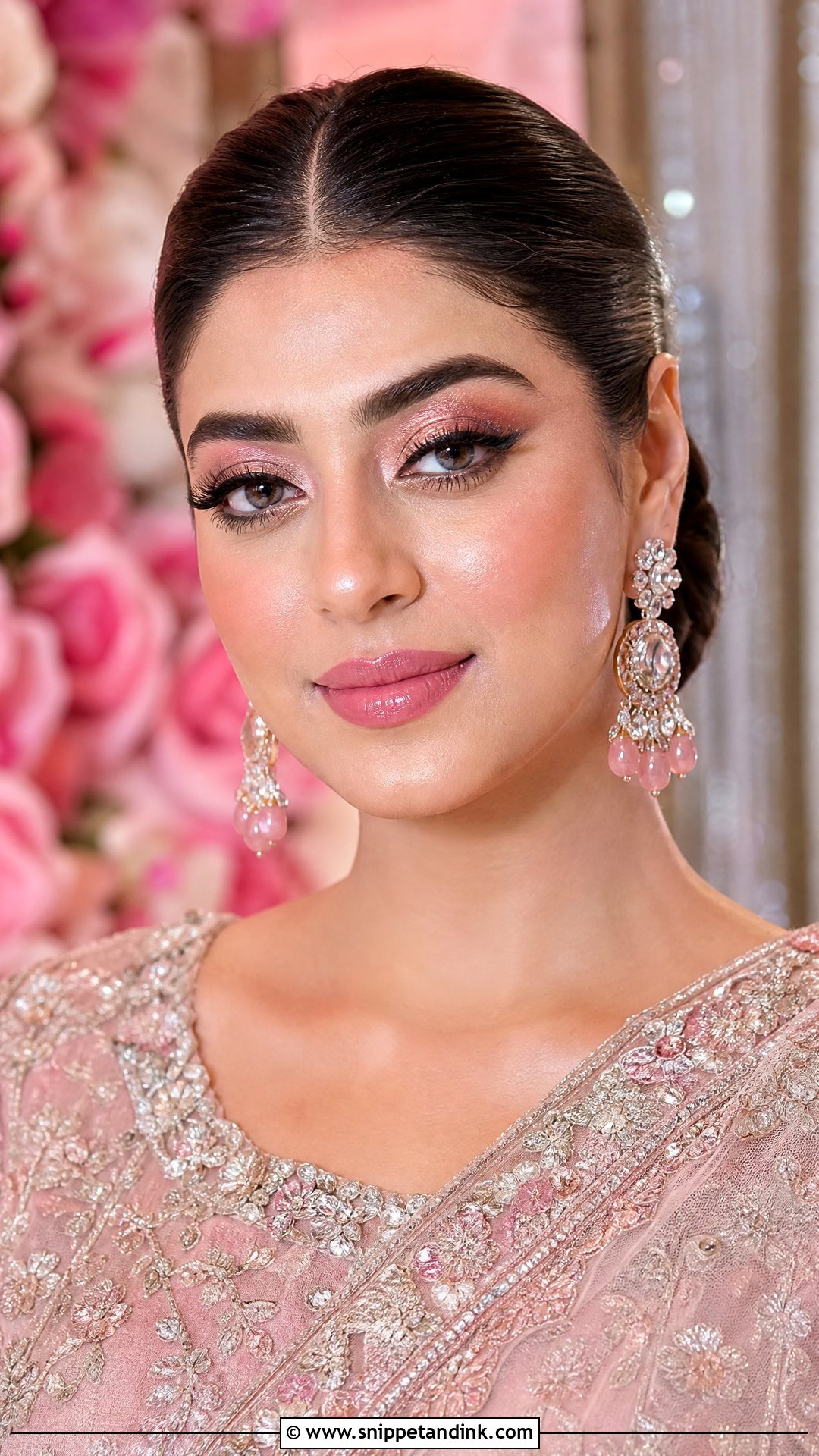
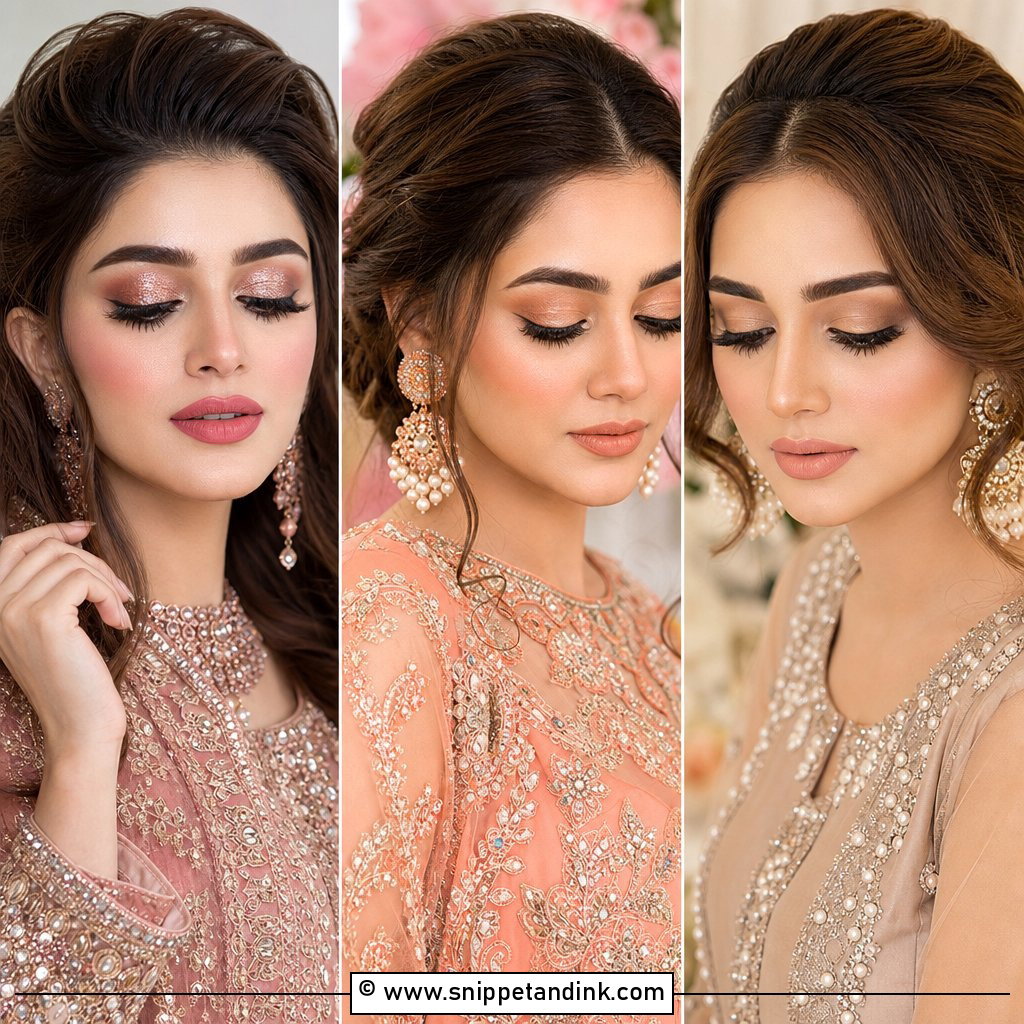
Pink works best when the tones repeat softly across eyes, cheeks and lips instead of sitting in one bright spot. I put blush-pink shadow on the lid with shimmer only at the centre, then decide on brown or black liner by how much definition the bride wants. Placing the blush high on the cheekbone lifts the face; placed too low, pink can make a tired face look puffy. A pink nude lip ties it together. On deeper skin tones I switch to berry-pink or rosewood, because pale pastel pinks can sit ashy on the skin. It pairs naturally with blush, rose gold and soft lavender outfits.
5. Peach Walima Bride Makeup
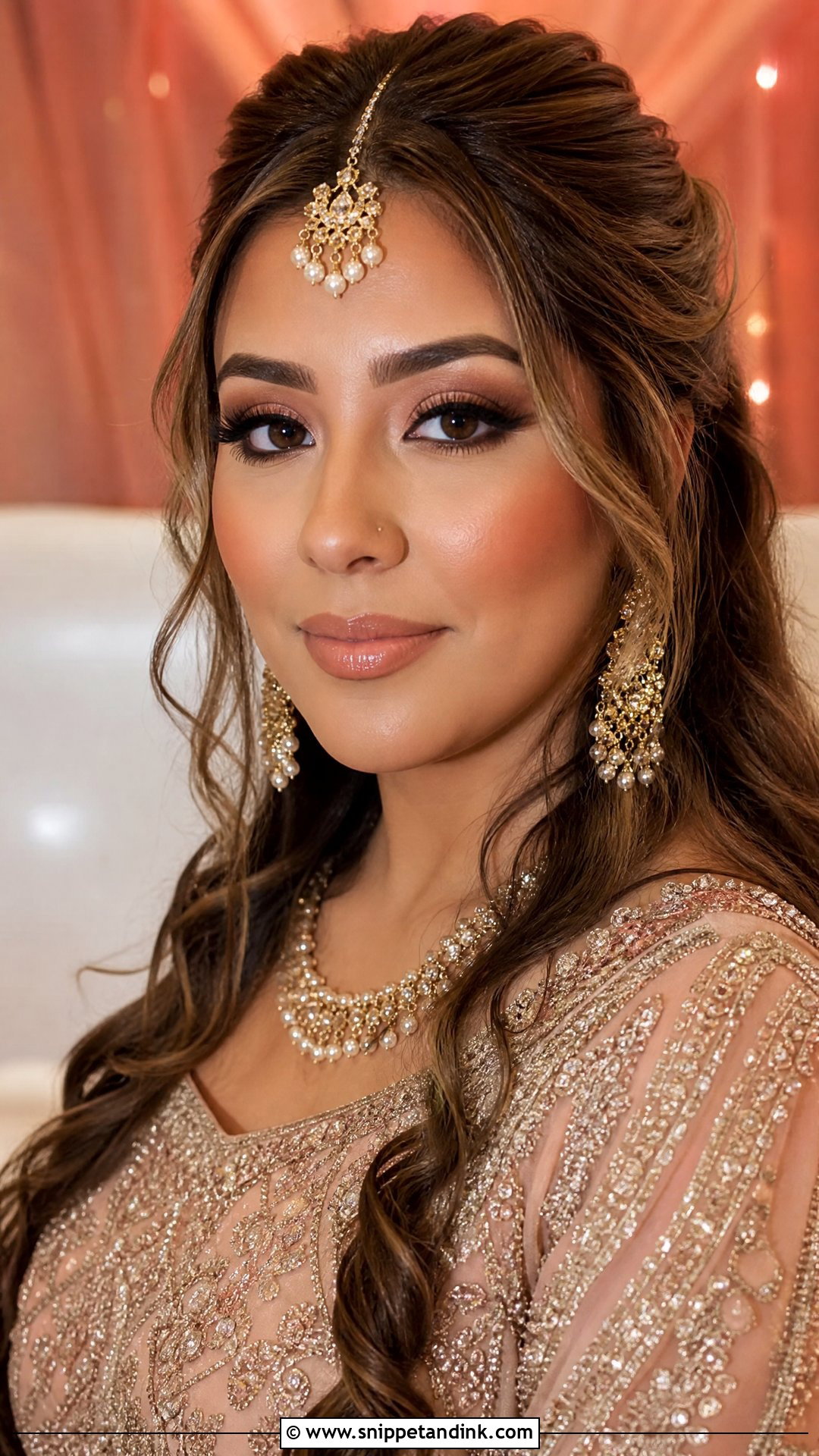
Peach flatters a wide range of undertones, which is why I suggest it for daytime receptions and outdoor portraits. I keep the complexion glowing but balanced, sweep peach and soft bronze across the eye, and add a touch of shimmer at the inner corners. A peach blush brings colour back to the face without competing with the outfit, and a satin peach-nude or coral-pink lip finishes it. The one thing I check is the lighting: peach can turn orange under warm tungsten bulbs, so for an evening hall I pull the blush slightly pinker. It’s a good choice if you want colour on the face without a bright lipstick.
6. Champagne Walima Bride Makeup
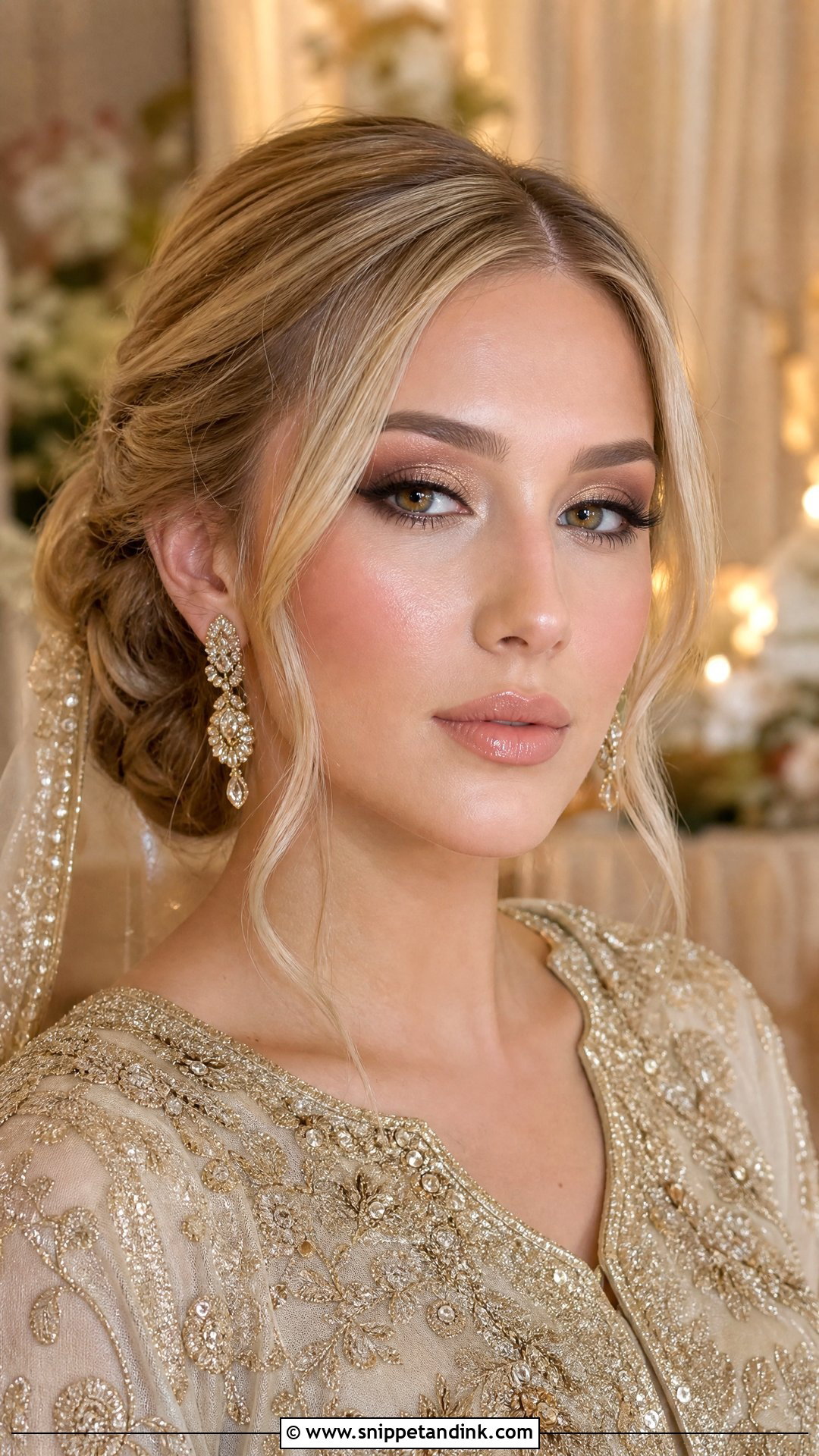
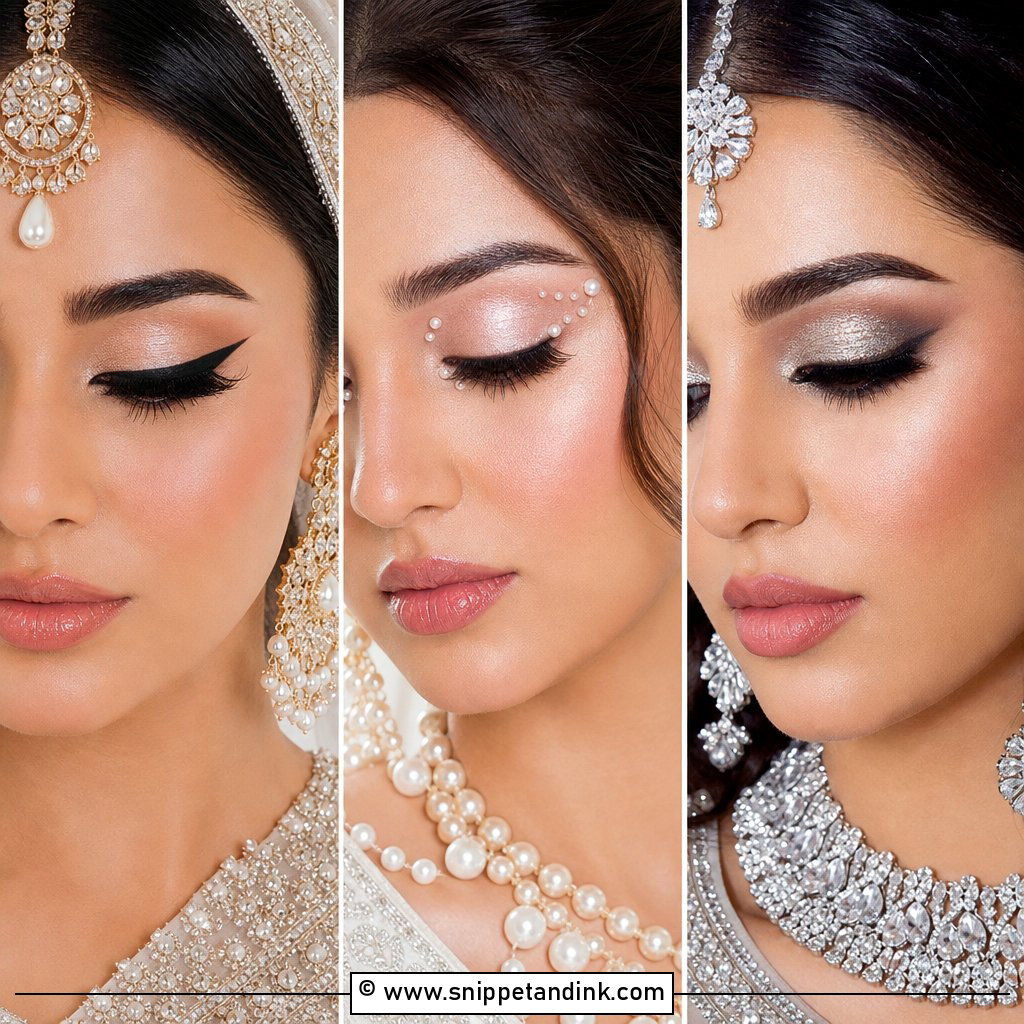
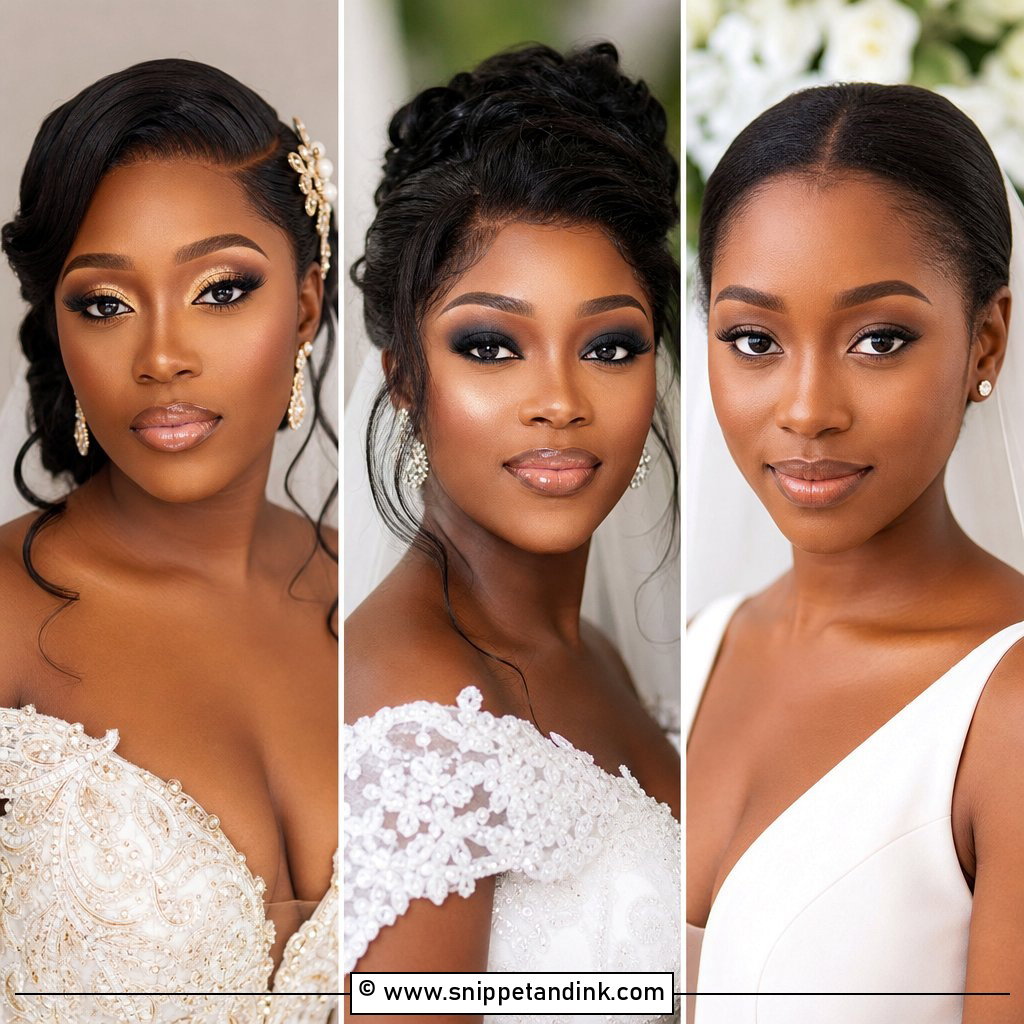
Champagne eyes are the safest match for most Walima outfits, from ivory and gold to silver and pastels. I put the shimmer on the lid, soft brown in the crease, and a clean line along the lashes, with skin that’s smooth, lightly bronzed and highlighted only on the high points. A beige or pink-nude lip keeps the attention on the eyes. What makes this one useful is how easily it shifts: fuller lashes turn it towards evening glam, wispy ones keep it delicate. I’d only hesitate on very fair, cool-toned skin, where a yellow-leaning champagne can look muddy; a pinker champagne fixes that.
7. Silver Walima Bride Makeup
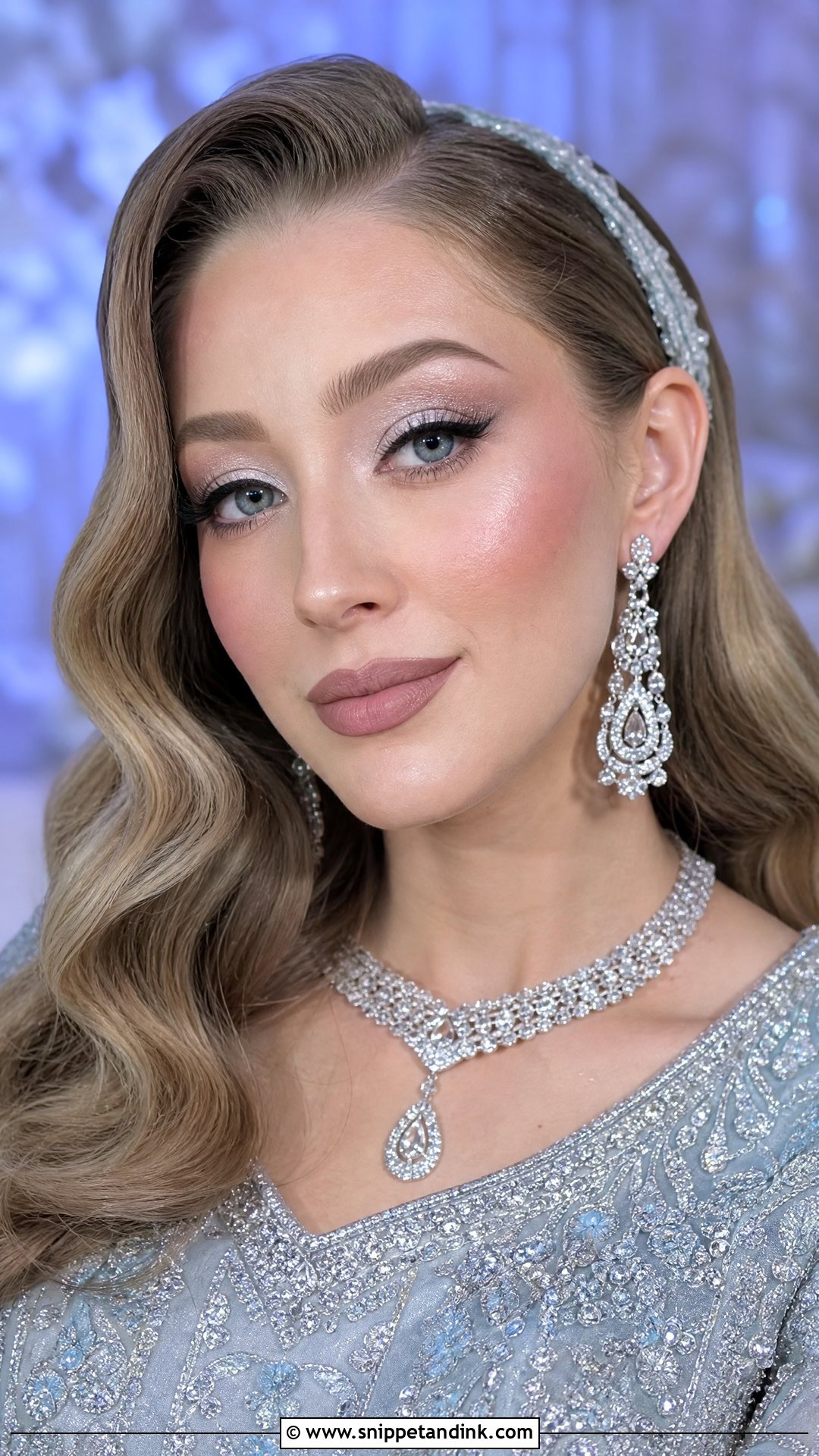
Silver needs a lighter hand than gold because it can look harsh fast. I press a soft silver shimmer onto the lid, blend taupe or cool brown into the crease, and keep charcoal or black liner tight to the lash line. The skin stays natural matte or satin, with cool pink blush and a mauve-nude lip. It works for ice blue, grey, white and pastel outfits and catches light well at an evening reception. Warm, golden skin can find silver draining, so in that case I add a warm brown in the crease to bridge the two. Brides wanting something more modern than traditional gold often land here.
8. Gold Walima Bride Makeup
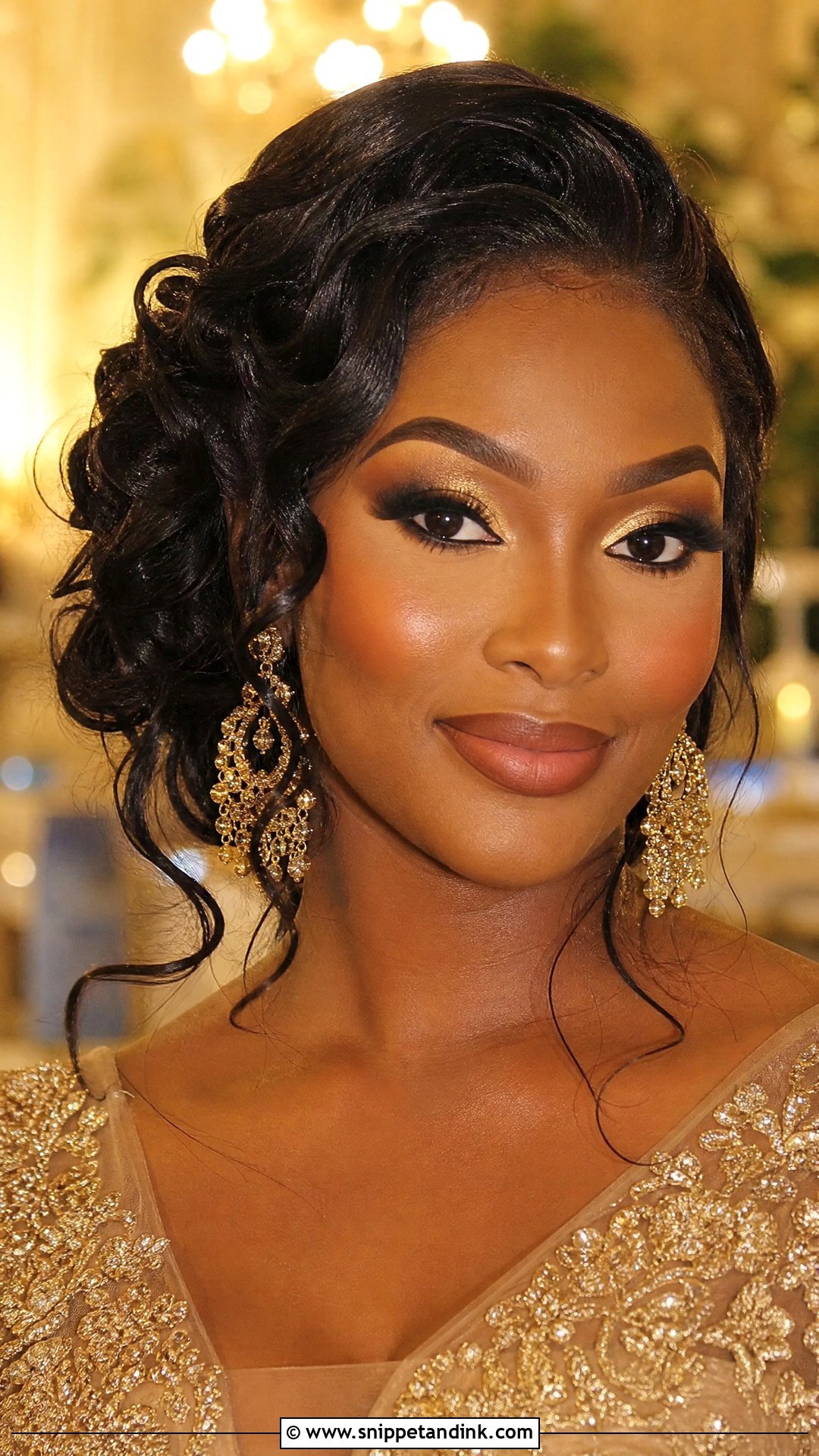
Gold Walima bride makeup is the classic, and it suits champagne, emerald, maroon, peach and gold outfits alike. I use soft gold shimmer on the lids, warm brown in the crease and a liner smoked out slightly for depth. The complexion is softly bronzed with golden highlight on the high points, finished with a warm nude, caramel or rosy brown lip. The mistake I see most is too much gold everywhere: lids, cheeks and highlighter all in the same tone flattens the face in photos. Keep the gold on the eyes and let the cheeks stay a warmer, softer colour, and it looks rich in reception lighting without feeling heavy.
9. Nude Walima Bride Makeup
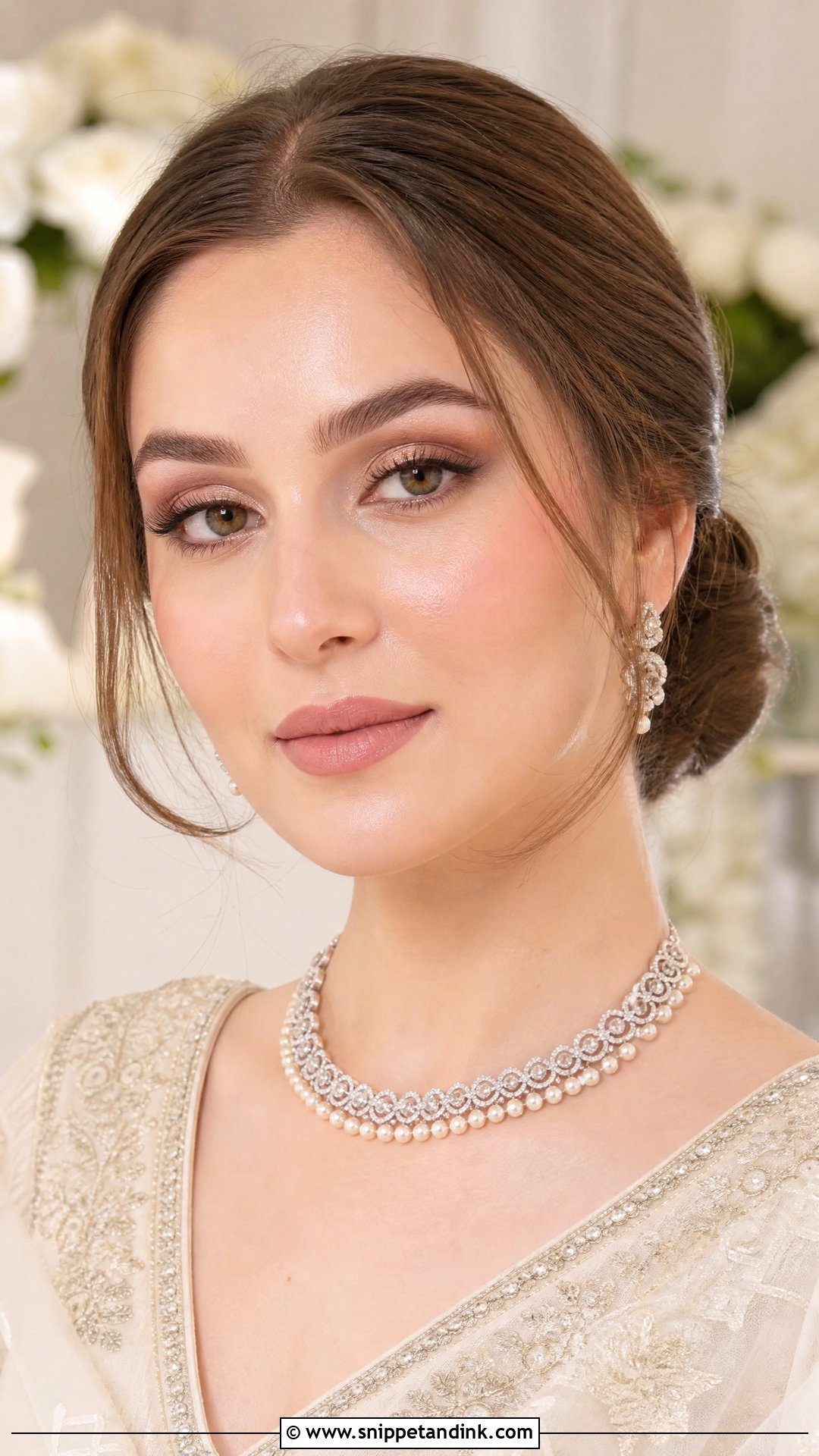
Nude makeup is still makeup, and on a bride it takes more care than colour does. I use beige, taupe and rose-brown shadows with a thin liner and lifted lashes, softly filled brows, and a base that evens the skin while still looking like skin. The nude lip has to match the bride’s depth: pink nude on fair skin, peachy beige on medium, caramel or brown nude on deeper tones. I always add blush, because a nude face without it reads grey and tired in photos, especially next to an ivory outfit.
10. Smokey Eye Walima Bride Makeup
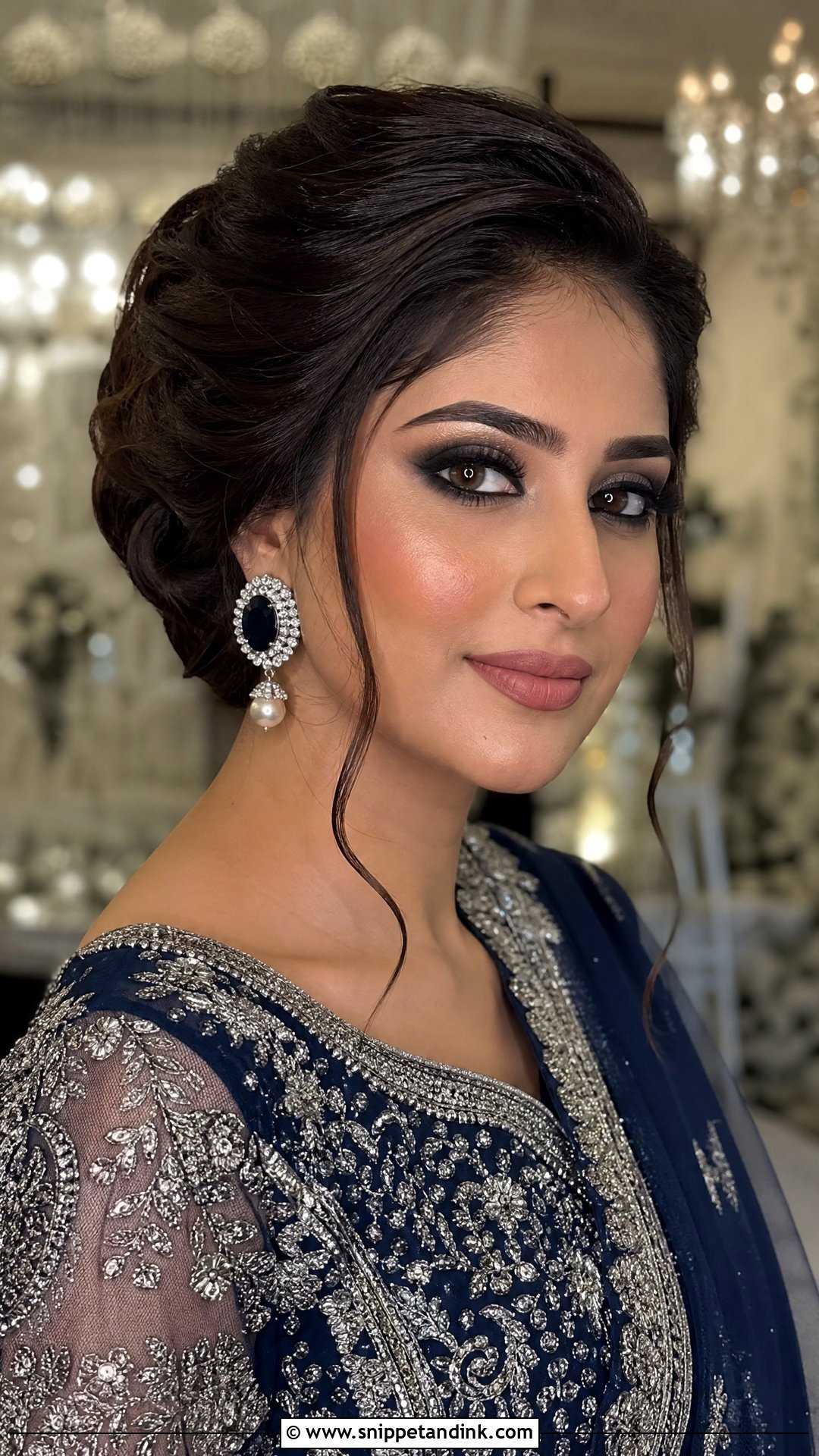
Smokey eye Walima bride makeup gives the reception more drama, but I keep it a notch softer than a Barat smoky eye. Brown, bronze, taupe, plum or charcoal tend to work better than solid black for a Walima, and I blend outward and upward for lift before adding liner and fuller lashes. The rest of the face stays quiet: clean base, soft contour, nude or muted rose lips. On hooded eyes I build the smoke higher than the natural crease, otherwise it disappears when the eyes are open. It sits well with silver, navy, emerald and deep pastel outfits and bold jewellery.
11. Brown Smokey Walima Bride Makeup
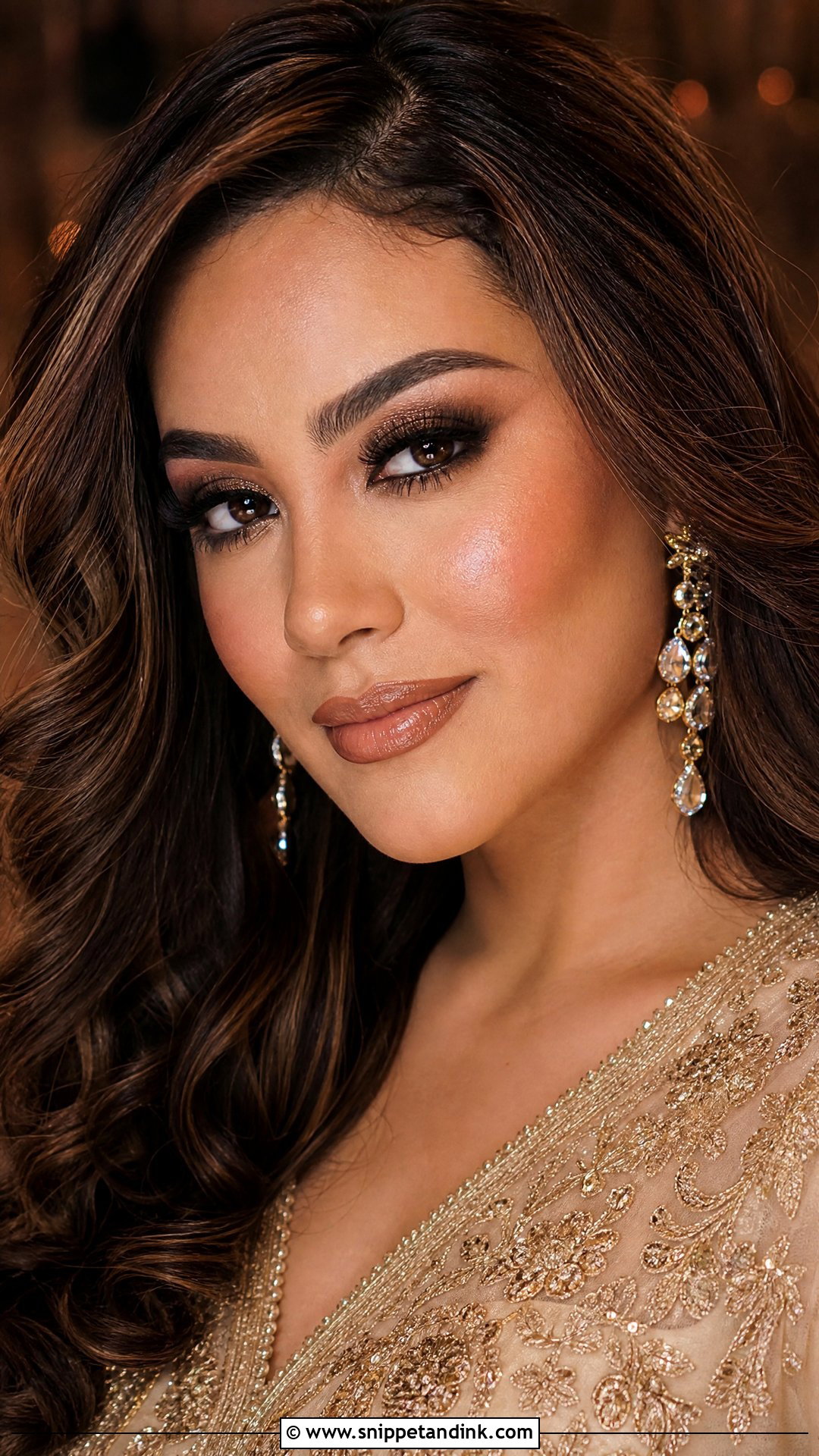
Brown smoke is my answer when a bride wants definition but finds black too severe. Medium brown goes on the lid, deep chocolate near the lash line, and a little shimmer in the centre for dimension. I smudge brown or black liner into it so there’s no hard edge. Bronzed cheeks, a peachy blush and a warm nude lip keep the whole face warm. It brings out brown, hazel, green and amber eyes, and it suits gold, rust, beige and champagne outfits. The risk is the lower lash line: too much brown there in a long day can drift and look like shadows under the eyes, so I keep it light and set it.
12. Rose Gold Walima Bride Makeup
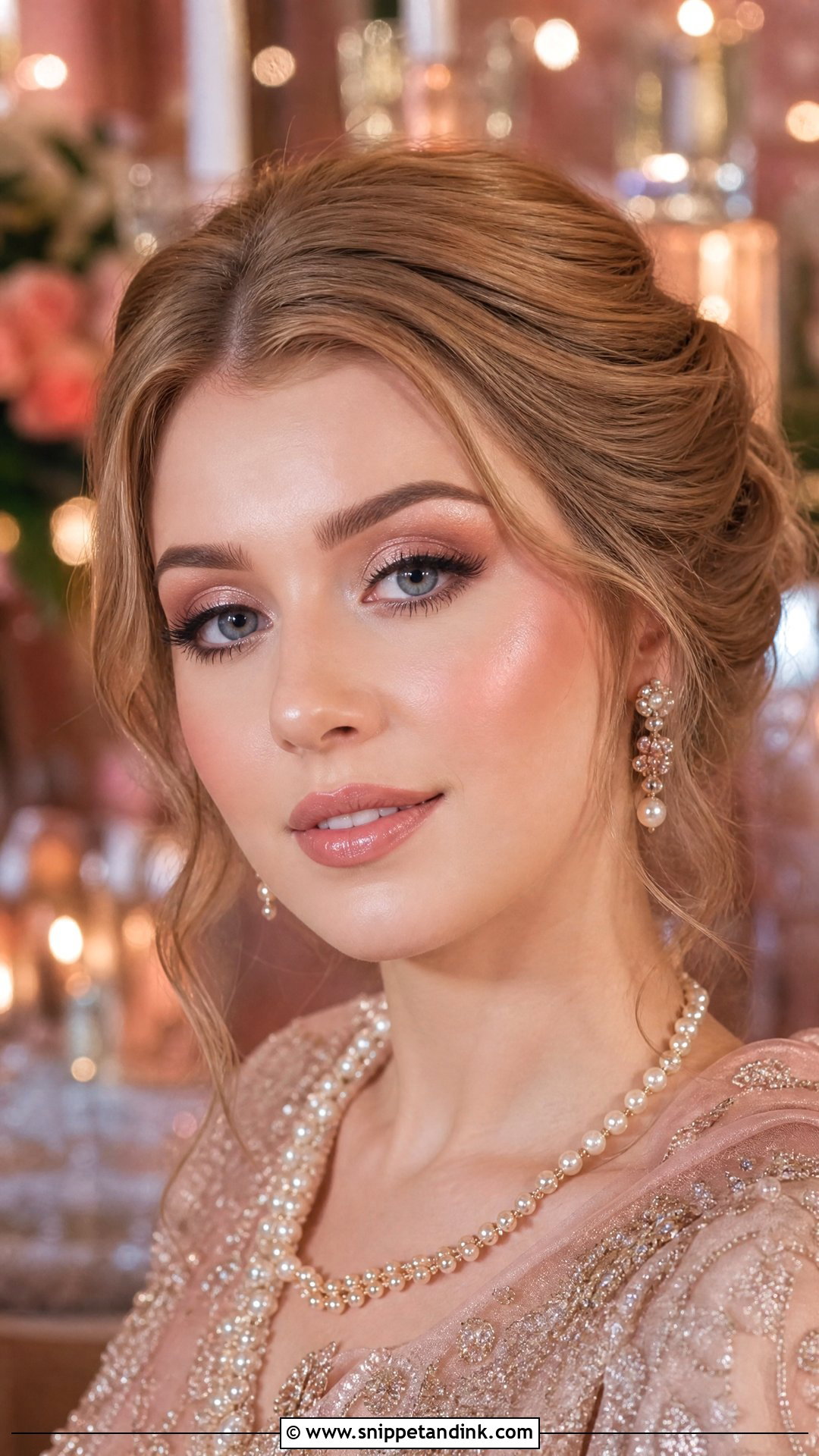
Rose gold sits between pink and gold, which makes it easy to wear with pastel outfits. I use rose gold shimmer on the lid, soft mauve or warm brown in the crease, a fine liner and wispy lashes. Rose blush and a subtle champagne highlight go on the cheeks, with a rosy nude or pink-brown lip. It gives enough glow for photos and still feels delicate next to blush, lilac or soft peach dresses. I’d skip it for a bride with a lot of redness around the eyes, because rosy shimmer on the lid tends to make that look more irritated, not less.
13. Mauve Walima Bride Makeup
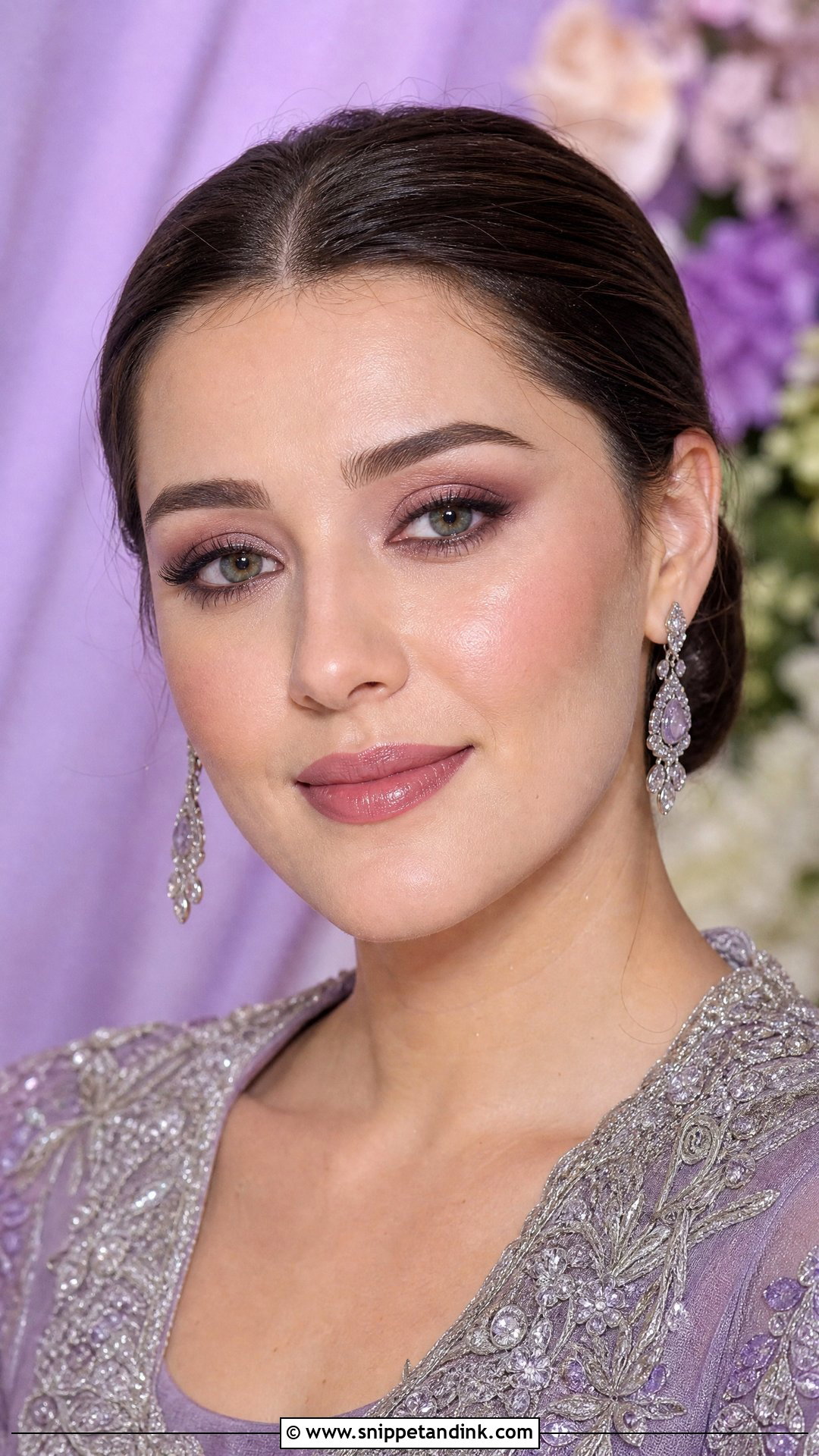
Mauve has a cool softness that suits lavender, silver, dusty pink and grey outfits. I layer mauve, taupe and soft plum on the eyes with a touch of shimmer in the centre, keep the liner thin, and define the lashes. A mauve-pink blush and a mauve-nude lip make it cohesive. This is a good route for anyone who wants colour without anything bright. Warm olive skin is the one case where I adjust, adding a warmer rose to the lip so the face doesn’t look bruised or grey under warm hall lighting.
14. Berry Lip Walima Bride Makeup
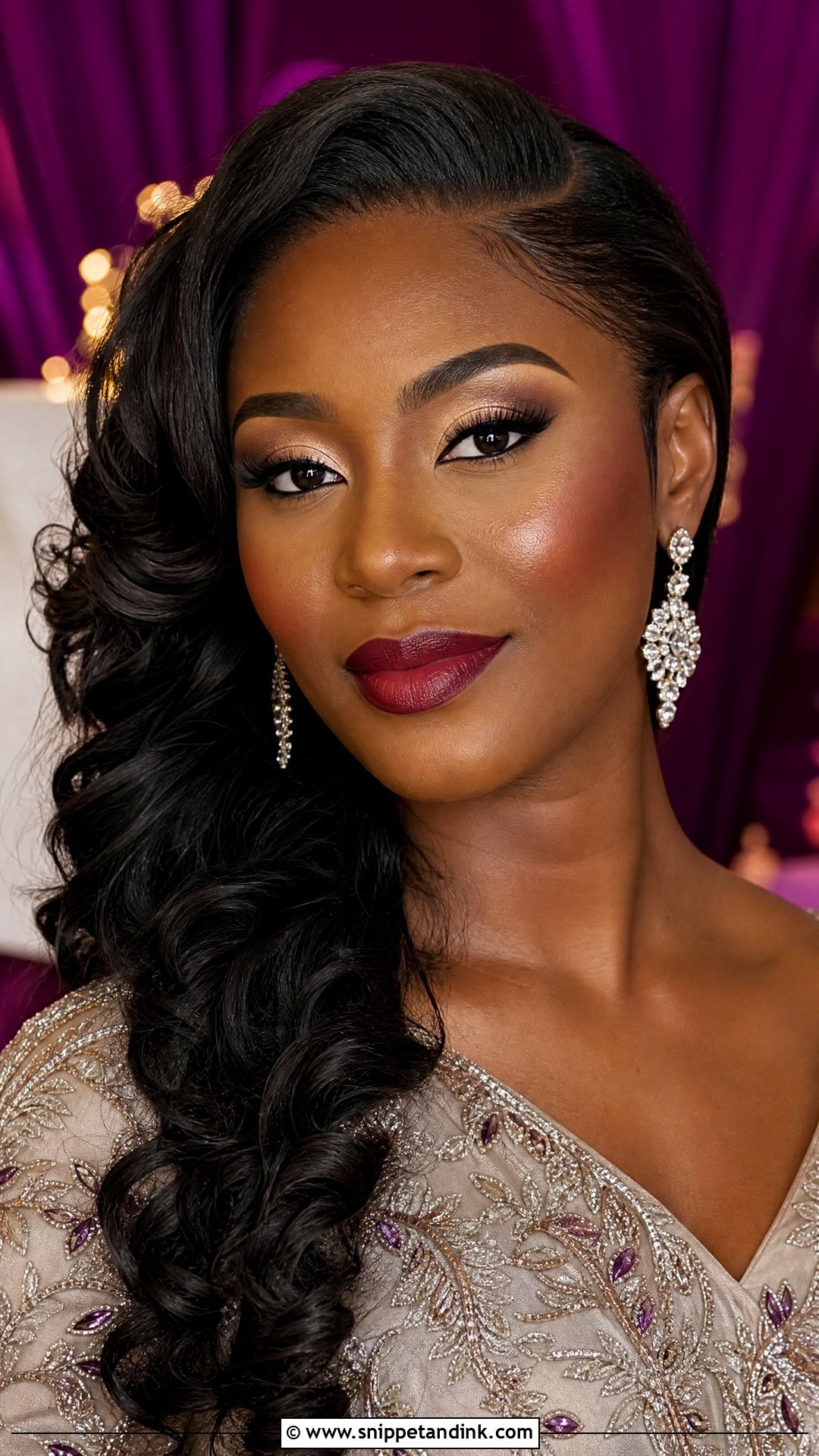
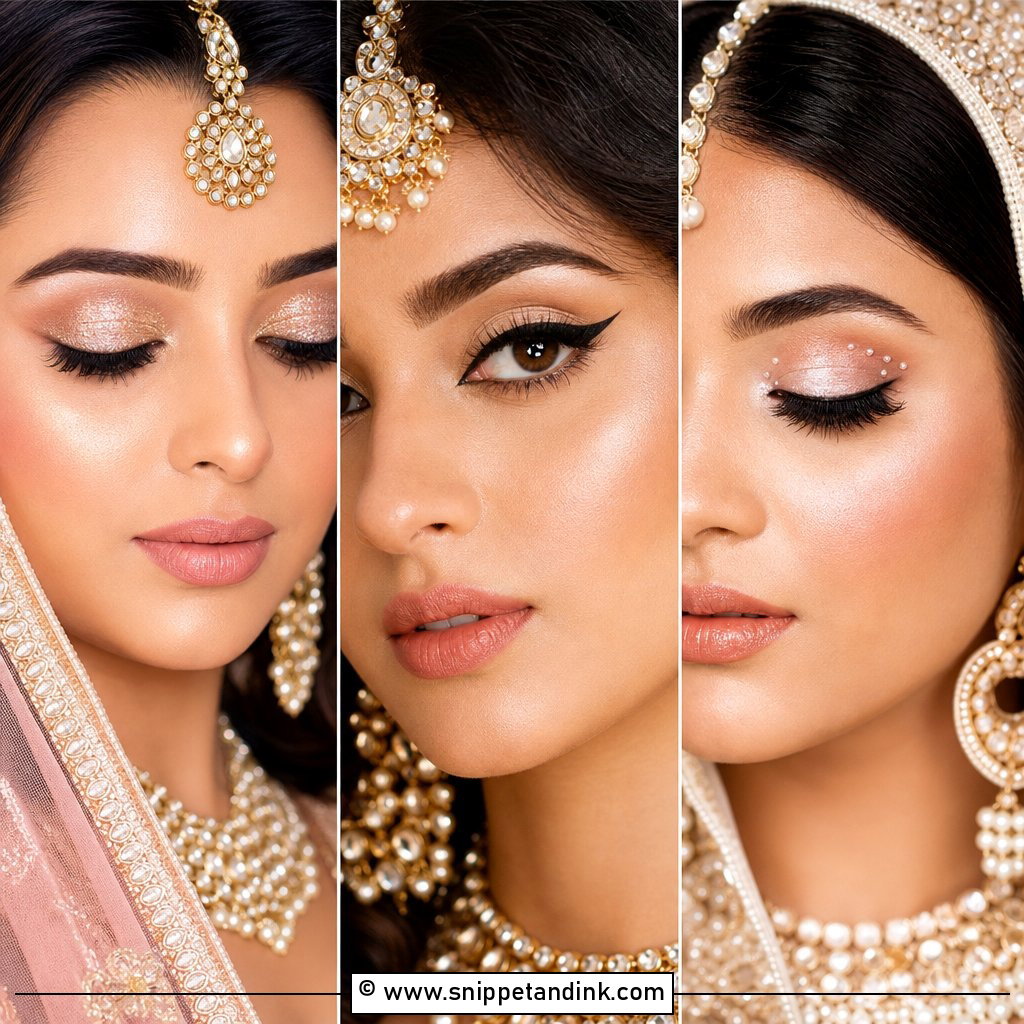
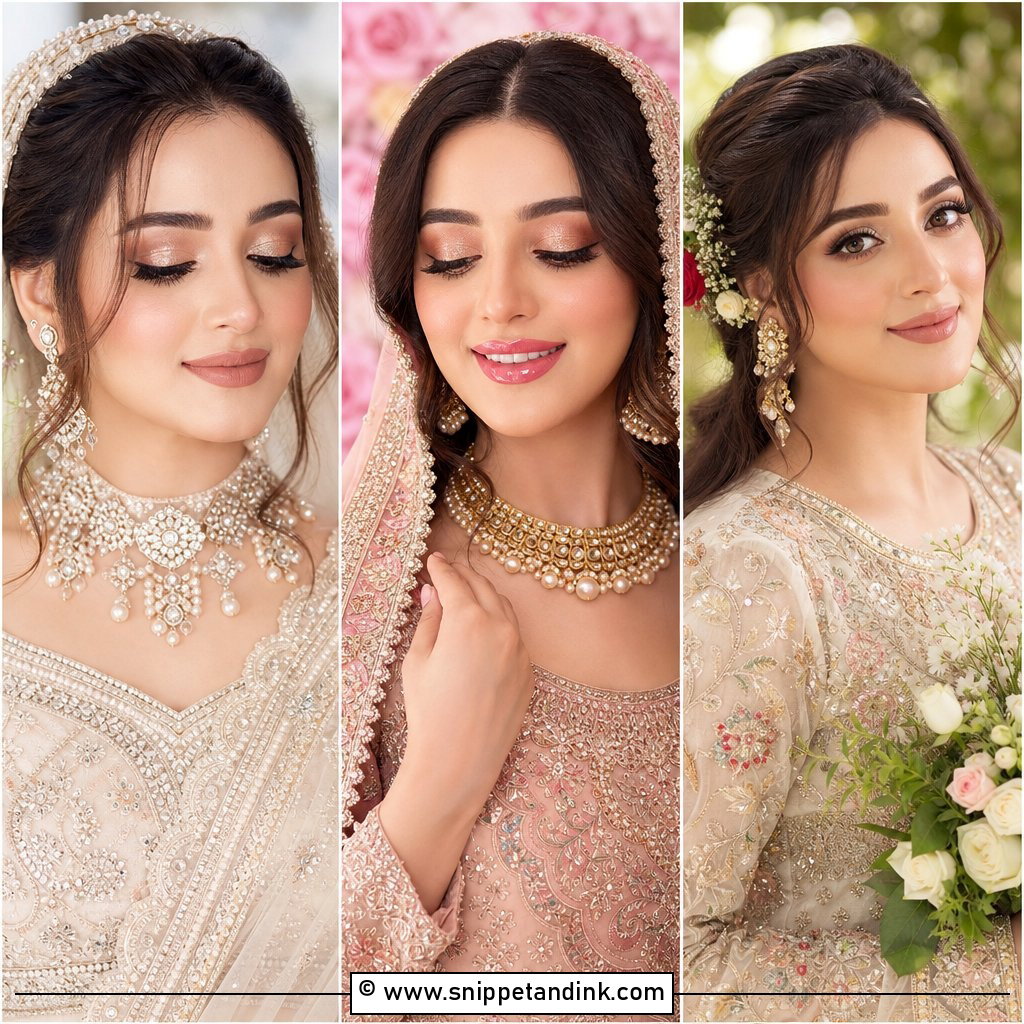
Berry lip Walima bride makeup lets the mouth carry the look, so I keep everything else measured. Neutral brown, champagne or taupe on the eyes, clean liner, lifted lashes and groomed brows hold the balance, and a rose or berry blush links the cheeks to the lips. I choose a satin or soft-matte berry for comfort over a long reception. Dark lips need precise edges, so I line slightly inside the natural lip and blot once before the final coat; it stops feathering when the bride is eating and drinking. Silver, ivory, plum, emerald and navy outfits all suit it.
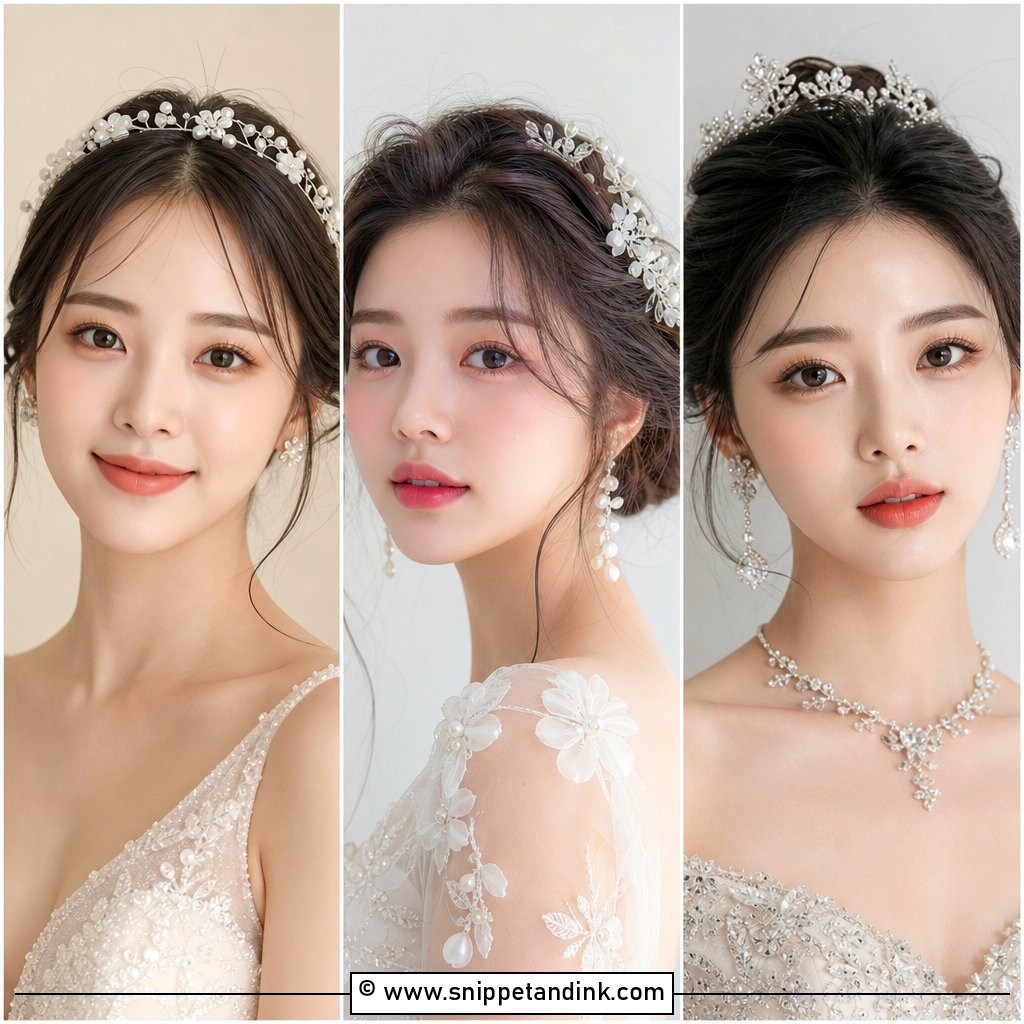
15. Red Lip Walima Bride Makeup
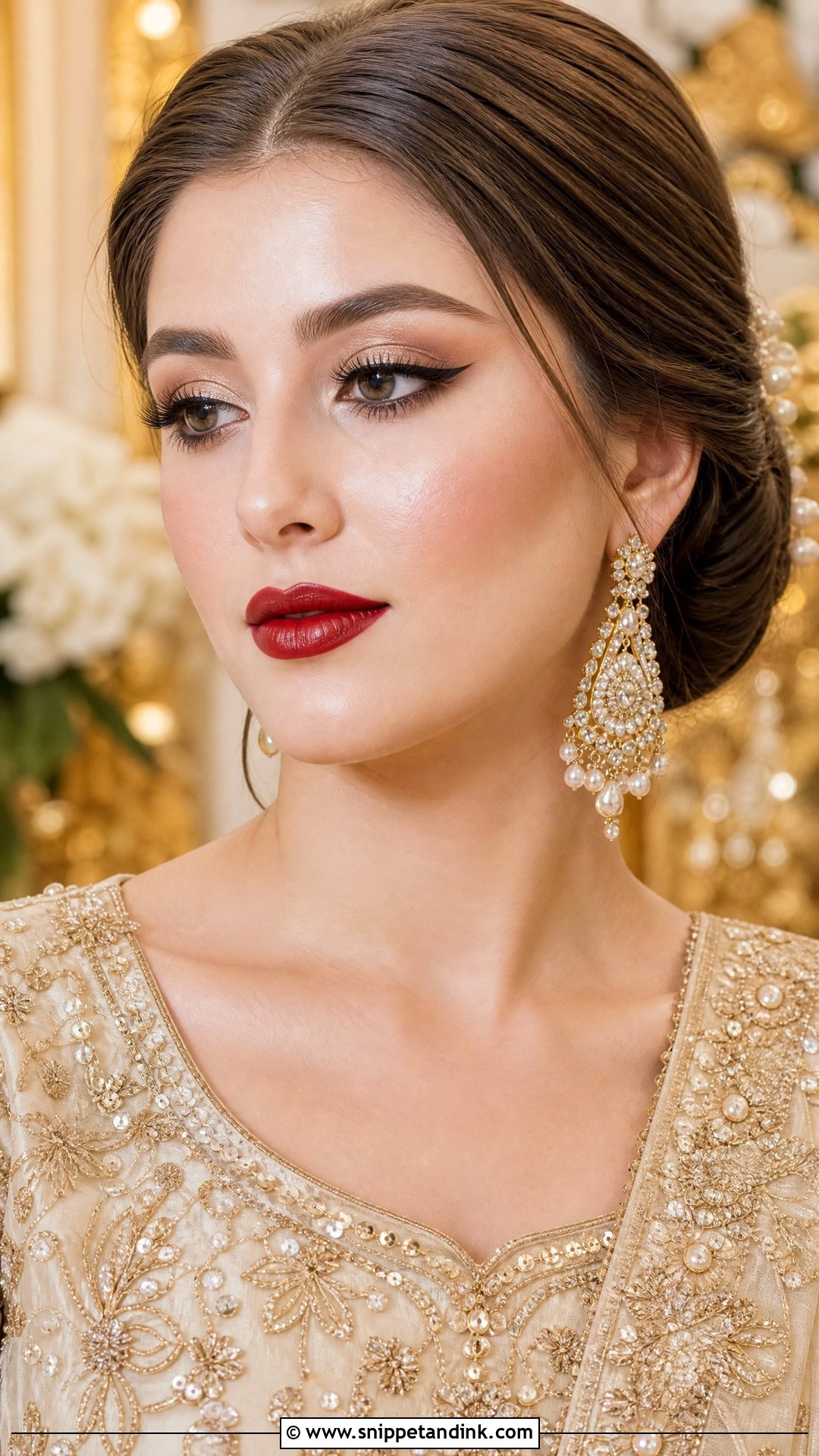
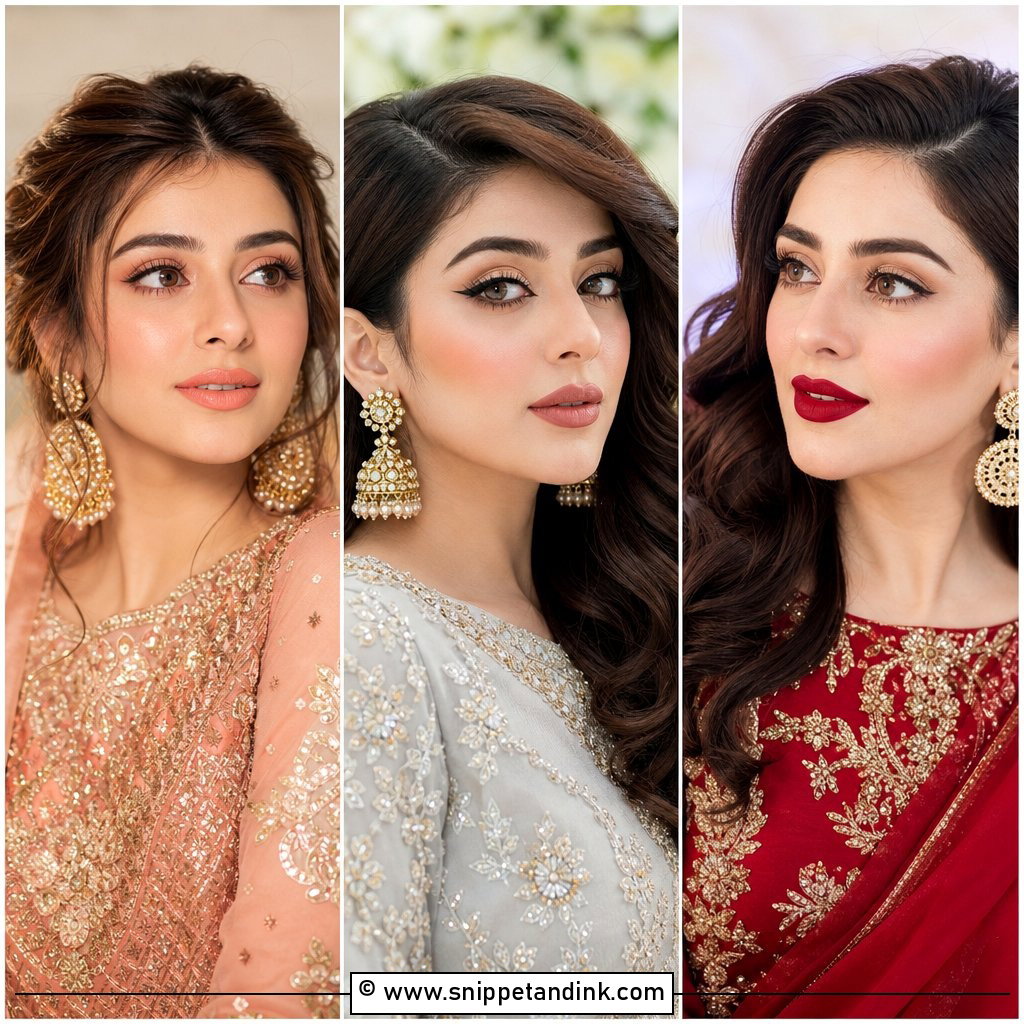
A red lip needs clean skin and restrained eyes around it. I use soft champagne shadow, a thin black wing, fluttery lashes and defined brows, with gentle contour and fresh blush. Matching the red to the undertone matters more than the shade name: blue-red for cool undertones, brick red for warm, deep cranberry for richer skin. A red lip is also the least forgiving at a reception, since every sip and every hug tests it. I’d only do it for a bride comfortable checking her lips through the evening, or one with a bridesmaid holding the liner. It looks right with ivory, gold, emerald and champagne.
16. Winged Liner Walima Bride Makeup
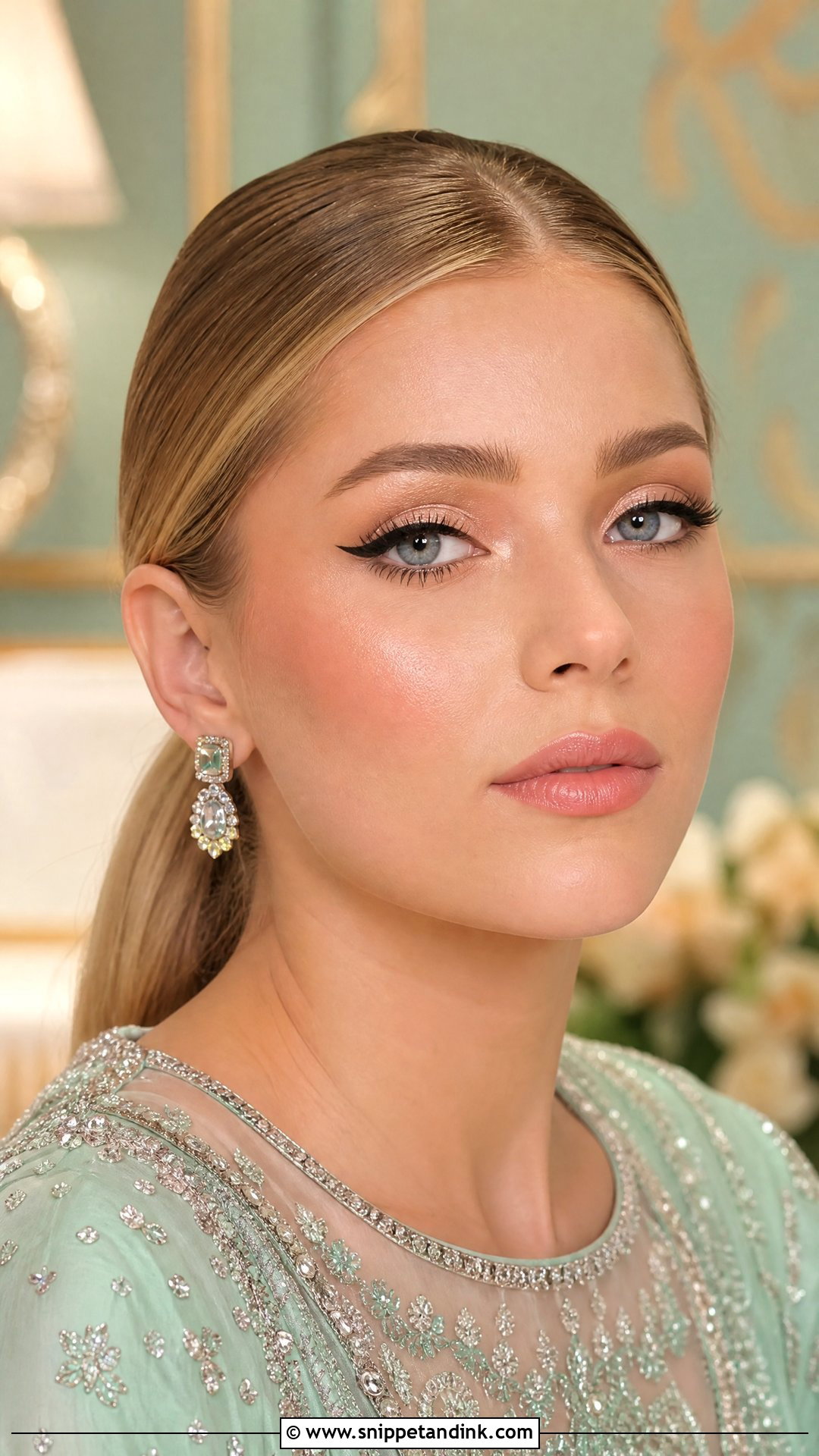
Winged liner Walima bride makeup gives structure without a heavy smoky eye. I keep the lid bright with beige, champagne or pale gold, then draw a wing that follows the bride’s own eye shape rather than a fixed angle. On hooded lids I check the wing with her eyes open and looking straight ahead, since a wing drawn on a closed lid often breaks into two pieces once she opens them. Curled lashes, softly filled brows and a satin complexion finish it, with a nude pink or peach lip. It goes well with sleek hairstyles.
17. Cut Crease Walima Bride Makeup
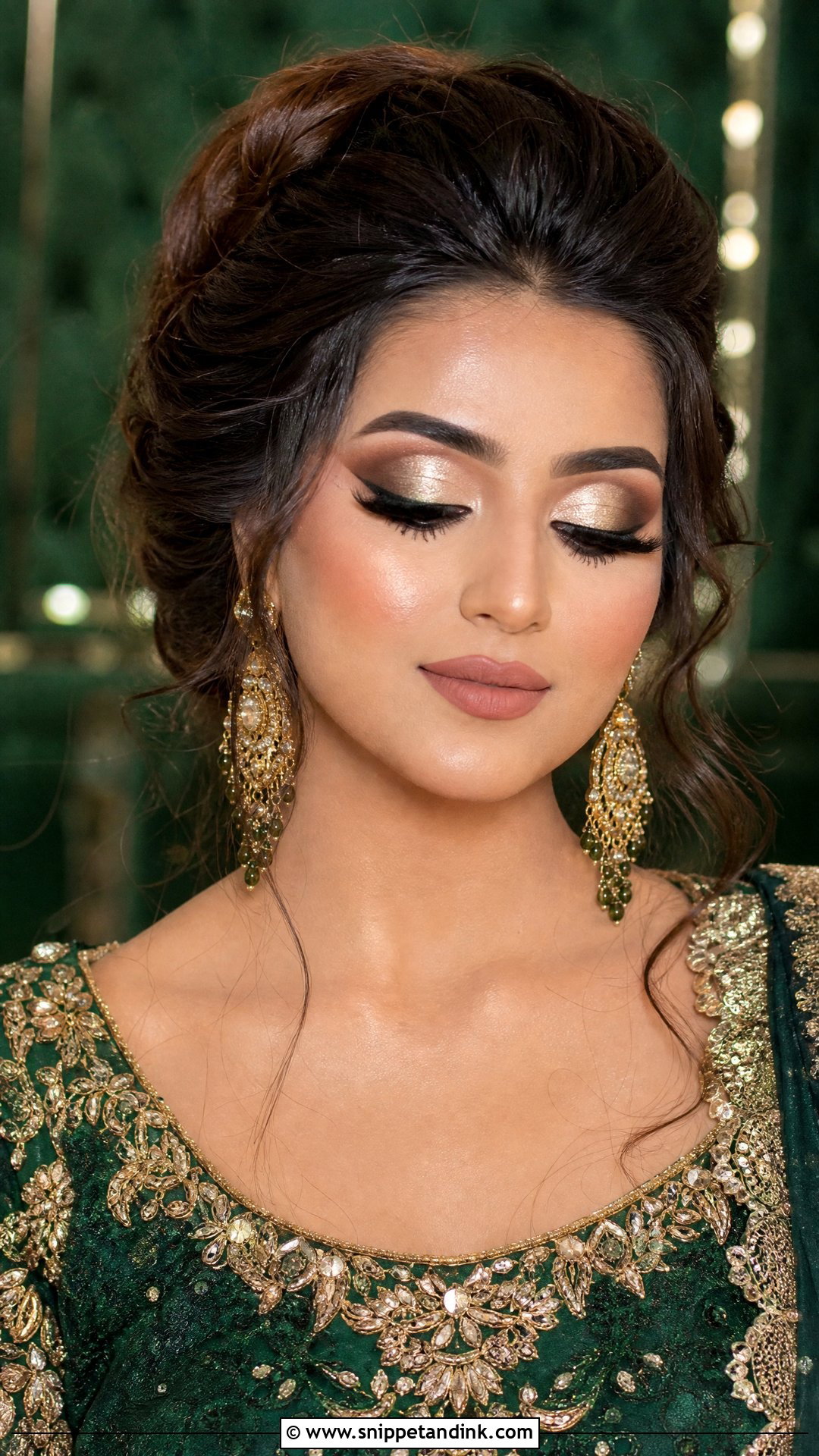
A cut crease suits a bride who wants defined, glamorous eyes. The crease is carved with brown, taupe, plum or bronze, and the lid is kept bright with shimmer or a satin pigment. I always soften the outer edges, since an unblended cut crease looks theatrical in close-ups. Liner and full lashes add drama, and because the eyes are so detailed I keep the cheeks softly sculpted and the lip nude, rose or peach. It holds up under bright lighting next to heavily embellished outfits. Very hooded or deep-set eyes are tricky here; the lid space has to be created, and that takes a trial to get right.
18. Glass Skin Walima Bride Makeup
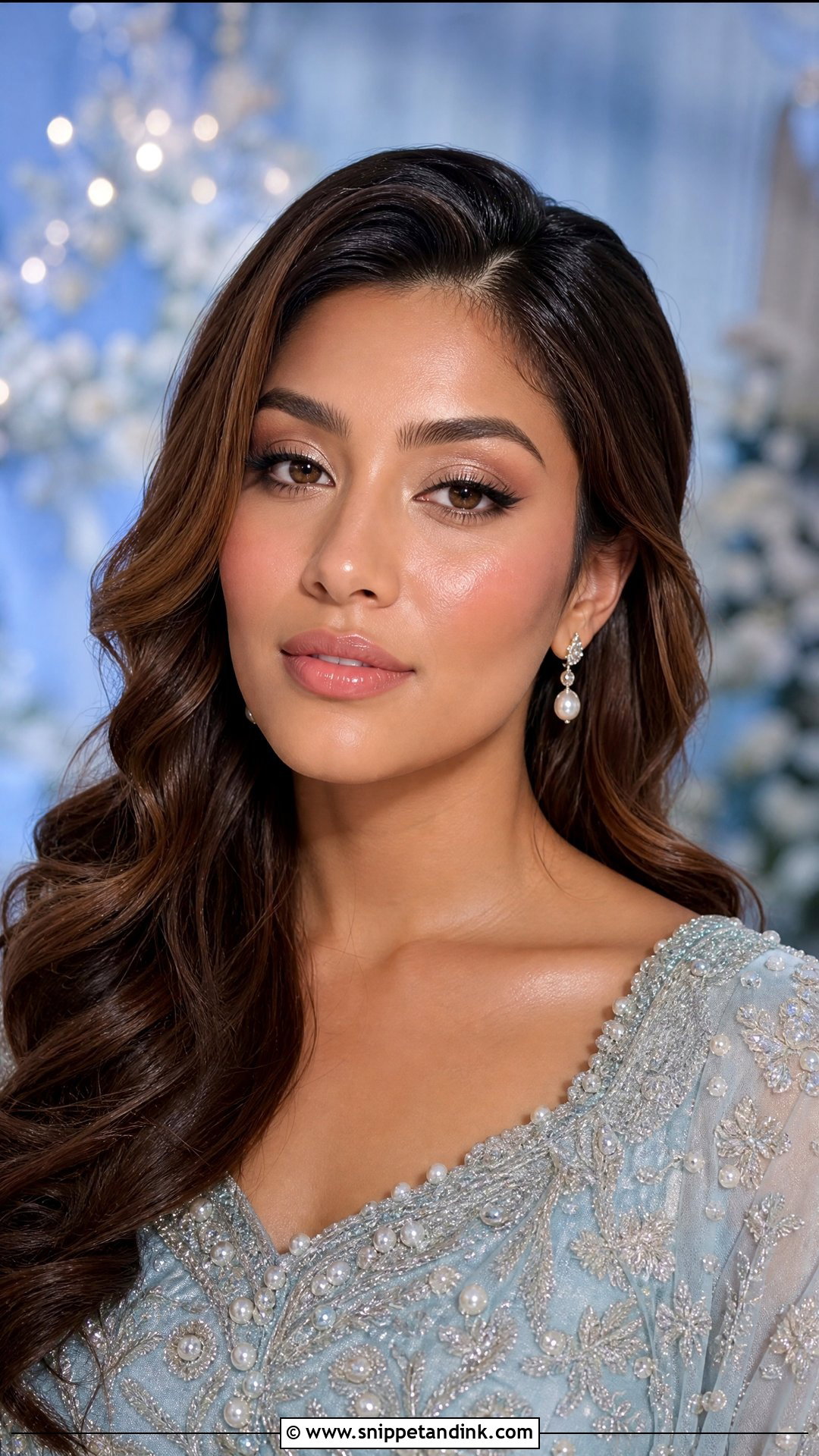
Glass skin is mostly prep, and the makeup is the smaller part. I start with hydrating skincare and let it sink in, then use primer and very thin layers of complexion product so the skin keeps its own texture. Cream blush in pink, peach or rose gives a natural flush, the eyes stay fresh with light shimmer, soft liner and wispy lashes, and the lip is a glossy nude or pink. Large or textured pores show more under a glossy finish, so on that skin I set the T-zone and keep the glow to the cheekbones. Pastel outfits, pearl details and sheer dupattas suit it.
19. Minimal Walima Bride Makeup
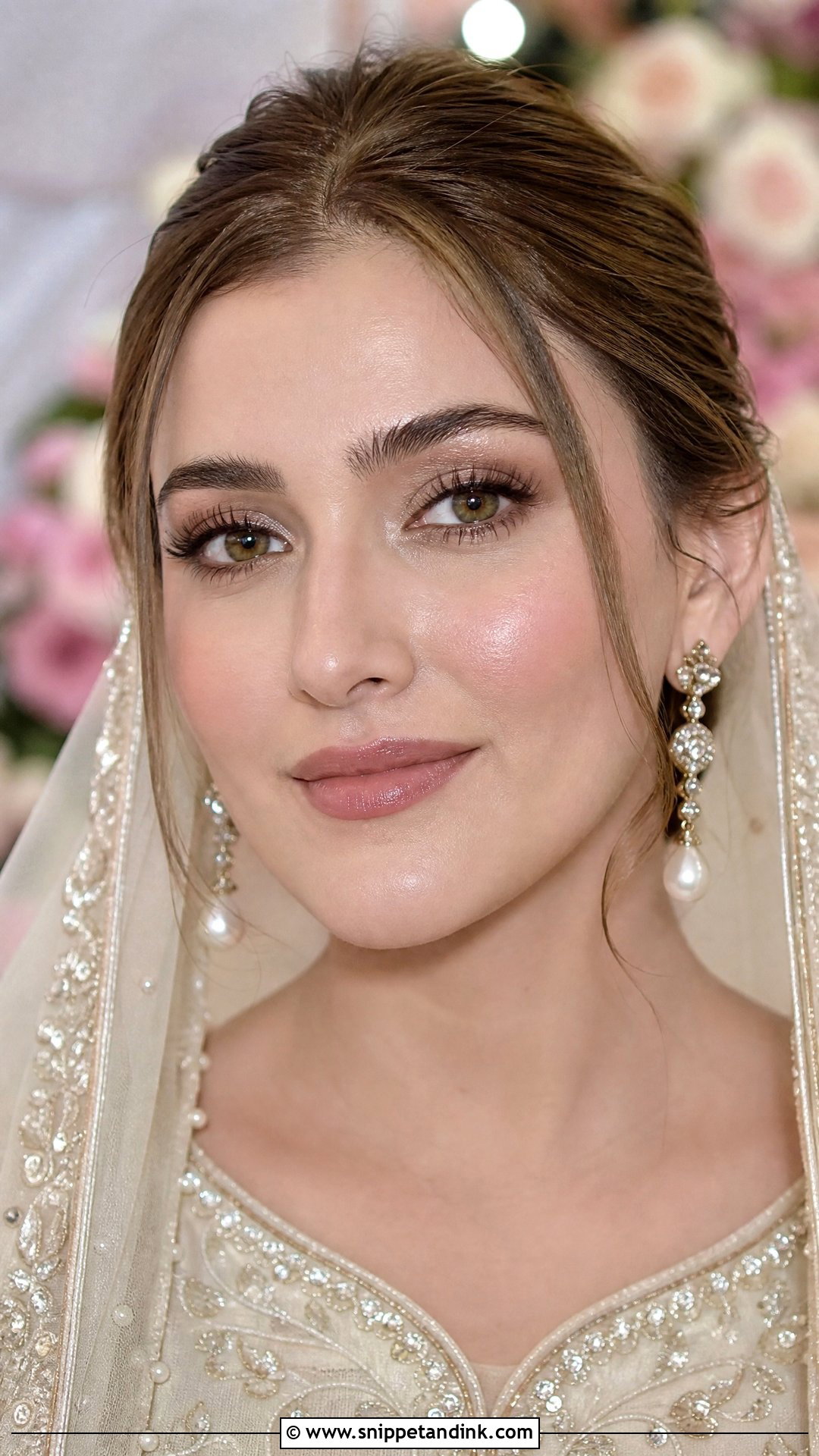
Minimal makeup suits a bride who wants to look like herself, only more rested. I use a lightweight base, soft concealer where it’s needed, natural brows and neutral shadow, with a tightline or thin liner and individual lashes or very wispy strips. Cream blush, a subtle highlight and a comfortable nude or rose lip finish it. It fits smaller receptions and understated dresses. The trap is that minimal can disappear on camera, so I still define the brows and lashes properly and check the face in a photo before the bride leaves the chair.
20. Full Glam Walima Bride Makeup
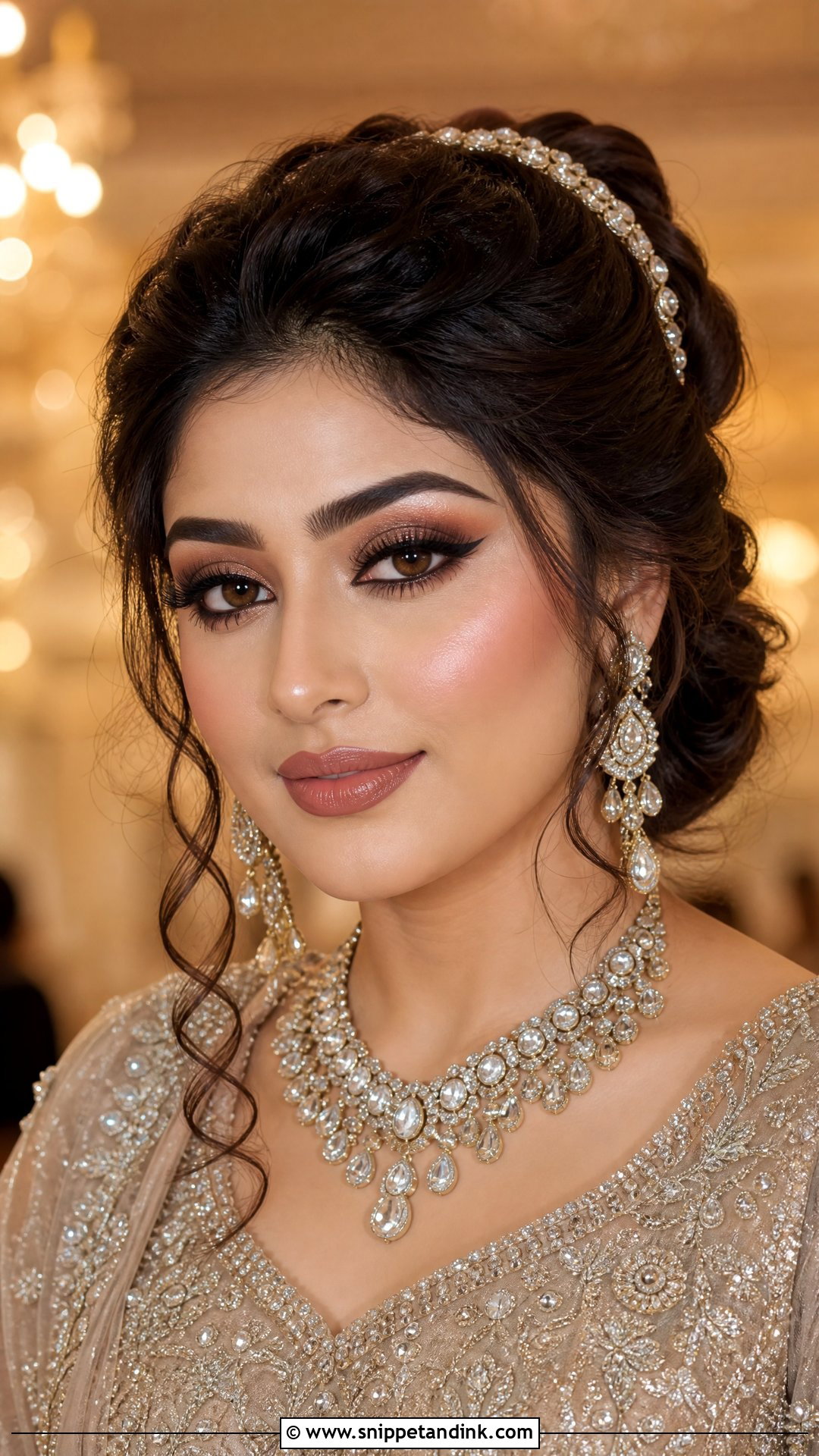
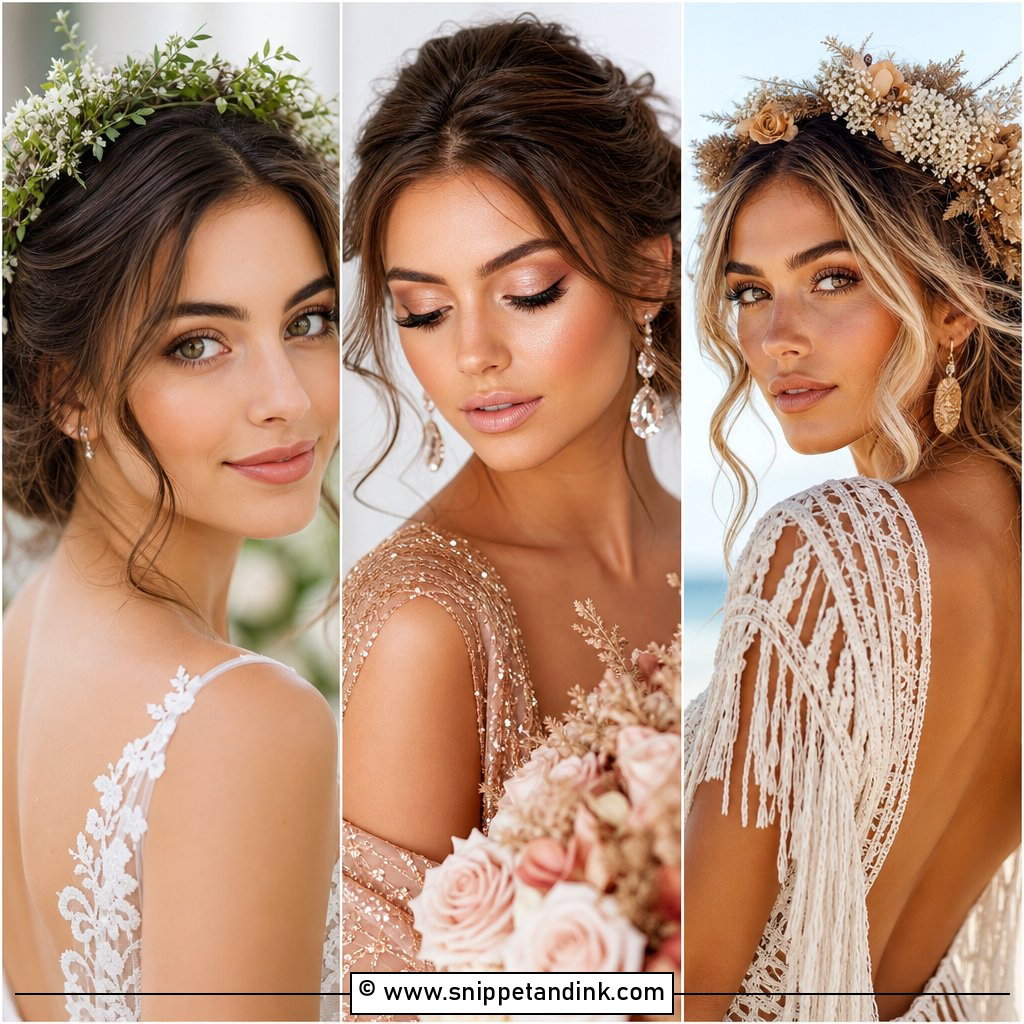
Full glam is the photo-ready end of the range: fuller coverage, sculpted cheeks, defined eyes, dramatic lashes and a polished lip. The rule I follow is one feature leading. If the eyes are smoky, the lip stays nude or rose; if the lip is bold, the eyes stay cleaner. I use long-wear base, waterproof liner and setting spray so it lasts through greetings, photos and the stage programme. It matches grand outfits, heavy jewellery and evening lighting. On the second night after a full Barat face, though, I’d think twice: sensitised skin doesn’t always take heavy coverage well, and patches show by the end of the evening.
Stage Lights, Ring Lights and Flash on a Walima Face
A reception stage is lit very differently from a bridal room. Warm overhead bulbs push everything yellow, LED panels can be cool and flat, and the photographer’s flash bounces straight off any powder or highlighter with a lot of reflective particles. I check the face under the brightest light I can find in the room and take a quick flash photo before the bride walks out.
Flashback, that white cast around the eyes and nose, usually comes from heavy setting powder or some sunscreens under the base. I bake lightly, if at all, and brush off excess thoroughly. Highlighter goes on in a thin layer on the very top of the cheekbone, because in flash photos a wide strip of shimmer reads as shine, not glow.
What I leave in the touch-up pouch
- Blotting papers, which lift oil without adding powder layers.
- The exact lipstick and liner I used, with a small brush.
- A pressed powder for the nose and chin only.
- Cotton buds and a small micellar water for smudged liner.
- Lash glue, in case a corner lifts after the first hugs.
Give the pouch to one trusted person who will be near the stage. A thirty-second check after dinner and before the family photos is usually all the repair a well-built reception face needs.
A Reception Face That Still Feels Like Yours
Your Walima makeup can be softer than the Barat look and still be deliberate. I’d start with three things: the outfit colour, the jewellery tone and the light in the hall or garden. Then decide which feature leads, skin, eyes or lips, and let the rest support it. A look that suits your features, lasts the evening and lets you relax in front of guests will serve you better than whatever is trending that season, and a proper trial is the easiest way to find it.
You'll Like These Ideas:


Leave a Reply