
Wedding makeup has two audiences: the people standing a few feet from you, and the camera, which sees texture, shine and flash bounce that the mirror hides. Most of what I do at a trial is find the version of a look that satisfies both. Brides are asking for less mask and more skin now, with soft definition, controlled glow and a lip that survives dinner. Heavy isn’t necessary for polished. Below are the twenty looks I’m asked for most, from barely there to full glam, with what each one needs from your skin and where it tends to struggle.
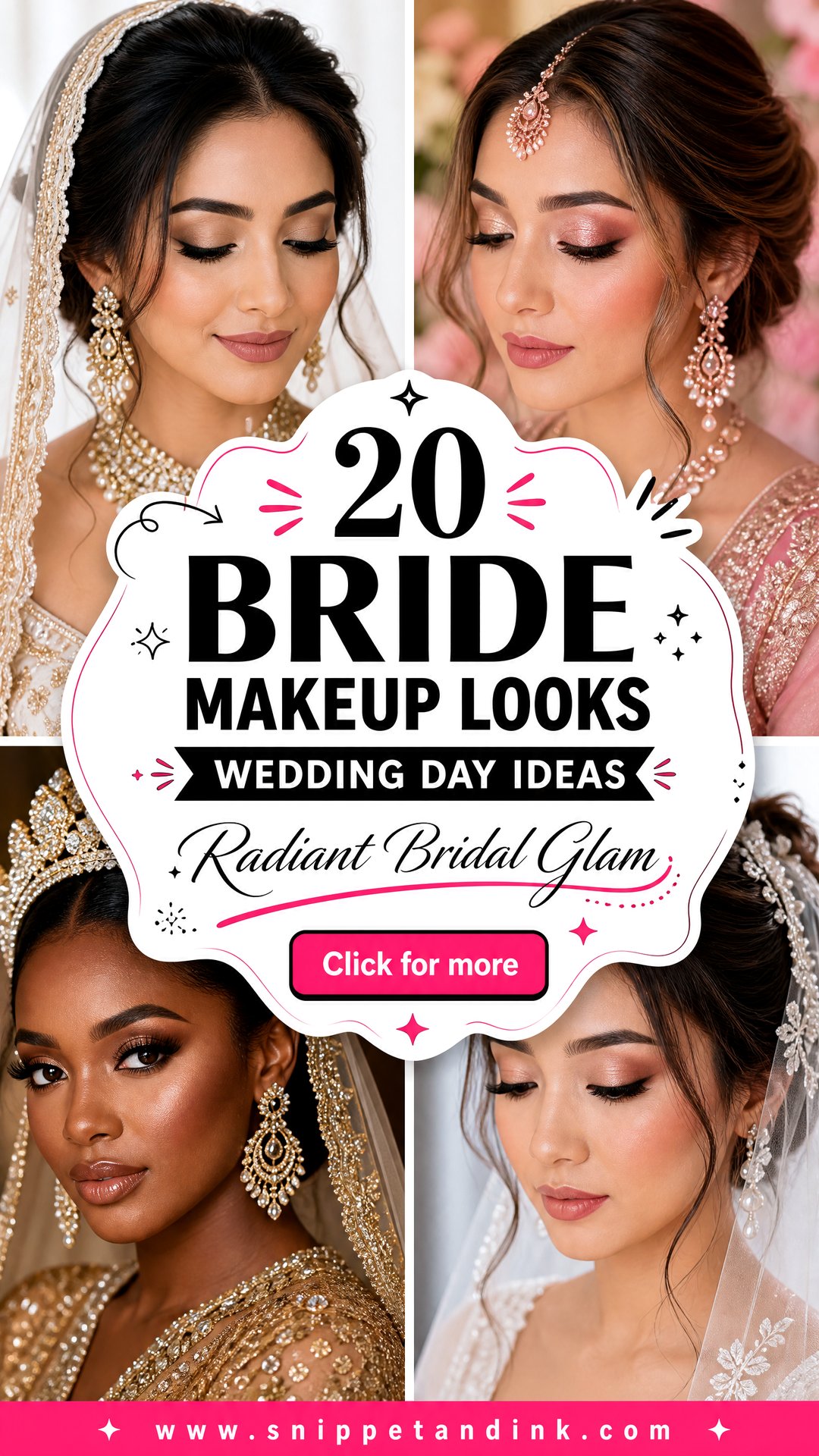
Dewy, Satin or Matte Depends on What Your Skin Does by Mid-Afternoon
Brides usually pick a finish from photos. I’d rather you pick it from your own skin. The question I ask first at every trial is simple: if you put on moisturiser at seven in the morning, what does your face look like at three? That answer decides more than any mood board.
- Shiny through the forehead and nose by lunch: a matte or satin-matte base, with glow only on the cheekbones.
- Tight or flaky by afternoon: a dewy or satin base; full matte will settle into dry patches.
- Oily in the centre, dry on the cheeks: satin overall, with powder pressed only into the T-zone.
- Fairly even all day: you can wear any finish, so choose by venue and light.
Venue matters next. Outdoor summer heat and crowded dance floors push most skin toward shine, while air-conditioned churches and winter receptions dry it out. Flash photography exaggerates shine more than daylight does, so if your reception will be photographed with flash, I set the base a little more than I would for a daytime garden ceremony.
The two weeks before matter too. A new facial, a strong acid or a fresh tan close to the wedding can all change how foundation sits, so I ask brides to keep their skincare routine steady and leave any new treatments until after the honeymoon.
1. Natural Bridal Makeup
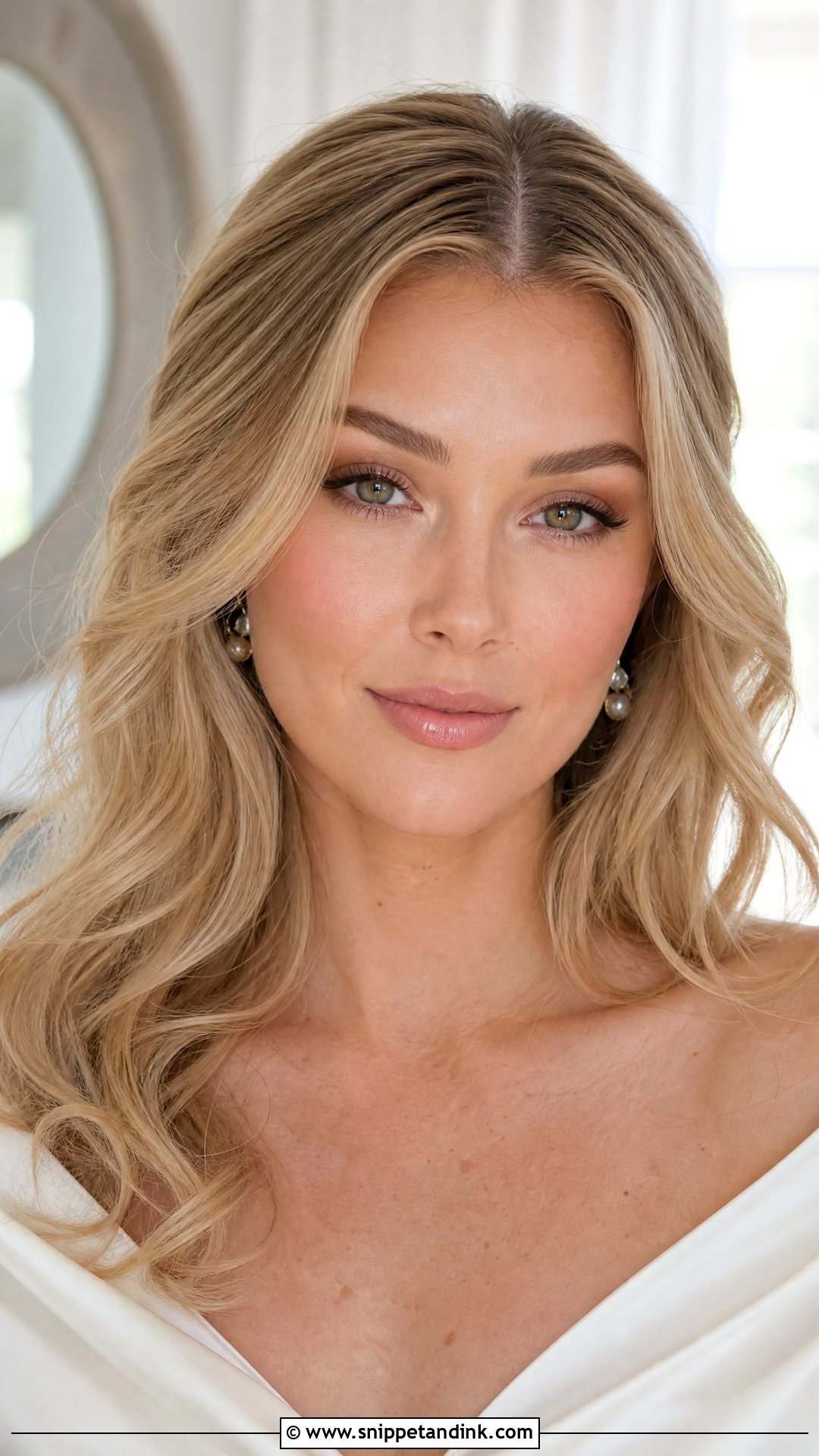
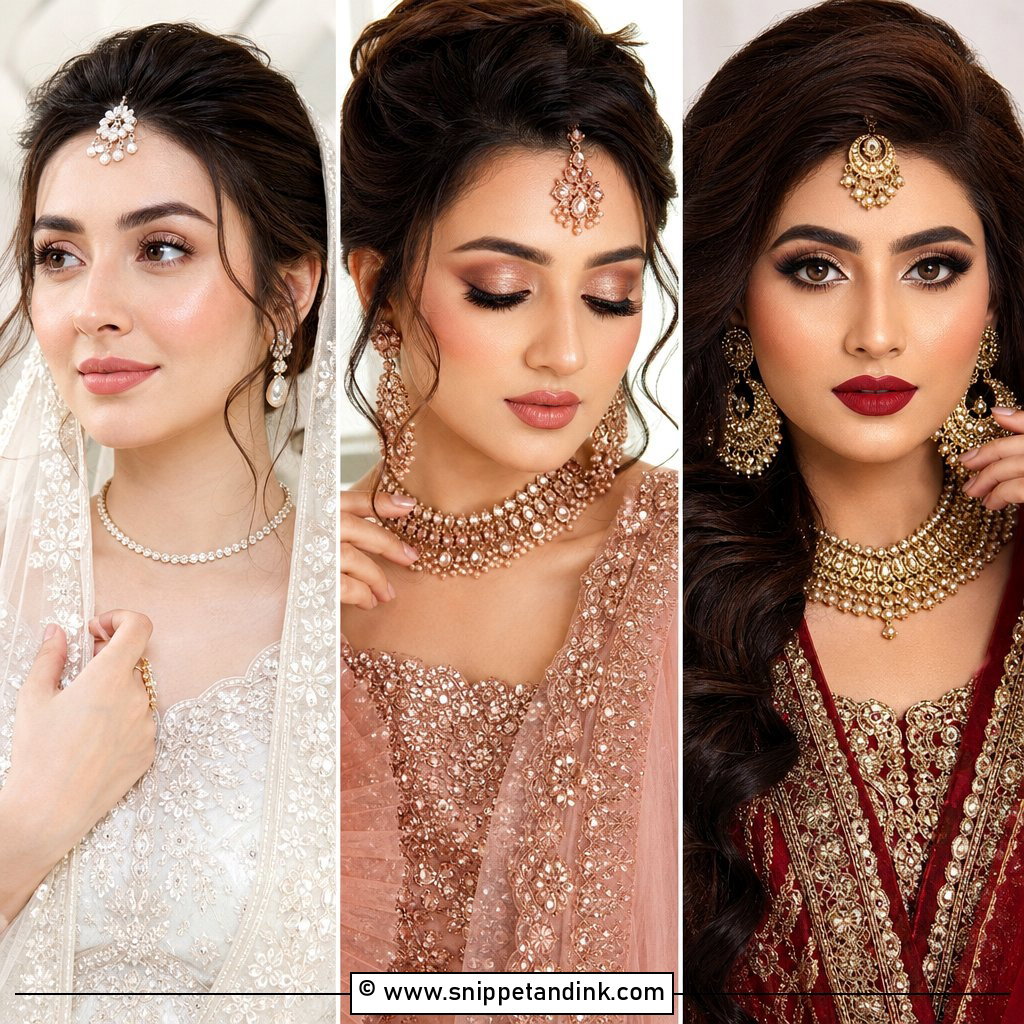
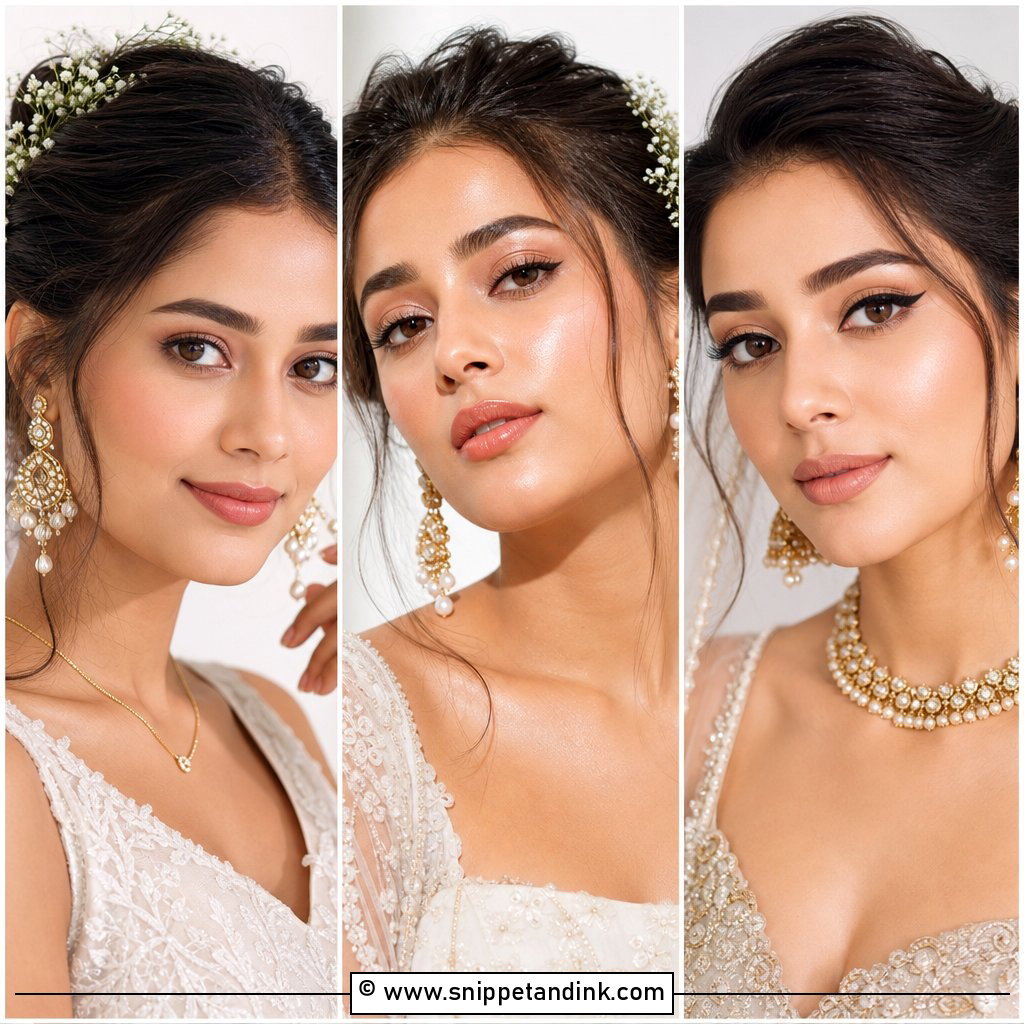
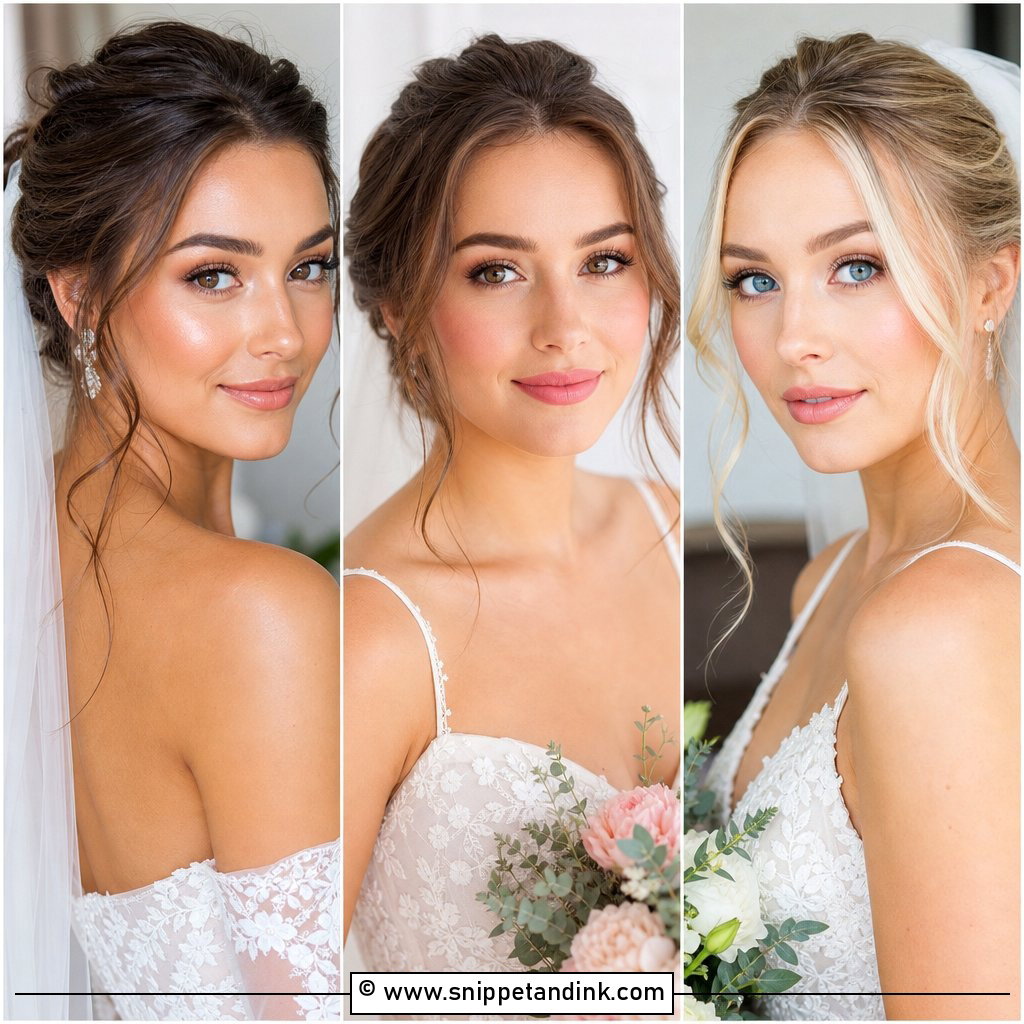
The goal is you, rested. I use a skin tint or thin foundation and conceal only where there’s redness or a blemish, then bring the face back to life with cream blush and a little champagne highlight. Eyes get taupe or beige shadow, a thin brown line and fluttery lashes; brows are filled in hair-like strokes, never blocked in. A pinky nude satin lip finishes it. Garden and beach ceremonies suit it, as do courthouse weddings. Go one step stronger than your everyday makeup, though, because natural faces flatten quickly in photographs.
2. Soft Glam Bridal Makeup
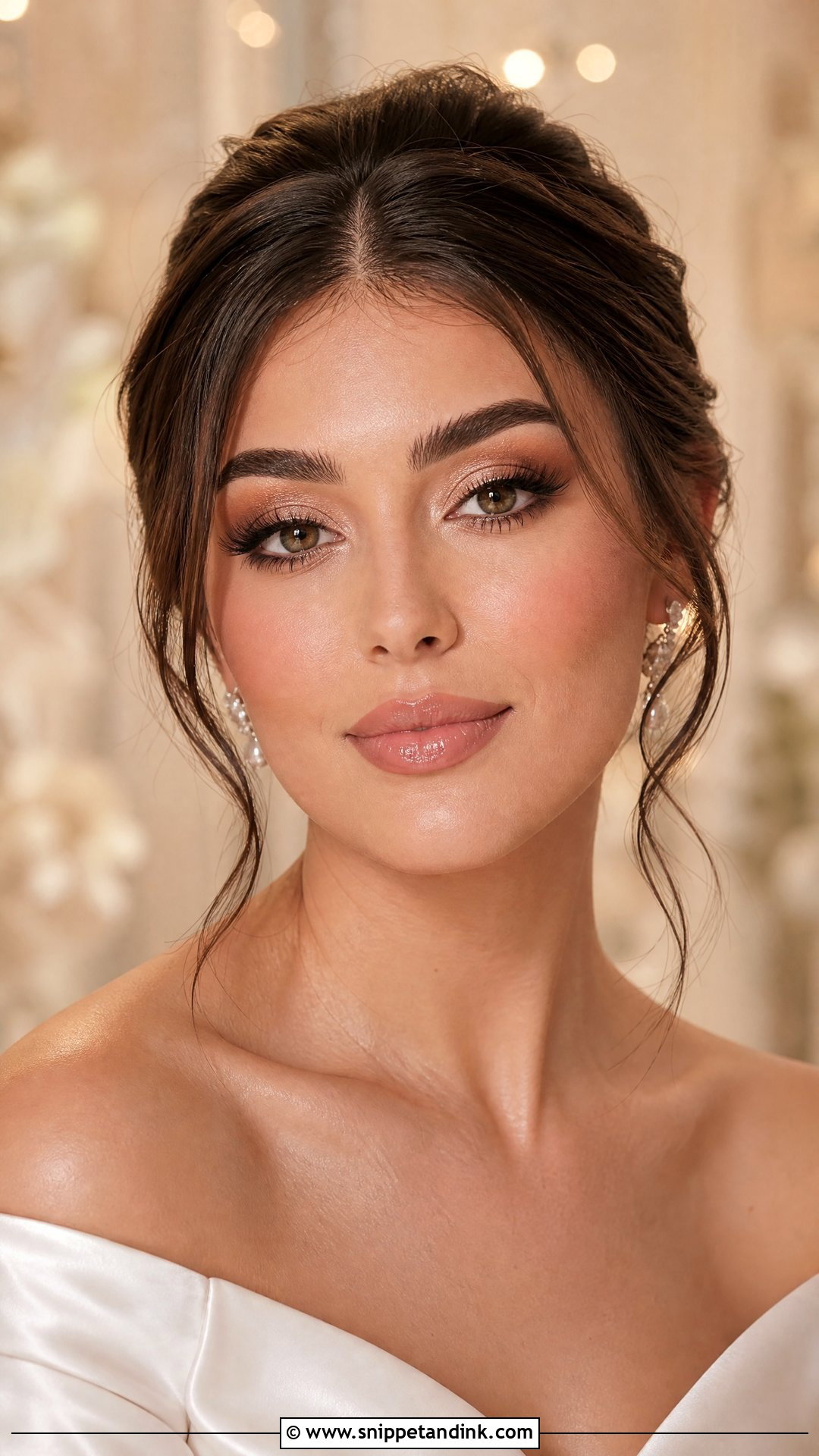
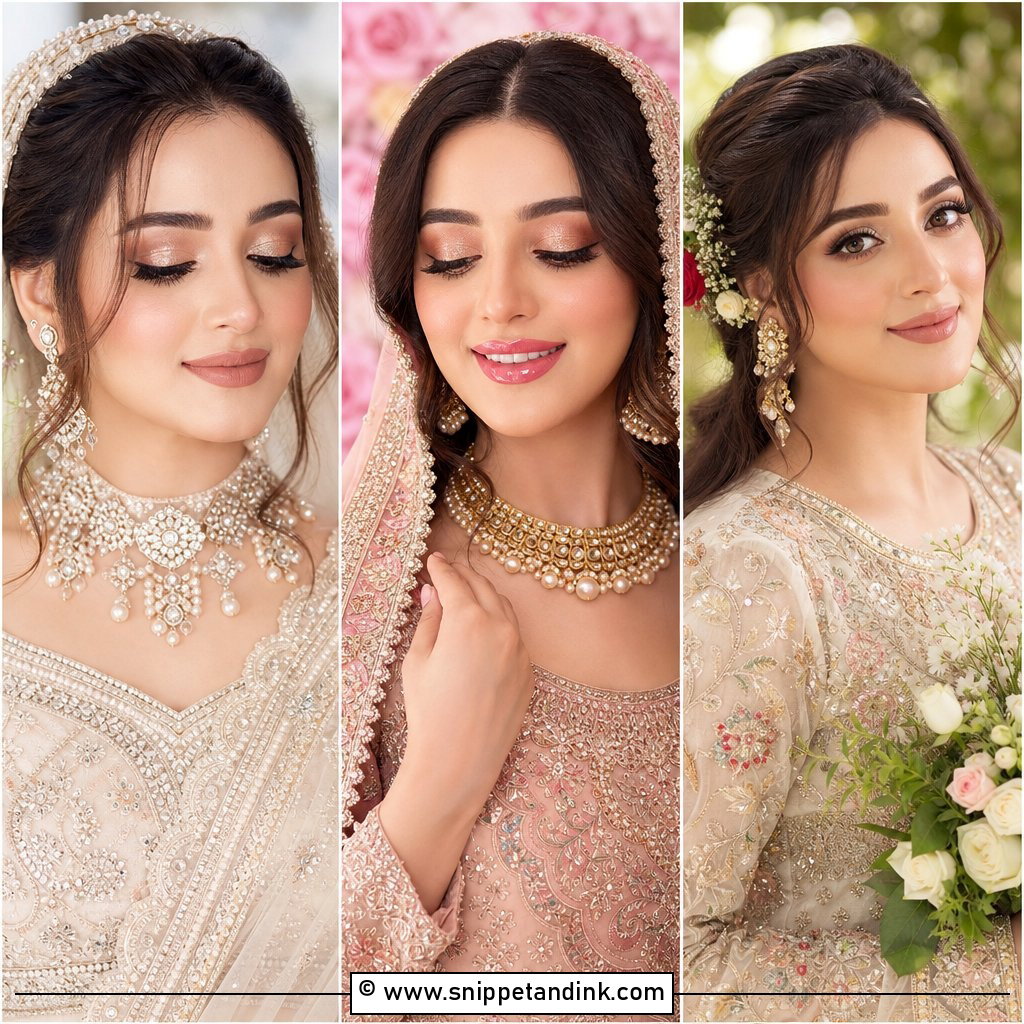
Soft glam is the look I do most, and the reason is simple: it reads as makeup in a group photo and as skin in a close-up. I lightly sculpt under the cheekbone, keep the base smooth with a little radiance, and let the eyes lead with warm brown in the crease, shimmer on the lid, a soft line and wispy lashes that don’t hide the lid. Peachy pink blush and a nude rose lip keep it fresh. It adapts to nearly any dress or season, which is why it’s my default starting point when a bride isn’t sure what she wants.
3. Dewy Bridal Makeup
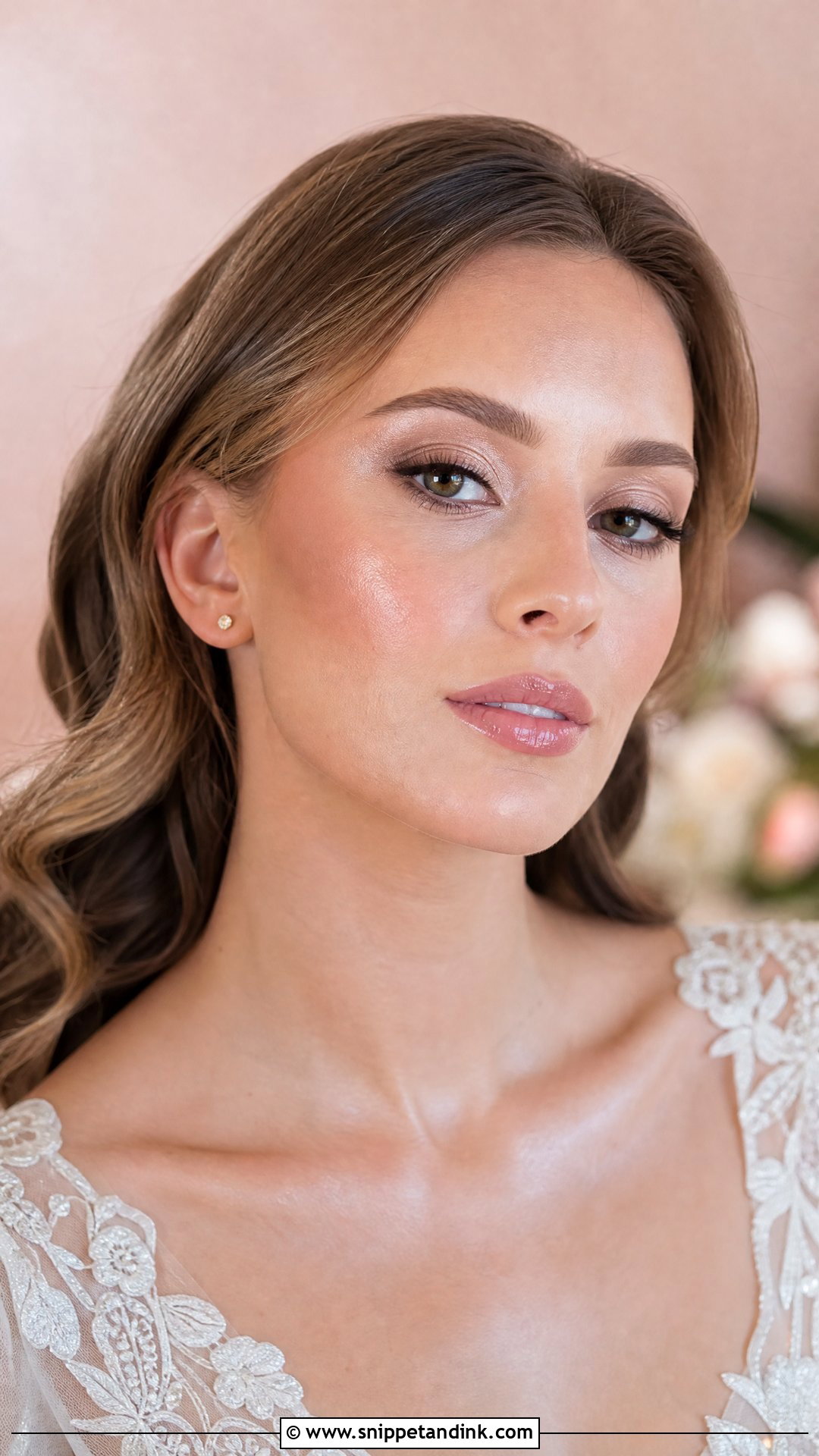
Dewy only works when the glow is placed deliberately. I keep radiance on the high points of the cheeks, the brow bone and the centre of the lip, and I set the forehead, nose and chin so the shine there doesn’t turn greasy by the speeches. A sheer to medium foundation lets real skin texture show, which is part of the appeal. Cream blush, satin shadow, soft brown liner and lifted lashes keep everything light, and a glossy nude or pink lip finishes it. Oily skin will fight this look all day; dry and normal skin wear it beautifully, especially at spring and outdoor weddings.
4. Matte Bridal Makeup
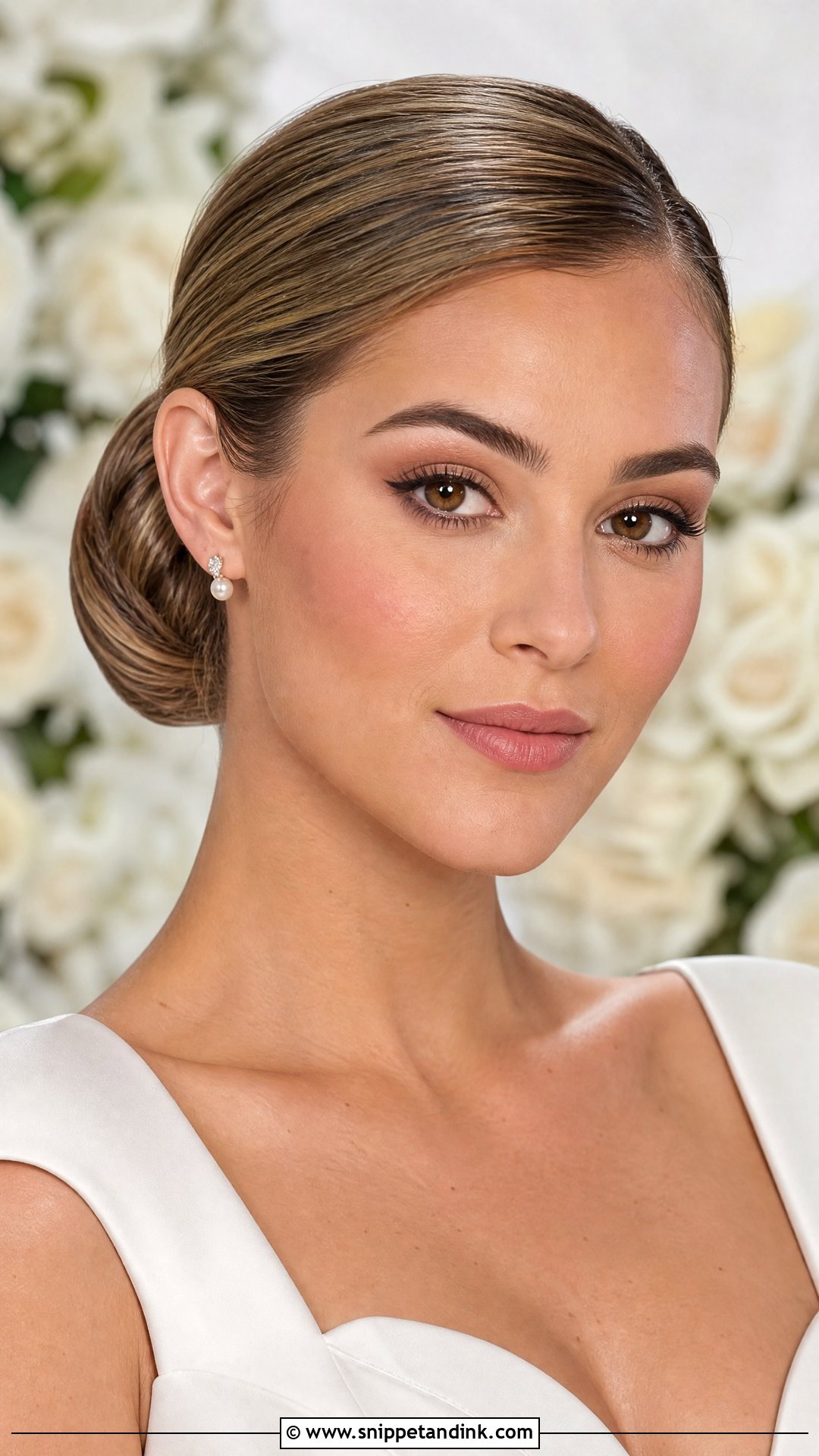
Modern matte should look like velvet, not plaster. The prep matters more than the foundation: hydrate first, then a smoothing primer, then a long-wear base, with powder pressed only where you actually shine. Soft contour and a powder blush in rose or mauve add shape, and matte beige, brown and cocoa on the eyes keep the lash line clean. A satin-matte nude lip finishes it. I reach for this for oily skin, heat and long receptions. On dry or textured skin I’ll compromise with a satin base instead, because full matte clings to every flake.
5. Classic Bridal Makeup
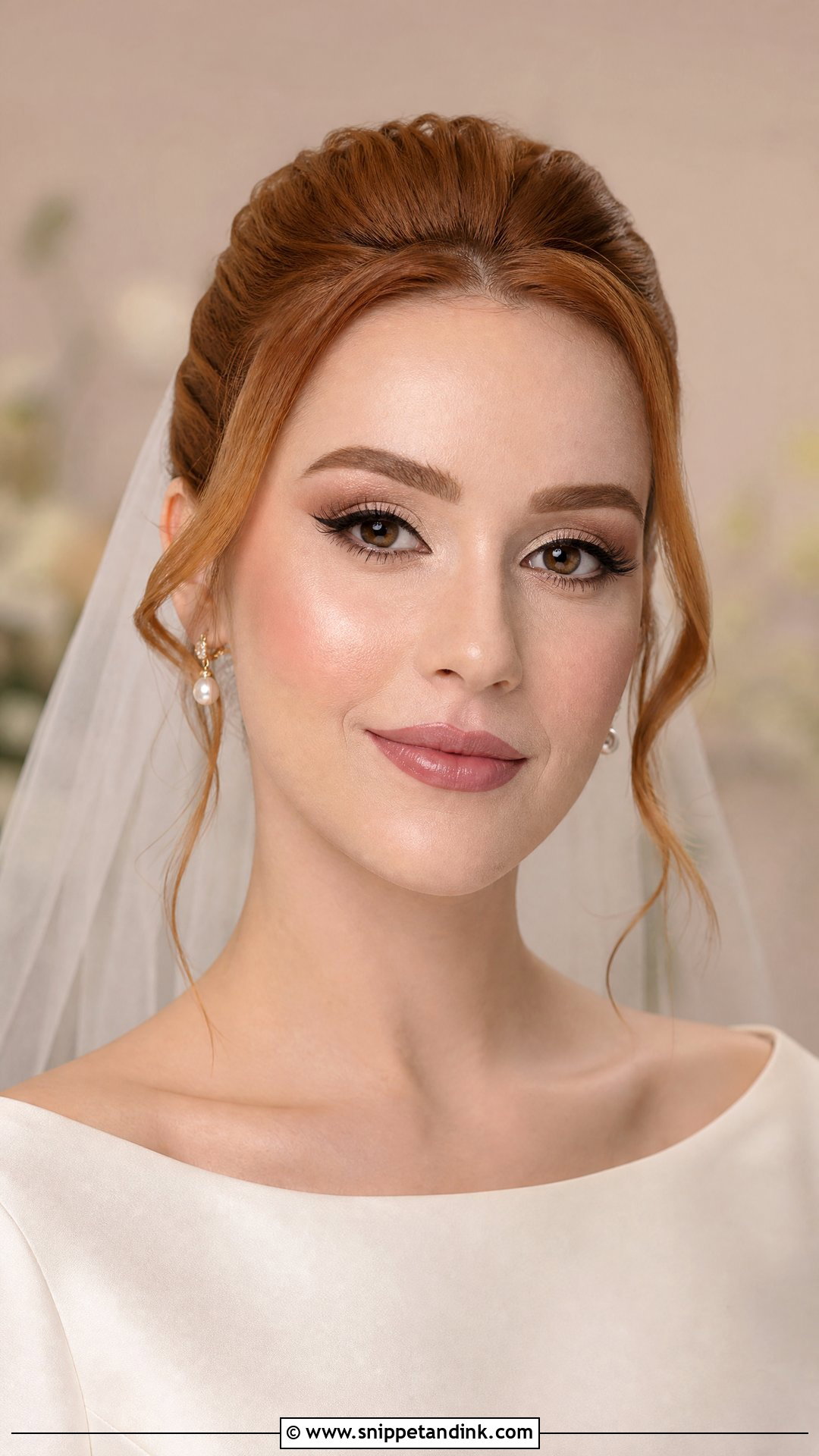
Classic bridal makeup is about proportion. Nothing is the loudest thing on the face. Neutral brown shadow, a delicate black or brown wing, individual lashes and softly shaped brows sit over a satin complexion with a touch of blush and highlight. A rosy nude or soft pink lipstick ties it up. I find this look ages best in an album, since there’s nothing trend-specific to date it. It sits naturally with a ball gown, a long traditional veil and a formal church or ballroom.
6. Romantic Bridal Makeup
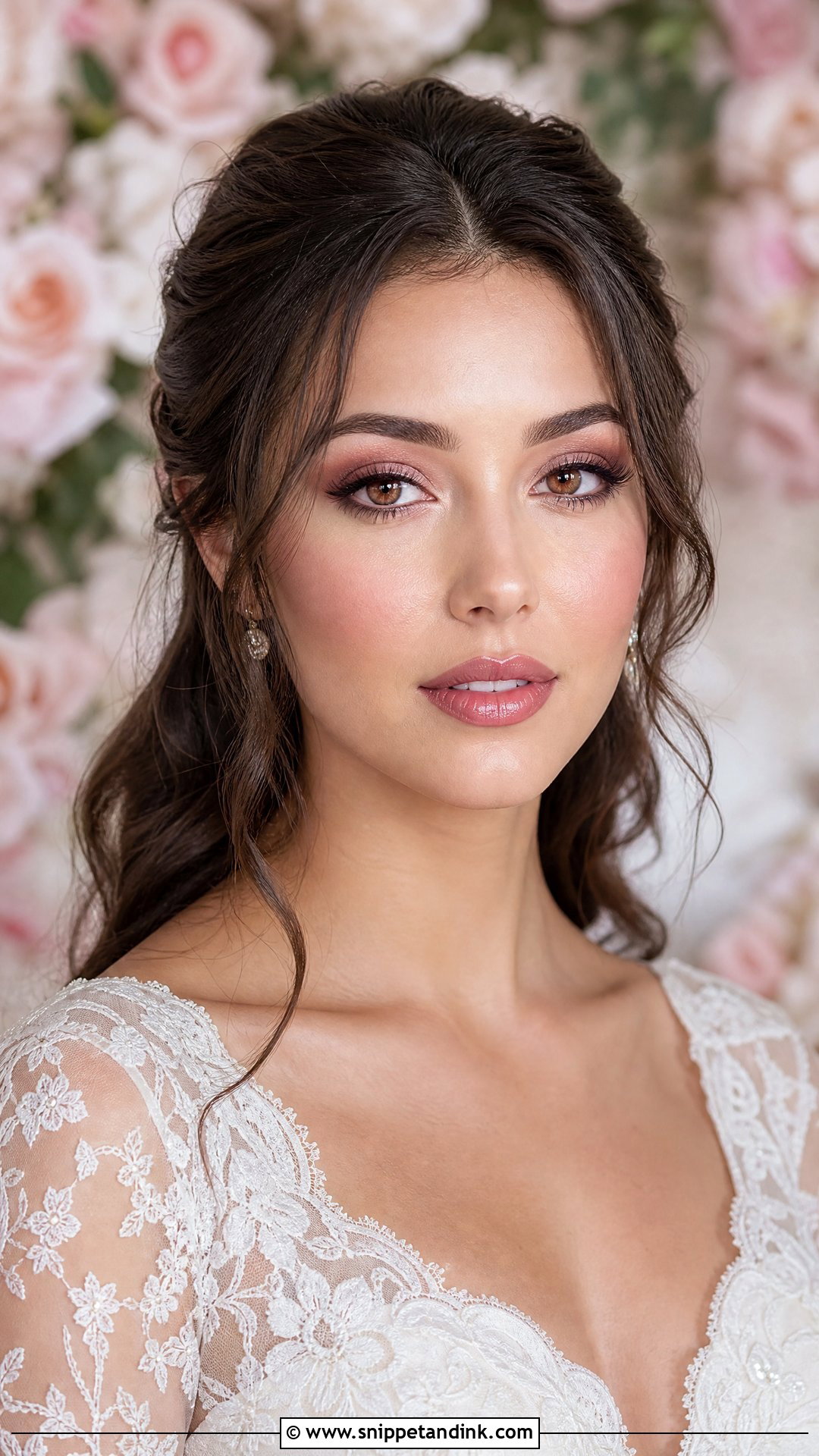
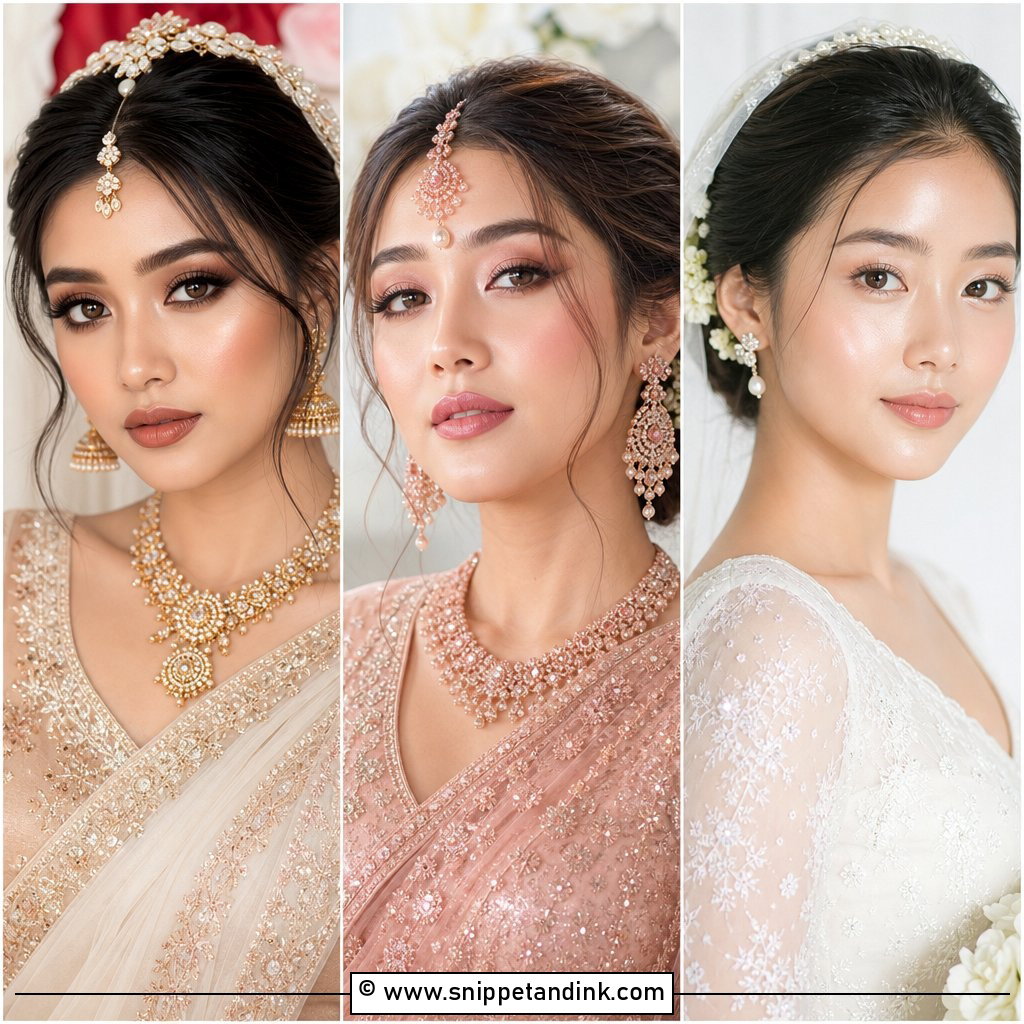
Think blurred rose on the lid, flushed cheeks and a smooth pink lip. I keep the base creamy with soft-focus coverage, use mauve or dusty pink on the eyes and switch to brown liner so the pink doesn’t look sore. A matching blush and lip pulls the whole face into one tone, which is what stops it looking sugary. The catch with pinks around the eye is redness: if you cry easily or have sensitive lids, I’ll keep the pink to the crease and away from the lash line. Lace, loose waves and outdoor florals sit well with it.
7. Bronzed Bridal Makeup
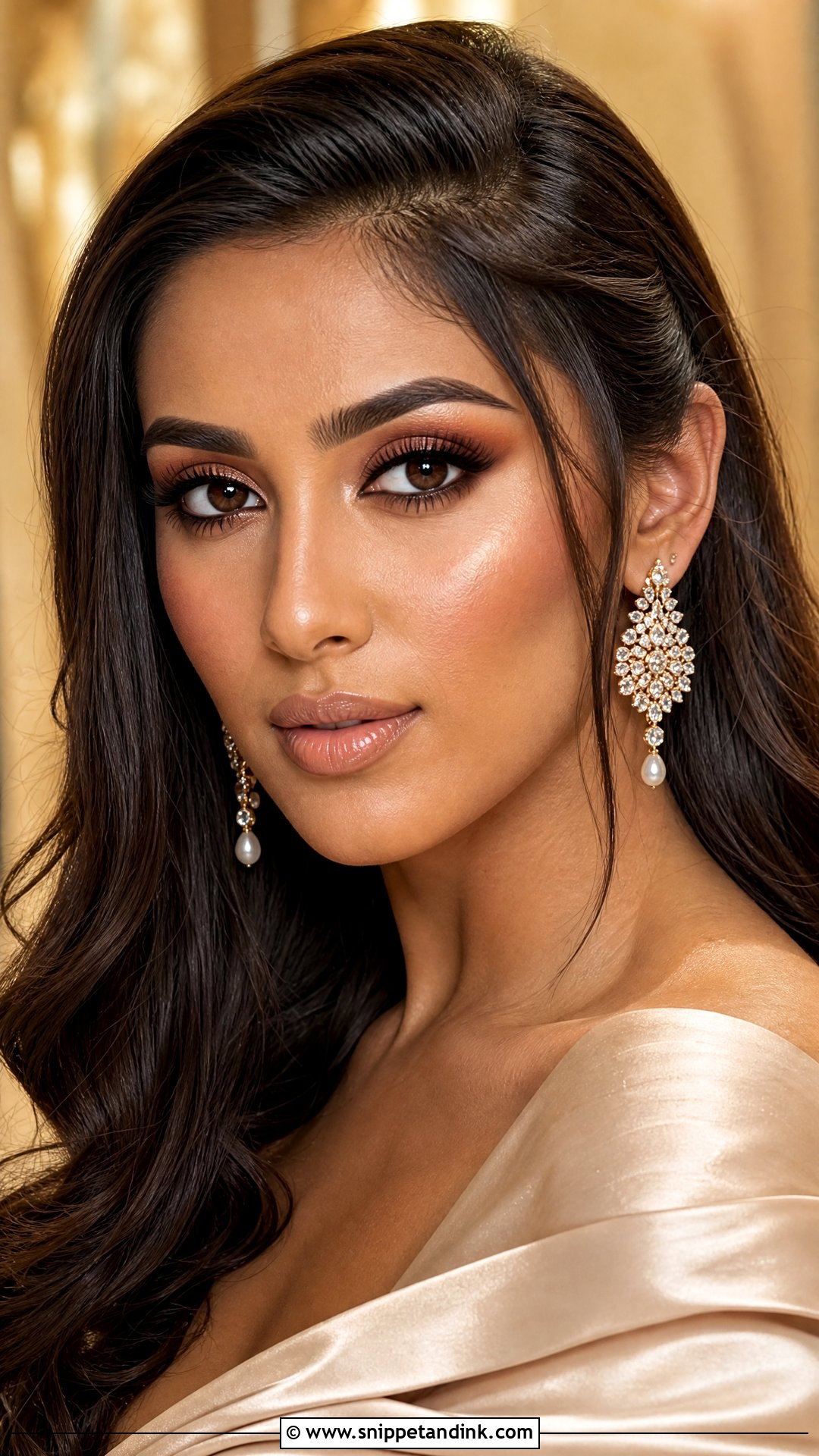
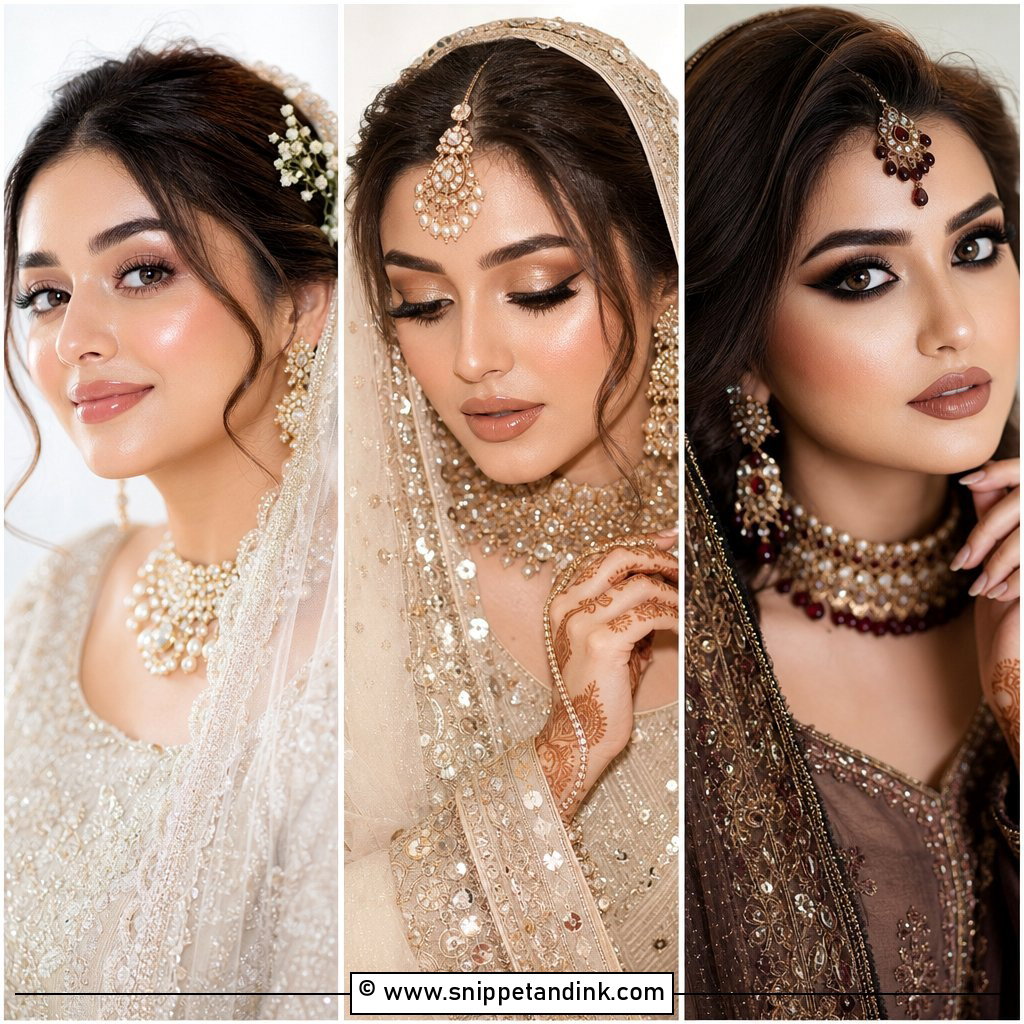
Bronzer placed where the sun would actually hit, around the temples, top of the cheekbones and along the jaw, gives a warm, sculpted face without looking muddy. I build caramel, bronze and warm brown on the eyes with a little shimmer at the centre of the lid, and keep lashes fuller but separated. Peach blush and a nude beige lip finish it. It glows at golden hour because the warm tones pick up the low sun. One thing I check at the trial: bronzer has to match your neck and chest, or the face will look a different colour from your shoulders in a strapless dress.
8. Smokey Eye Bridal Makeup
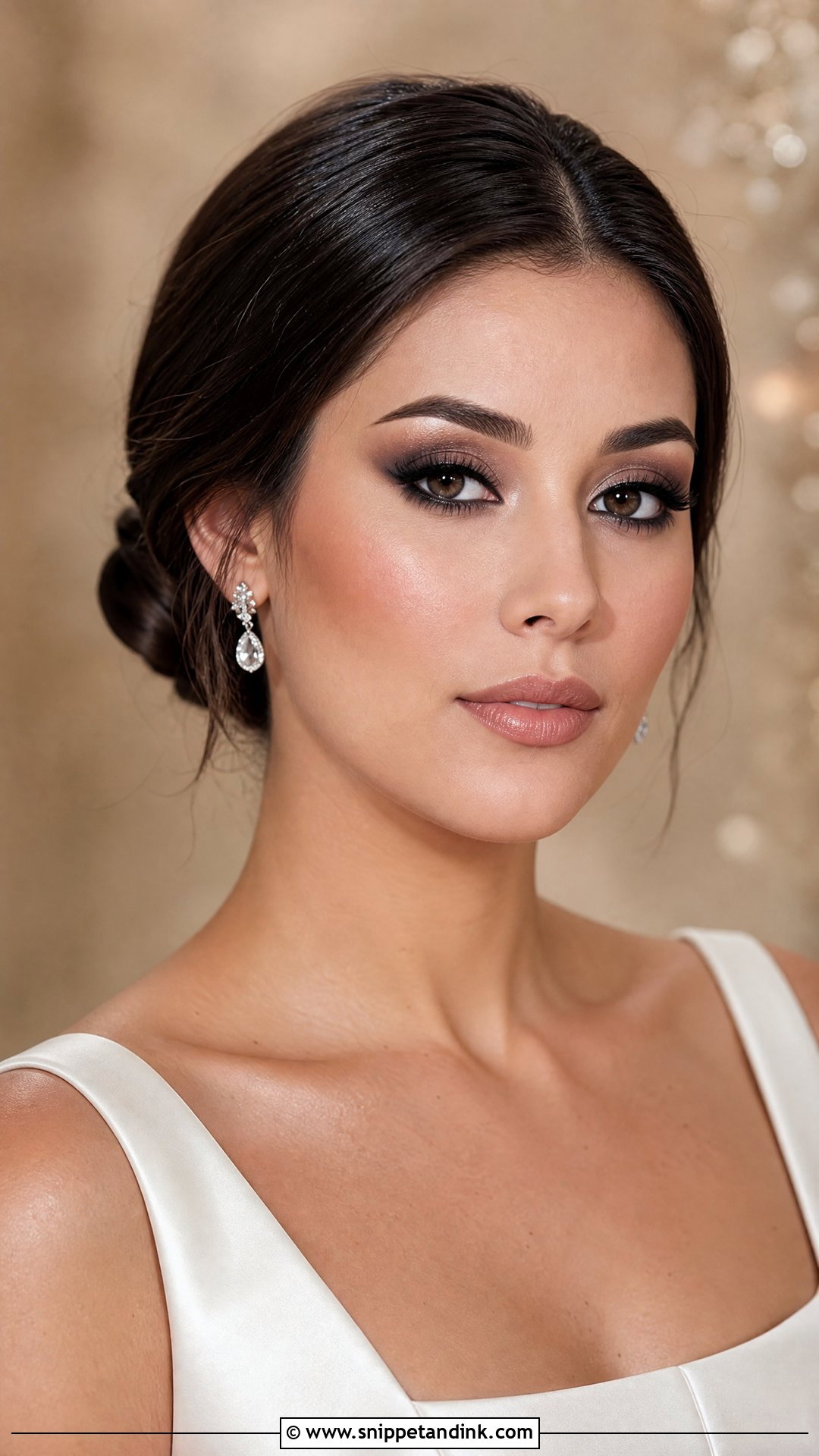
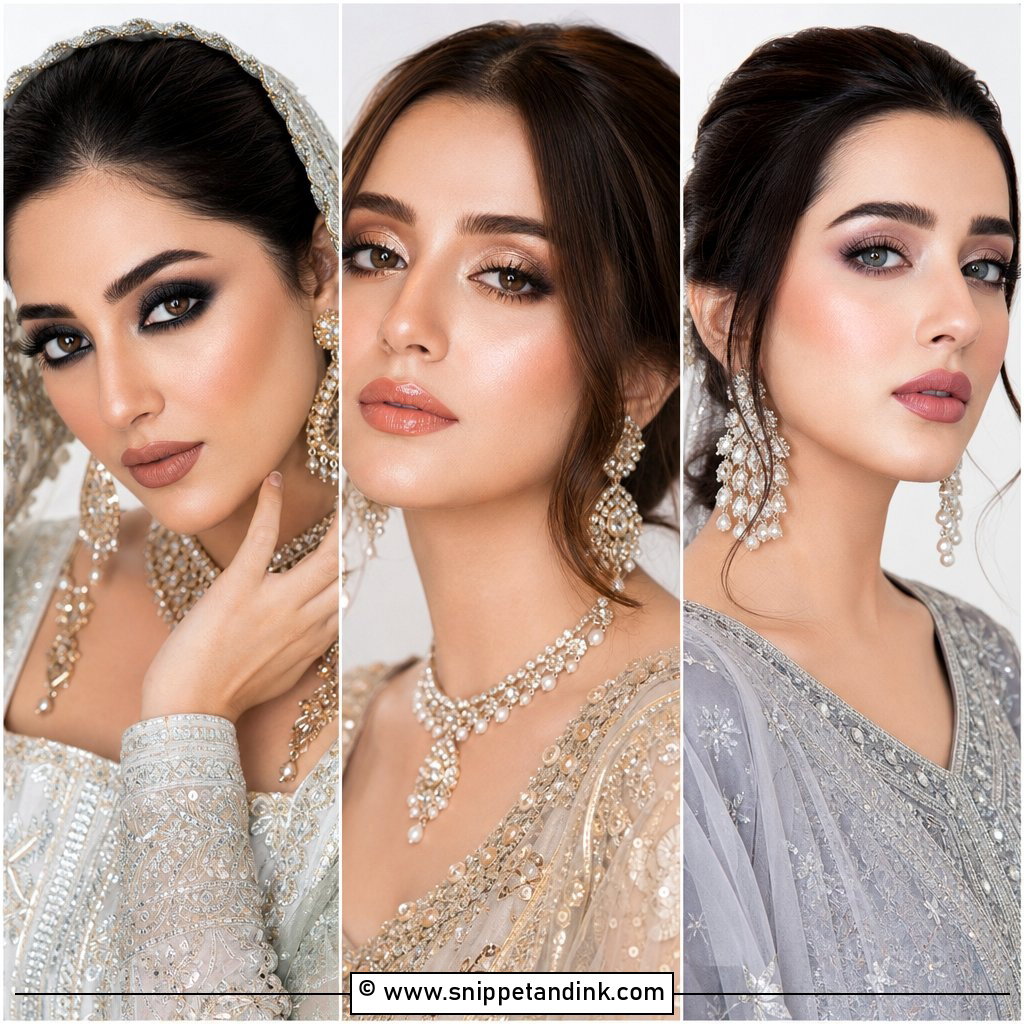
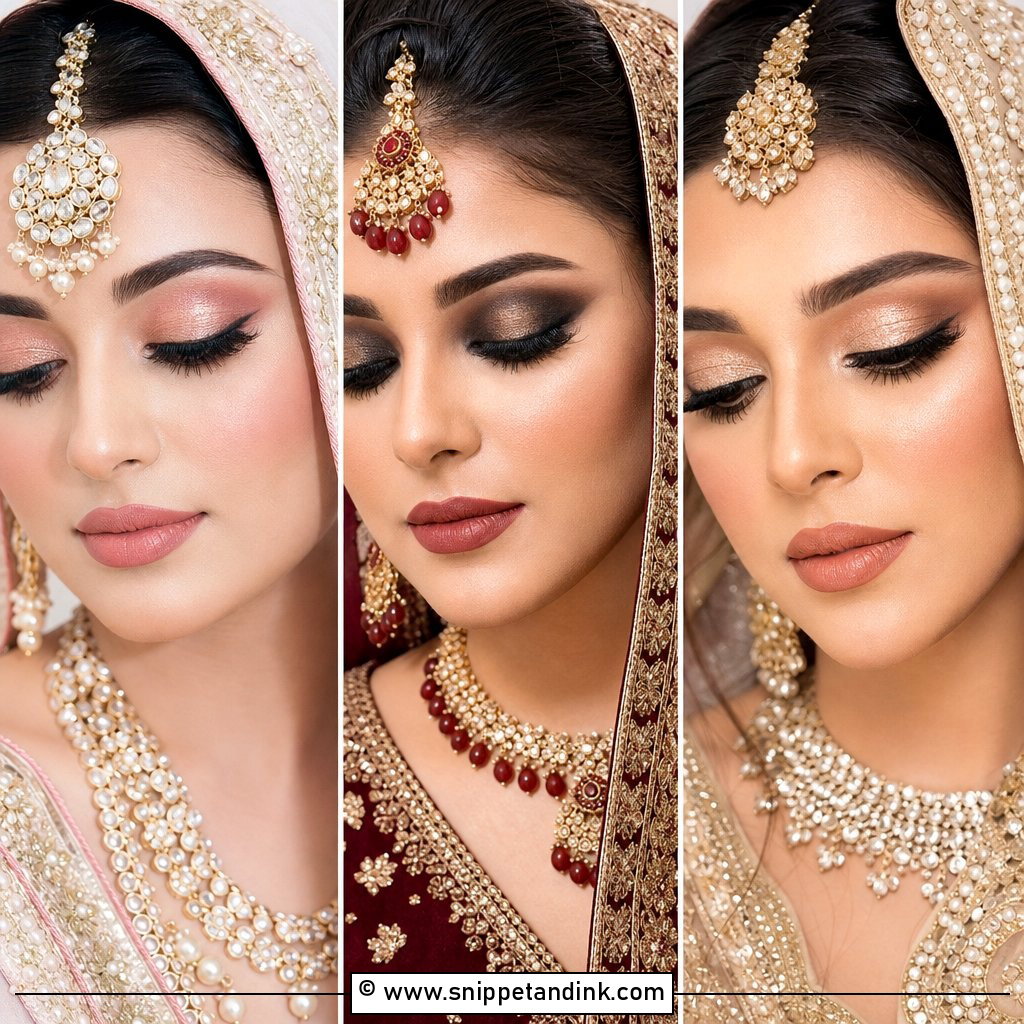
Smokey eye bridal makeup stays elegant when the edges disappear. I choose the shade by eye colour and comfort: chocolate and bronze for most, plum for green or hazel eyes, charcoal only if you already wear dark eye makeup. The deepest shade stays at the lash line and I blend upward for lift, not outward, which can drag the eye down. Clean skin, soft contour and a neutral lip keep the balance. Evening ceremonies and black-tie venues carry it best. In harsh noon sun, a heavy smoke can look tired in photos.
9. Brown Smokey Bridal Makeup
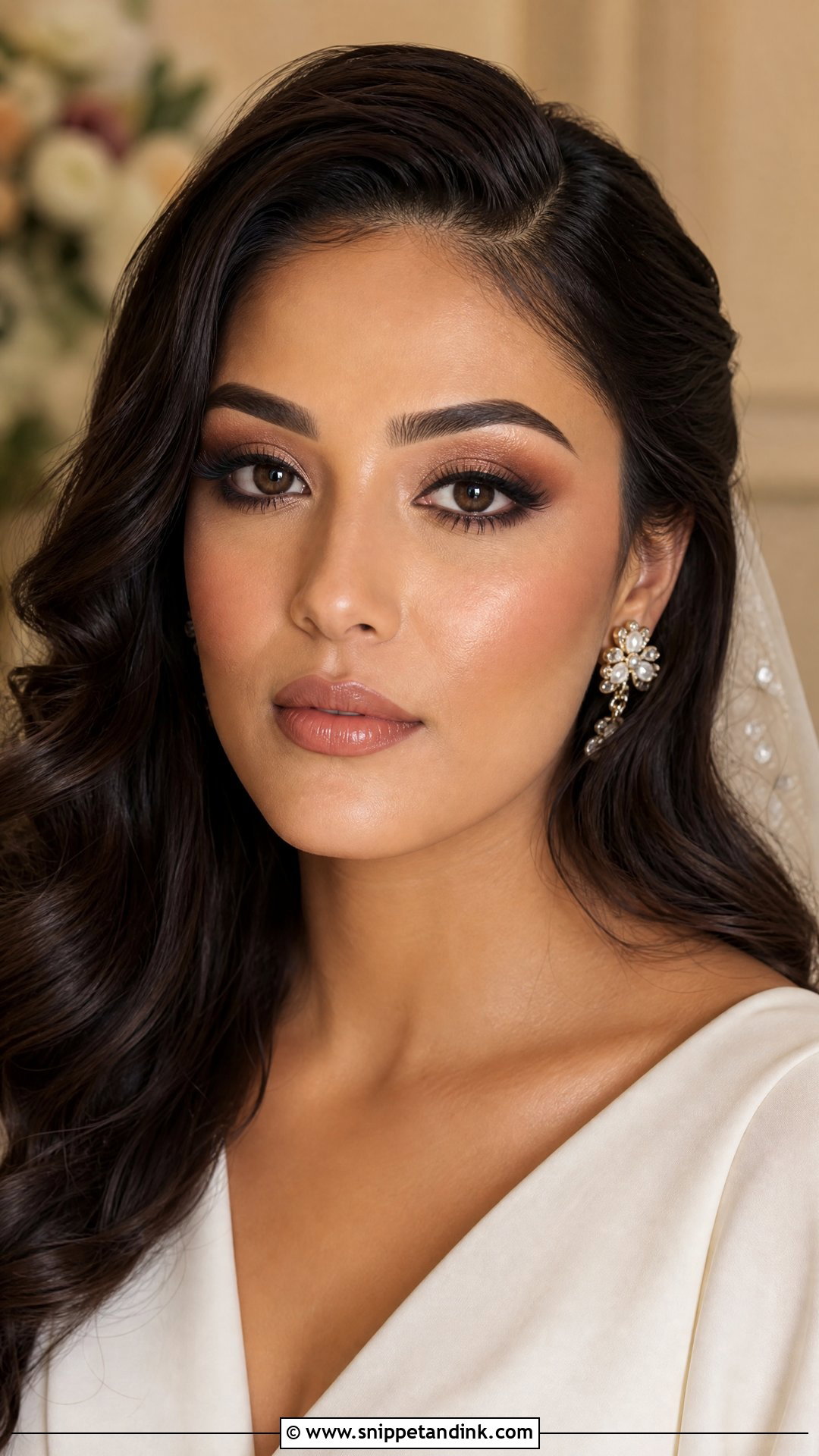
Brown smokey bridal makeup is the version I suggest when a bride wants depth but worries about looking done up. Matte beige goes on as a base, medium brown through the crease and espresso at the lash line, with a touch of bronze shimmer at the centre of the lid for dimension. Brown flatters nearly every eye colour, which makes it a safe call. Smooth, softly bronzed skin with peach or rose blush and a nude pink or caramel lip balances the deeper eye. It’s a good choice if you’ll be hugging a lot of people and don’t want to feel untouchable.
10. Winged Liner Bridal Makeup
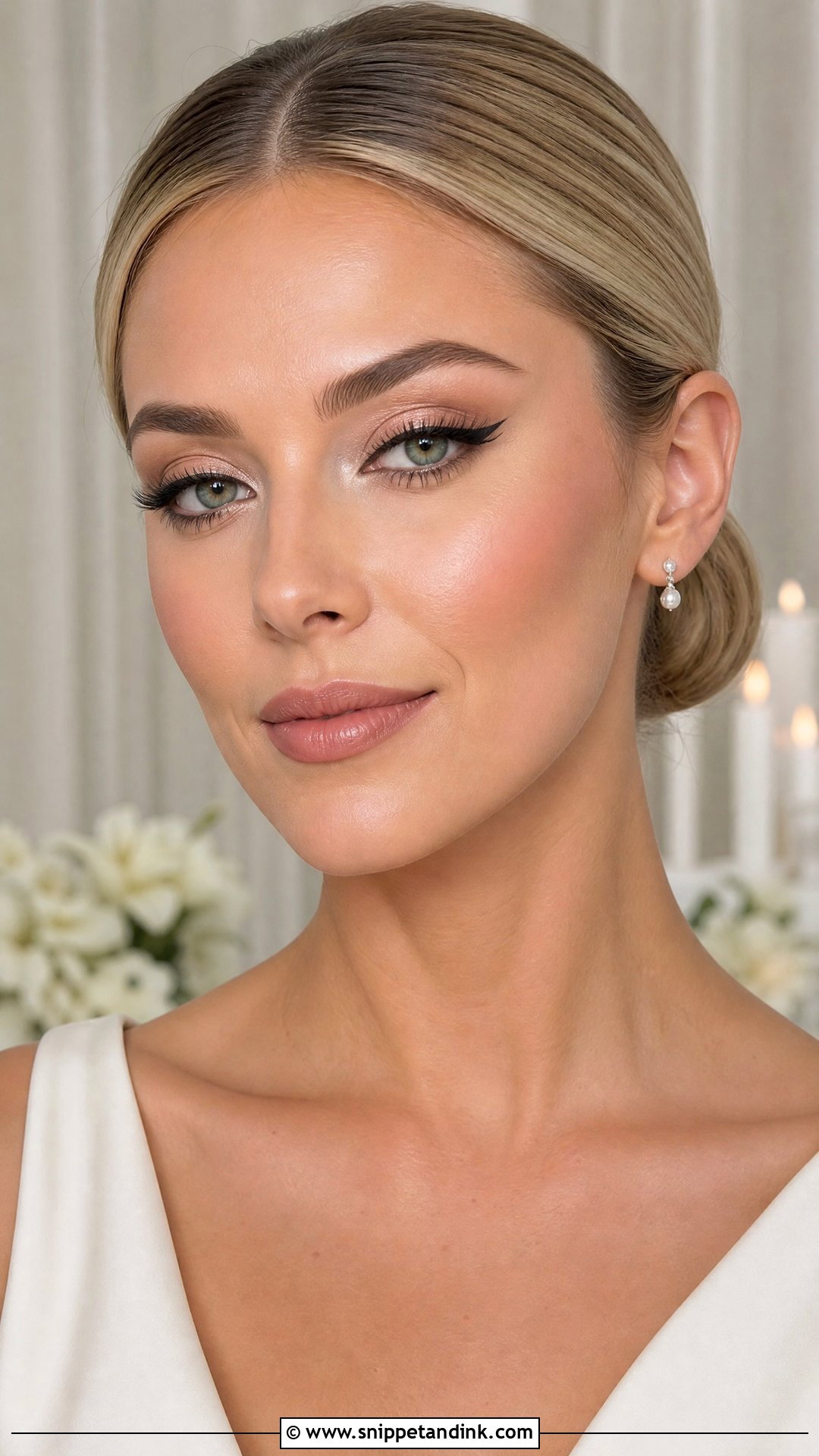
The wing has to fit your eye shape, not a photo. I angle it along the line of the lower lashes, keep it thin for subtle definition or slightly thicker for a vintage feel, and draw it with your eyes open so it doesn’t break on a hooded lid. Neutral matte shadow, curled lashes and softly filled brows support it. Blush goes high on the cheek to echo the lift. Lips can be nude, rose or red. It suits tailored gowns, sleek buns and pearls, and it gives a very plain dress some structure. Liquid liner is unforgiving if you’re nervous, so I usually do this one myself rather than leaving it to a touch-up.
11. Red Lip Bridal Makeup
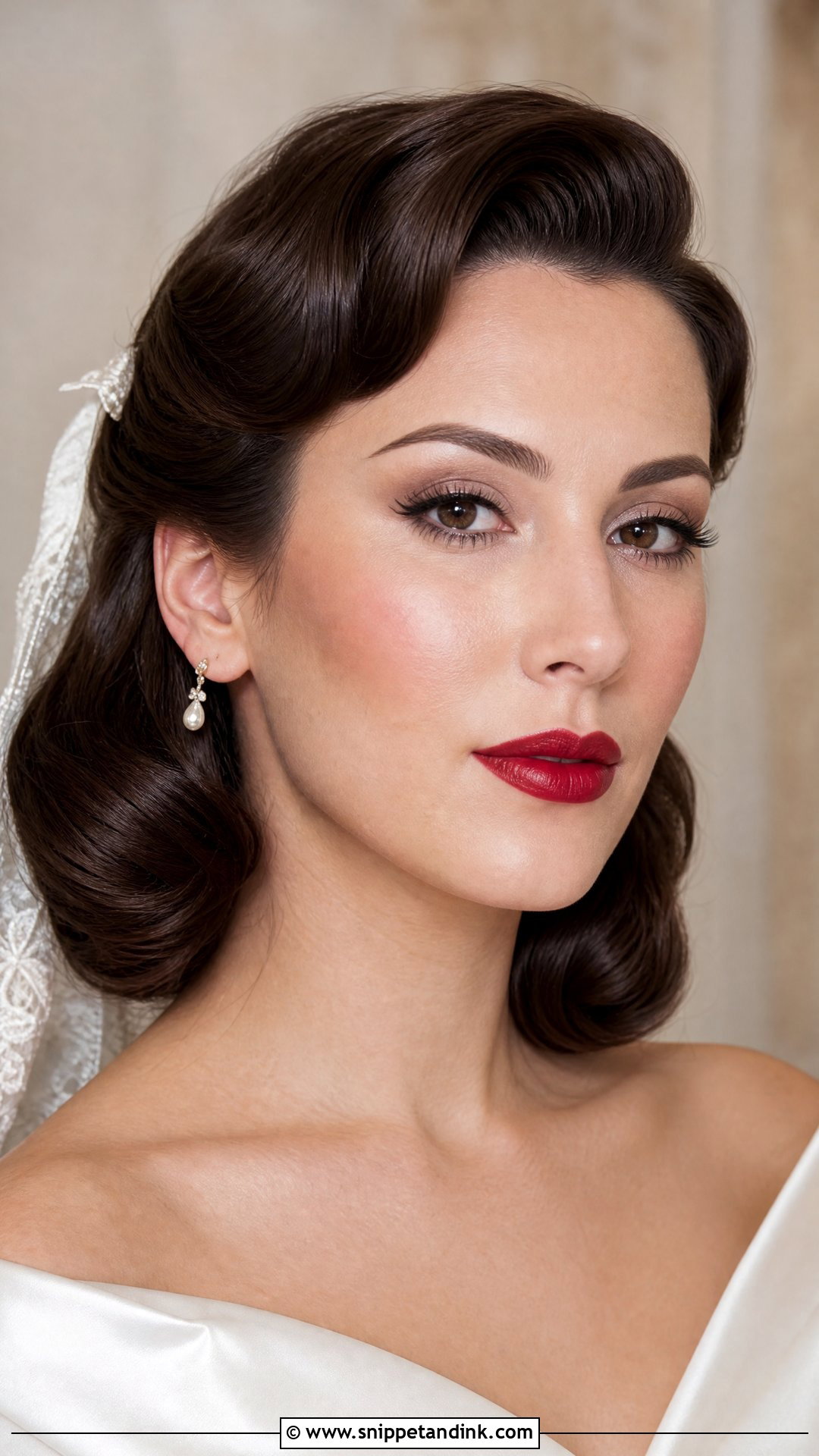
Red lipstick is the bridal look that most depends on the shade match. Blue-reds suit cool skin and make teeth look whiter, brick reds suit warm skin, and deep cherry flatters richer skin tones. I keep the eyes clean with beige shadow, thin liner and defined lashes, and the skin softly matte so the lip leads. A matching liner over the whole lip stops feathering, and blotting between two layers makes it last. City weddings and evening receptions suit it. Wear a red for a full evening before the wedding if you never have, because you’ll be checking your mirror otherwise.
12. Pink Bridal Makeup
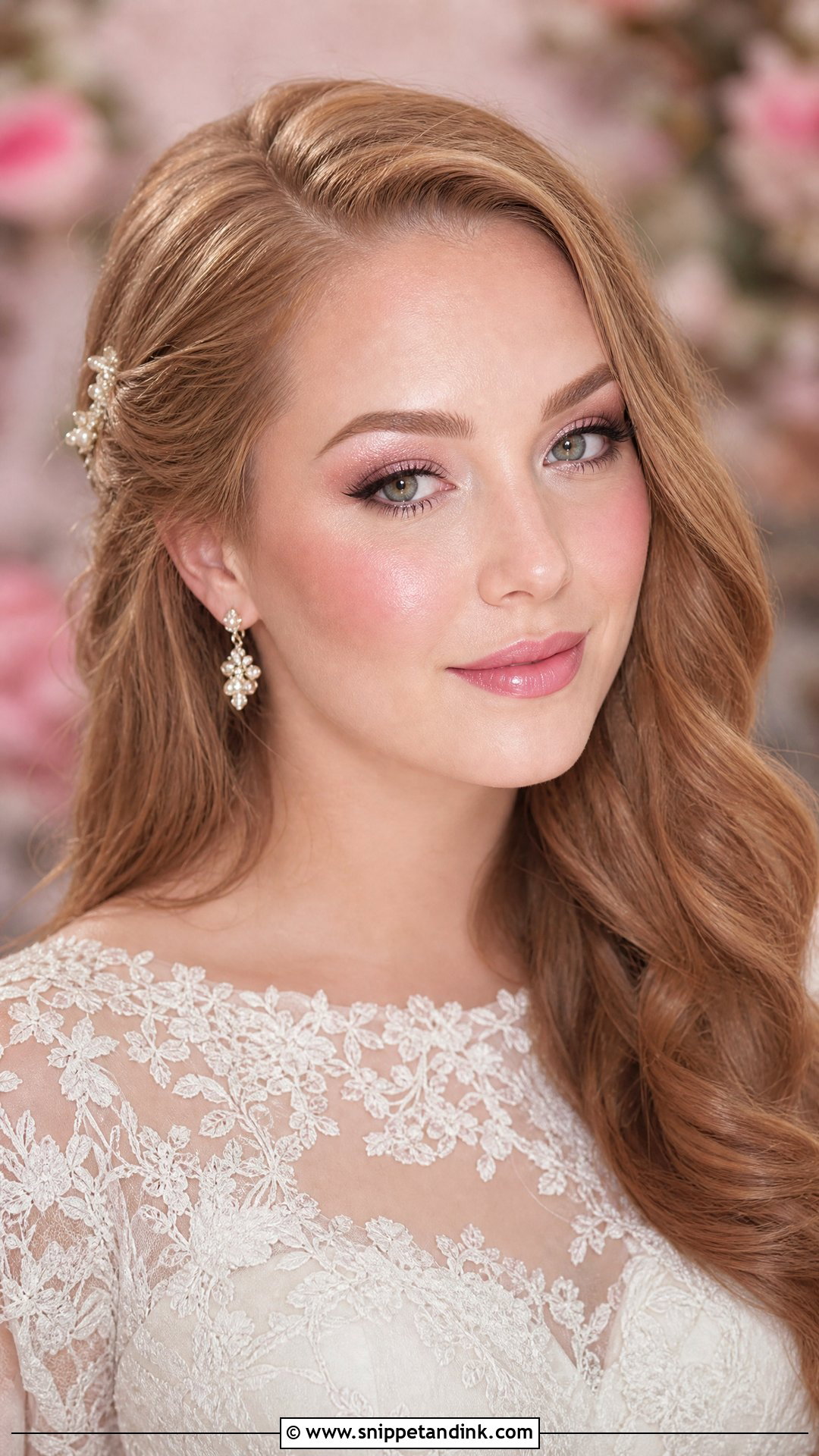
Layered pinks look fresher than one strong pink. I put pale rose on the lids, petal pink on the cheeks and a pink nude lip in satin or gloss, then keep liner brown or dark taupe so nothing gets sweet. A radiant base and subtle highlight keep it soft. Daytime ceremonies and spring weddings are where it looks most natural. Very warm or olive skin can look a little grey next to cool pinks, so I’ll shift those brides toward a warmer rose.
13. Peach Bridal Makeup
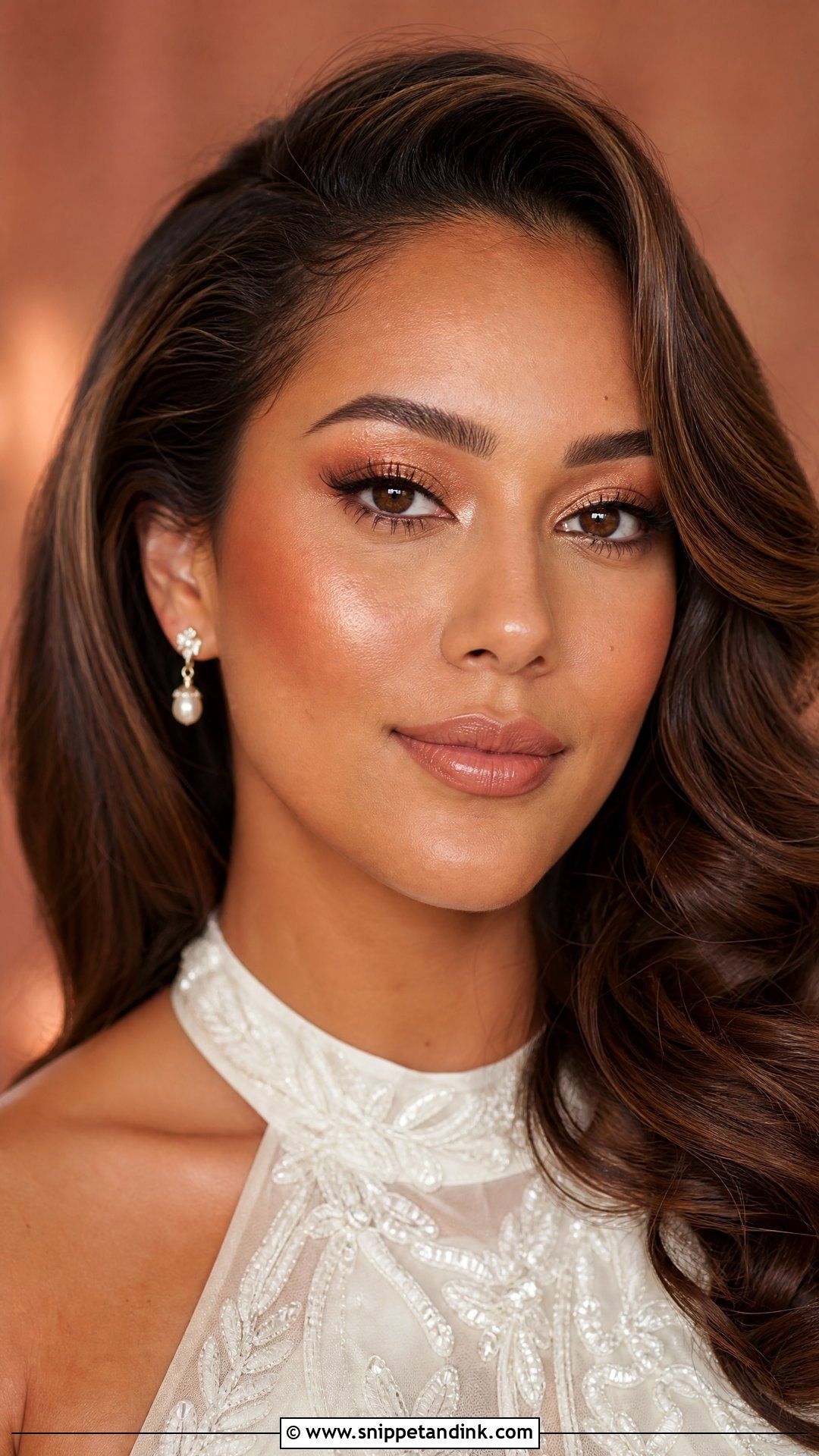
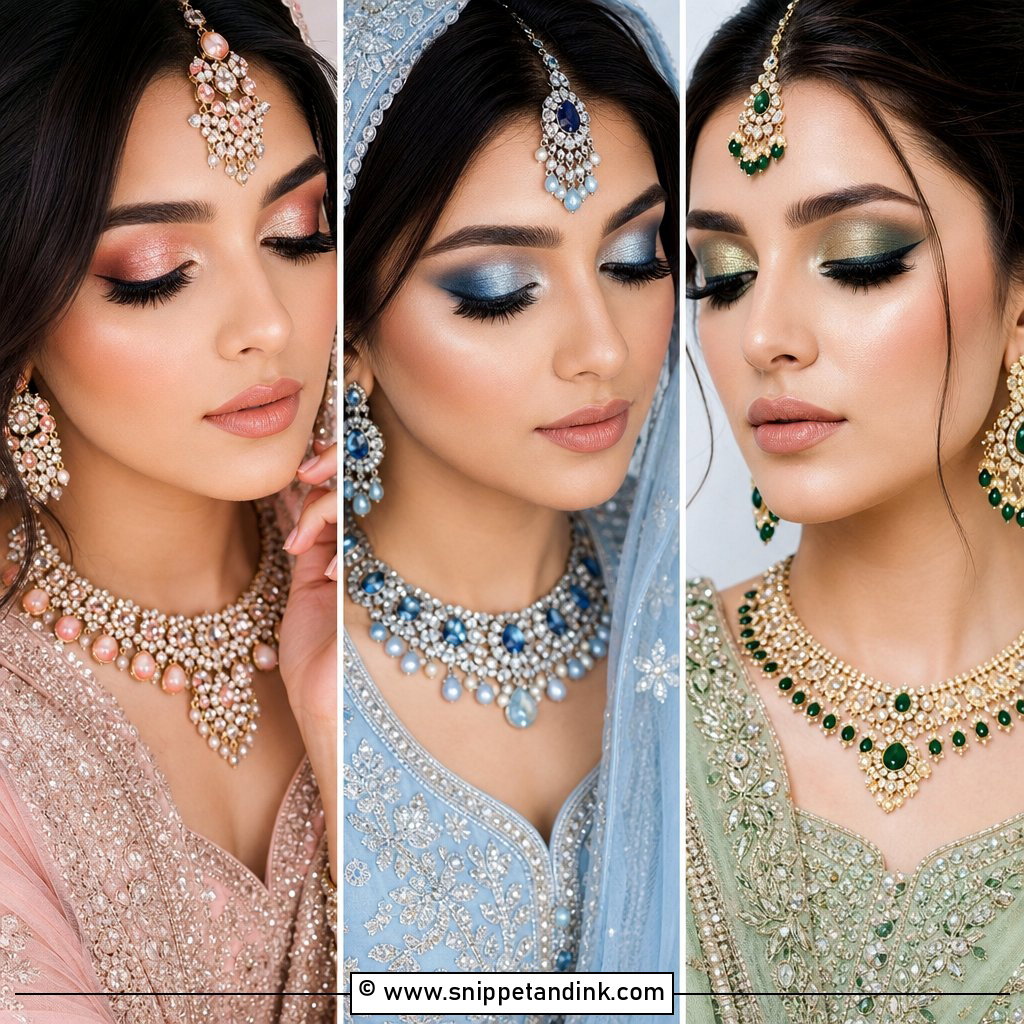
Peach is my safest colour across skin tones: it warms the face without tipping too pink or too bronze. Blush goes on the apples and is blended upward toward the temple for lift. Champagne, soft copper or warm beige shadow with brown liner keeps the eyes in the same family, and a peachy nude lip finishes it. On deeper skin, pale peach can look chalky, so I switch to richer apricot and terracotta-peach shades that actually show. Outdoor and summer weddings, and destination ceremonies, wear it easily.
14. Rose Gold Bridal Makeup
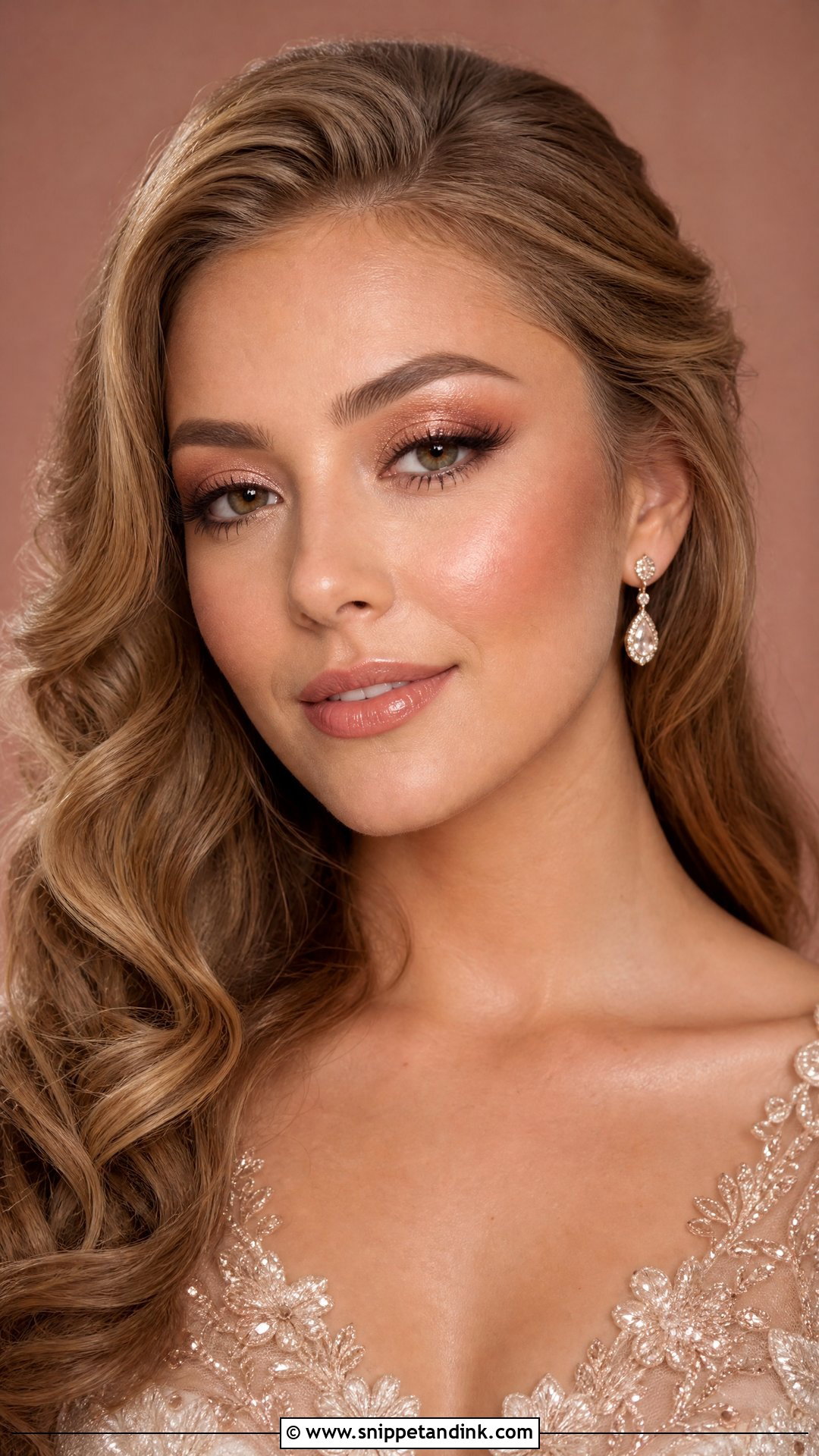
Rose gold gives shimmer with warmth. I put the rose gold on the mobile lid only, warm brown in the crease and soft liner along the lashes, and I choose a fine-milled formula so it looks like light, not glitter, in close-ups. The skin glows but stays controlled with rose blush and a hint of champagne highlight, and a nude rose lip or pink gloss echoes the metal. Blush and champagne gowns, gold jewellery and soft waves all suit it. Chunky shimmer migrates, so if you love sparkle, press it on with a damp brush over a sticky base.
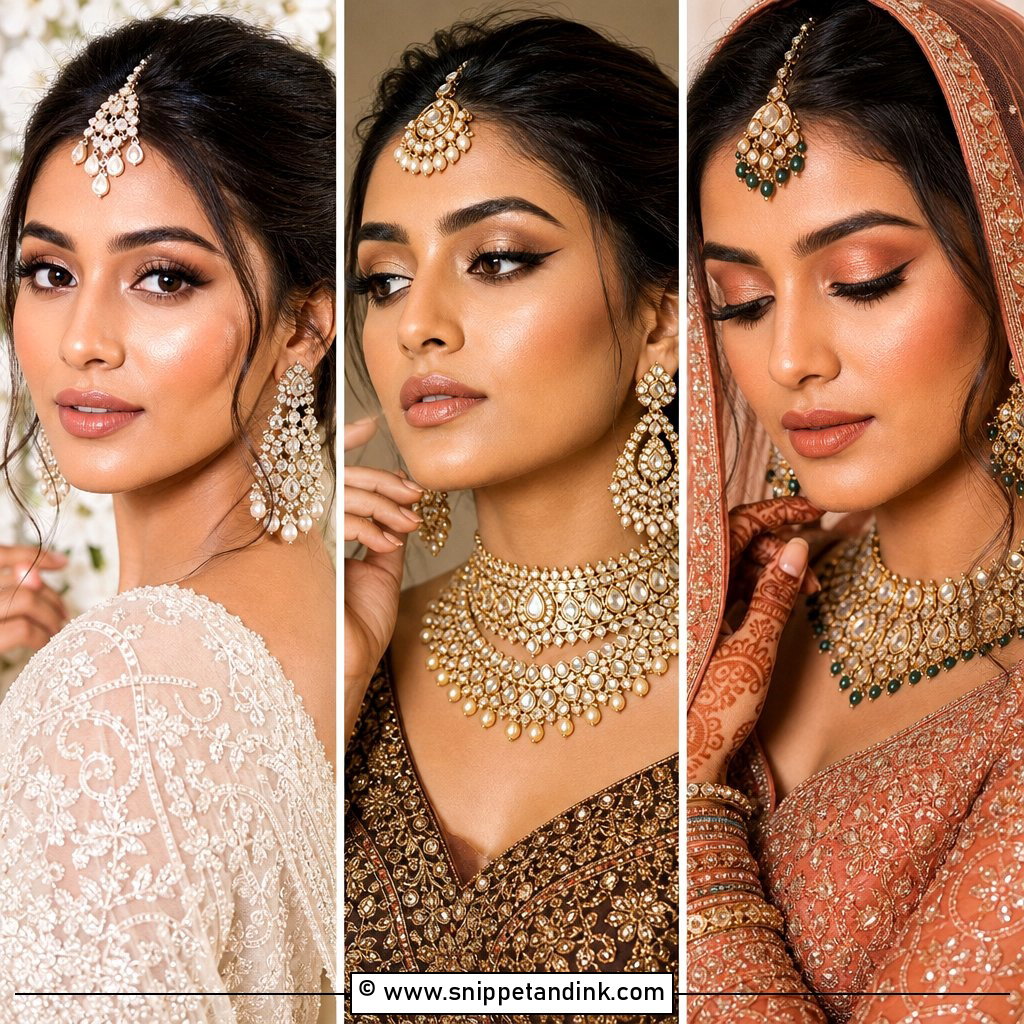
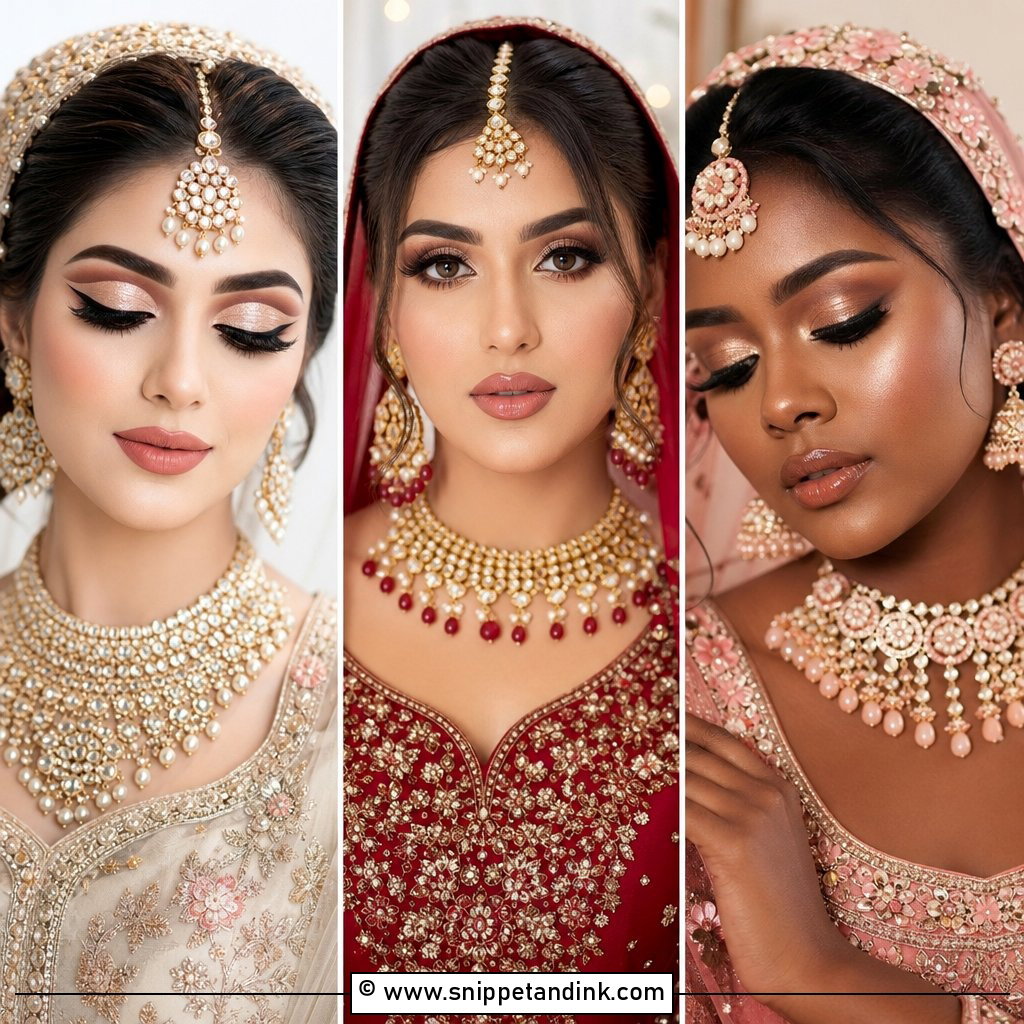
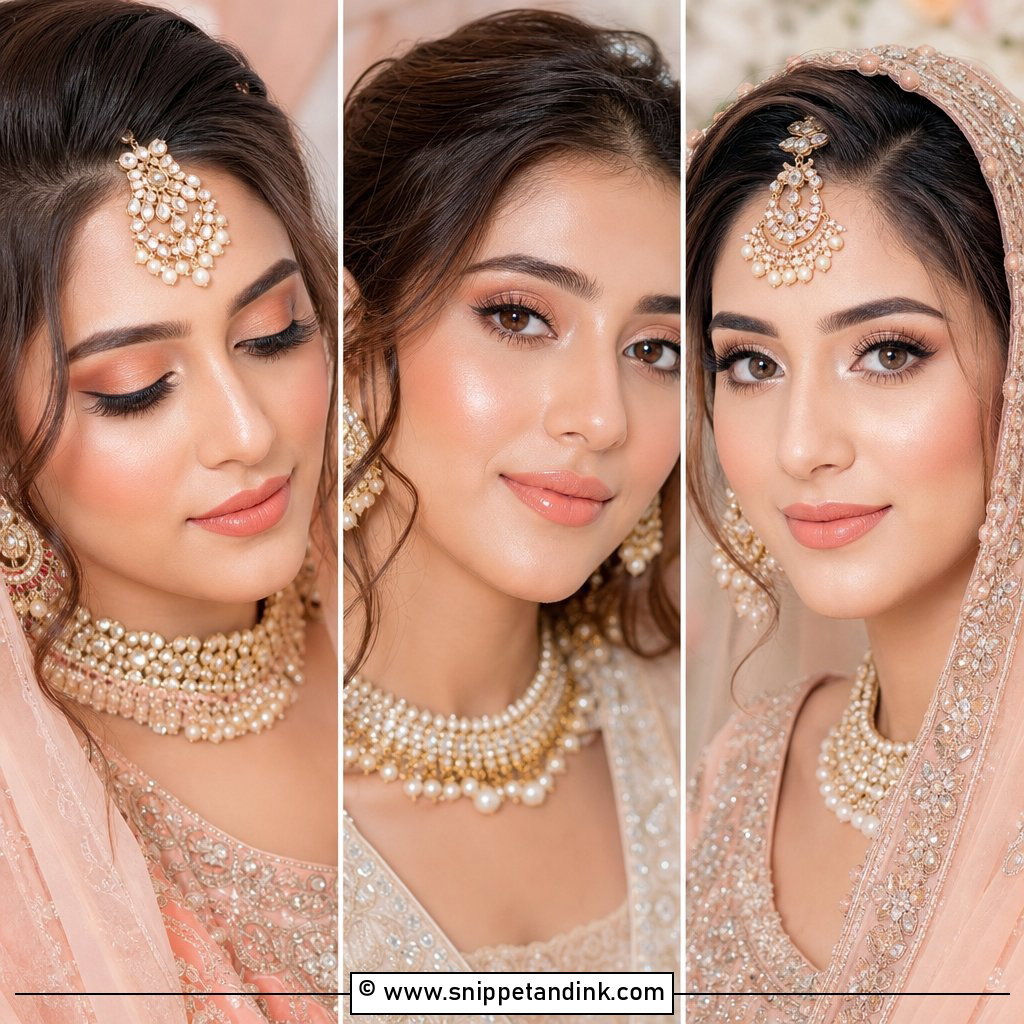
15. Champagne Bridal Makeup
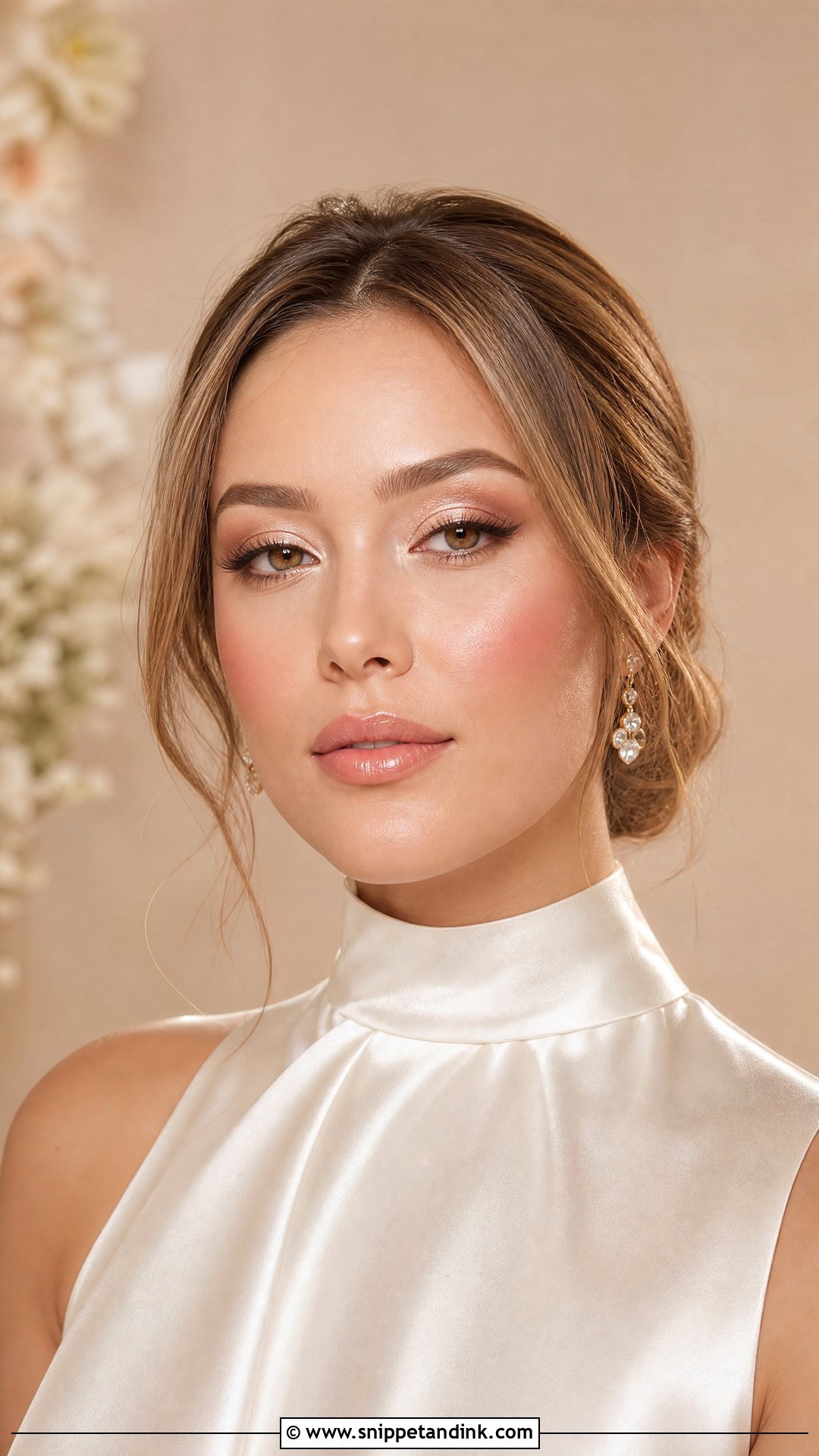
Champagne brightens eyes without adding any real colour, which makes it easy to wear with any dress. I put the shimmer on the inner corners and centre of the lid, blend beige and light brown through the crease, and add soft liner and natural lashes. The skin is satin with a small amount of highlight on the cheekbone. Blush can be peach, rose or nude, and a beige pink lip finishes it. Classic gowns and daytime weddings suit it. On very pale skin, I keep the champagne on the warmer side so it doesn’t look frosty.
16. Full Glam Bridal Makeup
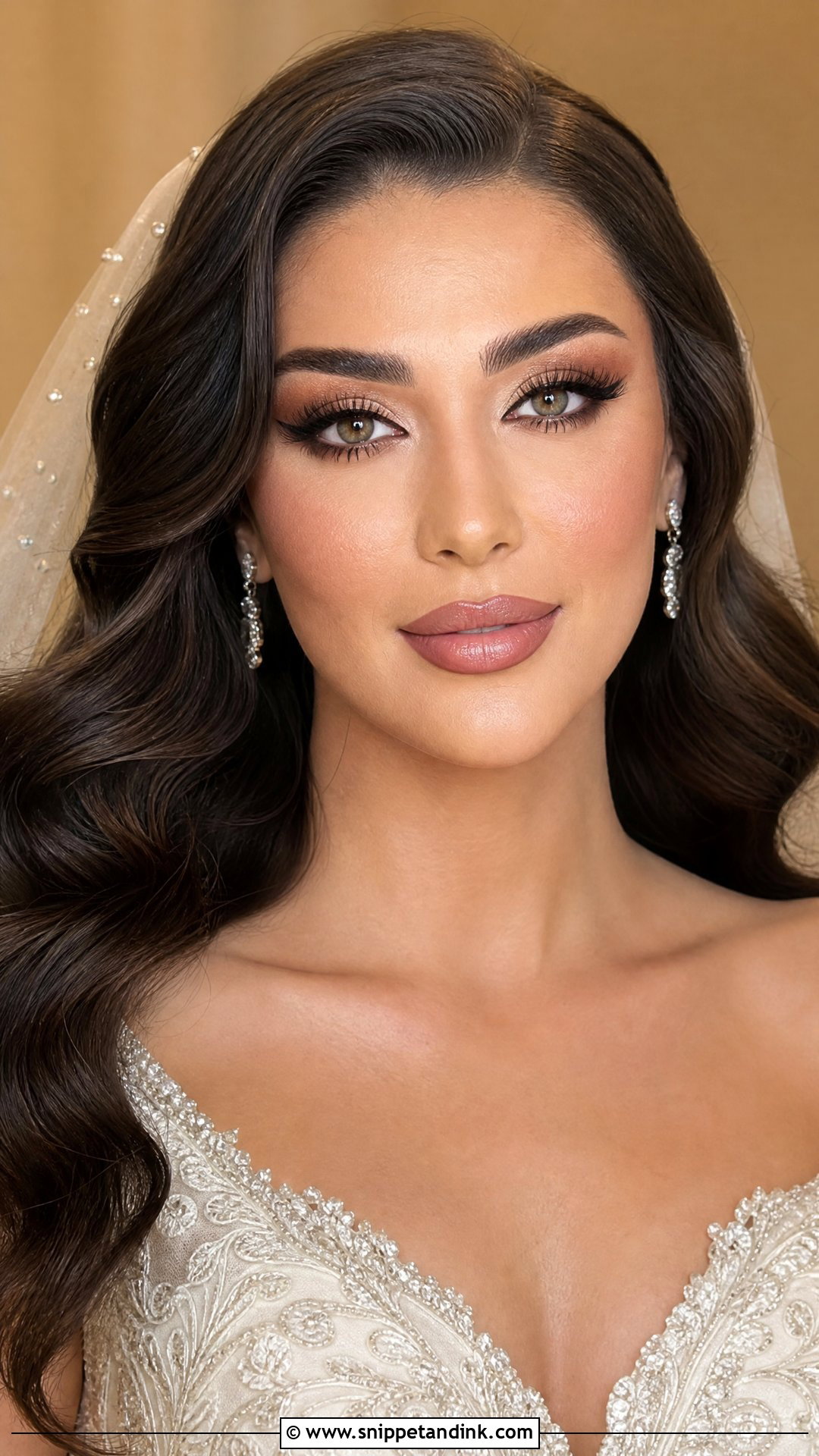
Full glam is about blending, not volume. I use long-wear foundation, precise concealer, a brightened under-eye, soft contour and a blurred powder finish, then defined crease work, shimmer lids, black liner and fuller lashes on the eye. Sculpted cheeks and a nude, rose or mauve lip keep it balanced. Large venues and professional lighting suit it, because the features need to read from a distance. Test it properly and wear it for several hours at your trial: full lashes and heavy base feel very different at hour eight than they do in the chair.
17. Minimal Bridal Makeup
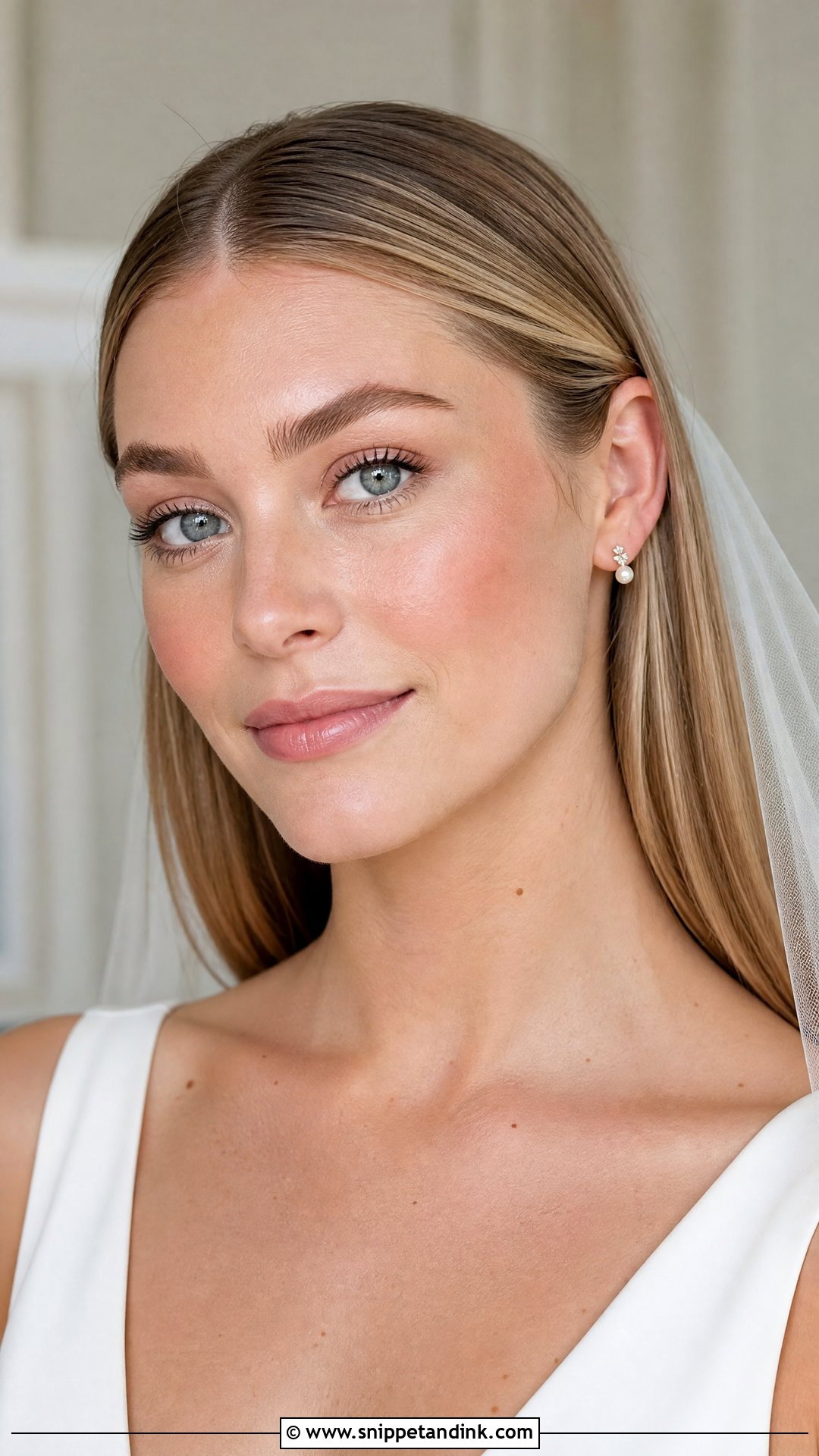
Minimal makeup still needs prep, maybe more than any other look, because there’s nothing to hide behind. I start with skincare, use a sheer foundation or tinted moisturiser, then pinpoint conceal. Cream blush, tinted brow gel and a little mascara come next, with a wash of beige or taupe on the lids and a balm, tint or nude gloss on the lips. Powder goes only where shine shows up. Small weddings, courthouse ceremonies and beaches suit it. Expect to look lighter in photos than in the mirror, so I always define the lashes a little more than you’d think.
18. Glam Bridal Makeup For Dark Skin
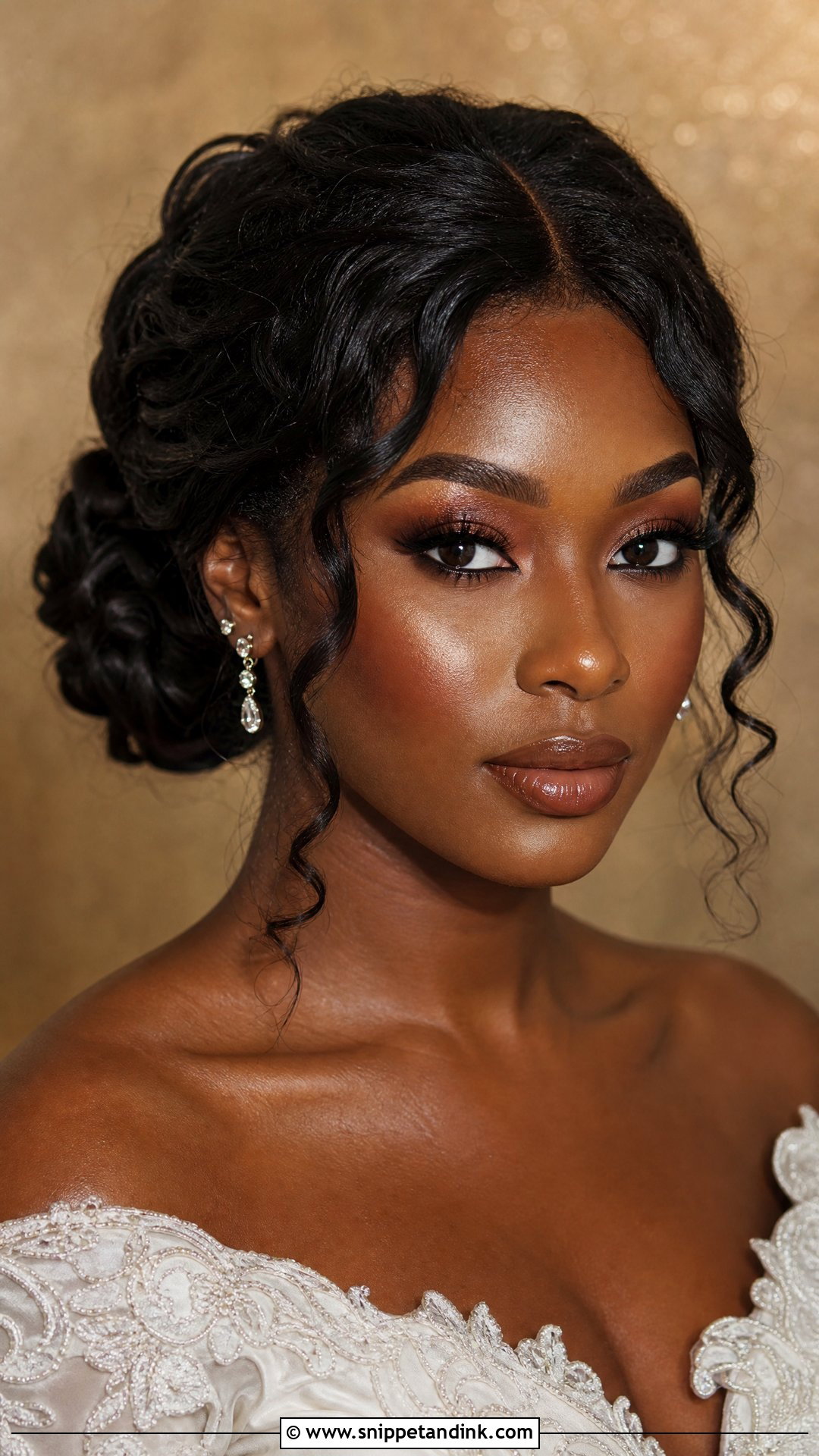
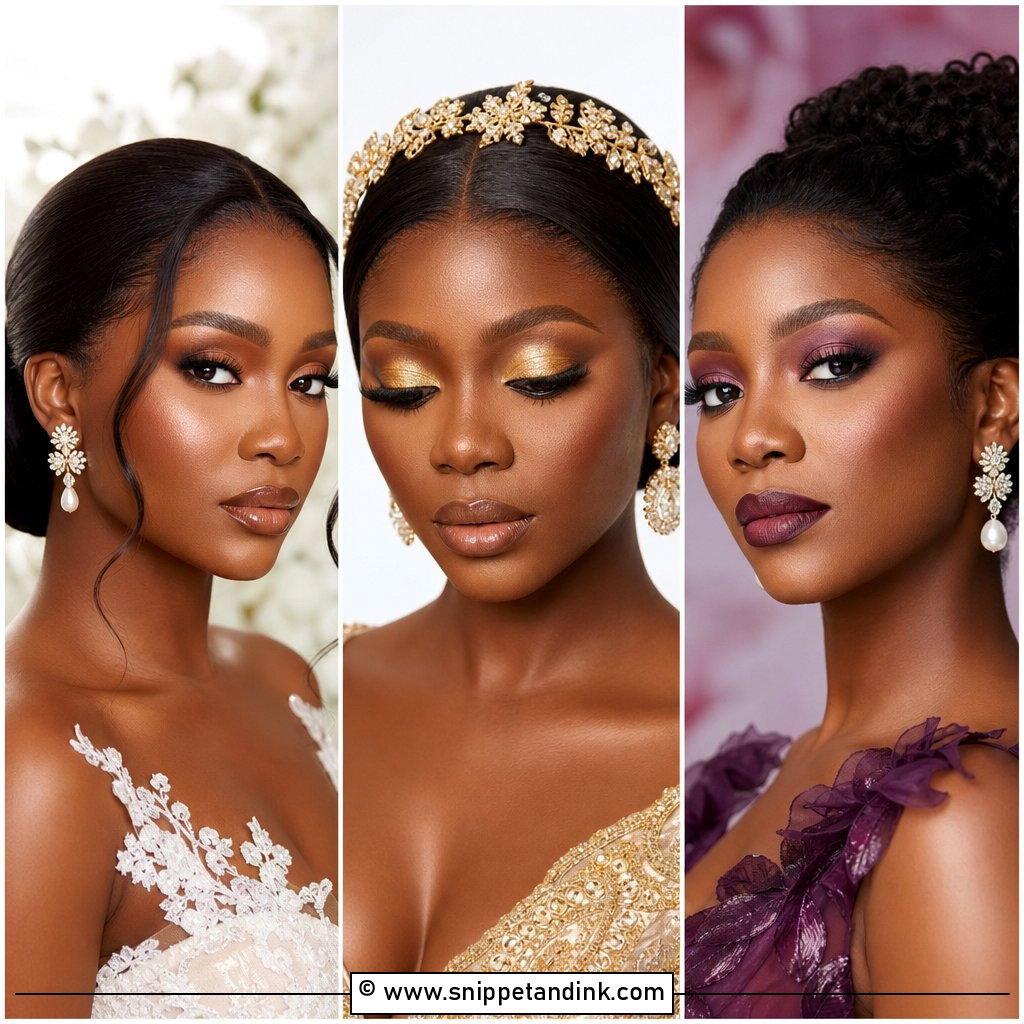
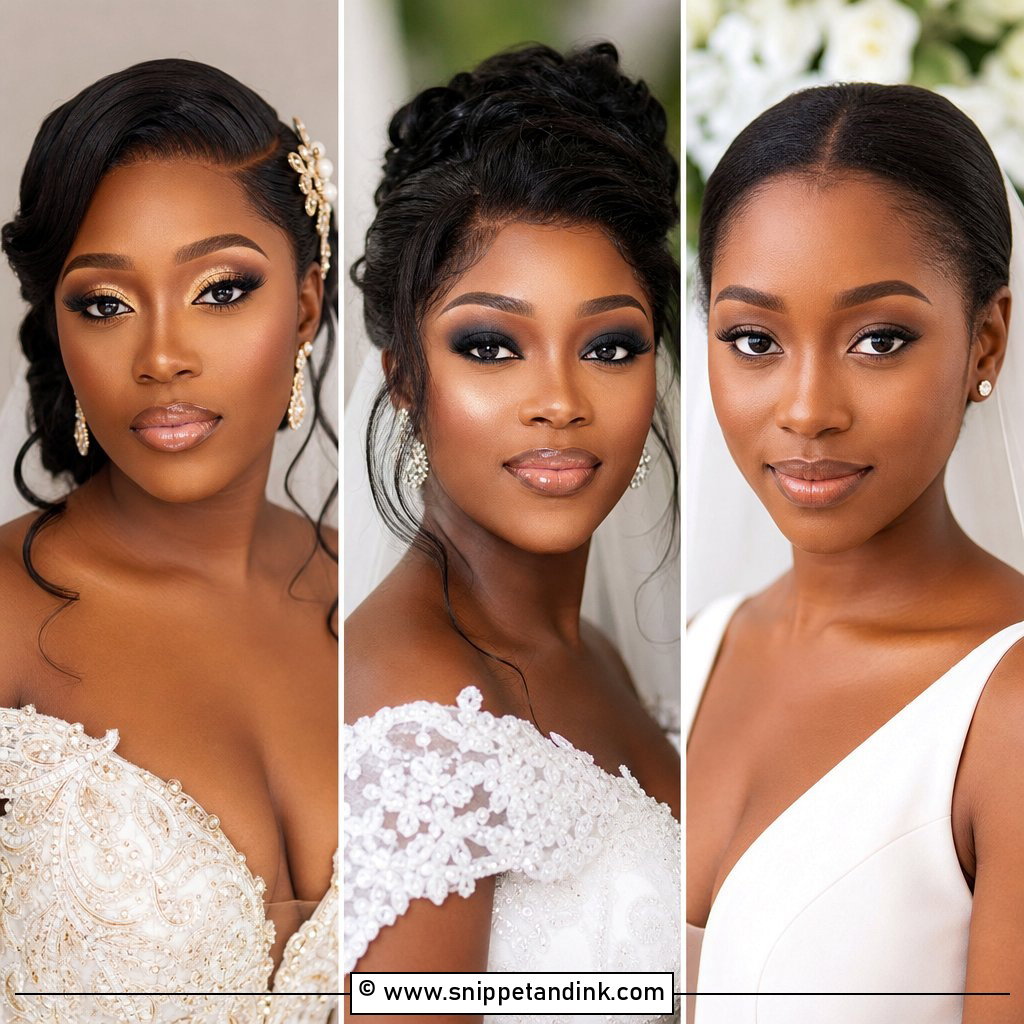
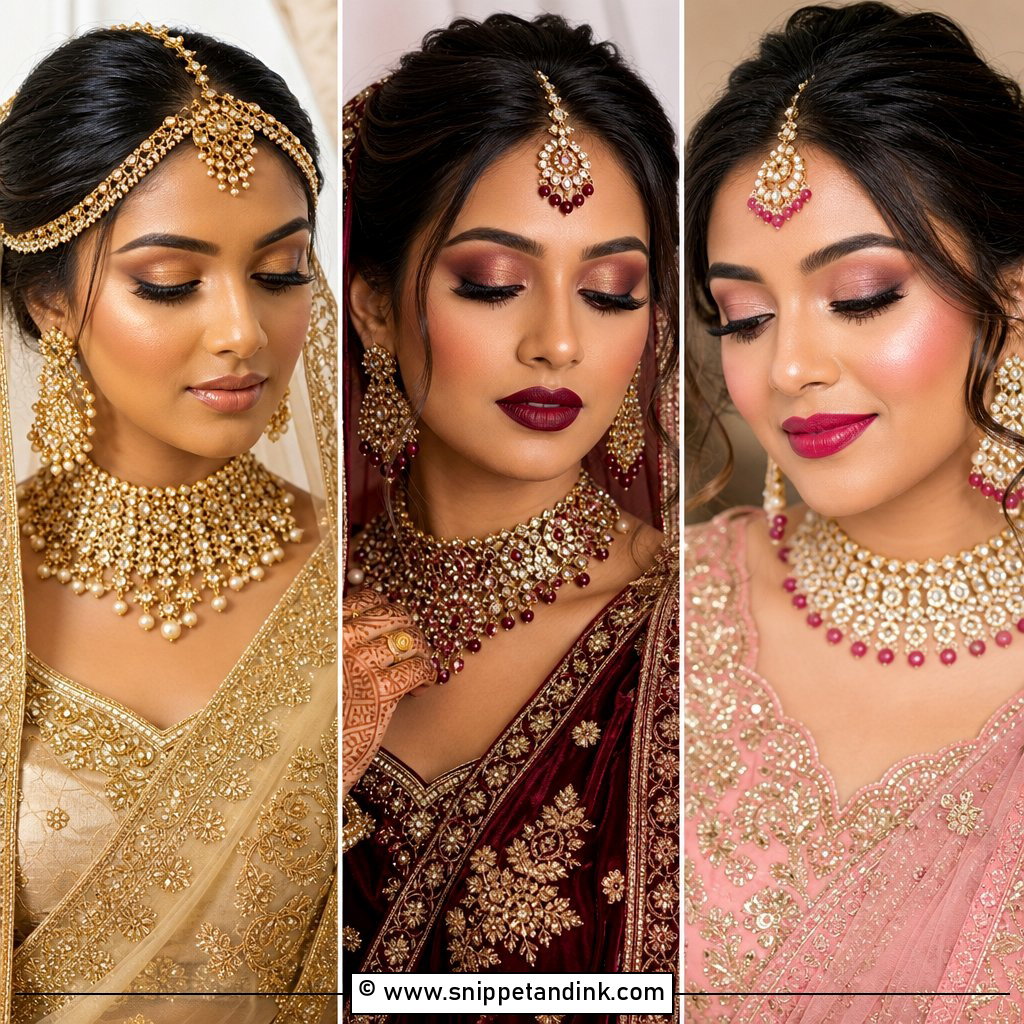
Rich bronze, copper, burgundy, plum, espresso and gold are the eye colours I reach for on deep skin, because they show up with real intensity. The foundation match is the part I take most time over: I check it on the face, neck and chest together, since a mismatch shows immediately in flash. Warm contour sculpts, and berry, terracotta or deep rose blush adds dimension. Highlight should be gold or bronze, as pearl and silver highlights turn ashy on deeper skin. Lips can be chocolate nude, berry rose, caramel or deep mauve. Evening receptions and formal weddings carry the full version well.
19. Bridal Makeup For Hooded Eyes
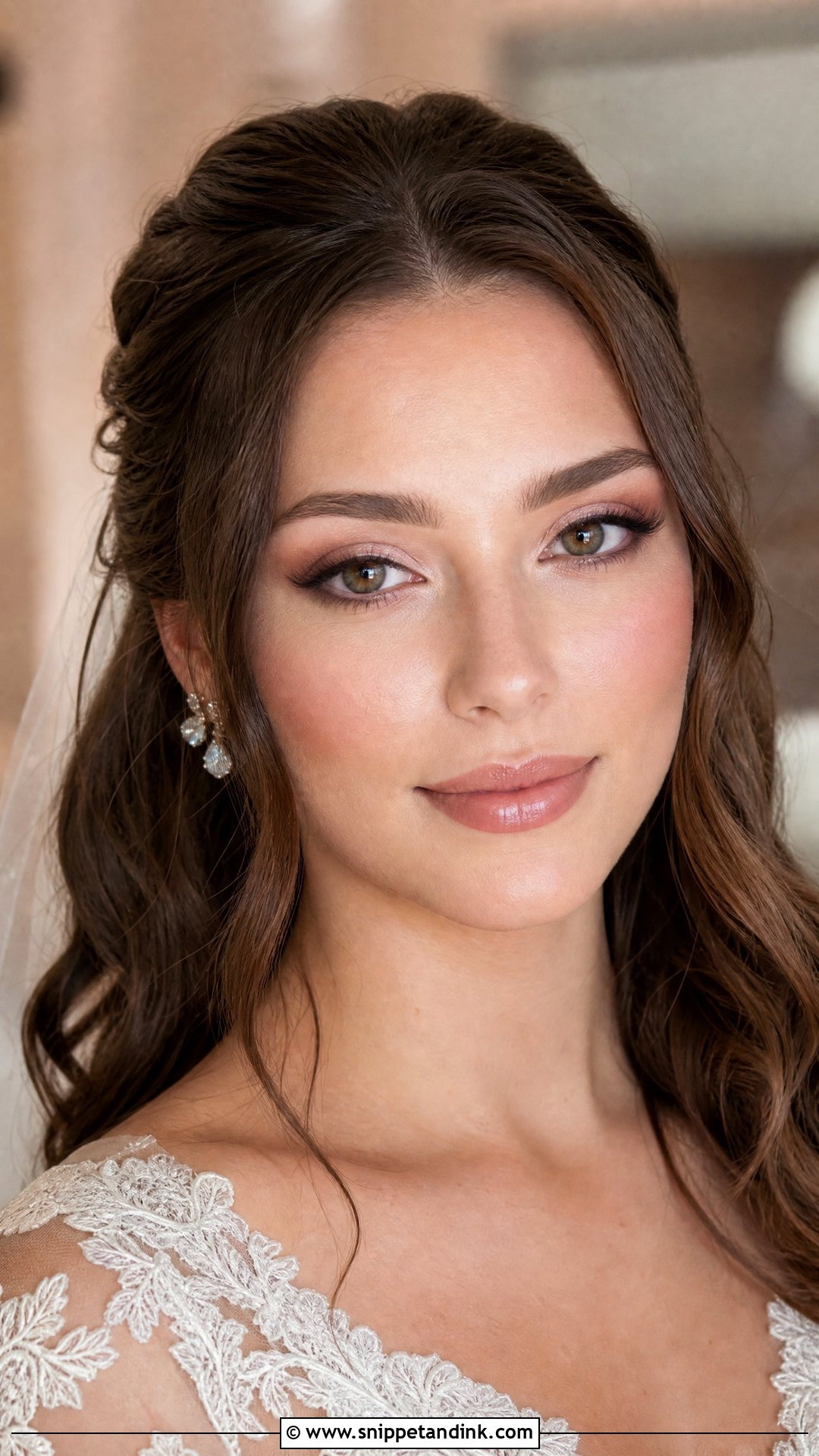
With hooded eyes, anything placed in the natural crease disappears when you open your eyes. So I map the deeper shade slightly above the crease, with the eyes open and looking straight ahead, using matte medium brown, taupe or soft plum to build shape. Shimmer goes only on the visible mobile lid or the inner corner. A thin liner keeps lid space, and curled lashes or half lashes on the outer corners lift the eye. A fresh complexion, soft blush and a nude lip keep the rest quiet. It’s also the eye shape where waterproof formulas matter most, since a hooded lid presses against the shadow all day.
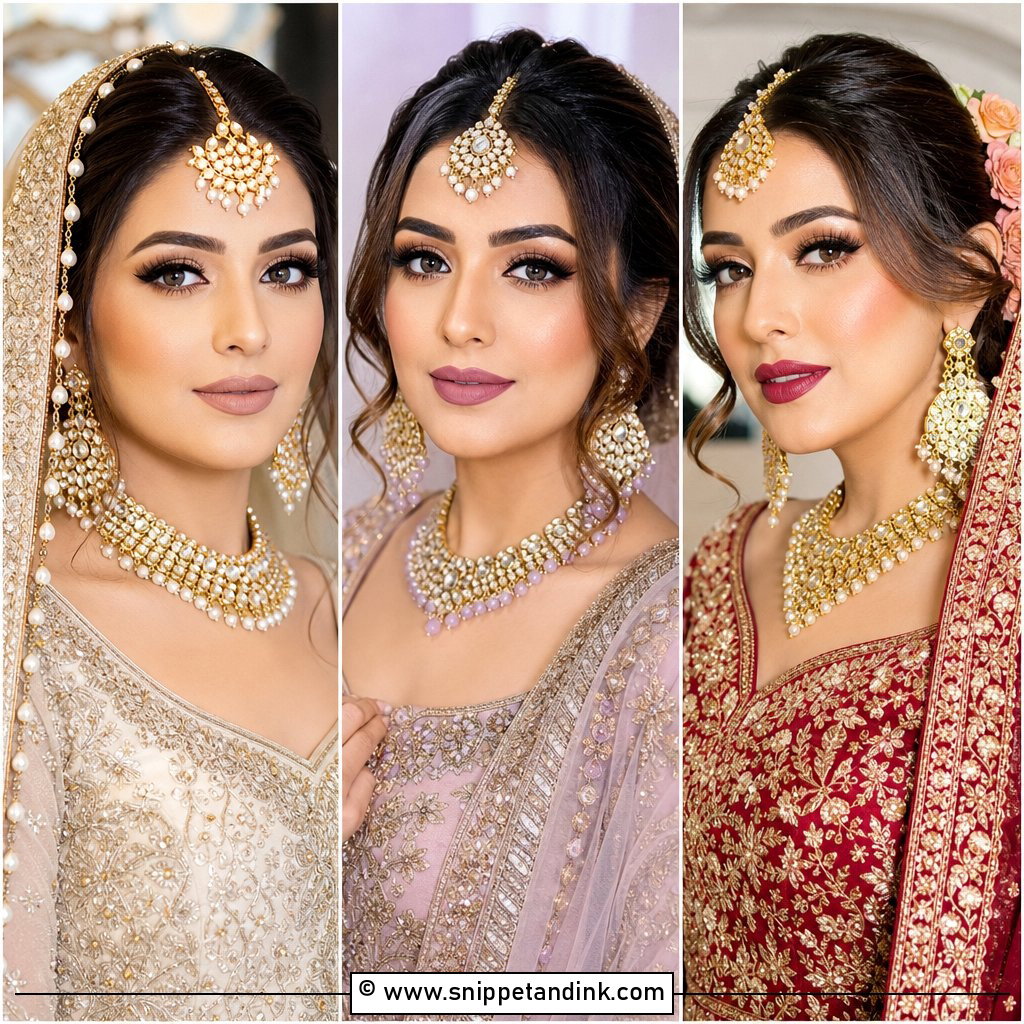
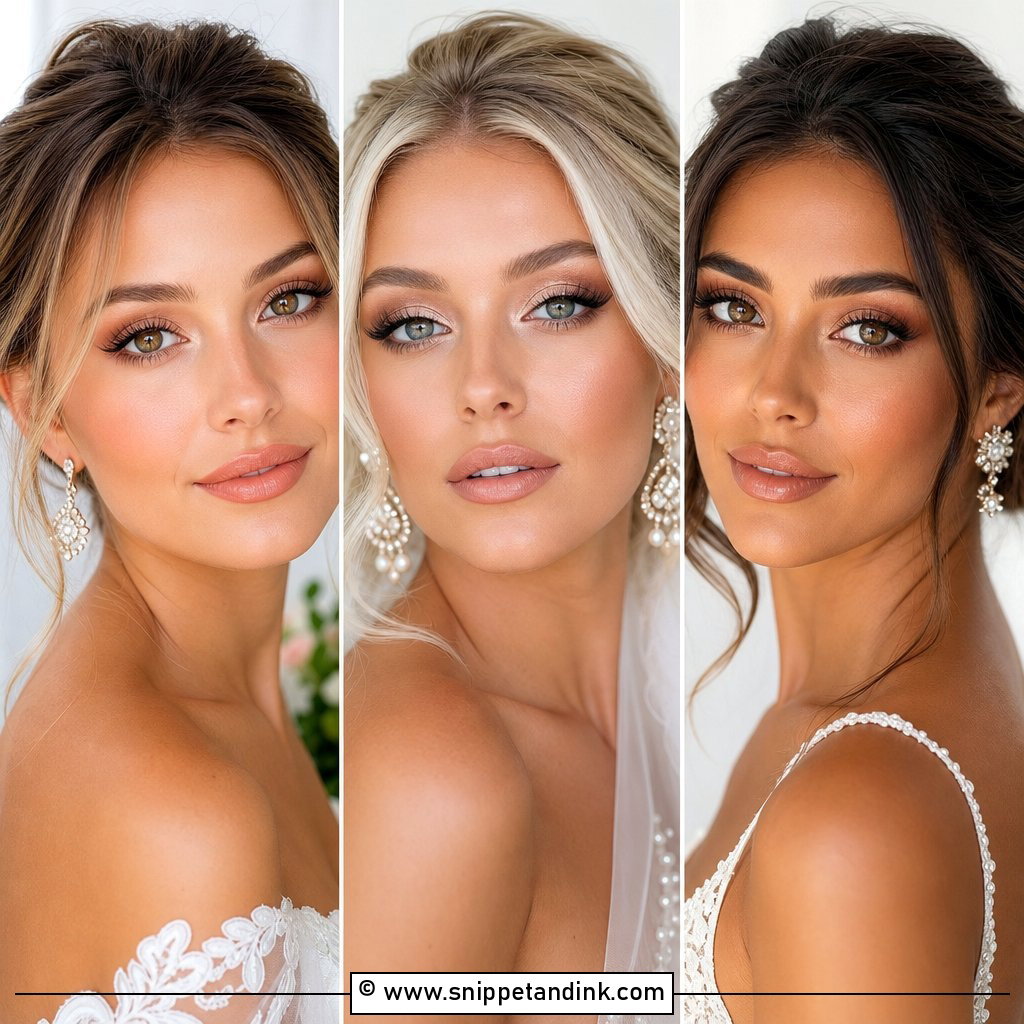
20. Bridal Makeup For Blue Eyes
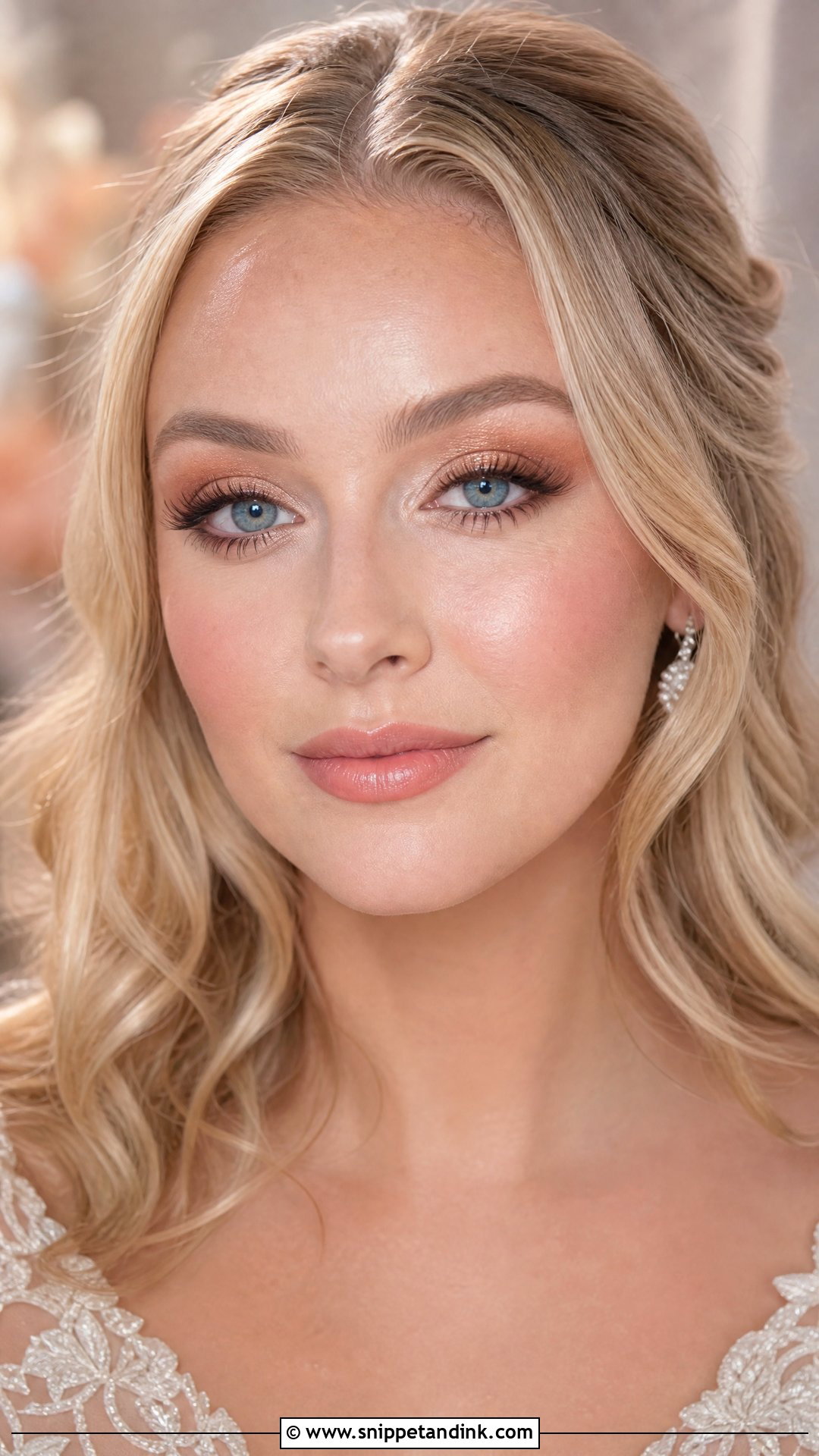
Bridal makeup for blue eyes works on contrast. Champagne, bronze, peach, copper and warm brown all carry some orange, which is the opposite of blue, so the iris looks brighter without any harsh colour. I keep the liner brown or deep bronze and add wispy lashes. The skin can be satin or softly dewy, with peach or rose blush chosen by undertone, and a pink nude or peach nude lip that doesn’t compete. Cool silver and grey tend to dull blue eyes, so I keep them away from the lash line.
How the Makeup Morning Actually Runs
The look you pick changes how long you need in the chair. A natural face takes me roughly forty-five minutes to an hour; soft glam and full glam with individual lashes can run closer to ninety. Your artist will give you their own timing, but build your schedule backward from when the photographer wants you dressed, not from the ceremony.
- Arrive with clean, moisturised skin and no makeup. Wash your hair the night before if your stylist asked you to.
- Bridesmaids and family usually go first, so the bride’s makeup is the freshest in the room.
- Hair and makeup often swap the bride between chairs; base and eyes before the curls are set, lashes and lips after.
- Put on a button-front shirt so nothing goes over your face after makeup is finished.
- Step into the dress with a scarf or thin veil over the face, and have someone else zip and button.
- Final powder, lip and lash check just before the first photos.
Leave a cushion of at least twenty to thirty minutes at the end. Something always runs over, whether it’s a late bridesmaid or a lash that needs redoing, and that buffer is what keeps the morning calm instead of rushed.
Will It Still Feel Like Your Face After the Speeches?
The right wedding makeup is the one you forget you’re wearing by the second hour and still recognise in your photos years later. Every look here, from natural to full glam, can be adjusted to your features and venue. Book a trial, wear it home for several hours, photograph it in daylight and indoors, and eat something to see how the lip holds. Bring reference pictures, but let your artist adapt them to your face. That small adjustment is usually what makes it yours.
You'll Like These Ideas:


Leave a Reply