
A cupcake tower gives you the height of a tiered cake with none of the slicing, and it lets guests choose their own flavor. Its character comes almost entirely from four choices: the stand, the liners, the frosting finish and whatever sits on top. Many of the towers I build carry small cutting cakes on the top tier, so the couple still gets a proper first slice. The towers that look best in a room share a tight color story, even spacing and one clear focal point. Here are 20 wedding cupcake tower ideas, with the practical detail behind each.
Measure the Gap Between Tiers Before You Buy a Stand
The most common problem I see with cupcake towers is a stand bought before anyone measured a cupcake. A standard cupcake with a generous swirl stands roughly three to three and a half inches tall. If the space between tiers is shorter than that, the frosting touches the tier above, and every cupcake comes out with a flattened top.
So I ask for the stand dimensions first: how much clearance each tier has, the diameter of every level and how much weight it carries. A wider bottom tier gives stability and holds most of the count. Tiers that step in gently look more like a cake; tiers that shrink sharply look like a pyramid.
Rented metal stands are usually the sturdiest option for large counts. Cardboard stands are cheap and fine for a small tower of minis, but they soften with humidity and can bow under full-size cupcakes. If you’re buying, assemble it at home and load it with something heavy before the wedding.
Check the table too. A folding banquet table with a slight wobble is barely noticeable with a flat cake on it, but a tall tower magnifies every tilt toward the top tier. A folded napkin under one leg has saved more than one display.
1. Classic Wedding Cupcake Tower
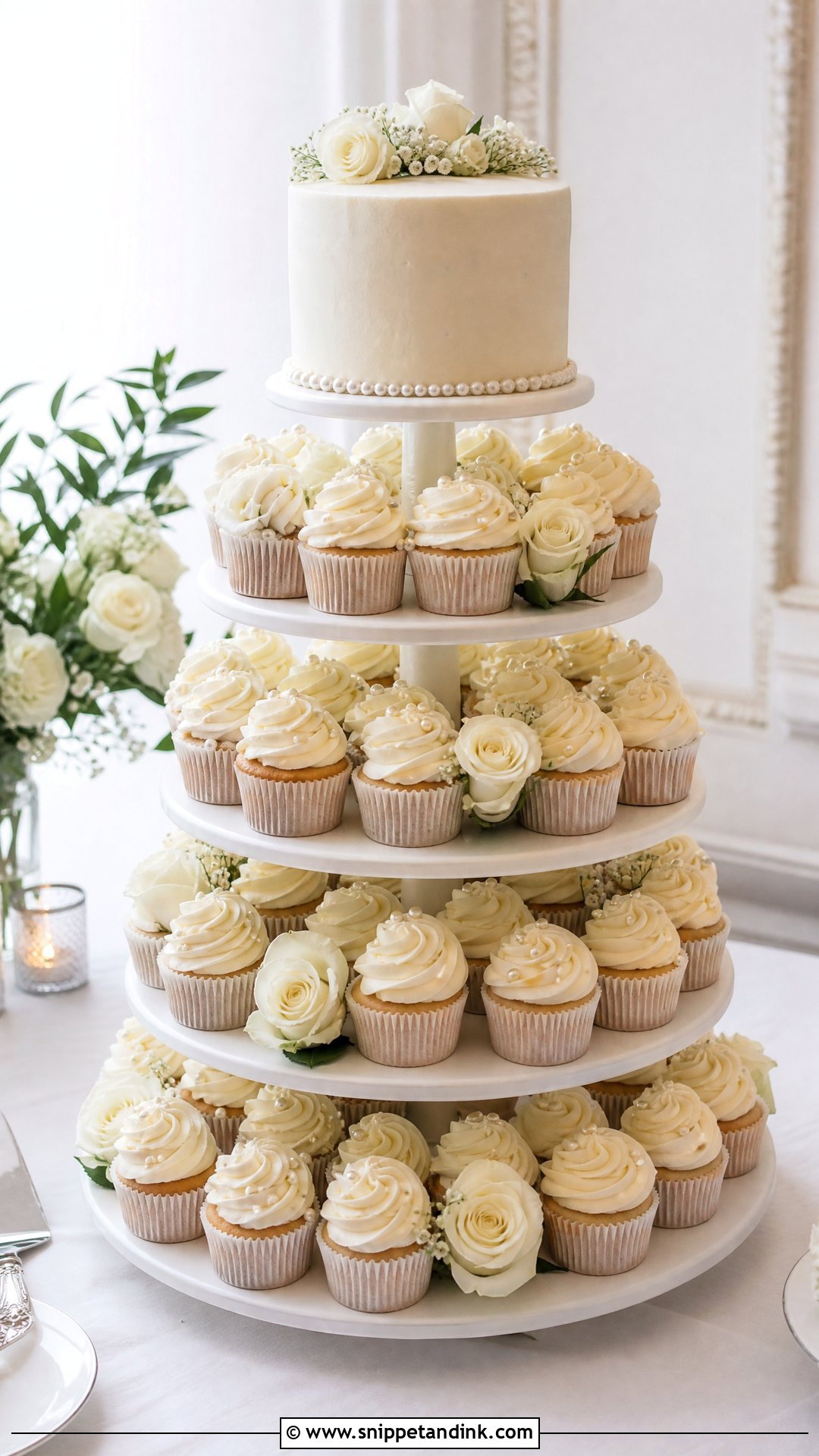
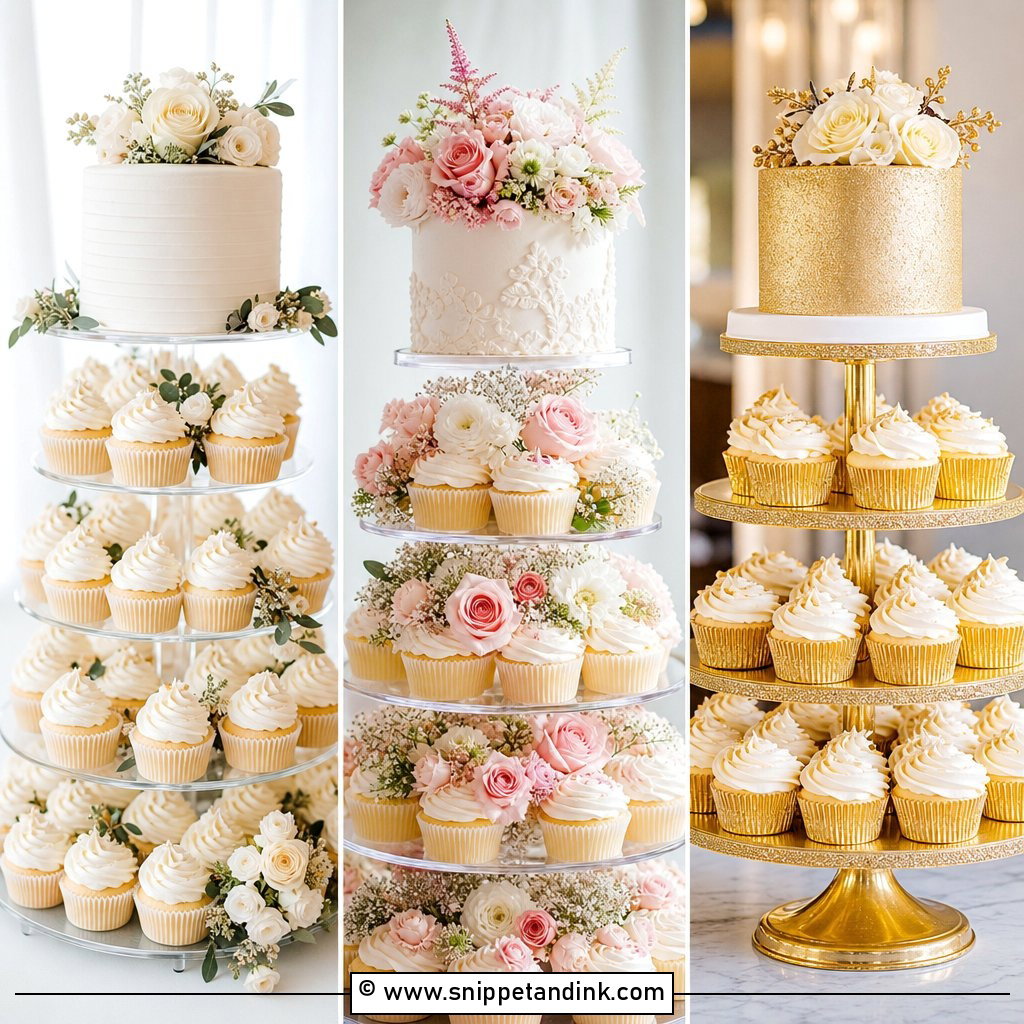
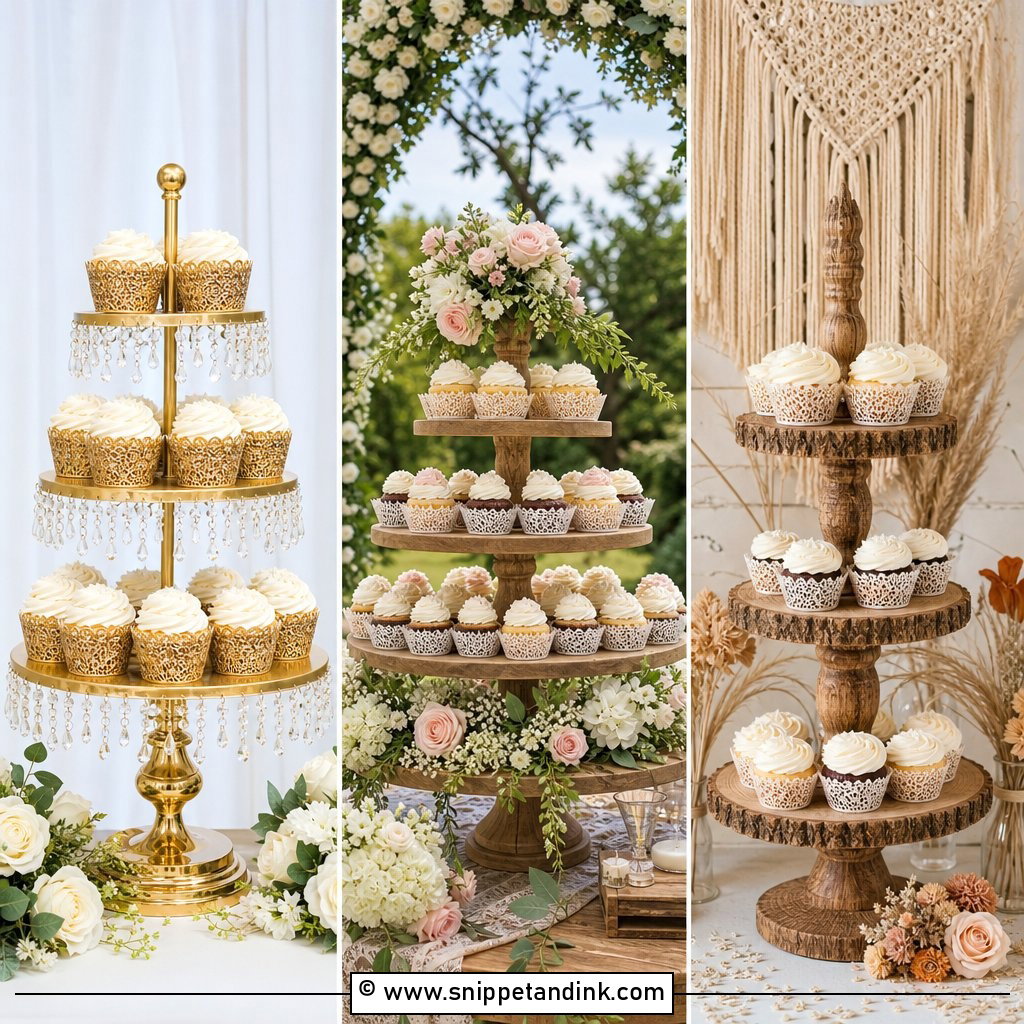
The classic tower is a round white or silver stand with cupcakes set in tidy rings from the bottom up. I pipe every cupcake with the same tip and the same pressure so the rings look like a single pattern, not a collection. Vanilla, almond, lemon and red velvet are safe because guests recognize them. Ivory swirls with a few sugar pearls, a handful of soft flowers between the tiers and a small cutting cake on top: that’s the whole recipe. It suits ballrooms and formal venues.
2. Rustic Wedding Cupcake Tower
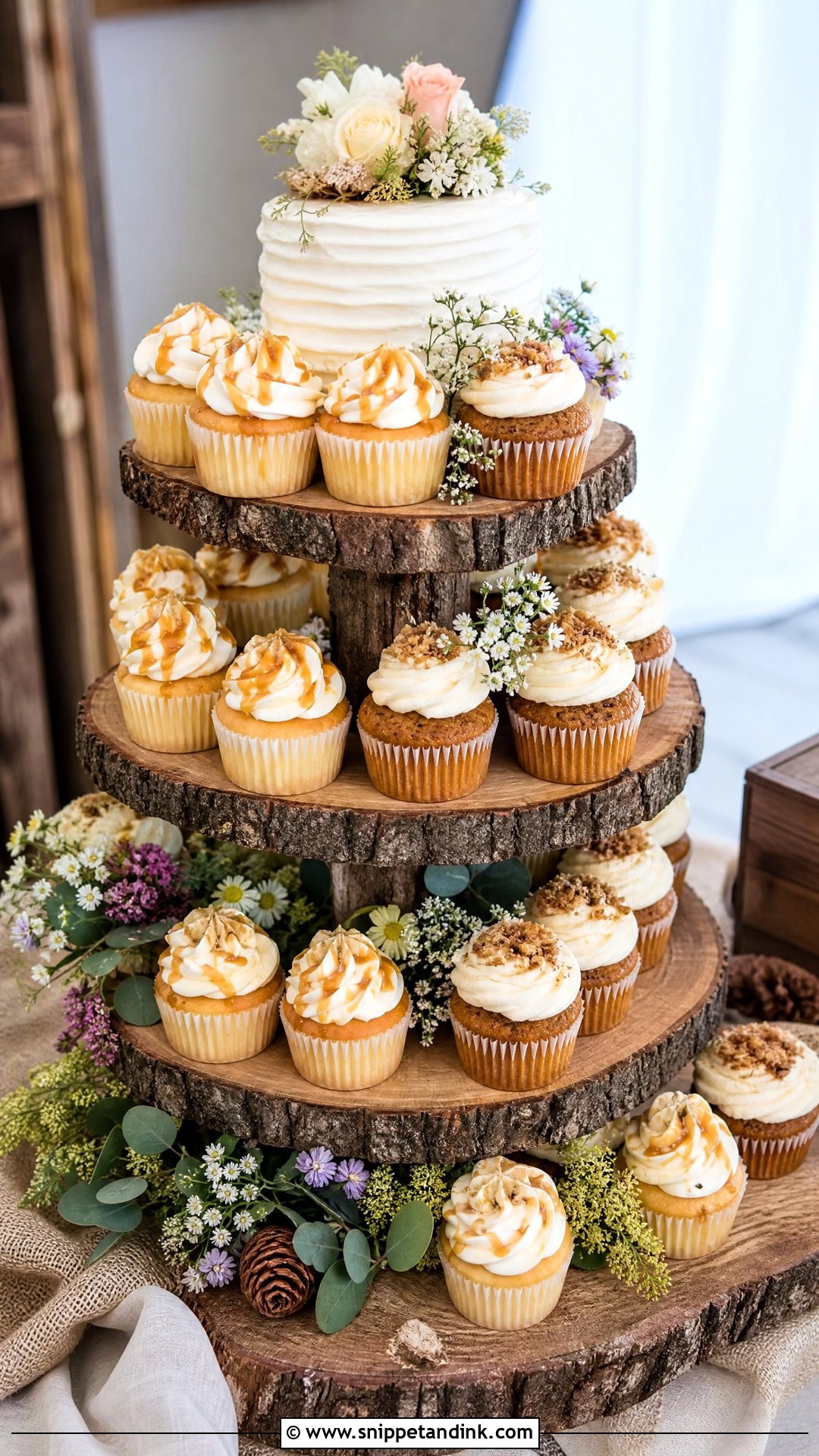
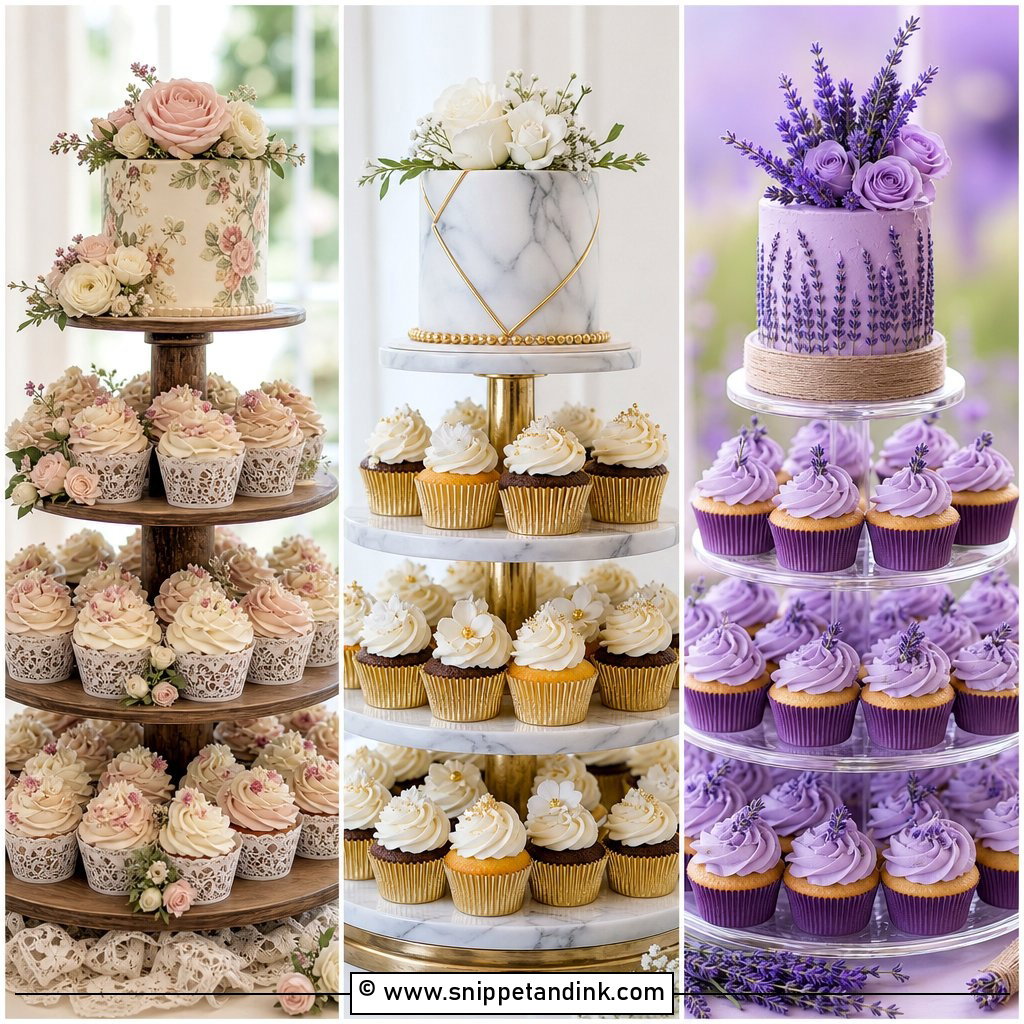
Rustic towers work when the stand is honestly natural. Wood slices, crates or a raw-finish tiered stand, cupcakes in plain neutral liners, textured buttercream, a sprig of greenery or a thread of caramel. Vanilla bean, carrot cake, spice cake and chocolate all suit it. Raw wood isn’t a food surface, so I seal it or put a paper doily under each cupcake. Linen and wildflowers around the base tie it to a barn or backyard reception.
3. Acrylic Wedding Cupcake Tower
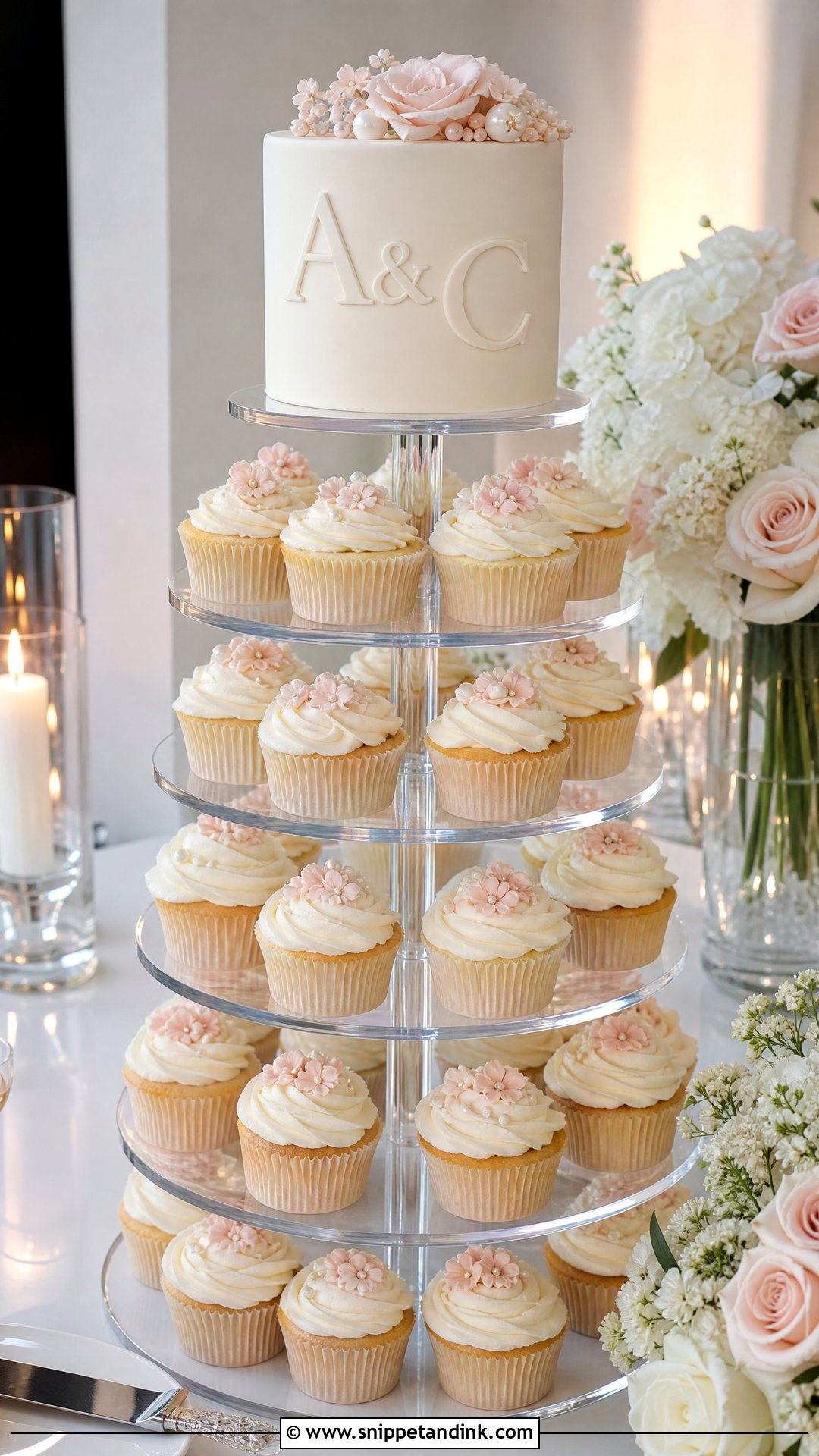
Clear acrylic tiers make the cupcakes look like they’re floating, which keeps a big tower from feeling heavy. The catch is that acrylic shows everything: fingerprints, crumbs and every gap in your arrangement. I wipe the stand with a lint-free cloth after setting up and space the cupcakes with a ruler-straight eye. One strong color repeated on every tier, or plain white with gold, suits it. A monogram topper or small floral cluster finishes the top for a hotel or modern venue.
4. Floral Wedding Cupcake Tower
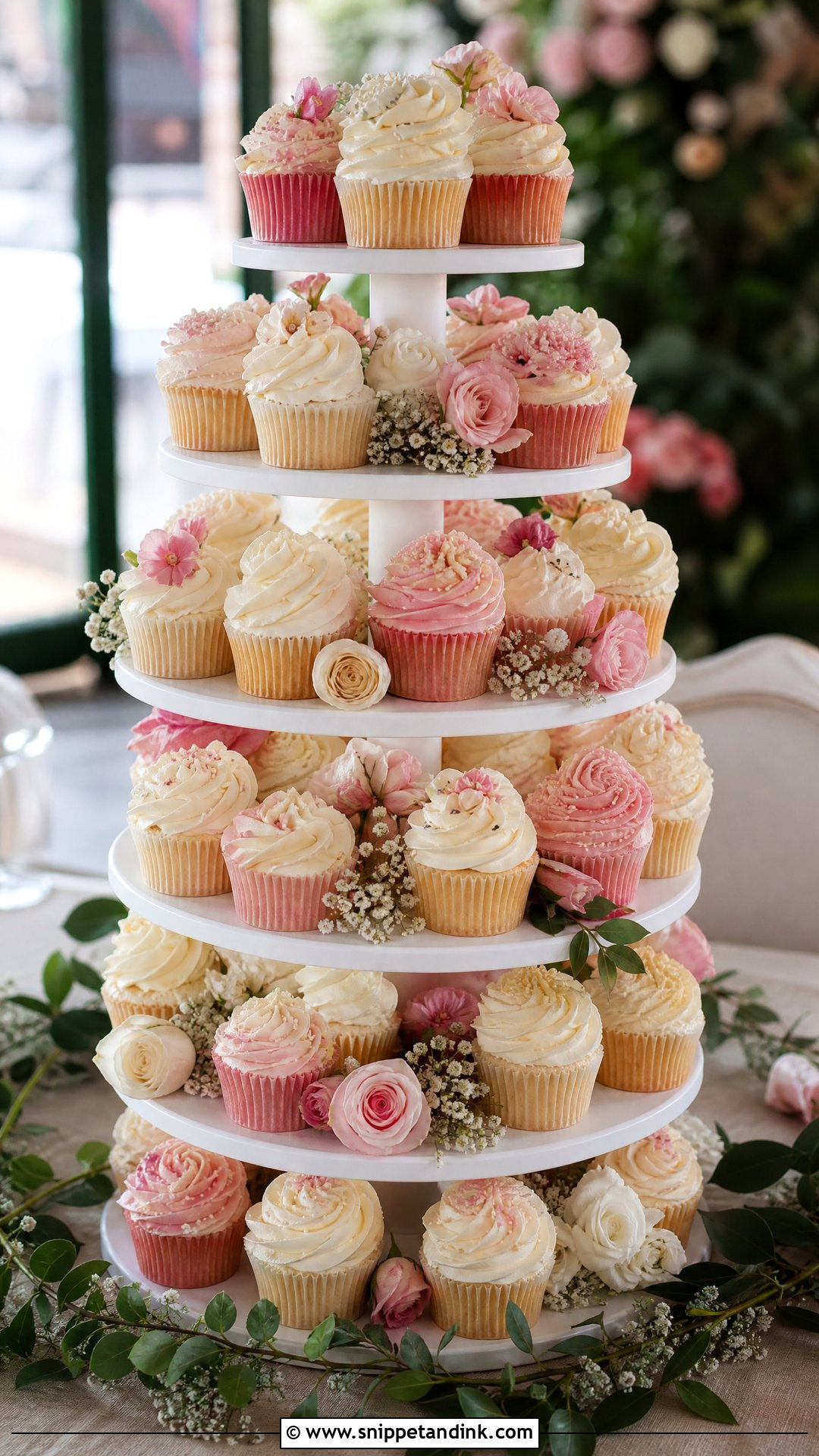
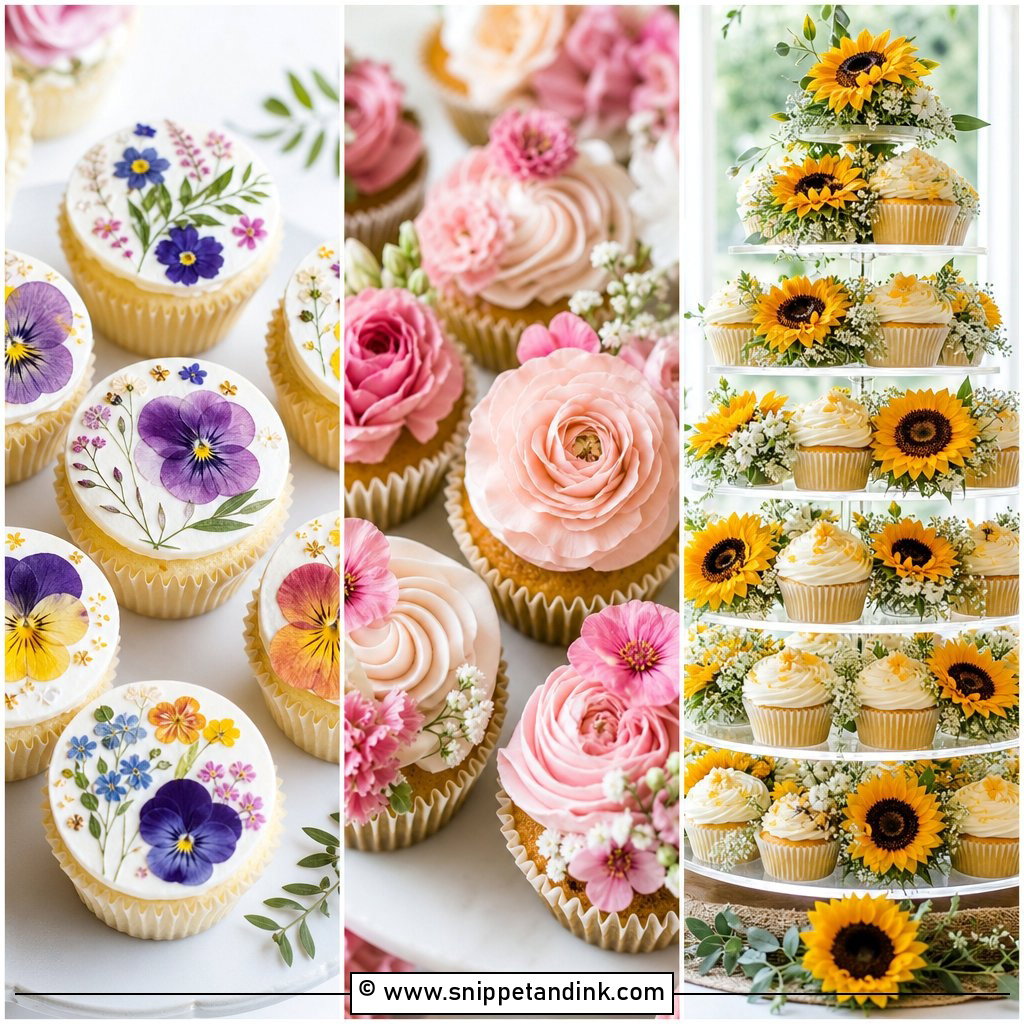
Flowers frame a tower best when they sit between the tiers, not on top of the cupcakes. I use buttercream rosettes or smooth tops, then tuck sugar flowers, edible blooms or properly prepared fresh stems around the stand’s edge. Fresh stems should be pesticide-free and wrapped so they never touch the frosting directly. Blush, peach or lavender suits spring and summer. If you match the bouquet, ask your florist for a few spare stems so the tower doesn’t introduce a new flower.
5. Boho Wedding Cupcake Tower
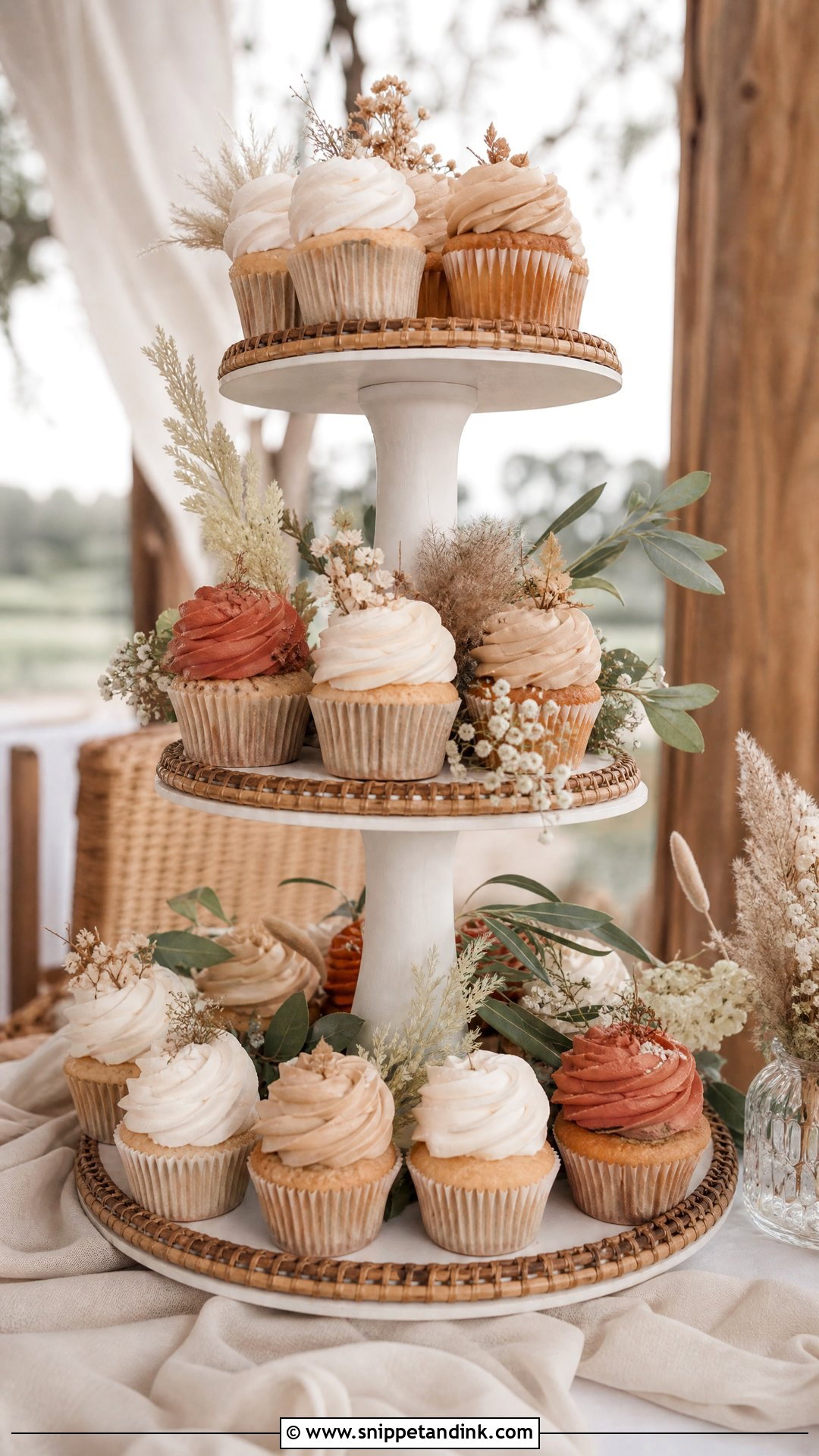
Boho towers need texture and a slightly undone look, which is harder to fake than polish. Rattan, wood or a matte white stand, dried flowers and pampas grass, and frosting in cream, terracotta or muted sage. Keep the piping loose: soft swirls, semi-smooth tops, tiny rosettes. Dried stems shed, so I place them after the cupcakes are set and keep them clear of the frosting. Honey vanilla, chai and coconut fit the mood, especially at a desert or outdoor wedding.
6. Garden Wedding Cupcake Tower
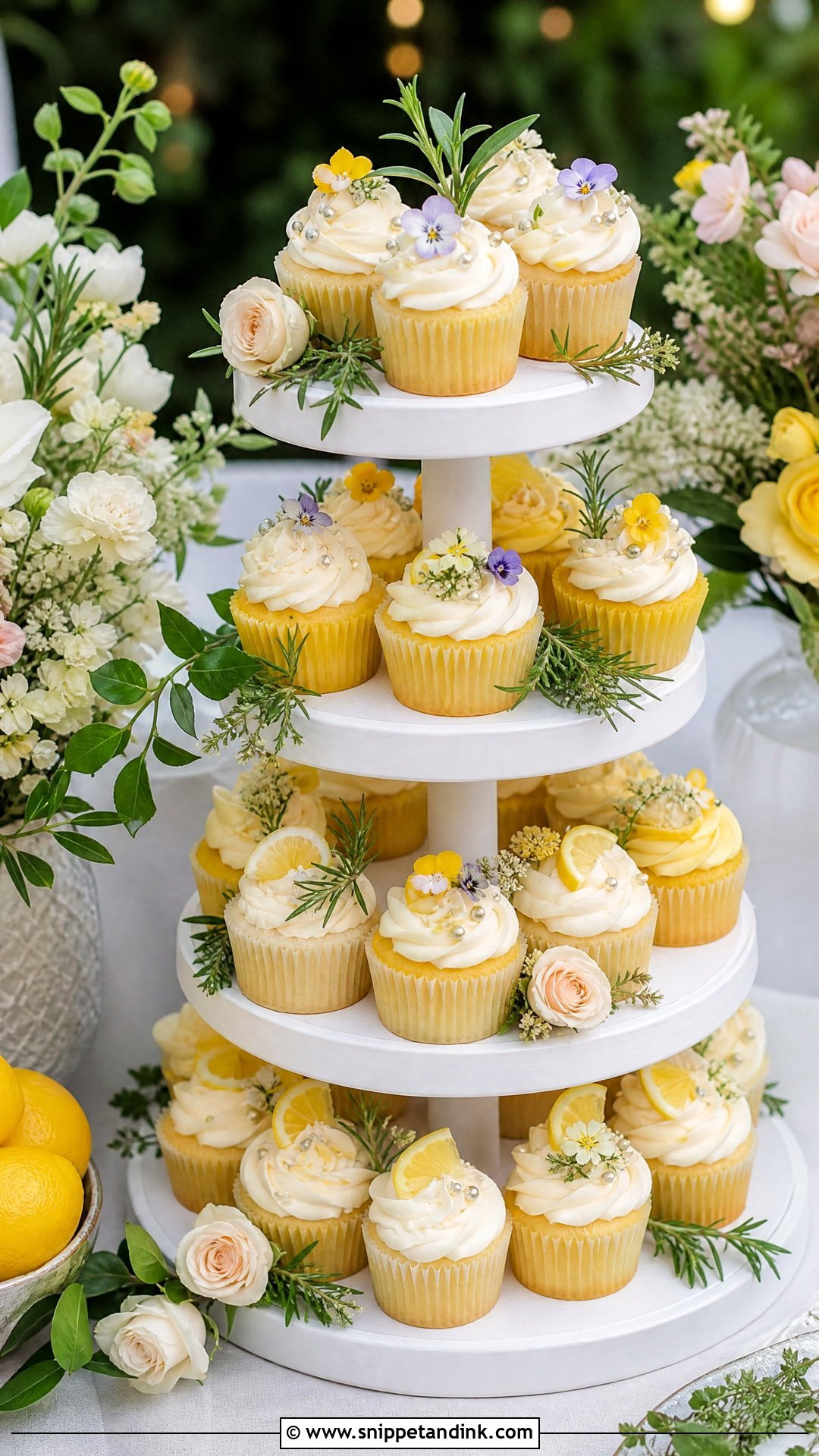
Garden towers should look light. Greenery, small roses and a few fresh herbs between the tiers, with lemon, strawberry and lavender cupcakes in white, pale yellow or pastel green buttercream. Herbs like rosemary and thyme hold up longer out of water than most flowers, which helps on a long afternoon. Leave loose greenery on the tablecloth around the base. Bright natural light shows off pastels, but direct sun will melt them, so a tent or shade is part of the plan.
7. Mini Cake Wedding Cupcake Tower
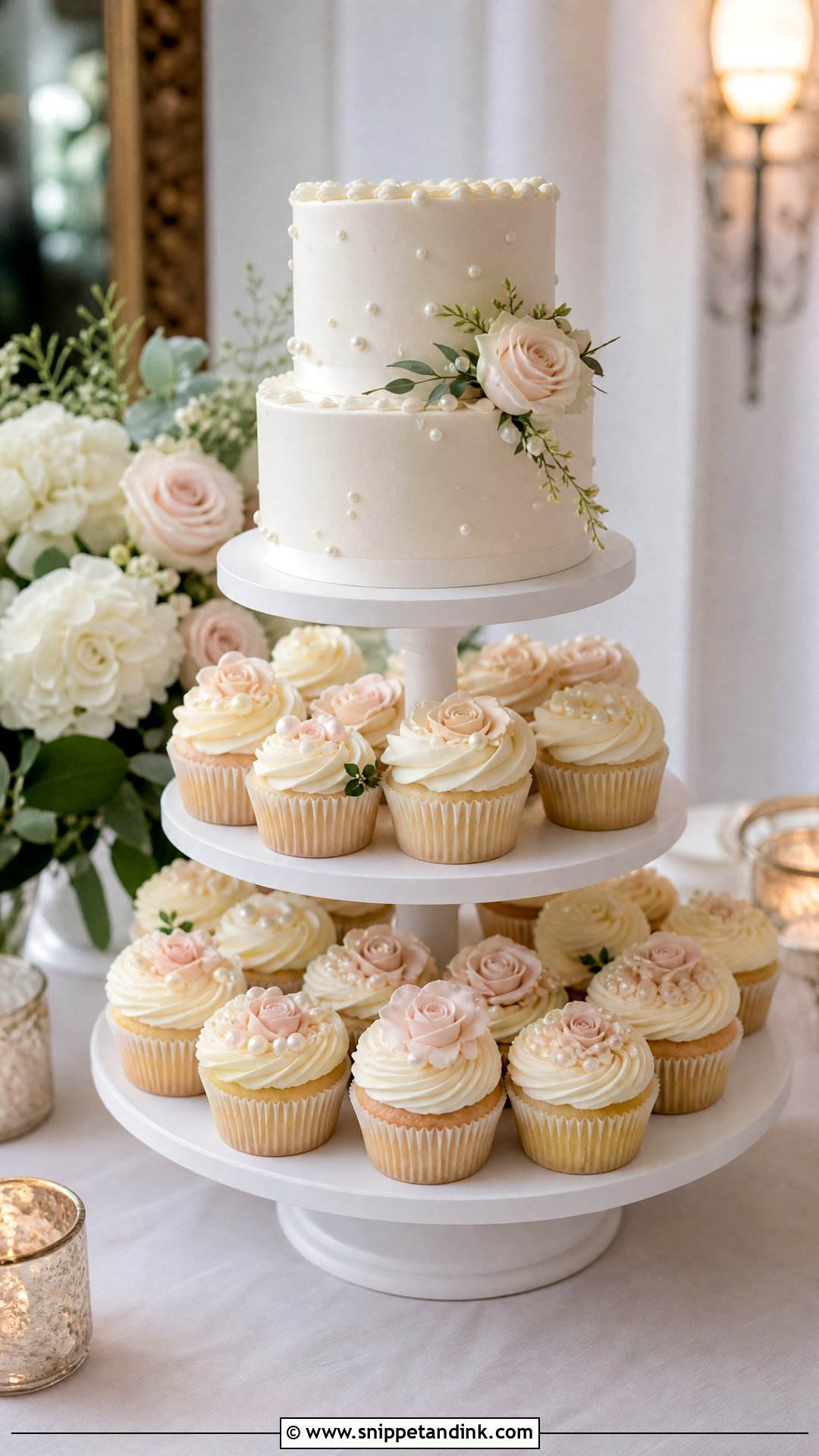
Putting a mini cake on top gives the tower a crown and the couple a cake to cut. I make the cutting cake in the same flavor and frosting as at least one cupcake, so the first slice tastes like what guests are eating. Two layers, six inches across, is usually enough. Repeat the cupcakes’ piping and pearls on the cake. The top tier must have a solid plate under the cake, not a ring, or the cake will sag through the center.
8. Gold Wedding Cupcake Tower
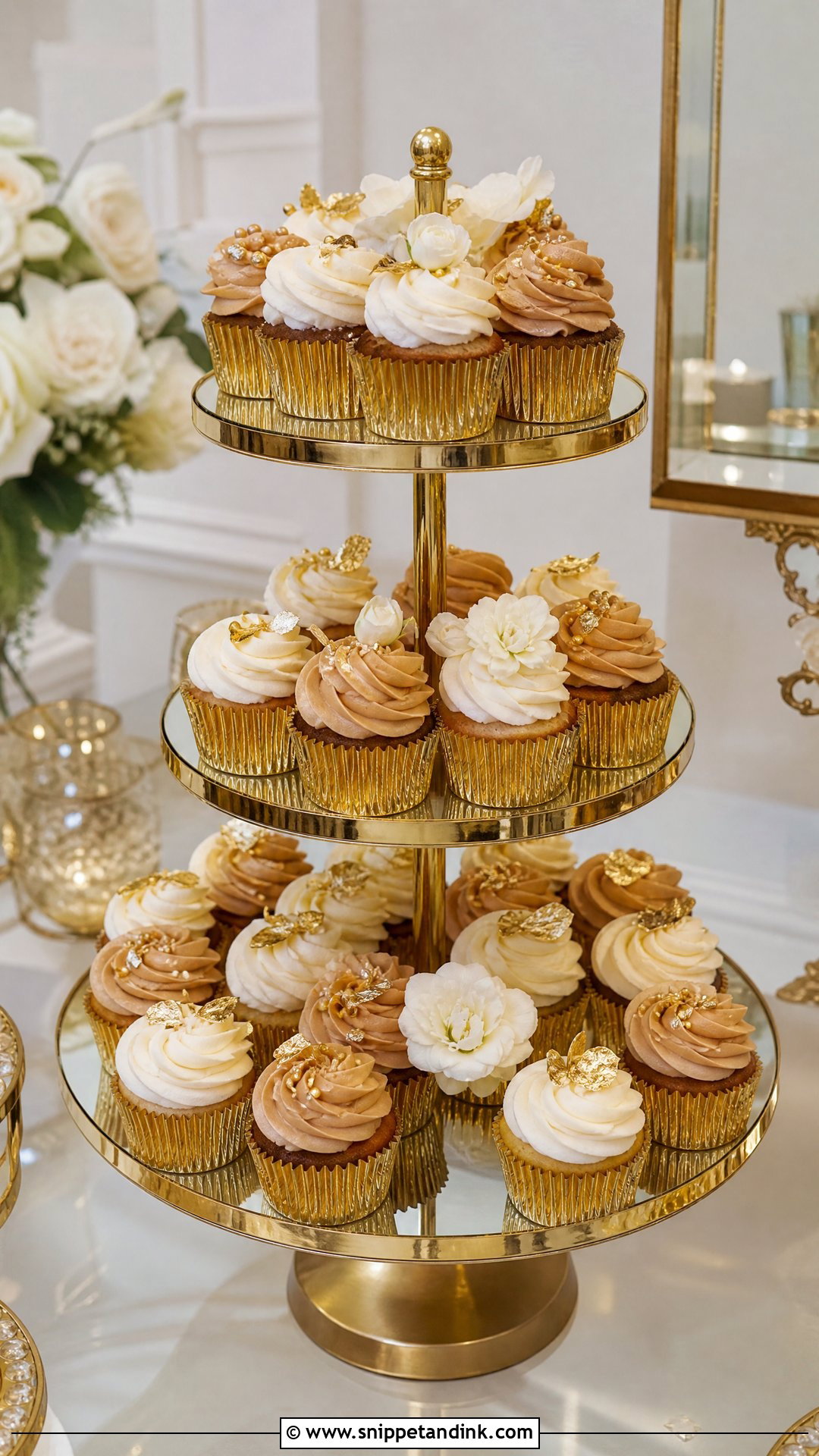
Gold works best as an accent, not a coating. Gold foil liners, a gold-rimmed stand, edible leaf or a sprinkle of gold pearls on ivory, champagne or mocha frosting. One or two gold touches per tier is plenty. Not every shimmer product is edible, so ask whether the dust is food-grade or decorative only. Salted caramel and almond pair nicely with the warm palette, and this tower comes alive under evening light in a ballroom.
9. White Wedding Cupcake Tower
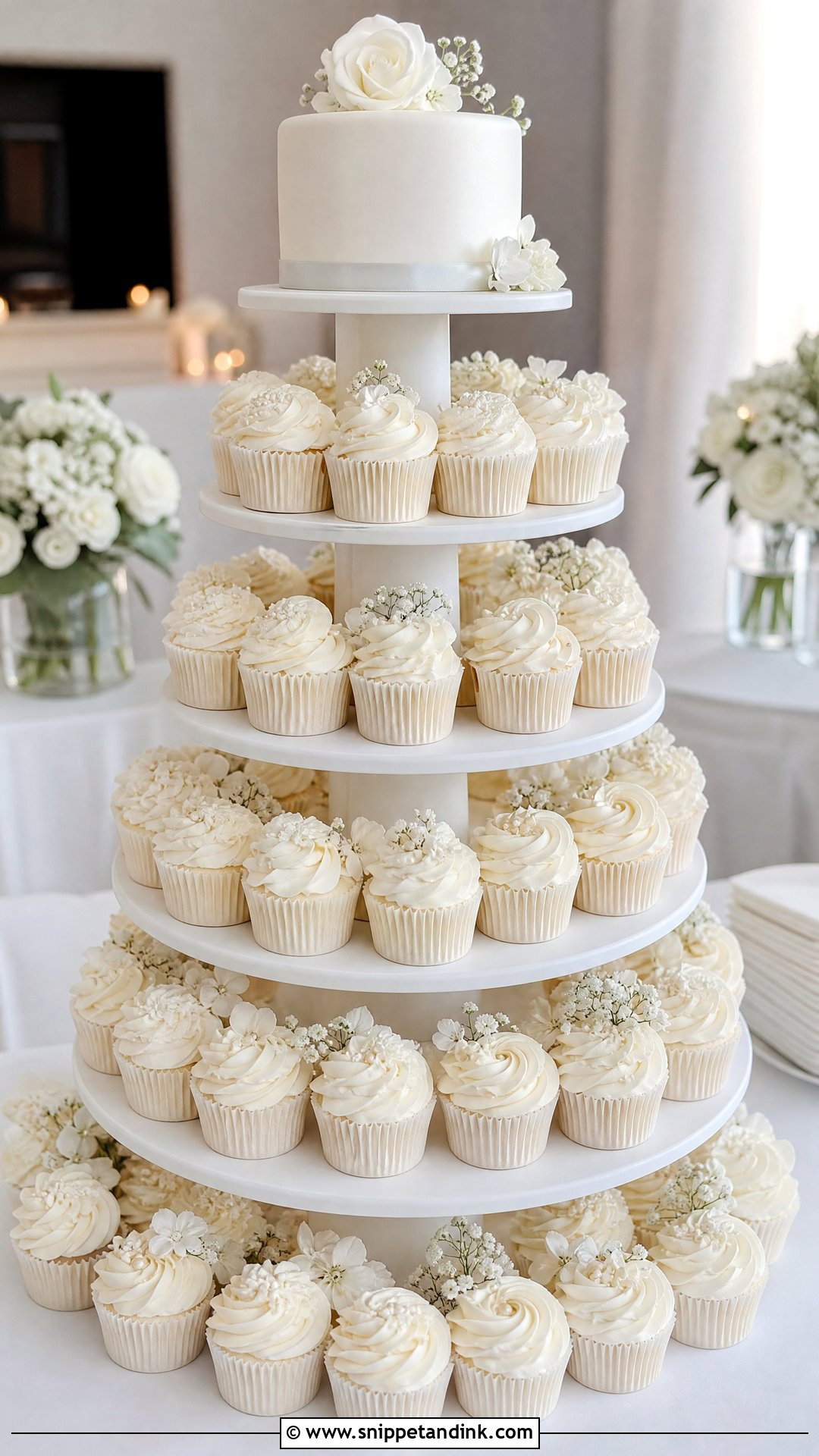
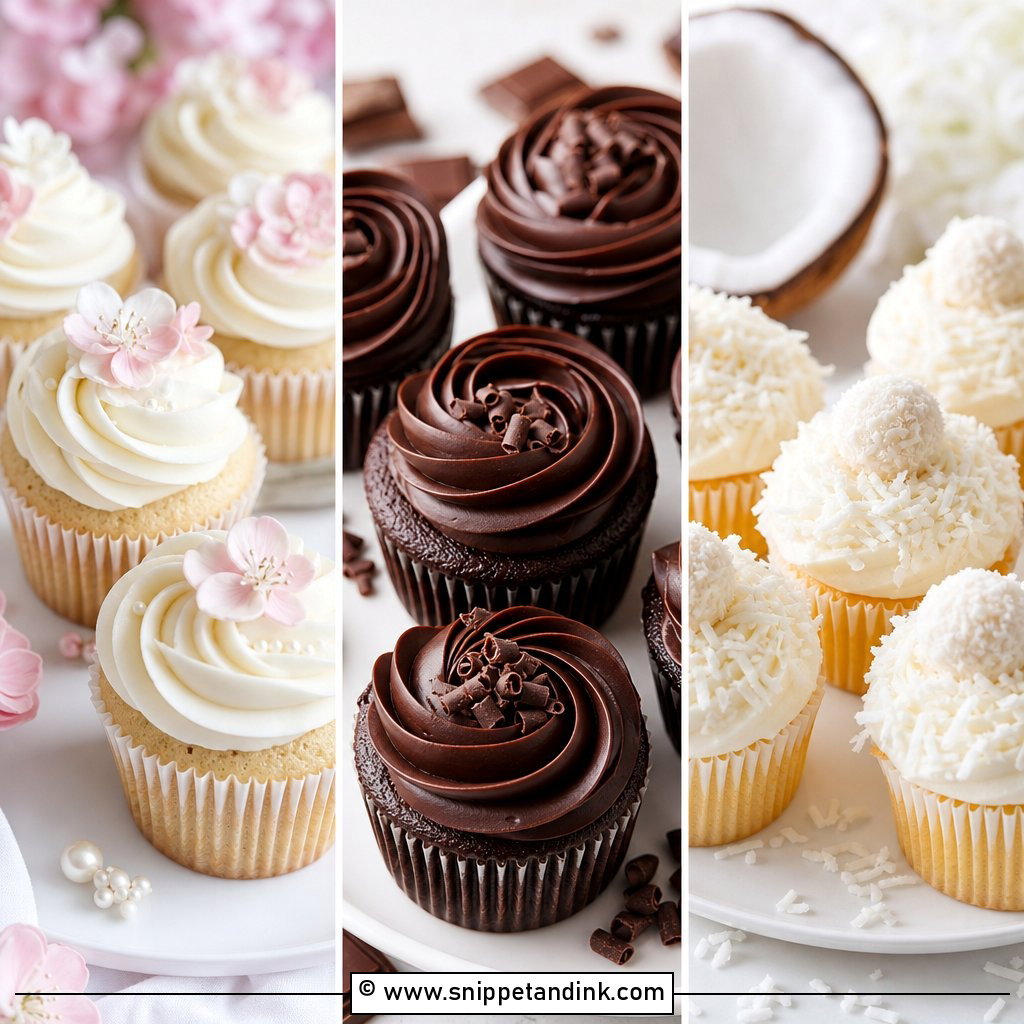
A white tower depends on texture, because without color your eye reads only shape. I mix swirls, rosettes, ruffles and smooth tops across the tiers so the white has shadows to play with. White or ivory liners, a glass or silver stand, sugar pearls and tiny white flowers keep it bright. Vanilla bean, coconut and white chocolate suit it. Pure white buttercream sometimes reads yellow in warm light, so check a sample under similar lighting to your venue.
10. Pink Wedding Cupcake Tower
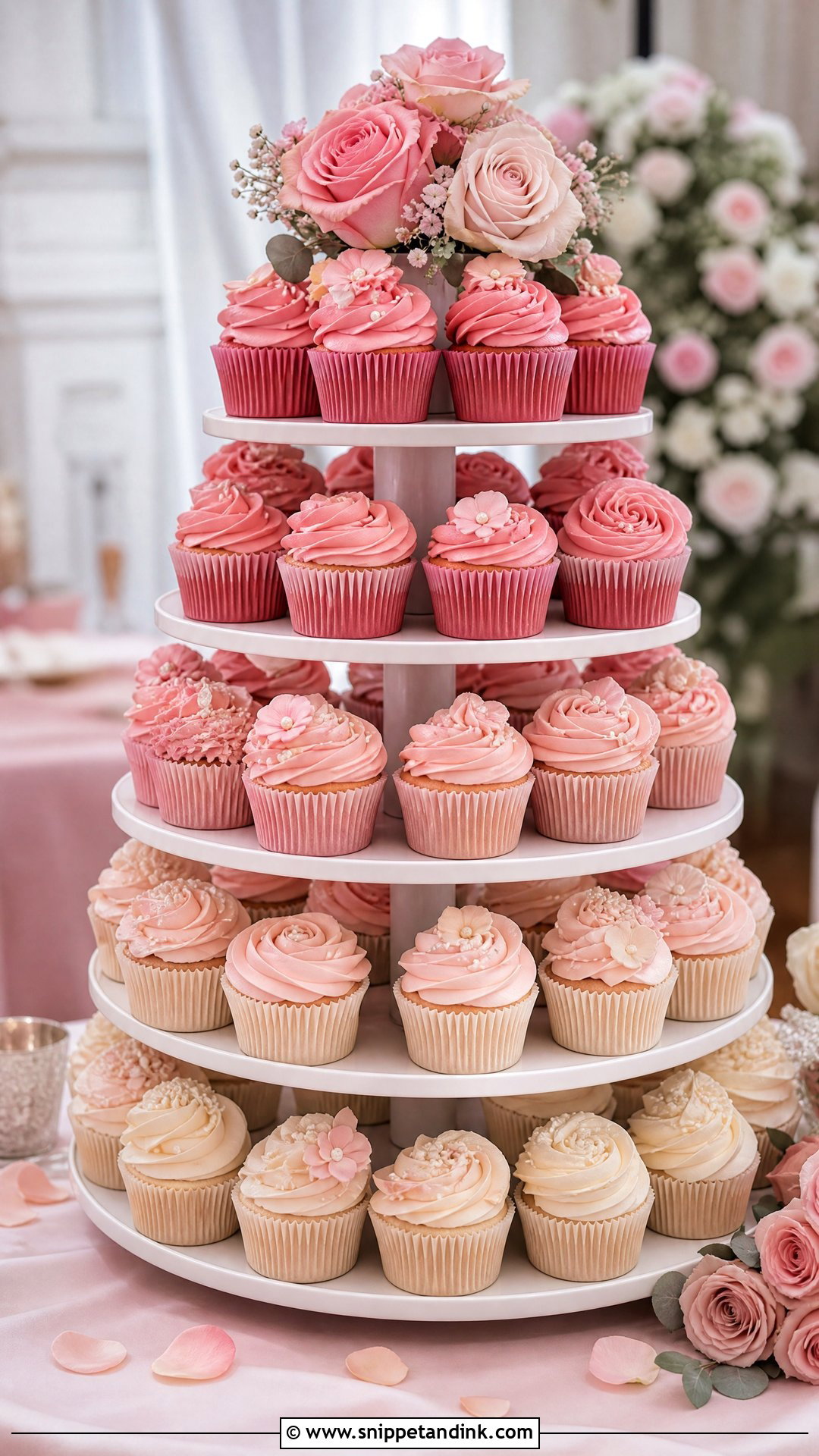
Pink is easy to personalize: blush and ivory for something soft, rose and berry for something bolder. An ombré tower, deepest shade at the bottom and palest at the top, gives a lot of impact for very little decoration. I mix each shade from the same base color so the steps look even. Strawberry, raspberry and red velvet suit the palette. Rosettes or heart toppers add charm without fuss.
11. Blue Wedding Cupcake Tower
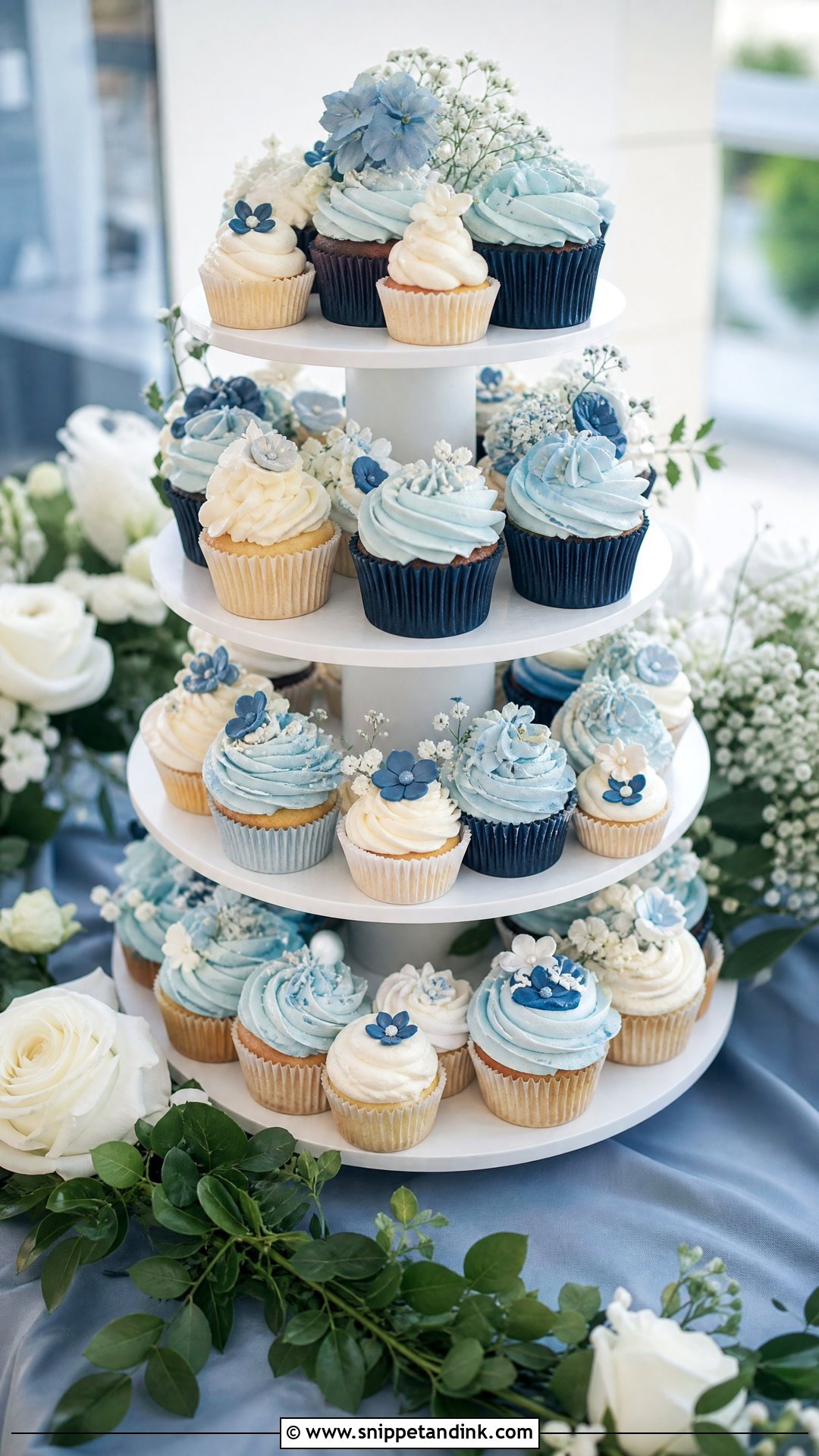
Blue frosting is tricky because many blues lean green or grey once mixed into yellow-tinted butter. I start with a whitened base and test the shade before committing. Dusty blue, navy or blue-gray can come through liners, sugar flowers or a watercolor swirl instead of a full blue frosting. Lemon blueberry, coconut and almond pair well. White flowers and greenery keep it from looking heavy, which is why it suits coastal and summer receptions.
12. Vintage Wedding Cupcake Tower
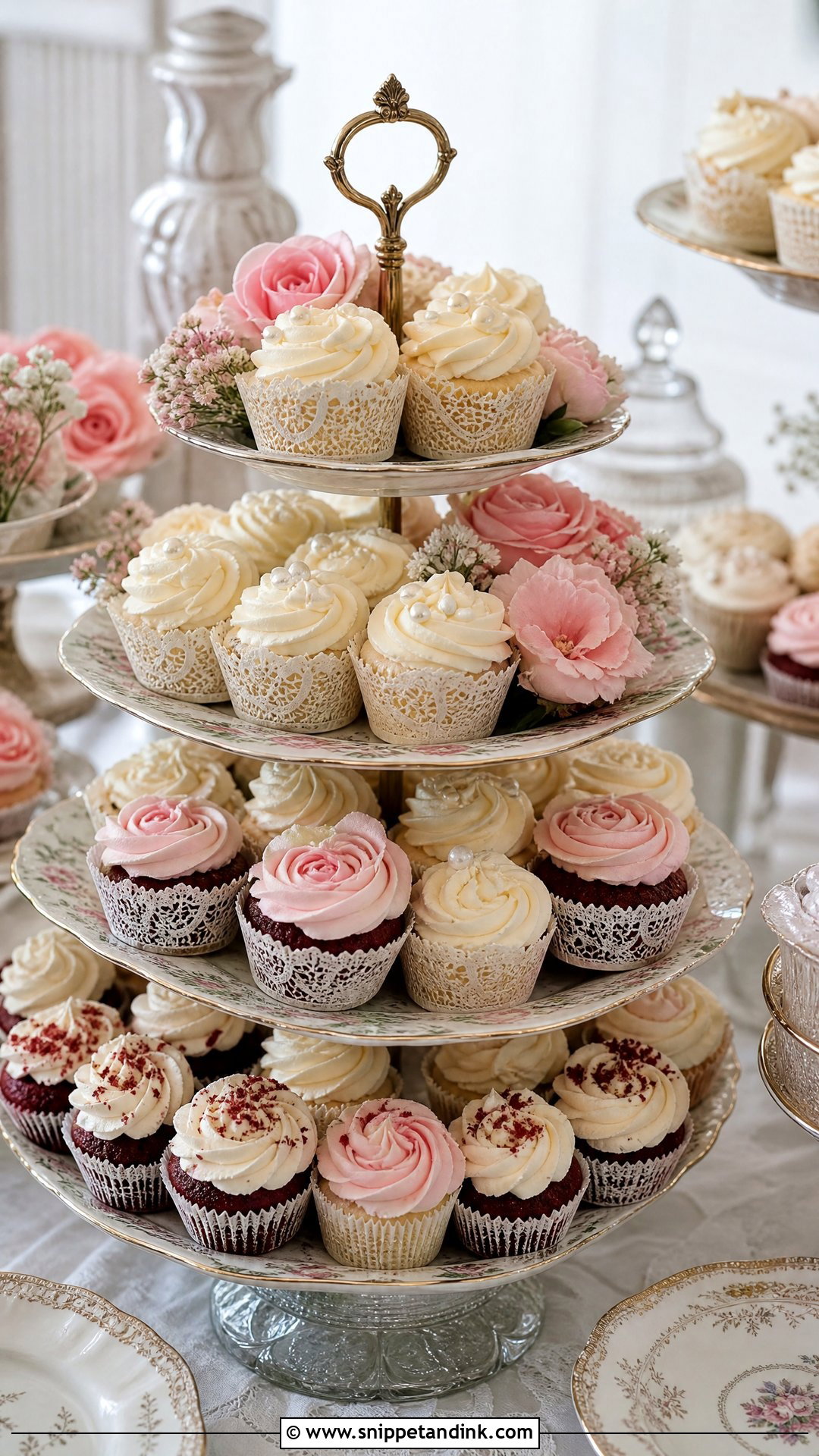
A vintage tower looks best collected rather than matched. Antique-style stands, porcelain plates, glass pedestals and an ornate tiered stand can mix, with cupcakes piped in buttercream roses, pearls and scalloped liners. Vanilla, lemon and almond suit the style. Mismatched stands at different heights need careful leveling, so I check each one with a small level before loading cupcakes. Small framed signs and floral clusters complete a nostalgic dessert table look in a historic venue or tea room.
13. Modern Wedding Cupcake Tower
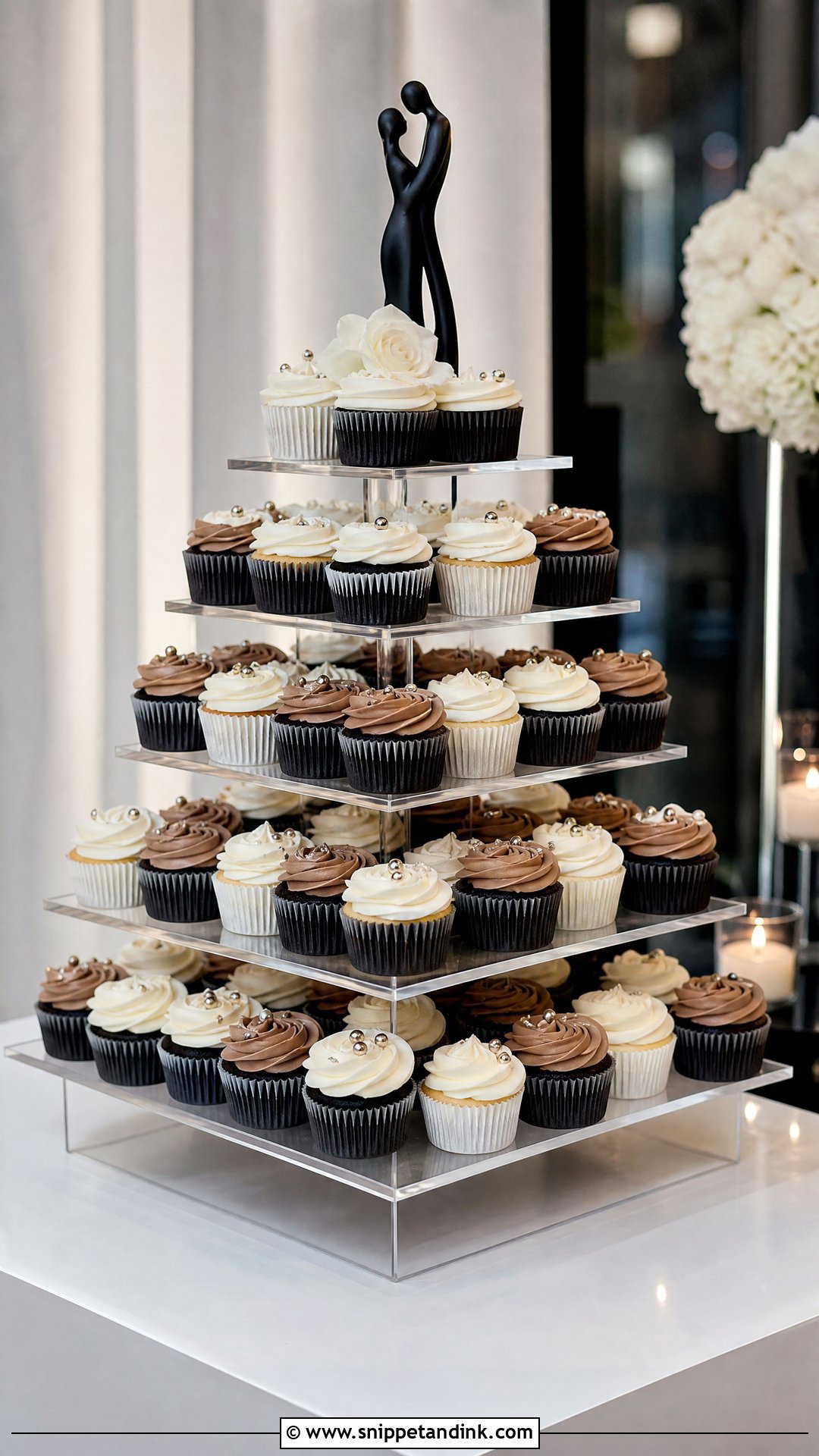
Modern towers rely on precision. A square acrylic stand, matte black tiers or white geometric pedestals, with sleek cupcakes in smooth frosting or minimal piping. Chocolate, espresso and salted caramel look refined with a simple finish like a single gold dot or a crisp wrapper. I’d skip heavy flowers and choose one strong detail, perhaps a sculptural topper or one repeated color. Square stands show uneven spacing more than round ones, so plan the grid before you start loading.
14. Beach Wedding Cupcake Tower
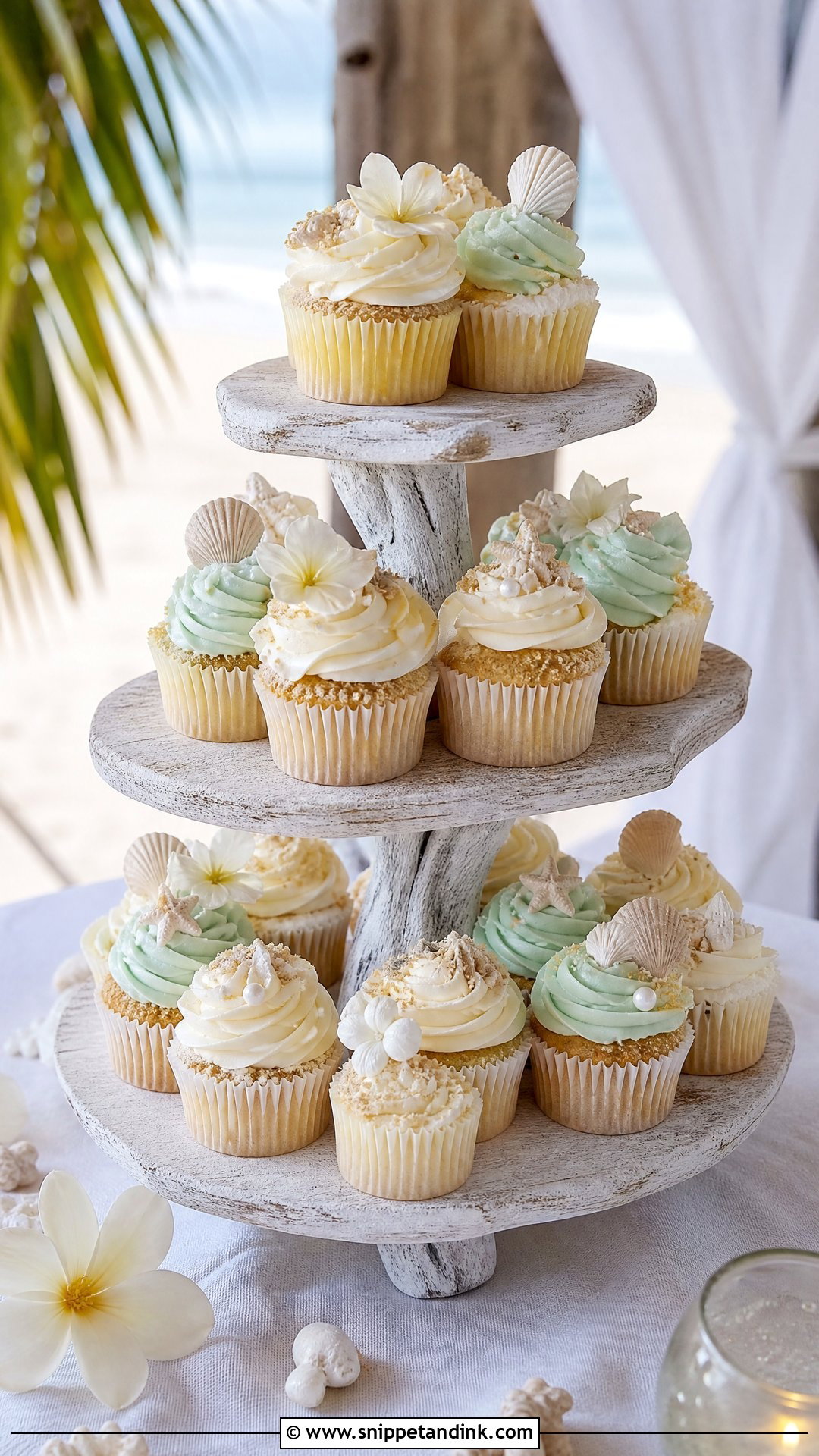
Beach towers have to deal with wind and sea air, and a light stand on sand will tip. I use a wide, heavy base and set the tower on a level table under shade. Coconut, key lime and pineapple cupcakes suit the setting. Cream cheese frosting softens fast in heat and needs to stay cool, so for an outdoor coastal reception I’d steer you toward a firmer buttercream. Sugar shells, pearl sprinkles and cookie-crumb sand keep the decoration simple.
15. Fall Wedding Cupcake Tower
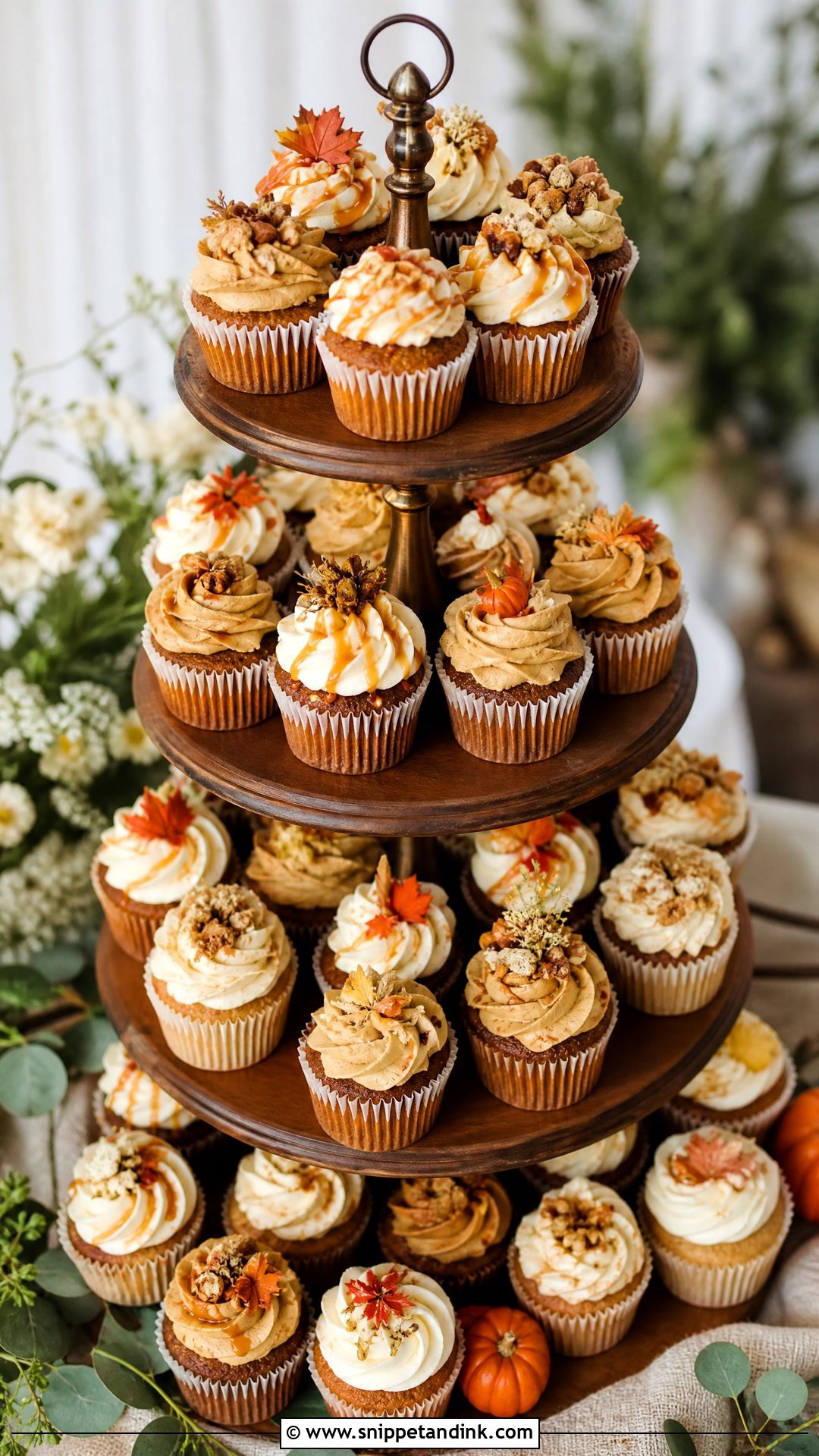
A fall wedding cupcake tower leans warm: ivory, caramel, copper, rust and sage. Pumpkin spice, apple cinnamon, maple and vanilla chai are the seasonal flavors couples ask for. Cream cheese and cinnamon buttercream both suit them, and cooler autumn air means frosting holds well. Caramel drizzle goes on at the venue so it doesn’t slide. A wood or bronze stand with dried flowers or mini pumpkins at the base finishes it for a barn or vineyard-style venue.
16. Spring Wedding Cupcake Tower
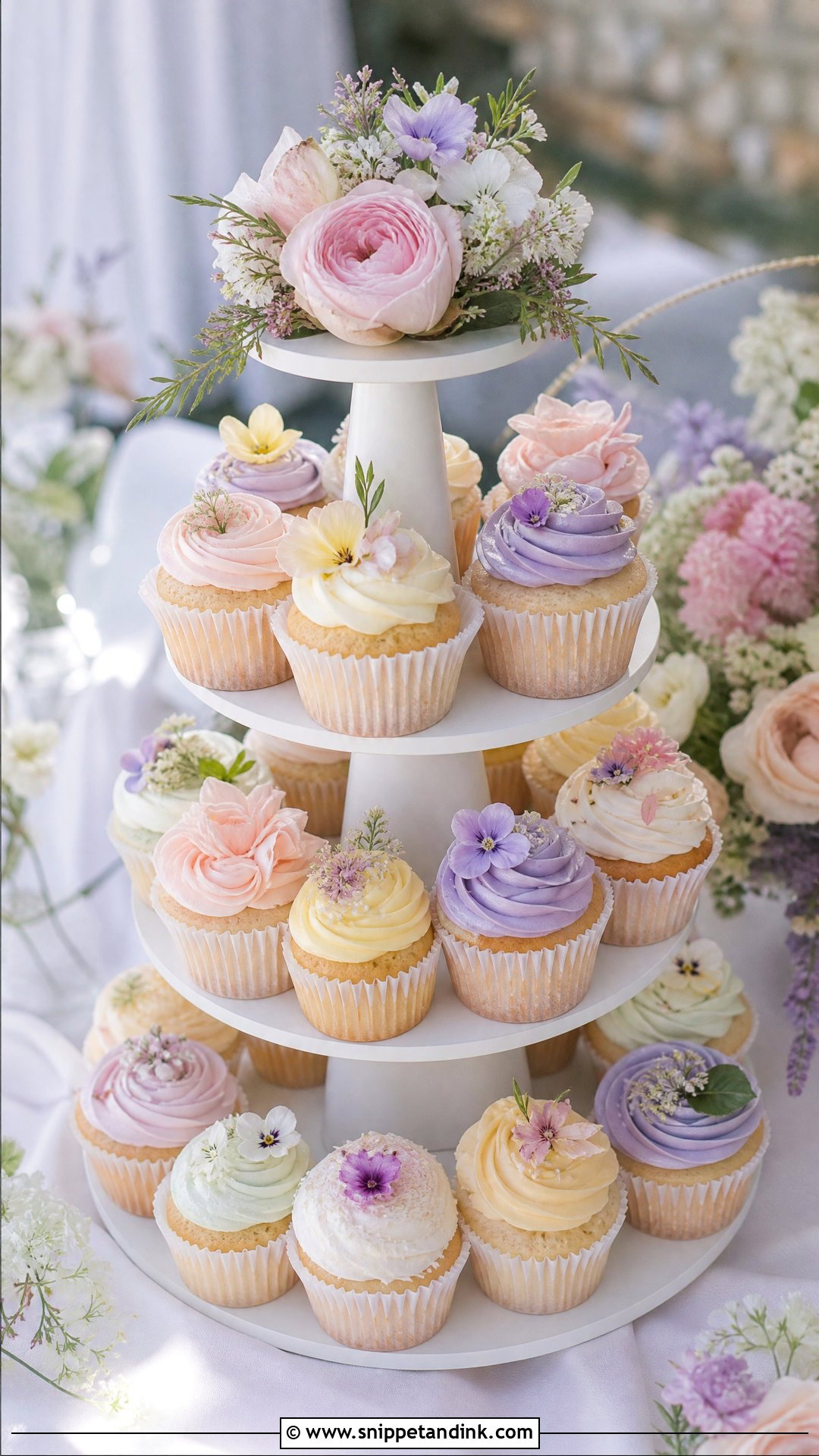
Spring towers use pastel frosting: blush, lavender, butter yellow, mint and ivory. Pastels are mixed with very little coloring, so they’re easy to make look chalky; a tiny touch of white helps them read clean. Lemon, strawberry and raspberry suit the season. I decorate lightly, with small buttercream flowers or a few pearls, because pastels lose their airiness when crowded. A white or clear stand and fresh greenery finish the look at a brunch or garden wedding.
17. Summer Wedding Cupcake Tower
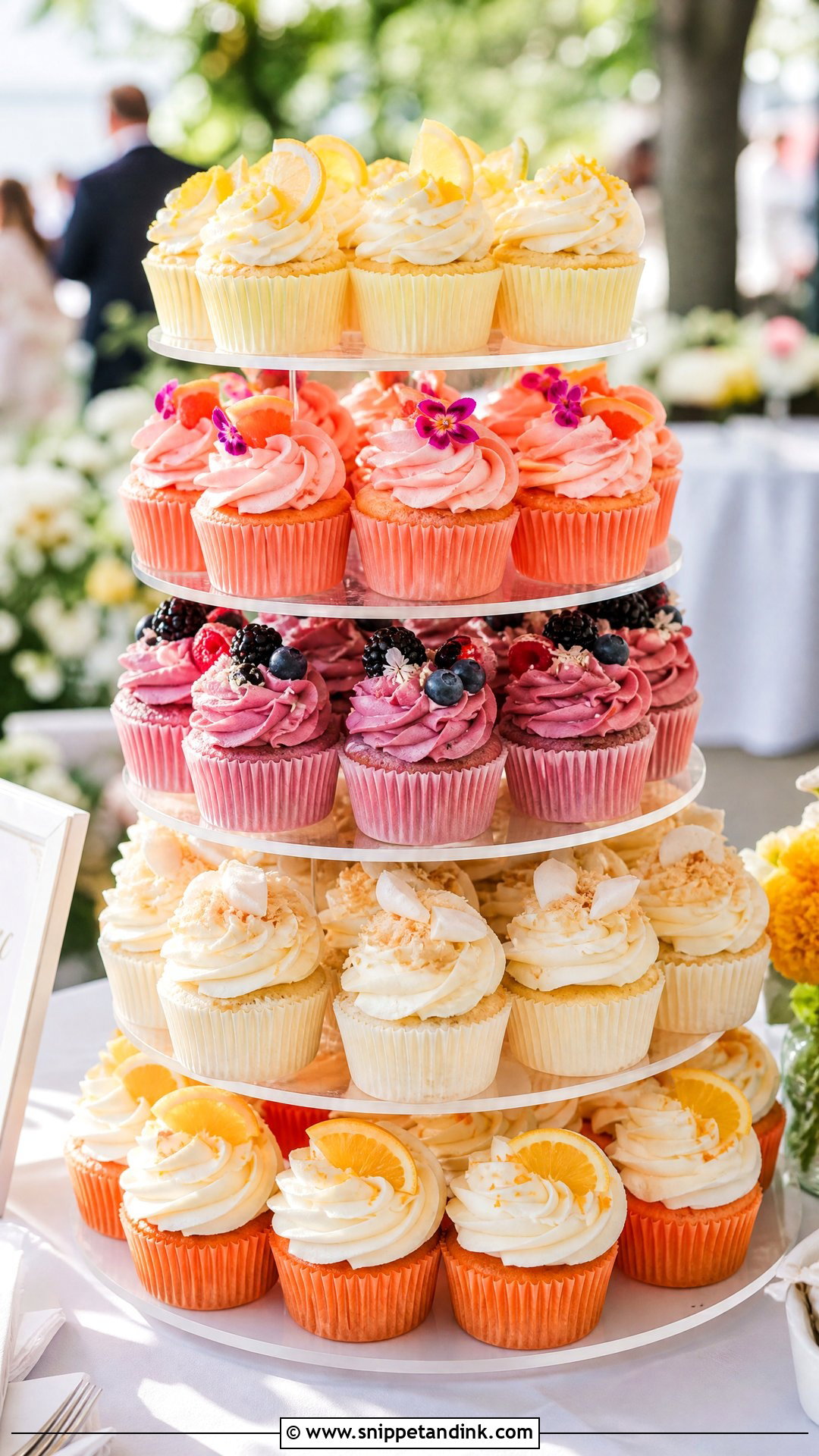
Summer is where cupcake towers get tested. Lemon, berry, coconut and passion fruit taste right in warm weather, but heat softens buttercream fast. I use a firmer, higher-butter recipe or one stabilized with a little shortening, and keep the tower away from direct sun and heat sources. Fresh berries and citrus zest go on at the last moment. A white or acrylic stand looks clean, and small floral arrangements at the base add color without crowding the frosting.
18. Small Wedding Cupcake Tower
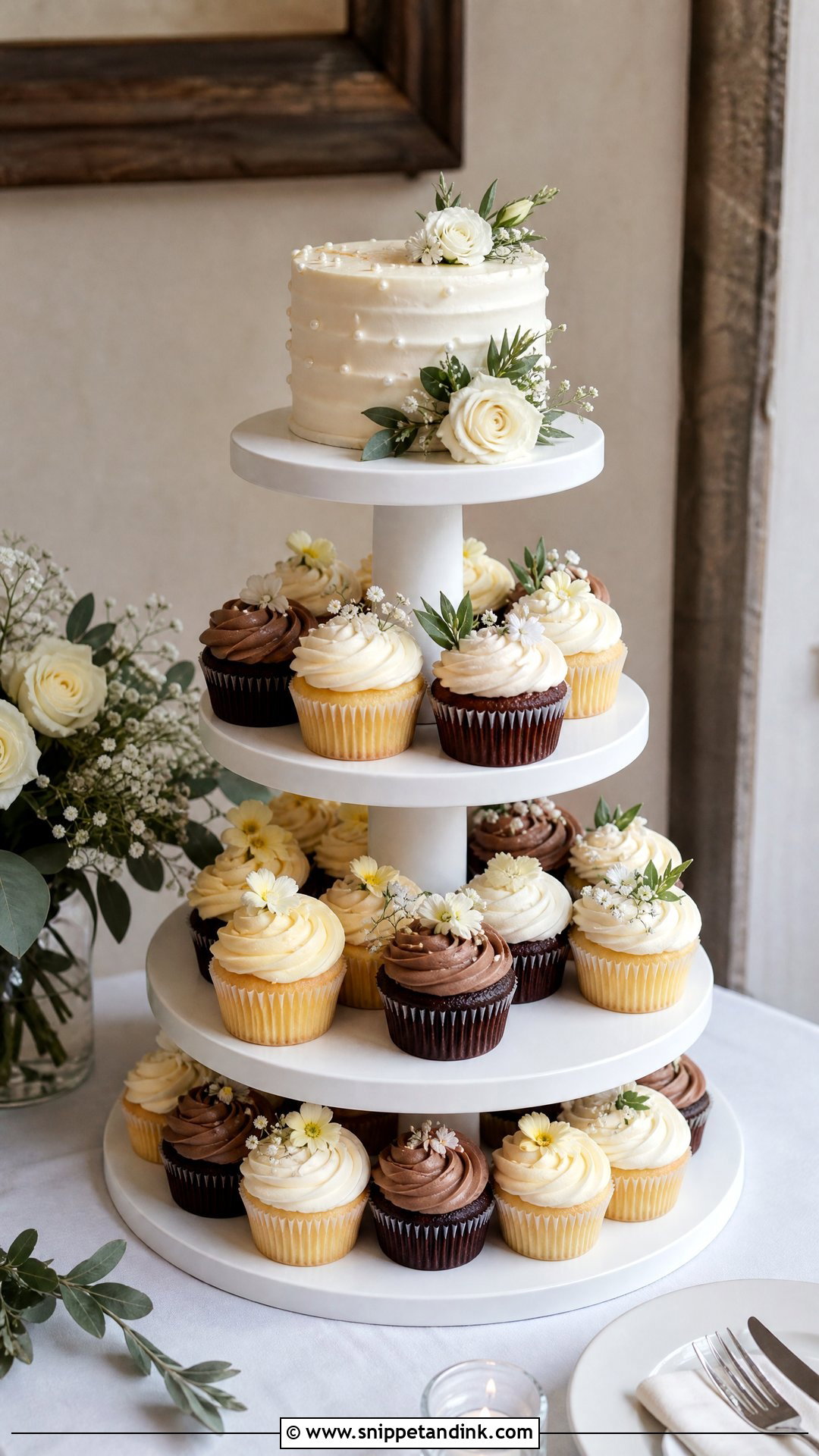
A small wedding cupcake tower suits an intimate wedding or elopement. A three-tier stand with neat spacing and a small cake or flower cluster on top is enough. Two or three flavors keep variety without crowding the table. I use slightly fewer cupcakes per tier than the stand allows, so the tower looks generous rather than crammed. It saves space and cuts waste, and it still gives you a focal point for photos.
19. Large Wedding Cupcake Tower
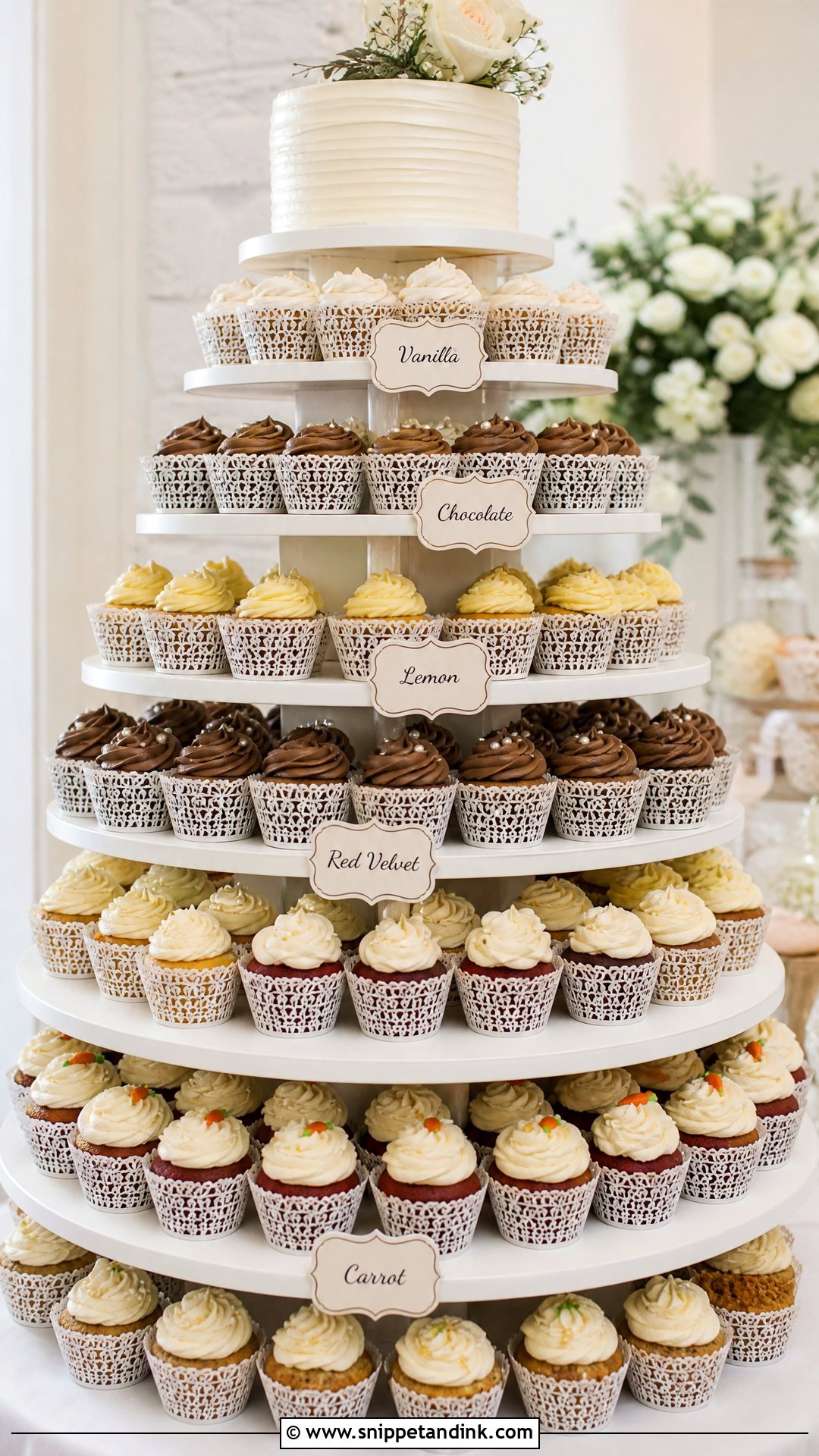
A large tower needs engineering before decoration. The stand must carry the full cupcake count safely, and if it can’t, I place overflow on matching trays nearby. Keep the design consistent so the size doesn’t look busy, and mark flavors with liner color or small labels. A cutting cake or flower arrangement on top gives height. The biggest risk is the stand flexing under weight, so test it fully loaded before the wedding day if you’re renting.
20. Cupcake Tower With Dessert Table
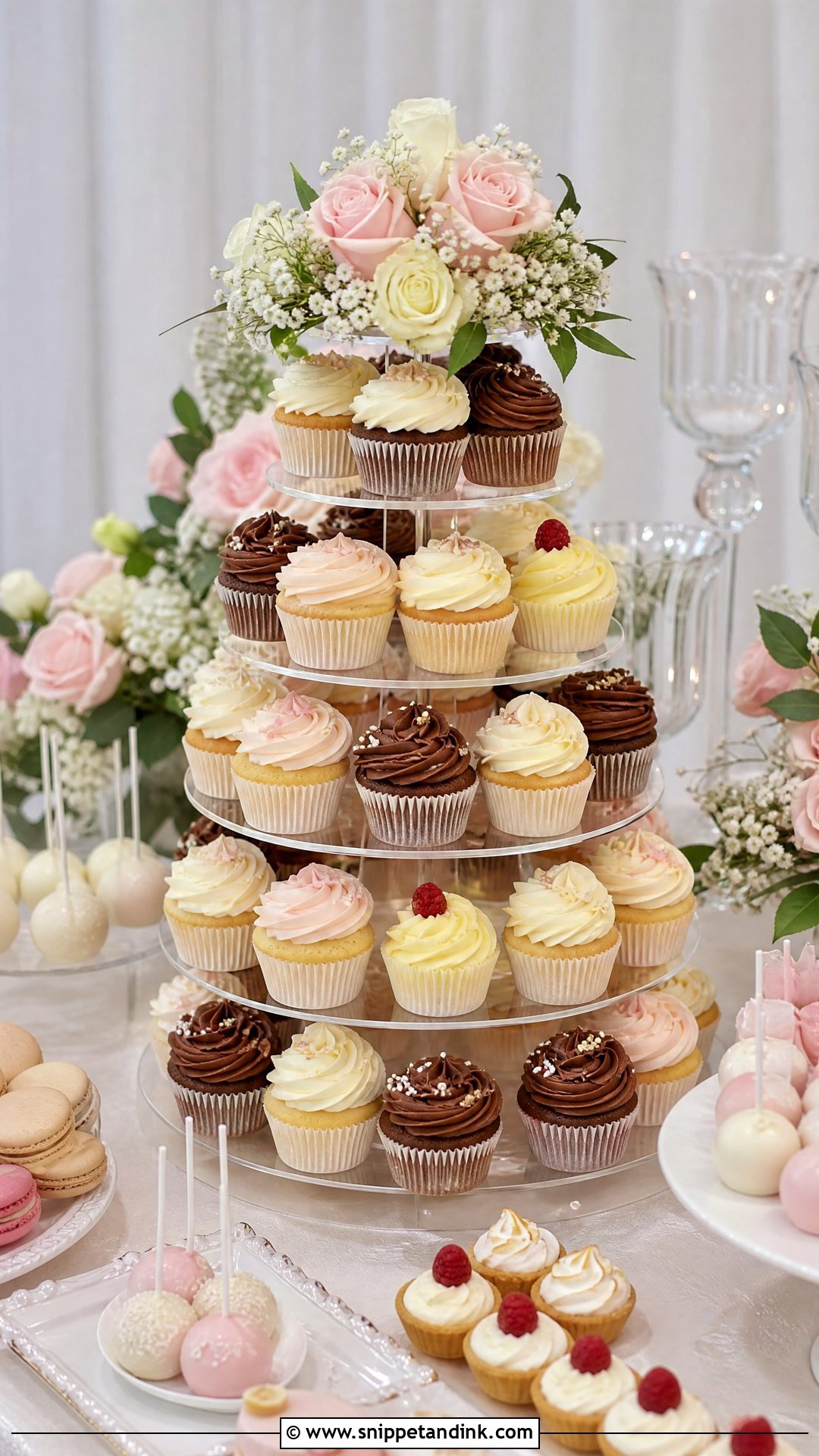
Surrounding a tower with a full dessert table works when the tower stays the tallest thing in view. Place cookies, mini tarts, macarons and cake pops on lower trays around it so the eye moves down from the cupcakes. Pick cupcake flavors that complement, not repeat, the other sweets. If the macarons are raspberry and lemon, I’d make the cupcakes vanilla and chocolate. A table with clear height steps reads as planned rather than piled.
The Tower Once Guests Start Helping Themselves
A tower looks perfect for about ten minutes after guests start taking cupcakes. After that it has gaps, and the front tiers empty first while the back stays full. Planning for that keeps the display looking intentional through the evening.
- Take your photos of the full tower before dessert is announced.
- Keep a backup tray of cupcakes in the kitchen and ask the caterer to refill from the back of each tier.
- Place napkins and small plates at both ends of the table so two queues form instead of one crowd.
- If the cake is being cut, do it before guests reach the tower, so the cutting photo shows a full display.
- Ask someone to box the leftovers for the couple. Cupcakes keep well overnight in a cool room.
If the table sits against a wall, I load the back of each tier more lightly and push the extras forward. Guests only see the front, and fewer cupcakes go to waste.
Start With the Stand, Then Pipe Everything Else
Cupcake towers are practical and adapt to almost any wedding style, but the order of decisions matters. Settle the stand first, then the palette, flavors, frosting and top detail, and add decoration last. A small cutting cake, a few flowers, pearls or a metallic accent are enough to make it look finished. Think about the venue temperature, the guest count and where people will queue. Get those right, and a tower can feel every bit as special as a traditional tiered cake.
You'll Like These Ideas:


Leave a Reply