
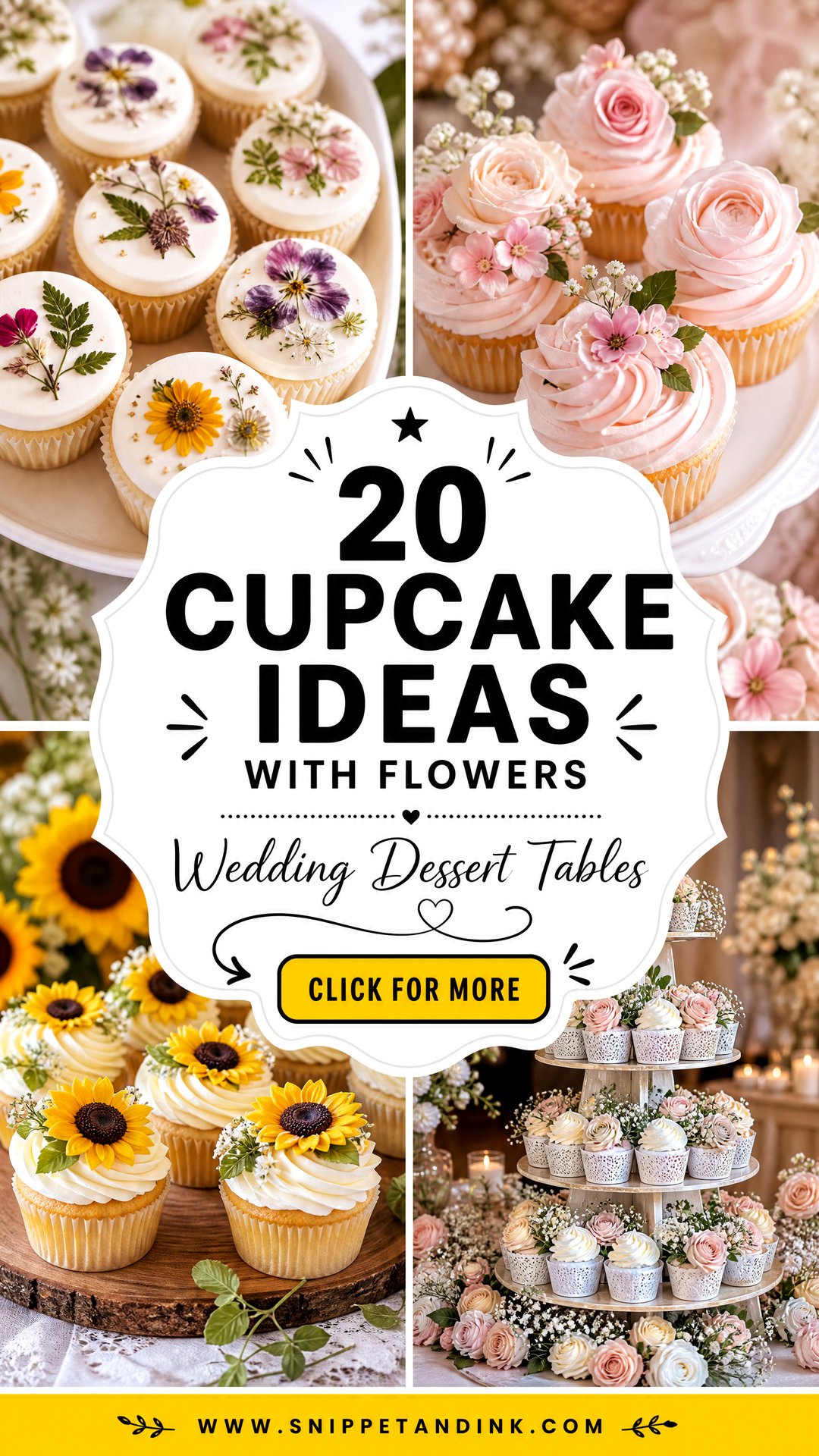
Cupcakes topped with flowers give a dessert table the feel of a bouquet without the engineering of a tall tiered cake. They can pick up the bridal flowers, the season or the palette, and they let you offer several flavors under one coordinated look. In my kitchen the floral work falls into three camps: piped buttercream blooms, sugar flowers made in advance, and fresh or pressed edible petals added at the end. Each has its own timing and its own limits in heat. The twenty designs below work as a tower, at place settings or as part of a full dessert bar.
Which Flowers Can Actually Touch the Frosting
A florist’s flowers and a baker’s flowers are not the same thing. Most cut flowers are grown with sprays that aren’t meant for food, and some favorite wedding blooms are toxic. Hydrangea, lily of the valley, sweet pea, foxglove and baby’s breath should stay off anything a guest might eat, even as decoration.
When a couple wants real flowers, I source blooms grown for eating: violas, pansies, calendula, cornflowers, chamomile, nasturtium and unsprayed roses. If a florist’s flower is non-negotiable, it goes on a pick or with a wrapped stem so nothing touches the frosting, and it’s removed before serving.
Ask your baker where the flowers come from. Edible blooms usually come from specialist growers or a kitchen garden, not the wholesale flower market, and a good baker will tell you straight away which of your bouquet flowers can and can’t be echoed in real petals.
1. Buttercream Rose Wedding Cupcakes
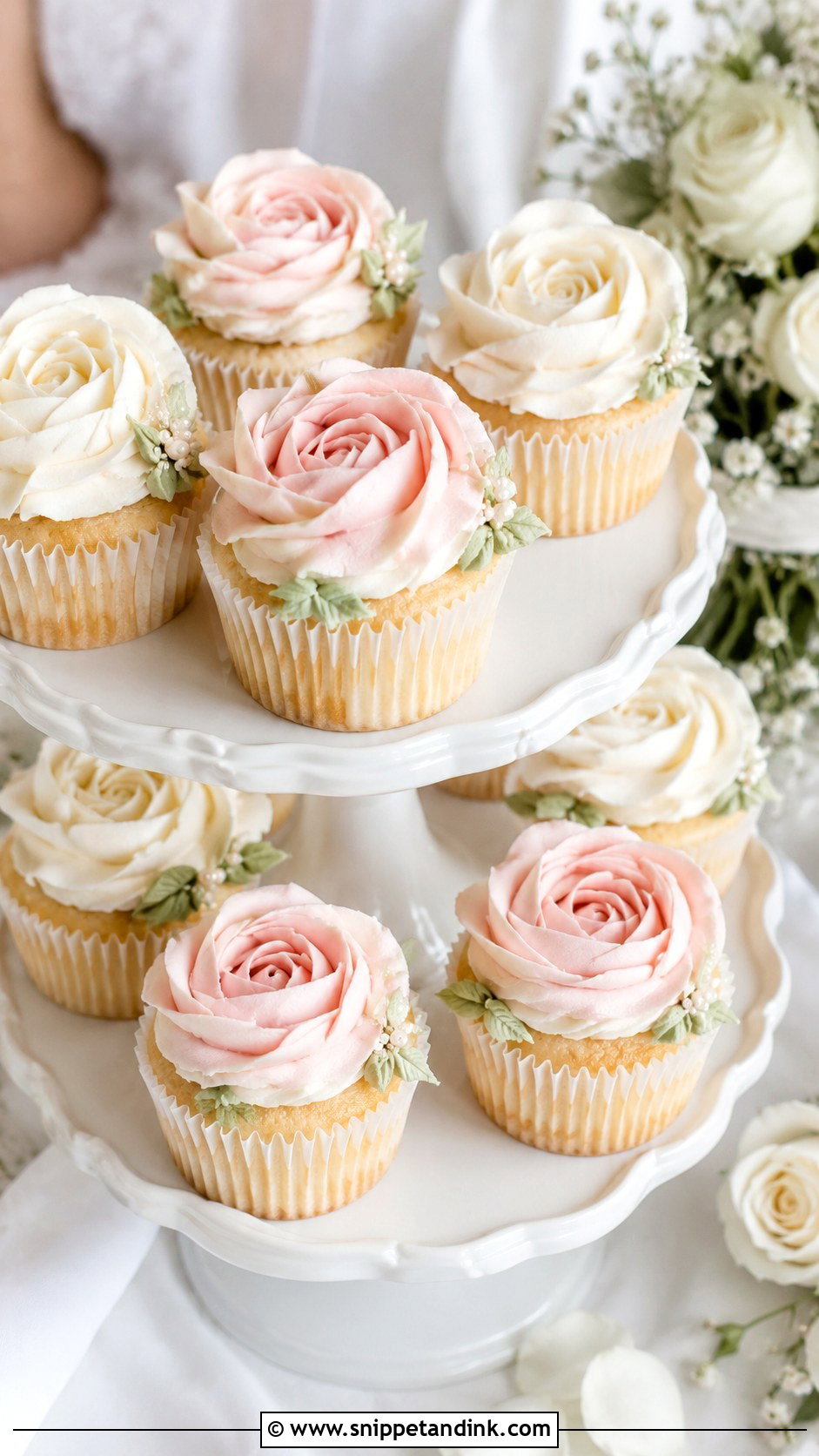
The piped buttercream rose is the first flower most decorators learn and the one guests recognize instantly. I pipe it with a petal tip straight onto the cupcake, or onto parchment squares ahead of time, then chill them so they lift on firm. Ivory, blush, dusty pink and peach all suit it, and a handful of deeper mauve or burgundy roses gives the display some depth. Light vanilla, almond or champagne sponge keeps the cross-section pale when someone bites in. Everything on top is edible, which is the practical win.
2. Fresh Flower Wedding Cupcakes
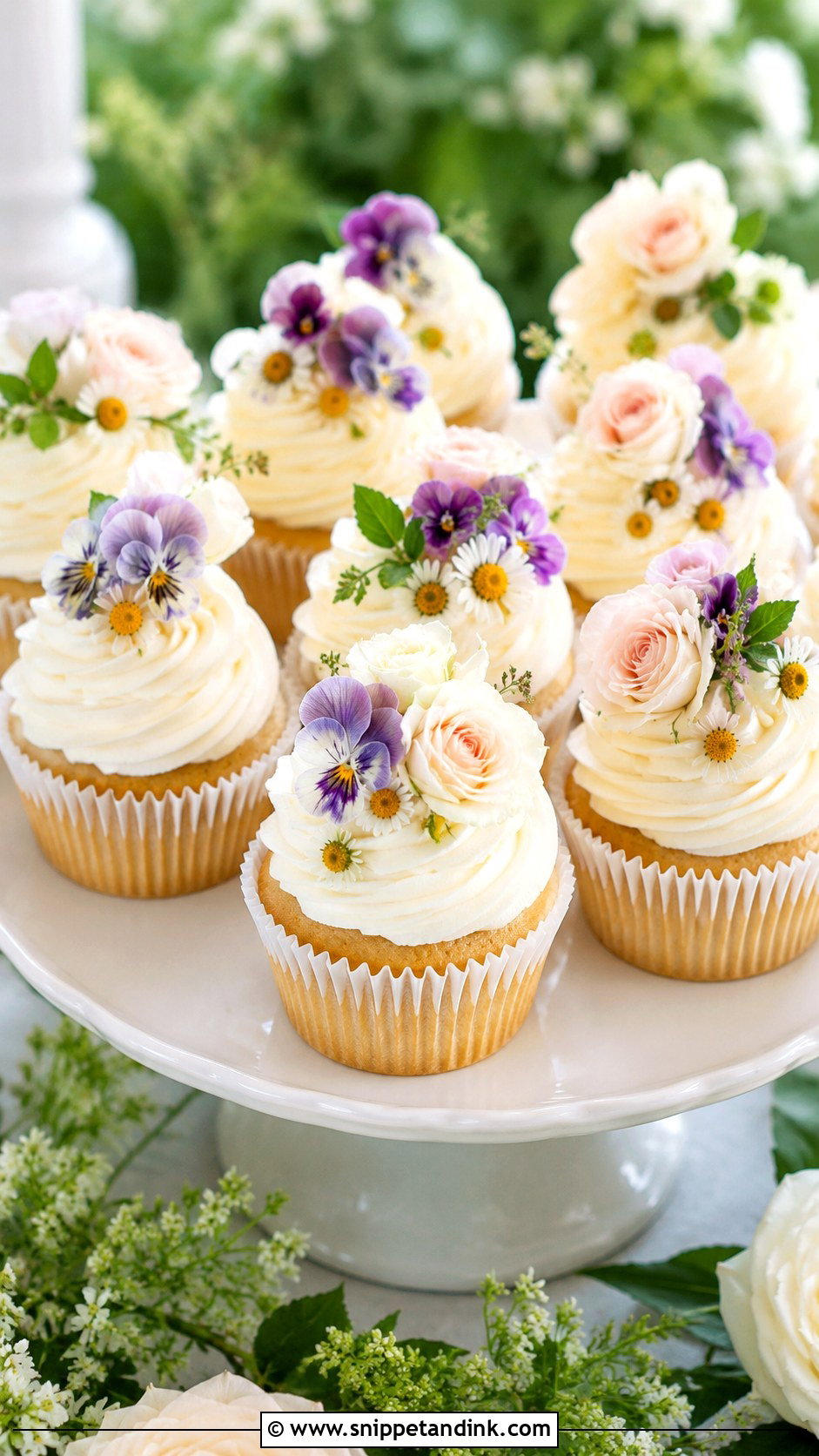
Real flowers on cupcakes need more care than most couples expect. The blooms must be grown for eating, without florist sprays, which rules out most of what’s in your centerpieces. Mini roses, pansies, violets and chamomile are the usual safe picks. I keep the frosting a plain white or cream swirl so the flowers carry the look, and I add them as close to service as possible because petals wilt fast on sugar. On tiered stands with greenery between levels they look fresh, but keep that greenery from touching the frosting unless it’s food-safe too.
3. Pressed Flower Wedding Cupcakes
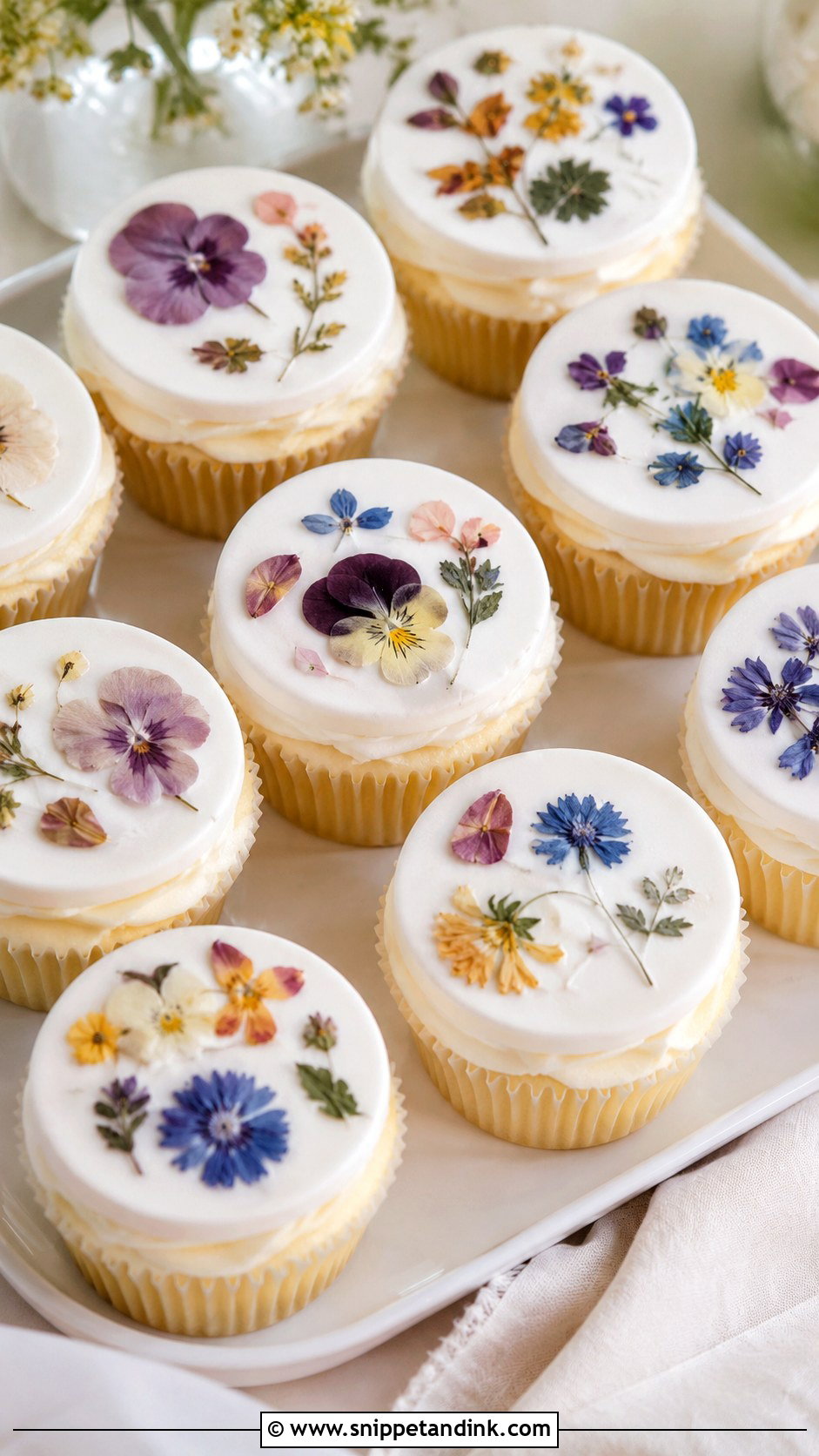
Pressed petals lie flat, so this is the design for a couple who wants detail without height. The petals need a smooth, slightly tacky surface to grip: a thin glaze, a disc of fondant, or buttercream that’s been chilled and smoothed. Violas, pansies, rose petals and cornflowers press well and keep a surprising amount of color. Plan the palette before pressing, because a random mix looks scattered across a whole tray. Pressing takes days of drying, so this one needs ordering well ahead. White ceramic or light wood boards show the petals best.
4. Wildflower Wedding Cupcakes
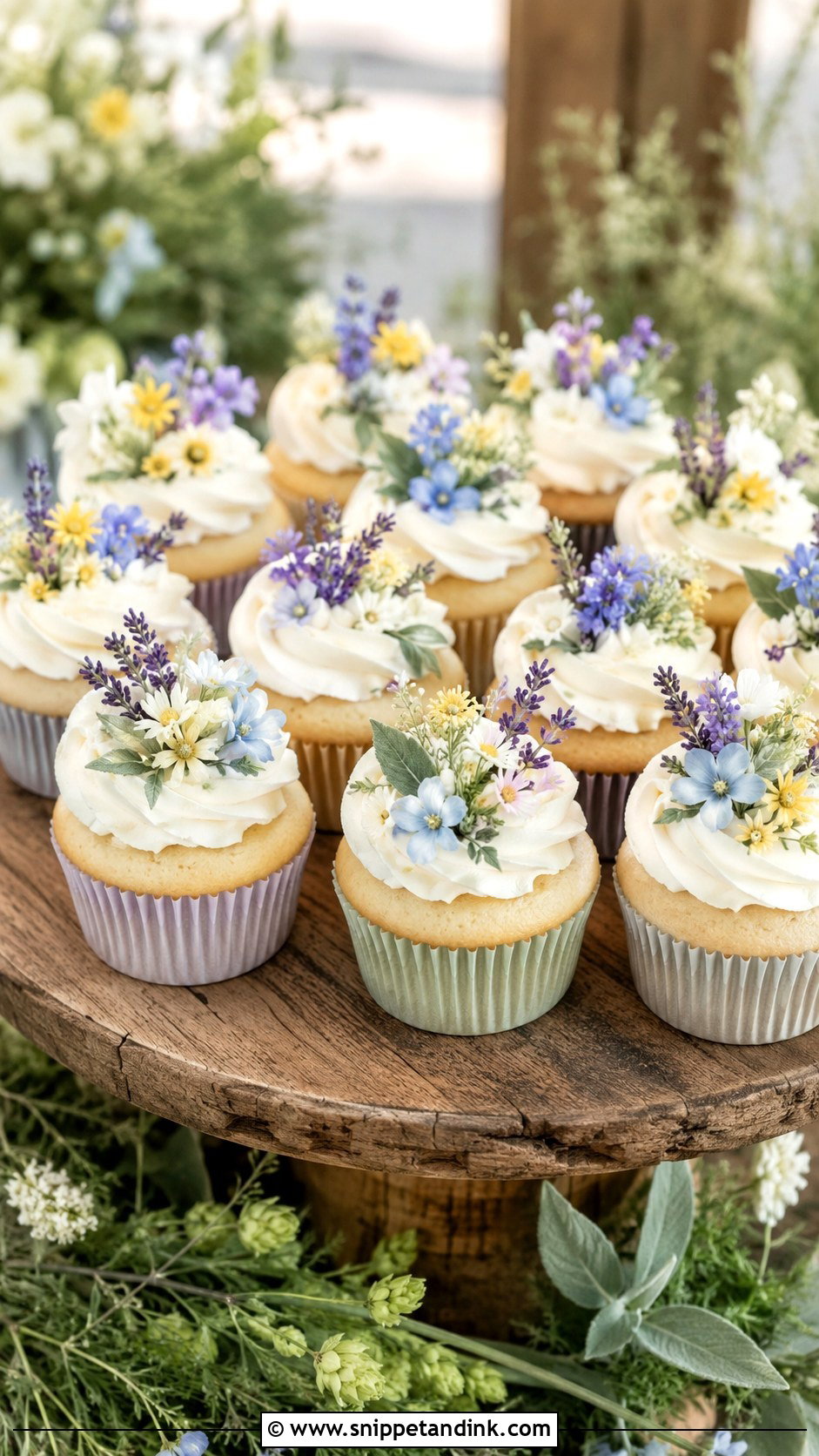
This is the one design where I deliberately avoid making each cupcake identical. Small piped blooms, edible petals and leaves go on in a loose cluster, and the variation from cake to cake is what reads as a meadow. Lavender, butter yellow, sage and pale blue keep it soft, with lemon, vanilla or honey sponge underneath. On mixed-height stands with greenery it suits a barn or outdoor reception. It’s also forgiving if a cupcake gets nudged in transit.
5. Sugar Flower Wedding Cupcakes
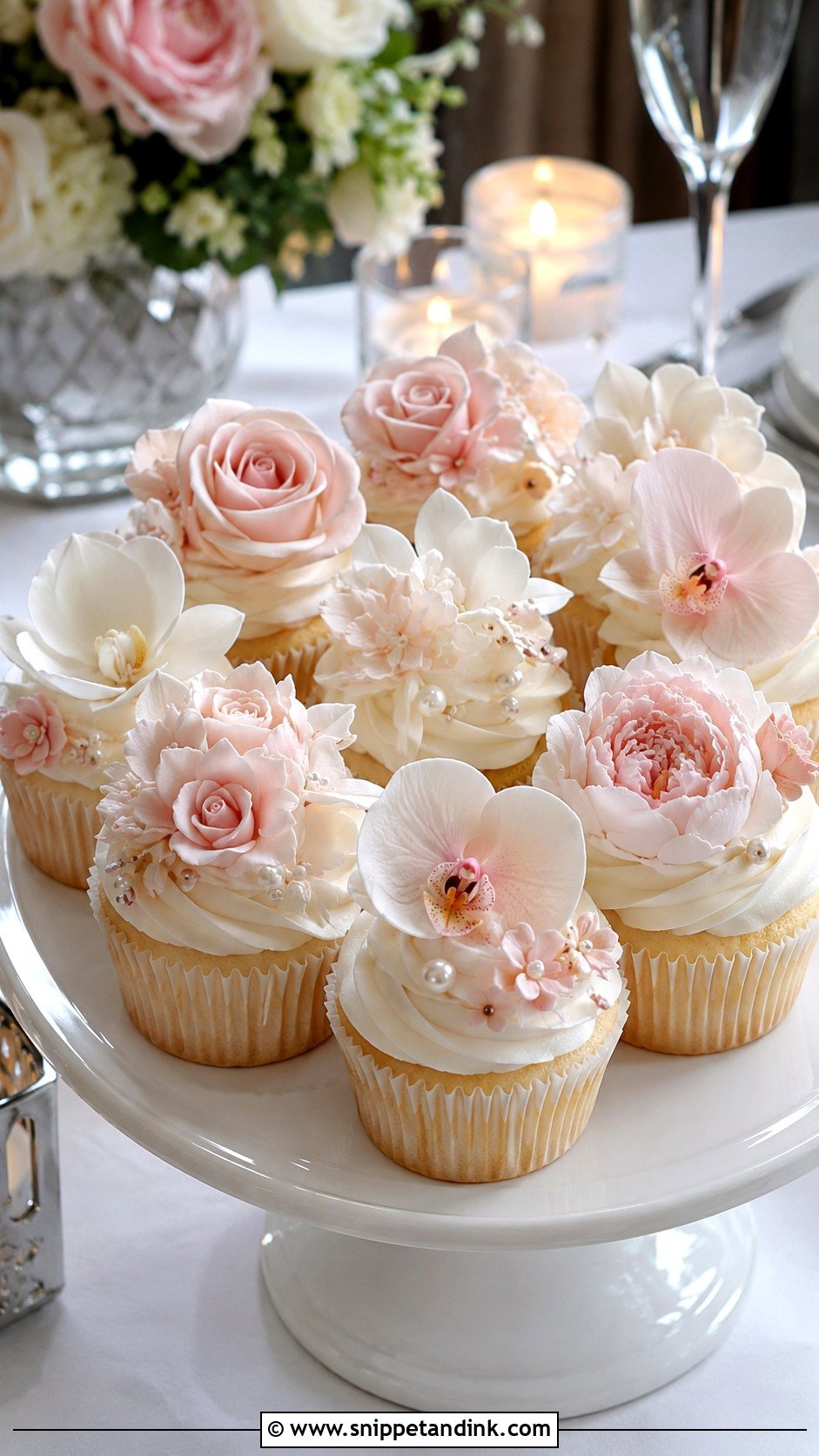
Sugar flowers are made from gum paste and left to dry for days, so they keep their shape through a long reception or a warm room where fresh petals would collapse. I can make roses, peonies, orchids, hydrangeas or small blossoms, one bloom per cake or a little cluster. The trade-off is that they’re decorative more than delicious, and most guests set them aside. They also hate humidity and fridge condensation, so I add them after the cupcakes come out of the cold. Ivory liners and pearl details suit them, especially beside a matching top-tier cake.
6. Edible Flower Wedding Cupcakes
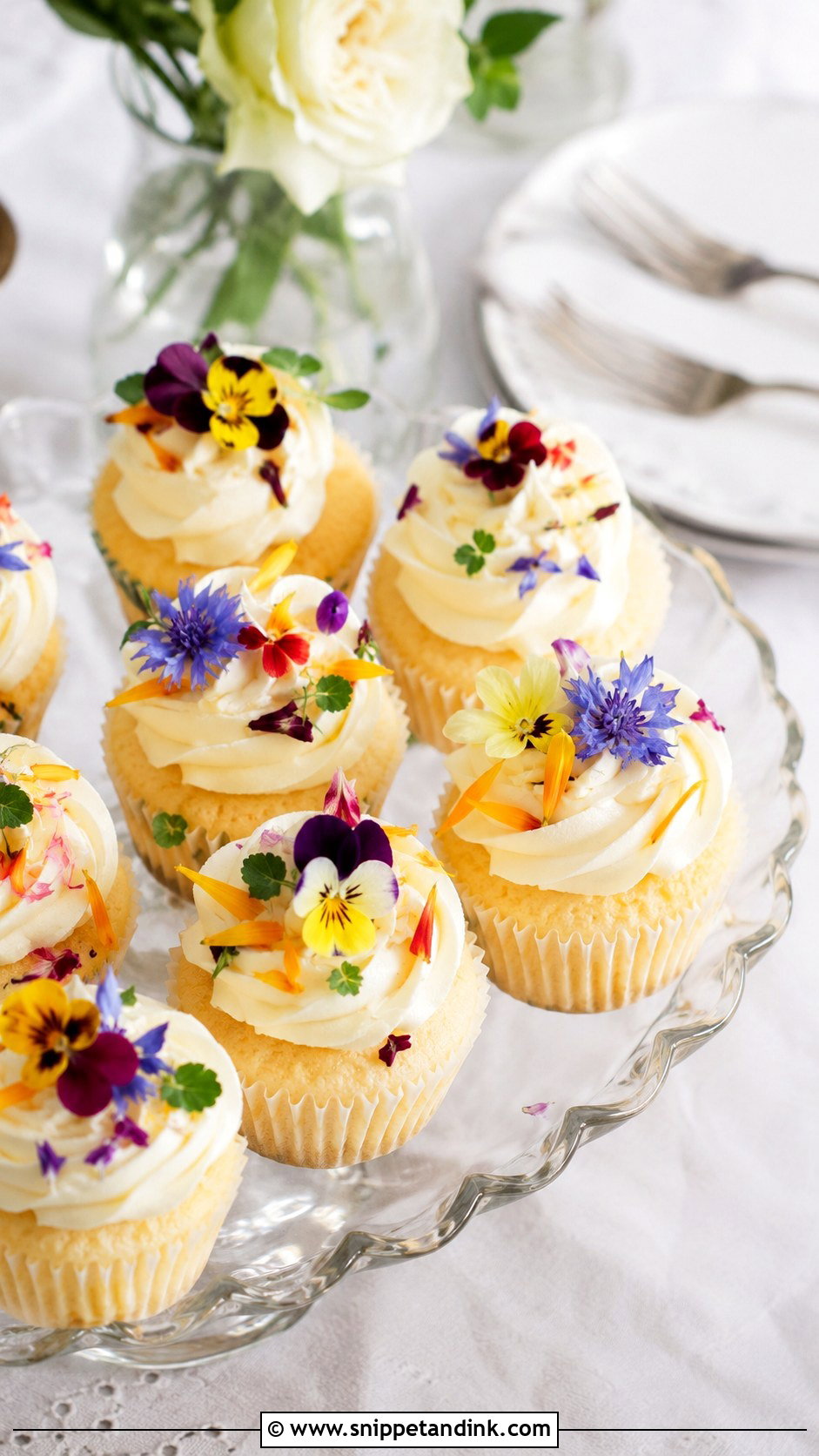
Violas, calendula, bachelor’s buttons, nasturtiums and rose petals are the edible blooms I reach for most, and availability shifts with the season. A tall vanilla buttercream swirl lifts them up. Whole flowers give shape; scattered petals give a confetti finish. Nasturtiums have a peppery bite, so I use them for color rather than piling them on. Lighter flavors such as lemon or coconut let the petals lead. Group similar colors together on the table, because too many shades in one spot looks busy.
7. White Flower Wedding Cupcakes
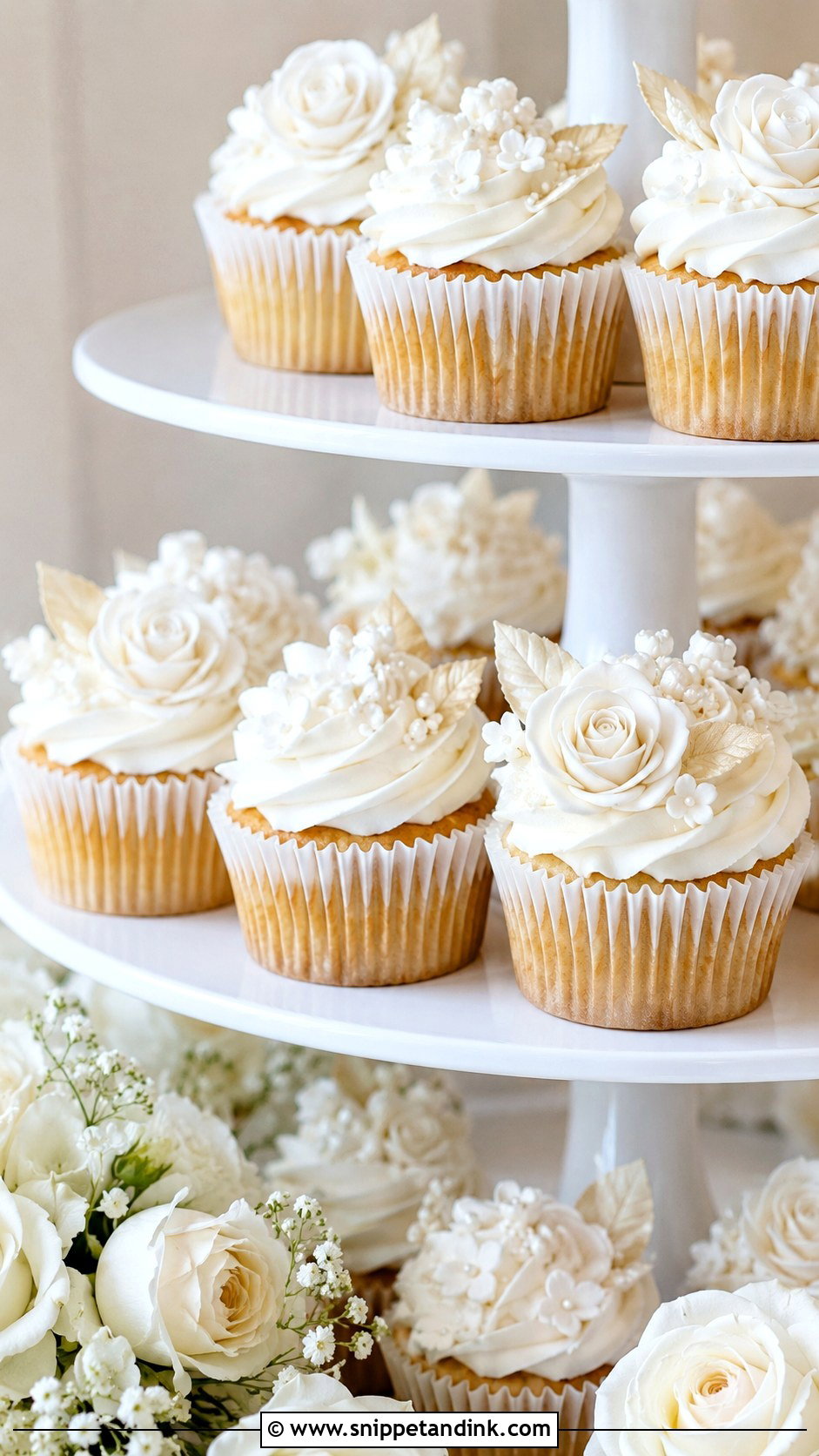
All white sounds simple, but it’s the hardest to make interesting because no color is doing the work. Texture has to do it instead: smooth tops on some, soft swirls on others, a few with pearl sprinkles or tiny leaves. Piped roses, white sugar blossoms and small fondant flowers can share a tray. Butter-based buttercream is naturally ivory, so if you want true white I’ll whiten it or switch to a white chocolate base. Vanilla, almond or coconut sponge keeps the inside pale too.
8. Blush Flower Wedding Cupcakes
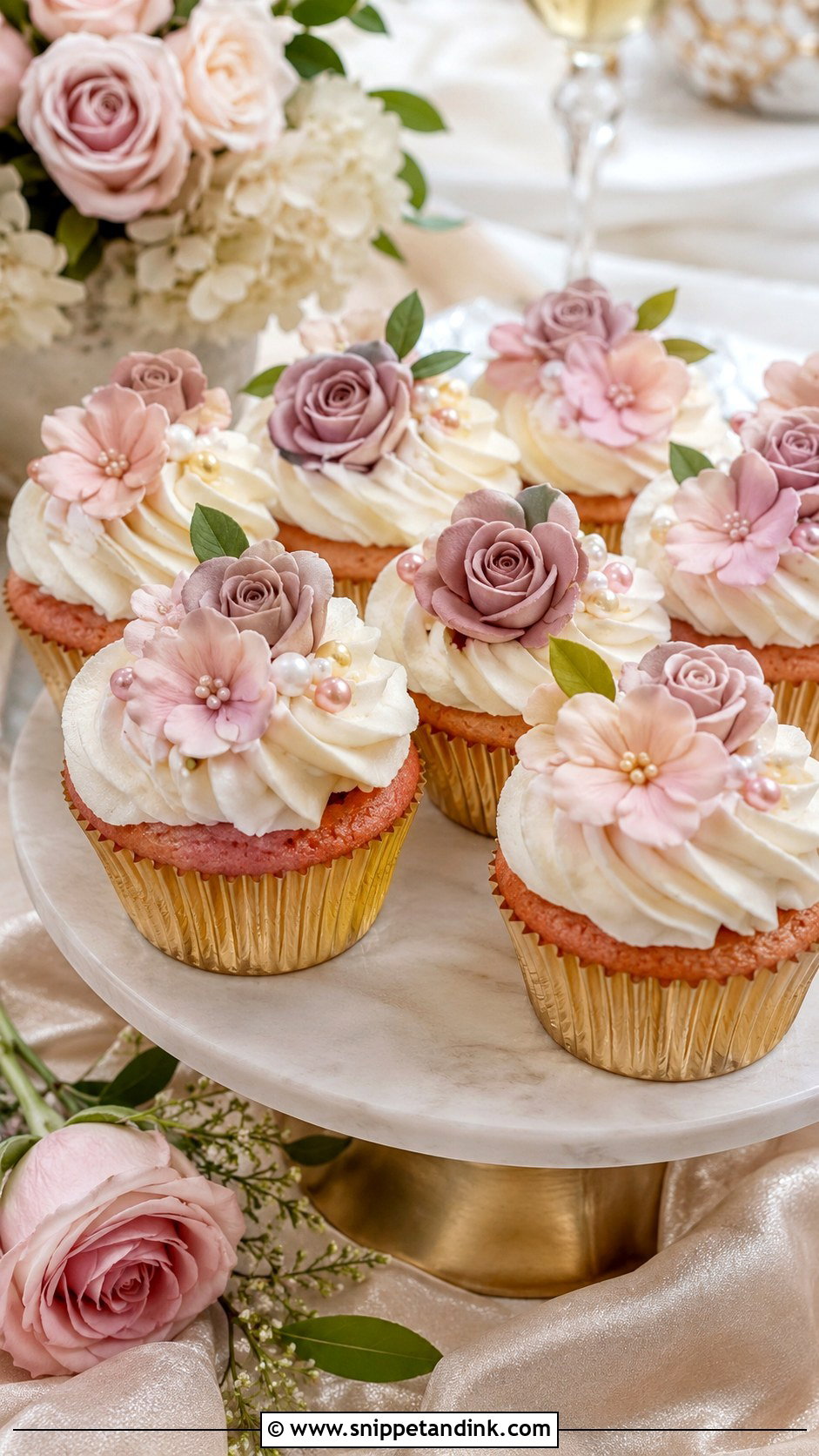
Blush is the shade I’m asked for most, and it sits comfortably beside ivory, champagne, sage, gold and dusty rose. Blush buttercream roses or pale pink sugar flowers on a white base look clean. Pink tints vary between batches, so I mix one batch for the whole order; two batches never quite match on a tray. Strawberry or raspberry sponge carries the color through to the inside. A few ivory and mauve cupcakes mixed in keep the table from feeling one-note.
9. Lavender Flower Wedding Cupcakes
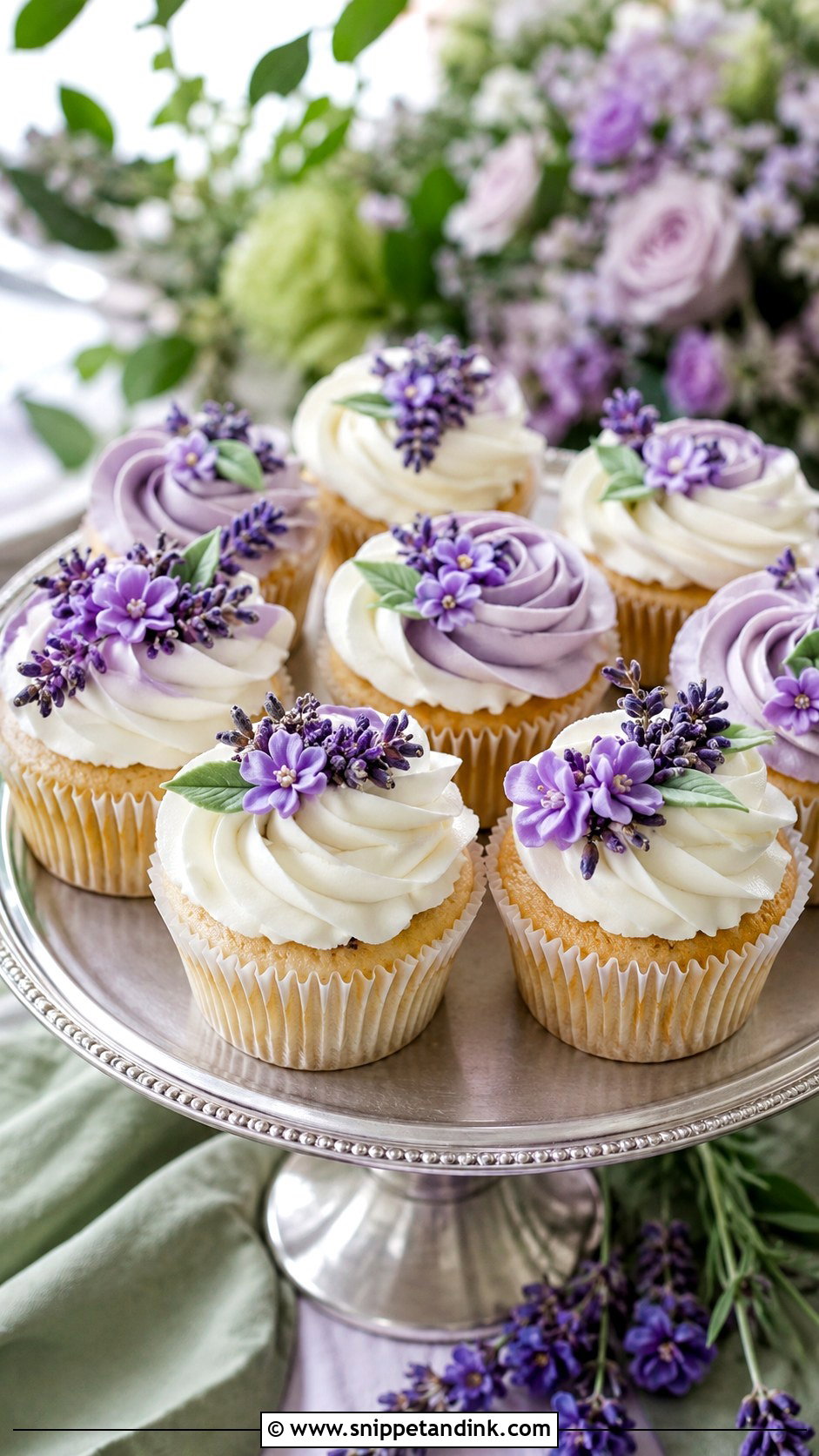
Purple buttercream fades, and that’s the thing to know before choosing it. Many violet colorings drift toward blue or grey with light exposure, so I tint lavender cupcakes close to the event and keep them out of the sun. They suit spring and summer palettes with sage, ivory or soft grey. Edible lavender buds go on in tiny amounts, since lavender quickly tastes soapy. Honey, lemon or Earl Grey bases suit it, white or silver liners keep it crisp, and a few green leaves make the purple read fresh.
10. Daisy Wedding Cupcakes
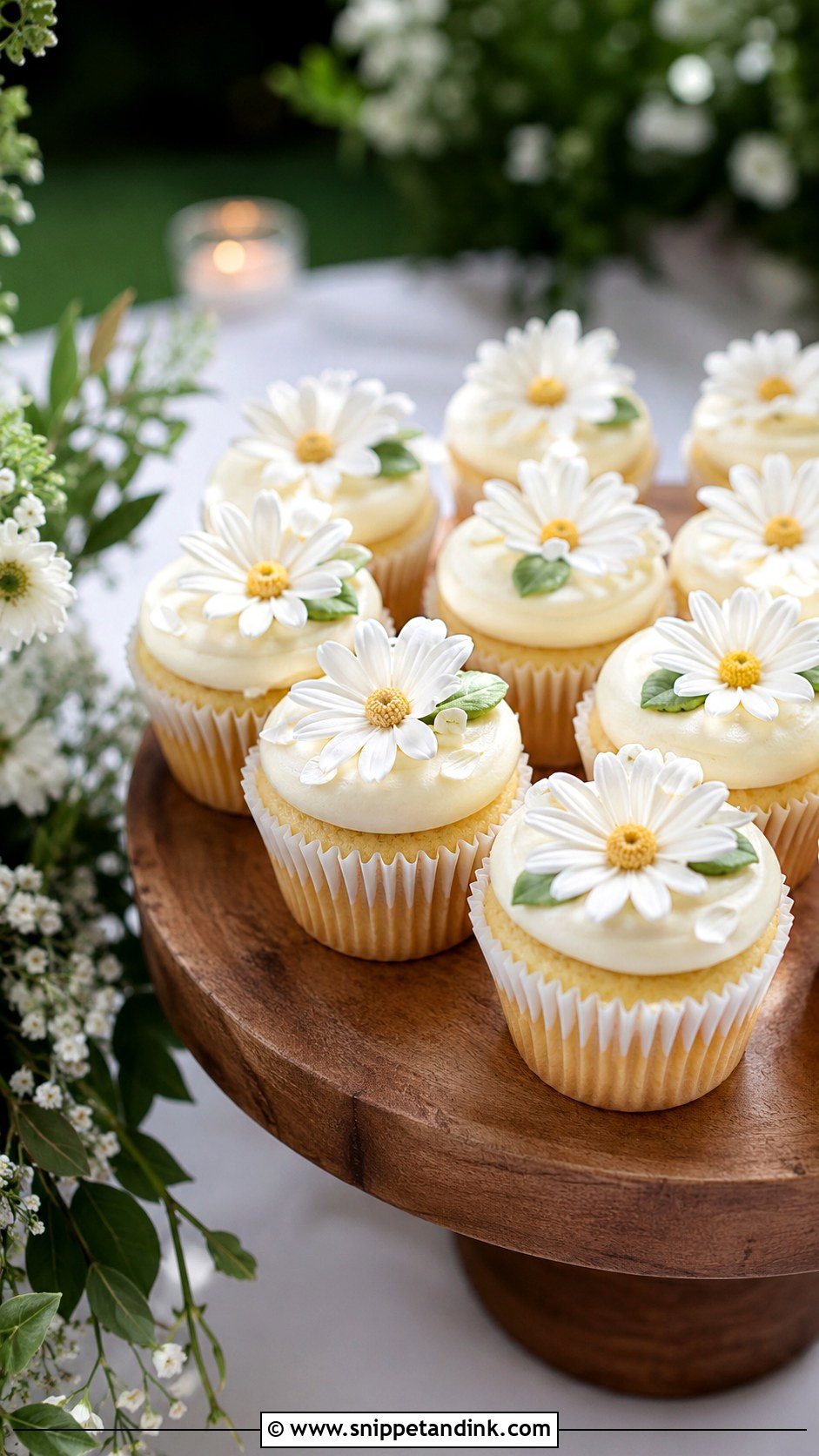
Daisies stay cheerful without turning childish if the yellow is controlled. I pipe white petals with a small petal tip and use a muted yellow for the center rather than lemon-bright, which can look like a birthday party. Lemon or vanilla sponge fits. Big single daisies are bold; tiny scattered ones feel lighter. White stands or wood slices with fresh greenery around the base suit an outdoor or spring reception.
11. Peony Wedding Cupcakes
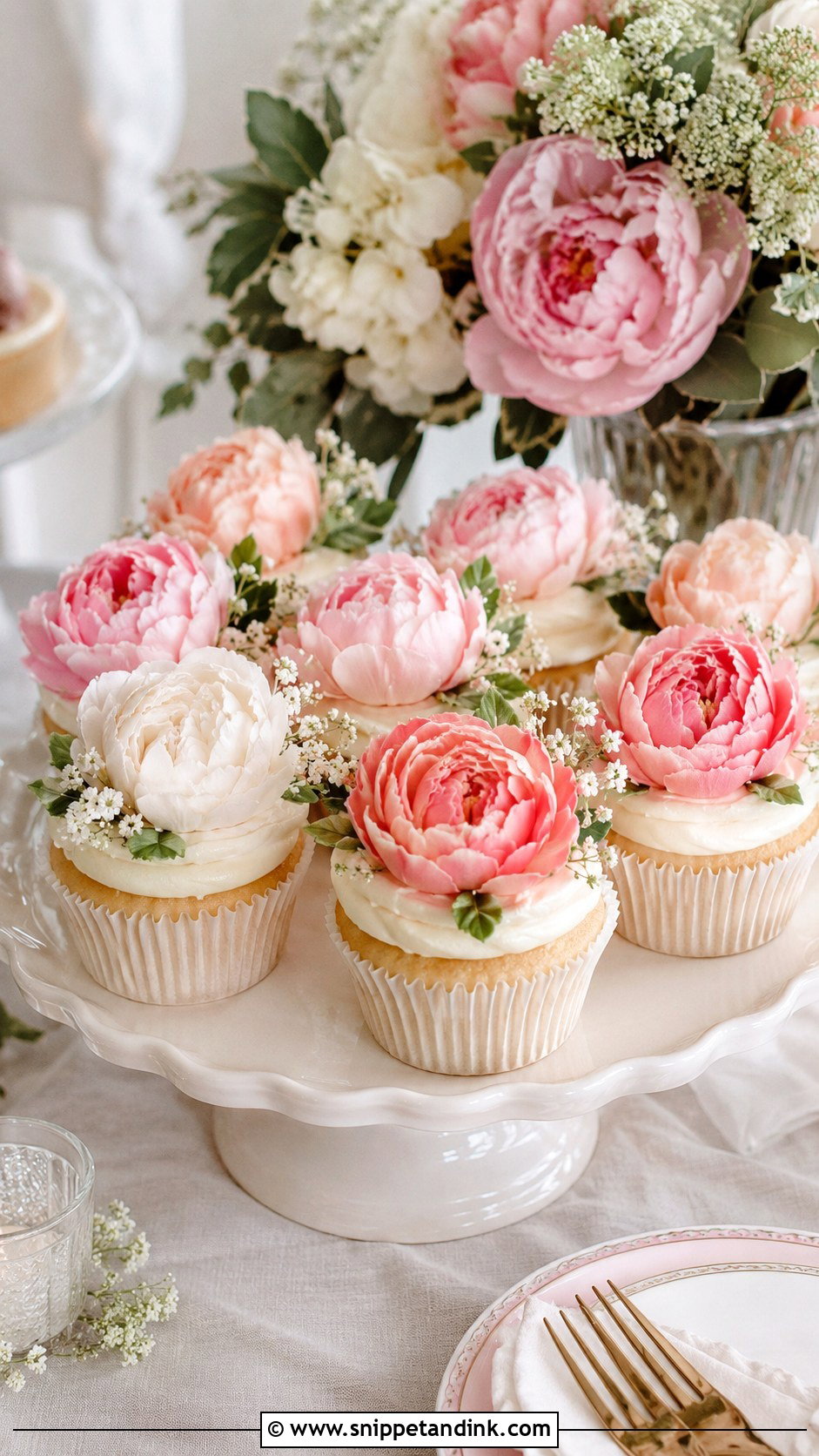
Peonies have dozens of ruffled petals, which makes them one of the most satisfying flowers to pipe and one of the slowest. In buttercream I build them up in rings; in sugar paste each petal is cut and shaped separately. Blush, ivory, coral and soft pink are the usual shades, and a deep berry peony looks rich at an autumn wedding. Smooth frosting under the bloom helps it look full. Raspberry or white chocolate sponge keeps the flavor delicate. Clustered closely on the table, the round tops read like one large bouquet.
12. Hydrangea Wedding Cupcakes
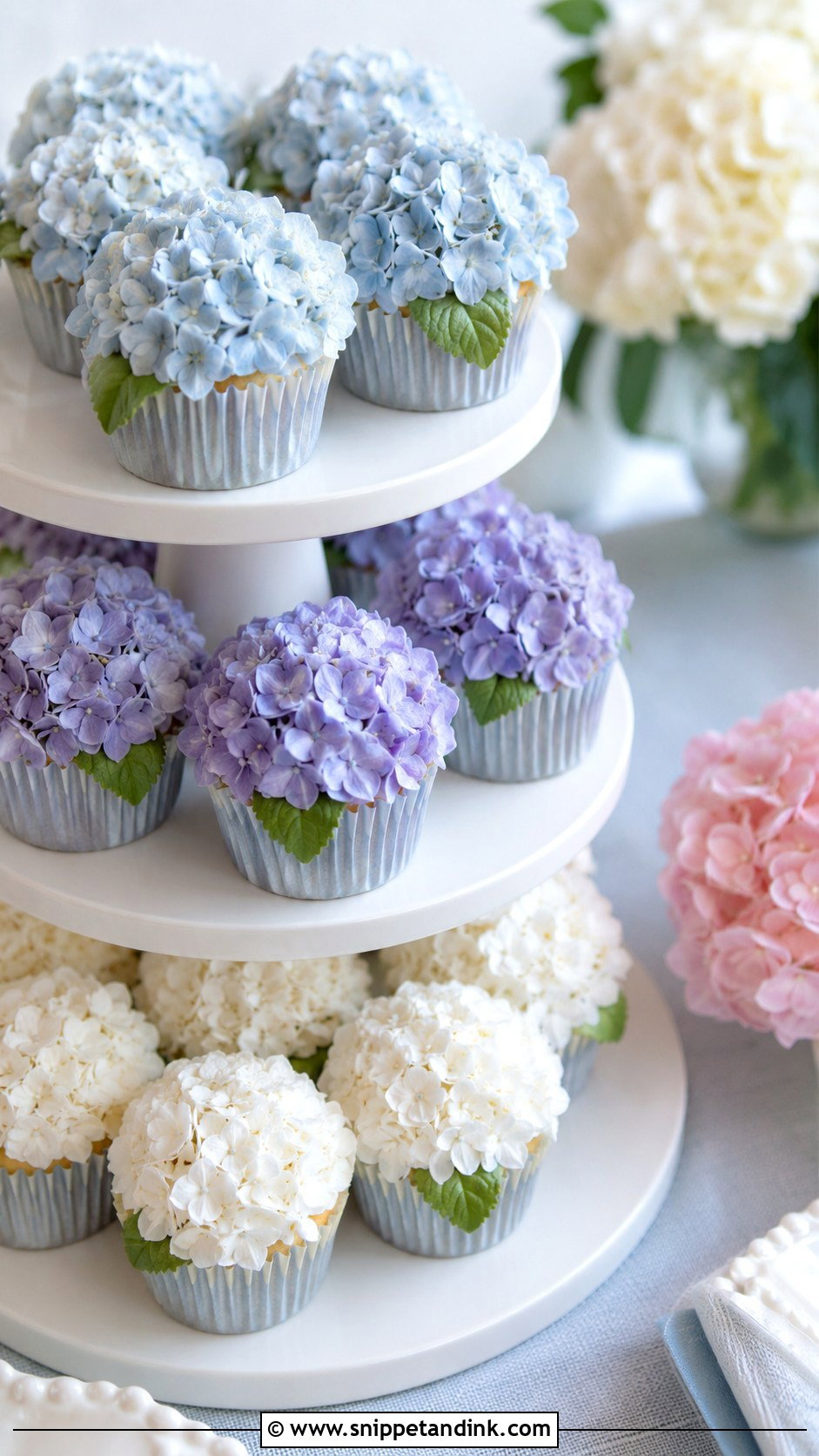
Hydrangea cupcakes are dozens of tiny four-petal florets piped close together, so they take longer than they look. Blue, lavender, white and pale pink suit coastal and garden palettes, and I often load two shades into one piping bag to get the natural variation of the real flower. Cover the whole top, or pipe a cluster to one side for something lighter. Grouped by color on the table they make a soft ombré. Blueberry or lemon sponge pairs well. Real hydrangea, by the way, should never sit on a cupcake, because it isn’t safe to eat.
13. Orchid Wedding Cupcakes
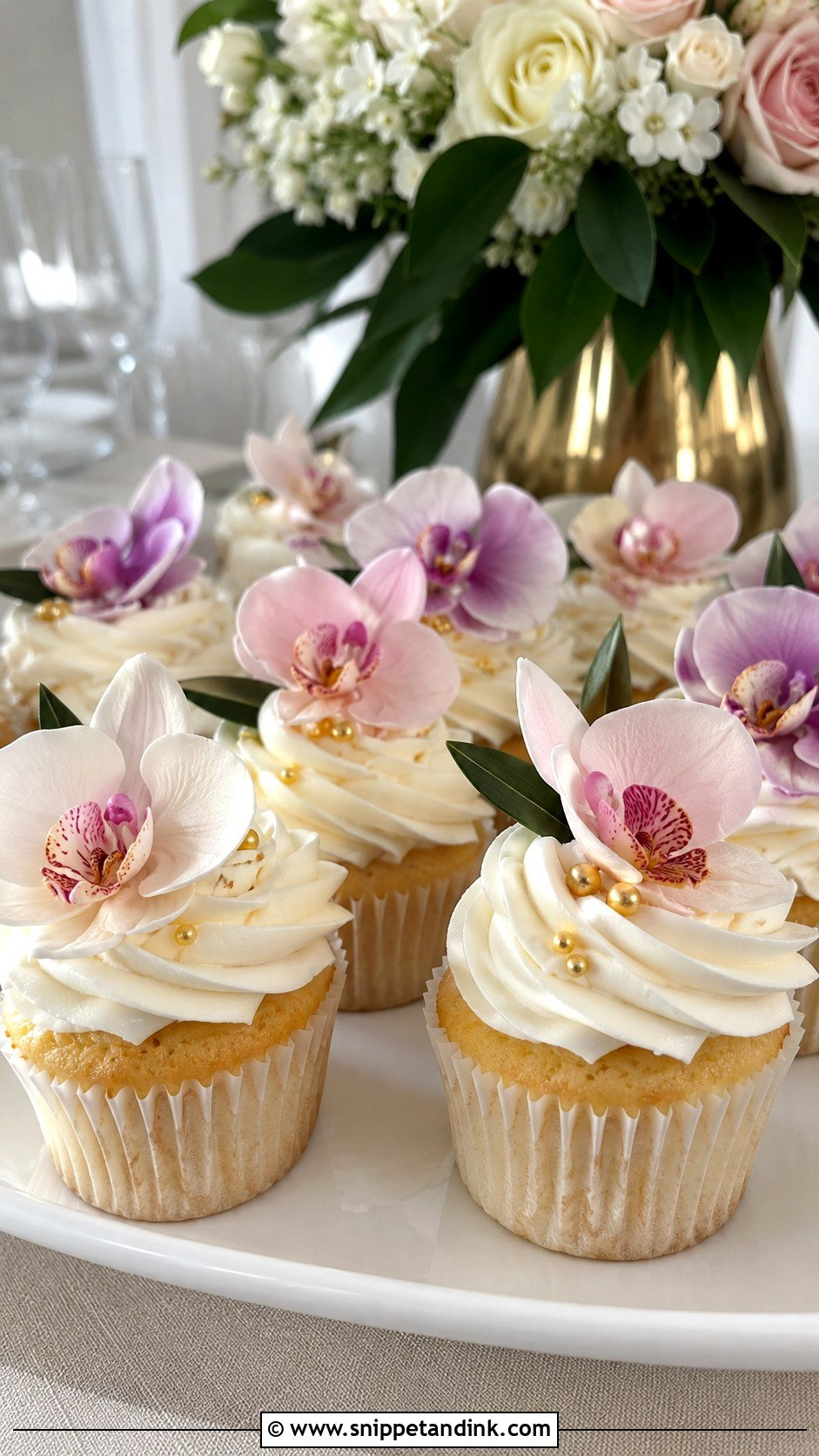
Orchids give a cupcake a clean, slightly tropical shape that suits sleek venues and couples who are tired of roses. I make them in sugar paste, since buttercream can’t hold those thin, flat petals, and set one on a smooth white base so it looks sculptural. White, blush, purple and soft coral all work. Coconut or passion fruit cupcakes fit the theme. A touch of gold or a single pearl is enough, and the display around them should stay spare.
14. Sunflower Wedding Cupcakes
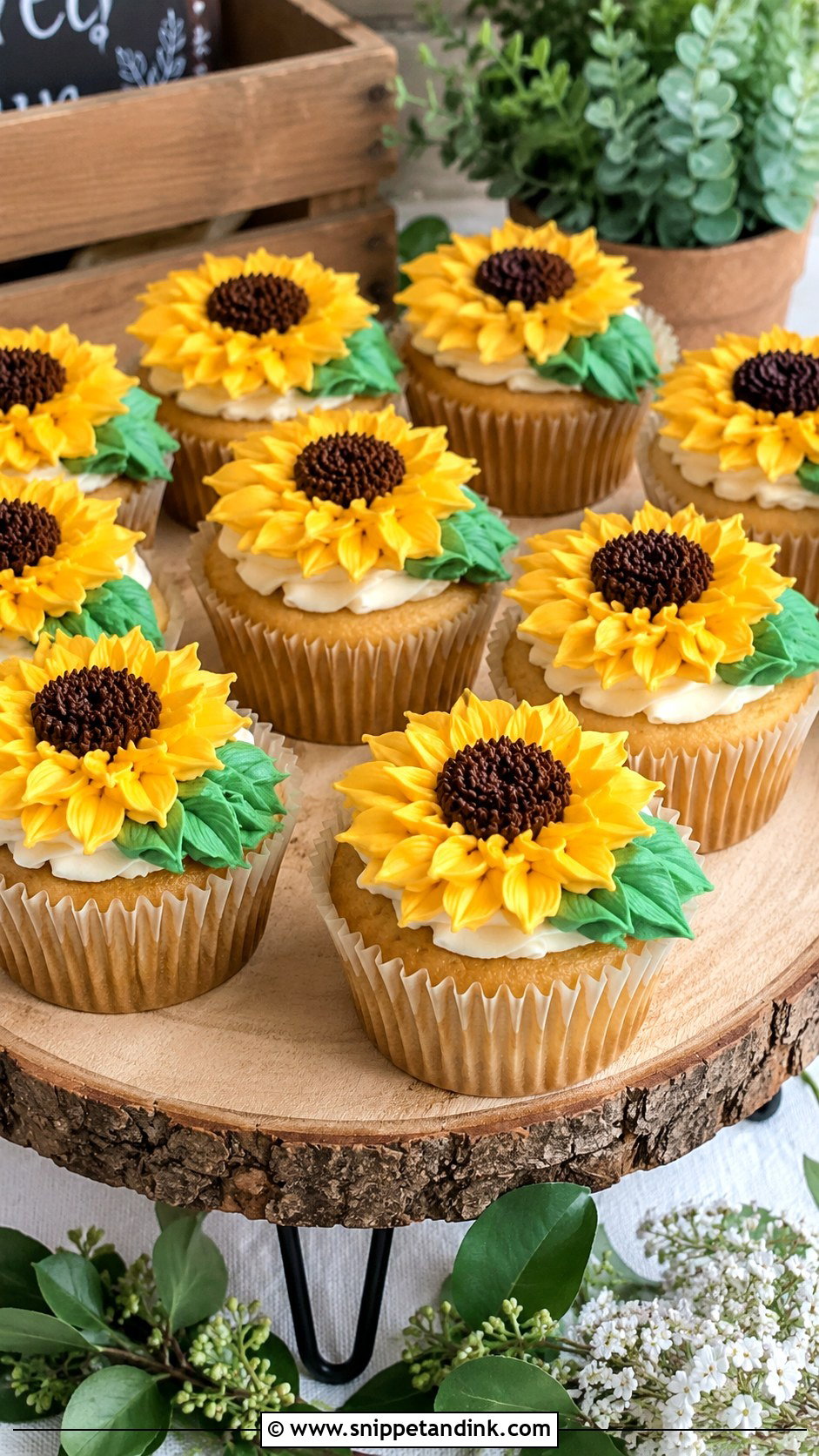
Sunflower wedding cupcakes bring warmth to late summer, autumn and rustic tables. I pipe the golden petals with a leaf tip and build the center from chocolate buttercream or crushed cookie for texture. Chocolate, honey or spice sponge suits the season. Bright yellow can dominate a table, so I balance it with ivory frosting, kraft liners and greenery. Wood stands suit them, and a few simple white flowers nearby give the eye somewhere to rest.
15. Garden Rose Wedding Cupcakes
A garden rose is fuller and looser than a standard rose, with more open petals and a cupped center, so I pipe more layers and let the outer petals relax outward. Ivory, peach, blush and dusty pink suit it, and the slightly vintage feel belongs at estate and outdoor venues. Rosewater sponge echoes the theme, but go easy; too much tastes like perfume. Small leaves or filler blossoms beside each rose turn it into a mini bouquet. Real garden roses nearby on a cream stand tie the table together.
16. Baby’s Breath Wedding Cupcakes
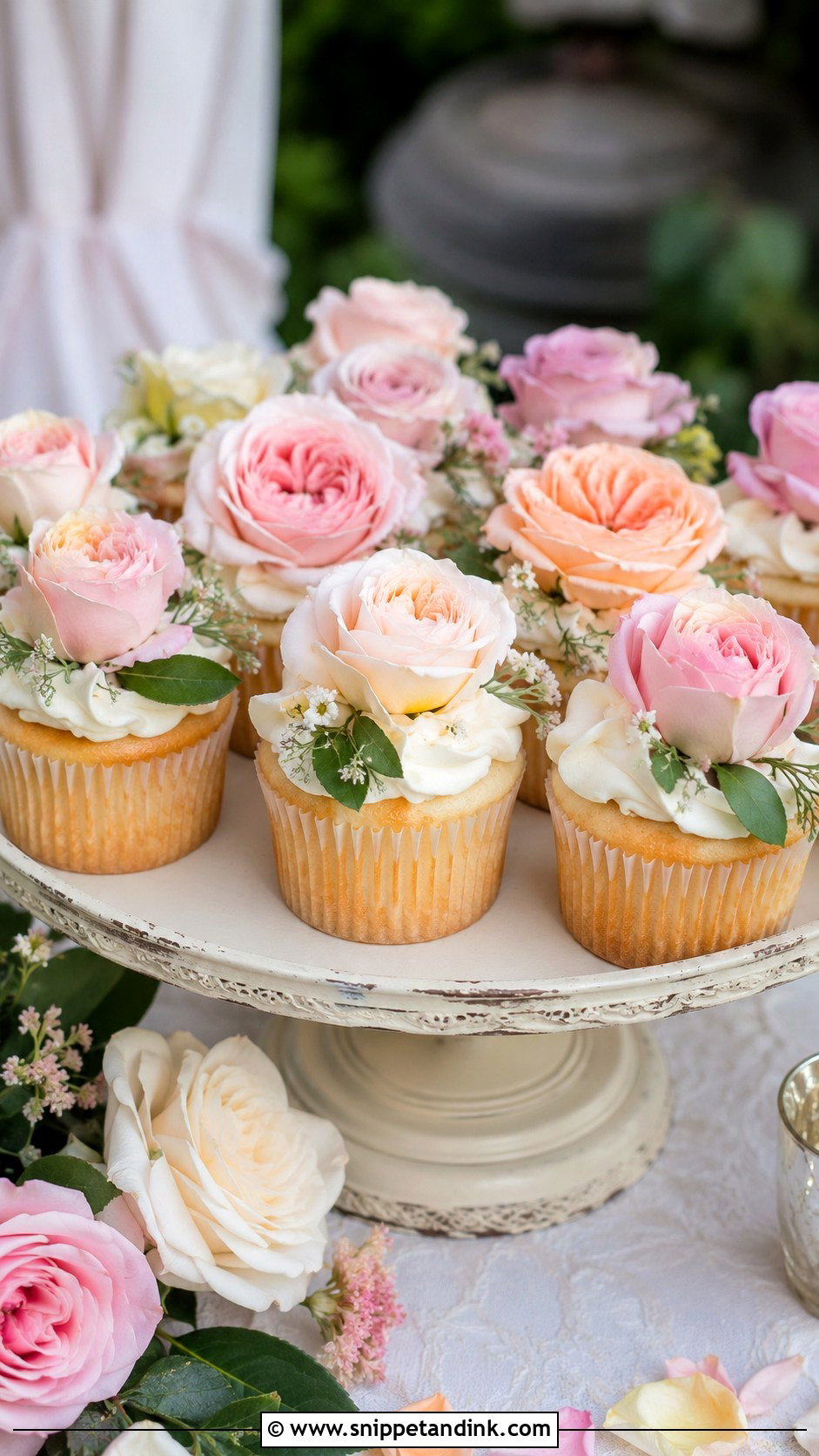
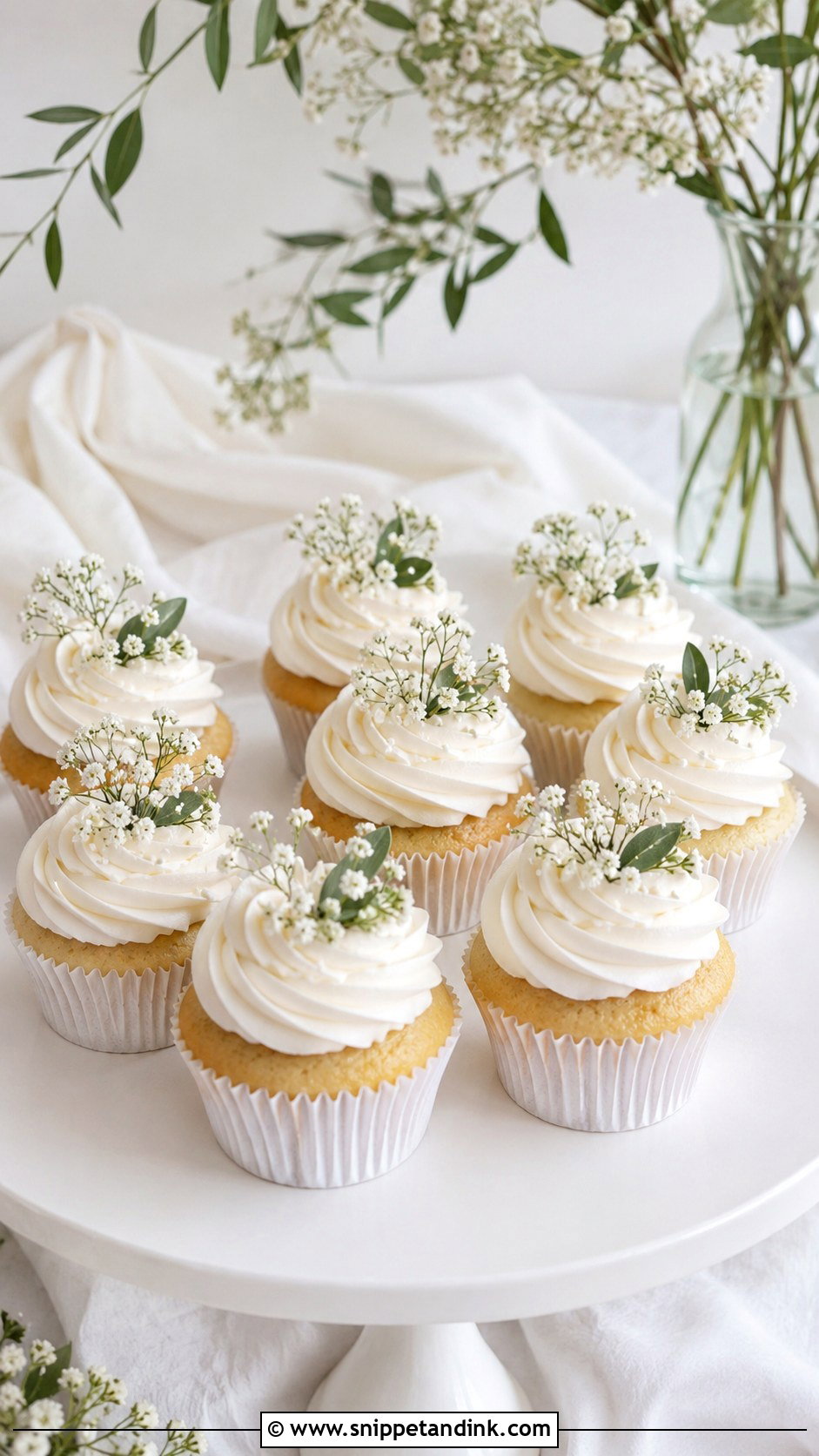
Real baby’s breath shouldn’t go on food, so this design imitates it. I start with a soft white buttercream swirl, then pipe tiny dots or add little white sugar blossoms in loose sprays. The effect is airy and suits ivory, sage, champagne and neutral palettes. Coconut or white chocolate keeps it light. It’s a good choice when you want floral detail without big blooms, and it looks tidy in neat rows or on a clean tiered stand.
17. Floral Cupcake Bouquet Wedding Display
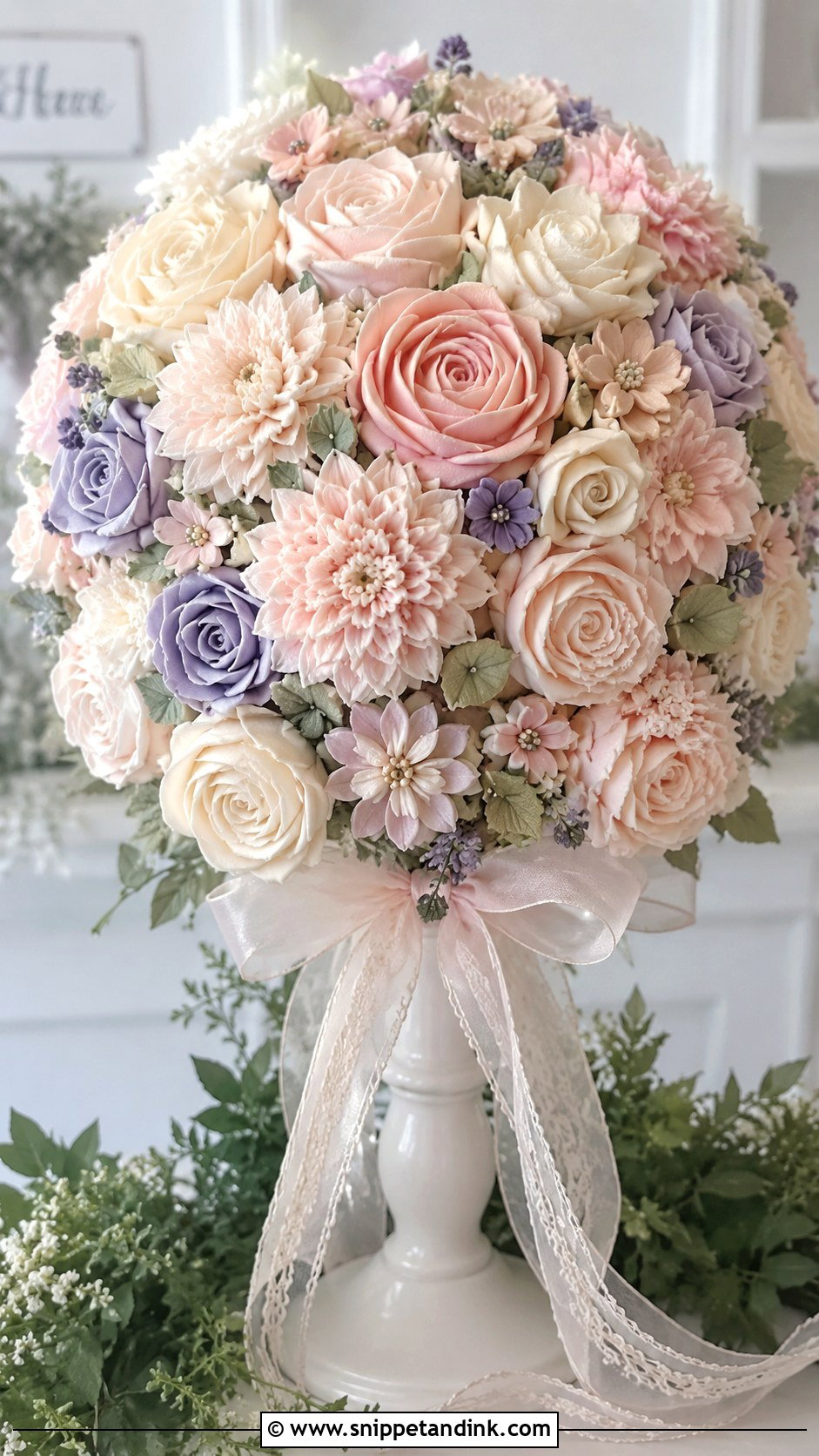
For a cupcake bouquet, the cupcakes are packed tightly so the frosted tops merge into one large arrangement. Each gets a different piped flower, roses, dahlias, peonies, daisies and filler, and the frosting has to run right to the edges so no gaps show. I build these on a base that travels as one piece, because rearranging them on site smears the edges. It works at a sweetheart table or as a gift to the couple after the reception. Different flavors can hide under similar tops, so label the base.
18. Floral Cupcake Tower Wedding Display
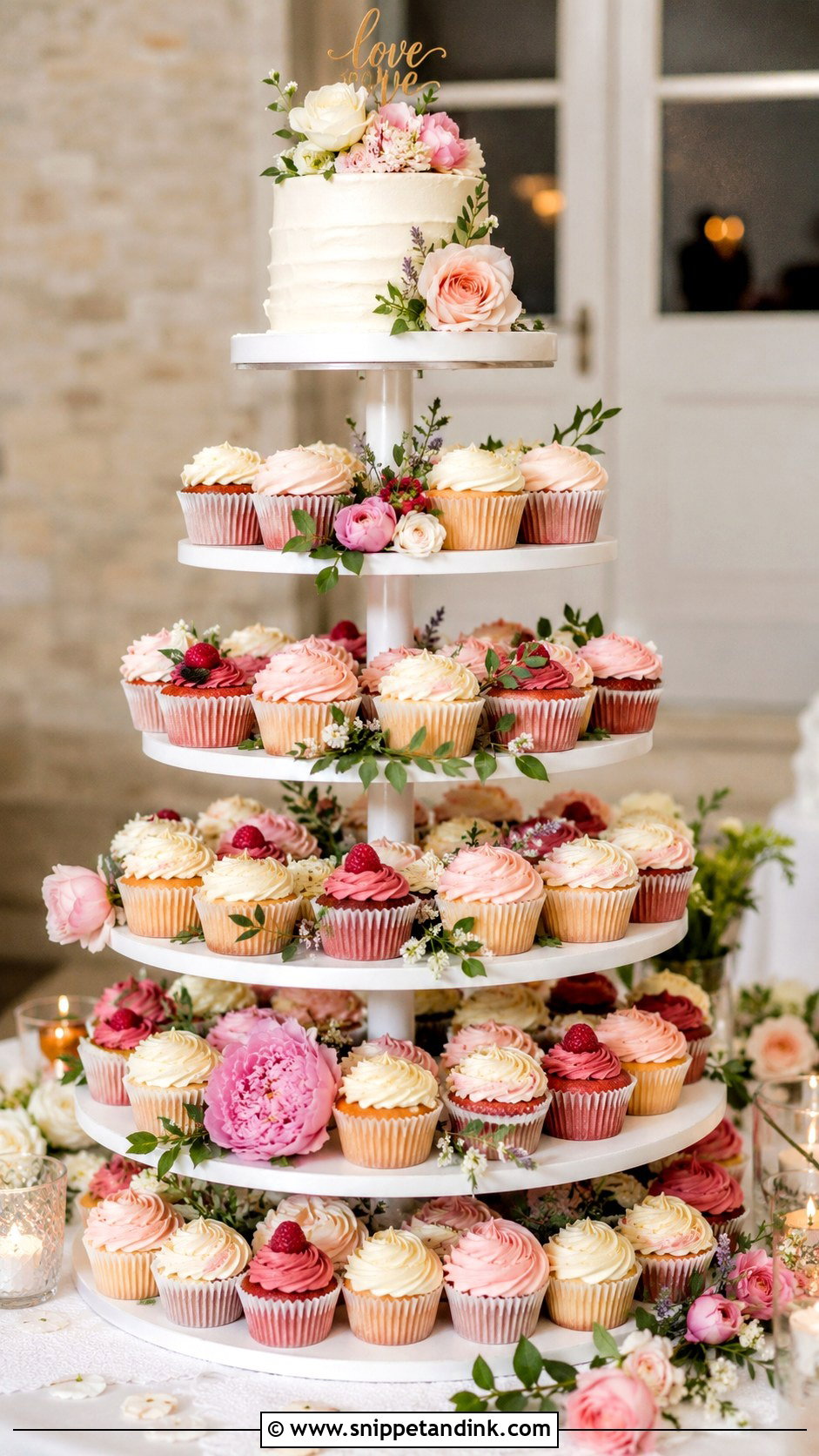
A floral cupcake tower wedding display gives height without a big tiered cake. I like changing the flower style by tier: ivory roses at the top, blush peonies in the middle, small wildflowers at the bottom. A small cutting cake on the top tier keeps the cake-cutting moment. The tower is assembled at the venue, never transported loaded, and I fill the gaps between tiers with greenery or matching flowers once everything’s in place.
19. Floral Lace Wedding Cupcakes
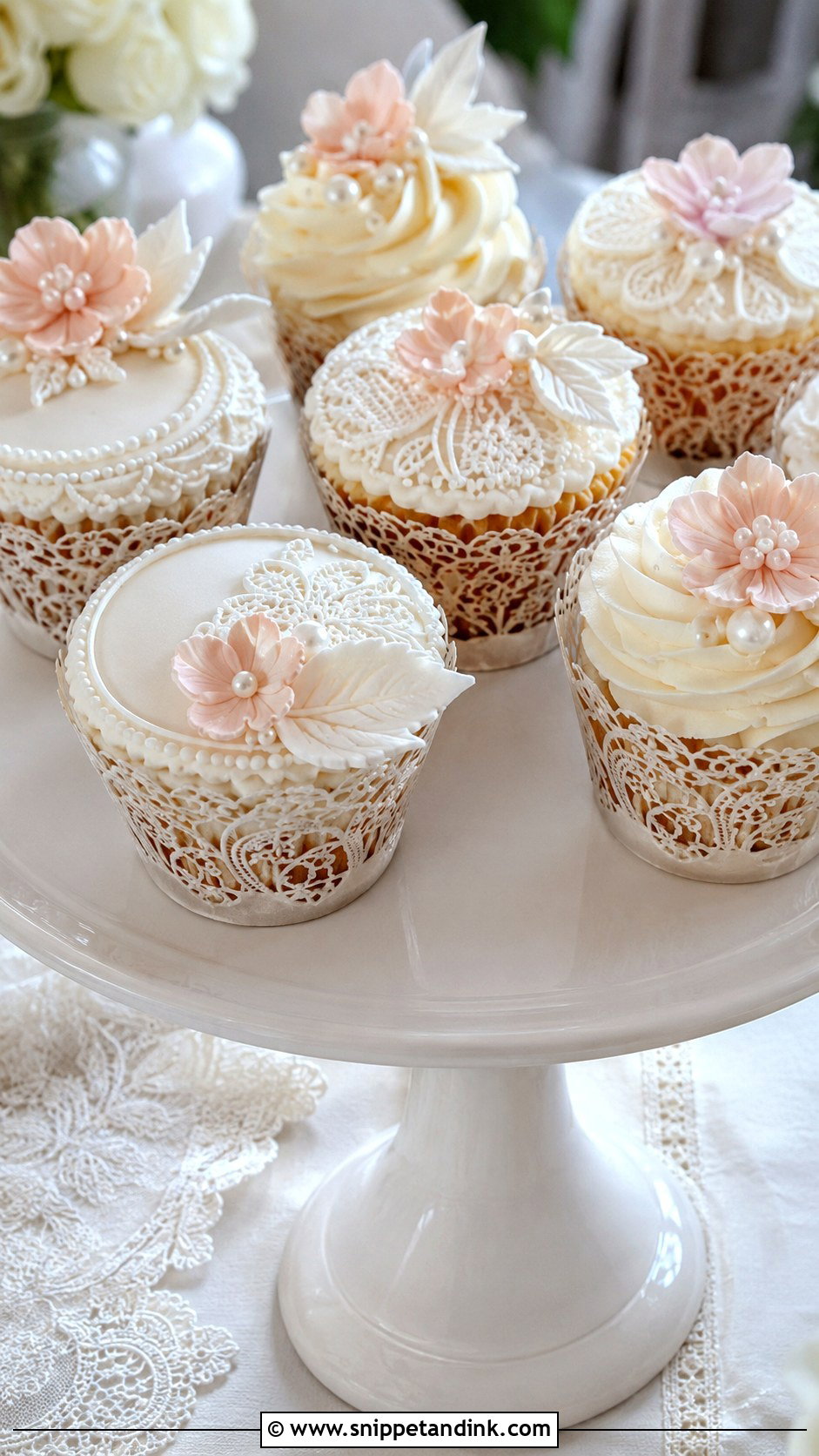
Lace cupcakes take the dress as their starting point. A smooth fondant or buttercream top gets its lace from a silicone mat, piped lace lines or a cut lace disc, then a small sugar flower. Ivory, white, blush and champagne suit it. If your dress has a distinctive lace motif, bring a photo, because the pattern can often be echoed. Vanilla bean or almond keeps the flavor simple. Use pearls sparingly so the lace and flower stay the focus.
20. Floral Gold Wedding Cupcakes
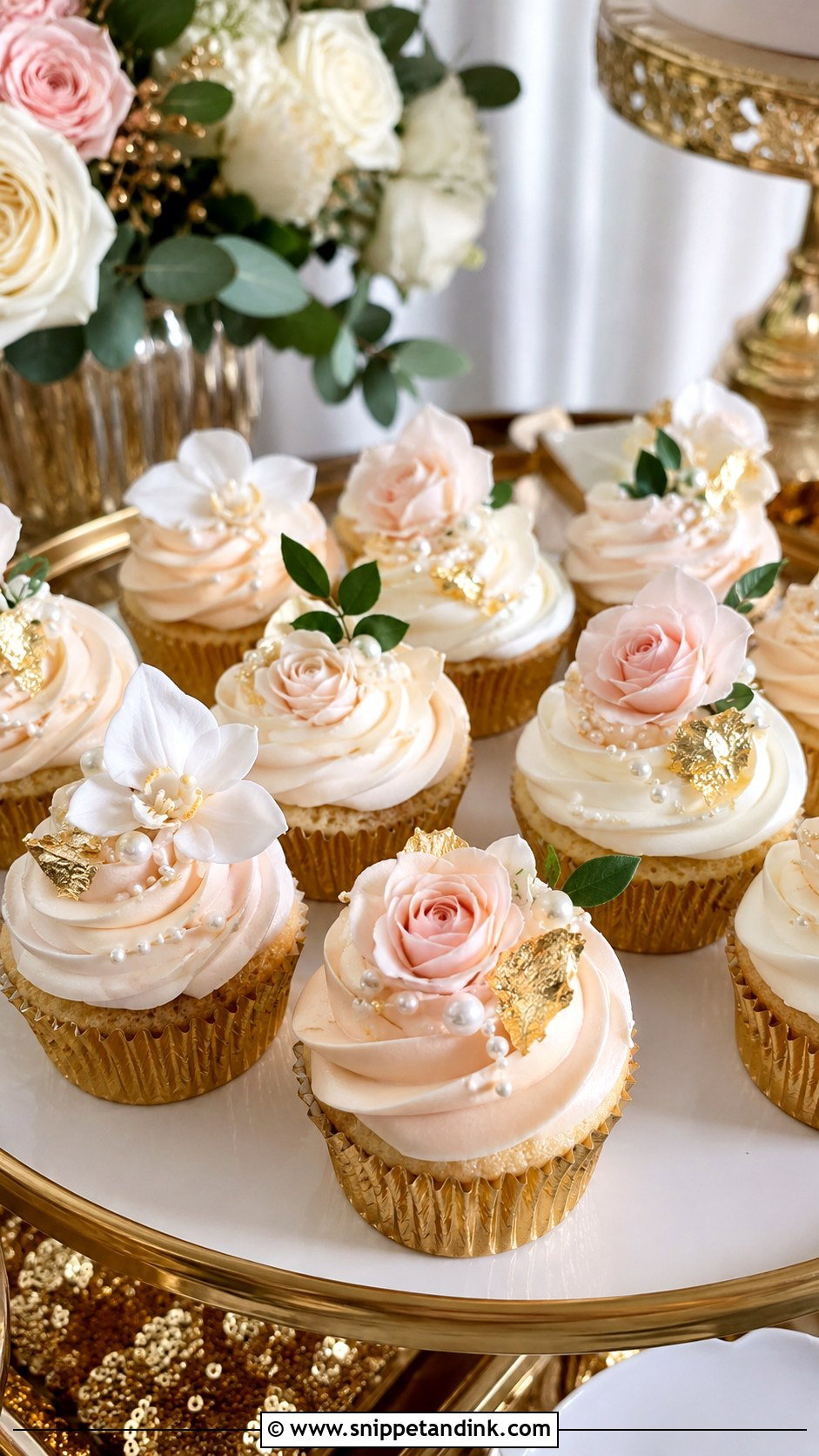
Gold works best as a highlight. Start with smooth ivory or blush buttercream, add a small sugar flower, then a fleck of edible gold leaf or a fine dust. Gold leaf is tissue-thin and clings to anything, so I lay it with a dry brush in a still room. Check that any gold dust is labeled edible, not just non-toxic, because non-toxic dusts are meant for decoration only. Champagne or caramel cupcakes match the mood, and gold-rimmed trays suit an evening reception.
Buttercream Petals in a Warm Room
Piped flowers are only as strong as the frosting under them. American buttercream, made with butter and powdered sugar, forms a light crust and holds petal edges reasonably well. Swiss meringue buttercream tastes lighter and silkier but softens sooner in heat, and cream cheese frosting needs to stay cold. For an outdoor summer reception I’ll steer couples toward the sturdier frosting or toward sugar flowers.
On the day
- Keep cupcakes out of direct sun and away from lights that throw heat.
- In a warm room, set them out near dessert time rather than at the start of the reception.
- Never move a loaded tower; assemble it where it will stand.
- Add fresh edible petals last, since they wilt quickly on sugar.
How Many to Order, and How Far Ahead
I plan roughly one cupcake per guest when they’re the main dessert, a few extra if there’s no other sweet, and fewer if they sit beside a full cake. Mixing flavors? Order them in even batches and label the stand, because floral tops make different flavors look identical.
Book your baker early in wedding season, since weekends fill fast. Sugar flowers are made days or weeks ahead, piped buttercream flowers can be made and frozen in advance, and the cupcakes themselves are baked a day or two before so the sponge stays fresh.
Let the Bouquet Set the Palette for the Cupcakes
Cupcakes look best when they belong to the rest of the wedding instead of being designed on their own. Hand your baker a photo of the bouquet and centerpieces, plus the venue and the time of year. Buttercream flowers give you edible texture, sugar flowers give structure in heat, and fresh edible blooms give a garden look on cooler days. A tower can mix all three, as long as the colors tie together.
You'll Like These Ideas:


Leave a Reply