
A Black bride’s wedding hair has two jobs: it has to look like her, and it has to survive a long day of hugs, heat and a veil going in and coming out. The styles below cover the range I’m asked about most, from goddess braids and sculpted chignons to a silk press and a full afro. Some are installed days ahead and some are done that morning, and that difference shapes your wedding week more than most people expect. Under each one I’ve noted what it asks of your hair and where it tends to struggle, so you can bring a realistic shortlist to your trial.
Install Day, Press Day and the Wedding Week Calendar
The first question I ask a bride isn’t which photo she likes. It’s when her hair needs to be done. A braided or loc style is a multi-hour install that should happen a few days before the wedding, while a silk press or a set of curls lives or dies on the last day or two. Mixing those timelines up is how brides end up in a braider’s chair the night before their rehearsal dinner.
- Two to three weeks out: get any trim, and leave chemical services like relaxers or color alone from here on so your scalp isn’t sensitive when the styling starts.
- About one week out: deep condition, and install faux locs if you’re wearing them so they have time to soften.
- Three to five days out: install box braids, knotless braids, goddess braids, Fulani braids or cornrows. The scalp settles and you can still ask for a tight section to be redone.
- One to two days out: silk press, then sleep in a satin bonnet or wrap.
- The night before: set twist-outs and bantu knots so they dry completely overnight.
- Wedding morning: finishing, curls, updo pinning, accessories and the veil.
Install times vary a lot with braid size and length, and small, long braids can take most of a day. Ask your braider for an honest estimate and book the slot early, since wedding season fills their calendars too.
1. Sleek Low Bun for Black Brides
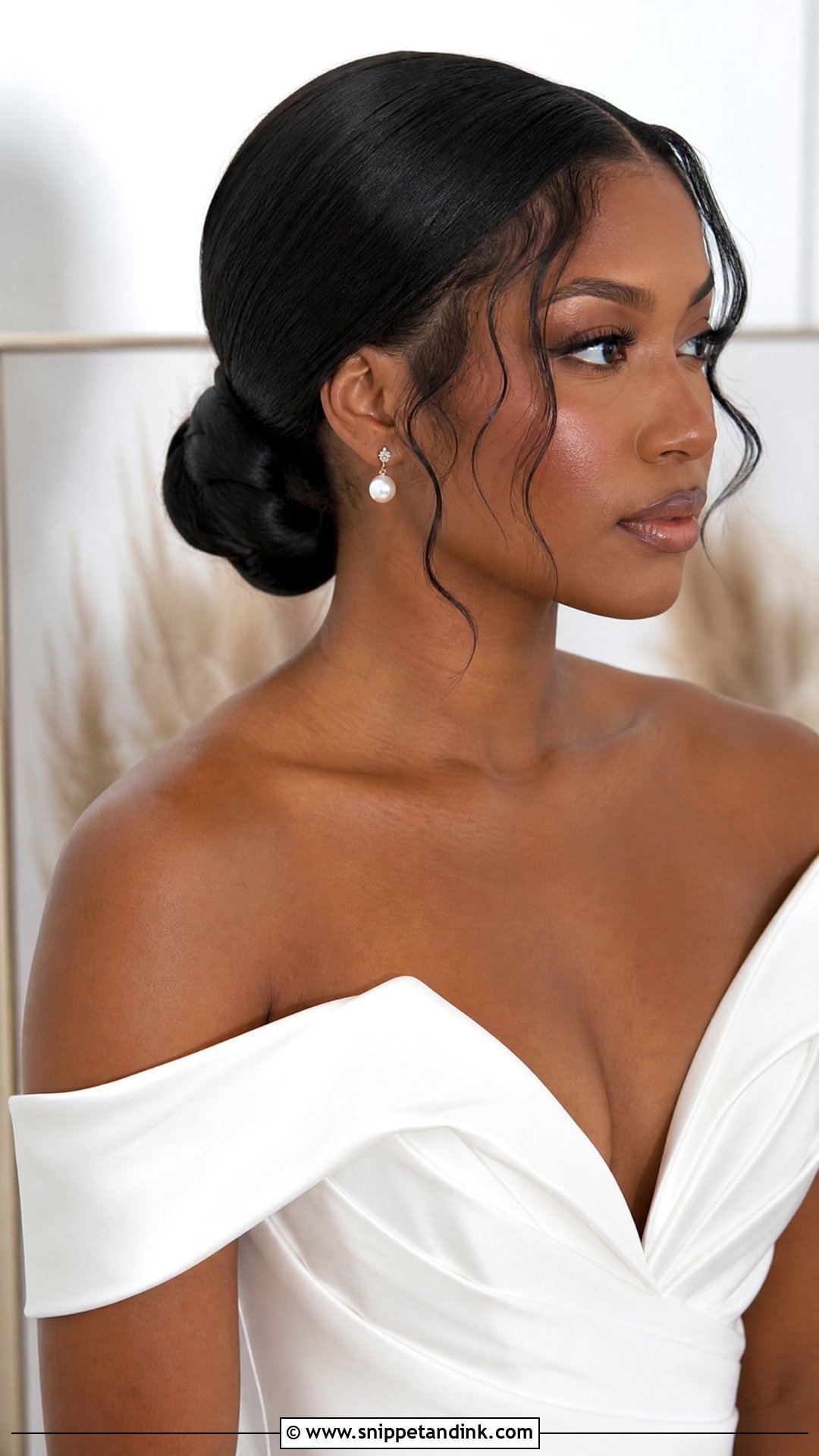
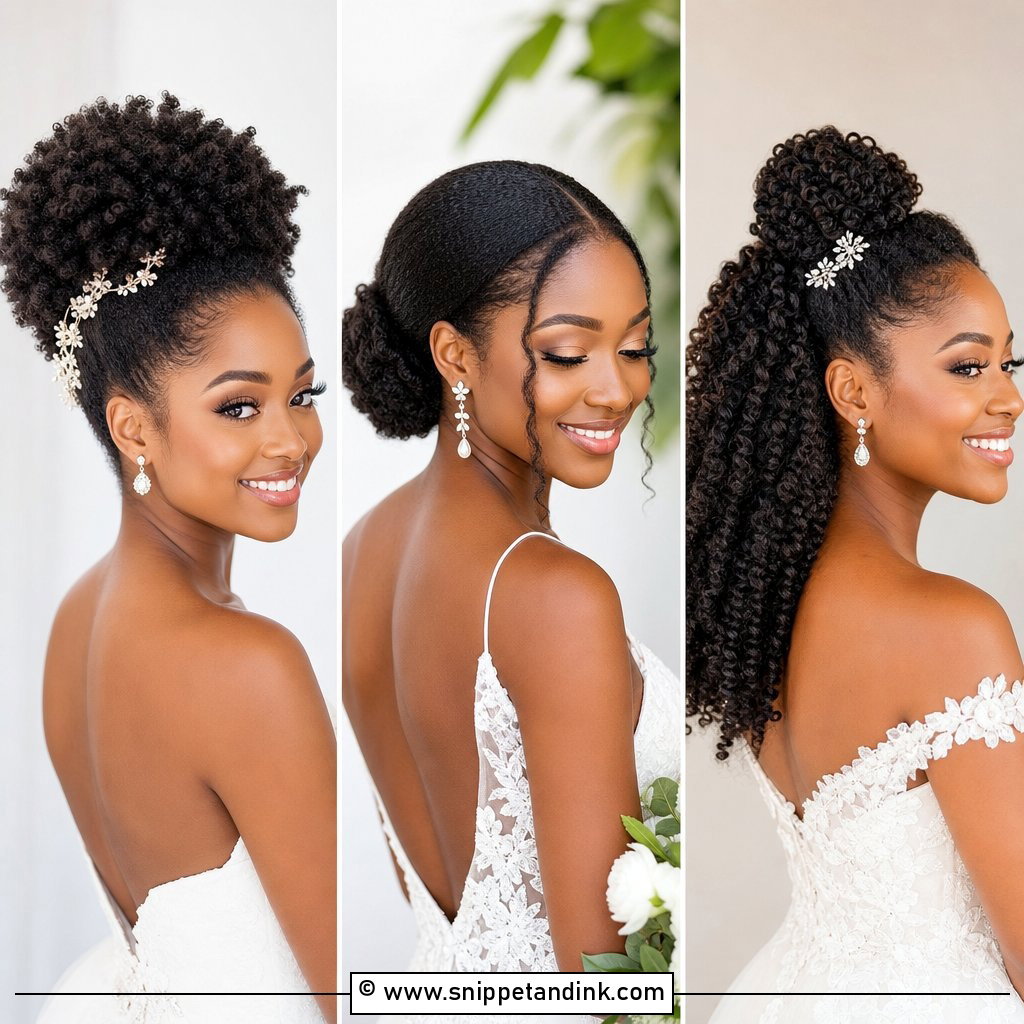
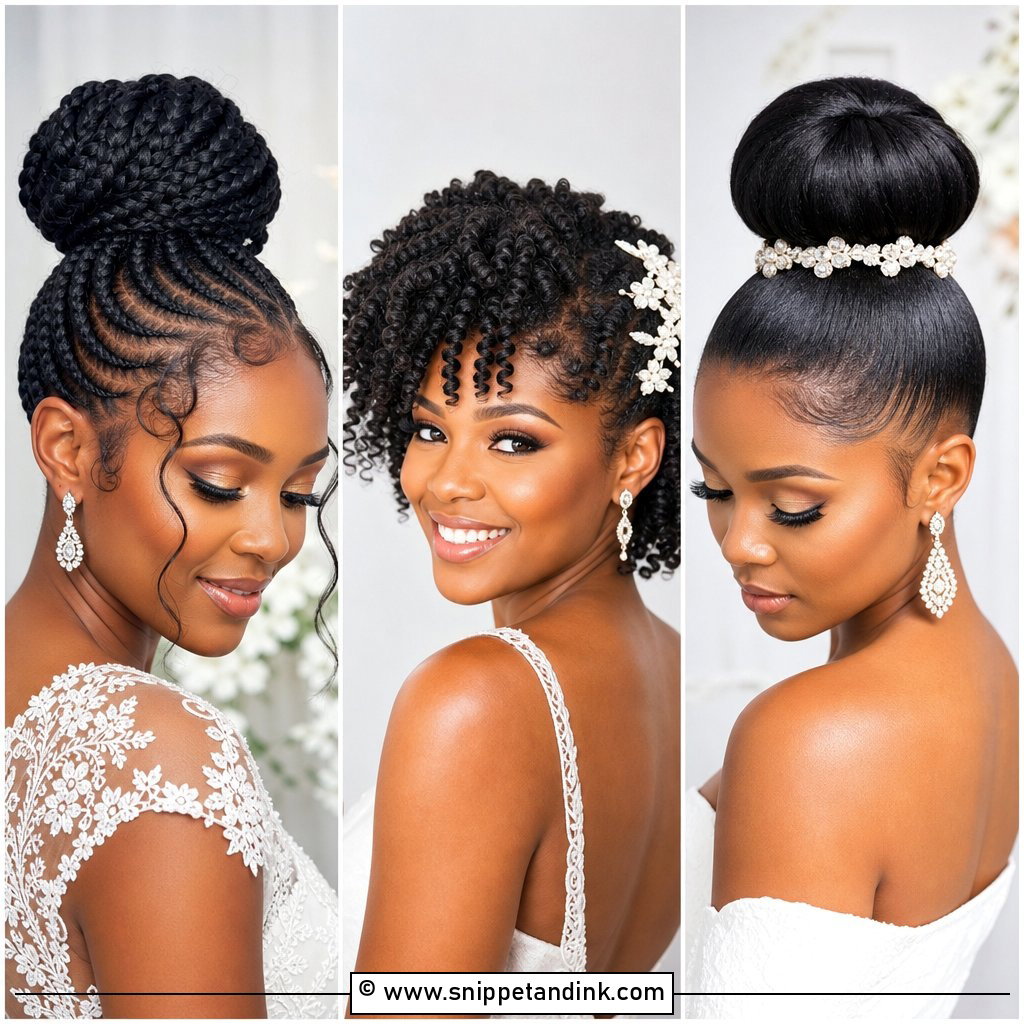
I reach for a low bun when the dress or the earrings are meant to do the talking. The real work is the smoothing: I brush a light gel through damp hair one section at a time so the back lies flat without that hard shine that flashes white under a camera. On 4C hair I’d rather stretch the hair with a blow-dry first, because getting it sleek from shrunken texture takes tension that pulls hard at the hairline. A cathedral veil comb grips well just above the knot. Leave tendrils out only if they’ve been set with heat; unset strands puff up by the reception.
2. Goddess Braids Updo
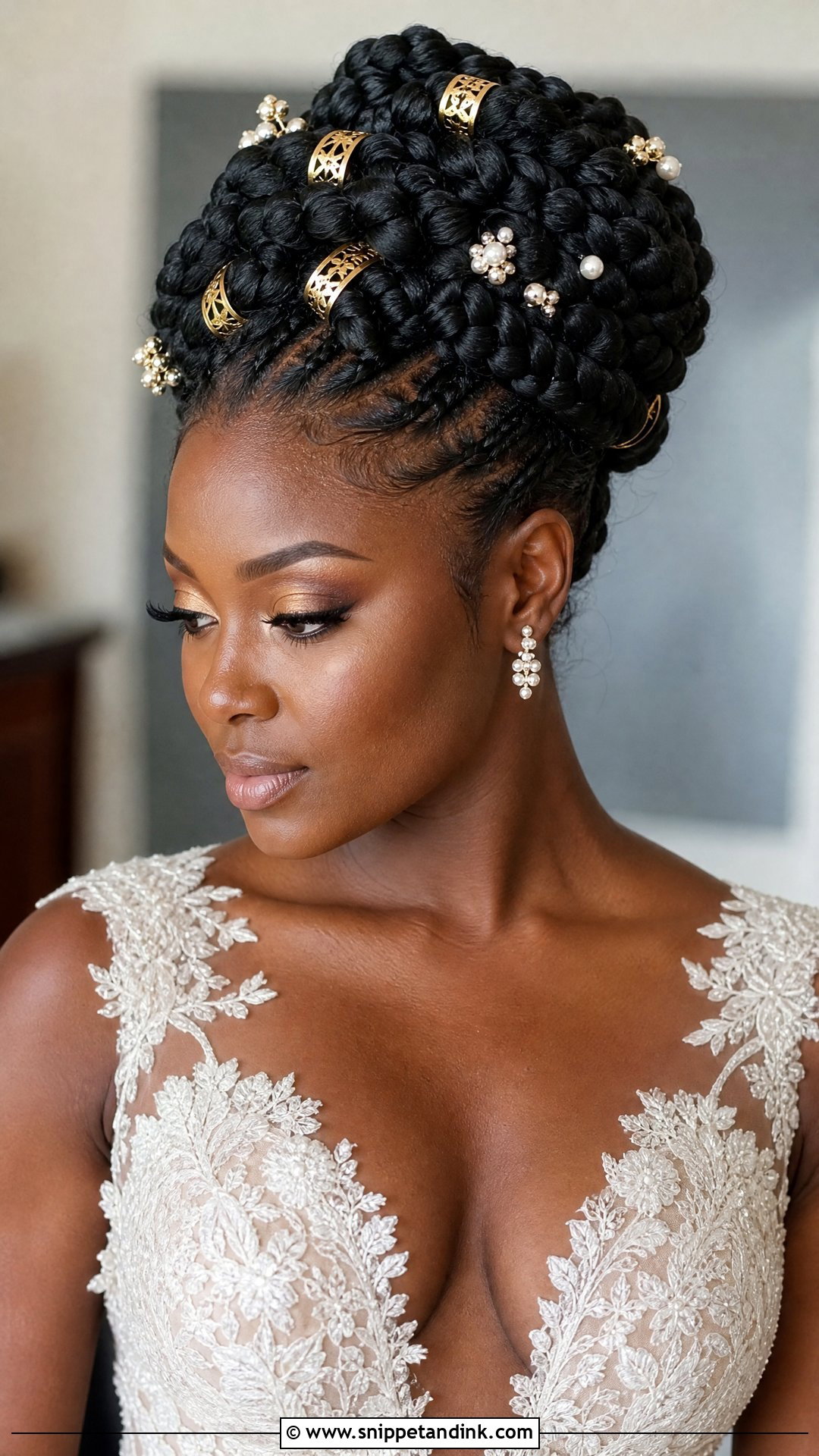
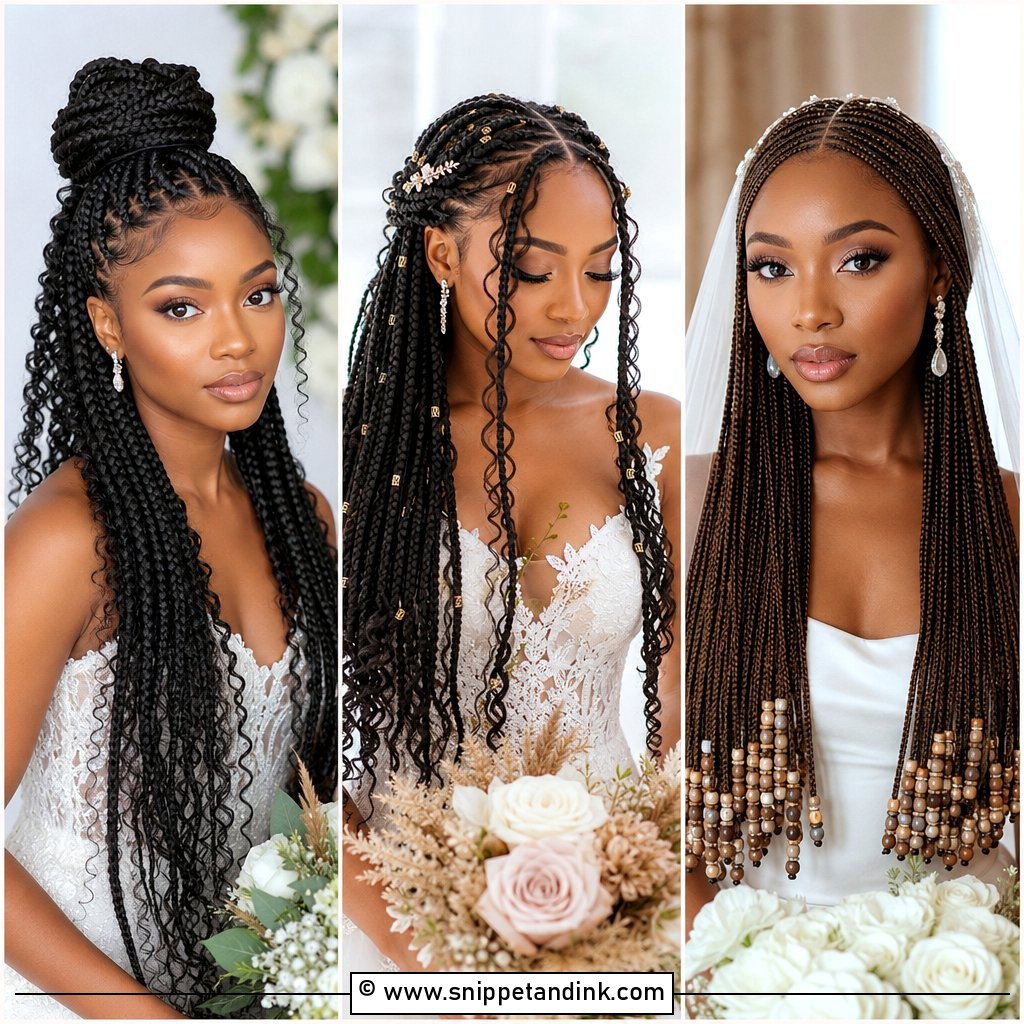
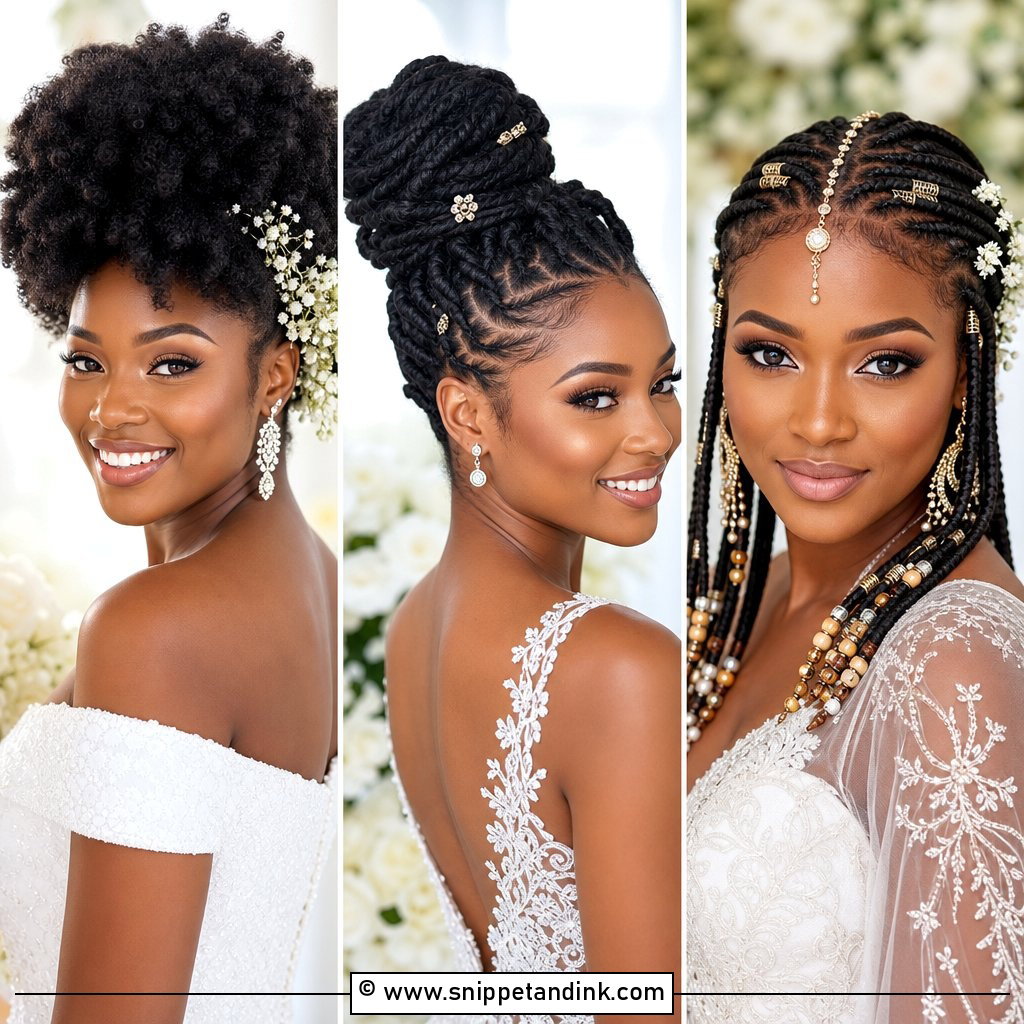
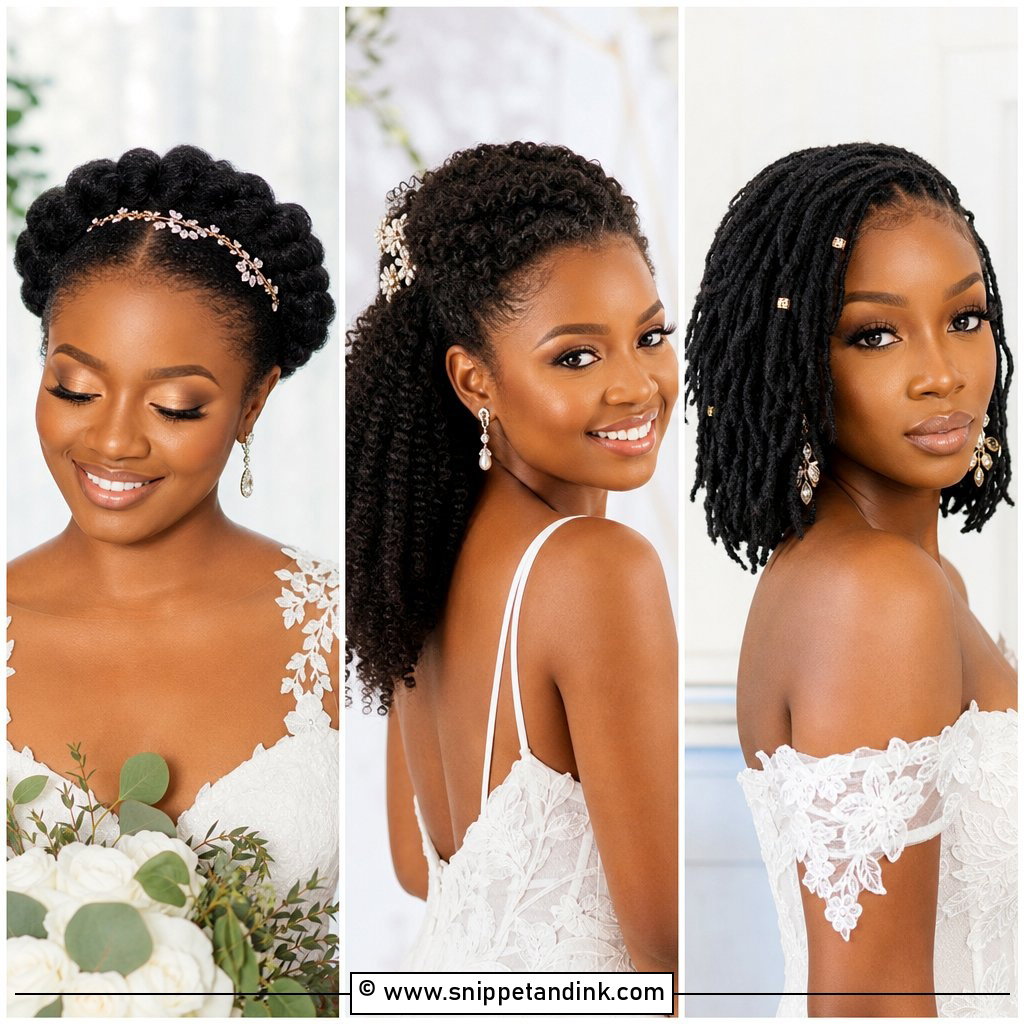
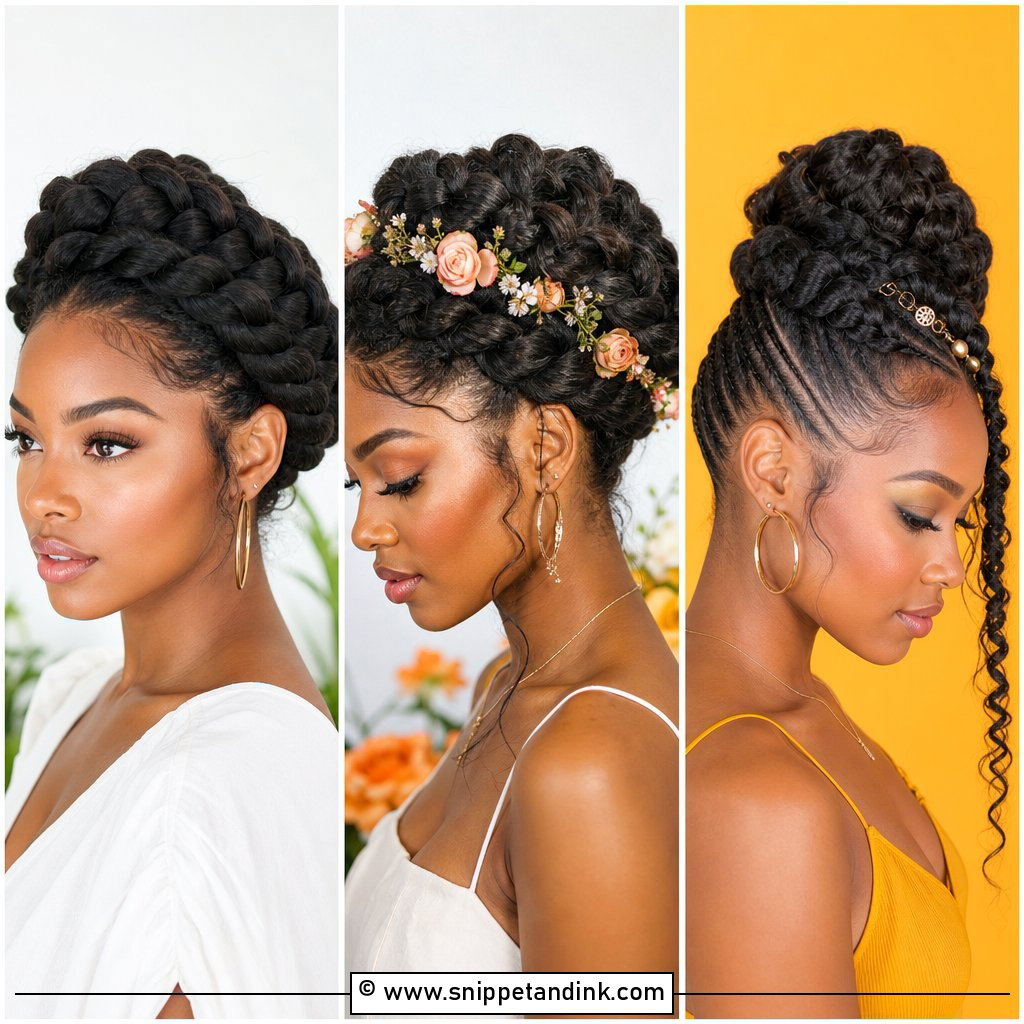
Goddess braids are thick, raised braids, and that bulk is exactly why they work in a crown or a high updo. There’s enough braid to pin into, so the shape holds without a fistful of extra grips. I like them installed two or three days before the wedding so the scalp settles and any tight spots ease off. Gold cuffs and pearl pins slide straight on. Ask your braider to go gently at the temples, though. A crown braided too tight can leave you with a headache before the speeches start.
3. Natural Curly Updo
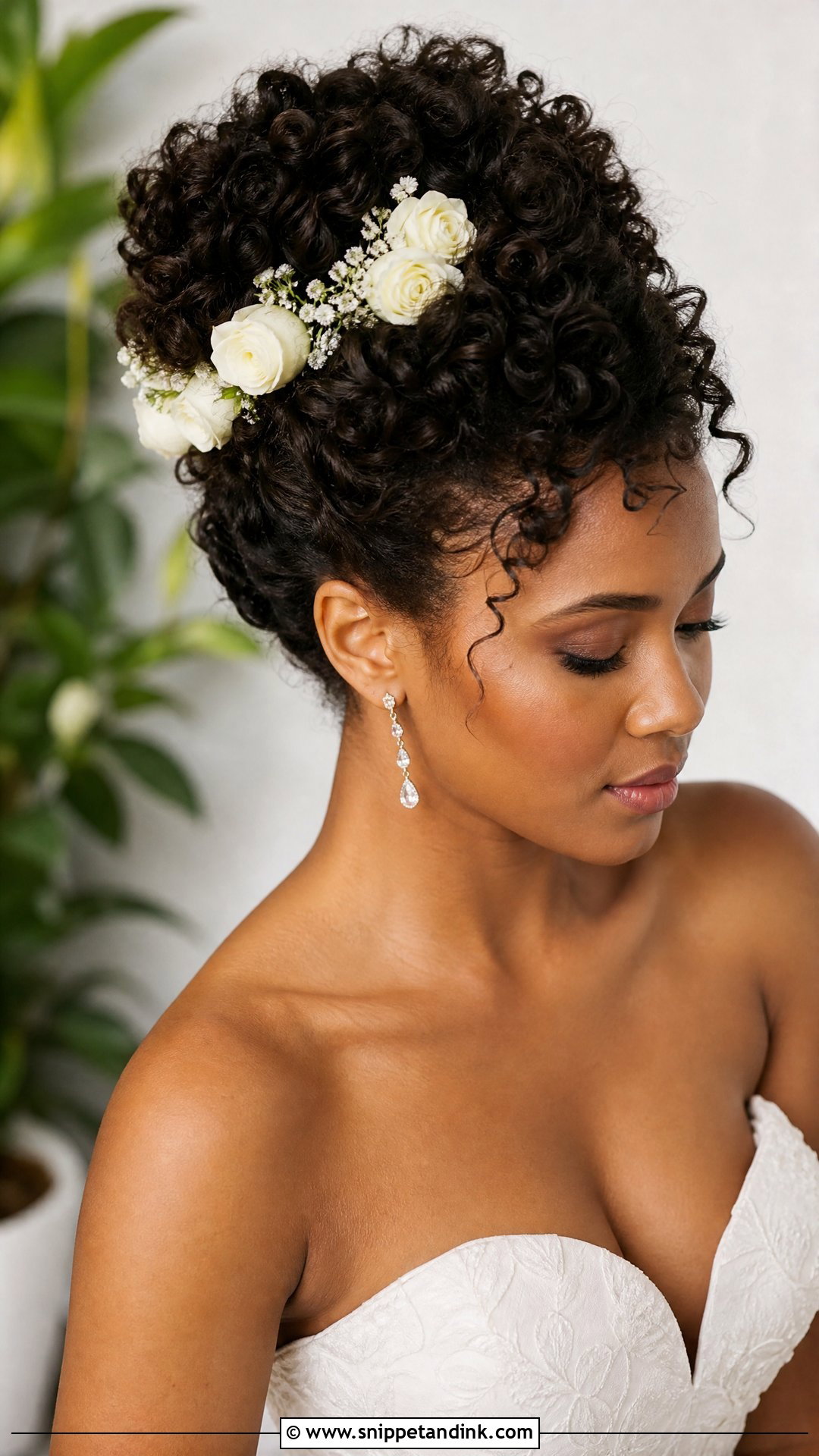
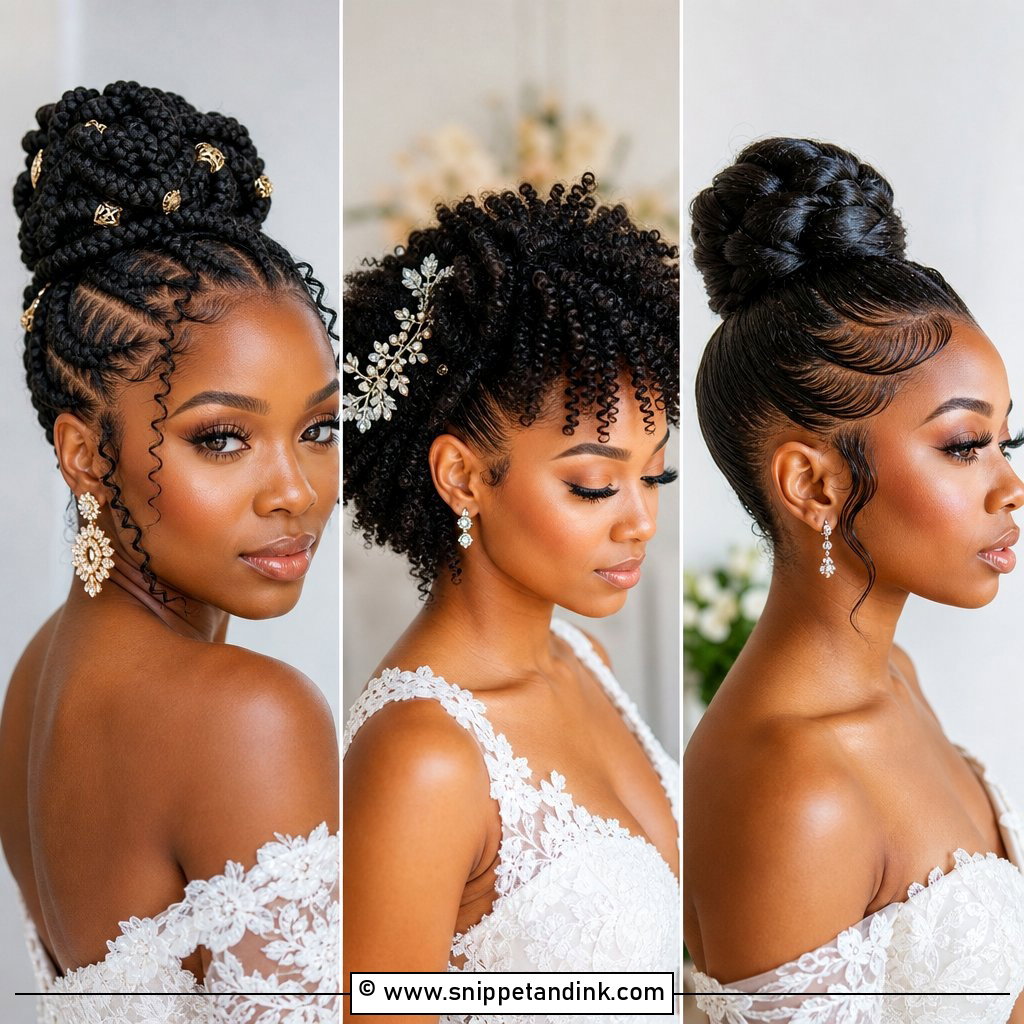
Wearing your coils exactly as they grow takes the most preparation of anything here. I want the hair washed, deep conditioned and styled with a defining cream a day or two before, so the curl pattern is clumped and consistent when I start shaping. Coils swallow pins, which is a gift; I cross them in an X so the updo stays put through the first dance. Fresh flowers tuck straight into the texture without wiring. If your curls lose definition quickly in damp air, find out how humid the venue gets before you commit.
4. Half-Up Half-Down With Curls
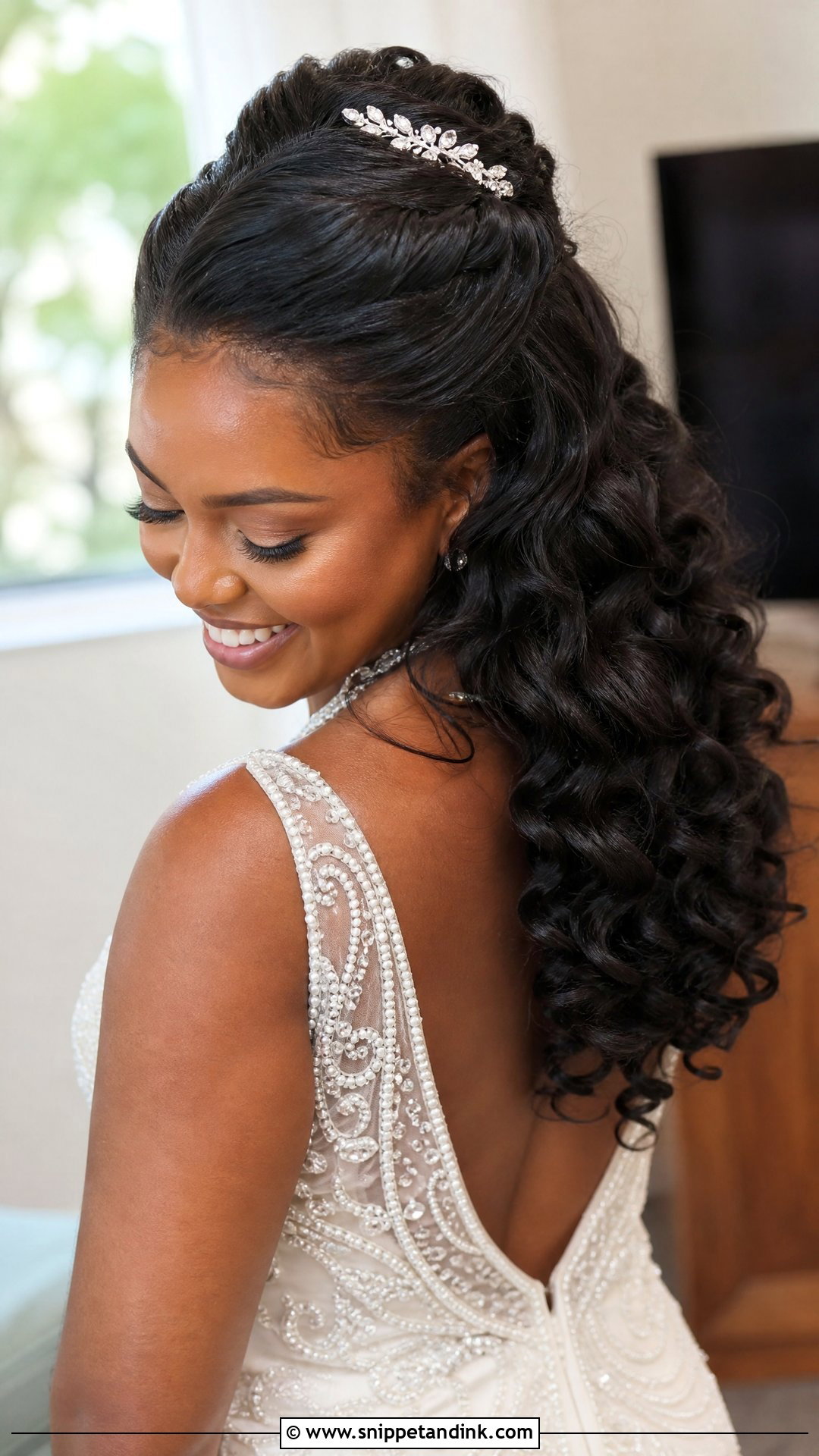
Half-up, half-down gives you the security of an updo around the face and length on your shoulders. On textured hair, the loose half is what needs planning. Curls set on flexi rods or from a twist-out hold far longer than curling-iron curls, which can drop within a few hours in a warm room. I anchor the top section with a small hidden braid so a clip or veil comb has something solid to grip. Expect the lower half to gain volume as the evening goes on, and choose your starting curl size with that in mind.
5. Knotless Braids Bridal Bun
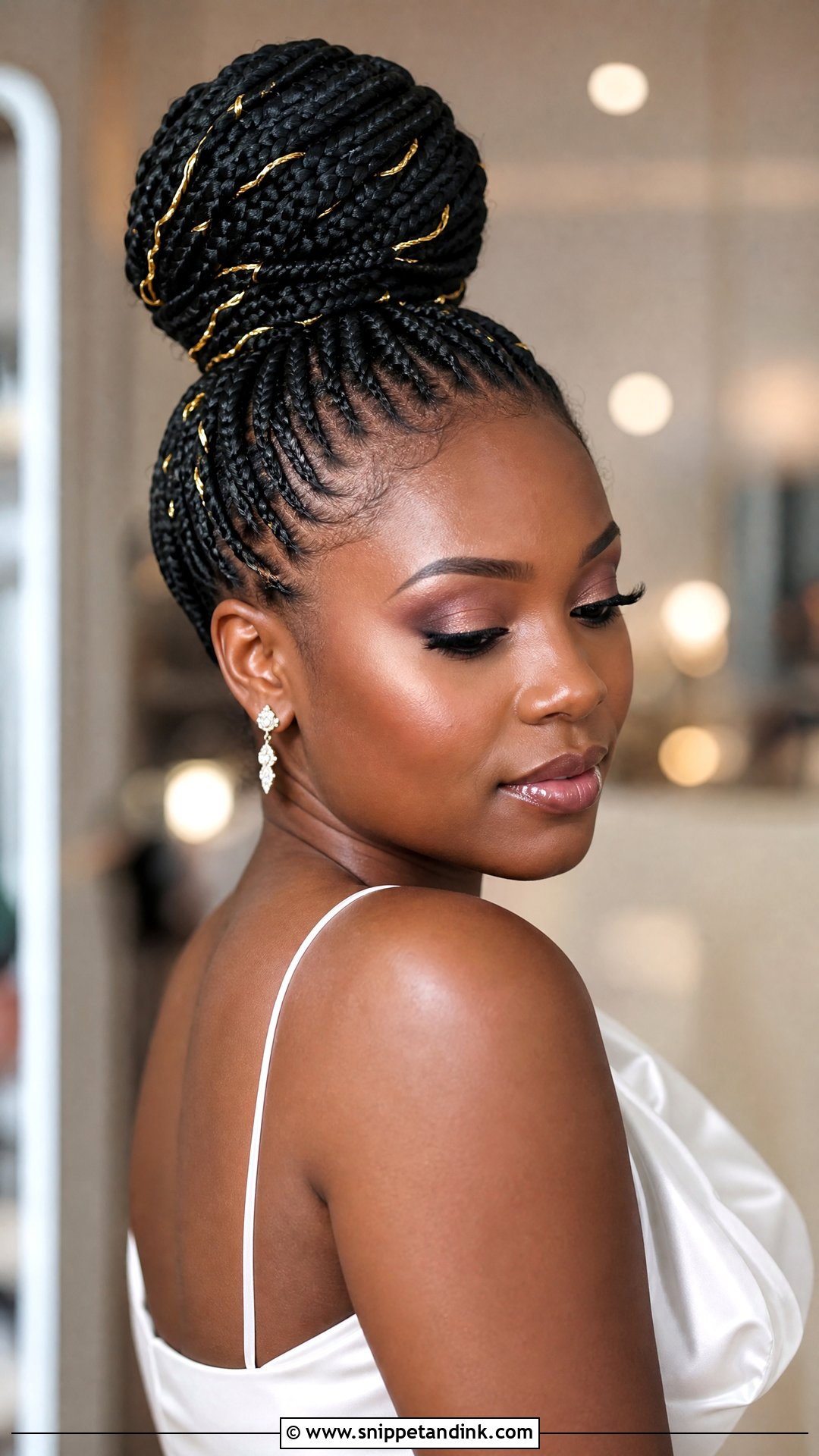
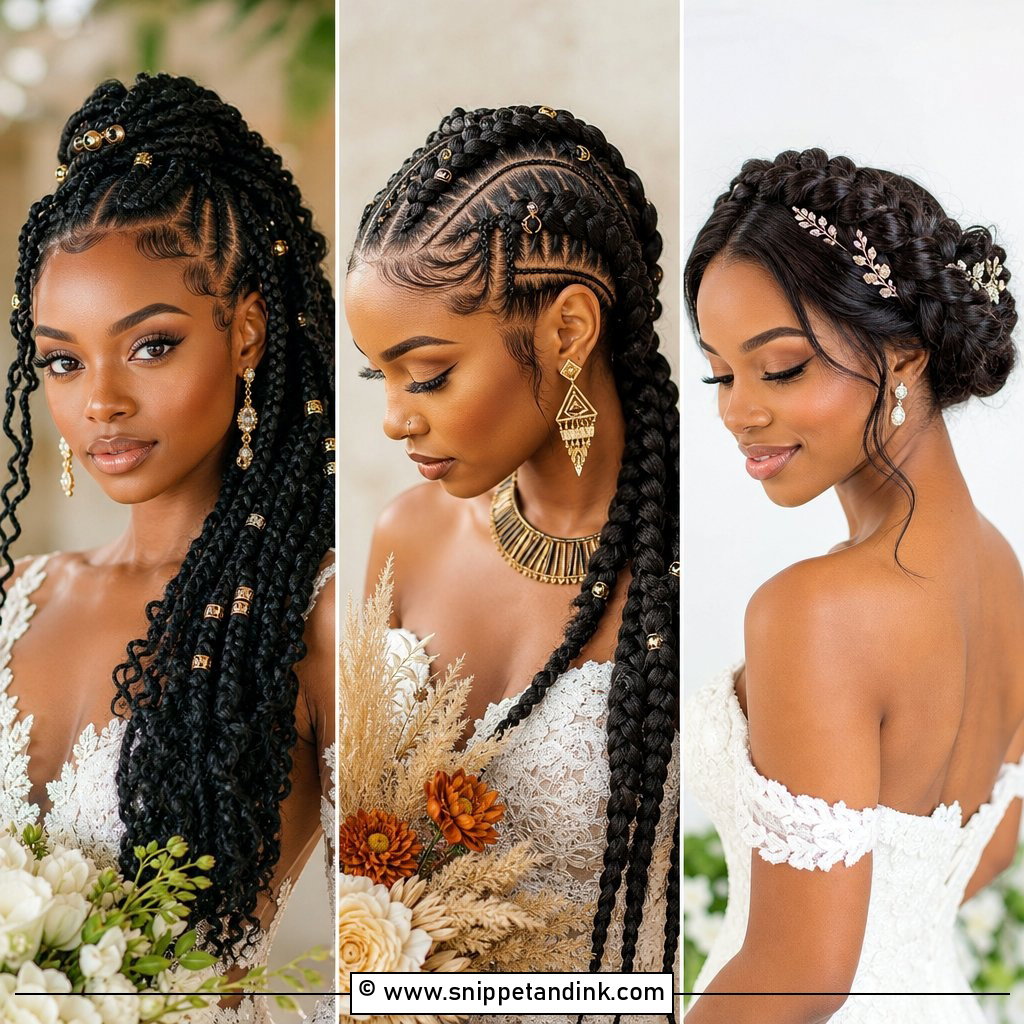
Knotless braids start with your own hair and feed the extension hair in gradually, so there’s no hard knot at the root tugging on the scalp. That lighter root is why I prefer them when braids are gathered into a voluminous, eye-catching bun. Weight is still the thing to watch. Waist-length braids piled into a top knot get heavy over a full day, so for an updo I usually suggest mid-back length. Gold thread or beads go in during the install, not on the morning. And book the braider whose tension you already know; the wedding week is no time to test someone new.
6. Sculpted Chignon With Coils
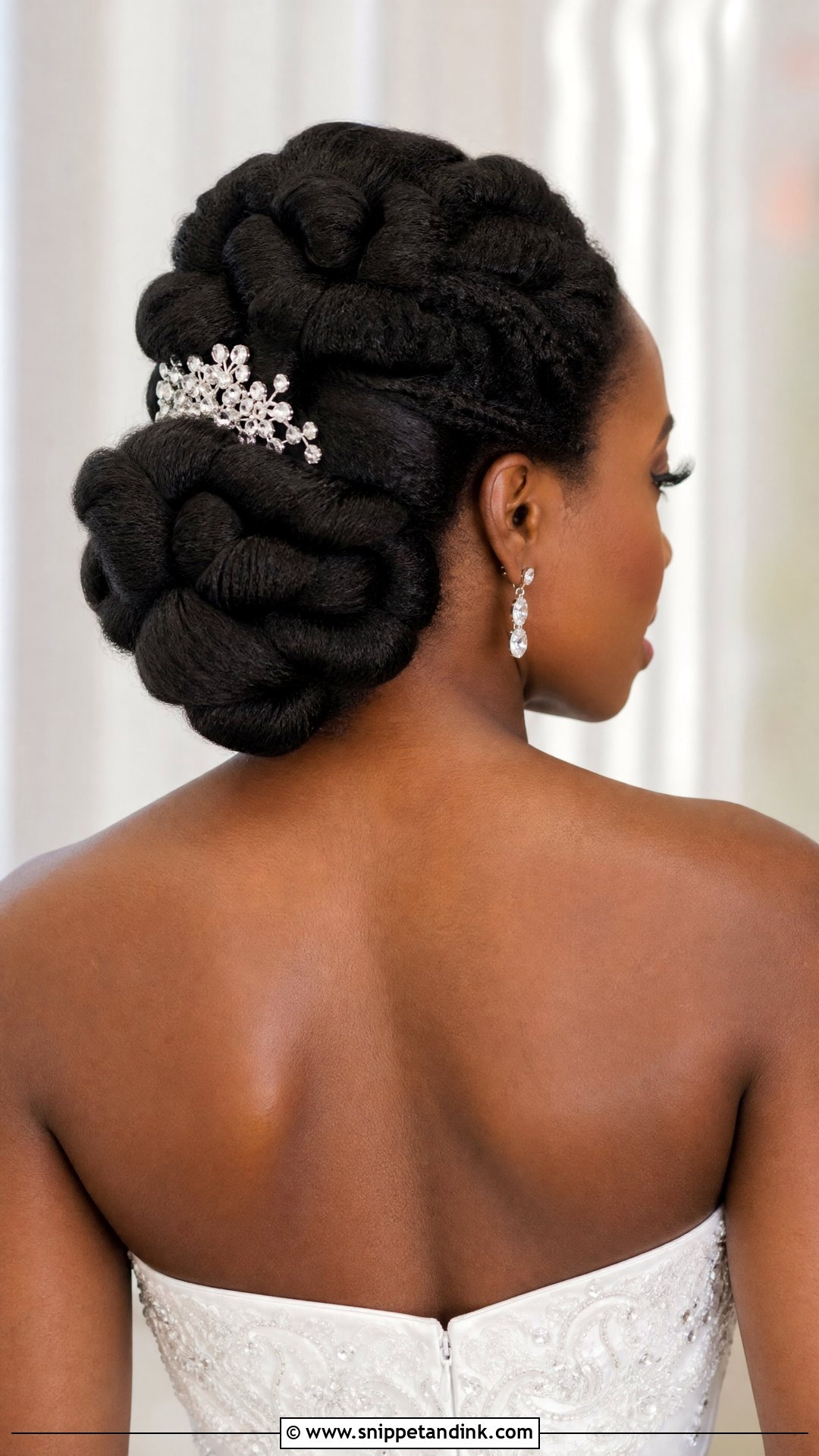
A sculpted chignon gathers coils into a smooth, rounded shape at the back of the head, closer to the soft red-carpet chignons Lupita Nyong’o has worn than to a tight ballet bun. The texture stays visible, which is the whole point. I build it over a small padding of the bride’s own hair or a matching donut so it stays full without pressing the coils flat. A jeweled comb or a thin headband sits neatly against it. It belongs at a formal evening wedding; in a casual barn it can look more polished than everything around it.
7. Senegalese Twists Half Bun
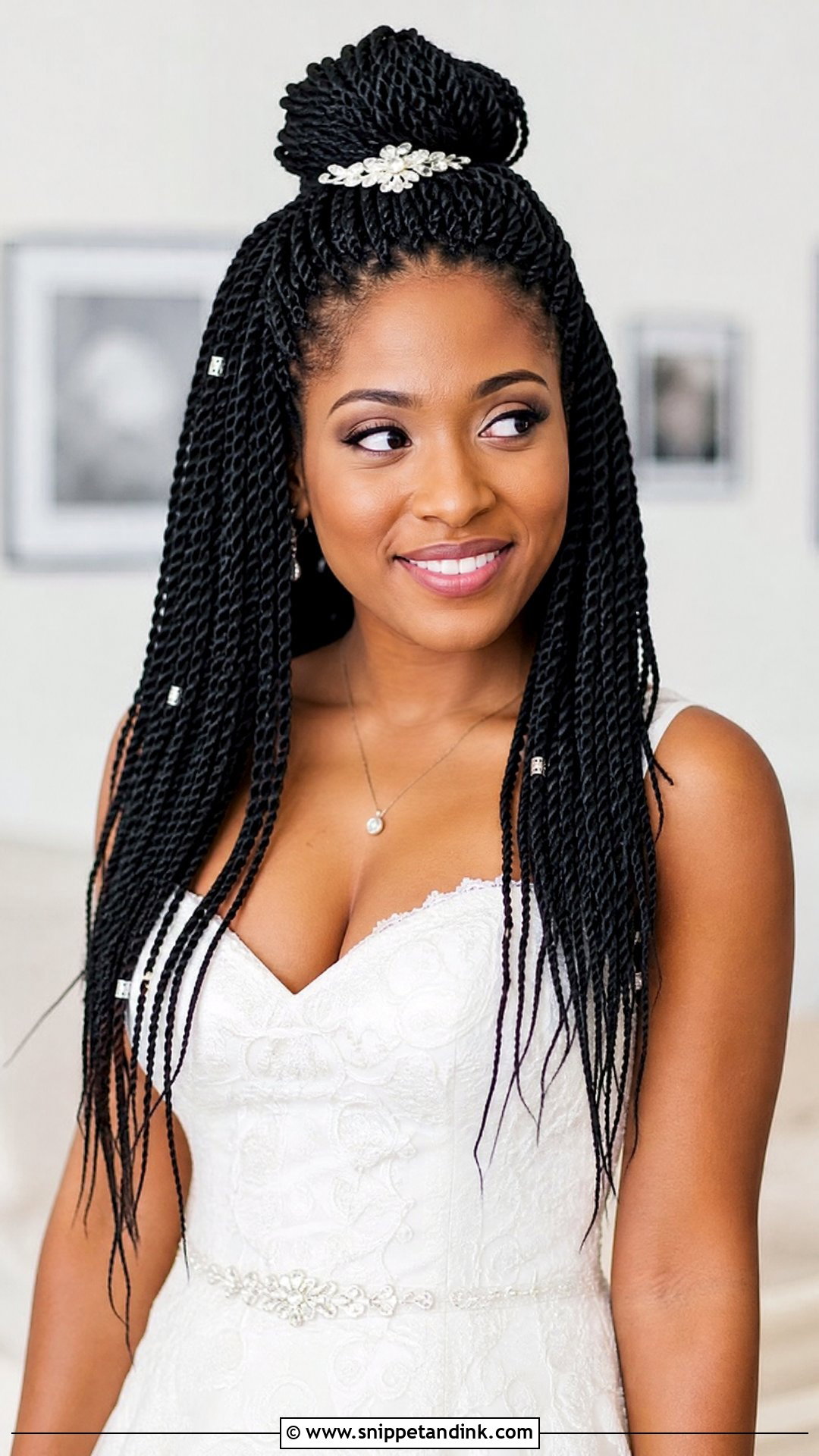
Senegalese twists are smooth, rope-like two-strand twists made with extension hair. A half bun keeps length moving down your back while giving the crown a defined shape, and that height gives a veil or headpiece something to sit against. I keep the bun small so the twists don’t sag under their own weight by evening. Cuffs, pearls or a barrette near the part look crisp against the sleek surface of the twists. They cope well with heat, but very long twists feel hot against a bare back in summer, so look at the back of your dress before deciding on length.
8. Silk Press With Soft Waves
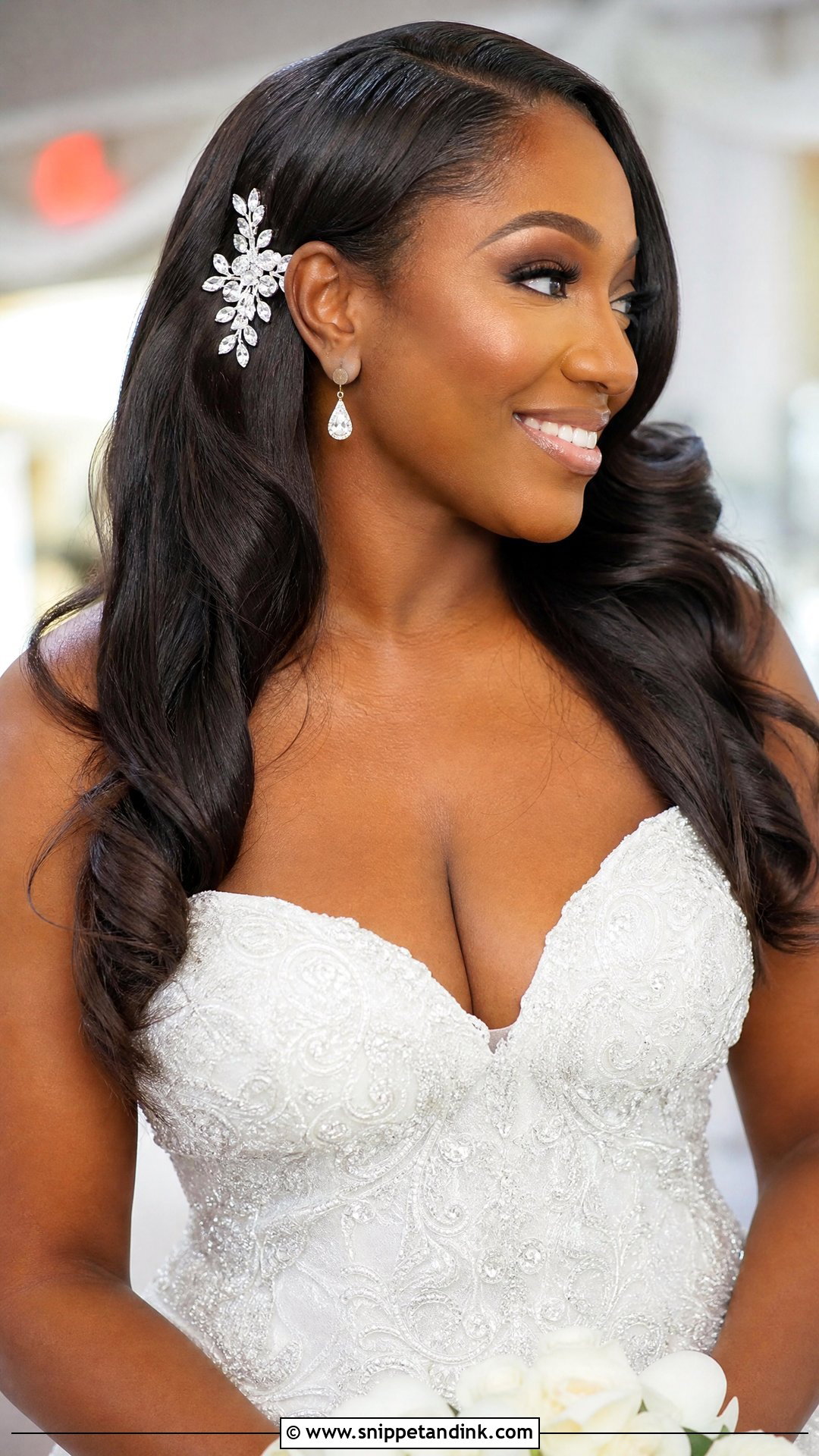
A silk press is natural hair straightened with a careful blow-dry and flat iron, and soft waves give it movement for the day. Timing is everything. I’d press a day or two before the wedding so there’s room for a touch-up, then set the waves that morning with large-barrel curls pinned up to cool. Moisture is the enemy: steam, rain or a hot dance floor will make the roots revert. Keep a jeweled pin ready to sweep one side back if the front starts to puff. If you’re worried about heat damage, raise it with your stylist weeks ahead so the iron temperature and any treatment can be planned.
9. Fulani Braids With Beads
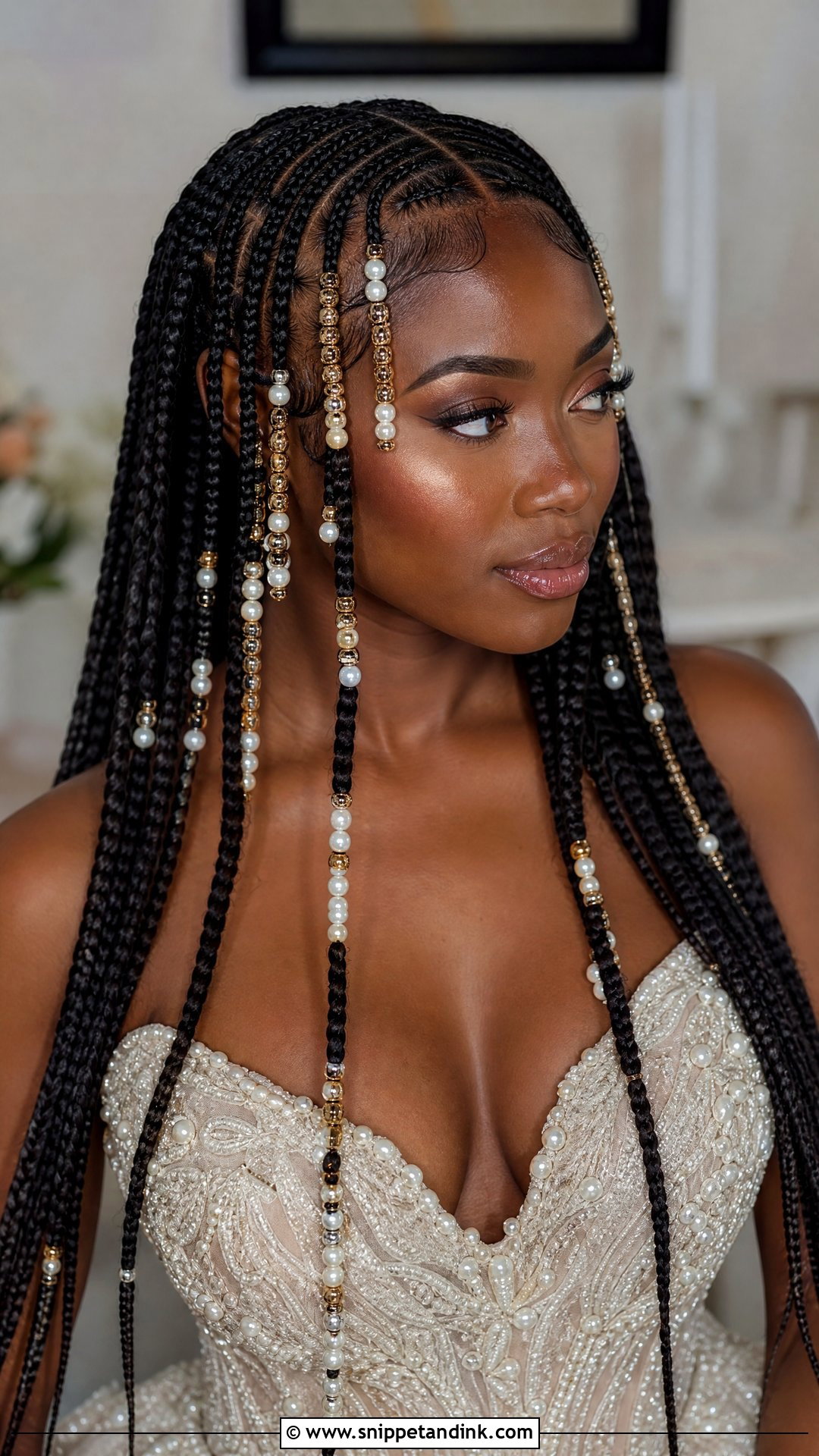
Fulani braids pair cornrows running toward the face with a center part and longer hanging braids, usually finished with beads or cuffs, and for many brides they carry real family and cultural meaning. I match the bead finish to the jewelry: pearl beads with pearl earrings, gold with gold. Beads add weight and click as you move, so I keep most of them on the braids around the face, where portraits actually see them. The back can hang long for the ceremony and go up for the reception. Fresh braids can feel tight for a day or two, another reason to install them early.
10. French Roll With Tendrils
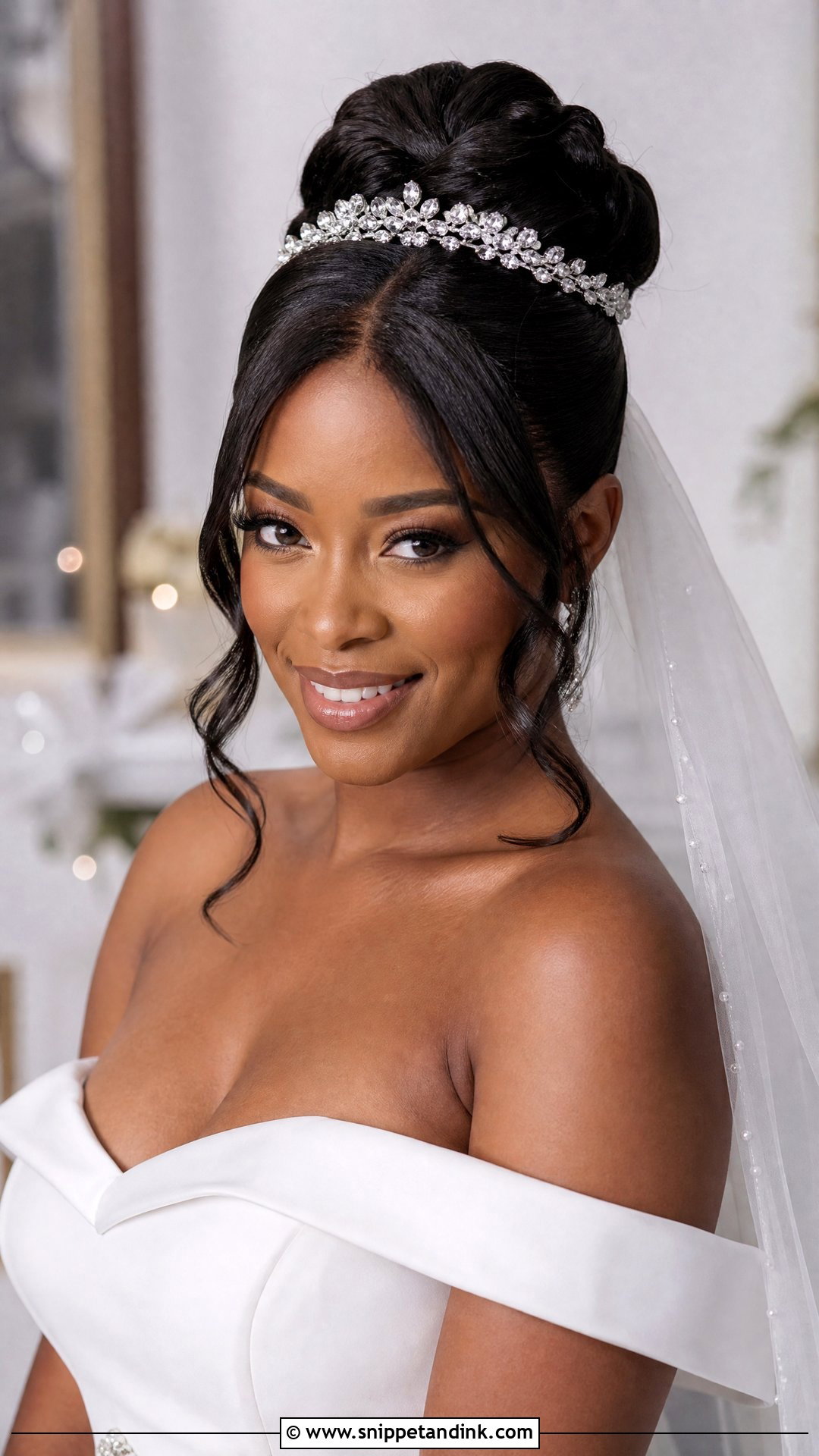
The French roll sweeps hair to one side and tucks it into a vertical fold at the back, and it’s one of the most secure updos I know because the pins lock into the fold itself. It needs smoothed hair, whether relaxed, pressed or blown out; unstretched coils won’t fold cleanly. I set the face-framing tendrils with a small curling iron so they don’t hang limp by the first toast. Veils, tiaras and heavy earrings all sit comfortably with it. Its clean lines read vintage, so it fits a formal ceremony better than sand and sea wind.
11. Curly Afro With Embellishments
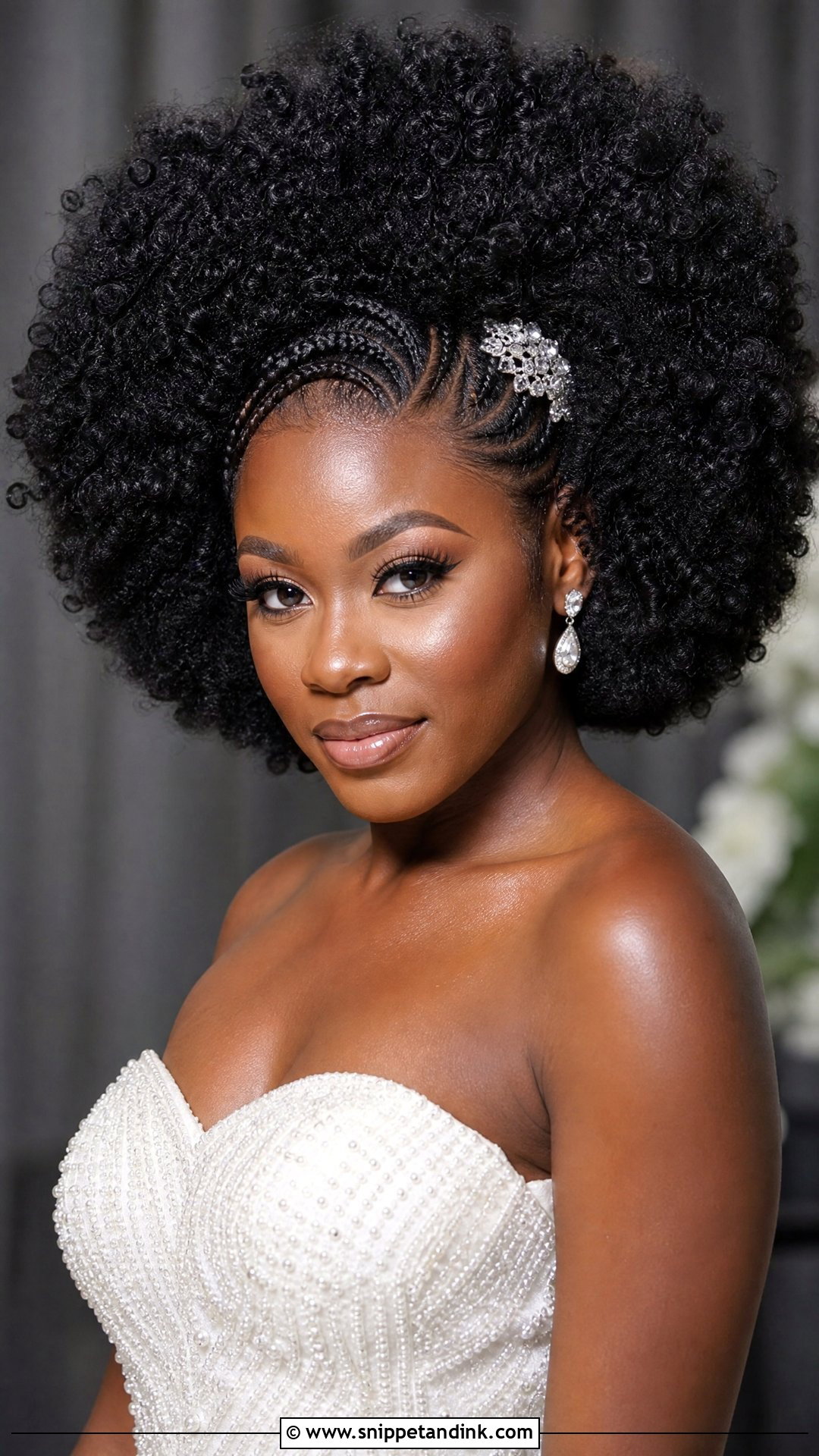
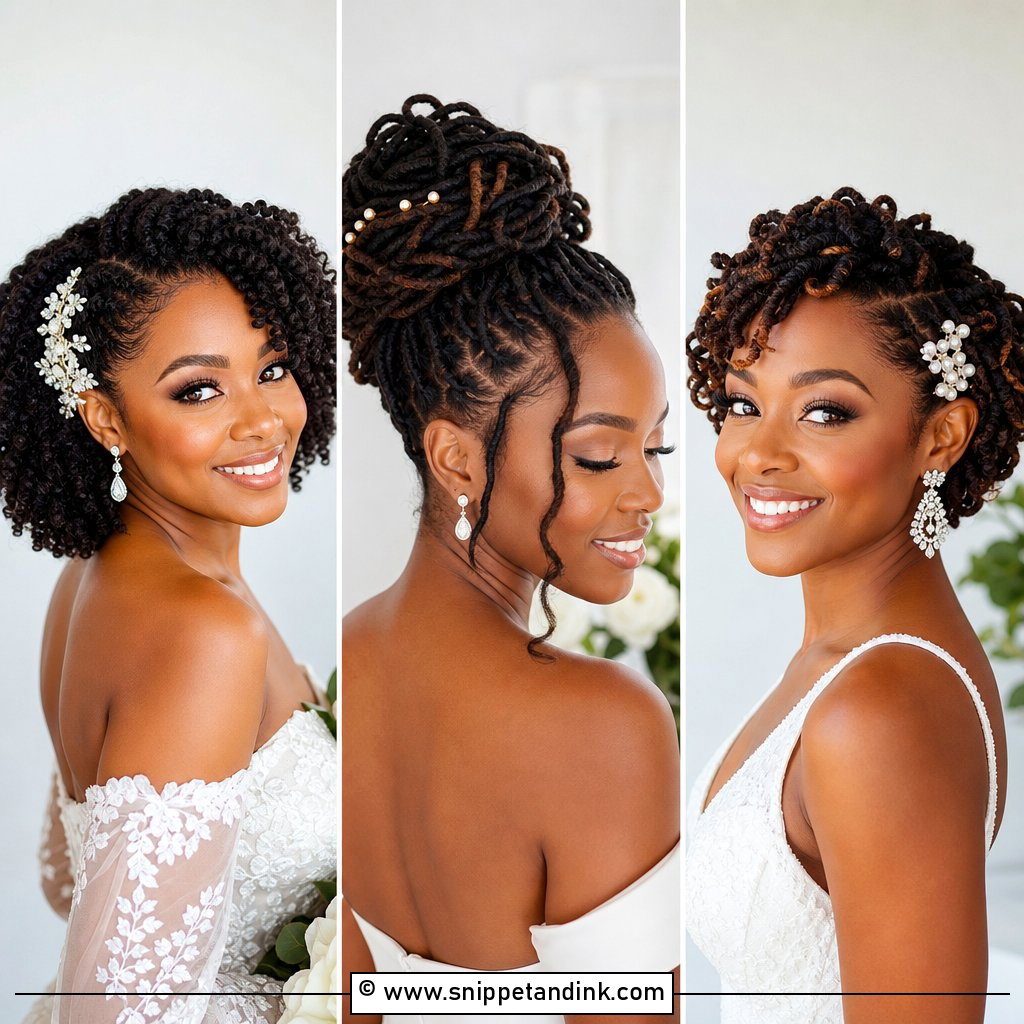
With a full voluminous afro, your silhouette is the accessory. Shape matters more than size: I pick it out and trim stray ends so the outline is even from every side, then mist and pat rather than comb once it’s shaped. A barrette, a braided side part or a jeweled headband adds the bridal note. Humidity mostly adds volume here instead of ruining anything, which makes the afro one of the more forgiving summer choices. The veil is the real question. A plain comb won’t grip in a large afro, so I’d use a veil mounted on a headband or a band secured with pins.
12. Box Braids Updo
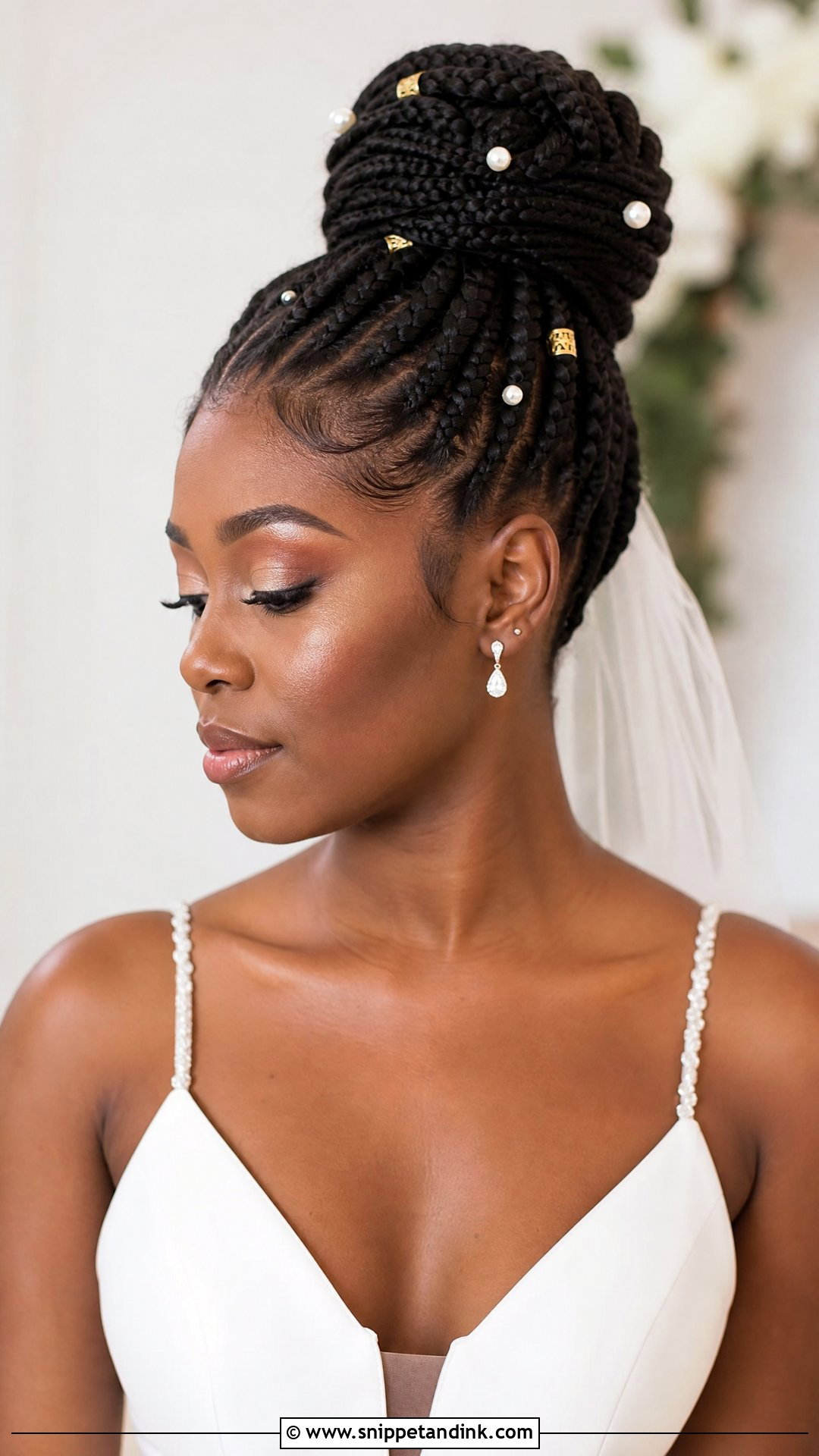
Box braids are individually parted braids, and those clean square sections are what make a box-braid updo look so tidy from behind. If you’re wearing them up, ask for especially neat parts at the nape, because that’s where guests are looking during the vows. Gold cuffs, ribbon or pearls slide on in minutes. They carry you through the rehearsal dinner, the wedding and the honeymoon with almost no daily styling, which is a big reason brides pick them. Like knotless braids, long ones are heavy in a high bun, so test the weight at your trial before deciding on height.
13. Twist-Out Half-Up Style
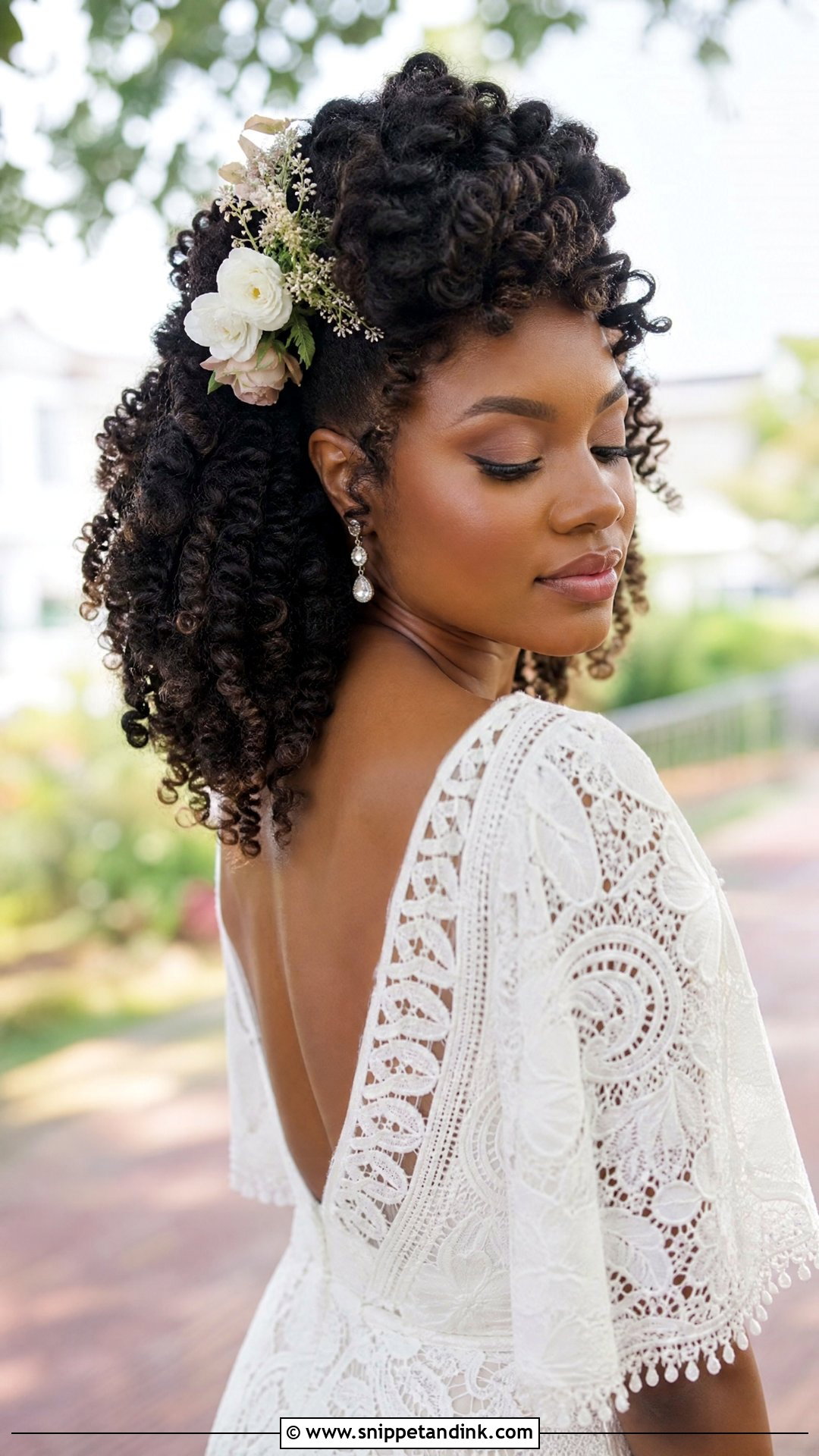
A twist-out comes from twisting damp hair, letting it dry completely and unravelling it into defined curls. That drying step decides everything: unravel too early and you get fuzz instead of definition. I’d twist the night before and sleep in a satin scarf. Pin the top half loosely so the pattern isn’t crushed, then tuck flowers or a small clip in at the crown. It sits naturally at a relaxed garden or boho wedding. Since a twist-out keeps expanding through the day, start a little more defined than you want the evening photos to look.
14. Sleek High Ponytail
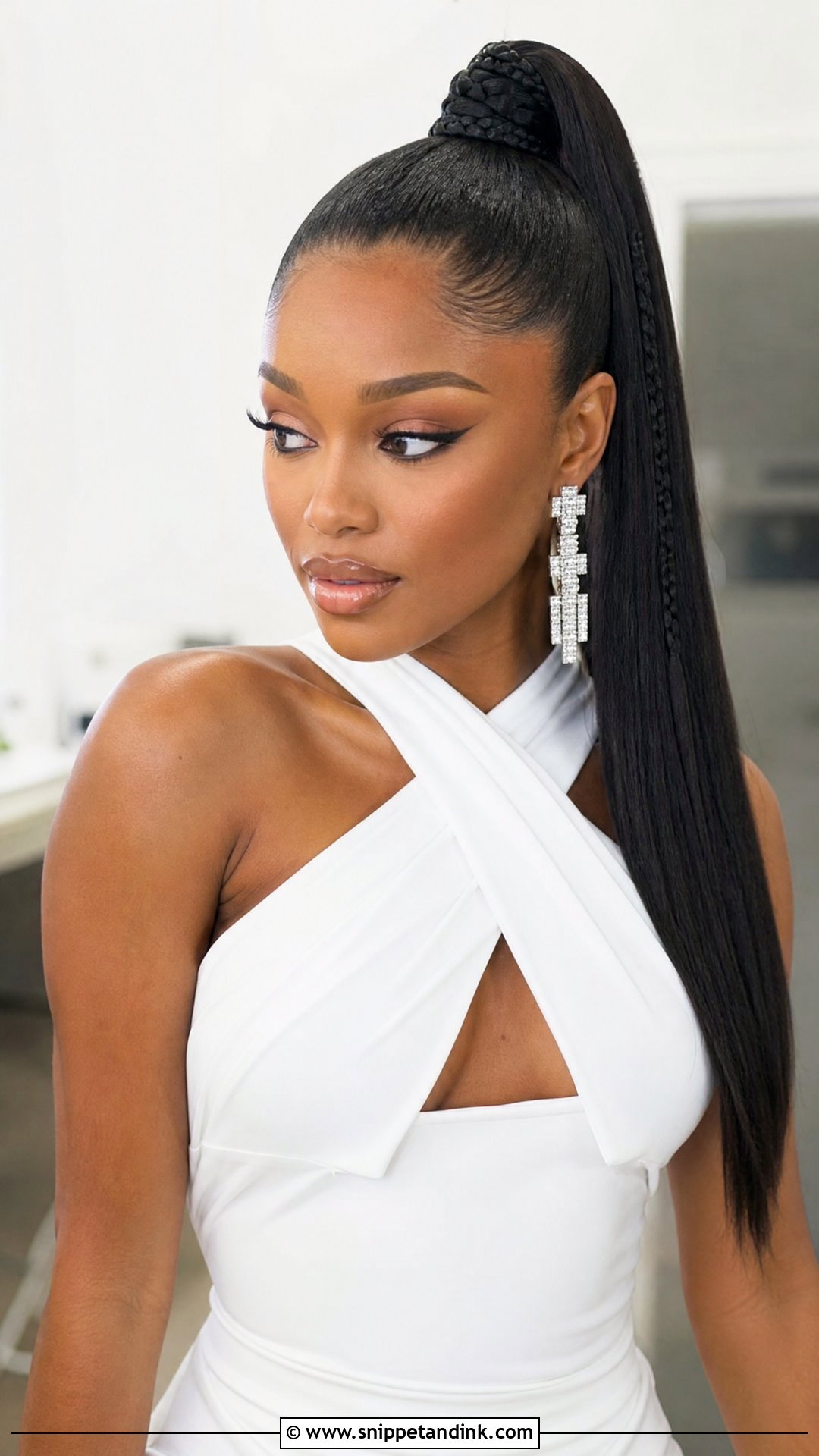
This is the most dramatic look on the list, and the drama comes from height and polish. I gel the hair up in sections and lock the base with an elastic plus a hidden pin so the pony can’t slide down. Clip-ins or a wrap-around pony give extra length, and a braid wrapped around the base hides the elastic. The catch is tension. A high, tight pony worn all day can give some brides a headache and stresses the edges, so I set it a fraction lower than a fashion-shoot version. It’s at its best with a fitted gown and bold earrings.
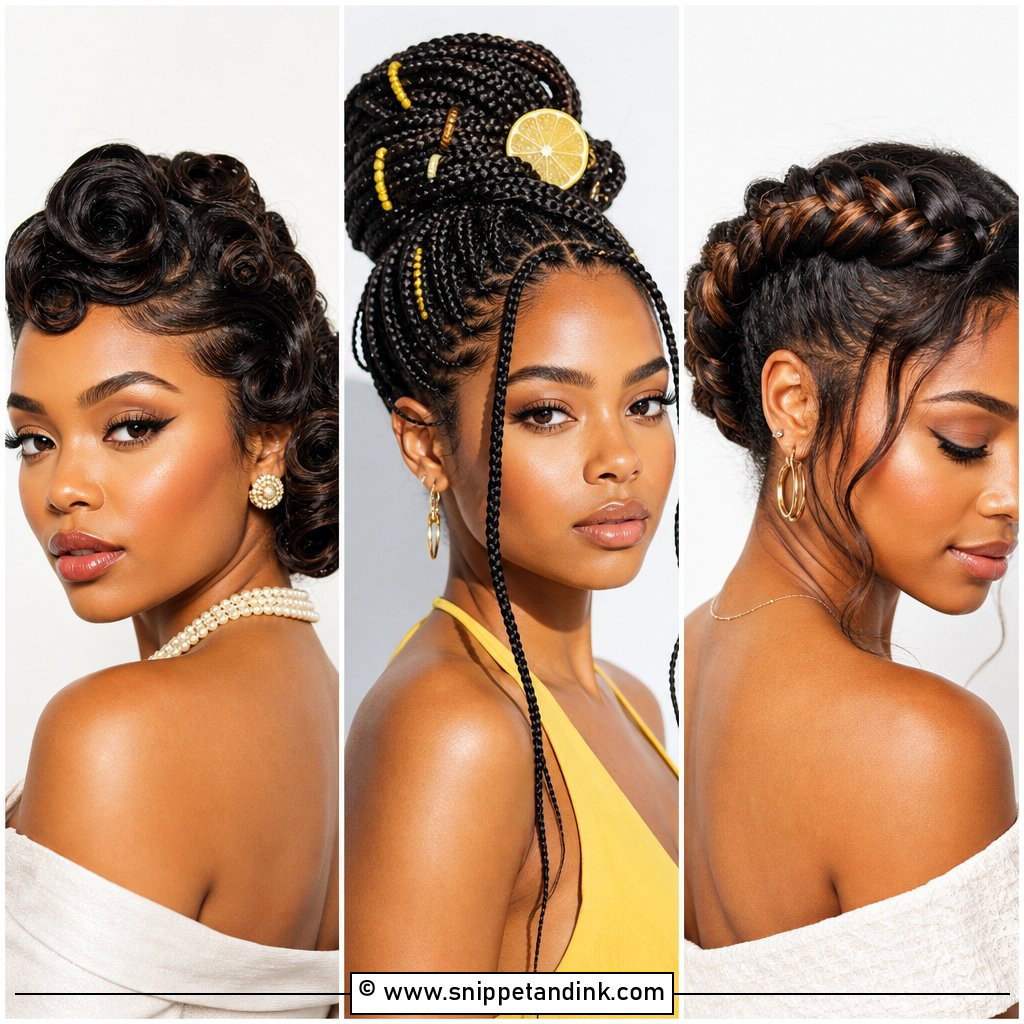
15. Cornrows Into a Bun
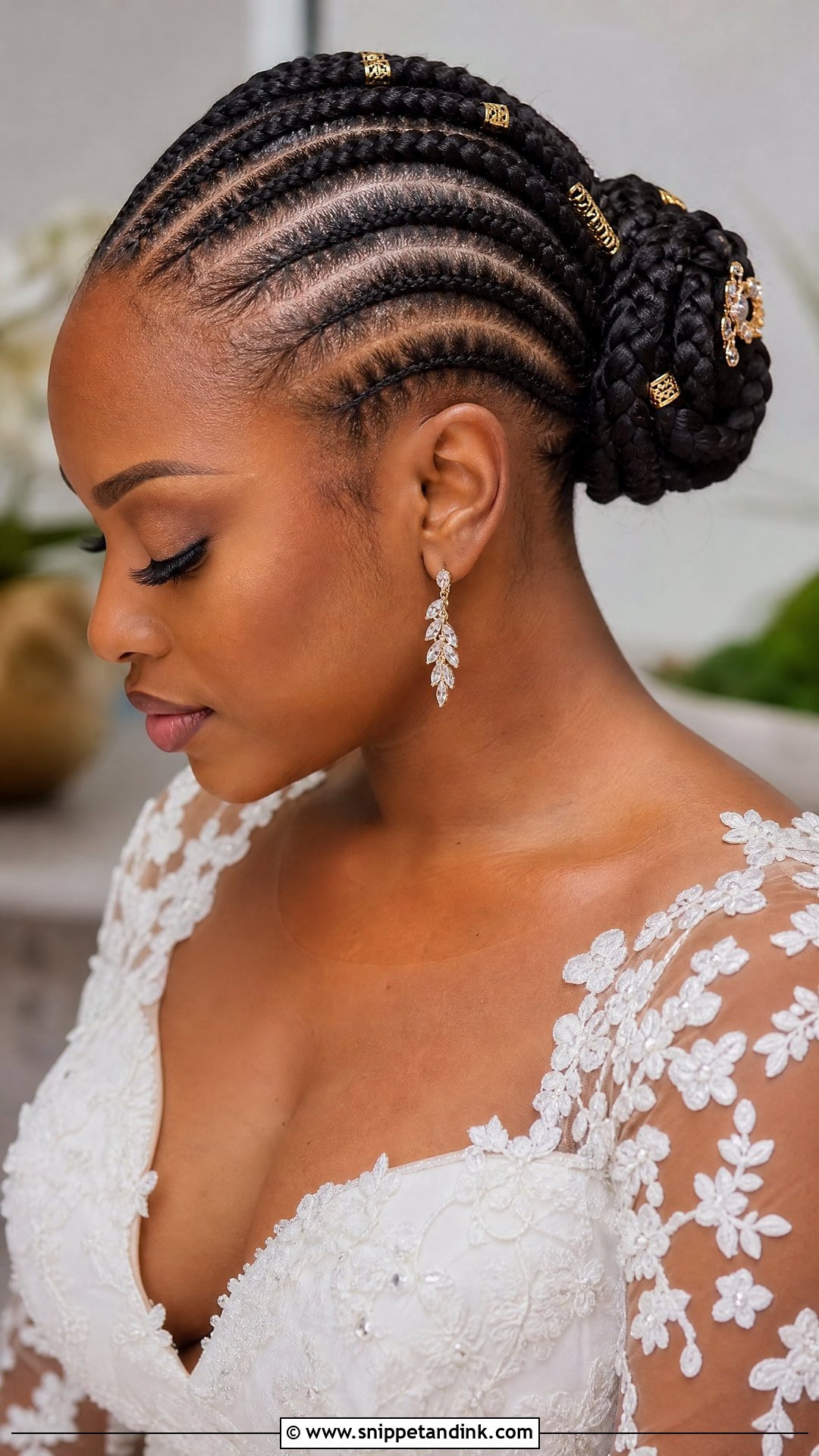
Cornrows are braided flat to the scalp in lines, and when every row leads into one bun the result is very structured. The pattern is where you can make it yours, with rows running straight back or curving around the head before they meet the knot. Gold accents or pearl pins can sit along the rows. Nothing is loose, so there’s almost nothing to fix on the day. I’d install them two or three days ahead so the scalp settles, and I’d watch the hairline closely: tight cornrows at the edges are what lead to thinning later.
16. Loose Curls With Side Part
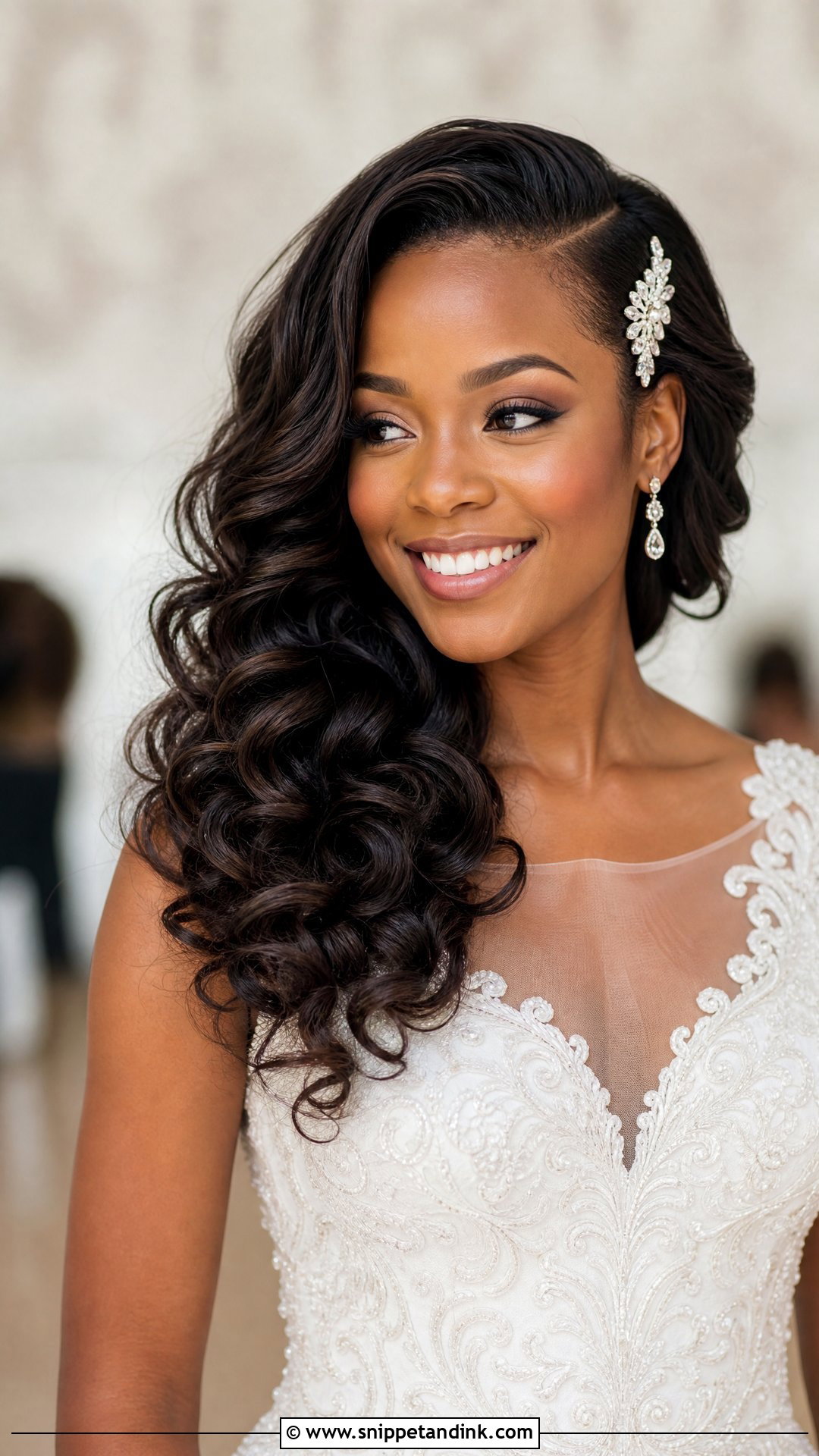
A deep side part with loose curls gives classic bridal volume, and the asymmetry lets you sweep everything over one shoulder in an old Hollywood way. It works on silk-pressed hair or on defined natural curls, but the two behave very differently. Pressed hair curled with a hot iron has to cool pinned up or it falls flat, while natural curls hold their own shape but grow bigger as the hours pass. A hairpin near the part catches flyaways at the hairline. For a humid venue, I’d steer you toward the natural-curl version.
17. Braided Crown Updo
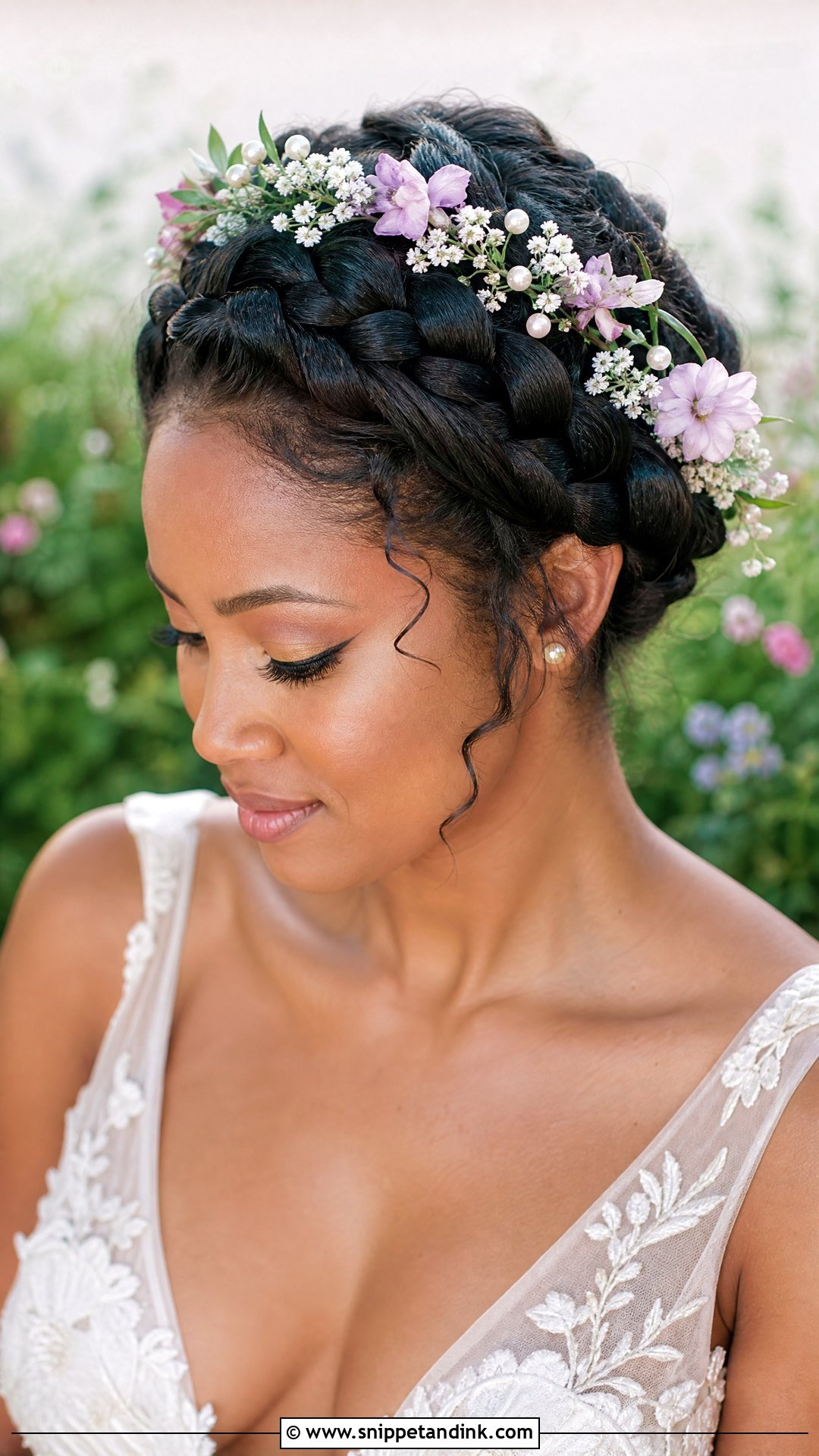
A braided crown circles the head like a halo and works especially well when you’re skipping the veil or wearing flowers instead. It suits natural hair, twists or extensions. I pin the braid along its underside every few inches so it can’t slip as you move and hug people. Fresh flowers or pearls tuck in easily. With nothing on your neck, it’s comfortable at an outdoor summer wedding. If your hair is shorter than your shoulders, expect to add braiding hair so the crown reaches all the way around.
18. Faux Locs Bridal Style
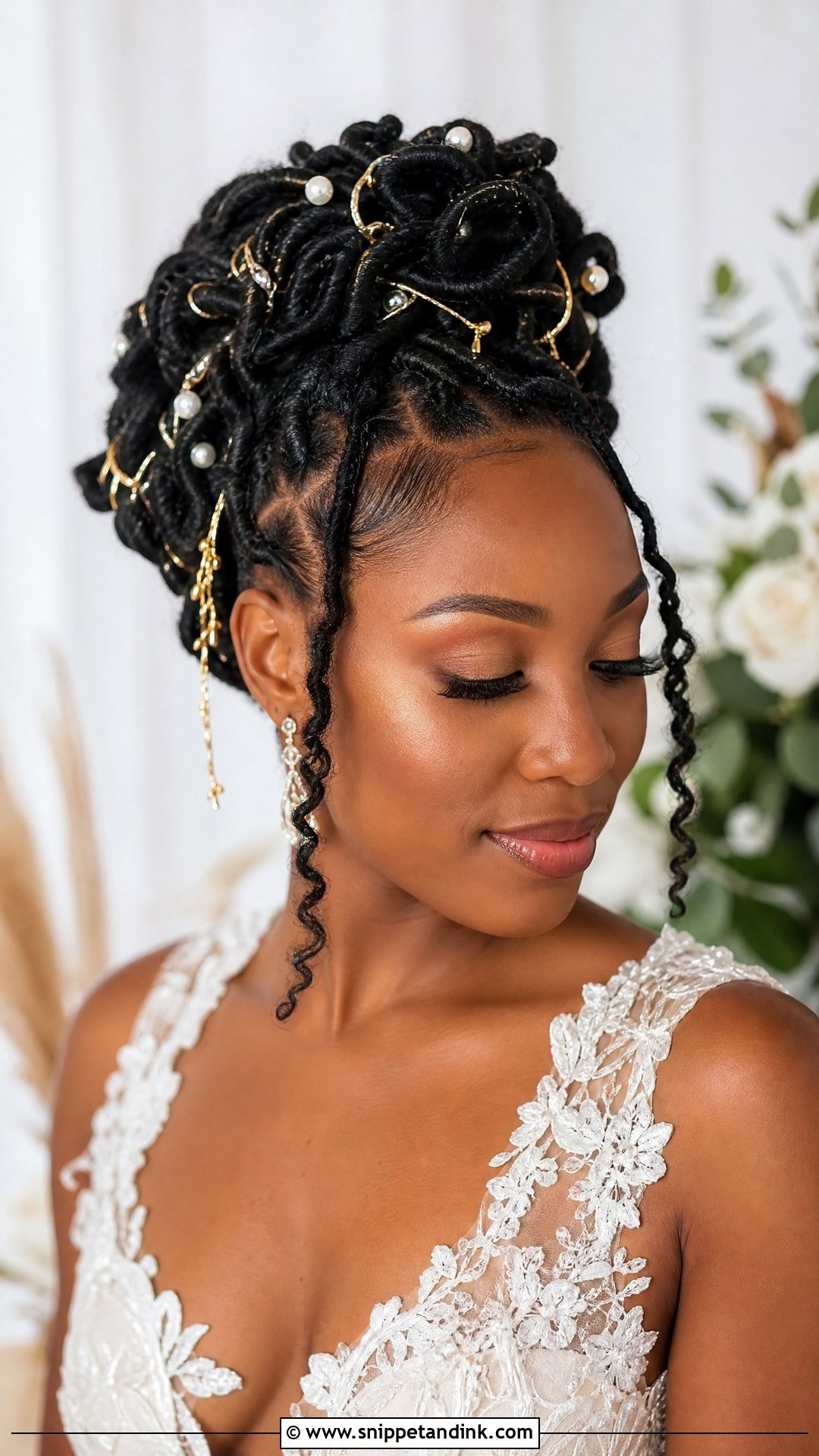
Faux locs are wrapped extension locs that imitate mature locs, giving you an earthy bohemian elegance without years of growth. They can go up, half-up or stay loose. Locs weigh more than braids of the same length, so for an updo I’d suggest a lighter install or a shorter length. Gold thread or pearl rings can wrap a few of them for the day. New locs feel stiff at first, so installing them about a week before lets them soften and swing naturally. They sit just as comfortably at a formal wedding as at a boho one.
19. Pixie Cut With Finger Waves
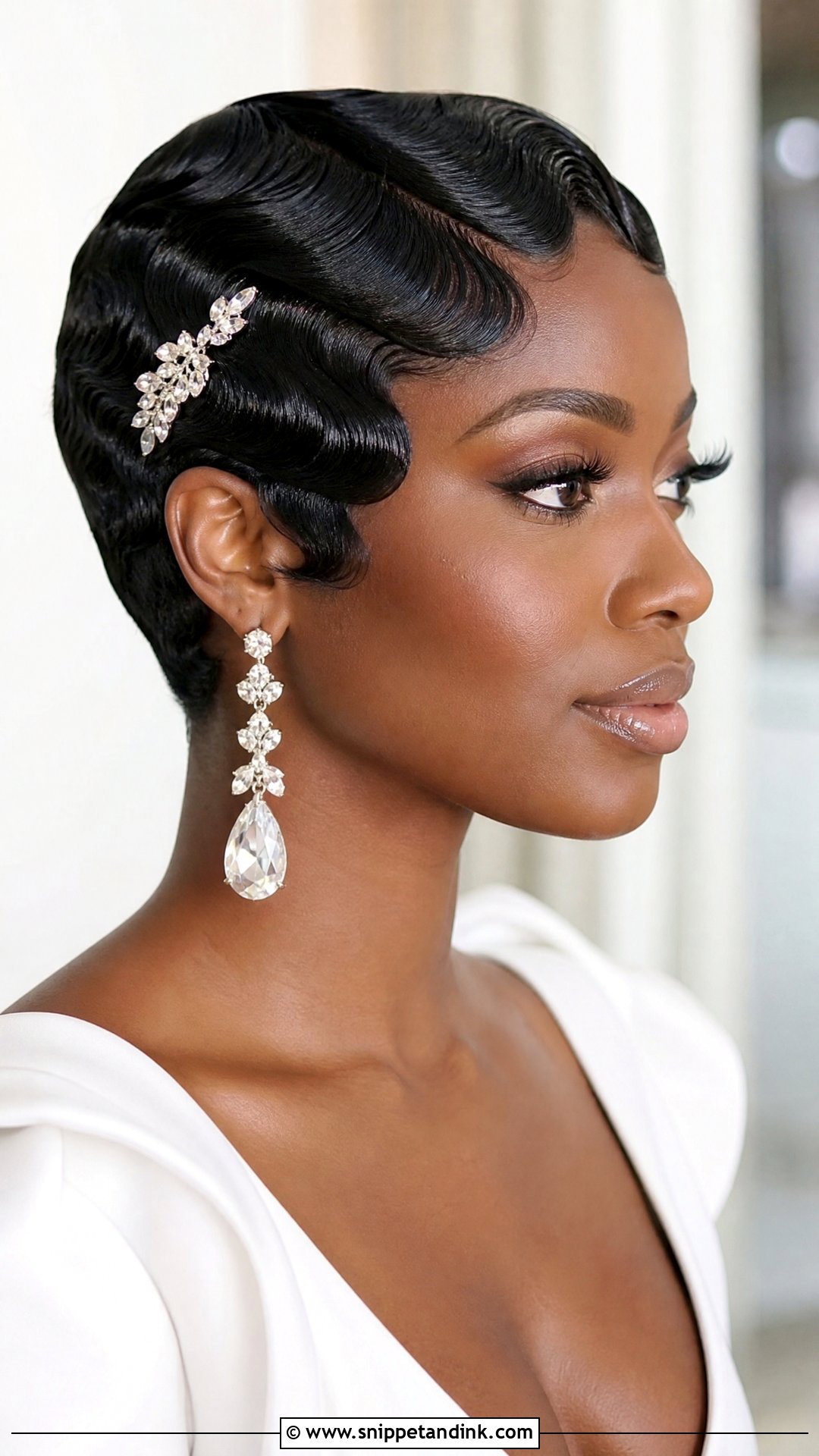
Short hair can look incredibly polished in finger waves. I set them with a strong-hold gel while the hair is wet, pressing the S-shaped ridges in with fingers and a comb, then dry them fully under a hooded dryer. Rushing that drying is what makes waves collapse. A jeweled pin or slim headband adds sparkle. A pixie with finger waves puts your face and earrings at the center, and once set it barely moves all day. Get your trim a week or so ahead so the shape is crisp but not freshly raw at the edges.
20. Bantu Knots With Soft Curls
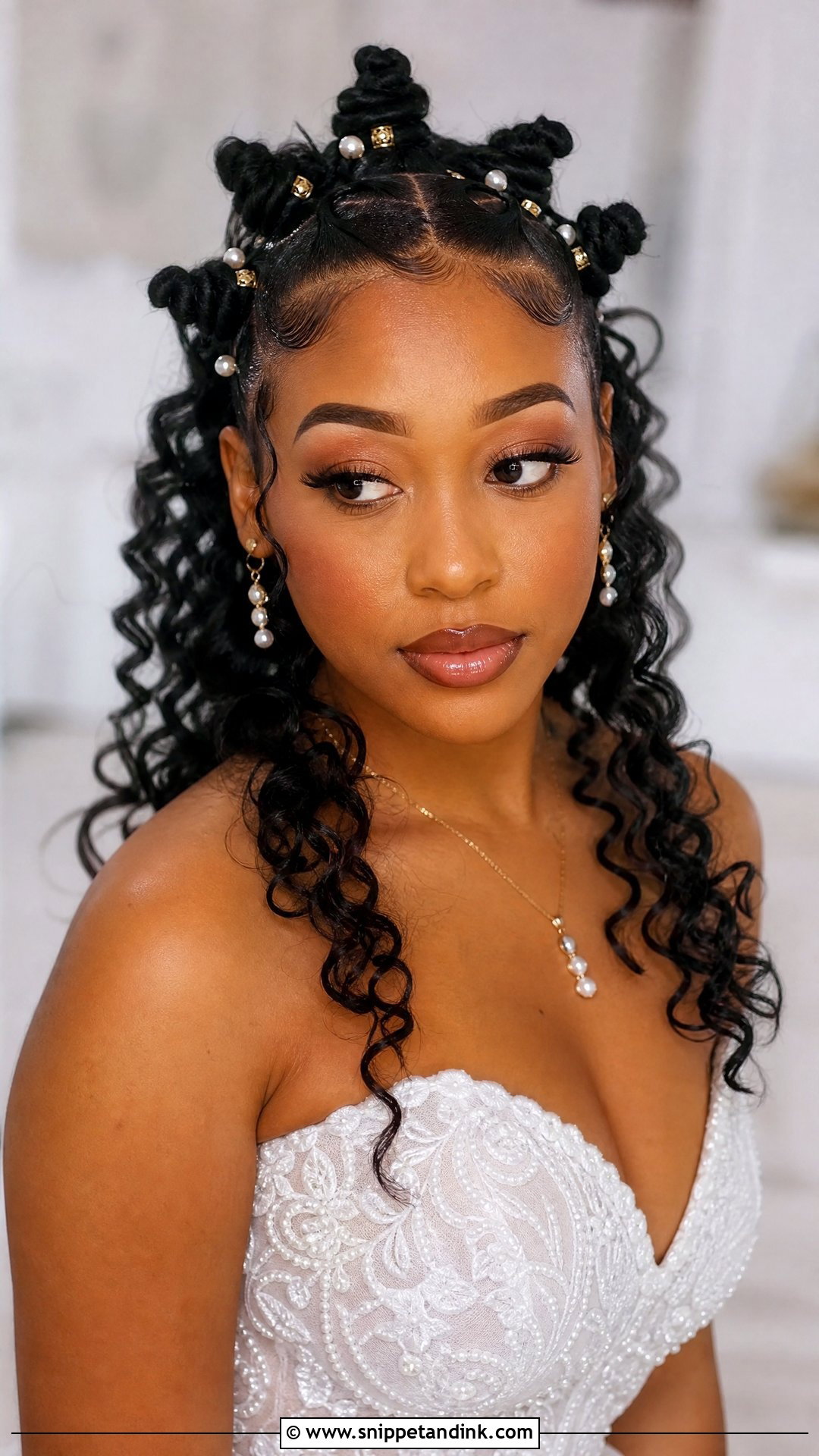
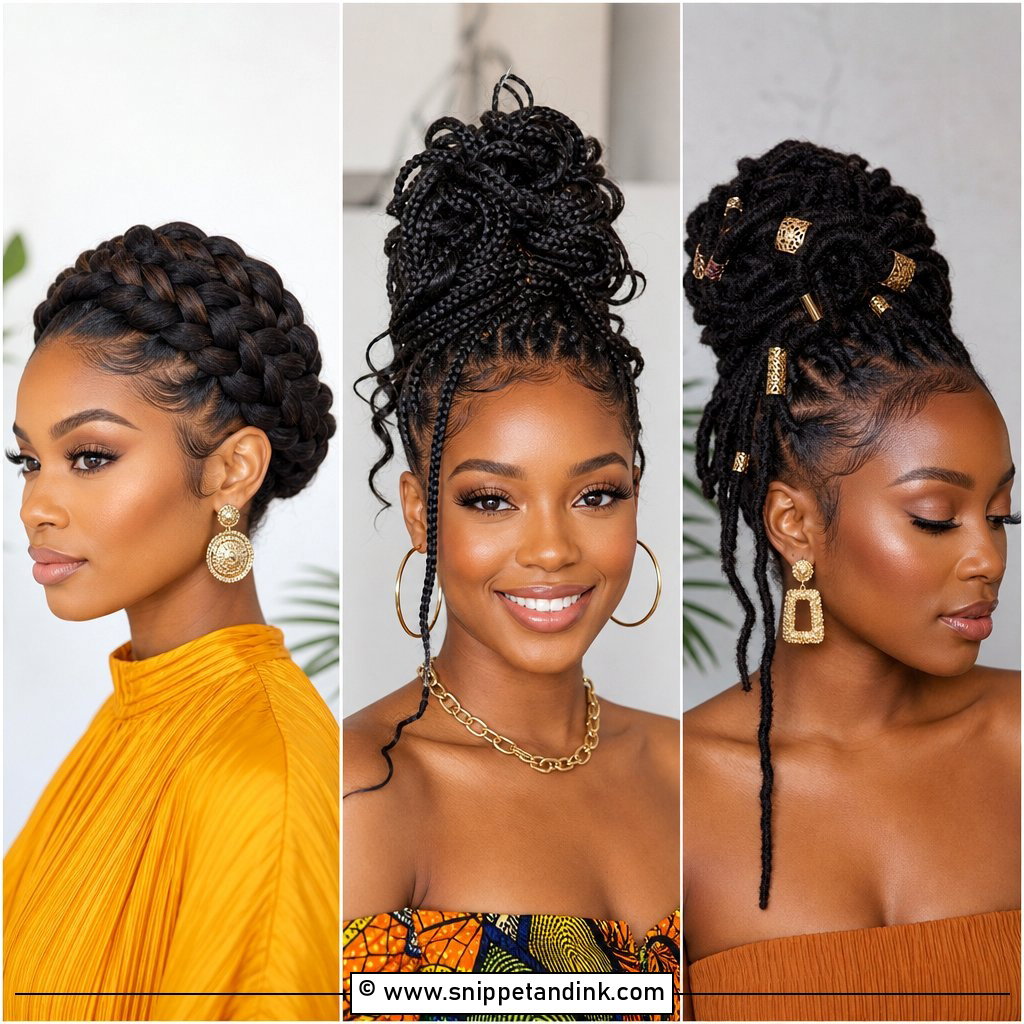
Bantu knots are sections of hair twisted and wound into small coiled knots, worn as they are or unravelled into curls. For a bride, a mix of knots and flowing curls gives sculpted texture at the crown and movement below. The unravelled part only works on fully dry hair, so set those knots the night before. Pearls or small gold accents sit nicely between the knots. Fine hair does better with smaller knots, which keep the curls defined. The style is rooted in Southern African tradition, and many brides wear it partly to honor that.
Protecting Your Edges Under Pins, Gel and a Veil
Your hairline takes most of the stress on a wedding day. Gel pulls it smooth, pins sit near it, a veil comb drags on it, and a tight install pulls on it for days. Traction damage builds up quietly, and fragile edges don’t always grow back the way they were.
Here’s what I do to protect them. I leave the finest hairs at the temples out of any braid instead of forcing them in. I place veil combs into the body of the style, never at the front. If a bride winces when I check the tension at a trial, I loosen it, because pain on day one doesn’t settle into comfort by day three. And I’d rather use a little less gel and touch up once than glue the hairline down so hard it has to be scrubbed off that night.
After the wedding, take braids down gently with conditioner on hand and give your edges a few weeks off from tight styles.
When a Silk Press Starts Reverting Before the Reception
Pressed natural hair is beautiful until it meets steam, a sweaty dance floor or a light drizzle between the ceremony and the car. The roots draw up first and the ends follow. Once it starts, you can’t flat iron your way back in a bathroom, so plan for it instead.
I tuck a satin scarf, a wide-tooth comb, a few bobby pins and a small pot of smoothing cream into the bridesmaid’s bag. If the front puffs, sweep it back with a jeweled pin. If the whole head is going, gather it into a low bun at the nape: reverted texture actually helps a bun hold, and it reads as a deliberate change for the evening. Wear the scarf in the car whenever it’s raining. If your venue is outdoors in summer, consider a braided or curly style instead of a press, because those were made for humid air.
Your Texture Sets the Schedule
Every style here works best when it matches your texture and the hours you’ll be wearing it. Braids, twists and locs are booked days ahead; a silk press or set curls happen much closer to the ceremony. Bring photos of your hair on an ordinary day to your trial, along with your neckline and veil, so your stylist can judge honestly what will hold. Then save your favorites and enjoy the planning.
You'll Like These Ideas:


Leave a Reply