
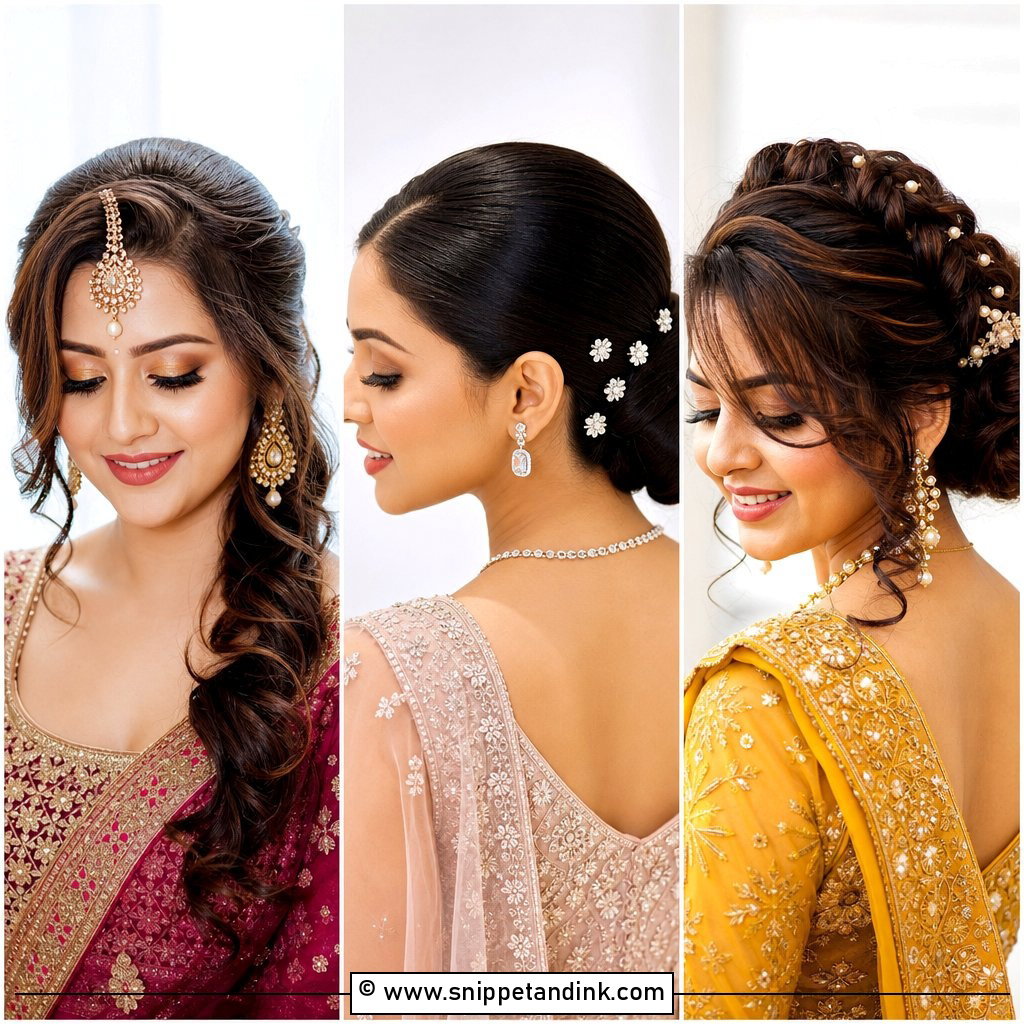
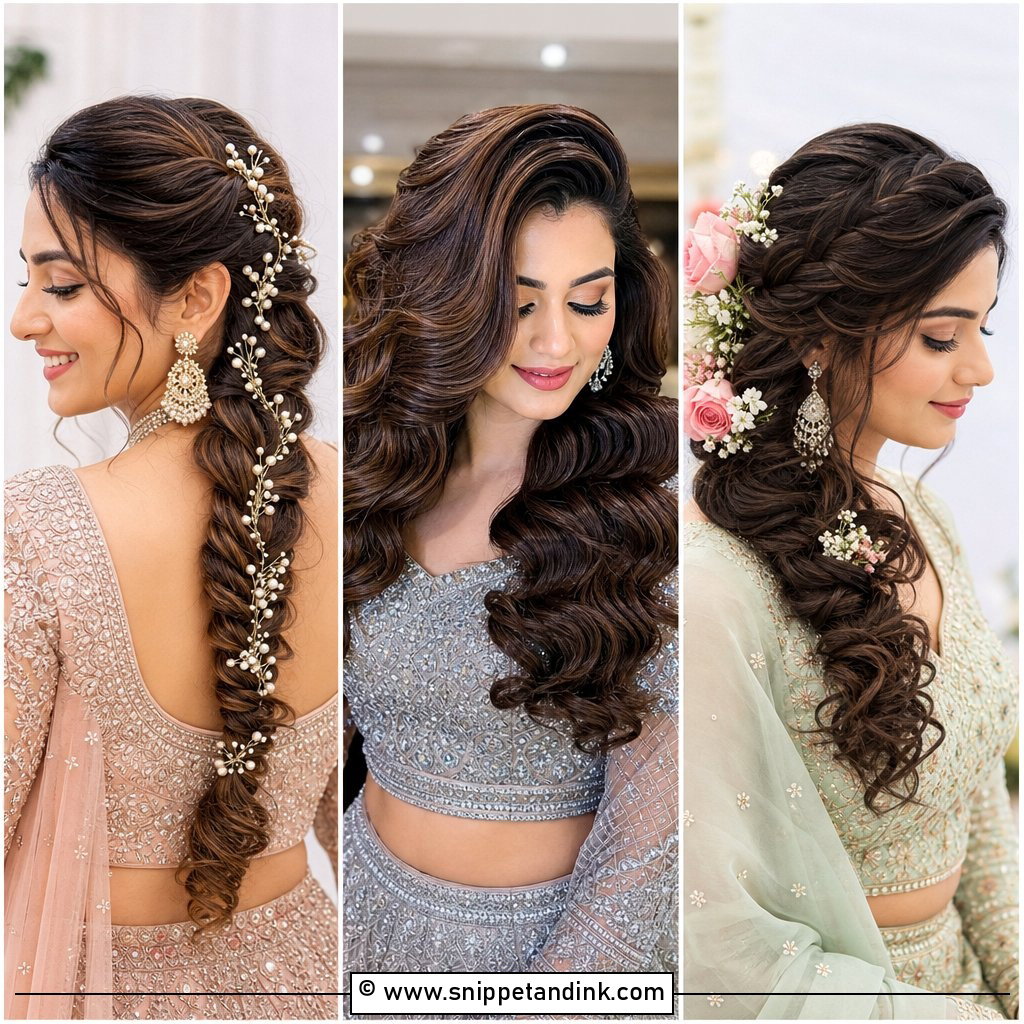
By the last function of an Indian wedding, most of the women in the room are wearing a bun, and there’s a practical reason. A bun survives pheras, hours of photos and a dupatta that keeps getting tugged, and it leaves the face clear for the tikka, the earrings and the makeup. It also changes character easily: glossy and regal under a matha patti, loose for a haldi, wrapped in jasmine for a South Indian muhurtam. The fifteen below run from very traditional to fairly modern and work for brides, sisters, bridesmaids and guests. When I plan one, I look at the outfit and the function first and the mood second.
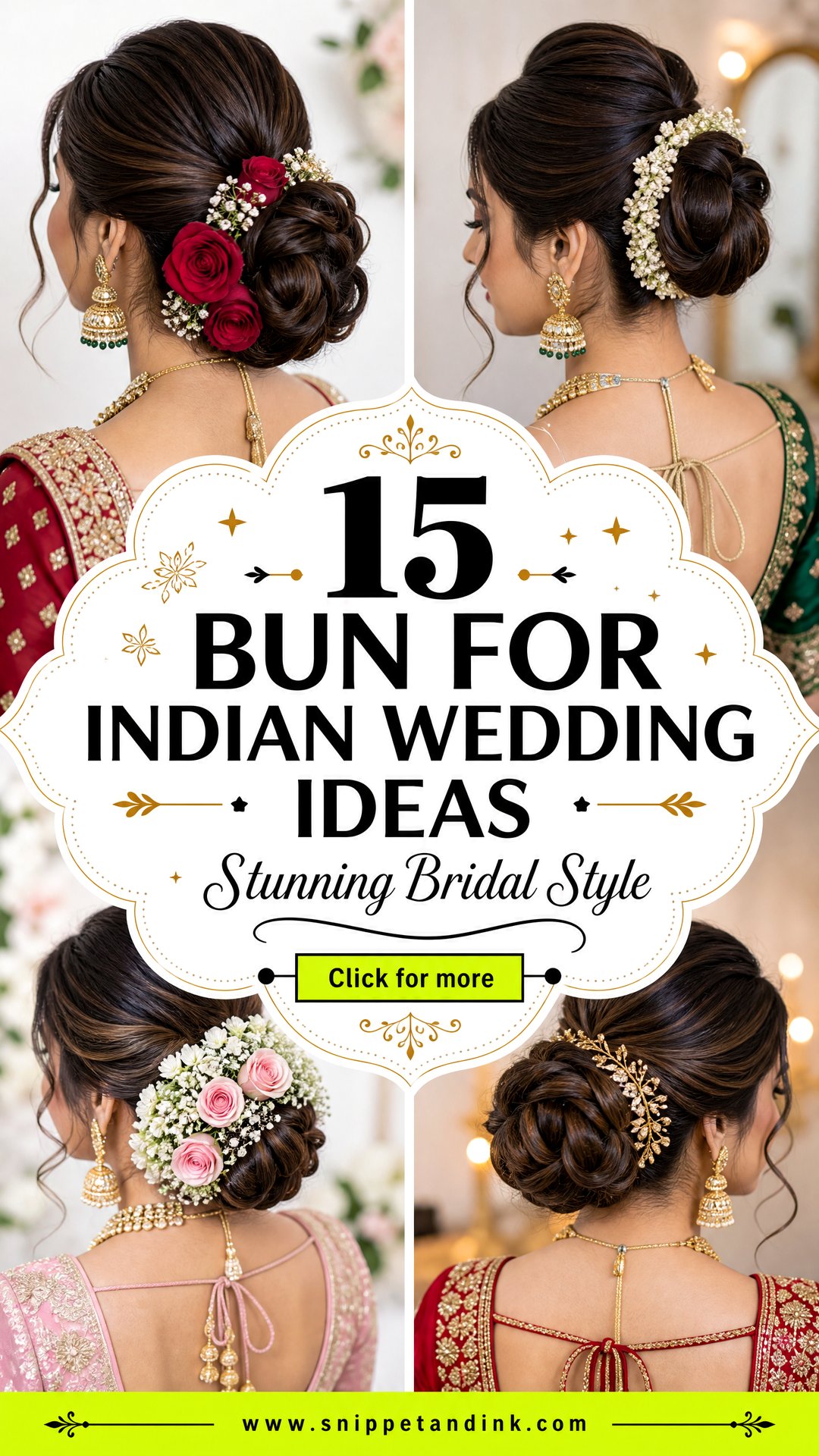
Building the Bun to Carry a Heavy Bridal Dupatta
For a bride, the bun isn’t only a hairstyle. It’s the anchor for the dupatta, and a velvet or heavily embroidered one weighs more than you’d guess. If I place the bun for looks alone, the dupatta drags it down by the pheras and the bride feels every pin.
- Bring the actual dupatta to your trial, along with the tikka and any matha patti. Draping a lighter scarf tells us nothing.
- Agree on the order: hair, then jewelry, then the dupatta pinned last. The tikka chain needs fixing before the bun is finished so it isn’t fighting the pins.
- Set the bun slightly above where the dupatta will rest, so the fabric pins into the base of the bun rather than balancing on top of it.
- Use U-pins through the dupatta into the bun, not just bobby pins into the hair. They hold fabric to a structure without pulling at the scalp.
- For thin or fine hair, a donut or mesh bun padding gives the pins something solid to bite into.
Before you leave the chair, turn your head side to side and look down as if you’re reading your vows. If anything shifts, we fix it then. Once the dupatta is on and the photographer is waiting, nobody wants to start over.
1. Low Gajra Bun For Indian Wedding
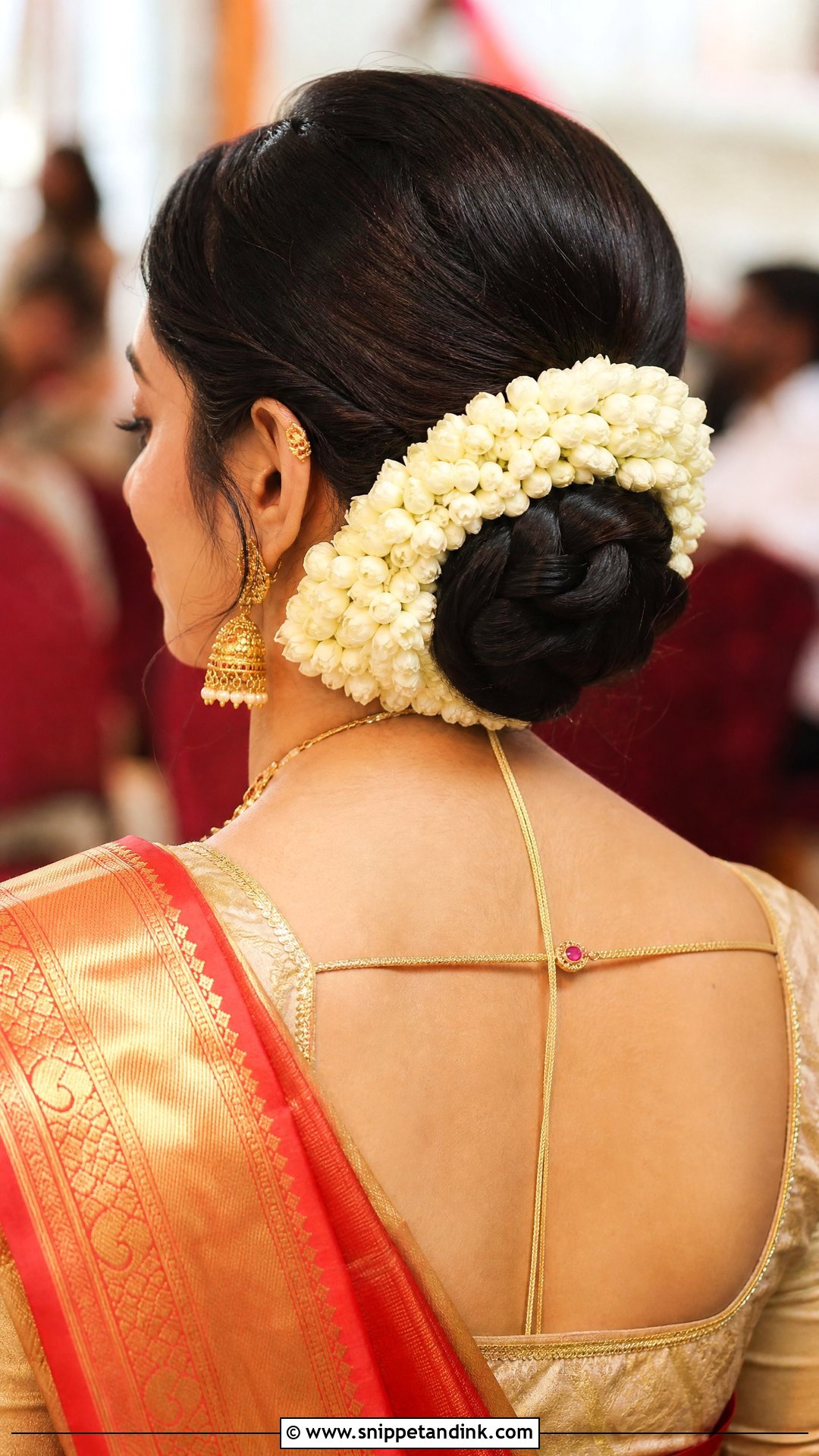
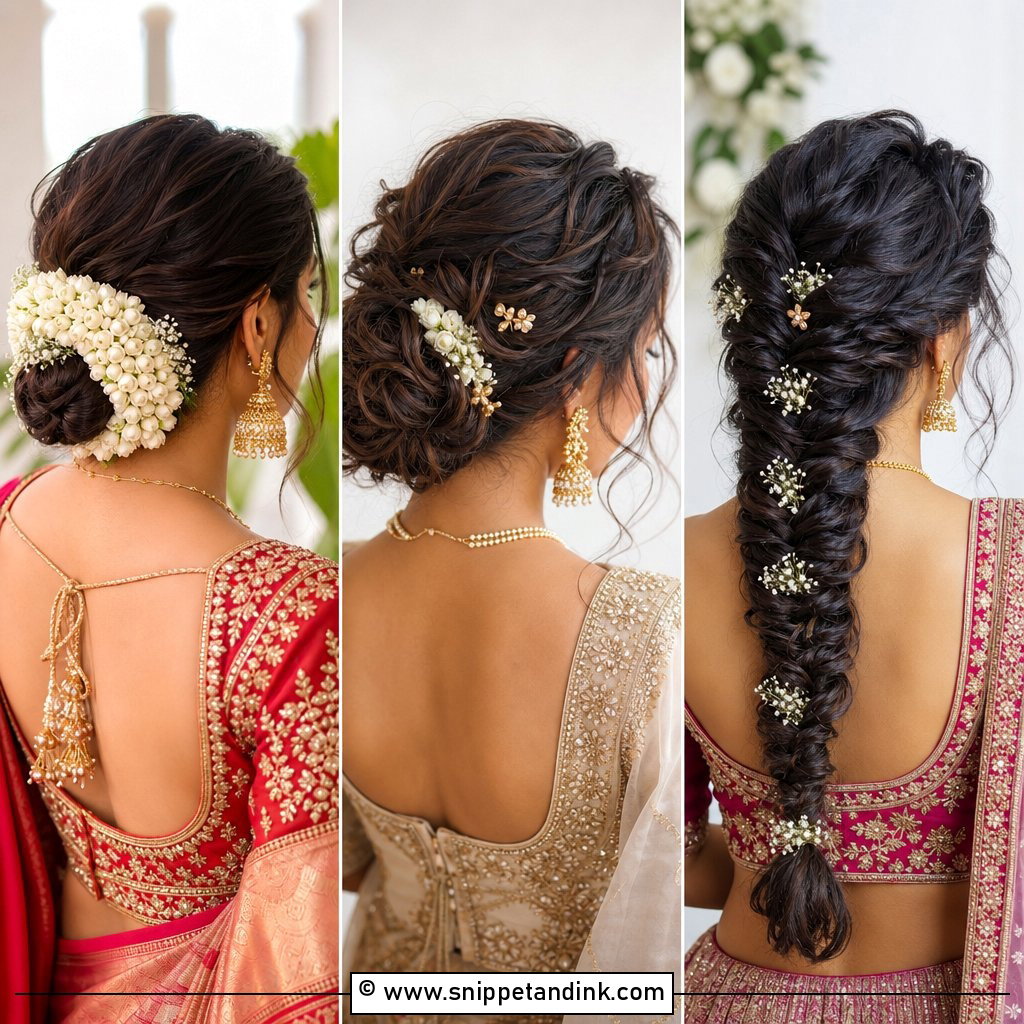
The low gajra bun is the classic Indian wedding hairstyle, sitting neatly at the nape and wrapped in fresh jasmine or mogra. Its low position balances a heavy silk, Banarasi or Kanjeevaram saree without competing with the zari. I build it on a firm ponytail base so the gajra has something to pin into; wrapping flowers around a loose coil is how they end up sliding off during the pheras. A center part looks graceful, and two soft face-framing pieces make it feel younger. Pinned properly, it lasts through the ceremony, the portraits and a long reception.
2. Sleek Bridal Bun With Matha Patti
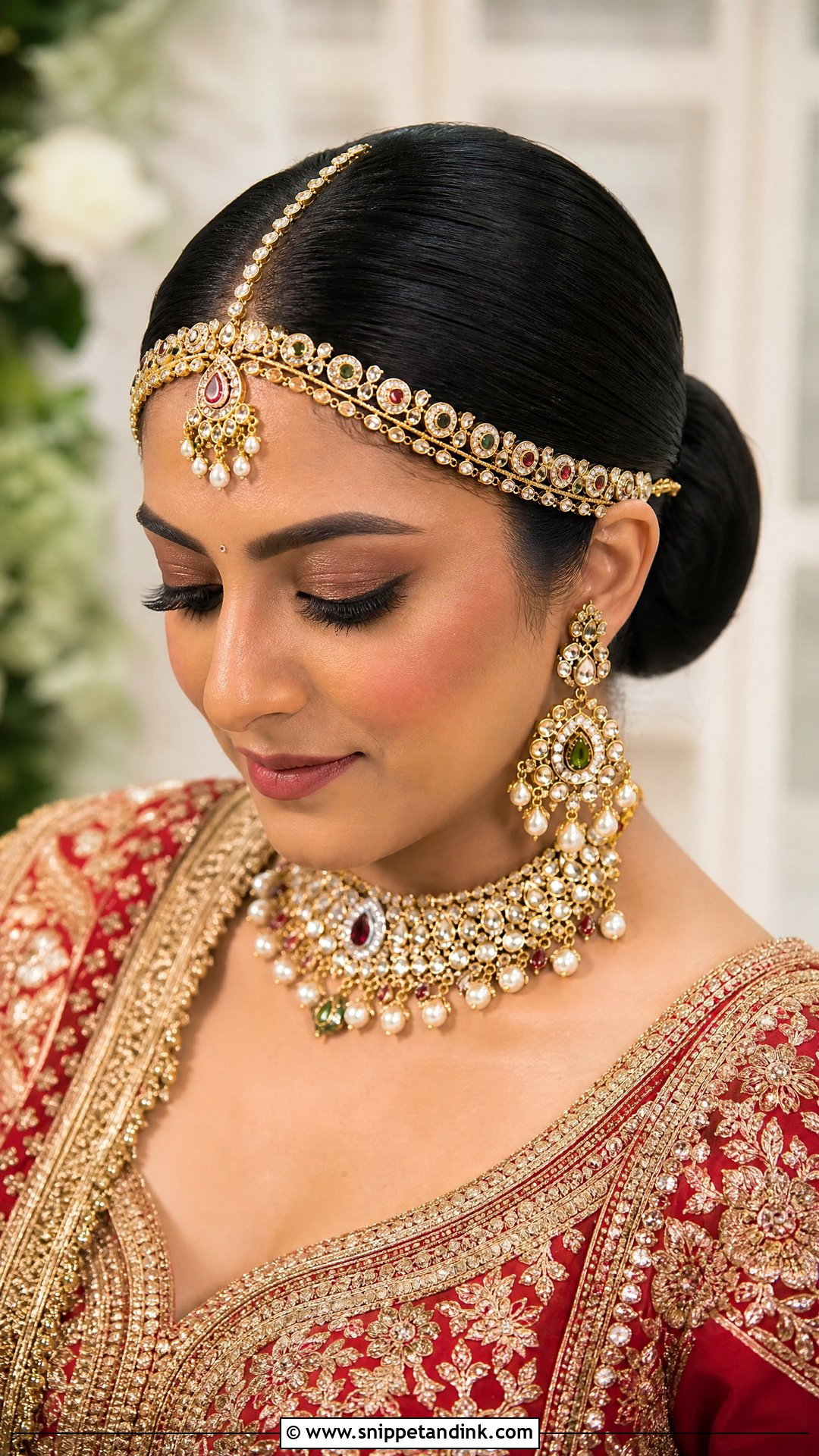
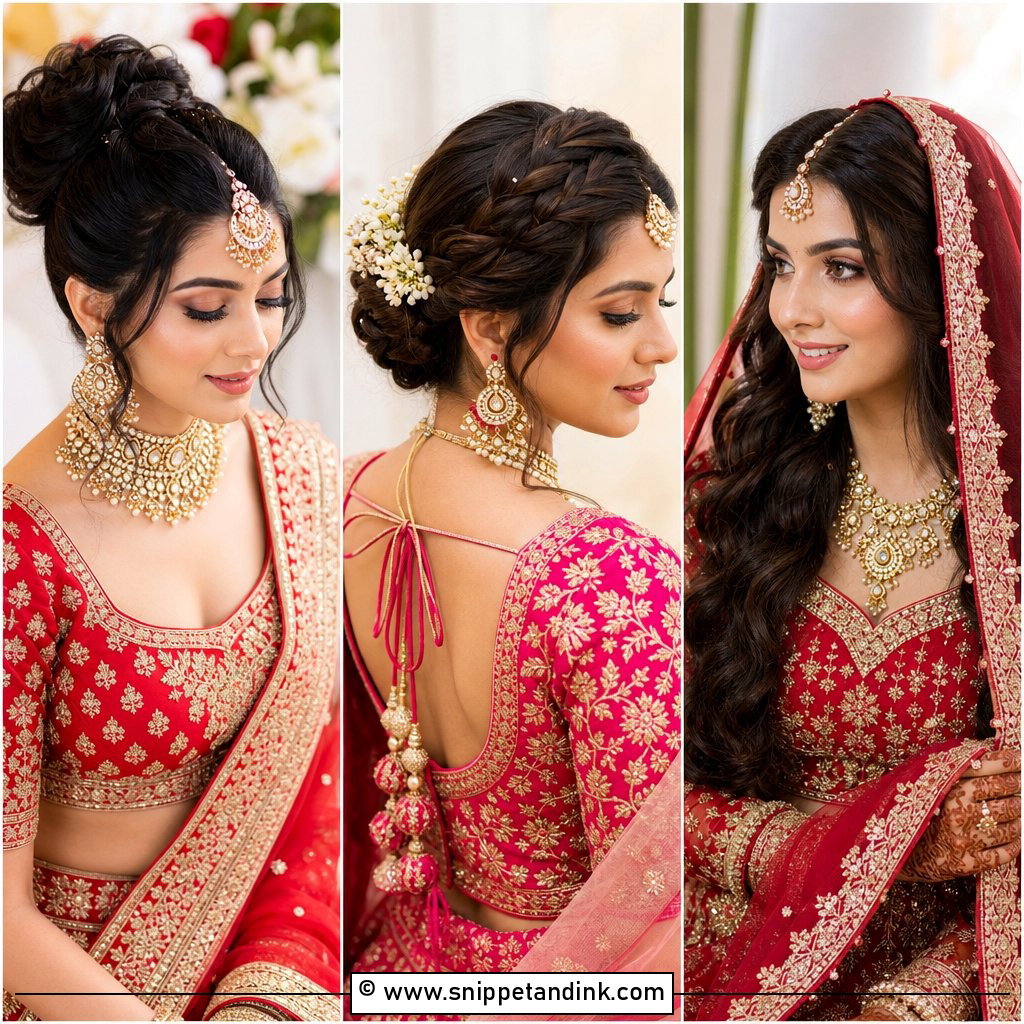
Sleek buns are my go-to under heavy forehead jewelry, because a smooth surface lets the matha patti, maang tikka and passa lie flat instead of tilting on bumps. The hair is brushed back from a center part into a low or mid bun. Embroidered outfits look calmer next to it. Shine serum controls the flyaways, but I work it in sparingly at the hairline, since too much makes the matha patti chain slip. If your hair is very fine at the temples, tell your stylist; a little root powder stops the scalp showing through under bright lights.
3. Messy Bun For Indian Wedding
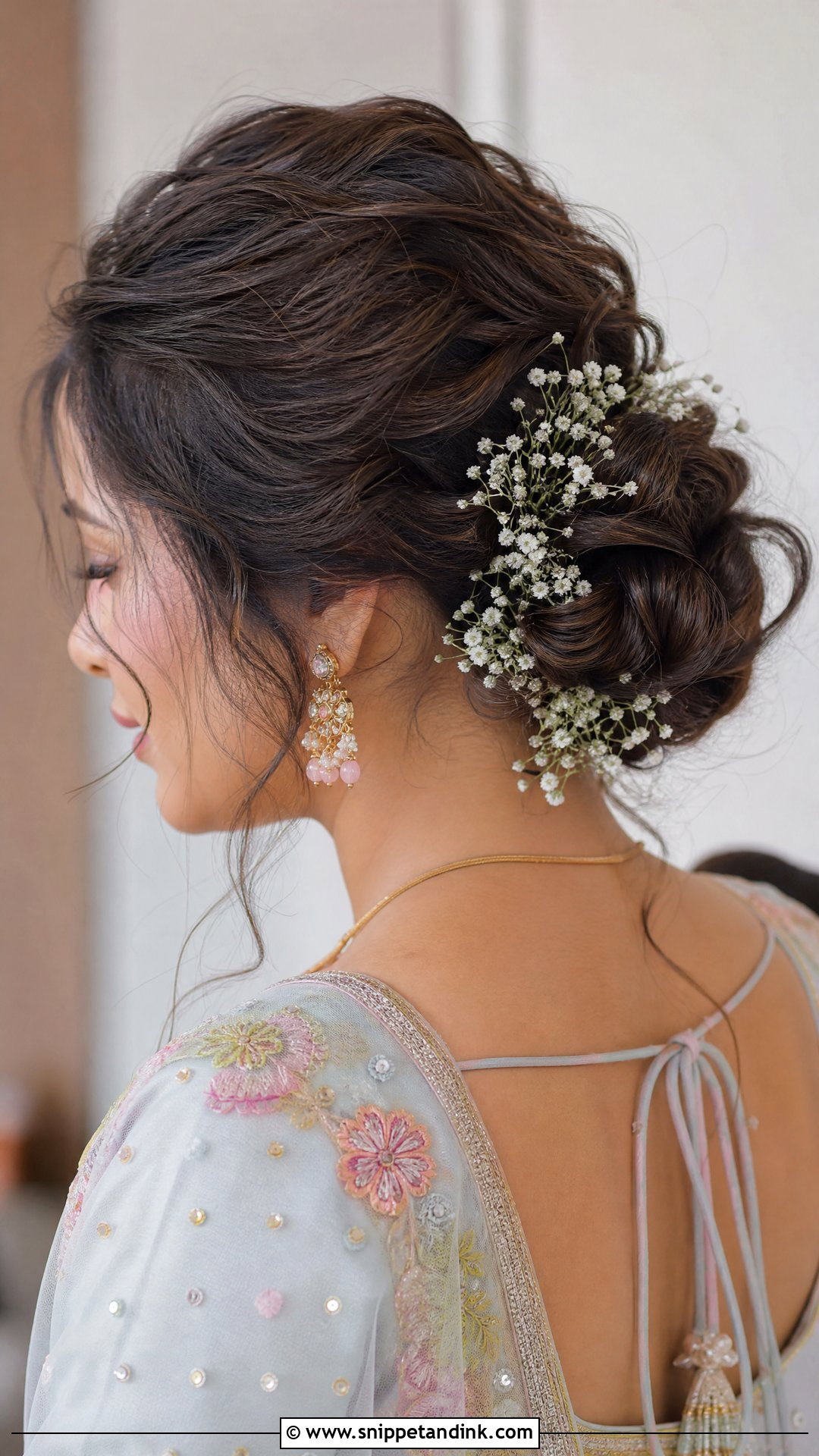
“Messy” is the wrong word, really. The version that photographs well is carefully loosened: volume at the crown, soft twists, a few strands near the face, all held by hidden pins and light backcombing. A bun twisted up in a hurry looks rushed rather than romantic, and it collapses by lunch. It suits pastel lehengas, organza sarees and daytime functions. Baby’s breath or small roses tuck in easily. This is the bun I’d suggest for the haldi or mehndi, where a little undone is welcome and you won’t mind washing it out.
4. Braided Bun For Indian Wedding
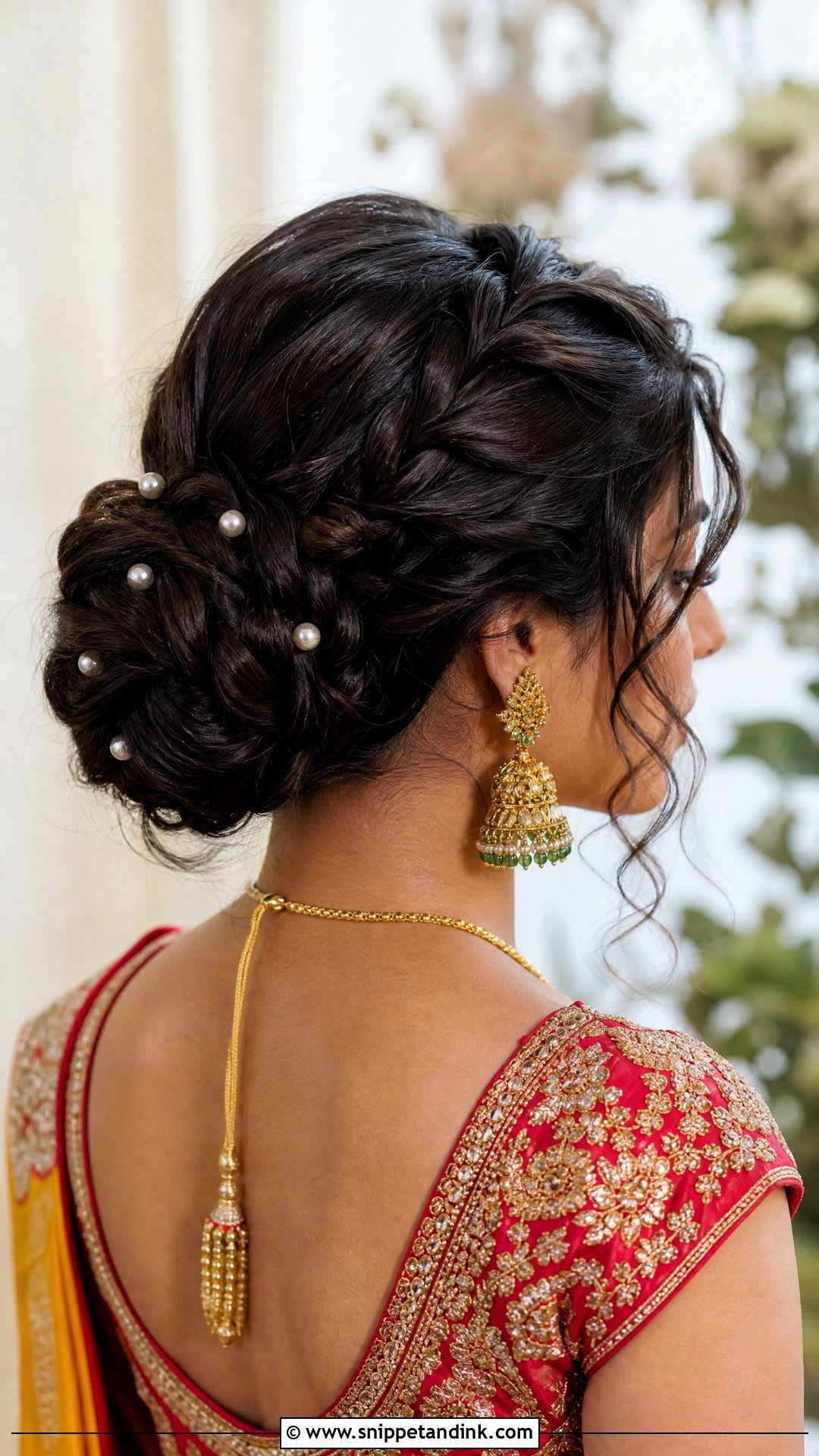
Braids give a bun visible structure from every side, which matters at Indian weddings because guests see the back of your head for most of the ceremony. The braid can wrap around the bun, run into it, or start at the crown. On thick hair it also tames bulk: three braids coiled together sit much flatter than the same hair in one twisted knot. Jhumkas and a tikka sit comfortably with it. If you add tiny flowers or gold pins, push them into the braid’s gaps rather than on top, where they catch on the dupatta.
5. South Indian Bridal Bun With Flowers
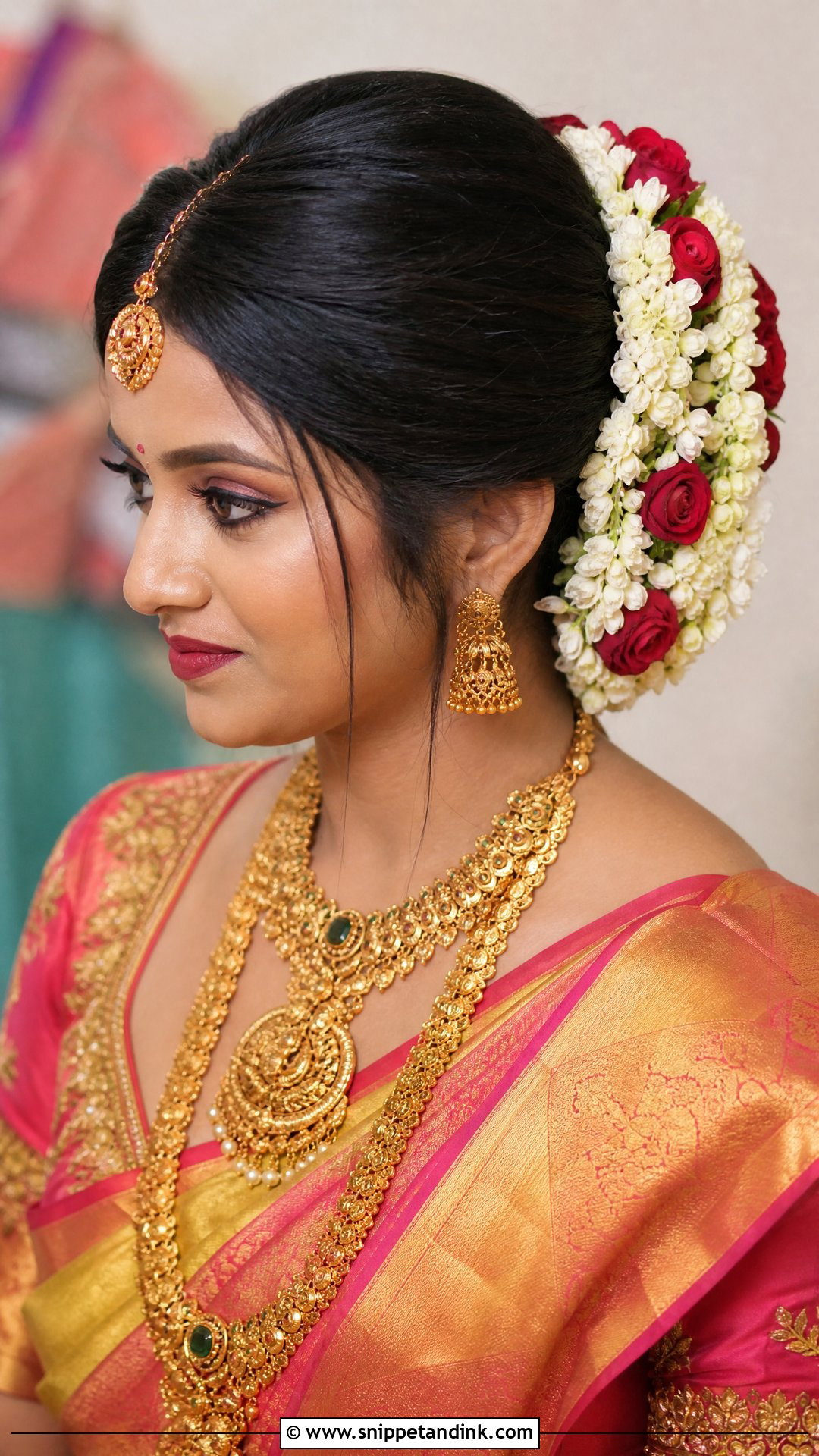
A South Indian bridal bun with flowers is full and rounded, set low or just below mid-height, and covered with jasmine, roses, kanakambaram or stacked floral rings. With temple jewelry and a center part, it’s the standard look for a muhurtam for good reason. Most brides don’t have enough hair for that fullness, and that’s normal; I use a bun padding or a matching extension piece underneath. Ask your florist to match the flowers to the saree border or the jewelry tone, and allow for the weight, since layered rings add up quickly.
6. Rose Bun For Indian Wedding
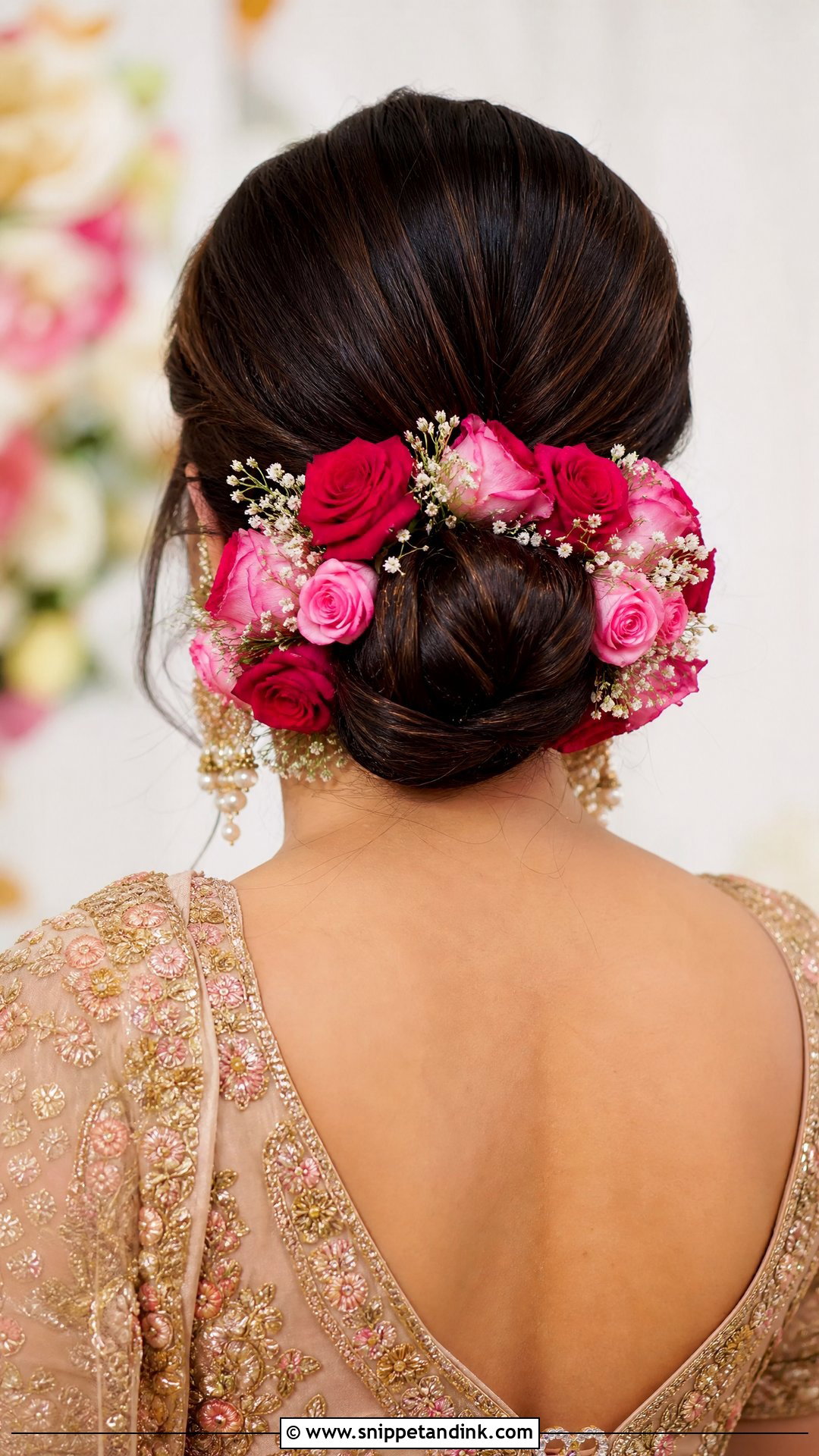
Roses bring color that jasmine can’t. The bun underneath stays simple and smooth, then gets ringed or filled with red, pink, white or peach blooms. Lehengas, silk sarees and reception gowns all take it well, and because the flowers do the decorating you can go lighter on hair jewelry. Large heads look best with a clean front; smaller buds sit nicely with soft waves near the face. I ask florists for spray roses or small garden roses, because full-size heads get heavy and start to droop by the third hour.
7. Side Bun For Indian Wedding
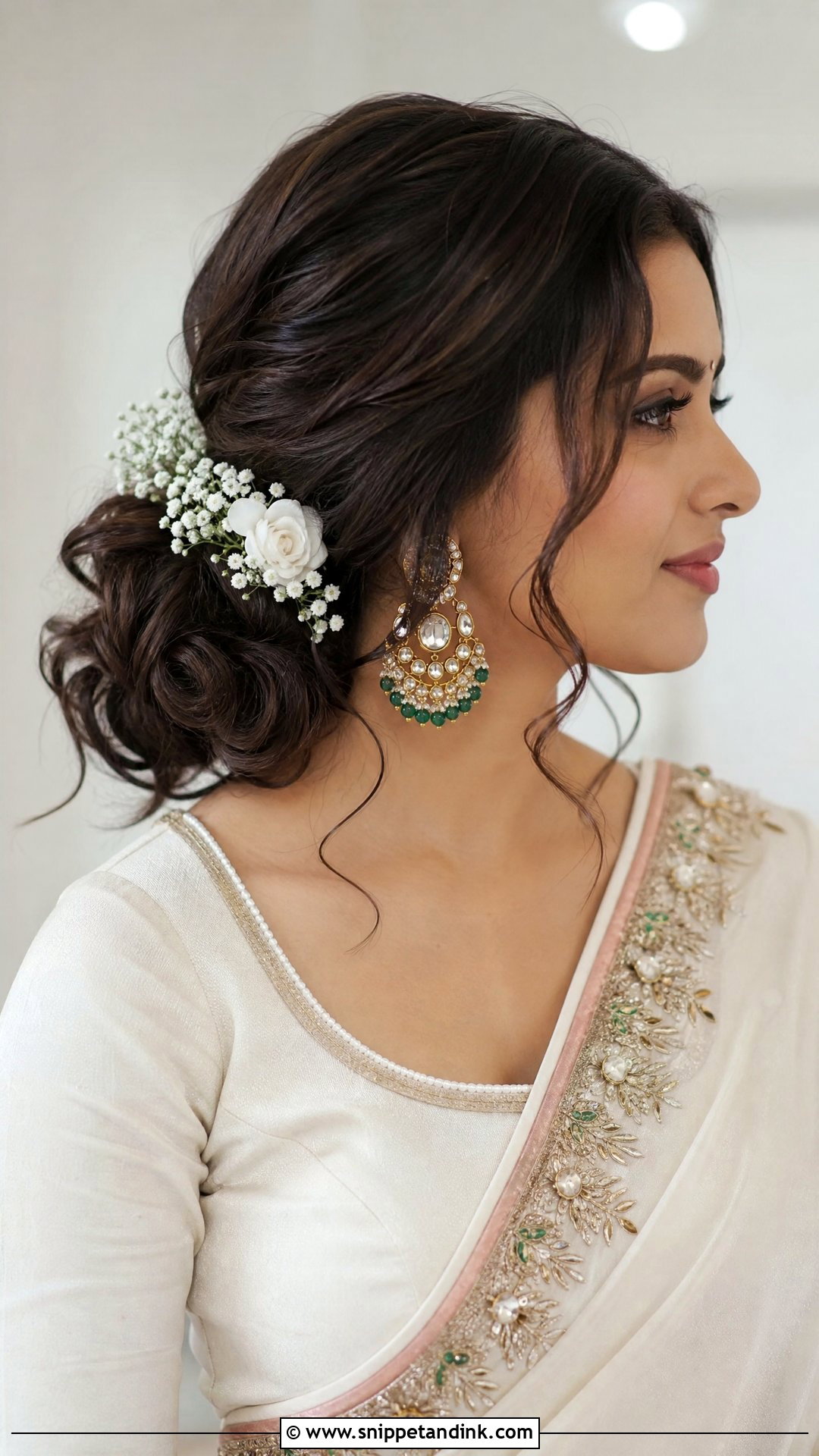
Moving the bun to one side of the nape means it shows in front-facing photos, which is the whole point. Your flowers and curls appear in the shot even when you’re looking at the camera. I place it on the side opposite the pallu or pinned dupatta, so fabric and hair aren’t fighting over the same shoulder. One-shoulder blouses suit it well. Keep the bun soft and not too large; a big knot on one side can make the head look lopsided in group photos.
8. High Bun For Indian Wedding
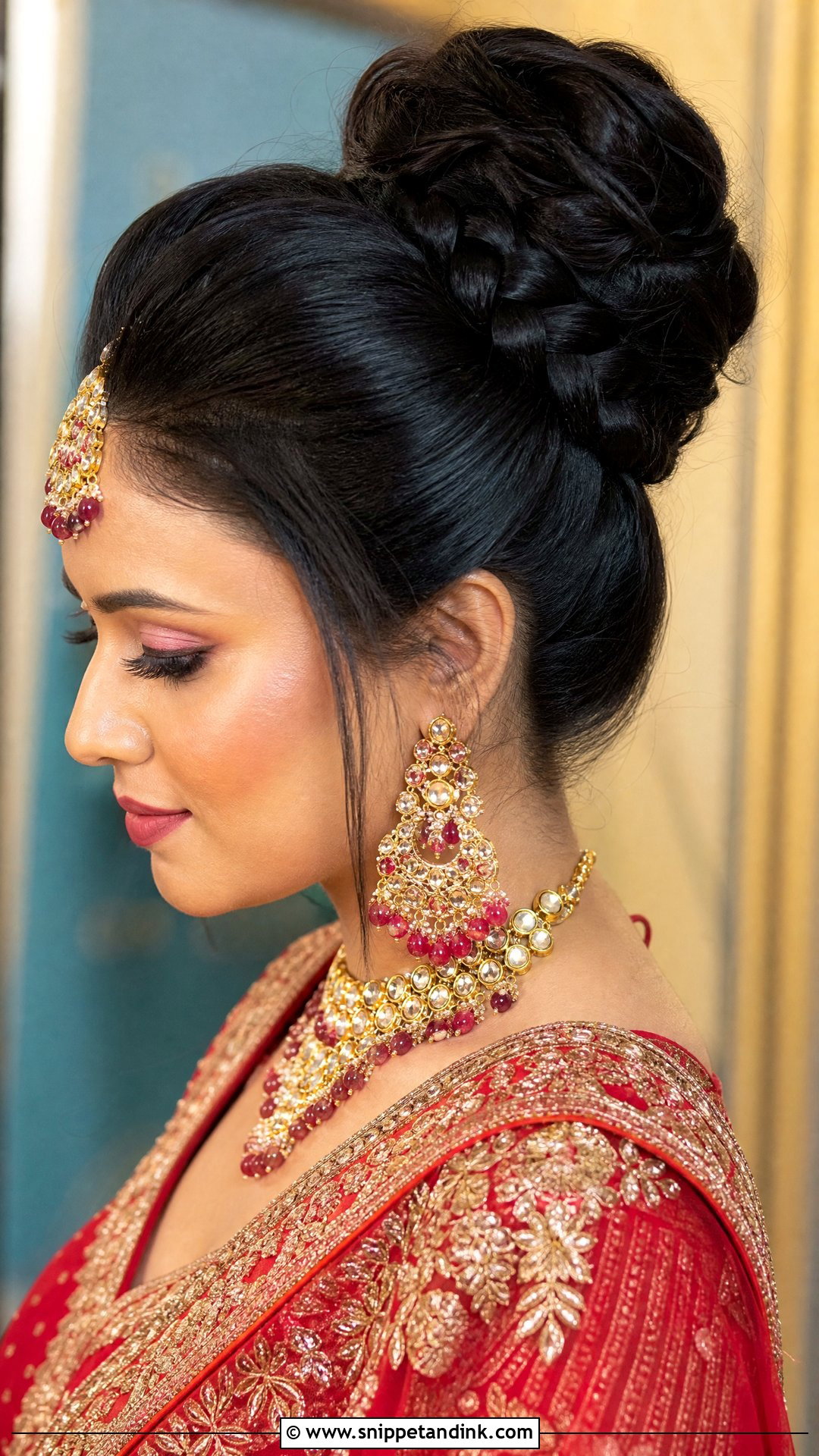
A high bun lifts everything off the neck, so the blouse back, the necklace and the earrings all get their moment. It also gives a heavy dupatta a strong anchor point, provided it’s built on a tight ponytail with the pins locked in. Sleek, braided or textured all work. The height lengthens round and oval faces. Comfort is the catch: a high bun pulls on the scalp more than a low one, so I keep the elastic snug but not tight and warn brides that a headache after eight hours usually comes from tension, not the pins.
9. Bun With Maang Tikka For Indian Wedding
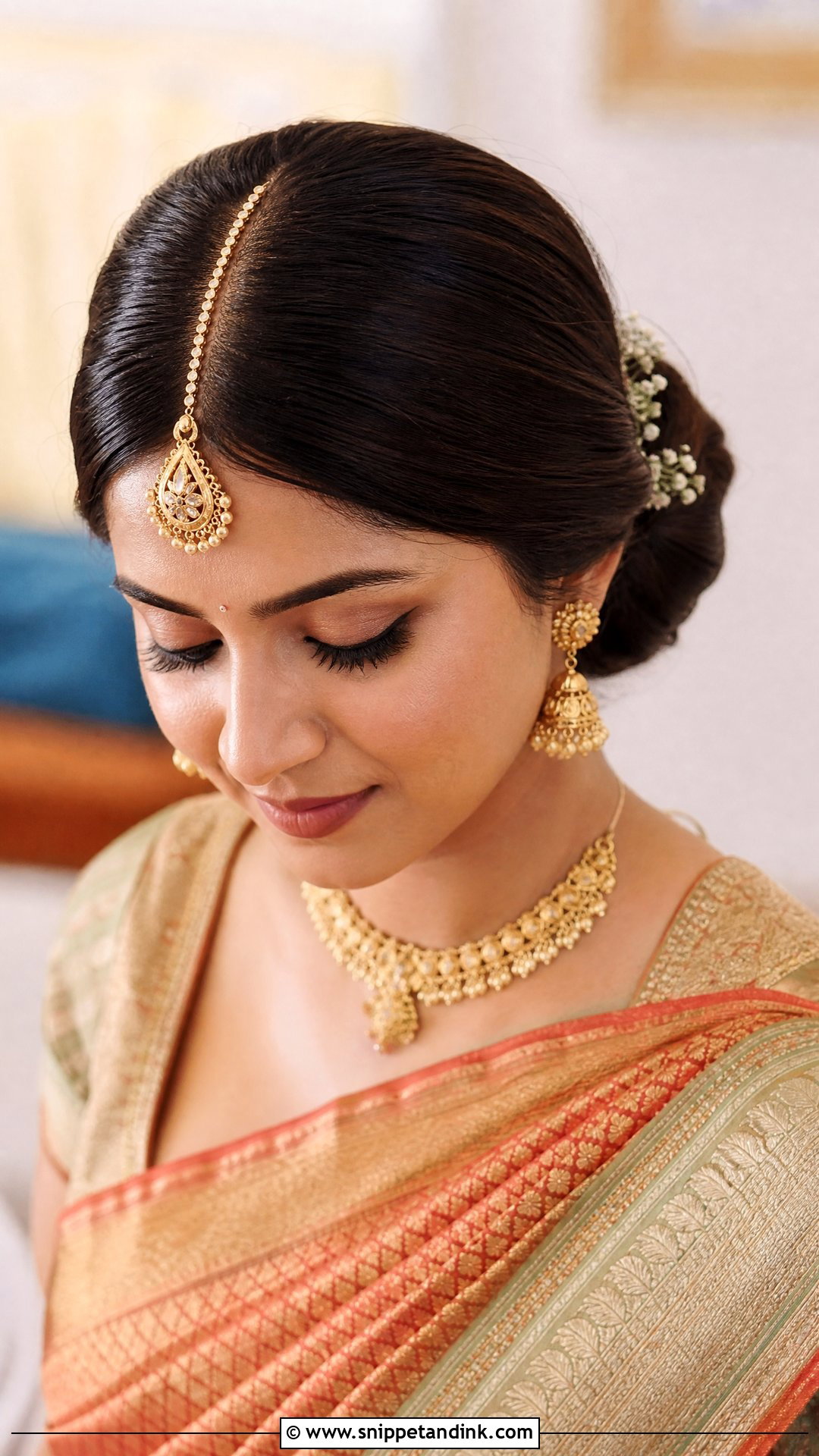
A bun with maang tikka frames the face without the full weight of a matha patti, which makes it a favorite for sisters and close family as well as brides. The bun can be low or mid, sleek or soft, but the center part stays clean so the tikka hangs straight. I always fix the tikka before finishing the bun. Its chain or hook needs a pinned anchor at the crown, and if the bun is done first, I end up digging under finished hair to secure it. Kundan, polki and pearl sets all work here.
10. Bun With Pearl Accessories For Indian Wedding
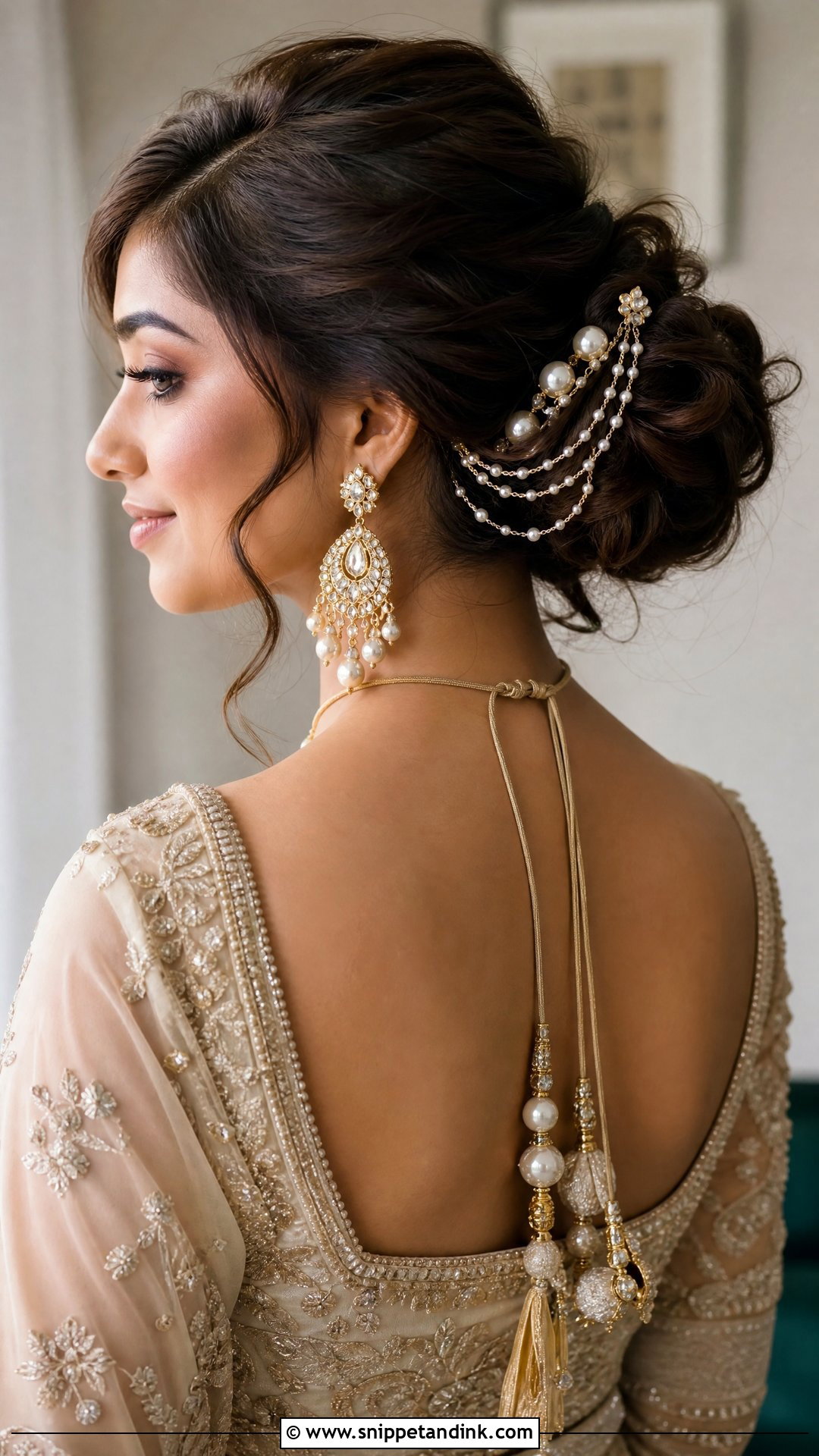
Pearls read as traditional but lighter than gold, and they suit ivory, champagne, blush and pastel outfits especially well. They go in as pins, short chains, bun wraps or scattered accents through a textured bun. I’d choose this for the engagement or the reception more than the main ceremony, where gold usually leads. A smooth bun shows each pearl clearly; a loose braided bun gives a softer read. Under bright reception lights pearls bounce back a soft glow, whereas rhinestones can flare.
11. Curly Bun For Indian Wedding
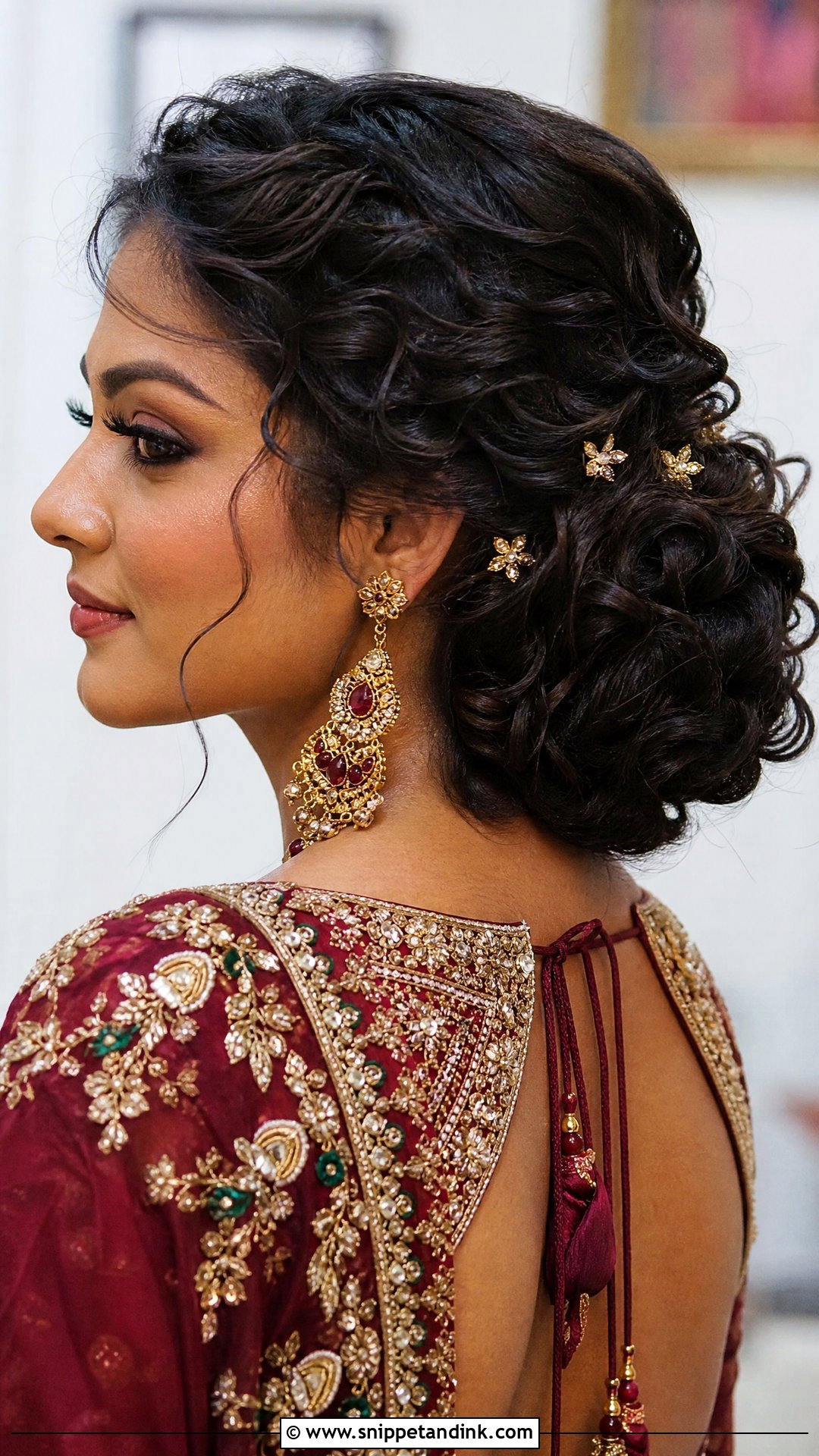
Naturally curly or wavy hair often looks best in a bun that keeps the texture. Instead of flattening it, I pin curls into a full shape at the back and let a few hang loose near the face. Curl cream or mousse on damp hair keeps the definition; if the curls are brushed dry, they turn into frizz. It works best for sangeet, cocktail and reception nights. Floral clips and statement earrings both sit well against it. If your curls are tight, expect the bun to come out smaller than in pictures of looser hair, since the curl takes up length.
12. Front Puff Bun For Indian Wedding
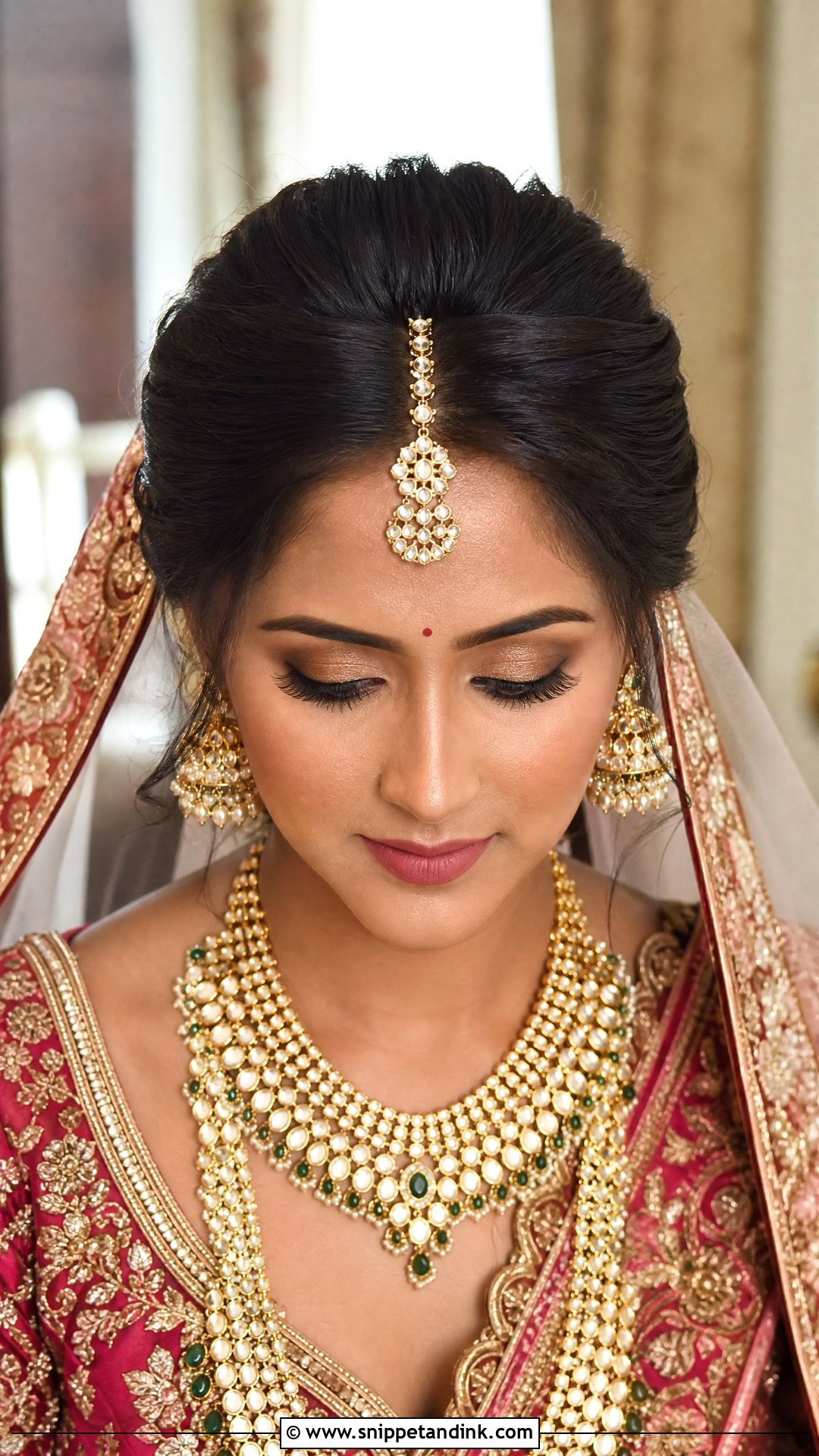
The front puff adds height at the crown, and how much is a matter of face shape and outfit. A modest lift balances ornate lehengas and gives the maang tikka more presence; a tall, round puff tends to look dated in photos now. I backcomb only the underside of the section and smooth the top layer over it so the lift doesn’t show its structure. Behind it, the bun can be clean, braided or floral. If you have a round face it gives a little length; if your forehead is already long, keep it very low.
13. Open Flower Bun For Indian Wedding
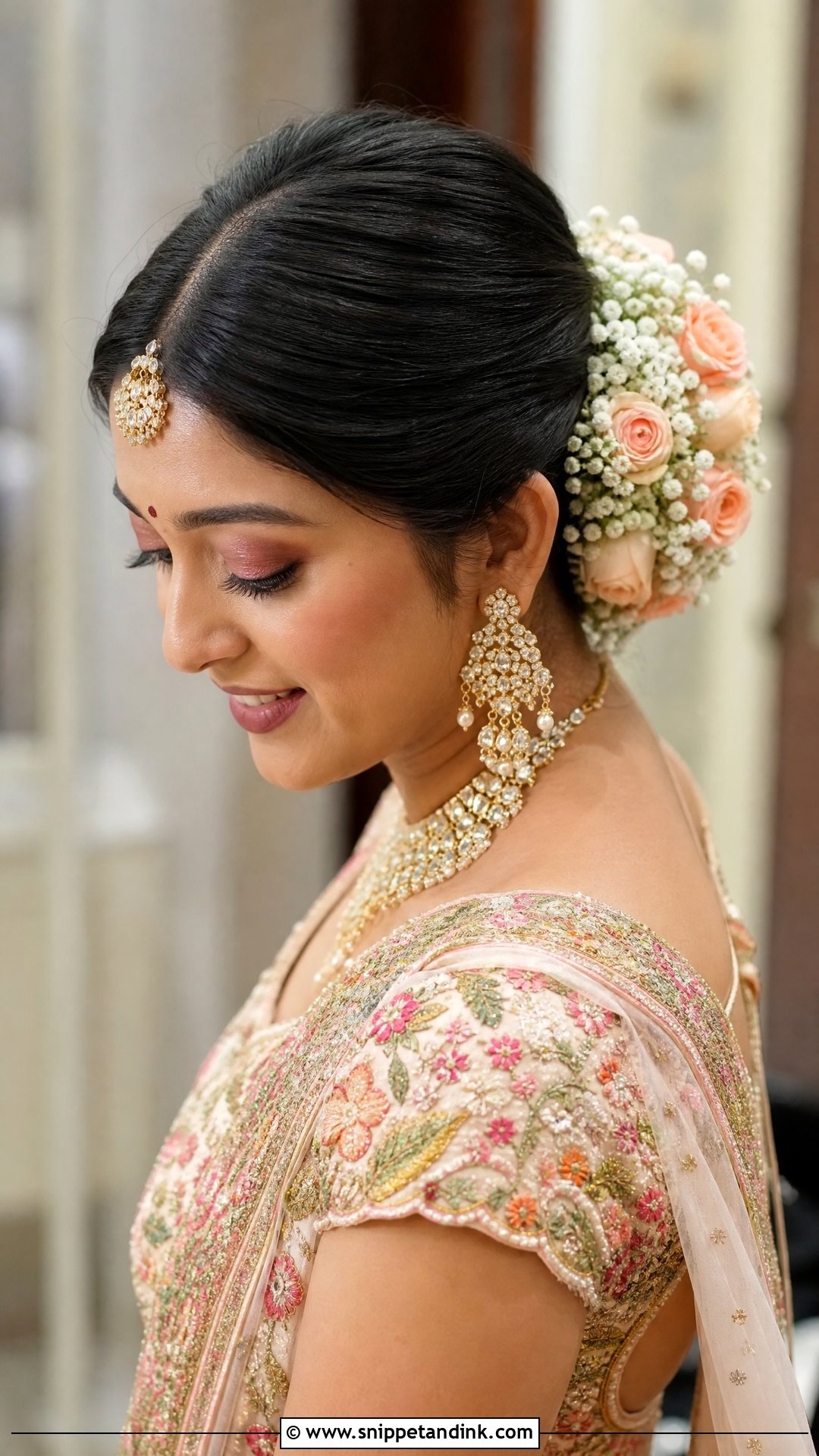
Here the flowers aren’t a ring around the bun but the whole surface of it: roses, jasmine, baby’s breath or a mix pinned across the back. It’s a florist’s look as much as a hairstylist’s, so I coordinate with the florist on stem lengths and wiring before the day. It suits outdoor weddings, garden functions, haldi, mehndi, and daytime ceremonies. Keep the front plain so the back does the talking. The blooms need to be small and light, or the bun feels heavy and the pins start to ache.
14. Twisted Bun For Indian Wedding
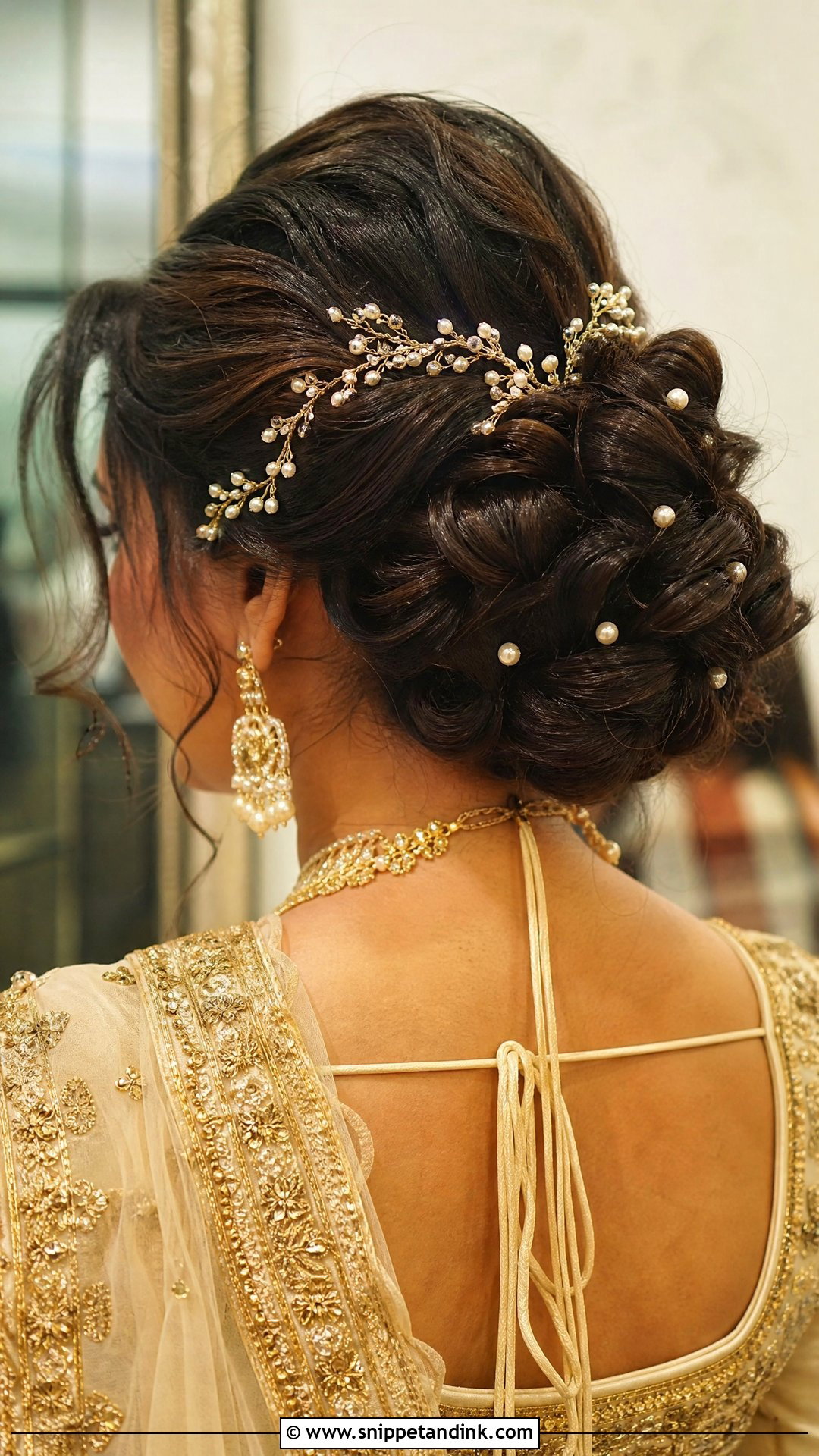
Sections twisted and pinned around a base give the bun shape from the sides as well as the back. Medium to long hair suits it best, since the twisting makes moderate thickness look fuller. Highlighted hair shows the twists clearly because each turn reveals a different tone. For an Indian wedding I’d add a small gajra, a few pearl pins or a slim hair vine, nothing heavier. It’s a good choice for sisters and guests who move from ceremony to reception without time for a restyle, because each twist is pinned separately and one loose section doesn’t bring down the rest.
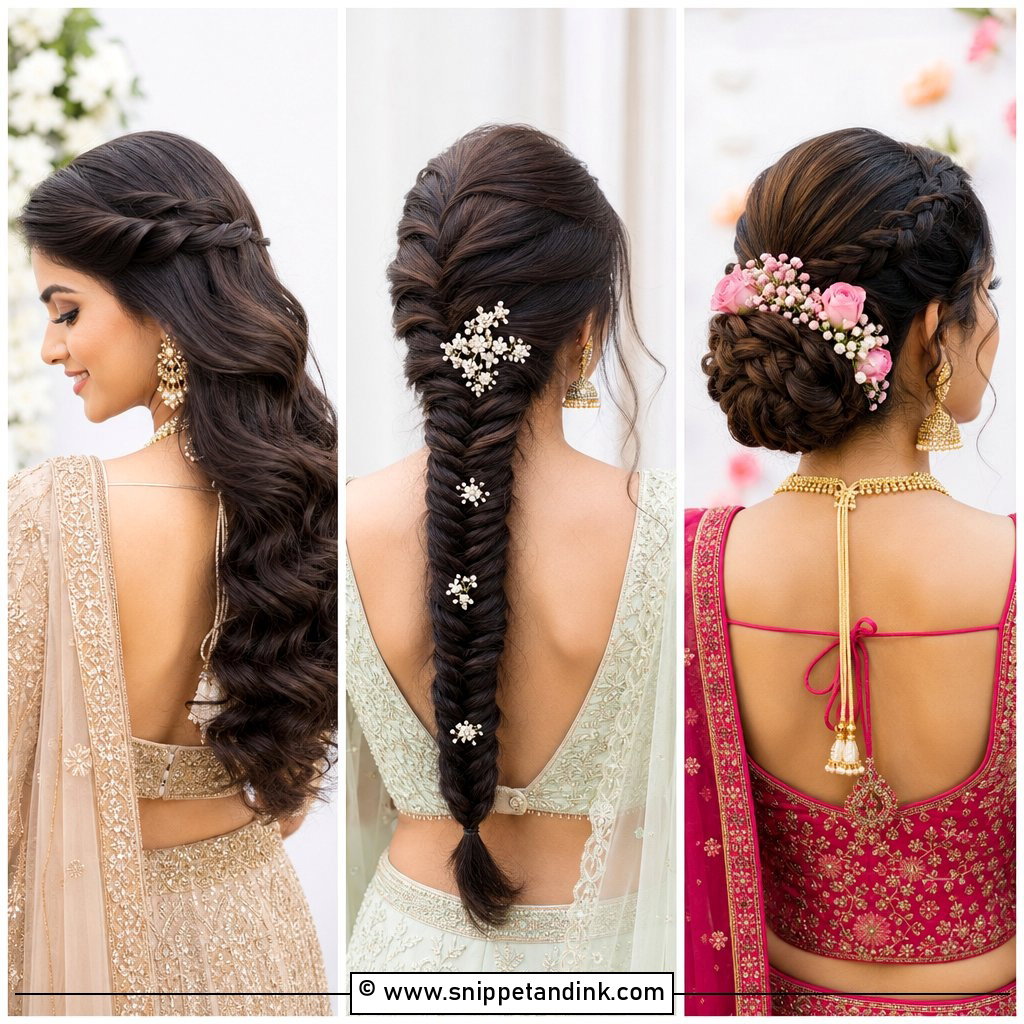
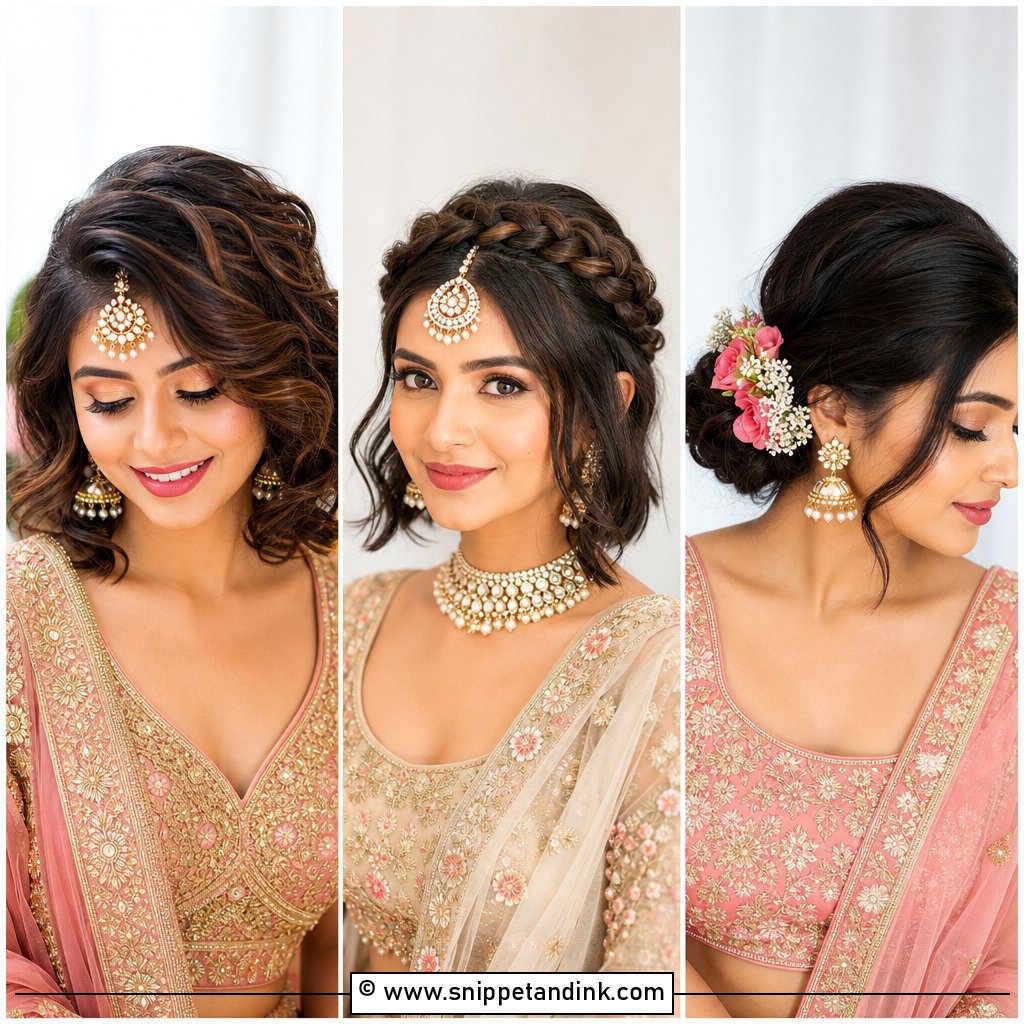
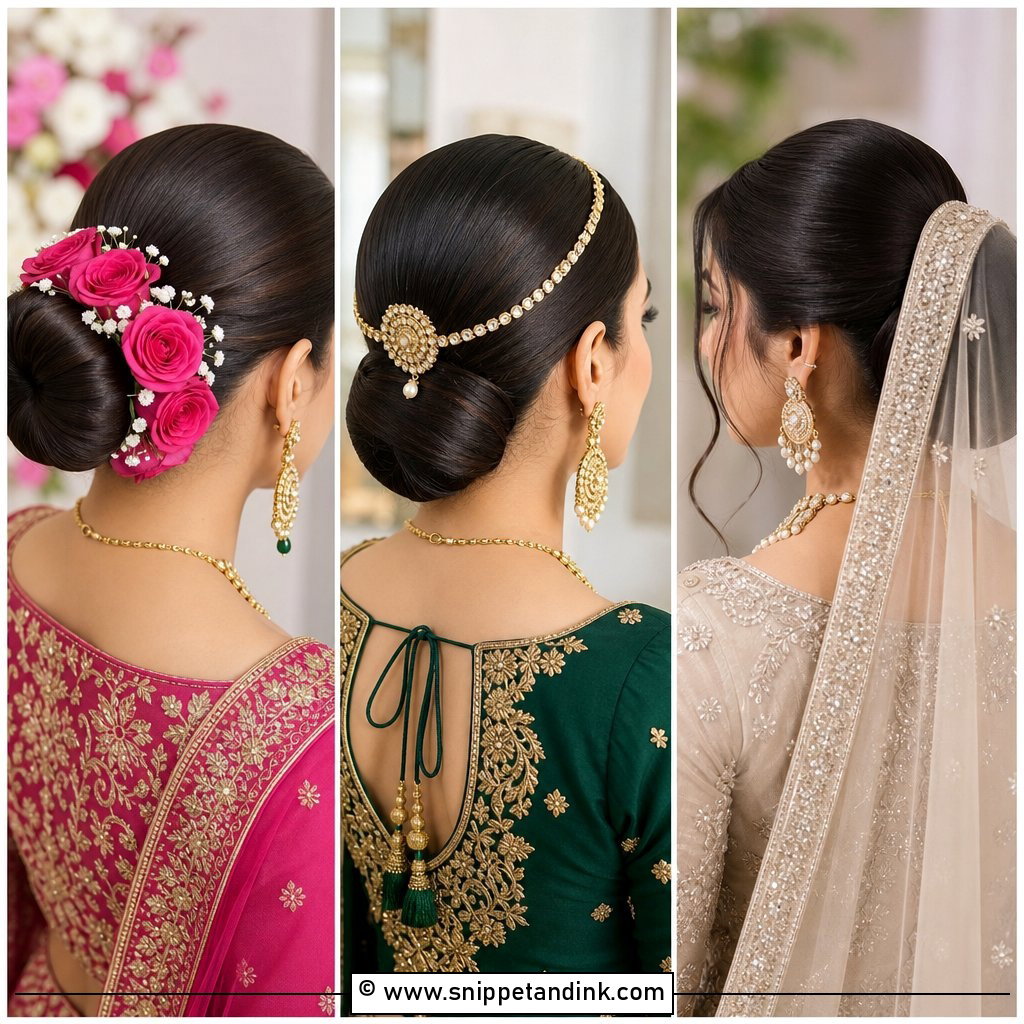
15. Reception Bun For Indian Wedding
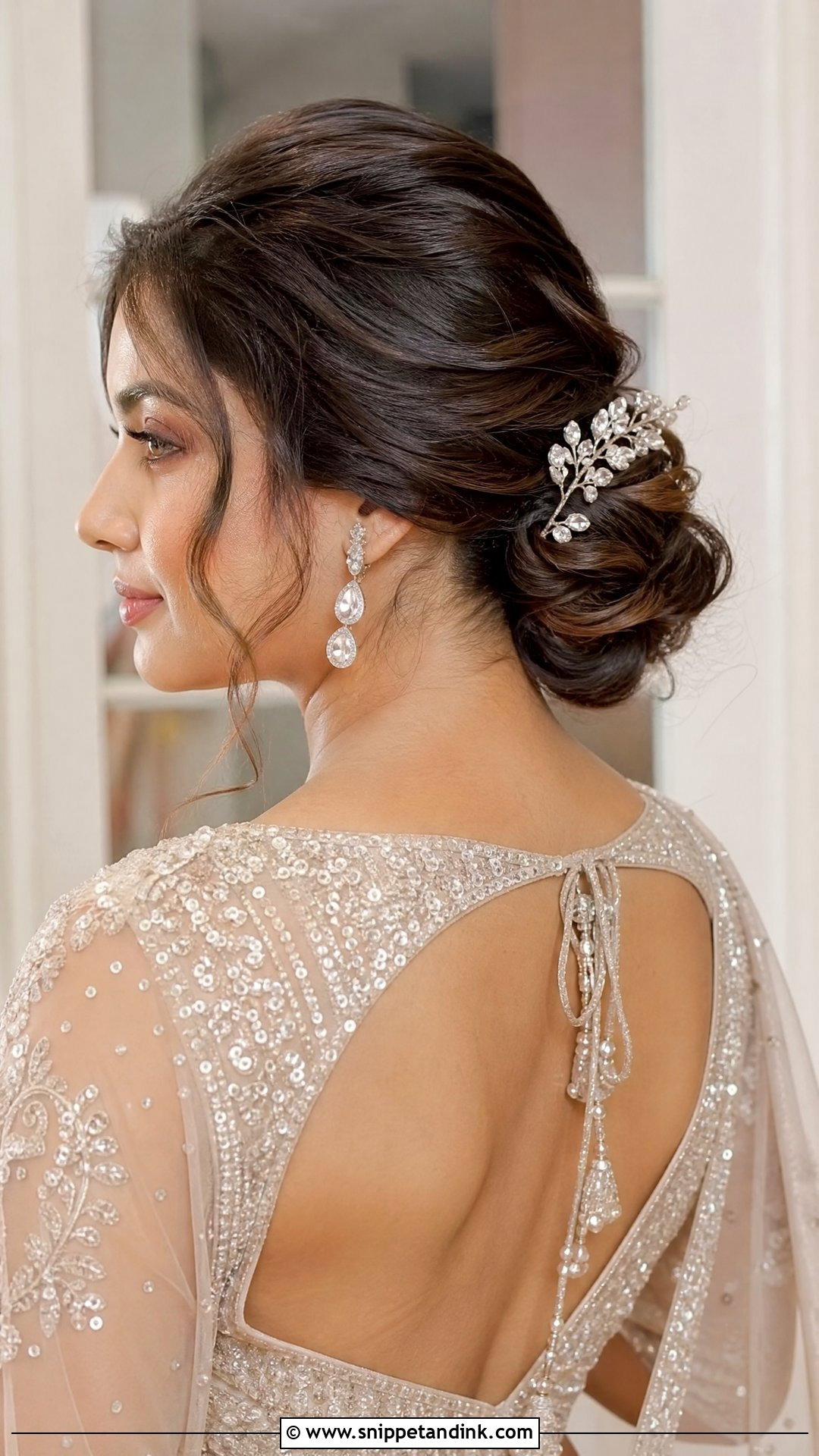
The reception is where a bride can relax the rules. Gowns, contemporary lehengas, shimmer sarees and Indo-western outfits call for a different bun from the ceremony, often lower and more textured, with soft waves left at the front. A low textured bun is the most requested at this point in the evening because it’s comfortable for hours of greeting guests and doesn’t fight a change of earrings. Side part for modern, center part for classic. If you’re restyling from the ceremony bun, I’d brush out, rewave the front, and rebuild rather than trying to loosen pinned hair; it photographs much cleaner. Finish with a shine spray for the stage lights.
Jasmine Browns Faster Than Anyone Warns You
Fresh mogra and jasmine are gorgeous and smell incredible, but the small white buds bruise and brown at the edges within a few hours, sooner in heat. A gajra that looks perfect at the start of a morning muhurtam can look tired by the lunch photos.
- Order the strings for the morning of each function, not the night before, and ask for tightly closed buds. They open through the day instead of wilting.
- If you must hold them overnight, wrap them loosely in a damp cotton cloth and keep them in the fridge, away from fruit.
- Keep a second, smaller gajra in a cool bag for a quick swap before the reception portraits.
- Strong jasmine scent bothers some people for hours. If you get headaches easily, try a shorter string or mix in roses.
Pacing Your Hair Across Haldi, Mehndi, Sangeet and the Wedding
A multi-day wedding is hard on hair. Heat, backcombing and dozens of pins every day leave the scalp sore and the lengths dry by the main ceremony, so I plan the buns so the heaviest styling lands on the day that matters most.
Keep the haldi look soft and low, and assume turmeric paste will reach your hair; a loose bun you can wash out without guilt is ideal. Wear something easy for the mehndi too, since you’ll sit still with your hands busy for hours. Save the sleek, padded, fully jeweled bun for the wedding itself, and give your hair a gentle wash and conditioner the night before, so it’s soft but not slippery when I start.
The Jewelry Usually Decides How High the Bun Sits
If you’re stuck, start with the jewelry and work backwards. A sleek matha patti bun or a low gajra bun suits heavy sets and a center part; a high or side bun suits a statement necklace or a blouse back you want seen. A heavily embroidered outfit usually wants a cleaner bun, while a plain saree can carry flowers, pearls or braids. Then think practically about the weather, where the dupatta gets pinned and how many hours you’ll be sitting. A bun planned around those things stays put and still looks right in the last photo of the night.
You'll Like These Ideas:



Leave a Reply