
Most brides arrive at their first consultation with a phone full of screenshots and no idea which ones their own hair can actually do.
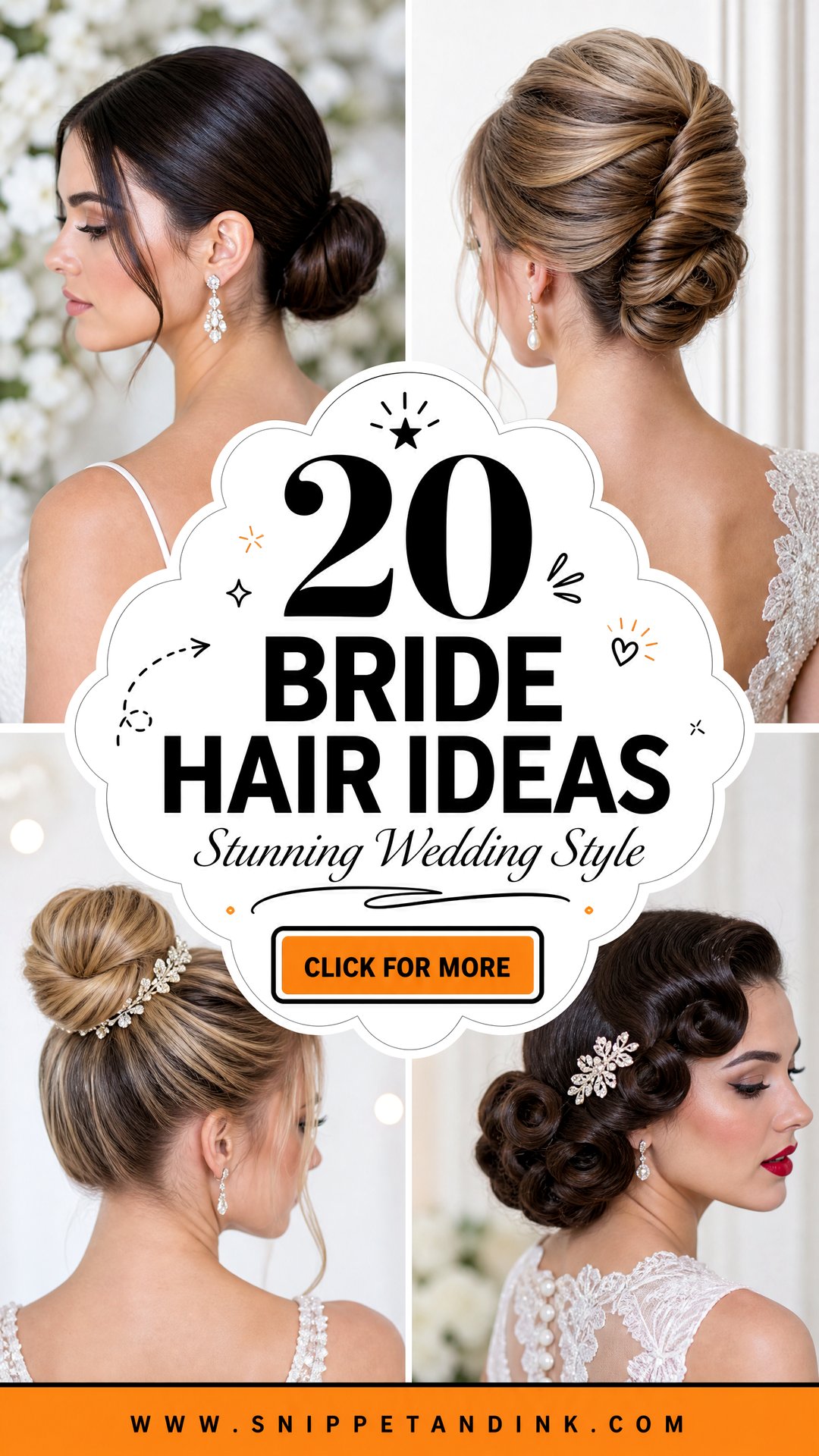
That’s normal, and it’s the gap this list tries to close. Below are 20 bridal styles I do regularly, from sleek buns to soft waves and loose boho braids, with honest notes on what each one needs from your hair, how it holds through a long day and who I’d steer toward something else. Read the notes as much as you look at the pictures, then take the two or three that fit you to your stylist.
Reading Your Own Hair Before You Save Another Photo
Before a bride shows me her inspiration, I like to look at her hair. Four things decide what will actually work, and none of them show up in a pinned photo.
- Density. How much hair is on your head, not how thick each strand is. Low-density hair can look thin in big buns and sparse in braids; high-density hair can do almost any updo but takes longer to curl.
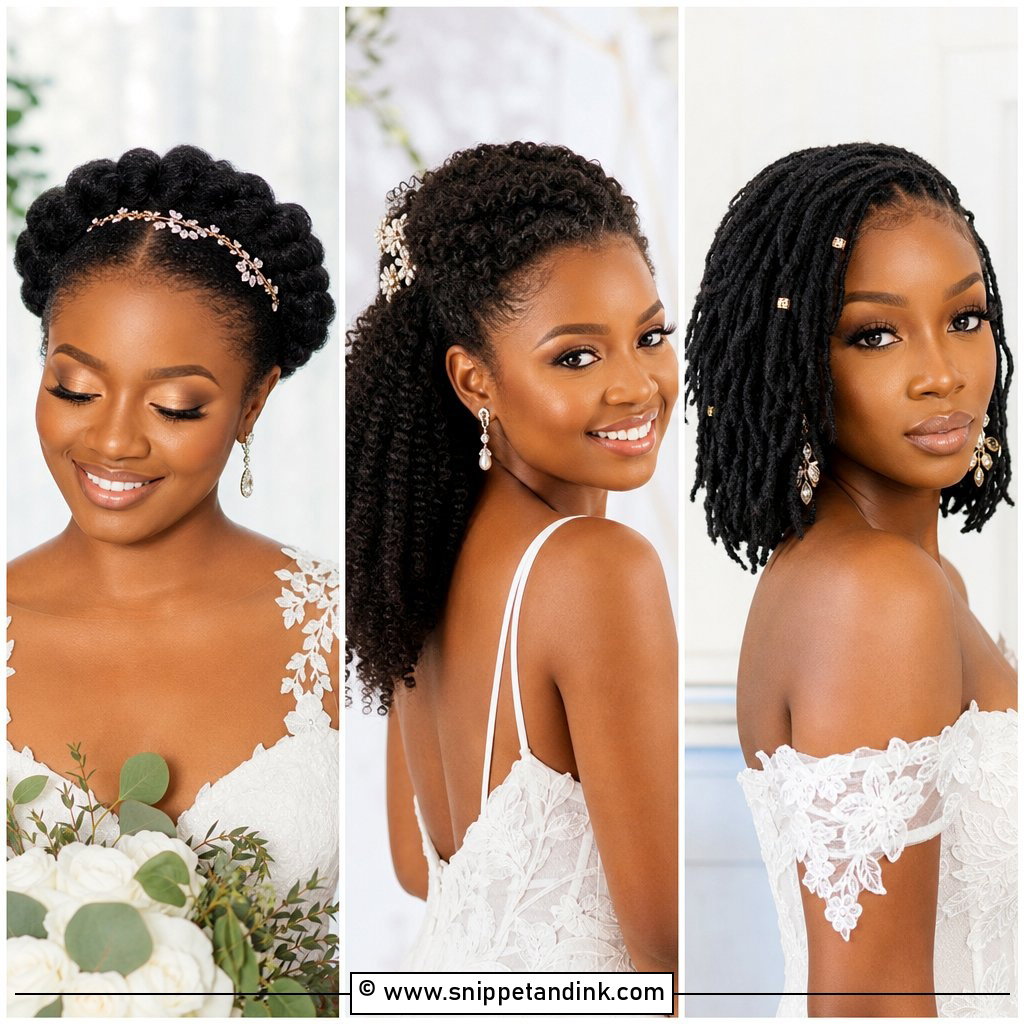
- Texture. Fine hair holds curl poorly and slips out of pins; coarse hair holds well but can frizz. Curly and coily hair often does best styled with its own pattern rather than against it.
- Length and layers. Long one-length hair is the most versatile. Heavy layering limits sleek buns and long braids because short pieces escape.
- How your hair behaves on an ordinary day. If a curl drops within an hour normally, it will drop on your wedding day too, so we plan around that.
One more thing to know: many of the fullest bridal photos you see online use clip-in extensions for length and volume. That’s not cheating, and it’s often the honest route to a big low bun or a long fishtail on fine hair. Ask your stylist whether a style needs them before you fall for it.
1. Sleek Low Bun Wedding Hairstyle
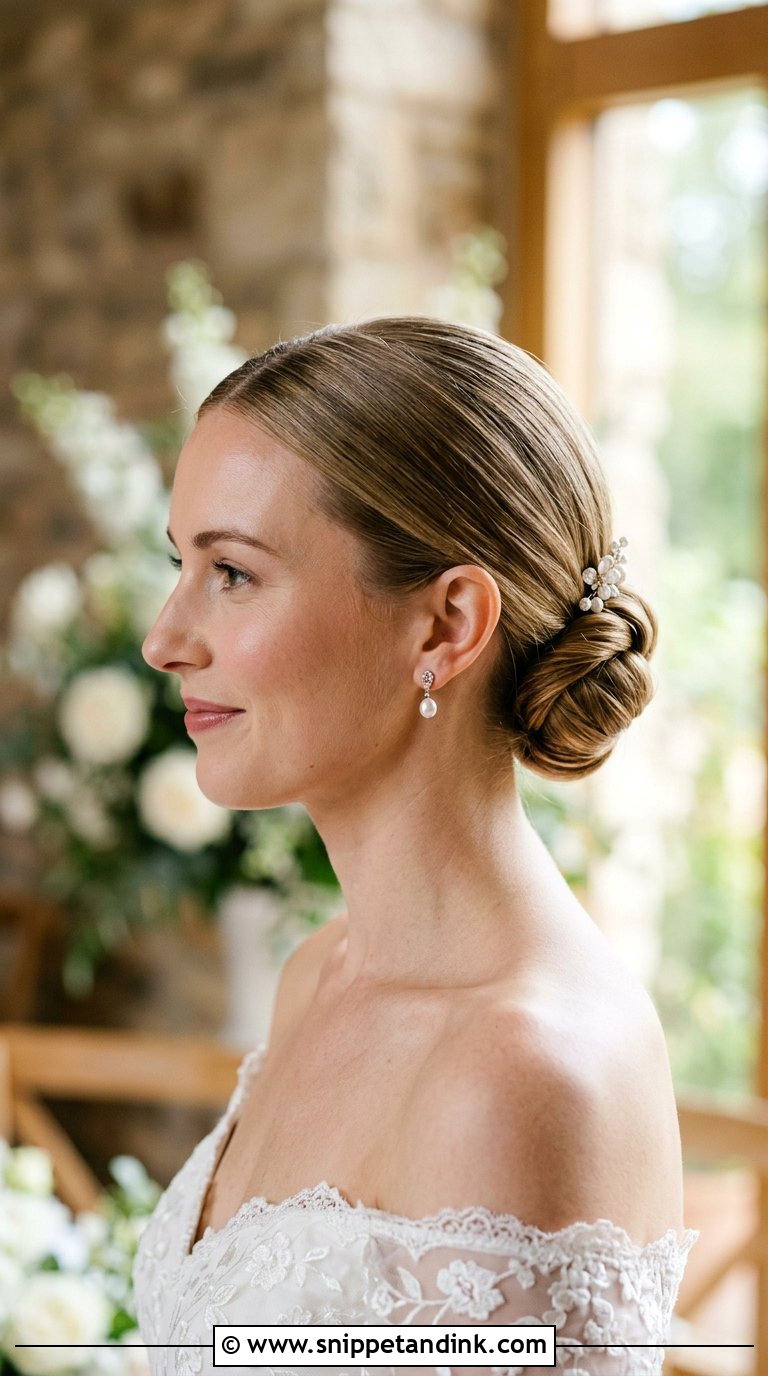
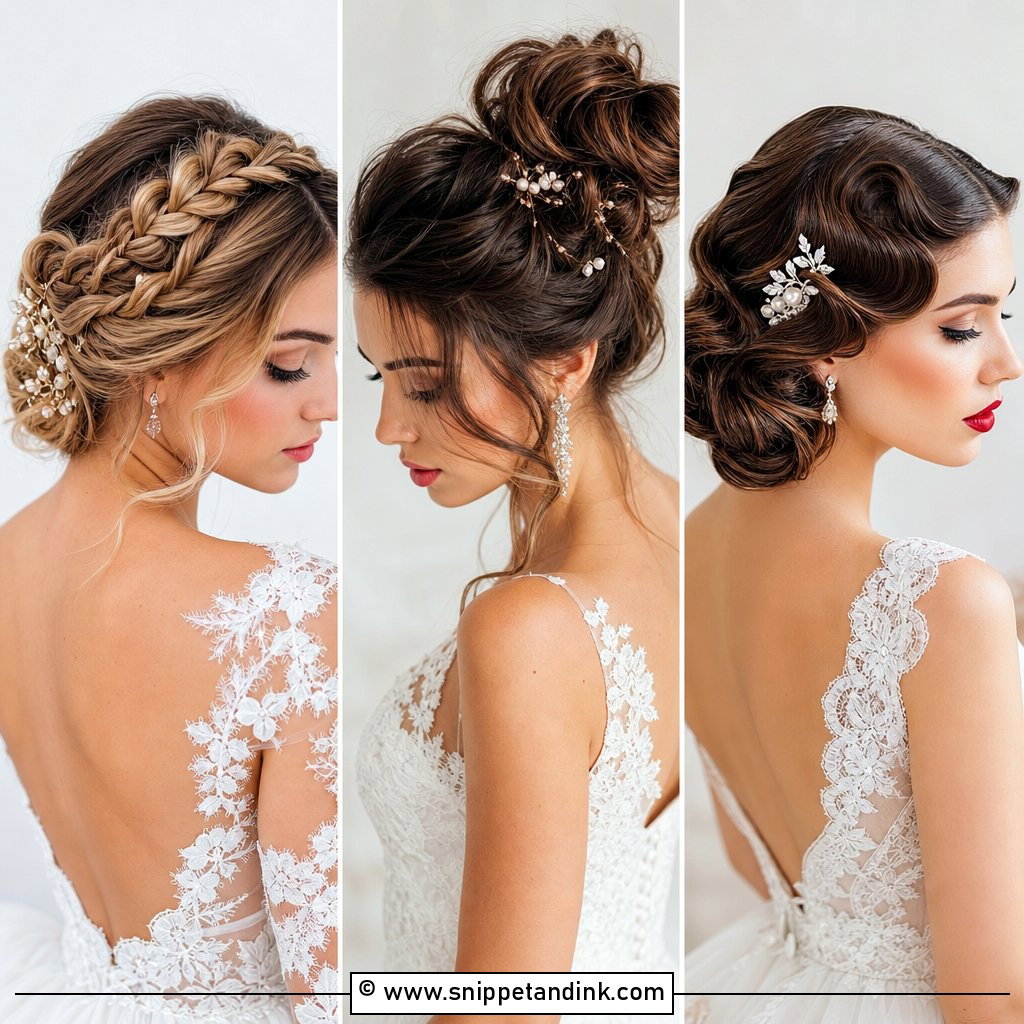
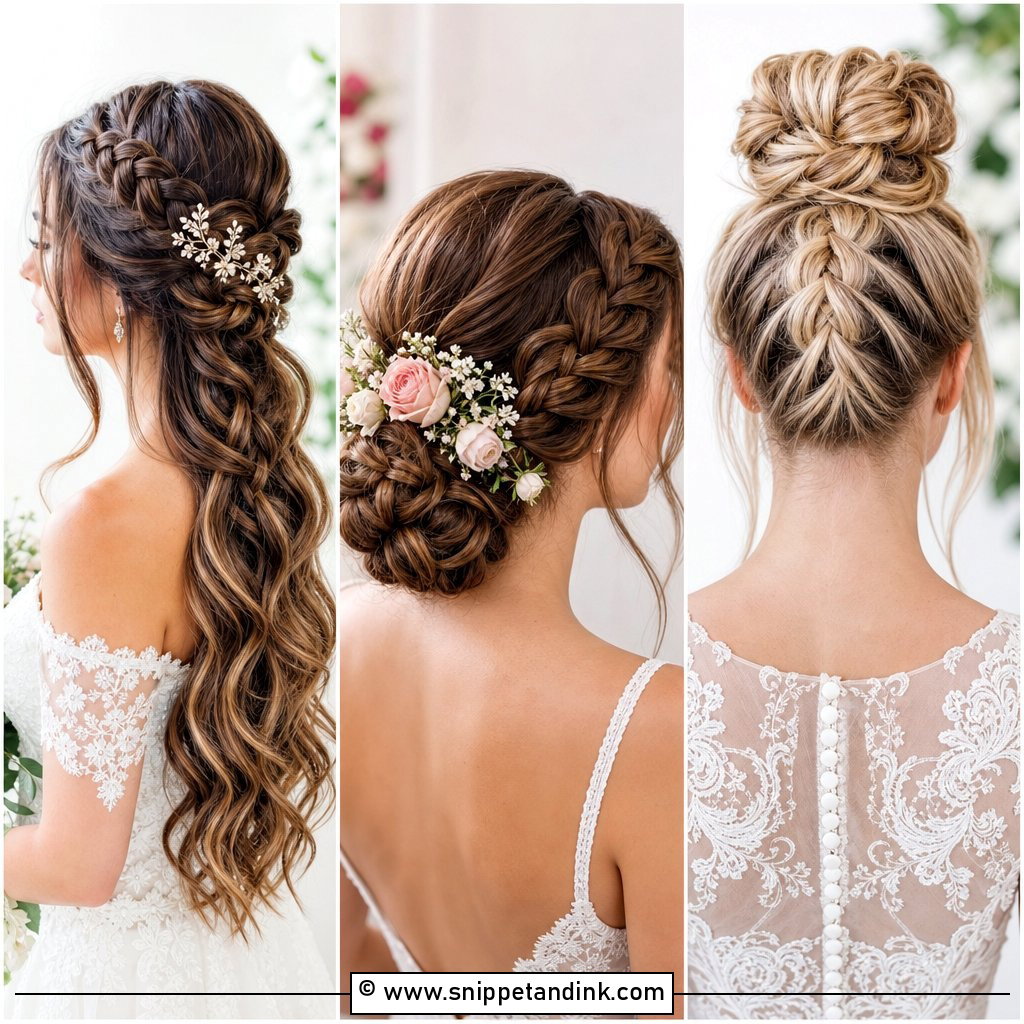
If you picture gliding down the aisle with nothing out of place, this is the style. Every strand goes back into a smooth twisted knot at the nape, usually with a centre part. The smoothness is the hard part: I blow-dry the hair completely straight first, then brush it back with a little gel or pomade and lock the base with an elastic before twisting. Fine hair may need a small padding piece so the knot isn’t tiny. It leaves the face, the earrings and the neckline completely open, and a sleek veil slides in neatly above the knot.
2. Half Up Half Down Wedding Hair
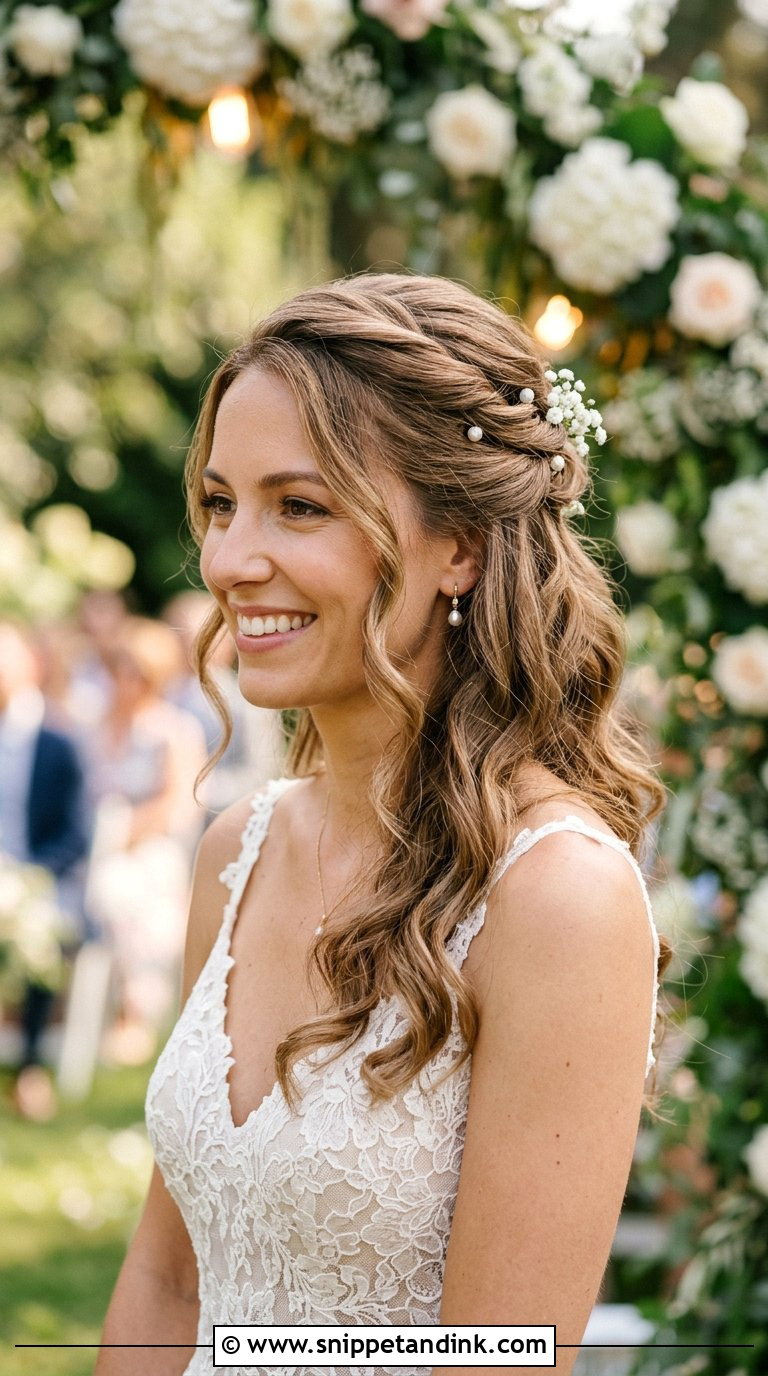
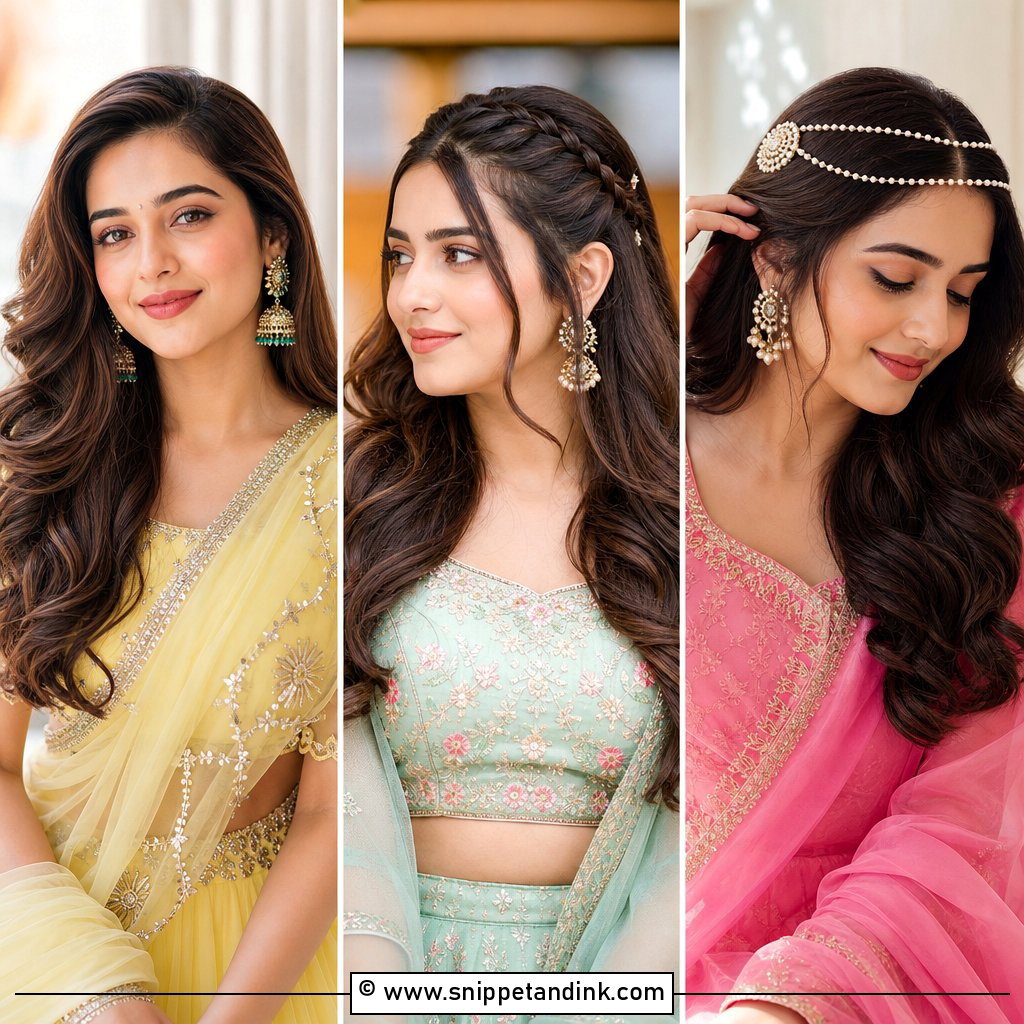
Can’t decide between hair up and hair down? This style gives you both, and it’s the one I’d suggest if you’re unsure how you’ll feel wearing everything pinned. The top section is pinned back, often under a small twist or braid, and the rest falls in waves or your natural texture. It works on long and medium hair and even a longer bob. The pinned section gives a clip or flowers somewhere solid to sit. Its weak point is wind and hugging, which push the loose lengths forward, so I’d keep a couple of pins at the back to tidy it later.
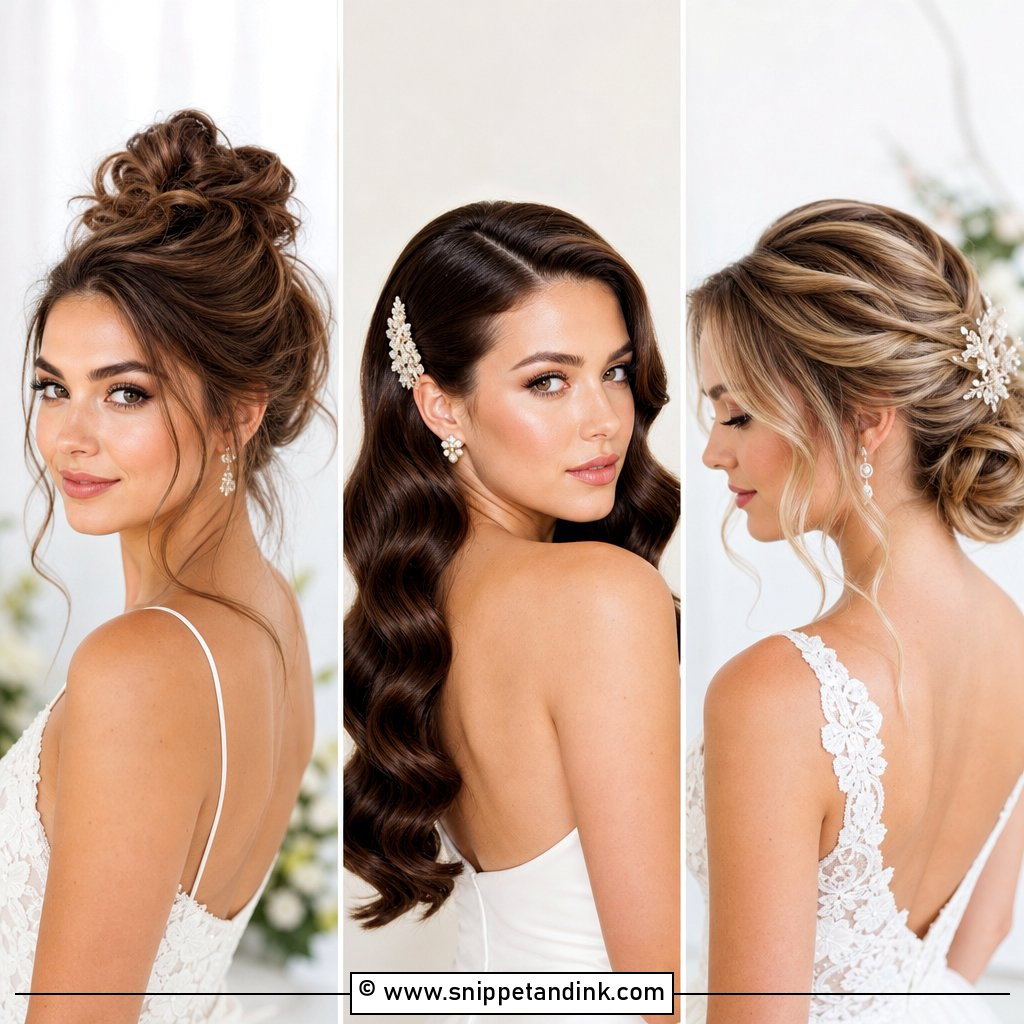
3. Hollywood Waves Bridal Hairstyle
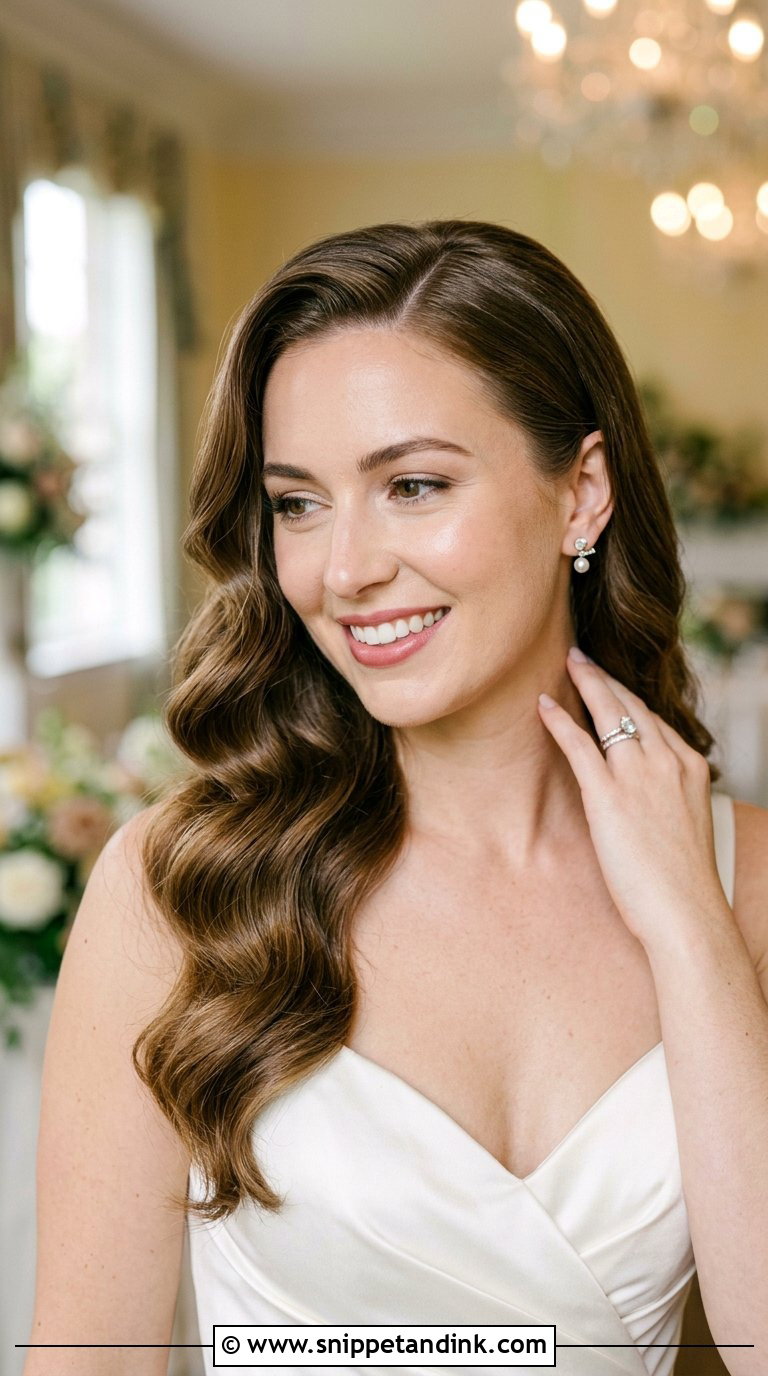
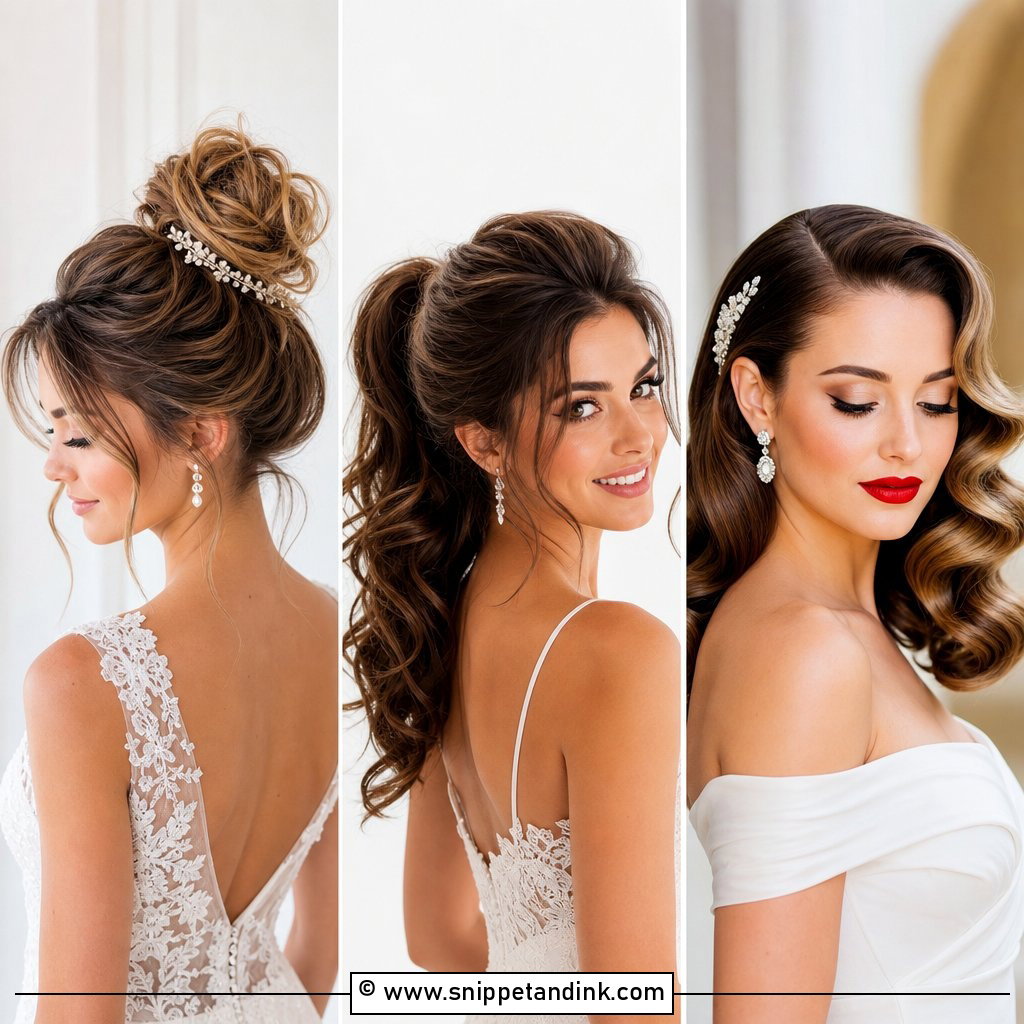
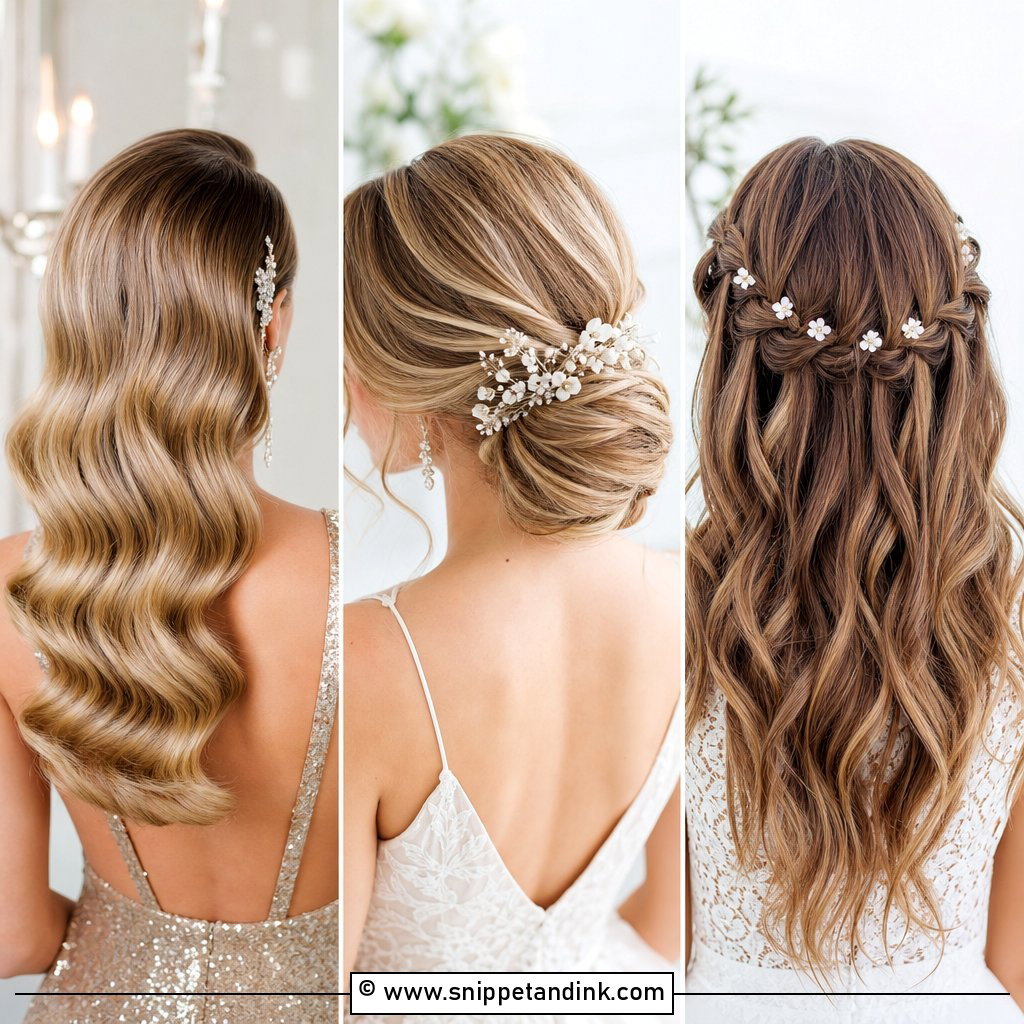
Hollywood waves are built, not just curled. I set voluminous, glossy curls all in the same direction, pin them to cool, then brush them into one continuous ripple swept over one shoulder. A deep side part carries the shape, and a bold lip balances it. Medium to long hair shows the full wave; short hair can do a cropped version, but it reads more 1920s than 1940s. Shine spray at the end, held well back, keeps the ridges glossy without making them sticky.
4. Messy High Bun for Brides
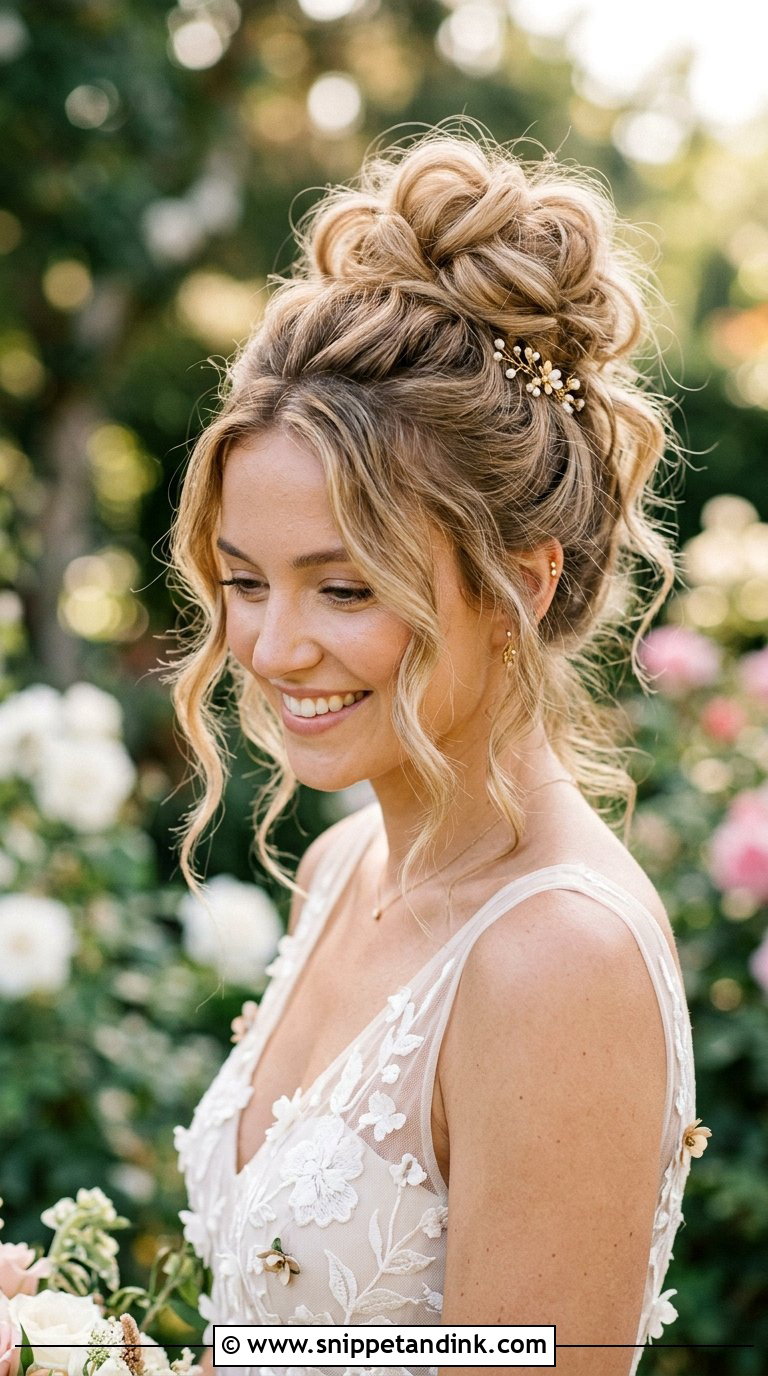
A messy high bun has been one of the most requested casual styles lately, and it’s harder to make look relaxed than it seems. I set texture first with a curling iron and dry spray, then build the bun loosely and pull out tendrils on purpose. Without that texture underneath, a high bun just looks unfinished. It keeps your neck cool in summer heat, which is a real advantage outdoors. One caution: a high bun and a veil need planning, since the comb usually has to go underneath the bun rather than above it.
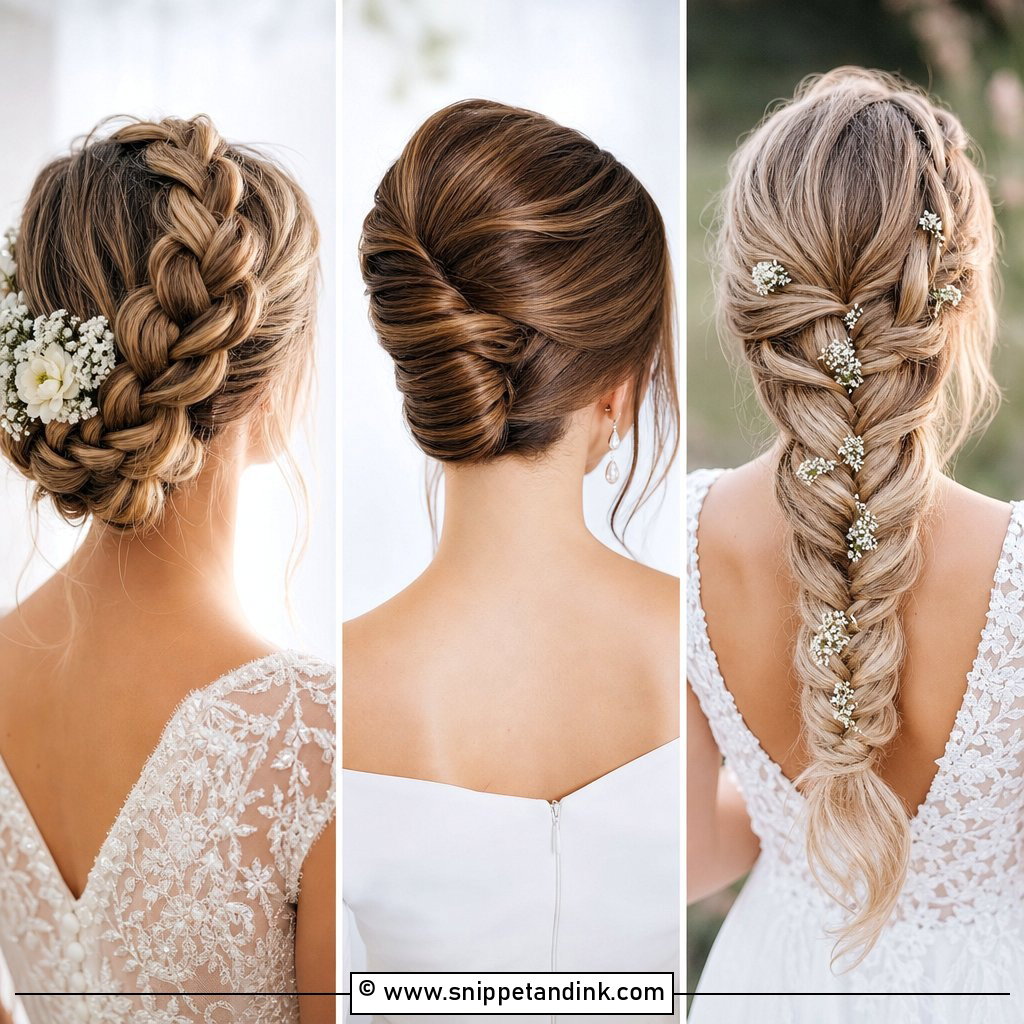
5. French Twist Wedding Updo
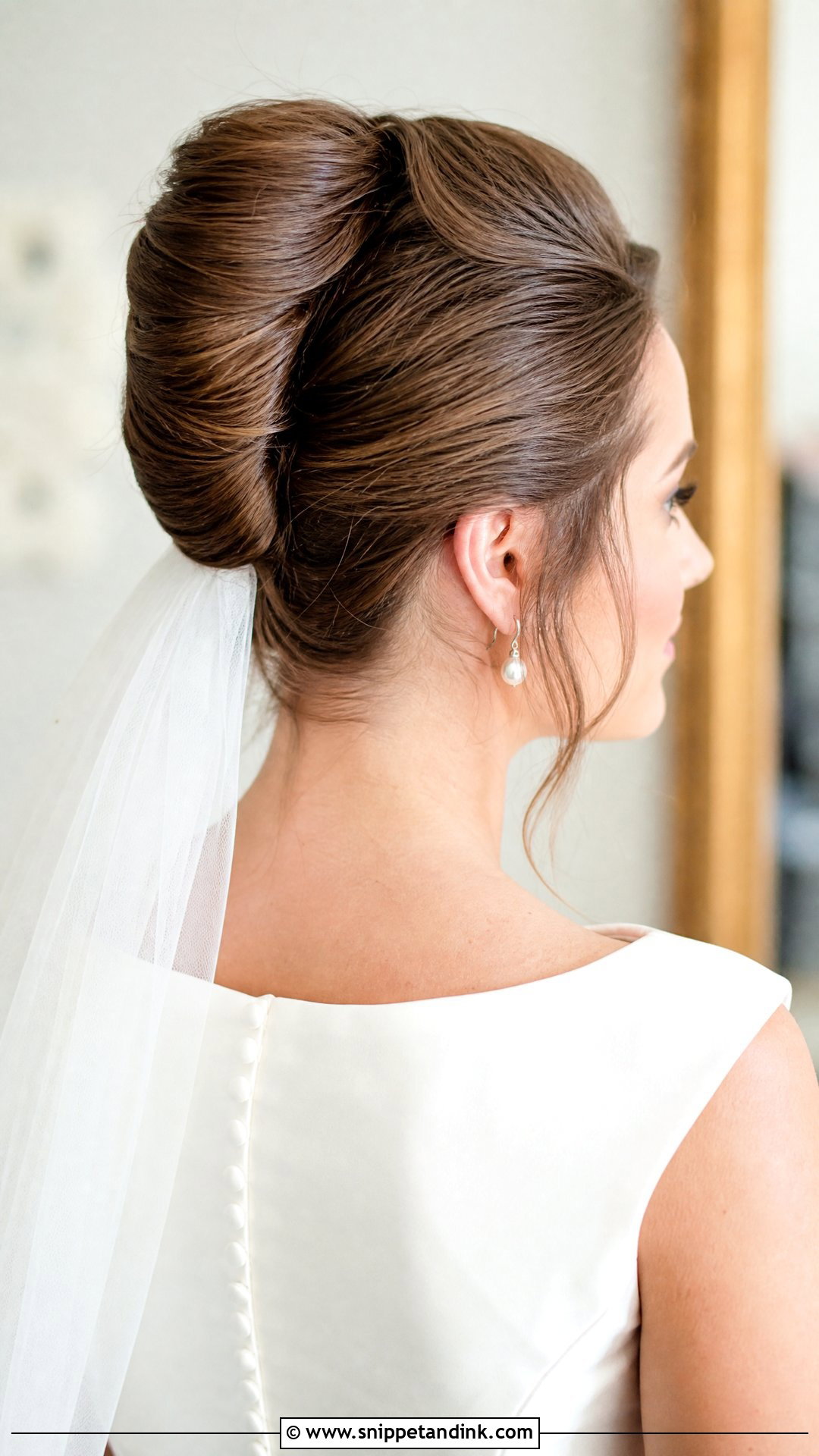
The French twist is one of the few updos that looks the same at midnight as it did at noon, because the vertical roll is pinned along its full length. I backcomb lightly at the roots, smooth the surface, then sweep the hair to one side and roll it in, locking it with long pins that run along the seam. It needs at least shoulder-length hair. A veil tucks neatly underneath the top of the roll. Leave a few tendrils out if a fully sleek finish feels severe on you.
6. Soft Natural Waves Bridal Look
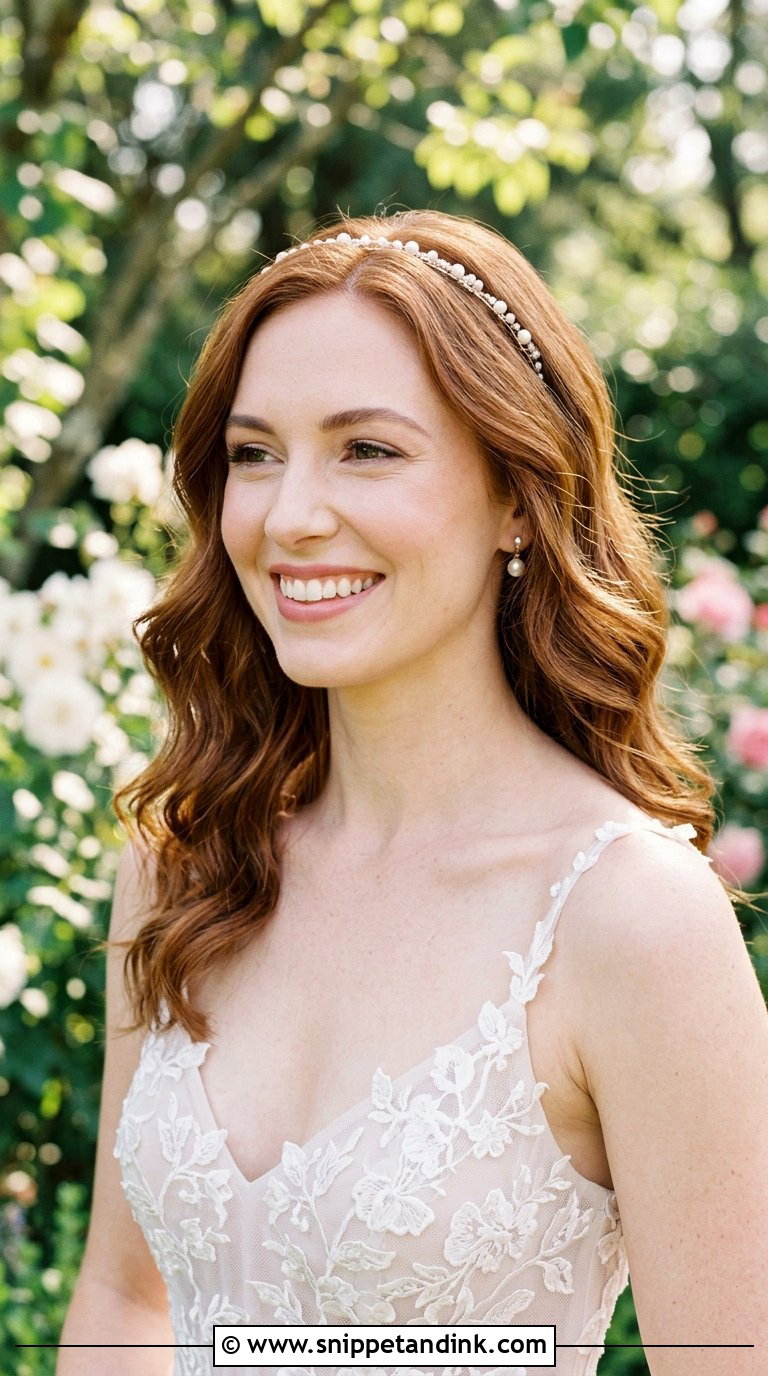
Soft natural waves have taken over from tighter, structured curls, and I’m glad. They move, they don’t look crunchy, and they forgive a breeze. I curl with a larger barrel, alternate directions and brush gently through once cooled. Add a thin headband if you want a little structure at the front. The honest catch is longevity: a soft wave on straight, fine hair has less margin before it falls flat, so I’d prep with a setting spray and pin each curl while it cools.
7. Braided Crown Wedding Hairstyle
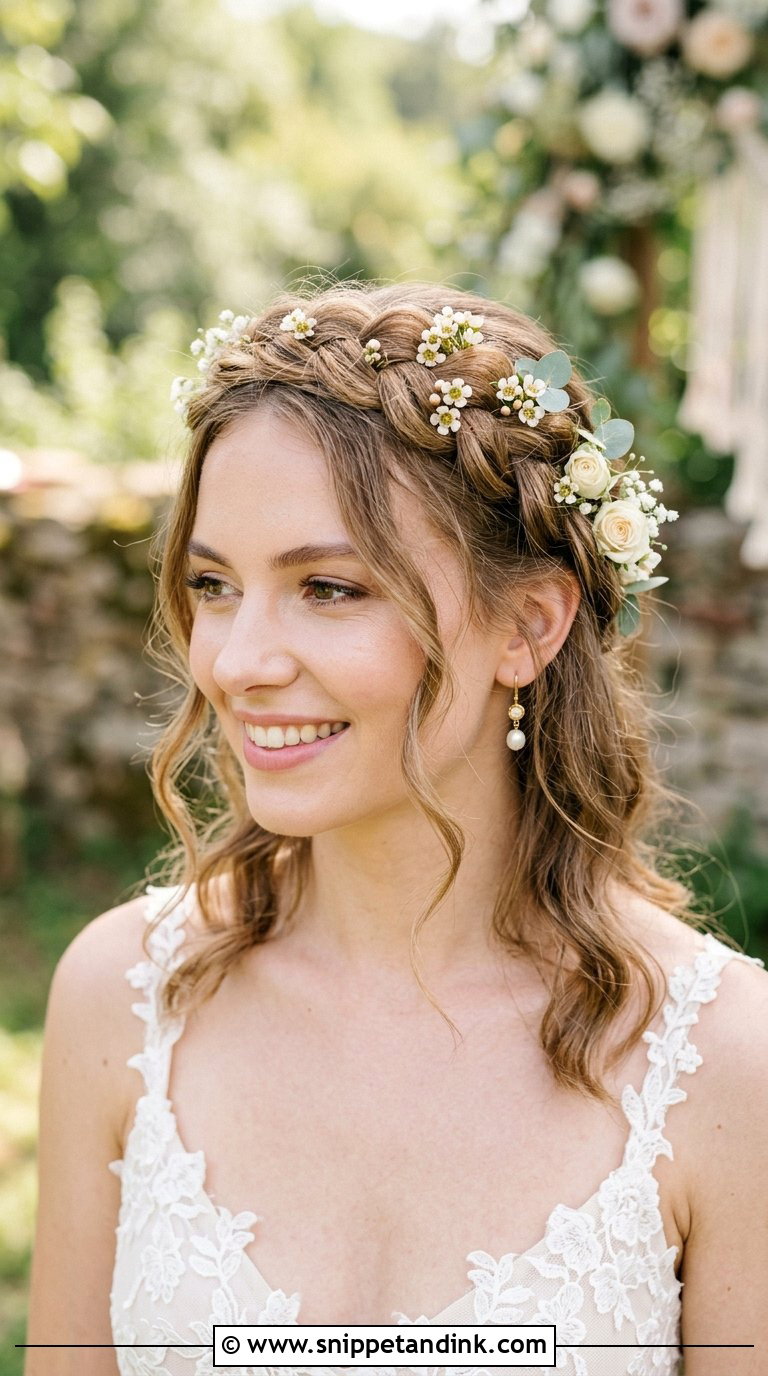
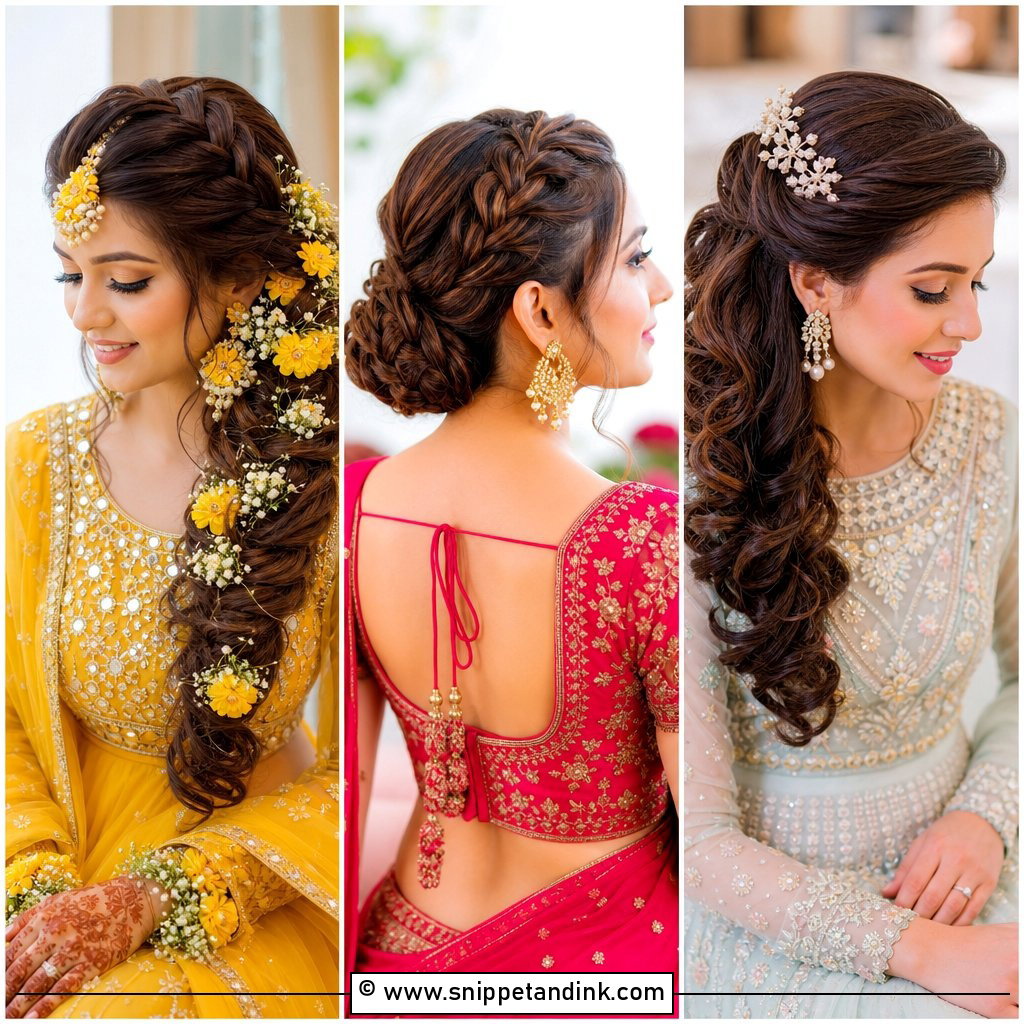
A braided crown wraps a braid across the top of the head like a halo. I usually build it from two Dutch braids that meet at the back, which holds more securely than one long braid wrapped around. Tight and neat suits a formal look; pulled loose and textured suits a garden. Tuck in baby’s breath for detail. Straight and curly hair both work, though very slippery hair benefits from texture spray first. Layered cuts are the tricky case, since short pieces poke out of the braid and need extra pinning.
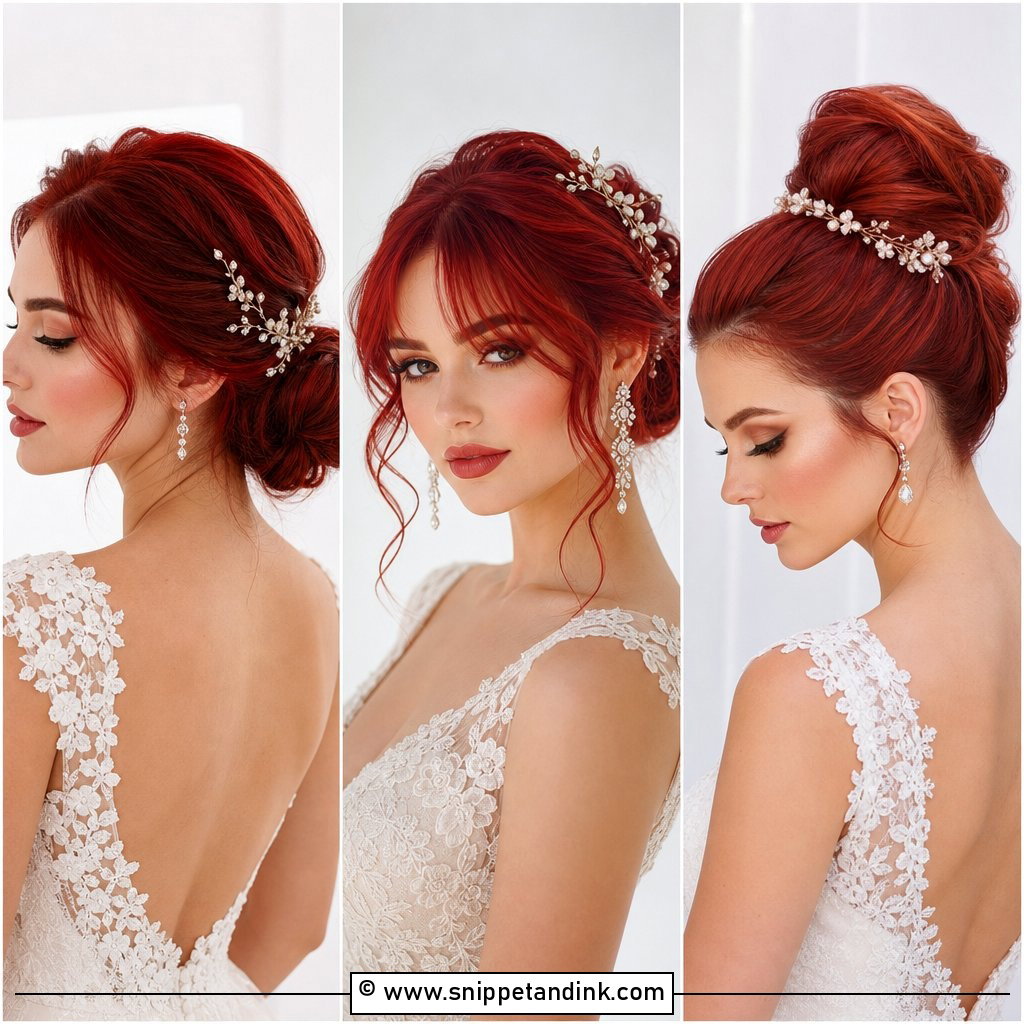
8. Low Chignon Bridal Updo
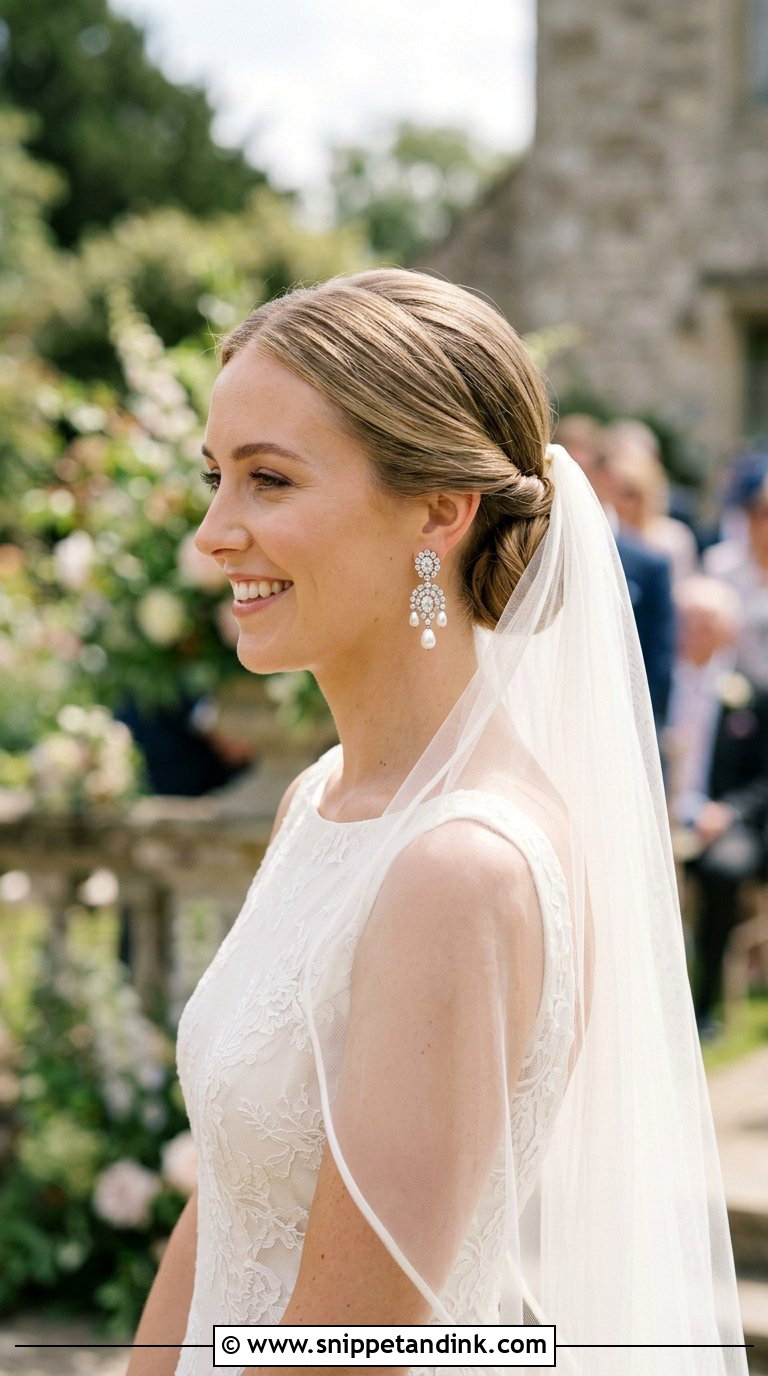
The low chignon is the classic I return to most, because it suits nearly every face, every veil and every neckline. A twisted knot sits at the nape, kept smooth for an editorial look or softened with waves. It sits comfortably under a tiara, behind a veil comb or alongside big earrings. I place it slightly off-centre on some brides depending on their profile, which is worth testing at a trial. It’s especially good with high and halter necklines that would crowd hair worn down.
9. Boho Braided Half Up Hairstyle
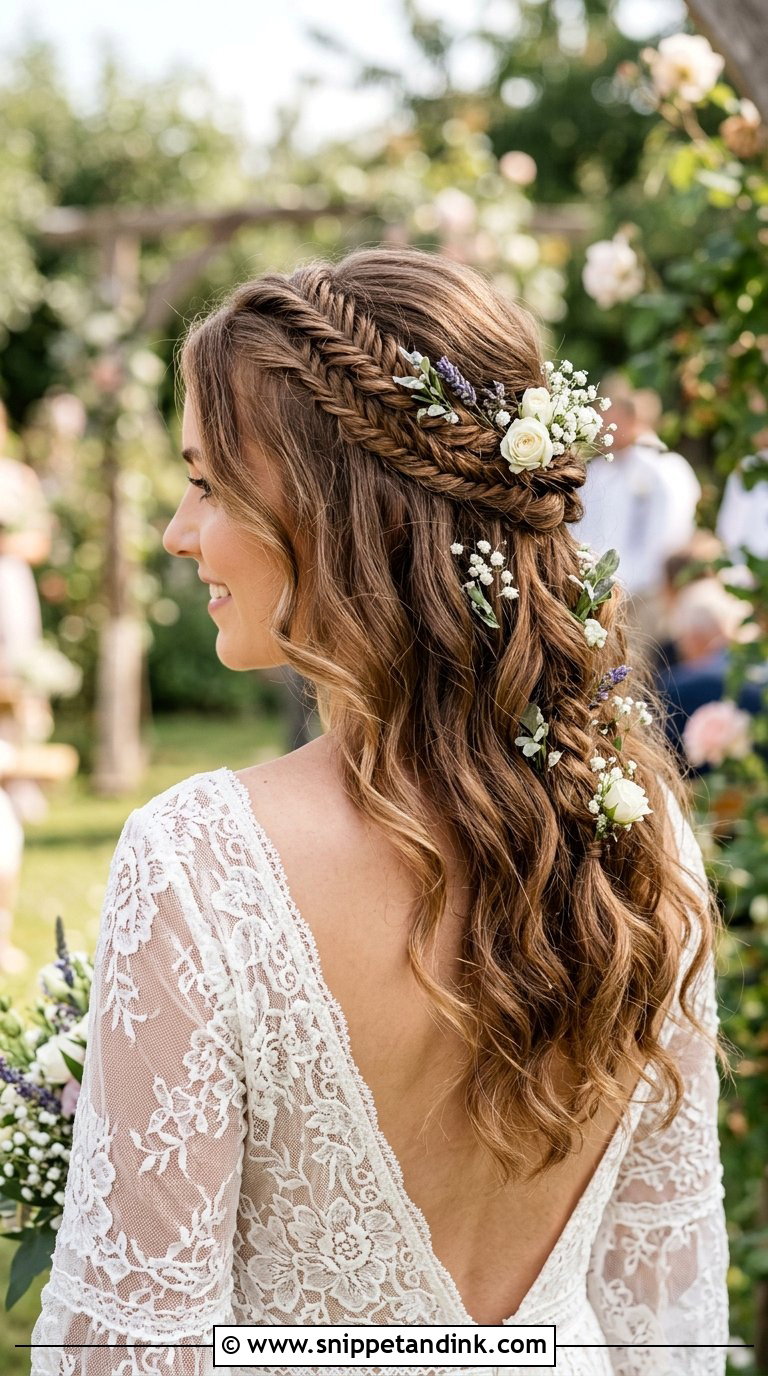
A few thin braids pulled back from the face over loose waves: that’s the whole idea, and it’s forgiving. I braid small sections from the temples, loosen them by pulling the edges and pin them together at the back. Scattered flowers or twists can join them. It keeps hair out of your eyes outdoors and suits wavy and curly textures especially well, since the natural movement hides any uneven braiding. On sleek straight hair it can look a little sparse, so I’d add texture first.
10. Curly Updo for Brides
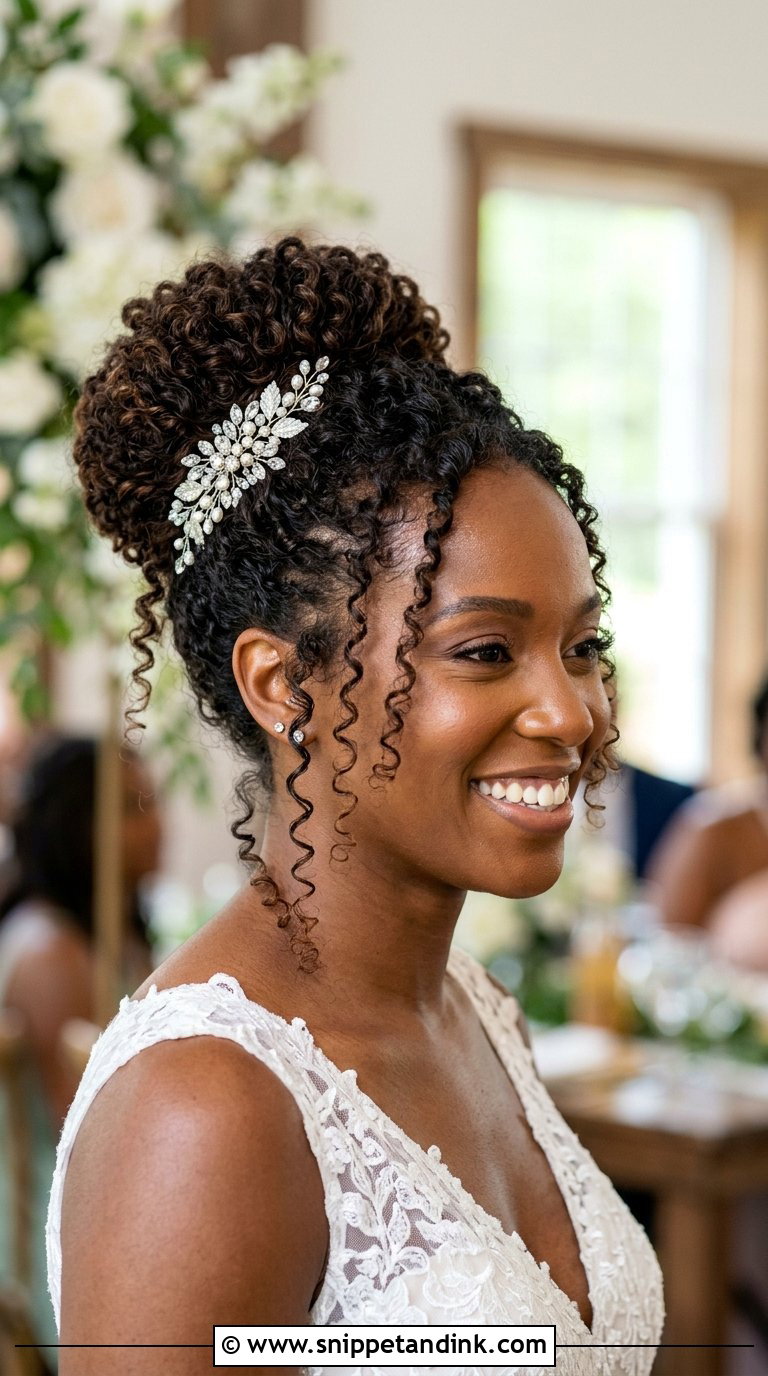
Curly hair doesn’t need to be straightened to look bridal, and a curly updo proves it. I gather defined curls into a full bun at the back, pinning each curl in place rather than smoothing them together, which keeps the texture intact. Define the curls the day before or that morning with cream and let them dry before I touch them. A few loose spirals at the face finish it. Coily and curly brides tend to find this holds longer than any heat-set style, especially in humid weather.
11. Ballerina Bun Wedding Hairstyle
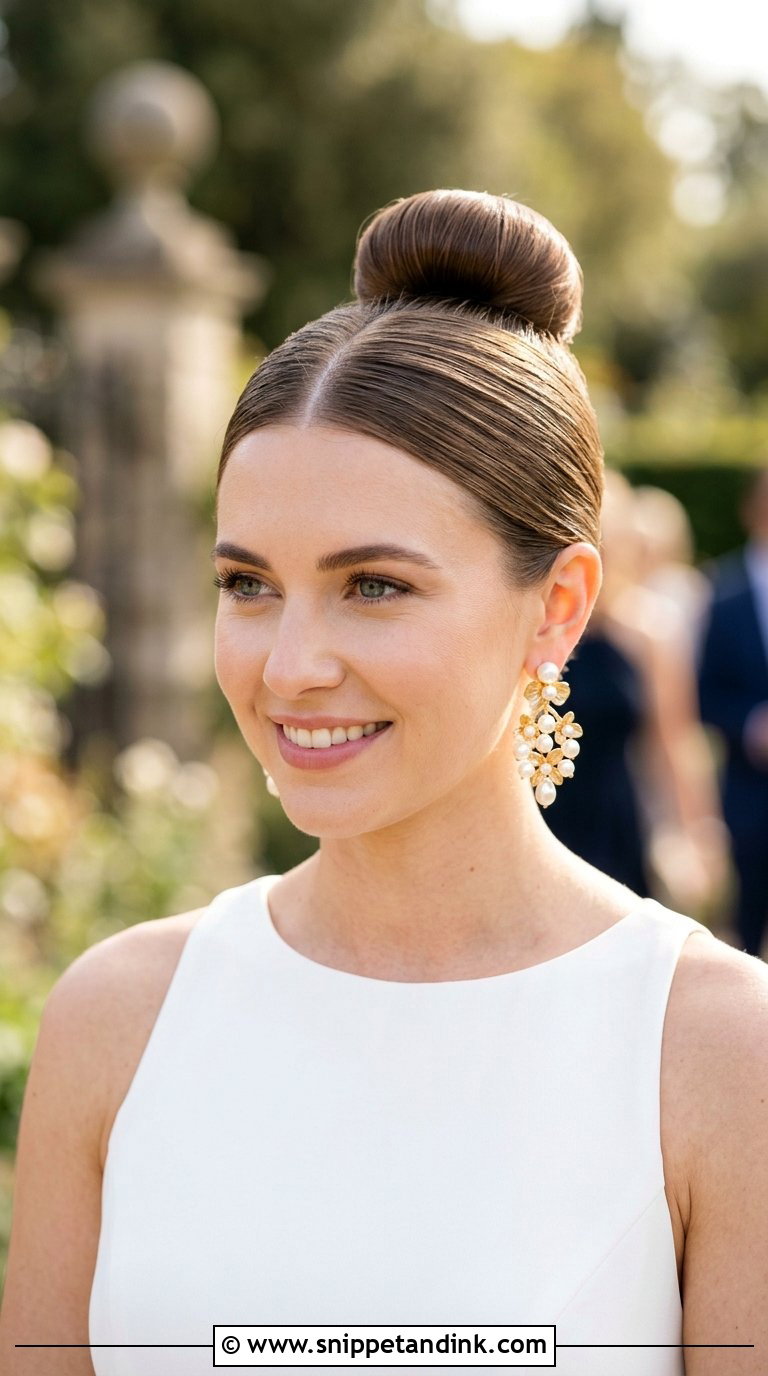
A ballerina bun is a centre part and a tight, smooth bun set high or at the centre back. It’s simple to describe and unforgiving to execute; a single bump shows. I brush wet-look product through damp roots, tie the ponytail firmly and wrap the bun around a small donut if the hair is fine. It lengthens the neck and frames statement earrings. If you have a strong cowlick at the crown or a high hairline, a softer bun might suit you better, so try it at your trial.
12. Side Swept Curls Bridal Style
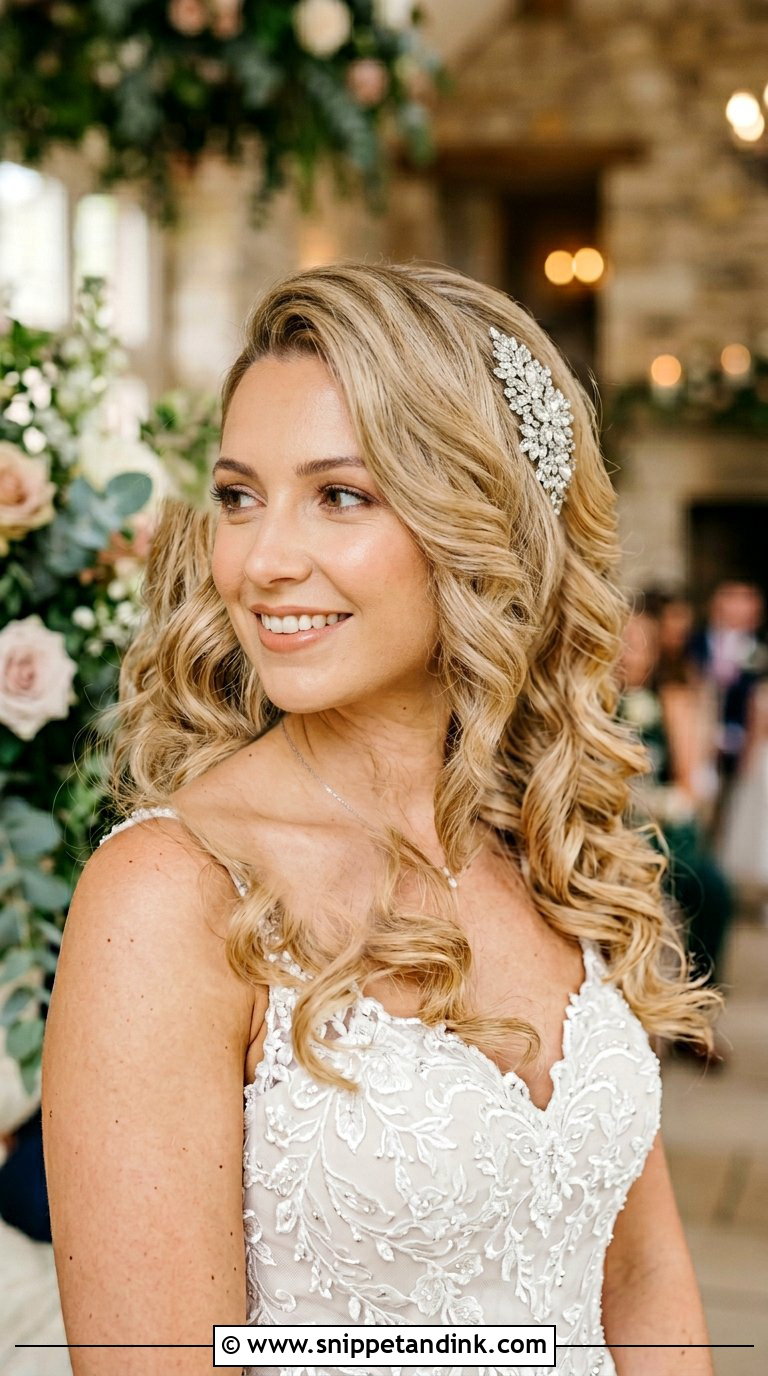
Everything swept over one shoulder in loose curls opens the opposite side of the neck for earrings or an asymmetric neckline. The structure is behind the ear: I pin the hair along the nape in a row of crossed pins so it doesn’t creep back. Medium to long hair works best. A clip or small flowers near the part adds a detail on the open side. Very heavy hair pulls on those pins over a long day, so expect a mid-evening check.
13. Sleek Straight Wedding Hairstyle
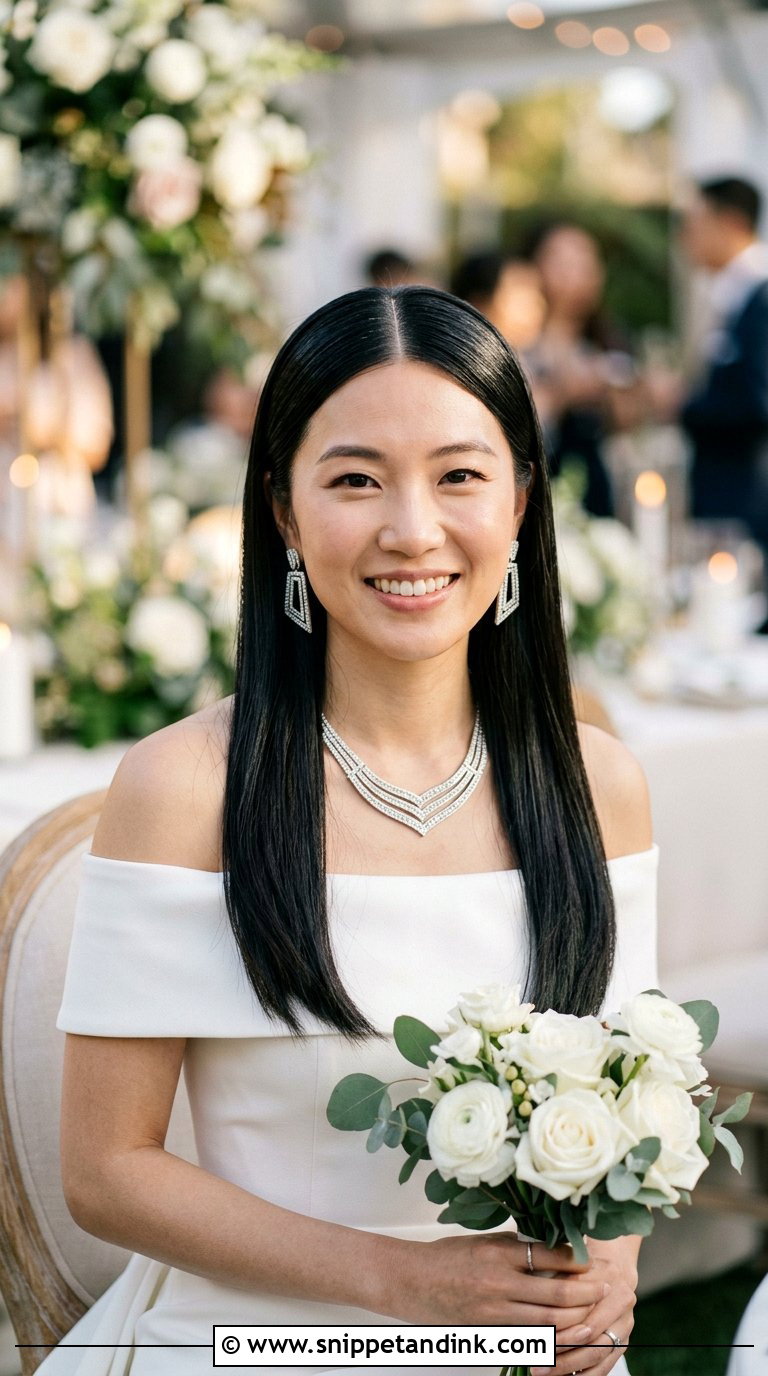
Sometimes the simplest hair is the hardest. Sleek straight hair has to be truly glossy, so I blow-dry it smooth with a round brush, flat iron in small sections and finish with a drop of serum. A centre part keeps it modern. Tuck one side behind the ear to show earrings. Humidity is the danger: straightened hair frizzes or puffs on a damp day, so for an outdoor summer wedding I’d have an anti-humidity spray and a plan B pinned low.
14. Floral Updo for Brides
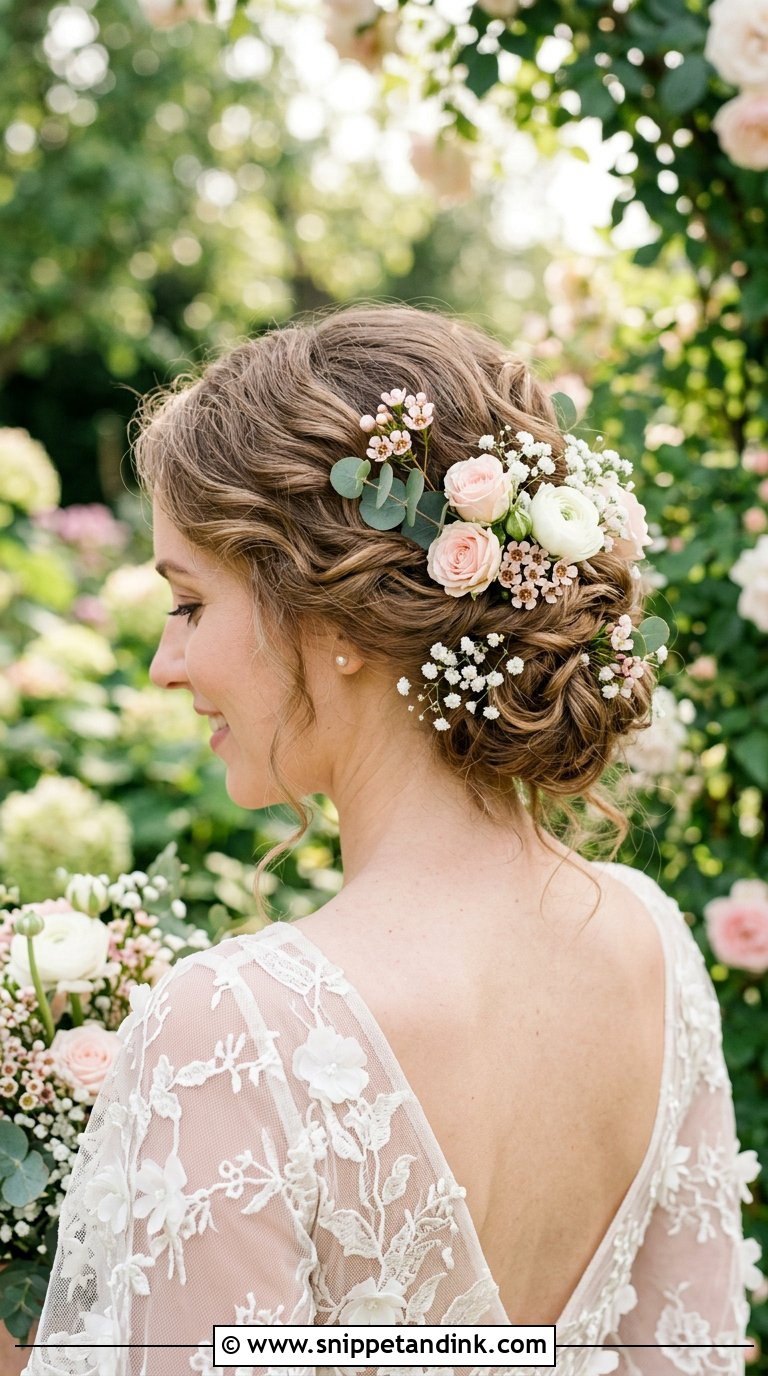
Fresh flowers tucked into a twisted bun or chignon bring the garden straight into the hair. I ask the florist for small, sturdy blooms on short wired stems, such as baby’s breath or spray roses, since soft petals bruise against warm hair. They go in last, after the updo is fully set. Spring and summer weddings suit it best, and a few loose tendrils keep it soft. Have the florist deliver the hair pieces separately so they stay cool until I need them.
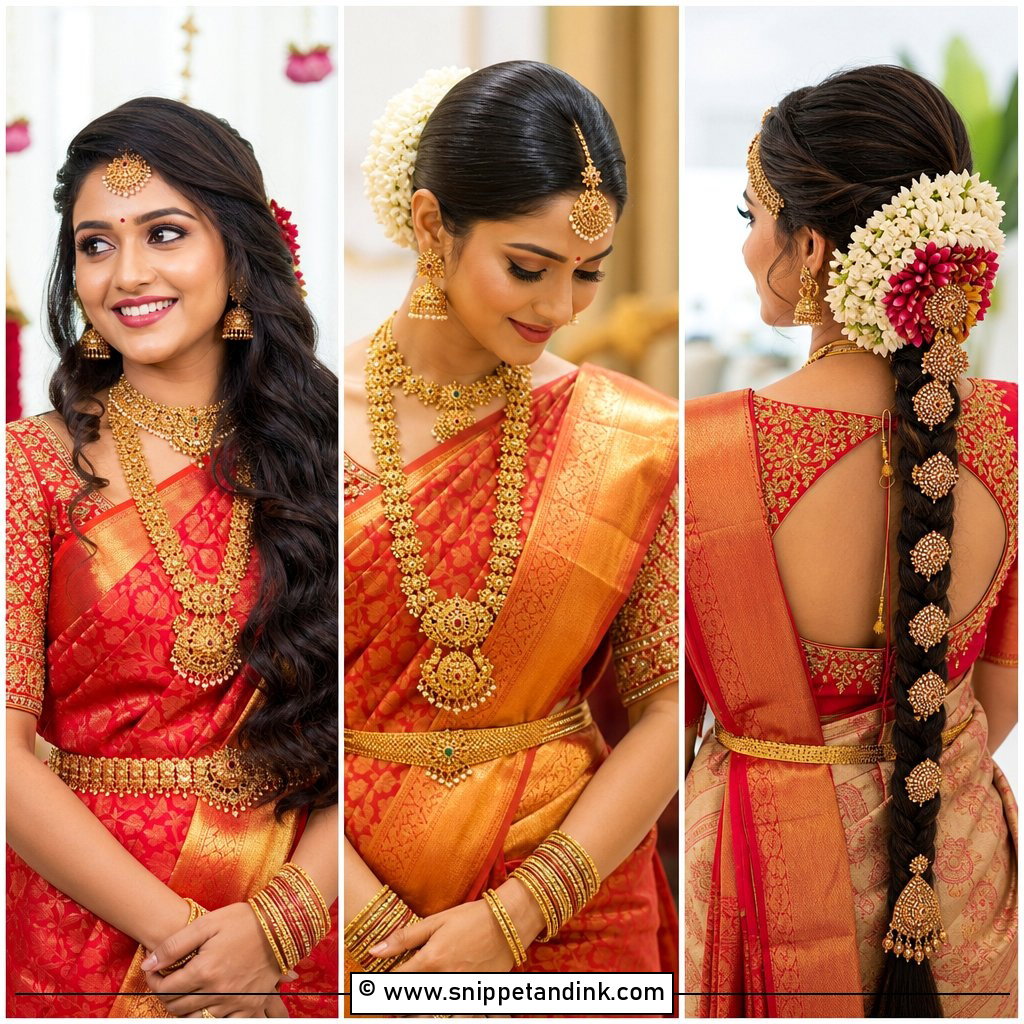
15. Twisted Low Ponytail Wedding Hairstyle
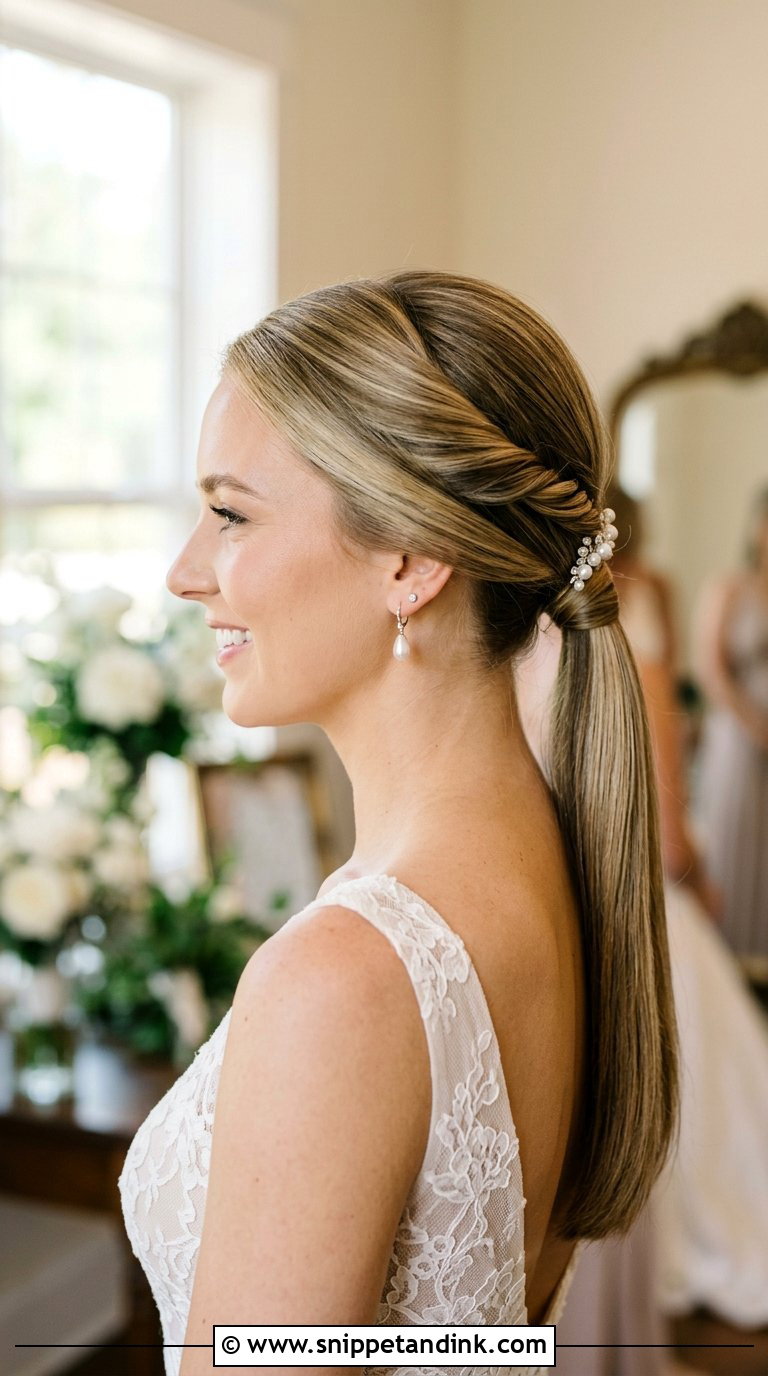
A low ponytail with twisted sides is a good option if you don’t want a bun but still want your hair off your neck. I twist the sides back, secure them at the nape and wrap a strand of hair around the elastic to hide it. Clip-in extensions add length and fullness here easily, which helps if your hair is thin at the ends. It sits well with modern minimalist weddings and formal ones alike. Long veils can drag a ponytail sideways, so a shorter veil or a comb above the pony works better.
16. Romantic Loose Updo for Brides
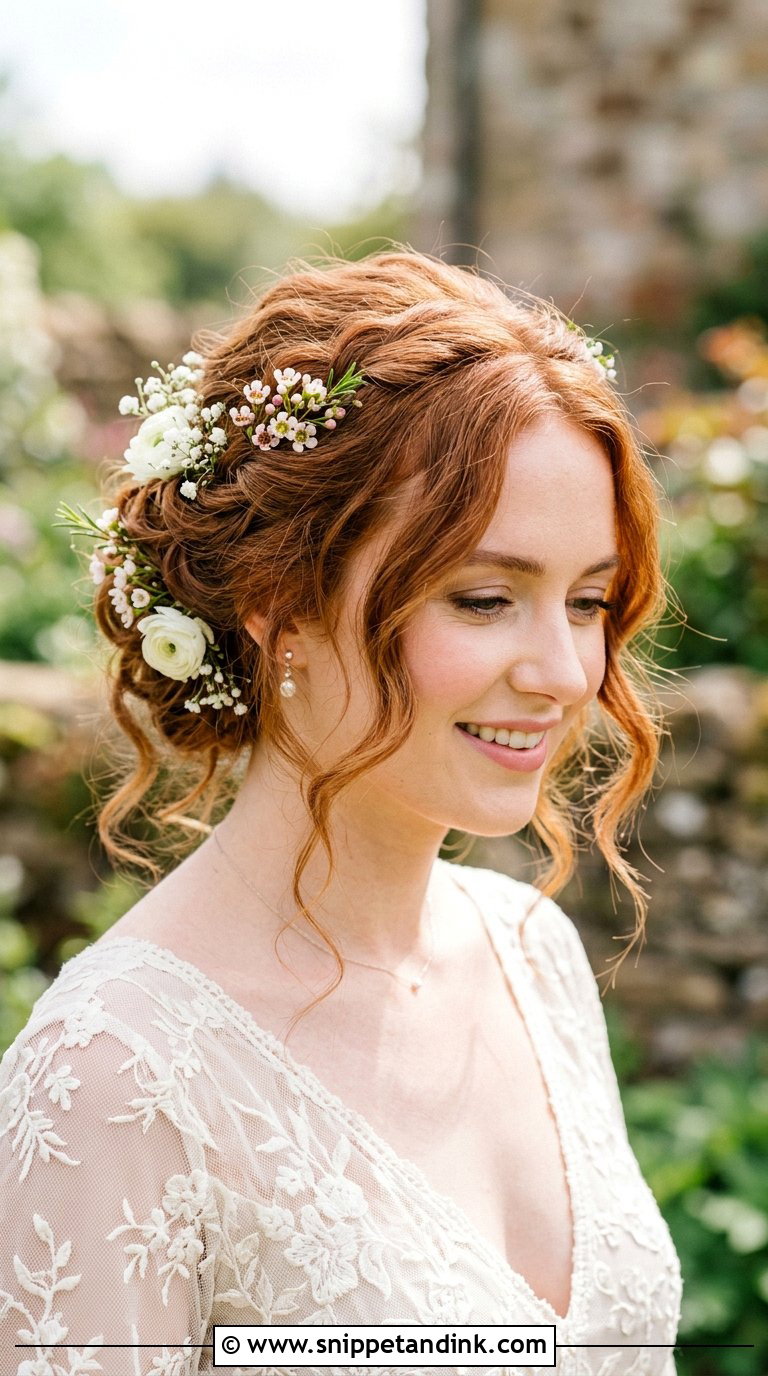
A loose updo pins the hair up but leaves plenty of soft pieces free around the face. The texture is what holds it, so I curl everything first and pin it loosely rather than smoothing it tight. It suits garden and rustic weddings and wavy or textured hair especially well. Small flowers or a delicate pin finish it. Be prepared for a few more pieces to fall out over the evening; on this style, that tends to look intentional rather than messy.
17. Fishtail Braid Wedding Hairstyle
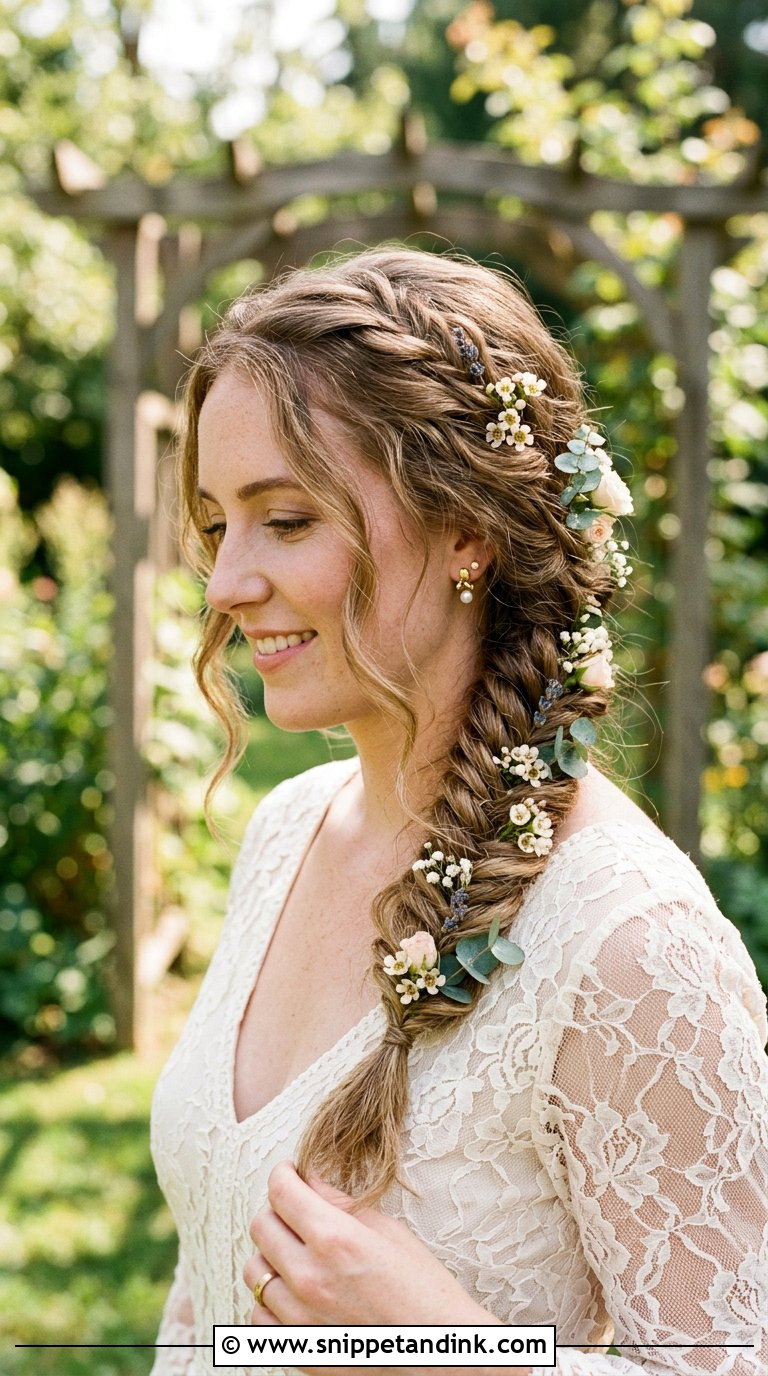
A fishtail braid creates a woven herringbone pattern that looks more intricate than it is. It can sit as a side braid or be pinned into an updo. I braid it fairly tightly, then pull the edges out to widen it, which also hides uneven sections. Tuck in tiny flowers or sparkly pins along the pattern. Medium to long hair is needed for a full-length fishtail; layered hair works if you accept a few short ends poking out.
18. Tousled Bob Wedding Hairstyle
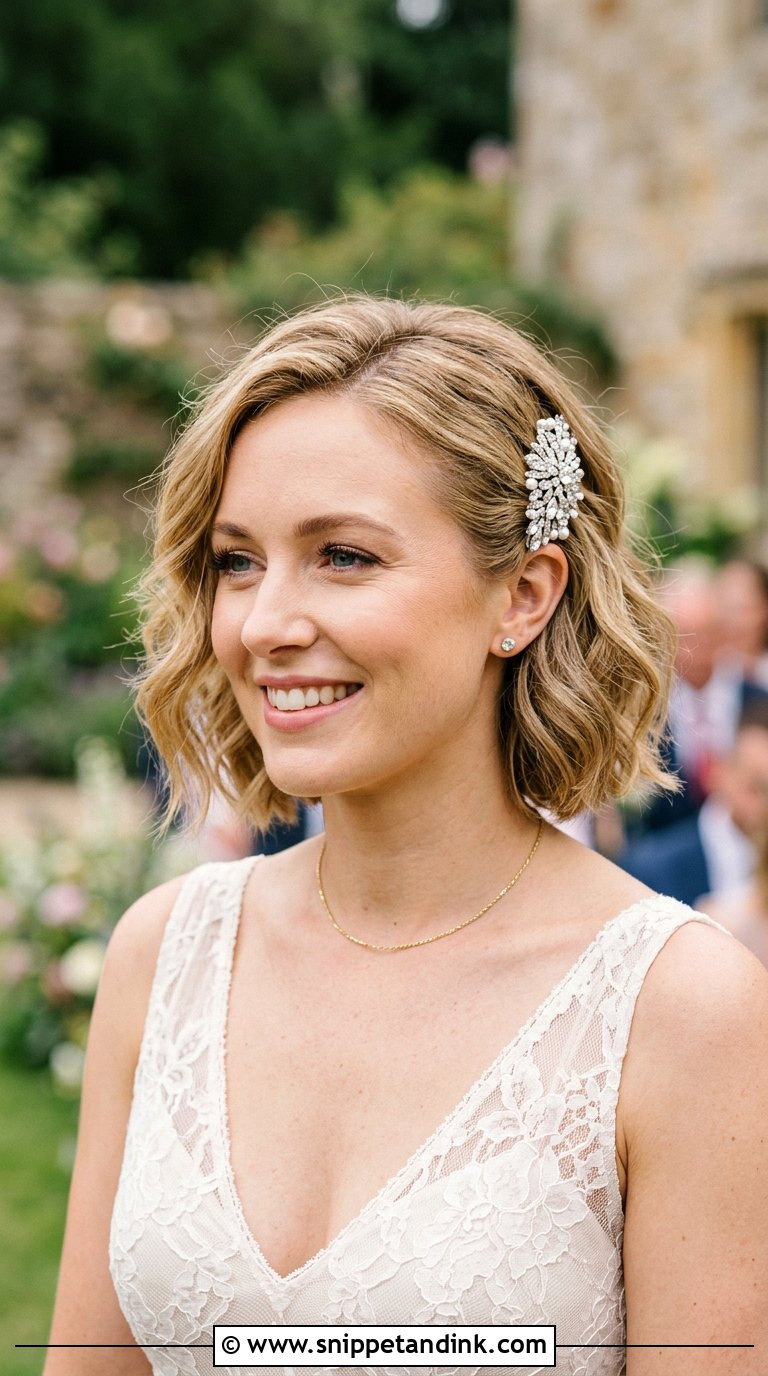
Short hair brides, this one’s for you. A tousled bob shows you don’t need length to look bridal; soft waves and piecey texture do the work. I use a flat iron to bend the hair rather than a curling iron, leaving the ends straight so it looks modern rather than old-fashioned. A clip or headband adds bridal detail. If you have a bob or lob, book any trim about two to three weeks ahead so the shape has settled. Very short bobs struggle to hold a heavy veil comb, so ask about lighter alternatives.
19. Vintage Pin Curls Bridal Look
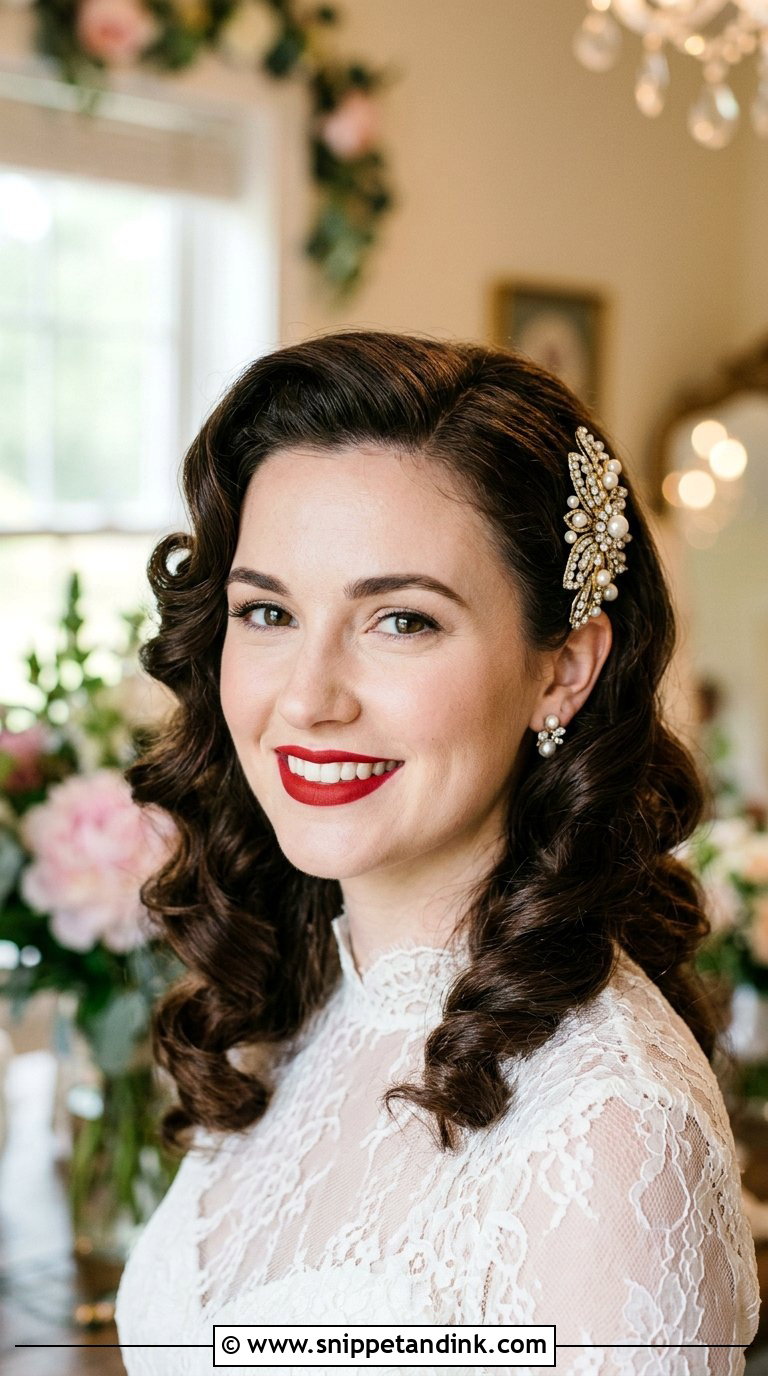
Vintage pin curls are sculpted, structured curls in the style of the 1930s and 40s. Each section is curled, coiled flat against the head and pinned until it’s cold, then either brushed out for soft drama or arranged into an updo. Rushing the cooling is the usual reason they fall. They pair naturally with a red lip and a vintage comb, and they suit a retro theme or a classic church wedding. Expect the set to take longer than other styles, so plan your morning around it.
20. Accessorized Veil and Hair Combination
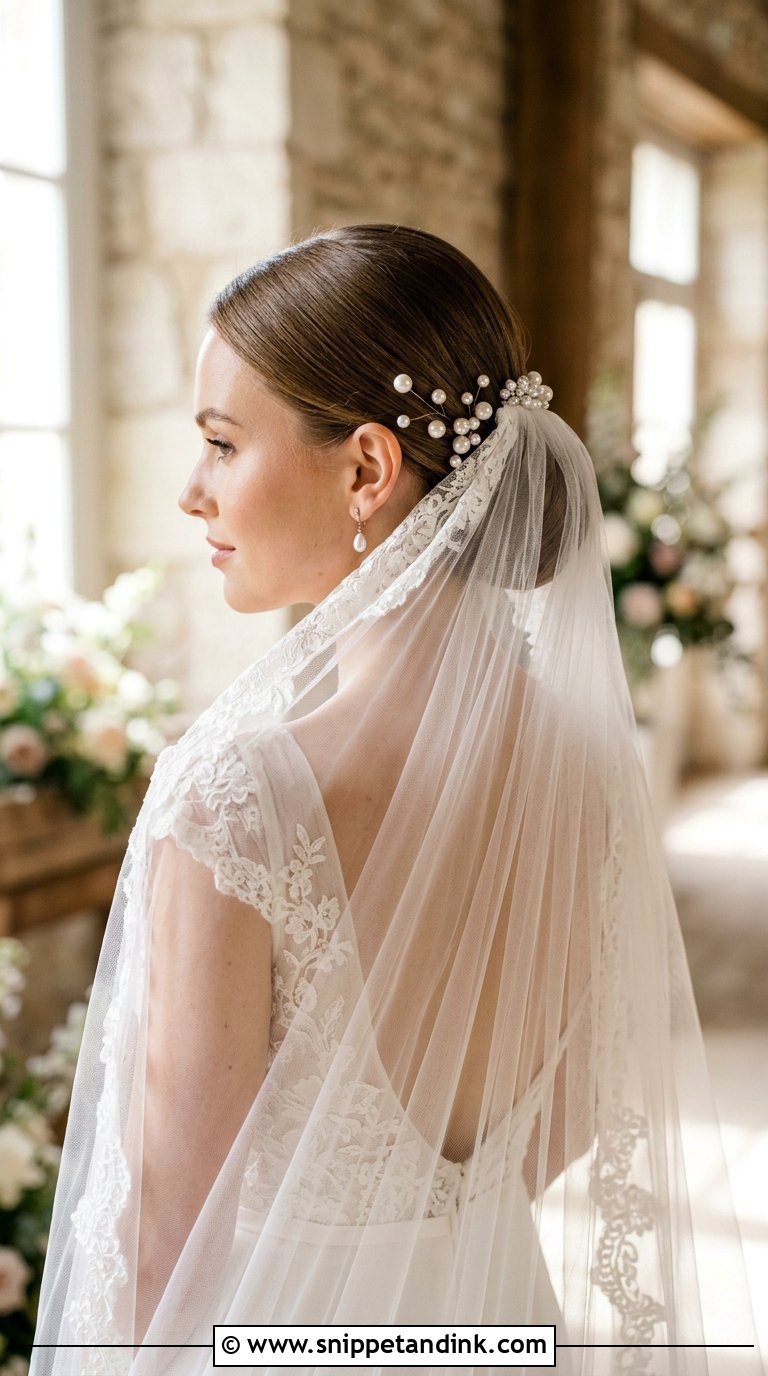
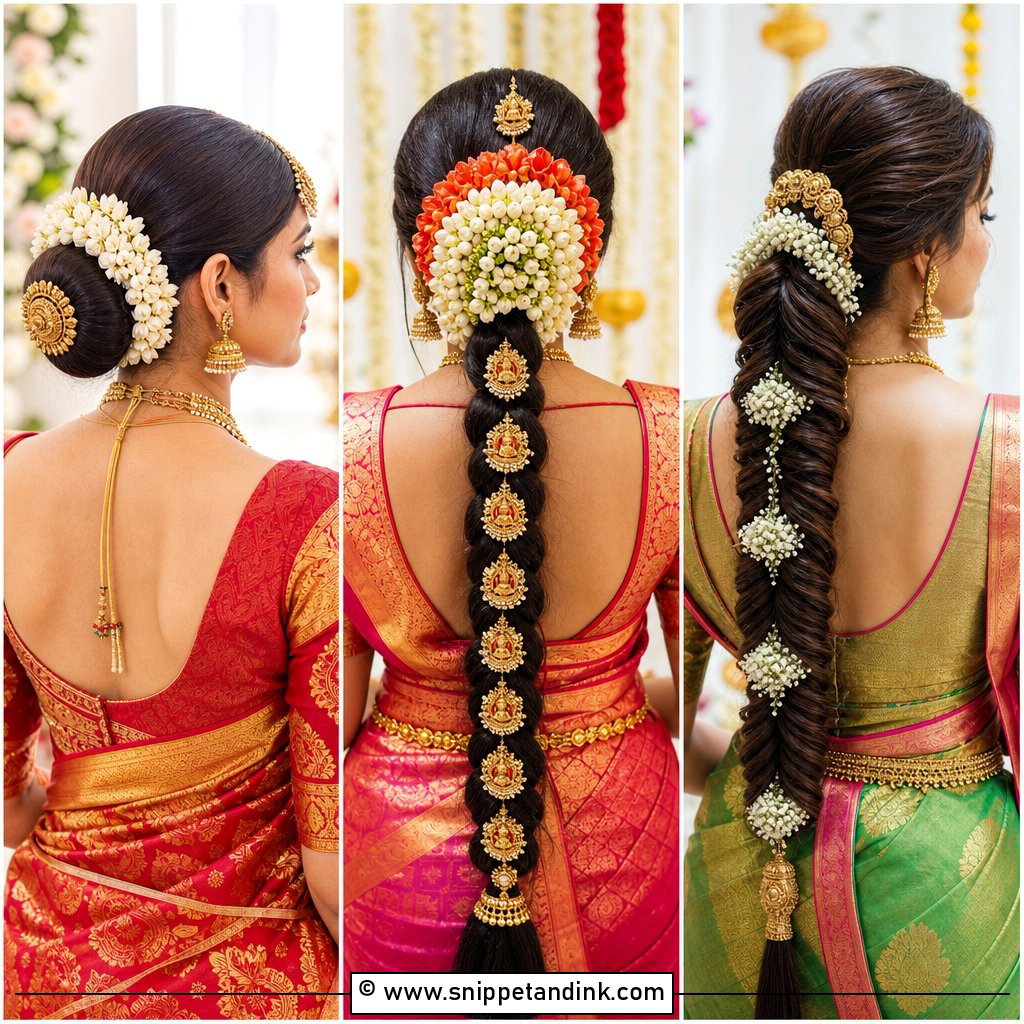
Your veil and hair should be planned together, not as two separate choices. A cathedral veil tucked beneath a sleek bun needs a solid anchor, so I pin the comb into a small base under the bun. A soft veil over flowing waves is lighter but slides on silky hair, so I add grip with crossed pins. Combs, pearl pins and small hairpieces can join either. Always bring the actual veil to your trial; a borrowed sample with a different comb behaves differently.
Running Your Hair Trial Like a Dress Rehearsal
A trial isn’t only for picking a look. It’s where you find out how that look behaves over a full day, so treat it as a rehearsal.
What to bring
- A top with a similar neckline to your dress, or a photo of the back of the dress
- Your veil, headpiece or the actual comb you’ll wear
- Two or three reference photos, plus one of a style you dislike
- Hair washed the day before, just as you’ll have it on the wedding morning
What to test afterwards
Wear the trial style for the rest of the day. Go out, sit in a car, lean against a chair, take a few flash photos in the evening. Notice where it pulls, where it drops and whether any pins dig in. That feedback is more useful to your stylist than any photo, because it shows how your hair responds to time rather than how it looked in the chair.
Booking the trial roughly two to three months before the wedding gives you time to adjust, and ideally after your dress and veil are confirmed. If you’re colouring or cutting your hair before the wedding, do that before the trial too, so the hair I test is the hair I’ll be styling.
Your Hair, Your Dress, Then the Photos
There’s a wearable style for every hair type, length and venue, and the right one usually depends less on photos than on your hair’s own behaviour. Think about your dress neckline, your venue and the season, then pick two or three styles from this list and test them at a trial. Personal touches such as fresh flowers or a treasured veil are worth planning in from the start. The best wedding hair is the one you forget about by the time you reach the altar.
You'll Like These Ideas:


Leave a Reply