
Wedding hair for a Black bride has a long list of jobs. It has to hold a veil, survive hugs and humidity, look right from every angle the photographer finds, and still be standing at the last dance. The styles I steer brides toward work with texture instead of fighting it, so you’ll find coils, curls, braids, twists, locs, silk presses and sculpted updos side by side below. Some are protective installs you can have done days ahead. Others are made on the morning and need more planning around weather. Read them with your neckline and your venue in mind.
Counting Back From the Wedding Date, Style by Style
Textured bridal hair rarely happens in one morning. How far ahead you start depends on which family of style you choose, and when I see things go wrong it’s usually the timing: braids installed so recently they look tight in photos, or a press done so early it has already swelled by the ceremony.
Braids, faux locs and other installs
Most braiders I work alongside prefer to install about a week before the wedding. That lets the tension at the scalp relax, lets stray frizz settle, and leaves a day or two for touching up a section that looks off. Installing the night before is how you get a tender, itchy scalp under a veil. Good braiders fill their calendars weeks ahead in wedding season, so book early.
Silk press and heat styles
A press usually goes in one to three days ahead and gets refreshed with a few curls on the morning. Have the trim and deep treatment a couple of weeks before, not the same week, so the ends behave. From the press onward, sleep in a satin wrap and skip the sweaty workouts.
Twist outs, wash and gos, and afros
Natural sets are often done the evening before, or set overnight and unravelled on the morning. I ask brides to run the exact routine at least twice in the months beforehand, so we both know how much the hair shrinks and expands over a full day.
1. Black Bride Low Bun Wedding Hairstyle
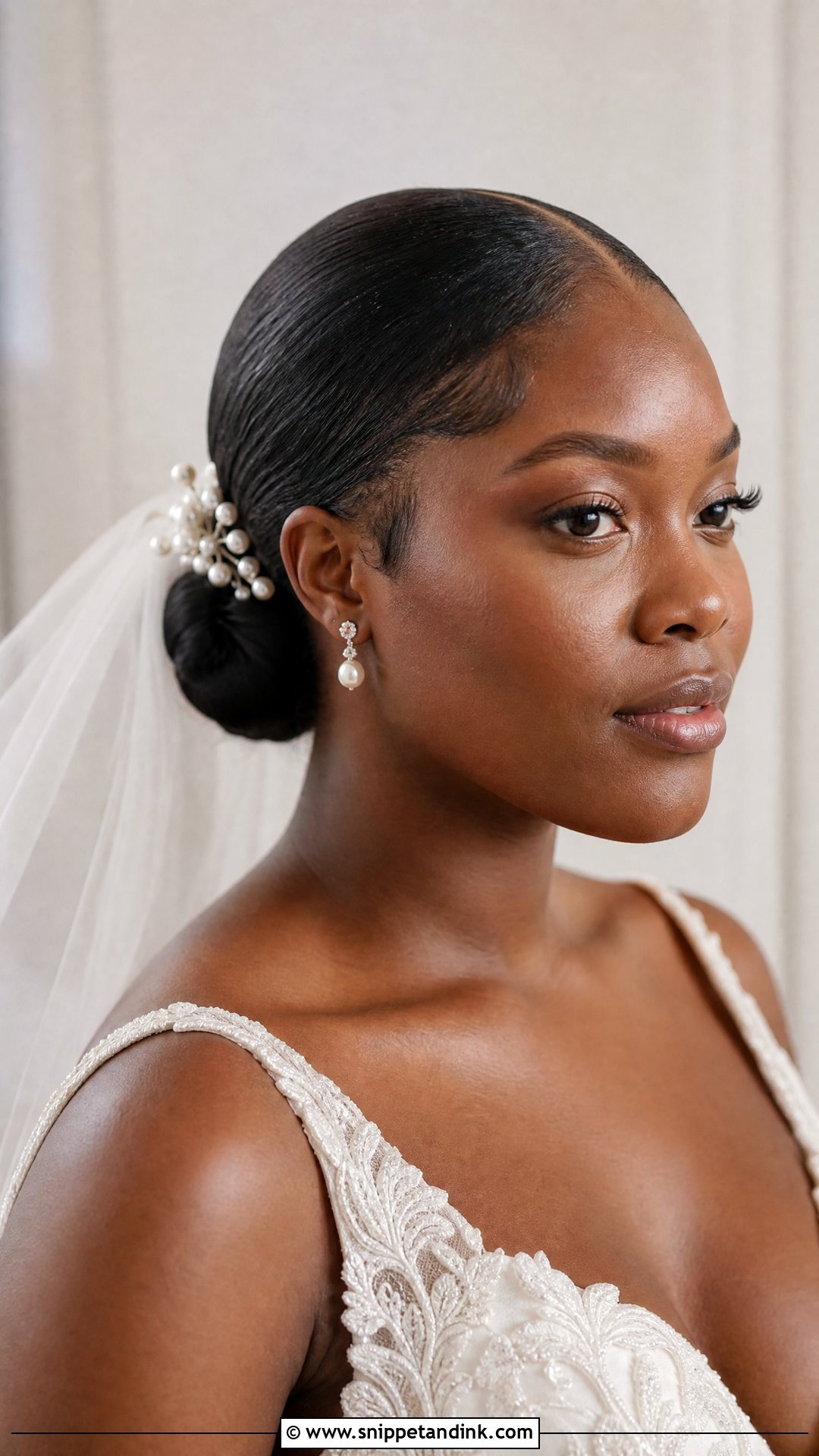
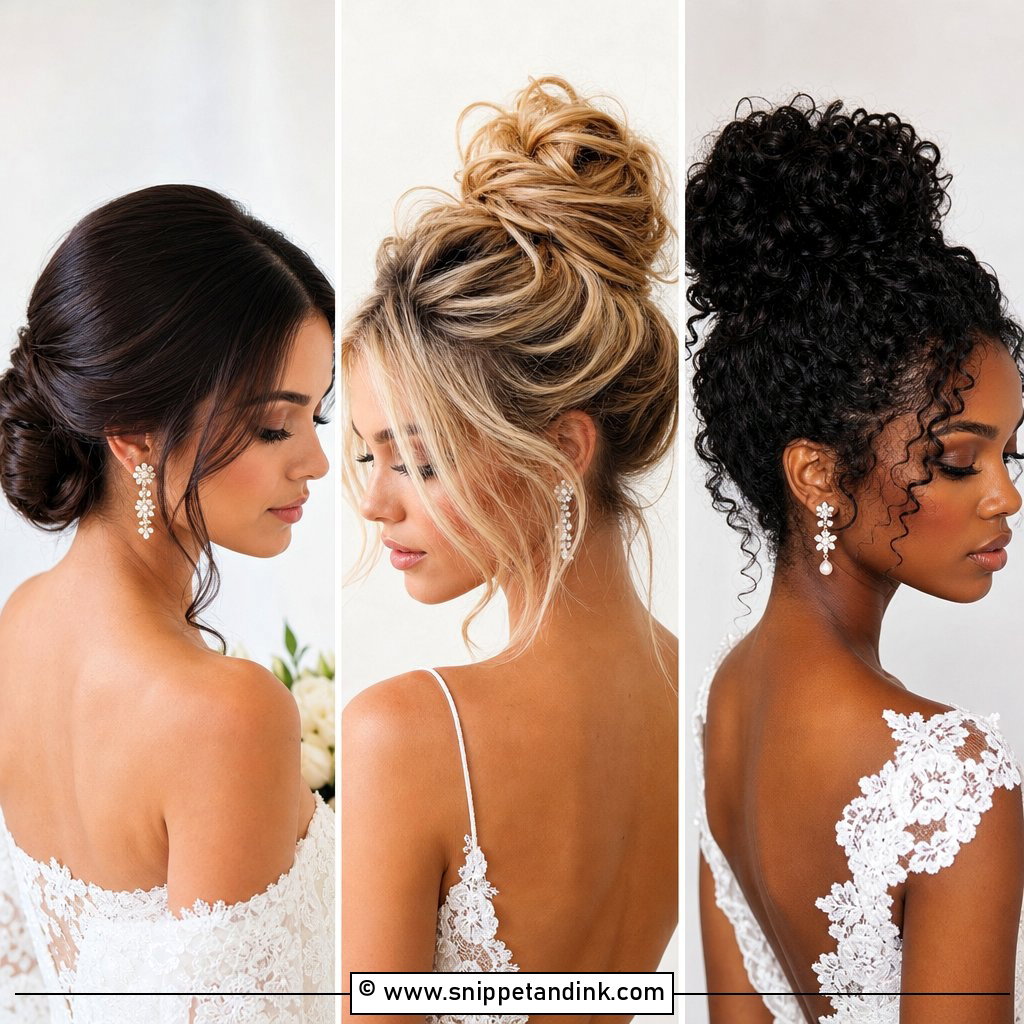
The low bun is the style I’d call the safest bet on this list, and that isn’t faint praise. Sitting at the nape, it stays clear of a detailed neckline or an open back, and it gives a cathedral veil a solid base to anchor into. On silk-pressed or relaxed hair I build it around a small braided core so the pins have something to grip; stretched curls and textured extensions hold shape with less help. Decide the front before the trial. A deep side part reads more formal than a middle part, and smooth face-framing pieces need a light hold so they don’t puff by the afternoon. One pearl comb is usually enough here.
2. Black Bride High Bun Wedding Hairstyle
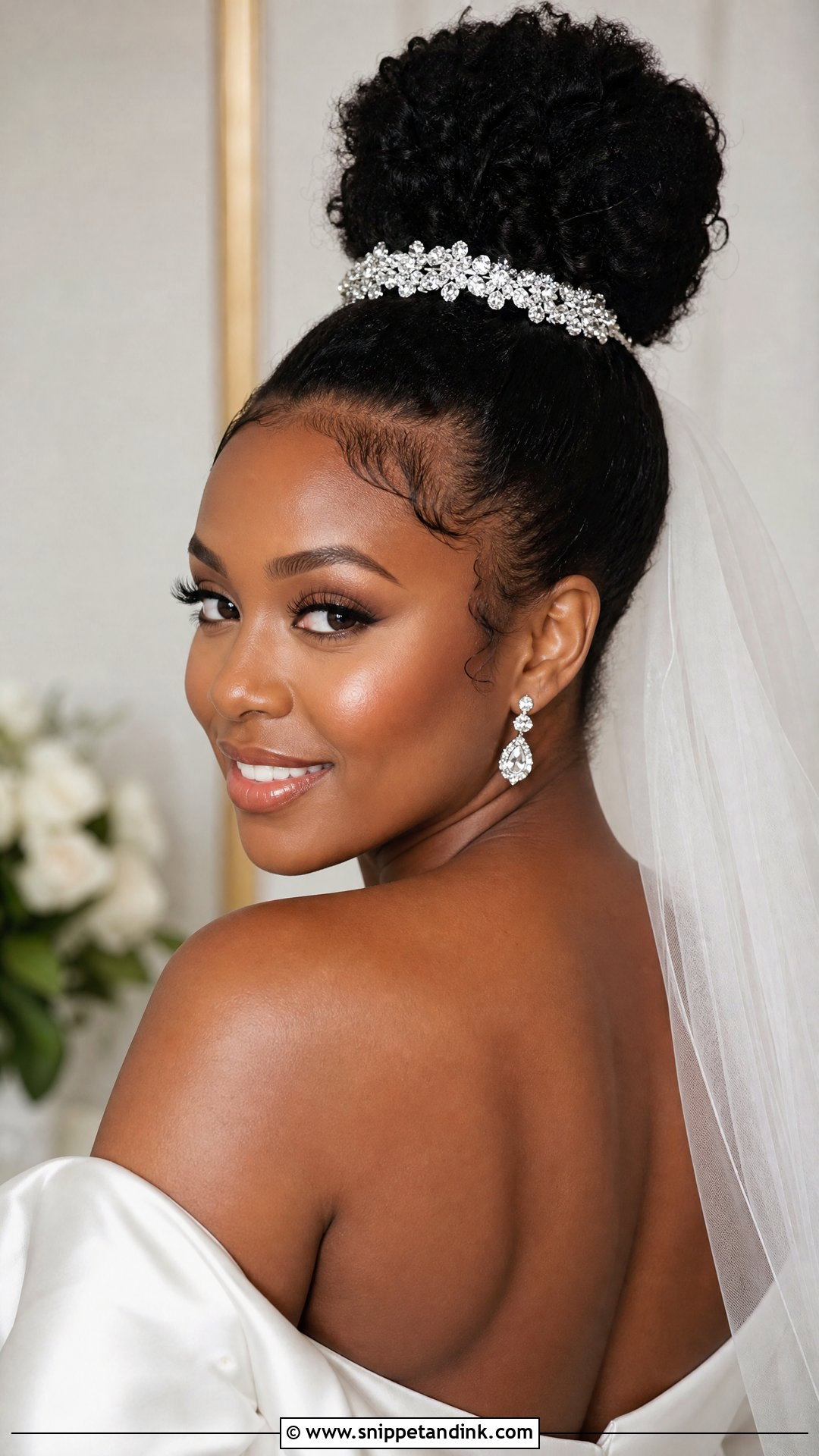
A high bun lifts the whole face and clears the neck and shoulders for earrings and a statement neckline. I build it from natural hair, braiding hair, twists or locs, and the decision that matters most is weight: a large added-hair bun at the crown pulls on the edges after a few hours, so I keep it lighter than brides often ask for at first. It’s my usual suggestion for a summer ceremony because nothing touches the neck. Pin the veil underneath rather than in front, and let a tiara or hair vine wrap the base.
3. Black Bride Natural Afro Wedding Hairstyle
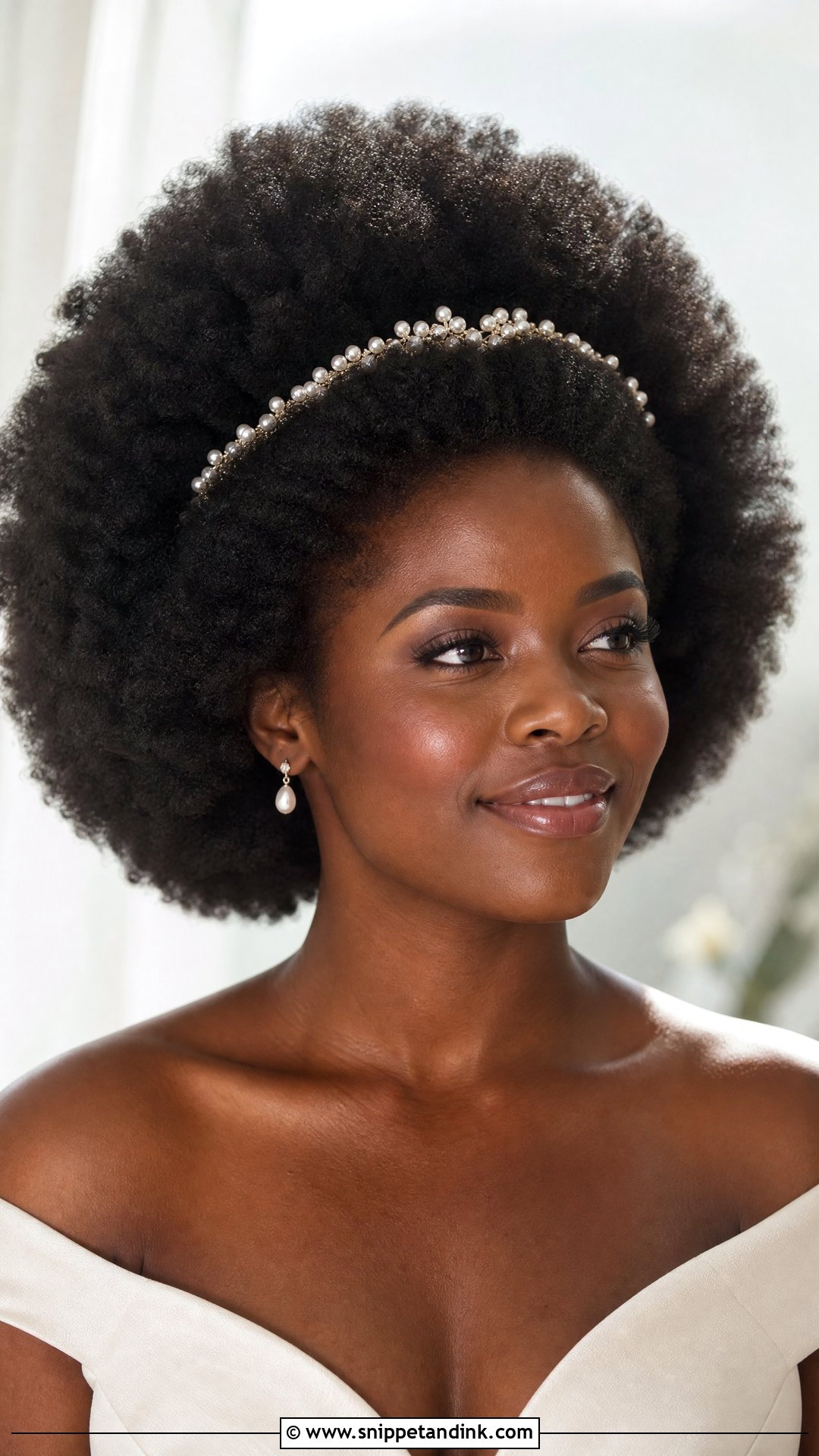
A shaped afro is for the bride who wears her volume every day and doesn’t want to hide it on this one. Everything depends on the prep. I want the hair washed and deeply moisturised a day or two before, stretched overnight, then picked out and shaped with scissors only if the silhouette needs balancing. Uneven density shows up clearly in photos, so I check the shape from the side, not just the front. It pairs well with strapless and minimal gowns and with bold jewelry. A veil works too, but place it toward the crown on a comb anchored into a tiny hidden twist, or it slides.
4. Black Bride Twist Out Wedding Hairstyle
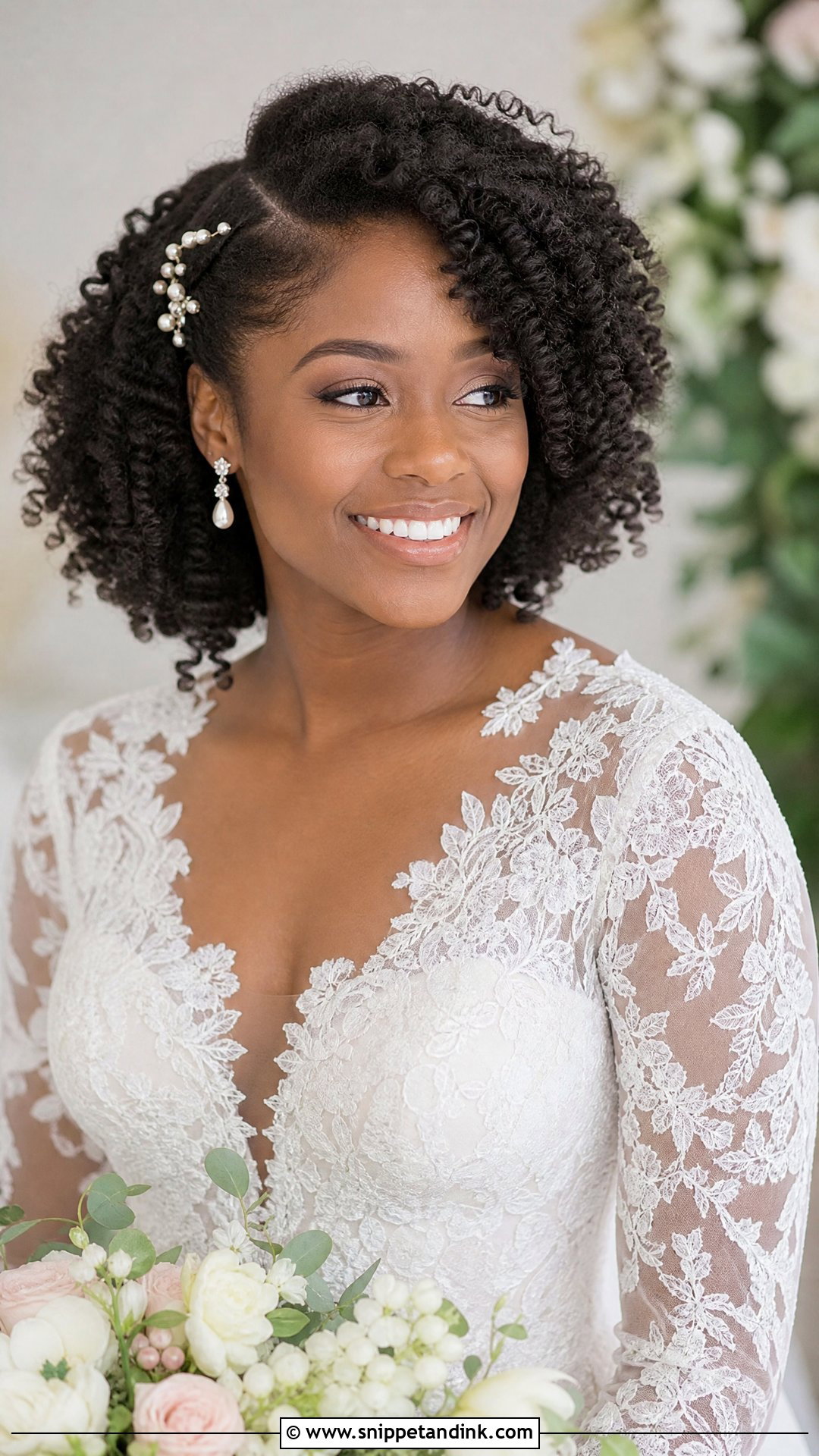
Twist outs move in a way no wand curl can copy, and they also behave differently every time you do them, which is why I insist on a rehearsal. Do the exact twist out, with the same products and the same drying time, at least twice before the wedding and watch how much it expands by evening. Hair that shrinks heavily needs a stretched set; hair that frizzes in humidity needs a firmer setting product and fewer, larger twists. On the day, I’d shape the curls into a rounded silhouette or pin them back slightly at the temples. A small comb gives it a bridal finish without flattening the definition.
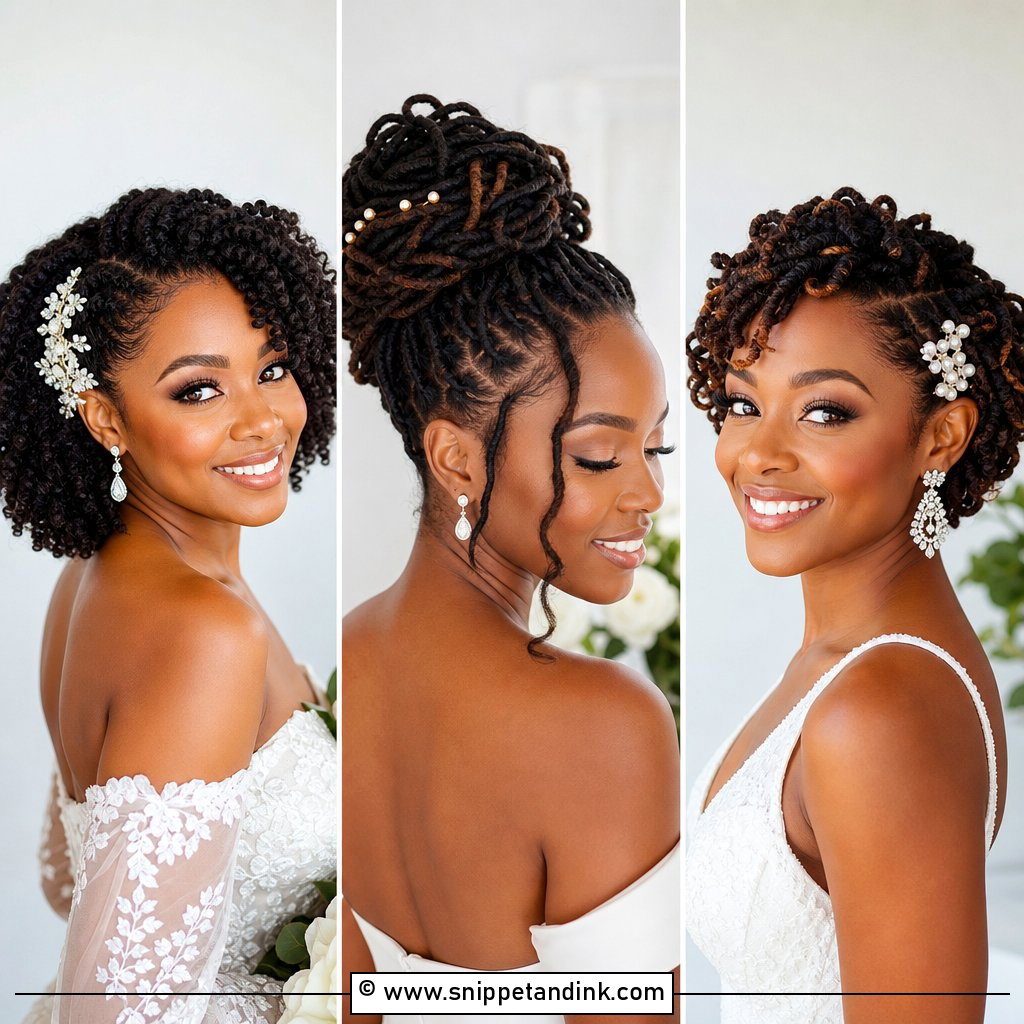
5. Black Bride Braid Updo Wedding Hairstyle
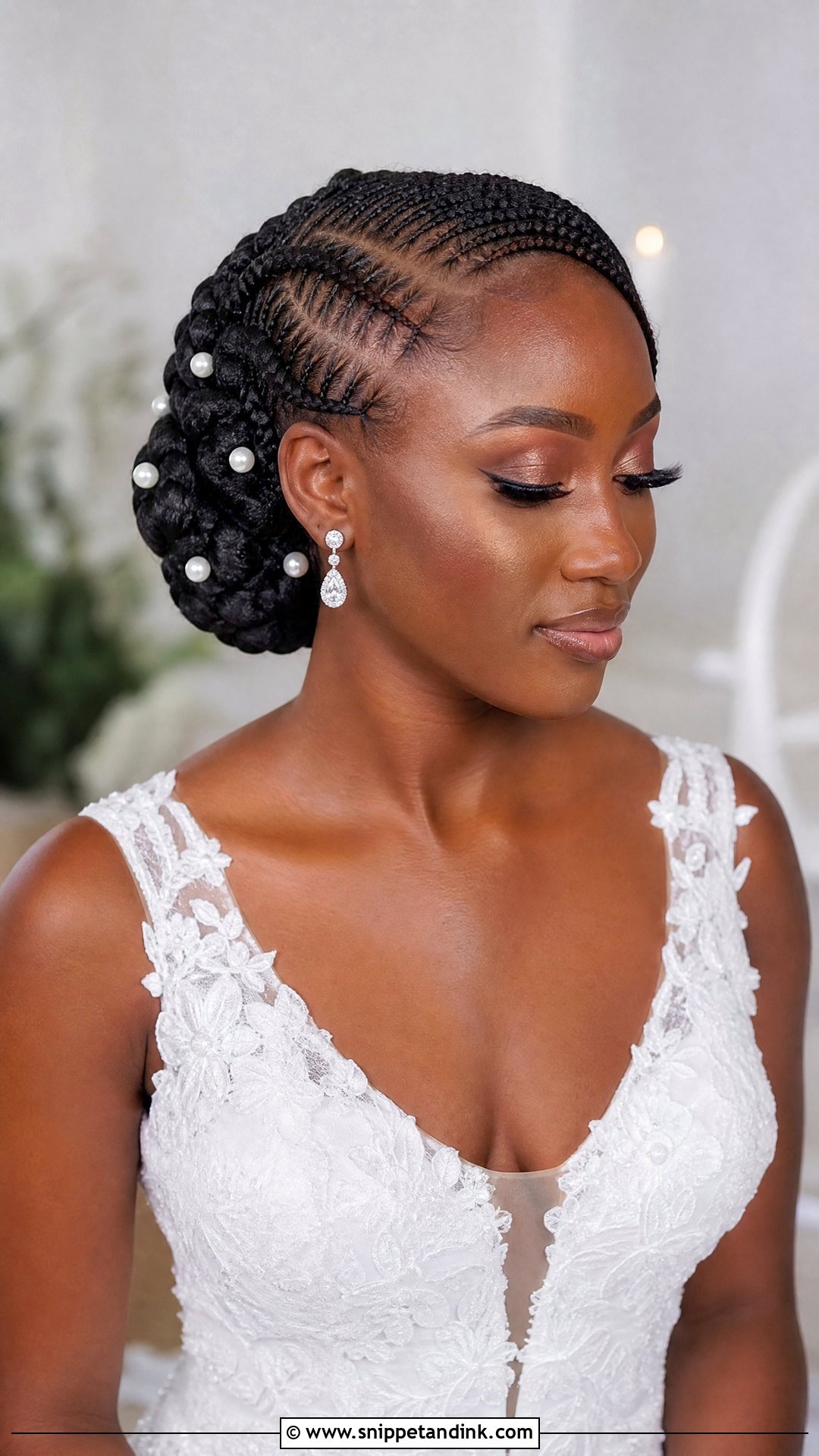
For a full wedding day with a late reception, a braid updo is the style I worry about least. Cornrows, feed-ins, stitch braids or individual braids get pinned into a chignon, a crown or a sculpted bun, and the shape barely shifts between the ceremony and midnight. It’s a protective style that still reads formal. Ask your braider for moderate tension at the hairline; tight braids look sharp on day one but leave a sore scalp under a veil. Braids also hold accessories better than loose hair, so gold cuffs or a crystal vine go in without slipping.
6. Black Bride Crown Braid Wedding Hairstyle
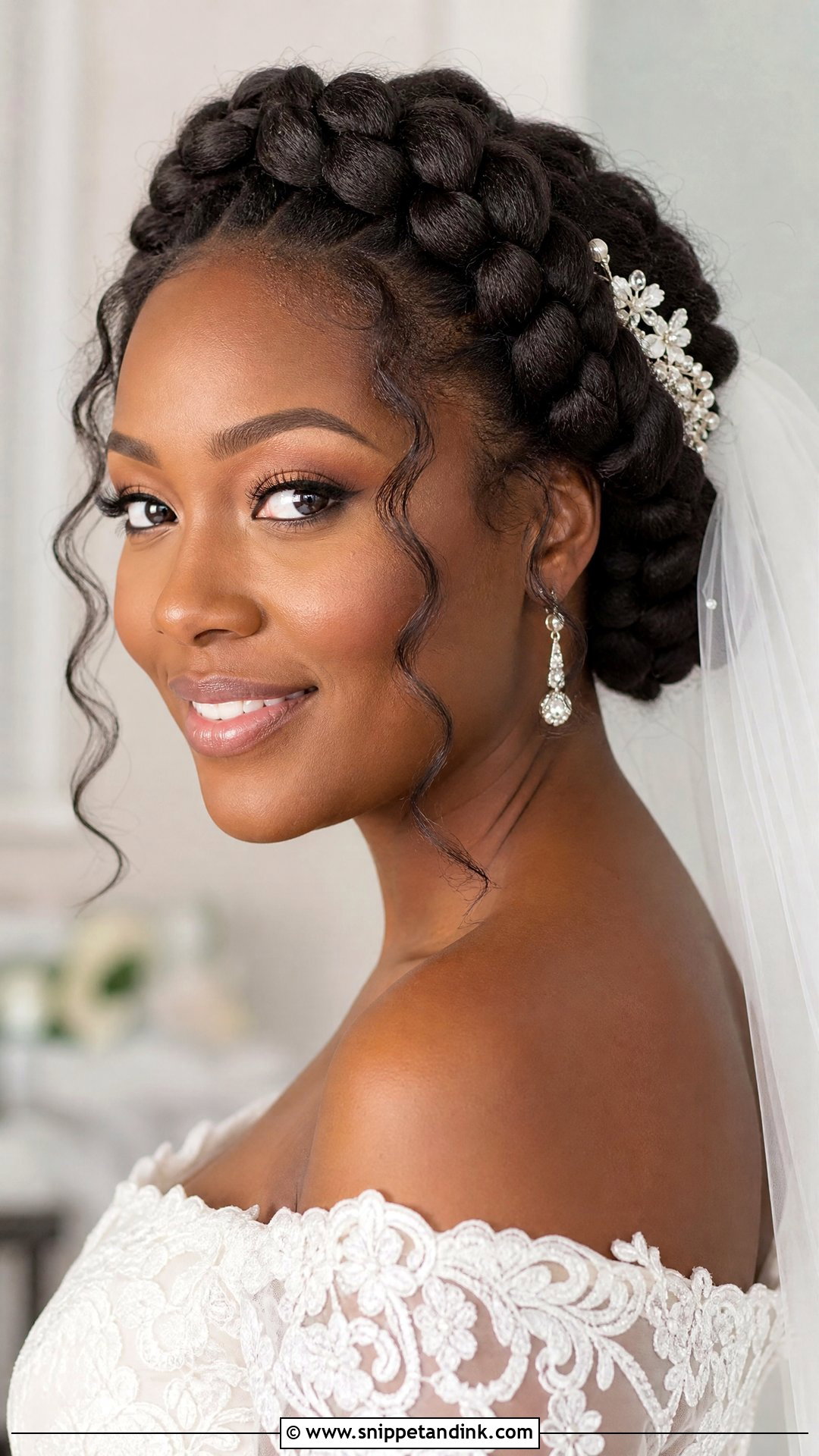
A crown braid frames the face without the formality of a bun. I build it from natural hair or added braiding hair, sometimes with goddess-braid curls left out along the hairline to soften it. Outdoor and garden ceremonies are where it earns its place, because wind can’t do much to hair that’s braided flat around the head. The trade-off is that a veil comb has less room to sit, so I’d usually anchor the veil just below the back of the crown. Simple earrings suit it better than a large headpiece.
7. Black Bride Loc Updo Wedding Hairstyle
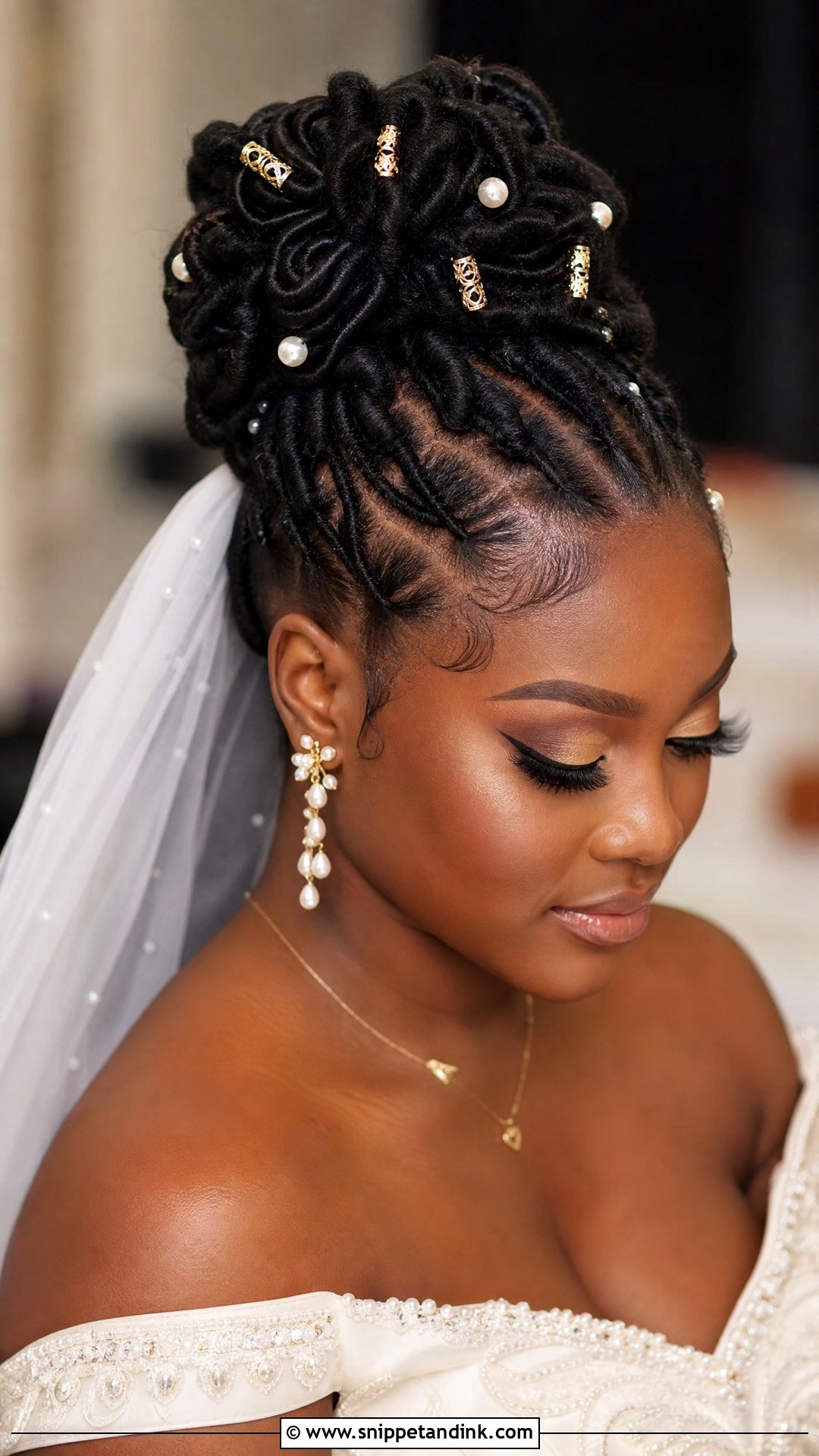
Loc updos let a bride keep her everyday hair and still look ceremonial. What I can build depends entirely on length and thickness: long locs wrap into a high bun, a barrel roll or a sculpted knot, while shorter locs are better curled with pipe cleaners or gathered loosely with decorative pins. Locs are heavier than they look, so I spread the pinning across the head rather than loading the weight onto one point. Ask for a retwist a week or two before, not the day before, so the roots look neat but not tight. A plain veil tucked under the updo sits well.
8. Black Bride Faux Locs Wedding Hairstyle
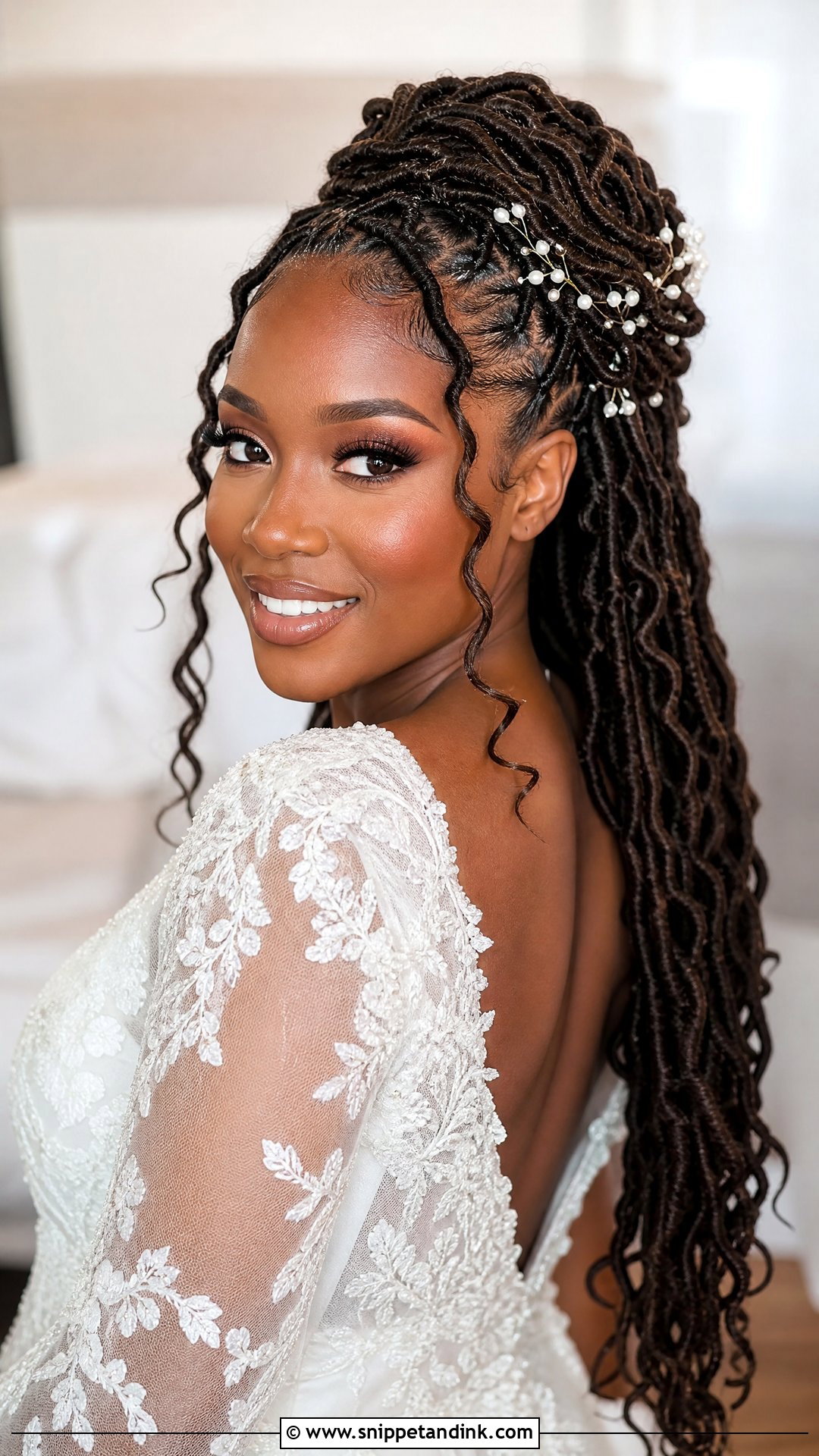
Faux locs give you length and fullness you may not have yet, and they hold their look through a long weekend, which is why I suggest them for destination weddings. The thing to watch is weight. A head full of long faux locs pulled into a high ponytail can give you a headache by the speeches, so I’d go shorter or lighter for an updo. Goddess ends with loose curls feel softer; smooth ends look cleaner and more modern. Get them installed about a week before, so the roots settle, and add cuffs or a veil only after you’ve checked the total weight.
9. Black Bride Cornrow Bun Wedding Hairstyle
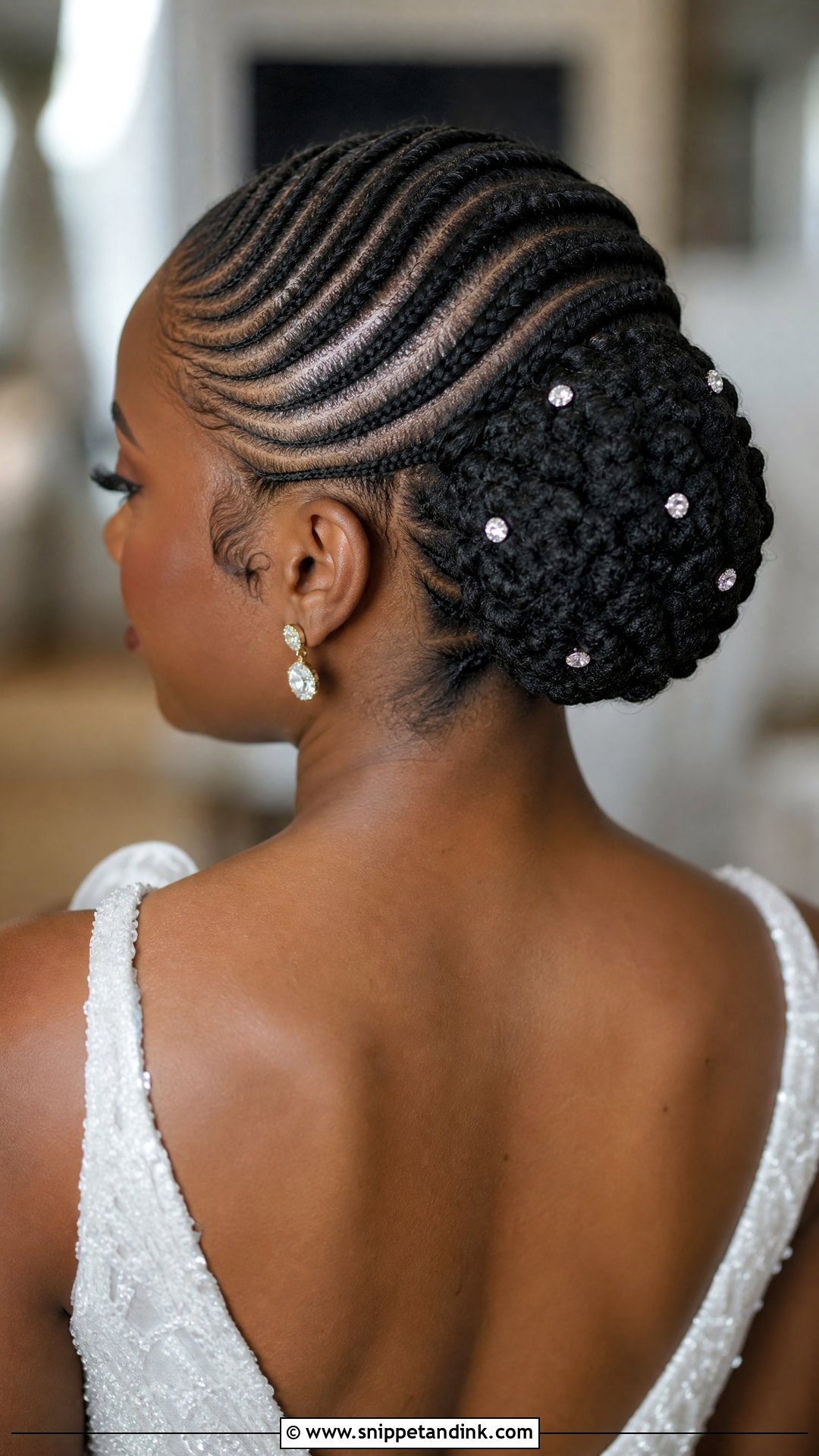
A cornrow bun keeps every strand secure through the hugs and the dancing, and the parting pattern becomes part of the design. Straight-back rows, curved patterns, stitch-braid details or a centre part leading into the bun all read differently, so pick the pattern with your photographer’s close-ups in mind. The bun itself can be braided, twisted or built out with added hair. Because the scalp design is on show, I’d keep the veil low and slim so it doesn’t cover the rows. It suits minimal gowns and high necklines especially well.
10. Black Bride Half Up Half Down Wedding Hairstyle
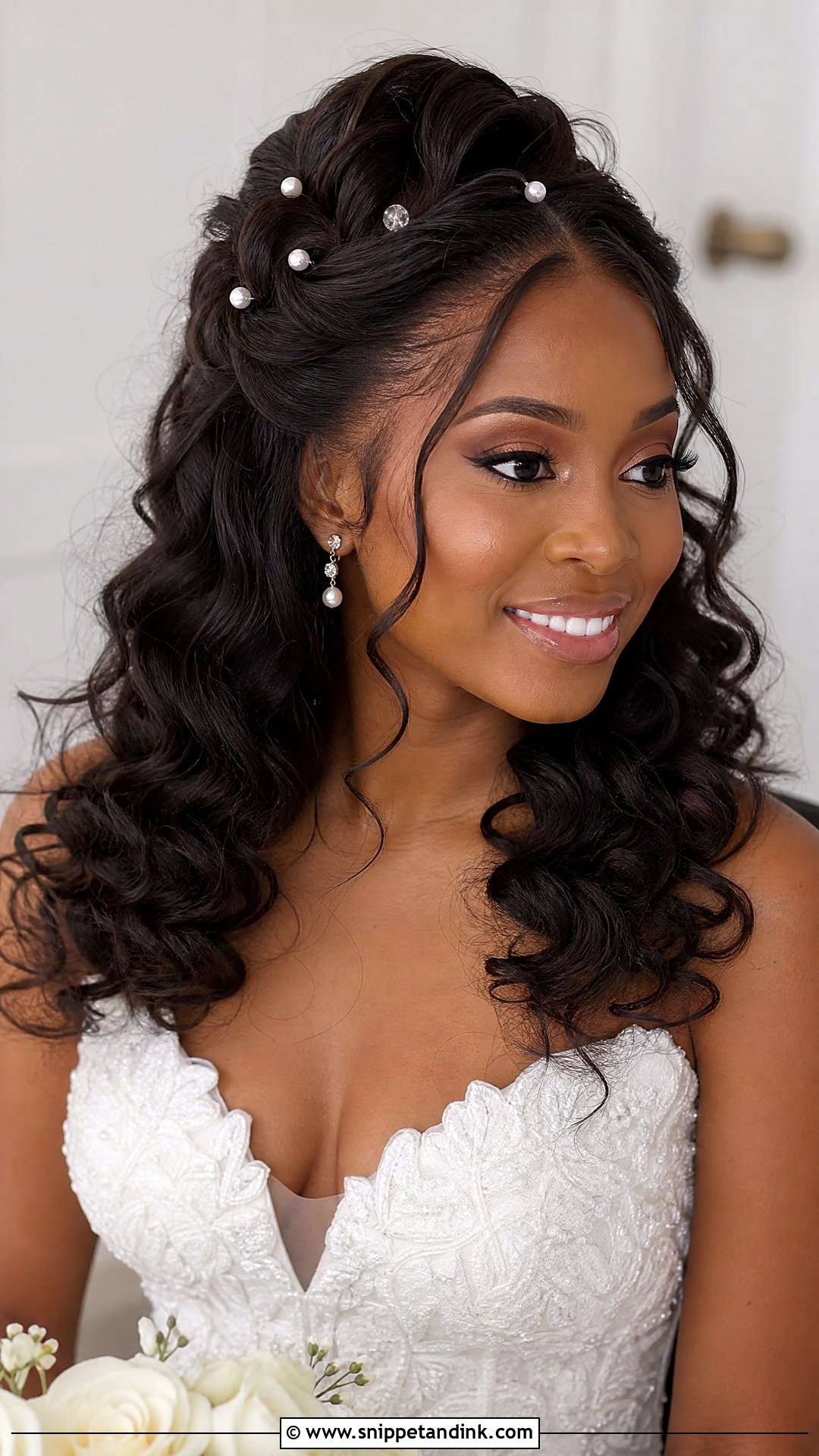
Half up half down wedding hair keeps some softness around the shoulders while the top stays lifted and off the face. On textured hair I can create the loose part from natural curls, wand curls, kinky curly clip-ins or a curled silk press, and the top section is usually twisted, braided or smoothed into a small bun. The loose lengths are the weak point: they’re what humidity reaches first. If your hair reverts quickly, a twisted or braided top section holds the shape even when the ends start to swell. It sits nicely with sweetheart and off-the-shoulder necklines.
11. Black Bride Curly Ponytail Wedding Hairstyle
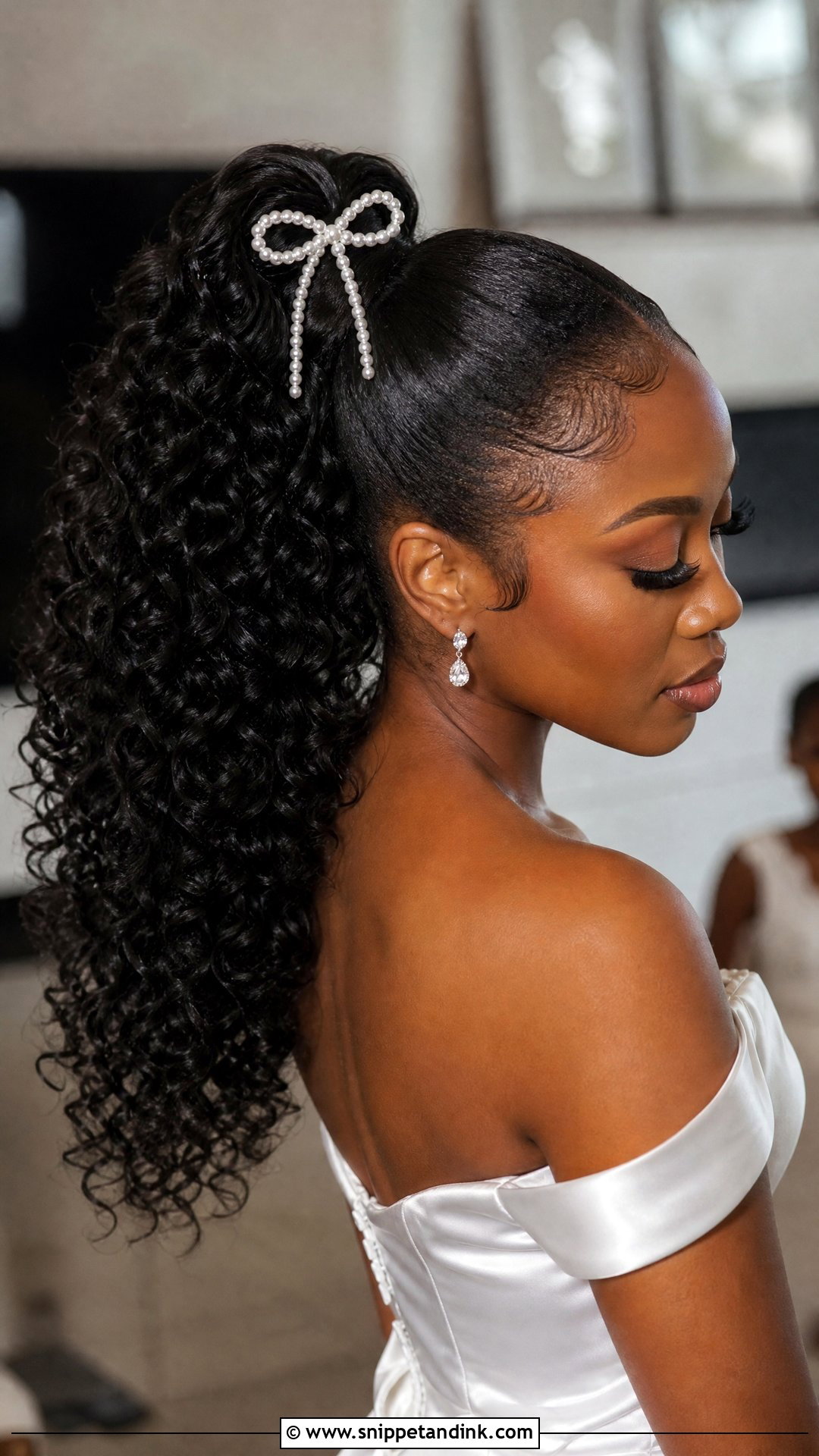
A curly ponytail is the style I suggest to brides who plan to dance hard. The base can be sleek with a middle part, a deep side part or a soft swoop, and the ponytail itself can be natural curls, coils or textured extensions. Low and curly feels romantic; high and full feels modern. I wrap the base with a piece of hair to hide the elastic, and I secure the elastic with crossed pins underneath so it can’t creep down during the reception. Pearl pins or a small bow finish it. If you have fine edges, ask for a gentler hold at the hairline, because a very tight sleek base pulls.
12. Black Bride Finger Waves Wedding Hairstyle
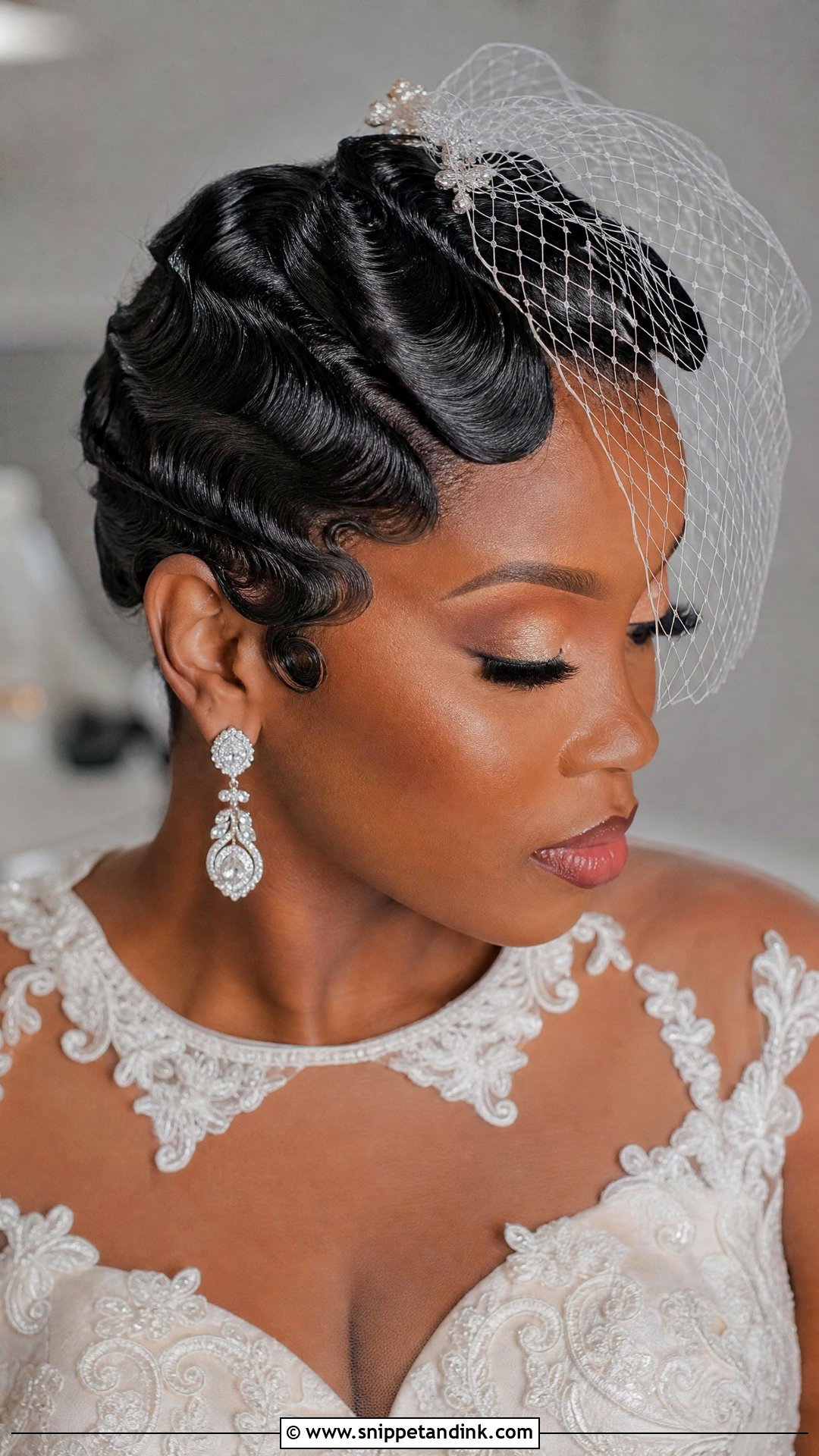
Finger waves are precision work, and on Black brides with short hair, pixie cuts, relaxed hair or molded natural hair they look polished in close-up photos. The pattern is set close to the head with a strong setting lotion and left to dry fully before any combing out, which is why the morning schedule needs real time for it. If you love old Hollywood, this is the most direct route there; bold earrings and a birdcage veil suit it well. Book a trial with the stylist who will do the wedding, because the depth of the waves is a matter of individual hand. Done well, it stays glossy all day.
13. Black Bride Silk Press Wedding Hairstyle
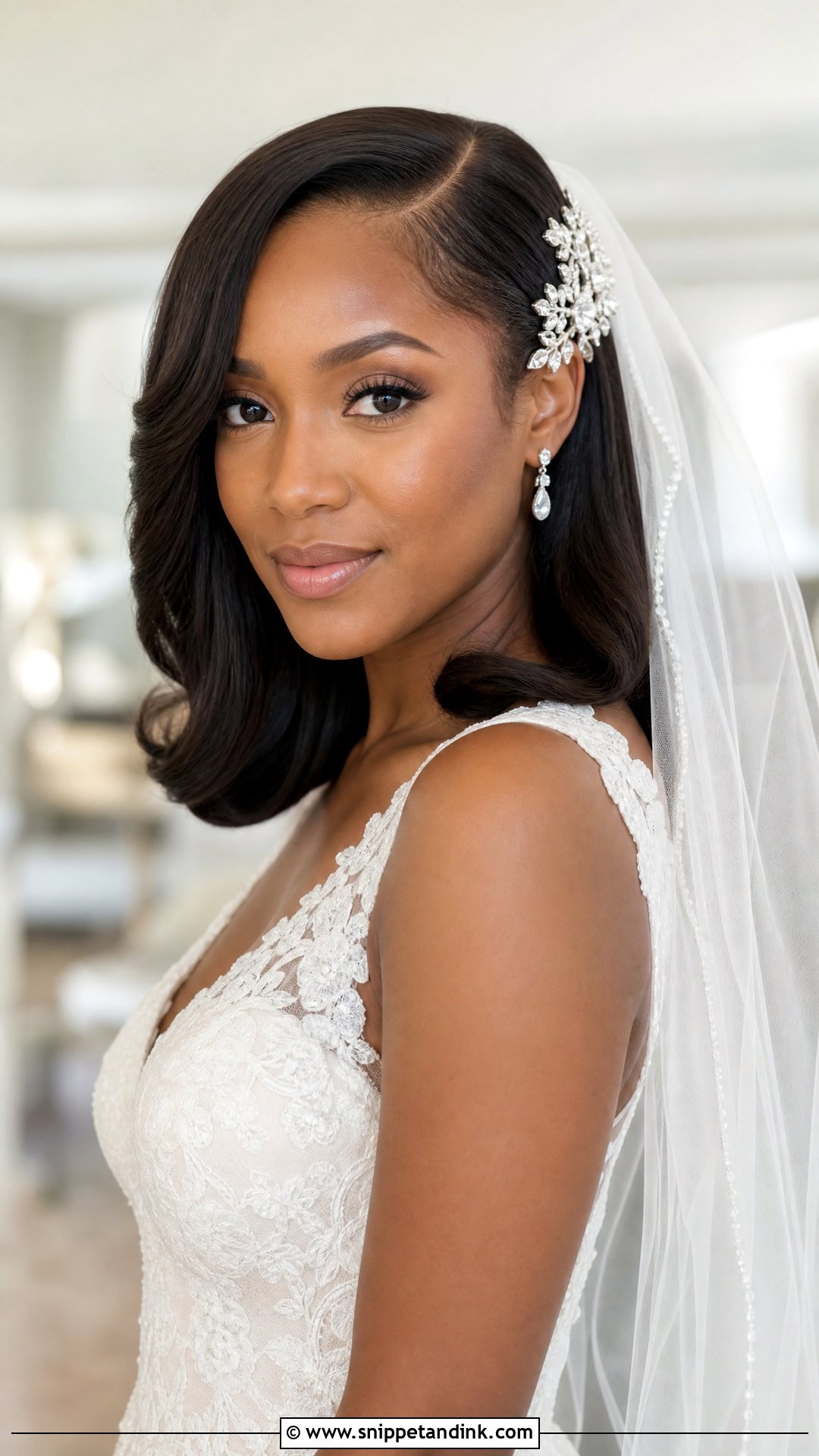
A silk press wedding hairstyle gives smooth movement and shine for brides who wear their hair straight most of the time. The style looks simple, but it’s the one most at risk from weather, so I plan around humidity first. Get a trim and a deep treatment a couple of weeks before, and the press itself one to three days out, using a good heat protectant. On the morning, I’ll add loose waves or tuck one side behind an ear. It works with veils and pearl headbands, and it should feel like the familiar version of you, just more formal.
14. Black Bride Braided Ponytail Wedding Hairstyle
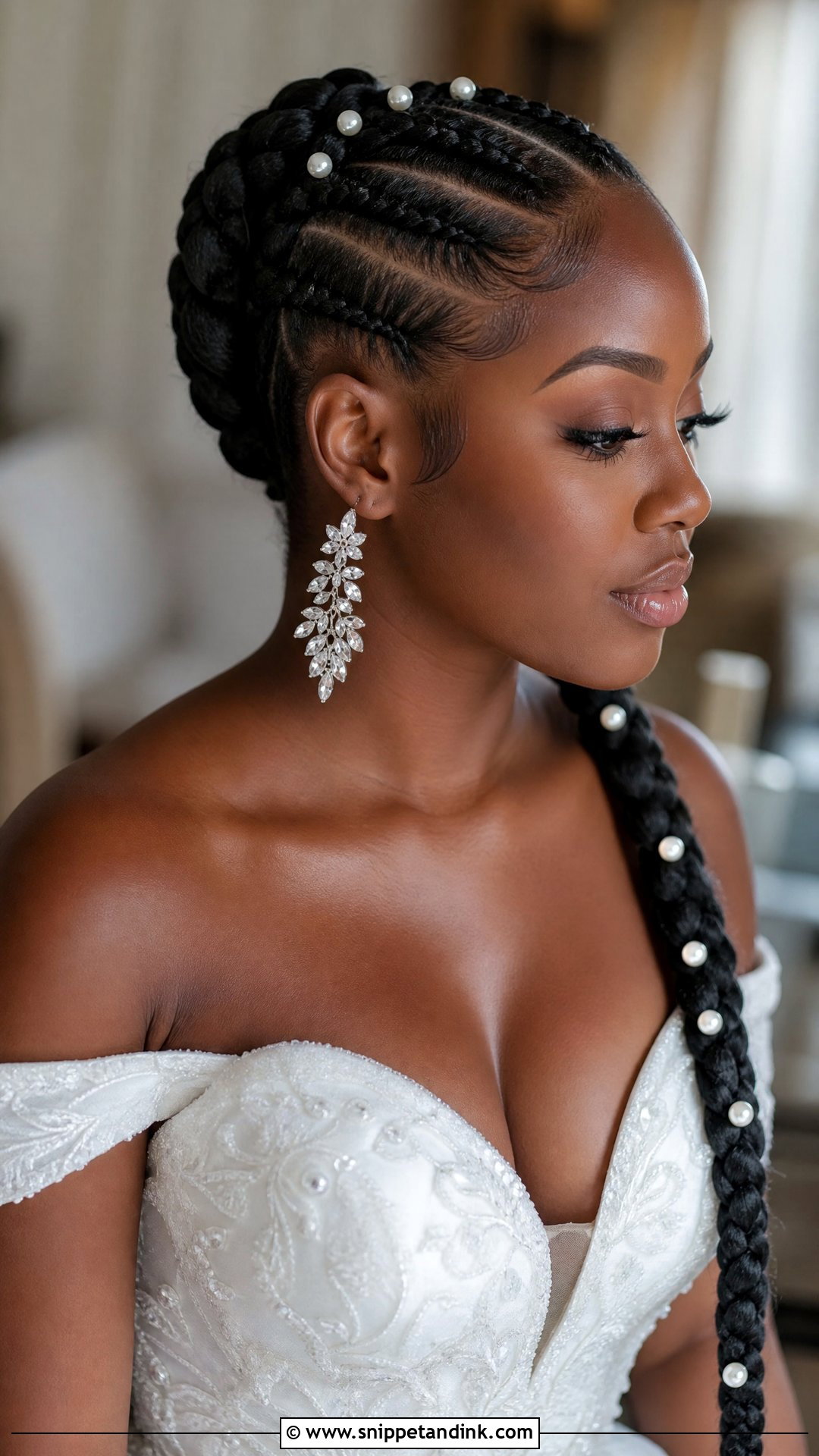
Guests spend most of the ceremony looking at the back of your head, and a braided ponytail gives them something to look at. The front can be smooth edges with a middle or side part, or feed-in braids leading back into one long braid. Waist-length is dramatic, but I’d test how it feels to sit on a long braid during dinner, because it tugs every time you lean back. Curled ends or a few pearls woven into the length finish it nicely. It’s a protective style, which makes it a sensible choice if your hair needs a break after the wedding. It suits fitted gowns with clean lines.
15. Black Bride Side Swept Curls Wedding Hairstyle
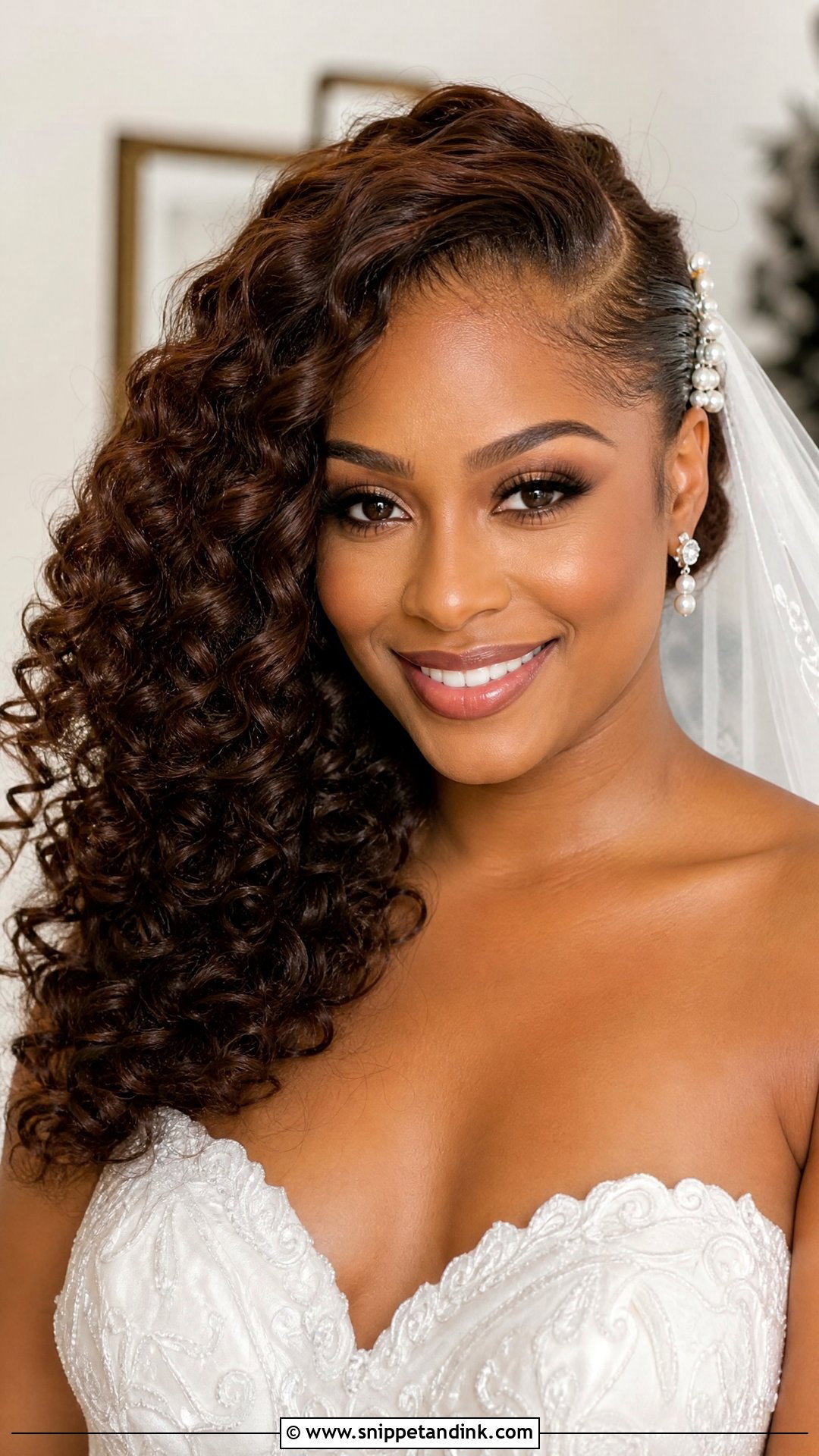
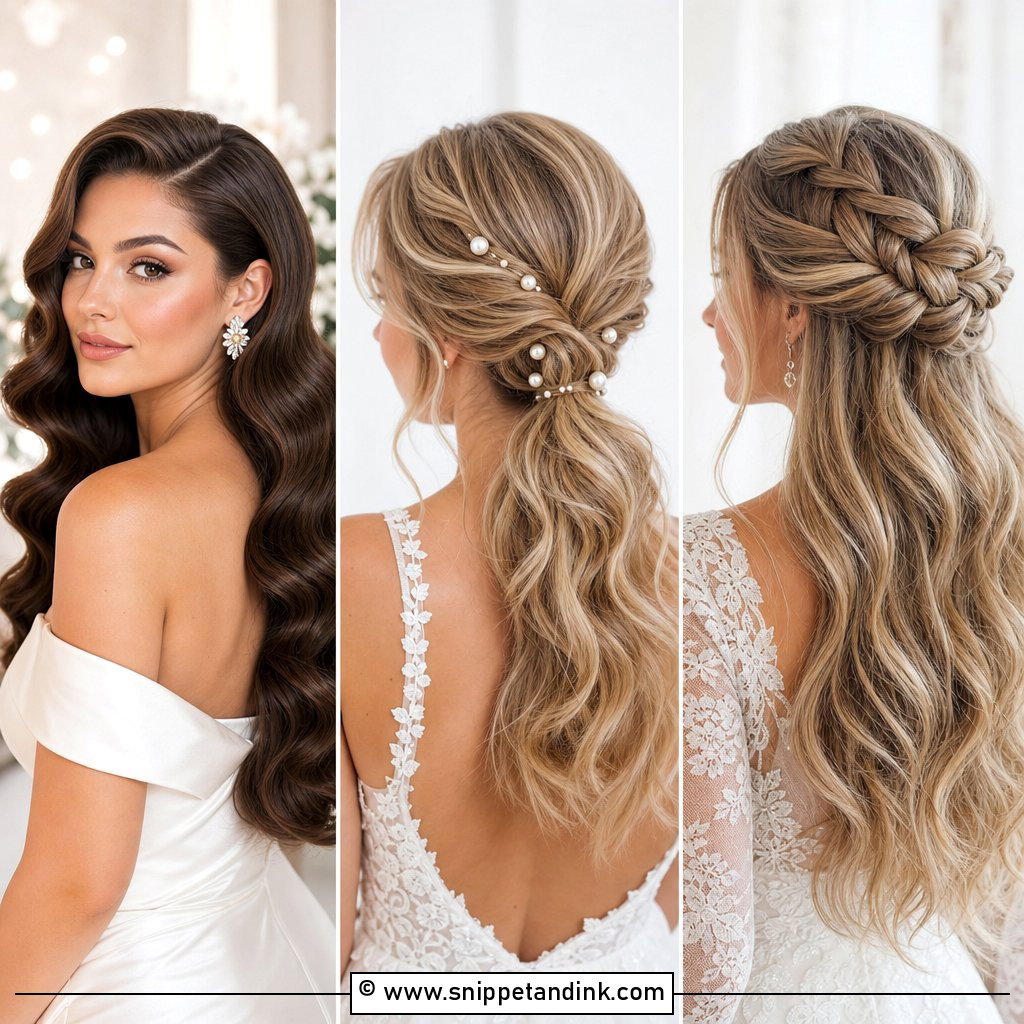
Side swept curls put the volume over one shoulder and leave the other side clear, which suits a one-shoulder or strapless dress well. On Black brides I make the curls with flexi rods, a wand, extensions or a silk press set, depending on what the hair holds best; flexi-rod sets on natural hair tend to last longer than wand curls in warm rooms. The smooth side gets pinned, braided or tucked under a comb, and it needs strong anchoring because all the weight is pulling toward the other shoulder. Choose one statement earring on the open side and let it do the work.
Coils, Veils and a Humid Reception
Most of what goes wrong with textured bridal hair happens after the ceremony. A veil comb slides out of a twist out by the first dance, edge gel turns white and flaky, a press reverts in a hot tent. Each has a simple fix if you plan for it.
- I sew the veil onto its comb with a few loops of thread, then anchor the comb into a small braided or twisted base hidden under the hair. Coils hold pins well, but a slippery comb on its own won’t stay put.
- Test your edge product at the trial and look at it in daylight six hours later. Some gels flake once they dry under a veil, so a lighter hold you can reapply often photographs better.
- For an outdoor summer reception, a silk press or wand curls carry the most risk. A braided updo, cornrow bun or loc style will look the same at midnight as at noon.
- Give whoever is helping you a few bobby pins in your hair colour, a satin scarf, a wide-tooth pick, an edge brush and your styling cream.
- Heavy hair jewelry and a long cathedral veil both add real weight. If your scalp is already tender from a fresh install, pick one of the two.
Interviewing a Stylist Who Works With Your Hair Type
Ask to see bridal work on hair that resembles yours in texture and length, not just pretty pictures. Then ask how she’d attach your veil, whether she supplies extensions or you buy them, and how long the morning session takes so the photographer’s timeline is realistic. If a stylist wants to straighten hair you normally wear curly and can’t tell you why, that’s worth a second conversation.
Let Your Hair Texture Have the Last Word
There’s no single right answer here. Some brides feel most like themselves in a sleek bun or a fresh silk press; others light up in natural curls, locs, a crown of braids or a full afro. Test your favourite against the practical questions: the neckline, where the veil sits, the forecast and how many hours the style has to last. Then book the trial and wear the result for the rest of that day. If it still feels good at dinner, you’ve found your wedding hair.
You'll Like These Ideas:



Leave a Reply