
A second bridal look has a different job from the ceremony gown. It has to let you dance, eat and hug a hundred people while still reading as the bride in every photo from the evening. The twenty outfits below run from short to full length, in satin, lace, sequins, pearls, velvet and metallics, and each comes with the shoes, jewelry and bag I’d put with it. Before you fall for one, think about three plain things: how warm the room will be, how hard you plan to dance and how many minutes you’ll actually have to change.

How Long Does the Change Actually Take?
Longer than most brides plan for. Getting out of a corseted gown with buttons or lacing, into a new dress, then fixing hair and lipstick usually takes twenty to thirty minutes with a helper, and close to double that alone. I ask couples to put the change on the timeline as its own slot, often during the last dinner course or just before the party set starts, so you aren’t missing a toast.
- Pick one person to help, ideally whoever learned the gown’s buttons or lacing at the final fitting.
- Hang the second dress unzipped in the changing room before the ceremony, with shoes and jewelry already beside it.
- Have your hairstylist plan the switch: a veil comes out, an updo may drop into a ponytail, and pins need a safe place.
- Check that the new dress works with the same bra, or bring the right one, since a strapless gown and a halter rarely share underwear.
If twenty minutes feels like too much, a detachable skirt or overskirt on the ceremony gown gives you a new silhouette in under five.
1. White Satin Slip Wedding Night Dress
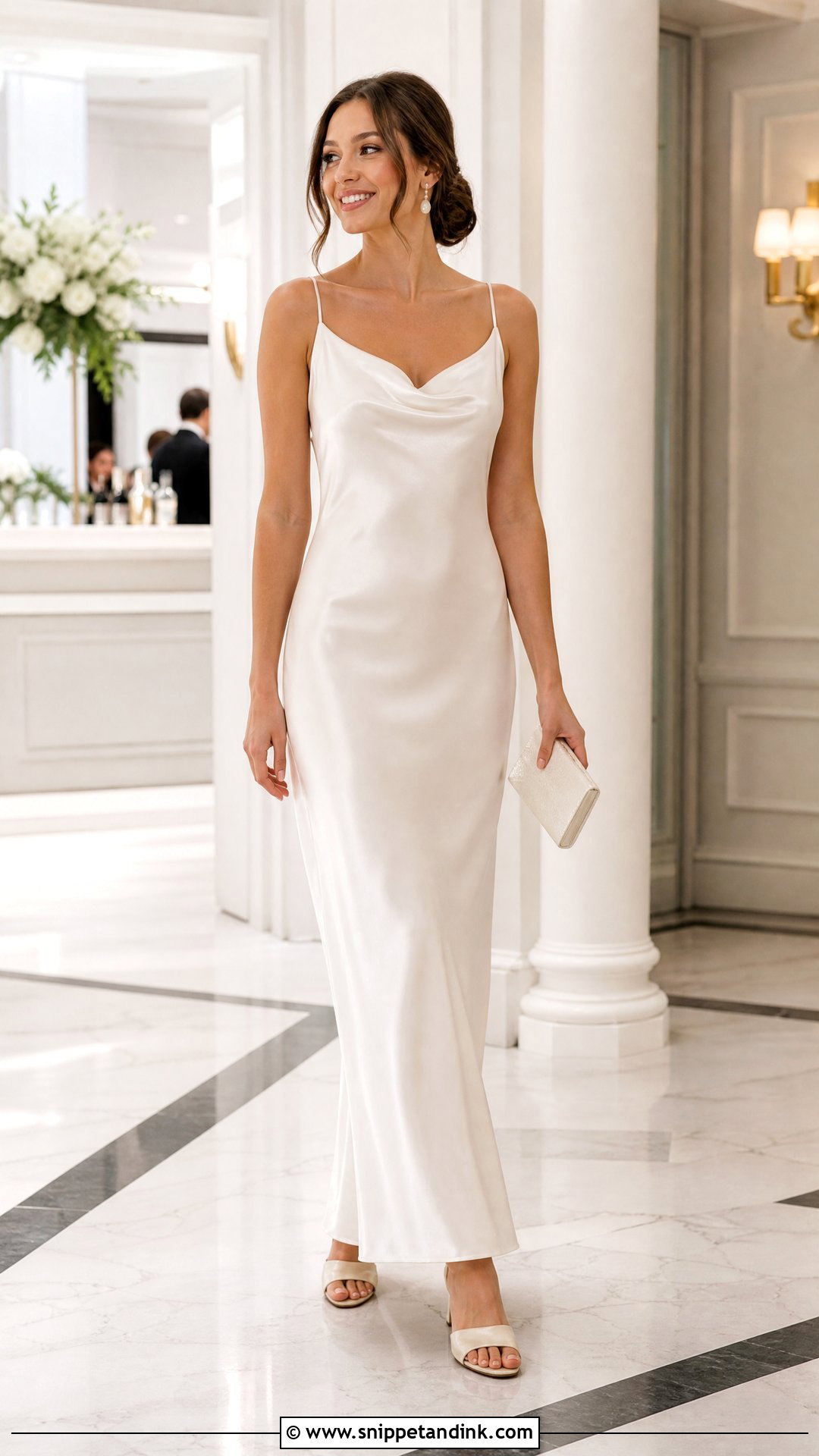
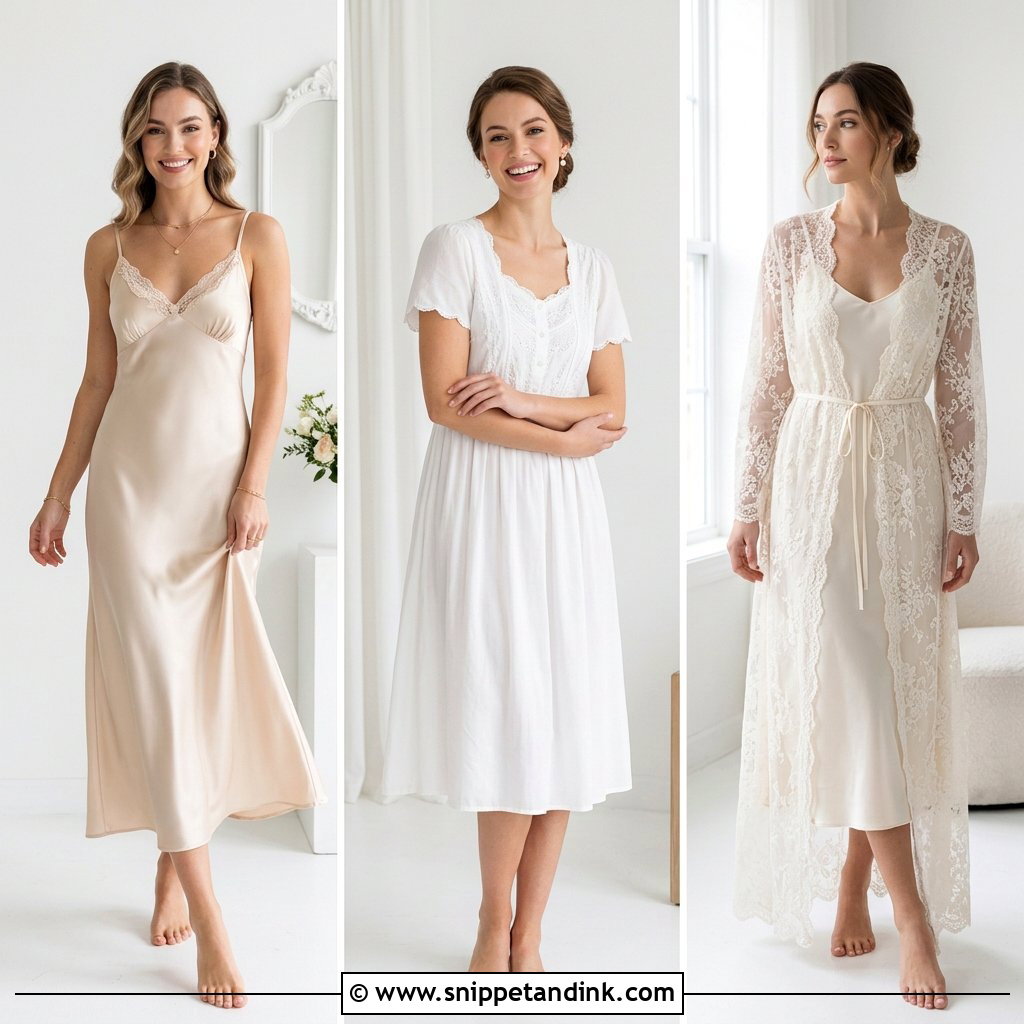
A white satin slip is the change I suggest most often, because it feels like taking off armor after a structured gown. Go midi or ankle length with adjustable straps and a soft cowl or drape at the neck. Weight is everything with satin. A thin, cheap satin clings to every seam of your underwear and shows creases from the car ride, while a heavier one hangs straight and moves when you walk. Pearl drops, a slim bracelet, a structured ivory clutch and low block-heel sandals keep it simple. A soft updo shows the neckline, and a cropped white blazer handles the cooler hours.
2. Pearl Mini Wedding Night Dress
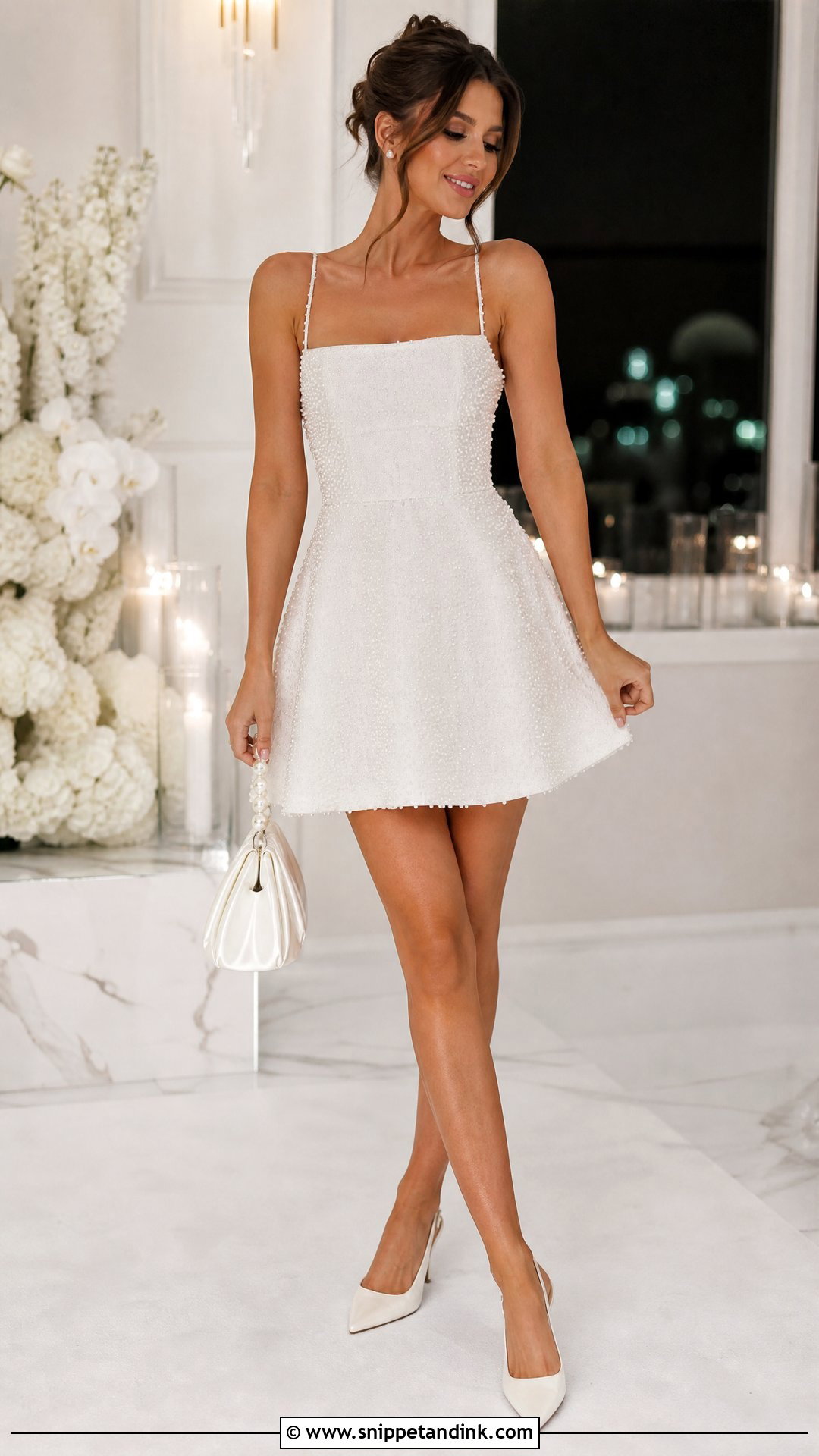
Pearls give a mini dress a bridal finish without the glare of crystals. I look for a structured shape with secure straps, a full lining and pearls stitched evenly enough that none hang loose, then a straight or slightly flared skirt so you can actually climb stairs in it. Pointed ivory slingbacks and a small satin bag suit it, with studs only, since earrings and a pearl surface fight each other. Wear the hair up in a sleek ponytail or low bun; loose strands snag on pearls every time you turn your head. Sheer white tights help if the hem feels short. It sits most naturally in a hotel ballroom or city venue.
3. Long Sleeve Lace Wedding Night Dress
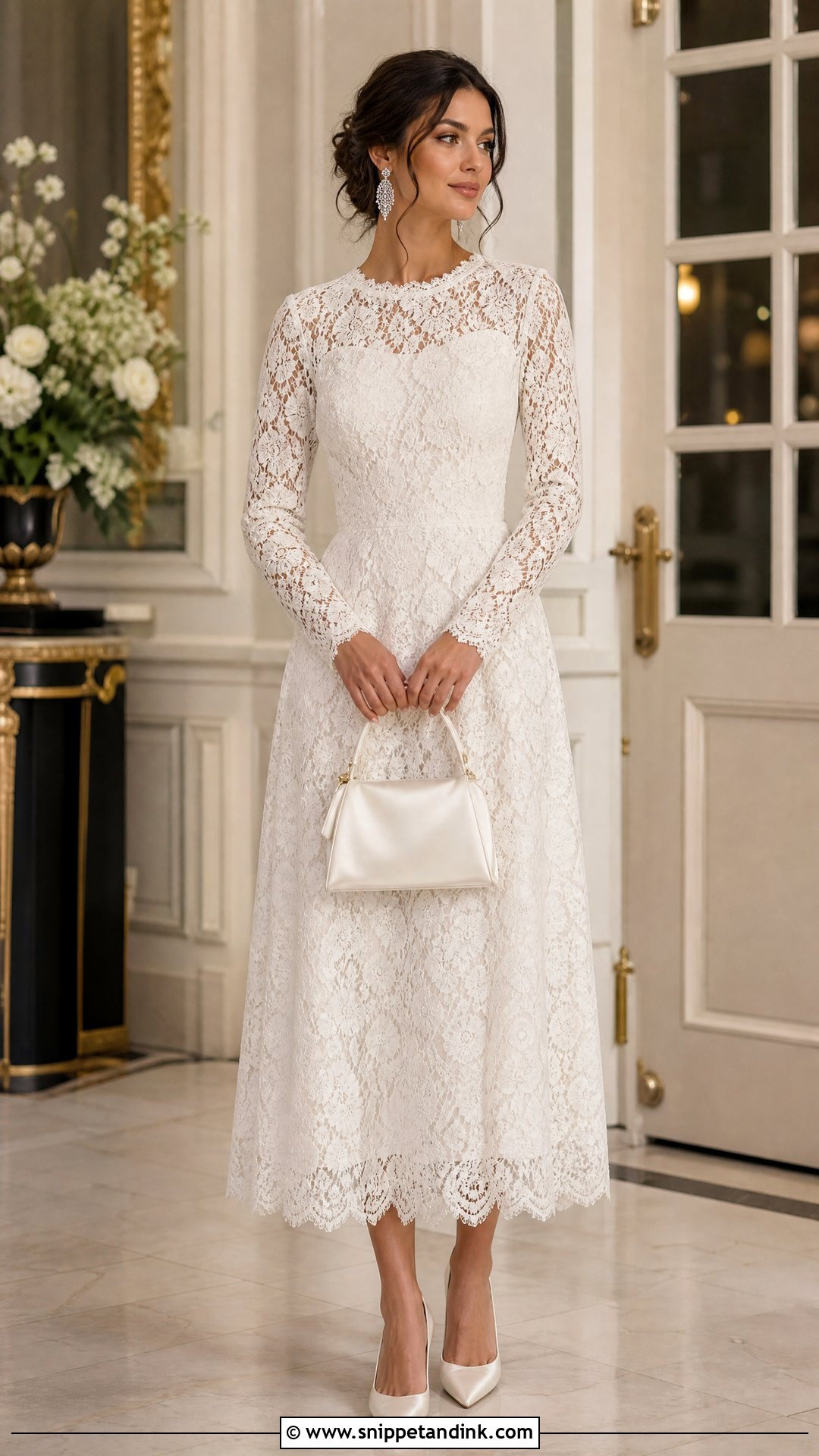
Long lace sleeves are the closest second dress to the ceremony gown, which is why brides who loved their main dress tend to pick this one. A fitted midi or short A-line with a smooth lining works; floral lace looks romantic, geometric lace looks sharper. Reach both arms up in the shop. Lace sleeves cut close at the armhole often stop you lifting your arms for the first dance hold. Pointed satin pumps, crystal earrings and a top-handle bag finish it, with a narrow belt if you want a defined waist. Soft waves or a low chignon suit the fabric, and the extra coverage makes it the obvious pick for a cold-weather reception.
4. Sequin Mini Wedding Night Dress
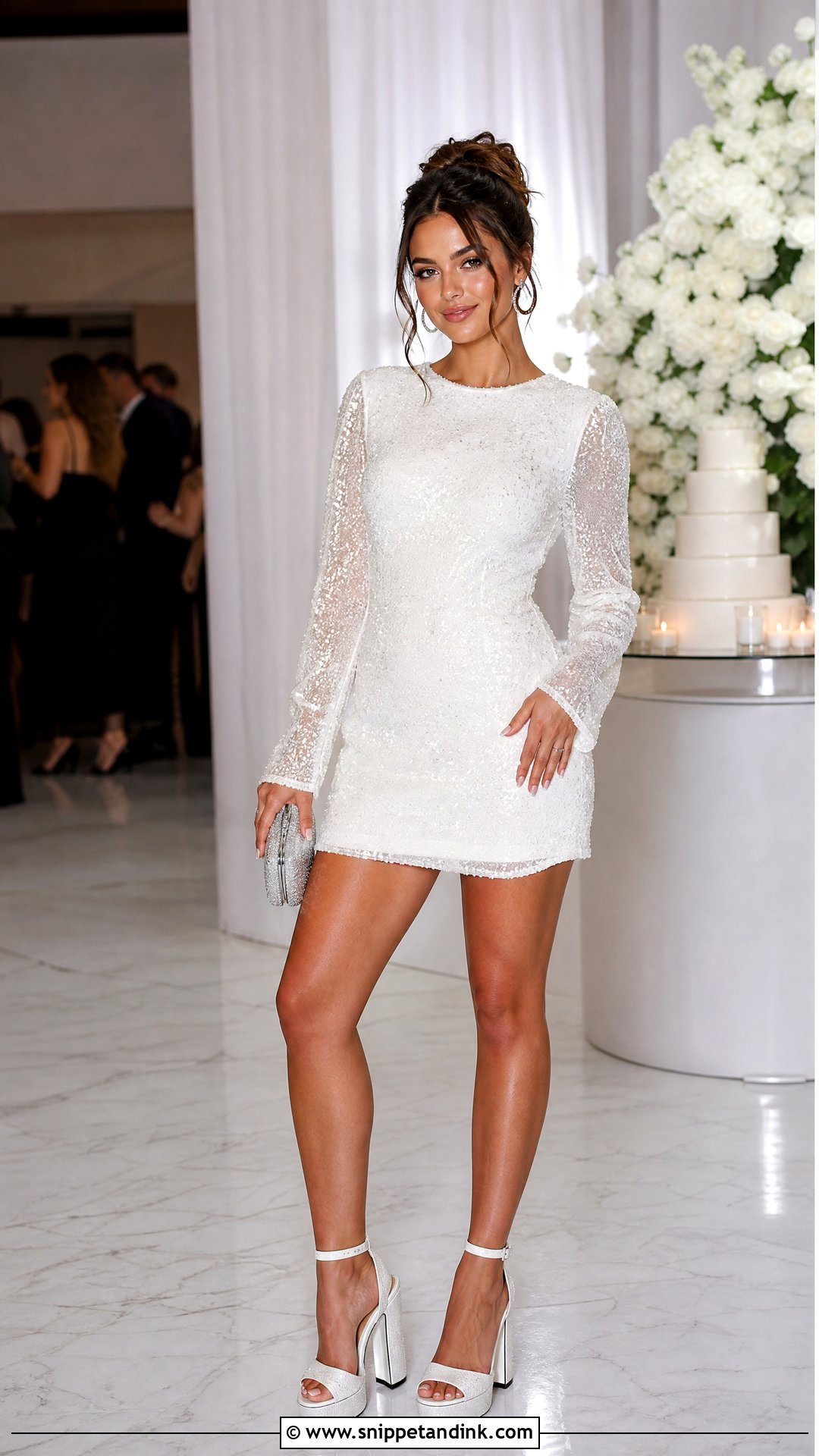
Sequins are for the part of the night when the music gets loud. A white sequin mini dress with a stretch lining and smooth inner seams is the one to hunt for, because raw sequin edges inside a dress leave red marks on the underarms within an hour. Long sleeves balance the short hem, and a relaxed shift moves far better than a tight bodycon. White platforms or cushioned block heels, a silver clutch, small crystal hoops and a high ponytail keep it light. Photograph it with your phone flash before you buy. Some white sequins on sheer mesh go see-through under flash.
5. Feather Trim Wedding Night Dress
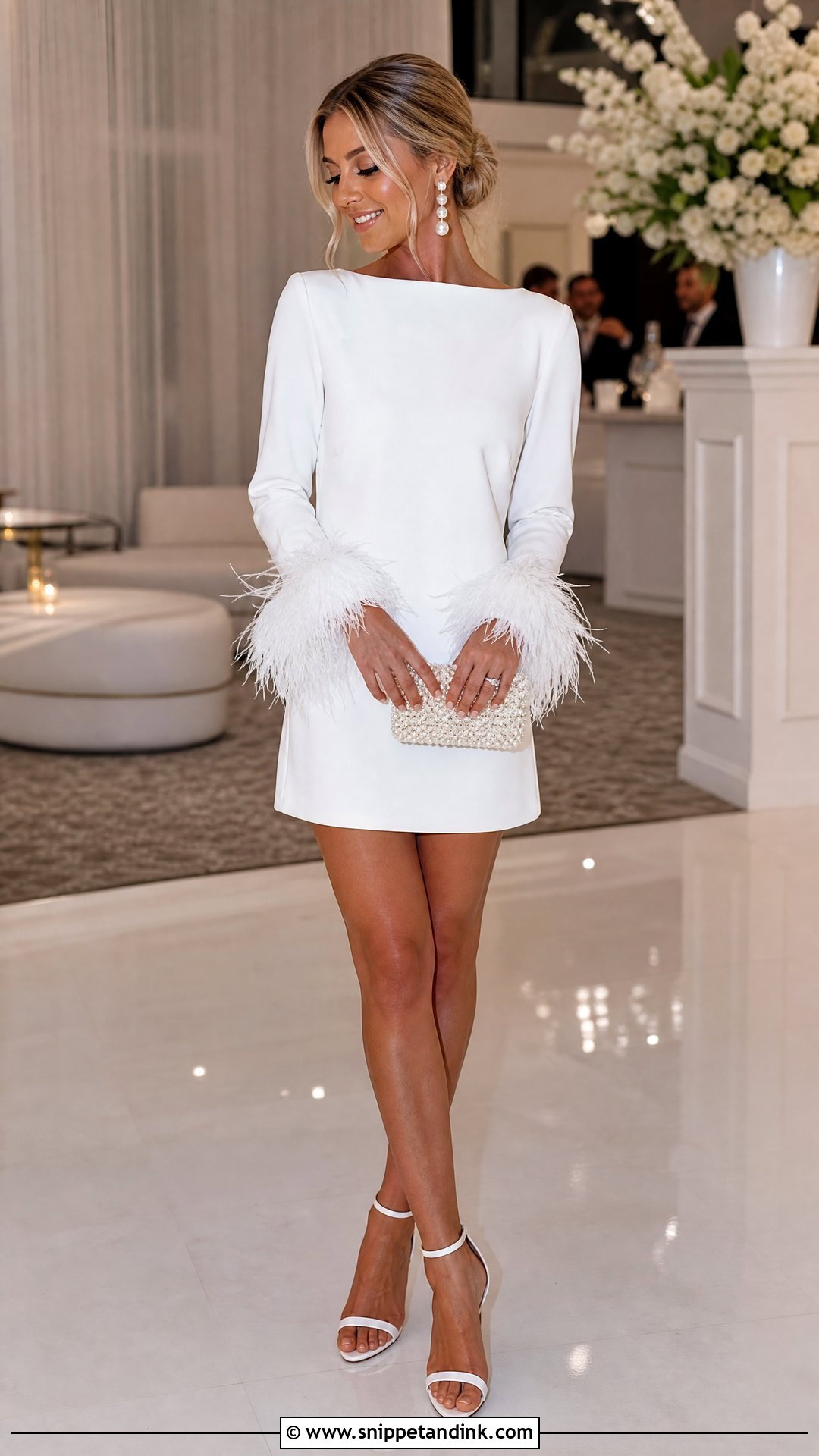
Feathers make a plain dress fun, as long as there’s only one feathered area. A white mini with feathers at the cuffs or the hem is plenty; trim on both looks costume-like. Keep the base simple, a shift, wrap or column, and add ankle-strap heels, a pearl box clutch and small drops. Feathers and loose hair tangle, so I’d always put the hair in a smooth bun. If you’re unsure about volume, removable feather cuffs give you a way out halfway through the night. Ostrich and marabou both flatten in rain and humidity, so this is an indoor dress.
6. Off Shoulder Midi Wedding Night Dress
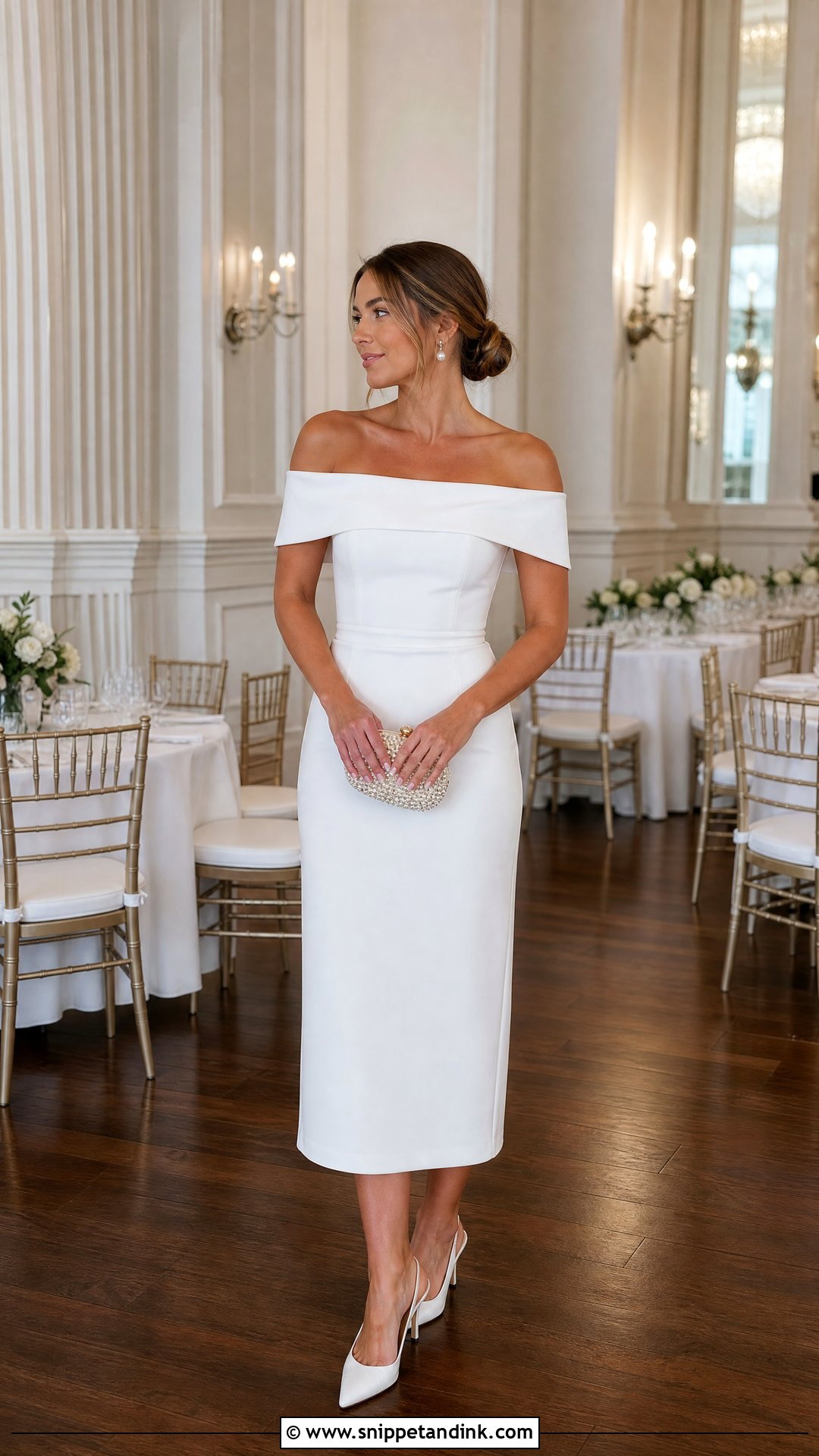
Off-the-shoulder necklines show the collarbones in a way most ceremony gowns don’t, and a midi length keeps it from feeling too formal. The construction is what matters. Look for internal boning or an elastic grip band, soft drape across the arms and a back slit for walking. White crepe or satin holds the line best. Fashion tape helps, but if the bodice only stays up with tape, it needs tailoring. Pearl earrings, pointed slingbacks, a beaded clutch and a low side bun suit it, and a necklace only works if the neckline is completely plain. It’s a natural fit for a restaurant reception or a ballroom send-off.
7. Corset A-Line Wedding Night Dress
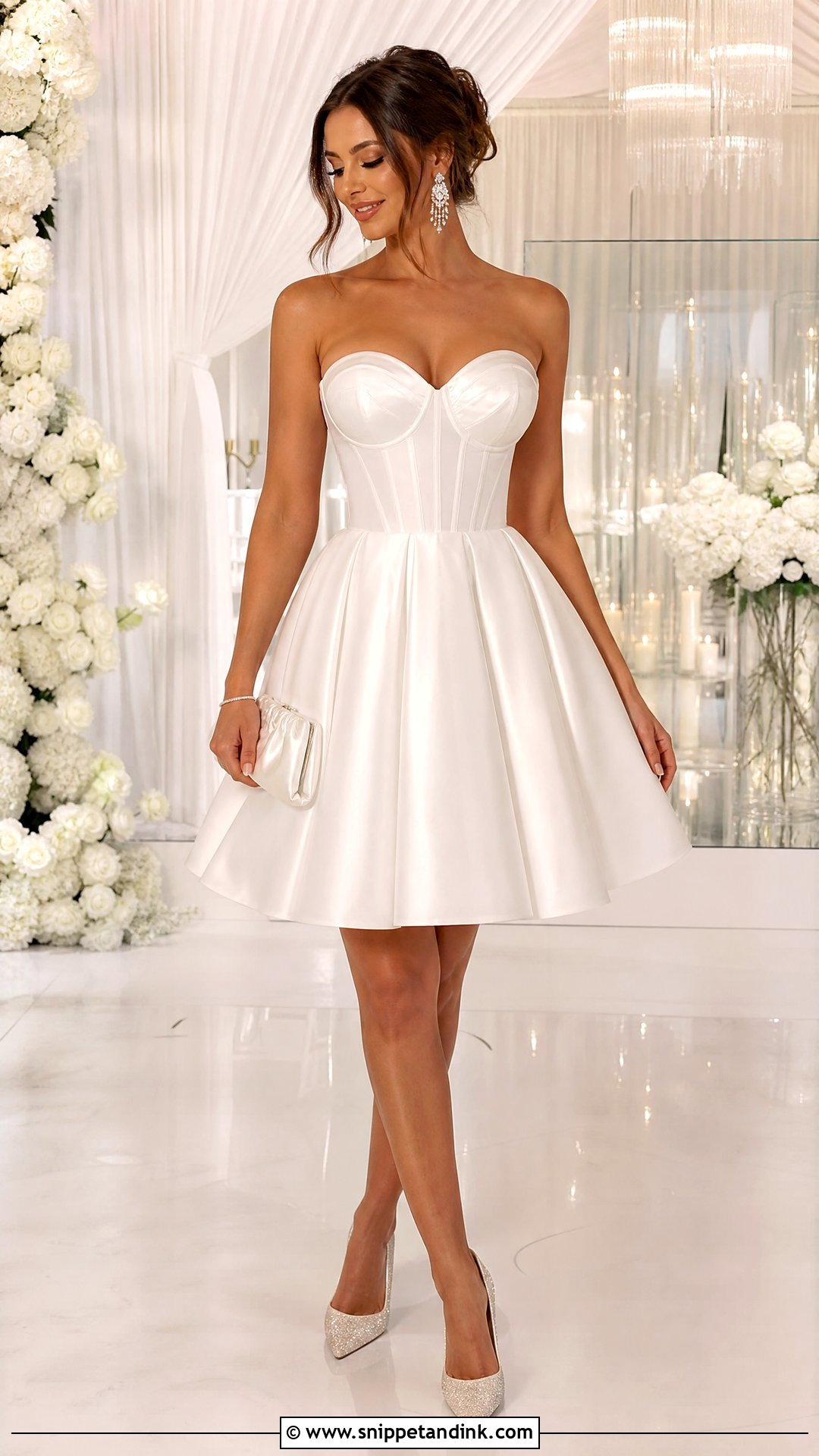
Sit down in a corset bodice before you buy it. Standing, almost any boned bodice feels supportive; seated at dinner, a poorly fitted one digs into the ribs and pushes up at the bust. A good one with spiral boning, a lined bodice and optional straps gives you shape while a flared mini or knee-length skirt keeps everything relaxed. Sparkly pointed pumps, a satin clutch and chandelier earrings dress it up, and a half-up style with a small bow or pearl clip softens the structure. Because it defines the waist and then releases, this cut flatters a very wide range of figures.
8. Halter Wedding Night Dress
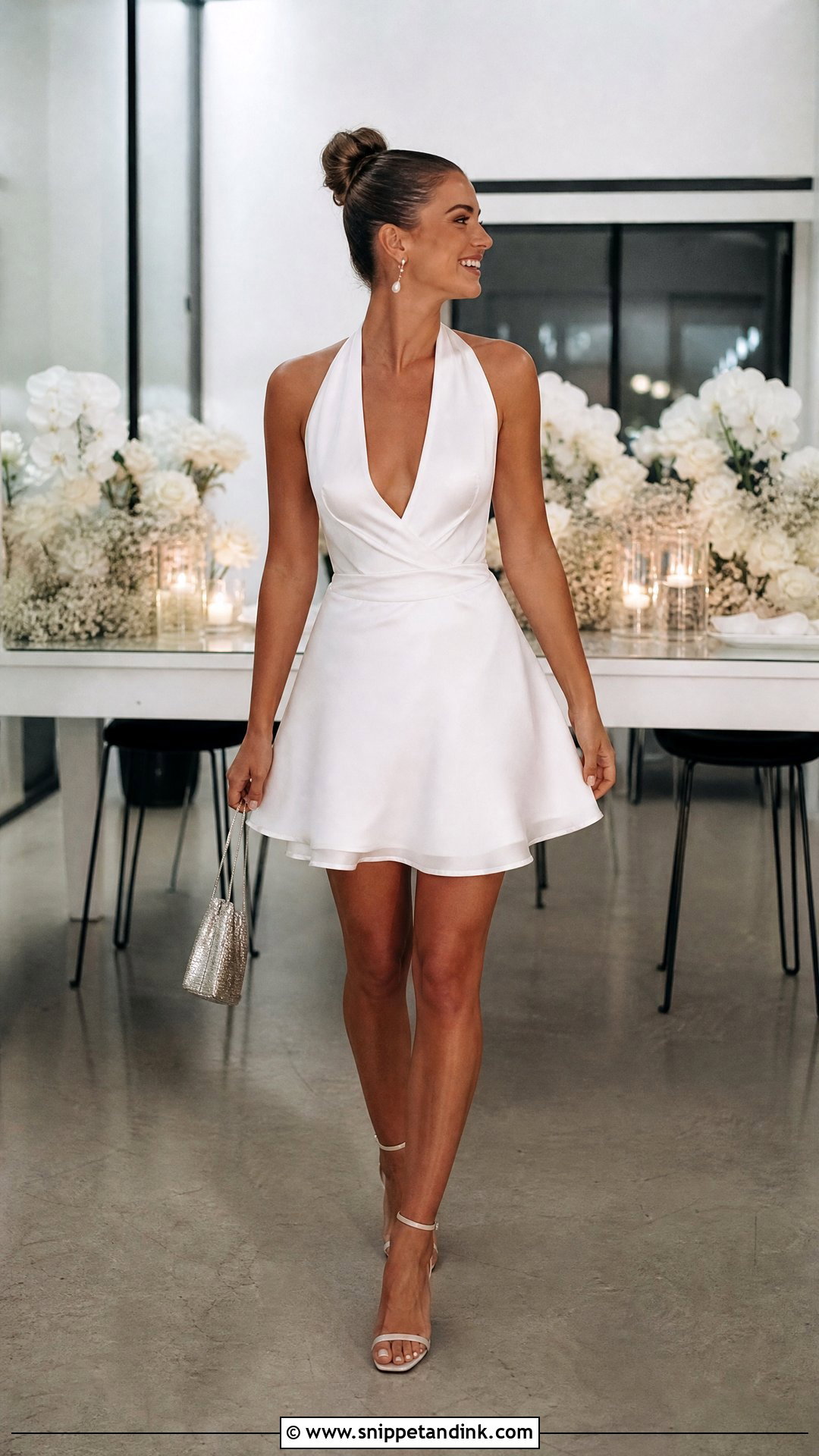
A halter wedding night dress puts the shoulders on show and draws a long line up to the face. Satin, crepe and embellished mesh all work, depending on how dressy you want to be; a short A-line suits a dancing crowd, a fitted midi with a slit suits a cocktail room. Skip the necklace and let the neckline do it. A halter carries the weight of the dress from the neck, so on a heavy beaded version I check whether the strap rubs or pulls after a few minutes of wear. Drop earrings, a metallic mini bag, low strappy heels with cushions and a high bun or sleek ponytail finish it.
9. One Shoulder Wedding Night Dress
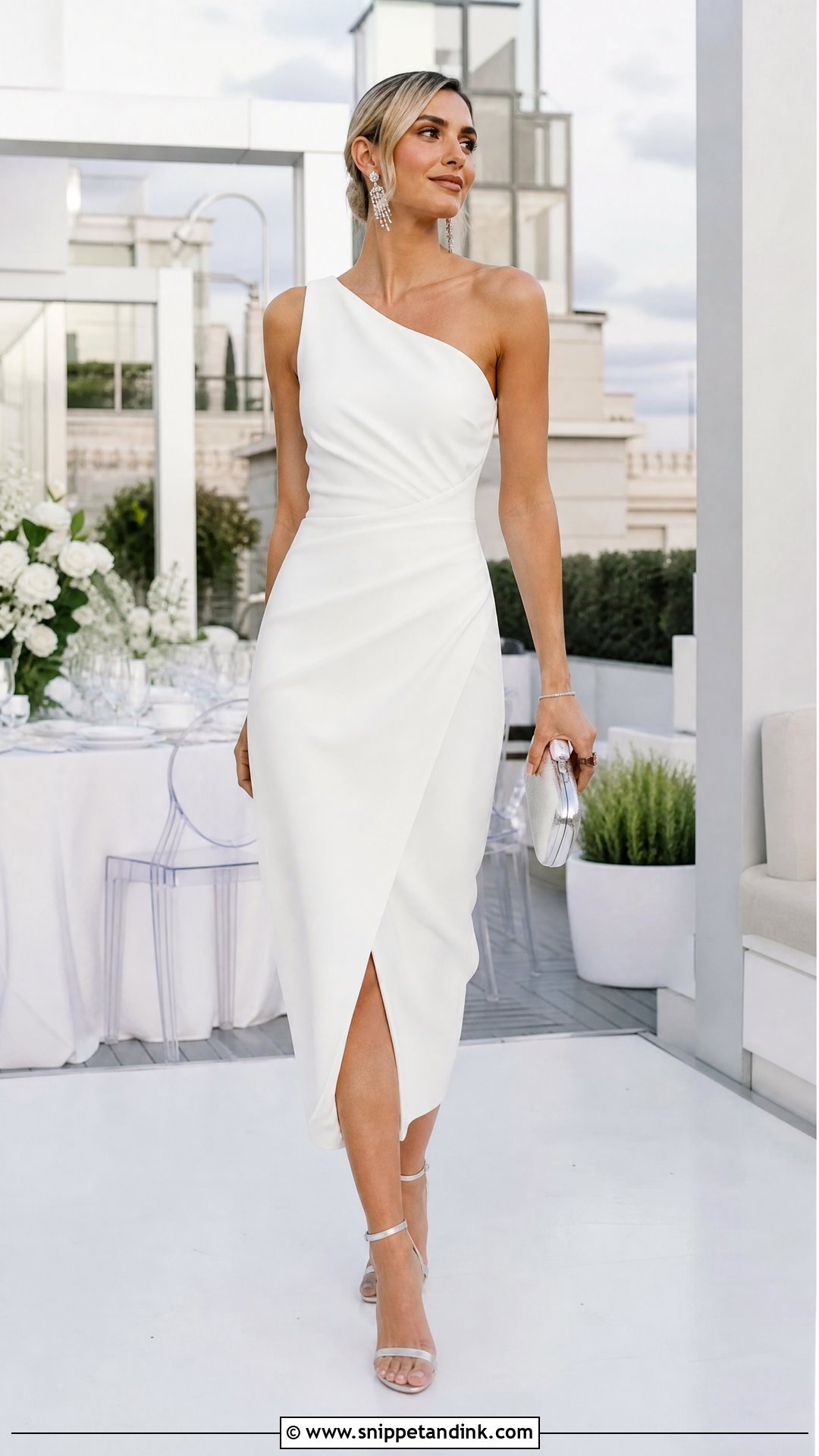
One bare shoulder is a quick way to make a simple white dress feel modern. Structured crepe or satin holds the asymmetry crisply; draped jersey is softer and more forgiving if you’ll be sitting a lot. Wear one statement earring on the bare side and a stud on the other, and sweep a ponytail toward the neckline rather than covering it. The detail I check is the inner band. Without a silicone grip or a side zip, a one-shoulder bodice slowly rotates as you dance. Minimal ankle-strap sandals and a silver or pearl clutch finish it, and it suits a rooftop or gallery venue with clean lines.
10. Bow Back Mini Wedding Night Dress
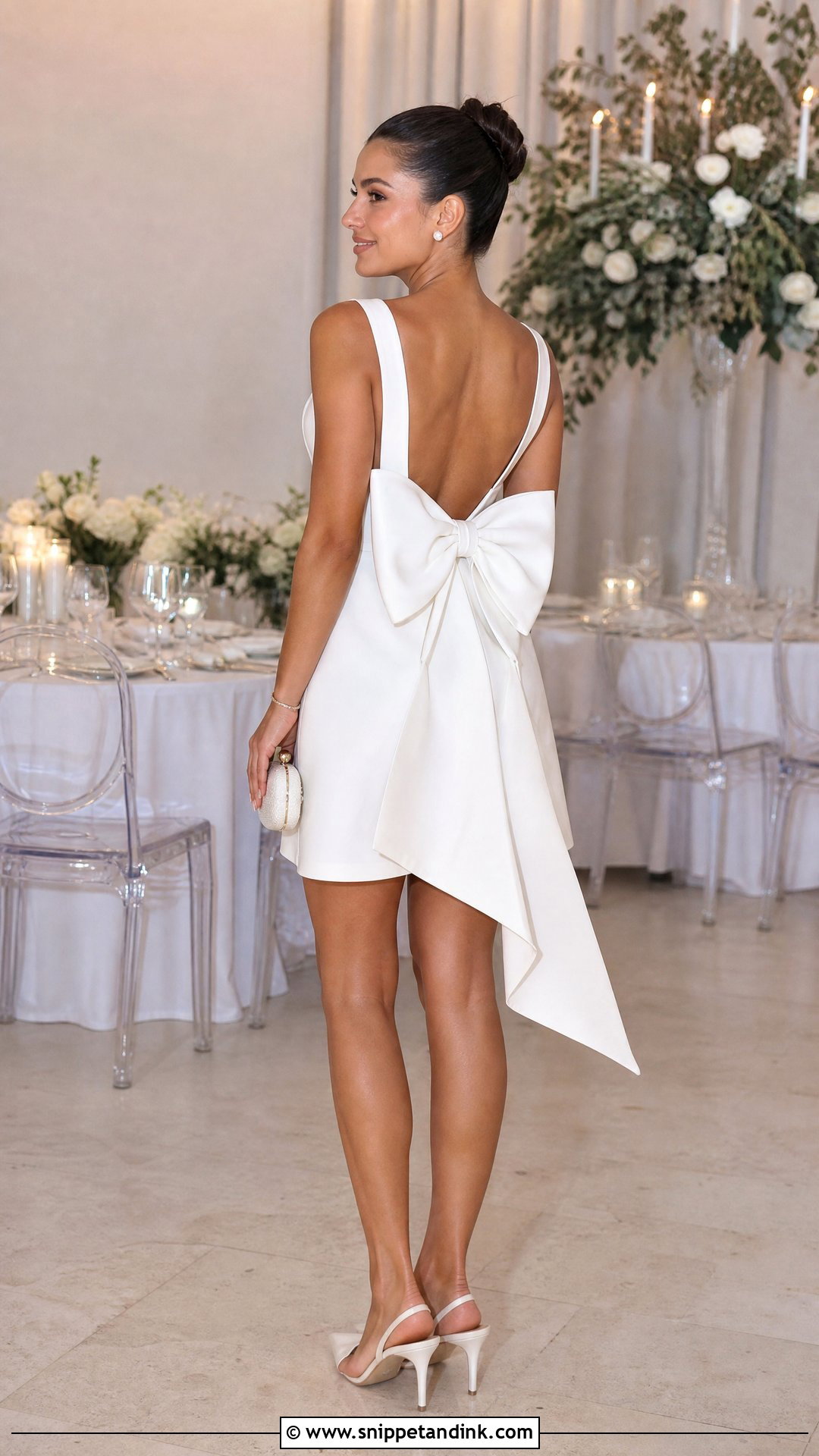
A large bow at the back gives a mini dress its bridal moment, mostly in photos taken from behind. It needs fabric with body, like mikado or a firm satin, so the loops don’t collapse after an hour. A square neck or plain sleeveless front keeps attention on the back. Ask where the bow sits when you’re seated: low bows get crushed against the chair all through dinner, so I place them above that line. A detachable bow is worth the small extra cost if you want to dance freely. Pointed satin heels, pearl studs, a small clutch and a bun or high ponytail that clears the bow finish it.
11. Fringe Wedding Night Dress
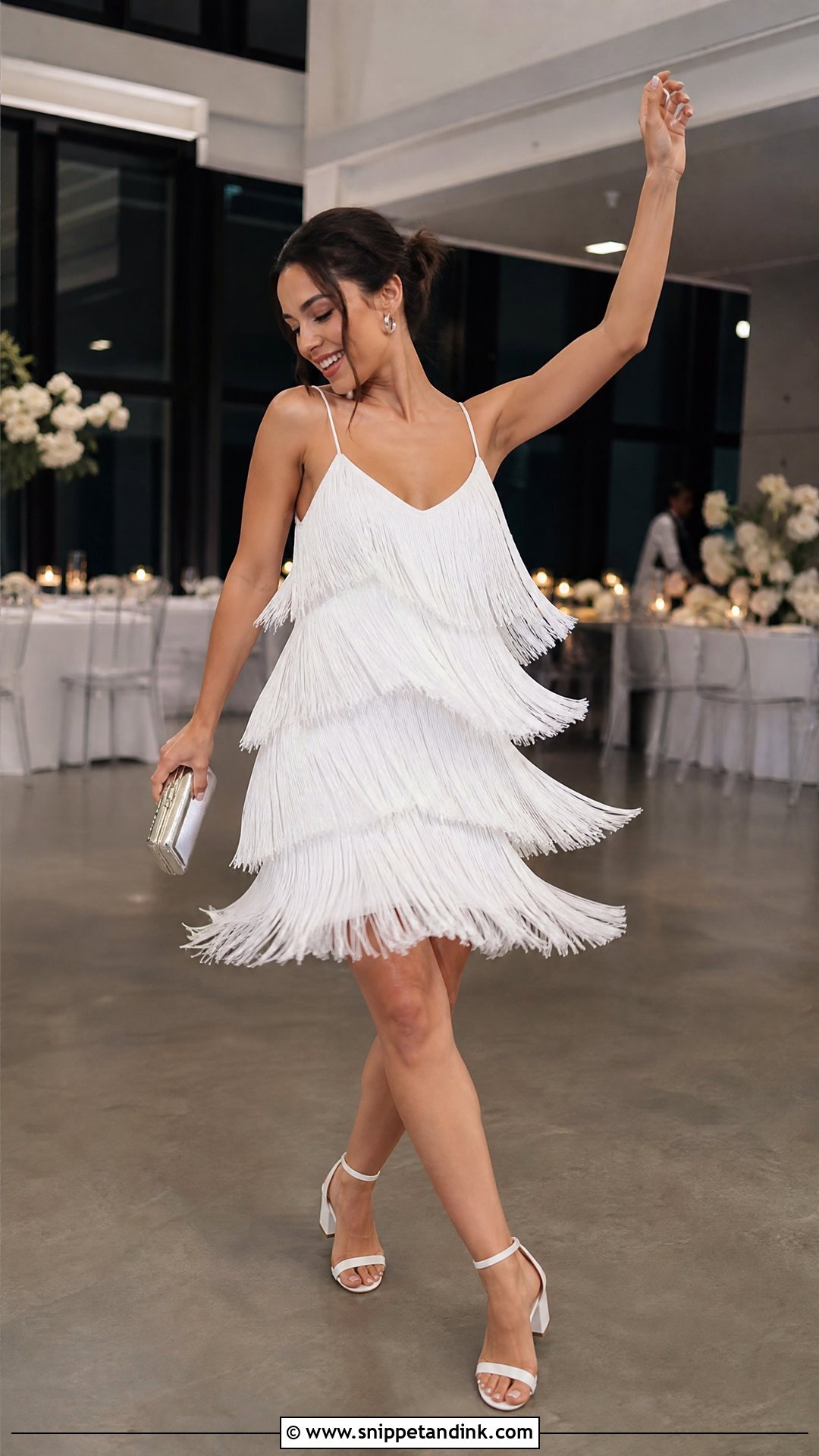
Fringe is made for dancing, since every step sets it moving. Choose a mini or knee-length design with fringe on the skirt, sleeves or diagonal panels, with a fitted lining so it doesn’t look bulky. Long fringe catches on heel buckles and chair backs, so walk, sit and spin in the fitting room before you commit, and check that every strand is firmly anchored. Stable block heels, a sleek silver clutch and small hoops are enough; the movement is already busy. A smooth ponytail or shoulder-length waves suit it, and a breathable base fabric matters because you’ll be warm.
12. Blazer Mini Wedding Night Dress Outfit
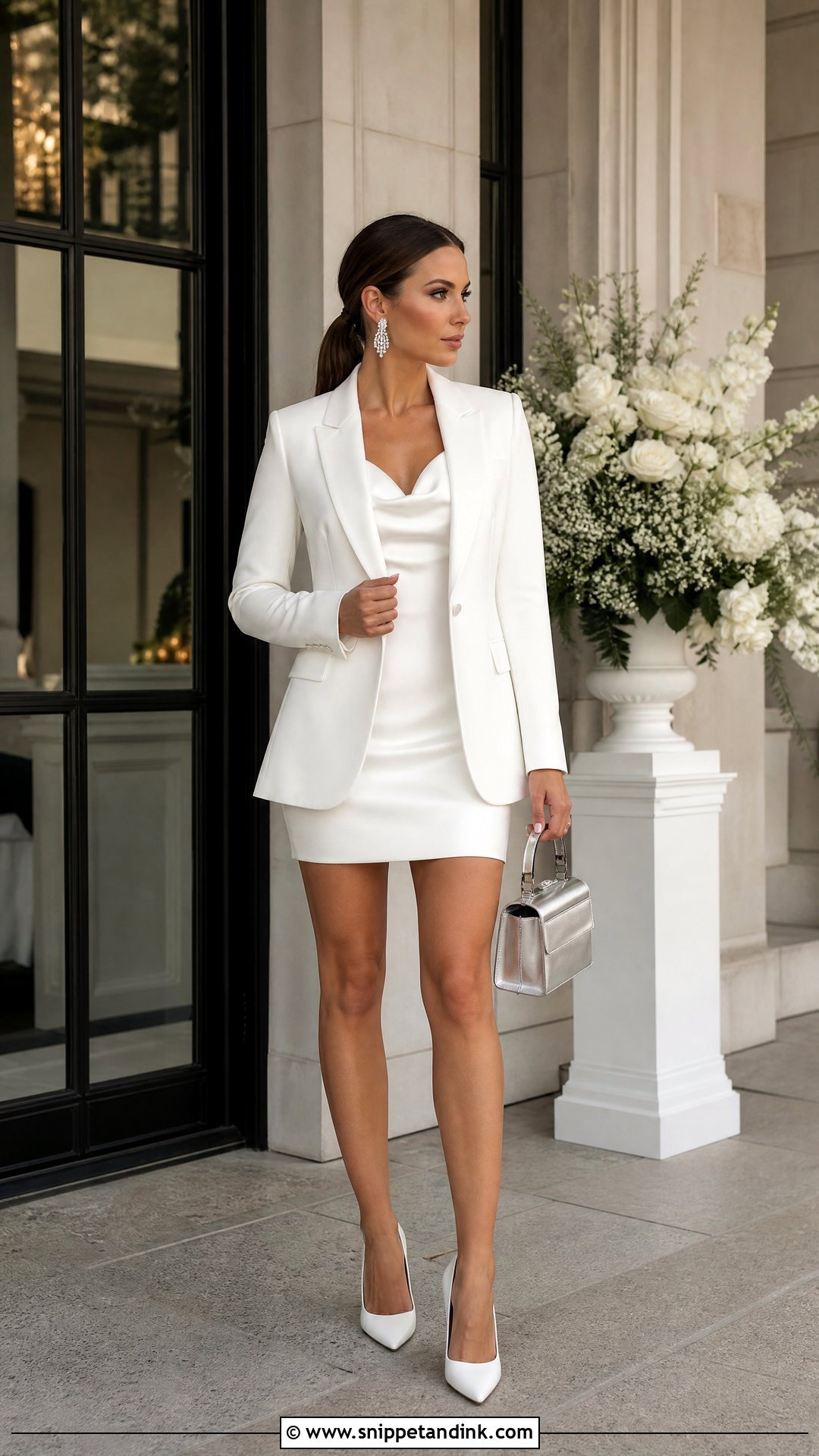
A white blazer over a mini dress is the most practical change in this list, because the jacket comes off when the room warms up and goes back on for the walk outside. Start with a fitted slip or sheath, then a blazer a little longer than the dress hem so both show. Defined shoulders keep it sharp; a satin tuxedo jacket softens the effect. Pointed pumps, a structured metallic bag and bold crystal earrings suit the tailoring, and a sleek low ponytail keeps it clean. Once dancing starts, push the sleeves up. I’d check the blazer buttons with the dress underneath, since a slip pulls if the jacket is snug.
13. Tea Length Wedding Night Dress
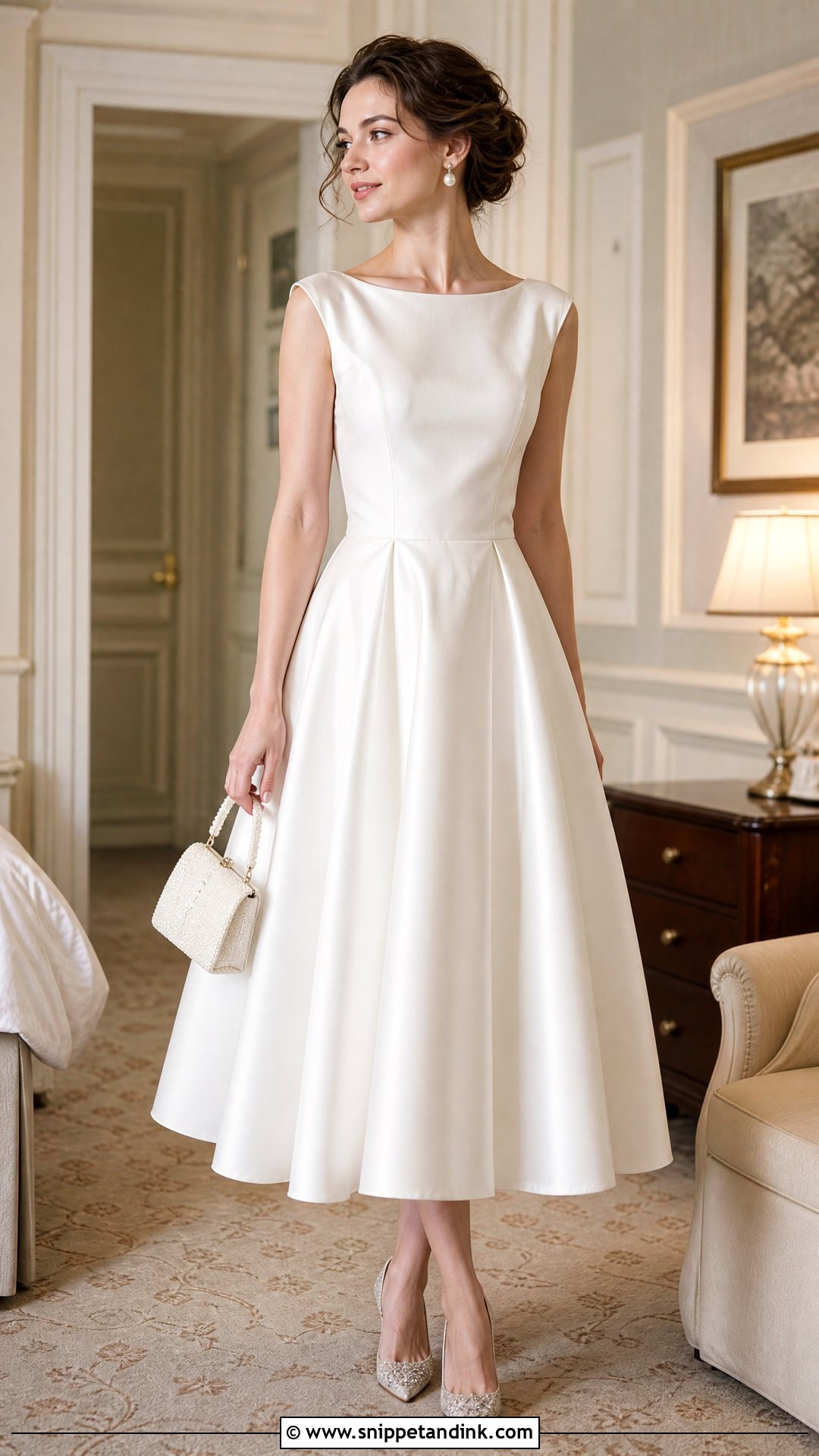
Tea length falls between the knee and ankle, which makes it the best hem for showing off a special pair of shoes. A fitted waist and softly flared skirt in satin, mikado, lace or crisp organza gives it its vintage line, and a light petticoat adds fullness if you want it. Embellished pumps, pearl earrings and a top-handle bag suit it, and a short veil or structured hair bow carries the retro feel without tipping into costume. Organza creases where you sit, so a mikado or satin is easier for a long dinner. It works for a garden venue or a classic hotel where a mini would look too casual.
14. Square Neck Wedding Night Dress
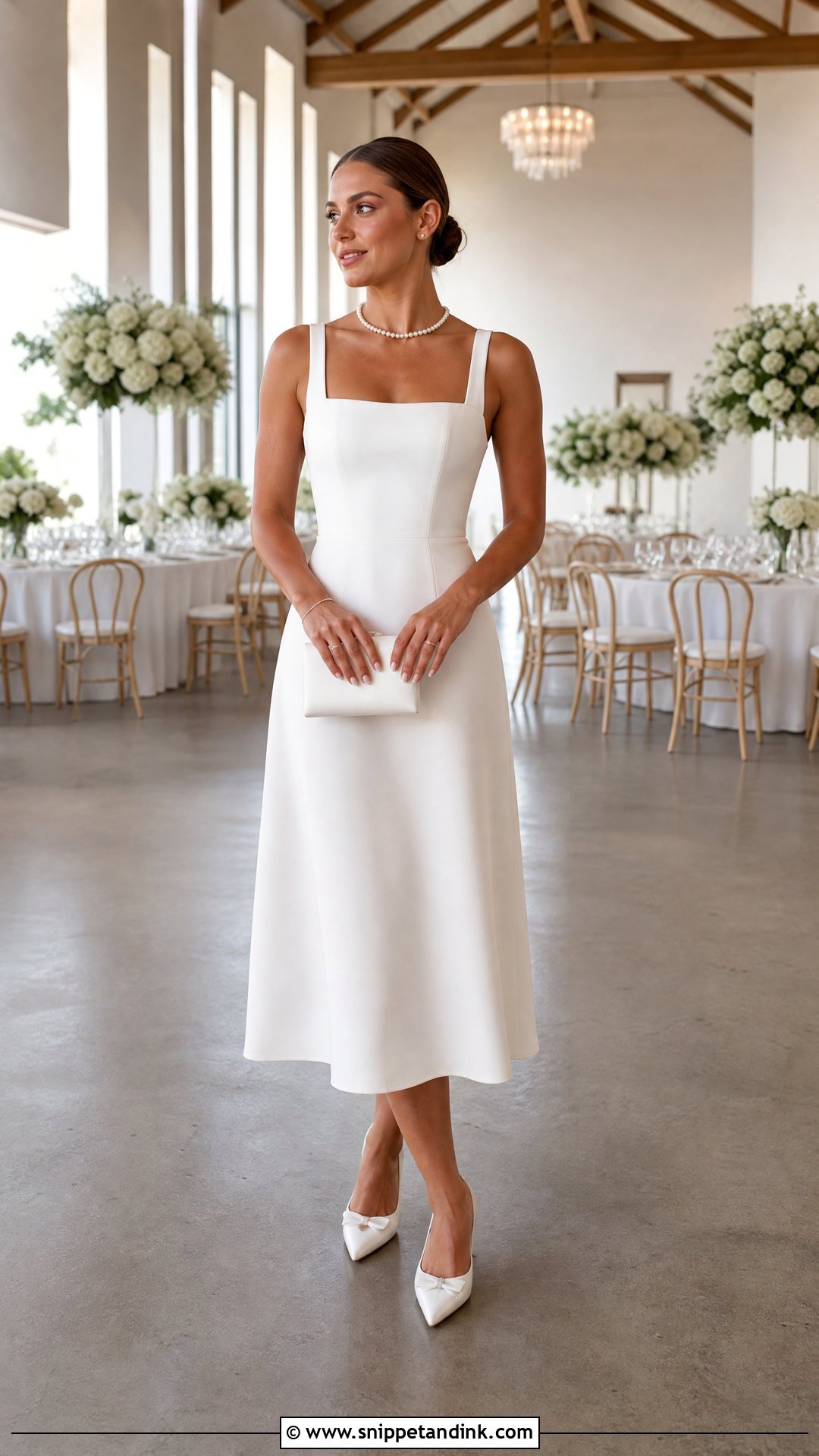
Square necklines frame the face and the collarbones evenly, and they suit almost every age and body type because the width and depth can be adjusted in tailoring. Wide straps are the practical bonus: you can wear a normal bra with them. Choose a fitted mini, a midi sheath or a soft flare depending on how formal the room is. A short pearl necklace sits neatly inside the square, with crystal studs, pointed white heels and a compact satin bag. Soft curls or a center-parted bun echo the symmetry. On a very plain dress, covered buttons or light beading add texture without fuss.
15. Cape Sleeve Wedding Night Dress
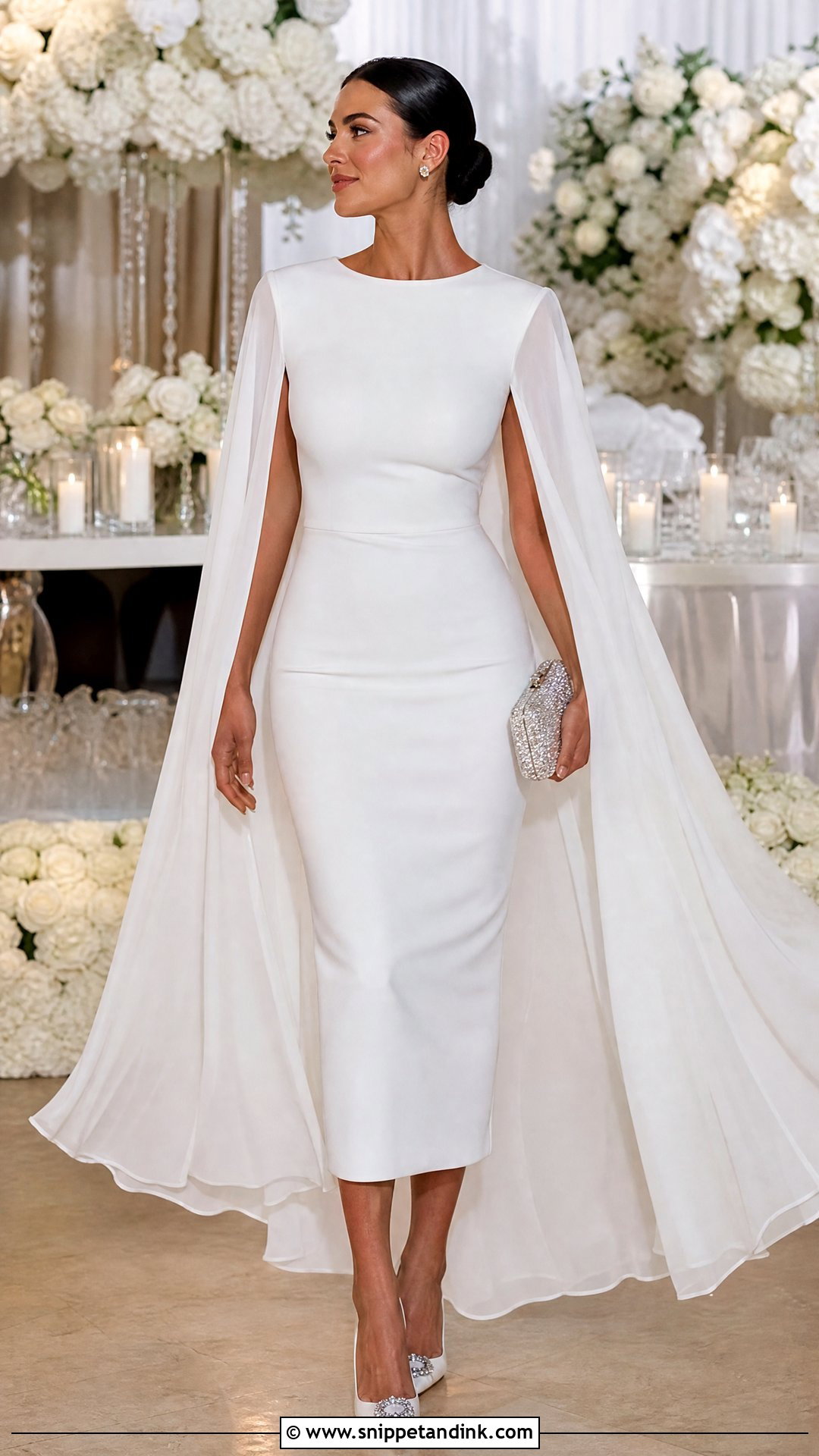
Cape sleeves give you drama and arm coverage without the restriction of fitted long sleeves. Pair them with a fitted midi or knee-length base so the cape is the only thing moving. Chiffon floats; structured crepe holds a sharper shape. Measure the cape length against a table: if it hangs below wrist level, it drags through plates and candle flames when you lean in to toast. Slim pointed heels, a beaded clutch and sparkling studs suit it, with no bracelets, since they catch on the fabric. A sleek bun keeps the neckline clear. It belongs at a formal evening reception.
16. Plus Size Ruched Wedding Night Dress
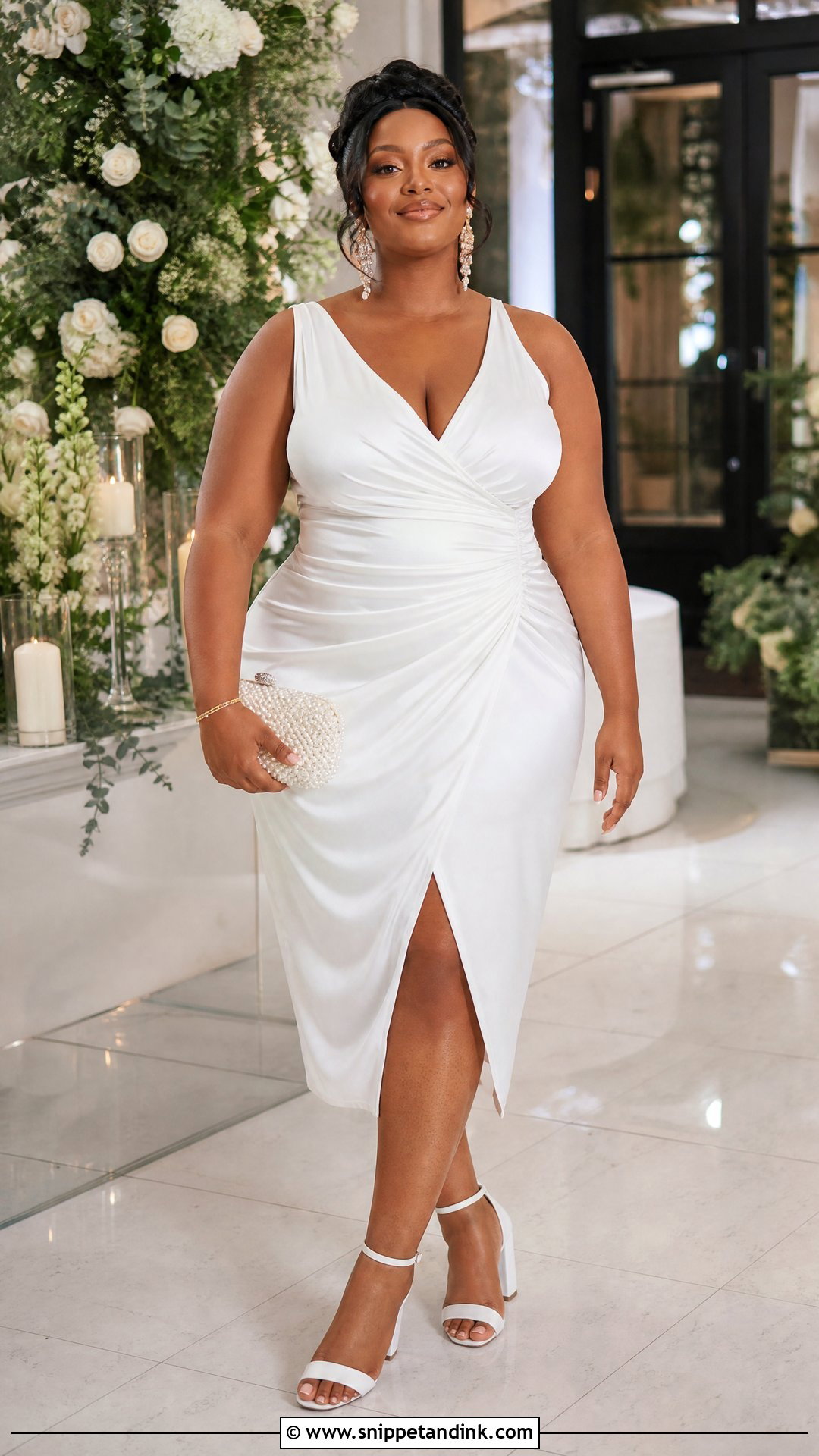
Ruching is the most forgiving detail for a plus-size second dress, because gathers move with the body instead of fighting it. Look for a wrap or gathered midi in stretch crepe or lined jersey, with straps or sleeves that actually support, and a side slit for walking and dancing. Shapewear is optional; only wear it if you can sit through dinner in it. Order from your everyday measurements, not bridal size labels, which run small and vary between brands, and leave time to adjust the neckline, waist and hem. Wide-fit block heels, statement earrings, a pearl clutch, a side-parted style and luminous makeup finish it.
17. Modest High Neck Wedding Night Dress
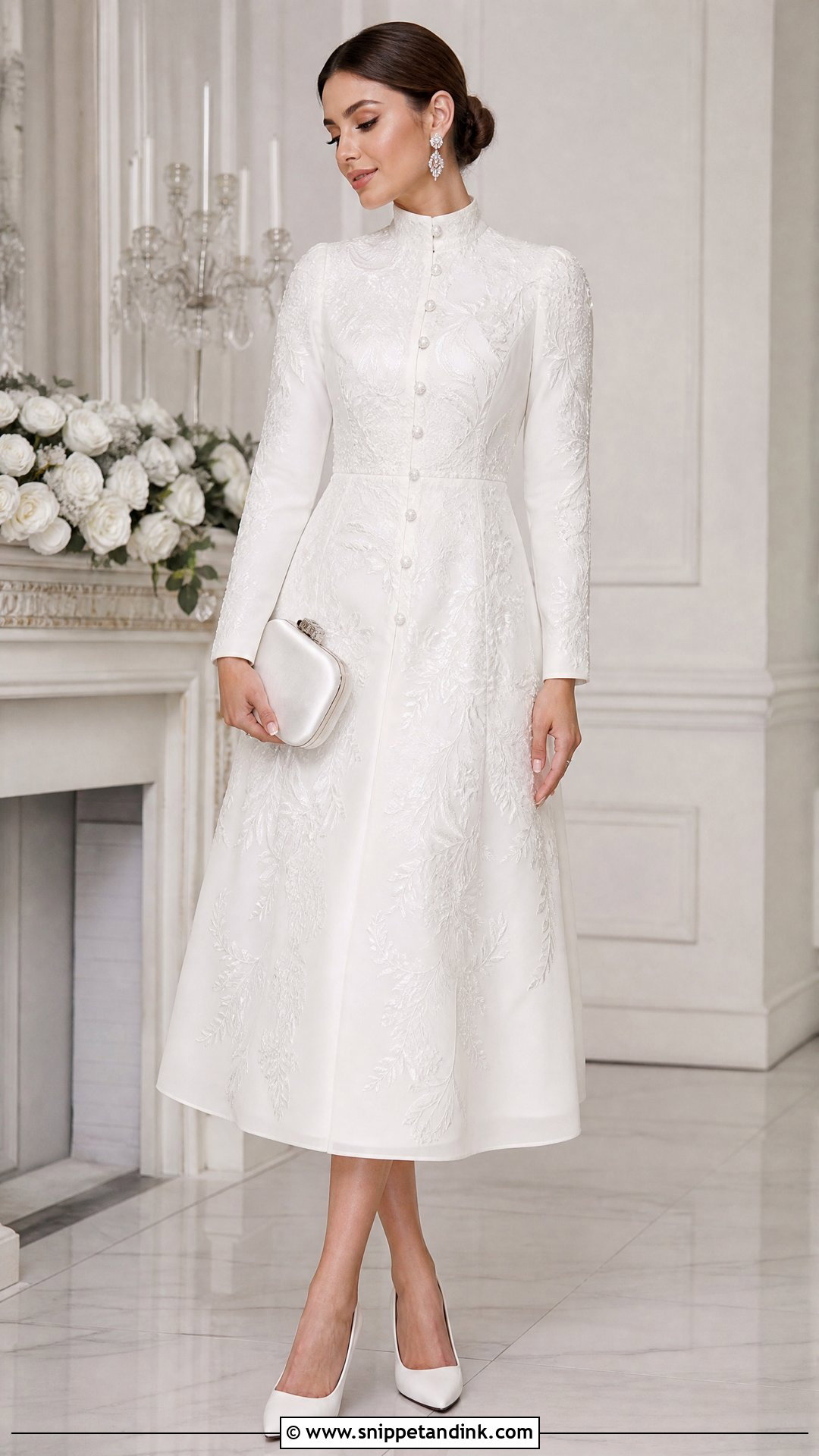
High necks give full coverage and still feel light enough for an evening party if the fabric is right. An A-line mini, flowing midi or ankle-length column with long or elbow sleeves all work, with lace panels, pearl buttons or fine embroidery for interest. The collar is the part to test. A stiff, tight collar feels fine for ten minutes and suffocating after three hours, so I look for a soft band with a little room. Skip the necklace and wear a decorative hairpin in a low bun. Pointed closed-toe heels, a satin clutch, small crystal earrings and a breathable lining keep it comfortable.
18. Beach Wedding Night Maxi Dress
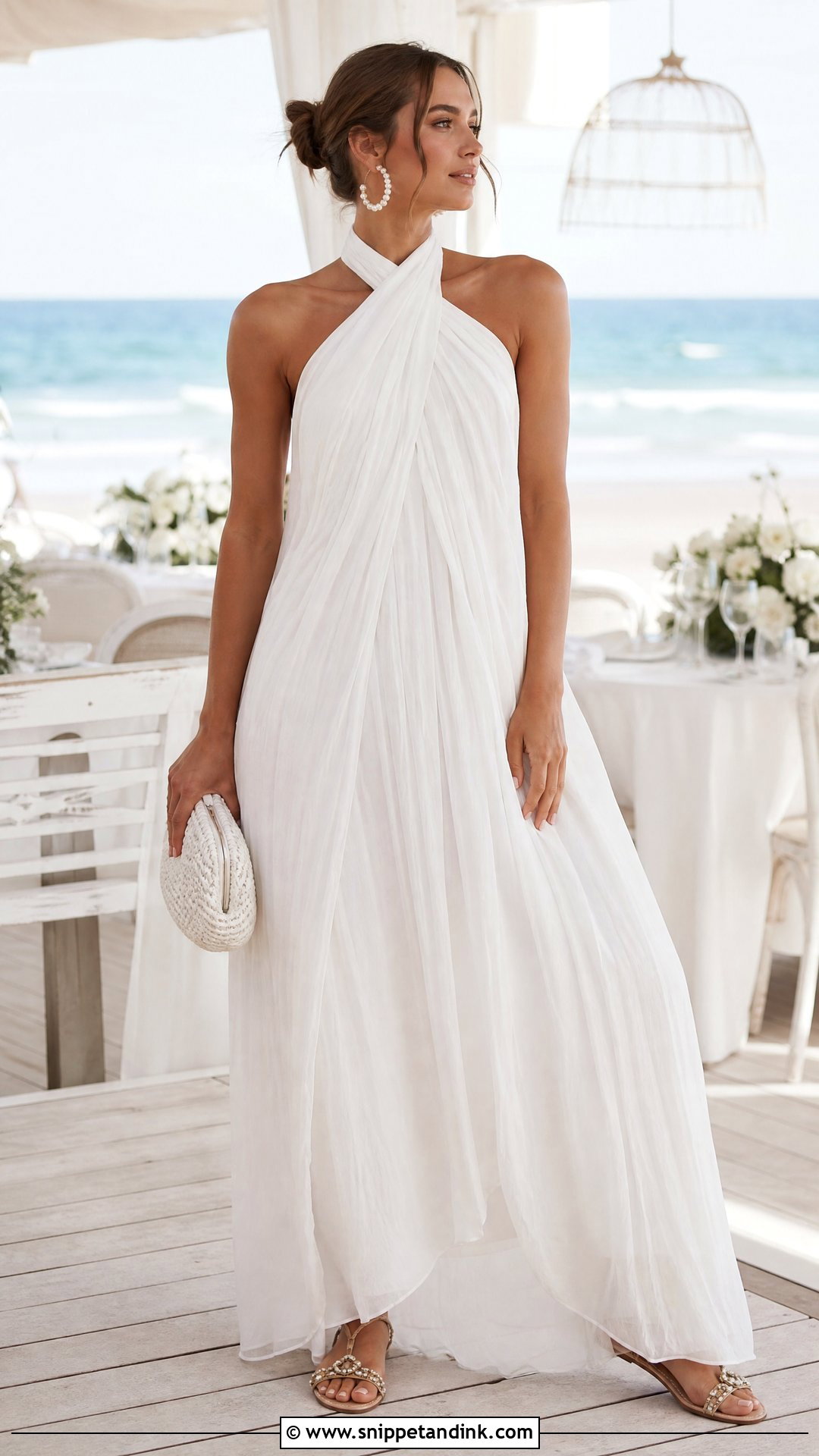
For a beach wedding night outfit, the sand decides most of the choices. A lightweight white maxi with a halter, one-shoulder or supportive sleeveless neck is the base, in chiffon, satin or fine crepe that moves in the breeze. Hem it to just clear the ground in flat shoes, because a long hem fills with damp sand and gets heavy. Embellished flat sandals, pearl hoops and a woven white clutch suit the setting, and loose waves or a low braided bun look relaxed. Skip trains, heavy beading and stilettos. Bring a light wrap for when the sea breeze turns cold after dark.
19. Winter Velvet Wedding Night Dress
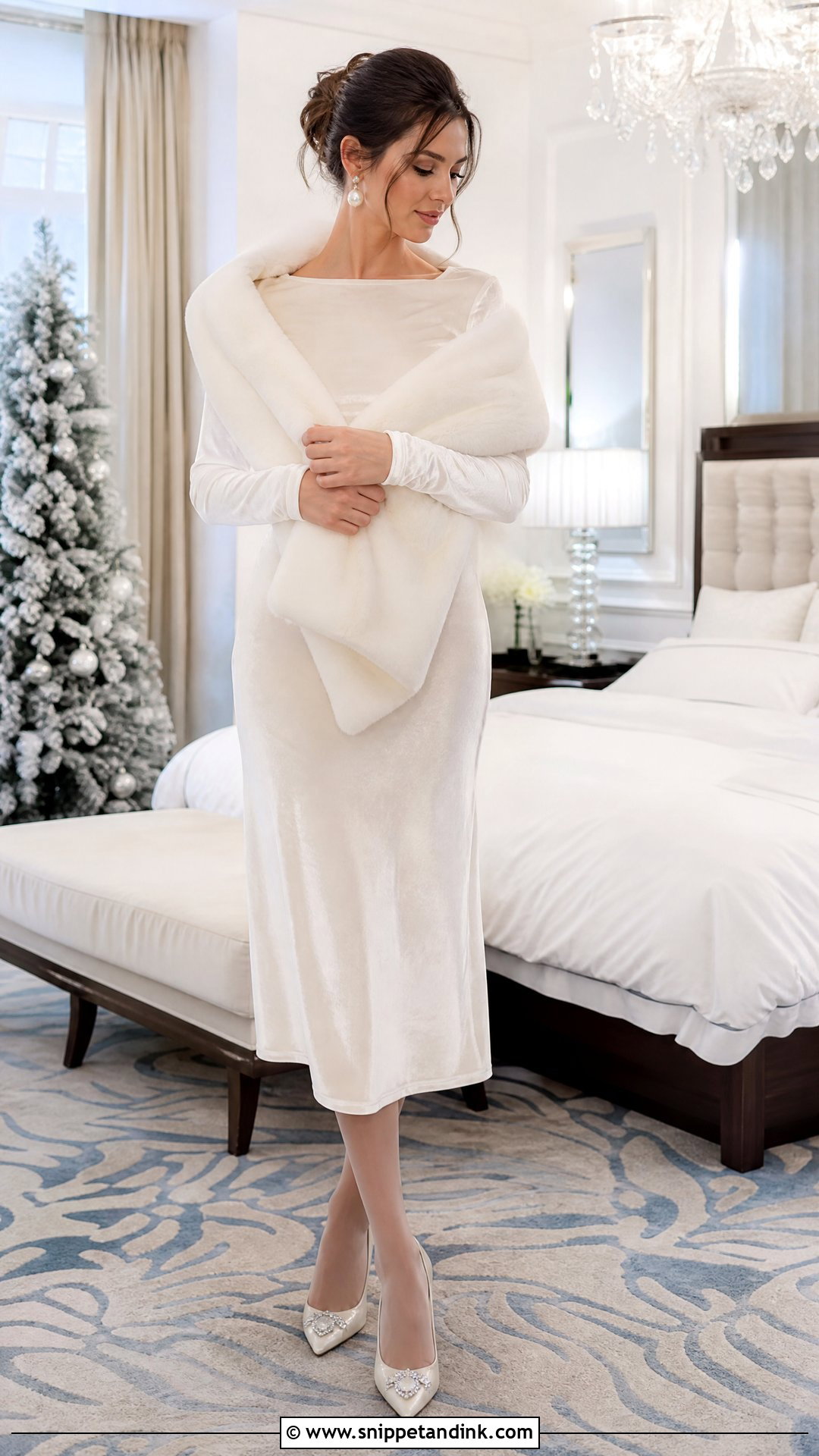
Velvet is the winter answer, warm and deep in color. An ivory velvet mini with long sleeves feels festive; a fitted midi feels more formal. Pick smooth velvet over crushed, since crushed velvet throws light patchily in photos and can look grubby in white. Closed-toe crystal pumps, sheer tights, a structured satin bag, pearl drops and a sleek bun suit it, with a faux-fur wrap for outdoor photos and the car. Velvet holds heat, though, and a packed reception room gets warm quickly, so check the room before you add layers. It looks right in a historic hotel or a mountain venue.
20. Silver Metallic Wedding Night Dress
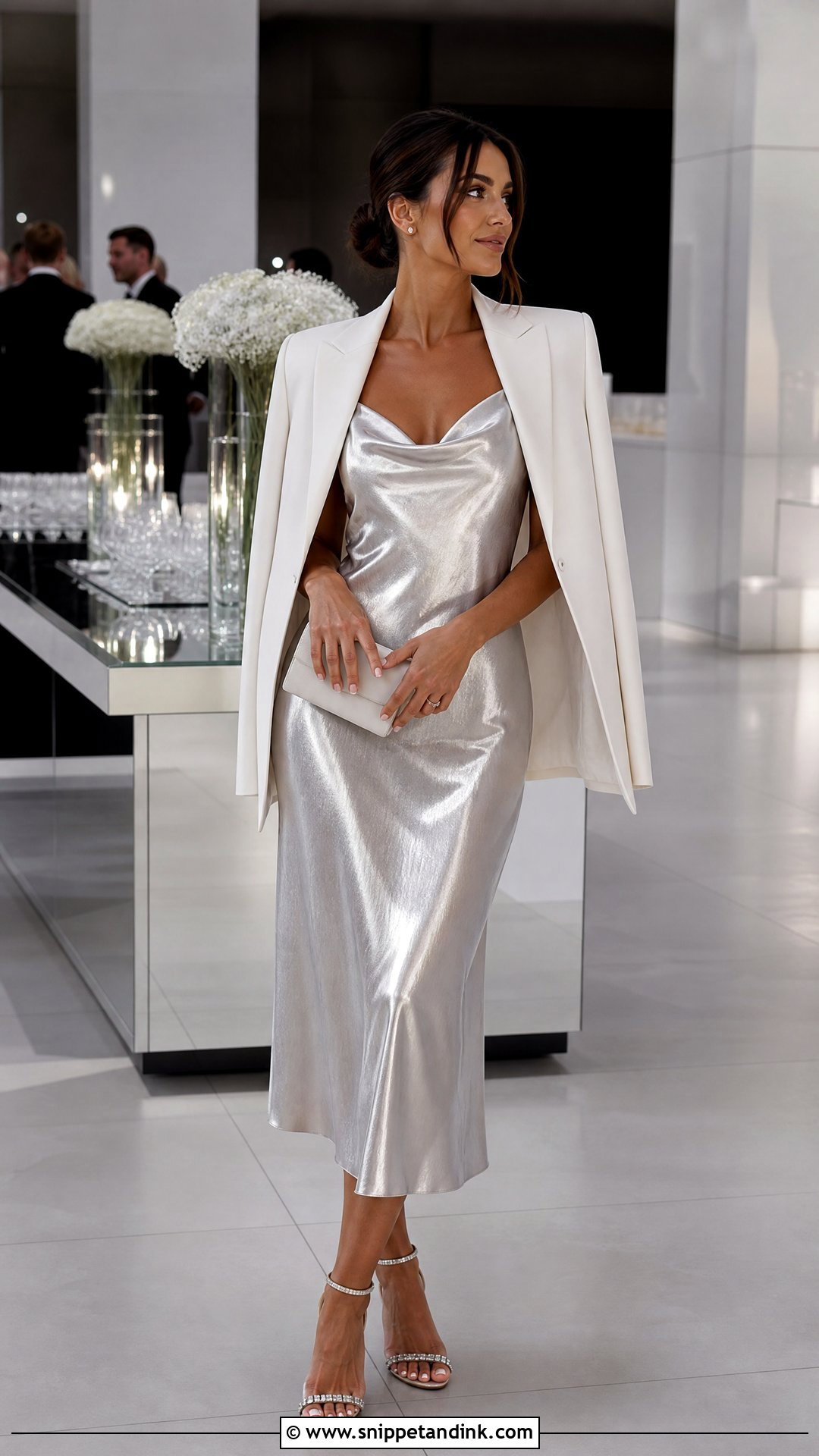
Silver is for the bride who wants her second look to be clearly different from the ceremony gown. A metallic mini, a sequin midi or a liquid-satin slip in cool silver all work. Keep one metal throughout: crystal heels, a small white clutch and simple bright studs, and never gold beside it. A white blazer pulls the outfit back toward bridal and adds cover. Smooth waves or a high ponytail give it a party feel. Metallic fabric changes color between daylight, warm uplighting and flash, so look at it under all three before deciding, and let the dress be the only shiny thing you wear.
The Small Bag That Saves the Second Look
Most second-dress problems I fix on the night are small and predictable: a strap slipping, a heel rubbing, a hem caught in a shoe buckle. I pack the same kit every time and hand it to a bridesmaid rather than leaving it in the bridal suite.
- Double-sided fashion tape and a few clear bra straps for slips and halters.
- Gel heel cushions and blister plasters for the second pair of shoes.
- A lint roller, which matters more than you’d think on velvet and black-tie rooms with carpet.
- A white chalk stick or stain pen for small marks on white satin.
- Spare hair elastics and bobby pins in your hair color for the switch to a ponytail.
Which Fabrics Survive a Packed Dance Floor
Crepe and stretch satin are the hardest-working fabrics for a reception change: they breathe, recover from sitting and hide small creases. Sequins and pearls look brilliant but are heavier and warmer than they appear on a hanger. Lace survives well if it’s lined; unlined lace snags on bracelets and other guests’ jewelry. Velvet and heavy satin both show sweat marks in a warm room, so if your venue runs hot, a lighter fabric will look fresher at midnight.
Whatever you pick, wear it at home for an hour with the shoes and dance in the kitchen. Ten minutes in a fitting room tells you how a dress looks; an hour tells you how it feels.
The Dress You Change Into Should Feel Like a Deep Breath
Start with how you want to move for the rest of the night, then match a silhouette to the venue, the season and how much coverage you like. Satin slips and structured midis stay classic; sequins, pearls, fringe, feathers and metallics bring the party. Put as much thought into your shoes as into the dress, because they decide how long you stay on the dance floor. A small amount of tailoring makes any of these twenty outfits fit as though it was made for you, and that’s what makes a second look feel like yours.
You'll Like These Ideas:


Leave a Reply