
A reception dress has two jobs: it has to look right as you walk in, and it has to let you move freely once the band starts. When I style a bride for the dance floor, I start with what her body needs to do, not with the fabric. A hem that clears the ankle, a neckline that stays put when your arms go up and shoes you’ve already broken in matter more than any trim. Fitted gowns usually mean smaller steps, and sleeveless cuts give your shoulders the most freedom. Below are twenty outfits I’d put in front of a bride who plans to dance, from satin midis and beaded minis to jumpsuits and convertible gowns, each with the fit checks I’d run before signing off on it.

Six Moves I Ask Brides to Make at the Final Fitting
Standing still in front of a mirror tells you very little about whether a dress will dance. At the last fitting, I ask brides to wear the exact shoes and underwear they’ll have on that night, then work through a short routine while I watch the seams rather than the mirror.
- The hug. Arms up around a partner’s neck. If the bodice lifts or a sleeve band digs in, the alteration isn’t finished.
- A slow spin, then a fast one. Watch where the skirt goes and whether the lining twists around your legs.
- A full minute in a chair. Stand up and check the hem height and any creasing across the lap.
- Bending to pick something up off the floor. This is when necklines gape and short hems ride up.
- A few steps backward. Long hems and trains get caught under heels most often in reverse.
- A couple of stairs, if the venue has any between the dinner tables and the dance floor.
Anything that moves where it shouldn’t can usually be corrected while there’s still time: silicone gripper tape inside a neckline, a hidden snap at a wrap, an extra hook on a bustle, a slit tacked a little lower. Ask someone to film the routine on your phone so you can see the back as well.
1. Satin Midi Wedding Dress
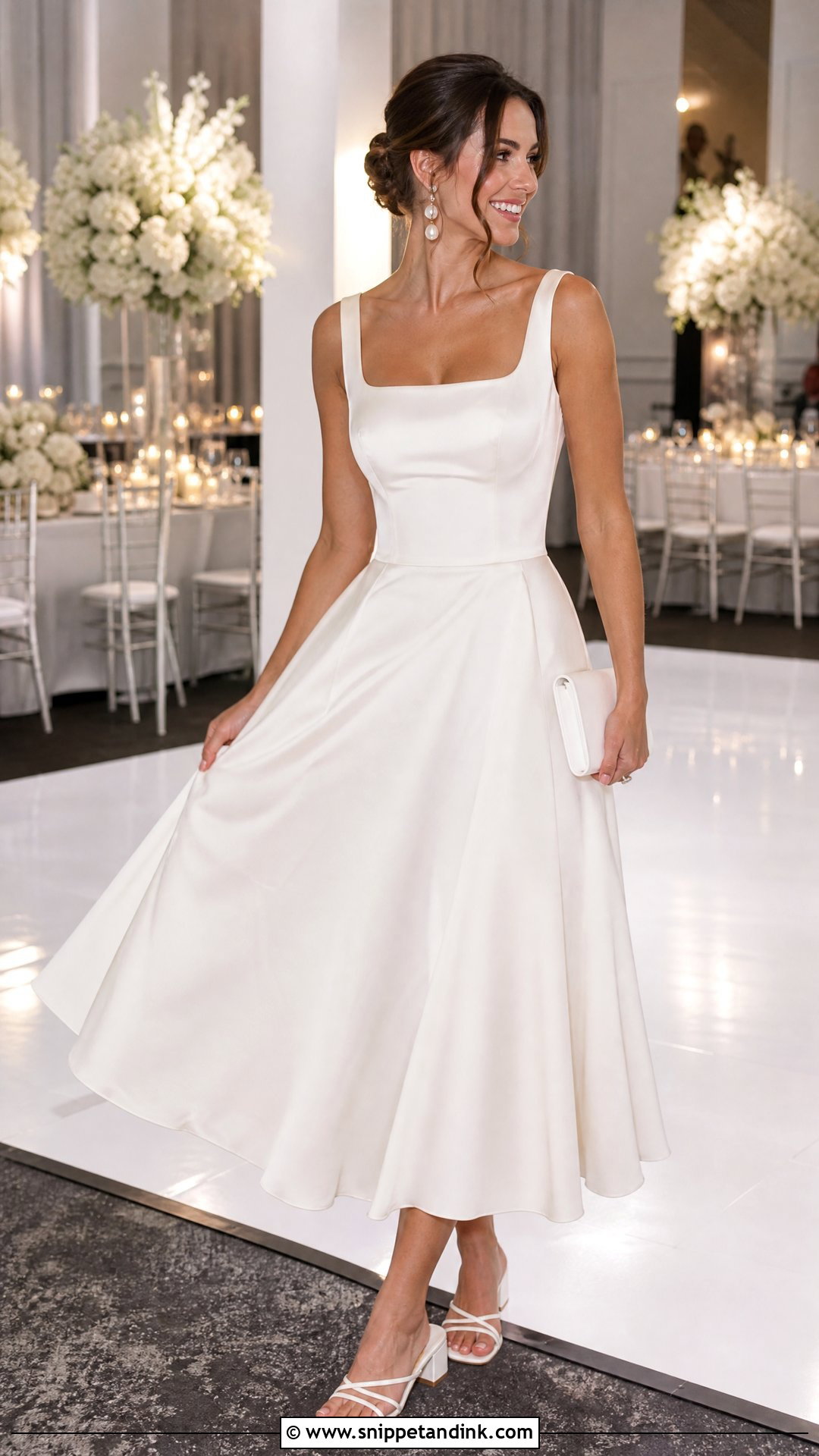
Satin midis are my first suggestion for a bride who wants something classic but refuses to wrestle a hem all night. A bias-cut or softly flared skirt swings when you turn, while a straight skirt in heavy satin tends to cling to the shins. Satin shows every crease, so I ask brides to sit for ten minutes at the fitting and then look at the lap; a mid-weight satin with some body recovers far better than a thin one. Low block-heel sandals, pearl drops and a neat bun keep attention on how the fabric moves. Dance in the actual shoes at least twice before the wedding.
2. Beaded Mini Wedding Dress
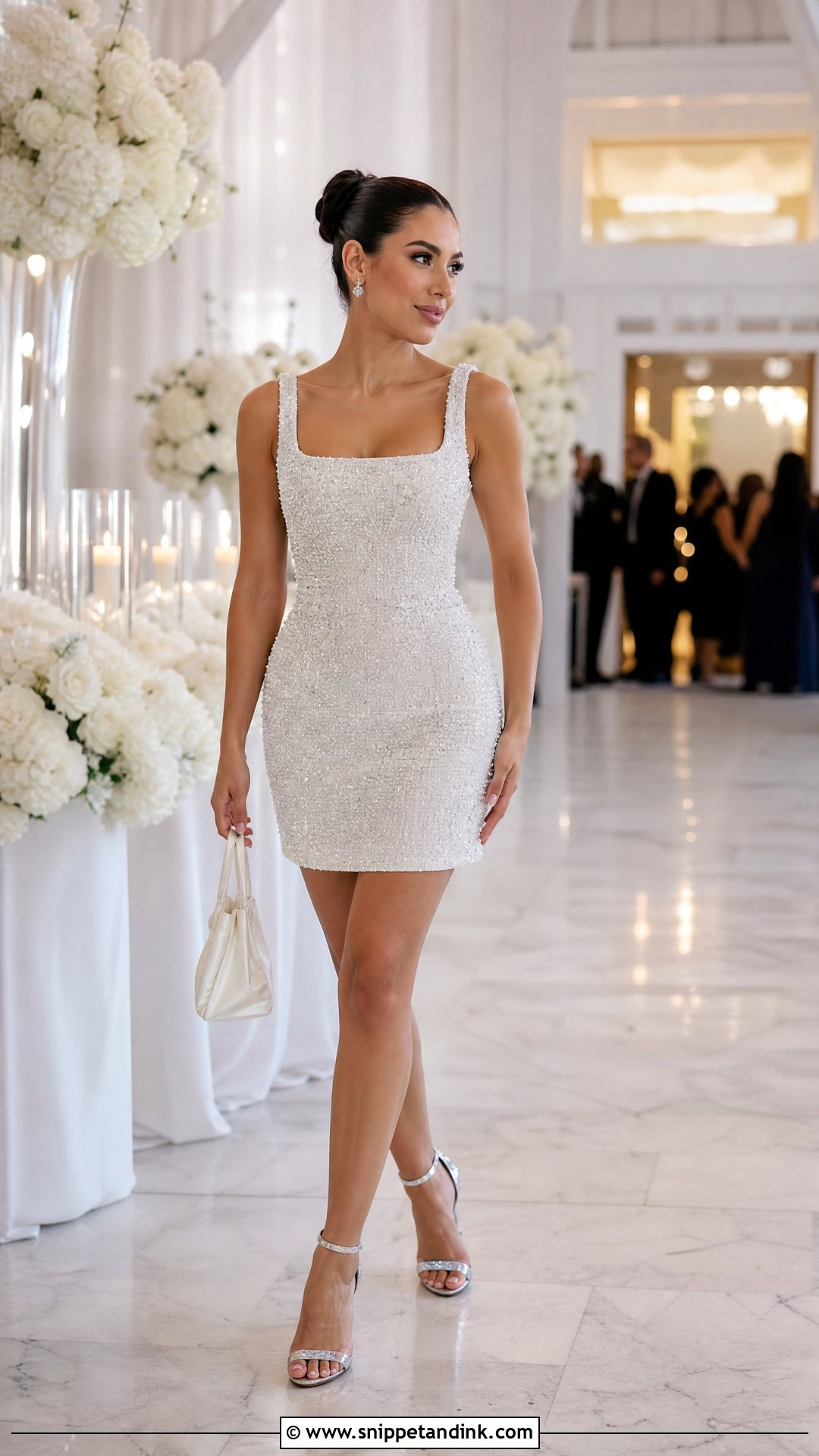
With heavy beading, the first thing I judge is weight. Hold a beaded mini on its hanger and you’ll know within seconds whether it will drag on the straps by late evening. Look for a structured bodice that carries the load at the waist rather than the shoulders, and straps that are properly stitched in, not just tacked. Rough beads under the arm rub skin raw over hours of dancing, so I always run a hand along the inner armhole before anything else. Crystal studs, a small satin bag and metallic block heels are enough, because the dress already does the work. Built-in shorts or sheer tights take the worry out of high kicks, and a sleek ponytail keeps hair from snagging on the neckline.
3. Tea-Length Tulle Wedding Dress
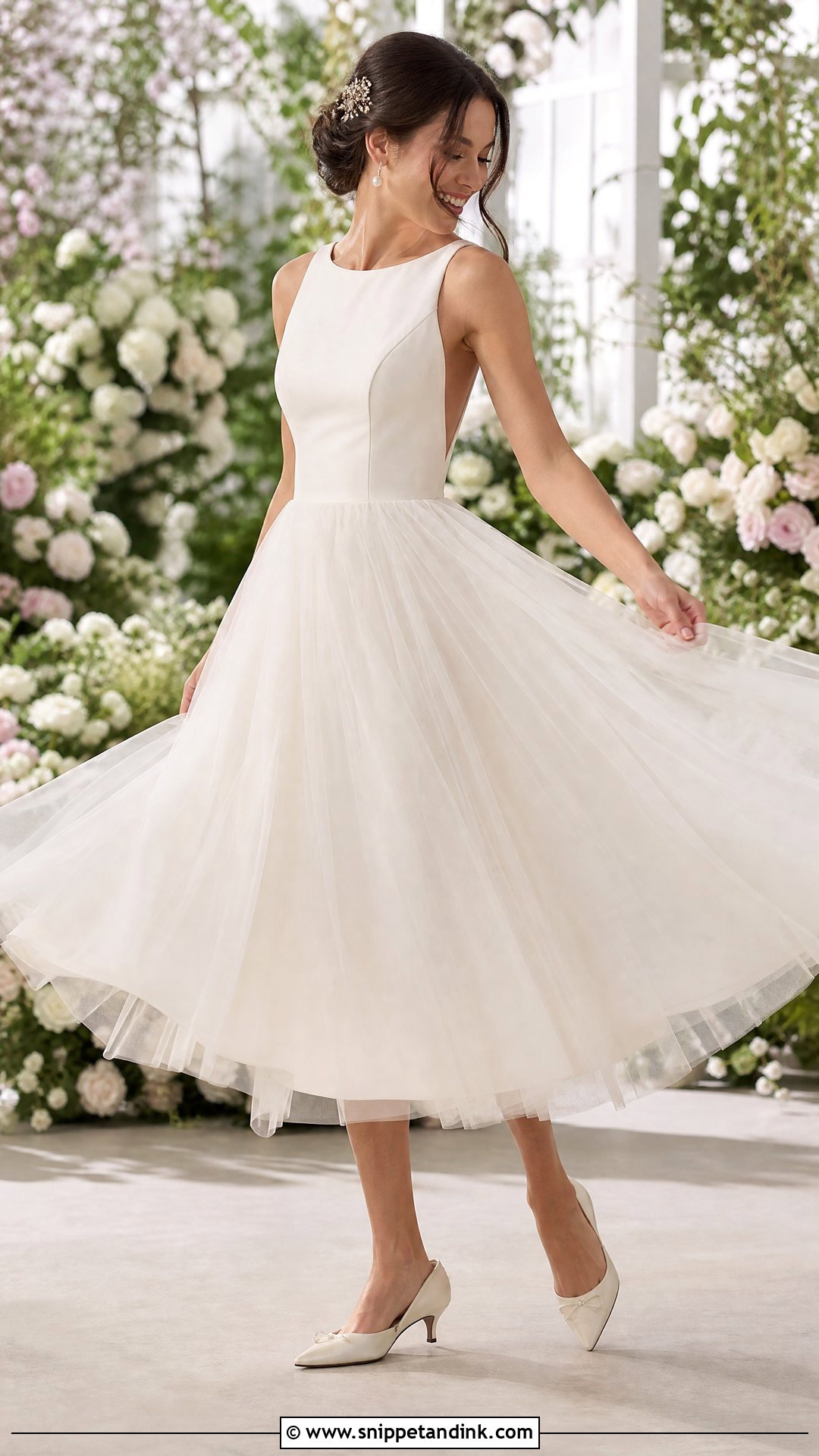
Tulle at tea length is light enough to spin in, but the underskirt decides how it feels. A few soft layers give a gentle cloud; a stiff, crinoline-style base starts to bounce against the shins and swings wide enough to brush other dancers. If a skirt feels heavy at the fitting, ask whether a layer can come out. The hem should land between knee and ankle, so your shoes become part of the outfit, and pointed flats or a low kitten heel both suit it. Pearl earrings and a small comb are plenty. Take off any long veil after the ceremony, since tulle on tulle catches. I’d point garden receptions and ballroom-style dancing toward this one.
4. White Bridal Jumpsuit
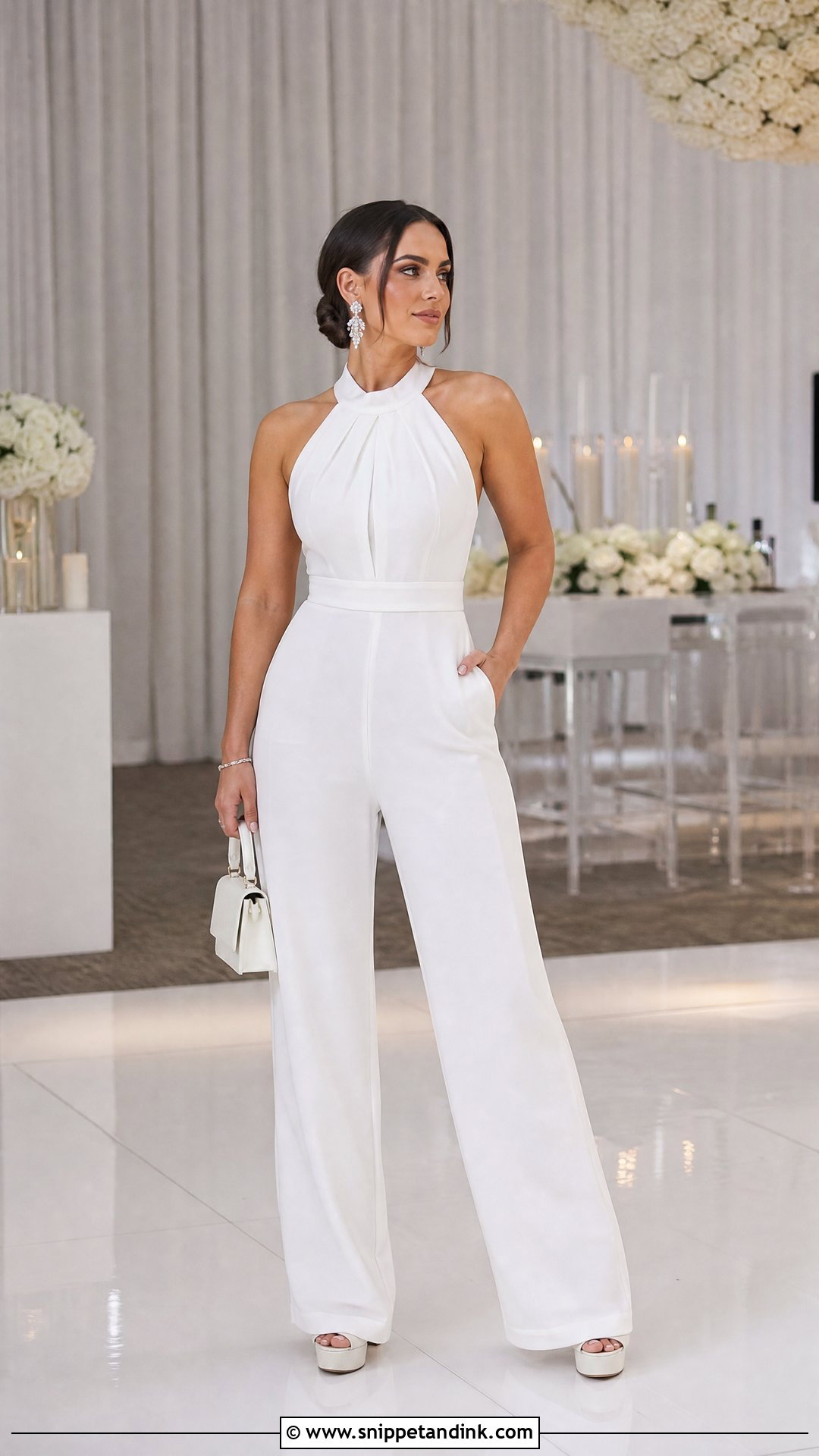
Jumpsuits fail at the rise and the hem, rarely anywhere else. When a bride steps into one, I have her do a deep lunge and a squat before we talk about earrings, because a rise that’s too short drags the whole bodice down. Wide legs in a fabric with slight stretch move well. The trouser hem should just clear the floor in the exact shoes she’ll dance in, or she’ll tread on it by the second song. A halter or tailored V-neck reads formal enough for an evening reception. Platforms or pointed block heels, one statement earring and a sleek low bun finish it. It’s the outfit I suggest most often to couples who have rehearsed something energetic.
5. Two-Piece Wedding Dress
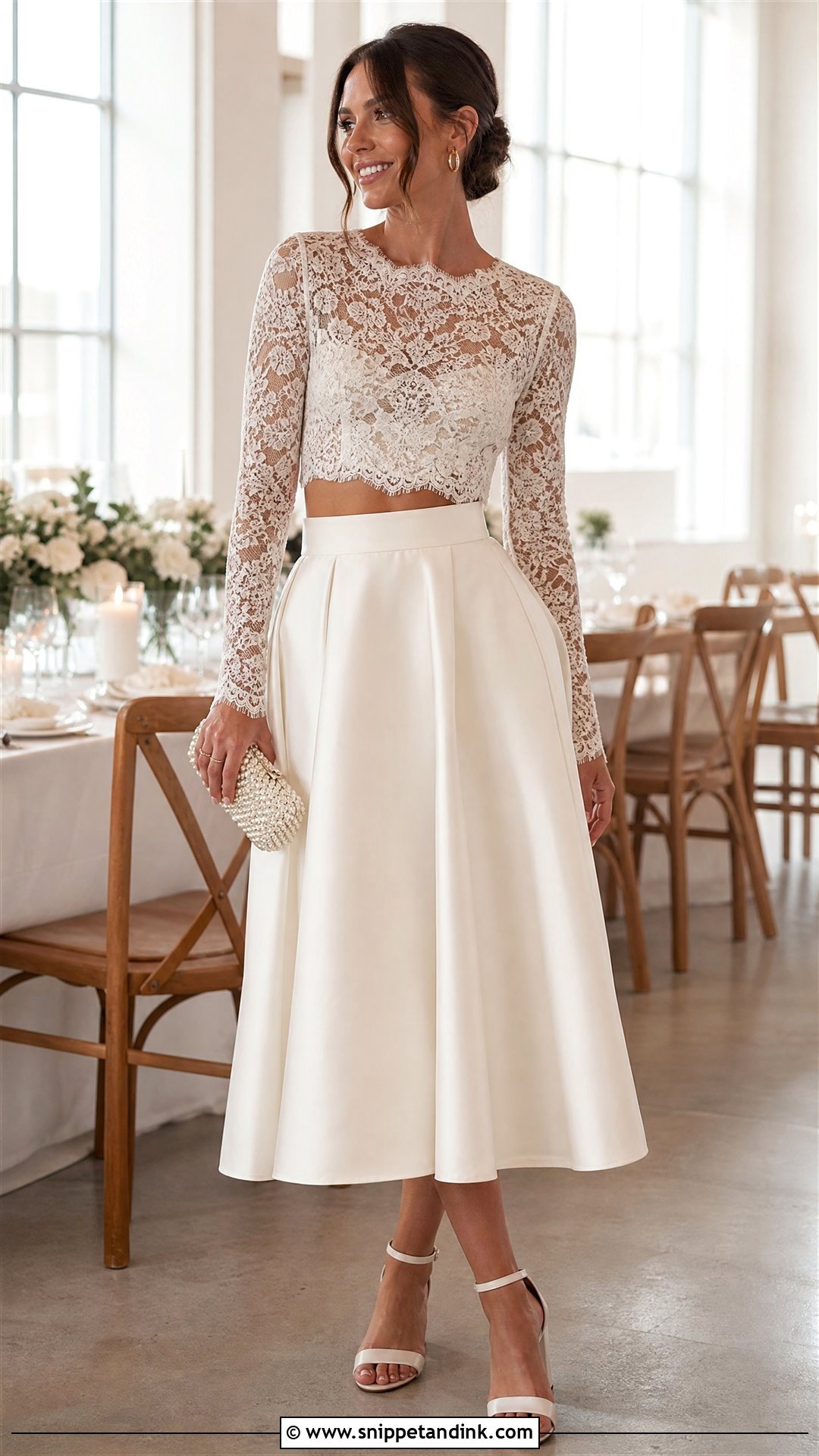
Two-pieces solve a problem most brides don’t notice until the party: a one-piece bodice rides up when you lift your arms, but a separate top moves independently of the skirt. Keep the top close-fitting, with light boning or a firm band so it stays down during raised-arm moves, and set the high-waisted A-line skirt so a sliver of separation shows. Repeating one fabric or bead across both pieces ties them together. Ankle-strap block heels, small hoops and a pearl clutch. A practical bonus is that you can swap only the skirt for the reception, which is quicker and usually cheaper than buying a second dress.
6. High-Low Wedding Dress
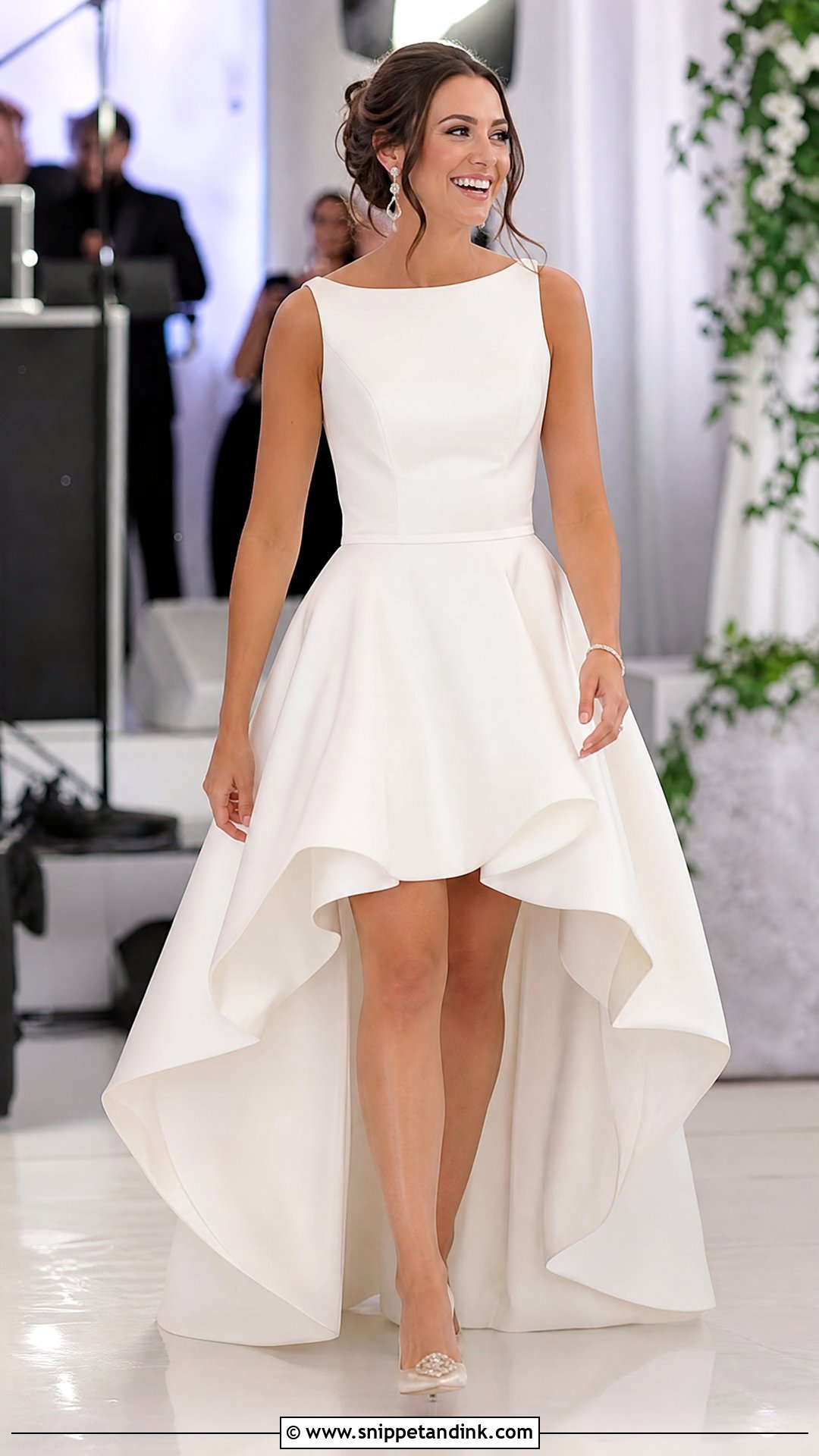
High-low hems divide brides. The short front keeps fabric off your toes, so forward steps and spins are easy, yet the longer back still trails, and someone will step on it during a crowded song. If the back touches the floor, I add a small bustle point or a discreet wrist loop. Pick a lightweight skirt that falls softly; a stiff high-low flares out like a bell and looks dated in photos. Embellished low heels and drop earrings make the most of the shorter front. For one dress from vows to last dance, it’s a sensible compromise, provided the fingertip veil comes off before the party starts.
7. Convertible Overskirt Wedding Dress
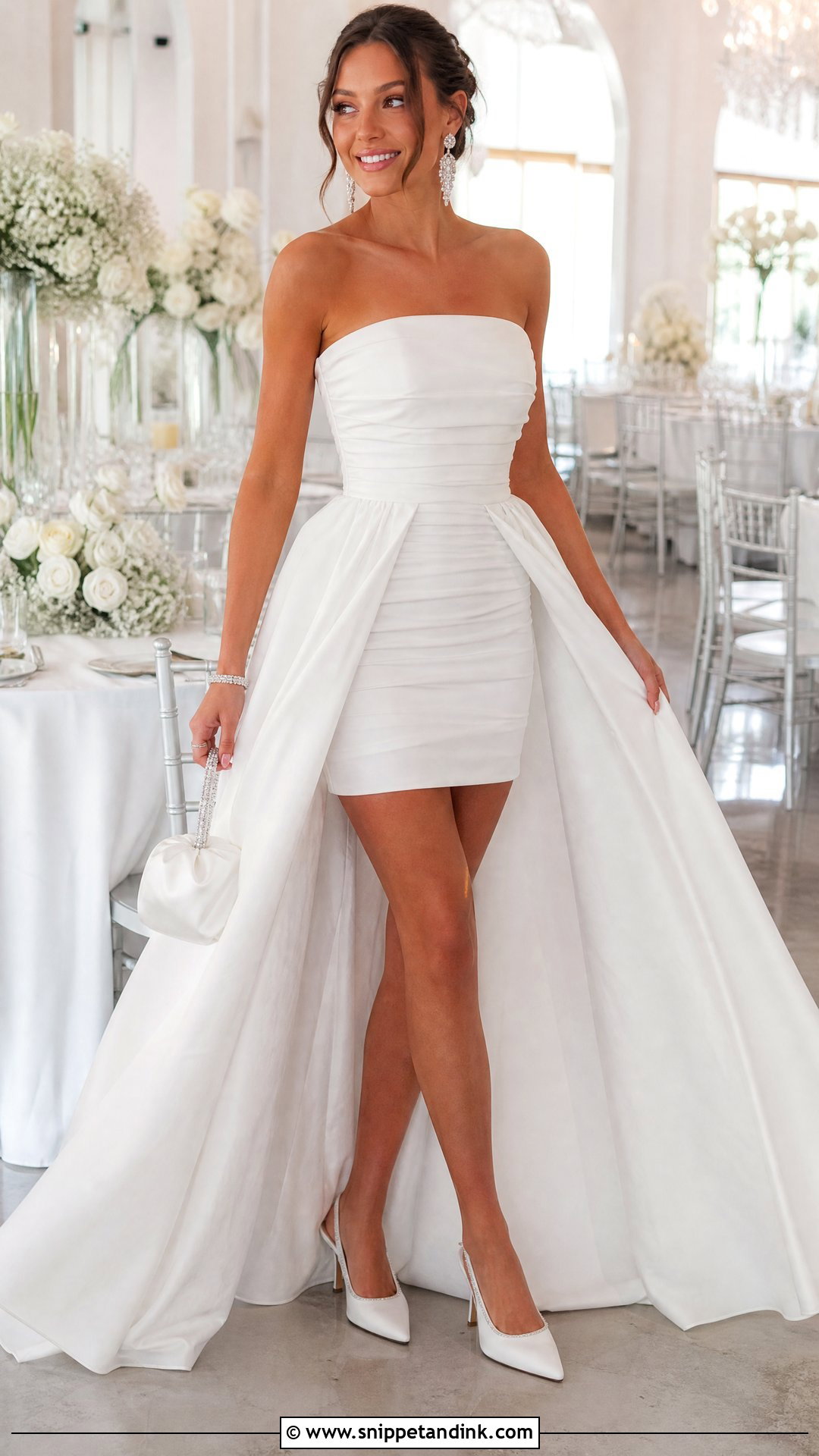
An overskirt gives you a full ceremony silhouette and a party dress without leaving the room. Underneath the detachable floor-length skirt you might wear a fitted mini, a midi or a streamlined column dress. What I inspect first is the fastening: hooks and a hidden zip come off much faster than a long row of buttons, and someone other than you should practice removing it at the final fitting. The base dress has to look finished on its own, with clean seams at the waist where the overskirt sat. Slingbacks, sparkling earrings and a wristlet carry straight over. Because the hair, makeup and jewelry stay the same, the switch takes minutes rather than a full outfit change.
8. Short Lace Wedding Dress
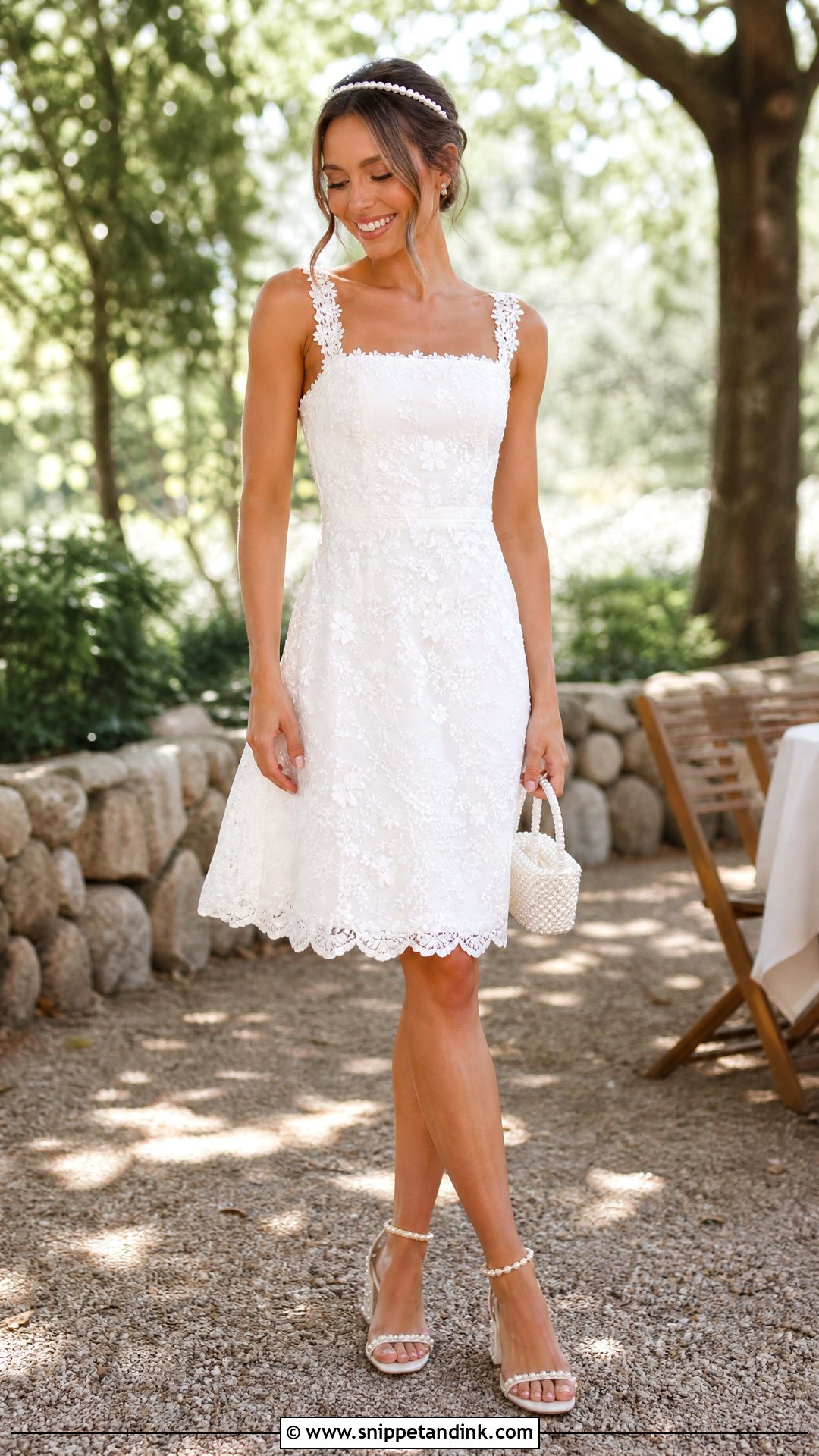
Short lace is a gentler step down from a long gown than satin or sequins, because the fabric still reads as bridal. The lining is where cheaper versions give themselves away. If it isn’t tacked to the lace, it twists when you turn and creeps up when you sit, so I have the bride move around the fitting room and then check whether it still lies flat. Floral lace leans romantic, while geometric lace looks cleaner. A scalloped hem needs very little else: a headband, studs and pointed flats or pearl block heels. Knee length, or just above, gives enough coverage to dance without thinking about it.
9. Feather Trim Mini Wedding Dress
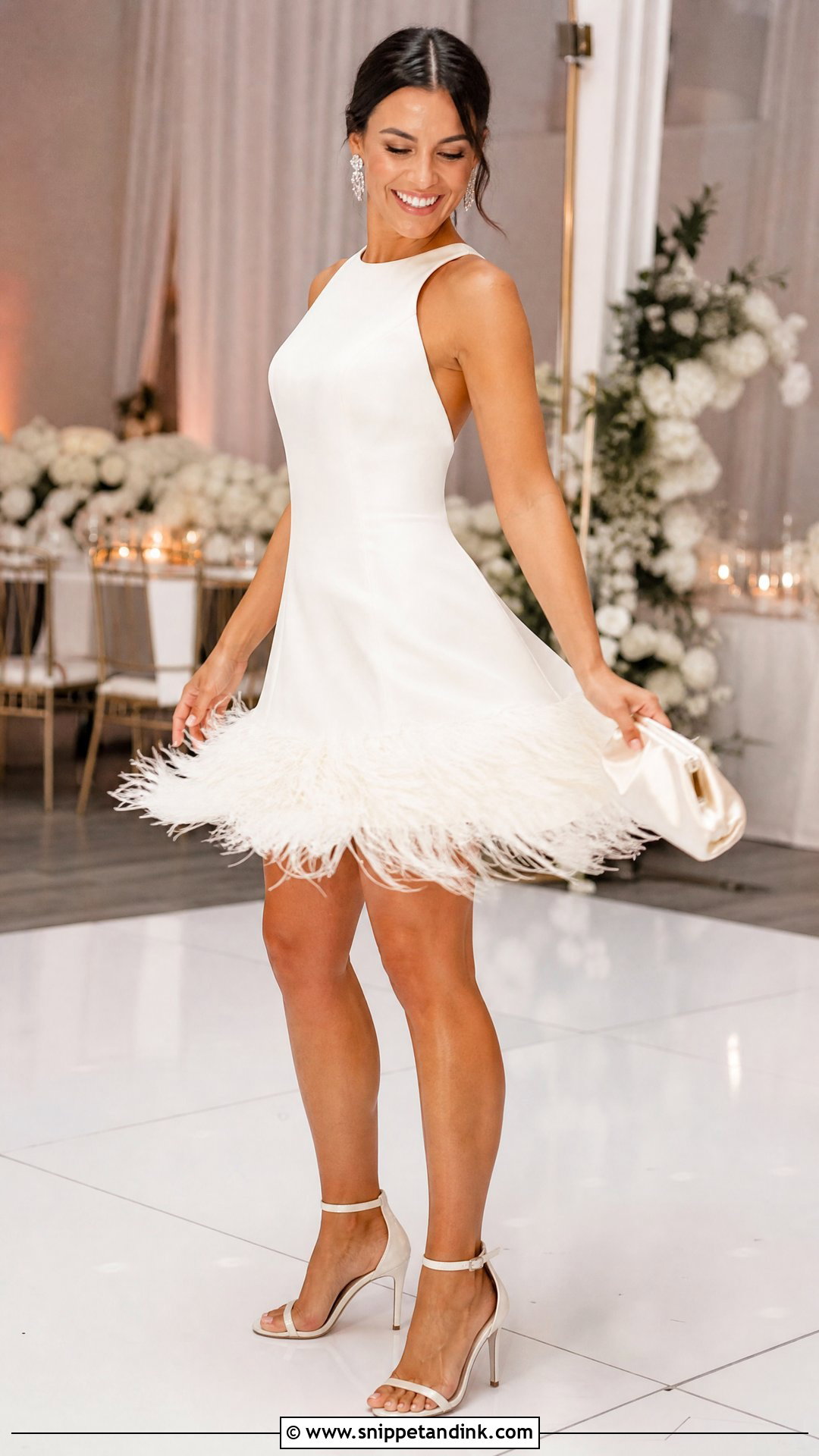
Feathers shed. That’s the honest first thing to know about a feather-trim mini, and why I steer brides toward pieces with trim on a single edge rather than all over. Give the trim a firm tug at the try-on and see what comes away on your fingers; well-attached feathers barely move. A satin or crepe base keeps the silhouette sleek under the texture. Ankle-strap heels, crystal earrings and a high ponytail or sleek bob suit it. Make sure it’s long enough to sit in comfortably. I’d save this one for an outfit change rather than the ceremony, since feathers crush under a veil and in the back of a car.
10. Bias-Cut Slip Wedding Dress
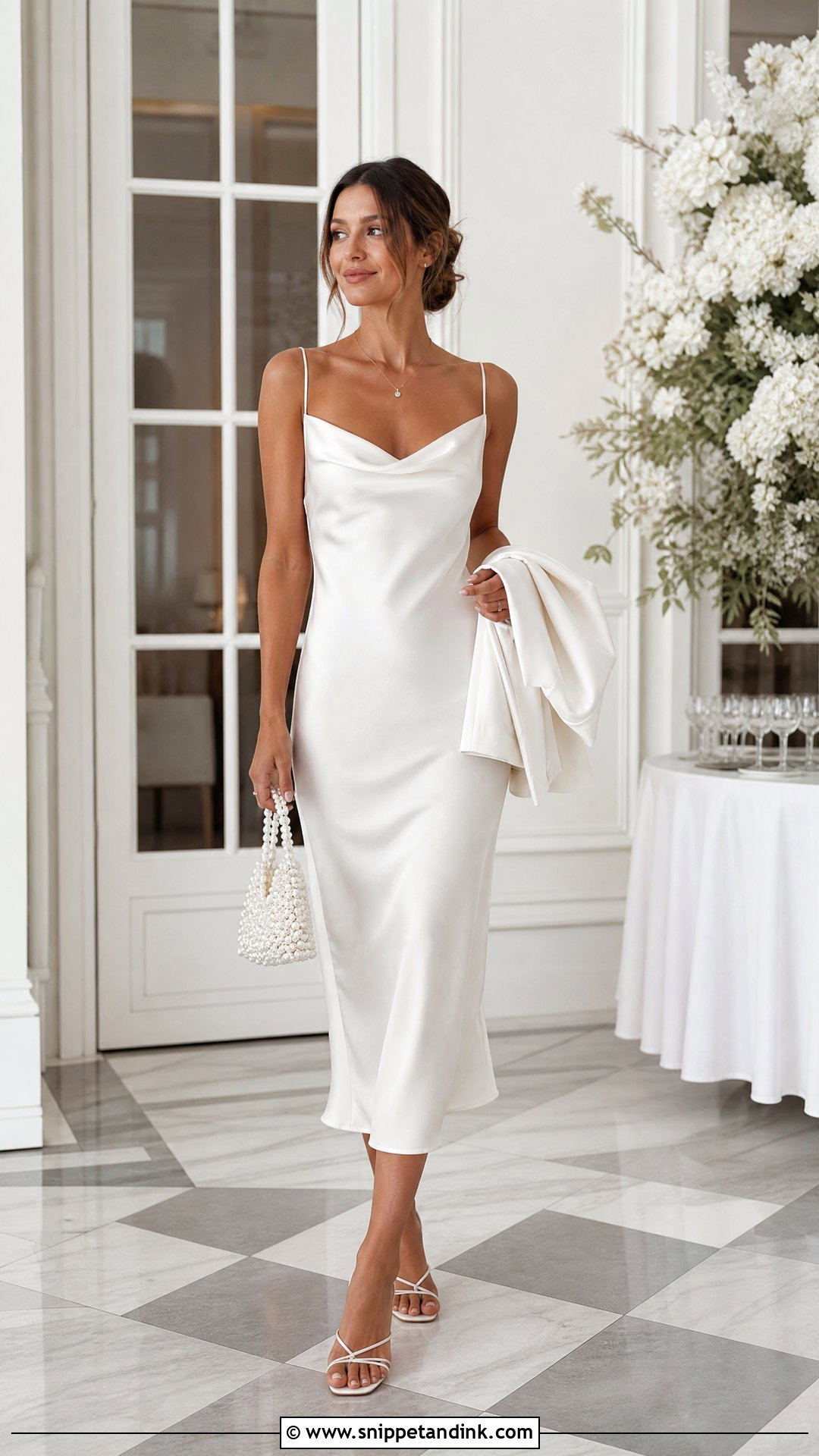
A bias cut drapes over every curve, which is both the appeal and the risk. Cut on the diagonal grain, silk or satin gives slightly and moves like water, but it also reveals underwear lines and shifts at the neckline when you dance. I always fit a slip dress over the exact undergarments the bride will wear, and I like adjustable straps so we can shorten them a touch for the party. Choose substantial fabric with an opaque lining and leave a little ease through the hips. A tailored white blazer works over it for dinner. Low strappy sandals, a fine pendant and soft waves keep it minimal. It looks simple, yet it needs more precise tailoring than almost any other dress here.
11. Off-Shoulder A-Line Wedding Dress
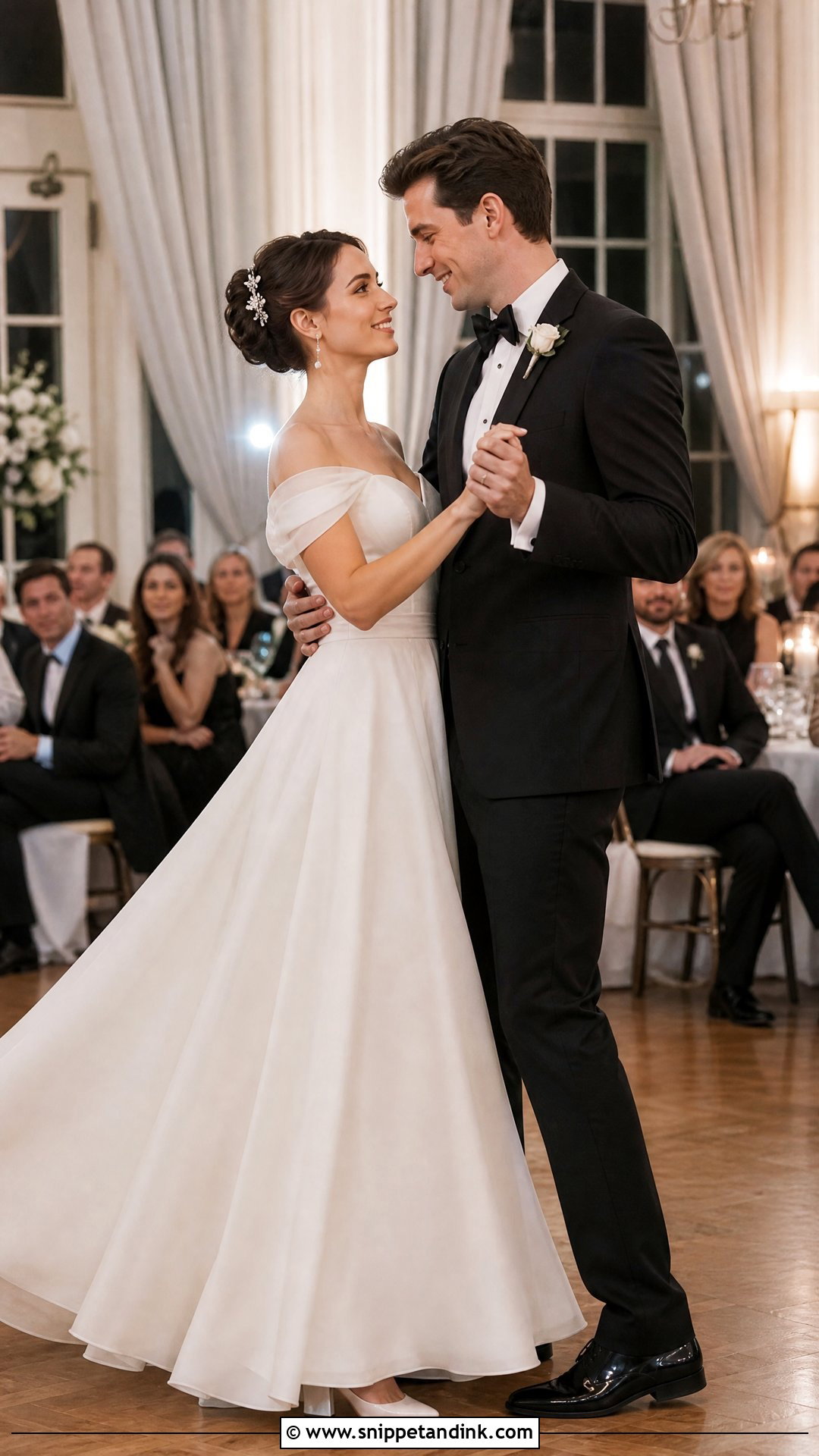
Rigid off-shoulder bands cause the most common first-dance complaint I hear: the bride couldn’t lift her arms around her partner’s neck. If you love this neckline, ask for stretch in the sleeve band or detachable straps, and test the hug position at every fitting. The A-line skirt is the easy part, since it opens gradually from the hip and leaves your knees free. On a floor-length version, a ballroom bustle lifts the train up to the waist so it hangs as a fuller skirt instead of trailing. Low block heels, pearls and a comb in a soft updo. I’d keep it for a traditional first dance rather than fast choreography.
12. Square-Neck Crepe Mini Wedding Dress
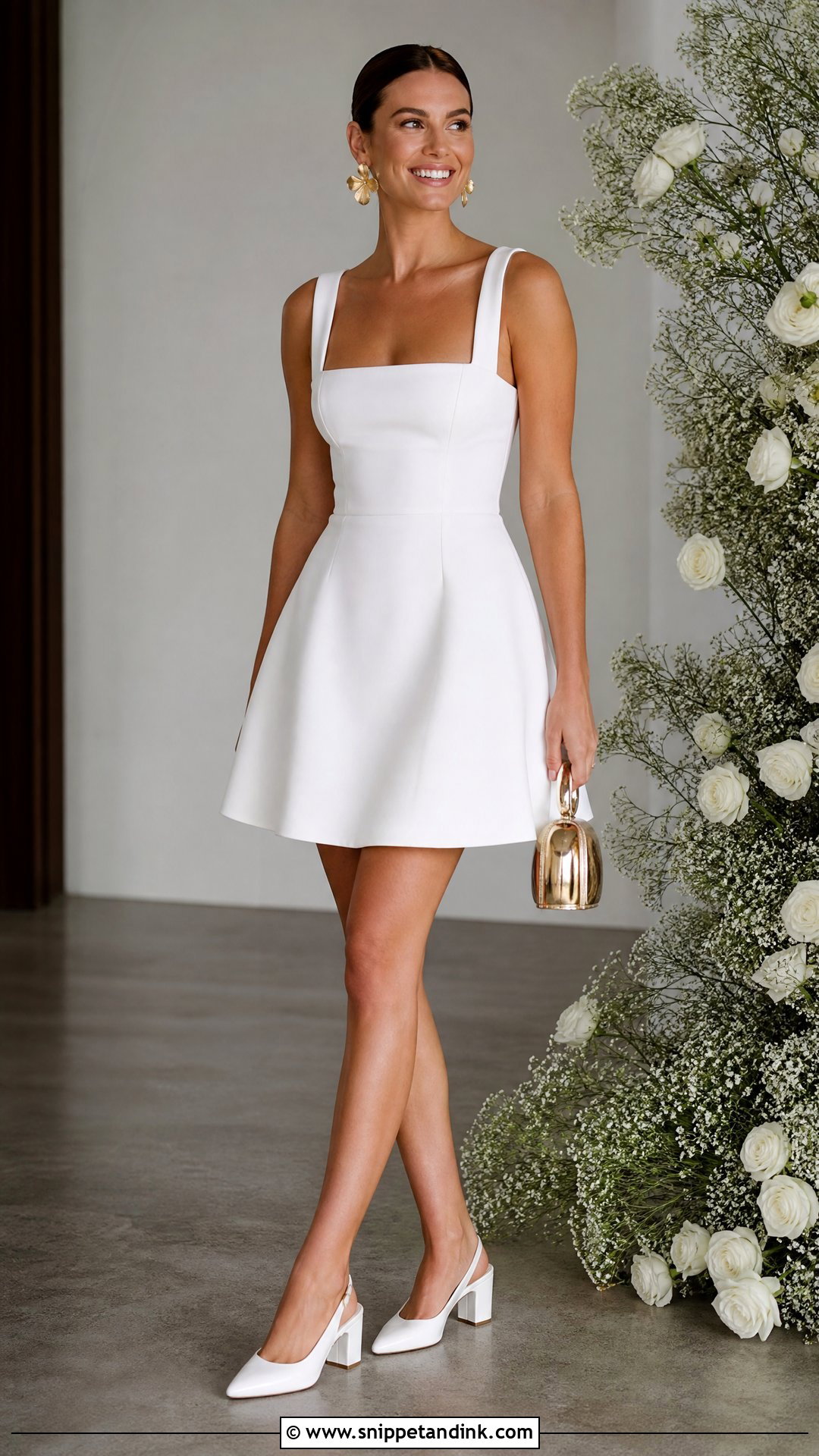
Stretch crepe is one of my favorite fabrics for a dancing bride, because it holds a tailored line and still gives through the hips and back. A square neckline with wide straps sits securely; narrow straps on a square neck tend to slide outward off the shoulder. The real risk with a short crepe dress is how far the hem rises when you sit or lift your arms, so measure that at the fitting rather than discovering it in photos. Smooth dance shorts underneath help. Slingback block heels, a sculptural earring and a polished bun. It’s a plain base that lets heirloom jewelry or loud shoes take the lead.
13. Halter Wedding Dress With Slit
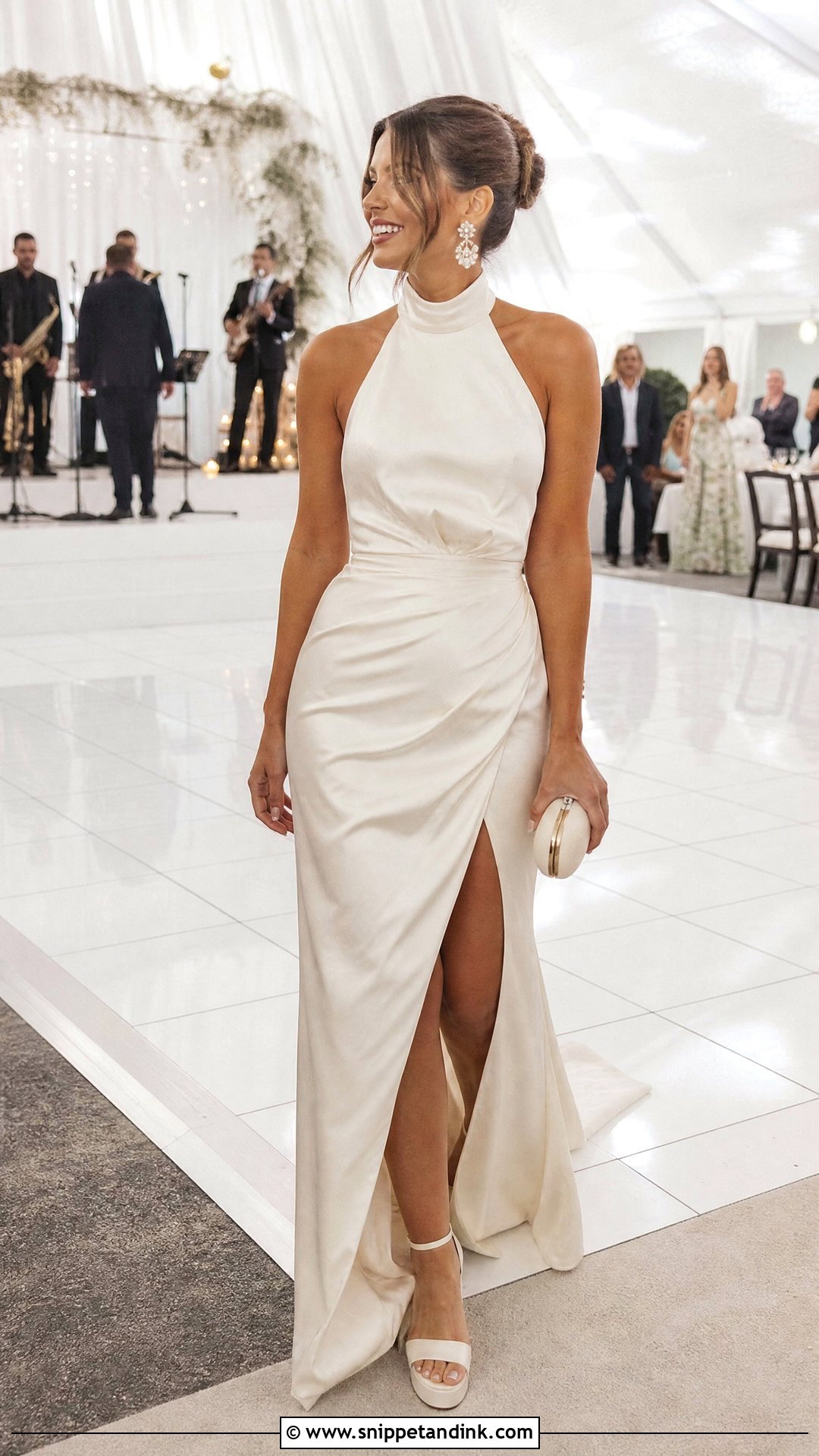
On a halter gown, the slit does the job a shorter hem would, so its height needs care. Standing still it might sit at mid-thigh; in a long stride it can climb to the hip. I mark the slit while the bride takes big steps across the room and have it tacked a little lower if needed. The halter needs a firm closure at the neck, ideally a hook plus a button, because a tie alone loosens as you dance. A softly draped skirt in satin or lightweight crepe moves well. Skip the necklace, wear your hair up so the shoulders show, add low platform sandals and bustle any train before the reception.
14. Puff-Sleeve Organza Mini Wedding Dress
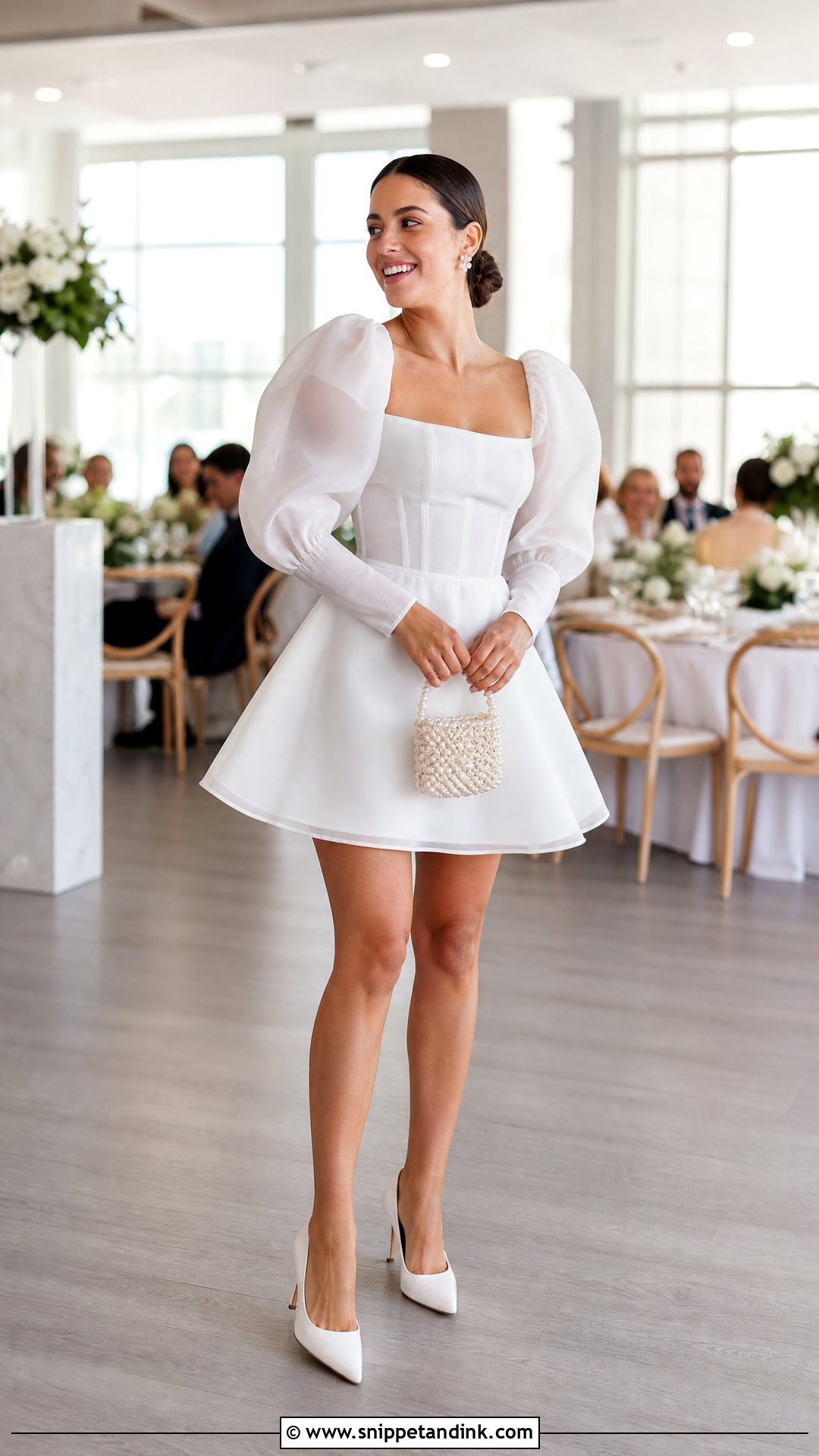
Organza has body, which is why puff sleeves keep their shape in it, but it’s also crisp and can scratch bare arms after a few hours of movement. A smooth lining in the sleeves and skirt fixes that. Check that the sleeves sit on elastic or a fitted cuff, because loose puffs slide down the arm every time you raise it. A structured bodice with a gently flared skirt balances the volume up top. White pumps, crystal studs and a pearl mini bag, with a low ponytail so the hair doesn’t compete with the sleeves. Keep the veil short or remove it after the ceremony. Daytime receptions and second entrances suit it best.
15. Fringe Wedding Reception Dress
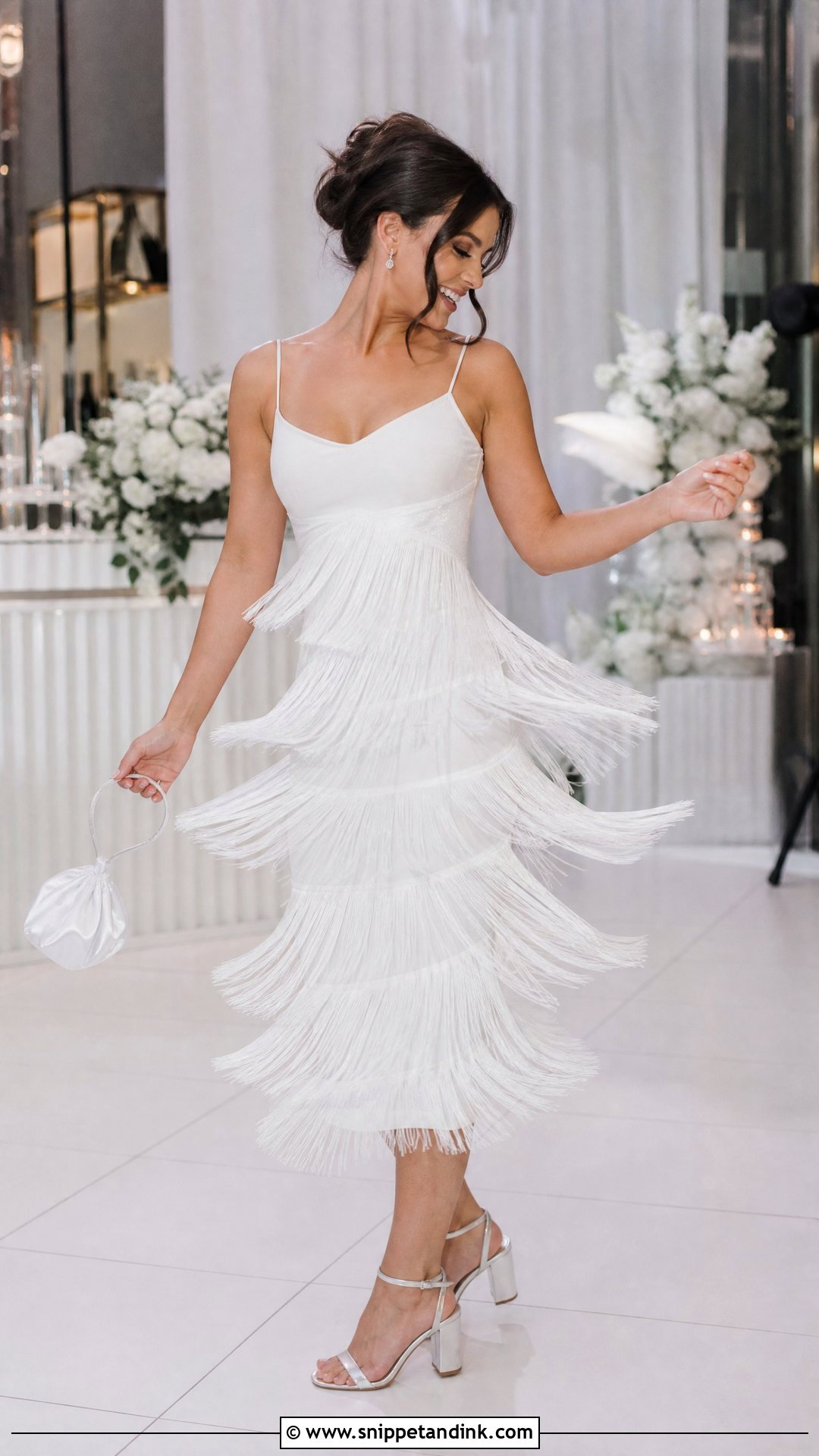
Every turn shows off a fringe wedding reception dress, which is why I’d pick one for a couple with planned choreography. Fringe set in horizontal tiers over a fitted, lined base moves cleanly; one long curtain of fringe from the waist tends to tangle. At the try-on, spin a few times, walk backward and then look at whether strands have caught in your shoe buckles or knotted together. If they have, choose shoes without buckles. Stable metallic heels, small crystal earrings and a wristlet leave your hands free. Keep the hair sleek so there’s only one moving element in the outfit.
16. Sequin Wedding Reception Dress
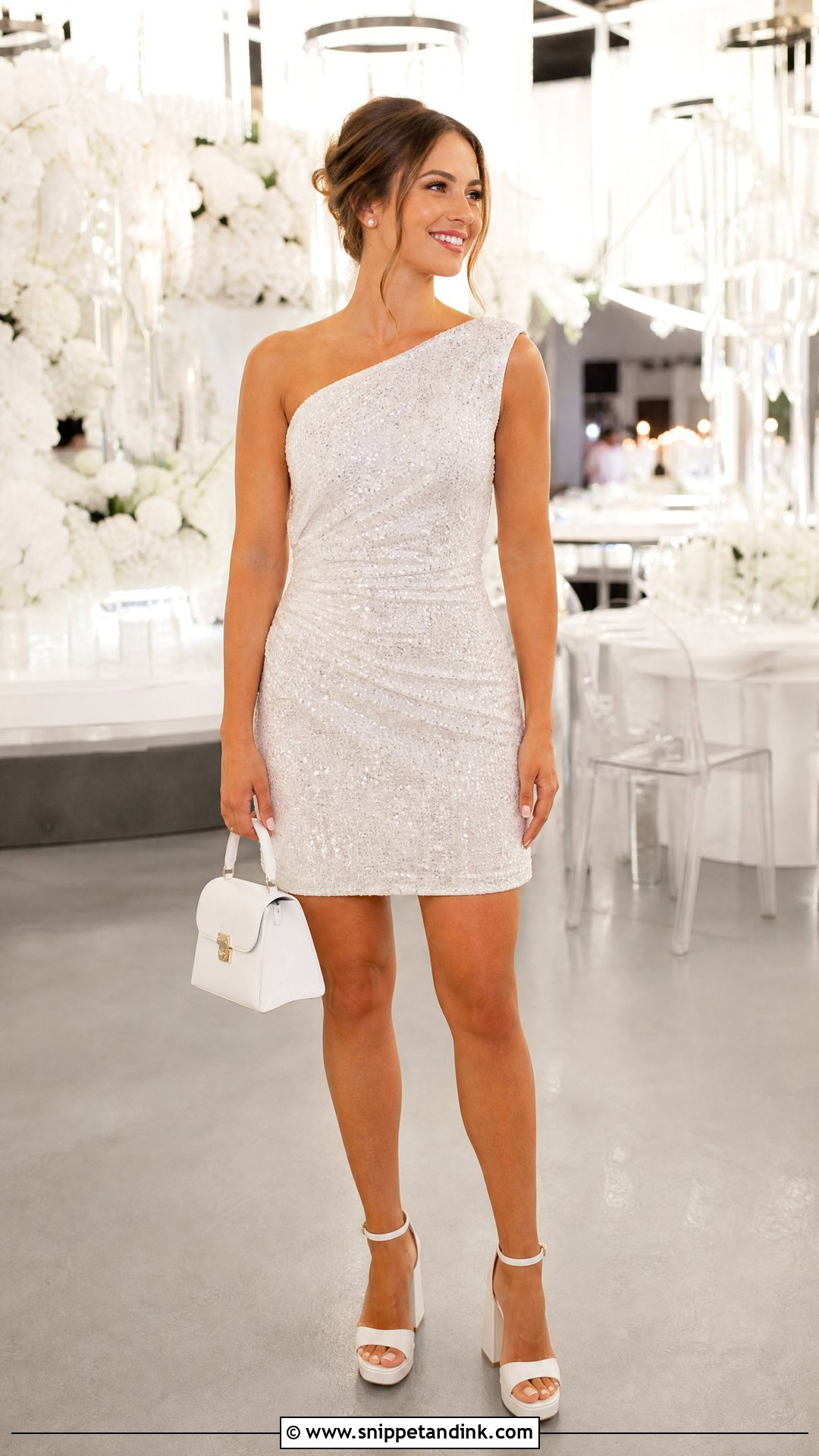
Sequins scratch. Before anything else, run your fingers around the armholes of a sequin wedding reception dress, because that’s where an evening of dancing turns into red skin. Sequins sewn onto stretch mesh move with your body; sequins on a rigid base make a stiff tube. A short A-line or a softly fitted midi gives the most room. Also check whether the edges snag on a partner’s jacket sleeve. Plain satin block heels, simple studs and a small white bag balance the shine, and a sleek ponytail finishes it. I like it most as a second entrance outfit.
17. Tulle Mini Wedding Dress
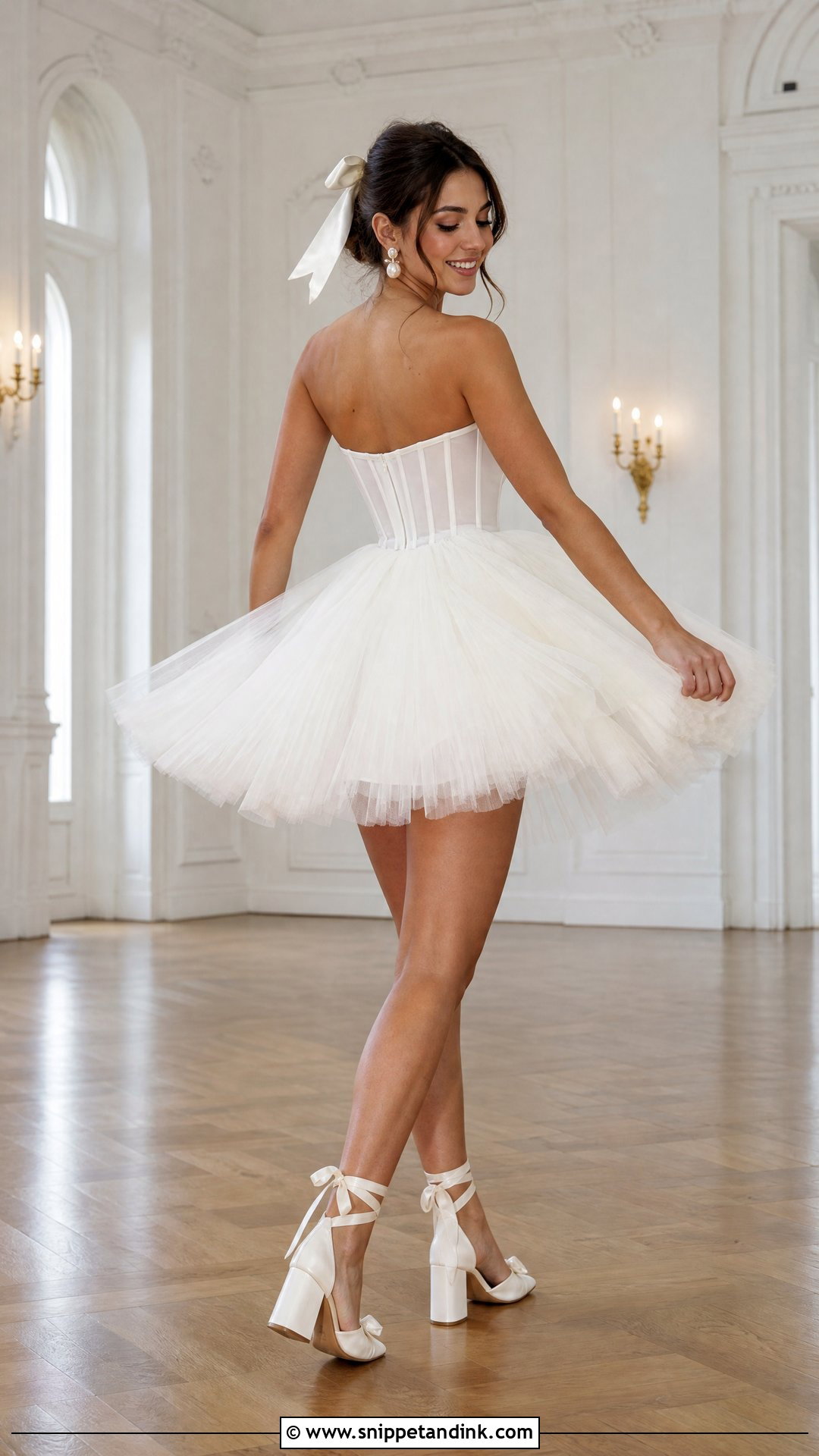
A tulle mini gives you volume with nothing near your feet. Watch the width, though: a skirt that sticks out too far gets stepped on and crushed in a crowd. I prefer several soft layers over a few stiff ones, plus a lining against the legs, because bare tulle itches. A corset-style or structured bodice anchors all that volume so you aren’t hitching it up between songs. Ballet-style block heels, pearl earrings and a satin bow in the hair. Carry a small bouquet for the entrance, then hand it off before the dancing. It reads as a clear change from a formal ceremony gown.
18. White Blazer Wedding Dress
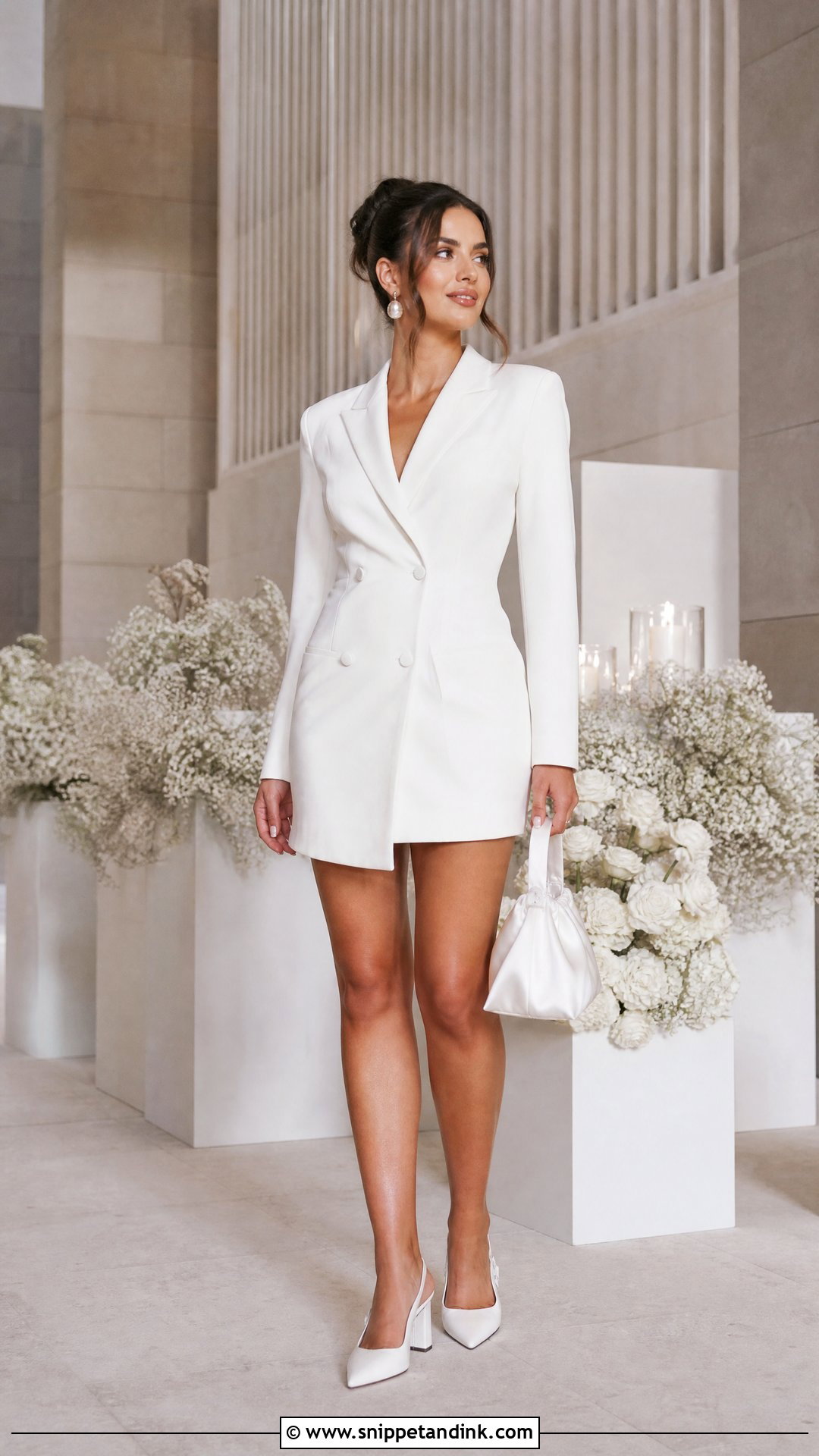
Tailoring and dancing can work together, but only if the shoulders fit. A white blazer wedding dress with tight sleeves will stop your arms at chest height, so raise both arms overhead at the fitting and watch whether the whole dress lifts with them. Double-breasted and wrap-front minis both need secure inner closures, and I add a hidden snap where the front tends to open during a spin. A slightly defined waist keeps it bridal. Pointed block heels, bold earrings, a satin handbag and tailored shorts underneath. City weddings suit it, as do brides who’d rather skip lace altogether.
19. Chiffon Wrap Wedding Dress
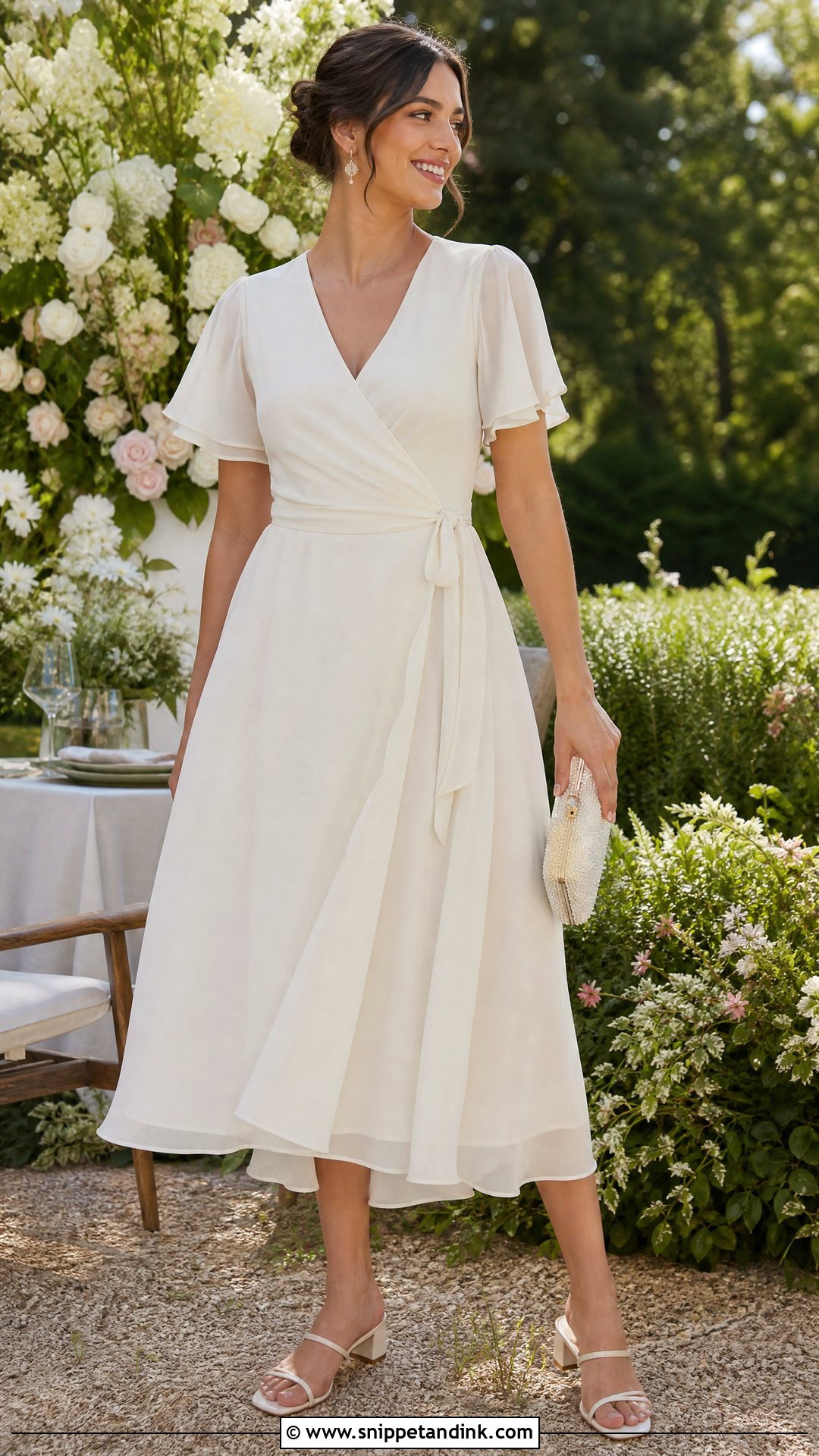
Chiffon is one of the lightest fabrics a bride can dance in, and it stays comfortable in warm weather. A wrap bodice, though, opens if only the tie holds it, so I add a hidden snap at the crossover on nearly every one I fit, or suggest a stitched faux wrap instead. Chiffon is sheer by nature. Bright reception lights and a photographer’s flash will show everything under an unlined skirt, so insist on full lining in an A-line midi. Long ties are a hazard on a dance floor; shorten them or tuck them away. Low block-heel sandals, delicate earrings, a beaded clutch and soft curls finish it.

20. Bridal Romper With Detachable Skirt
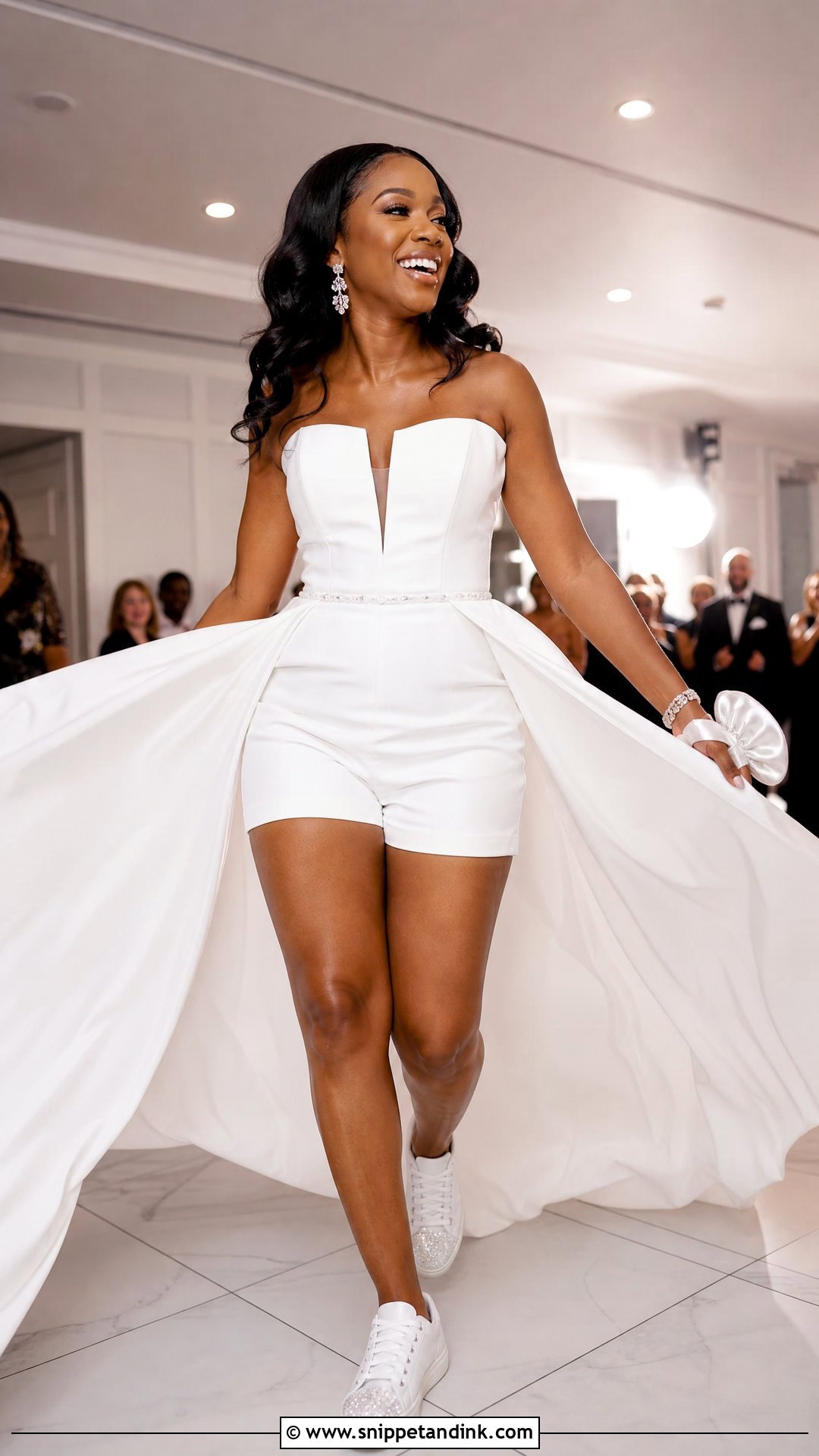
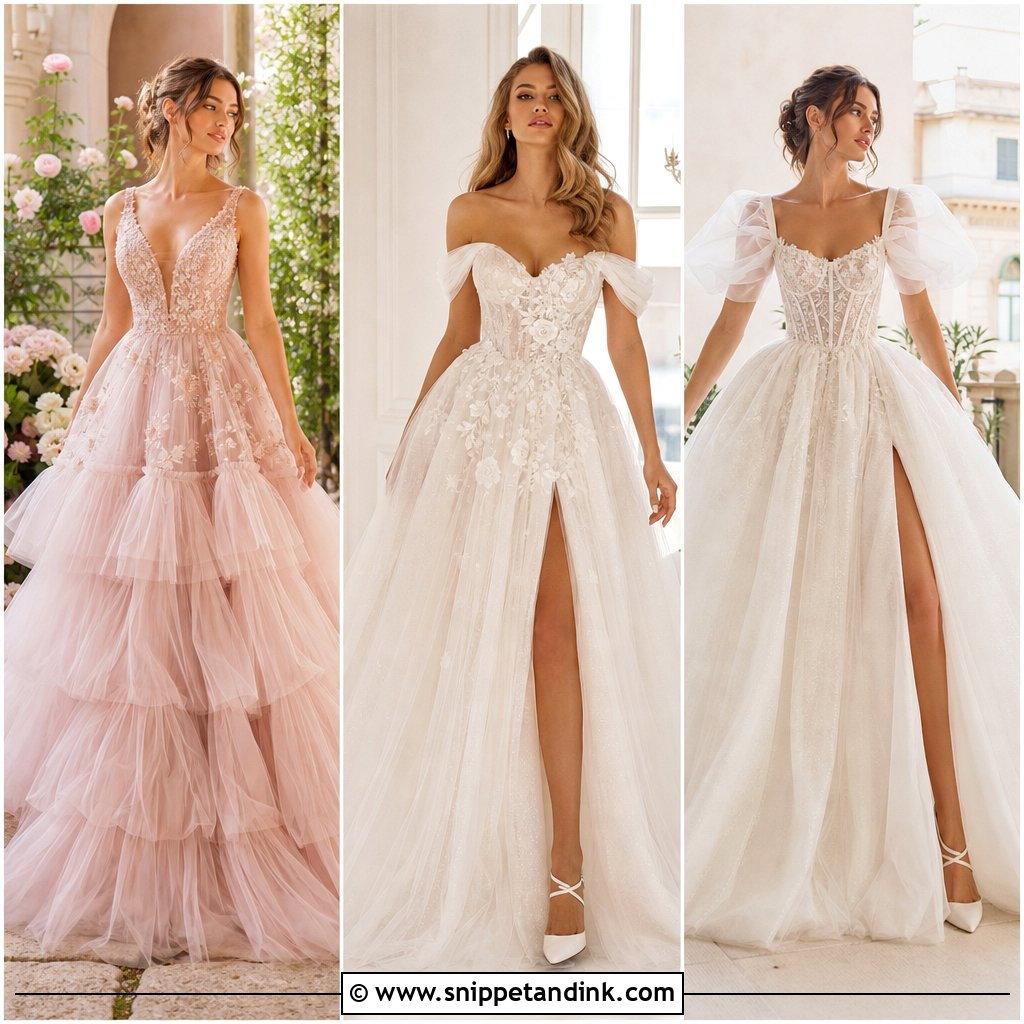
Of all the transformations here, a bridal romper with a detachable skirt is the biggest. A flowing overskirt makes it read as a full gown at the ceremony, then comes off to reveal a tailored romper with a defined waist and a secure neckline. Two fitting checks matter most. First the shorts: sit and bend in them, because a short rise pulls up uncomfortably. Second the attachment points, which should leave no visible loops or bulky hooks once the skirt is gone. Embellished sneakers or low platforms, statement earrings and a small crossbody bag keep your hands free for the whole night.
Planning the Changeover From Ceremony Gown to Party Dress
Brides tend to underestimate how long a change takes. Removing an overskirt or hooking up a bustle is a few minutes’ work for someone who has practiced it. A full dress change, which means getting out of a structured gown, into the second outfit and then fixing hair and lipstick, realistically needs twenty to thirty minutes and a private room close to the reception.
- Ask your planner to put the change on the timeline instead of slipping away and hoping nobody notices. The end of dinner service usually works.
- Steam the second dress that morning and hang it in the changing room, not in a car.
- Switch shoes only if the second pair is already worn in.
- Pick one helper and have them rehearse the fastenings at your final fitting.
Pack a padded hanger and a garment bag for the gown you take off. Satin and tulle crush badly when they spend the evening draped over a chair.
When a Strap Snaps or Wine Lands Mid-Song
Even a well-fitted dress can meet a broken strap or a splash of red on a busy dance floor. A small kit in a bridesmaid’s bag handles most of it: safety pins, double-sided fashion tape, a needle already threaded in white and ivory, clear nail polish for a beading thread that starts to unravel, and blotting papers for a shiny face.
For spills, blot and never rub. Keep water away from silk satin, because it can leave a ring that’s harder to remove than the original mark; leave the real cleaning to a bridal specialist after the wedding. If a sequin or bead comes loose, snip and knot the thread rather than pulling it, or the whole row can follow.
The Dress Should Disappear by the Second Song
A shorter hem is only part of a dance-ready outfit. The neckline has to stay where it was fitted, the fabric has to breathe under warm lights and the shoes have to carry you until the last song. Whichever silhouette you love, bring your real shoes and undergarments to the final fitting and move in them properly: arms up, a full spin, a minute in a chair. Settle the bustle or detachable layer in advance and teach one trusted person how it works. Comfort and polish aren’t a trade-off here. When the fit is right, you stop thinking about the dress a couple of songs in, and that’s exactly the point.
You'll Like These Ideas:


Leave a Reply