
Bridal shoes get chosen last and blamed first. By the time the dancing starts, a pair that looked right in the box can be the thing a bride is most desperate to take off. When I style a bride, I treat the sandal as part of the dress fitting, the venue floor and the length of the day, not only as a detail shot. The twenty pairs below cover pearls, crystals, platforms, block heels, slim stilettos and a few blue pairs for something blue. Bridal ranges at the moment lean toward steadier heel shapes, adjustable straps, bows and dimensional flowers, which is good news for anyone standing for hours. Each idea comes with the gown and accessories I’d put around it.
Bring Your Wedding Shoes to the First Dress Fitting
The hem of a wedding gown is cut to the exact heel height you’ll wear, so the shoes need to be in hand before alterations start. Turn up in flats and get married in three-inch heels, and the dress hovers above the floor and shows the ankle. Turn up in heels and switch to flats, and you’ll step on the front of your skirt all night. My order of work looks like this:
- Settle the venue surfaces first: grass, sand, gravel, marble or old stone steps.
- Buy the sandals before the first fitting, often a couple of months before the wedding, and keep the box and receipt until the hem is done.
- Wear them to every fitting so the seamstress sets the hem with your real posture and step.
- If you plan a lower pair for the reception, tell her. A hem can be set as a compromise between two heel heights that are within about an inch of each other.
Feet swell over a long day, especially in summer heat. Shop for bridal sandals in the late afternoon, when your feet are at their largest, and choose straps you can loosen a notch.
1. Pearl Block Heel Wedding Sandals
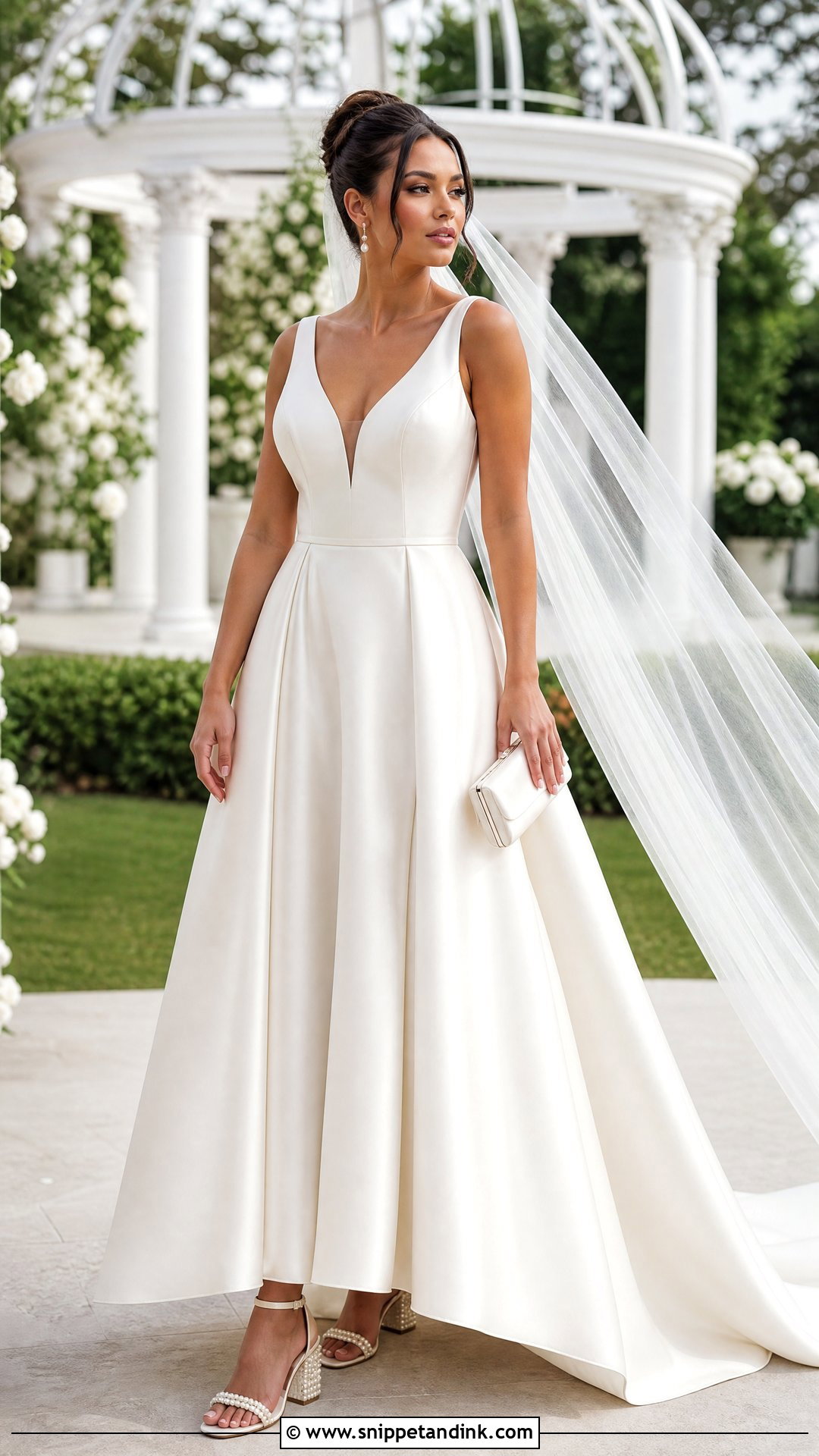
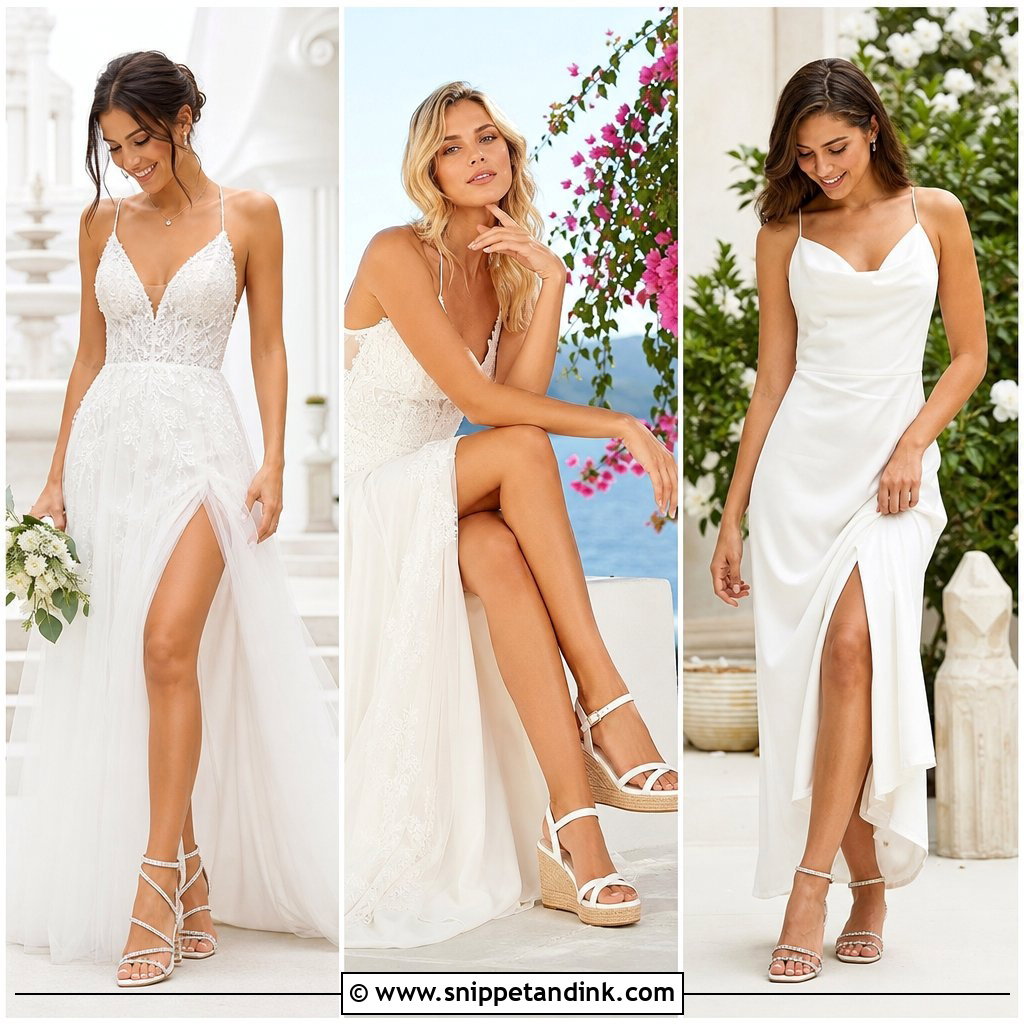
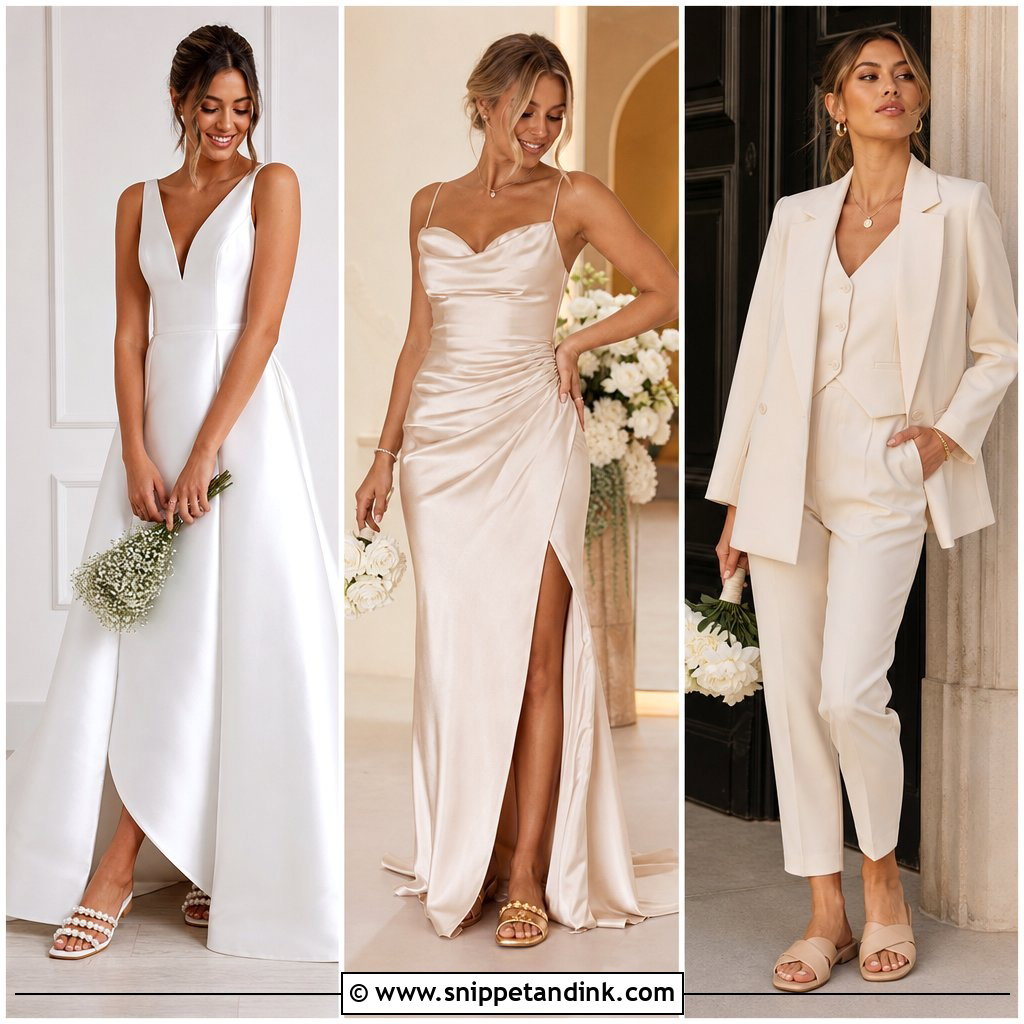
Pearls along the front band and a low, wide heel make this the sandal I suggest most often for a long aisle. Pair it with an ivory satin A-line gown, a pearl-trimmed veil, small pearl drops and a satin clutch, and you have a classic outfit that still doesn’t look overly matched. The block heel spreads your weight, so standing through a receiving line or crossing a garden path is far easier than on a narrow heel. Look for an adjustable ankle strap and check that the pearls are stitched on rather than glued, since glued ones tend to pop off when a hem drags over them. A low bun or smooth waves keep the rest polished.
2. Crystal Ankle Strap Wedding Sandals
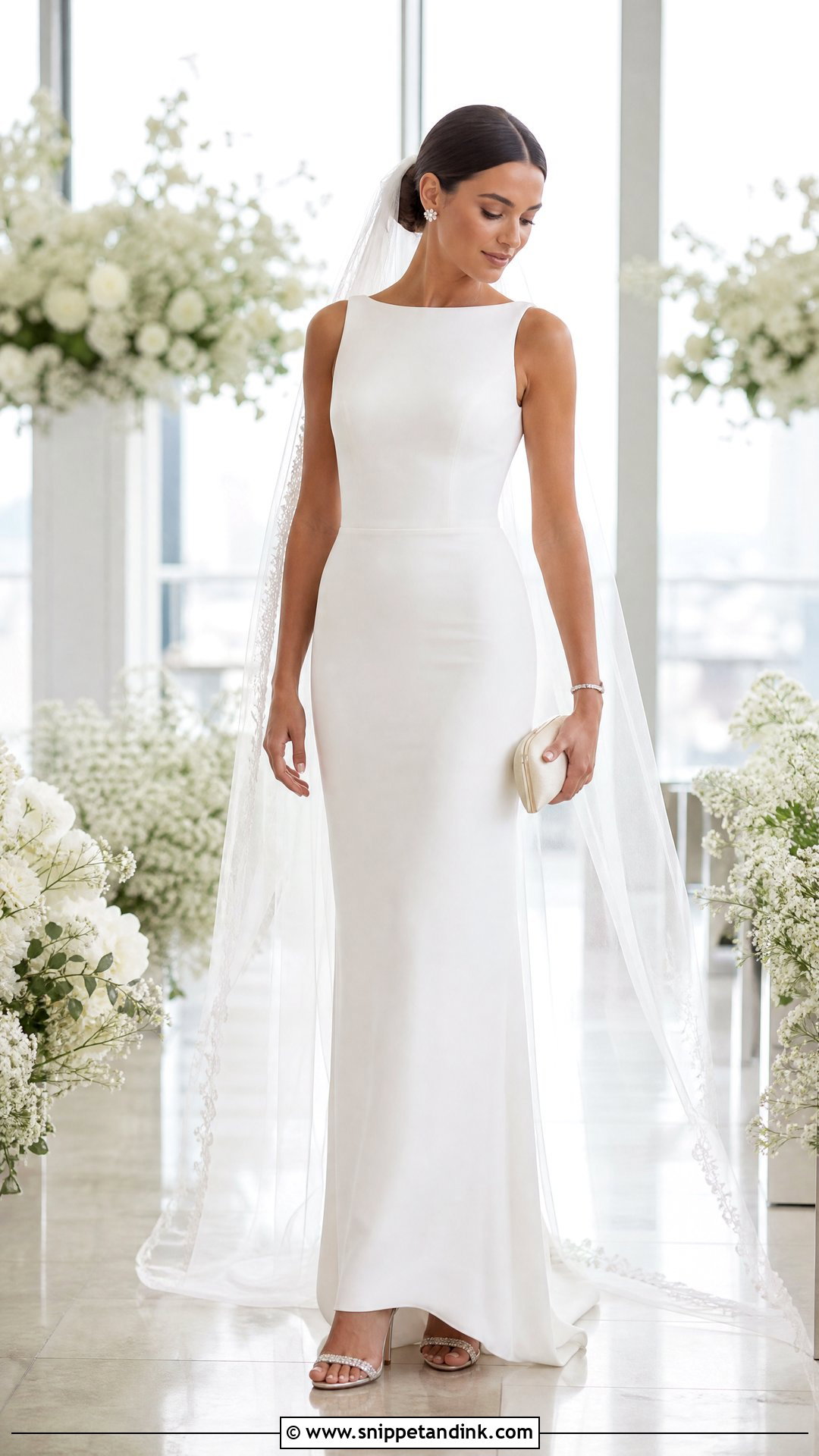
Crystal straps need a quiet dress around them. A sleek crepe column gown with a square neckline and a simple train lets the sandal catch light without fighting heavy beadwork. Add crystal studs, a narrow tennis bracelet and a sheer cathedral veil for drama. The detail I check on these is the strap lining: crystal settings on the inside edge rub the top of the foot raw over an evening, so the band should be backed in soft leather or satin. Stay at a heel height you already wear comfortably. This is an evening pair, made for modern venues and brides who want shine in one place only.
3. Ivory Satin Bow Wedding Sandals
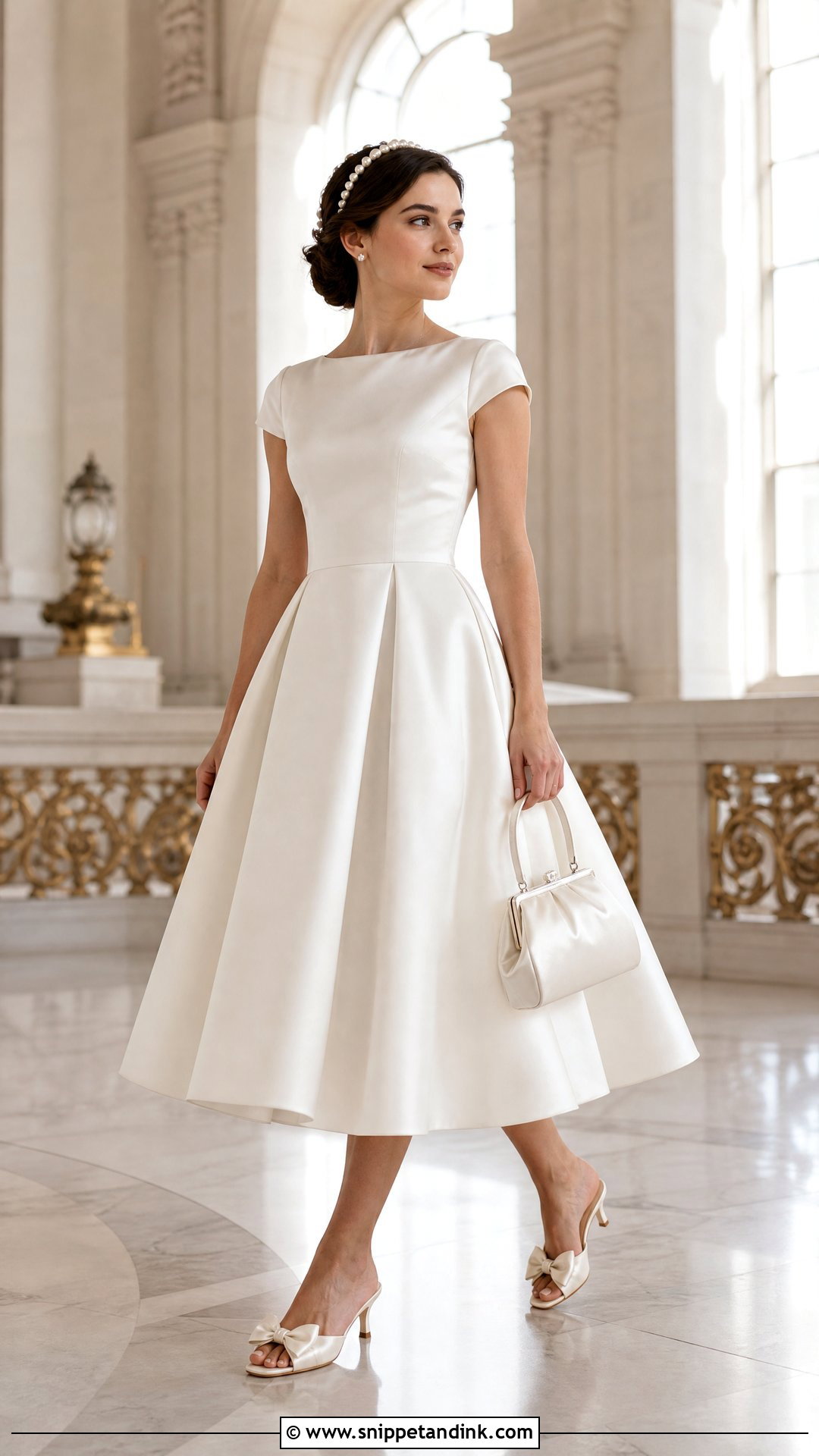
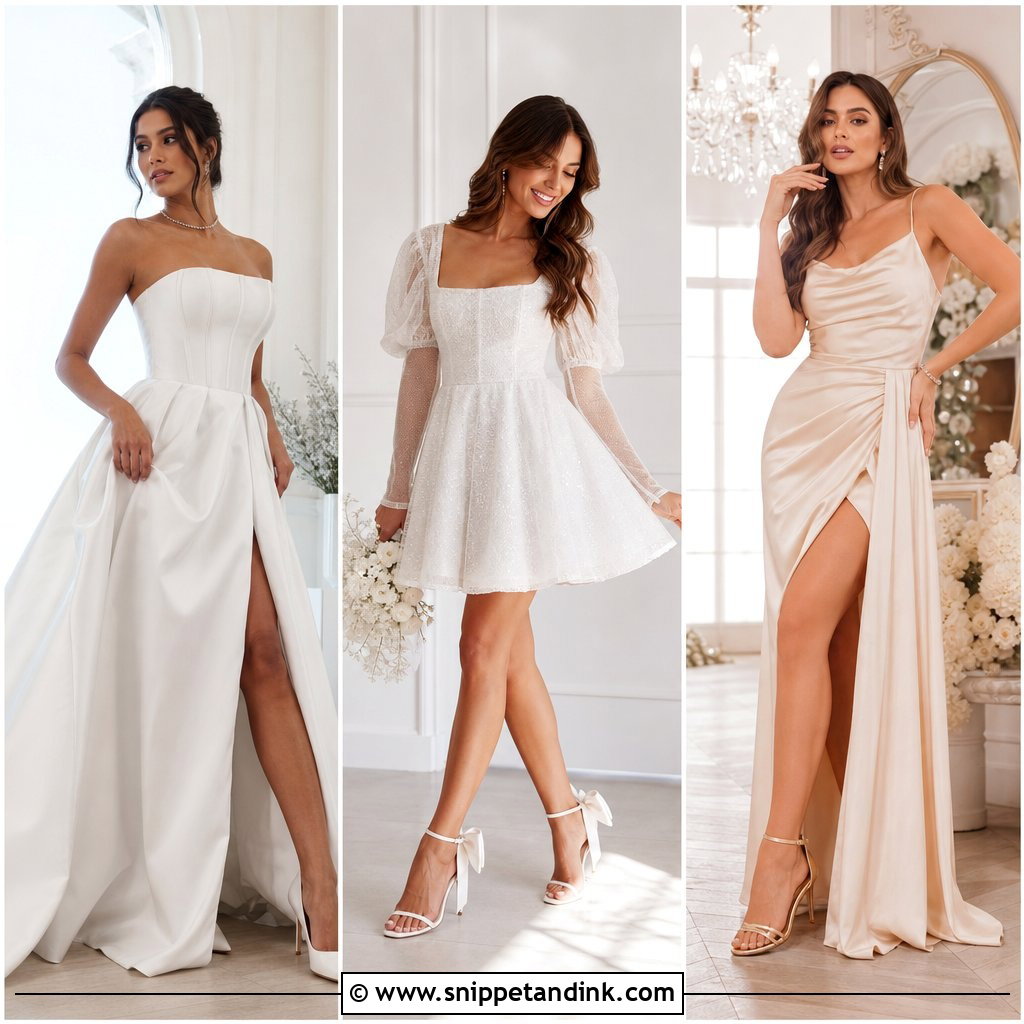
Satin bows shine below a shorter hem, which is why I pair them with a tea-length dress that has a fitted waist and full skirt. The shoe is on show all day, so it carries the playful note while a pearl headband, small studs and a satin top-handle bag stay understated. Keep the heel low and blocky to balance the proportions of a shorter skirt. Ivory satin marks easily, though. A drop of red wine or a muddy step shows immediately, so I’d spray the pair with a fabric protector well before the wedding. Curled hair or a neat ponytail finishes it, and the look is right at home for a courthouse ceremony or a reception change.
4. White Platform Wedding Sandals
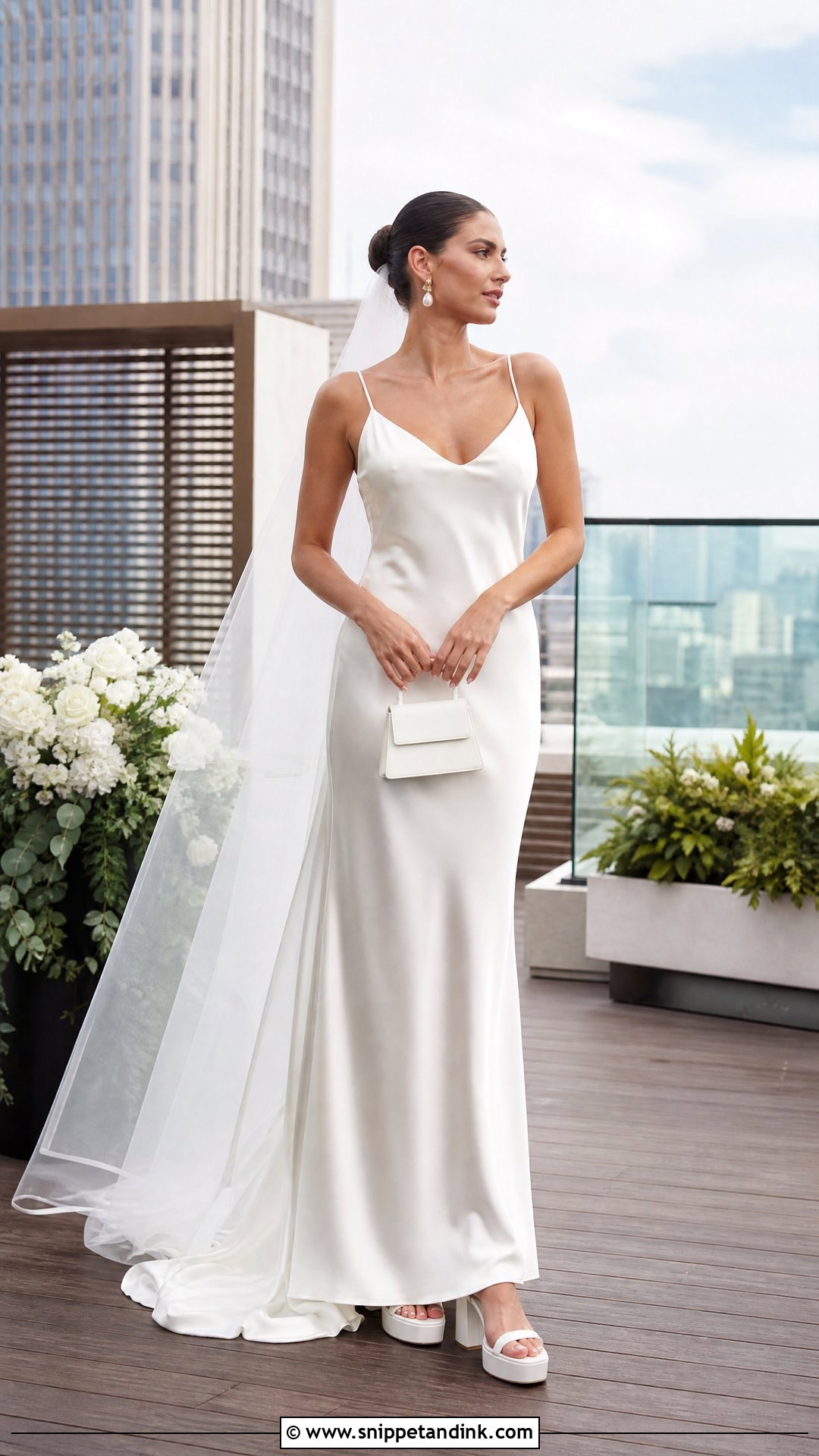
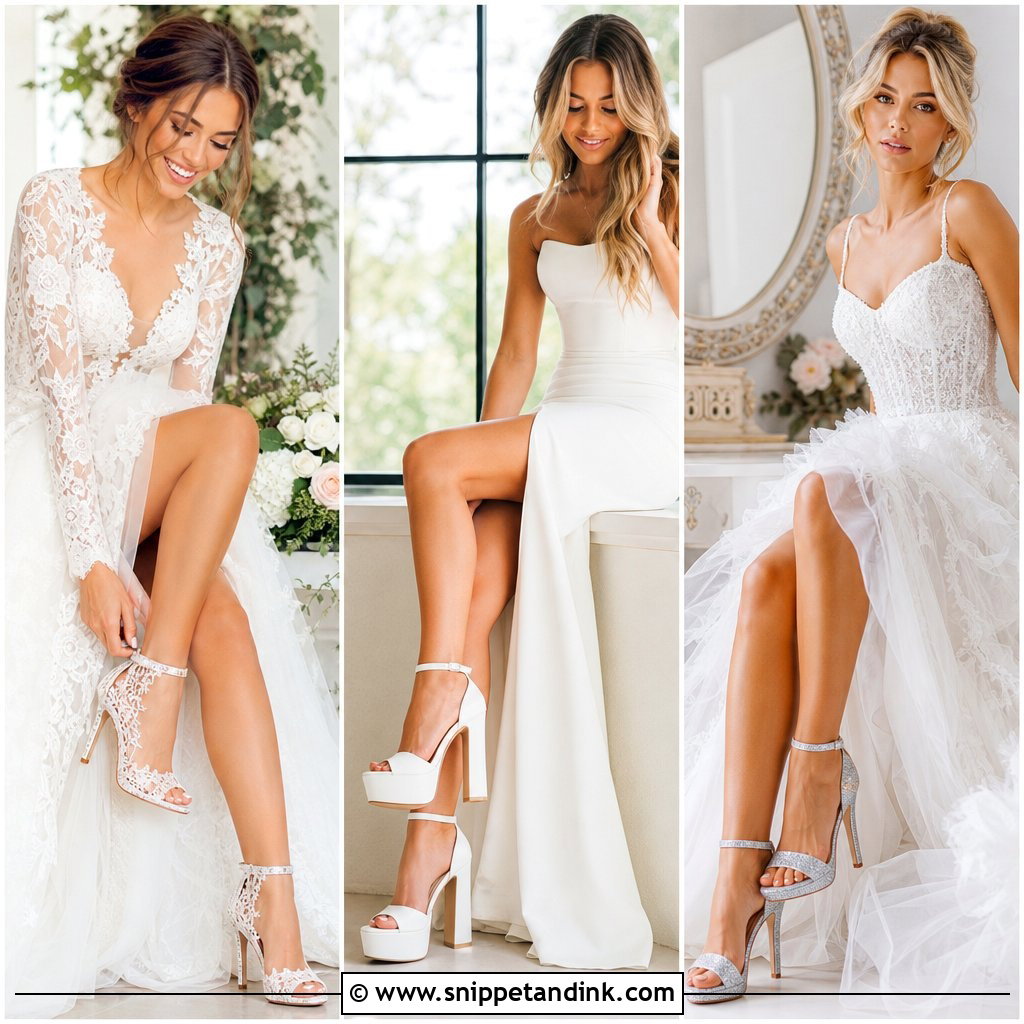
White platform wedding sandals give real height while the foot stays at a gentler angle, because the raised front reduces the difference between toe and heel. That’s why many brides find them easier than a single-sole sandal of similar height. Wear them with a silk slip gown or a square-neck dress with clean seams. Insist on a sturdy block heel, a padded footbed and a secure ankle strap. The catch is weight: a chunky platform is heavier to lift, and some brides feel clumsy on stairs, so walk a flight in them before deciding. A plain chapel veil, modern pearl earrings and a sleek bun keep this minimal.
5. Low Block Heel Wedding Sandals
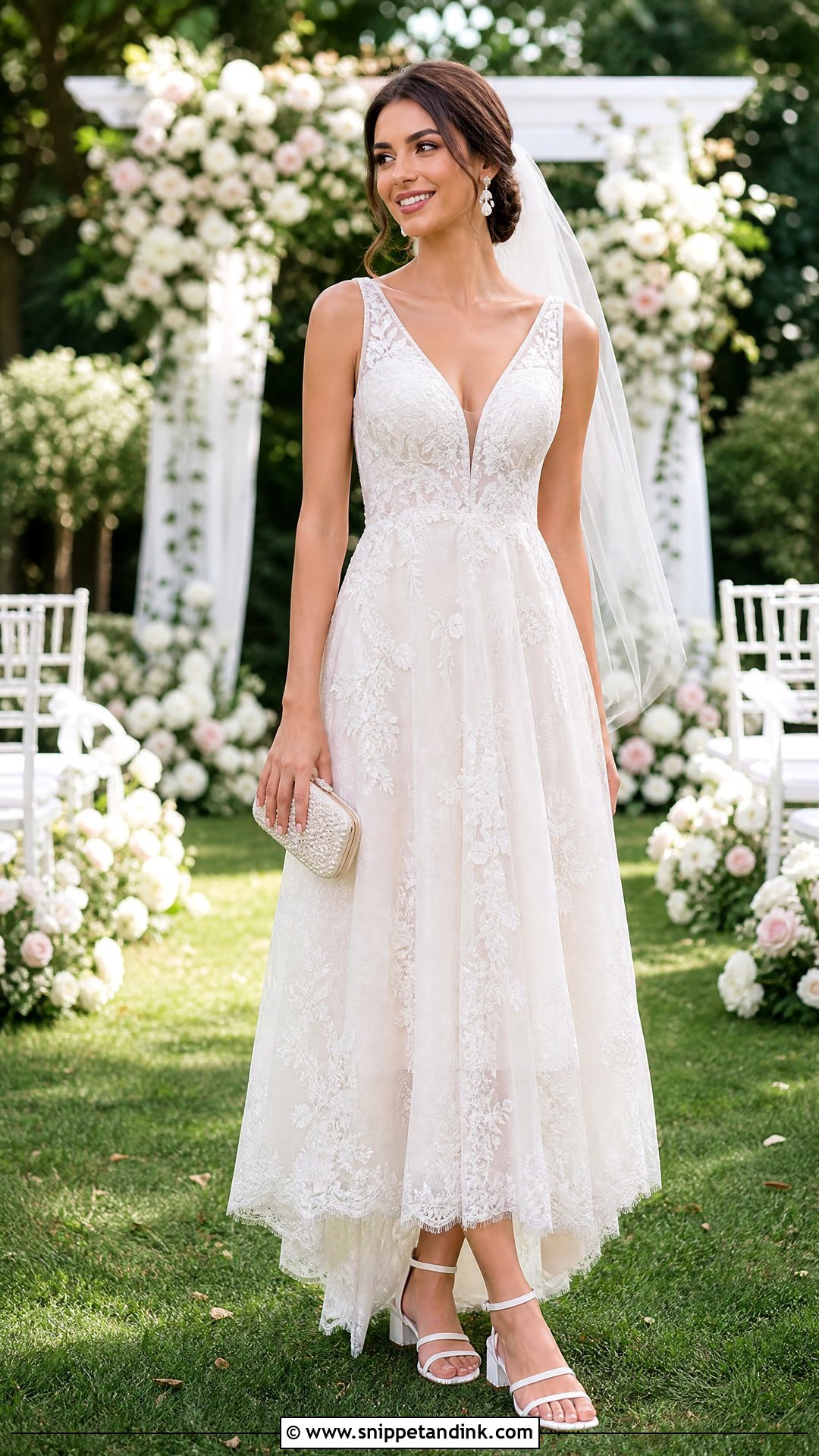
One to two inches is the heel height I recommend for brides who expect to be on their feet from the first look to the last song. A low block heel with a rounded or softly squared toe gives the front of the foot room to spread as it swells through the day, and an adjustable ankle strap stops the heel slipping. Pair it with a lace A-line gown, a tulle veil, pearl earrings and a beaded clutch. Choose white, ivory or champagne by holding the shoe against the dress fabric in daylight; a bright white sandal next to an ivory gown makes the dress look yellow. Natural makeup and a loose low bun suit garden and historic venues.
6. Strappy Stiletto Wedding Sandals
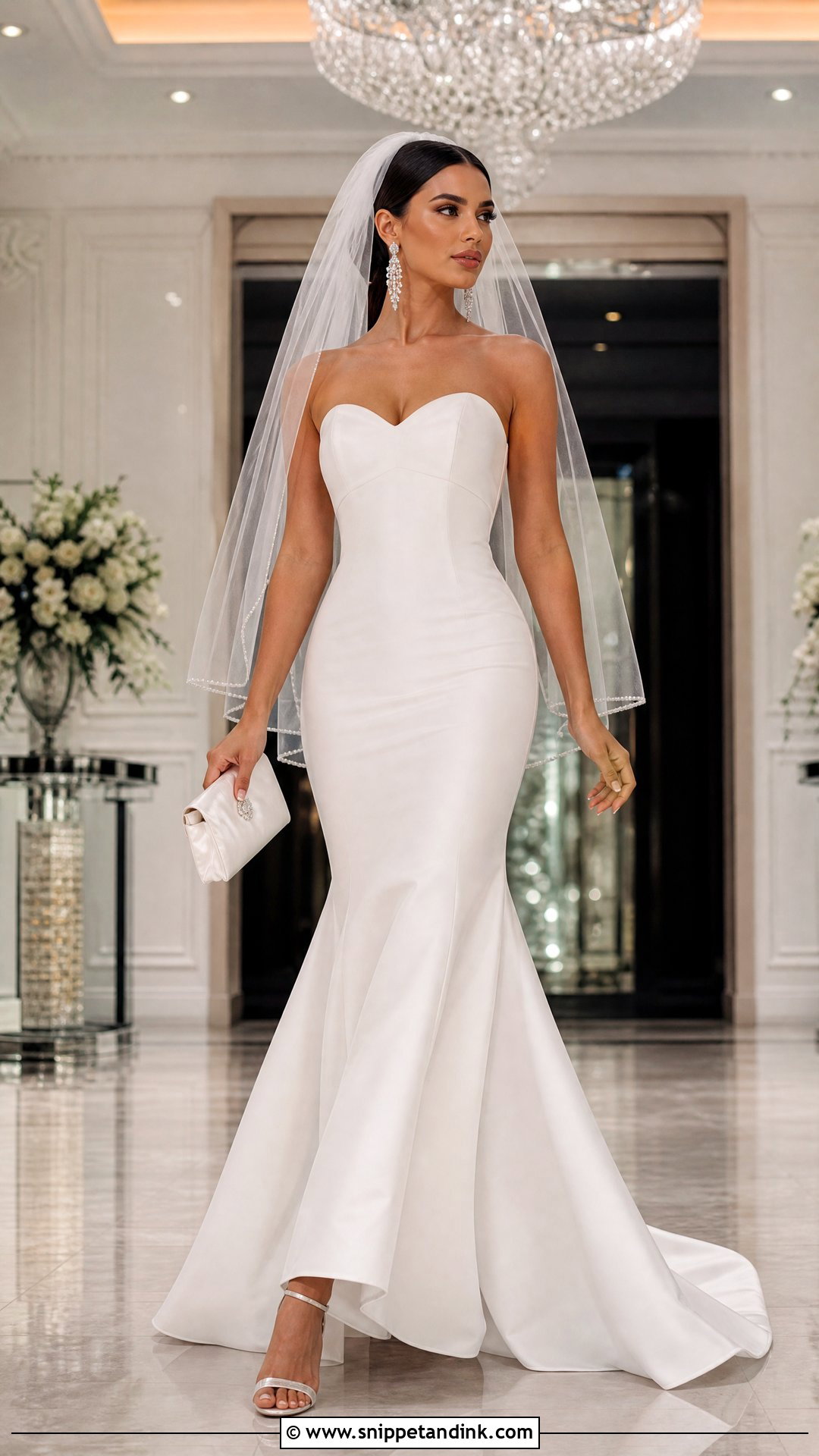
Strappy stiletto wedding sandals suit a structured mermaid gown, where the light shoe disappears under the flare and lengthens the leg. Choose thin satin or leather straps that frame the foot rather than cover it, and add long crystal earrings and a narrow clutch. I’ll be honest about this one. A slender heel takes practice, and polished ballroom floors or old stone steps punish it, so wear the sandals at every fitting and walk on a surface like the venue floor. A fingertip veil keeps the gown’s shape visible. Save these for indoor ceremonies and hotel ballrooms, never lawns.
7. Kitten Heel Wedding Sandals
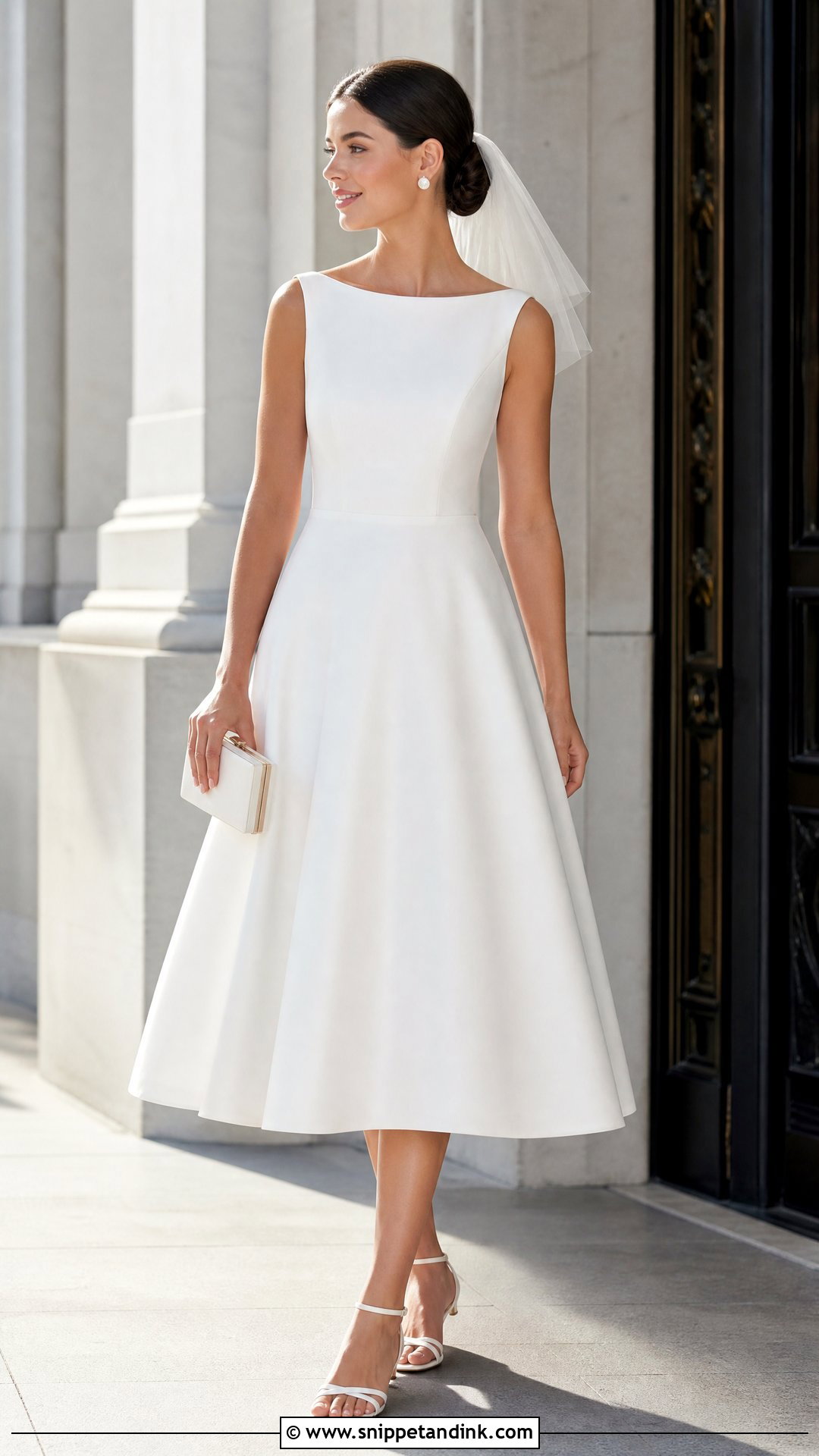
Kitten heels give a little lift with a vintage feel, and I like them under a midi dress with a bateau neckline and softly fitted waist. A slim kitten heel looks delicate but is much easier to manage than a tall stiletto, especially for brides who rarely wear heels. A secure back strap or adjustable buckle keeps the foot from sliding forward, which is the usual complaint with low heels on a sloped aisle. Ivory satin suits traditional dresses, while soft metallic leather reads more modern. Add a short veil, pearl button earrings and a box clutch, and the shoe stays visible under the shorter hem.
8. Gold Wedding Sandals for Bride
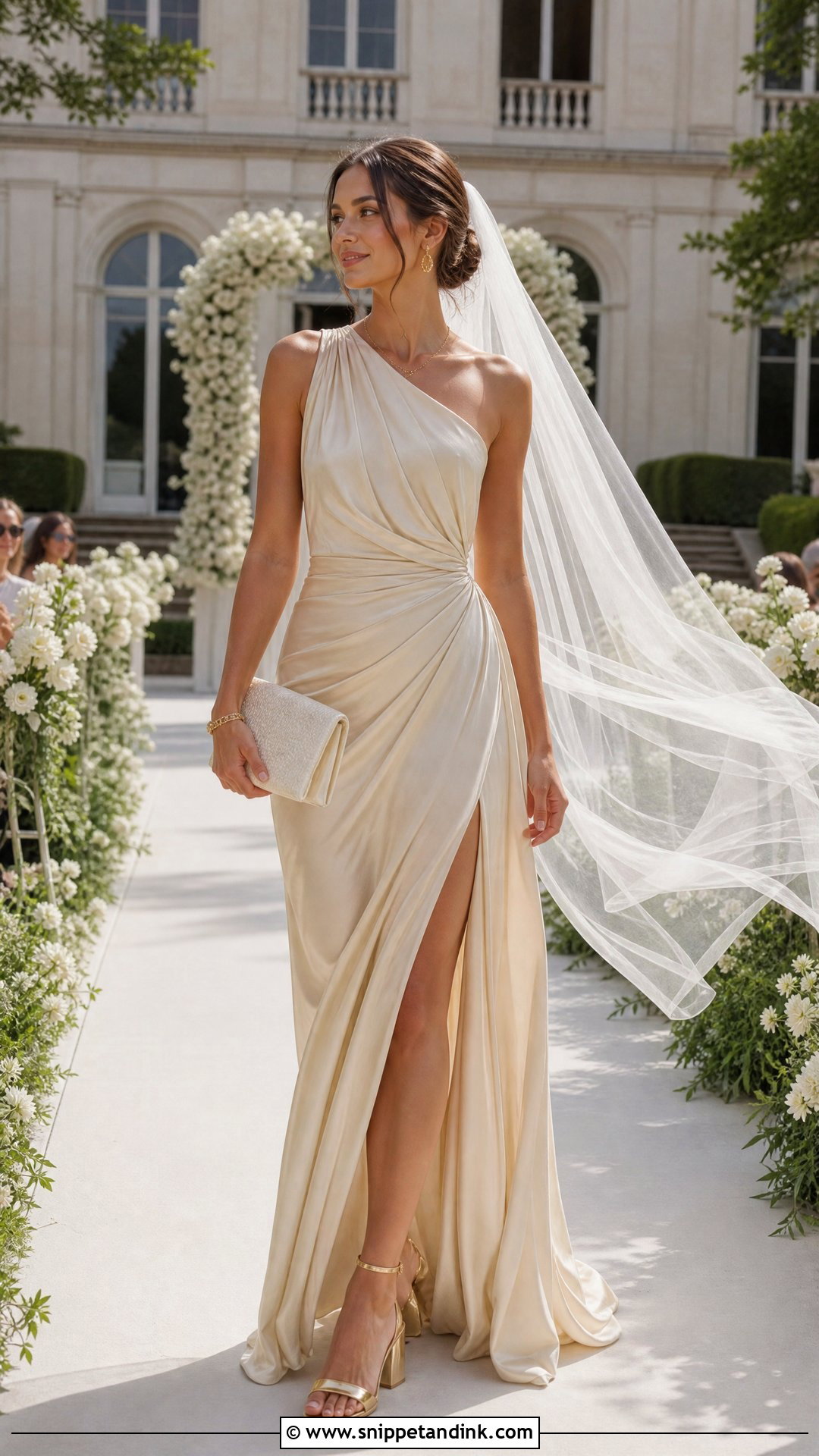
Gold warms up a cream or champagne gown in a way silver can’t. Choose metallic heels with a muted, brushed finish over bright yellow gold, which can look brassy in flash photos. Pair them with a champagne gown that has soft draping or light beading, small gold hoops, a fine pendant and a cream clutch with subtle hardware. A mid-height block heel copes with mixed flooring when a venue moves you from a terrace to a dance floor. Keep the veil simple. Brushed-out waves and warm neutral makeup finish a look that suits sunset ceremonies and candlelit receptions.
9. Silver Crystal Wedding Sandals
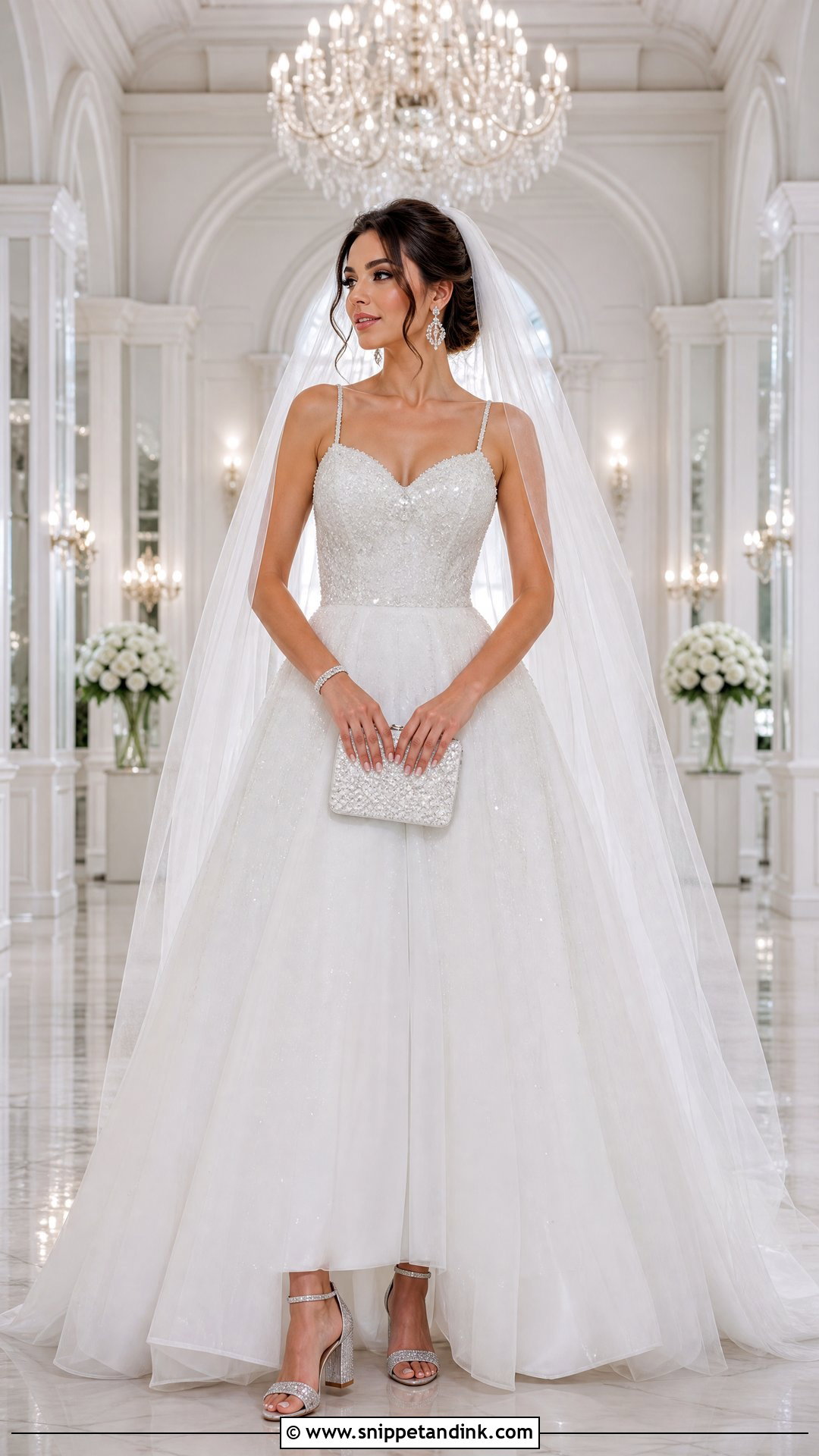
Silver crystal pairs naturally with a cool white gown and bright jewelry. A white tulle ball gown with a lightly beaded bodice is the classic partner, finished with crystal drop earrings, a slim bracelet and a white clutch with a small jeweled clasp. The sandal can have crystal straps or a decorated heel, but rarely both. If the dress already carries heavy embellishment, one sparkling element on the shoe is plenty. Check that the ankle strap sits flat without pressing into the skin, because crystal-covered straps don’t stretch like leather. A simple cathedral veil softens all that shine at a formal evening wedding.
10. Blue Wedding Sandals for Bride
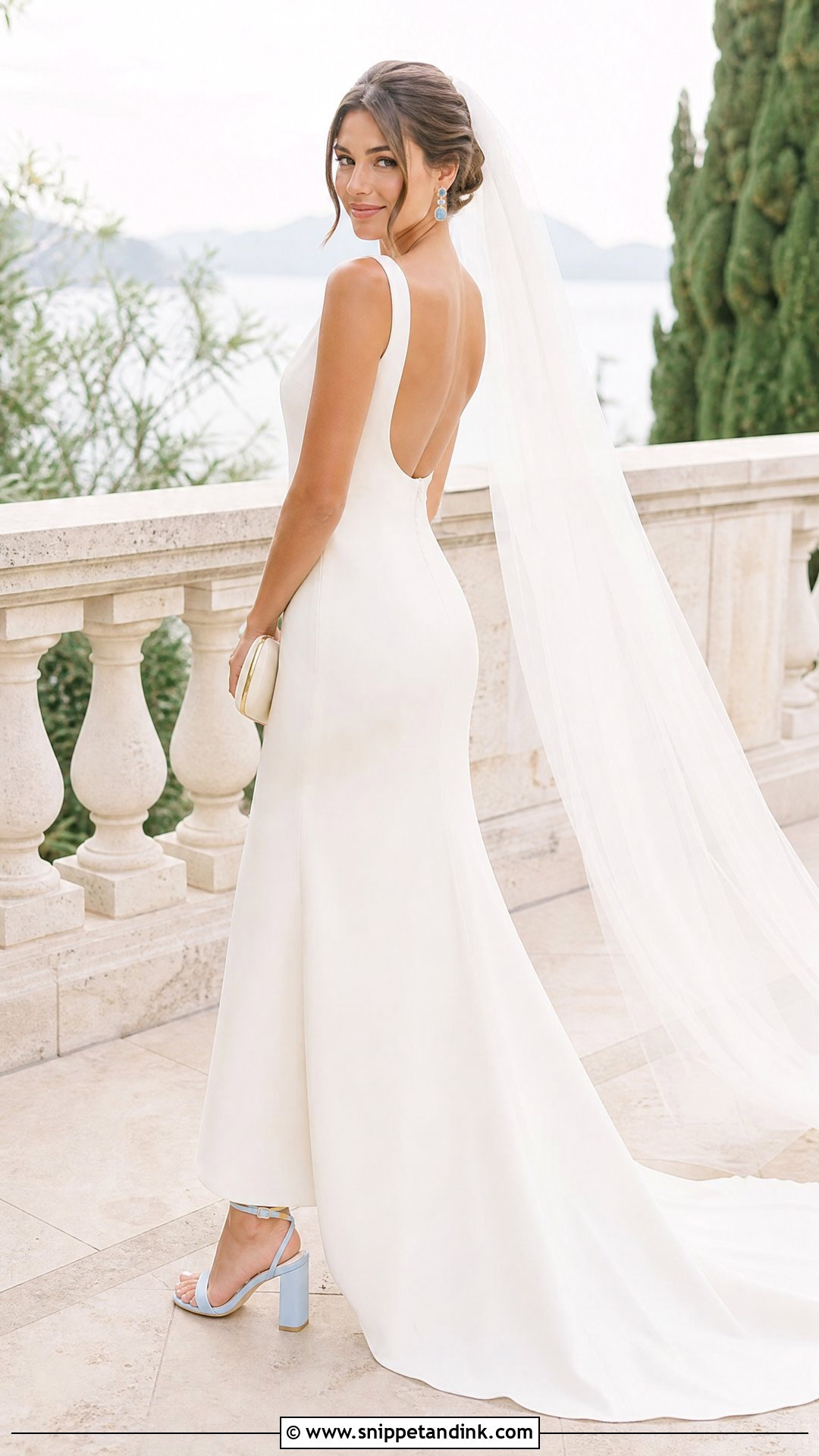
Blue sandals are the easiest way I know to carry something blue that no one sees until you choose to show it. Pale blue satin heels under a clean ivory gown, perhaps with an open back or a modern bow, stay hidden through the ceremony and turn into a surprise when you lift the skirt for photos. Powder blue reads soft; a deeper shade gives stronger contrast in detail shots. Keep the jewelry to sapphire or aquamarine studs and the clutch ivory, so the color feels deliberate. For outdoor venues, a block heel or supportive platform is the safer base. A smooth low bun and natural makeup finish it.
11. Lace Wedding Sandals for Bride
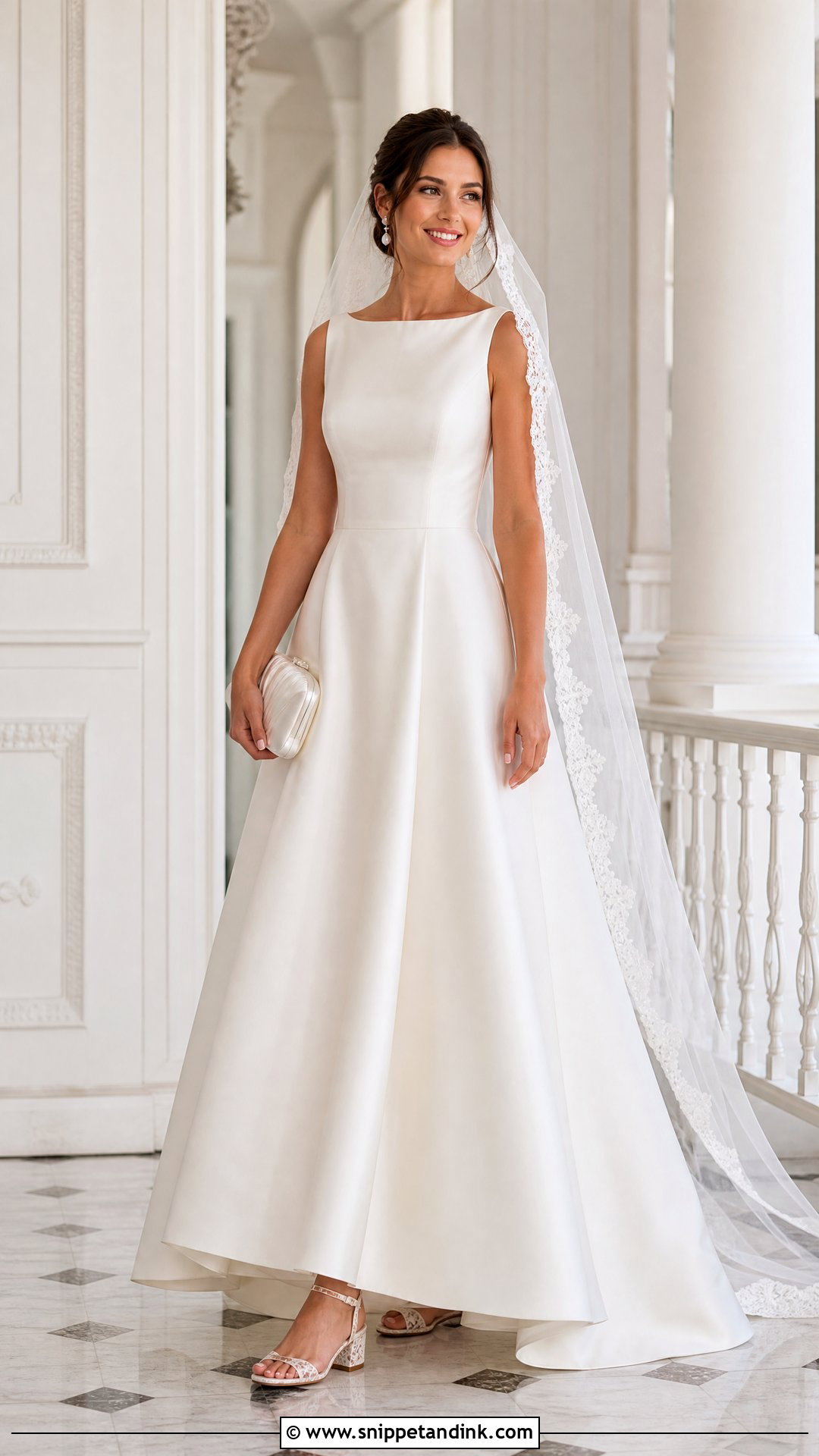
Lace shoes need a plain dress. On a lace gown they blend in and vanish; against smooth crepe or satin, the texture finally shows. Choose ivory sandals with a lace-covered front strap, a steady heel and an adjustable buckle, then repeat the lace lightly in a lace-edged veil. Mixing two or three different lace patterns is the mistake I correct most with this look, since they clash once they’re close together in photographs. A mid-height block heel works indoors and out. Pearl earrings, a satin clutch and a soft pinned updo keep it classic for a garden ceremony.
12. Floral Wedding Sandals for Bride
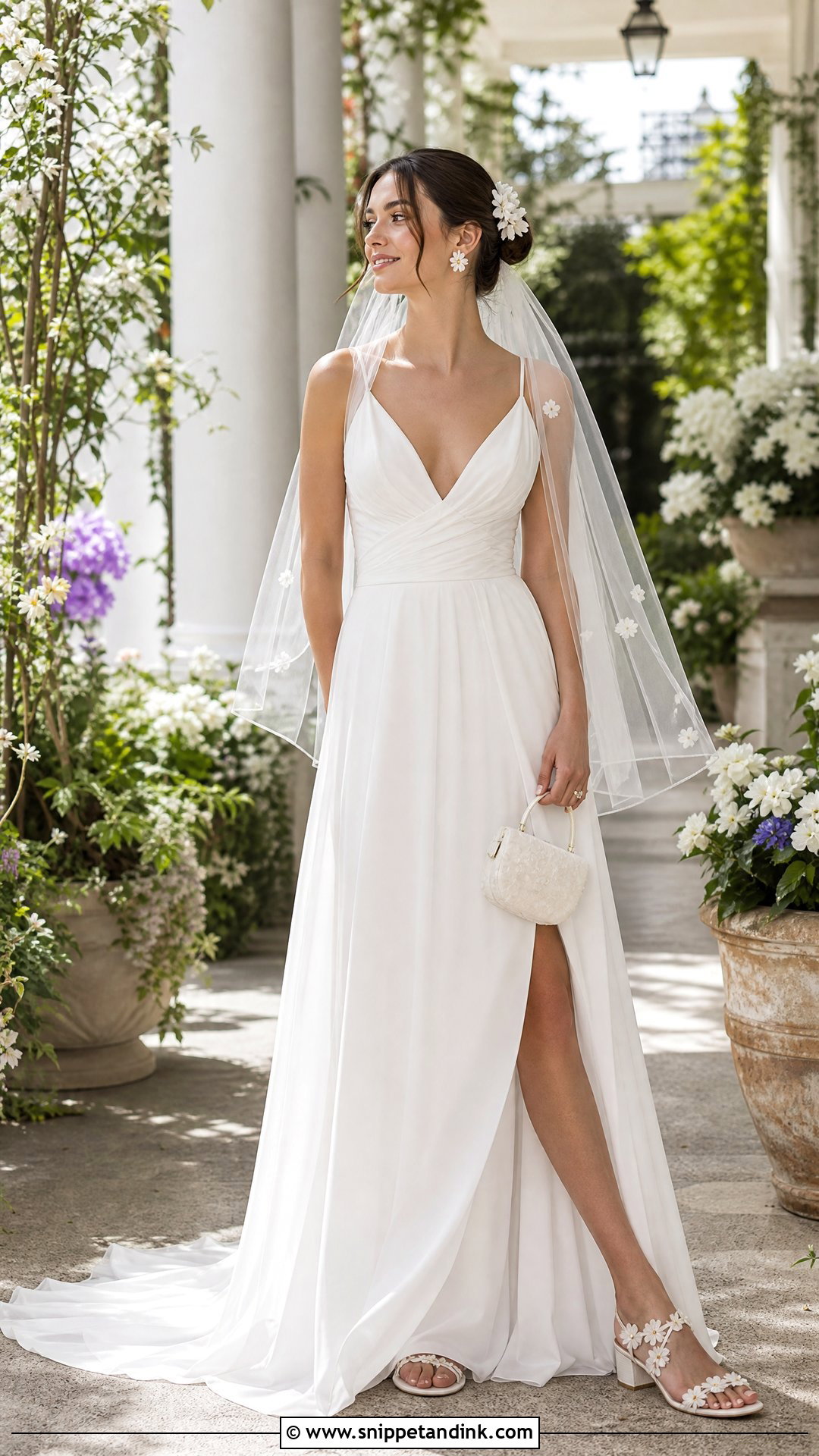
Fabric flowers turn the sandal into the focal point, so everything else should step back. Pair floral appliqué heels with a simple chiffon gown, small flower studs and a light fingertip veil, and keep the bouquet restrained. Fabric petals are delicate and crush in a suitcase, so pack these in their box with tissue inside the flowers. Crystal flowers stand up better and add shine for an evening reception. If the ceremony is on grass, stick to a low or medium block heel. A loose bun with one small floral pin echoes the shoes without repeating them.
13. Square Toe Wedding Sandals
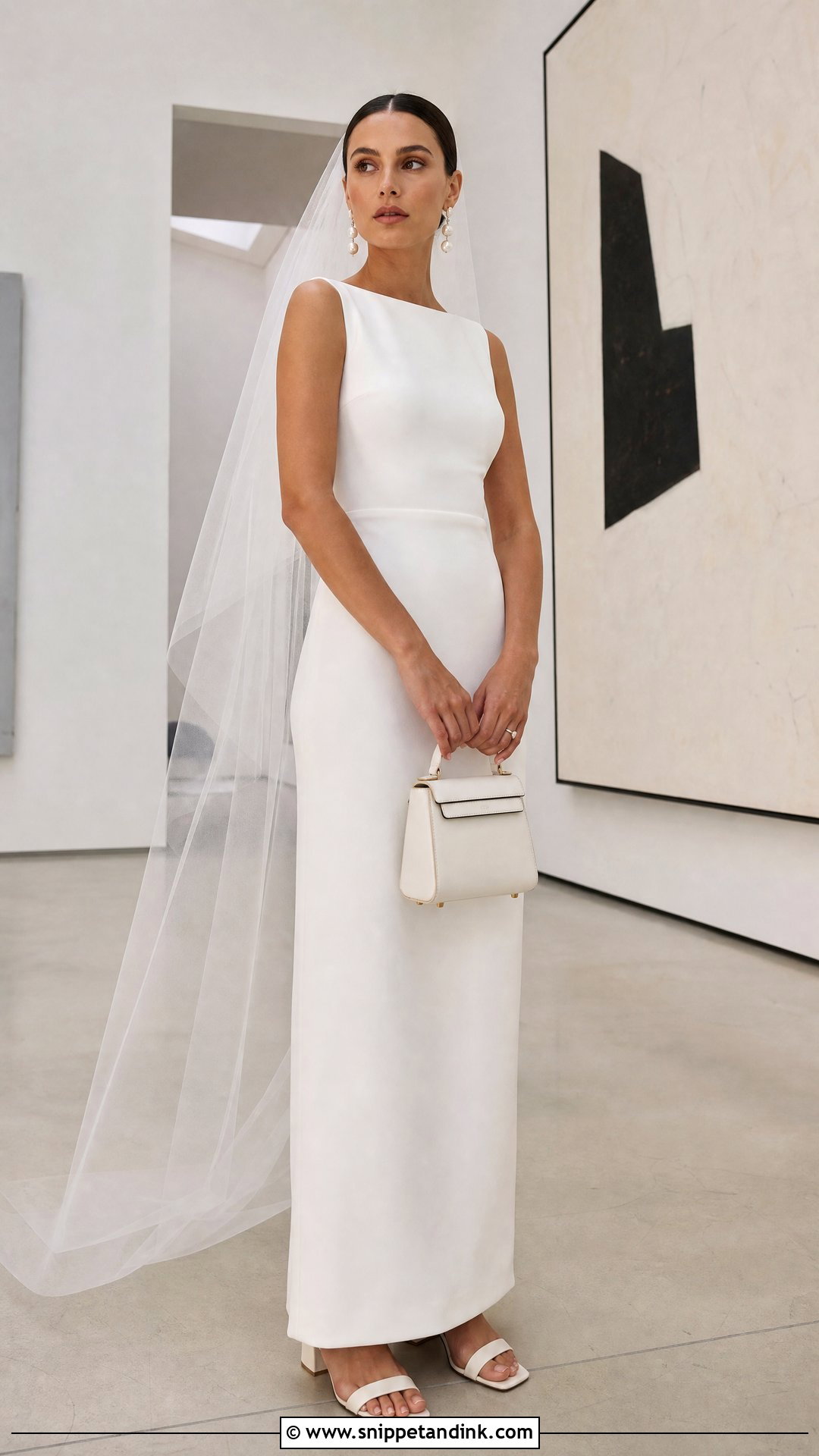
A square toe gives the outfit a clean, modern edge, especially beneath a minimalist column gown with wide straps and a straight neckline. Choose white or ivory leather with two simple straps, an architectural block heel and almost no decoration, then match the line with geometric pearl earrings, a structured mini bag and a plain chapel veil. Fit matters more with this shape than most. The toe should give your foot room without sticking out beyond it, because an overly long square toe looks clumsy in close-up shots. A center-parted bun keeps it sleek for a city venue or gallery wedding.
14. Ankle Wrap Wedding Sandals
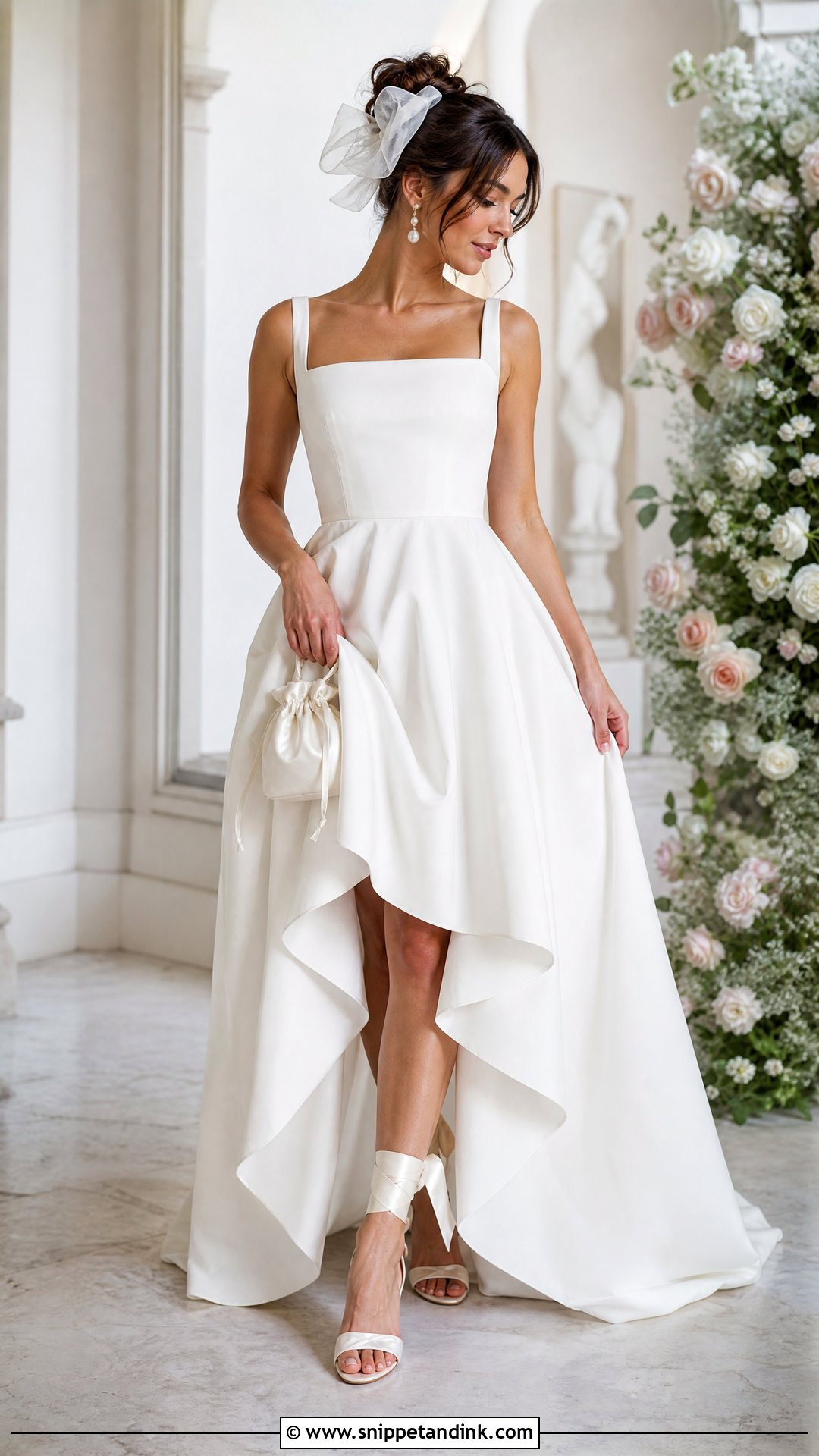
Ribbon ties need a shorter hem to be seen, so I pair ankle wrap sandals with a high-low gown or a midi dress. Choose satin straps that go once or twice around the ankle rather than climbing up the calf, which can shorten the leg visually. Tie them firmly but not tight. Feet and ankles swell over a day, and a ribbon that felt fine at noon can dig in by the first dance. Ask whoever dresses you to tuck the bow ends in so they don’t trail. A slim block heel adds stability, and pearl drops, a tulle hair bow and a satin pouch carry the romantic mood.
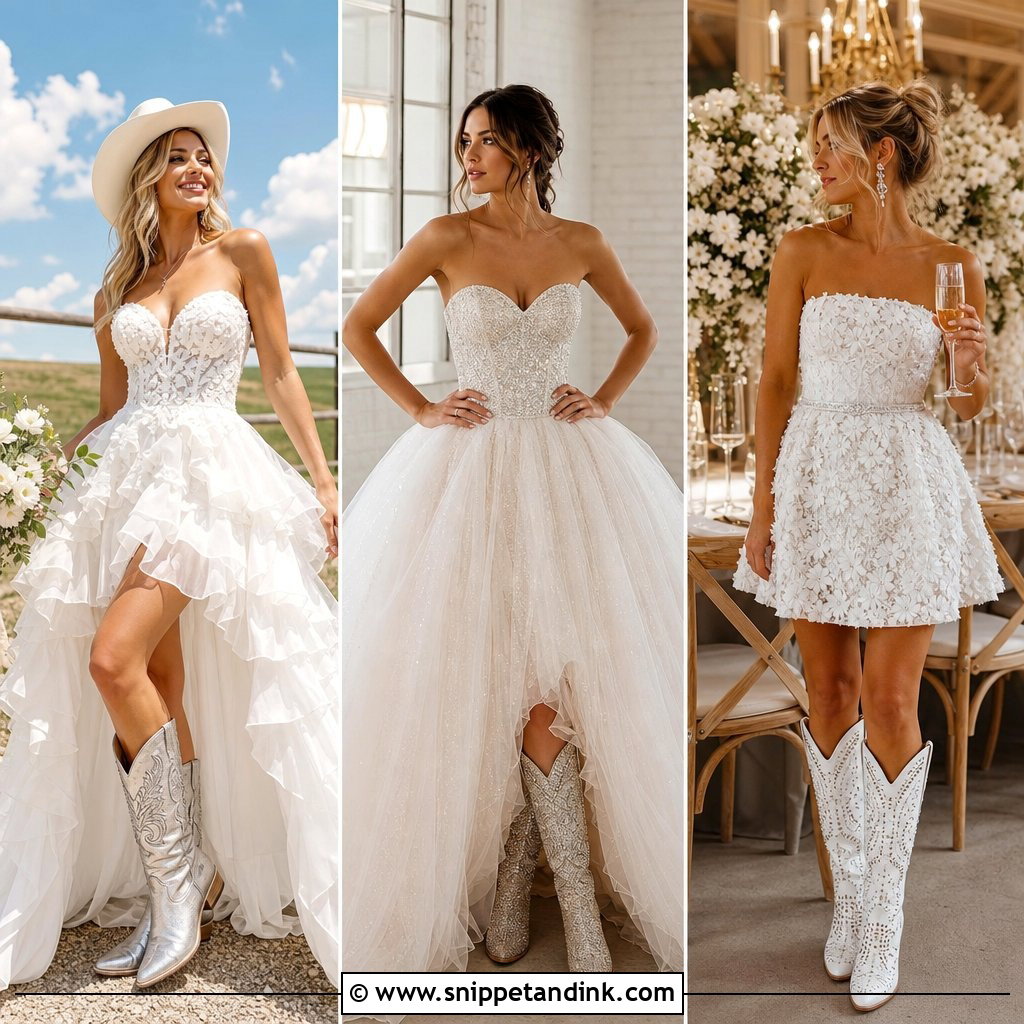
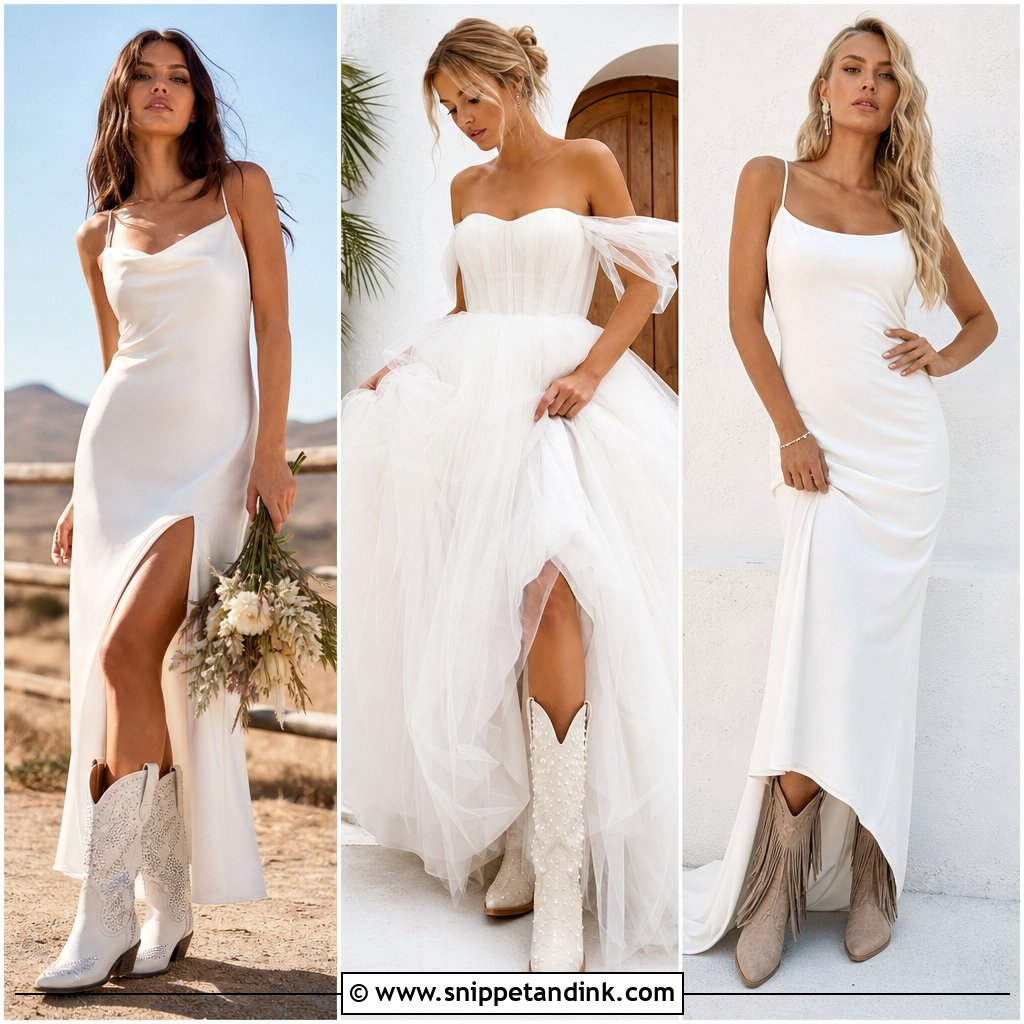
15. Bridal Mule Heel Sandals
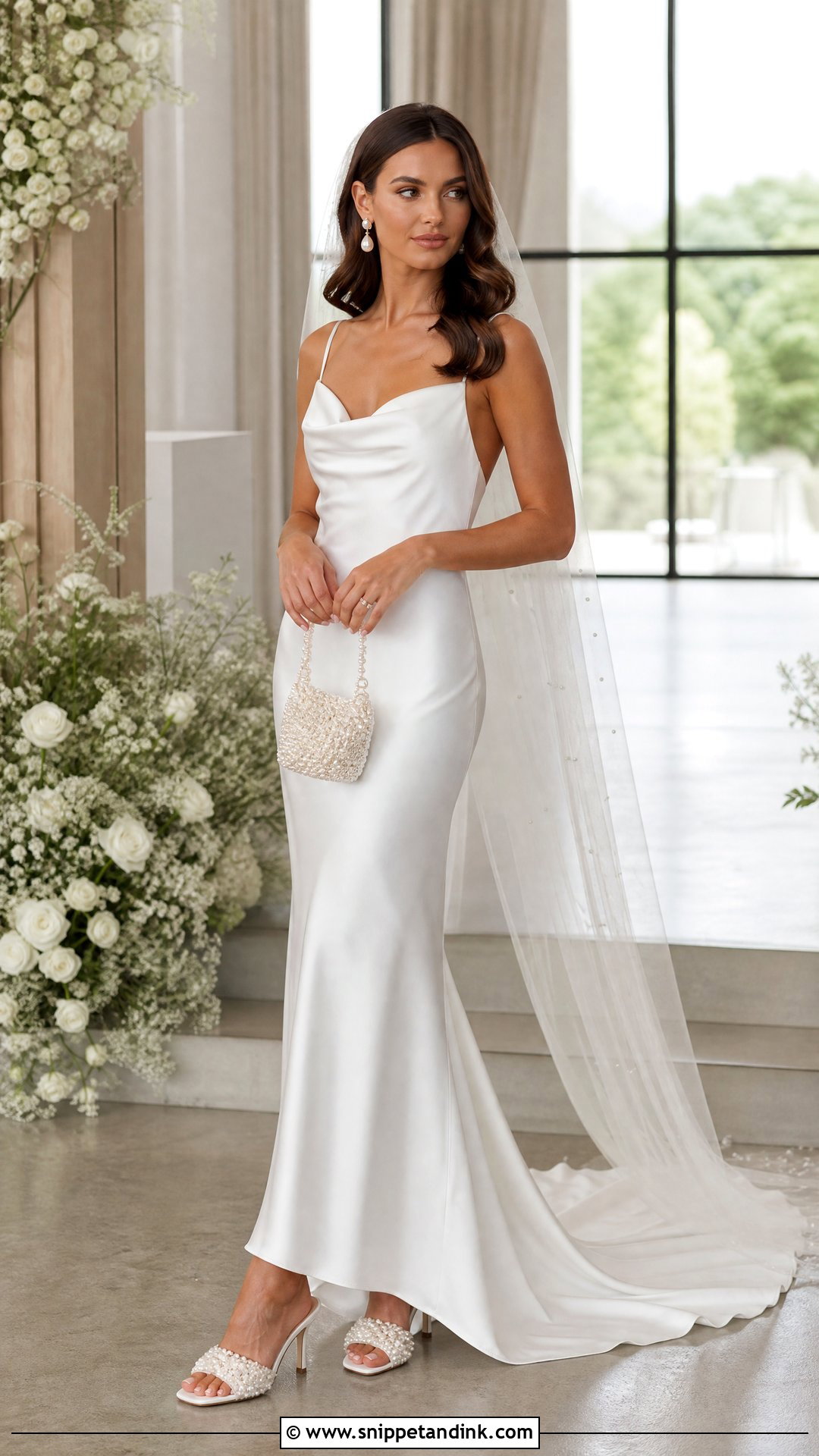
Bridal mule heel sandals slip on in seconds, which brides appreciate when they’re getting dressed with half the bridal party in the room. Wear pearl or crystal mules with a satin slip gown, shoulder-grazing earrings and a small beaded bag. With no back strap, the wide front band does all the holding, so choose a heel height you can control without one. Mules are risky with a long train, because the hem catches under the open heel. An ankle-length dress or short train avoids that. They suit smooth indoor floors and work well as a second pair for the reception.
16. Wedge Wedding Sandals for Bride
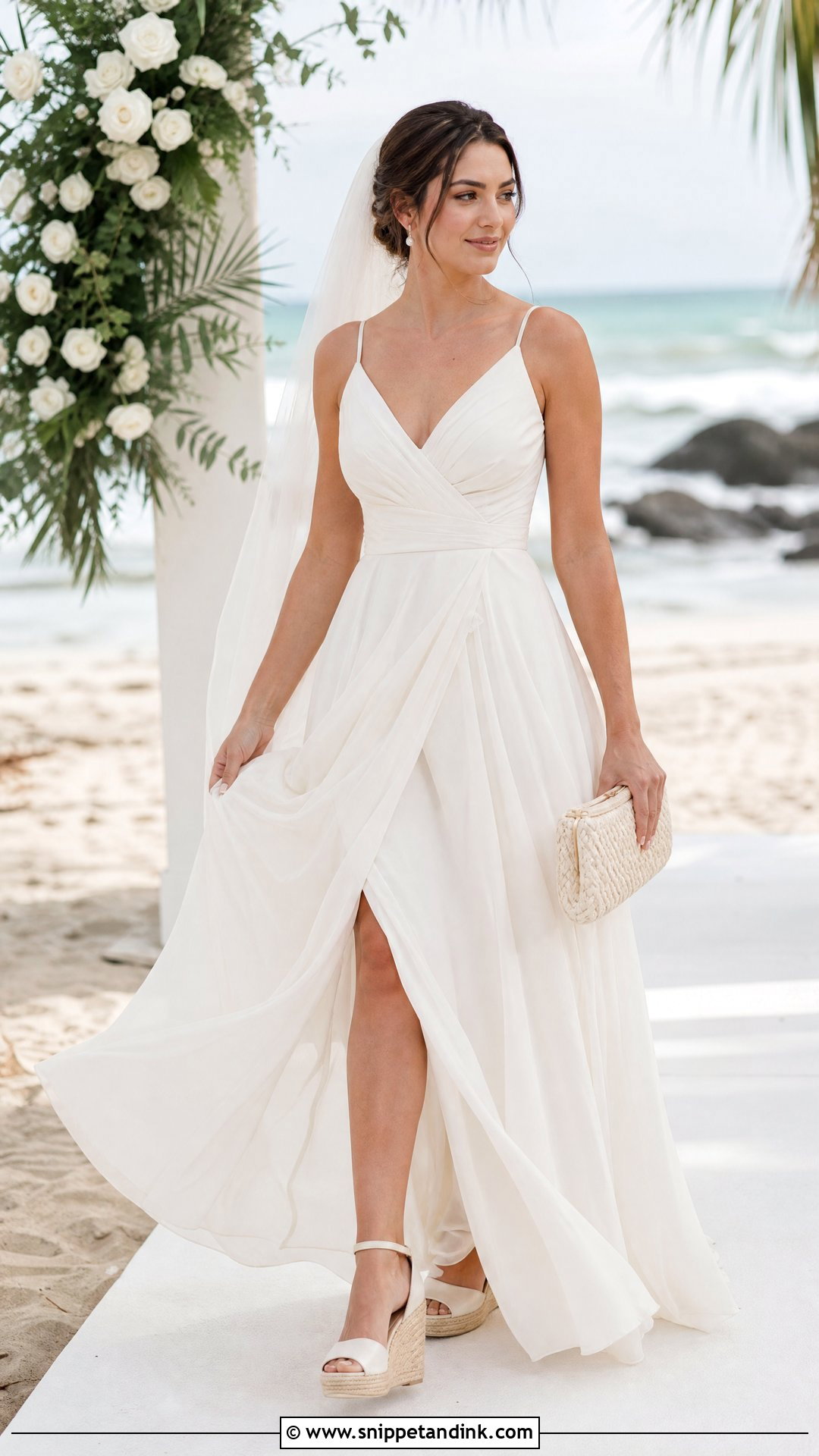
On sand or soft lawn, a wedge is the shoe I trust. Pair ivory espadrille or smooth satin wedges with a flowing chiffon gown, a lightweight veil, pearl earrings and a woven clutch. Because the wedge spreads your weight along the whole sole, it doesn’t sink the way a narrow heel does. An ankle strap keeps it secure, and a moderate platform adds height. Heavy crystal decoration looks out of place on a beach, so I’d go for pearls or plain fabric straps. Espadrille rope soaks up water, though, so keep them away from wet sand at the shoreline.
17. Wide Fit Wedding Sandals for Bride
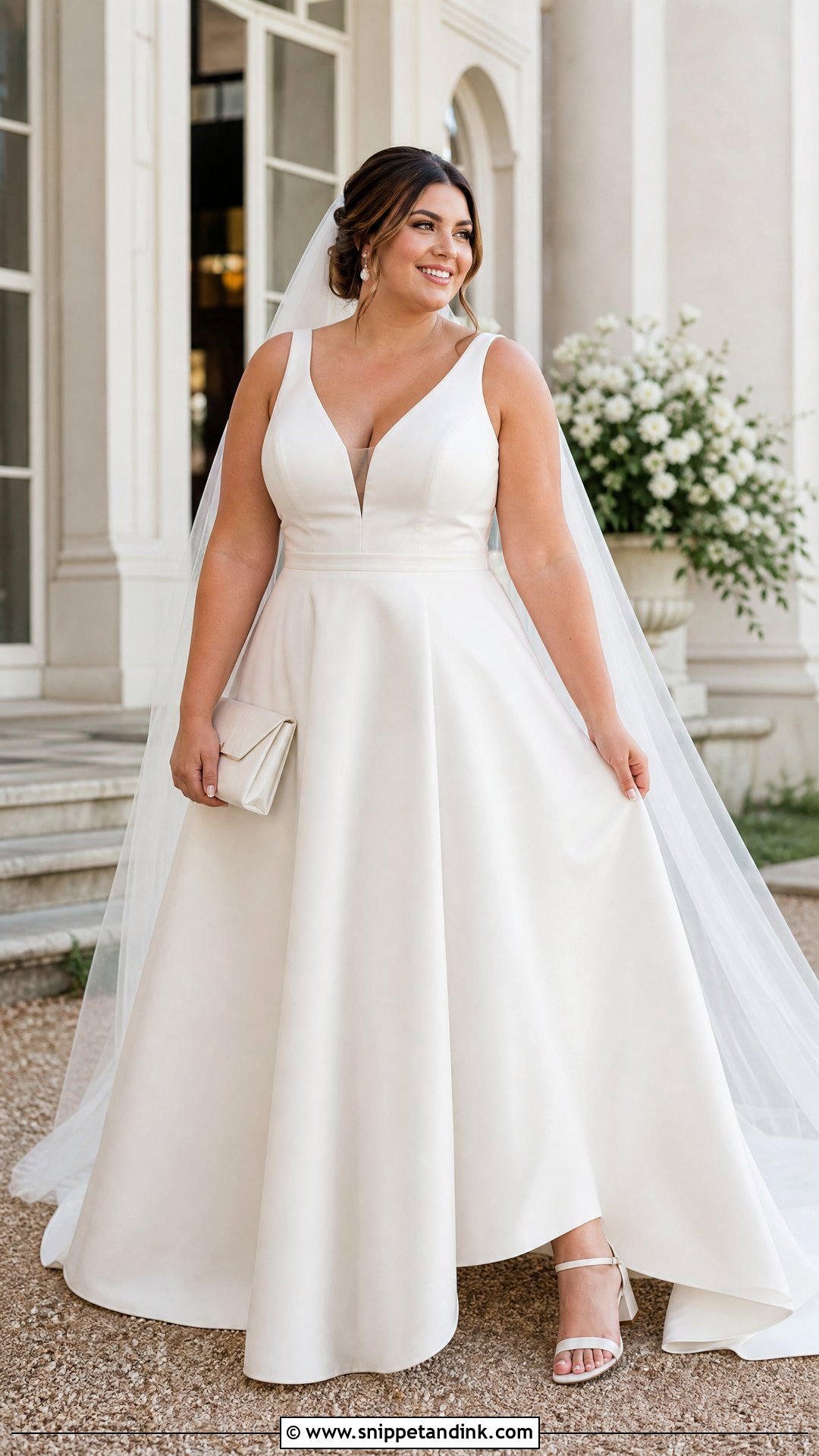
Wide feet don’t have to mean plain shoes. Look for true wide sizing, not just a larger size, along with adjustable ankle straps, flexible front bands and a footbed that supports the whole width of the foot. Narrow toe straps are the problem to avoid; they pinch and let the side of the foot spill over the sole, which shows in every full-length photo. A rounded or square toe gives extra room and still looks polished. Pair supportive ivory block heels with an A-line gown, a draped veil and pearl earrings, and pick satin for a traditional feel or leather for something cleaner.
18. Clear Heel Wedding Sandals
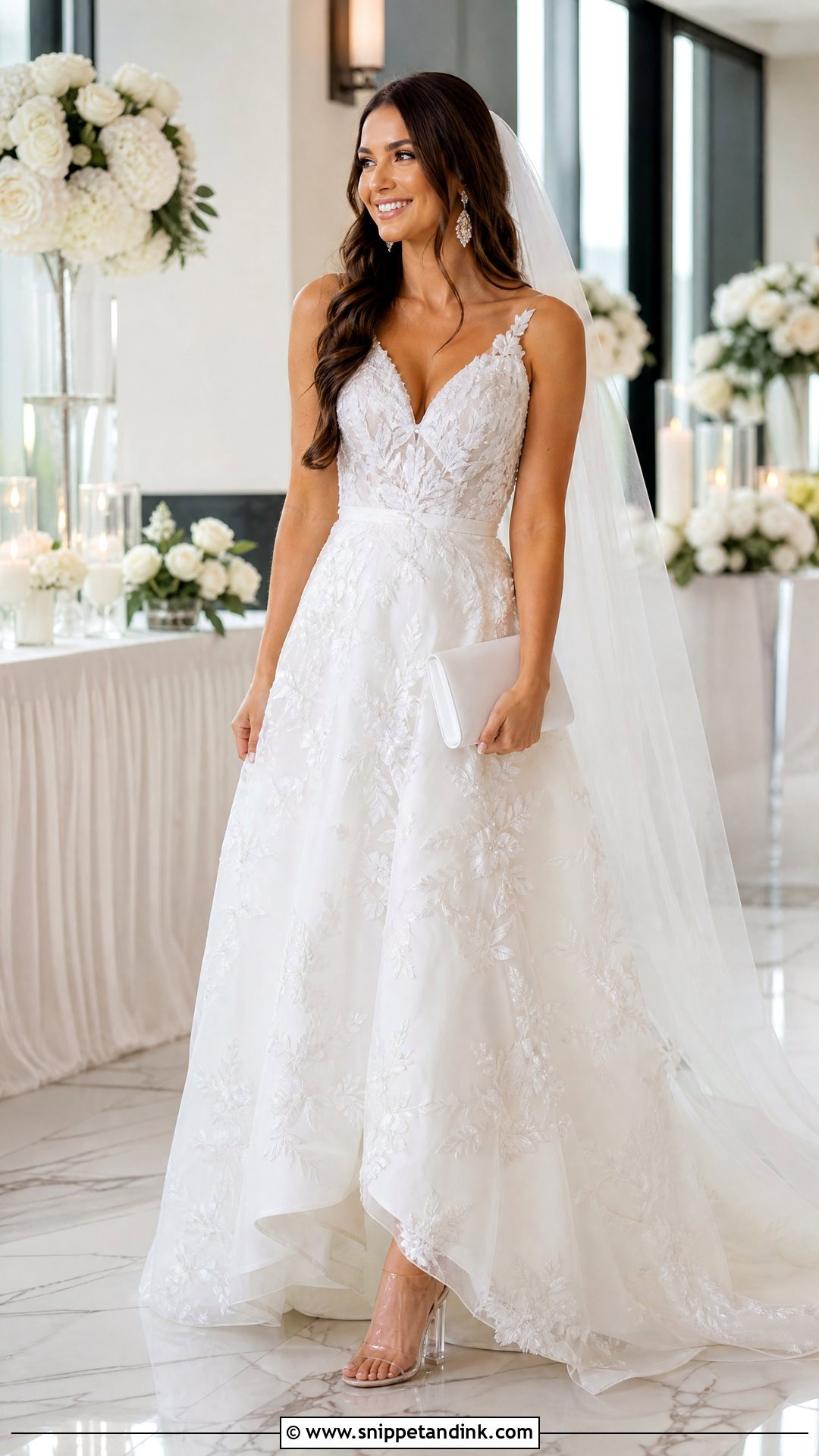
Clear heels let a heavily detailed gown keep all the attention. Pair transparent straps and a clear block heel with an embroidered A-line dress, crystal earrings, a plain white clutch and a simple veil. The material is what separates a good pair from a painful one. Rigid plastic straps don’t give as your foot warms, and they can cut in along the edges, so look for soft flexible straps and a cushioned footbed. Clear vinyl also fogs slightly when feet get hot, which you’ll notice in close-up shots of a summer wedding. A transparent block heel is more stable than a clear stiletto.
19. Rose Gold Wedding Sandals
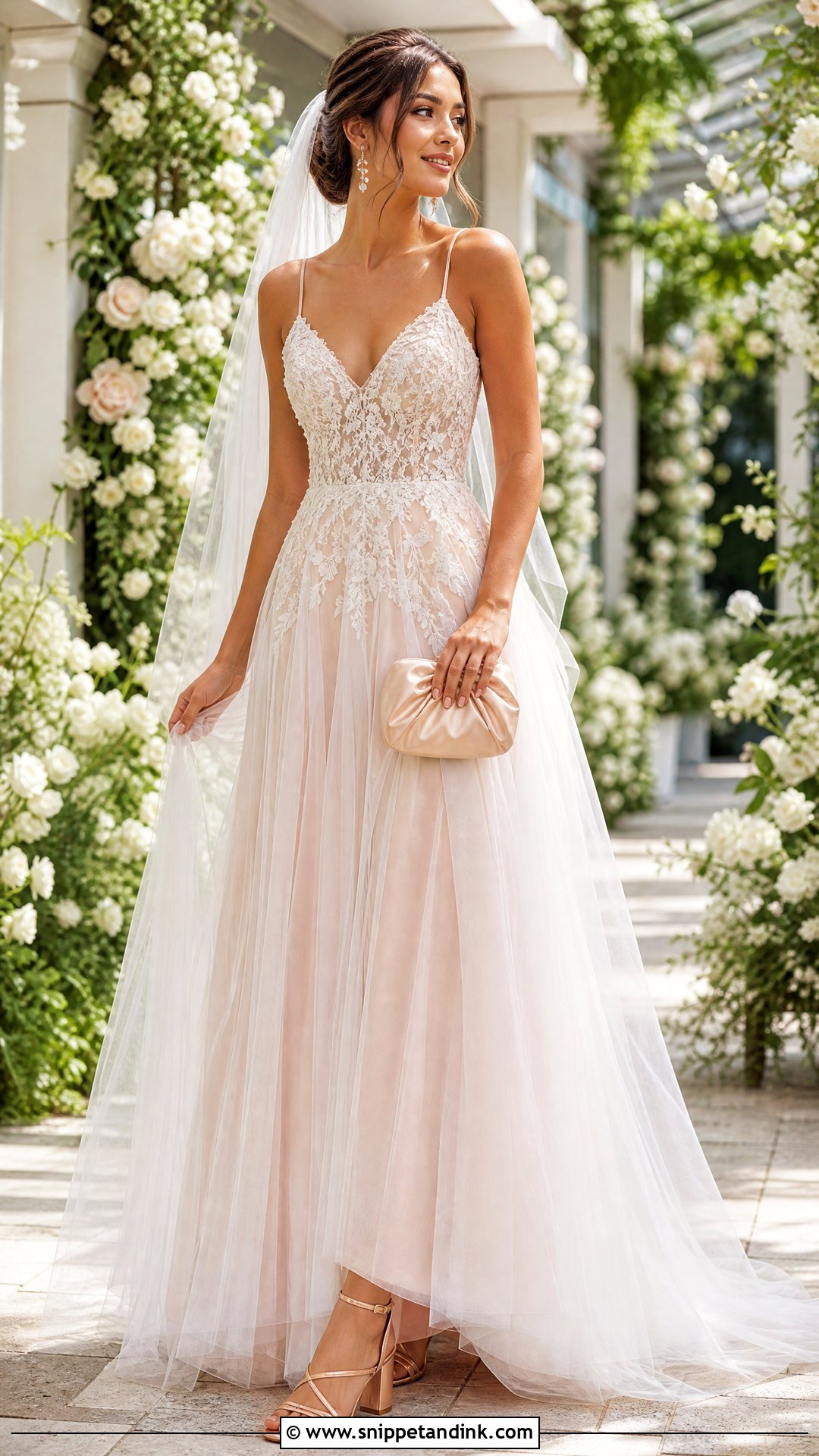
Rose gold flatters blush and champagne gowns, adding warmth without the strength of yellow gold. Pick a soft metallic finish over glitter, which can look like costume shoes in bright daylight. Style the sandals with a blush-lined tulle gown, rose gold drops and a champagne satin clutch, and keep crystal straps or a bow modest compared with the dress. A mid-height block heel copes with a long evening and outdoor photographs. Add a sheer ivory veil so the outfit still reads as bridal, along with swept-back hair and rosy makeup.
20. Sculptural Heel Wedding Sandals
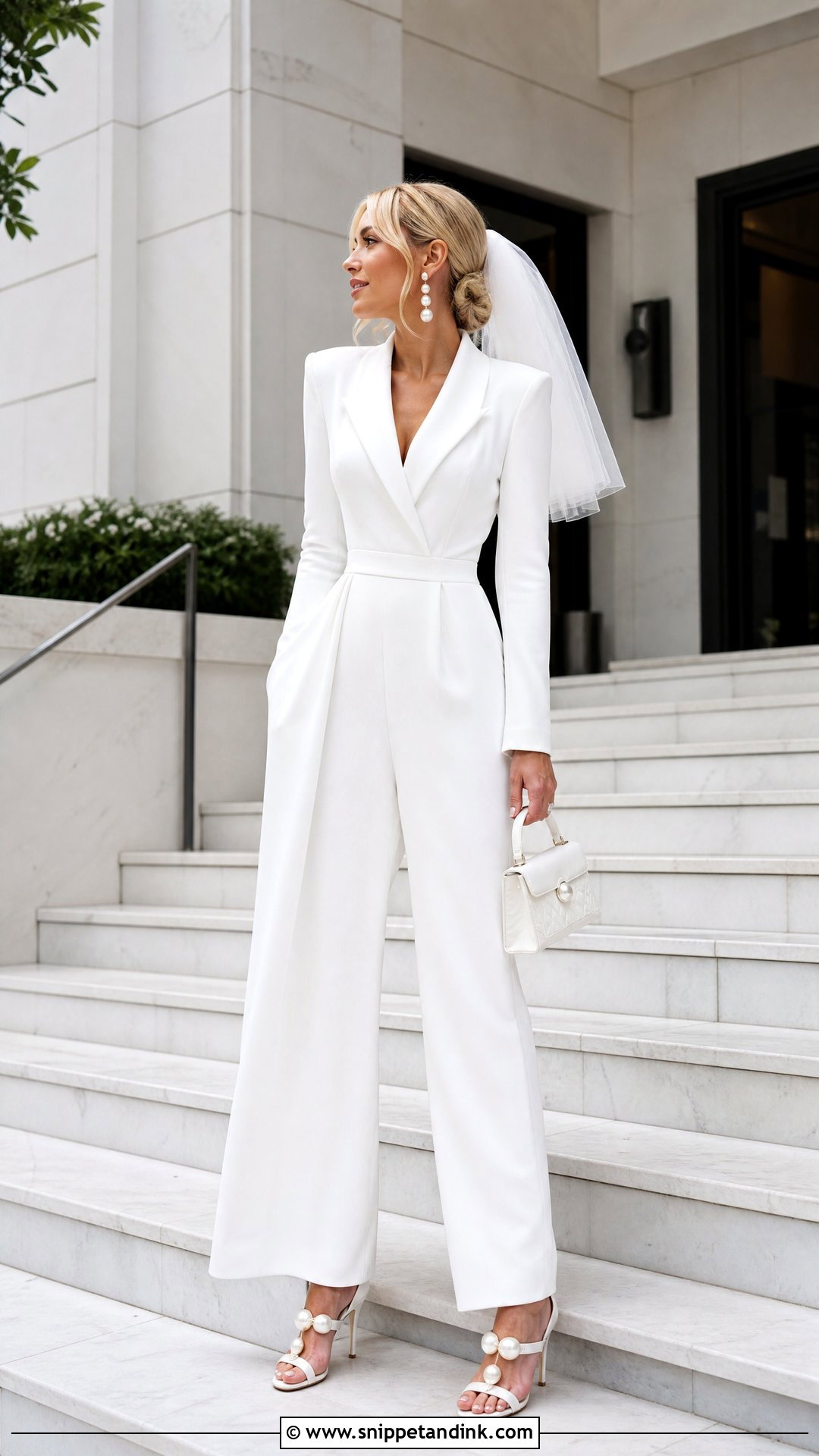
A sculptural heel suits a bride who wants her shoes to say something. Pair it with a minimalist mini dress, a tailored bridal jumpsuit or a sharply cut column gown, and choose a sandal with plain front straps and one distinctive feature, such as a curved or pearl-covered heel. Unusual heel shapes carry weight differently from a standard block heel, and some tip you slightly forward or back. Stand and walk in them for a good while before deciding. Bold earrings, a structured bag and a short veil or none at all keep the outfit crisp for a rooftop or gallery wedding.
Grass, Sand and Polished Marble Each Want a Different Heel
The floor beneath you matters as much as the dress. A stiletto sinks into a lawn up to the heel cap, and wooden decking has gaps that catch a narrow heel. Block heels and wedges handle grass and gravel best, while bare feet or flat sandals are kinder on soft sand. Polished marble and new satin soles make a slippery pair. I lightly scuff the soles with fine sandpaper or a few minutes on a rough pavement so they grip, and that takes nothing away from how they look.
Clear heel stoppers are worth having for a garden ceremony. They slip over a thin heel and widen its tip, so you can wear the stilettos you love for the aisle without aerating the lawn.
A Small Shoe Kit for the Wedding Day
Hand this to a bridesmaid rather than packing it in your own bag:
- Blister plasters and clear gel pads for the ball of the foot and the back of the heel.
- Heel grips for mules or slingbacks that loosen as straps stretch.
- A pair of soft flats or slides for the dance floor and the walk to the car.
- Baby wipes and white chalk to cover a scuff on ivory satin before photos.
Put the plasters on where you know you rub before you get dressed, not once the blister has formed.
Your Shoes Should Disappear by the First Dance
Pearls, crystals, bows and sculptural heels give you plenty of personality, but the right pair is the one you forget you’re wearing by the speeches. Compare the heel height with the altered hem, think about the venue floor, and wear the sandals around the house on clean floors for a few evenings to find any pressure points. A delicate kitten heel, a supportive block heel, a platform or a wedge can all work, provided they suit your dress and the ground you’ll actually stand on.
You'll Like These Ideas:


Leave a Reply