
You’ll spend more hours on your feet on your wedding day than on almost any other day: the ceremony, the receiving line, the photographs, the dancing. That’s why I fit shoes as carefully as the gown. Lower heels put less pressure on the ball of the foot, a wider heel base is steadier than a narrow stiletto, cushioned footbeds and stable platforms soften hard floors, and secure straps stop the foot sliding forward as it swells through the day. Below are the styles I suggest to brides who want some height without paying for it by the first dance, with notes on pairing each one with the gown, jewelry and setting.
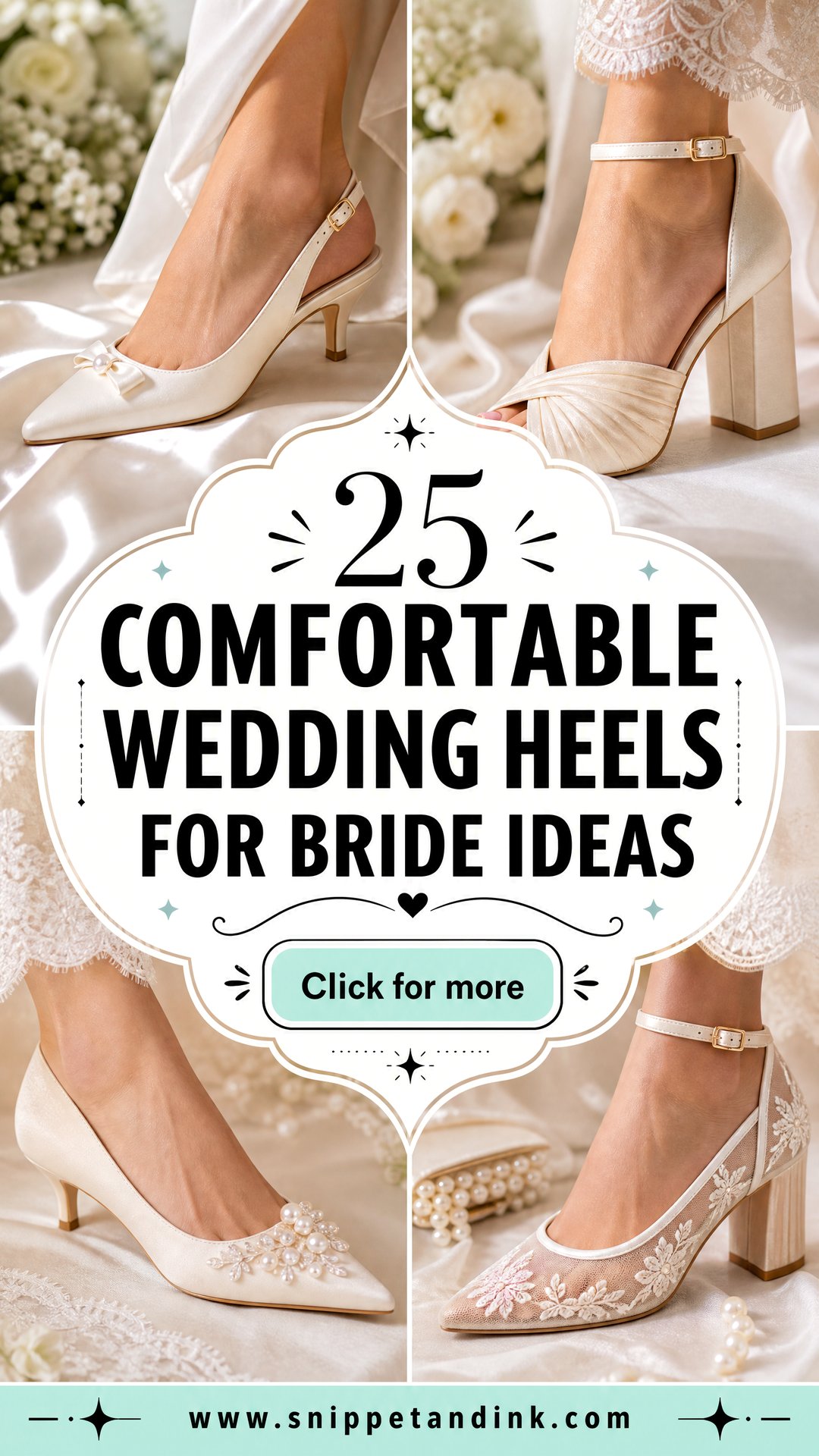
Shopping for Bridal Shoes When Your Feet Are at Their Largest
Feet swell through the day, more so in heat and after hours of standing, and a shoe that fits at ten in the morning can pinch by the speeches. I send brides shopping in the late afternoon, wearing the hosiery or liners they plan to wear on the day.
- Measure both feet. Most people have one slightly larger foot, so fit the shoe to that one and add a heel grip to the other if needed.
- Leave a little room at the toe. You should be able to wiggle every toe, and nothing should press on the end when you stand.
- Check the heel. Walk a few steps; if the back lifts more than slightly, the shoe is too long or too loose at the heel.
- Stand still for five minutes. Pressure points that appear while standing will be far worse after two hours of photos.
Know your material before you buy, too. Leather and suede give a little with wear and can be eased by a cobbler, but satin, mesh and metallic finishes barely stretch, so they need to fit from the first day.
1. Low Block Heel Wedding Shoes
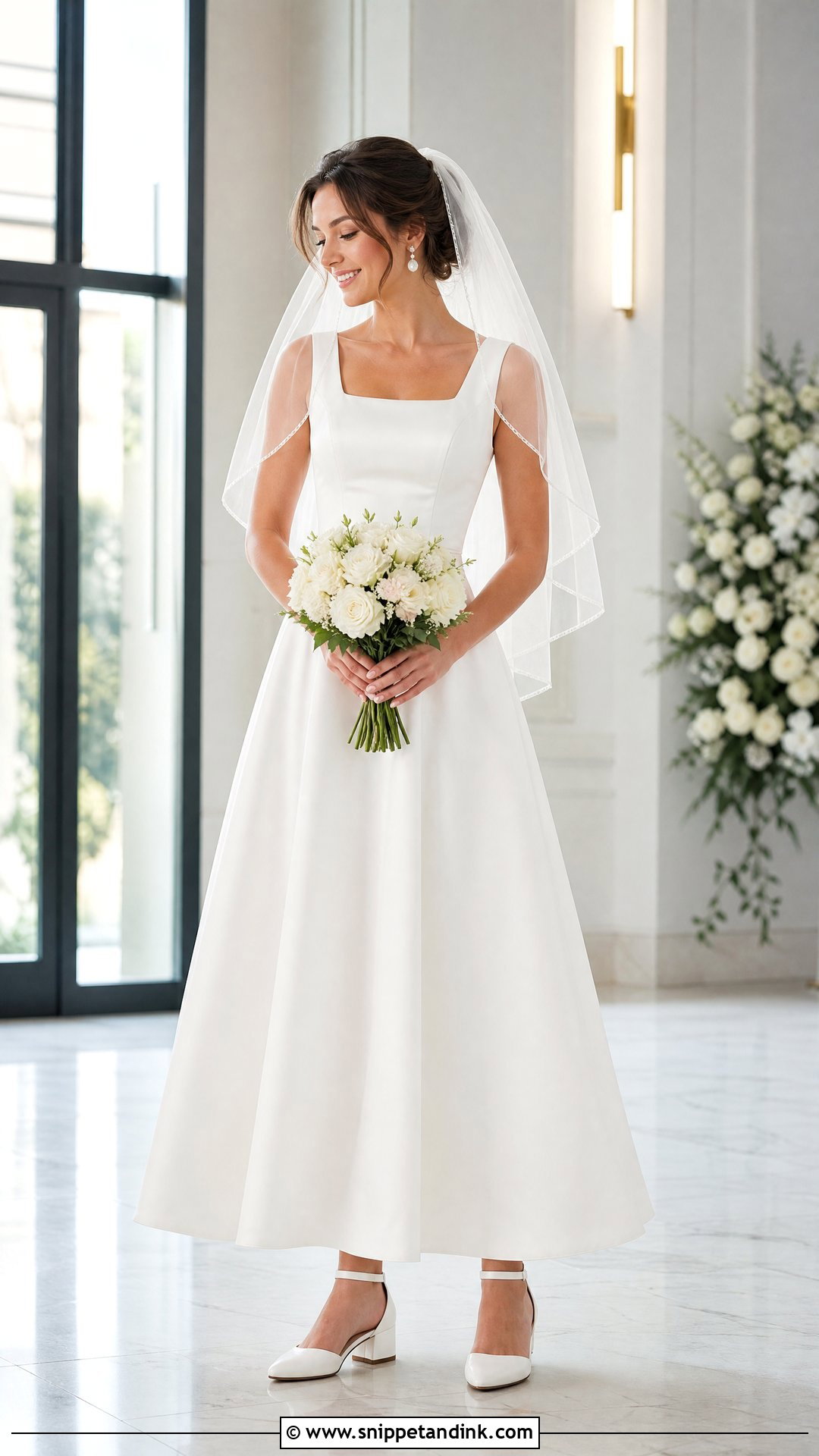
If you rarely wear heels, start here. A block heel of one to two inches, a padded insole and an adjustable ankle strap give lift without changing how you walk. White leather looks crisp; ivory satin is softer and more traditional. The wide base keeps you steady on the aisle and through long stretches of photos, and the modest height is enough to straighten your posture under a floor-length gown. Pair it with an A-line, pearl earrings and a structured mini bag. Wear the shoes around the house for a few evenings, then test them with your finished hem.
2. Ivory Satin Block Heel Wedding Shoes
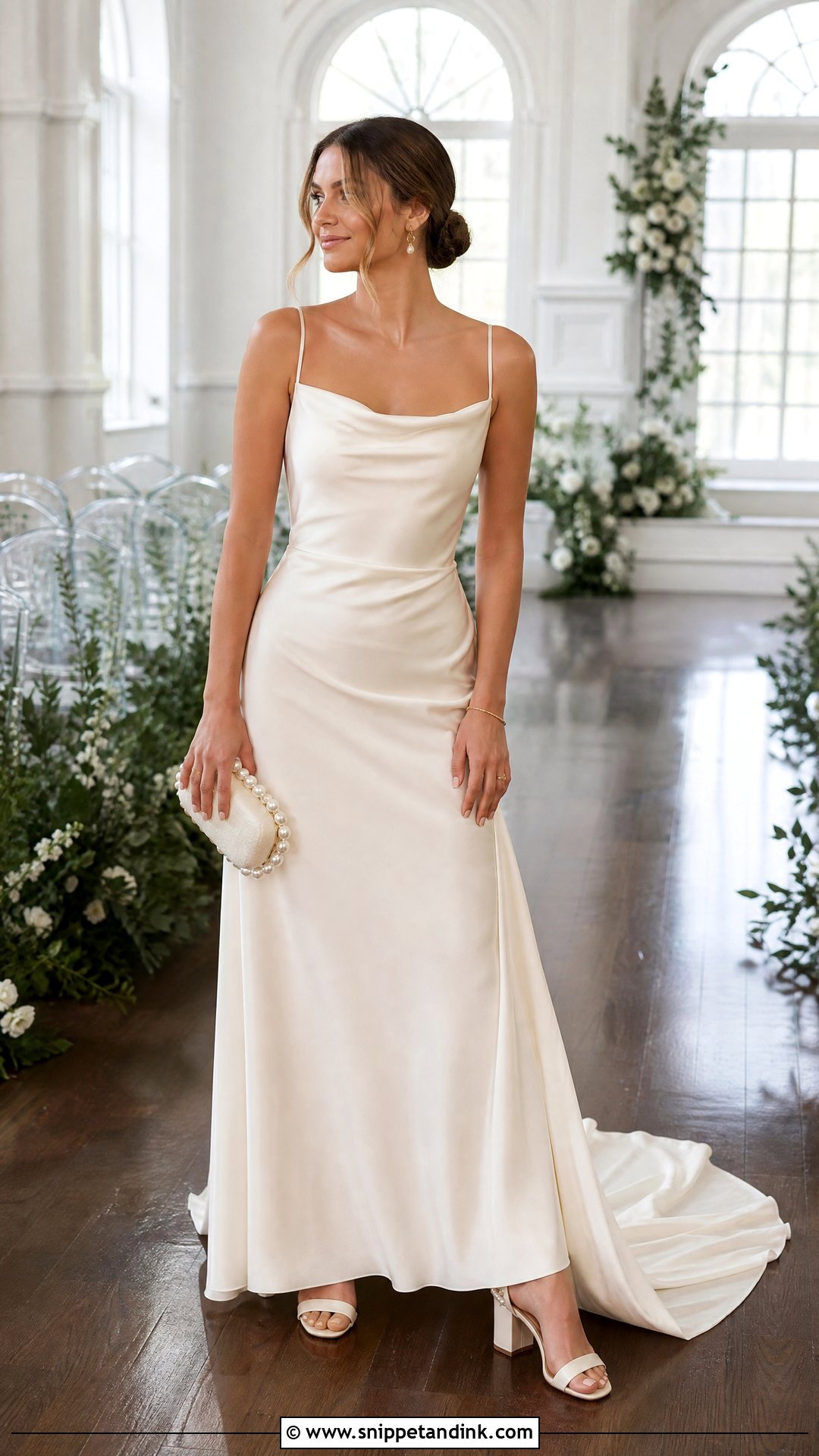
Ivory satin is my pick for gowns with warm undertones, cream lace or antique-style beading, because a bright white shoe next to those looks almost blue. Two inches of block heel gives visible lift and stays easy to manage. A softly rounded toe, cushioned lining and an adjustable ankle strap leave room for swelling later in the evening, and matching the shoe closely to the dress keeps the line unbroken in photos. Satin marks easily and won’t recover from mud, so save these for indoor venues or dry, smooth ground. Test a fabric protector on the inside edge first, and store each shoe in its own cloth bag. Delicate gold jewelry and a pearl-trimmed clutch finish the outfit.
3. Pearl Wedding Heels With Ankle Straps
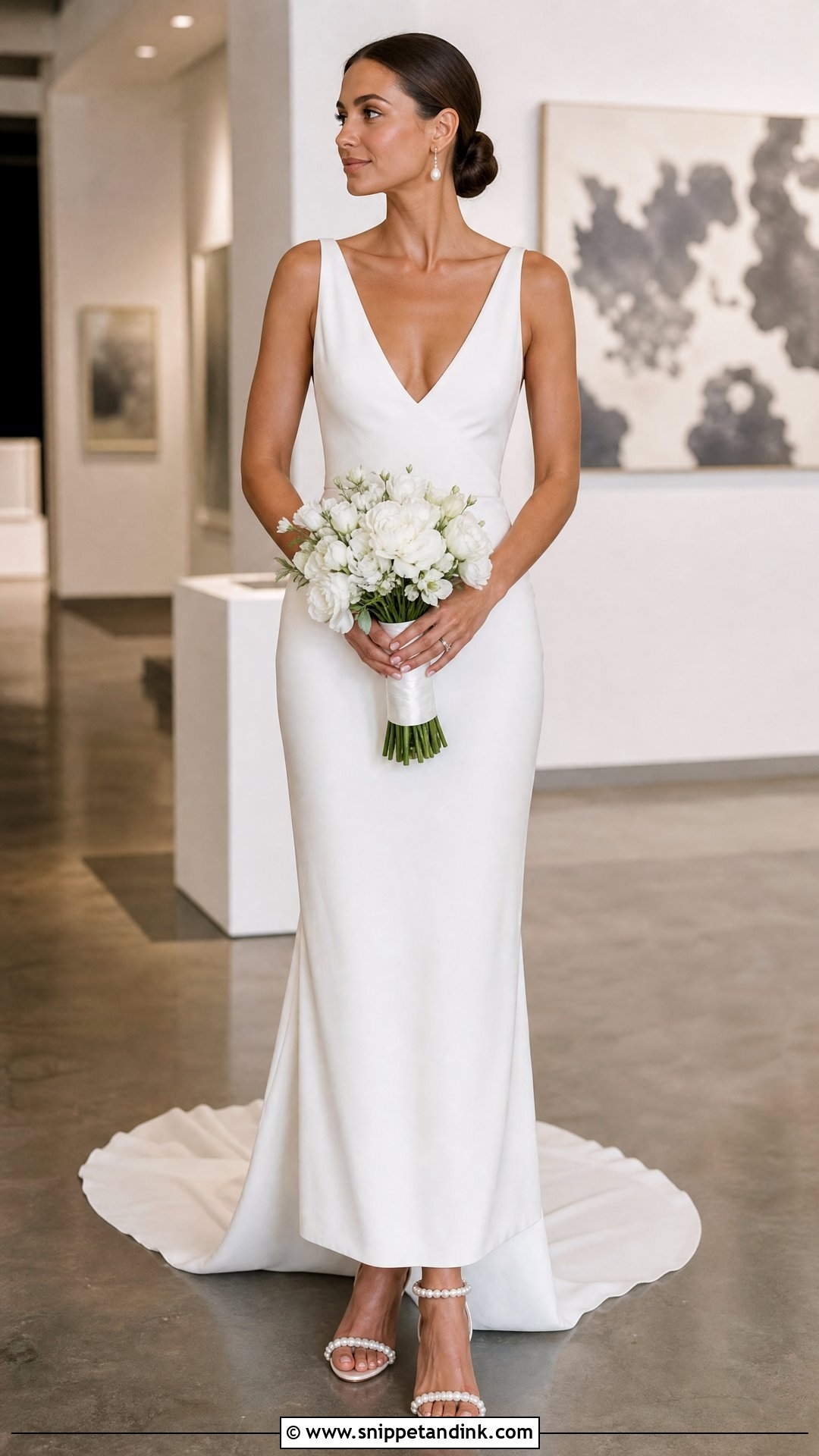
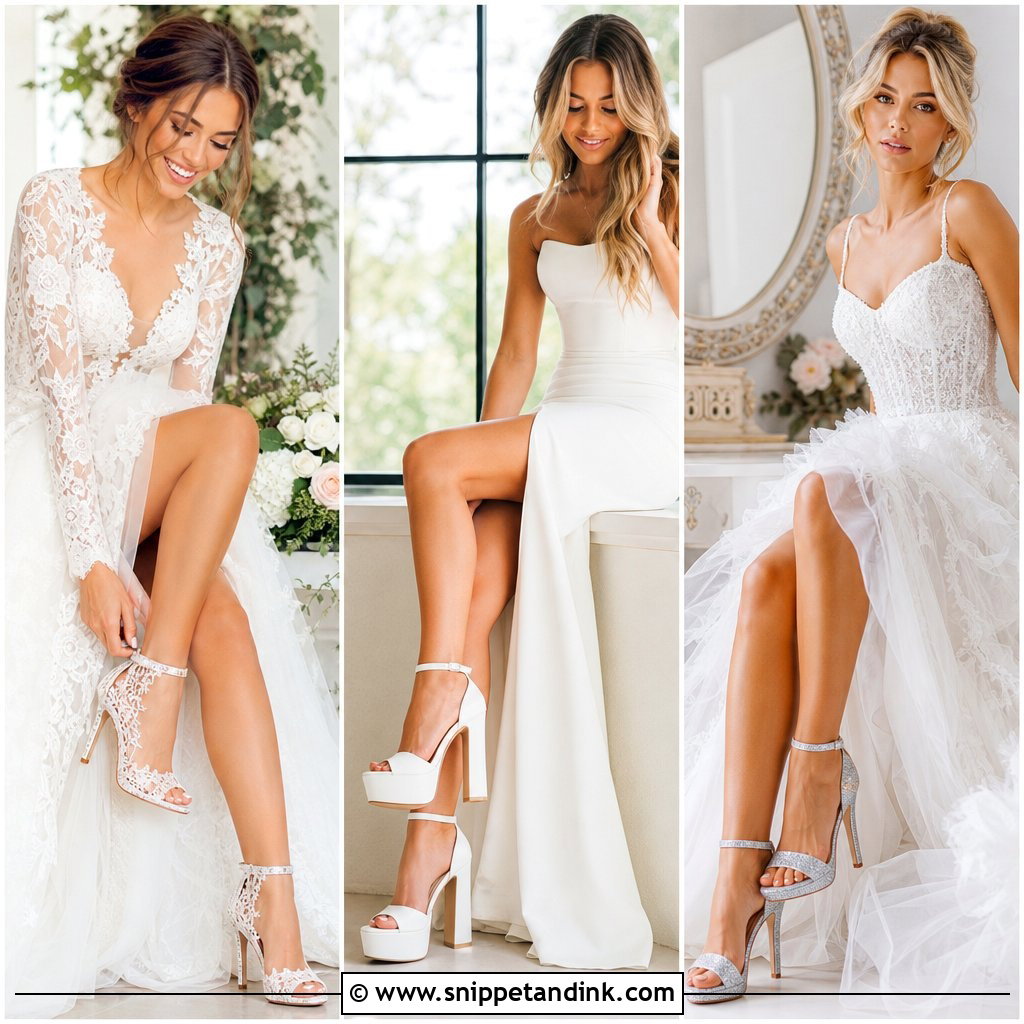
Pearl trim adds romance without a dramatic silhouette, and on a low or mid-height block heel you get the detail without the height. Placement matters. Along the strap or heel back is fine, but beads at the top of the toe or inside a strap can press on the joints once your feet swell. Run a fingernail along each pearl to make sure it’s sewn, not just glued. A plain crepe gown, pearl drop earrings and a smooth low bun let the shoes show. The ankle strap keeps your foot secure on the aisle and through first-dance turns. Practice on a floor similar to your venue’s before you decide.
4. Closed Toe Block Heel Wedding Shoes
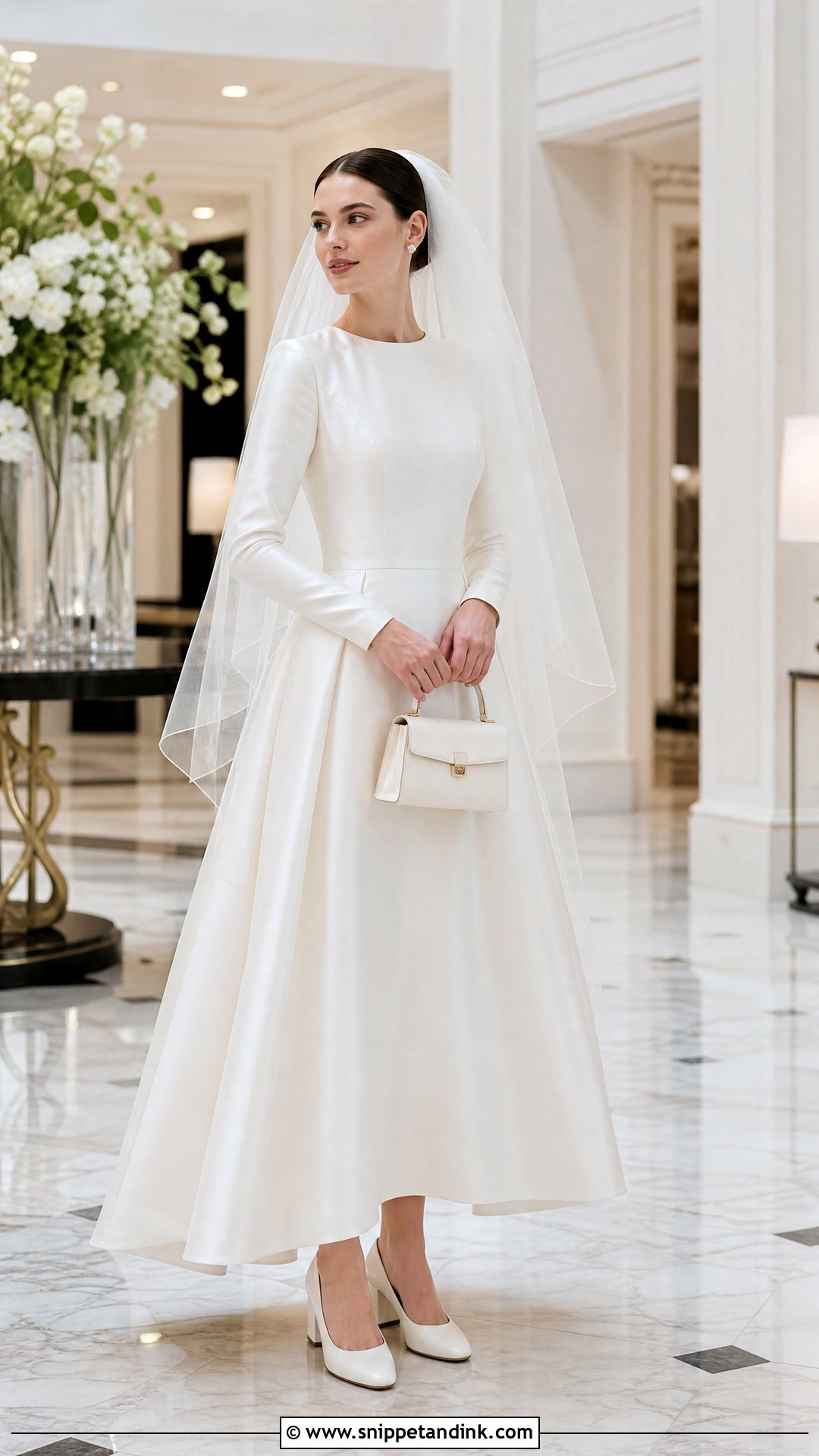
Closed block heels are the most supportive bridal shoe I fit, and the warmest. A rounded or almond toe gives the toes more space than a sharp point. White leather pumps suit a long-sleeved satin gown, a fingertip veil and simple diamond or crystal studs, especially for formal ceremonies and cooler months. Look for a low block, a flexible sole and some padding under the ball of the foot, then check that the heel stays seated as you walk. If it lifts, a heel grip inside the back usually fixes it. Wear them in short sessions before the day, and use thin anti-friction liners or smooth, sheer stockings where they rub.
5. Slingback Kitten Heel Wedding Shoes
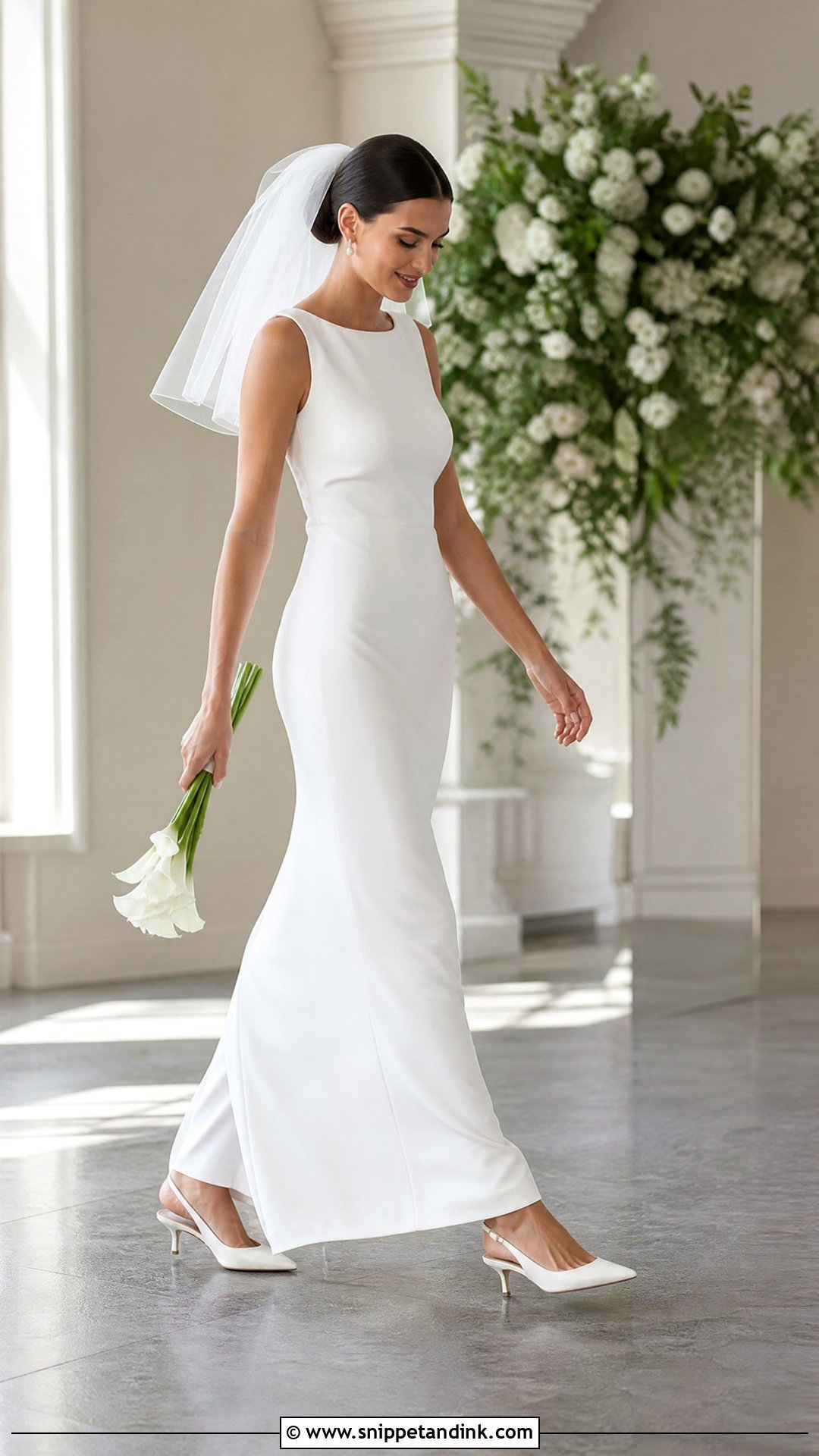
Under a tea-length or column gown, I like the lightness of an open back. Slingback kitten heels carry less height and weight than a pump, and the narrow strap keeps the shoe refined. Around one and a half to two inches with an adjustable buckle and padded footbed is the comfortable range. A pointed toe looks sharp, while an almond toe gives more room. The weak point is the strap itself: slightly loose and it creeps down under your heel, too tight and it cuts in by evening. Climb stairs and dance a few steps at home to check it stays put. A short veil, understated earrings and a compact top-handle bag complete the look.
6. Platform Block Heel Wedding Shoes
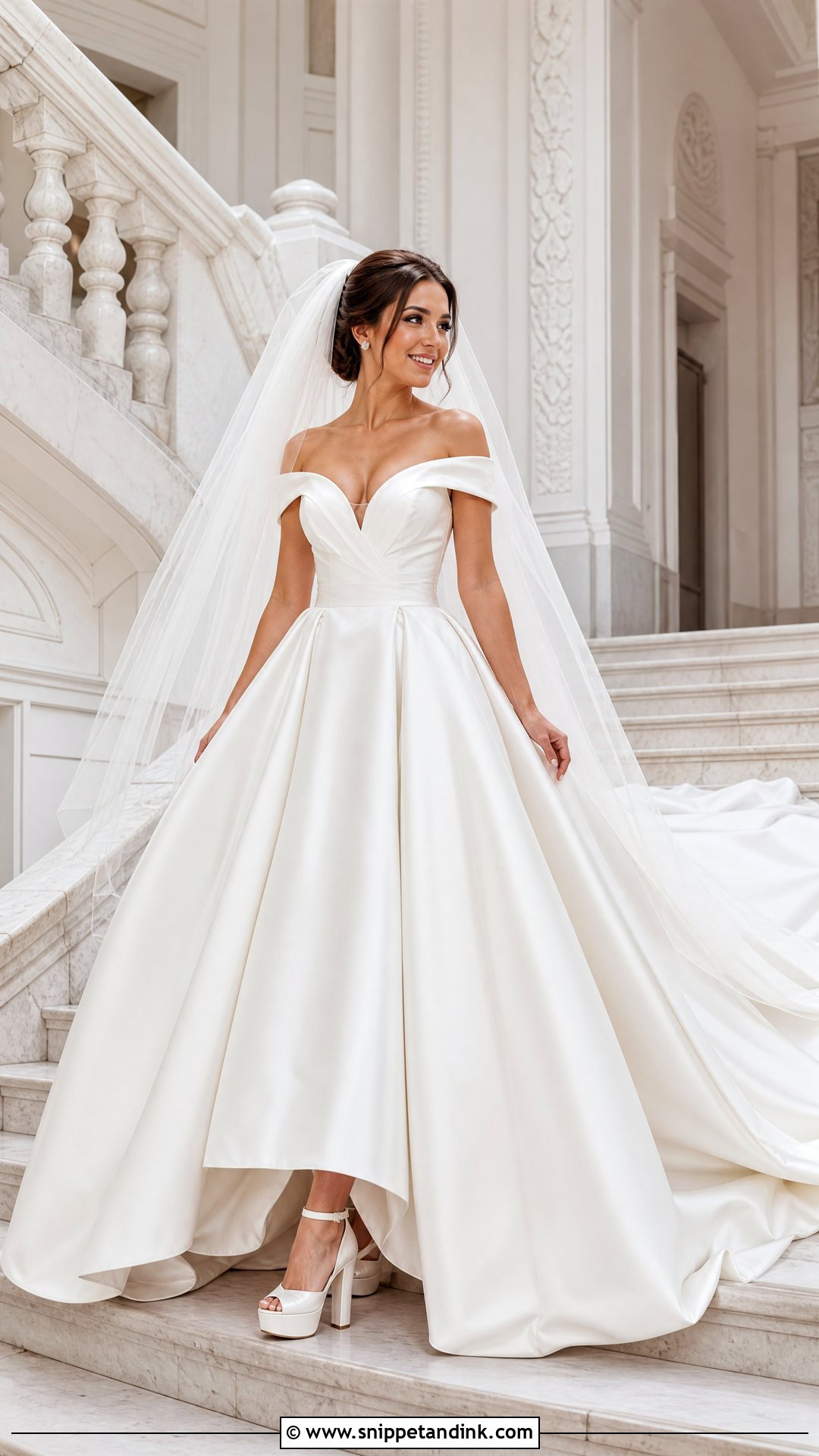
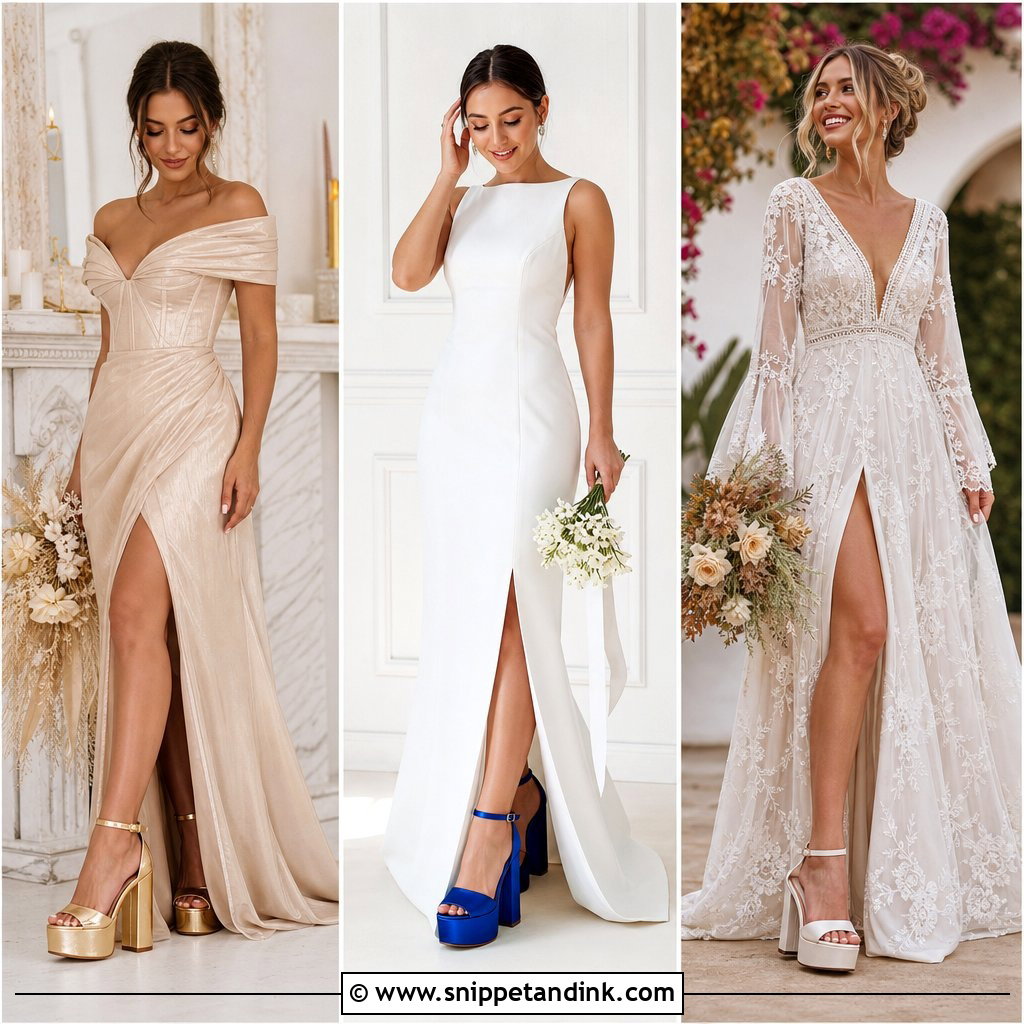
Want height without the steep pitch? A platform block heel raises the front of the foot along with the heel, so the actual incline is gentler than the total height suggests. Pick a stable platform with a broad heel, cushioned footbed and secure ankle strap. Under a full ball gown or heavy fabric the substantial base looks balanced, with sparkling studs and a structured veil above. Stiff, heavy platforms make you clomp, so the sole should flex a little at the ball of the foot. Take shorter steps, turn slowly, and have the dress hemmed while you wear these exact shoes.
7. Lace Block Heel Wedding Shoes
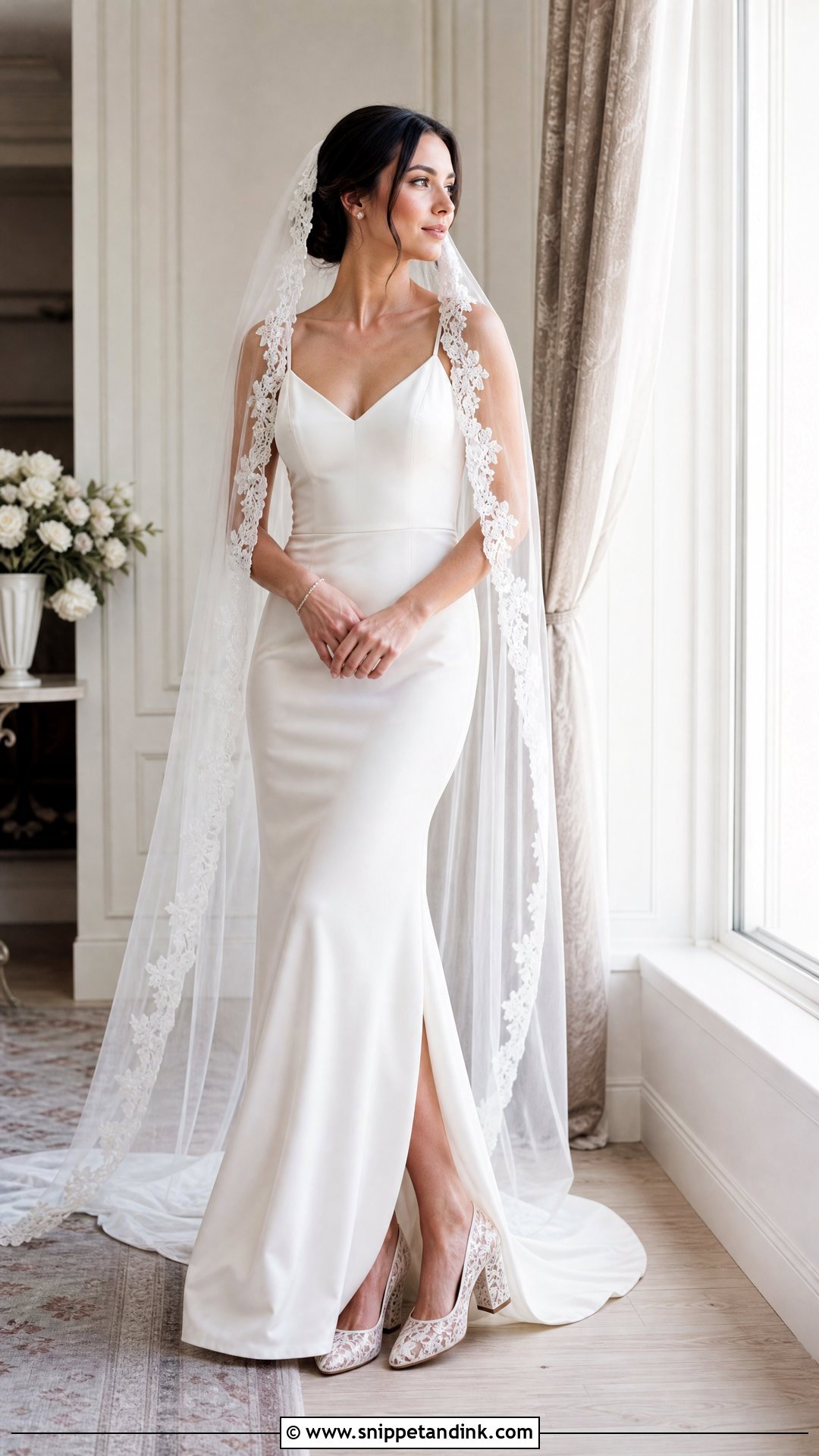
Lace shoes work best as an echo, not a repeat. Ivory floral lace on a two-inch block heel adds texture to a plain satin gown; under a heavily laced dress, choose a simpler motif so the two don’t compete. Check the inside, because lace needs a smooth lining or it scratches. A lace-edged veil, small pearl studs and a delicate bracelet suit them. Look for loose threads that might catch on your hem. Lace picks up dirt and snags on rough ground, so treat these as indoor shoes.
8. Bow Block Heel Wedding Shoes
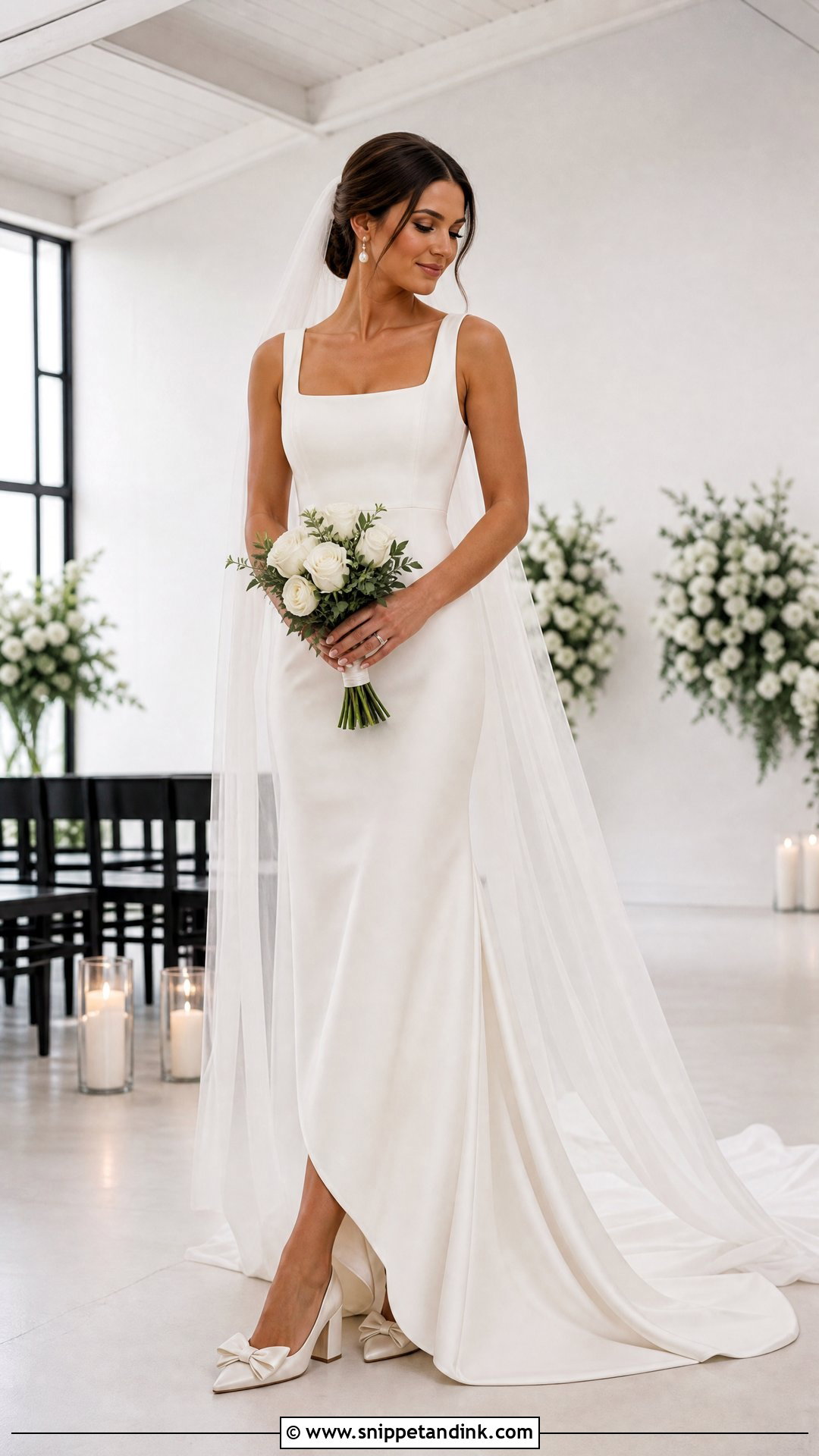
Bows make sensible heels feel playful, provided they’re sized for walking. A flat satin bow across the toe or a small structured one at the back sits well, whereas an oversized bow can brush your other foot with each step or snag the underside of the dress. A low block heel with a padded sole and adjustable ankle strap makes the shoe workable for a long day. A minimal square-neck gown, pearl earrings and a smooth chapel veil let the bow be the point. Wear them under the gown at a fitting, especially if the hem is lace-edged, and check each loop is stitched rather than glued.
9. Ankle Strap Wedding Heels
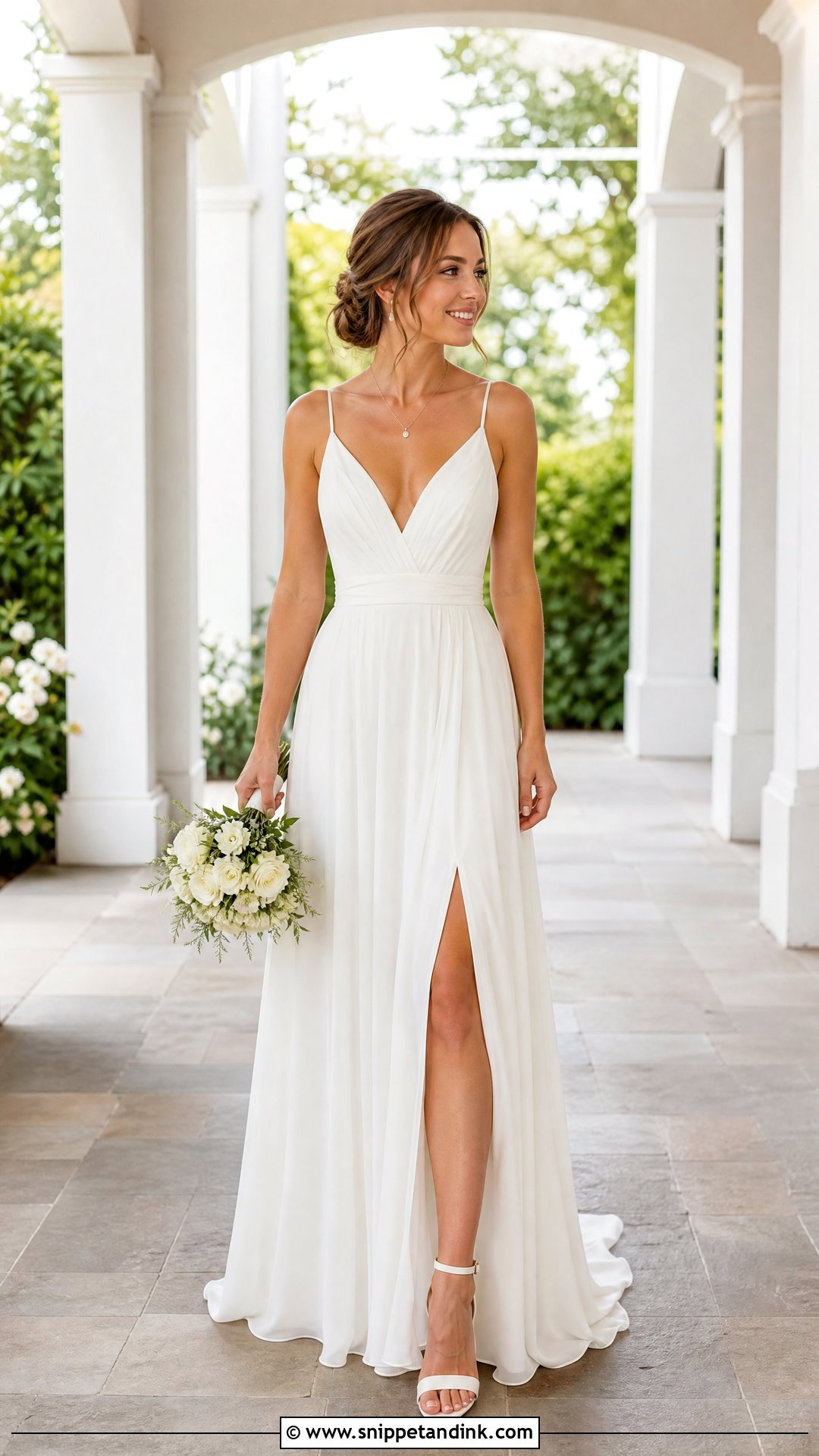
Ankle straps are what I suggest to brides whose feet slide forward in heels. The strap holds the foot back in the shoe so your toes aren’t jammed into the front. It should sit just below the ankle bone, be lightly padded if you’ll wear it for hours, and leave no deep mark when you take it off. White ankle-strap heels suit a flowing chiffon gown, a delicate pendant and a soft updo; with a clean column dress, add geometric earrings. Try them in the late afternoon, when feet are fuller, and make sure the buckle has a spare hole in each direction.
10. Peep Toe Block Heel Wedding Shoes
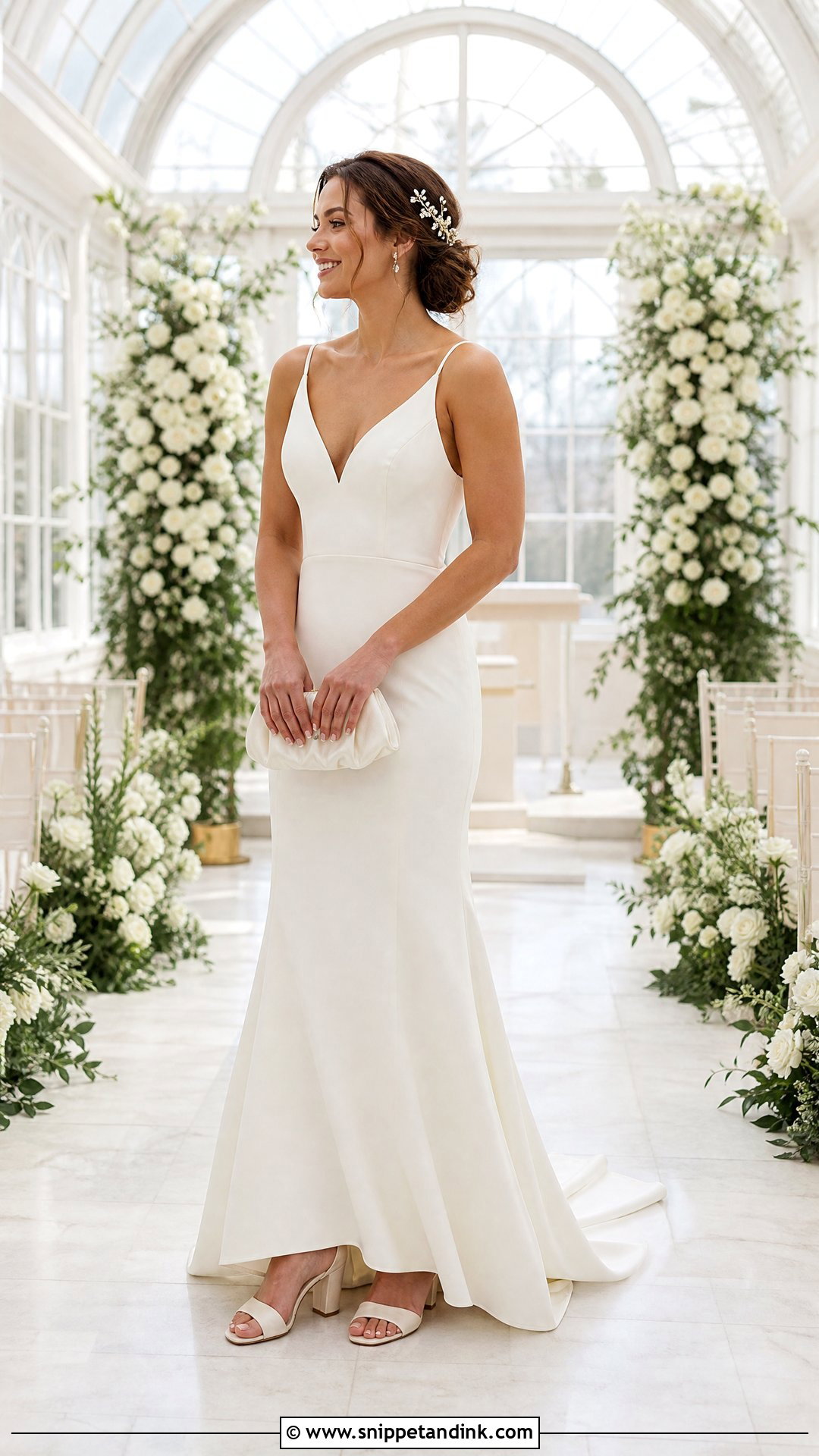
Peep toes give a little more coverage than a sandal while still showing a polished pedicure, which makes them a classic for warm-weather ceremonies. Choose a two-inch heel with soft edges around the opening and a supportive ankle strap. The fit test is easy: your toes should sit inside the shoe, not push through the gap. If the edge presses into your skin, go up half a size or try another toe shape. Ivory peep toes suit a fit-and-flare gown, crystal hairpins and a small satin clutch. Wear them to a dress fitting to make sure the hem doesn’t catch on the opening.
11. Wide Fit Block Heel Wedding Shoes
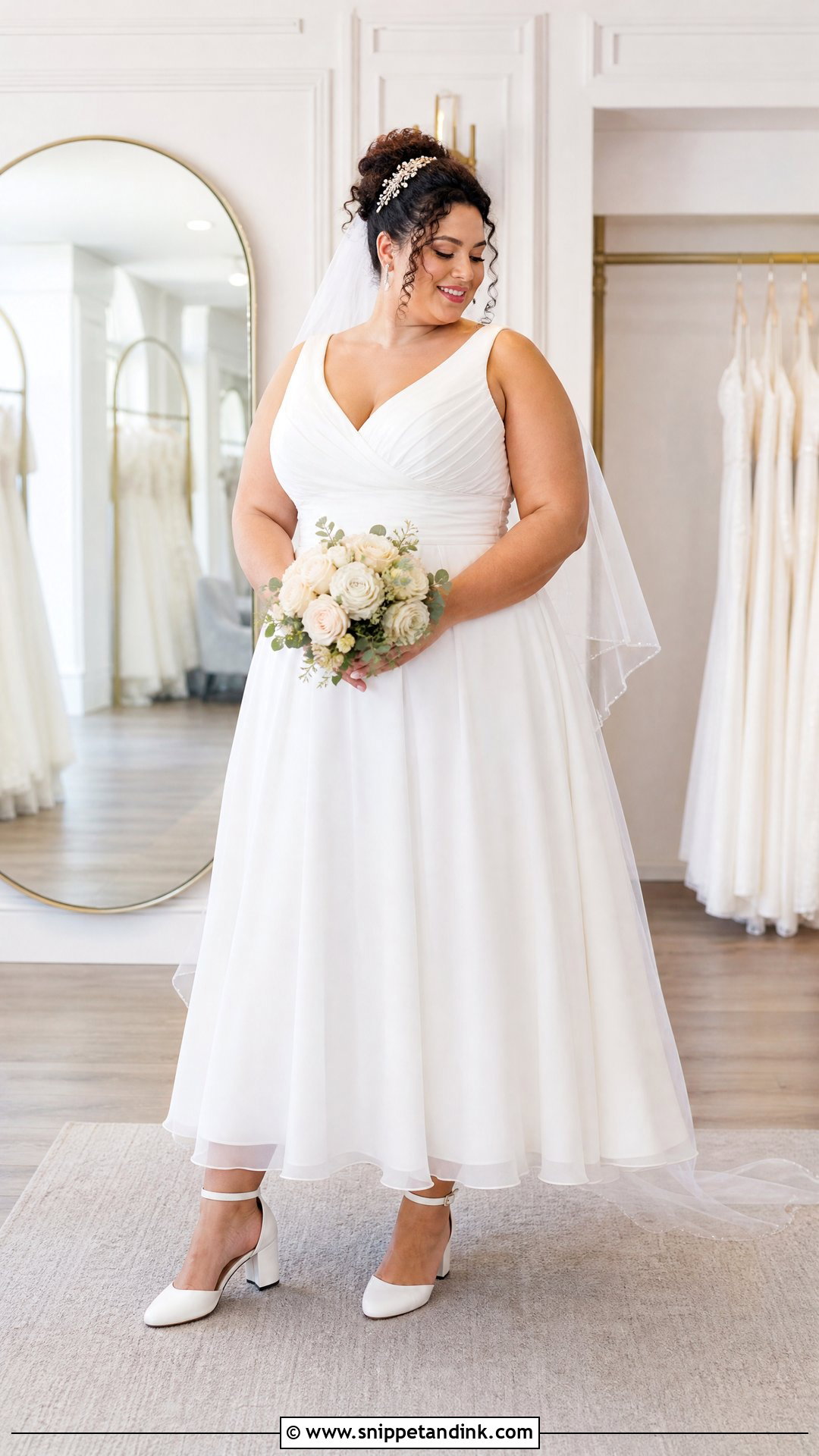
Sizing up when a shoe is tight across the front is the most common mistake I see, because the extra length makes the heel slip. Look for shoes actually labeled wide fit instead. A round, almond or square toe with a low block heel gives a solid base, and white leather suits a soft A-line, a pearl comb and a lightweight veil. Adjustable straps let you fine-tune around the ankle. Run a finger inside for raised seams or stiff edges before buying, and try them at the same time of day as your ceremony, since feet widen after hours of standing and in warm weather.
12. Pointed Toe Low Heel Wedding Shoes
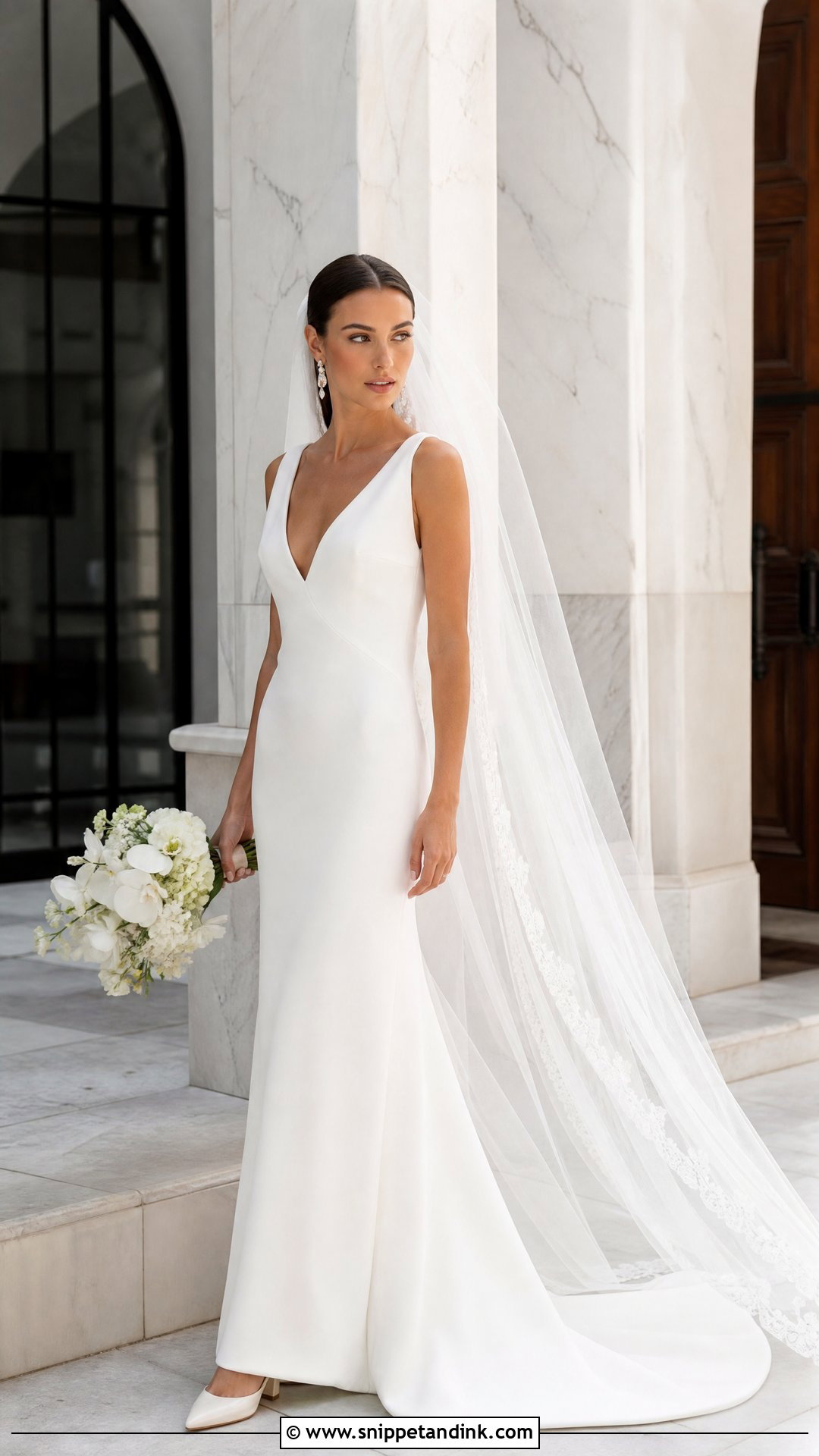
A pointed toe looks formal at any height, so there’s no need to pair it with a tall heel. The trick is a toe box that extends past your toes rather than squeezing them into the point. Press down on the shoe where your widest joint sits; if it feels compressed, try a wider fit. Soft leather, flexible mesh or satin with a smooth lining feel less restrictive. A low block or kitten heel with a slingback strap stays light under a tailored crepe gown, a cathedral veil and slim crystal earrings. Walk on carpet and hard floors before committing.
13. Square Toe Wedding Heels
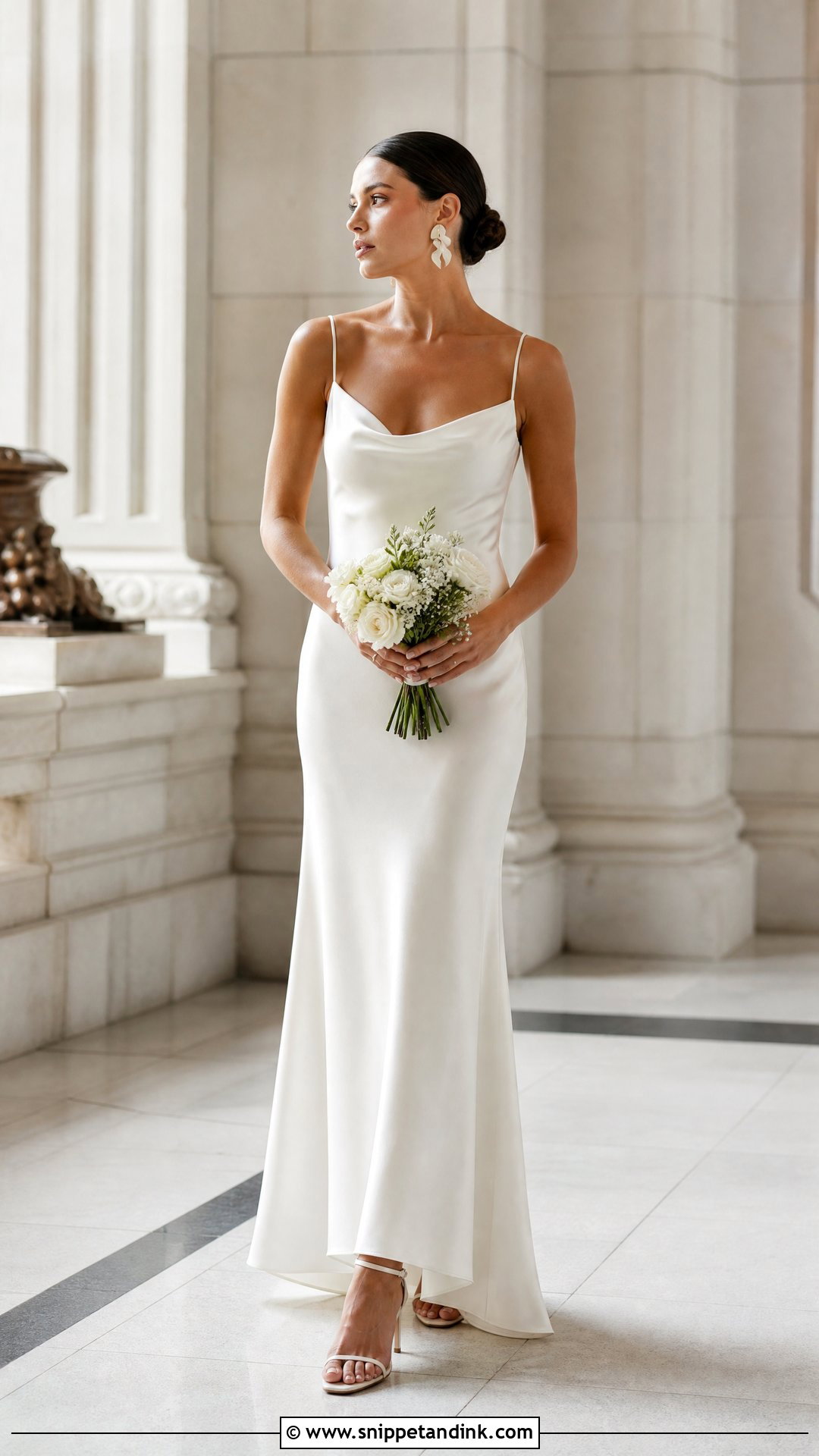
Square toes give the forefoot genuine room, which is why I like them for brides with wider feet or bunions. A two-inch block heel and slim ankle strap keep the shoe stable. Smooth ivory leather suits a minimal outfit; satin is more traditional. They look right with a modern slip dress, sculptural earrings and a sleek bun, and just as right with a tailored jumpsuit for a city hall wedding. The square should follow the width of your foot without leaving empty corners, which make the shoe flop as you walk. With a shorter hem, a slimmer heel stops the shoe looking heavy. Add a cushioned insert only if the fit has room for it.
14. Champagne Block Heel Wedding Shoes
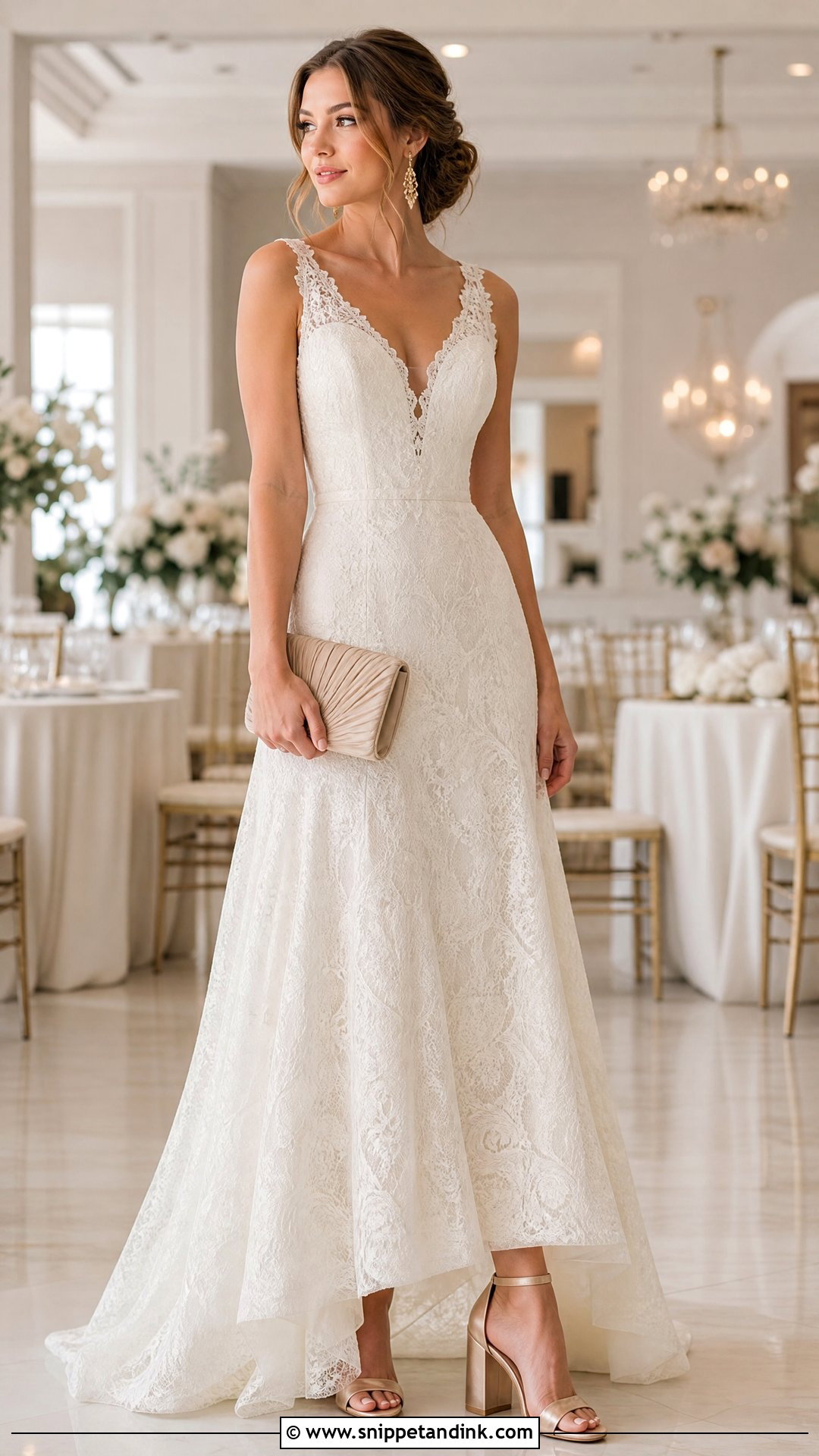
Champagne is the shoe color I reach for when bright white looks harsh next to an ivory, blush or nude-lined gown. A low block heel in satin, metallic leather or a soft shimmer works. Aim to complement the dress undertone rather than match it exactly, since a near-match that’s slightly off looks worse than a deliberate contrast. Look at the shoes in daylight and indoors too, because champagne can read gold, beige or pink depending on the room. An ivory lace gown, gold drops and a soft beige clutch suit them. Closed toes feel formal, ankle-strap sandals lighter, and metallic pairs are the easiest to wear again.
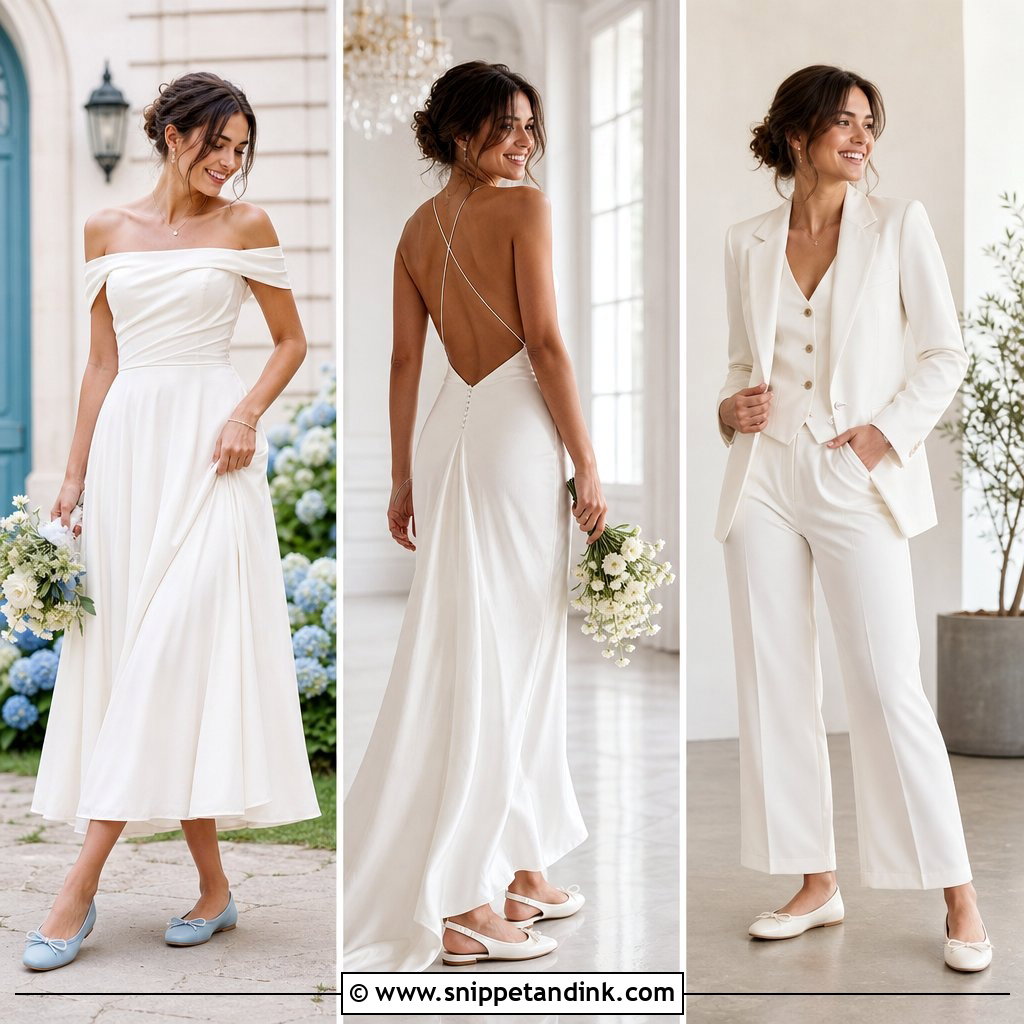
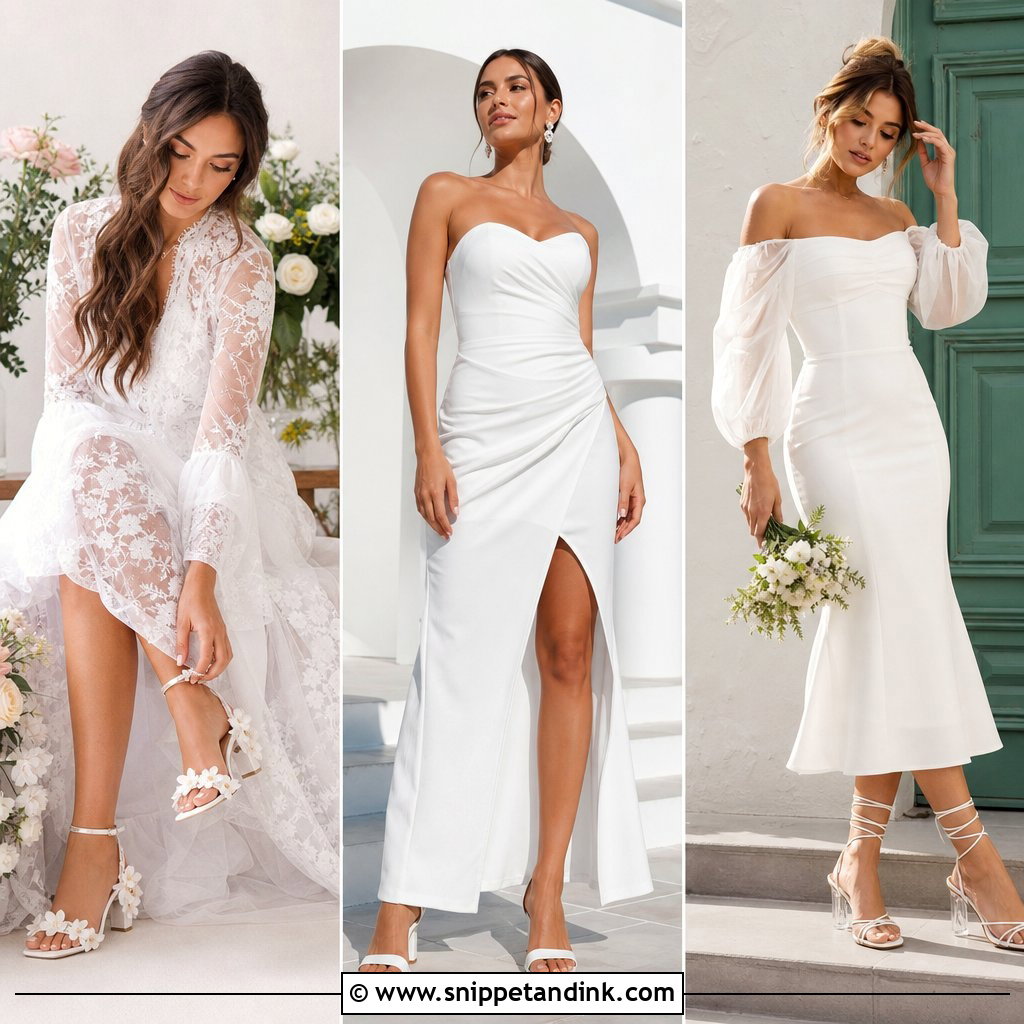
15. Silver Block Heel Wedding Shoes
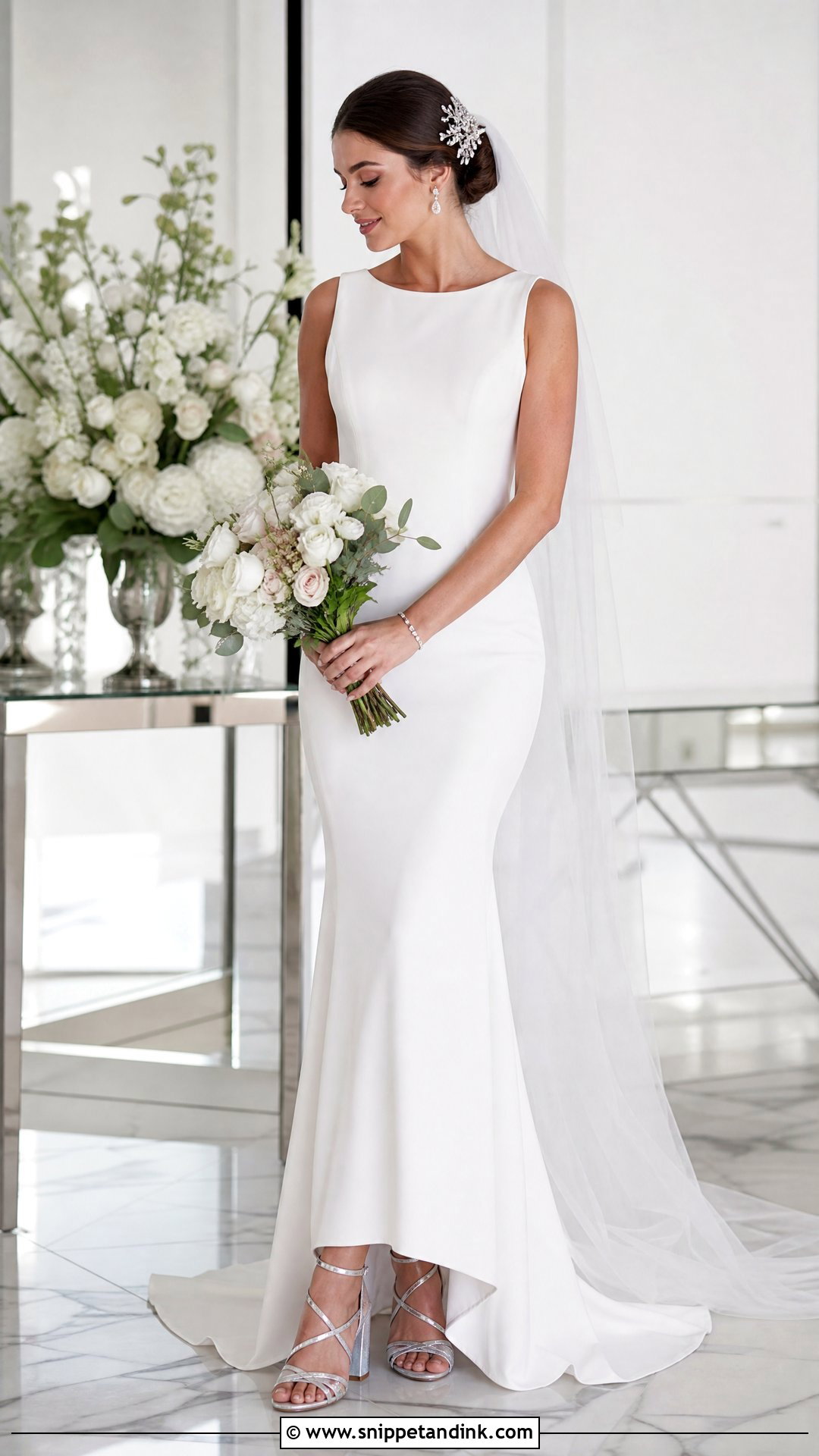
Silver adds cool shine under bright white gowns and crystal embellishment. I prefer soft metallic leather to chunky glitter, which can snag fine tulle and scratch the opposite ankle. A low or medium block heel with crossing straps gives support and interest, and under a plain dress the shoes can be the statement. A crystal hair comb and silver earrings tie it together. Metallic materials are stiffer than plain leather, so check the strap edges and wear the shoes at home with clean socks until the straps soften.
16. Blue Block Heel Wedding Shoes
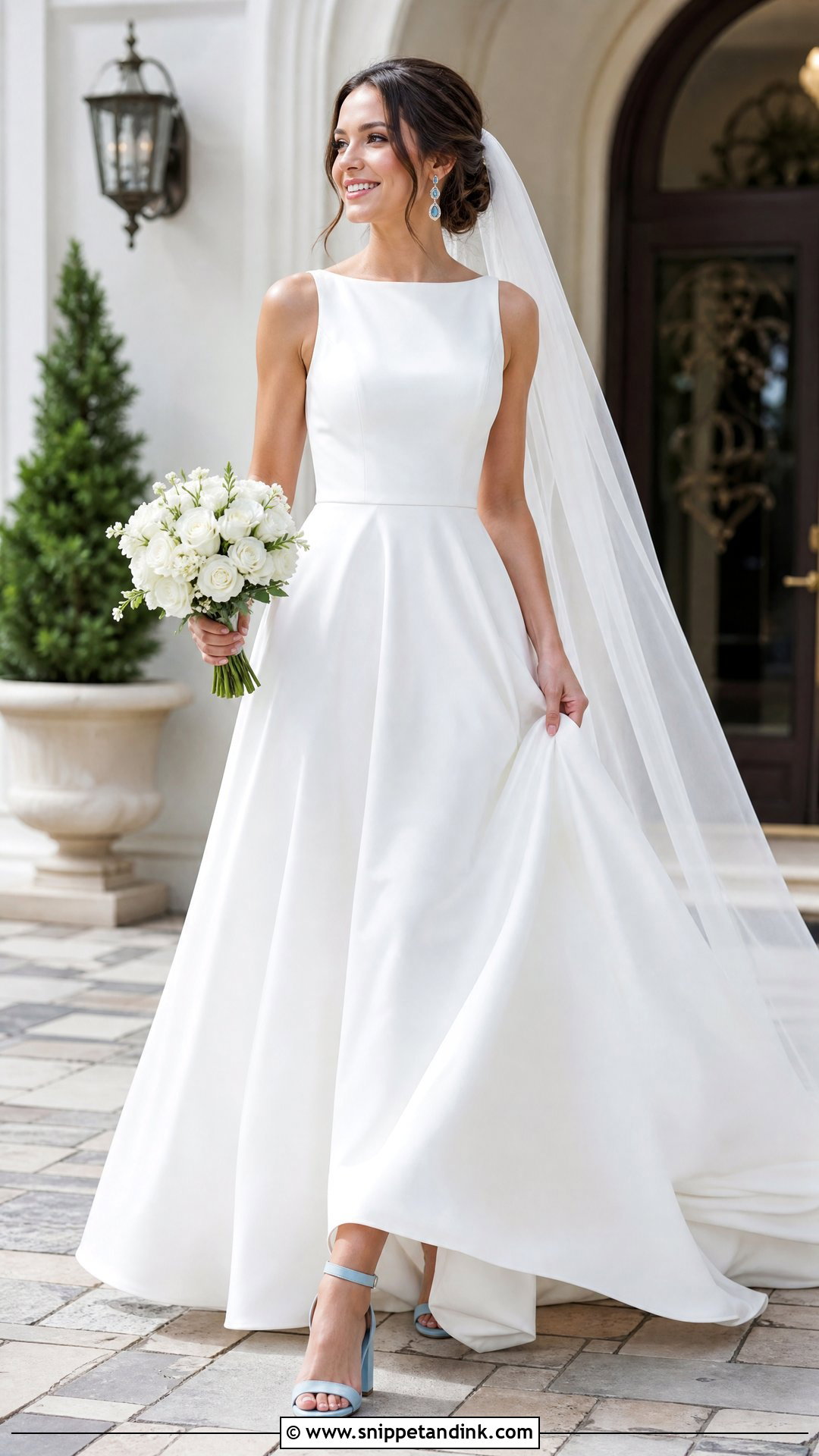
Blue shoes are the most popular way to wear something blue, and the shade decides how much it shows. Powder blue is delicate; navy contrasts sharply under white or ivory. A low block heel with an ankle strap, cushioned lining and a satin or suede-like finish suits most gowns. With a high-low hem or open front, the color shows in photos, while under a full-length skirt it stays a secret. Hold dark shoes under the hem in daylight, since navy can shadow through thin chiffon. A clean A-line, blue gemstone earrings and a small white bouquet keep it coordinated, and you’ll get plenty of wear from them afterward.
17. Floral Wedding Heels
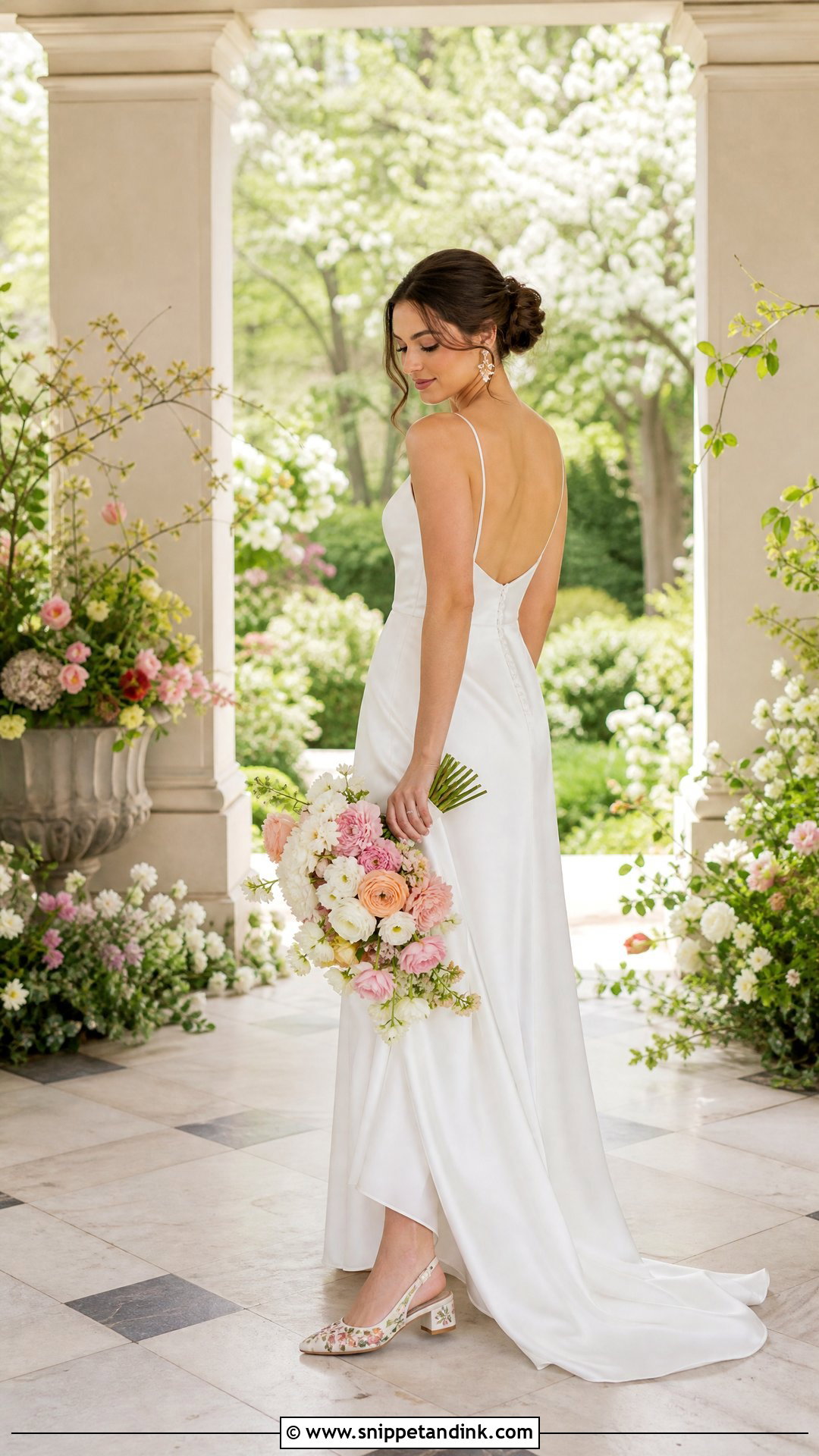
Floral shoes give a plain gown a point of detail. Embroidered vines, small fabric flowers or a printed pattern on a stable low block heel all work, but raised decorations should stay off the inner sides, where the other shoe and the hem brush past. A plain crepe or satin gown, delicate floral earrings and a loose low bun let the shoes be the focal point. Pastel flowers feel springlike; ivory embroidery is quieter. A week before, check every embellishment and secure loose threads, then walk in the full dress to make sure nothing catches the lining.
18. Rhinestone Block Heel Wedding Shoes
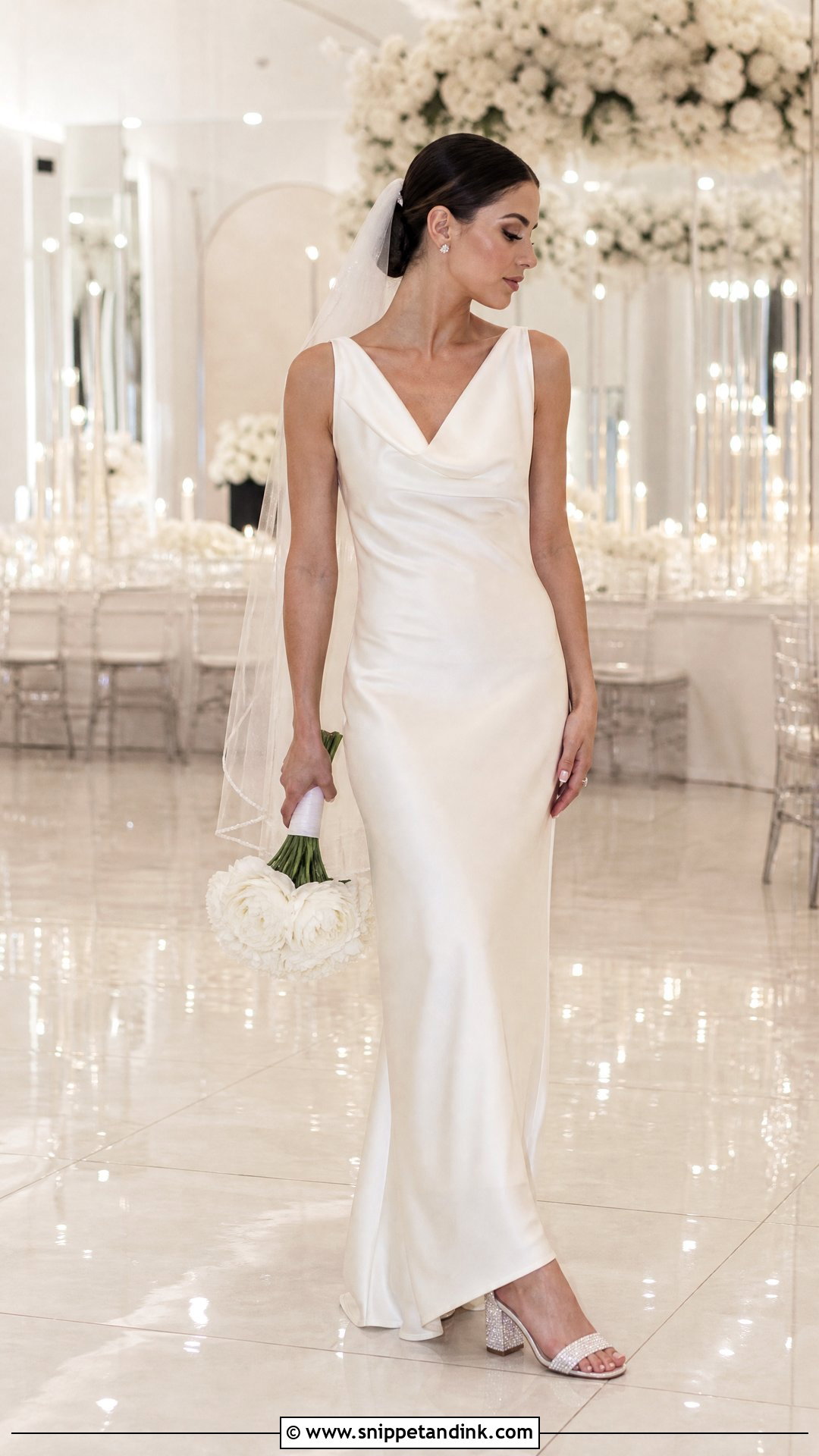
Rhinestones bring sparkle, and the block heel keeps the shoe grounded. Crystals concentrated on the toe, straps or heel look better and catch less than a fully covered shoe, and smooth settings are kinder to lace and tulle. Two inches of heel is plenty under a minimal satin gown with crystal studs and a simple veil. Check the sole, because smooth formal soles slip on polished floors; scuff them lightly with fine sandpaper or ask a cobbler for a thin rubber layer. Look at the shoes under bright light to see how they’ll photograph, and keep any spare crystals and glue the maker supplies in your emergency kit.
19. Mesh Wedding Heels
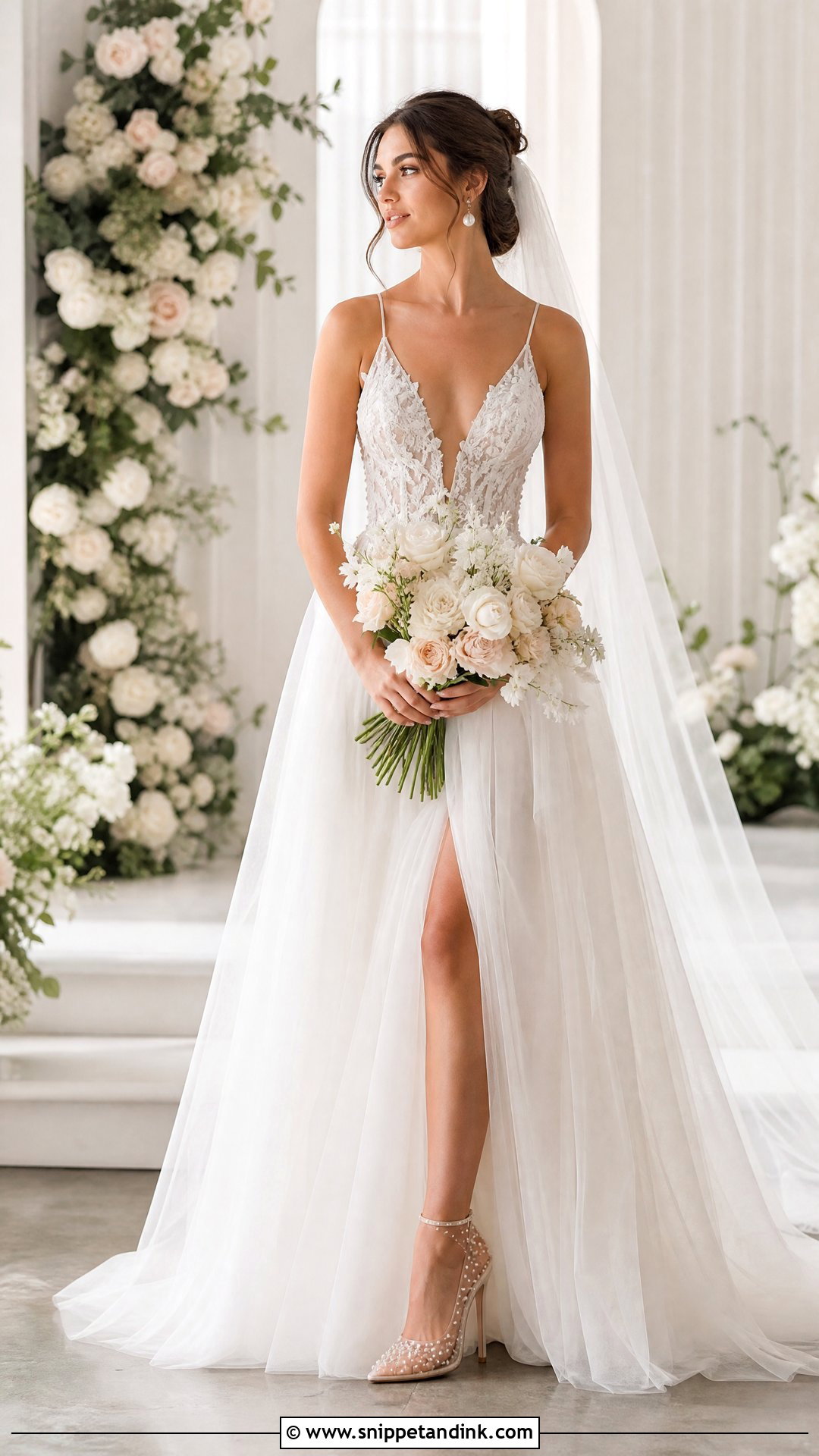
Mesh feels lighter than a closed pump and looks delicate under shorter dresses, since the sheer panels blend with your skin. It needs structure to work: a firm toe, a supportive heel counter and a low block heel. Pearl dots, embroidery or subtle crystals add the bridal detail, and a tulle gown, pearl earrings and an airy veil suit them. Run a finger around every inside seam, because stiff embroidery behind mesh can rub raw over a long day. Mesh gives no protection from damp, so keep these for indoor celebrations or dry, well-kept grounds.
20. Outdoor Wedding Block Heels
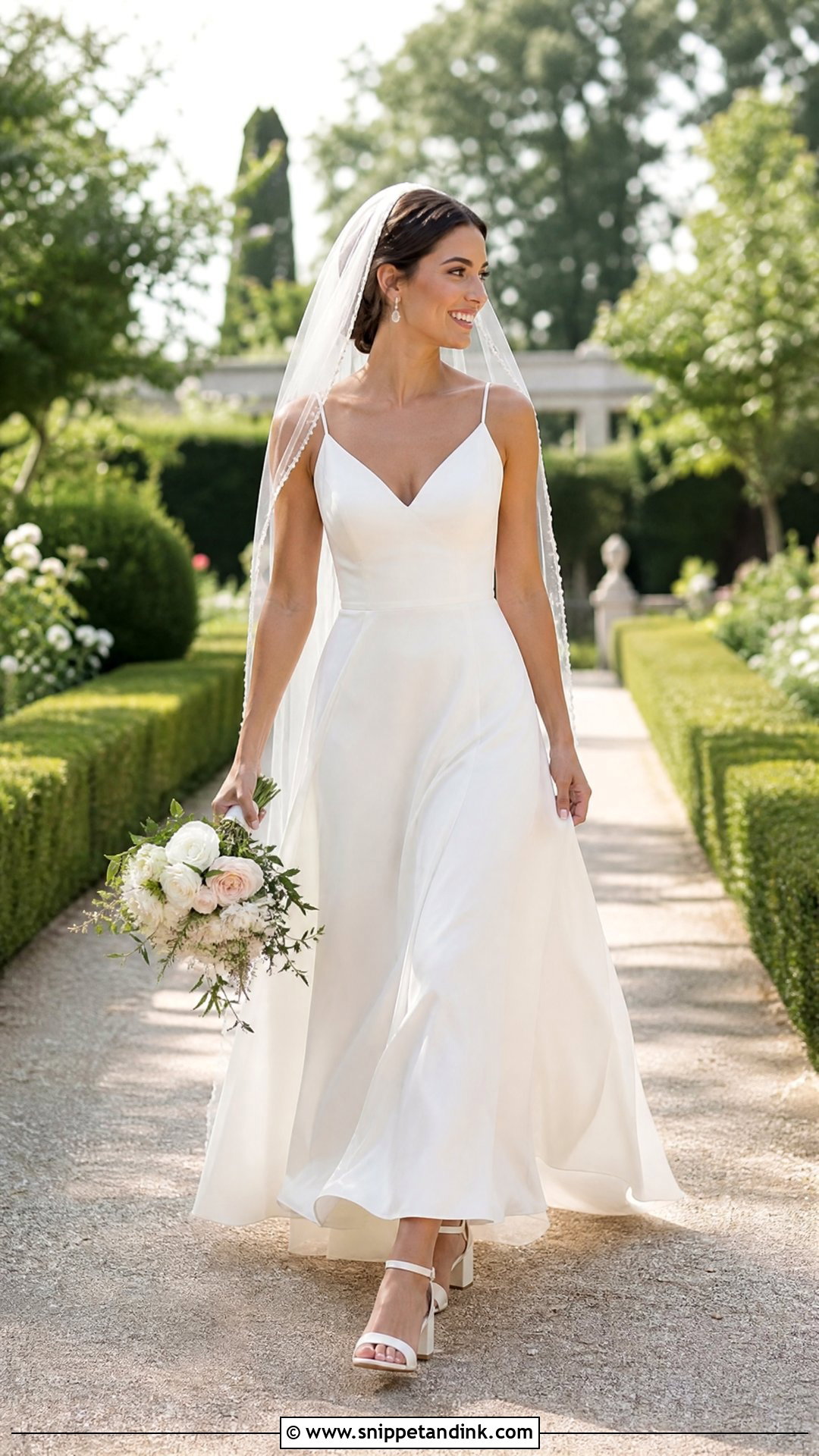
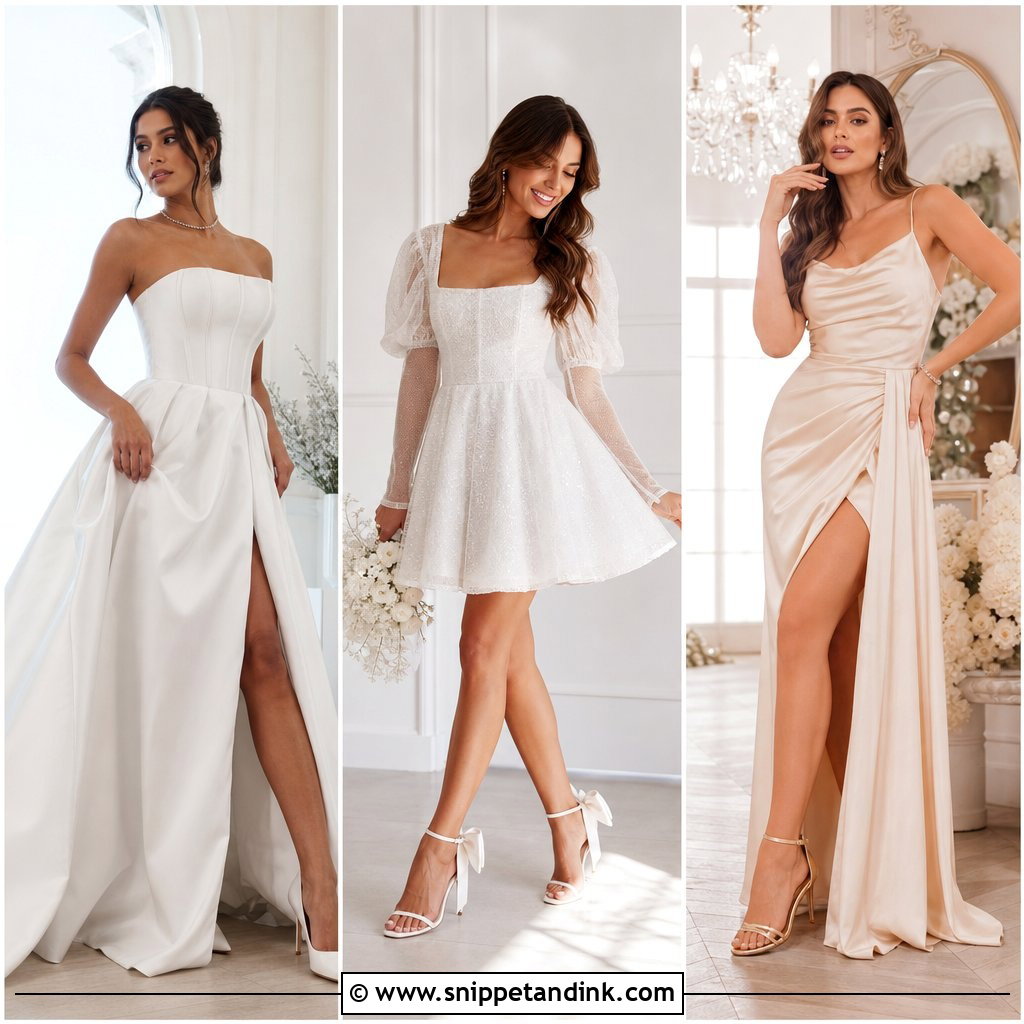
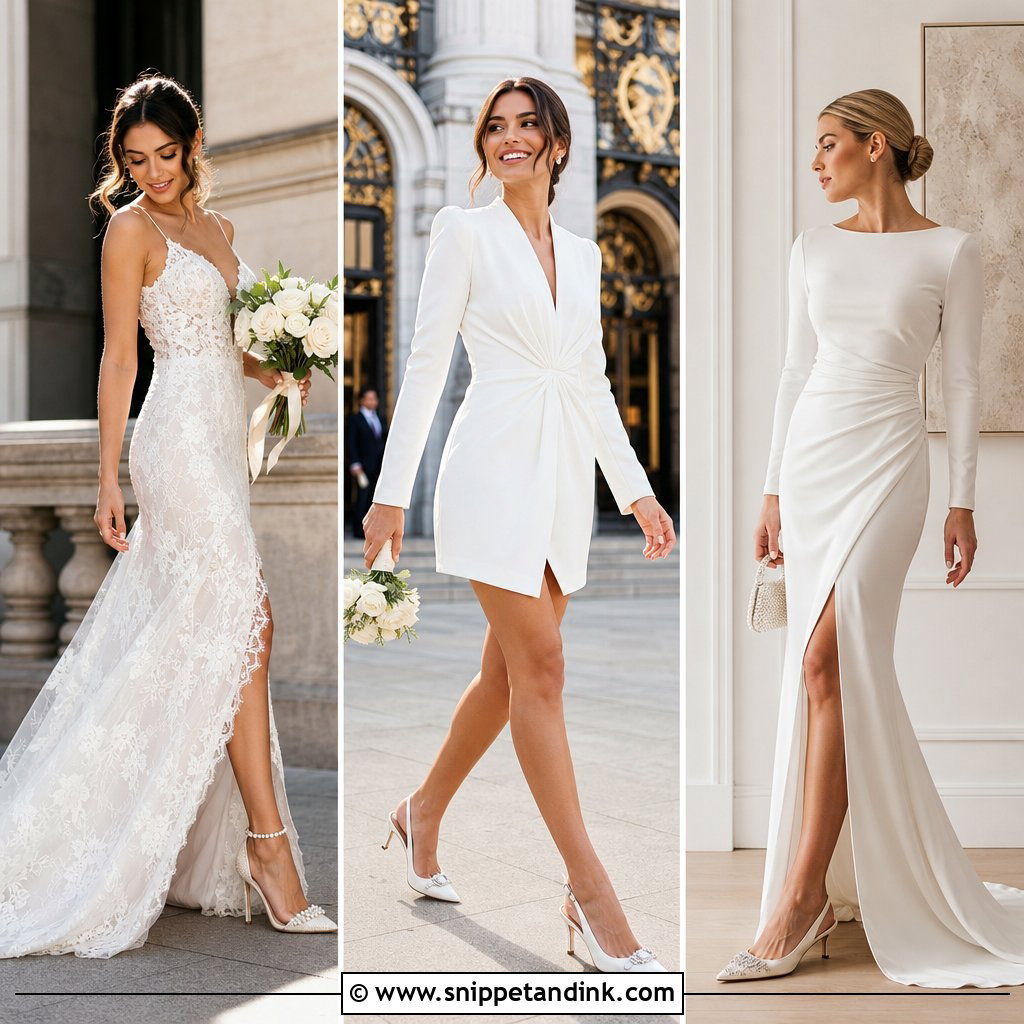
Outdoor ceremonies mean grass, gravel, pavers or uneven paths, and a broad block heel handles them far better than a narrow stiletto because more of it touches the ground. Choose a low heel, a textured sole, a closed or well-secured toe and an adjustable ankle strap. Ivory leather wipes clean in a way satin can’t, so skip satin if the grass will be damp or the paths dusty. A lightweight A-line, simple drop earrings and a fingertip veil suit the setting. Walk similar ground before you buy, test heel protectors for fit, and keep a clean backup pair in case the weather turns.
21. Beach Wedding Block Heel Sandals
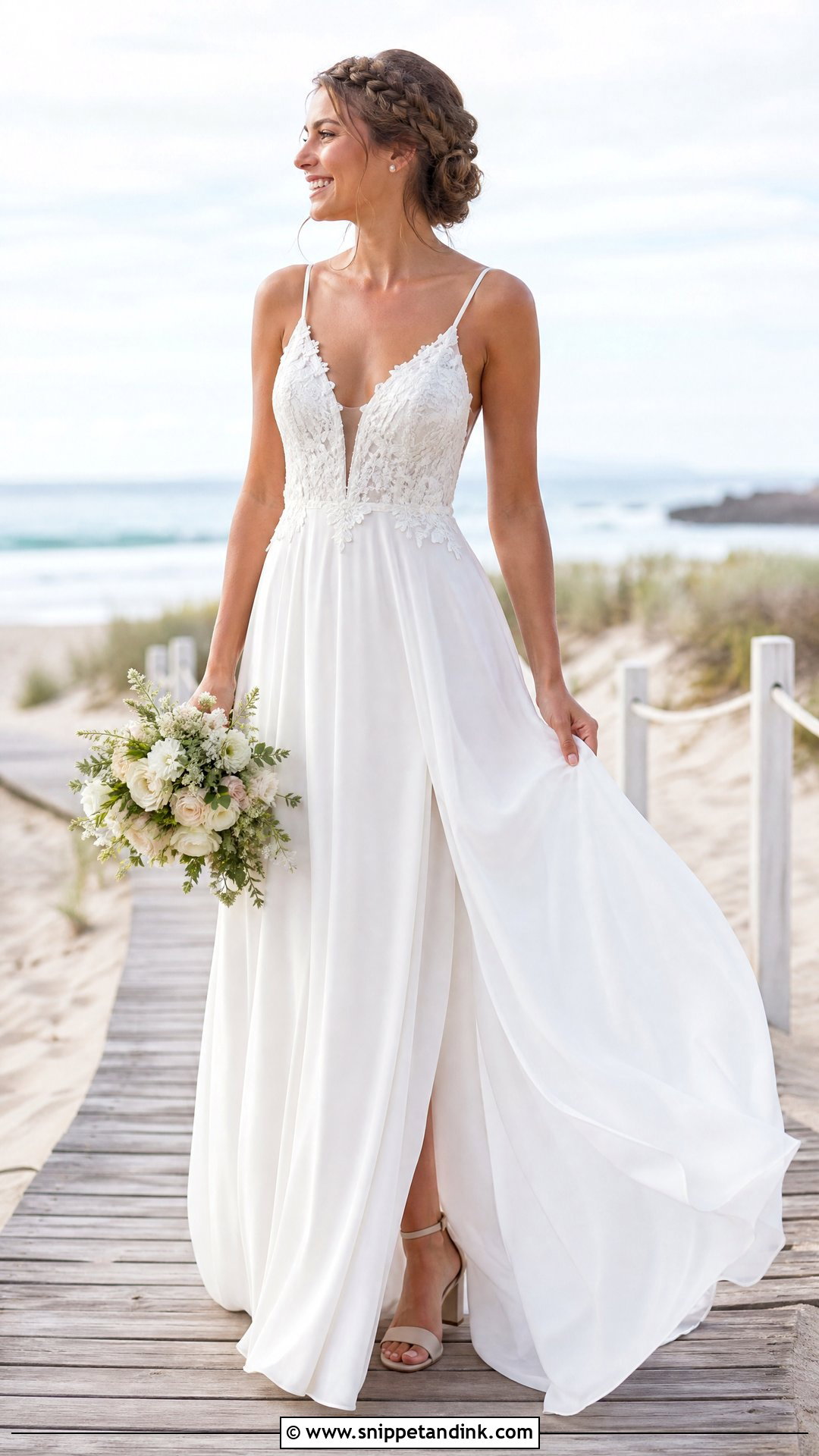
Sand defeats every heel, so on a beach I’m only aiming for a little lift on the firm parts. A broad one-inch heel with a secure ankle strap and lightly textured sole handles boardwalks and packed sand. Barely-there straps in ivory, champagne or soft gold keep it airy beside a flowing chiffon gown, pearl studs and a relaxed braided updo. Deep, loose sand is another matter, and many brides walk the aisle barefoot and put the sandals on afterward. Salt air tarnishes some metal buckles, so check them, and choose materials you can wipe clean.
22. Ballroom Dance Wedding Heels
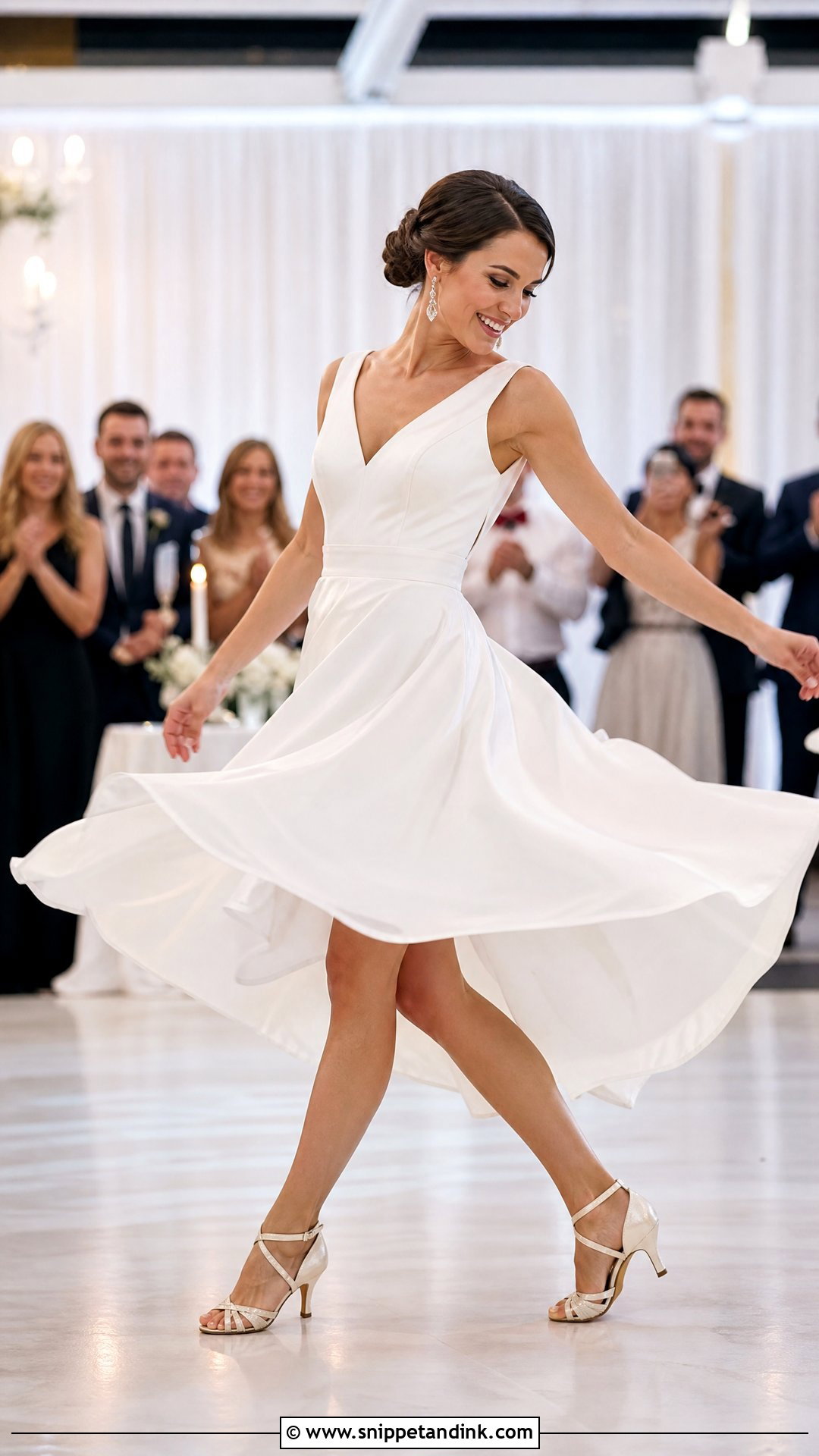
Ballroom-style heels are built to move, which makes them worth considering if your reception will be a proper dance party. A flexible sole, secure crossed straps, a supportive heel cup and a flared or block heel hold the foot while the toes move naturally. White, ivory, champagne and metallic finishes coordinate with a gown or a lightweight reception dress, crystal earrings and a neat ponytail or bun. Practice your first dance in the exact shoes and dress. Many dance shoes have suede soles meant only for indoor floors, and they lose their grip once worn outside, so bring another pair for the ceremony and for travel.
23. Bridal Mule Block Heels
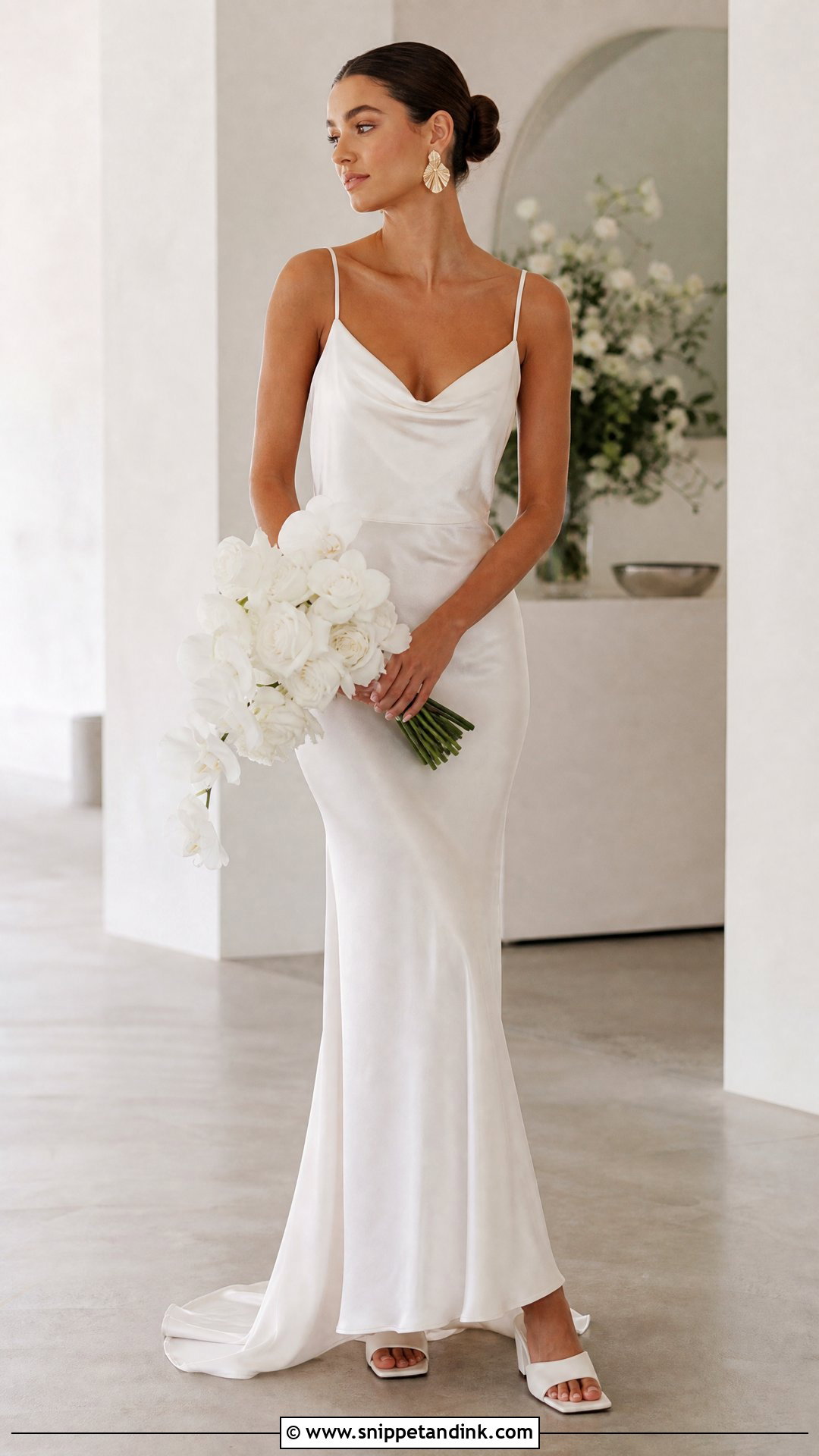
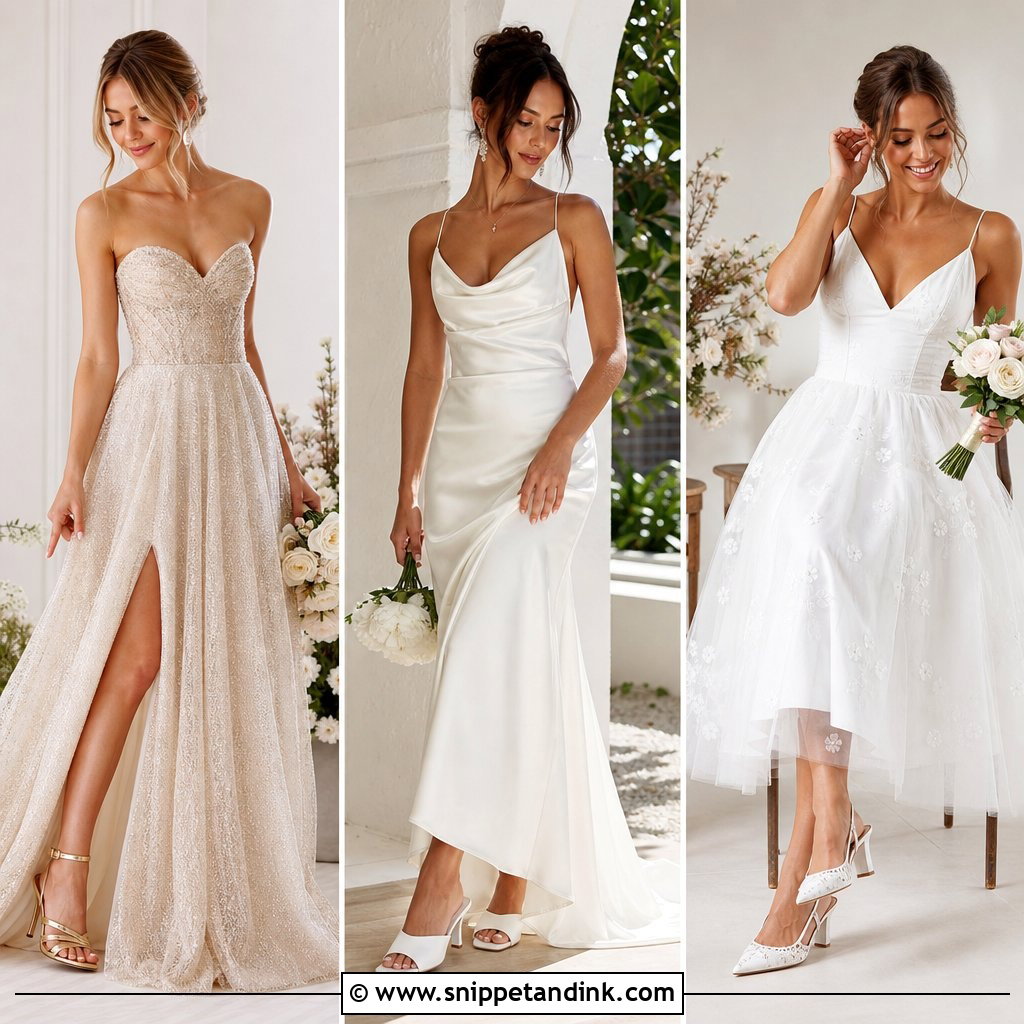
Mules are the easiest shoe to slip on and the hardest to keep on. Without an ankle strap, all the security comes from the upper, so it needs to cover enough of the instep that you’re not gripping with your toes, which tires the foot fast. A low block heel, a square or almond toe, and padded satin or soft leather help. Ivory mules suit a sleek slip dress, sculptural earrings and a small structured bouquet, especially for an indoor summer ceremony or a short reception dress. Walk briskly, climb stairs and turn quickly in them. If they slide or shorten your stride, switch to a slingback.
24. Sculptural Block Heel Wedding Shoes
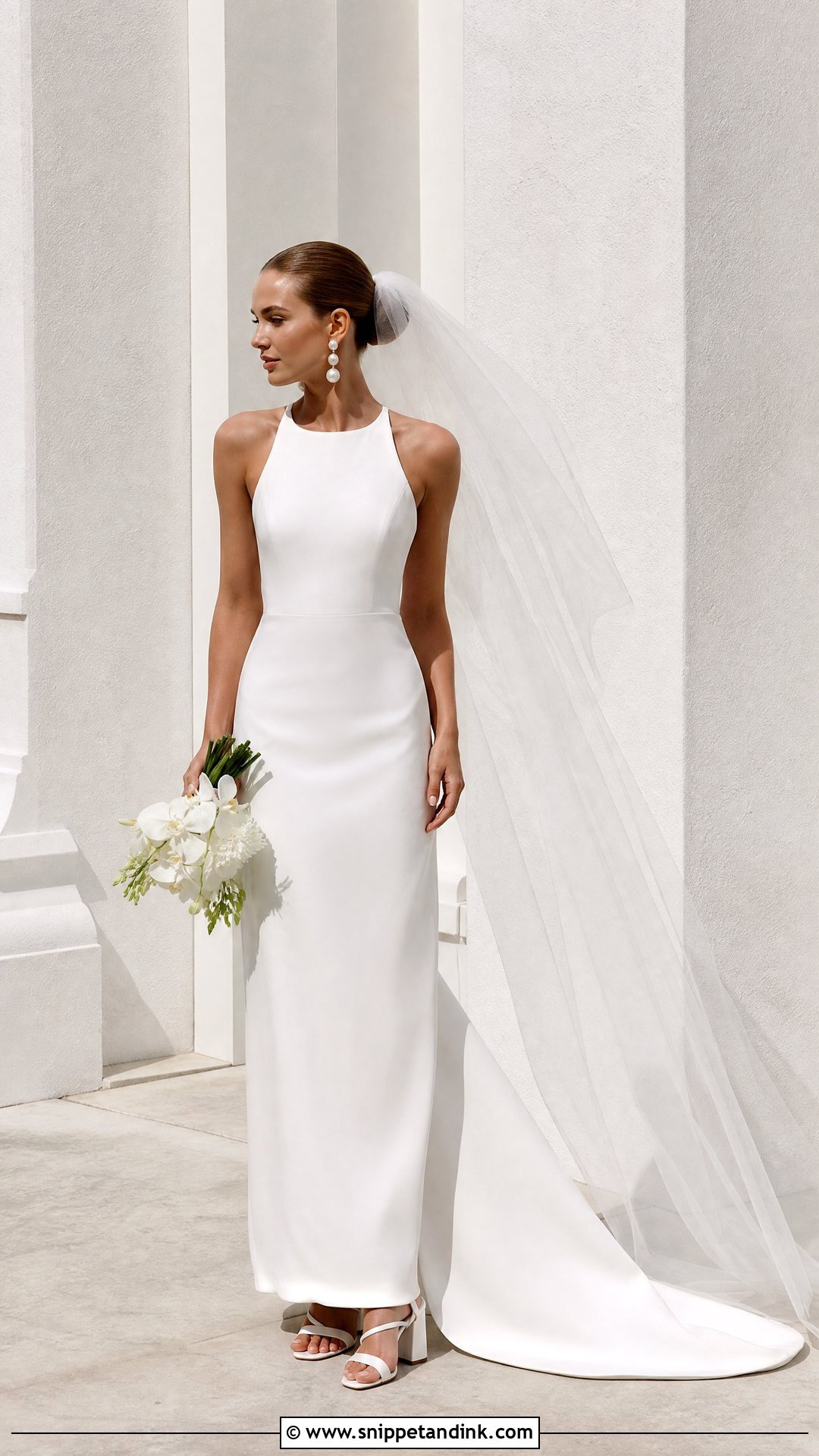
Sculptural heels give a fashion edge without height, but don’t assume every block heel balances the same way. A curved, flared or geometric heel needs a stable base sitting directly under the heel bone; set too far back, it tips. Keep the upper simple, in smooth white leather, satin straps or a square toe, beneath a clean column gown, bold pearl earrings and a structured veil. Stand, walk and turn on several surfaces to check the heel doesn’t wobble sideways. Avoid shapes with sharp points that could snag the hem or wedge between floorboards.
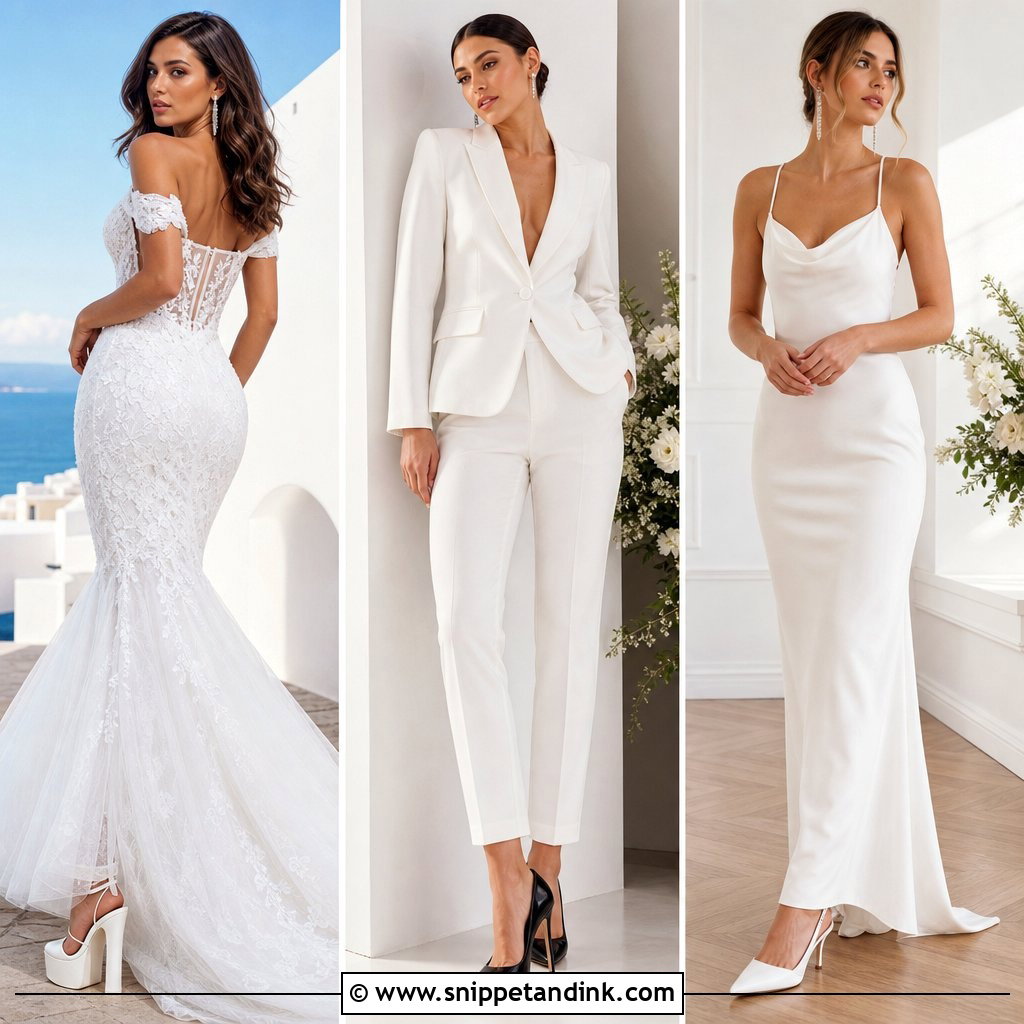
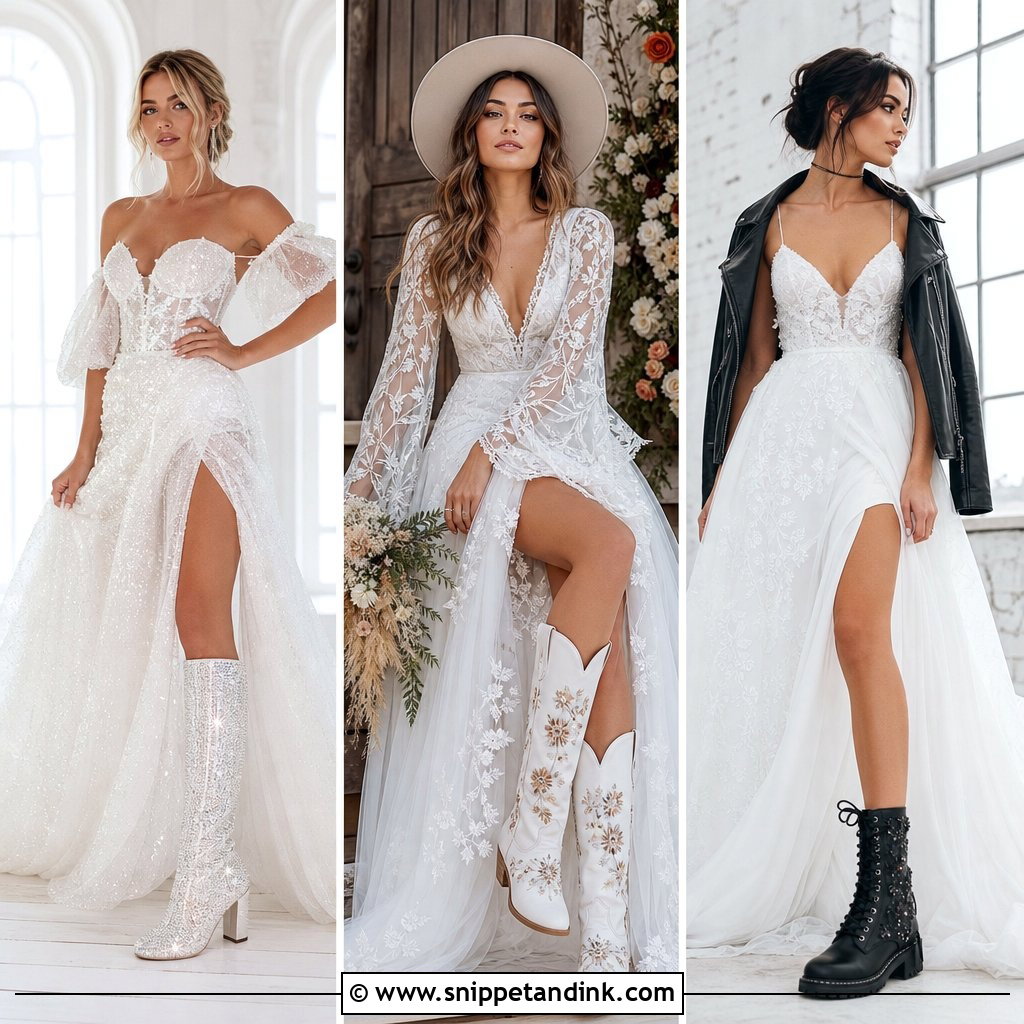
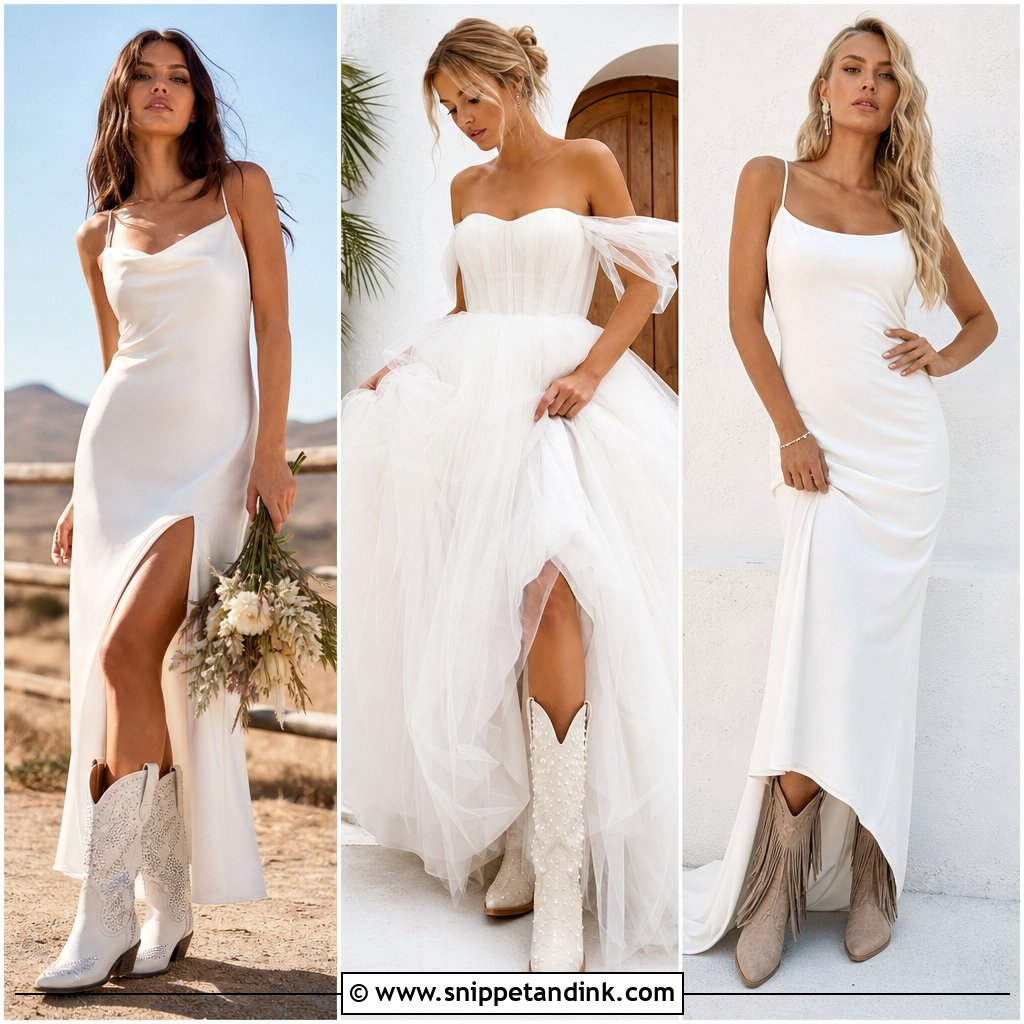
25. Reception Platform Wedding Heels
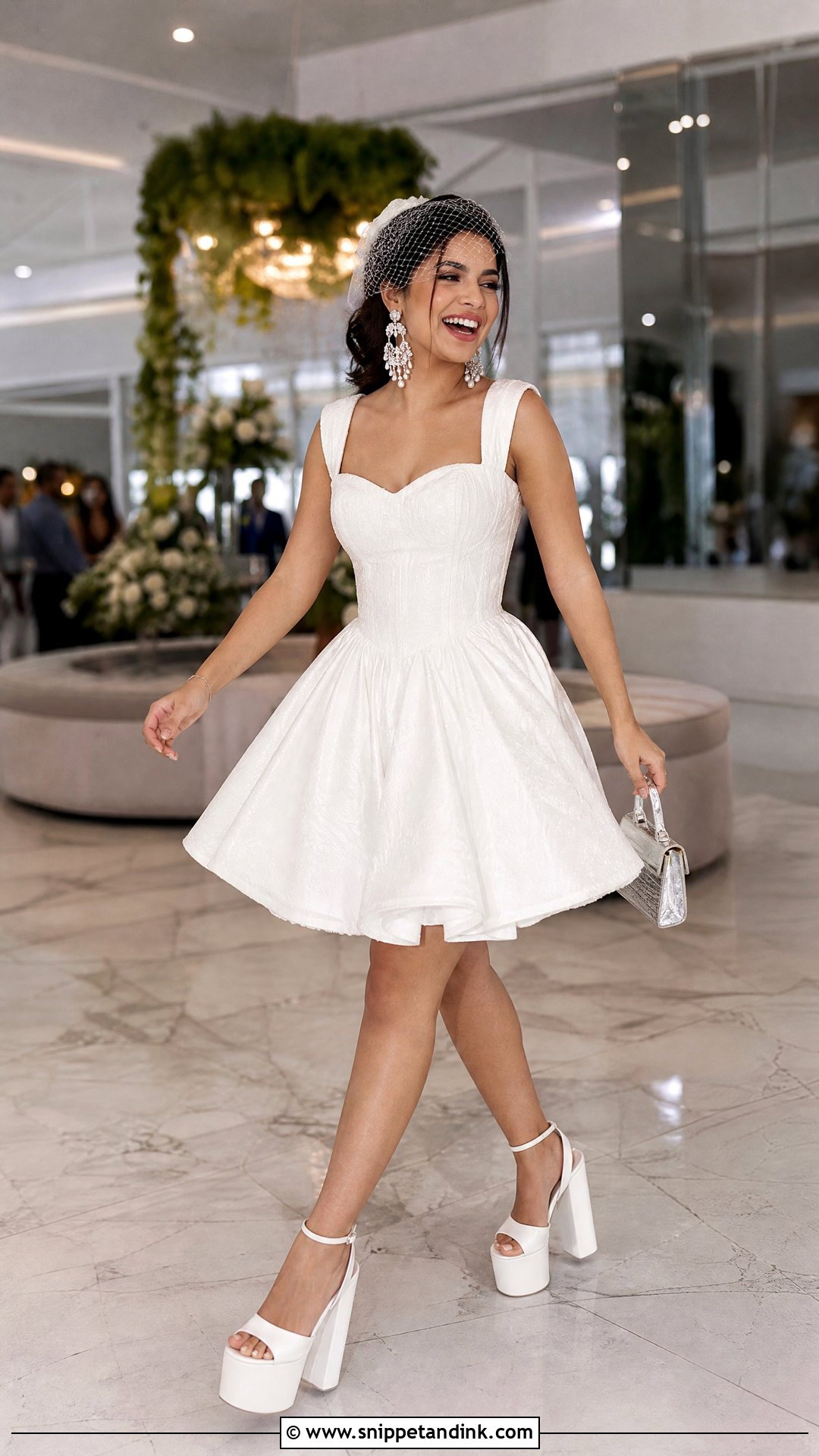
A second dress deserves a second pair. Reception platform heels add height and personality under a shorter dress, and the platform makes them easier to dance in than a stiletto of the same height. Choose a moderate platform with a wide block heel, cushioned sole and supportive ankle strap. White satin stays bridal, metallic leather adds shine, and pearl details tie in with classic accessories. With a knee-length or mini dress, statement earrings and a compact bag, the second look feels fun but connected. Tall platforms still need practice, so dance in them beforehand, make sure they don’t drag at the ankle, and keep a lower pair nearby. The hem must clear the platform entirely.
Your Shoes Belong at Every Dress Fitting
The hem of a floor-length gown is set to the exact height of the shoe you wear at the fitting. Change the heel by even an inch afterward and the dress either drags or shows your ankles. That’s why I ask brides to buy their shoes before the first alterations appointment and bring them every time. If you plan to change into flats or platforms for the reception, say so early: the seamstress can set the hem with both pairs in mind and add a bustle so the train stays off the floor either way.
A Three-Week Break-In Plan for Satin and Leather
- Week one: wear the shoes indoors for twenty to thirty minutes at a time, on clean floors, with thin socks over your feet to protect satin linings.
- Week two: build up to an hour or two, including stairs and a few dance steps. Note any spot that rubs and add a gel pad or anti-friction balm there now, not on the morning itself.
- Week three: one long session with the shoes and your dress, or a skirt of the same length. If the soles feel slippery, scuff them lightly with fine sandpaper.
On the day, give your maid of honor a small pouch with blister bandages, the anti-friction stick, heel grips and a pair of foldable flats. Most brides who end the night in flats didn’t choose the wrong heels. They simply stood in them for nine hours.
Comfortable Feet From the Aisle to the Last Song
The right bridal shoes support your feet and suit the shape, color and formality of your outfit. Compare block heels, slingbacks, kitten heels, platforms and statement finishes against what you actually wear day to day, the ground at your venue, your dress length and how long you’ll be standing. Try shoes in the late afternoon, walk them on more than one surface, and bring them to your final fitting. Cushioning and straps help, but nothing replaces the right width and length. Test them properly, keep a backup pair close, and you’ll be thinking about your vows, not your feet.
You'll Like These Ideas:


Leave a Reply