
The shoe question usually comes up at the second dress fitting, and by then it matters more than most brides expect, because the seamstress hems to the heel you bring. A sandal has to suit the gown, but it also has to carry you across whatever floor the venue has: lawn, sand, cobbles, a polished ballroom. Below are the sandal styles I reach for most often, each one paired with the dress, jewelry and hair it sits best with. You’ll notice the current bridal footwear trends lean toward pearls, crystal straps, block heels and flats that still look dressed up, which is good news for anyone planning to stand for ten hours. Keep your hemline, the ground underfoot and how much of the shoe will actually show in mind as you scroll.
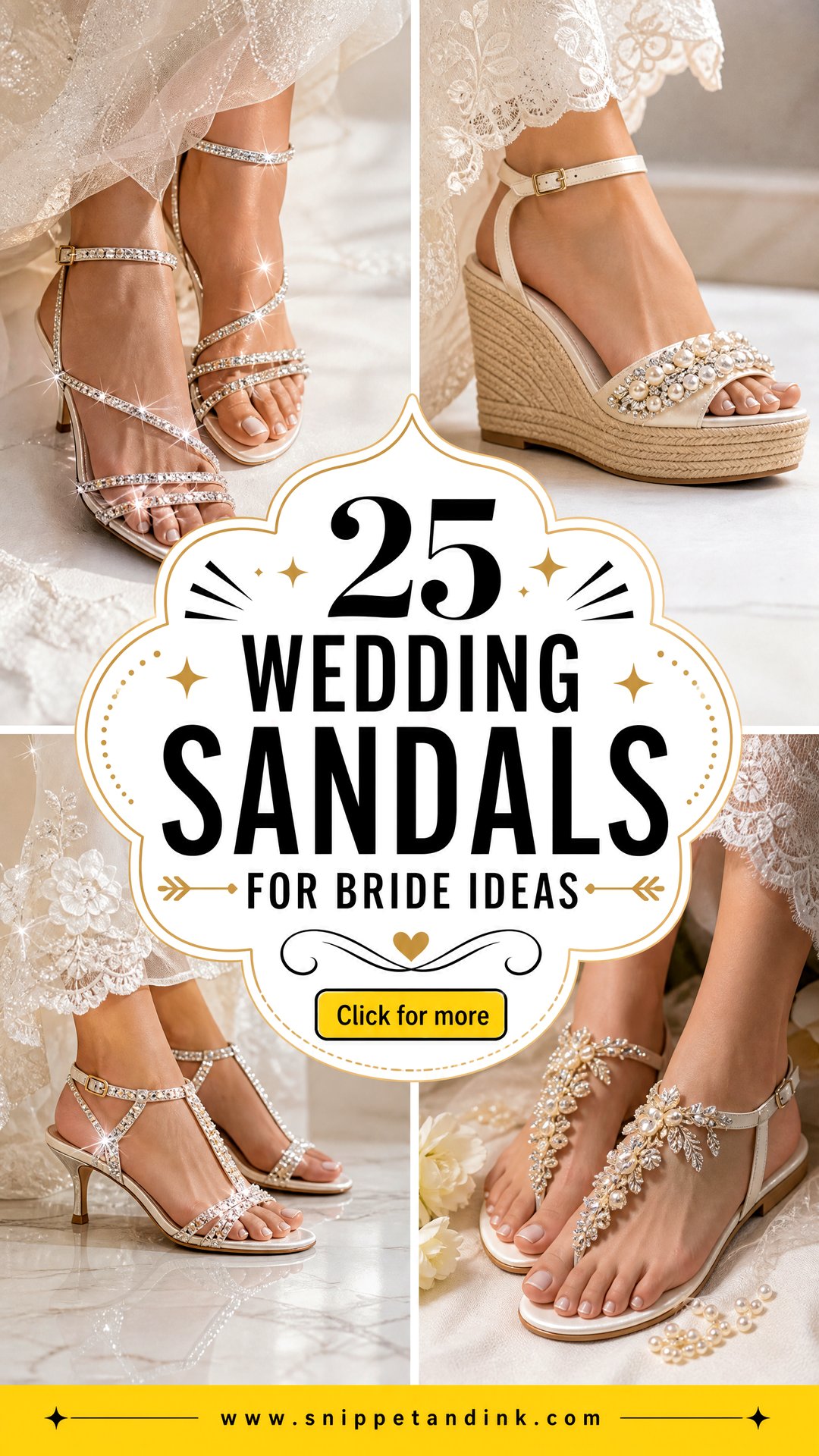
Buy the Shoes Before the Second Fitting, Not After
Your seamstress hems the gown to the shoe you’re standing in. Bring a different heel height to the final fitting and the front hem will either drag or sit too high, and fixing that in the last two weeks is stressful and sometimes not possible on a layered skirt. So I tell brides to settle on their sandals by the second fitting at the latest and bring them every time after that.
A few fit checks I run before anyone pays:
- Try them on in the late afternoon. Feet swell over the day, and a sandal that fits snugly at ten in the morning can pinch by dinner.
- Stand on tiptoe and look at the toes. If they hang over the front of the sole, go up half a size or try a different brand.
- Check the strap tension with your foot flat and then flexed. Straps that gap when you point your foot will let the heel slip on stairs.
- Walk on a hard floor and on carpet. A sole that grips in the shop can be slippery on polished boards, and a strip of sole grip tape or a light scuff with fine sandpaper helps.
If you plan to switch pairs
Hem the gown to the taller of the two. A slightly higher hem with flats only shows when you lift the skirt, while a long hem with low shoes will catch under your toes all evening.
1. Pearl Block Heel Wedding Sandals
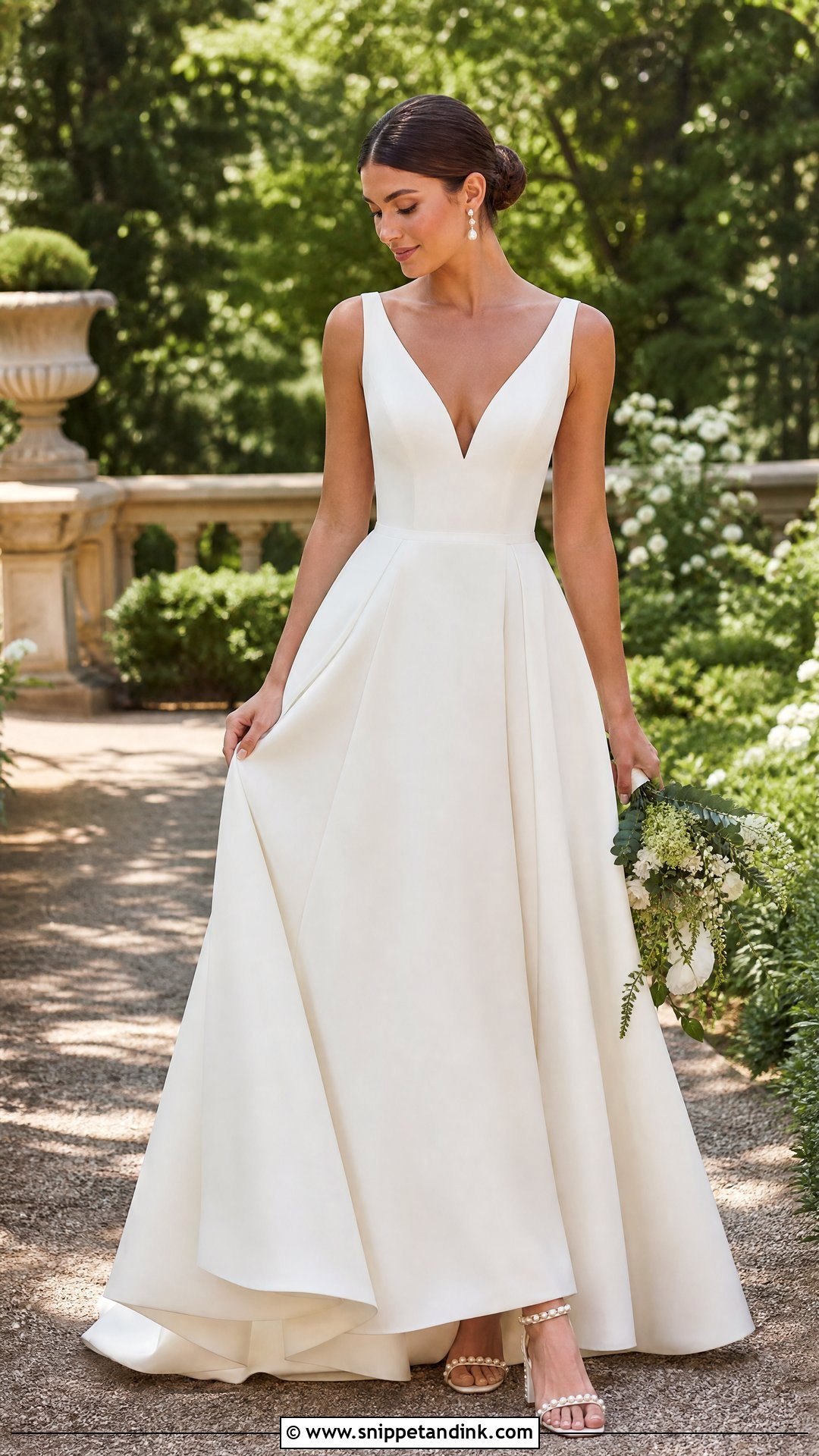
This is the pair I suggest most when a bride tells me she hasn’t worn heels since her last office party. A block spreads your weight over a wider footprint, so you don’t wobble on garden paths and the heel won’t punch into a lawn. The pearl trim reads soft against clean satin, crepe or mikado, where a plain fabric needs a little texture at the hem. Put them with an ivory A-line, pearl drops and a smooth low bun. One thing I always check: pearls glued onto the ankle strap can rub the bone, so run a finger along the inside before you buy.
2. Crystal Strappy Wedding Sandals
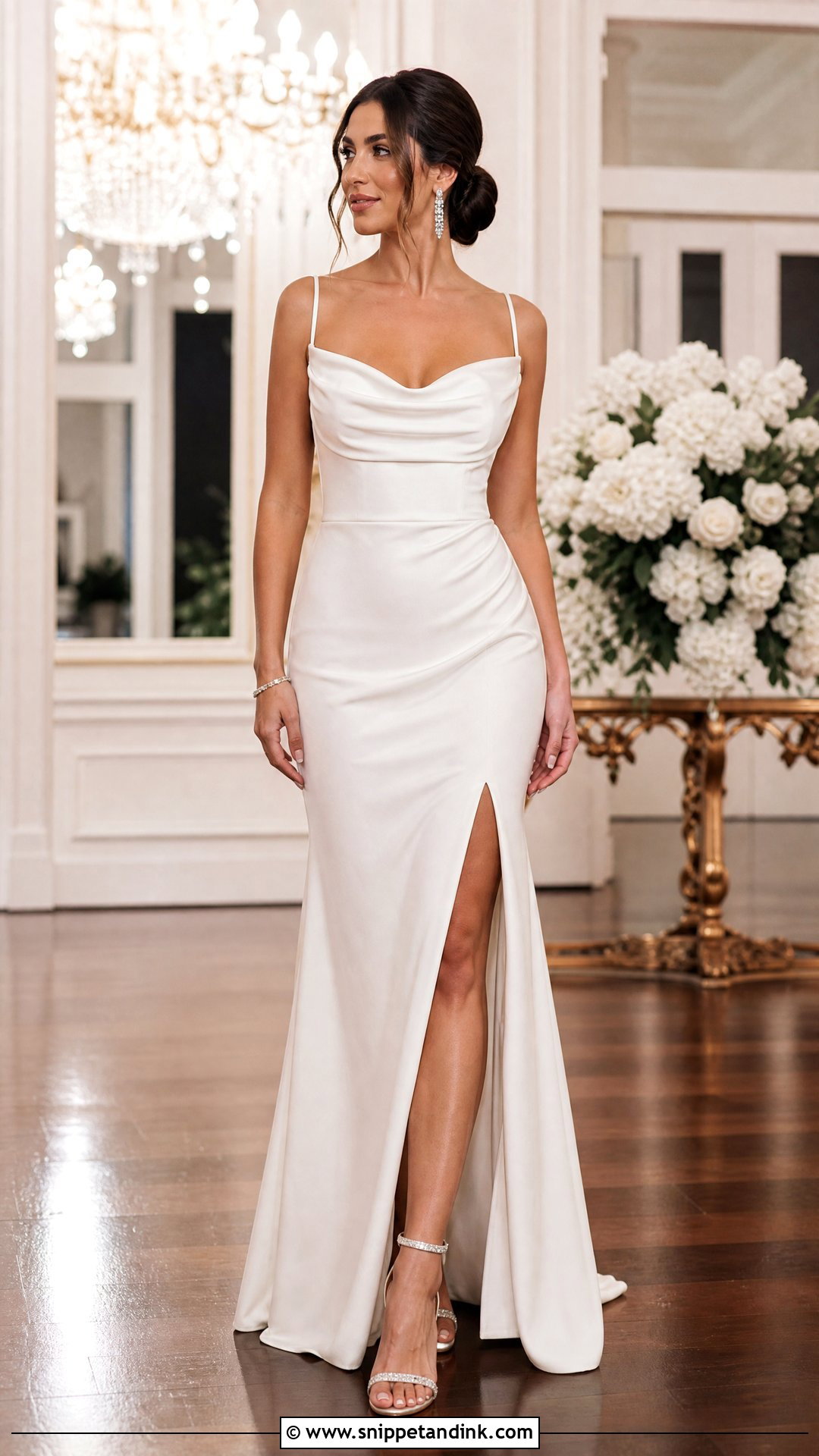
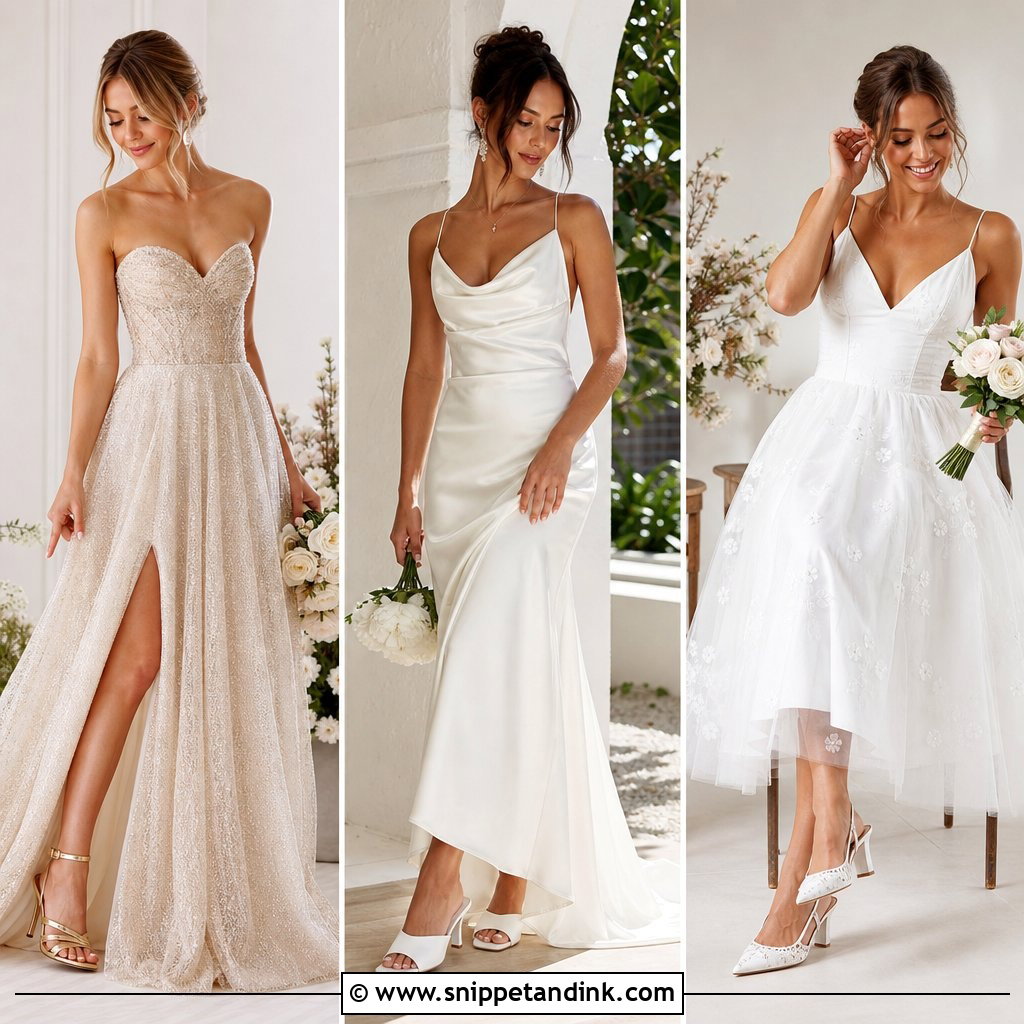
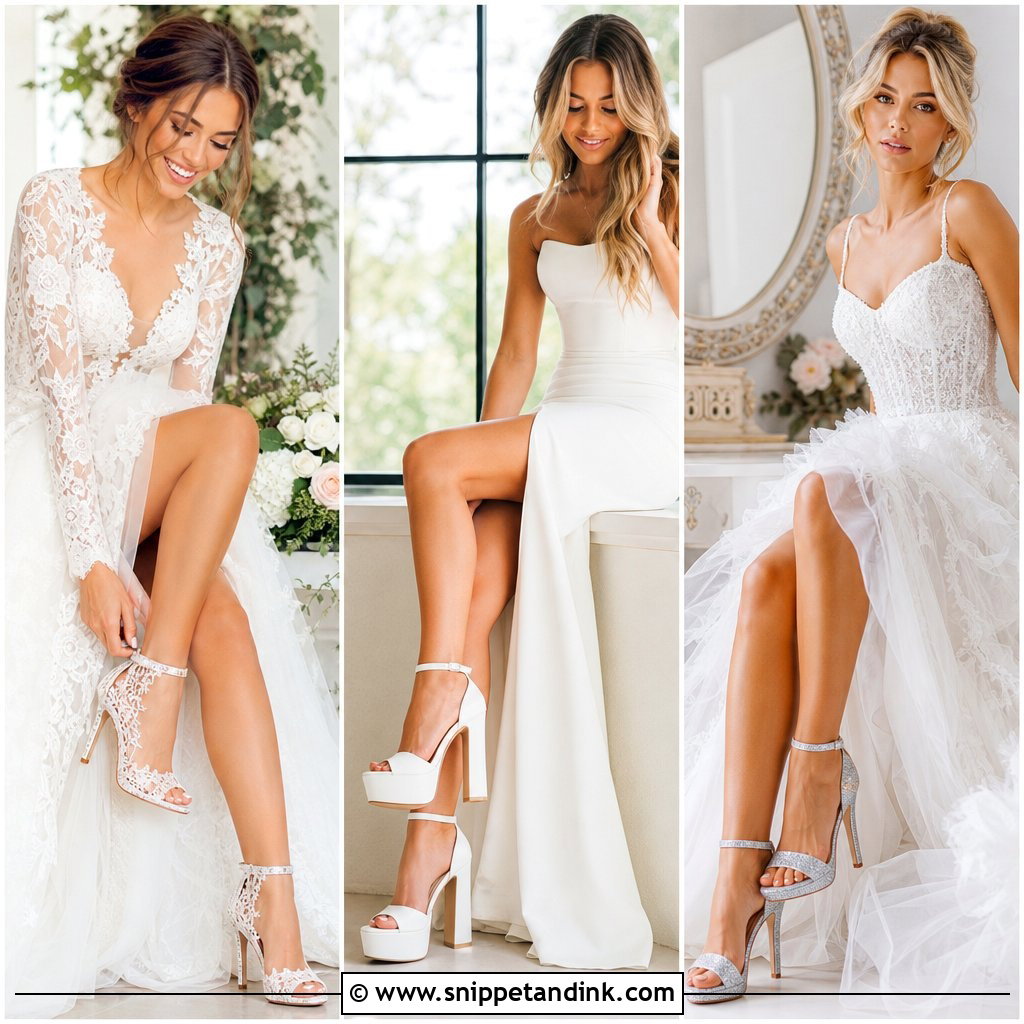
Thin crystal straps give you a flash of sparkle each time the skirt moves, which is why they suit fitted gowns, slit skirts and short reception dresses, where the foot is actually on show. Under a full ball gown, honestly, nobody will see them. I balance them against the bodice: a heavily beaded gown wants the slimmest strap you can find, while a plain crepe column can carry a more embellished pair as its one bit of shine. Keep the jewelry to crystal studs and a slim bracelet. They come alive in hotel ballrooms and evening light.
3. Flat Bridal Sandals
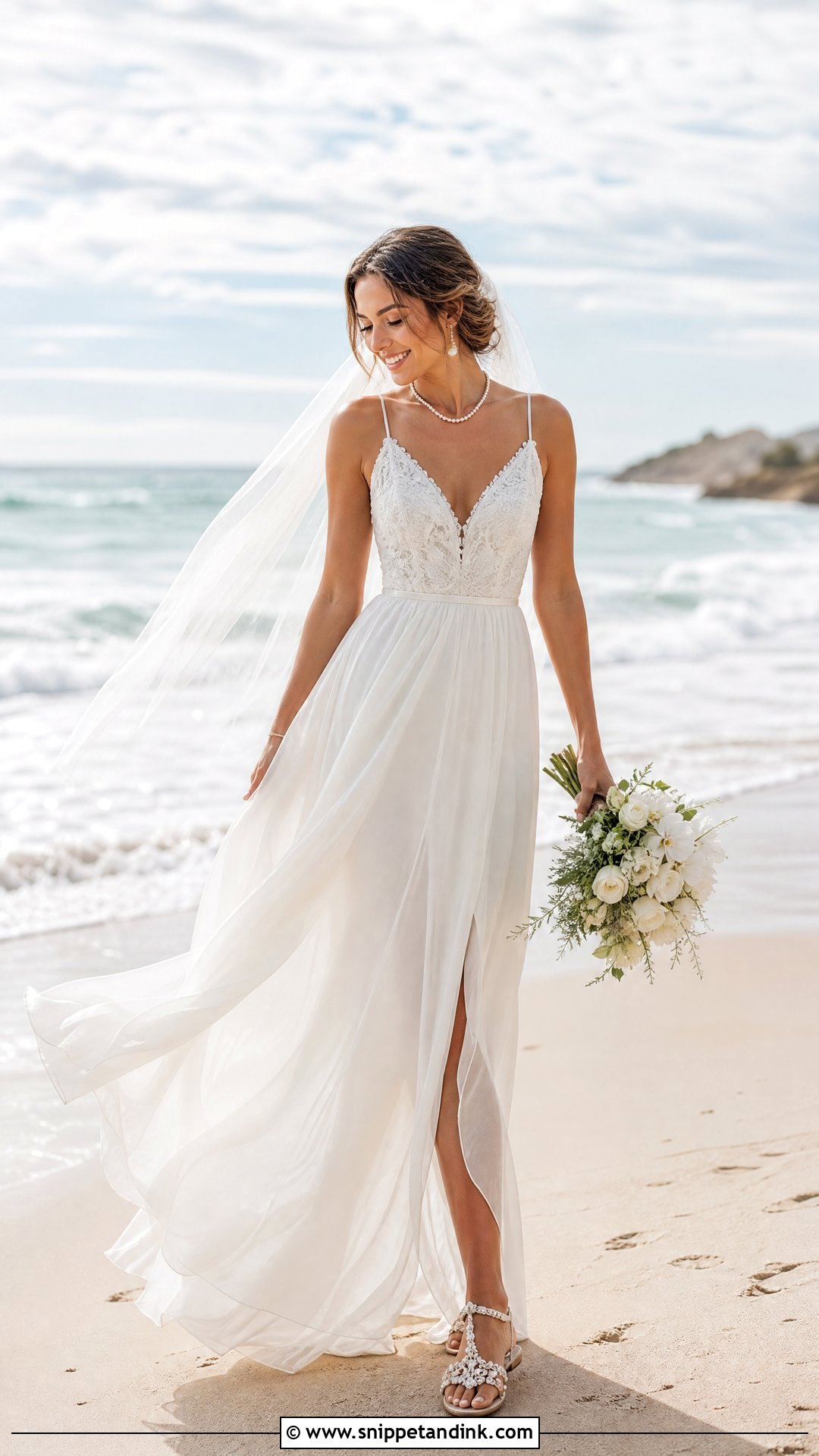
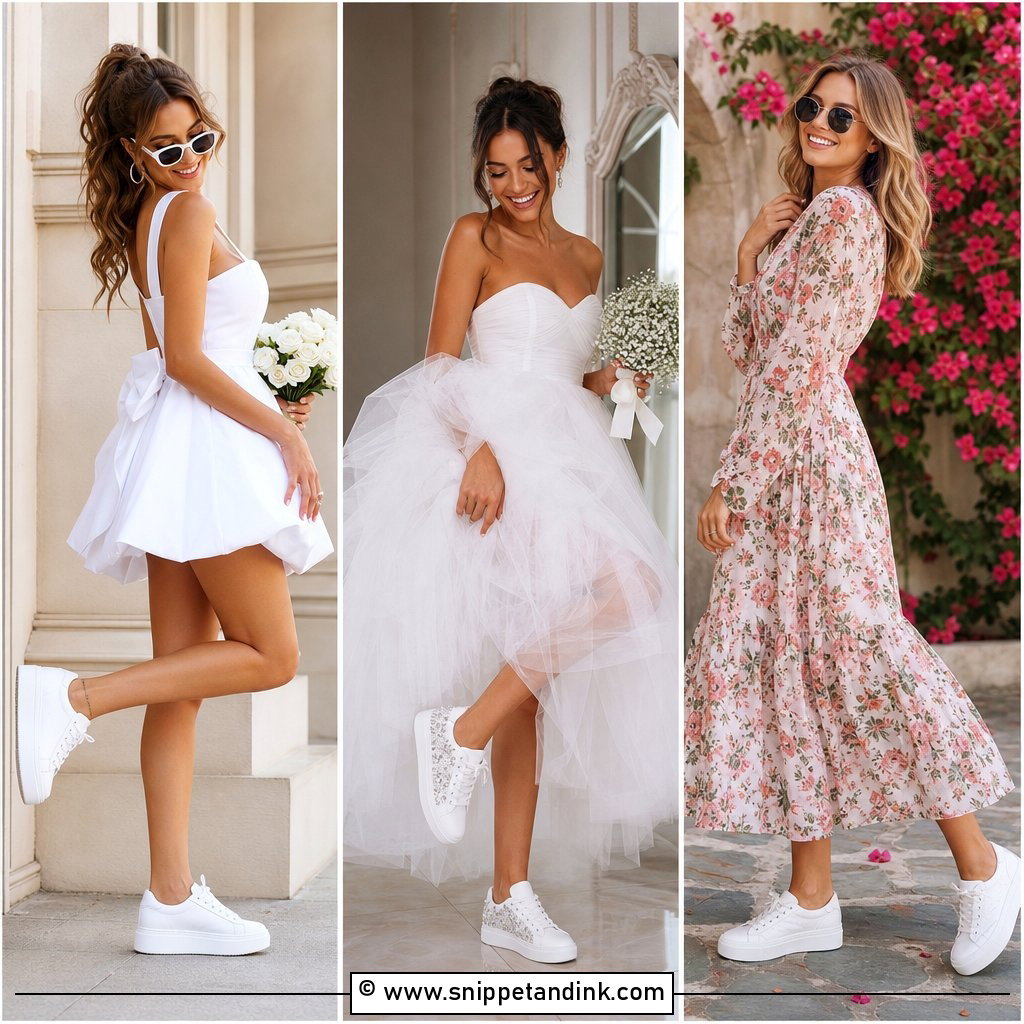
Flats are not a compromise, and I’ll happily put a bride in them for a beach ceremony or a venue with uneven stone. The trick is making them look chosen rather than retreated to, so look for satin straps, pearl accents, metallic leather or a thin line of crystal. They sit naturally with chiffon, boho lace and slip dresses, worn with soft waves and a light veil. Your hem has to be taken up for flats, though, so decide before the fitting rather than after. If you add a cushioned insole, take it to the fitting too, since it lifts the foot a few millimetres.
4. White Platform Wedding Sandals
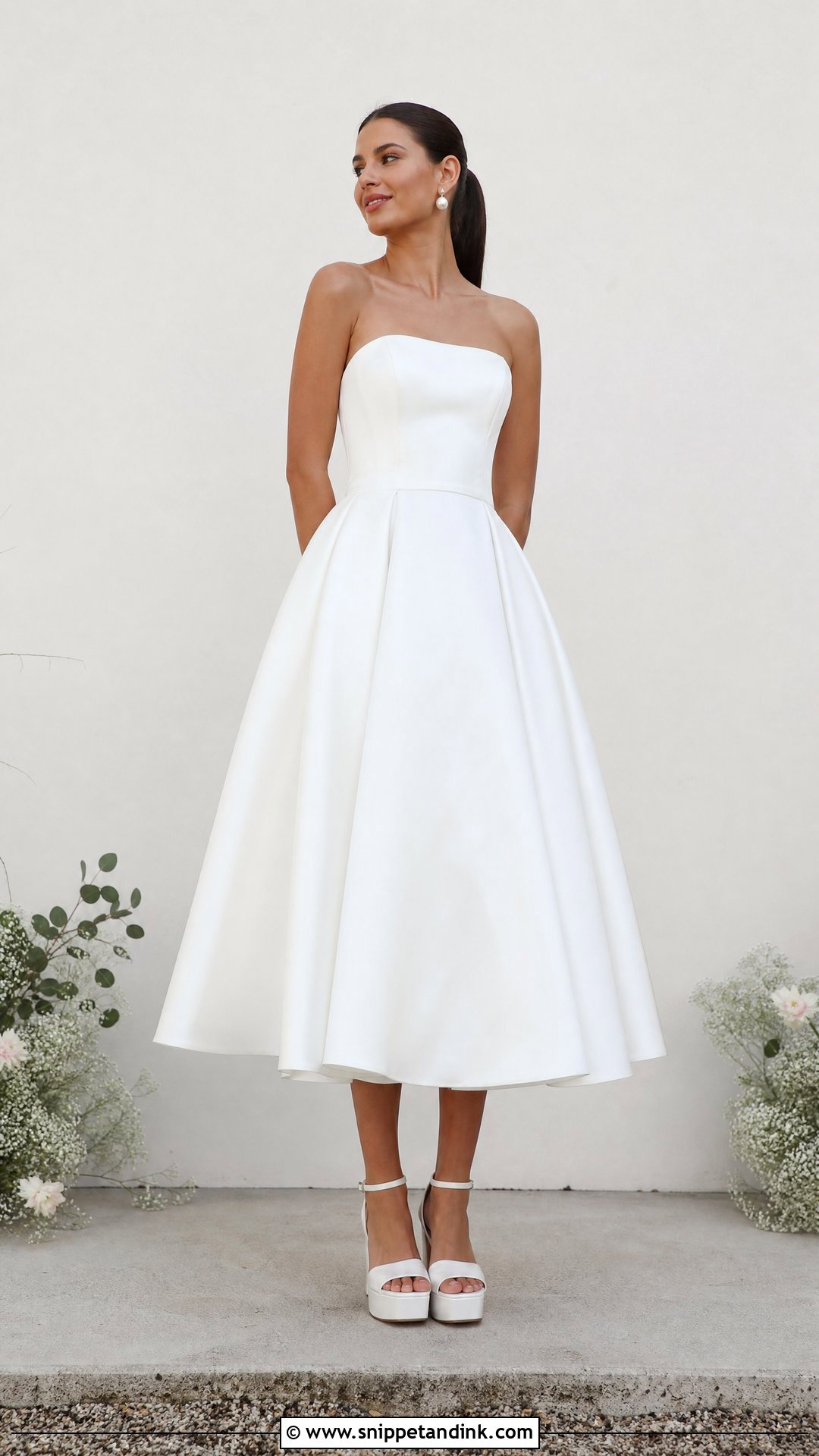
A front platform shortens the drop from heel to toe, so a four-inch heel behaves more like a three-inch one on the ball of your foot. That’s why I suggest White platform wedding sandals to brides who want height and are nervous about standing. They look sharpest with structured minis, modern column gowns and square necklines, finished with pearl earrings and a sleek ponytail. Go for a slim, refined platform unless chunky is the whole point of your style. Ivory leather or white satin keeps it bridal. Walk down a flight of stairs in them before committing, because platforms reduce how much you feel the step under you.
5. Low Heel Wedding Sandals
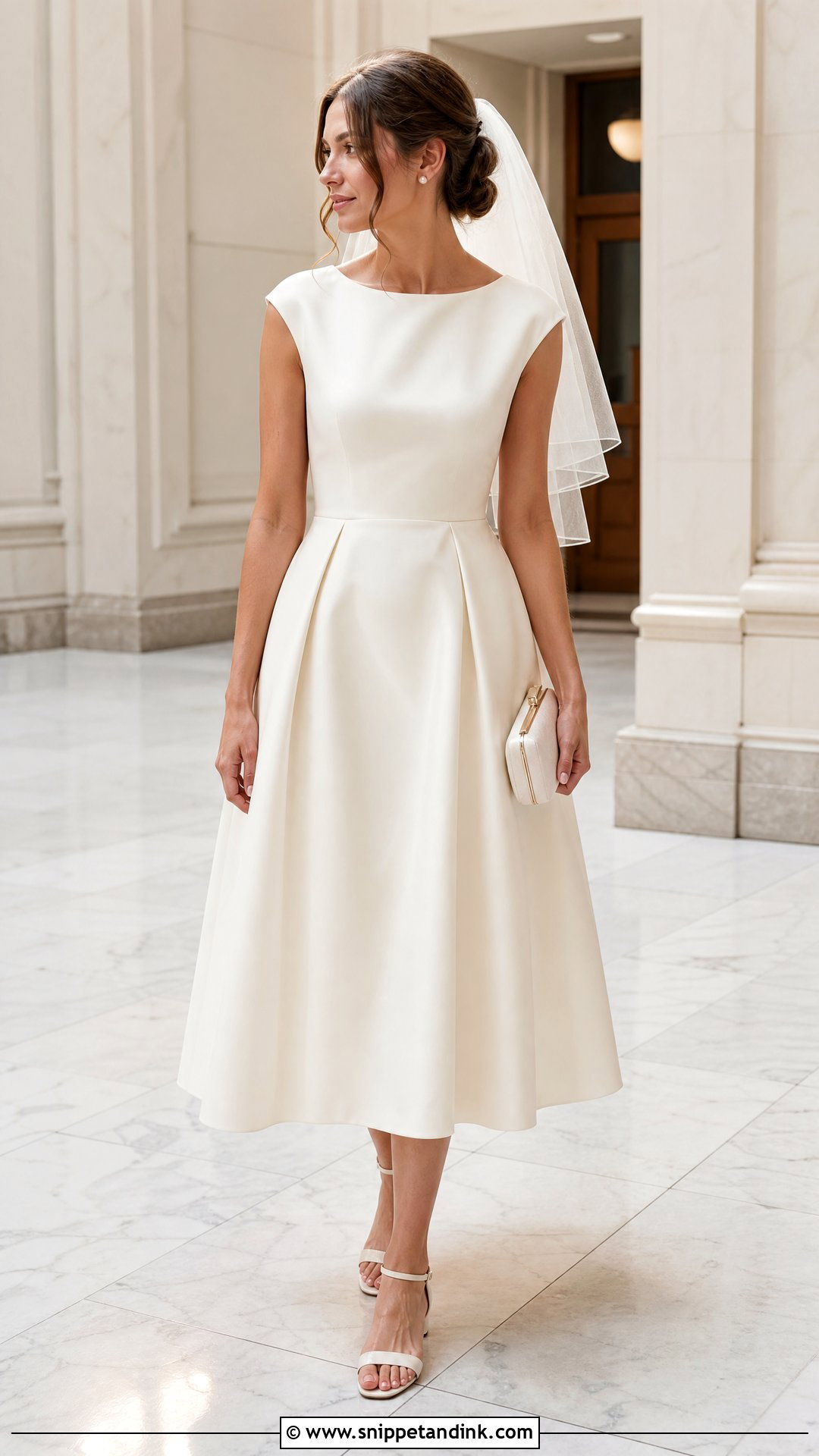
One to two inches is the height I’d call the honest sweet spot: enough lift to change your posture, not enough to load the ball of the foot by the second hour. Low heel wedding sandals pair naturally with a tea-length dress, a midi veil, pearl studs and a small structured clutch. Courthouse ceremonies and relaxed garden receptions suit them well, as do brides who simply know their feet. Between a low block and a thin kitten heel, I lean toward the block for outdoor portraits. Feel the inner seams; a rough edge you barely notice in the shop becomes a blister by the speeches.
6. Gold Bridal Sandals
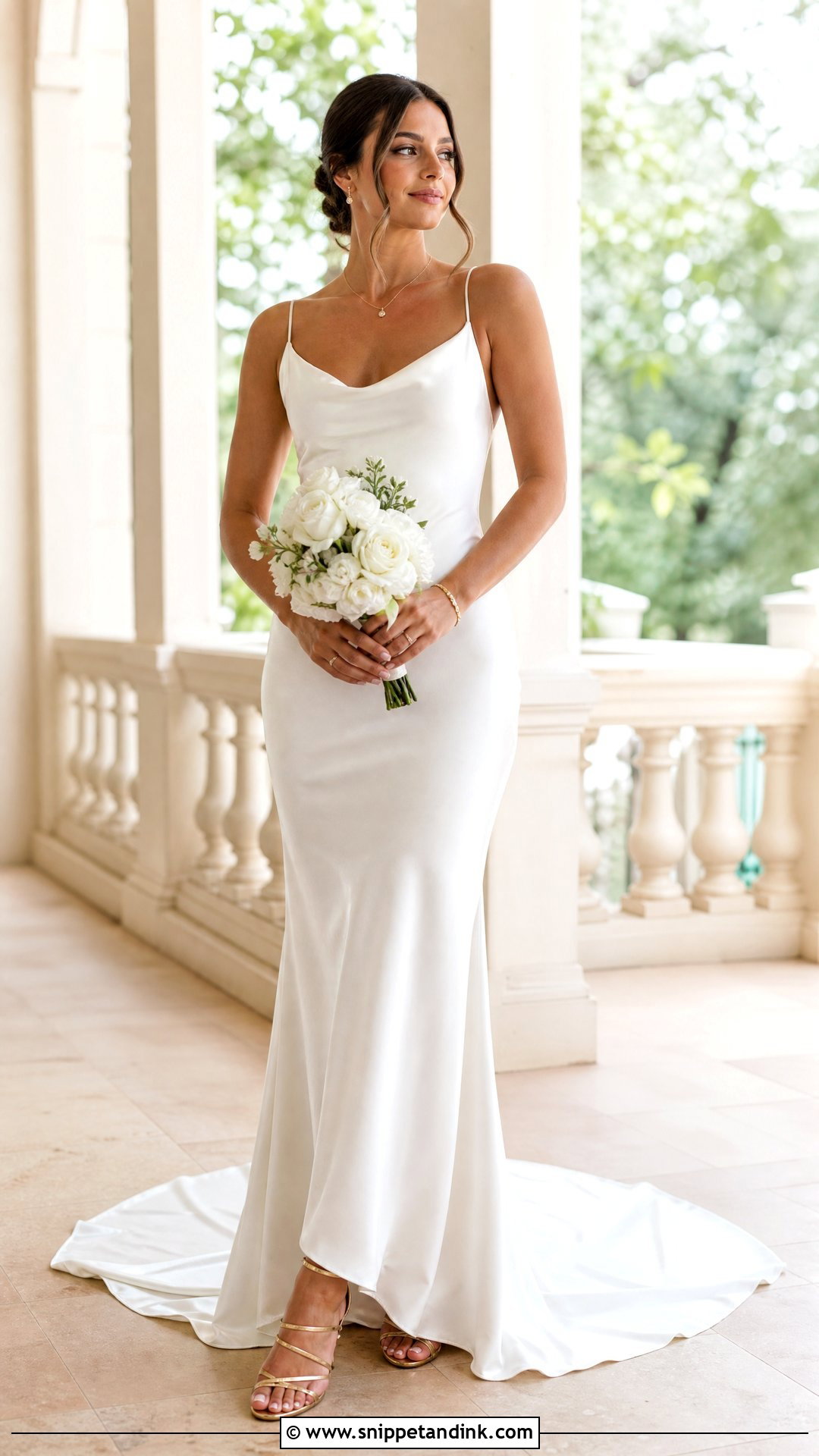
Gold warms up ivory, champagne and blush gowns in a way silver can’t, and it’s the easiest wedding shoe to wear again afterwards. With a satin slip gown I’d keep the jewelry fine and gold, and ask your makeup artist to stay in warm neutrals so the whole look sits in one temperature. A formal evening can take metallic straps with a few crystals. On a beach, drop to a flat or low gold sandal. Gold also echoes a bouquet with cream, peach or pale yellow in it. Keep every metal on you in the same family, including your hair pins.
7. Silver Wedding Sandals
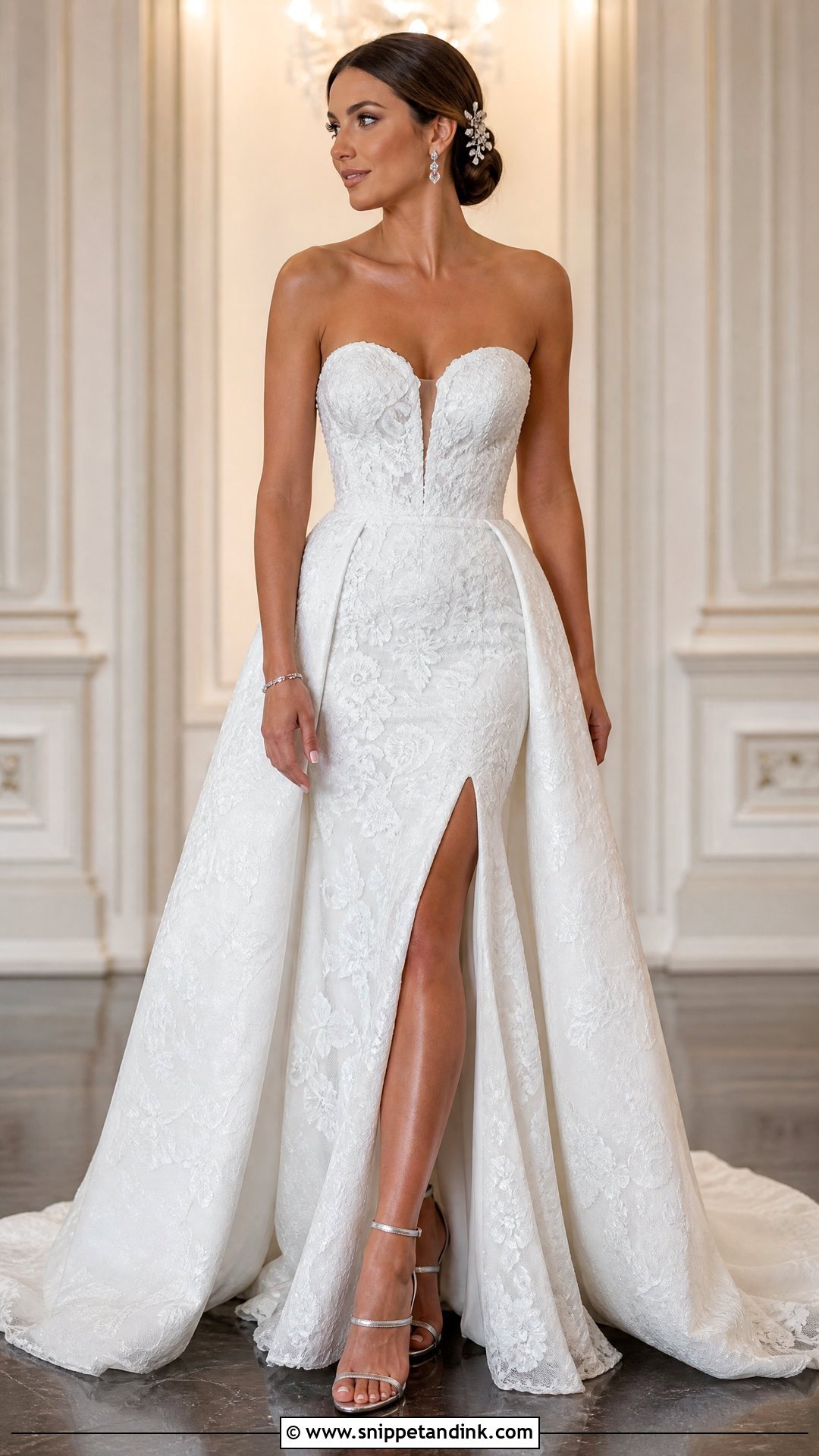
Silver belongs with cool, bright whites. Against an ivory gown it can look slightly grey, so I always hold the shoe against the actual dress fabric in daylight before saying yes. With pure white, icy beading and crystal hair pins, it ties everything together, and it catches evening light well on a ballroom floor. Try it with fitted lace, a sleek mermaid or a satin column. A narrow strap keeps it delicate; a wider metallic band gives more support and a more modern line.
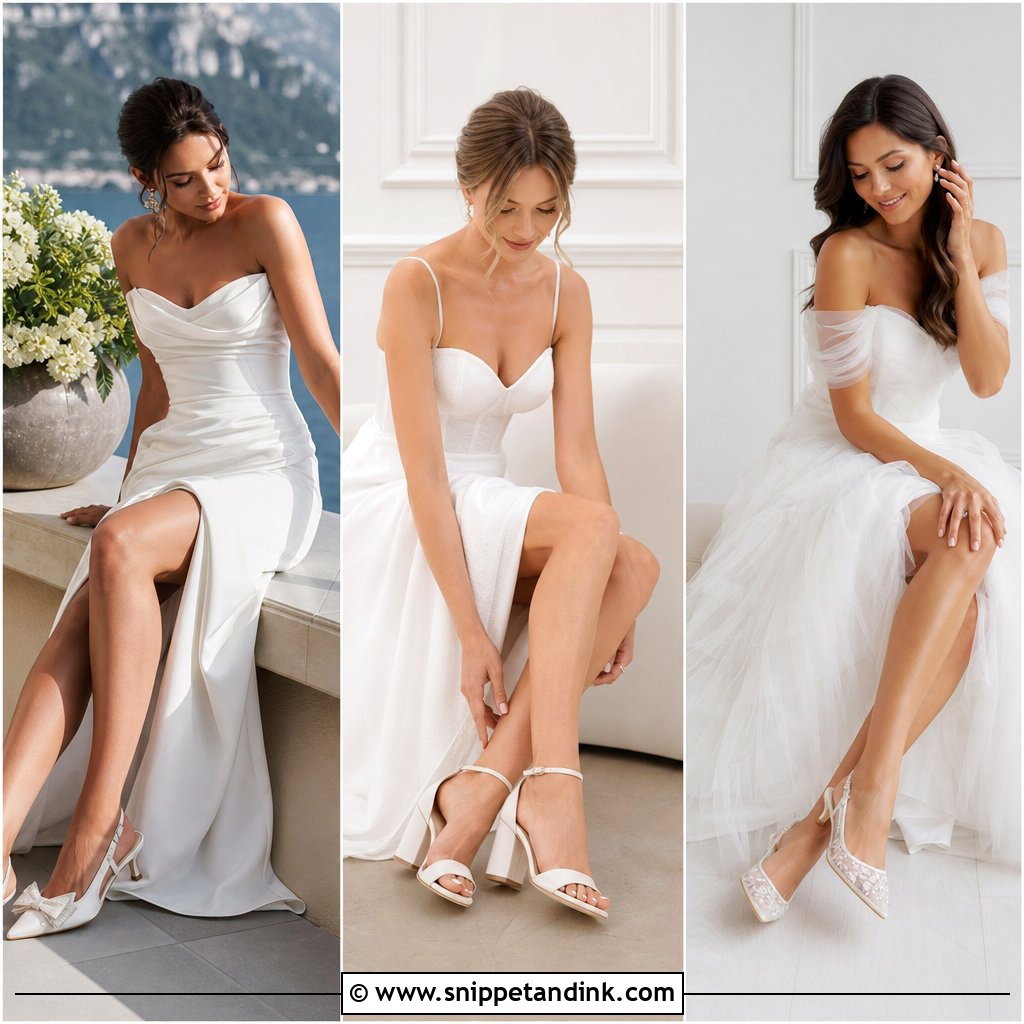
8. Bow Wedding Sandals
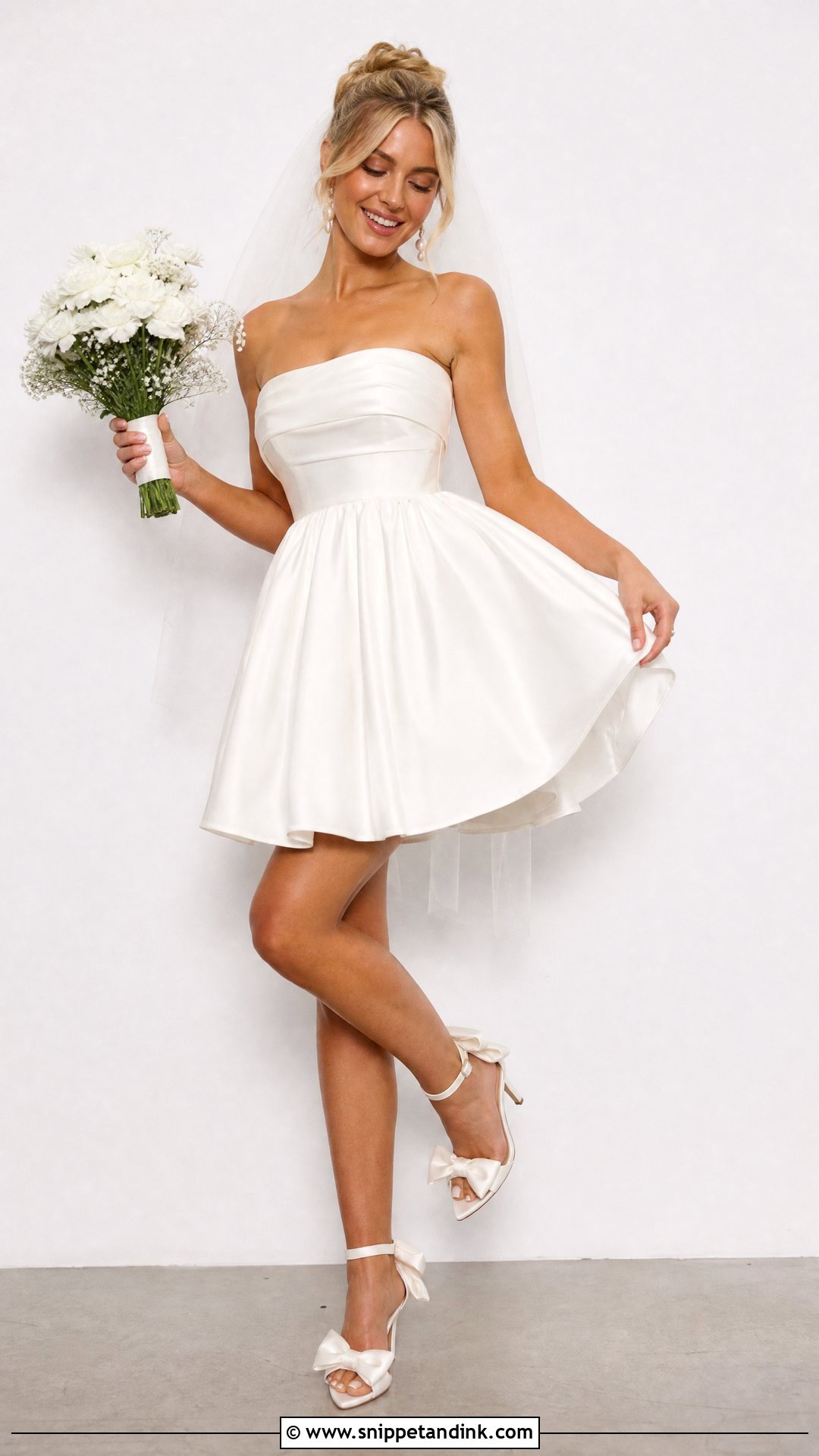
A bow is the one shoe detail that changes the mood of an outfit on its own. It suits short dresses, tea-length gowns and reception minis, where the bow sits at eye level in photos rather than buried in tulle. Scale is the thing to watch. If the gown has big sleeves or a sculptural texture, a small bow keeps the outfit from fighting itself, and a plain dress can take a larger satin one. Pearl earrings, a soft updo and a simple veil keep the attention at the ankle. Check how the bow is fixed, since a loosely stitched one can droop after a few hours of dancing.
9. Lace Wedding Sandals
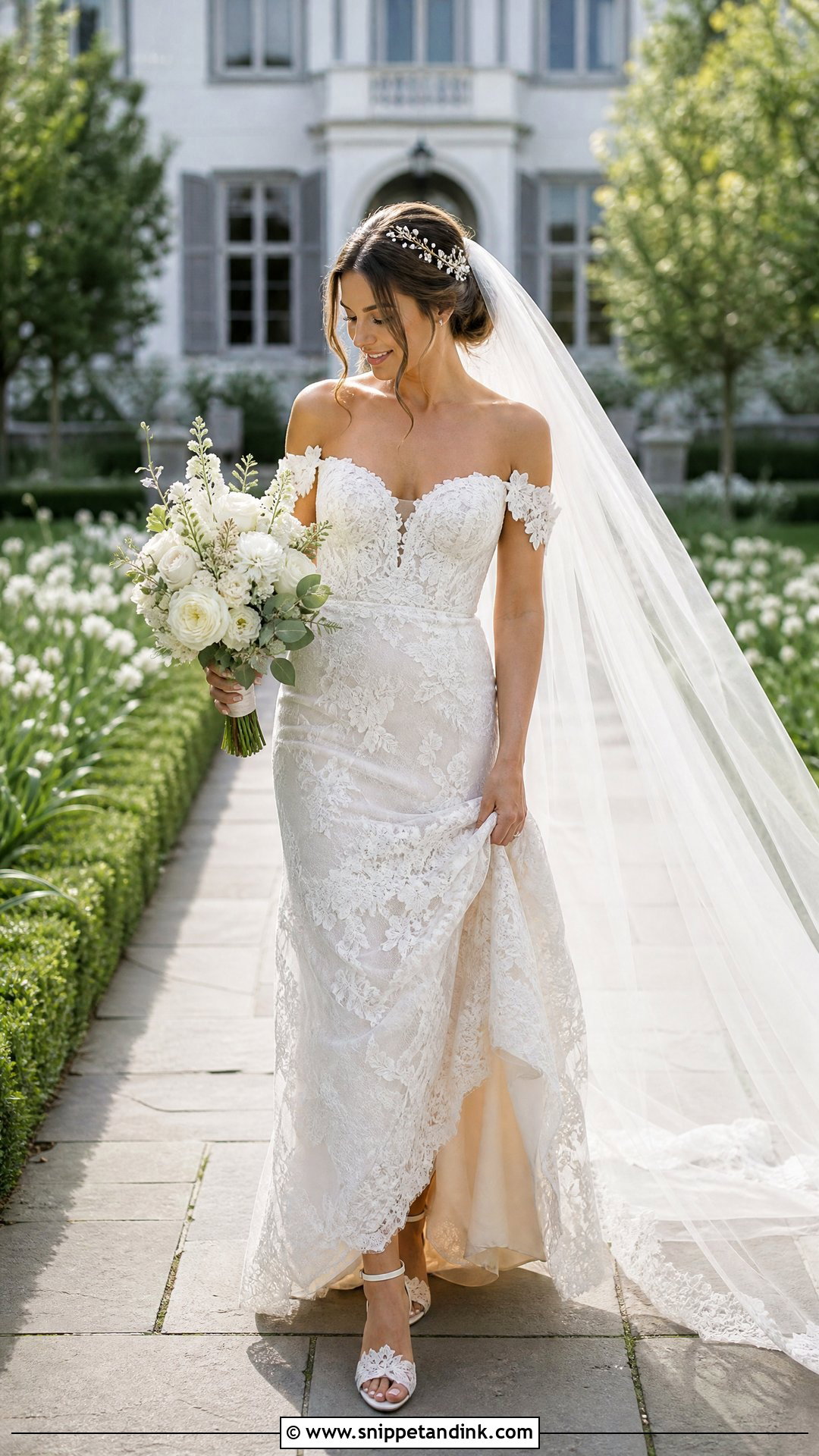
Lace on the foot should answer the lace on the gown, not repeat it. If your dress is covered neckline to hem, I’d go for a simpler shoe with just a lace strap; if the gown is plain satin or crepe, lace sandals bring in the texture the dress lacks. Match the scale of the motif where you can, because a chunky guipure shoe under fine Chantilly looks like it came from a different outfit. A cathedral veil, pearl pins and white blooms complete it. Garden and estate venues in spring suit this pairing most naturally.
10. Nude Wedding Sandals
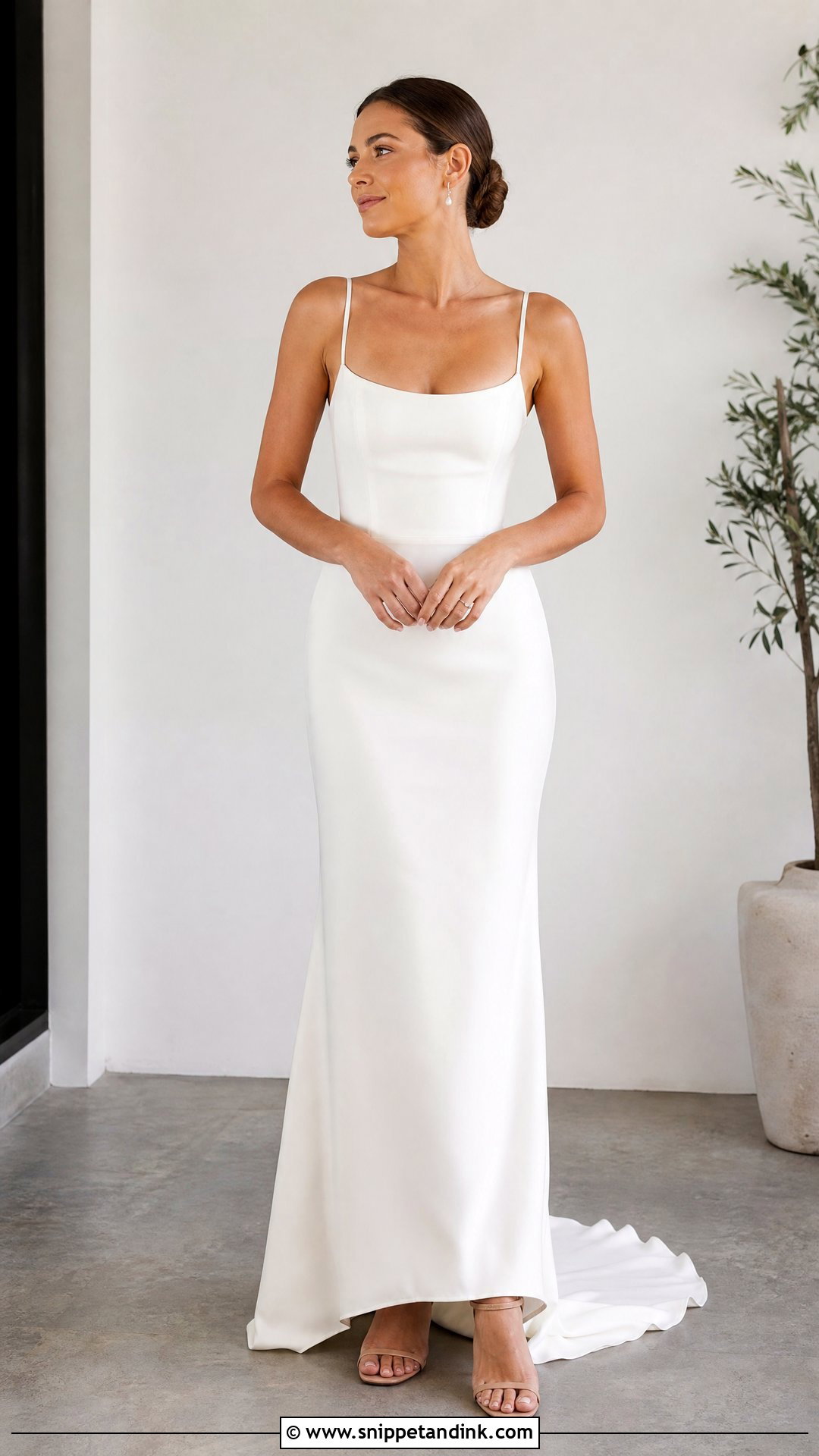
Nude only works if it’s your nude. A shade close to your own skin makes the leg look longer and lets the dress do the talking; a shade that’s off reads as a beige stripe across the ankle in every photo. I ask brides to try two or three tones in natural light, not under shop spots. With an ivory sheath, delicate jewelry and natural makeup the effect is quietly modern. A barely there strap looks sleekest, while a nude block heel gives you more support for civil ceremonies and long receptions. It’s the shoe I find hardest to get wrong once the shade is right.
11. Blue Bridal Sandals
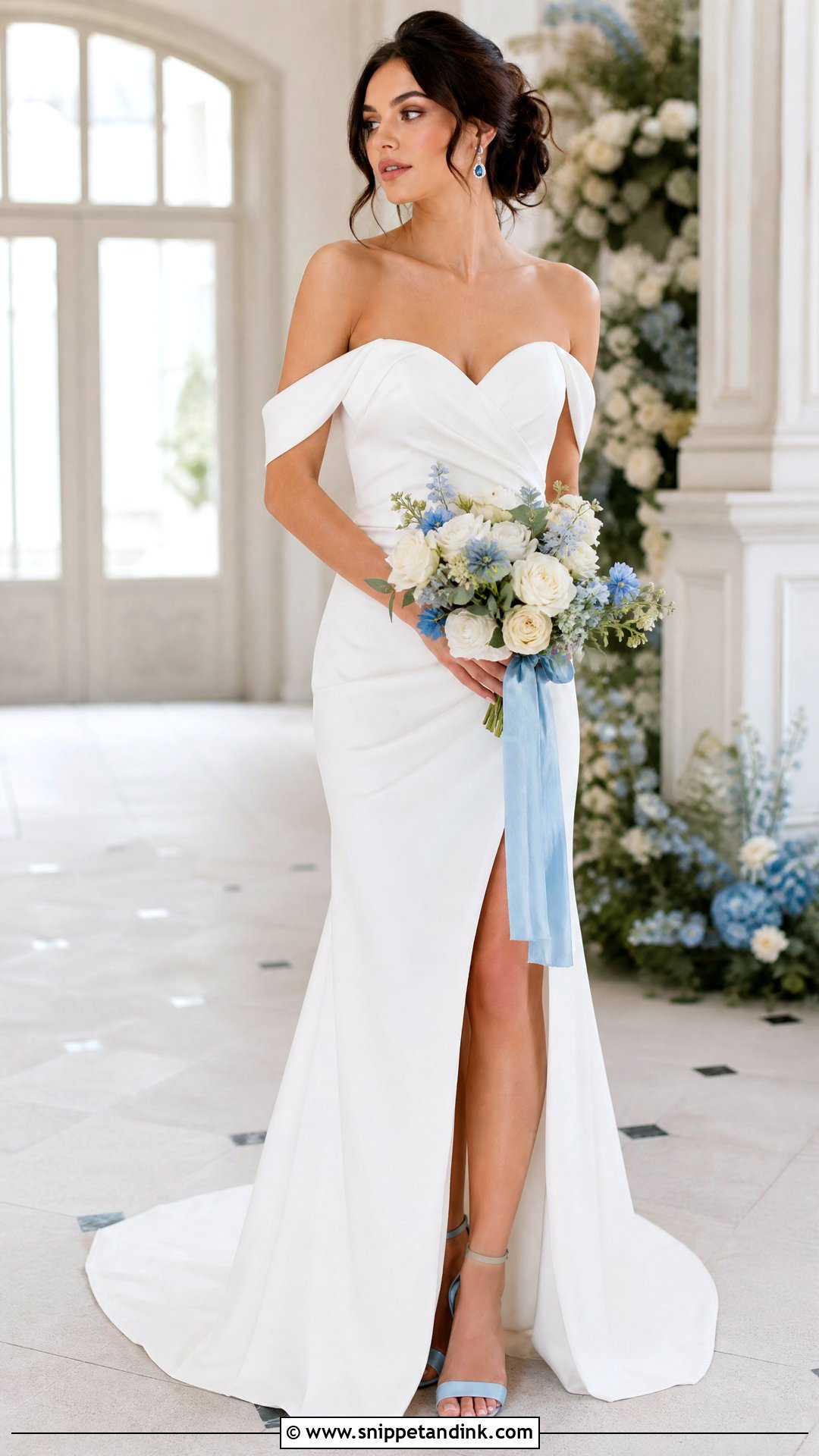
Shoes are the easiest place to hide your “something blue”, and the color can stay private under a long gown or show off under a short one. Powder, dusty or pale satin blue keeps it bridal. I’d pick up the shade once more, maybe in blue stone earrings or a ribbon wrapped around the bouquet stems, so the shoe doesn’t look like an accident. A brighter cobalt can be great fun for a bolder bride, especially with a slit gown or a reception dress where it’s actually seen.
12. Blush Wedding Sandals
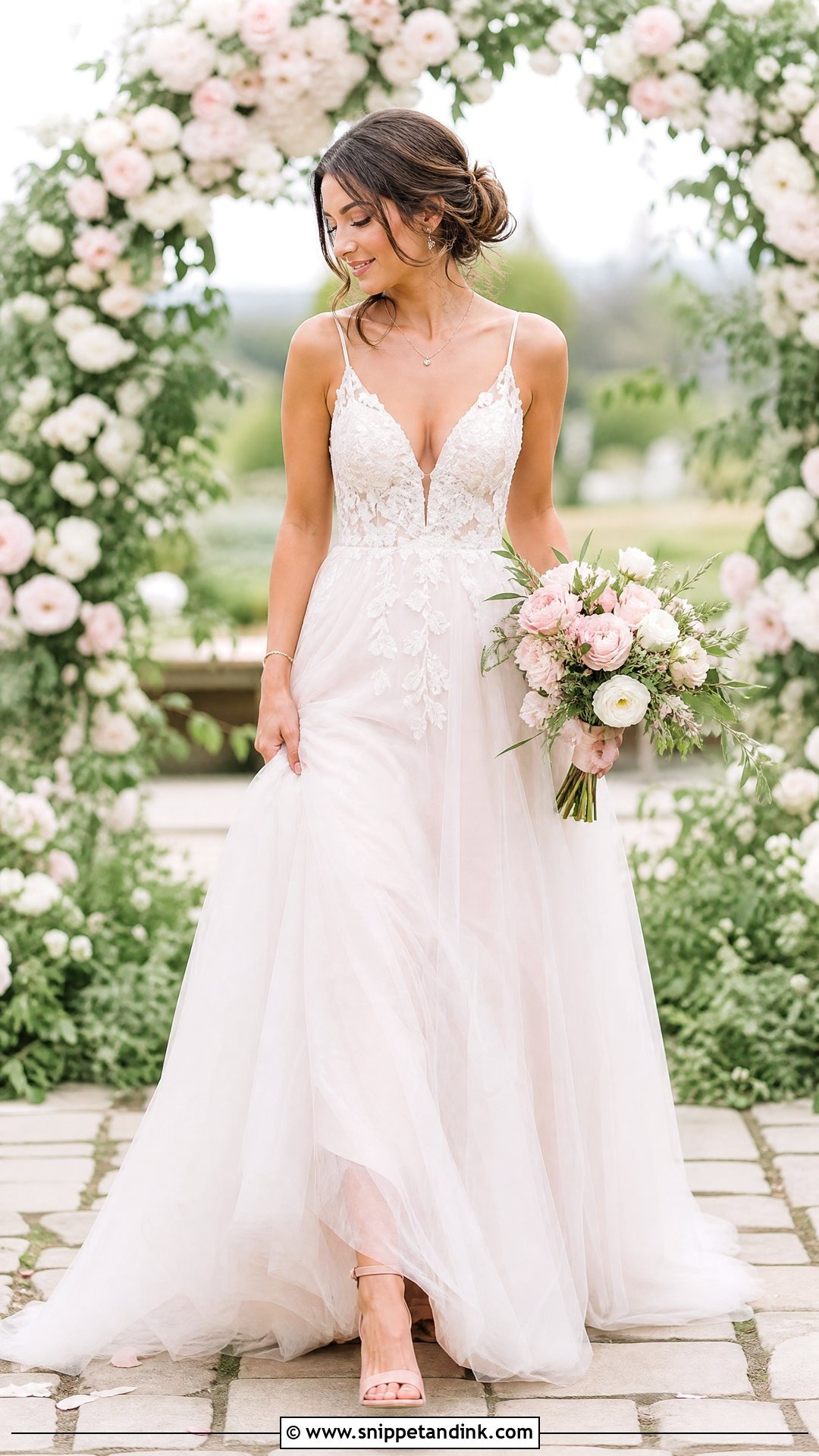
Blush adds warmth to ivory, champagne and pale pink gowns without turning into a color statement. I like it with tulle A-lines, rose-gold jewelry, soft pink makeup and a loose low bun. If your gown has a blush lining or pink embroidery, match the shoe to that rather than to the outer fabric. Satin gives the classic version; metallic blush feels more current. Blush sits comfortably at spring and summer garden venues, where it picks up the flowers. Take a fabric swatch shopping, since blush varies wildly between peachy and lilac.
13. Satin Bridal Sandals
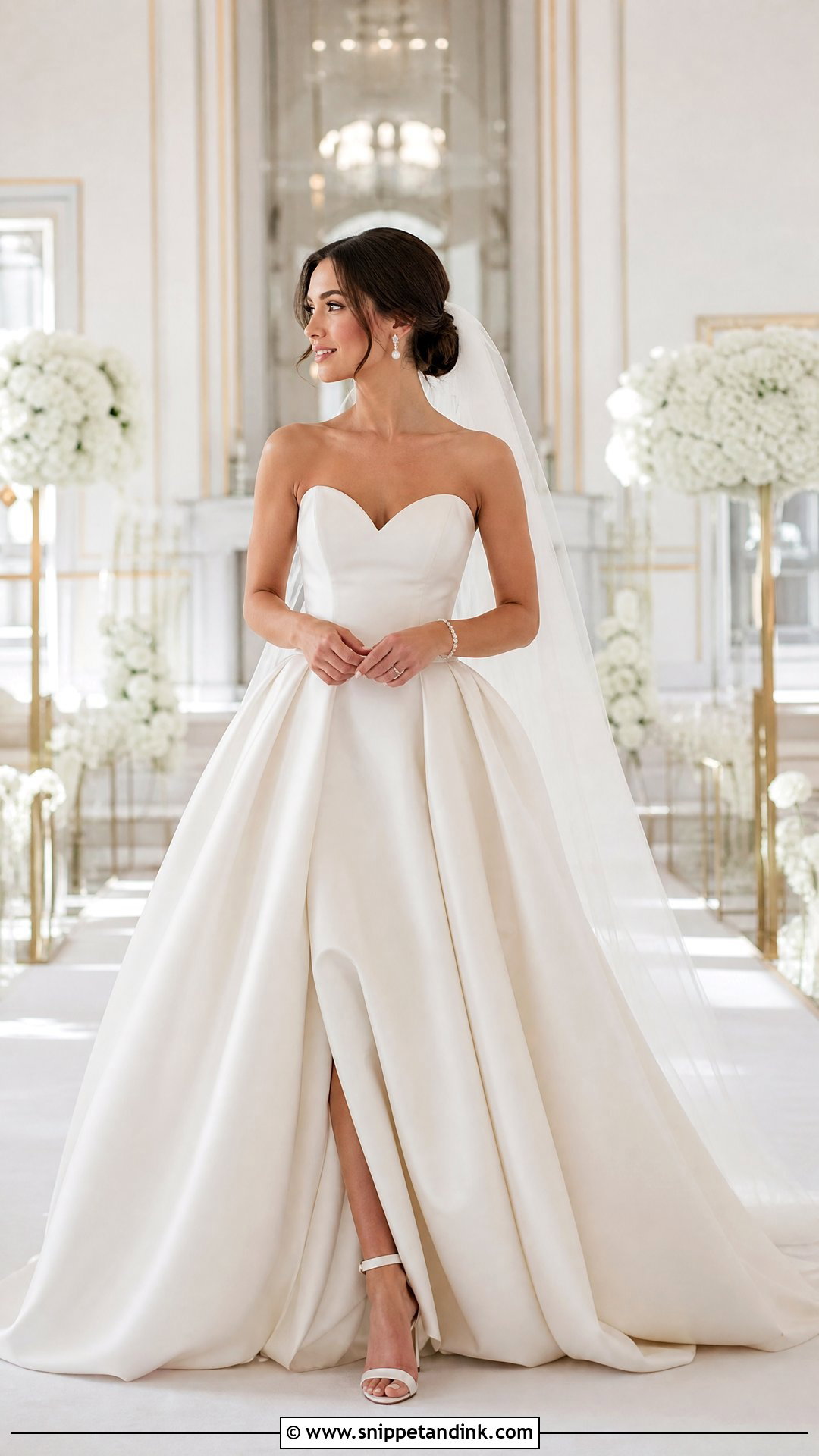
Satin is the most traditional bridal shoe fabric and the least forgiving. It marks easily, water stains it, and grass leaves a green line along the sole edge that won’t come out. So I keep satin sandals for indoor ceremonies, hotels, galleries and reception halls. With a satin gown, a structured ball gown or a classic silhouette, an ivory or champagne satin sandal looks completely finished, especially with pearl earrings and a long veil. A crossover toe strap or ankle strap gives enough hold to walk confidently. If there’s any chance of rain, spray them with a fabric protector a week ahead and test it on the inside of the strap first.
14. Rhinestone Wedding Sandals
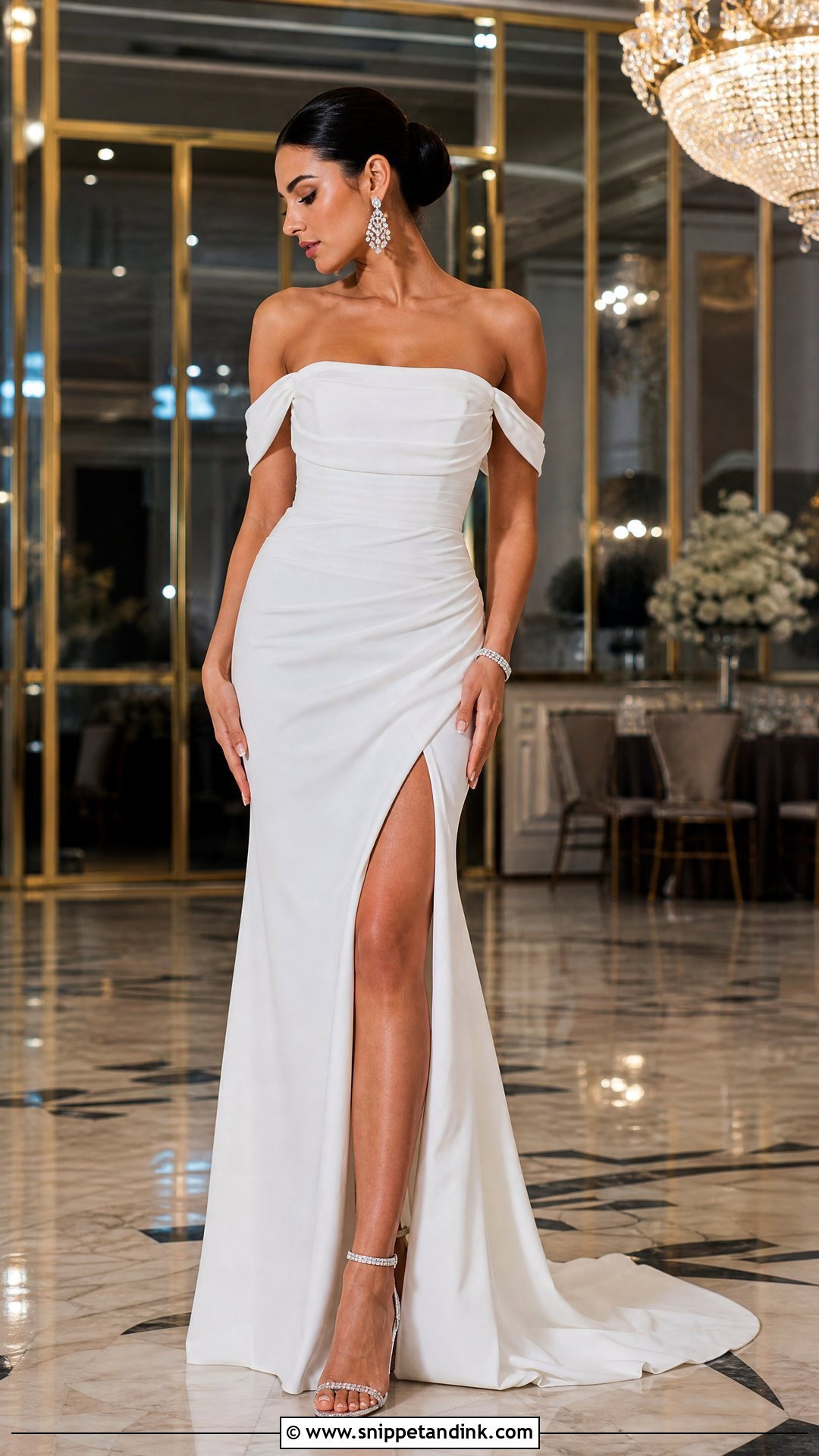
Rhinestones bring the drama, so the rest of the outfit should step back: a sleek crepe dress, crystal earrings and a polished bun. They also turn a reception mini or jumpsuit into an obviously bridal outfit in one move. Before buying, I turn the shoe over and feel the back of every embellished strap. Cheap stones are often set on a rough mesh that scratches the top of the foot after an hour, and you’ll be on a dance floor much longer than that. Evening receptions and city venues under bright lights are where they earn their place.
15. Beach Wedding Sandals
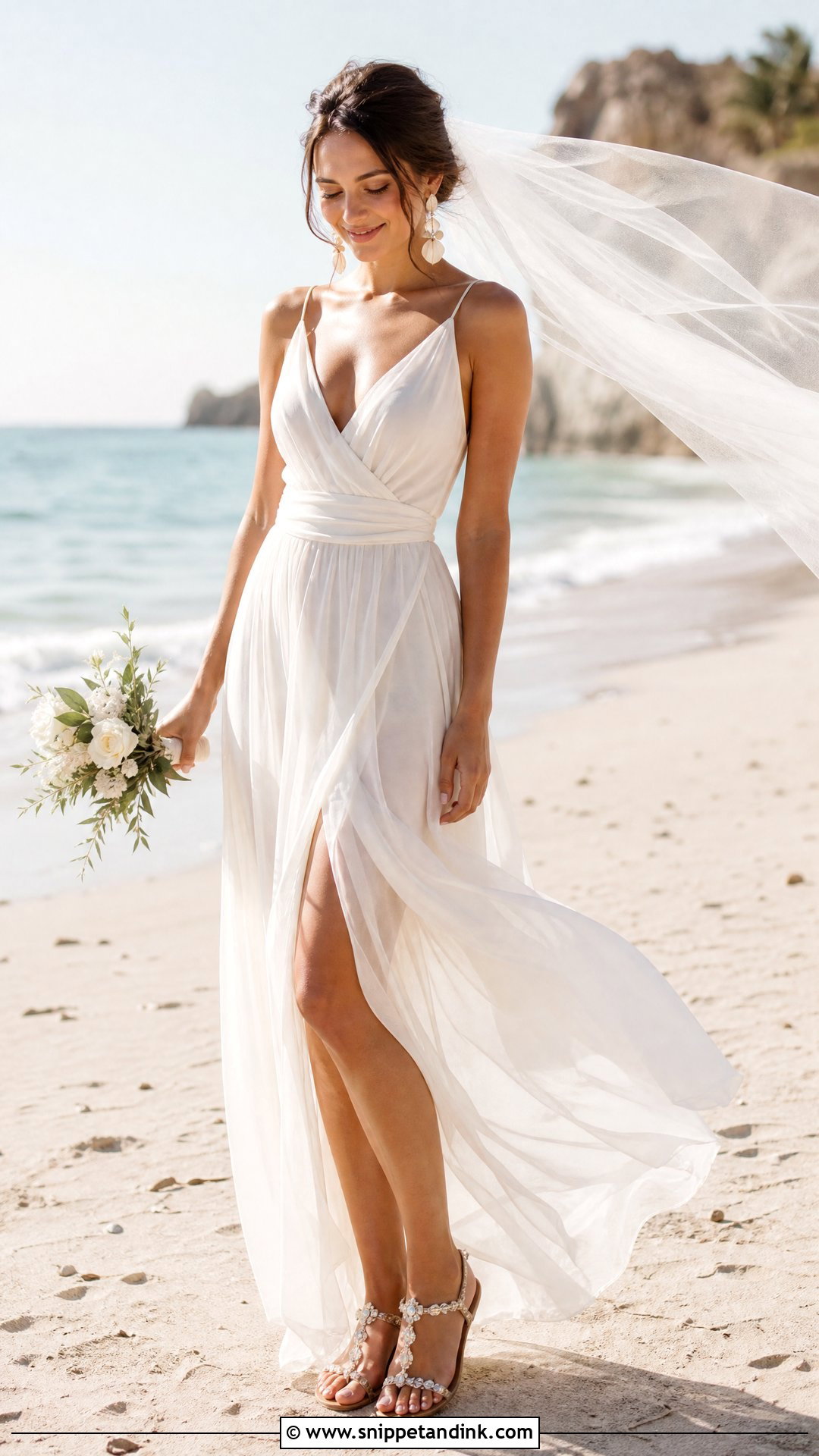
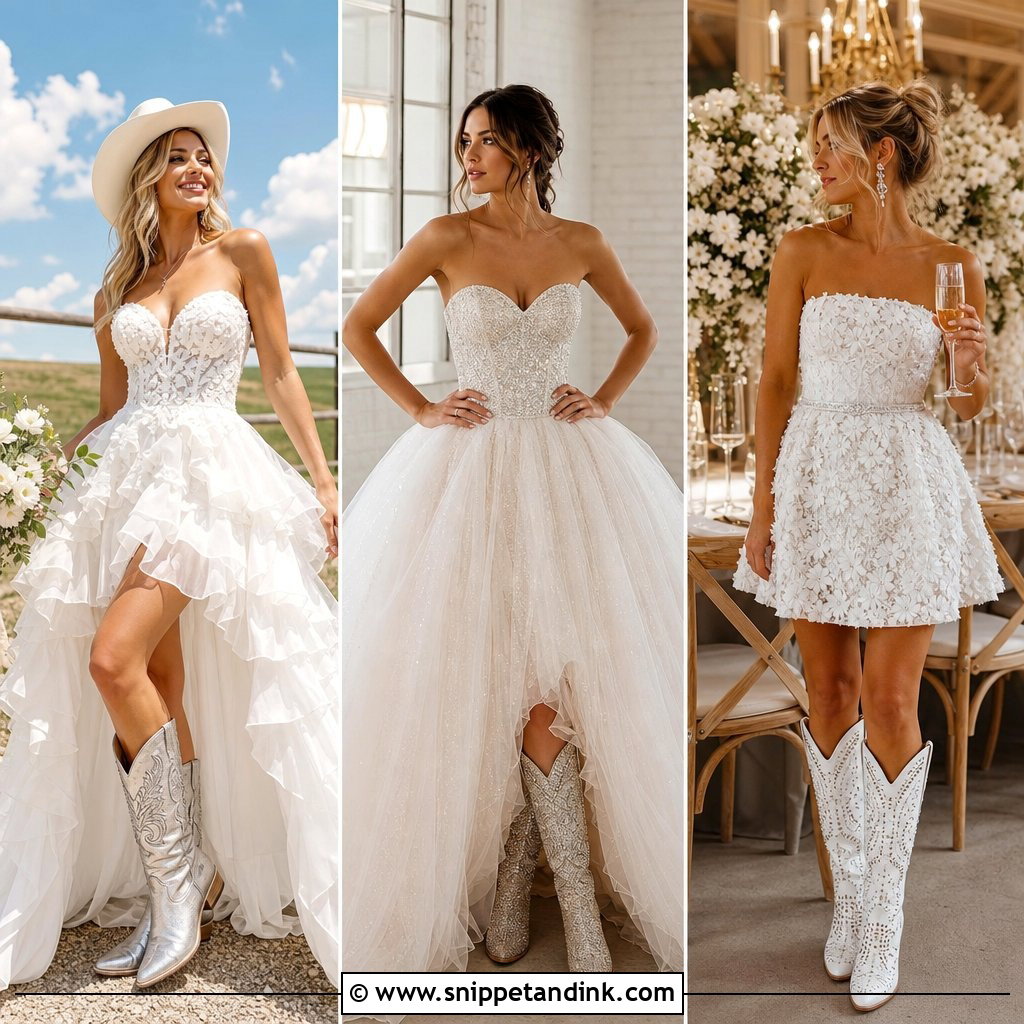
Sand defeats a thin heel within a few steps, so on the shore I put brides in flats, barely there wedges or a low embellished sandal. Heavy platforms are the other trap: they sink and make every step look effortful in the ceremony video. Pair the shoes with lightweight chiffon, shell-toned pearls, soft waves and a veil short enough to manage in the wind. Metallic leather or pearl straps keep things bridal without looking overdressed for a beach. If the ceremony is barefoot, keep the sandals for the boardwalk and the reception, and choose a slip-on style you can manage without bending down in your dress.
16. Garden Wedding Sandals
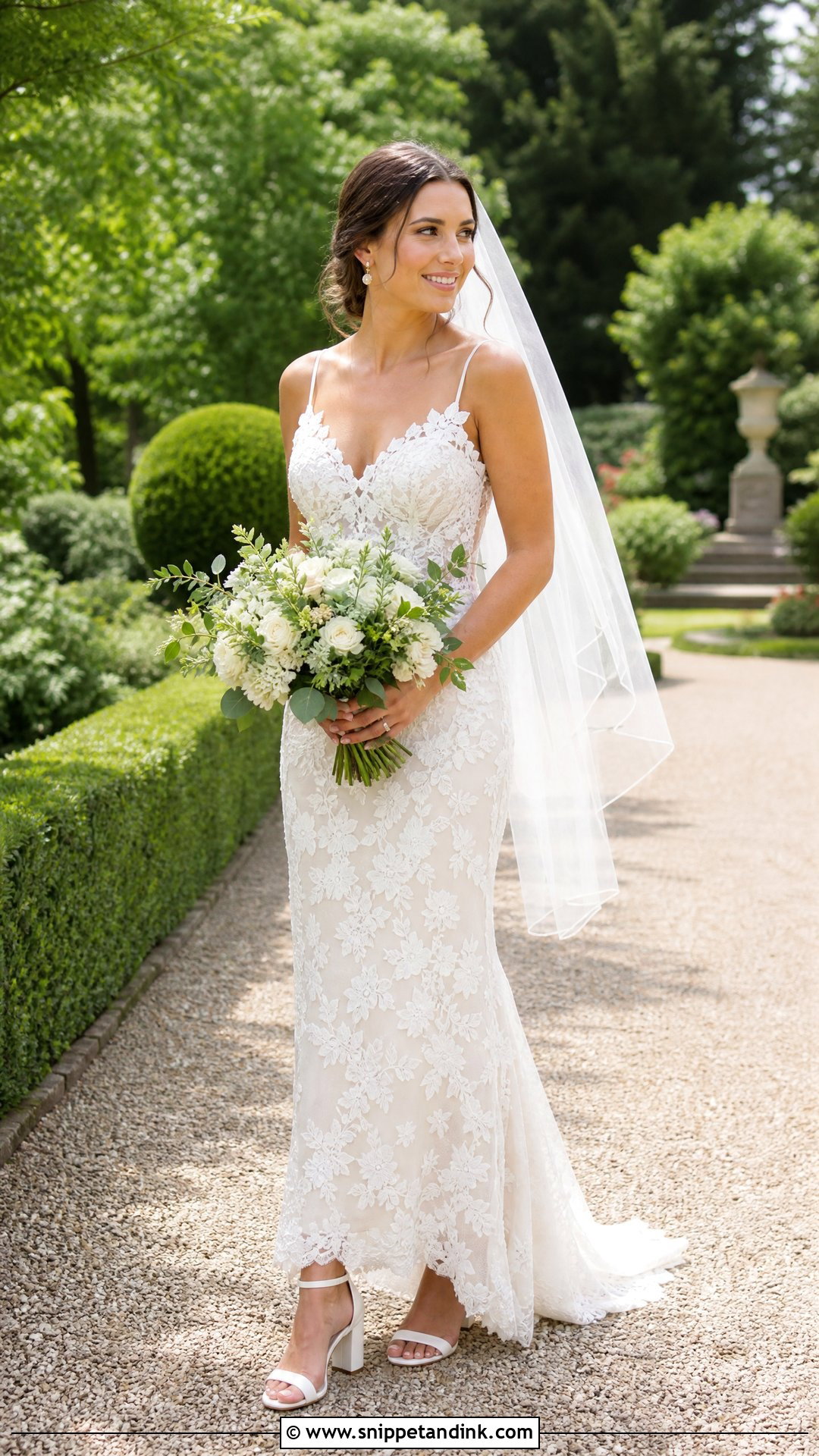
Grass, gravel and old stone paths are where most wedding shoe accidents happen. On a garden venue I steer brides to block heels, wedges or a low sturdy heel, and away from stilettos unless they’re willing to fit heel protectors. Ivory, nude, blush or champagne all blend into the setting. Style them with a floral lace gown, a soft veil and pearl earrings. A padded footbed makes a real difference during long outdoor photo sessions, which on a garden day can easily run past an hour. Visit the venue in the shoes if you can and walk the actual route to the ceremony spot.
17. Wedge Wedding Sandals
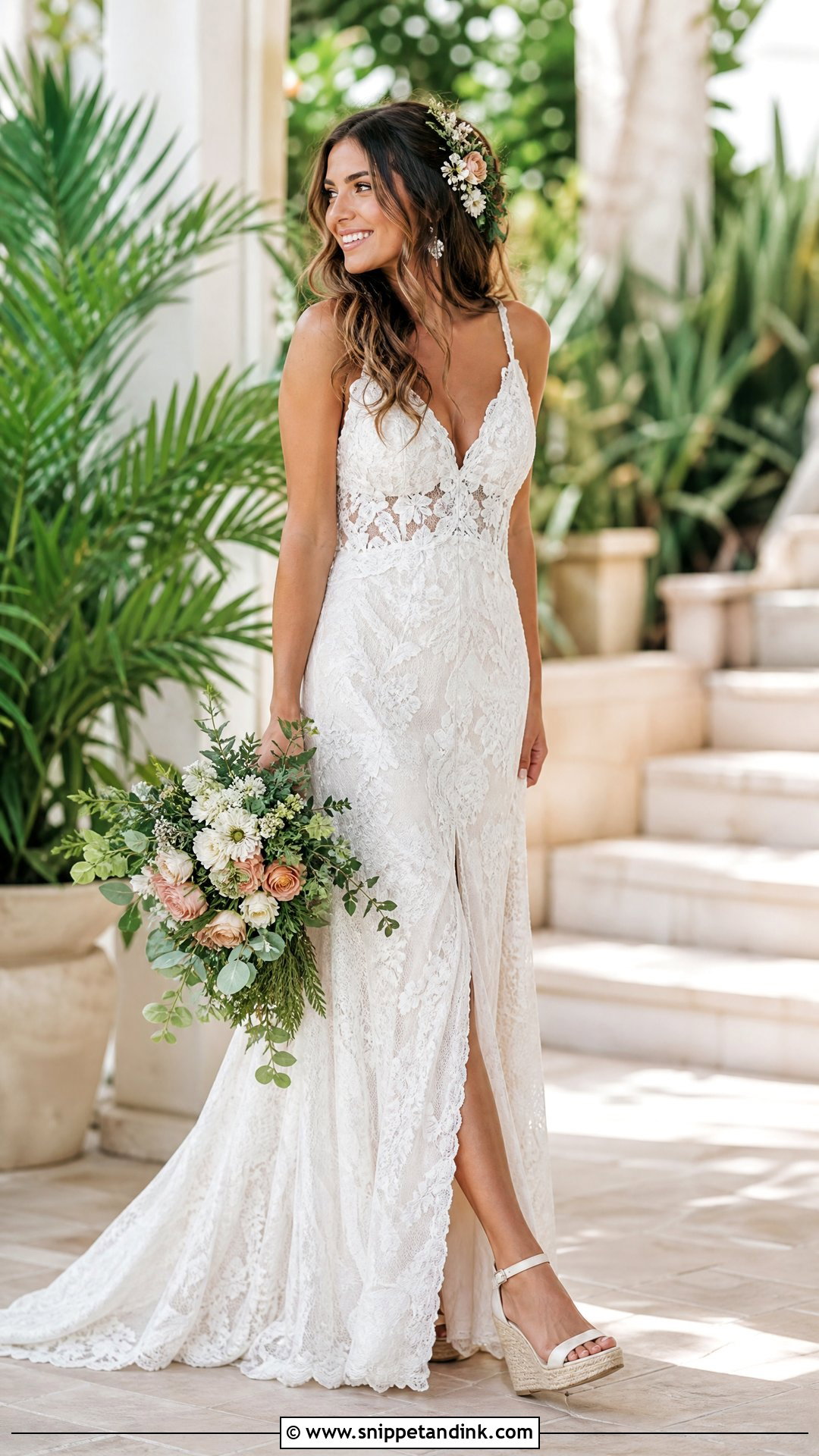
A wedge gives height with a continuous sole, so the weight spreads from heel to toe and you won’t sink into grass or catch between deck boards. Terraces, rustic barns and destination ceremonies suit them. The risk is looking casual, which is why I only use wedges in bridal materials: satin, pearl trim, ivory leather. A slim wedge reads more elegant than a chunky espadrille. With a boho lace dress, loose curls and floral pins it feels relaxed; with a sleek gown and a satin wedge it holds up at a more formal venue.
18. Kitten Heel Bridal Sandals
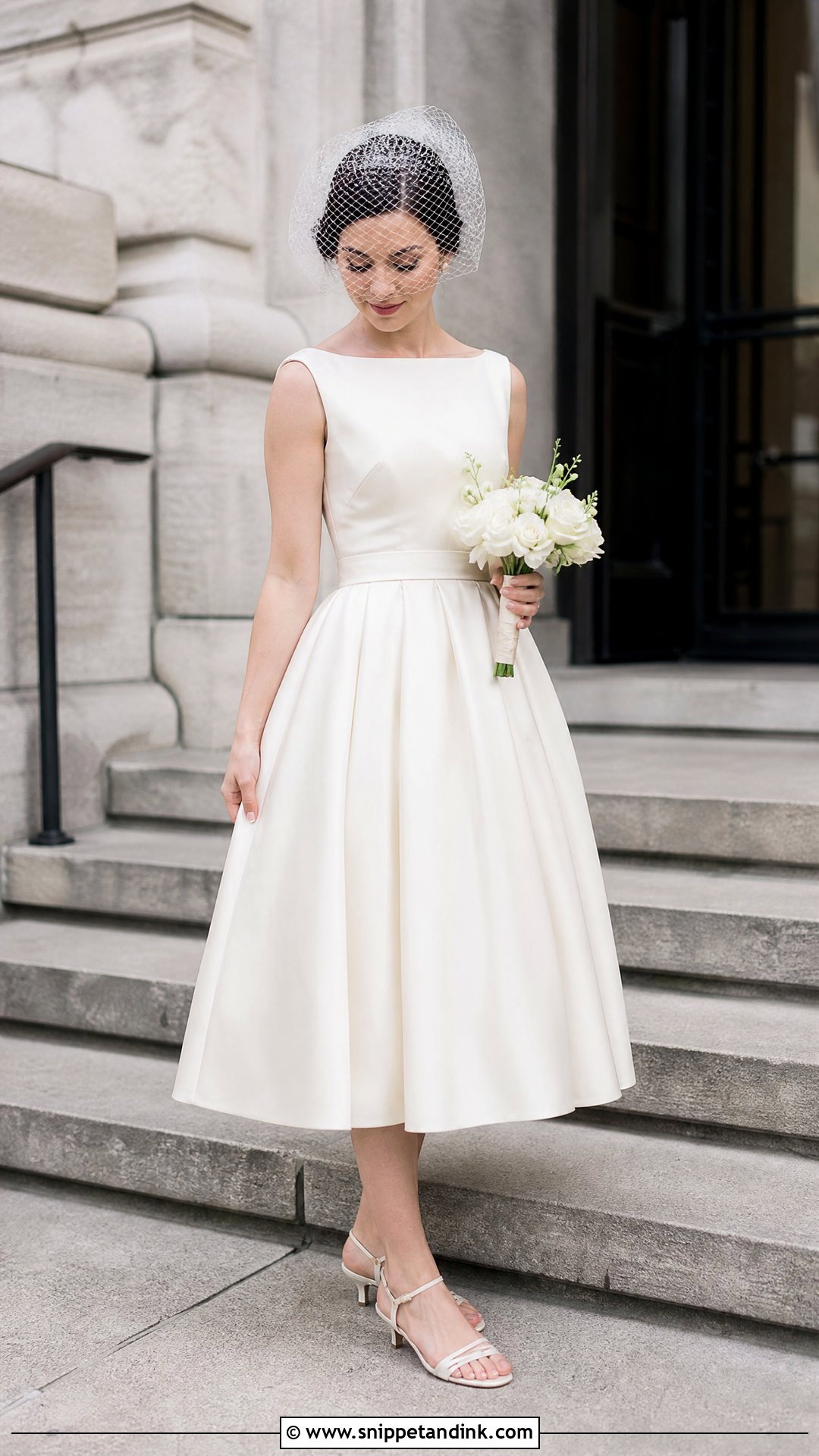
A short, slim heel has a vintage feel that suits tea-length dresses, birdcage veils and pearl studs. Kitten heel bridal sandals give you lift without the strain of a high heel, and they’re a natural partner for sheath gowns and courthouse outfits. People assume a low heel can’t slip. It can, and a loose fit with a kitten heel makes your foot slide forward with every step, so the ankle strap needs to sit snug. A pointed or almond toe makes the line more refined. Satin, metallic leather or pearl details keep it from looking like a work shoe.
19. Ankle Strap Wedding Sandals
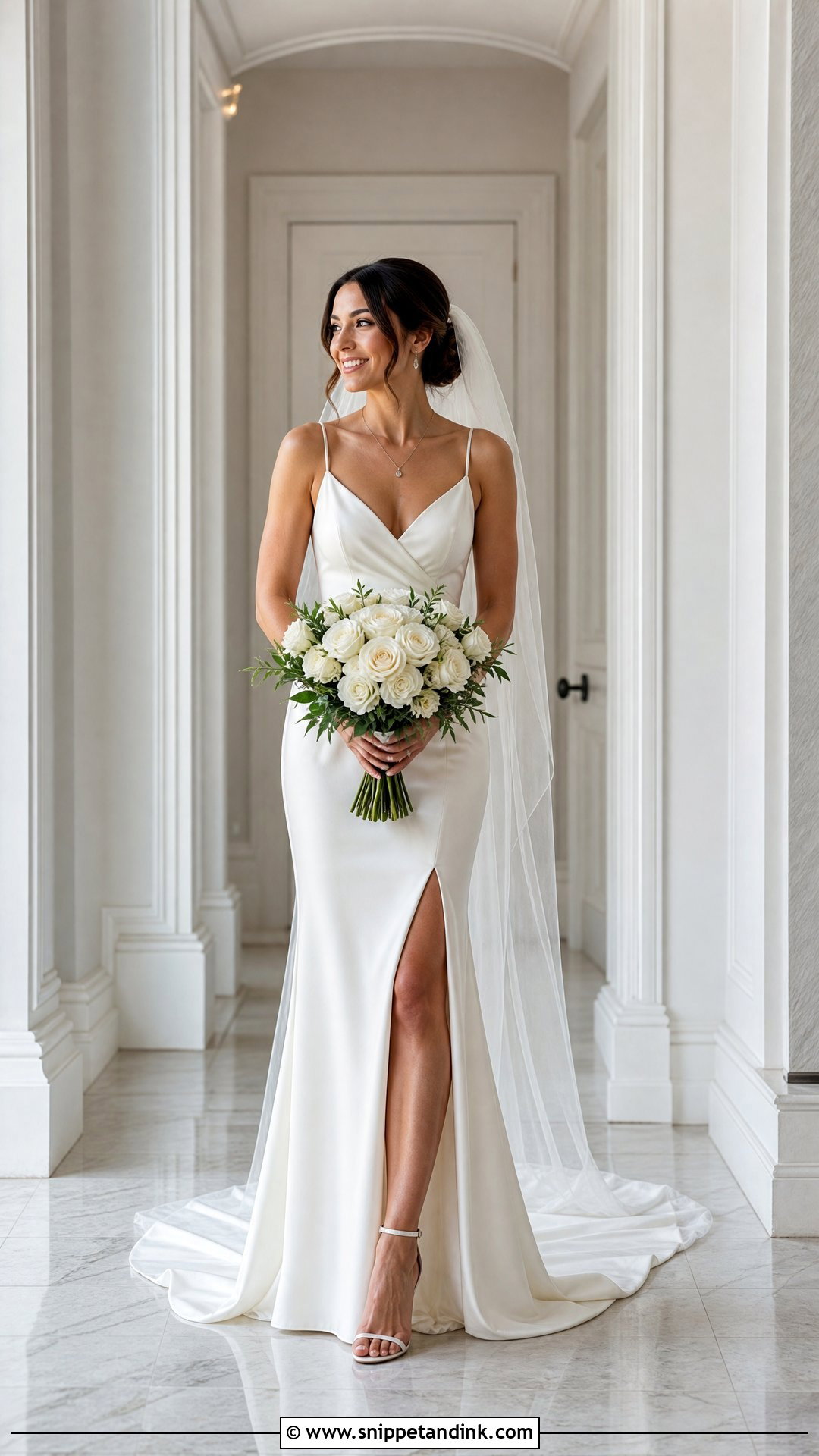
A strap around the ankle stops the heel lifting out of the shoe, which is the main reason sandals feel unsteady. That makes this the most practical shape I recommend, and it works with nearly every silhouette from slip gowns to ball gowns. With a slit, the strap will be visible, so pick one that sits at the narrowest point of your ankle and doesn’t cut the leg line. Thin straps look delicate; wider ones support better. Do up the buckle and walk around for ten minutes in the shop, because buckle prongs are the usual cause of a sore spot on the outer ankle.
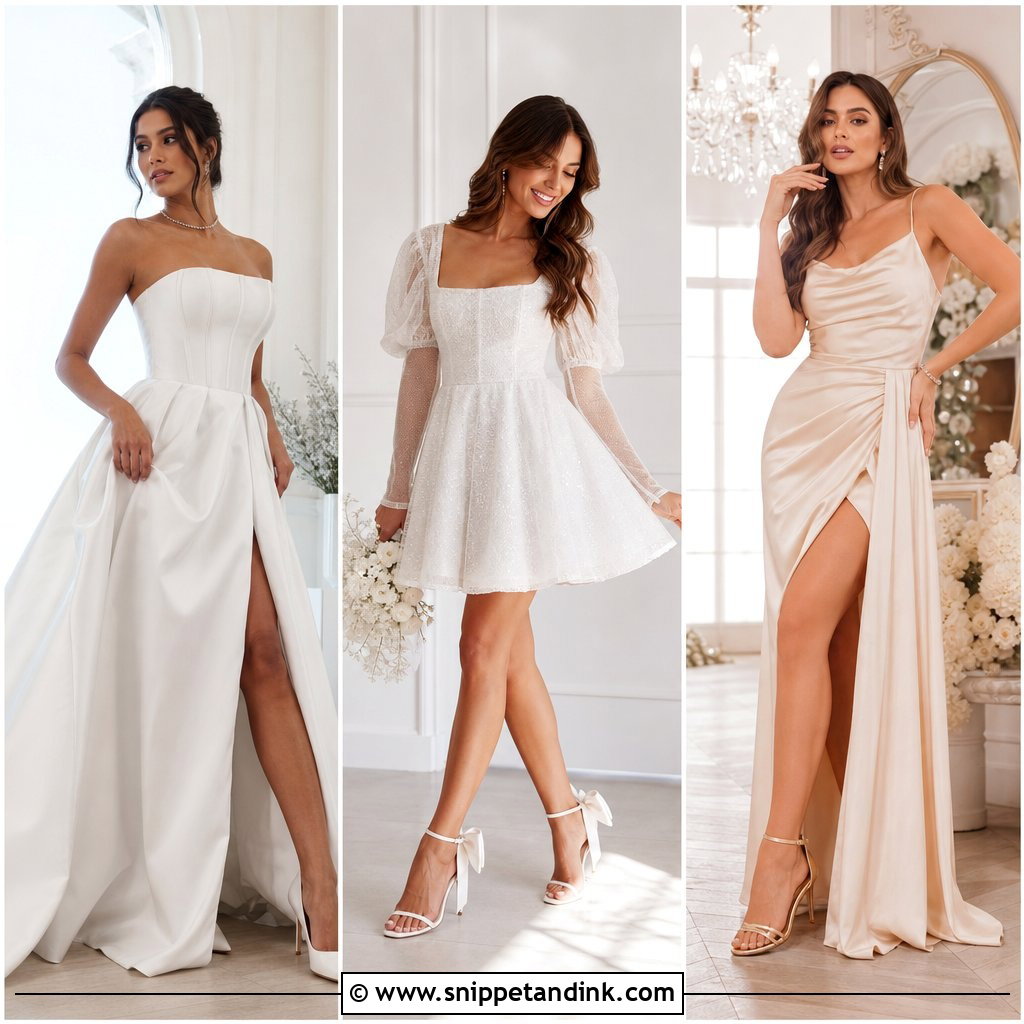
20. Slingback Wedding Sandals
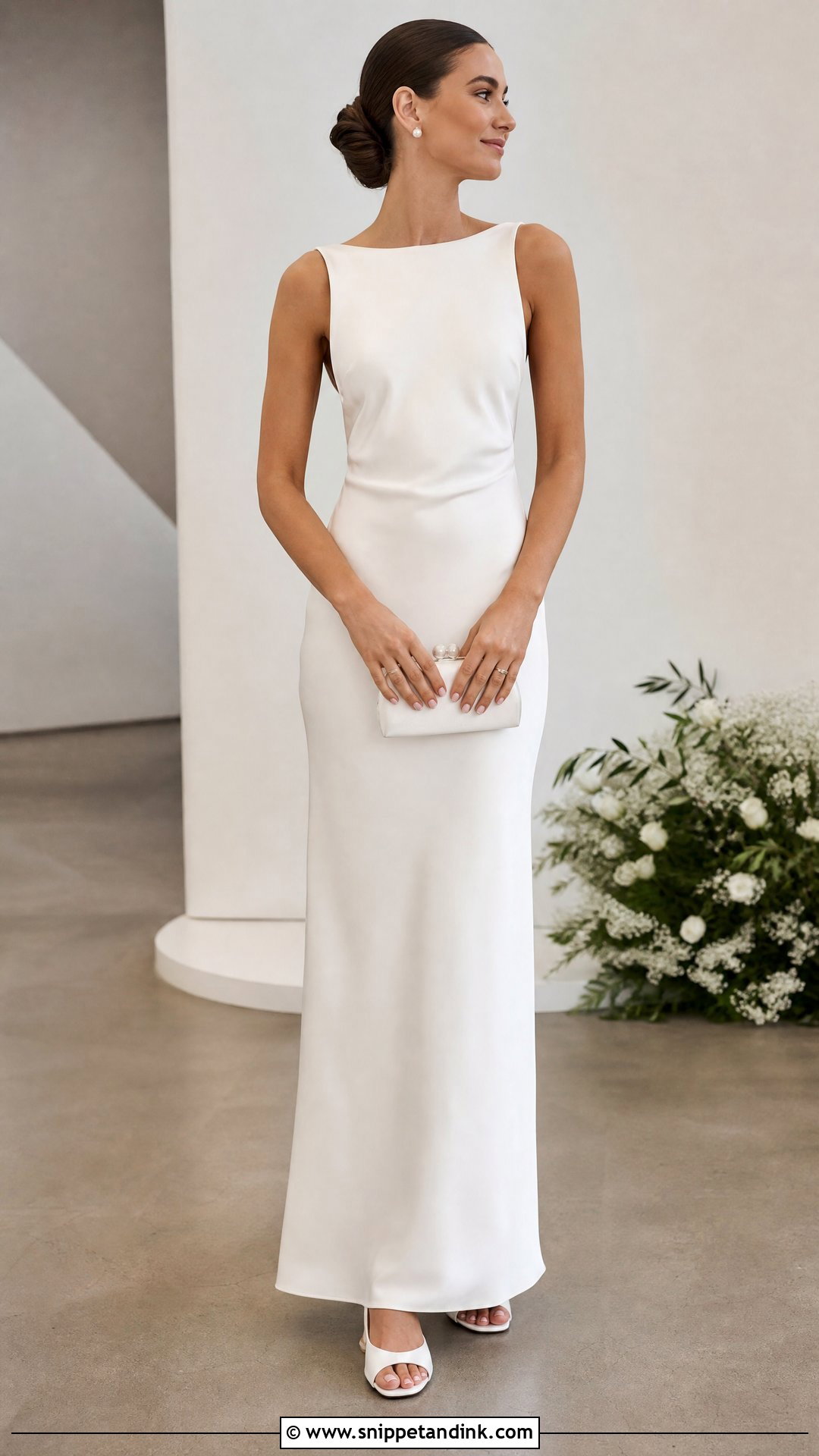
Slingbacks hold the heel without wrapping the ankle, which suits brides who find ankle straps tight or who have a slightly swollen ankle by evening. They look clean with a sleek column gown, pearl studs, a smooth chignon and a simple clutch. City weddings and minimalist dresses suit them best. The weak point is the back strap: if it’s even slightly loose, it creeps down under the heel as you walk, and you’ll spend the day hitching it up. Many have an elastic insert, so test them by walking briskly, not just standing.
21. Minimalist Wedding Sandals
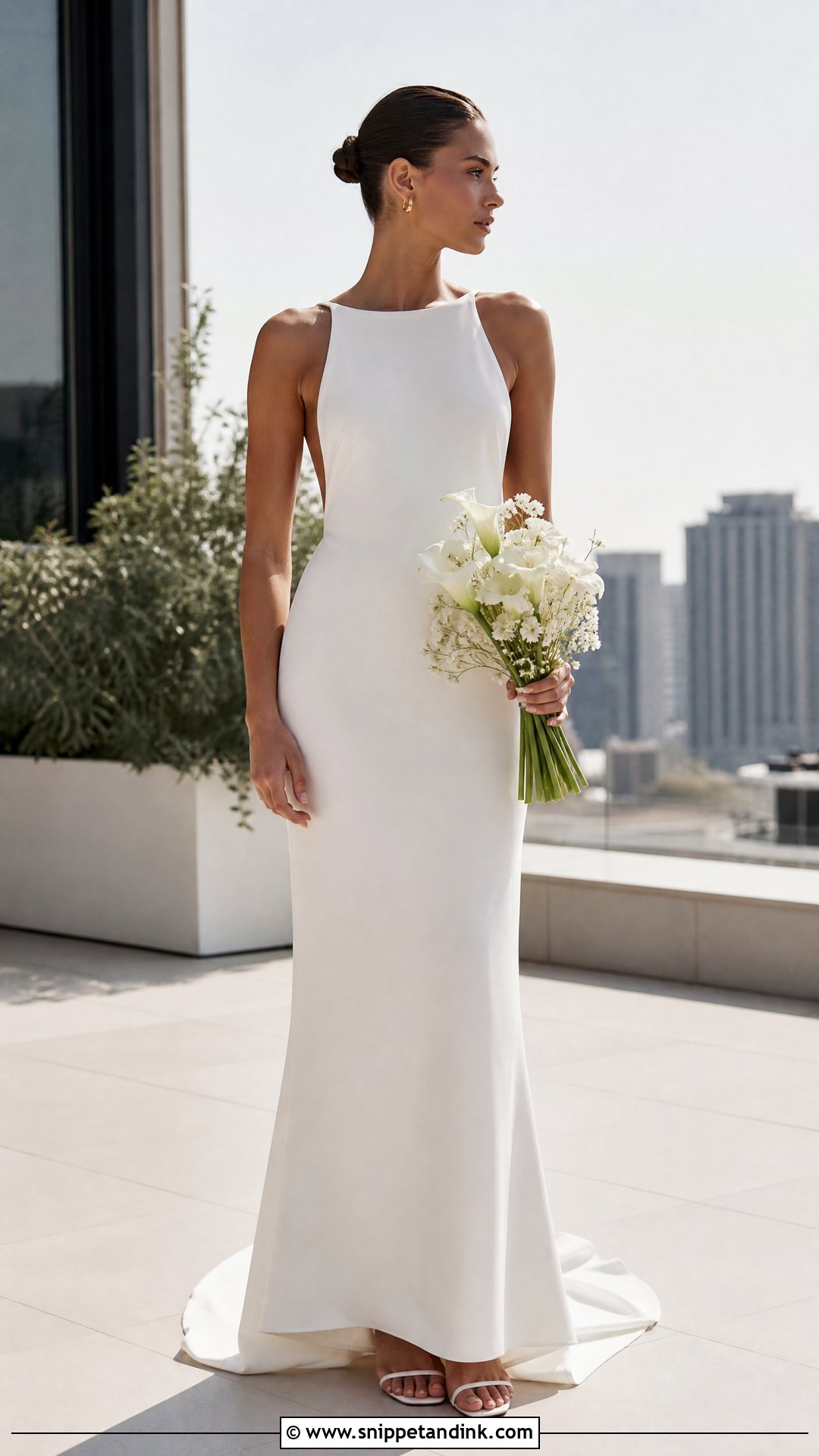
Clean lines, slim straps, smooth leather or plain satin. Minimalist sandals do their job by staying out of the way, so I reach for them when the gown already has dramatic sleeves, heavy lace or a sculptural train. They suit modern crepe gowns, small gold or pearl earrings, a sleek bun and a structured bouquet, and they look right at a courthouse or rooftop. Spend on quality here. With no decoration to hide behind, wobbly stitching or a poorly cut strap edge is obvious in a close-up shot of your feet.
22. Embellished Flat Wedding Sandals
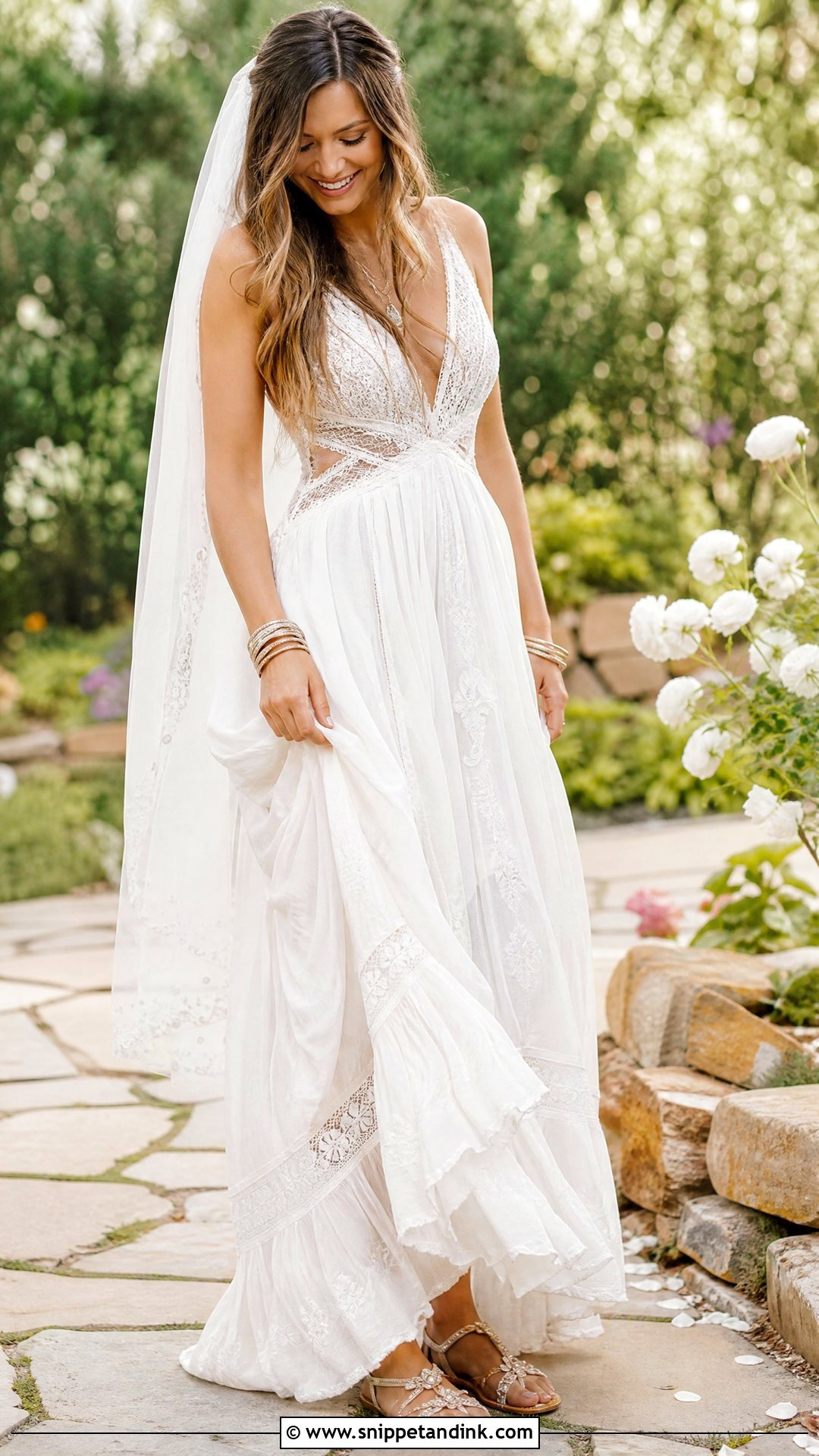
Pearls, beads, crystals, floral appliqués or metallic thread can make a flat sandal feel wedding-ready while keeping your feet on solid ground. They suit flowing boho gowns, loose waves, delicate bangles and a soft veil, and beach or garden receptions where you plan to dance for hours. Decoration on a flat sits right on top of the foot, so it has to lie smoothly; I avoid raised stones on the toe strap for that reason. A T-strap or ankle strap gives the support flats often lack. Many brides keep a pair like this for after the ceremony.
23. Floral Wedding Sandals
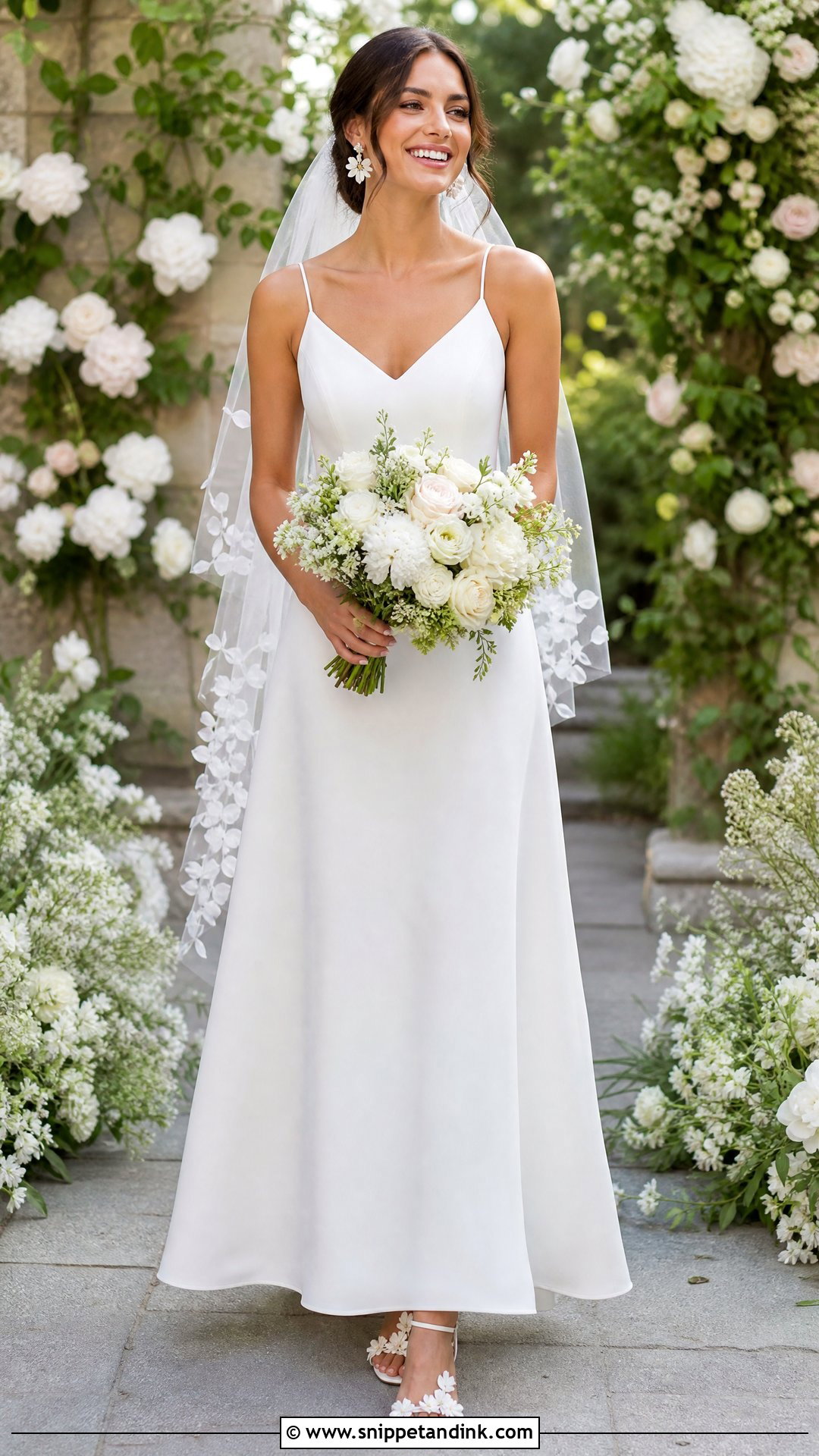
Fabric flowers, beaded petals or embroidered straps bring a romantic, fresh detail for spring and summer. Proportion is everything here. With a gown already covered in floral lace or 3D appliqués, I’d choose one small flower on the strap; a plain A-line can carry a bolder design. Floral earrings and a soft veil finish it, and you can ask your florist to echo the shoe’s flower in the bouquet. Check that fabric petals are stitched as well as glued, because glued ones can peel after a few hours on a dance floor.
24. Reception Wedding Sandals
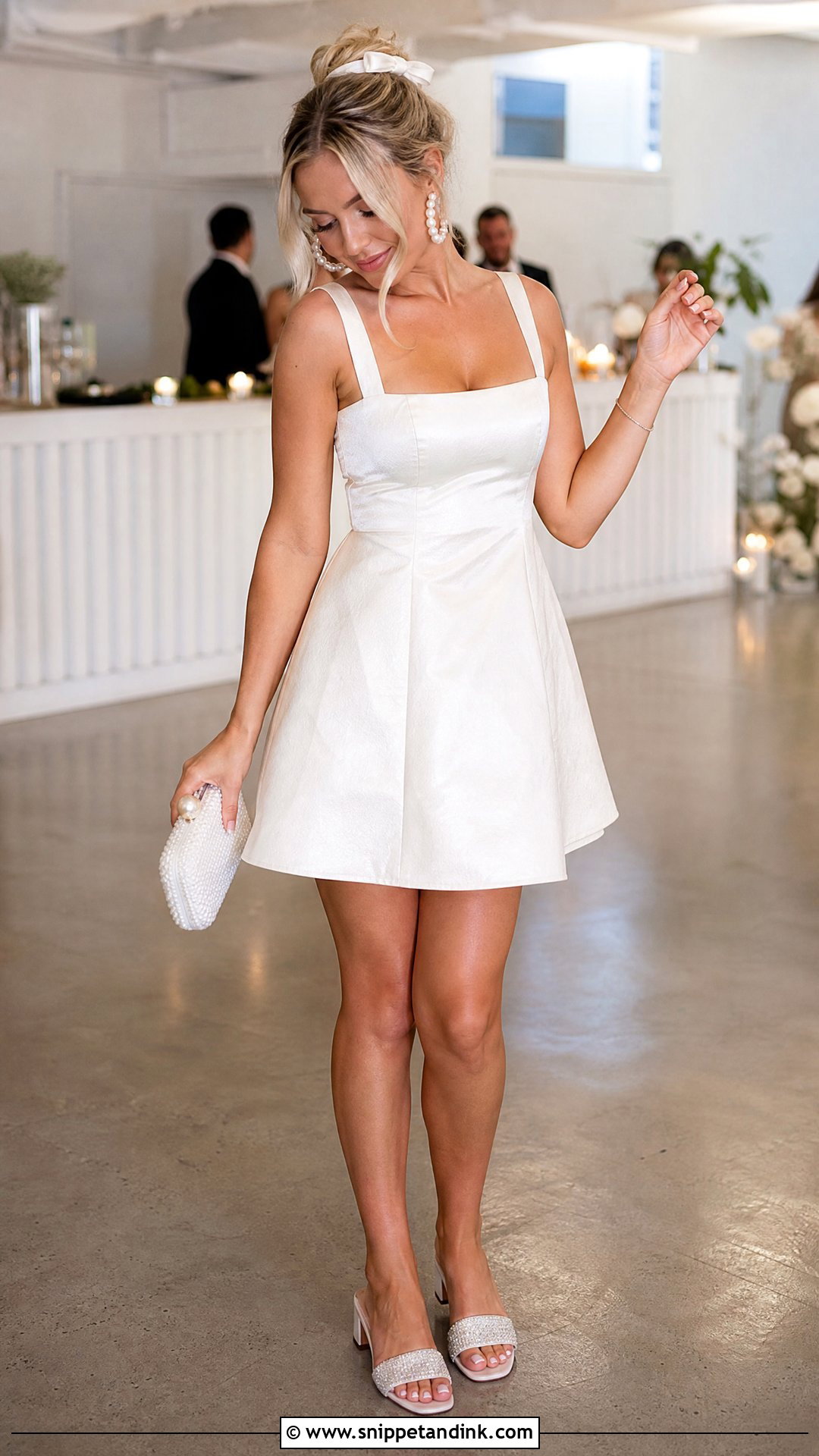
A second pair for the party is one of the most useful things I suggest, and most brides who try it never regret it. Lower heels, platforms, flats or cushioned straps let you stay on the dance floor once the ceremony pair has done its job. With a short reception dress, pearl hoops, a mini veil or hair bow and a small clutch, sparkle and metallic finishes feel festive. Keep the color in the same family as the main outfit so the photos still match. Put them on in your hallway and dance a full song in them. Turning on the spot is where a badly fitted sandal gives itself away.
25. Designer Wedding Sandals
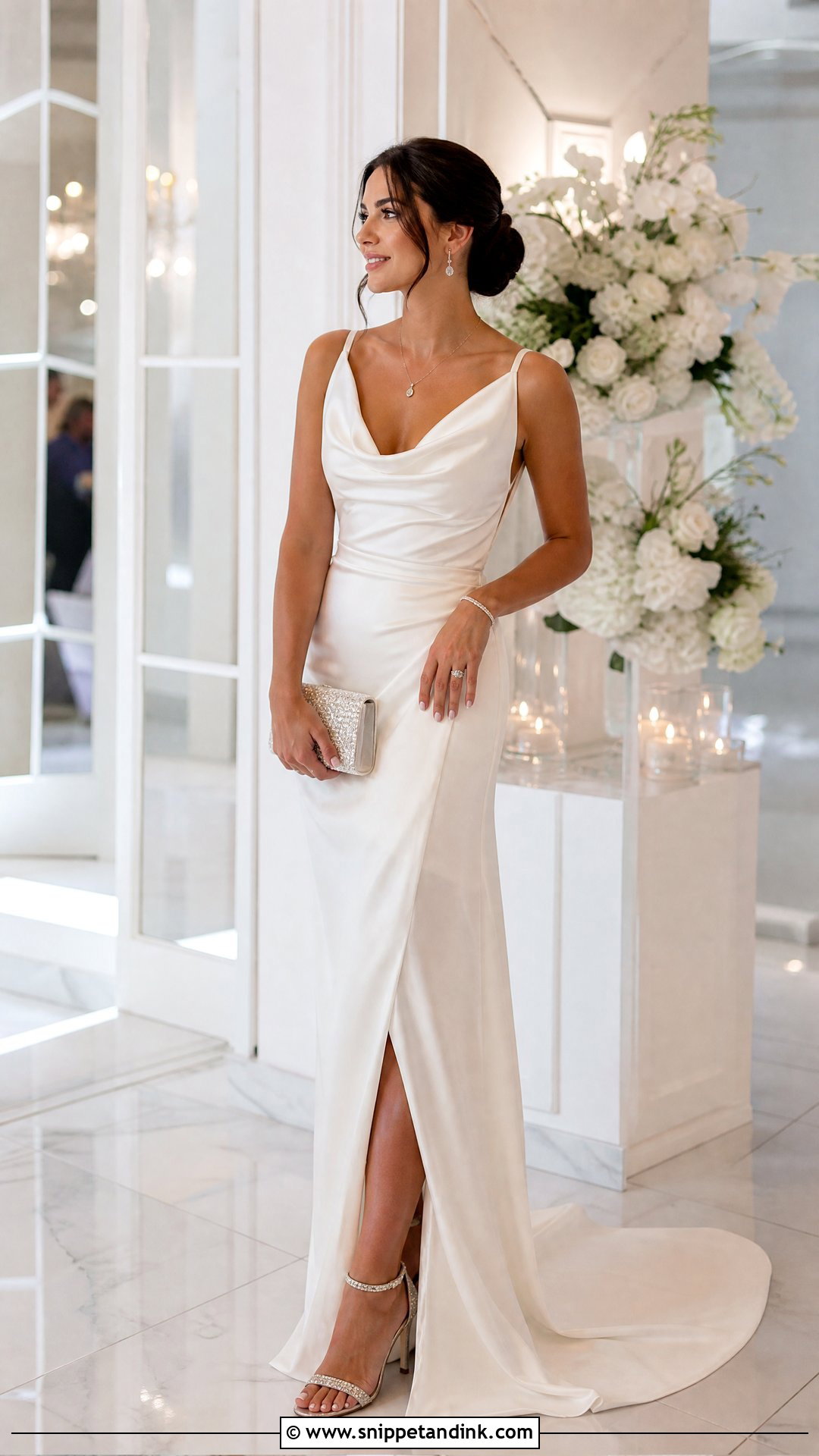
A designer pair makes sense if shoes are genuinely part of how you dress, and if you’ll wear them again. The ones that earn a second life are metallic strappy sandals, pearl block heels, crystal slingbacks or refined nude heels. Put them with a simple gown so the shape and materials can be seen, plus fine jewelry and a polished hairstyle. The price doesn’t guarantee comfort; I’ve seen beautifully made shoes with very thin soles. Check heel height, padding and the venue floor before buying. Under a slit or mini, a well-made shoe can be one of the details you remember.
Breaking In Sandals Without Ruining Them
New straps are stiff, and stiff straps are what cause blisters. I suggest wearing the shoes at home for short stretches over two or three weeks, starting at twenty minutes and building up. Wear thin socks the first few times; it stretches tight spots gently and keeps the soles clean enough to return the pair if the fit really doesn’t work.
Where a strap still presses, a shoe stretcher spray on leather softens it, but don’t use it on satin, which water-marks. For satin, I’d rather put a clear gel pad or a strip of moleskin on the inside of the strap than force the fabric.
What Goes in the Shoe Kit for the Day
Whoever is holding your emergency bag, usually a bridesmaid or your planner, should have these within reach, not packed in the car:
- Blister plasters cut to size, plus a small roll of moleskin.
- Heel protectors if any part of the day is on grass.
- Anti-friction balm for the edges of straps.
- Your second pair, already broken in.
- A soft cloth to wipe dust off satin before the portraits.
Put a plaster on known trouble spots before the shoes go on in the morning. Once a blister has started, a plaster only slows it down.
The Pair That Gets You from Aisle to Last Dance
No single sandal suits every bride. A pearl block heel steadies one person, while another will only feel right in an embellished flat on sand or grass. Metallics, crystals, satin, bows, florals, wedges and low heels all have a place; what matters is your hem, your venue and how long you’ll stand. Bring the actual shoes to your fittings, walk them on a surface like the one you’ll marry on, and break them in at home first. Comfort shows on your face in photos, and that’s the part guests remember.
You'll Like These Ideas:


Leave a Reply