
A tie is the smallest piece of a wedding outfit and the one people look at most, because it sits right under the face in every portrait. When I dress a groom, I settle the dress code and the suit first, then pick the tie to do one job: add contrast, add texture, or add a small pattern. Rarely all three. Silk suits a formal room, while linen, wool and knits belong at relaxed or seasonal venues. Below are twenty combinations I’d actually put together, each with the shirt, shoes and pocket square worked out, for grooms, groomsmen, fathers and guests.
Knot, Width and Length Get Settled Before Color
Most grooms start with the color of the tie. I start with its proportions, because a perfect burgundy still looks wrong if it’s too wide for the lapels or hangs past the belt. These three checks take five minutes at a fitting and they show in every photo.
- Width follows the lapel. I match the widest part of the tie roughly to the widest part of the lapel. Slim modern lapels want a narrower tie; a broad double-breasted lapel wants a fuller one.
- The knot follows the collar. A point collar or a narrow spread takes a four-in-hand. A wide spread collar leaves a gap that a half-Windsor fills. Thick wool or knit ties almost always need the smaller knot.
- The tip lands at the belt buckle. Too short looks dated, too long looks borrowed. Tall grooms often need an extra-long tie, which has to be ordered rather than picked off a shelf.
- Bow ties should not be wider than the neck. A bow that reaches past the outer edge of the collar points looks clownish, and a tiny one on a broad face looks lost.
If a tie clip is part of the plan, I place it between the third and fourth shirt buttons and keep it narrower than the tie itself. Wider than the tie, and it reads as a mistake.
1. Navy Suit With Burgundy Wedding Tie
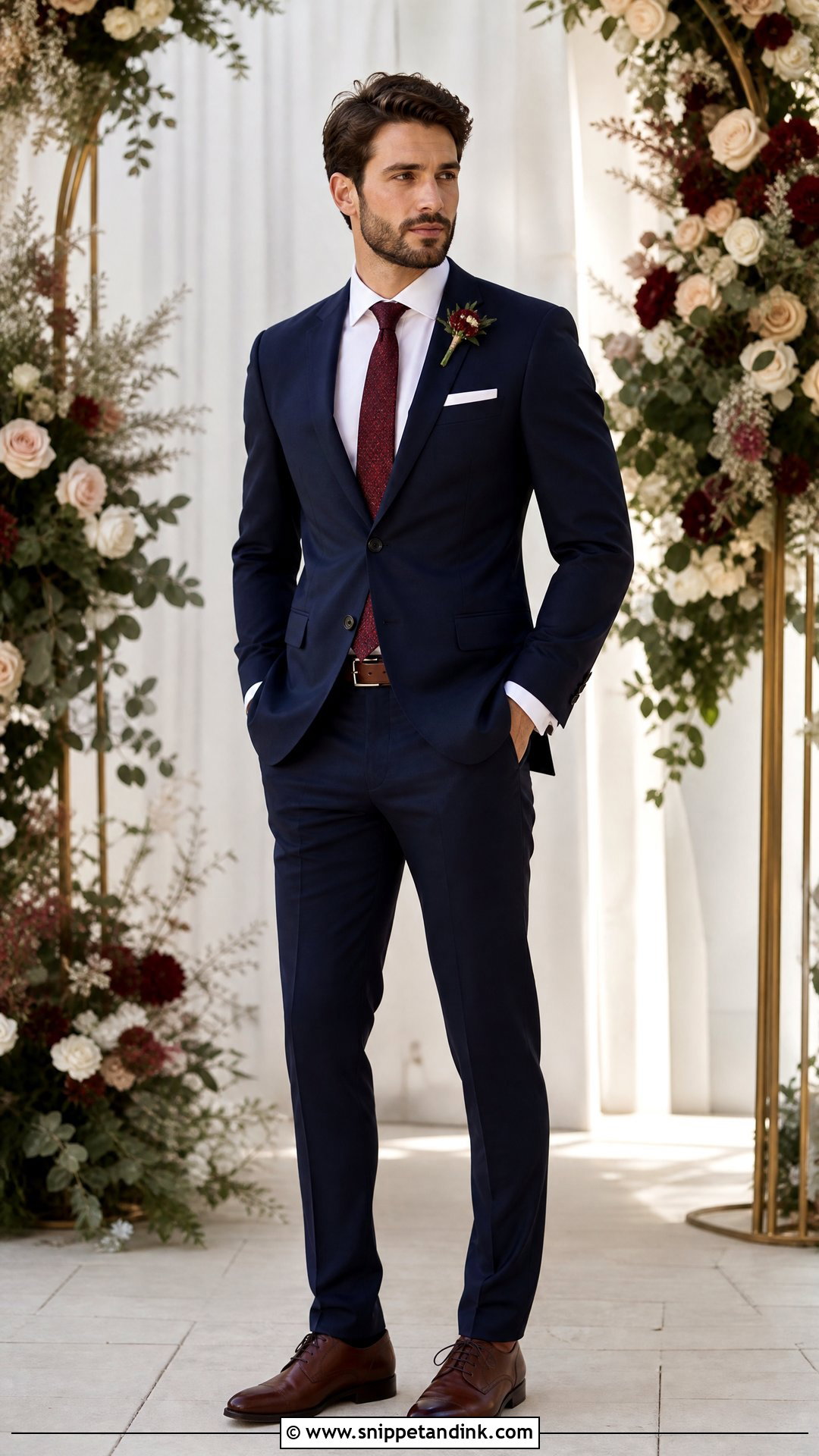
This is the pairing I reach for when a groom says he wants color but is nervous about it. A navy suit and burgundy wedding tie read rich rather than loud, especially in grenadine, whose open weave breaks up the color so it never looks flat. Keep the shirt crisp white and the pocket square white in a plain fold. Dark brown Oxfords and a matching belt warm the navy. For autumn and evening receptions I give the groomsmen solid burgundy and put the groom in a small pattern of the same shade, so he stands apart at a glance.
2. Charcoal Suit With Silver Wedding Tie
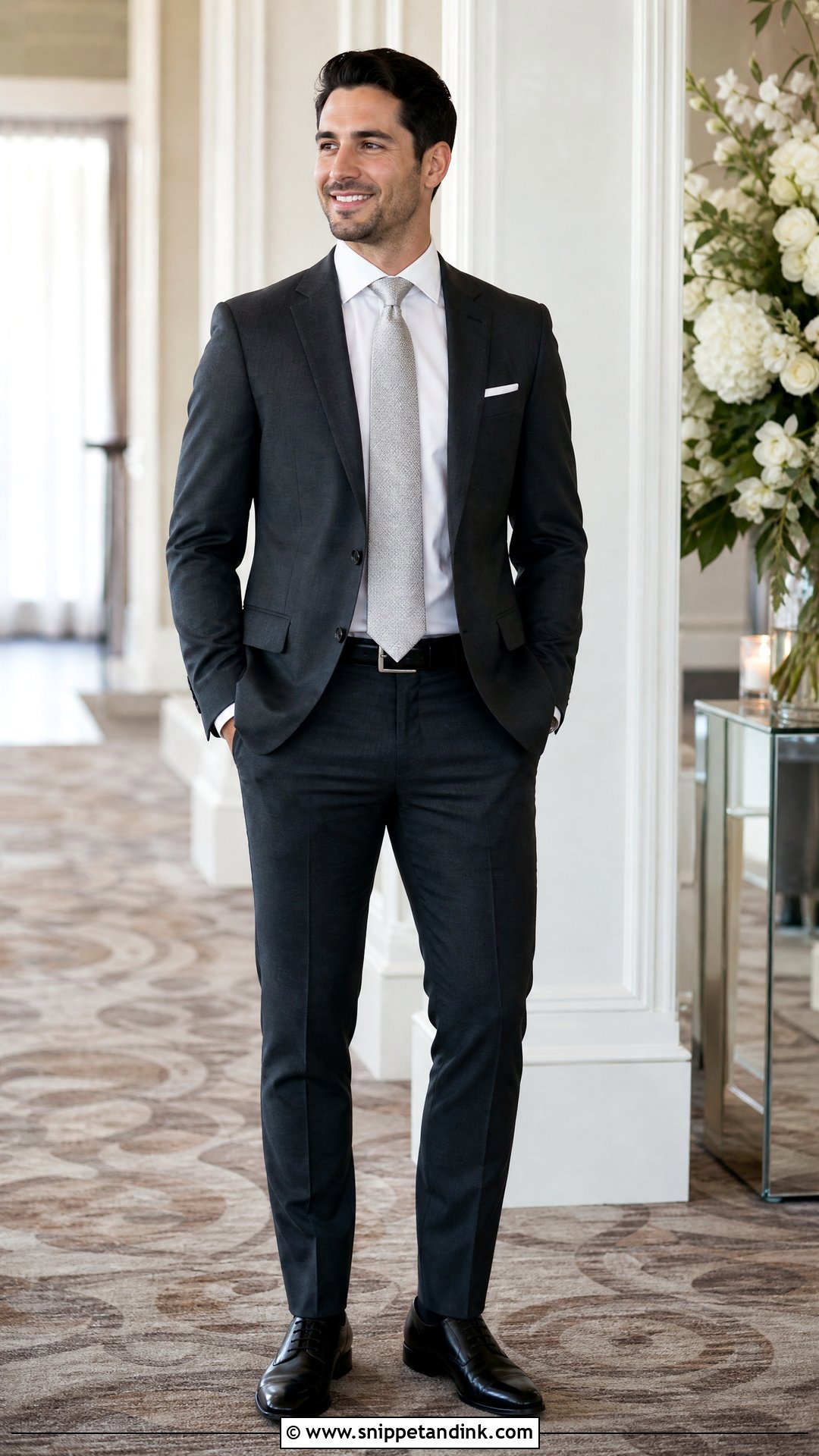
Silver on charcoal is a formal, cool palette, and the trap is shine. A high-gloss satin tie flares white under a flash and loses its color entirely, so I always choose a textured silk in a medium width. Wear it with a white spread-collar shirt, black Oxfords, a black belt and brushed rather than polished cuff links. A silver paisley can replace the solid for a groom who wants a little more. Everything else stays plain, because tonal gray only looks deliberate when nothing interrupts it.
3. Black Tuxedo With Black Wedding Bow Tie
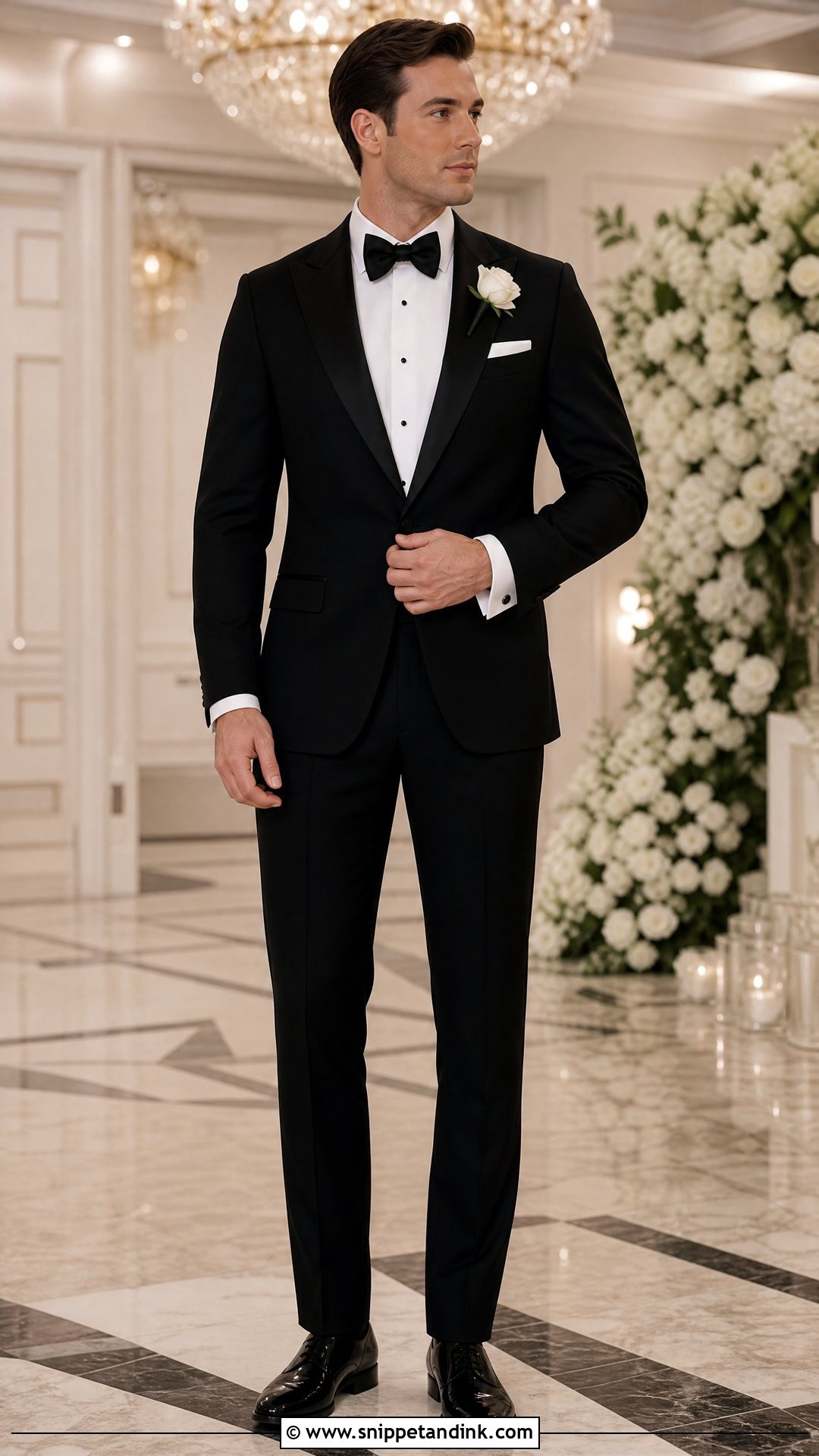
Black tie means a bow tie, and I push hard for a self-tie silk one. A pre-tied bow sits perfectly symmetrical and slightly stiff, and the camera notices. A hand-tied knot has a little irregularity that reads as real. Match the bow’s fabric to the lapel facing where you can, satin with satin or grosgrain with grosgrain. Then a white tuxedo shirt, black patent shoes, black socks, simple studs or cuff links and a white linen square. Personality goes into the watch or the boutonniere, not the neckwear.
4. Light Gray Suit With Blush Wedding Tie
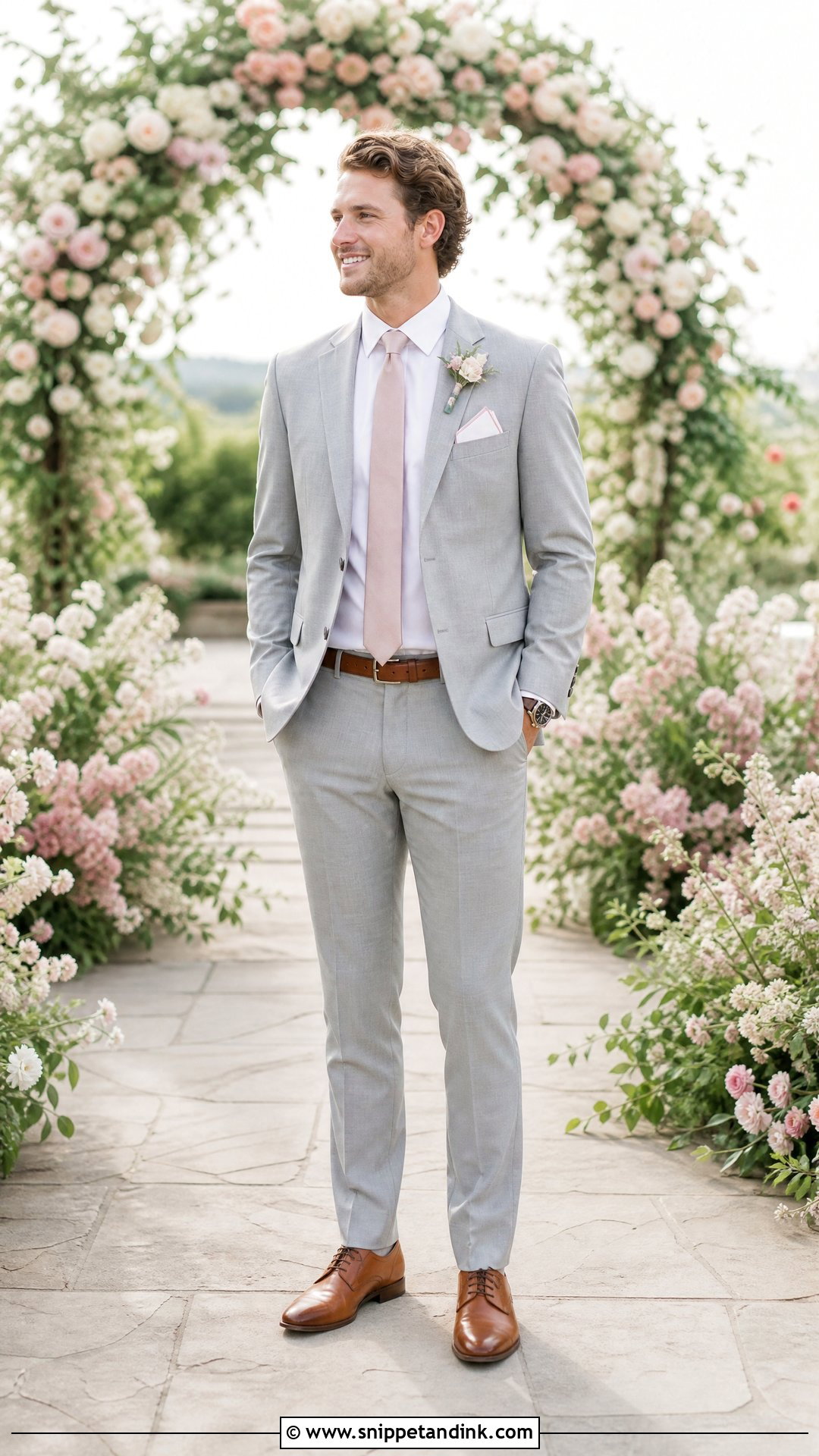
Blush on light gray is a daytime spring and summer combination, and the fabric matters more than the shade. Pastel silk with a high sheen can look almost plastic outdoors, so I steer grooms toward matte silk or a linen blend. White or very pale blue shirt, depending on the palette. Brown or cognac shoes with a matching belt give the light suit some weight at the floor. I’d put a blush edge on a white pocket square rather than matching the tie exactly, and let the groom wear a textured or small floral blush while groomsmen keep it solid.
5. Tan Suit With Sage Green Wedding Tie
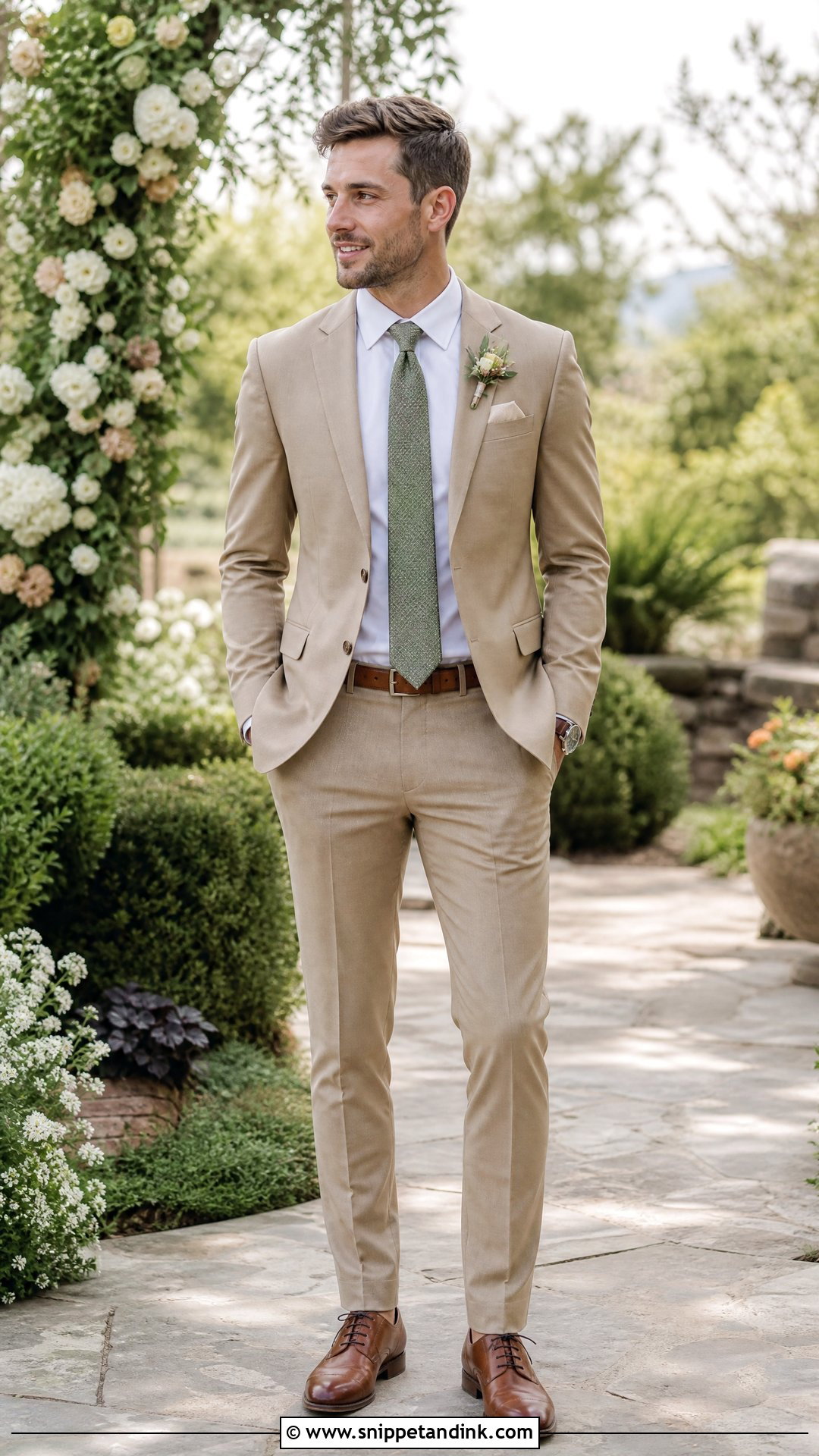
Sage is one of the trickiest greens to buy because it shifts between gray and green depending on the light, so I always ask to see a swatch outdoors before ordering a full set. On a tan suit with a white cotton or linen shirt it looks right at garden, vineyard and rustic weddings. Medium-brown loafers or lace-ups, a brown belt and a leather-strap watch keep the mood relaxed. A cream pocket square and a small botanical boutonniere finish it without every accessory turning green. Daylight is where this palette shows best.
6. Blue Suit With Floral Wedding Tie
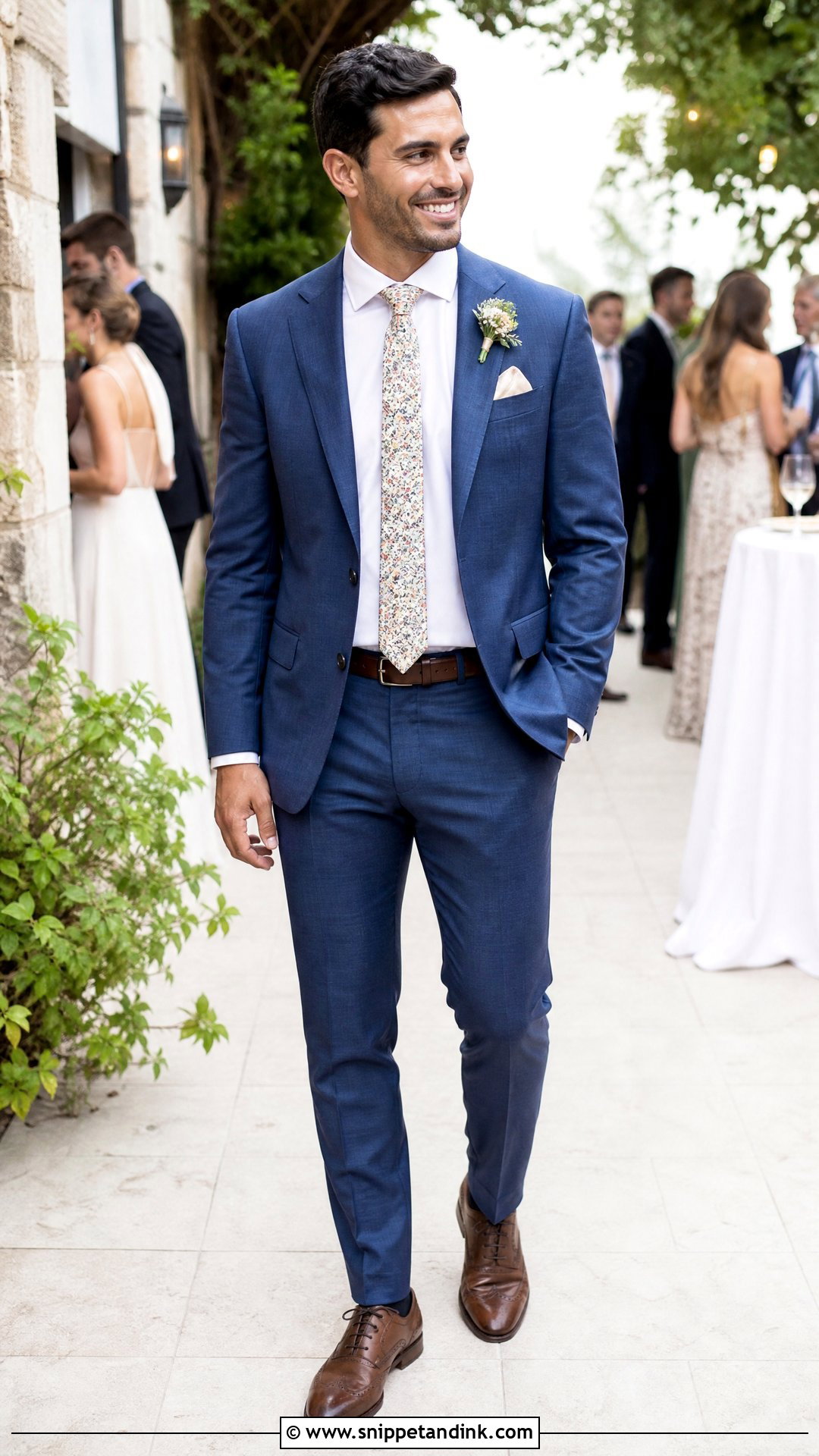
Floral ties are where scale decides everything. A print with large blooms reads as a novelty tie from across a room, while a small repeat in two or three colors reads as texture until someone stands close. On a blue suit I’d keep the shirt white so the pattern has a clean field, then add dark brown brogues, a matching belt and a solid pocket square in the lightest color of the print. Spring and semi-formal outdoor weddings suit it. Groomsmen wear one solid color pulled from the print; the groom wears the floral.
7. Forest Green Suit With Champagne Wedding Tie
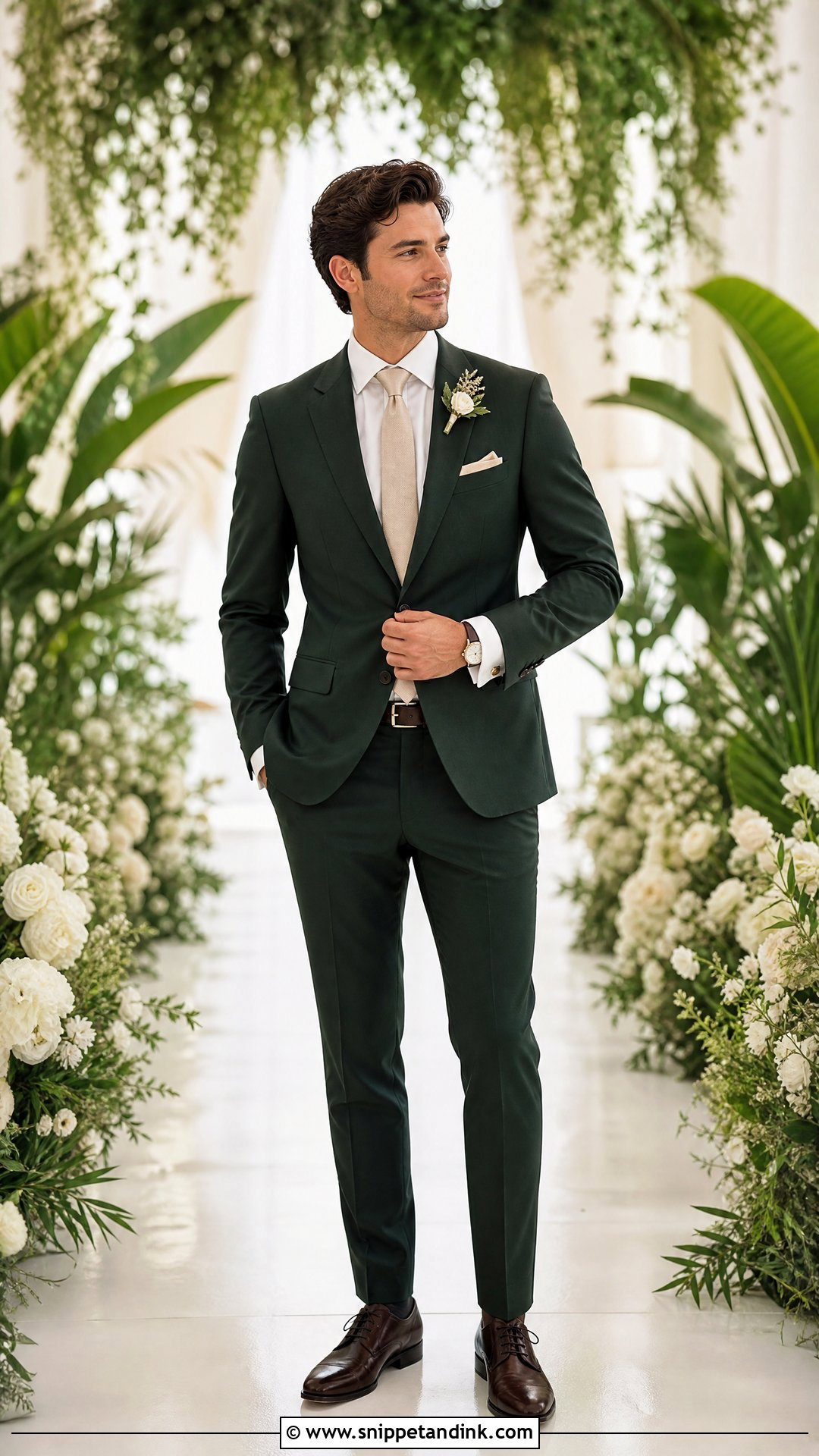
A forest green suit already does the talking, so the tie’s job here is to calm it down. Champagne does that well against an ivory or white shirt, provided it’s matte or finely woven; a shiny champagne silk can read as gold lamé under reception lighting. Dark brown shoes and belt ground the outfit, and a cream pocket square keeps the chest light. Gold-tone cuff links or a watch can echo the tie. I keep the boutonniere small and neutral for fall and botanical venues, because two loud accessories on a green suit start fighting.
8. Brown Suit With Rust Wedding Tie
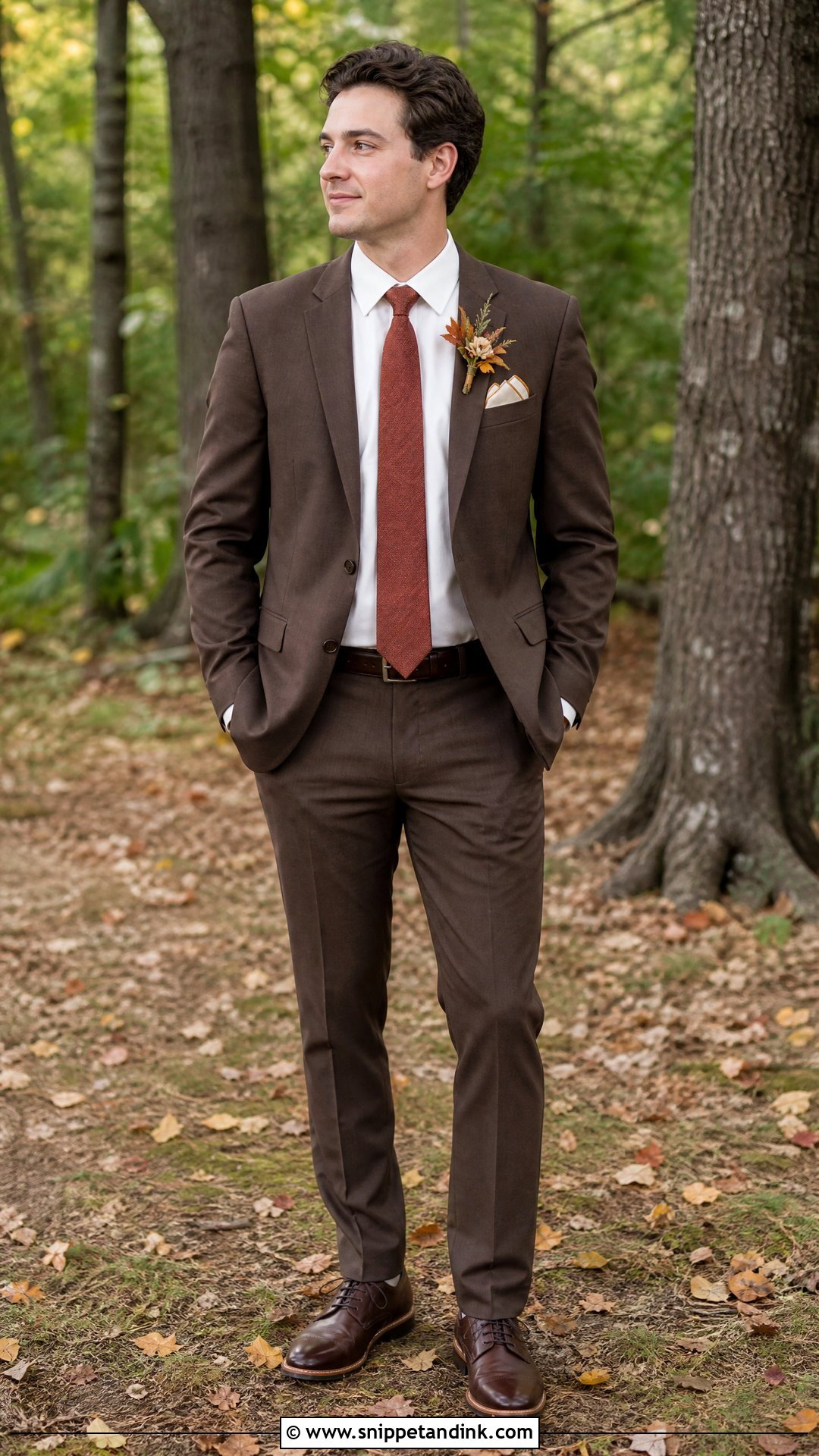
Autumn suits this palette, and the easiest mistake is going fully tonal so the suit, tie and shirt merge into one brown shape in photographs. I avoid that by changing both shade and texture at each layer: a chocolate or mid-brown suit, a cream shirt rather than bright white, and a rust tie in grenadine or a wool blend. Dark brown Derby shoes and a matching belt. A cream square with a rust border references the tie without copying it. Barns, woodland ceremonies and afternoon receptions are the natural settings.
9. Three-Piece Suit With Paisley Wedding Tie
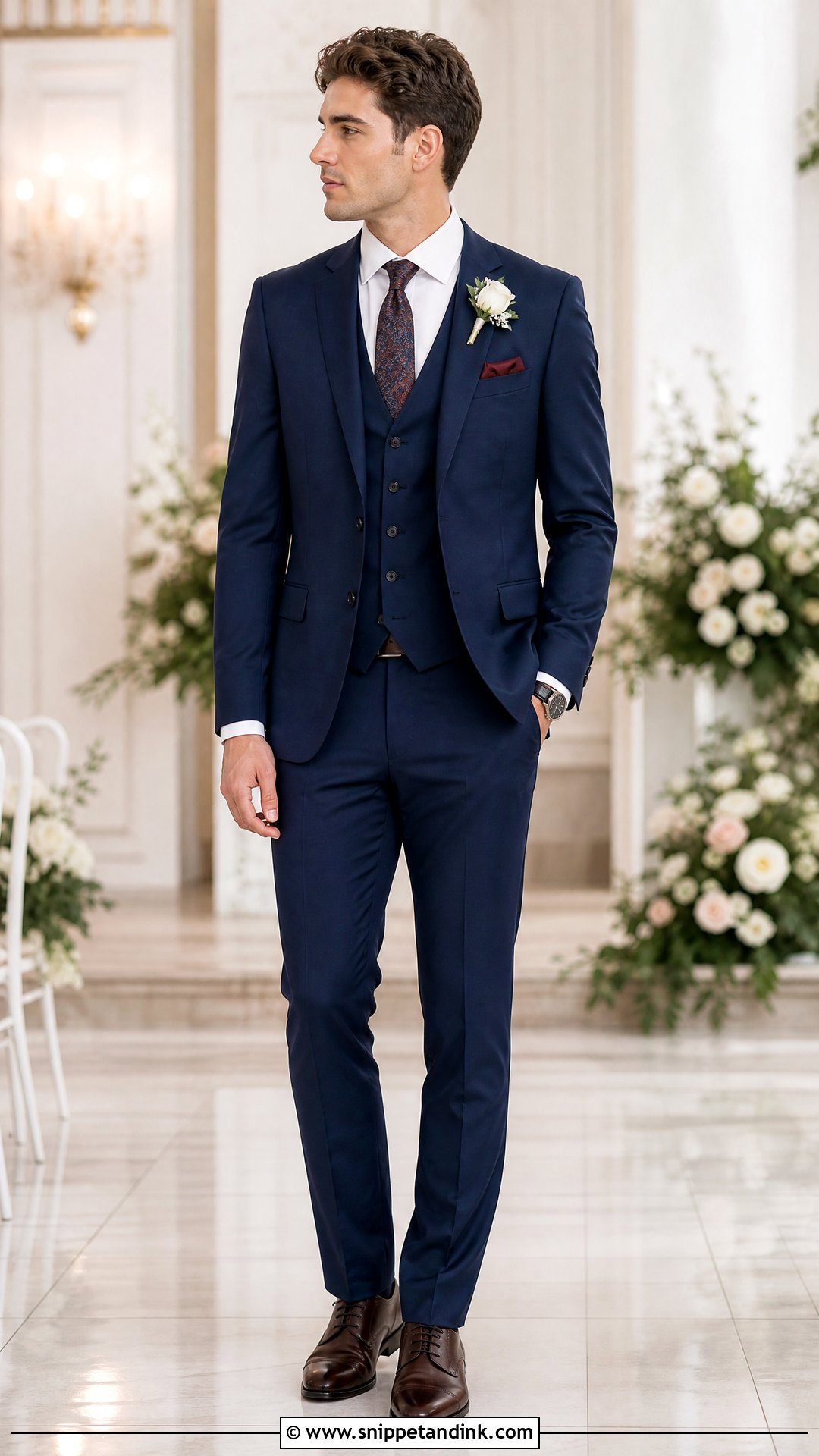
With a vest in play, the tie only shows in a narrow V, so a paisley needs to be small and controlled or it looks cramped. I’d choose navy, charcoal or mid-gray with a matching vest and a white shirt, then a tight paisley in burgundy, blue, silver or muted gold. Pocket square stays solid. Black shoes with charcoal, dark brown Oxfords with navy or gray. One fitting point I always check: the vest’s bottom button stays undone, and the vest must sit flat without pulling at the buttons. The same outfit suits the groom, the father of the couple, or a formal guest.
10. Linen Suit With Knitted Wedding Tie
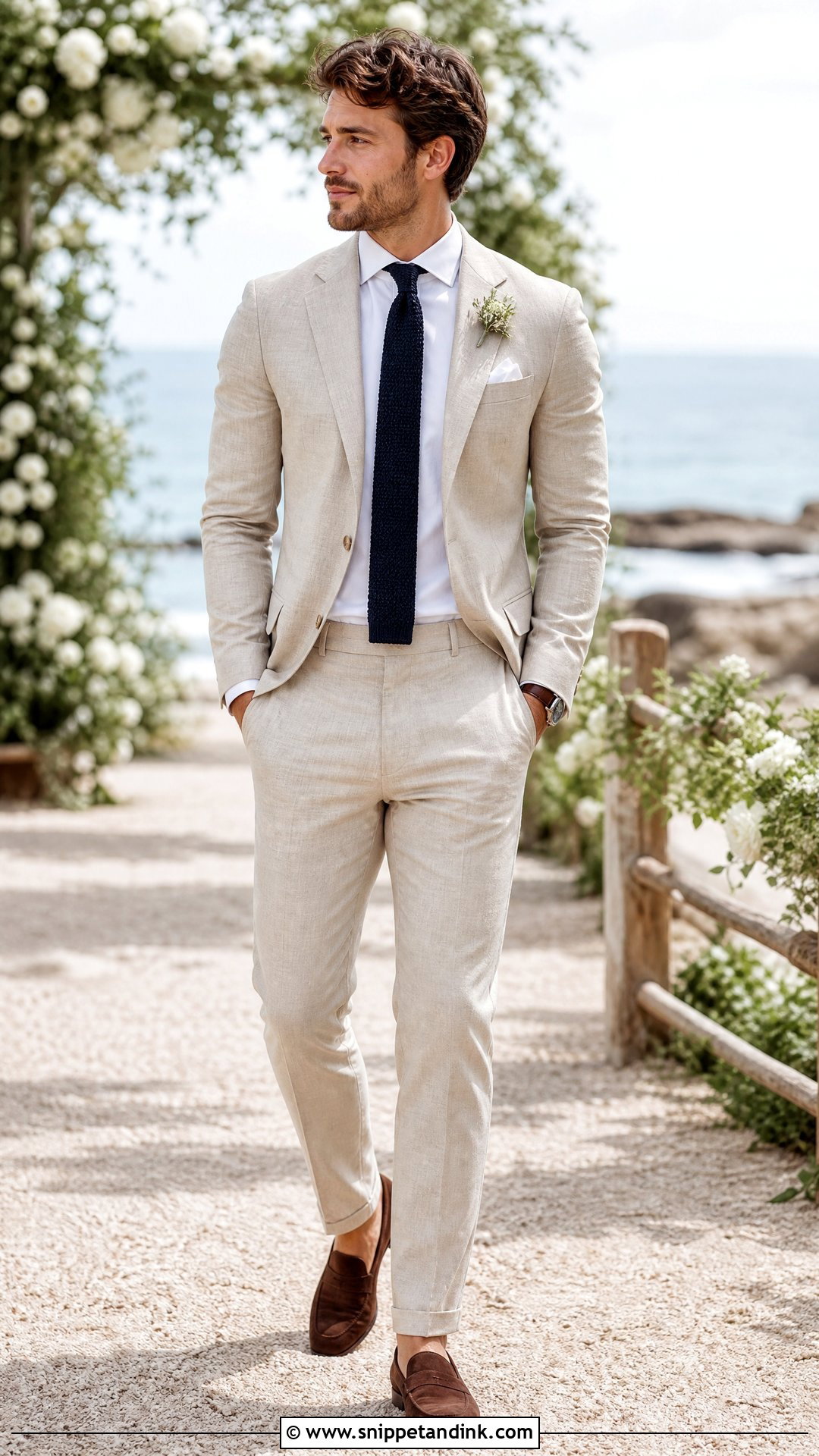
Linen creases within minutes of sitting down, and I tell grooms to accept that rather than fight it; a crisp silk tie against wrinkled linen looks mismatched, but a knitted tie looks at home. That’s why I pair them at coastal and warm destination weddings. Beige, sand, pale gray or light blue linen, a breathable white shirt, and a knit in navy, olive, dusty blue or muted terracotta. Brown suede loafers, with no-show socks only if the dress code allows bare ankles. A folded linen pocket square and a simple leather watch. Skip highly polished shoes here.
11. Navy Tuxedo With Velvet Wedding Bow Tie
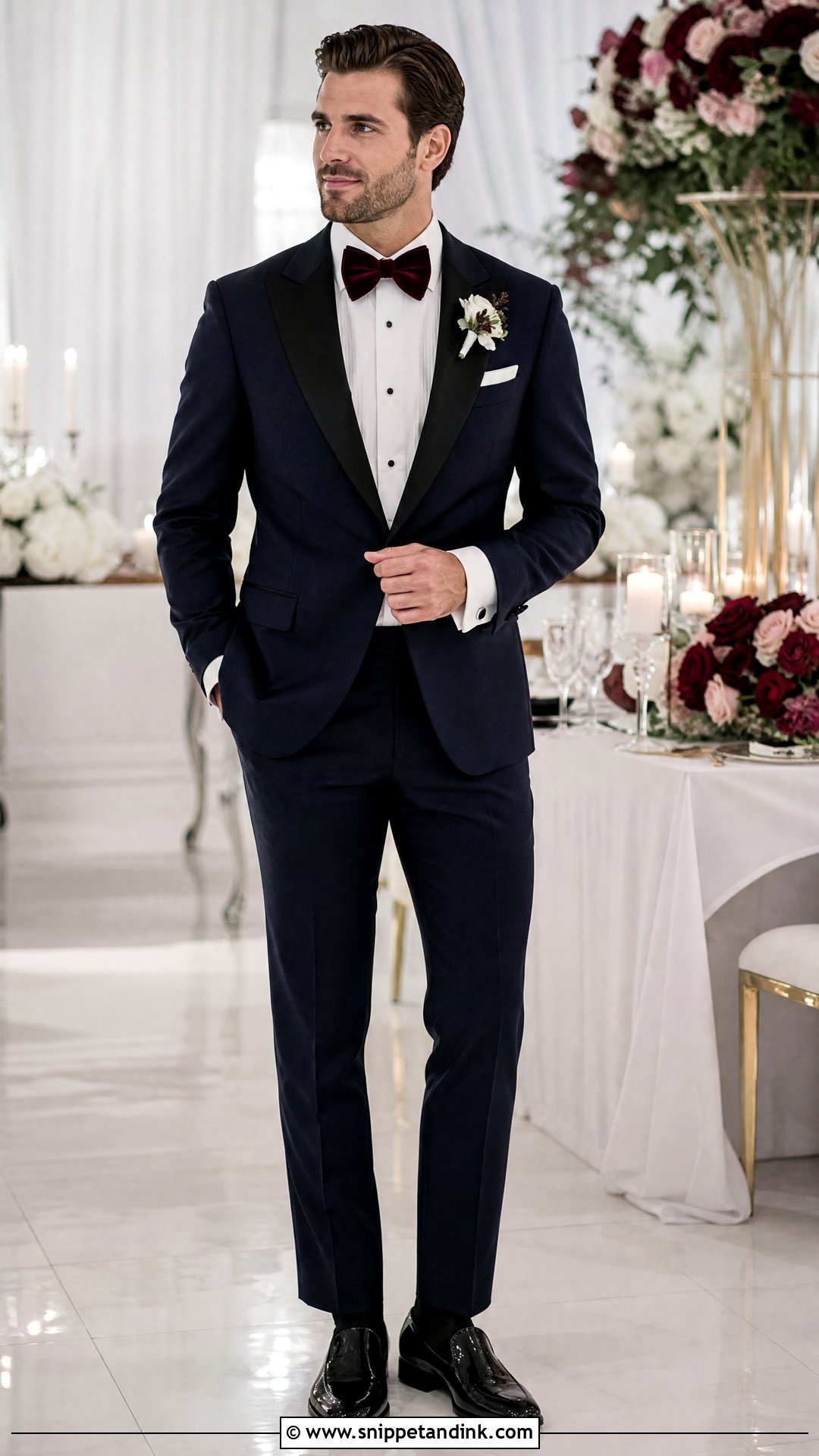
Velvet absorbs light instead of reflecting it, which makes a bow tie look deep and soft in evening photographs where silk would show highlights. I’d pair it with a deep navy tuxedo with satin lapels and a white tuxedo shirt, choosing velvet in black, navy or burgundy. Black patent loafers or lace-ups for the most formal finish, and a white folded square. Keep metal minimal. Velvet is a cool-weather fabric, so I’d skip it for a summer outdoor ceremony. Groomsmen in smooth silk bows of the same color let the groom’s velvet show up quietly in group shots.
12. Seersucker Suit With Pastel Wedding Tie
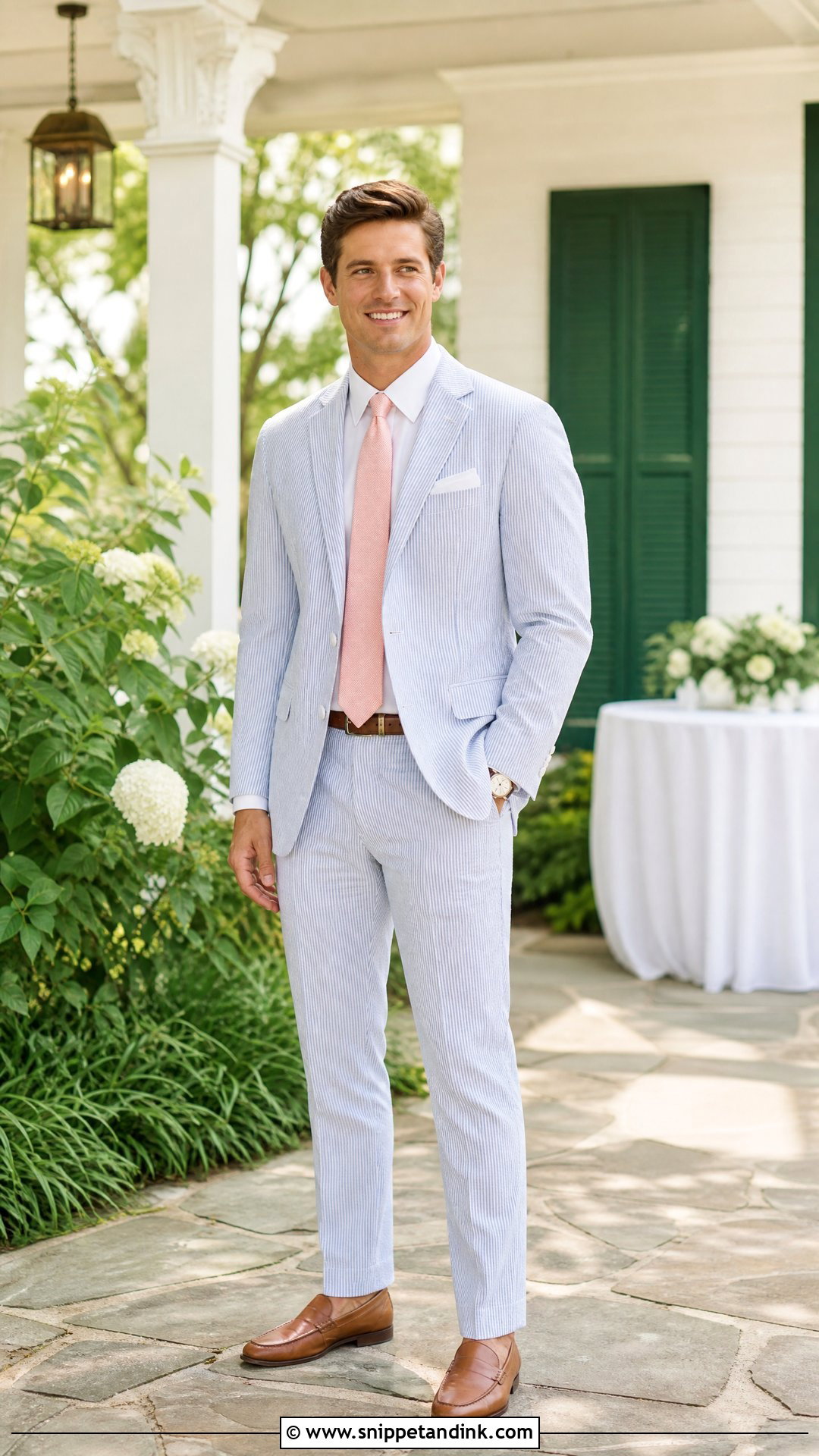
Seersucker already carries a stripe, so the tie should be solid almost every time. Pale pink, mint, lavender or soft blue against classic blue-and-white seersucker and a white shirt. Tan loafers, a matching belt, lightweight socks and a white cotton pocket square, with no extra pattern anywhere. Daytime garden parties, coastal venues and relaxed Southern weddings are where it belongs. The puckered fabric hides creases well, but it doesn’t hide bad fit, so I still have the shoulders checked and the trousers hemmed with minimal break.
13. Burgundy Suit With Black Wedding Tie
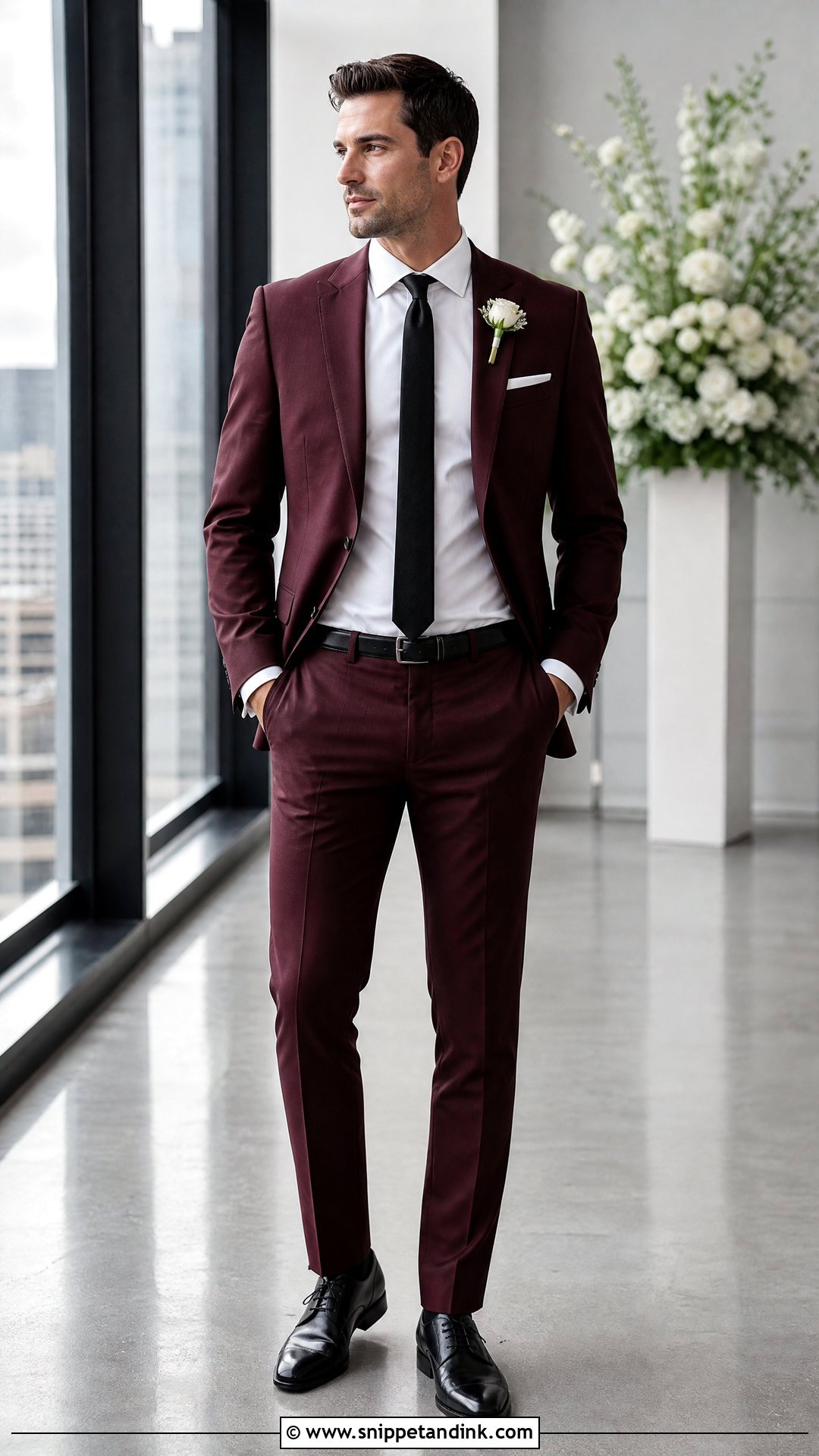
Burgundy suits draw the eye on their own, so I treat the tie as an anchor rather than an accent. A matte black silk or grenadine with a crisp white shirt gives clear separation between the dark pieces; a glossy black tie against burgundy can look like costume. Plain white pocket square. Black Oxfords, black belt and dark socks carry the palette down to the floor. Evening, urban and cool-season weddings suit it best. No elaborate patterns, no oversized accessories: black cuff links and a small white boutonniere are enough.
14. Cream Dinner Jacket With Black Wedding Bow Tie
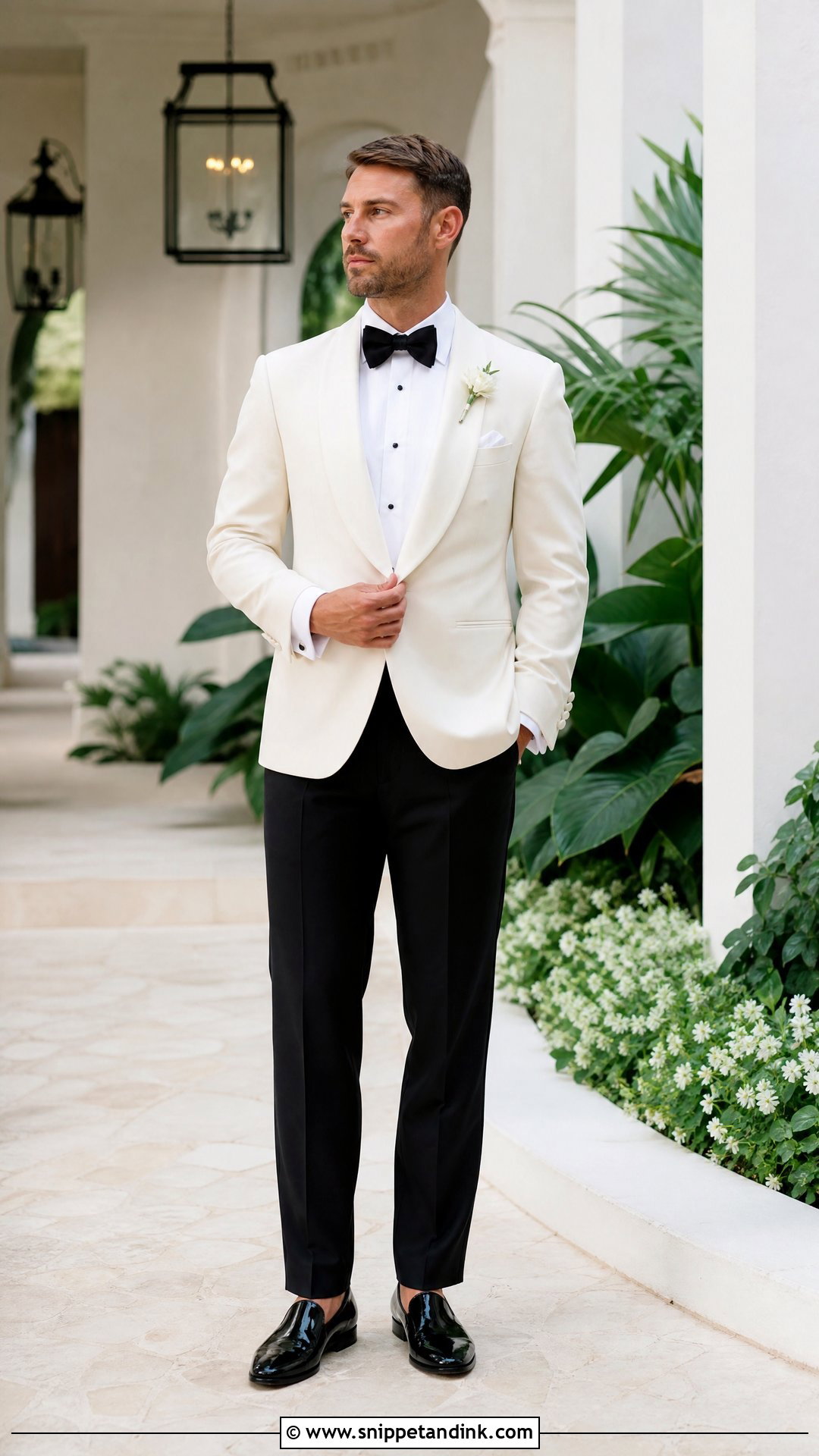
A cream dinner jacket is the warm-weather version of black tie, and it only works if everything around it stays traditional. Black tuxedo trousers, a white formal shirt, a neatly tied black silk bow, black patent loafers or Oxfords, and a white pocket square that disappears against the jacket. Black lapels give more contrast; tonal lapels look softer. I’d suggest it for summer black-tie weddings, formal destination celebrations and upscale indoor receptions. One practical note: cream shows every drop of red wine, so the groom should know where the club soda is.
15. Tweed Suit With Wool Wedding Tie
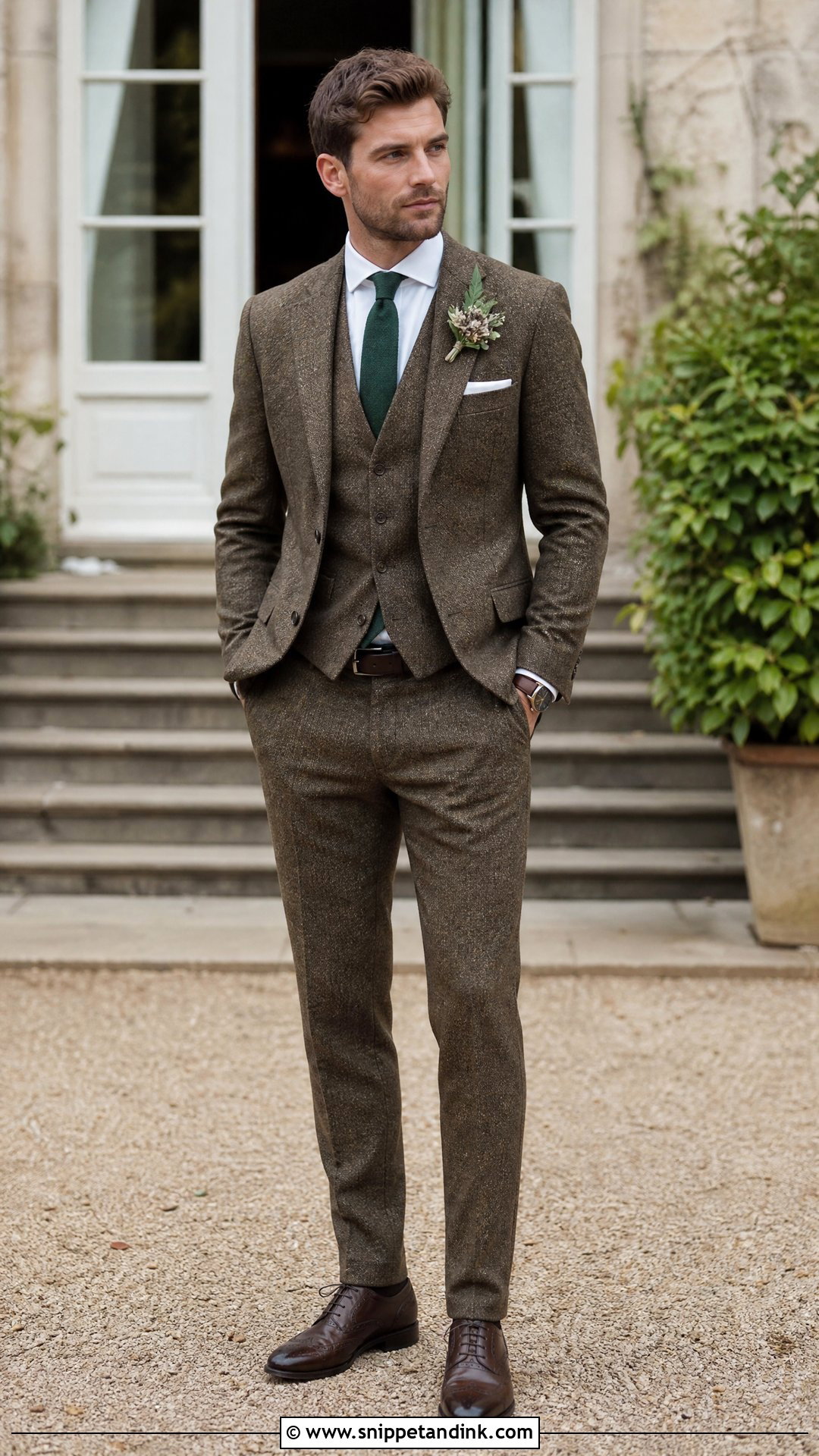
Wool ties are thicker than silk, and on a tweed suit I check that the knot doesn’t end up bulky under the collar; a simple four-in-hand is usually the answer. Choose brown, gray or muted green tweed suit fabric with a white, cream or pale blue shirt. The tie should be smoother or darker than the jacket so the two textures don’t blur together, and burgundy, forest green, navy and rust all hold up. Dark brown brogues or Derbies, a matching belt and a cotton square. Give the groom three pieces and the groomsmen two. Country houses and mountain venues in fall and winter suit it.
16. Double-Breasted Suit With Tonal Wedding Tie
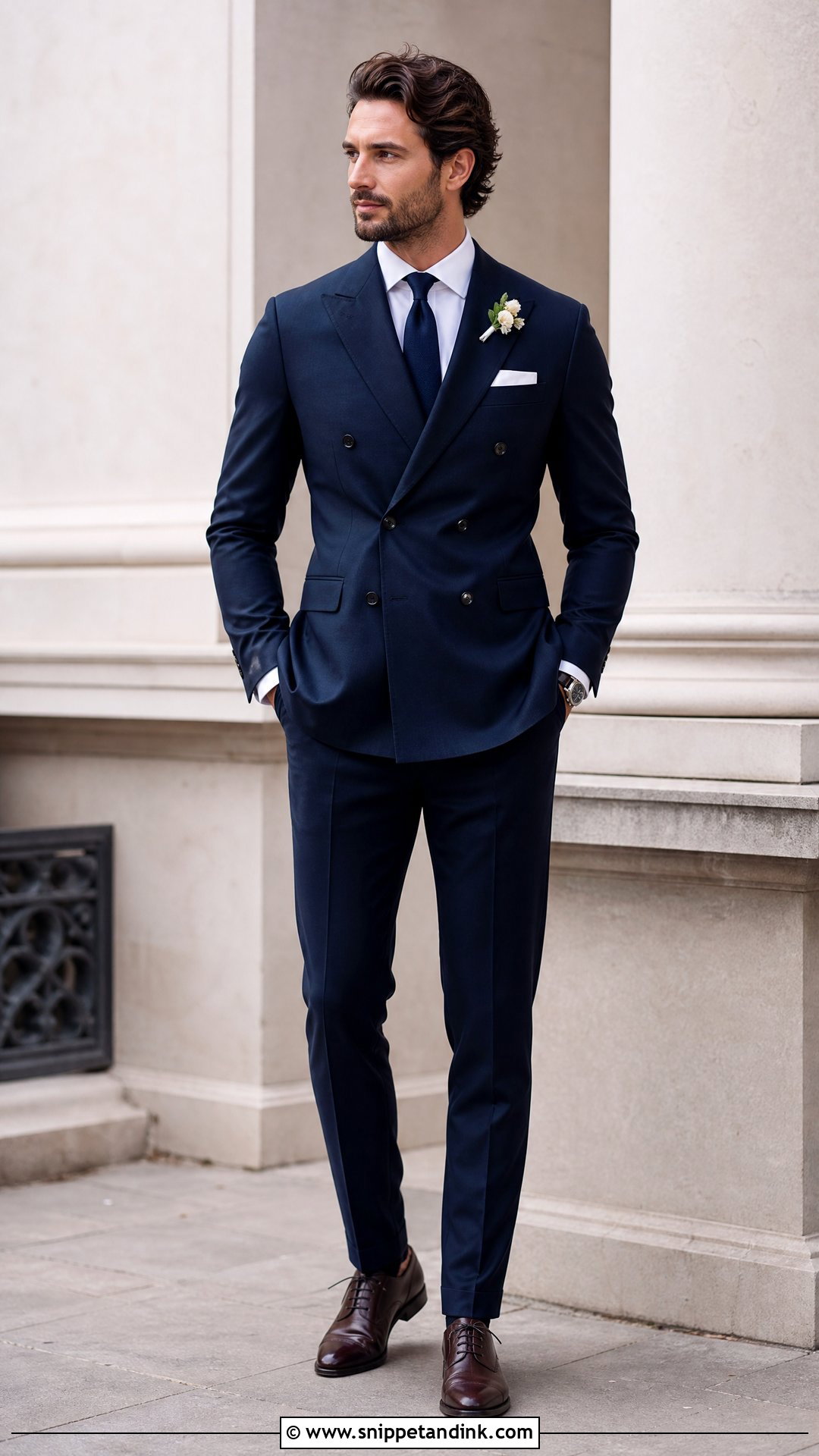
Tonal dressing is for the groom who wants polish without contrast. On a double-breasted suit, I go a shade lighter or darker in the tie: textured blue on navy, graphite or silver-gray on charcoal. A crisp white shirt keeps it from going flat. The jacket’s wide, structured front already takes up a lot of visual space, so I’d avoid a heavy Windsor knot and an oversized boutonniere. Black or dark brown Oxfords to match the formality, a white square and one metal accessory. Formal city weddings and evening receptions are its home.
17. Gray Suit With Emerald Green Wedding Tie
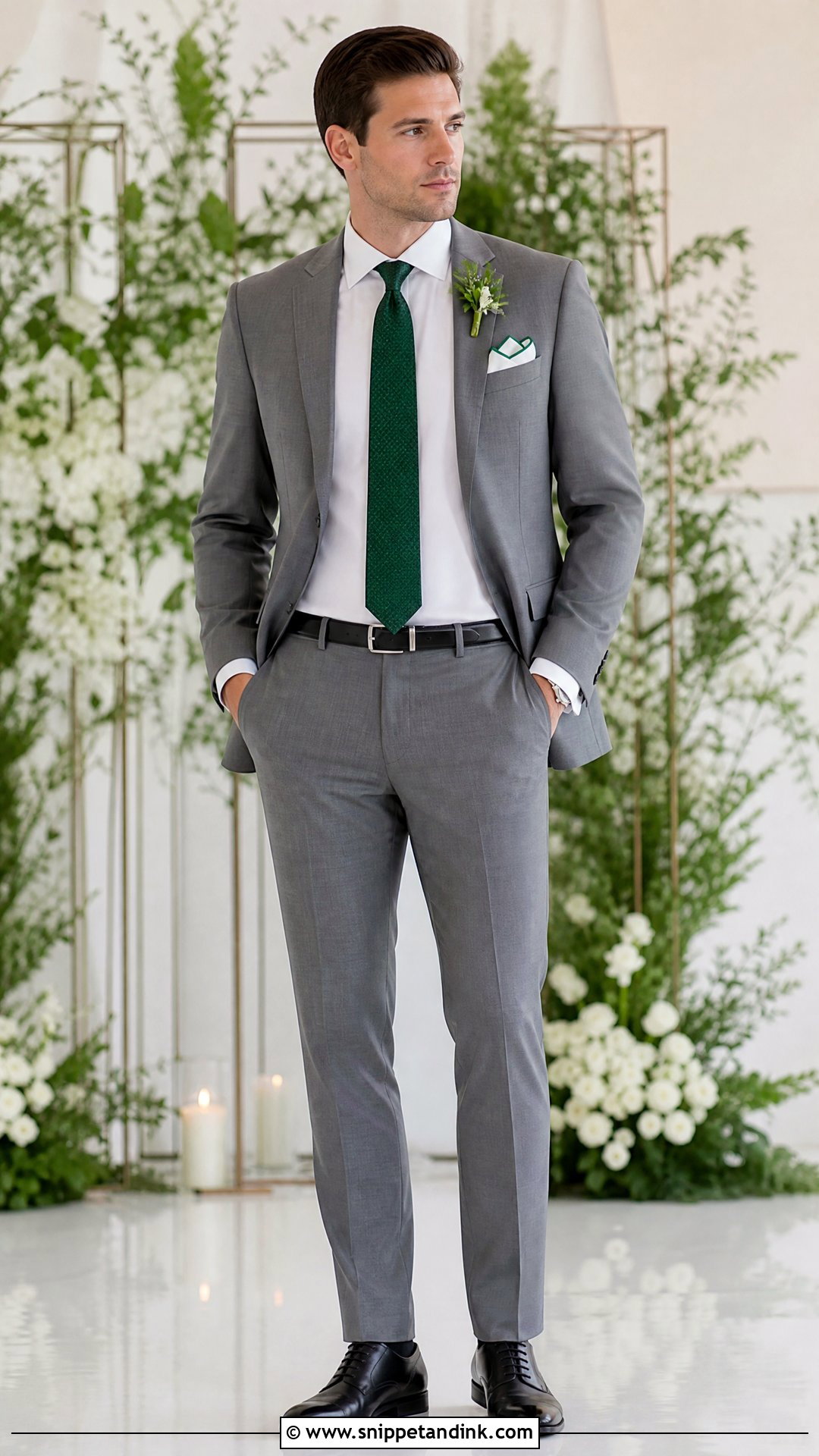
Emerald is the jewel tone I find easiest to wear across seasons, because it sits well against both medium gray and charcoal. Mid-gray keeps it versatile; charcoal turns it into an evening outfit. A white shirt keeps the green clear and a textured silk gives it depth. Black Oxfords are the formal answer, though dark brown can work with lighter gray at a daytime wedding. A white square with a narrow green border and simple silver cuff links finish it. I’d give groomsmen a muted green and keep the deepest emerald for the groom.
18. Beige Suit With Dusty Blue Wedding Tie
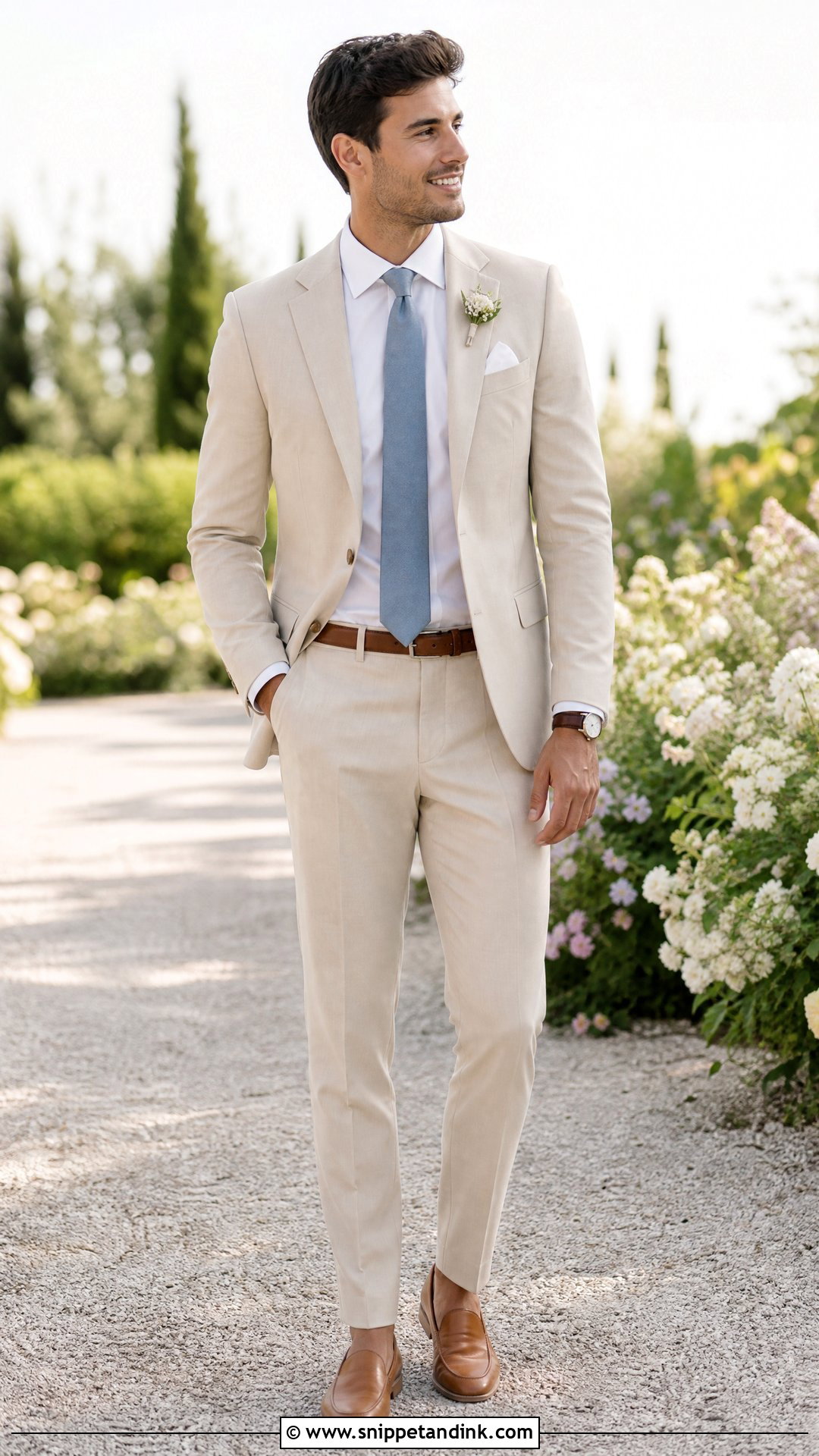
Dusty blue on beige is a spring and summer palette that photographs soft in daylight. White shirt for a cleaner look, pale blue for a tonal one. A linen-blend or matte silk tie matches the relaxed character of the suit better than a shiny one. Tan loafers and a matching belt keep the lower half light. Then a white pocket square, a brown leather-strap watch and a restrained boutonniere. Beach, garden and destination weddings suit it. Beige suits vary between brands more than people expect, so with several groomsmen I allow slight differences in suit tone but insist on identical ties.
19. Black Suit With Ivory Wedding Tie
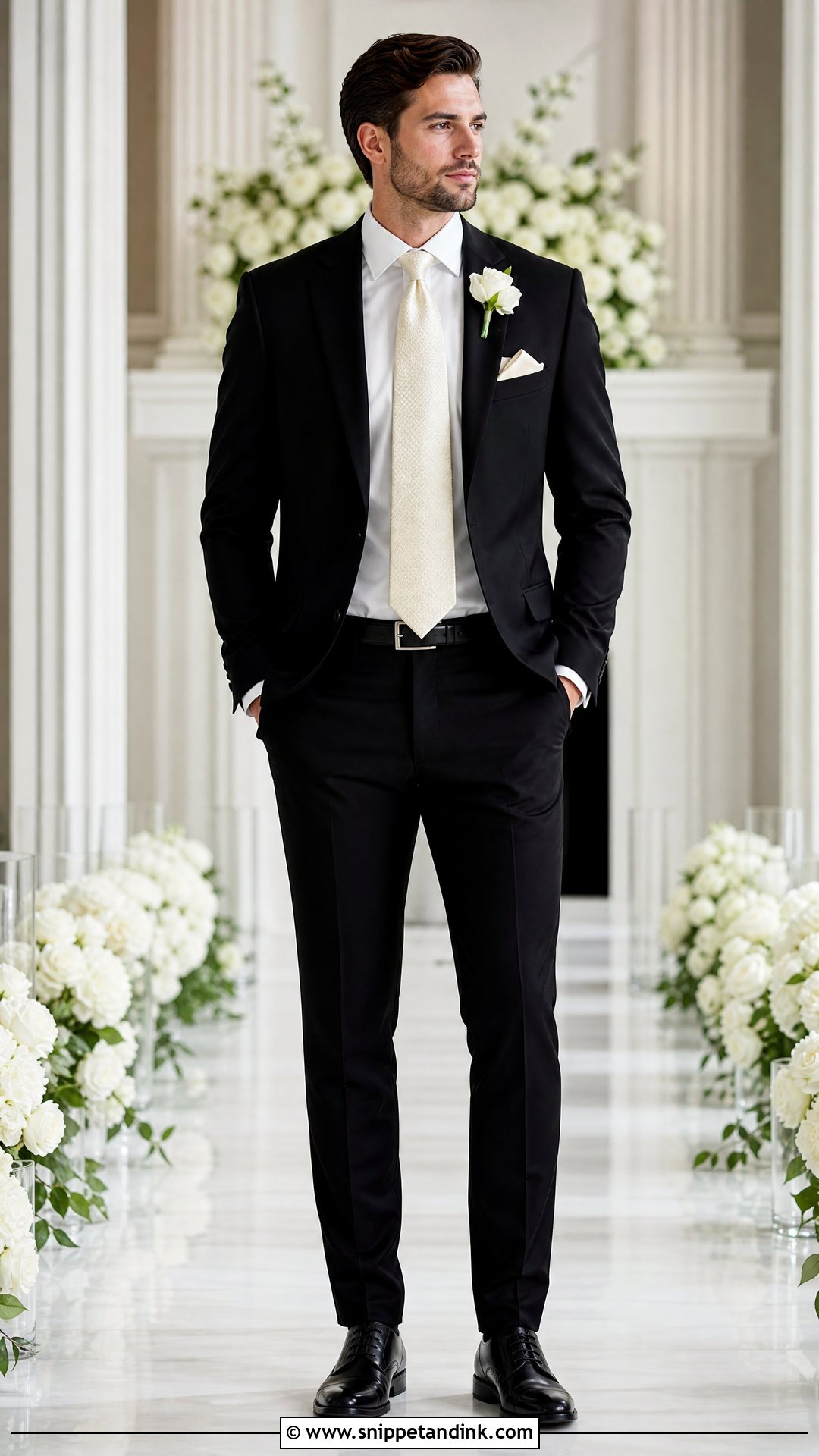
An ivory tie softens a black suit, but only if the shirt is bright white; put ivory on an off-white shirt and the tie disappears. I choose a matte or lightly woven silk here, never a shiny one. Black Oxfords, belt and dark socks keep a clean formal line. A white or ivory square in a different texture from the tie stops the pair looking like a boxed set. Traditional ceremonies and formal evening venues suit it, with groomsmen in black or charcoal ties so the groom’s lighter tie stands out.
20. Matching Groomsmen Suits With Contrasting Groom Wedding Tie
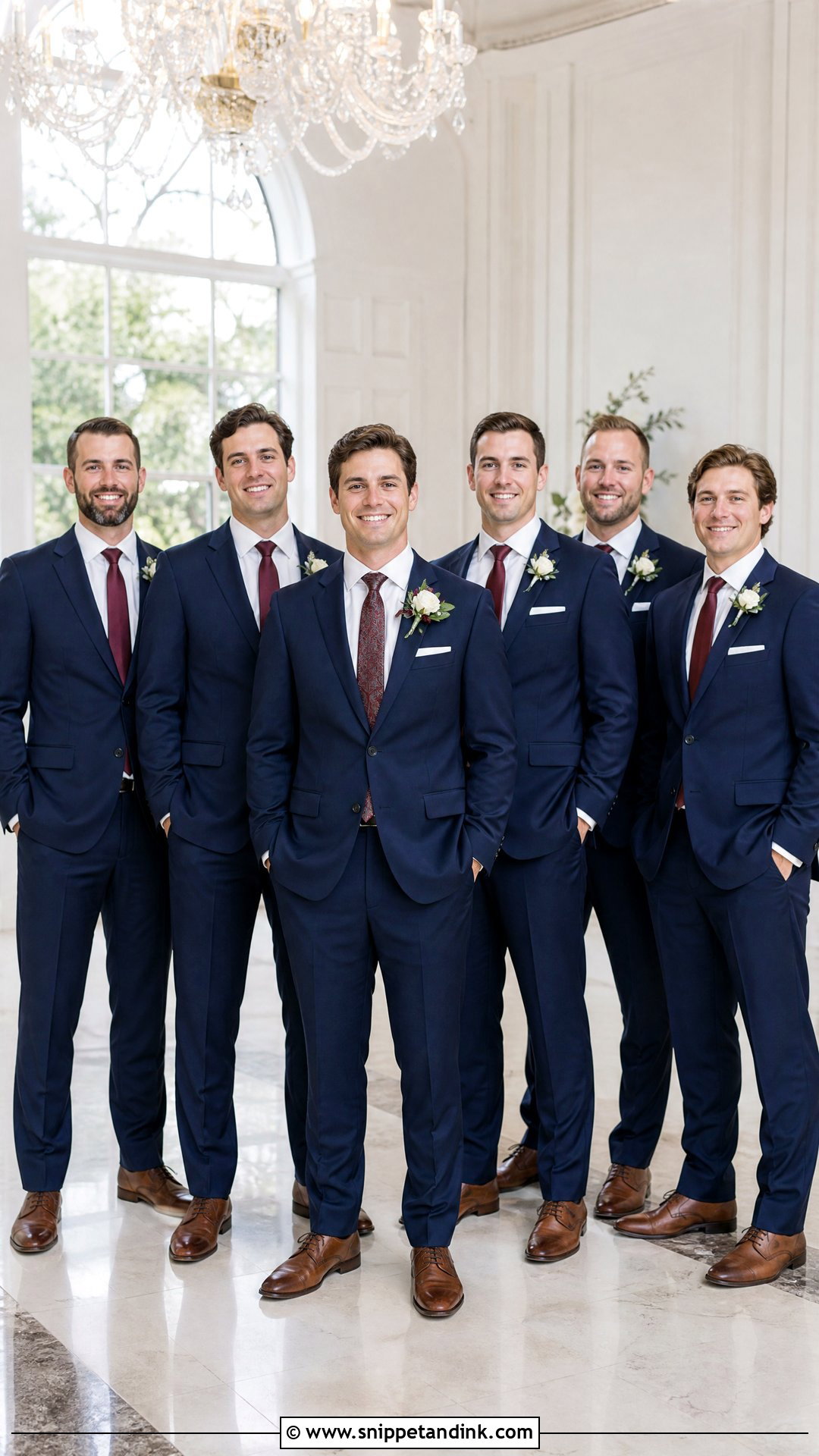
Identical outfits for everyone make the groom hard to find in a lineup. I start with matching navy, gray, tan, or black suits and the same white shirt across the group, then give the groomsmen solid ties in one wedding color and the groom a patterned, textured or slightly deeper version of it. Shoes stay consistent. Pocket squares can stay white while the groom adds a distinct boutonniere or a vest. What I’d avoid is an unrelated color for the groom, which breaks the palette instead of marking him out.
Ordering Ties for Six Groomsmen Without a Color Mismatch
Buying one tie is easy. Buying seven that match is where I see the most last-minute trouble, because dye lots vary and the same shade name can look different from one batch to the next.
- Order a single sample first and look at it next to the actual suit fabric and a bridesmaid dress swatch, in daylight and under warm indoor light.
- Buy the full set in one order from one maker so every tie comes from the same batch. Add one spare.
- Allow several weeks for custom colors, extra-long lengths or monogrammed linings, and more around peak wedding season.
- Have every tie delivered to one person, steamed and hung, a week before the wedding. Loose ties in shopping bags get creased or forgotten.
Creases, Spills and the Tie Kit I Bring on the Morning
Silk ties should never meet a hot iron directly; it flattens the rolled edges and can leave a shine. I hang ties overnight or roll them loosely from the tip, and use a handheld steamer held a few inches away for any stubborn crease. Knits are the exception: they should be rolled or laid flat, never hung, or they stretch.
On the morning itself I carry a spare tie in the wedding color, a lint roller, safety pins and blotting papers. A drop of wine on silk should be blotted gently, not rubbed, since rubbing spreads the mark and roughs up the surface. And I’d untie the bow tie for the late-night dancing photos only if he can retie it; a loose self-tie bow hanging open looks great, a crooked retie does not.
One Job for the Tie, Everything Else in Support
Every outfit above follows the same order: dress code, then suit, then a tie that adds contrast, texture or a small pattern, then shoes, shirt and accessories that support it. Formal weddings call for silk neckties or bow ties; knits, linen and wool suit relaxed or seasonal venues. The groom can stand apart by shade, pattern or fabric while staying tied to his groomsmen. And fit outranks everything. A modest tie on a suit that fits will look better in twenty years than an expensive one on a jacket that pulls.


Leave a Reply