
A bow tie changes how the whole outfit reads, so I start with it rather than adding it last. The twenty looks below are built for grooms, groomsmen and guests, and each one pairs the tie with a jacket, shirt, trousers, shoes and the small extras that make it look planned. Black silk with a tuxedo is the anchor. Velvet, linen, knitted and printed ties loosen things up for gardens, barns and beaches. Read each idea against your dress code, venue, season and wedding colors, and notice where I’ve warned against doing too much; a bow tie is already a statement, so the rest of the outfit usually needs to step back.
Self-Tie, Pre-Tied, and Getting the Size Right
I always recommend a self-tie for the groom. It looks slightly irregular in a way a pre-tied one never does, and that small imperfection is what makes it look real. Pre-tied ties with adjustable straps are fine for groomsmen, young attendants or anyone who won’t practice. Clip-ons are best avoided for adults; they sit too flat and the clips can show at the collar.
Size
Most self-tie bow ties have an adjustable neck band. Set it to your shirt collar size, not your bare neck. The width of the bow should roughly stay inside the outer edges of your face and shouldn’t extend past the collar points. Broad faces and wide collars suit a larger butterfly shape; narrow faces suit a slimmer batwing.
Tying it, step by step
- Button the collar first. Drape the tie around your neck with one end hanging about an inch and a half longer than the other.
- Cross the long end over the short end at your throat, then bring it up behind and through the loop at the neck.
- Fold the short end into a horizontal bow shape and hold it across the collar.
- Drop the long end straight down over the front of that bow.
- Fold the long end back on itself and push the fold through the gap behind the front loop.
- Tighten by pulling opposite loops and ends gently until the knot is firm and the sides are about even.
Practice a few times the week before. Silk ties hold a knot well; linen and knitted ties are softer and need a firmer pull.
1. Black Tuxedo With Black Bow Tie
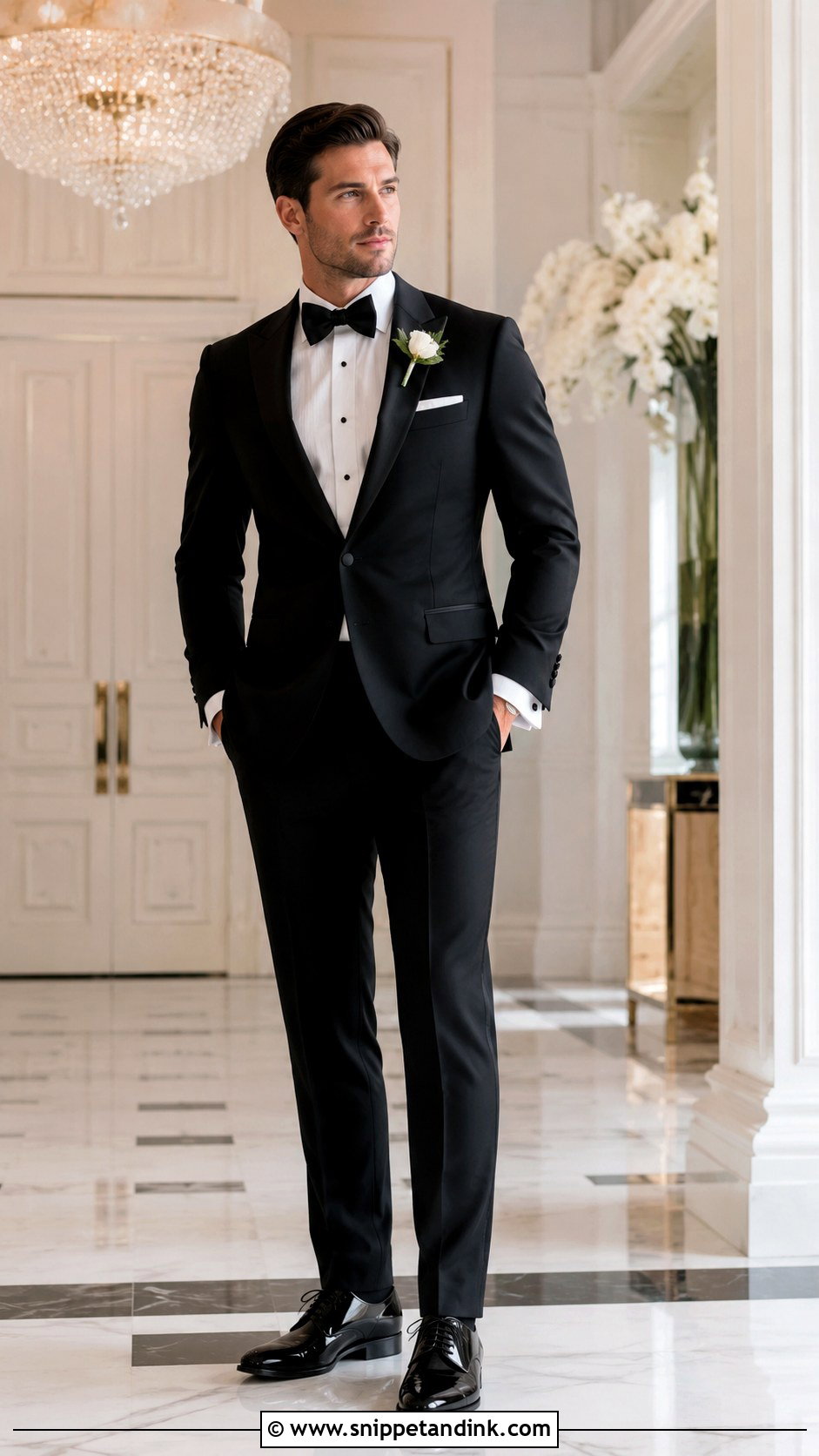
A well-tailored black tuxedo with a black silk bow tie is the one combination I never have to defend. Choose a single-breasted tuxedo with satin peak or shawl lapels, and match the satin of the tie to the lapel facing if you can; a shiny tie against grosgrain lapels looks slightly off in close-ups. A crisp white shirt with French cuffs and understated studs keeps the front clean. Black patent Oxfords are the most formal finish, polished loafers a more modern one. Black socks, simple cuff links, a white pocket square in a straight fold and a small white boutonniere complete it for black-tie ceremonies and ballrooms.
2. Navy Suit With Burgundy Bow Tie
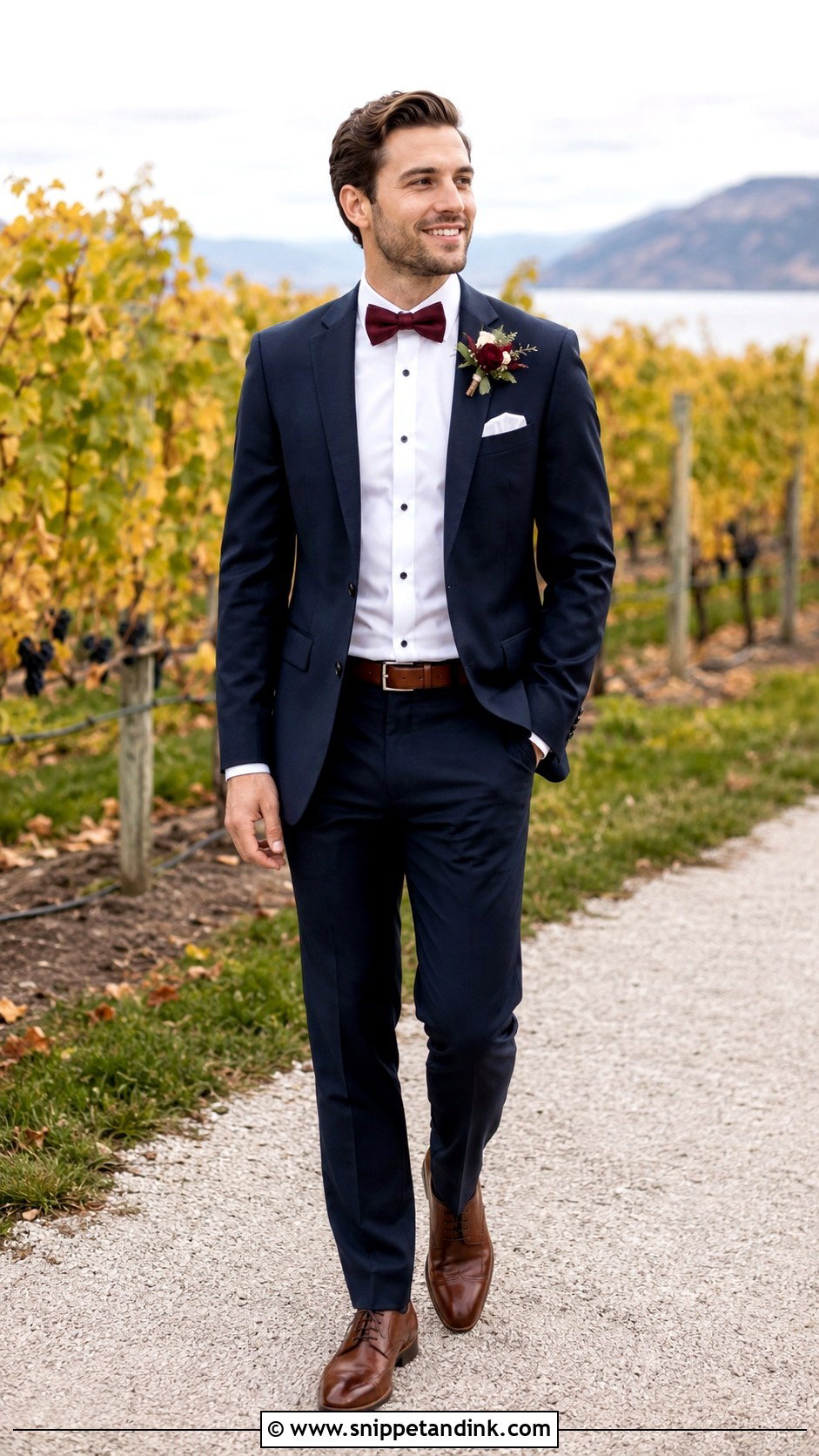
Navy and burgundy is one of the most reliable color pairings in menswear, because both are dark enough to look serious and different enough to read in photos. Wear a tailored two- or three-piece navy suit with a bright white shirt and a solid burgundy silk tie for a formal result, or a textured one for something softer. Brown Oxfords or monk straps suit the blue, with the belt and watch strap in the same brown. A burgundy-and-white boutonniere or a plain white pocket square links it all. I’d keep everything else minimal. It works well for fall, vineyards and wedding parties in deep seasonal colors.
3. Gray Suit With Dusty Blue Bow Tie
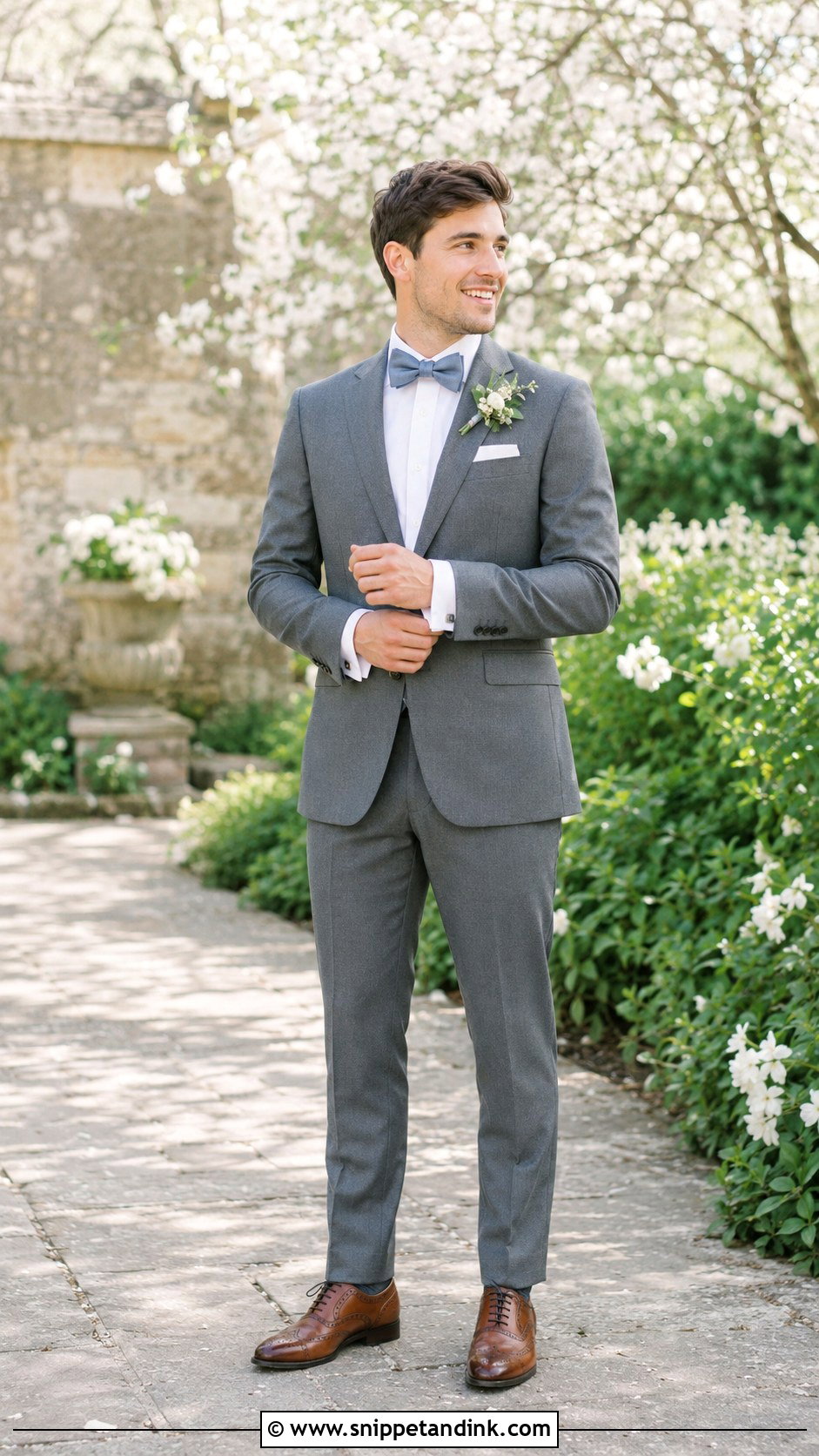
Dusty blue sits quietly against light or mid-gray, so the effect is calm rather than loud. Pair a fitted gray suit with a white or pale blue shirt; if you choose the blue shirt, make the tie a shade darker so it doesn’t vanish into it. Brown brogues add warmth, black shoes make it more formal. A white pocket square with a narrow blue border gives a touch of coordination without looking matched. Silver cuff links, a simple watch and a boutonniere of white flowers with silvery greenery finish it. Daytime is where this palette works best, in spring gardens or by the coast, and it sits easily beside bridesmaids in blue, lavender or cool gray.
4. White Dinner Jacket With Black Bow Tie
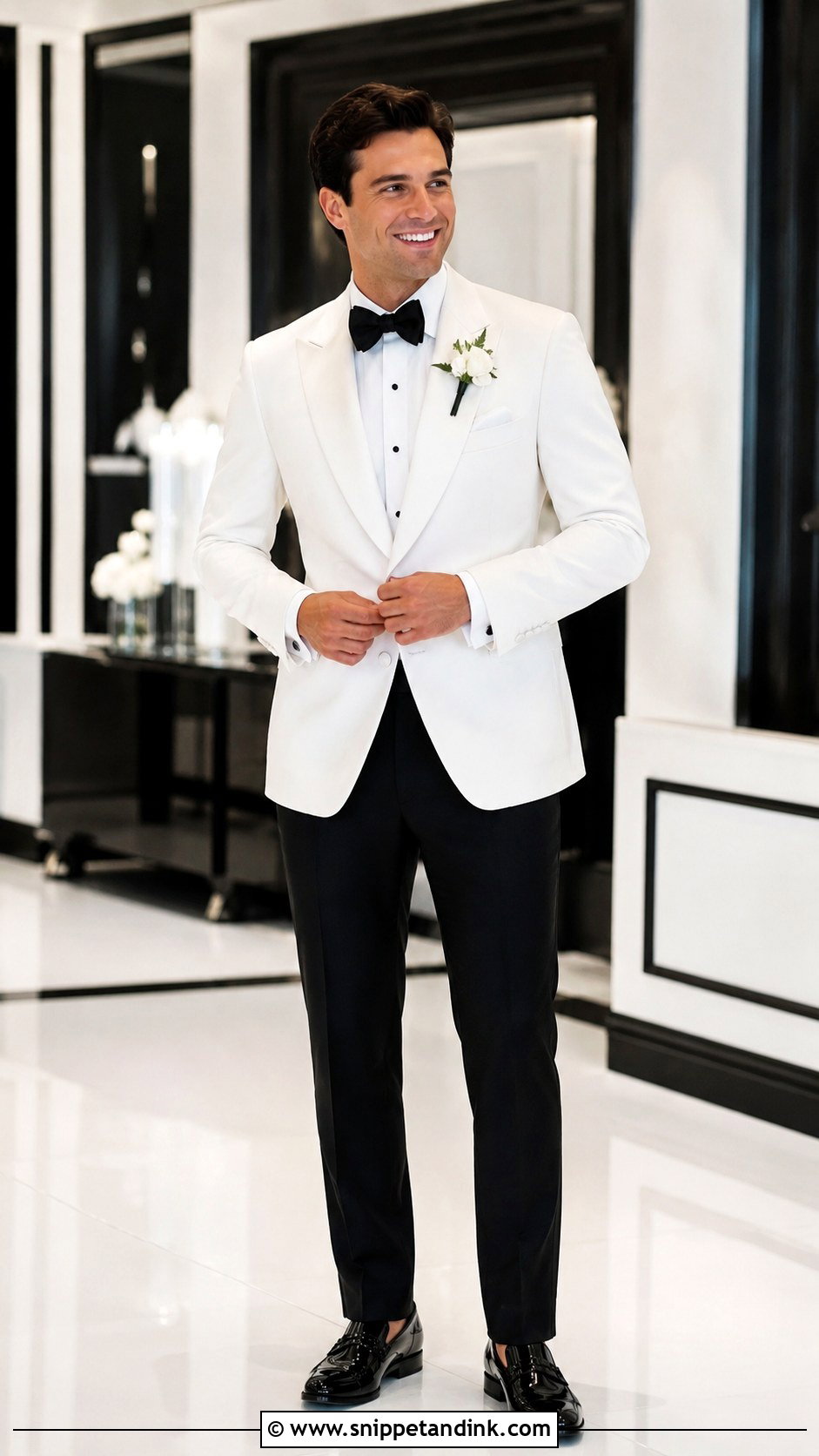
A white dinner jacket separates the groom from a wedding party in black instantly. Pair it with a white formal shirt, black tuxedo trousers with a satin side stripe and a hand-tied black silk bow tie. Black patent loafers or lace-ups, black socks and discreet metal cuff links keep it sharp. A crisp white pocket square is cleaner than black. Keep the boutonniere small and neutral. The jacket will mark easily, so I tell grooms to take it off for dinner and keep a stain pen in an inside pocket; an ivory dinner jacket hides marks better than bright white and is traditional in warm climates. Summer evenings, destination receptions and hotel ballrooms suit it.
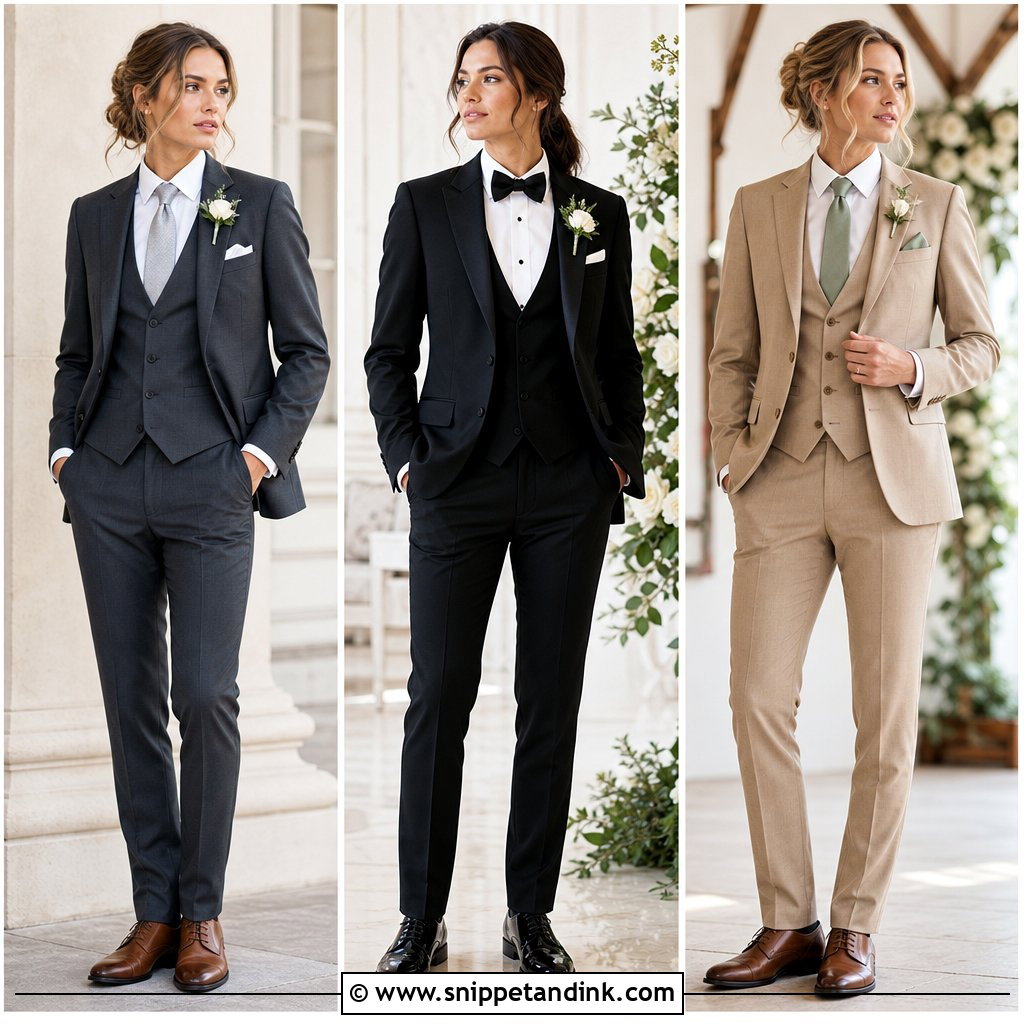
5. Emerald Green Suit With Black Bow Tie
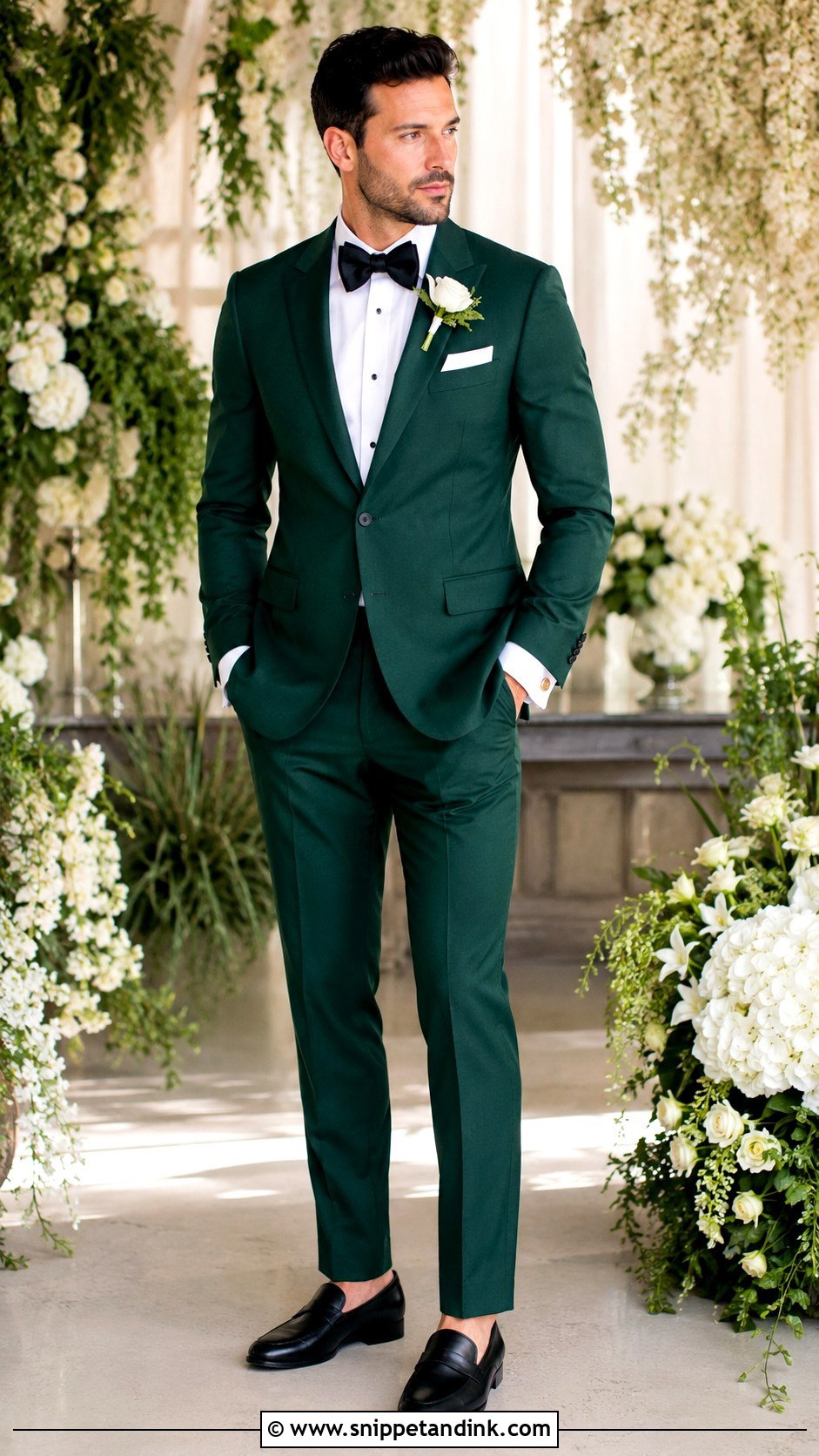
Emerald is a bold suit color that still looks like wedding attire if everything around it stays plain. Build it on a structured green suit with tapered trousers and a crisp white shirt, then let a black silk or velvet bow tie ground the color. Black loafers, a black belt and dark socks follow on from the tie. A white pocket square brightens the jacket, and gold cuff links or a gold watch bring warmth to the green. Don’t add more colors; the suit is doing the work. Green shifts a lot under different light, so I always check the fabric in daylight and under warm bulbs before ordering. Fall and winter, botanical venues and jewel-toned palettes suit it.
6. Tan Suit With Sage Green Bow Tie
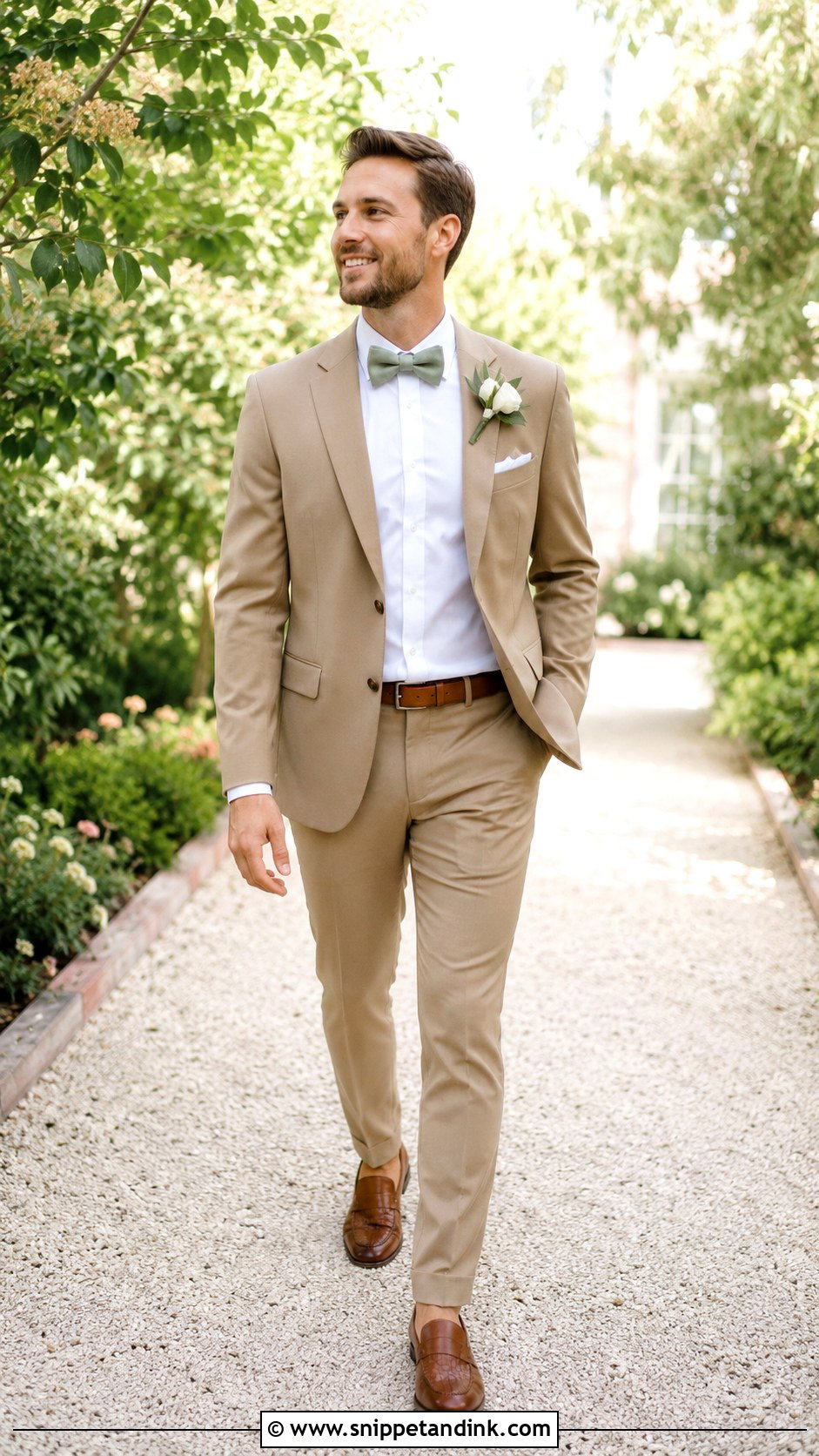
Picture an outdoor ceremony in bright sun, surrounded by greenery. A lightweight tan suit with a sage bow tie fits that scene naturally. Choose a white or ivory shirt to keep the palette soft, and brown loafers, a matching belt and neutral socks underneath. Go for a linen or textured tie, not shiny satin, which looks out of place against a matte cotton or linen suit. A cream pocket square and a boutonniere of white flowers and fresh greenery finish it. Tan suits crease at the elbows and lap within an hour of sitting, so I’d choose a wool-linen blend over pure linen for the groom. Spring gardens, summer ceremonies and rustic venues suit it.
7. Burgundy Suit With Ivory Bow Tie
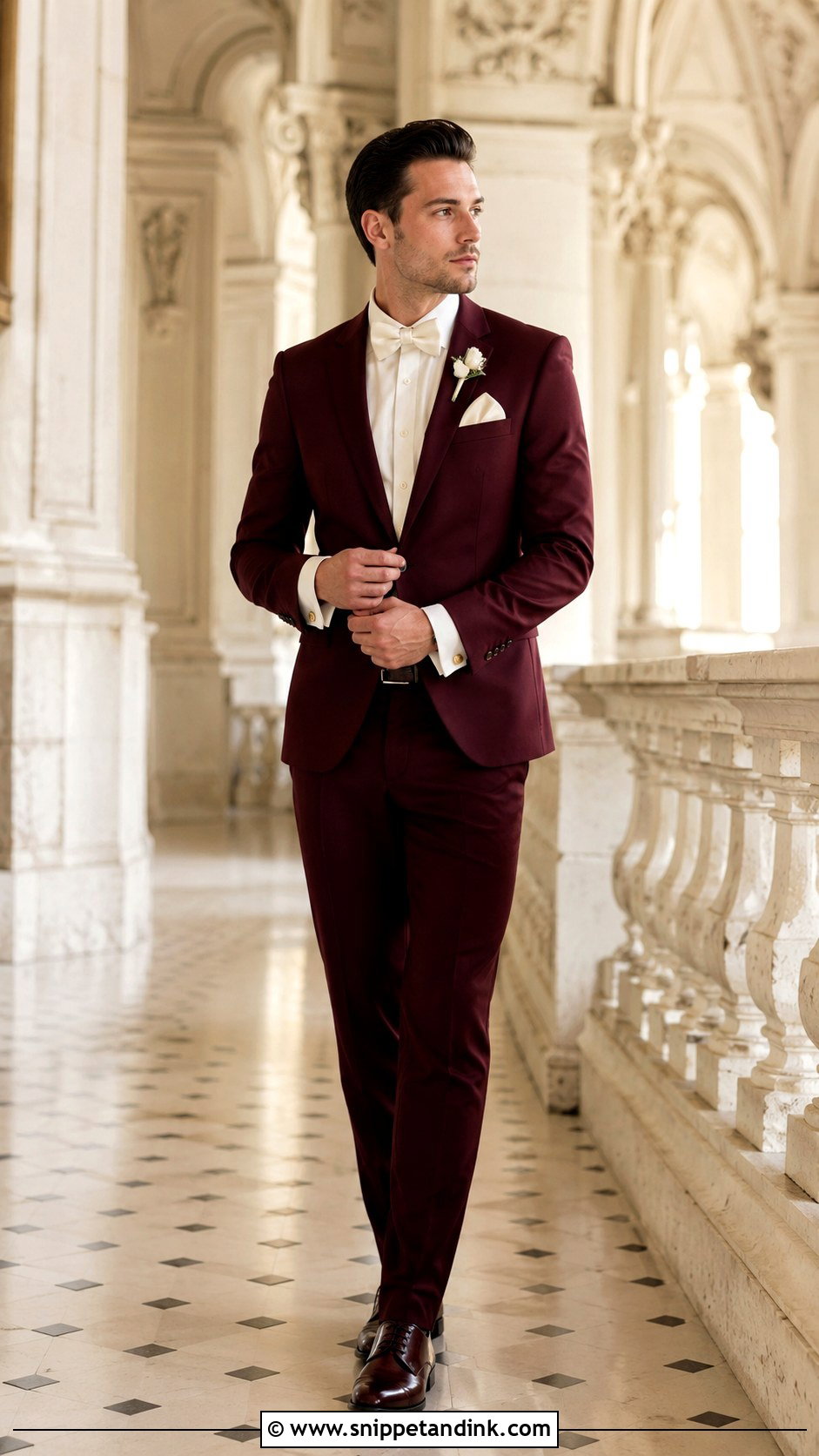
Burgundy tailoring is warm and confident; an ivory tie calms it down. Pair a fitted burgundy jacket and trousers with an ivory or white shirt, then choose silk for a classic finish or matte for something more current. Dark brown or oxblood shoes and a matching belt keep the lower half grounded. A cream pocket square, gold cuff links and a small white boutonniere complete it. Match the tie’s ivory to the shirt, or to the bride’s dress if she’s in ivory; mismatched whites near the collar are surprisingly obvious in photos. Fall, historic venues and warm evening palettes with blush, cream or burgundy flowers suit it.
8. Charcoal Suit With Silver Bow Tie
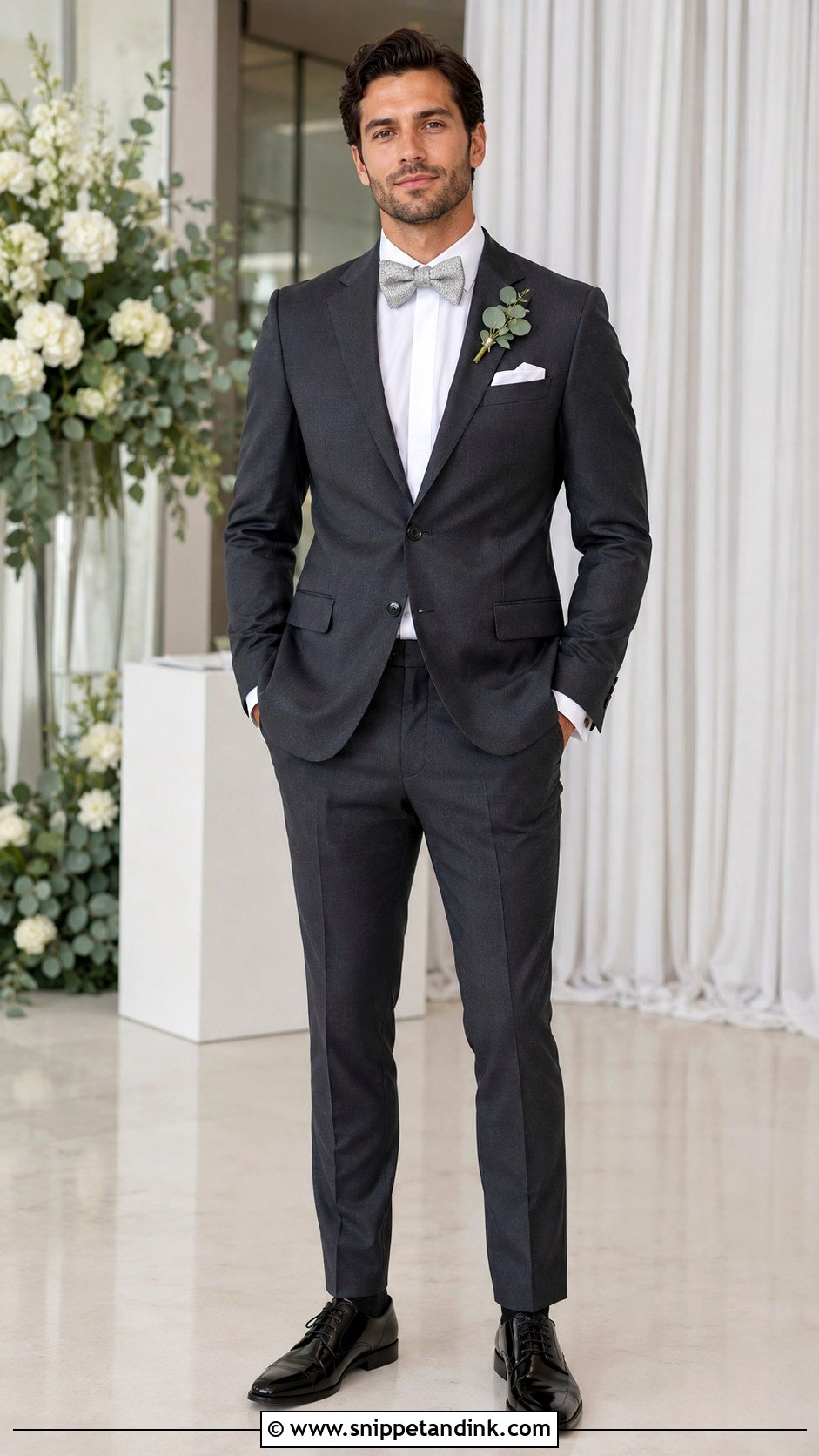
Charcoal sits between black and gray and suits almost everyone. Style it with a bright white shirt and a silver bow tie in silk or jacquard; a little texture stops silver from looking like costume satin. Black Oxfords are the formal choice, dark brown a friendlier one for daytime, with the belt matching the shoes and socks matching the trousers. A white pocket square and silver cuff links keep it cool-toned, and white flowers with eucalyptus make a natural boutonniere. Silver ties show sweat marks at the knot, so in summer I’d keep a spare. Modern venues, winter weddings and neutral wedding parties suit it.
9. Blue Suit With Floral Bow Tie
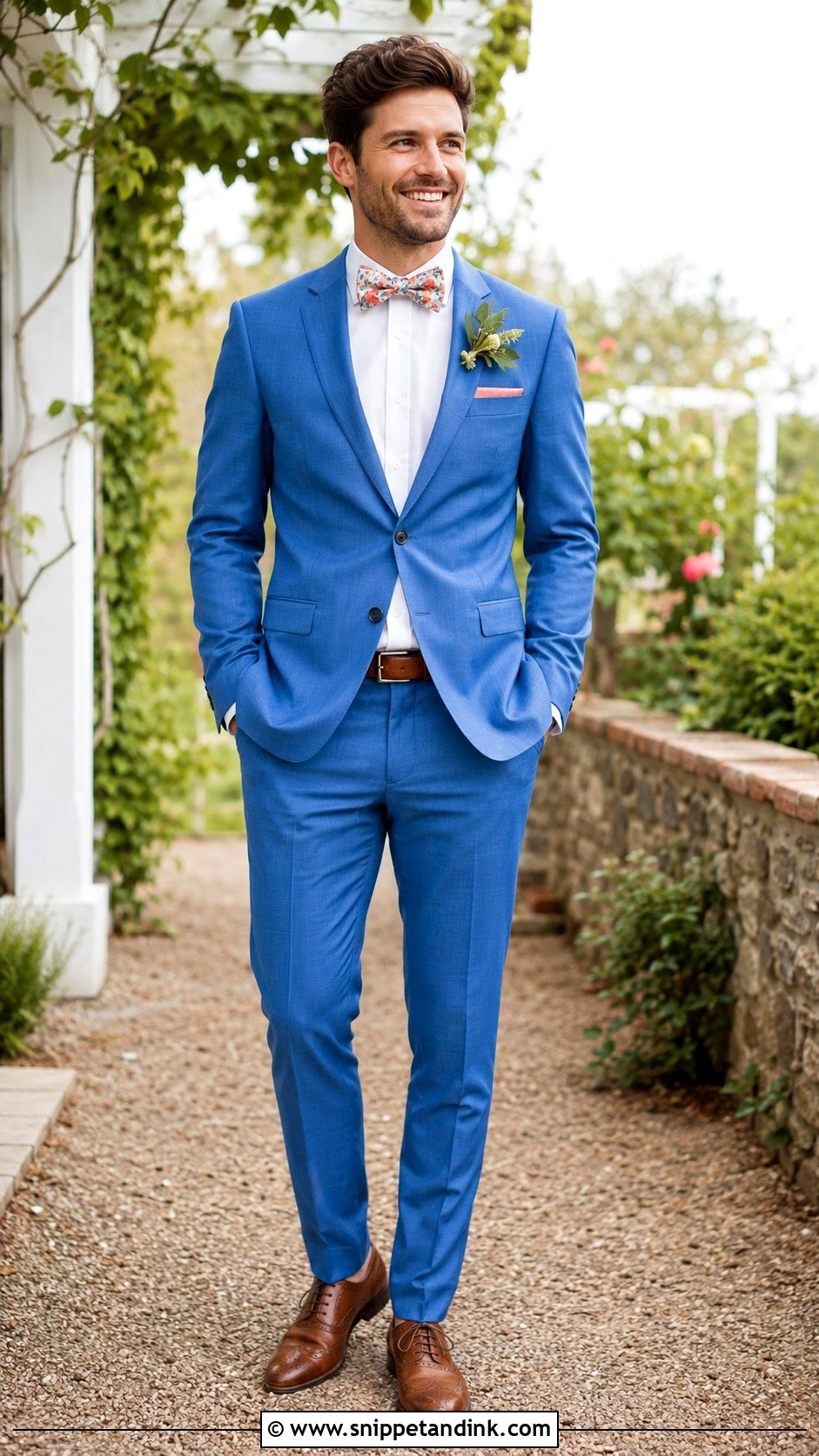
A floral tie gives a blue suit some personality, but only if the print agrees with the wedding colors. Pick a pattern that repeats one or two shades from the palette instead of introducing new ones, and wear it with a plain white shirt so the print stays clear. Medium-brown brogues, a matching belt and navy socks keep it orderly. Choose a solid pocket square in a single color from the tie, never a second print, and keep the boutonniere to greenery so the lapel doesn’t get busy. When the groomsmen wear solid ties, this is an easy way for the groom to stand out. It fits spring, garden and semi-formal weddings.
10. Tweed Suit With Knitted Bow Tie
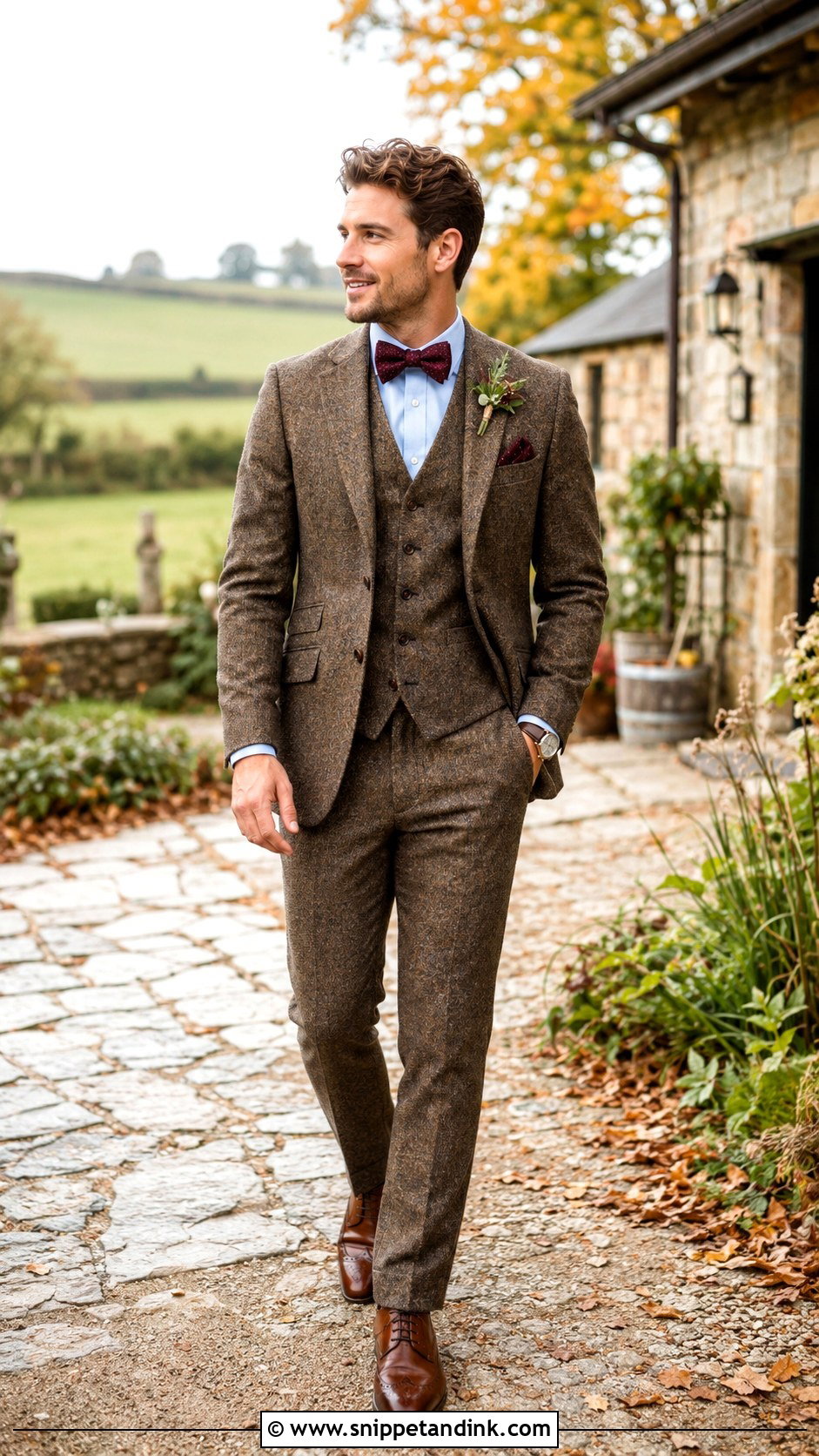
Tweed is about texture, and a knitted bow tie matches it better than anything glossy. Start with a brown, gray or olive tweed suit and a white or pale blue cotton shirt, then a knitted tie in burgundy, forest green or navy. Brown brogues are the natural shoe, with suspenders or a leather belt. A wool or cotton pocket square, a greenery boutonniere and plain cuff links complete it. Knitted ties are usually square-ended and slightly narrower than silk, so they look best with a shirt collar that isn’t too wide. Tweed is warm, so I’d keep it for cool fall days, barns and countryside venues, and make sure the tailoring is close enough that the layers don’t look bulky.
11. Velvet Tuxedo With Satin Bow Tie
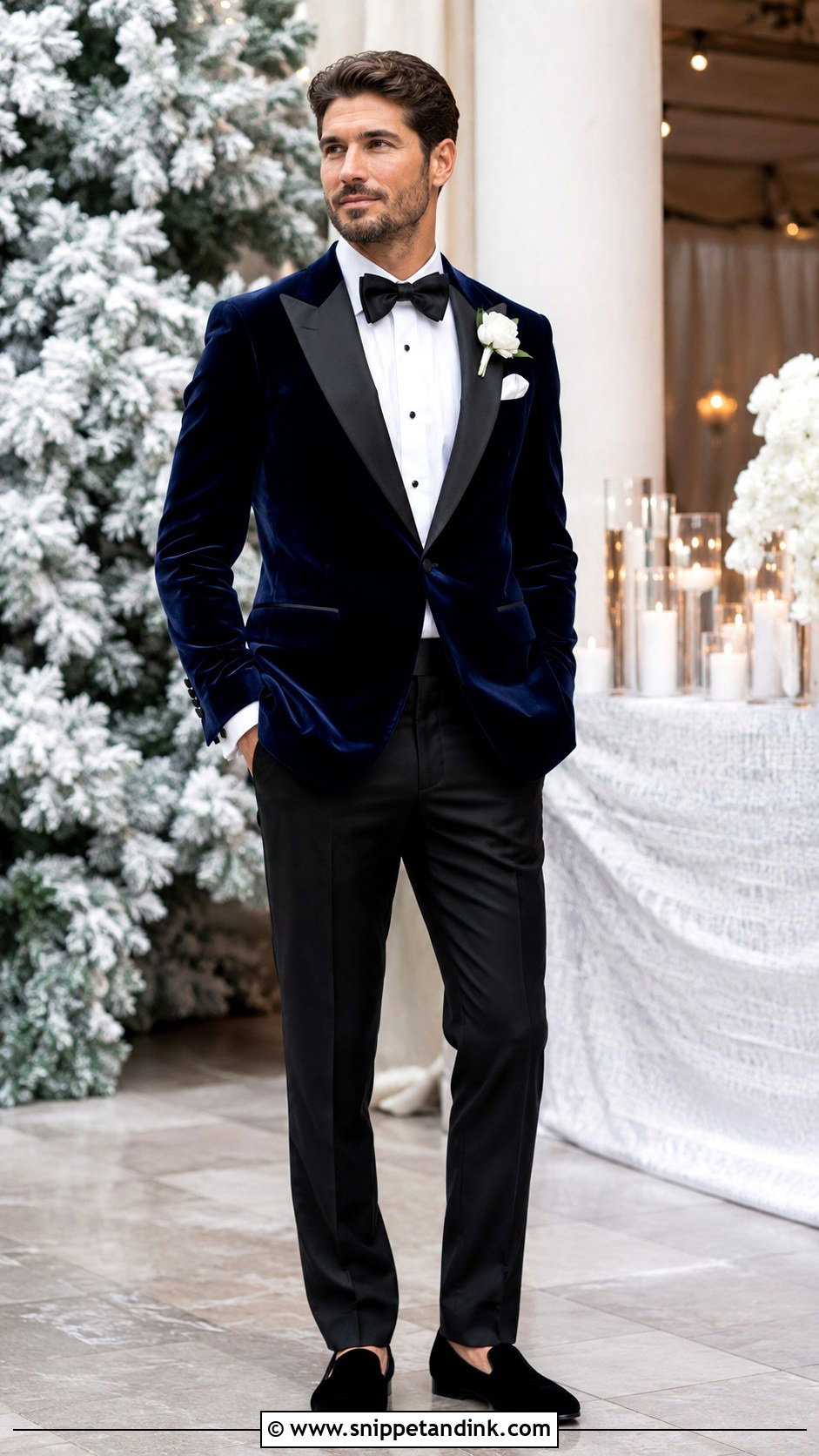
Velvet looks richer the colder it gets outside. Choose a velvet dinner jacket in black, navy, burgundy or deep green with black tuxedo trousers, a white formal shirt and a black satin bow tie to connect jacket and trousers. Black velvet slippers or patent shoes, black socks, a white pocket square and simple cuff links finish it. Velvet already has strong texture, so skip the elaborate boutonniere and patterned shirt; one small white flower is enough. Velvet crushes where it’s pressed, so the jacket should hang on a broad hanger until the last minute and never be folded in a bag. Winter, evening ceremonies and upscale hotel receptions suit it.
12. Linen Suit With Navy Bow Tie
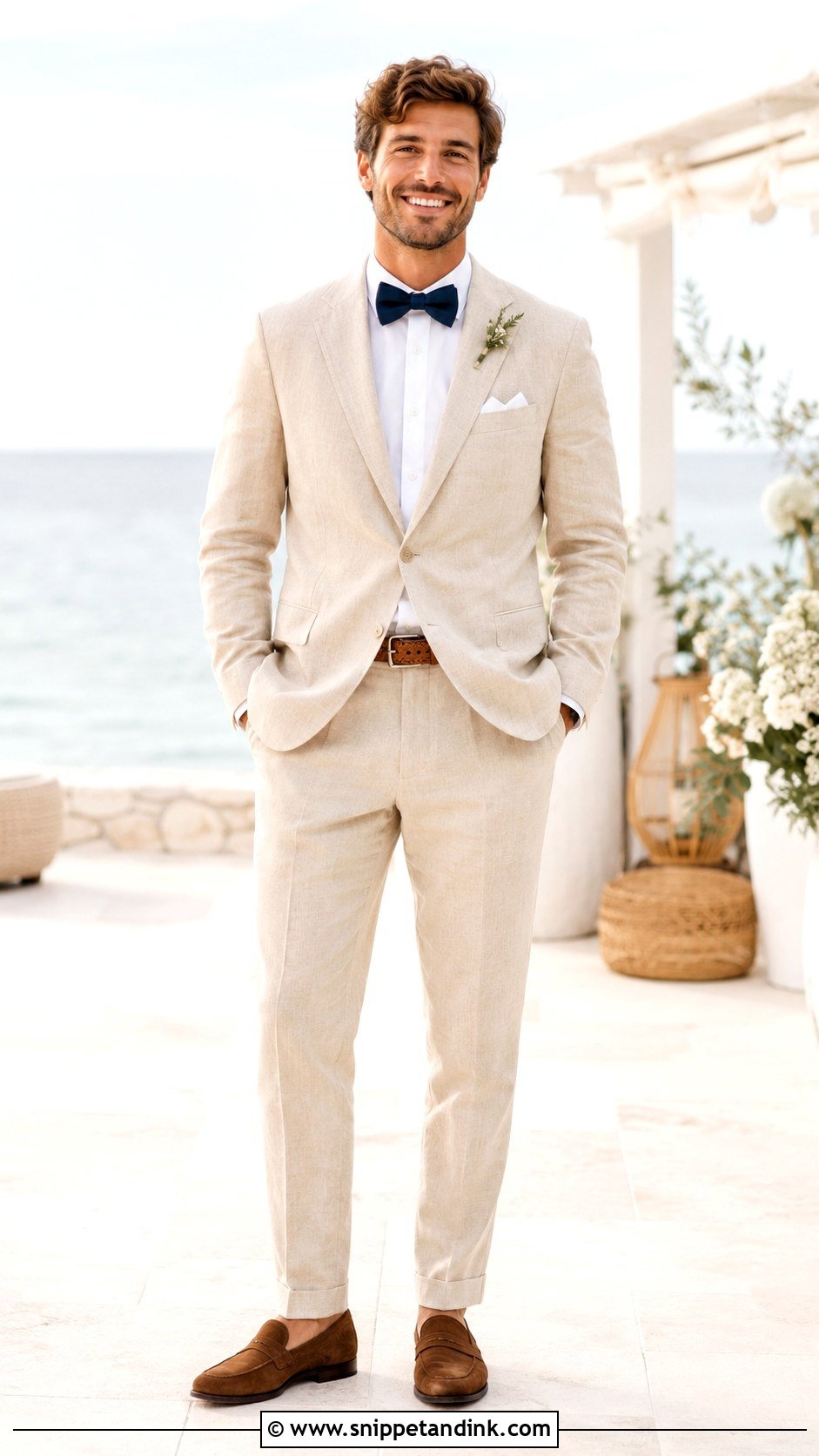
Linen is the answer to a hot ceremony. Choose a beige, sand or light-gray linen suit with a white cotton shirt, and a navy bow tie to give the relaxed fabric a crisp edge. Brown suede loafers without socks suit a casual destination wedding; leather loafers with thin dress socks look dressier. A brown woven belt, a white pocket square and a small greenery boutonniere finish it. Linen creases by design. I accept a little texture in the jacket but insist the shirt is pressed, and I’d steam the suit at the venue rather than packing it pressed. Beach weddings, coastal venues and smart-casual dress codes are where it makes sense.
13. Suspenders With Patterned Bow Tie
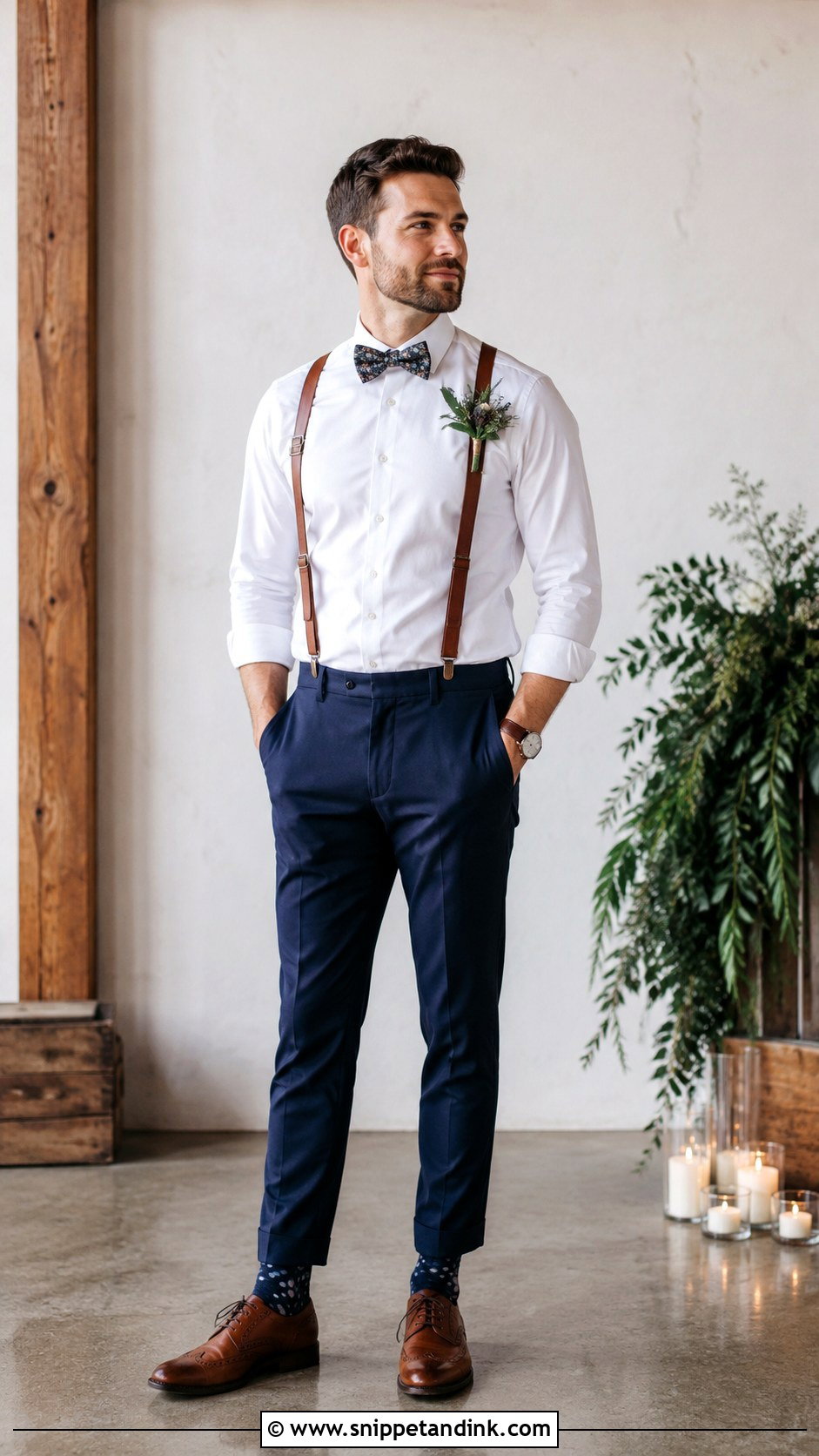
Without a jacket, everything else has to fit precisely. Start with a crisp white shirt and well-fitted navy, gray or tan trousers, then add leather suspenders and a patterned bow tie in checks, dots, florals or a small geometric print. Use button-on suspenders rather than clips if you can; clips slip and pull the trouser waistband unevenly. Roll your sleeves only after the formal photos. Brown brogues, a matching watch strap and coordinated socks complete it, and a small boutonniere can be pinned to the shirt or a suspender strap. Keep the trousers plain if the tie is busy. It suits rustic weddings, summer receptions and groomsmen who want to stay cool.
14. Double-Breasted Suit With Bow Tie
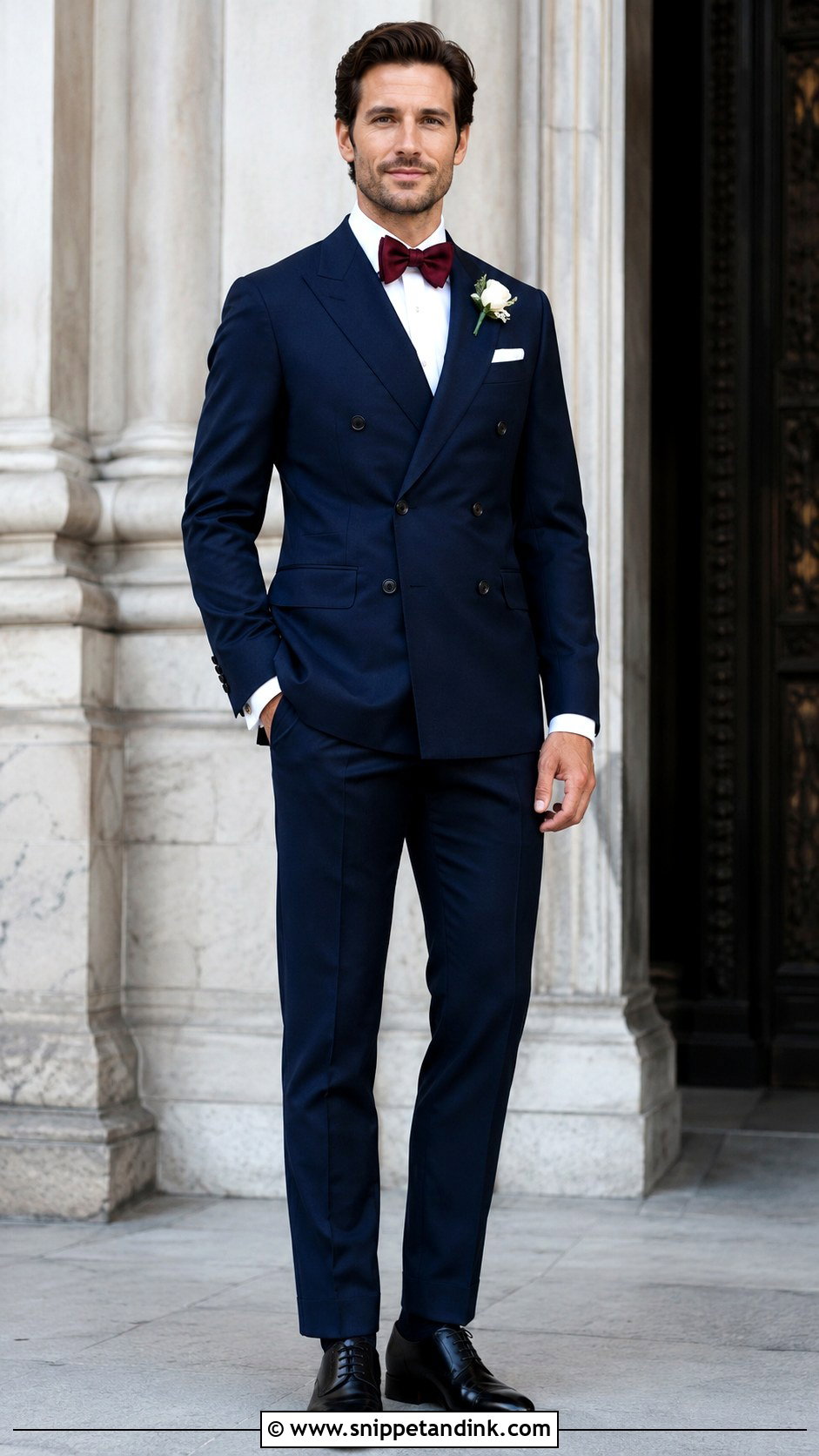
A double-breasted suit has a strong, structured shape, and its bow tie needs some weight to stand up to it. Choose navy, charcoal or black with a clean white shirt and a silk tie that’s a little broader than you’d wear with a single-breasted jacket. Black is the classic choice, burgundy or deep green adds controlled color. Keep the jacket buttoned when standing, since an open double-breasted front flaps and ruins the line. Polished Oxfords, dark socks, a belt only if the trousers need one, a straight white pocket square, subtle cuff links and a compact boutonniere complete it for city weddings and historic venues.
15. Black Suit With Red Bow Tie
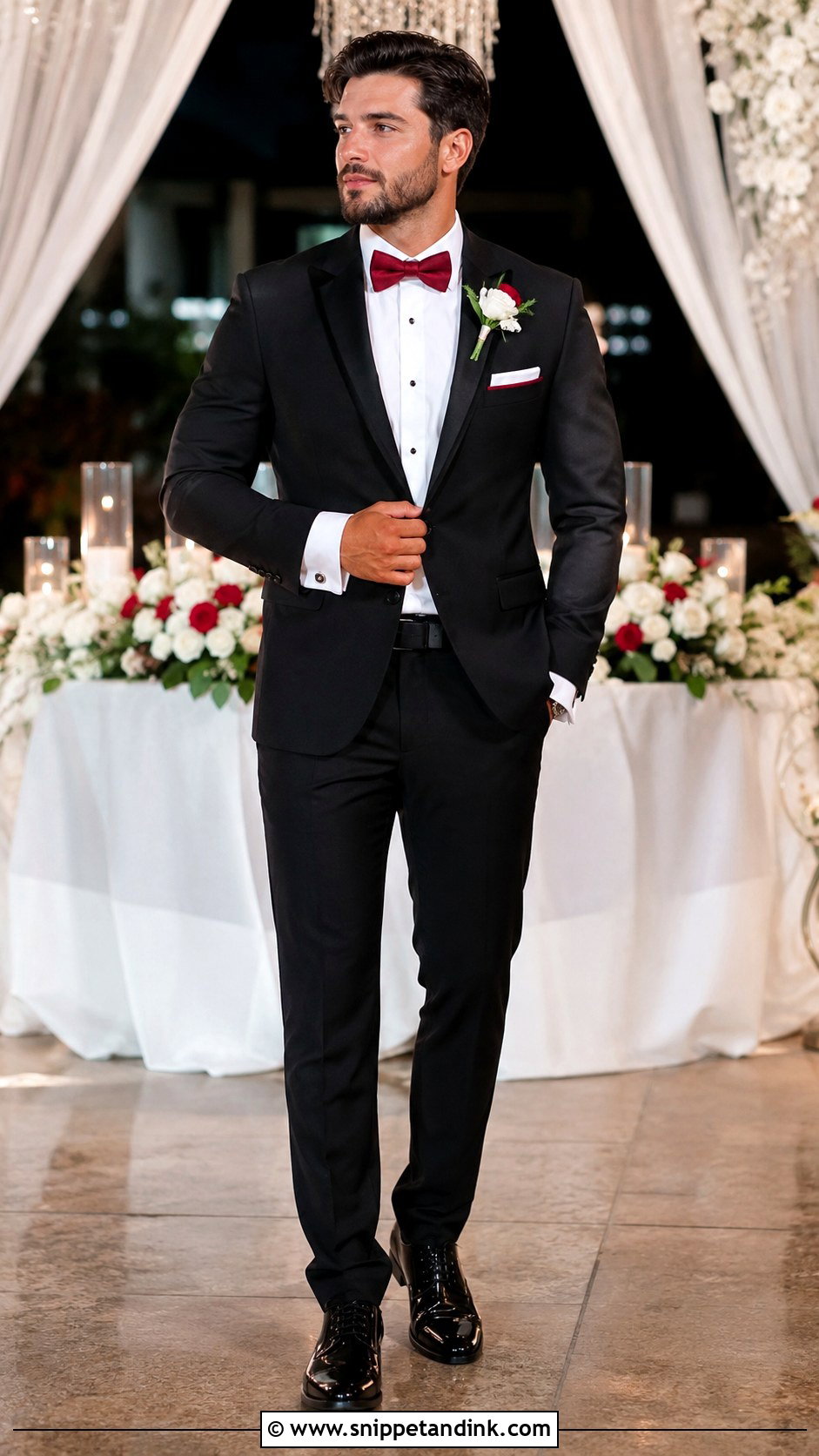
A red tie on a black suit is festive, and the depth of the red decides how formal it looks. Burgundy, cranberry or dark red reads refined; bright red reads party. Pair it with a white shirt, black shoes, a black belt and black socks. The pocket square can stay white or carry a thin red border, but never repeat a patterned tie exactly. Silver cuff links and a white boutonniere with one small red accent are enough. High contrast shows every wrinkle and pull in the jacket, so I’d have the suit fitted closely across the shoulders and chest. It suits formal receptions, fall celebrations and parties using red as an accent.
16. Beige Vest With Brown Bow Tie
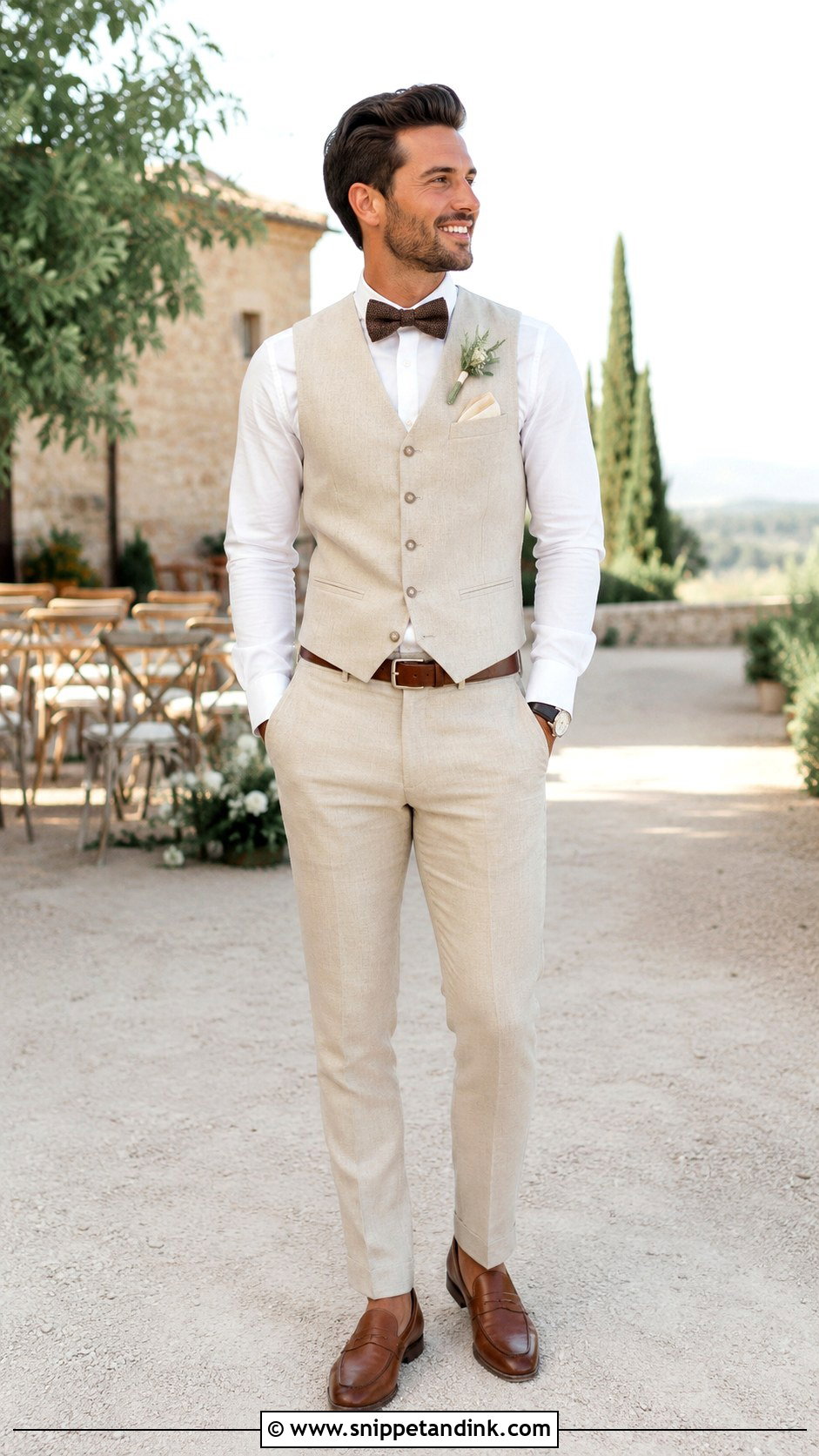
A vest without a jacket still gives the torso enough structure to look good in photos. Combine a tailored beige vest with matching or slightly darker trousers and a white shirt, then a chocolate-brown bow tie that links naturally with brown loafers, a matching belt and a classic watch. Textured cotton, linen or knit ties suit the informal mood. The bottom button of a vest stays undone, and the vest should cover the trouser waistband completely; if a strip of shirt shows when you lift your arms, the vest is too short. A cream pocket square if there’s a pocket, and a small greenery boutonniere, finish it for rustic, outdoor and daytime weddings, including ring bearers.
17. Seersucker Suit With Pastel Bow Tie
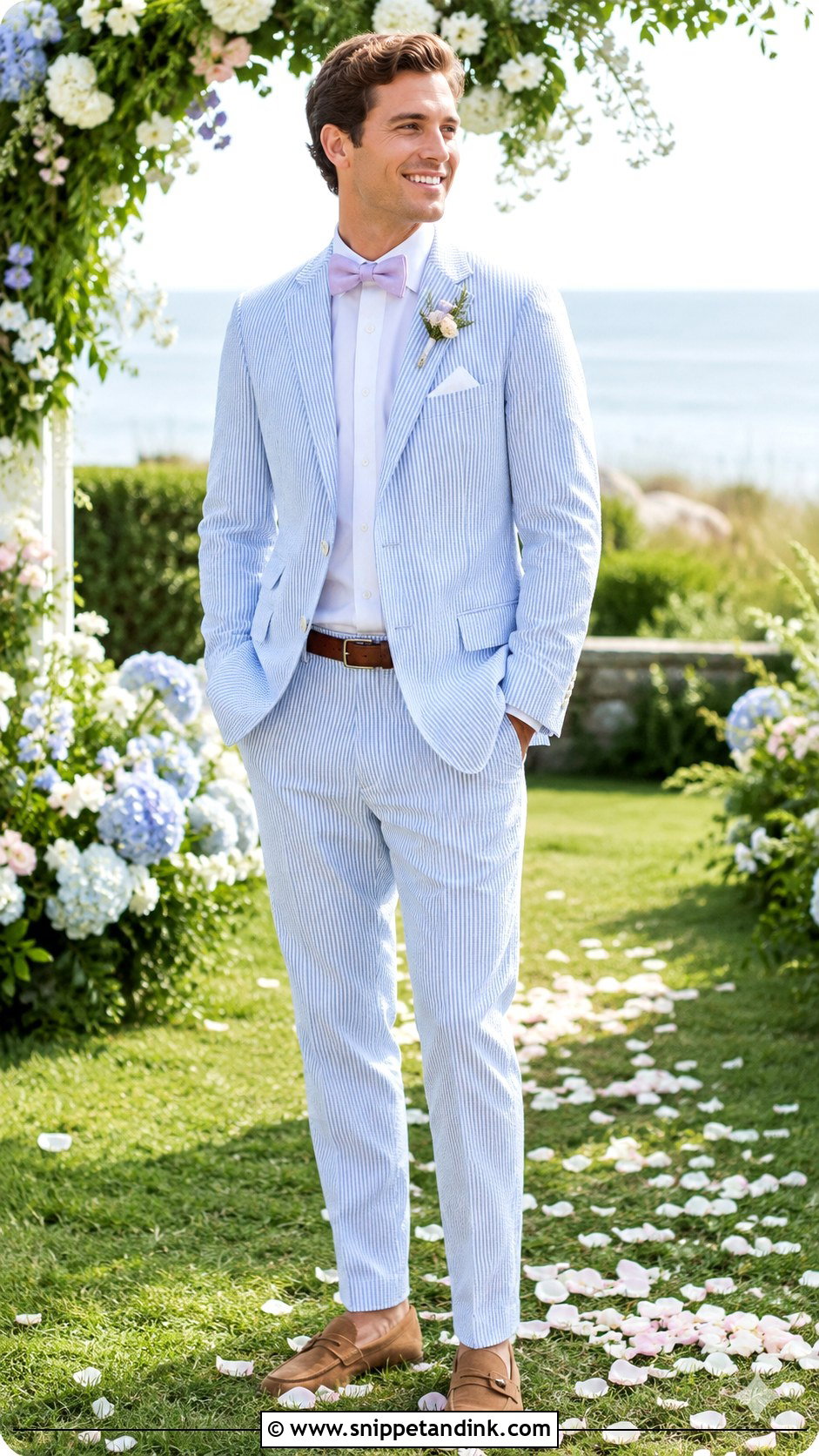
A seersucker suit was made for heat, and its puckered stripes keep the fabric off the skin. Pair blue-and-white seersucker with a solid white shirt and a pastel bow tie in blush, lavender, mint or pale blue, in a matte finish rather than another pattern. Tan loafers, a light-brown belt and neutral socks keep it fresh, and a plain white pocket square and delicate floral boutonniere finish it. Seersucker is a daytime fabric, so I wouldn’t use it for an evening dress code. Garden weddings, coastal ceremonies and humid outdoor celebrations are where it belongs.
18. Ivory Suit With Champagne Bow Tie
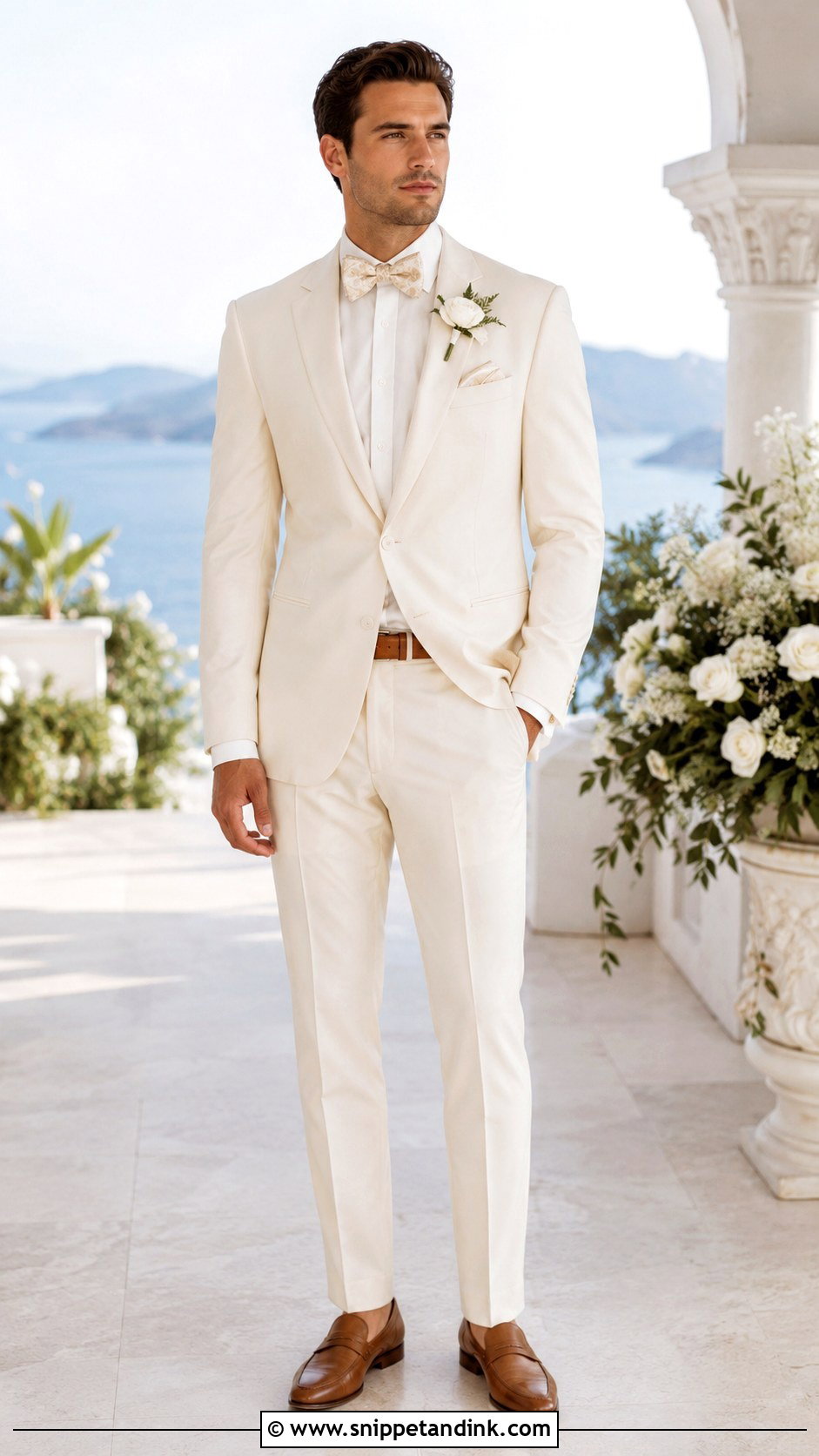
Ivory suits look effortless in photos and take real effort to coordinate. Wear one with a white or cream shirt and a champagne bow tie in subtle satin or jacquard. Tan or light-brown loafers and a matching belt keep it from looking stark, and a cream pocket square with gold cuff links softens it further. A boutonniere of white flowers and pale greenery blends in. The trap is that ivories vary hugely, and a suit, shirt and tie bought separately can look like three different colors side by side. I lay every piece together in daylight before the wedding. It works for destination weddings, summer celebrations and cream, beige and gold palettes.
19. Plaid Suit With Solid Bow Tie
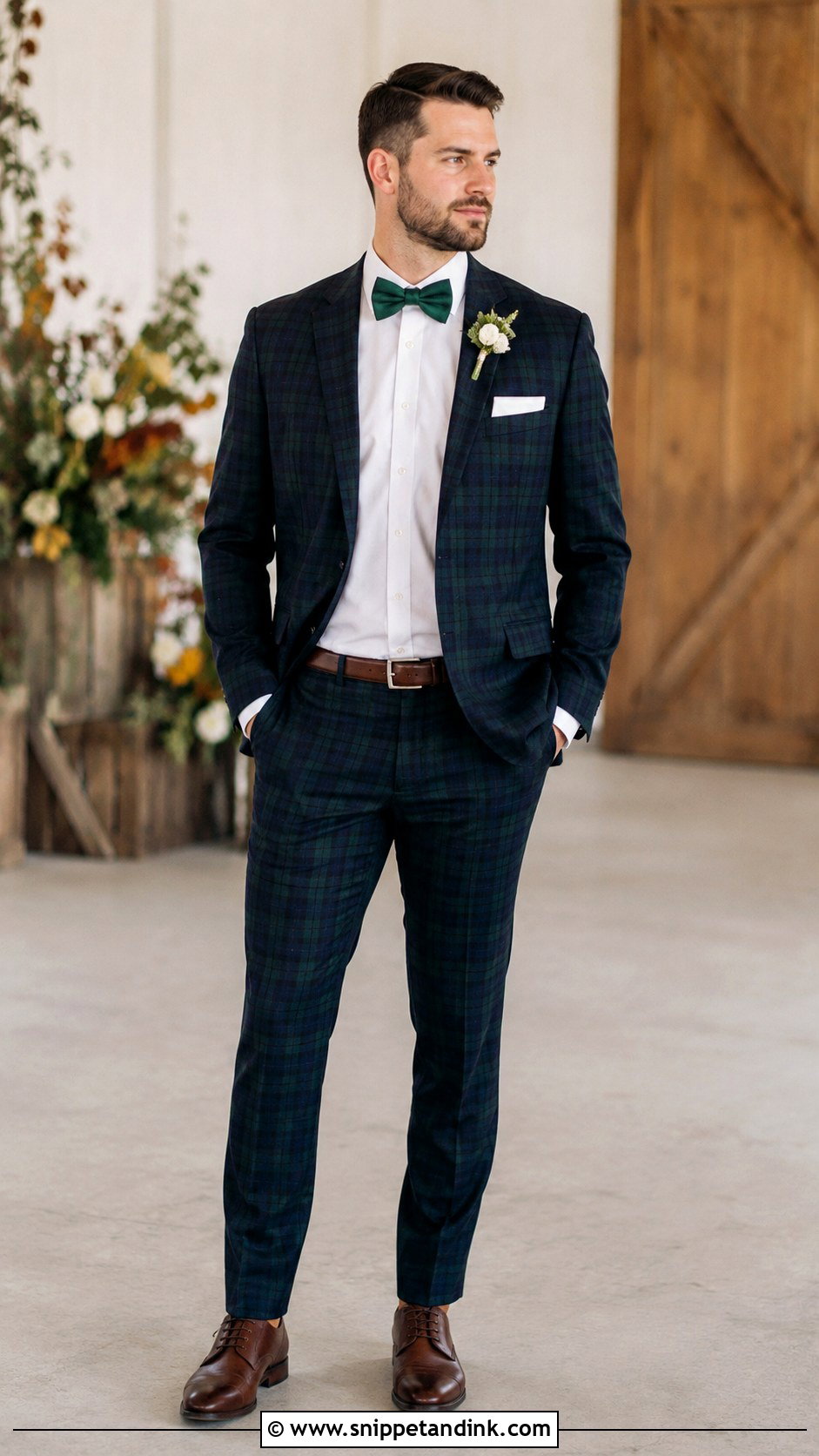
A plaid suit already carries the pattern, so the tie should be solid. Choose a restrained check in navy, gray, brown or forest green, a plain white shirt and a bow tie in one of the quieter colors inside the plaid. Match the shoes to the overall tone of the suit, brown or black, with a matching belt and dark socks. Use a crisp white pocket square instead of a pattern, and a small single-color boutonniere. When I fit plaid, I check that the checks line up across the front button and at the side seams; mismatched lines are the giveaway of cheap tailoring. Fall, countryside and vintage-themed weddings suit it.
20. Groom Bow Tie With Groomsmen Neckties
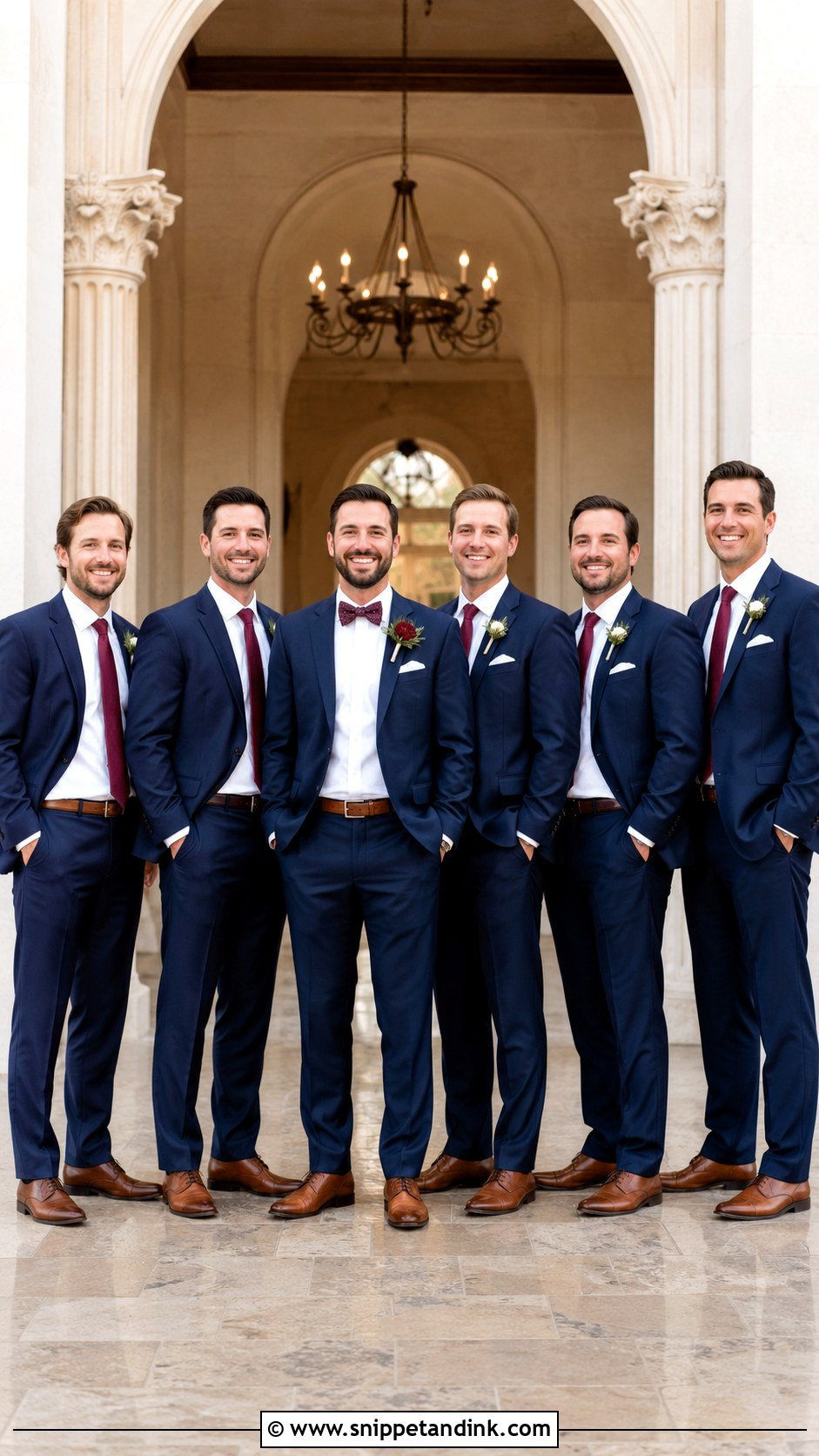
Putting the groom in a bow tie and the groomsmen in neckties sets him apart without changing the suits. Dress the whole group in matching navy, charcoal or black suits with white shirts, then give the groom a textured or patterned bow tie and the attendants solid neckties in one color pulled from it. Keep shoes and belts the same across the line. The groom can add a fuller boutonniere or a different pocket-square fold. I’d stop there, because the change in neckwear already makes the hierarchy clear. It works for formal and semi-formal weddings and keeps the lineup photographs tidy.
Dressing a Whole Wedding Party in Bow Ties
Matching ties across six or eight men is where things go wrong, usually in small ways that show up in the lineup photo. This is how I keep it under control.
- Order every tie from the same maker in one order. Separate batches of the same color can come from different dye lots and look different side by side.
- Buy one or two spares. Someone always spills something or loses one in a hotel room.
- Collect neck sizes early, and give pre-tied ties to anyone who hasn’t tied one before.
- Book fifteen minutes on the morning for a tying session. Whoever knows how can tie or straighten every tie in one go.
- After dinner and photos, knots loosen and drop. A quick check in the mirror before the first dance fixes it.
In hot weather, a silk tie with a light lining is more comfortable than a heavy jacquard or knit, and the top shirt button can be loosened once the formal photographs are done. Just retie properly if the camera comes back out.
The Tie Is Small, So the Fit Has to Be Right
Color, fabric, pattern and proportion are what make a bow tie work, and the right mix depends on dress code and season. Black silk belongs with traditional formalwear. Linen, velvet, florals and knits add texture and personality elsewhere. Treat the jacket, shirt, trousers, shoes, pocket square and boutonniere as one outfit rather than six purchases. I’d put the whole thing on at least once before the wedding, sit and stand in it, and leave time for alterations. Pick the combination you’re comfortable in for a full day, because a man tugging at his collar never looks well dressed.


Leave a Reply