
A guest manicure has a narrow brief: it should look finished when you’re holding a glass in every candid shot, and it shouldn’t pull attention from the couple. In my chair, that usually means a short-to-medium length, a neat shape and a color that sits with the outfit rather than against it. Sheer nudes, soft pinks, thin French tips, pearl glazes and muted metallics are reliable starting points, but classy doesn’t have to mean bare. A fine chrome, one slim gold line or a micro tip keeps a set current. These classy wedding guest nail looks are wearable for a garden ceremony as much as for a formal evening reception, and I’ve added notes on what each one needs to look right.
Hands Show Up in More Photos Than You Expect
Guests rarely think about their hands until they see the photos: hands around a champagne flute, on a partner’s shoulder, holding a phone up during the vows, clapping as the couple walk out. That’s why I care more about shape and cuticle work for a guest set than about the art.
- Length: short to medium. Long nails make handbag clasps, earring backs and buffet tongs awkward, and they look more dramatic in close-ups.
- Shape: oval and soft almond flatter most hands. Square suits long, slim fingers; on short fingers it can look blunt.
- Cuticles: push back and tidy them a few days ahead, then oil them every night. Freshly cut cuticles can look red in photos.
- Matching: match the nails to your jewelry metal or to a neutral in the outfit, not to the dress color itself. An exact match often looks off when the fabric and polish catch light differently.
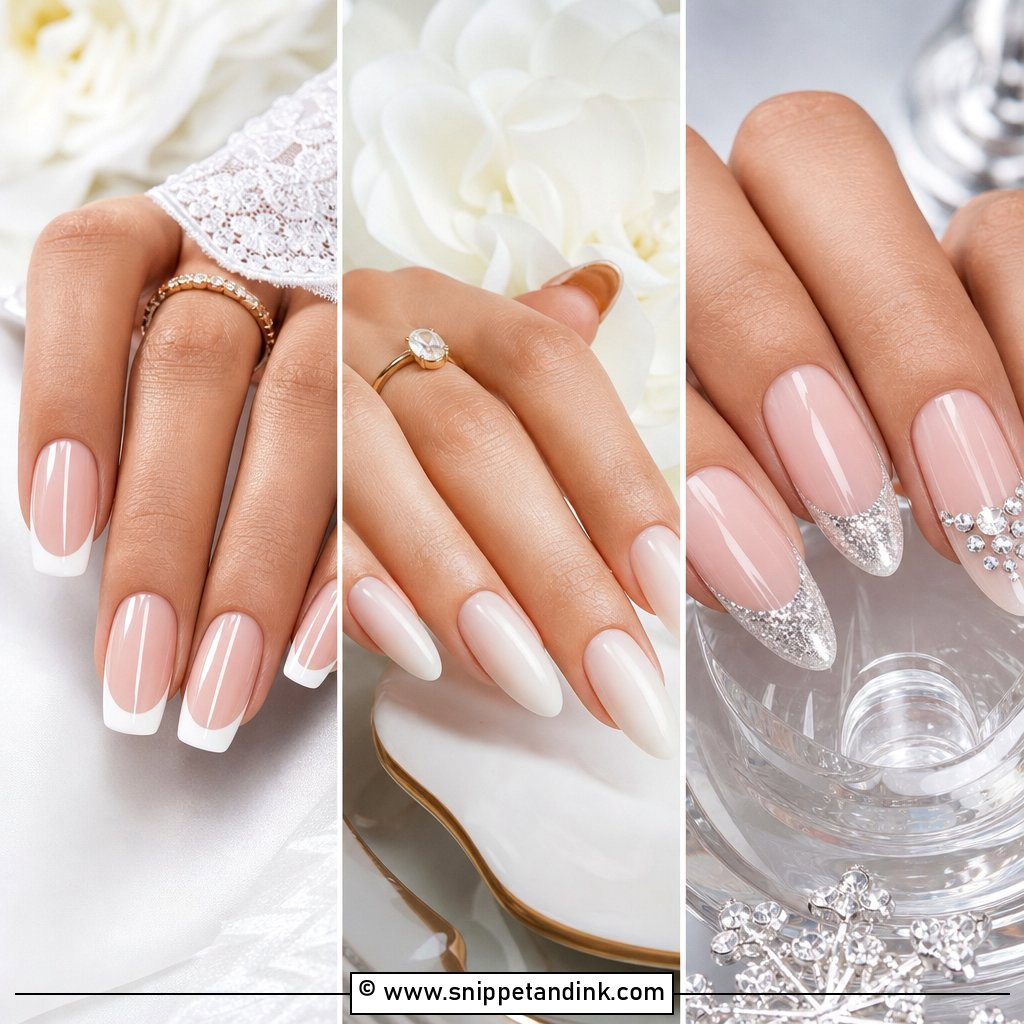
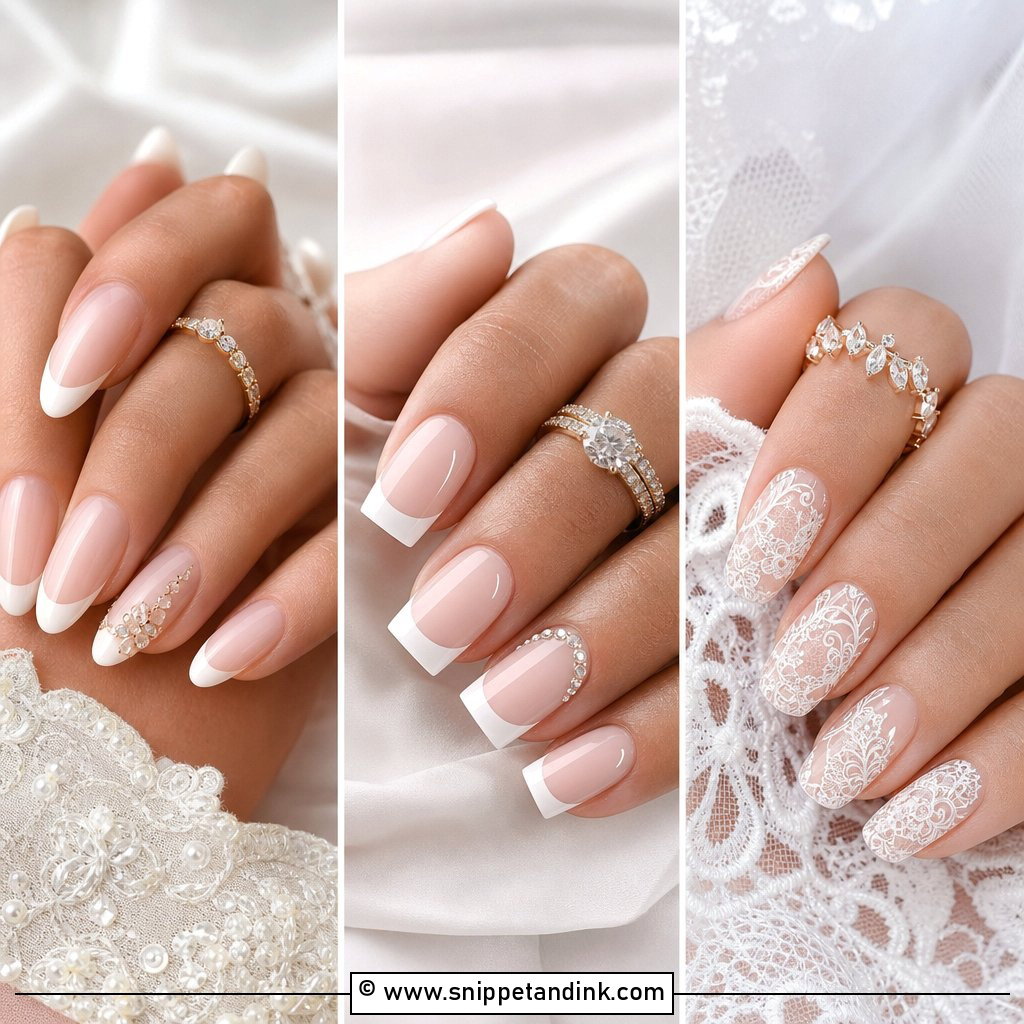
1. Soft Pink French Tip Nails
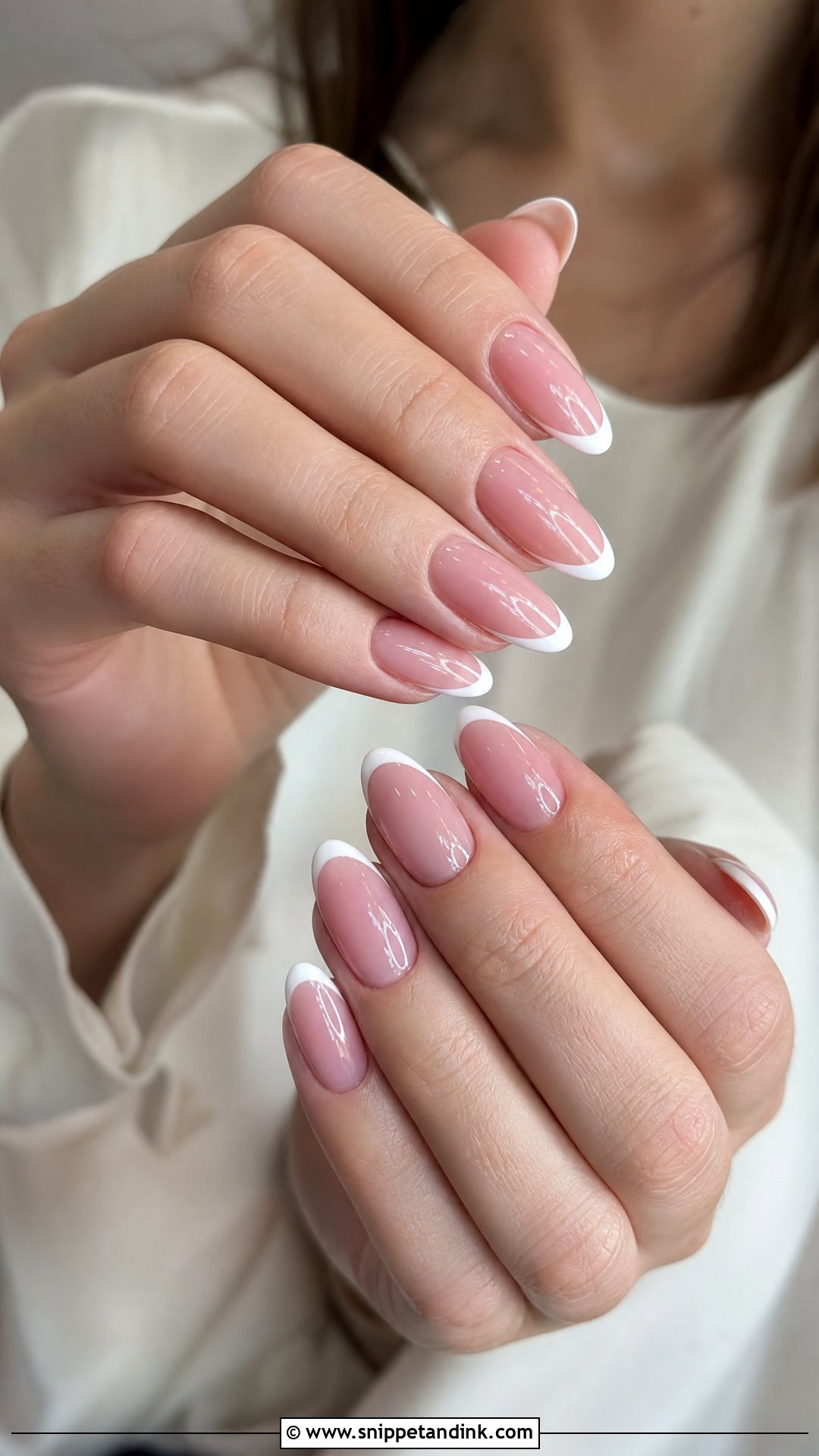
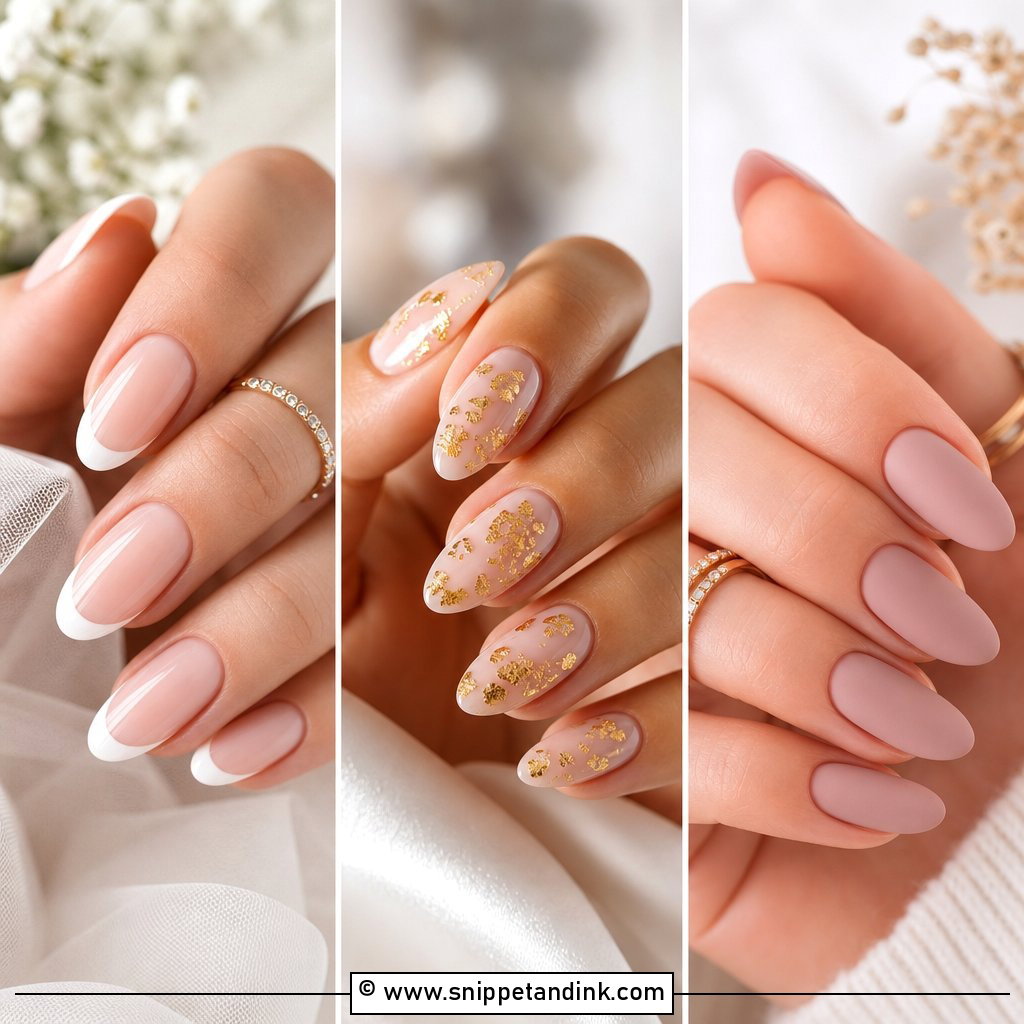
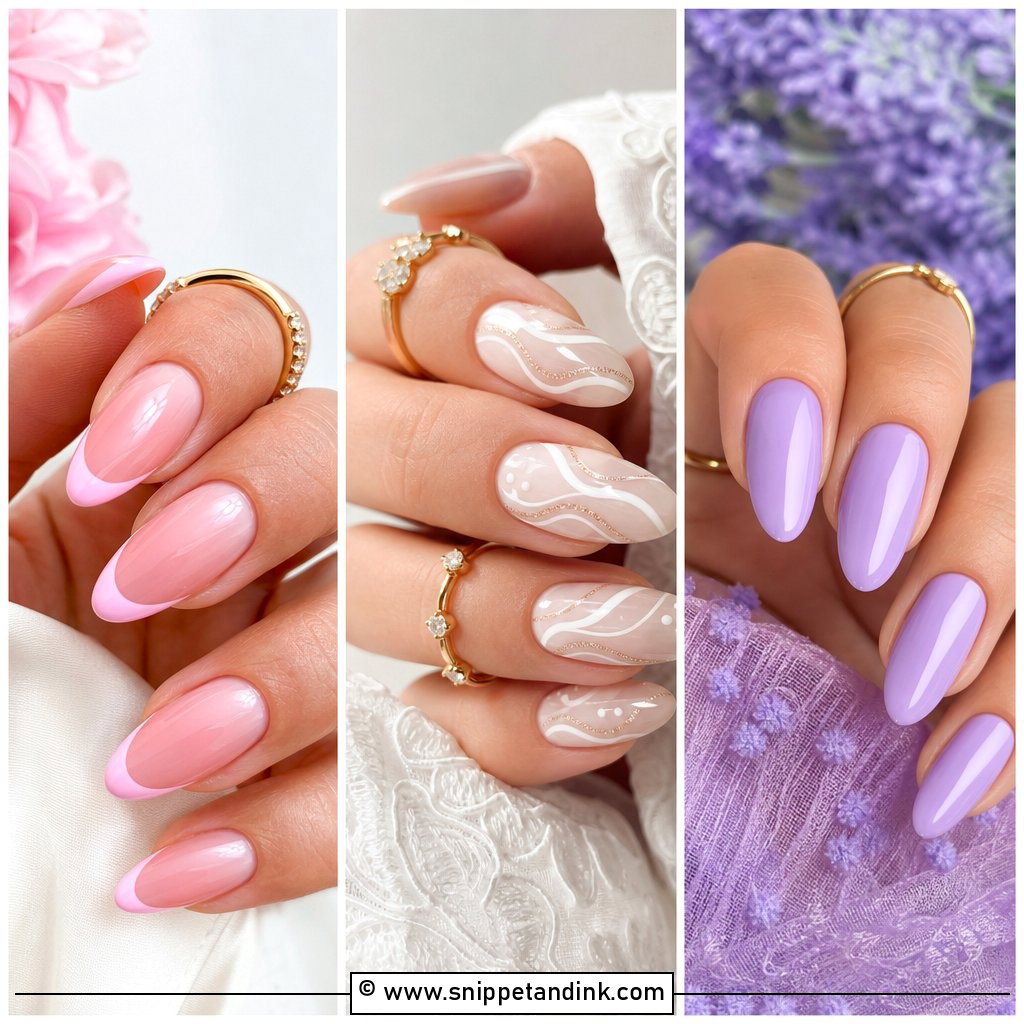
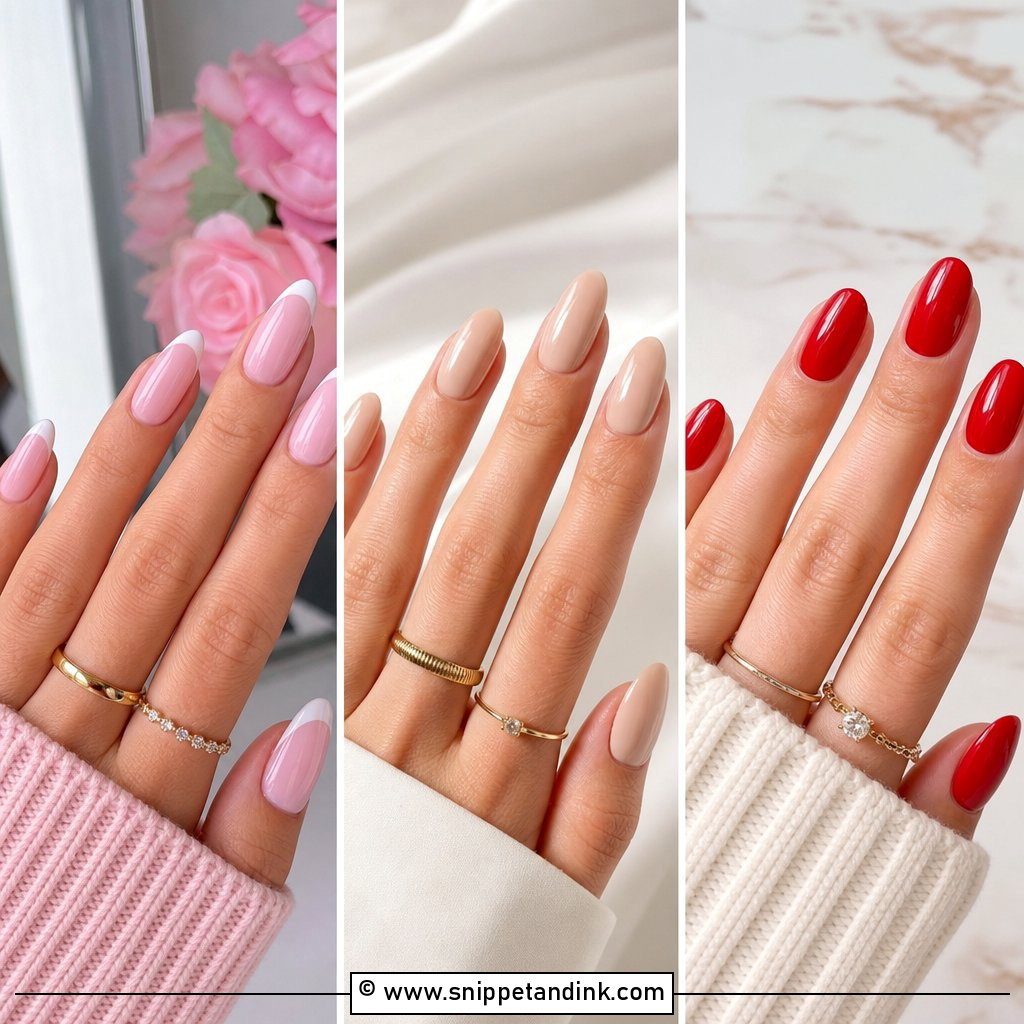
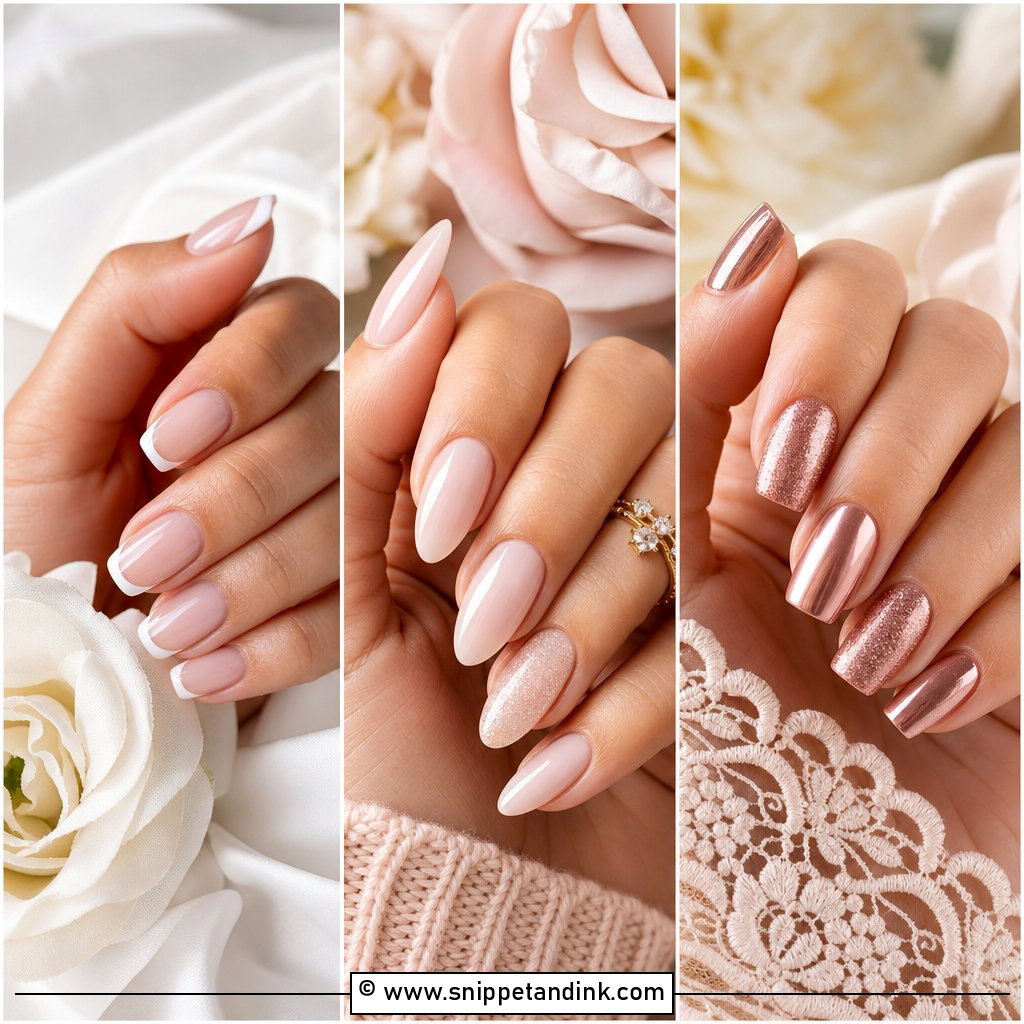
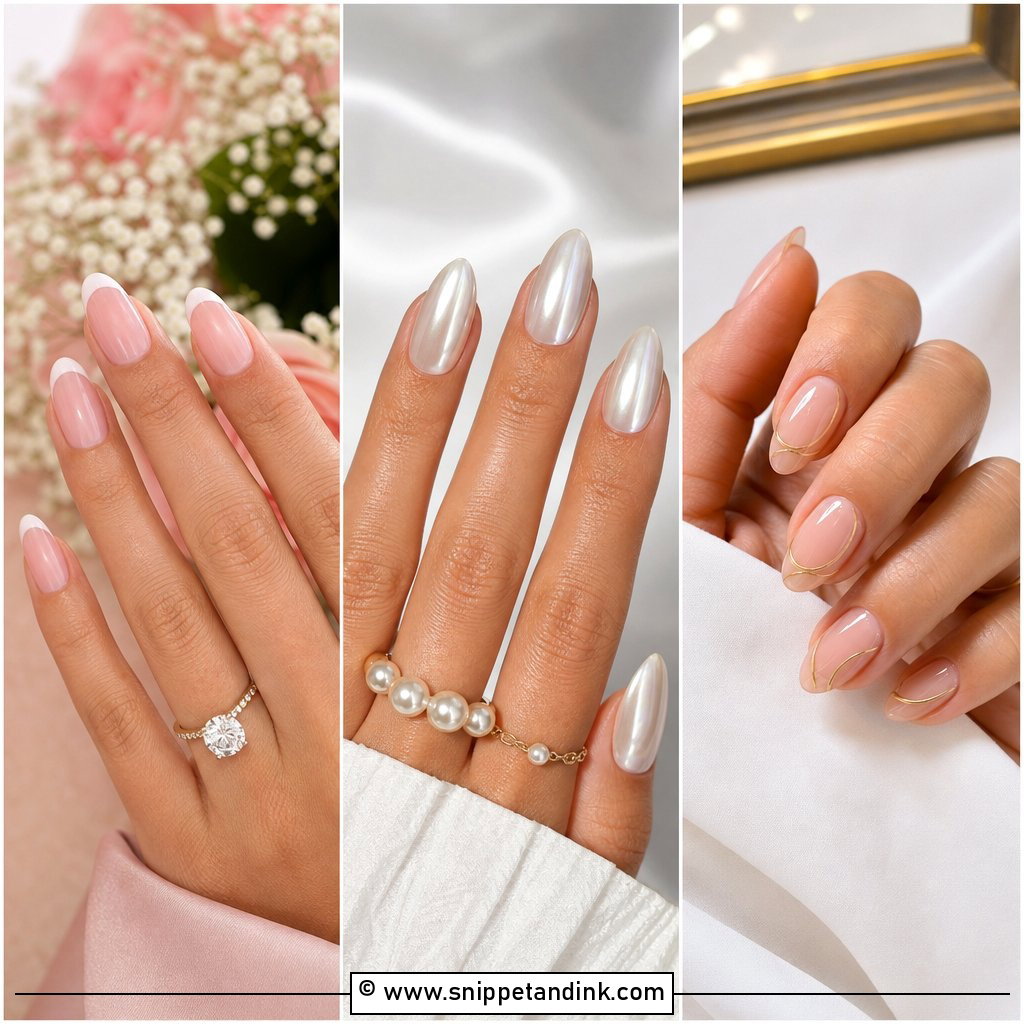
If a guest can’t decide, this is the set I suggest. The sheer pink base hides the free edge slightly, and the white tip gives structure, so the nail looks tidy even when the cuticles aren’t perfect. I paint the smile line thin, since a thick white band shortens short nails and looks dated. Almond, oval, squoval or short square all take it, and it goes with nearly any outfit color from pastel to navy. For something softer, I swap the clear pink for a milky pink base, which blurs the line where the tip meets the nail bed.
2. Milky White Almond Nails
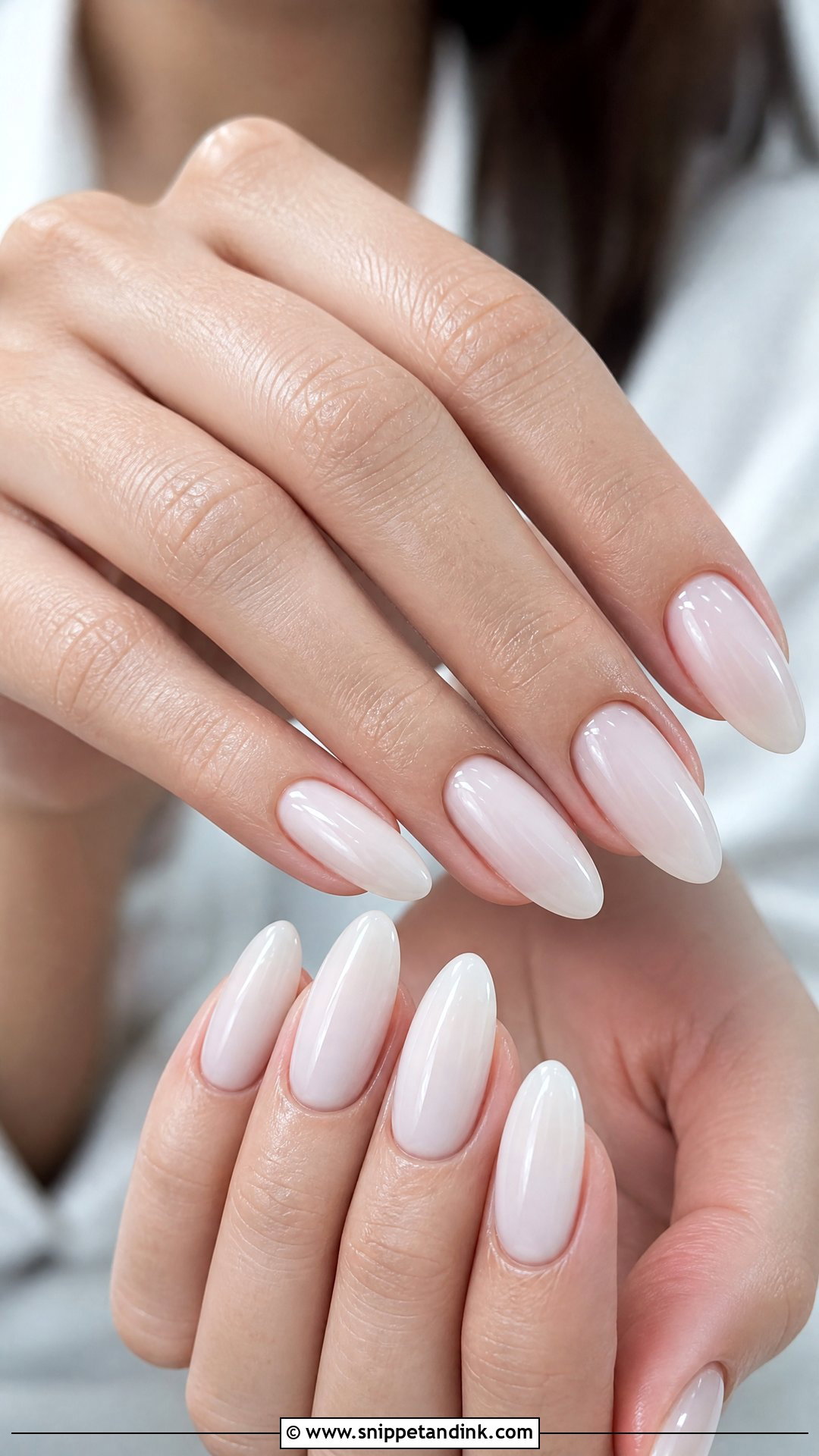
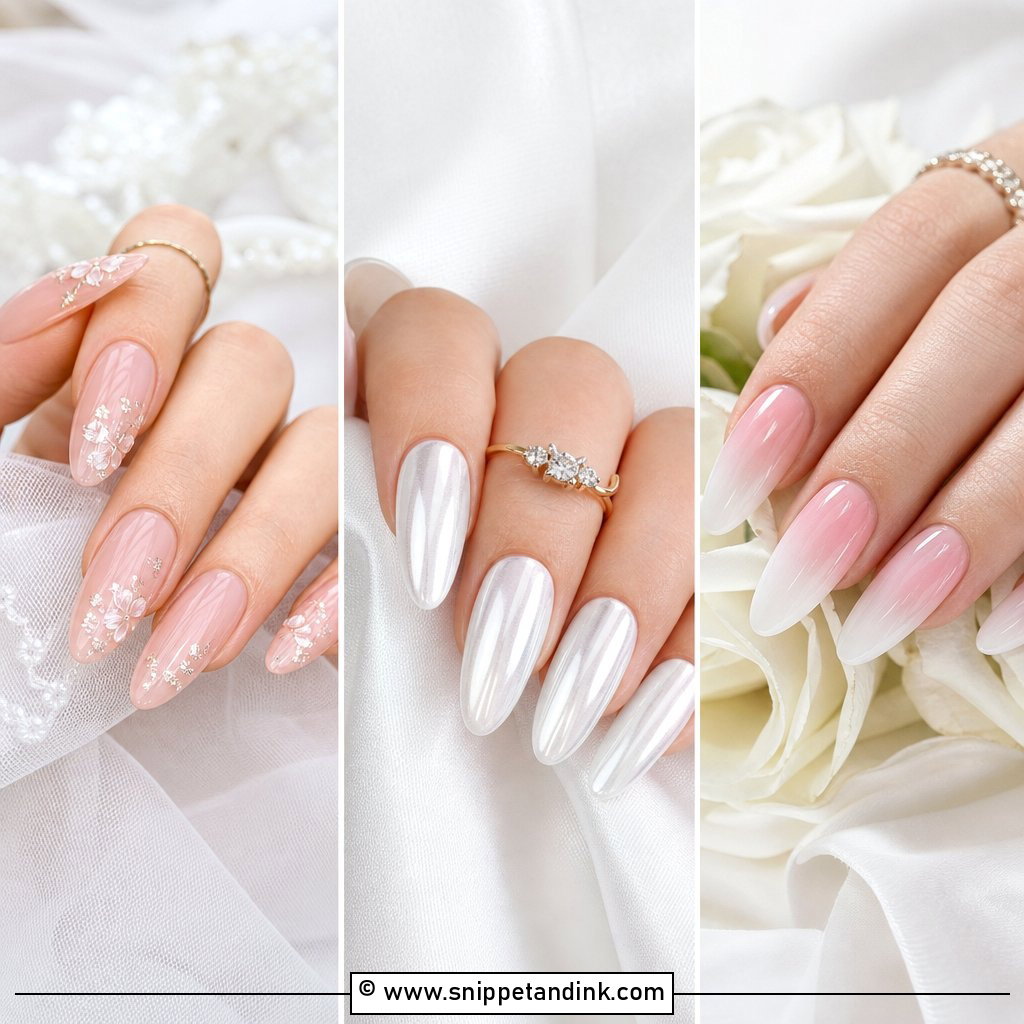
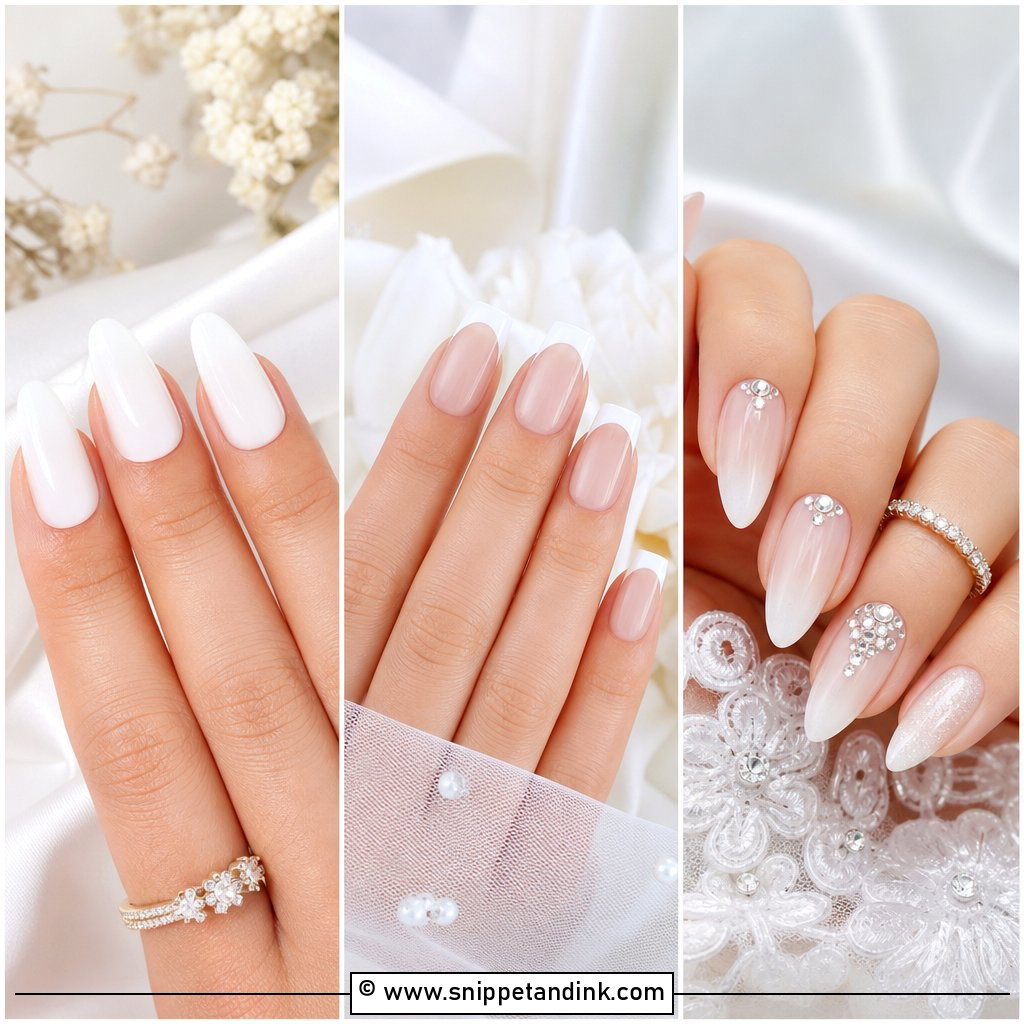
Milky white almond nails read softer than solid white because the color is translucent, so you see a hint of the nail bed through it. That matters for a guest: opaque white can look bridal, while milky white doesn’t. The almond shape lengthens the fingers. I build milky shades in two or three thin coats; one thick coat streaks and pools at the sidewalls. Keep the length short to medium, finish with high gloss or a fine pearl glaze, and leave the stones off.
3. Nude Chrome Nails
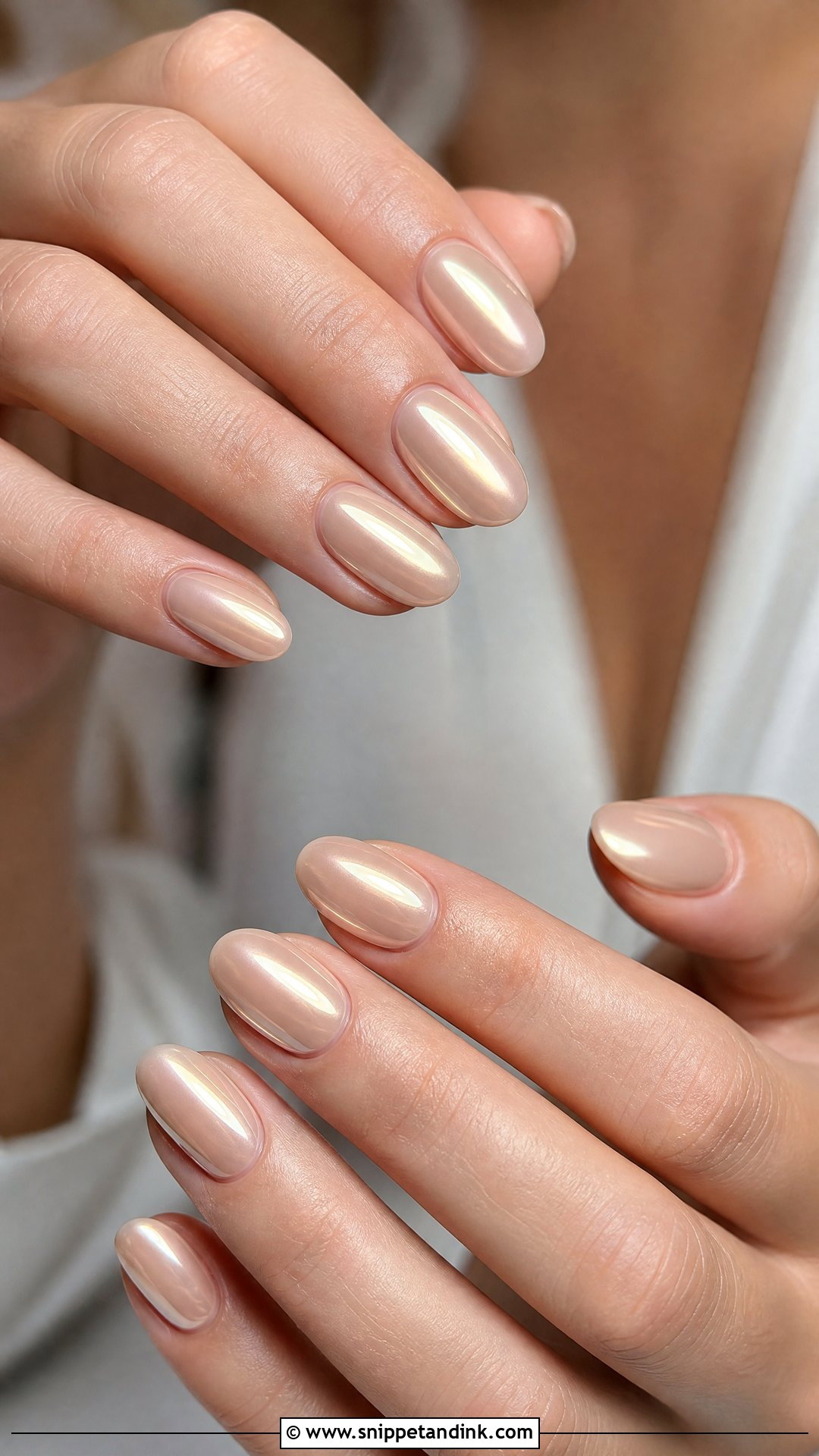
Nude chrome looks expensive because the reflection does the work and the color stays quiet. I choose the nude to match the guest’s undertone first, beige, pink, caramel or soft brown, and only then rub in the chrome. The powder should be a sheer pearl or glazed chrome, not a full mirror, which can look costume-like at a wedding. Chrome shows every ridge on the nail, so I smooth the surface with a base layer before the powder goes on. It suits black-tie dinners, rooftop receptions and modern city venues, on a short almond or medium oval.
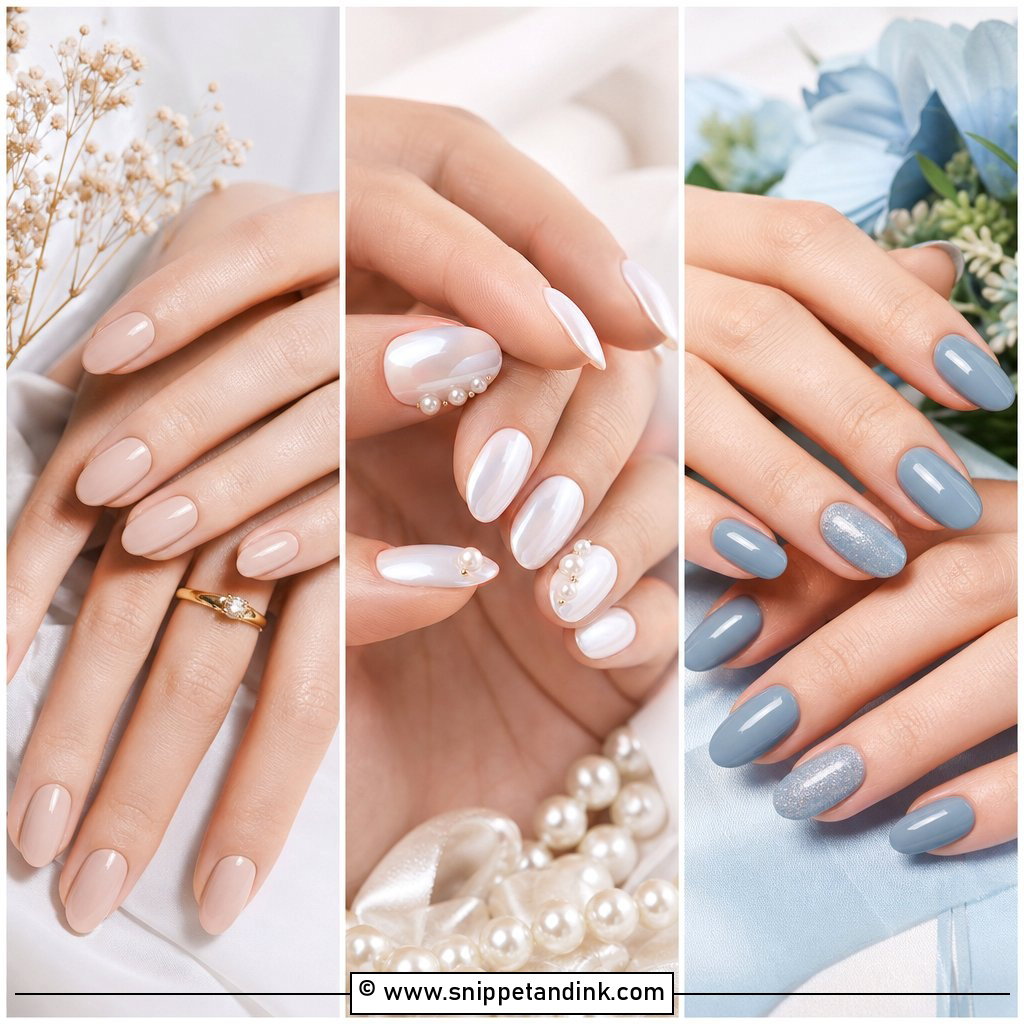
4. Blush Pink Pearl Nails
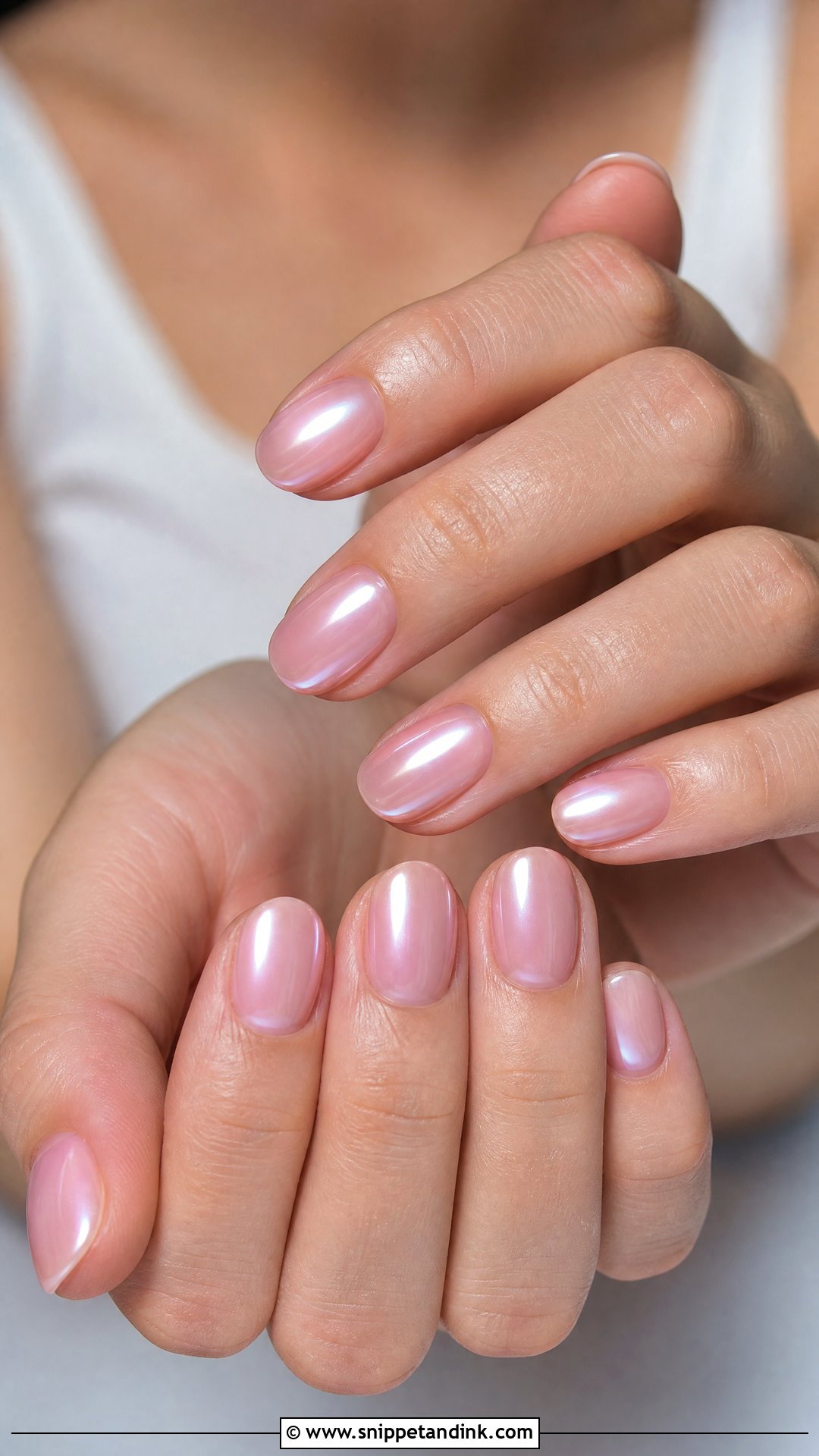
Pearl finishes flatter in daylight because they shift slightly as the hand moves, without the specks of glitter. I lay a sheer blush base and then a fine pearl or glazed top layer. The trick is restraint: one pass of pearl looks luminous, two starts to look frosty. It’s a strong choice for spring and summer weddings, next to soft pink, lavender, sage, champagne or cream outfits. On short nails it looks complete with no art at all, which makes it a good option if you keep your nails short for work.
5. Sheer Nude Short Nails
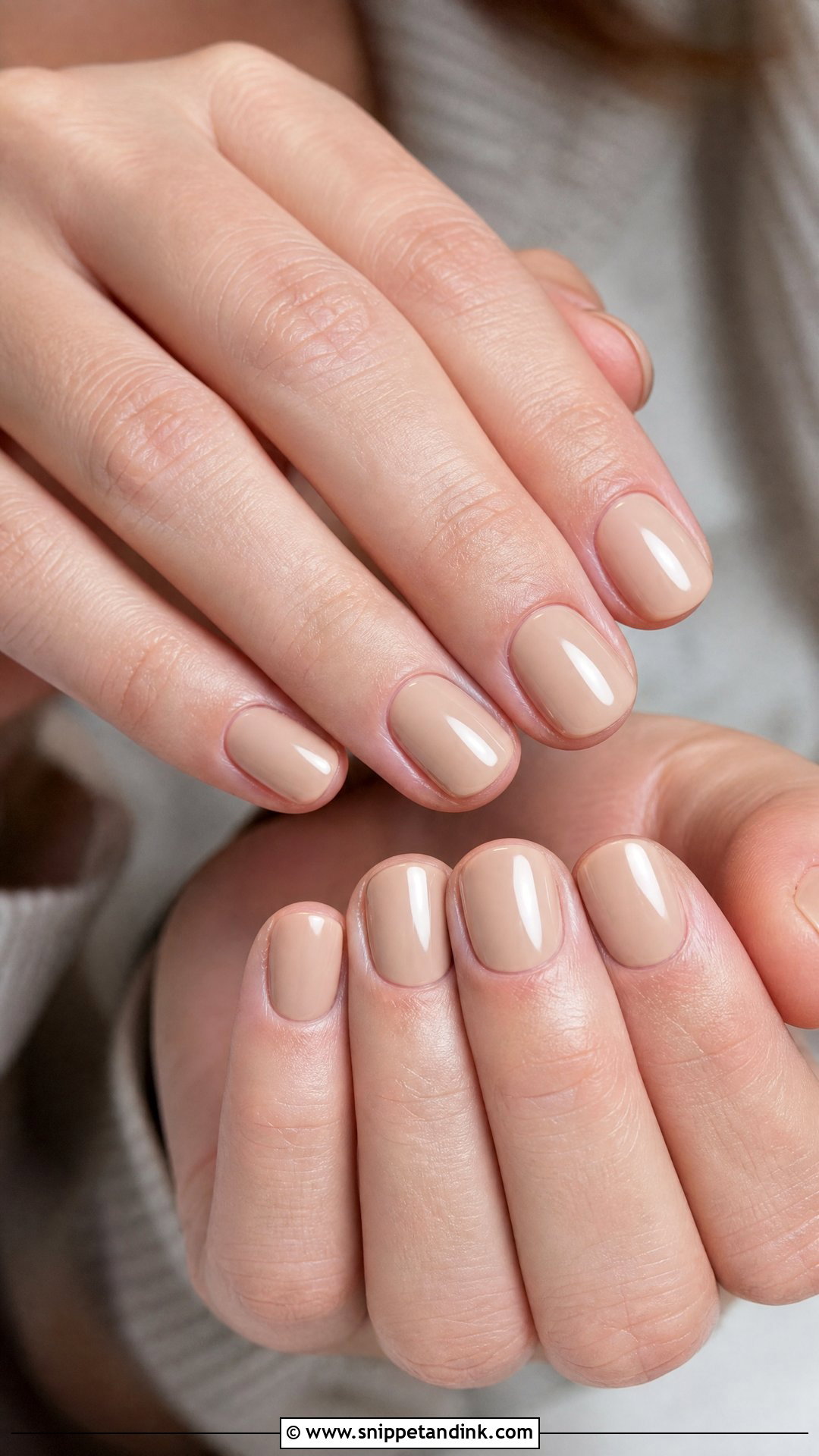
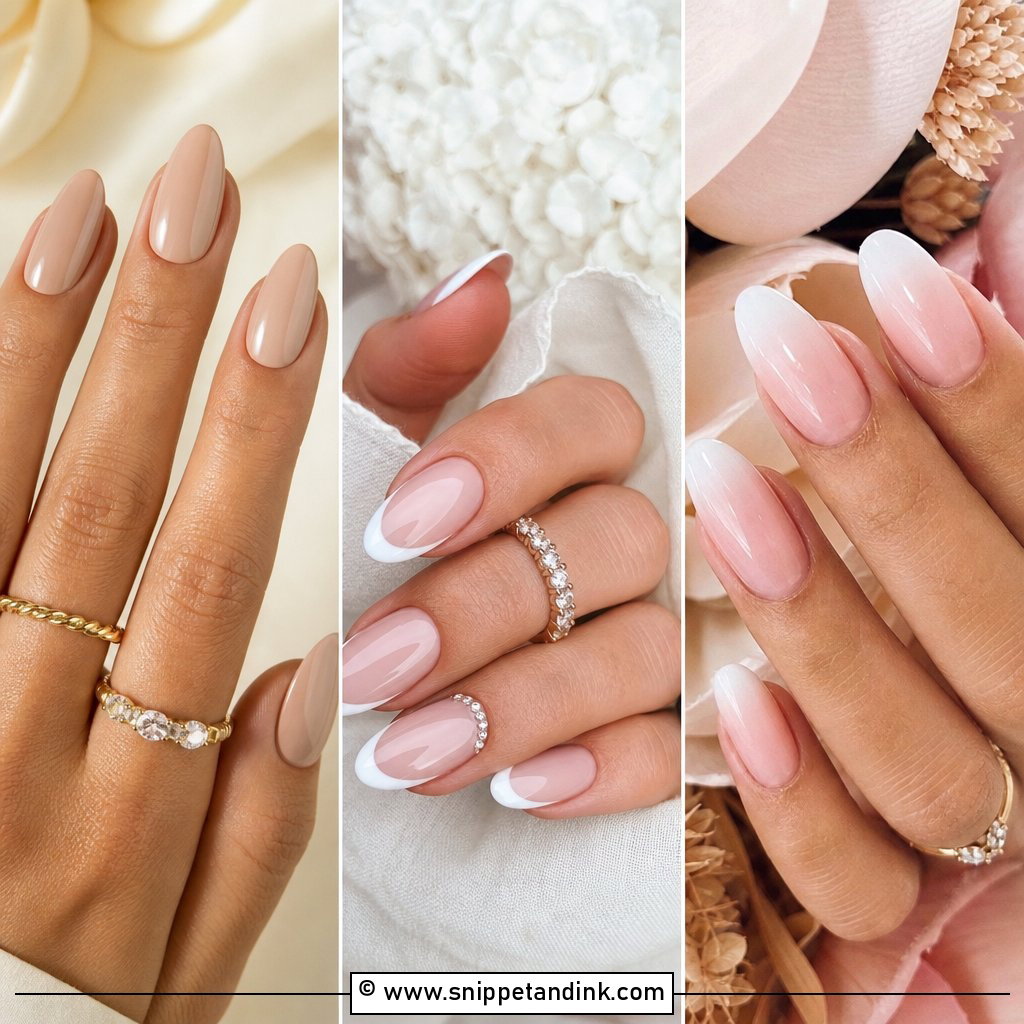
Sheer nude on short nails is quiet, and it looks luxurious only if the shape and cuticle work are clean, because there’s no color to distract from a ragged edge. The shade has to suit your undertone. Pink-beige sits well on fair and cool skin, a peachy nude warms up warm skin, and sheer caramel or cocoa looks right on deeper skin; a too-pale nude on deep skin turns chalky. Short oval or squoval is practical for a long day of hugging, eating and carrying a bag. It never competes with jewelry, prints or bold makeup.
6. Micro French Tip Nails
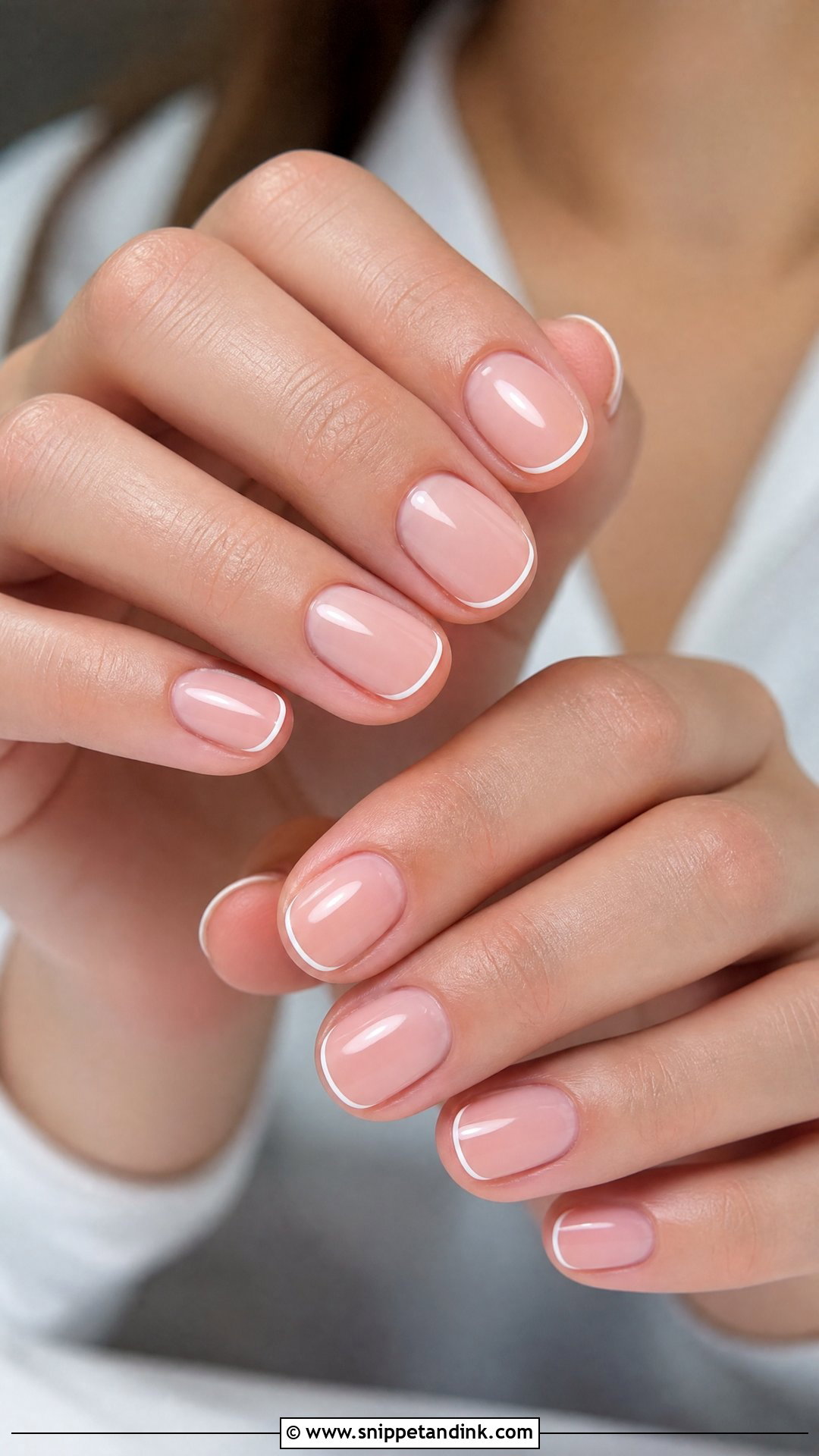
A micro French uses a very thin line at the very edge of the nail instead of a classic tip. I recommend it to guests with short nails, because a thick tip makes a small nail bed look even shorter, while a micro line adds definition without eating into it. A sheer pink or nude base keeps it soft. White is the classic tip, though ivory, soft beige or champagne all work for a guest. I paint the line freehand with a fine liner brush; stickers and guides tend to leave a step you can feel. It suits tailored, minimalist and formal outfits.
7. Champagne Glitter Ombre Nails
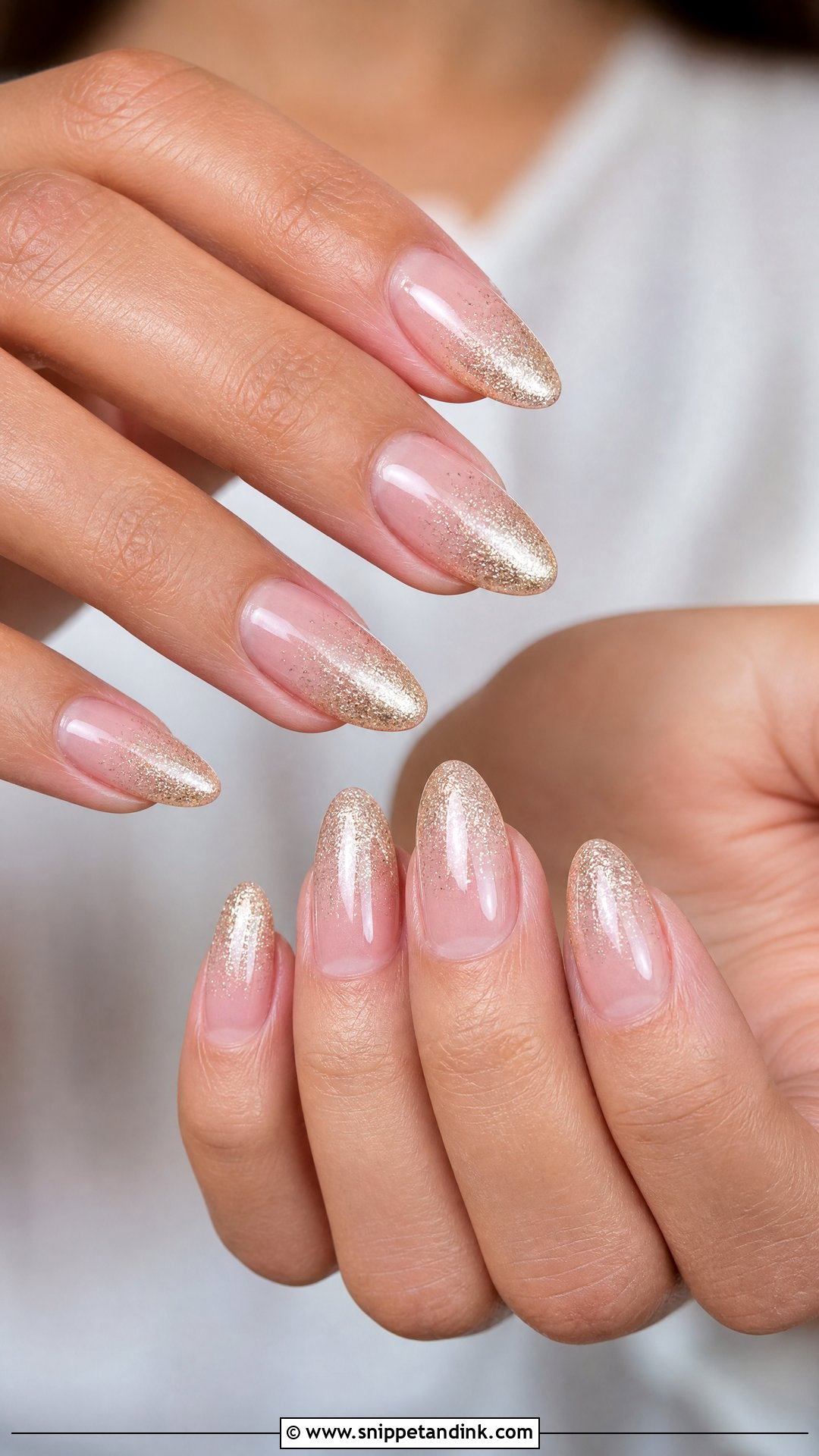
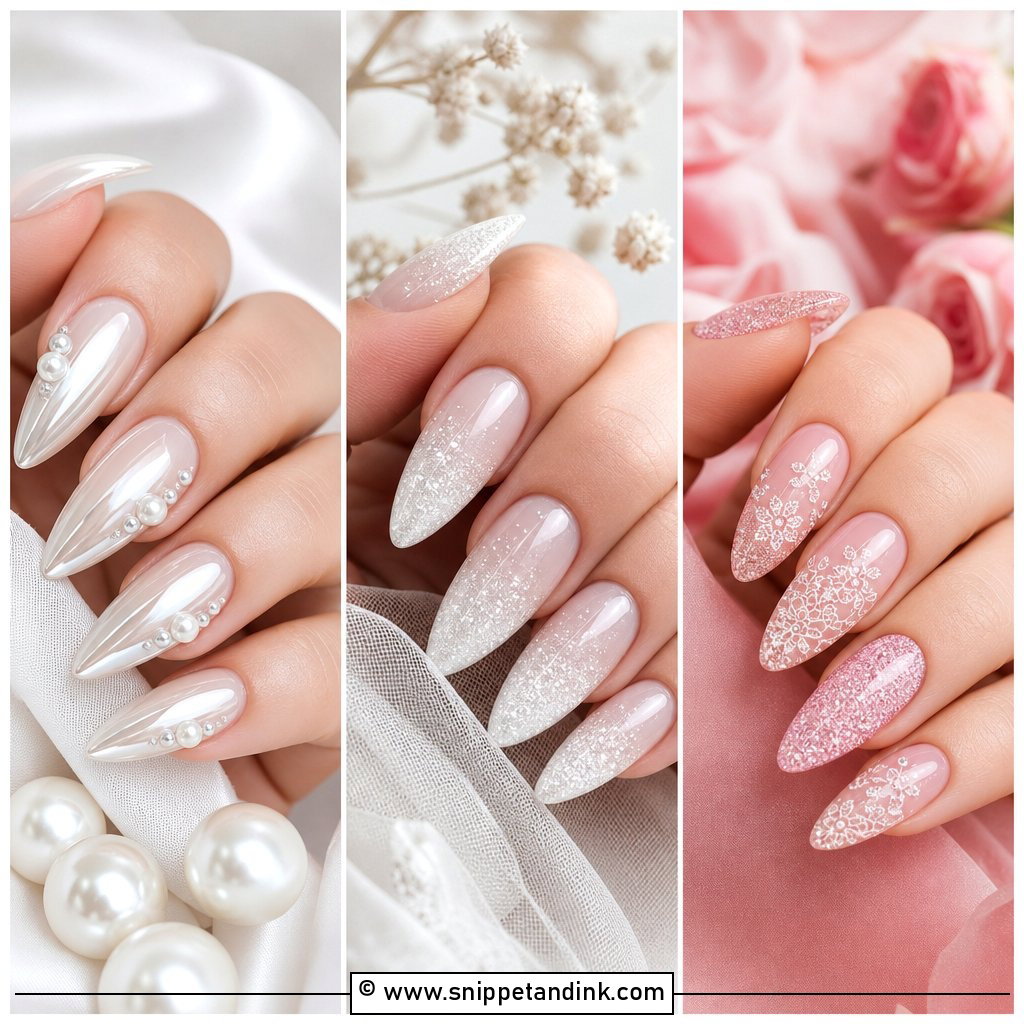
Champagne glitter ombre nails are festive without looking flashy when the glitter is fine and the fade is long. I start from a nude, pink or beige base and sponge or brush fine champagne shimmer from the tip toward the middle of the nail, building density only at the edge. Chunky glitter needs a thick top coat to smooth it, which makes the nail look bulky, so I avoid it for guests. Medium almond gives the most graceful shape, though oval and coffin work too. Evening receptions and ballroom weddings suit it, alongside gold jewelry or satin.
8. Dusty Rose Nails
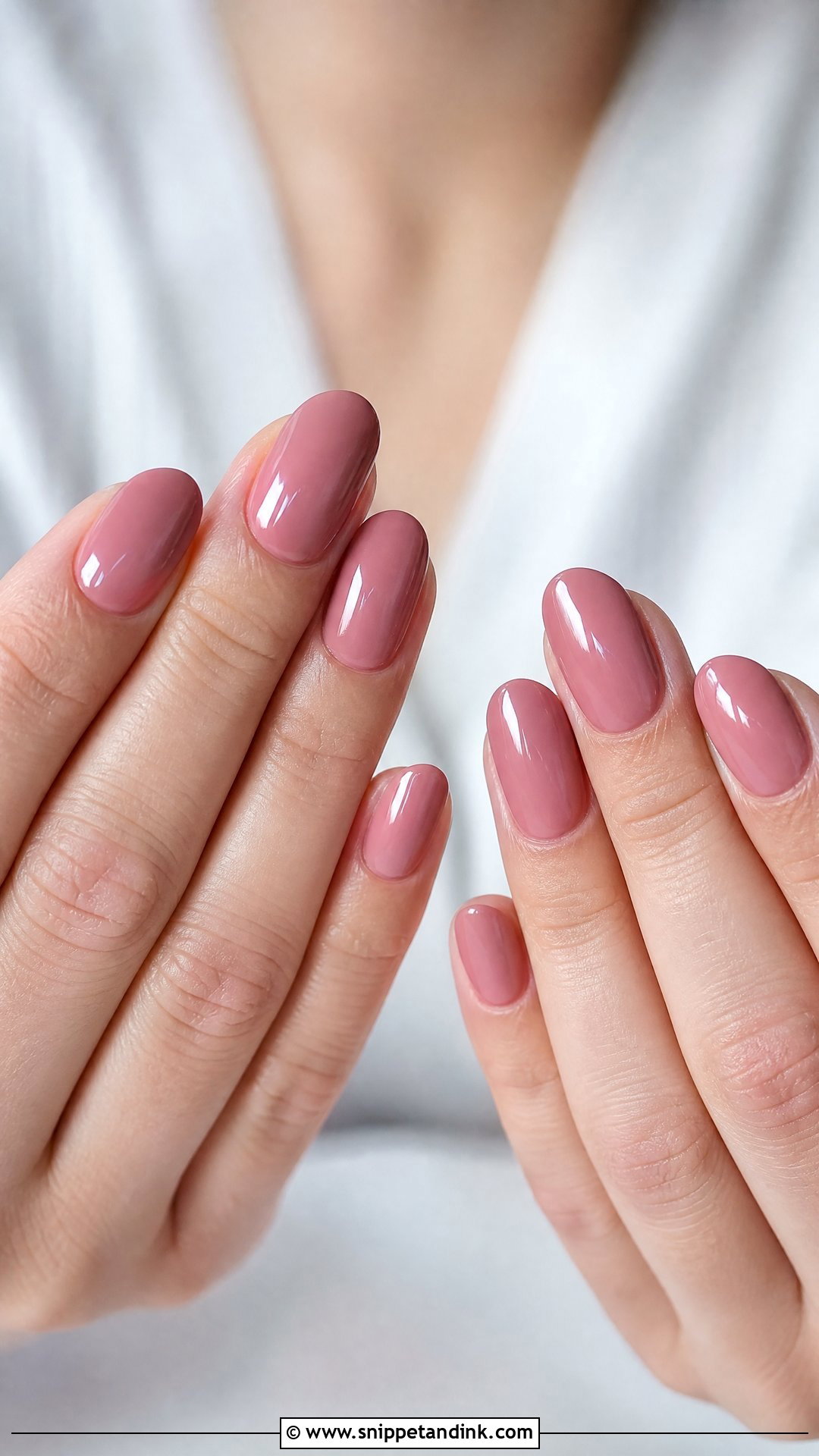
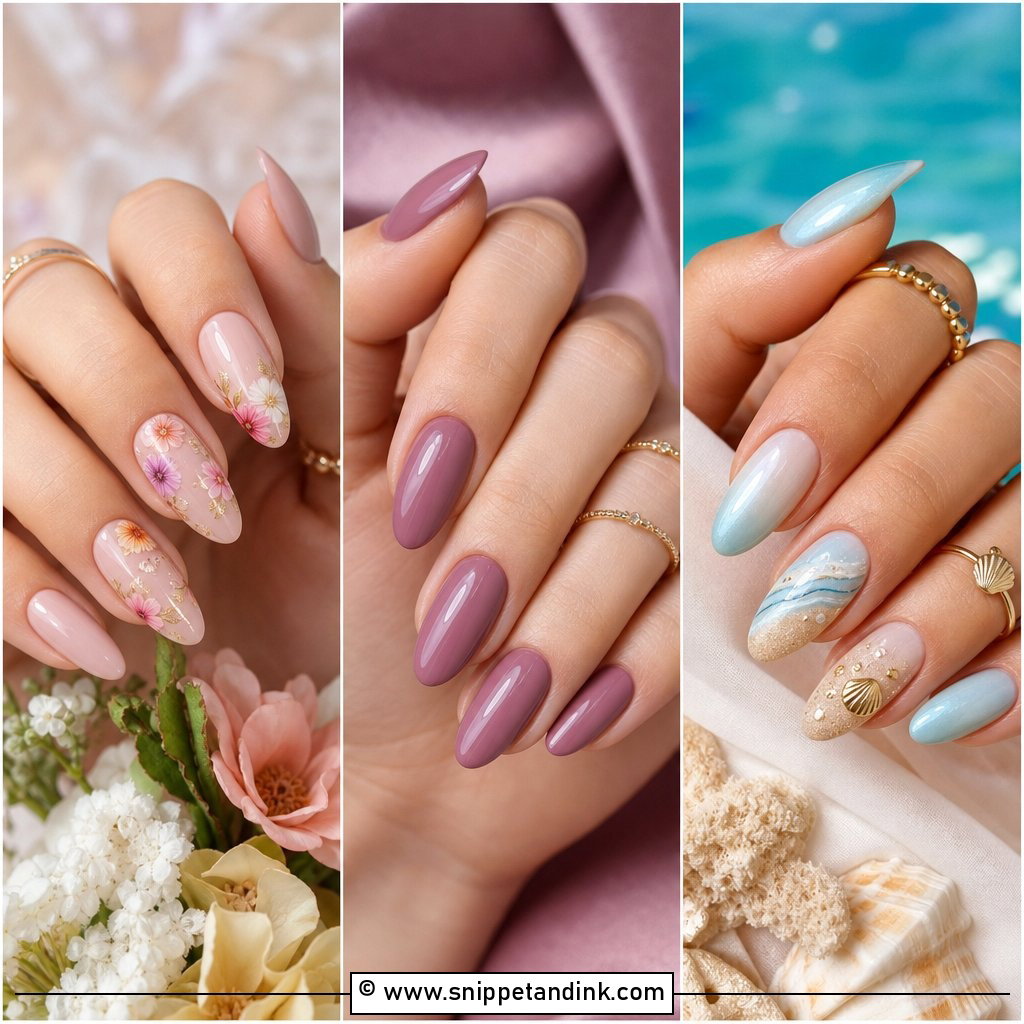
Dusty rose is my answer for a guest who finds bubblegum pink too young and mauve too dark. The grey in it makes it flatter a wide range of skin tones and outfit colors. A cream finish is classic, and a very fine shimmer makes it look more formal for evening. Fall and garden weddings both suit it. If you add art, keep it to one detail: a thin gold line or a glossy accent is enough.
9. Taupe Glossy Nails
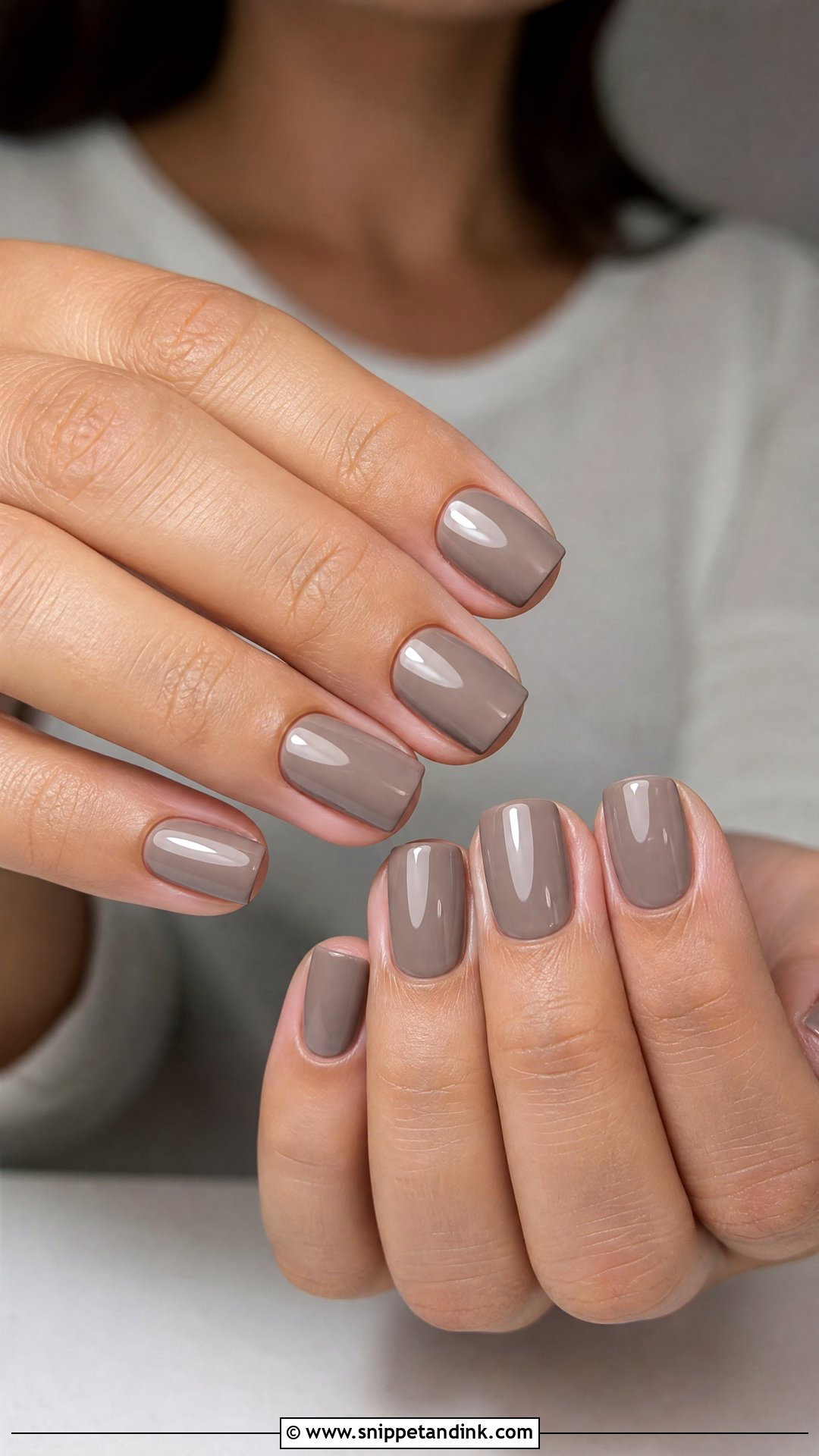
Taupe gives a neutral manicure more depth than beige. It sits somewhere between grey, brown and mauve, so it doesn’t belong to any season and goes with black, navy, emerald, burgundy, silver and cream. I tell guests that taupe needs a fresh, glossy top coat more than most colors; when it dulls, it can read as grubby rather than chic. Short square looks modern, oval softer. It works for a morning ceremony and an evening reception equally.
10. Pale Peach Nails
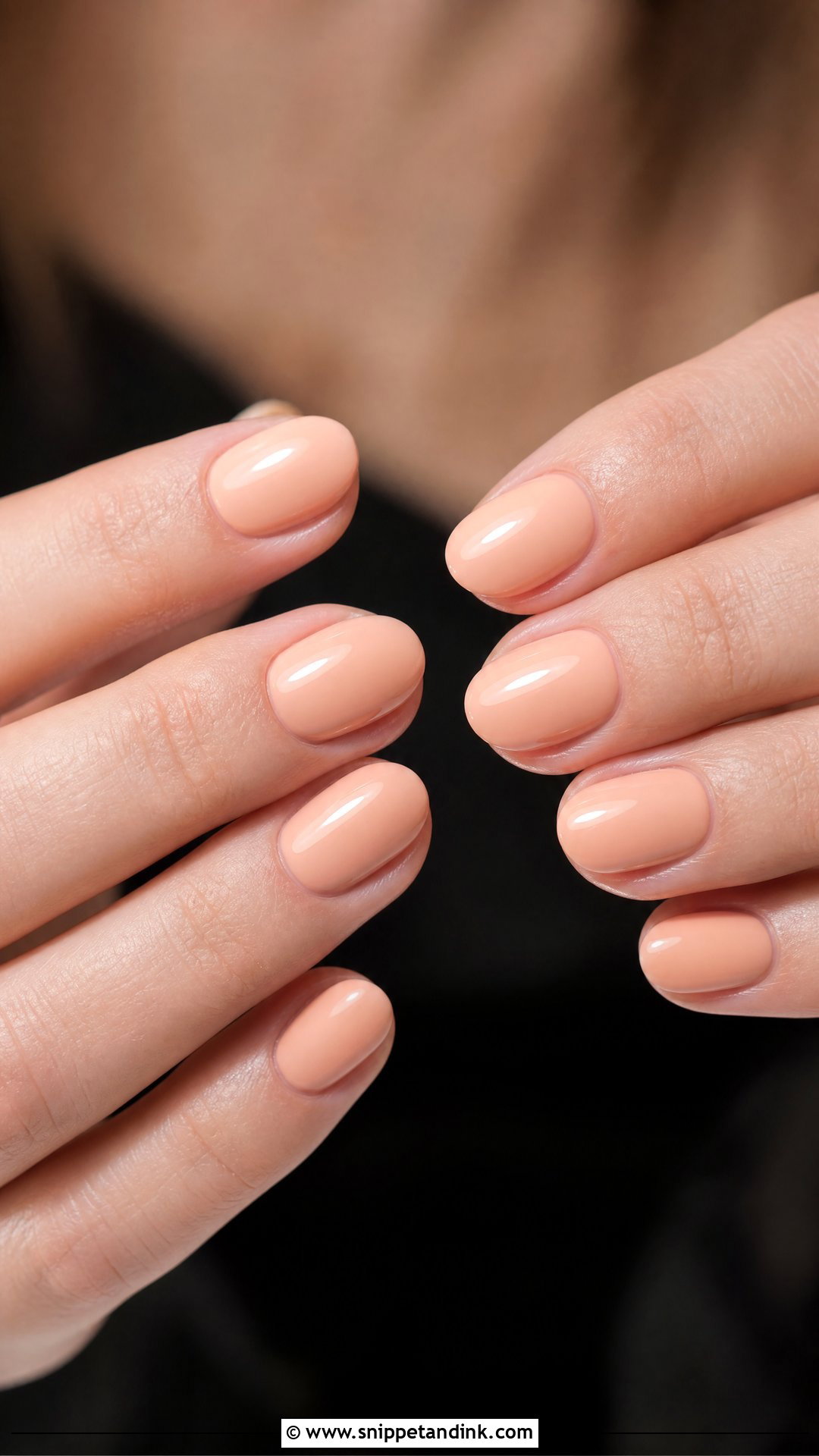
Pale peach brightens hands, which helps if your hands look a little red or tired in photos. A creamy peach is classic, a sheer peach more natural. It suits spring, summer and outdoor weddings, next to florals, coral, champagne, sage green and soft blue. Warm and neutral undertones wear it most easily; on cool skin I mix in a touch more pink so it doesn’t look orange. Short oval, almond or squoval, with gloss, keeps it simple.
11. Mauve Almond Nails
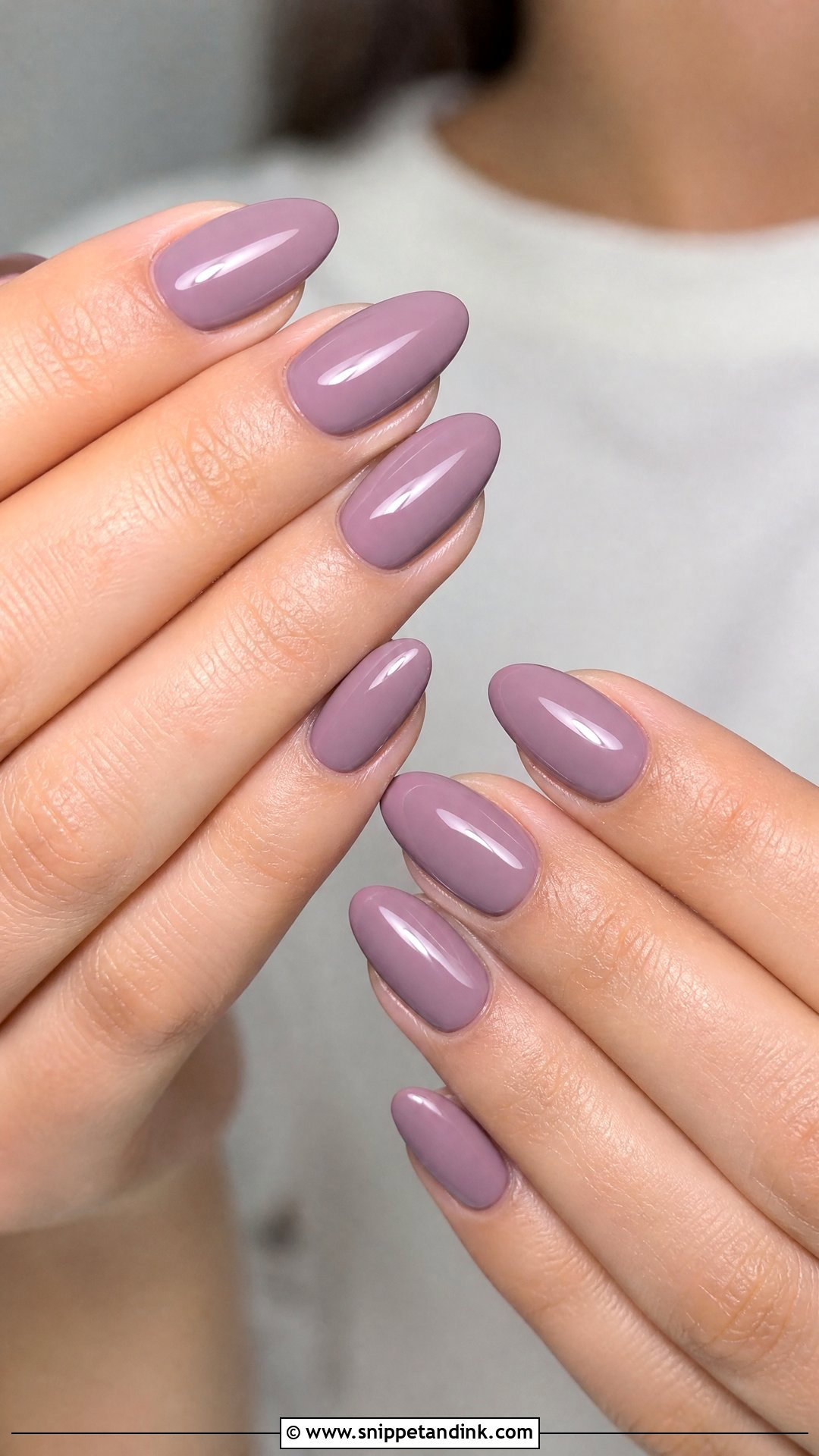
Mauve mixes pink, purple and neutral, so it gives color while staying calm. On almond nails it looks especially refined. I use a medium mauve cream with grey, navy, plum, blush, silver and black outfits. If you want dimension, ask for a satin shimmer rather than glitter. Practical point: mauve is one of the shades guests keep wearing after the wedding, so it’s a good choice if you’d rather not book a removal appointment on Monday.
12. Ivory French Ombre Nails
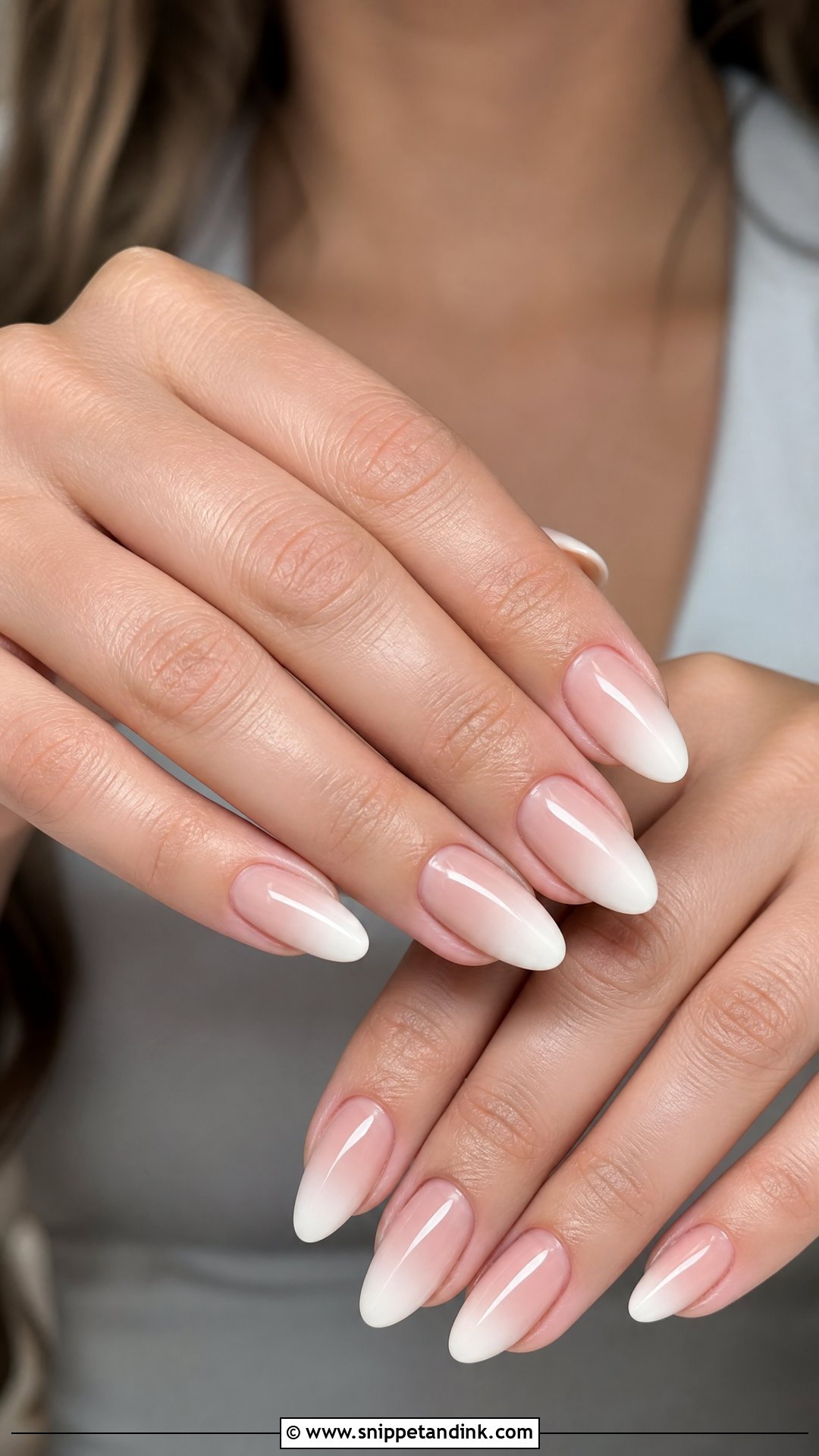
An ivory French ombre softens the French manicure by fading the tip into a nude or pink base instead of drawing a hard smile line. Ivory is warmer and gentler than bright white, which keeps it clearly a guest look. The fade needs length to show, so almond, oval or coffin nails at medium length or shorter suit it best; on very short nails it just looks like an uneven base. I blend it with a sponge in gel, then seal with gloss so the gradient looks smooth rather than grainy.
13. Rose Gold Accent Nails
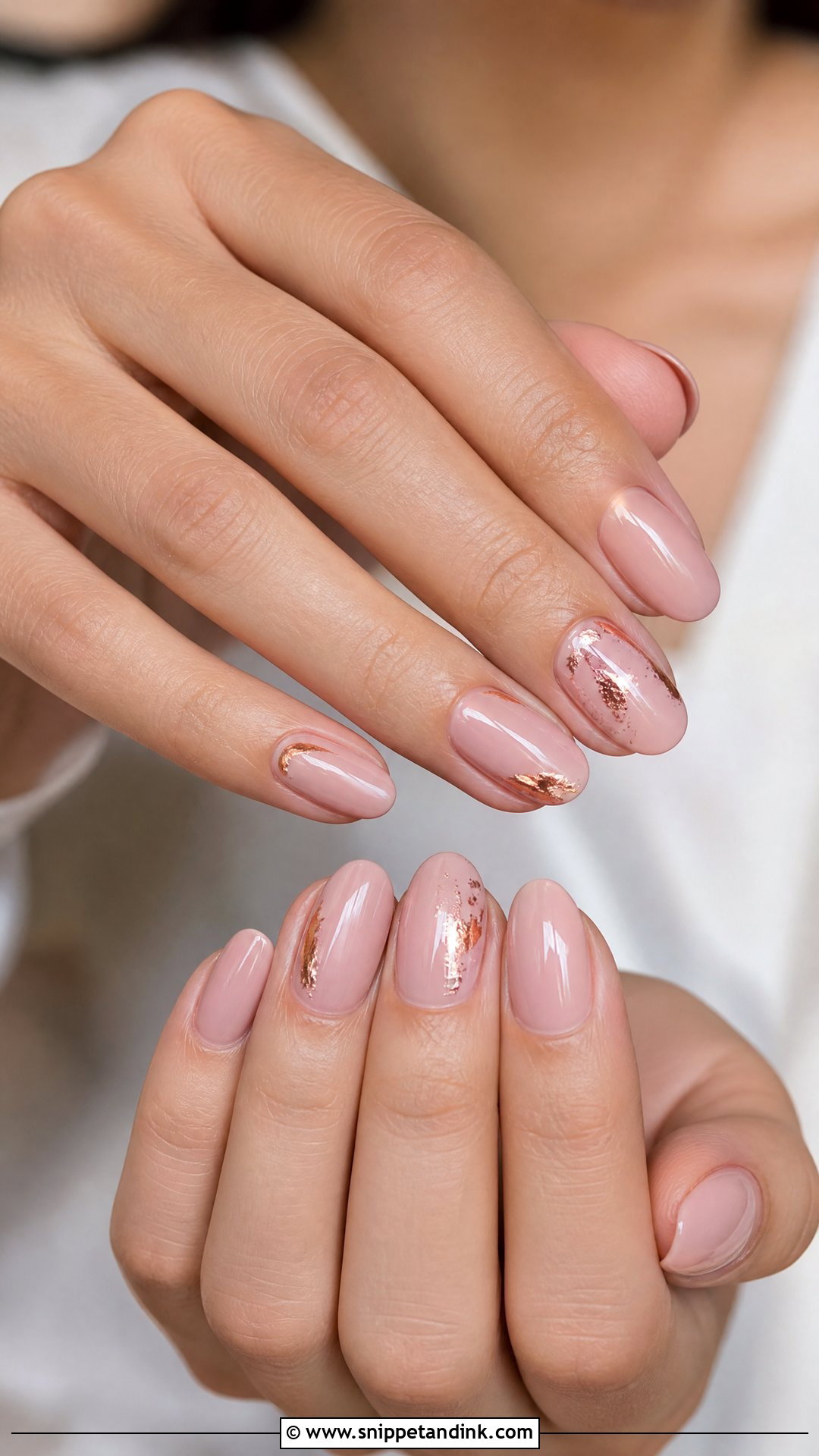
Rose gold accents add warmth while staying soft. For a guest, I build on a nude, blush or sheer pink base and keep the detail fine: a thin stripe, a delicate cuff at the cuticle, a small foil fleck, or one softly shimmering nail per hand. The aim is a set that looks considered, not decorated. Foil sits proud of the nail, so I cap it with extra top coat to stop it catching on hair or fabric. Rose gold pairs with pink dresses, champagne gowns, beige outfits and warm metallic jewelry, on short oval or almond nails.
14. Soft Lavender Nails
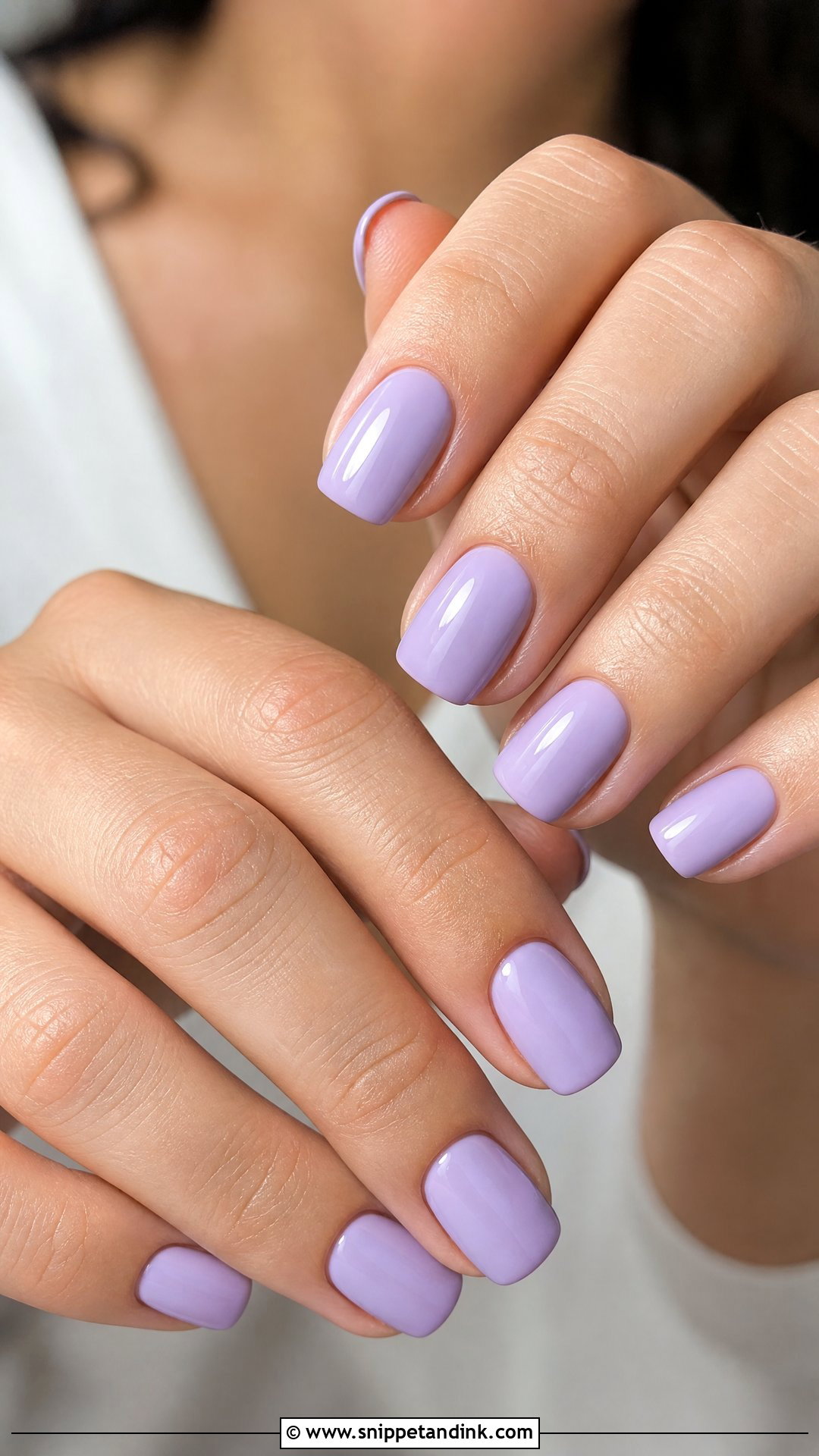
Soft lavender nails suit spring weddings, garden venues and pastel dress codes, and they feel a little more playful than nude. A muted lavender cream on short nails is classy; a sheer lavender glaze looks airy. It sits well with silver jewelry, lilac dresses, florals, pale yellow, soft grey and sage. Lavender is a pigment that can streak, so I apply it in thin coats and let each one settle. Keep art minimal, perhaps one tiny white flower or a micro French tip, and skip neon purple or heavy glitter.
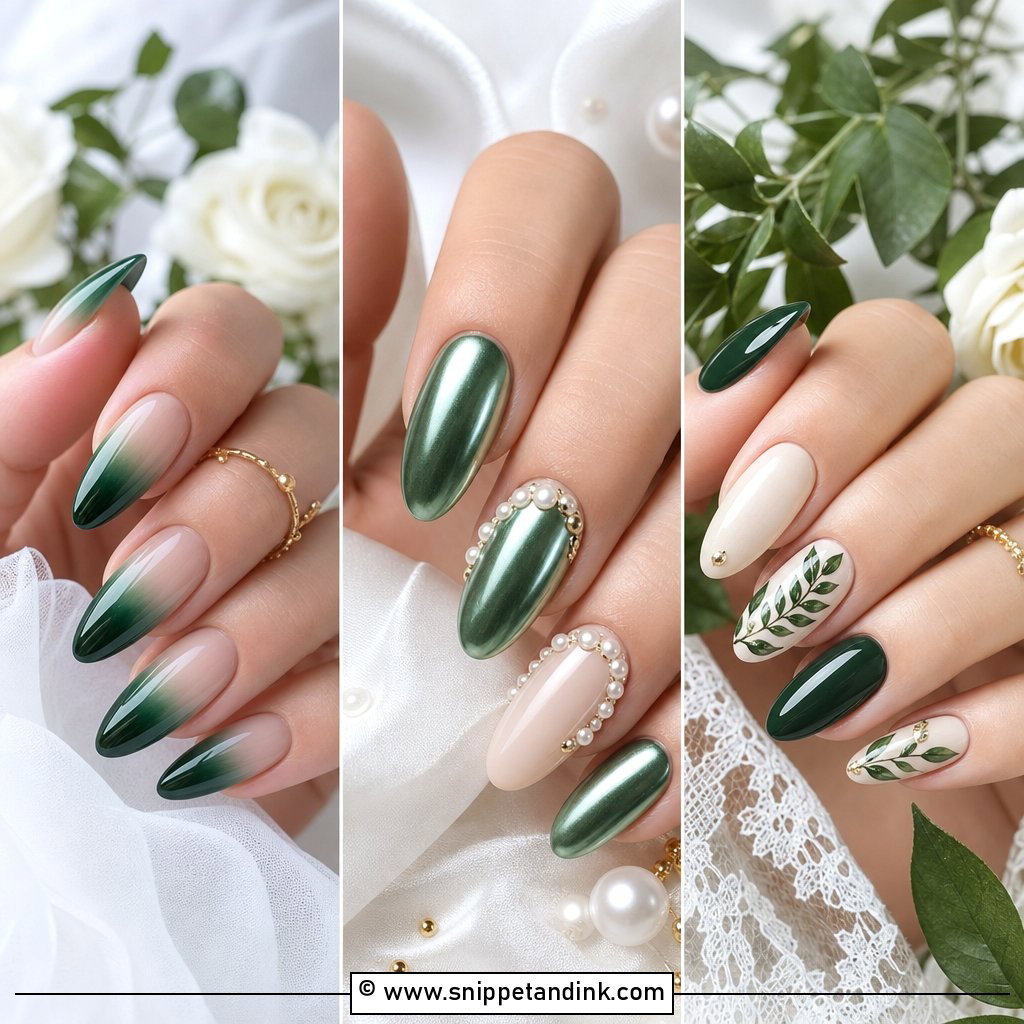
15. Sage Green Nails
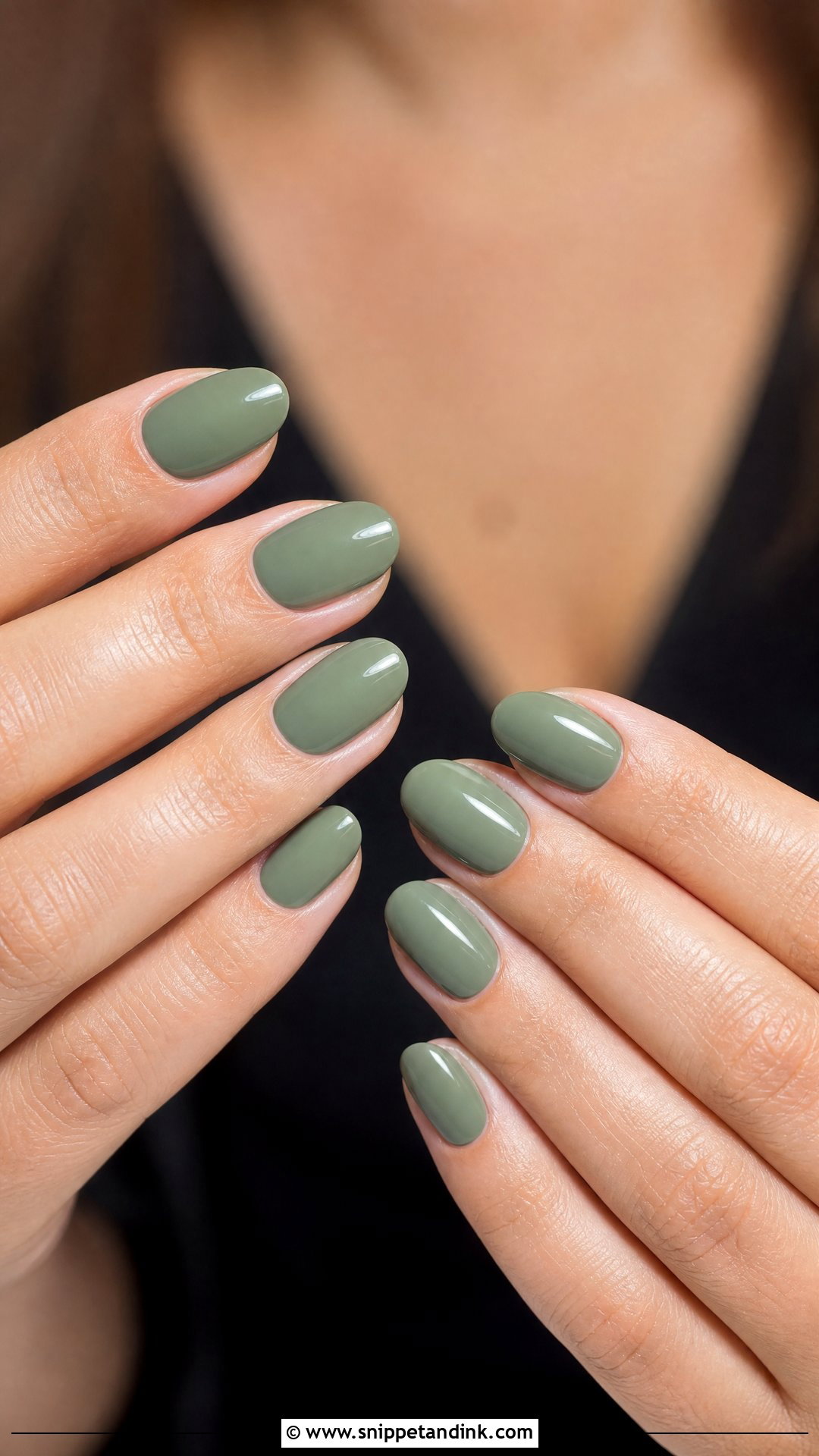
Sage surprises guests who assume green is too bold; the grey in it keeps it calm. It suits outdoor ceremonies, barn and garden weddings in spring and summer, and it sits well against cream, beige, gold, blush, rust, brown and florals. A glossy sage on short square or oval nails looks clean. For something softer, I use a sheer sage tint or a pale nude accent nail with a tiny green detail. Muted is the key; a bright green would overpower the outfit.
16. Beige Marble Nails
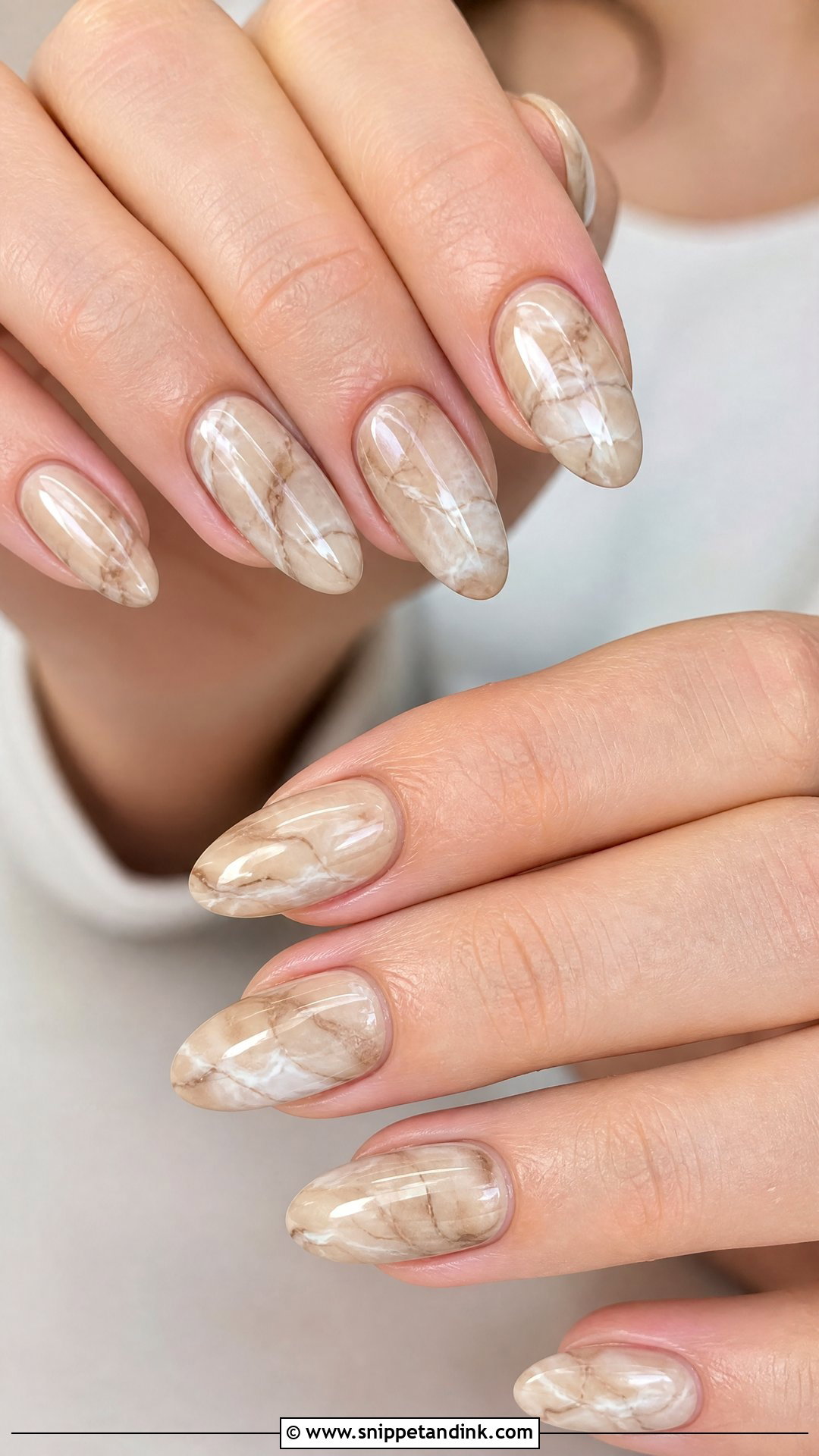
Marble is the easiest nail art to wear as a guest, because when the colors are close together the pattern looks natural rather than busy. I combine a nude or beige base with thin white, cream or taupe veins, and I keep the veins airy; dark, heavy marbling looks like countertop. One or two marble nails per hand is enough, though a full set works if the pattern is subtle. It goes with neutral dresses, tailored suits, satin and gold jewelry. Almond and oval shapes give the veins room to run.
17. Brown French Tip Nails
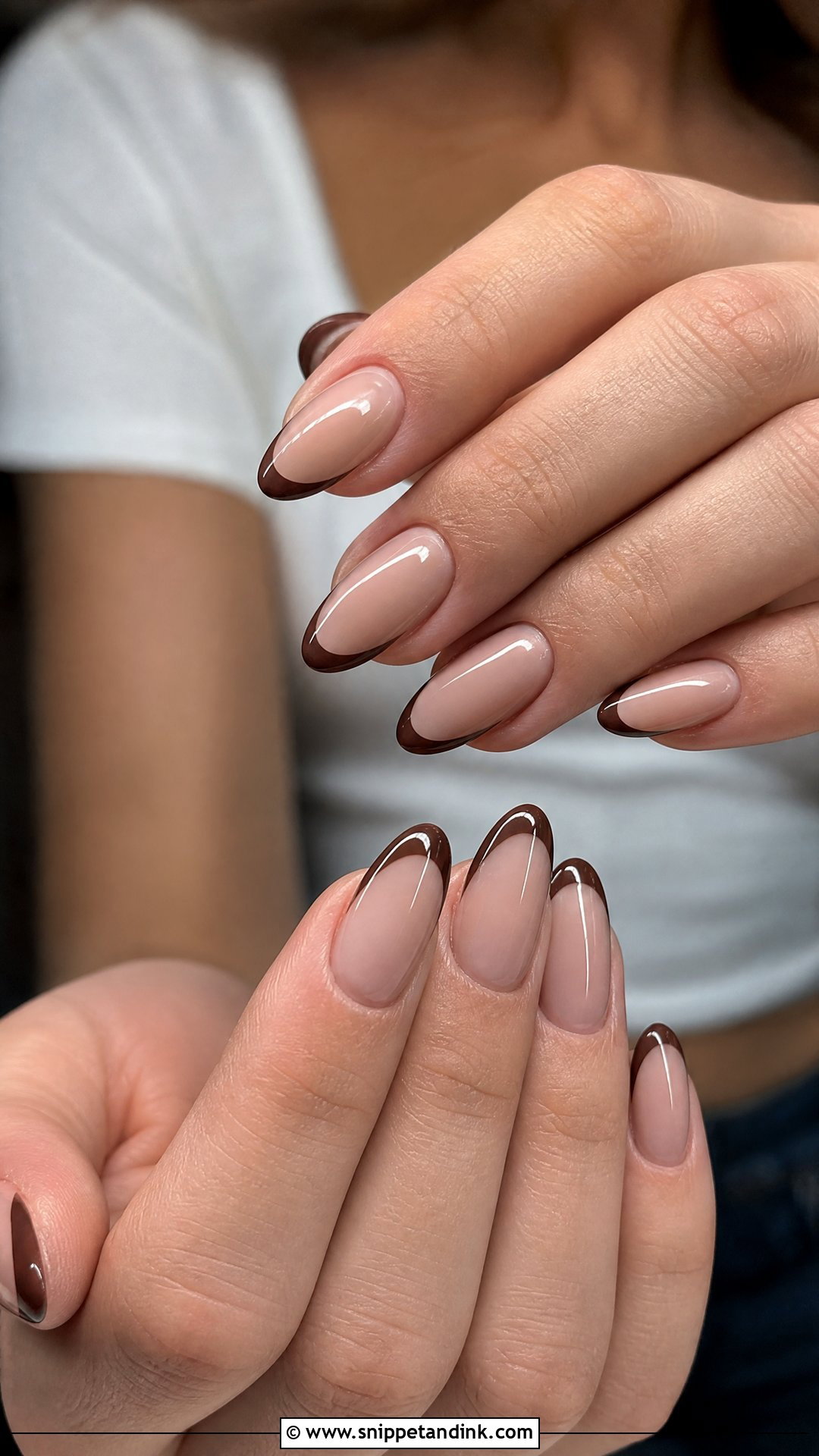
Brown French tip nails are a warm alternative to white tips, especially for fall weddings or neutral outfits. The base can be sheer nude, soft pink or beige, with a tip anywhere from mocha to espresso. Medium brown is soft and easy; chocolate gives more contrast. Dark tips show any wobble in the line, so I take more care with the smile line than I would with white. It suits almond and square nails and pairs with gold accessories, cream, rust, olive, navy and black. A slim line and high gloss keep it rich.
18. Burgundy Short Nails
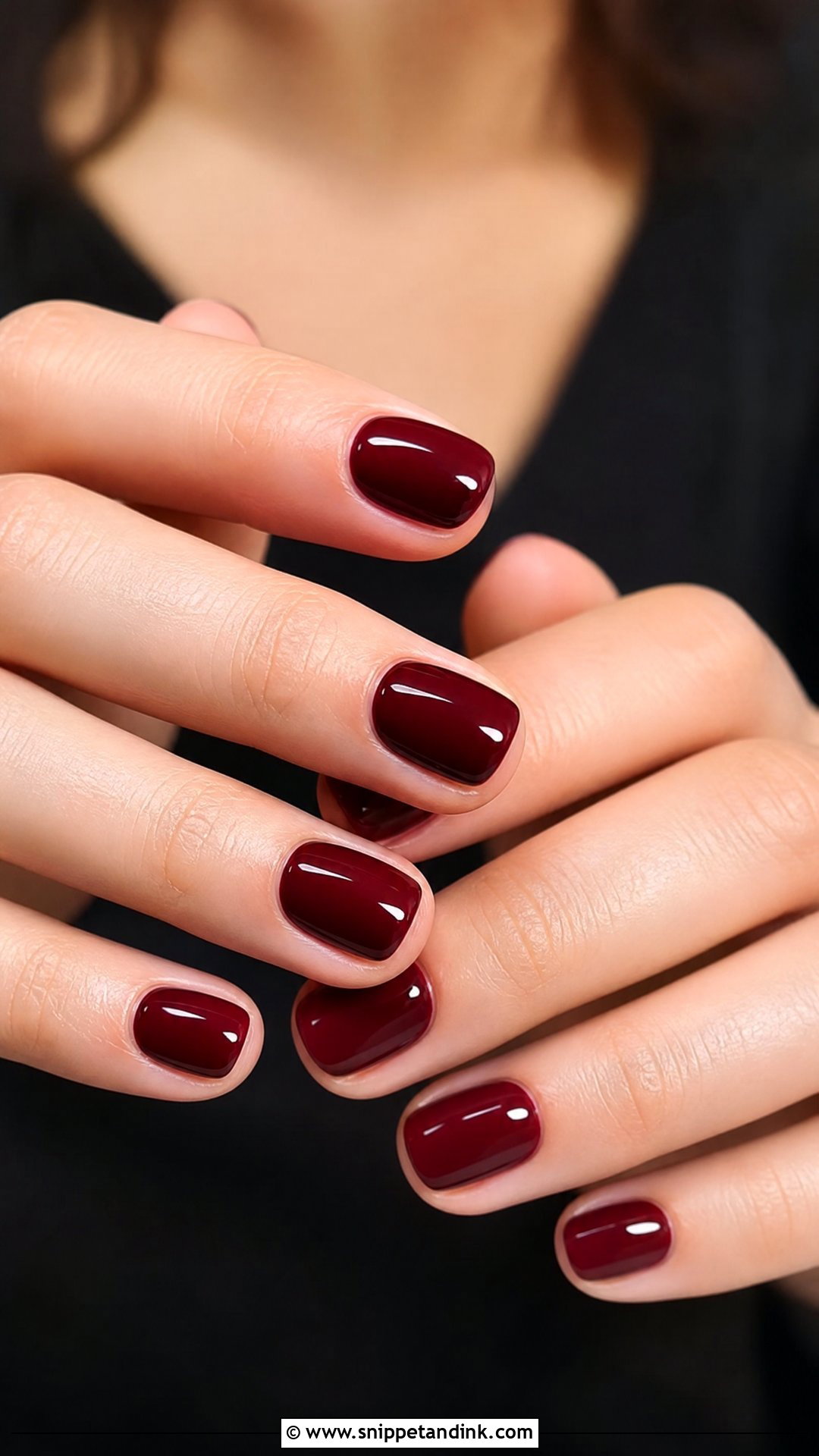
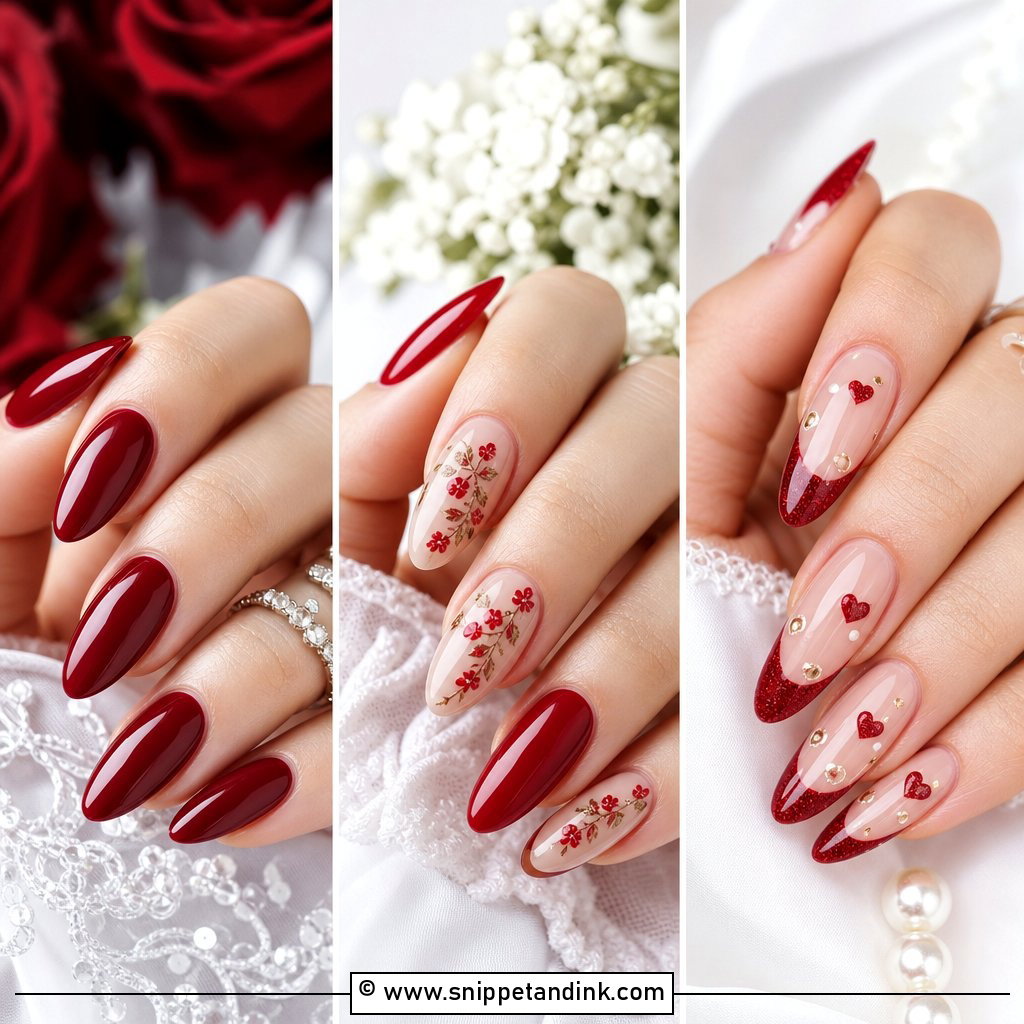
Burgundy is formal without being bright, and it belongs at cooler-season weddings. It sits well next to black, navy, emerald, gold, champagne, cream and deep florals. I keep it short, because long dark nails start to look dramatic rather than classy. A rounded square or oval, a glossy cream finish, and for very formal evenings a subtle wine shimmer. Dark shades show chips and regrowth at the cuticle fastest, so I’d book this one no more than a few days before the wedding. Leave out rhinestones and patterns; the color is already strong.
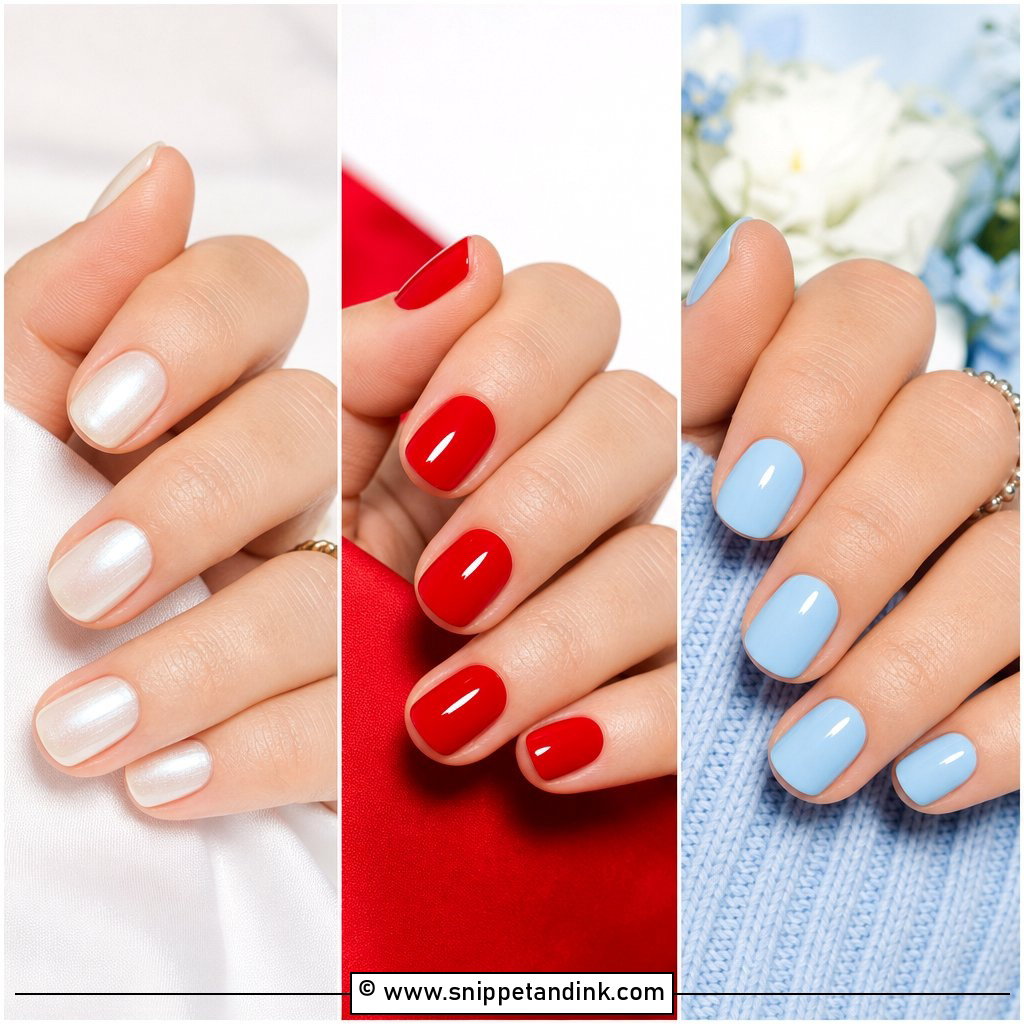
19. Classic Red Oval Nails
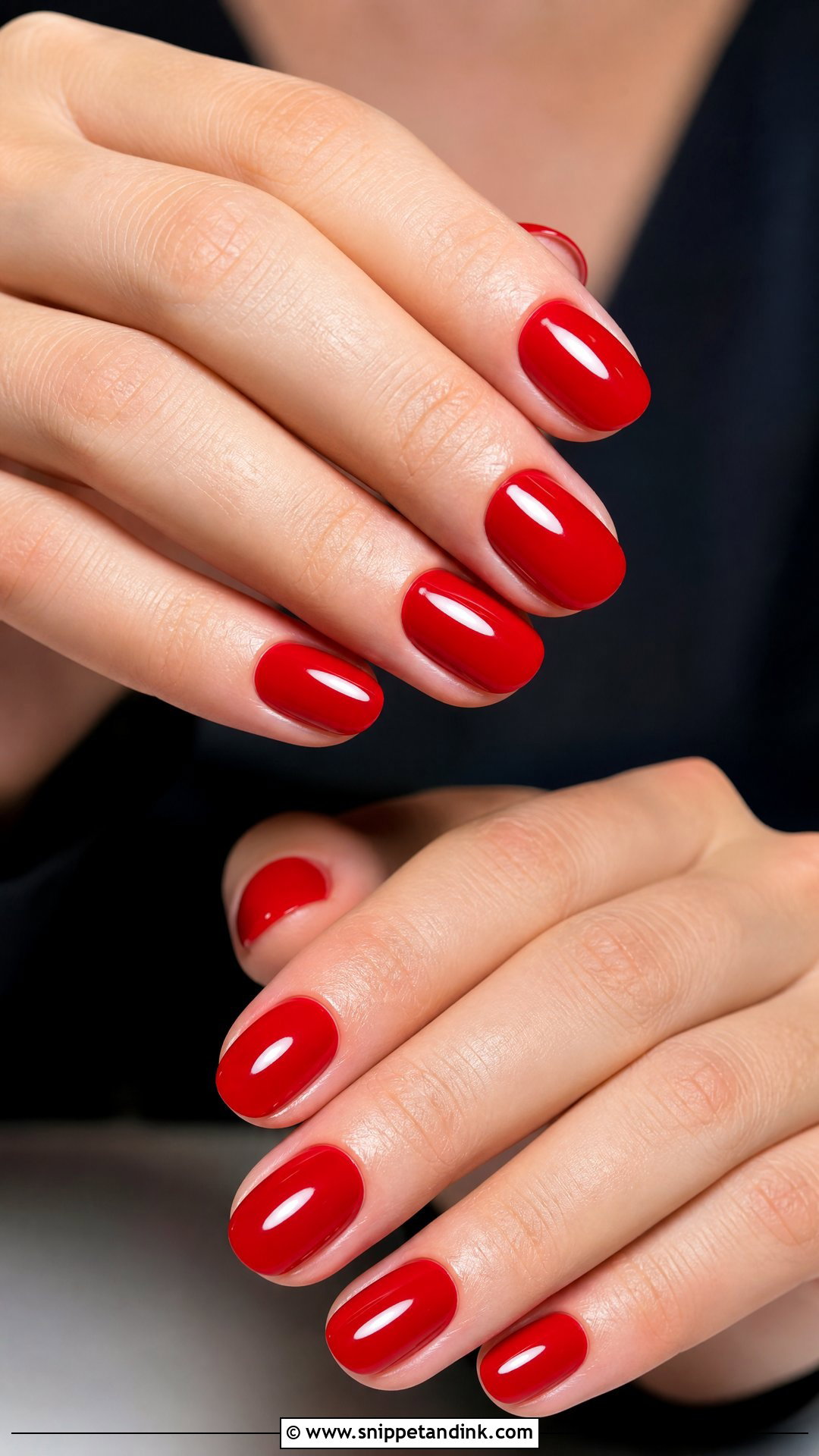
Red is wedding-appropriate when the work is clean. That means tidy cuticles, polish that stops just short of the skin and a high-shine top coat, since red shows every flaw. A true red looks glamorous with black, navy, gold and simple solid-color outfits, and a muted cherry or rose-red is softer. Oval shapes balance the strength of the color. Keep it short to medium and let the rest of your styling stay refined. I’d avoid red if you’ll be handling the couple’s bouquet or wearing a pale dress you might smudge before it fully cures.
20. Navy Blue Nails
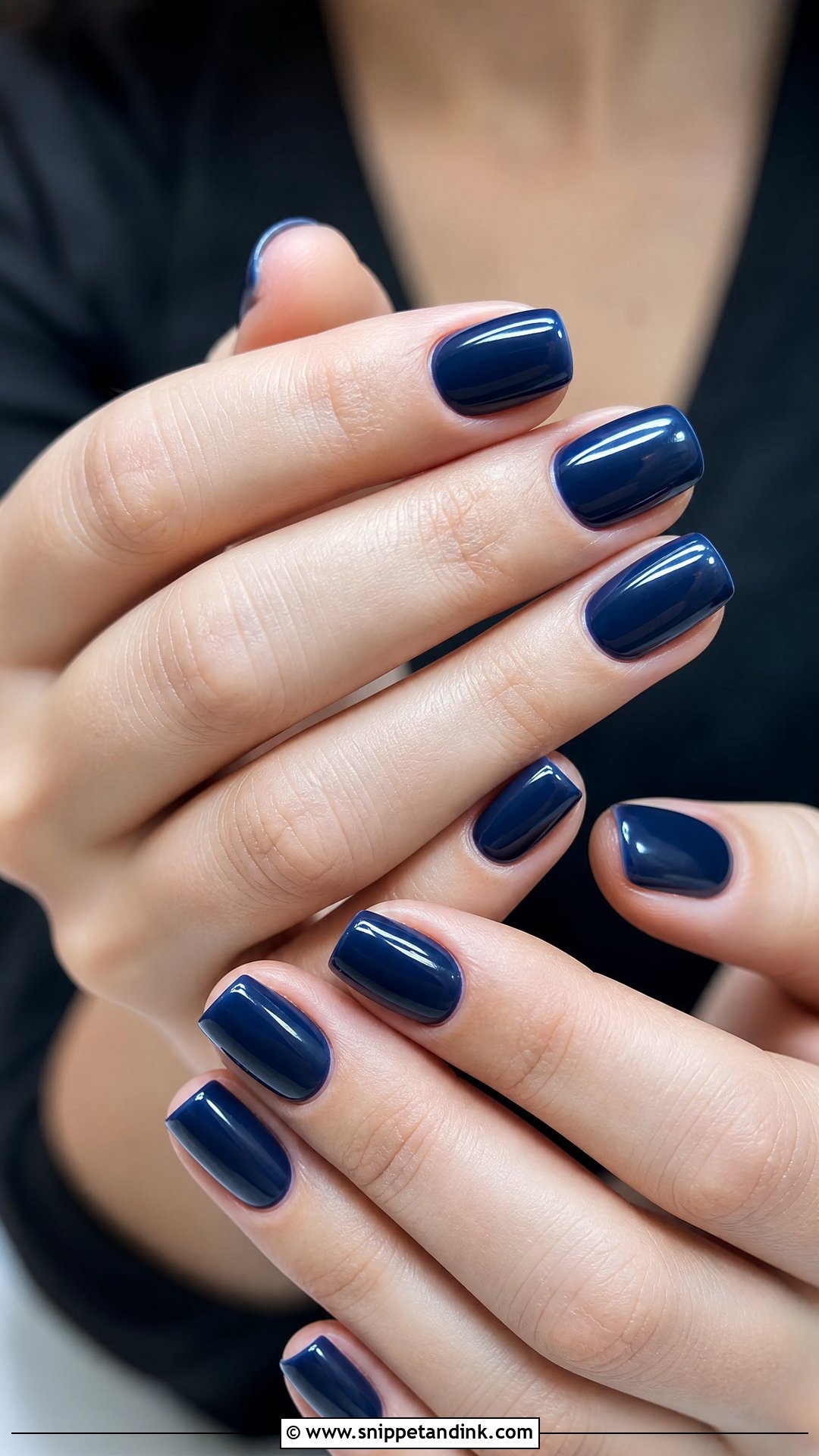
Navy has depth but reads as classic rather than loud, which makes it a good evening choice. It pairs with silver jewelry, pearls, black dresses, champagne gowns, grey suits and jewel tones. A glossy navy on short oval or squoval nails looks polished, and a midnight blue with a fine shimmer is softer. On camera, navy can look black in low light, so if you want the blue to show, choose a shade a touch brighter than you think. No chunky glitter or busy art needed; navy dresses up a simple outfit by itself.
21. Pearl French Tip Nails
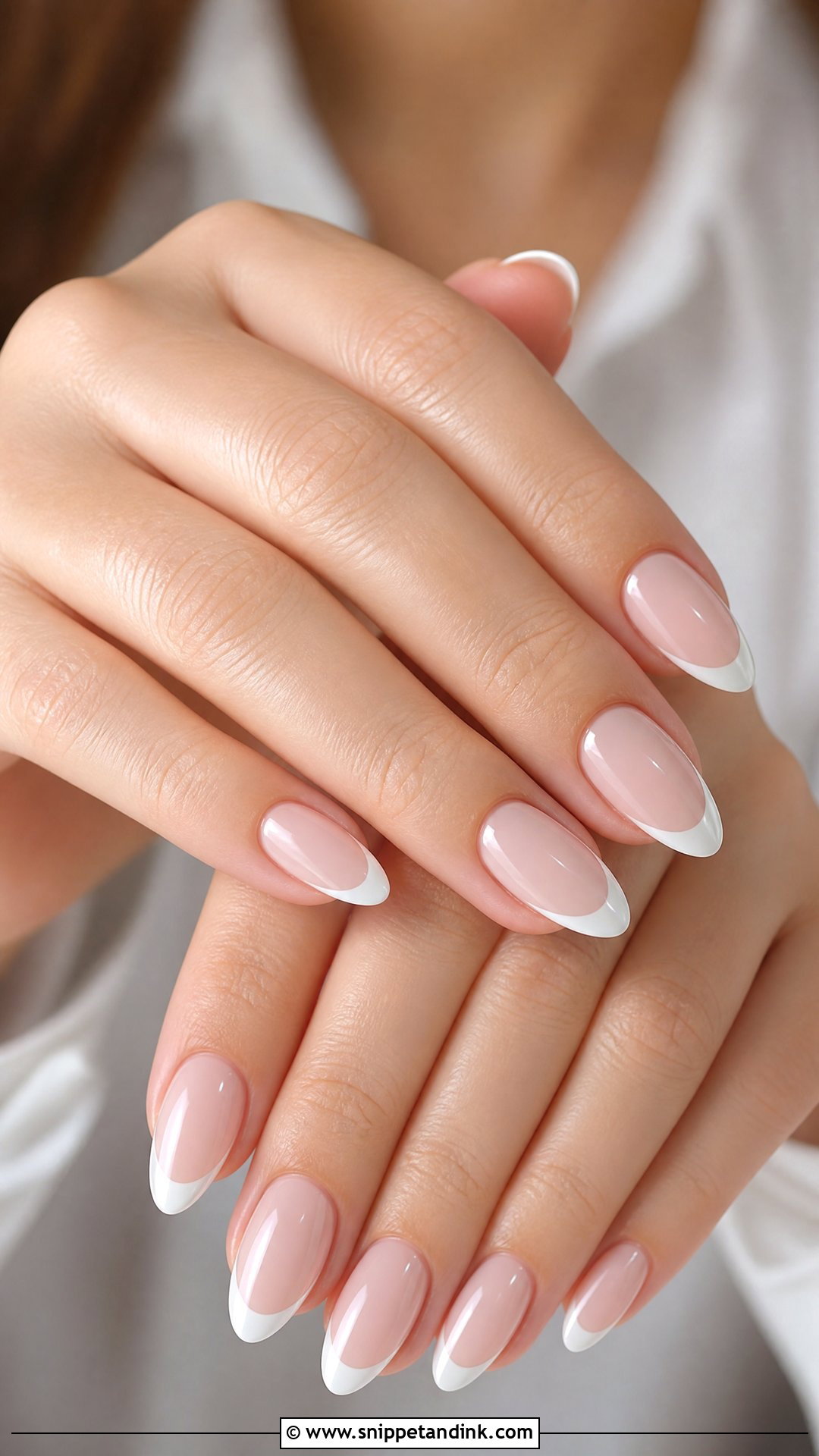
Pearl French tip nails combine two classic details in a way that suits a guest. The base is sheer pink or nude, and the tips carry a soft pearl instead of flat white, so the edge glows rather than contrasts. That softness keeps it from looking bridal. I paint the tip thin to stay modern. It suits formal daytime weddings, coastal venues and romantic indoor receptions, on almond or oval nails. If you want tiny pearl accents, use one per hand; they’re three-dimensional and can snag delicate fabric.
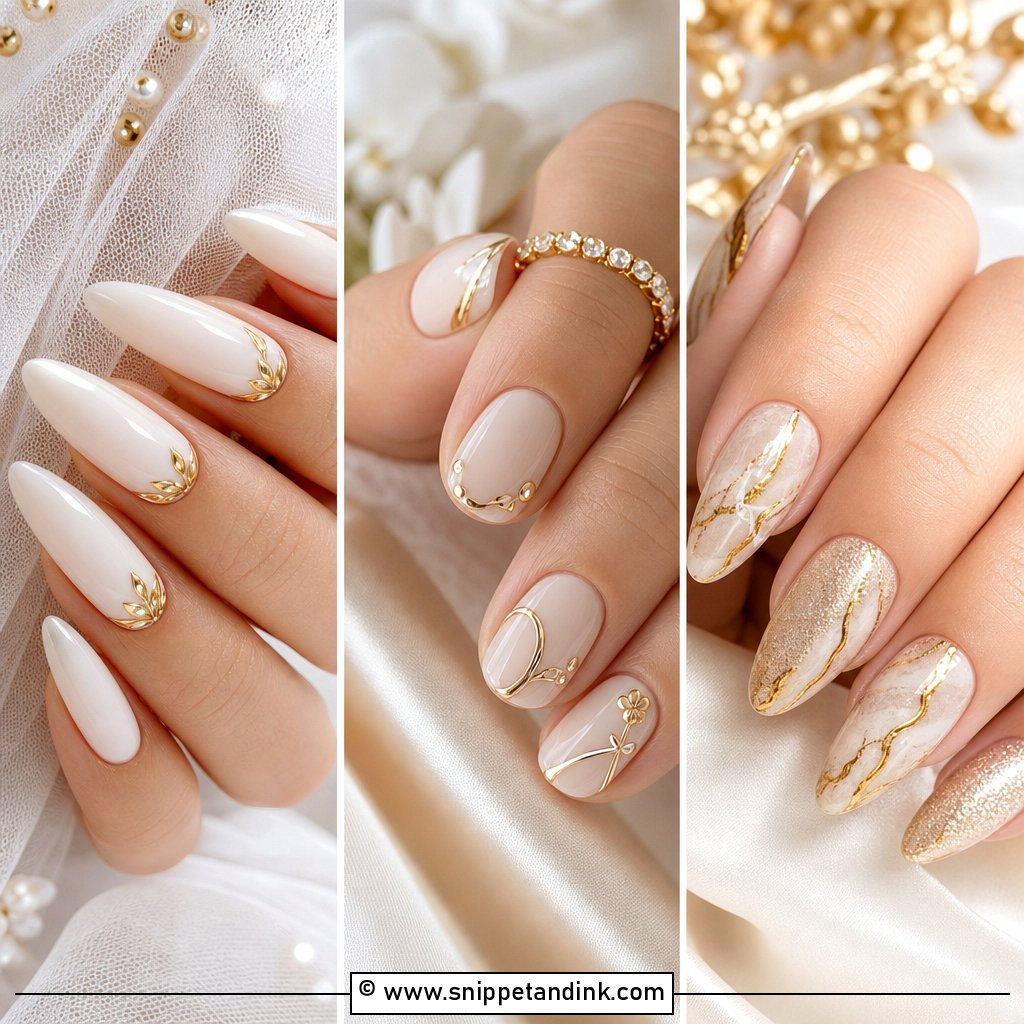
22. Nude Nails With Gold Lines
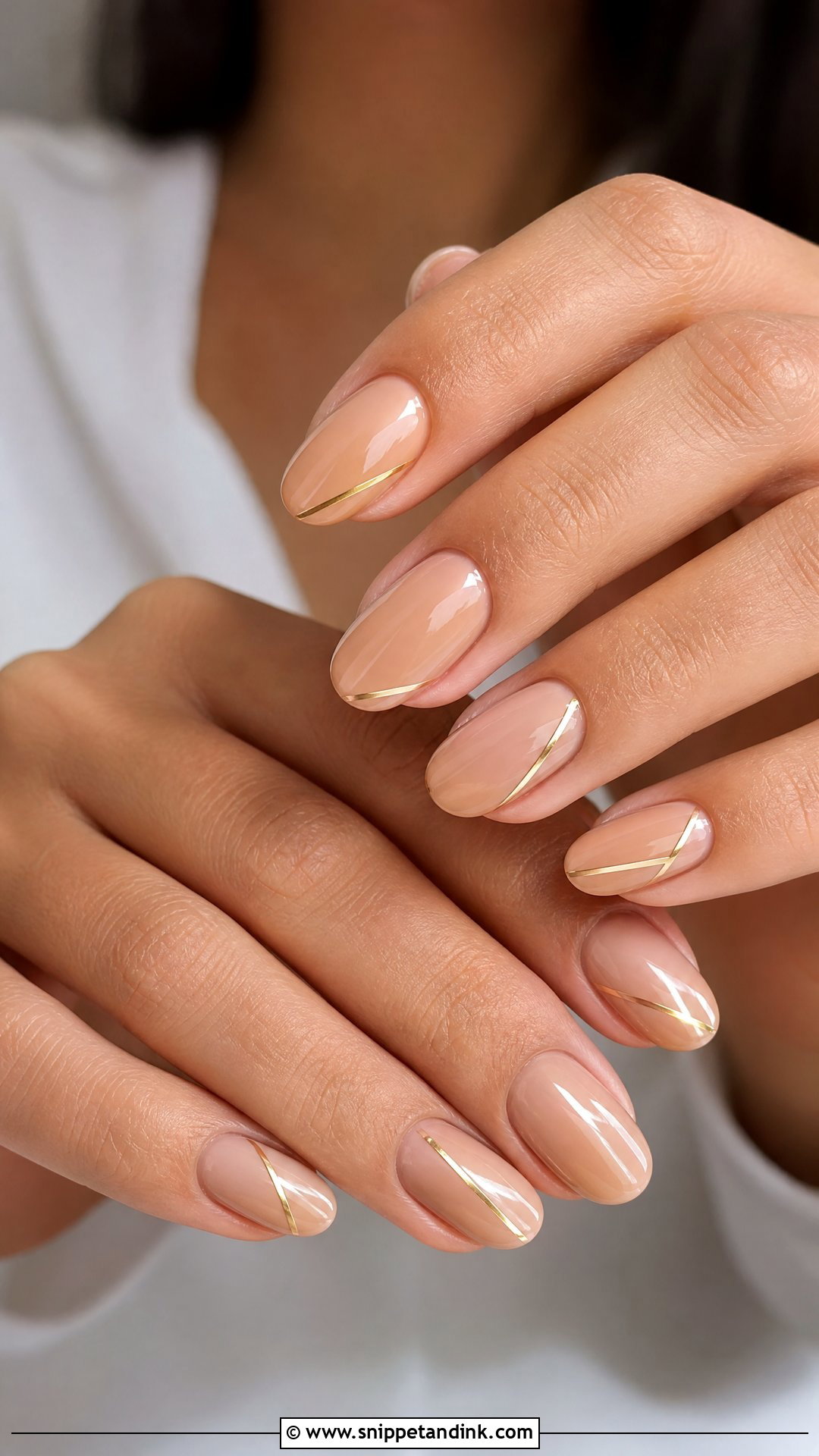
Fine gold lines coordinate easily with wedding jewelry, and they give guests nail art without flowers or sparkle. The base stays nude; the lines run vertically, diagonally or near the cuticle. Spacing decides whether it looks refined or busy, so I usually place one to three lines per nail and leave some nails plain. I paint them with a striping brush and a metallic gel rather than foil tape, which can lift at the ends by day two. Beige, black, emerald, blush, champagne, brown and ivory outfits all suit it, on short oval or almond nails.
23. White Floral Nude Nails
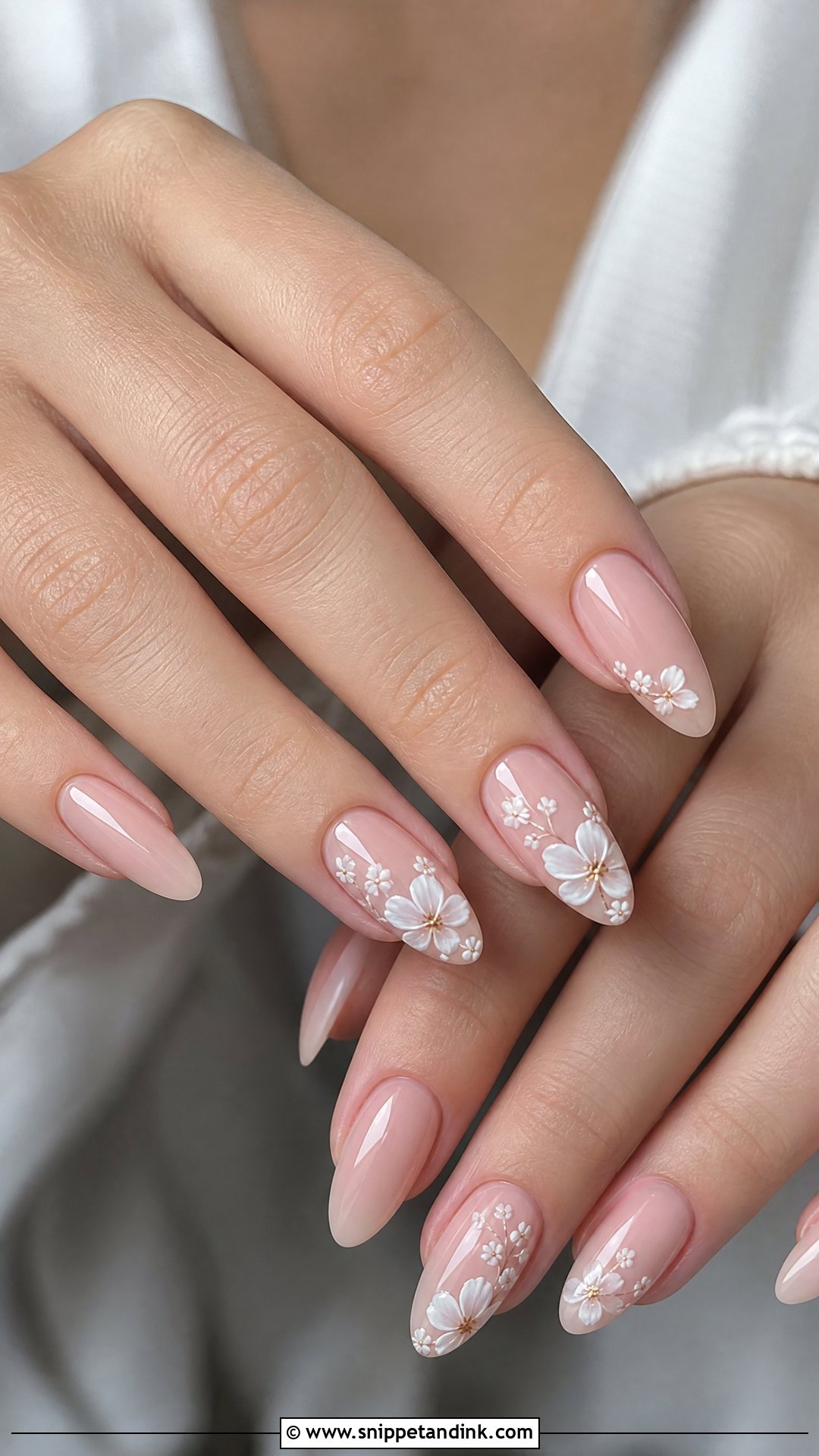
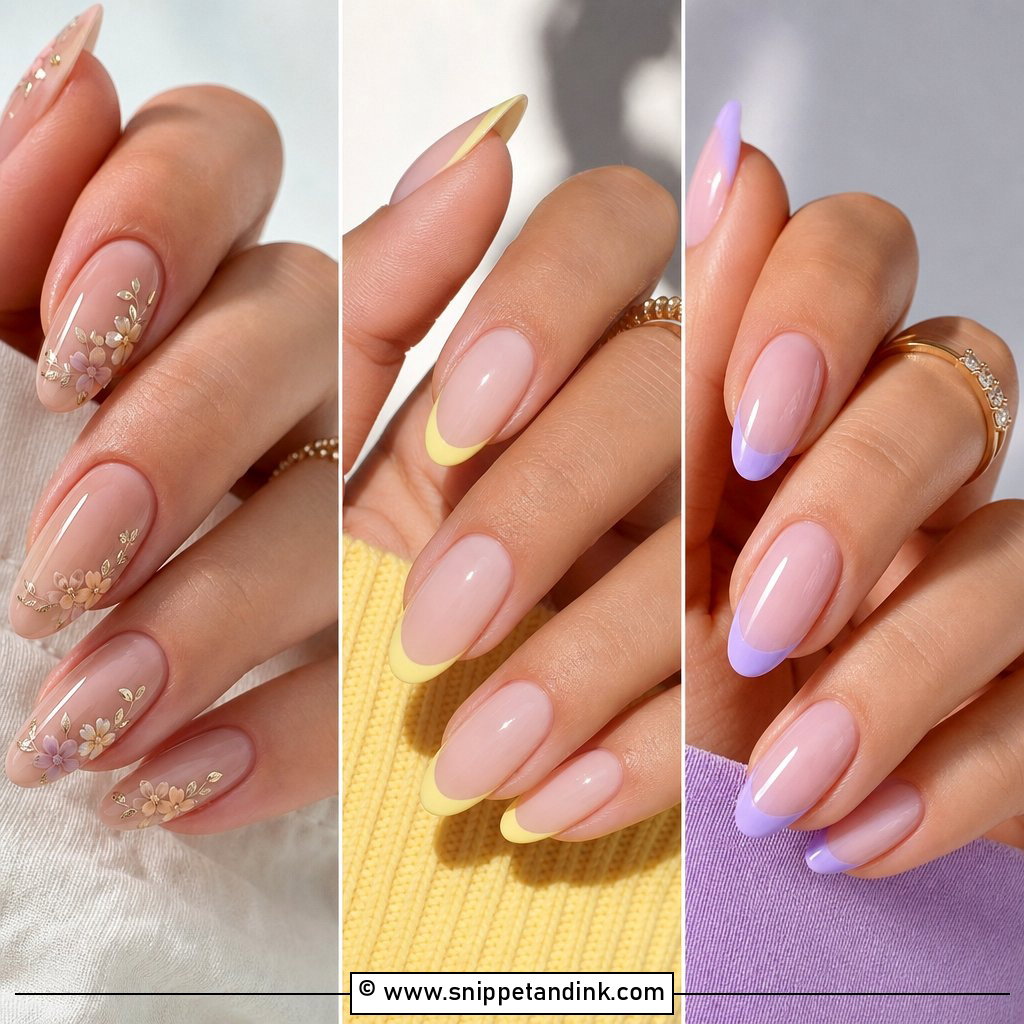
Small white flowers on a nude base suit garden weddings, spring ceremonies and romantic outfits. The flowers should be tiny and airy; oversized painted blooms look like costume art. I dot the petals with a fine tool and keep the white slightly sheer, so they sit into the base rather than on top of it. Place them on one or two accent nails, or scatter tiny blooms across the full set. A sheer pink nude base keeps it fresh. Almond and oval shapes give the flowers space, and a final gloss smooths everything.
24. Gray Glossy Nails
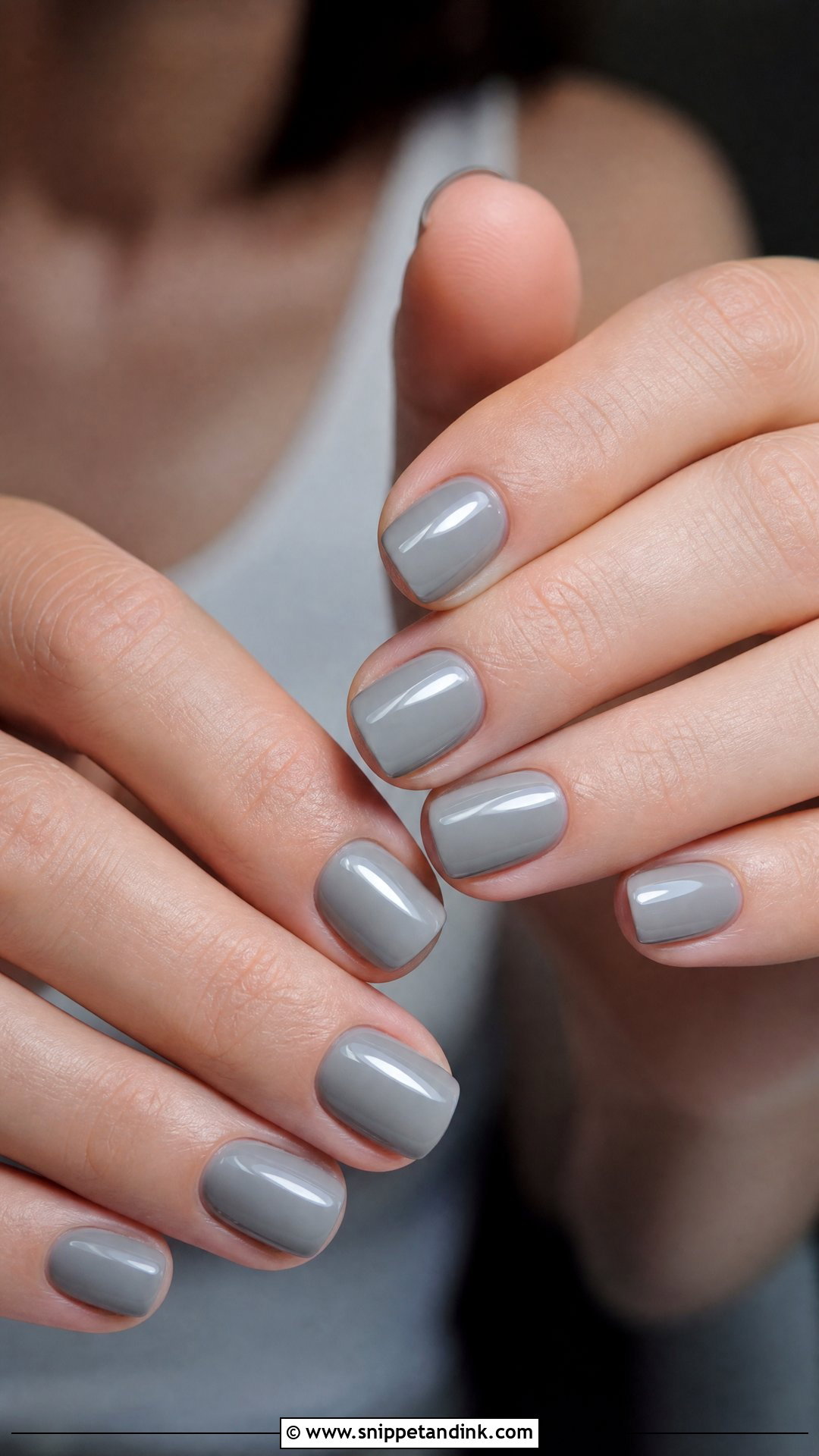
Grey is cool and understated, and it fills the gap for guests who want a neutral that isn’t beige or pink. Dove grey suits daytime; slate grey is better for evening. It pairs with silver jewelry, navy, black, pastels and cool-toned florals. Short square looks modern, oval softer. I’d avoid flat matte grey at a wedding: it looks chalky in photos and marks easily. A creamy or glossy finish keeps it fresh, and a barely visible shimmer adds a little formality.
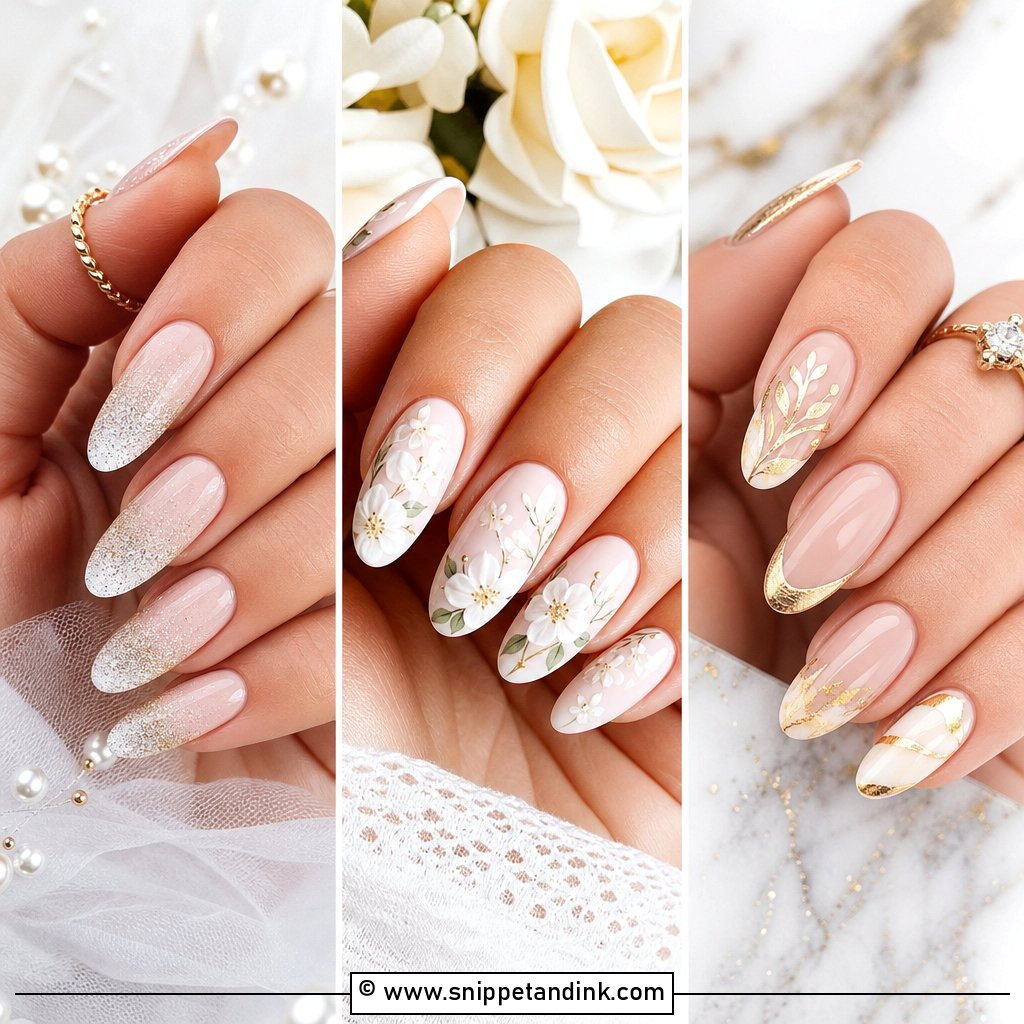
25. Clear Gloss Nails With Tiny Rhinestones
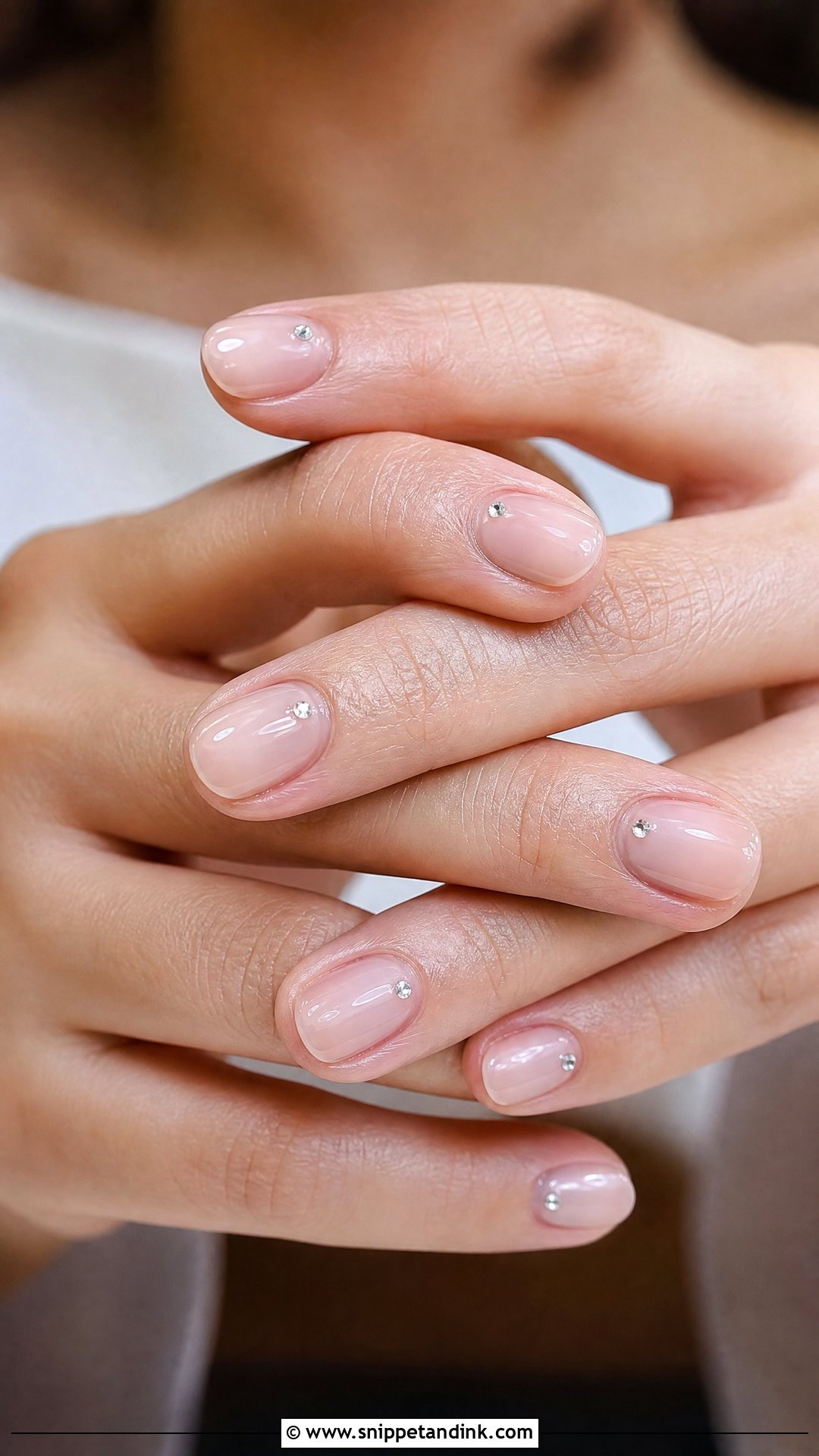
Clear gloss with a few tiny stones is my suggestion when the outfit already has print, texture or shine and you still want some sparkle. The base looks natural, and the stones catch light in small flashes. Placement matters: near the cuticle, along one side or on one accent nail. Too many stones look distracting and catch on hair, tights and lace. I set each stone into gel and cap the edges so nothing pops off during the reception. Short almond, oval or squoval keeps it refined.
Gel, Regular Polish or Press-Ons for the Wedding Weekend
How the manicure is applied matters as much as the color, because most weddings are a weekend: a rehearsal dinner, the day itself and sometimes a brunch. Each option behaves differently over those days.
Gel polish
Gel is cured under a lamp, so it’s hard and dry when you leave the salon. It resists chips for around two weeks on most people, which makes it the safest option for a wedding weekend. I book gel two to four days before the wedding, so any lifting at the edges shows up early and can be fixed. Removal needs soaking in acetone; peeling it off takes layers of nail with it.
Regular polish
Regular polish looks just as good on the day and is easy to change, but it can chip within a few days, especially in dark shades. Paint it the day before, not the morning of, because polish stays soft for hours under the surface even when it feels dry, and bedsheets or a zip leave dents. Carry the bottle and the top coat for repairs.
Press-on sets
Good press-ons are a fair choice if you’re travelling or short on time. Size them carefully so they don’t overlap the sidewalls, and use glue rather than adhesive tabs for a full day; tabs can let a nail slip off during dinner. Pack a spare in your bag.
If a Nail Chips or Breaks on the Day
It happens, usually with a car door or a bag clasp. For a chip in a sheer or nude shade, a coat of clear top coat over the whole nail hides most of it. For a dark color, carry the shade in a mini bottle and dab a little into the chip only, then top coat once it has set. A broken nail is best filed short and smooth rather than glued; a jagged edge catches on everything. A mini file, a clear top coat and a nail glue fit in any clutch.
A Neat Shape Matters More Than the Color
The sets that look most expensive at a wedding are rarely the most decorated. Soft pinks, sheer nudes, French tips, milky whites, muted colors and fine metallic details are the dependable choices. If you want something bolder, deep red, burgundy, navy or sage still look elegant when the shape is neat and the gloss is fresh. Match the set to the season, the dress code and how comfortable you feel with color on your hands. Clean cuticles and an even shape will carry any of these looks.
You'll Like These Ideas:


Leave a Reply