
Indian bridal nail extension designs have a harder job than most manicures. They sit next to fresh mehndi, heavy rings and embroidered sleeves, and they have to survive several days of functions, not one evening. When a bride comes to me with short or uneven natural nails, extensions give me a clean, even shape to work on, and that shape is what the camera reads first in every hand shot. This year I’m seeing more restraint: pearl chrome, micro French tips, a little gold, and cultural motifs like paisley, lotus, mandala and jaali kept to one or two accent nails. Below are the twenty sets I’d actually put on a bride, with what I watch for on each.
Why I Fit Extensions Before the Henna Goes On
The order of appointments matters more than the design. Extension work involves filing, cuticle prep and sometimes acetone, and all of that wears away a fresh mehndi stain on your fingertips. If the nails go on first, the henna artist can work right up to them and the stain keeps darkening untouched over the next day or two.
My usual plan for a bride looks like this:
- A trial set two to four weeks out, so you can live with the length while typing, cooking and doing up hooks.
- The real set one to three days before the mehndi function. Gel extensions settle in a day, and any lifting shows up early enough to fix.
- A small kit to take home: cuticle oil and a spare stone or two, sealed in a tiny bag.
- No gel removal or filing near the fingertips once the henna is on.
Properly applied gel or soft gel extensions usually hold for two to three weeks, which comfortably covers a wedding week. If your functions stretch longer than that, tell your artist at booking so the set is built for it.
1. Red Indian Bridal Nail Extensions
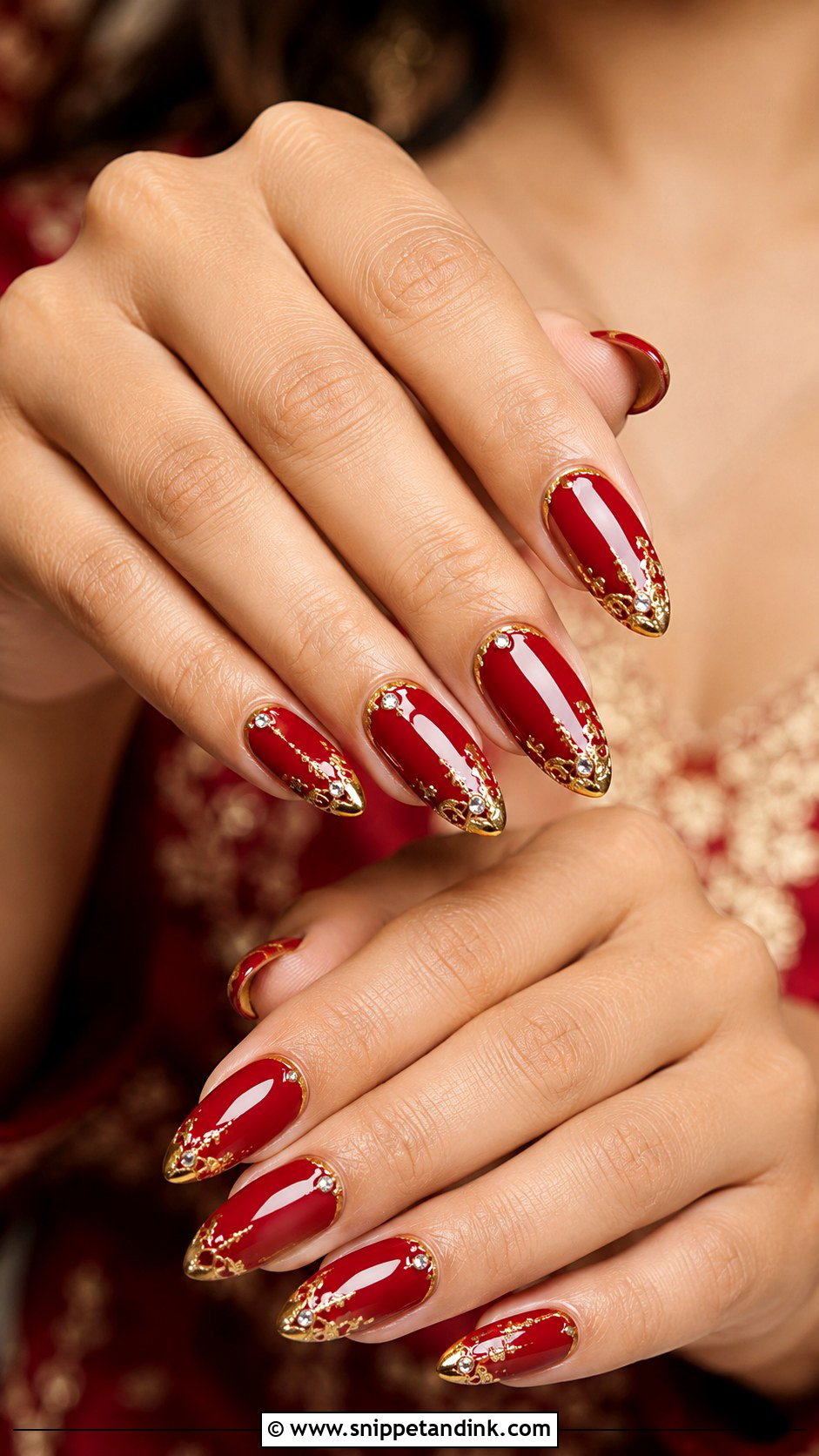
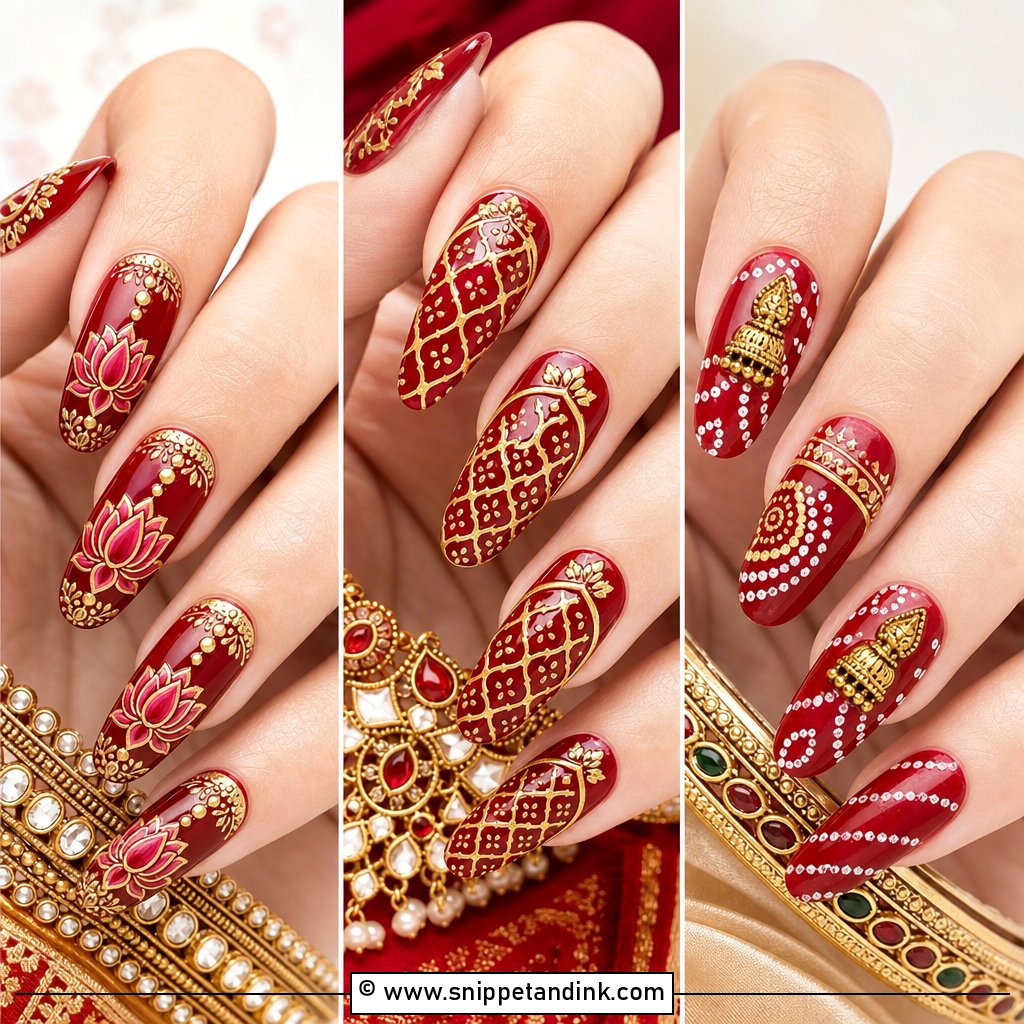
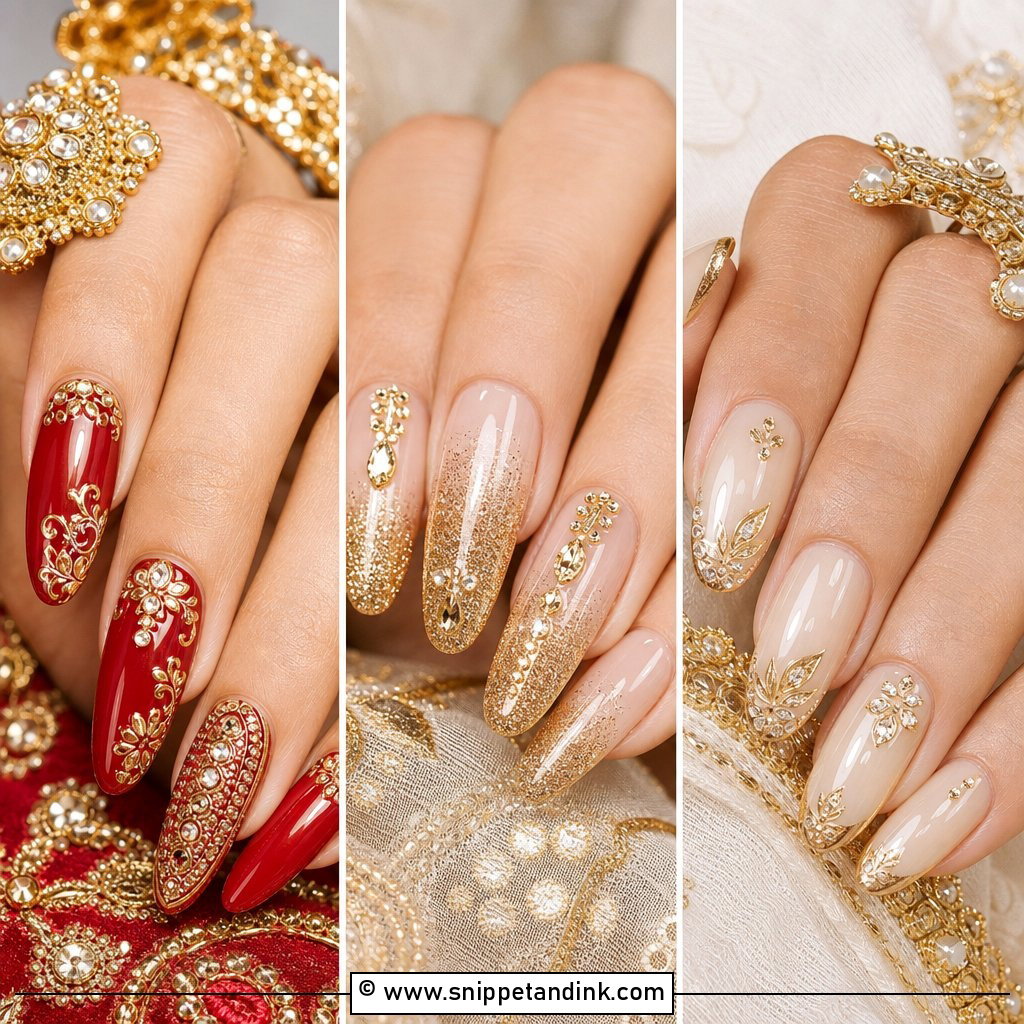
Red is still the set I’m asked for most, usually by brides in a red lehenga, a Banarasi saree or a full chooda. On almond or coffin extensions a deep, blue-based red reads richer against a dark mehndi stain than an orange-red, which can look muddy next to henna. I add slim gold French tips or a fleck of foil on two nails and leave the rest glossy. With heavy zardozi on the sleeves, that restraint matters, because a fully decorated red set and a fully decorated outfit start competing in close-ups.
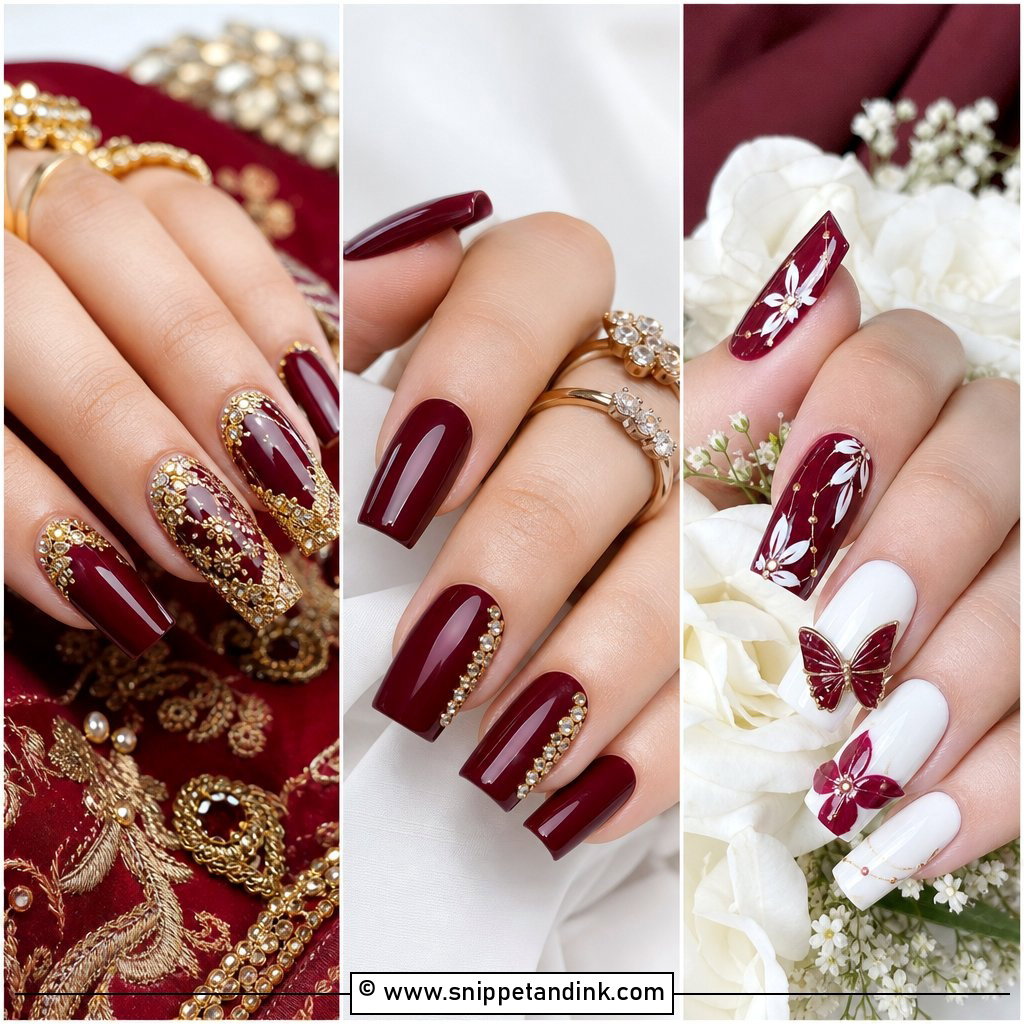
2. Maroon Indian Bridal Nail Extensions
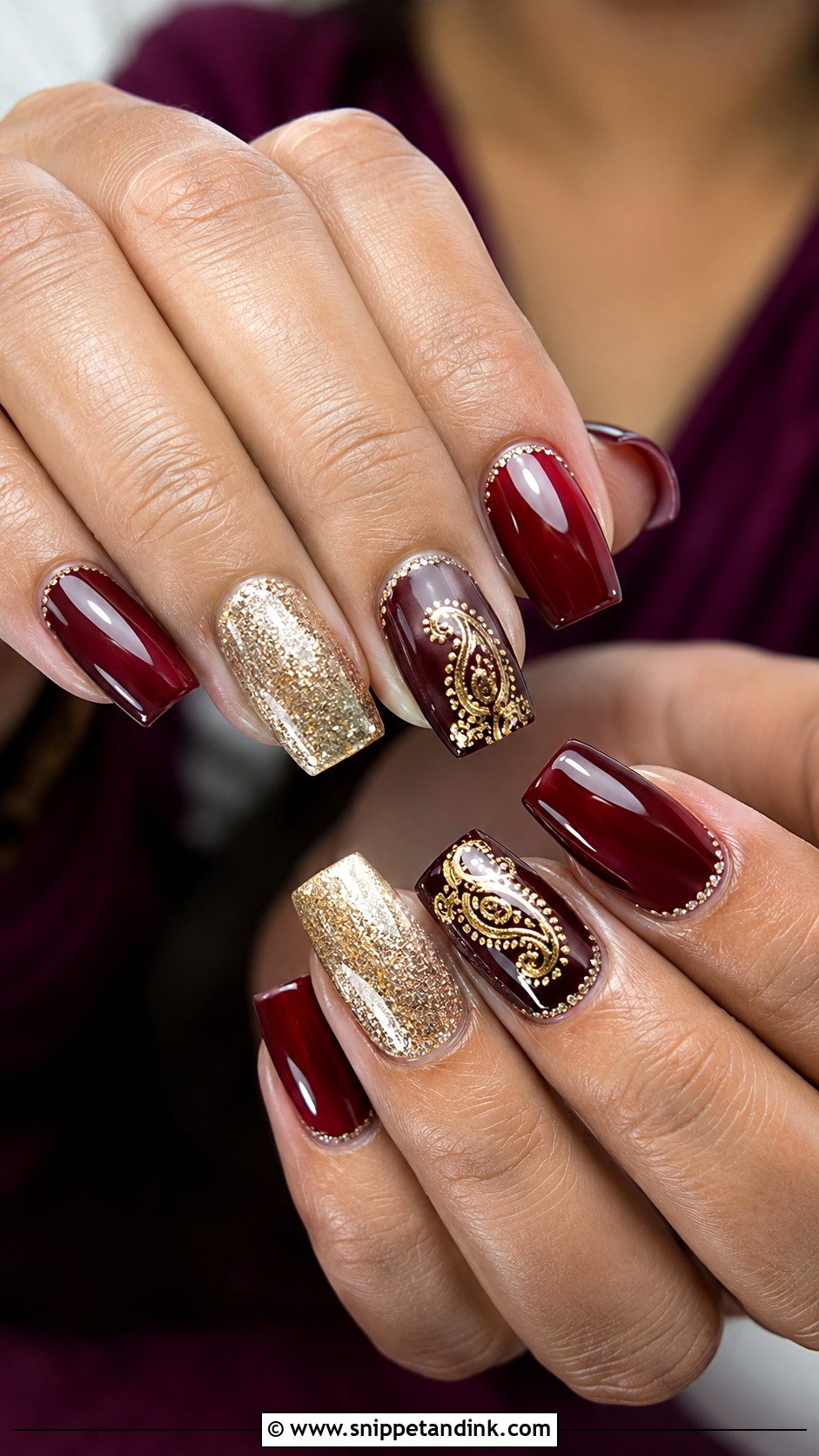
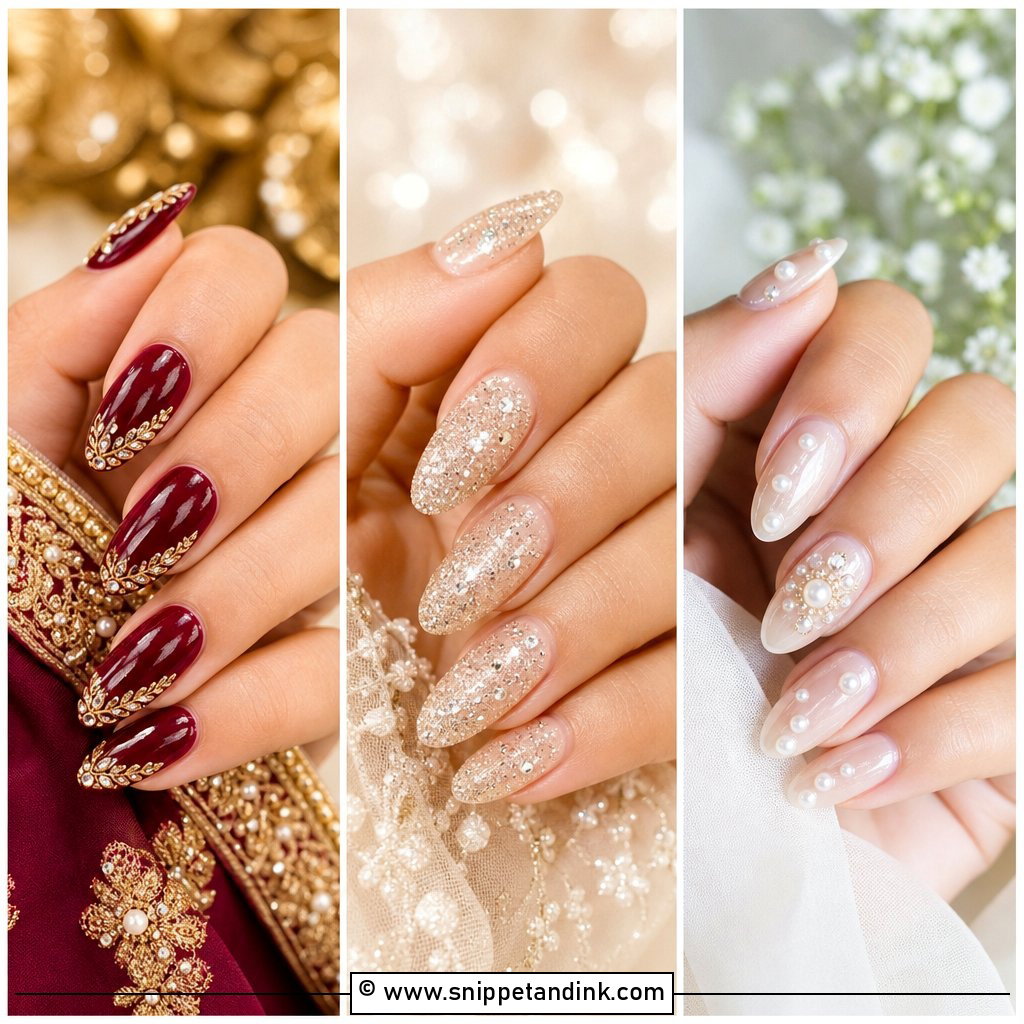
Maroon gives you the depth of red without the brightness. It sits well beside antique gold, dark mehndi and velvet, and it suits warm and deep Indian skin tones because it has warmth without shouting. One thing I always warn about: under warm indoor lighting at an evening function, maroon can photograph almost black, so I build it slightly brighter than the bottle colour and add gold to break it up. gold paisley art on the ring finger does that well. For a softer reception version, a maroon fade into champagne shimmer at the tip keeps the colour but lifts it.
3. Gold Indian Bridal Nail Extensions
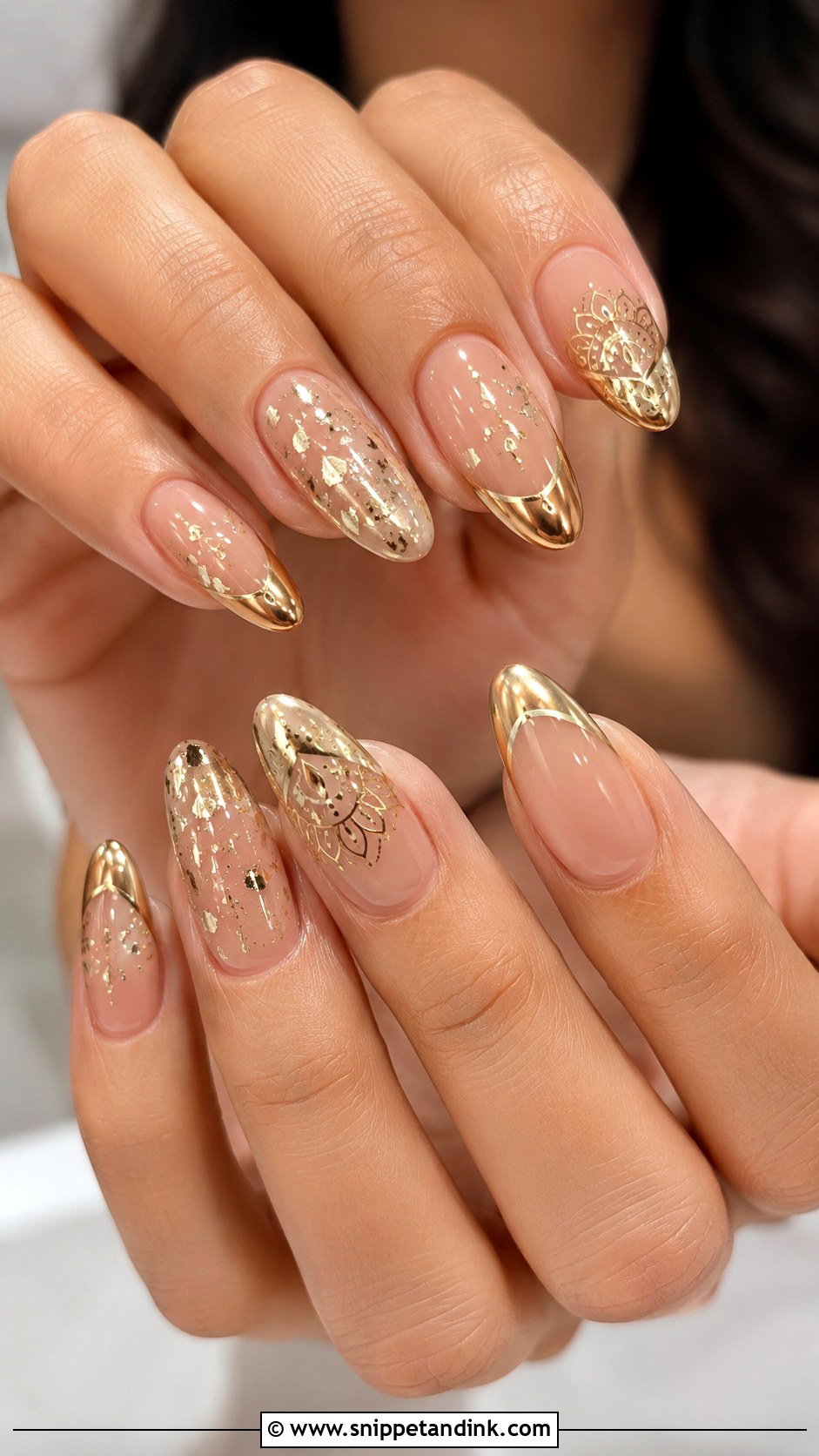
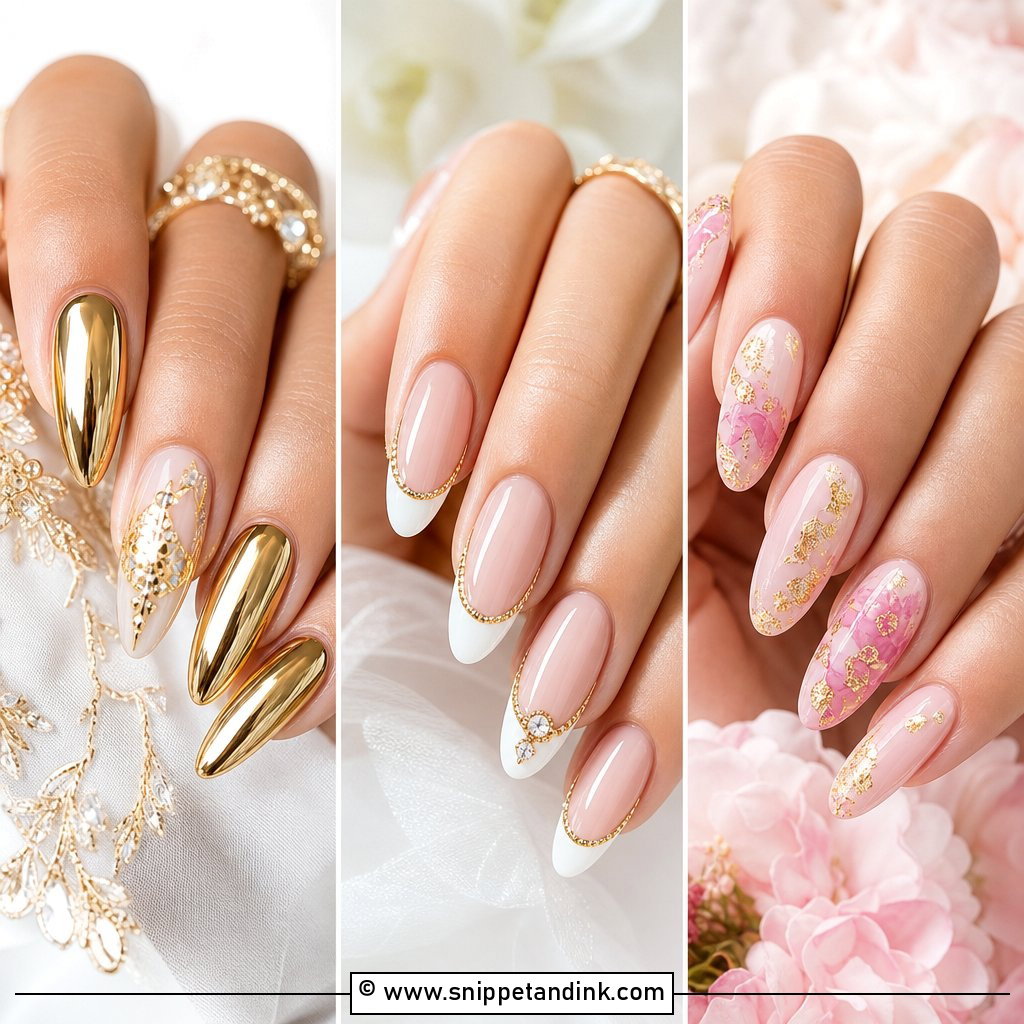
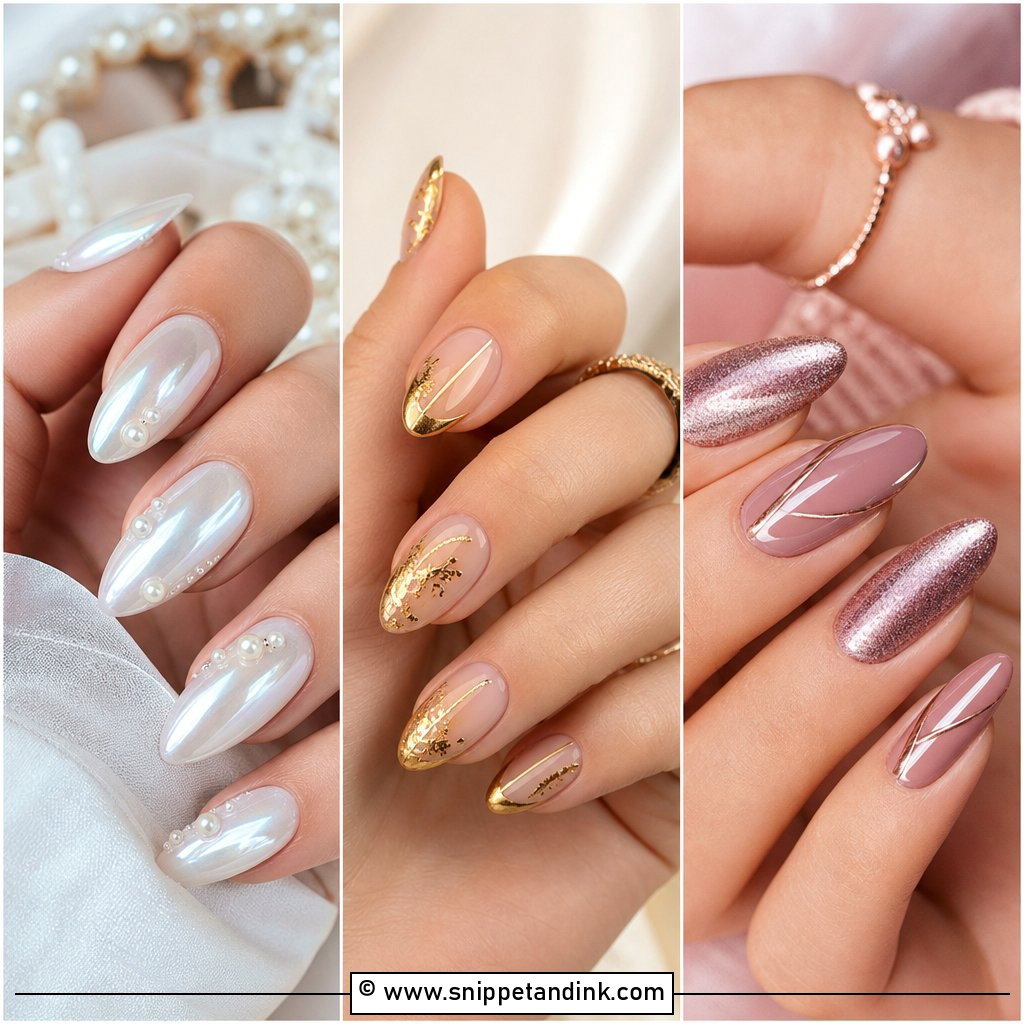
Solid metallic gold on all ten nails rarely looks as rich as people expect; it reads flat in photos and every scratch shows. For brides wearing kundan, polki or temple jewellery, I’d put gold on top of a nude, red or milky base instead: thin chrome tips, a few foil flakes, delicate mandala lines or tiny bead-shaped dots. Gold foil has to be fully sealed under top coat or it lifts at the edges within days. Almond or oval keeps the hand soft; coffin makes it more dramatic but snags more on net dupattas.
4. Nude Indian Bridal Nail Extensions
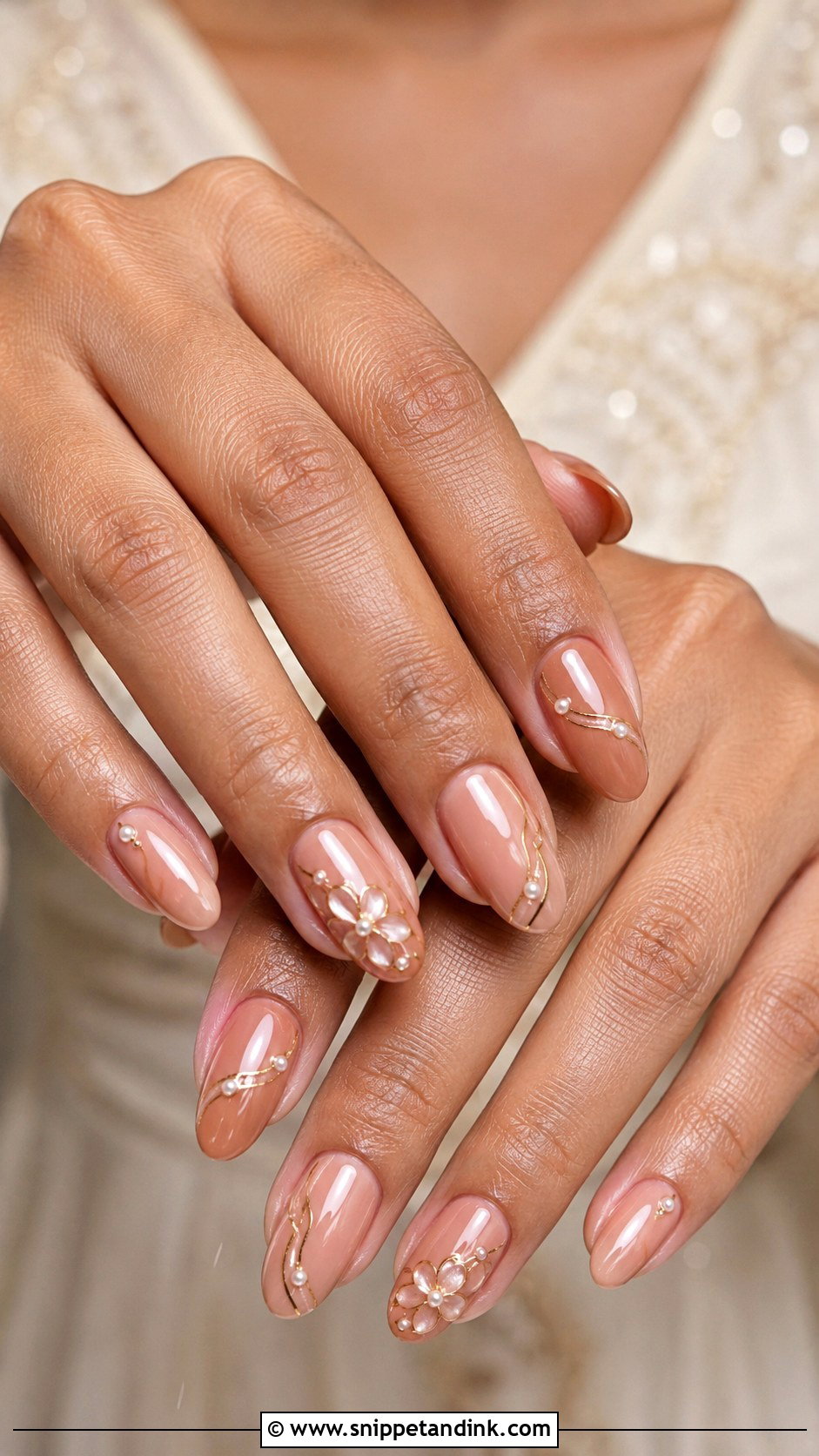
A nude set is the quiet choice that lets mehndi and jewellery carry the look. The undertone is everything here. I hold two or three shades against the bride’s finger before deciding, because a nude that is too pink turns chalky on warm skin and one that is too yellow looks grey in flash. Peach and caramel nudes suit most Indian skin tones I work on. A few micro gold lines or pearl dots make it bridal, and since nude matches every outfit colour across a week of functions, it’s the set I recommend when a bride has five events and one appointment.
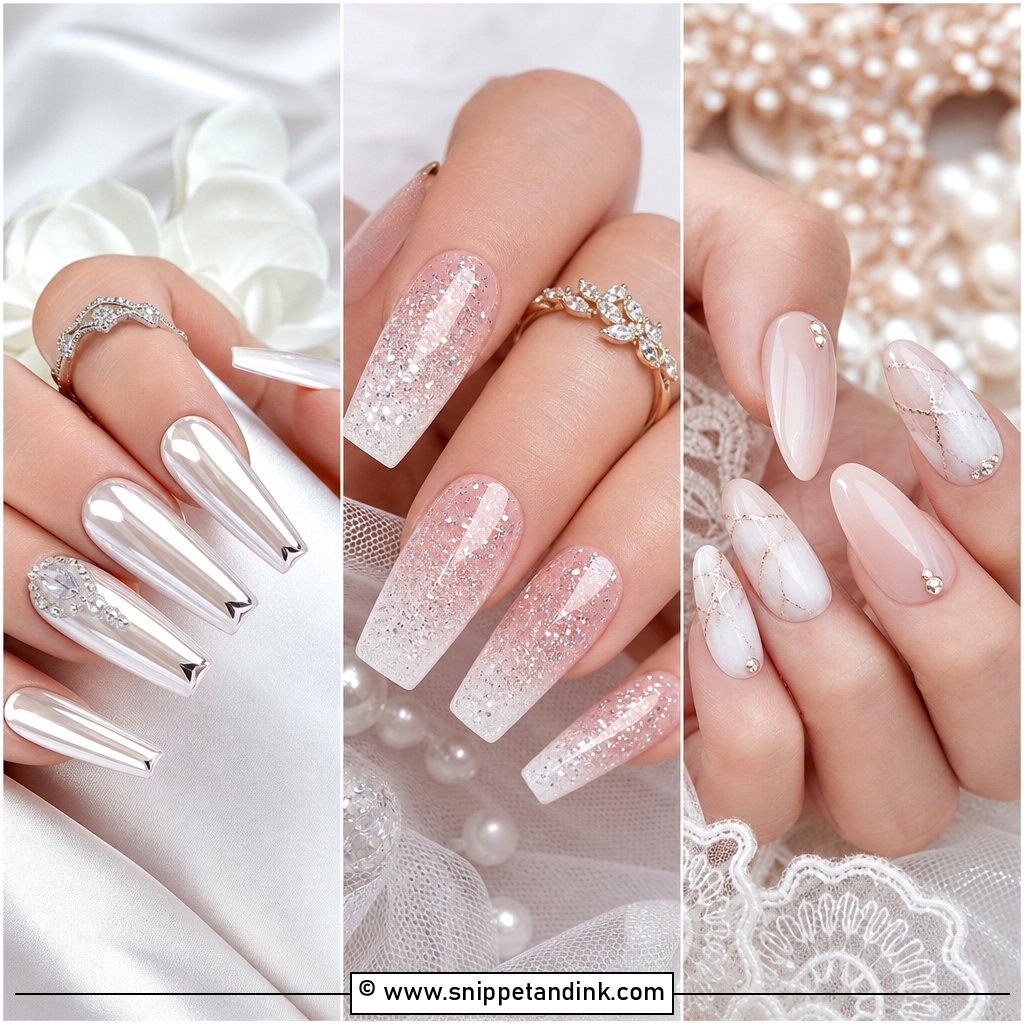
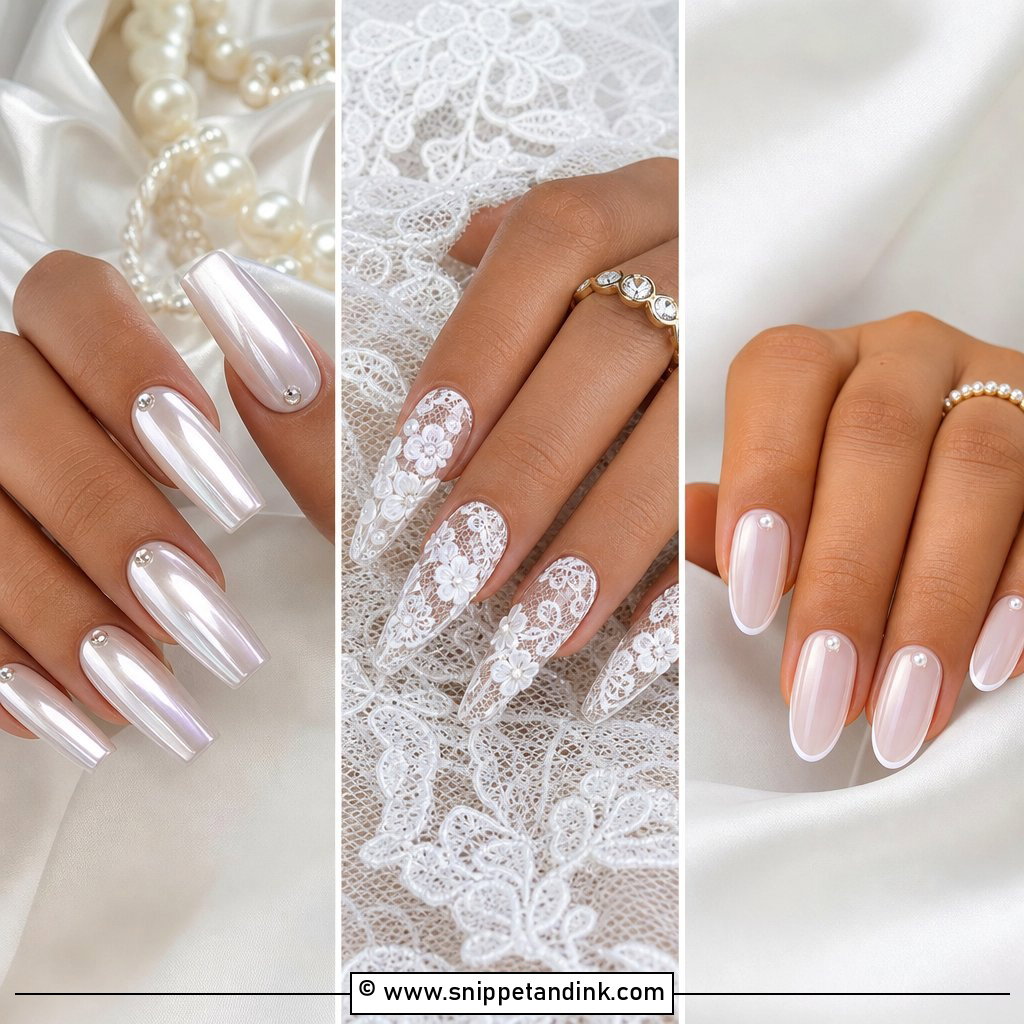
5. Pearl Chrome Indian Bridal Nail Extensions
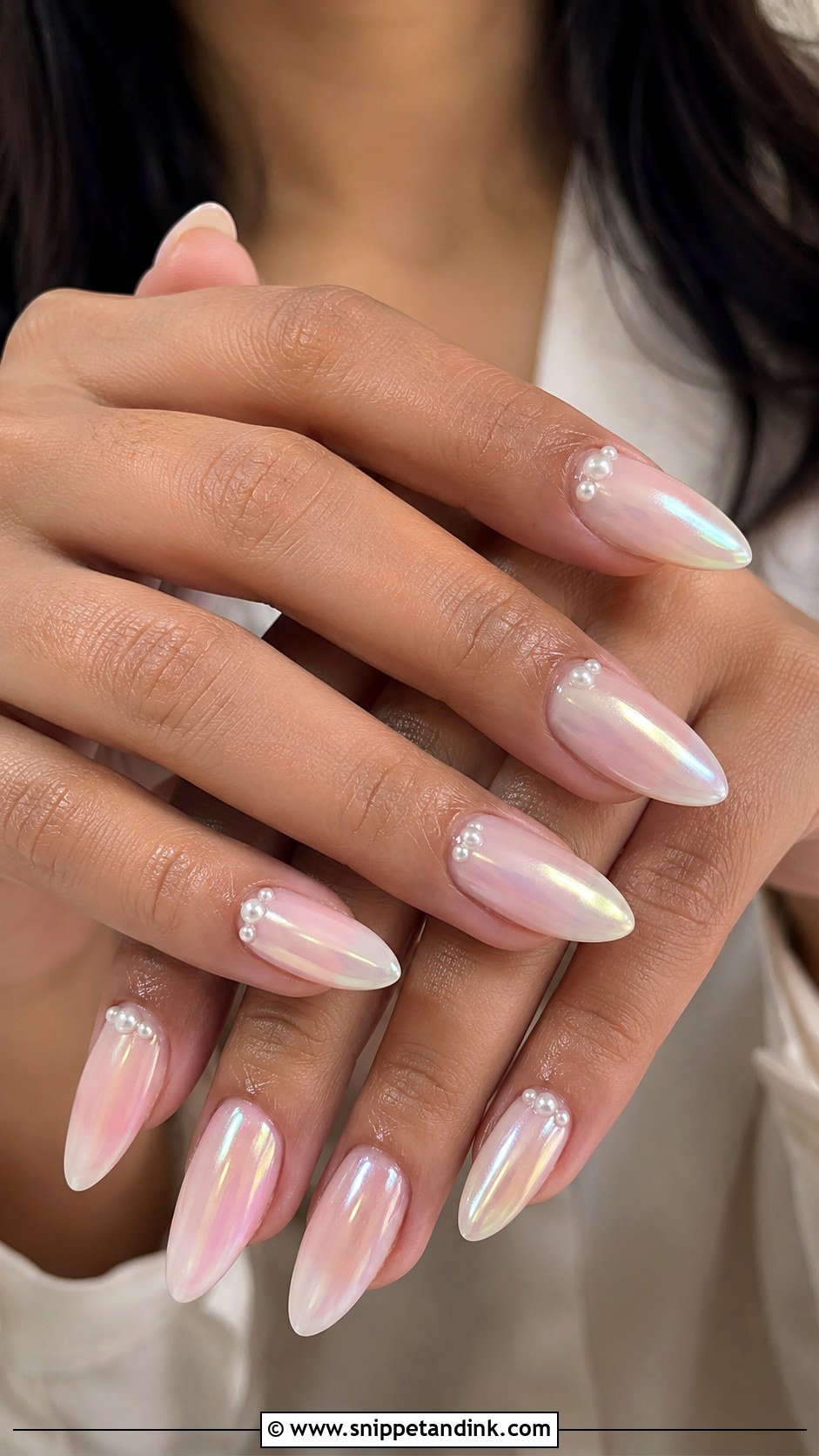
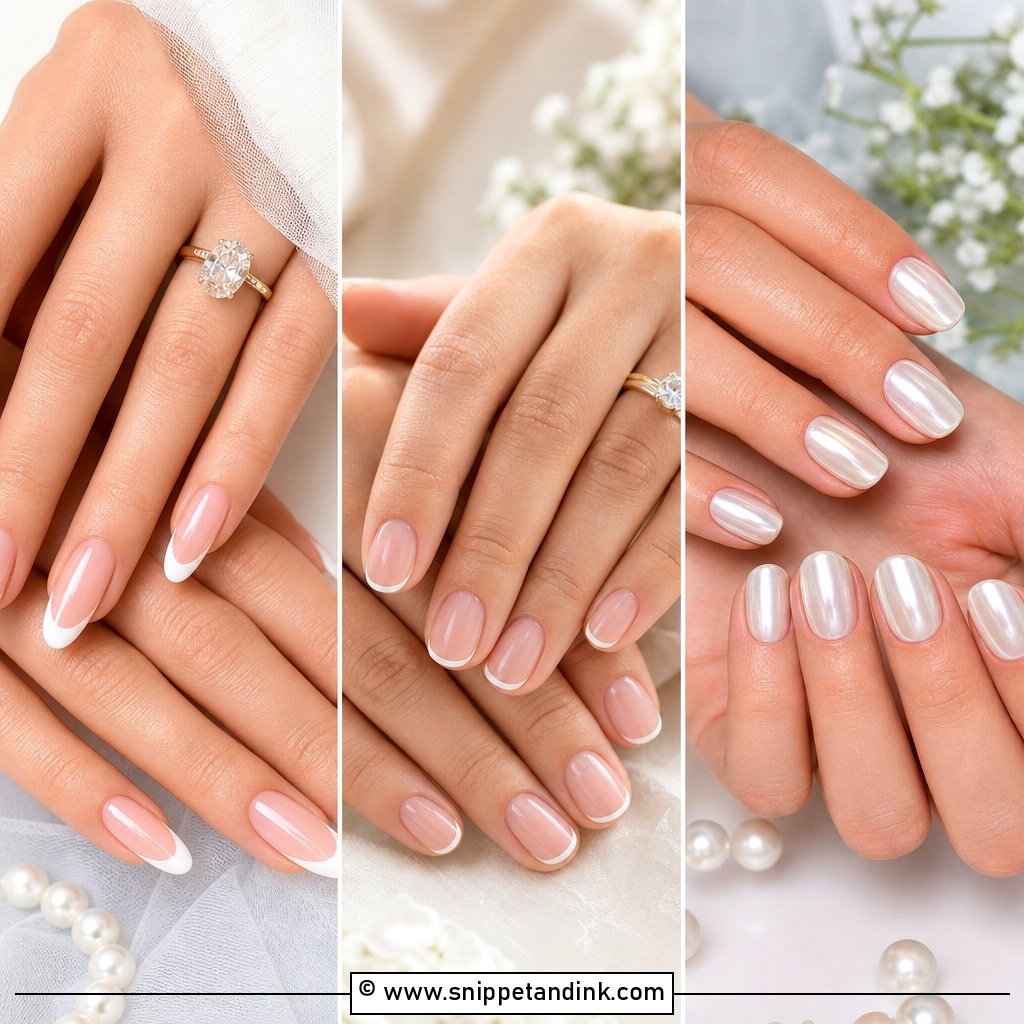
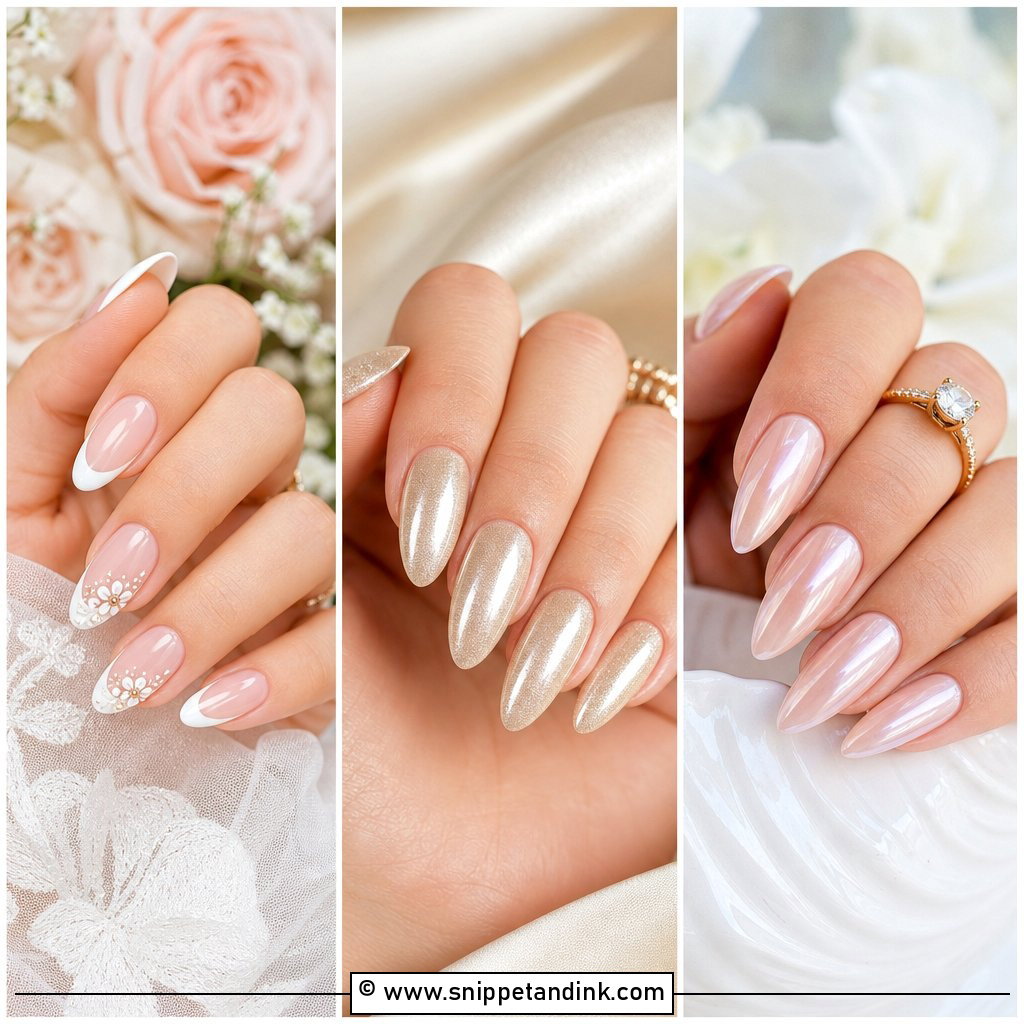
Pearl chrome starts with a milky white, pale pink or sheer nude, then a fine chrome powder is buffed over a no-wipe top coat until it glows. It catches light softly rather than flashing, which suits ivory lehengas, diamonds and pastel outfits. The weak point is the free edge: chrome wears off the tips first, so I cap the edge with top coat twice. It also stays calm next to busy mehndi. Almond reads graceful, short oval reads natural, and a couple of tiny pearls on one nail is plenty.
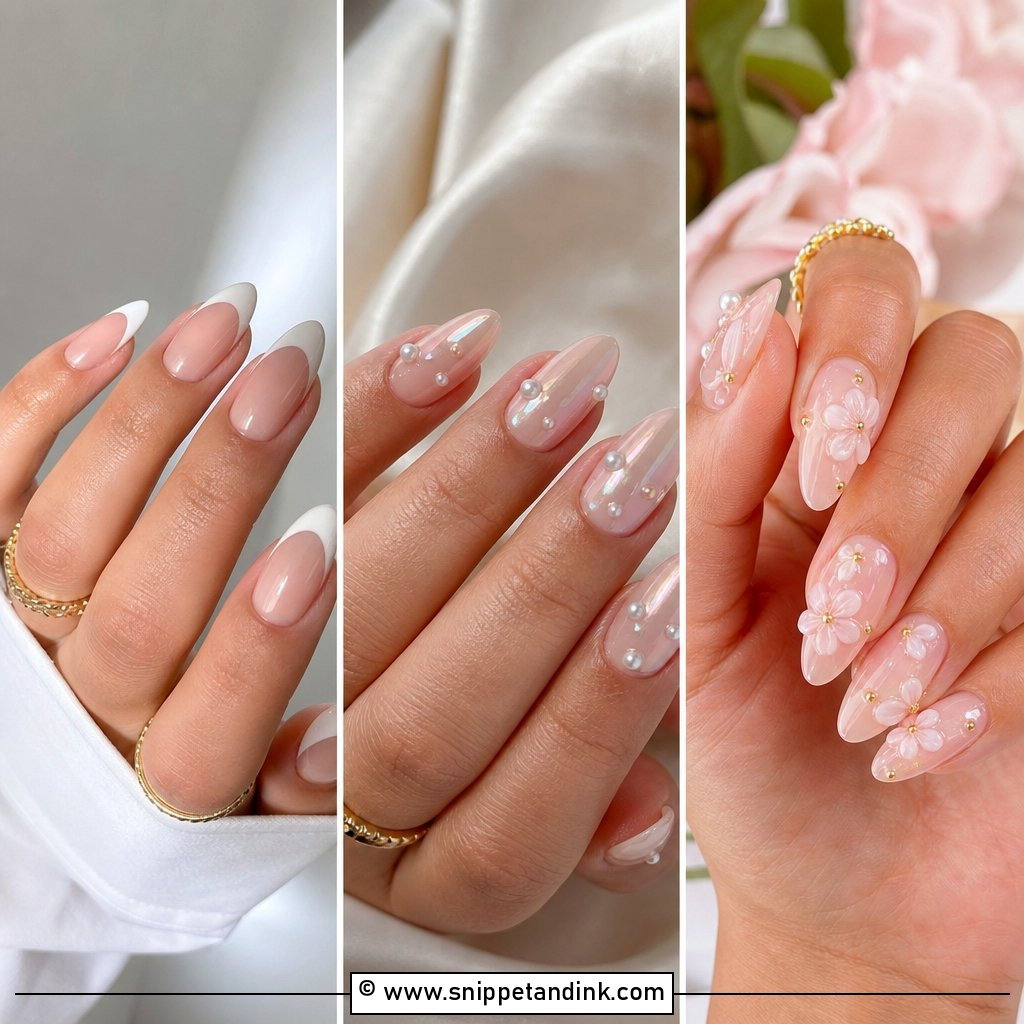
6. French Tip Indian Bridal Nail Extensions
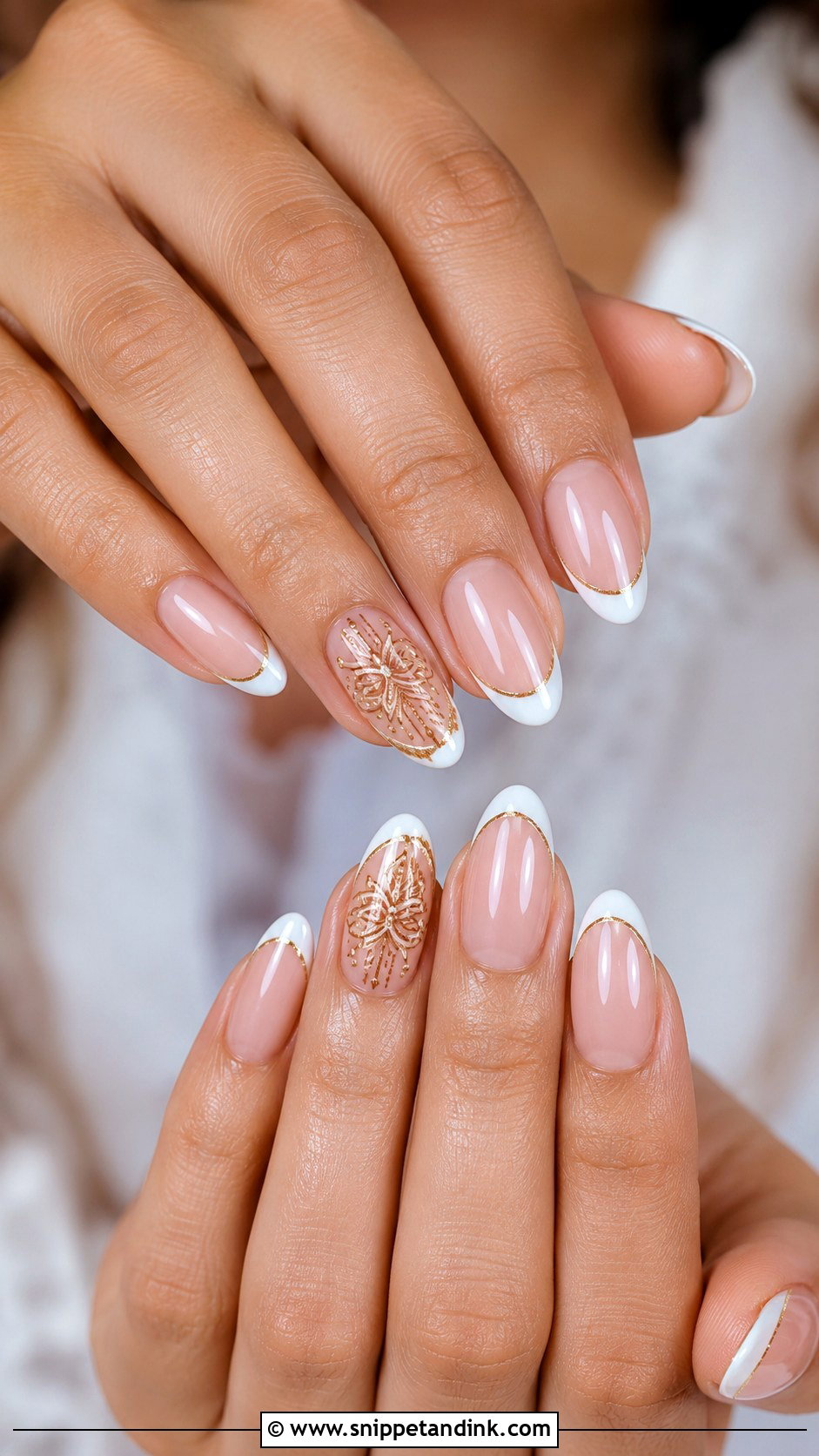
French tips are the easiest set to match across a week of outfits, and I rarely see a bride regret one. A sheer pink or nude base with a clean tip suits every shape. To make it read as Indian bridal rather than office manicure, I swap the white tip for gold, champagne, red or pearl chrome, and sometimes add a small mehndi-style motif on one accent nail. A micro French, where the tip is a hairline, looks modern on short extensions. A deep curved tip needs length to look right, so I’d skip it if you plan to stay under medium.
7. Mehndi Indian Bridal Nail Extensions
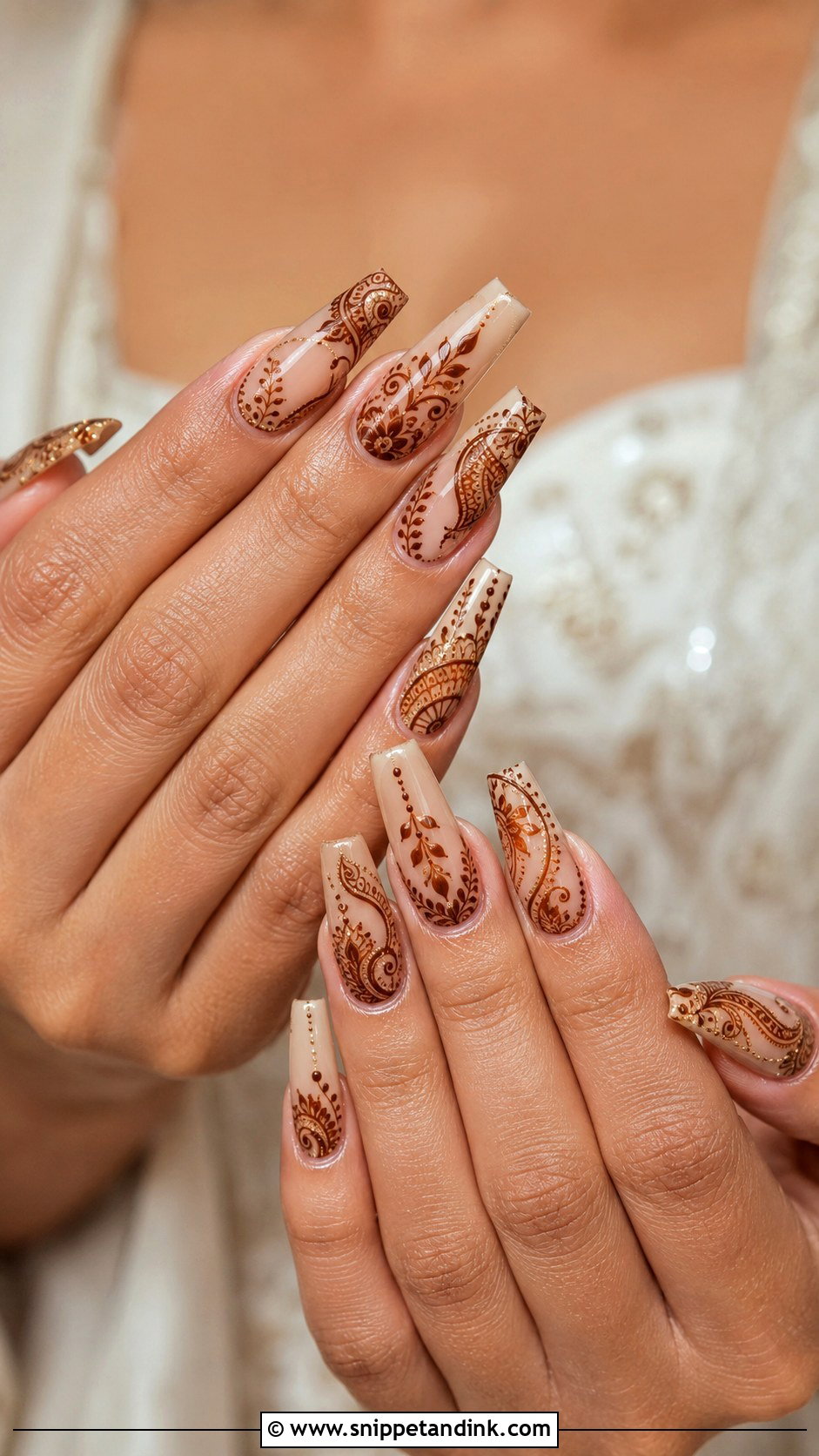
Mehndi-inspired nail art means fine paisleys, vines, dots and mandala work painted in brown, gold or white over a nude or clear base. I need length for this, so almond or coffin is usually the shape, and I use a long, thin liner brush and very thin gel so the lines stay crisp. Where I push back is coverage. Two or three patterned nails with the rest glossy look more deliberate than ten busy ones, and they won’t fight the real henna on your hands in the close-up shots.
8. Lotus Indian Bridal Nail Extensions
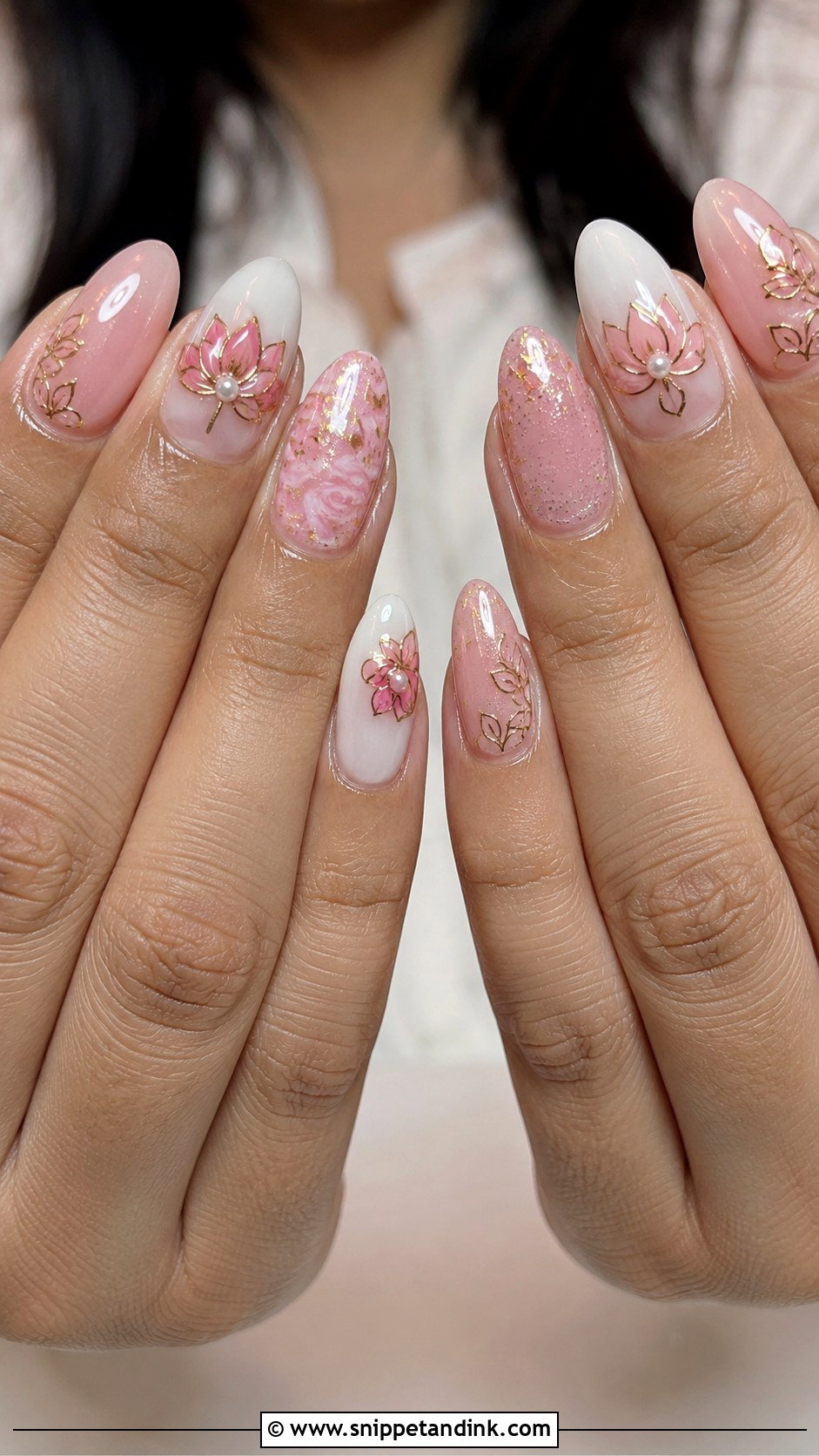
The lotus is one of the few motifs that still reads clearly at nail size, which is why I like it. It sits best on soft pink, nude, milky white or red, with gold outlines and a pearl at the centre. I usually place one lotus on the ring finger or thumb and keep the other nails glossy or lightly chromed, so it feels like a detail rather than an art set. Almond suits it because the taper follows the petal shape. With pastel lehengas and floral embroidery, it ties the hands to the outfit without copying it.
9. Paisley Indian Bridal Nail Extensions
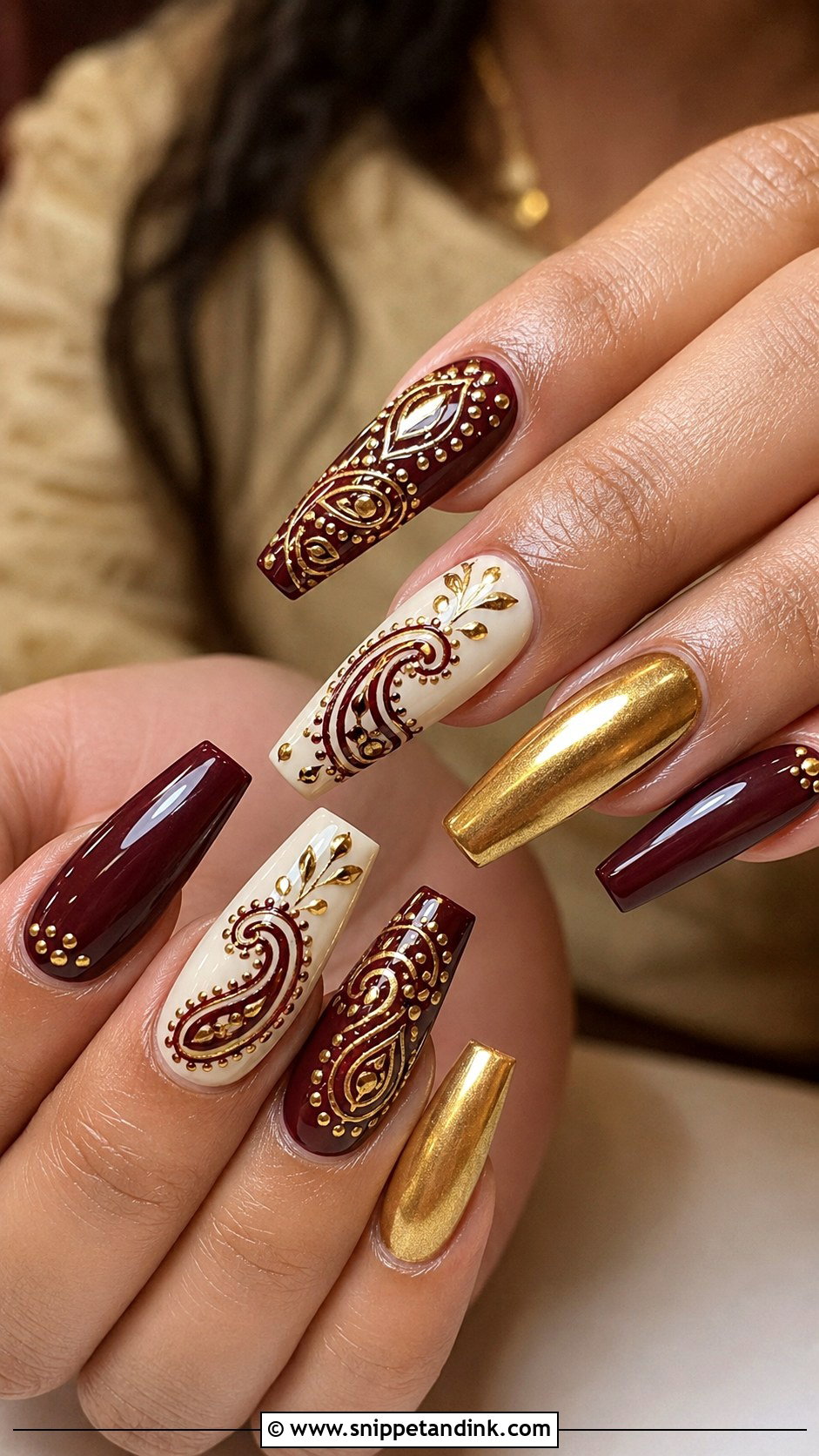
Paisley turns up across lehengas, dupattas and henna, so it links the manicure to everything else you’re wearing. I paint it in fine gold or white over nude, maroon, red or ivory. The curve needs room, so longer almond or coffin extensions work better than short square. My rule is to look at the outfit first: heavy embroidery means paisley on two nails only, while a simpler saree can take more pattern across the set. Ask your artist to keep the dots small; oversized dots are what make paisley nails look stamped rather than painted.
10. Kundan Indian Bridal Nail Extensions
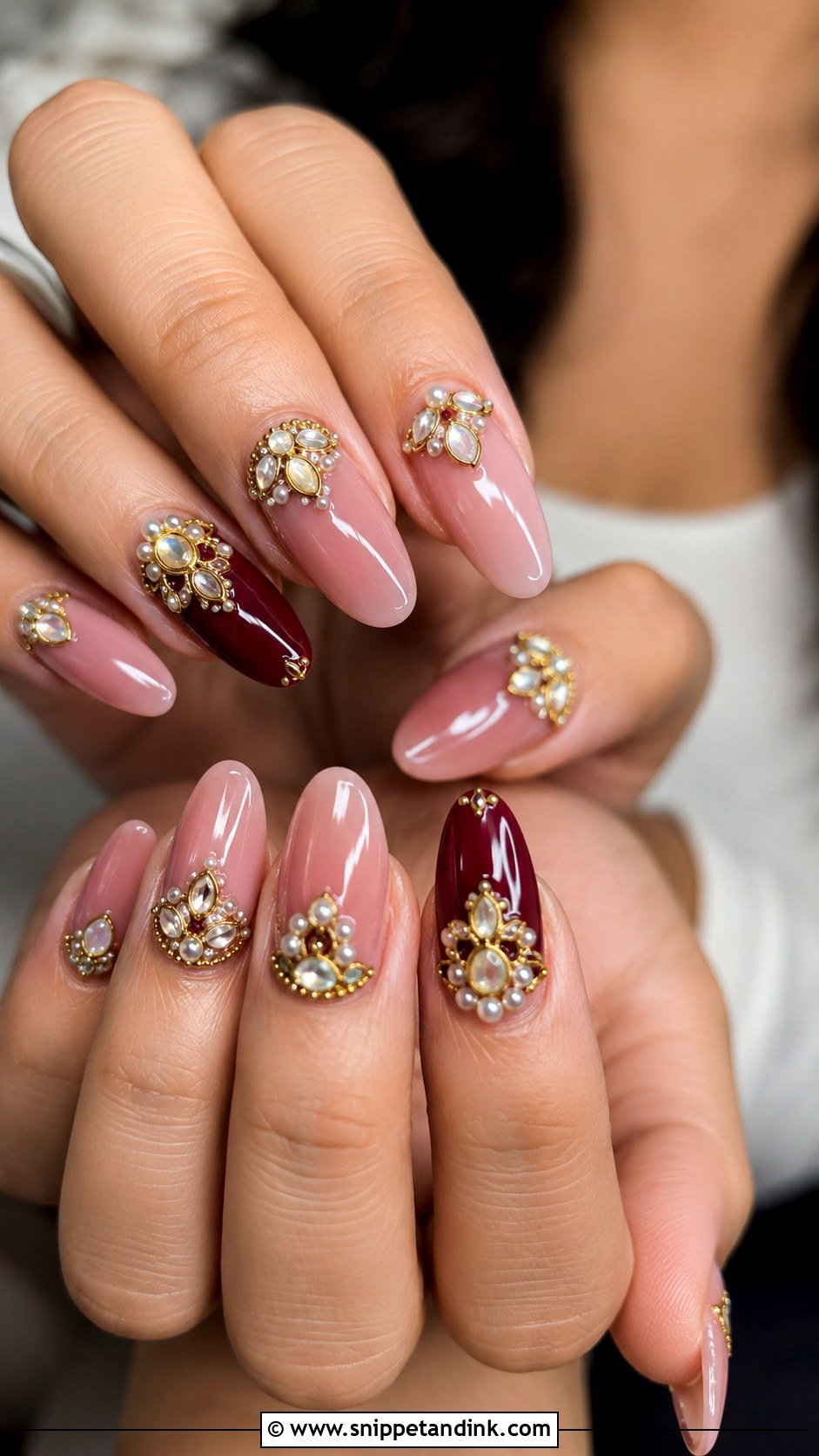
Kundan-style sets mimic bridal jewellery with tiny flat-back crystals, pearl beads and gold outlines. Nude, maroon, red or champagne works as the base. Placement decides whether you can live in them: stones near the cuticle, along a French line or on one accent nail stay wearable, while stones near the tip catch on hair, sari pleats and bangle edges. I set every stone in builder gel rather than glue and run a finger over each one before you leave. If anything snags on my glove, it will snag on your dupatta.
11. Jaali Indian Bridal Nail Extensions
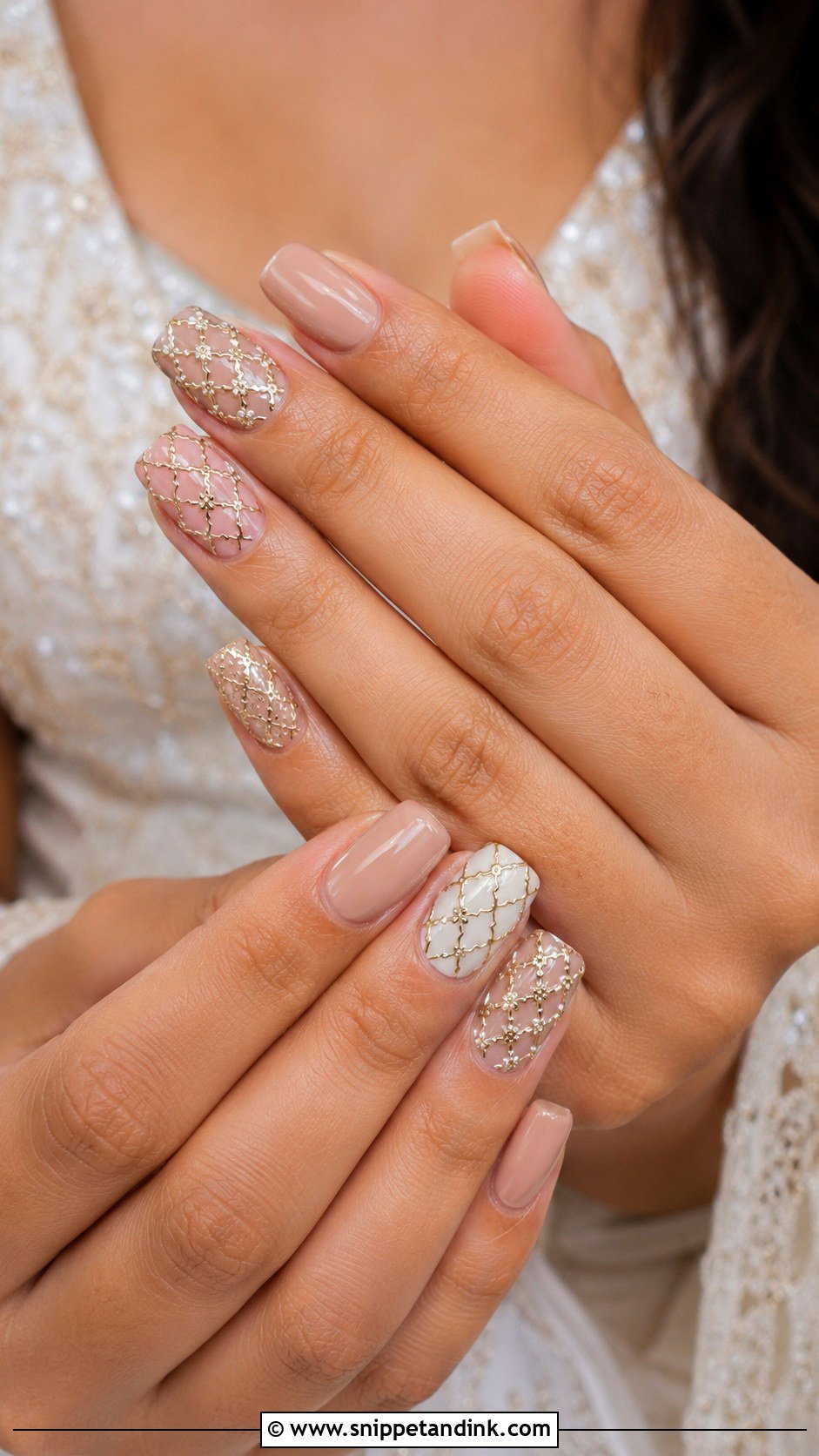
Jaali comes from the carved lattice screens in Indian architecture and the cut-work in embroidery. On nails it’s a fine crisscross painted in white, gold or brown over nude, sheer pink, ivory or soft gold. A whole hand of lattice gets busy fast, so I use it on the middle and ring fingers only and keep the rest in glossy nude or pearl chrome. Almond and square both suit it. The lines have to be even, which takes time, so allow a longer appointment if you want jaali on several nails.
12. Ombré Indian Bridal Nail Extensions
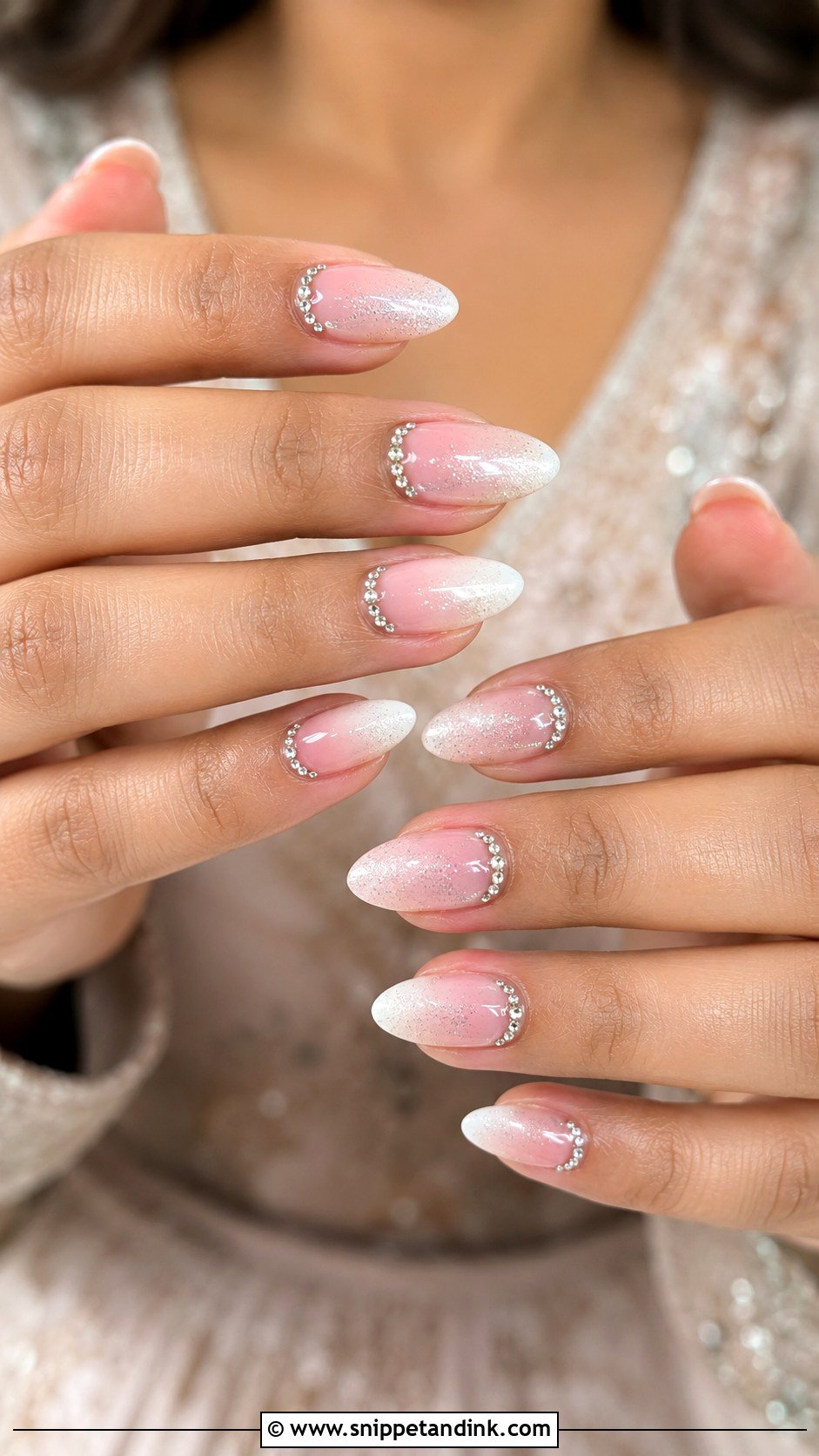
An ombré is blended rather than painted, which makes it very wearable and quick to match. Nude to white, blush to pearl, maroon to gold and red to champagne shimmer are the combinations I do most for weddings. Because the gradient has no hard lines, it never argues with detailed henna. For a reception, rose gold ombré or a milky pink fade topped with chrome feels modern. The thing that ruins ombré is a visible band where the colours meet, so I build it in thin sponged layers rather than one thick pass.
13. Glitter Indian Bridal Nail Extensions
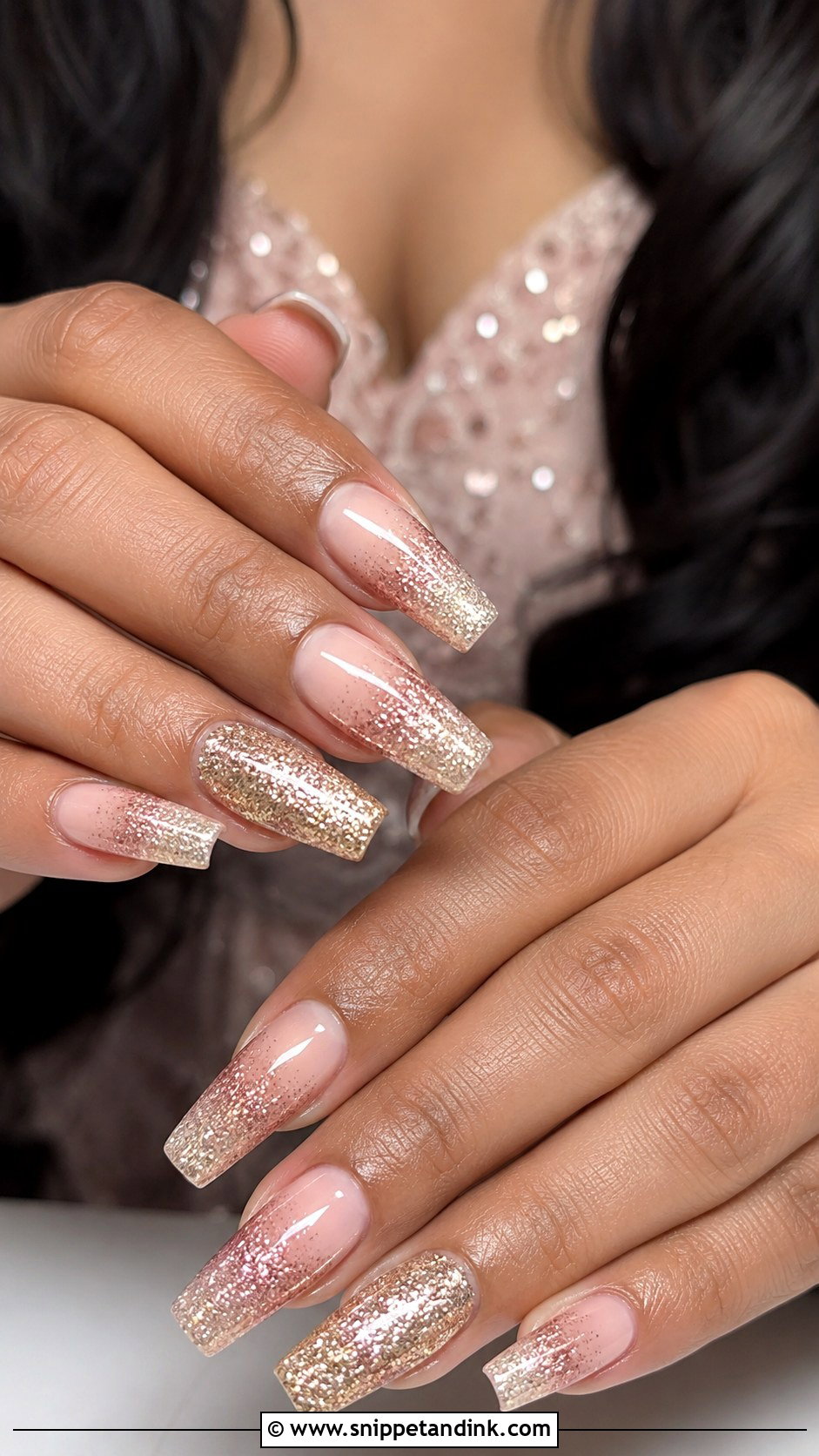
Glitter can look cheap or very expensive depending on the grain. Fine champagne, rose gold or antique gold glitter used as a fade, a French tip or one accent nail stays bridal; chunky glitter on every nail looks like a party set. Under stage lighting and in ring shots, fine glitter sparkles more evenly. If your lehenga has sequins or mirror work, I match the glitter tone to that embroidery. A practical note: glitter gel takes longest to soak off, so plan for a slower removal appointment after the wedding.
14. Pink Indian Bridal Nail Extensions
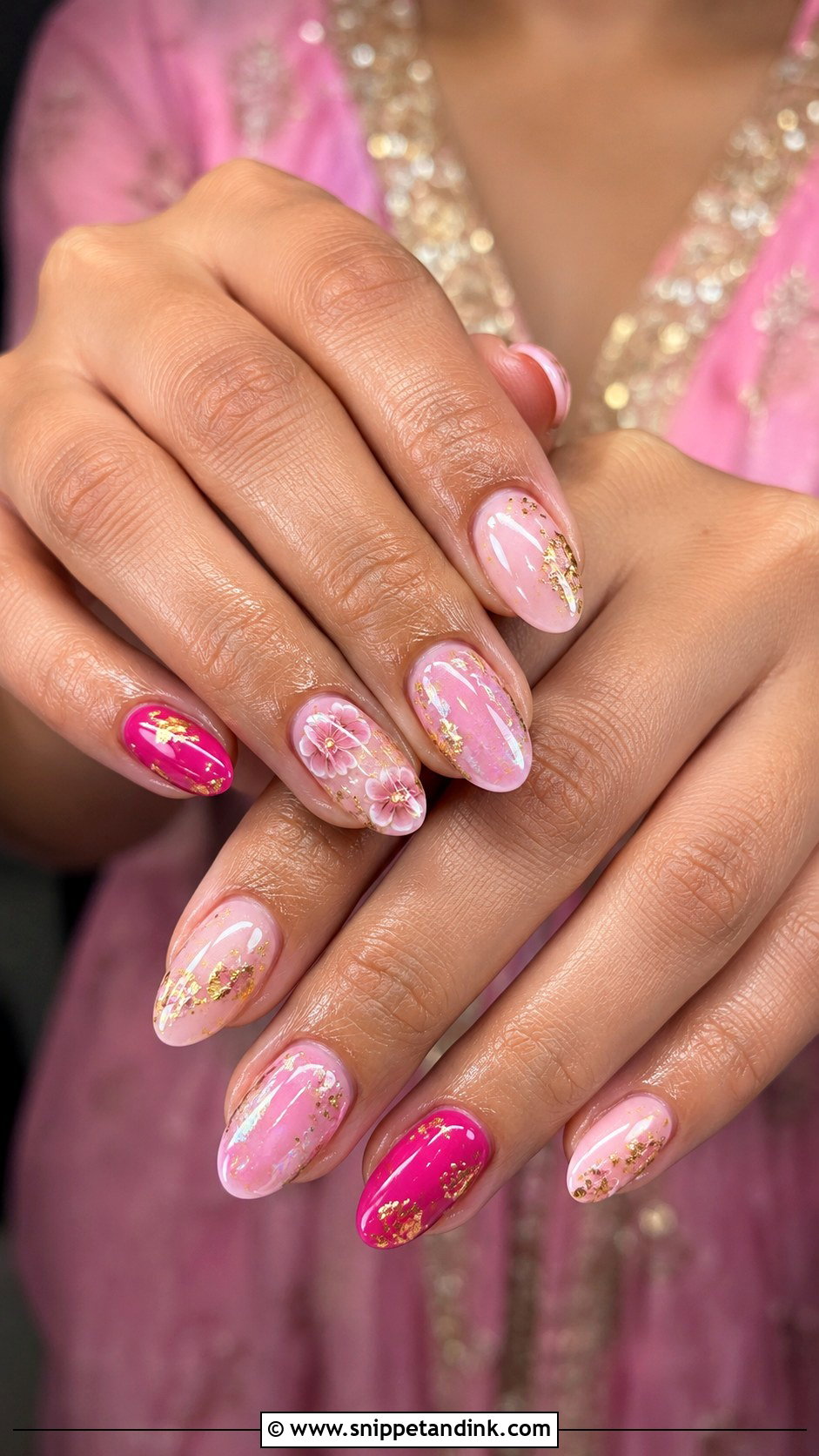
Pink Indian bridal nail extensions suit blush, peach, rani pink and floral outfits. Soft pink is romantic; deeper pink feels more festive at the ceremony. Pink against dark mehndi gives a fresher contrast than red does, and gold foil, pearl chrome or a single floral nail makes it bridal. For a quiet wedding-day set I’d go sheer pink with micro French tips. Hot pink with gold suits a sangeet better. Match the pink to the fabric in daylight before the appointment, because rani pink and fuchsia gels look very different under salon lights.
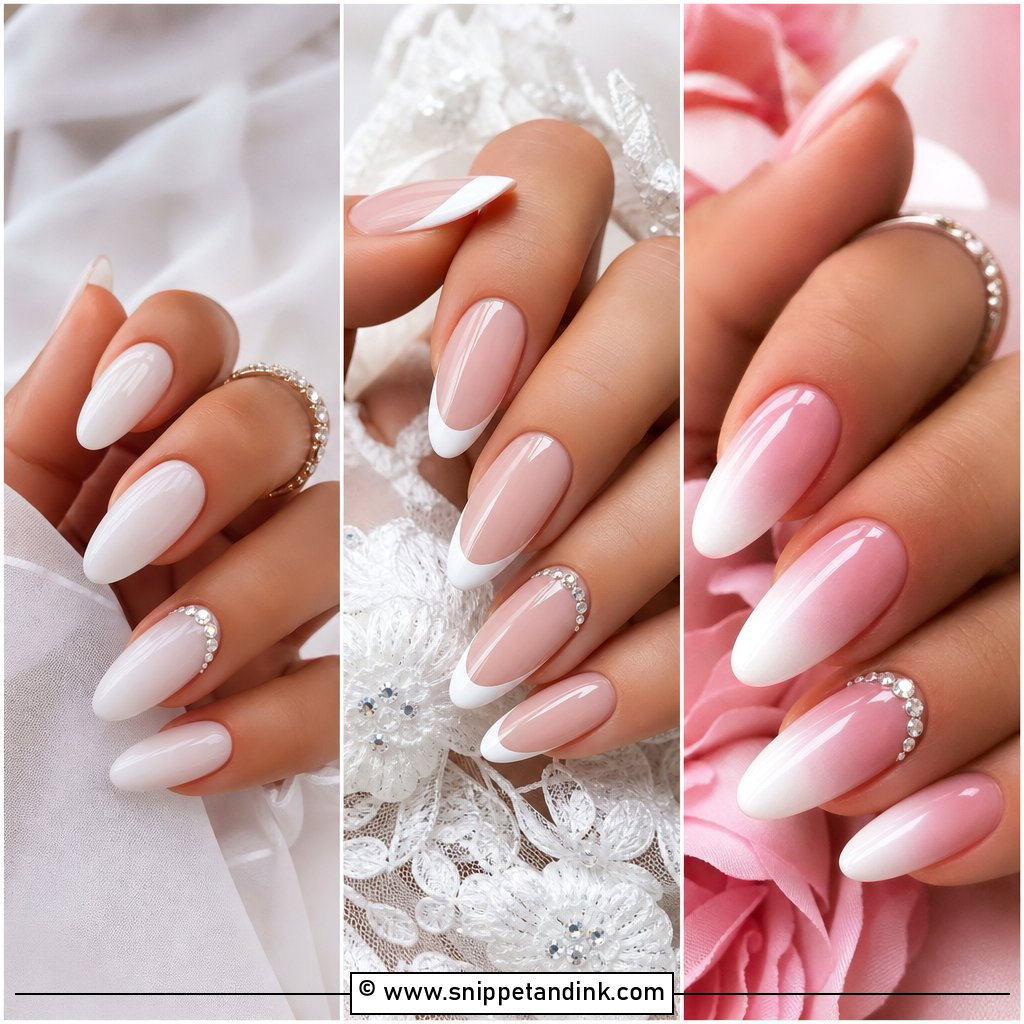
15. White Indian Bridal Nail Extensions
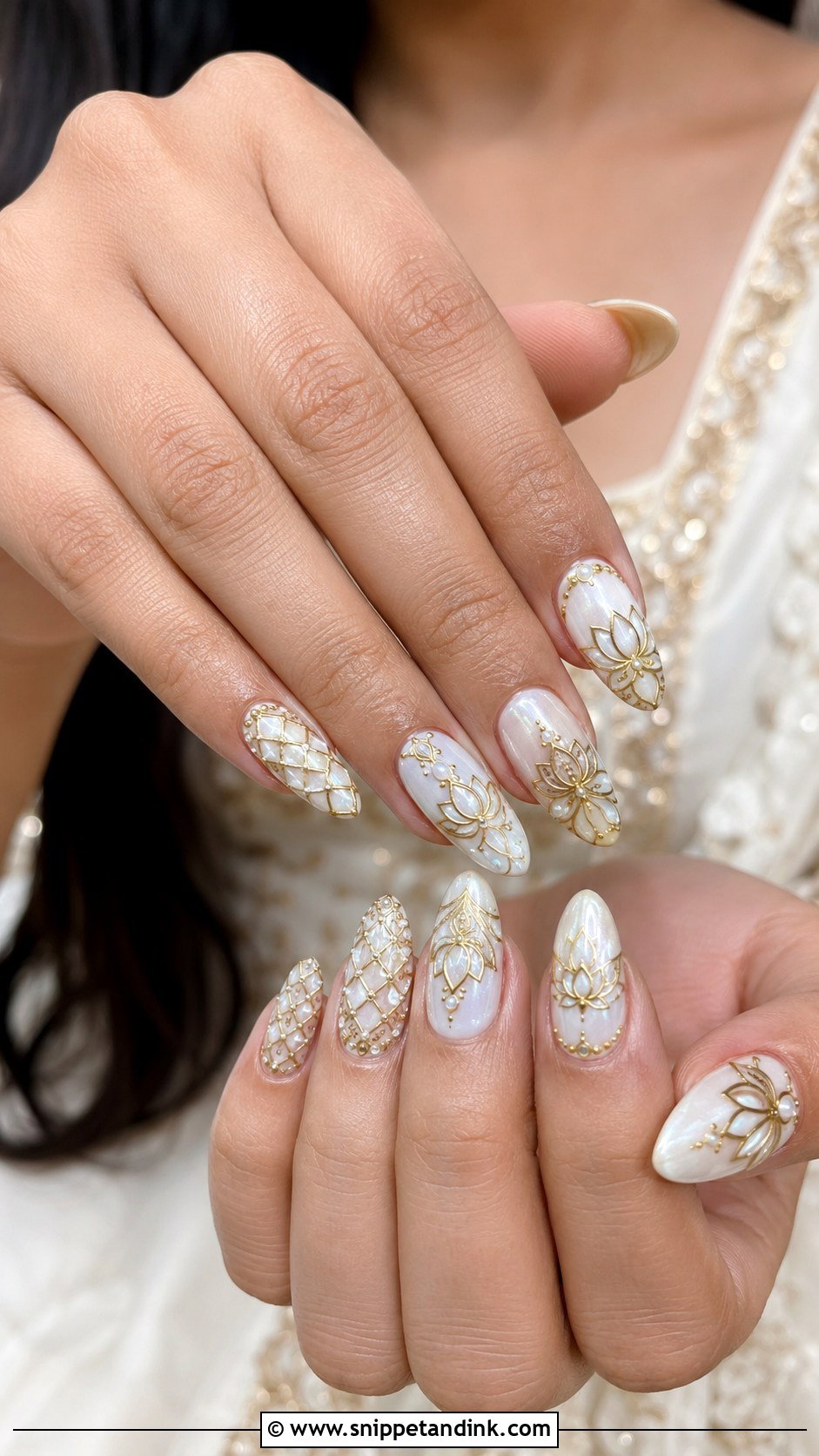
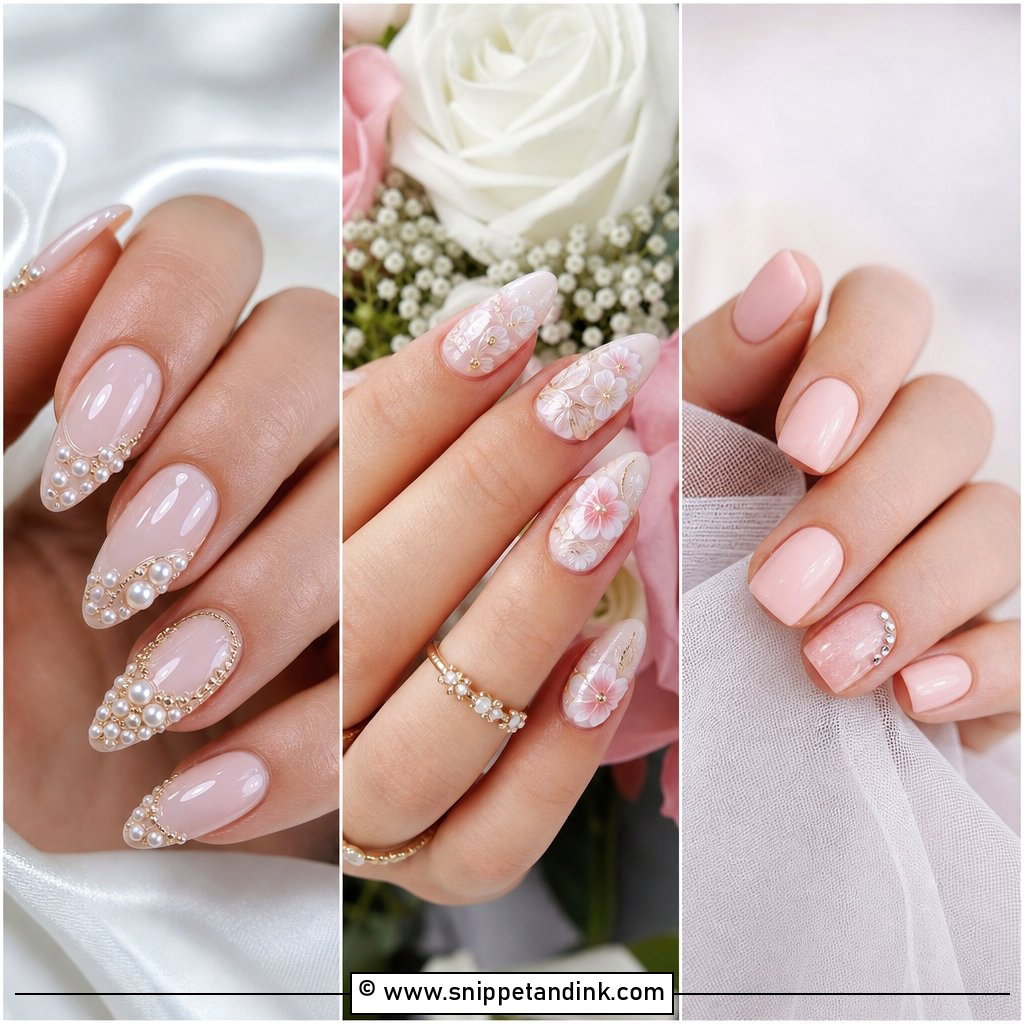
White extensions read modern and clean, especially with ivory lehengas, pearls and diamonds. Flat white can look like correction fluid on camera, so I mix it toward milky, glazed or pearl white, or add gold. White also holds fine lotus, lace or jaali work well. One honest caution: if there’s a haldi ceremony after your appointment, turmeric can tint pale gel and matte top coats, so wipe it off your nails quickly or keep white for the reception. Against dark mehndi, white gives the sharpest contrast in hand photos.
16. Green Indian Bridal Nail Extensions
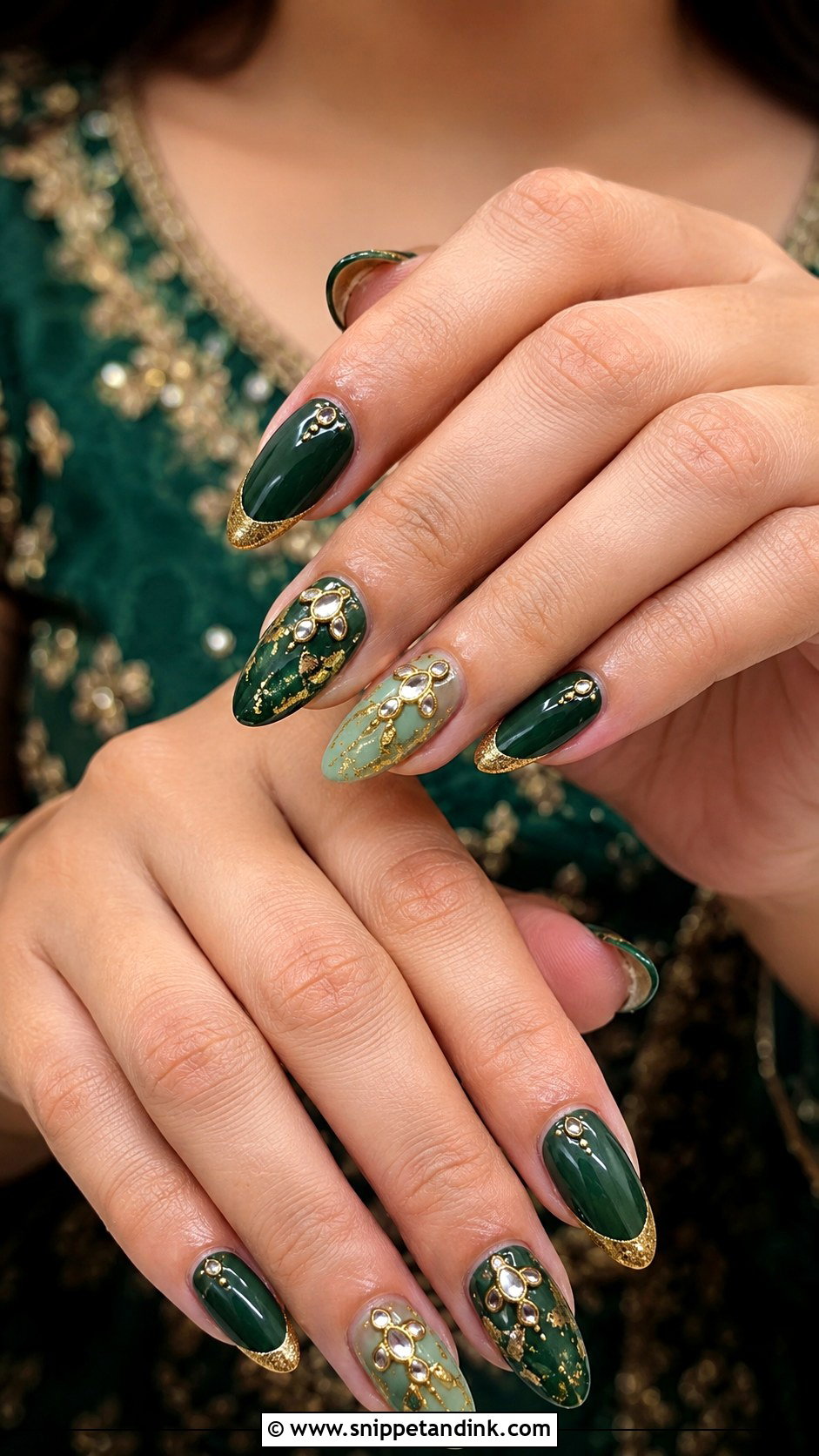
Green is a strong pick if you’re wearing emerald, bottle green or jewellery with green stones. A deep green base with gold French tips, foil or a few kundan-style stones looks regal at the wedding or reception. Sage green with pearl chrome is the softer route for pastel outfits, and green makes a fun change from red at the mehndi function itself. I check the green against the actual stone or fabric, because emerald gels range from blue to yellow, and a mismatch is obvious when your hand rests on the lehenga.
17. Mirror Work Indian Bridal Nail Extensions
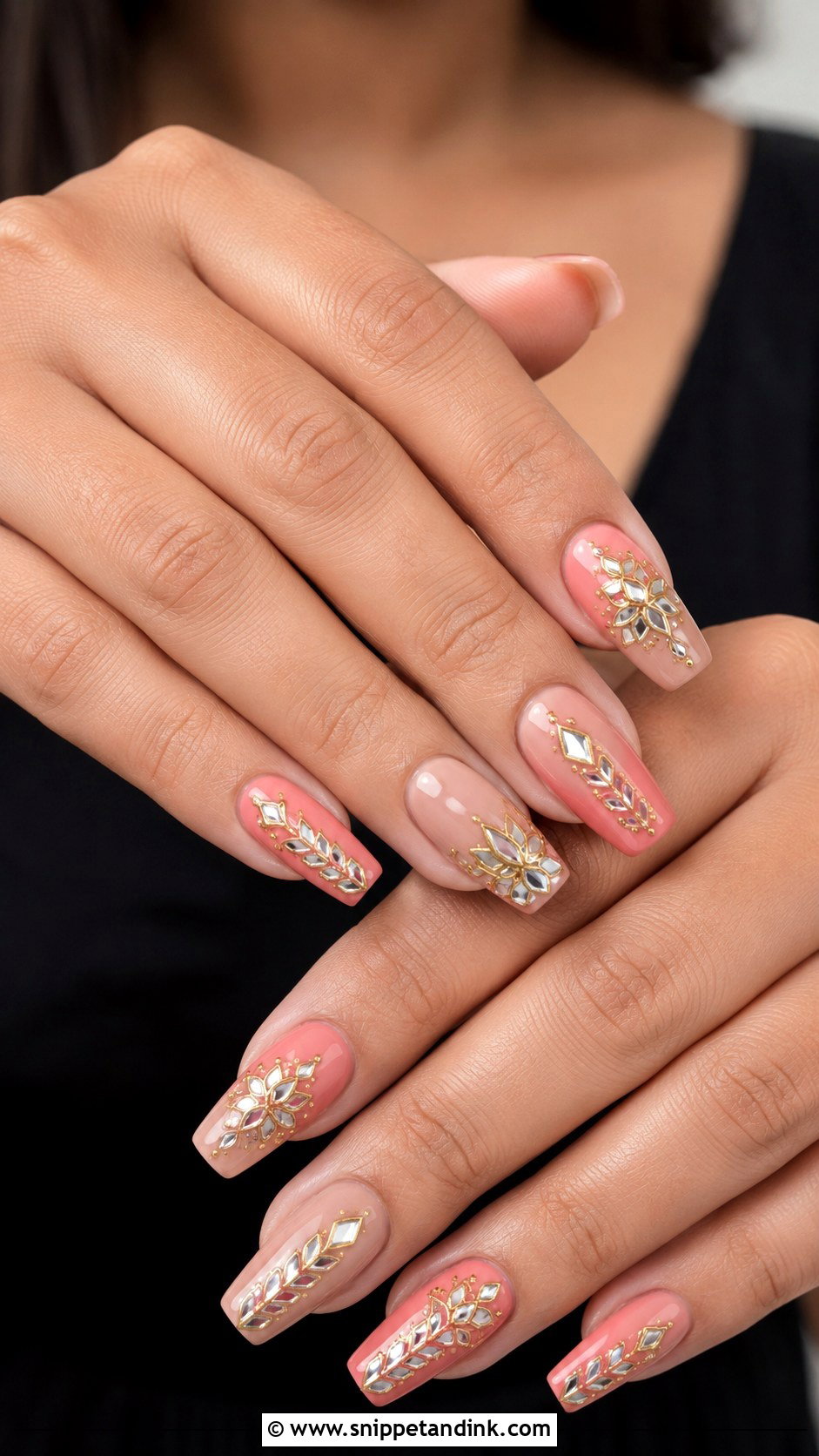
Mirror work on nails copies the reflective shisha embroidery on sangeet and festive outfits. I use tiny flat reflective pieces set like embroidery on a nude, pink, red or coral base, outlined in gold so they look finished. Two or three accent nails are enough; mirror pieces on all ten get heavy and catch on everything. They need the same sealing as stones, with the edges buried in gel. Coffin and almond both work. This is the set that shows most under sangeet lights, so I’d keep it for that night if your wedding outfit is already heavy.
18. Mandala Indian Bridal Nail Extensions
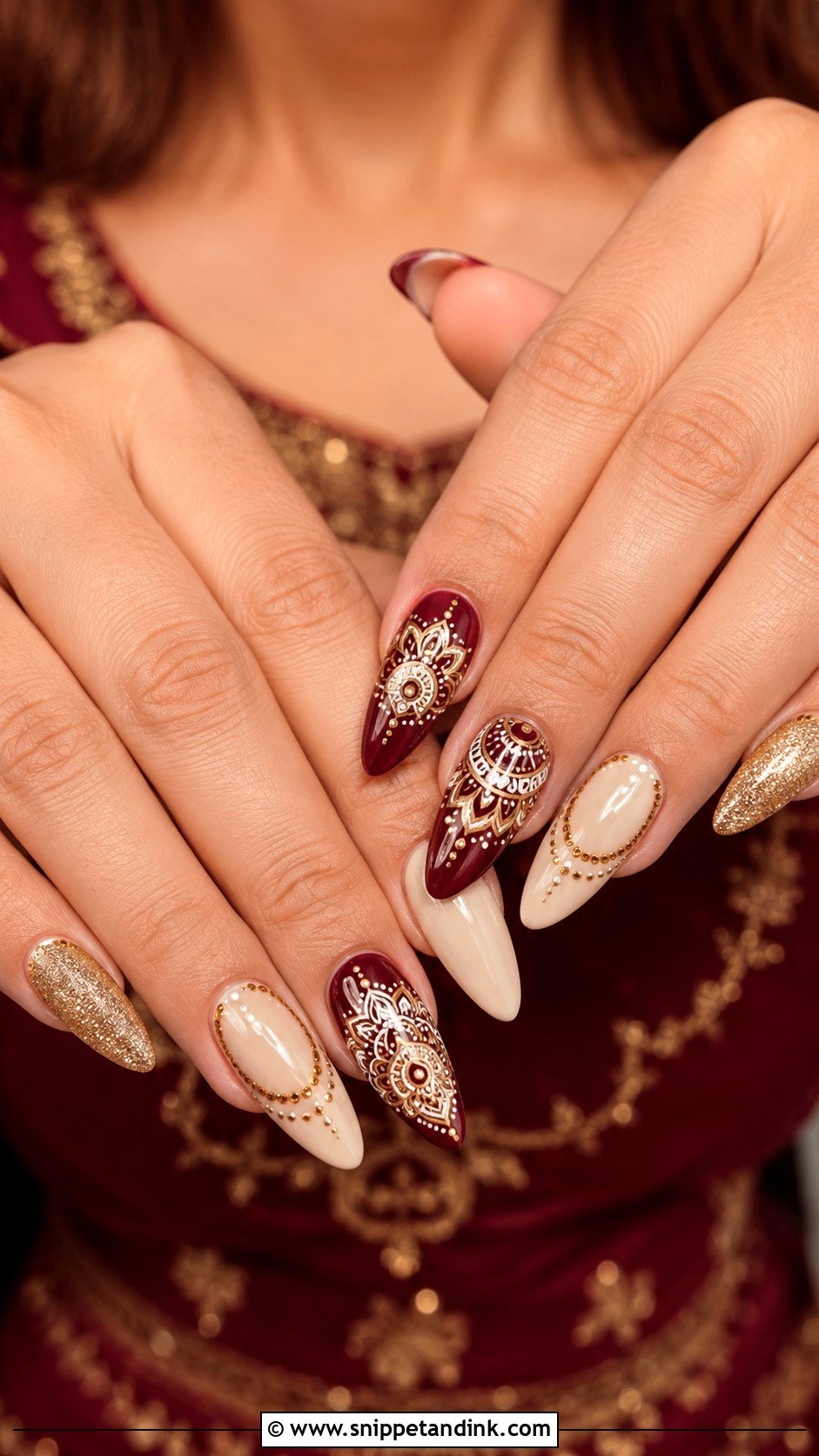
Mandala art is symmetrical and full of tiny lines and dots, so it needs a long nail and a steady hand. I paint it in gold, white, brown or bronze over a nude, ivory, red or maroon base and usually limit it to one accent nail per hand. The other nails stay plain gloss, chrome or light shimmer, otherwise the hand looks crowded once rings and bangles go on. In close-up portraits with your hands posed together, that single mandala nail becomes a natural focal point next to the henna.
19. Rose Gold Indian Bridal Nail Extensions
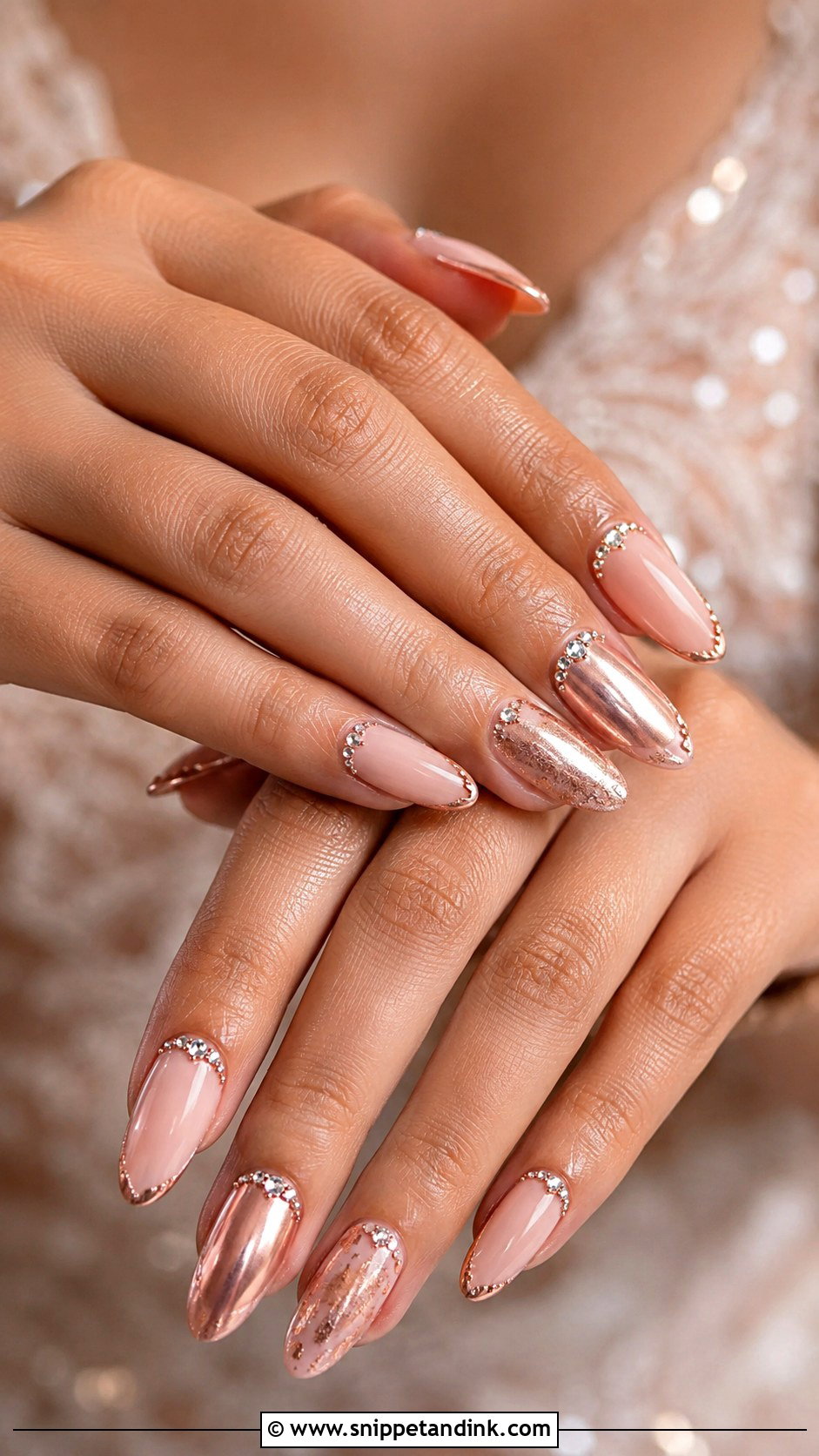
Rose gold is warm without being as bold as red or yellow gold, and it suits blush lehengas, champagne sarees, peach outfits and even deep maroon. Chrome gives a smooth glow; rose gold glitter adds more sparkle. I pair it with nude, soft pink or milky white nails and add fine French tips or a few foil pieces if you want detail. Rose gold chrome shows scratches like gold does, so I add an extra top coat. On almond extensions it lengthens the fingers nicely.
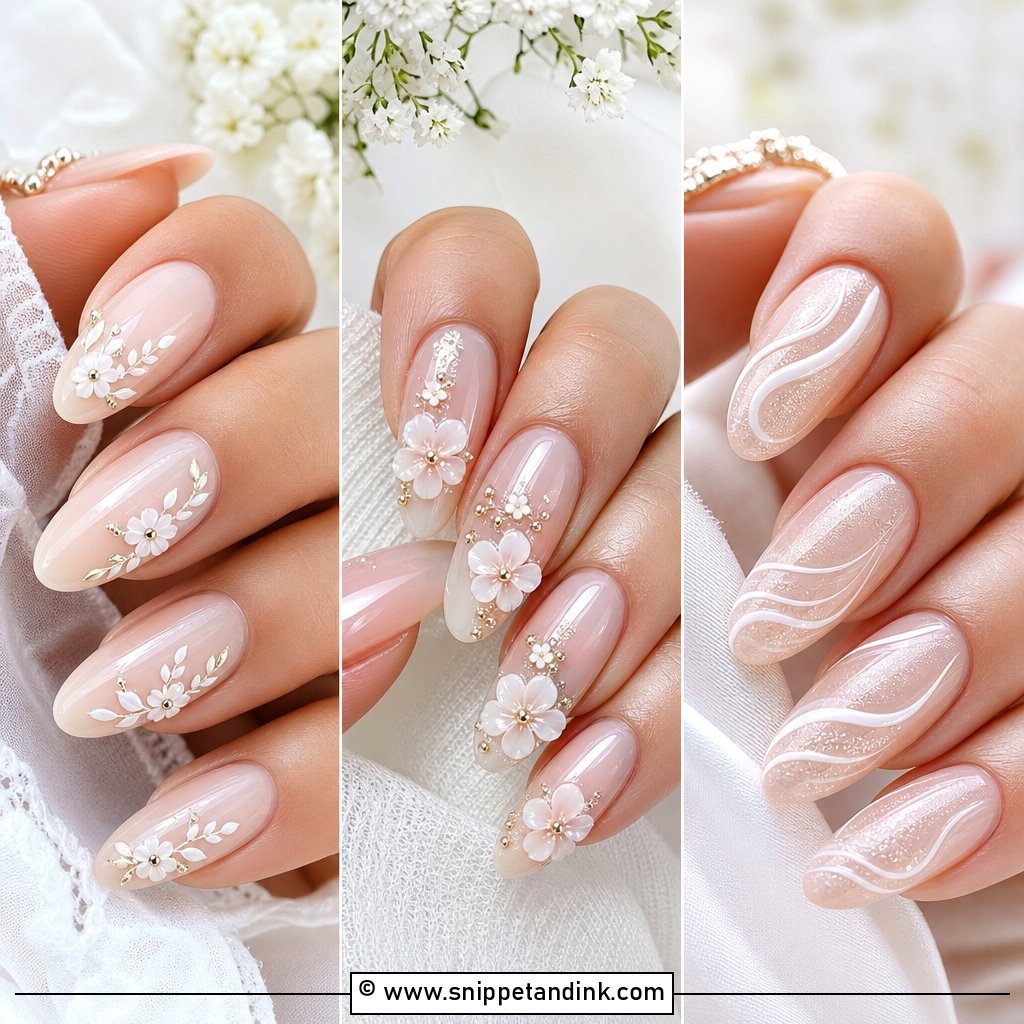
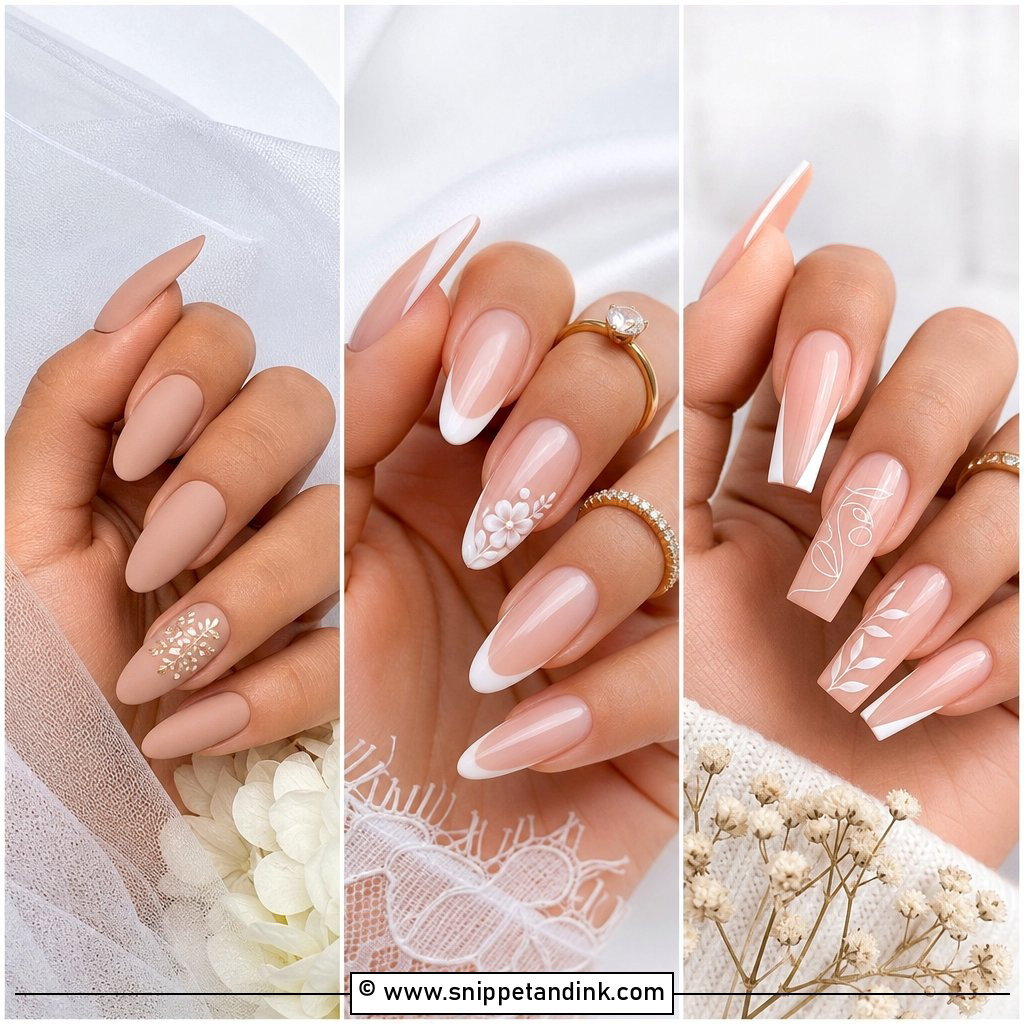
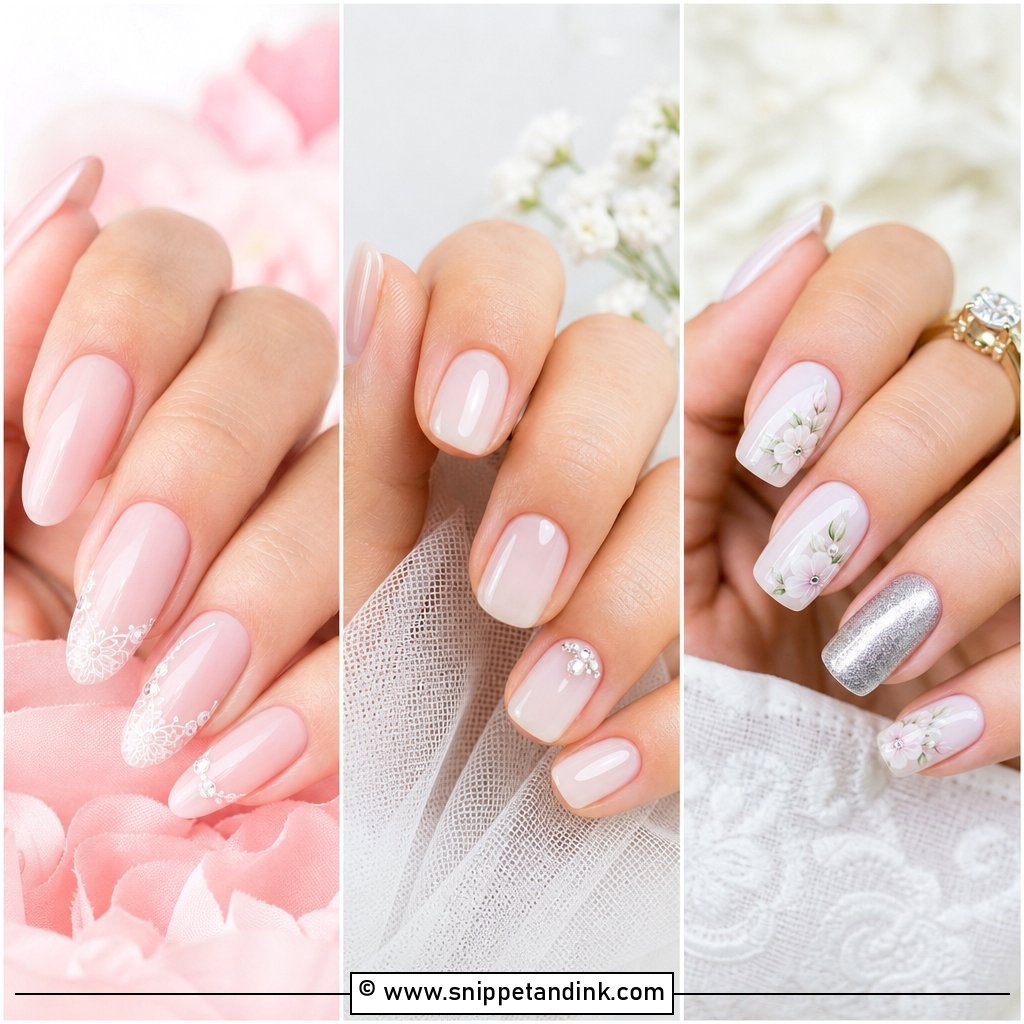
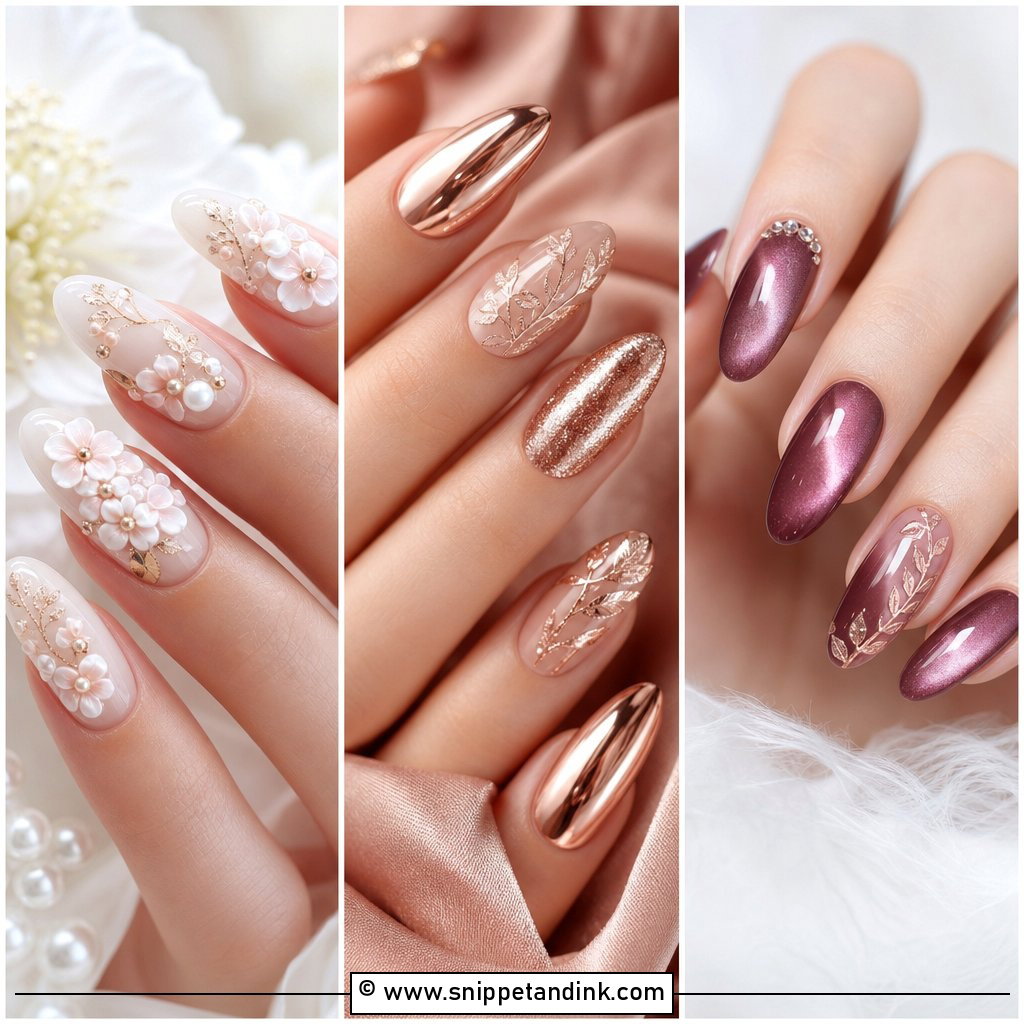
20. Royal Blue Indian Bridal Nail Extensions
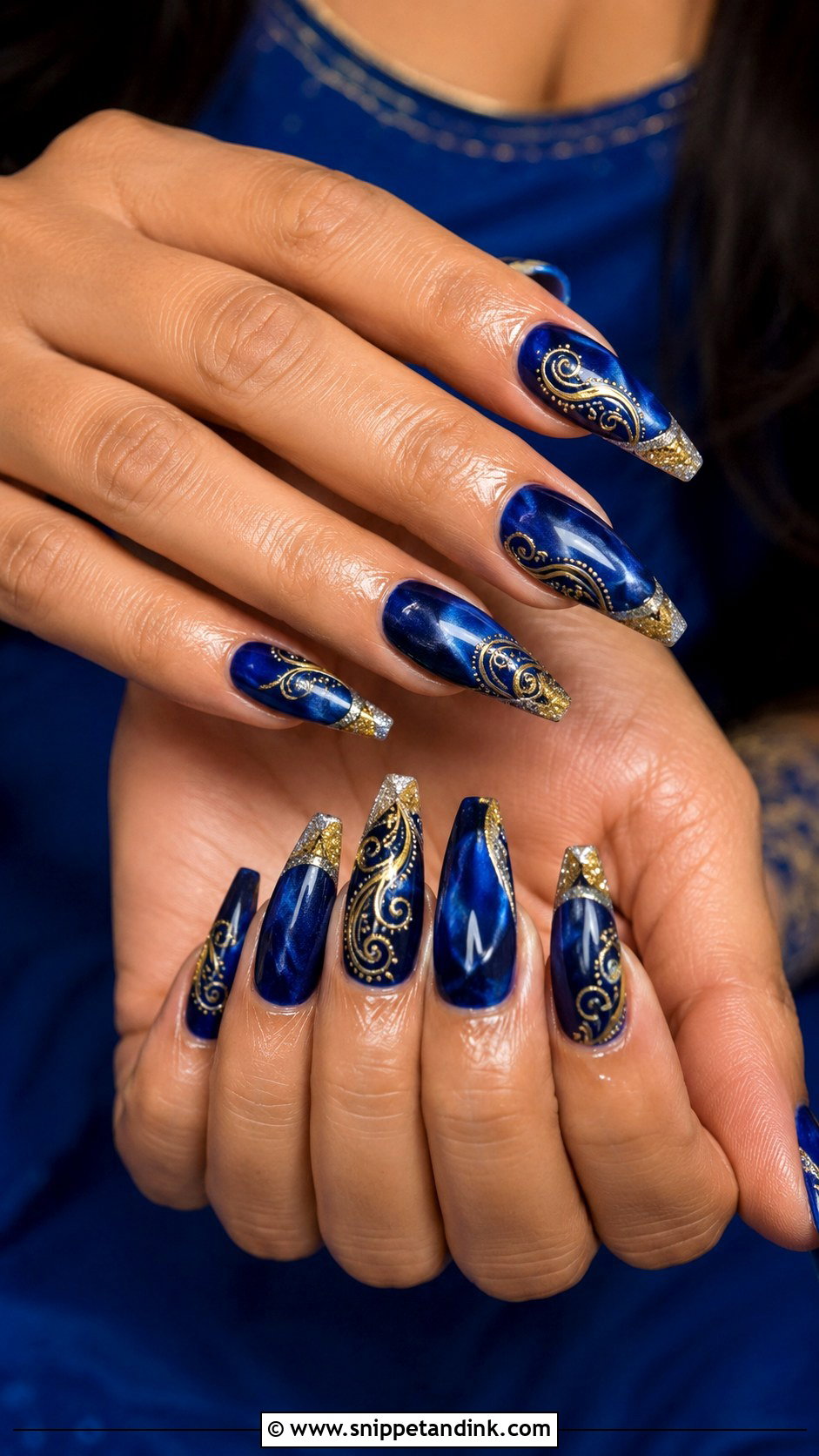
Royal blue is bold, and I suggest it mainly for receptions, cocktail functions or brides wearing blue, silver or contrasting jewellery. A glossy blue base takes gold chrome tips, silver foil, pearls or delicate paisley lines. Blue cat-eye gel, which uses a magnet to pull shimmer into a band of light, gives a velvet finish that’s softer than flat blue. Because the colour already carries the hand, I keep any art minimal. Almond or coffin both look polished in it.
Long Coffin Tips Versus Blouse Hooks and a Full Chooda
Length looks wonderful in photos and causes most of the problems I hear about after the wedding. Before you commit, think through the real tasks of the week rather than the posed hand shot.
- Blouse hooks, saree pins and dupatta safety pins are fiddly with anything past medium length. Practise with your trial set.
- A chooda or stack of glass bangles slides over the hand, and long pointed tips catch on the way. Almond tips glide; sharp coffin corners snag.
- Net and organza dupattas pull threads on raised stones and mirror pieces, so keep embellishment near the cuticle.
- Contact lenses, phone screens and hair pins all get harder. Medium almond is the length most brides tell me they’d choose again.
Soaking Off a Wedding Set Without Wrecking Your Nails
Please don’t pry extensions off once the functions are over. Peeling them lifts layers of your natural nail with them, and that thin, bendy nail takes months to grow out. I file the bulk down, soak the rest in acetone and push away only what has softened. Glitter, chrome and stone sets take longest, so book a proper removal slot rather than squeezing it in.
Afterwards, keep your natural nails short for a couple of weeks and use cuticle oil daily. If you’re travelling straight after the wedding, a fill and a colour change is gentler than removal on a rushed day, and you can have them taken off once you’re home.
A Set That Lasts From Haldi to Reception
Your extensions have to work with mehndi, jewellery, outfit colours and the camera, and still feel comfortable through long ceremonies. Red, maroon, gold and paisley sets give the classic bridal mood; pearl chrome, nude, French tips and rose gold feel softer and more current. Mandala, lotus, jaali and kundan-style art bring cultural detail when kept to a few nails. If I could give one piece of advice, it would be to pick the length and shape you can manage for a week of functions first, and then let the colour and art follow.
You'll Like These Ideas:


Leave a Reply