
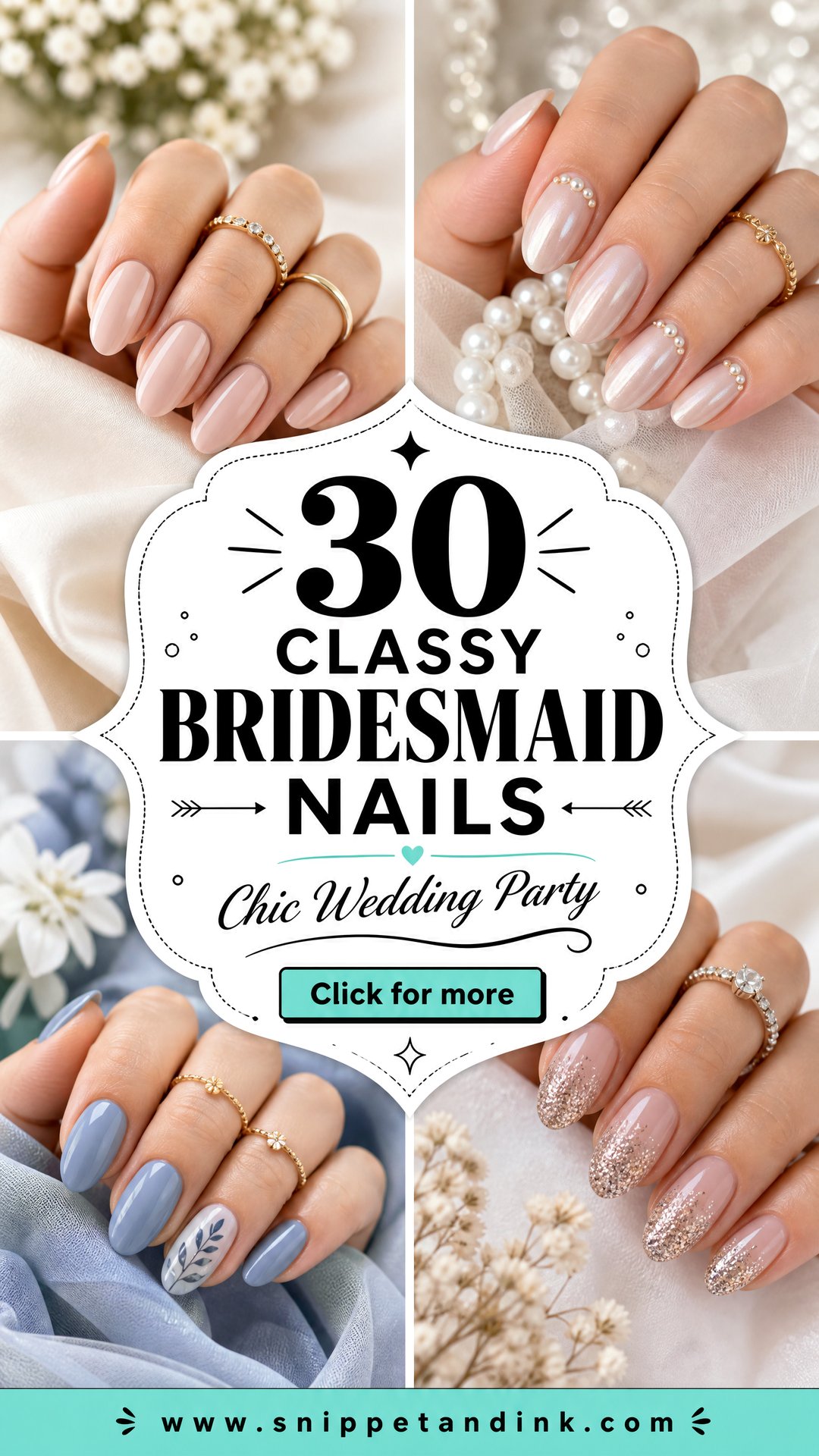
Classy bridesmaid nails, in my chair, come down to one brief: a set that sits quietly beside the bouquet and the dress fabric and still looks finished in a close-up. For 2026 the requests I see most are clean neutrals, milky finishes, slim French tips, small pearl details, soft chrome and short natural shapes. Muted color has its place too, sage, dusty blue, blush, taupe, mauve or champagne, as long as it answers to the wedding palette. Below are 30 sets I’d happily put on a bridal party, with notes on who each one suits and where it tends to go wrong.
Six Bridesmaids, Six Nail Beds, One Palette
The bride’s brief for her party is usually a color, but the bridesmaids arrive with very different hands: bitten nails, long natural nails, extensions from last month, fair skin and deep skin. Putting one identical bottle and one length on all of them is how a group ends up looking mismatched. What makes a party read as a set in photos is shape, length and finish, far more than the exact shade.
- Agree on length first. I work out the length the shortest-nailed bridesmaid can reach and file everyone else to match it. Mixed lengths show up in a group photo long before mixed shades do.
- Use one shape for everyone, oval, soft square or almond, and one finish, all gloss or all matte.
- Give a color family instead of a bottle. Warm nude to blush lets each woman wear the shade that suits her undertone; a single sheer pink on six skin tones looks grey on some hands.
- Anyone who bites her nails can stay inside the look with a builder gel overlay or a tidy natural manicure, no fake length needed.
- Decide on art centrally. If there’s an accent nail, it goes on the same finger for everyone.
Gel, Press-Ons or a Bottle of Polish
Gel is what I recommend for most bridal parties. It cures under an LED lamp, so you leave the salon dry, and it holds its gloss for a couple of weeks, which covers the rehearsal dinner, the wedding and any photos after. Regular polish is cheaper and simpler to remove but often chips within a few days of handwashing and steaming dresses. Press-ons can work for a bridesmaid who lives far away, as long as she sizes them at home first and brings glue and spares. Book gel one to three days before the wedding; any earlier and regrowth starts to show at the cuticle.
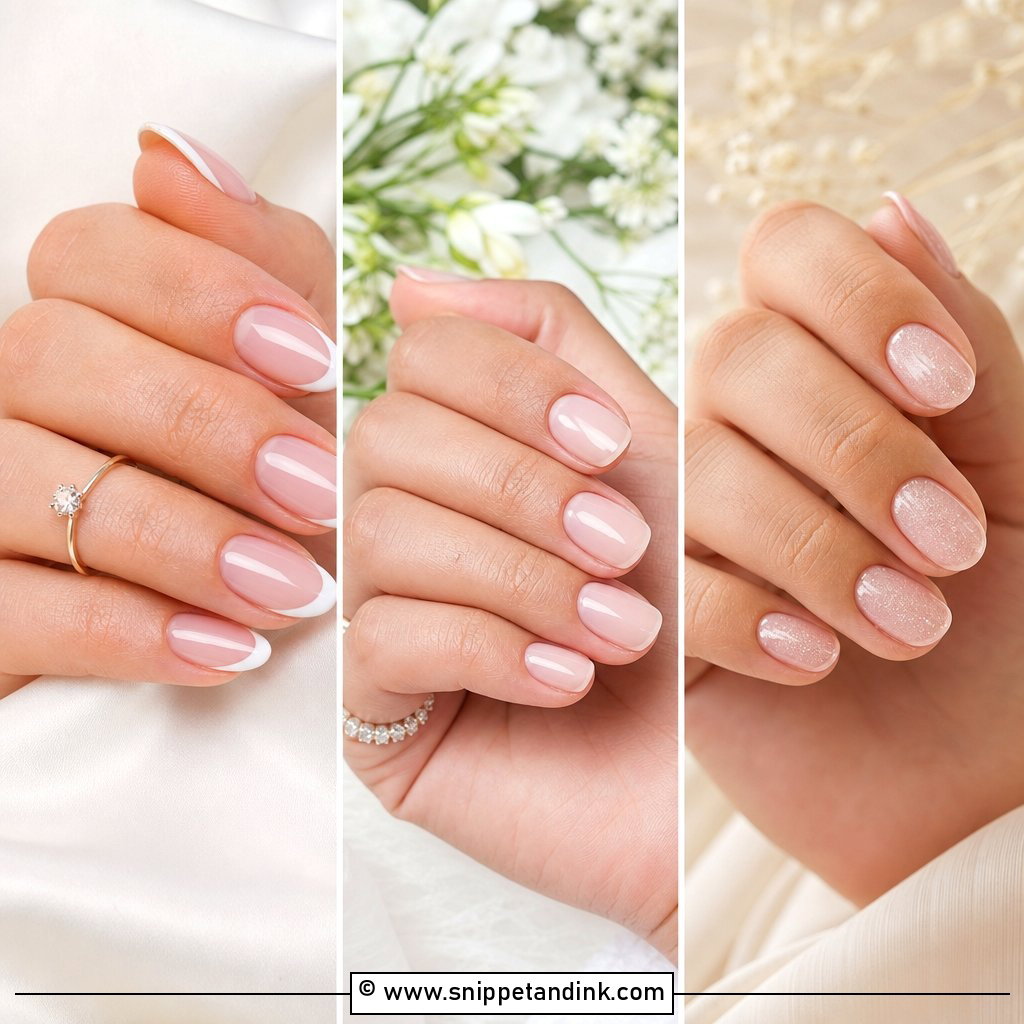
1. Nude Bridesmaid Nails
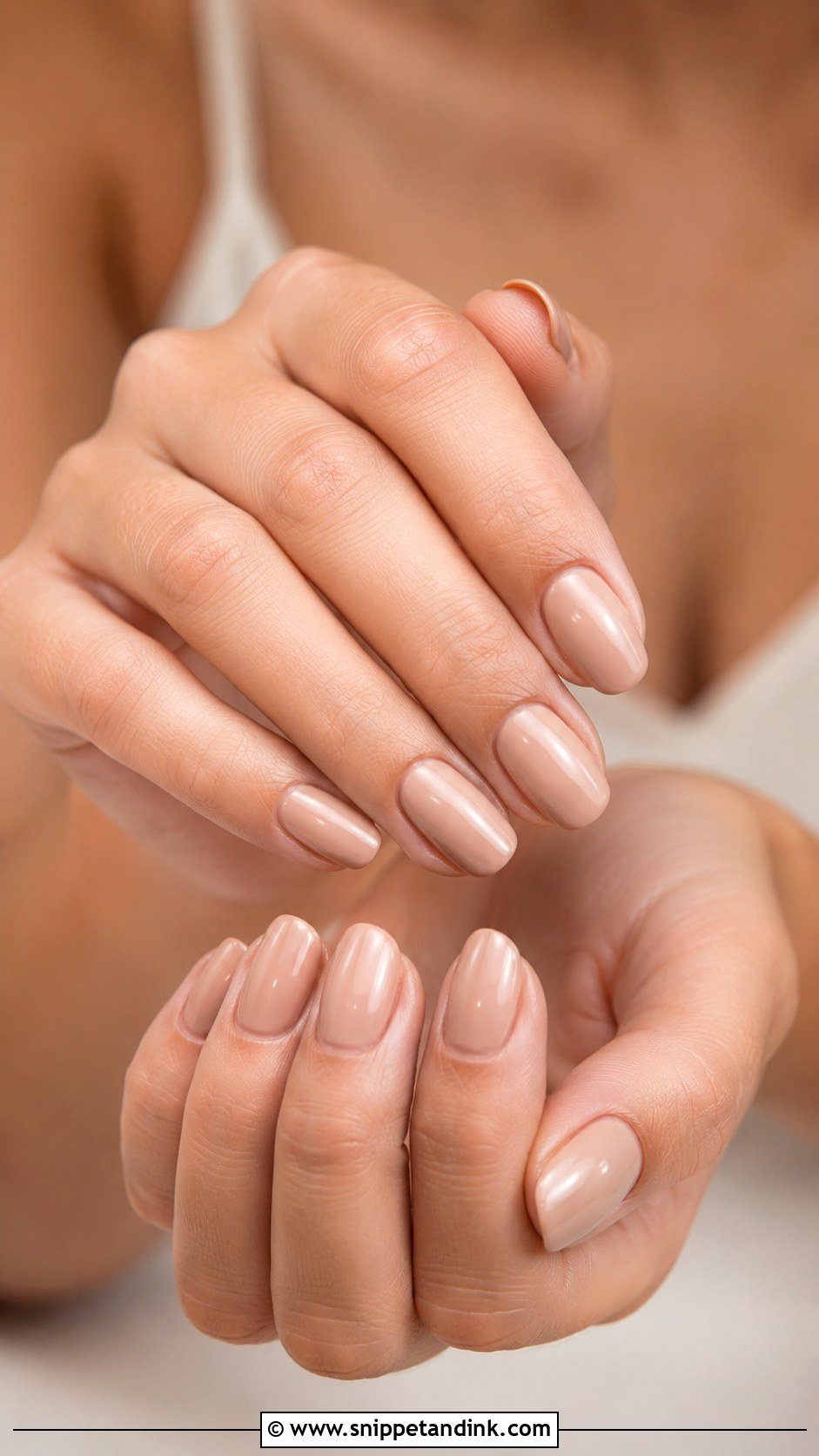
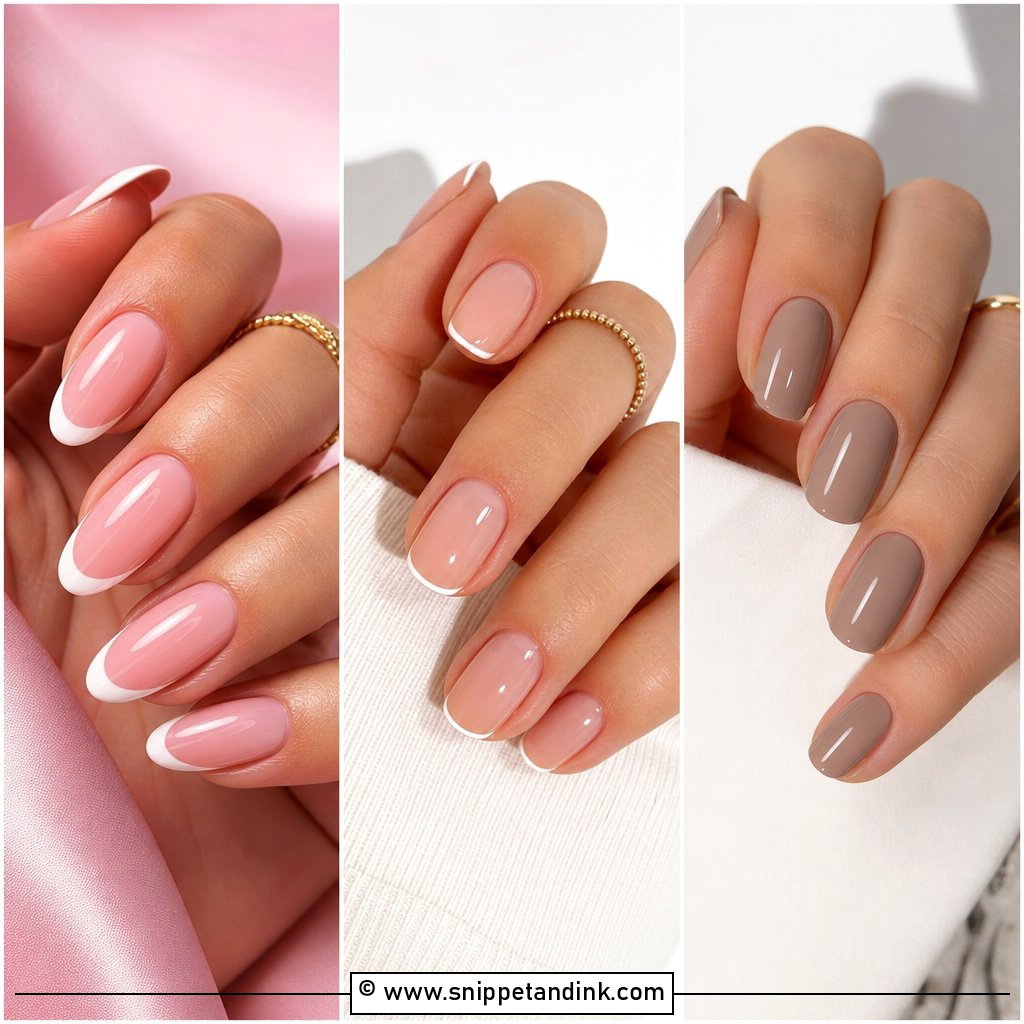
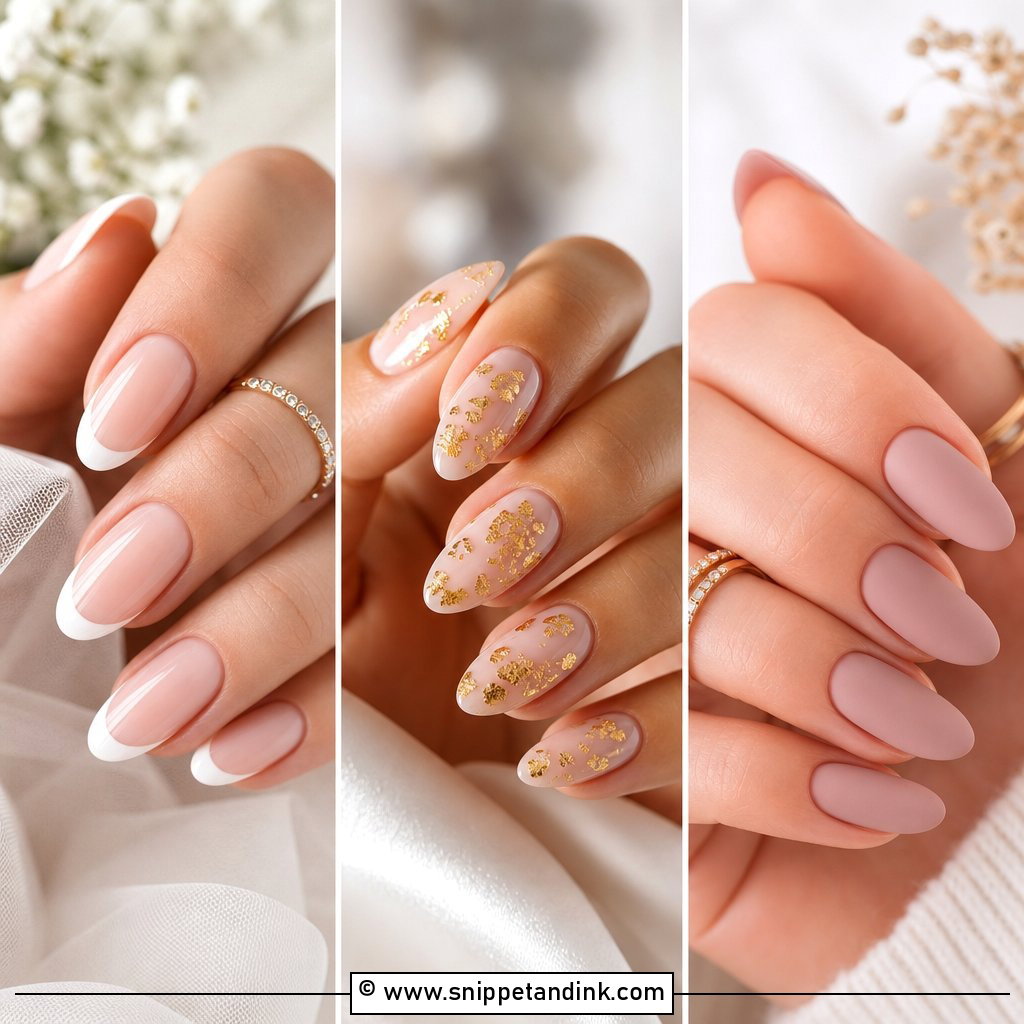
The hard part of a nude is the undertone, not the color name. A beige that looks neutral in the bottle can turn grey on olive skin or orange on very fair skin, so I swatch two or three on the actual nail before anyone commits. Fair skin usually suits a pink-leaning beige; medium skin takes peachy nudes, caramel or rosy beige; deep skin comes alive with cocoa, mocha, toffee and warm tan. Finish with high gloss on an almond or short squoval shape and it will sit with satin, chiffon, velvet or a floral print without arguing with the dress.
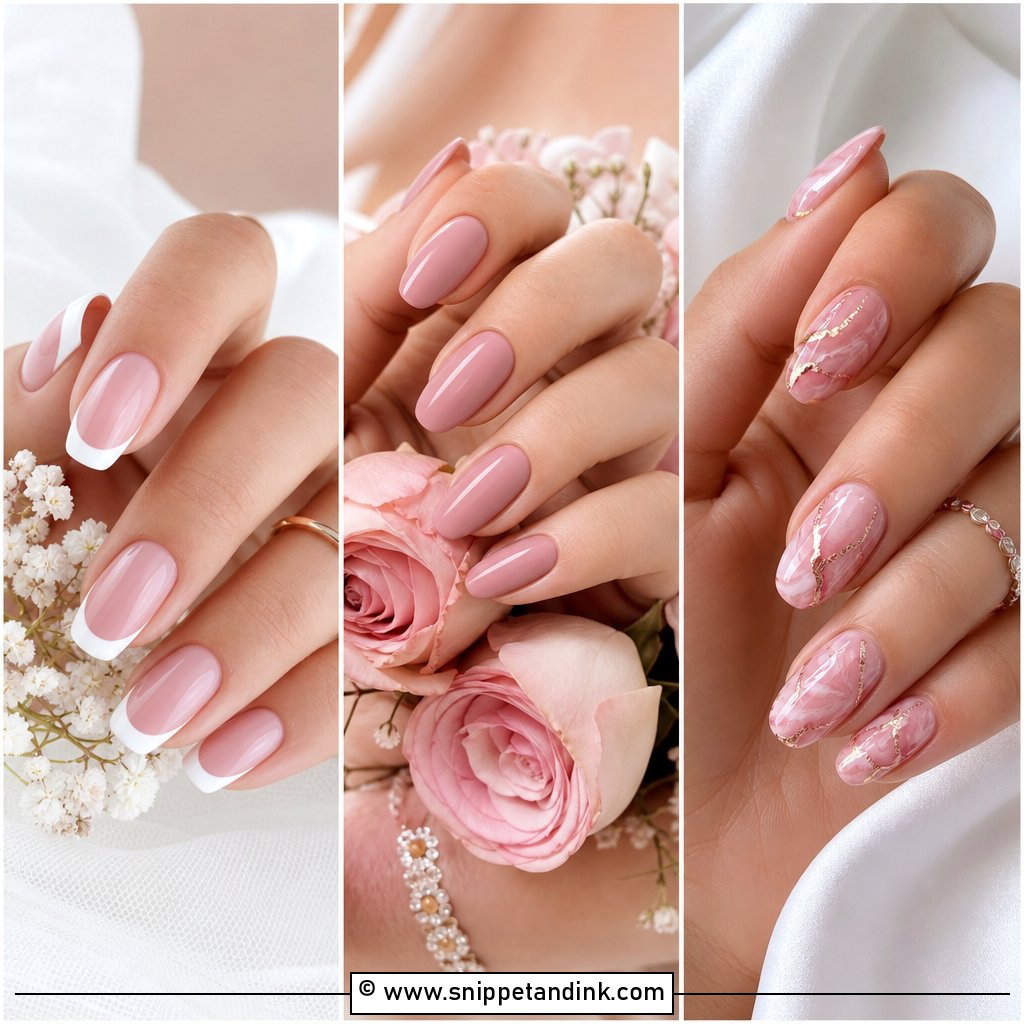
2. French Tip Bridesmaid Nails
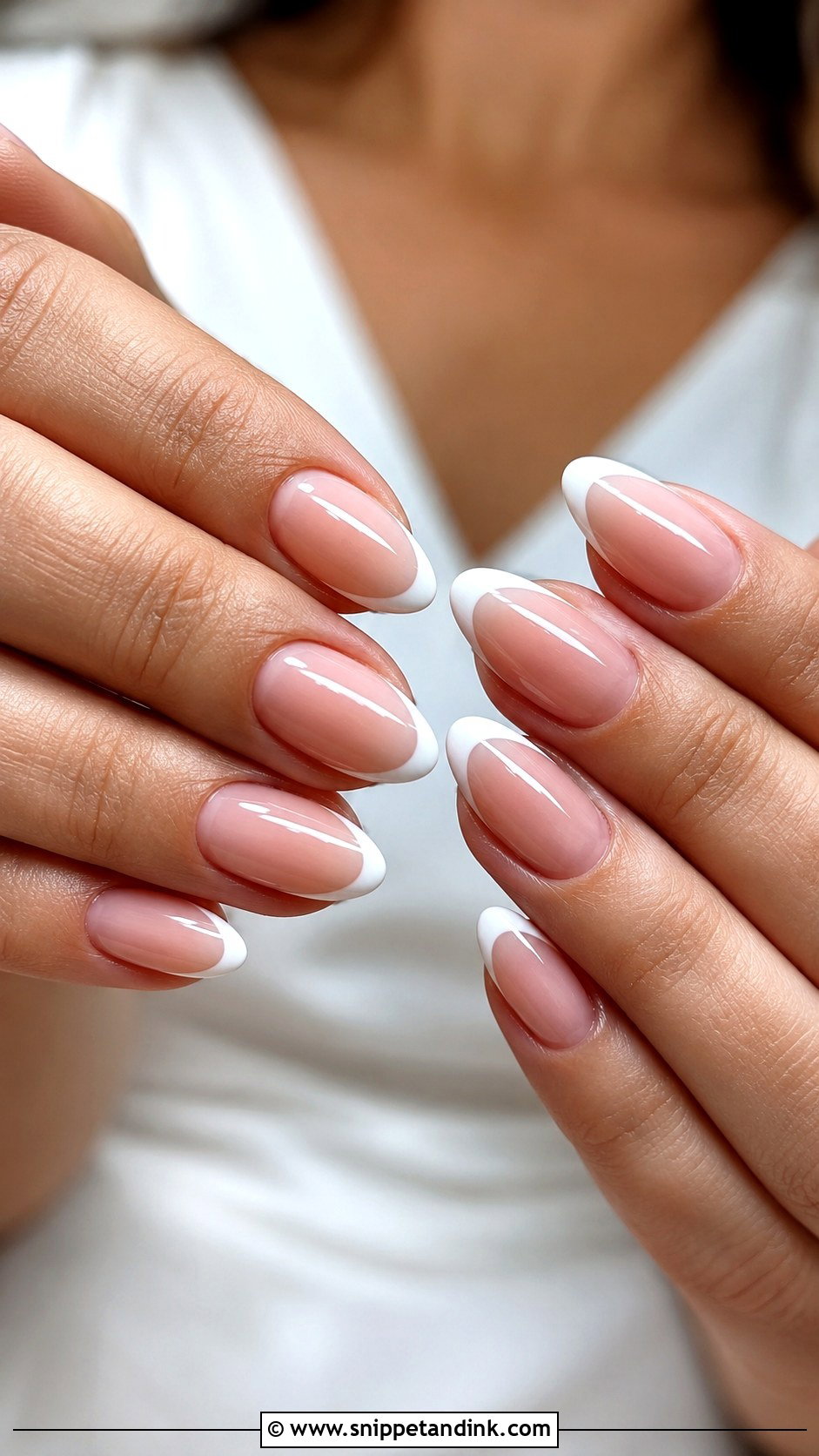
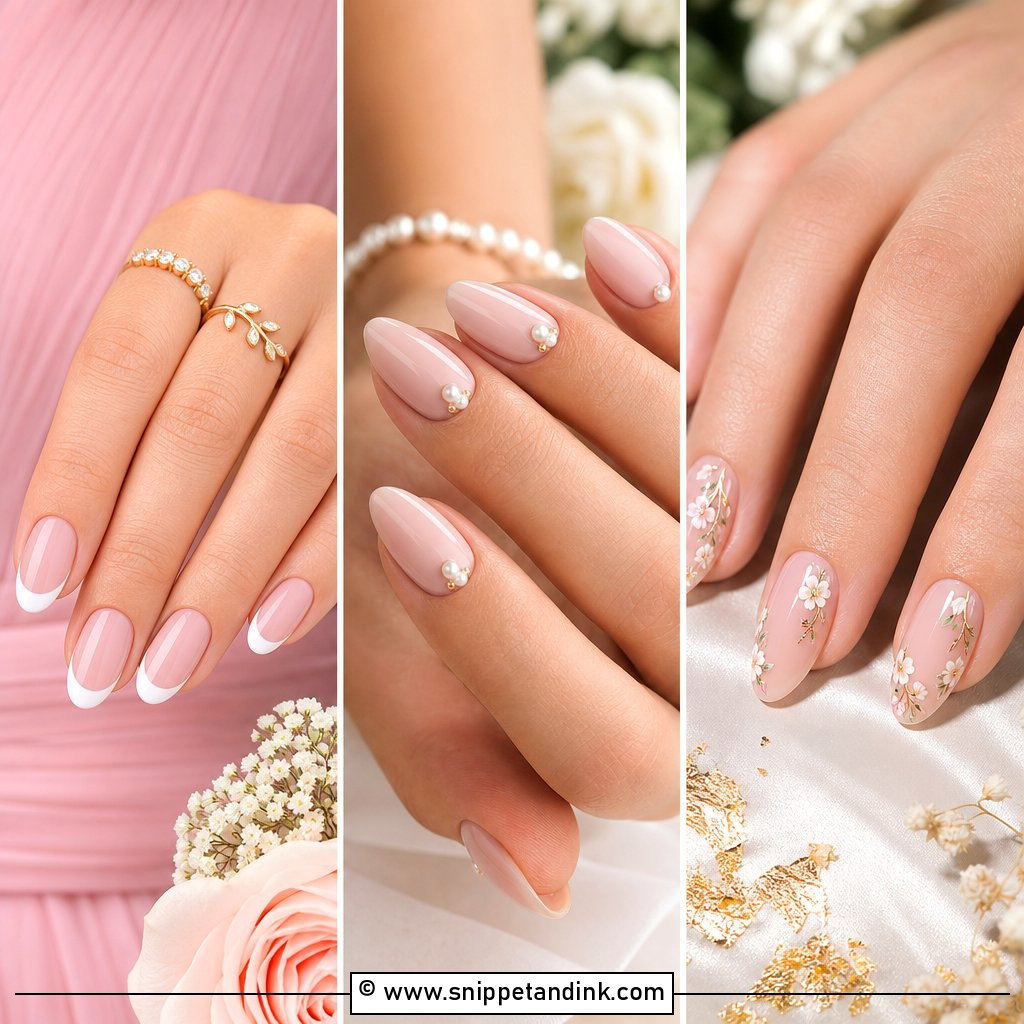
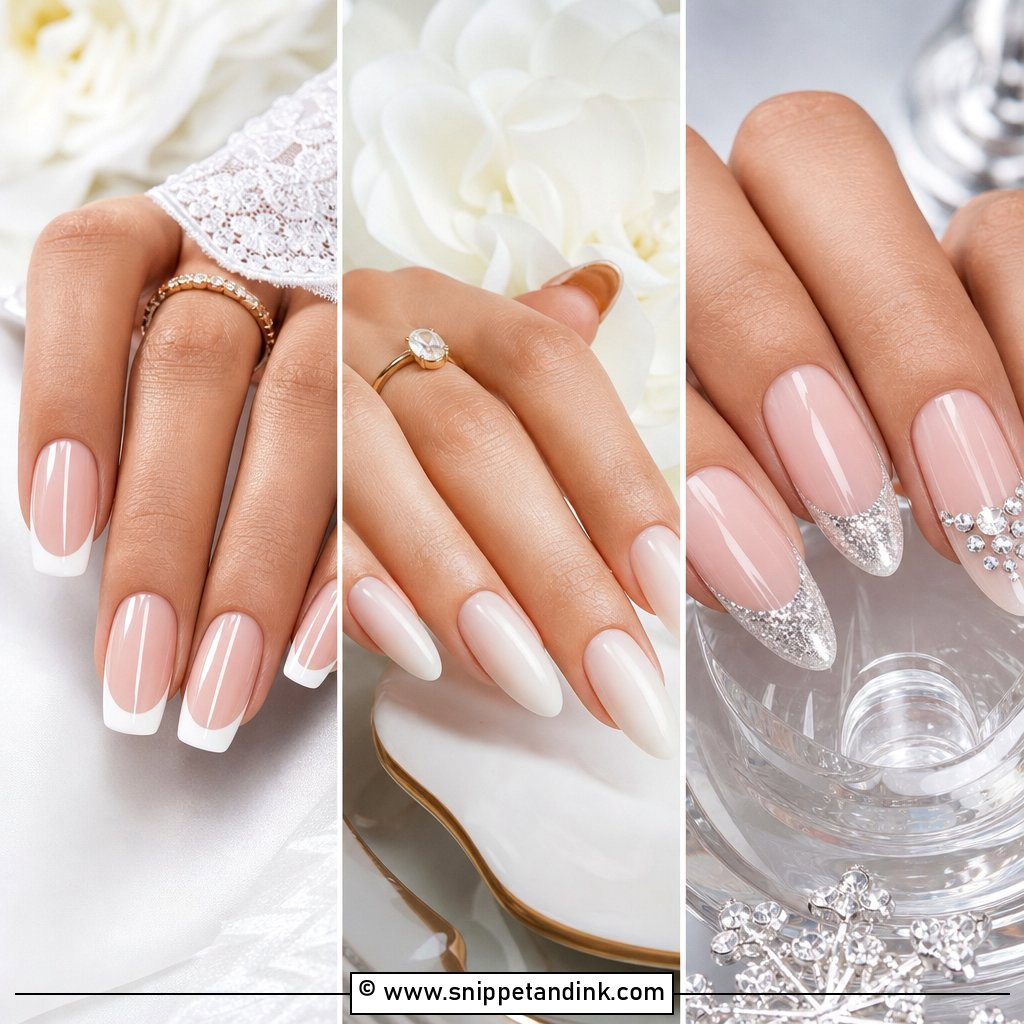
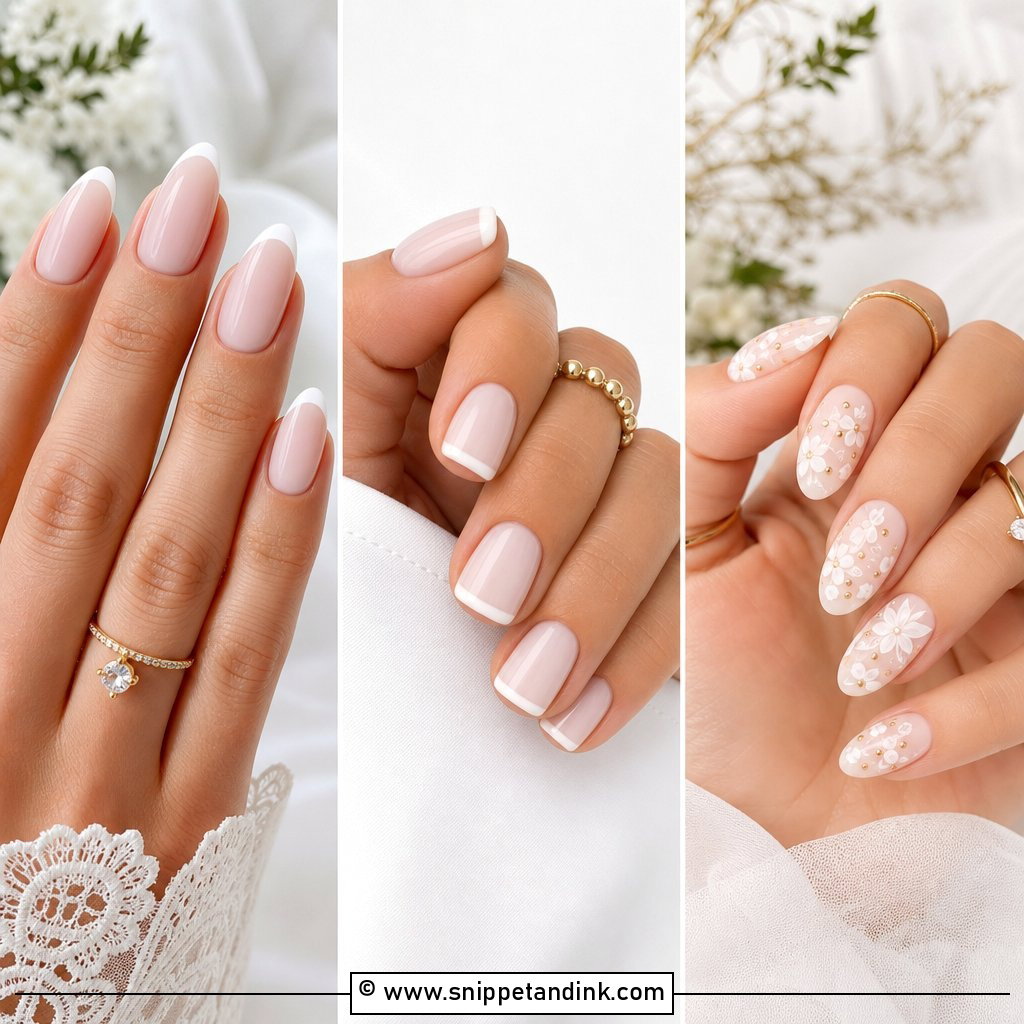
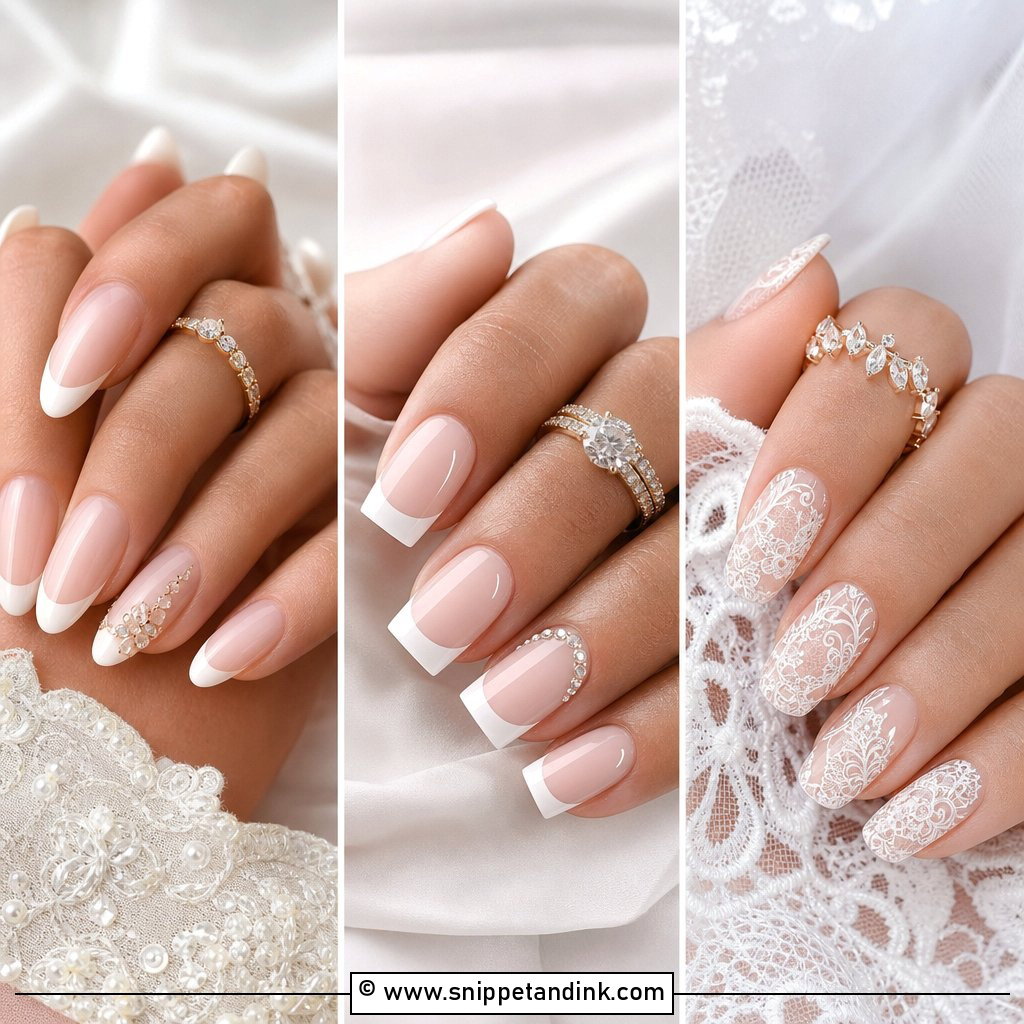
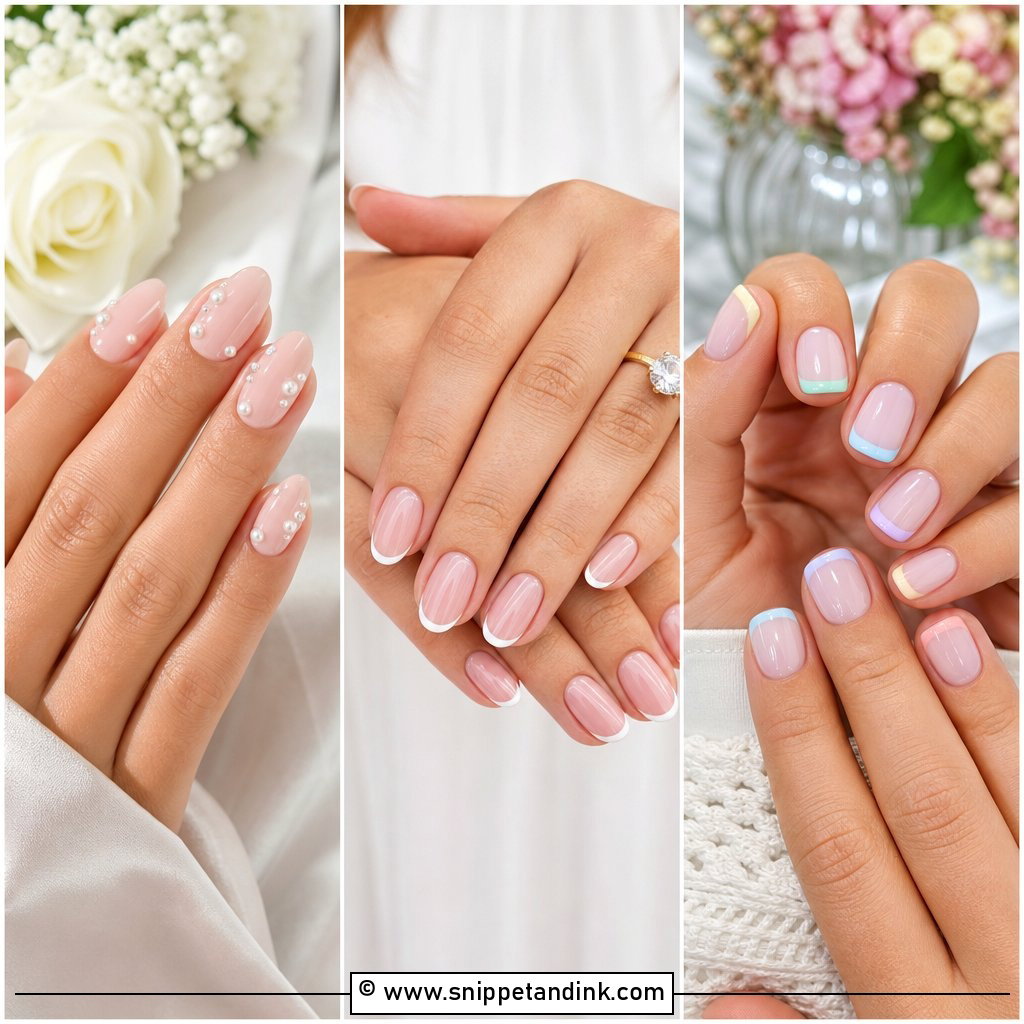
I still do more French sets for bridal parties than anything else, mostly because it’s the one manicure nobody’s mother objects to. A sheer pink or nude base with crisp white tips suits a church ceremony, a garden, a hotel ballroom or black tie. What makes it look current is the smile line: I keep it thin and follow the natural curve of each nail instead of painting a thick straight band. Almond reads graceful, short square reads practical. It’s also my first suggestion when the dresses are mismatched colors, since white tips go with all of them.
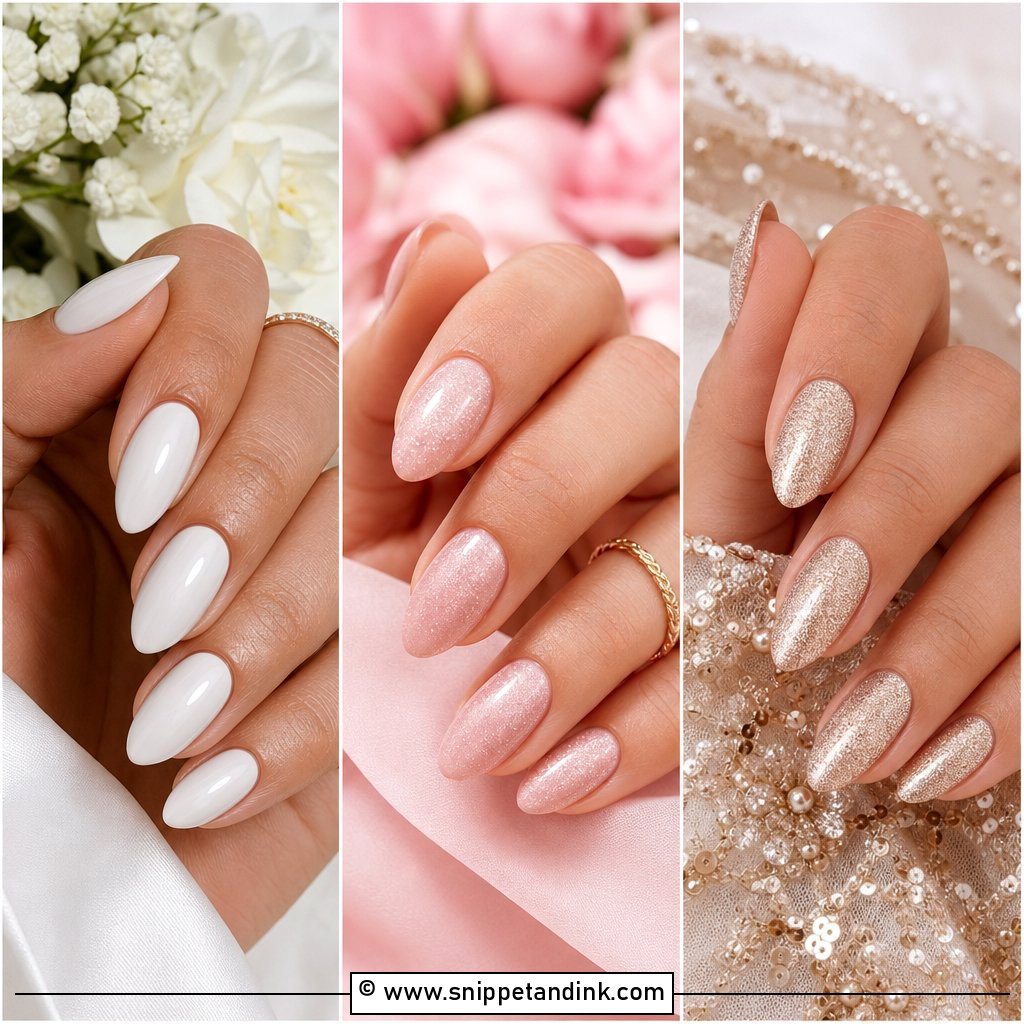
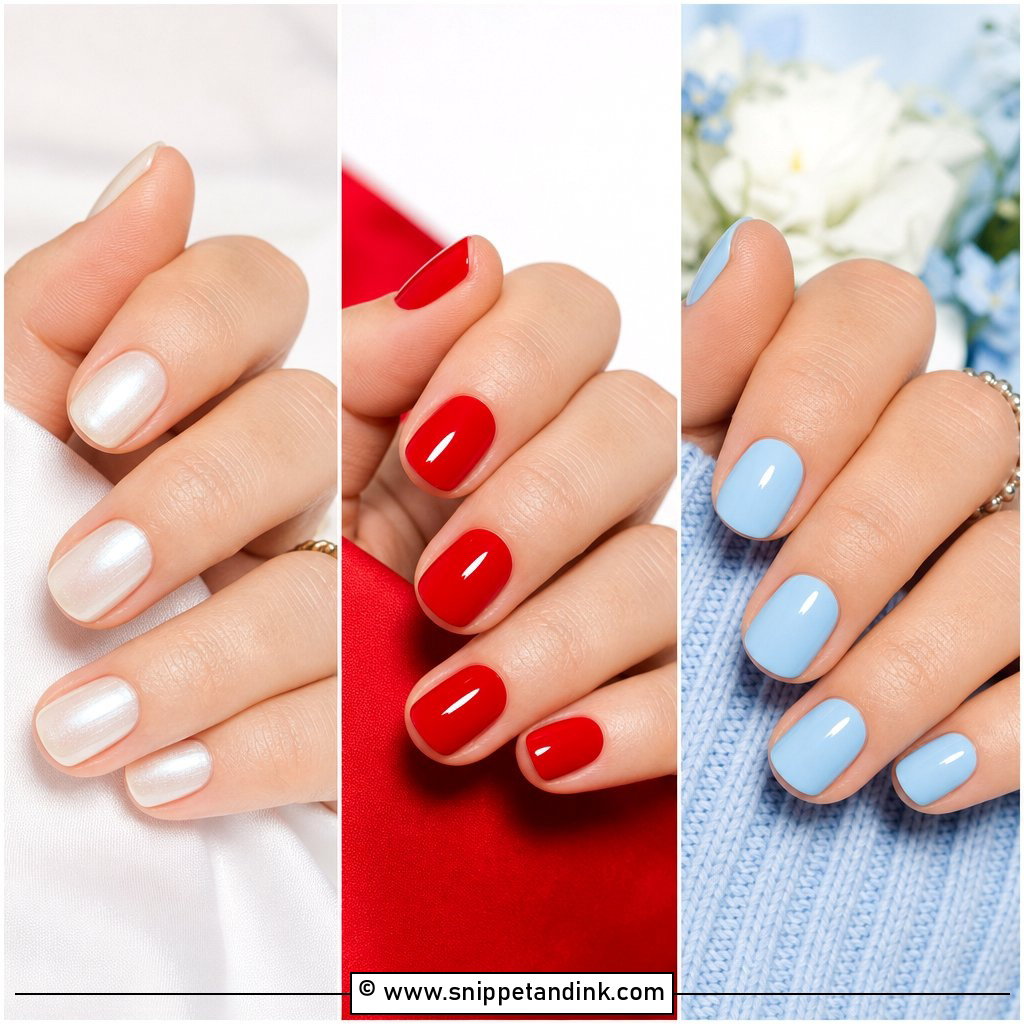
3. Milky White Bridesmaid Nails
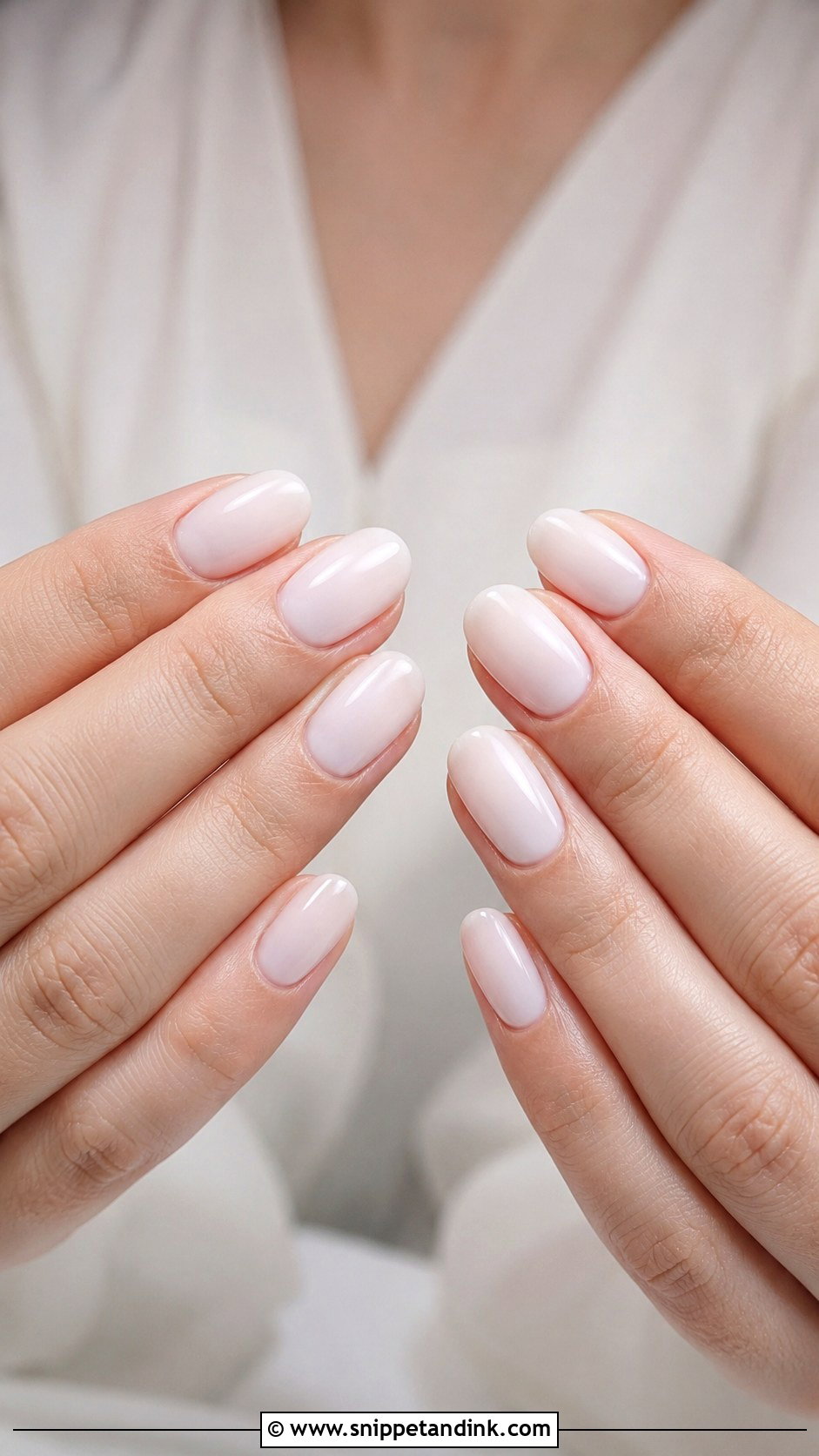
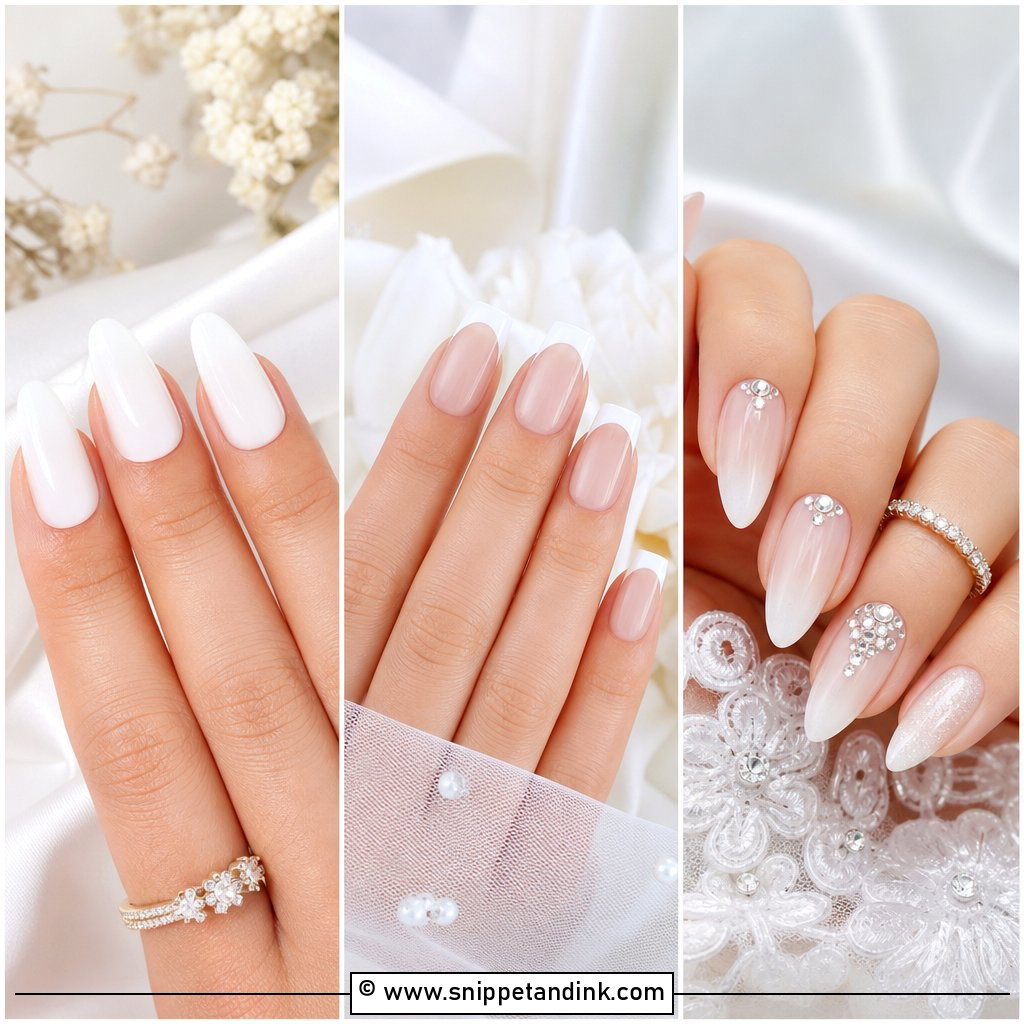
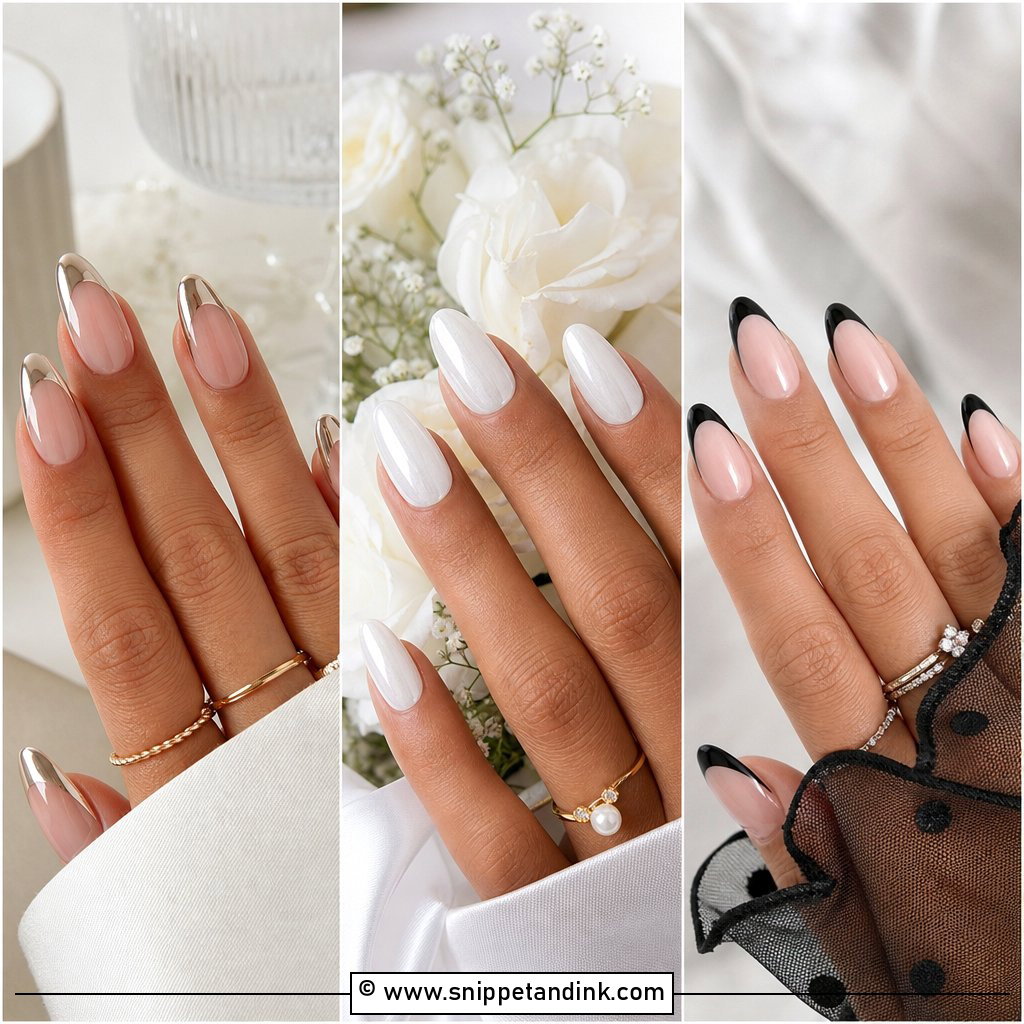
Milky white bridesmaid nails are sheer enough that a hint of the nail bed shows through, which is why they glow instead of looking like correction fluid. Opaque bright white does the opposite on camera and can make hands look flat. The shade sits happily next to blush, champagne, dusty blue, sage, grey or lavender dresses in any season. I build it in two thin coats with a glossy top coat, never one thick layer, because a heavy milky coat pools at the cuticle and streaks. A rounded almond or short oval keeps it soft.
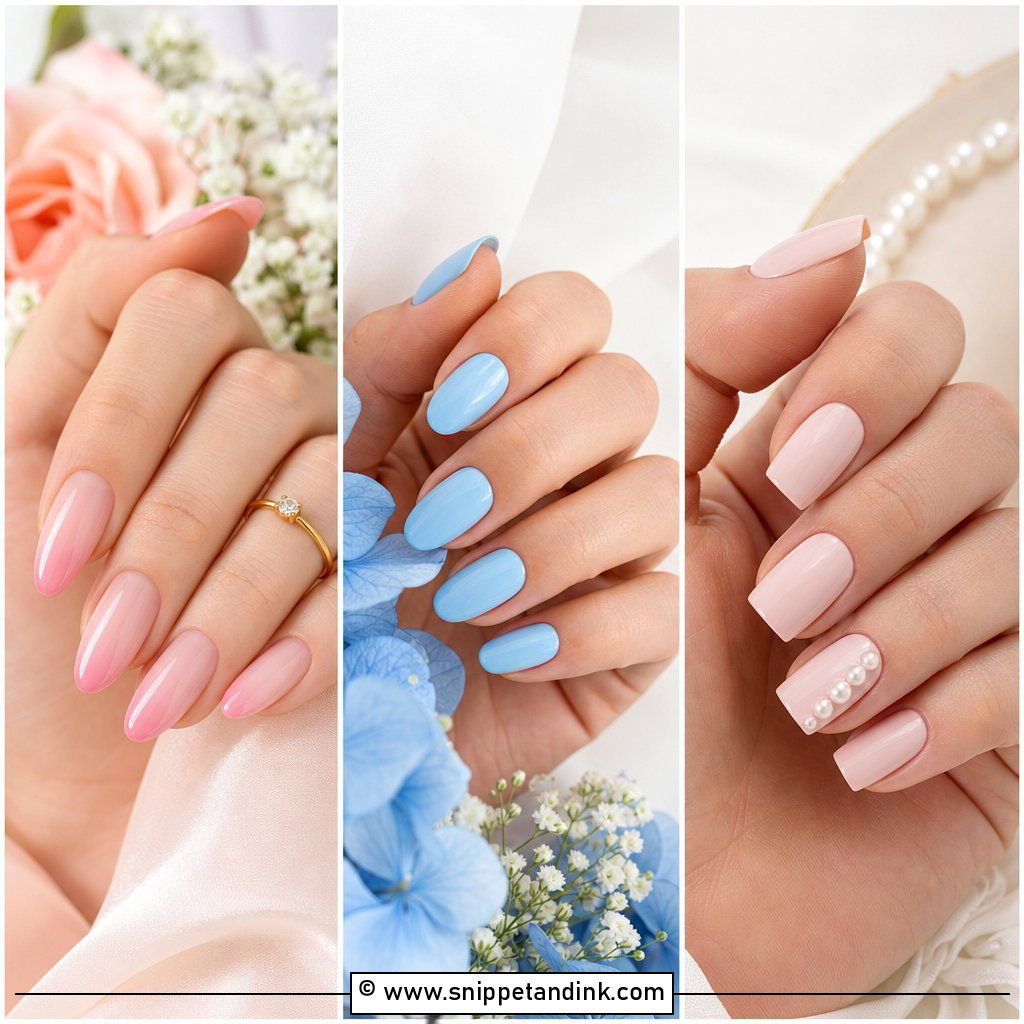
4. Pink Bridesmaid Nails
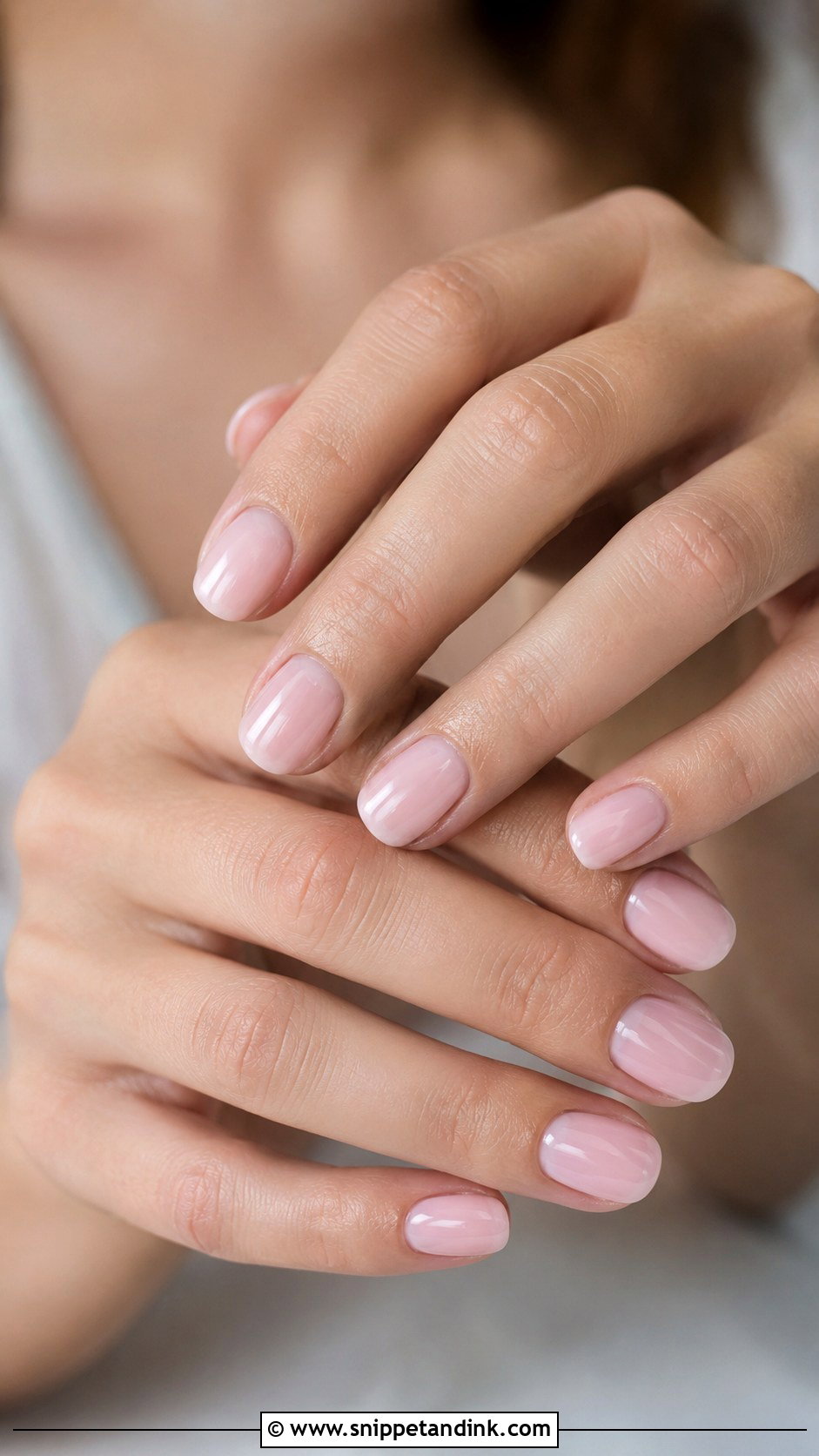
Pink is where I spend the most time on shade, because baby pink, sheer rose, dusty pink and ballet slipper all read differently once the hand is wrapped around flowers. Beside blush or mauve gowns, champagne or florals, a sheer pink melts into the skin in the right way. I keep the length medium-short with a soft round edge so it stays clear of the bouquet ribbon. For a very formal dress code I’d pick a sheer pink gel over a cream polish: gel cures hard and stays glassy for days, while a pale cream polish can look streaky if the coats go on unevenly.
5. Blush Bridesmaid Nails
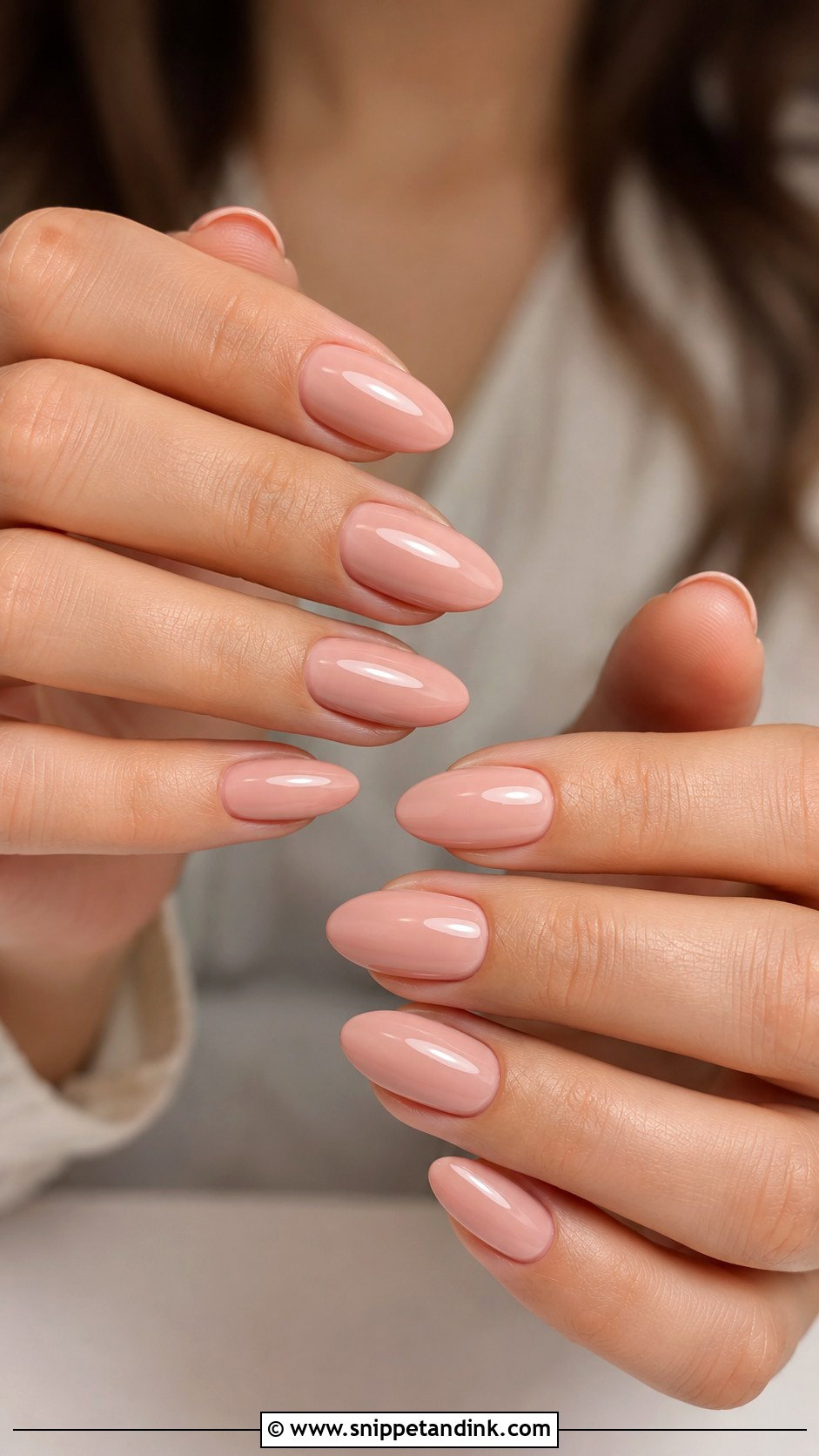
Blush sits between pale pink and nude, so it forgives a lot. That makes it my safest bet when six women with six skin tones need to look like a set; I’ll often let each bridesmaid take the blush that suits her within the same family rather than forcing one bottle on everyone. It pairs with rose gold jewelry, neutral bouquets and dresses in champagne, taupe, ivory, sage or dusty rose. Oval or almond, high gloss. A faint shimmer is fine if the bride has said yes to a little glow, but ask her first.
6. Pearl Bridesmaid Nails
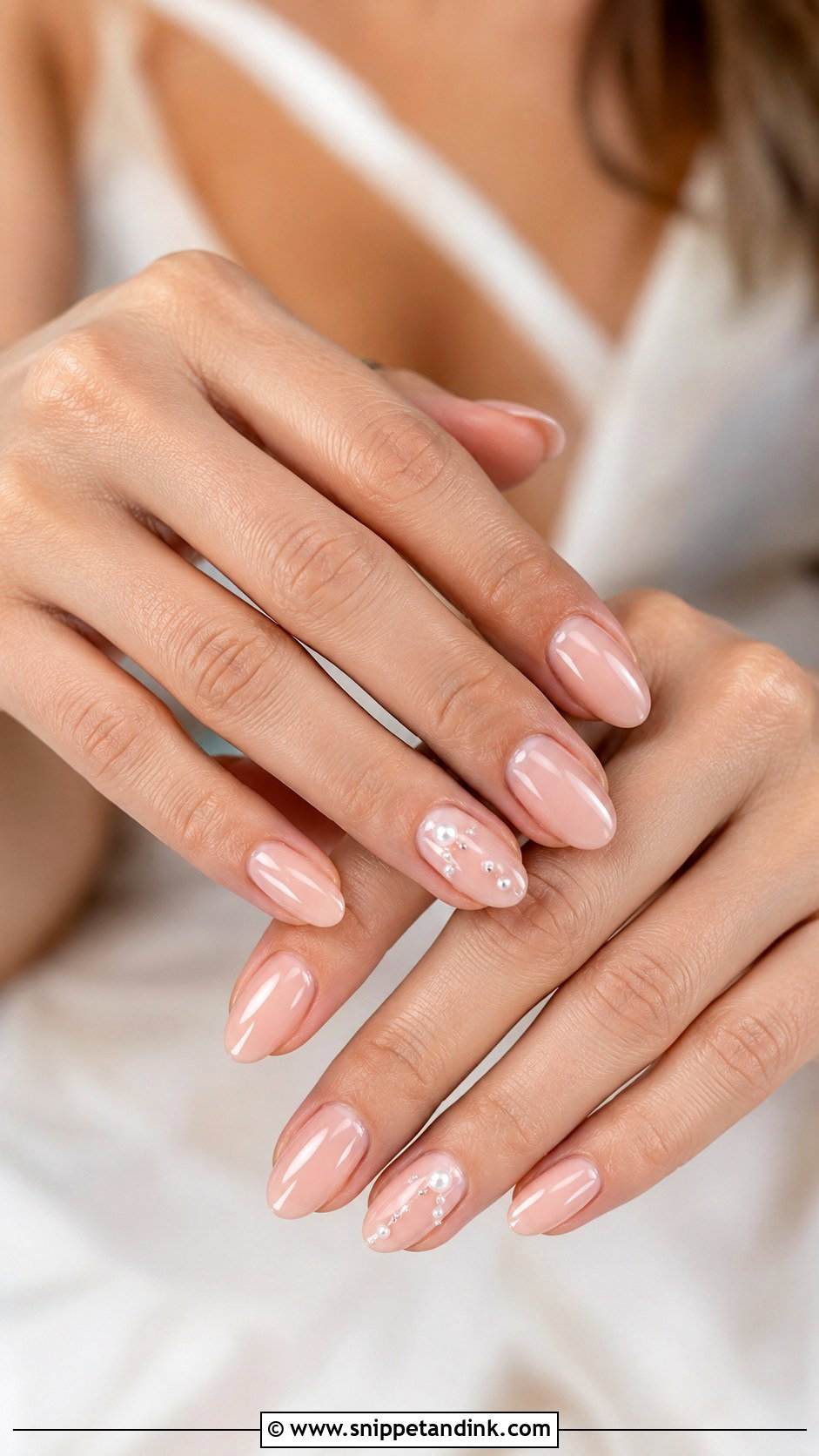
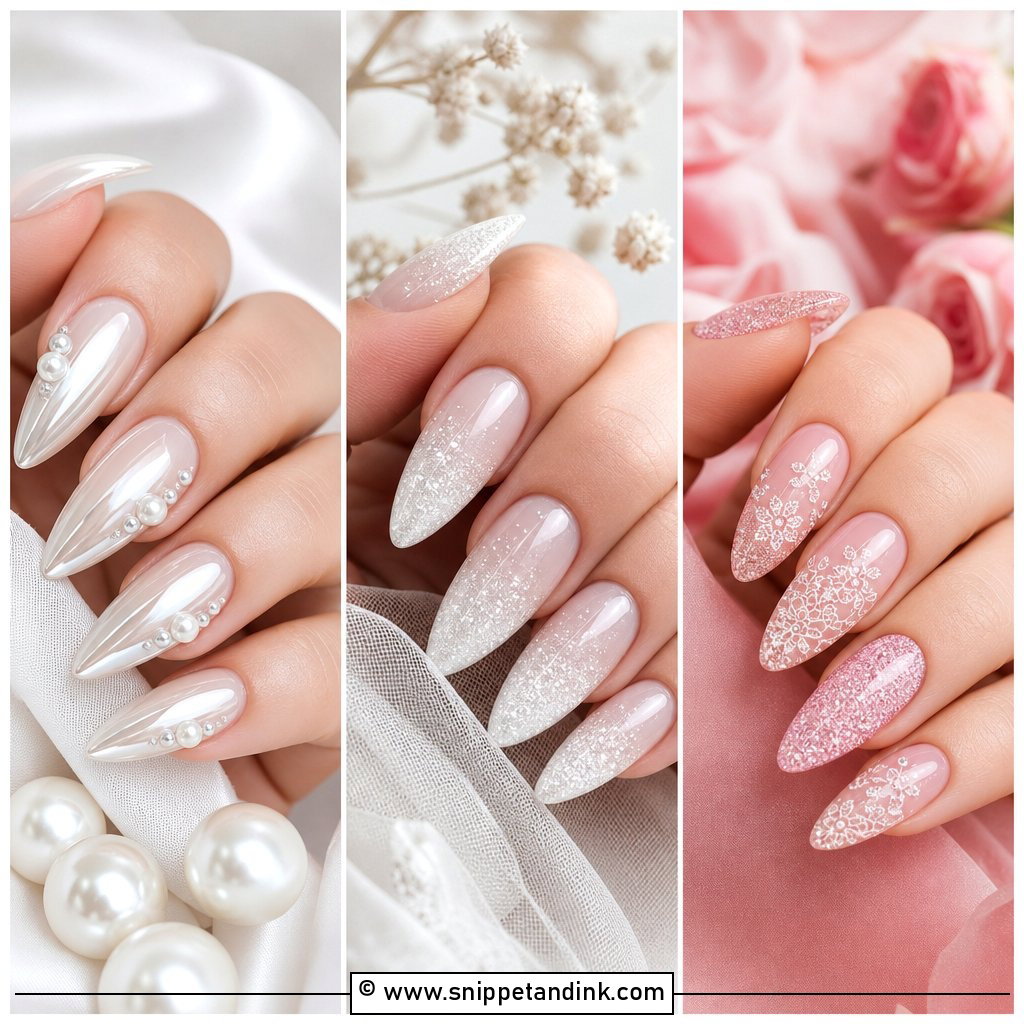
Pearls are where I see the most regret, and it’s always about size. Half-pearls that sit too high catch on lace, chiffon and loose hair, so I use the smallest flat-backed ones and set them low in gel near the cuticle, on one or two nails only. The base can be sheer pink, nude or milky. Done this way they echo pearl earrings, satin dresses and soft updos at a classic, garden or coastal wedding. A short almond or oval keeps the pearls away from the tip, which is the part that takes the knocks.
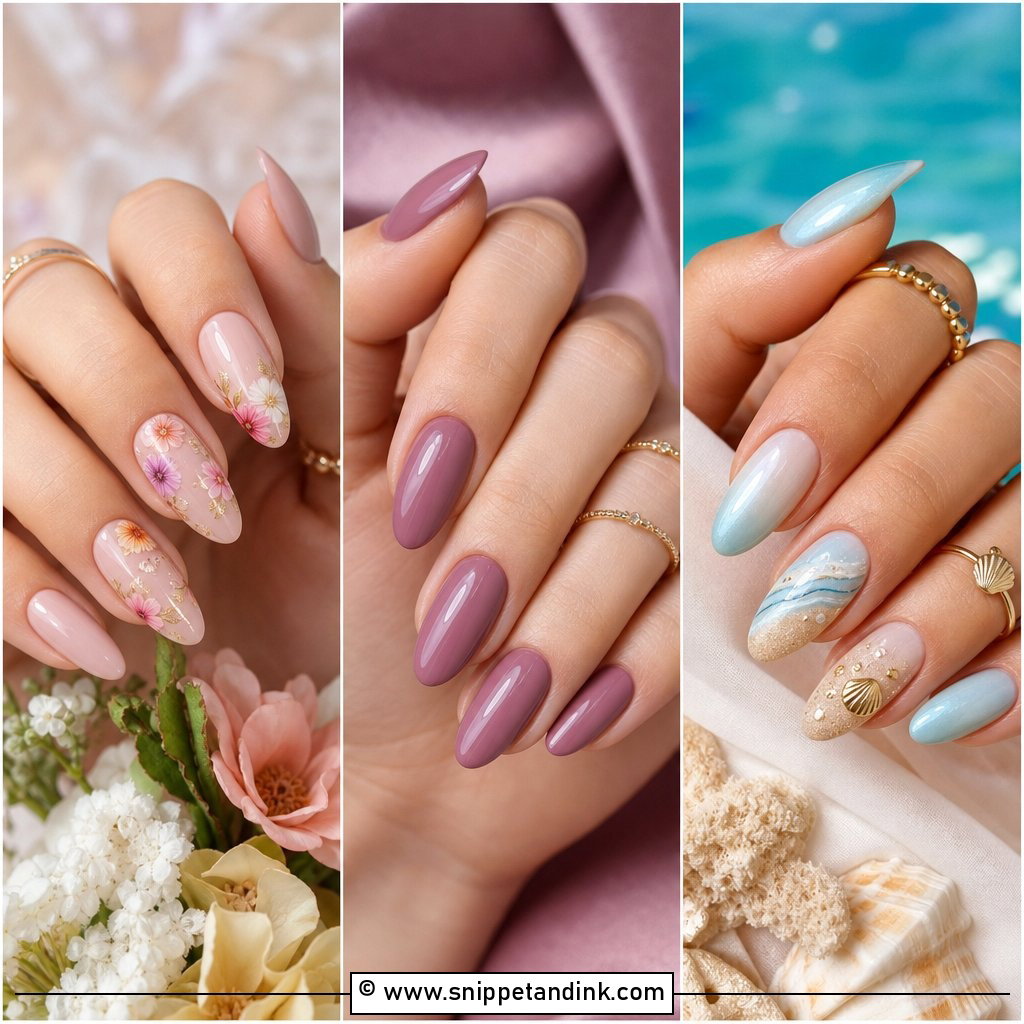
7. Chrome Bridesmaid Nails
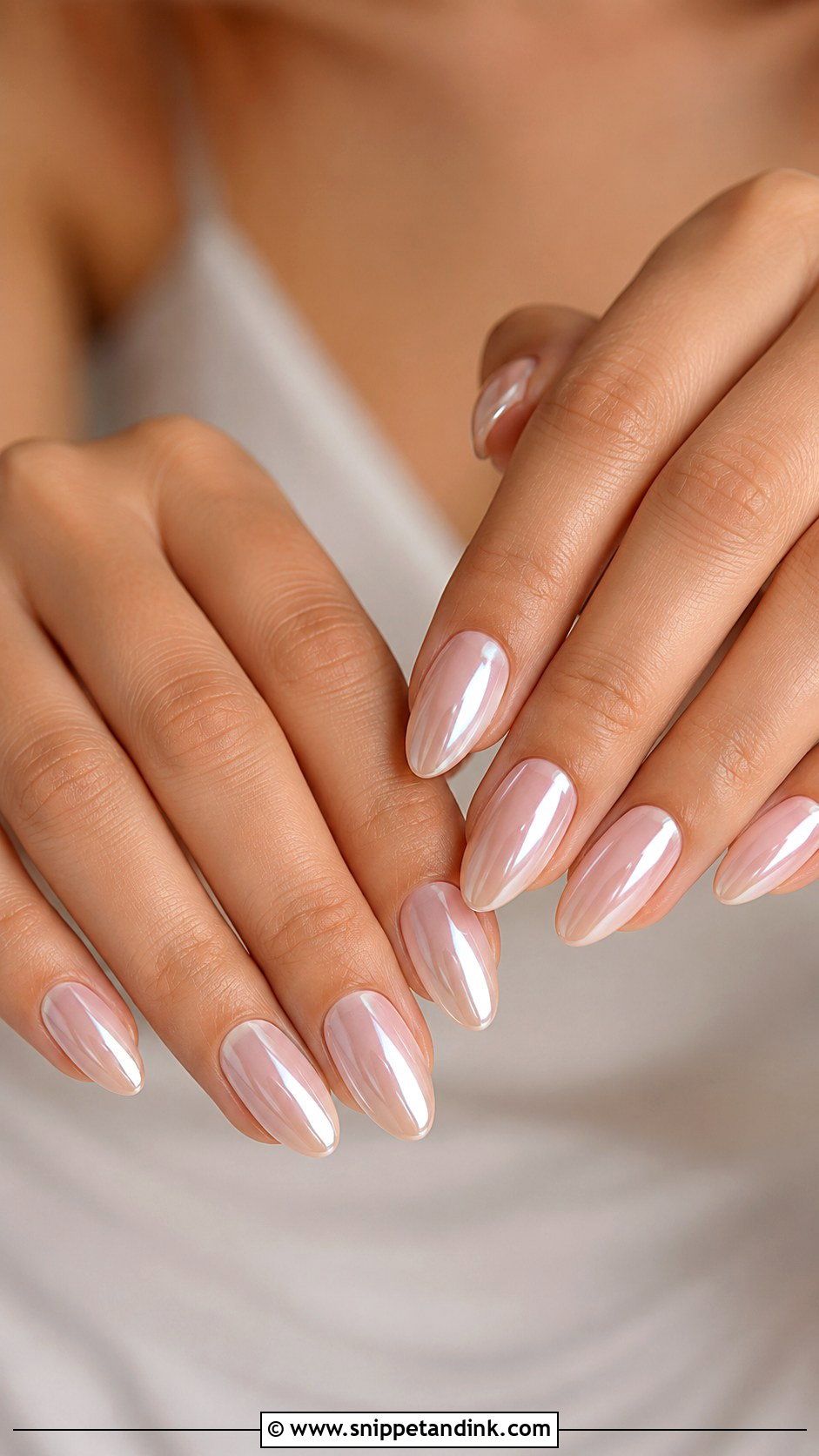
Chrome bridesmaid nails only read as classy when the chrome is a glaze, not a mirror. I rub a fine pearl powder over a cured no-wipe top coat laid on nude, blush, pale pink or milky white, then seal it; the base color does most of the work and the powder just catches the light. That suits evening receptions and dresses in champagne, silver, lavender, dusty blue or black. Full mirror silver or gold is a different look entirely and usually pulls focus from the bride. Almond, oval and short squoval all hold it well.
8. Champagne Bridesmaid Nails
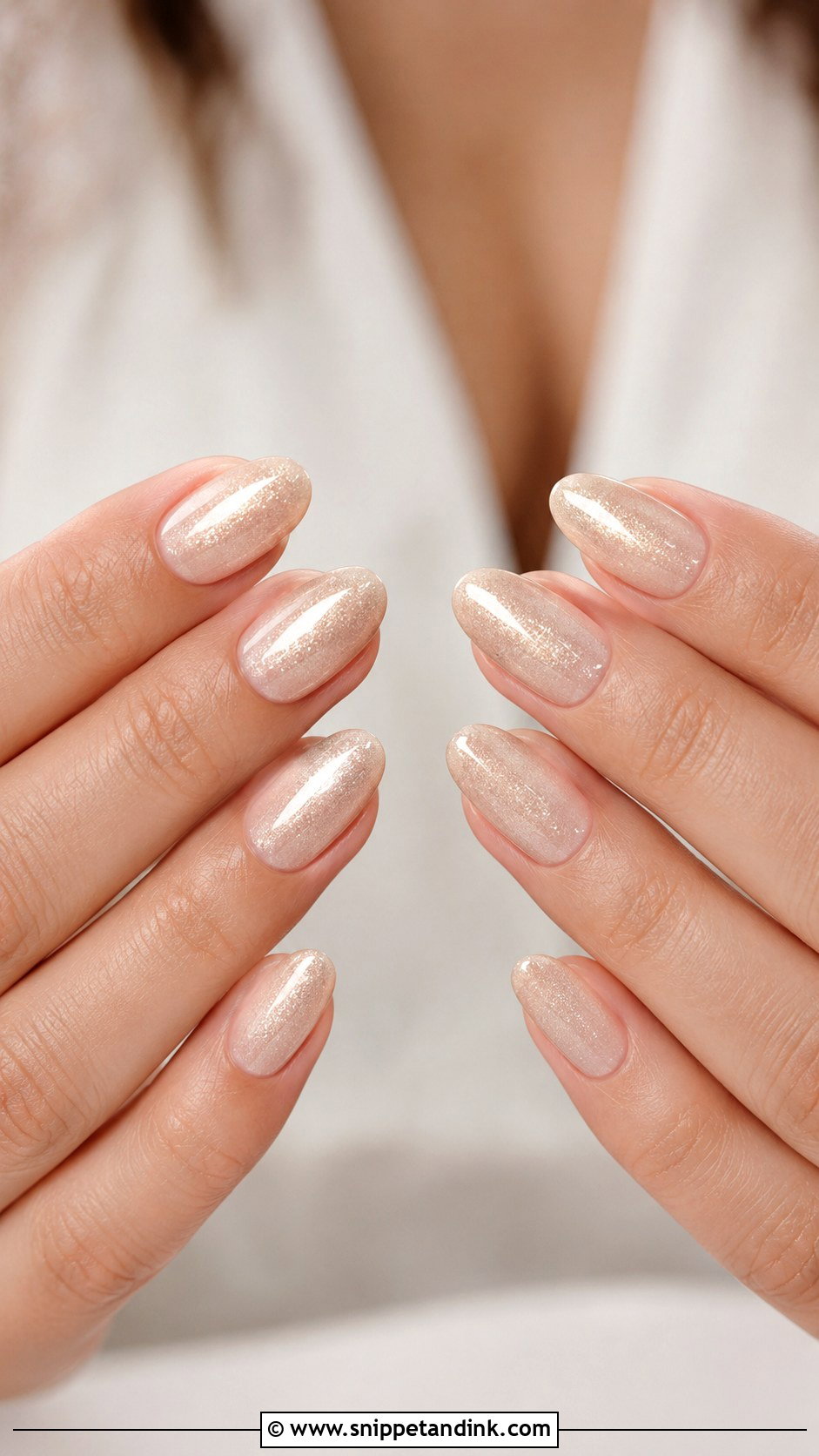
Champagne is a fine shimmer, and the word fine matters. Chunky glitter flashes white under a photographer’s flash, while a fine champagne gel just reads as warmth. Depending on how much glow the bride wants, I’ll use a sheer champagne polish, a fine-shimmer gel or a nude base with a thin champagne overlay. Warm neutrals, gold accents, ivory flowers and satin dresses are its natural setting, and it looks richest on almond or oval nails where the curve catches the light. It’s a strong pick for fall and evening weddings, especially with gold jewelry and warm-toned makeup.
9. Rose Gold Bridesmaid Nails
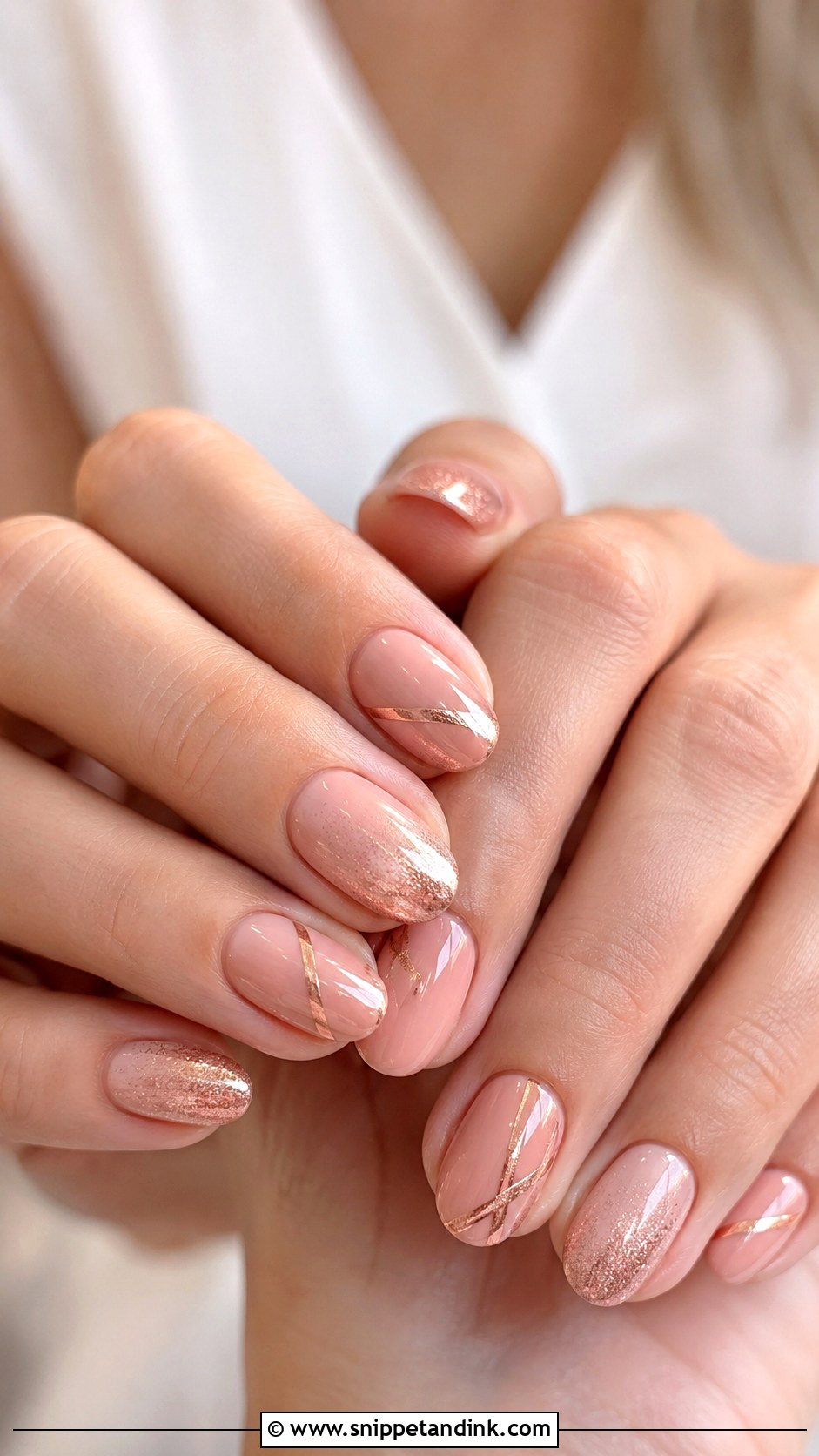
Rose gold suits a blush, mauve, champagne, ivory or dusty rose palette, but a full metallic set of it can look more nightclub than wedding. I treat it as an accent: a soft shimmer, a slim foil line or a thin French tip over a nude pink base. Foil needs a smooth surface under it and a proper top coat over it; left uncapped, it wrinkles and lifts at the edges after a day of handwashing. Medium almond shows it off, and short square works too if the edges are clean.
10. Taupe Bridesmaid Nails
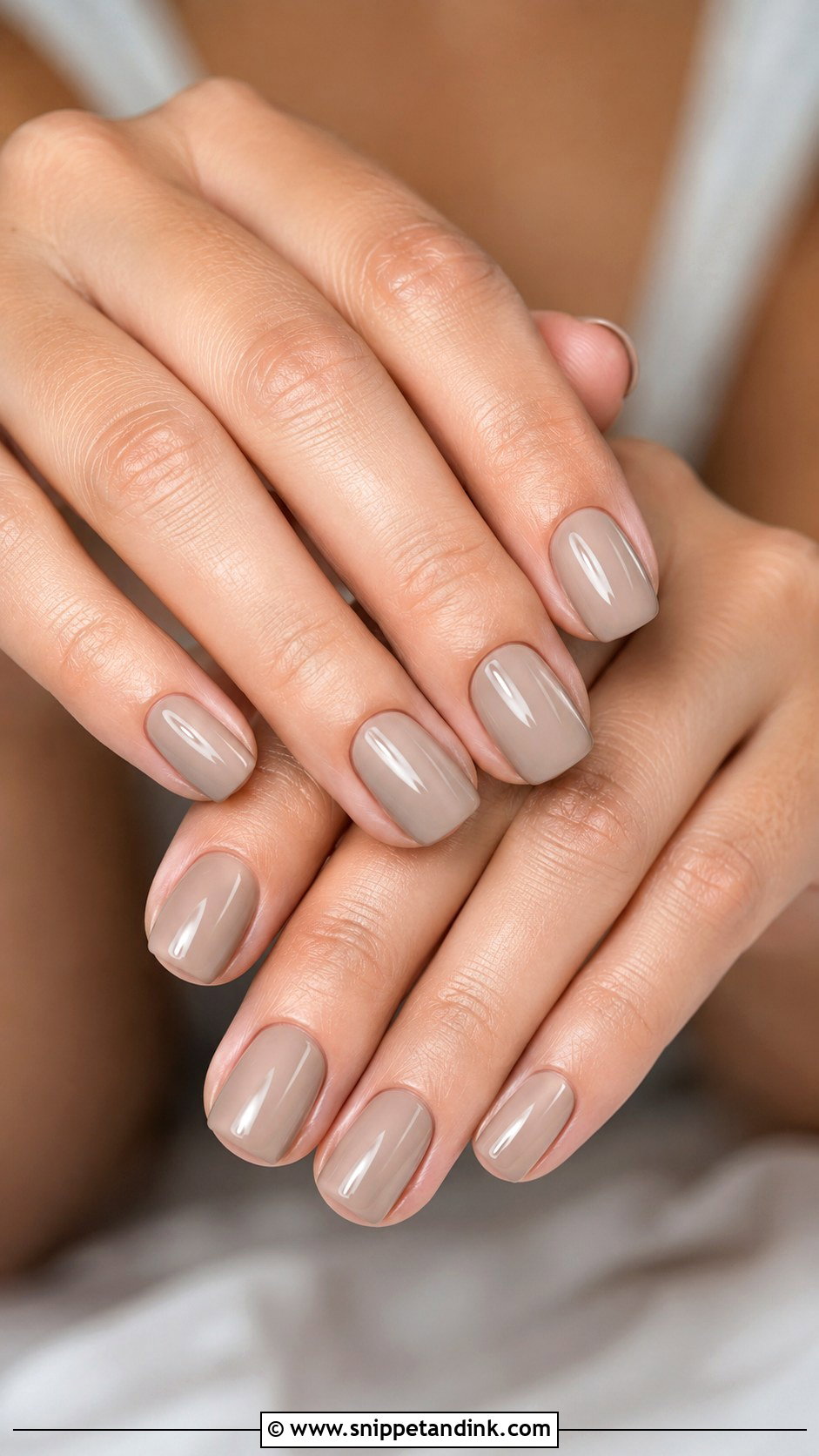
Taupe is the shade I reach for when a bride says neutral, but not pink. It sits between grey, beige and brown, so it gets along with black dresses, sage gowns, cream flowers, terracotta and dusty blue. Cream taupe reads soft; glossy taupe reads more modern. Undertone matters more here than people expect, because a cool, grey-heavy taupe can make warm skin look tired, so I swatch it against the hand before deciding. Short squoval for practical, almond for formal, and it carries into fall and winter without going too dark.
11. Mauve Bridesmaid Nails
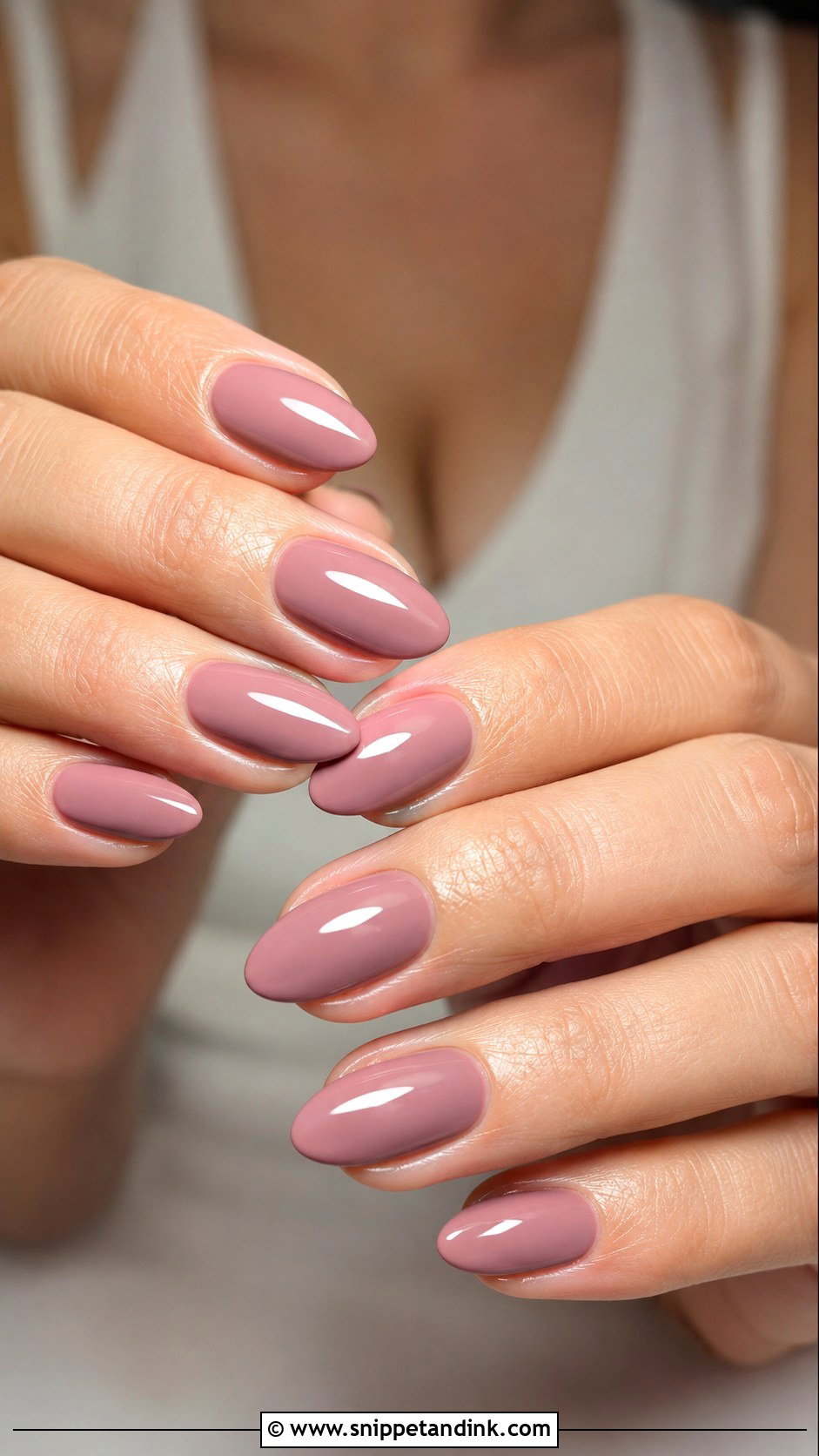
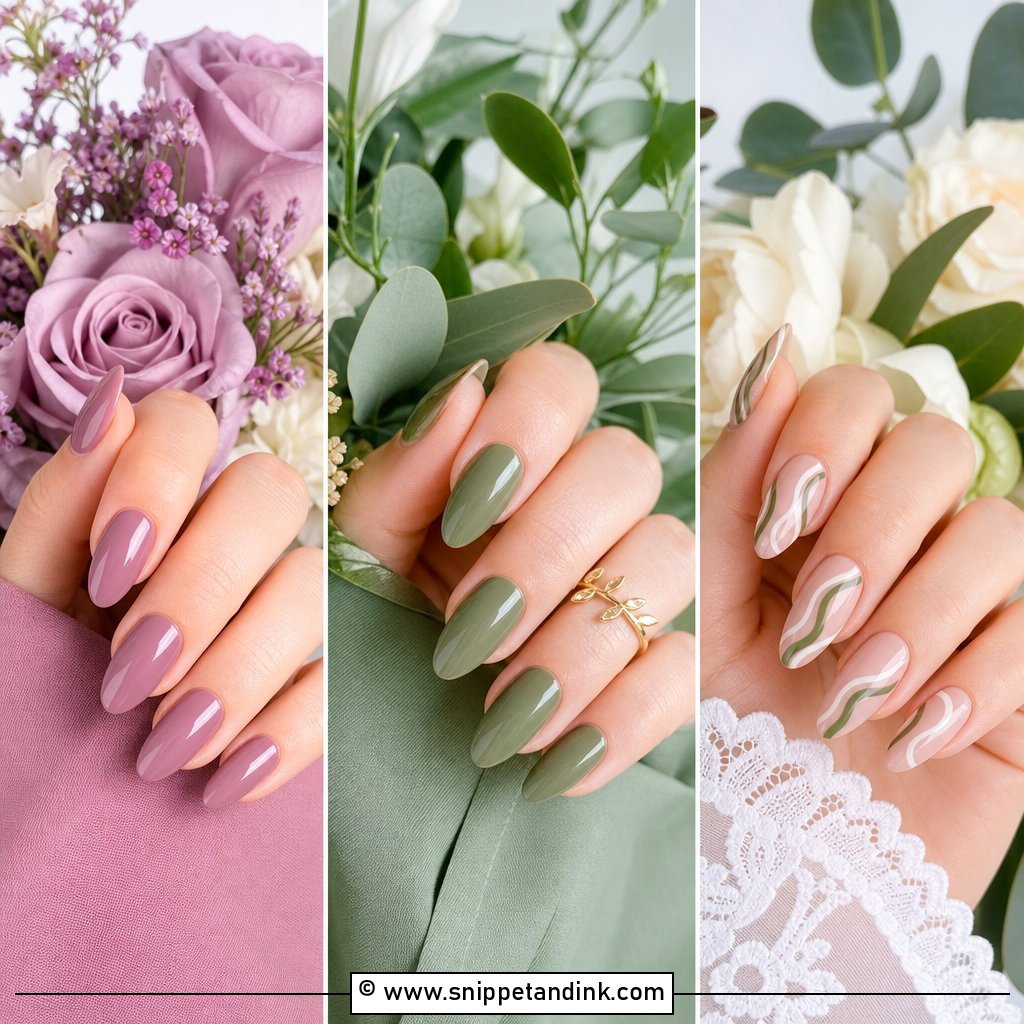
Mauve is pink with the sweetness taken out. Next to dusty rose, lavender, plum, grey, navy or sage dresses it adds color without fighting them. I go lighter and creamier for daytime and a shade deeper for evening, because a pale mauve under warm reception lighting can wash out to nothing. It flatters a wide range of ages and skin tones since it carries warmth and depth at once. Oval or almond, gloss, and at most one shimmer accent.
12. Lavender Bridesmaid Nails
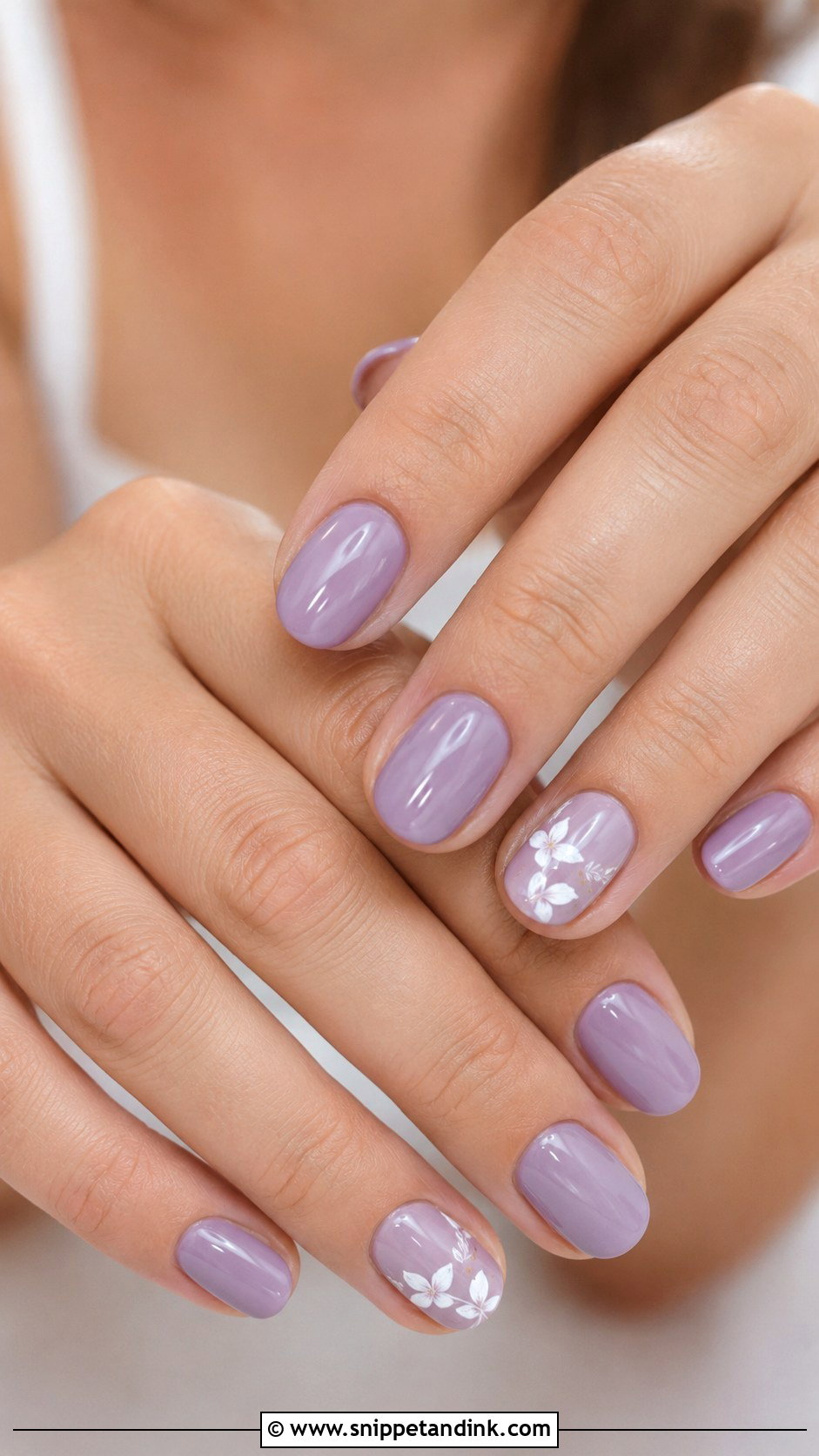
With lavender, the danger is a candy pastel that looks like an Easter manicure. I lean toward dusty or sheer versions so it sits with lilac, grey, ivory, sage or pale blue dresses at a spring or summer wedding. Pastels are also notoriously streaky; it usually takes three thin coats to look even, so allow extra appointment time. A plain glossy set is quiet, a lavender French is fresher, and tiny white botanicals can suit a floral theme if they stay small. Short oval nails carry the color best.
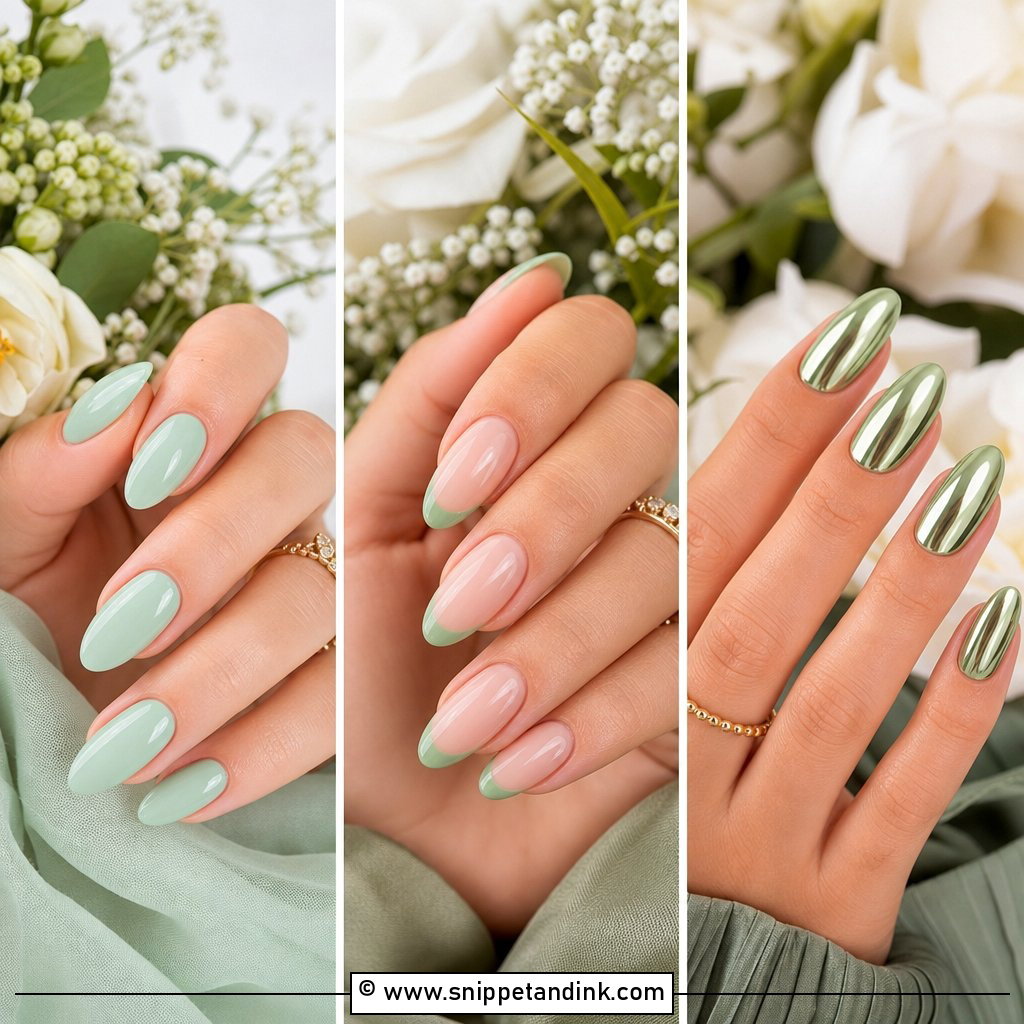
13. Sage Green Bridesmaid Nails
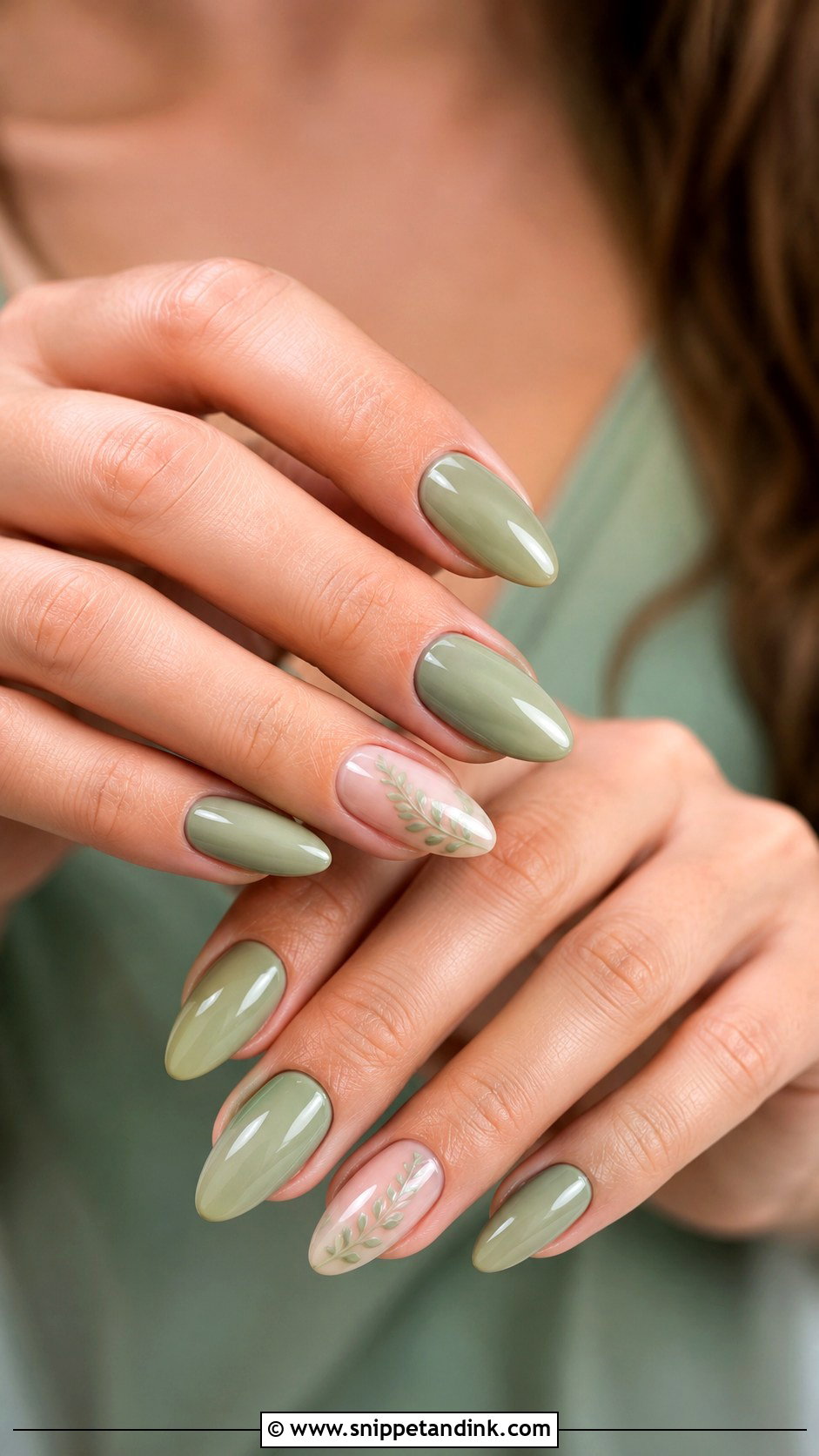
Sage gives a bridal party more personality than nude while staying calm next to eucalyptus, ivory bouquets, champagne or taupe dresses and terracotta details, which is why it’s my usual answer for garden ceremonies and rustic venues. I prefer a muted sage cream, or sage French tips over sheer nude for anyone who finds full green too much. A brighter green shows regrowth at the cuticle quickly and can clash with real foliage in photos, so I keep it grey-toned. Almond, oval and short square all wear it.
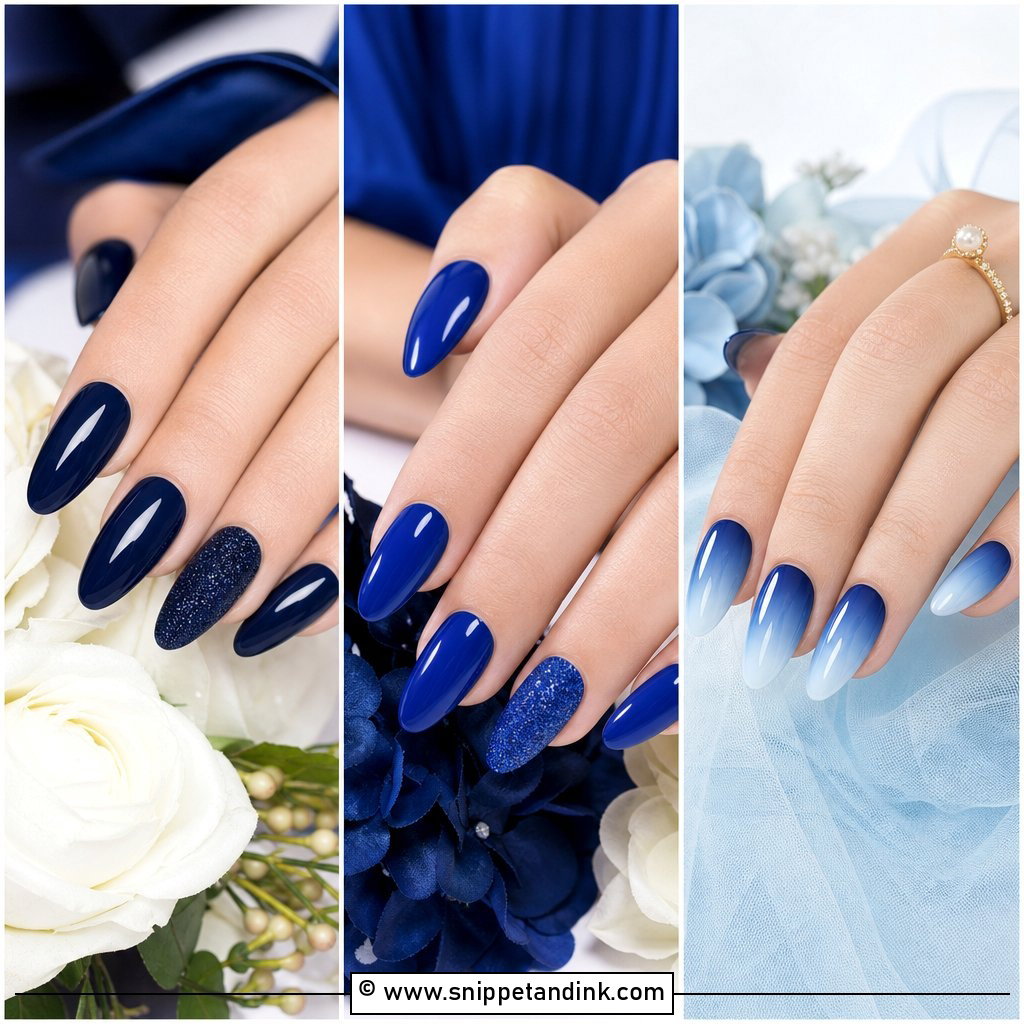
14. Dusty Blue Bridesmaid Nails
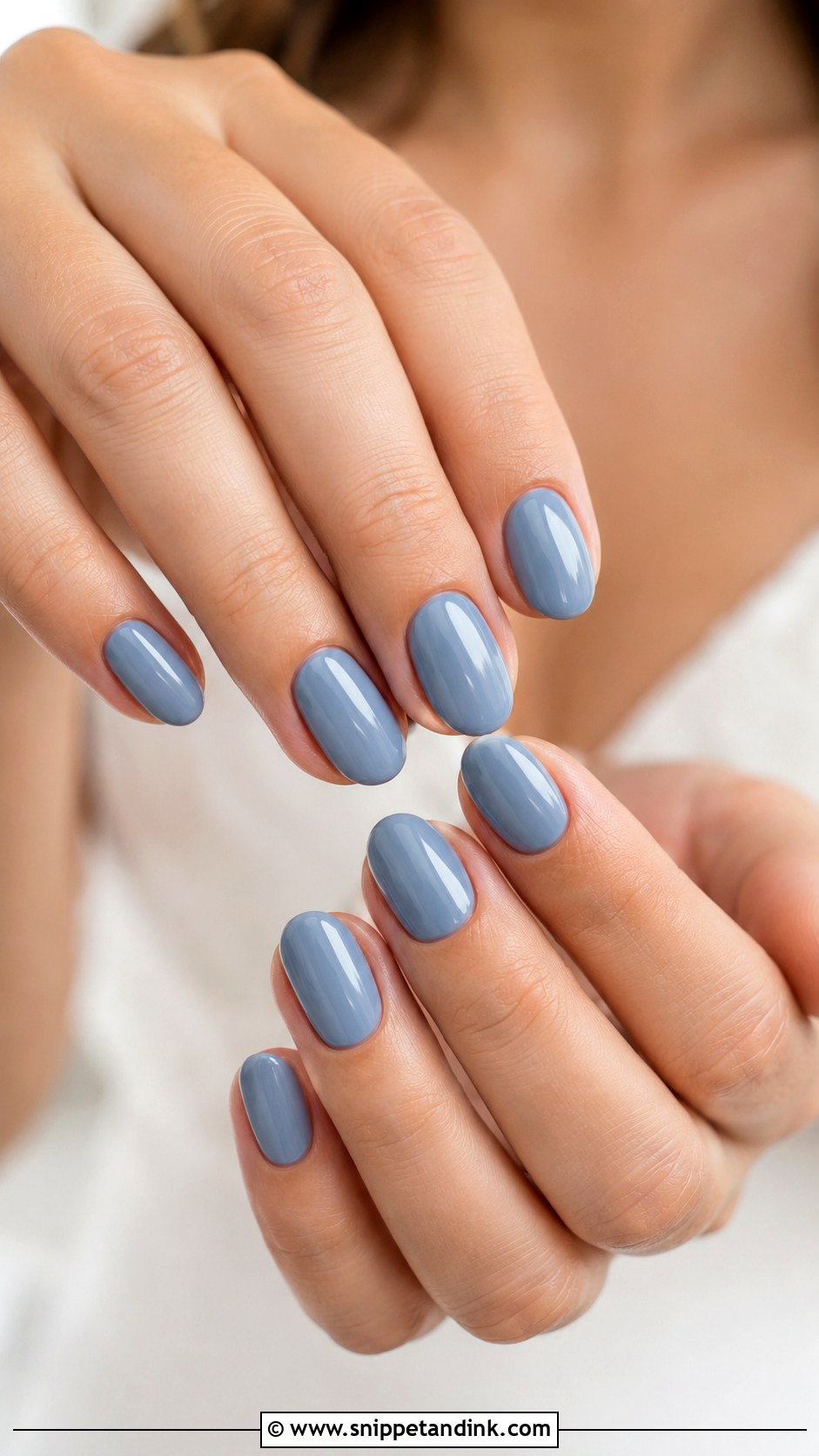
If the dresses are already dusty blue, I never try to match them exactly. Polish and fabric reflect light differently, so a perfect match in the salon usually looks slightly off in photos, while one shade lighter or darker looks deliberate. A full dusty blue set suits short oval nails; blue French tips are lighter if the bride wants less color on the hands. It plays well with navy, grey, silver, white, blush and champagne, for spring, winter, coastal or formal weddings. Keep the gloss high, since muted blues turn chalky without it.
15. Navy Bridesmaid Nails
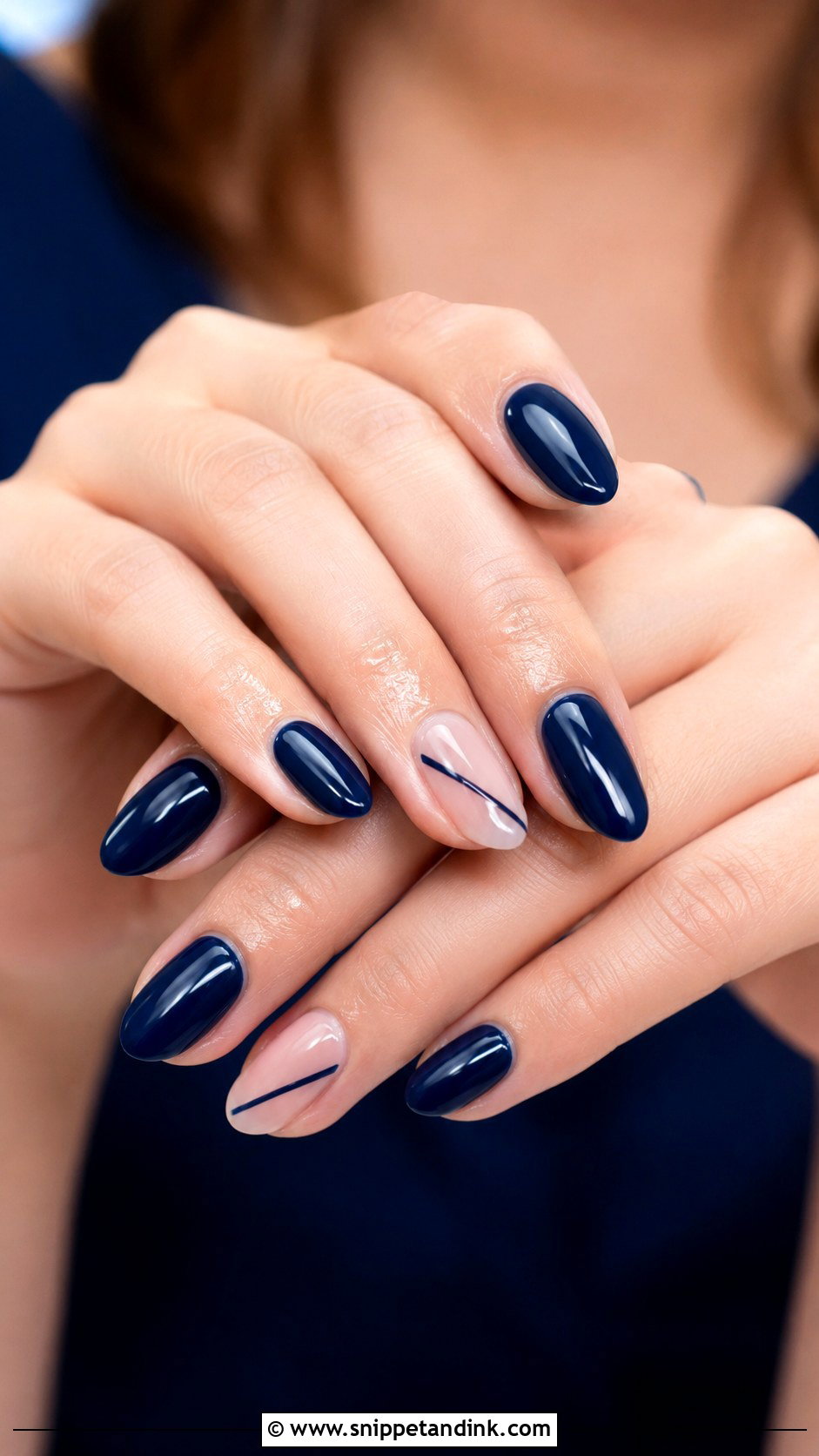
Navy gives you the depth of a dark nail without the severity of black. It belongs at evening weddings, formal venues and with dark dresses, and silver jewelry, pearls, white bouquets, burgundy flowers and champagne details all sit nicely beside it. Dark shades show every chip and every millimeter of regrowth, so I’d book navy no more than two days out and keep it short square or almond. A sheer nude accent nail or a thin metallic line softens it if the bride worries it’s too much.
16. Burgundy Bridesmaid Nails
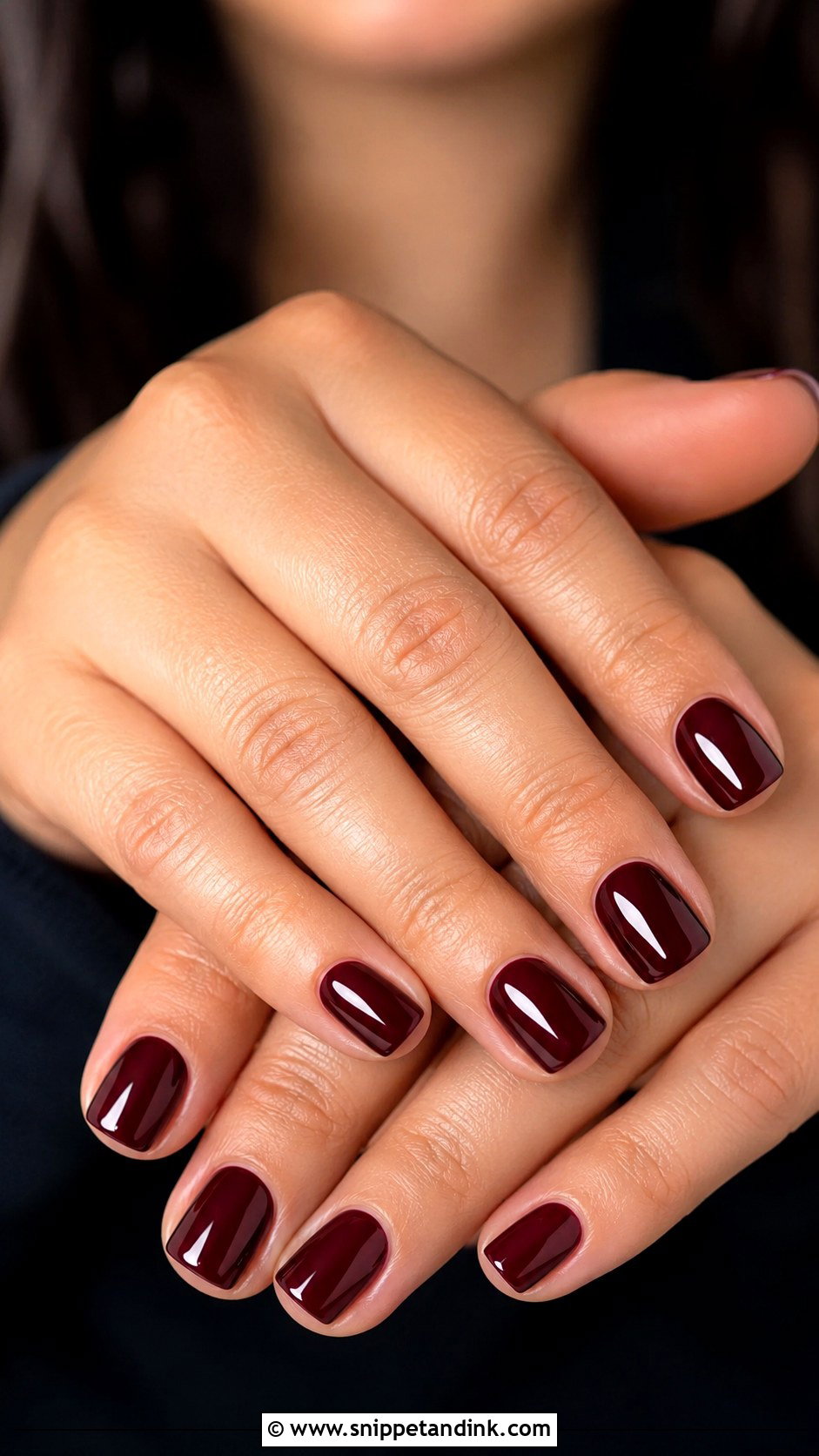
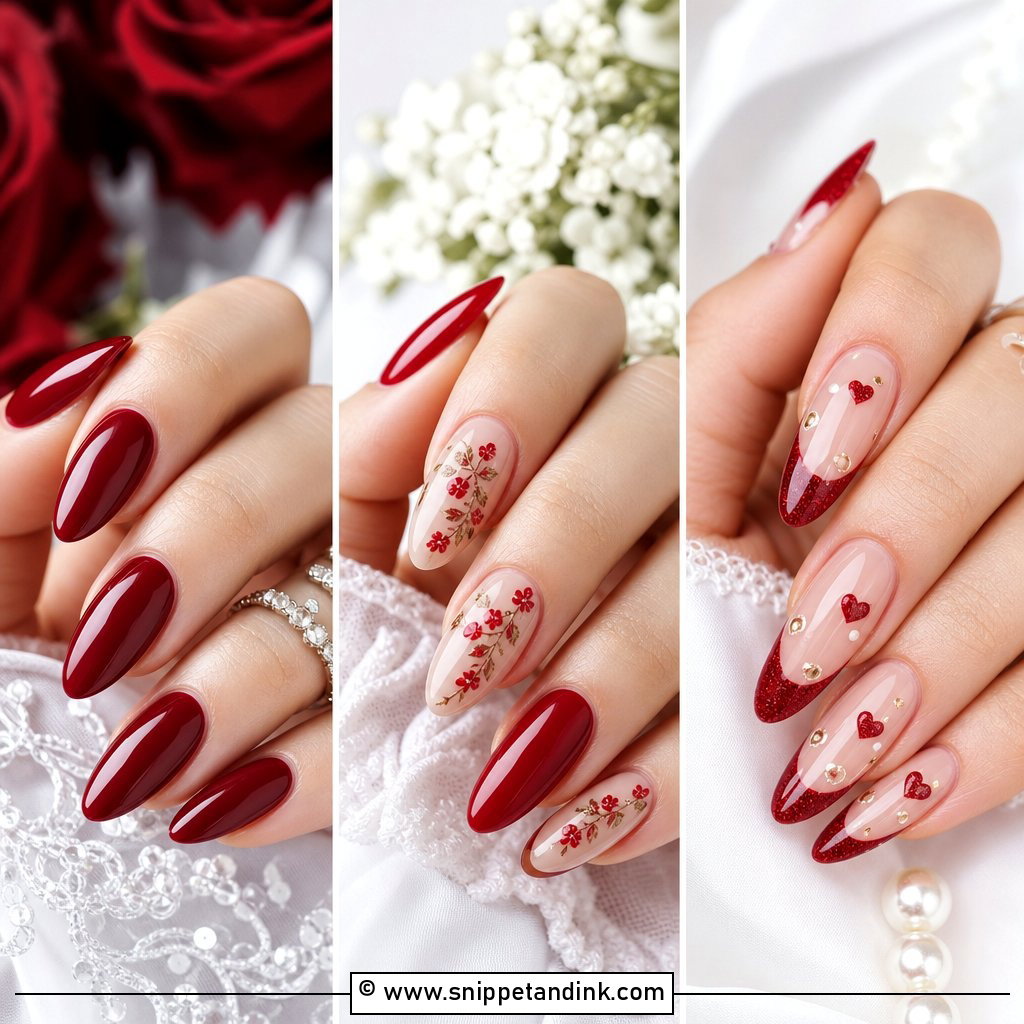
Burgundy is one of the few colors that looks dressed without any art on it. It belongs at fall and winter weddings, beside black, navy, emerald, blush, champagne and deep florals. A glossy cream is the classic version; a sheer wine jelly is softer. Deep reds can stain a bare nail plate, so a proper base coat matters if you’re wearing regular polish. Keep the length short to medium, because long dark almonds start to look more night out than bridal party.
17. Brown Bridesmaid Nails
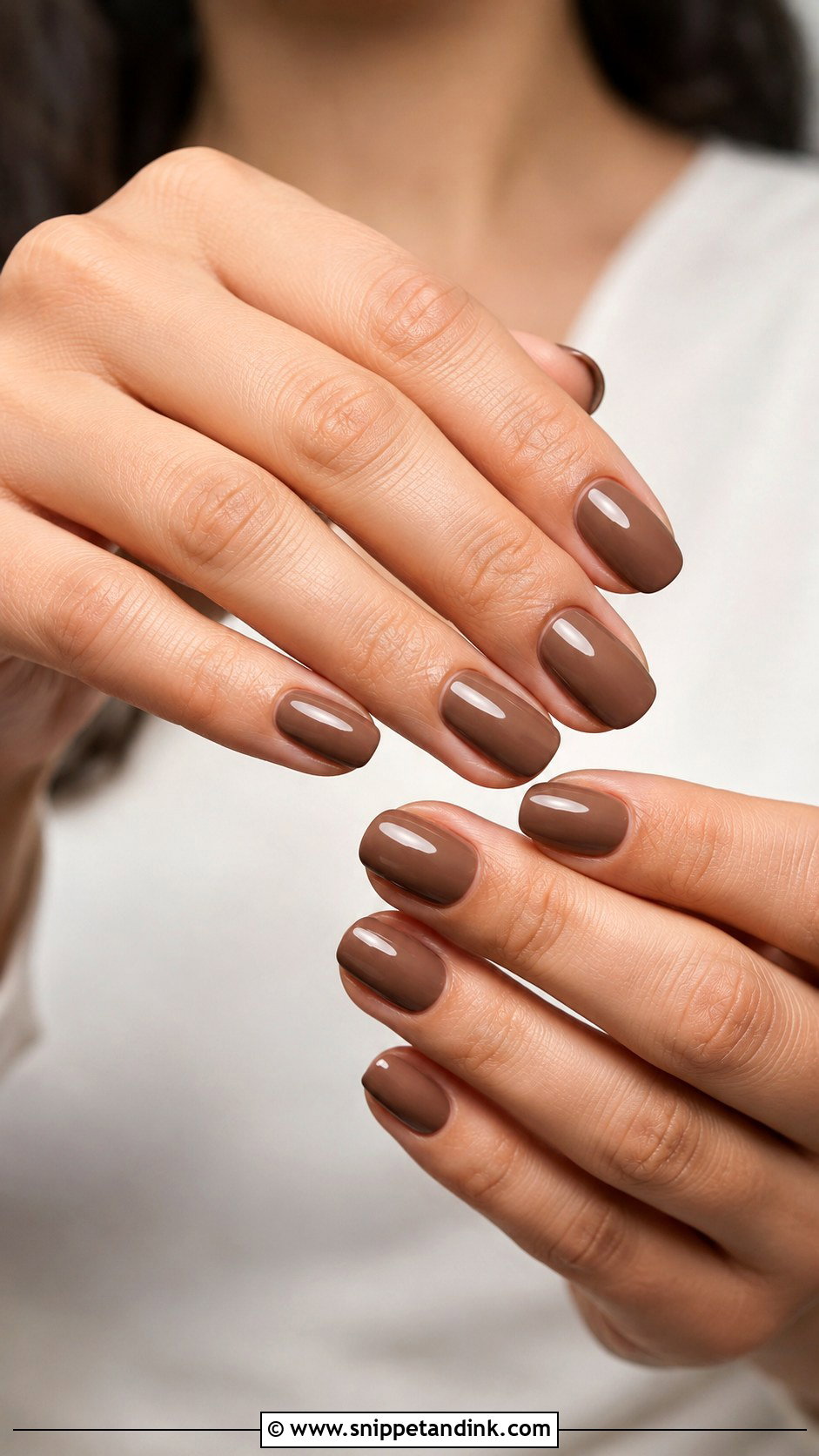
Brown has stopped being an unusual request. Mocha, cocoa, espresso, chestnut and caramel all look polished at a fall wedding or within a neutral palette, especially next to champagne satin, terracotta flowers, ivory bouquets, olive dresses and gold jewelry. Milk chocolate and caramel are the soft end; deep espresso on short glossy nails is the formal end. I match brown to undertone the way I’d match a foundation, red-based browns for warm skin and cooler cocoa for pink undertones. A clean oval or squoval keeps it from looking like a passing trend.
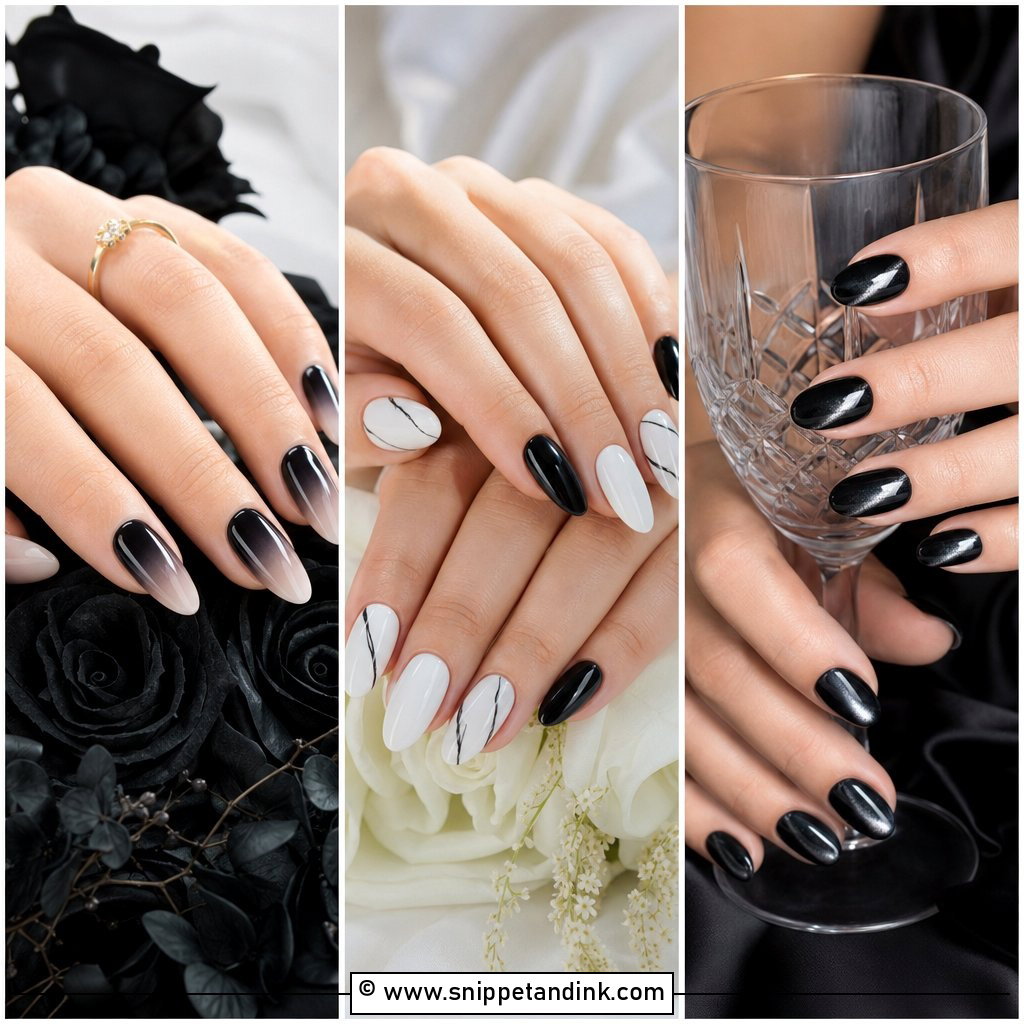
18. Black Bridesmaid Nails
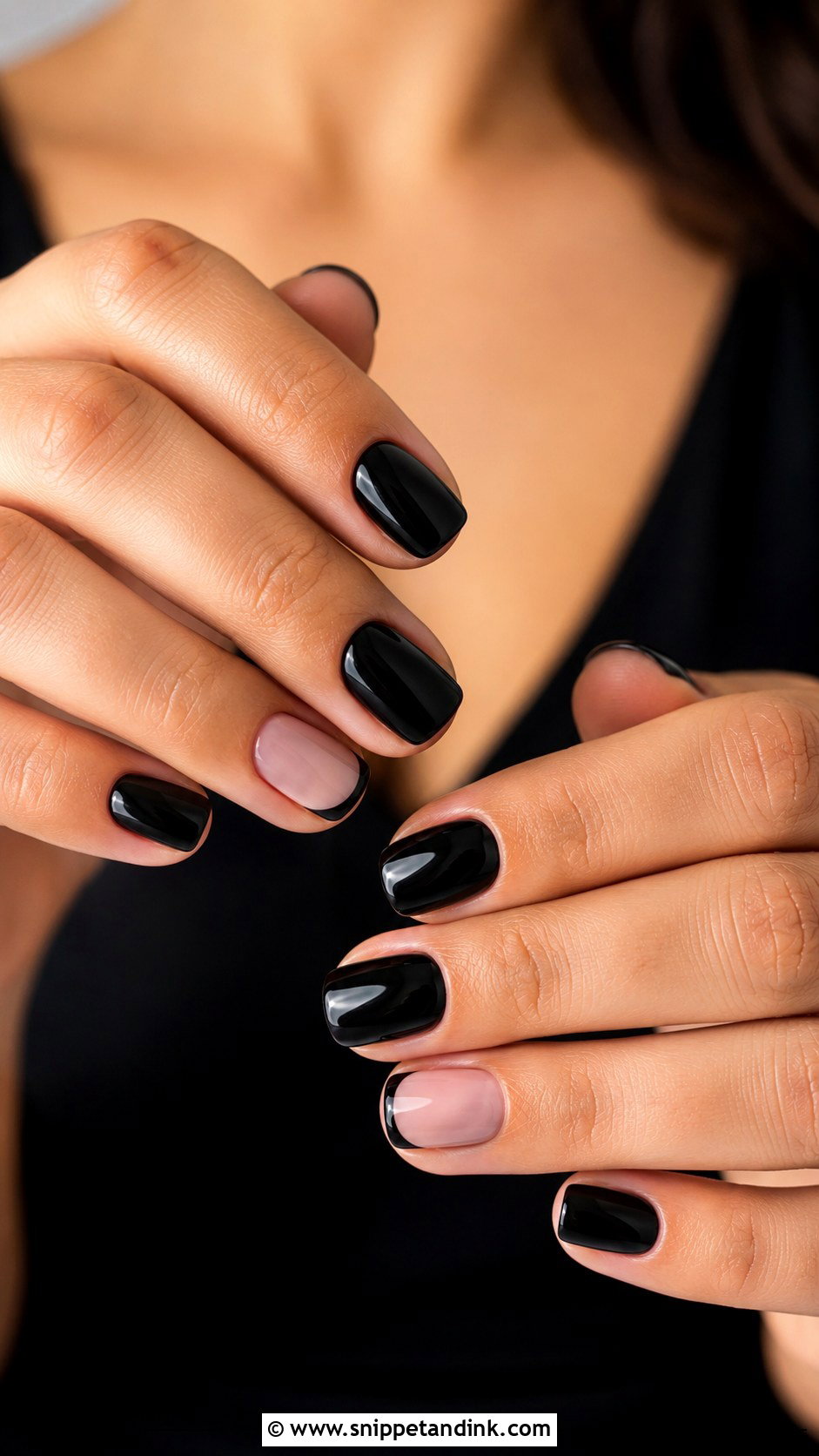
Black can work in a formal or black-tie bridal party, but only with the bride’s blessing, and only short. A long black set looks edgy; a short glossy one looks like a tuxedo. It pairs with black dresses, white flowers, silver and minimalist palettes. If full black feels heavy, a sheer black jelly, black French tips or one nude nail with a fine black line are gentler routes. Skip big embellishments. Black also shows wear at the free edge faster than any other color, so make it the last appointment before the wedding.
19. White French Bridesmaid Nails
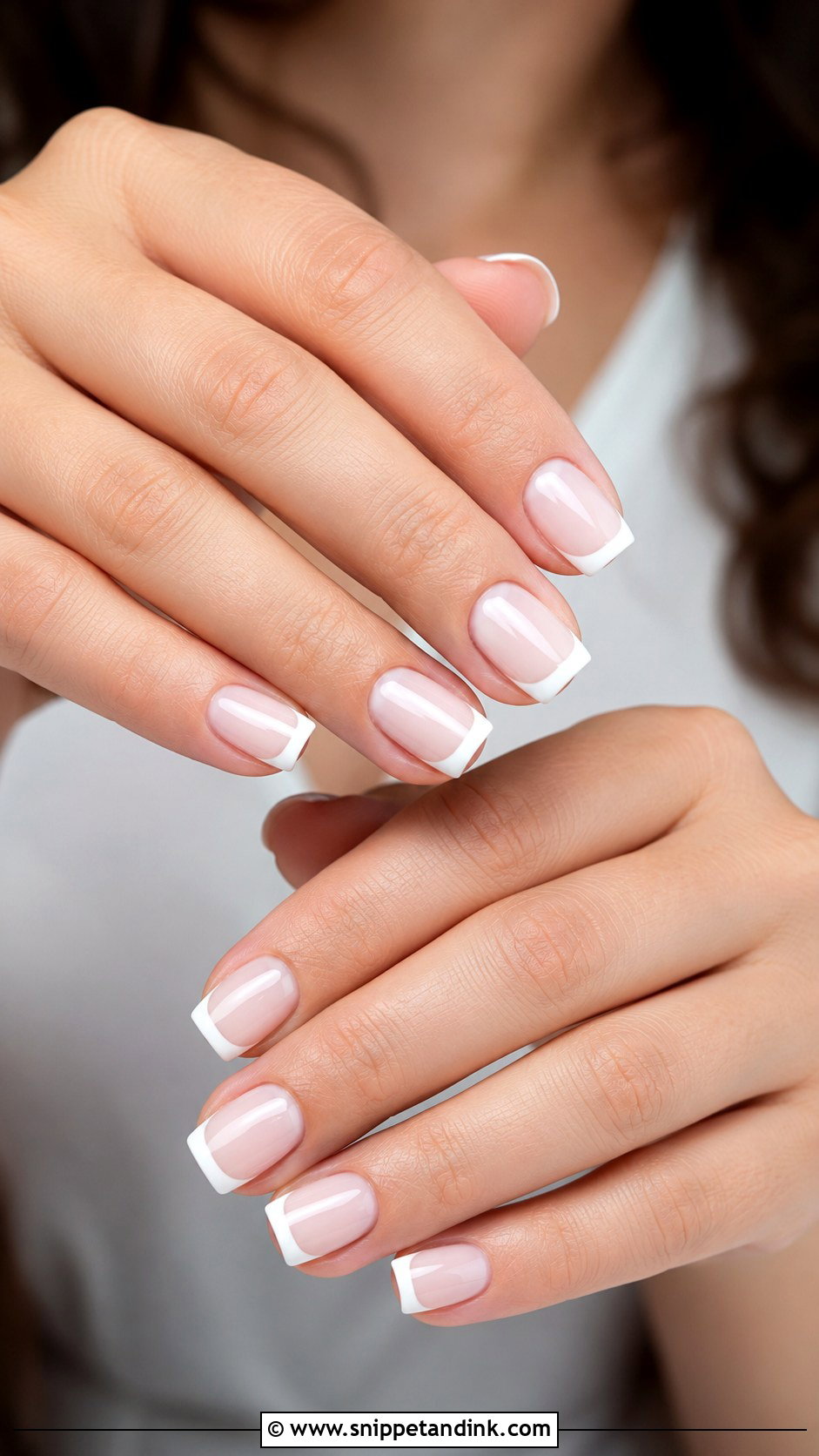
A white French on a milky pink base is softer than full white and goes with every dress color, which is why it’s my default for mixed bridal parties. I keep the tips slim and the shape either rounded almond or a soft square with eased corners. One practical bonus: a small chip at the tip hides inside the white, while on dark polish it’s the first thing a camera finds.
20. Micro French Bridesmaid Nails
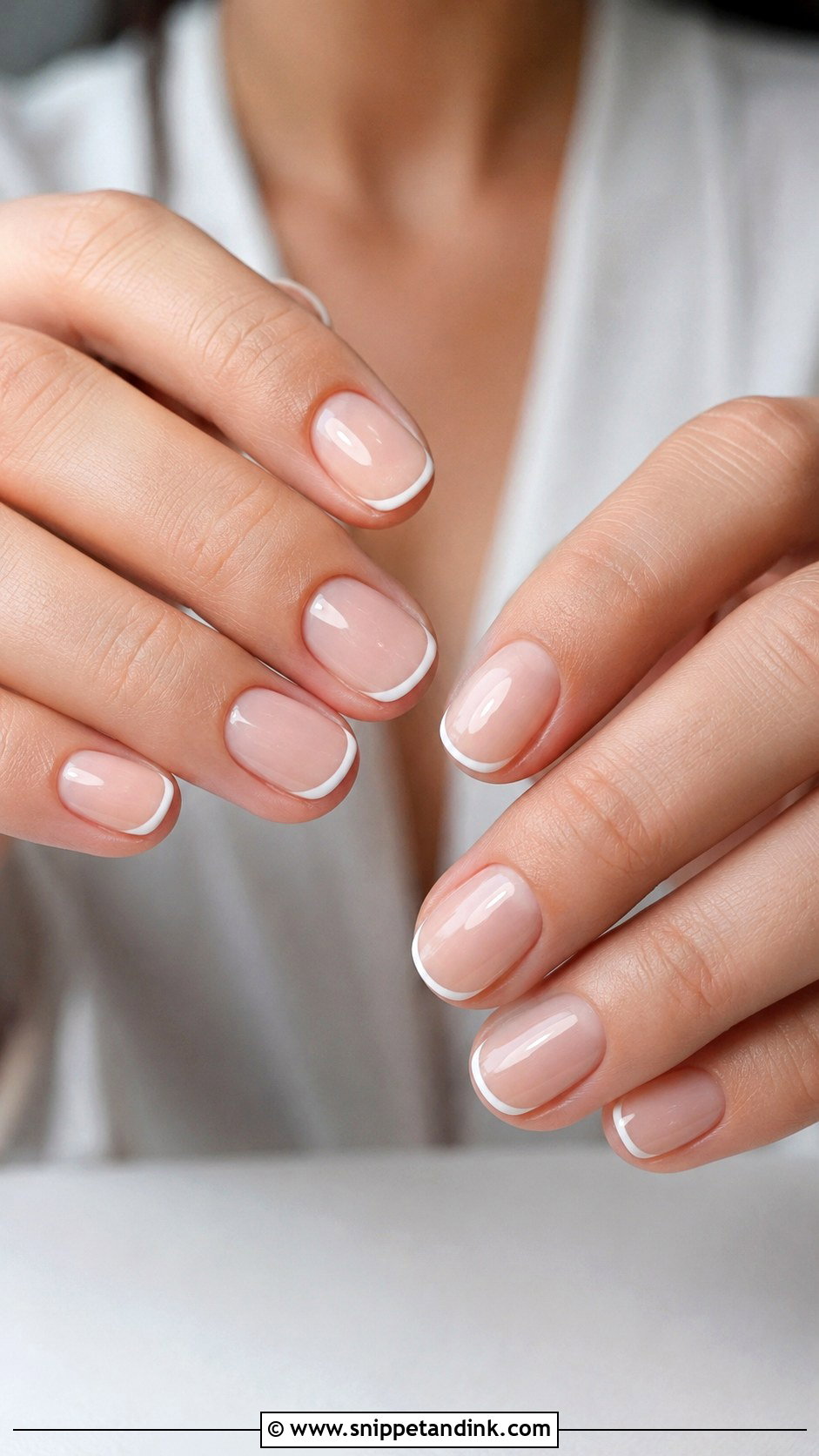
A micro French is a hairline of color along the free edge and nothing more. The base is sheer nude, pink or milky; the line can be white, champagne, blush, sage or even dusty blue if the palette allows. It’s the best design I know for short nails, because a thick tip eats half of a short nail and makes fingers look stubby, while a thin line makes the nail look longer. Steady liner-brush work is the whole job, so it’s worth booking someone who paints a lot of them. Quiet enough for a conservative ceremony, too.
21. Ombre Bridesmaid Nails
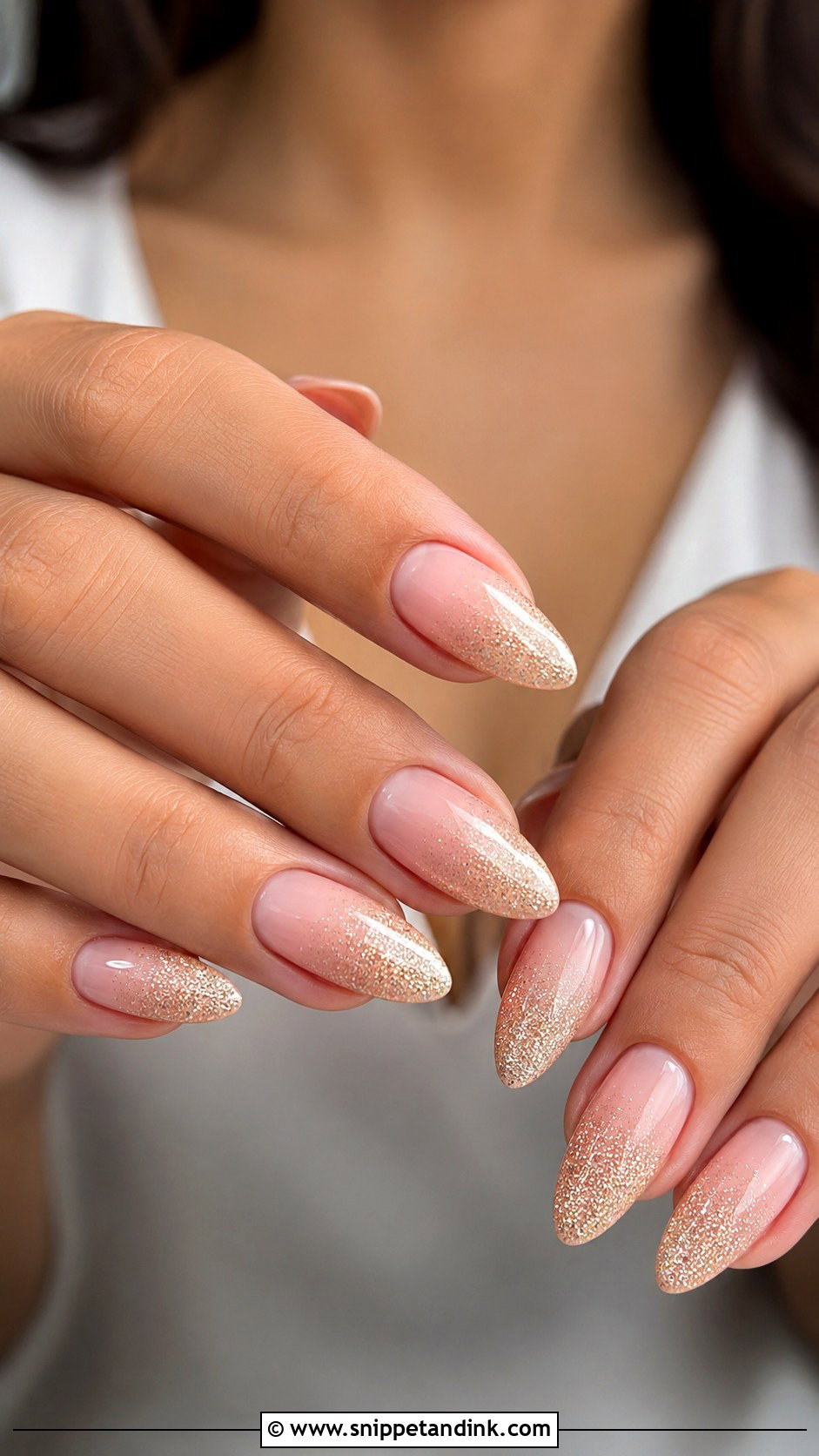
The wedding ombre most people mean is the baby boomer: nude or pink fading into milky white. I blend it in gel with a soft brush rather than a sponge, which gives a smoother fade without the grainy texture sponge work can leave. It needs medium length to have room to blend; on very short nails the gradient collapses into a muddy band. Almond, oval and coffin all suit it. Keep the contrast gentle and seal it with gloss, and it becomes a softer cousin of the French for classic or formal weddings.
22. Floral Bridesmaid Nails
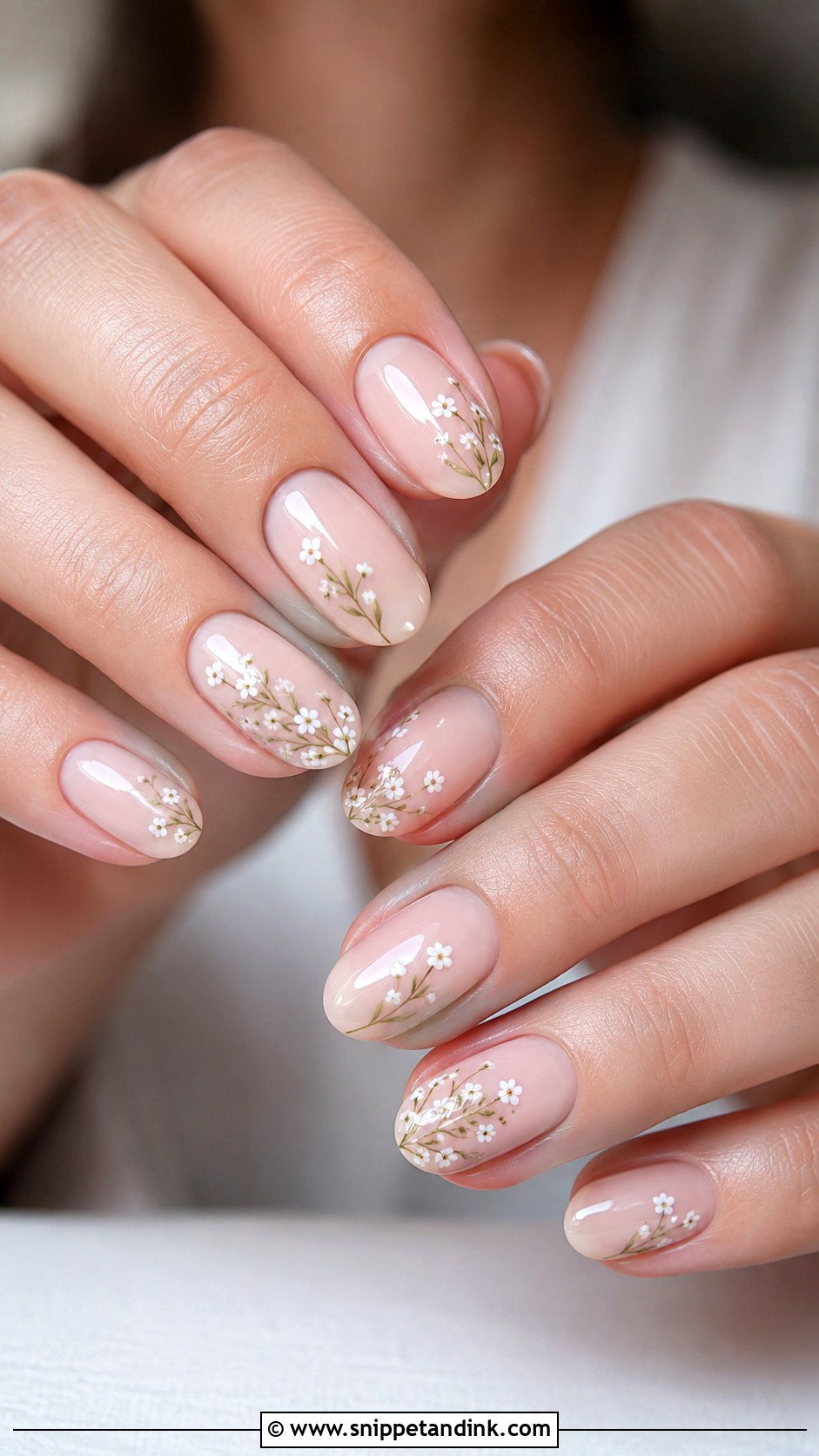
I paint wedding florals freehand with a fine liner: tiny white blossoms, a blush petal, a thin green stem on one accent nail over nude. Stickers and big prints look cheap next to a real bouquet, and in photos that comparison is unavoidable. Spring, summer, garden and outdoor weddings suit this, along with floral dresses and pastel palettes. Short oval or almond. If you can’t sit still for hand-painting, keep the art to one finger per hand.
23. Gold Accent Bridesmaid Nails
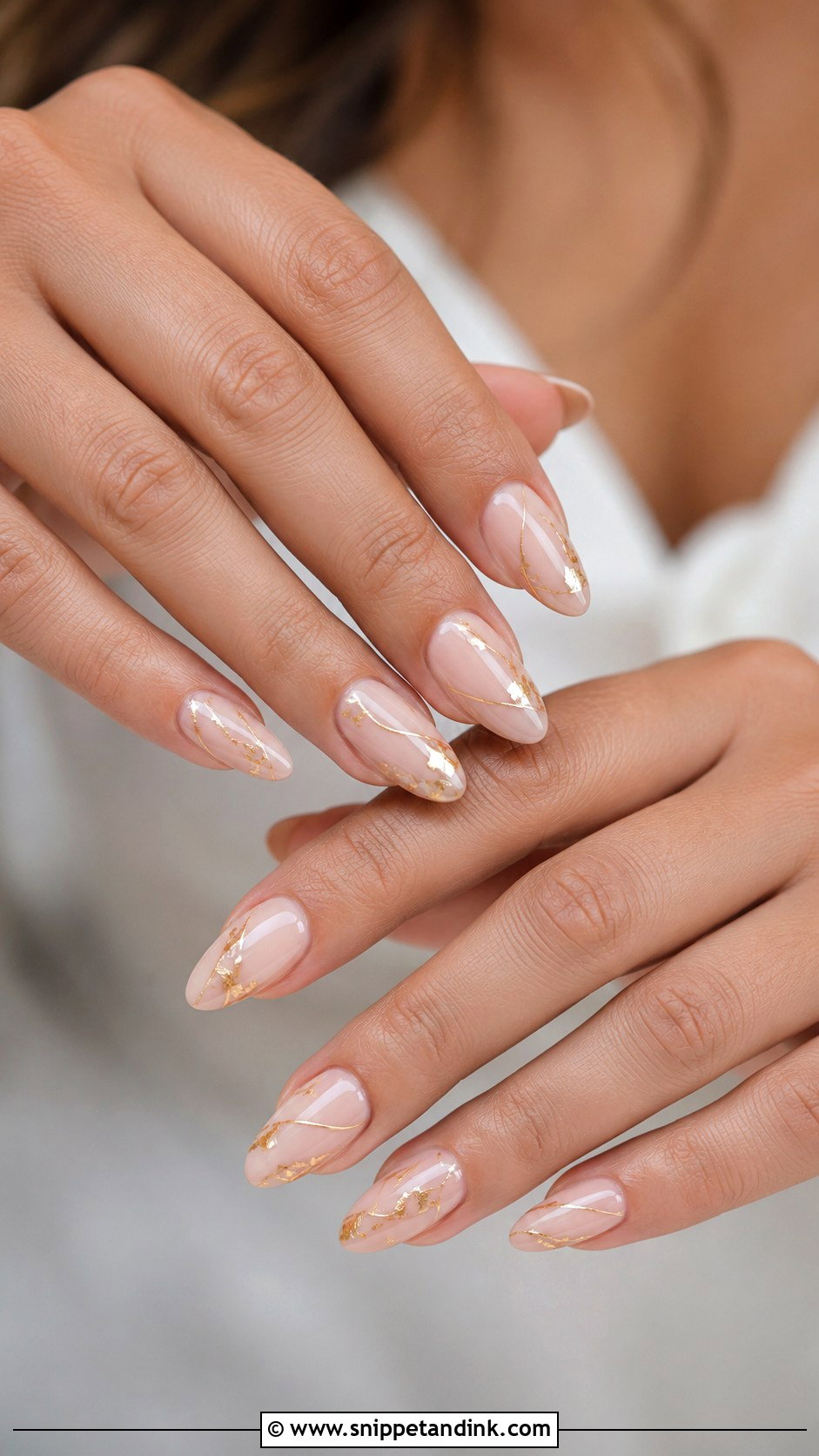
Gold accent bridesmaid nails work because the gold does very little. A thin line, a fleck of foil or a soft gold tip over a nude, blush, taupe or milky base is enough beside gold jewelry, champagne dresses and ivory bouquets. Restraint is the technique: past one or two details per hand, it tips over into party nails. I put the gold in the same place on every nail of the set so it reads as a pattern rather than decoration. Almond and oval show the line off best.
24. Silver Accent Bridesmaid Nails
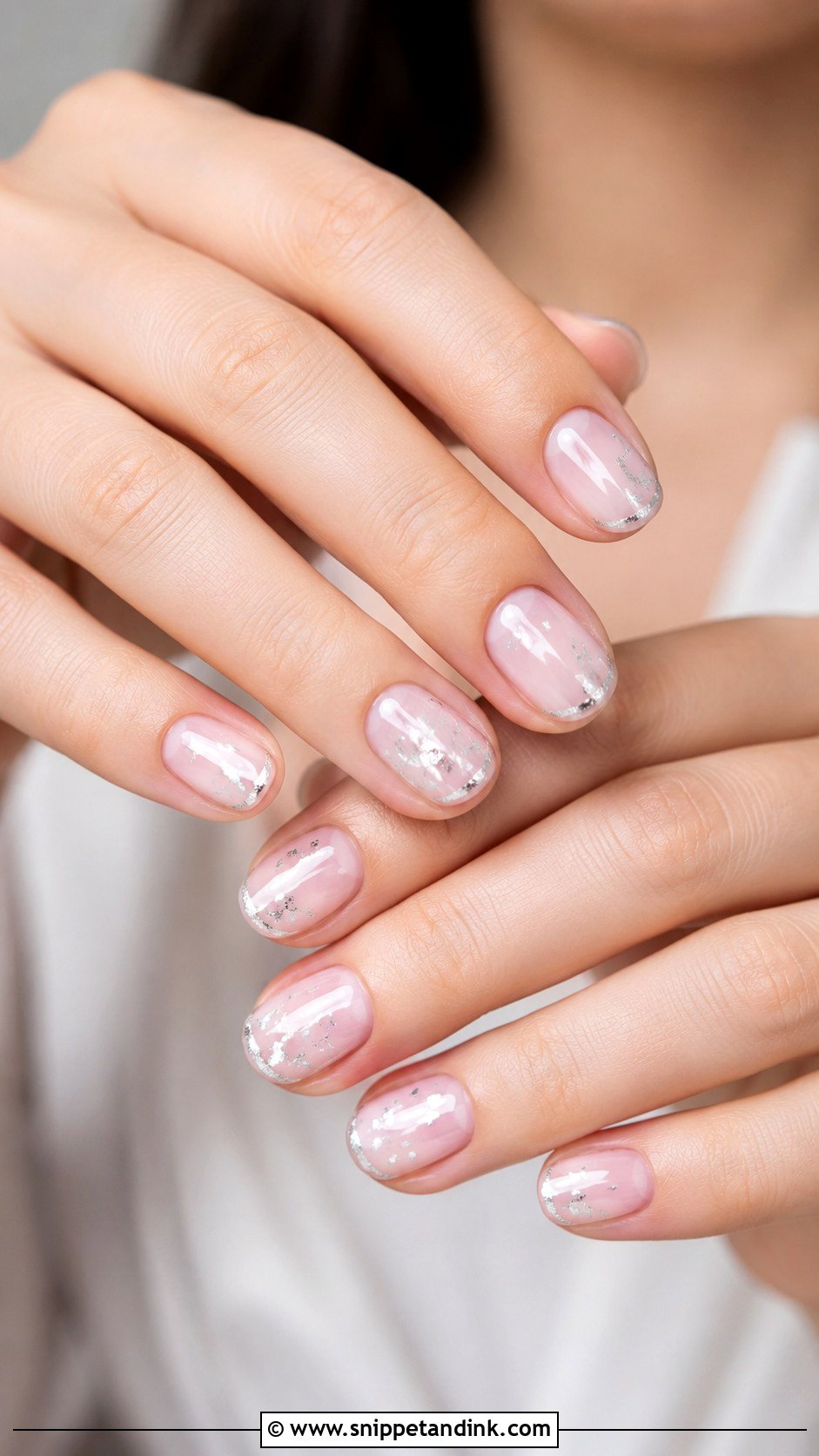
Silver accent bridesmaid nails are the cool-toned twin, suited to dusty blue, navy, grey, lavender, black or white dresses. On a sheer nude, pale pink or milky base I add a fine silver line, a few foil flecks or a shimmer tip. The risk is an icy look on warm skin, so I save silver for women whose jewelry is already silver or platinum. It sits well with pearl and crystal hair pieces. Short squoval looks crisp, almond softer, and winter weddings and evening receptions are its natural home.
25. Glitter Ombre Bridesmaid Nails
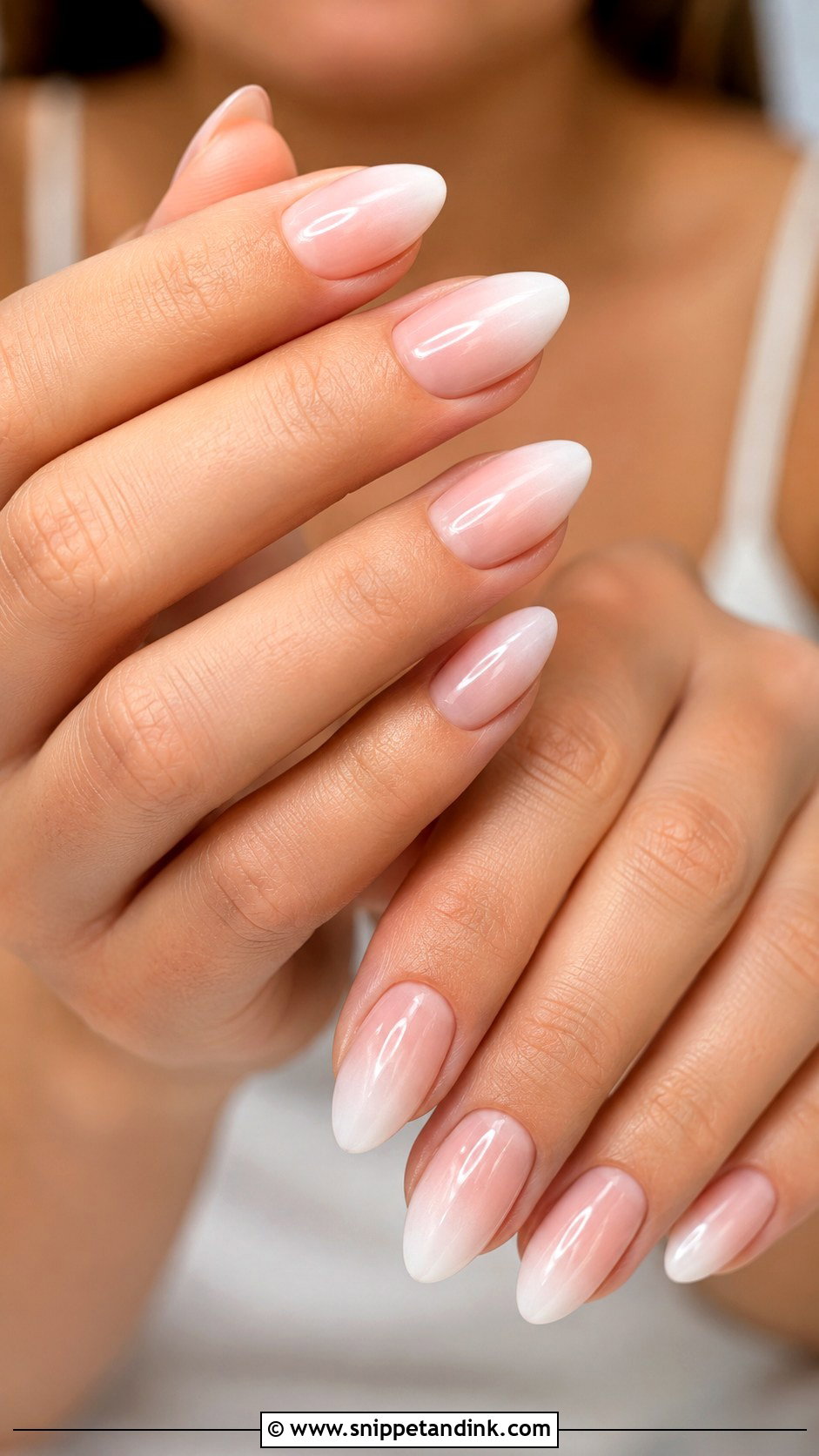
Glitter ombre wins or loses on particle size. Micro-glitter in champagne, silver or rose gold, faded up from a nude, blush or sheer pink base, looks like light on the tips; chunky glitter looks like a party favor. It suits evening weddings and satin or sequined dresses. Bear in mind that glitter is the hardest finish to remove, especially in regular polish, so warn anyone who has to be back at work on Monday. Almond and oval keep the fade gentle.
26. Matte Nude Bridesmaid Nails
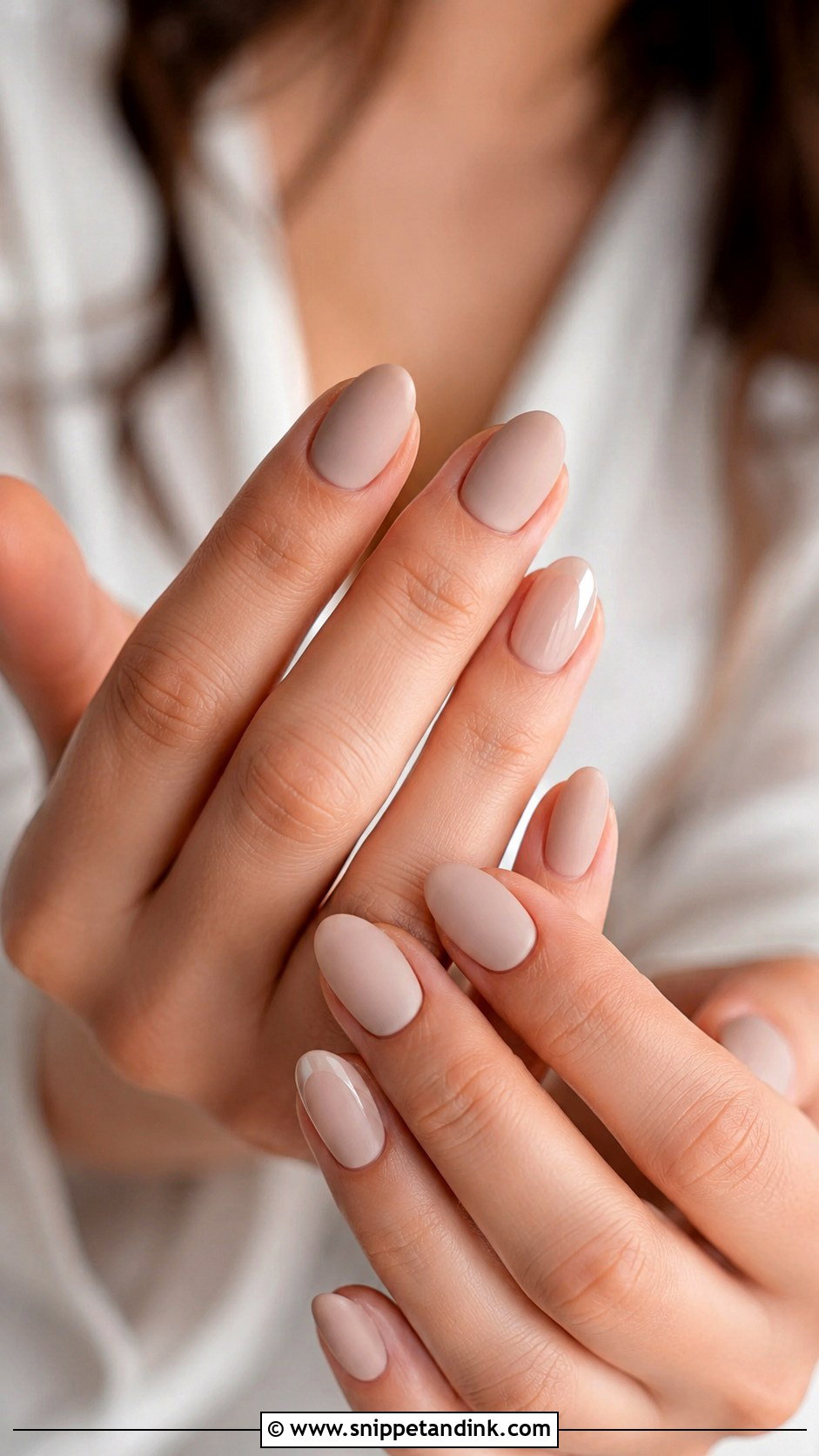
Matte nude has a velvet look that stands apart from all the gloss in a bridal party. The catch is that a matte top coat shows every ridge, so prep has to be meticulous, and it can pick up a little discoloration from self-tanner, foundation or hand cream over a long day. I’d only do it on a smooth nude, beige, blush, taupe or mocha, on short almond or squoval. It looks sharp with minimalist dresses and sleek hair, and one glossy French accent gives a nice contrast.
27. Short Bridesmaid Nails
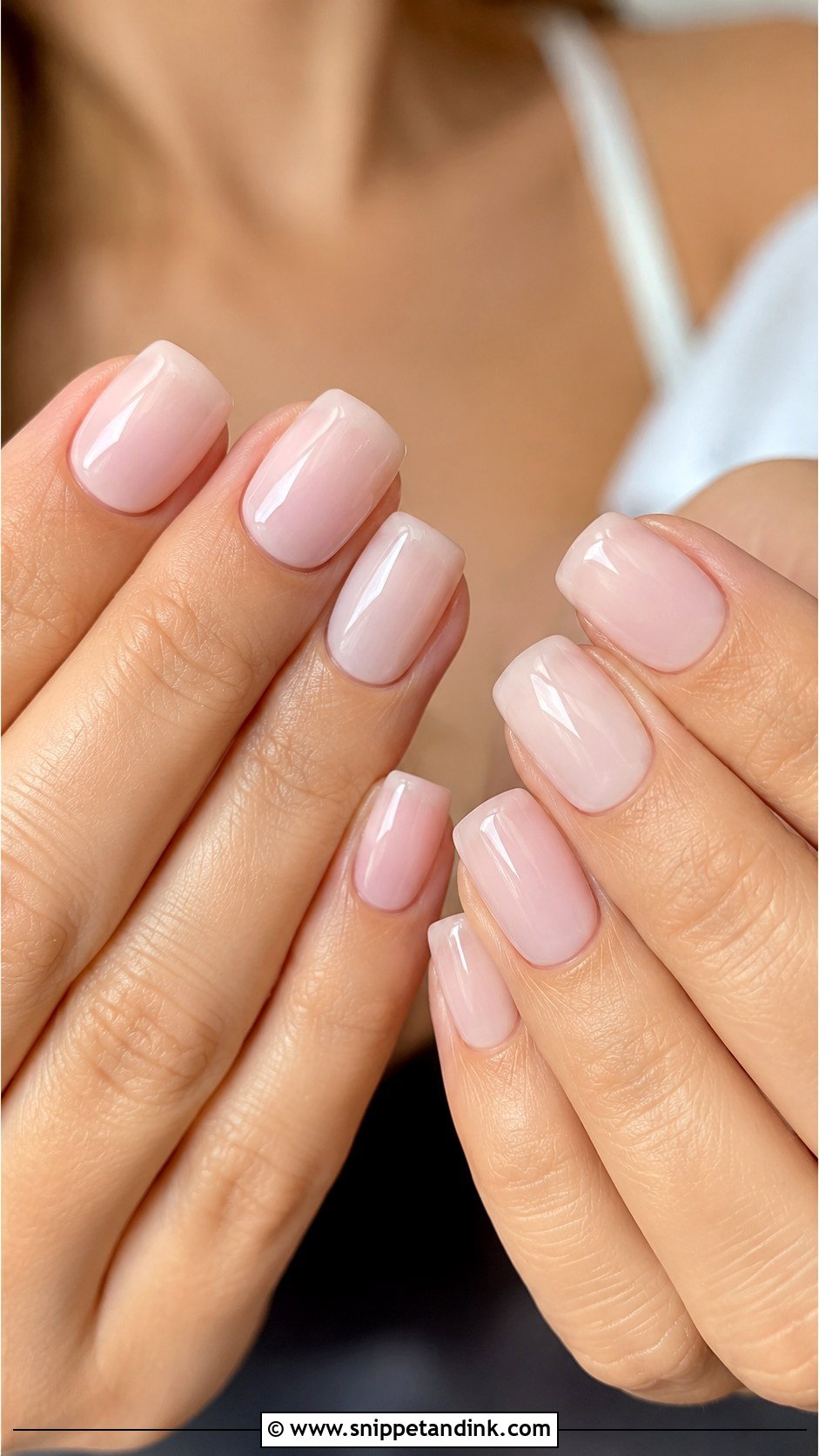
Bridesmaids work. They zip dresses, fasten tiny buttons, bustle trains, fix hairpins and hold two bouquets at once, and short nails make all of it easier. A short squoval, round or oval looks every bit as polished as length when the cuticles are tidy and the gloss is high. Nude, pale pink, milky white, taupe and micro French all sit well on short nails. For anyone who doesn’t usually wear extensions, this is the set I’d steer her toward; long tips on someone who isn’t used to them means fumbling with clasps all day.
28. Almond Bridesmaid Nails
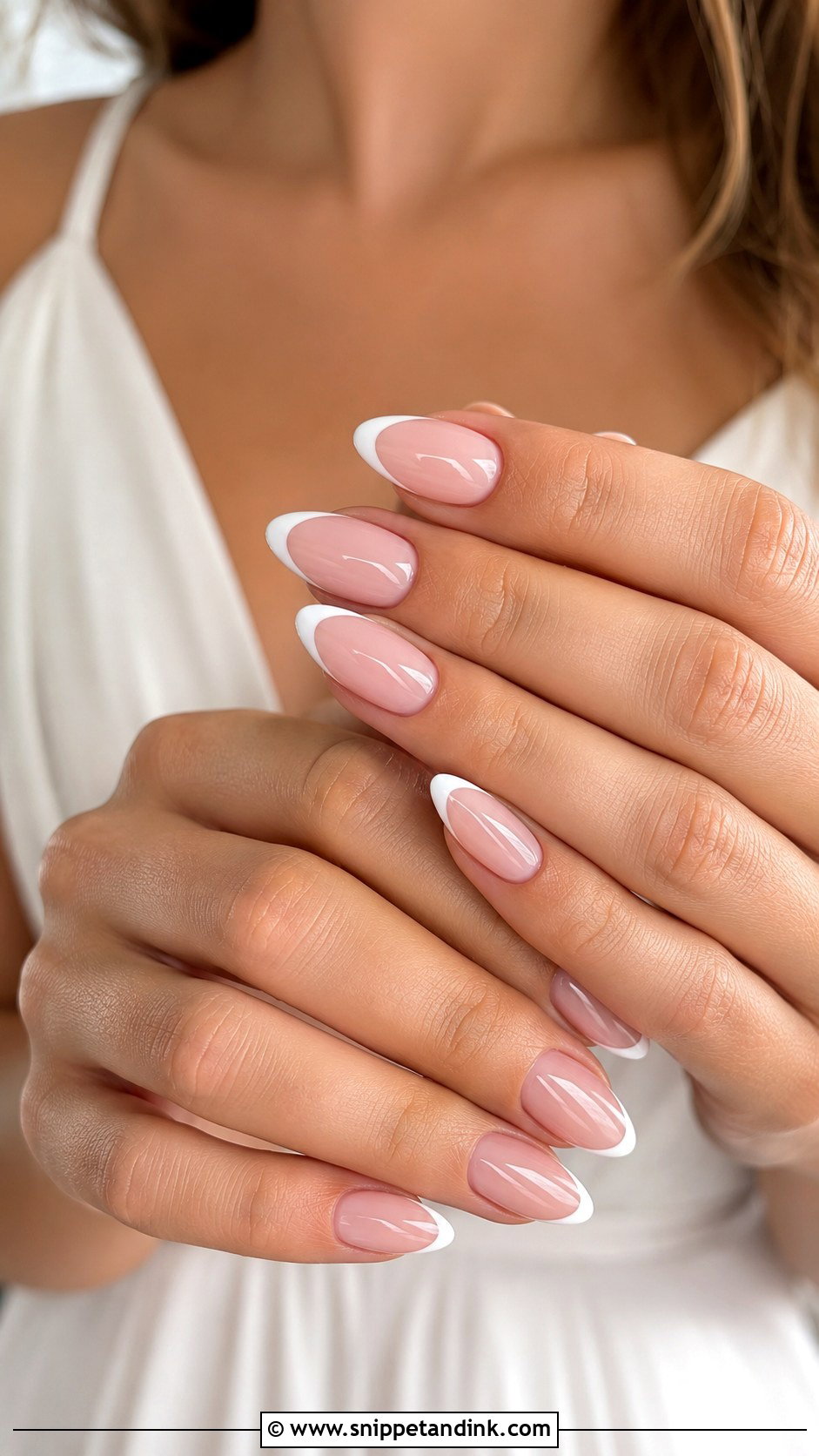
Almond bridesmaid nails taper softly and make fingers look longer, which is why so many sets on this list end up almond. Nearly every design here sits on it: French, milky white, blush, chrome, ombre, florals, champagne shimmer. I keep it medium. Very long almonds on thin natural nails get weak at the sidewalls and can snap when someone grabs a heavy bag, so on thin nails I add a builder gel layer for strength. Sheer pink, nude or micro French is the classic pairing.
29. Square Bridesmaid Nails
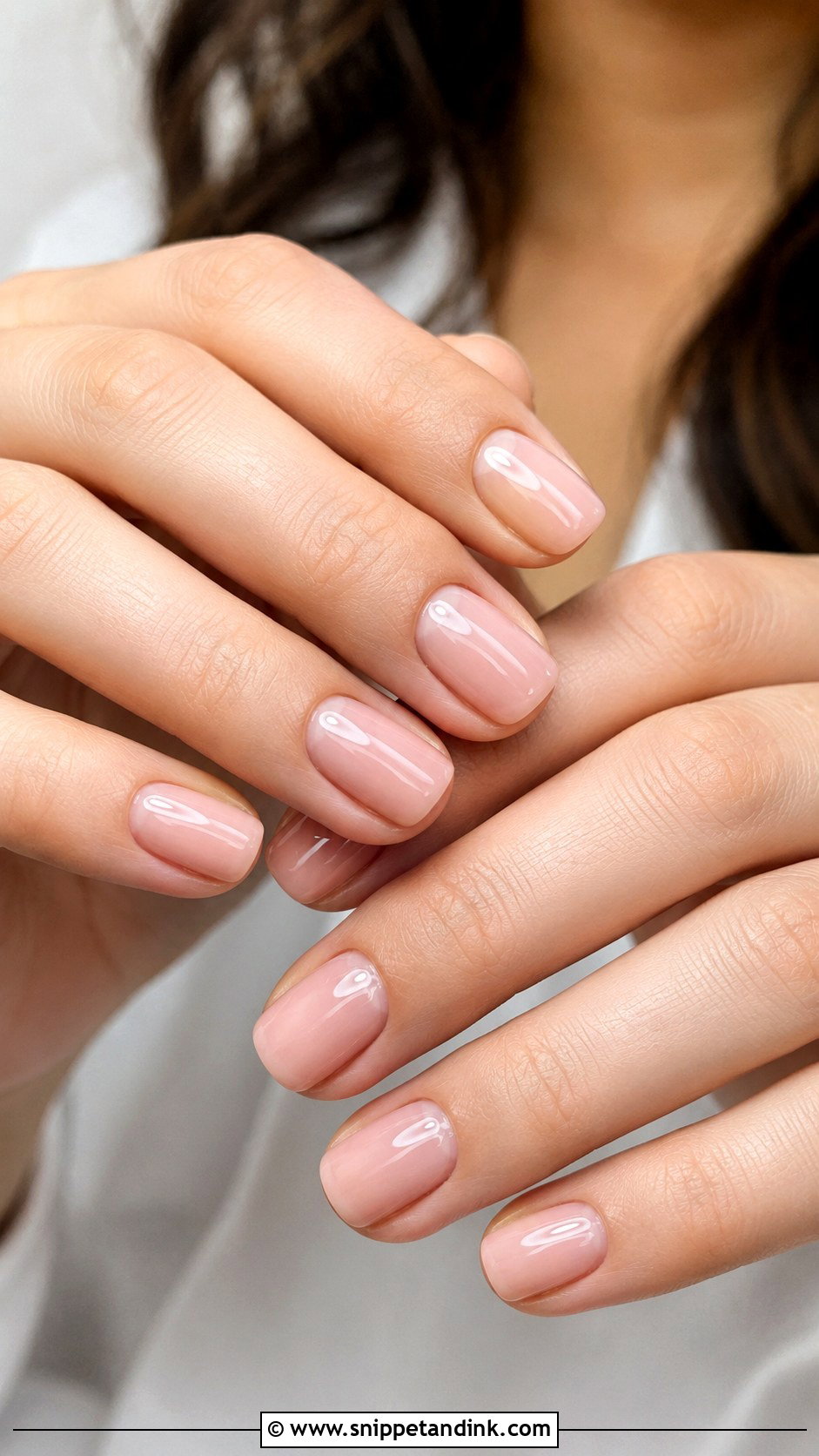
Straight-edged square nails look neat at short to medium length and heavy beyond that. I usually file a soft square, rounding the corners slightly, because sharp corners snag tights, lace and chiffon and are the first part to break. It takes French tips, nude, pale pink, taupe and glossy milky shades well, and it fits the clean lines of a city or minimalist venue. Keep the polish smooth and the art minimal.
30. Clear Gloss Bridesmaid Nails
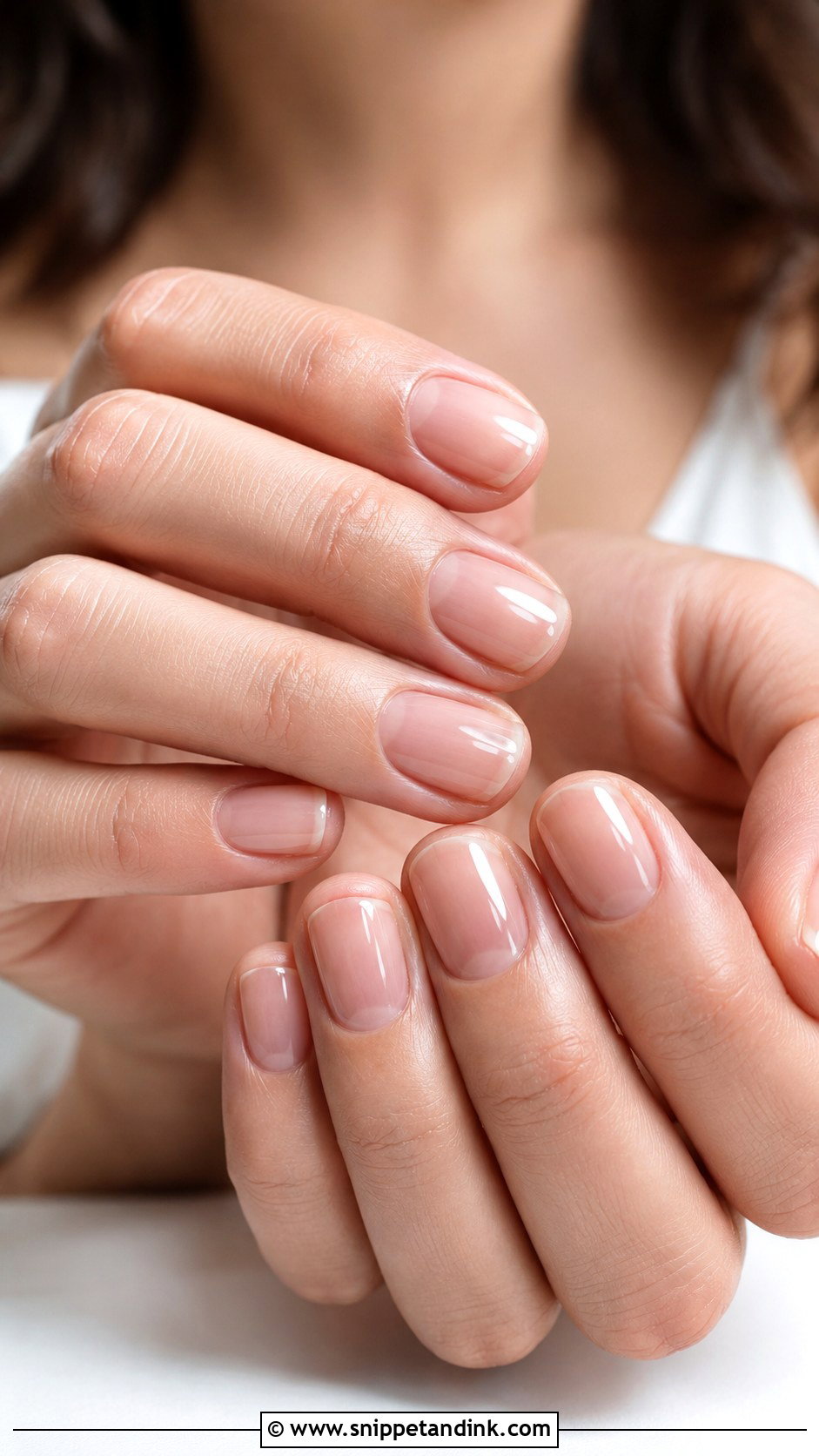
Clear gloss is all prep: shaped edges, tidied cuticles, a lightly buffed surface, then a shiny clear or sheer pink top coat. It’s the right call for anyone with strict work rules about color, anyone who dislikes polish, or a bride who wants her party understated. A short oval or squoval keeps hands neat in close-ups. If your nails peel, ask for builder gel or a strengthening base under the clear; it adds structure without adding color.
What a Bridesmaid Manicure Has to Survive
Most of the damage I see on bridesmaid nails happens in the morning, before anyone is even dressed. Hot tools, hairspray, zipping the bride in, opening bottles, carrying boxes of decor to the venue. A few habits keep a fresh set looking fresh until the last dance.
- Apply self-tanner before the manicure, not after. Tanner settles along the cuticle and turns the edge of a pale nude or milky white slightly orange.
- Use the pad of your finger, not the nail, for buttons, zips and bobby pins.
- Wipe your nails after the hairspray goes on. It leaves a sticky film that dulls the gloss in close-ups.
- Put a nail file, a cuticle oil pen and a small bottle of clear top coat in the bridesmaid emergency bag.
If a Nail Breaks Before the Ceremony
Don’t rush to glue a cracked natural nail and paint over it. File the broken nail down to just past the fingertip, smooth the edge, and if its neighbors are much longer, take them down a little too so the hand looks even. In photos a slightly shorter nail is invisible, while a glued crack with a lifted edge is not. If a gel or press-on pops off, a spare press-on in the right size, filed and painted to match, is the quickest fix I know.
Ask the Bride for a Color Family, Not a Bottle
Good bridesmaid nails are a supporting act: easy to spot when you look for them, invisible when everyone’s looking at the bride. Nude, blush, milky white, French tips, small pearls, soft chrome and muted seasonal shades rarely go wrong. The final call depends on the dress, the palette, the venue and what each woman can actually live with for a long day, and short and well-shaped beats long and fragile. Before you book, ask the bride which color family she has in mind, then let your own undertone pick the exact shade.
You'll Like These Ideas:


Leave a Reply