
Clean bridal makeup looks simple in a photo, but it is the style where I have the least room to hide anything. There is no heavy base to blur a dry patch and no dark smoky lid to pull attention from uneven skin. What carries it is preparation, thin layers and a few deliberate choices about where the face catches light. The 25 looks below run from almost bare skin to a soft, structured glam, and in each one I’ve noted what I actually do in the chair and who the look tends to suit.
Clean Makeup Starts With Skin Weeks Before the Wedding
A minimal face can only look as good as the skin underneath it, so the work starts long before I open my kit. I ask brides not to start new active products, like retinoids, strong acids or a new peel, in the last month. Irritation and flaking show straight through a sheer base, and there’s no heavy foundation to hide them. If you want a facial, book it at least a week or two out so any redness has settled.
- Four to six weeks out: settle on a simple routine and stick with it. Consistency matters more than anything new.
- One to two weeks out: have brows shaped or tinted, so any redness from waxing has calmed down.
- The week of: drink water, go easy on salty food and alcohol the night before, and moisturise more than usual.
- The morning: arrive with clean, moisturised skin and no makeup. I’ll do the rest of the prep myself.
At the trial I’ll also ask what your skin does by mid-afternoon. Does it go shiny on the nose or tight on the cheeks? That answer decides the finish more than any photo you bring.
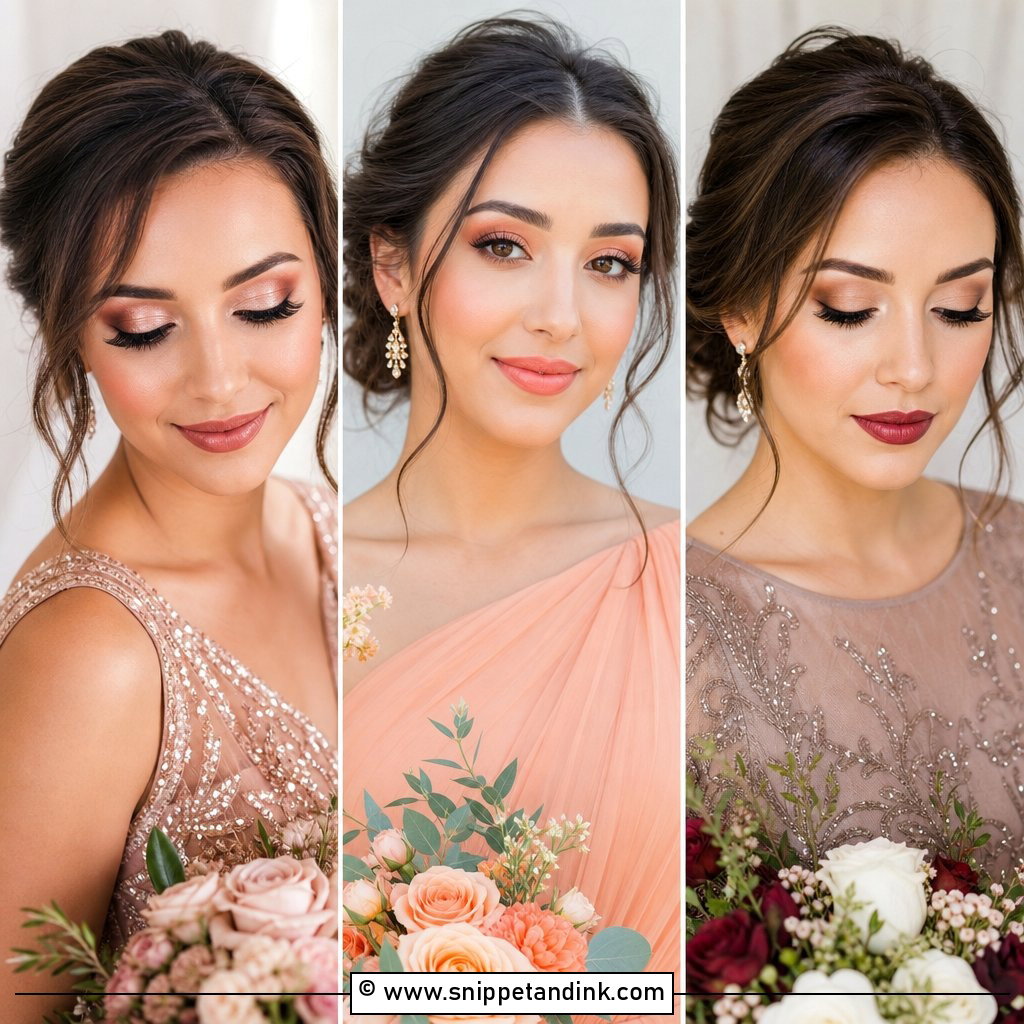
1. Natural Bridal Makeup
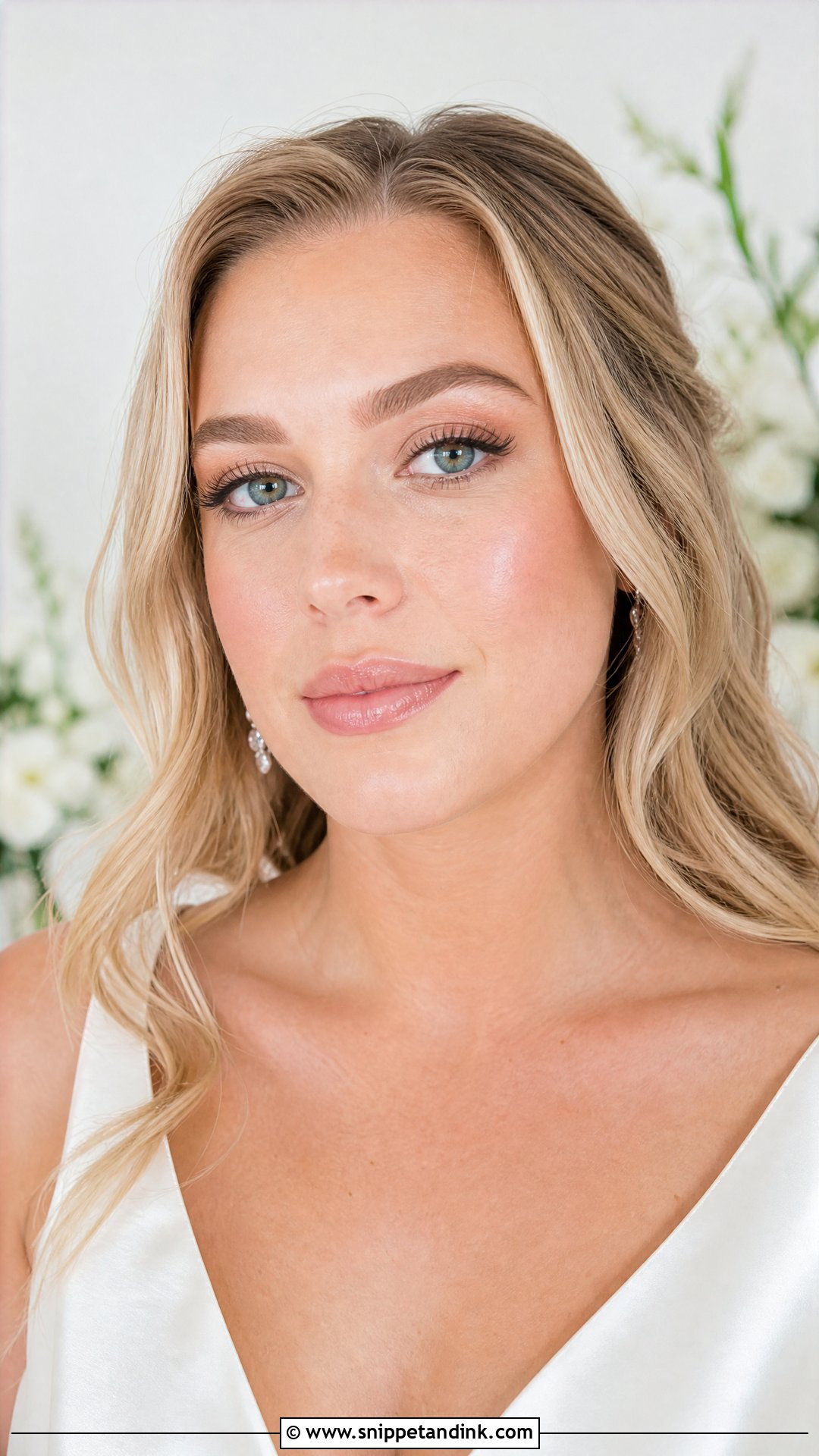
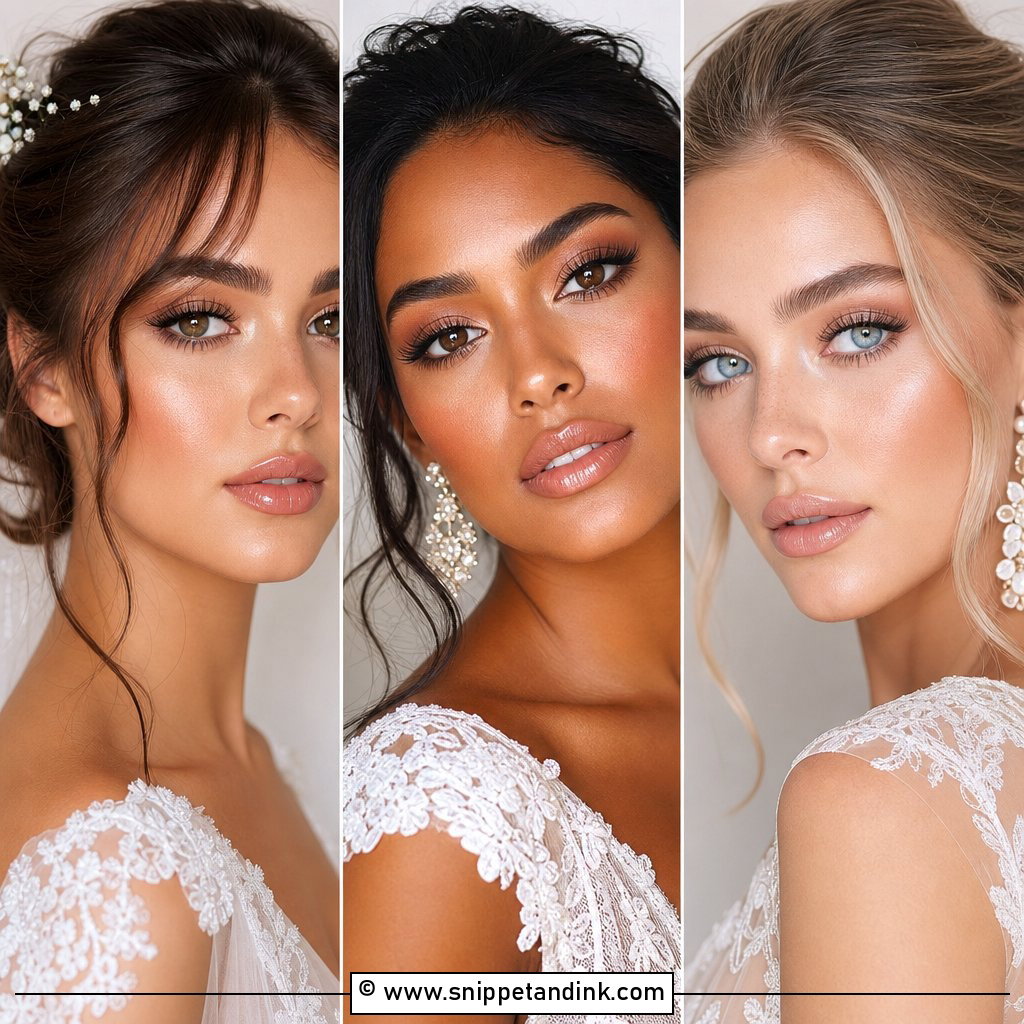
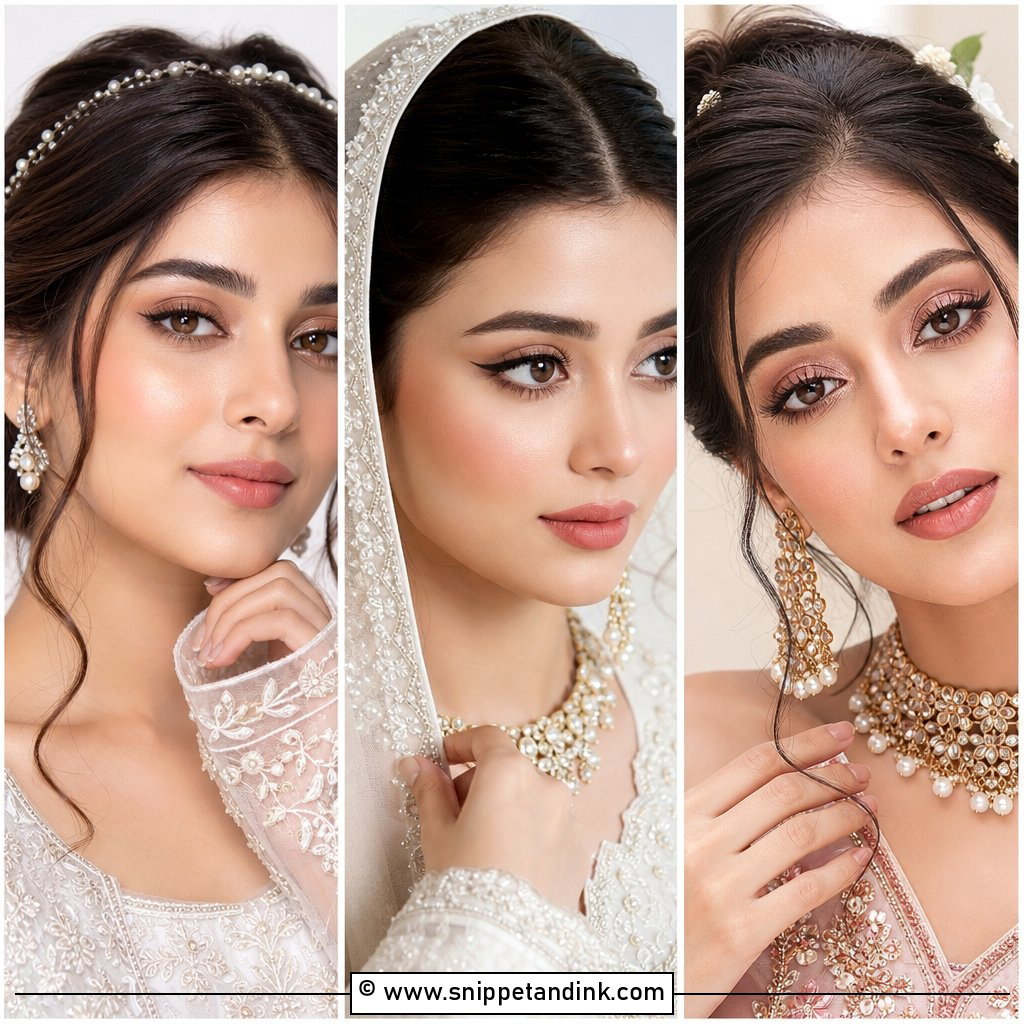
This is the look I start most trials with, because it tells me quickly how a bride’s skin behaves. I prep first, then use a skin tint or light foundation only where it’s needed, usually around the nose and chin. Under the eyes I keep concealer paper-thin; anything thicker creases by the time the ceremony starts. A cream blush in a shade close to her own flush, taupe on the lids, brown liner pressed into the lash roots and a brushed-up brow do the rest. Finish with a satin lip one step deeper than her natural colour so it doesn’t vanish next to a white dress.
2. Dewy Bridal Makeup
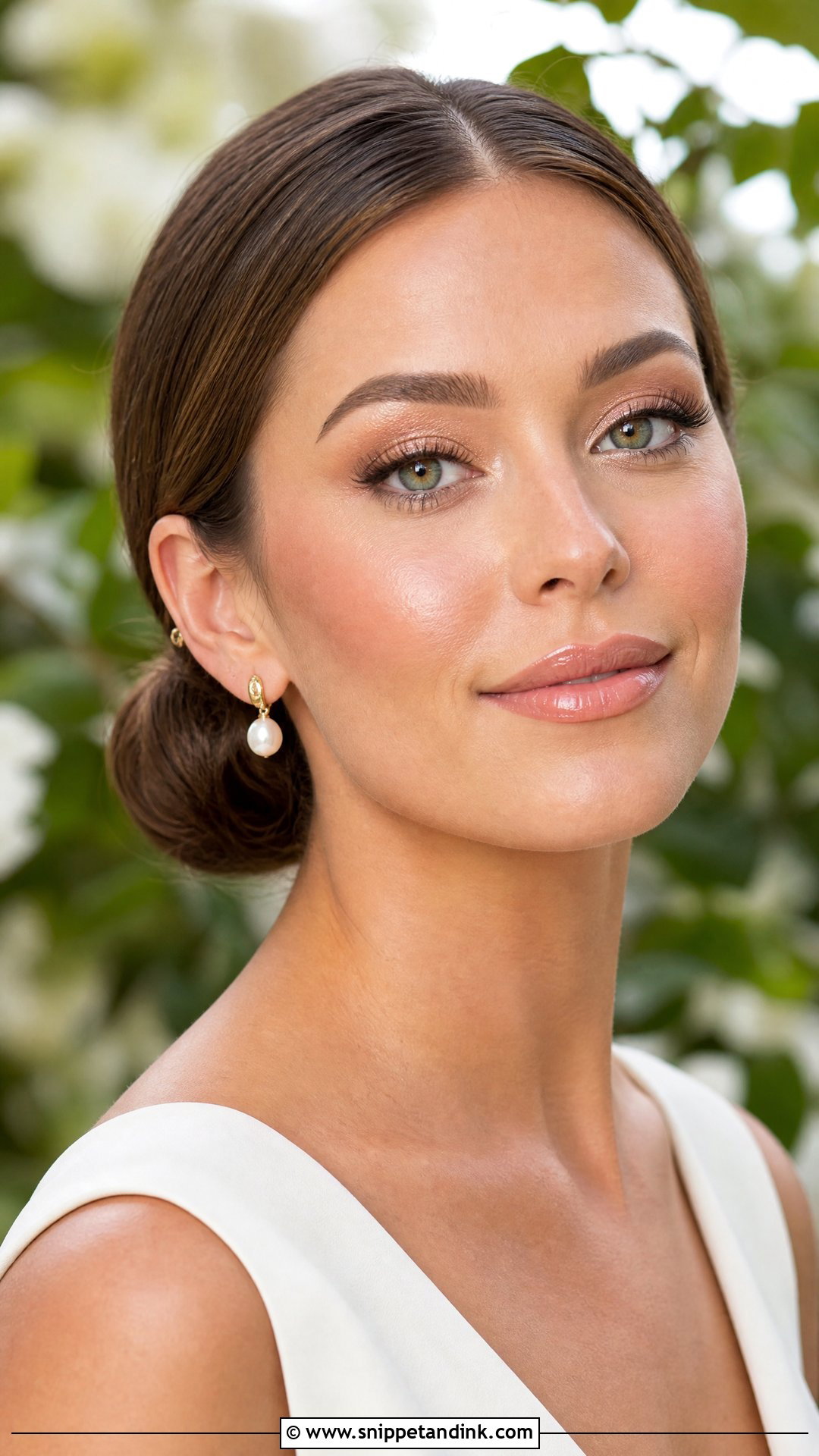
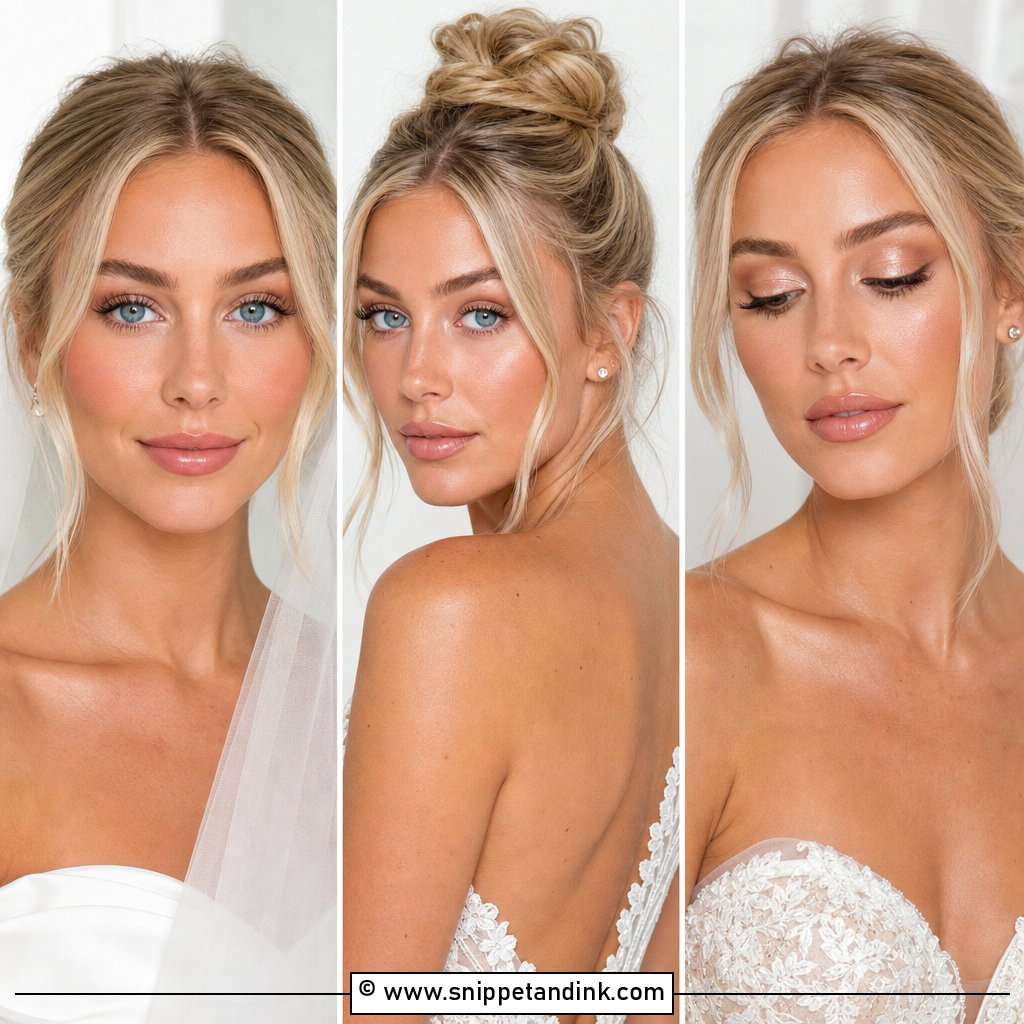
Dewy skin is about control, not more glow. I use a luminous primer or a sheer radiant base, then press powder into the centre of the forehead, the sides of the nose and the chin, the places that turn oily first. Cream blush and a liquid highlighter stay on the high points of the cheek only. If a bride has visible texture or large pores across the cheeks, I keep the sheen higher up, because light sitting directly on texture makes it look bigger in close-ups. Champagne shadow, brown mascara and a nude-pink gloss keep the rest quiet.
3. Soft Glam Bridal Makeup
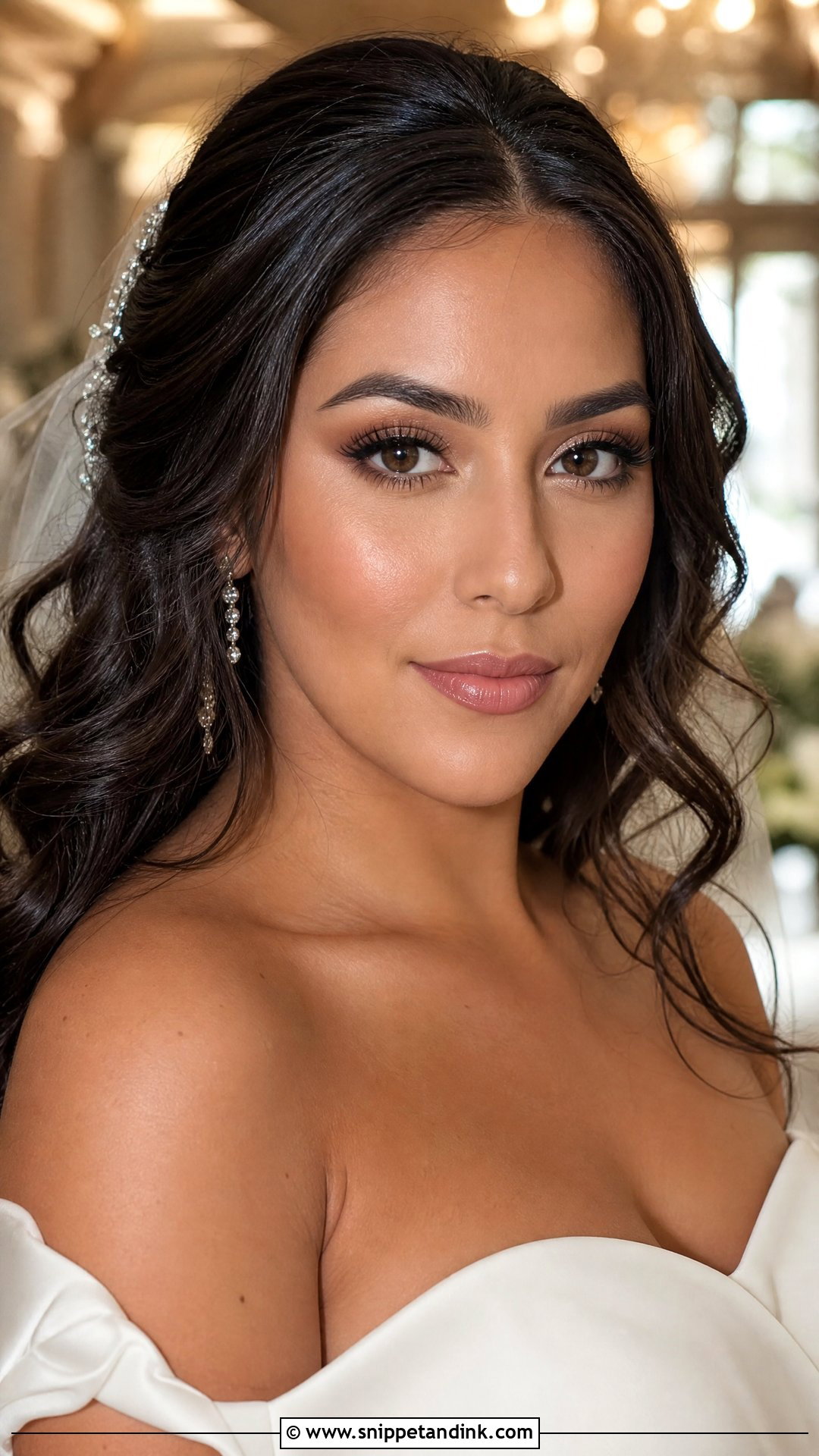
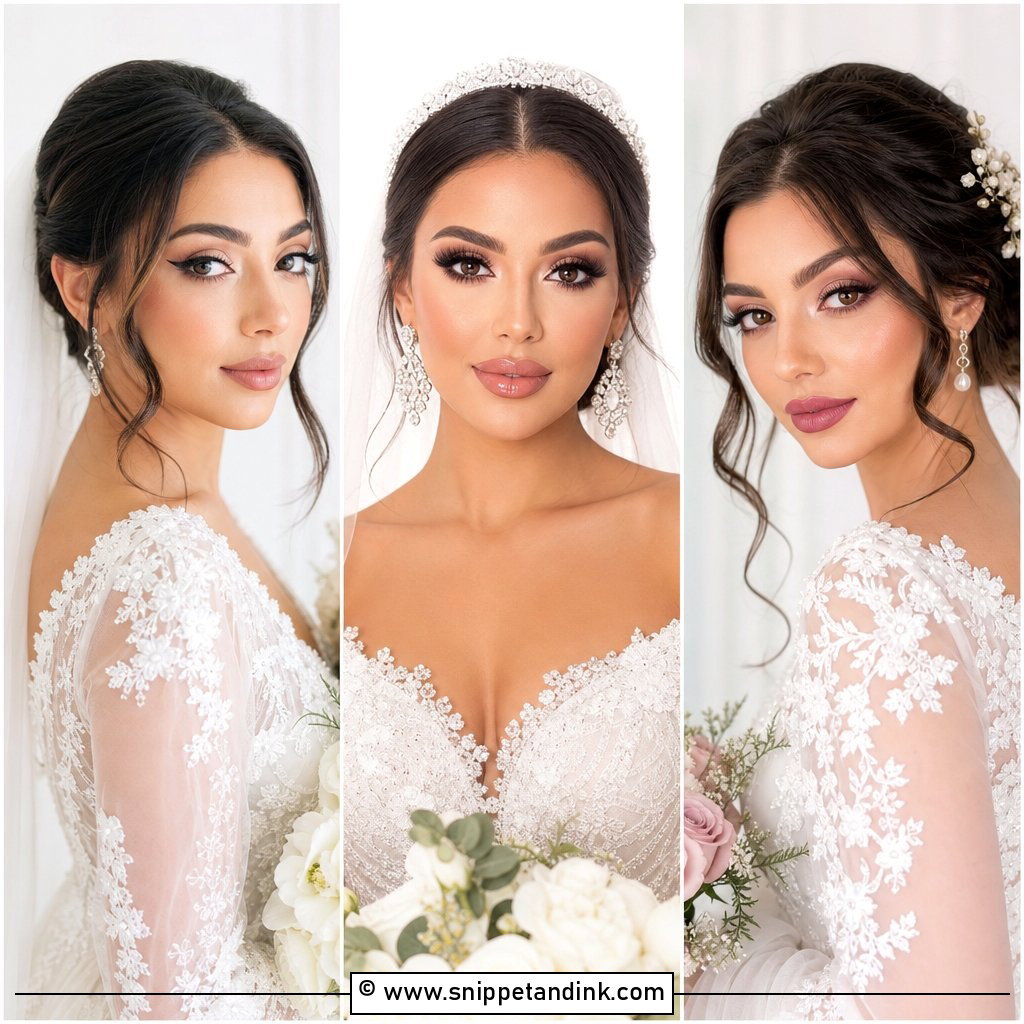
Soft glam is where I go when a bride wants more shape for the camera but still wants to look like herself at dinner. The base is satin, not matte, with a cool-toned contour placed just under the cheekbone and blended until there’s no edge. On the eyes I work in warm browns or soft bronze shadows, diffused at the outer corner, then tightline the upper waterline for lift without a visible line. Wispy individual lashes look better here than a full strip, which tends to tip it into evening glam. A nude rose lip holds the balance.
4. No Makeup Bridal Makeup
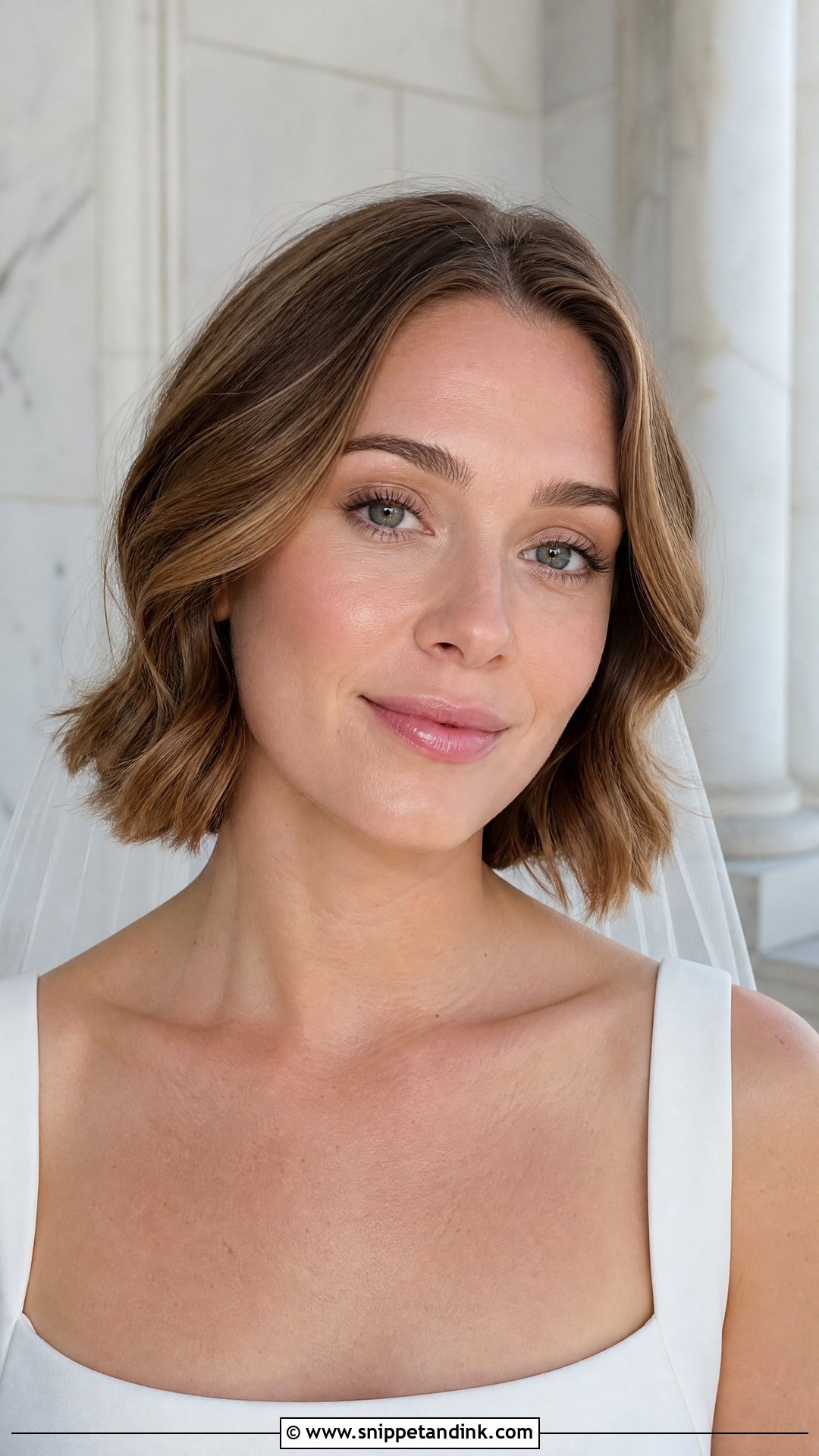
Honestly, ‘no makeup’ makeup takes me longer than a soft glam. I spot-conceal instead of laying a full base, and I only blend a sheer tint where redness actually shows, often around the nostrils and on the chin. Contour is skipped entirely. I match the cream blush to the colour her cheeks go when she’s warm, curl the lashes hard, and set the brows with tinted gel. It suits brides with fairly even skin. If you have active breakouts or strong pigmentation, I’d suggest the satin skin look further down instead, because spot-covering a lot of areas starts to look patchy in flash.
5. Clean Girl Bridal Makeup
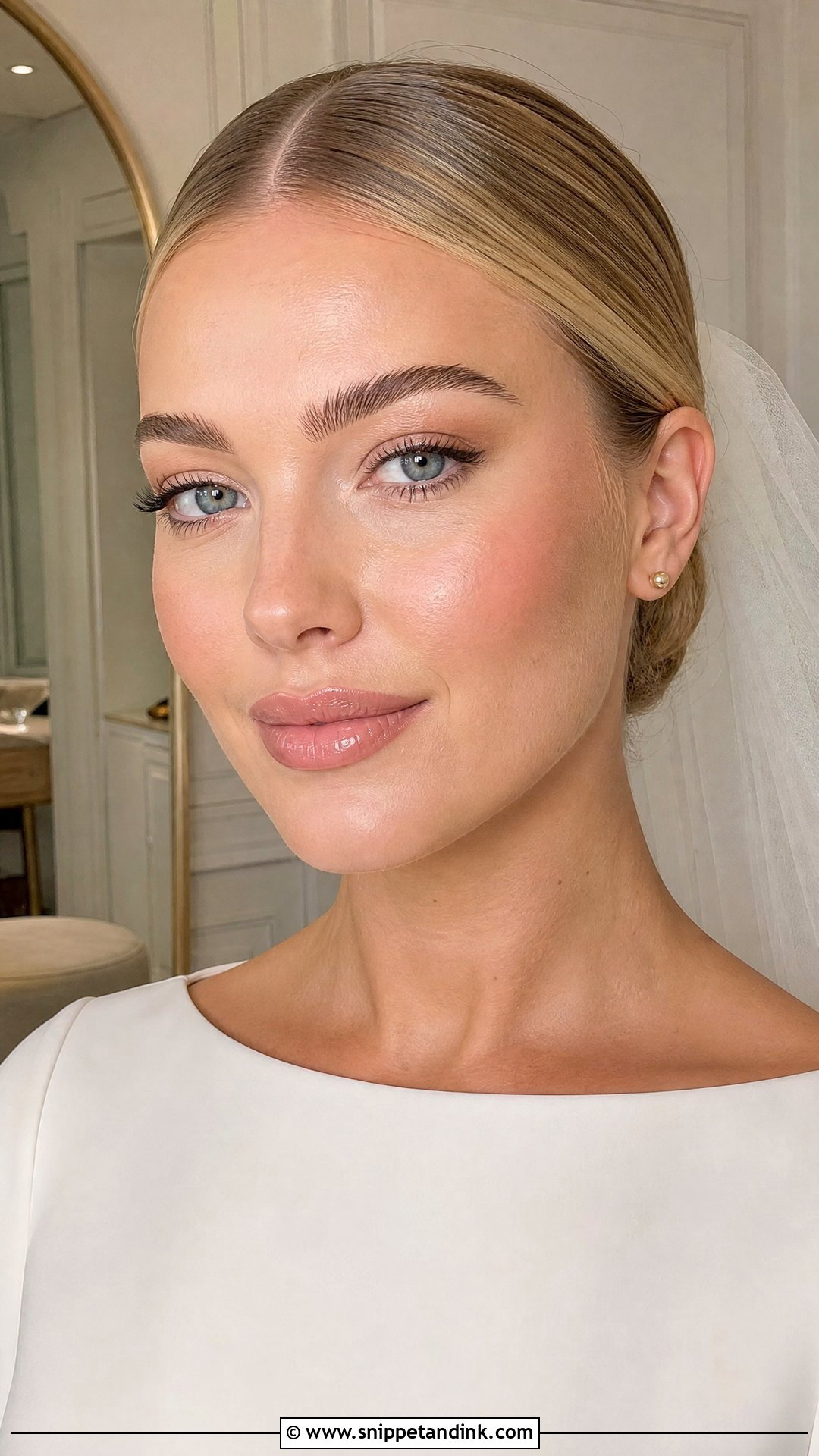
Clean girl bridal makeup takes the glossy, fresh-faced trend and tightens it up for a full day of photos. The base is thin but even, blush goes high on the cheekbone so it lifts rather than rounds the face, and brows are brushed up with a strong-hold gel so they stay laminated-looking past the first dance. My caution with this one is shine: what reads as glow in a selfie can read as oily under reception lighting. I keep a blotting paper in the touch-up kit and use a satin balm on the lips rather than a slick gloss. It sits naturally with a sleek bun and a minimal gown.
6. Matte Clean Bridal Makeup
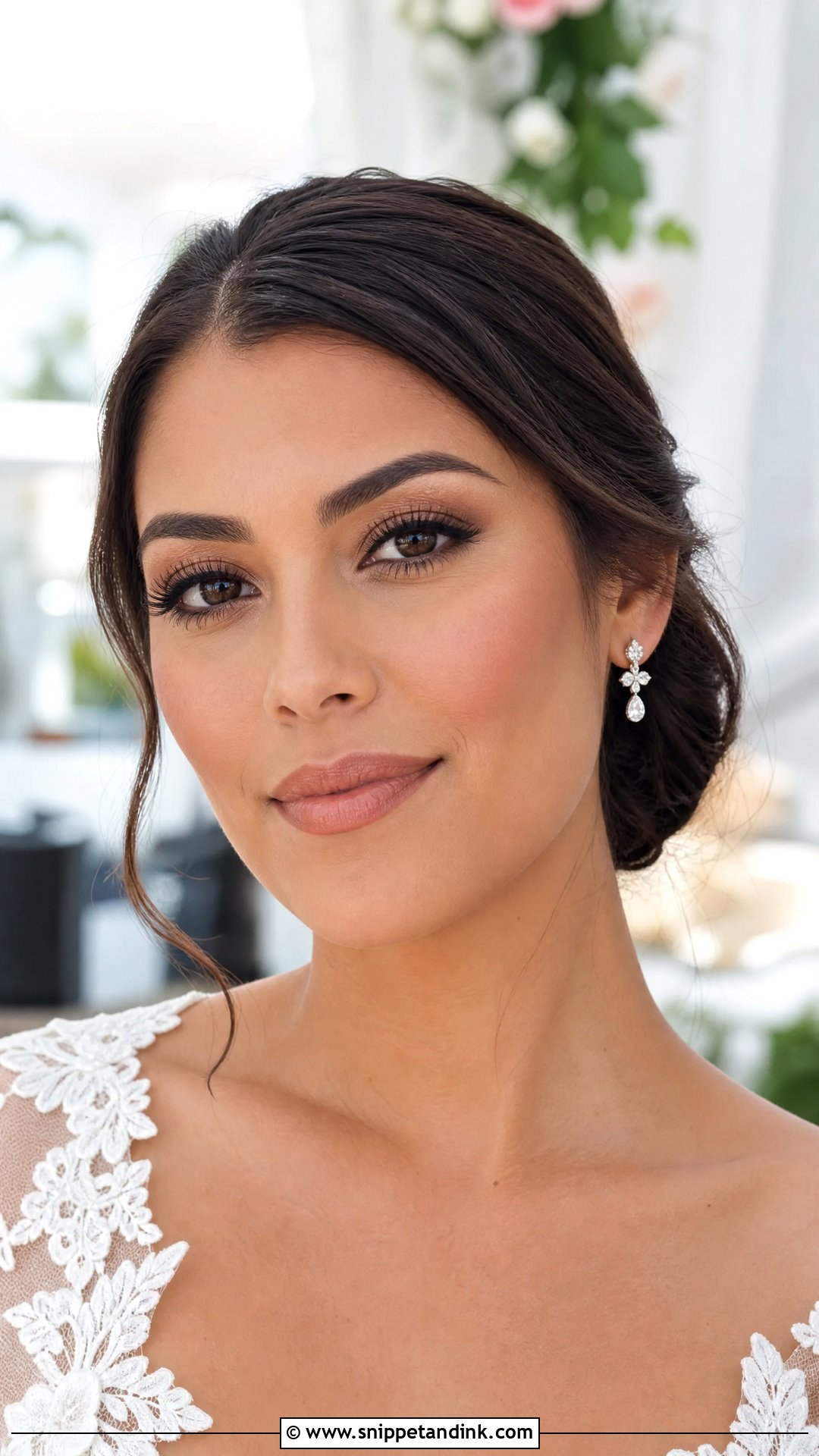
Matte skin gets a bad name because people picture the flat, chalky bases of years ago. Done well, it’s the most durable option on this list for heat, crying and a long dance floor. I use a long-wear foundation in two thin layers rather than one thick one, setting each lightly with a finely milled powder. Then I bring life back with a muted rose blush and a touch of highlight on the top of the cheekbone only. Oily skin and summer weddings are where this earns its place. On very dry or mature skin I’d avoid it, because matte formulas cling to flaky areas.
7. Glowy Skin Bridal Makeup
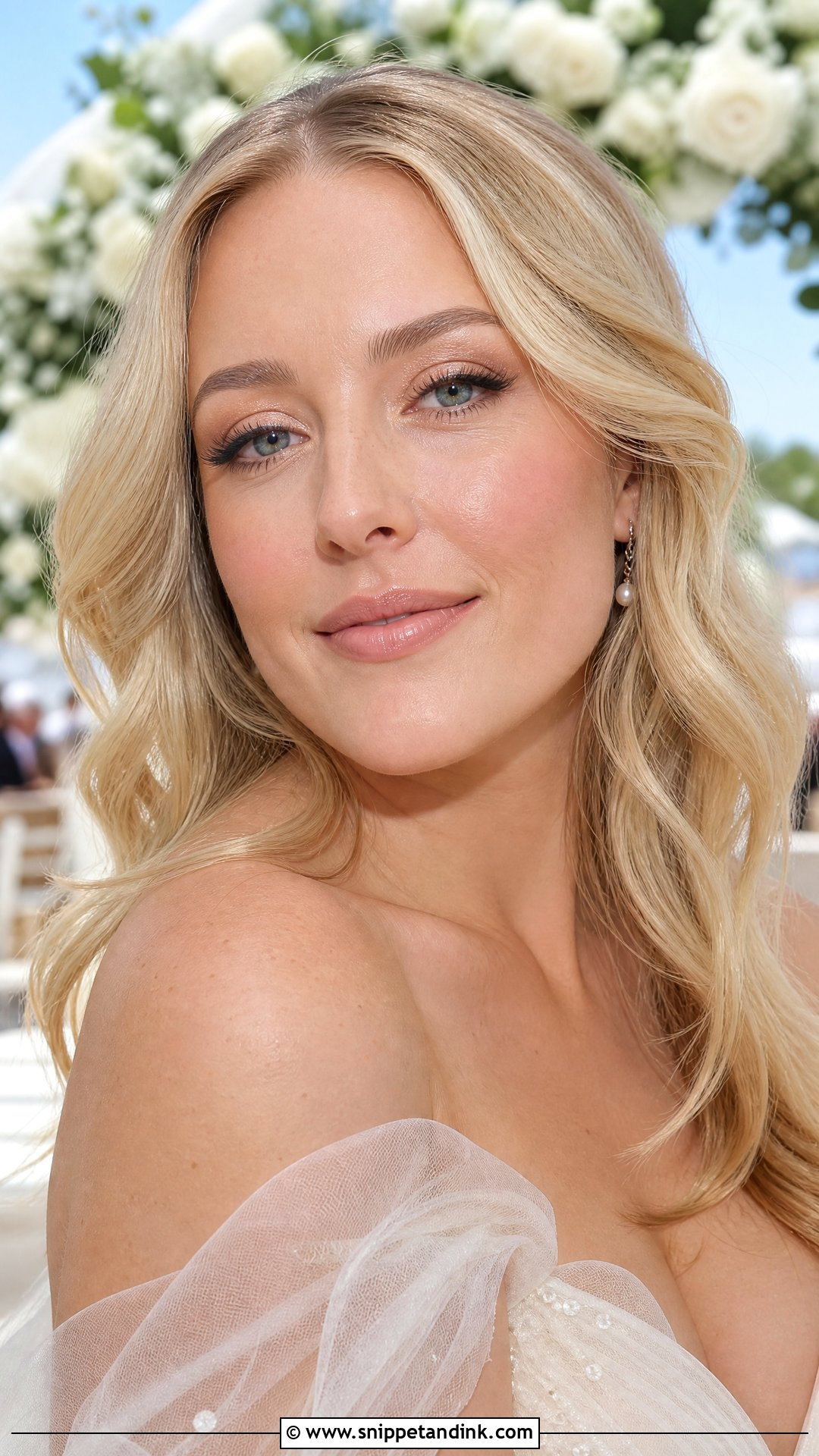
When the skin itself is the feature, the glow has to come from underneath. I spend extra time on hydrating prep, then mix a few drops of liquid illuminator into the foundation instead of layering highlighter on top, so the light looks like it belongs to the skin. Coverage stays light enough for freckles to show. Blush is chosen by depth: peach on fair skin, berry on deeper tones. The eyes stay minimal with champagne on the lid. Daylight ceremonies flatter this most; under strong overhead spotlights it can tip toward shiny, so I set the T-zone a little more for evening.
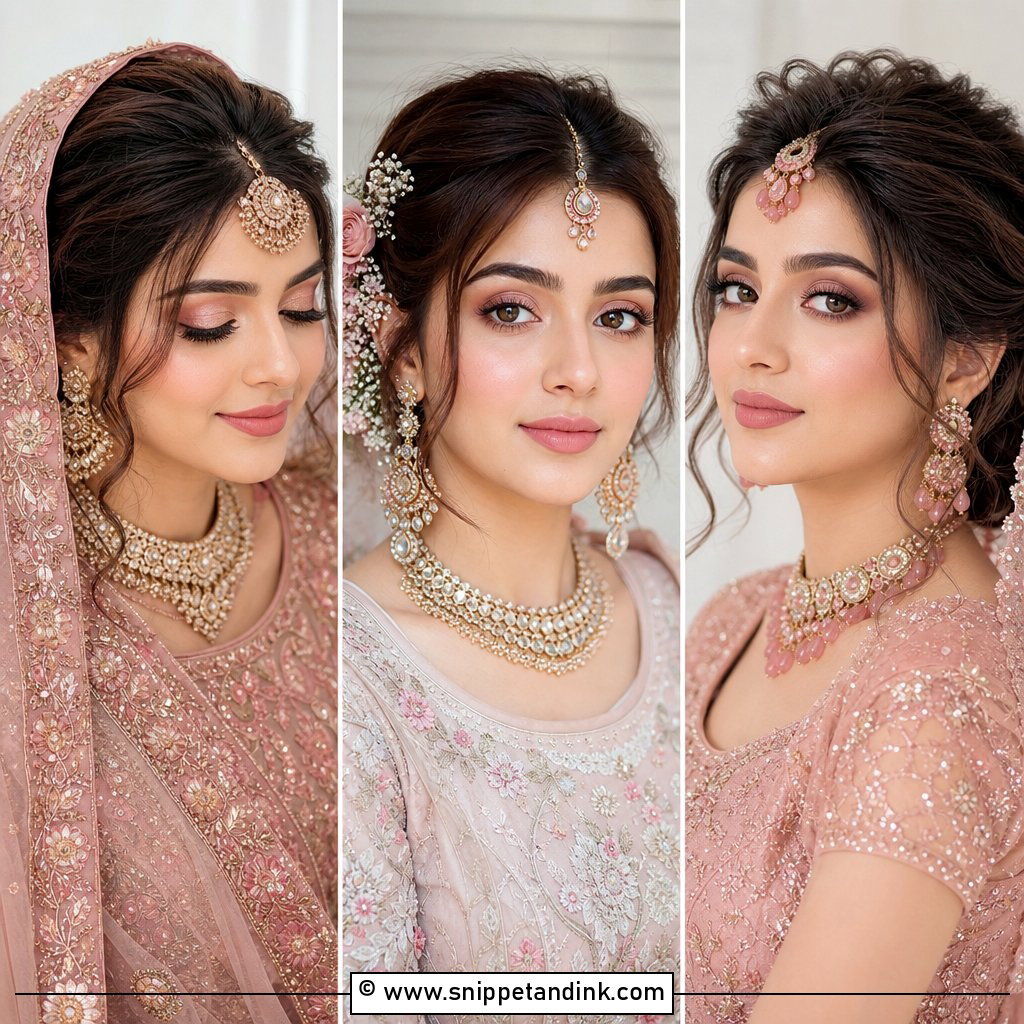
8. Pink Blush Bridal Makeup
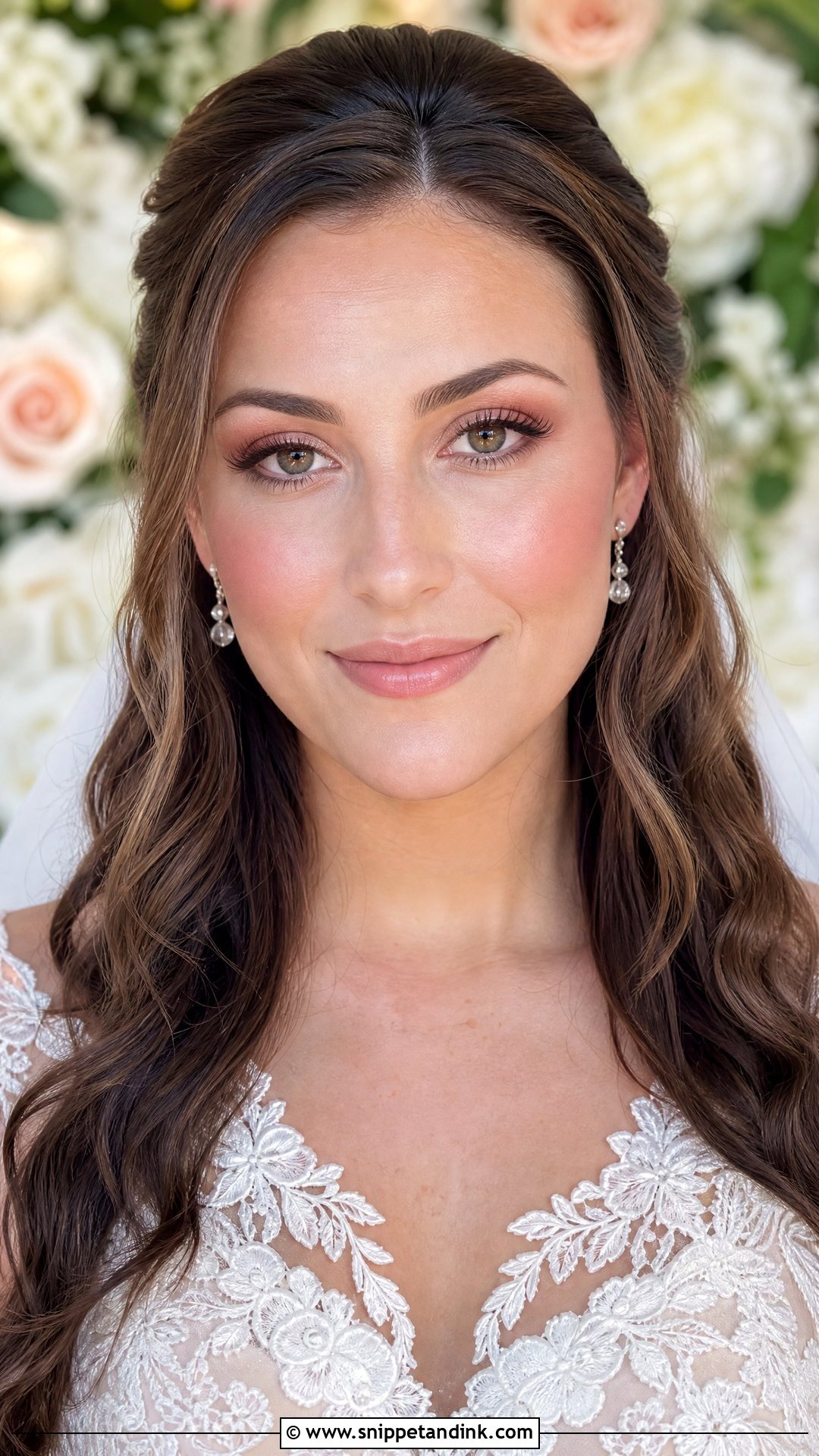
A pink flush should look like it came from inside the cheek, not like it was painted on. I tap a sheer cream blush on the apples, then drag the edge up toward the temple with my fingers so there’s no stripe. Layering a small amount of powder blush in the same shade over the cream is my trick for making it last; cream alone tends to fade by the speeches. The lids stay in rose beige so the eyes don’t compete with the cheeks, and the lip is a pink nude in satin.
9. Peach Bridal Makeup
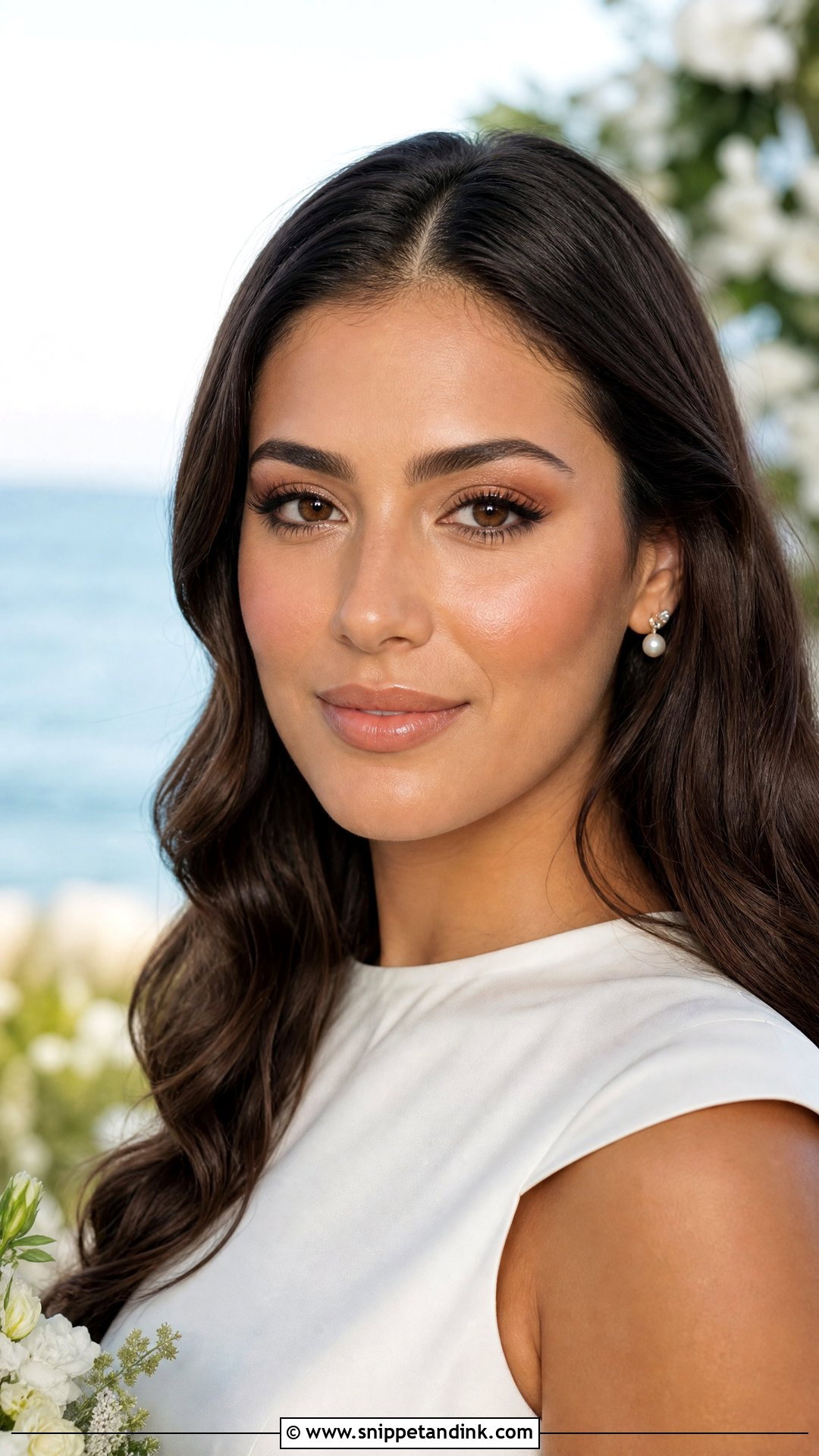
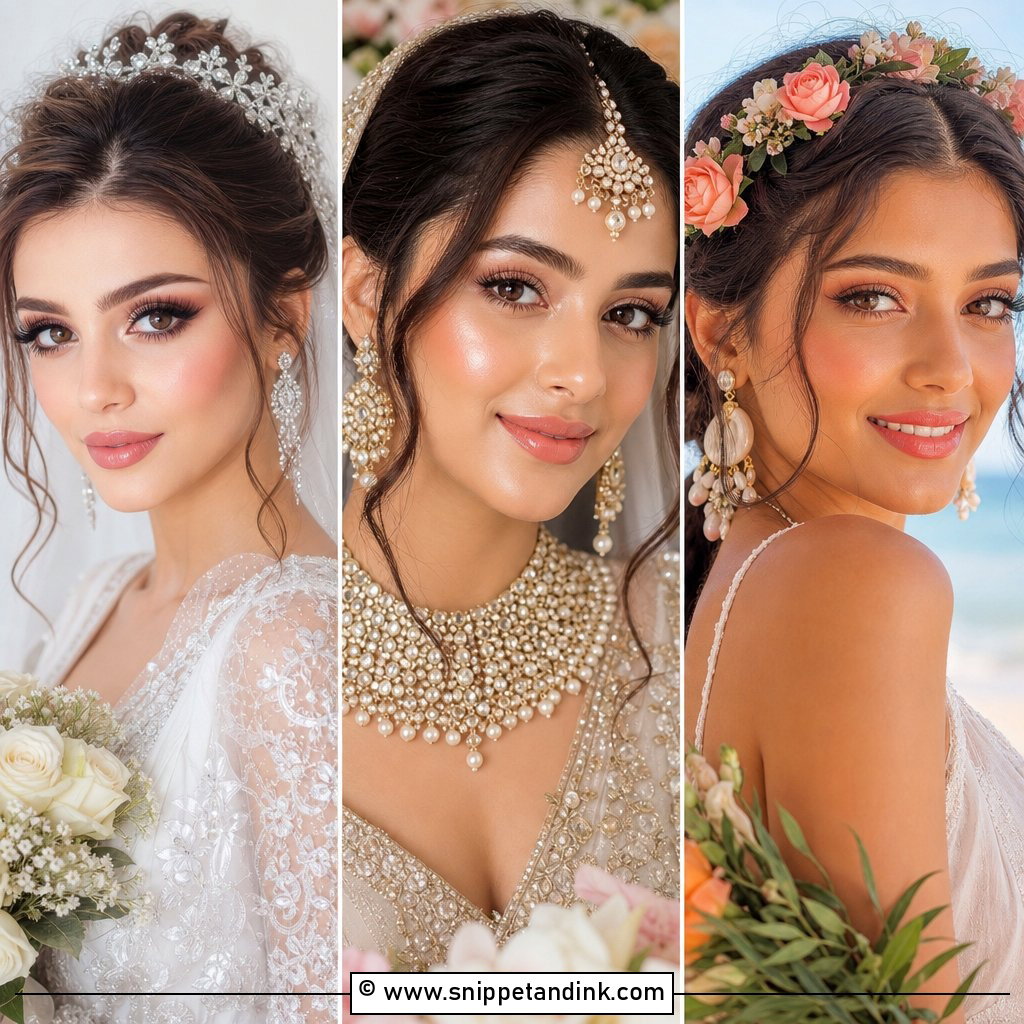
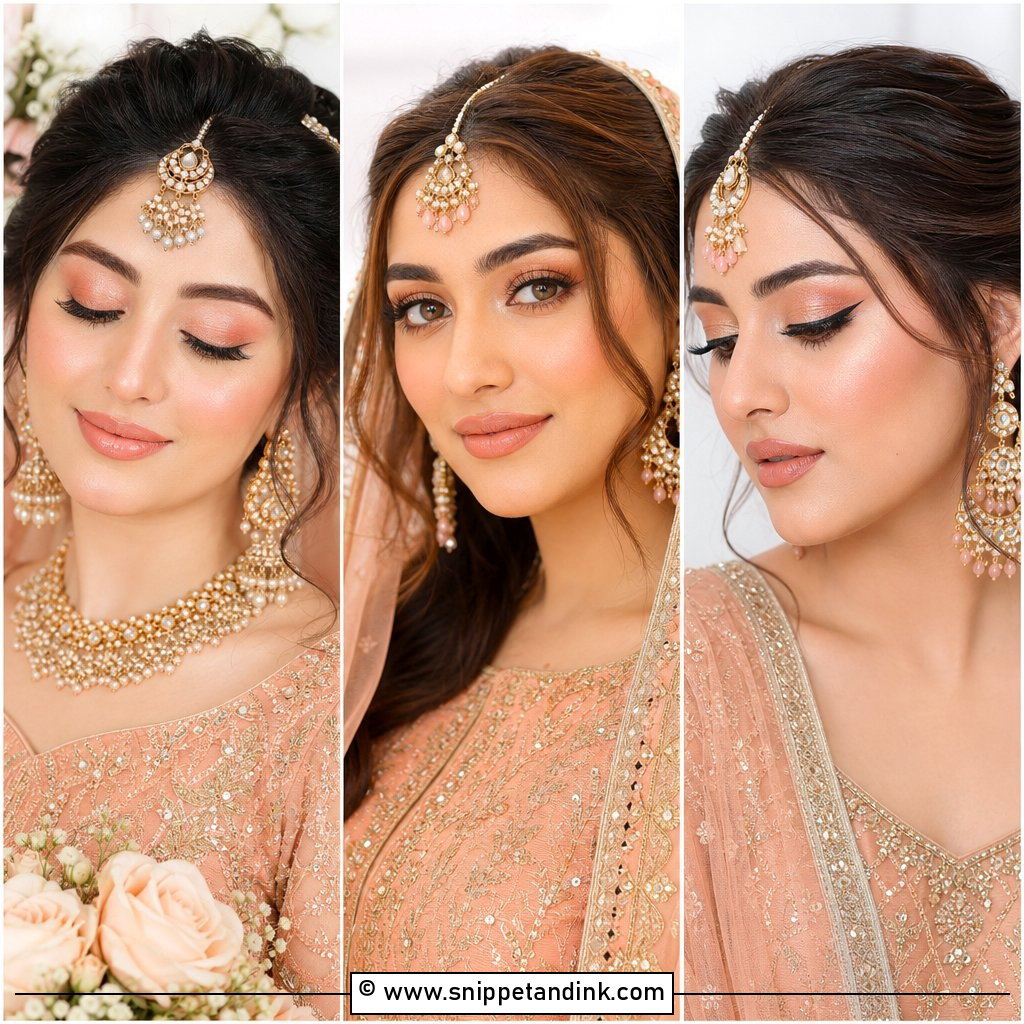
Peach is the shade I reach for when a bride wants warmth without looking bronzed, and it suits a wide range of undertones. I keep the base satin, sweep peach cream blush across the cheeks, and add a little warm bronzer at the temples so the colour doesn’t look like it stops abruptly. The eyes get a peachy champagne lid and brown liner. One thing I check at the trial is the dress: next to a very cool, blue-white gown, a strong peach can look orange, so I soften it with a drop of pink.
10. Rose Bridal Makeup
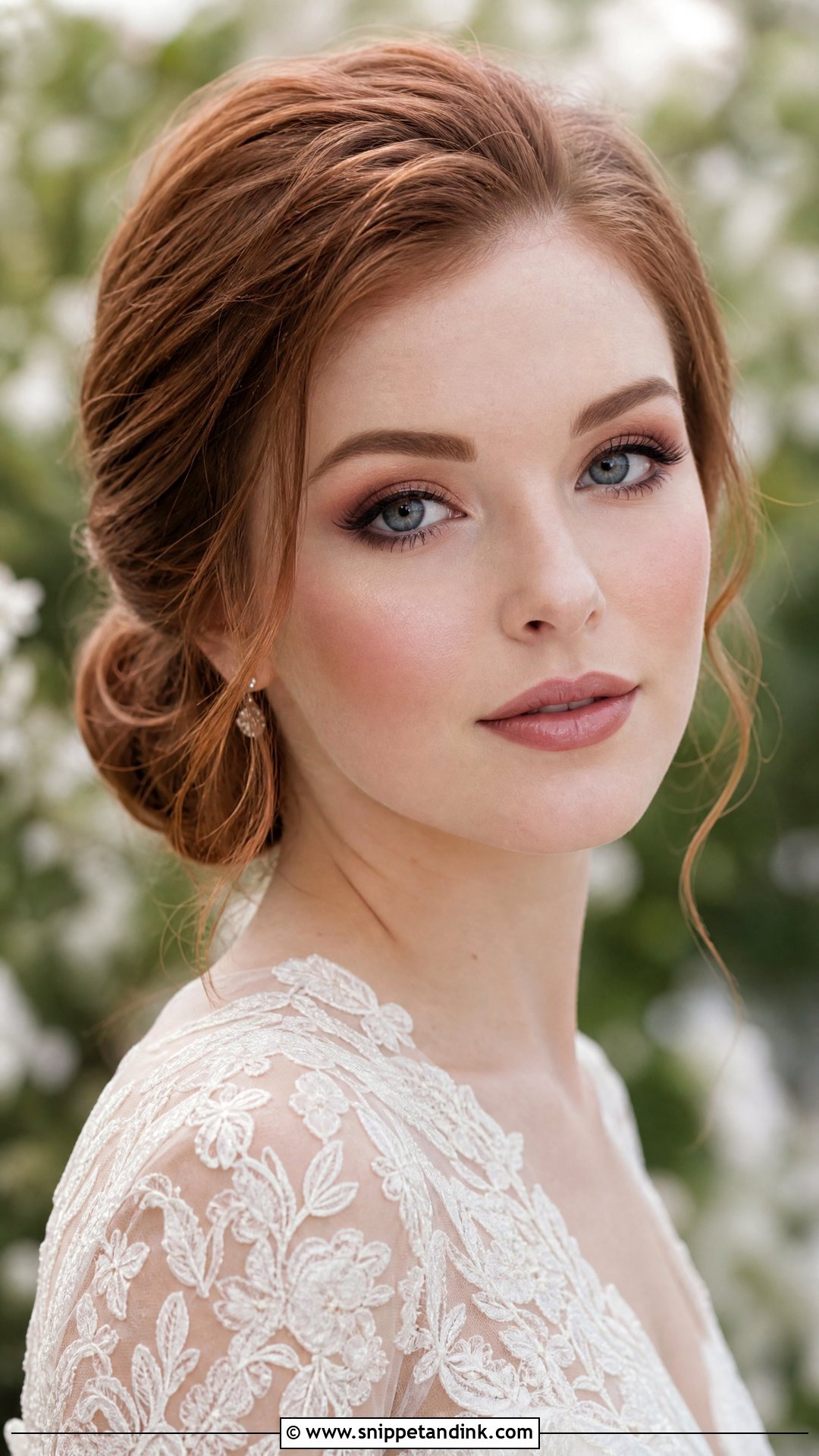
Rose adds colour without anyone calling it bold, which is why it’s one of my most requested shades. The blush is blended out toward the cheekbone, the lids go rose-taupe or mauve, and a thin brown liner keeps the eyes lifted. I fill brows lightly with a pencil in fine hair strokes so they frame the face without a hard outline. For the lip, a rose nude or a muted pink satin lipstick finishes it. Rose tones can make redness around the nose more noticeable, so I correct that area carefully before any colour goes on.
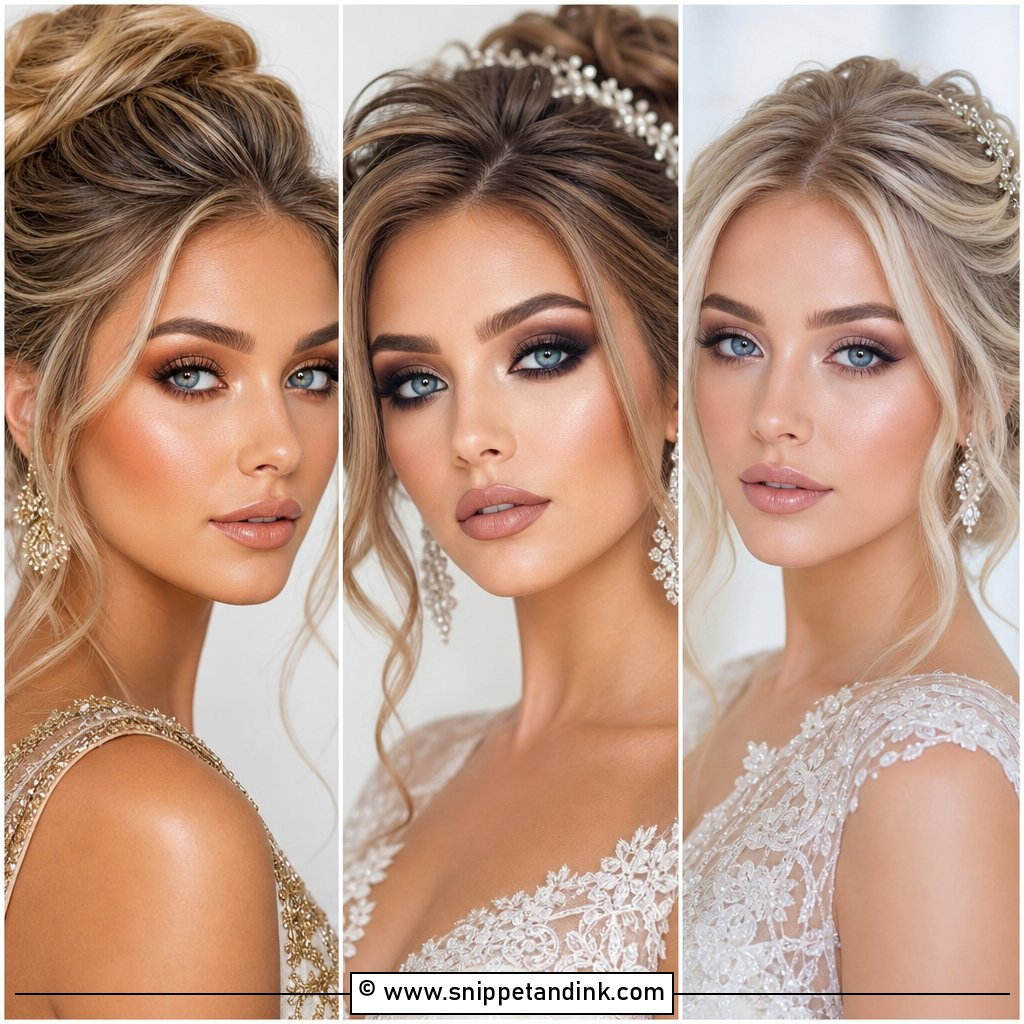
11. Champagne Eye Bridal Makeup
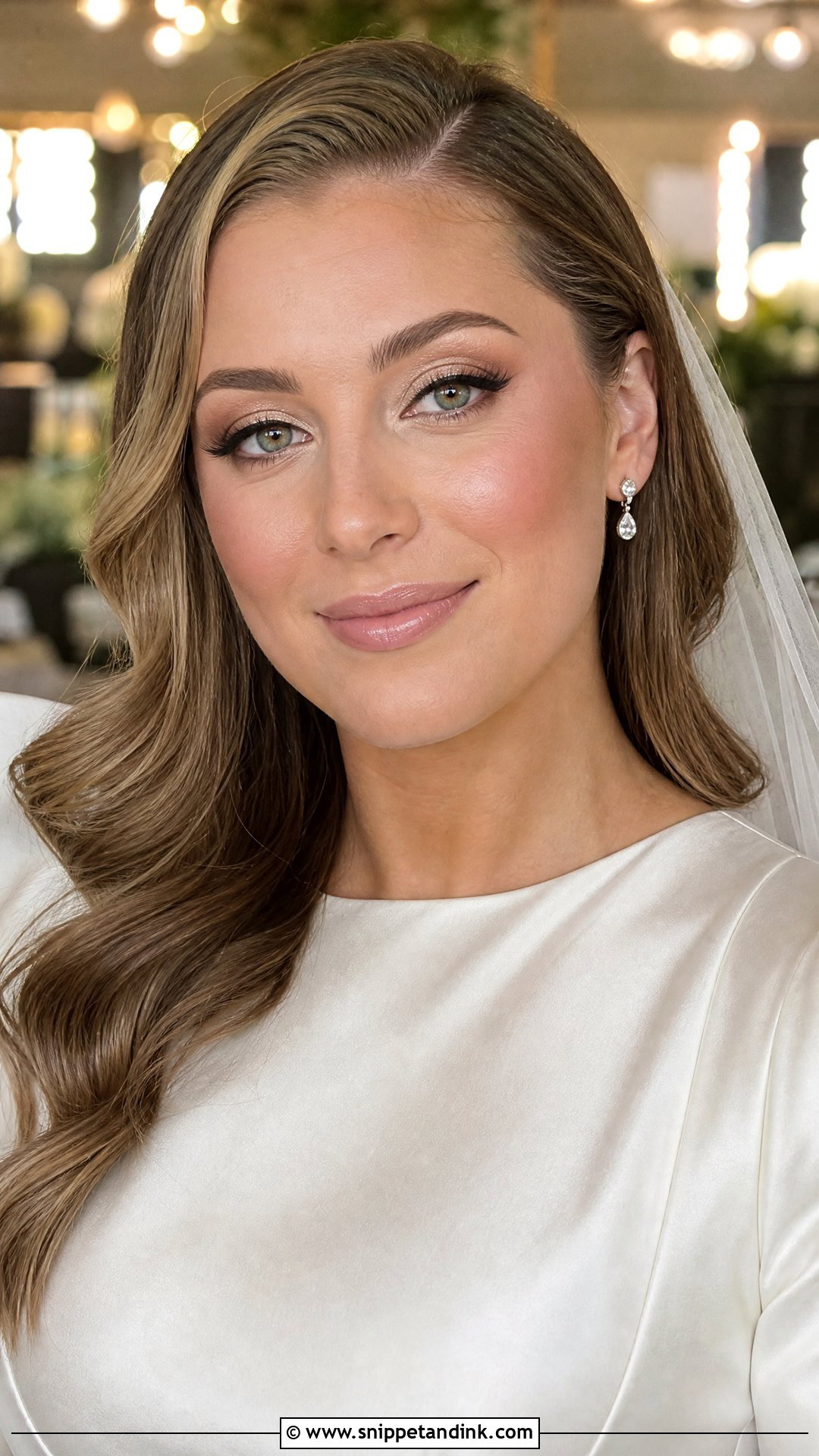
Champagne on the lid is how I get eyes to catch light without any glitter. I lay a matte beige in the crease first, then press, not swipe, a satin champagne shadow onto the centre of the lid with a fingertip; pressing gives more payoff and less fallout. Liner stays thin and brown. Because the shimmer is concentrated on the lid, it reads softly in candlelight at an evening reception. On very crepey lids I switch to a satin rather than a metallic, since metallic finishes sit in fine lines.
12. Brown Eyeliner Bridal Makeup
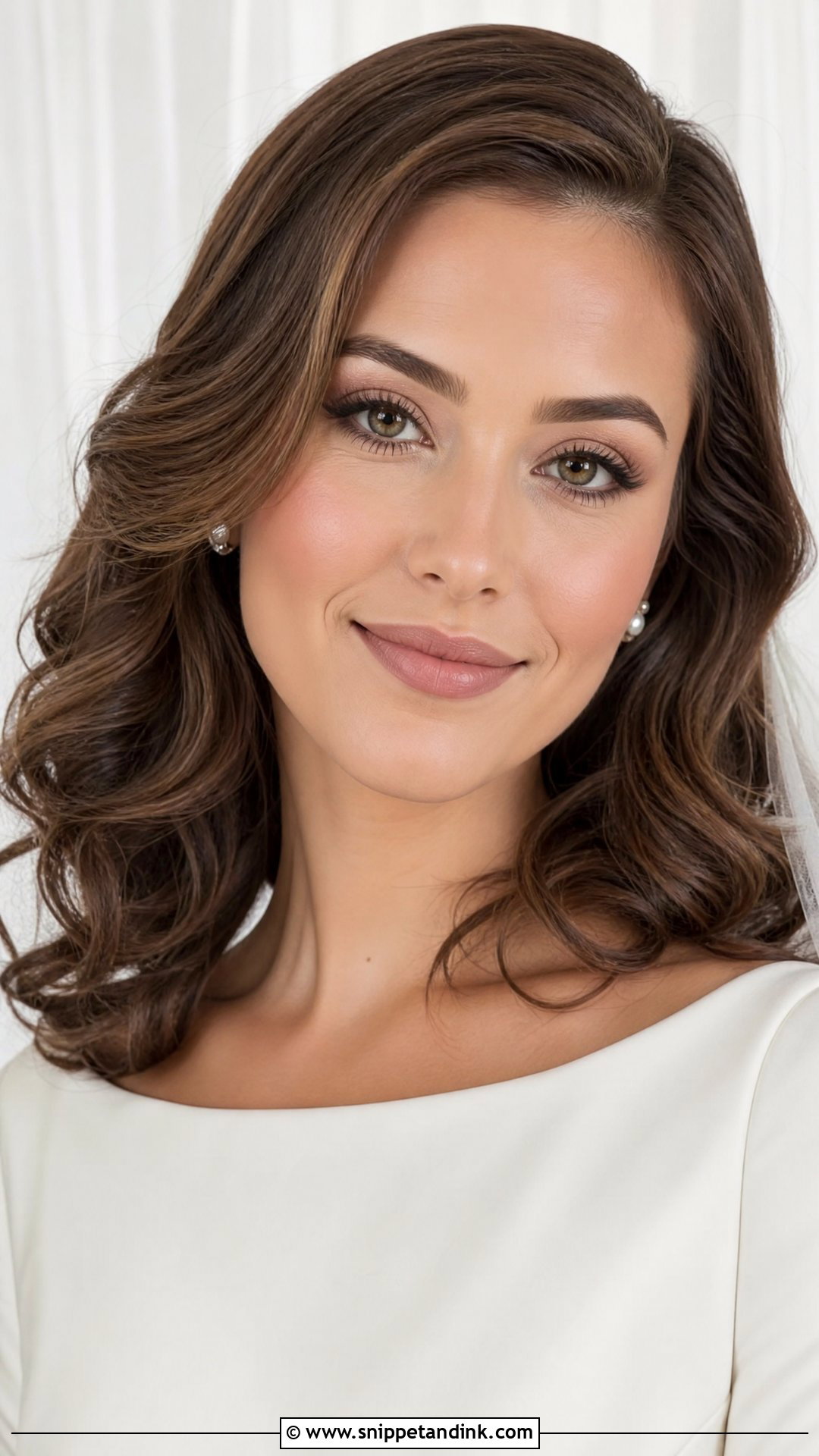
Brown liner is the single most useful swap in clean bridal makeup. Black can look severe next to soft skin, especially on fair or light-eyed brides, while brown gives shape that melts into the lashes. I apply a gel or pencil tight to the upper lash line, then smudge it with a small brush within a few seconds before it sets. Half lashes on the outer third add lift without weight. Keep the skin satin and the lip nude rose so the eyes stay the only defined feature.
13. Soft Wing Bridal Makeup
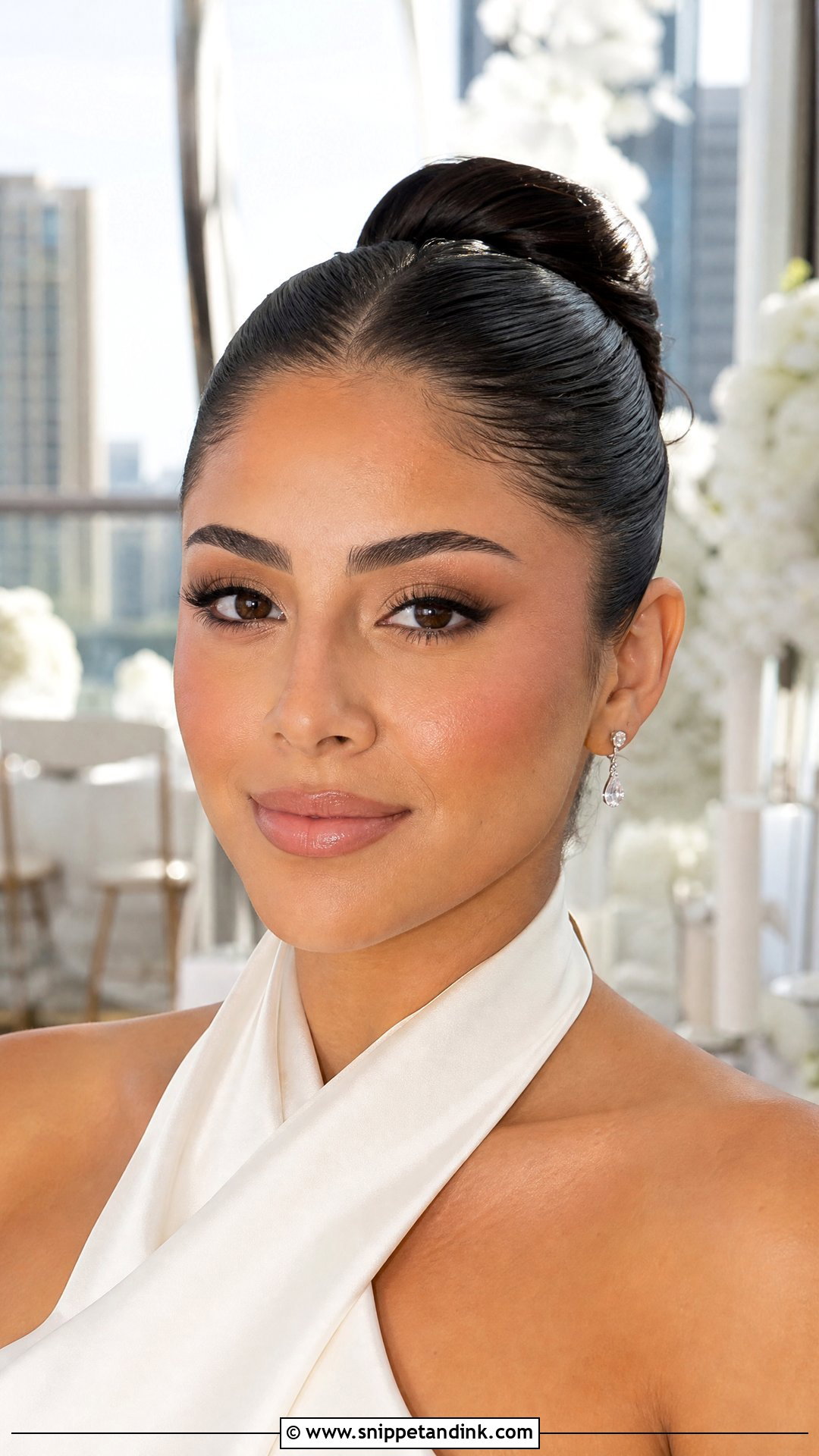
A soft wing gives the eye a lift without the commitment of a sharp cat eye. I draw a short flick in brown or charcoal, following the angle of the lower lash line up toward the end of the brow, then soften the edge with a little shadow on top. The flick should be visible with eyes open; I always check this with the bride looking straight ahead, because a wing drawn on a closed lid often disappears into a fold. It pairs well with sleek hair and a minimal gown, and less well with a very romantic, curly style where it can look too graphic.
14. Neutral Smokey Bridal Makeup
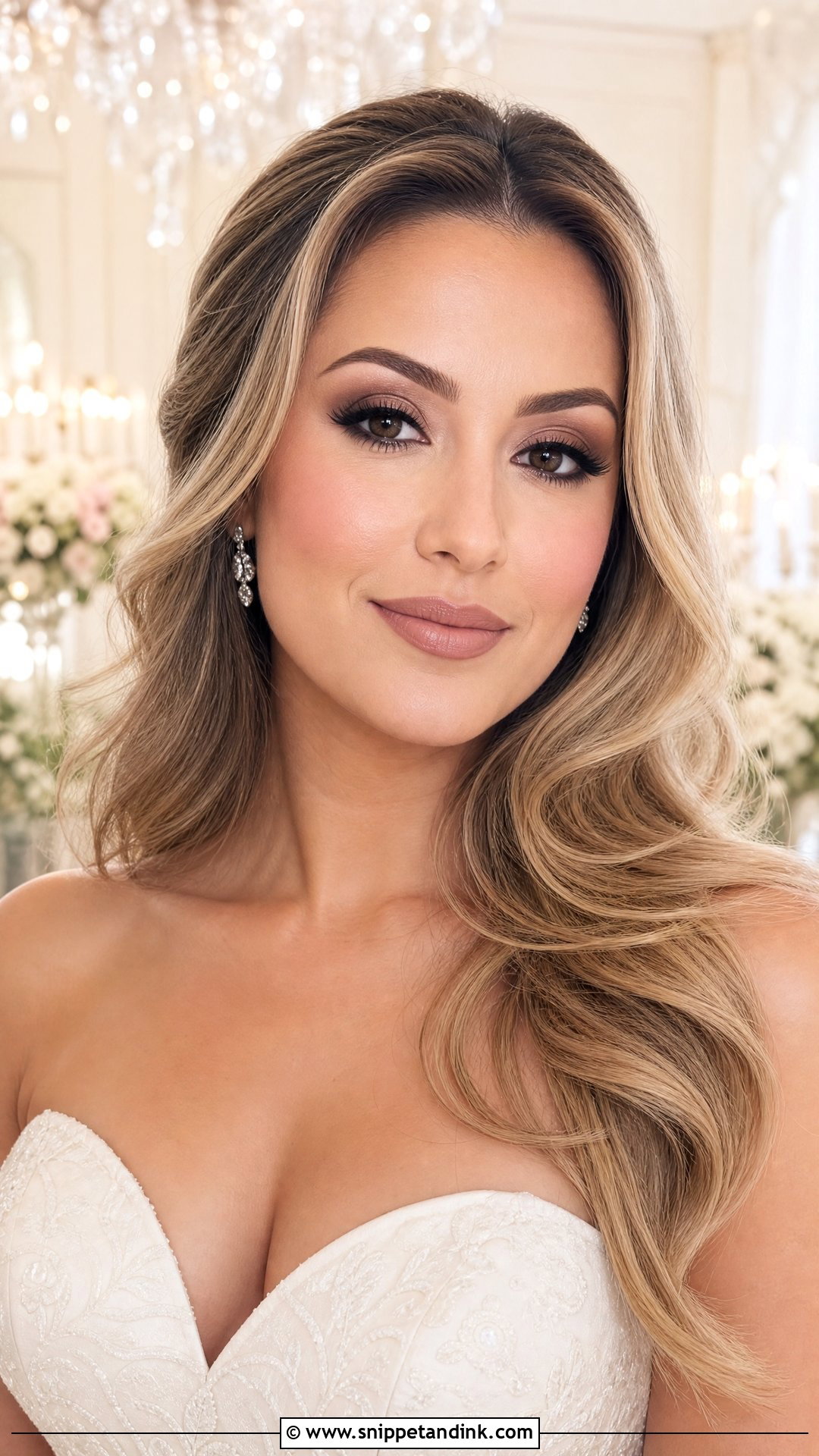
A neutral smoky eye trades black for matte browns and taupes, which is what keeps it from looking heavy in daylight. I sweep a light neutral across the lid, build the outer corner in two or three passes of matte brown, then smudge the same shade softly along the lower lash line. The lower line is where it usually goes wrong: too much product there drags the eye down and creases into the under-eye. Keep the skin balanced and the lip nude so the eyes lead. Brides who want some drama at the reception can deepen the outer corner later without starting over.
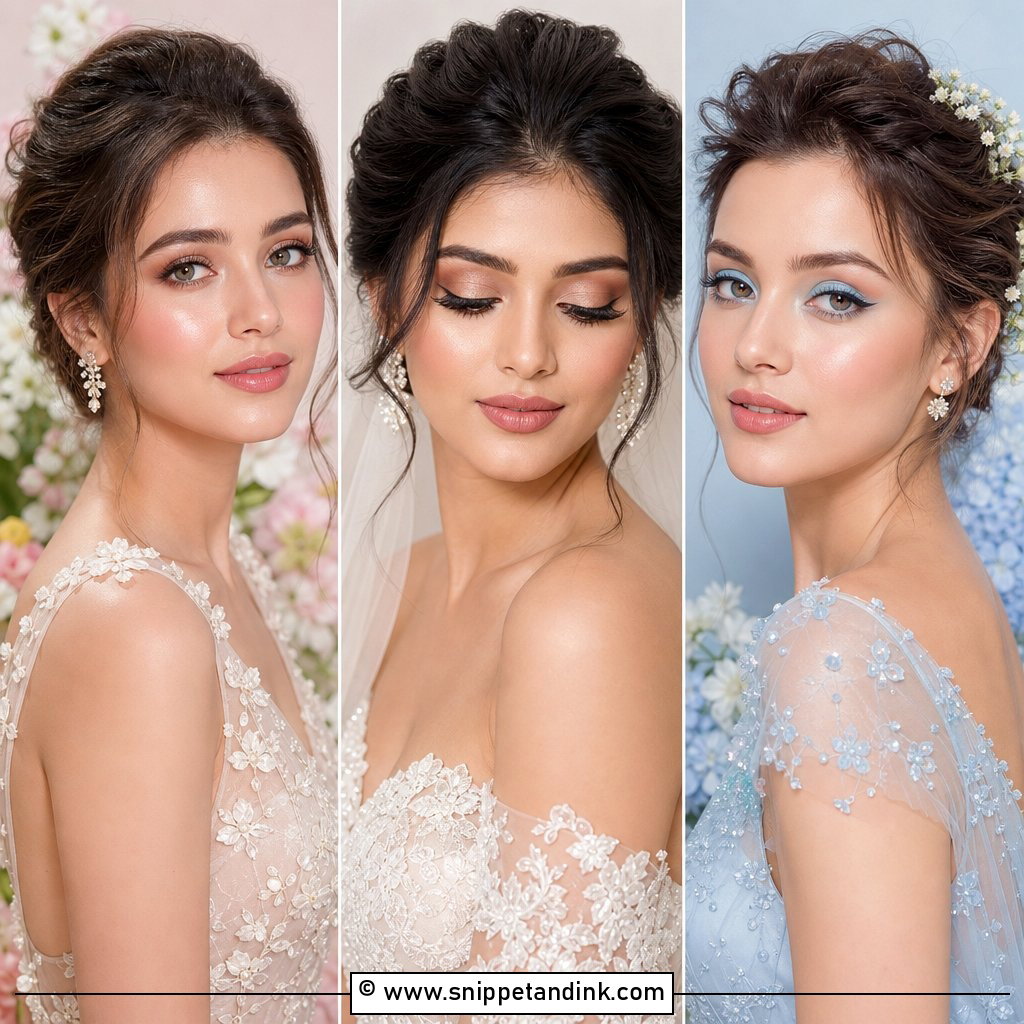
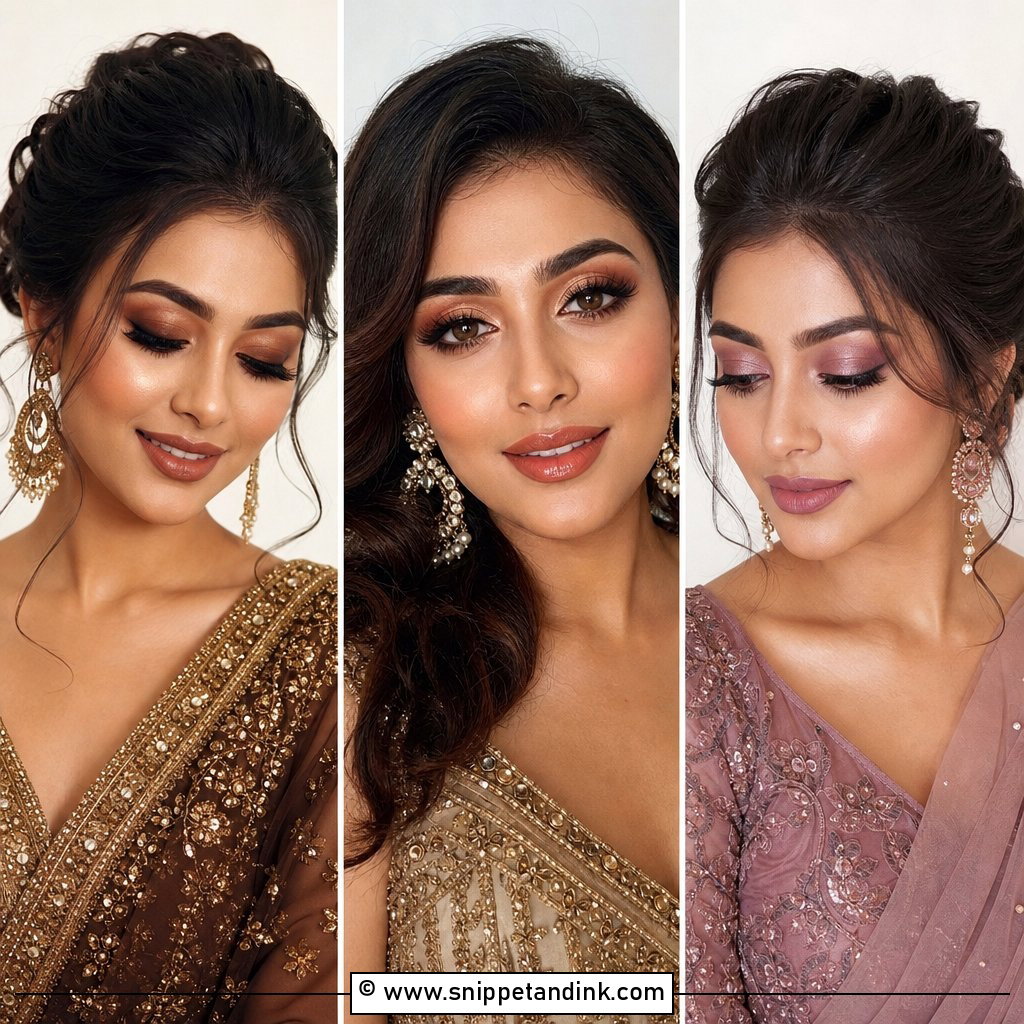
15. Bronze Bridal Makeup
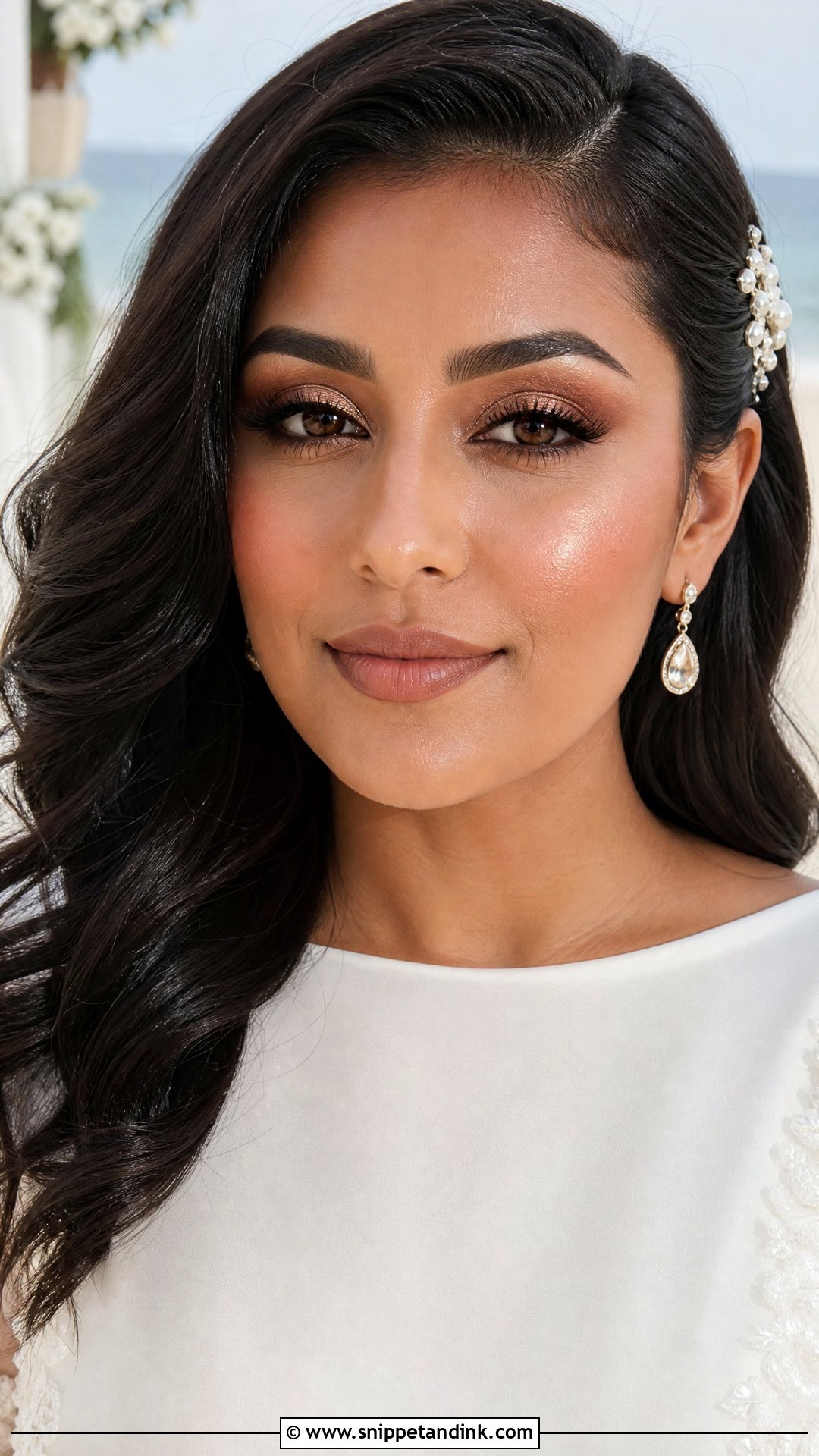
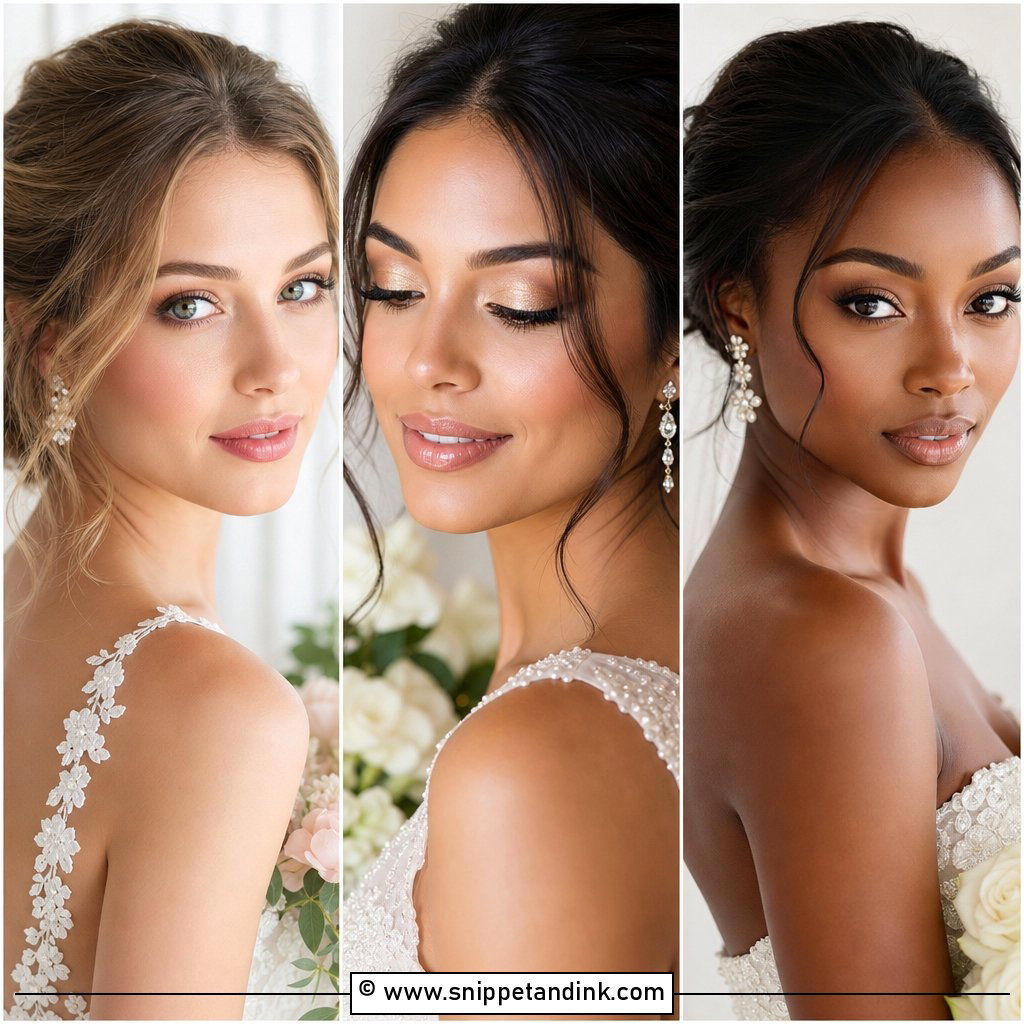
Bronze warms the face up, but it’s easy to overdo on a white dress, where the contrast makes everything look more tanned than it felt in the mirror. I use a sheer bronzer at the hairline, under the cheekbone and lightly along the jaw, then a warm golden-brown satin shadow on the lids with matte brown in the crease. I always blend bronzer down onto the neck and any exposed chest so there’s no line where the face ends. Terracotta blush on deeper skin and warm rose on lighter skin round it out. Beach venues and summer afternoons suit it best.
16. Nude Lip Bridal Makeup
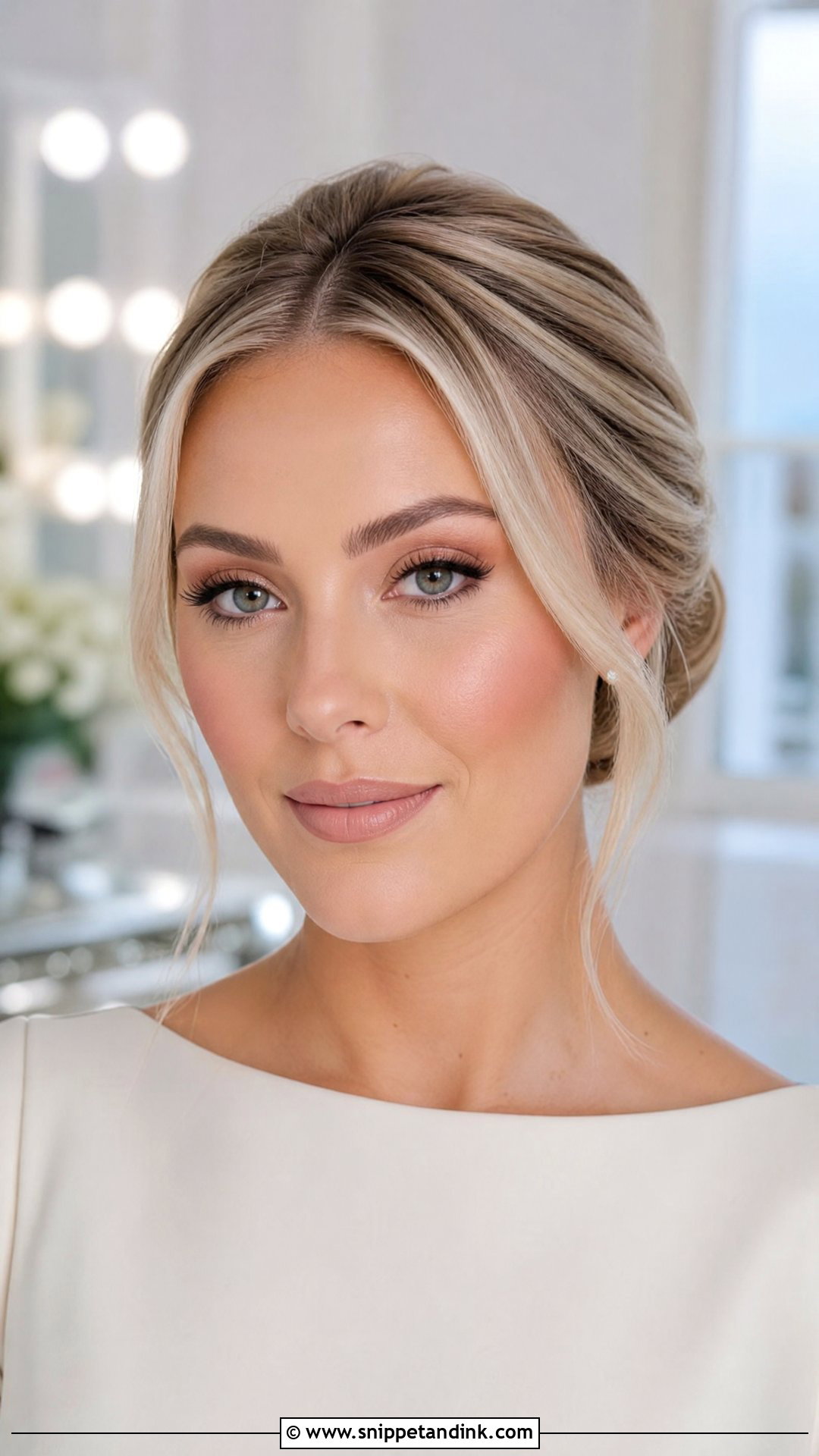
A nude lip should look like your mouth, slightly better, not erase it. I choose a shade close to the bride’s natural lip colour or one step deeper, and I line with a pencil that matches the natural lip edge rather than the lipstick. Very pale matte nudes are the ones I talk brides out of most; next to a bright white gown and in flash they can wash the whole face out. A satin or creamy finish photographs with more life. Add enough blush that the face doesn’t look flat once the lip is so quiet.
17. Glossy Lip Bridal Makeup
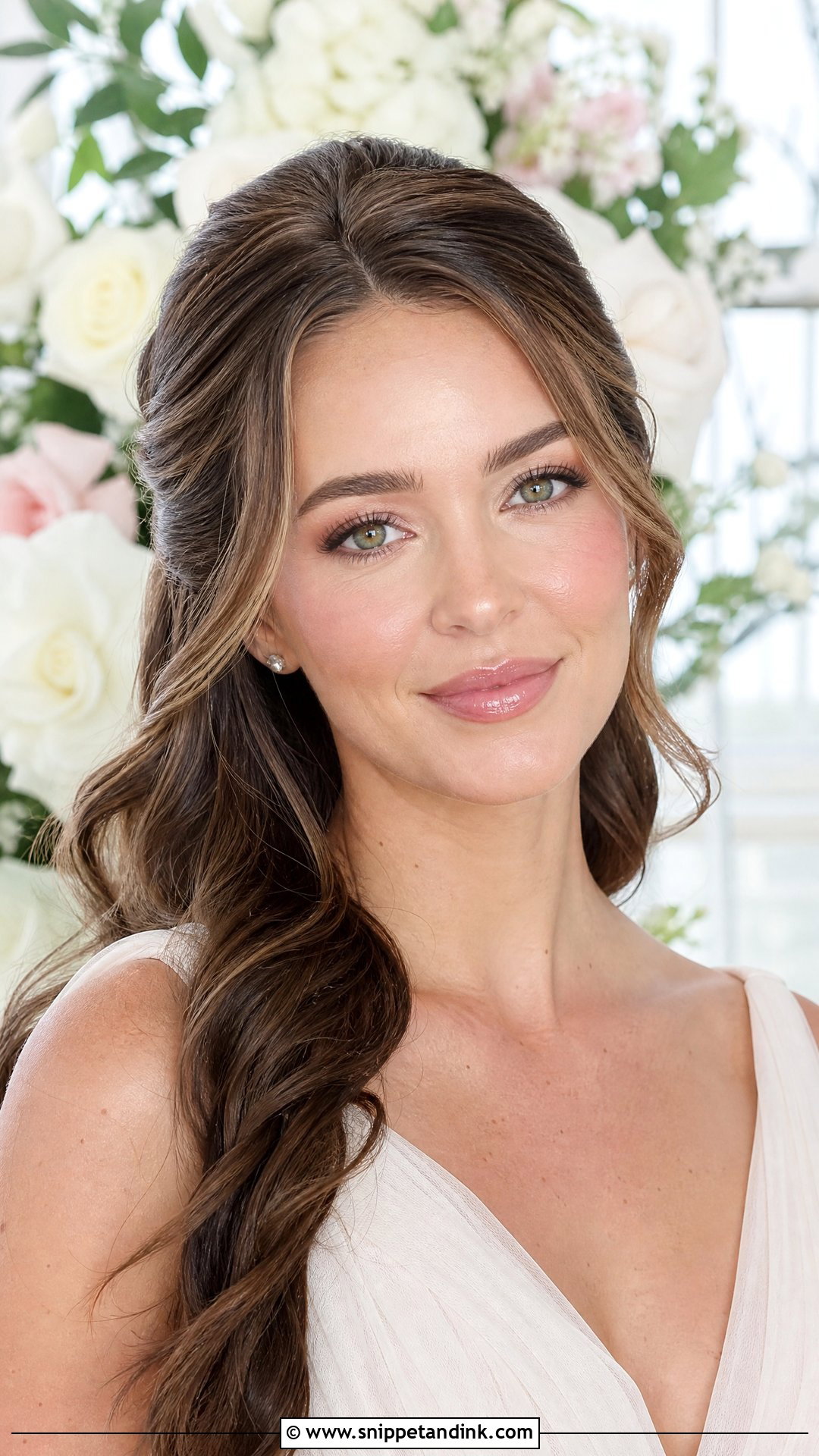
Gloss looks fresh, but it moves. I line the whole lip first and fill it in with the pencil so there’s colour underneath when the gloss wears off during the ceremony kiss and the toast. Then a non-sticky gloss goes only in the centre of the lips, not to the edge, which helps stop it bleeding. With a glossy lip I keep the cheeks less shiny, because shine everywhere makes the face read as greasy in photos. Long hair worn down and loose is the one thing that makes me hesitate: it sticks to gloss on a windy day.
18. Satin Skin Bridal Makeup
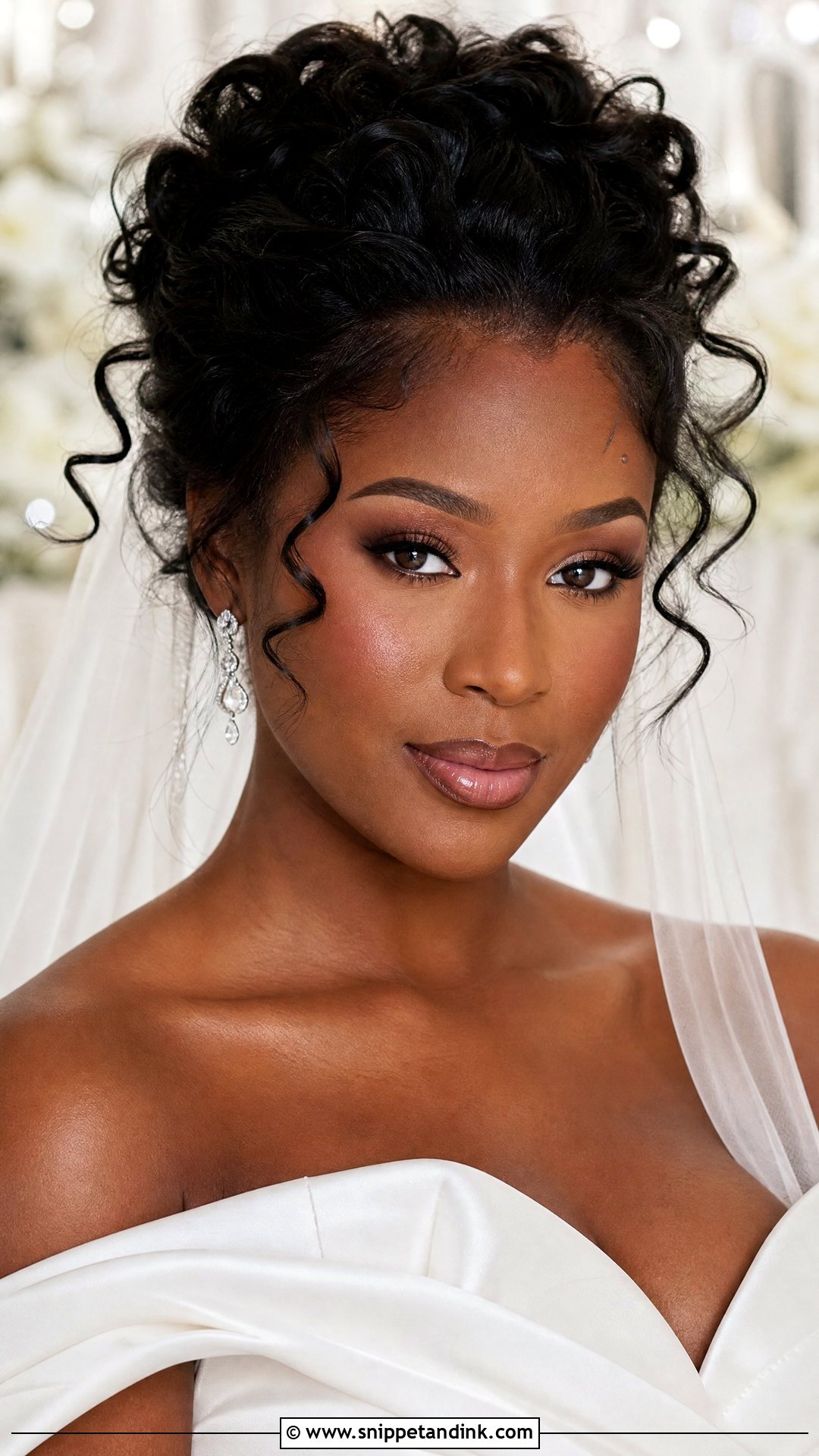
If I had to pick one finish for a long wedding day, it would be satin skin. It sits between dewy and matte, so it looks alive in person and doesn’t flare in flash. I use a natural-finish foundation and set only the areas that crease or turn oily: under the eyes, around the nose and the chin. The cheeks stay unpowdered so cream blush still looks fresh. Taupe on the lids, brown liner and a satin lipstick in rose or mauve keep everything in the same middle register. It’s also the most forgiving finish for combination skin.
19. Soft Contour Bridal Makeup
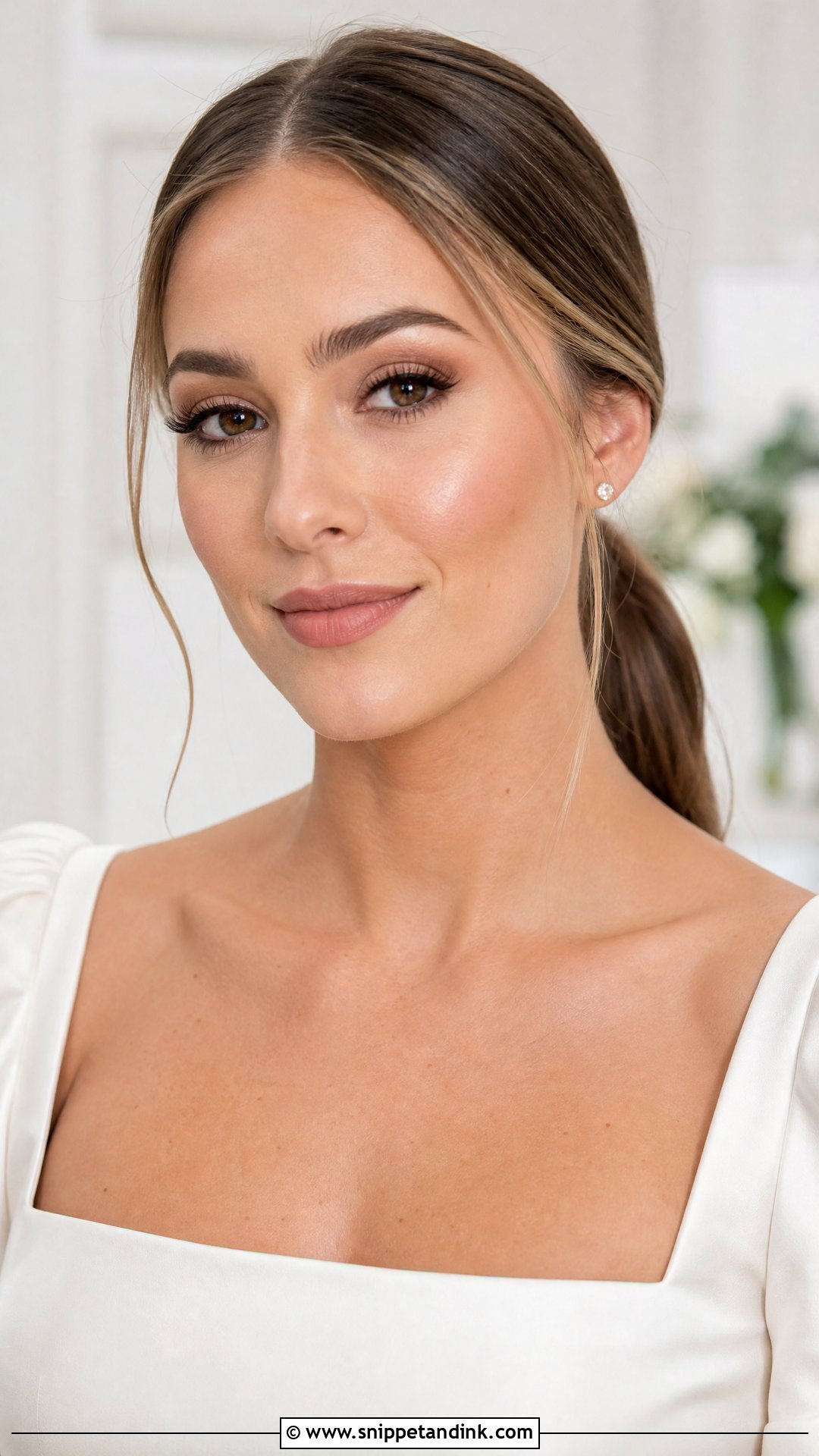
Contour in clean makeup should be felt more than seen. I use a cream contour a couple of shades deeper than the skin, with a cooler, grey-brown undertone, because warm bronzer reads as colour, not shadow. It goes under the cheekbone, at the temples and lightly along the jaw, and I blend it before anything else sets on top. Blush goes over it to bring warmth back. Check it in daylight by a window at the trial; contour that looks soft under bathroom lighting can look like stripes outdoors.
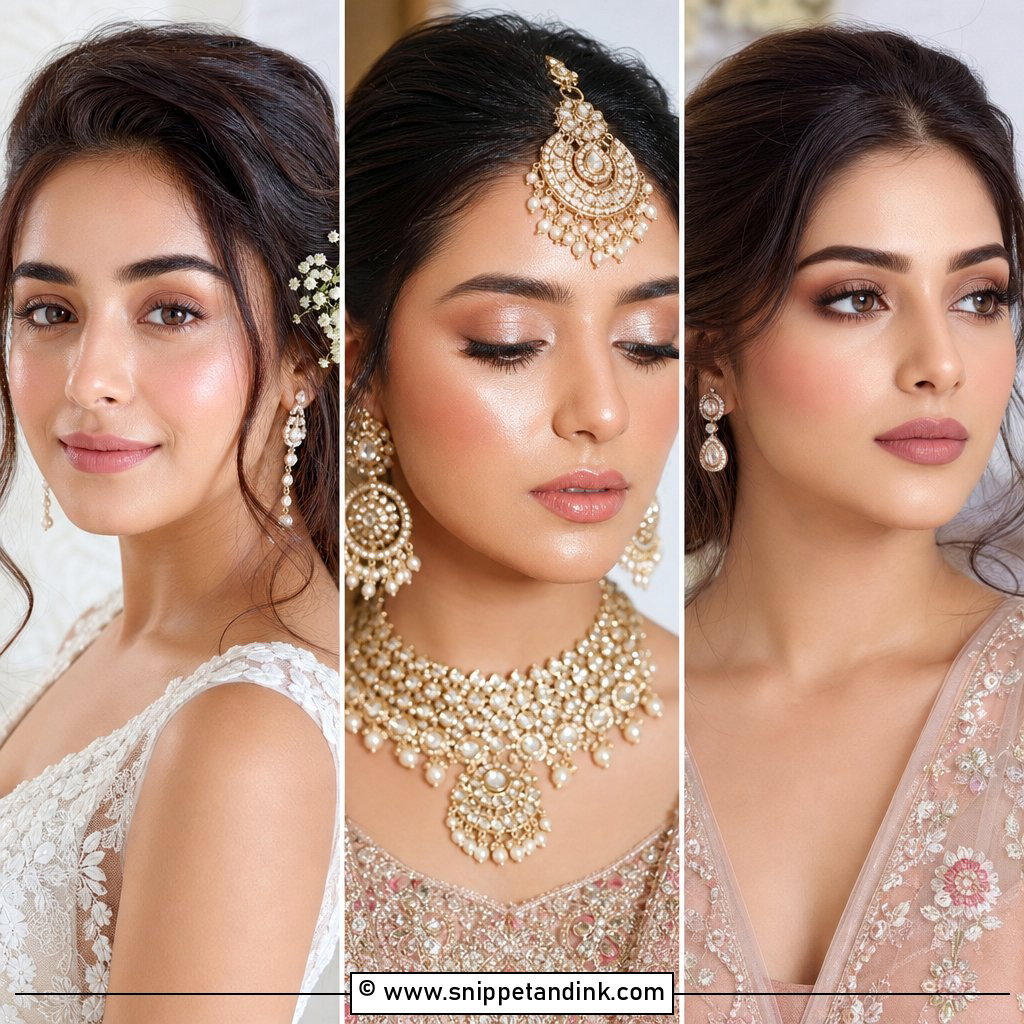
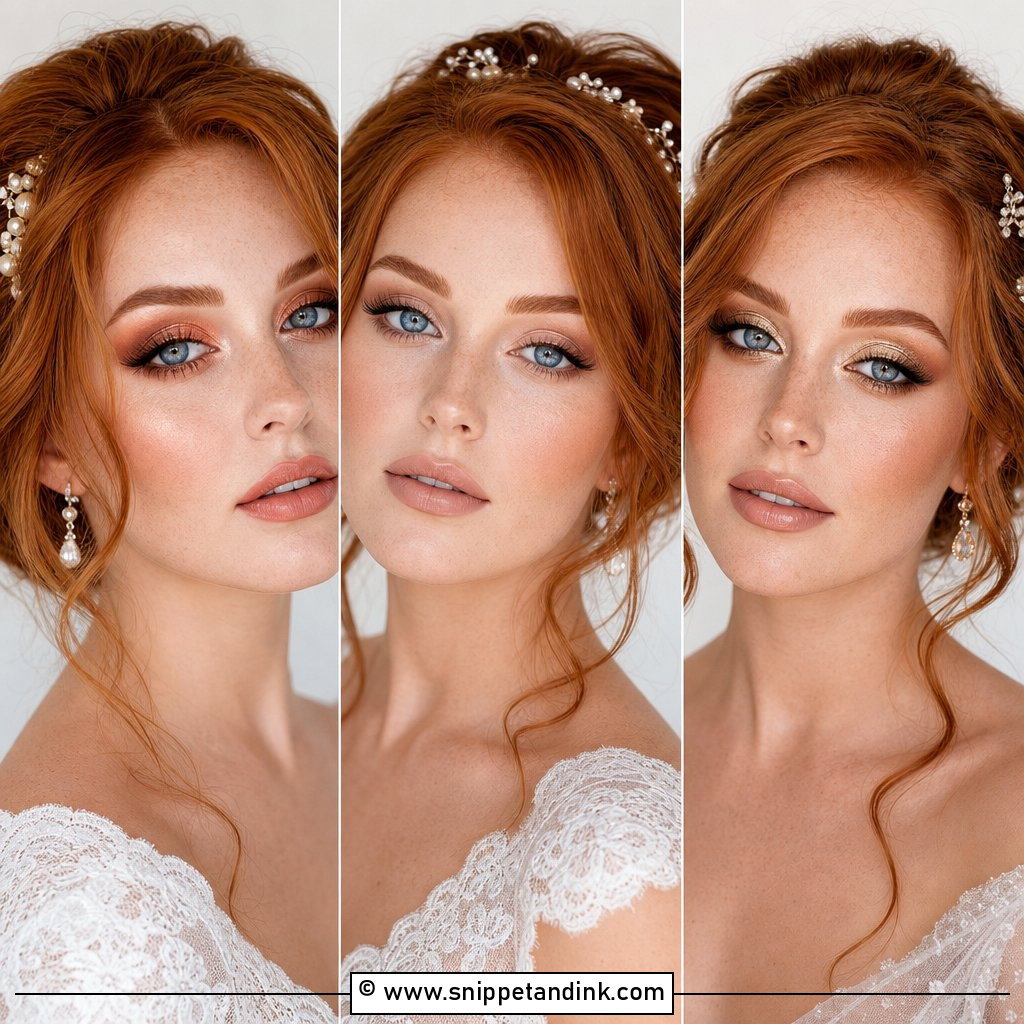
20. Fresh Freckle Bridal Makeup
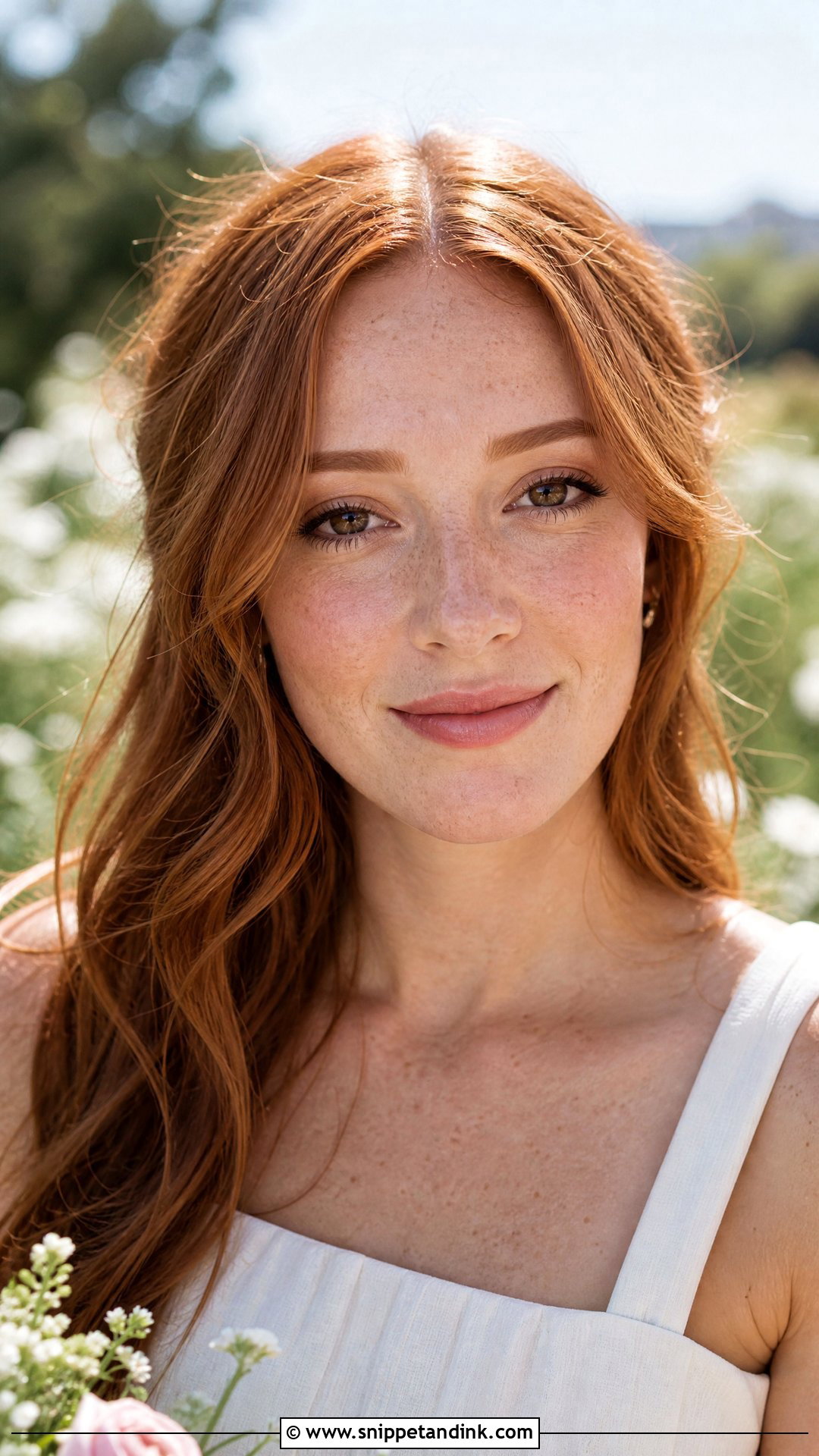
Covering every freckle is the quickest way to make a freckled bride look unlike herself in photos. I use a light foundation or tinted moisturiser that evens redness but lets the freckles through, then spot conceal only true blemishes. A heavy contour fights with the natural pattern, so I skip it and use cream blush in peach or soft berry to warm the cheeks. Brown mascara instead of black keeps it in proportion with fair lashes. A tinted balm on the lips is enough. It’s the look I’d point to for outdoor ceremonies with very little fuss.
21. Clean Bridal Makeup For Blue Eyes
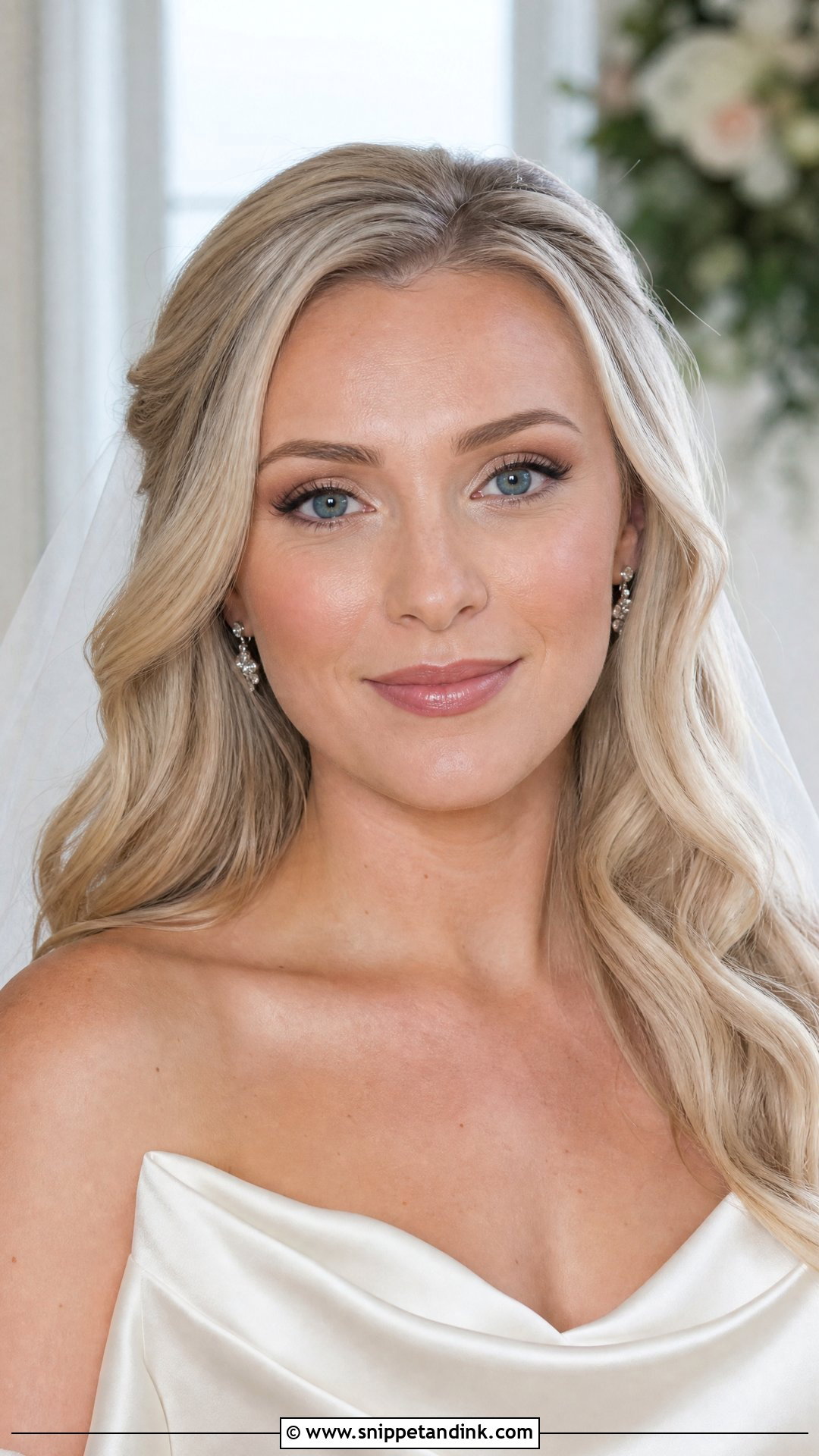
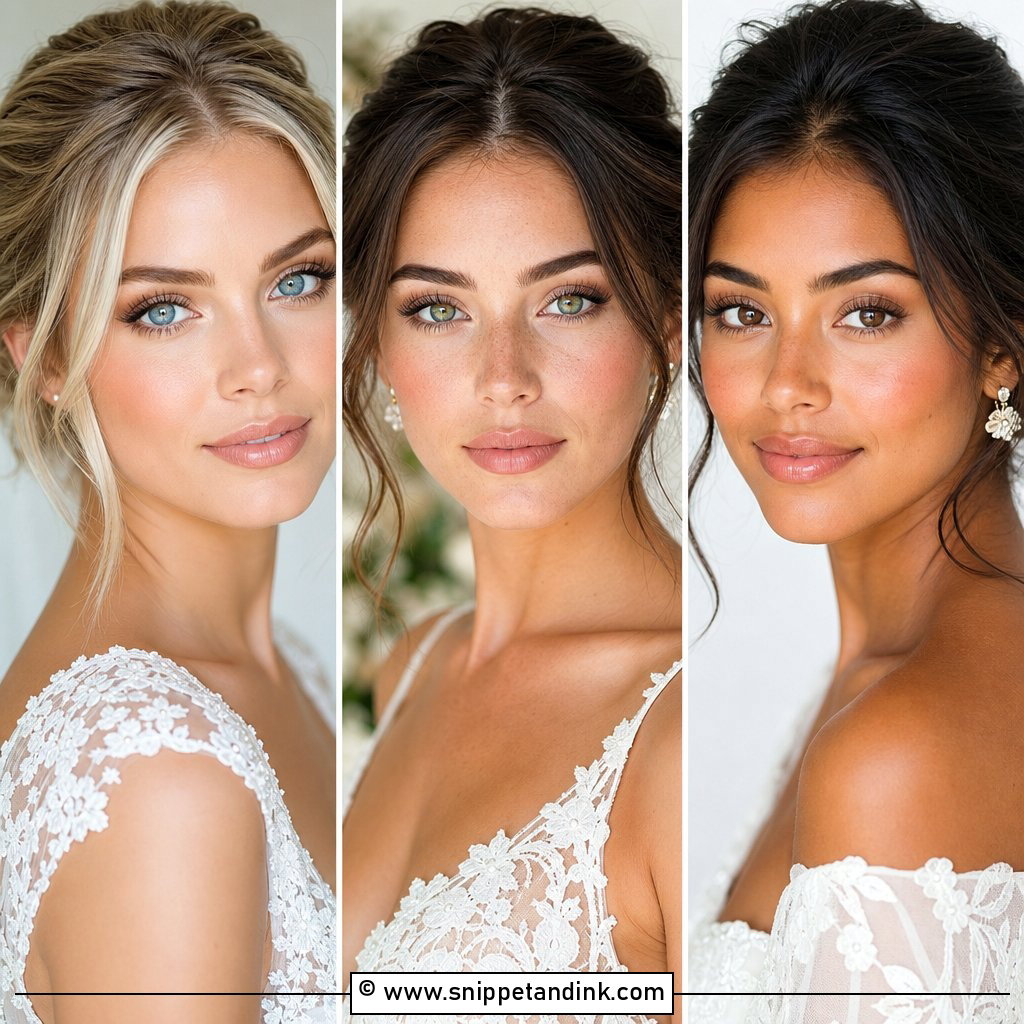
Blue eyes look brightest next to warm tones, since warm shades sit opposite blue on the colour wheel. For clean bridal makeup for blue eyes I use champagne or light bronze on the lid and a peach-beige in the crease. I swap black liner for brown, which gives enough contrast without hardening the eye. Lashes should be curled and separated rather than thick, so more of the iris shows. Keep blush in pink or peach depending on undertone and the lip in nude rose.
22. Clean Bridal Makeup For Brown Eyes
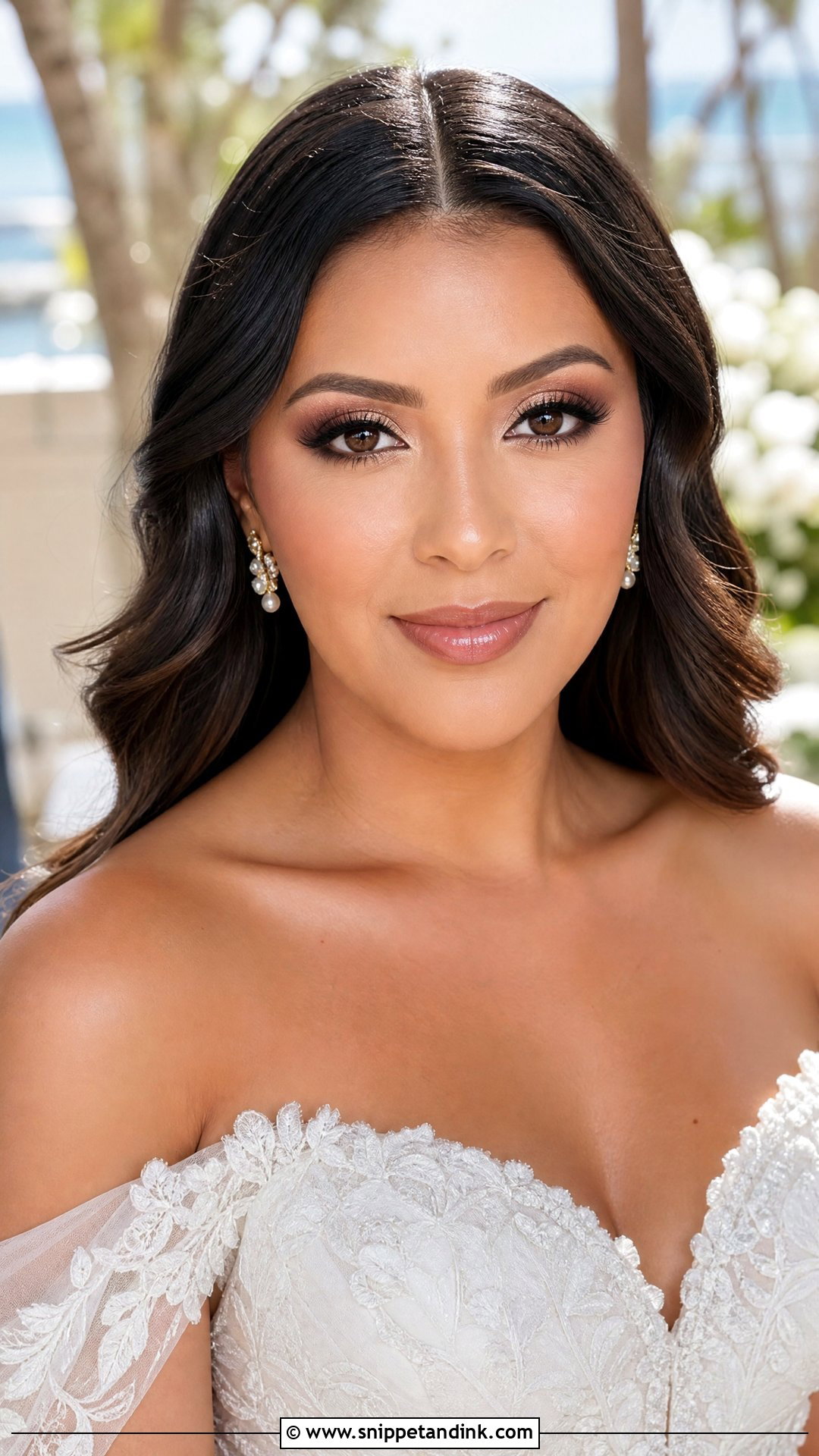
Brown eyes are the easiest to flatter, so my job is mostly to avoid making them look heavy. In clean bridal makeup for brown eyes I use soft gold or rose brown on the lid and a thin espresso liner right at the lash roots. The lower lash line gets only a whisper of shadow; dark brown eyes already have plenty of depth, and extra colour underneath can read as tiredness in photos. The lip is where I match undertone, caramel pink on warm skin, mauve on cool.
23. Clean Bridal Makeup For Green Eyes
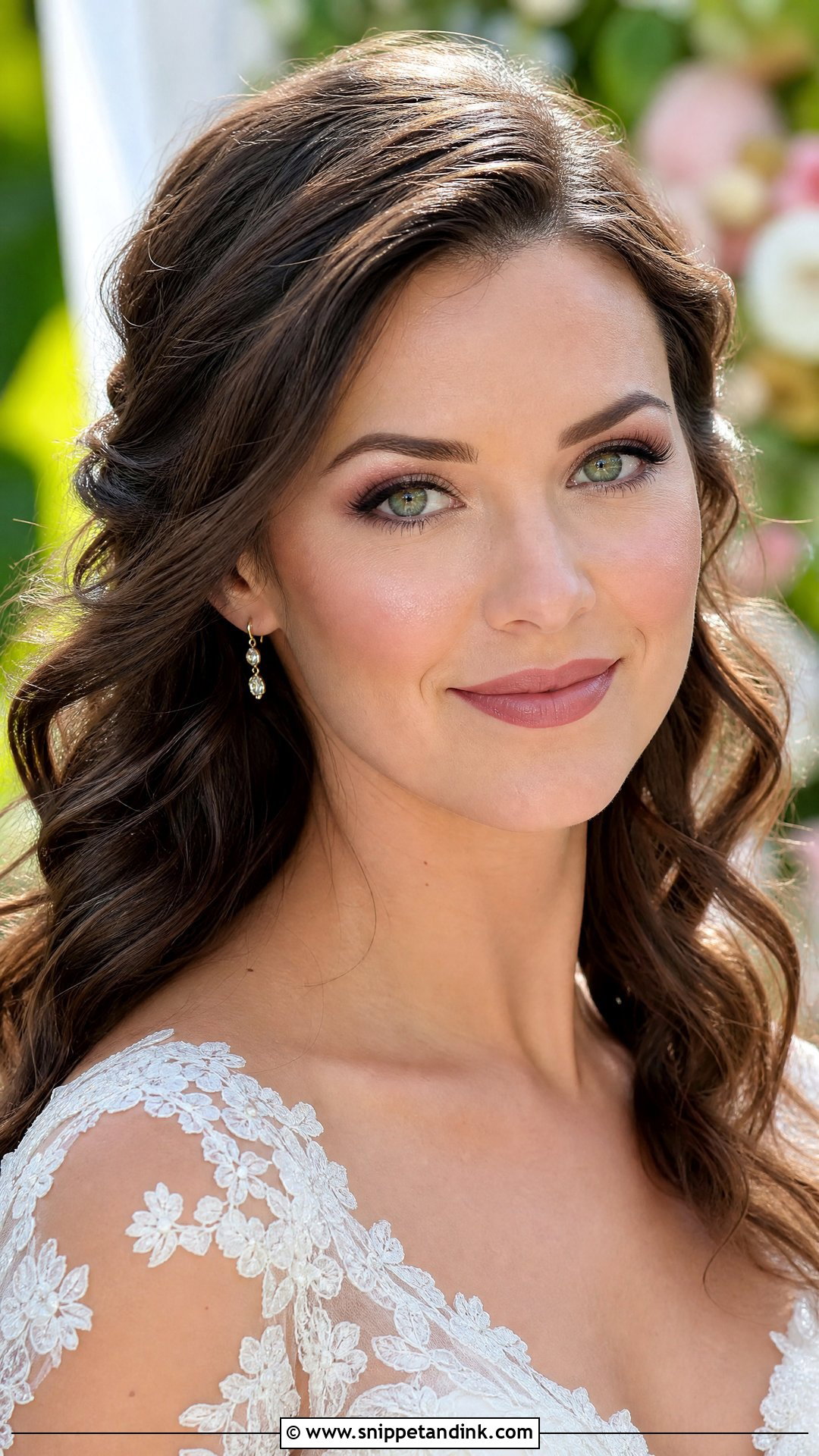
Green eyes respond to anything with a red or purple base, which is why muted plum and rose shades make them look greener. I keep the shadow sheer and blended so the iris stays the focus, and use a brown liner rather than a plum one if the bride wants it to stay clean. A light touch of plum just at the outer corner is usually enough. Rose blush on a satin base and a mauve nude lip tie the colour story together. Very bright purples are the thing to skip; they compete with the eye instead of lighting it up.
24. Clean Bridal Makeup For Hooded Eyes
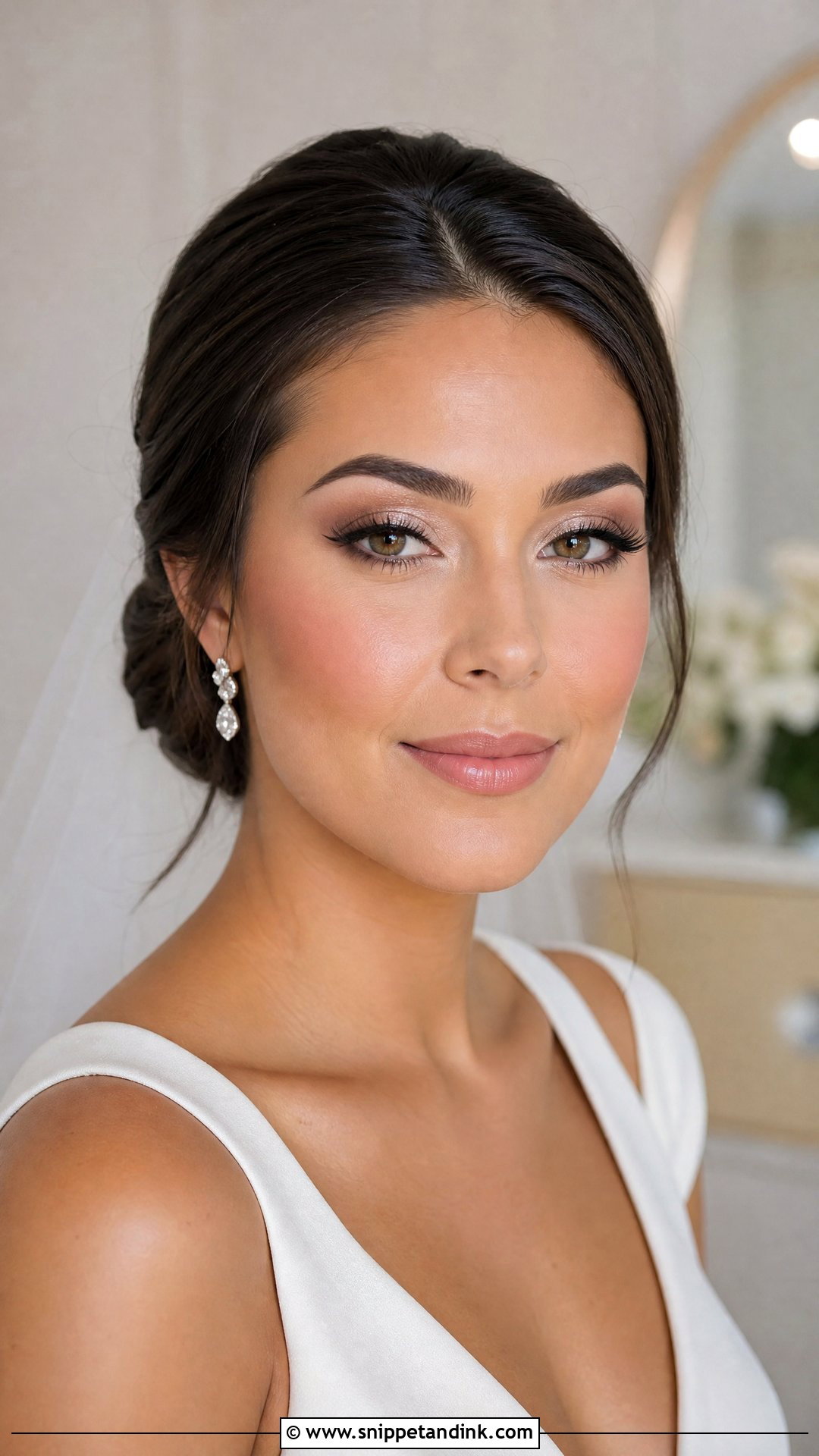
Hooded eyes are where placement matters more than product. I always do this part with the bride’s eyes open and looking straight ahead, because a crease drawn on a closed lid disappears into the hood. Matte shadow goes slightly above the natural crease, shimmer stays on the visible lid and inner corner, and liner is kept thin at the lash line; a thick wing takes up the little lid space there is. Half lashes on the outer corners help open the eye. Waterproof formulas matter more here too, since the hood presses against the lid and transfers shadow over the day.
25. Clean Bridal Makeup For Mature Skin
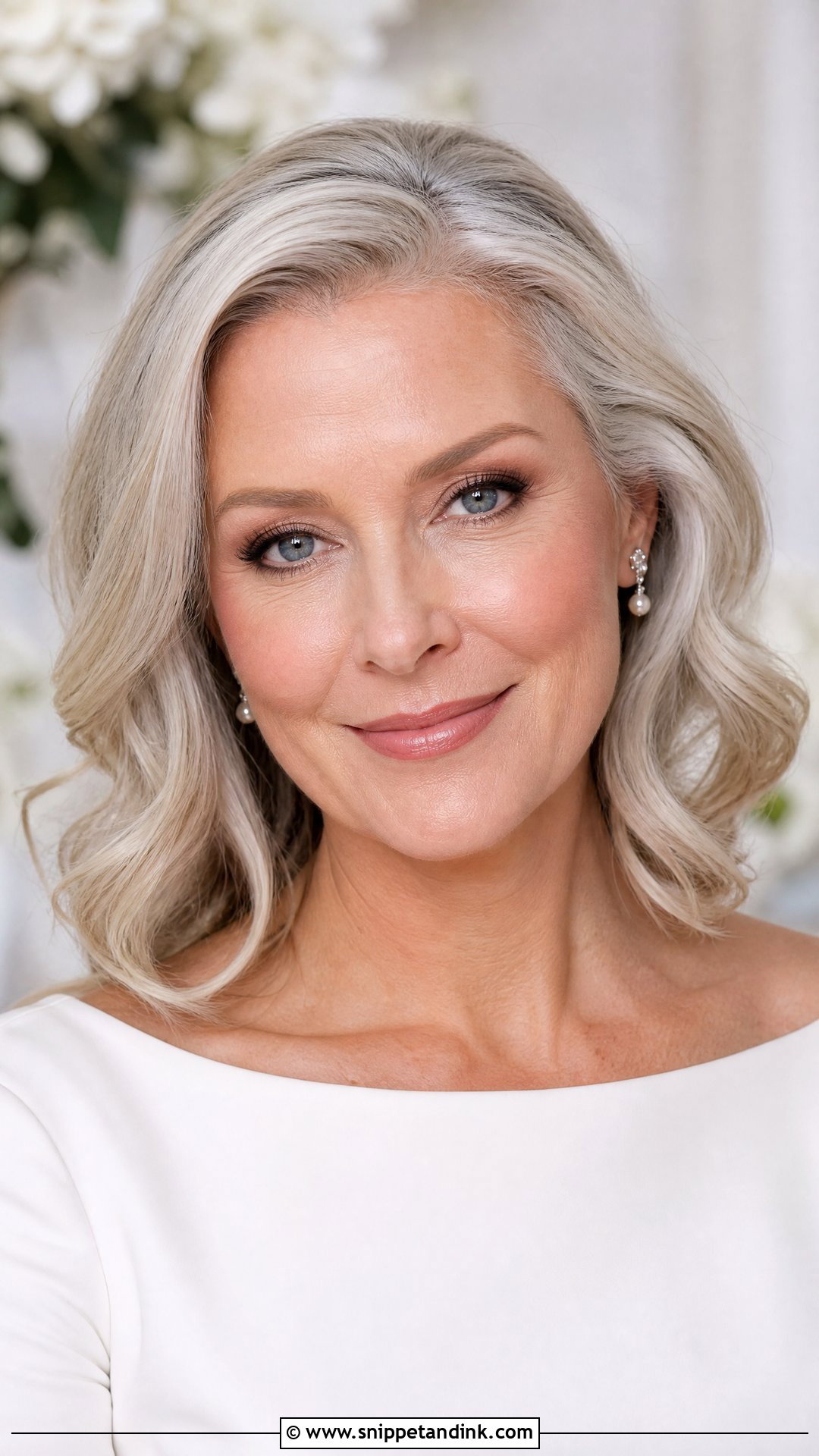
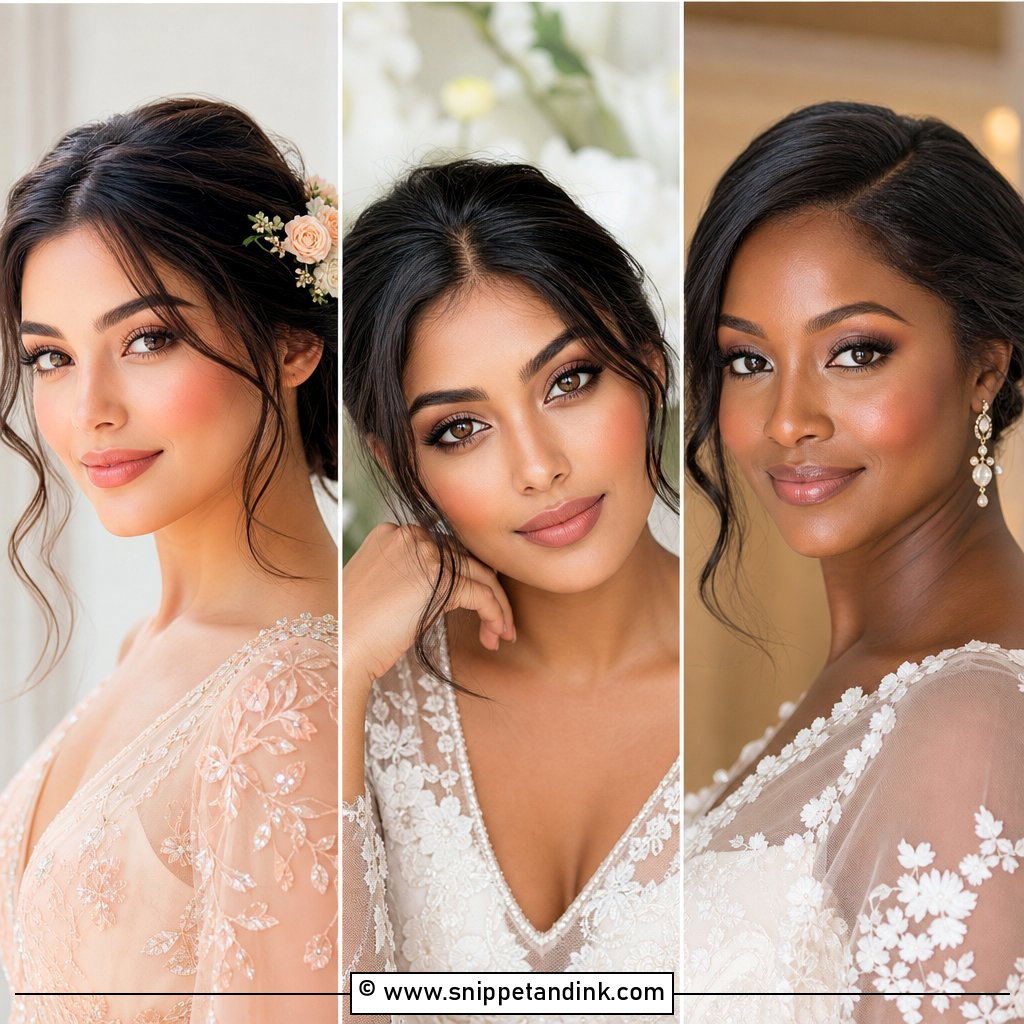
Mature skin needs less product and more moisture. I spend longer on hydrating prep than on anything else, then use a lightweight foundation and conceal only where it’s needed. Powder is used sparingly and pressed, never buffed, so it doesn’t settle into fine lines. Cream blush sits more softly than powder on this skin. Satin or matte shadows replace large shimmer particles, which highlight crepiness on the lid. Brows are filled with fine strokes for shape. A creamy rose or mauve lip finishes it; long-wear liquid lipsticks tend to dry and feather.
How a Sheer Face Holds Up From Ceremony to Last Dance
The fear with clean makeup is that it’ll be gone by dinner. It won’t be, if it’s built in thin layers that are each set lightly, because thin layers grip the skin and wear down evenly instead of sliding off in patches. What does fade is lip colour and cheek colour, so those are what you touch up.
What goes in the clutch
- Blotting papers. Press them on, don’t wipe, so the base underneath stays put.
- The exact lip colour and liner from the morning, not a similar one from home.
- A small cream blush you can tap on with a fingertip after the ceremony.
- Cotton buds for any mascara that’s moved under the eyes during the vows.
Powder is the thing I tell brides to leave out of the bag. Repeated powdering over a dewy or satin base builds up and starts to look cakey by the evening. Blot first, and only add powder if the shine comes straight back.
The Flash Test Most Trials Skip
Some sunscreens and setting powders contain ingredients that bounce light straight back from a camera flash, which leaves a white cast on the face in reception photos. It doesn’t show in the mirror. At the end of every trial I take a phone photo with the flash on. If the forehead or under-eyes glow white, I swap the powder before the wedding. If you wear daily SPF, put it on in the morning as usual and let me know which one, so I can check it the same way.
Which Version of Clean Is Yours?
Every look here works by supporting the face instead of covering it. The real decision is finish: dewy, satin or matte, chosen for your skin type and how long the day runs, and then one feature you’d like people to notice, whether that’s the eyes, the cheeks or the lip. Book a trial, wear it for the rest of that day, and look at photos taken in daylight and with flash. If it still feels like you by evening, that’s the one.
You'll Like These Ideas:


Leave a Reply