
Cocktail attire sits in an awkward middle: dressier than a summer party, a step below black tie, and never anything a guest could mistake for bridal. When I style guests for it, the dress is only half the job. Shoes you can stand in through a long receiving line, a bag big enough for a phone and lipstick, and a layer that suits the venue’s temperature decide whether the outfit still looks right at ten o’clock. This season the shapes I keep reaching for are satin and crepe midis, soft draping and deeper jewel colors, with florals back for daytime garden weddings. Below are the looks I’d build for different venues and figures, each with the styling detail that keeps it holding up long after the ceremony.
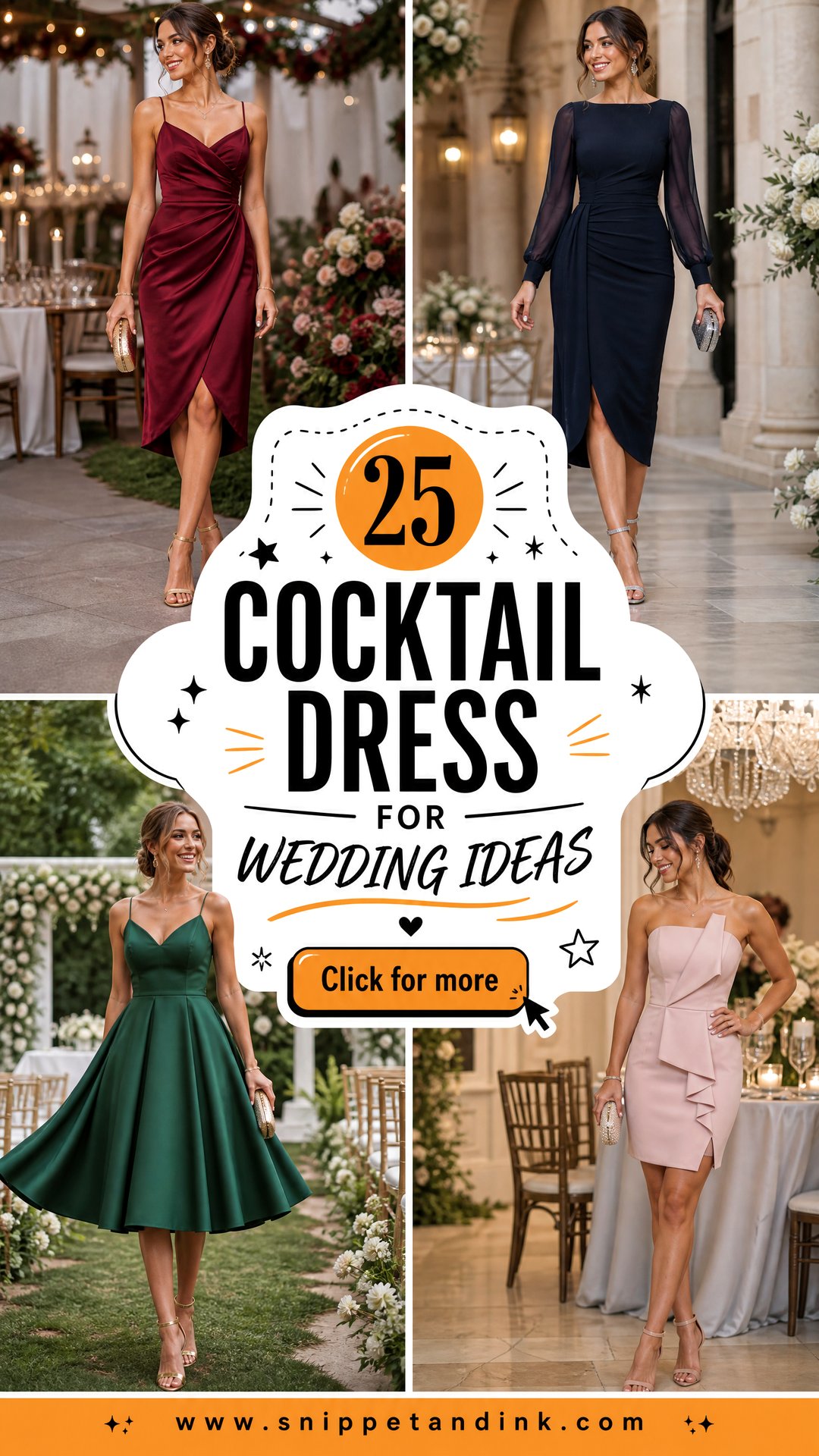
What Cocktail Attire Rules Out, and What It Leaves Open
Cocktail attire is a formality level, not a dress style. It sits above dressy casual and below black tie, which in practice means a dress that ends somewhere between the knee and mid-calf, in a fabric with some finish to it, worn with proper shoes rather than the flats you’d wear to work. Floor length isn’t wrong, but at a cocktail wedding it can look like you misread the card.
Before I pull anything for a guest, I ask four questions:
- What time does the ceremony start? Daytime leans toward lighter colors and matte fabrics; after six, satin, velvet and deeper shades make more sense.
- Where is it? Lawns and beaches change the shoe, rooftops change the layer, and churches or temples may ask for covered shoulders during the ceremony.
- Has the couple shared a palette, or asked guests to avoid one? Some do, and the wedding website is the place to check.
- Is there a cultural tradition attached? In several traditions red is the bride’s color, and in others white or black carries a meaning of its own, so ask a family member if you’re unsure.
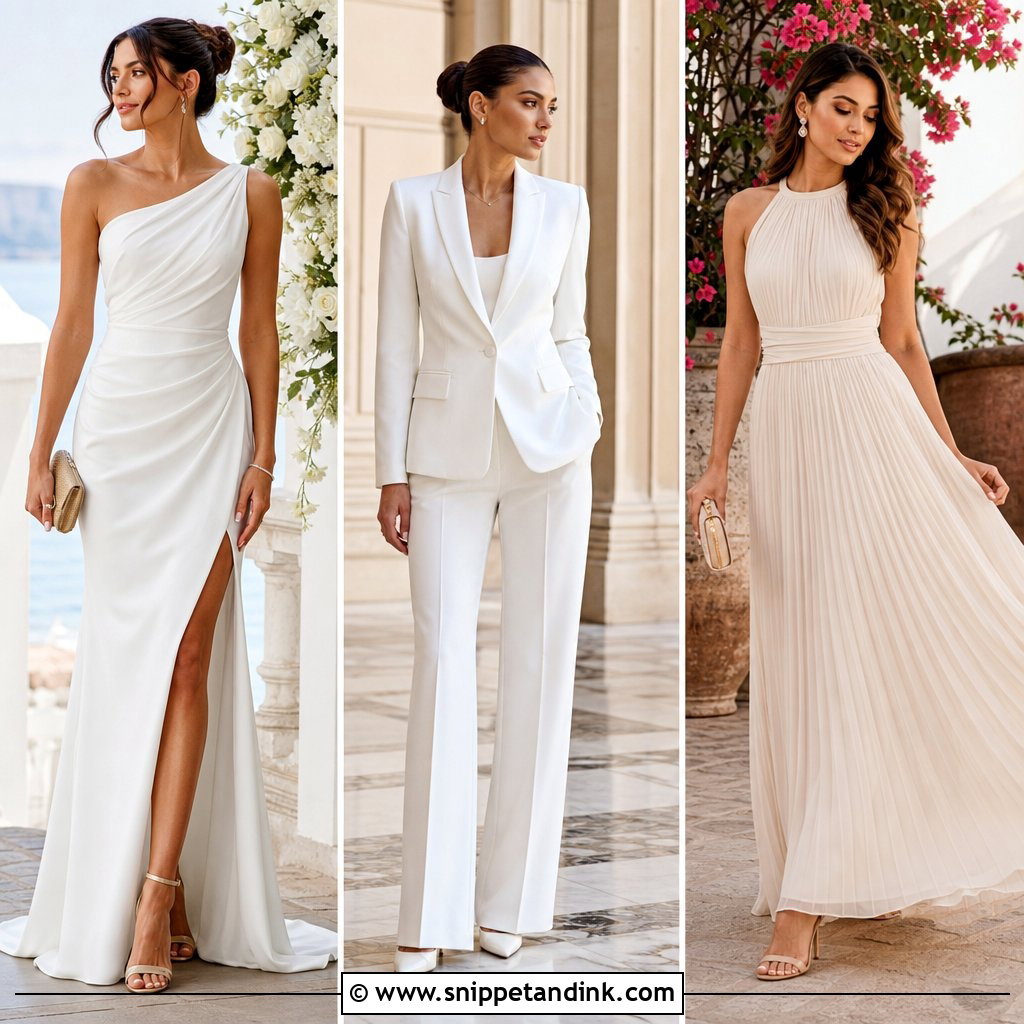
The one rule that holds at almost every wedding: no white, ivory, cream or pale champagne that could be mistaken for the bride’s dress in a photo. If you’re holding something and have to ask whether it’s too light, it is.
1. Satin Midi Cocktail Dress For Wedding
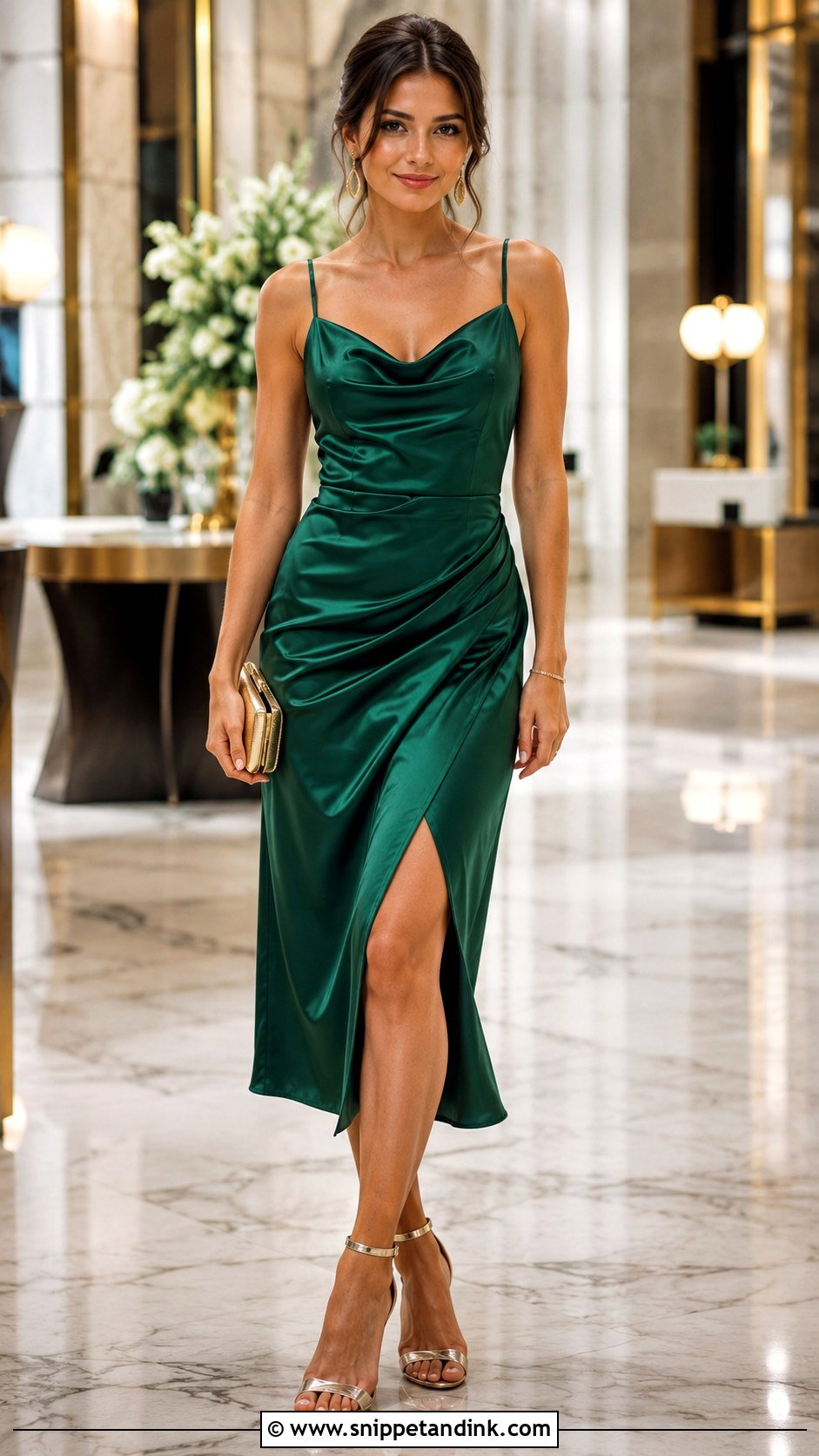
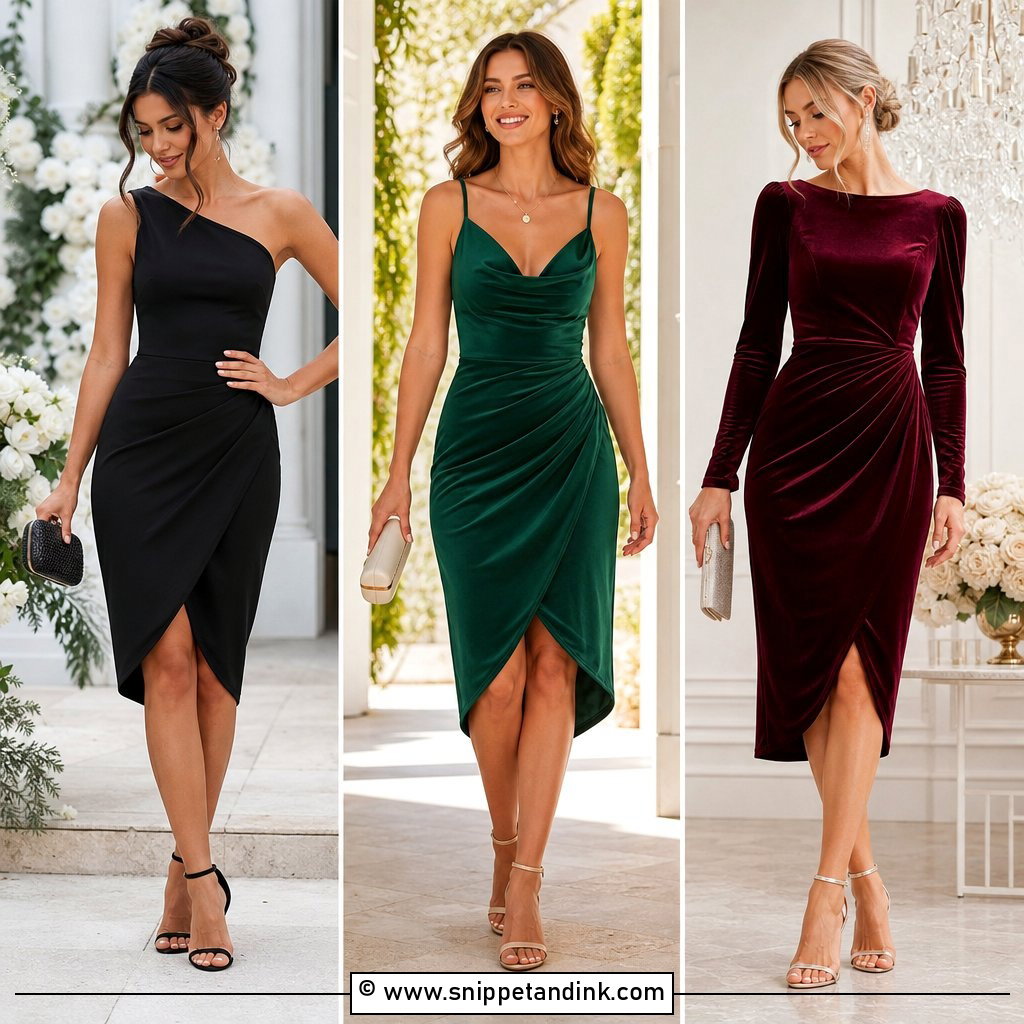
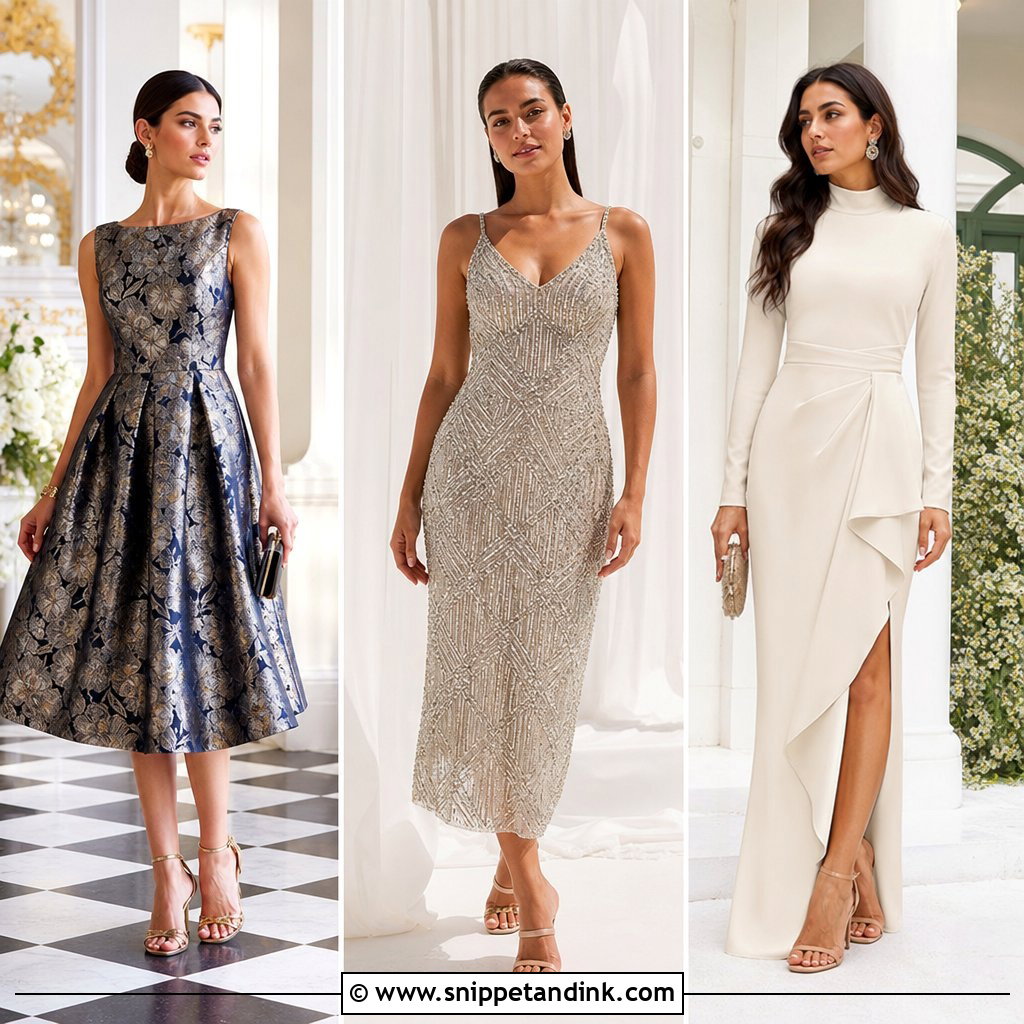
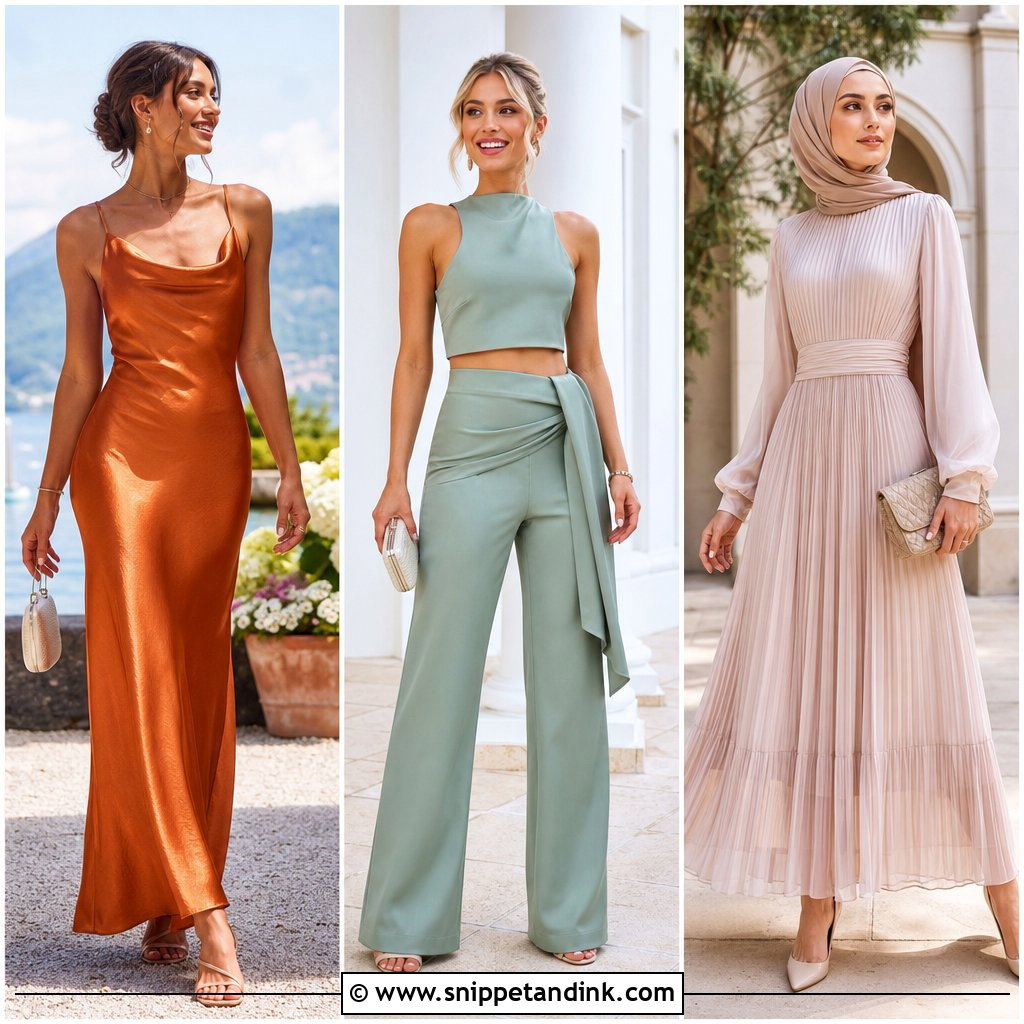
Satin is where I start most guests, with one warning first: it shows everything underneath and every crease you sit into. A bias-cut midi skims rather than clings, so it suits more figures than a straight satin sheath, but try it on with the underwear you plan to wear, because seams and edges read straight through the fabric. Emerald, navy, rose, copper and cobalt hold their depth under evening light. I keep the rest quiet: slim strappy heels, a small metallic clutch, fine drop earrings, and a cropped blazer or wrap for a hotel or restaurant venue where the air conditioning runs cold.
2. Floral Midi Cocktail Dress For Wedding
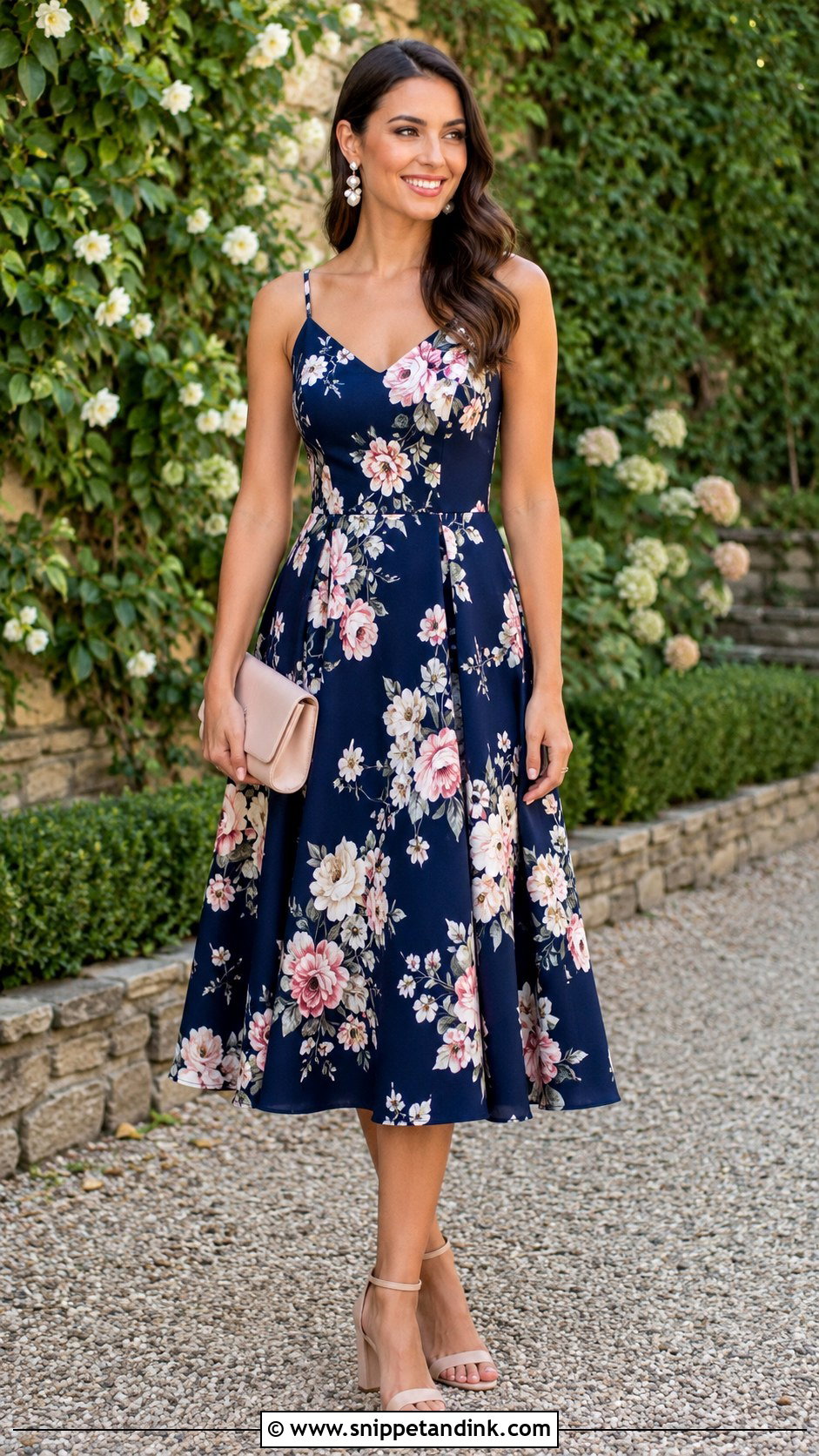
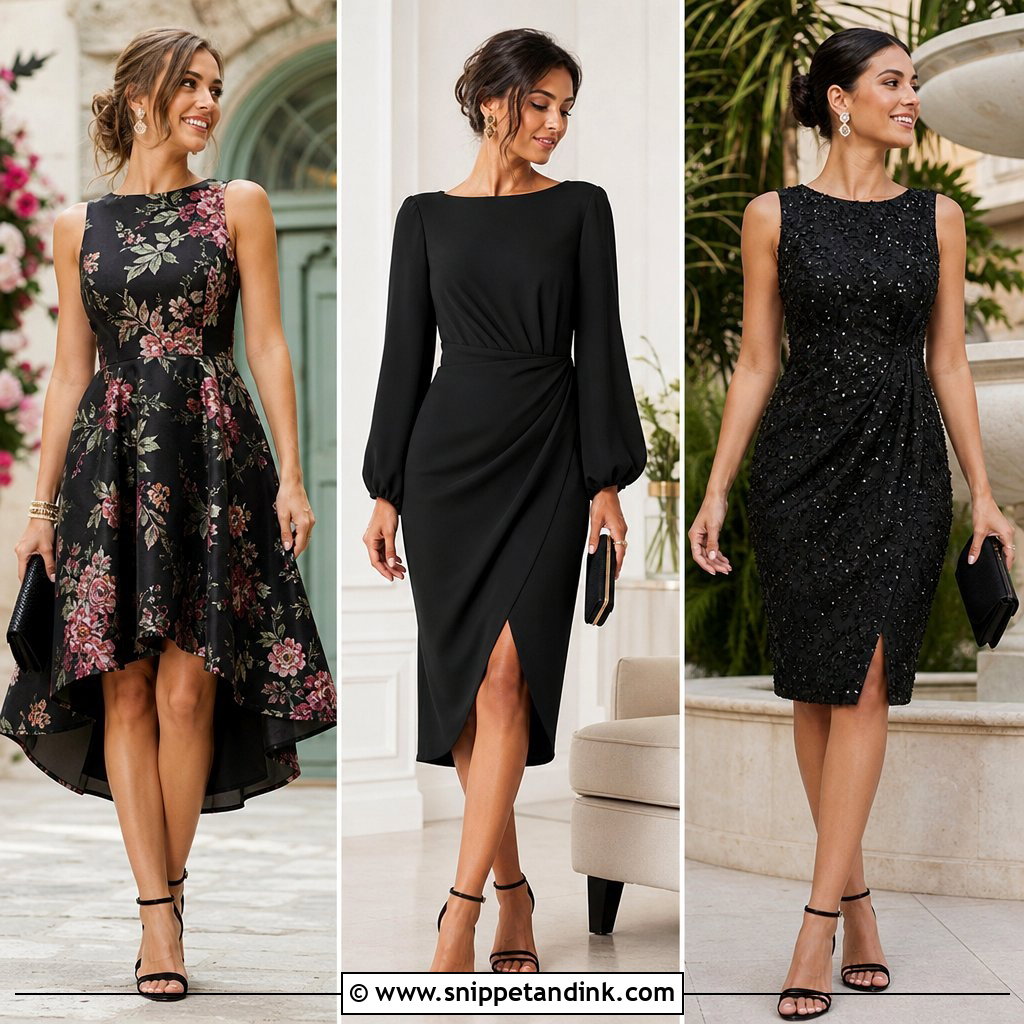
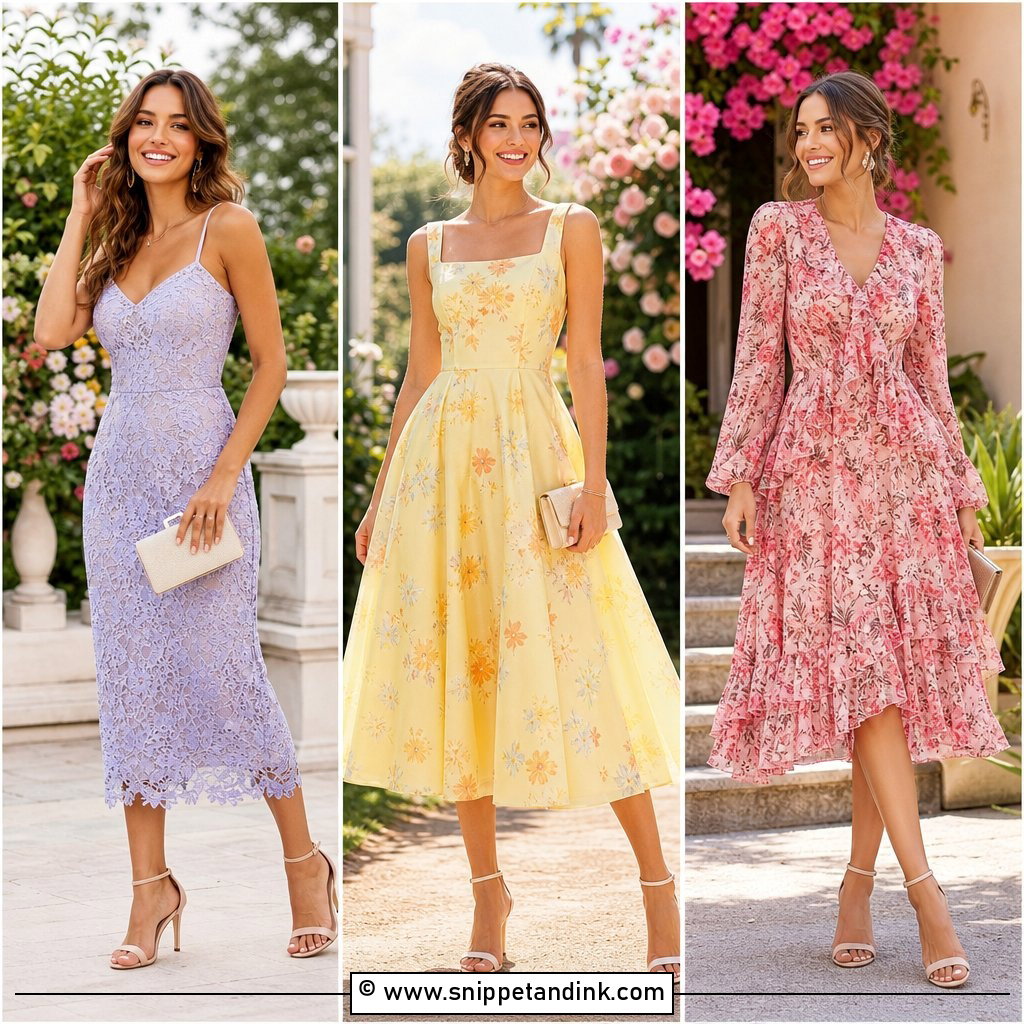
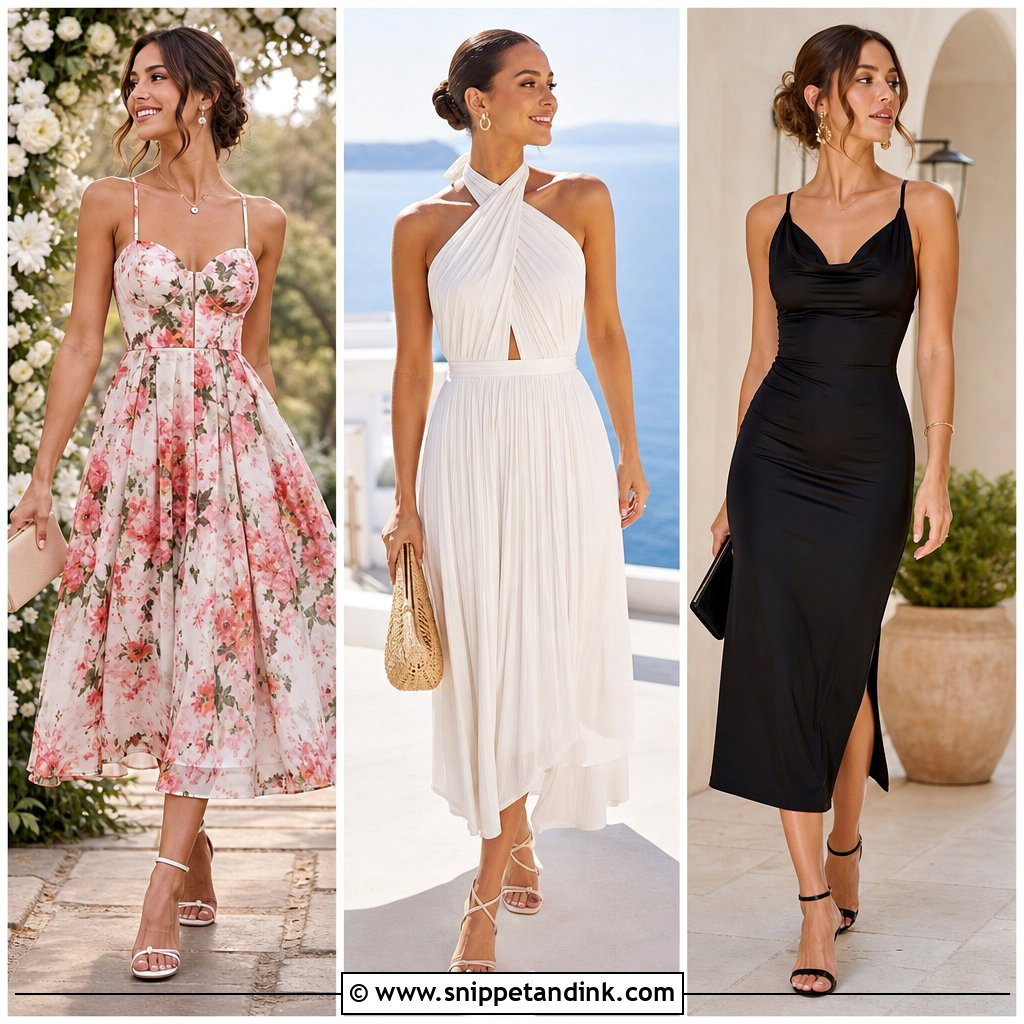
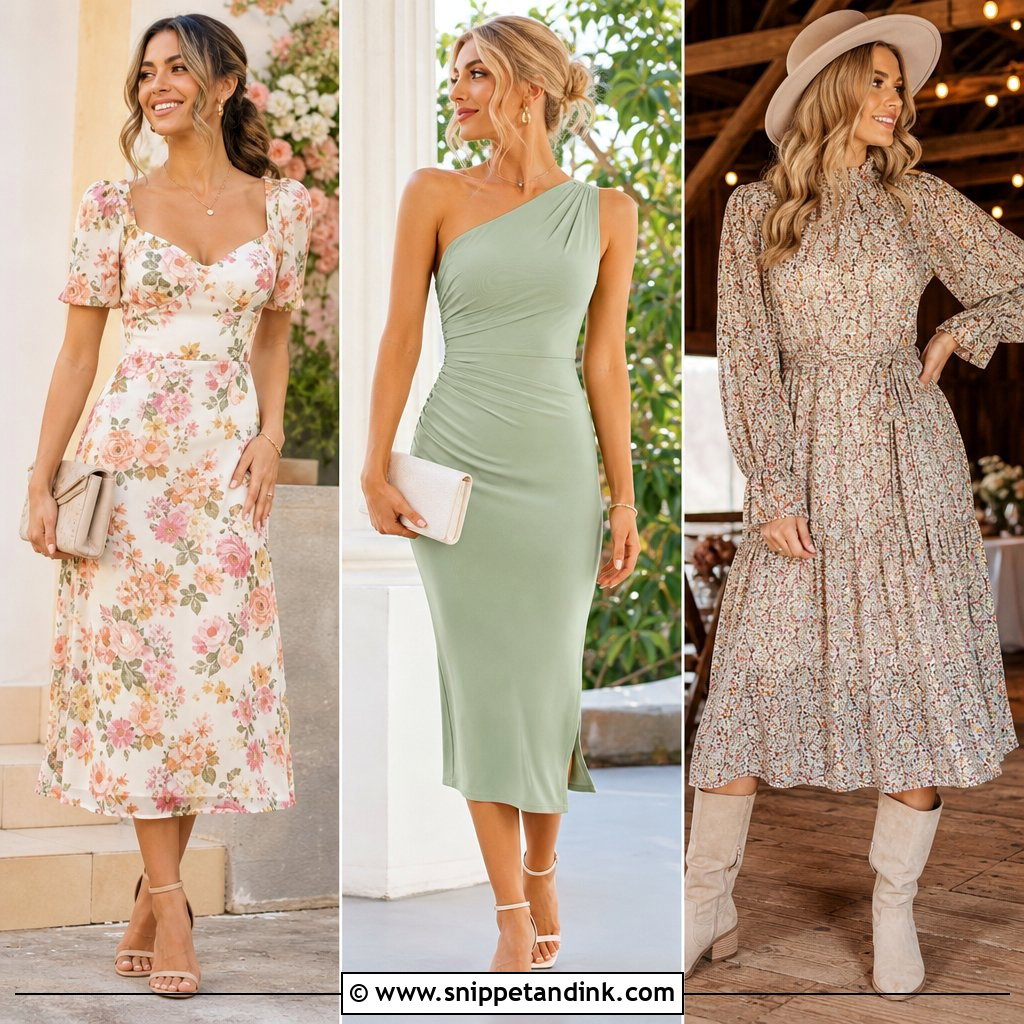
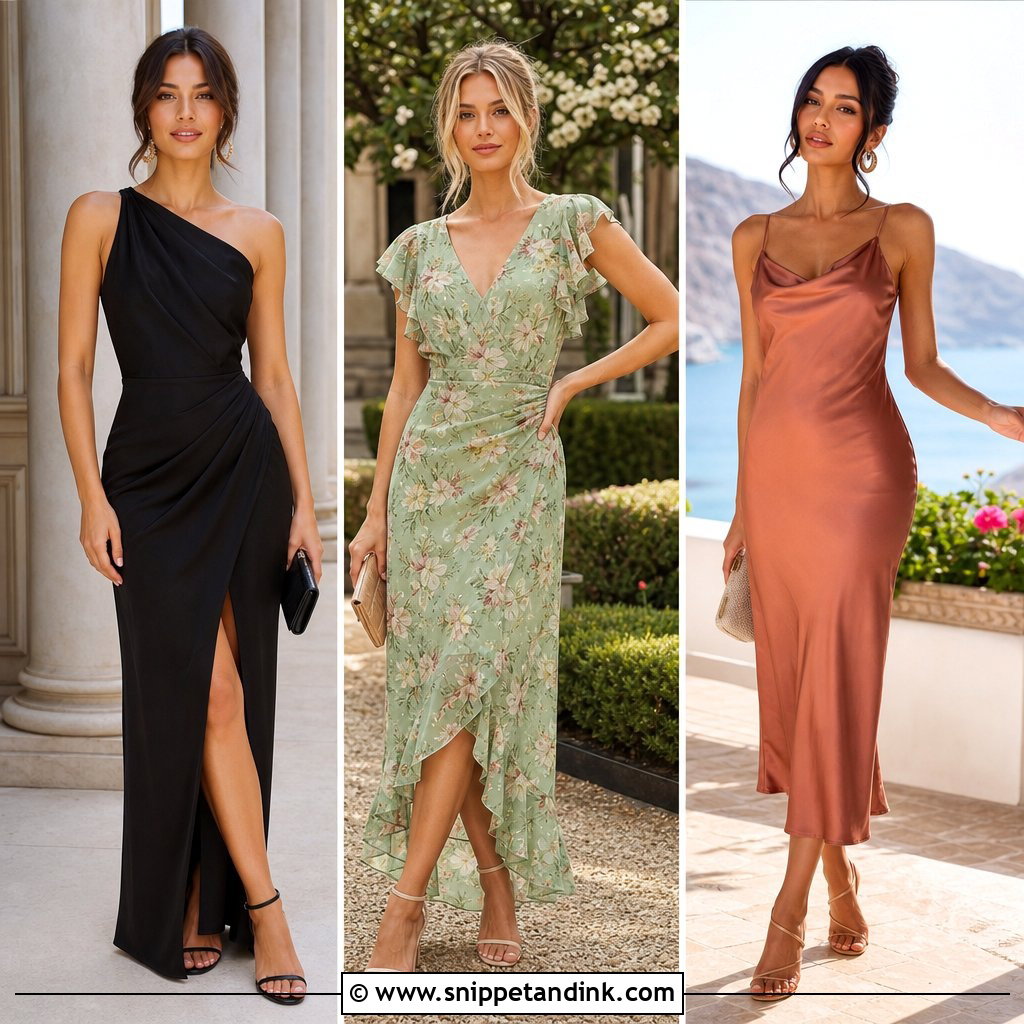
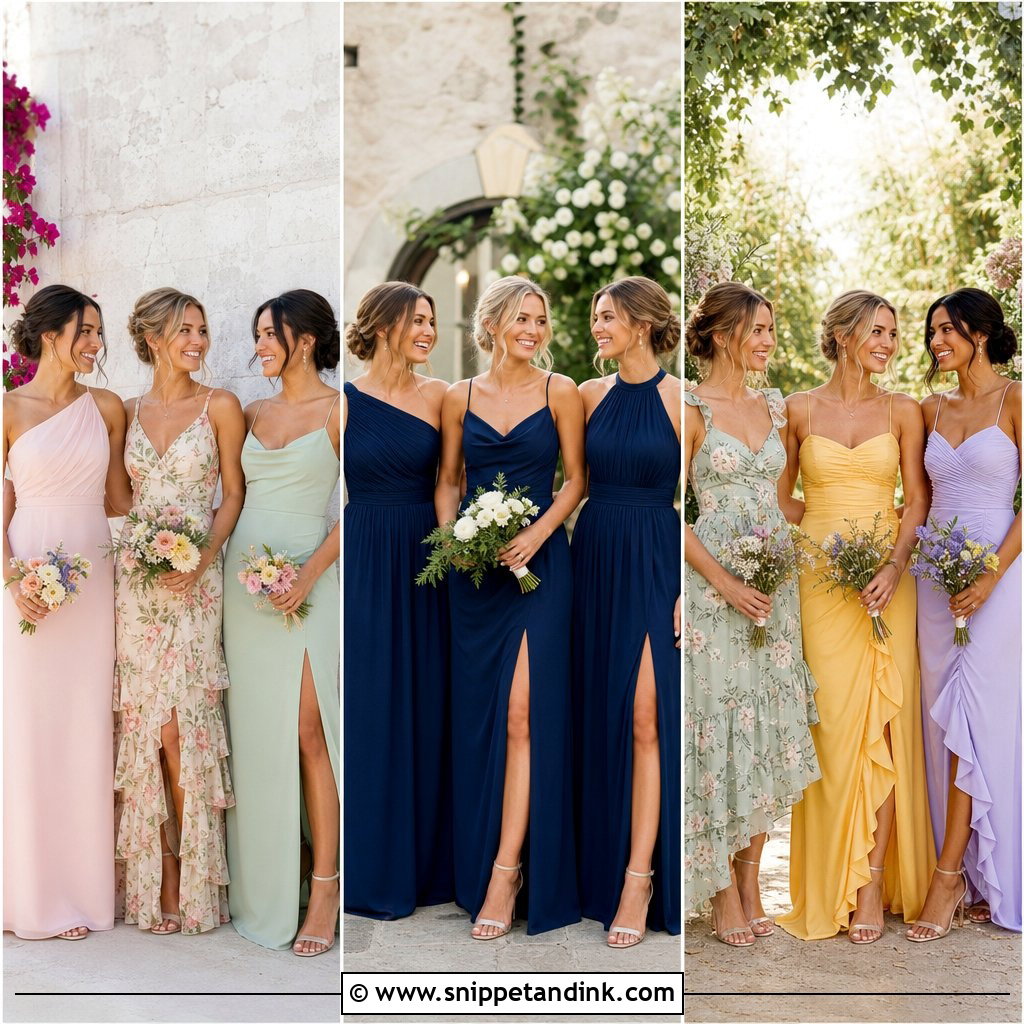
Florals are my first suggestion when the invitation mentions a garden, but the base color matters more than the flowers. A navy, sage, plum or soft blue ground keeps a print looking dressed up; a white ground starts to read casual, and in some photos almost bridal. I look for structure somewhere, a fitted bodice, a wrap waist or an A-line skirt, so the dress doesn’t drift into sundress territory. On lawns I swap stilettos for block heels, since thin heels sink into the grass during the ceremony. Nude or metallic shoes and pearl or gold earrings let the print stay the focus.
3. Black Cocktail Dress For Wedding
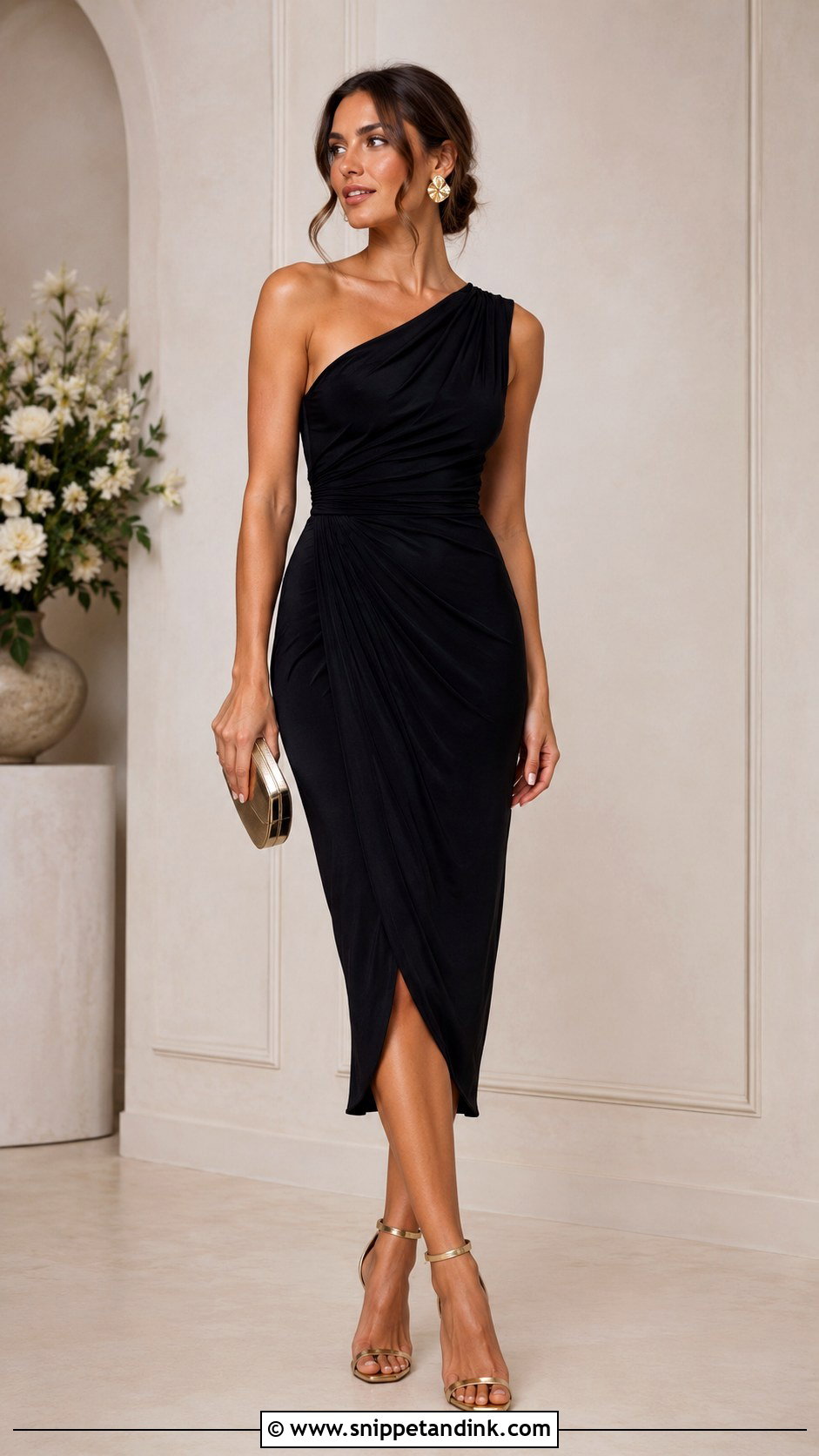
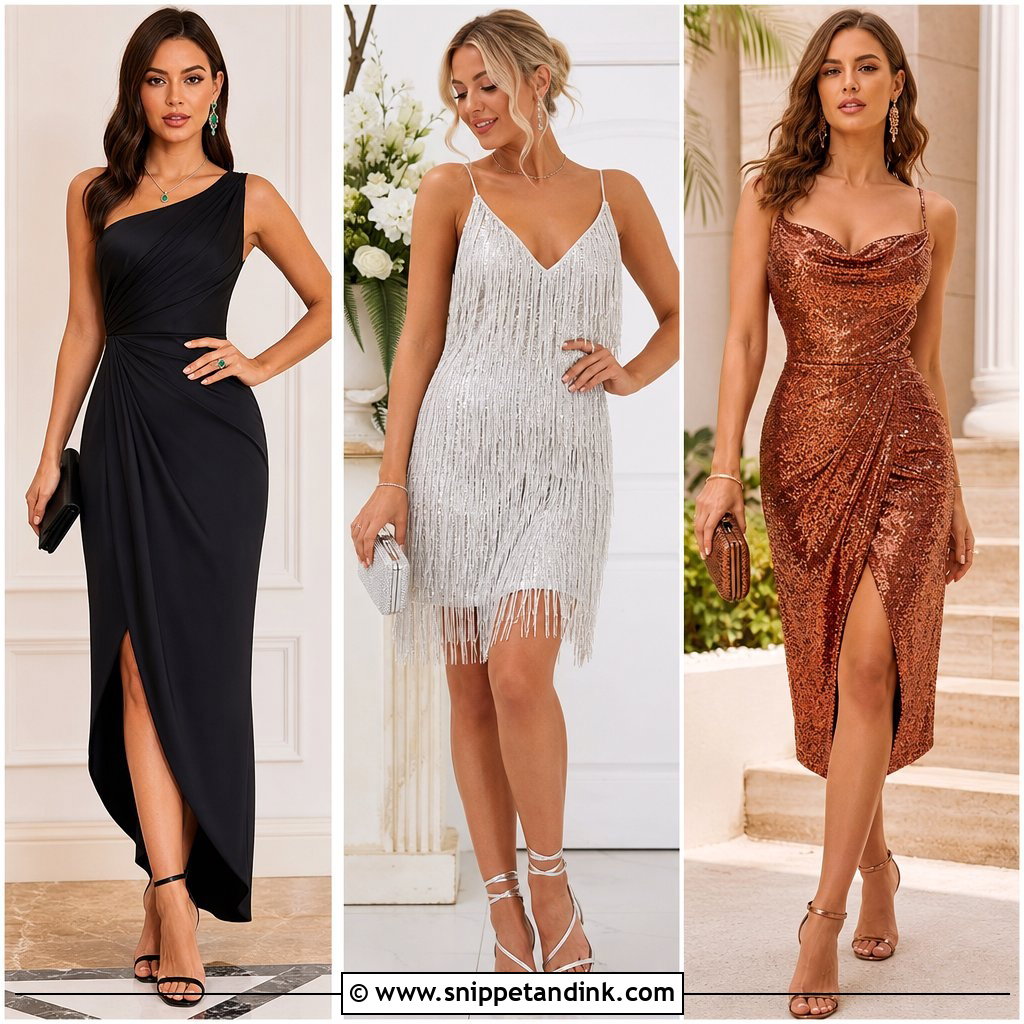
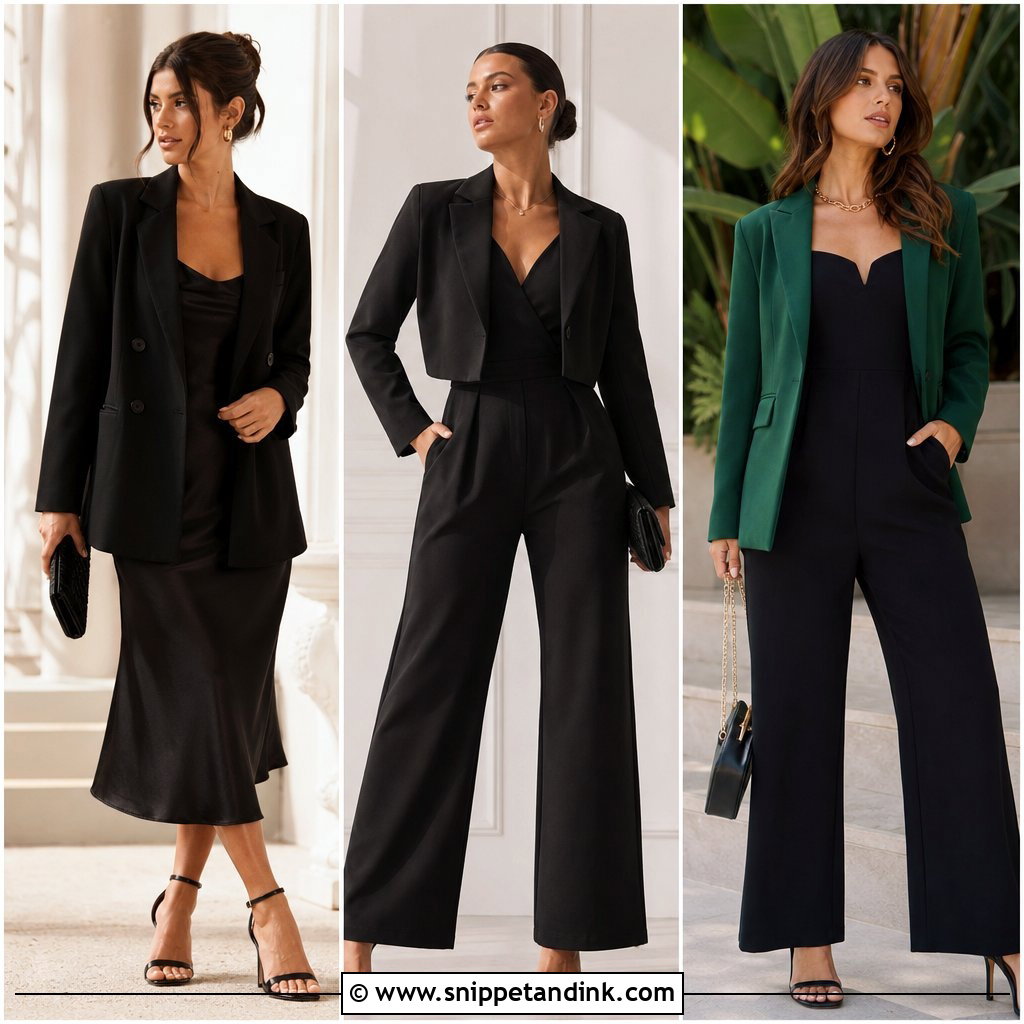
Black is accepted at most weddings now, though I’d still check family expectations, because some older relatives and some traditions read it as mourning. What keeps it celebratory is detail and warmth. I pick a midi, knee or tea length with one feature, such as a square neckline, a single shoulder, soft draping, lace trim or a modest slit, then add gold heels, a satin clutch and earrings with some movement. Evening and city venues suit it best. Skip office-style pumps and a heavy jacket, and let the hair do some softening: dewy skin with a sleek updo or loose waves takes the edge off.
4. Navy Cocktail Dress For Wedding
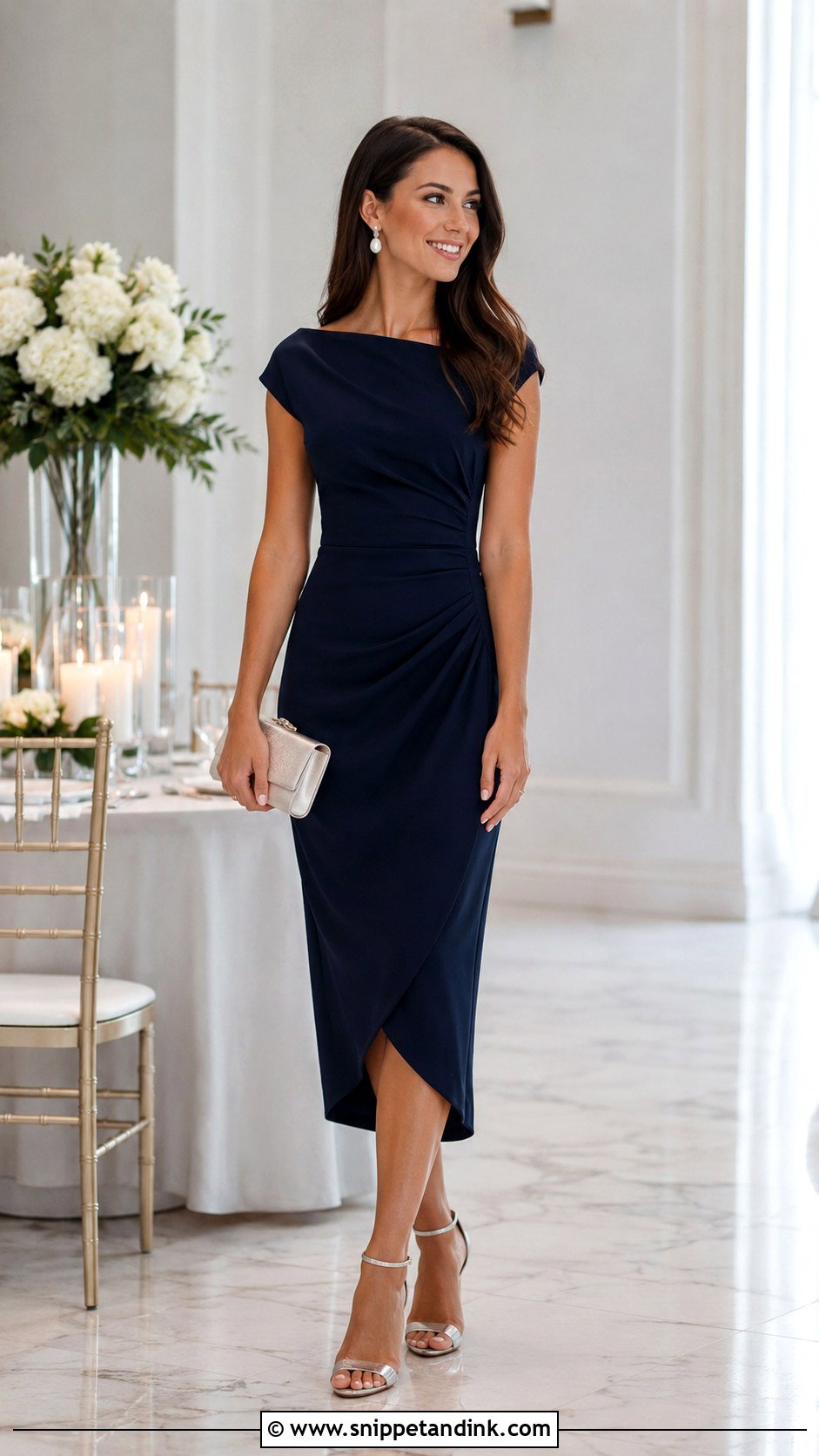
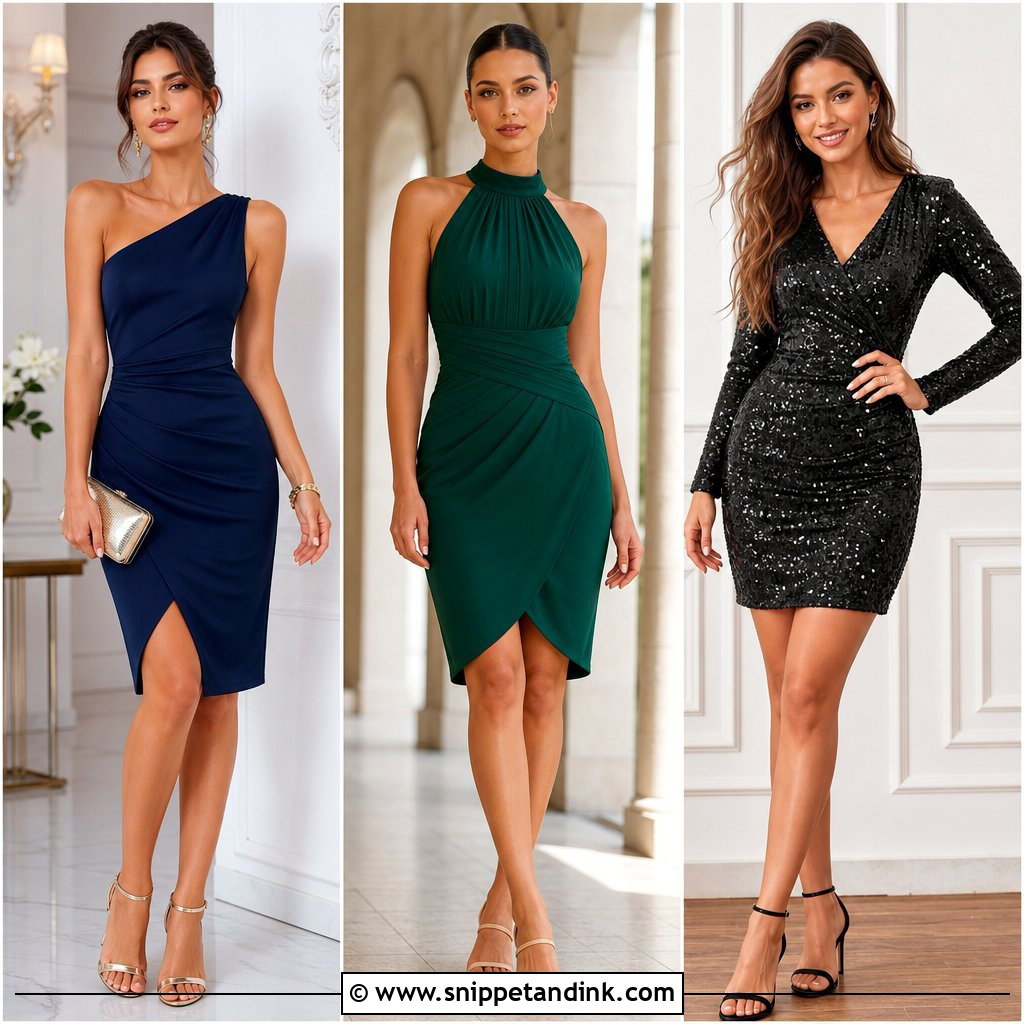
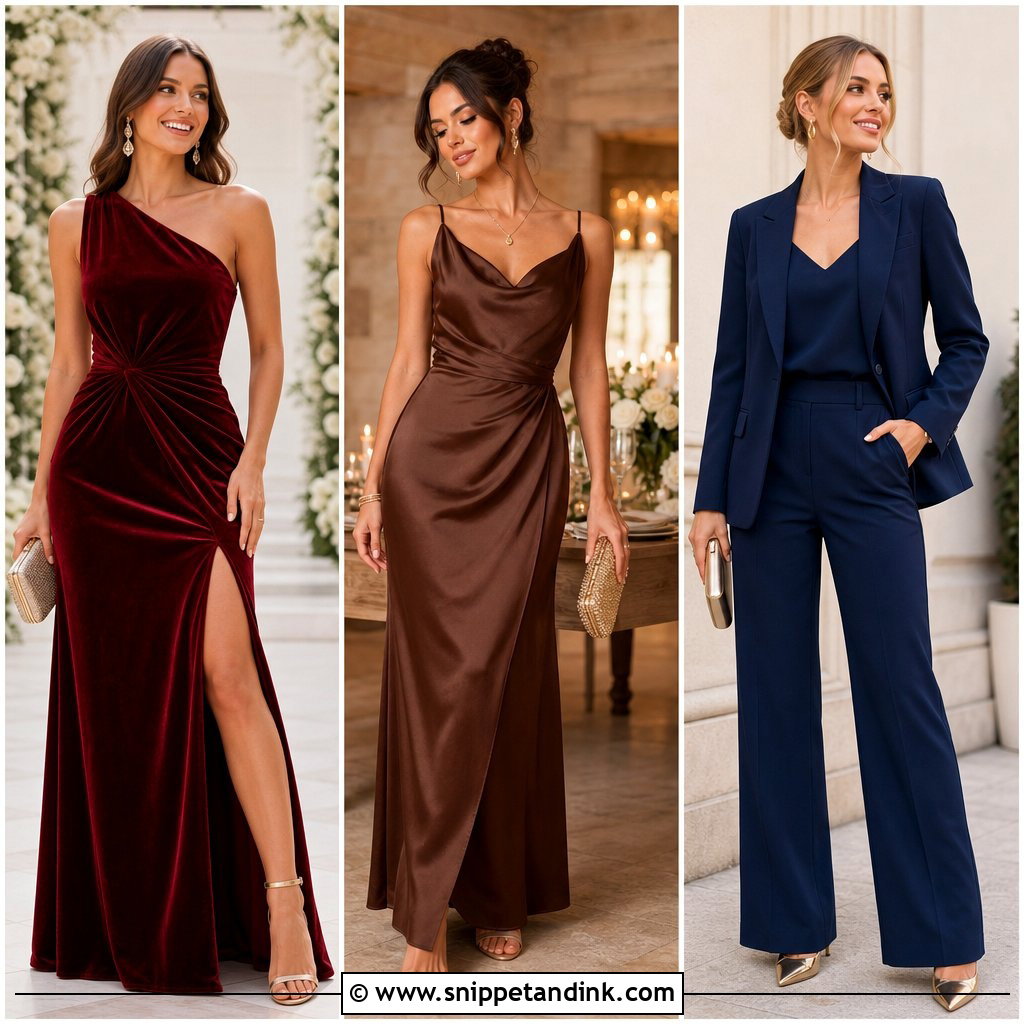
Navy is the color I recommend when a guest tells me she has no idea what to wear. A navy cocktail dress reads formal without the severity of black, and it rarely clashes with a bridal party palette in group photos. Crepe and lace carry it through any season; satin pushes it toward evening. Because navy can look flat in a dim reception room, I brighten it at the edges with silver, champagne or nude heels, a crystal clutch or pearl earrings. For an outdoor wedding, a shawl or cropped jacket in soft gray or taupe keeps the chill off. I avoid ivory layers here, since next to navy they look whiter than they are.
5. Green Cocktail Dress For Wedding
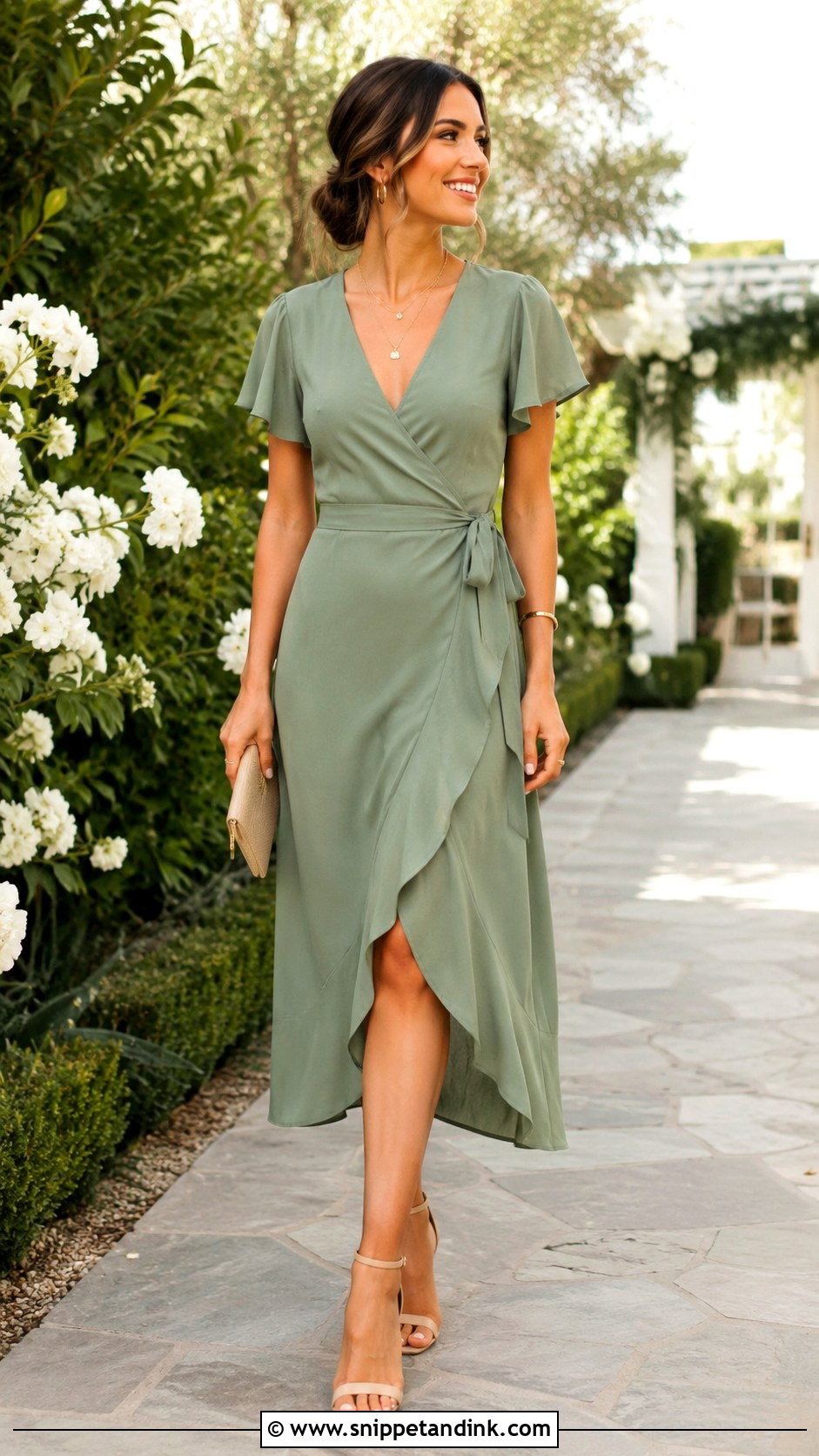
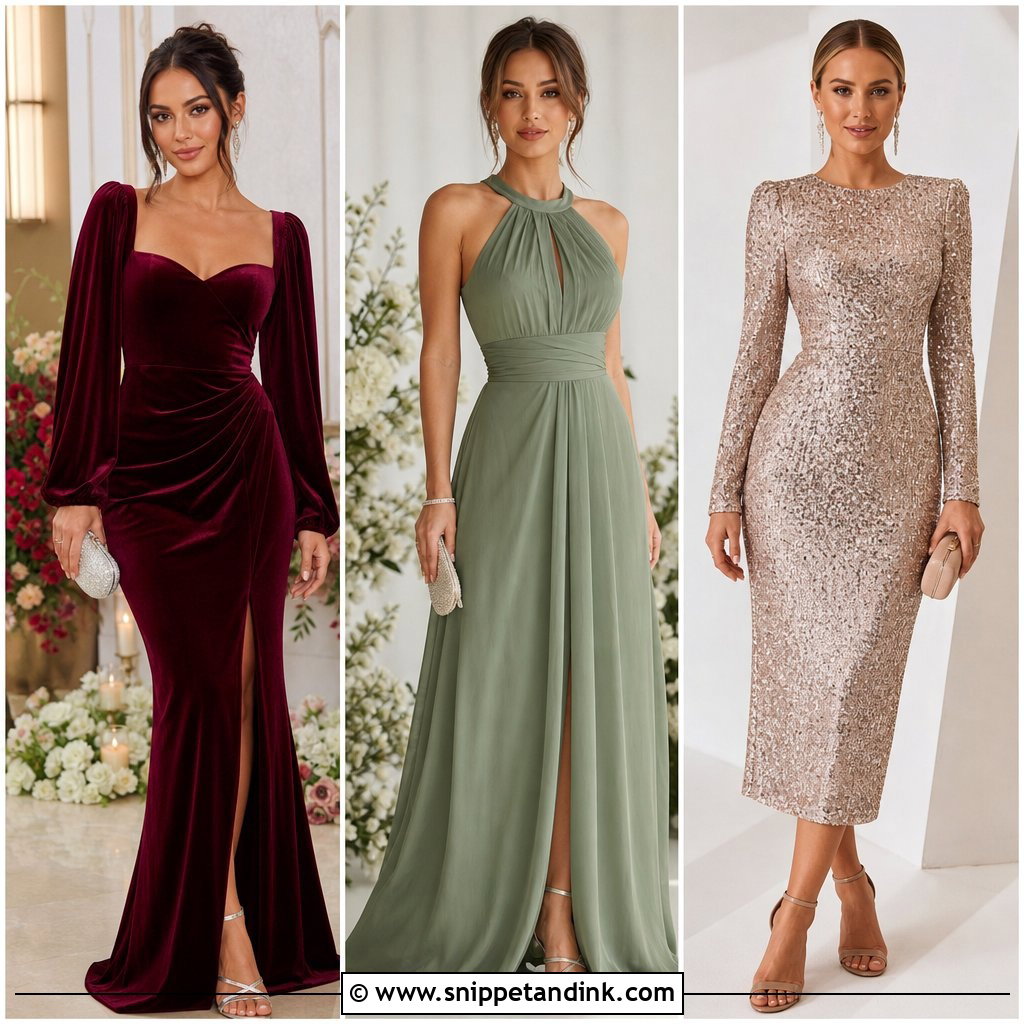
Green changes character with its shade, so I match the shade to the clock. Sage is a daytime color; emerald and forest belong after dark. A green cocktail dress with a defined waist, halter neck or draped bodice needs very little help, and gold is the metal I pair with it nearly every time because it warms the green rather than fighting it. Nude heels, gold sandals or pointed pumps and a champagne or tan clutch finish it. One caution for outdoor ceremonies: a mid-green dress against a hedge can blend into the background, so go deeper or lighter than the foliage.
6. Blue Cocktail Dress For Wedding
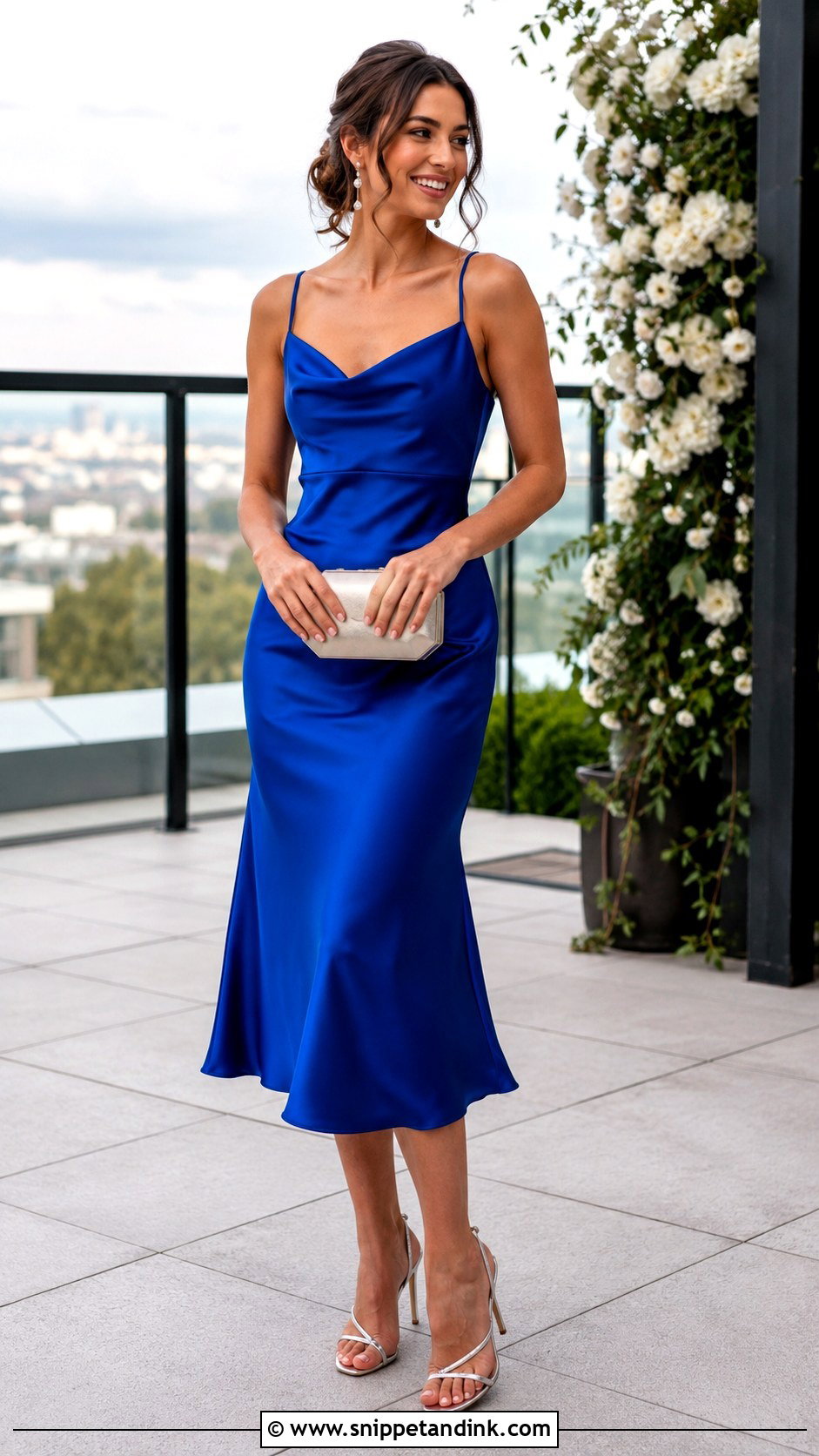
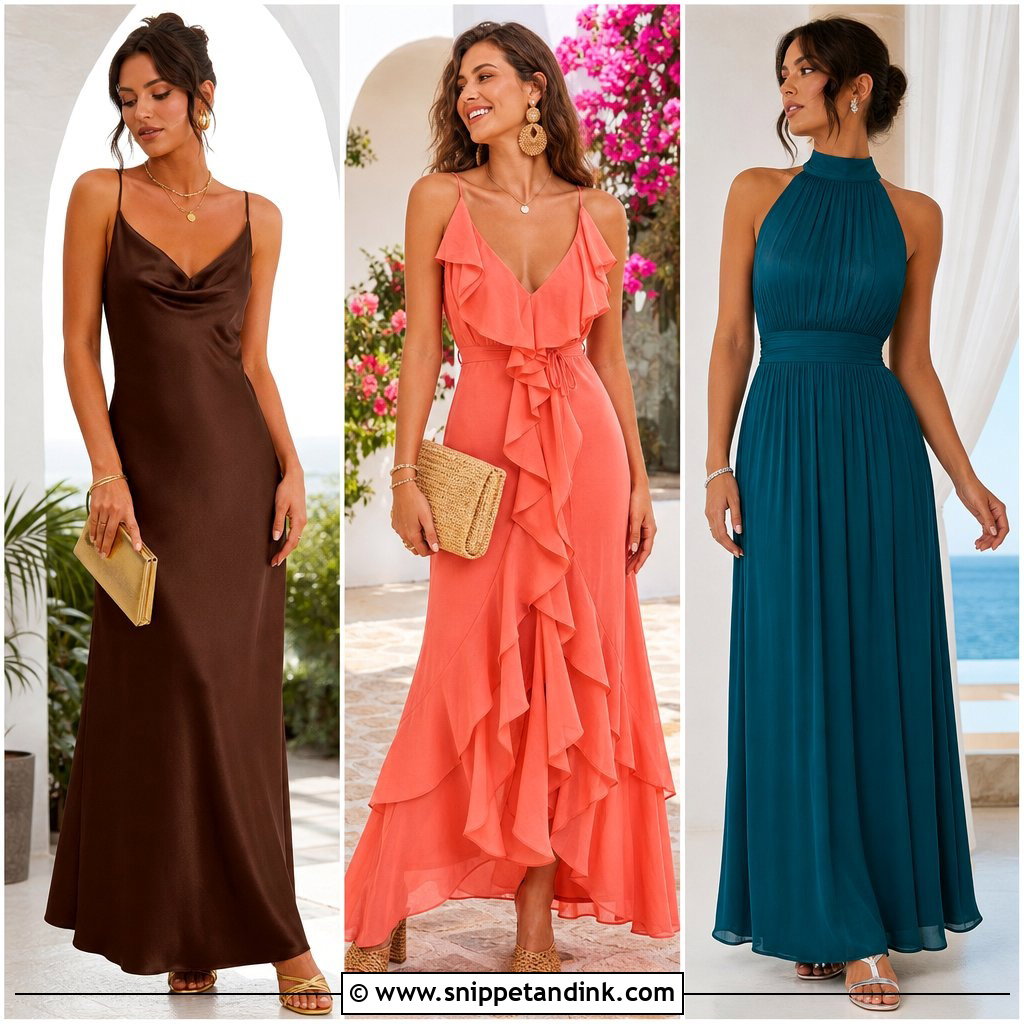
Cobalt is the brightest blue I’d send a guest out in, and it needs a clean shape to carry it: a fitted midi, satin slip, pleated skirt or one-shoulder cut. Dusty and slate blues are the gentler daytime version. With a saturated blue I keep the hair sleek and the earrings simple, since the color is already doing the talking. Silver heels, clear straps or nude pumps and a small structured bag are enough. I’d only hesitate if the bridesmaids are in a similar blue. Ask the couple, because matching the wedding party by accident is awkward in every group photo.
7. Pink Cocktail Dress For Wedding
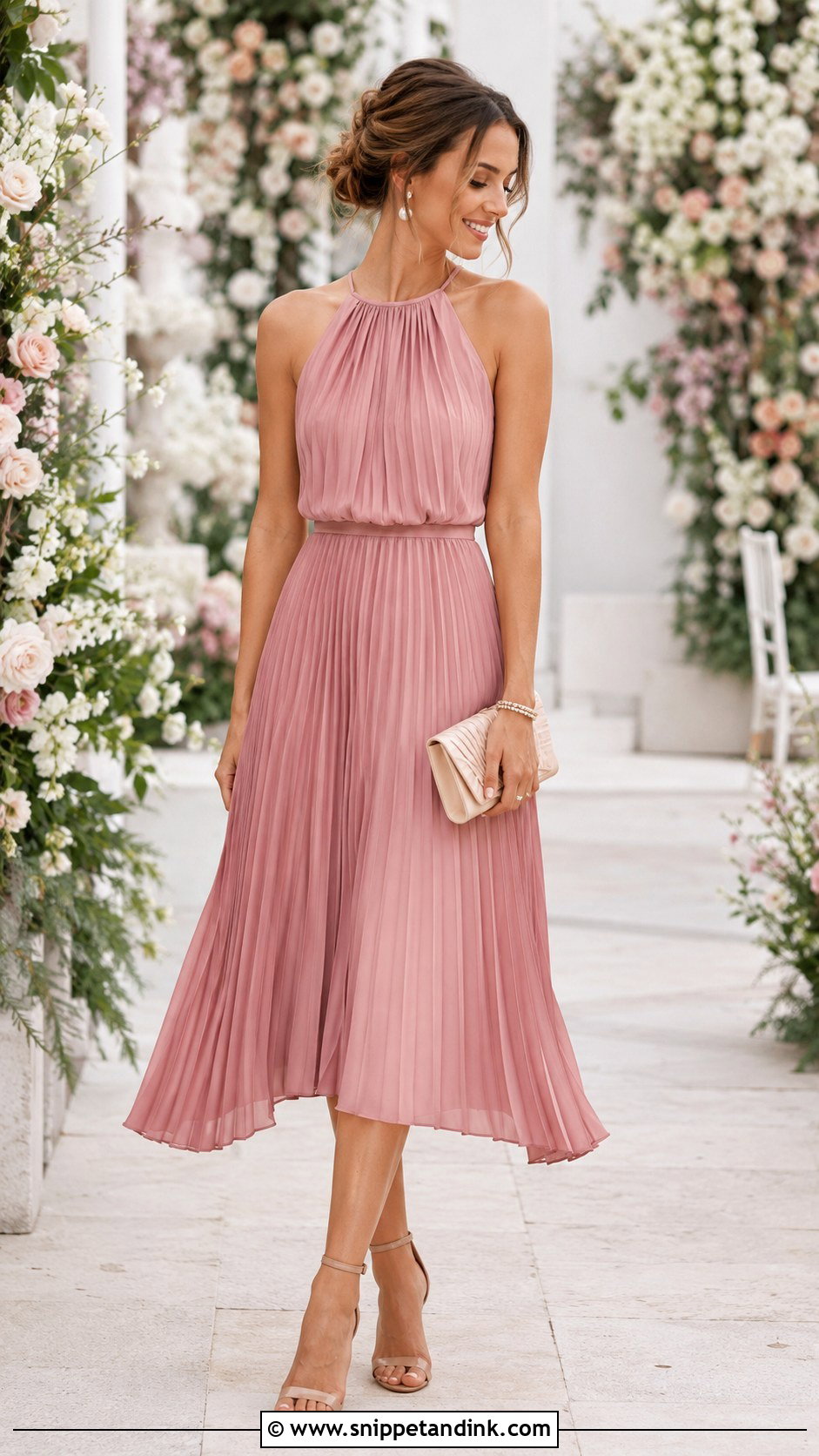
Pink splits in two directions. Blush and dusty rose suit spring and daytime, while hot pink or berry pink belongs at an evening reception. The lighter shades need care: a very pale blush can wash out to near-white under a camera flash, so I hold the dress next to a white sheet in daylight before a guest commits. Clean lines, a wrap waist or a structured shoulder keep pink grown-up. Nude heels and pearls suit the soft shades; brighter pinks want metallic sandals and minimal earrings, nothing that tips into costume.
8. Burgundy Cocktail Dress For Wedding
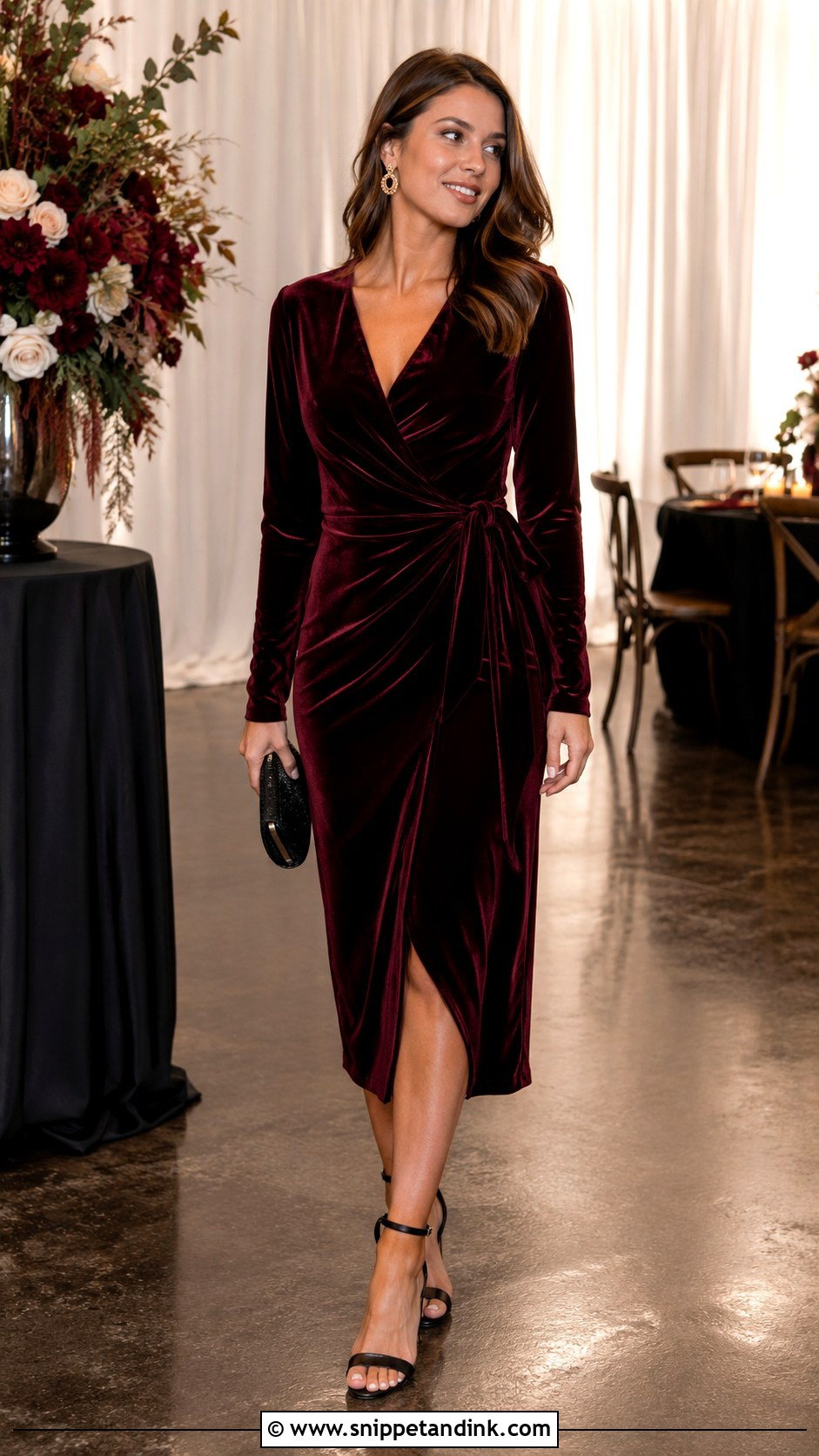
Burgundy is my default for autumn and winter evenings. It has depth without shouting, and it forgives a splash of red wine better than any pastel. Satin, velvet, crepe and chiffon each bring out a different side of it: satin the shine, velvet the darkness. A wrap midi, an off-shoulder neckline or a long sleeve all suit candlelit rooms and hotel ballrooms. Heels can go gold, black or nude depending on the venue, with a clutch in gold or deep berry. Keep jewelry small, since the color is already the statement, and you’ll get several more formal events out of the dress.
9. Velvet Cocktail Dress For Wedding
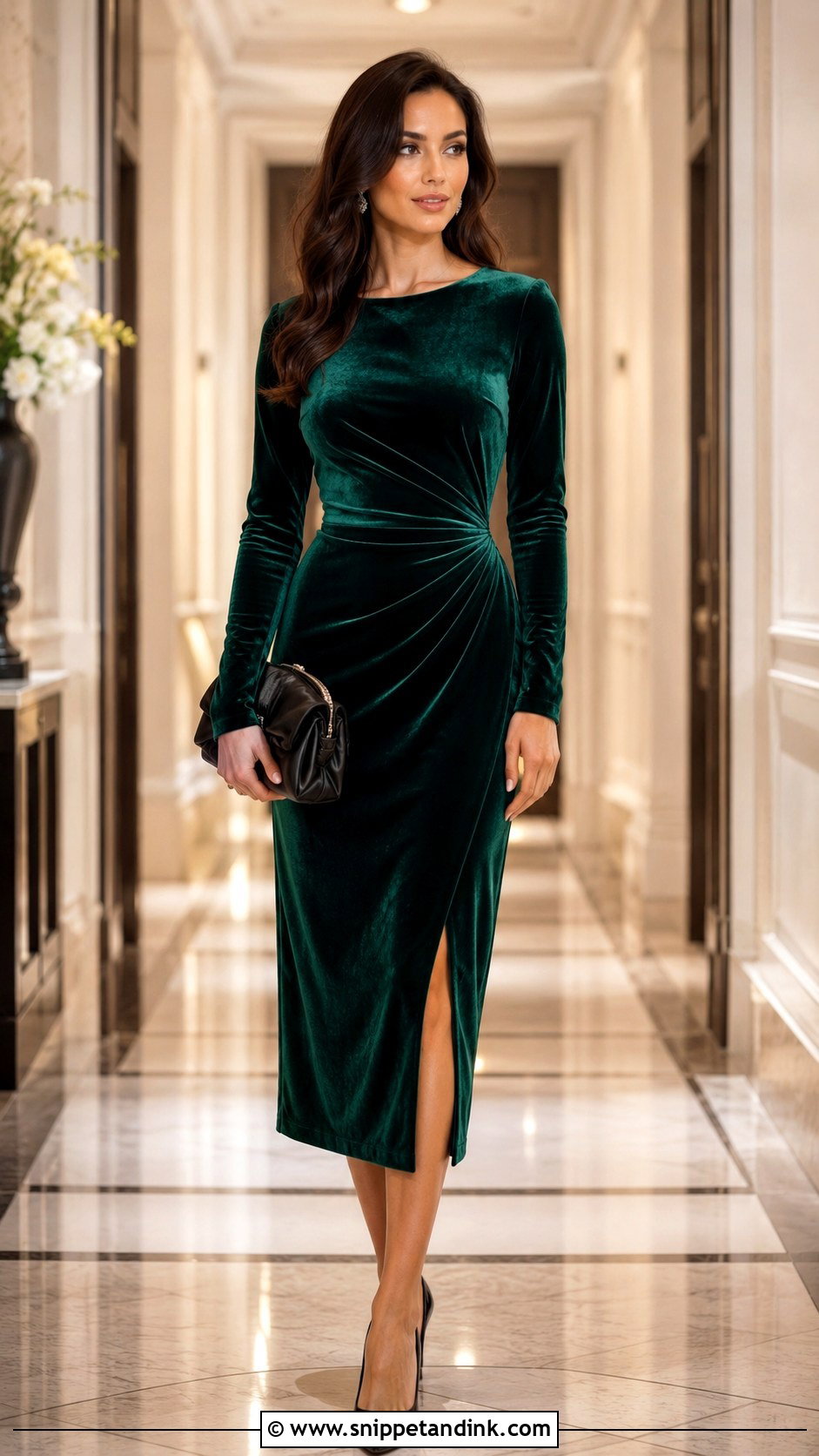
Velvet only makes sense from late autumn onward; at a warm summer reception it’s uncomfortable within the hour. In colder months it’s the fabric I trust most to look rich in low light, and emerald, navy, plum, burgundy and deep teal have the most depth. Velvet has a nap, which means it shows pressure: sitting on a crumpled skirt through a long dinner leaves shiny flattened patches, so smooth it under you when you sit. Textured fabric wants smooth accessories, so I pair it with a satin clutch, sleek heels and small crystal or gold earrings. For arriving, a tailored coat over the shoulders beats a bulky puffer that crushes the pile.
10. Lace Cocktail Dress For Wedding
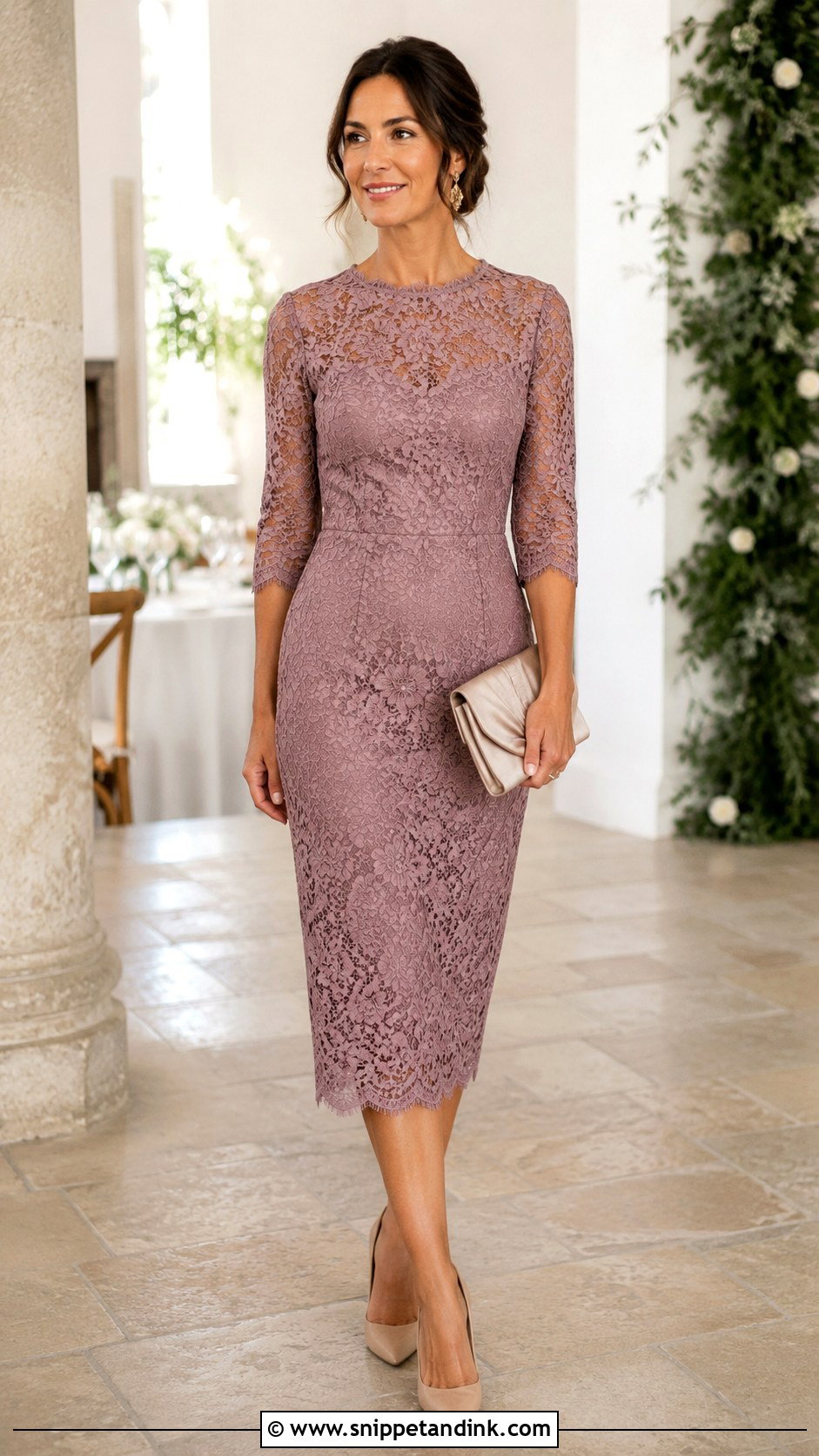
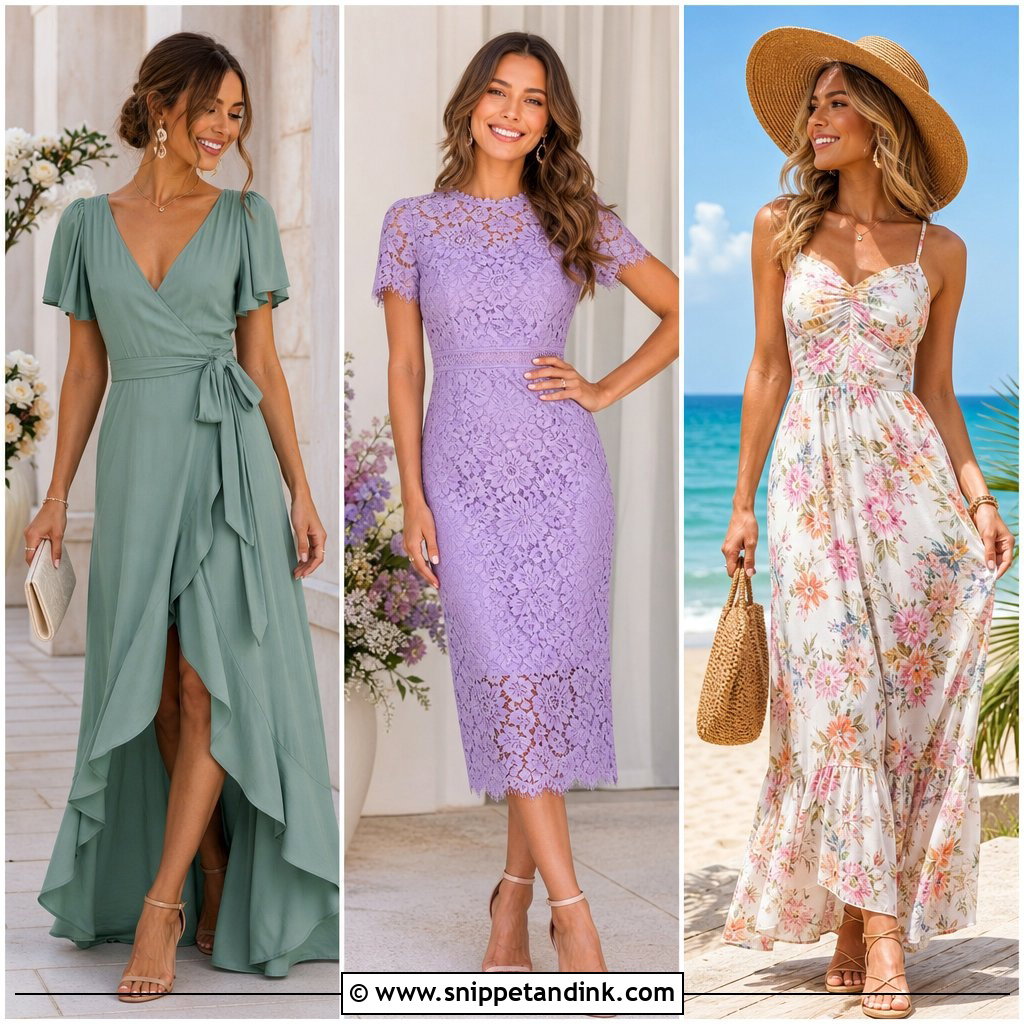
Lace is the fabric I double-check most carefully for guests, because it’s the one most likely to look bridal. White, ivory and pale champagne lace are out; navy, mauve, green, blush, burgundy and dusty blue are safe. The lining matters as much as the color. Lace over a skin-tone slip can look bare in photographs, so I prefer a lining close to the lace shade. With detailed lace I skip the necklace and keep to earrings, plain heels and a satin clutch. It suits semi-formal codes, daytime receptions and traditional family weddings.
11. One Shoulder Cocktail Dress For Wedding
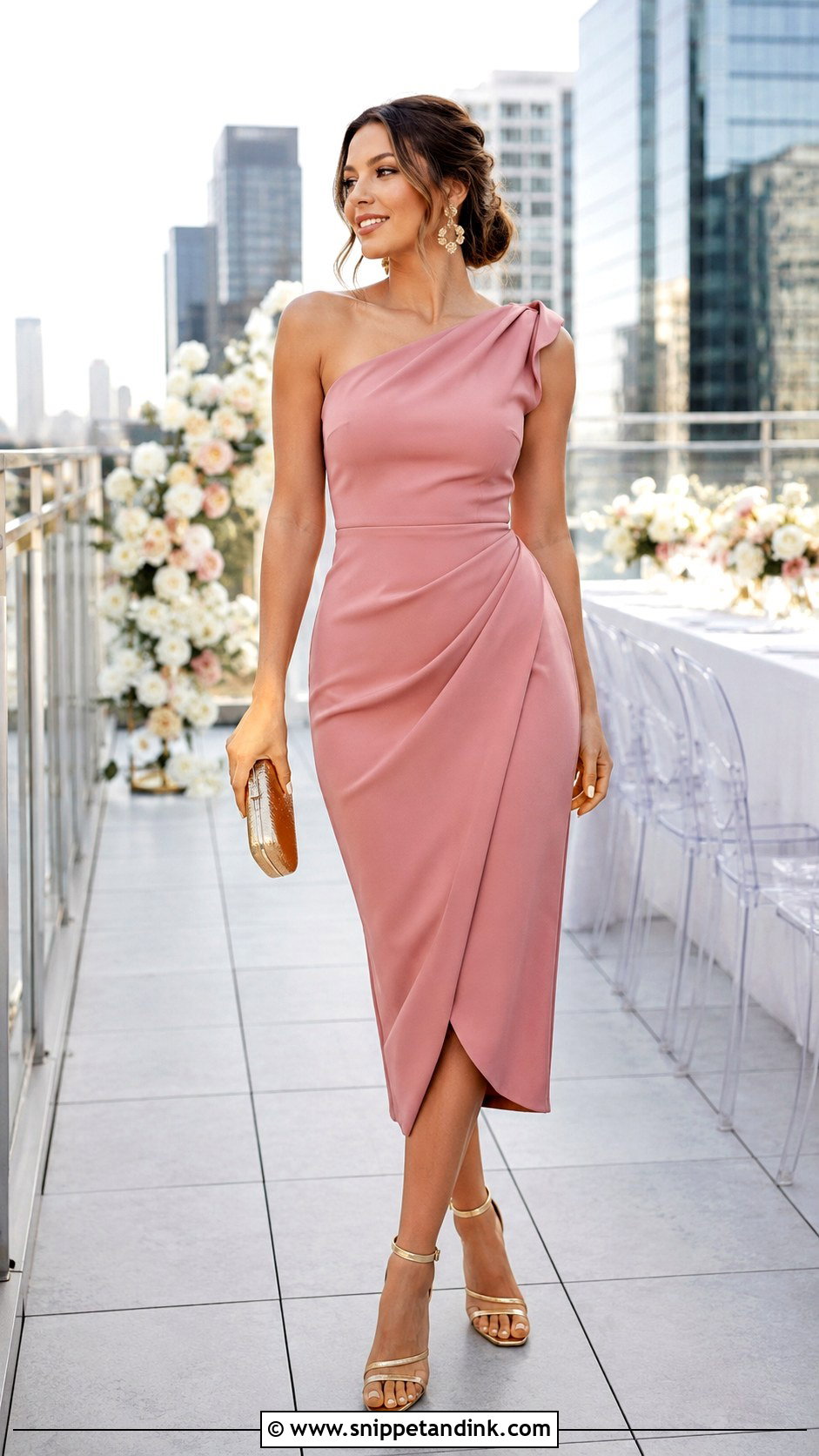
The asymmetric neckline does the styling for you, which is why I suggest this cut to guests who don’t want to fuss with accessories. Satin, crepe or jersey at midi length gives the cleanest result, with earrings rather than a necklace, since a chain fights the diagonal line. What I check at the fitting is the single strap. It carries the whole bodice, so it should sit firmly without digging in, and you should be able to lift both arms without the dress shifting. A sleek bun or a side part keeps the bare shoulder visible. Cobalt, emerald, black, rose or chocolate brown suit rooftops and modern venues.
12. Off Shoulder Cocktail Dress For Wedding
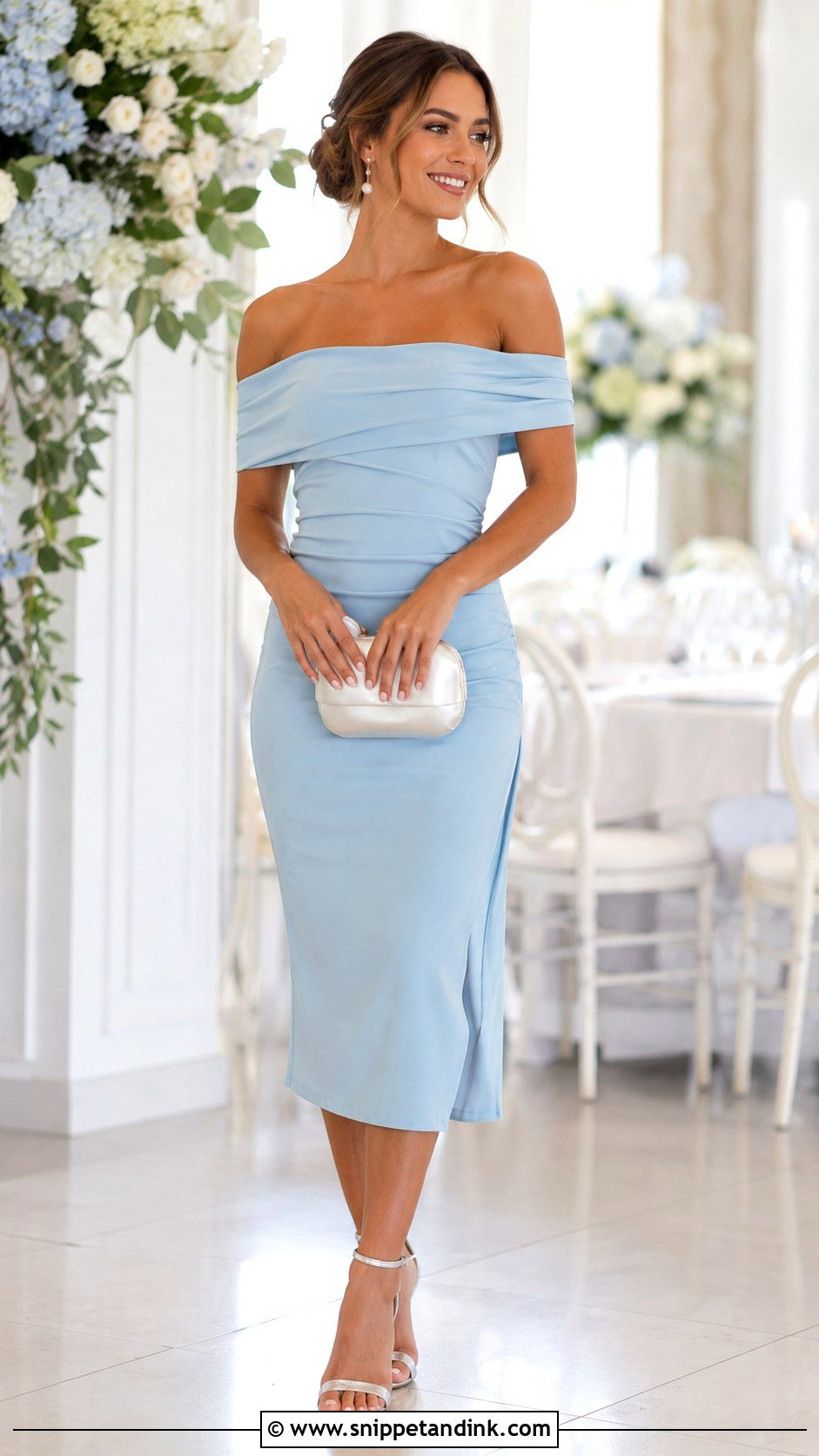
Off-shoulder necklines look graceful standing and fussy if they slide. My test is simple: raise your arms to hug someone and see whether the band rides up or slips down. A structured fabric with silicone grip at the neckline stays put; soft draped versions need adjusting all night. Keep the hem at midi or knee length so the open shoulders don’t add up to too much skin. Delicate earrings, a bracelet, heeled sandals and a metallic or matching satin clutch are enough. If you need warmth, a light wrap settles around the arms; a jacket hides the whole point of the neckline.
13. Halter Cocktail Dress For Wedding
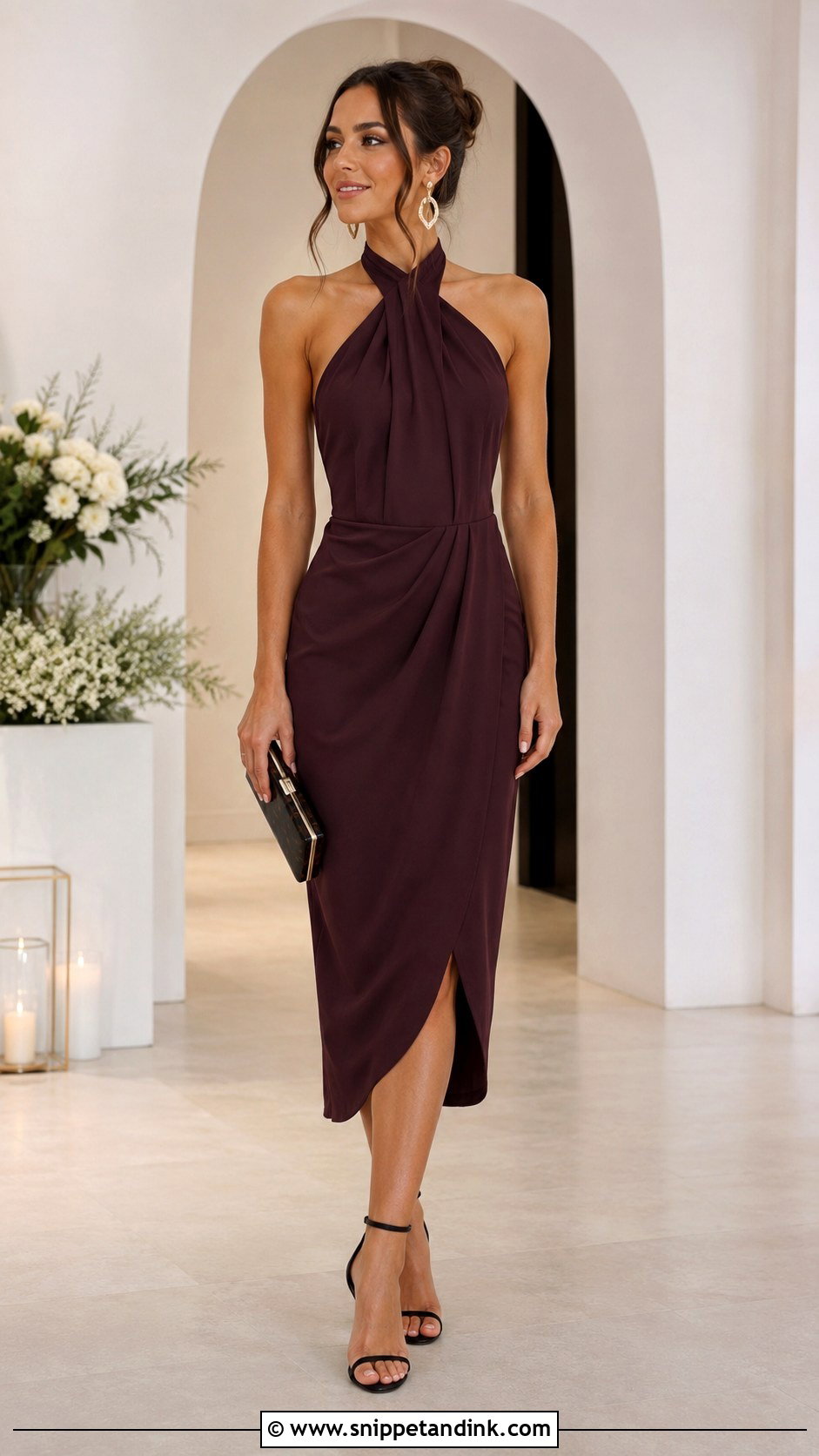
A halter suits strong shoulders and anyone who wants a clean line from neck to waist, but it’s harder on a fuller bust unless the strap is wide or the bodice has built-in support. Satin, crepe and chiffon all hold the shape, and a midi with an A-line or softly fitted skirt leaves room to dance. Since the neckline is the feature, I skip the necklace and go to statement earrings, a structured clutch and simple heels. Halters come into their own at warm-weather and destination weddings. Wear the dress for an hour at home first, because a thin tie can rub the back of the neck raw by dessert.
14. Long Sleeve Cocktail Dress For Wedding
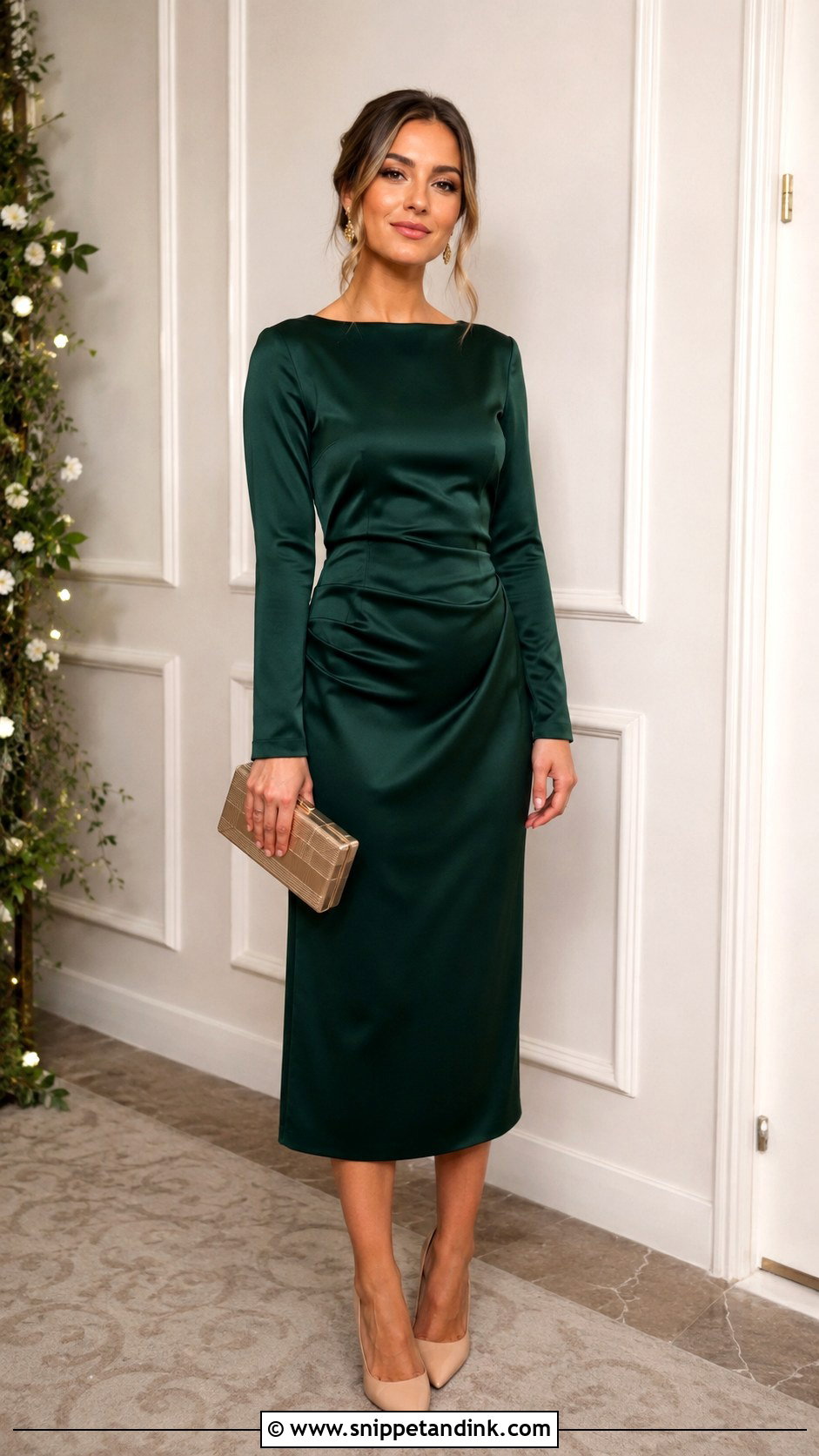
Sleeves are what I suggest for winter weddings, ceremonies that ask for covered arms, and venues where the air conditioning is brutal. Satin, crepe, chiffon, lace or velvet in a midi length all work, and sheer, puff or gathered sleeves add interest without weight. The fit check is at the armhole. If it’s cut low, you can’t raise your arm without the whole bodice lifting, which matters once the dancing starts. Pointed pumps, heeled sandals or ankle-strap heels, a compact clutch and simple earrings finish it. Plum, forest green, navy and burgundy suit the colder months best.
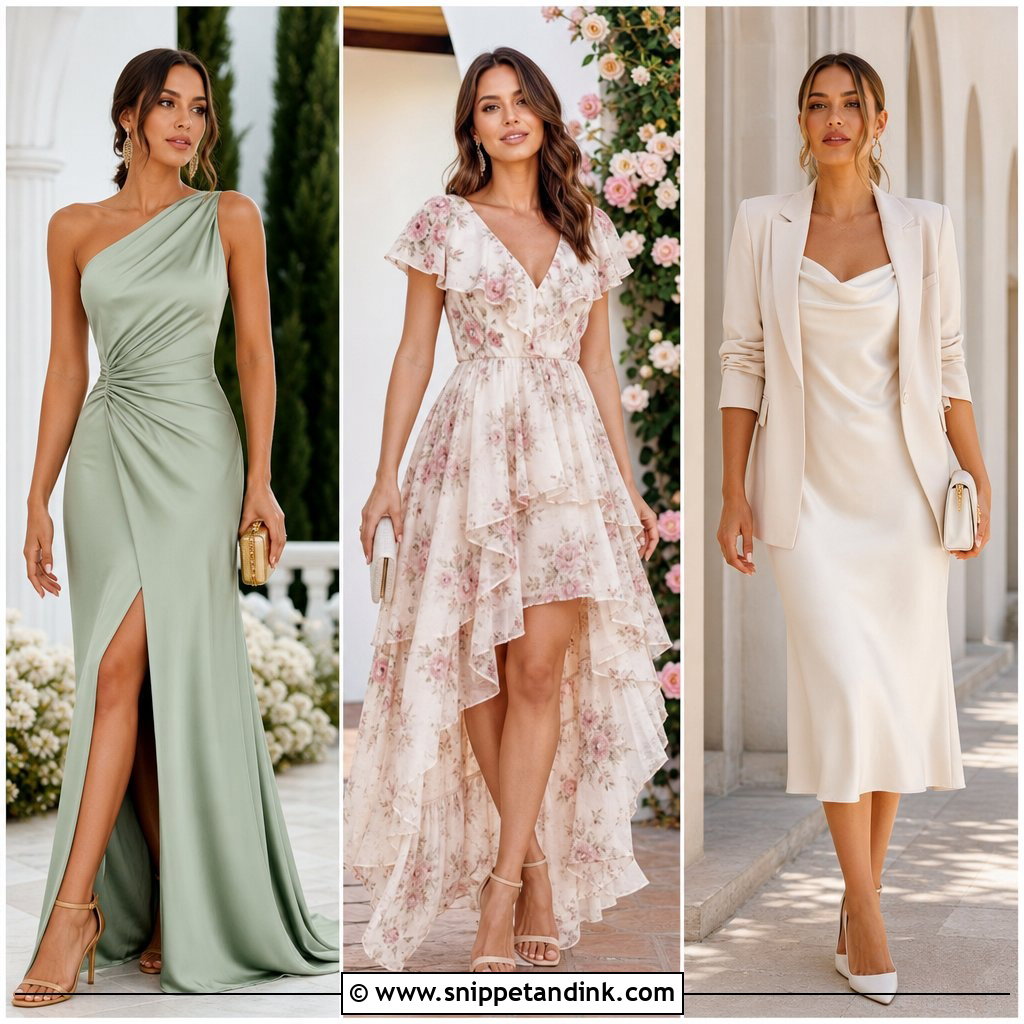
15. Pleated Cocktail Dress For Wedding
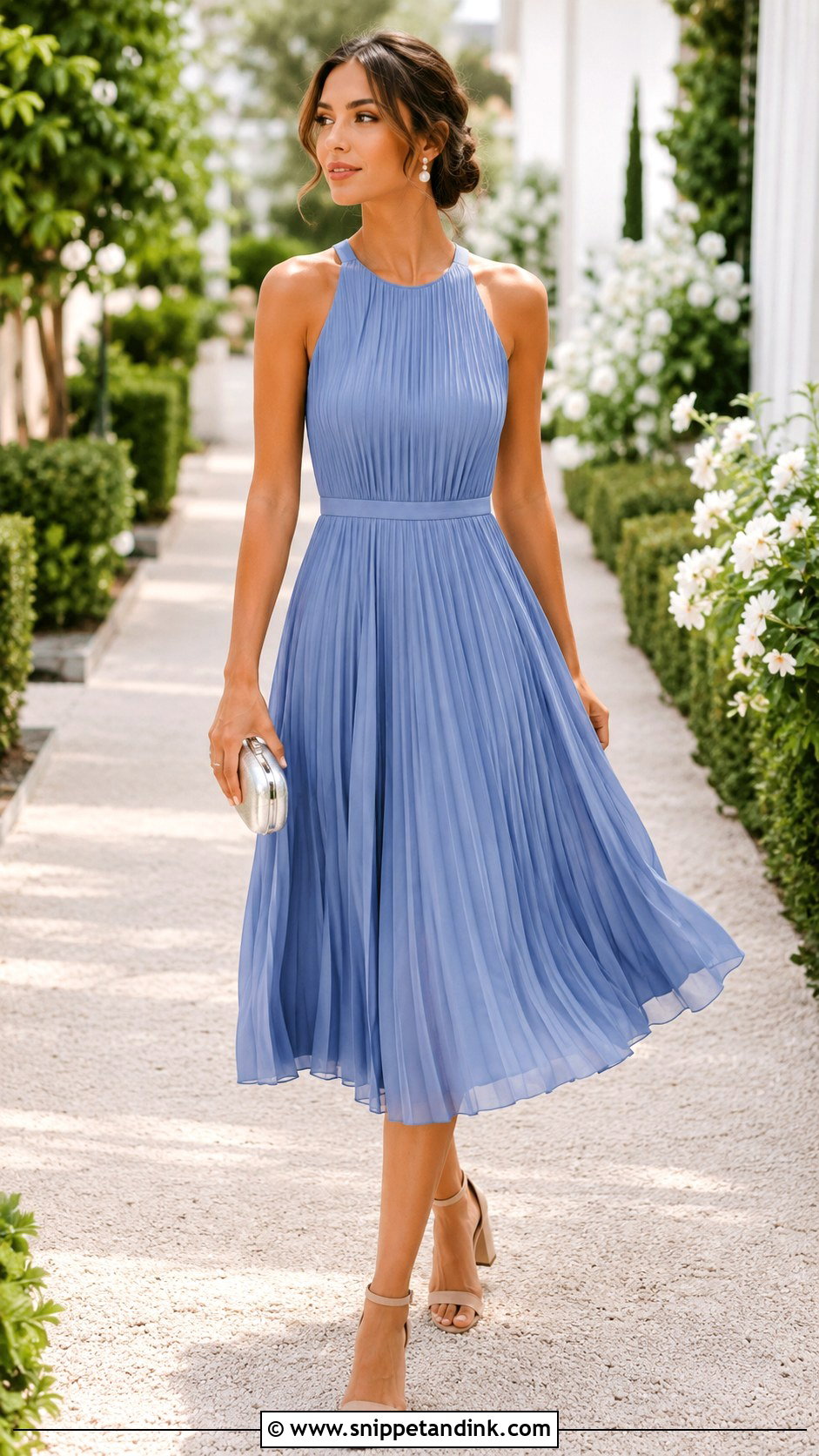
Pleats are kind to long days. They move when you walk, fall back into place after you sit, and hide the small creases that ruin a flat satin skirt. I look for fine pleats from a defined waist with a smooth bodice above, at midi length. Dusty blue, mauve, sage or champagne pink read soft; navy and emerald read more formal. Worth knowing: heat-set pleats in polyester hold for years, but natural fibers can relax in humidity, so check the label before a summer wedding. Heeled sandals, a small clutch and delicate jewelry are all it needs.
16. Wrap Cocktail Dress For Wedding
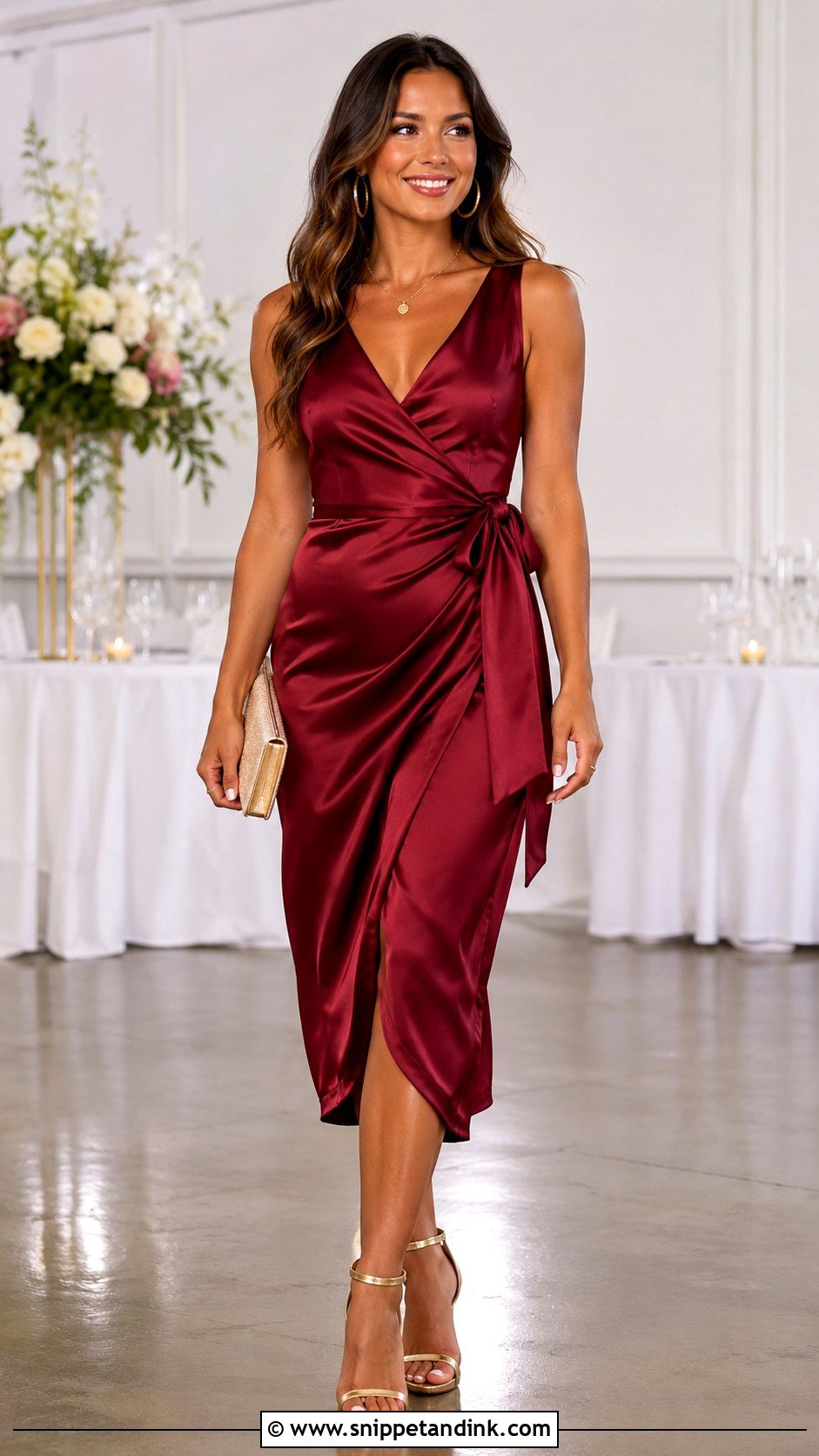
I recommend wraps to guests who expect a full sit-down dinner, because the tie adjusts as the evening goes on. The wrapped waist gives definition and the V-neck lengthens the upper body. Choose a midi or knee length in satin, crepe, chiffon or a refined floral. The weak points are a neckline that gapes when you lean forward and a skirt that opens in the wind, so I always look for an inner tie or press stud, and add a small safety pin at the crossover if there isn’t one. Block heels outdoors, slim heels inside, plus a small clutch and hoops or drops. Skip thin jersey wraps that look like daywear.
17. A Line Cocktail Dress For Wedding
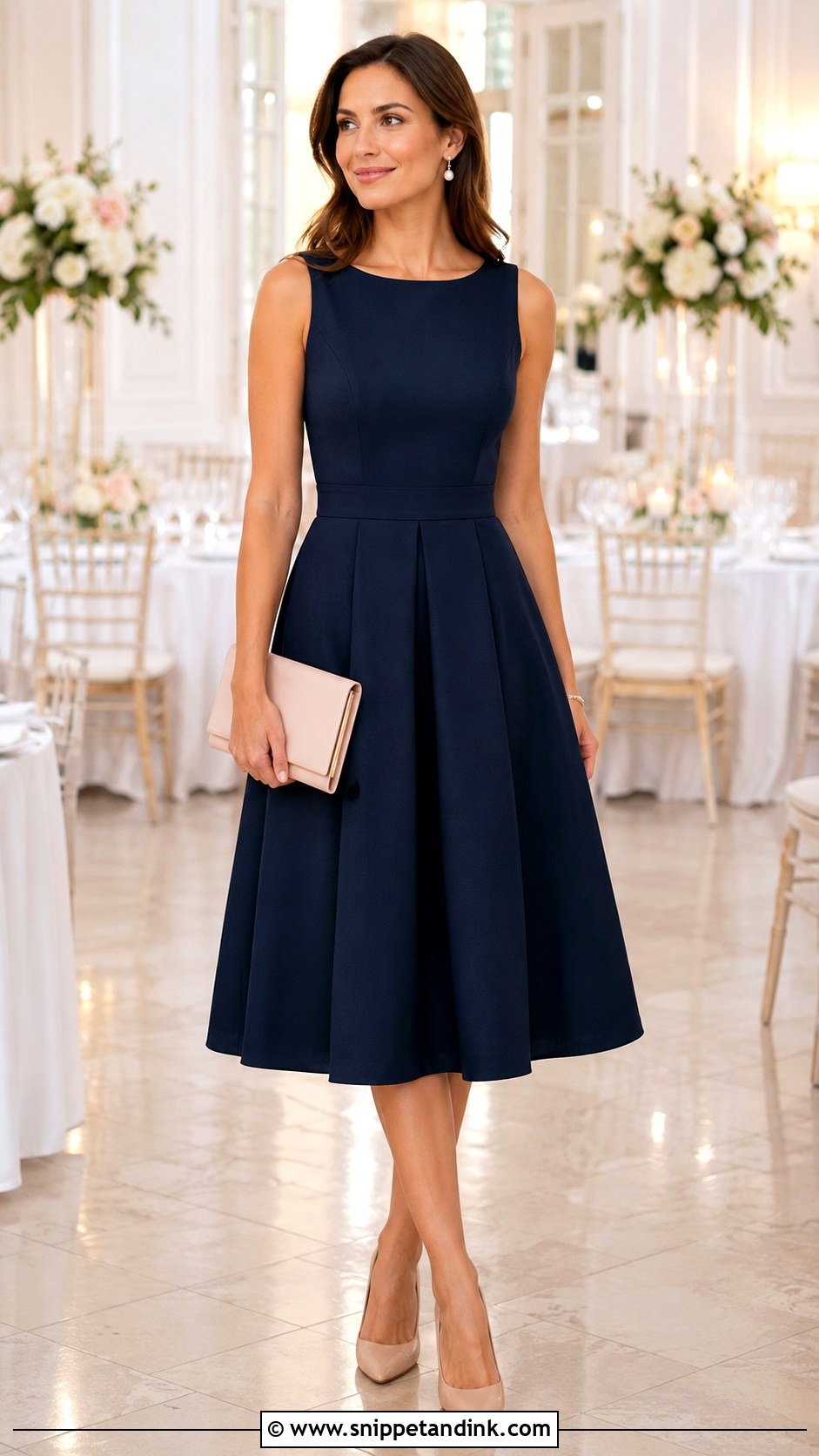
Fitted at the top and released through the skirt, an A-line is the shape I reach for when a guest feels unsure of her figure, because it rarely looks wrong on anyone. Garden ceremonies and hotel receptions both suit it. Look for a defined waist, smooth bodice and a midi or knee hem, in satin, jacquard, lace, chiffon or crepe depending on the season. My accessory rule is balance. A bold color or print gets quiet jewelry, while a plain solid dress can take a statement earring or a textured bag. Classic pumps or heeled sandals and a neat clutch finish it.
18. Slip Cocktail Dress For Wedding
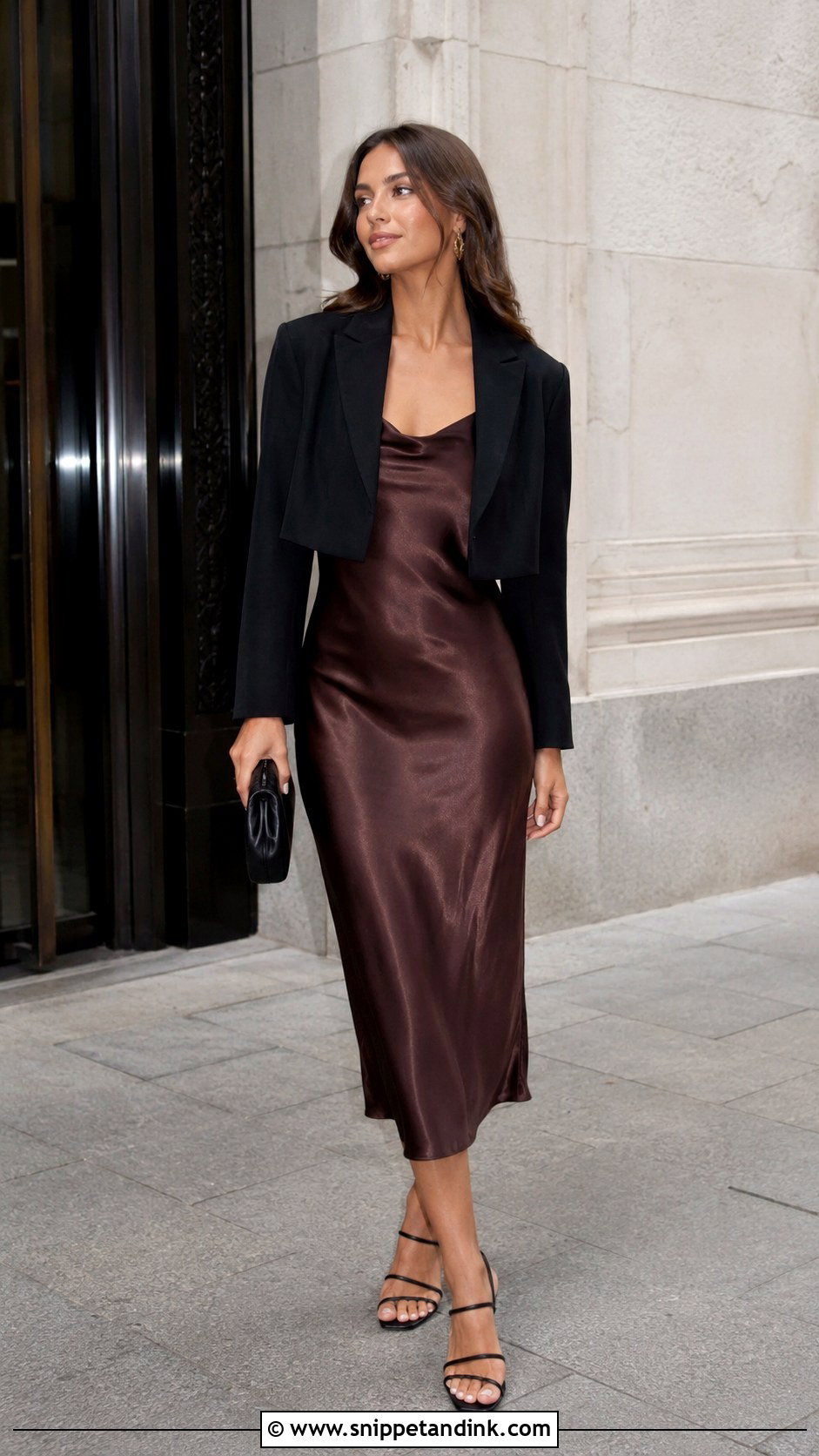
A slip dress is the easiest one here to get wrong, because the line between evening wear and nightwear is thin. Satin or crepe at midi length, a neckline that stays secure when you lean over a table, and a color with some weight, such as chocolate, emerald, rose, navy, copper or cobalt, keep it on the right side. Bias-cut slips show every seam underneath, so plan the underwear first. For a ceremony I’d add a cropped blazer, sheer wrap or tailored shawl, then take it off for the reception. Strappy heels, a structured clutch, polished earrings and a sleek hairstyle make it look deliberate.
19. Ruffle Cocktail Dress For Wedding
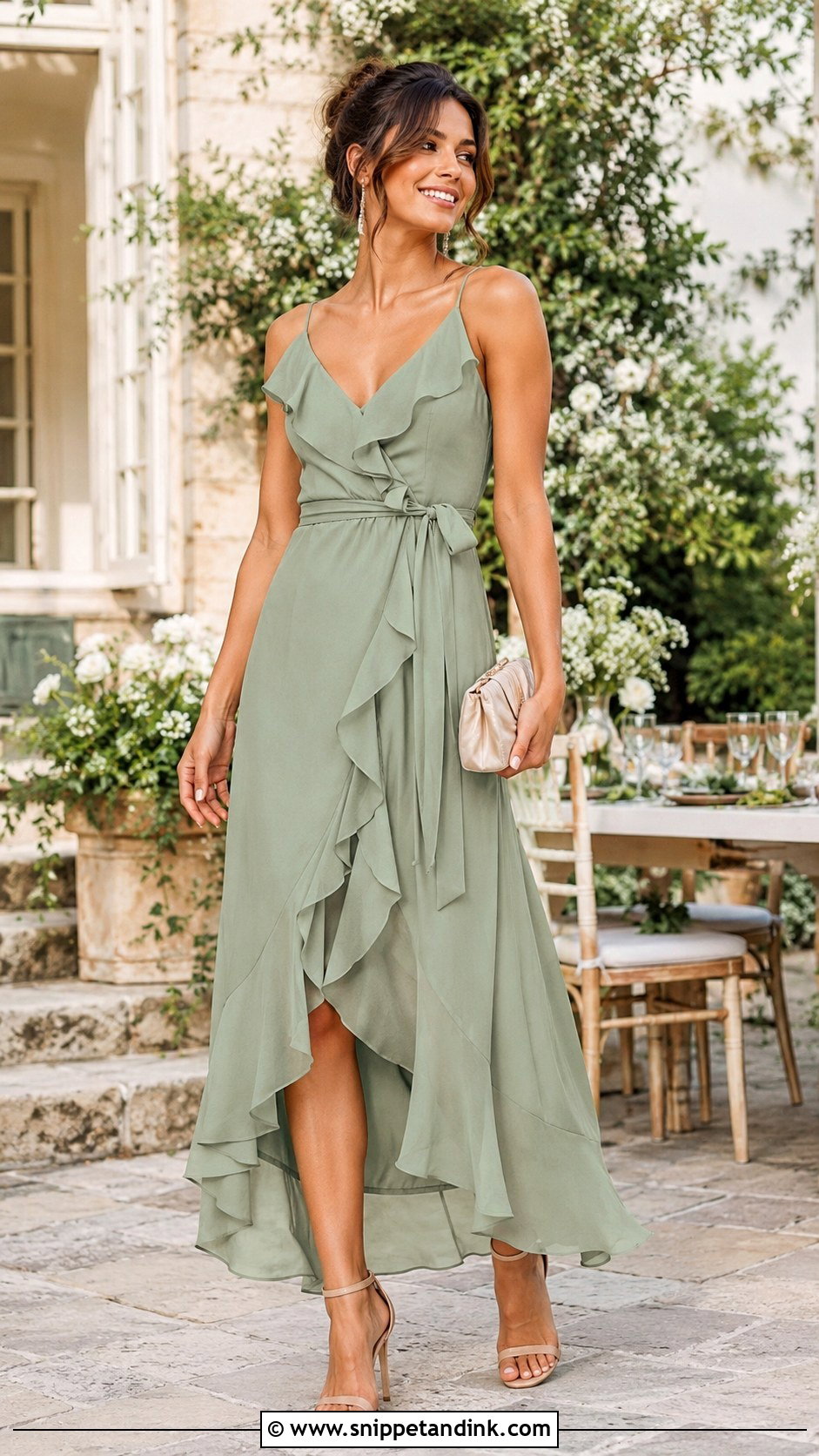
Ruffles need limits. One placement, at the hem, the neckline, the sleeve or along a wrap edge, looks deliberate; ruffles everywhere start to swamp the person wearing them. Chiffon gives the softest ruffle, satin and crepe a crisper one. I keep the shoes and clutch plain so the dress stays in charge. Floral prints and dusty pastels suit daytime, while jewel tones and darker seasonal colors carry it into the evening. Outdoors, a light ruffle catches the breeze and moves in candid shots, which is the strongest argument for it.
20. Sequin Cocktail Dress For Wedding
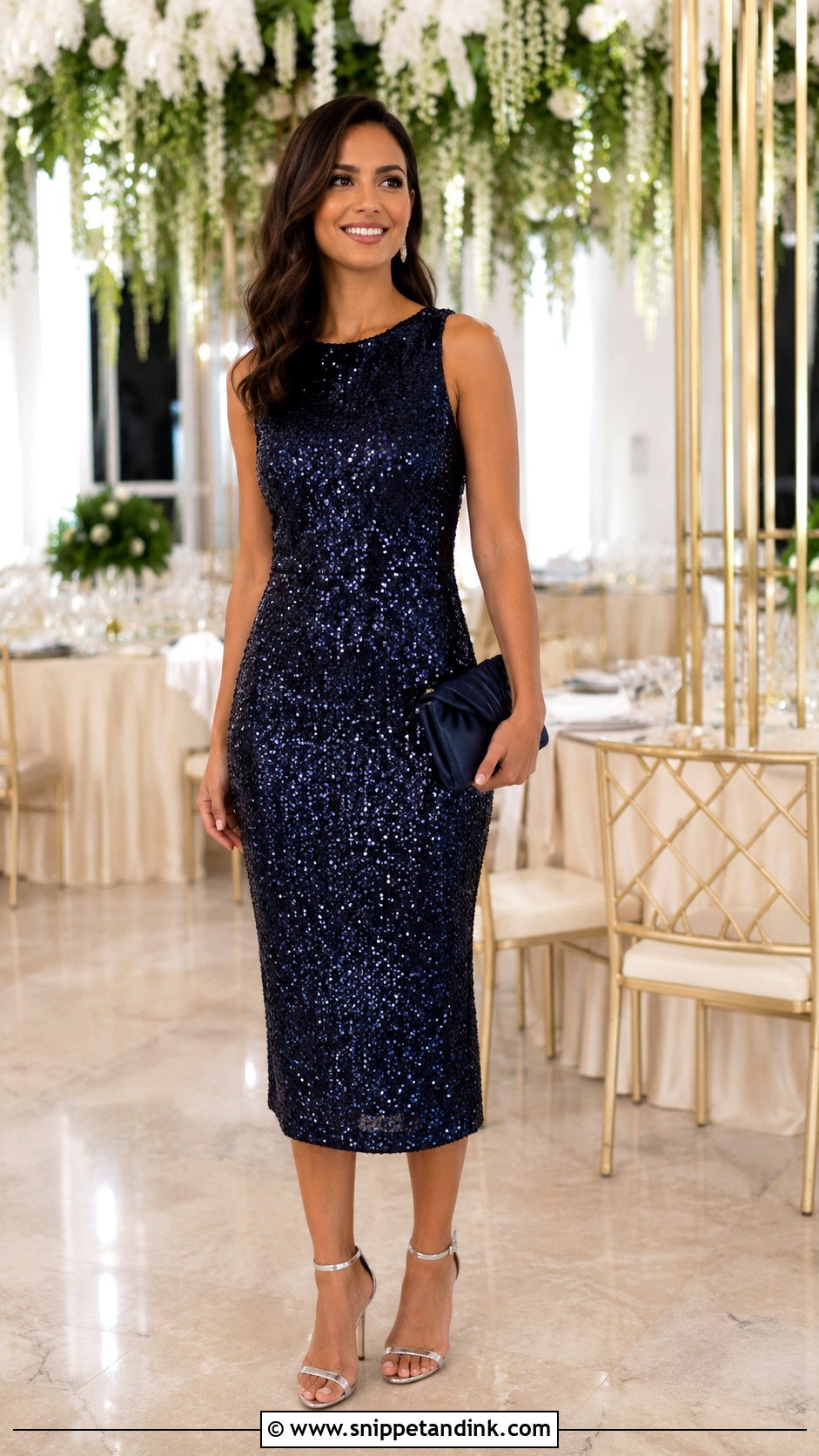
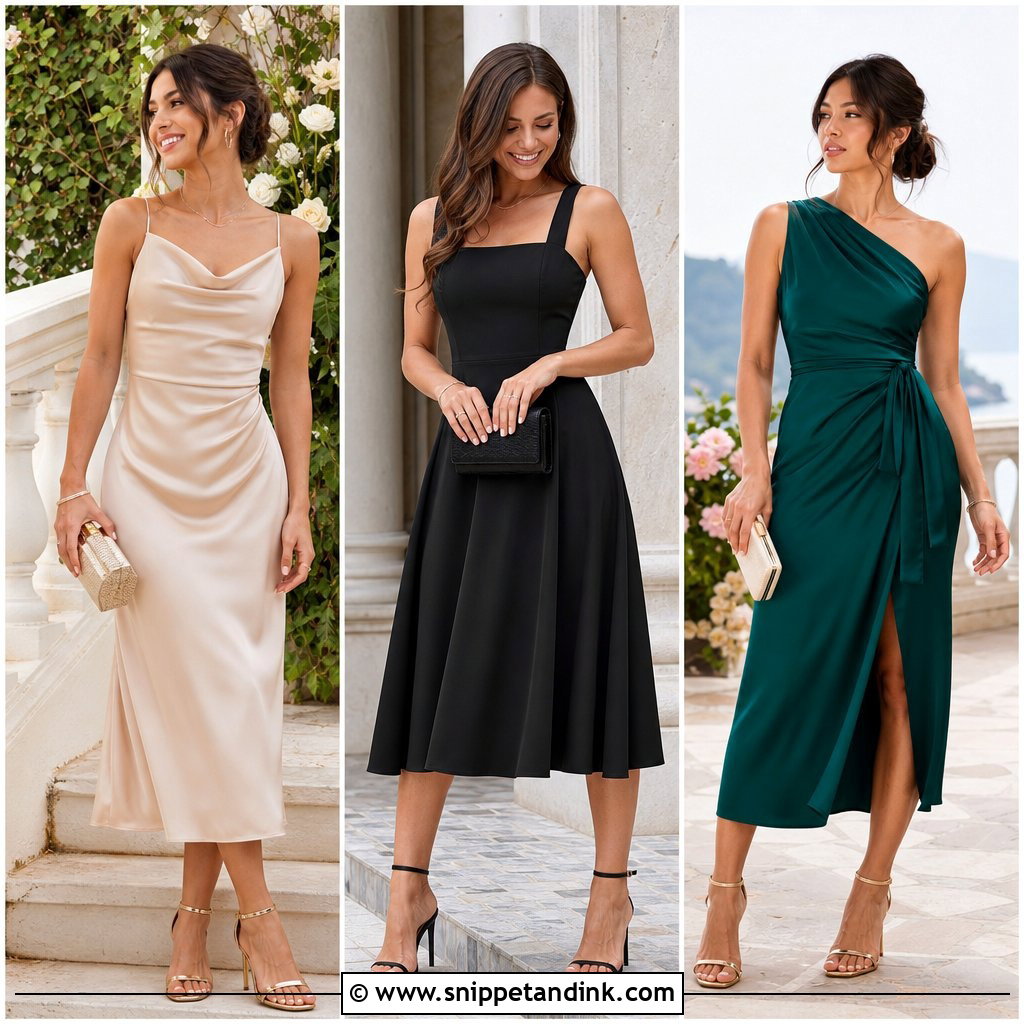
Sequins at a wedding are a question of scale. A knee or midi length in a simple cut, in navy, champagne, rose gold, emerald, pewter or black, looks festive; a short, tight, all-over sparkle dress pulls focus from the couple. Evening and hotel receptions, especially around the holidays, are where I’d allow it. The practical issue is comfort. Cheaper sequins scratch the inner arm and catch on a dance partner’s jacket, so check the seams under the arms and choose a fully lined version. With that much shine, everything else goes quiet: plain heels, a smooth clutch, small earrings and polished but restrained makeup.
21. Chiffon Cocktail Dress For Wedding
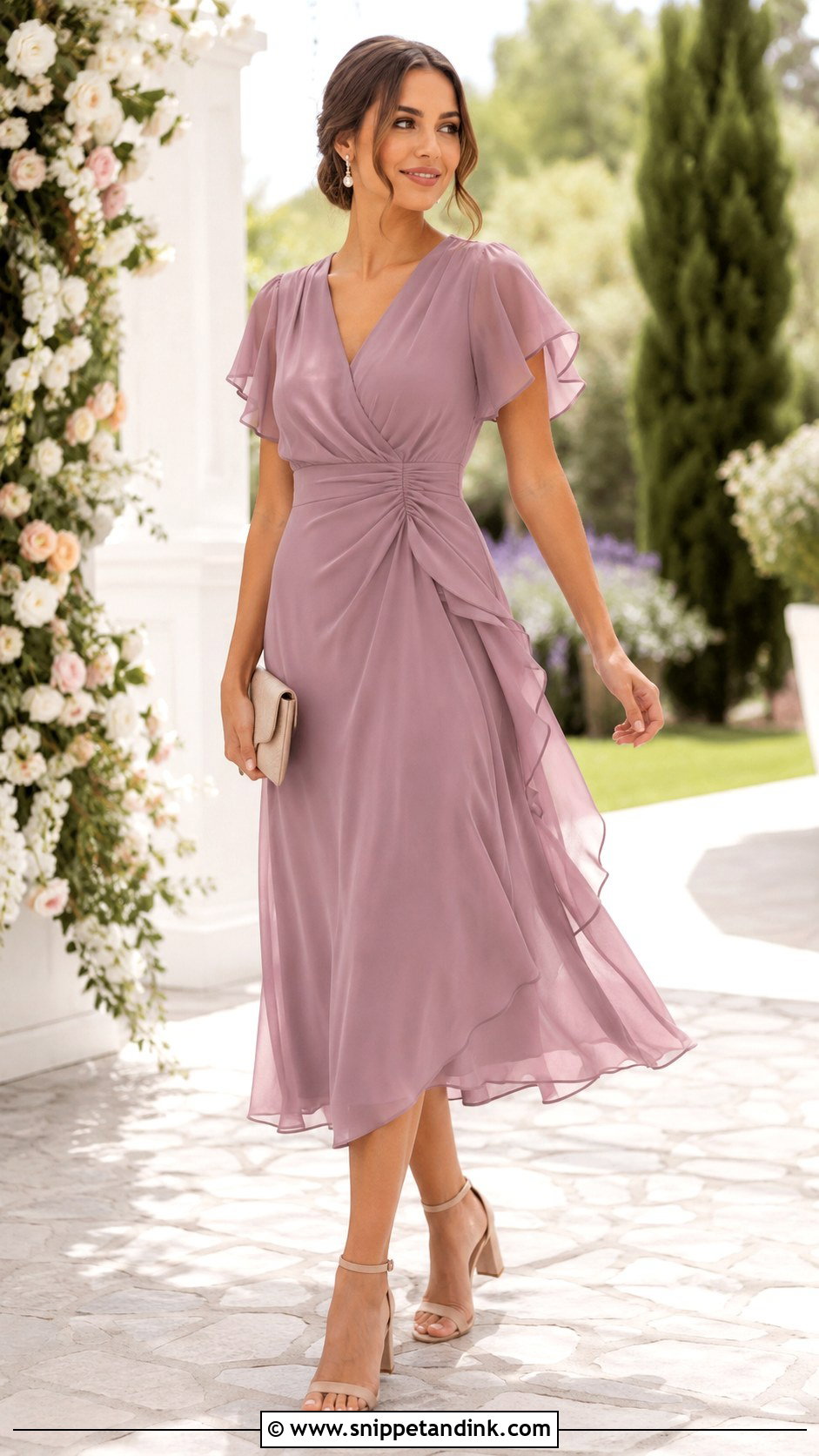
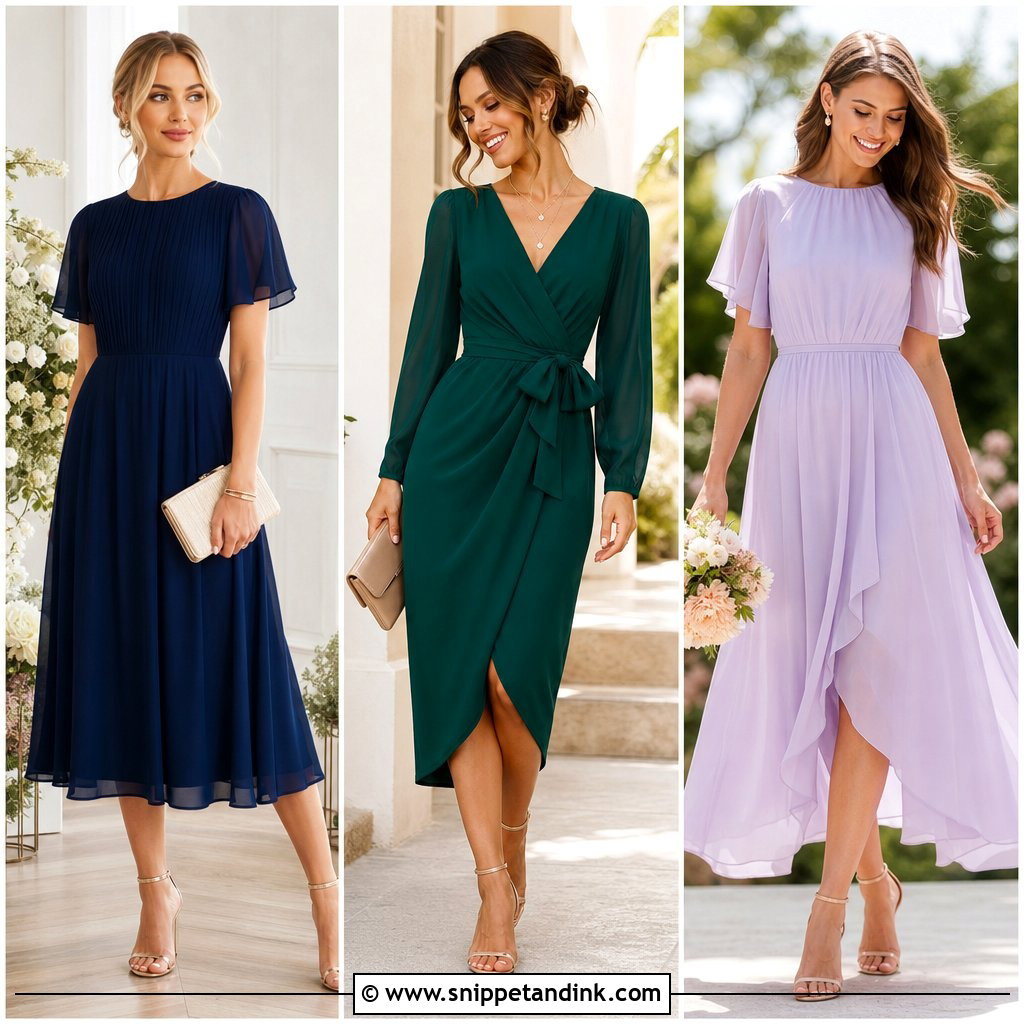
Chiffon is my warm-weather fabric. It breathes, moves and doesn’t look heavy in a garden at two in the afternoon. A midi or knee length with a lined bodice, flutter sleeves, pleats or a soft wrap shape suits most guests. Unlined chiffon turns sheer in sunlight, so hold it up to a window before you buy. Floral chiffon belongs at garden weddings, while solid navy, mauve, sage or burgundy reads more formal. Because the fabric is so soft, I give it structure through the accessories: block heels, a satin clutch and small earrings with a defined shape.
22. High Low Cocktail Dress For Wedding
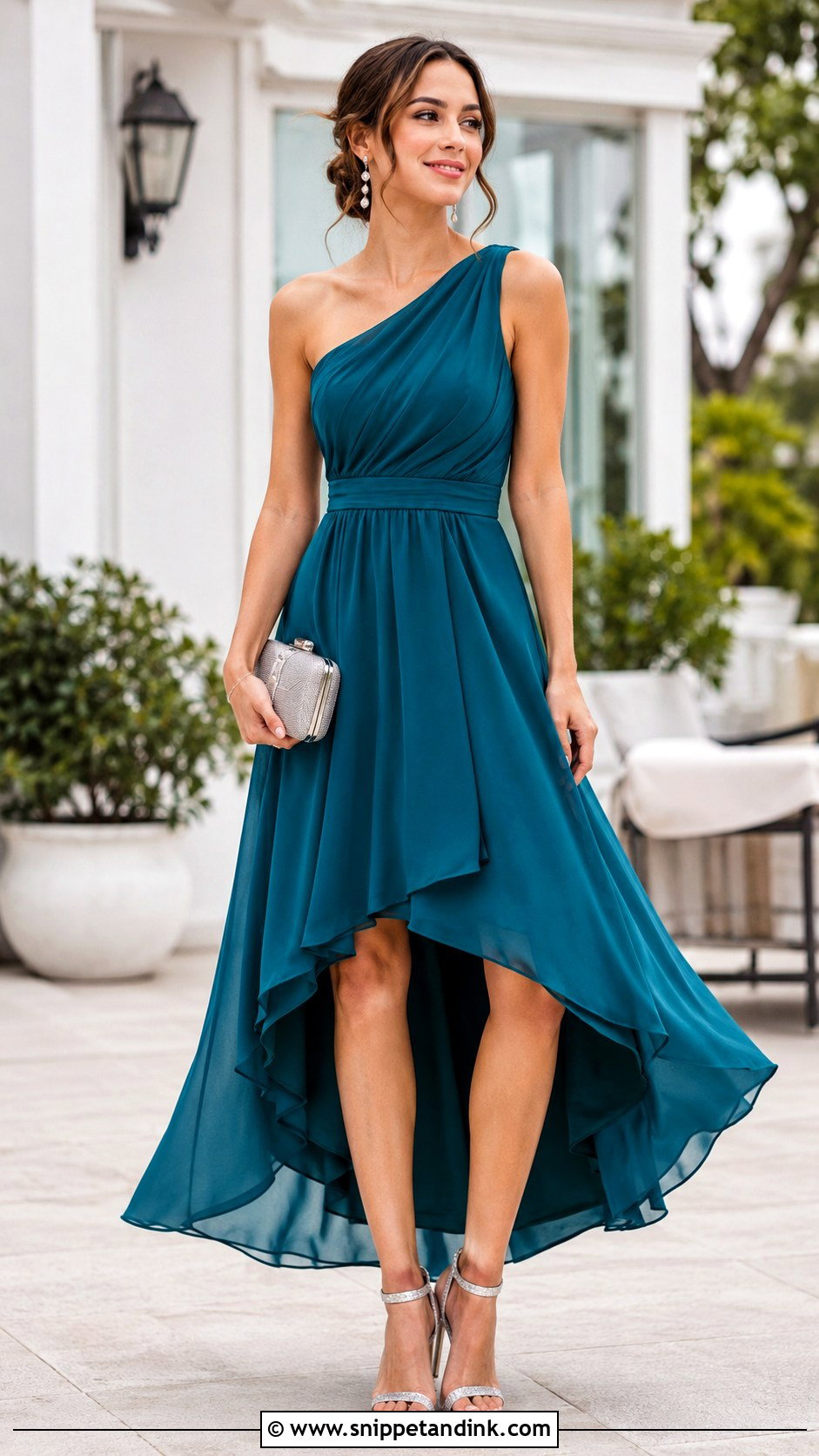
The high-low hem gives you the sweep of a long skirt with a shorter front you can actually walk and dance in. I keep the dip modest, since a very steep drop from knee to ankle starts to look theatrical. Chiffon, satin or crepe in a refined color or soft print suits it. The shorter front puts your shoes on full display, so this is the dress to spend on heels, then keep the clutch small and the jewelry simple. Garden weddings, beach-adjacent venues and semi-formal receptions suit it. Have the hem checked in the shoes you’ll wear; a couple of centimeters changes the whole line.
23. Plus Size Cocktail Dress For Wedding
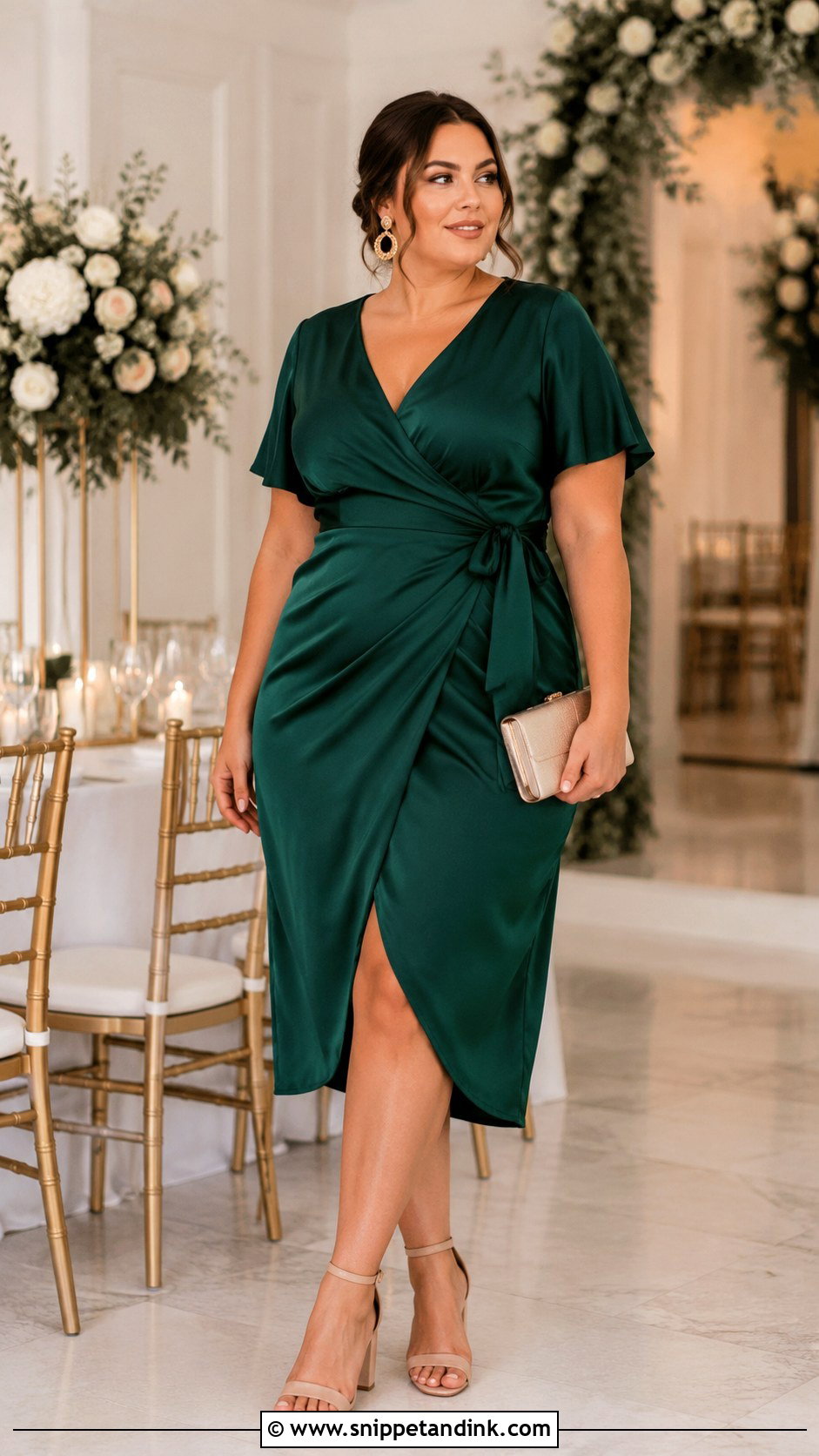
Support decides whether a plus size cocktail dress stays comfortable from the ceremony to the last dance. I look for a real lining, stretch crepe or a structured bodice, adjustable straps, and a waist defined by seaming rather than a tie that slips. Wrap shaping and pleated skirts move well, and midi length is the easiest to walk and sit in. Choose by what you like, emerald satin, navy lace, floral chiffon or burgundy velvet, not by what you think hides you. Supportive heels or dressy block sandals, a structured clutch and earrings that frame the face finish it. Then test the sit: a dress that rides up or pinches at the waist when seated will bother you for hours.
24. Petite Cocktail Dress For Wedding
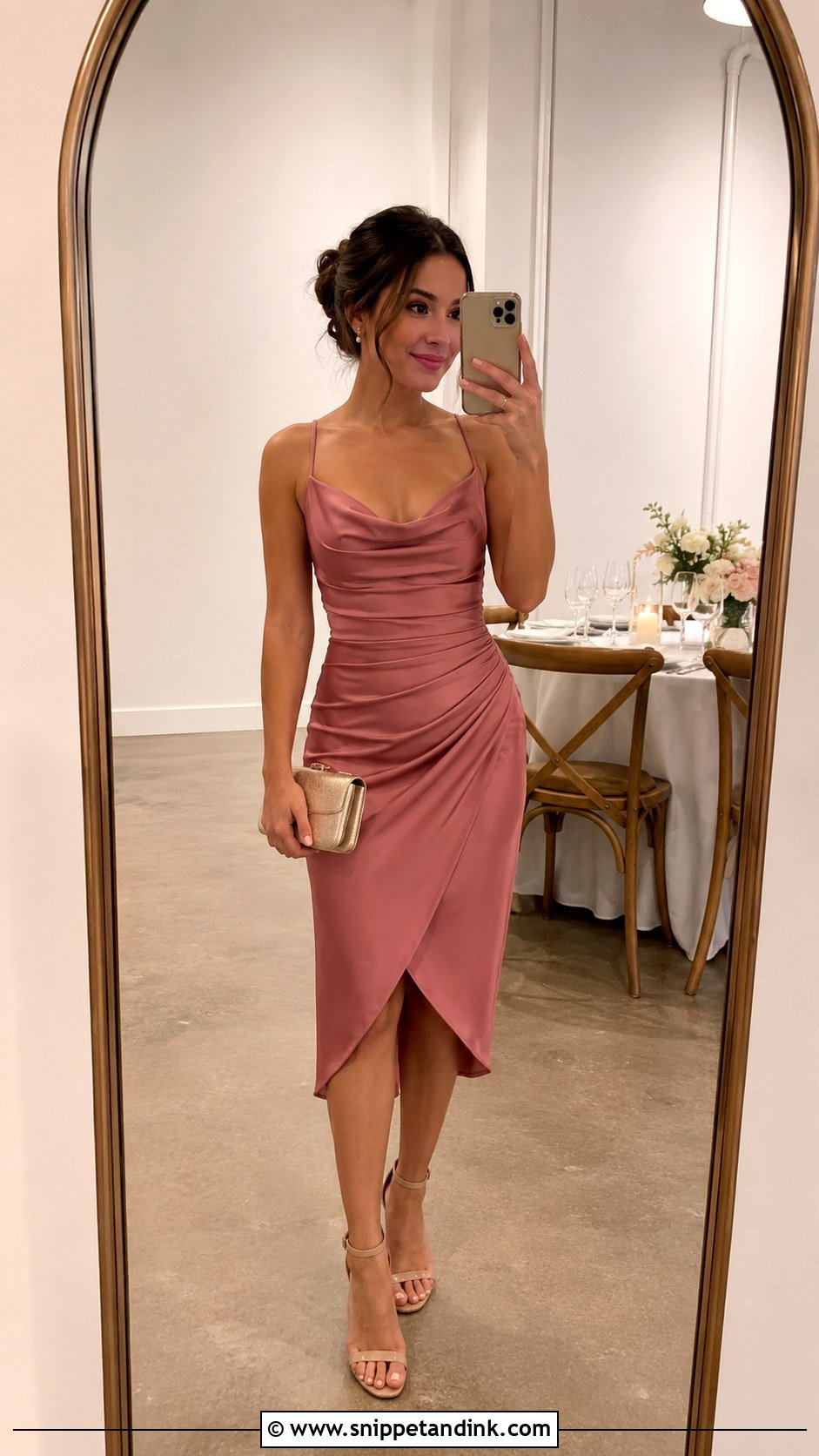
Proportion is everything on a petite frame, and the hem is where it goes wrong most often. Knee-length, just-below-the-knee and shorter midis usually beat long midis, which can cut the leg at its widest point. Vertical details, a defined waist, a V-neck or a clean column all add height. Satin slips, wraps, A-lines and fitted crepe midis suit petites well, and most can be taken up a few centimeters by a tailor. Nude or tonal heels extend the leg line. Scale the clutch and jewelry down, and if you choose a print, smaller florals or spaced patterns sit better than large blooms.
25. Summer Cocktail Dress For Wedding
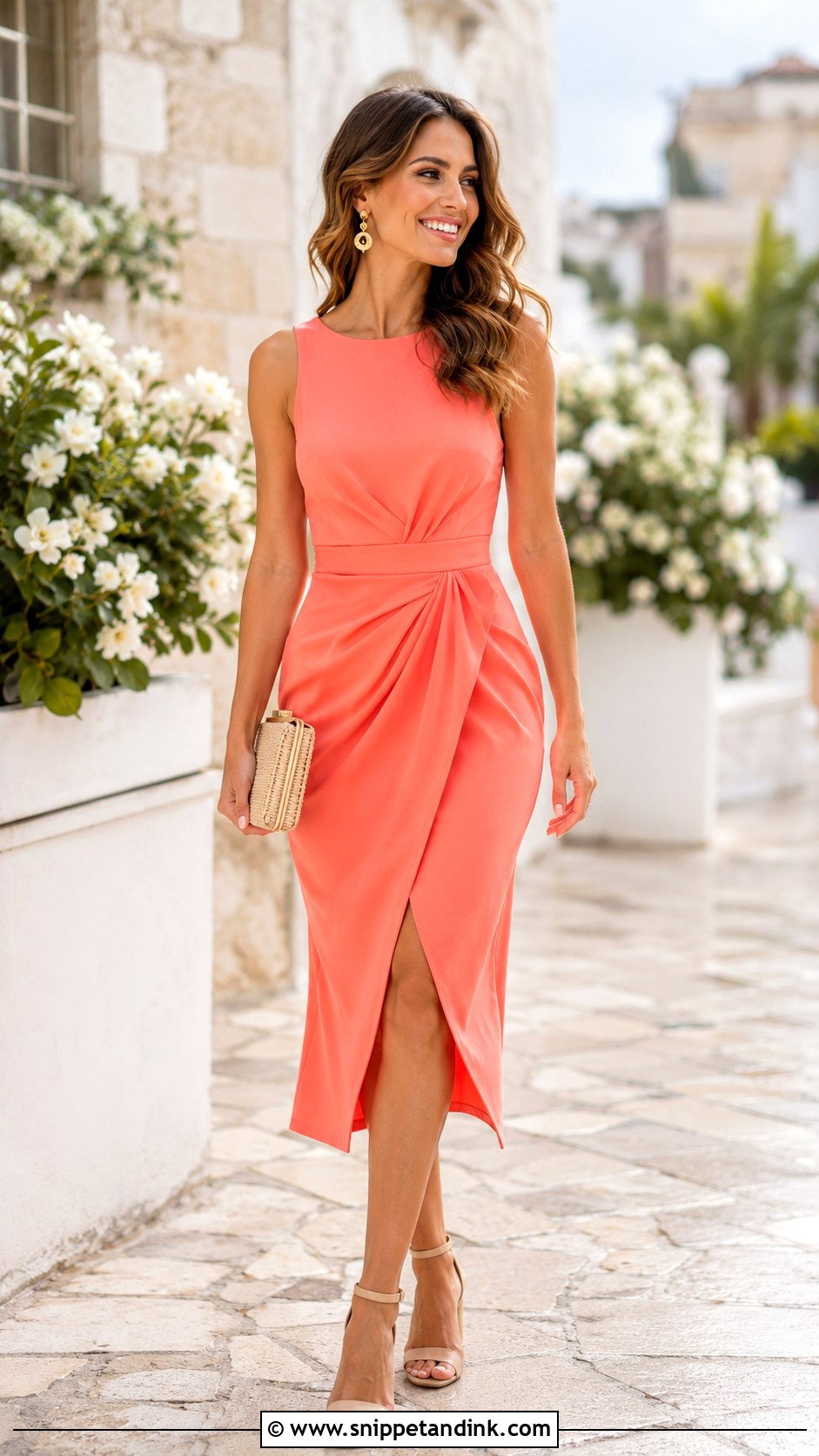
Heat is the real dress code at a summer wedding, so I start with fabric before color. Chiffon, lightweight satin, crepe or lined mesh breathe; heavy linings and dark fabrics in direct sun are miserable by the speeches. Midi florals, bright satin, halter necks and sleeveless A-lines all suit the season, in coral, blue, sage, lavender or pink. Block heels or refined sandals are safer on outdoor ground. Add a small clutch, simple earrings and makeup set to last in warm weather. Stay polished enough to still match the cocktail dress code, even when the temperature tempts you toward a sundress.
Fitting-Room Checks for a Dress You’ll Wear for Eight Hours
A dress that looks right in the mirror can still let you down by the first toast. These are the checks I run with every guest before the tags come off.
Sit, reach, then climb a few stairs
Sit on a hard chair for a full minute and watch the hem and the neckline. Slits open, wraps part, and short skirts climb further than you expect. Then raise both arms as if hugging someone taller, and walk a flight of stairs in the shoes. If you’re adjusting the dress after any of those, you’ll be adjusting it all night.
Look at the color in two kinds of light
Check the dress by a window and again under warm indoor bulbs. Pale pinks and champagnes can turn almost white in daylight, and navy and black merge in a dim reception room. Take a phone photo with the flash on as well. It shows sheerness and a visible lining that the mirror hides.
Satin Creases, Snagged Sequins and Other Reception Mishaps
Something small almost always happens to an outfit over a long wedding day. Most of it can be fixed in the restroom if you know what to expect.
- Satin creases where you sit. Hang the dress in a steamy bathroom the night before, and on the day smooth the skirt flat under you every time you sit.
- Water marks satin. Blot a splash straight away with a dry napkin and let it air dry; rubbing spreads the ring.
- Chiffon clings with static in dry, air-conditioned rooms. A little hand lotion on your legs, or a dryer sheet run over the skirt, calms it.
- Thin heels sink into lawns. Clear heel protectors slip over the tip and weigh almost nothing in a clutch.
- Straps slip and wraps open. Two safety pins and a strip of double-sided fashion tape cover most of it.
Once you’re home, hang the dress straight away and get any spill to a cleaner within a few days, before it sets into the fabric.
A Guest Outfit You Can Forget About Once the Music Starts
Most of these outfits come down to the same few decisions: a length that suits the venue, a fabric that suits the season, and accessories chosen so they aren’t fighting the dress. Midi lengths, good fabric, a defined waist and a considered color are hard to get wrong. Florals lean romantic, a slip dress modern, navy classic, cobalt or emerald bold. What I’d rule out every time is a bridal shade, a casual fabric and anything that needs constant adjusting. Get those right and you’ll be comfortable enough to forget what you’re wearing, which is what a good guest outfit should let you do.
You'll Like These Ideas:


Leave a Reply