
Your sister’s wedding puts you in an odd spot. You’re family, you’re on duty and you’re in nearly every portrait, but the spotlight isn’t yours. The looks below cover traditional Indian clothing, fusion combinations and Western tailoring, loosely grouped by function. I sort a brother’s options by event first, then venue, season and time of day, and only after that by color. Breathable kurtas belong to daytime; embroidered sherwanis, bandhgalas and suits take over in the evening. Whatever you pick, wear the shoes around the house for a week beforehand, because you’ll be greeting guests and dancing in them.
Decoding the Dress Code Printed on Each Card
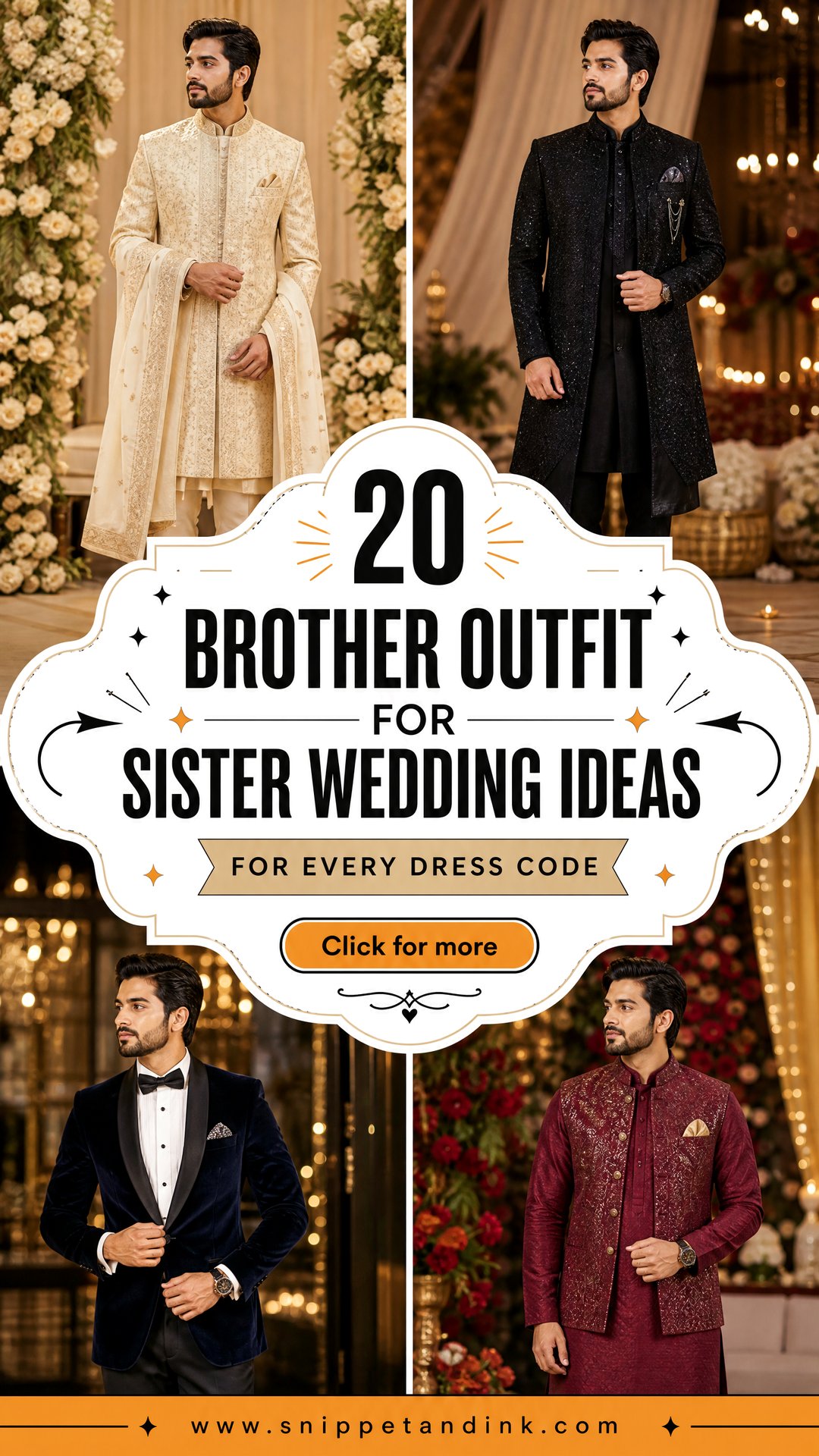
Wedding invitations often carry a separate dress line for every function, and the wording is vaguer than it looks. Here’s how I translate the common ones for a bride’s brother, who should sit a notch above the guest code but never reach the groom’s level.
Festive or Casual Daytime
Kurta and pajama in cotton or linen, no jacket required. This is haldi and mehndi territory, so comfort and washability come before embroidery.
Indian Formal or Traditional
Sherwani, achkan, bandhgala, or a kurta under a structured jacket. A plain kurta on its own reads underdressed for the brother at this level, even if some guests wear one.
Cocktail or Indo-Western
Fusion jackets, a Jodhpuri suit or a dark suit with an open collar. This is where you can experiment a little, since the evening is about the party more than the rituals.
Black Tie
A tuxedo, or a dark bandhgala if the hosts welcome Indian formalwear. Ask rather than guess. As the bride’s brother you’re effectively one of the hosts, and your parents will know what the rest of the family has planned.
1. Ivory Sherwani Brother Wedding Outfit
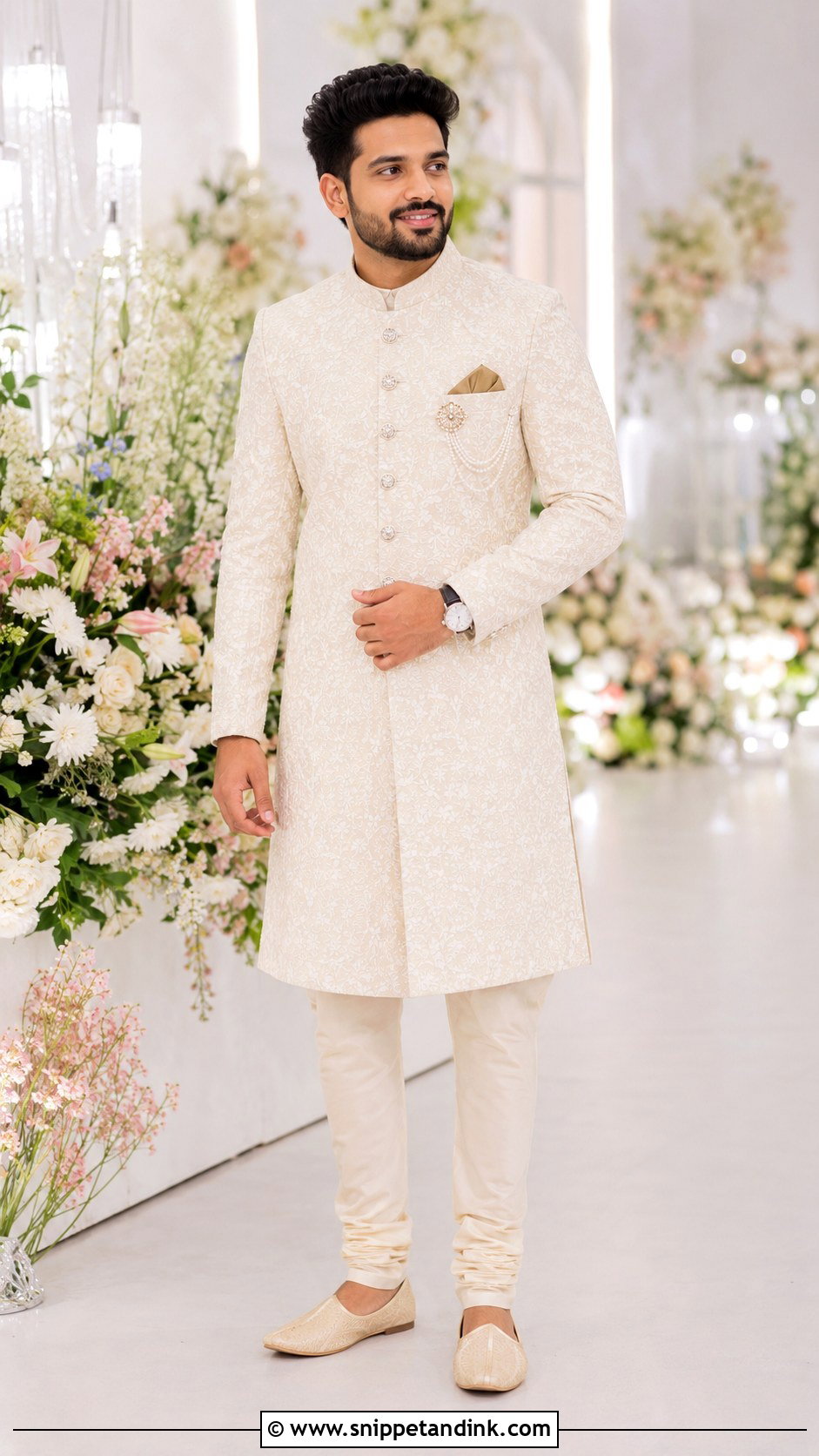
Ivory sits quietly beside a colorful bridal outfit, so it’s often my first suggestion for the ceremony. Look for a structured sherwani with fine thread embroidery, covered buttons and side slits deep enough to sit cross-legged. Tapered cream churidar or straight trousers both balance it, and a muted gold pocket square, a pearl brooch and beige embroidered mojaris add detail without fuss. The catch is that grooms love ivory too. Ask early. If he’s in ivory, change the embroidery pattern noticeably or bring sage, dusty pink or pale blue in through your accessories. The shoulders should be neat, with enough ease across the back for a long ceremony.
2. Pastel Nehru Jacket Brother Wedding Outfit
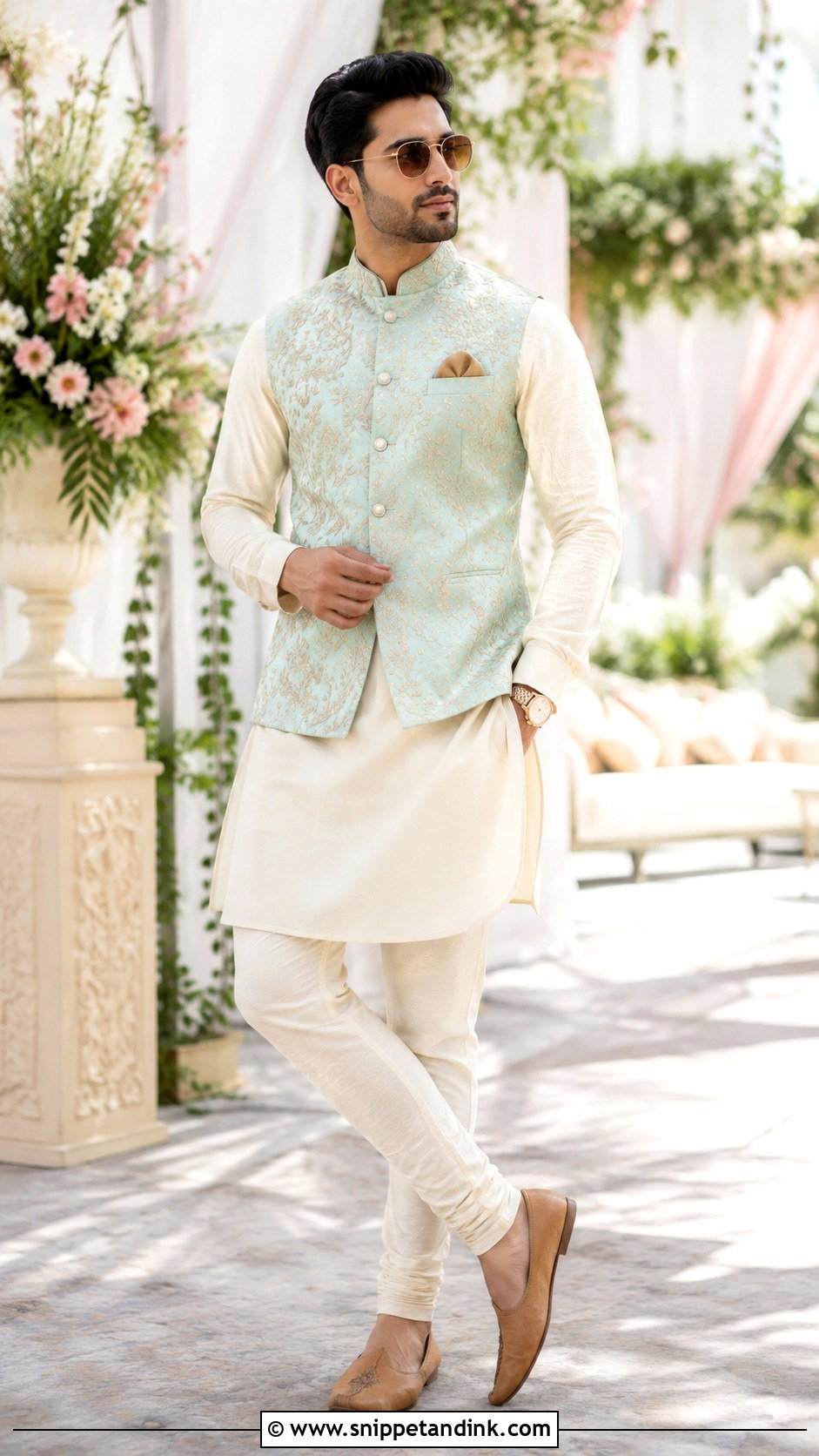
Daytime and garden weddings suit soft color. Start with a crisp ivory kurta and fitted pajama pants, then add a pastel Nehru jacket in mint, powder blue, peach or blush, with subtle floral embroidery, a woven texture or understated metal buttons. Length is the first thing I check. The jacket should end around the hip and sit close without pulling across the chest; any longer and it fights the kurta hem. Tan leather mojaris, a pocket square and a slim metal watch finish it. Take one accent color from the bride’s palette so you belong in the family photos while still looking like yourself.
3. Embroidered Bandhgala Brother Wedding Outfit
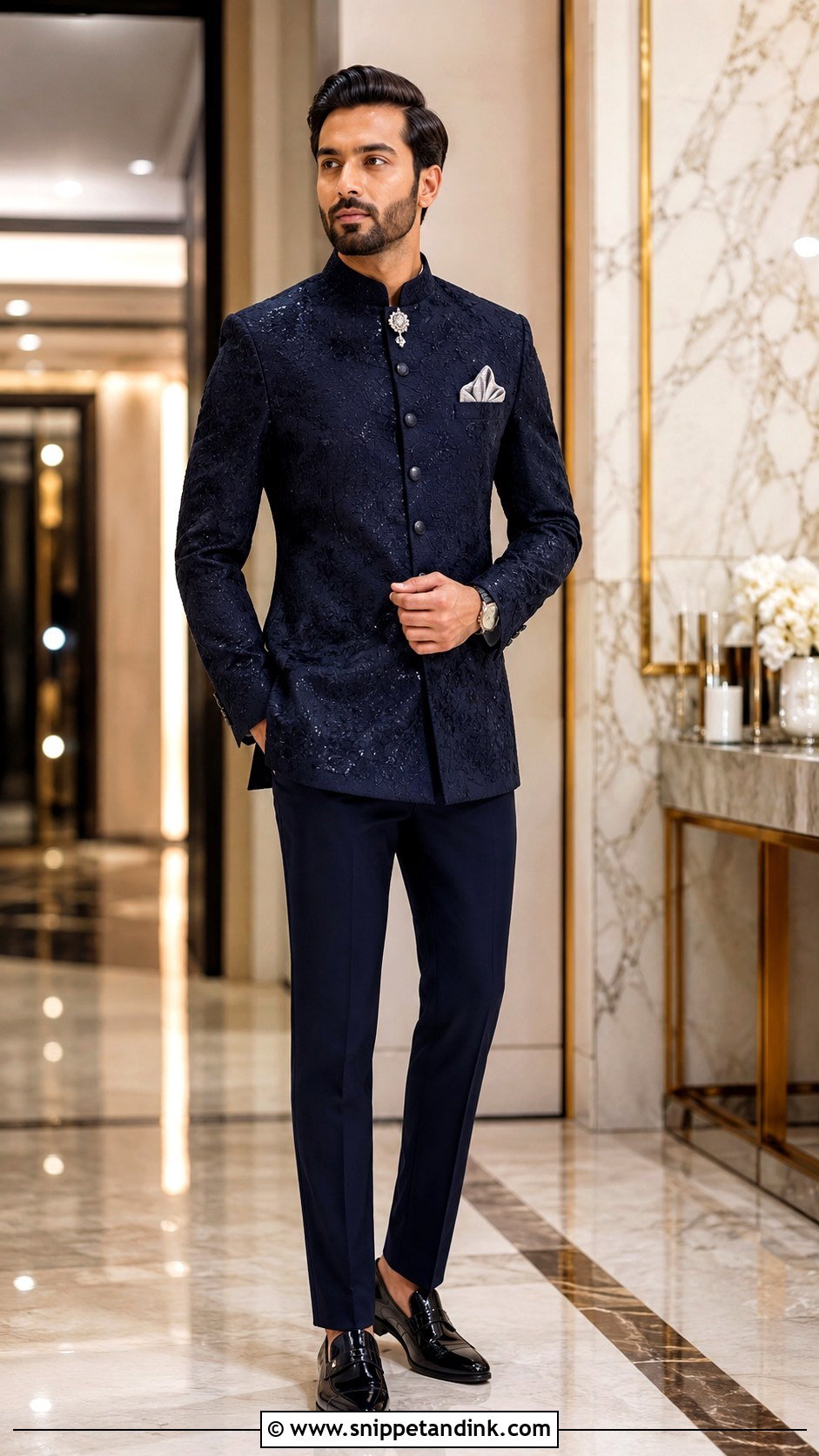
A fitted bandhgala gives you the regal outline of a sherwani without its length or volume. For an evening wedding I like navy, emerald, charcoal or deep maroon, with restrained embroidery at the collar, cuffs or front closure. Slim black or matching Jodhpuri trousers keep the proportions clean. Loafers or formal leather shoes push it contemporary, while velvet mojaris pull it traditional. A small brooch, a folded pocket square and a quiet watch are enough. The high collar and structured shoulders send the eye straight to the fit, so this is the piece where I’d spend on a good tailor.
4. Floral Kurta Brother Mehndi Outfit
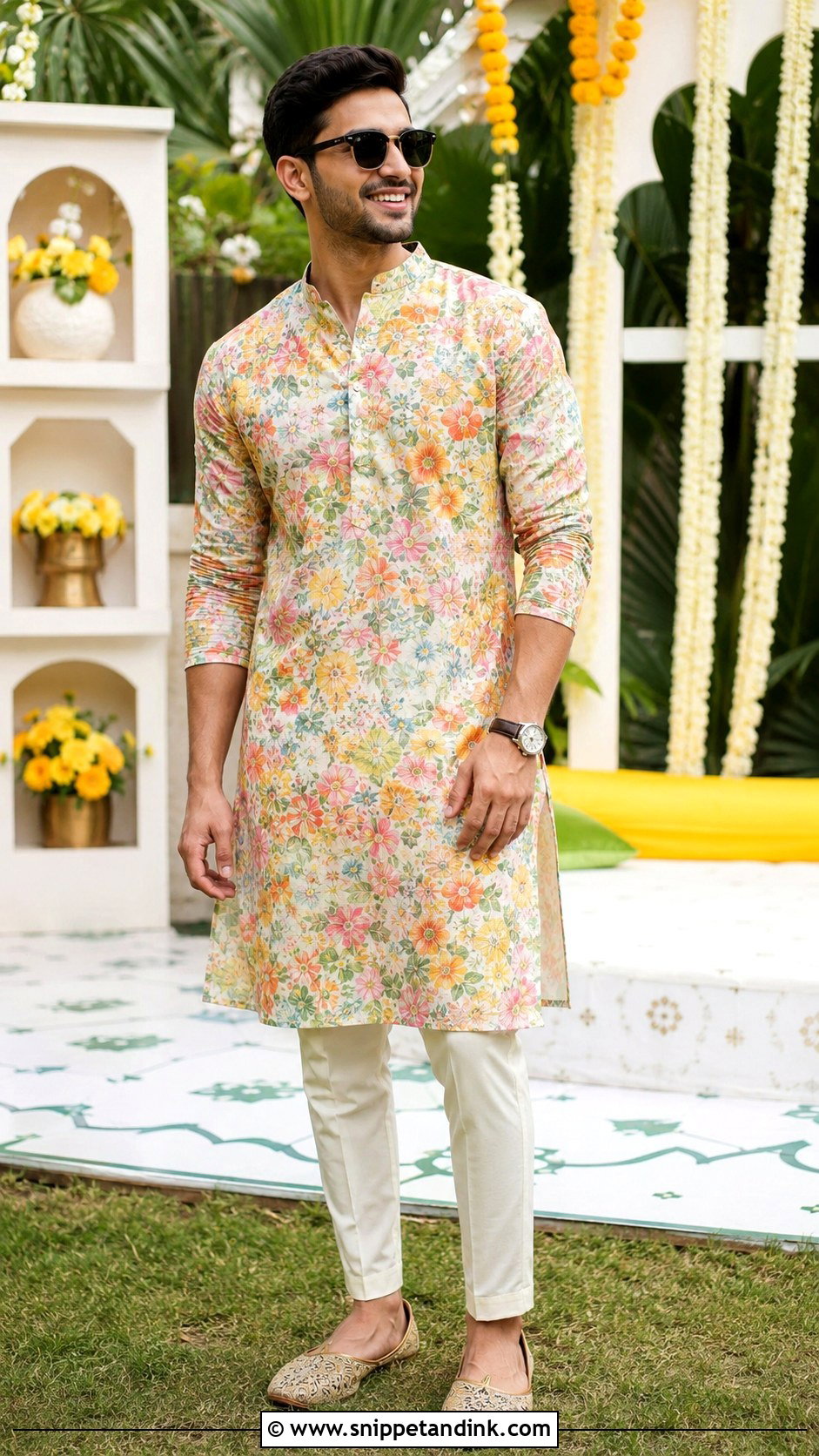
Florals at a mehndi keep things cheerful without looking stiff. A knee-length kurta featuring a controlled botanical print in green, coral, yellow or blue brings the color, and plain ivory pajamas, tapered trousers or churidar steady it. Fabric matters outdoors. Cotton-silk or a linen blend breathes, while a synthetic print traps heat by mid-afternoon. Neutral juttis, a simple watch and sunglasses for daytime are all you need, and skipping the jacket keeps you free to move. Quieter dressers should go for a small motif; if you’re comfortable in a bold print, a larger one works as long as everything around it is solid.
5. Yellow Kurta Brother Haldi Outfit
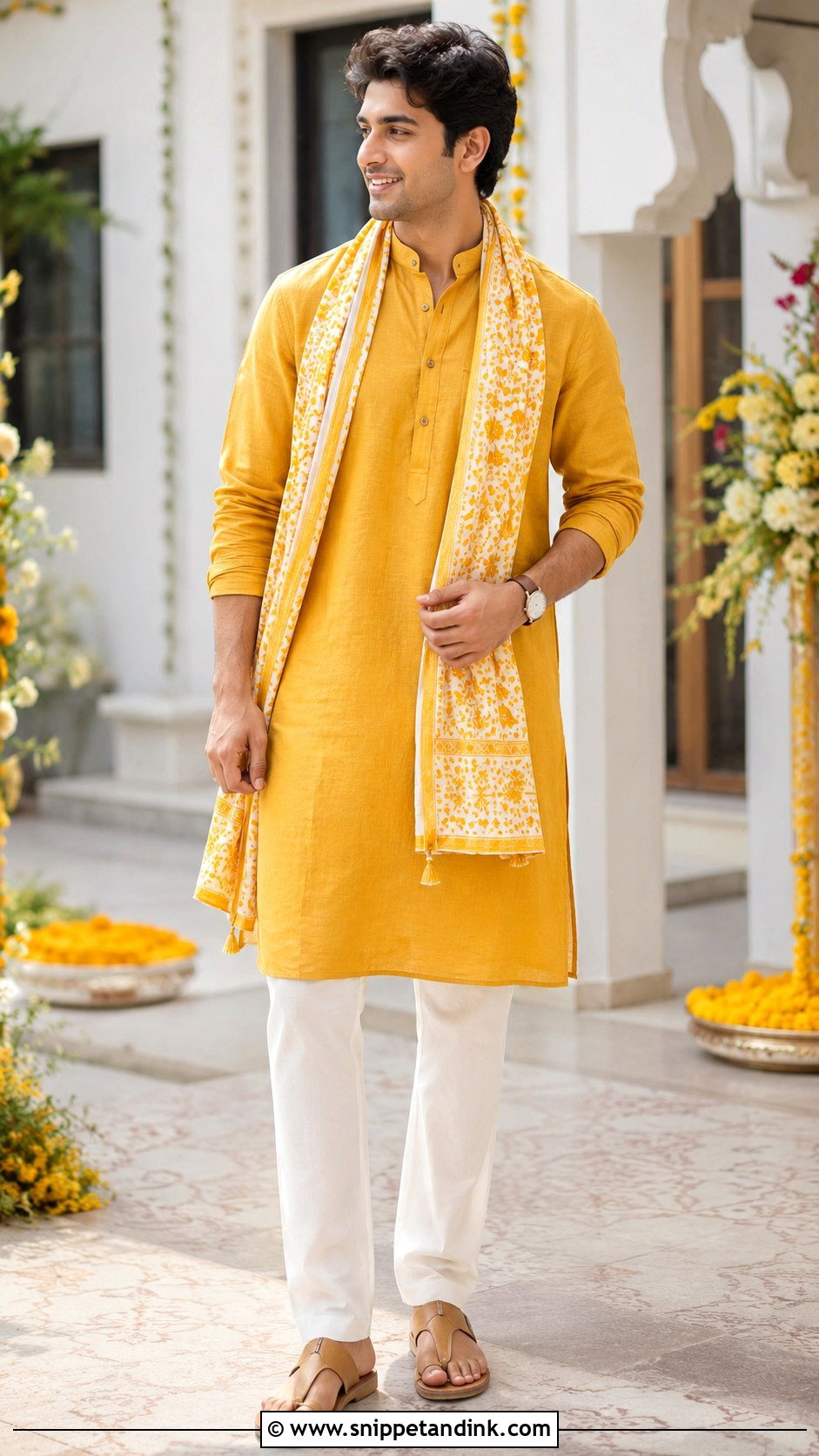
Haldi is the messiest function of the wedding, so dress for that first and for color second. A lightweight mustard, marigold, or lemon kurta with white straight-cut pajamas looks bright and copes with the day. Cotton, linen or breathable cotton-silk beats heavy brocade easily. Turmeric paste will find its way onto you, and it stains, so treat this as an outfit you may not wear again. Tan sandals or washable juttis handle a wet floor. A white-and-yellow printed stole looks good in early photos, but take it off before the paste comes out. A water-resistant watch and a plain bracelet are plenty, and skip delicate embellishment that can snag on a relative’s bangles.
6. Mirror Work Kurta Brother Sangeet Outfit
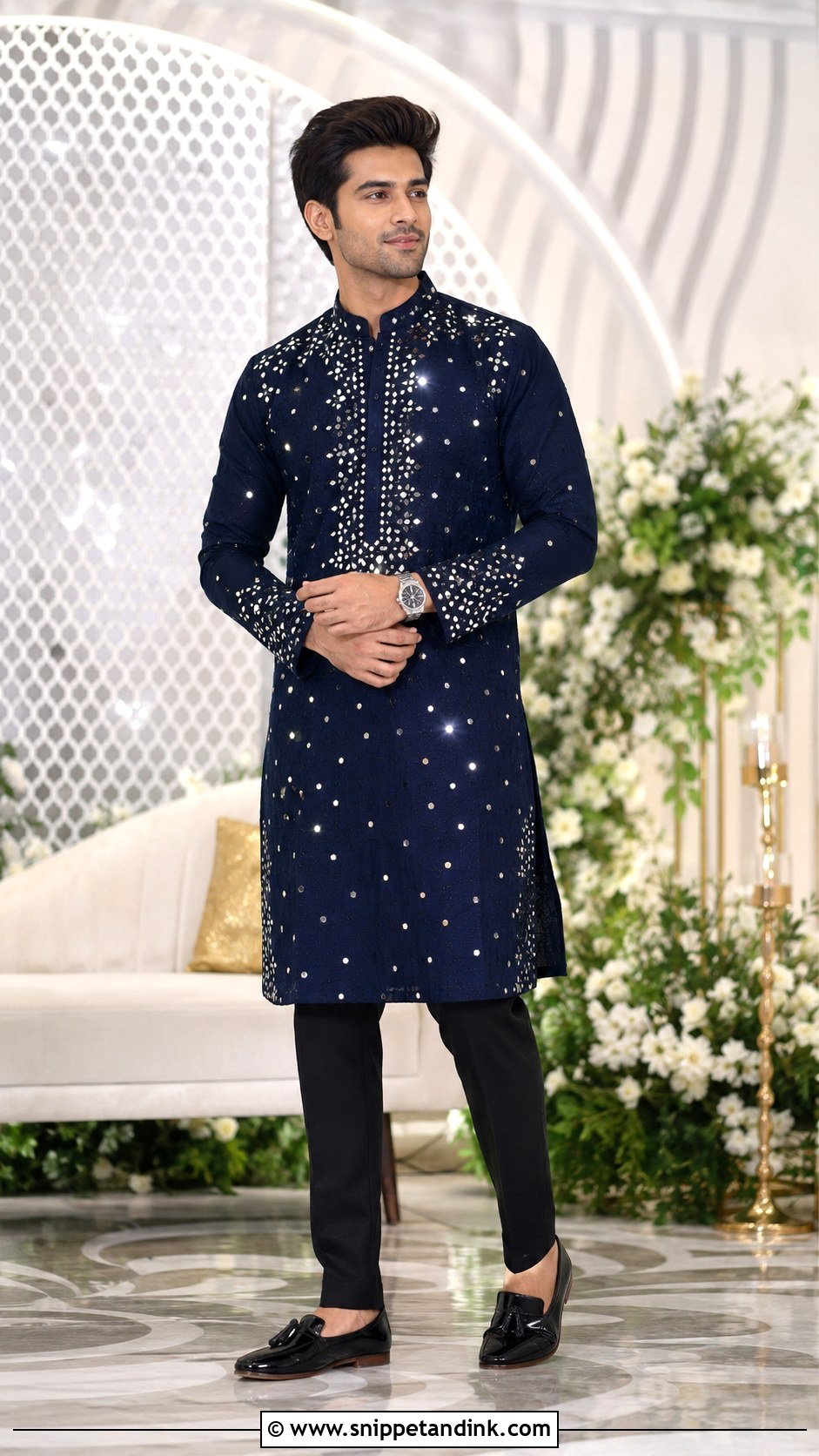
Mirror work earns its keep at a sangeet, where stage lights hit every little disc. I’d go midnight blue, charcoal, teal or deep plum, with small mirrors on the neckline, shoulders or front panel rather than scattered everywhere. Narrow black trousers or tonal pajamas keep the shape sleek, with black velvet loafers or polished juttis and a contemporary watch. Turn the kurta inside out before you buy it. Mirrors are stitched through the fabric, and without a soft lining the backs scratch after an hour of dancing. Oversized mirrors and heavy sequins add real weight too, so keep them small. Groomed hair and a light fragrance finish the look for the videos.
7. Black Indo Western Brother Wedding Outfit
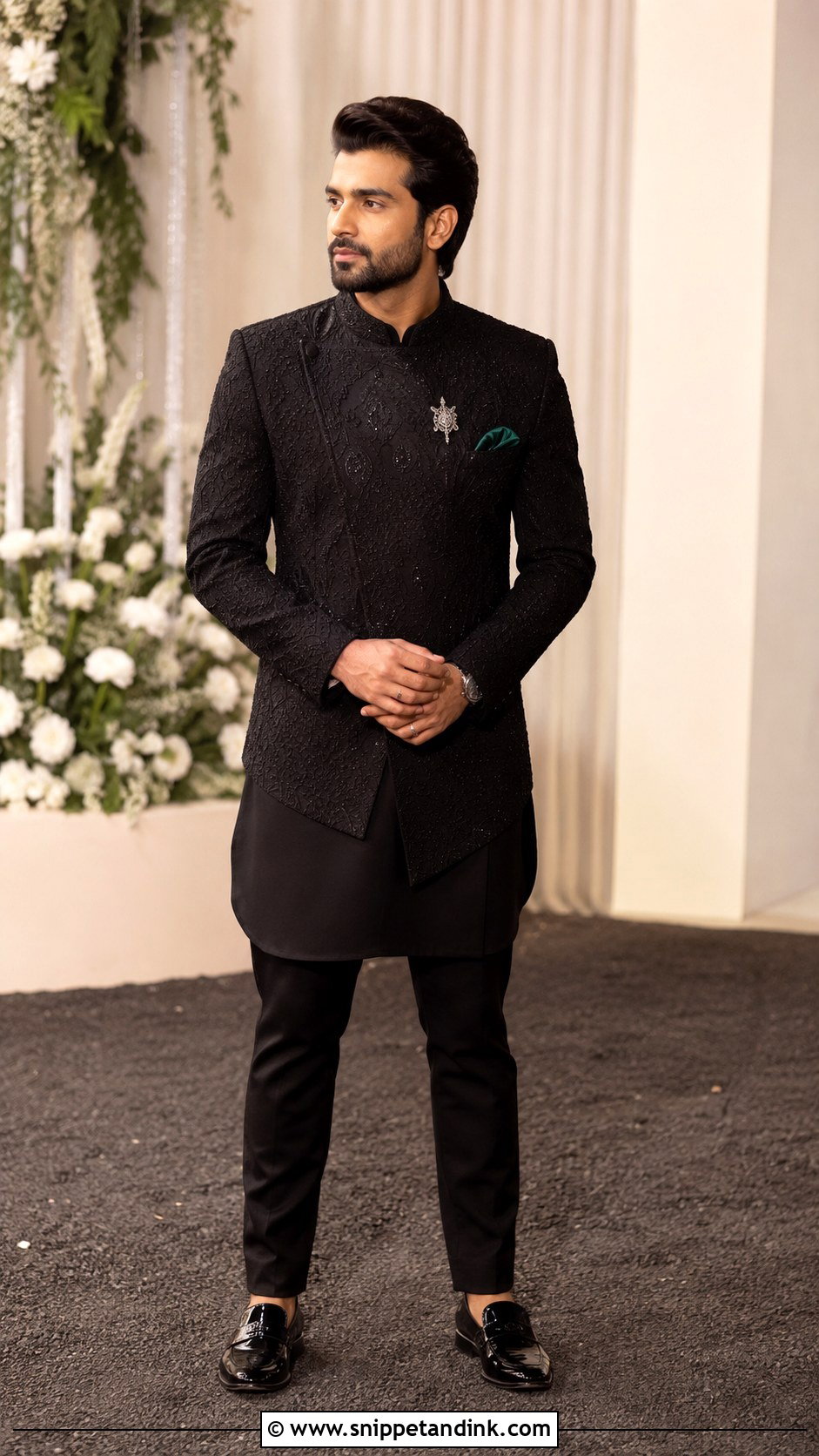
Black is the sharp alternative to festive color, best at an evening reception or a formal sangeet. A black Indo Western set built around an asymmetric jacket with tonal embroidery, a band collar and clean metal buttons, over a fitted black kurta and tapered or Jodhpuri trousers, carries real authority. Patent loafers, black embroidered mojaris or polished leather shoes complete the base. Add one accent only, such as a silver brooch or an emerald pocket square. My caution with black is the camera: flat black loses all detail, so pick fabric with visible texture so the cut still reads. Some families also avoid black at weddings, so check with your parents before ordering.
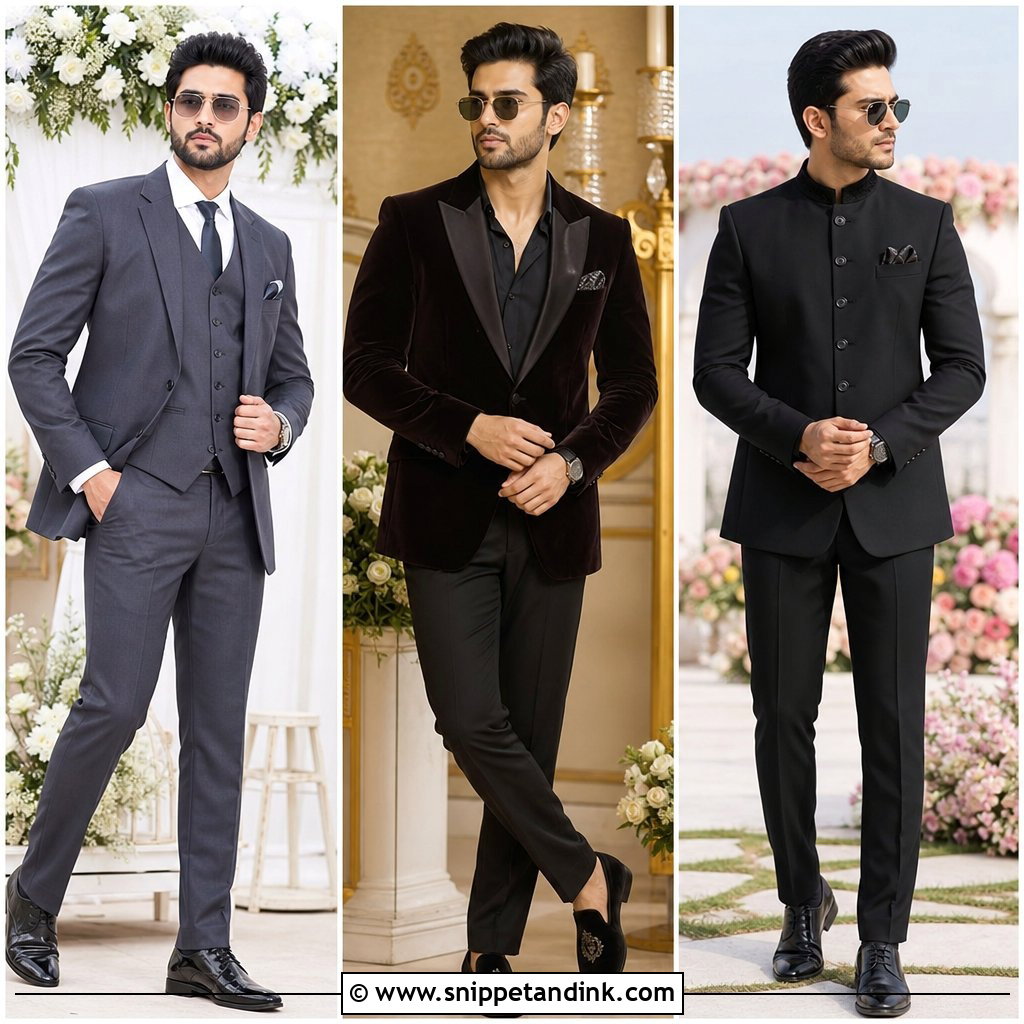
8. Navy Three Piece Suit Brother Reception Outfit
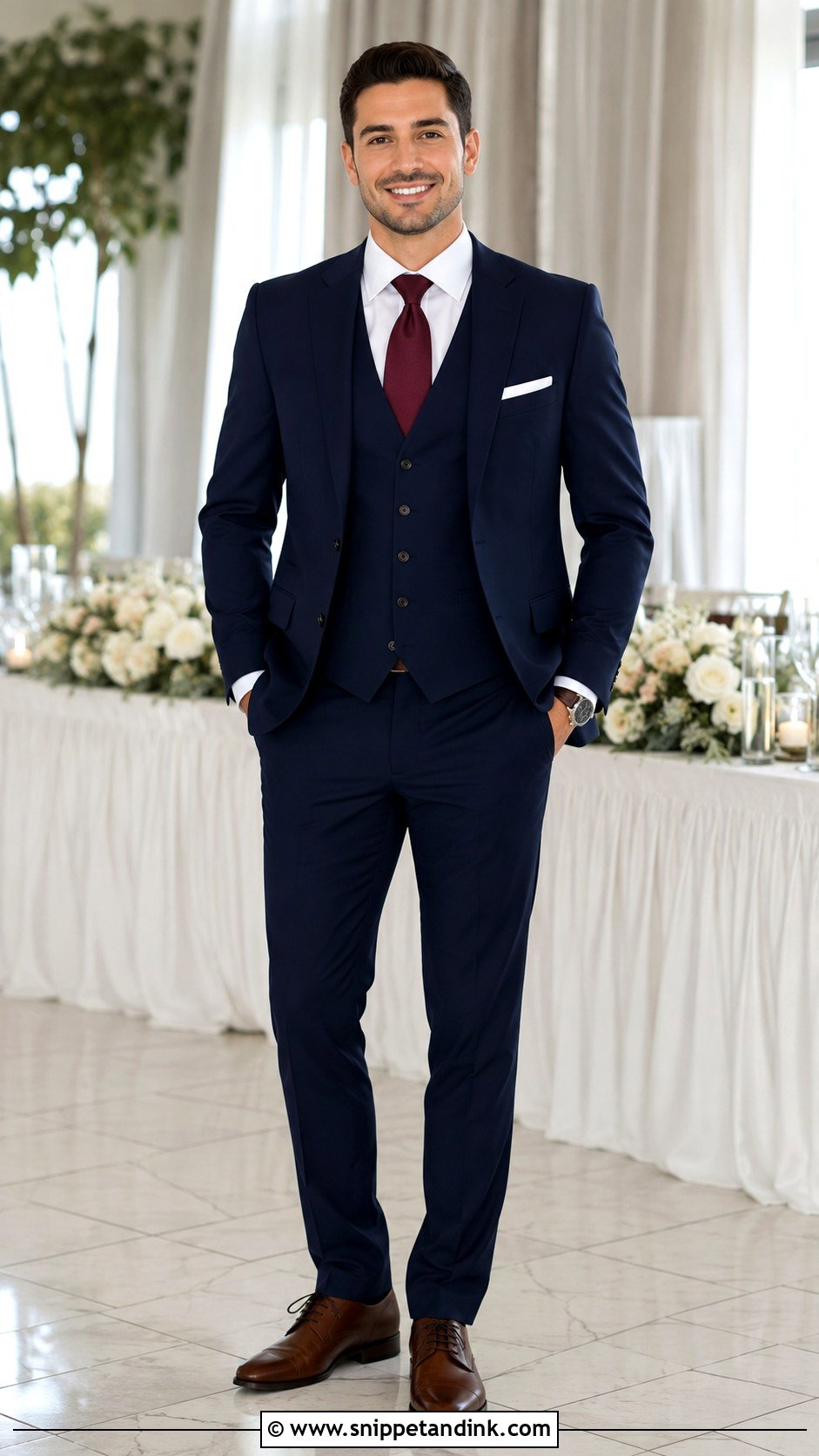
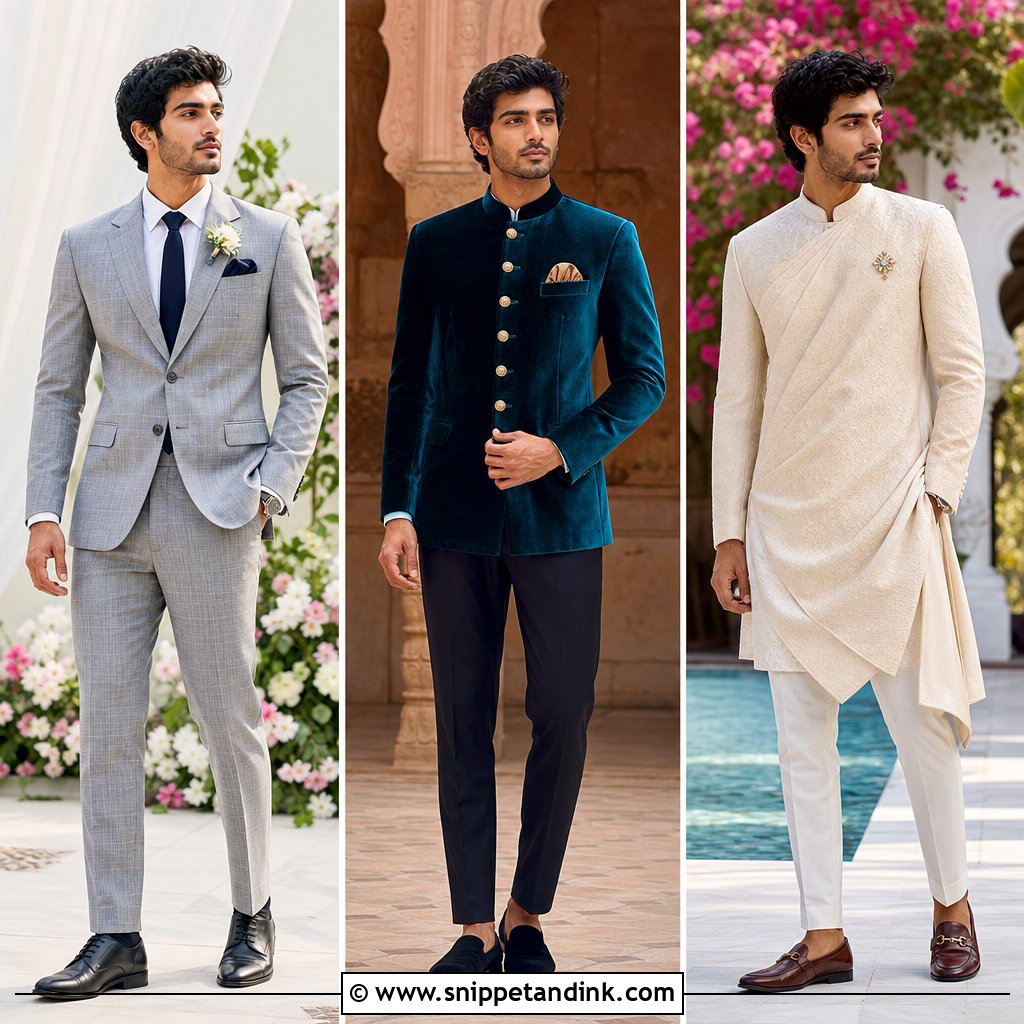
For Western formal portraits, navy is friendlier than black; it stays formal without looking severe next to bright bridal colors. Go single-breasted with matching trousers and a fitted waistcoat in lightweight wool or a breathable blend, plus a crisp white shirt and a silk tie in burgundy, sage, champagne or dusty blue. Brown Oxfords soften it for daytime, black suits an evening reception. Match the belt, then add a white pocket square, a classic watch and discreet cufflinks. The waistcoat is the tricky piece. It has to cover the trouser waistband with no shirt showing in between, and the bottom button stays undone. Check that the trousers break cleanly above the shoes and that the jacket closes without pulling.
9. Velvet Tuxedo Brother Reception Outfit
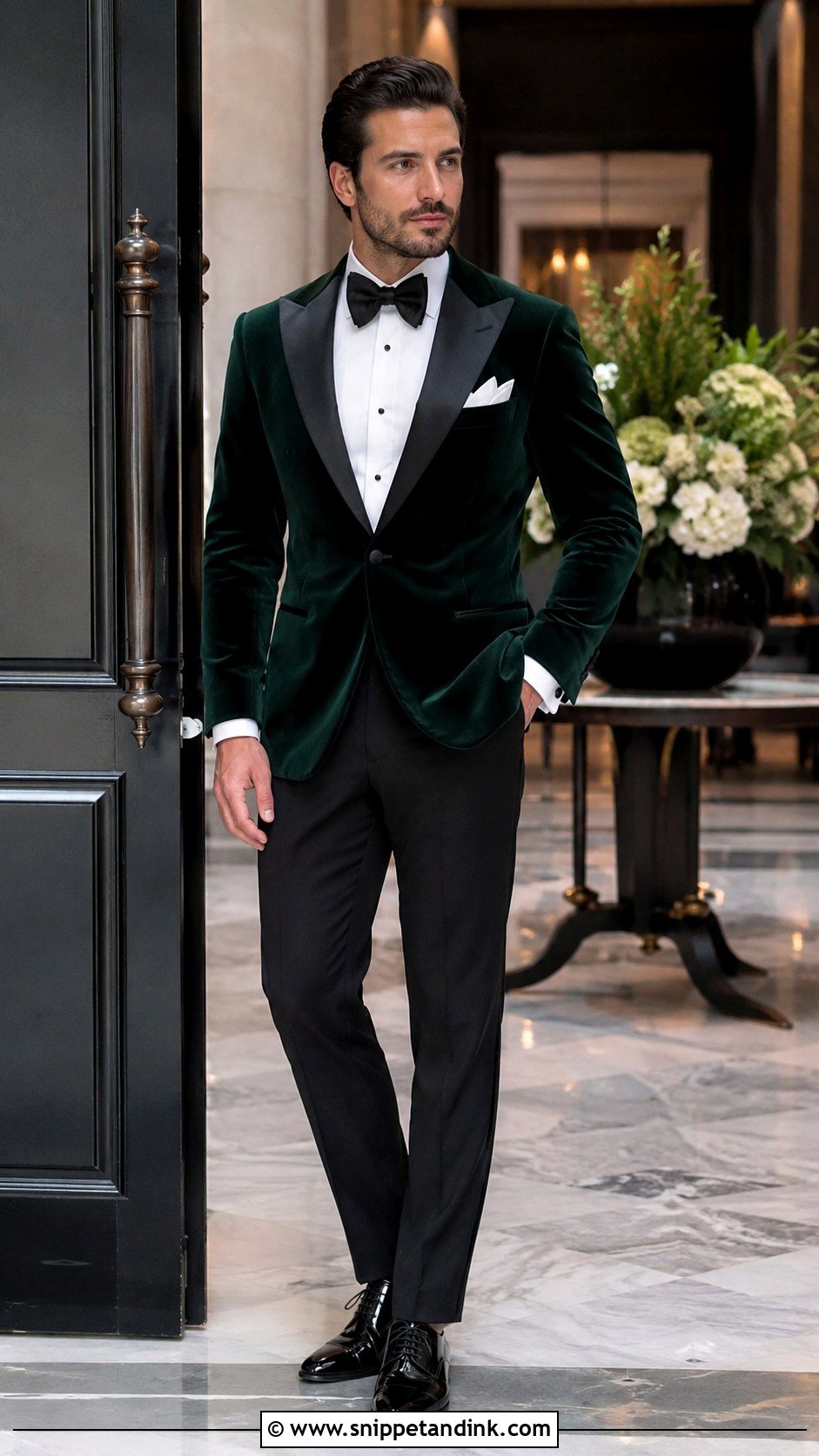
A velvet dinner jacket is reception wear and nothing else. In black, navy, burgundy or bottle green with satin lapels, it pairs with black tuxedo trousers, a white pleated or plain dress shirt and a black bow tie. Patent shoes, dark socks, simple cufflinks and a folded pocket square finish it, and that’s where the accessories should stop. Velvet is warm, so I only recommend it for indoor evening venues or cooler months. Also compare notes with the groom. A velvet jacket is a popular groom’s choice for the reception, and two of them side by side in one photo is awkward.
10. Jodhpuri Suit Brother Wedding Outfit
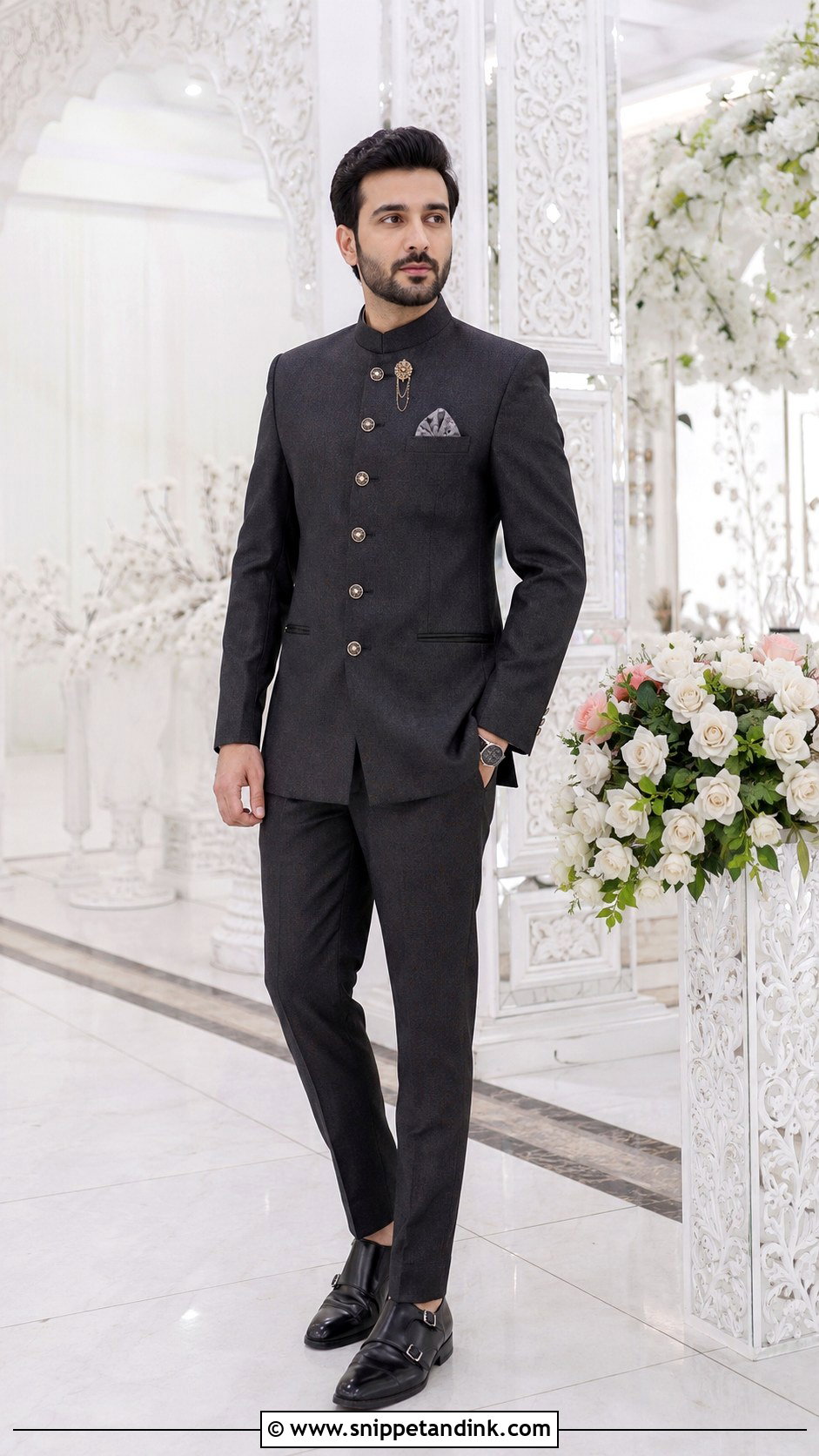
Indian formality meets Western structure in a Jodhpuri suit. Pair a high-collar jacket in charcoal, navy, beige or deep green with matching fitted trousers, and give it something that separates it from an ordinary suit: decorative buttons, subtle embroidery or contrast piping. Loafers, monk straps and traditional mojaris all work depending on the venue. Skip the tie; a brooch at the collar and a silk pocket square provide the detail. When I fit one, I have the man sit, stand and sit again, because the jacket must close smoothly in both positions. It covers the ceremony, the engagement or the reception for brothers who want tradition without a long sherwani.
11. Angrakha Kurta Brother Wedding Outfit
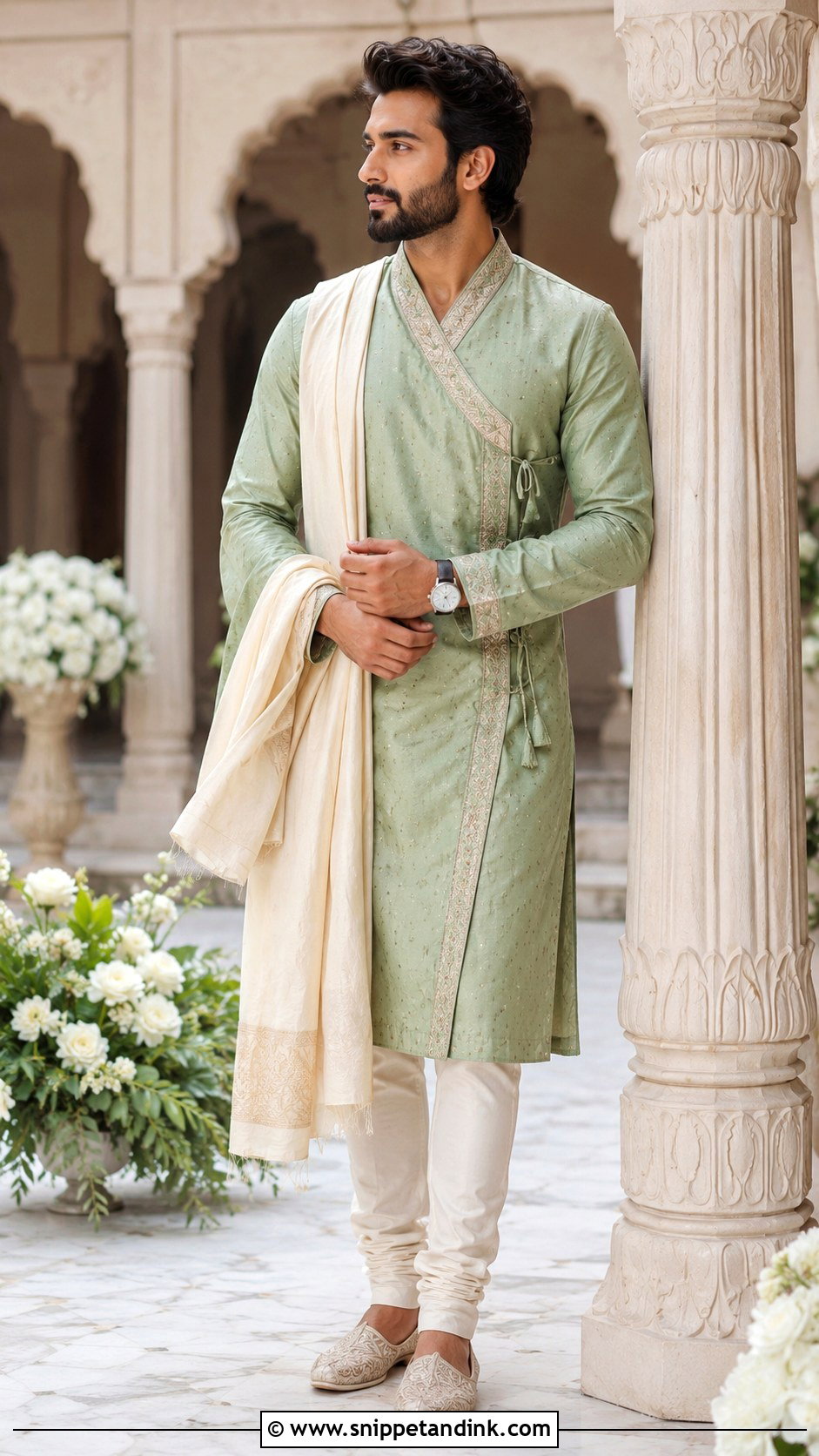
An angrakha’s overlapping front makes a refreshing change from a straight kurta. Raw silk, brocade or cotton-silk holds the wrap well, in rust, sage, ivory, teal or royal blue, and side ties, contrast piping or small motifs show off the construction. Fitted churidar or tapered trousers in a coordinating neutral, embroidered juttis, a slim watch and an optional stole over one shoulder complete it. Here’s the trouble spot: the overlap doubles the fabric at the waist. On a slim frame that’s fine. On a fuller one, choose a softer fabric so the panels lie flat instead of adding bulk. It’s the pick for brothers who love heritage clothing but don’t want another sherwani.
12. Printed Kurta Brother Day Wedding Outfit
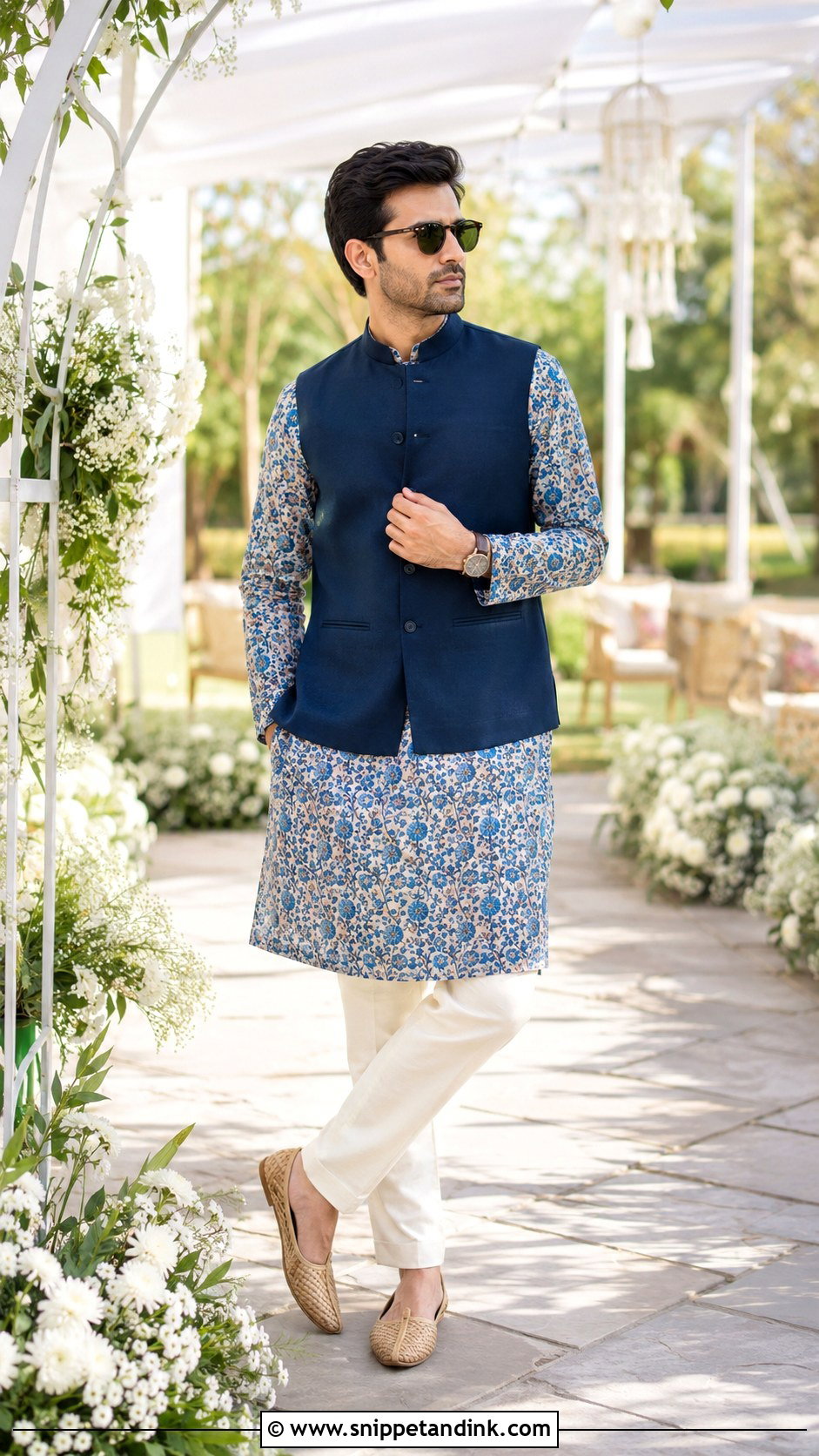
A printed kurta keeps a daytime wedding outfit relaxed. Block prints, paisley, small geometrics or botanicals in blue, peach or coral all suit the light, with plain ivory trousers so nothing goes busy. If the ceremony calls for more formality, add a solid Nehru jacket in a color pulled from the print. Neutral leather juttis, a woven watch strap and sunglasses finish it. Hand block prints have small irregularities, which is part of their charm. Rinse a new one before the wedding, though, because some dyes bleed onto white trousers the first time they get damp. Keep jewelry restrained and let the pattern carry the personality.
13. Emerald Green Sherwani Brother Wedding Outfit
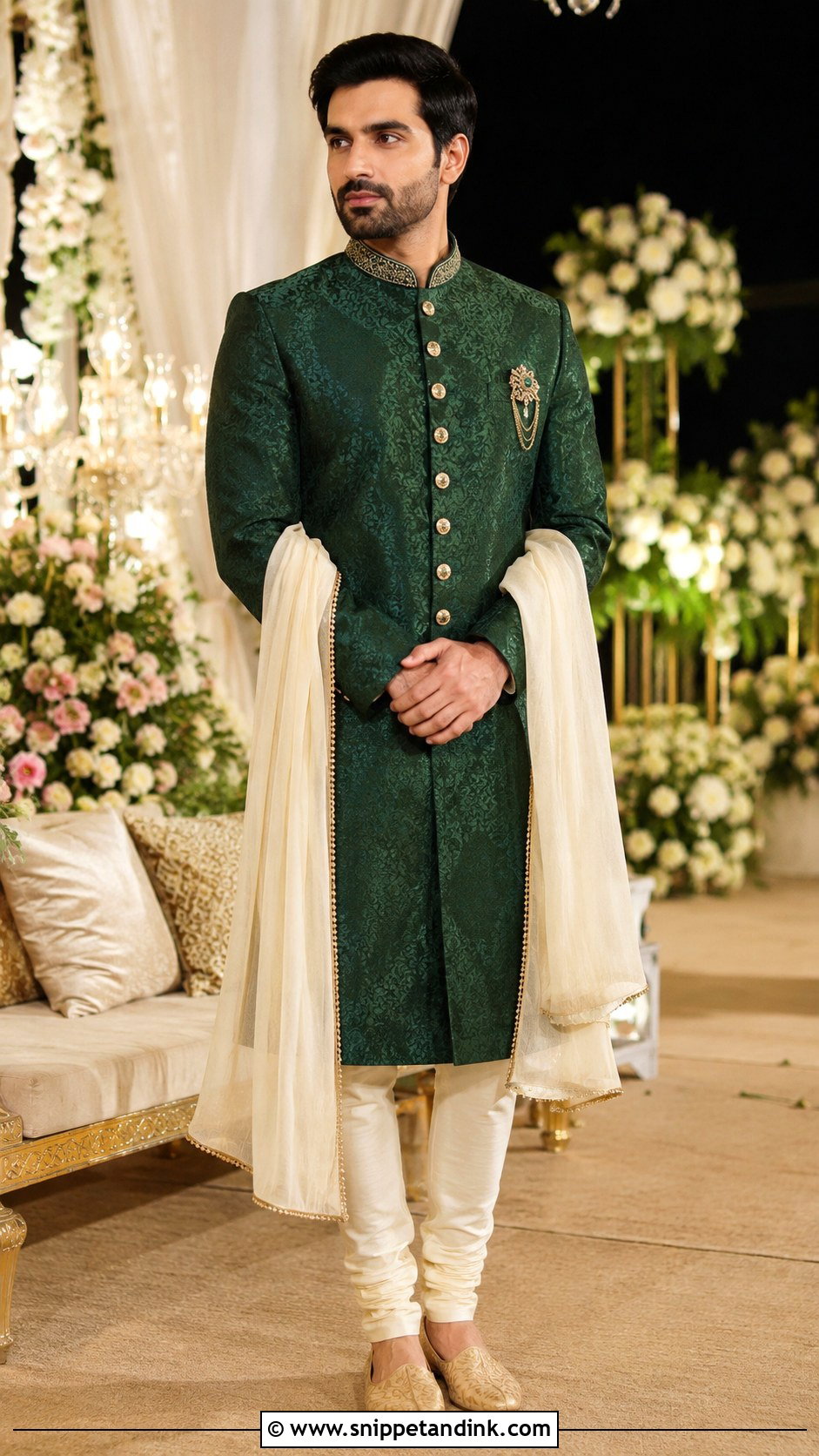
Emerald is deep enough for the main ceremony and still distinct from what most grooms wear. Pick a silk or jacquard sherwani with tonal embroidery, antique gold buttons and a structured mandarin collar, then cream churidar to lift the color. Gold-beige mojaris, a small jeweled brooch and a neutral pocket square complete it, plus a light cream stole with a narrow border for an outdoor evening. Where I’d be careful is the stage. Beside a red bridal outfit and a richly dressed groom, too many saturated tones start to fight, so keep everything else neutral. Shorten the sleeves so the cuff sits at the wrist bone, and make sure the shoulders are precise.
14. Maroon Kurta Jacket Brother Wedding Outfit
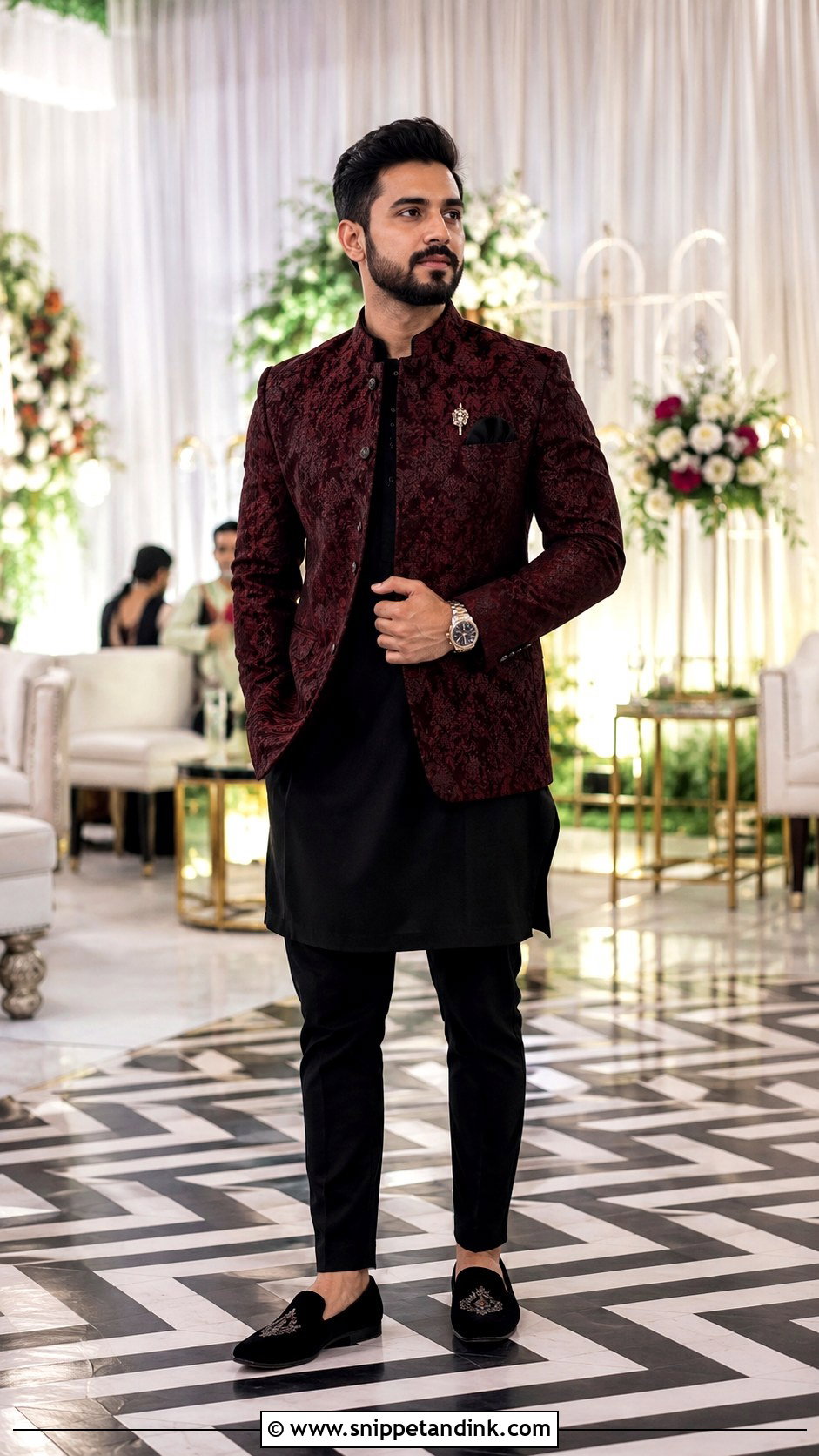
Maroon reads rich under evening lights. Start with a plain black or ivory kurta and tapered trousers, then layer a maroon brocade or embroidered jacket on top; short and structured looks modern, knee-length more formal. Black velvet loafers go with the dark base, beige mojaris with the ivory one. A metallic watch, a compact brooch and a folded pocket square are enough, so don’t pile shiny accessories onto a textured jacket. I suggest this set to brothers moving from an engagement to a sangeet in a single evening. Swap the kurta underneath and it looks like a new outfit, and it’s comfortable for sitting and dancing.
15. Dhoti Kurta Brother Wedding Outfit
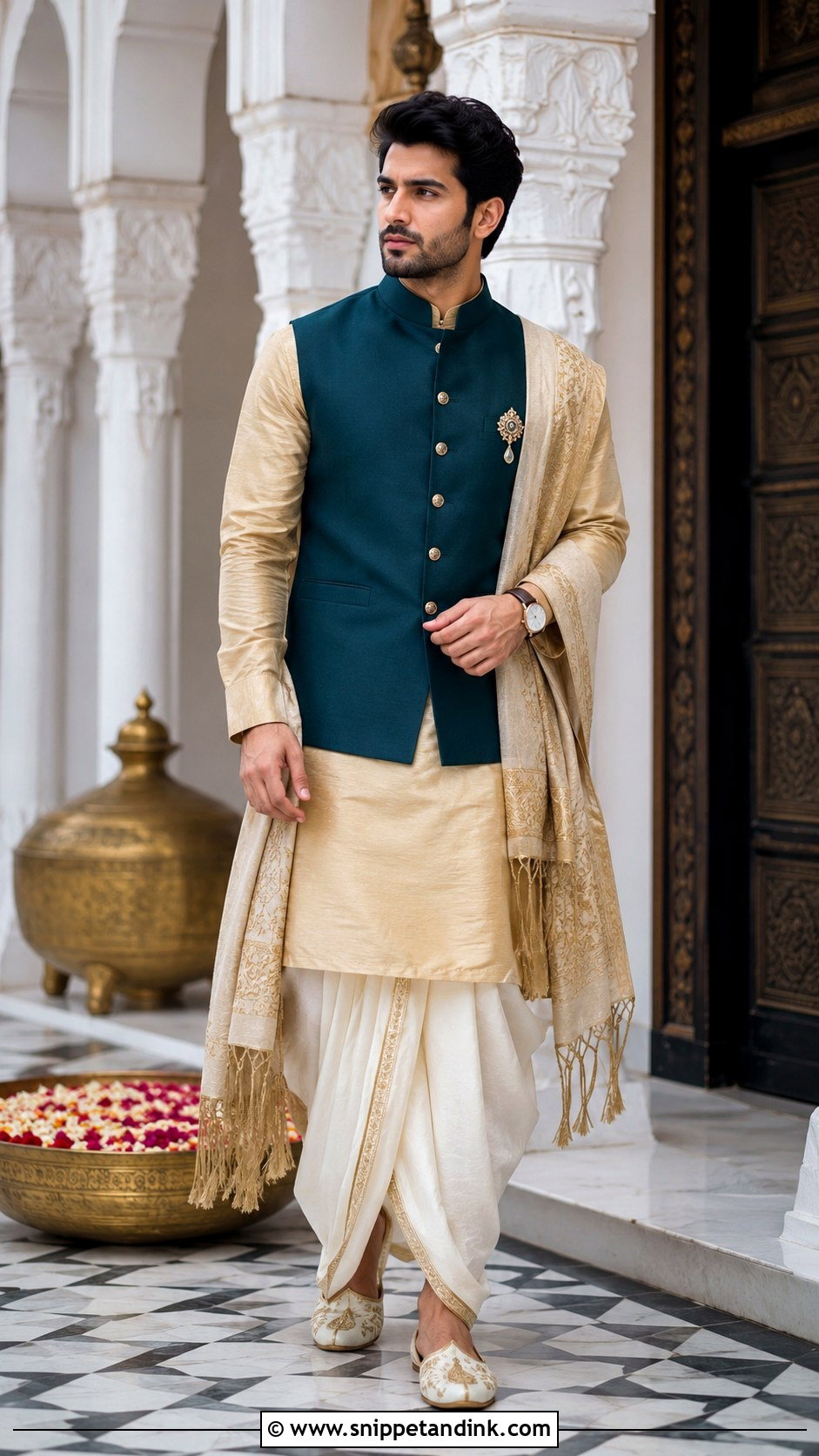
For traditional rituals, heritage venues and regional ceremonies, a dhoti kurta gives a culturally grounded line. A knee-length silk kurta in ivory, mustard, rust, teal or muted gold with a pre-stitched dhoti is the practical version, since it moves with you and won’t come loose. Add a contrasting Nehru jacket for structure at the main ceremony. Wear juttis; bulky Western shoes break the drape. A brooch, a watch and a light stole are plenty. Check the length standing in your actual shoes. The dhoti should clear the floor, or the hem gets caught underfoot on steps and raised platforms.
16. White Kurta Waistcoat Brother Wedding Outfit
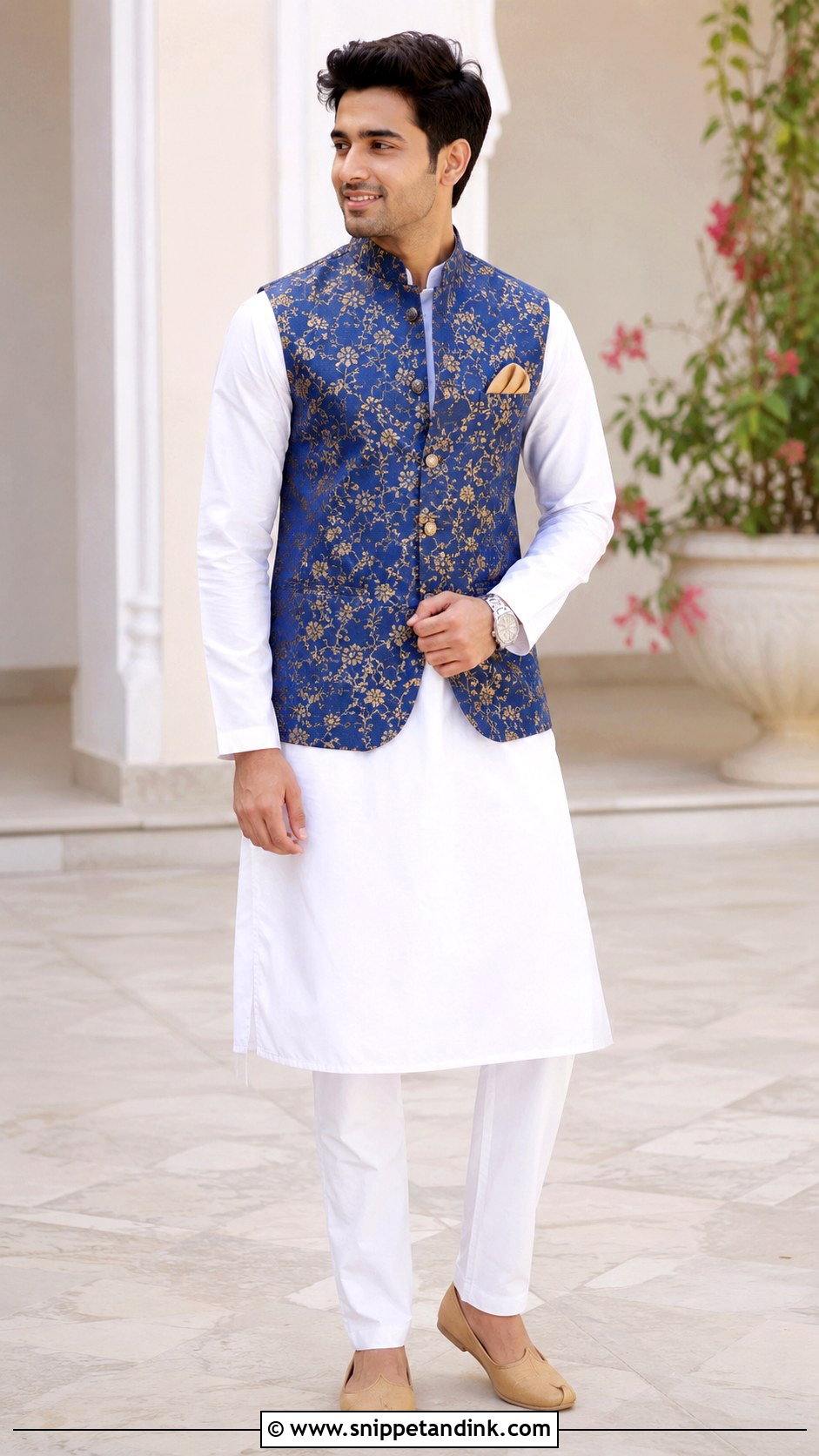
White is the most adaptable base a brother can own. A crisp white kurta with straight pajamas changes character with every waistcoat: florals for daytime, jacquard, brocade or geometric patterns for evening, in blue, green, pink or gold. Tan mojaris, a pocket square and a metal watch finish it. The waistcoat should sit close and end near the hip without bunching on top of the kurta, and in a warm venue it gives you structure without a full jacket. One warning about white cotton: it can turn slightly see-through under flash, so wear a vest close to your skin tone underneath rather than a bright white one.
17. Sage Green Kurta Brother Wedding Outfit
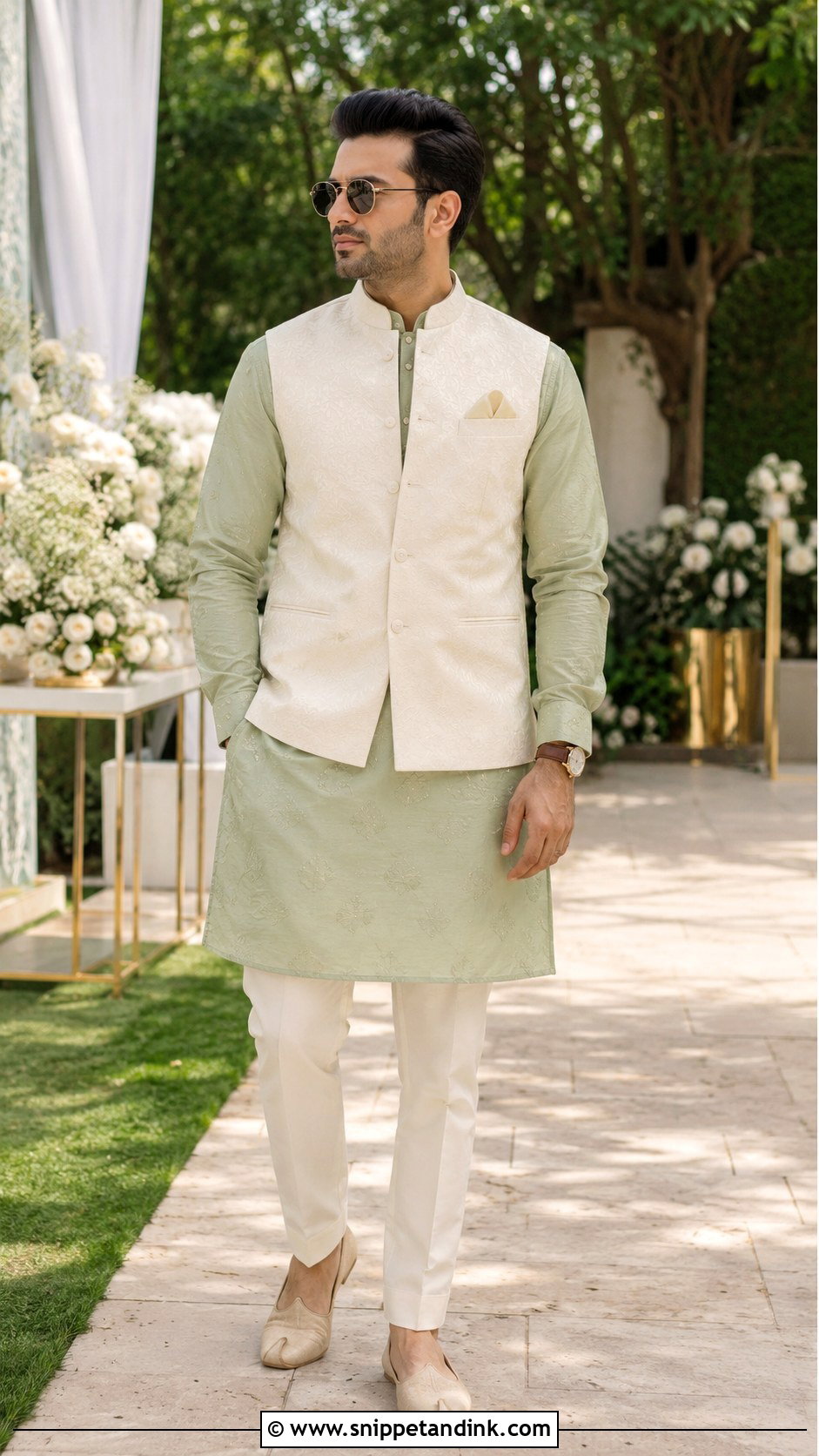
Sage is a calm color for a garden wedding, a daytime engagement or a warm-weather ceremony. Choose a lightly embroidered kurta in linen, cotton-silk or soft jacquard with cream fitted trousers. Add an ivory Nehru jacket if the setting is formal and leave it off if it’s relaxed. Beige juttis, a brown leather watch and a cream pocket square keep the palette natural. If the family is coordinating colors, sage sits well beside blush, ivory, peach and muted gold. I’d keep bright shoes and accessories away from it, since sage is quiet and anything loud next to it takes over. Linen will crease, so steam it just before you leave.
18. Royal Blue Achkan Brother Wedding Outfit
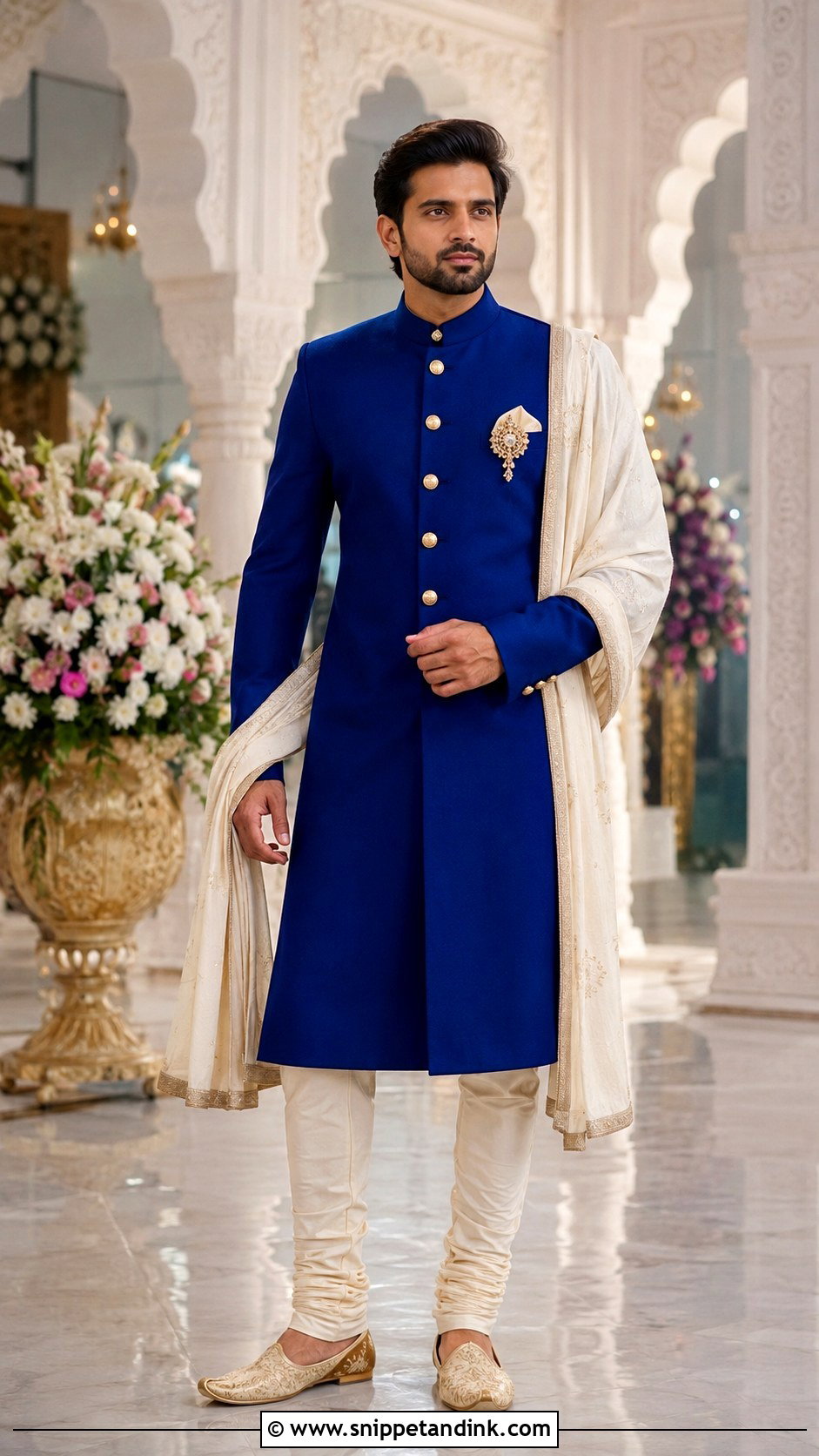
Royal blue gets noticed, which is fine for the bride’s brother as long as the tailoring is restrained. I’d choose a knee-length achkan with a straight or asymmetric closure, refined gold buttons and embroidery limited to the collar or cuffs. Ivory churidar adds contrast so the outfit doesn’t turn too dark, and gold-toned mojaris, a cream stole and a small collar brooch finish it traditionally. For a contemporary version, swap to slim black trousers and polished loafers. The achkan should skim the body. Cut too tight across the chest, the front ripples into horizontal creases that show in every group photo.
19. Beige Linen Suit Brother Summer Wedding Outfit
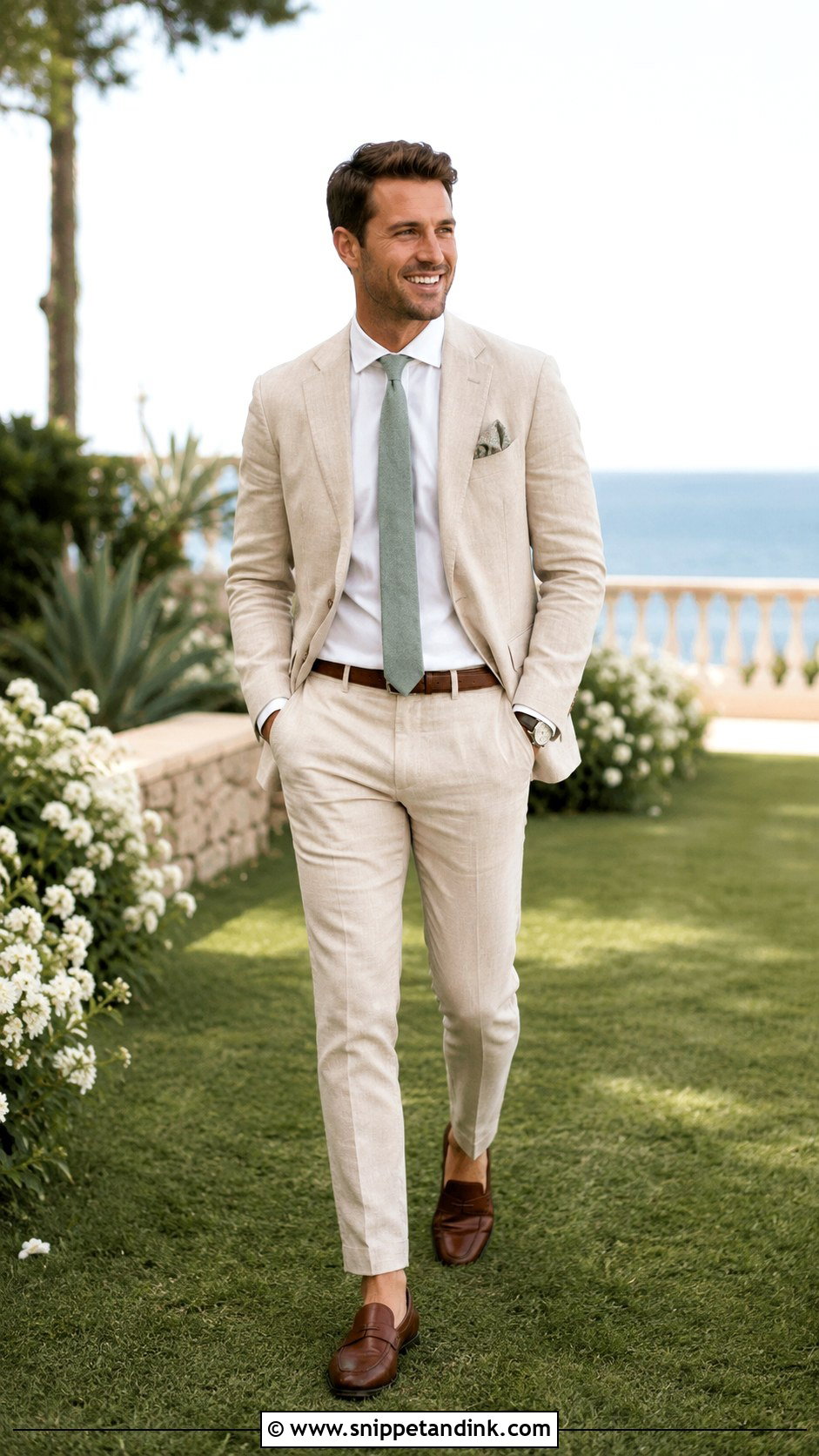
Heat is the real problem at an outdoor summer wedding, and a beige linen-blend suit is my usual answer. Single-breasted jacket, matching tapered trousers, a white cotton shirt and a muted green or dusty blue tie. Brown loafers, a matching belt, a patterned pocket square and a light watch complete it. Ask for a half-lined jacket; full lining defeats the point of linen. Pale beige can also show the shirt through it in bright sun, so hold the jacket up to a window when you try it on. For a relaxed dress code, lose the tie and open the collar. Daytime receptions and destination venues suit it best.
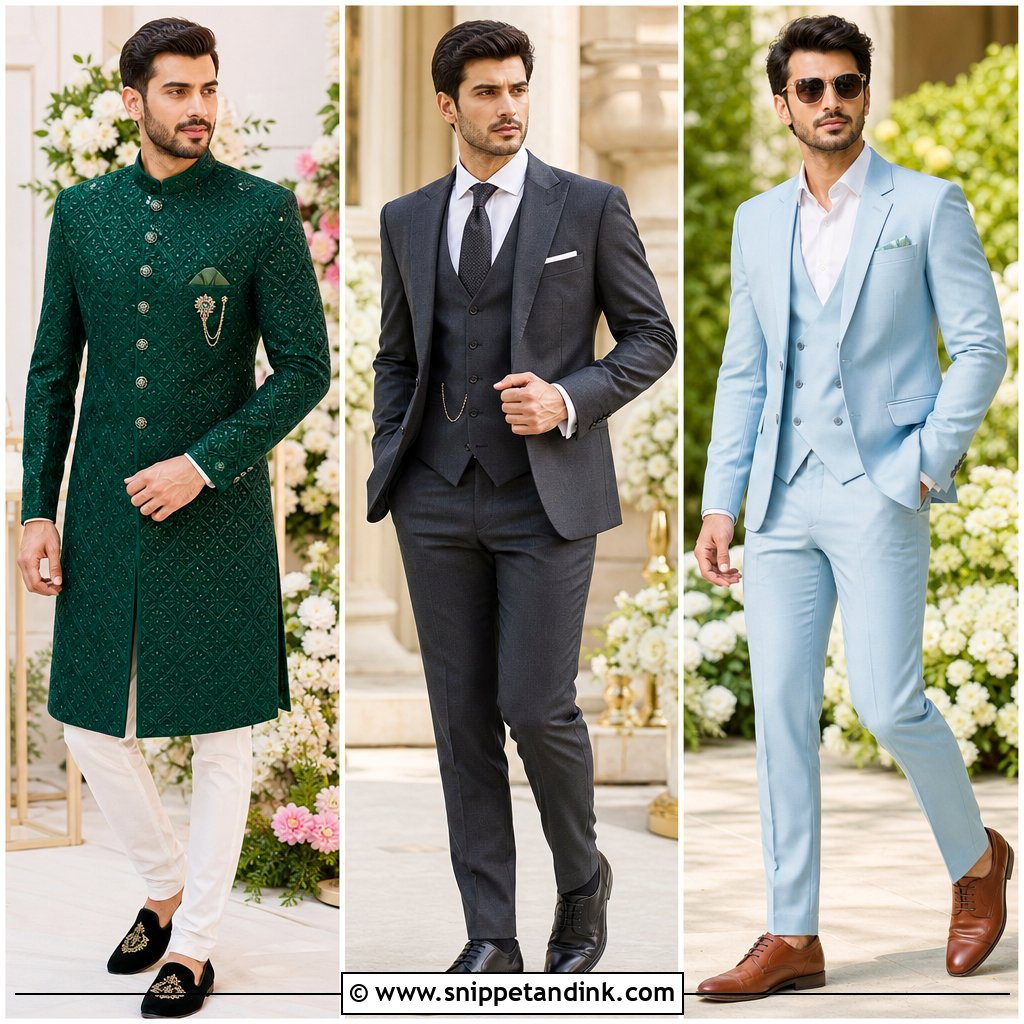
20. Monochrome Kurta Brother Wedding Outfit
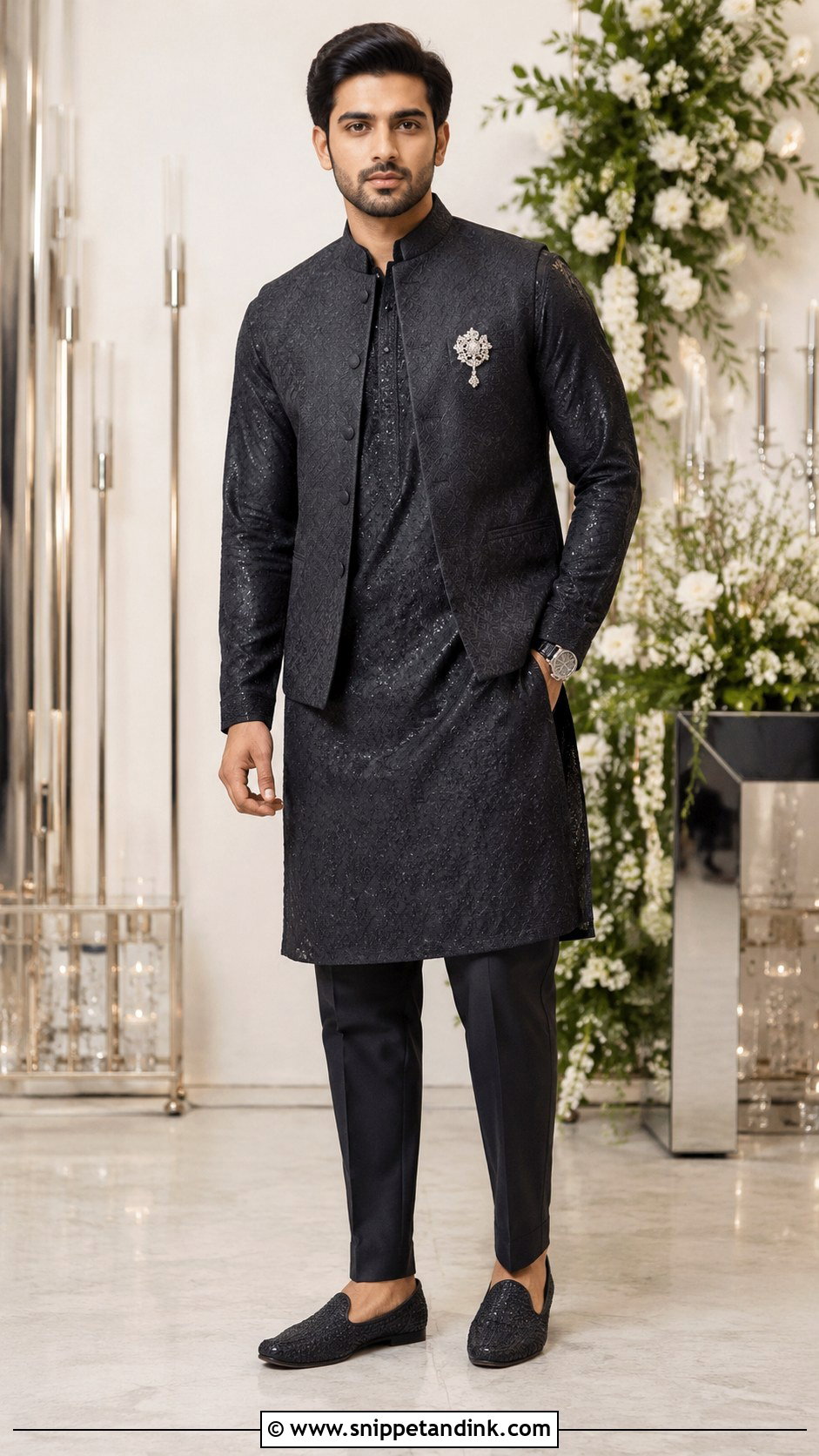
One color from head to toe makes a long, sleek line. Charcoal, navy, olive, ivory or muted blue all work, and the trick is to mix textures: a tonal embroidered kurta, matching tapered trousers and a same-color Nehru jacket in a slightly different weave. Coordinated mojaris, a metallic watch and a single contrasting brooch or pocket square finish it. Monochrome hides nothing about the cut, so tailoring matters more here than anywhere in the list. Breathable fabric suits daytime; jacquard or silk suits the evening. It’s a strong option for a brother who wants to skip heavy decoration altogether.
Getting Embroidered Pieces Through a Three-Day Wedding Intact
Multi-day weddings are hard on clothes. Garments get packed, unpacked, worn in the heat and hung in hotel wardrobes with no iron in sight. Zari, mirror work and velvet each react badly to the wrong kind of handling, so a little care between functions keeps them photo-ready.
- Never iron directly on zari or mirror work. Press from the reverse side with a cotton cloth between the iron and the fabric, or use a handheld steamer from the inside.
- Spray perfume before you dress, not onto the outfit. Alcohol and oils can dull metallic threads and mark silk.
- Let a worn sherwani air out on a hanger overnight before it goes back in the garment bag. Sealing in sweat is how silk ends up with marks under the arms.
- Pack embroidered pieces folded with tissue paper between the layers, so beads and mirrors don’t snag on the next fold.
- Hang velvet the moment you arrive and steam it only from the inside. Pressing it flattens the pile permanently.
- Send silk and brocade to a dry cleaner who handles bridal wear after the wedding. Point out any turmeric or henna marks so they’re treated before cleaning.
If something does go wrong on the day, a dab of cold water and a clean cloth is safer than any stain pen on silk. Blot, don’t rub, and leave the real fix to a cleaner.
Dressed for Every Function, With Your Sister Still at the Center
A good outfit for your sister’s wedding carries the weight of your role and still lets you work all day. Haldi, mehndi, sangeet, ceremony and reception each ask for something different: sherwanis and achkans bring grandeur, while kurtas, Nehru jackets, bandhgalas and suits step the formality up or down. Match the wedding palette without copying the groom. Spend on tailoring, pick fabric that breathes, wear shoes you’ve broken in and keep accessories restrained. Get those right and you’ll move through the rituals, photographs and dancing looking every bit the bride’s brother, with all eyes still on her.
You'll Like These Ideas:


Leave a Reply