
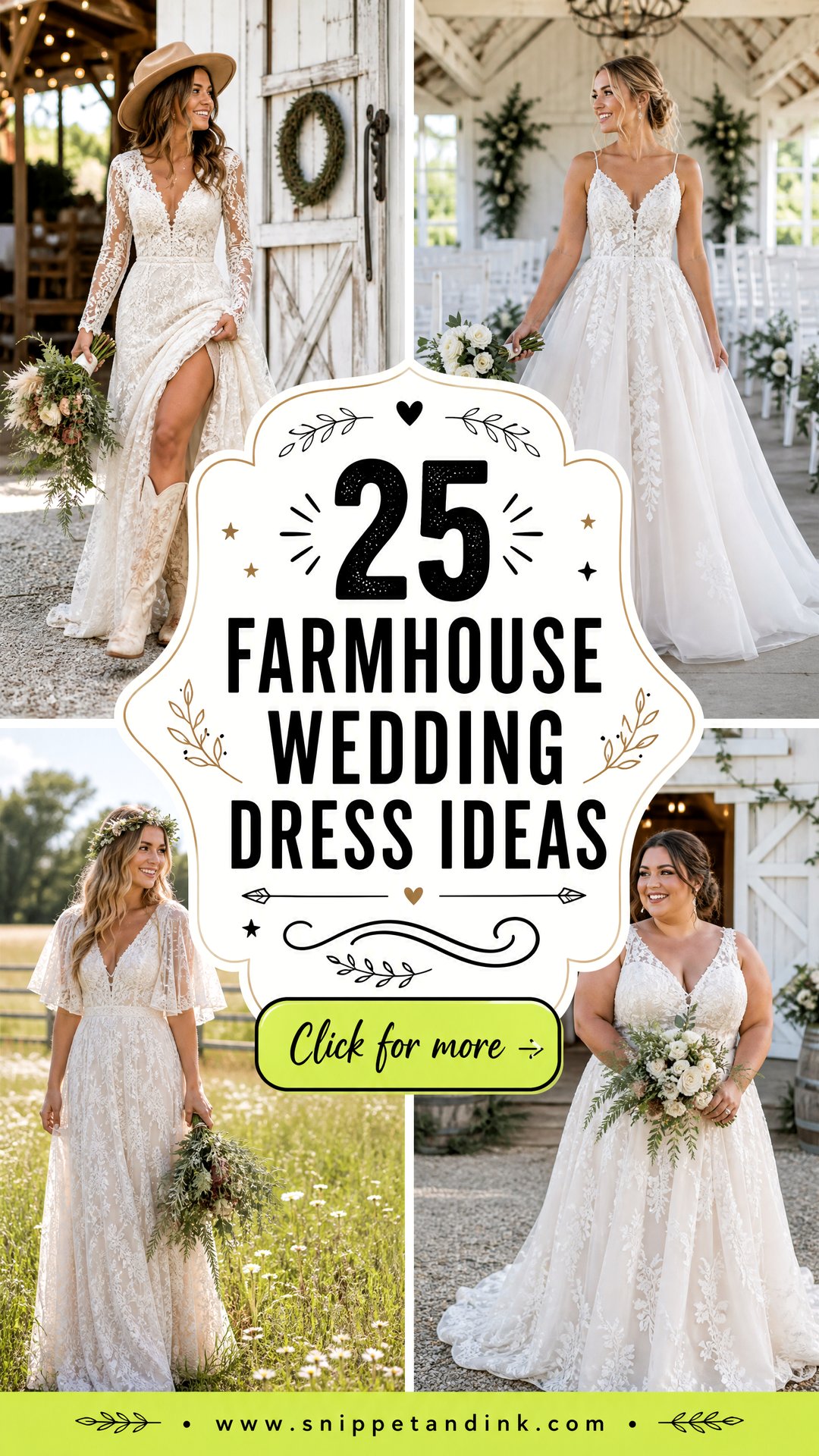
Farmhouse brides tend to arrive at my appointments knowing what they don’t want: anything stiff, glittering or hard to sit down in. That still leaves a lot. Lace, crepe, airy tulle and cotton-like finishes all suit a barn aisle or an orchard, and so do vintage cuts, clean minimal gowns and the gathered sleeves of cottagecore softness. The 25 looks below cover lace with boots, ball gowns, slips, plus-size and maternity options, each styled head to toe. Under each I’ve added what I’d check before you buy it.
Reading How Formal Your Farmhouse Really Is
Farmhouse venues range from a working farm with a swept-out hay barn to a restored estate with chandeliers and a gravel drive. The word on the invitation tells me less than the photos of the space. I ask brides to show me the venue before the dress, because the same lace gown can look underdressed in one and overdone in the other.
Three questions help me judge it. What time is the ceremony? An evening start lets you wear more structure and sheen. What are guests being asked to wear? If it’s cocktail, a slip or tea-length dress sits comfortably; if it’s black tie, I’d go fuller. And is the reception indoors or under a tent? A tent on grass means your hem lives on grass all night.
Once those answers are clear, the list below narrows itself. Most brides find that two or three silhouettes fit their venue and the rest can be set aside without regret.
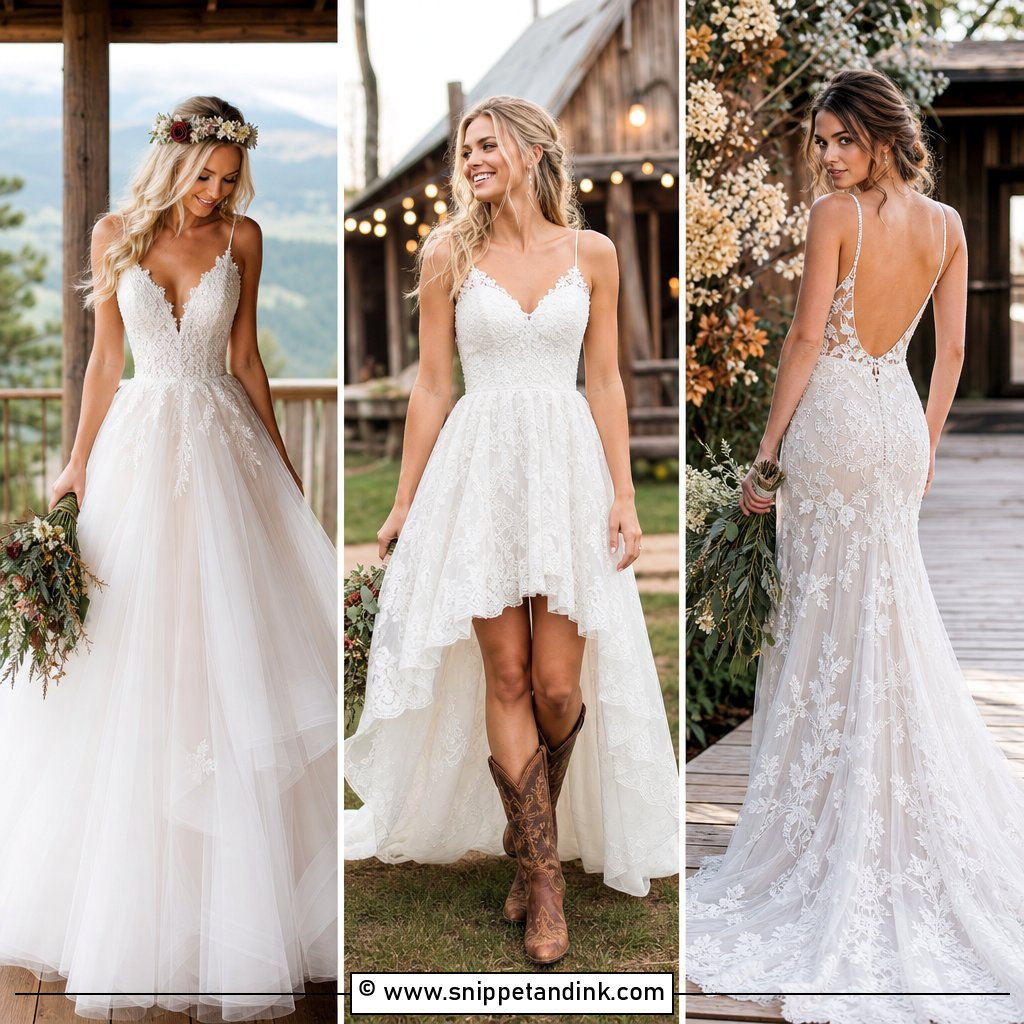
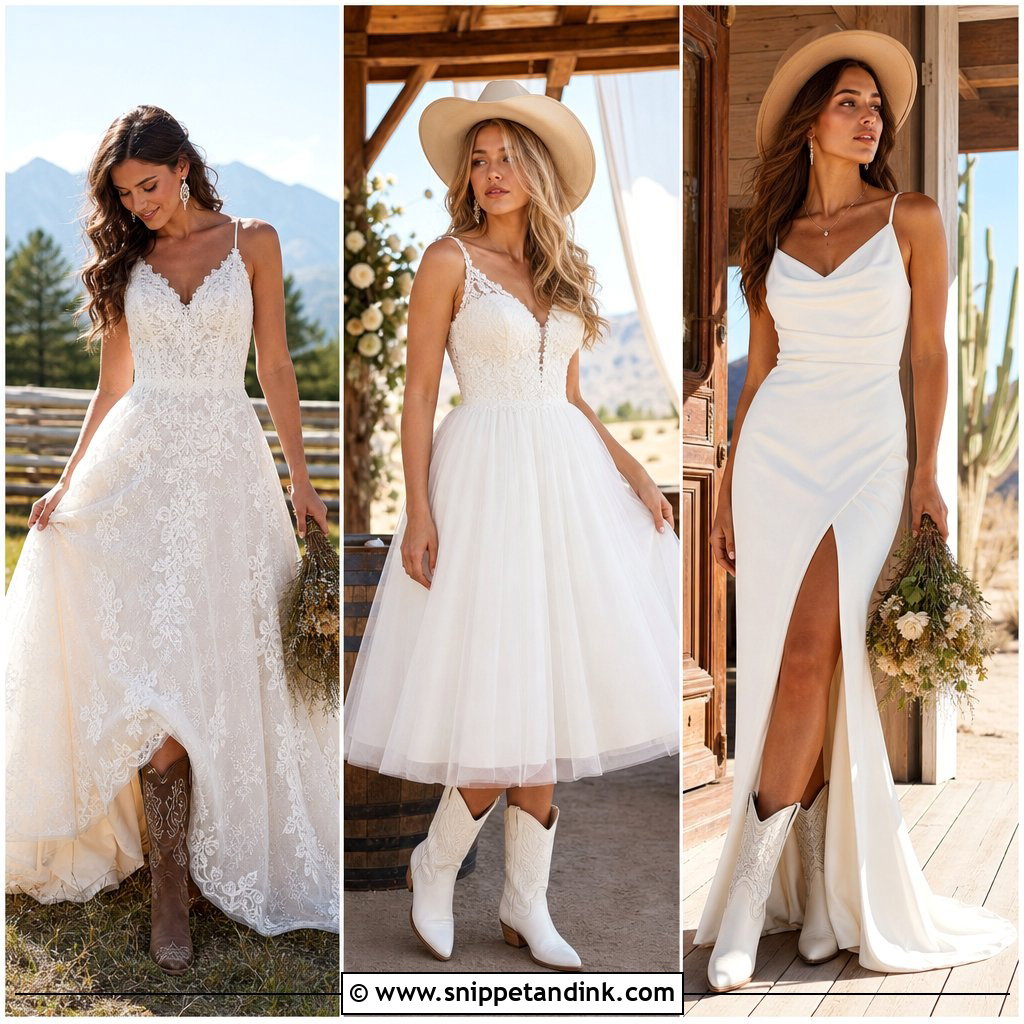
1. Lace Farmhouse Wedding Dress With Cowboy Boots
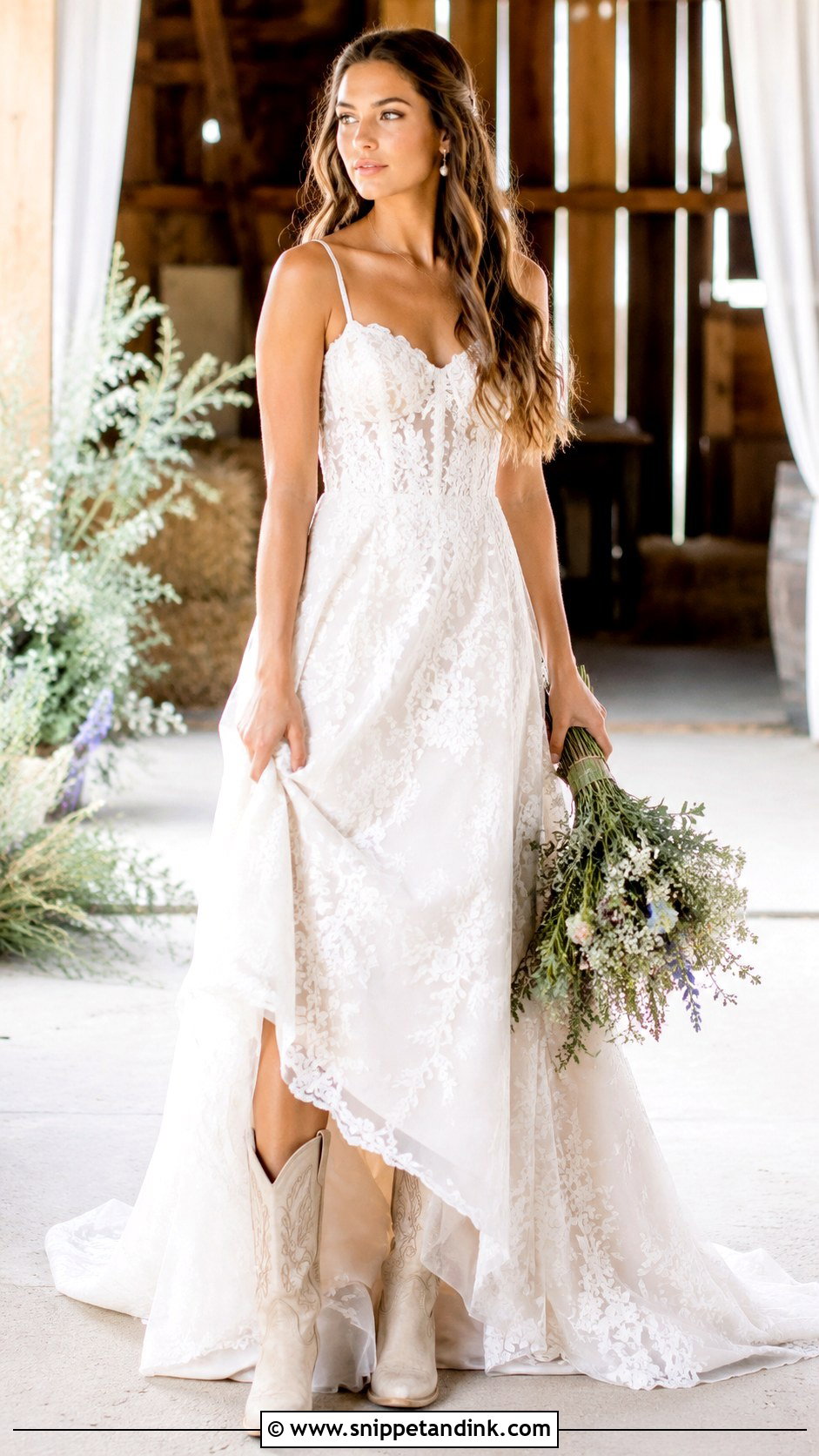
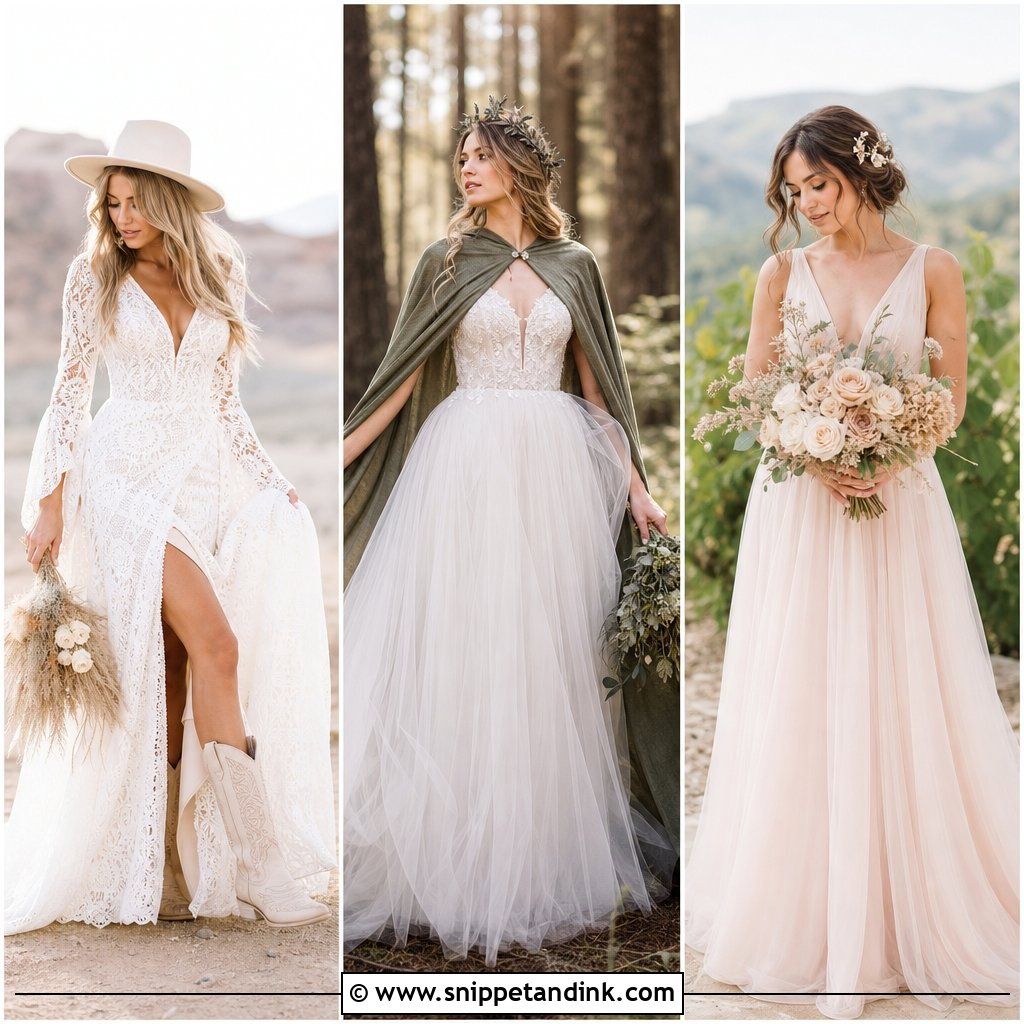
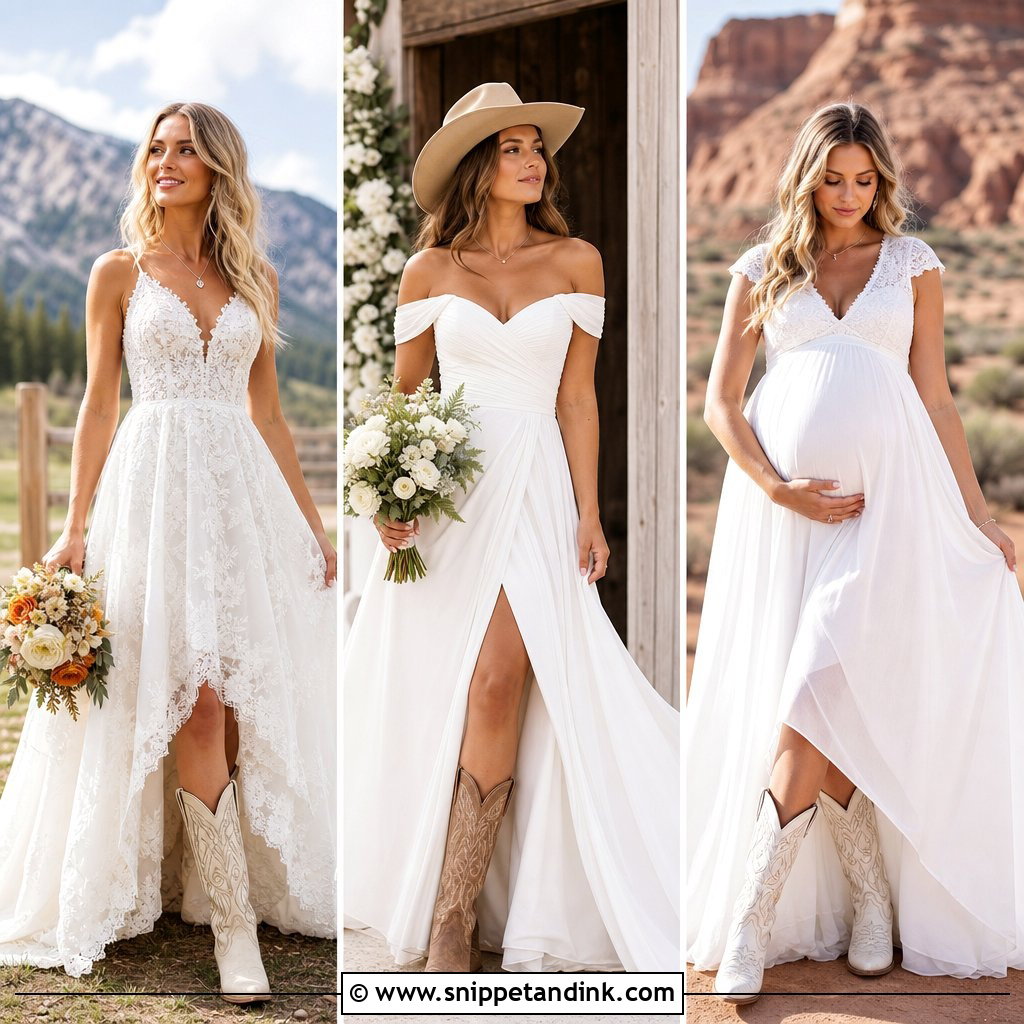
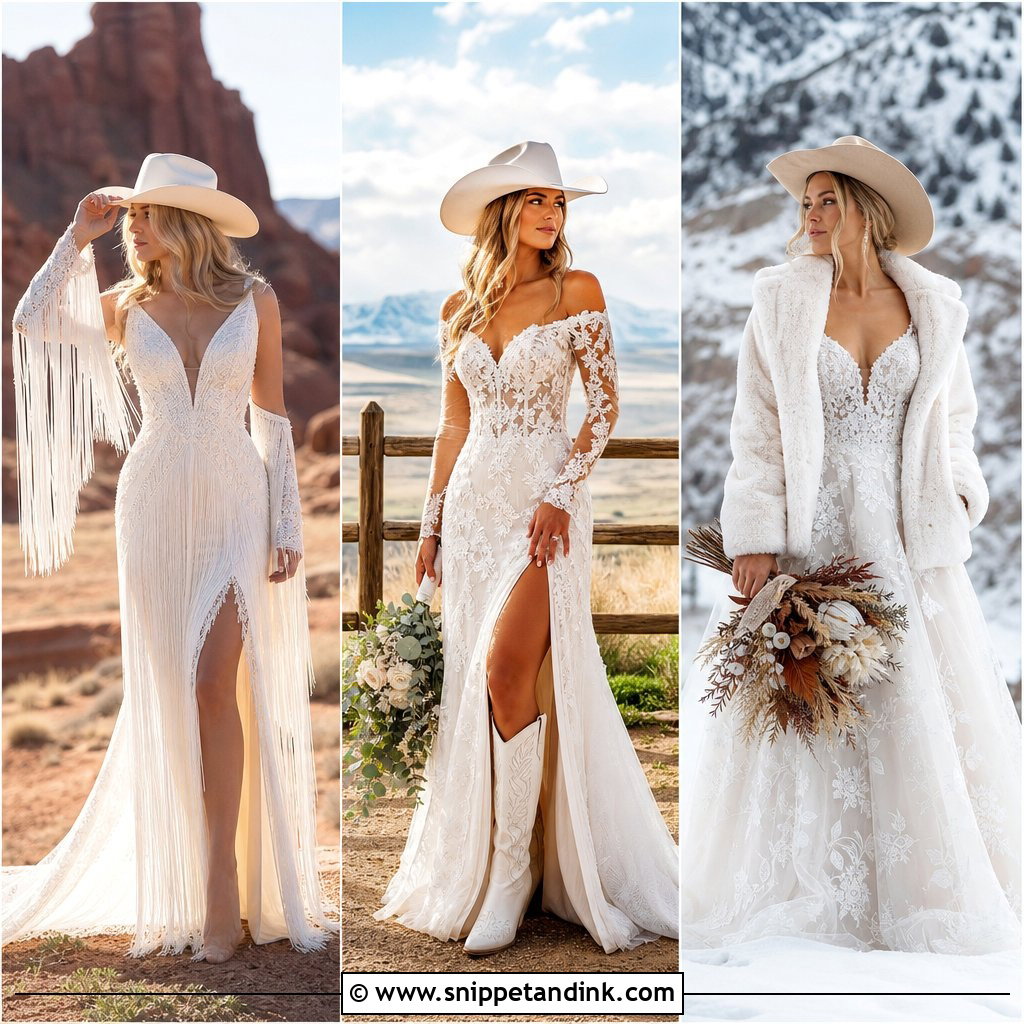
Lace with cowboy boots comes down to the boots being chosen, not just worn. Cream, tan or soft brown leather with plain stitching sits best under an ivory A-line or sheath in floral lace, with pearl earrings, a loose low bun and wildflowers. On a sheath, though, check the walk: a narrow skirt and a chunky boot heel make for a short stride on gravel, so ask for a slit or a slightly wider hem if the aisle is long.
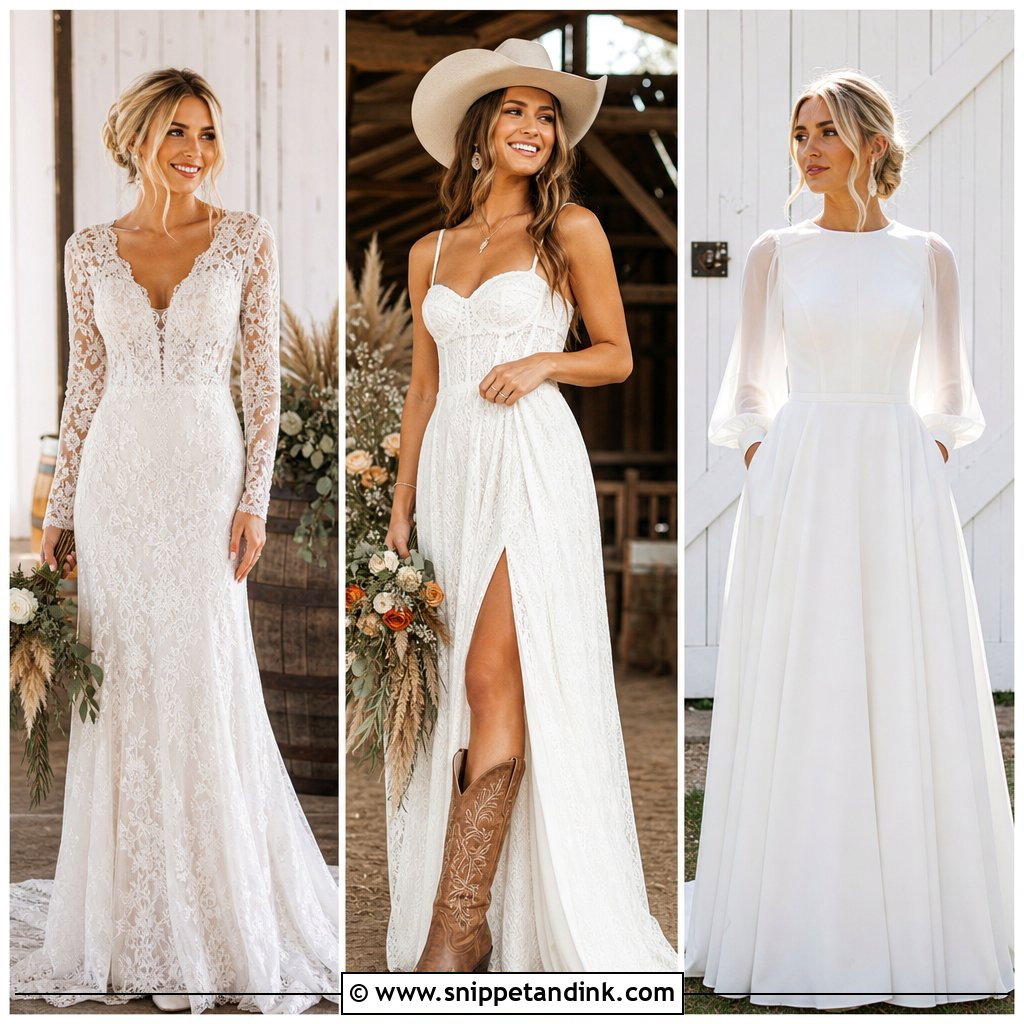
2. Long Sleeve Farmhouse Wedding Dress
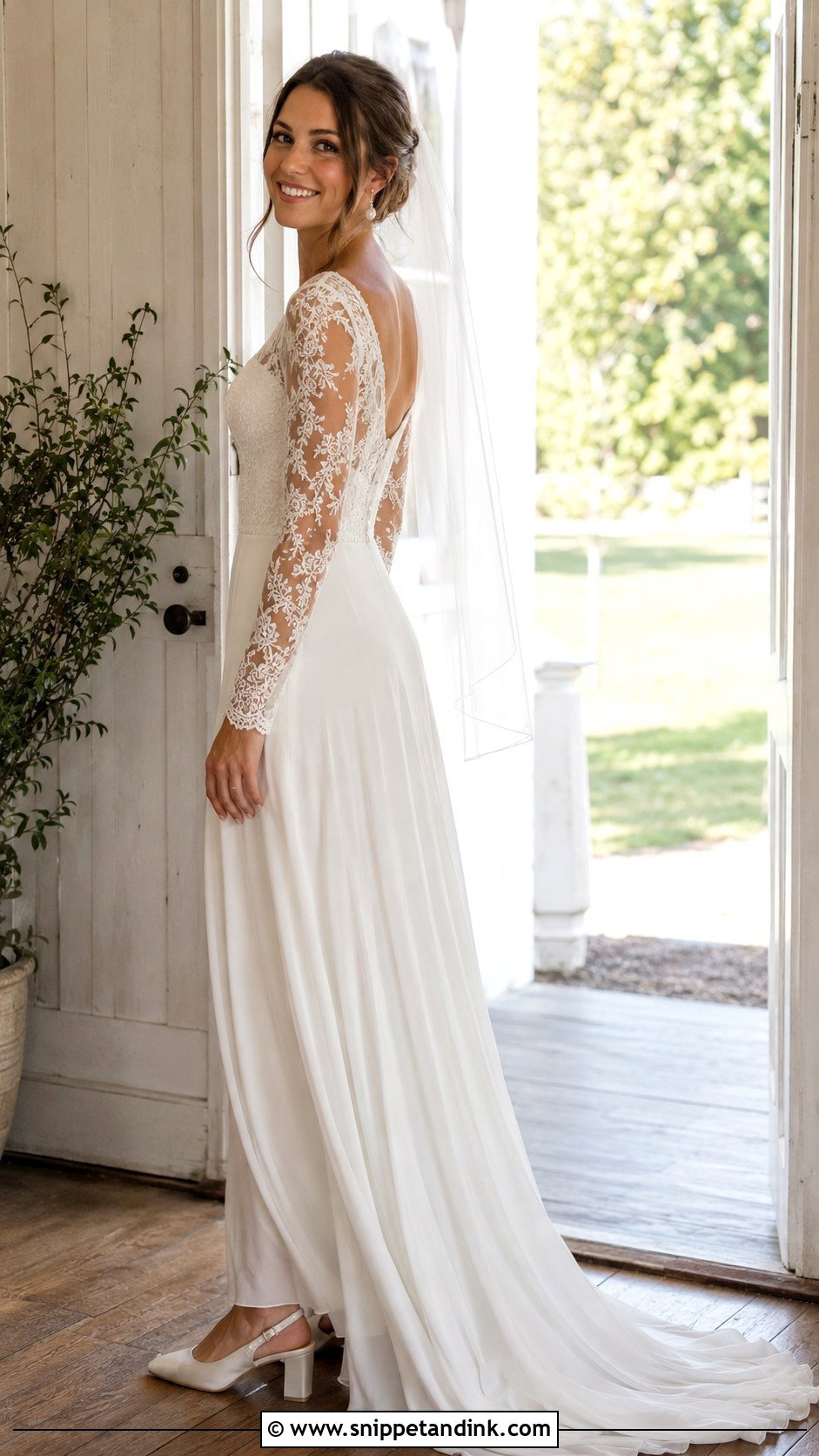
Sleeves change a dress more than any other detail. Sheer lace keeps the arm light; fitted crepe looks cleaner and more current. Covered buttons, a gentle train and a neckline cut to your frame suit a barn or garden, with low block heels or bridal boots, small pearl drops and a soft veil. Fall, winter and windy spring dates are where they earn their keep. Have the sleeve set with a little room at the underarm. Too snug there, and you’ll feel it every time you reach for a glass.
3. Boho Farmhouse Wedding Dress
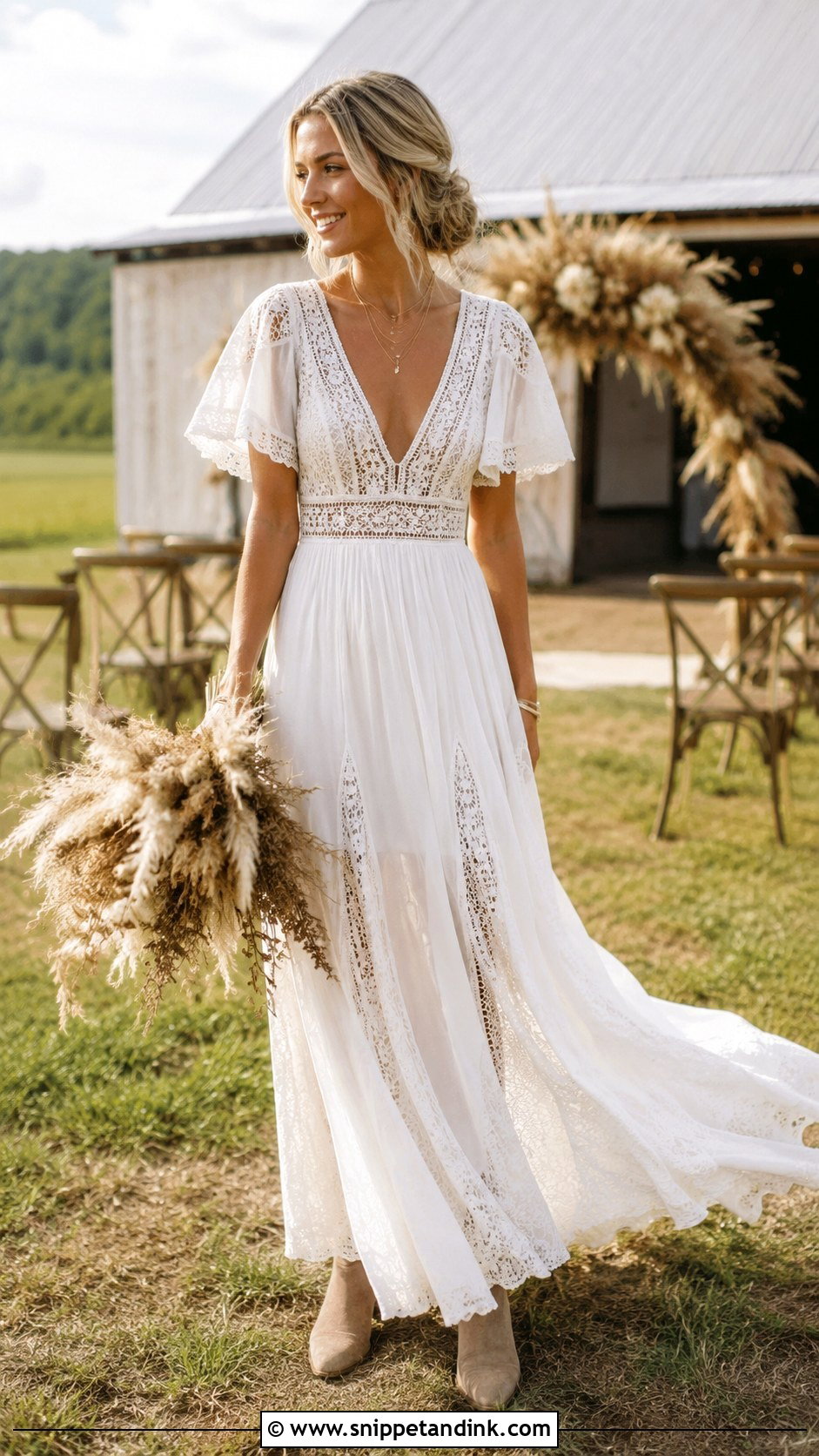
Boho dresses only work when they look unforced, and that starts with the fabric. Flowing chiffon, crochet-style lace, flutter sleeves, an open back and a soft A-line all move well outdoors. I’d style it with suede ankle boots, loose waves, a few fine layered chains and dried grasses in the bouquet. Avoid heavy linings. Many boho gowns come with a full stiff underlayer that kills the movement, and a good seamstress can often swap it for a lighter one.
4. Simple Farmhouse Wedding Dress
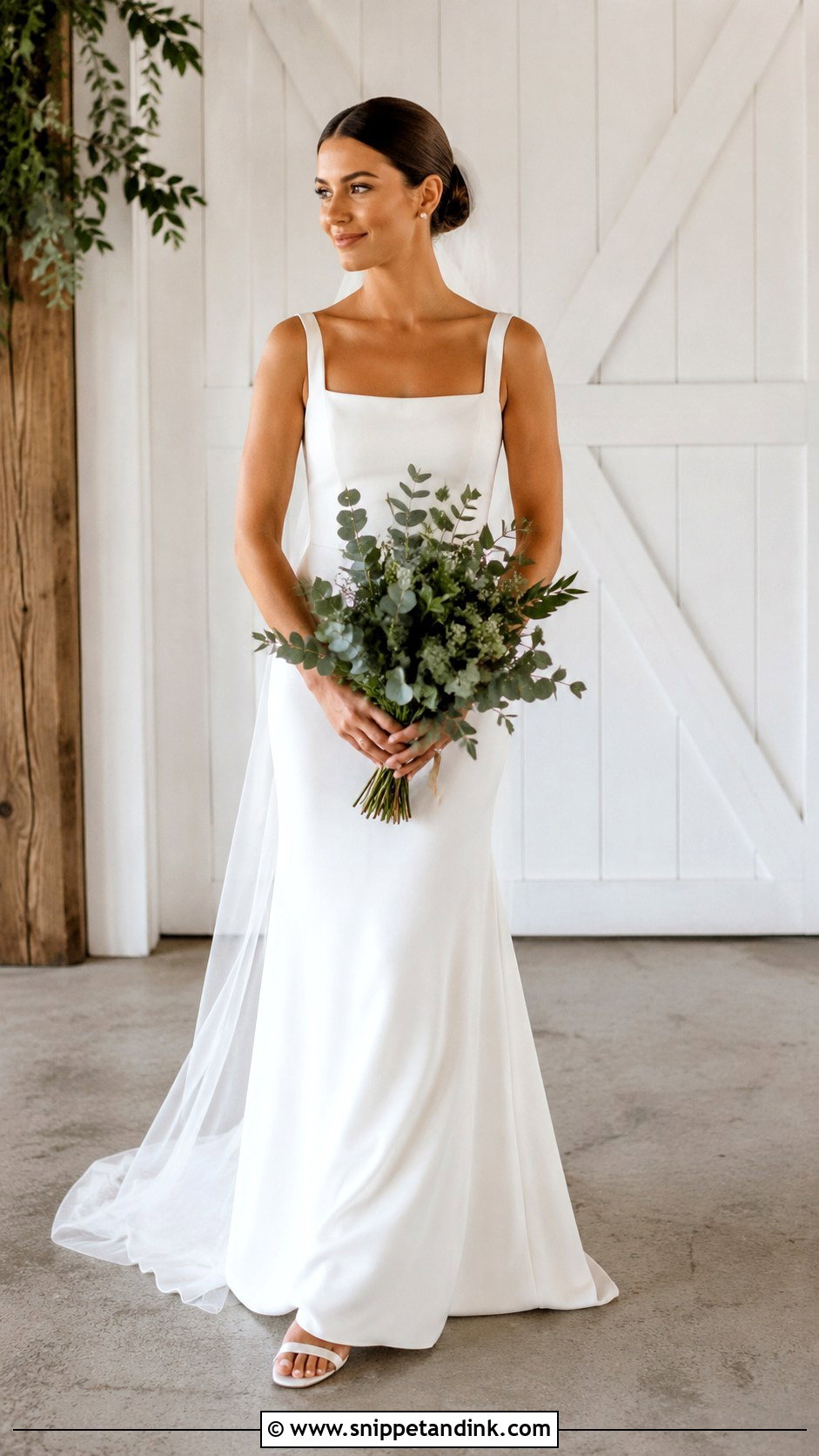
Plain gowns are the hardest to get right, because nothing hides the fit. Clean crepe, satin or matte mikado with almost no embellishment, a square or scoop neck or slim straps, then a smooth low bun, pearl studs, a plain veil and soft block heels. Mikado is heavier than it looks and holds a sharp line, which suits a structured bodice. A tight bouquet of white flowers and greenery gives the clean lines a little contrast outdoors.
5. A Line Farmhouse Wedding Dress
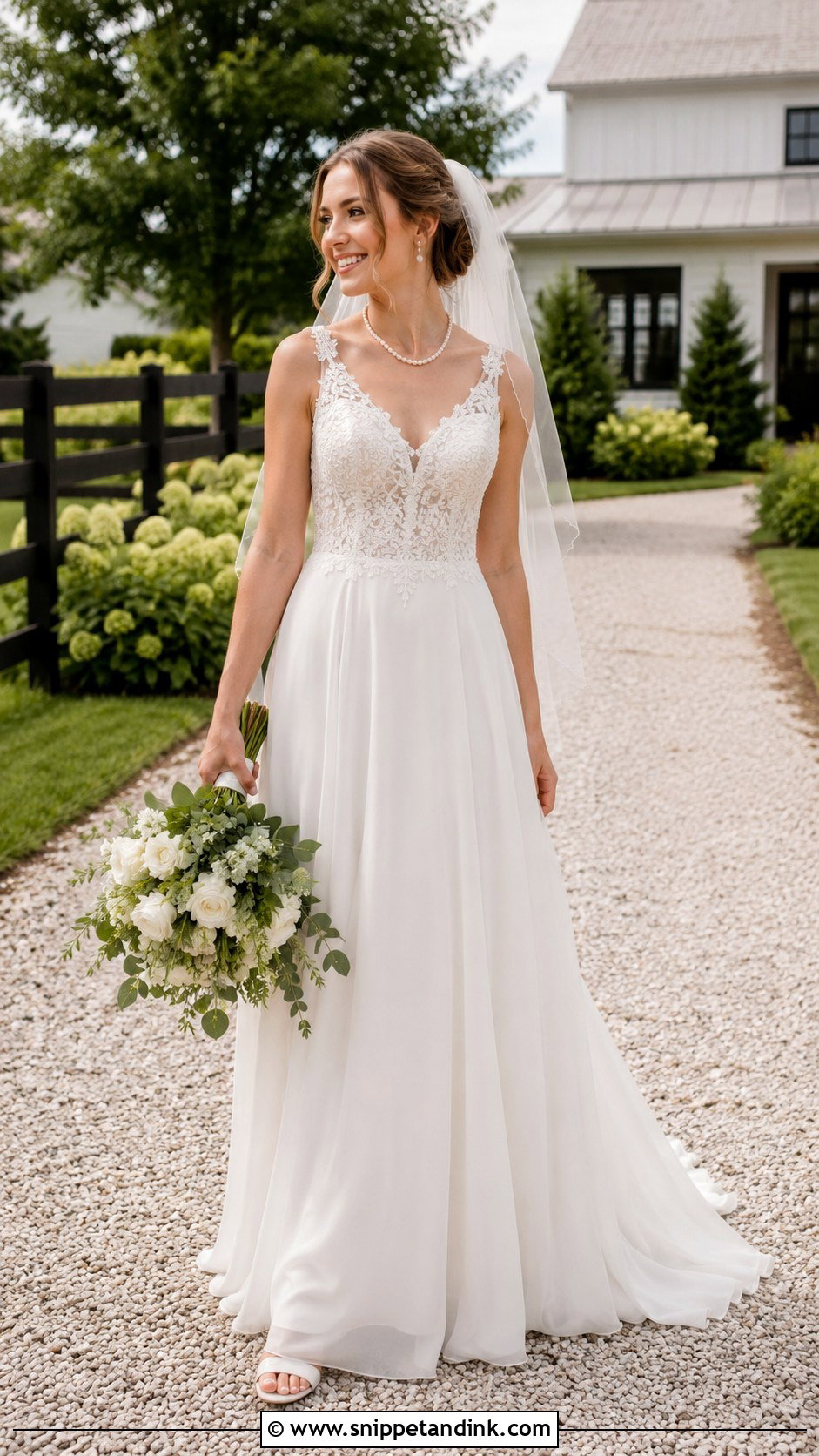
Fitted through the bodice and released over the hips, the A-line lets you walk, dance and pose without thinking about the dress. Lace, chiffon, organza or light tulle depending on the season, a cathedral veil for drama or fingertip for ease, and low heels with pearls. It suits a wide range of body shapes. The thing I adjust most on A-lines is where the waist seam sits; moved up or down half an inch, it changes the proportions completely.
6. Cottagecore Farmhouse Wedding Dress
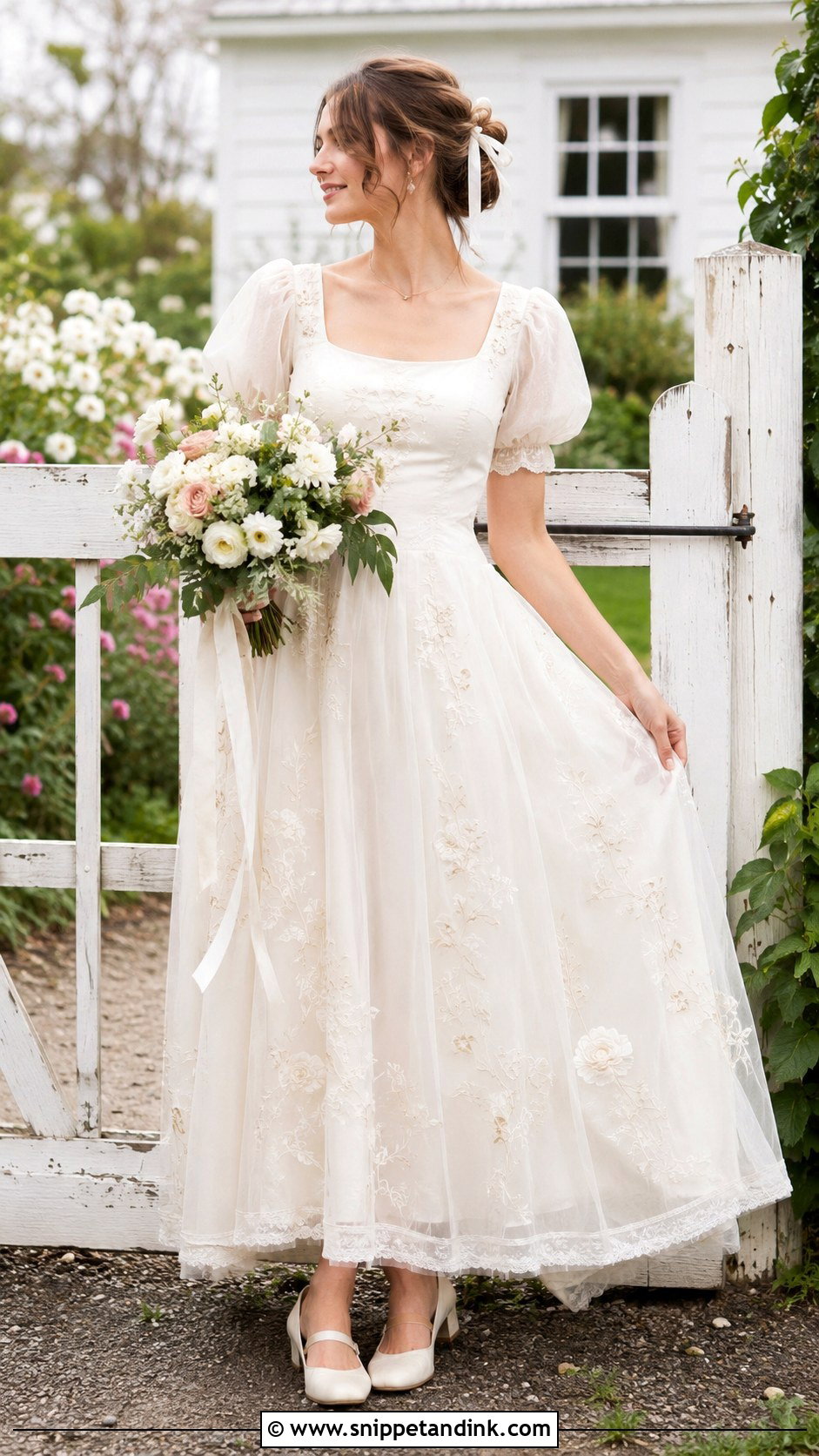
Cottagecore leans on small, sweet details: puff sleeves, floral embroidery, a square neck and a tea-stained ivory that looks warmer than bright white. I’d pair it with ballet flats, low Mary Janes or cream ankle boots, a ribbon in soft curls, and a bouquet of garden flowers and herbs. Stop at three of those details. Add a fourth and it starts to look like a costume, especially in an orchard or a cottage garden.
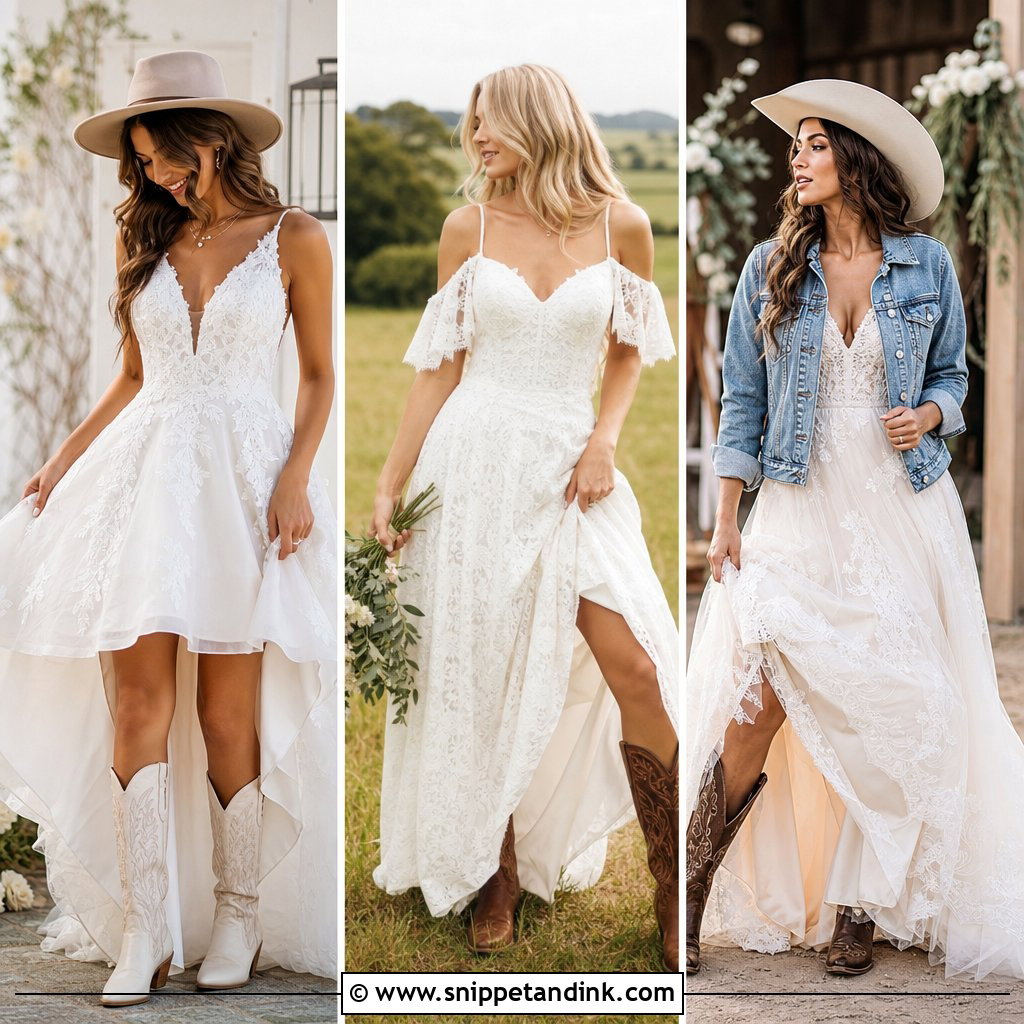
7. Off Shoulder Farmhouse Wedding Dress
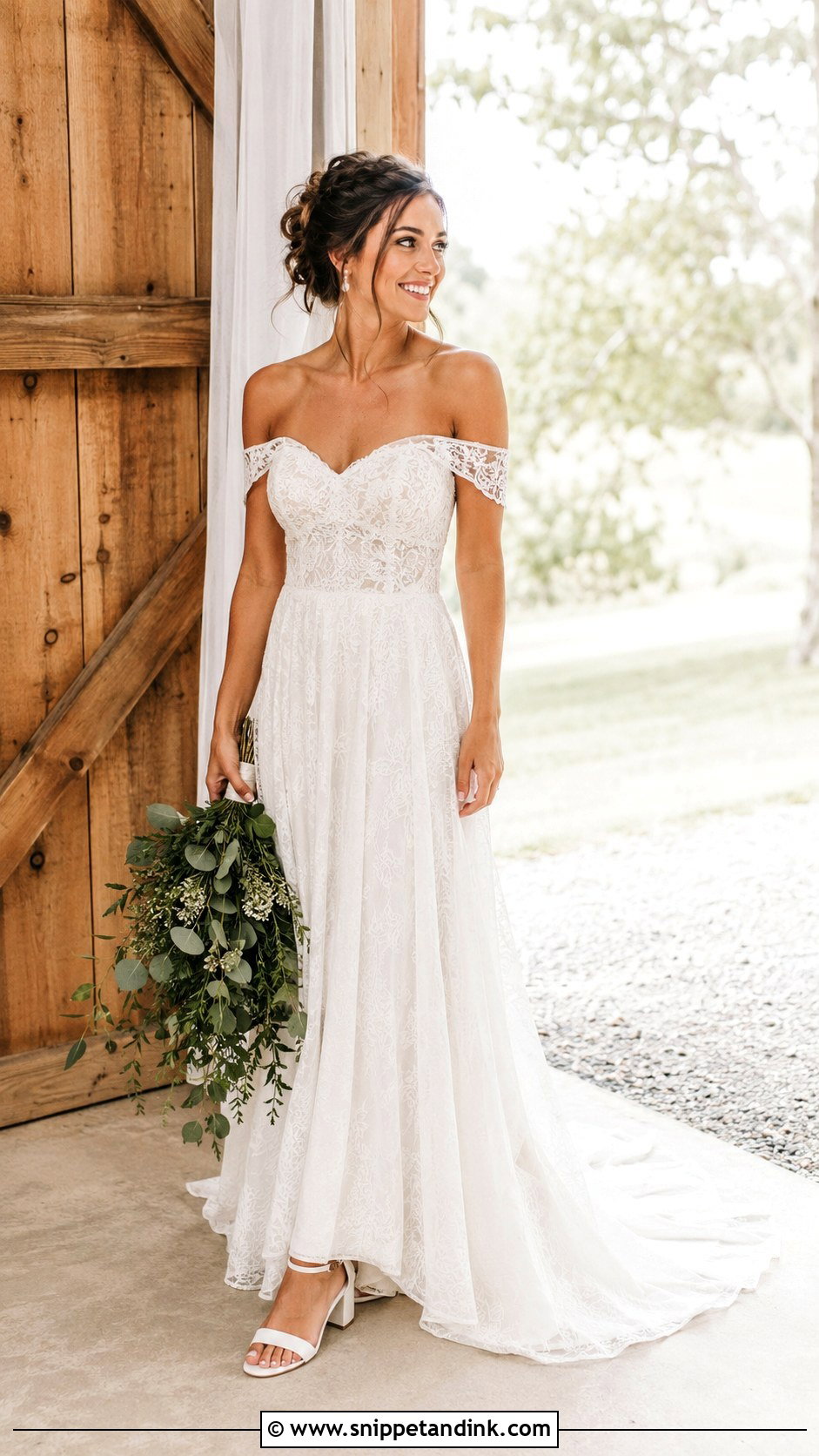
In lace, tulle or crepe, the off-shoulder neckline frames the shoulders and keeps a bridal finish. For a farmhouse I’d pair it with a relaxed skirt, not a huge one. A loose updo, small drops and trailing greenery suit it, with low block heels or boots for the paths. Bra fittings are where this neckline succeeds or fails. Ask for cups sewn into the bodice; a strapless bra under an off-shoulder gown tends to show at the side.
8. Vintage Farmhouse Wedding Dress
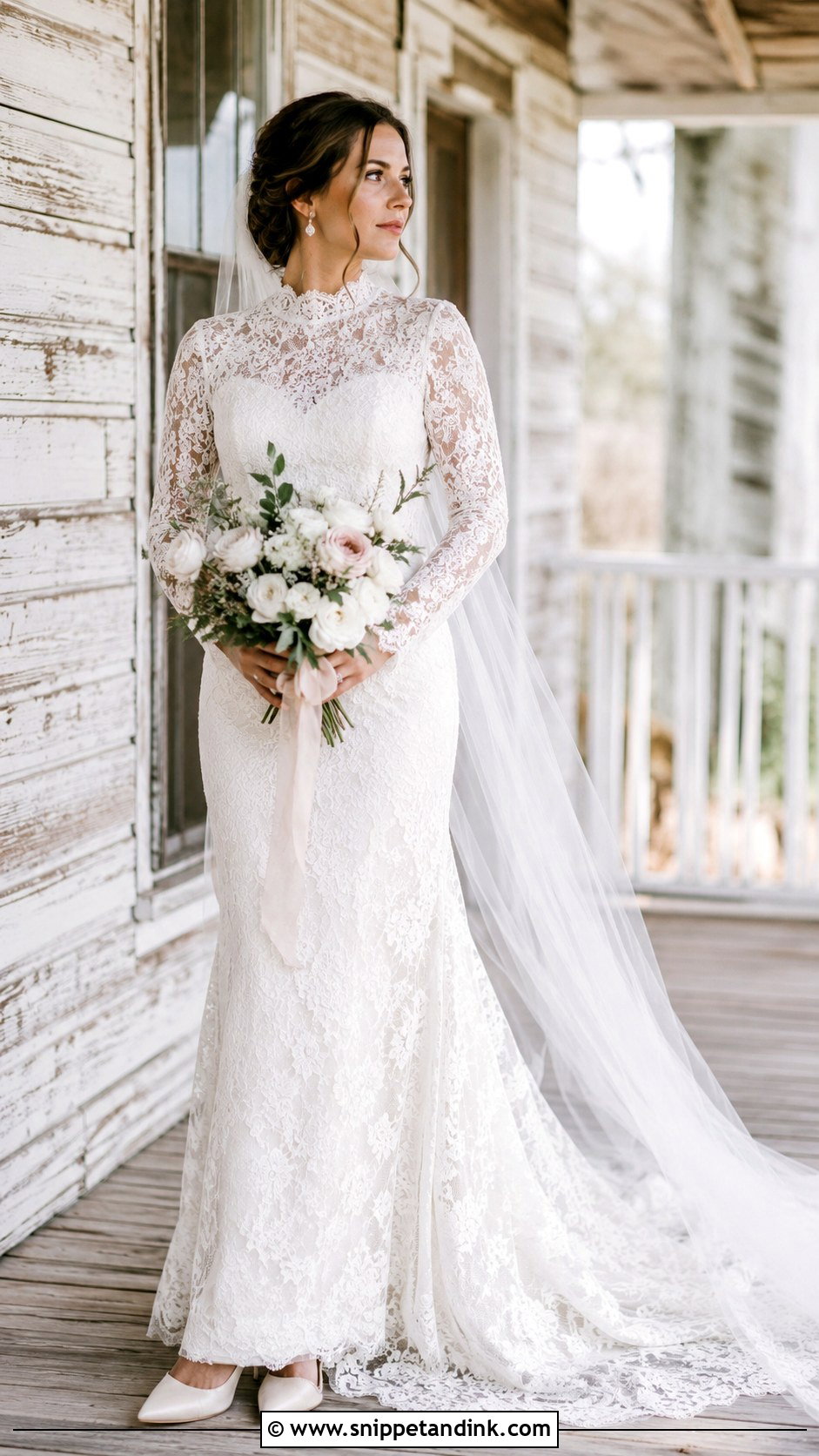
Old dresses carry the most feeling. You might wear a true vintage gown, a family dress remade, or a new one with old lace, buttons, a high neck or fine sleeves. Modern hair and fresh makeup stop it looking dated, and ivory shoes, pearl earrings and a soft veil keep it bridal. It suits weathered wood and open fields well. If the dress is genuinely old, have it assessed before you plan anything else, because silk that has sat in a box for decades can split along the folds.
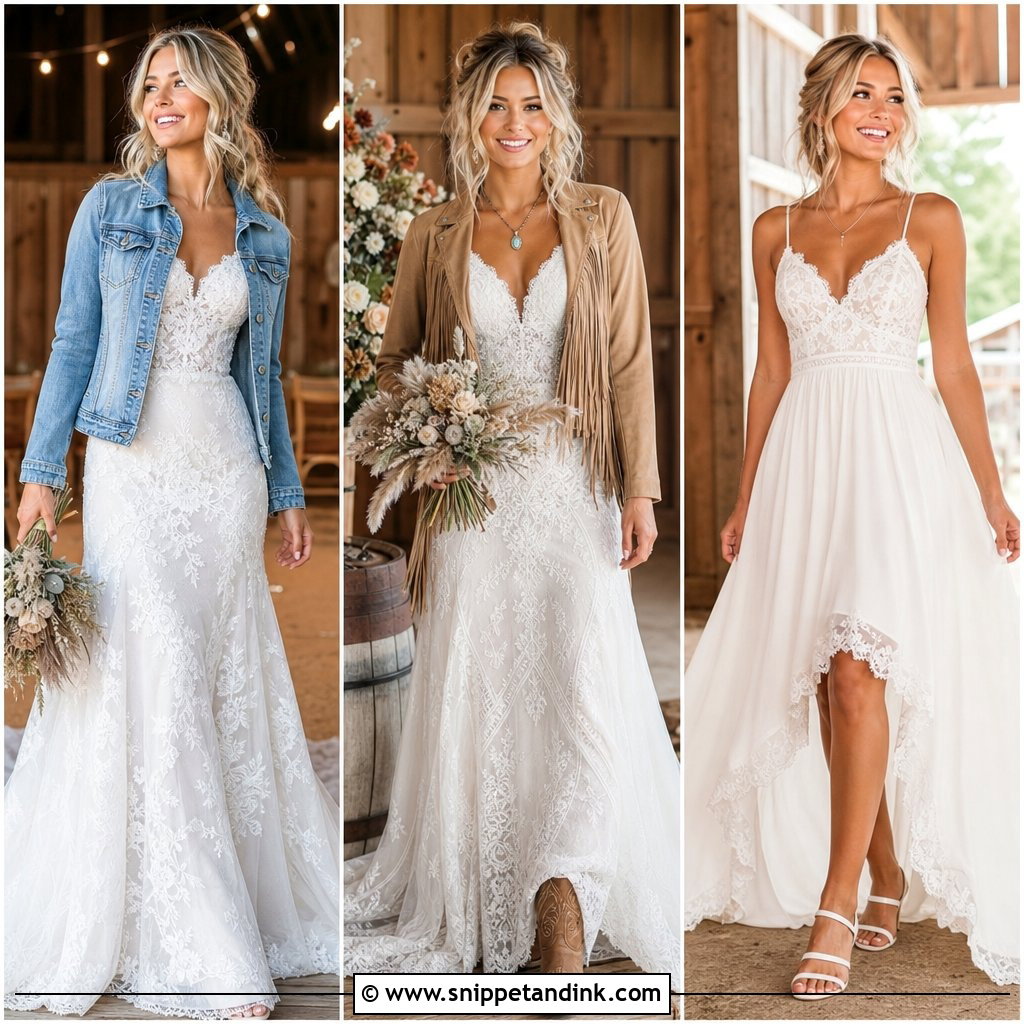
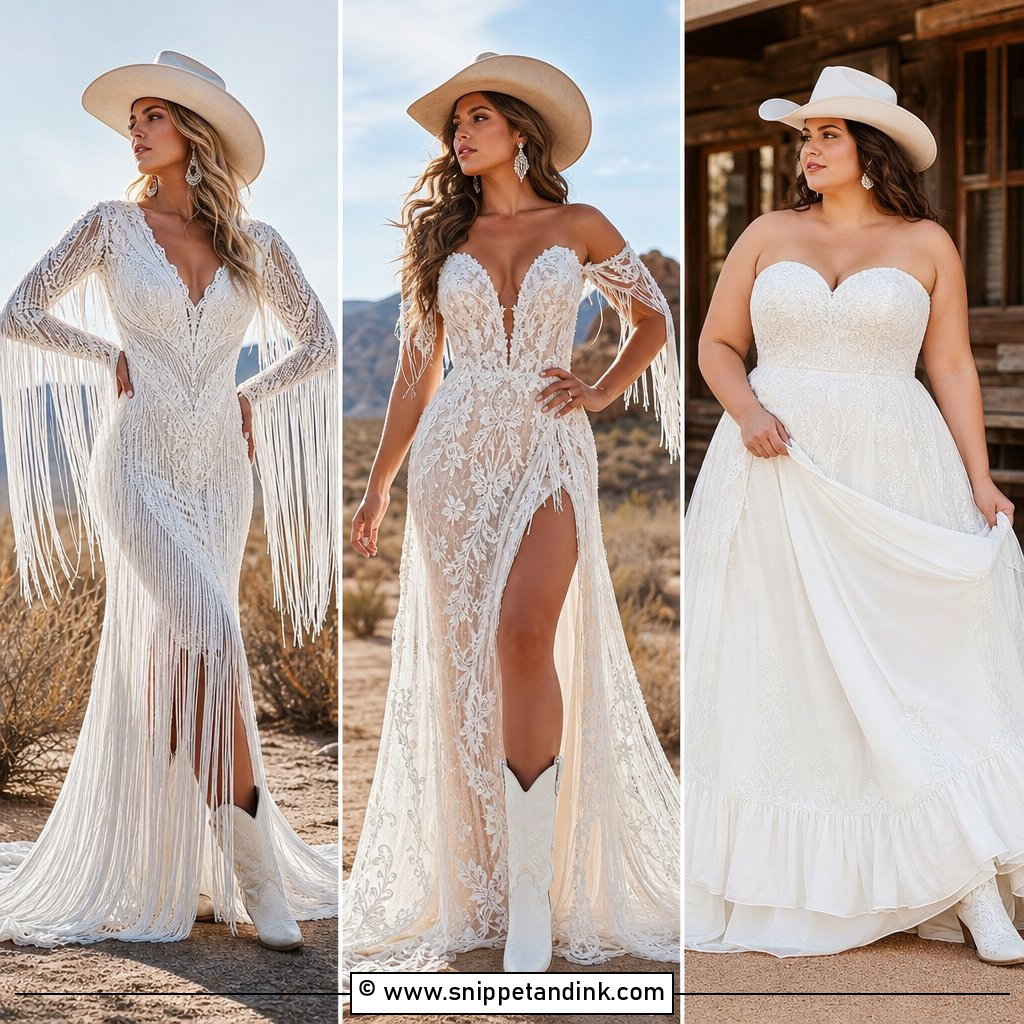
9. Western Farmhouse Wedding Dress
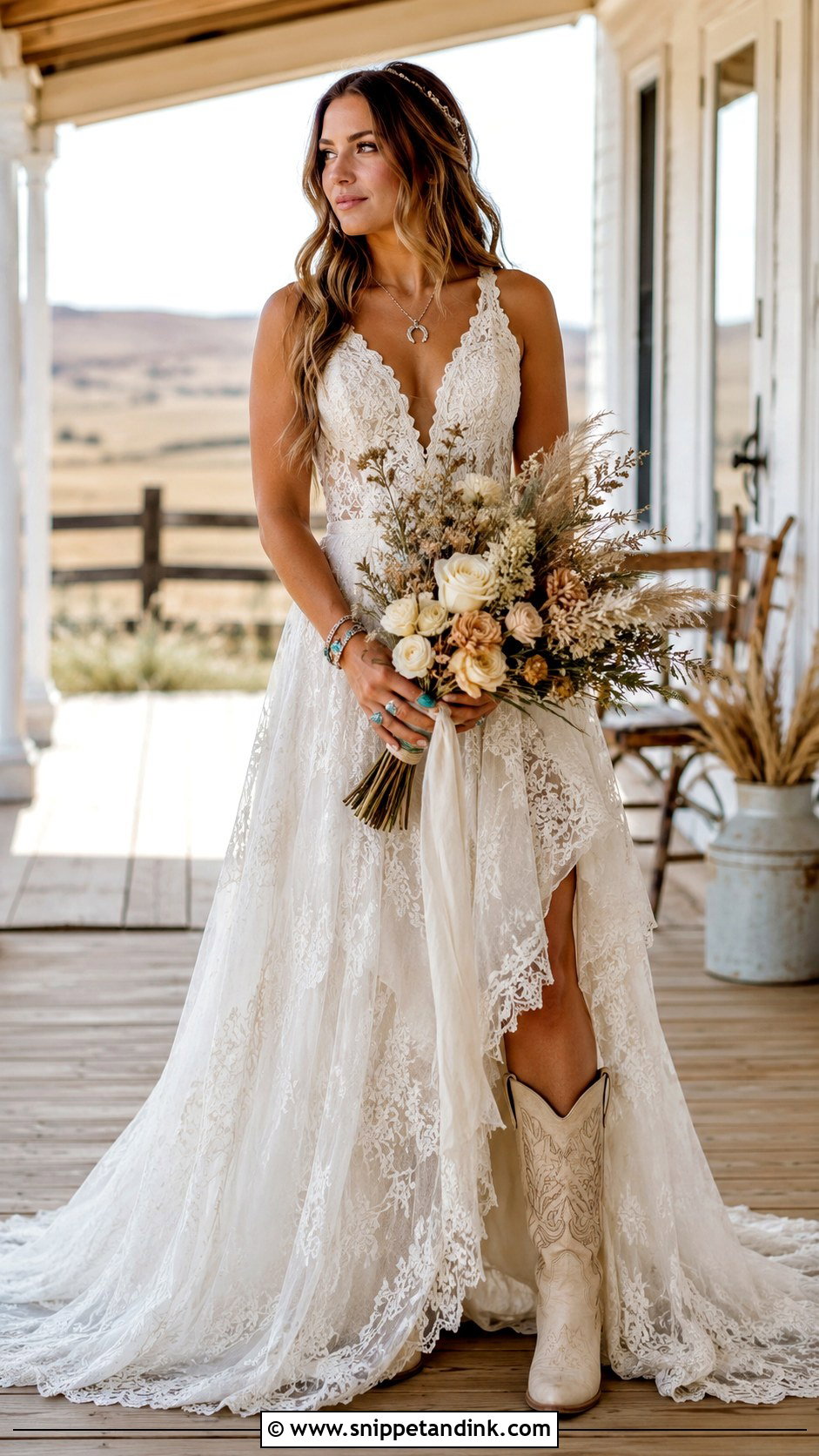
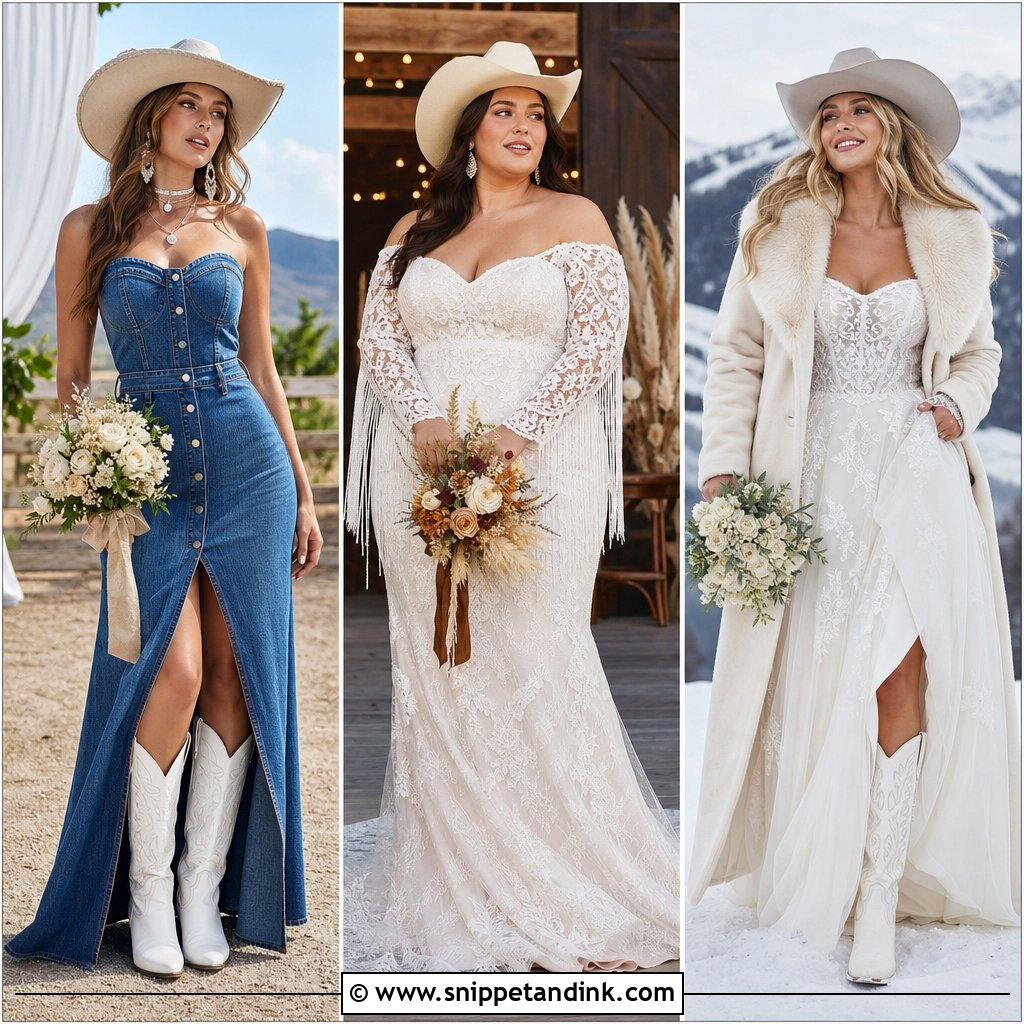
Western touches work when the gown stays bridal and the country comes through accessories. A western farmhouse wedding dress in ivory or soft white lace, crepe or chiffon, with a fitted bodice and flowing skirt, then boots, a hat for portraits, turquoise jewelry or a denim jacket for the reception. Pick two of those, not all four. Loose waves and a textured bouquet finish it at a ranch-style venue.
10. Short Farmhouse Wedding Dress
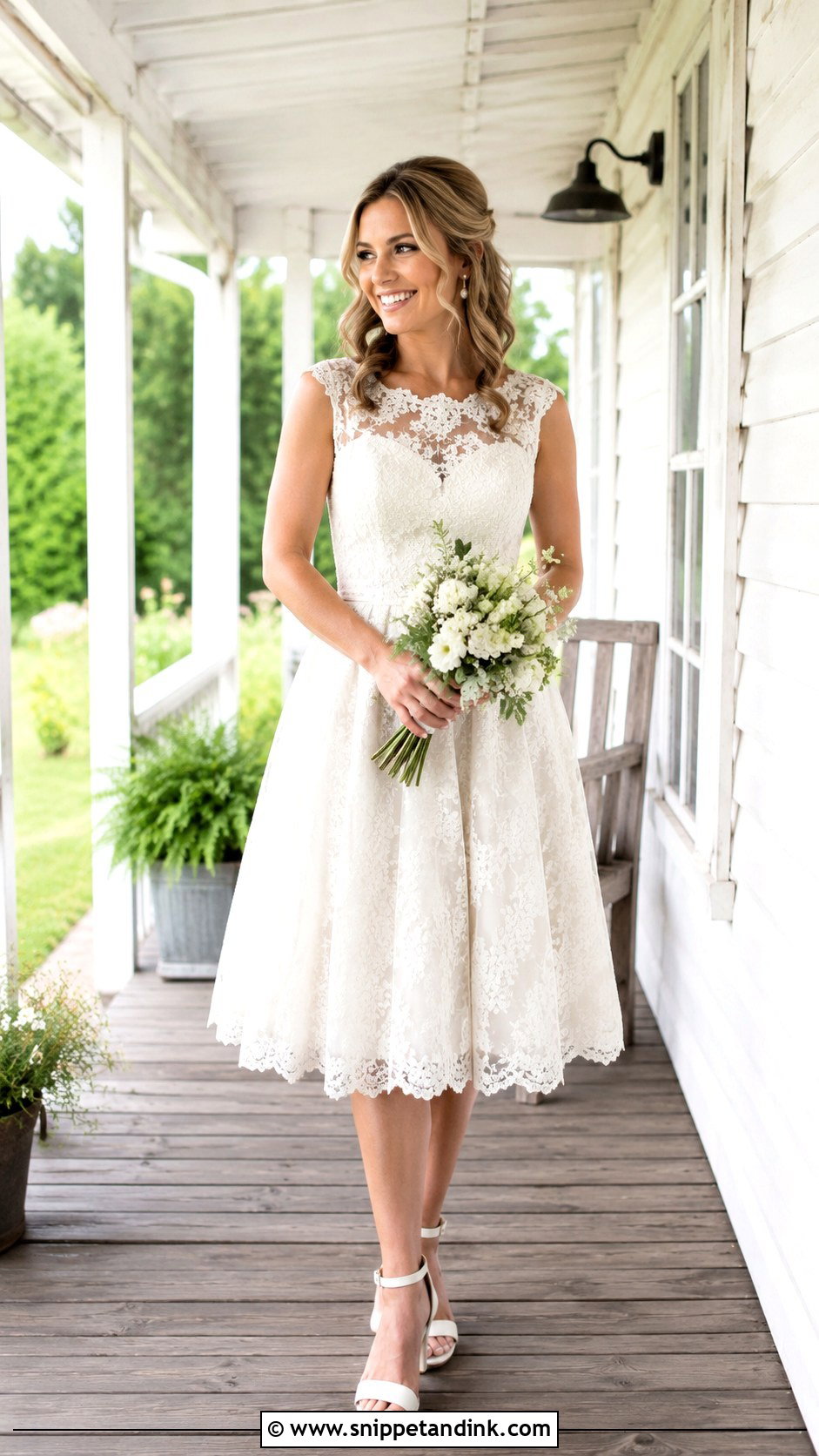
Knee, midi or tea length in lace, satin, tulle or embroidered cotton keeps you light on your feet for a casual ceremony, a reception change or a hot day. The hem shows your shoes, so bridal boots, block heels or simple white pumps become part of the look. A birdcage veil or a ribbon bow gives a vintage nod. Try sitting in it: short skirts ride up more than you expect on a low hay bale or a garden bench.
11. Tulle Farmhouse Wedding Dress
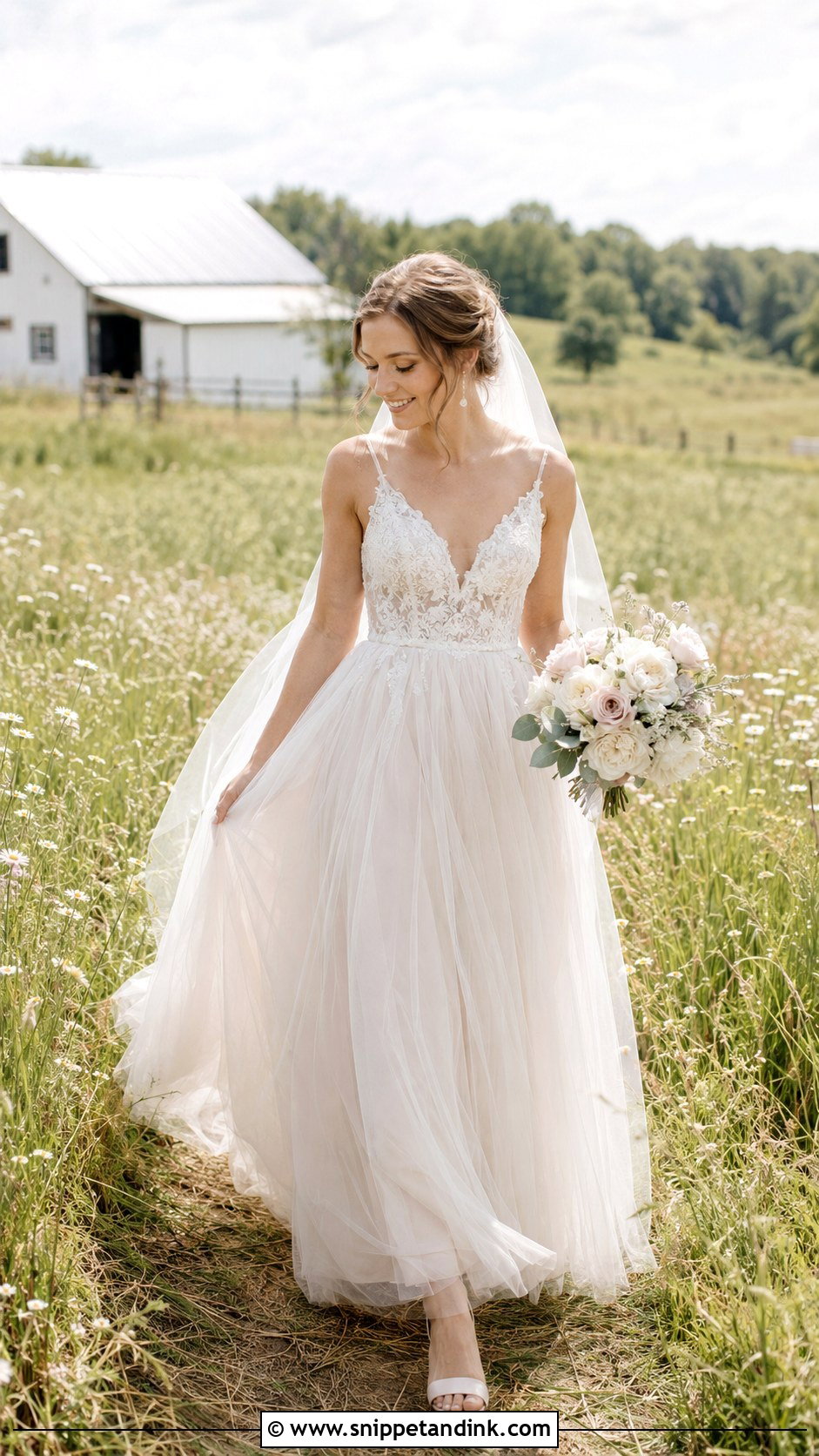
Fine layers of light tulle give movement and softness; one stiff, oversized skirt just looks heavy in a barn. A lace bodice, soft appliqué or simple corset top balances the airy skirt, with waves, small earrings and a veil in matching tulle. Block heels or boots depending on the ground. Ivory tulle has many shades. I hold the veil sample against the skirt in daylight, since a mismatch that’s invisible indoors shows clearly in outdoor photos.
12. Satin Farmhouse Wedding Dress
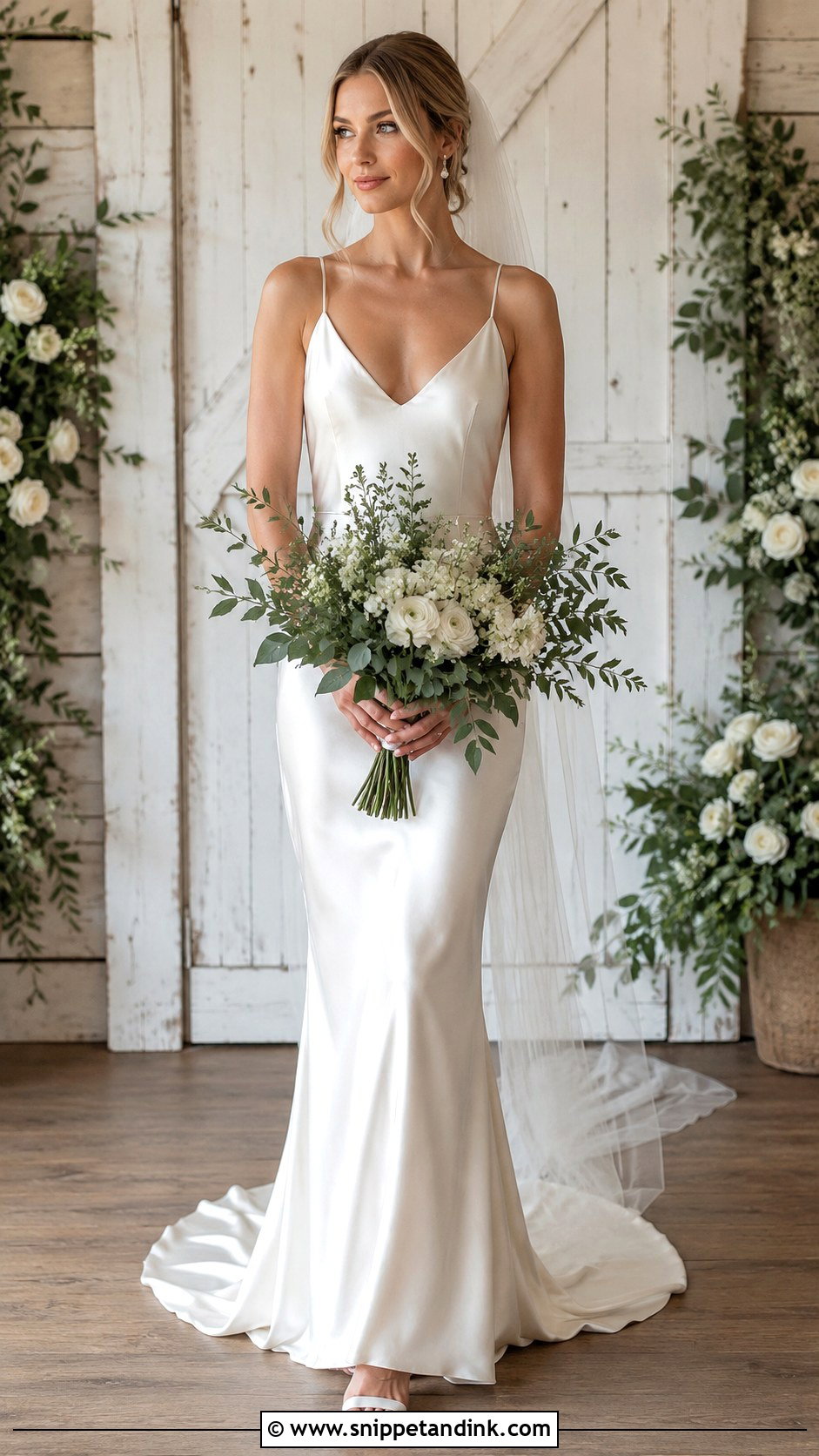
Polished satin against rough wood and greenery gives a clean, quiet contrast. A bias-cut gown, a simple A-line or a slip shape, with pearl studs, a soft veil, white or nude heels and a textured bouquet of wild greenery. The shine does the work, so jewelry stays minimal. I’d warn any bride choosing satin for a farm: it creases where you sit and marks easily, so a heavier satin, or a satin with a little matte finish, behaves better through the day.
13. Floral Embroidered Farmhouse Wedding Dress
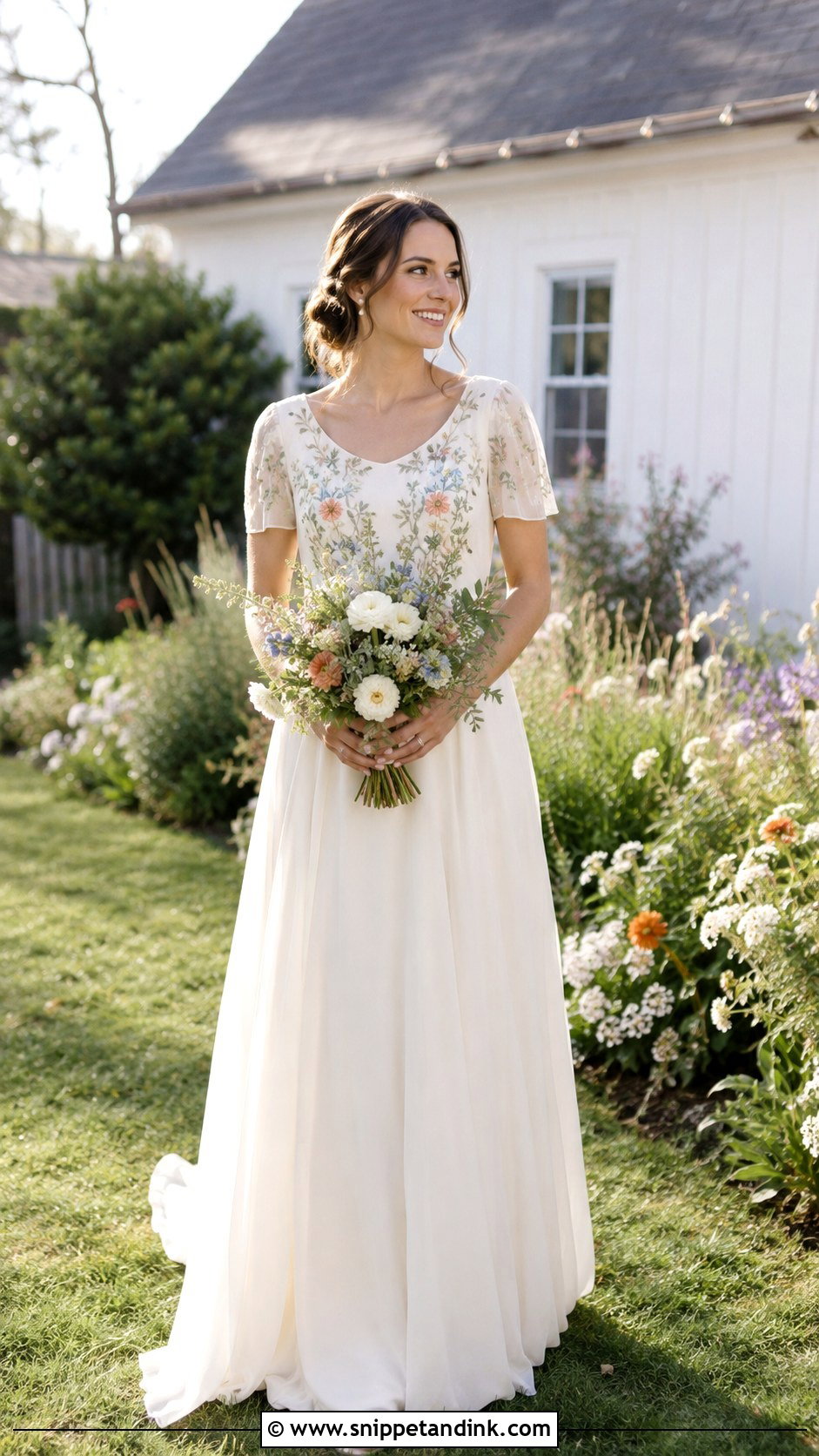
Embroidery placed on the bodice, sleeves, hem or veil suits a garden, meadow or barn far better than allover decoration. Ivory thread stays classic; soft pastels feel more playful. Simple shoes, natural makeup and a bouquet echoing the stitched flowers are enough. Deeper-toned florals can carry into early autumn. If the embroidery is colored, ask whether the thread is colorfast before any spot cleaning happens on the day.
14. High Neck Farmhouse Wedding Dress
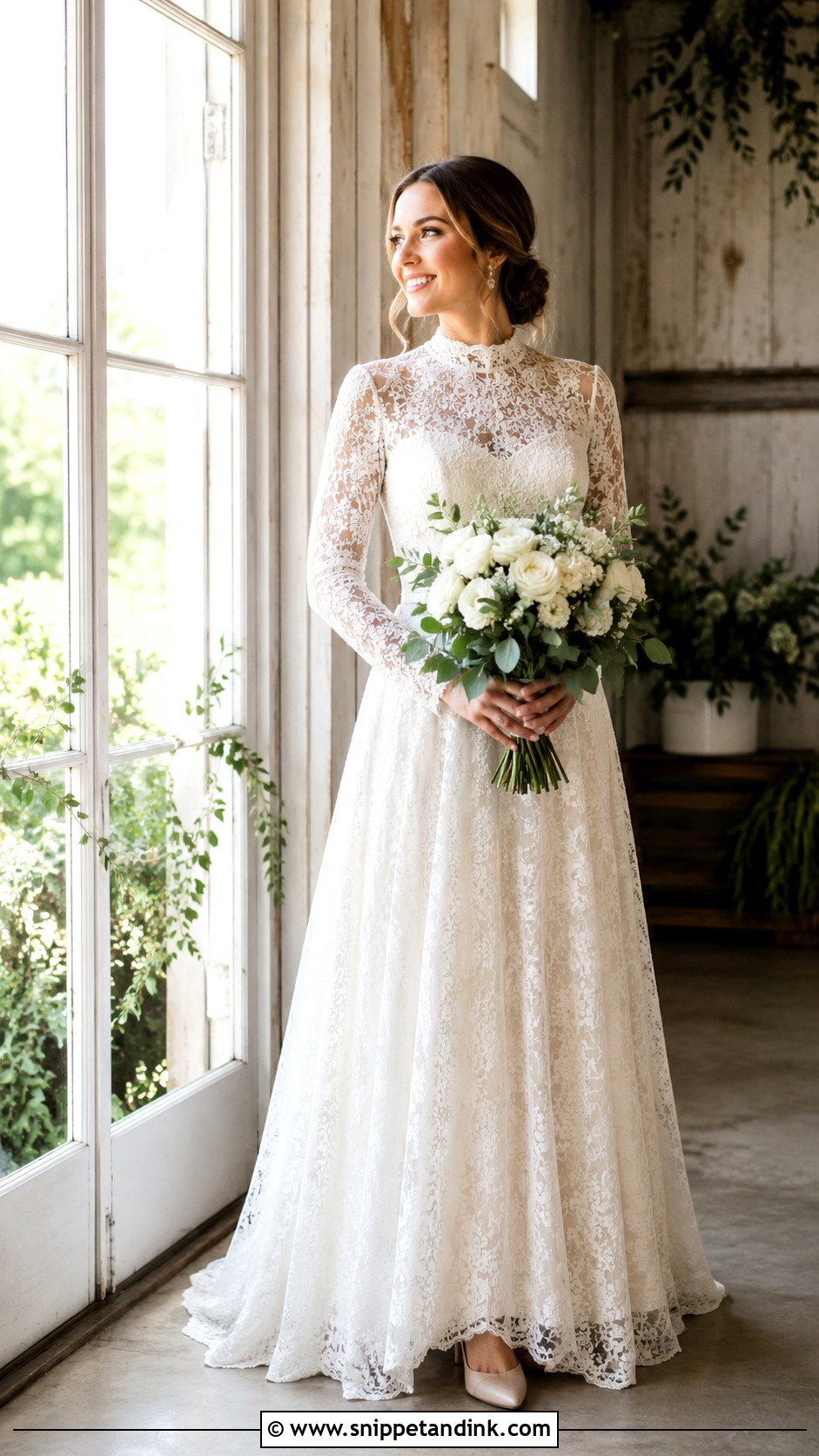
High necklines bring a vintage, composed look, and lace softens the coverage for a rustic venue. Long sleeves are the classic version; sleeveless suits warm weather. An updo keeps the neckline visible, with small earrings, a thin bracelet and low heels or slim boots, over a soft A-line or slim skirt. I fit high necks with two fingers of space at the collar. Any tighter and you’ll feel it pressing every time you swallow or laugh.
15. Slip Farmhouse Wedding Dress
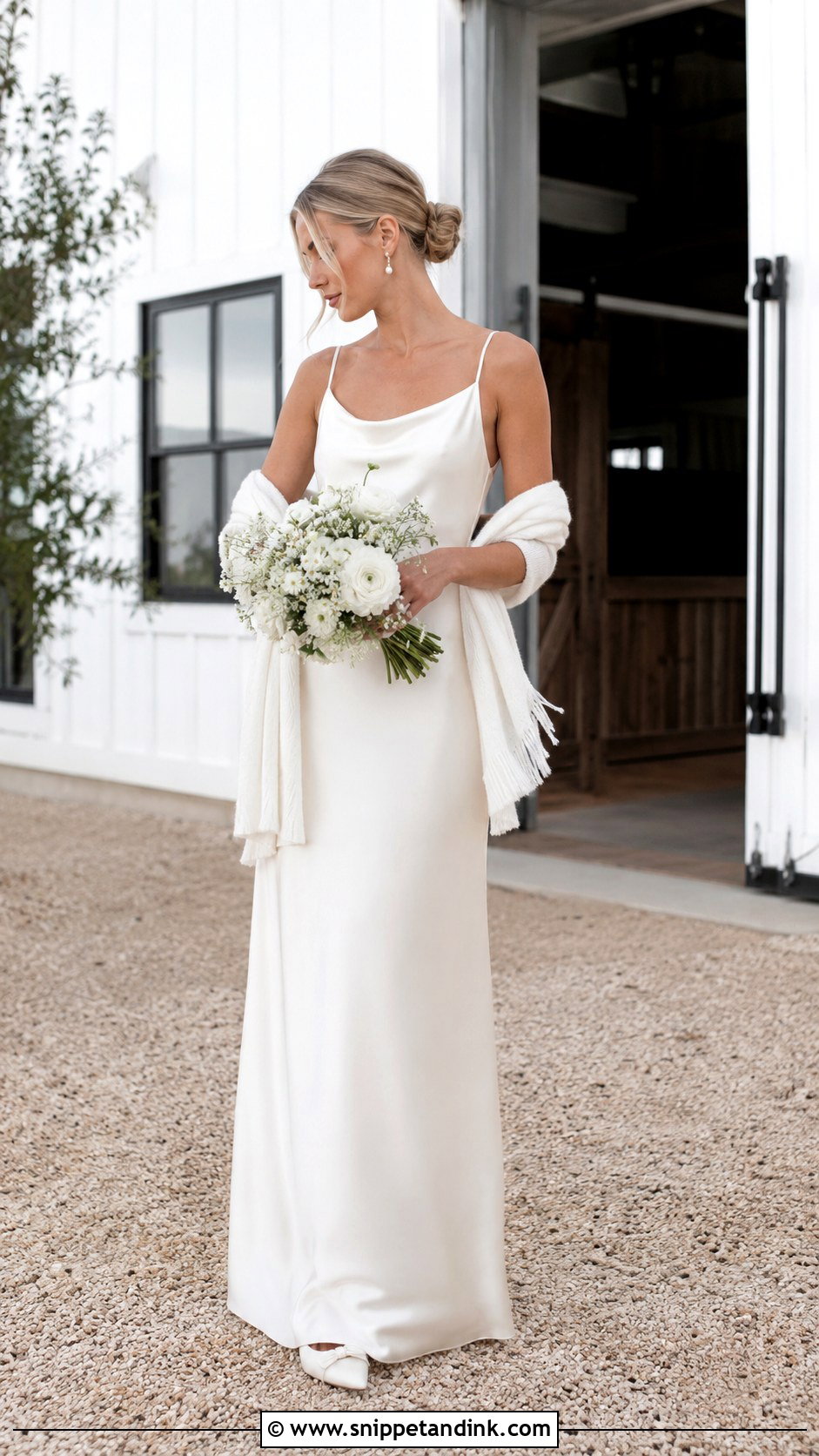
A slip in soft satin or crepe, cut on the bias with a neckline that stays put, suits small farmhouse ceremonies. Because the dress is so plain, the styling carries it: a soft wrap, pearl drops, a low bun and a textured bouquet, with barely-there heels, low sandals or bridal flats. Thin straps should be adjustable or set at your fitting. Slips are made for a standard shoulder slope, and a strap that slides off once will keep sliding.
16. Ball Gown Farmhouse Wedding Dress
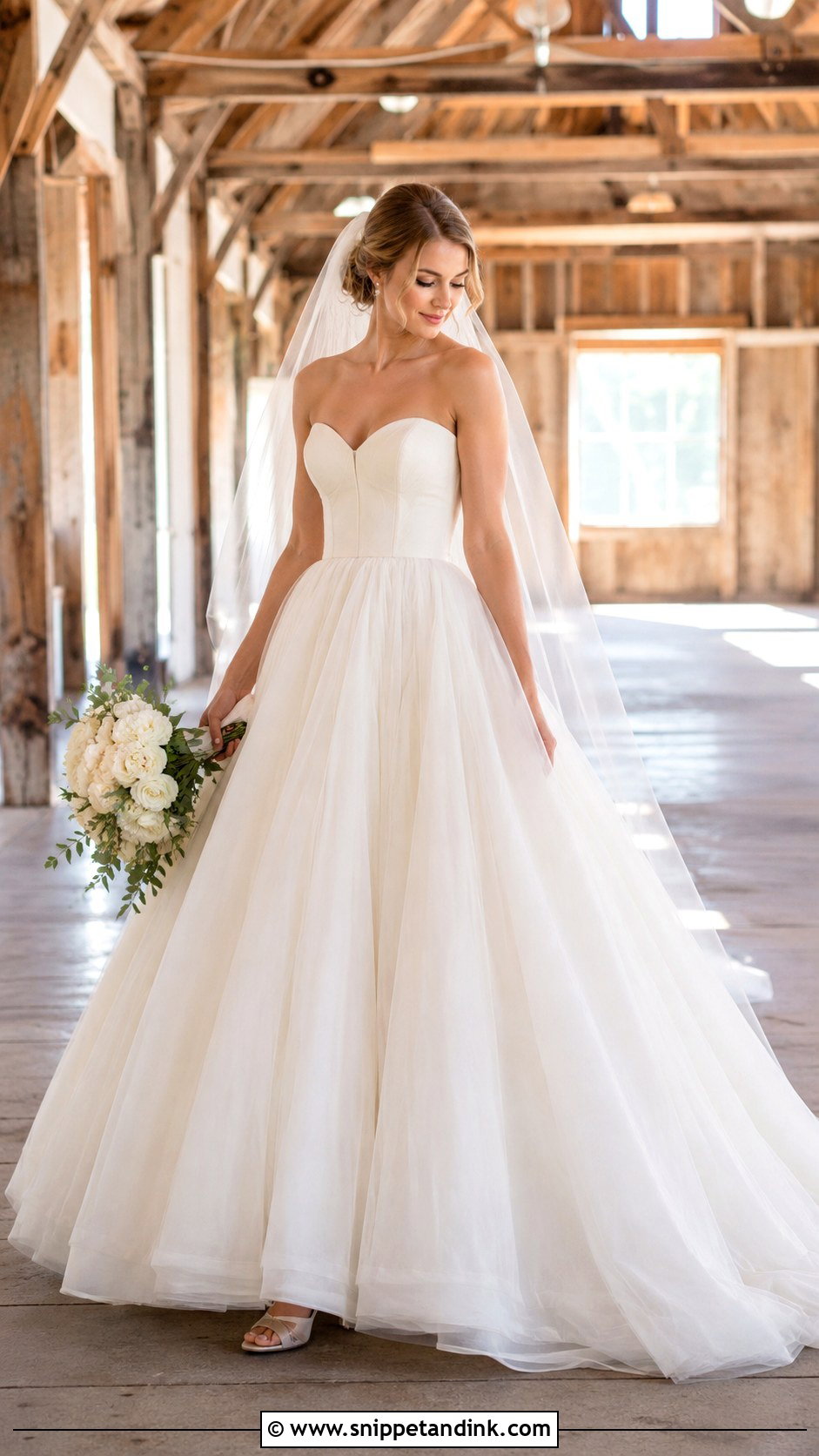
A full skirt in a rustic barn makes a strong picture, but choose the fabric carefully. Soft tulle, organza or lace over a structured bodice moves, where a heavy satin ball gown looks out of place among hay bales. A plain veil, pearl earrings and classic heels are plenty. Check the barn doors and aisle width before you fall in love. A very full skirt needs room on both sides of the aisle, and rows of benches leave less than you’d think.
17. Crepe Farmhouse Wedding Dress
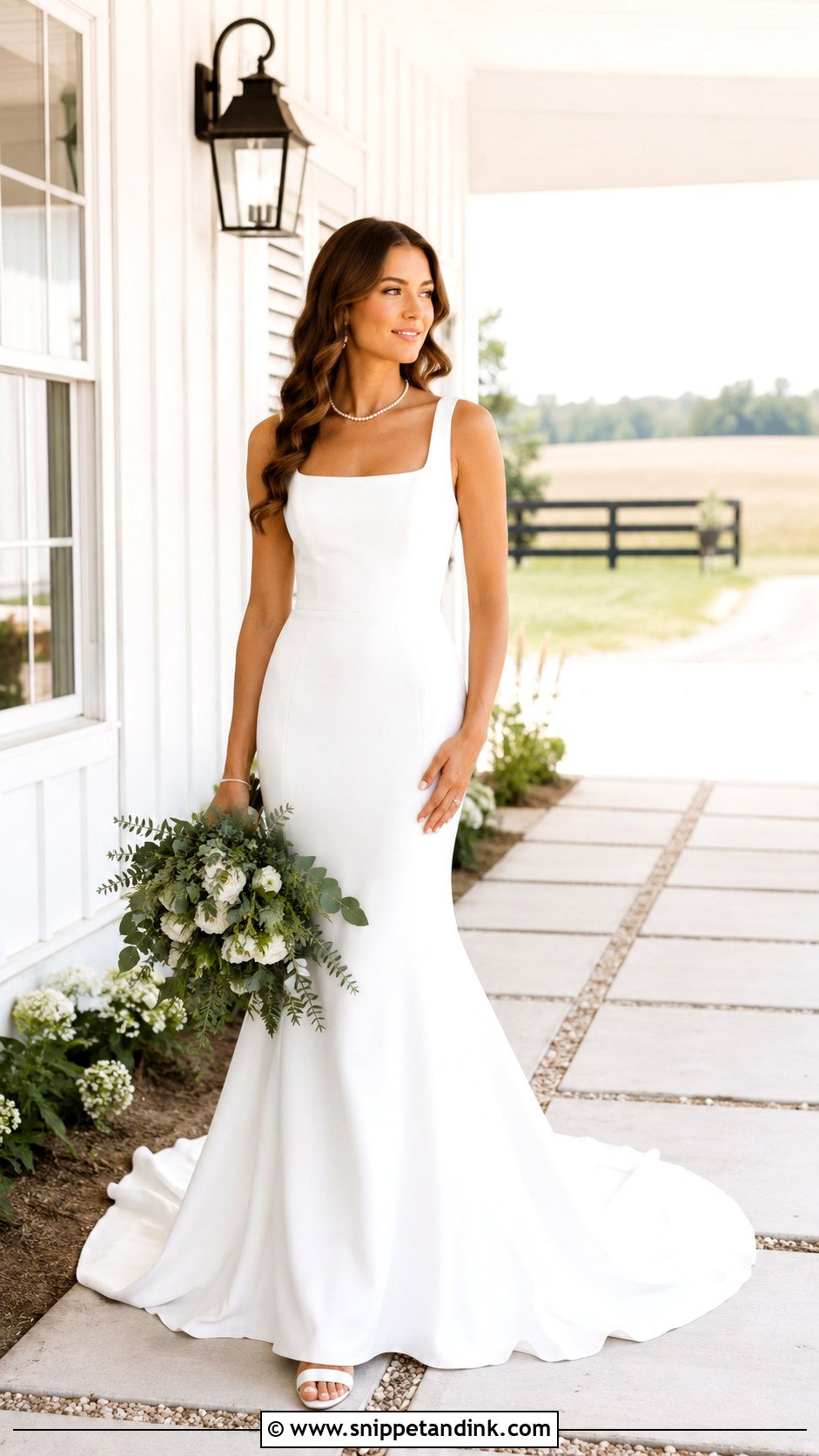
Crepe drapes smoothly with a matte finish, giving structure without shine. Fit-and-flare, sheath or a minimal A-line, with a square neck, long sleeves or an open back for interest, then polished waves, pearls and a white and green bouquet. The surroundings do the decorating. Crepe is heavier than chiffon, and on a hot afternoon that weight is noticeable, so I’d steer toward a lighter crepe for a summer date.
18. Tea Length Farmhouse Wedding Dress
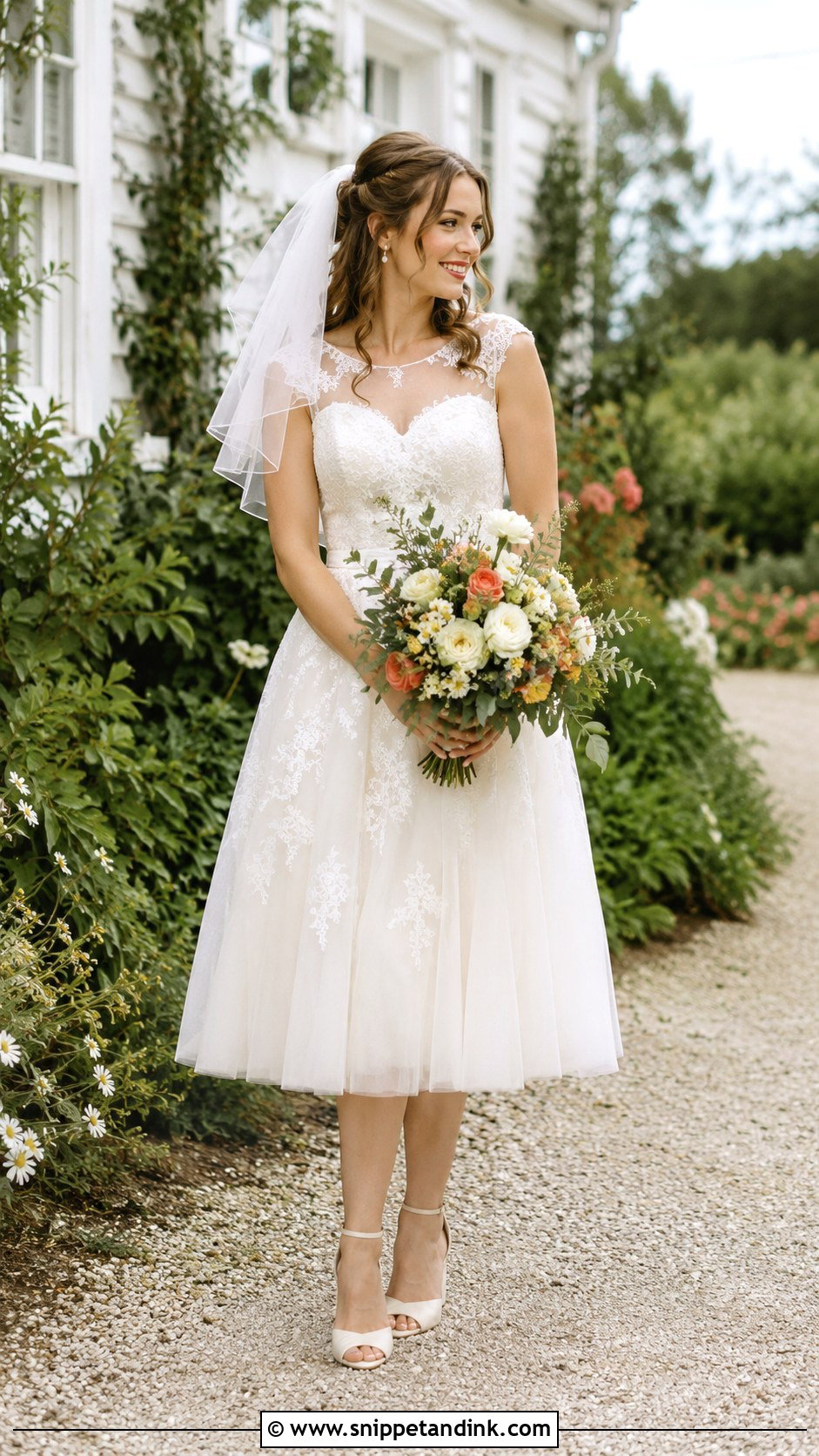
Tea length falls between knee and ankle, so it clears wet grass and leaves room to dance. Lace, satin, tulle or embroidered fabric depending on how formal the day is, with block heels, bridal flats or cream boots, a short veil, pearls and soft curls. Spring and summer daytime weddings suit it best. The shoes get as much attention as the dress at this length, so buy them first and bring them to every fitting.
19. Flutter Sleeve Farmhouse Wedding Dress
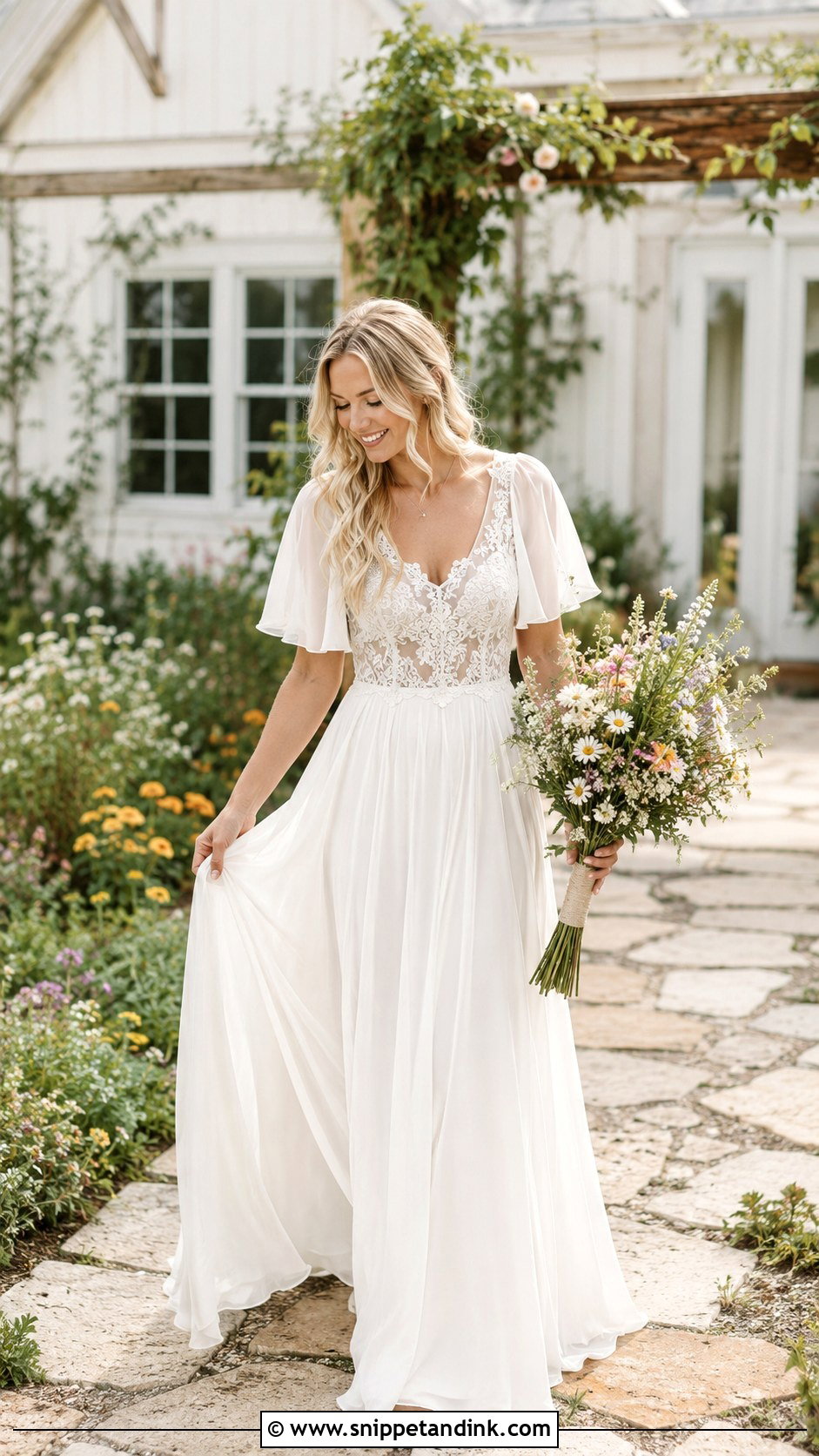
Flutter sleeves move without covering the arm, a good middle ground for spring, summer and early fall. Chiffon, lace or soft tulle over an A-line or empire skirt, loose waves, soft makeup, wildflowers or garden roses, and low heels or sandals. They catch any breeze in outdoor portraits. They also flare when you lift your arms. If you’re self-conscious about the upper arm, try a flutter cut on the bias, which falls closer to the skin.
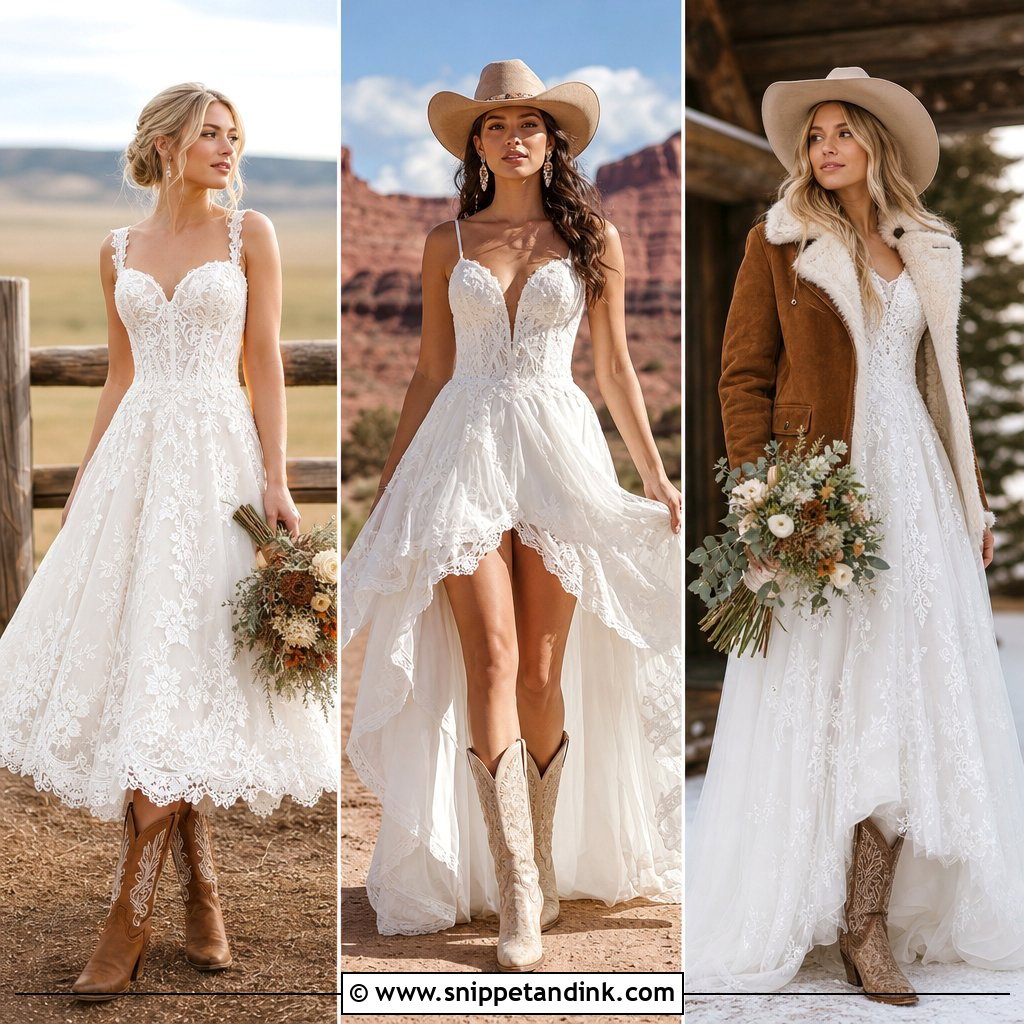
20. Denim Jacket Farmhouse Wedding Dress
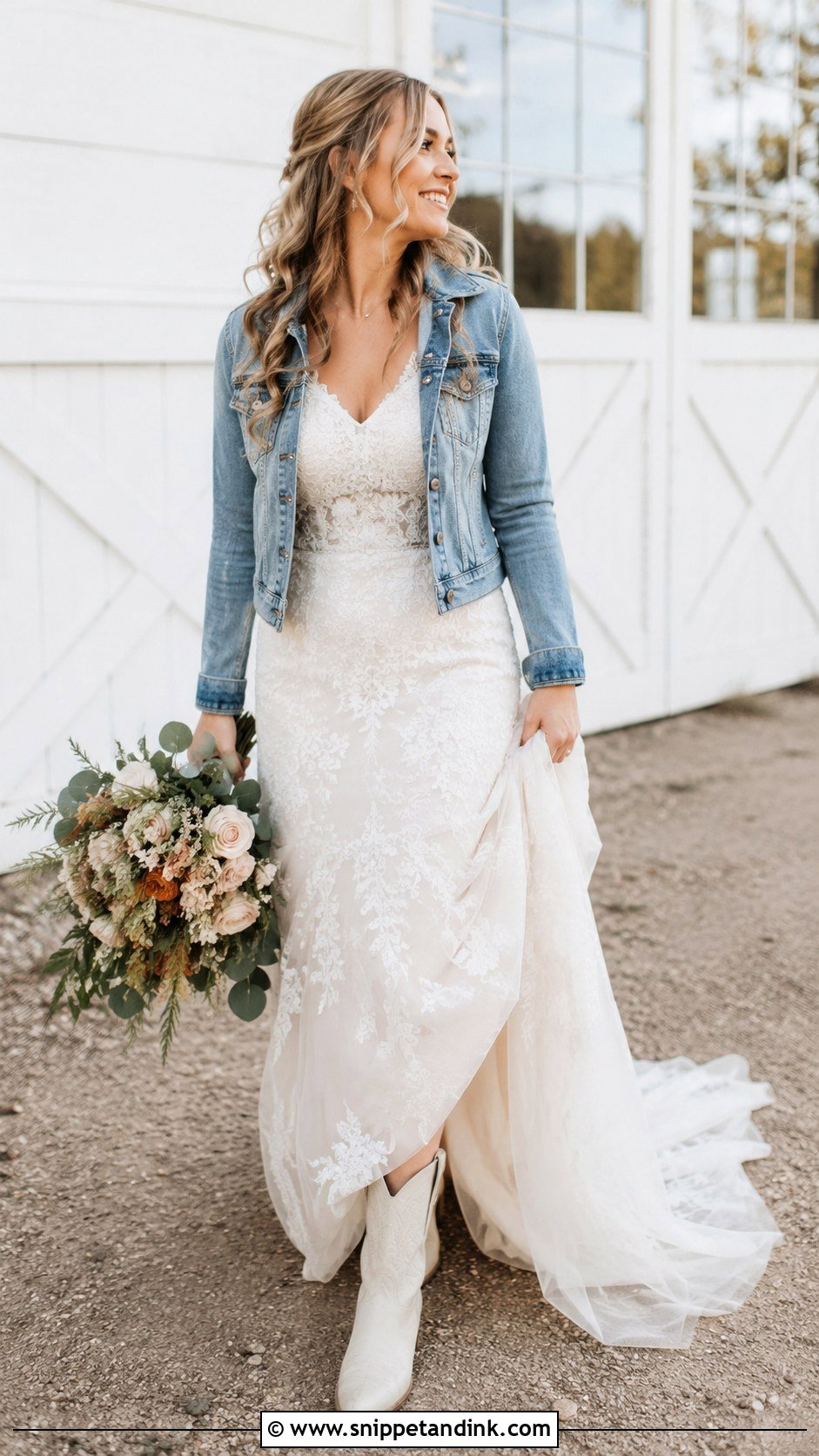
A farmhouse wedding dress with a denim jacket gives you a second look without a second dress, handy for cool evenings, casual portraits or the reception. Lace, tulle, crepe or chiffon under a fitted or slightly oversized light blue jacket, clean and not distressed. Subtle embroidery on the back can personalize it. I’d keep the jacket a shade lighter than you think, since mid-blue denim looks almost navy next to ivory in evening photos.
21. Square Neck Farmhouse Wedding Dress
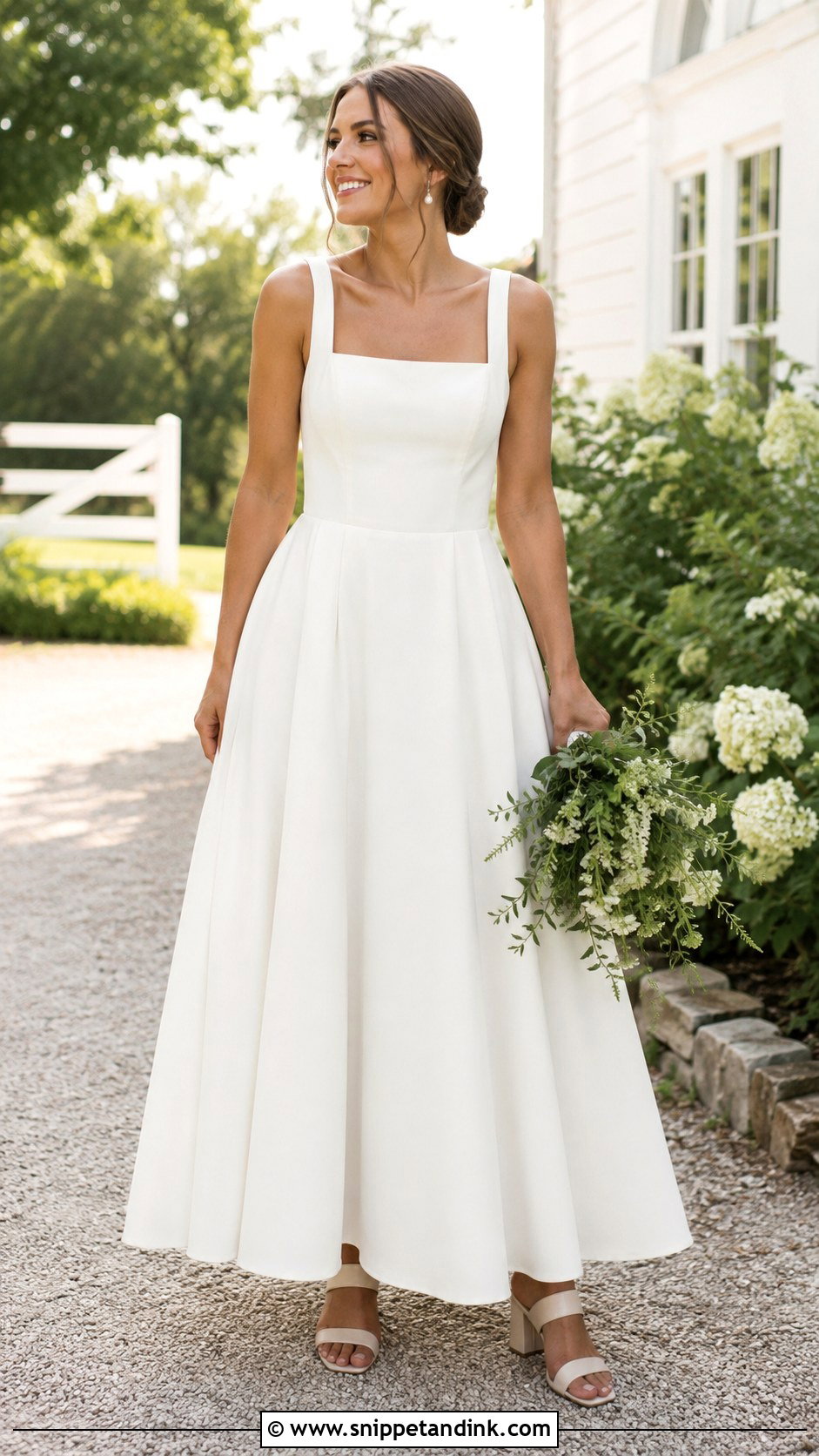
A square neck frames the collarbone and suits many shapes, from fitted crepe to lace A-lines. Puff sleeves, long sleeves or wide straps with it read especially well in a rustic venue. Soft waves or a low bun, pearl earrings, natural greenery, and shoes chosen for the ground. Bust size matters with this neckline. On a fuller bust I raise the square slightly and widen it, so it sits flat instead of cutting across.
22. Ruffle Farmhouse Wedding Dress
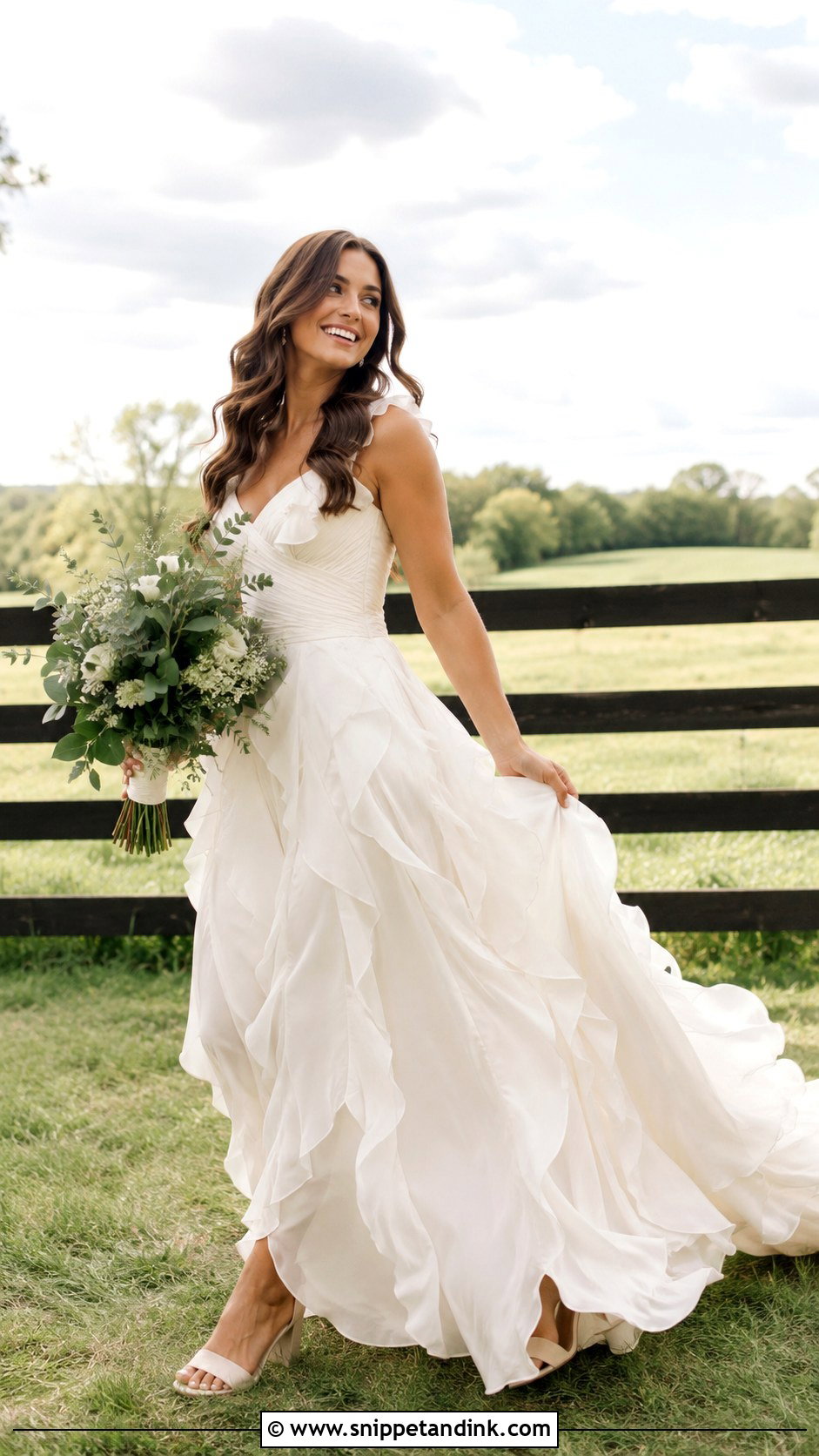
Soft cascades, a tiered skirt or light organza layers make a ruffle farmhouse wedding dress move, where stiff oversized frills only add bulk. A fitted bodice keeps the shape in check. Simple earrings, soft curls, fresh greenery and understated ivory block heels or plain boots. Ruffles on a hem collect grass and seeds outdoors, so tiers that stop an inch above the ground stay cleaner than ones that sweep.
23. Backless Farmhouse Wedding Dress
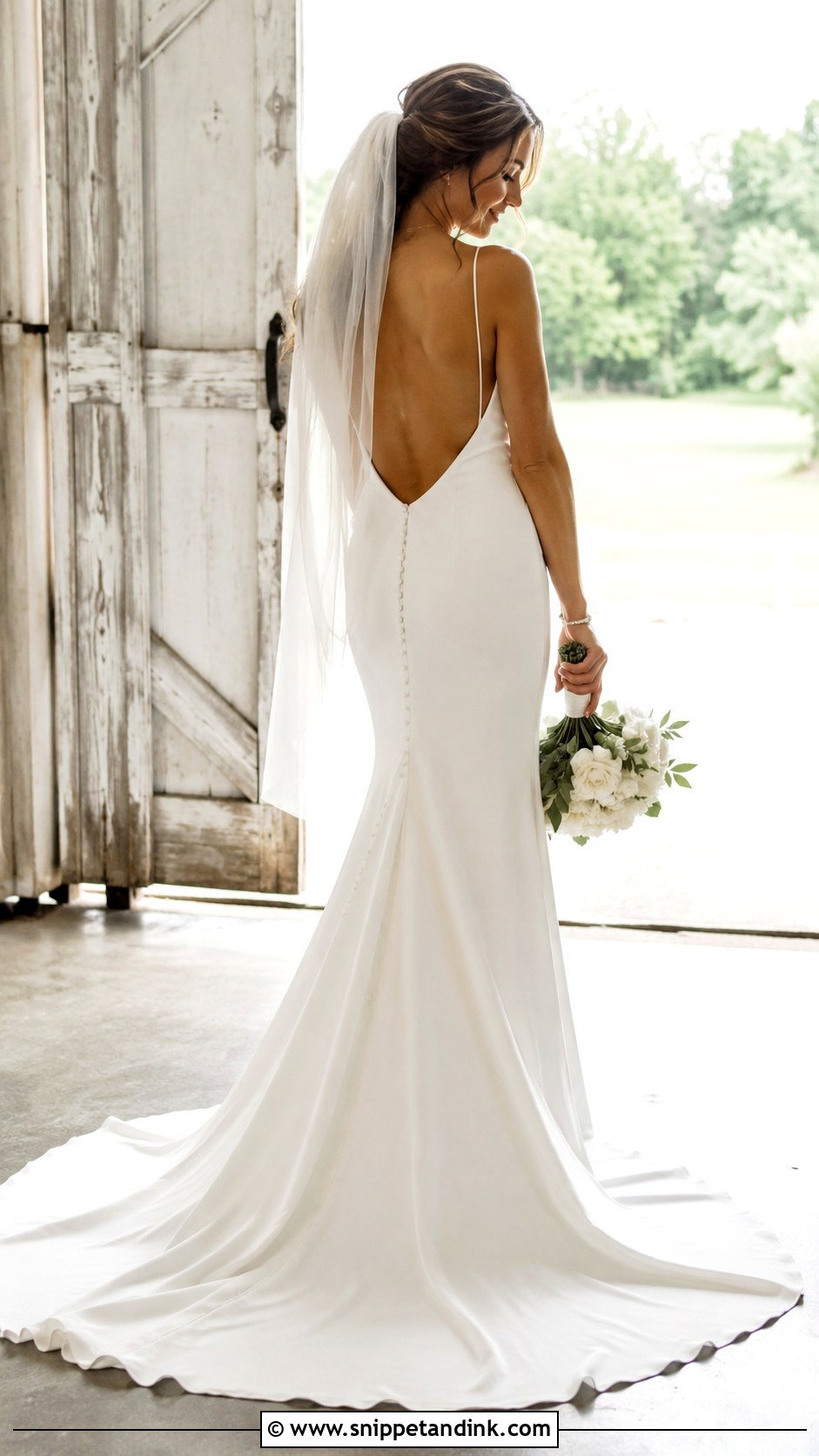
An open back gives a simple gown its surprise. Lace, crepe or satin with a secure fit, maybe fine straps, lace edging or covered buttons along the low edge. Hair up or swept aside, simple earrings, a bracelet, and a veil you can take off after the ceremony. Warm evenings and sunset portraits suit it. I check backless gowns with the bride bending to pick something up, because that’s when a low back gapes away from the skin.
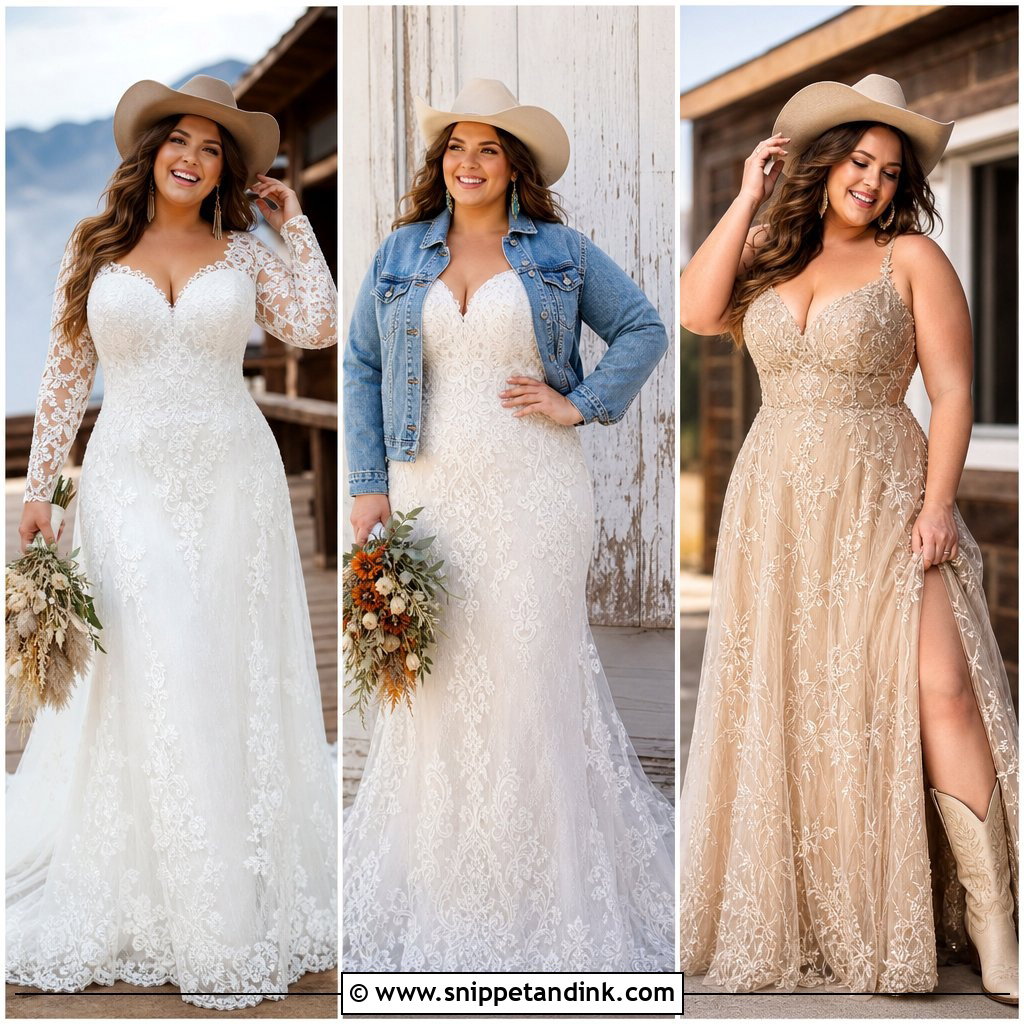
24. Plus Size Farmhouse Wedding Dress
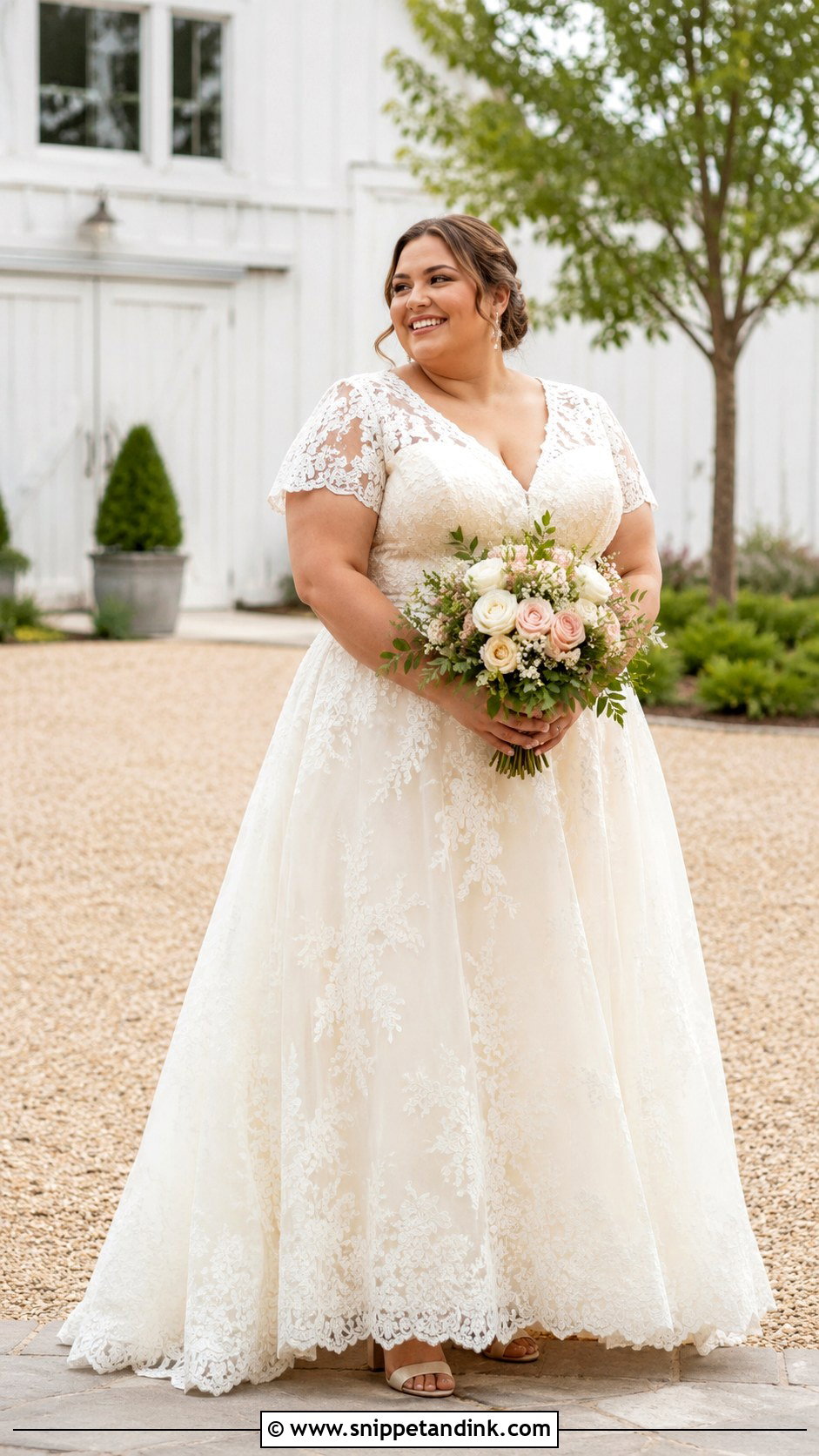
Support is the first thing I look at for a plus-size bride, before style. Structured bodices, good lining, secure straps or sleeves and fabrics that move with you all matter; A-lines, soft fit-and-flares, lace sleeves and corset-style bodices all work well. Comfortable block heels or boots, jewelry in proportion and a bouquet sized to your frame. Ignore trend lists. Order in the size that fits your largest measurement and let the seamstress take in the rest, since letting out has far less fabric to work with.
25. Maternity Farmhouse Wedding Dress
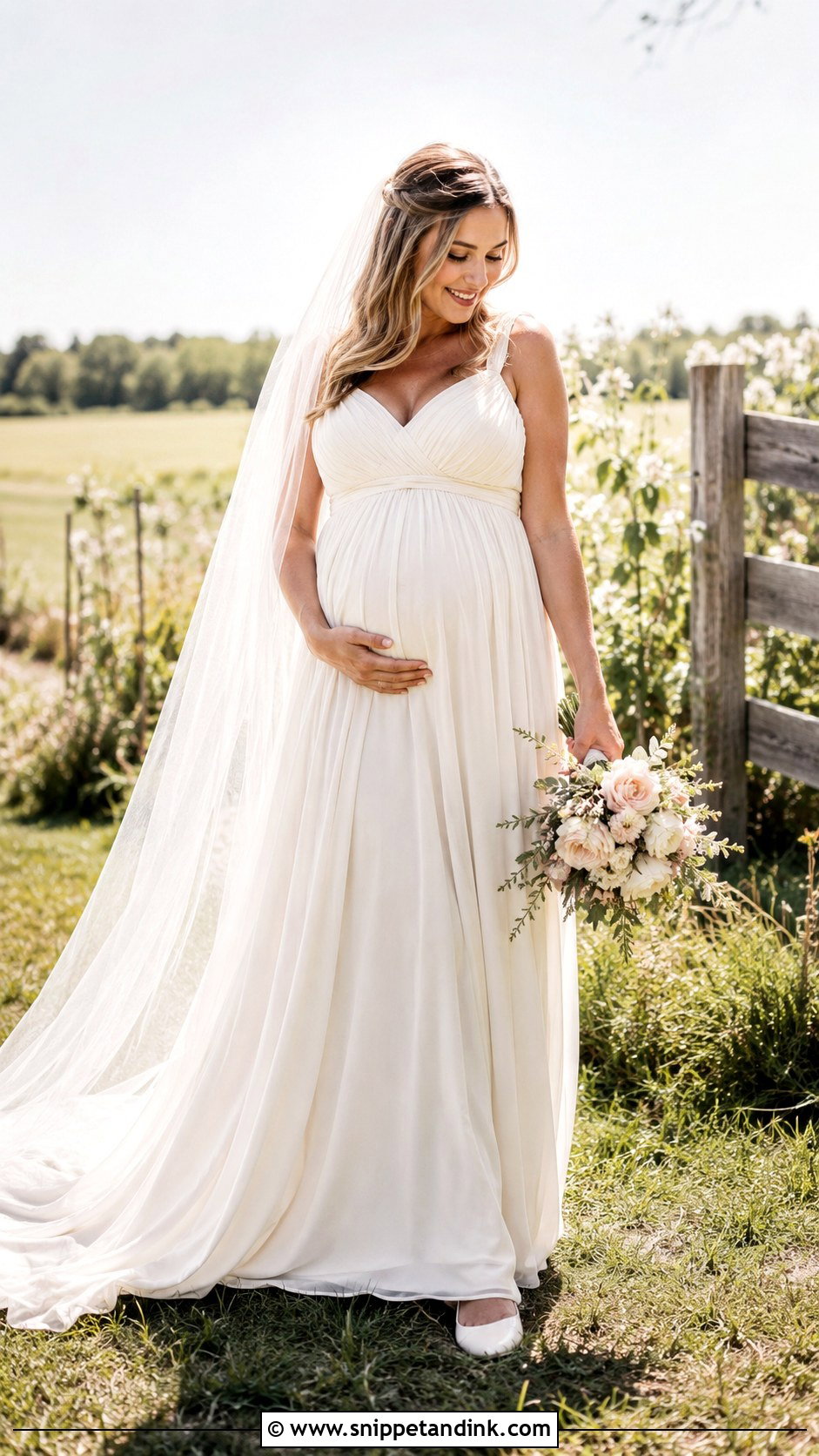
Comfort for a whole day comes first with a maternity gown. Empire waists, flowing A-lines, stretch lace and soft chiffon give room without losing shape, with supportive straps, gentle lining and a secure neckline. Low block heels, bridal flats or comfortable boots, and a floral crown, loose waves or a simple veil. Breathable fabric matters more than usual, because pregnancy runs warm and a farmhouse in summer can get very hot by the evening.
Wearing Your Mother’s Dress to a Farmhouse Wedding
Heirloom gowns suit farmhouse weddings, and I’m always glad when a bride wants to try one. Have it looked at by a specialist cleaner or restorer first. Old silk and lace often yellow along the folds, and some marks lift while others are permanent. Better to know before you plan the alterations.
- Seams on older dresses usually have only a small allowance, so letting a dress out is often limited.
- Puffy 1980s sleeves can be removed or rebuilt, and a high neckline can be reshaped; the skirt is harder to change.
- Spare lace from a hem or train is valuable; a seamstress can use it to repair or reshape the bodice.
- Allow extra time. Restoration and alterations on old fabric are slower than on a new gown.
A Maternity Gown That Fits on the Wedding Day
The bump keeps changing, so timing matters more than the dress itself. I’d buy a gown with built-in give, such as stretch lace, a lace-up back or an empire seam, and order it to fit your current bust with room for growth. Leave the final fitting as late as your seamstress allows, ideally a week or two before the wedding.
Swelling in the feet and ankles is common later in pregnancy, so choose shoes with a little stretch and break them in early. Keep a pair of flat sandals at the venue as well.
Does It Feel Right Beside Weathered Wood?
Lace, crepe, satin, tulle and embroidery can all suit a farmhouse when the outfit is styled as one piece rather than a collection of trends. What matters most is how the gown sits beside wood, fields, flowers and soft outdoor light, and how you feel in it by the last song. Try your favorites on with the shoes you’ll wear, picture them in the barn, and go with the one you forget you’re wearing.
You'll Like These Ideas:


Leave a Reply