
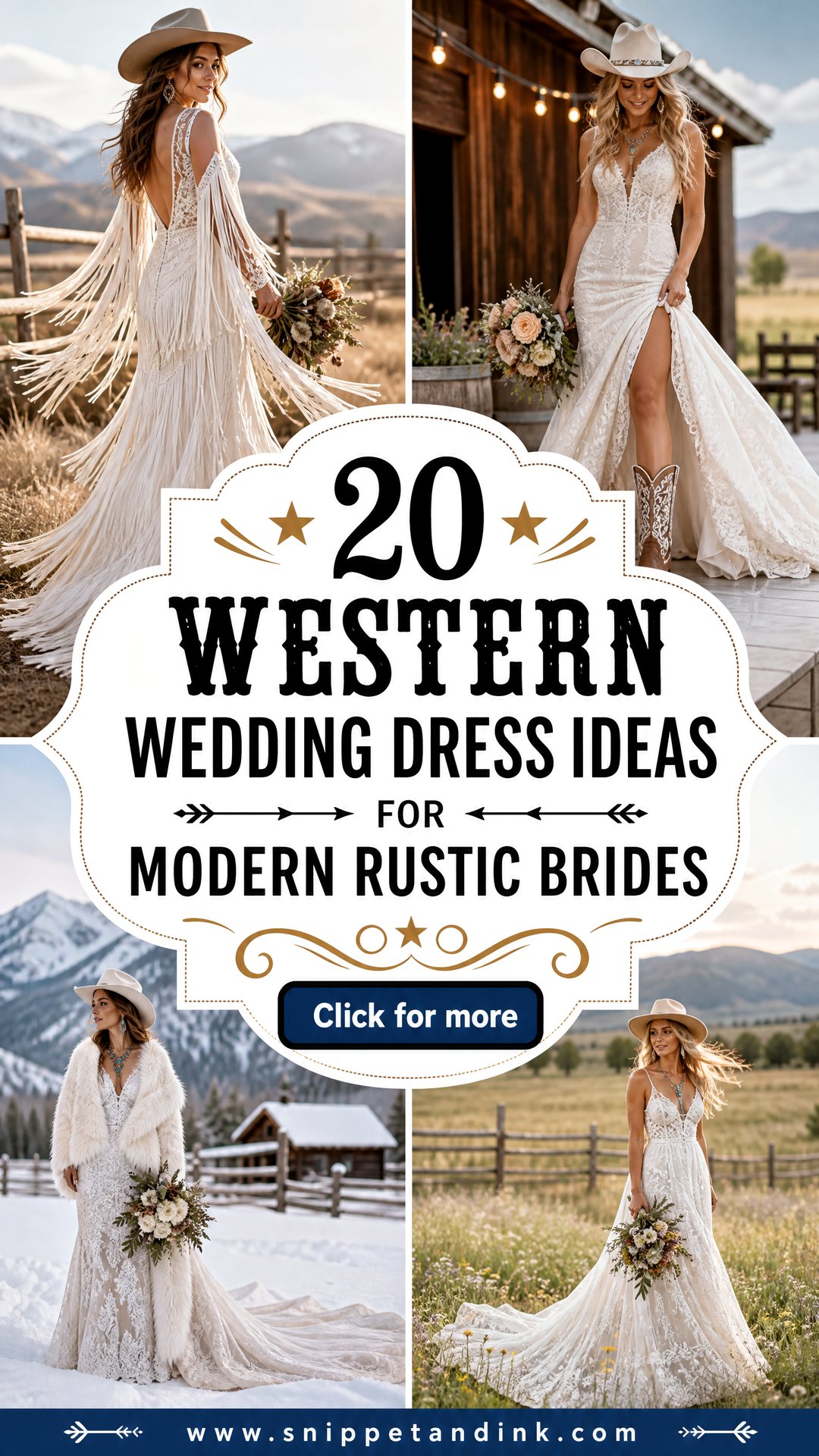
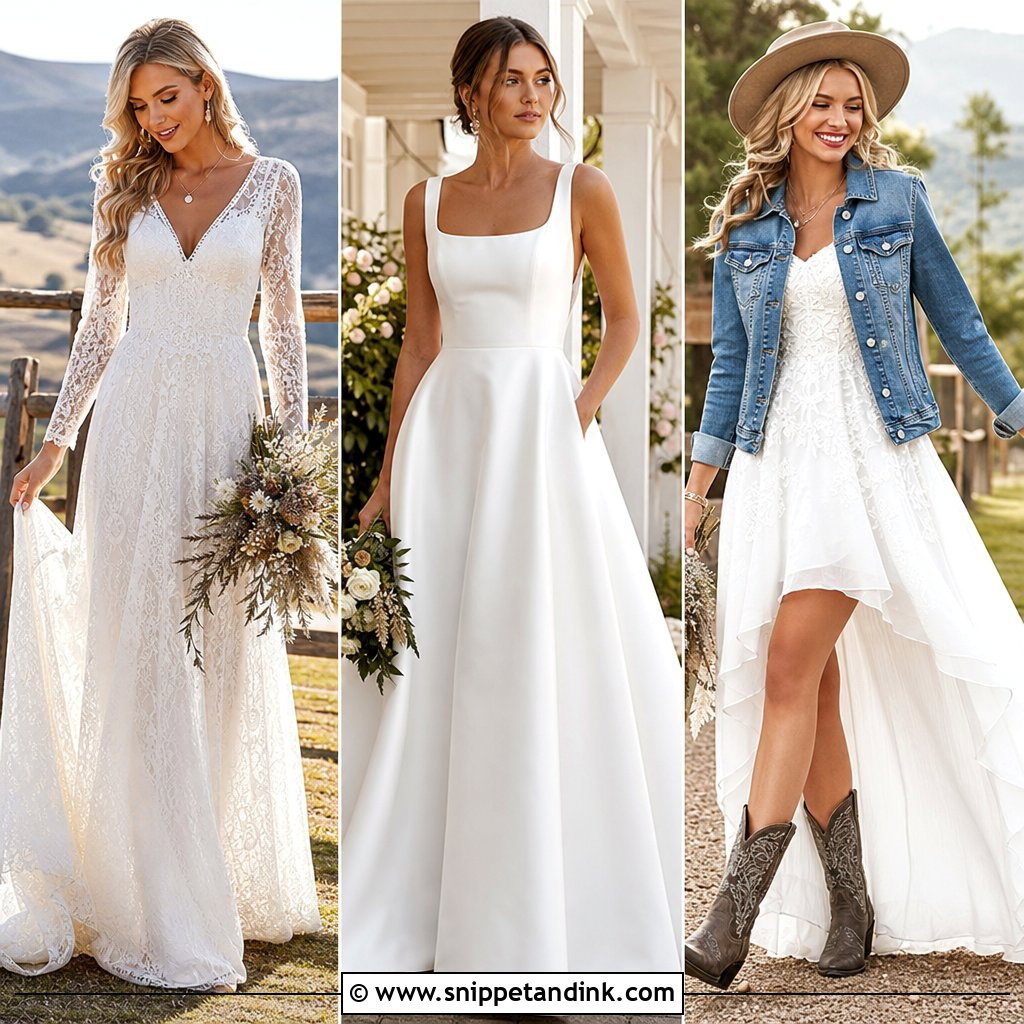
Western bridal fashion works best when the dress is bridal first and the West comes in through the details: lace, fringe, embroidery, boots, a belt, a hat or a heritage shape. I let the venue lead. An open ranch suits a flowing gown, while a modern barn or lodge can take something structured in satin. Then I think about the ground, because grass, gravel and old floorboards all test a hem and a heel differently. Pick a shape you can move in and keep the accessories in proportion, and you’ll look like yourself rather than a costume. The looks below run from classic lace to short reception dresses, plus notes for petite and plus-size brides and for summer and winter weddings.
The Calendar Behind a Western Gown
Brides who come to me late usually have the same problem: they’ve found the dress, but there isn’t time to make it fit properly with boots. Timing varies by designer and season, so treat this as a rough shape and confirm every date with your shop.
- Eight to twelve months out: start trying on shapes. Many made-to-order gowns take several months to arrive, and some take longer.
- As soon as you order: buy your boots, so you can break them in and bring them to every fitting.
- Two to three months out: first alteration fitting. Lace, beading and corsets often need two or three sessions.
- Two to four weeks out: final fitting in the full outfit, belt and jacket included, with your maid of honor there to learn the bustle.
Short on time? Off-the-rack, sample and vintage gowns can be worn within weeks, and a simple crepe or satin dress alters faster than heavily appliquéd lace. Rush fees exist, but they’re stressful for everyone, you included.
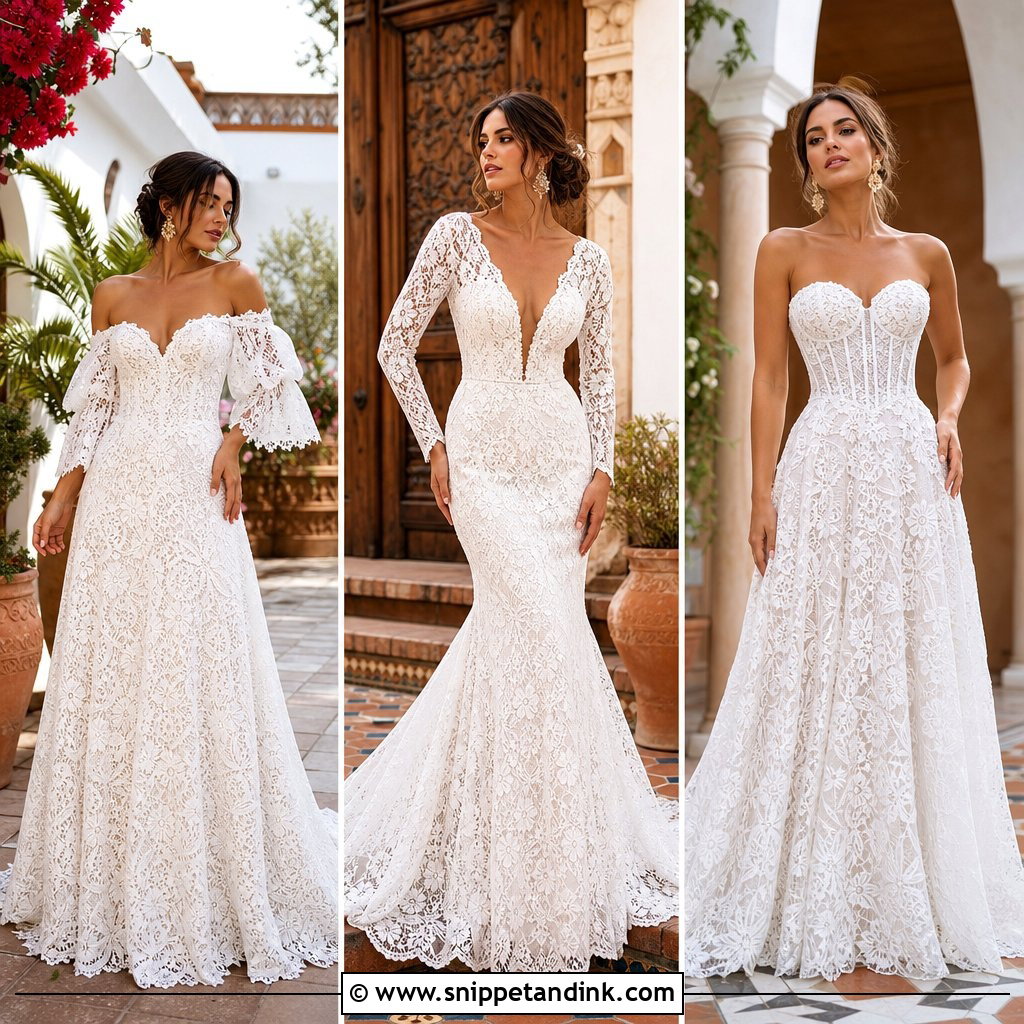
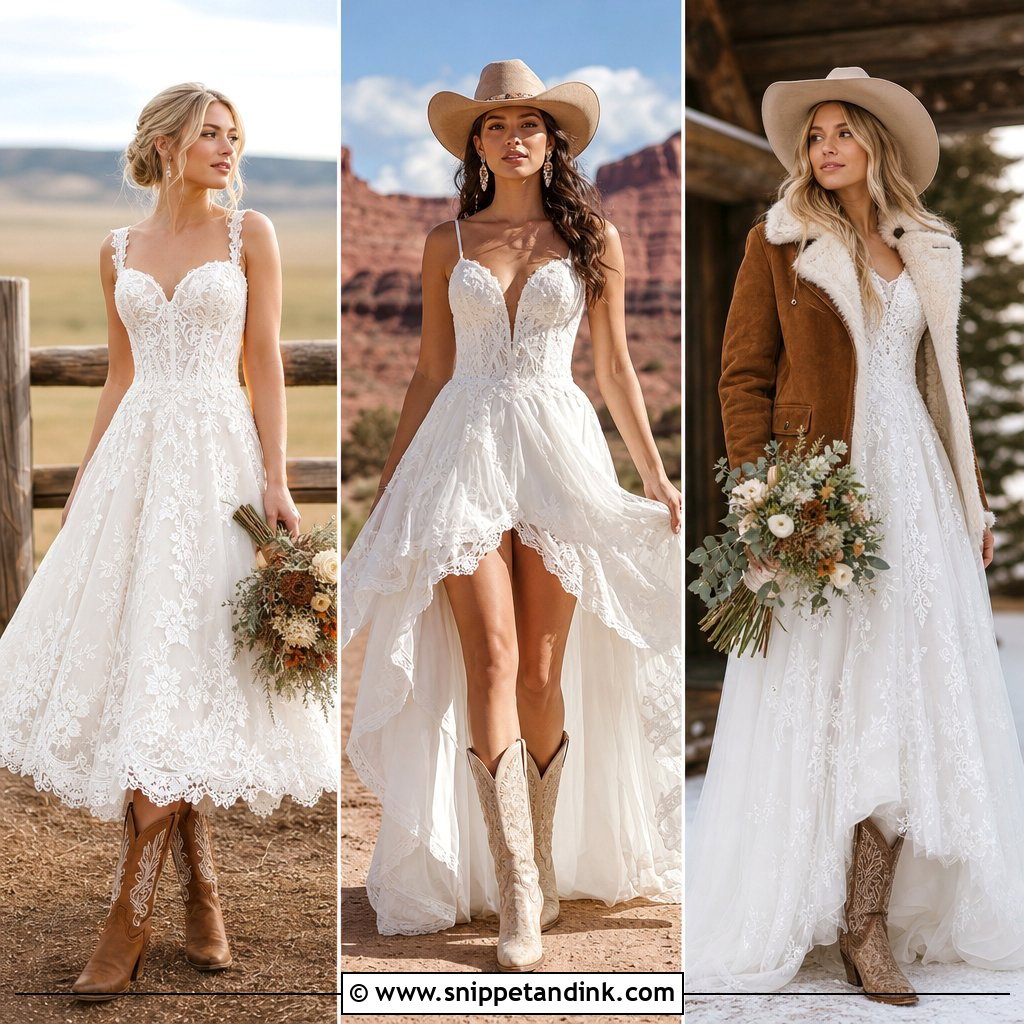
1. Lace A-Line Western Wedding Dress
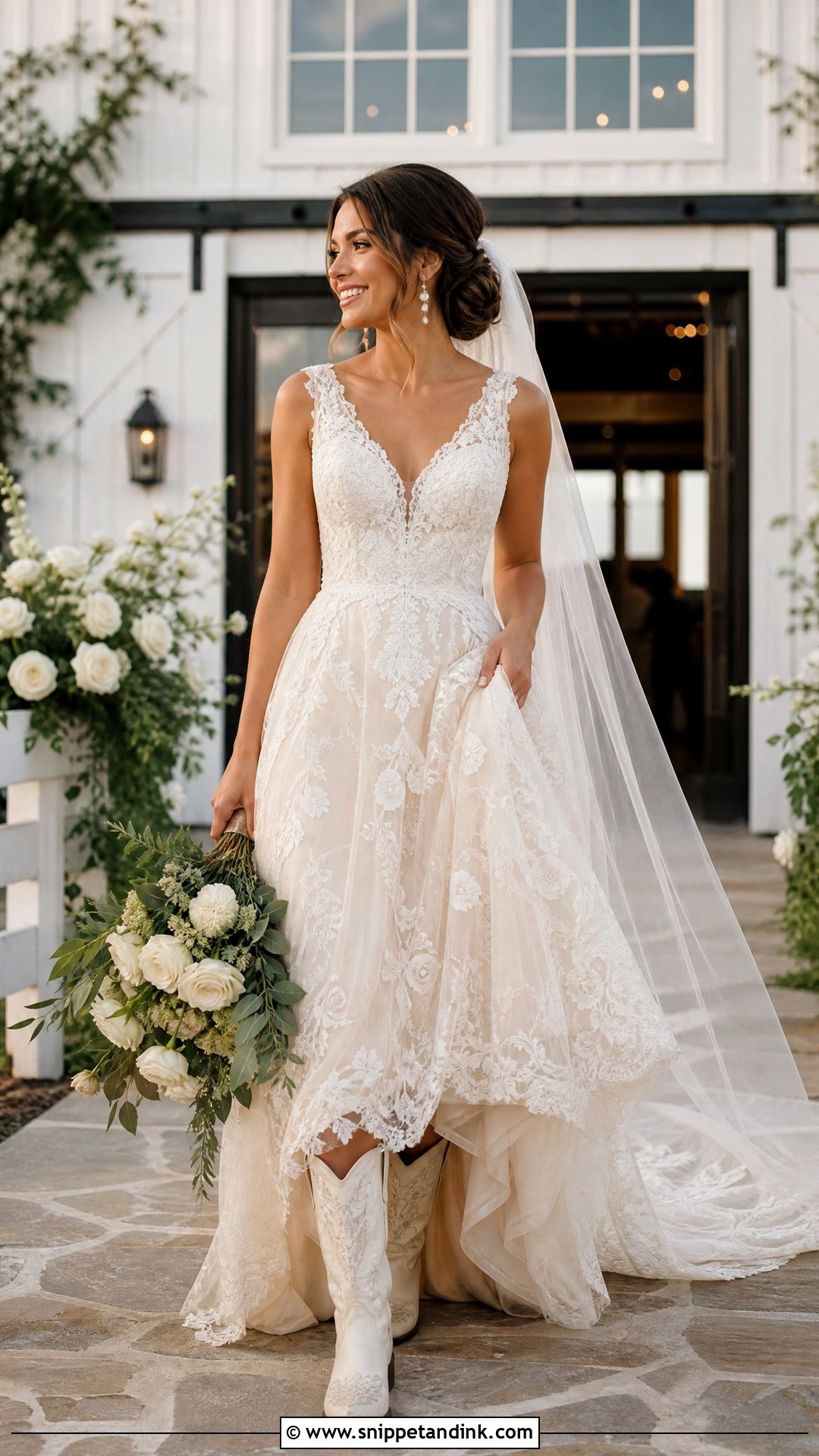
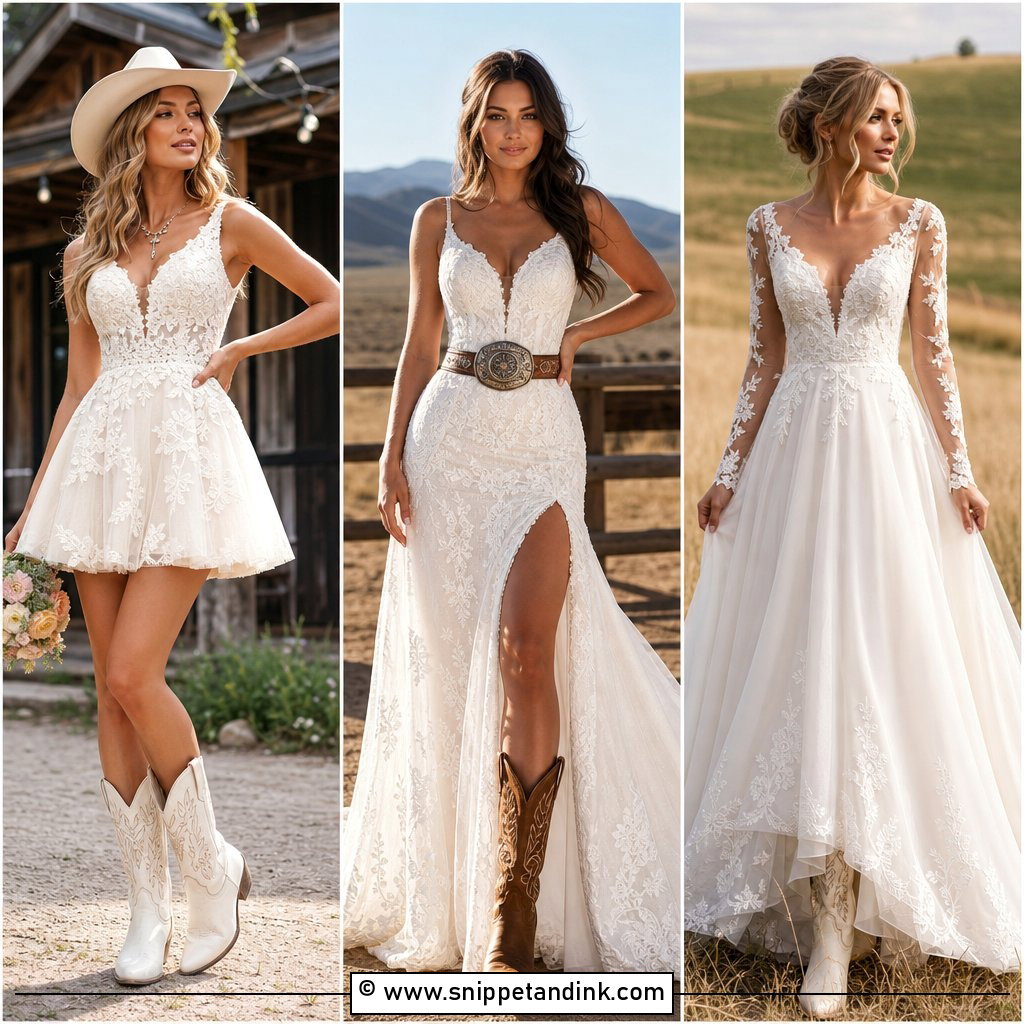
Most first-time Western brides I dress end up in some version of this. Soft ivory lace, a defined waist, a gently flowing skirt and a sweep train that just brushes the floor. A sweep is the right length for packed earth and wooden boards; anything longer needs a bustle and a helper. Ivory embroidered boots stay mostly hidden until you step forward, which is a nice little moment in photos. Pearl drops, a small turquoise ring, and a loose low bun with face-framing waves. A fingertip veil keeps it classic without hiding the lace for long. White garden roses with airy greenery for the bouquet. Ranches, barns and vineyards all suit it.
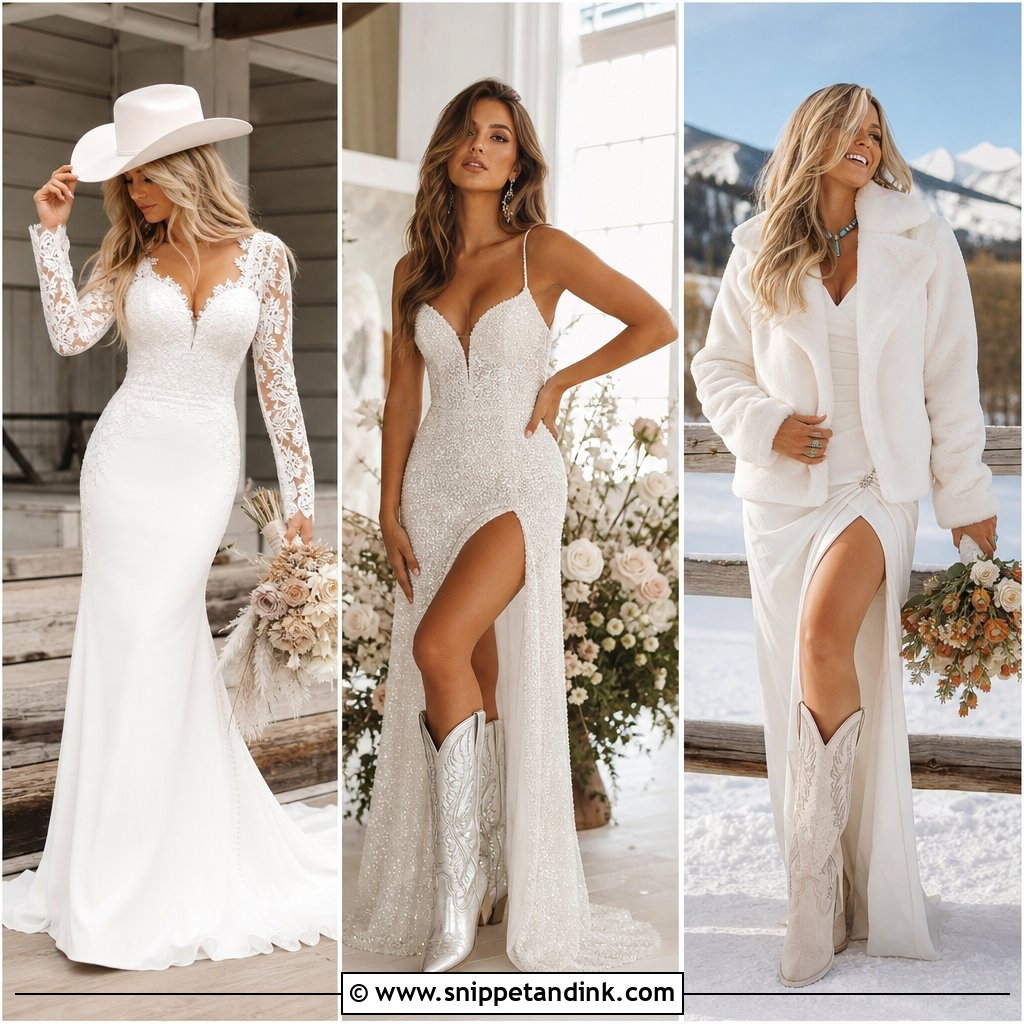
2. Long-Sleeve Lace Western Wedding Dress
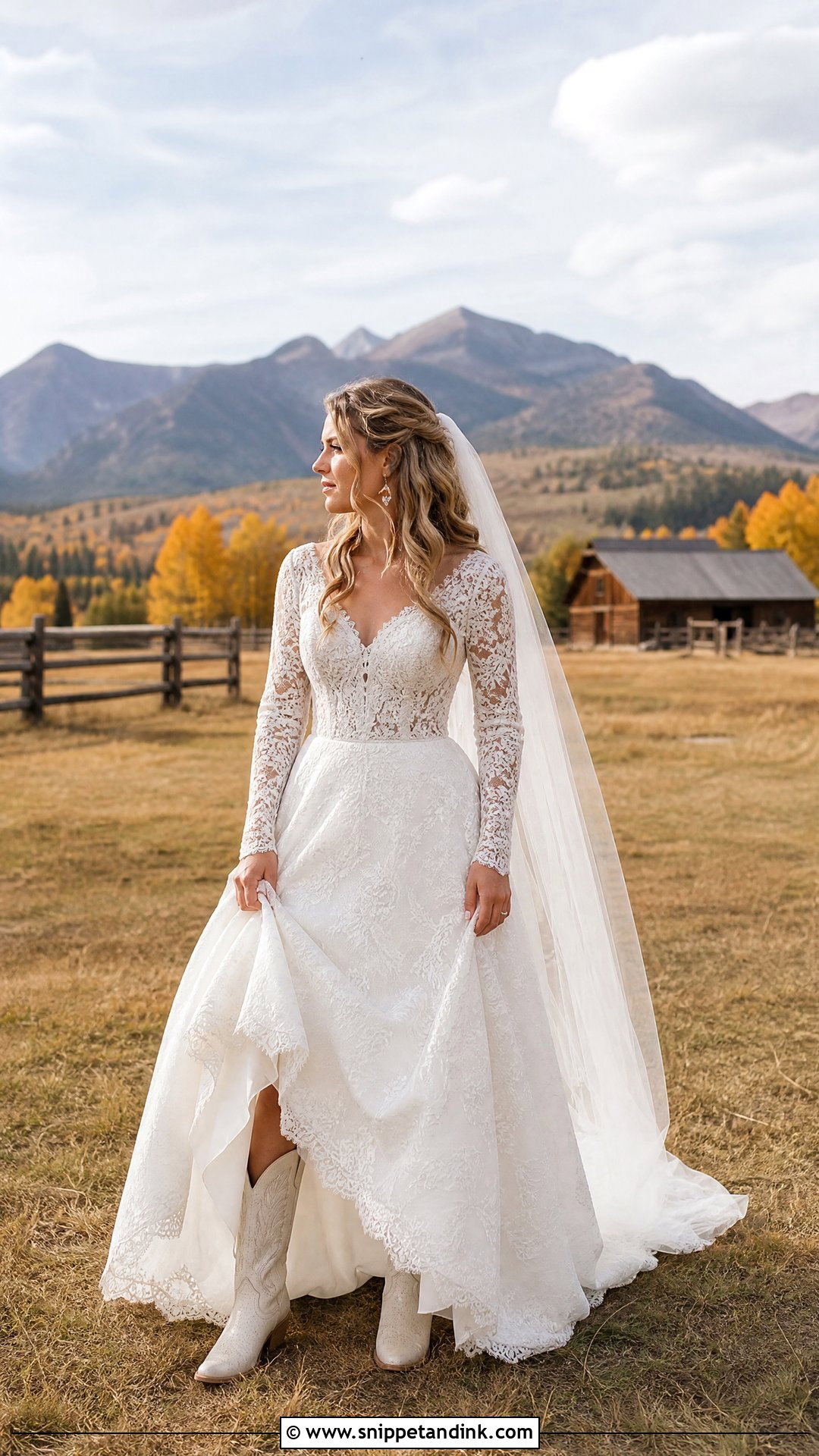
Long lace sleeves are the obvious answer for a cold field or a mountain ceremony. Look for fitted illusion sleeves, a softly shaped bodice and an A-line or fit-and-flare skirt. Illusion mesh varies a lot. Ask to see it in daylight next to your skin, because some nets read as grey or slightly pink against certain skin tones. Pointed ivory boots with minimal stitching keep the attention on the lace. A slim cream or pale tan belt can mark the waist, unless the bodice already has detailed seaming. Small silver earrings, soft curls and a chapel-length veil. It gives coverage for fall, winter and altitude without feeling heavy.
3. Boho Bell-Sleeve Western Wedding Dress
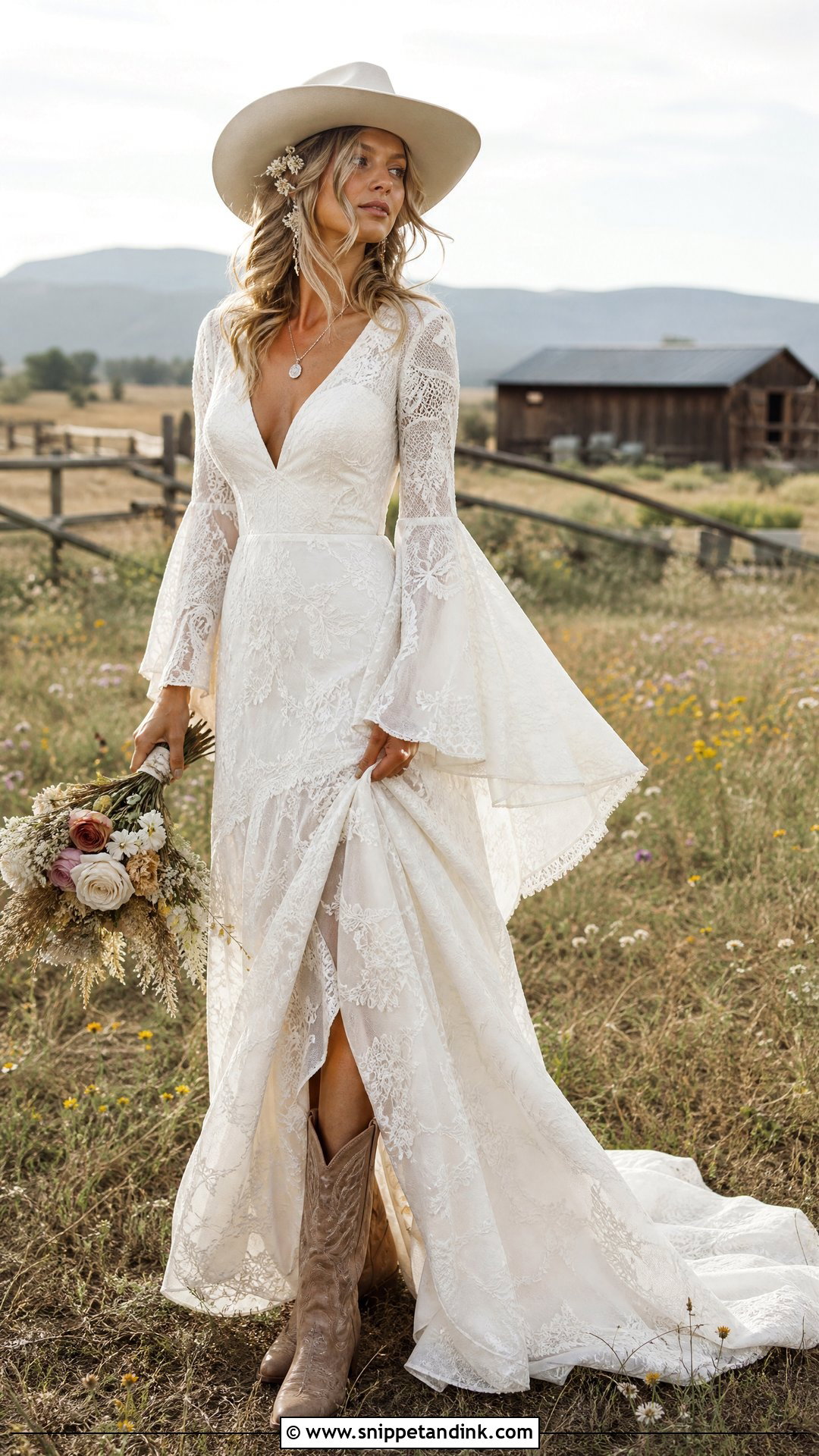
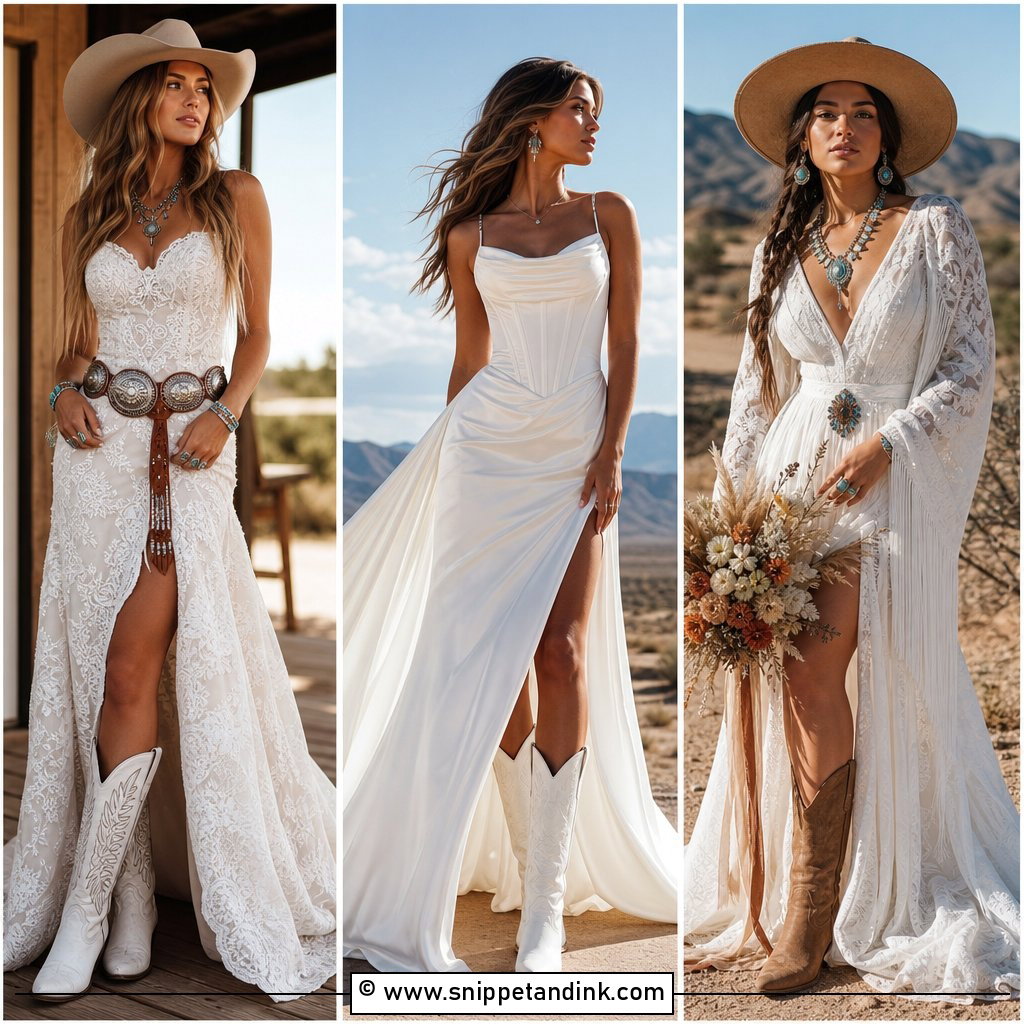
Bell sleeves look free and easy in a breeze, and they’re the one detail here I’d test at dinner. Pick a flowing chiffon or lace gown with a fitted waist, open back and soft floor-length skirt, and keep the sleeves airy so they don’t swamp your frame. If you’ll wear them all evening, pin them back or ask for a hidden elastic loop at the wrist for eating. Light tan boots, a fine pendant and small floral pins tucked through loose waves. A wide-brim ivory felt hat can take over from the veil for portraits or the reception. A loose bouquet of white flowers, dried grasses and muted greenery suits deserts, wildflower fields and woodland venues.
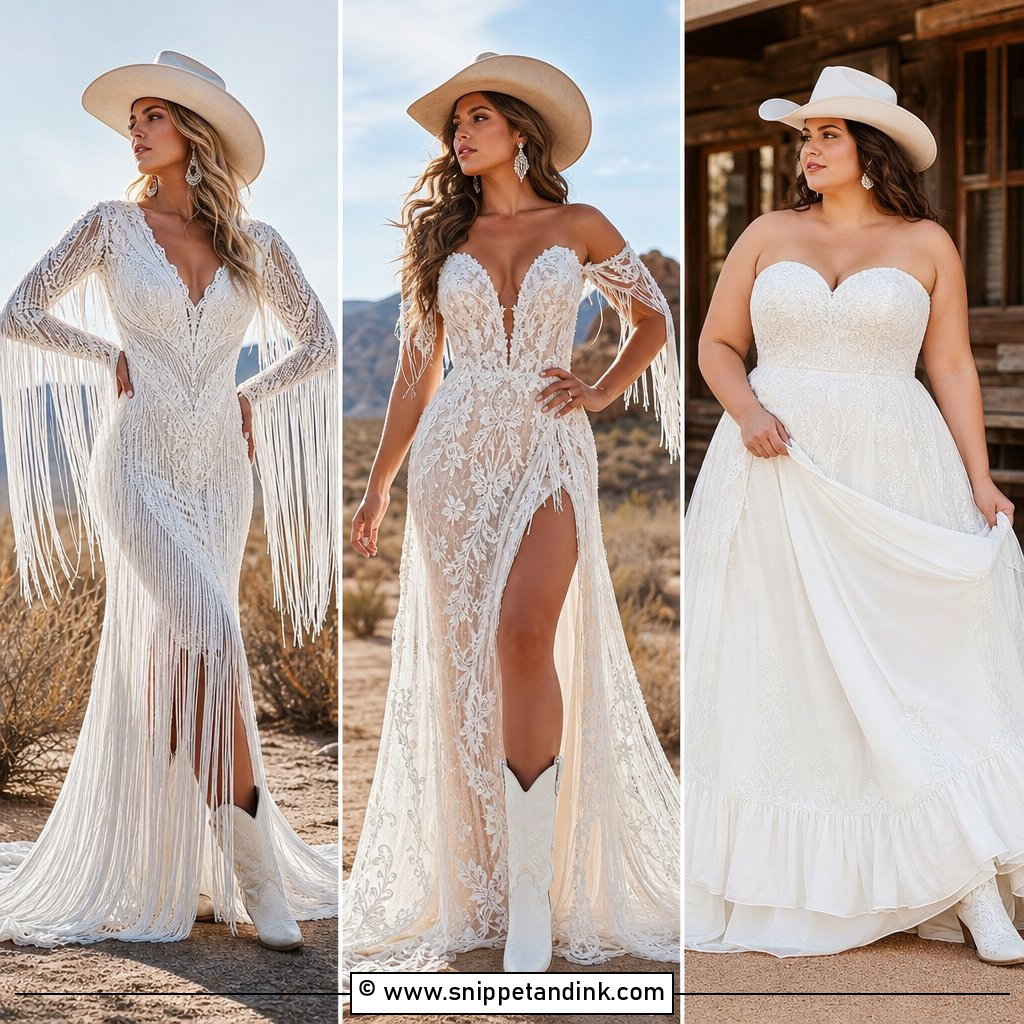
4. Fringe Western Wedding Dress
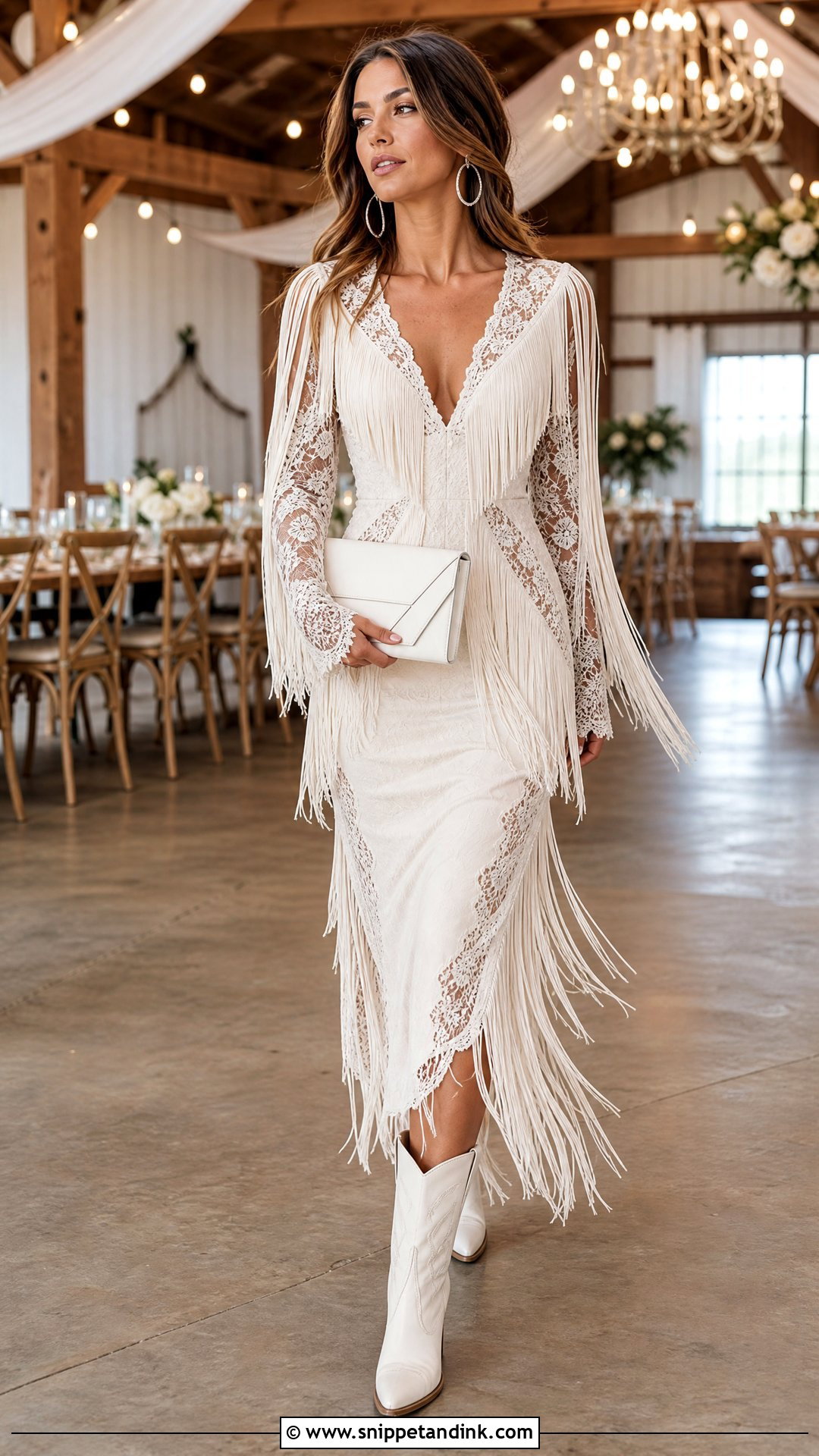
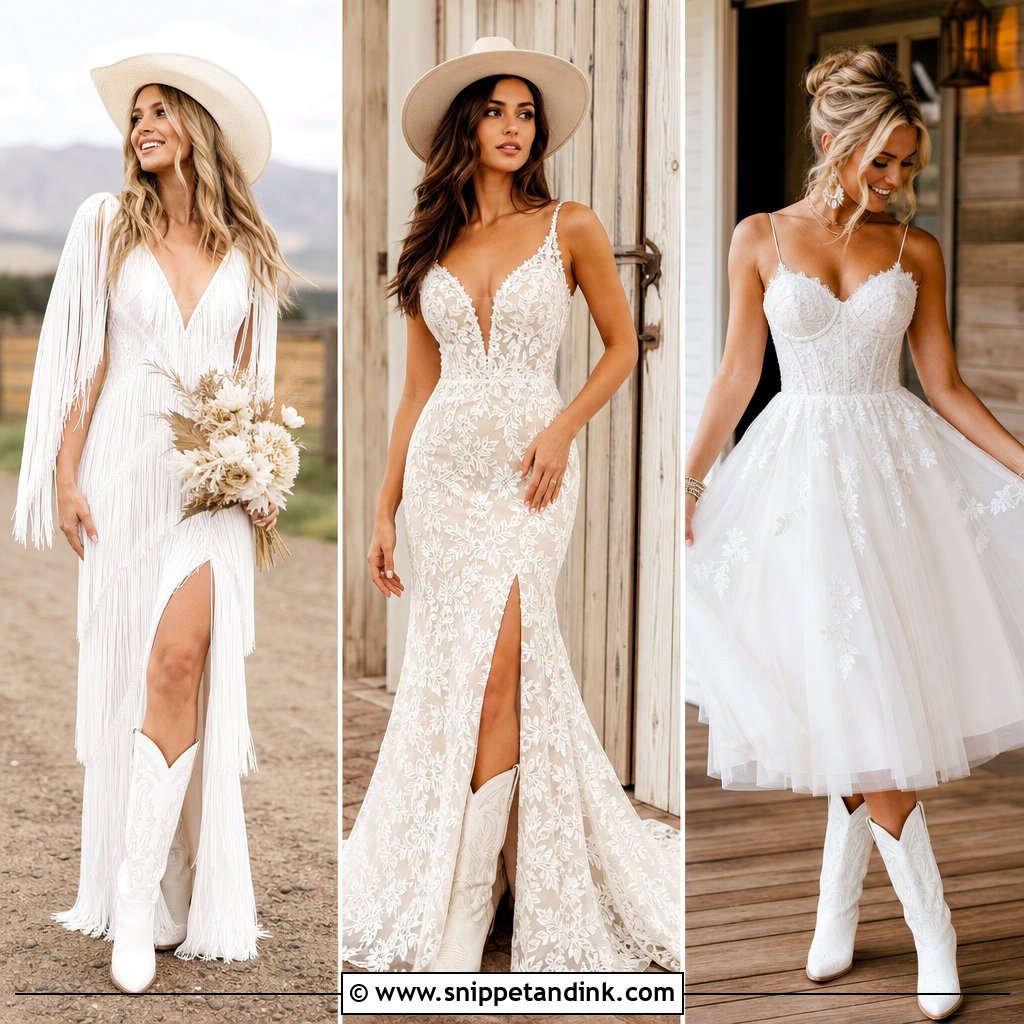
Fringe should move, so I place it where the body moves most: along the sleeves, across the back or down skirt panels of a fitted crepe or lace gown. Covering the whole dress makes it heavy and tangled. Sleek white boots, silver hoops and a structured white clutch. A polished ponytail or soft waves keep the hair out of the fringe’s way. Add a simple white hat after the ceremony for a stronger Western note. Keep in mind that fringe sheds the occasional strand and snags on lace, so don’t pair it with a lace veil. It’s a fit for a bride who loves music, a lively barn reception, or anyone who wants bold but tidy.
5. Satin Slip Western Wedding Dress
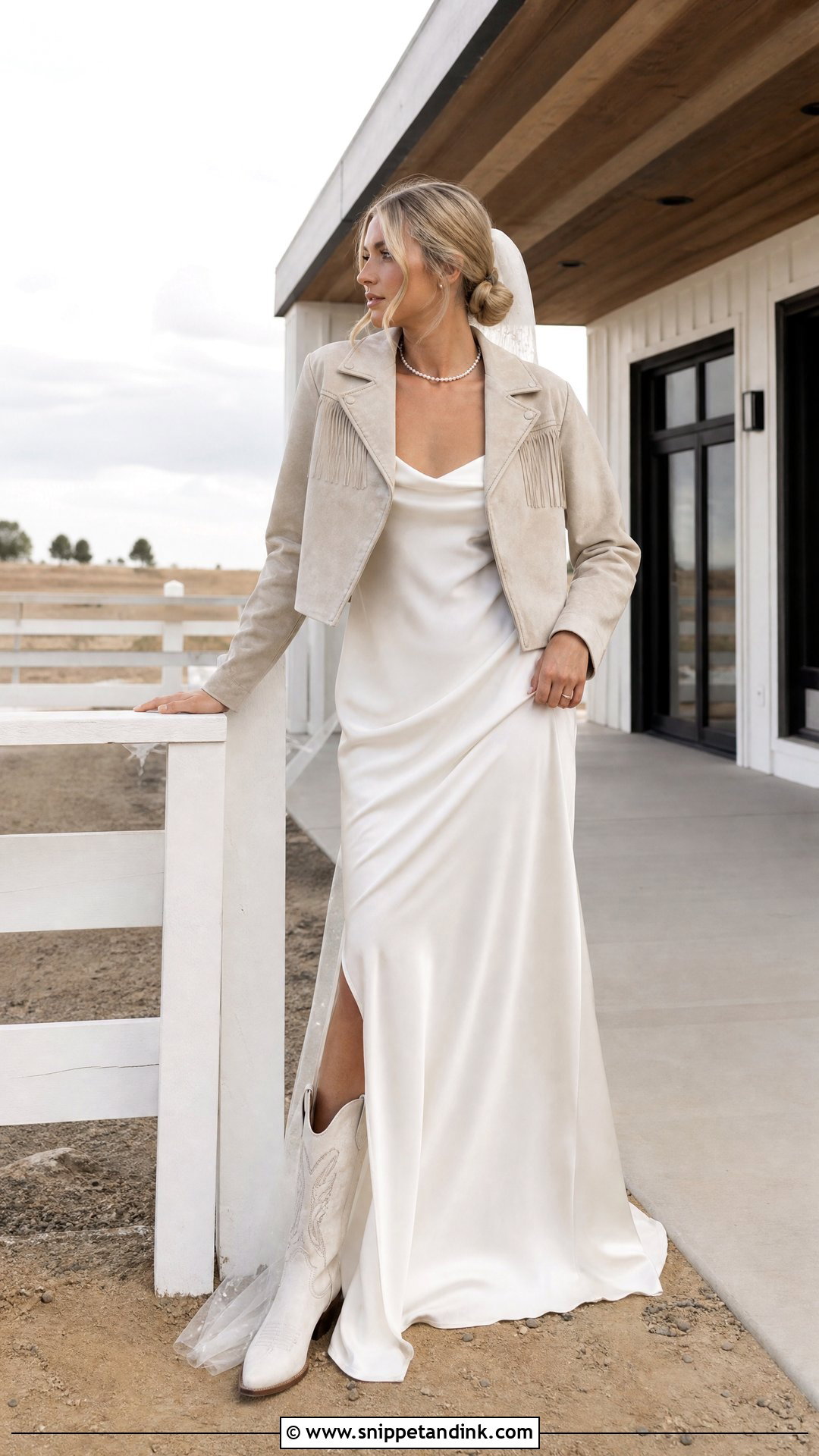
Satin against weathered wood and worn leather is one of my favorite contrasts. Start with an ivory slip dress with a soft draped neckline, supportive straps and a bias-cut skirt that moves when you walk. Bias-cut satin clings, so fit it over the exact underwear you’ll wear and steam it on the day. White or cream boots with tonal embroidery. A pale beige cropped suede jacket covers you for outdoor portraits, and a pearl necklace keeps it plainly bridal. A low textured bun and a simple ceremony veil. Satin already reflects plenty of light, so let the rest stay quiet. Contemporary barns, ranch houses and desert venues all suit it.
6. Corset Western Wedding Dress
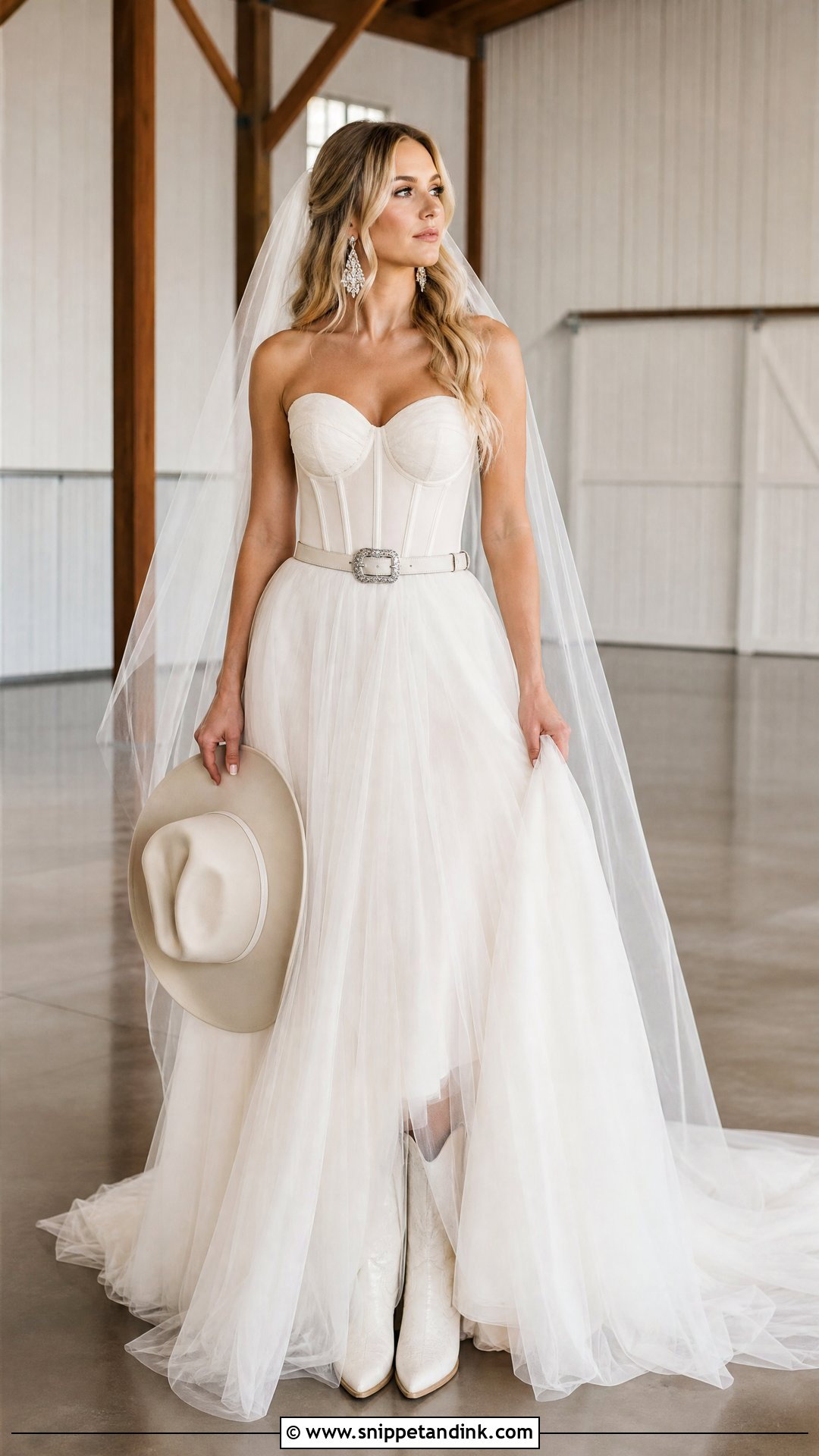
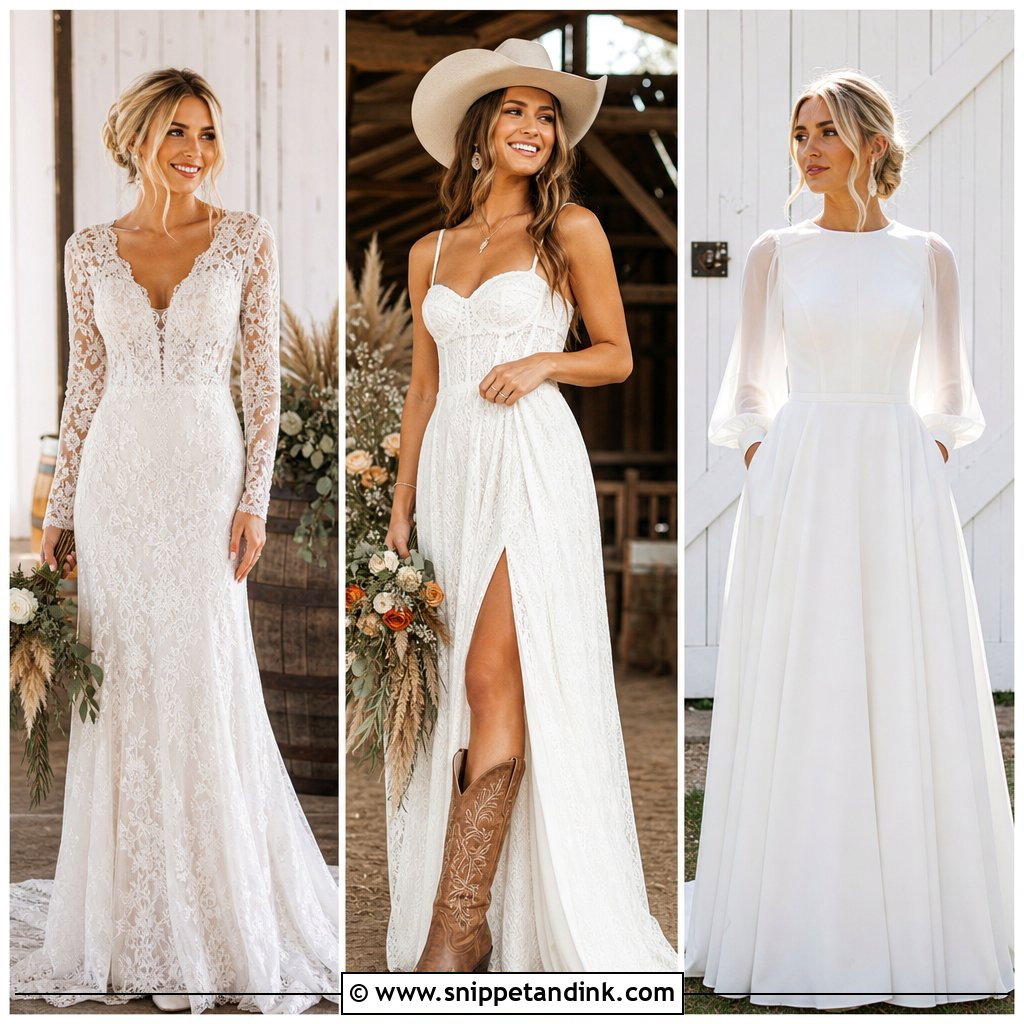
A corset gown balances romance and structure, with the boned bodice doing the shaping so the skirt can be full. Choose a supportive bodice, a softly curved neckline and a full A-line in lace, tulle or matte satin. A slightly dropped waist lengthens the torso and makes the skirt look dramatic. Ivory pointed boots, silver earrings and a narrow belt with a small engraved buckle, only if it sits flat over the boning. No big necklace; let the bodice show. A long veil softens it for vows, a white hat changes the mood for reception photos. I’d book an extra fitting for a corset, since half an inch at the ribs changes how comfortably you can breathe and eat.
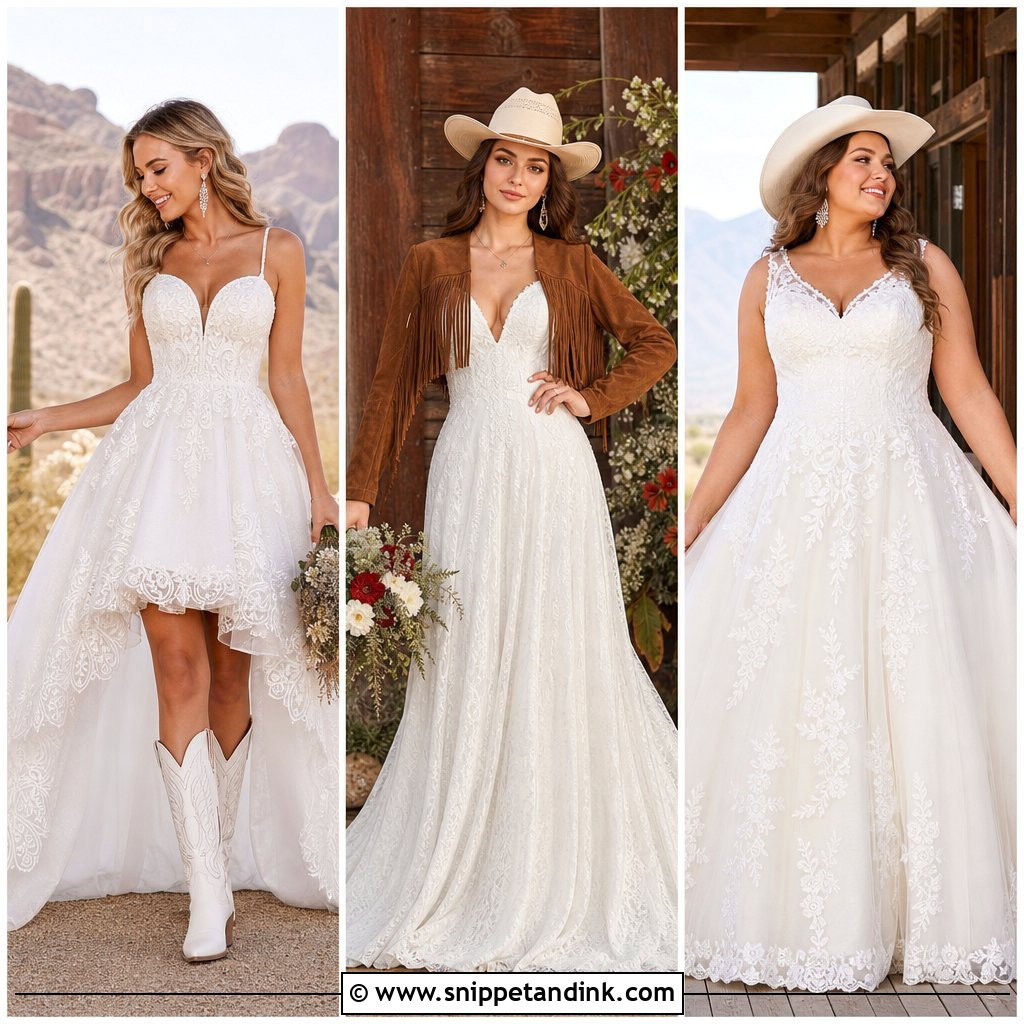
7. High-Low Western Wedding Dress
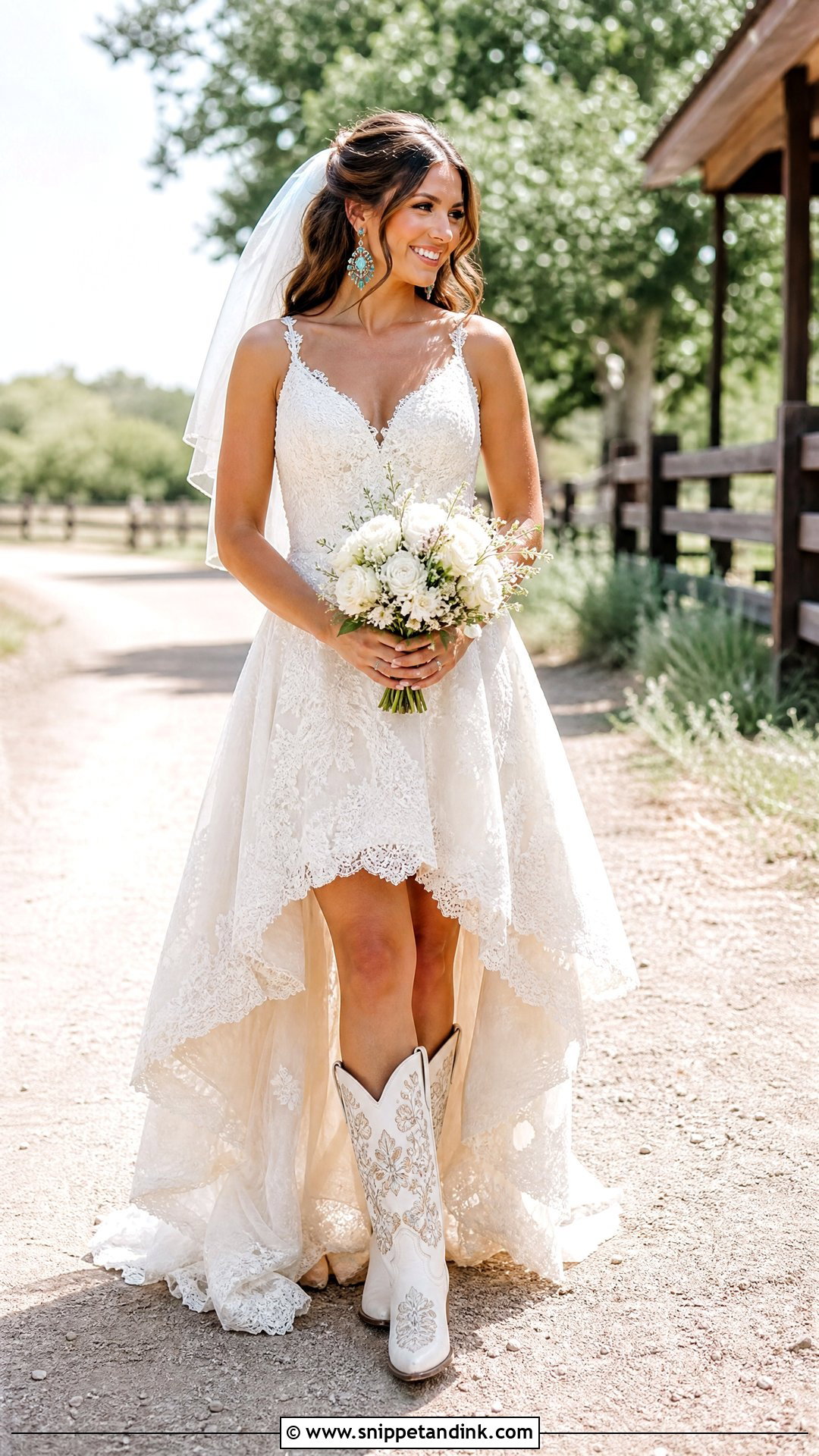
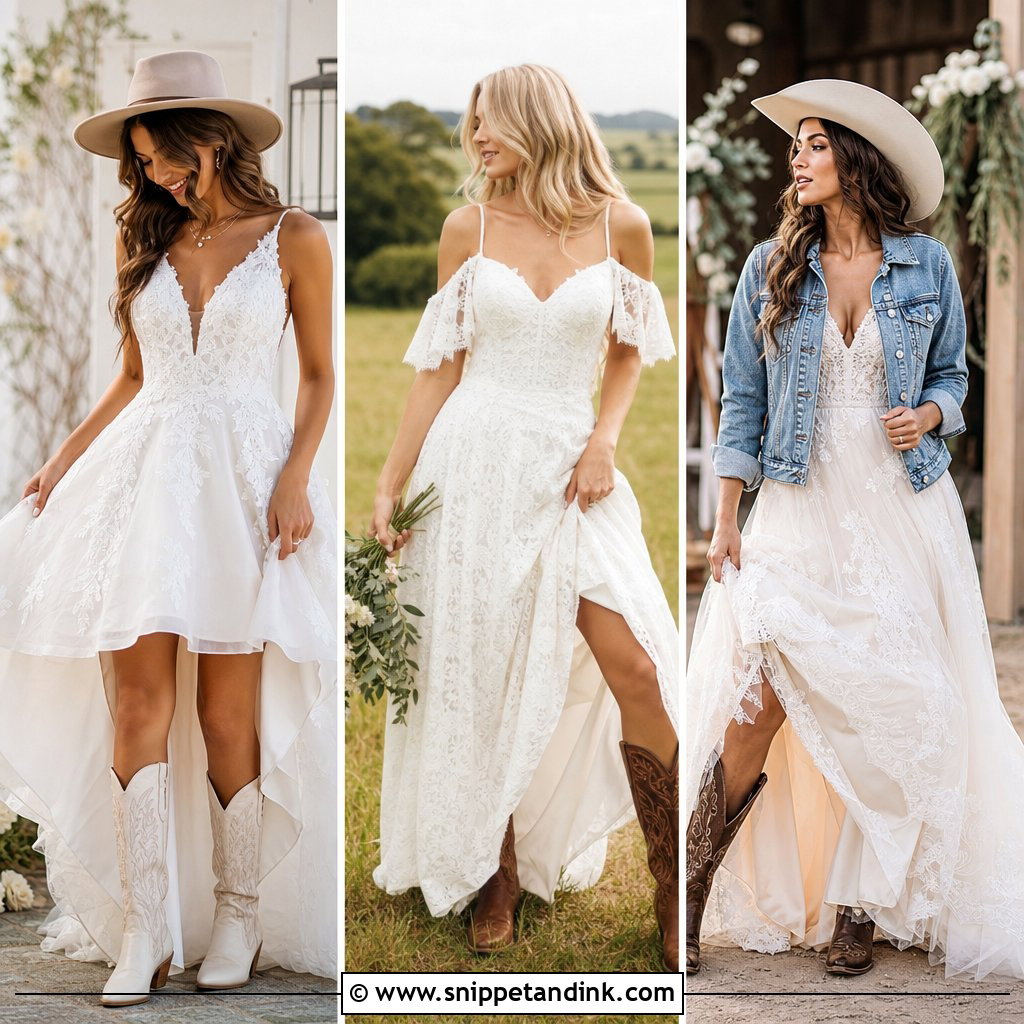
Want your boots seen from every angle? A high-low gown keeps the length and drama of a long skirt while the front sits near the knee. Lace, organza and layered tulle give movement without weight. Detailed white boots with floral embroidery suit it; repeat one thread color through turquoise earrings or a small gemstone hairpiece. A fitted bodice stops the uneven skirt overpowering you. A compact bouquet and a short veil that doesn’t compete with the hemline. I set the front hem by eye in the boots, slightly above where the shaft ends, so there’s no awkward gap of leg. Outdoor ceremonies, courthouses and ranch elopements all suit it.
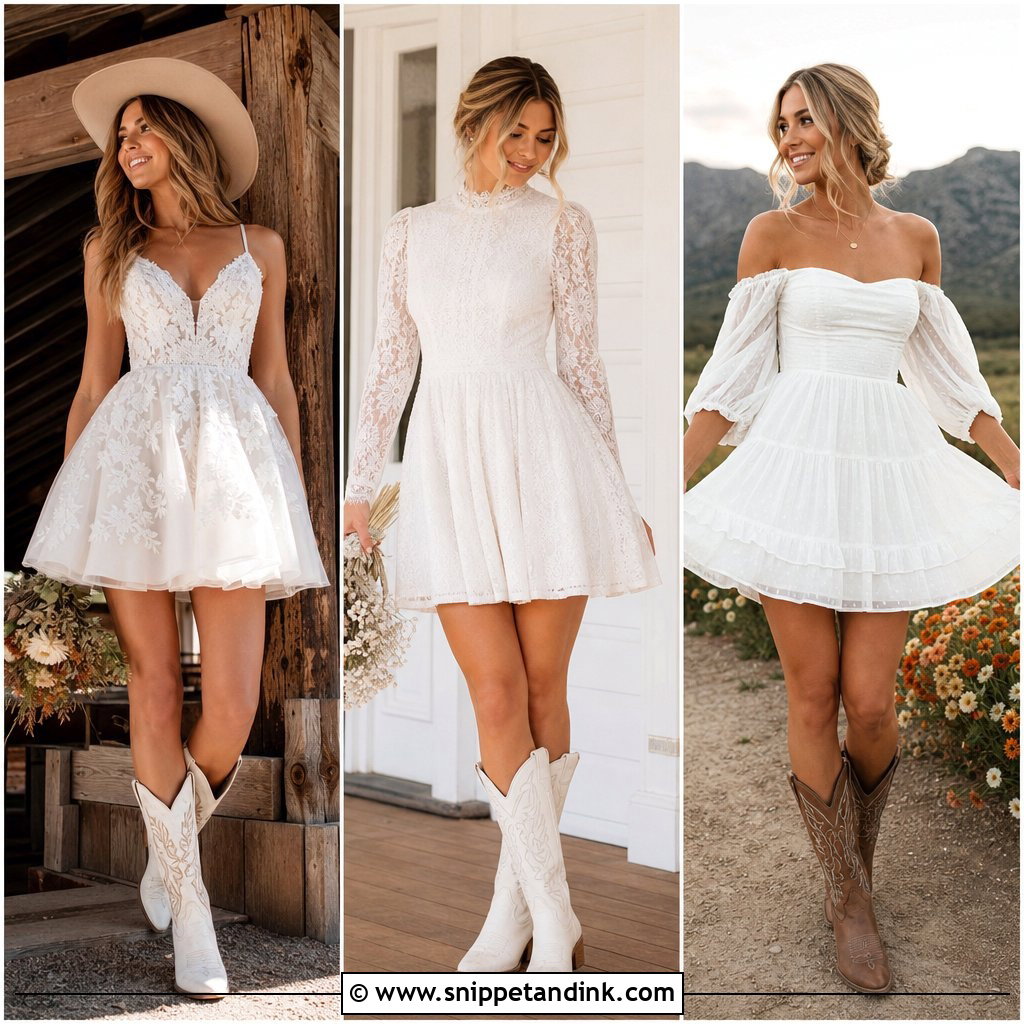
8. Tea-Length Western Wedding Dress
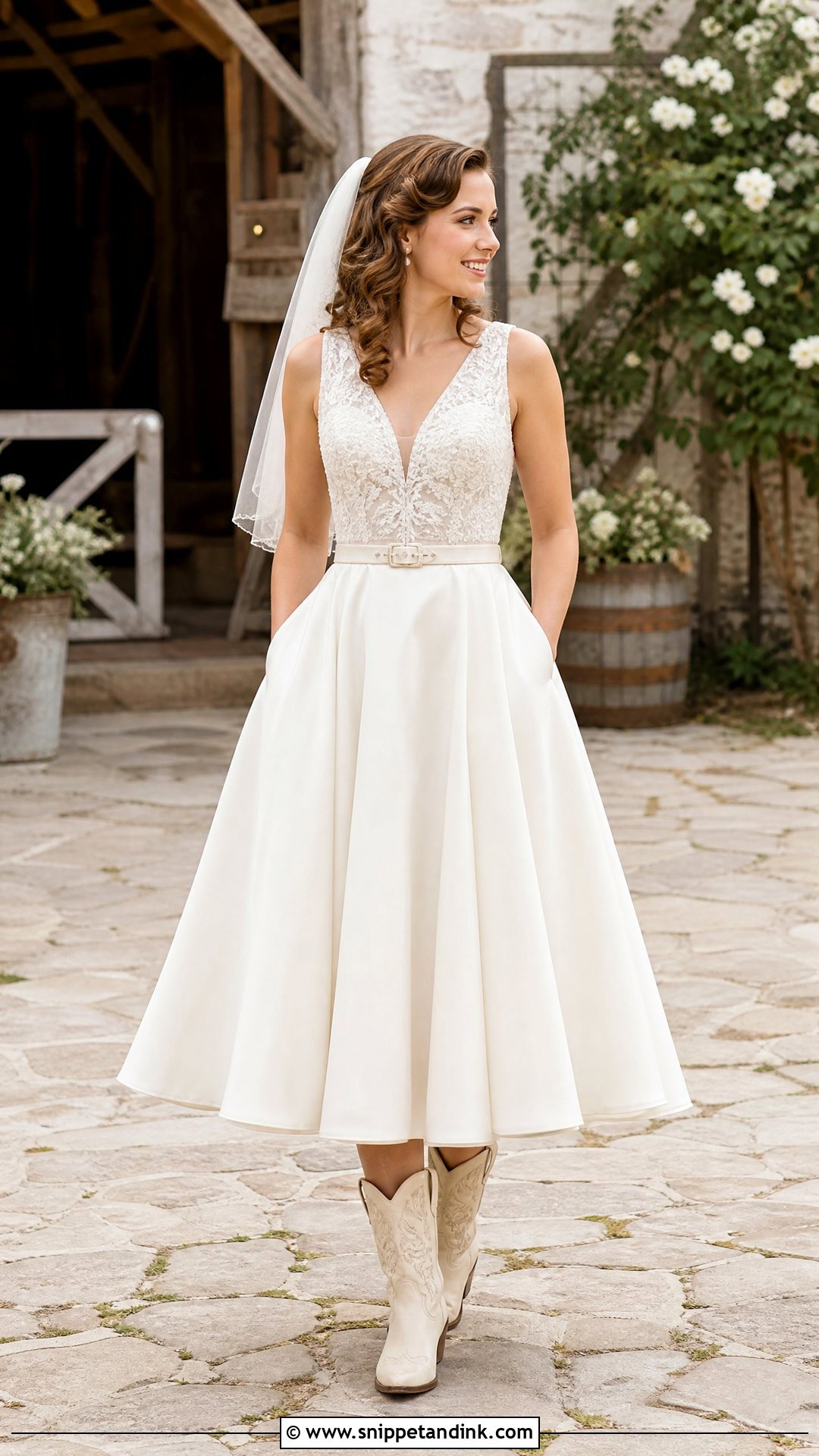
Tea length is the practical choice that also happens to look charming. A fitted bodice, defined waist and full skirt ending between knee and ankle. Cotton lace feels casual, embroidered tulle romantic, structured satin crisp; same shape, three moods. Mid-calf ivory boots let their stitching show. Pearl studs, a narrow belt and a short birdcage or shoulder-length veil. Soft curls or a polished half-up suit the retro proportions. The hem never touches the ground, so garden paths, dusty ranches and dance floors are no trouble. It also makes a good second outfit for a casual reception or send-off.
9. Western Wedding Dress With Cowboy Boots
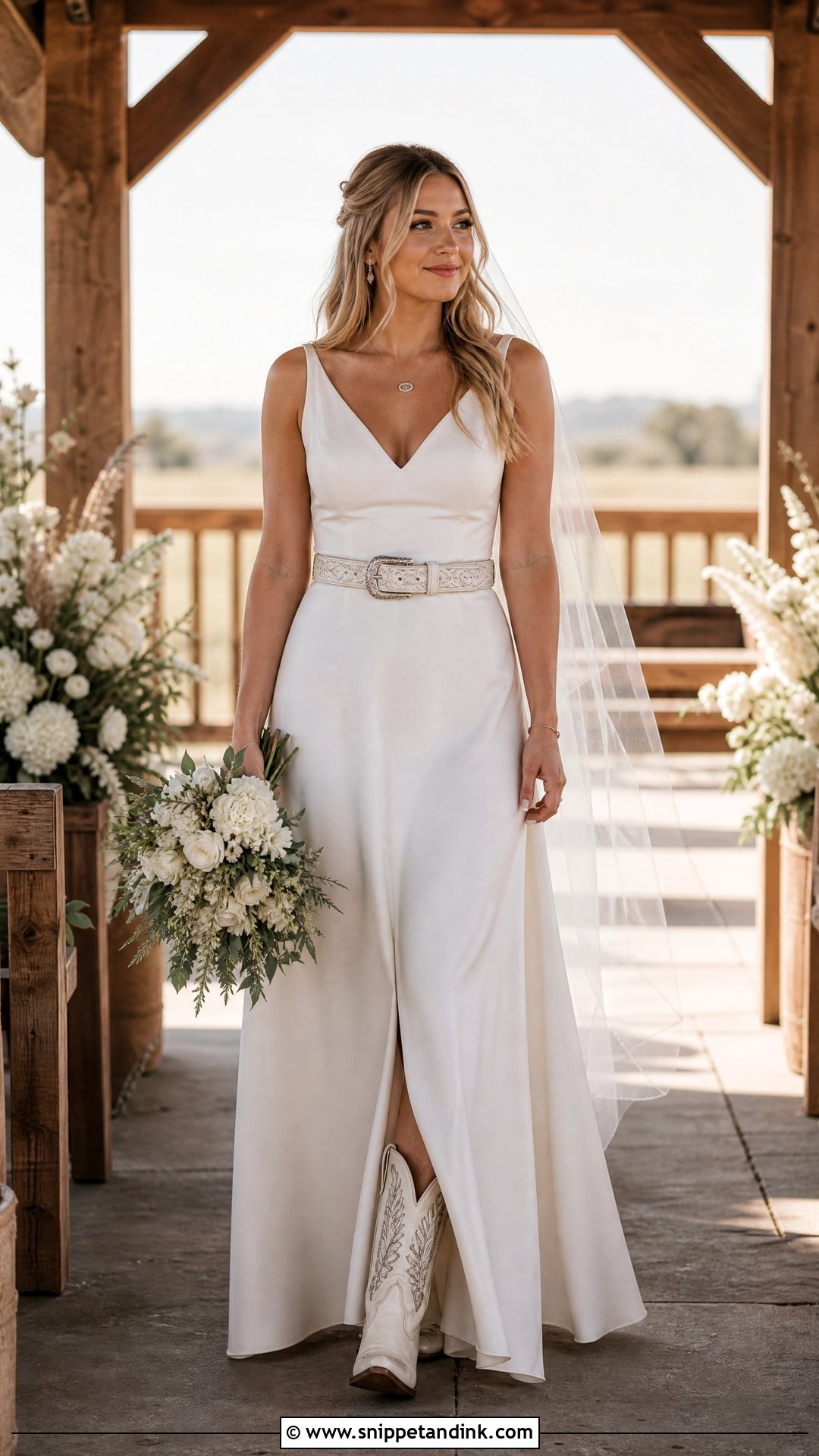
Cowboy boots can carry the whole Western story, so the gown can stay simple. Begin with a plain ivory crepe A-line, sheath or fit-and-flare. Then choose the boots: white embroidery reads modern, brown leather traditional, distressed leather lived-in. Hold the boots next to the gown in daylight before buying, because bright white boots can make ivory fabric look yellow. Have the hem set while you’re wearing the exact pair. A tooled belt, fine silver jewelry and a fingertip veil. A bouquet of white blooms and fresh greenery. Keep the dress streamlined and the boots will do the rest without crowding the bridal look.
10. Off-Shoulder Western Wedding Dress
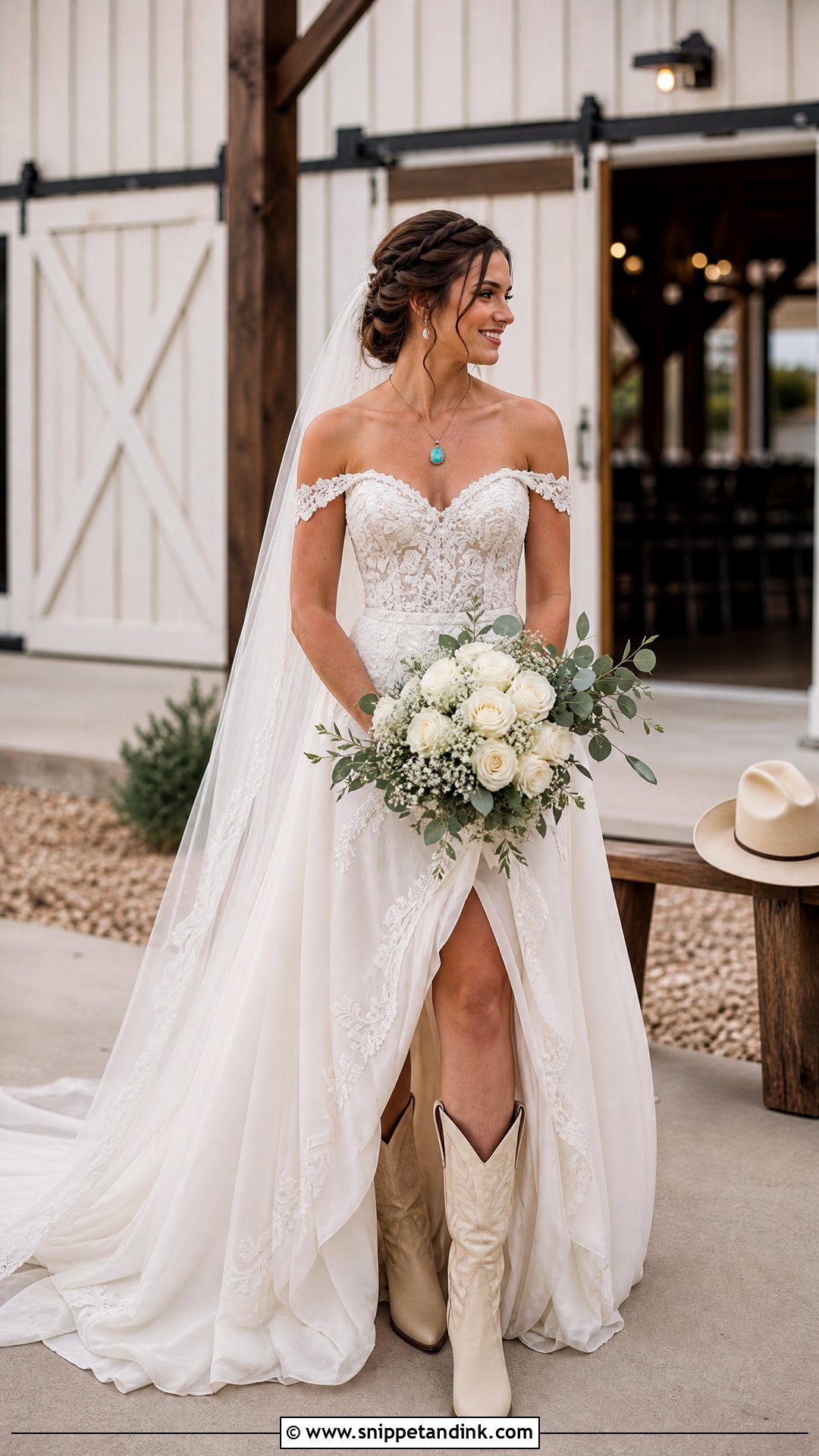
An off-shoulder neckline looks soft next to leather and rough wood, provided it stays where it should. Choose a fitted lace or satin bodice with real interior support, boning or silicone grip, and a flowing A-line skirt. Detachable sleeves give you two looks in one dress. Cream boots, a fine turquoise pendant and a loose braided updo that leaves the neckline clear. A light cathedral veil for the ceremony, an ivory hat for outdoor portraits. White roses with wispy greenery. Raise both arms over your head at the fitting. If the neckline slides, it needs taking in now, not taping on the day.
11. Square-Neck Western Wedding Dress
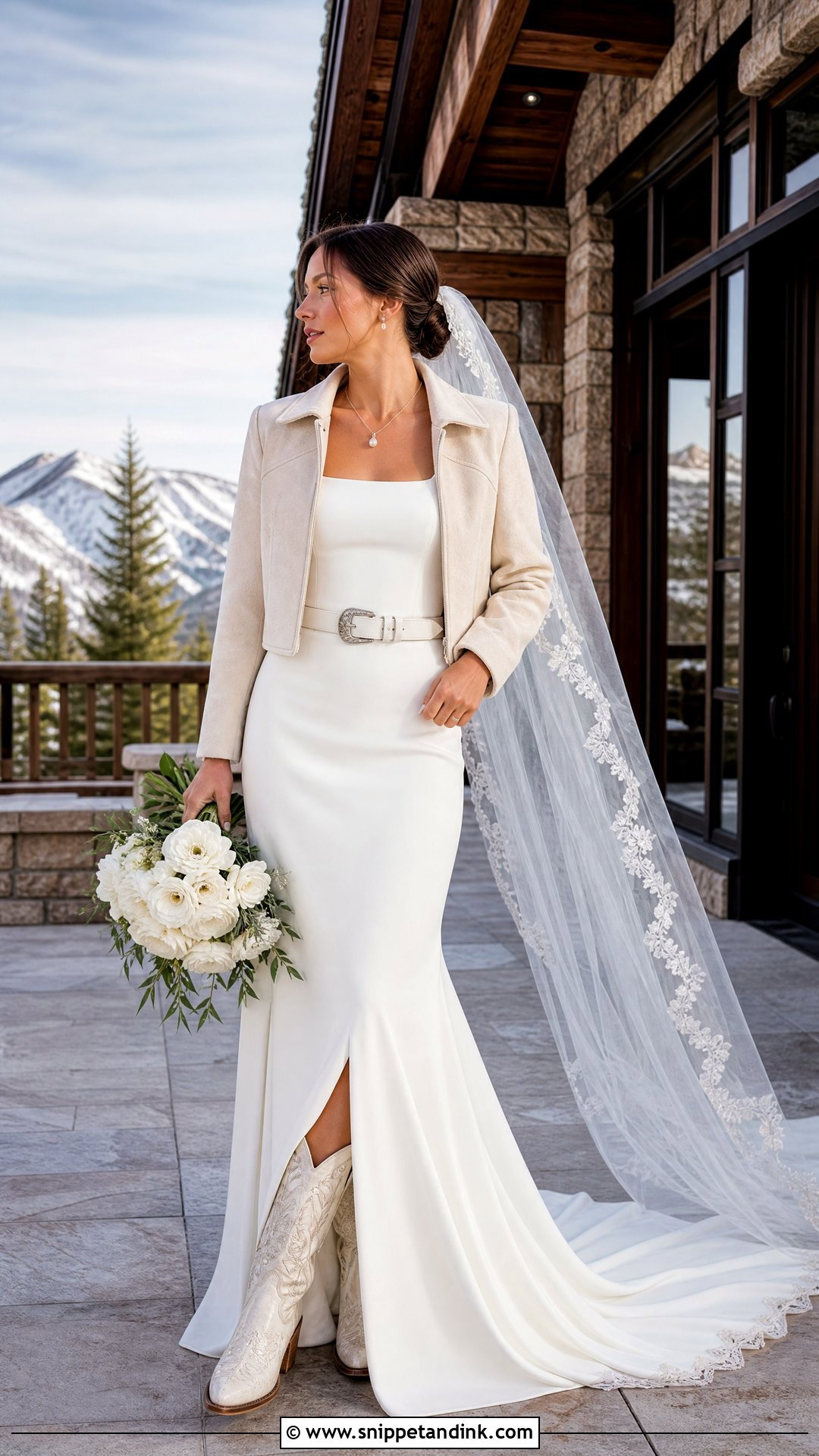
Square necks suit brides who like clean lines and quieter Western styling. Structured crepe, matte satin or floral lace with wide straps and a gentle A-line. The straight neckline frames a small pendant or a short strand of pearls well. Polished ivory boots and a slim silver buckle belt if the waist needs it. A sleek low bun keeps it modern; a lace-edged veil softens it. A cropped cream suede jacket after the ceremony if it’s cool. Wide straps are also the most forgiving for anyone who wants a regular bra underneath, which matters for a long day. Modern barns, lodges and estates suit it.
12. Embroidered Western Wedding Dress
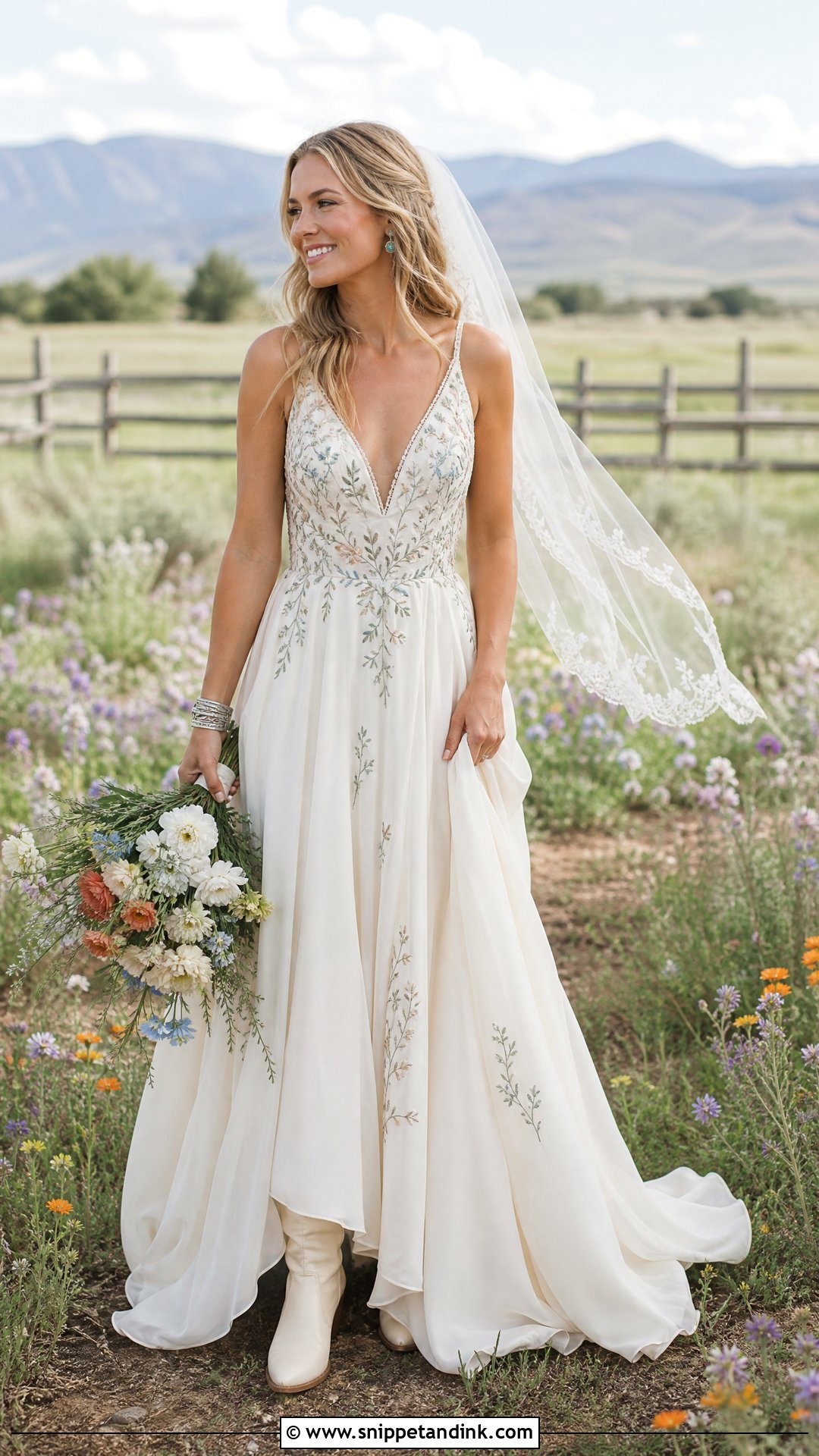
Embroidery is how a Western gown takes on color without leaving ivory behind. Look for tonal florals, fine vines or muted botanical threadwork along the bodice and skirt, on a simple silhouette so the stitching stays clear. Plain cream boots; decorated ones compete. Small turquoise studs or a silver cuff can echo the thread colors. Relaxed waves under a simple fingertip veil. Ask your florist to repeat a flower from the embroidery in your bouquet. Heavy embroidery adds weight and stiffness, so walk and sit in the dress before you buy. It feels natural at garden ranches, mountain venues and family land.
13. Prairie Western Wedding Dress
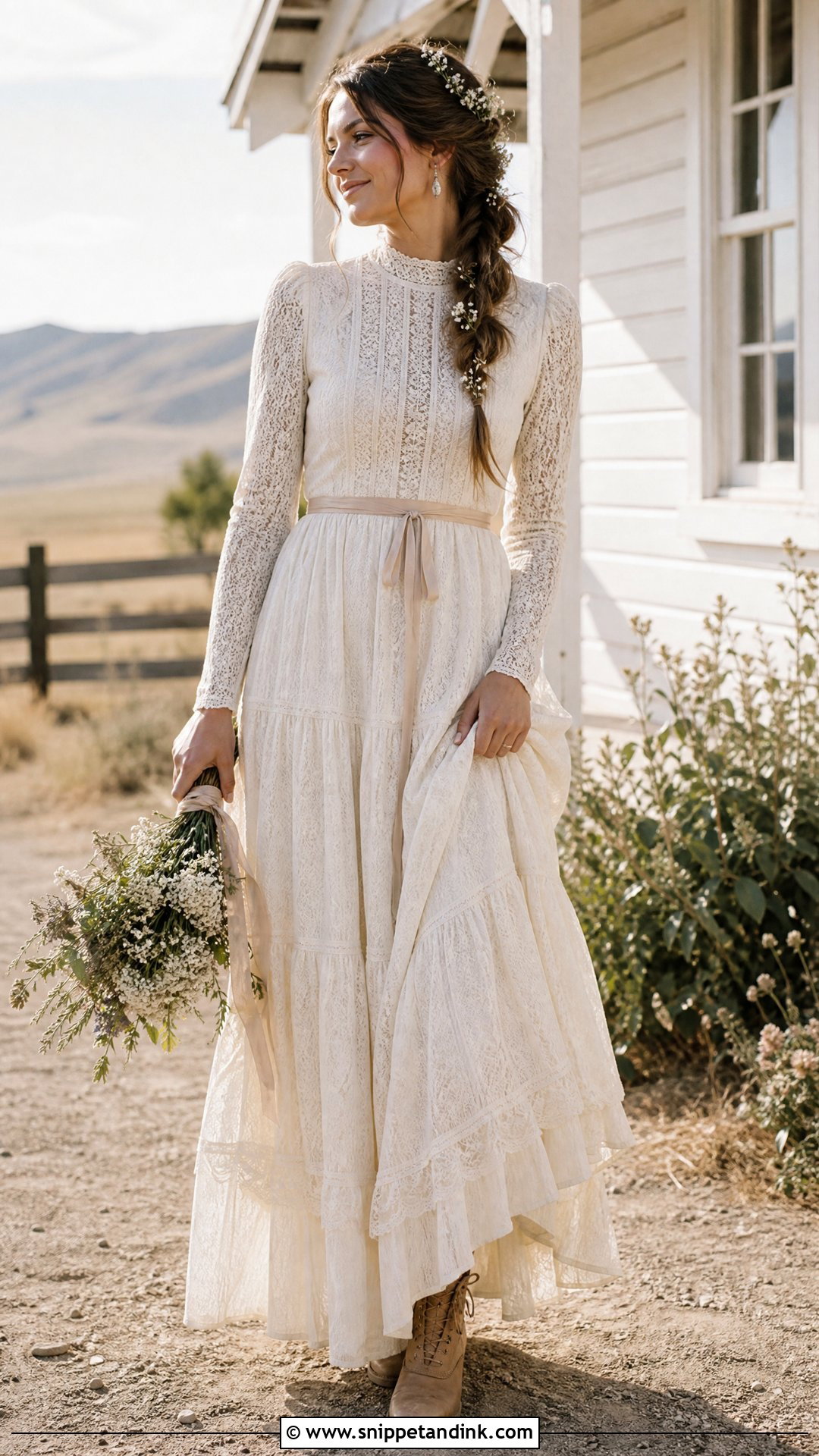
A prairie gown covers you, softens everything and ties straight back to heritage dressing. Look for a high or ruffled neckline, fitted waist, long sleeves and a flowing tiered skirt. Light cotton, dotted tulle and fine lace keep it bridal rather than heavy. Vintage-style lace-up boots or simple tan cowboy boots under the hem. A small pendant, pearl earrings and a loose braid with tiny white flowers. A narrow ribbon belt defines the waist without fighting the soft shape. Skip an elaborate hat in favor of a plain veil. High necklines are warm in summer, so I’d save this for spring or fall. Farmhouses, historic ranches and grassy fields suit it.
14. Vintage Western Wedding Dress
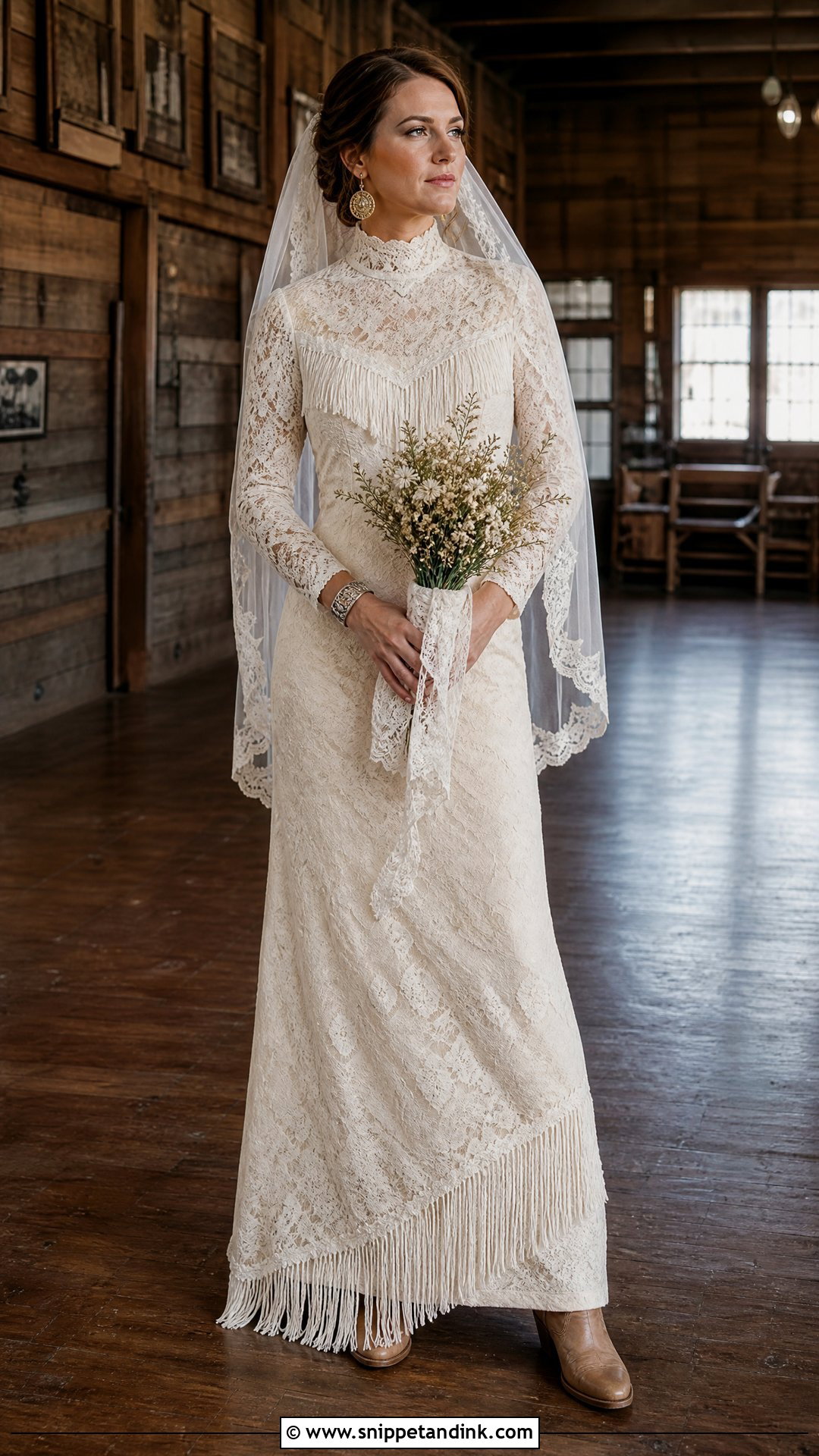
Vintage should look collected and personal, never themed. A 1970s or 1980s lace gown with a high neck, fitted sleeves and soft fringe or ruffles is a good find. Have it assessed before you buy: older lace can be brittle, and yellowing at the seams doesn’t always clean out. A good seamstress will update the proportions. Broken-in ivory or light brown boots, an engraved silver bracelet and heirloom earrings. A fingertip veil tucked under a textured updo keeps the neckline visible. A simple bouquet wrapped in lace or a meaningful scrap of fabric. Grange halls, historic barns, courthouses and family ranches suit it, especially when the dress carries a family story.
15. Minimalist Western Wedding Dress
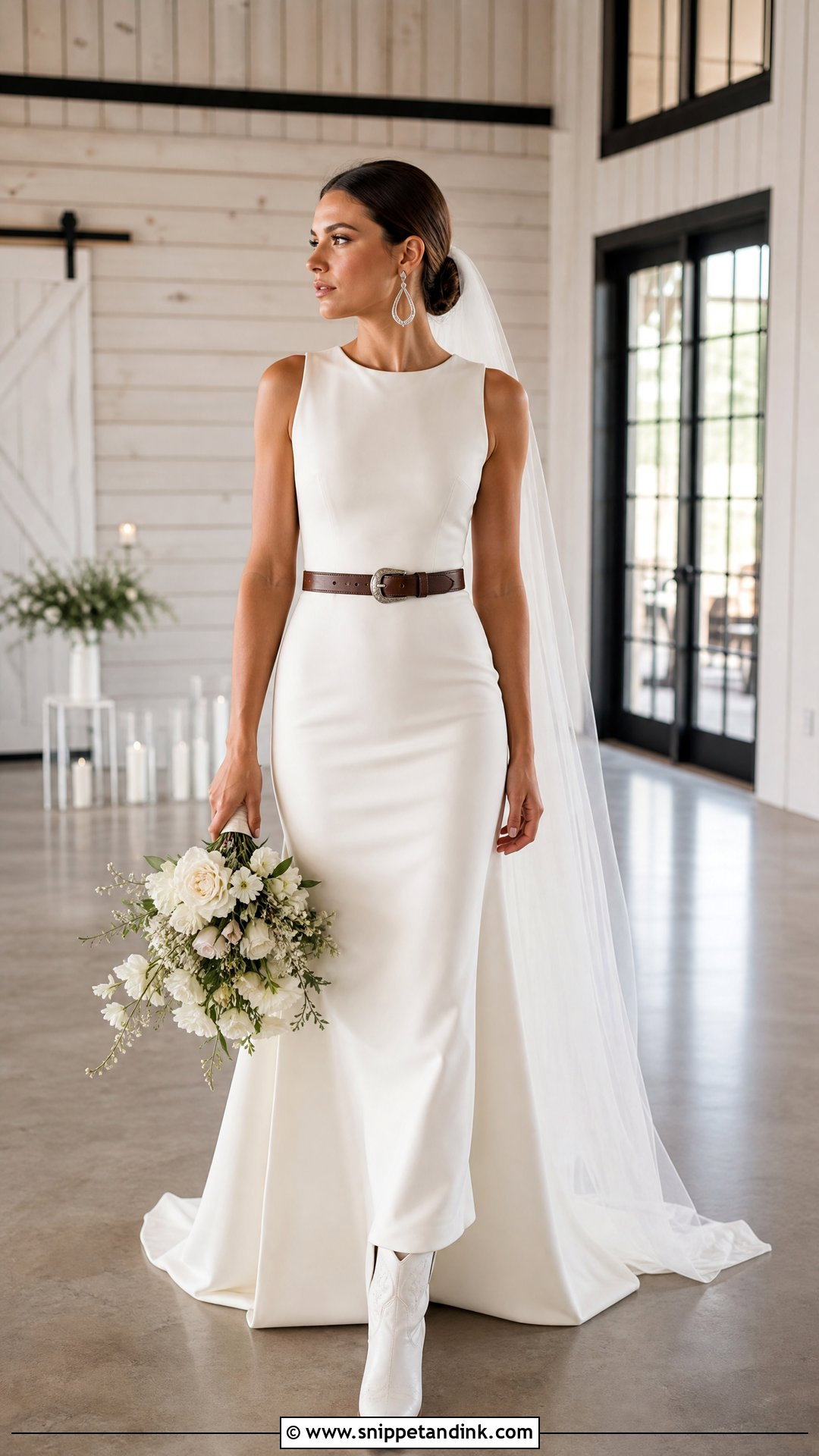
Western doesn’t have to mean lace and fringe. A minimalist gown makes its point through shape and two or three well-chosen pieces. A clean ivory crepe column, sheath or simple A-line, with sharp white boots and a slim belt with a small silver buckle. Sculptural earrings, a smooth low bun and a plain floor-length veil. A structured bouquet of white flowers keeps it crisp. For later, a cropped white denim or suede jacket with no extra decoration. Crepe is honest fabric, showing any poorly fitted seam, so the fit has to be exact. This modern Western wedding dress outfit suits renovated barns, contemporary ranches and small industrial spaces.
16. Plus-Size Western Wedding Dress
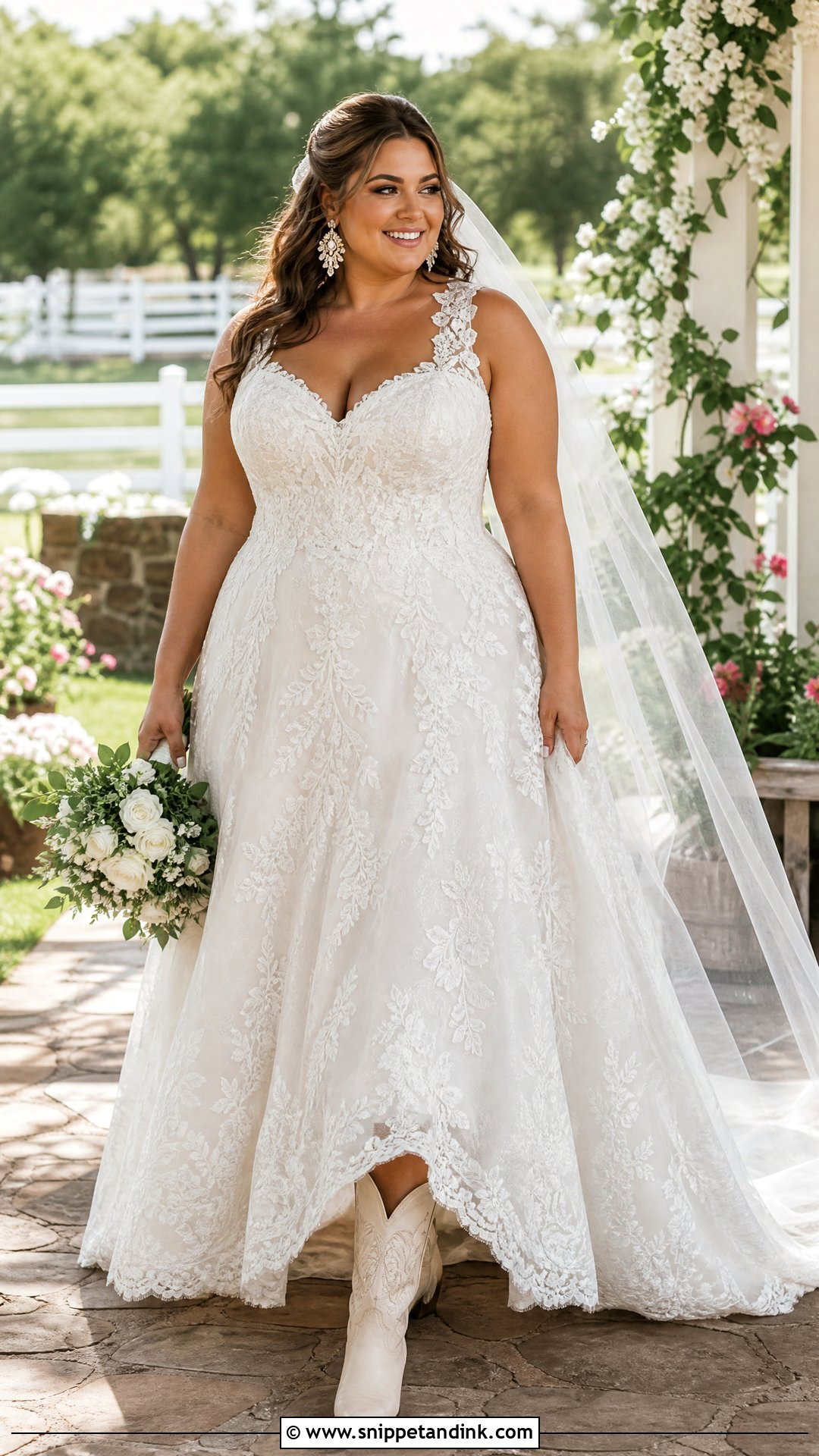
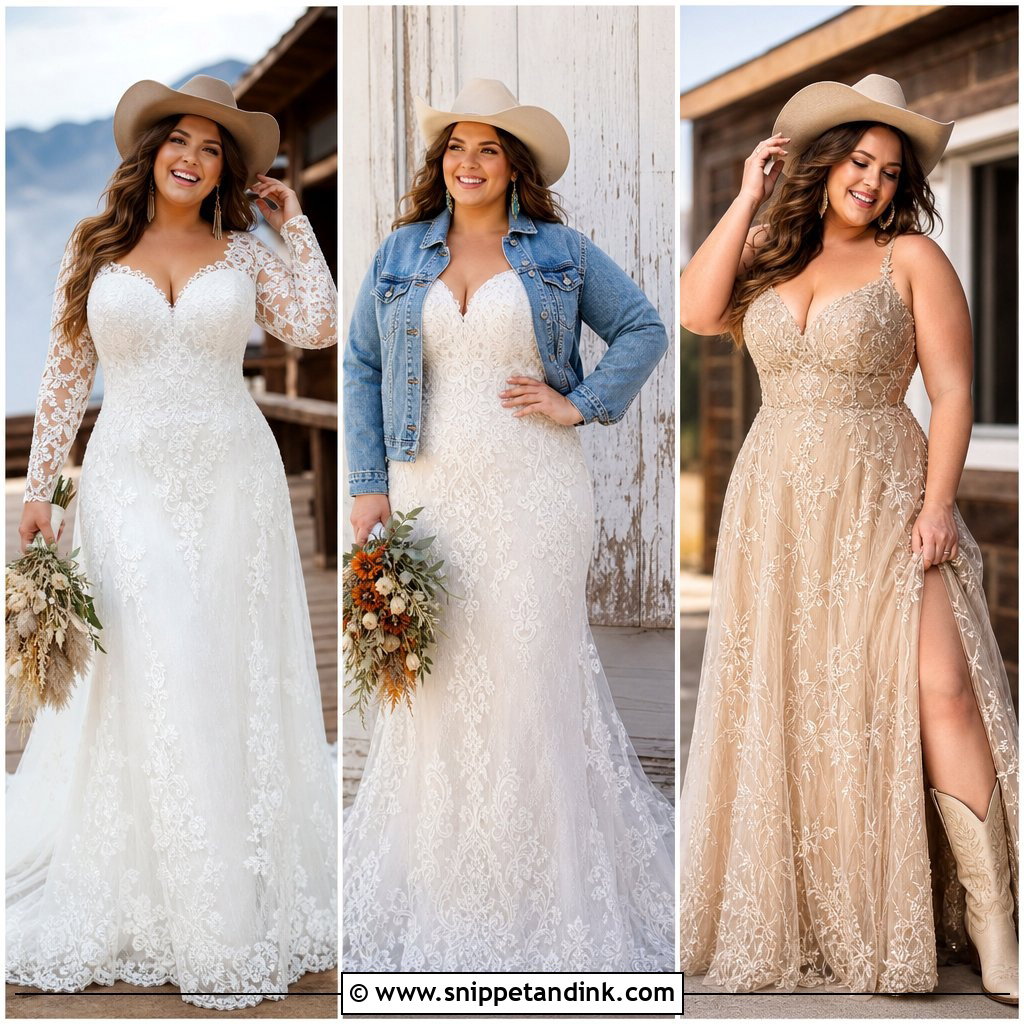
A well-fitted gown should support you and stay comfortable through the whole day, and that starts with the inside of the dress. Consider a lace A-line with a supportive bodice, defined waist and soft skirt; wide straps, lined illusion sleeves or an off-shoulder line can all be adjusted to the coverage you want. Ask for built-in cups and internal boning so you’re not relying on a separate bra. Cushioned ivory boots, and the hem set while you’re wearing them. Add a narrow Western belt only if you like how it feels and sits. Statement earrings, a secure half-up style and a light veil. Good alterations matter more than any rule about shape.
17. Petite Western Wedding Dress
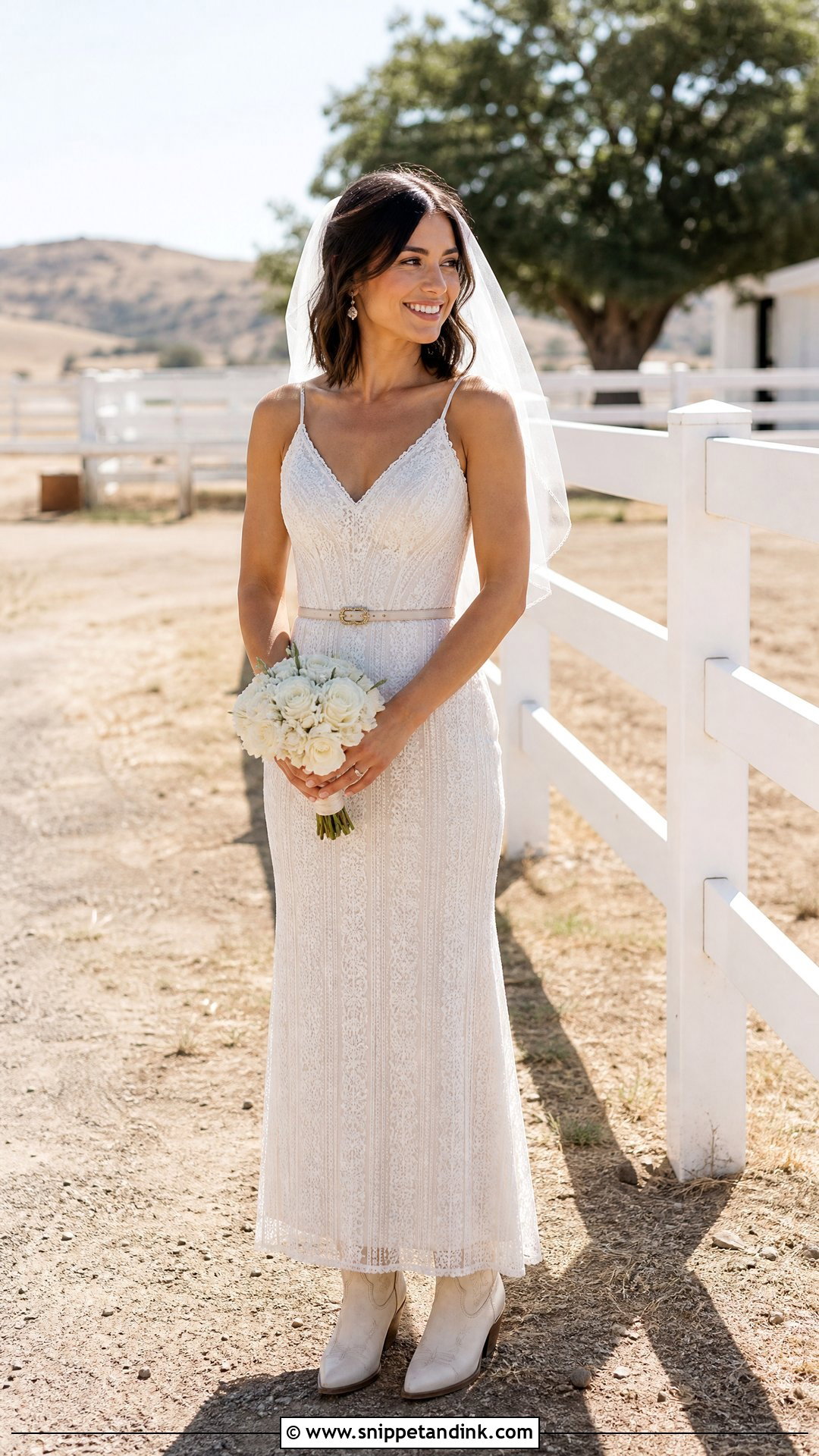
For petite brides, proportion is everything, and too much skirt is the usual problem. Try a fitted A-line or sheath with a natural waist, a vertical lace pattern and limited volume. A high slit or ankle-length hem can show pointed ivory boots and keep the line long. A boot with some heel adds height, but choose one that’s steady on grass; a slim heel sinks. A narrow belt, small drops and a shoulder-length veil rather than a very wide one. A compact bouquet. Most dresses will need the bodice shortened as well as the hem, so I’d budget for both, and for strap adjustments so the waist lands where yours is.
18. Winter Western Wedding Dress
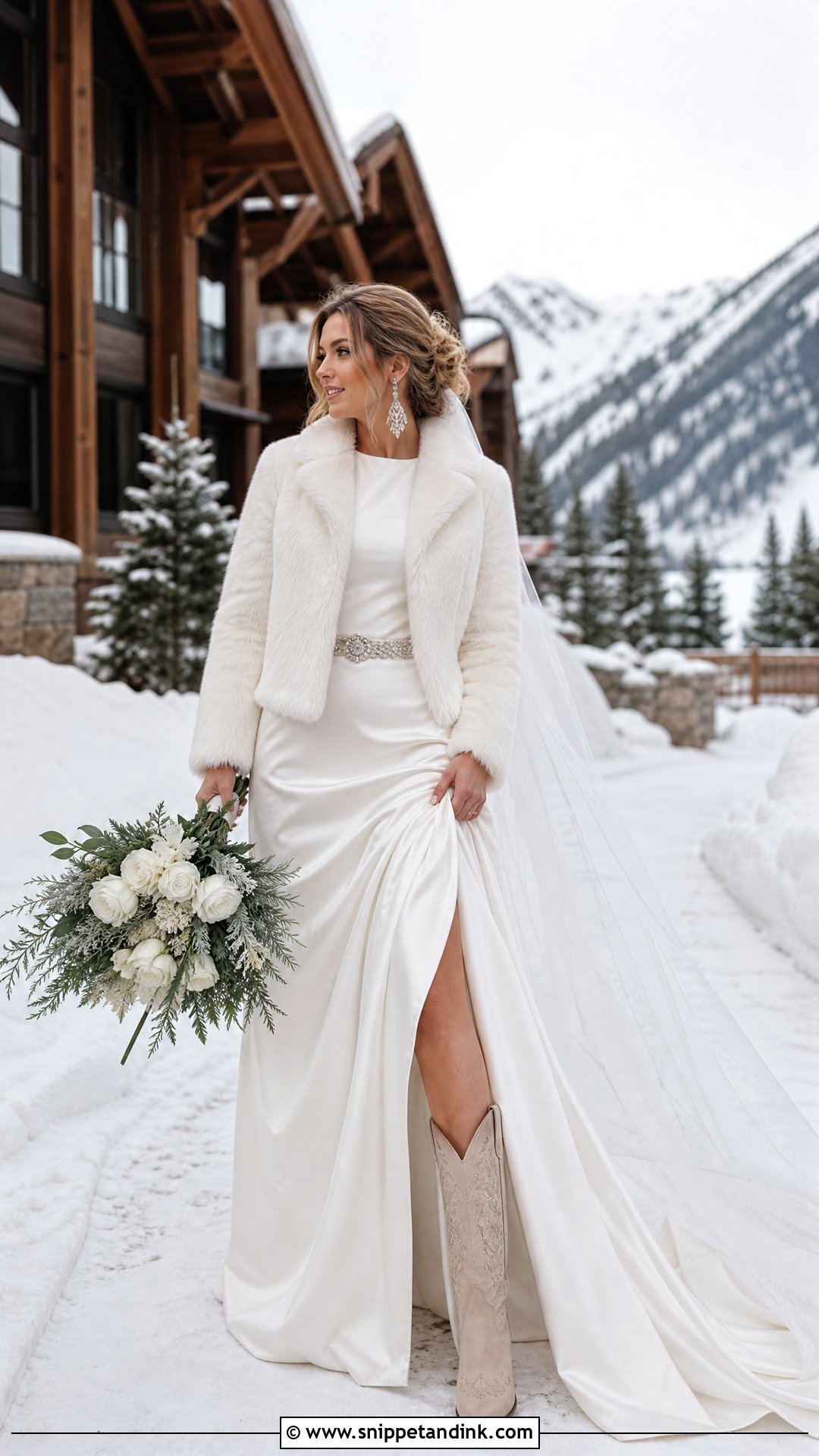
Winter weddings need texture, coverage and layers that still look polished. Start with a long-sleeve satin or lined lace gown with a full skirt and a modest train. Insulated white or light tan boots with a stable heel cope with frozen ground. A cropped faux-fur jacket, an ivory wool wrap or a pale suede coat covers portraits and walks between buildings. Silver earrings and a small embellished belt add a little shine. A secure low bun under a long veil you’ll remove indoors. White flowers and soft neutral foliage. Bring a towel for the hem: snow melts into satin and leaves a water line as it dries.
19. Summer Western Wedding Dress
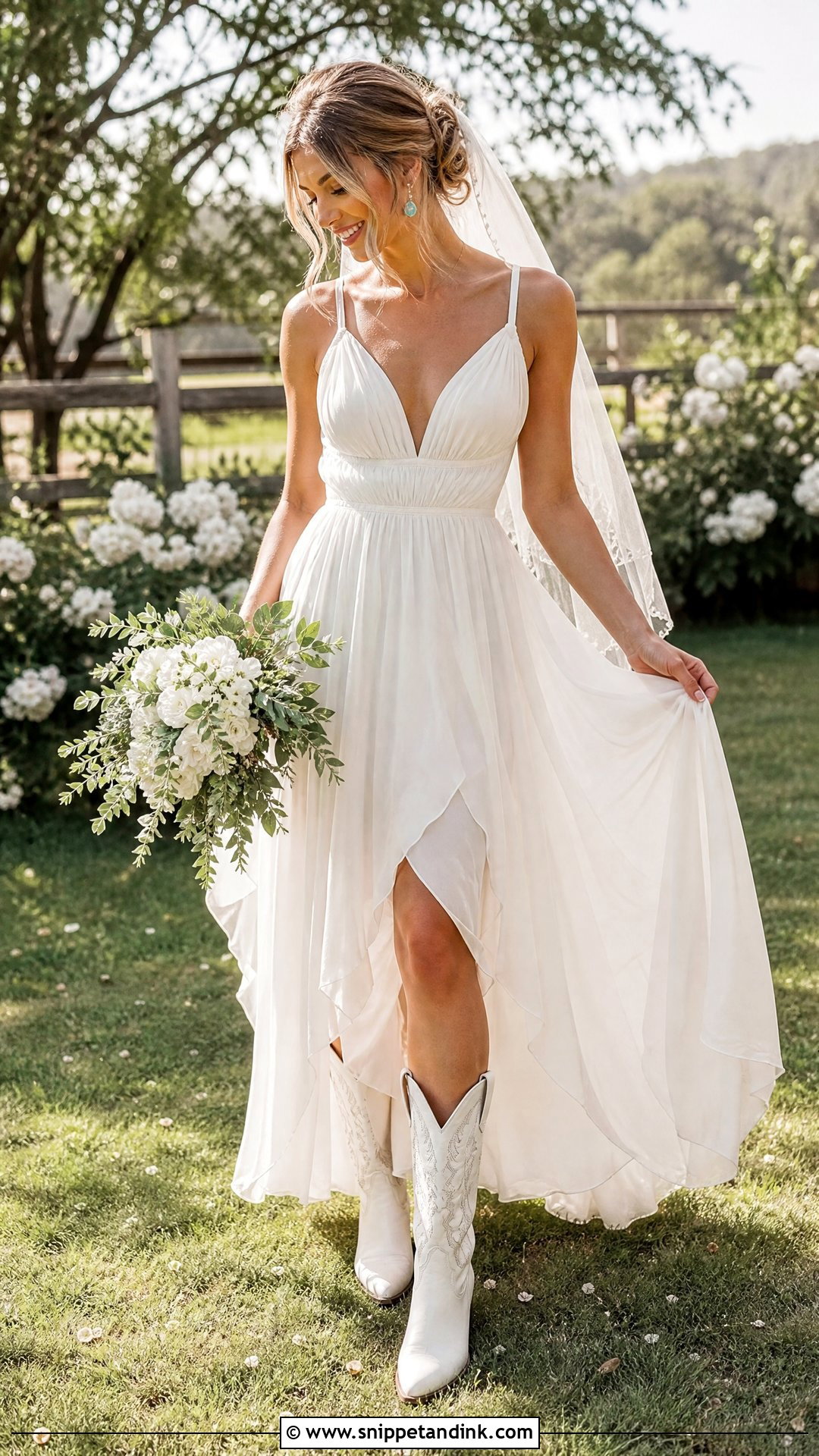
In real heat, fabric choice decides whether you enjoy your wedding. Pick a sleeveless chiffon, cotton lace or airy tulle gown with a fitted bodice and flowing skirt; avoid polyester satin, which traps heat and shows sweat. A low back or a tasteful side cutout helps air move. Short white boots with breathable socks keep your feet bearable. Small turquoise earrings, a loose updo and a light veil you can take off after the ceremony. Leave heavy necklaces, jackets and wide belts at home in strong heat. White flowers and light greenery, kept in water until the last moment. It suits ranches, gardens, deserts and open-air barns.
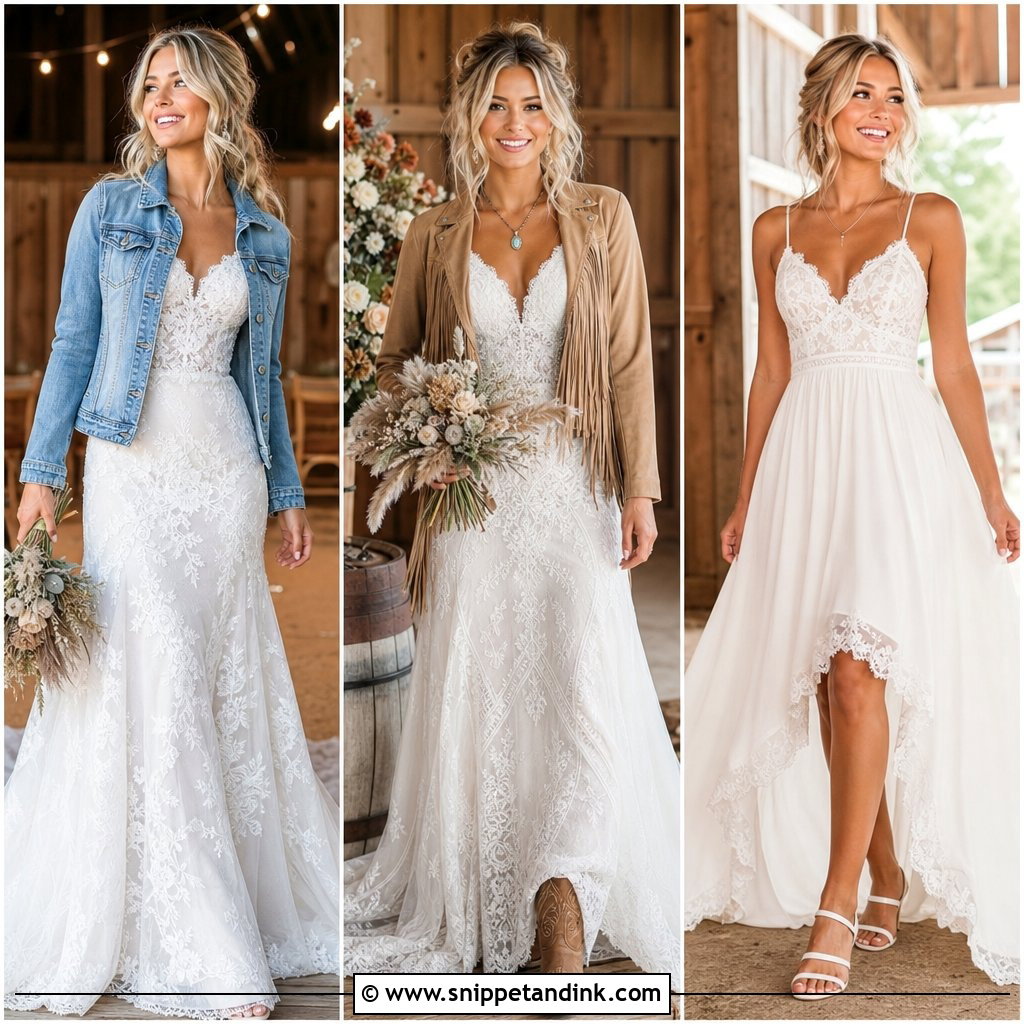

20. Western Wedding Dress With Denim Jacket
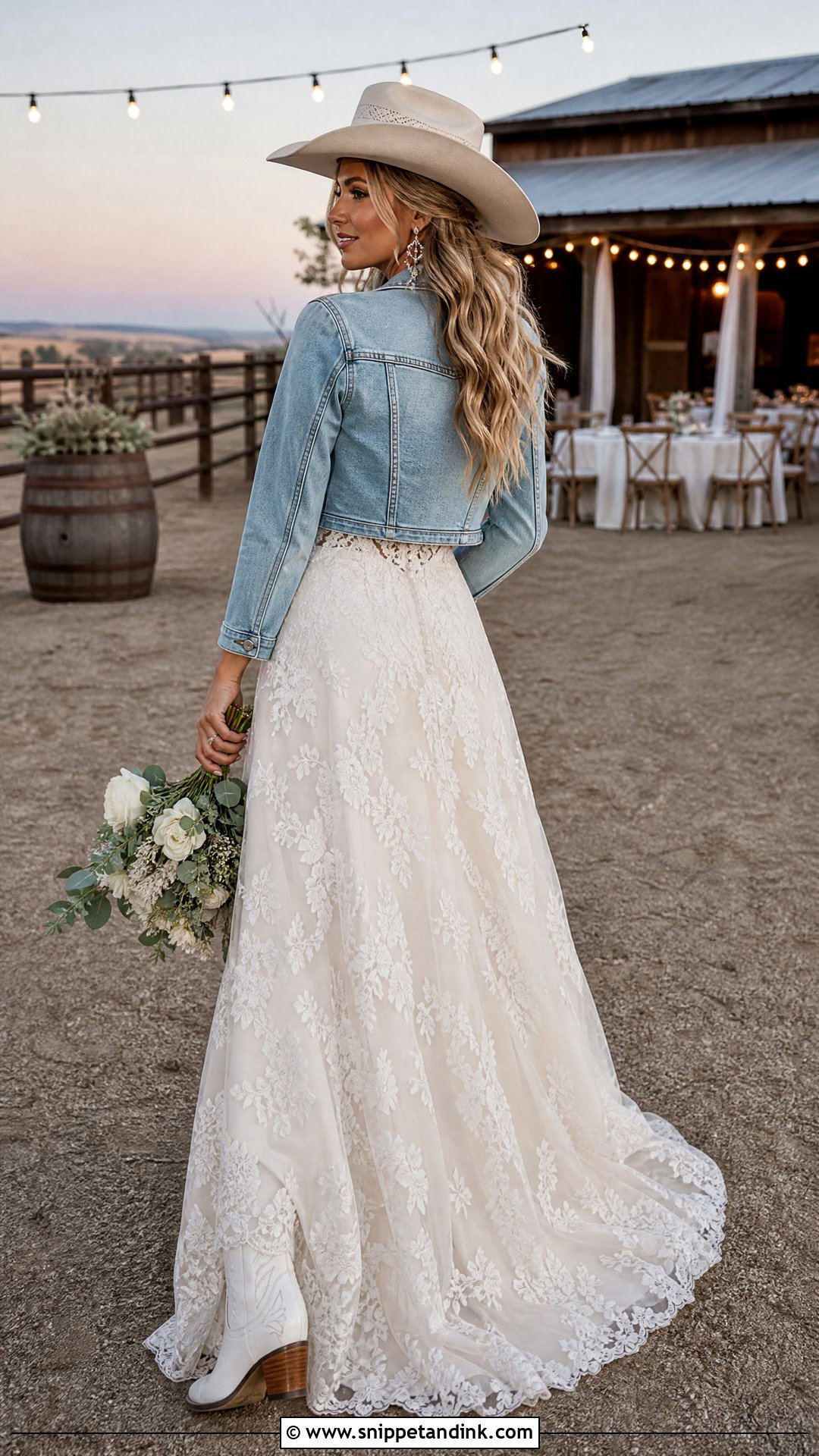
A denim jacket gives a gown a casual Western finish, and it’s the piece I see brides wear most once the sun drops. Start with an ivory lace or satin A-line that still looks complete without the jacket. Choose a cropped style in clean medium-wash, pale blue or white denim so your waist stays visible. A small personalized stitch on the back is sweet; keep it simple enough to wear again. White boots, silver earrings and loose waves. Veil for the ceremony, jacket and an ivory hat afterward. Check that new indigo denim doesn’t rub blue onto ivory lace at the underarm; washing it twice beforehand usually fixes that.
Wind, Dust and Sun on an Open Ranch
Barns and lodges are predictable. Open land is not. Before I settle on a fabric or veil for an outdoor Western wedding, I ask about three things.
How windy is the ceremony spot?
Prairie and hilltop sites can be gusty even on calm days. Chiffon and tulle lift and wrap around your legs, and a long, light veil can blow straight across your face during vows. A heavier lace or satin skirt sits still. If you want a long veil, ask for a sturdy comb sewn in and small weights stitched into the hem, and have a hat as a backup.
What is underfoot?
Red clay and fine desert dust both stain. Ivory and champagne hide a dusty hem far better than bright white. A short train or a tea-length hem simply avoids the problem.
Where will the sun be?
In hard midday sun, shiny satin reflects light up into your face and glares in photos, while matte crepe and lace stay soft. Ask your photographer what time the light is kindest at your site, and if the ceremony must be at noon, lean toward a matte fabric and a hat or shaded spot.
One Gown, Real Boots, and Nothing That Fights Them
The Western bridal looks people remember balance comfort and character, and nothing about them looks borrowed. Lace brings romance; satin, embroidery, fringe and corsets give you other ways in. Boots can whisper or shout depending on the dress and the venue. Belts, hats, denim, turquoise and suede should support the gown, not compete with it. Have everything altered with your actual boots on, then walk, sit and dance in the full outfit before the wedding to be sure it stays put. Get those two steps right and any of these dresses will look like it was made for you and your setting.
You'll Like These Ideas:


Leave a Reply