
A ruffle is the one bridal detail that keeps moving after you stop. That’s why I love it, and also why it needs more planning than lace or beading. The twenty gowns below run from airy tiered tulle skirts to sculpted organza waves, lace-edged flounces and short reception dresses. Bridal collections keep pairing ruffles with corsetry, big volume, dimensional flowers and lighter fabrics, so there’s plenty to try on. Your venue narrows it quickly: a cathedral aisle can carry a sweeping ball gown, while a garden asks for chiffon or fluttering sleeves. I’ve added the fitting checks I’d make on each one.
Shoulder, Hip, Hem or Train: Where the Ruffle Lands on Your Body
Before style names or fabrics, I ask a bride where she wants the eye to go. A ruffle is volume, and volume draws attention to whatever it sits on, so its position does more than its size.
- At the neckline or shoulder, it frames the face and widens the top. Good for balancing fuller hips; less kind to broad shoulders.
- At the hip, it adds width there. I use it on straighter figures and avoid it for brides who’d prefer a smaller lower half.
- On a diagonal cascade, it pulls the eye down and across, which reads long and slim on most bodies.
- At the hem or train, it saves the drama for the back and the floor, leaving the bodice clean and easy to fit.
Try one gown from at least two of these groups at your first appointment, even if you’re sure of your answer. Brides change their minds in the mirror more often than they expect.
1. Strapless Tiered Ruffle Bridal Gown
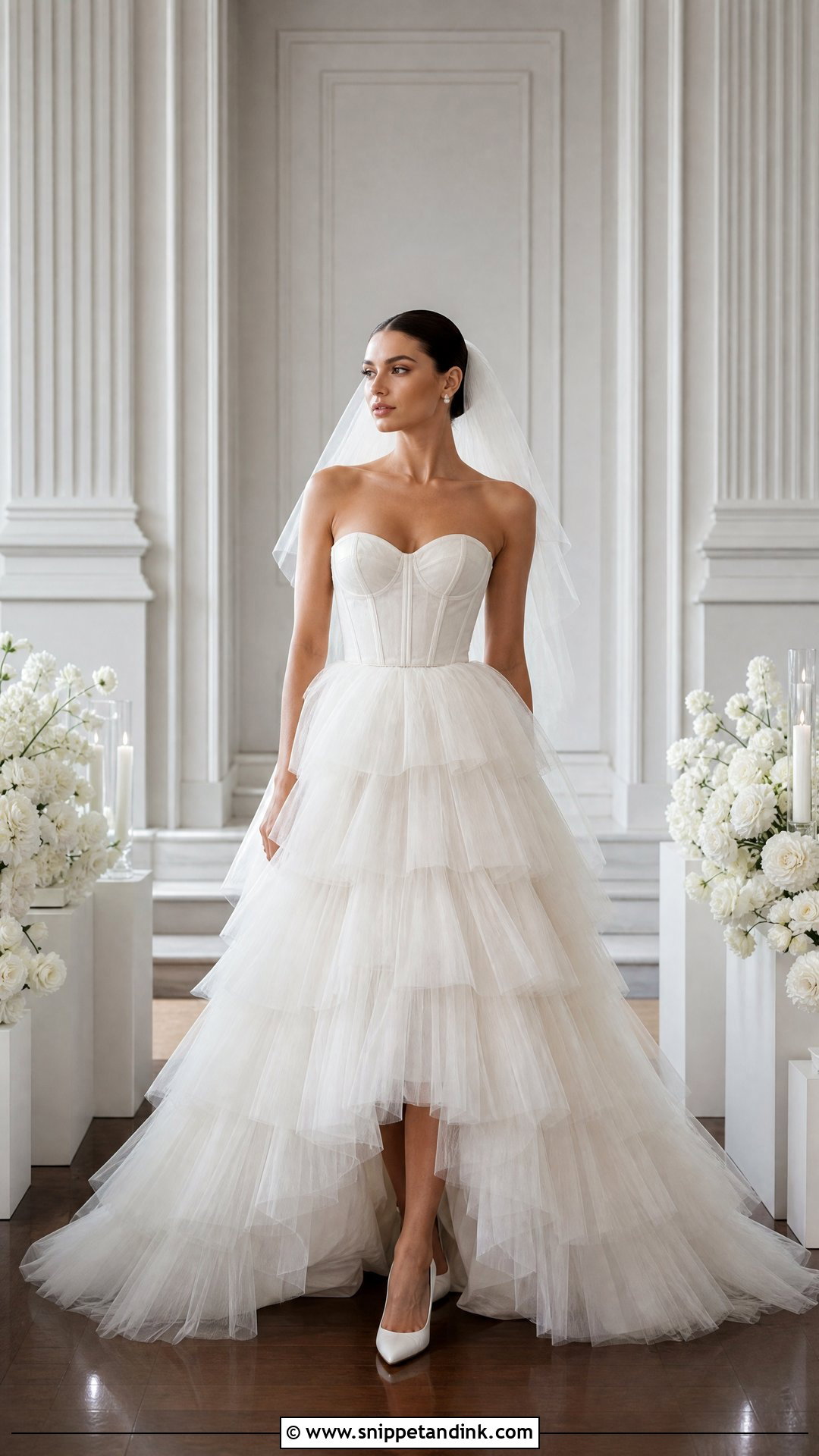
Tiers do the heavy lifting on a strapless gown, so the bodice has one job: stay up. I check for internal boning and a neckline that doesn’t shift when the bride bends to hug someone. Tulle tiers look softer; organza gives cleaner, more defined edges. Keep the rest pared back with pearl studs, a smooth low bun and a narrow bracelet. A fingertip veil reads modern, a cathedral veil grander. Pointed pumps or block heels can hide under the skirt, so choose for comfort. Big rooms show this skirt best, because a full tiered skirt needs space around it to look intentional rather than crowded.
2. Off-Shoulder Ruffle Bridal Gown
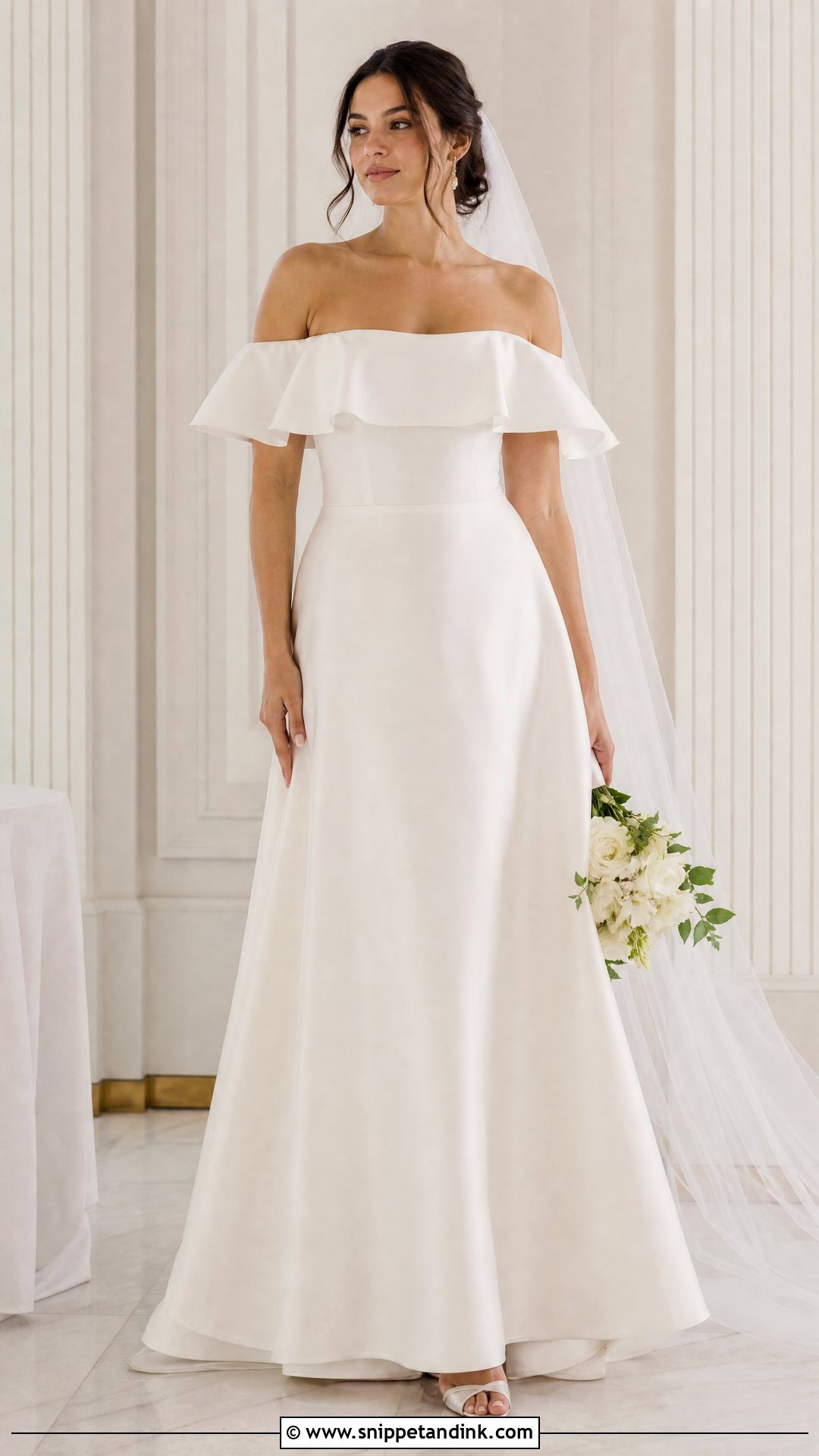
How far the ruffle stands off the shoulder decides the mood. A flounce that lies close gives quiet texture; a wide, sculptural one looks editorial and adds width across the top, which suits narrow shoulders and can overwhelm broad ones. Underneath, the bodice can open into an A-line for ease or a mermaid for shape. Skip the big necklace and wear drop earrings. A loose chignon, polished waves or half-up hair all keep the shoulders clear, with satin heels and a small pearl or crystal clutch for later. In the fitting room, I have brides lift their arms as if hugging; off-shoulder sleeves that pin your elbows to your sides will annoy you all evening.
3. Organza Ruffle Ball Gown
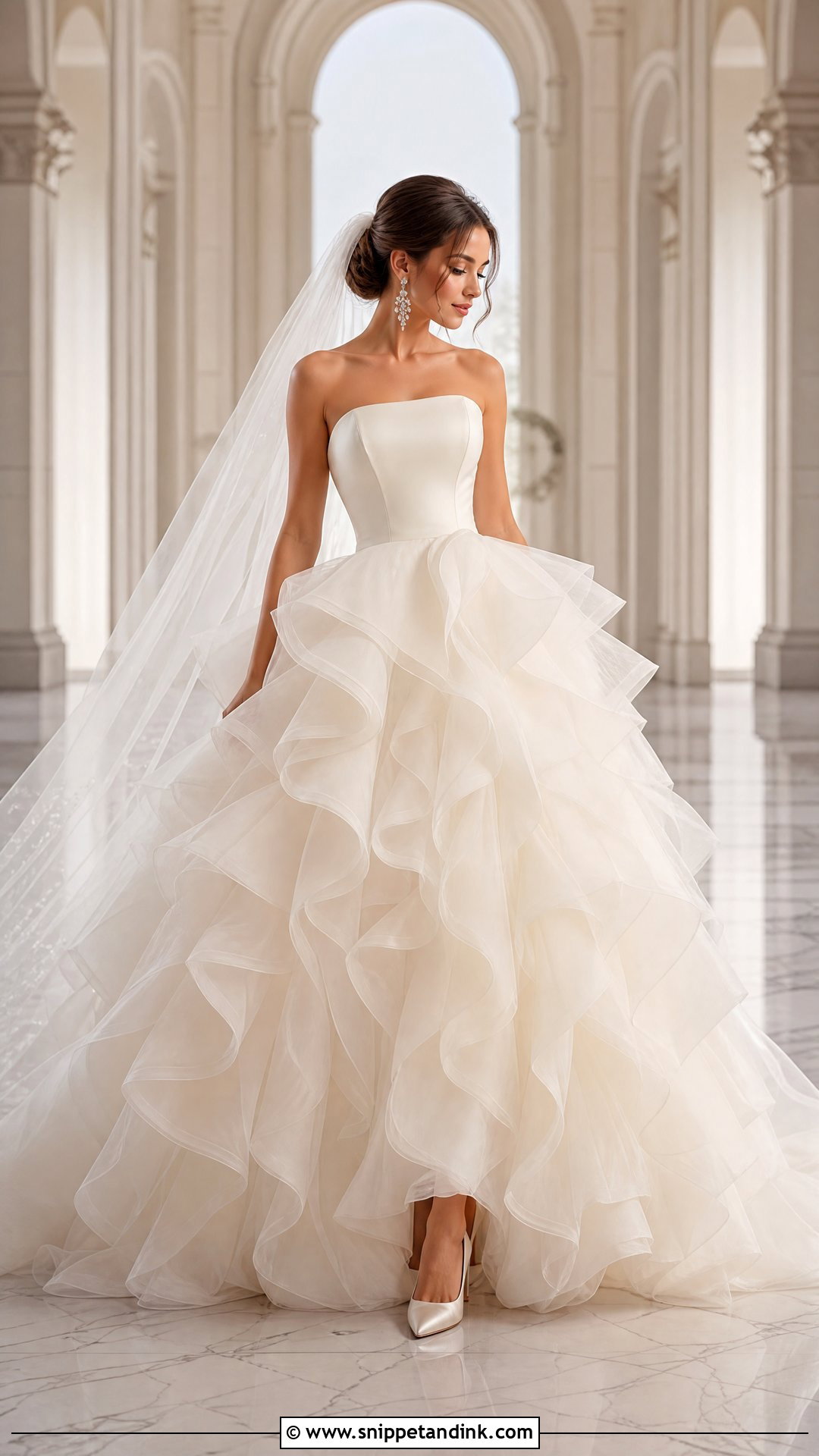
Petal-shaped organza layers give this ball gown huge volume while looking lighter than a beaded design of the same size. Let a smooth corset or simple scoop neck stay calm so the skirt leads. Ballrooms, museums, estates and large indoor rooms suit it. A neat updo, small diamond or crystal earrings and a veil that runs past the train finish it, and ivory satin pumps work, though low block heels feel steadier under all that skirt. My two questions at the shop: will these layers steam easily, and can a bustle go in without crushing them? Organza remembers every fold, so the answer matters.
4. Chiffon Ruffle Bridal Gown
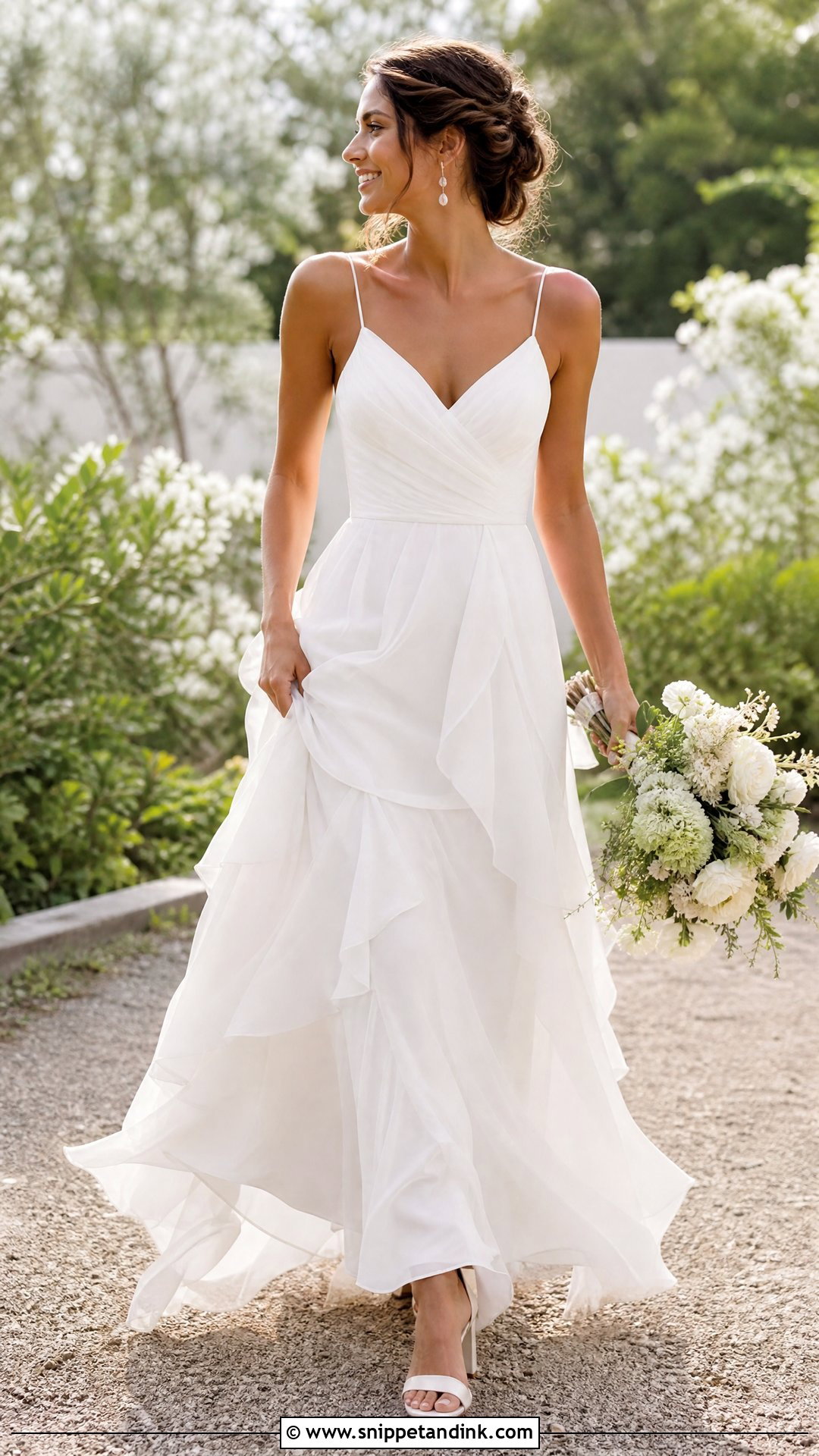
Chiffon ruffles catch the slightest breeze, which makes them lovely outdoors and a little unpredictable. Spring, summer, beach and garden weddings suit the fabric because it moves without looking stiff. An A-line or softly fitted shape with ruffles cascading along the skirt, neckline or sleeves works best, as long as the bodice is lined and the straps are secure. Delicate drop earrings, a loose braided updo and nude or ivory sandals keep things light, with a plain chiffon veil to echo the texture. On grass or sand, wear block heels, wedges or flats. I always suggest a short walk outside in the dress before the wedding; wind can lift chiffon higher than you’d expect.
5. Mermaid Ruffle Bridal Gown
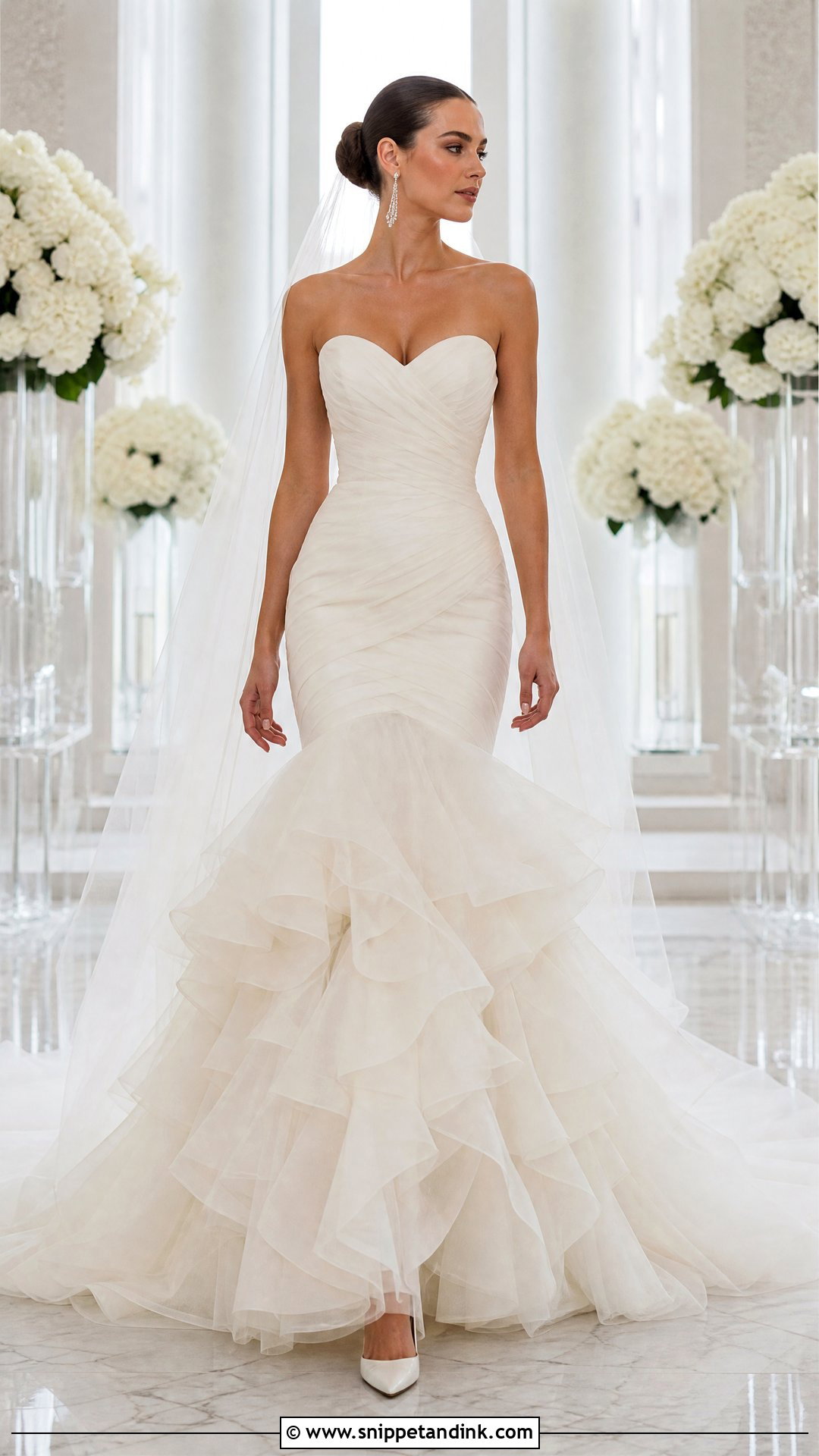
Fit is the whole story on a mermaid ruffle bridal gown, since the dress hugs everything above the knee before the texture breaks out below it. It looks especially strong in side profile. I look for stretch lining, solid seams and enough ease through the hips to sit and climb steps. Cascading tulle gives a softer flare; horsehair-trimmed organza holds crisp waves. Keep the bodice plain. A sleek bun, medium earrings and a long veil anchored below the bun suit it, and pointed satin pumps extend the line. Take real strides in the fitting, not little shuffles. Then plan the bustle, because a textured mermaid train drags heavily once dancing starts.
6. One-Shoulder Ruffle Bridal Gown
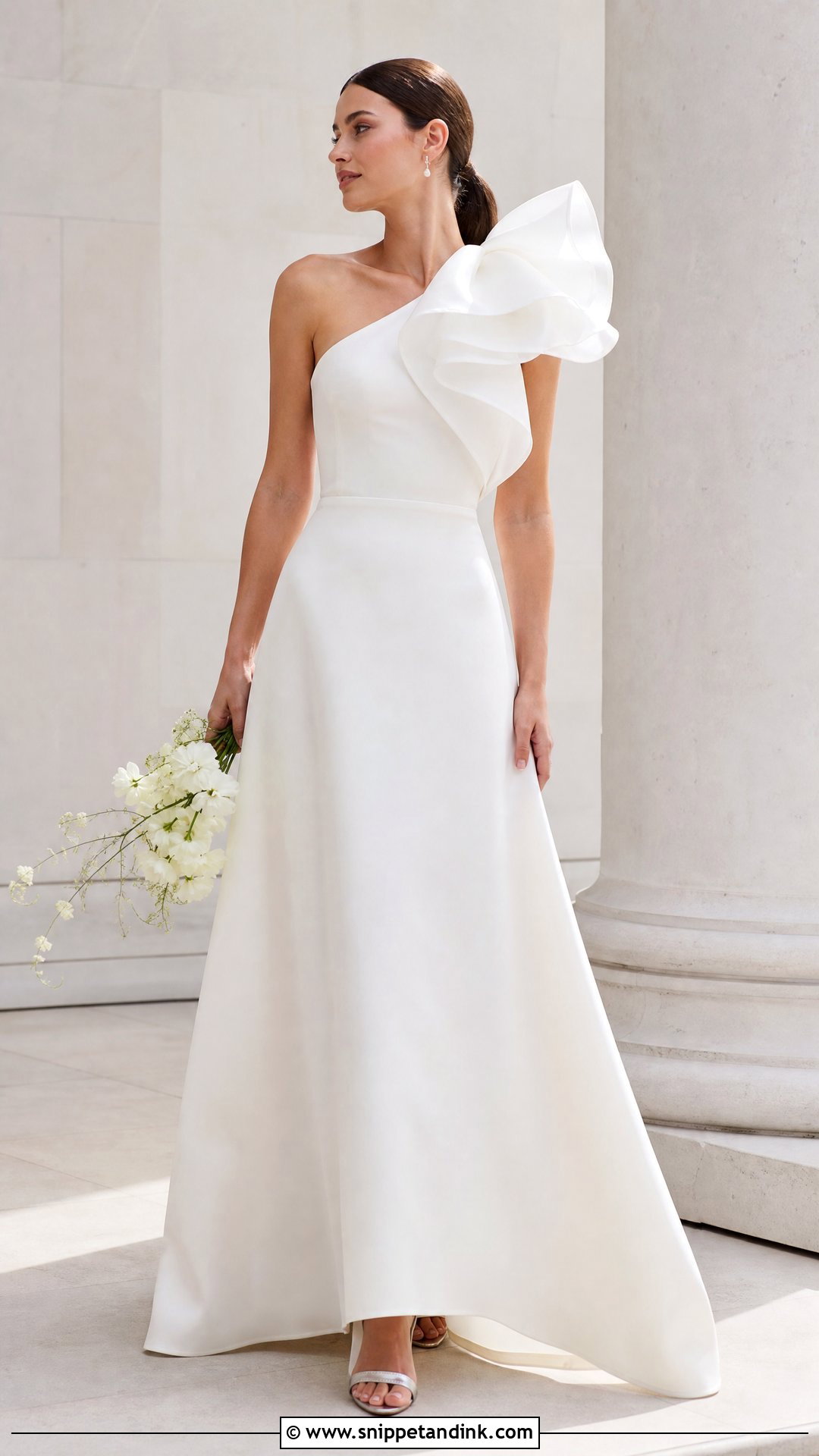
Diagonal necklines draw the eye up to the face and lengthen the upper body. A soft flounce on the shoulder stays romantic; an oversized organza ruffle turns it into sculpture. Below, a straight column feels modern, an A-line gives more movement and coverage. Sweep the hair toward the bare side in a low bun or smooth ponytail. One earring on each side is fine, but leave the necklace off. Ivory metallic sandals and a simple veil at the back of the head finish it. In the fitting I tug gently at the bare side of the bodice. If the dress relies only on the strap to stay level, it’ll slide down by the speeches.
7. Long-Sleeve Ruffle Bridal Gown
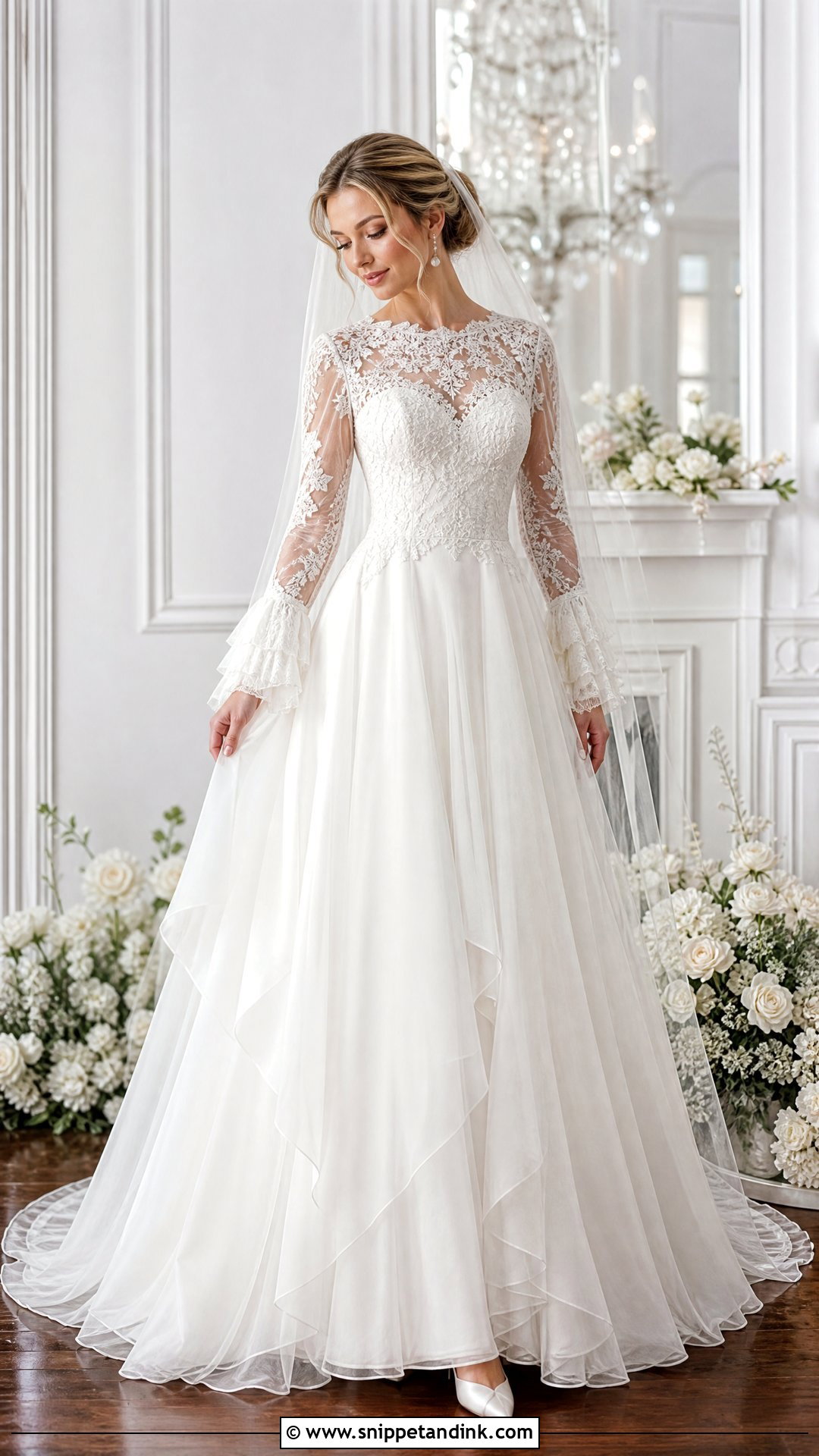
Sleeves add warmth and coverage, and they change what else the gown can carry. Sheer tulle sleeves with ruffled cuffs stay light; lace sleeves feel more traditional. The skirt can be smooth with a single flounced hem or softly layered. I’d avoid stacking big sleeves, a busy neckline and a huge skirt together unless maximum drama is the goal. A center-part bun, small pearl earrings, closed satin pumps and a light veil that doesn’t hide the cuffs keep it polished. The alteration that matters is the armhole and elbow. You’ll hug guests, hold flowers and dance, and a tight sleeve pulls fine tulle until it tears at the seam.
8. Lace Ruffle Bridal Gown
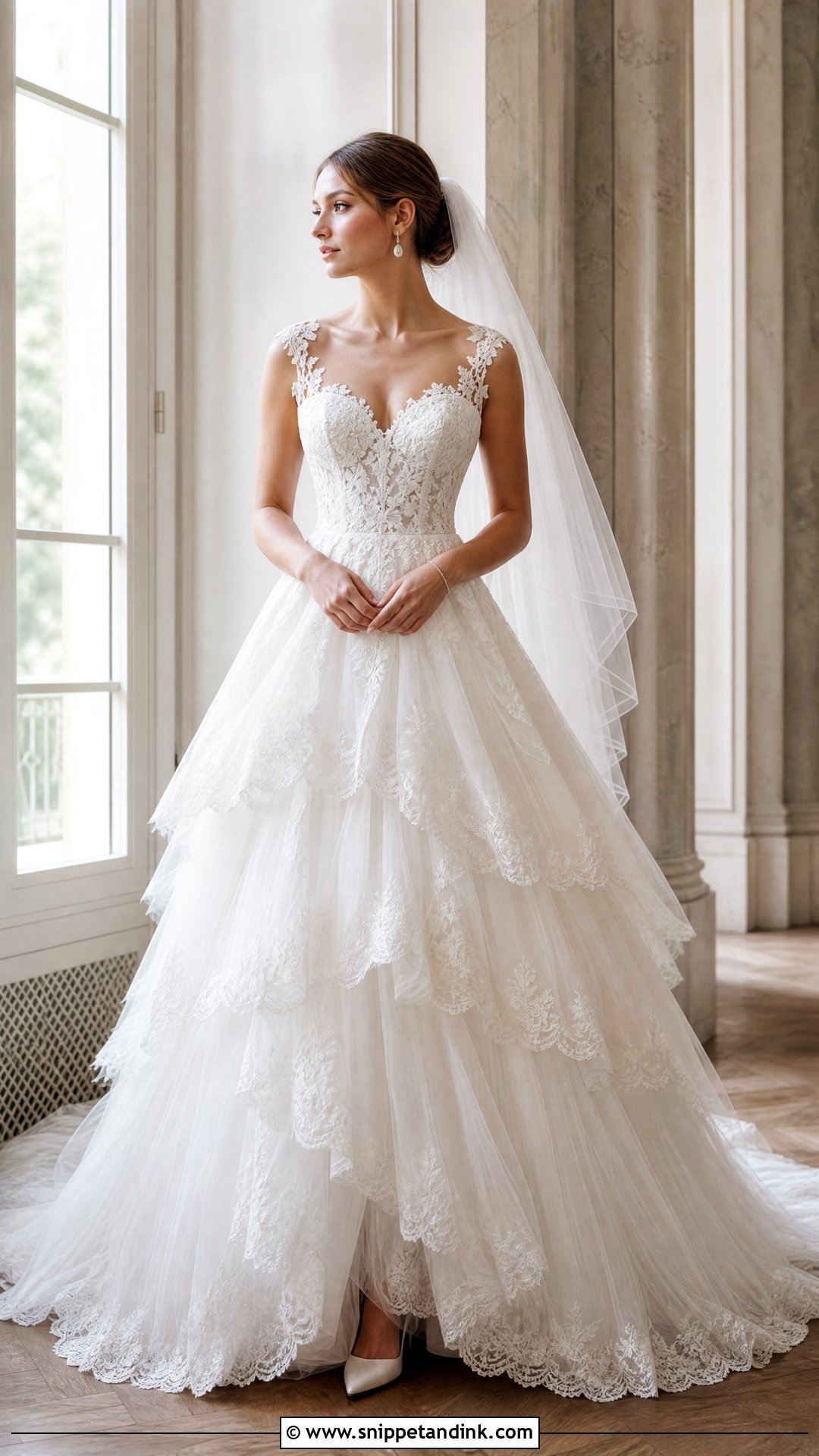
Lace on a ruffled gown works when one motif repeats and fails when three unrelated patterns meet. A lace bodice can flow into a layered tulle skirt, or a narrow lace edge can trim each chiffon tier. A lined sweetheart, square or V-neck gives coverage while letting the lace show. Pearl earrings, a fine bracelet and a small comb in a soft updo are enough, with smooth satin shoes and a plain tulle veil rather than another trimmed one. The thing I inspect closest is the join between lace and ruffle at each seam. Good construction there looks continuous; rushed construction leaves a bulky ridge you can see in photos.
9. Ruffle Sleeve Bridal Gown
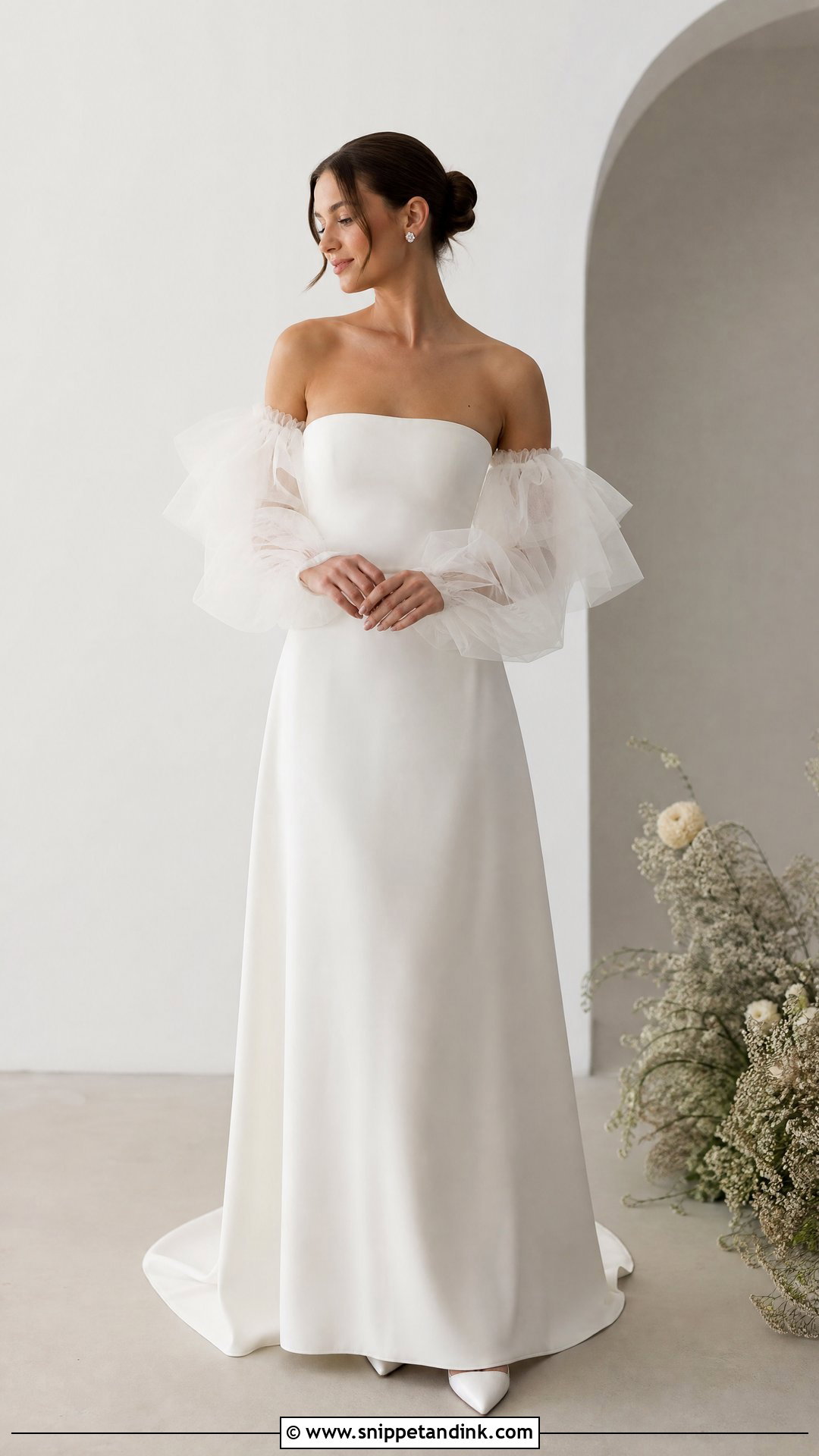
Sleeves alone can carry a plain gown. Short flutter sleeves feel relaxed, elbow-length tiers look vintage, and detachable statement sleeves give you two looks in one. I’d pair big sleeves with a streamlined crepe, satin or lightly layered A-line skirt so the arms stay the focus. Wear the hair up or behind the shoulders. Small studs, a thin bracelet and clean pointed shoes are plenty. Detachable sleeves can come off after portraits. In the fitting, reach forward, overhead and around another person; stiff sleeve edges that scratch your inner arm at minute five will feel far worse at hour eight.
10. Cascading Ruffle Bridal Gown
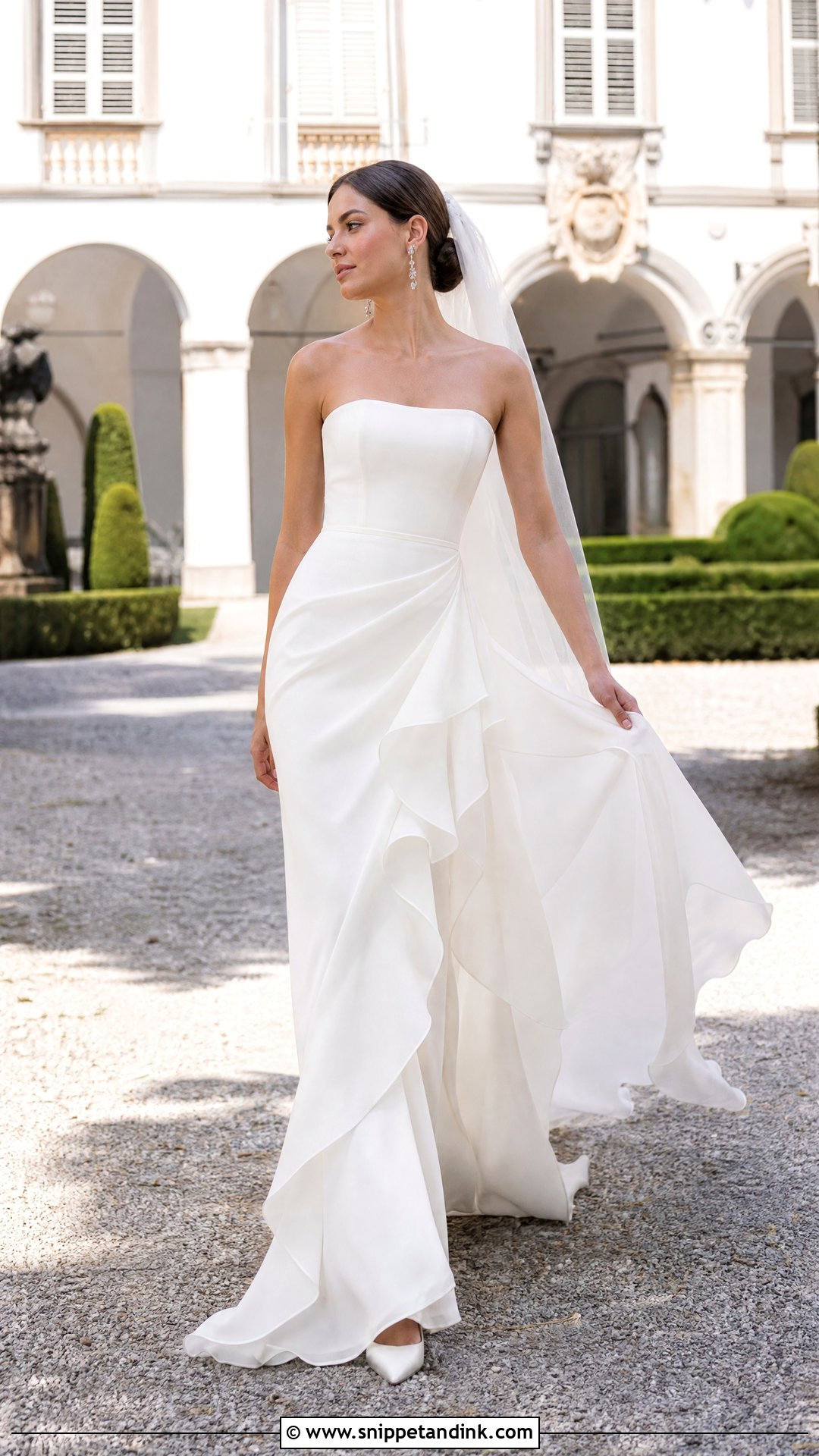
Placement is the thing I fuss over most on a cascading gown. The ruffle runs diagonally or vertically, often from the hip across the skirt and into the train, which reads longer and more fluid than horizontal tiers. A-line, fit-and-flare and asymmetric shapes all suit it. Chiffon cascades move gently; organza ones hold a clear outline. A clean strapless, square or narrow V neckline, elongated earrings, smooth hair and a veil that falls behind the cascade keep it uncluttered. Start the cascade near your natural waist or wherever you’d like the eye to go. Started too low on the hip, it adds width exactly where many brides don’t want it.
11. High-Neck Ruffle Bridal Gown
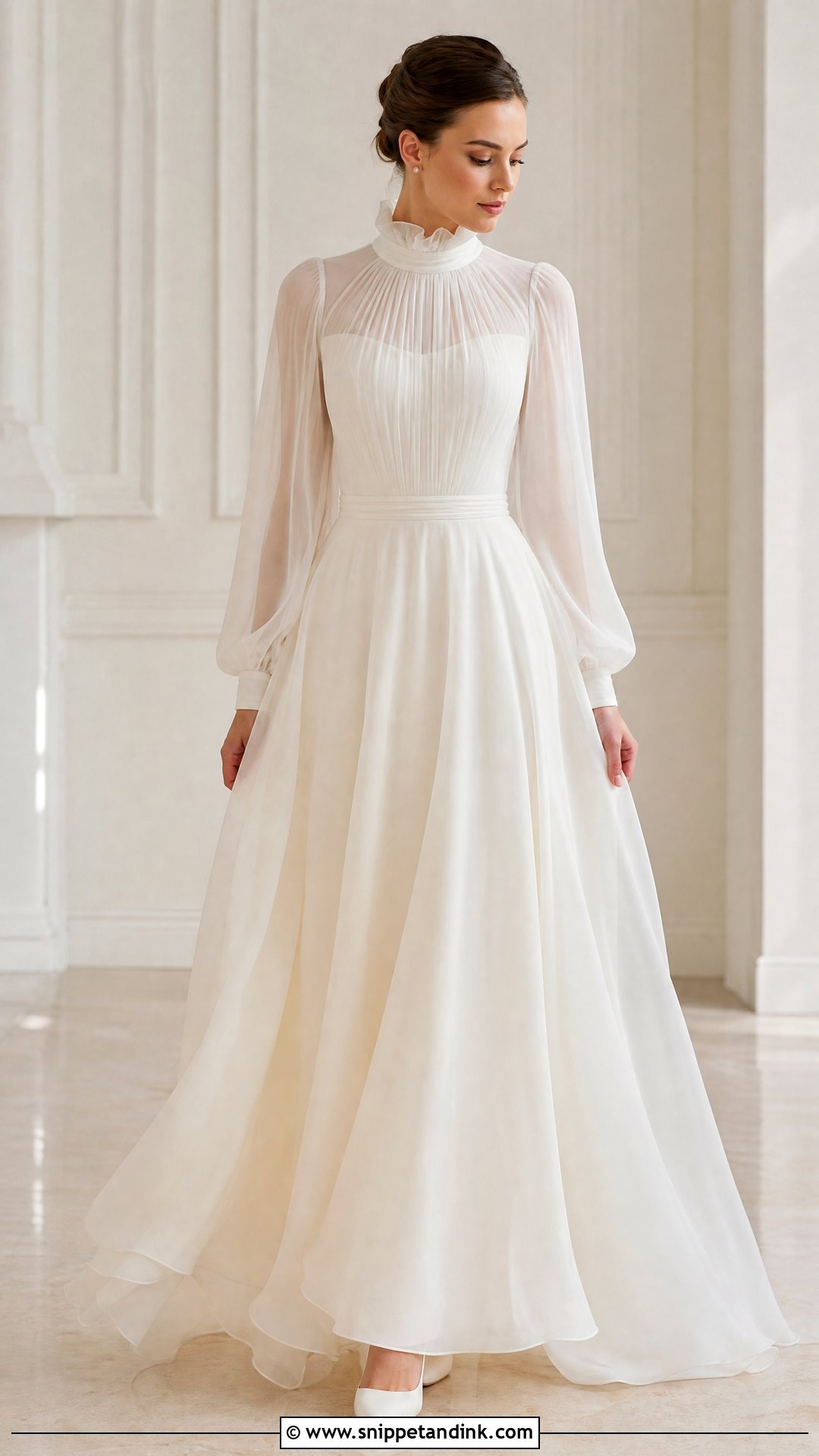
Fabric decides whether a high neck looks vintage or editorial. A narrow chiffon collar with fine edging feels soft; a sculpted organza neckline makes a bolder statement. Pair either with a fitted bodice and flowing skirt to keep length in the body, and add sheer sleeves for extra coverage. No necklace, just small earrings, with a low bun, French twist or sleek ponytail so nothing covers the collar. Closed pumps and a veil fixed below the hair finish it. I always ask the bride to turn her head and swallow in a high collar. If it rubs, it’ll lift foundation off her neck and leave a mark on the fabric by evening.
12. Floral Ruffle Bridal Gown
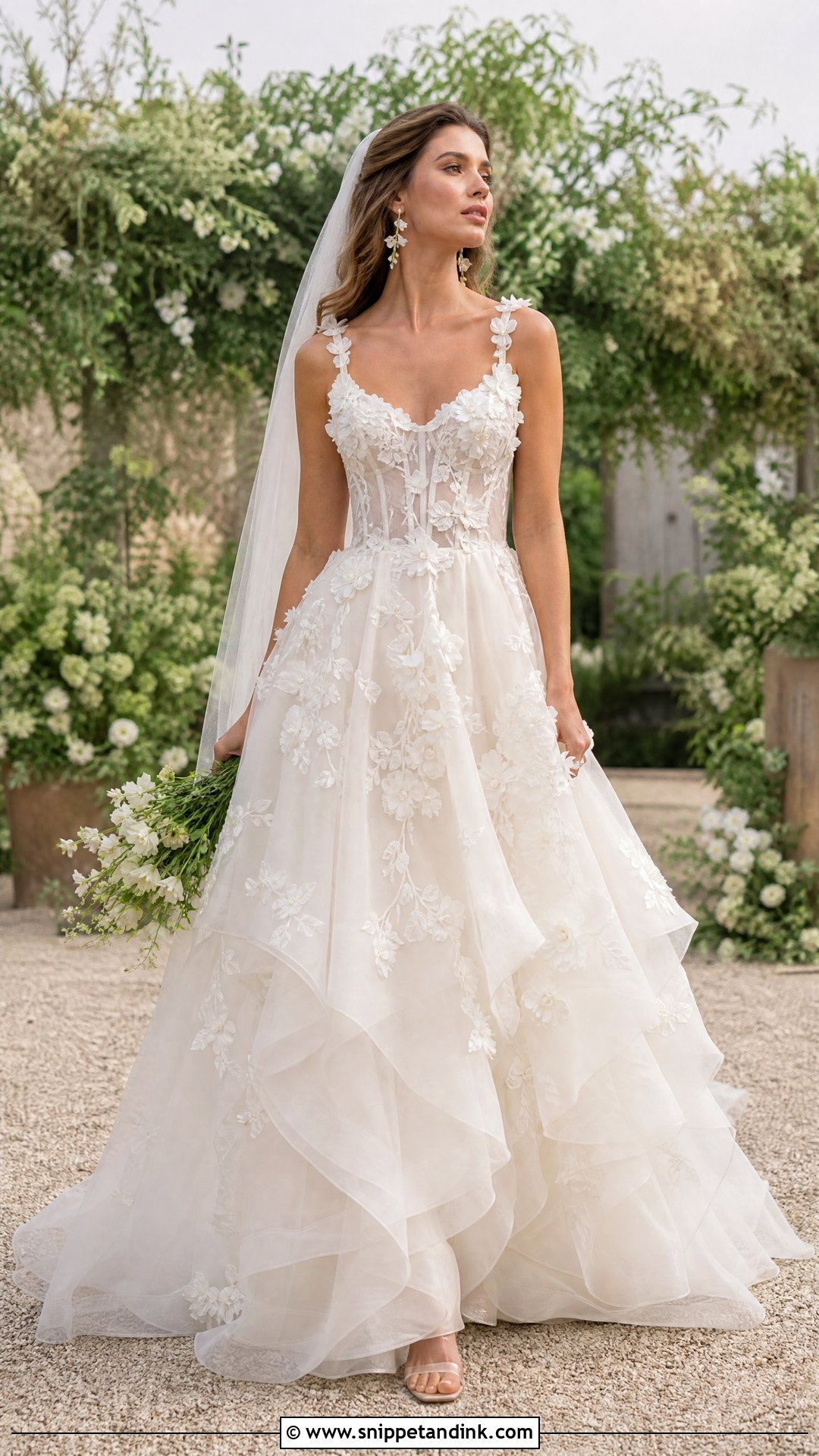
Pick one flower size and stay with it. That’s the rule I give on floral ruffle gowns, where the flowers may be embroidered vines, lace appliqués or raised petals scattered over a tulle bodice and tiered skirt. Small blooms read as texture, while oversized petals look couture. A floral stud or a single hairpin is plenty; matching floral everything gets twee fast. Soft waves or a loose bun, ivory sandals and a plain veil let the dress lead. For an outdoor wedding, ask if the lowest appliqués can sit a little above the hem, since raised petals at floor level snag on grass and collect dirt as you walk.
13. Minimal Ruffle Bridal Gown
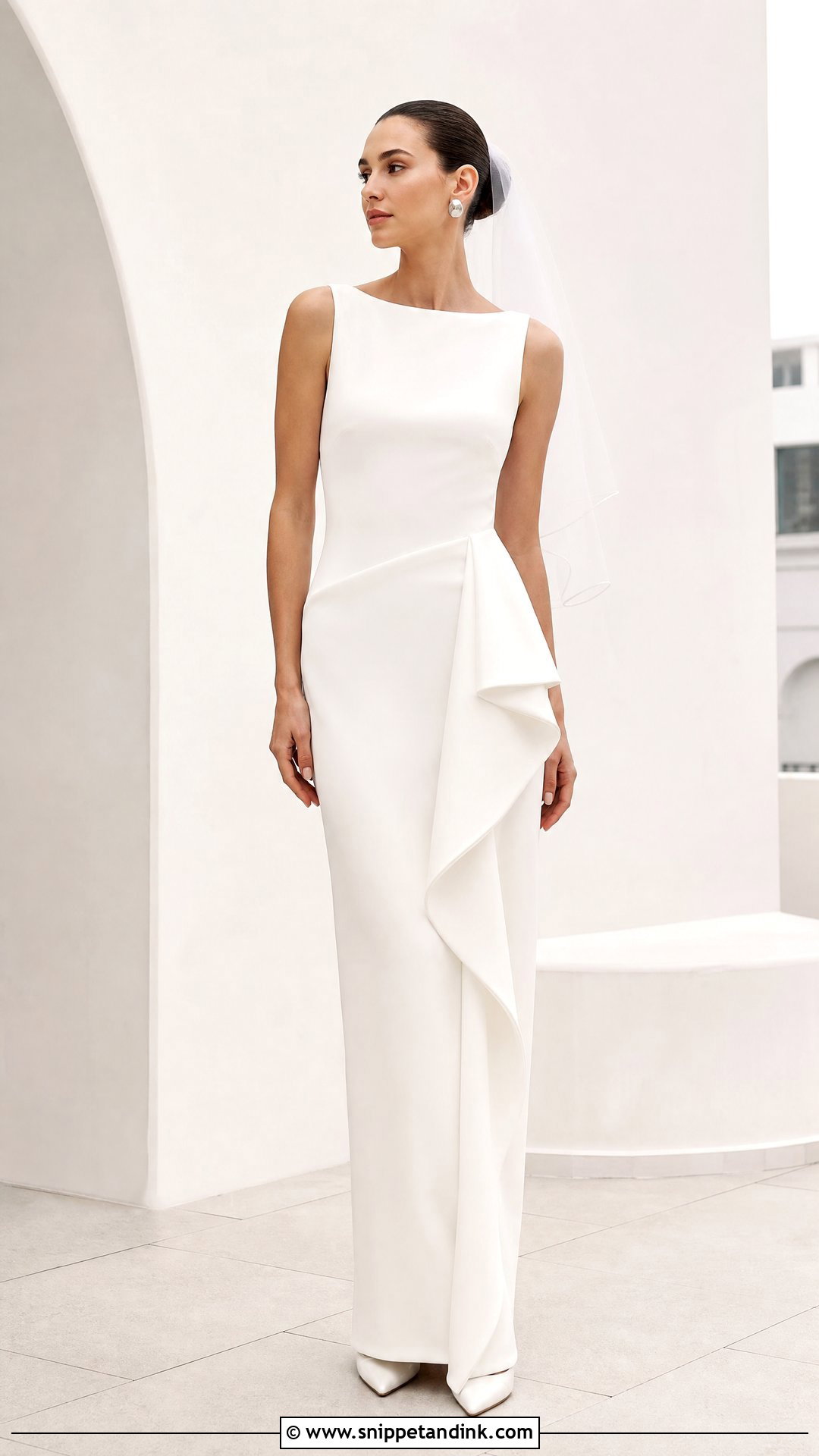
One flounce, placed well, can be enough. A minimal gown might have a single drape at the neckline, hip, back or hem in smooth crepe, satin or silk-like fabric, which gives the ruffle a clean, architectural line. Column, sheath and restrained A-line shapes suit city venues and modern ceremonies. With so little decoration, tailoring is exposed, so the bodice and hem must fit precisely; I’d budget for an extra fitting here rather than a cheaper gown. Sculptural earrings, a sleek bun and plain pointed pumps work, with either a short veil or a clean cathedral one depending on formality. It gives movement without the princess look.
14. Ruffle Bridal Gown With Train
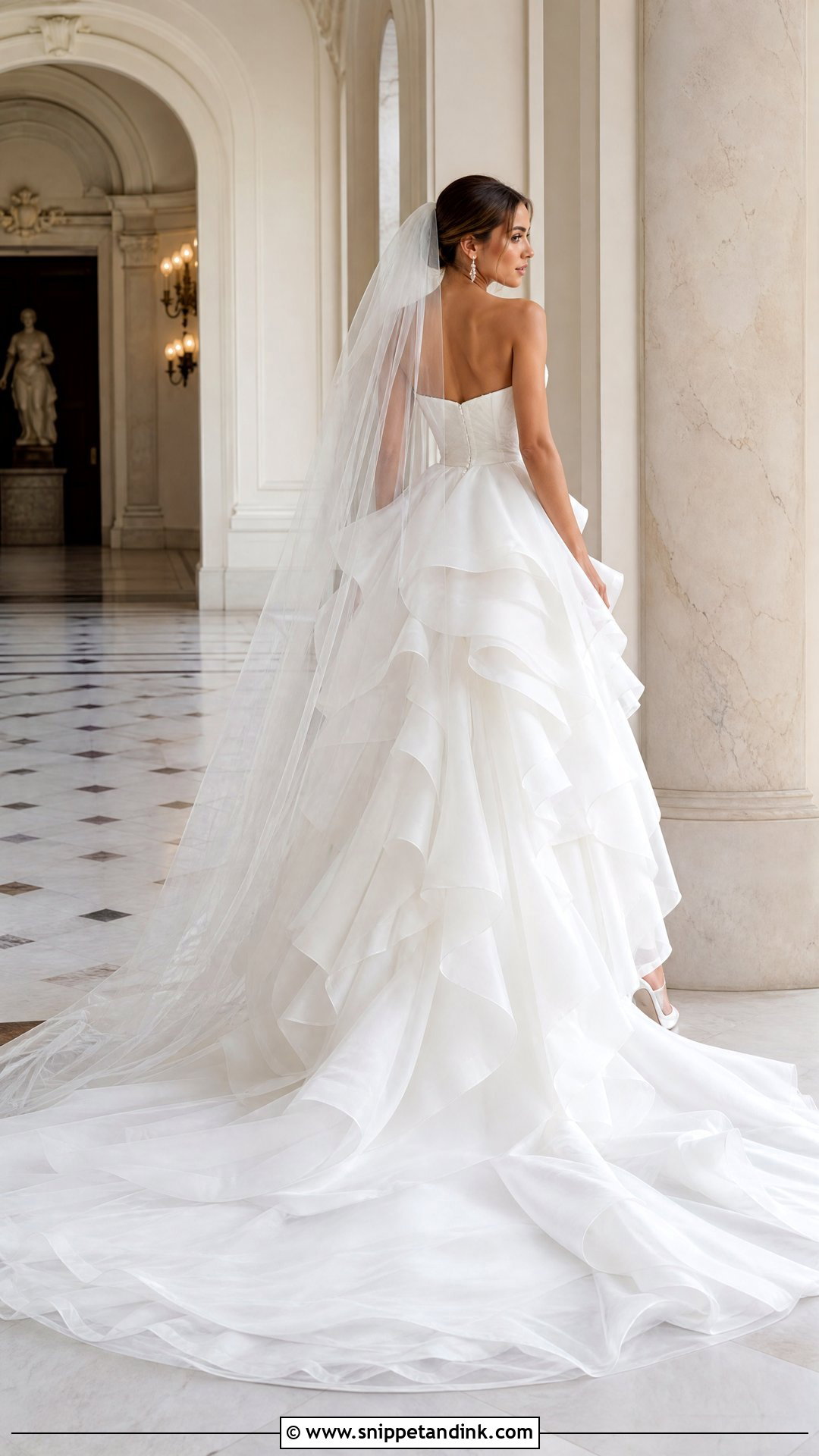
A ruffled train is really an entrance and a back-view photograph. It may grow out of a layered skirt or start as a separate cascade at the lower back. Cathedral and chapel lengths suit formal indoor venues, while a short sweep is easier in gardens and small rooms. Keep the bodice secure and the jewelry restrained. A long veil helps the entrance if it’s sheer enough to show the ruffles through it. Stable heels matter, because turning on a textured train takes control. Plan the bustle at the first alteration appointment, not the last, and ask that it lifts each layer evenly so the ruffle pattern survives.
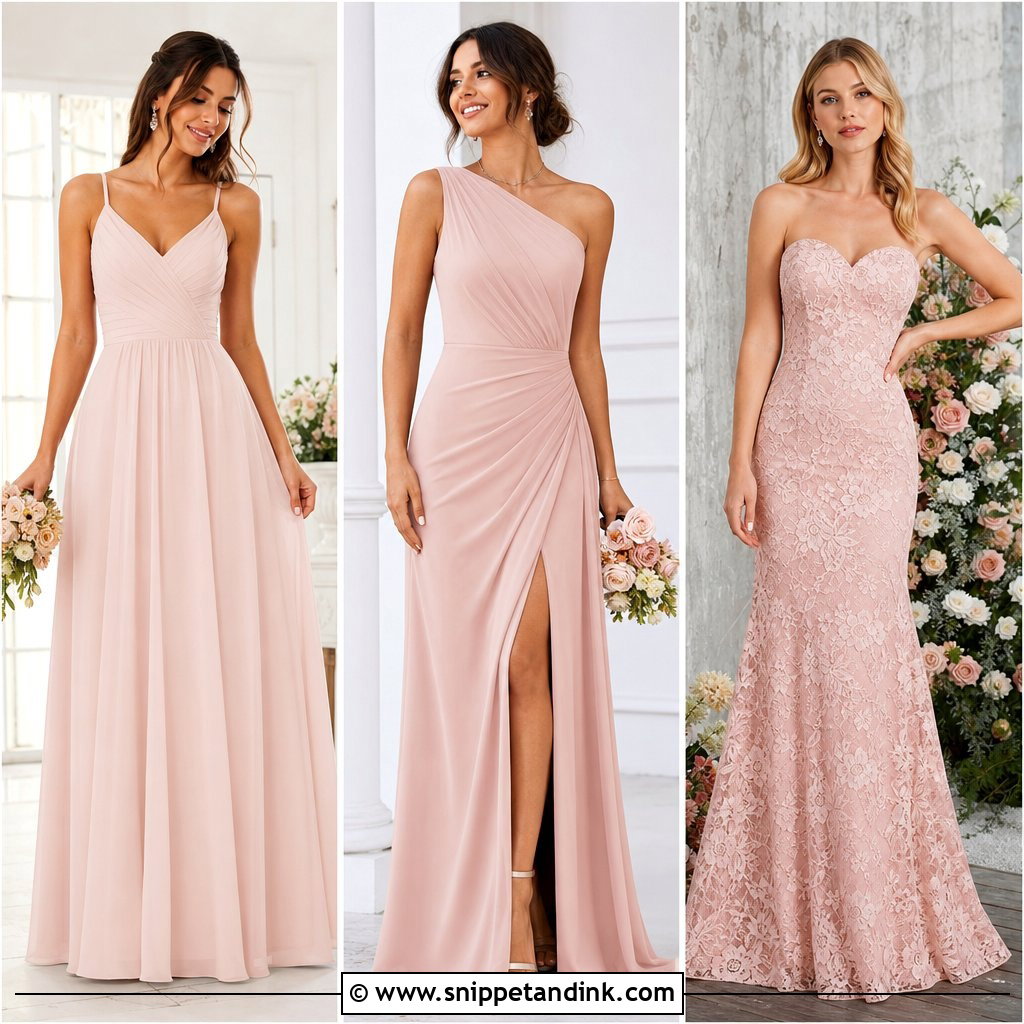
15. Blush Ruffle Bridal Gown
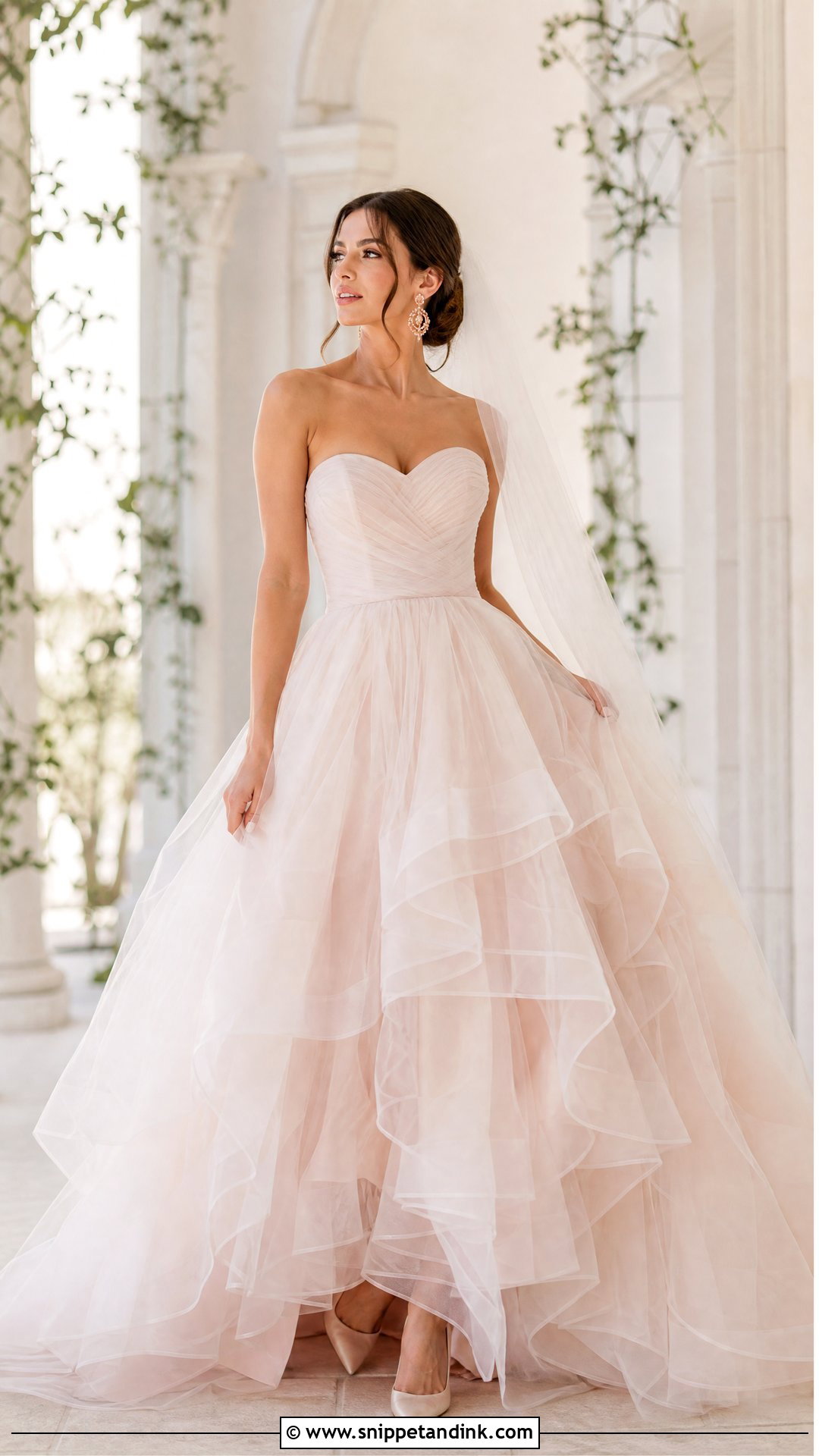
Blush is usually a lining, not the outer fabric: layers of ivory tulle or organza over pale pink give warmth and make lace, appliqués and tiers easier to read in photos. Choose the shade against your own undertone, since showroom bulbs flatter almost everything. A strapless ball gown in blush feels grand; an A-line feels lighter. Rose gold or neutral earrings, ivory shoes and a veil matched to the top layer, not the lining, finish it, and keep bouquet colors soft. I take every blush gown to a window. Depending on the lining and the light, the same dress can look peach, beige, pink or nearly ivory.
16. A-Line Ruffle Bridal Gown
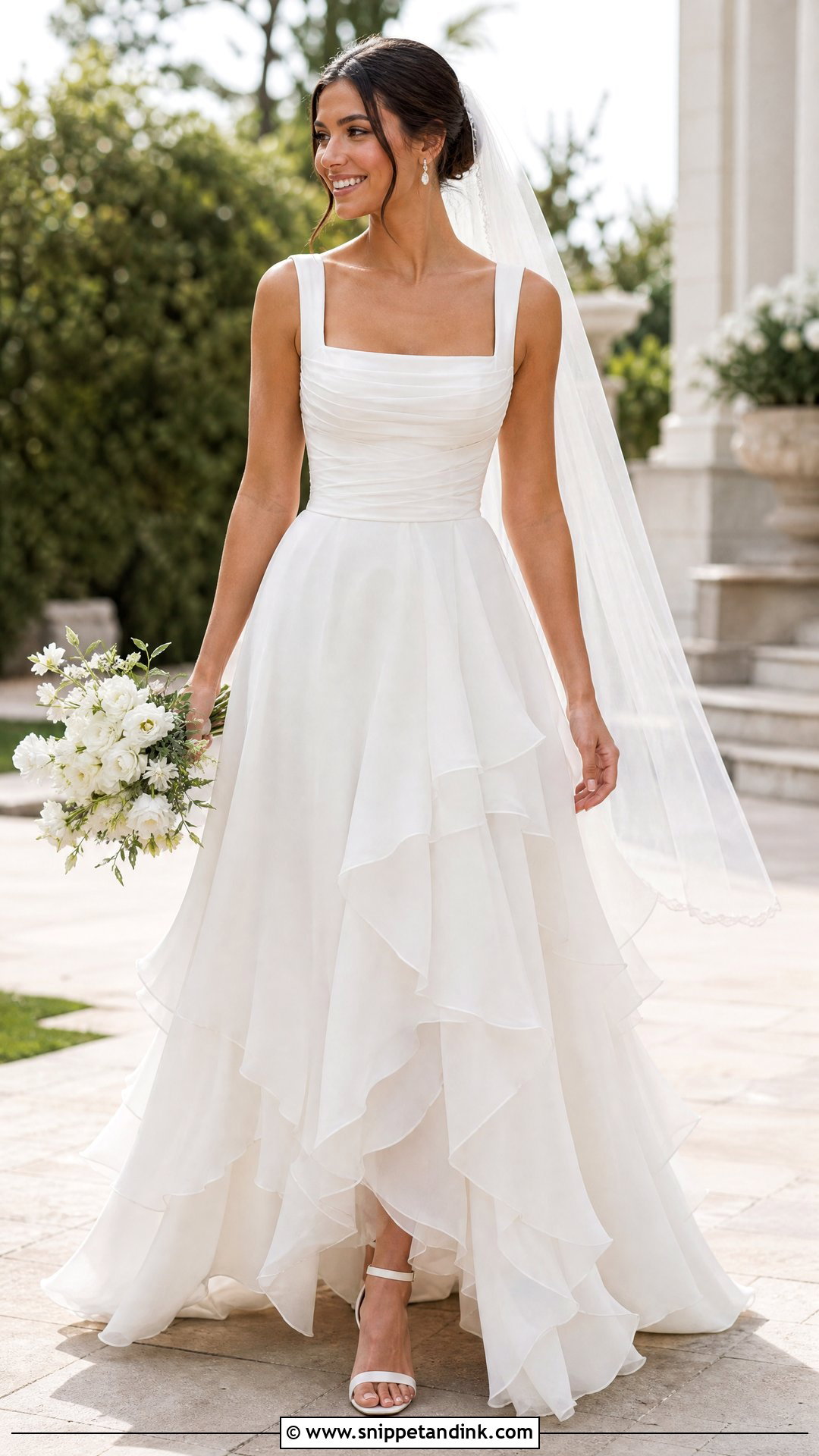
Most brides I dress end up comfortable in an A-line, because it sits between a narrow sheath and a full ball gown. The bodice follows the torso, then the skirt widens gradually, giving ruffles room without swamping you. Narrow chiffon tiers lean boho; wider organza layers look formal. V-neck, square and strapless bodices all suit it. A fingertip veil, fine earrings and supportive block heels are easy companions. Flats are fine too, as long as the hem is measured in that exact pair. Because the number, width and position of the ruffles can be adjusted, it adapts to a lot of venues and figures while keeping the waist clear.
17. Drop-Waist Ruffle Bridal Gown
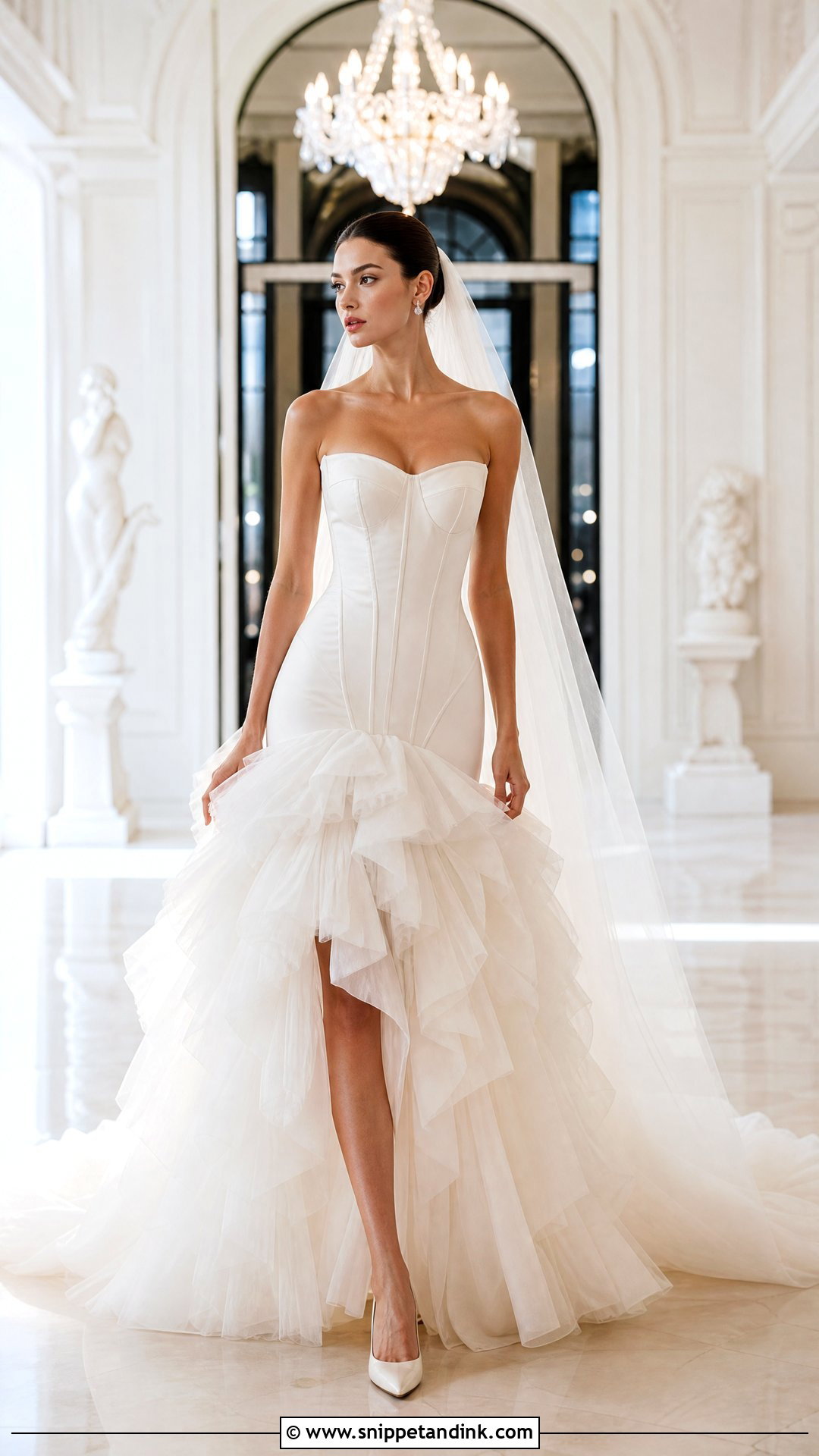
Dropping the waist lengthens the torso before the skirt bursts open, and it’s less forgiving than it looks. The fitted part may end at the upper hip or dip into a soft V. Tulle makes a dreamy transition; organza makes the lower volume sculptural. Tailoring has to be precise, because a low waist that’s slightly loose bunches when you sit. Small earrings, a smooth veil, pointed pumps and a polished updo suit the long lines. I’d judge this one from the front, side and back in a three-way mirror. Where the ruffles begin should flatter your proportions and still let you take a full step.
18. Ruffle Bridal Mini Gown
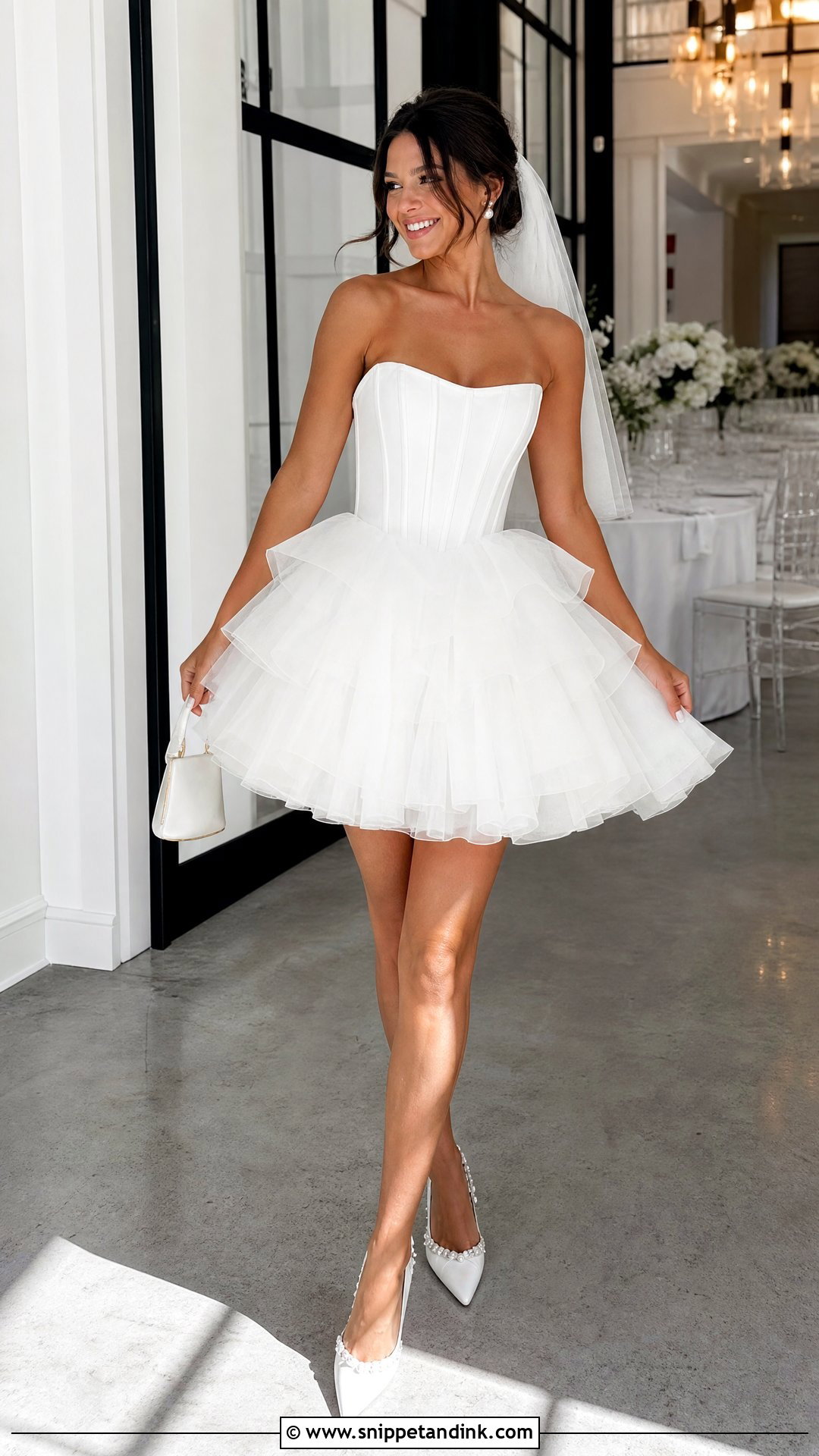
Short ruffled dresses suit receptions, courthouse ceremonies, welcome parties and second looks. You might find a structured strapless top, a fluttering hem, a layered tulle skirt or an oversized shoulder flounce. With legs and shoes on show, the shoes become part of the outfit: pointed pumps look polished, slingbacks vintage, embellished flats easy. Pearl earrings, a small structured bag and a short veil or simple hair bow keep it bridal. Sit down and dance in front of a mirror before buying, since short ruffled hems ride up. Built-in shorts or a secure lining help, and a detachable overskirt lets you walk the aisle long and reveal the mini later.
19. Detachable Ruffle Bridal Gown
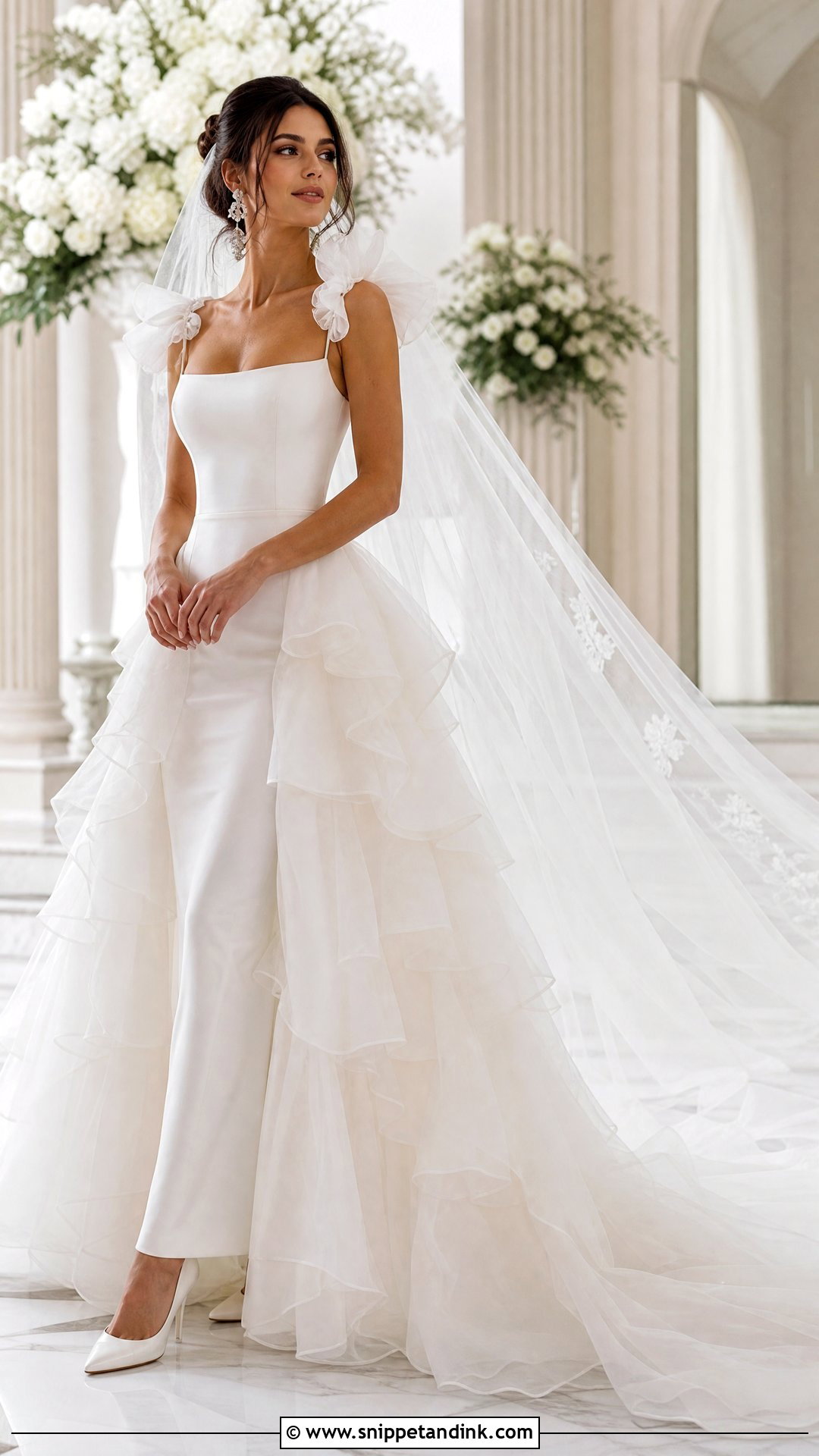
Removable pieces give one gown two personalities. An overskirt can add tiered volume to a fitted dress, and removable sleeves, a shoulder flounce or a ruffled cape can change the neckline entirely. Each attachment needs hidden, secure fastenings and should look intentional from every side. Wear the full version with a long veil, statement earrings and satin pumps, then switch to block heels or flats once the layers come off. The base gown has to look finished alone, without exposed hooks or uneven seams. I always ask one bridesmaid to come to the final fitting and practice the hooks with me, because nobody wants to learn them in a venue bathroom.

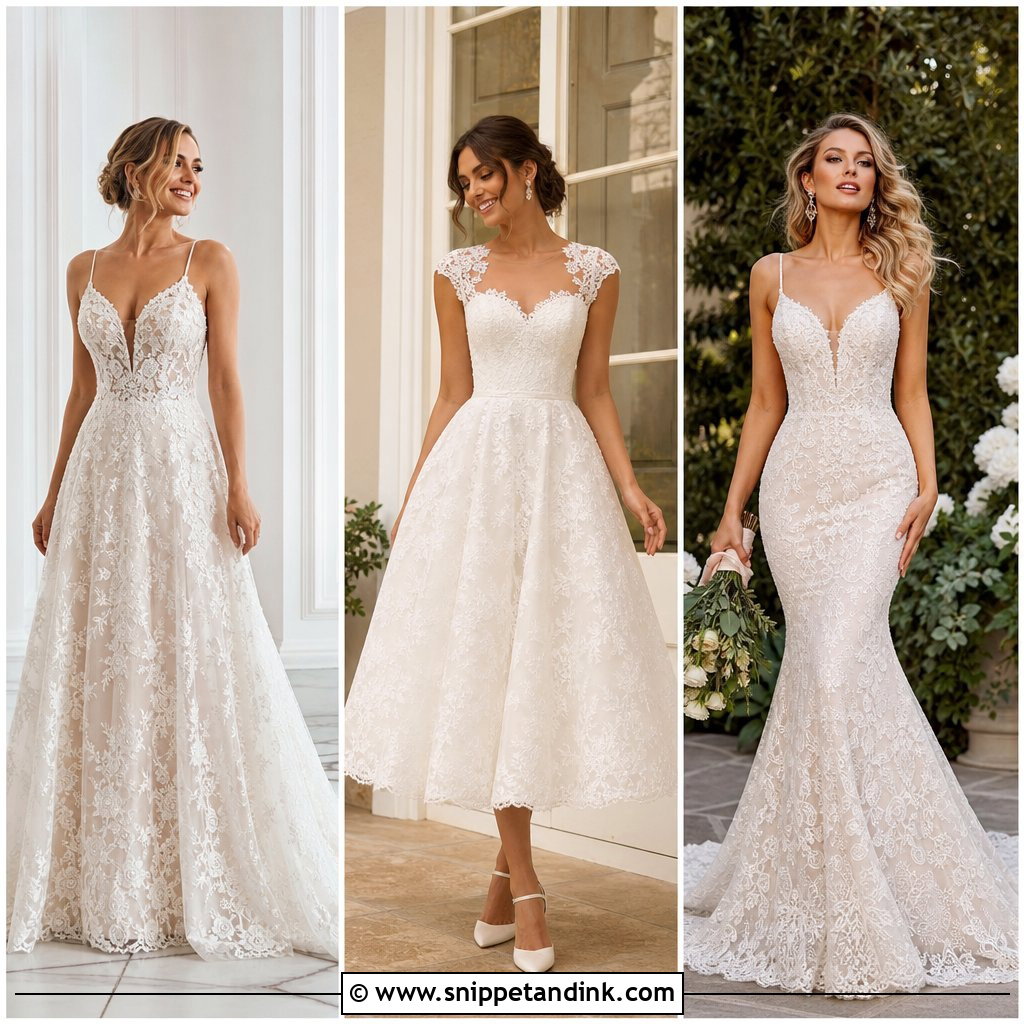
20. Plus-Size Ruffle Bridal Gown
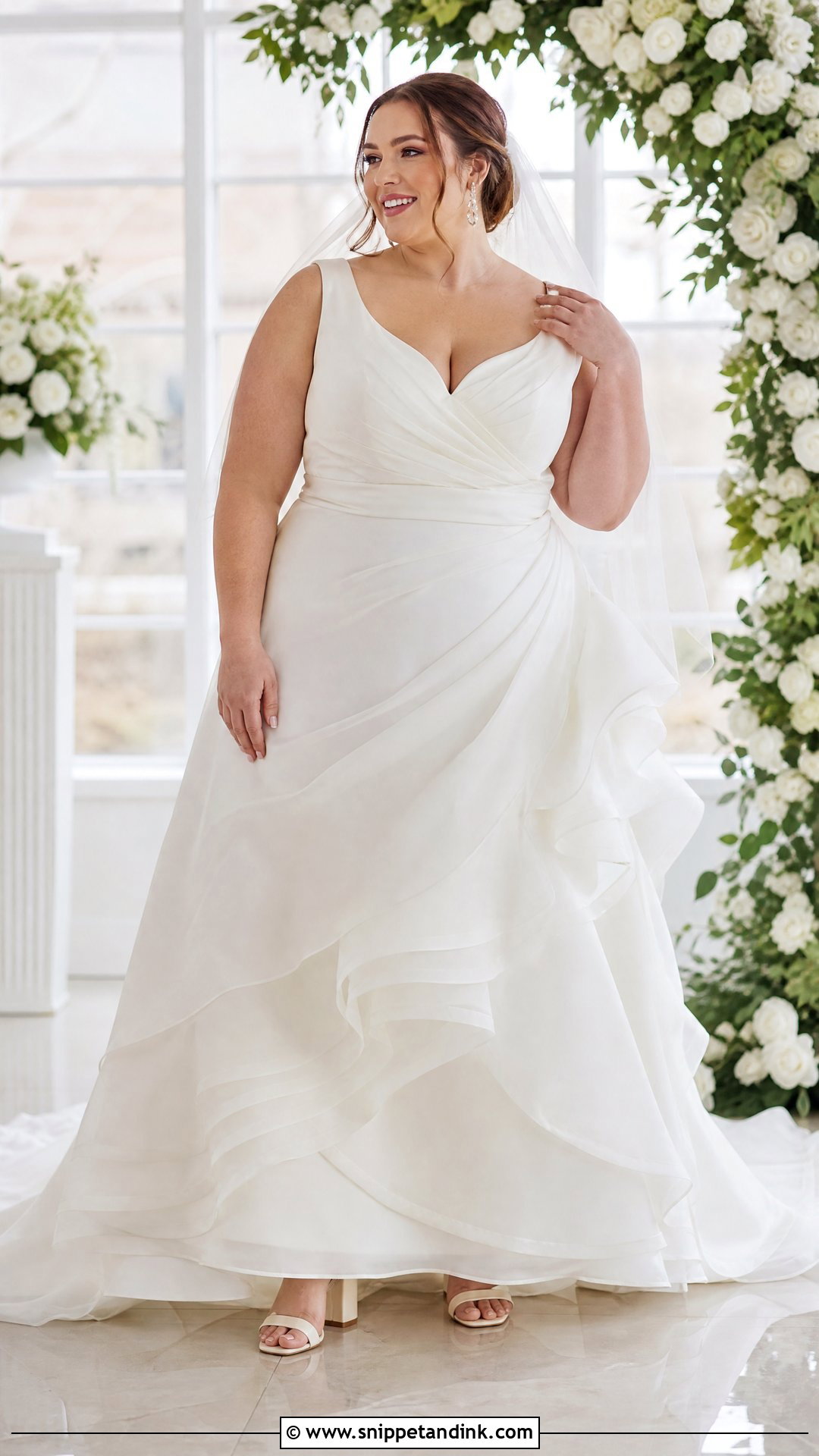
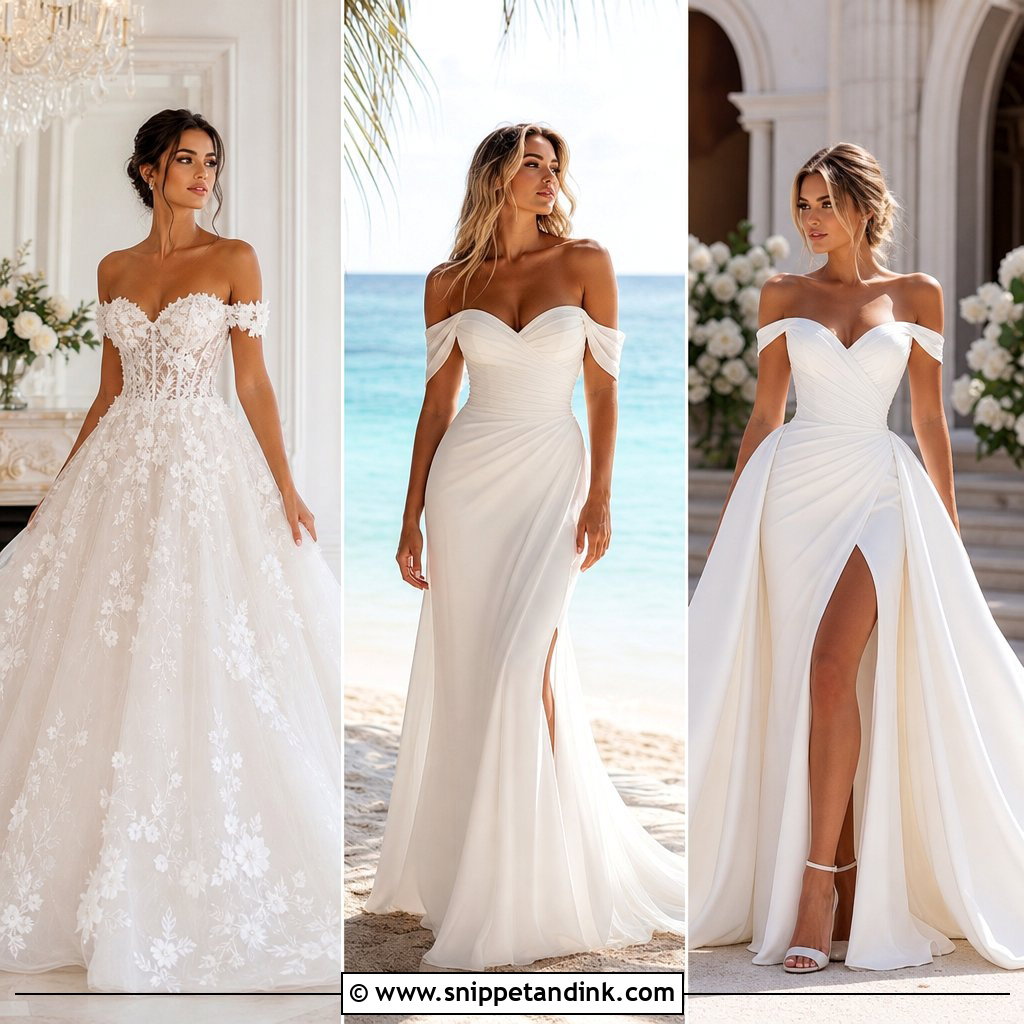
Support and proportion come first in a plus-size ruffle gown, not old rules about hiding anything. I look for strong internal structure, adjustable corsetry, wide straps or a strapless bodice that truly fits. Ruffles can go wherever you enjoy them, from a cascading neckline to a fully tiered skirt. Vertical or diagonal layers move fluidly, while even tiers give bold volume, so pick by personality and venue. Stable heels or smart flats, balanced earrings and a veil that doesn’t hide your favorite detail finish it. Sit, bend, walk and raise your arms in every fitting, and have alterations made to your body, never to a sample size you’ve been squeezed into.
Bustling a Ruffled Train Without Flattening the Tiers
A bustle gathers the train up off the floor for the reception, and on a ruffled skirt it can either keep the pattern or crush it. There are two main approaches, and I’d discuss both with your seamstress early.
Over bustle or under bustle
An over bustle hooks the train up onto the back of the skirt. It’s quick to fasten, but the lifted fabric sits on top of the tiers and can press them flat. An under bustle, often called a French bustle, tucks the train underneath and ties it with ribbons inside the skirt, so the outer ruffles fall freely. For tiered and cascading gowns, I usually lean toward the under bustle for that reason.
Heavy organza trains often need more attachment points than a light tulle one. Ask for the ribbons or loops to be numbered or color-coded, and have the person who’ll do it on the day watch the seamstress do it at the final fitting.
Ruffles After the Wedding: Cleaning and Long-Term Storage
Get the gown to a specialist wedding dress cleaner within a few weeks. Sugary drinks and sweat can dry invisible and then brown over time, and layered ruffles hide those spots well.
- Store it flat or loosely folded in an acid-free box, with acid-free tissue between the tiers so the folds stay soft.
- Avoid the plastic bag it came home in; it traps moisture.
- Keep it somewhere cool, dark and dry, not an attic or a damp basement.
- Don’t leave a heavy gown hanging by its straps for months, since the weight slowly stretches the bodice.
Ruffles That Still Sit Right After the Last Dance
A ruffled wedding dress should feel expressive and comfortable for the wedding you’re actually planning. The detail ranges from a single neckline flounce or flutter sleeve to tiered ball gowns and dramatic trains, so compare fabric weight, where the ruffle sits, internal support, venue size, weather and how easily you can move. Bring your real shoes and undergarments to every fitting and look at each gown from all sides. Let accessories stay quieter than the texture. Then pick the dress you feel most like yourself in; well-placed ruffles will take care of the movement.
You'll Like These Ideas:




Leave a Reply