
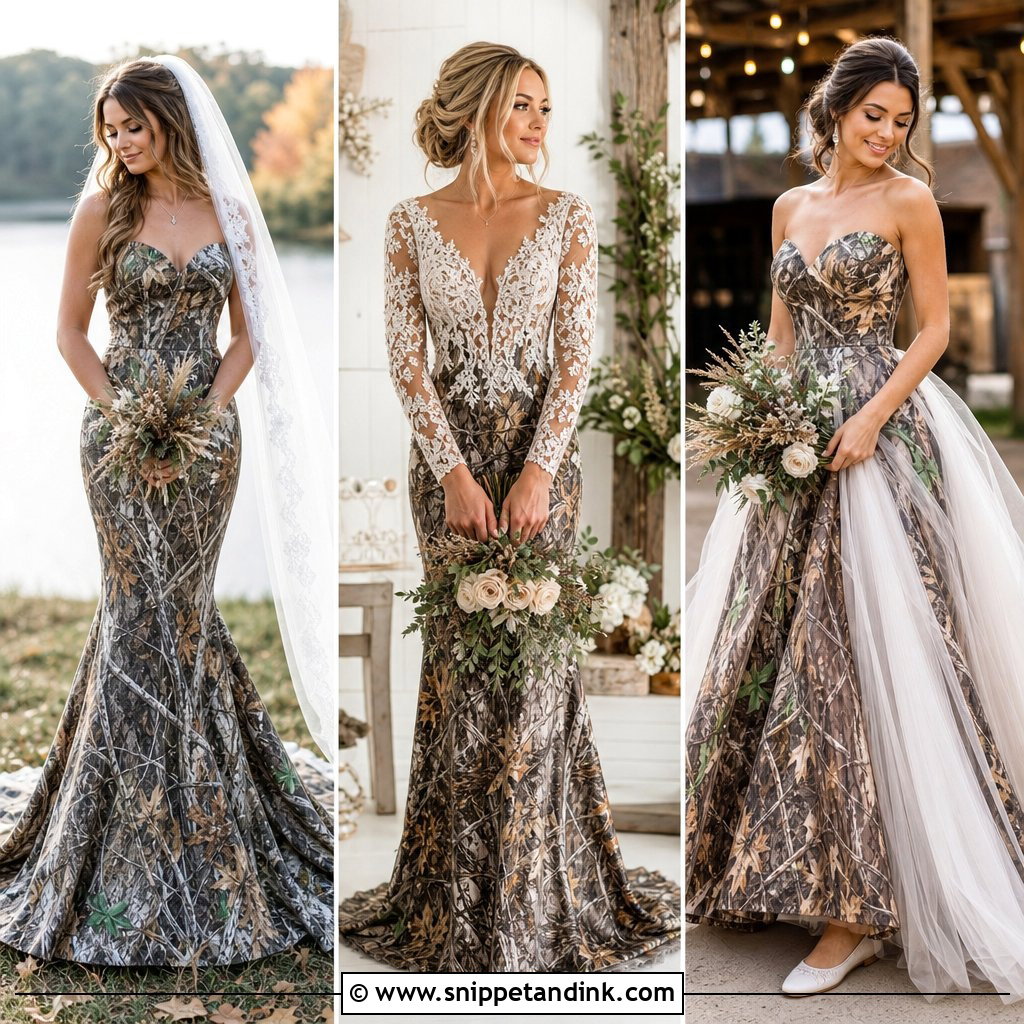
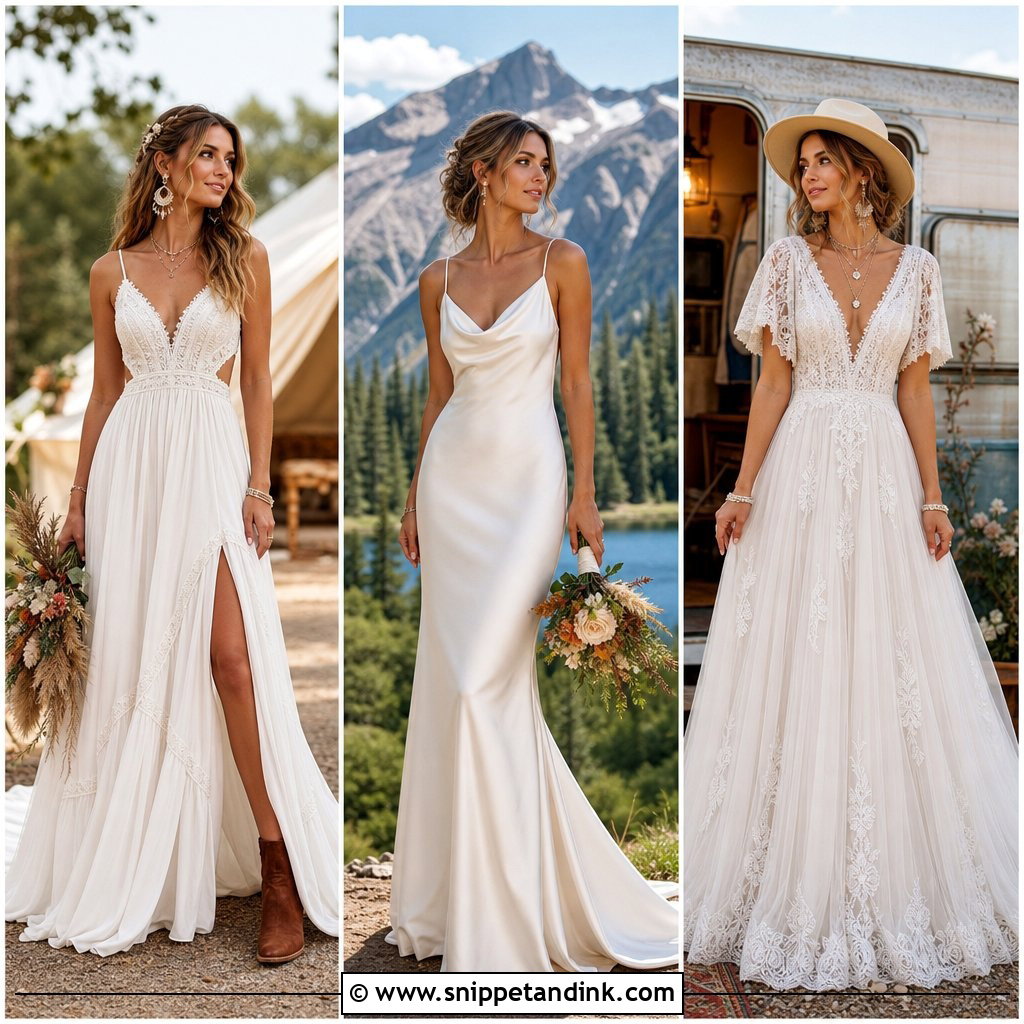
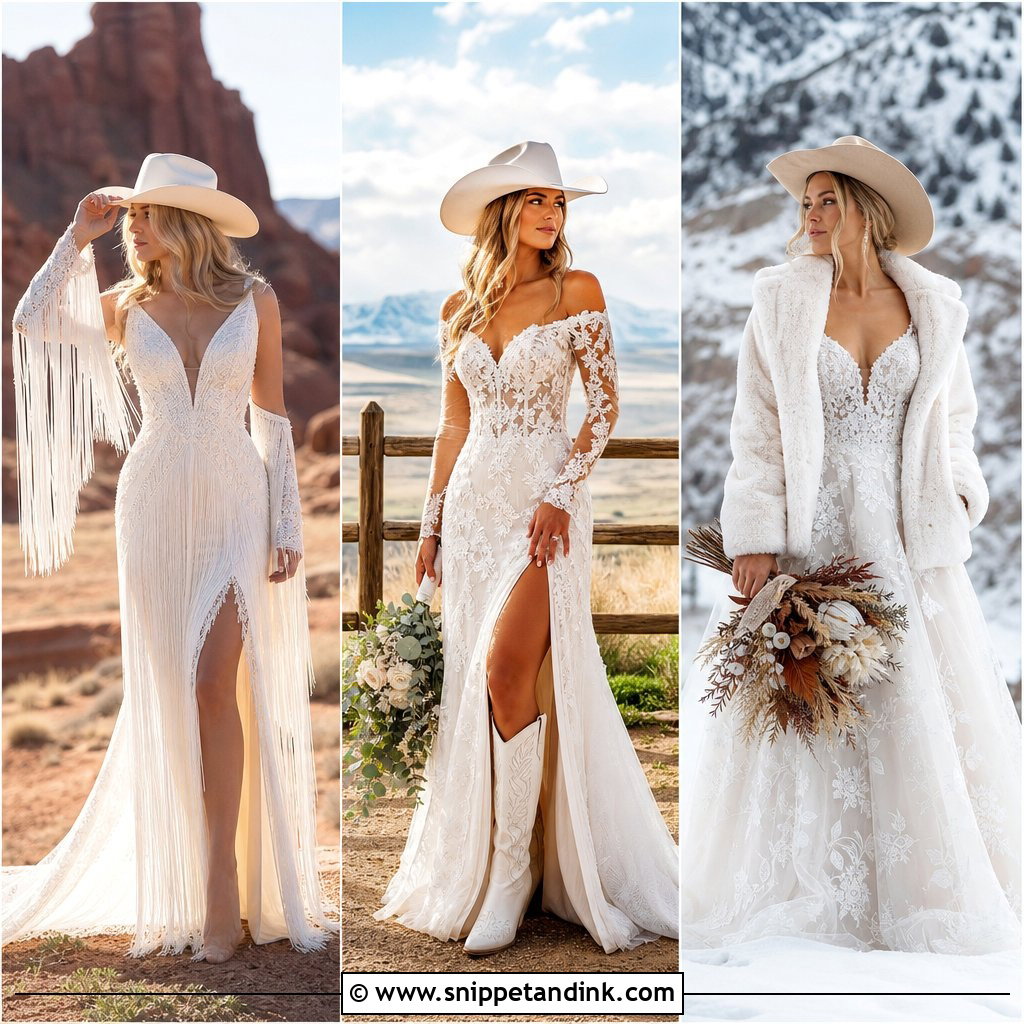
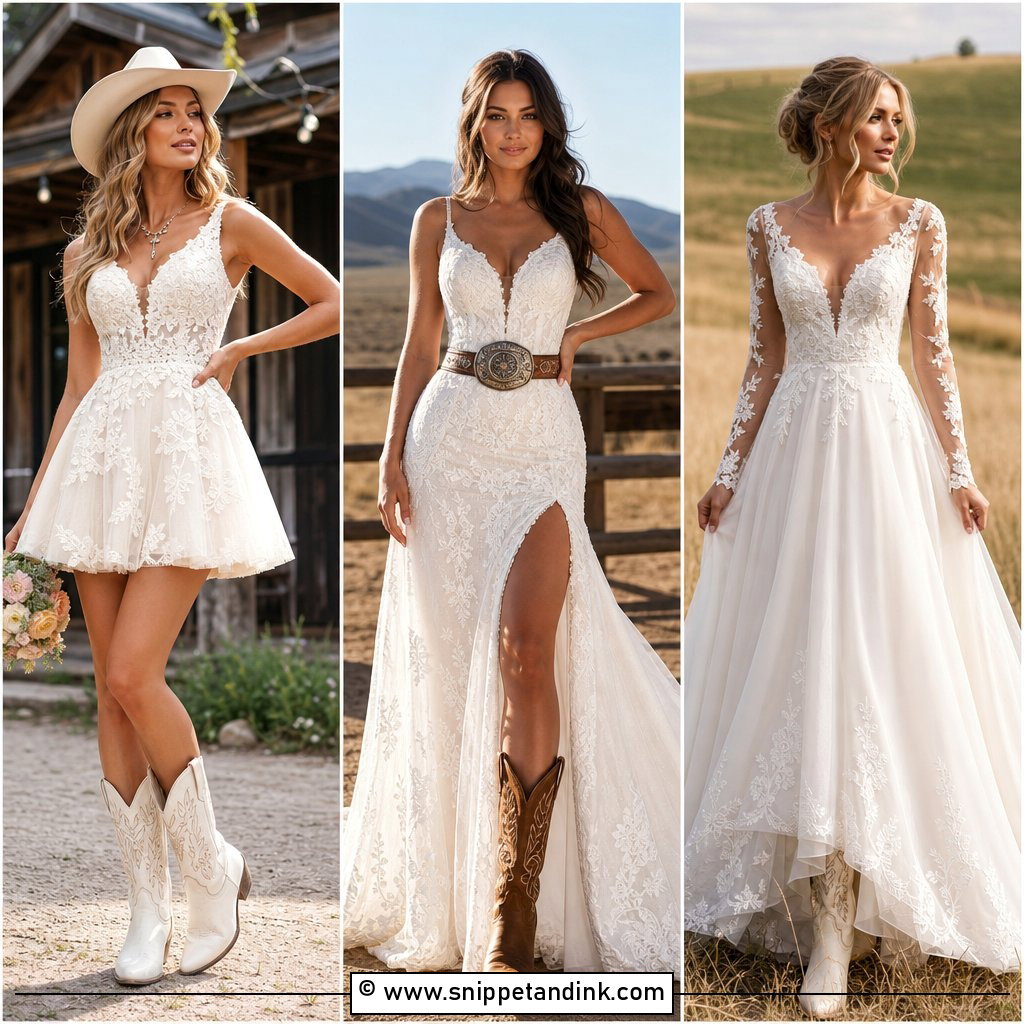
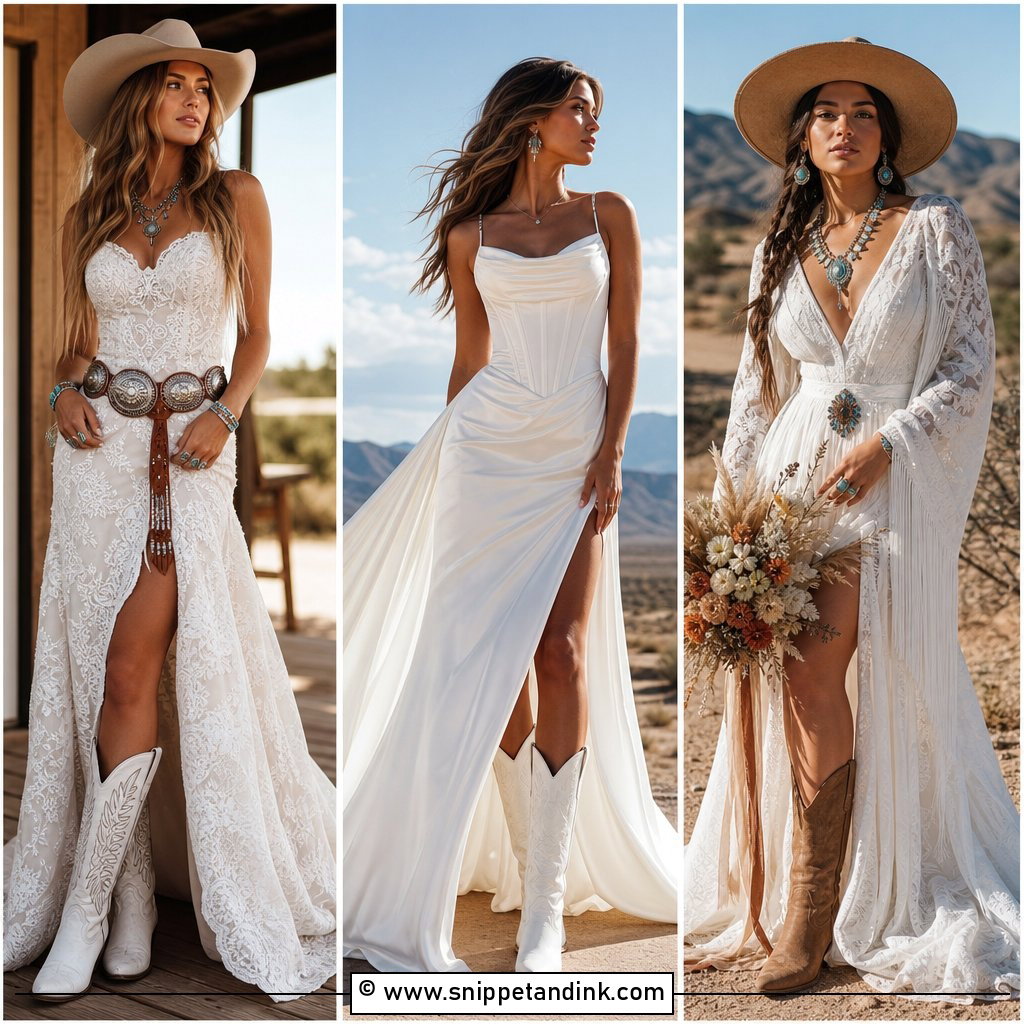
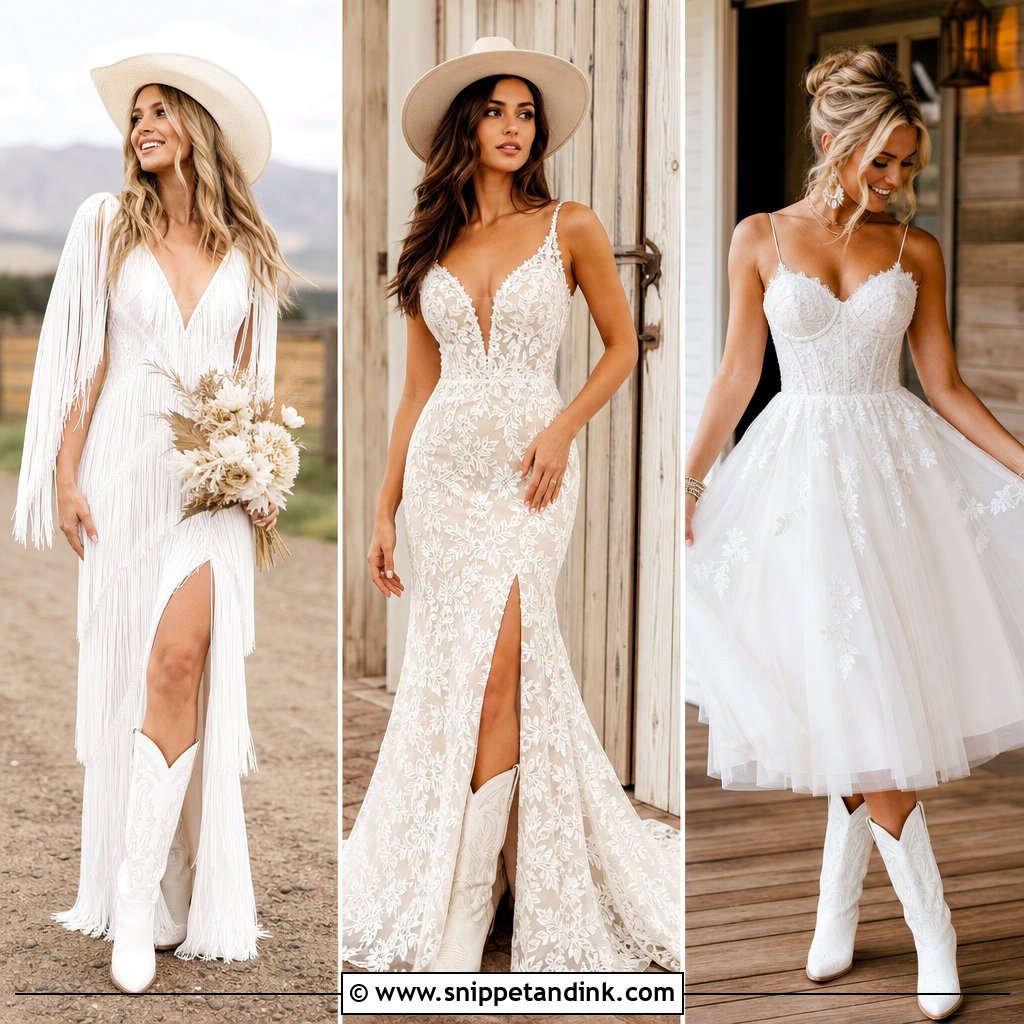
The line between a Western bridal look and a costume is thinner than people think, and it’s almost always crossed by piling on too much. My approach is to start with a clean dress and let one or two pieces carry the Western mood: cowboy boots, turquoise jewelry, a tooled belt or a felt hat. Lace, satin, fringe and vintage sleeves all sit comfortably in this style. Before you fall for any of the dresses below, picture the ground you’ll be walking on, because dirt, gravel and barn boards shape what works far more than the mood board does. The twenty looks here run from slip gowns to tea-length dresses, with the boots and accessories I’d put with each.
Break In Your Cowboy Boots Weeks Ahead, and Hem the Dress Around Them
Boots shape a Western dress more than any other choice, so I ask brides to buy them before the first fitting. A Western boot usually has a heel of around one and a half inches, and the hem has to be set to that exact height. Bring the actual pair to every fitting, never a substitute.
New leather boots are stiff at the instep and slippery underneath. Start wearing them around the house two or three weeks out, for an hour or so at a time, with the socks you’ll wear on the day. Leather softens and gives a little in width, but it won’t get longer, so if your toes touch the end now, they always will.
- Scuff smooth leather soles lightly with sandpaper so you don’t slide on polished floors or wet grass.
- Wear thin, cushioned socks; bare feet in boots blister within hours.
- Ivory and white leather mark easily, so treat new boots with a leather protector and test it on the inside of the shaft first.
- Dance in them at home. If they pinch during a two-step in the kitchen, they’ll hurt far more by the reception.
1. Simple Lace A-Line Western Wedding Dress
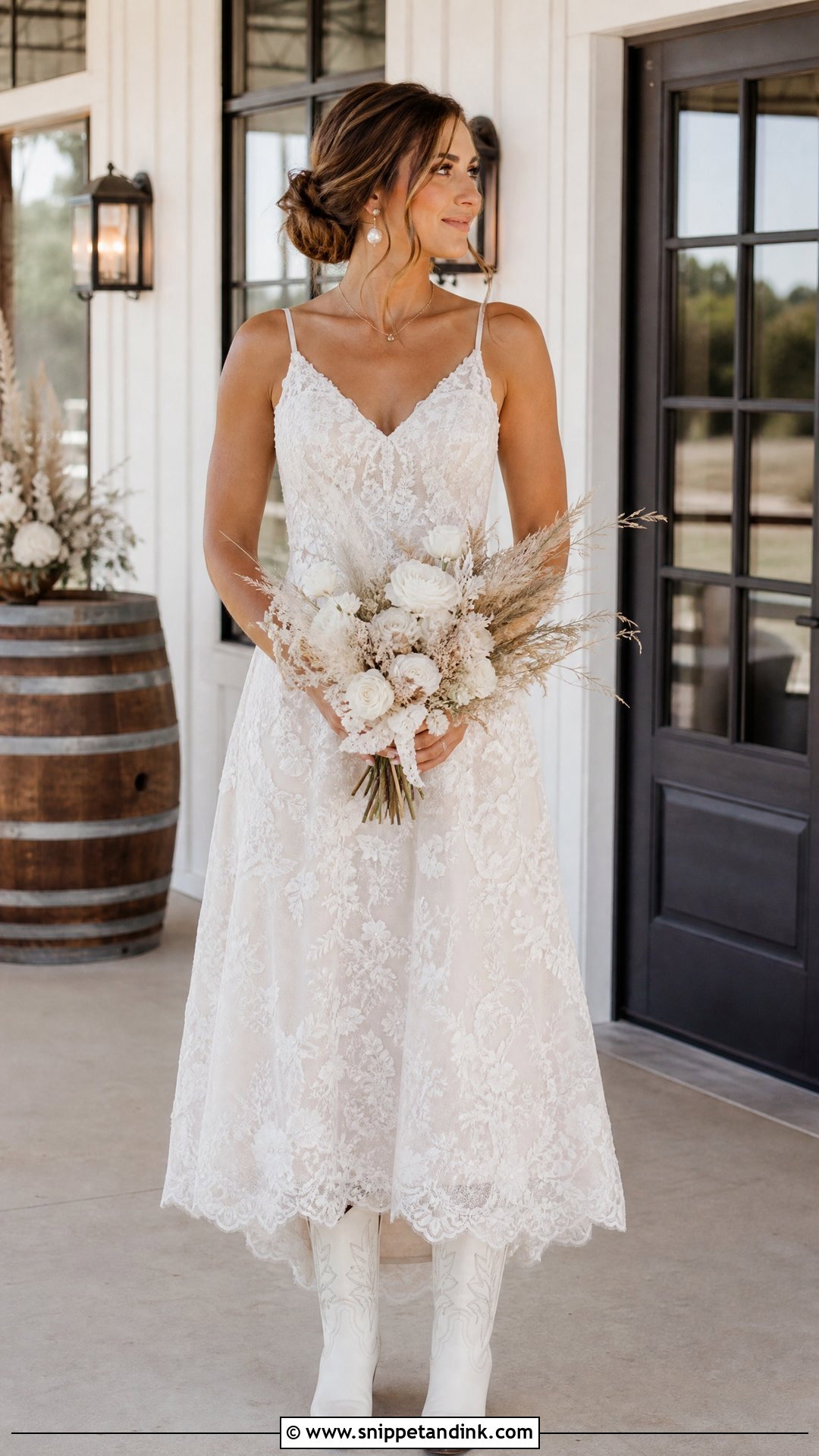
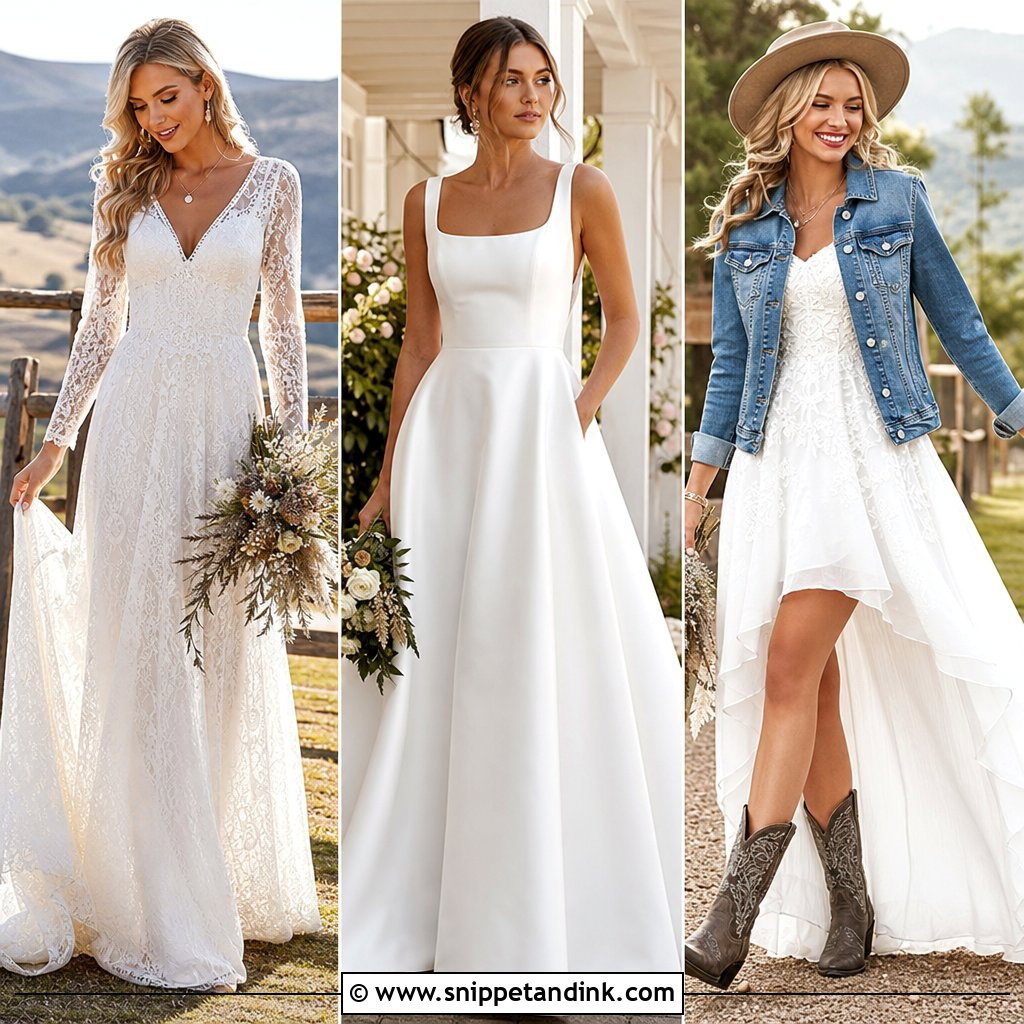
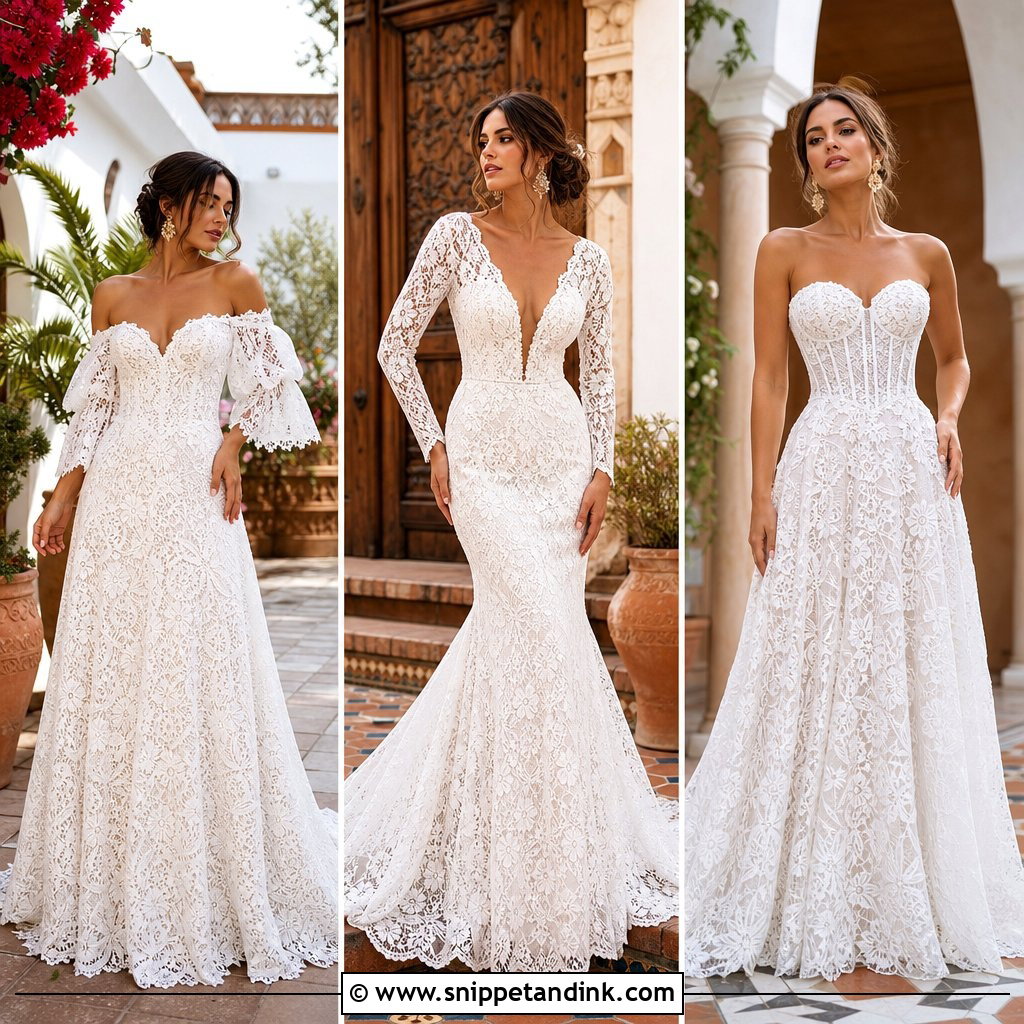
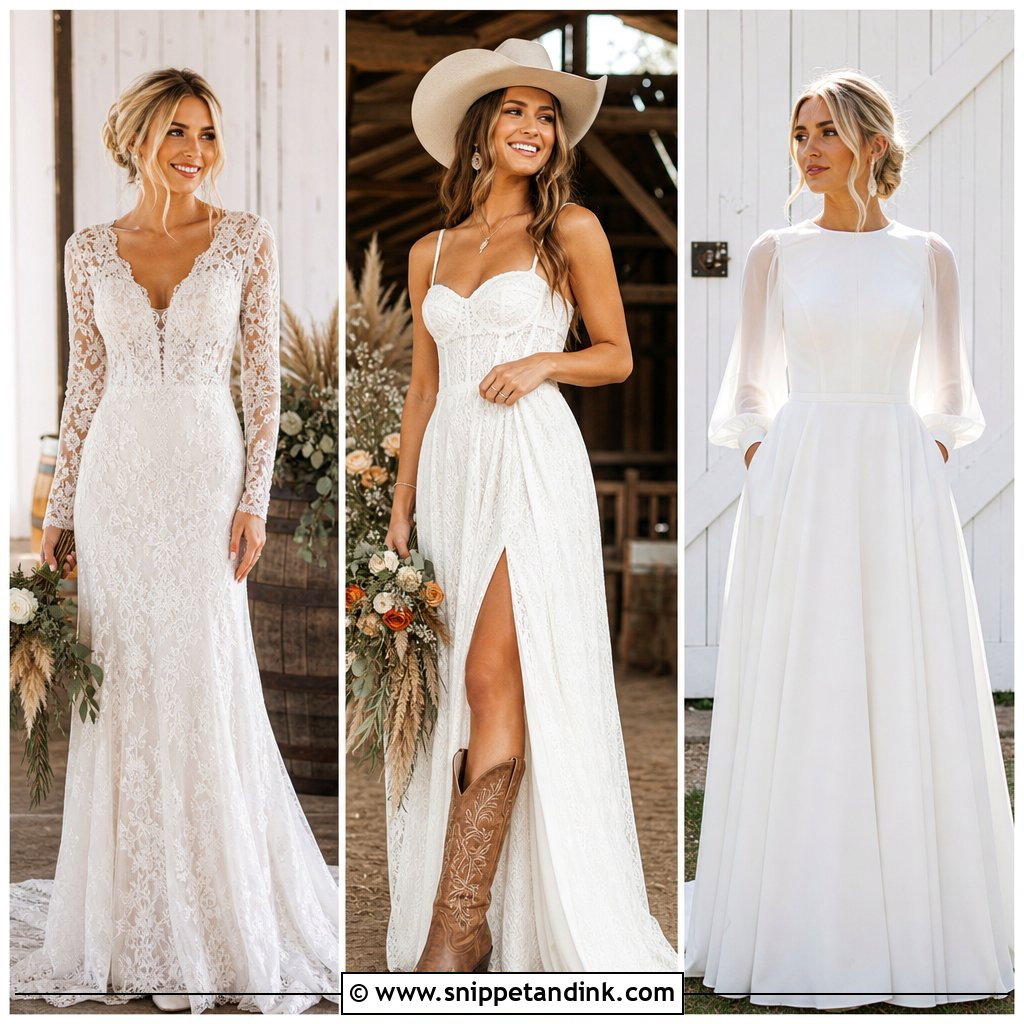
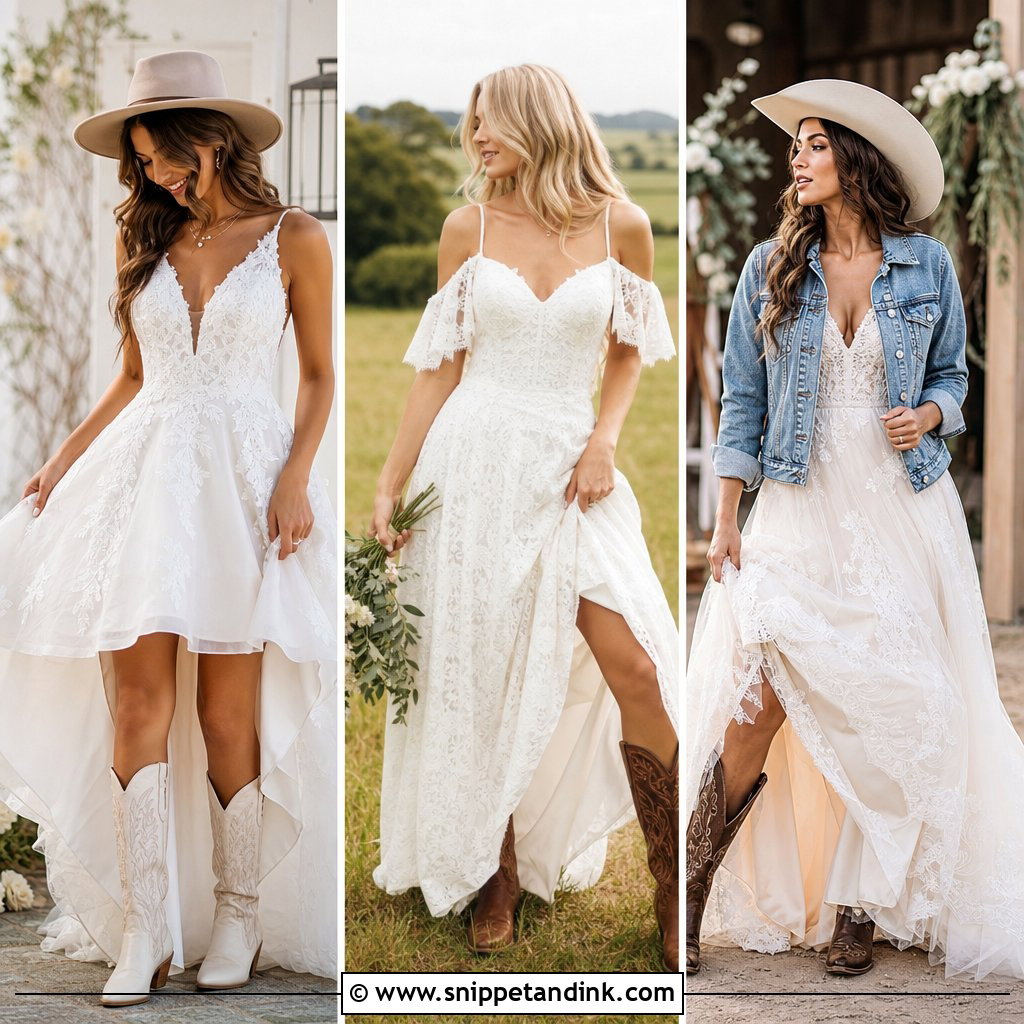
Lace A-lines are the easiest Western dresses to style, because floral lace already feels a little country before you add a thing. I’d go for soft lace over a light ivory lining, a fitted waist and a skirt that widens gradually. Ivory embroidered boots, pearl studs and a loose low bun complete it. A narrow leather belt defines the waist, but leave it off if the bodice lace is busy; the two textures fight. Dried grasses in the bouquet echo the setting, especially at a ranch or barn venue. The skirt gives room to sit on hay bales and dance without hitching it up.
2. Satin Slip Western Wedding Dress With Boots
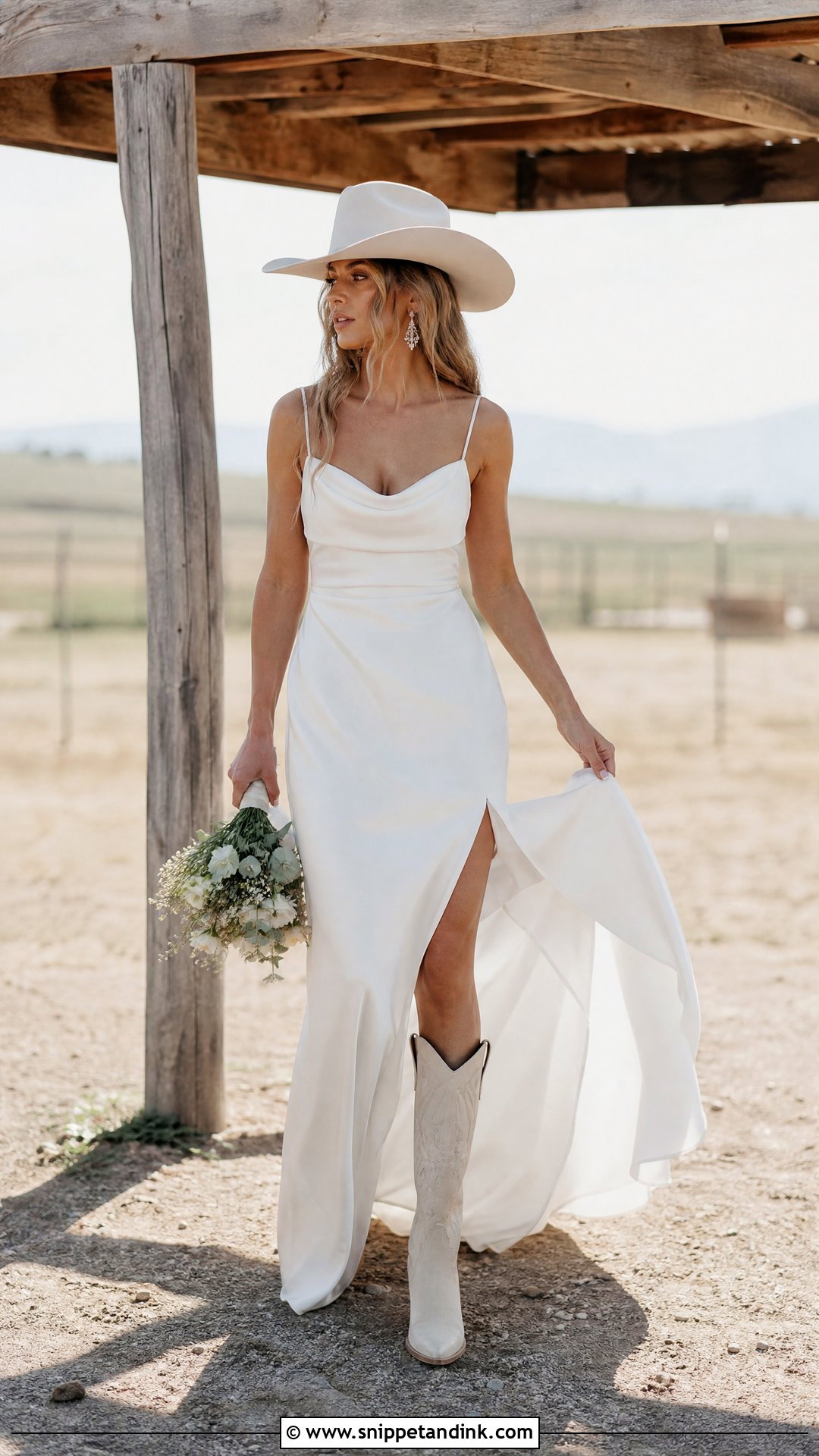
Satin against weathered wood is a contrast I always enjoy, the smooth sheen next to rough barn siding. Start with an ivory slip dress with a draped neckline and an ankle or floor-length skirt, then let pointed cream boots do the Western work. Satin marks easily, so this is the dress where I’m most careful about dusty ground. A felt hat suits portraits; delicate silver earrings keep the ceremony look refined. If the dress feels too plain, an engraved belt or a small fringed clutch adds texture. Polished waves or a low ponytail finish it. It’s cool to wear in summer heat.
3. Long Sleeve Lace Western Wedding Dress
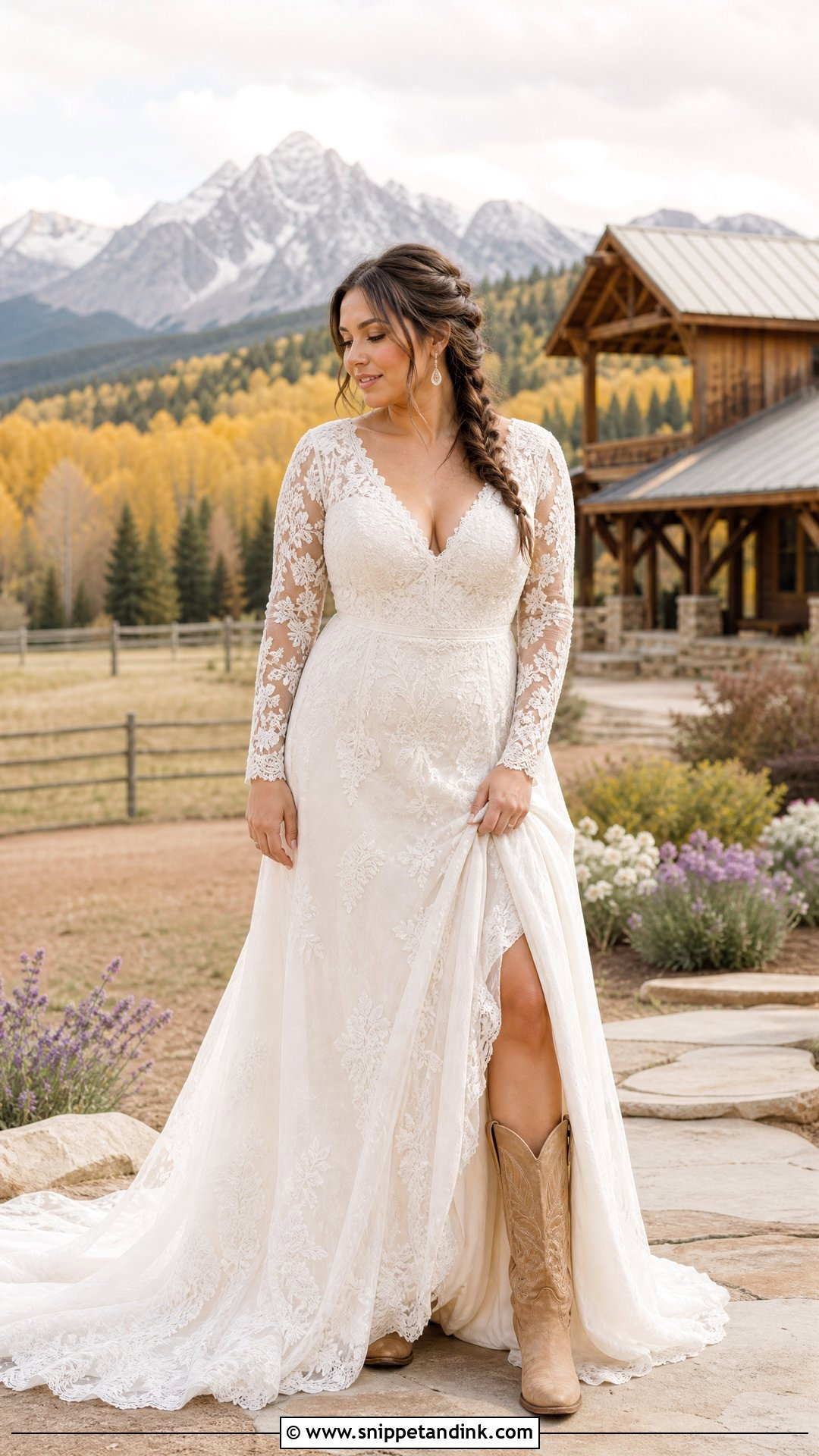
Evenings on a ranch get cold fast once the sun drops, which is when long lace sleeves earn their place. A fitted lace bodice, a softly defined waist and a chiffon or tulle skirt keep it from feeling heavy. Sheer sleeves are cooler than lined ones for the ceremony itself. I pair it with tan or ivory boots, simple drops and a relaxed braid, and skip any ornate necklace, since lace at the neck and wrists is already plenty. Keep a plain wool wrap in the car for the reception. Mountain venues and autumn ceremonies are its home.
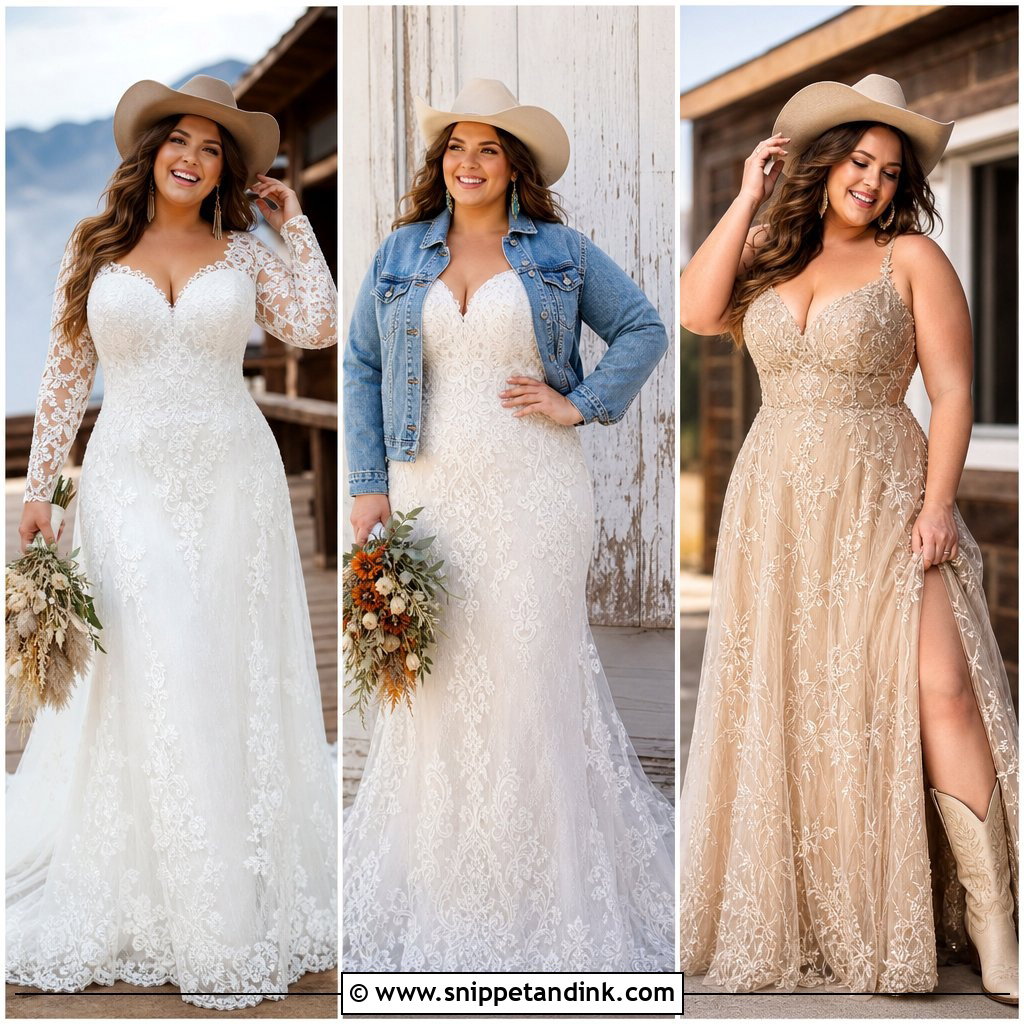
4. Tea-Length Western Wedding Dress With Cowboy Boots
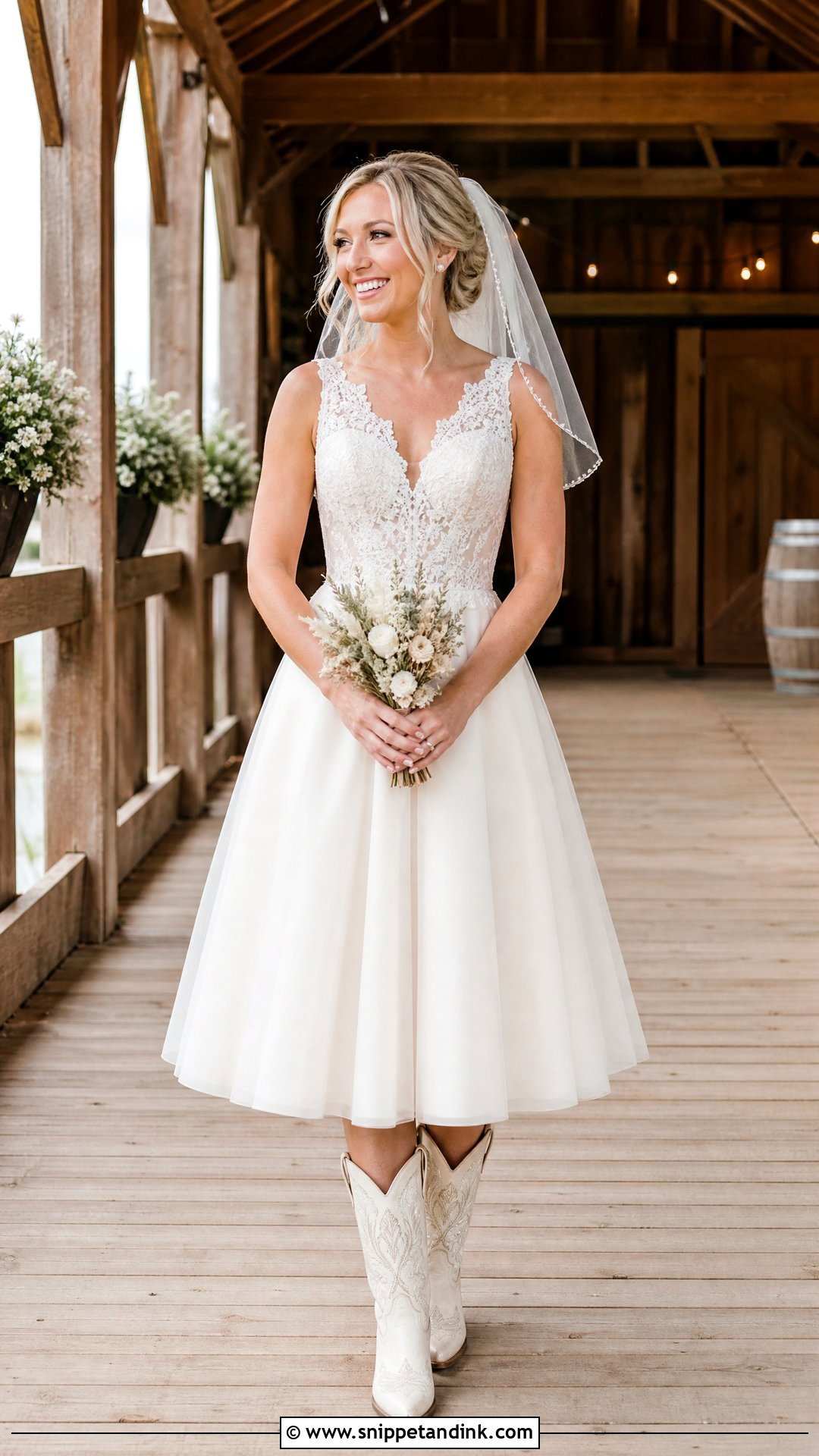
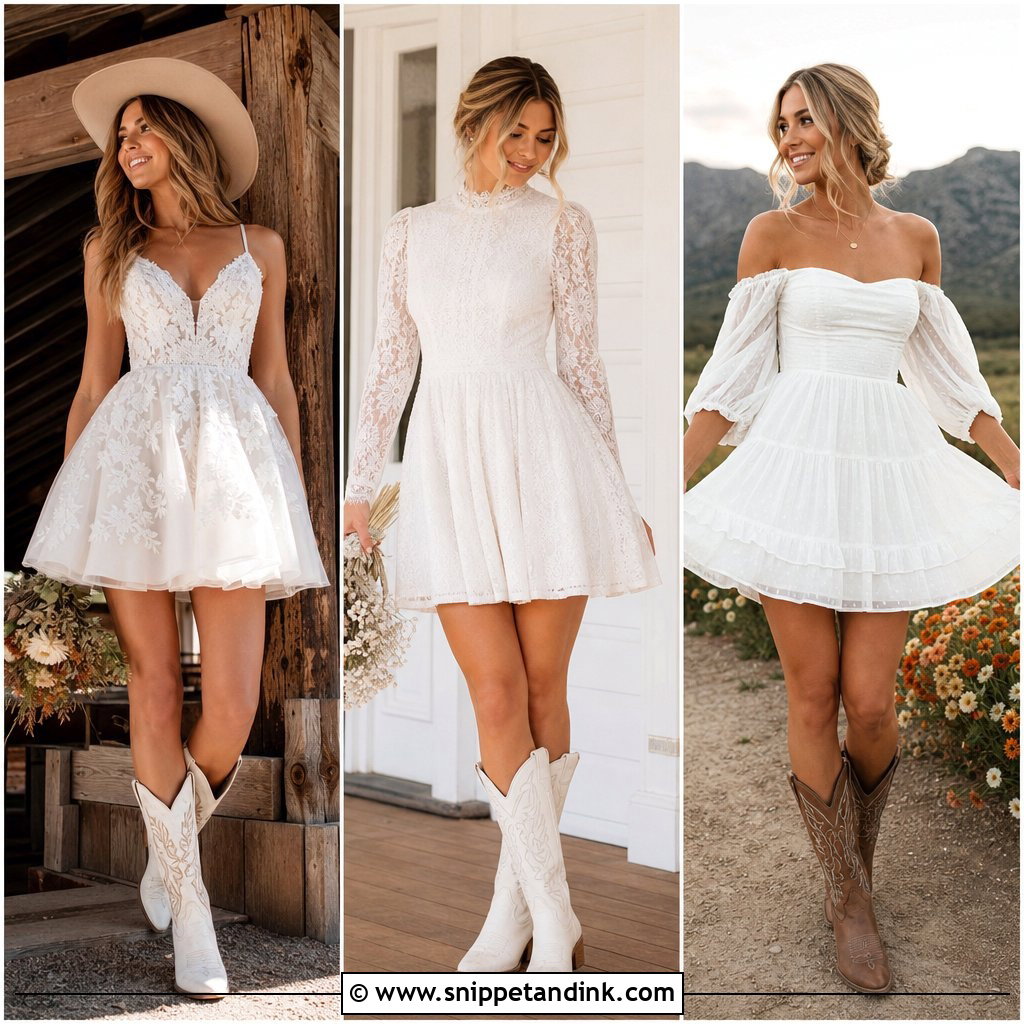
Want the boots to be part of the outfit rather than a surprise under the hem? Tea length, ending between knee and ankle, shows the whole shaft of a decorative boot. Choose a fitted lace or satin bodice and a skirt with a gentle flare so it moves on the dance floor. The hem length matters: I set it so it clears the top of the boot by a couple of inches, otherwise the two lines collide mid-calf. Embroidered ivory boots, pearl studs and a small bouquet tied with plain ribbon, plus a short veil or a hair bow. Nothing drags in the dirt, which counts at a barn.
5. Off-Shoulder Western Wedding Dress
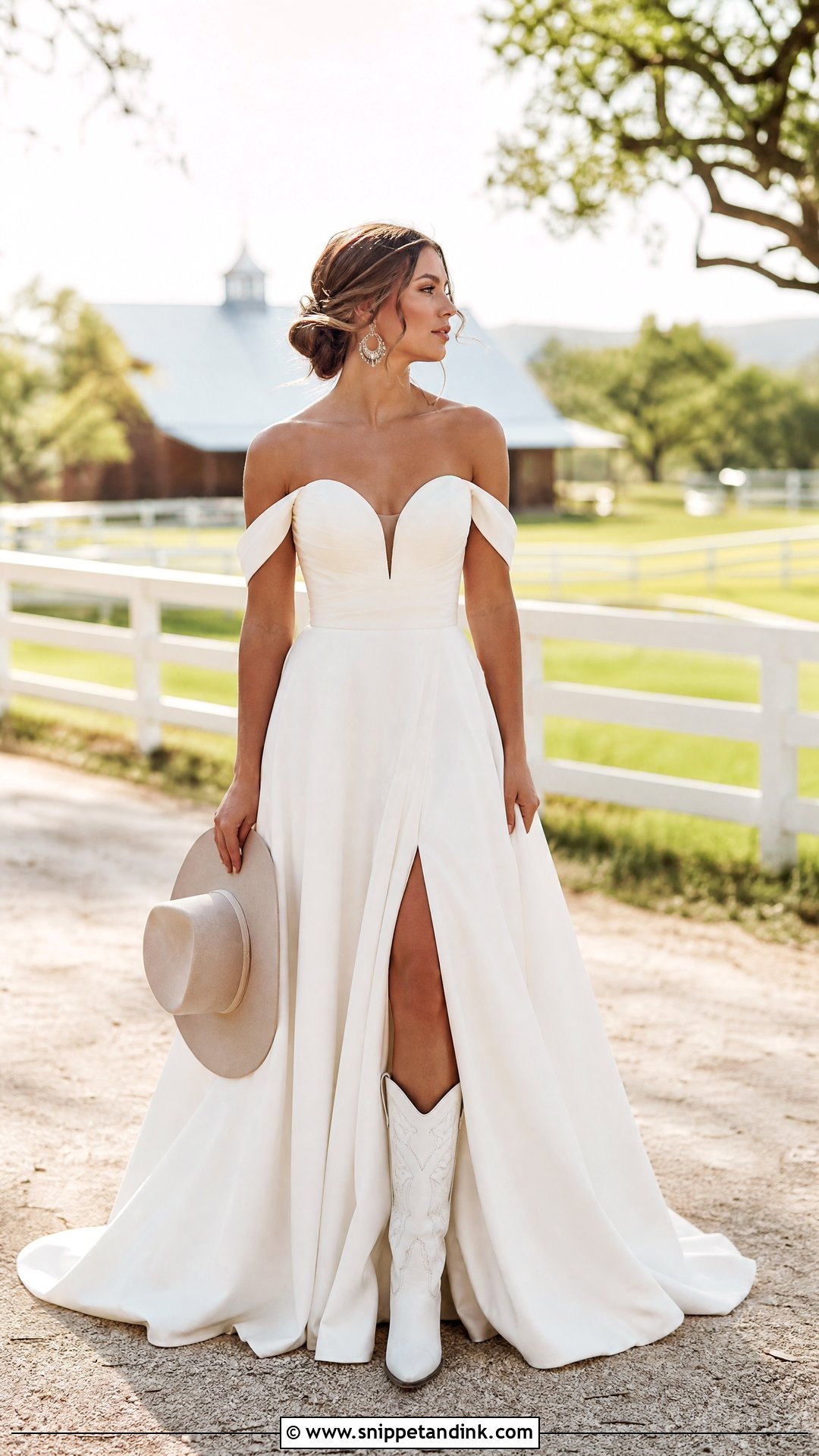
Off-the-shoulder works at a Western wedding as long as it’s structured; a floppy neckline slipping down your arms all day isn’t relaxed, it’s distracting. A firm ivory bodice with short draped sleeves holds its place. Lace trim reads more country, while plain crepe or matte satin looks modern against boots. White boots, silver earrings and a low textured bun finish it. A wide-brimmed hat is great for portraits outside, but I’d take it off for the ceremony so guests see the neckline. Leave the neck bare. It’s an airy choice for spring and summer.
6. High-Low Western Wedding Dress With Boots
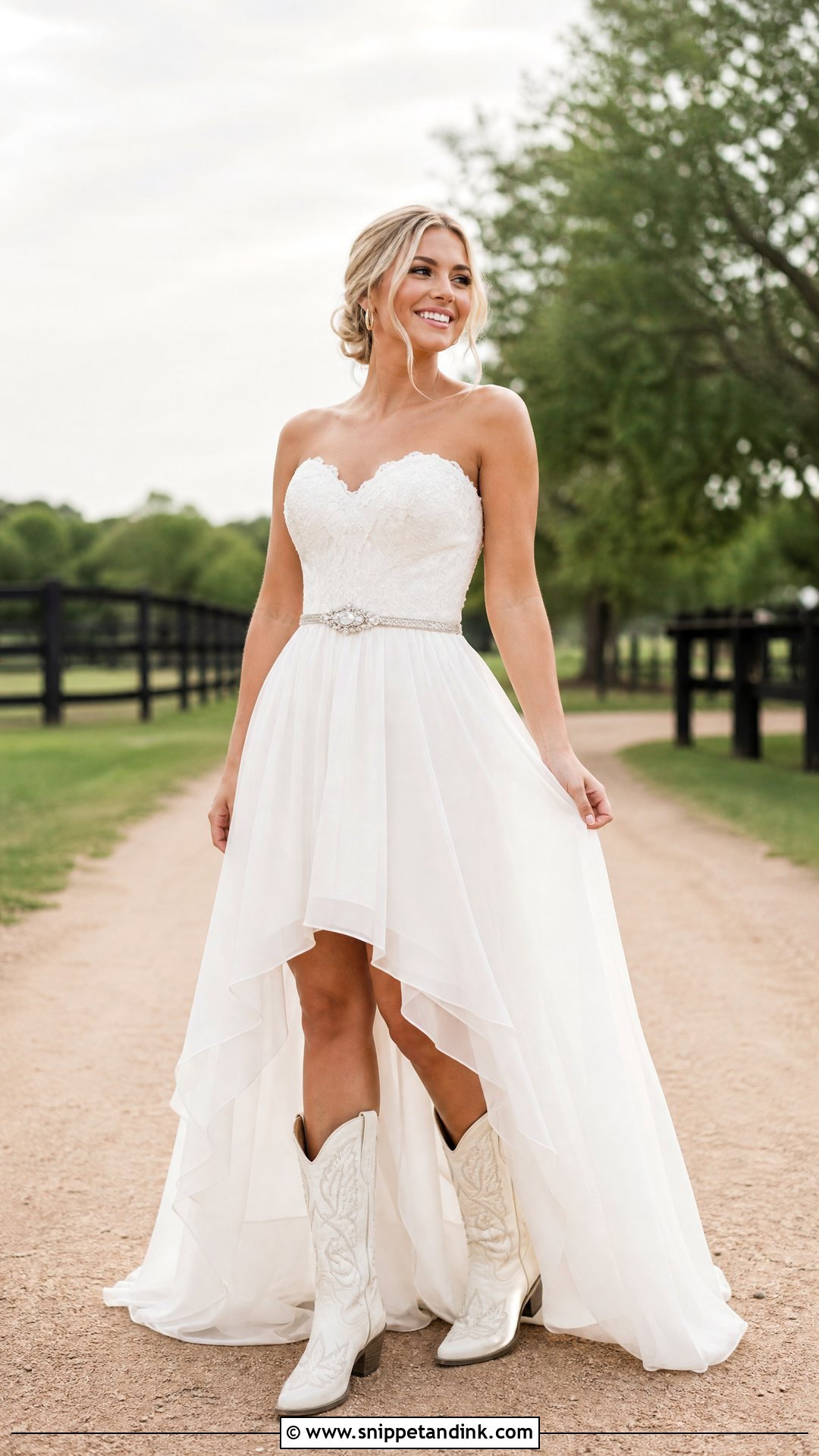
A high-low hem shows your boots at the front and keeps the sweep of a bridal skirt at the back. Chiffon, organza or a few tulle layers give movement without weight; heavy satin in a high-low cut can look stiff. Style it with detailed white boots, small hoops and a half-up style. A narrow belt with quiet silver hardware ties dress and boots together. Hold the bouquet a little higher than usual, since a big arrangement hides the dip of the hem. The shorter front makes grass and gravel much easier to cross.
7. Boho Bell Sleeve Western Wedding Dress
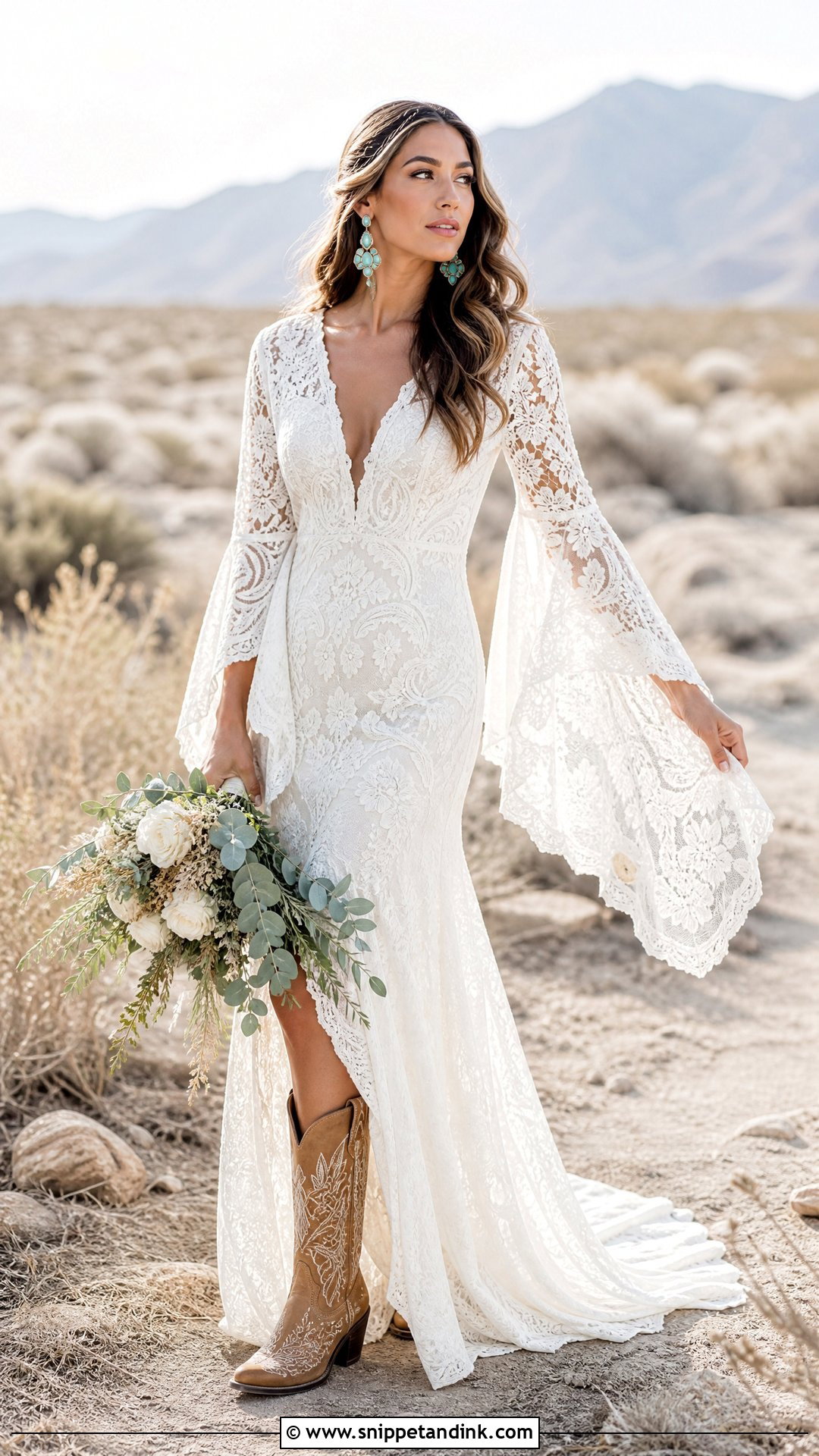
Bell sleeves are lovely in photos and tricky at the altar. If they hang past your fingertips, they’ll drag through the cake and get in the way of the rings, so I have them hemmed to end above the wrist bone. Start with a slim ivory gown in light crepe or lace and keep the skirt clean, because the sleeves already carry the interest. Tan embroidered boots and small turquoise earrings bring in the West; soft waves keep the hair natural. A felt hat is optional here. A loose bouquet with eucalyptus suits desert, woodland or open fields.
8. Square Neck Western Wedding Dress
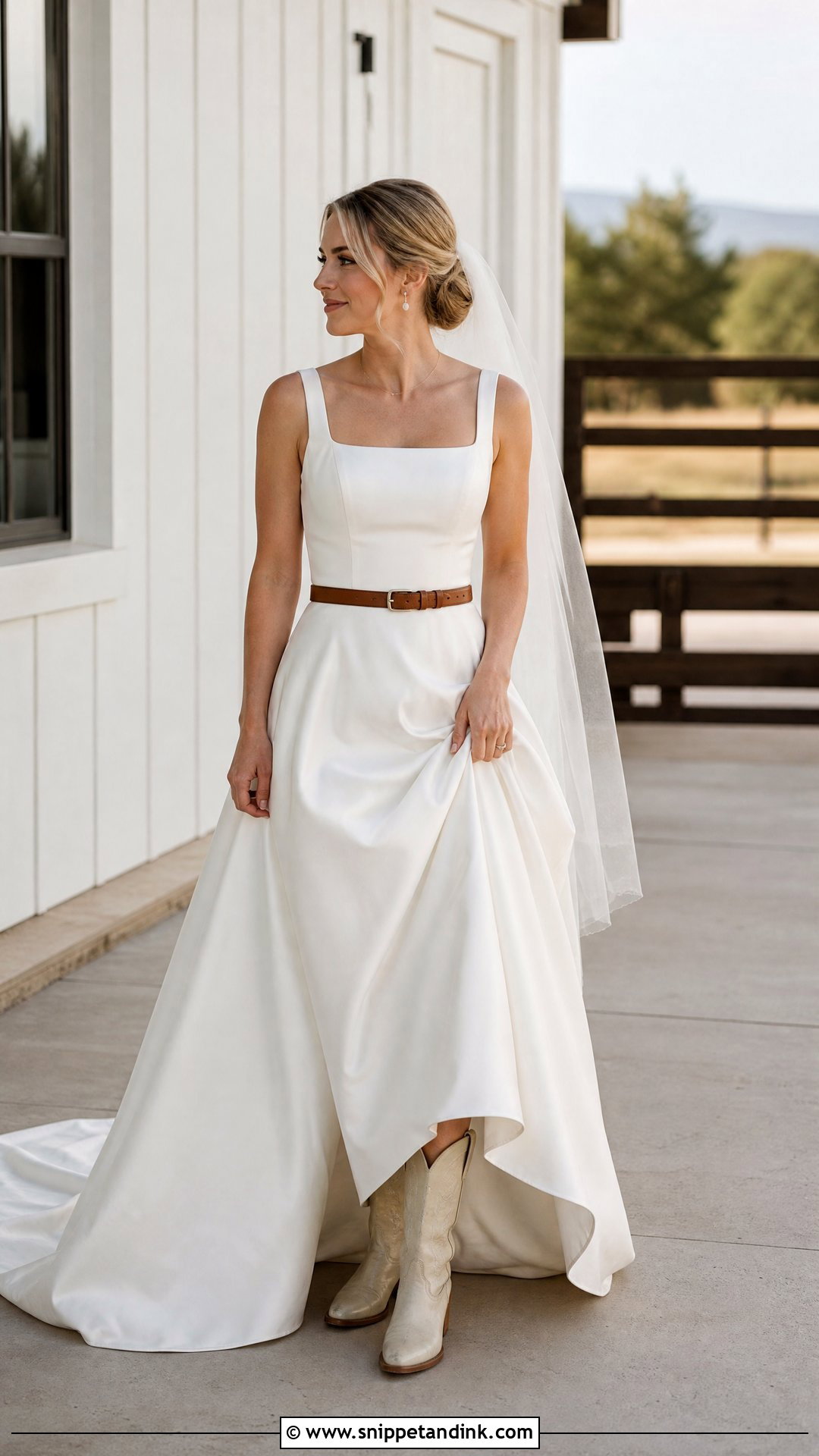
A square neck gives a Western dress a faint vintage feel and real support, thanks to the wide straps. Look for a fitted bodice with good seaming and an A-line or column skirt. Matte satin, a linen blend or quiet lace will all work, depending on how formal the venue is; linen creases quickly, so expect a relaxed look by evening. Cream boots, a slim brown or ivory belt and small silver earrings complete it, with a low bun or loose braid to show the neckline and a fingertip veil. Fuller-busted brides often find this shape the most secure.
9. Prairie Western Wedding Dress
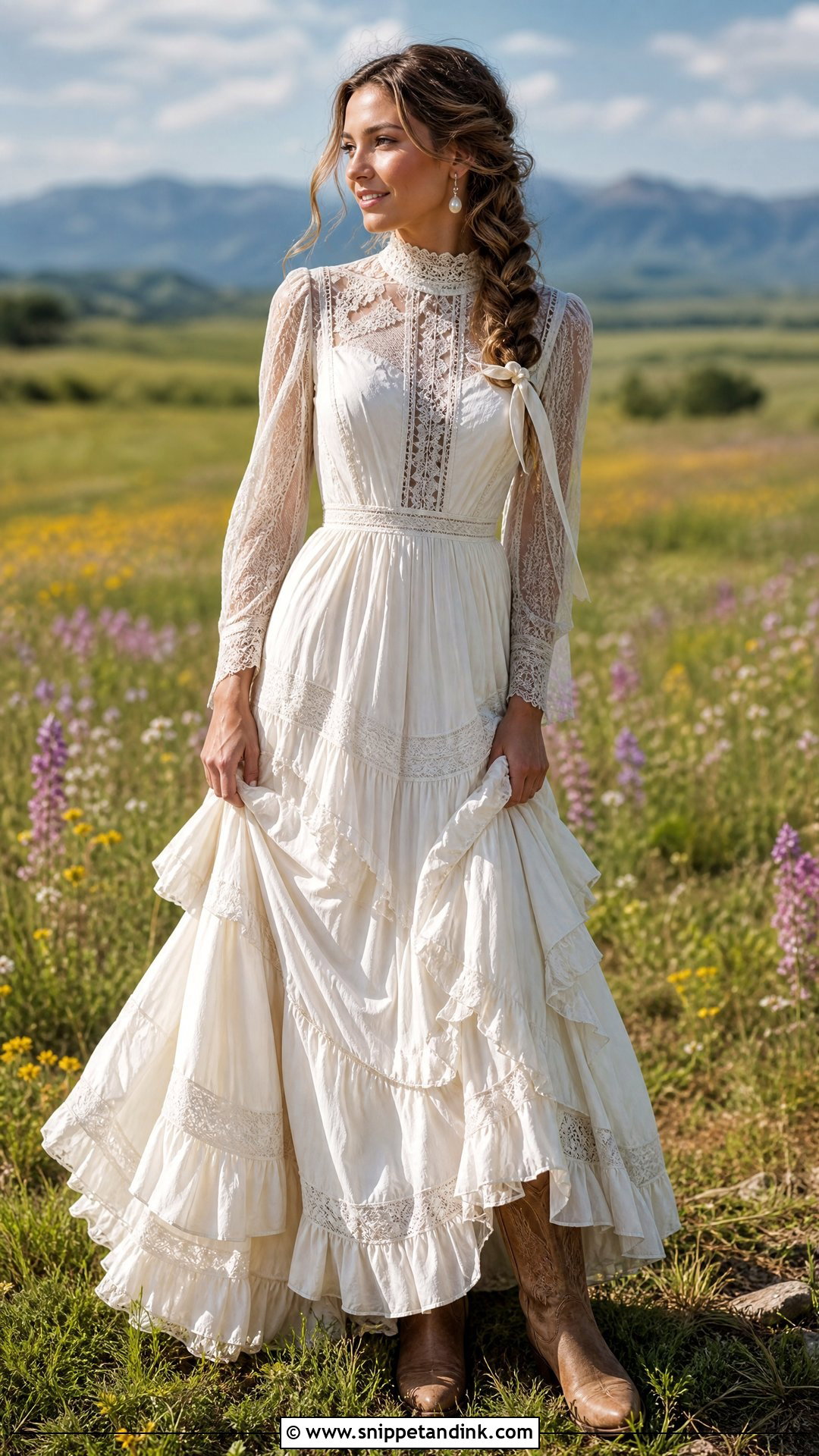
Prairie dresses tip into costume faster than any other style here, which is why I keep the details light. A prairie-inspired wedding dress works best as an ivory maxi with a fitted waist, a modest neckline, small lace panels and a softly tiered skirt. Narrow ruffles, not deep ones. Light brown boots, pearl earrings and a braid tied with cream ribbon finish it; skip a big hat when the sleeves and skirt are already detailed. A wildflower bouquet in muted tones suits a meadow or farmhouse. Ask for a lined skirt, since thin cotton becomes see-through in low sun.
10. Simple Sheath Western Wedding Dress
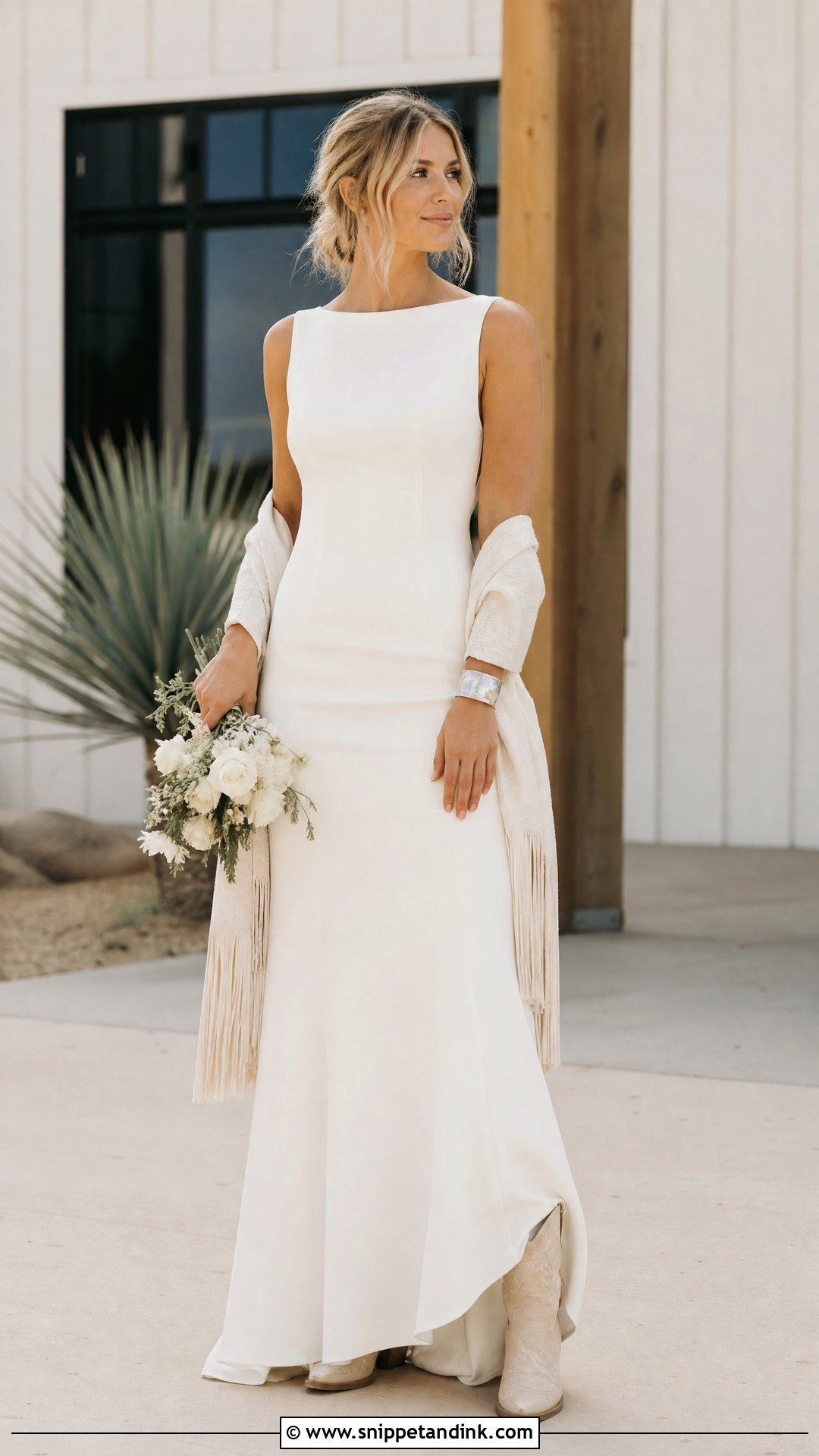
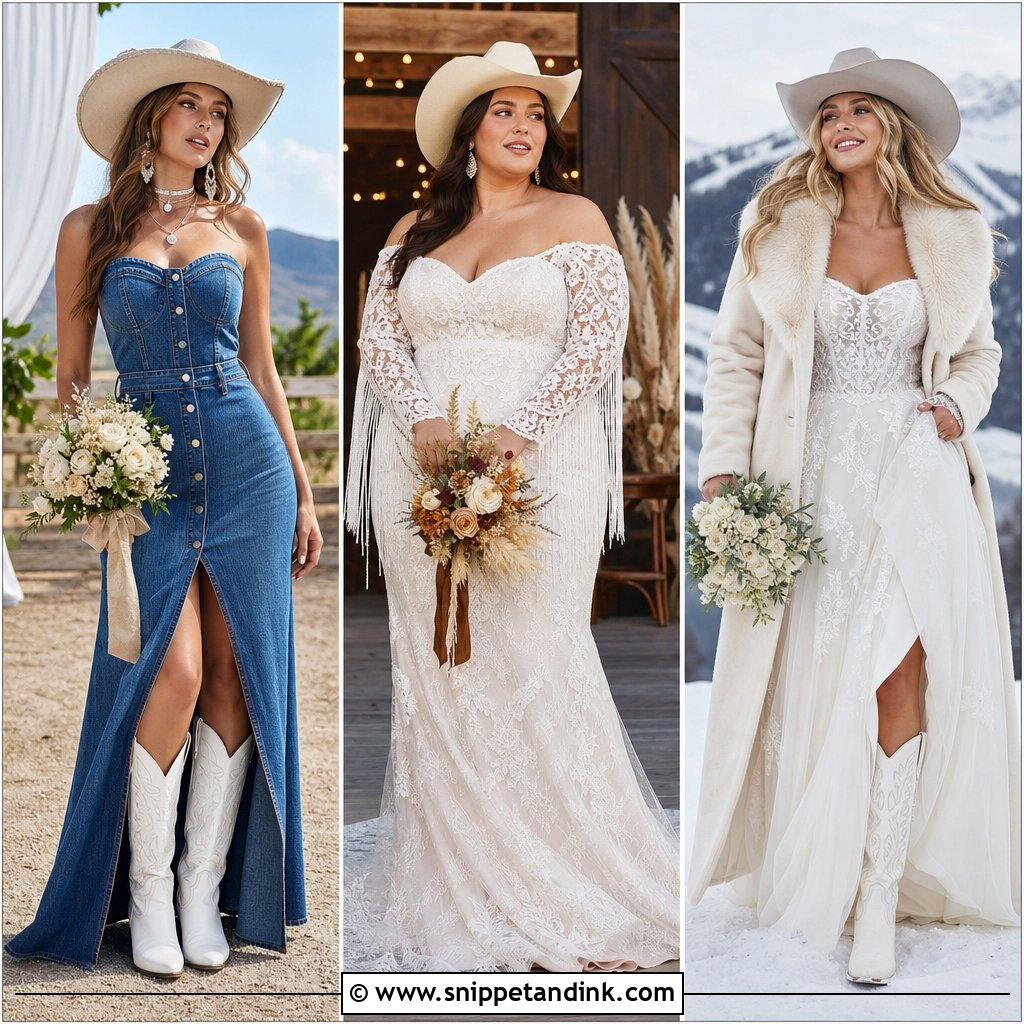
A sheath is the most modern route into this style, and the boots do nearly all the Western talking. Crepe or matte satin follows the body without a full skirt, so wide straps, a V-neck or a modest scoop give the clean base. Ivory ankle boots look sharper with a sheath than tall ones, which can cut the leg awkwardly. Add a silver cuff and a small structured bouquet. A removable fringed shawl brings movement for the reception. Smooth waves or a sleek bun suit it. Because the fabric is plain, every fitting issue shows, so leave time for alterations.
11. Fit-And-Flare Western Wedding Dress
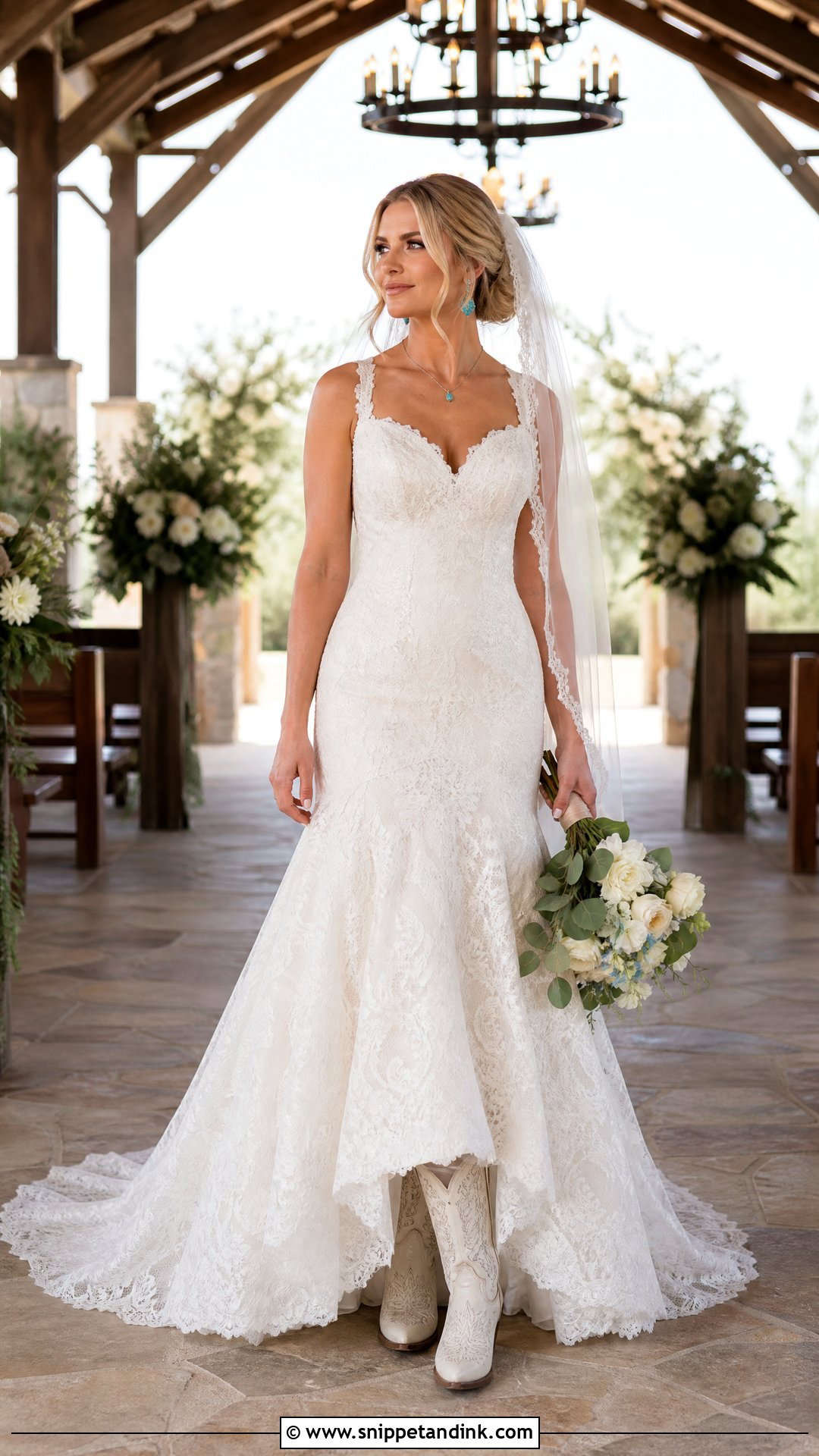
Fit-and-flare holds you through the bodice and hips and then releases, which is lovely until you try to climb onto a hay wagon. Ask for enough room at the knee to walk on uneven ground. Soft lace or plain crepe keeps it simple; heavy beading looks out of place against wood and leather. A sweetheart, scoop or V-neck frames the upper body, and a medium train adds ceremony drama. Pointed ivory boots, delicate turquoise studs and a fingertip veil finish it. If the bodice is detailed, leave off the belt and necklace. It suits a dressier ranch wedding.
12. Puff Sleeve Western Wedding Dress
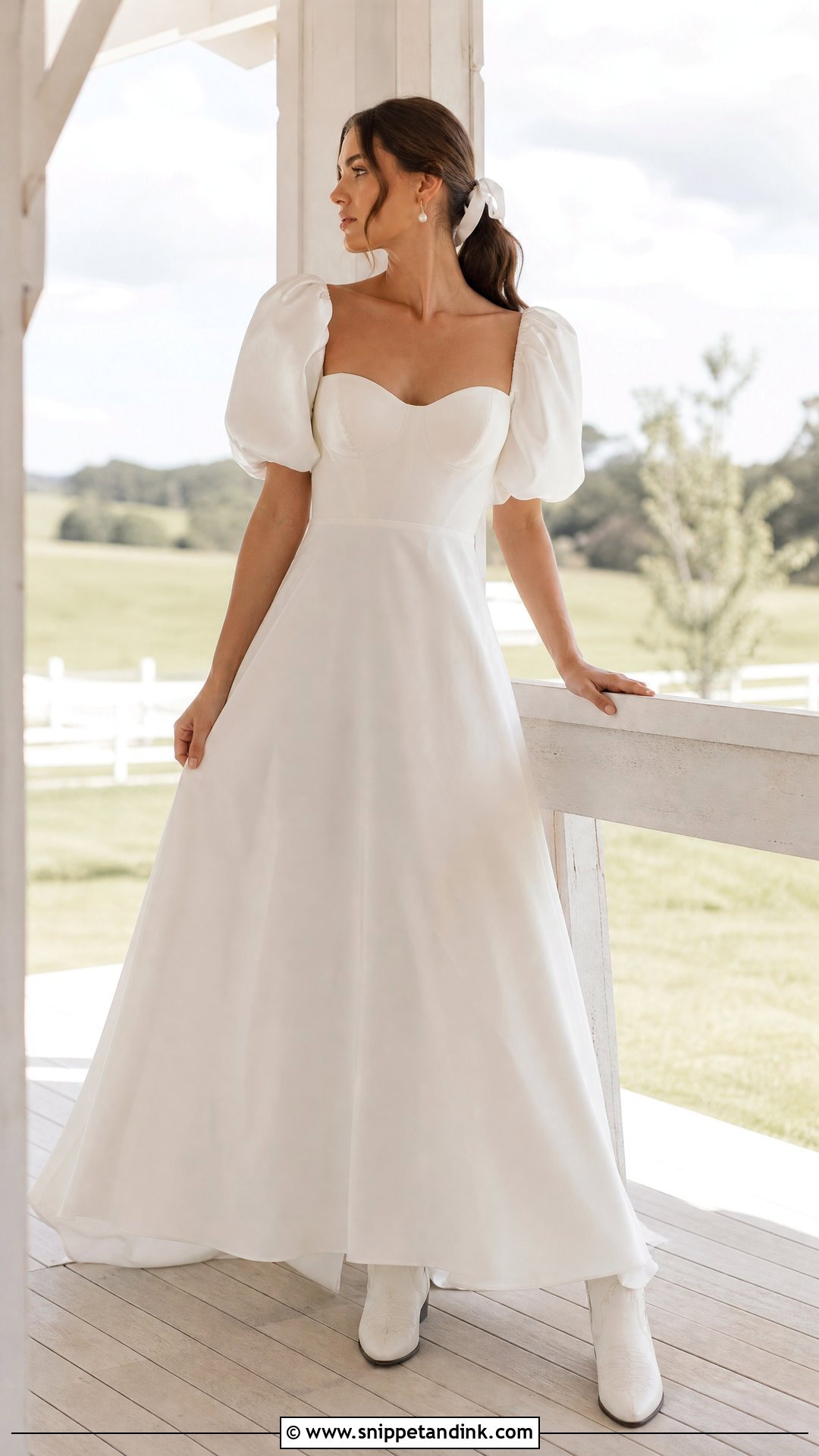
Puff sleeves add country sweetness on their own, so the accessories can stay plain. A fitted bodice, lightly gathered sleeves and a simple A-line skirt are the base. Short puffs feel fresh for summer; wrist-length ones work in spring or autumn. Plain white boots, pearl drops and a low ponytail tied with ivory ribbon keep it light, with a veil attached under the hair so it doesn’t fight the sleeve volume. A defined waist is essential, or the puff makes the whole torso look wider. Broad-shouldered brides do better with soft, gathered puffs than stiff ones.
13. Western Wedding Dress With Fringe
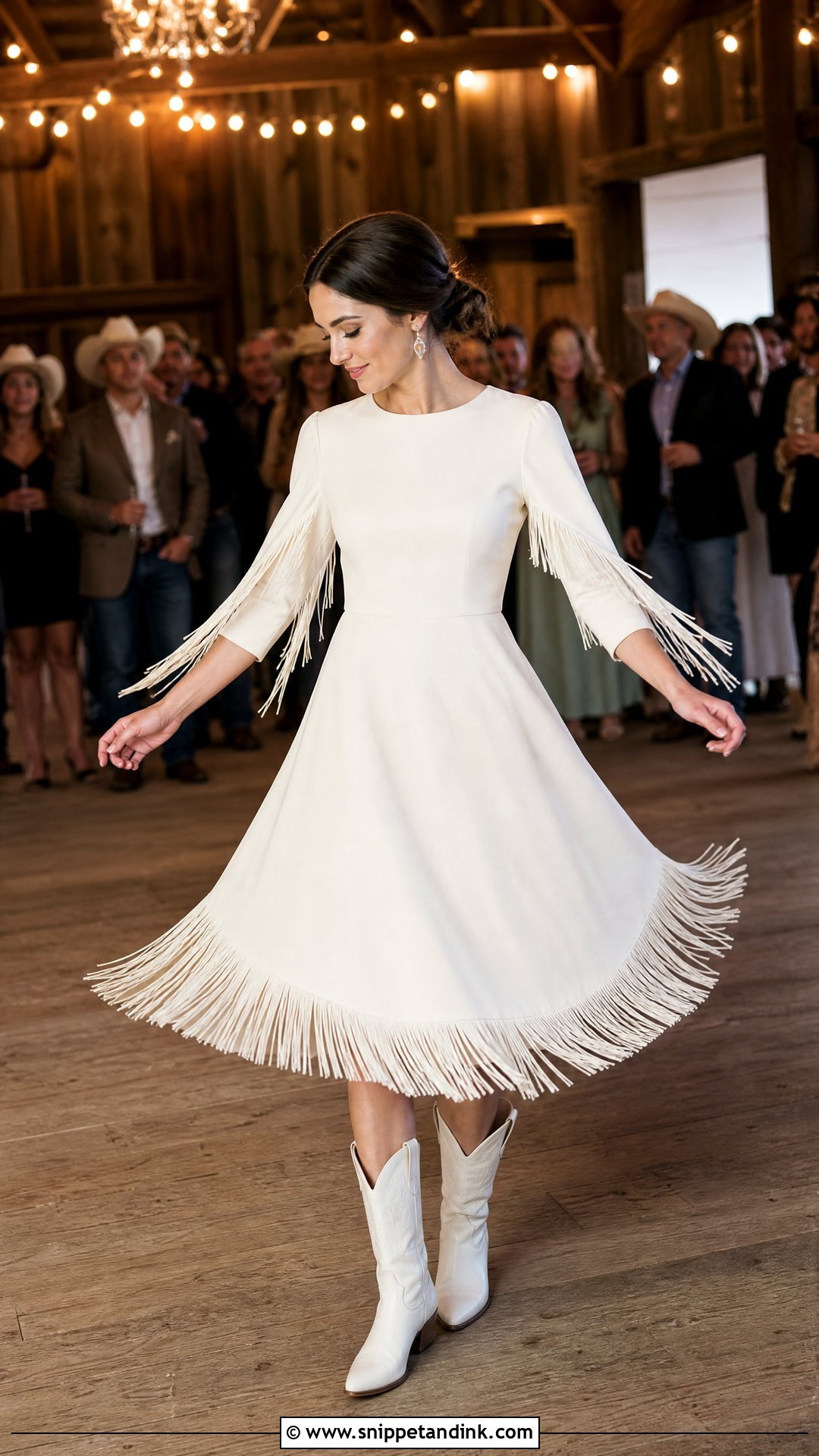
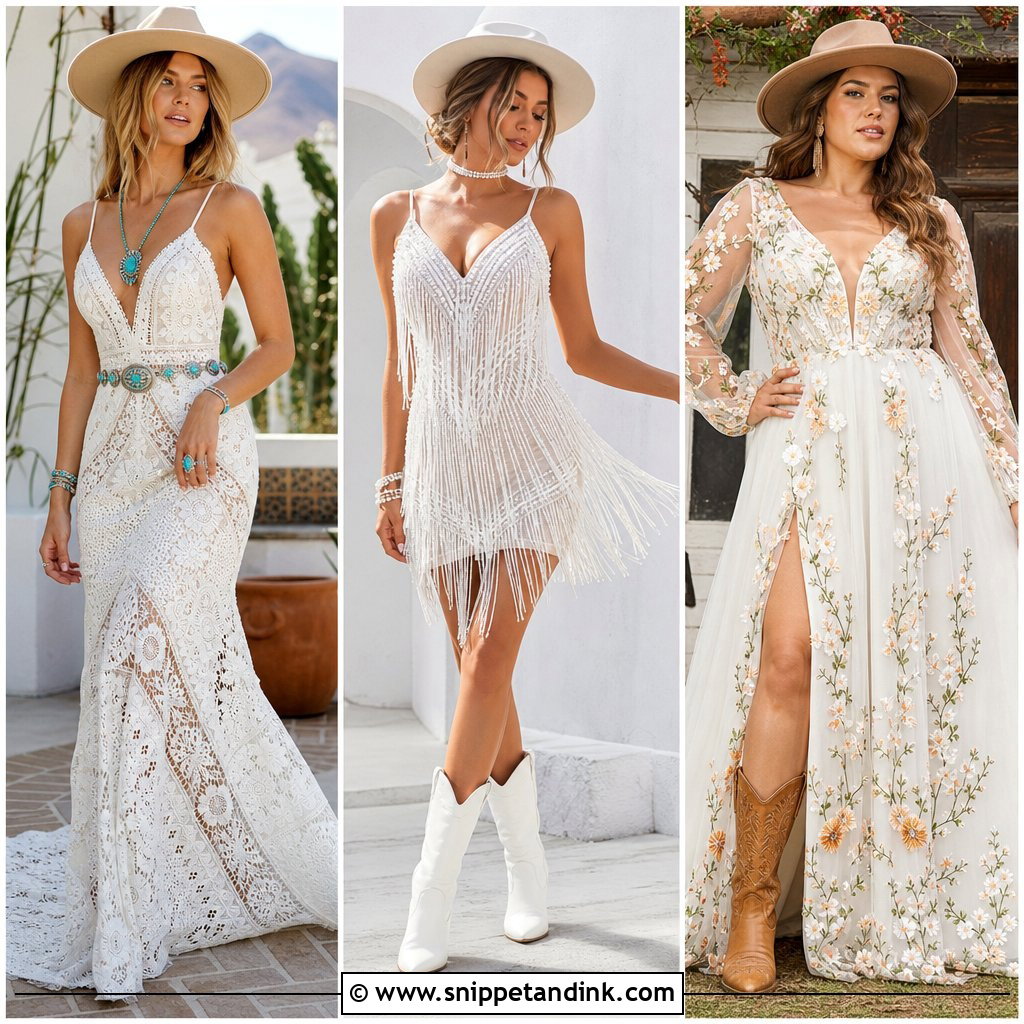
Fringe moves beautifully, and too much of it looks like a stage outfit. I’d keep it to one area, the sleeves, back or hem, on a clean sheath, mini or tea-length dress. Pair it with plain white boots so the two don’t compete. Small silver earrings, smooth hair and a compact bouquet keep it polished. Fringe really comes alive on the dance floor, which makes it a strong reception dress. Sit and walk in it at a fitting; long strands can tangle in a belt buckle or catch in car doors. One fringed piece per outfit is my rule.
14. Western Wedding Dress With Denim Jacket
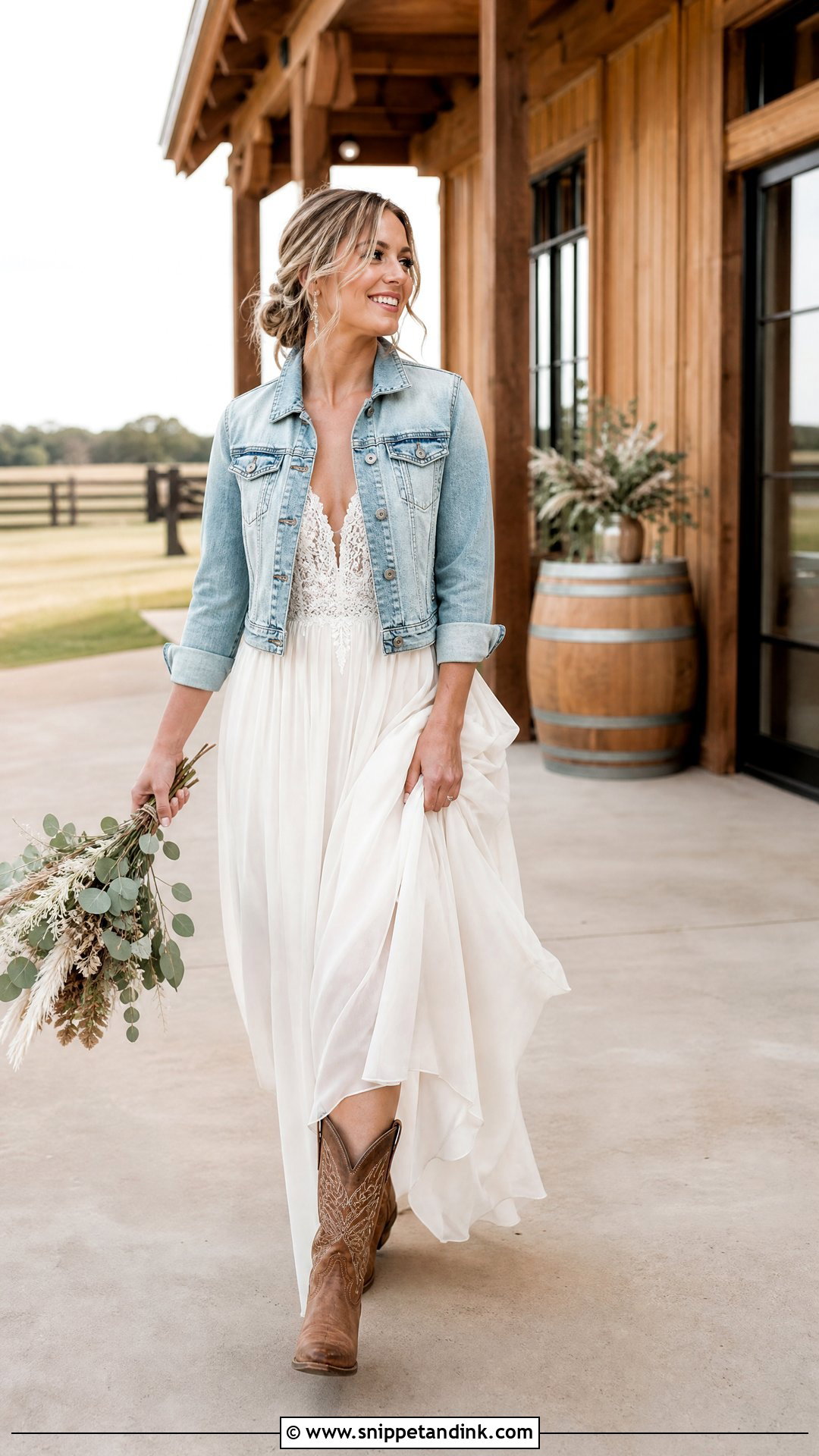
A denim jacket is the most practical layer at a ranch wedding, because temperatures swing hard once the sun goes. Build around a simple lace or chiffon gown with a fitted bodice and flowing skirt, and add a cropped light-wash jacket that ends near the waist so the dress shape still shows. Go without it for the ceremony if you want a traditional entrance, then put it on for portraits and the evening. Avoid distressed or oversized denim, which reads too casual. Indigo can rub off onto ivory fabric, so wash a new jacket a couple of times first.
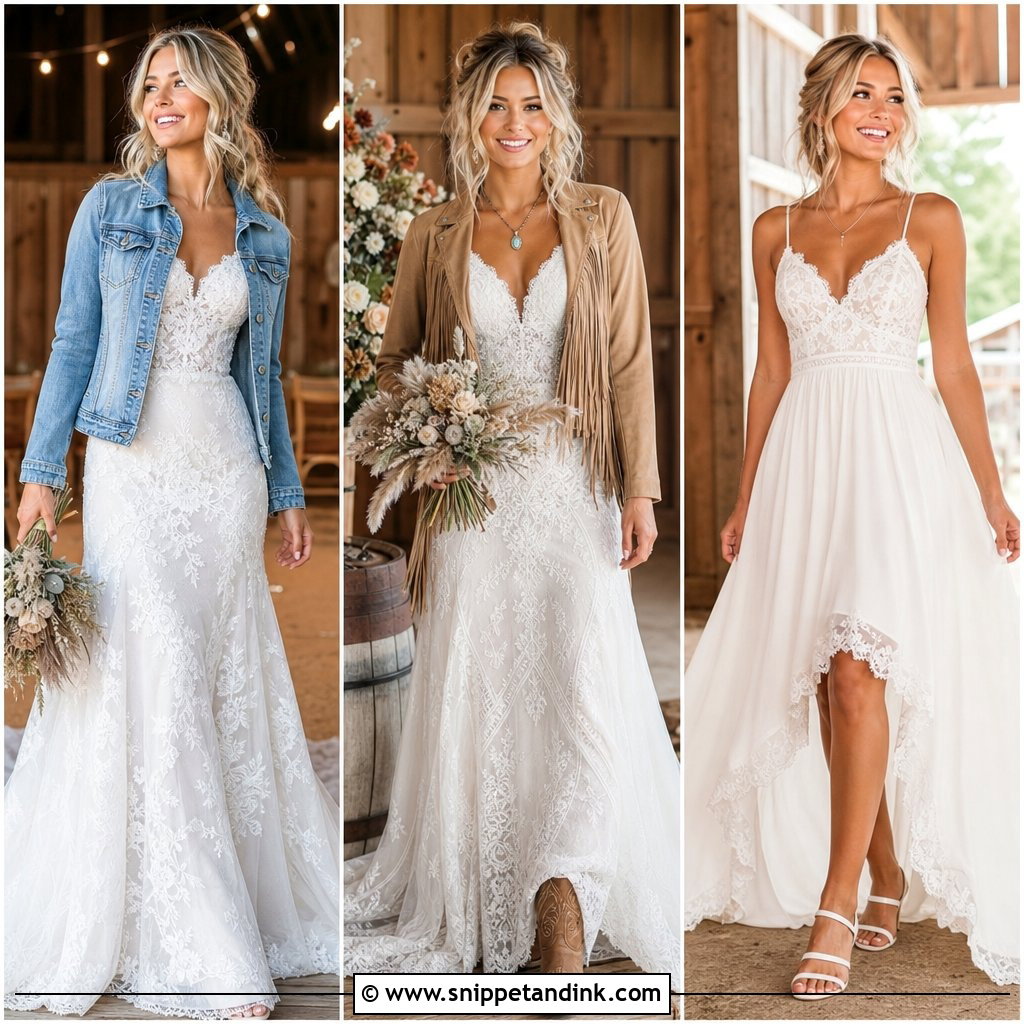
15. Western Wedding Dress With Suede Bolero
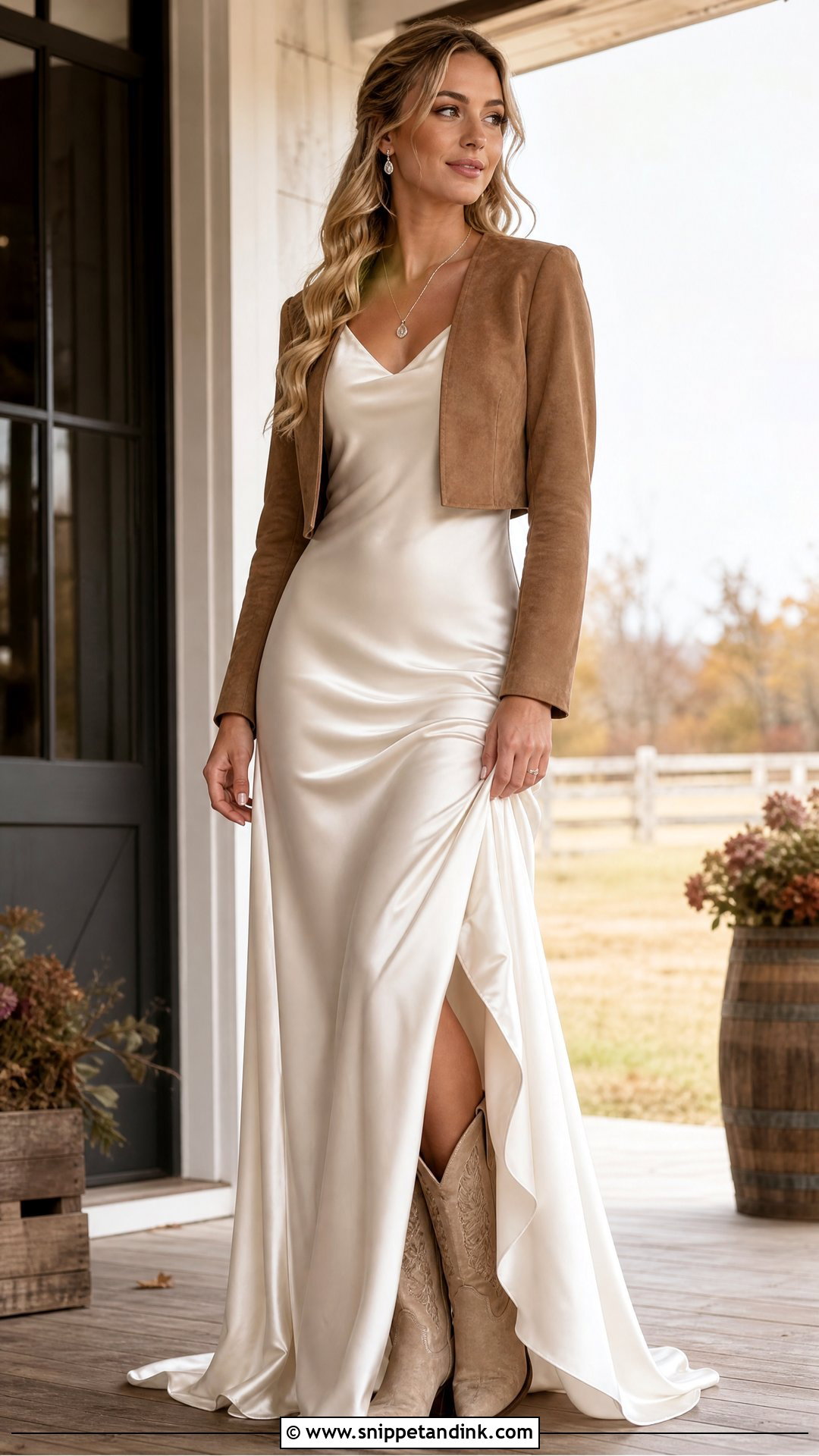
Suede adds texture and warmth, and a cropped bolero gives shoulder coverage without hiding the gown. Layer a clean tan or cream bolero over a satin slip, crepe sheath or plain A-line. It should end at or just above the natural waist; any longer and it shortens your silhouette. Matching boots, quiet silver jewelry and soft waves complete the outfit, with a plain bag and bouquet so the suede leads. Check that you can raise your arms in it. Genuine suede stains with water and dark dye can transfer in heat, so I’d lean toward lined faux suede for summer.
16. Western Wedding Dress With Turquoise Jewelry
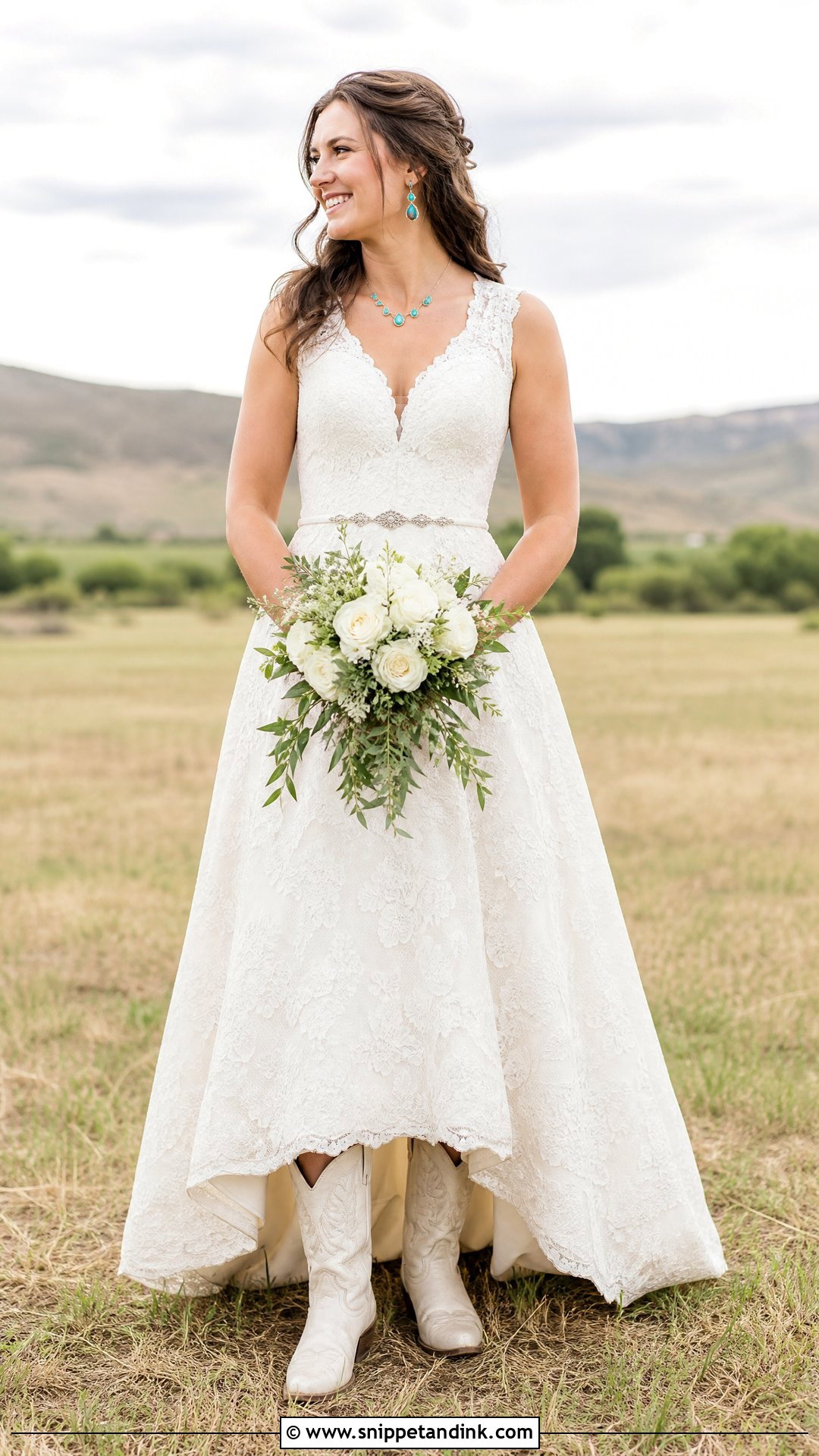
Turquoise is the quickest way to make a white dress feel Western without changing the gown at all. Pick a clean lace A-line, satin column or modest V-neck, then add one turquoise focal point: drop earrings, a pendant or a silver cuff with a small stone. Several big pieces at once overpower the bridal look. Ivory boots and a narrow belt with subtle silver hardware fill in the rest. A low bun, loose waves or a single braid keep the result relaxed, and white flowers with muted greenery suit the natural palette.
17. Vintage Western Wedding Dress
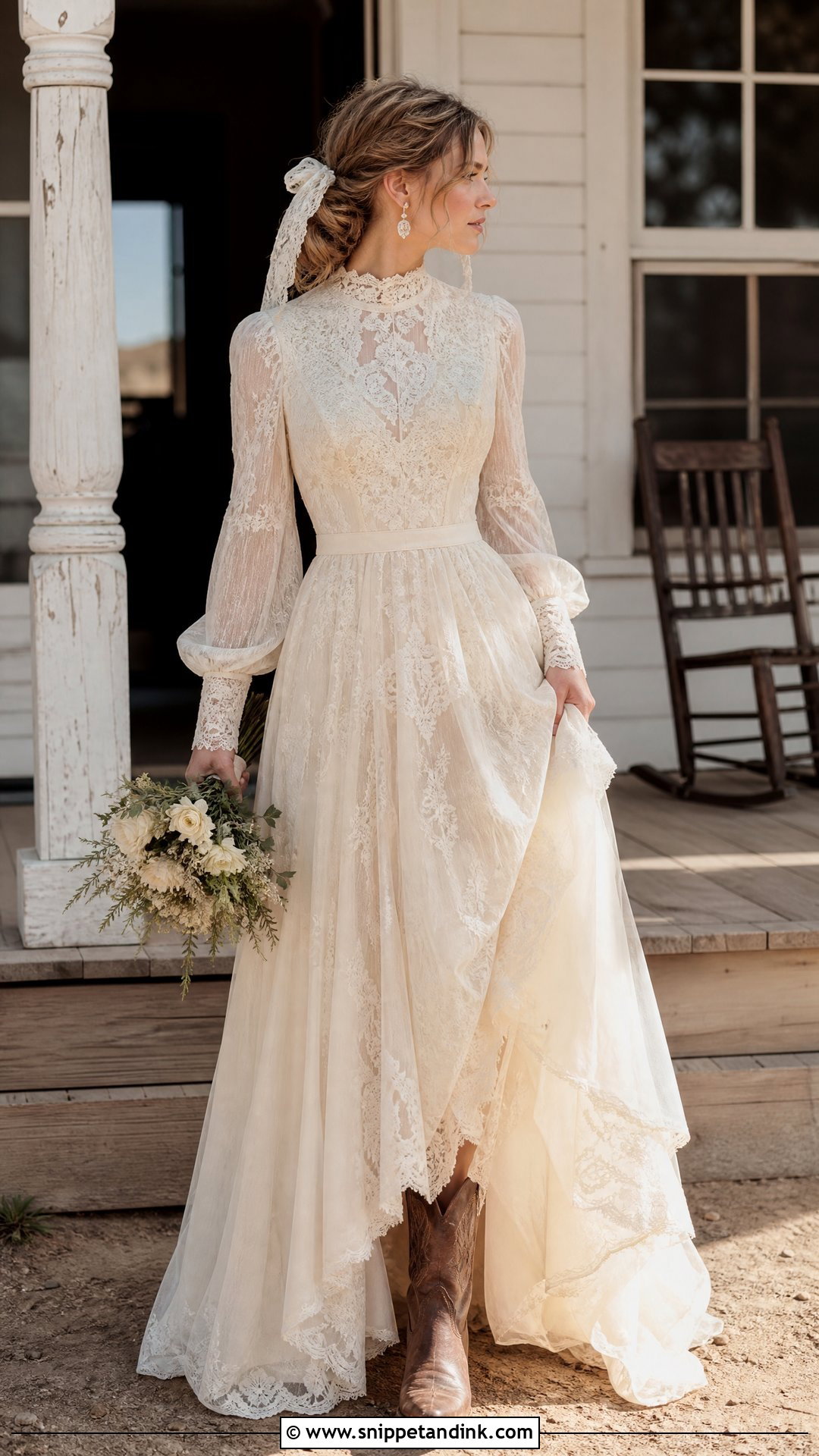
Vintage gowns from the 1970s and 1980s often have exactly the Western details people now shop for: high lace necks, crochet lace, soft sleeves and gathered cuffs. The catch is condition. Look closely at underarms, hems and seams for yellowing or brittle lace before you buy, and have the dress professionally cleaned and altered at the shoulders, waist and hem. Plain ivory boots, small heirloom earrings and a softly structured bouquet suit it, with a short veil or lace ribbon. Choose one era and stick to it; mixing every vintage detail is how a dress starts to look borrowed from a museum.
18. Plus Size Western Wedding Dress
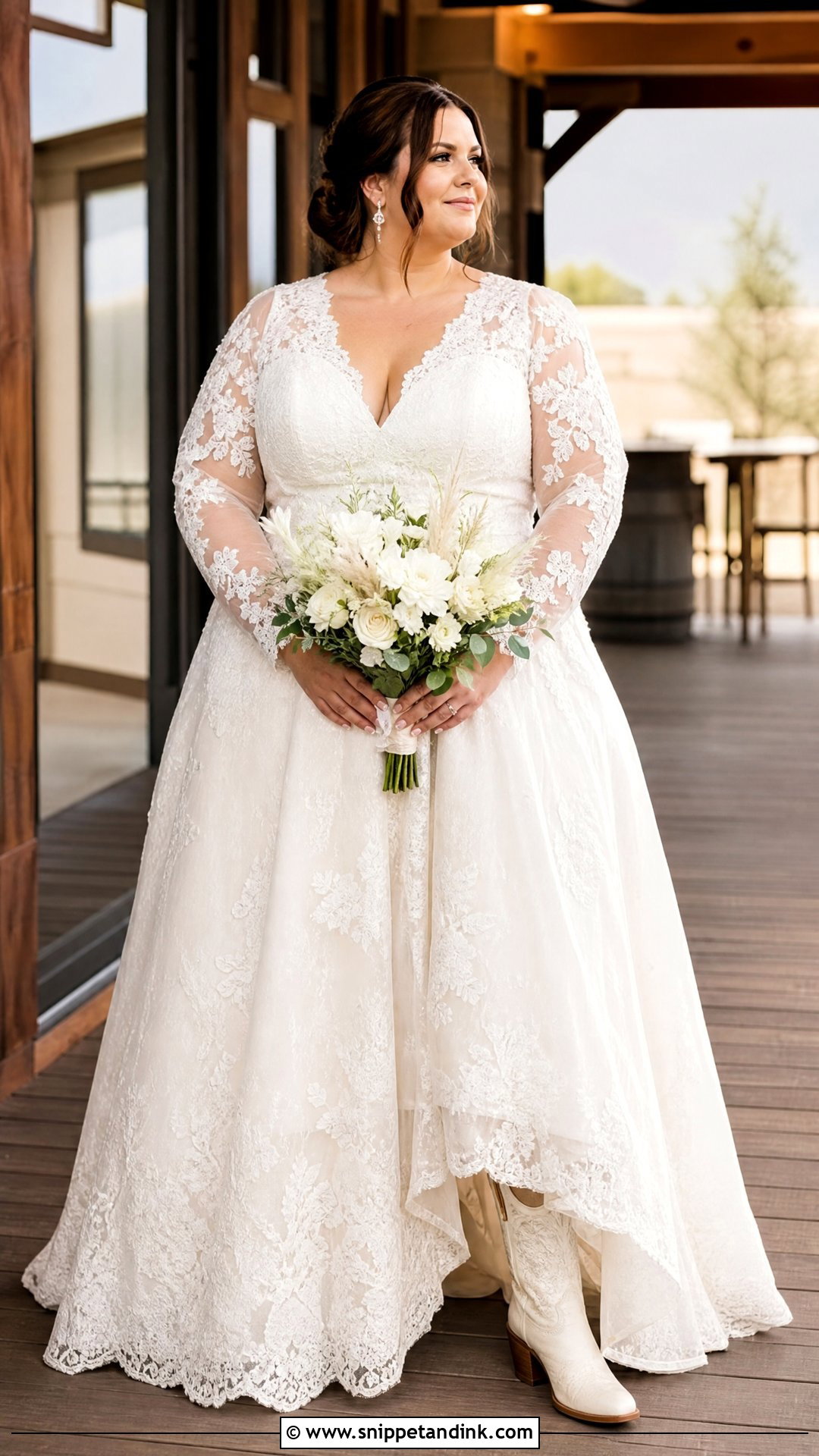
Support comes first for plus-size brides in this style, and boots are usually where comfort quietly fails. Many Western boots run narrow in the calf, so check wide-calf versions early. For the dress, an A-line or soft fit-and-flare with structured lining, wide straps and a defined waist is my starting point. Lace sleeves or an illusion neckline give coverage without weight. Medium-size earrings and a low textured style balance the proportions. A leather belt is optional; it should sit flat, not fold when you sit. Strap placement, hem and bust support are where good alterations matter most.
19. Maternity Western Wedding Dress
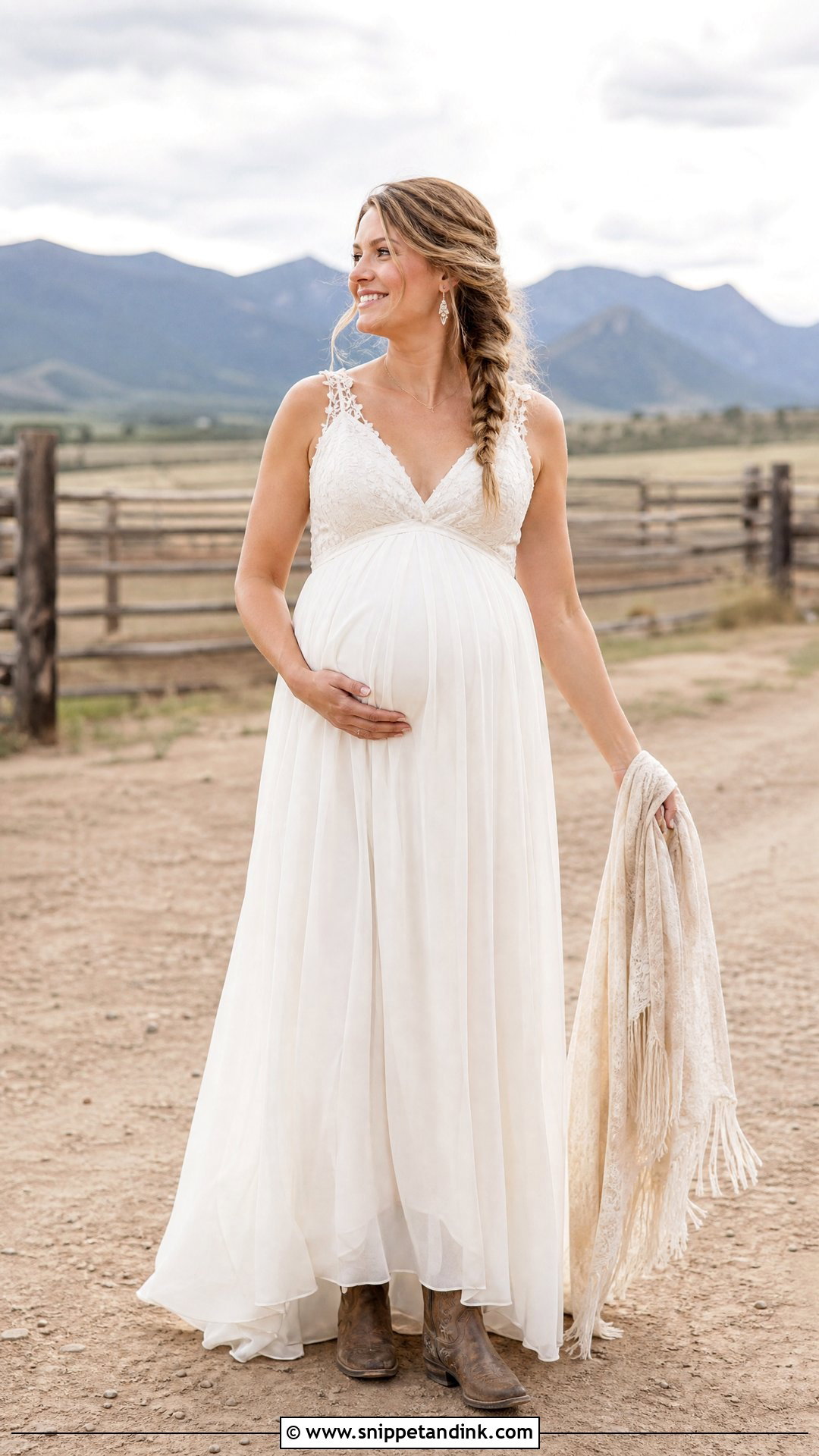
For a pregnant bride, an empire waist lets the fabric fall from just under the bust and leaves the bump free. Breathable chiffon, stretch lace or soft jersey with a full lining are the comfortable choices. I’d pair it with low-heel cowboy boots for stability, delicate earrings and a loose side braid. Use a soft ribbon above the waist rather than a tight belt. A light shawl helps in cool air, and a short train keeps you off your toes on grass and gravel. Book the final fitting as close to the wedding as the seamstress allows, because the body keeps changing.
20. Western Elopement Wedding Dress
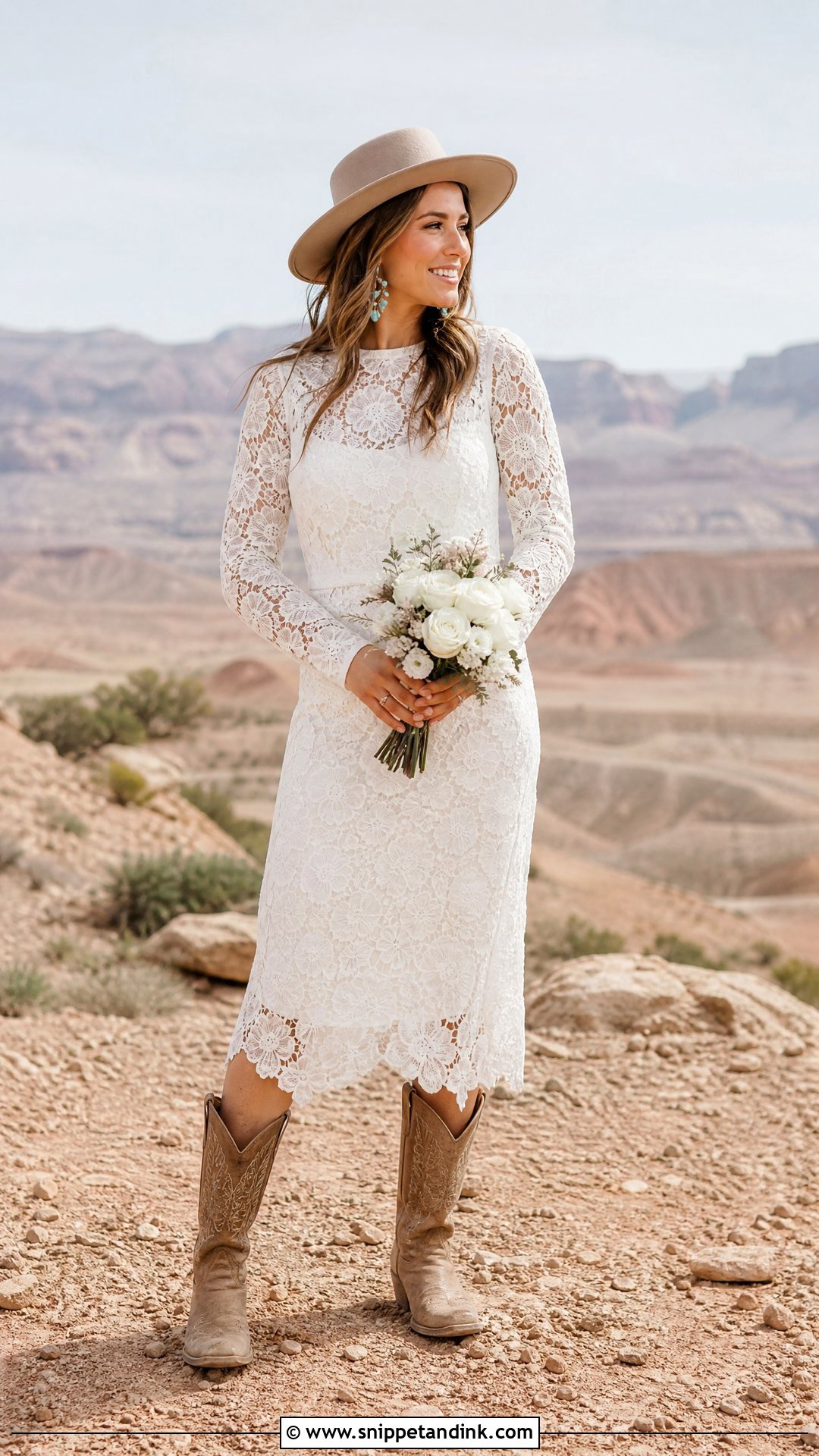
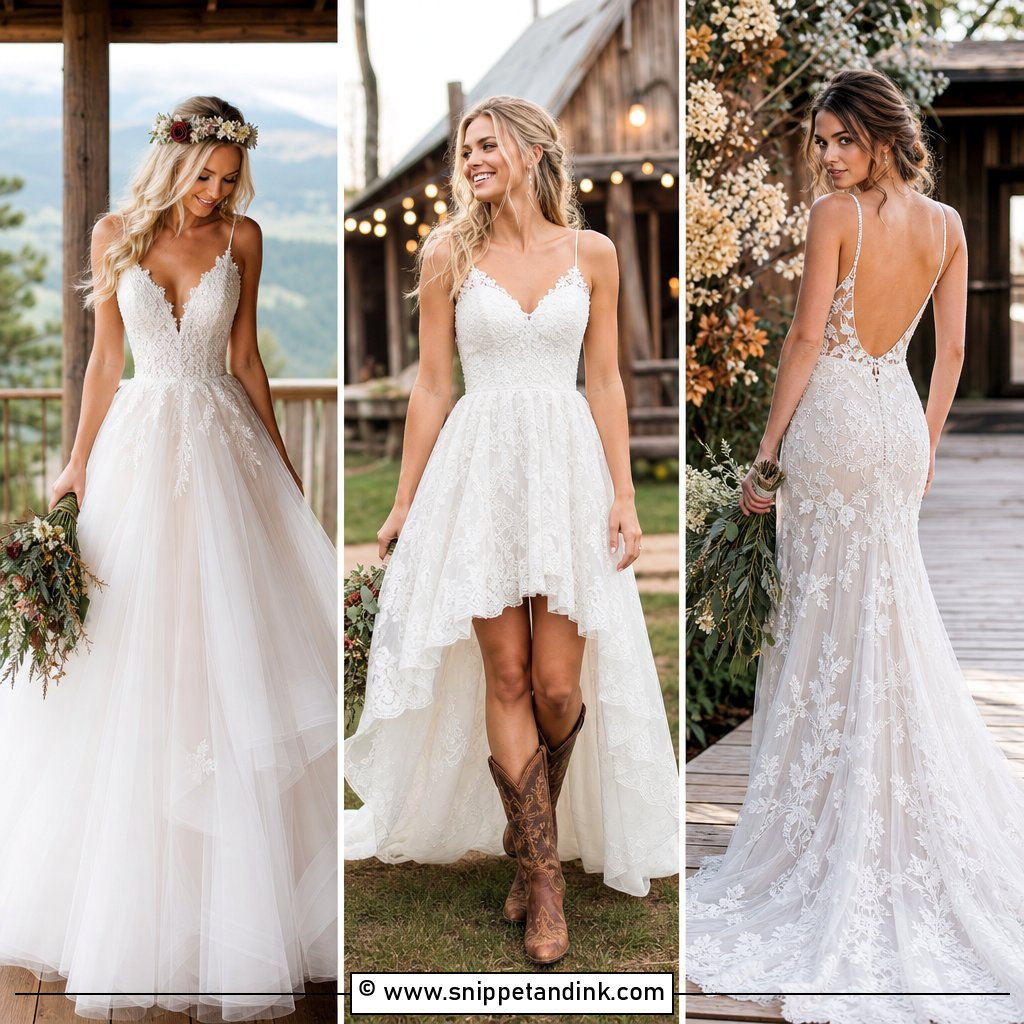
Elopement dresses get packed, hiked in and sat on in a truck, so I choose them for travel first and photos second. A lace midi, simple satin maxi or light long-sleeve dress without a big underskirt packs well; satin wrinkles in a bag, lace rarely does. Broken-in boots are non-negotiable on a trail. Add a small crossbody bag, subtle silver or turquoise earrings and a felt hat or short veil. Keep the bouquet compact enough to carry while climbing. Skip any long train on rocky ground or narrow paths.
Dust, Hay and Red Clay on an Ivory Hem
Ranch venues are hard on a dress. Some dirt at the hem is part of the day, and most of it comes out with proper cleaning, but you can limit it.
Ask your seamstress for a bustle if your dress touches the floor; lifting the train before the reception keeps it off dirt and spilled drinks. For a short train, a simple loop at the wrist works. If mud splashes the hem, let it dry fully, then brush it off gently. Rubbing wet mud pushes it into the weave.
Don’t put any stain remover on the dress yourself. Take the gown to a specialist cleaner within a few weeks and point out every mark, including clear ones like champagne, which can turn brown over time.
Hat or Veil, and When the Hat Comes Off
A felt hat looks great outdoors, but felt is warm, so a fine straw hat is kinder in summer. Many brides wear the hat for portraits and switch to a short veil for the ceremony. If you want both at once, have your stylist pin a light, short veil to the back of the hairstyle below the brim rather than to the hat itself; it moves less in wind. For a church ceremony, check whether a hat is acceptable before planning around it.
One Western Detail Often Says More Than Five
A great Western bridal look doesn’t need fringe, boots, turquoise and a hat all at once. Start with a dress that fits your body, venue and season, then add one or two Western pieces that feel like you. Lace leans romantic, satin leans modern, and shorter hemlines make cowboy boots part of the main event. Good tailoring makes even an inexpensive dress look polished. Whatever you choose, make sure you can walk across that field, step up into the barn and dance until the lights go out.
You'll Like These Ideas:


Leave a Reply