
The maid of honour has a different job from every other woman in my chair that morning. She hugs the bride after the vows, bends down to fix a train, holds two bouquets at once and usually stands up to give a speech, so her hair has to cope with a lot more handling than a guest’s. I also want it to read as a step closer to the bride than the bridesmaids without ever looking like competition. Below are the maid of honour hairstyles I’d actually put on a client, from low buns and ponytails to braids, natural texture and short cuts, with notes on which hair each one suits and where each one tends to fail.
Where the Maid of Honour Sits in the Getting-Ready Schedule
When I plan a hair timeline, the maid of honour is rarely first in the chair and rarely last. Whoever goes first wears her style the longest, and curls set at seven in the morning are tired by ten at night. Last in the chair is the bride. So I usually put the maid of honour second to last: close enough to the photos that her style is fresh, early enough that she’s dressed and free when the bride needs buttons done and a steady hand.
Allow roughly 45 minutes to an hour for an updo and a bit less for waves, though that varies a lot with length, density and how much detail you want. Arrive with clean, completely dry hair unless your stylist says otherwise. Wear a button-down shirt so you never have to pull anything over a finished style.
Agree on the level of detail with the bride
Many brides want their maid of honour to look slightly different from the bridesmaids: a braid where the others have waves, or a small accessory nobody else wears. Ask her early. It’s a two-minute conversation that stops you turning up with a veil-length comb or a style that mirrors hers.
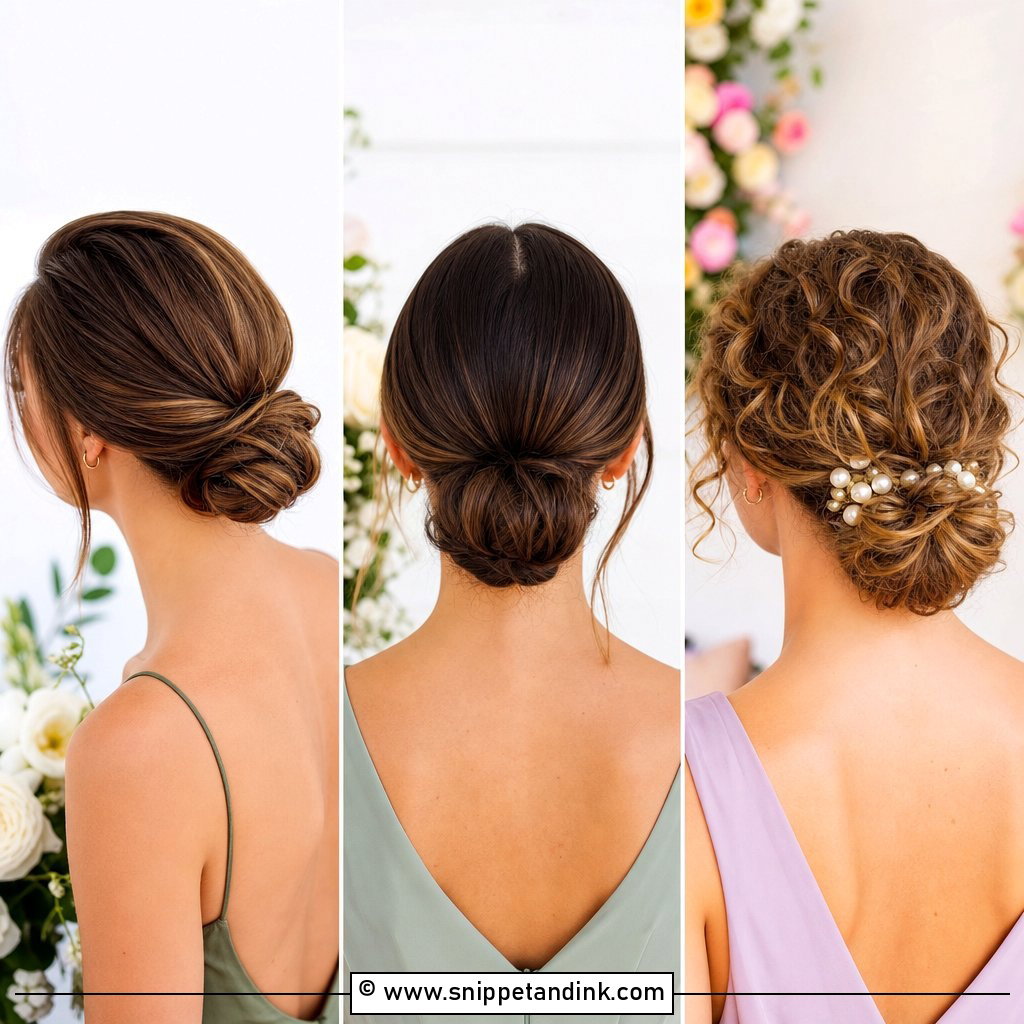
1. Maid Of Honour Low Bun
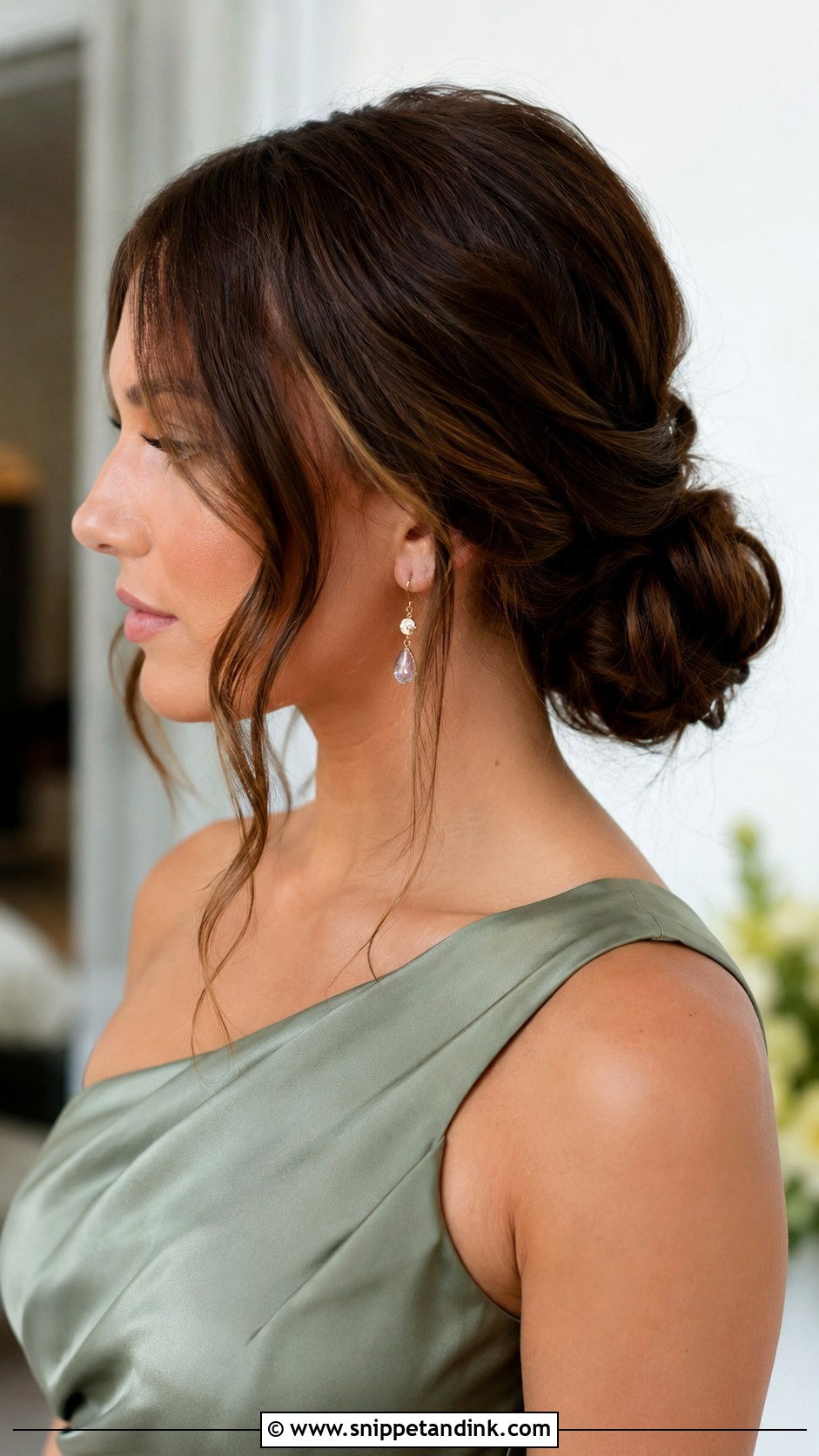
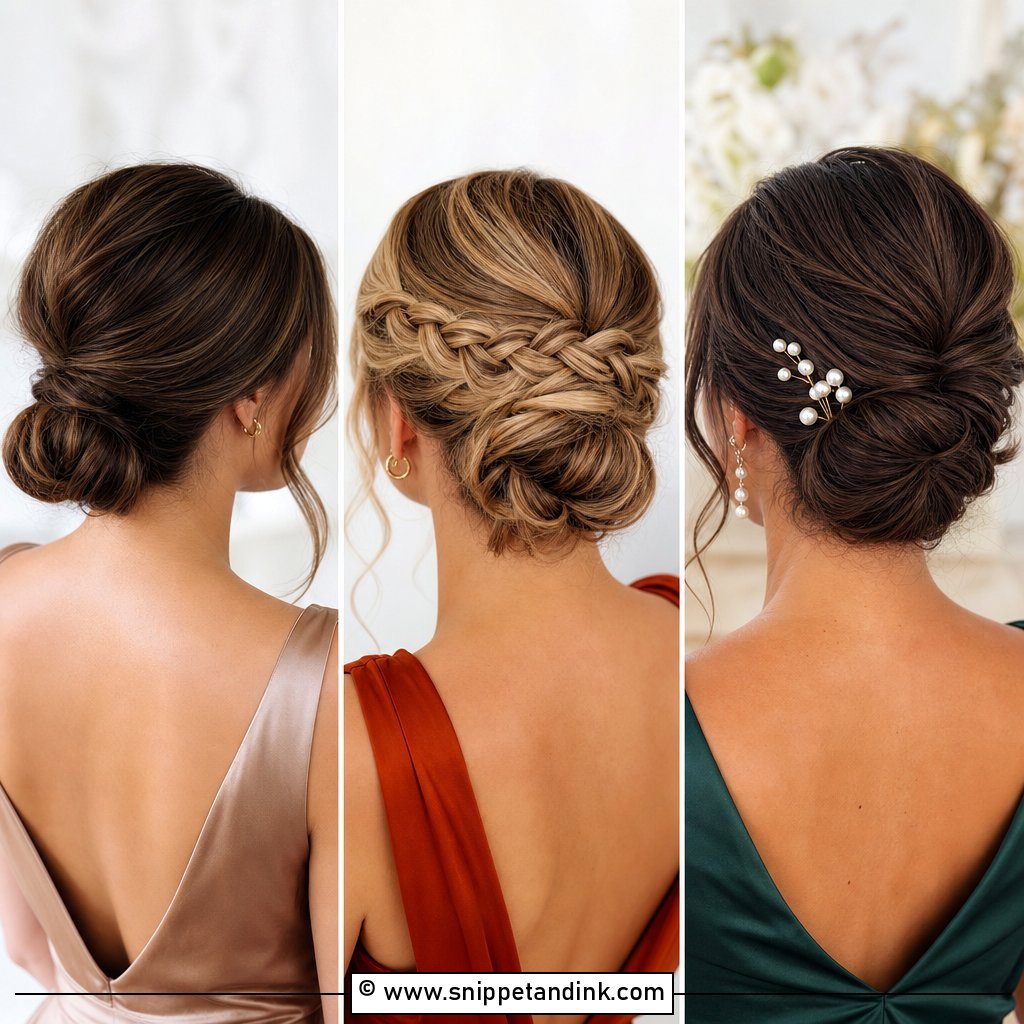
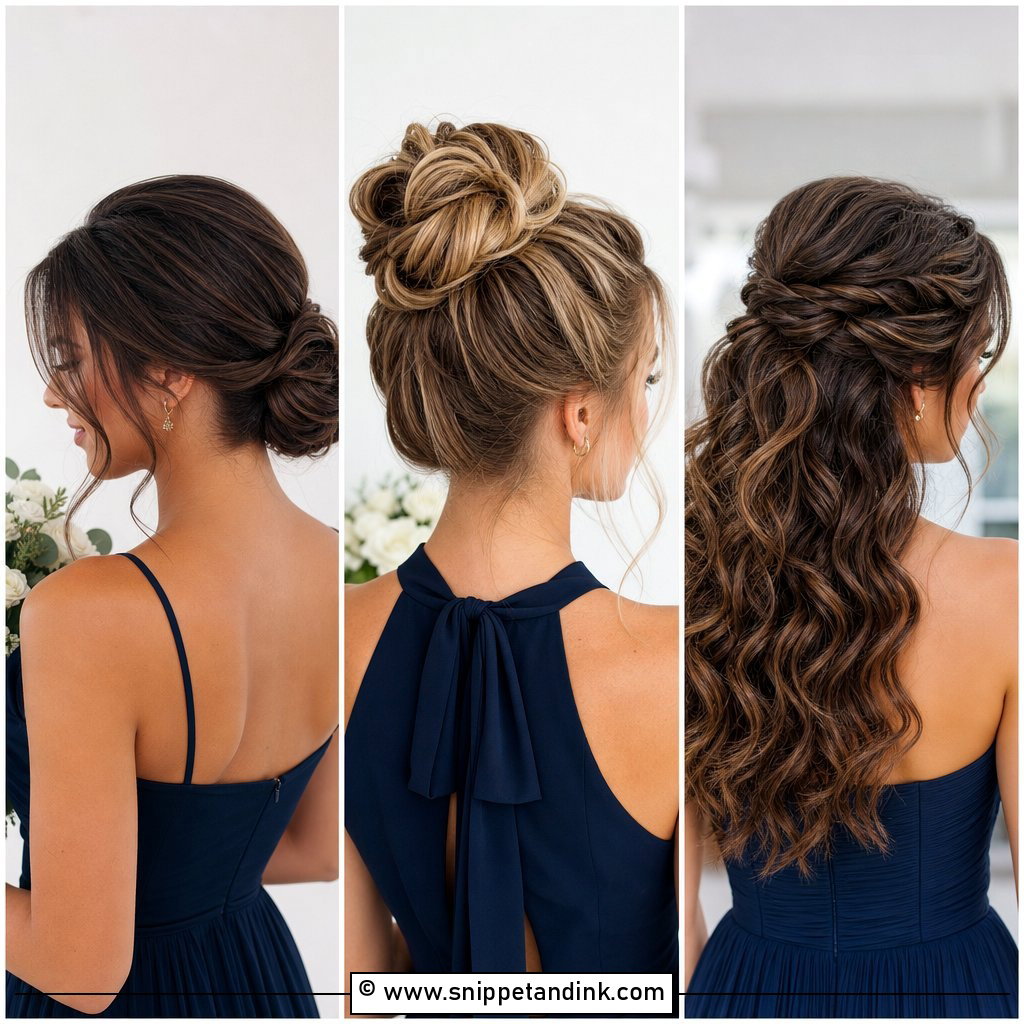
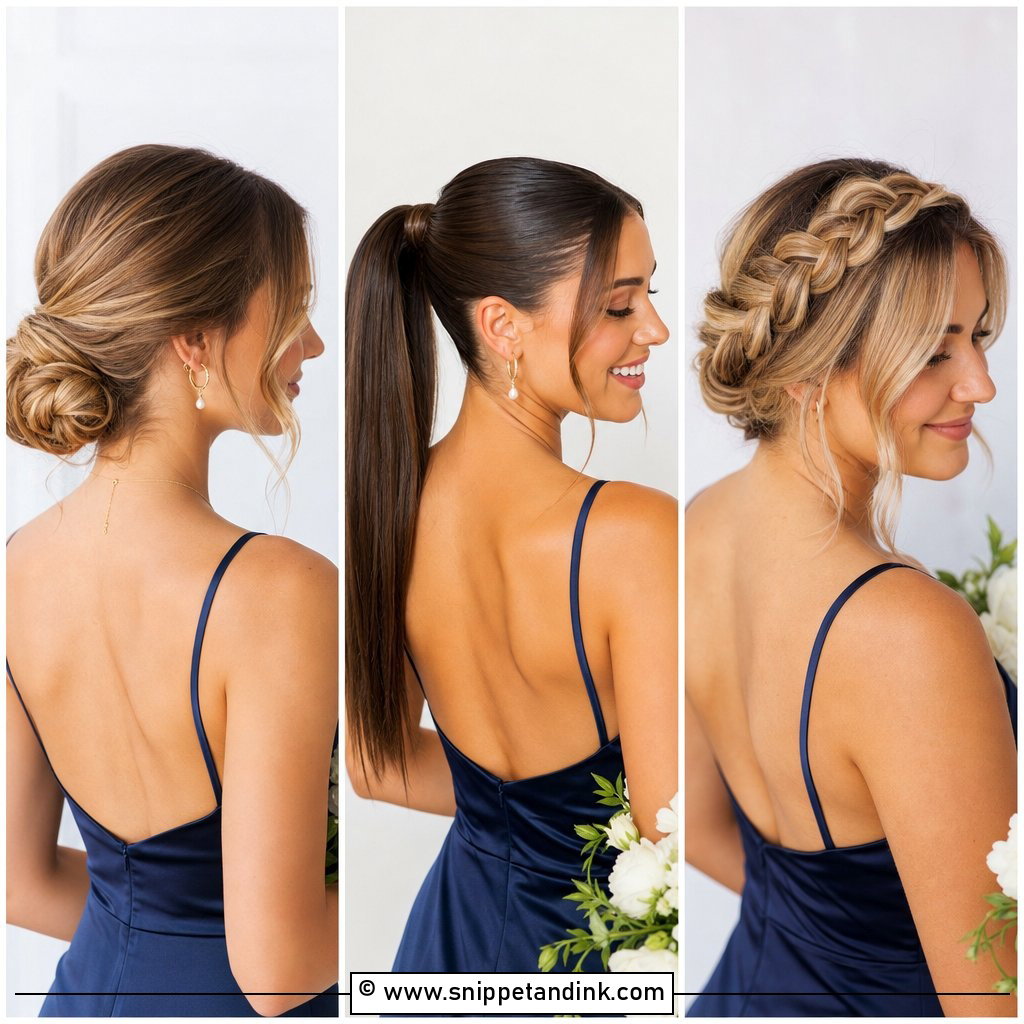
Of all the elegant maid of honour hairstyles here, this is the one I suggest most when someone can’t decide, because it looks finished from the back during the ceremony and from the side in the speech photos. Set it at the nape for a high neck or one-shoulder dress, or nudge it a little off-centre if the neckline is open. On thick hair I build the bun around a small hidden ponytail and pin into that base, which stops it dragging by late afternoon. Fine hair needs the opposite: some backcombing at the root of each section and a dry texture spray, or the bun ends up the size of a walnut.
2. Maid Of Honour Sleek Bun
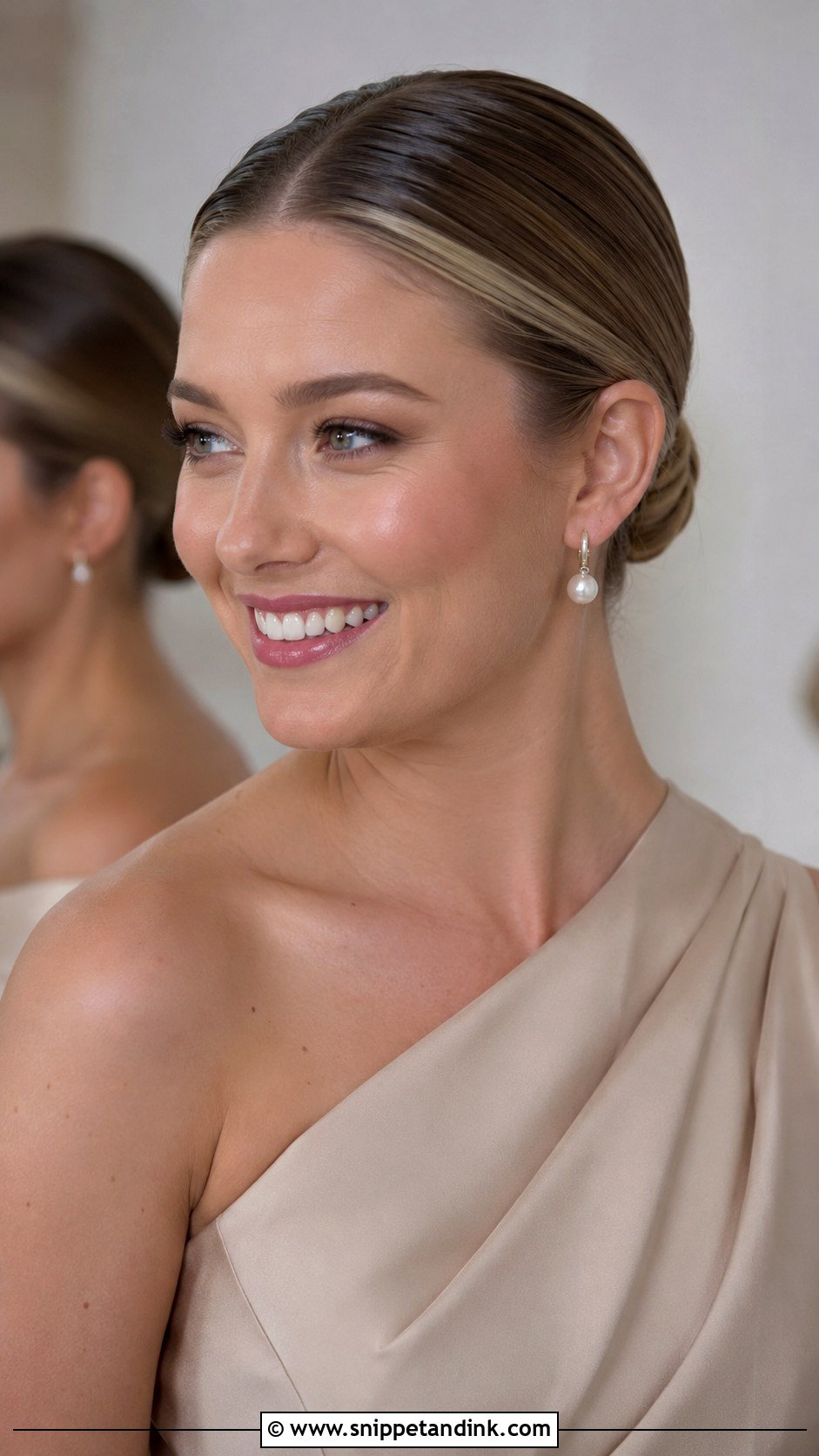
Sleek is the most weatherproof thing I can offer you. Every strand is brushed into a tight low or mid bun from a centre or deep side part, so heat and a breeze have almost nothing to grab. The catch is that it shows every bump, so I smooth each section with a boar bristle brush and a little gel before it goes into the elastic. Go easy on shine spray, since a heavy hand reads as greasy under flash. It suits satin and structured dresses and leaves the ears open for a strong earring.
3. Maid Of Honour Textured Updo
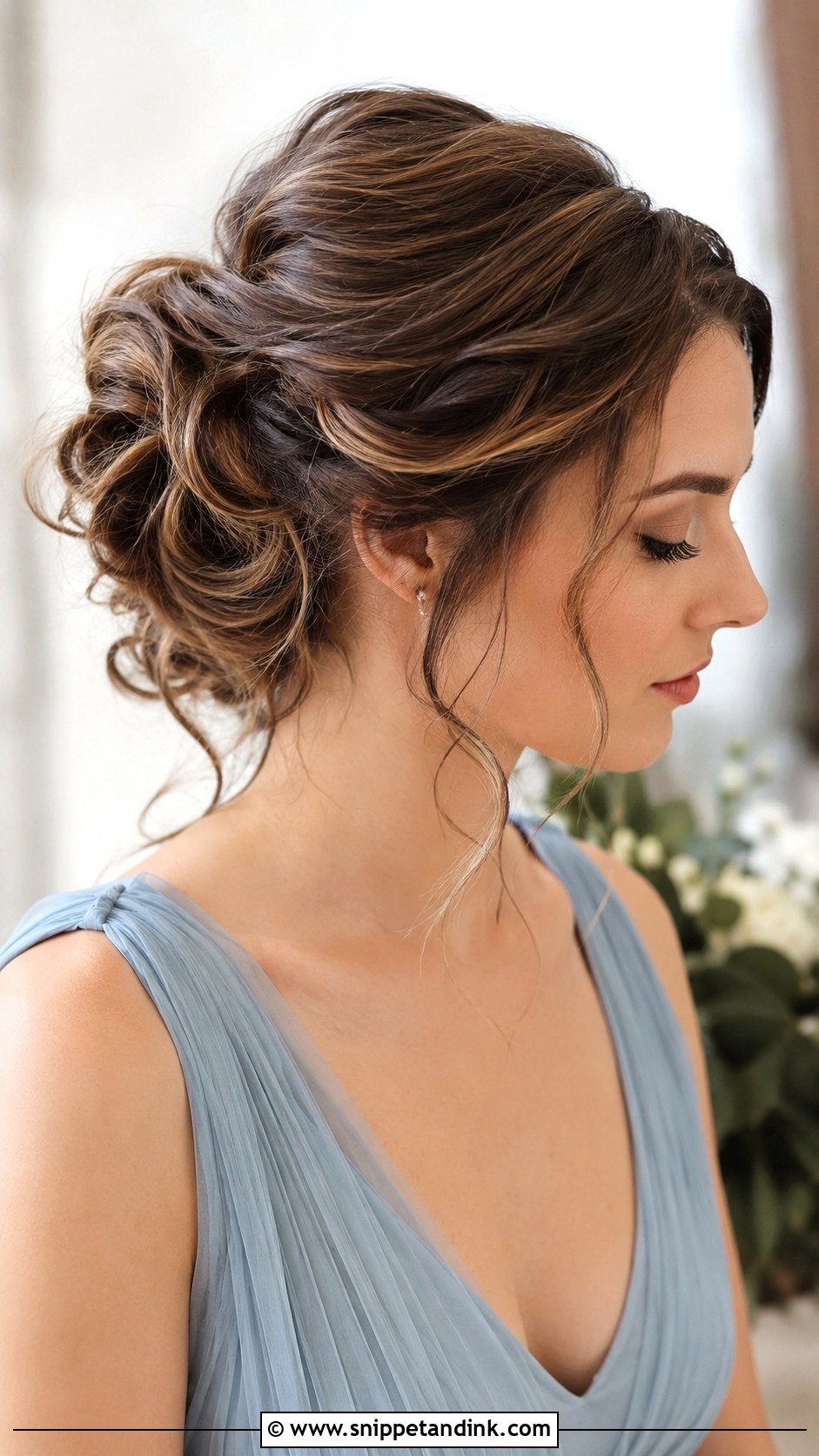
A textured updo only looks undone. Underneath, each curl is set with heat, cooled in a pin curl and then fixed with crossed pins, which is the reason it survives hugs. I lean towards it when the bridesmaid dresses are chiffon or lace, because a polished shape can look stiff next to soft fabric. Highlighted hair shows the folds especially well. If your face is round or square, ask for the tendrils to fall just below the cheekbone rather than at the jaw.
4. Maid Of Honour Chignon
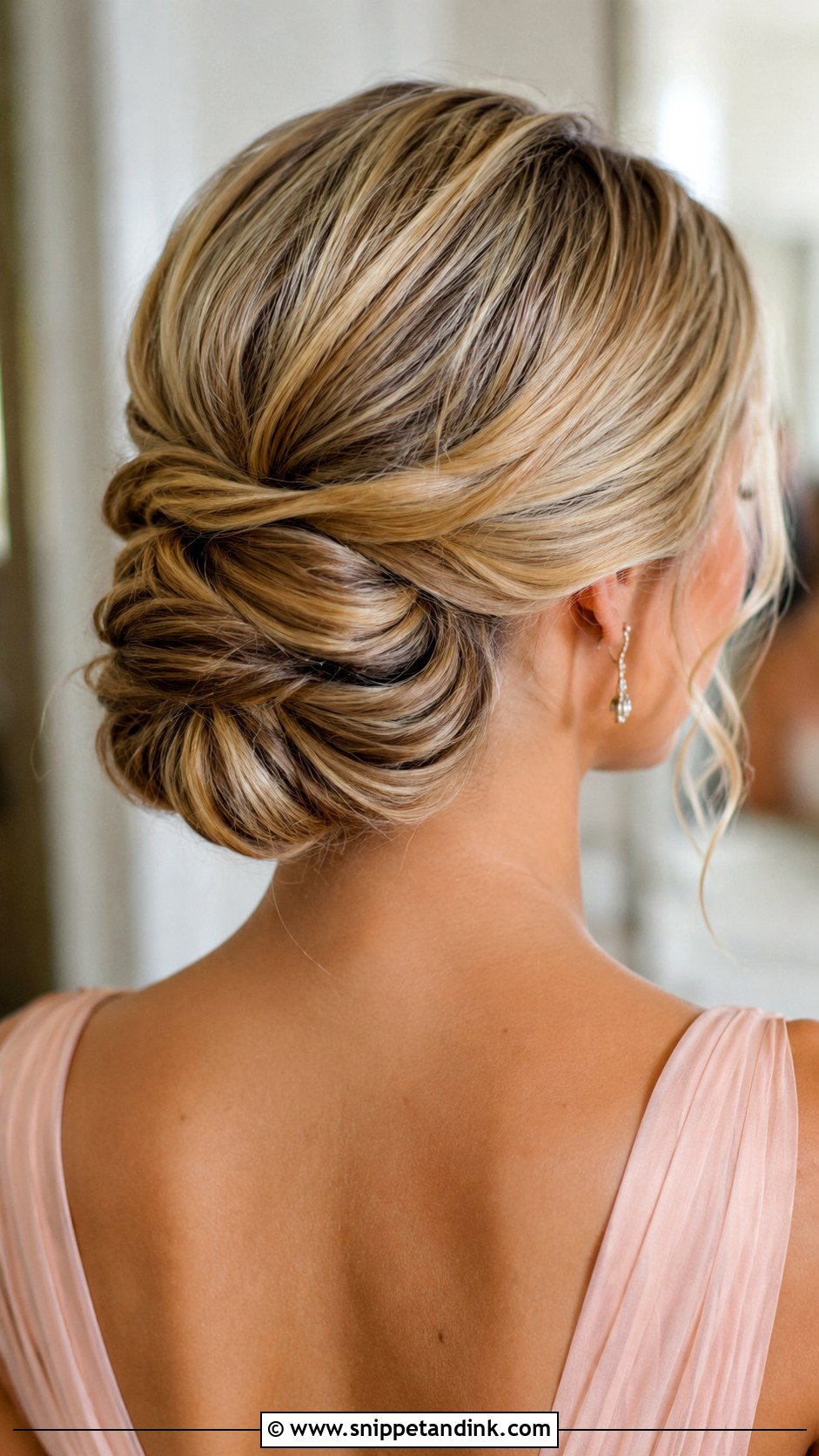
Think of the chignon as the low bun’s dressier cousin: the hair is rolled or folded into the nape instead of wrapped, so it sits flatter and neater against the neck. That flatness matters if you’re wearing a high collar or a cowl back. Keep it smooth for a classic gown and pearls, or let it go looser for a garden or coastal day. Slippery, freshly washed hair is the usual problem, so I’d rather you arrive with second-day hair or let me add mousse and blow it dry before I start rolling.
5. Maid Of Honour French Twist
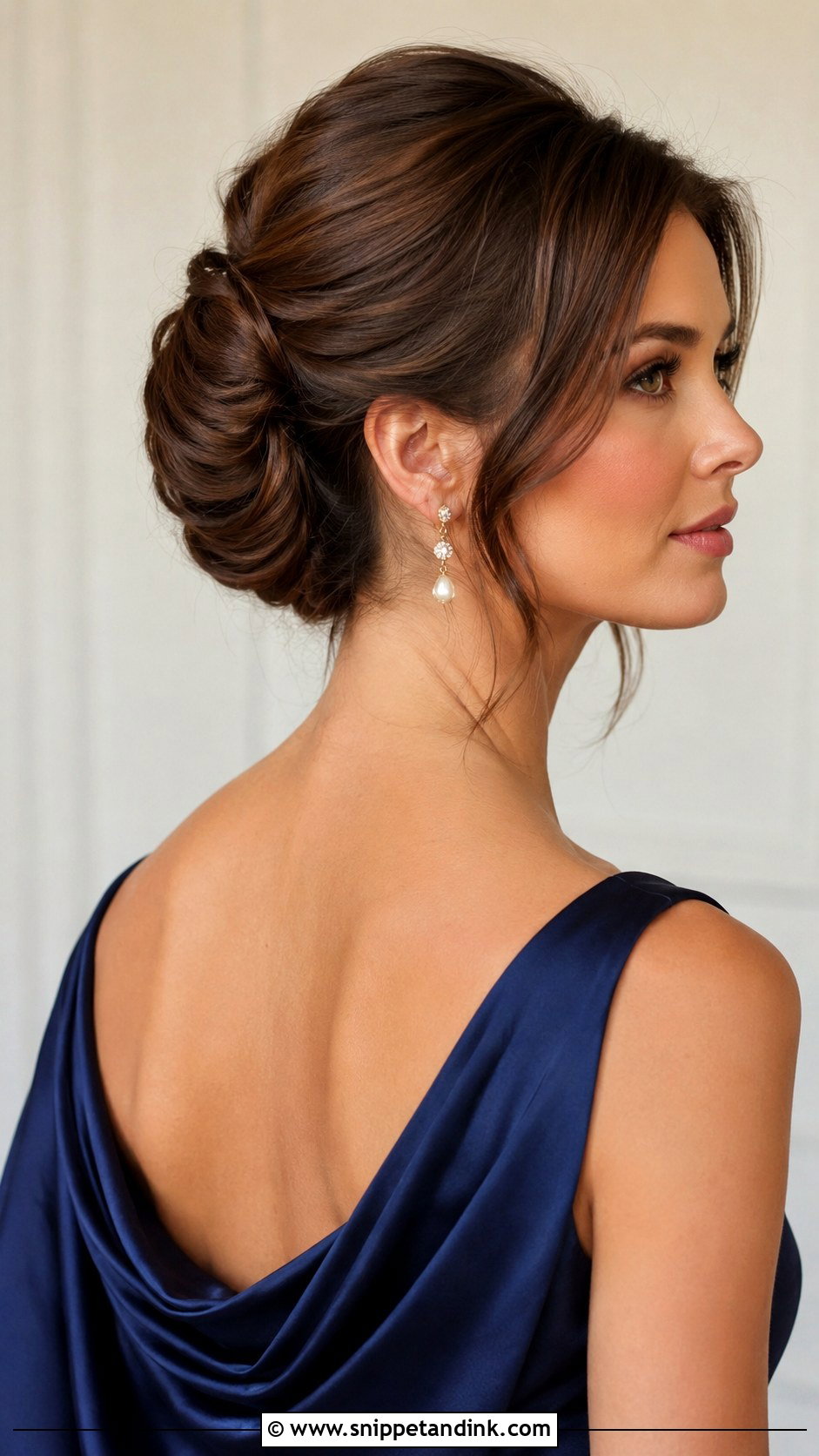
I reach for a French twist when the venue is a hotel ballroom or anything black tie. It creates a long vertical line up the back of the head, which makes the neck look longer in profile. The structure comes from a row of crossed bobby pins along the seam, hidden under the fold, and a couple of long U-pins to lock the top. Medium to long hair twists most easily; a shoulder-length cut can manage a smaller version if it is blow-dried with plenty of grip first. A soft side part keeps it from looking like a costume.
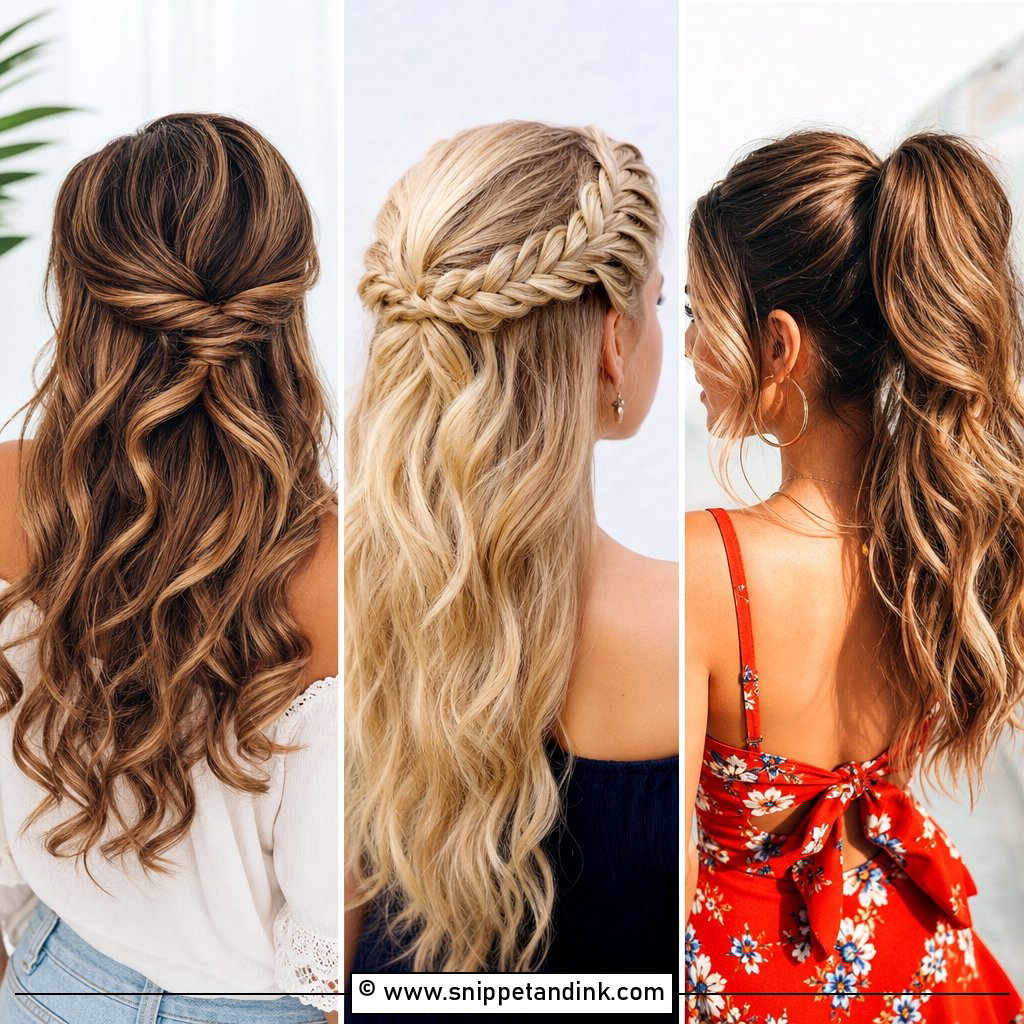
6. Maid Of Honour Half Up Half Down
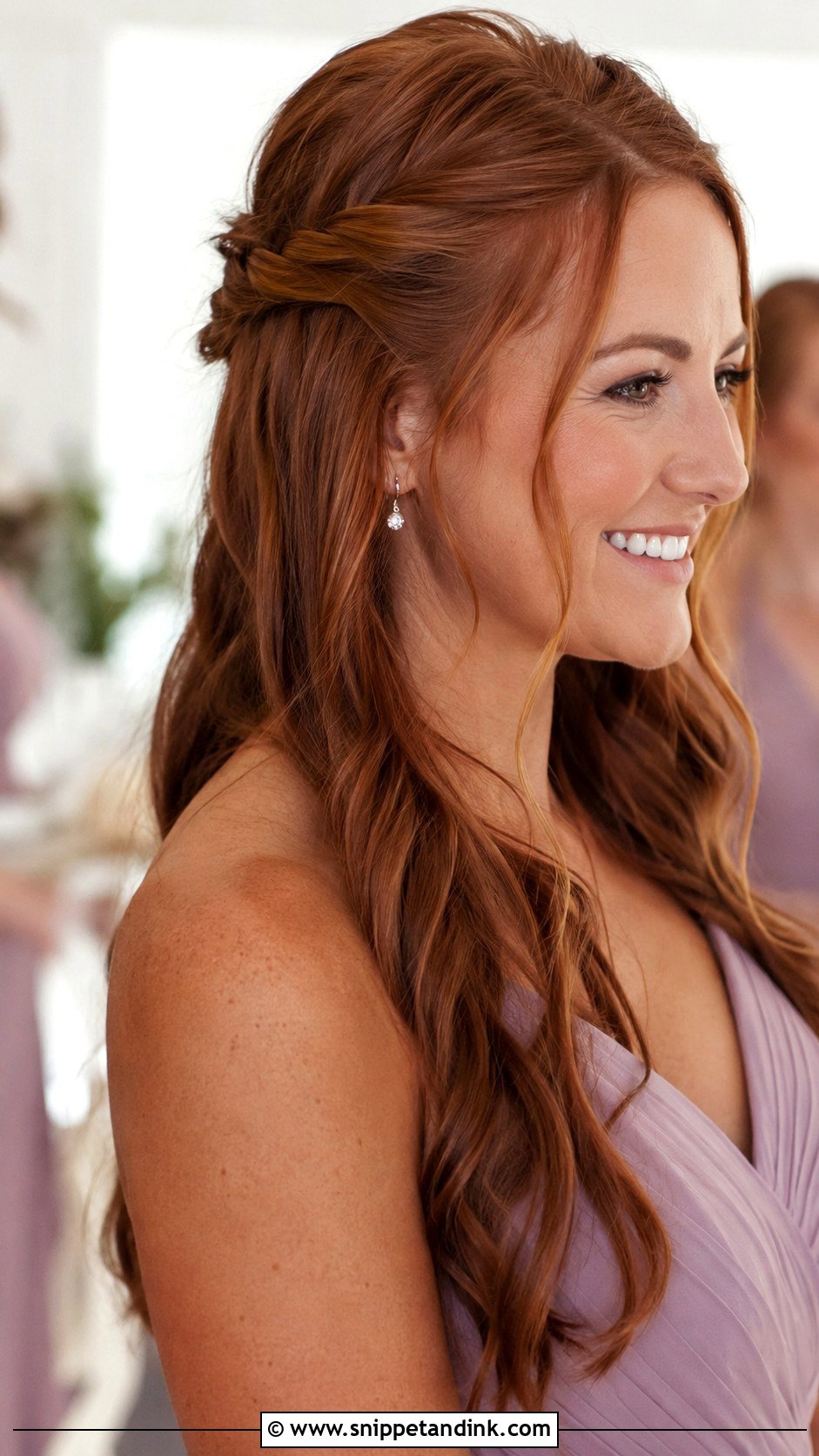
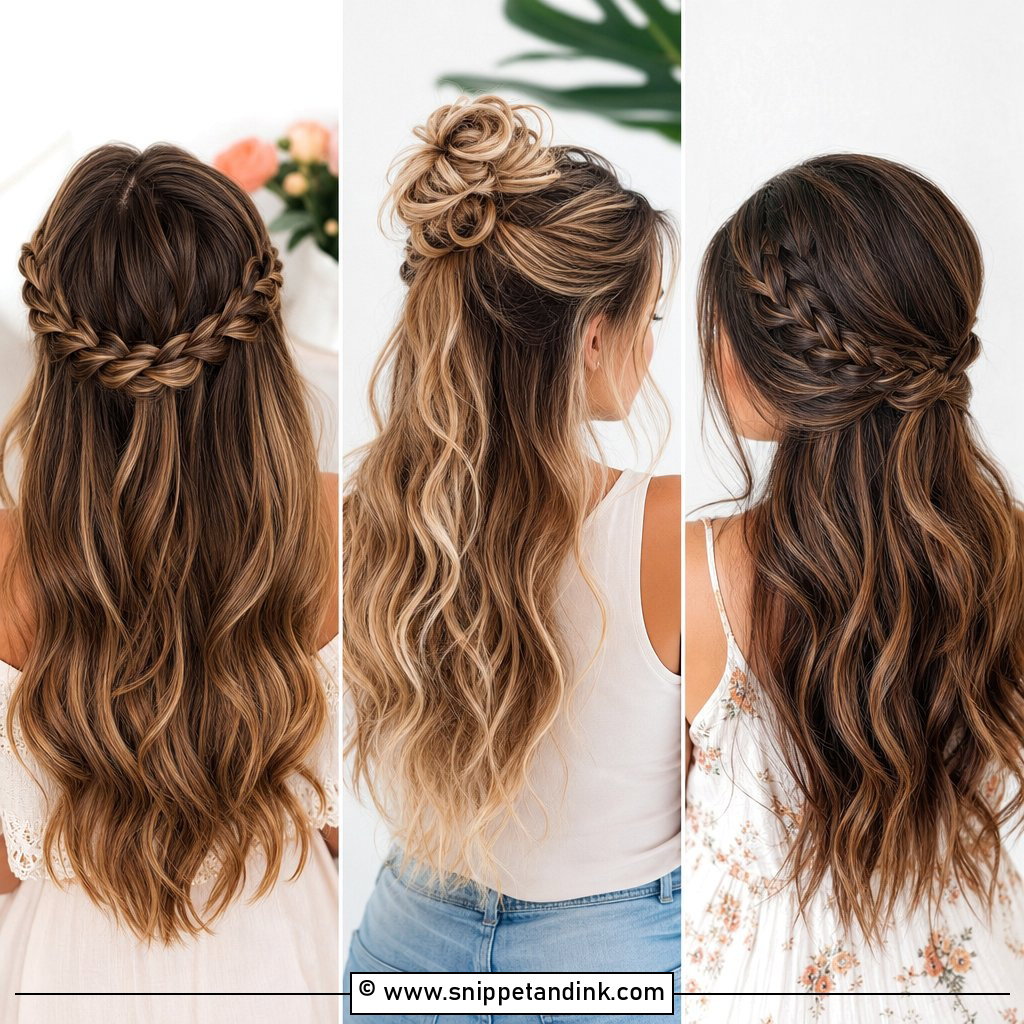
Half up, half down gives you length in the photos while keeping hair off your face when you lean over to straighten a veil. The weak point is always the loose part: by the reception, curls on unprimed hair can drop to almost straight. I set the curls with a hot tool, let them cool fully, and only then brush them out. The top section can be twisted, braided or gathered into a small knot, and I add a little lift at the crown first so it doesn’t sit flat once the pins go in.
7. Maid Of Honour Half Up Waves
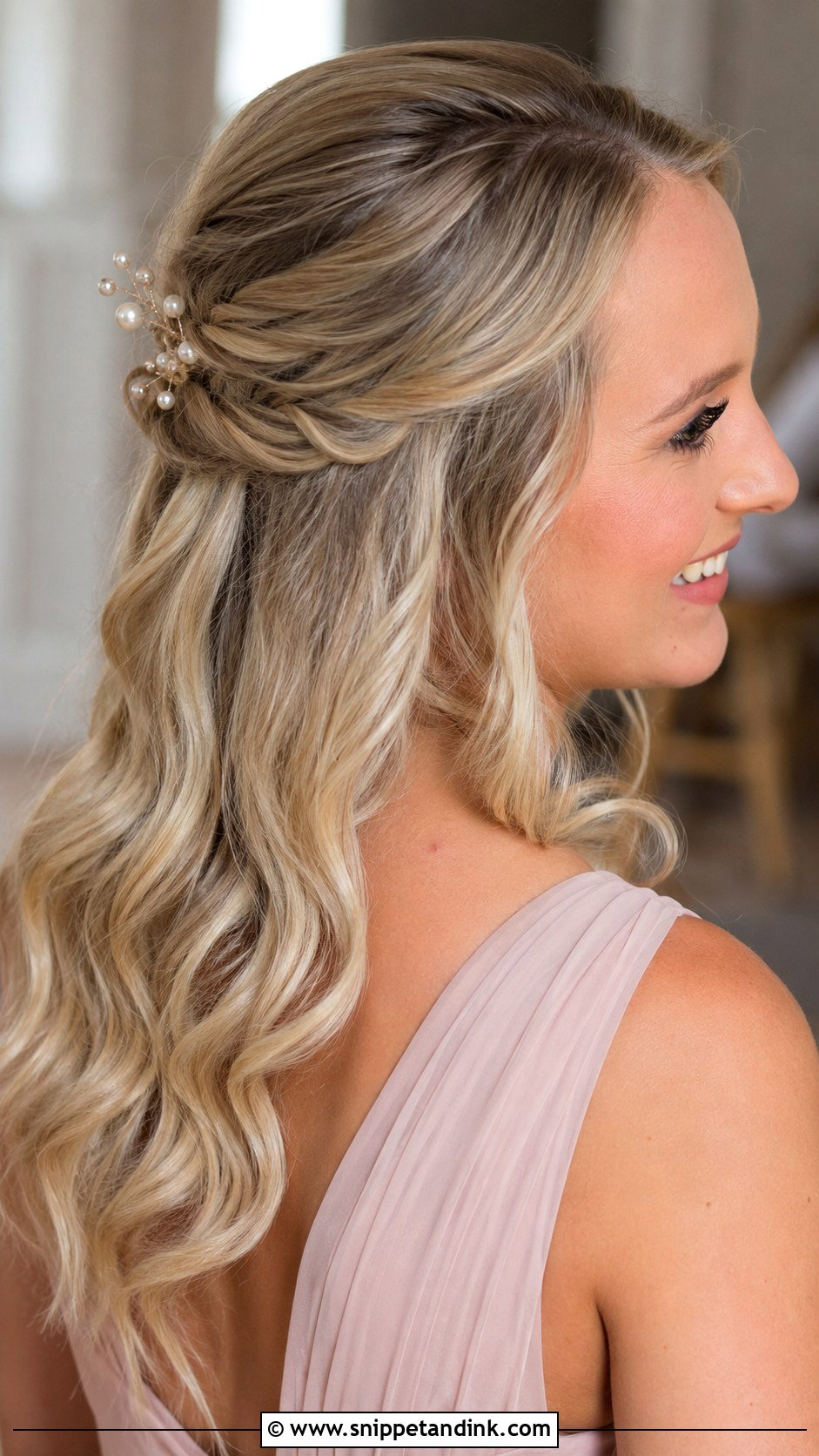
These waves start below the cheekbone, which keeps the face clear and stops the style looking like a prom set. Medium and long hair carry it best. On fine hair I usually add two or three clip-in wefts underneath the pinned section so the waves have weight to hang from. A small pearl pin or barrette above the twist is enough; anything bigger begins to read as bridal, and that is a line I don’t let a maid of honour cross unless the bride has asked for it.
8. Maid Of Honour Hollywood Waves
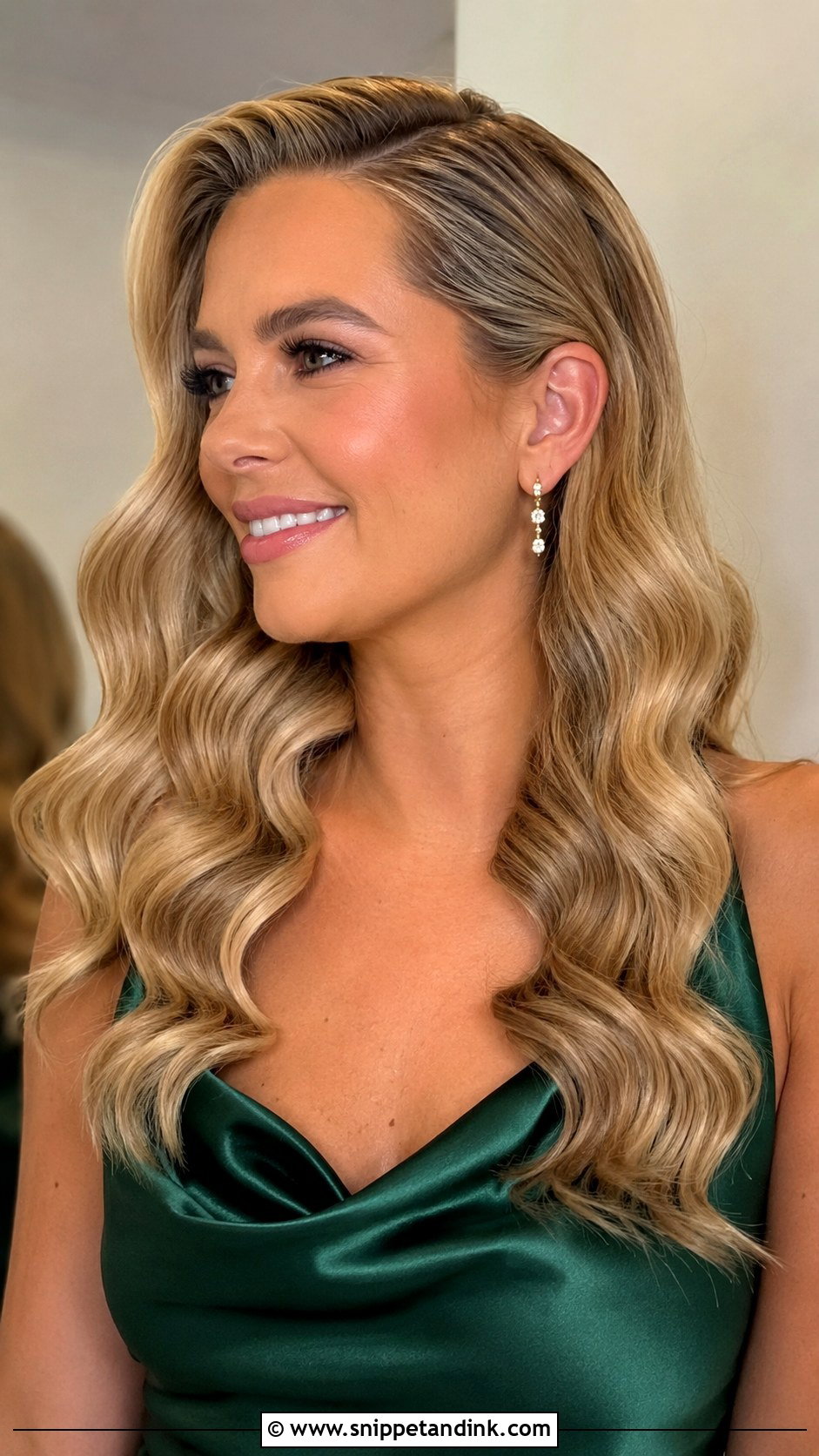
This is the most demanding look in the list to execute. Every curl has to be wound in the same direction, pinned to set, then brushed out with a wide paddle brush until the curls join into one continuous S shape. Hair that won’t hold a curl will drop into a shapeless bend by the first dance, so if that’s your hair, consider extensions or choose something pinned. A deep side part and a glossy finish do the rest. Keep accessories to the earrings.
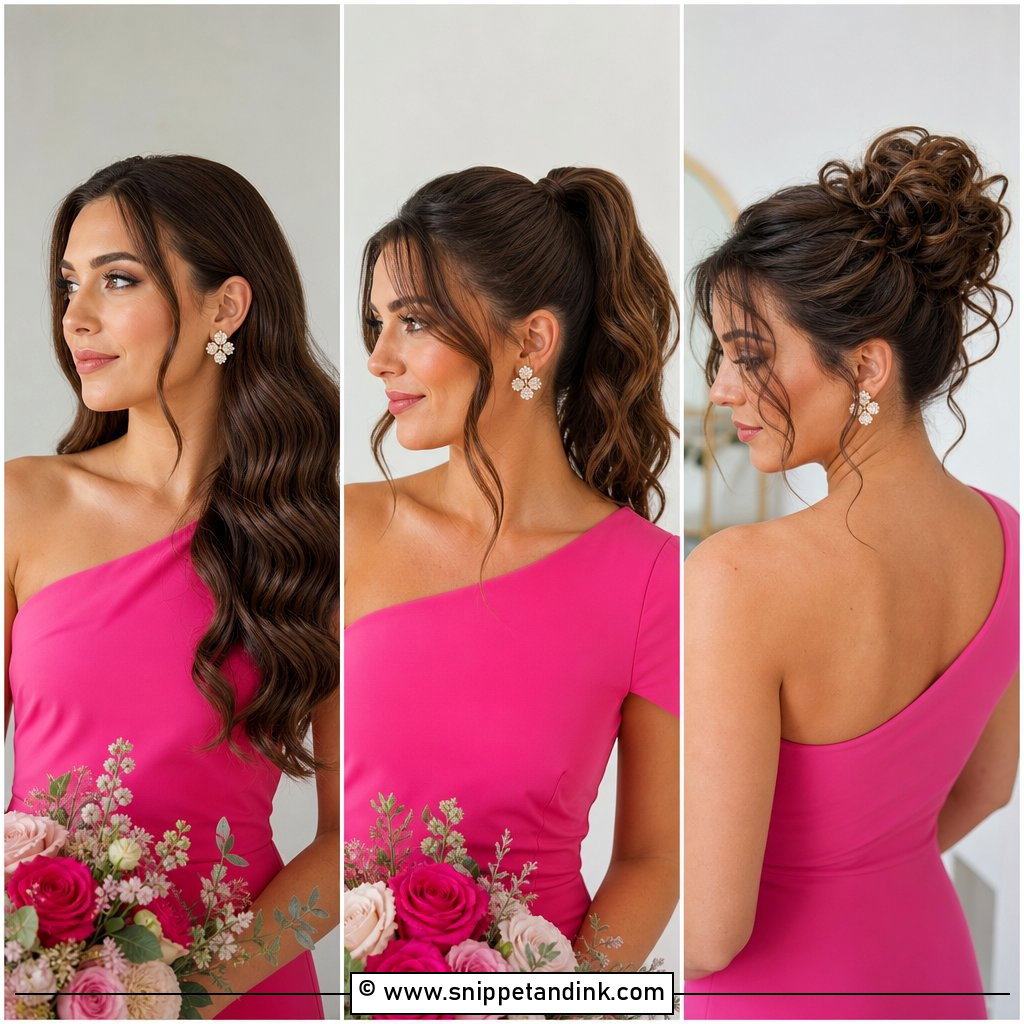
9. Maid Of Honour Loose Waves
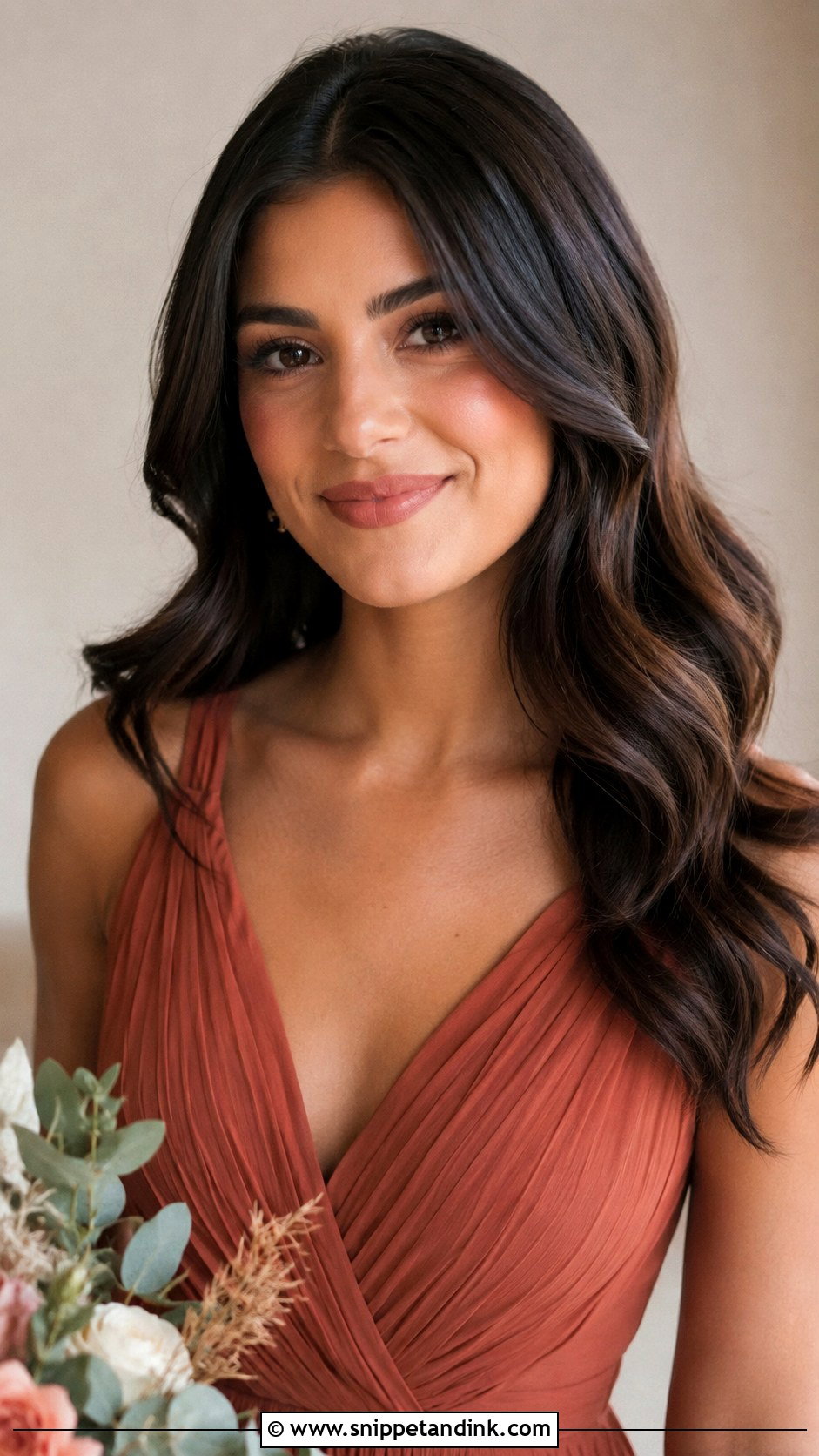
Loose waves are my quiet favourite for bridal parties where the bride wants coordination without everyone looking cloned. Layered cuts show the movement best. I curl in alternating directions and brush it out until no single ringlet is visible. On a humid day I’ll add an anti-humidity spray before the brush-out, not after, because sealing the curl early is what holds it. You can refresh them easily before the reception with a few minutes on a curling iron in the bathroom.
10. Maid Of Honour Side Swept Waves
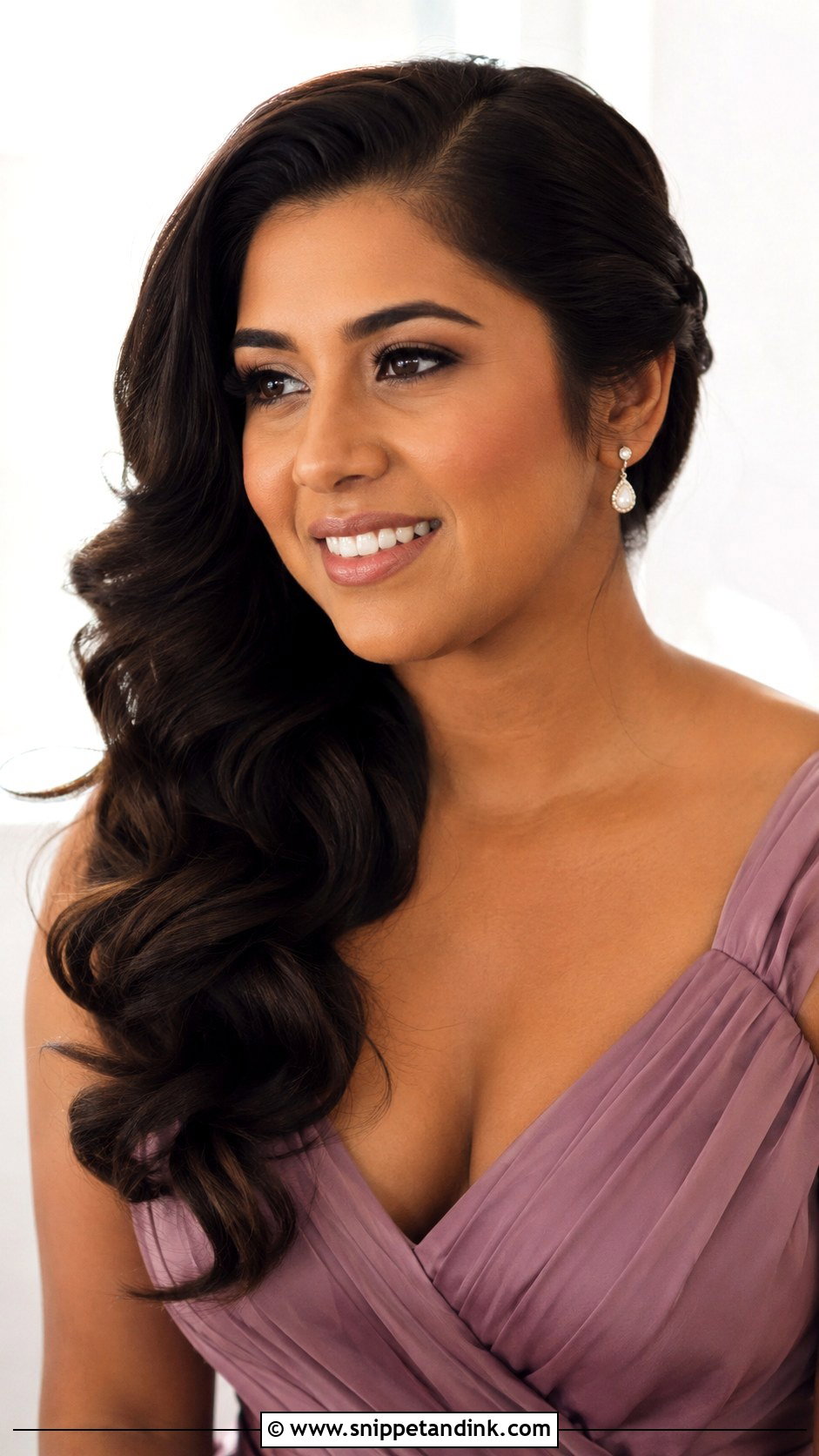
Sweeping everything to one side opens up the neckline and suits asymmetric dresses, straps or a detailed back. The real work is behind the opposite ear, where I anchor the hair with a small concealed braid or a pair of crossed pins so the whole mass doesn’t slide back to centre. It balances a narrow face well because the width sits on one side. One thing to plan for: you’ll be standing on a specific side of the bride at the altar, so have the hair fall towards the guests.
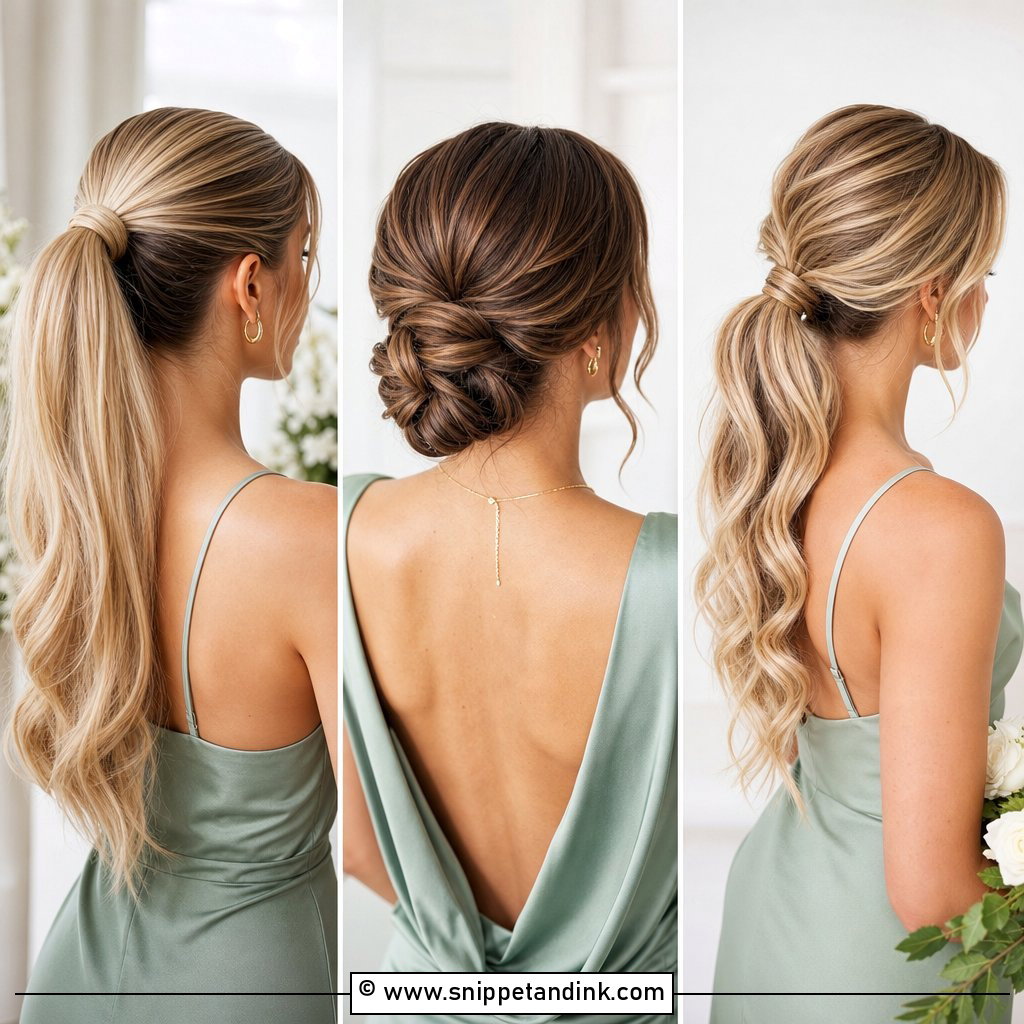
11. Maid Of Honour High Ponytail
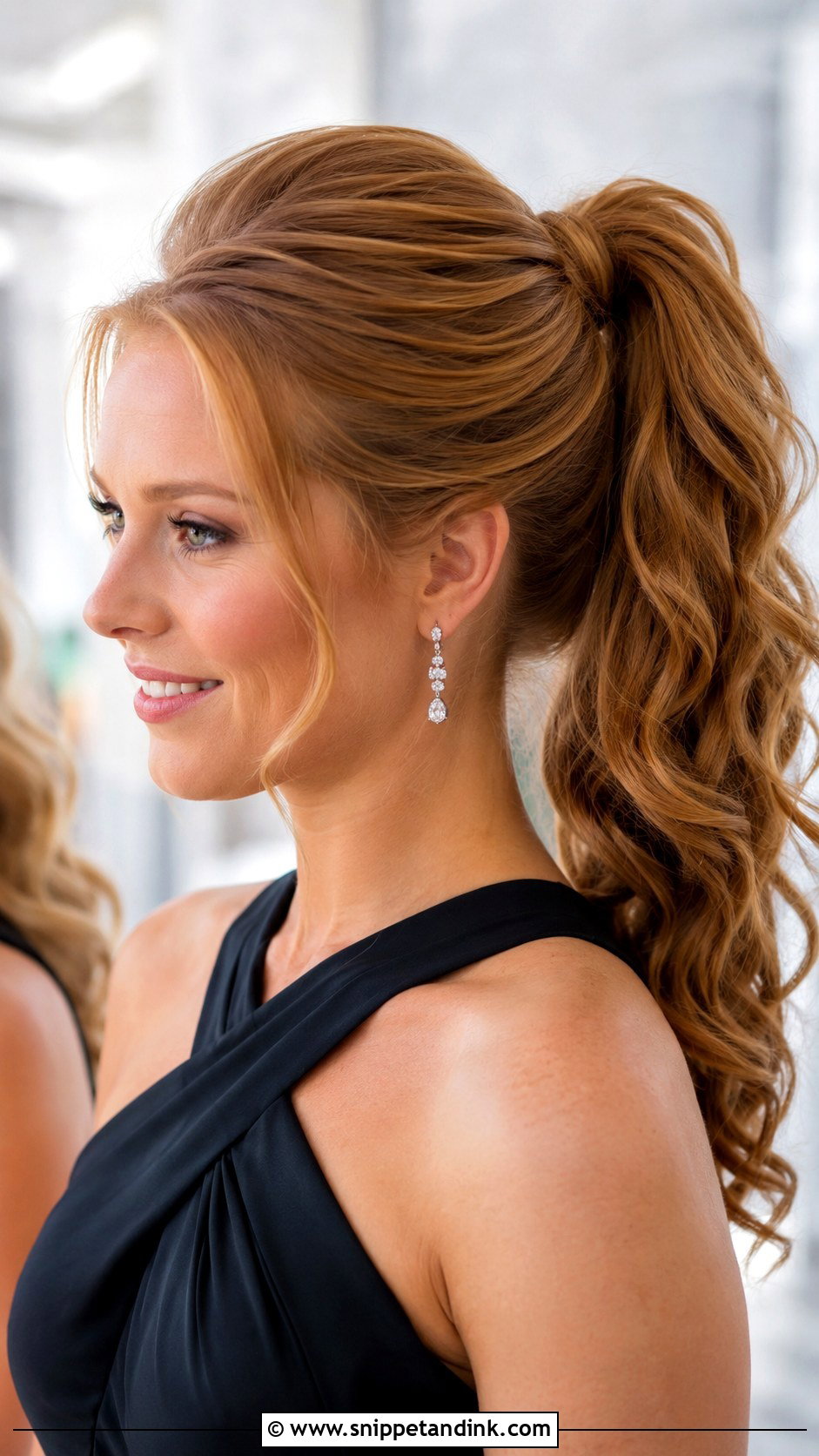
A high ponytail is surprisingly formal once it has volume at the crown and a wrap of hair over the elastic. I secure the wrapped piece with a pin pushed upward into the base, which hides the band completely. It stays put through hours of dancing. The honest drawback is weight: on very long thick hair, a high pony starts to pull at the scalp after a few hours, and I’d move it lower or split the weight with a second hidden elastic.
12. Maid Of Honour Low Ponytail
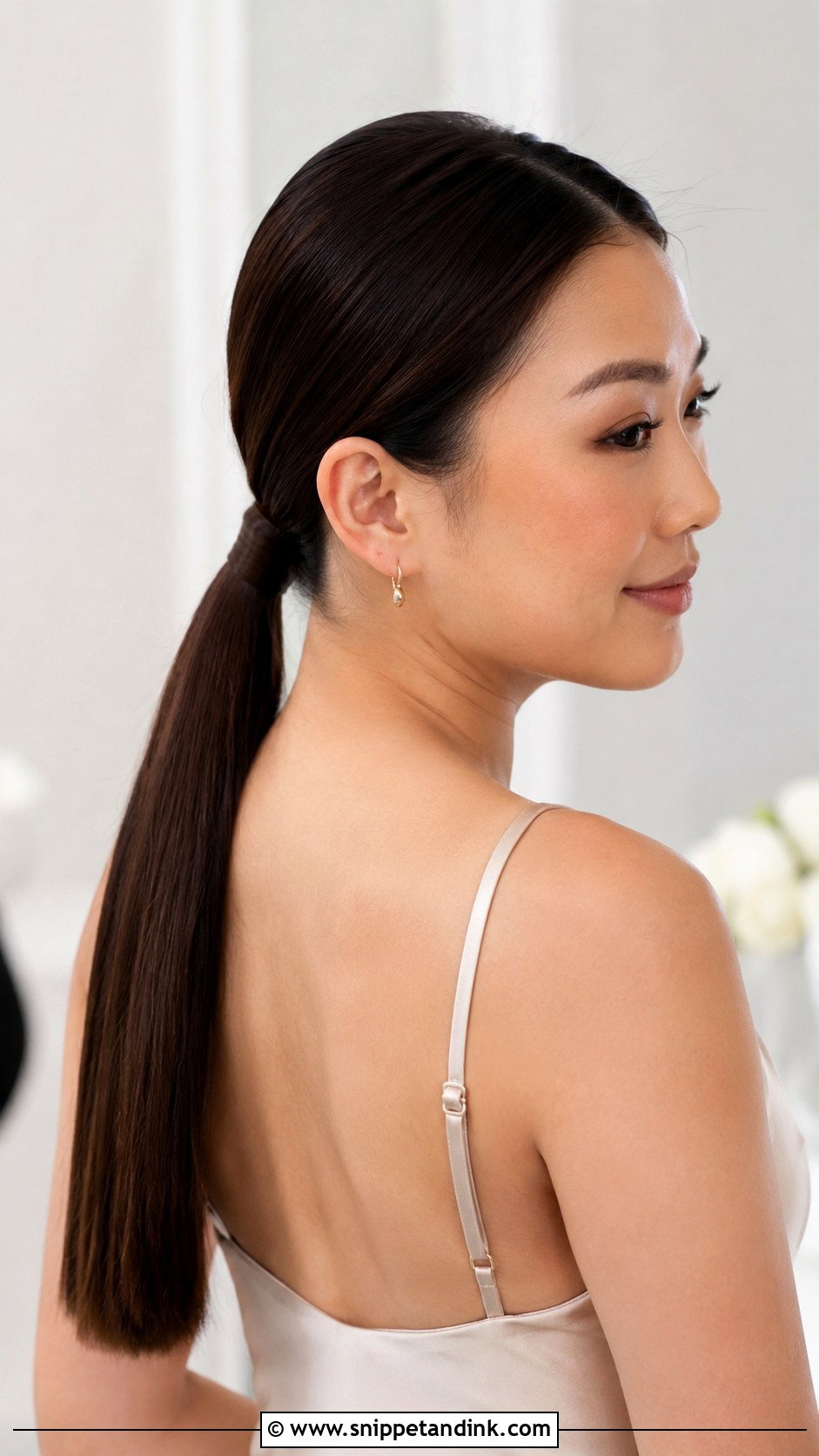
Low ponytails are the most comfortable formal style I do, and on thick hair they keep the weight close to the neck instead of hanging off the crown. A centre part makes it crisp; a side part softens it. I always add some lift at the crown so the head doesn’t look flat in profile photos. The base gets wrapped with a strand of hair and pinned underneath, so no band is visible. Minimal jewellery and a clean gown suit it best.
13. Maid Of Honour Wavy Ponytail
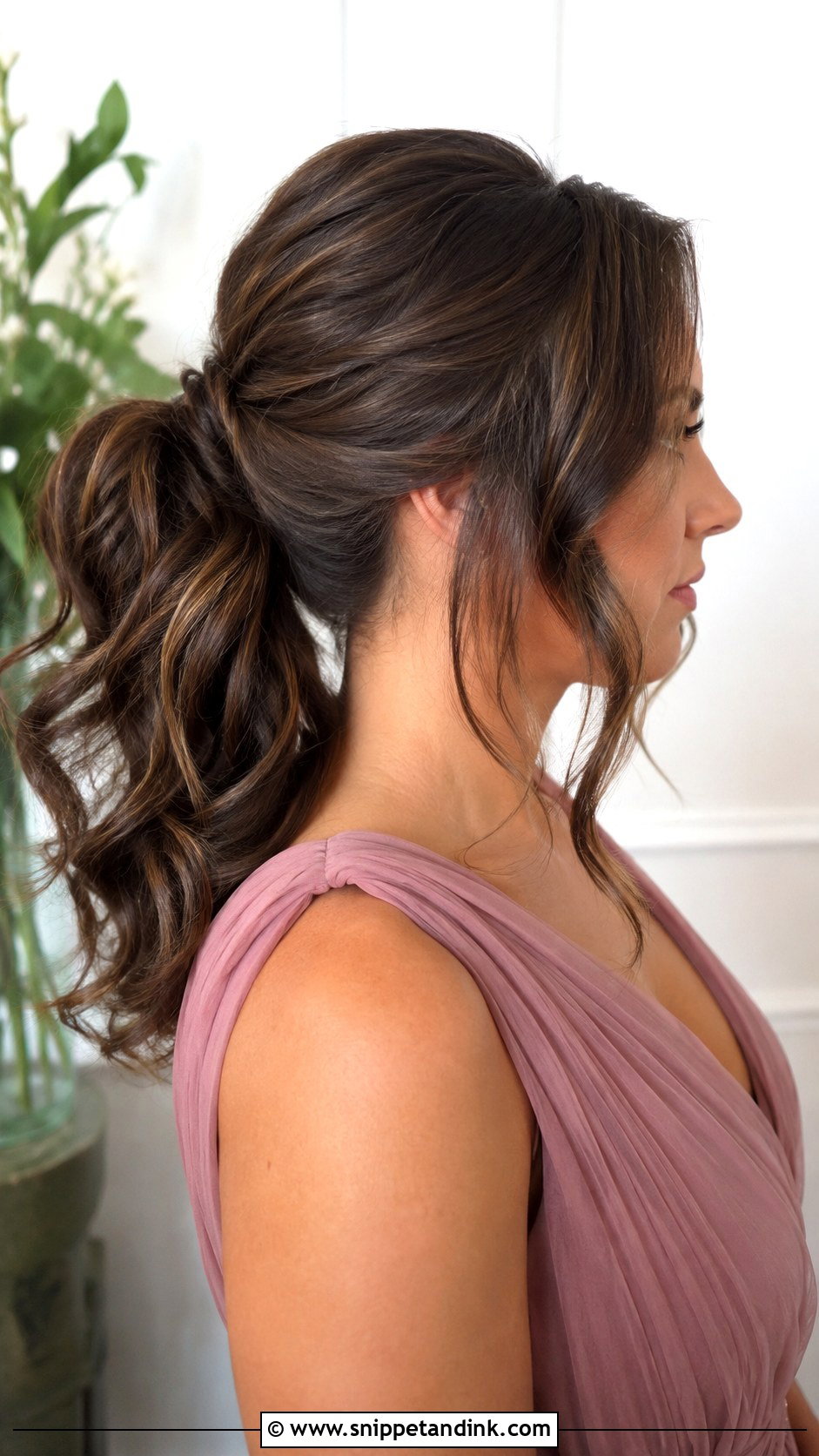
Curls through the tail give this one more body than a sleek version, and it’s softer around the face. I position it at mid height for a round face and lower at the nape for a high neckline. A few loose front pieces stop it looking athletic. If your natural length stops at the shoulder, a clip-in ponytail piece wrapped around your own base adds the drama, and once the wrap is pinned nobody can see the join.
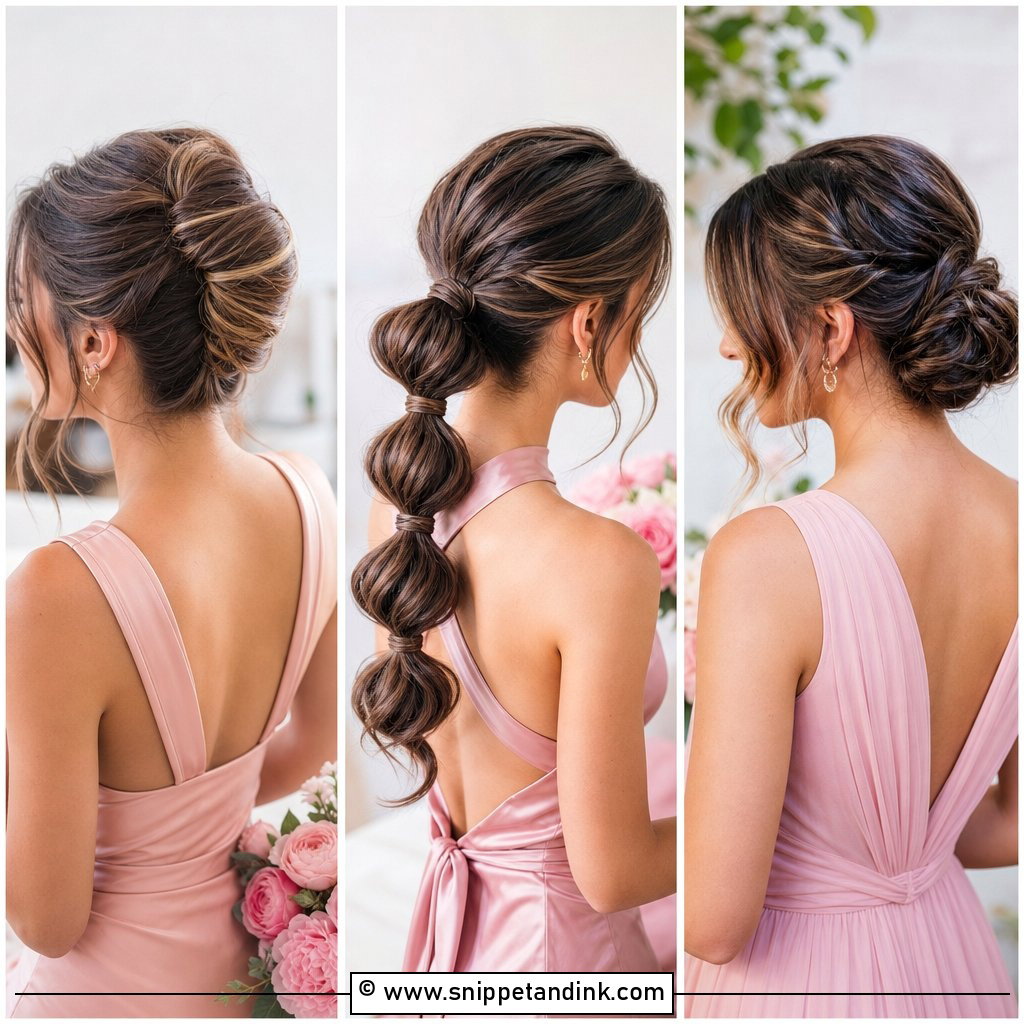
14. Maid Of Honour Bubble Ponytail
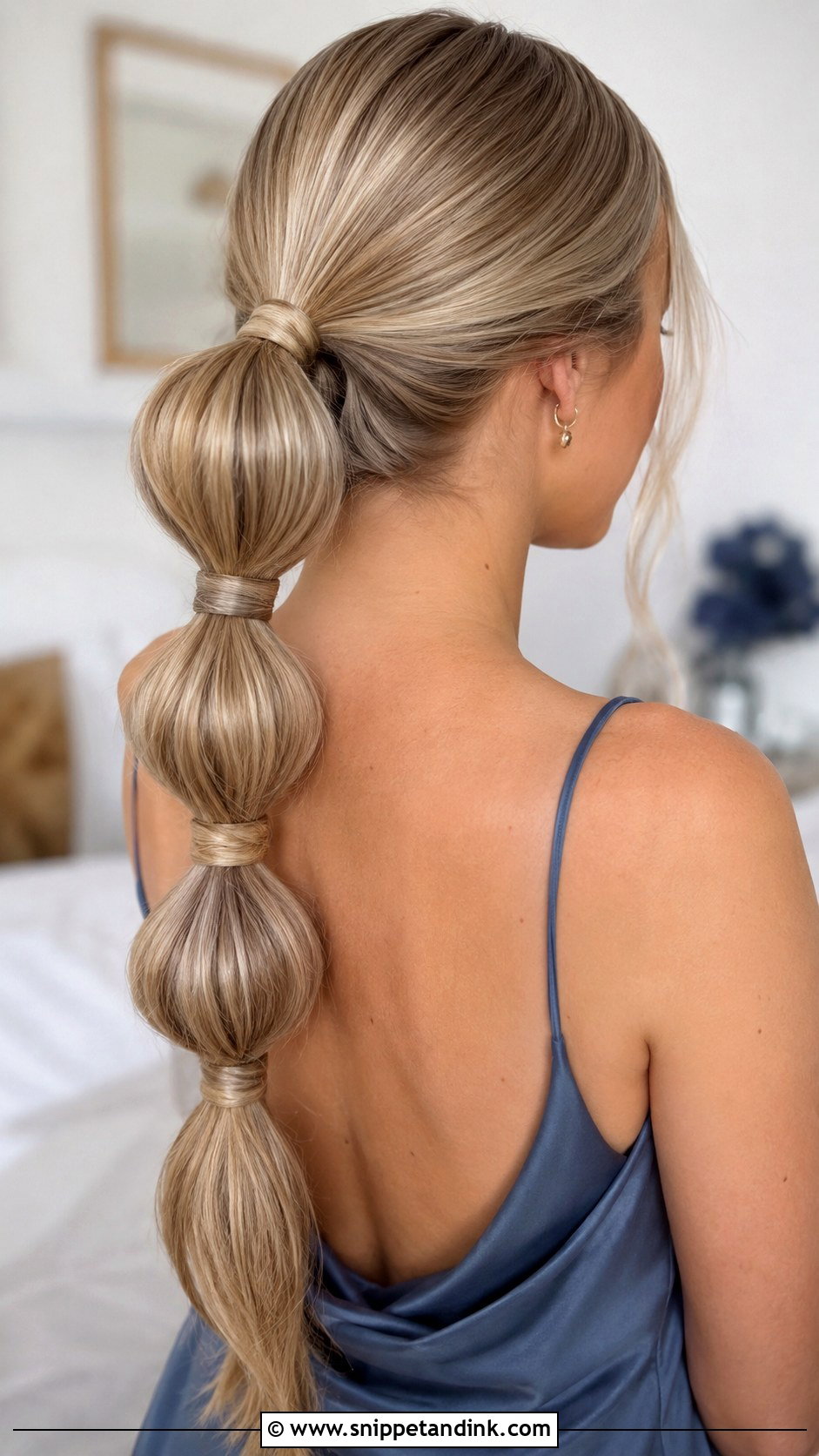
The bubble ponytail suits a contemporary wedding or a bride who has asked her party for something playful. Small clear elastics divide the tail every few inches and each section is teased out into a rounded bubble. Even spacing is everything; I measure by finger widths so the bubbles don’t shrink as they go down. Medium to long hair is required, and very layered cuts poke out of the bubbles unless the ends are smoothed with a little cream first. Wrap the base with hair to finish it.
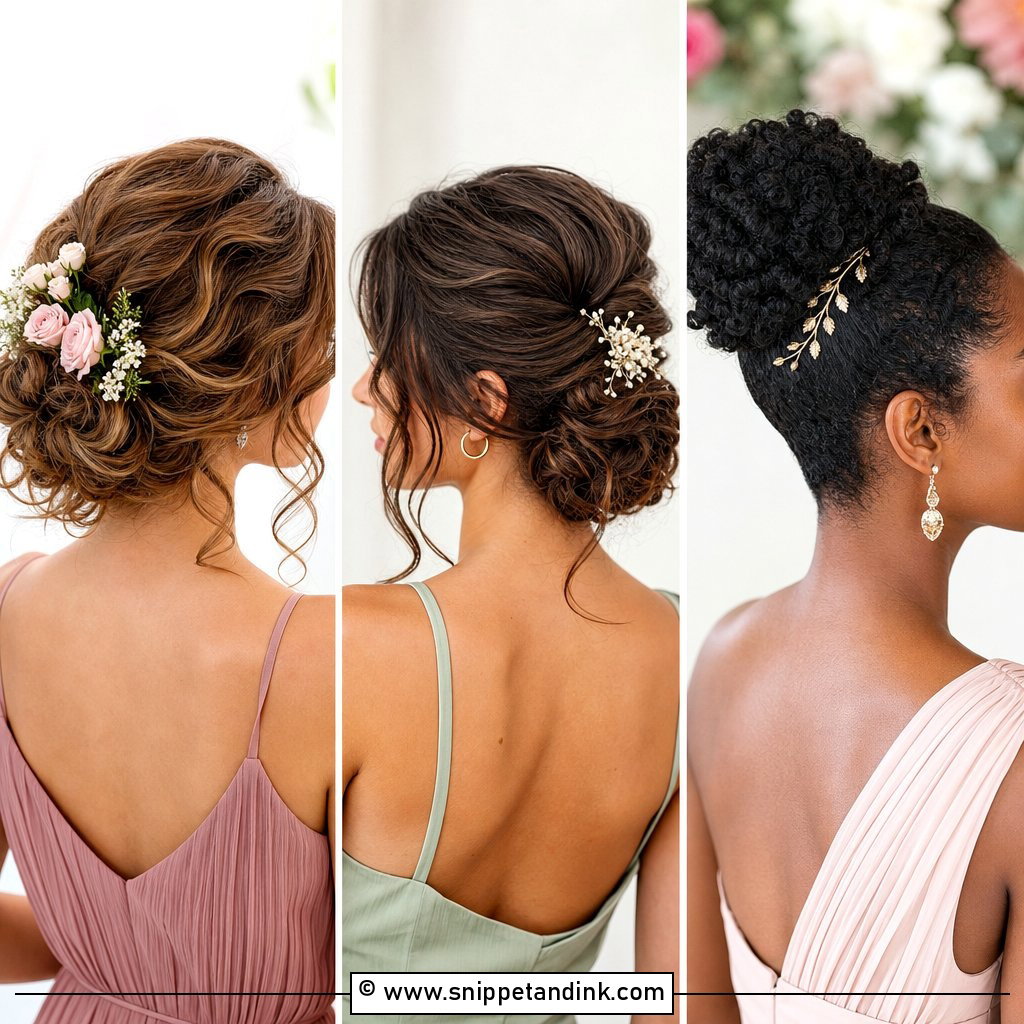
15. Maid Of Honour Braided Ponytail
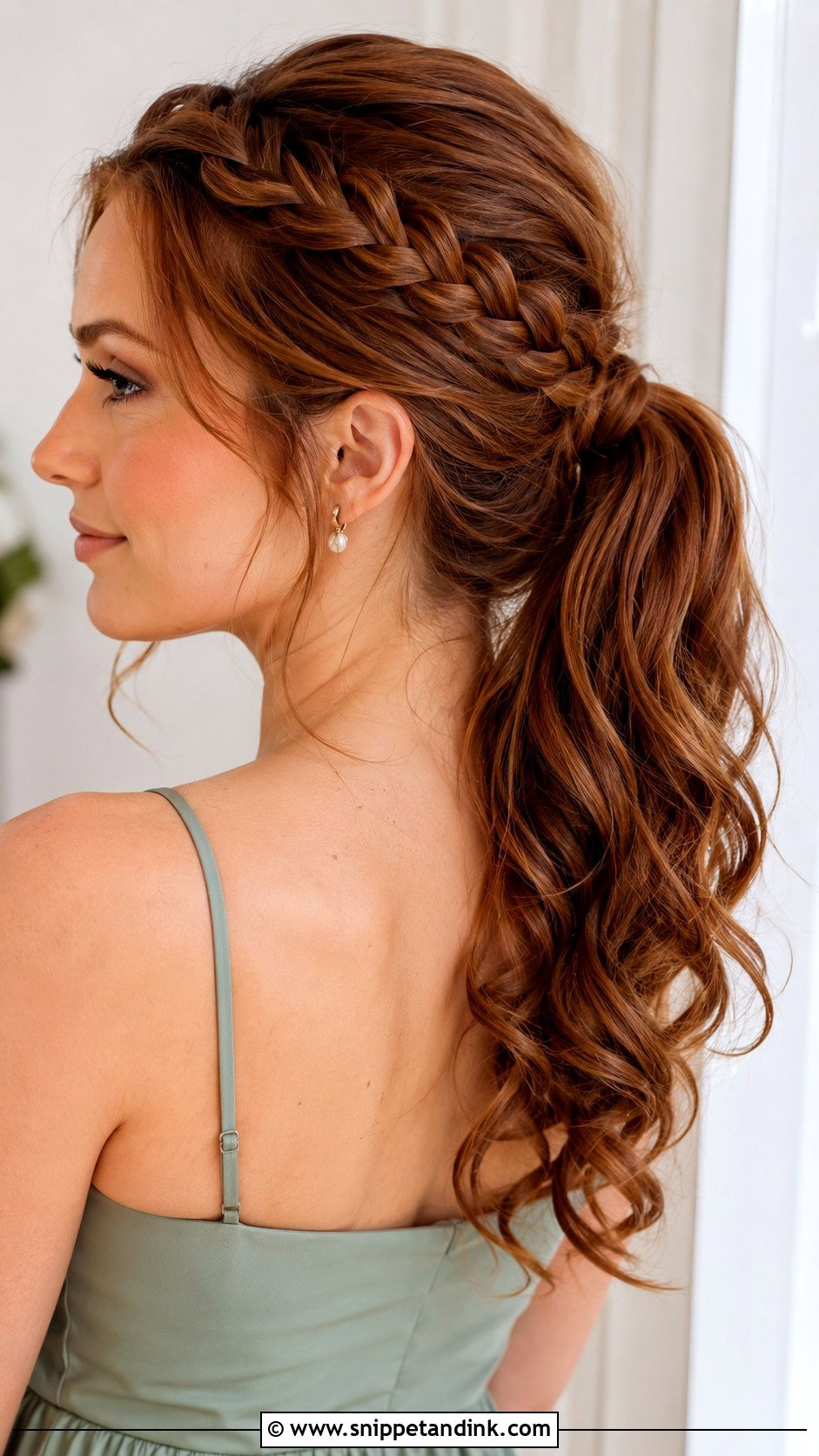
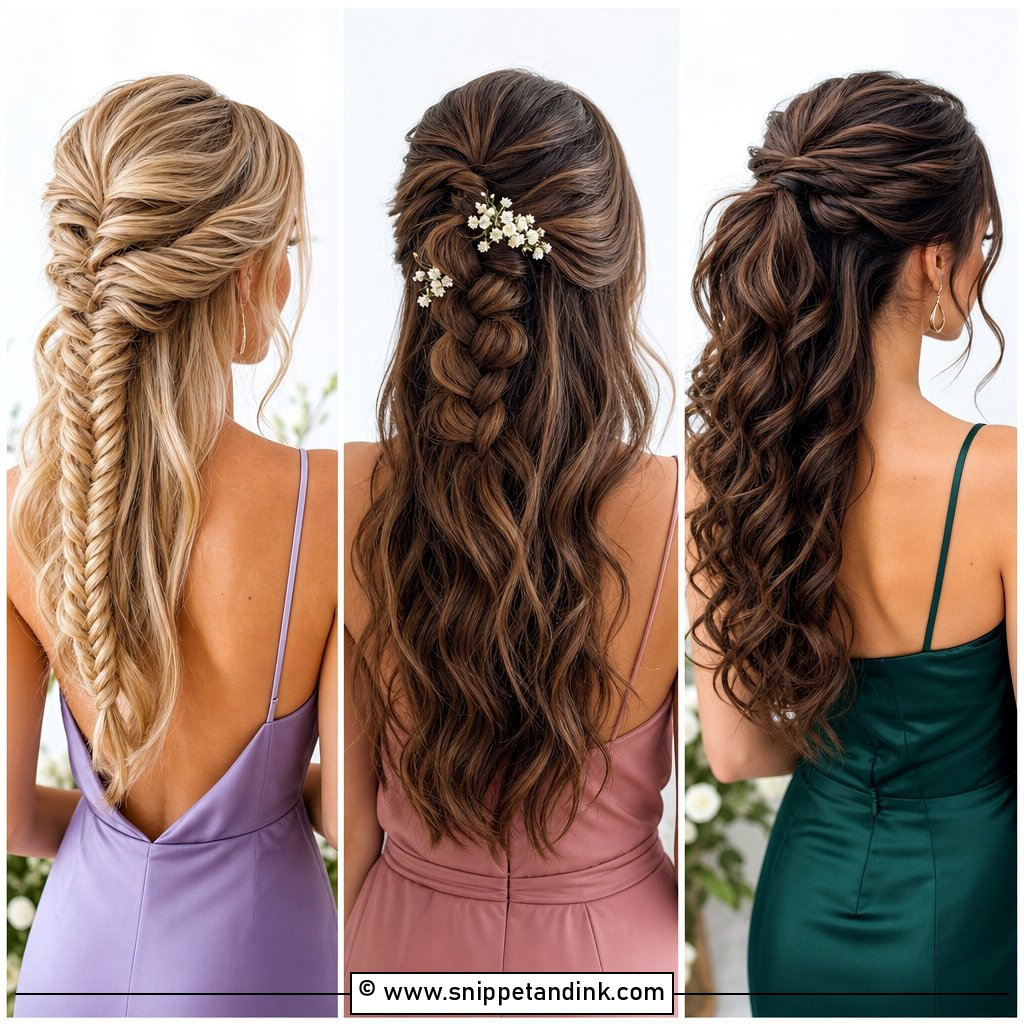
Braiding the ponytail is my answer for a maid of honour who will be on her feet from the first look until the last song. The braid can start at the crown, along one side or only in the tail. Fishtail looks softer; a three-strand reads cleaner. I tug the edges of each section outward to make it look fuller, then mist the braid so the pulled pieces don’t collapse. Highlights show up well in the weave. I’d skip decorative pins unless they match the bridesmaid accessories.
16. Maid Of Honour Crown Braid
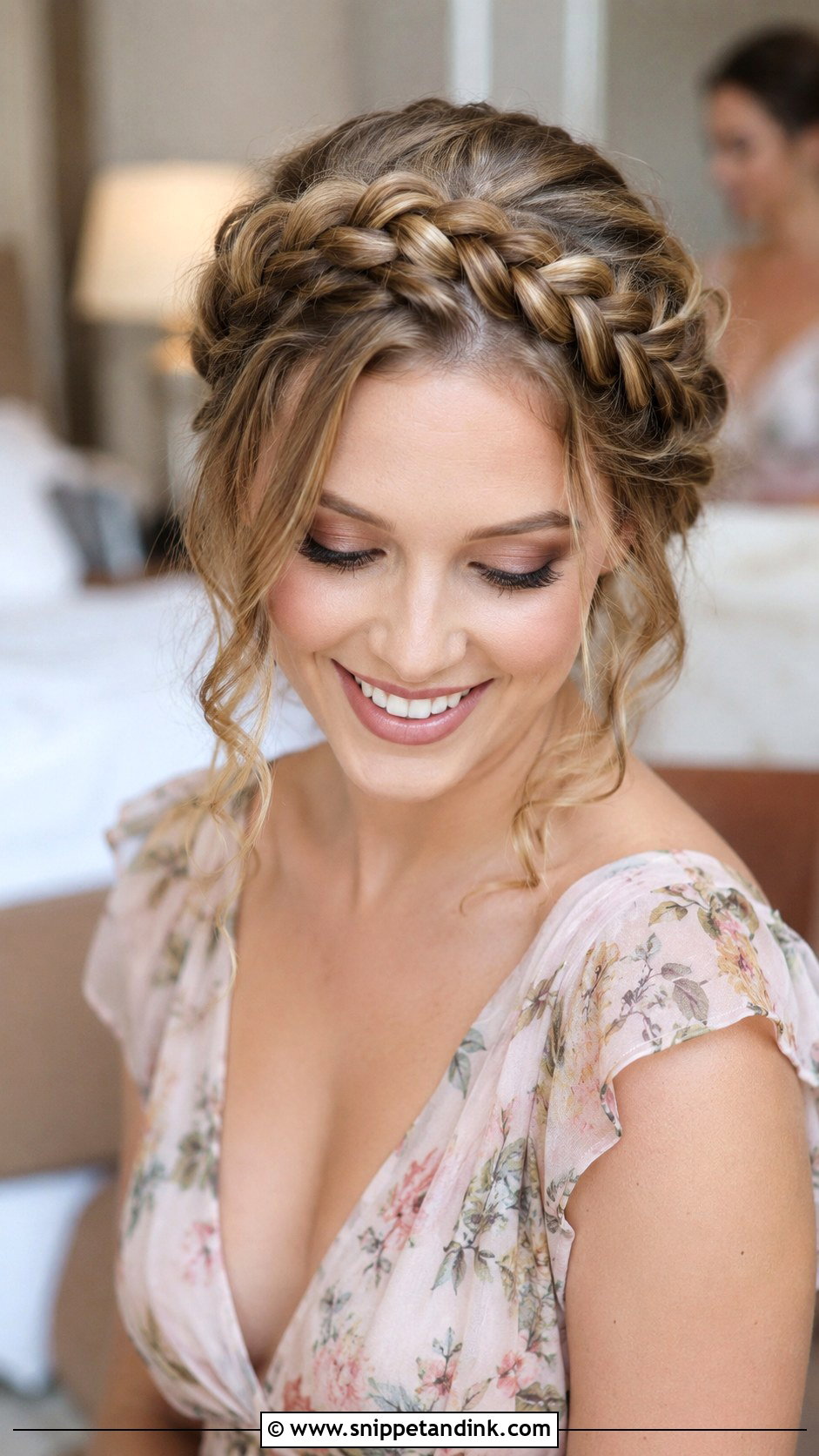
A crown braid keeps every front section locked down, which is useful when you’re leaning in to fix a veil in the wind. It wraps around the head and blends into a bun or a tucked finish at the back. I start the braid slightly behind the hairline rather than right at it, so it doesn’t sit on the forehead like a headband. Layered hair needs pins along the braid where shorter pieces want to escape. Dimensional colour catches the light in every twist, and a garden or outdoor ceremony suits it.
17. Maid Of Honour Fishtail Braid
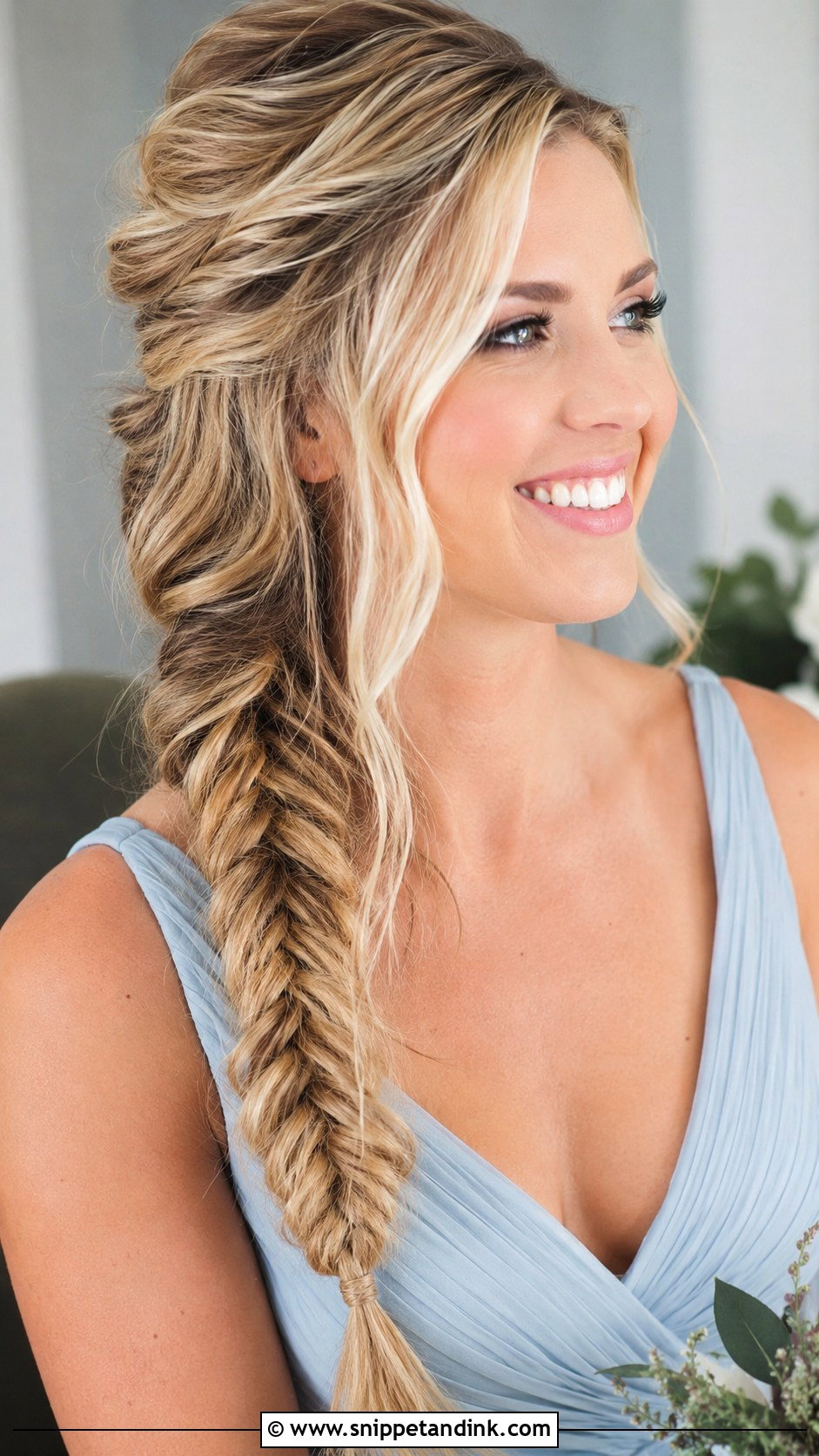
Fishtails take longer than three-strand braids but give a finer, more detailed weave. It works down the back, over one shoulder or built into a half up style. Long hair, thick hair or extensions make it full enough to look intentional; on fine hair it can look thin unless I pancake the braid out after tying it. I keep the top smooth or lightly waved so the braid is the focus. Boho, coastal and garden weddings suit it.
18. Maid Of Honour Side Braid
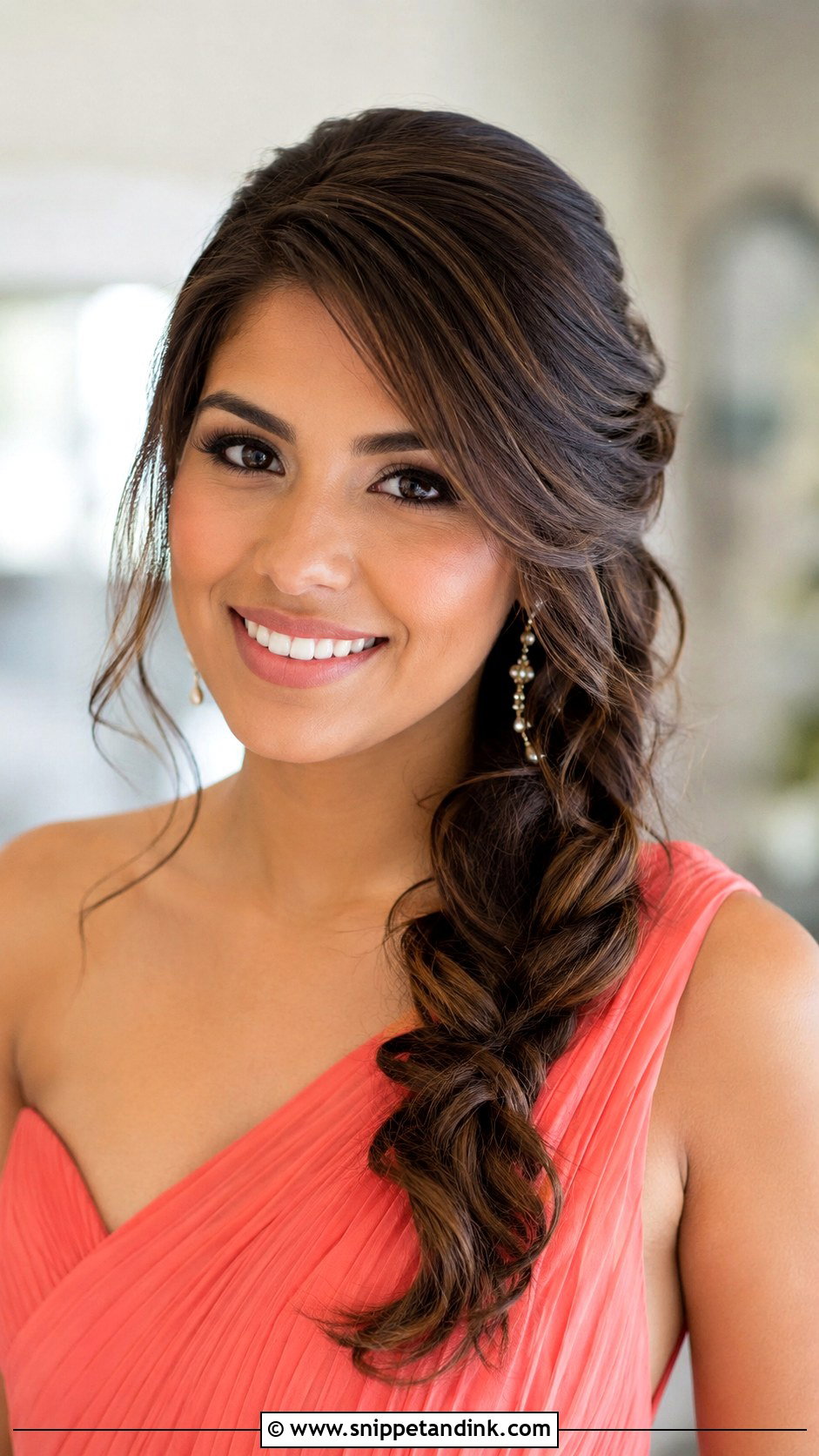
Side braids sit right in the front-facing photos, which is where a maid of honour spends a lot of the day. Long hair and layered medium hair can both manage it, though layers shorter than the braid’s starting point have to be pinned in underneath. I always build volume at the crown first, because a braid pulled to one side with a flat top looks deflated from the camera’s angle. It is a sensible choice for heat because nothing sits on the neck.
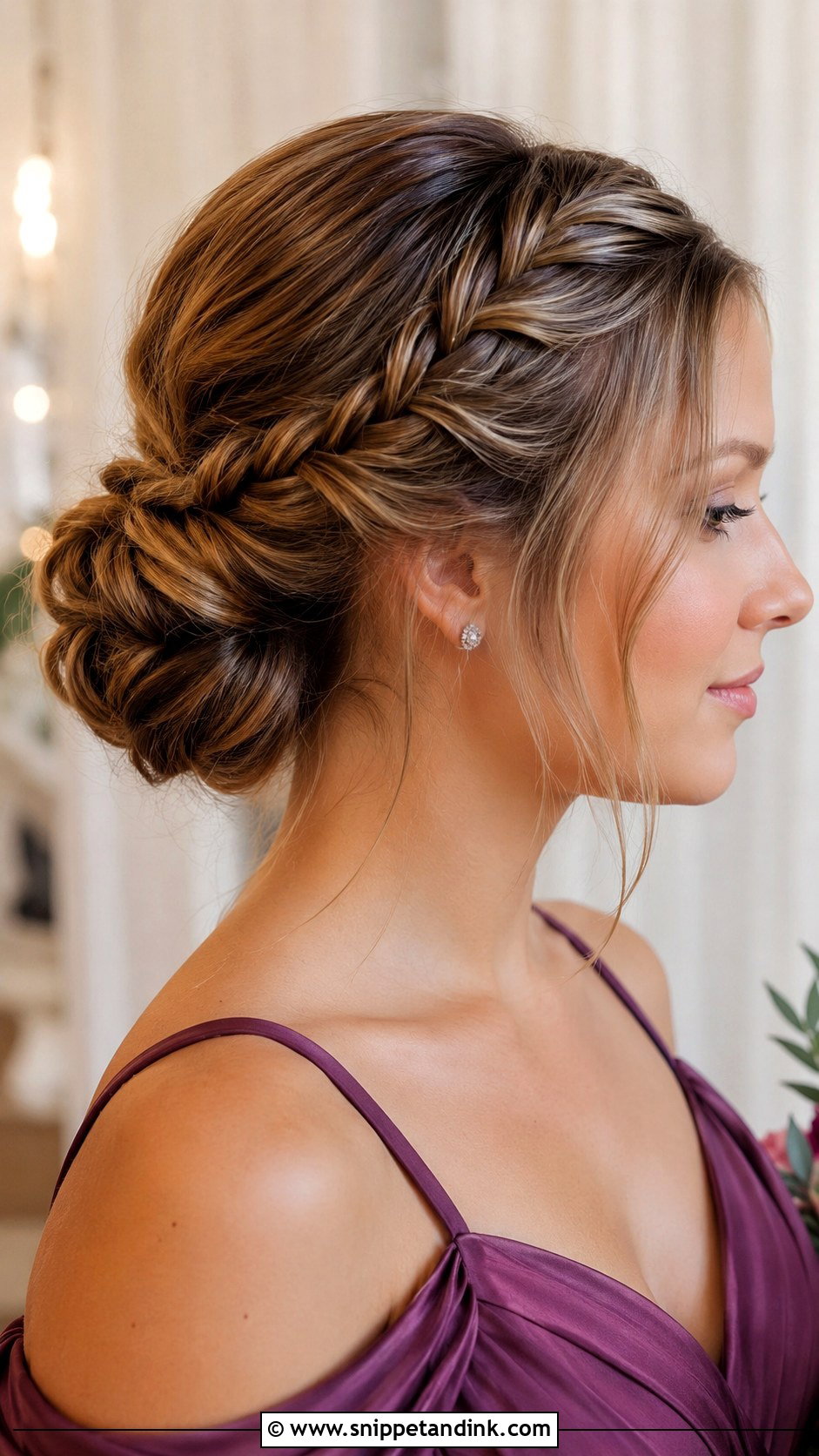
19. Maid Of Honour Braided Bun
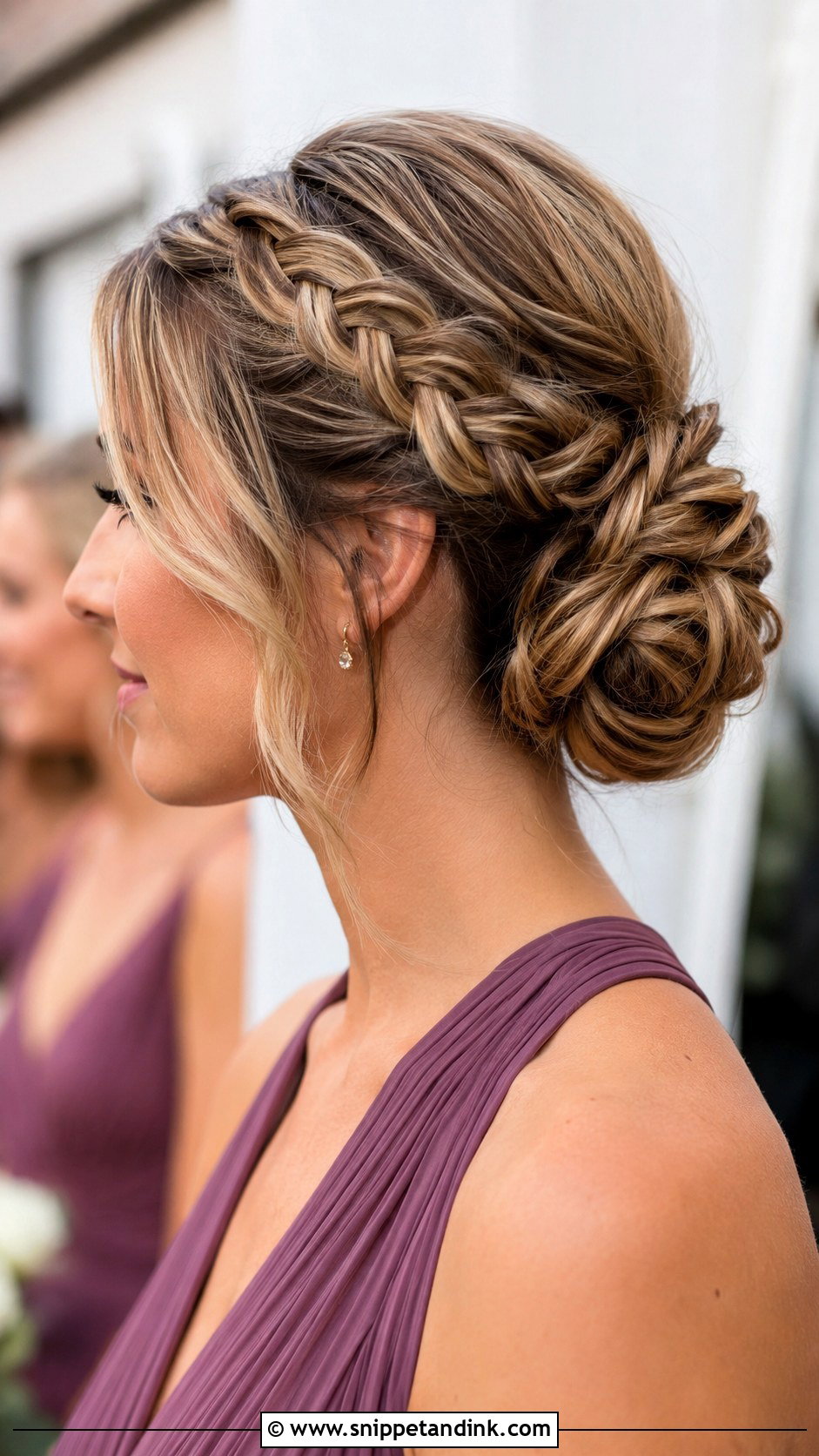
Adding a braid to a bun gives a plain updo some texture without making it fussy. The braid can wrap the bun, feed into it or sit across the crown before pinning. It’s very secure, and I’d use it for a long religious ceremony or a reception with a lot of dancing. Loosen the braid for a softer result, or keep the part sharp and the bun smooth for a formal room. Balayage and multi-tonal colour show especially well in the plaits.
20. Maid Of Honour Curly Updo
With a curly updo, I don’t fight the curl pattern; I use it. The curls are gathered loosely at the crown or pinned low into a soft bun, and the volume comes from the curls themselves rather than from teasing. Prep makes or breaks it. Well-hydrated curls styled with a cream or mousse hold their shape, while dry curls frizz into a cloud by evening. I leave a few curls at the face and use pins that match your hair colour, since gold pins vanish in blonde curls but show up in dark coils.
21. Maid Of Honour Curly Half Up
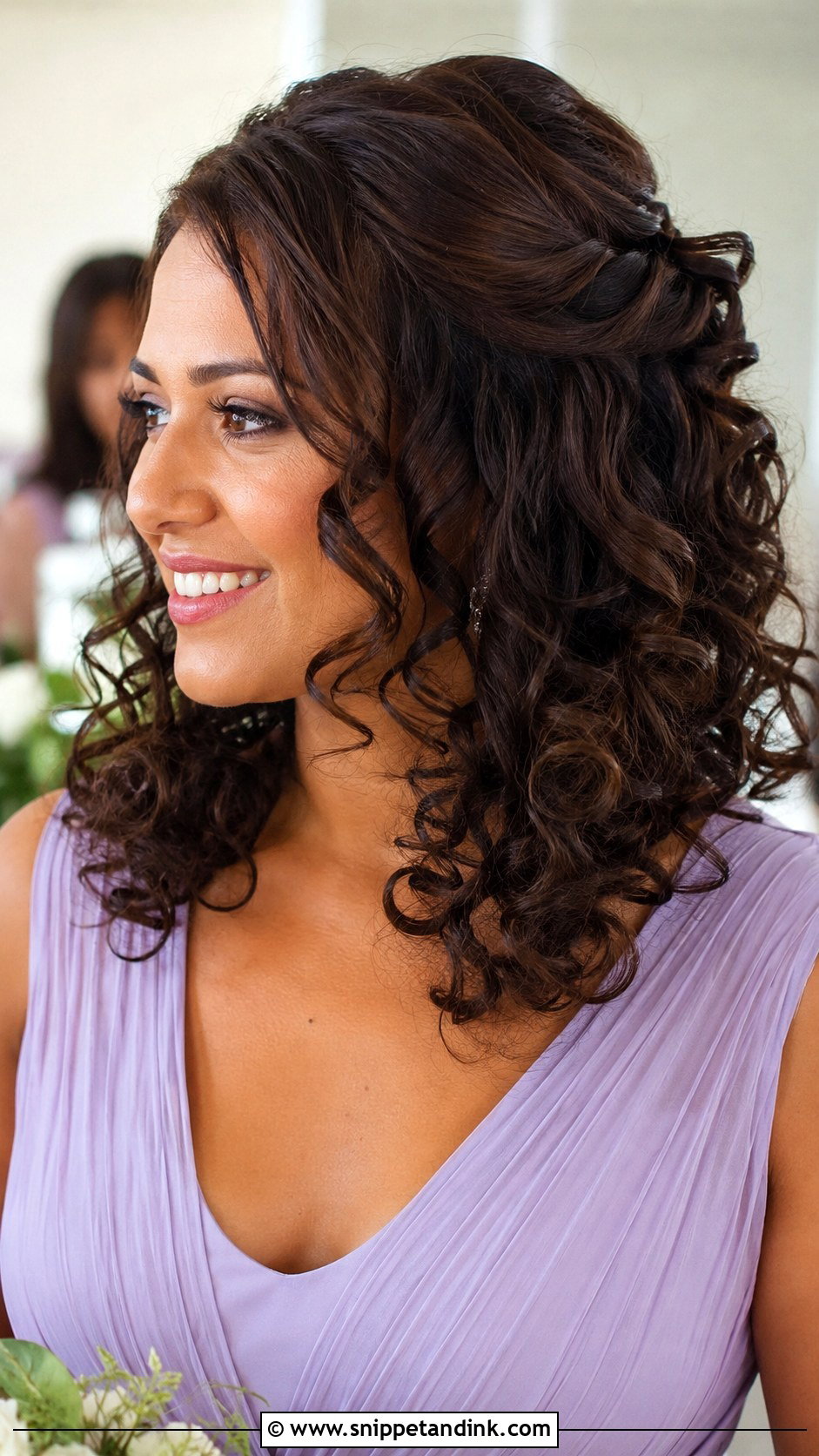
Pinning only the top section with a small comb or twist leaves curls free on the shoulders while keeping the front secure. It gives height at the crown without flattening the curls’ volume. It works for natural curls, heat-styled curls and curly extensions, but heat-styled curls drop faster in humid weather, so I’d suggest it more readily if your curls are your own. A frizz-reducing cream applied while the hair is still damp keeps the definition. Daytime and outdoor weddings suit it best.
22. Maid Of Honour Natural Hair Updo
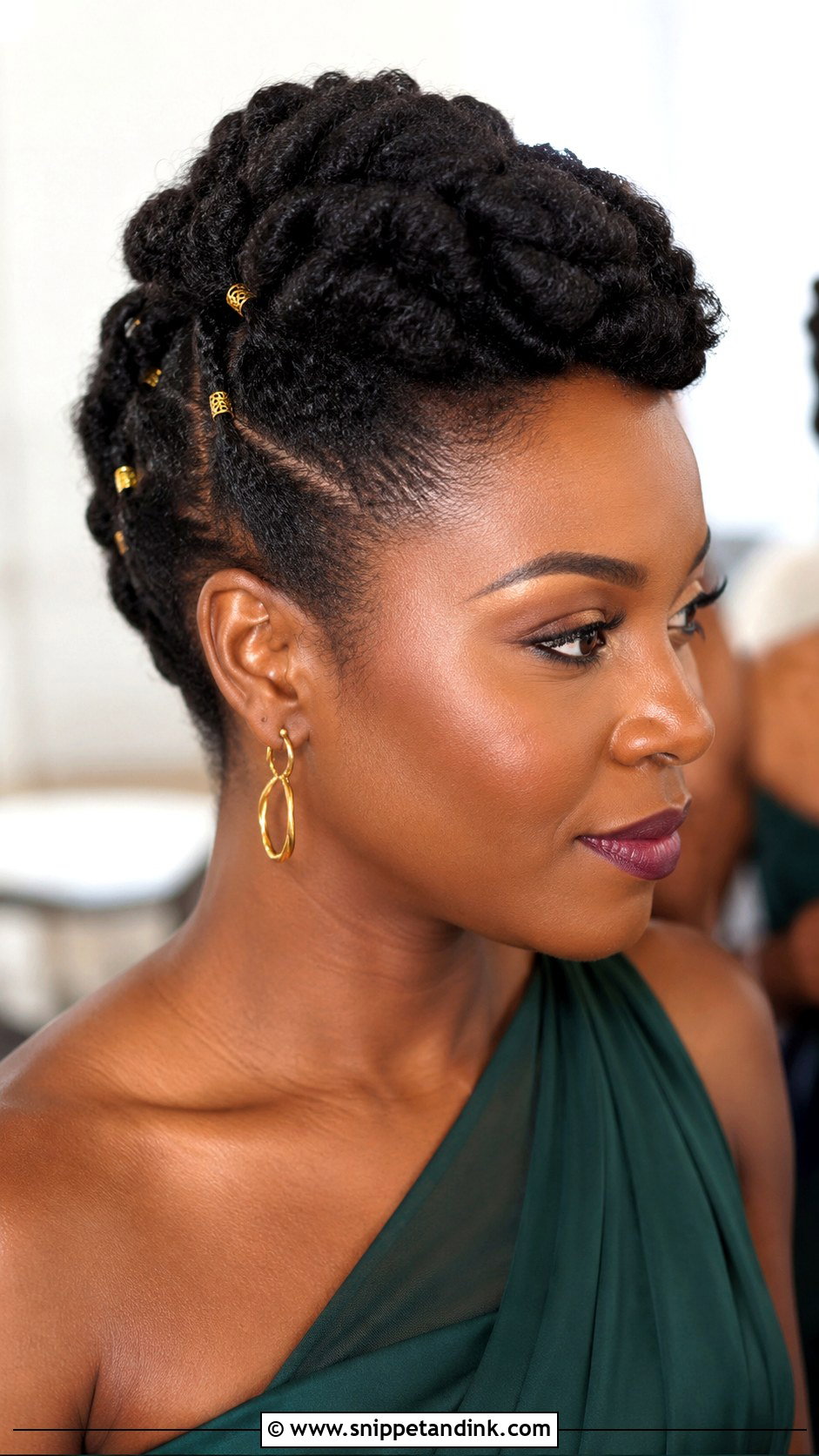
A natural hair updo can be protective as well as polished: a puff, flat twists, pinned coils, a sculpted bun or a braided base. Which one I suggest depends on length, density and how much tension your edges tolerate. For a twisted or braided base, I’d prefer the hair be done a day or two ahead so the scalp isn’t tender during the photos. Moisture goes in first, before any styling, and I finish with a light oil rather than heavy gel so the texture still looks soft. Decorative pins or cuffs can go in if the wedding look allows.
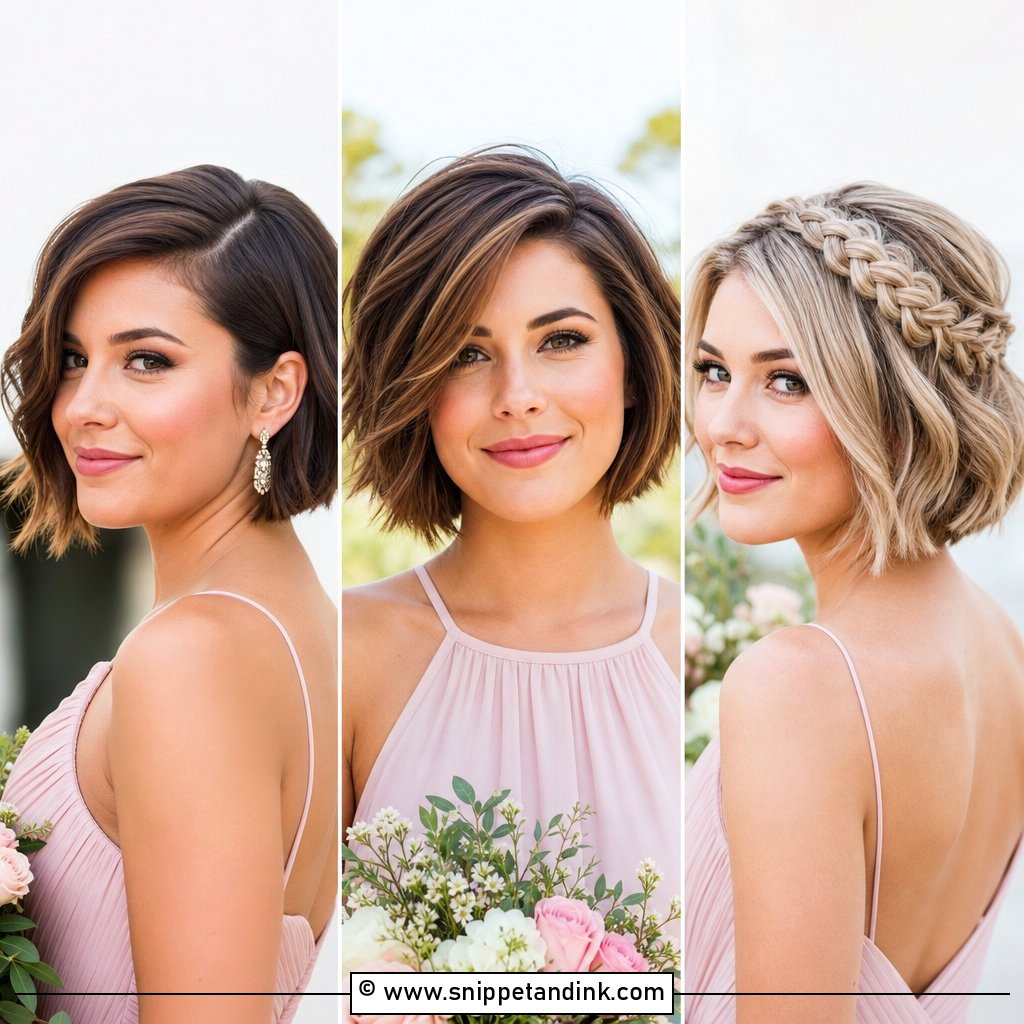
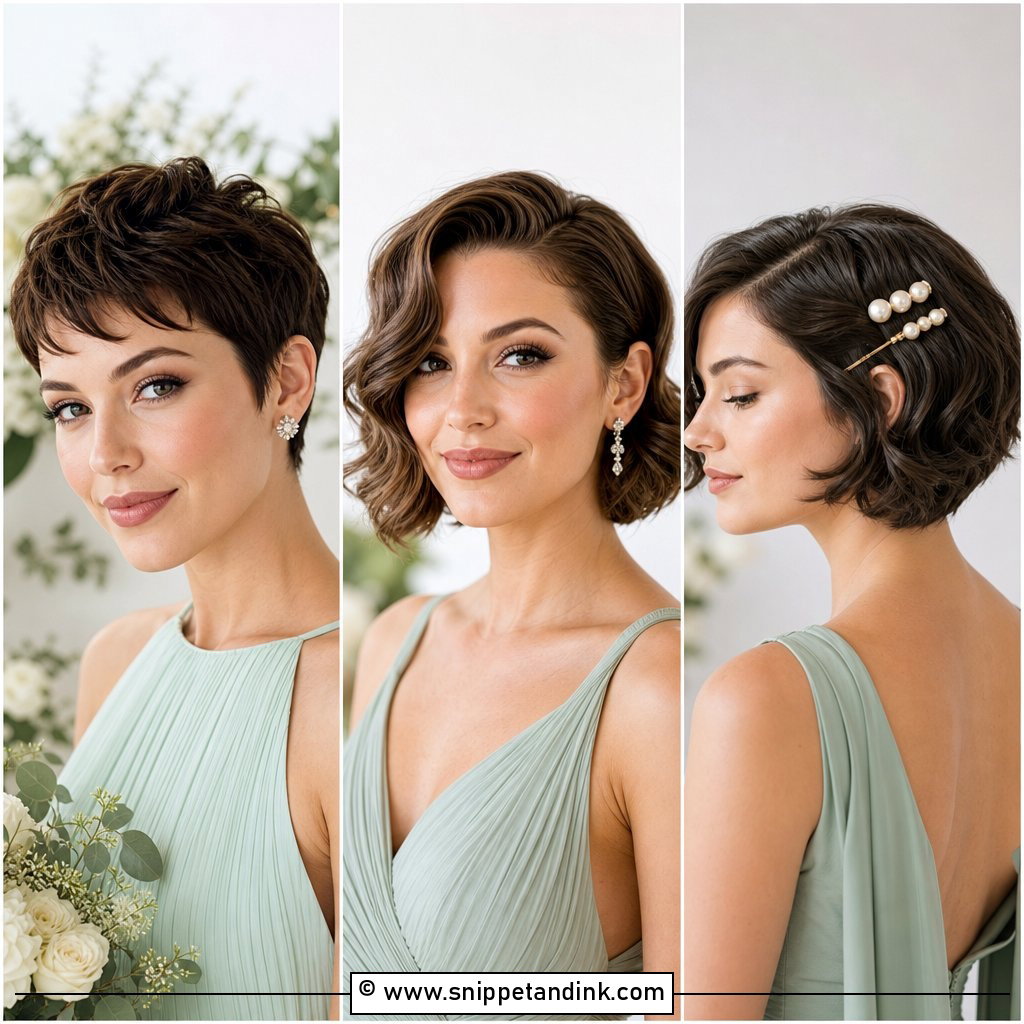
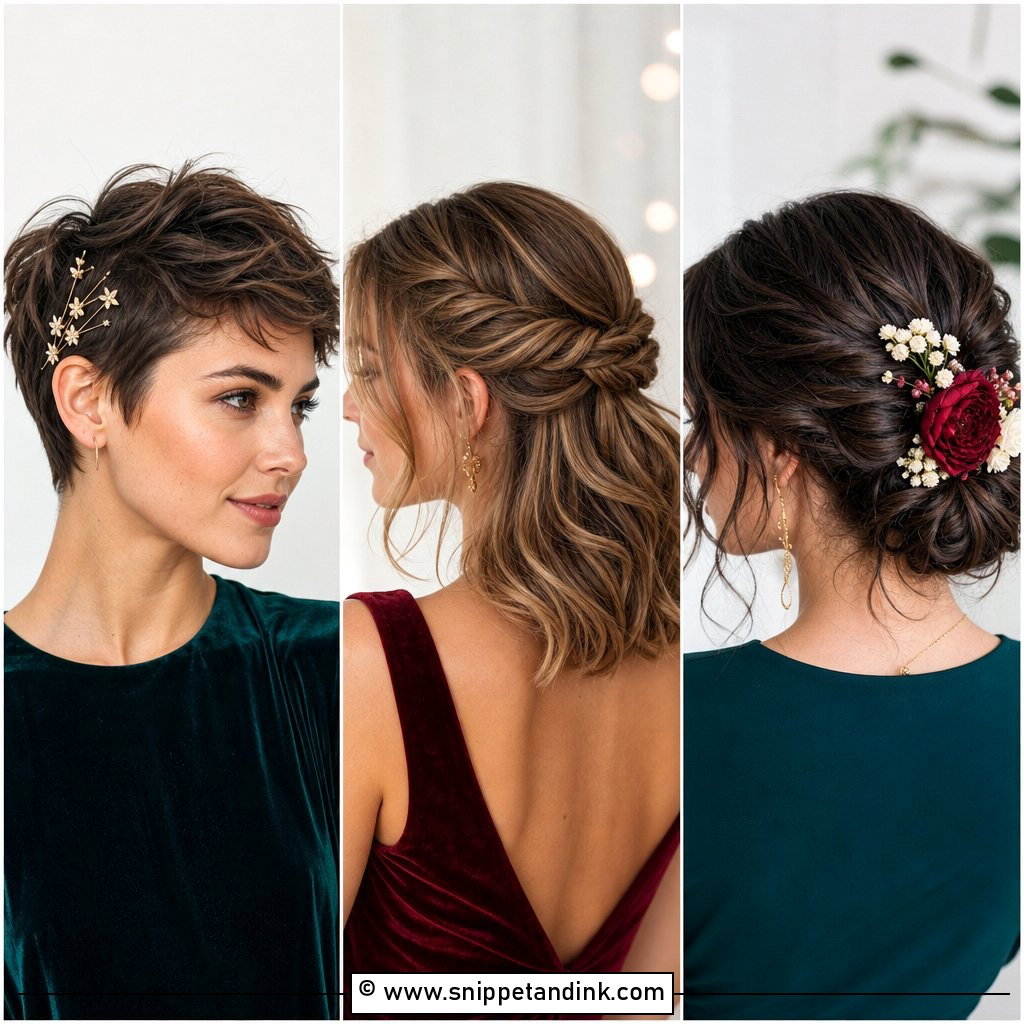
23. Maid Of Honour Short Bob Waves
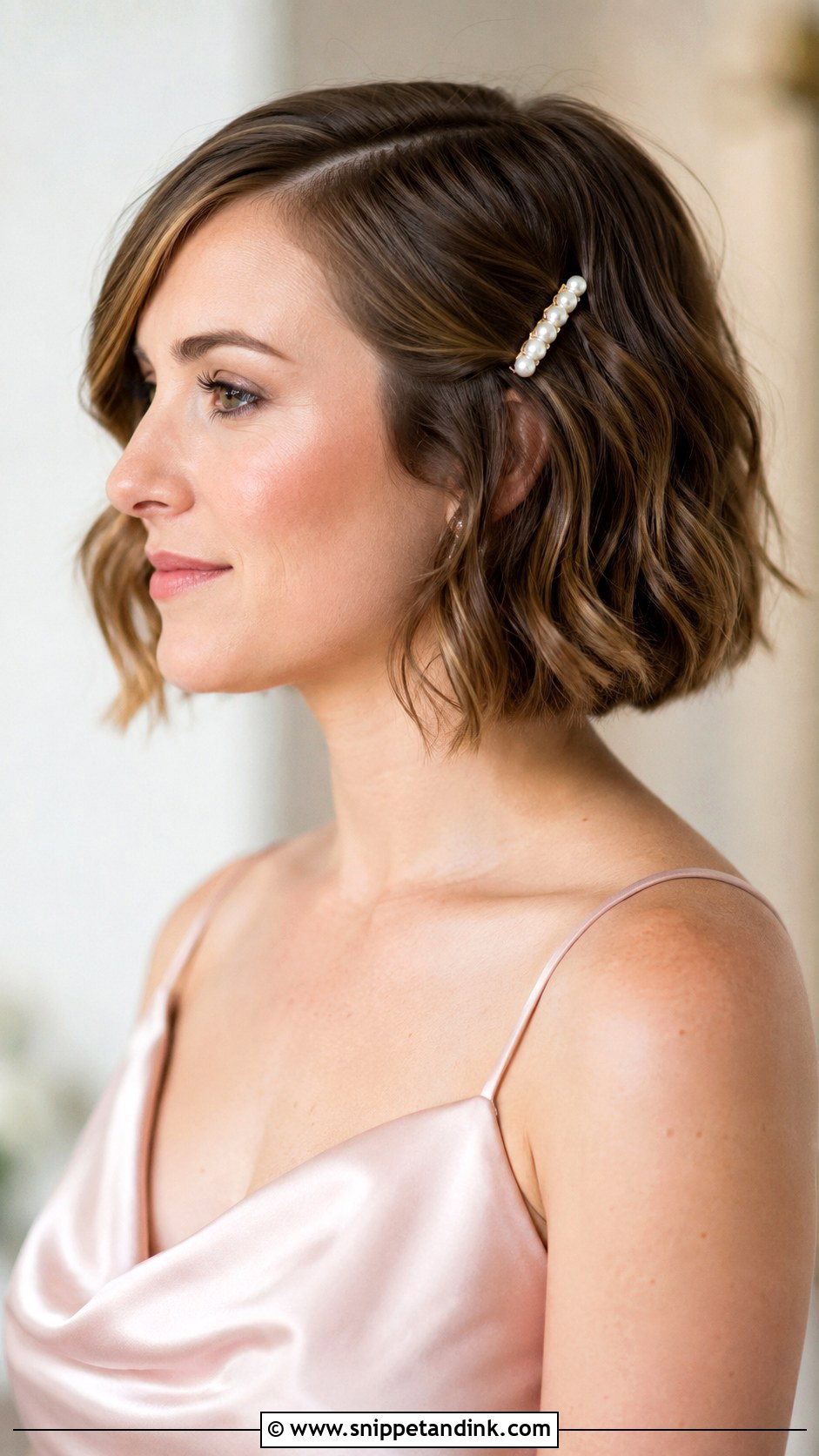
Short bob waves look just as formal as long hair when they’re shaped properly. I use a flat iron rather than a curling wand on a chin or shoulder length cut, twisting it through the mid-lengths to make soft bends and leaving the last inch straight so the ends don’t flip. Front pieces get tucked behind the ear or pinned at the temple with a barrette. A side part looks more glamorous; centre feels modern. Light texture spray, not heavy hairspray, keeps it moving.
24. Maid Of Honour Pixie Cut
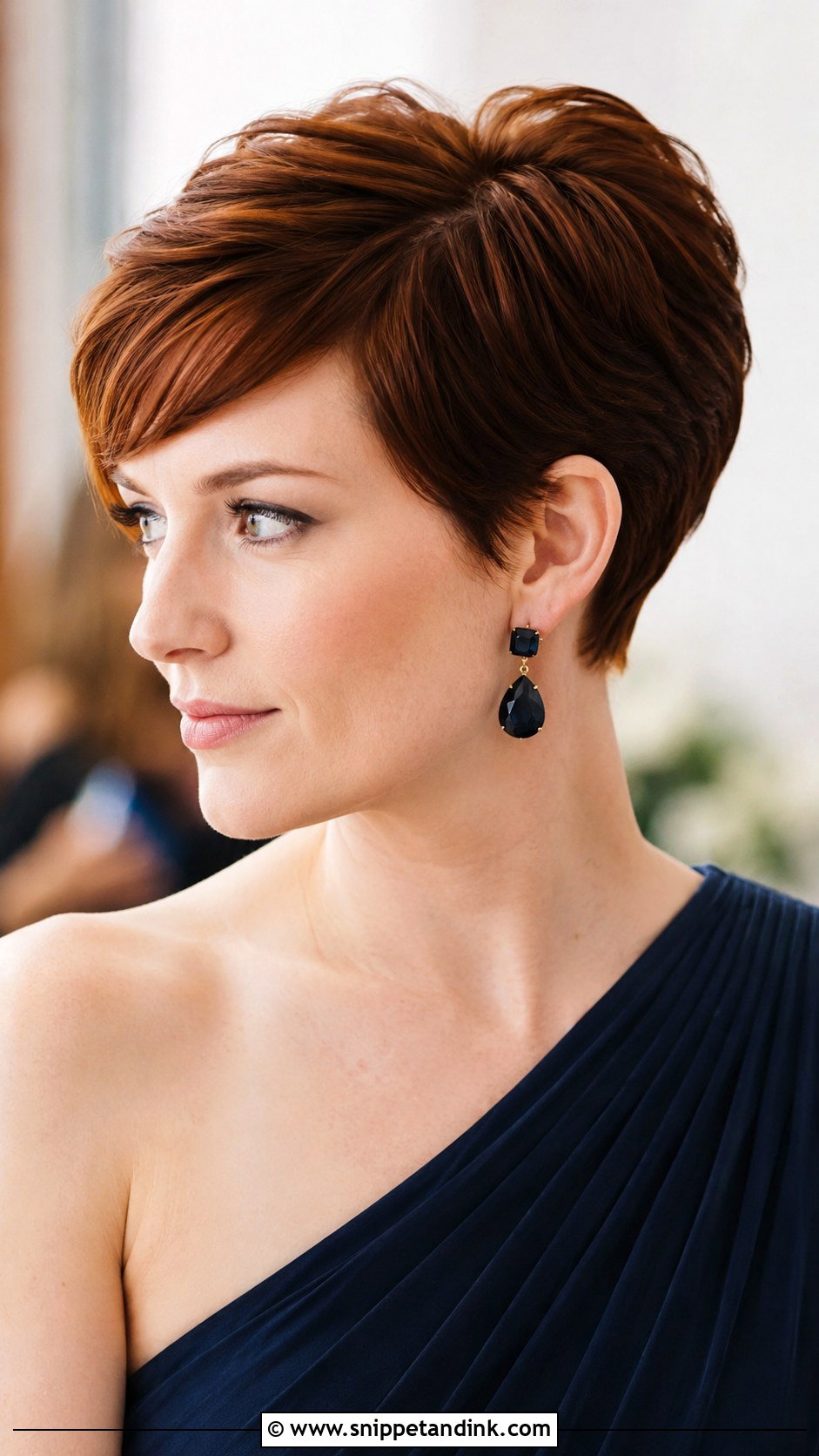
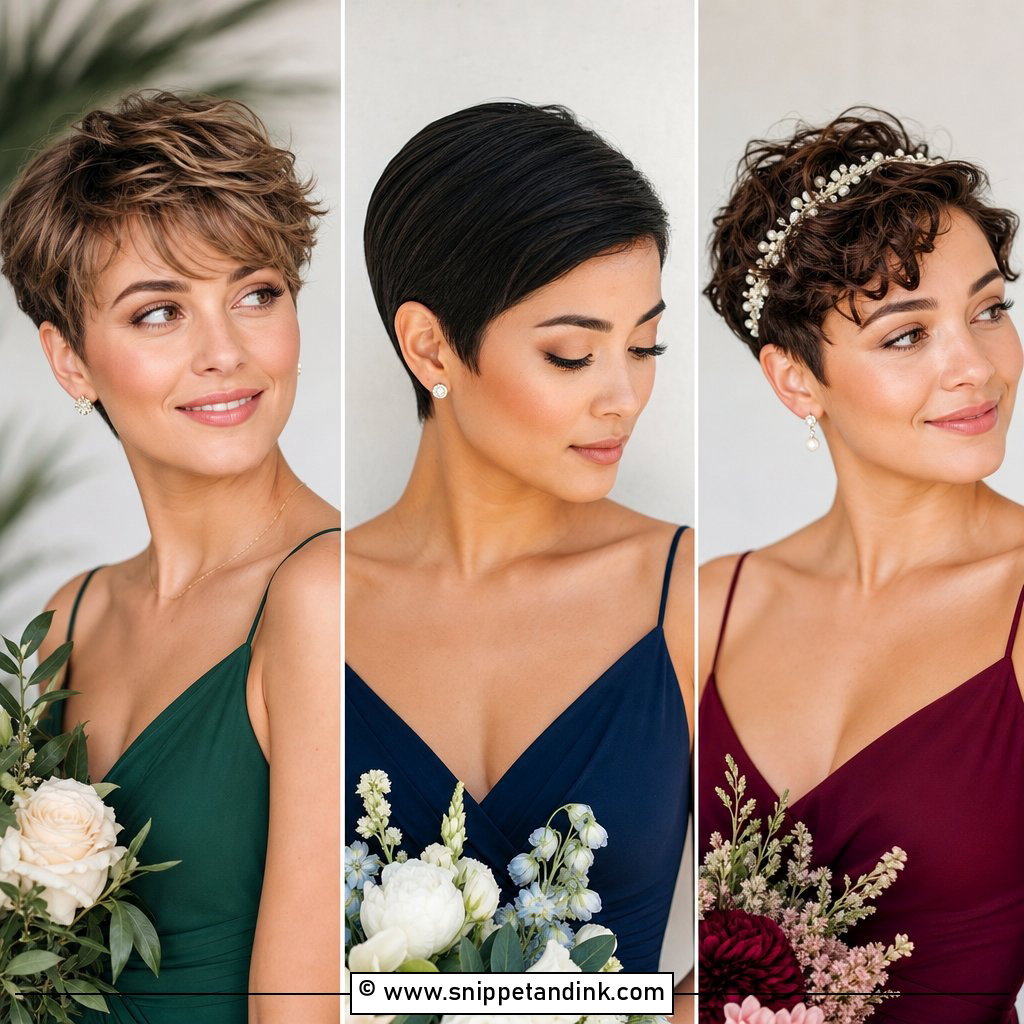
I enjoy styling a pixie for a wedding because everything rests on detail: clean edges, shine and a deliberate direction for each piece. It can be smoothed back, softly waved, side parted or lifted at the crown. Book a trim about a week before the wedding so the neckline has grown in slightly and doesn’t look freshly cut. The face is fully on show, so statement earrings and good makeup carry a lot of the look. A tiny embellished clip suits a formal day. And in hot weather you’ll be the most comfortable person in the bridal party.
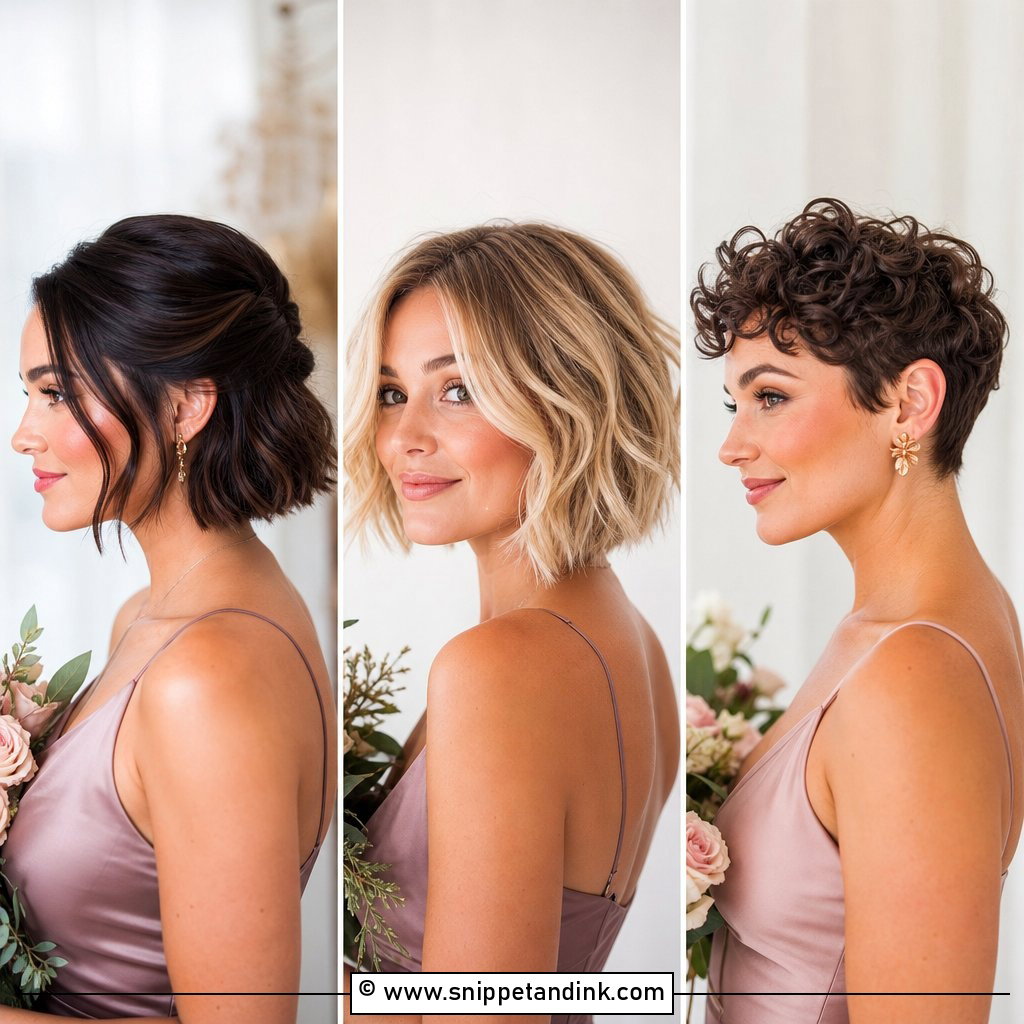
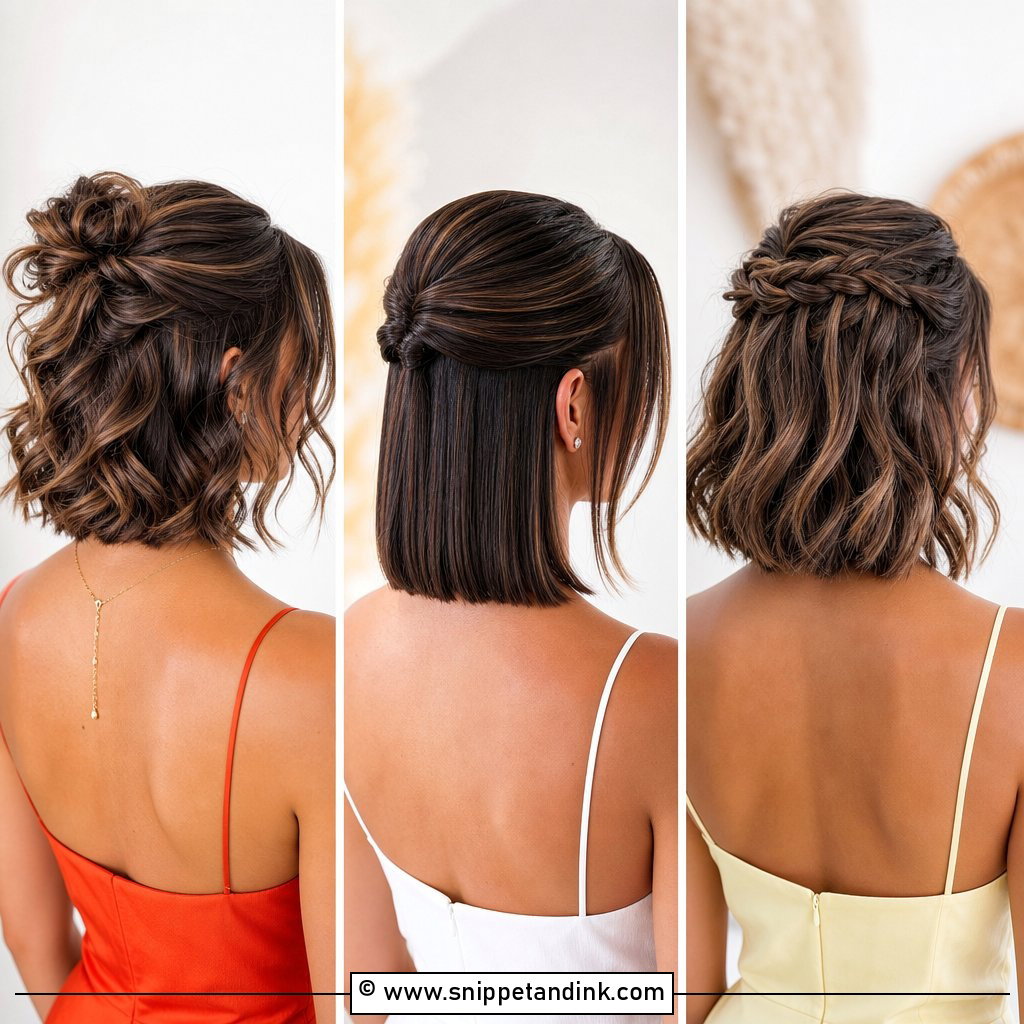
25. Maid Of Honour Straight Hair
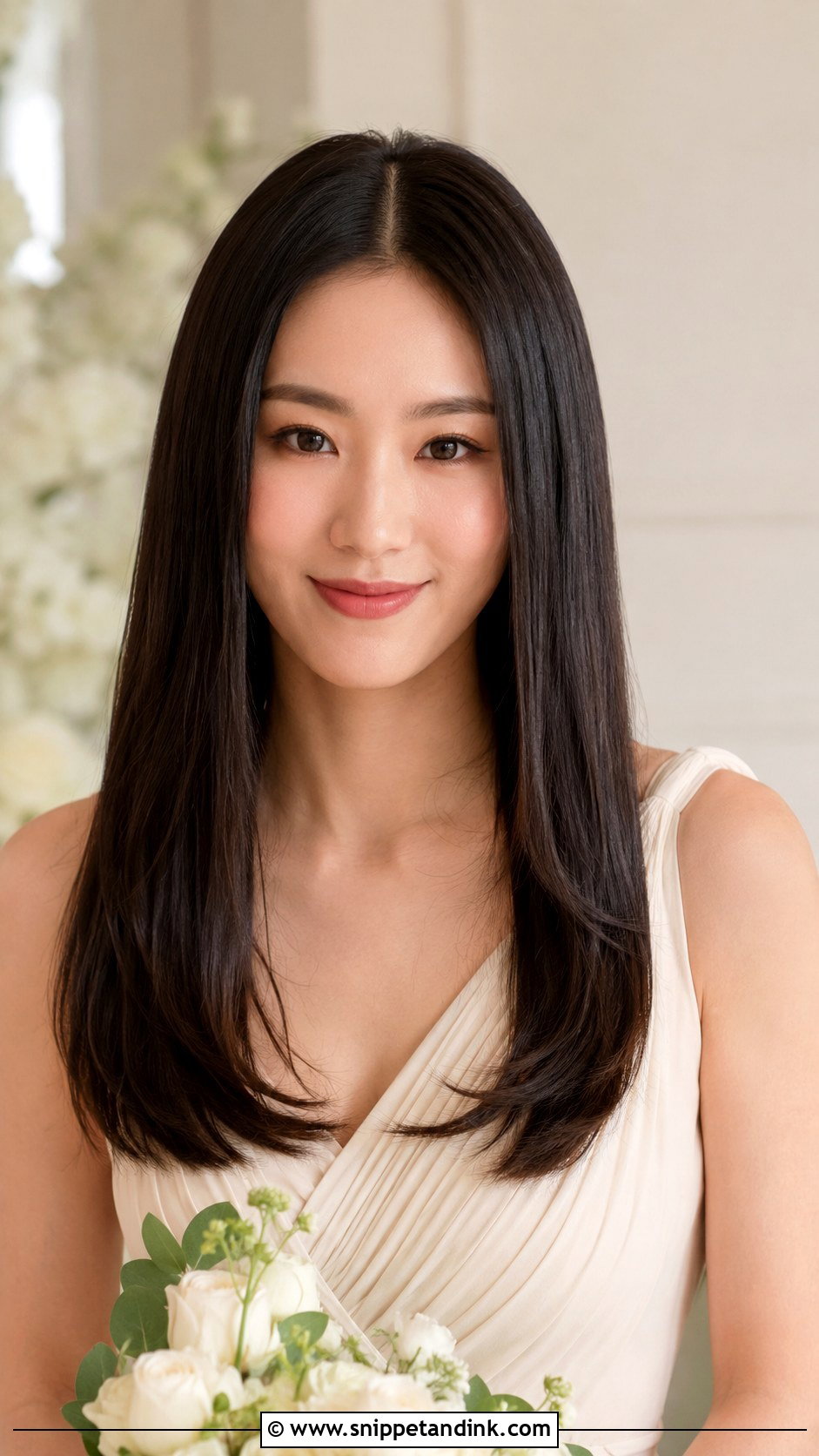
Straight hair needs the most precise finish of any style here, because there’s nothing to hide behind. I blow it dry in sections with a round brush to bevel the ends slightly, then run a flat iron only where it’s needed. Fine to medium hair, blunt cuts and glossy dark or blonde colour suit it best. A heat protectant beforehand and a drop of serum afterwards control flyaways. Wear it down with a centre part, tucked behind the ears or with a half up detail; it pairs naturally with a minimalist dress.
Bustling a Train, Giving a Speech and Other Hair Hazards of the Role
The maid of honour does things no guest does, and each one stresses a particular part of the style. I test for these at the trial by having her bend, turn and talk, not just sit still for a photo.
- Bustling the dress means bending forward, sometimes on your knees, for several minutes. Half up and loose styles fall into your face, so pin the front sections firmly back or choose an updo.
- The speech puts a microphone and a spotlight right beside your cheek. Long side-swept curls get caught against the mic, so have them pinned behind the shoulder on that side.
- Holding the bride’s bouquet as well as your own keeps both hands busy at the altar. Nothing should need tucking behind an ear during the vows.
- Constant hugging presses on the back of the head. Buns placed low at the nape survive it better than high ones, which get pushed flat against shoulders.
The Small Kit You Carry Is Partly for the Bride
Stylists rarely stay for the reception, which leaves the maid of honour as the person everyone turns to when a pin slips. I hand mine a few things before I leave: bobby pins matching both her colour and the bride’s, a mini hairspray, a few clear elastics and a small comb with a tail. If a curl falls, twist it around a finger, pin it flat against the head for ten minutes and release it. If a bun starts to sag, push a long pin in from the side and turn it towards the centre of the bun to catch both the bun and the base underneath.
One Notch Below the Bride, and Comfortable All Day
Any of these styles can work as long as it suits your hair, holds through the handling the role brings and sits comfortably beside the bride’s look. Low buns, chignons, waves, ponytails, braids, curly updos and short cuts all have a place. You’ll be in most of the key photos, so the frame around your face matters. Bring reference pictures to your trial, tell your stylist honestly what you can tolerate for twelve hours, and run the final choice past the bride. If you feel like yourself in the mirror, you’ve got it right.
You'll Like These Ideas:


Leave a Reply