
Most brides I dress start by looking for bridesmaid dress inspiration and end up realising the real job is getting five or six different bodies into something that reads as one group. That no longer means one identical gown. A shared colour, a shared fabric or a shared hem length is usually enough to tie different silhouettes together, and it lets each woman pick a bodice she can actually breathe in. Below are twenty complete outfits, shoes and jewellery included, with the fit and fabric notes I’d give at a fitting. Read them with your season, venue and dress code in mind, because a dress that works in a June garden can be miserable in a November ballroom.
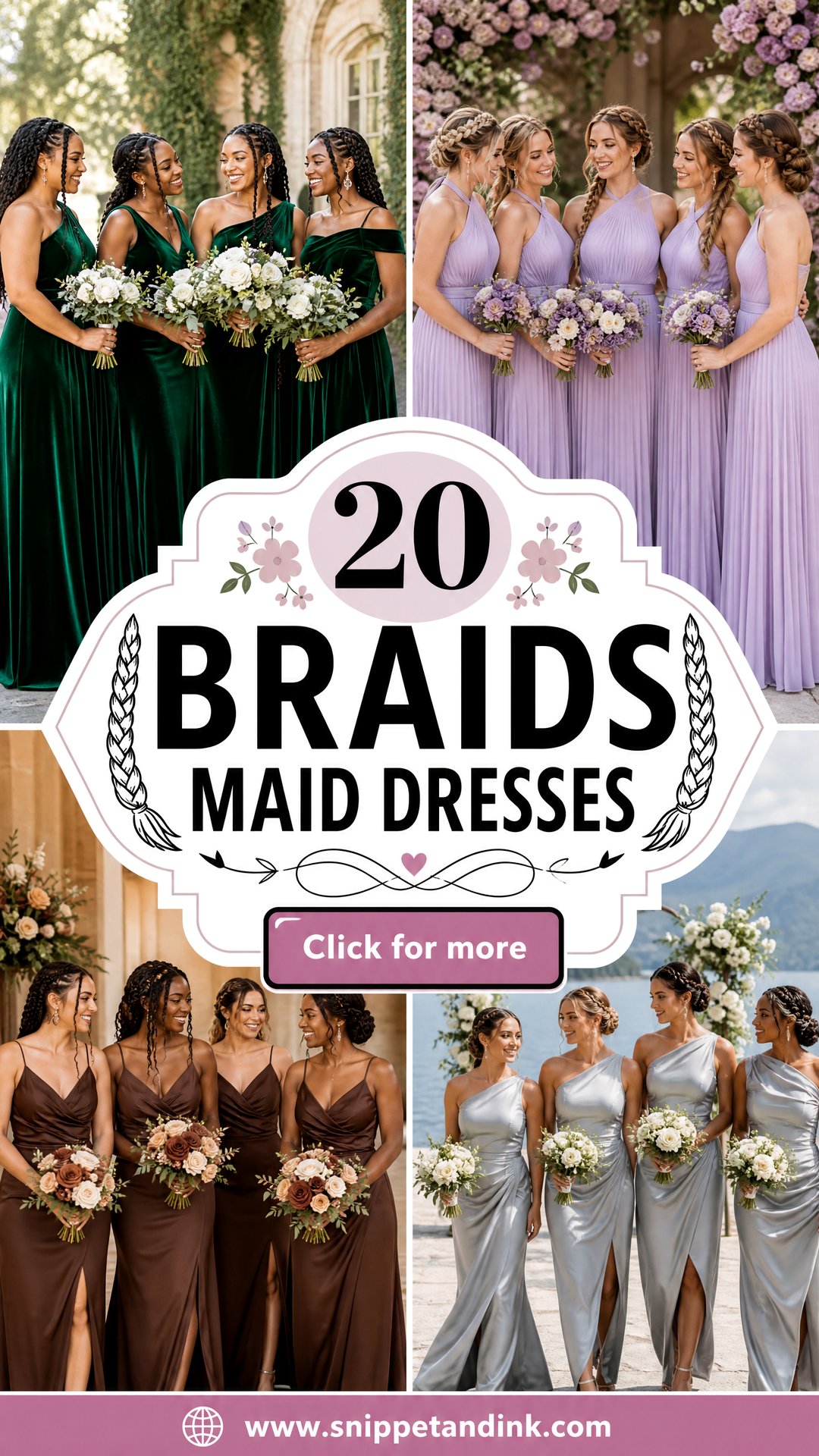
Ordering for Several Different Bodies From One Dress Line
The most common bridesmaid problem I fix isn’t colour. It’s sizing. Bridesmaid lines are usually made to order, and their size charts rarely match high-street sizing, so a woman who wears a 10 in shops may need a 12 or 14. I ask every bridesmaid to be measured properly, bust, natural waist and hips, ideally by a seamstress rather than a friend with a tape. Then we order by the largest of the three measurements and let the tailor take the rest in. Taking in is easy. Letting out often isn’t possible because there’s very little seam allowance.
The timeline I work back from
- Order roughly four to six months before the wedding. Made-to-order production commonly takes several weeks to a few months, and shipping adds more.
- Place every order at the same time, from the same retailer. Dresses cut from different dye lots can differ visibly, even in the same named colour.
- Book alterations for four to six weeks before the date, with a final fitting in the shoes she’ll actually wear.
- Keep one spare swatch. It’s useful later for matching ties, pocket squares and ribbon for bouquets.
For pregnant bridesmaids or anyone whose size may change, I’d order later or choose a wrap or convertible style that adjusts. It saves a stressful second order.
1. Sage Green Chiffon Bridesmaid Dress
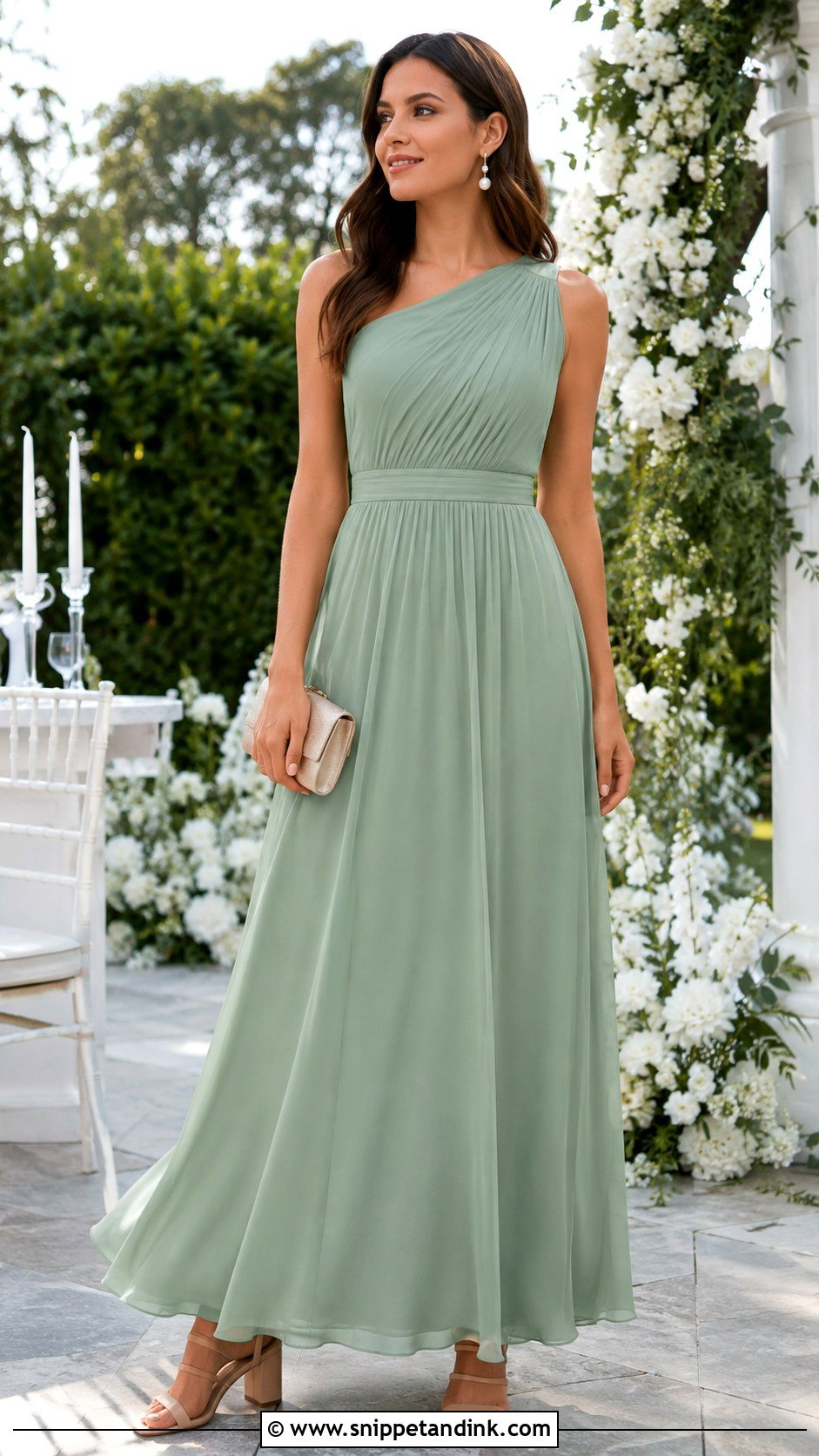
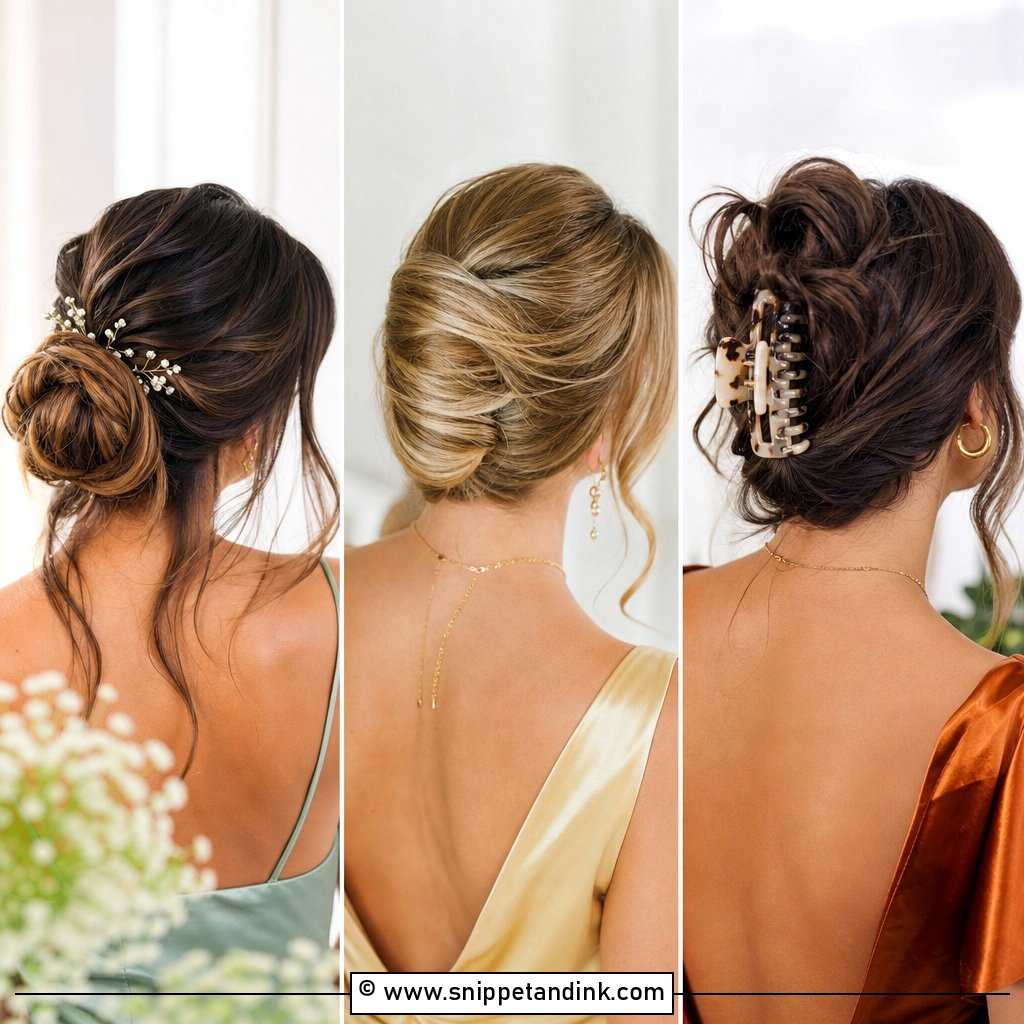
Sage chiffon is the colour I see work across the widest range of skin tones, which is why it suits a mixed bridal party at a garden or outdoor wedding. A floor-length A-line with a defined waist and a lightly gathered skirt moves well and forgives a lot. Nude block heels matter here more than you’d think: thin stilettos sink into lawn within minutes. Add small pearl earrings, a champagne clutch and a fine gold bracelet to warm up the muted green. For anyone who needs support, I go straight to wider straps or a V-neck that takes a normal bra. Keep hair relaxed, a low bun or soft waves, and give her white flowers with plenty of greenery.
2. Dusty Blue Satin Bridesmaid Dress
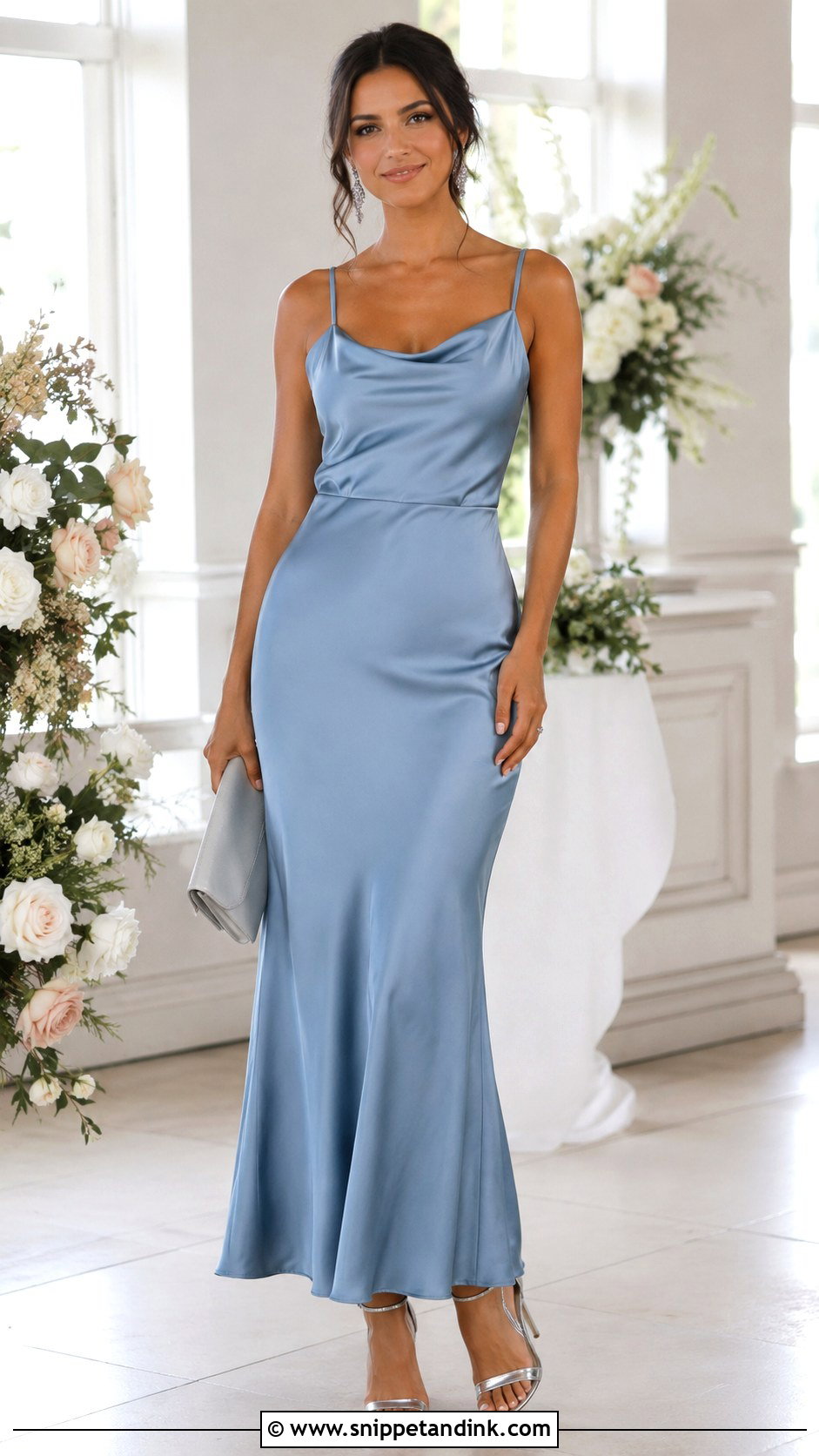
Dusty blue satin sits nicely between casual and formal. A bias-cut skirt gives it that liquid movement, but bias cut also clings, so this is the one I’d steer away from for anyone self-conscious about her stomach or hips. A draped neckline adds interest near the face. Silver ankle-strap heels, crystal studs and a pale grey clutch keep the palette cool. If a slip shape doesn’t give enough support, look for the same satin with wider straps, a higher back or a built-in bodice. Bring a tailored wrap for an evening ceremony, and keep the hair smooth so it doesn’t compete with the sheen of the fabric.
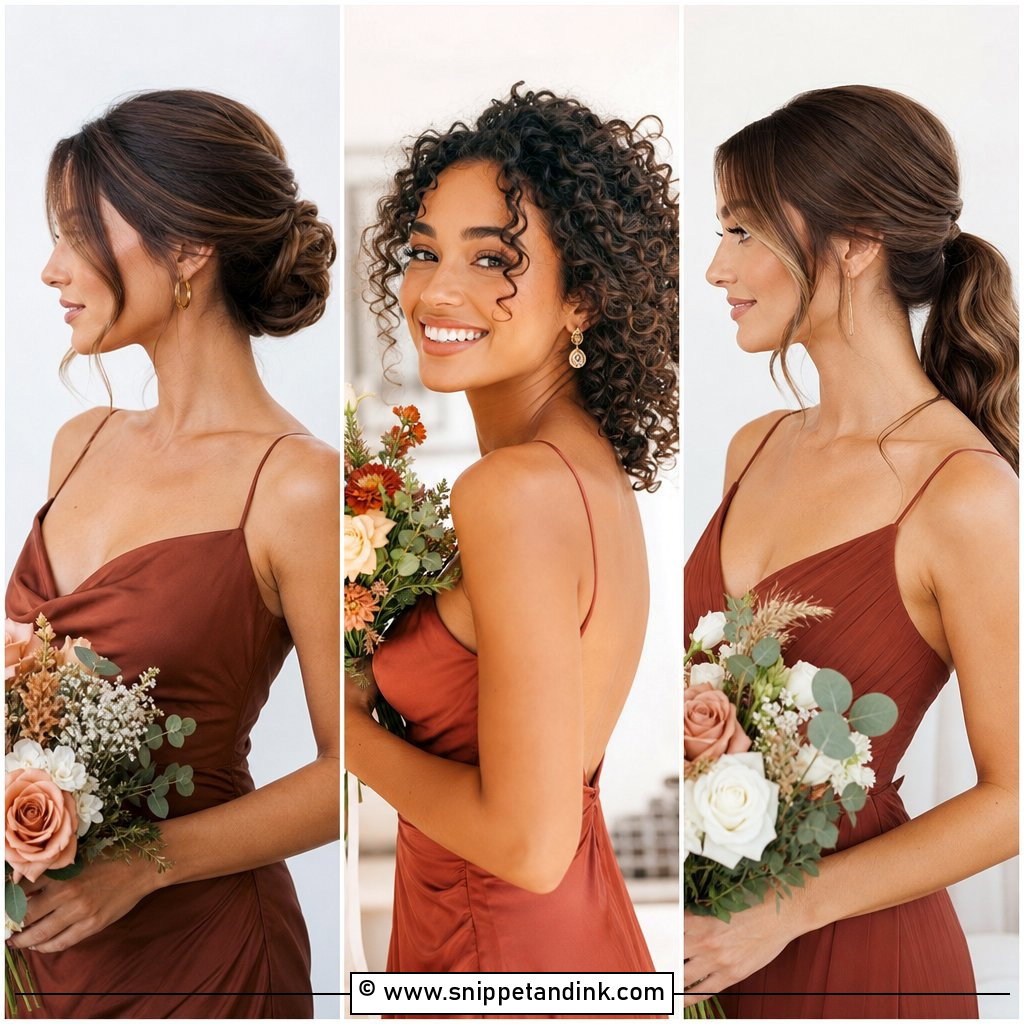
3. Terracotta One-Shoulder Bridesmaid Dress
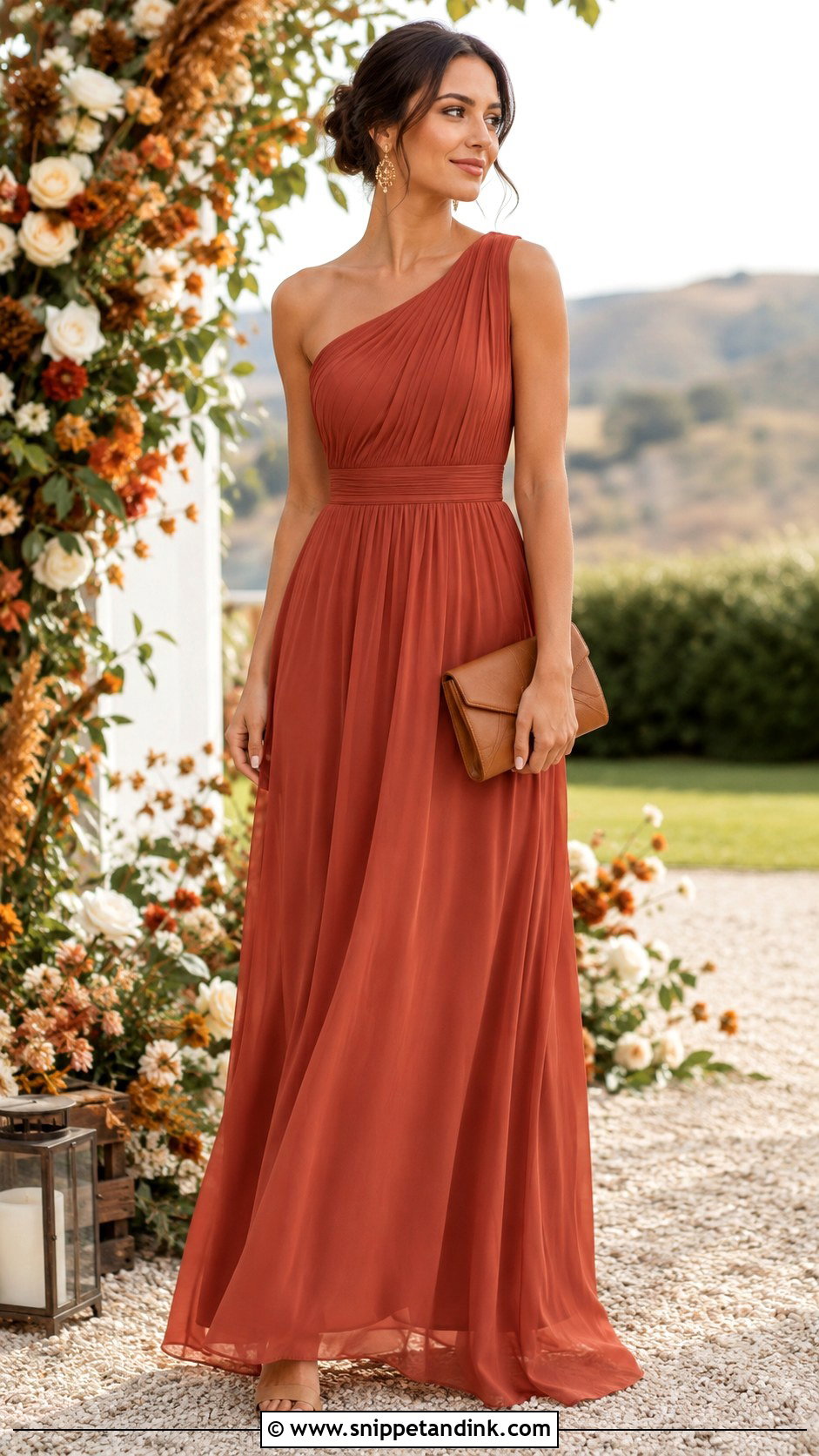
Terracotta warms up an autumn wedding and looks right against wood, stone and dried grasses. The one-shoulder neckline is already the focal point, so I keep everything else quiet: gold drop earrings, tan block heels and a caramel clutch. Hair should go to the opposite shoulder or into a low textured bun. One practical check at the fitting: have her lift both arms, because a single strap can ride up and expose the side of the bra. If the date is early in the season, breathable chiffon or matte crepe is kinder than satin. Cream, peach, rust and green flowers finish it without making the group look too matched.
4. Black Square-Neck Bridesmaid Dress
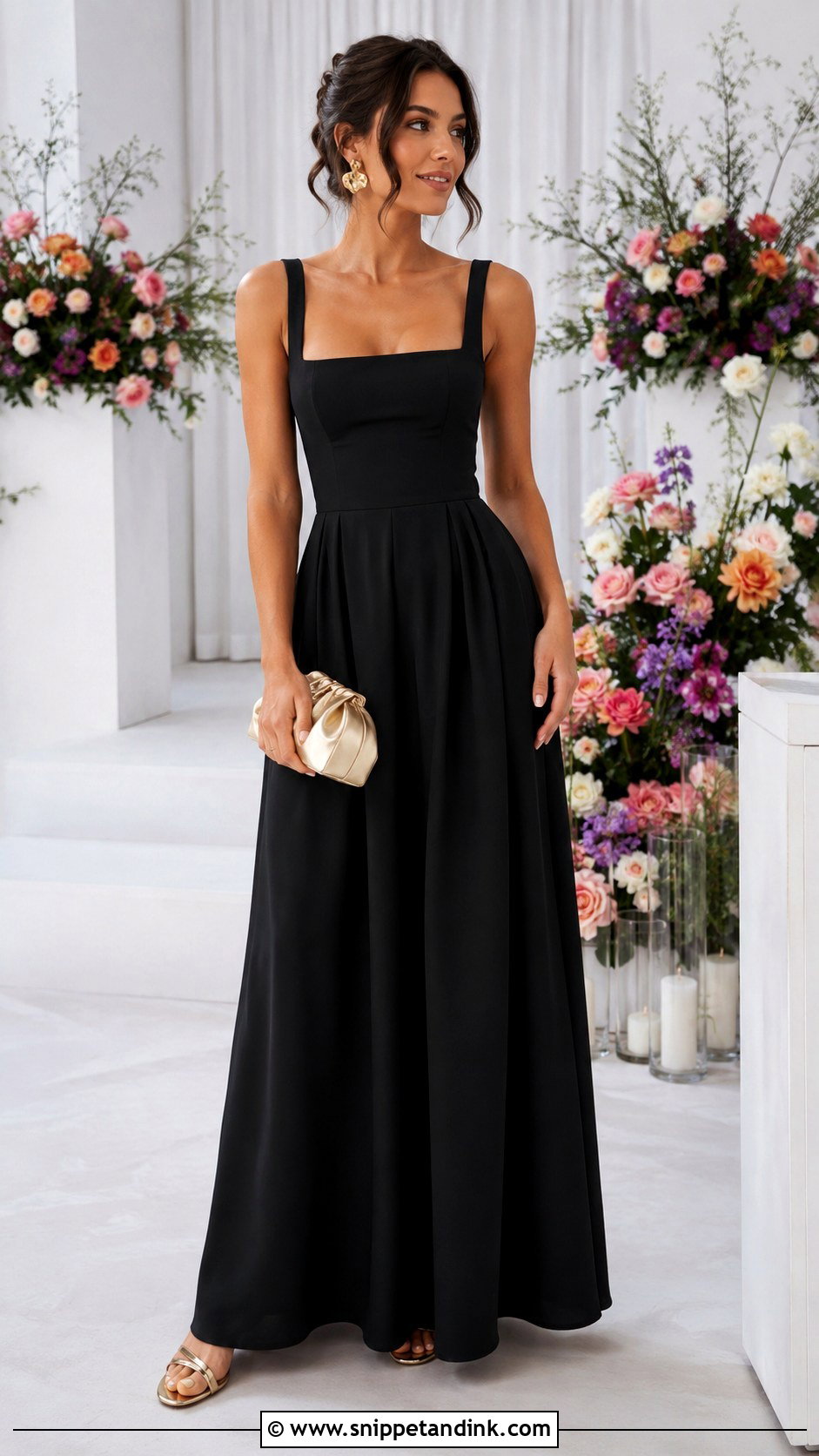
Black can absolutely work for a bridal party, and it’s often the most flattering choice across very different body types. A square neck with supportive straps, a fitted waist and a flowing skirt frames the collarbone and leaves room for statement jewellery. Gold heels, sculptural earrings and a small satin clutch stop it looking severe. The catch is that black varies wildly between brands, some lean brown, some lean blue, and those differences show up in flash photos. If silhouettes differ, keep the same shade, a similar fabric weight, matching shoe colour and one hem length. Bright bouquets keep a daytime version fresh.
5. Navy Off-Shoulder Bridesmaid Dress
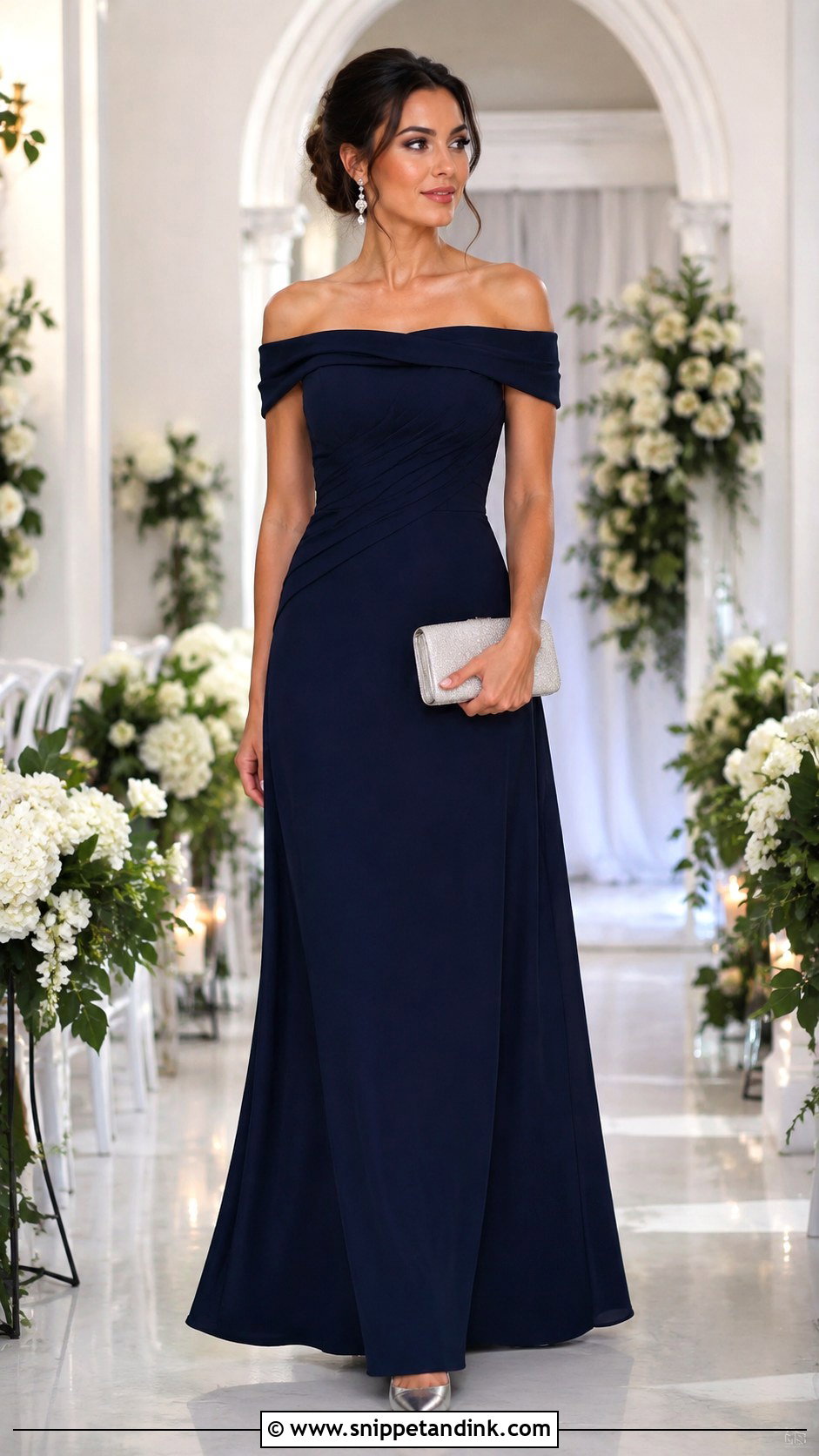
Navy off-shoulder gives you the drama of an evening gown in a colour nobody argues about. The weak point is support. Off-shoulder bodices slide down as the day goes on, especially once she starts hugging people and dancing, so I look for internal boning, silicone grip along the neckline or detachable straps. Silver pointed heels, pearl and crystal earrings and a navy clutch suit it. An updo keeps the shoulders clear. Anyone who wants more coverage can wear a chiffon wrap between photos, and white flowers with soft blue accents lift the deep colour indoors or out.
6. Blush Pink Wrap Bridesmaid Dress
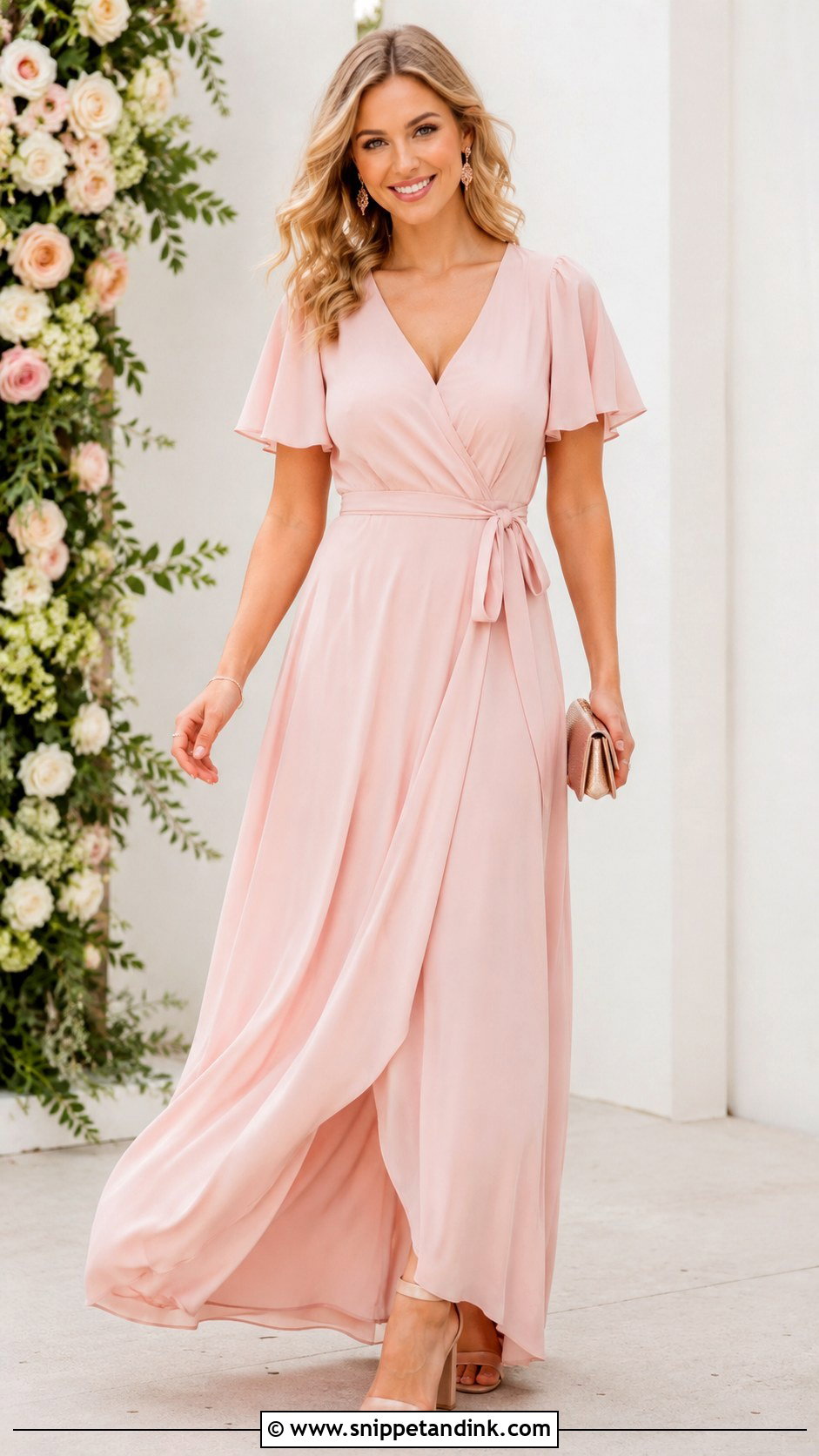
Blush is easiest to wear in a wrap dress with flutter sleeves, because the tie waist adjusts to different proportions in a way a fixed bodice can’t. The problem with wraps is gaping. I always check for an inner snap or tie at the bust before approving one, and I have her sit down and lean forward, which is exactly how she’ll be at dinner. Nude pumps lengthen the leg, and rose-gold earrings with a matching clutch suit the soft colour. A loose low bun or half-up style keeps it romantic. Avoid jewellery that copies the bride’s unless she’s chosen it for everyone.
7. Emerald Velvet Bridesmaid Dress
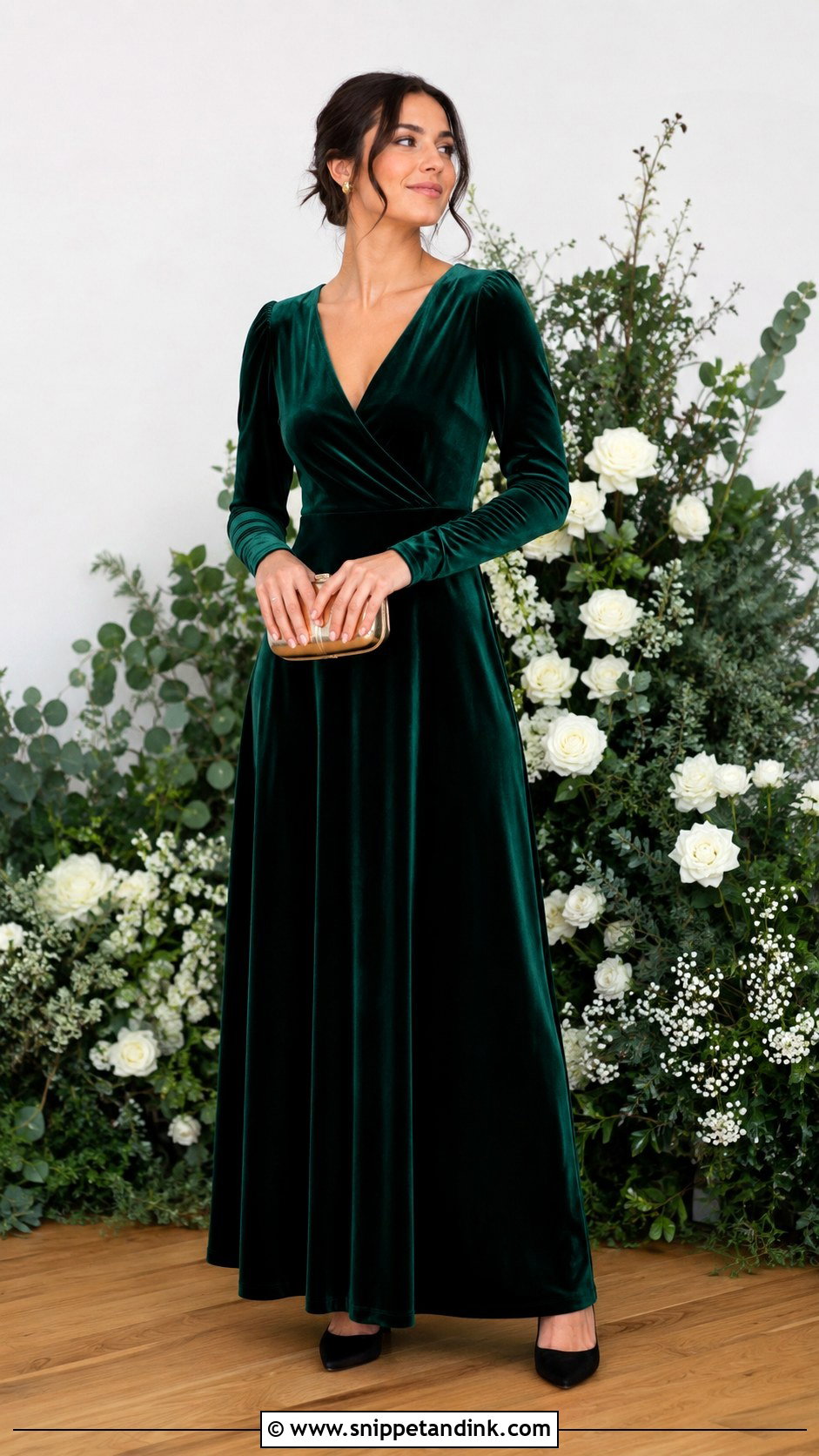
For a cold-weather ceremony I’d reach for emerald velvet before almost anything else. It’s warm and it carries colour beautifully under evening lighting. Choose a V-neck with a defined waist and long or elbow-length sleeves. Velvet is heavy and it shows pressure marks, so a dress that fits standing up can pull across the hips when seated, and it will crush if it’s packed tightly. Steam it from the inside, never press it flat. Accessories can be minimal: gold studs, a slim bracelet and closed-toe heels in black or gold. White flowers with dark greenery and a touch of burgundy finish the jewel-tone story.
8. Champagne Cowl-Neck Bridesmaid Dress
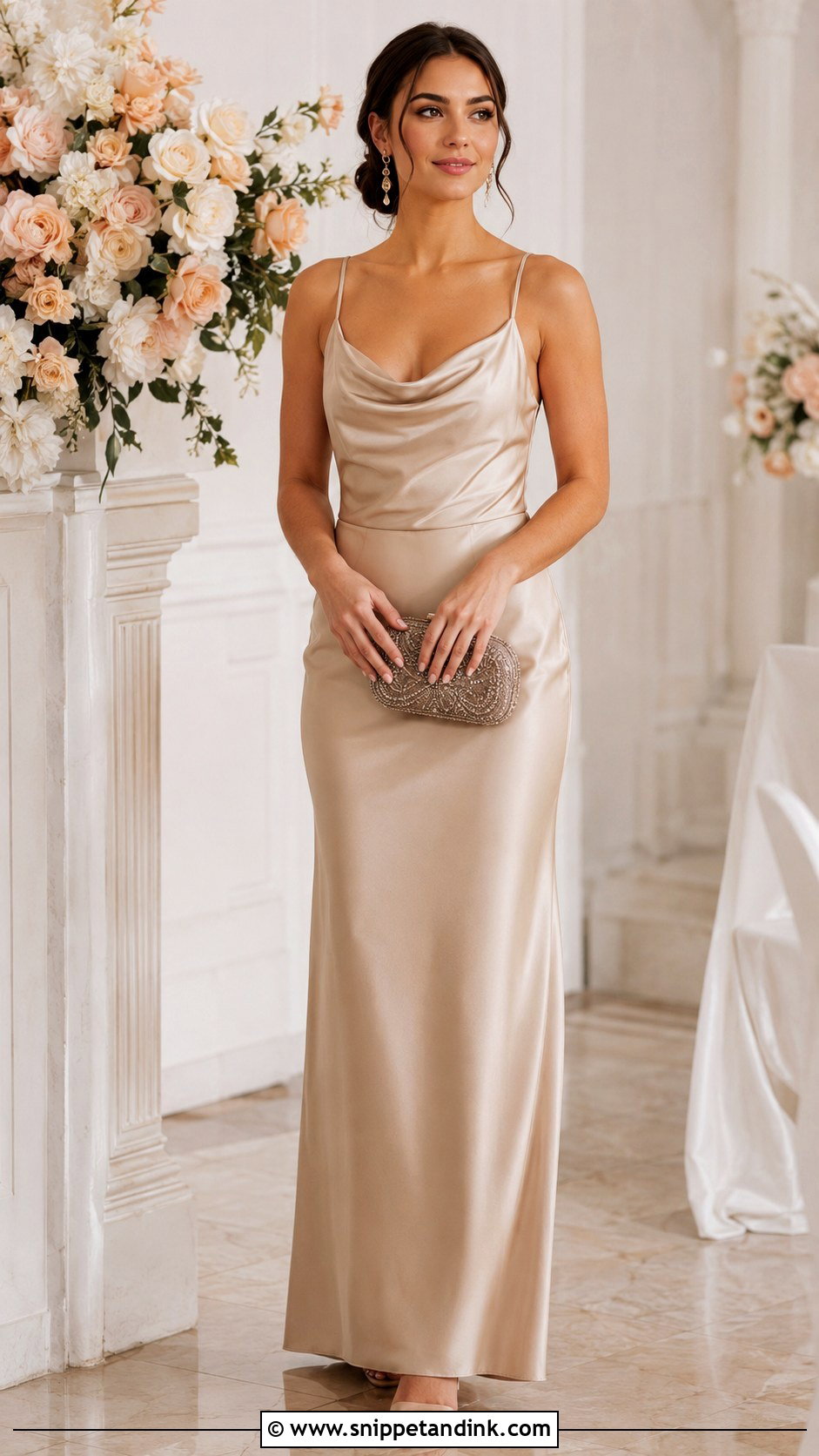
A champagne cowl-neck bridesmaid dress gives a soft glow in a neutral palette, but this is the colour that most often gets too close to the bride. Champagne satin can read as ivory in strong daylight, so I compare swatches against the actual wedding dress, outdoors and under warm indoor bulbs, before anyone orders. A midi or maxi with adjustable straps suits most figures. A cowl front needs a bit of bust to fill it, so smaller-chested bridesmaids may prefer a version with built-in cups. Light gold heels, drop earrings and peach or cream flowers keep the group distinct from the bride.
9. Butter Yellow Midi Bridesmaid Dress
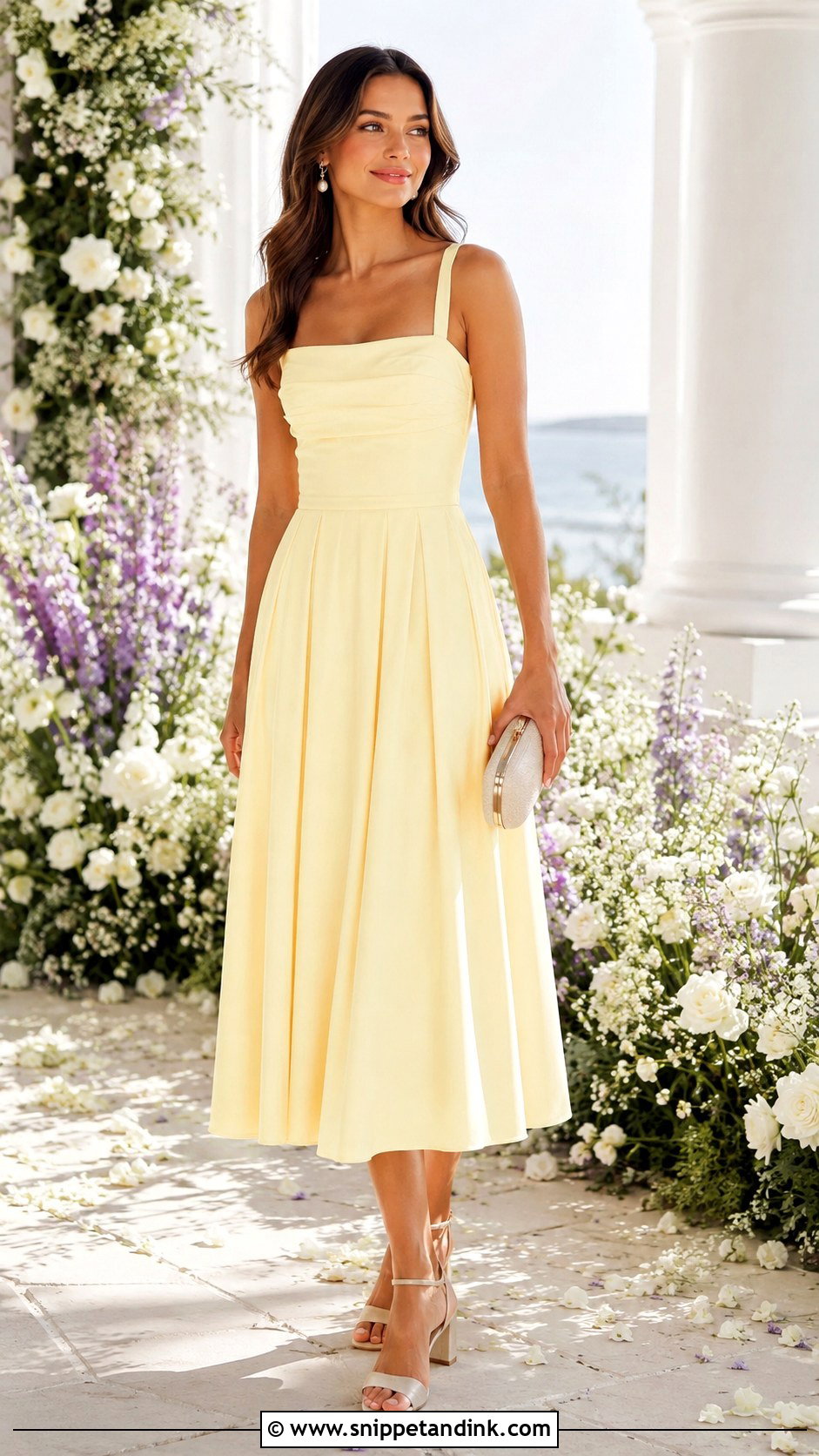
Butter yellow is cheerful for spring or summer, and the tea-length A-line keeps it from looking like prom. It is also the hardest pastel on some complexions, particularly very fair or olive skin, which can look sallow next to it. I test the swatch right up against each face before I commit. The shorter hem shows the shoes, so pick nude slingbacks or cream block heels with care. Small pearls and a neutral clutch are enough. White, lavender and pale blue flowers give it gentle contrast without turning the group into a citrus display.
10. Floral Maxi Bridesmaid Dress
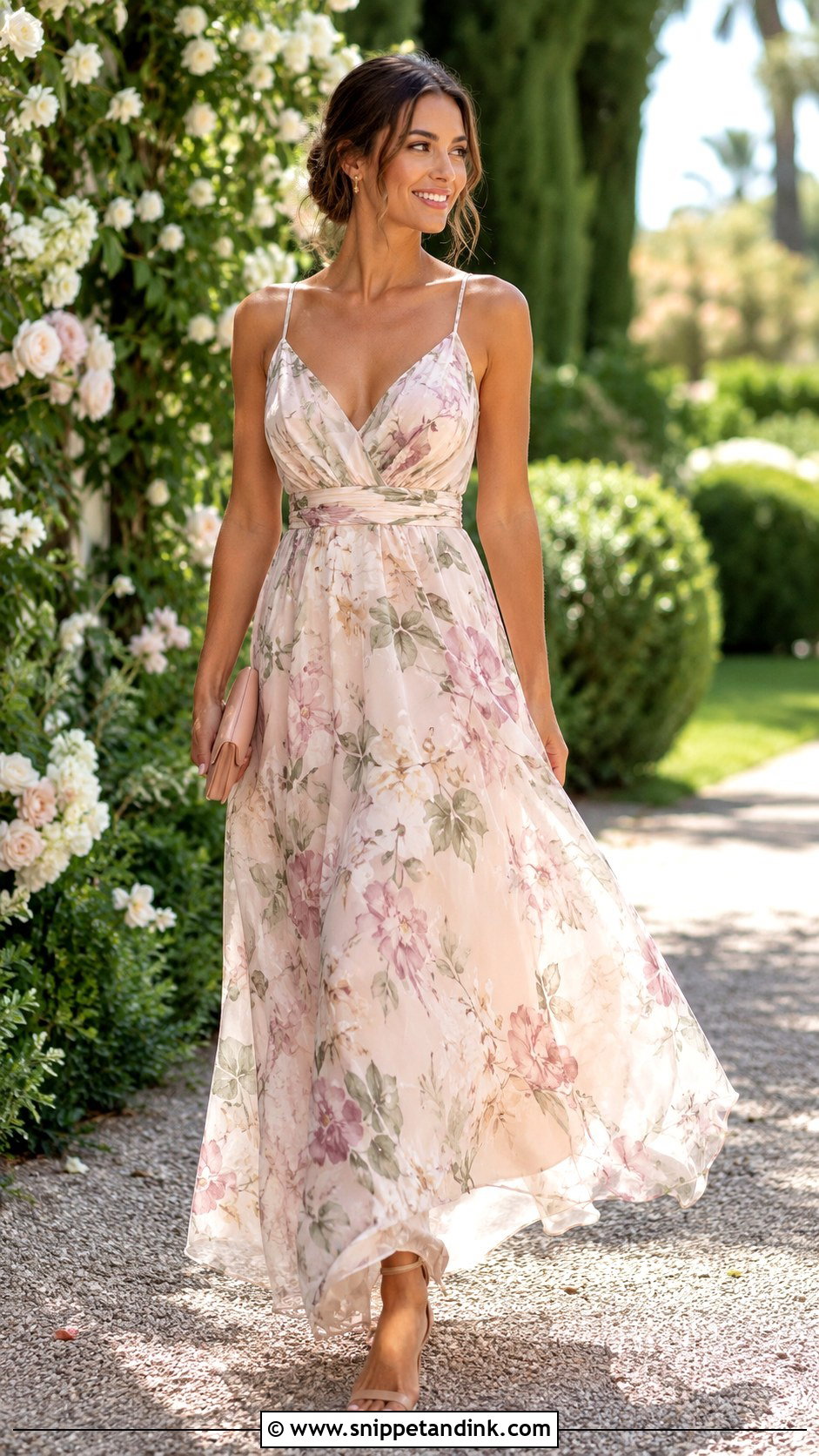
Print brings personality, but it’s harder to control than a solid. I look for a pattern with two or three colours lifted from the wedding palette and a medium-scale motif; very large florals distort on the body and a tiny ditsy print turns to texture from across a room. An A-line or empire waist lets the pattern fall without stretching. Nude heels, small earrings and a solid clutch matching one colour in the print are plenty. If everyone wears a different print, agree on background colour, print scale, length and fabric first, or the photos will look chaotic.
11. Mismatched Pastel Bridesmaid Dresses
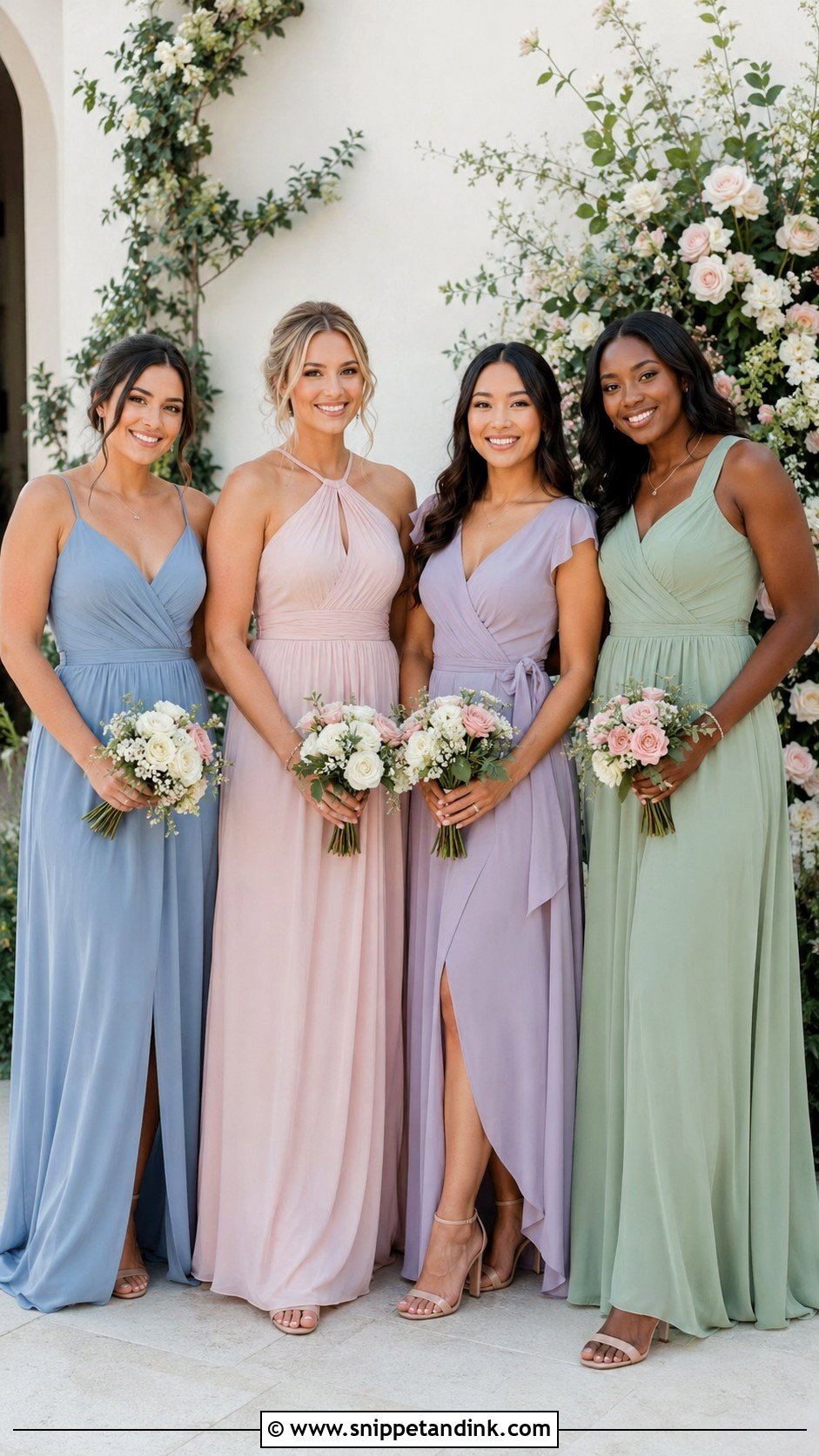
Mismatched pastel bridesmaid dresses work when the rules are clear and fall apart when they aren’t. I give the group three or four approved shades, say dusty blue, blush, lavender and sage, plus one length, one fabric family and a level of formality. Floor-length chiffon is the easiest to mix because shared texture holds different colours together. Shoes in one neutral and matching bouquets do the rest. Then ask everyone to send a photo or swatch before buying. That single step catches the stray icy lilac or peachy blush that would otherwise stand out in every group shot.
12. Burgundy Long-Sleeve Bridesmaid Dress
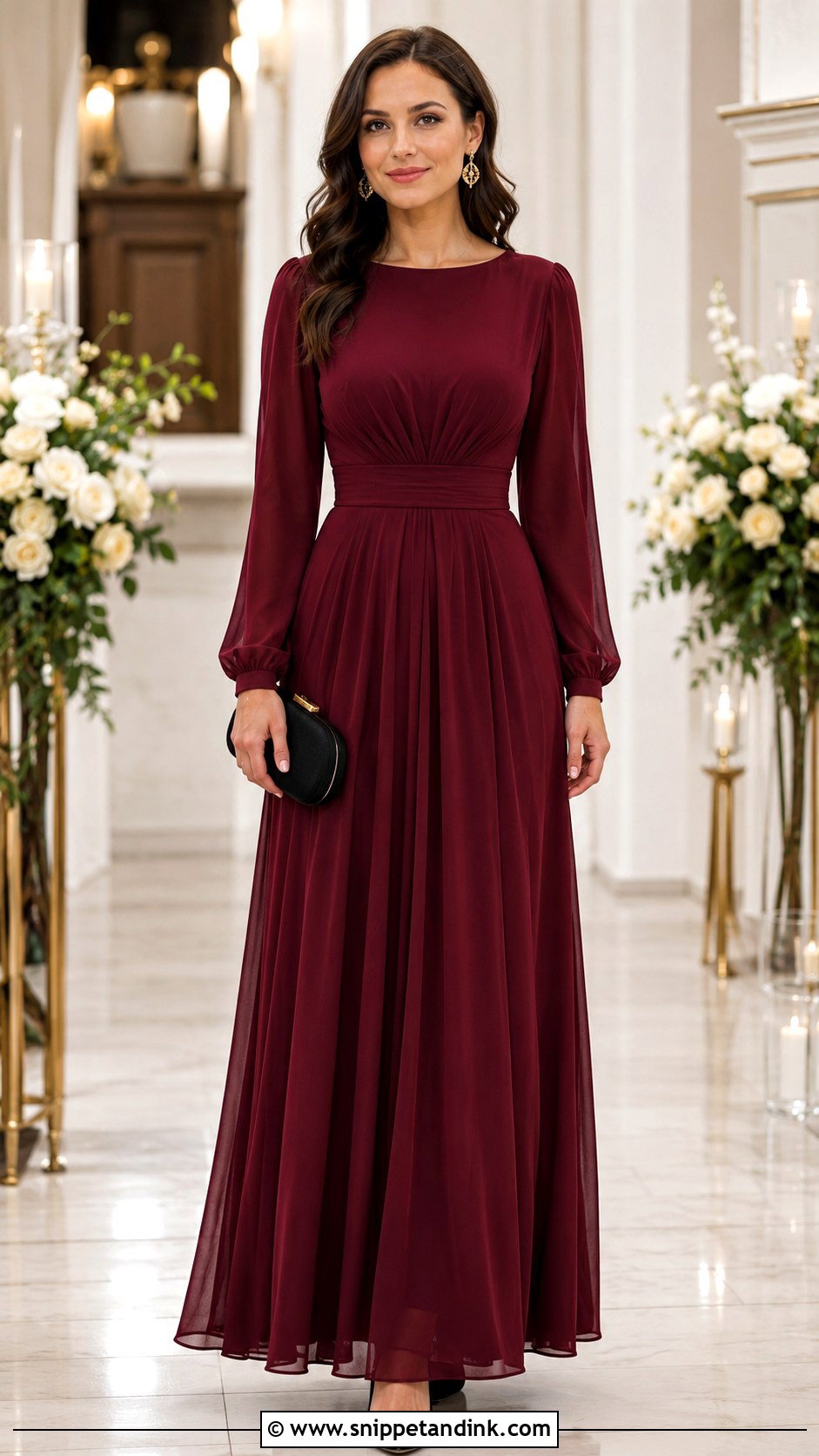
A burgundy long-sleeve gown gives real coverage for a winter wedding without looking like a compromise. Sheer chiffon sleeves feel lighter, while fitted velvet sleeves suit genuinely cold weather. Sleeves are where fit problems hide. I ask each bridesmaid to raise her arms above her head and hug someone during the fitting; if the whole dress lifts, the armhole is cut too low and needs attention. Black closed heels, gold earrings and a low chignon finish the look. Cream and blush flowers soften the deep colour, and a coat matters if guests move between venues.
13. Lavender Pleated Bridesmaid Dress
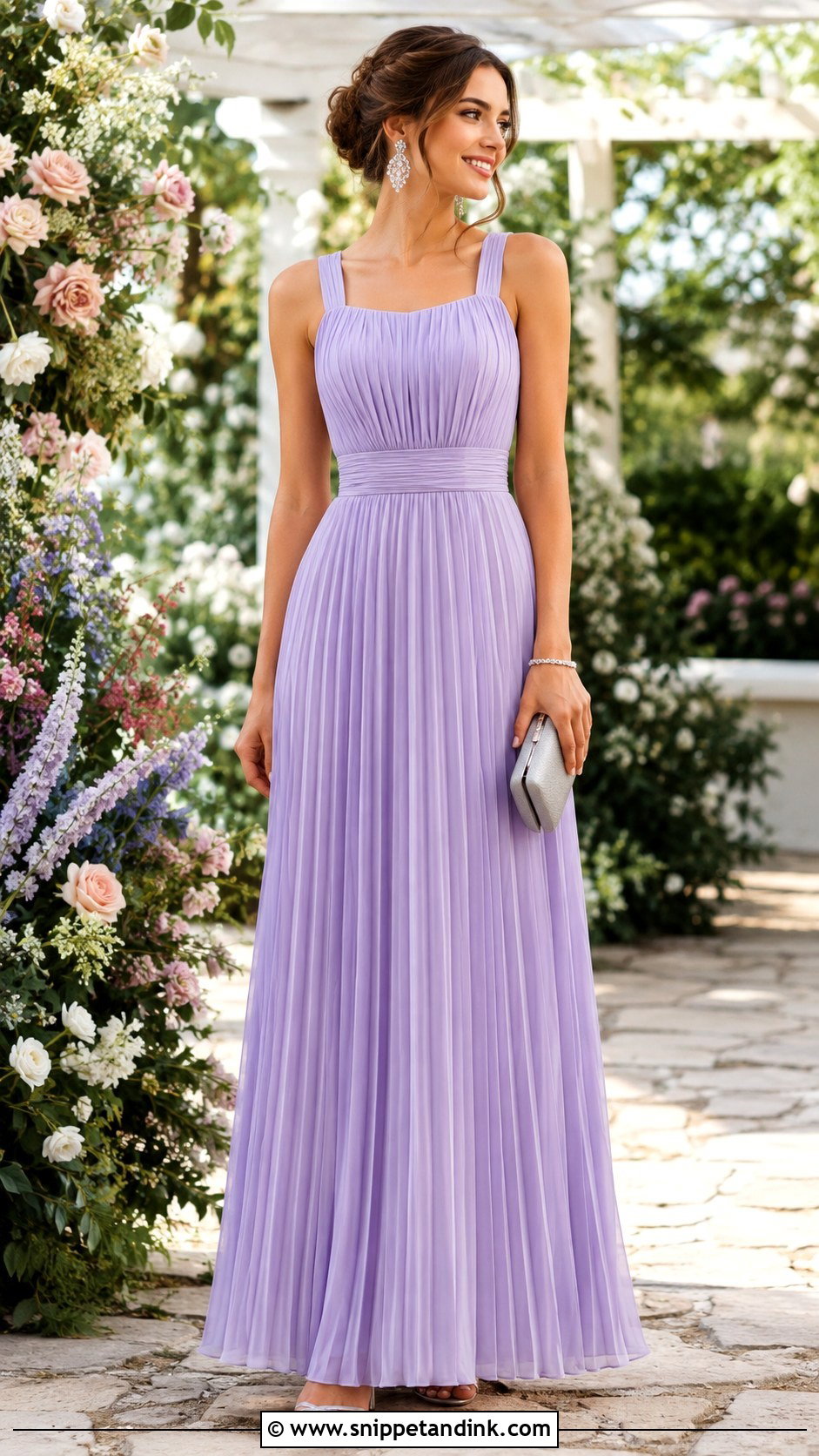
Lavender in fine vertical pleats has movement built in, which means you need very little embellishment. The pleats are the part that needs looking after. Machine-made pleats in polyester usually hold if you steam gently from a distance, but heat held too close can flatten them permanently, so read the care label before anyone attacks it the night before. Choose a halter, V-neck or wide-strap bodice depending on how much coverage she wants. Silver sandals, crystal studs and a loose updo with a few face-framing pieces suit it for a daytime garden or a bright indoor room.
14. Rust Halter Bridesmaid Dress
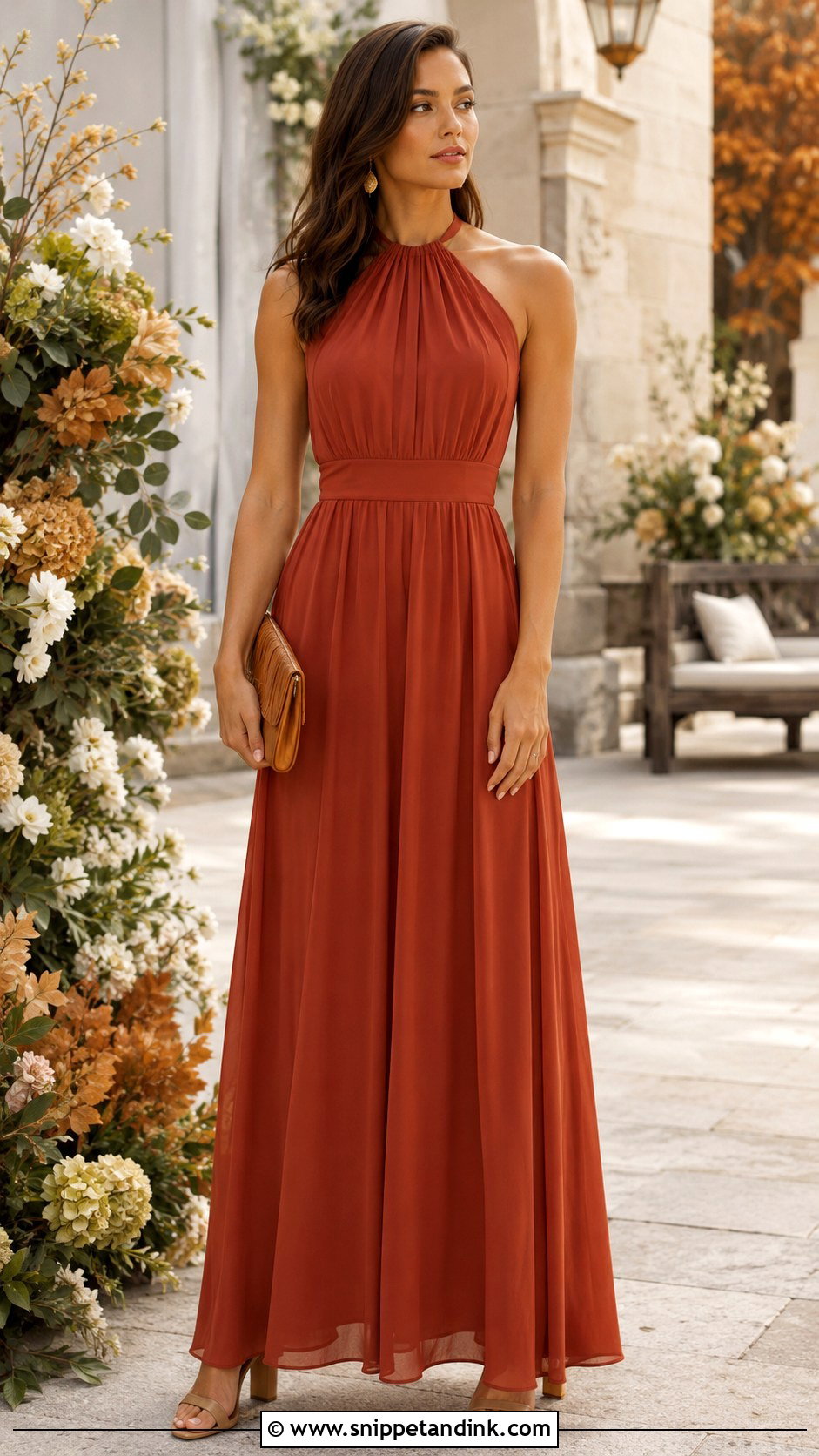
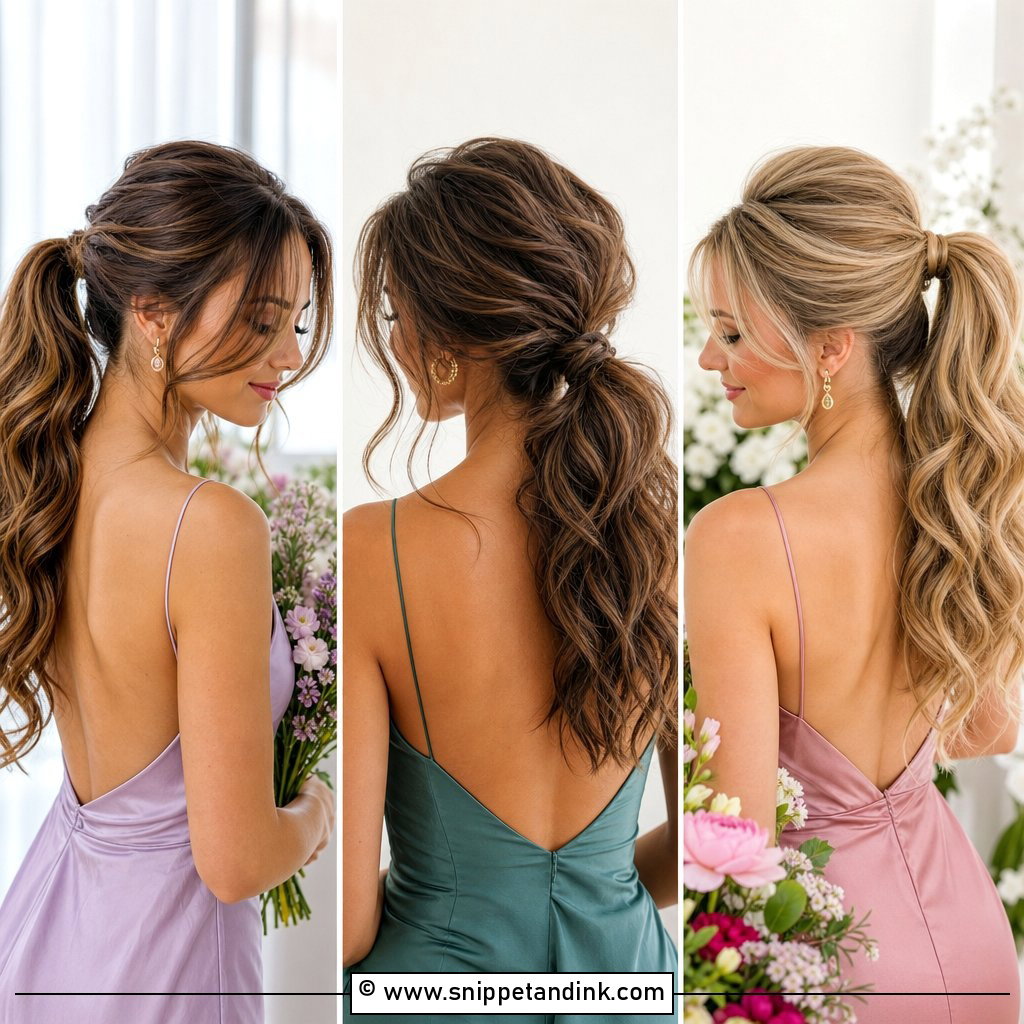
A rust halter bridesmaid dress gives a strong shoulder line for late summer or autumn. Because the halter shows off the shoulders, skip the necklace and use gold hoops or slender drops. The halter strap carries the weight of the bodice from the neck, which is comfortable for small to medium busts and genuinely tiring for a fuller bust over a long day. For those bridesmaids, I’d look for a version with a back band or hidden support. Tan block heels cope with gravel and grass. A sleek ponytail keeps the neckline clear, and cream, peach and olive flowers sit well against the rust.
15. Sky Blue Draped Bridesmaid Dress
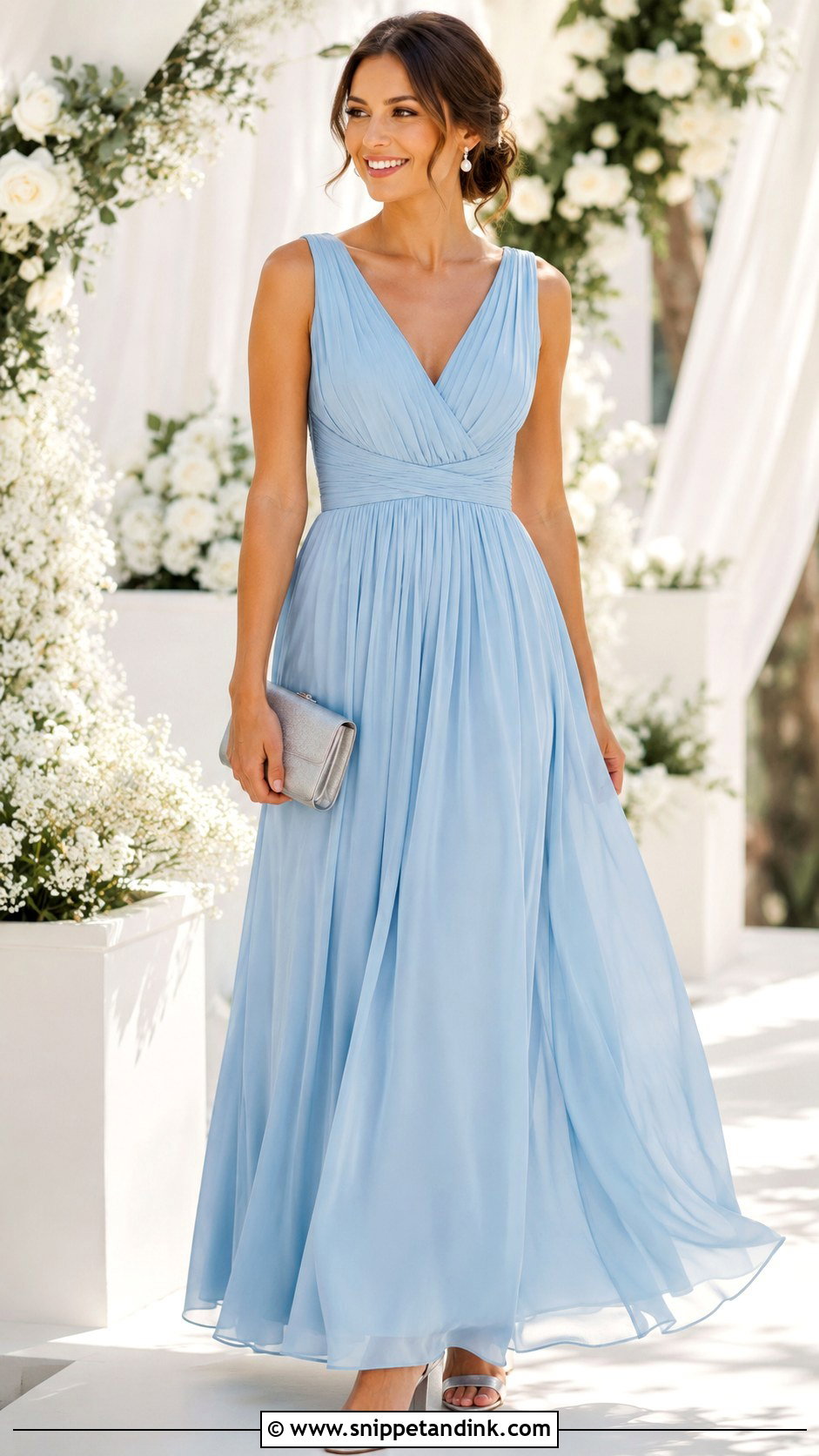
Sky blue in a draped maxi is made for a coastal or daytime ceremony, and it’s the one I’d choose when there will be a breeze. Gathering at the waist and a secure V-neck or one-shoulder bodice keep the fabric in place. Chiffon floats nicely but blows around on a beach, while matte crepe stays put and gives more coverage. Silver block heels won’t sink into sand the way stilettos do. Keep beauty clean with a smooth low bun or soft curls. Have every hem adjusted to the actual shoes she’ll wear, because a long hem on uneven ground is how bridesmaids trip.
16. Mauve Convertible Bridesmaid Dress
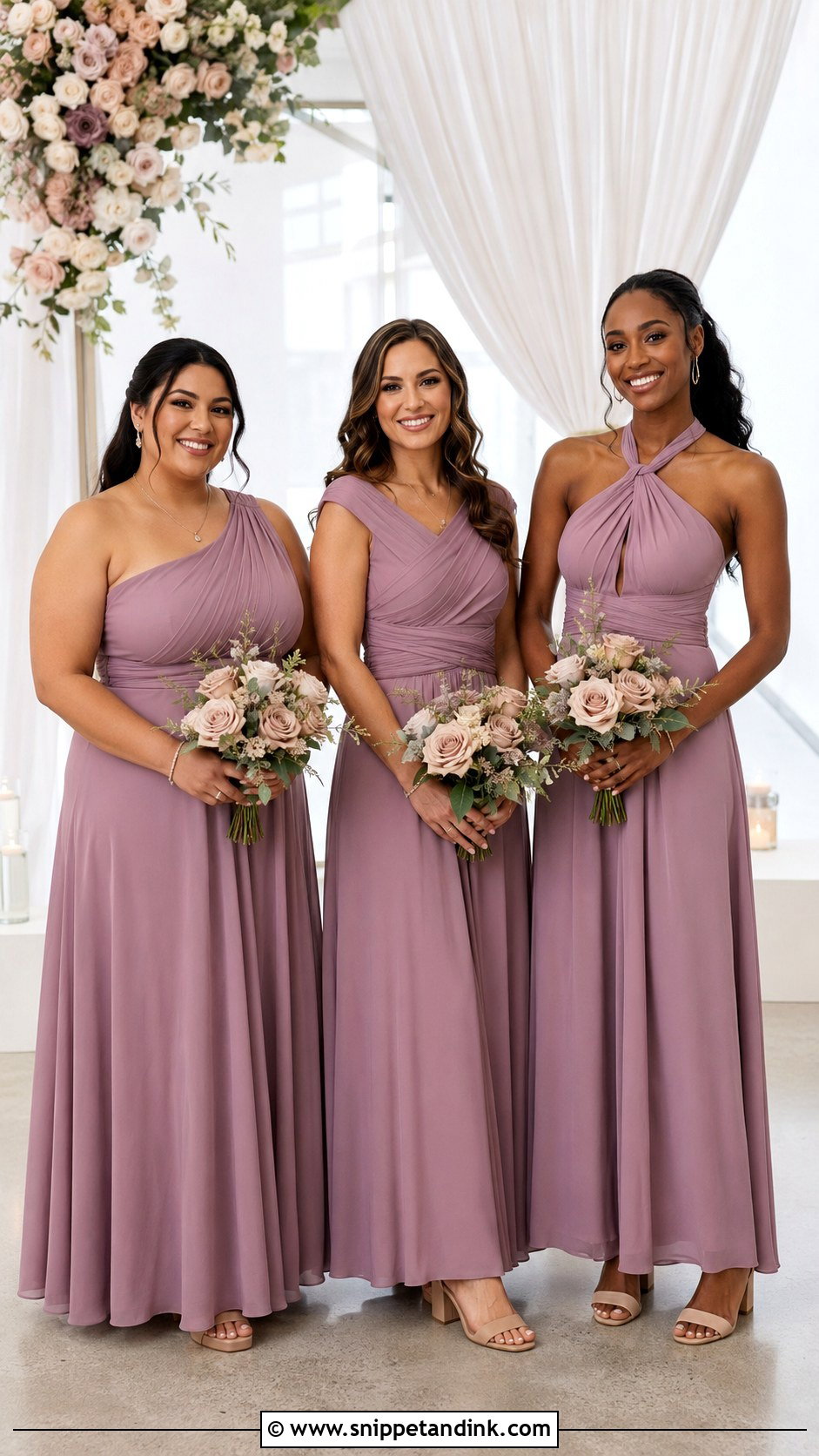
A mauve convertible bridesmaid dress lets each attendant wear a different neckline in the same colour and fabric. The long panels wrap into cap sleeves, a one-shoulder, a halter or a crossed front. In practice they come loose if nobody has practised. I insist on a wrapping session a week or two out, with photos of each finished shape saved on everyone’s phone, plus fashion tape and a matching bandeau for extra security. Nude block heels and rose-gold earrings suit the muted colour. Keep bouquets identical so the varied necklines still look like one group.
17. Olive Satin Column Bridesmaid Dress
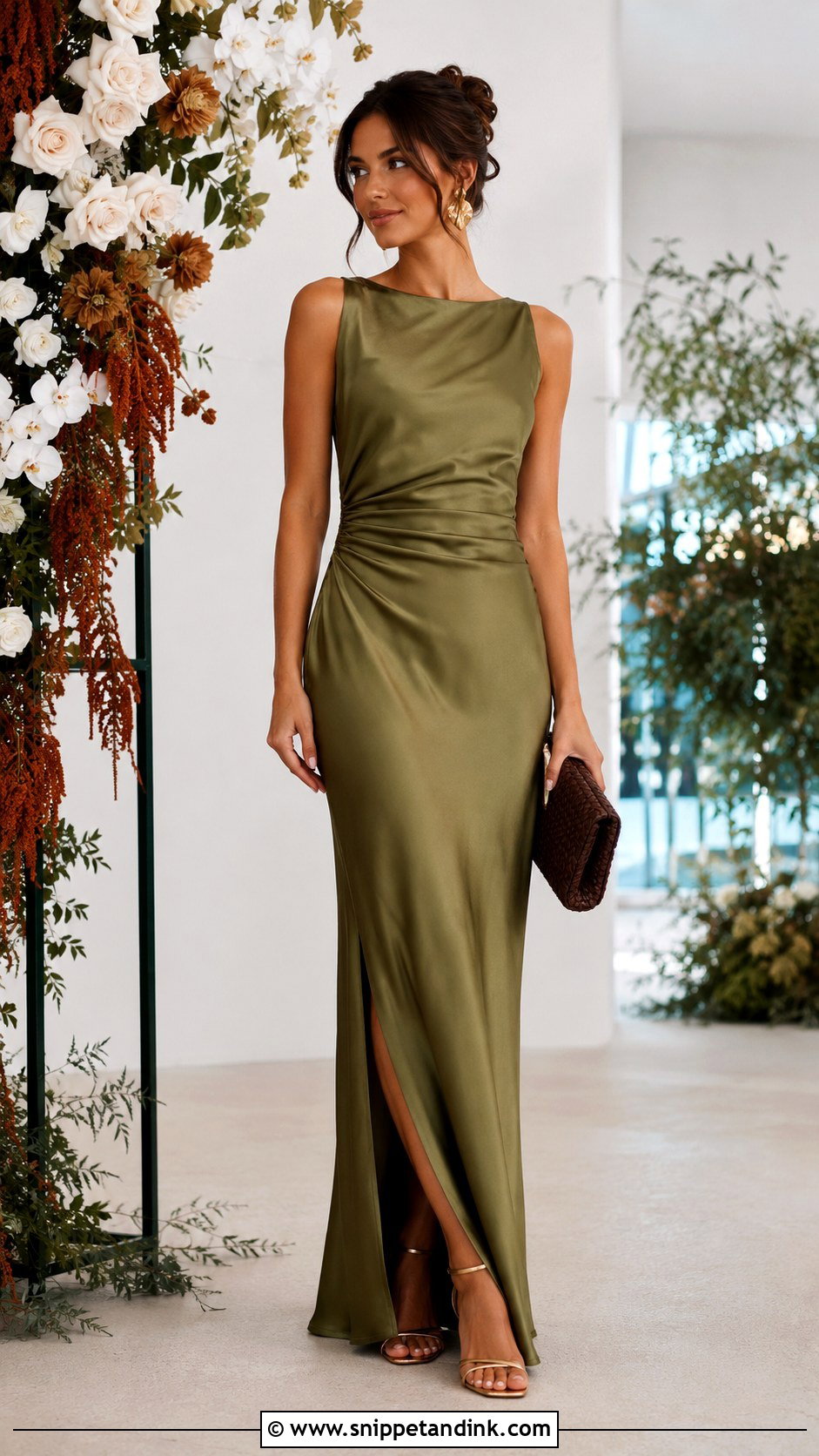
Olive satin in a column cut is the grown-up cousin of sage. A straight skirt with subtle waist shaping and a side slit for walking looks sharp, but satin is unforgiving: it shows every pull line across the hips and every visible undergarment edge. At the fitting I watch her stand, sit and walk the length of the room. If there’s horizontal pulling at the hip, she needs the next size and a tailor, not shapewear. Brushed-gold sandals, sculptural earrings and a dark brown clutch suit the earthy colour, and a centre-parted low bun keeps the line clean.
18. Coral Ruffle Bridesmaid Dress
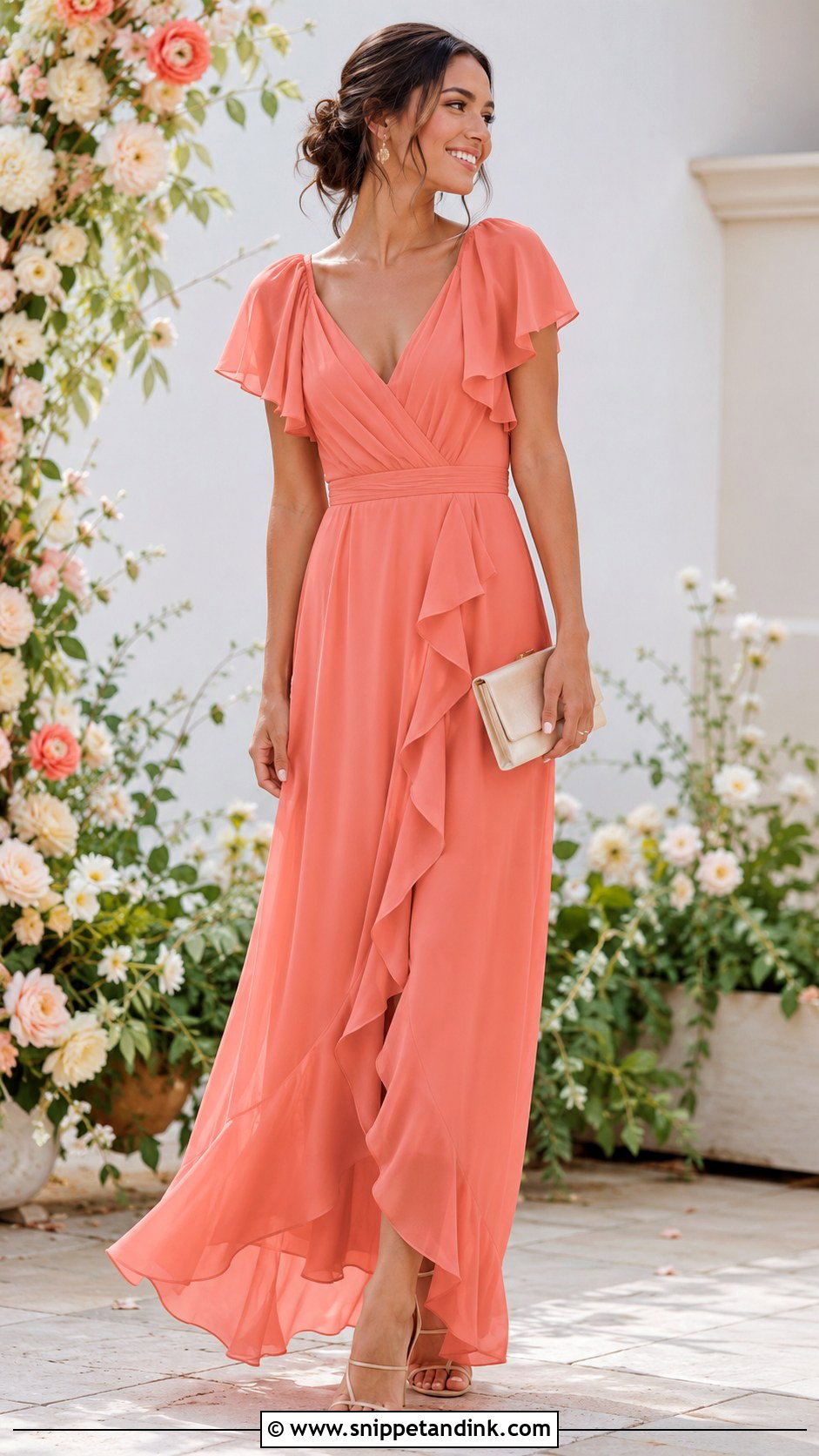
Coral brings energy to a warm-weather party, and a single ruffle at the neckline or sleeve is enough. Multiple tiers of ruffles add bulk at exactly the places most women don’t want it. An A-line maxi balances the busier bodice. The real trap with coral is shade. It ranges from pinkish to almost orange between brands and even between dye batches, so I compare swatches side by side before anyone orders. Nude strappy heels, small gold earrings and a pale peach clutch finish it, and white, peach and yellow flowers keep the colour cheerful.
19. Chocolate Brown Bridesmaid Dress
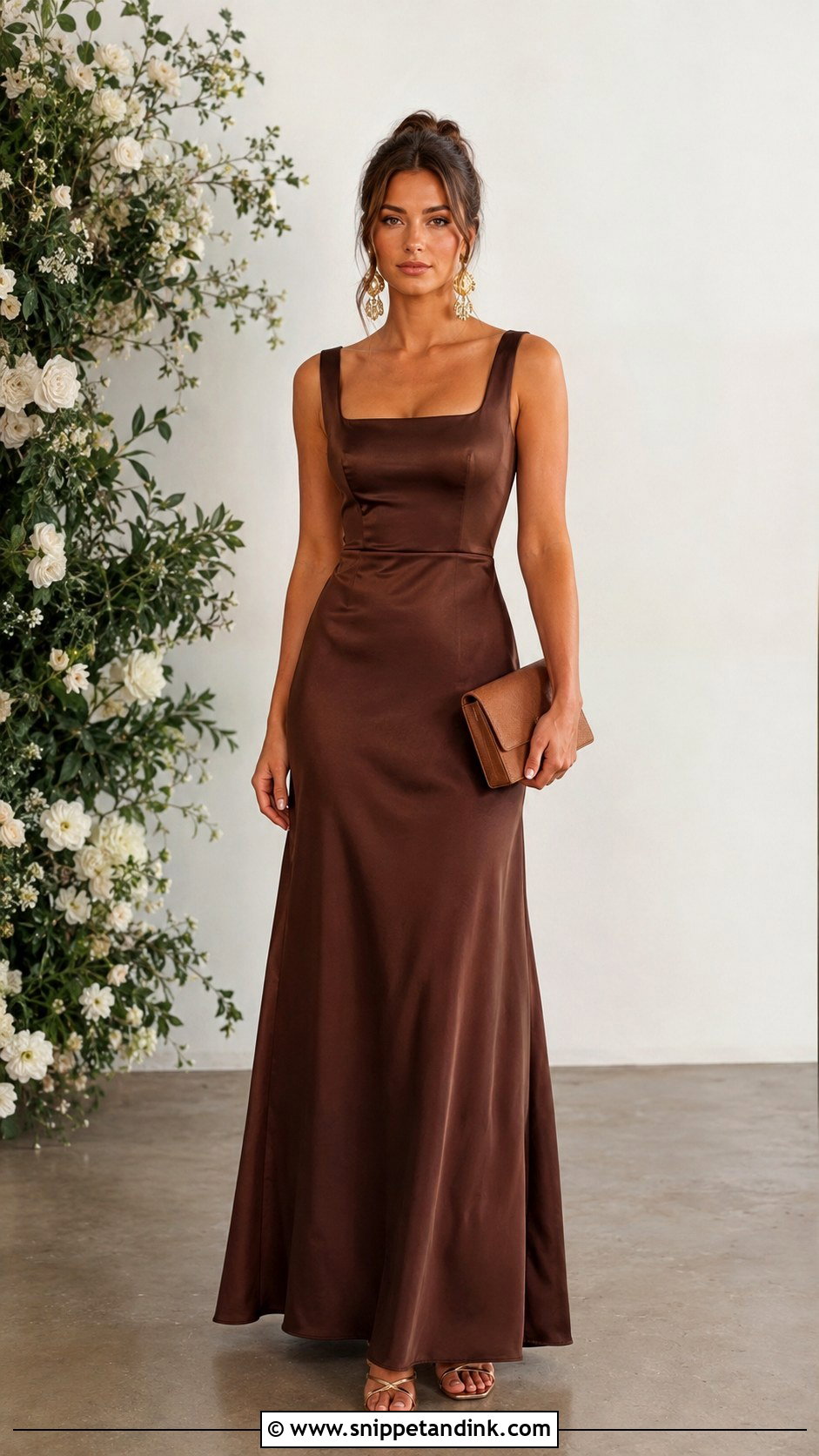
Chocolate brown is a confident choice for an autumn or modern neutral wedding. A satin or crepe dress with a square neckline and a softly fitted waist keeps it current. Bronze heels, gold earrings and a structured tan clutch suit it. Brown is the colour I check against everything else in the room: the groomsmen’s suits, the table linen, even the venue’s wood panelling. Too much of it and the photos go flat and muddy, so cream flowers and fresh greenery are not optional here. A sleek bun or polished curls complete it.
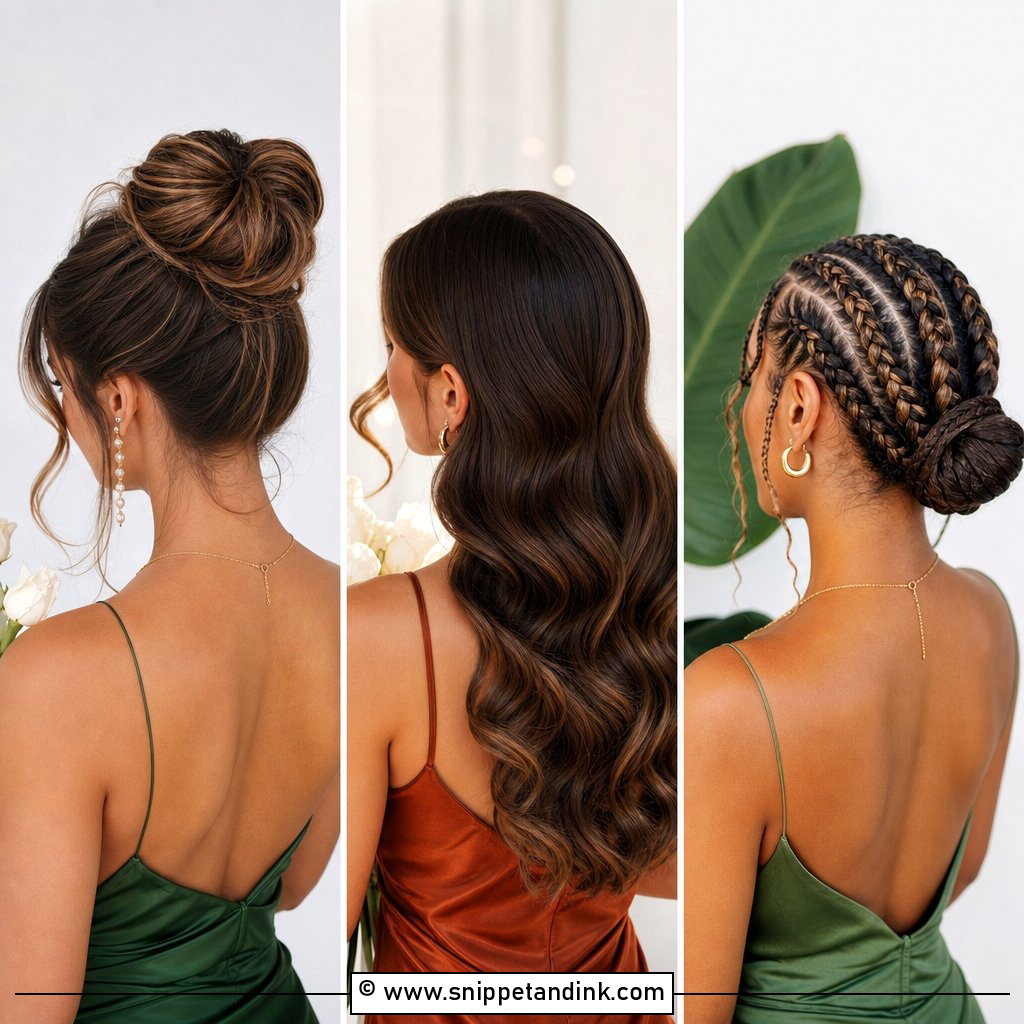
20. Silver Gray Asymmetric Bridesmaid Dress
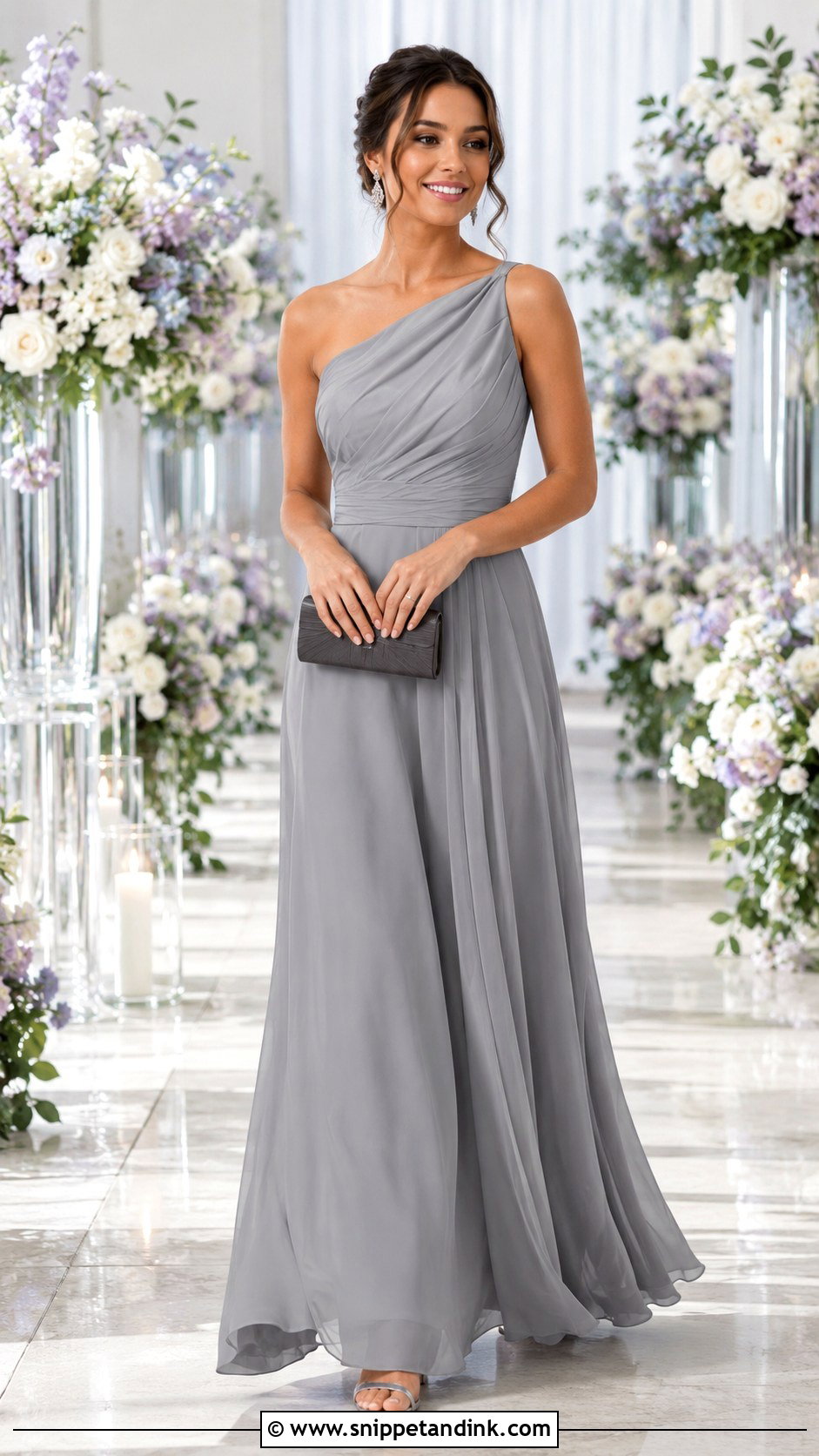
Silver grey with an asymmetric neckline is a quiet, formal option for a cool palette. Matte chiffon looks softer, while satin gives more shine and a sharper finish. Keep the hair away from the open side so the neckline stays visible. Grey is the hardest colour to judge from a screen. Depending on the dye and the light it can read blue, lilac or even beige, so I never approve it without a physical swatch held up in the venue’s lighting if possible. Silver heels and crystal earrings suit it, and white, lavender and blue flowers add a little colour to the neutral.
How Chiffon, Satin, Crepe and Velvet Hold Up From Morning to Last Dance
Fabric decides how a bridesmaid looks at ten at night, not just in the first photo. I’d always weigh this before falling for a colour.
Chiffon
Light, breathable and easy to mix across styles. It creases very little when seated. Its weakness is snagging: bouquet wire, brooches and beaded clutches can catch the weave, so I tape or wrap the stems of any bouquet that will sit against it.
Satin
Rich in photos, but it creases across the lap after a seated ceremony and shows perspiration at the underarm and lower back, especially in pale shades. Choose darker satins for hot days, and hang the dresses up during dinner breaks if you can.
Crepe
The most forgiving of the four. It drapes over the body without clinging, recovers from creasing and hides lines underneath. I suggest it when the group includes women who worry about satin showing everything.
Velvet
Warm and luxurious, but heavy and prone to crushing. Never fold it into a suitcase; transport it hanging, and steam it from the reverse. In a warm venue it gets hot fast, so I keep it for winter dates.
Whatever the fabric, hang each dress the night before, steam it on the morning and bring a small emergency kit with safety pins, fashion tape, a lint roller and a stain pen.
Setting the Rules Before Anyone Clicks Order
Every one of these twenty looks works for the right group. What decides it is the whole outfit, not just the colour. Give your bridesmaids a short written brief covering length, fabric, shoes, jewellery and formality before anyone buys. Then compare physical swatches, leave proper time for alterations and make each person sit, walk and lift her arms in the dress. A bridal party that’s been fitted this way looks connected in the photos, and nobody spends the reception tugging at a strap.
You'll Like These Ideas:


Leave a Reply