
Natural hair is the texture I most enjoy styling for a wedding, because it already has the volume and shape that straight hair needs hours of tools to fake. Coils, defined curls, braids and locs each want a different plan, though, and the plan starts weeks before the morning itself. Below are twenty looks I’d happily put on a bride, with notes on how each one actually holds, what it asks of your hair and where it can let you down. None of them require you to straighten or relax anything.
Shrinkage, Humidity and How Natural Hair Changes Over a Wedding Day
The thing I explain first at every natural hair trial is that your style at 10am won’t be your style at 10pm. Coils that were stretched in the morning draw back up as they meet humidity, sweat and a warm dance floor. That isn’t a failure. It just means the plan has to match the day.
- Stretched sets (twist outs, braid outs, blown-out puffs) lose definition fastest. Choose them for cool, dry weather or an indoor venue.
- Pinned and braided styles barely move. If your ceremony is outside in summer, I’d lean toward an updo or a protective style.
- Locs hold their shape in any weather, but wet locs stay heavy for hours, so wash at least two days ahead.
- Shrinkage can take off a third or more of your length, so test any down style in the conditions you’ll actually have.
My rule is simple: decide the style after you know the venue and the season, not before.
1. Natural Afro With Flower Crown
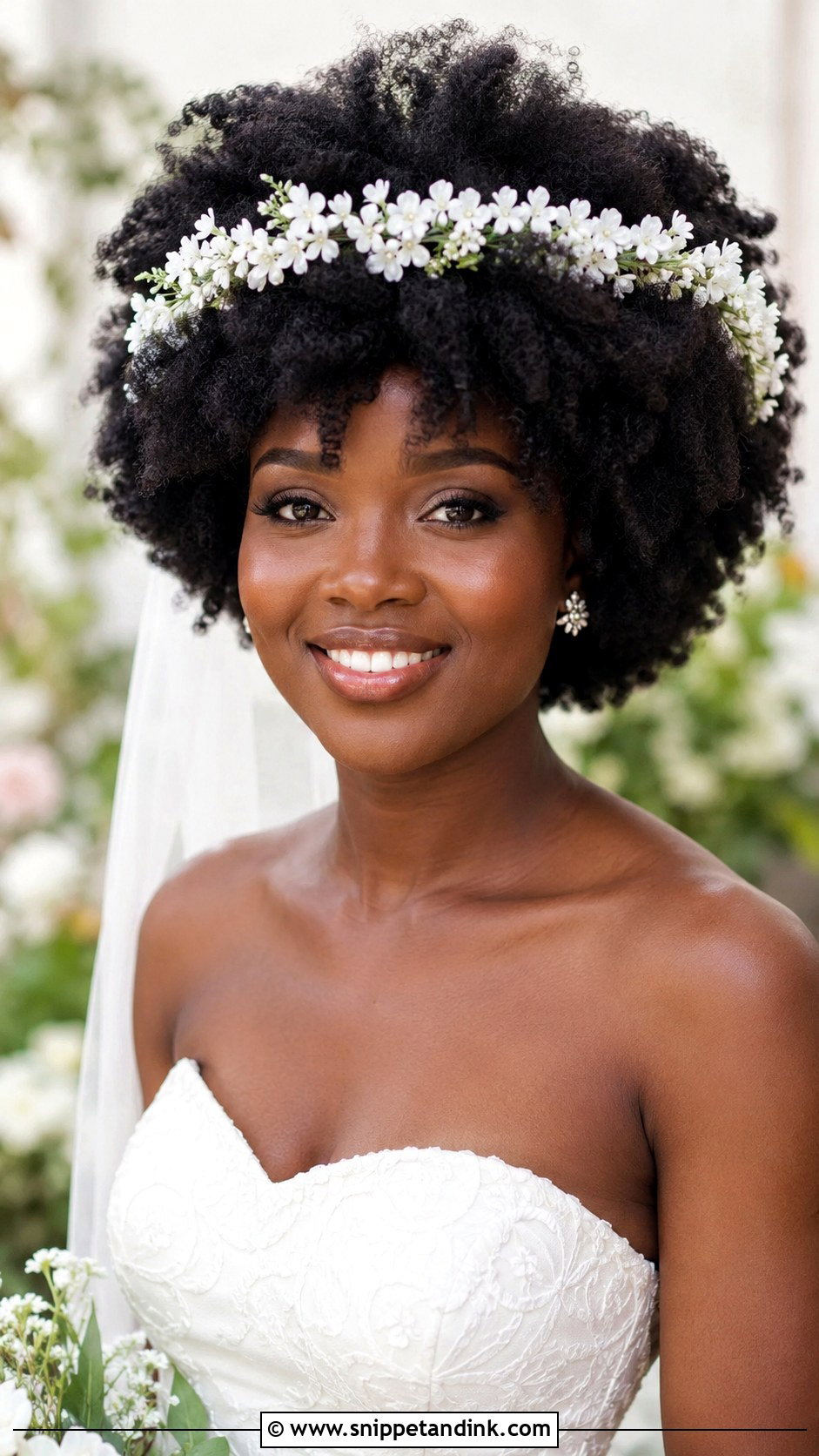
A full afro under a flower crown is one of the few bridal looks where more height genuinely helps. I diffuse on low heat with the hair stretched in large sections, then pick from the roots outward with a wide-tooth comb so the ends keep their definition. The crown needs anchoring: I cross two bobby pins under each side of the band into the hair, because a crown resting on top of an afro will tilt the first time you hug someone. Outdoors in humidity, expect the shape to grow by the evening. Most brides like that; if you don’t, choose a stretched set instead of a wash-and-go.
2. Curly Updo With Baby Hairs
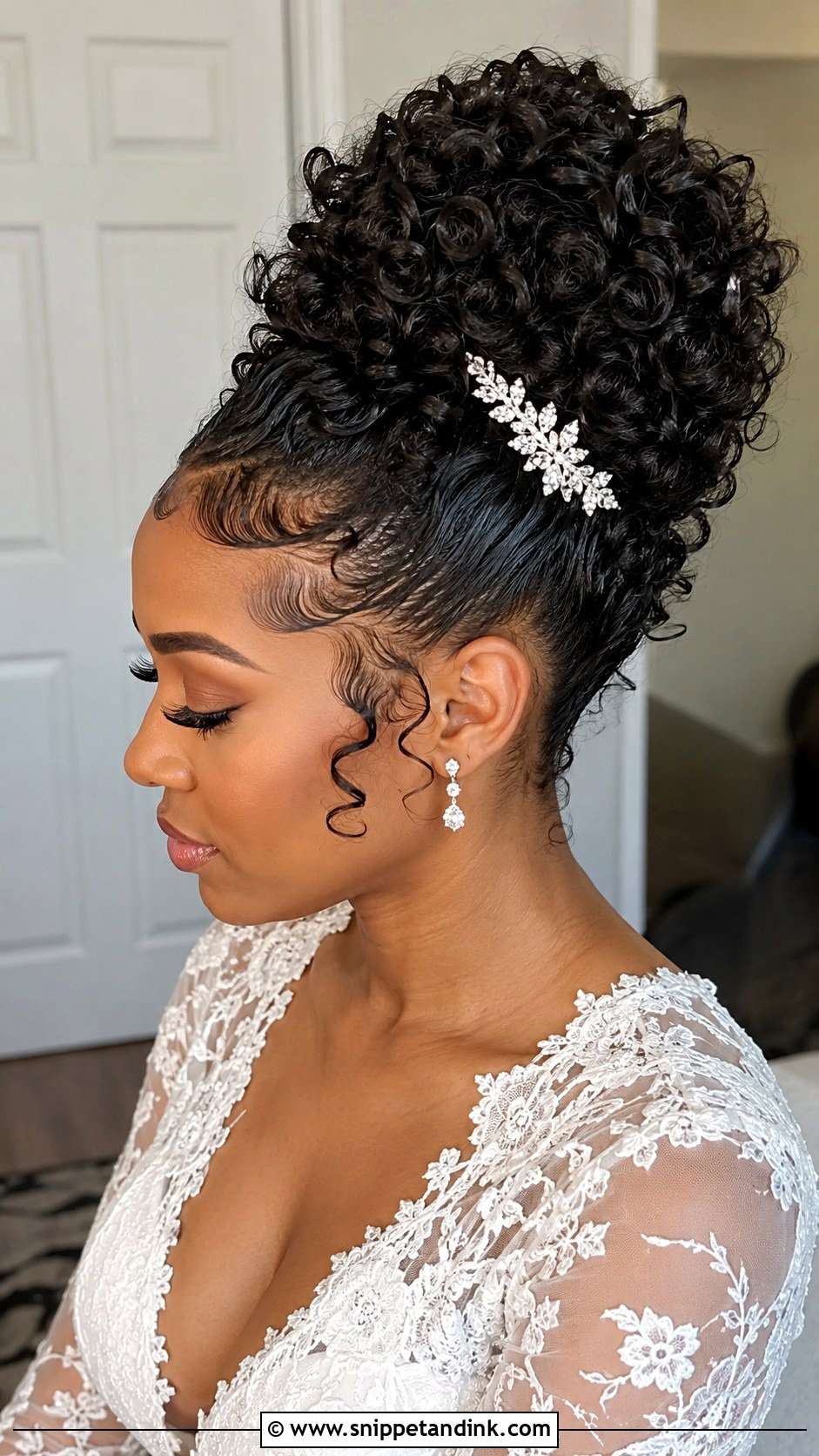
The trick with a curly updo is to pin the curls in clusters rather than smoothing them, so the bun keeps its texture instead of looking like a puff that lost its shape. I lay baby hairs last, after the veil or a sparkly hairpiece is in, because pinning anything near the hairline smudges fresh edges. Use one edge product, not a cream topped with gel. Layering the two is what makes edges turn white and flaky by the speeches.
3. Goddess Braids Updo
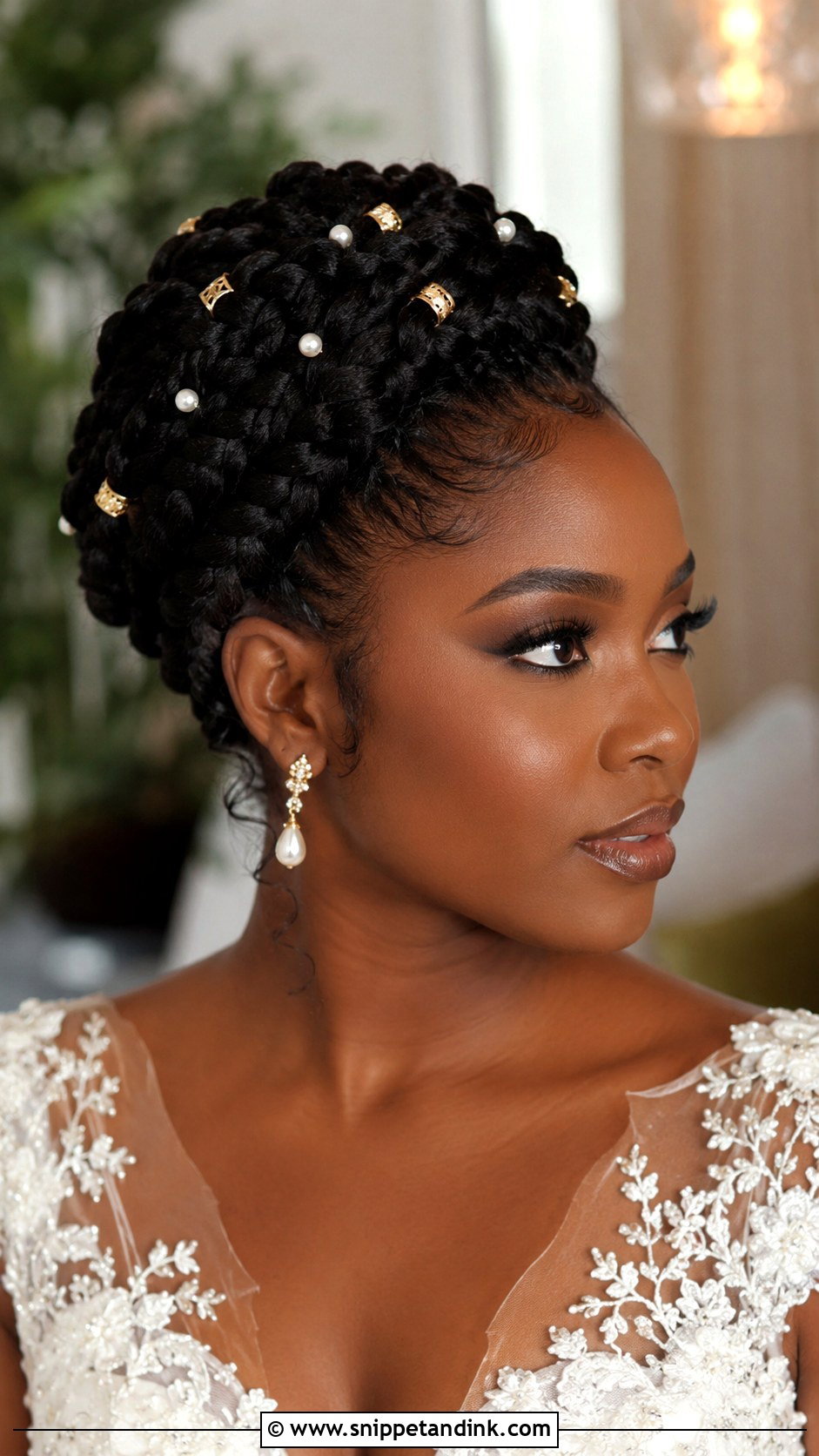
Goddess braids are heavier than they look once they are wrapped into an updo, so I ask brides to wear the finished style for a full day at the trial. The weight sits on the crown and some people get a headache after six or seven hours. If that happens, I’ll build the updo lower and looser. Gold cuffs and pearls slide onto these easily, and the style holds through rain and dancing far better than anything heat-set.
4. Loose Curls With Side Flowers
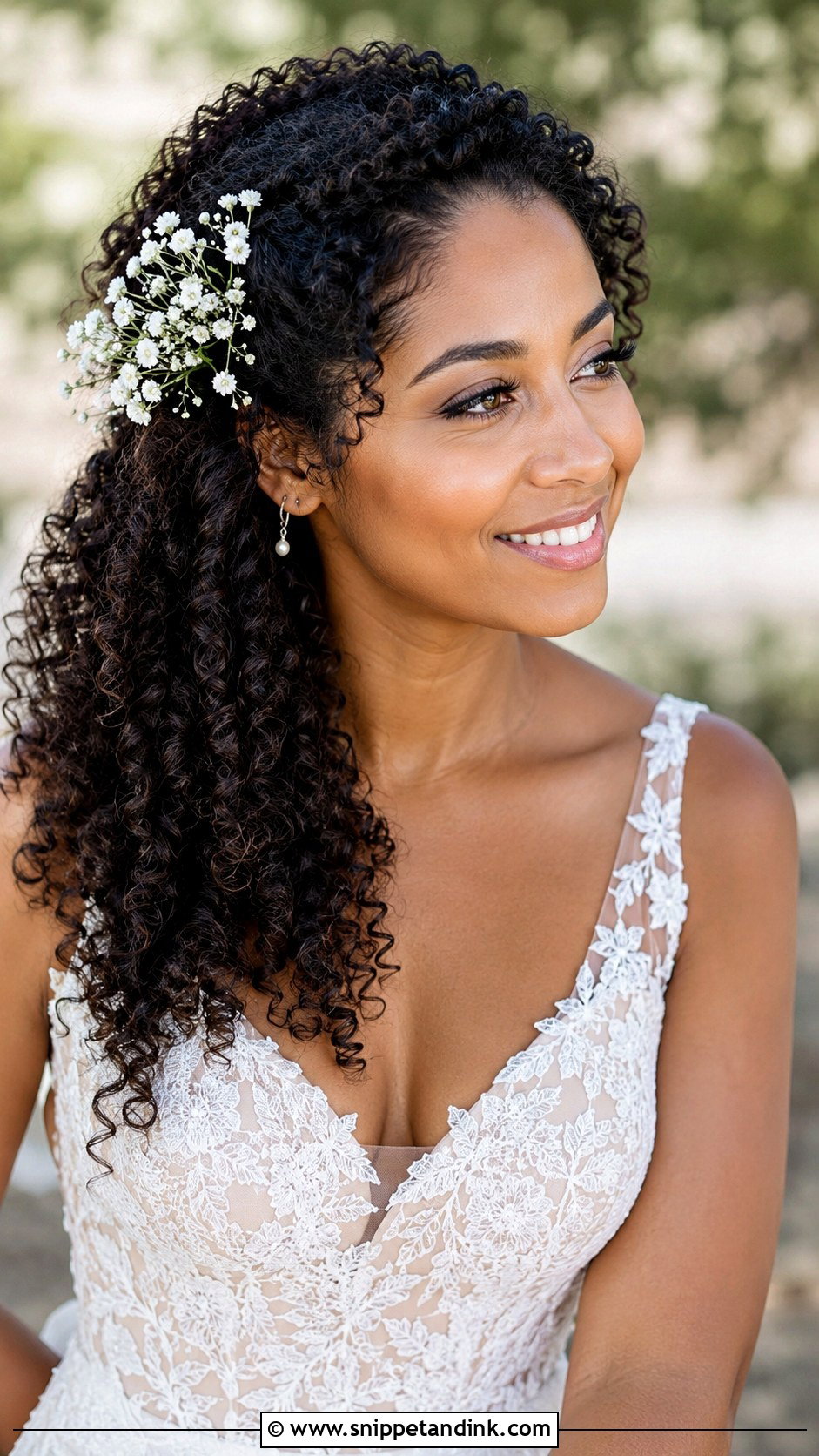
Imagine cascading curls pulled over one shoulder with a few small blooms tucked along the pinned side. This one needs length and a defined curl pattern; on tight coils with a lot of shrinkage, the curls tend to sit up rather than fall. Baby’s breath and spray roses survive out of water for hours, while softer petals bruise against a collarbone. I pin the flowers into the hidden side of the part so the stems stay out of sight.
5. Flat Twist Bun
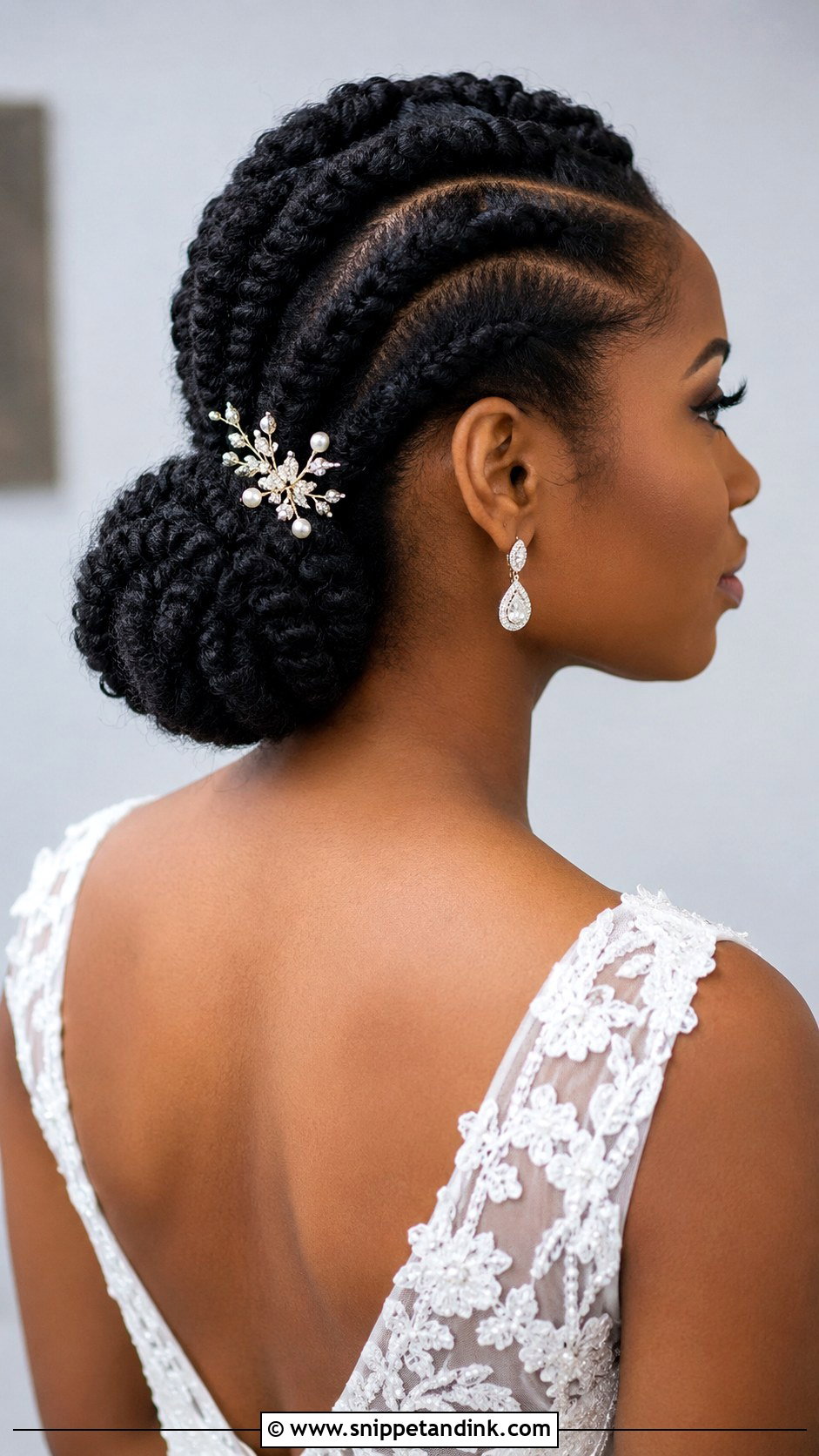
A flat twist bun is the style I’d pick for a bride doing her own hair, because the twists are forgiving and small mistakes disappear into the pattern. Twist on stretched hair, not freshly washed hair, or the rows shrink unevenly as they dry. The bun itself should be pinned with U-pins pushed in toward the scalp, which grip coils better than standard bobby pins. A single hairpin at the side is plenty of decoration.
6. Locs Swept To The Side
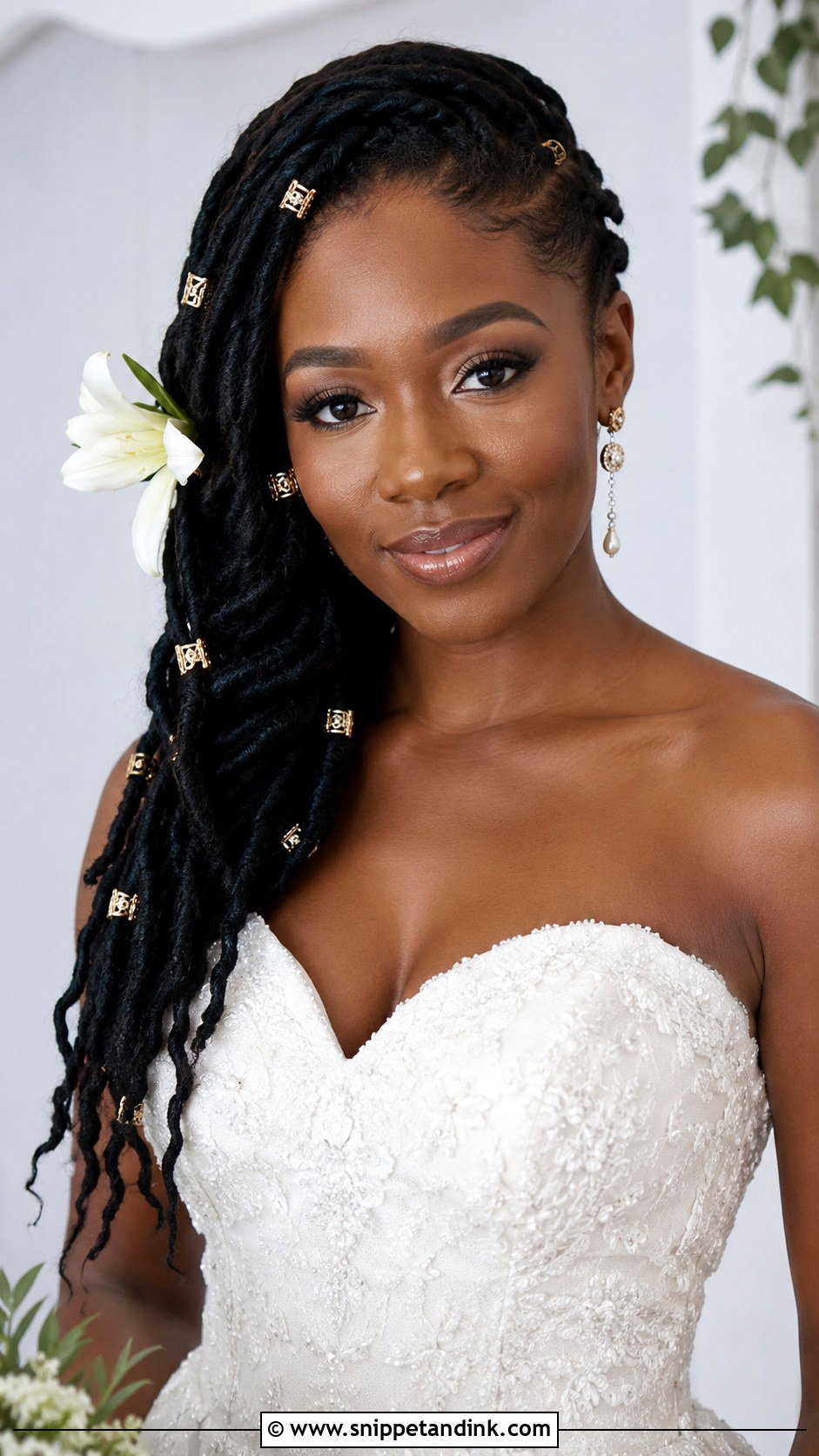
Swept locs look simple, but the weight of a full head pulling to one side can tug at the opposite temple by the evening. I distribute that by pinning a hidden anchor of locs behind the ear first, then draping the rest over it. Cuffs and beads go on before the sweep, never after, because threading jewelry onto locs that are already pinned loosens everything. Very long, thick locs may suit a half updo better.
7. Half Up Half Down Curls
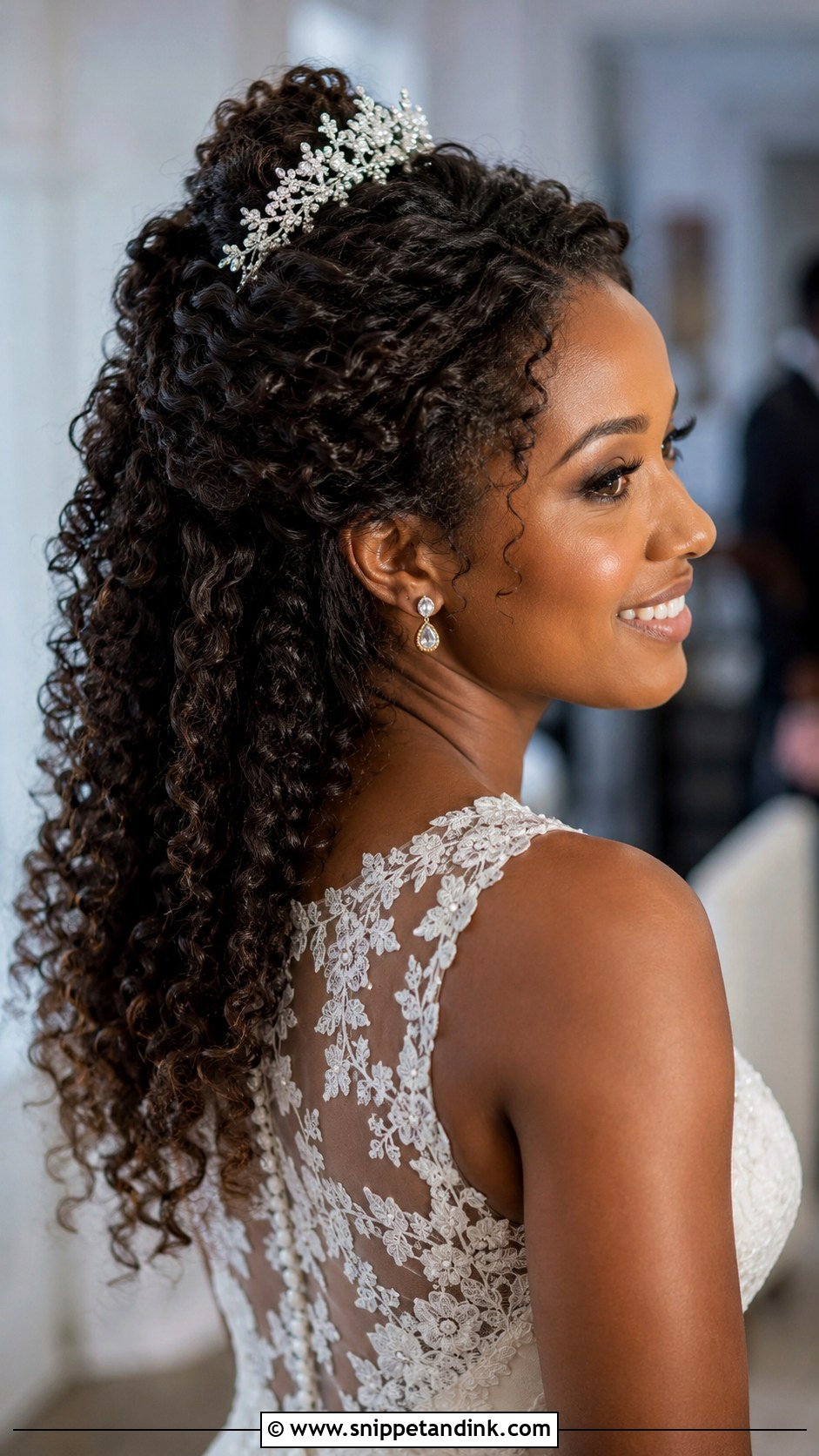
Half up, half down is the compromise style, and with natural curls it shows off the full curl pattern below while keeping it off your face during the vows. The meeting point is the weak spot: a heavy clip or tiara at the join pulls the top section down over a few hours. I secure that section with a small hidden twist and pin the accessory into the twist rather than into loose curls. Lighter clips stay put far longer.
8. Twisted Updo With Pearls
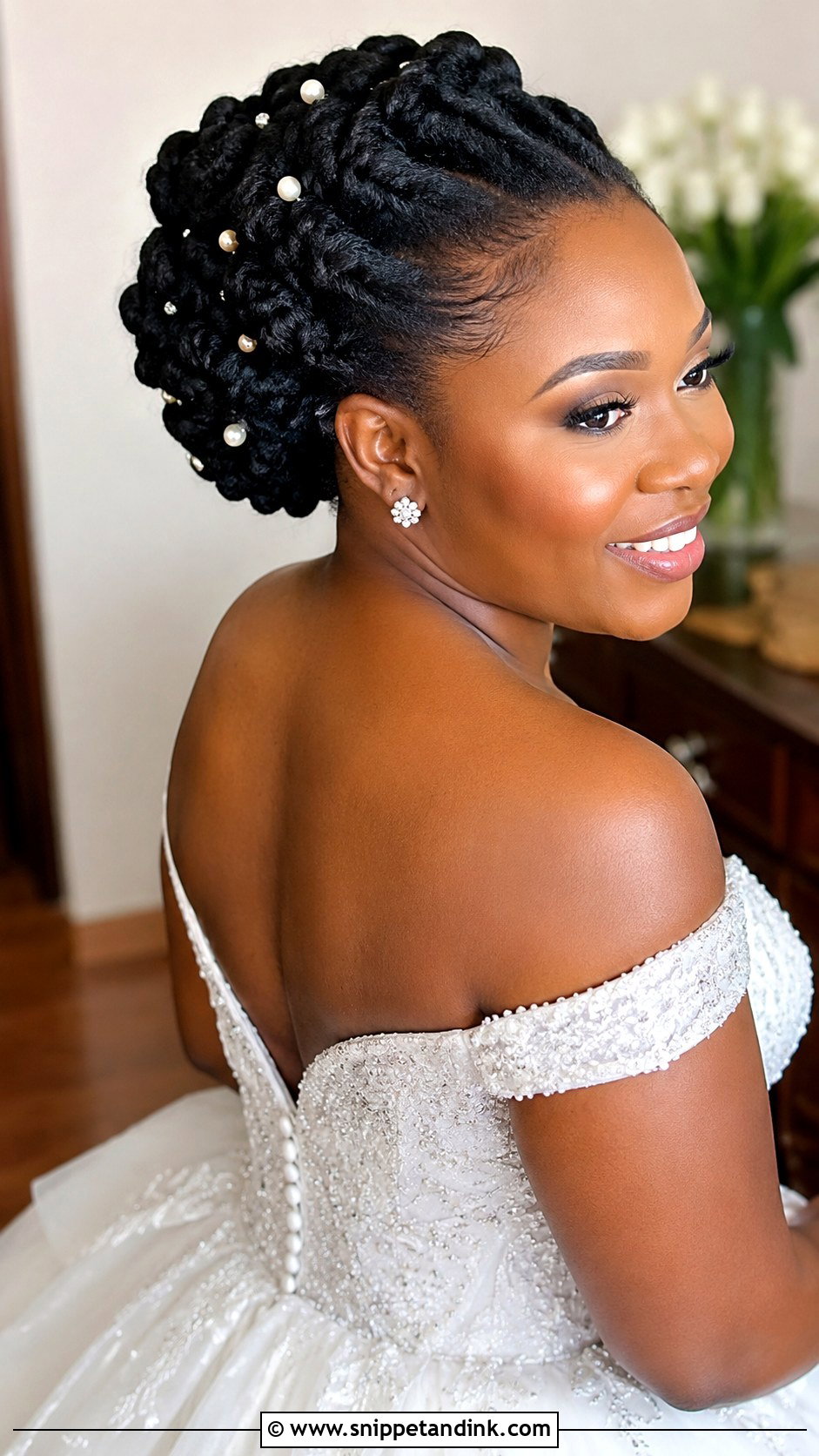
Pearl pins dotted through a twisted updo give natural texture a formal finish without hiding it. I set the twists the night before on stretched hair so they are firm, then coil them in the morning, which keeps the pattern crisp instead of fuzzy. The pins go in last and at an angle into a twist, so they catch light without sliding. This leaves the neck and shoulders bare, so plan your earrings with it in mind.
9. High Puff With Veil
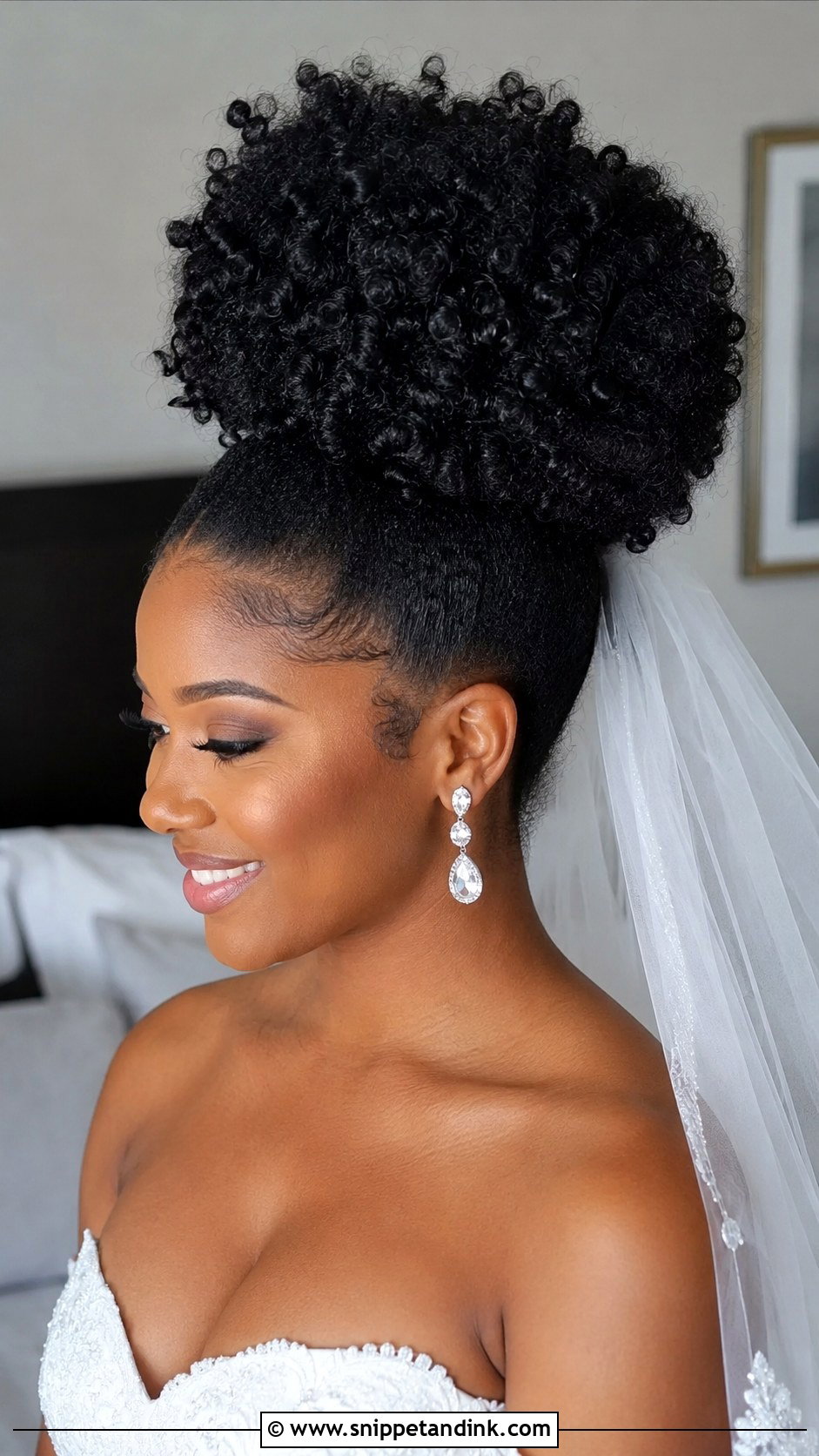
A high puff adds height and lengthens the neck, and it is quicker to build than almost anything else here. Veils are the tricky part. A veil comb slides out of loose coils, so I either stitch the comb to a hidden elastic band around the puff or pin it beneath the puff with crossed bobby pins. Smooth edges with a single gel and keep the puff tight at the base, or it will lean forward by the reception.
10. Box Braids With Star Pins
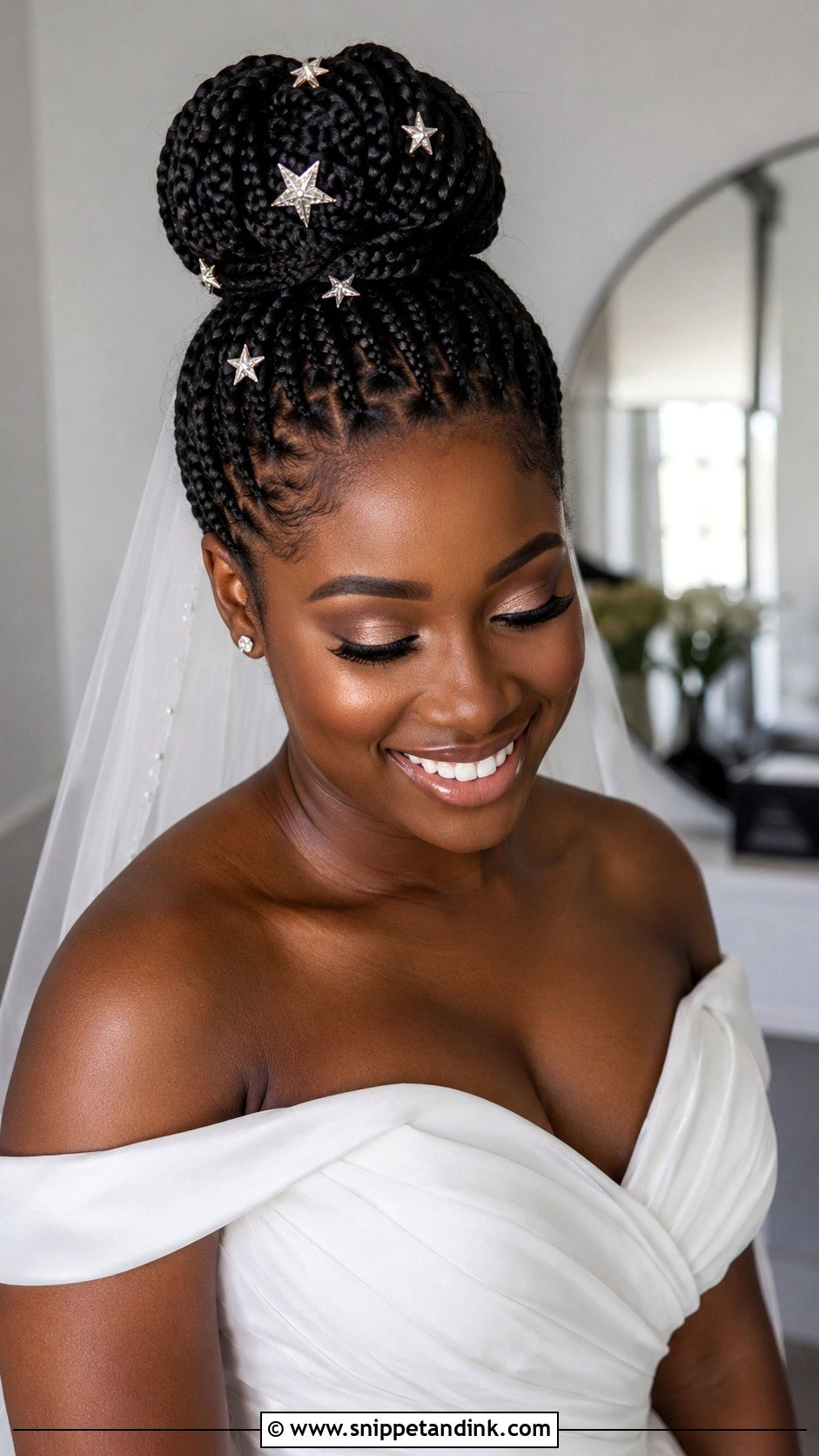
Box braids give you the most options of anything on this list: down, half up, or pulled into a high bun. A scatter of tiny star hairpins clips onto individual braids and looks like a little constellation in candlelight. I’d install the braids about a week ahead so the roots relax and look less raw at the part. A fresh install on the morning before can feel tight enough to spoil a long day.
11. Bantu Knots Updo
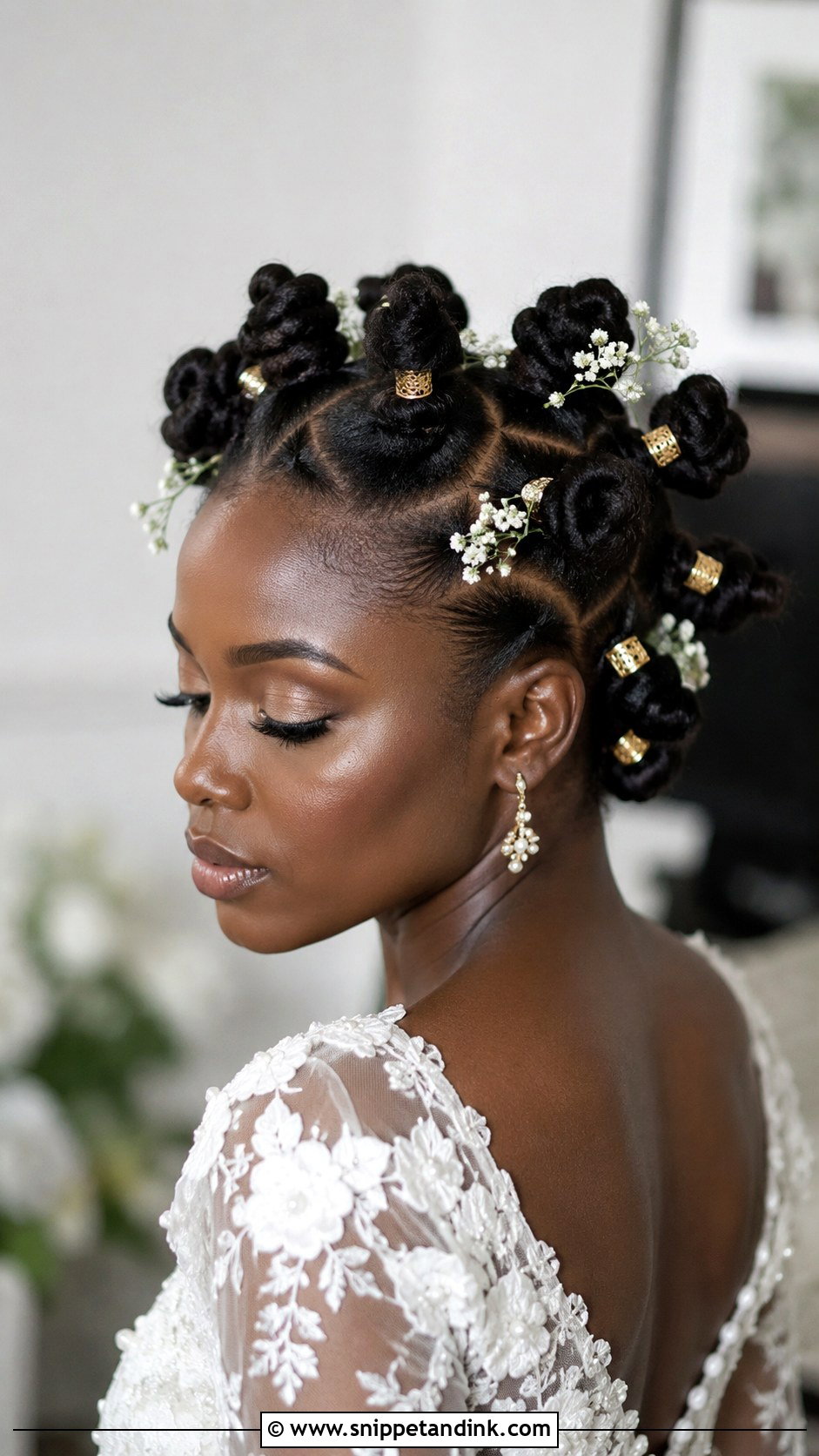
Bantu knots work two ways for a wedding. Worn as knots, they are sculptural and bold, and the parting has to be neat because every line shows. Unravelled the next morning, they leave a springy, defined curl that I pin into an updo. If you plan to unravel them, set them on hair that is about ninety percent dry; damp knots take hours to set and can unravel frizzy. Gold accessories sit well tucked into the base of a knot.
12. Crown Braid Halo
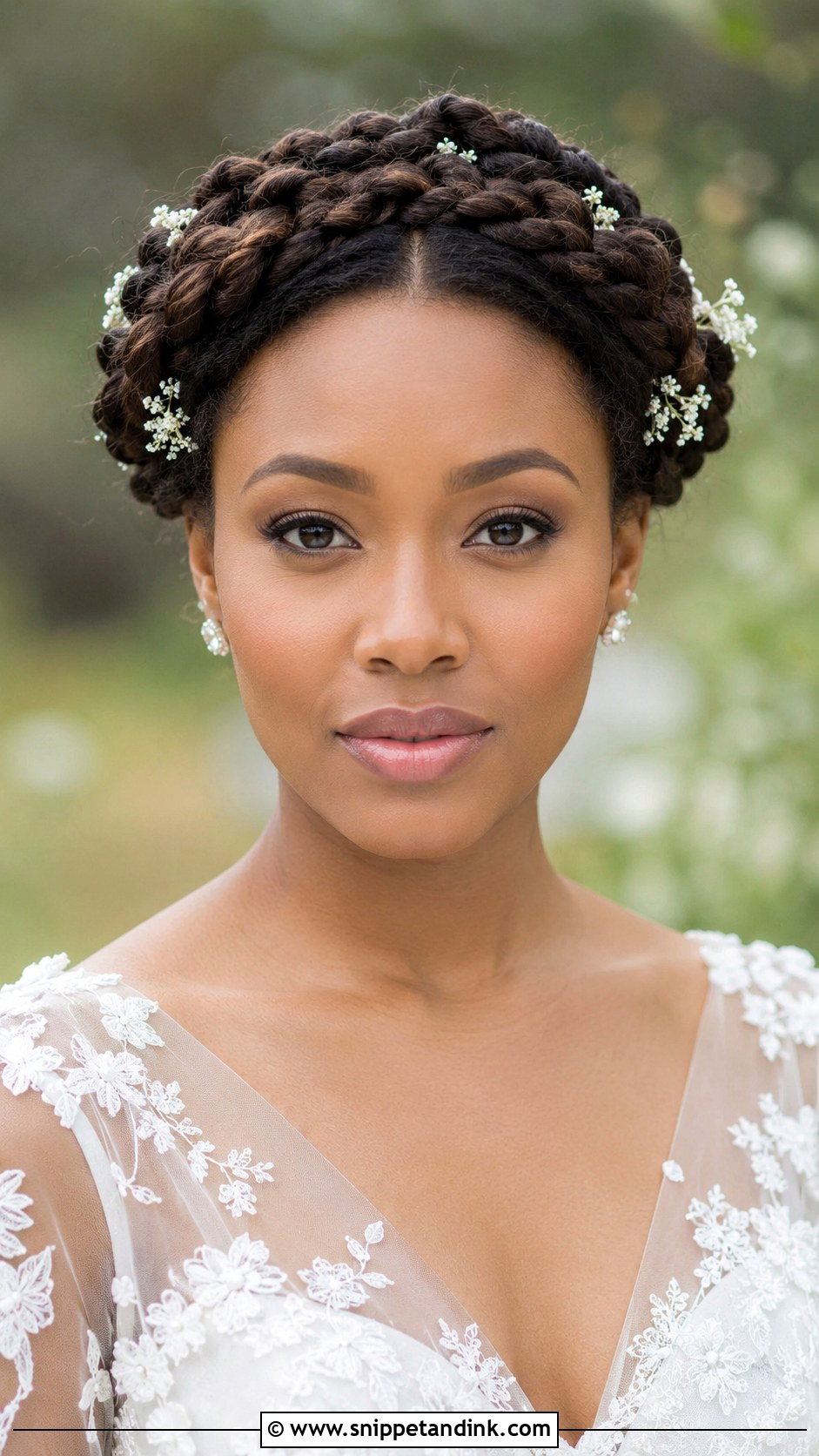
A crown braid keeps every strand off your face, which matters at a summer ceremony when you’ll sweat through a heavy veil. On coily hair, I braid on stretched hair so the plait lies flat and the halo stays even all the way around. Small pearls or flowers can be pushed between the stitches. The one thing I check is the back: the braid has to meet itself neatly at the nape, or it looks unfinished in side photos.
13. Sleek Low Bun With Coils
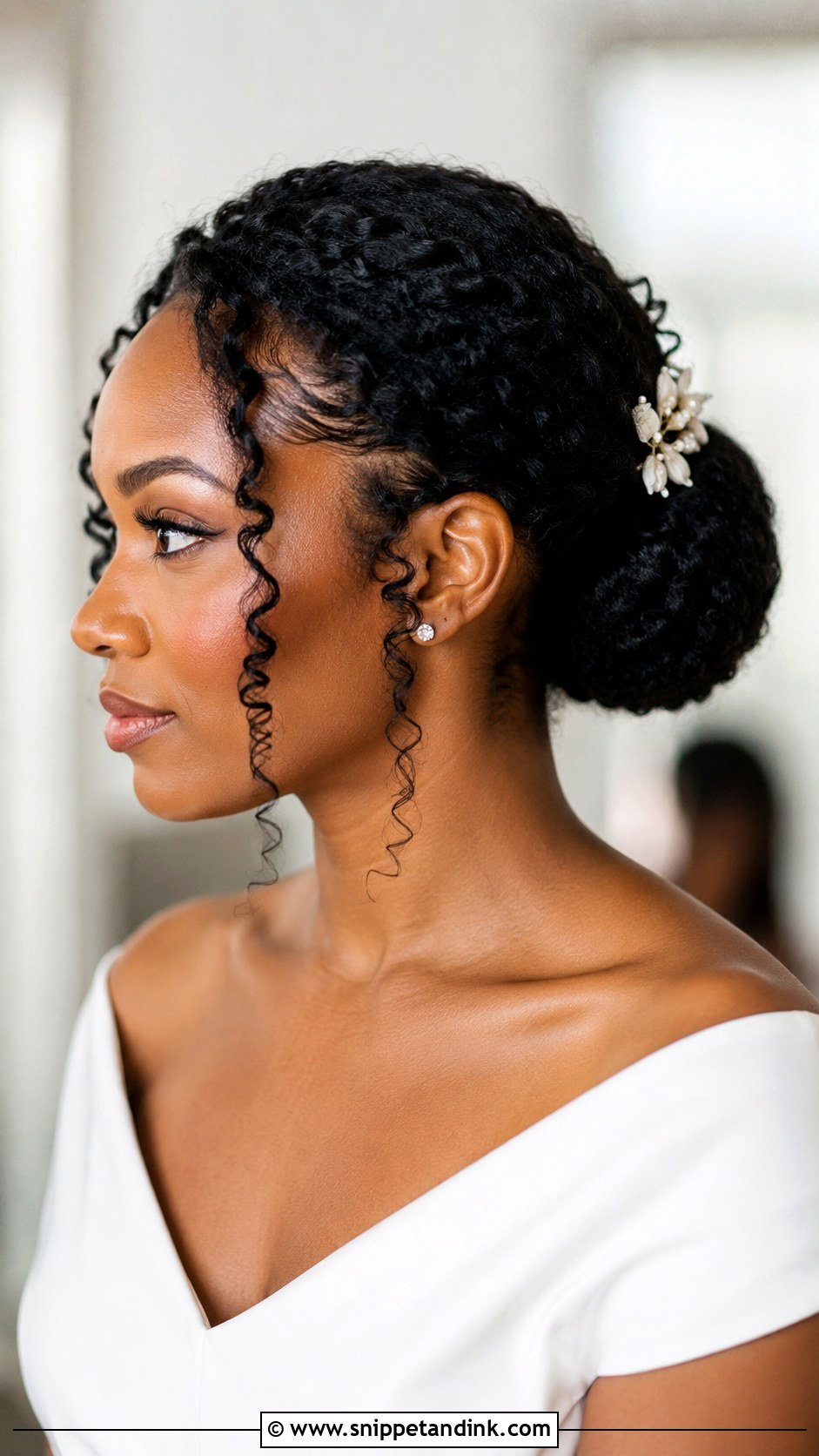
Sometimes the quietest choice is the right one. A sleek low bun with a few coils left out at the front suits a classic dress and lets bone structure show. I smooth the hair with a light gel and a soft brush, then tie it with a scrunchie under the bun rather than a thin elastic, which snaps or leaves a crease. Leave the face-framing coils out before you smooth, not after. Pulling them loose later never looks natural.
14. Curly Mohawk Updo
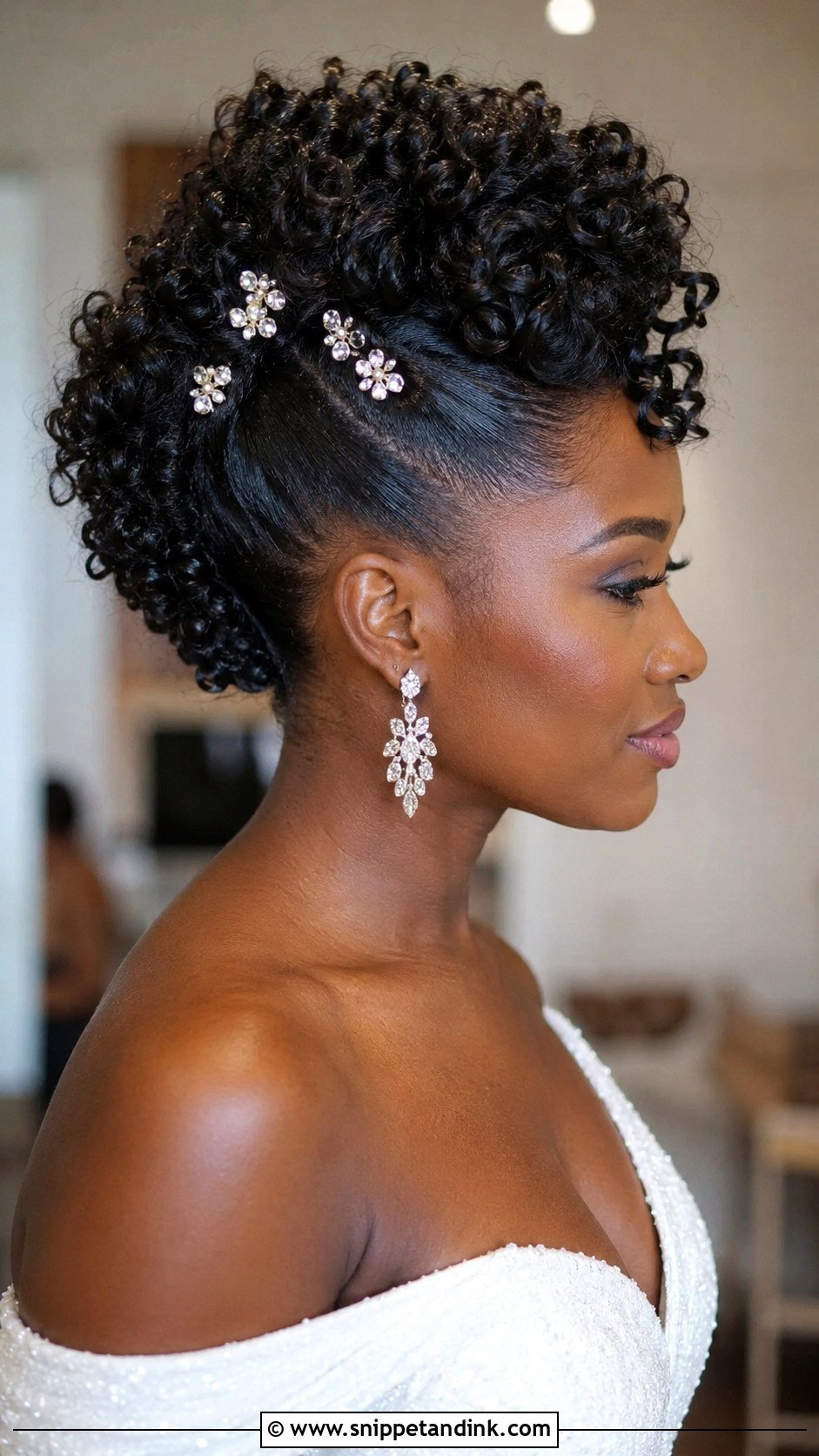
The curly mohawk is for a bride who wants her hair to be part of the outfit, and it pairs well with edgy elegance in the dress. I flat twist or cornrow the sides tightly against the head, then pin the centre curls into a strip of height. The sides have to stay tight all day, so they should be done by a braider who knows how to avoid tension at the temples. A slim metallic headband works better here than a veil.
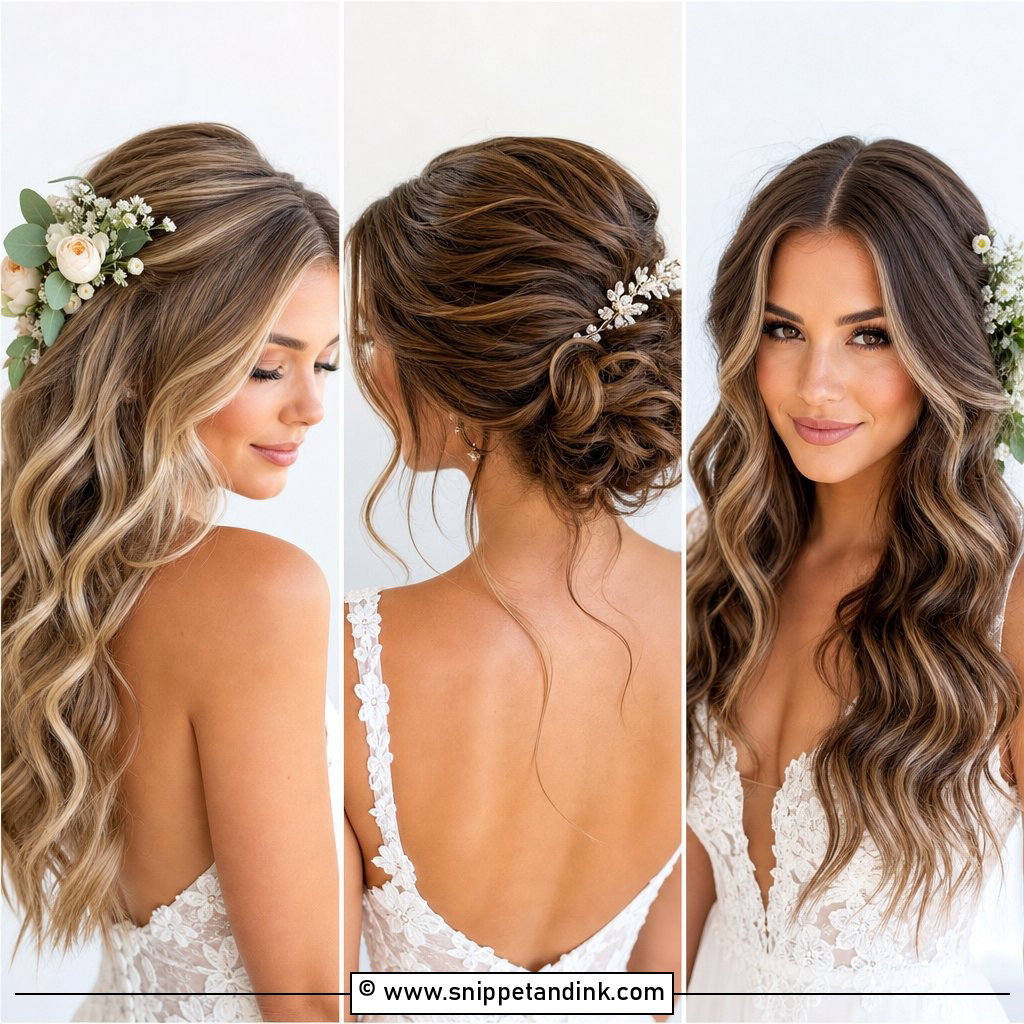
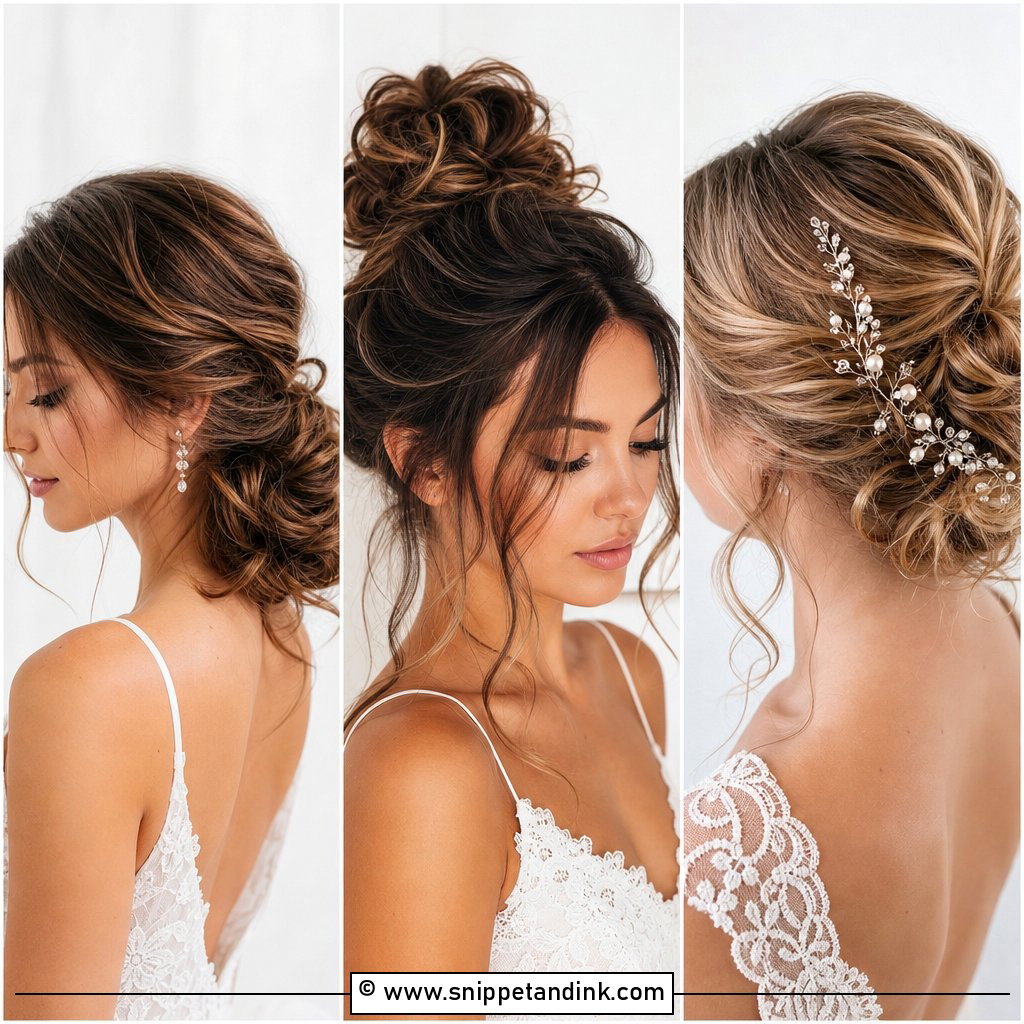
15. Twist Out With Side Part
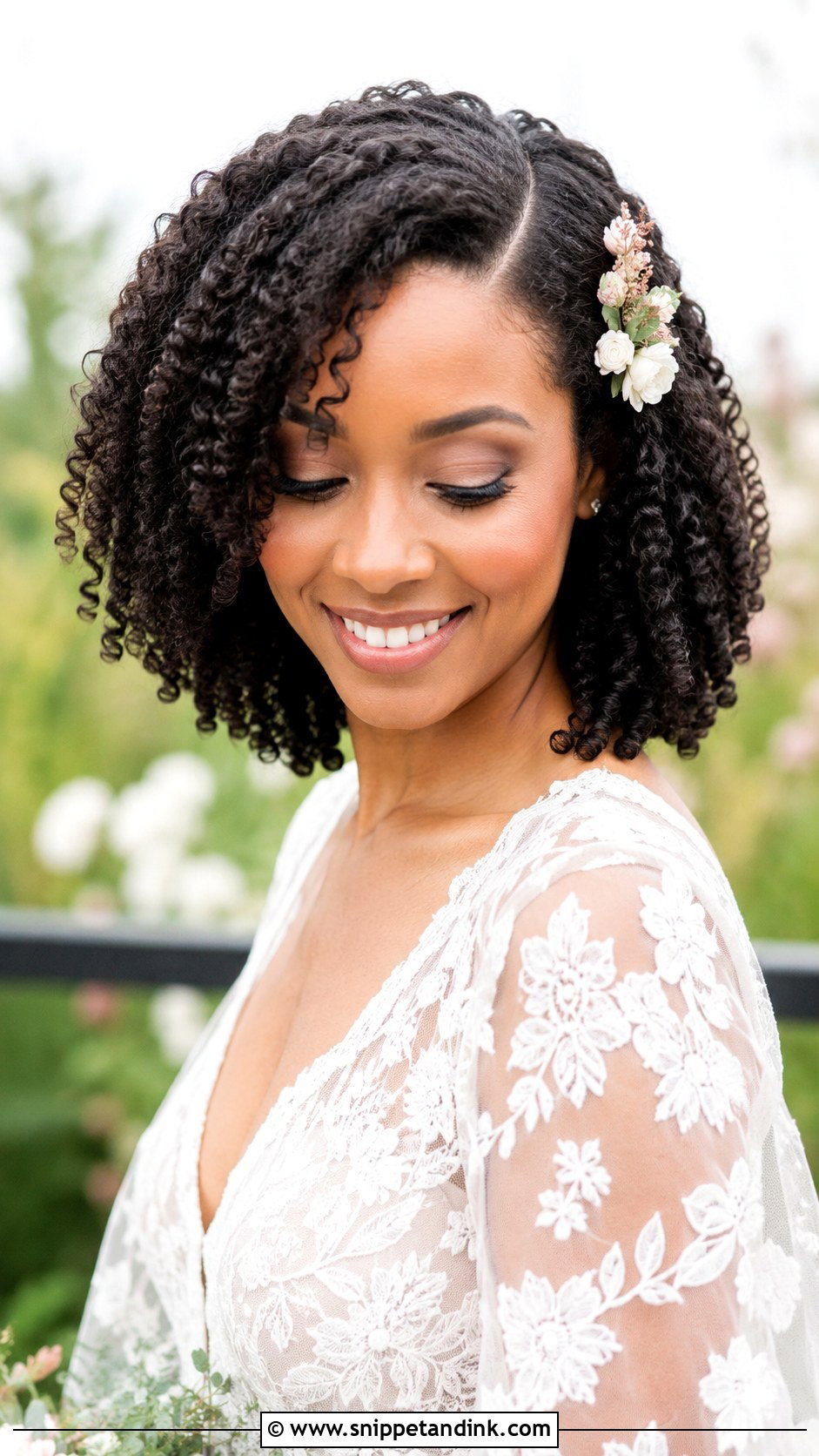
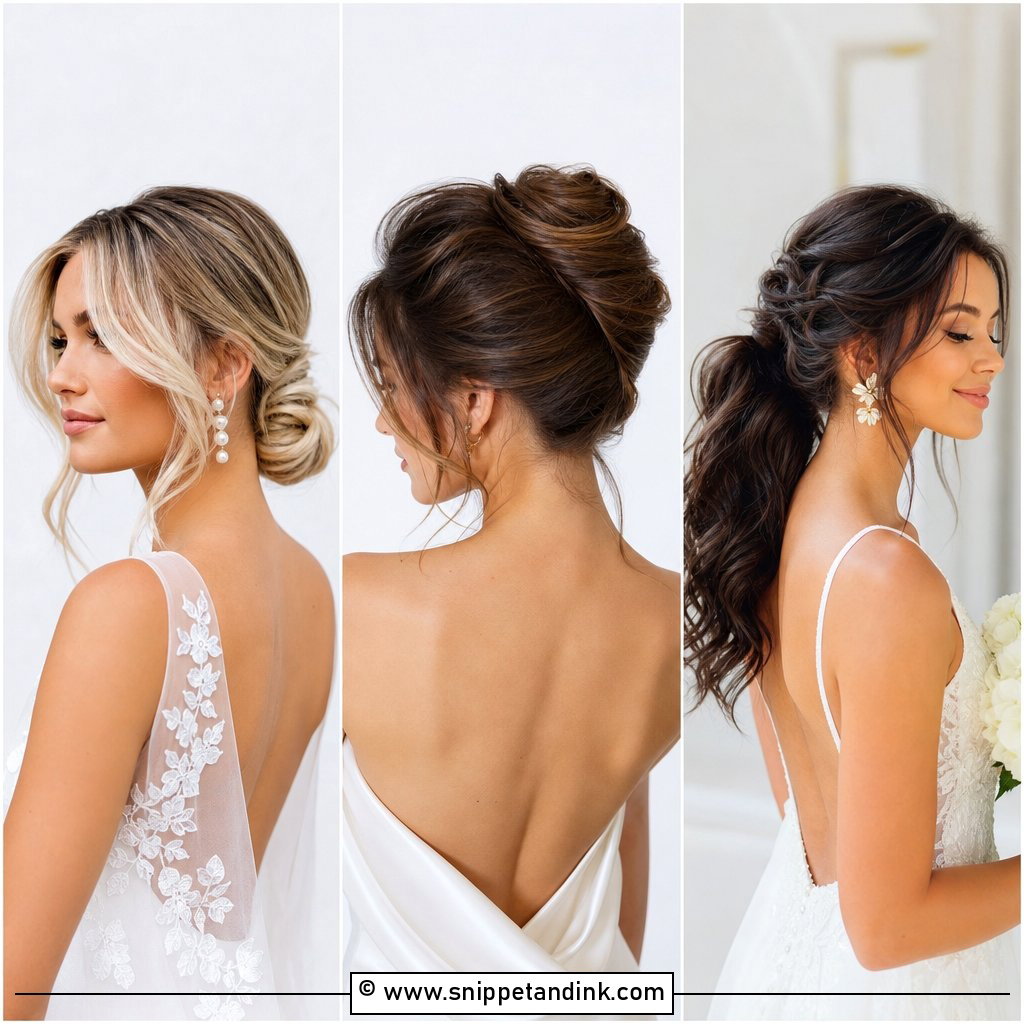
A twist out is the style most likely to change during the day, so I treat it with caution. Set it two nights before on dry, stretched hair, unravel it the morning of, and separate the curls gently with oiled fingers. A side part gives it shape. In humid weather the definition loosens within a few hours, which some brides love and others hate. If you’ll be outdoors in summer, pin one side back to give the style a structure that holds when the curls soften.
16. Updo With Fresh Flowers
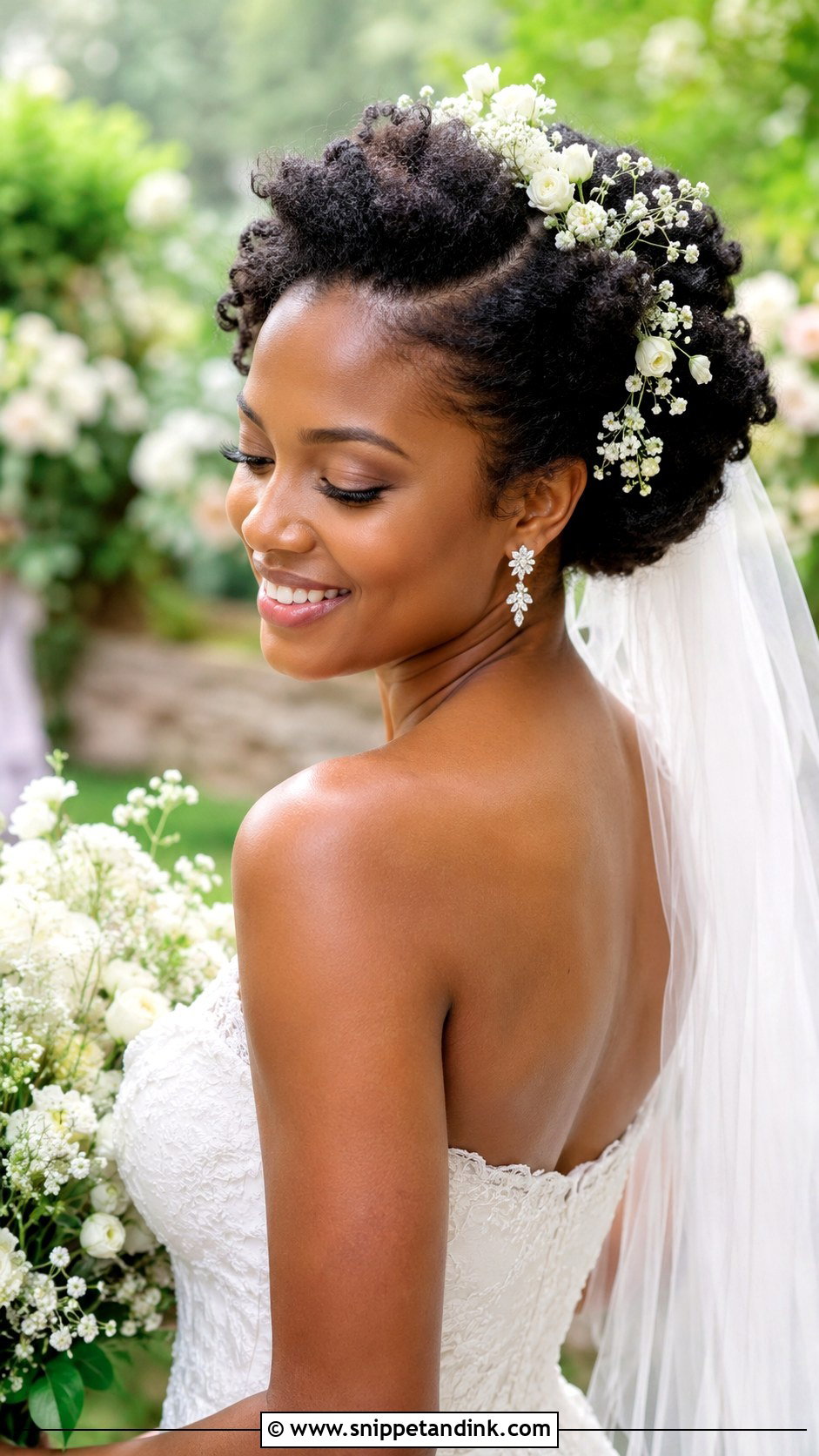
An updo dotted with fresh flowers is one I always discuss with the florist, because petals that look fine in a bouquet can wilt fast pinned against a warm scalp. Spray roses, waxflower and small orchids hold up well; gardenias and peonies brown at the edges by the evening. I wire the stems short and tuck them into the updo after the veil is in. Matching them to the bouquet is a nice touch, but hardiness matters more than an exact match.
17. Cornrows Into Bun
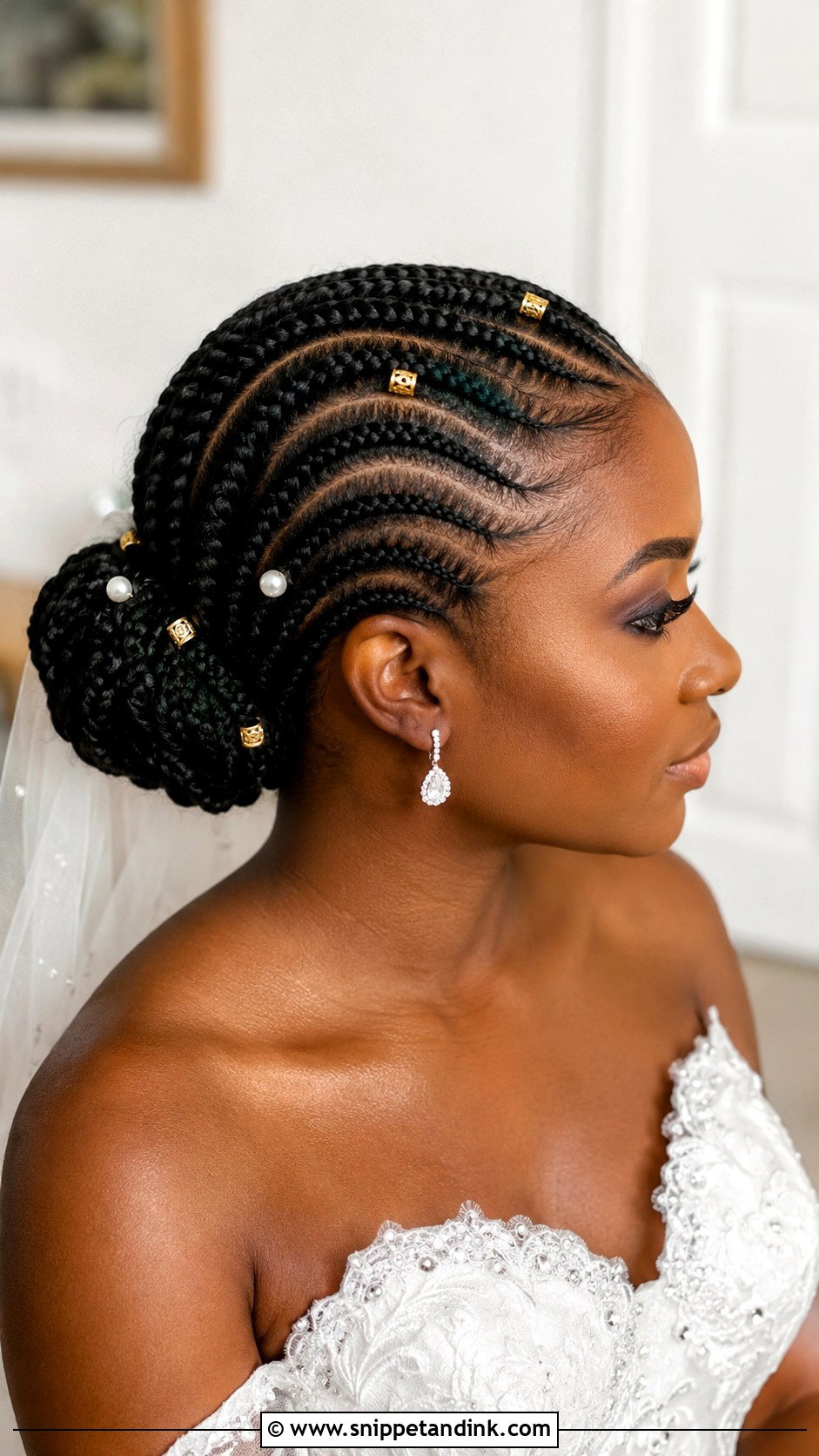
Cornrows leading into a bun are a protective style that genuinely lasts the whole day without touch-ups. The rows can run straight back or curve into clean cornrow patterns, and the design is where the braider’s skill shows. Ask for tension that is firm but not painful; if the scalp feels sore or bumps appear at the edges, it’s too tight. Gold cuffs and beads add finish without weight.
18. Loose Locs With Half Updo
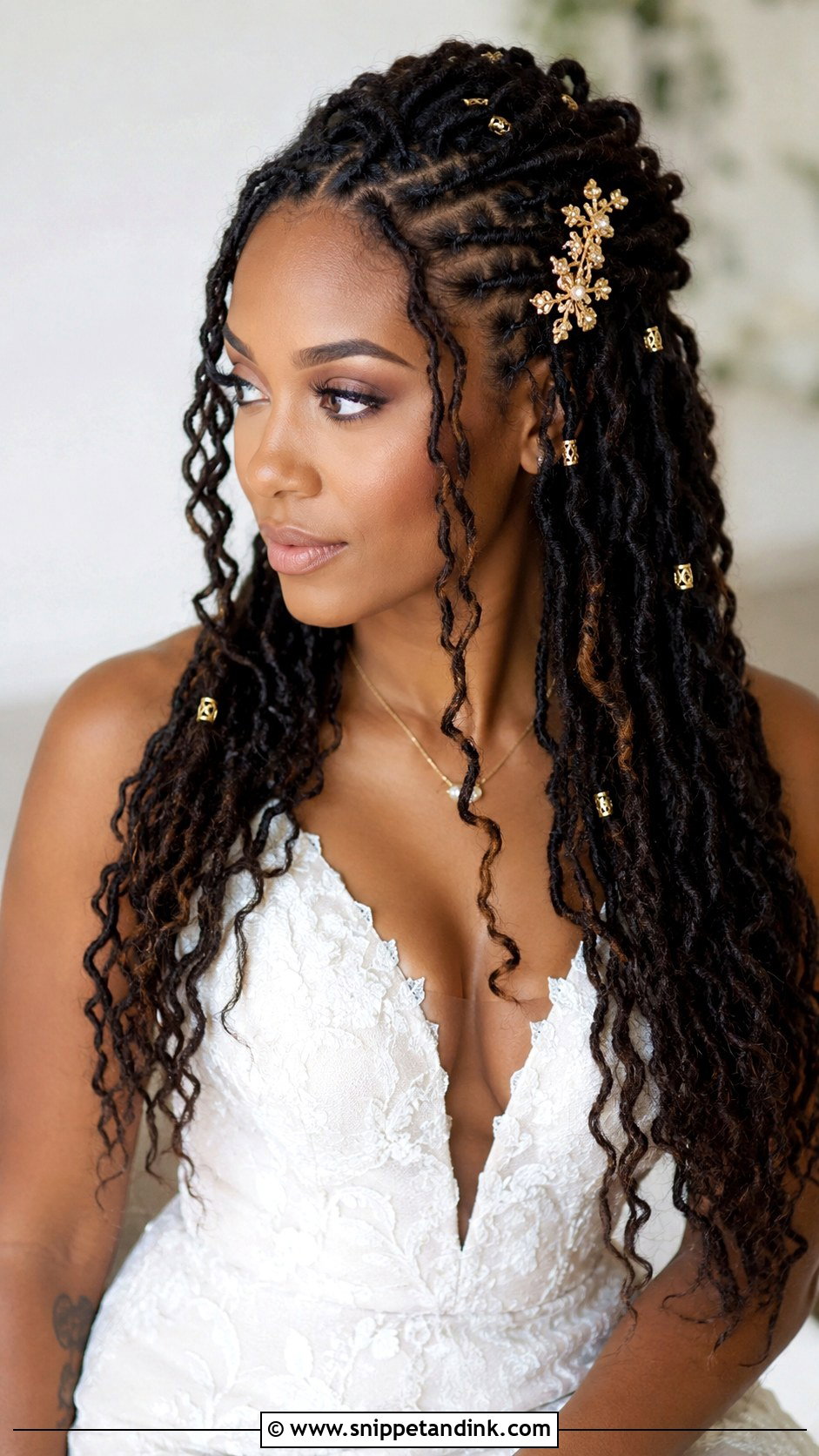
Locs in a half updo suit a bride who wants movement and a clear face. I gather the top section with a loc-friendly elastic or a wrap and pin it with U-pins through the gaps, never through a loc. Cuffs and flowers decorate the gathered part well. Medium to long locs work best; short locs don’t have the length to gather and still fall below.
19. Voluminous Curly Side Sweep
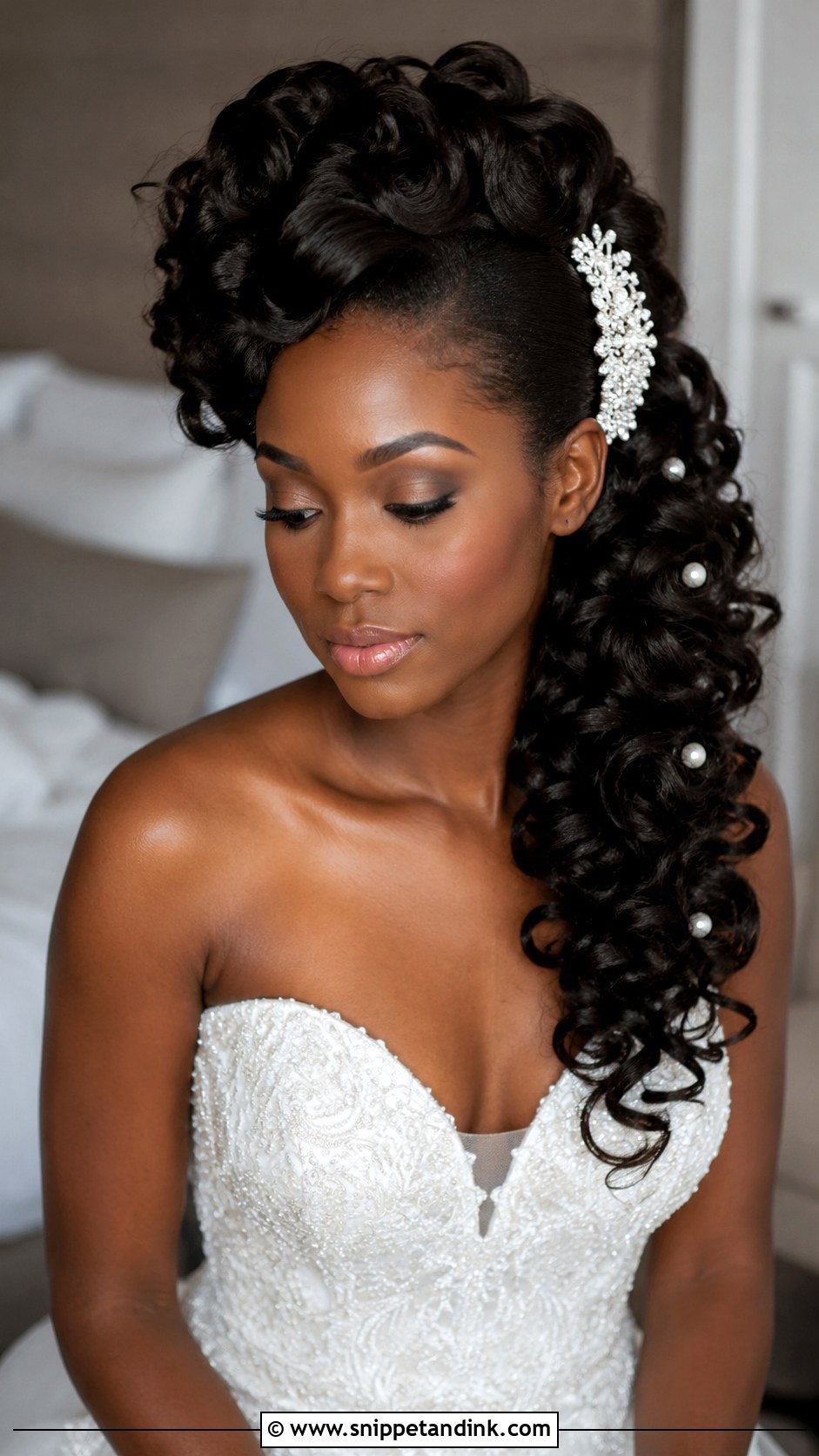
Sweeping all your curls to one shoulder brings an old Hollywood shape to natural texture. The pinned side does all the work, so I build it with a flat twist or a row of crossed pins hidden under the curls, and that is where a comb or pearl pins can sit. Dense hair carries this volume well; very fine curls can look sparse when pulled to one side. Turn your head both ways at the trial before deciding.
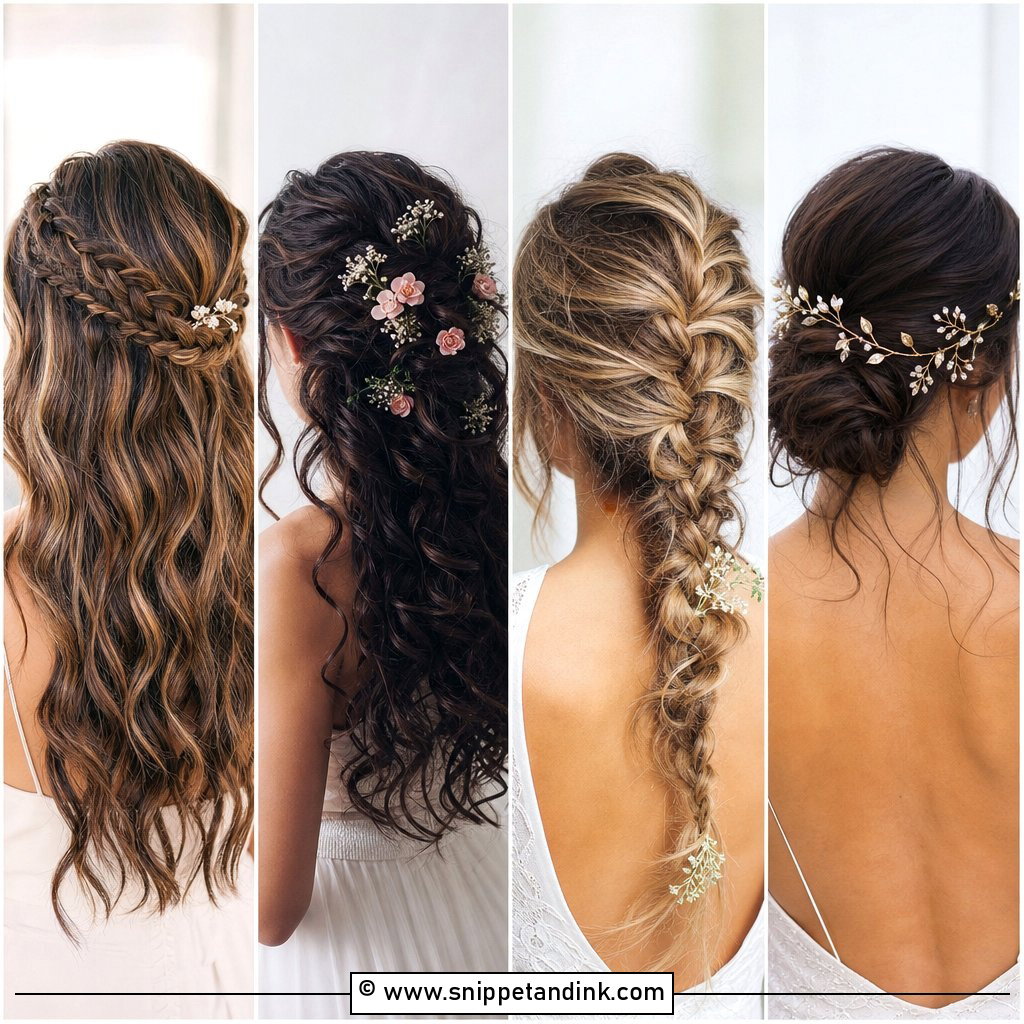
20. Protective Updo With Gold Accessories
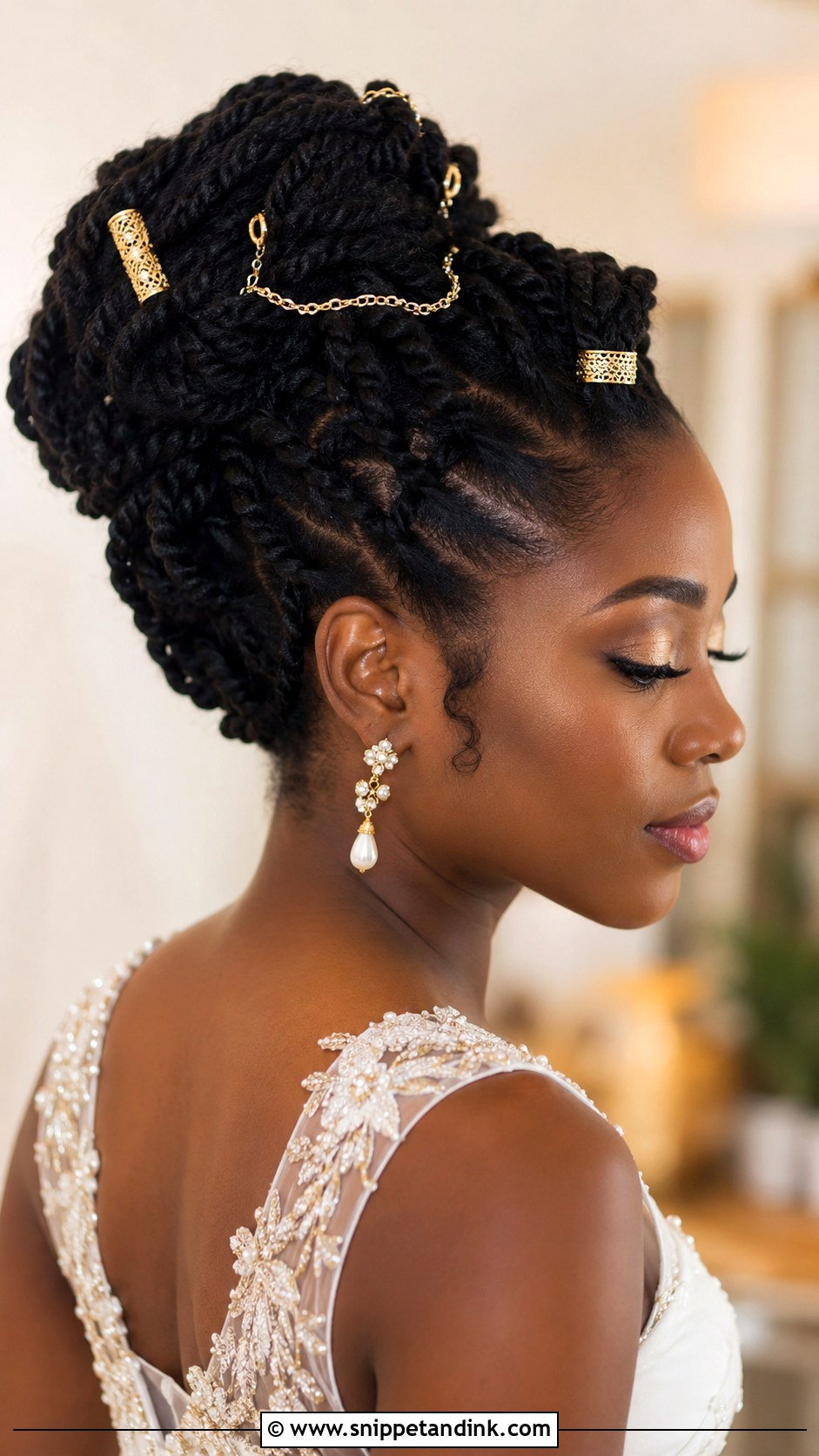
A protective updo dressed with gold rings, cuffs and fine chains has a regal look that suits deeper skin tones especially well. The base can be twists, braids or coils; what matters is that it is fully installed and settled before the day so you aren’t sitting through hours in the chair that morning. I thread chains through the braids at the trial to check the weight and length. Too many accessories can turn a strong style into a busy one, so I usually stop at one focal piece and two or three small accents.
When to Install Braids, Locs Retwists and Twist Sets
Timing matters more for natural hair than for any other texture I work with, because so many of these styles are installed rather than styled on the morning itself.
- Box braids, goddess braids and cornrows: about five to seven days before, so the roots relax and the parts lose their fresh, pulled look.
- Loc retwist: one to two weeks ahead, which gives the new growth time to settle and any redness at the scalp to calm down.
- Twist outs and braid outs: set two nights before on stretched hair, and sleep in a satin scarf or bonnet.
- Deep condition a few days out, not the night before; freshly conditioned hair is too soft to hold pins well.
A Small Emergency Pouch for Coils and Curls
I hand every natural-hair bride a pouch for her maid of honour. It holds a dozen U-pins, a travel spray bottle of water with a little leave-in, a small pot of the same edge gel I used, a soft edge brush, a satin scarf for the car and two spare elastics. With that, a collapsing puff or a frizzy twist out can be fixed in five minutes in the bathroom.
What you shouldn’t bring is a second styling product. Mixing a new cream into a set style is the quickest way to make it look greasy in the evening photos.
Your Texture Already Has the Shape You Need
Natural hair doesn’t need changing to look bridal. From full afros and intricate braids to elegant locs and flower-dotted updos, every look here works with your texture rather than against it. The best one is the one that suits how you’ll spend the day: a long outdoor ceremony, a dance-heavy reception or a short city wedding. Book a trial, wear the style for a full day, and trust what your hair tells you.
You'll Like These Ideas:



Leave a Reply