
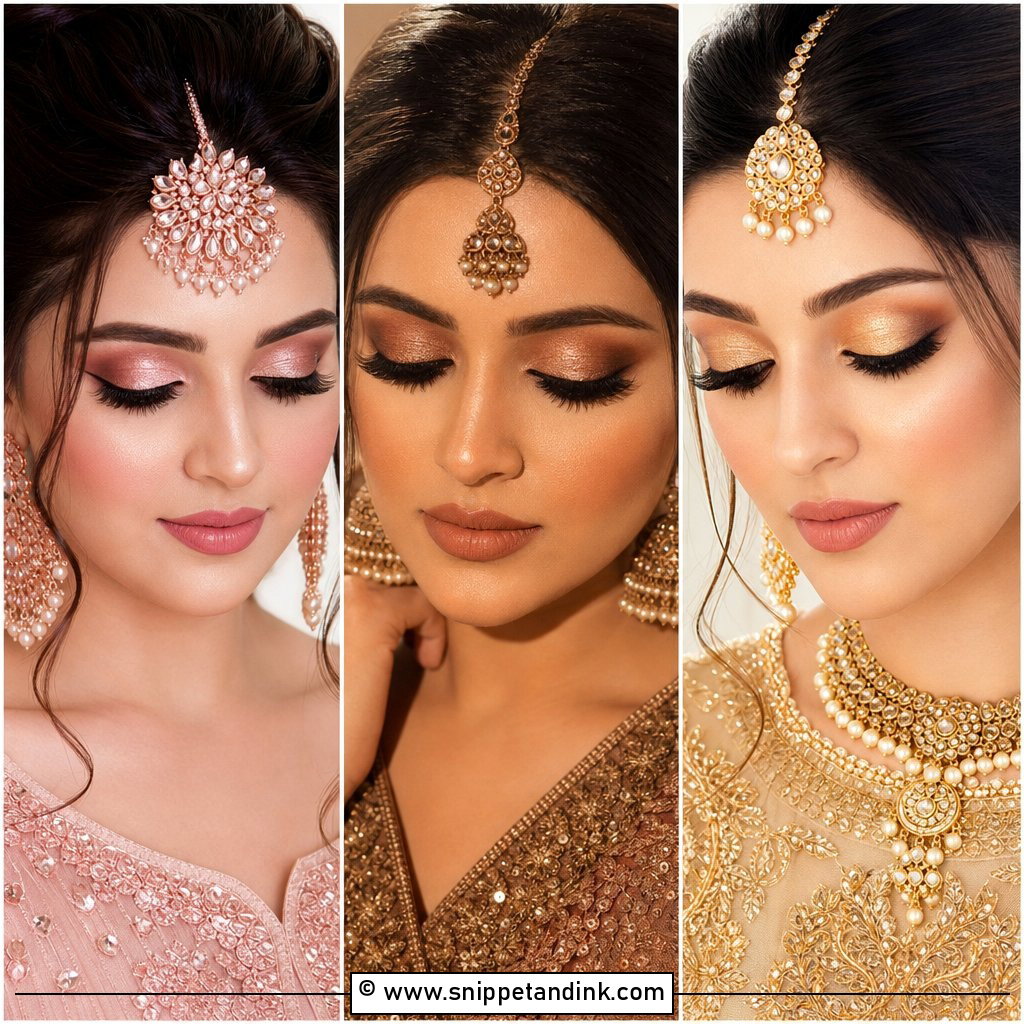
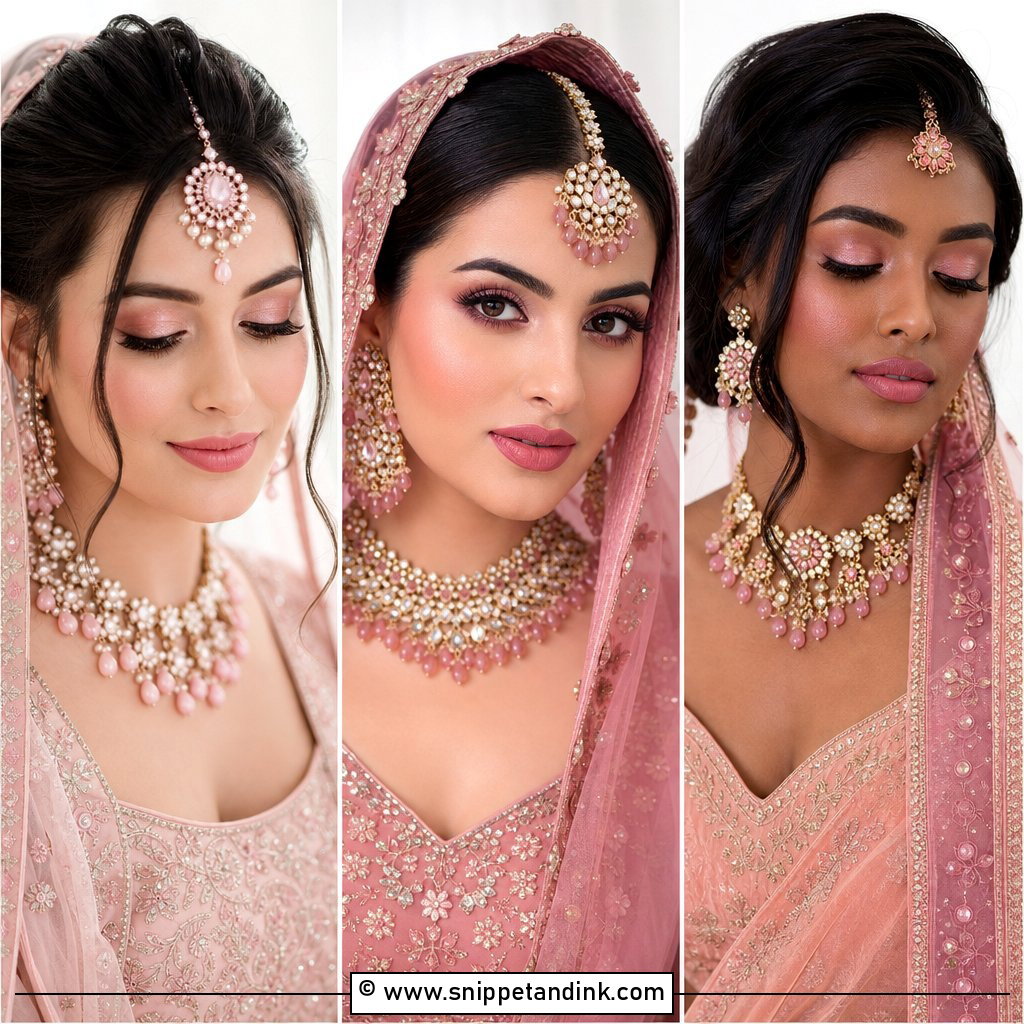
Pink is the color family I use most on brides, mainly because it does what skin does naturally: it flushes. It can stay sheer enough for a beach elopement or build up to real definition for an evening ballroom, and the shade can shift to suit almost anyone. A pale rose wash sits well on fair skin, mauve pink on olive undertones, coral pink warms tan skin, and berry pink gives deep skin a rich flush. What I’m seeing brides ask for this year is glowing skin, blush placed slightly lifted, defined eyes and a lip that agrees with the cheeks instead of fighting them. Here are twenty pink looks, from barely-there to full glam, with notes on how each one actually behaves on the day.
Why Pink Blush Vanishes on Camera
The most common thing I hear after a trial is “it looked pink in the mirror and nothing in the photos.” Cameras, and flash especially, flatten soft color, so a blush that looks right at arm’s length can read as bare skin in a portrait. That doesn’t mean piling it on. It means building it so it lasts and registers.
- Cream blush first, pressed in with fingers so it becomes part of the skin.
- A powder blush in a similar shade tapped over the top. The cream gives depth; the powder locks it and keeps it from sliding by evening.
- Placement slightly higher than the apples, angled toward the temple. Low blush drags the face down when you aren’t smiling.
- A check in the mirror from across the room, not just up close. If you can see the color from six feet, the camera will too.
Lip color follows the same logic. Very pale pink nudes can wash the mouth out entirely, so I usually go one step deeper than a bride’s instinct, then keep the edges soft with a liner close to her natural lip color.
1. Soft Pink Wedding Makeup
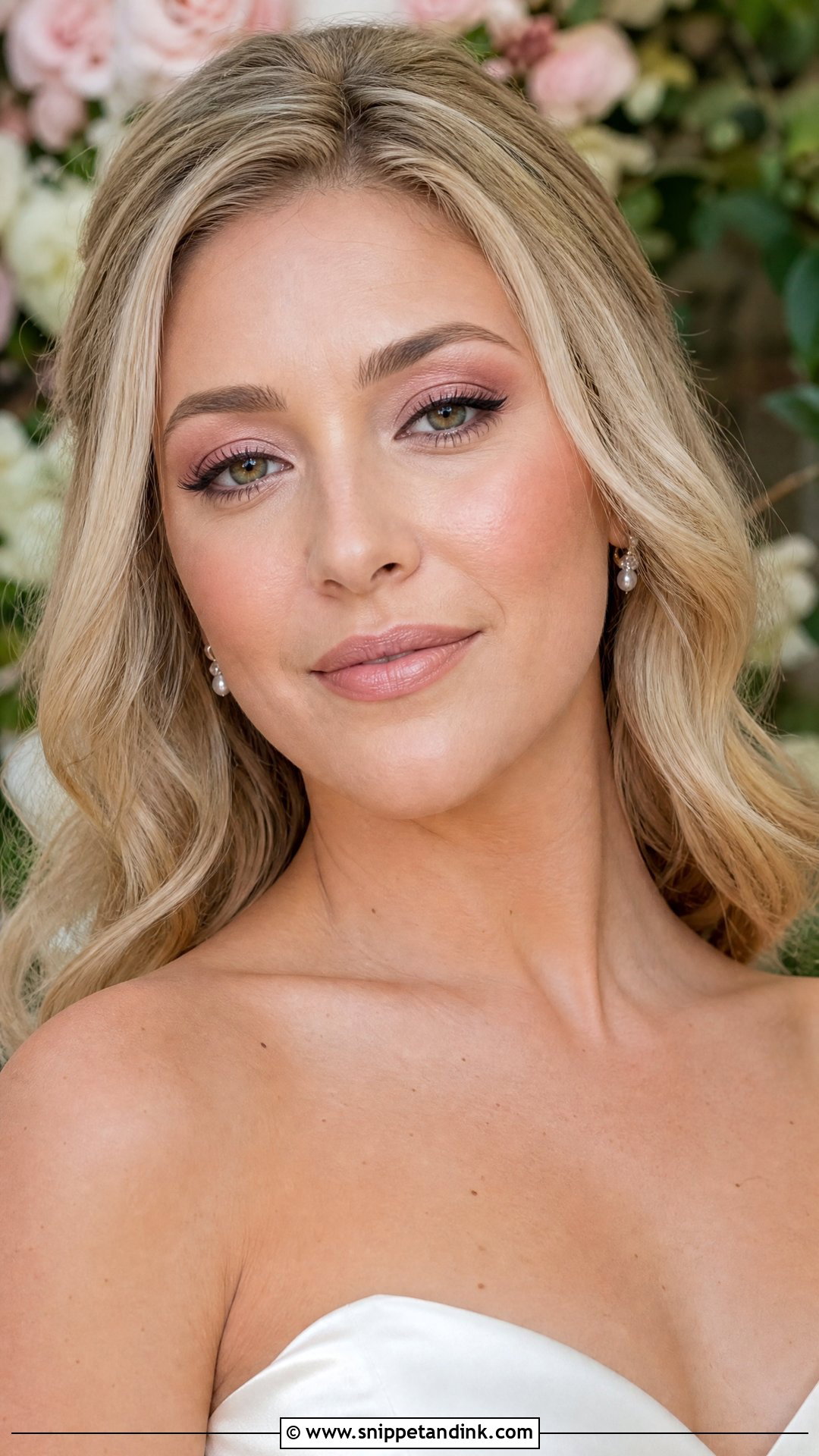
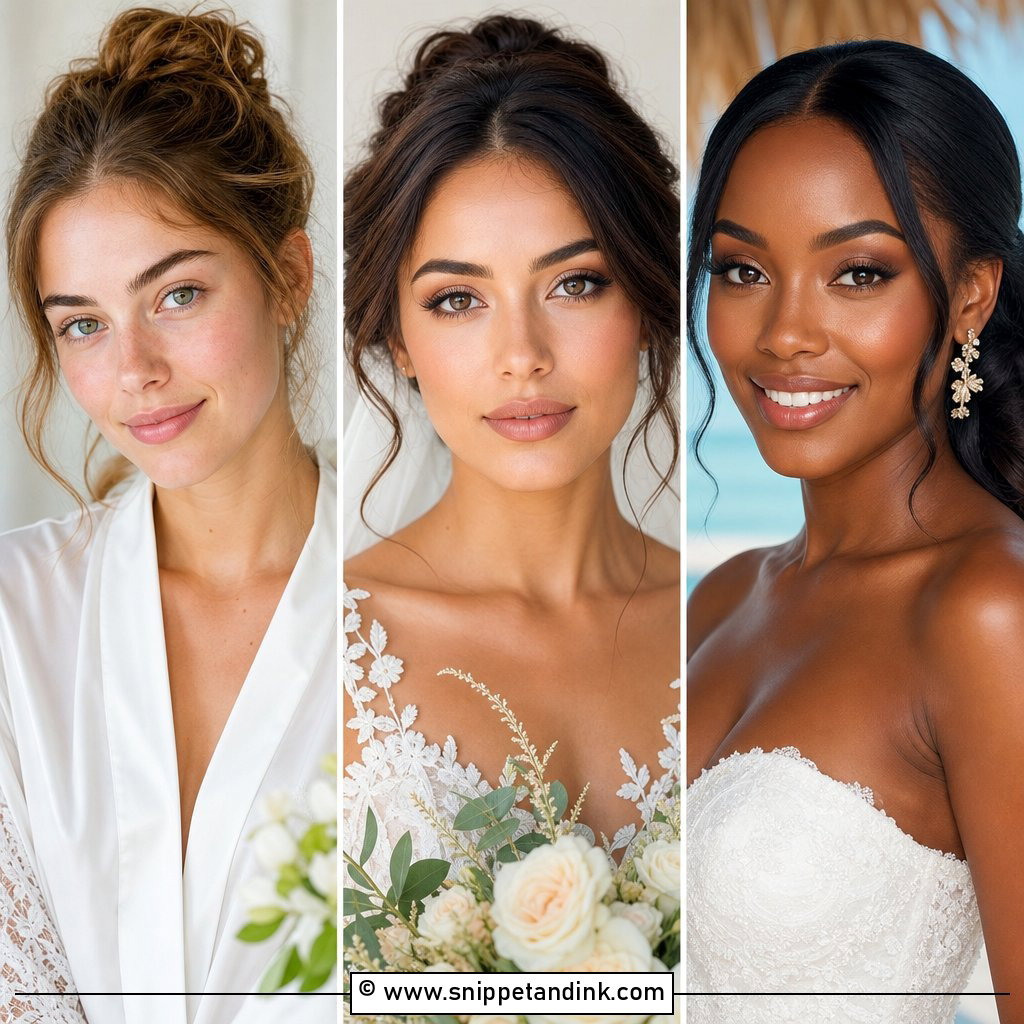
This is where I start most consultations, because it’s the hardest look to get wrong. Skin gets a proper hydrating prep, then a light-to-medium base in a satin finish so real skin texture still shows. Pale pink or rose beige goes across the lid with brown liner pressed into the lash roots rather than drawn as a line. I place a cream blush high and blend it toward the temple, then keep the lip in the same family with a pink nude or a sheer gloss. Lace gowns, loose waves and outdoor light all suit it, since it never sits heavy on the face.
2. Pink Bridal Makeup With Dewy Skin
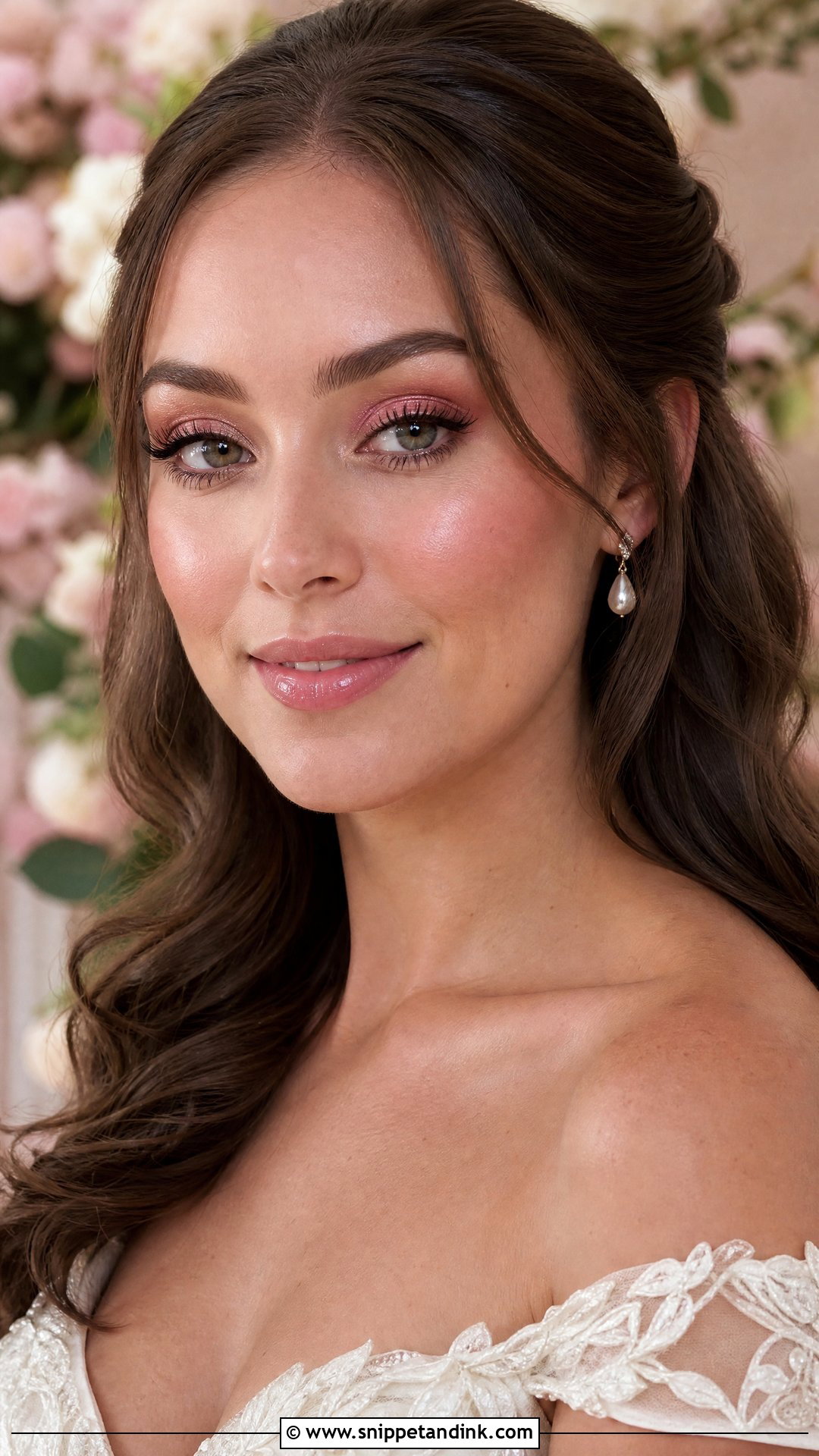
Glow photographs well in close-ups and badly when it’s everywhere. For pink bridal makeup with dewy skin, I keep the sheen on the cheekbones, brow bone and the high point of the nose, and set the sides of the nose, chin and center forehead with a fine powder so they don’t turn oily by the speeches. Underneath goes a sheer luminous foundation, cream pink blush, a soft champagne highlight and a glossy rose lip. Eyes stay simple: satin pink shadow, thin brown liner, lashes combed apart. Spring and garden weddings suit it best; on very oily skin I’d move you toward the satin looks further down.
3. Pink Soft Glam Wedding Makeup
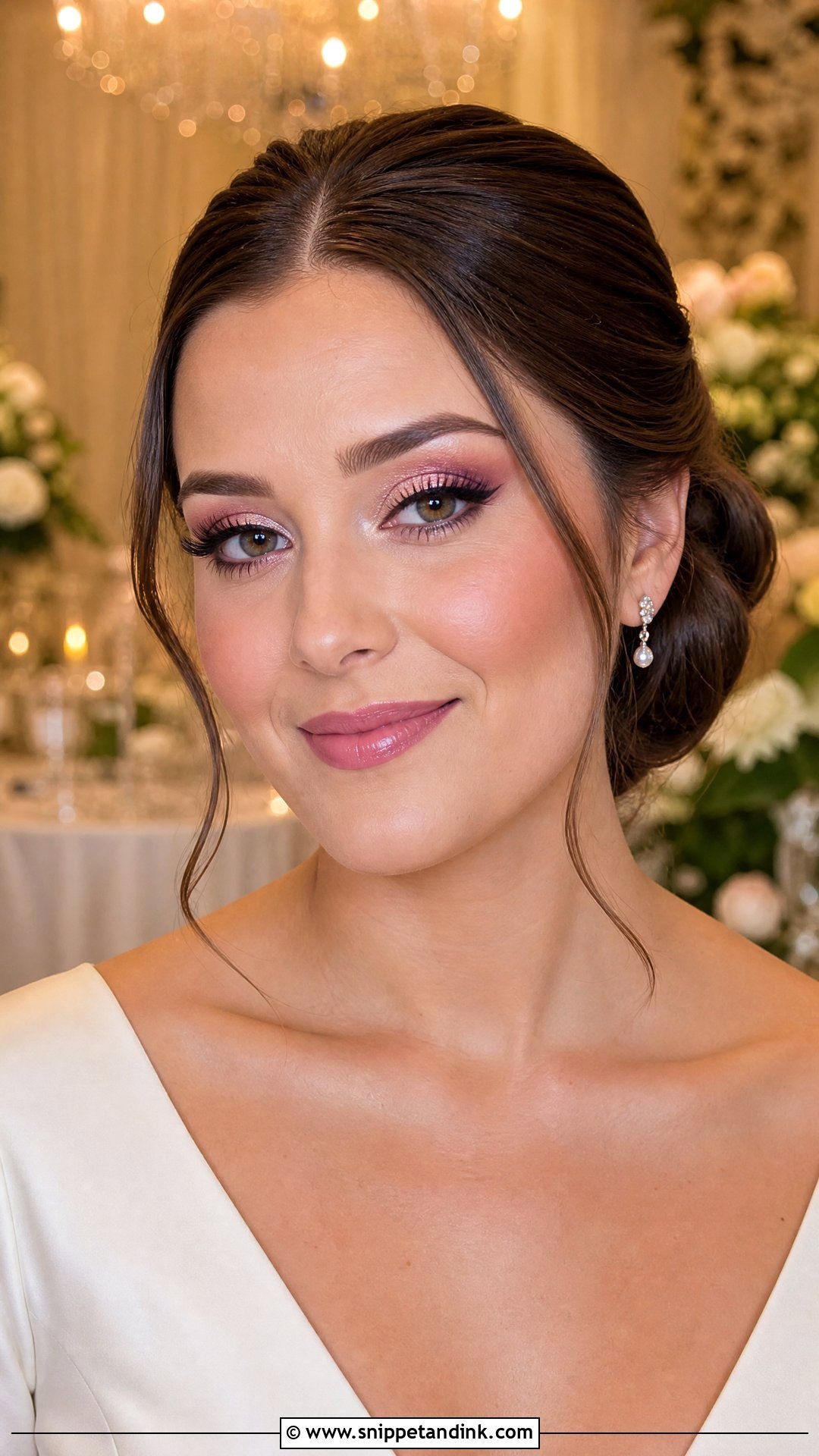
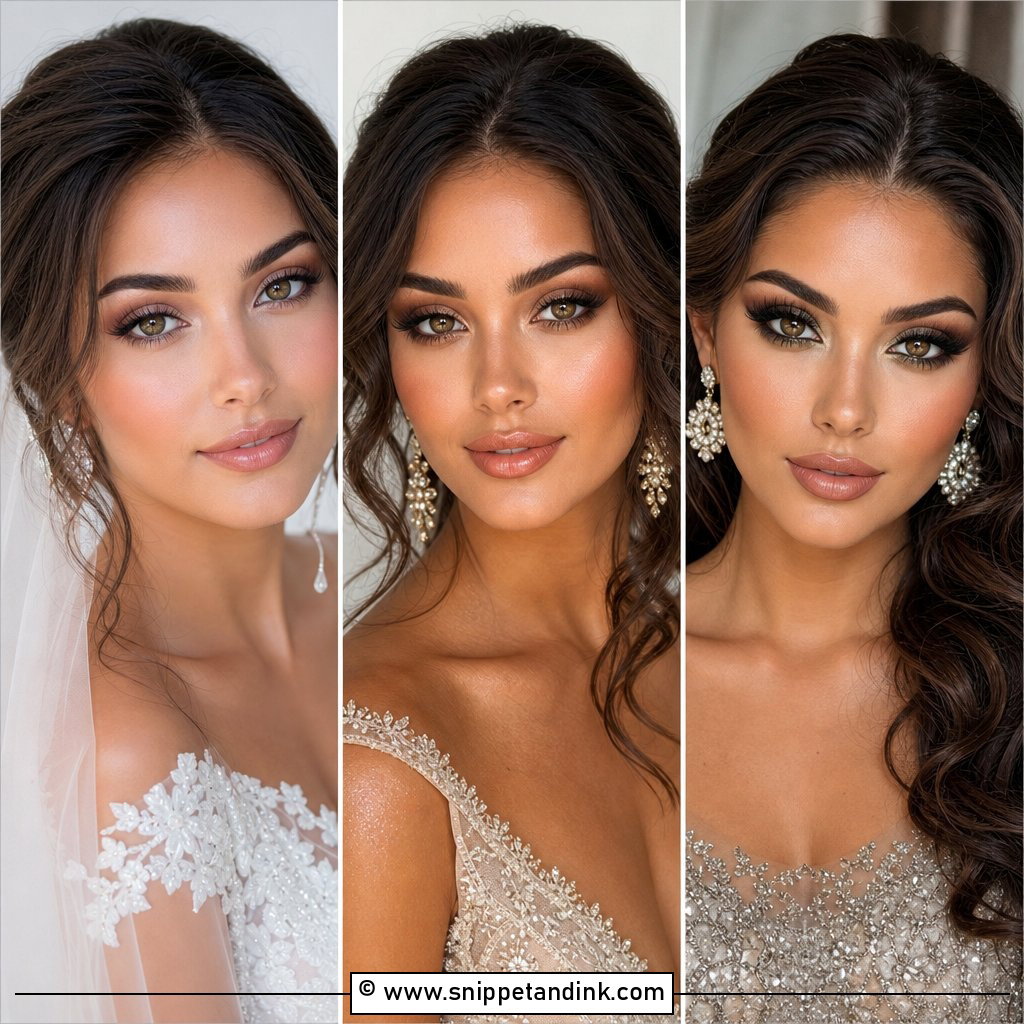
Soft glam sits between natural and full glam, and the work is mostly in the blending. I lay a long-wear base, sculpt the cheeks lightly, and run a rose-pink blush up toward the outer eye so the face and eyes connect. Matte mauve pink goes through the crease, a pink shimmer on the center of the lid, and the lash line is softened with smoky brown liner. Wispy lashes lift without hiding the shadow. A satin pink nude finishes it. Hotel weddings and formal receptions are where this shines, because it still reads clearly in photos taken across a room.
4. Rose Gold Pink Wedding Makeup
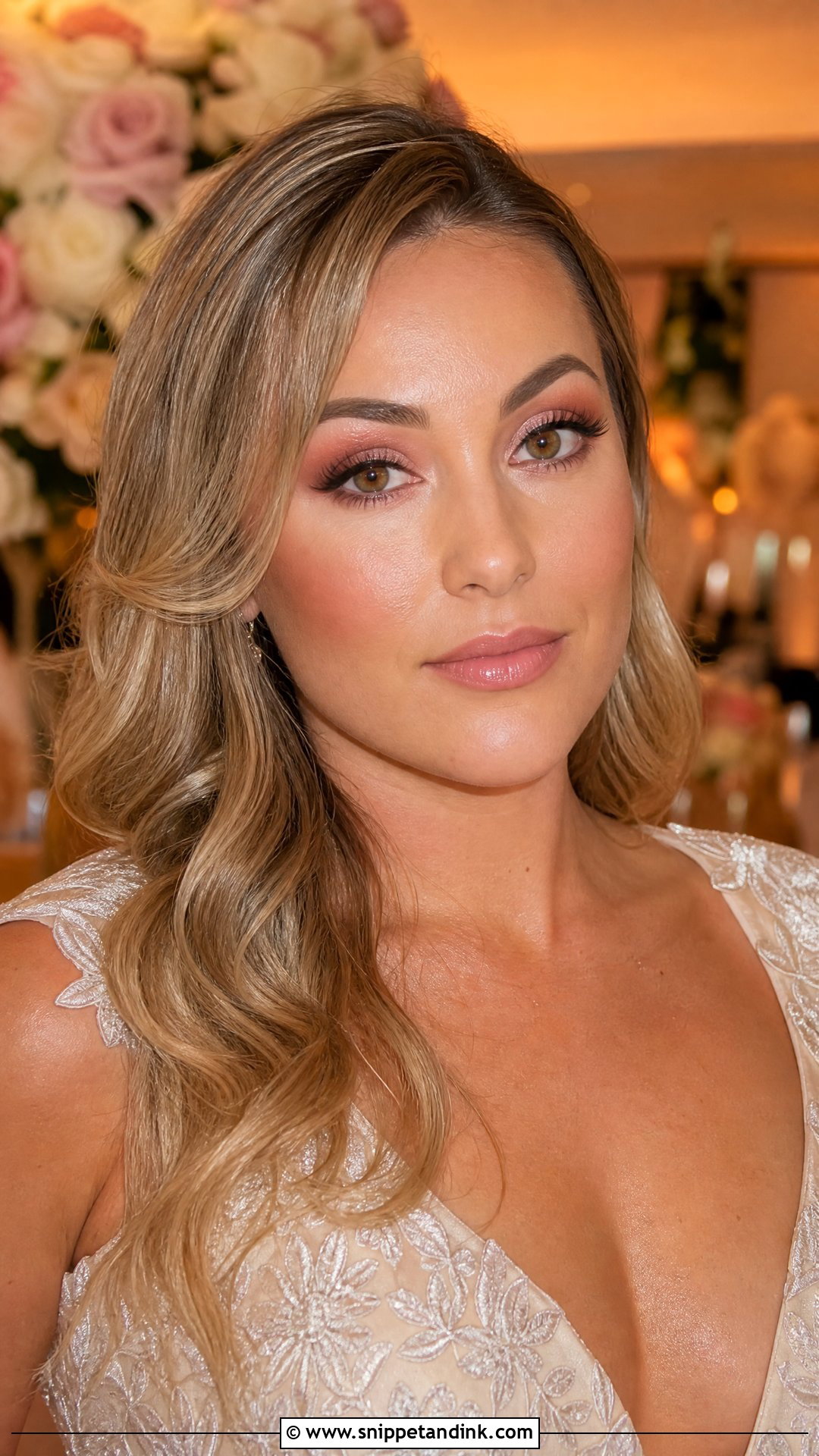
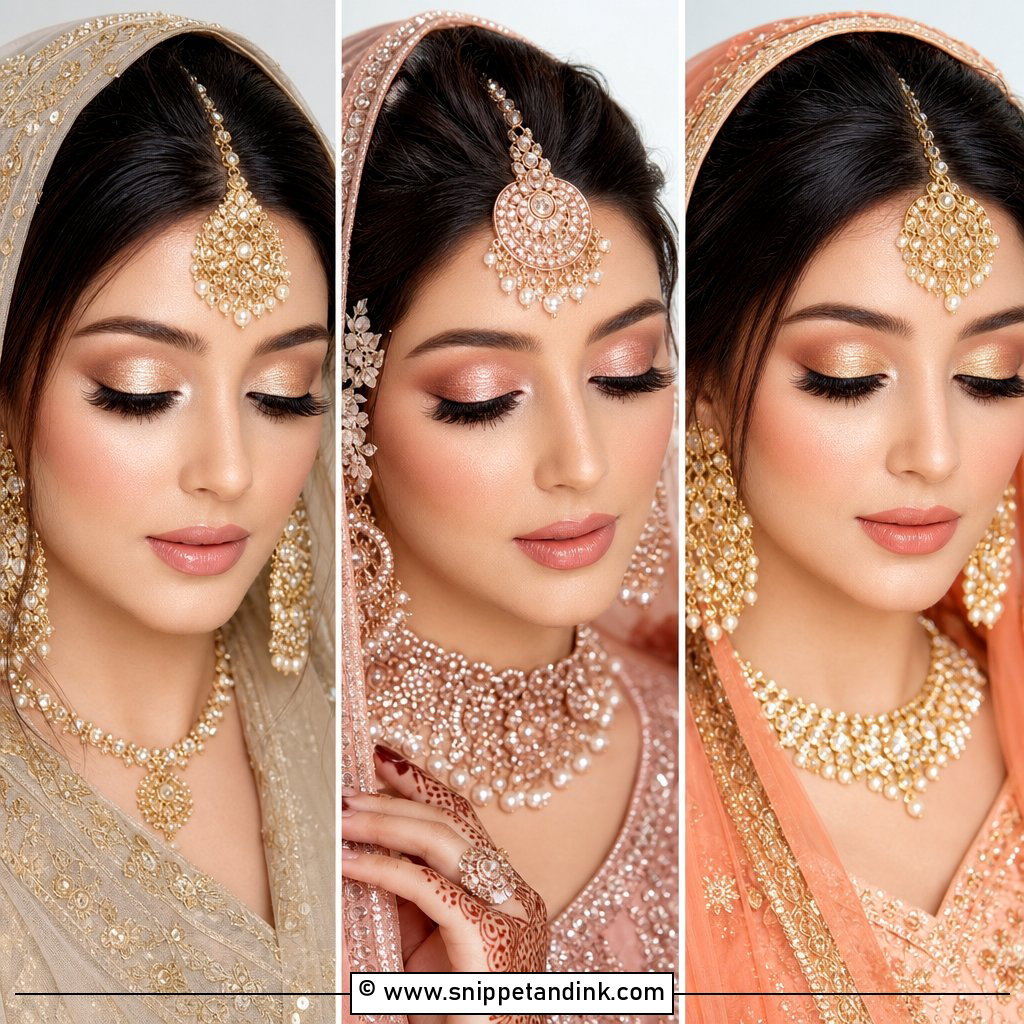
The eyes lead here, blended from warm pink through champagne into rose gold. The shimmer has to be a fine pearl, not glitter; chunky particles fall onto the cheeks during the day and catch flash like dust. I balance the lids with glowing skin, a little bronzer and a rosy peach-pink blush, then keep the lip to a pink beige gloss or satin so it doesn’t compete. It pulls together ivory, champagne, blush or gold-toned details and flatters most eye colors.
5. Matte Pink Wedding Makeup
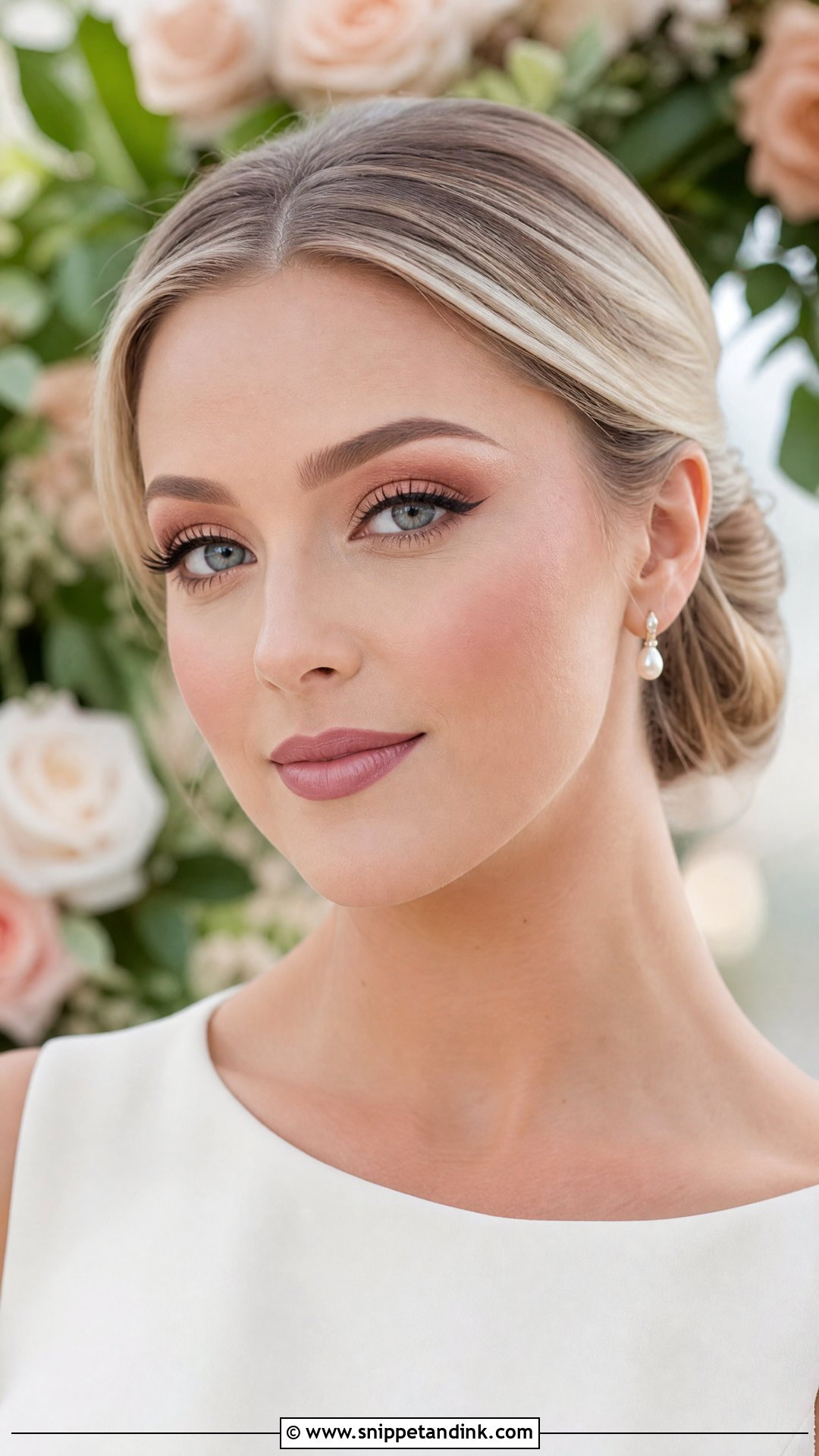
Matte makeup on a bride has to avoid looking flat, so I still let a small amount of highlight onto the cheekbones only. A soft matte foundation goes on in thin layers, then matte rose shadow, diffused brown liner and structured brows give clean definition. Blush gets layered: a cream first, then a powder pink pressed over it, which holds far longer through heat and dancing than either one alone. A matte pink nude lip keeps it consistent. For summer weddings and oily skin this is the most practical look on the list. On dry or mature skin, though, full matte can settle into lines by evening, so I’d go satin instead.
6. Pink Smokey Eye Wedding Makeup
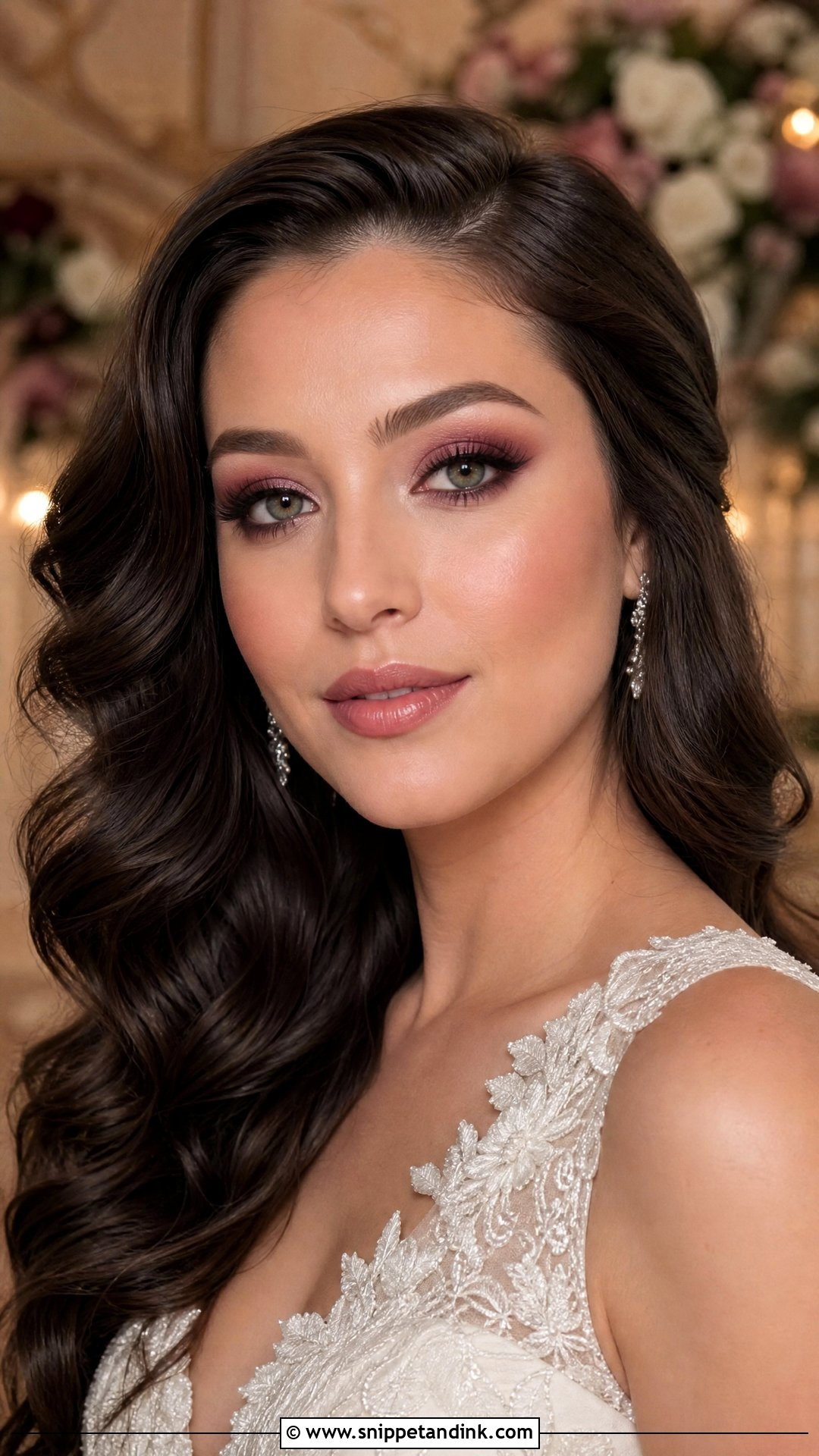
A smoky eye doesn’t need black. I build the depth with mauve, dusty rose, plum brown and soft chocolate, keeping the darkest shade at the outer corner and along the lash line so the eye lifts rather than drags down. A pale pink shimmer on the inner lid opens it up. I always do eye makeup first on this look so any fallout can be swept off before the base goes on. The rest of the face stays quiet, with smooth skin, light contour, muted rose blush and a neutral pink lip. Evening and black-tie weddings suit it.
7. Natural Pink Wedding Makeup
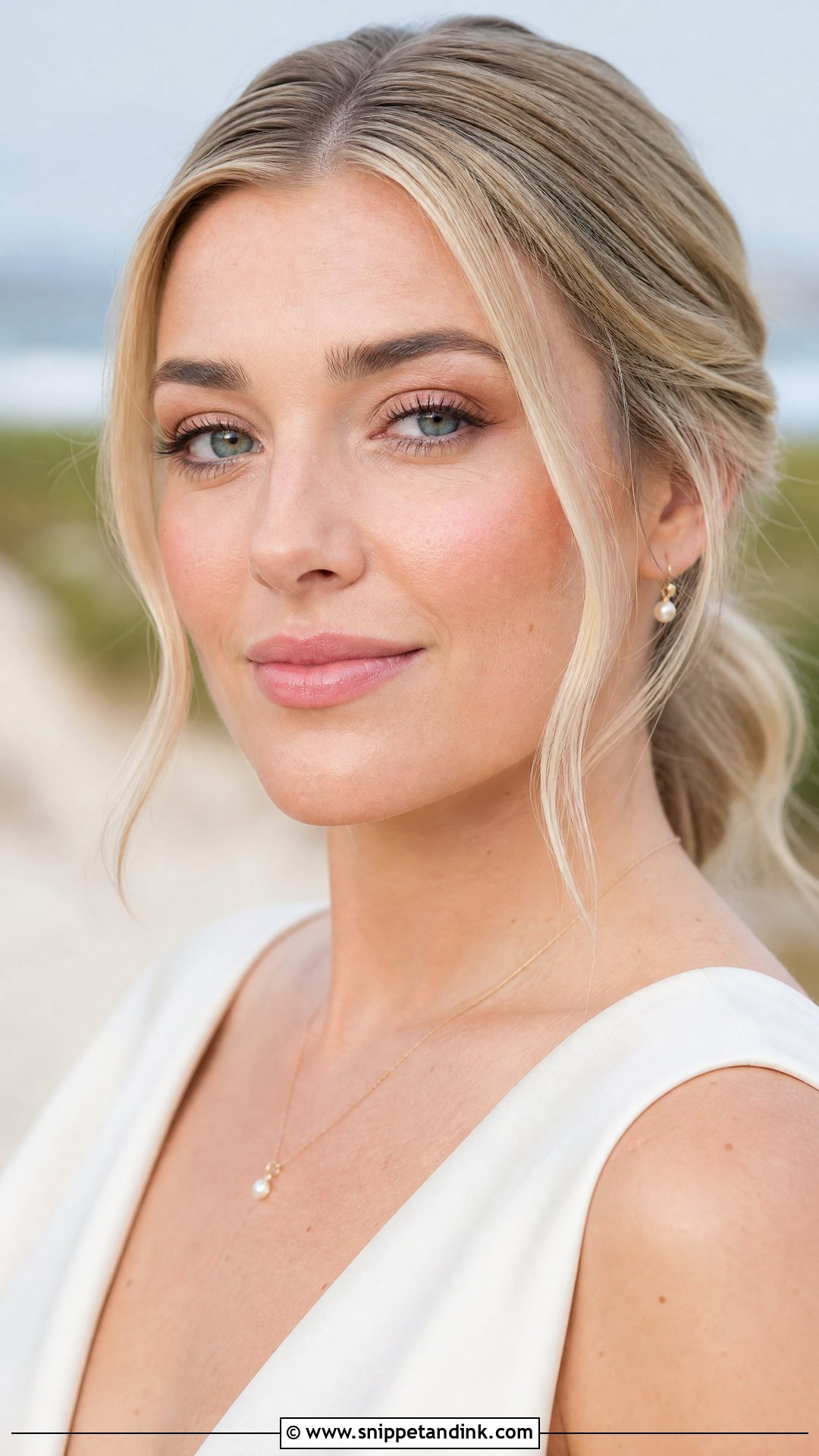
The goal is you, rested. Even skin, groomed brows, curled lashes, rosy cheeks and a lip close to your own color. I use a skin tint or light foundation and conceal only where it’s needed, then warm the face with a cream pink blush that melts into daylight. Eyes get a beige-pink shadow, brown mascara and perhaps a touch of liner at the outer corner. Natural makeup still needs setting in the right places, or it’s gone by the first dance. Courthouse weddings, beach ceremonies and brides who dislike the feel of makeup are the natural fit.
8. Pink Monochrome Wedding Makeup
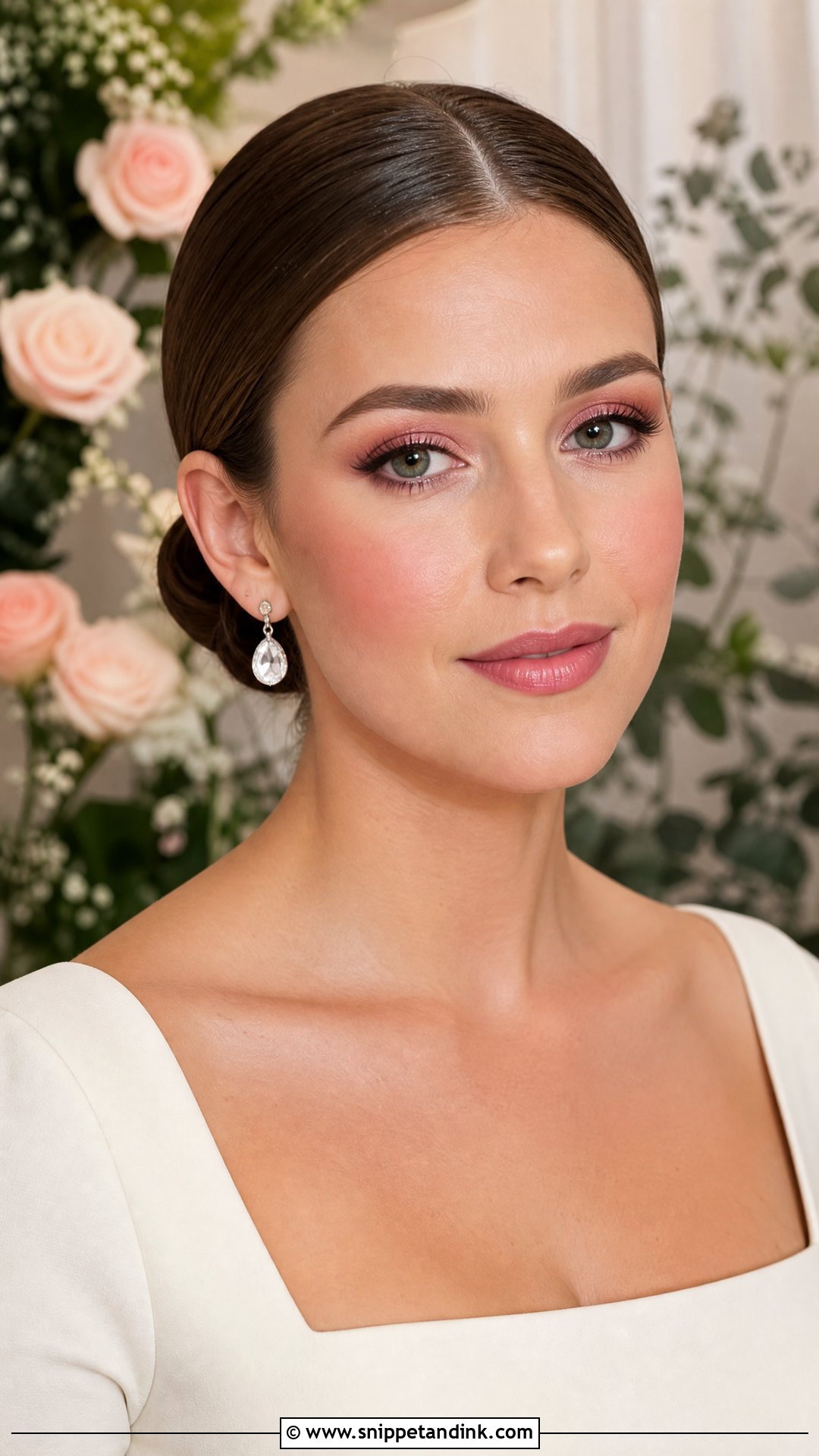
Monochrome looks current because eyes, cheeks and lips share one color family. The risk is a flat face, so I vary texture and depth: soft rose matte on the eyes, a brighter pink cream on the cheeks, and a satin pink lip edged with a liner a shade deeper. Skin stays clean with a gentle glow, minimal contour and a natural brow. It’s simple, and it looks deliberate. Sleek dresses, low buns and pearl accessories all sit well with it.
9. Baby Pink Wedding Makeup
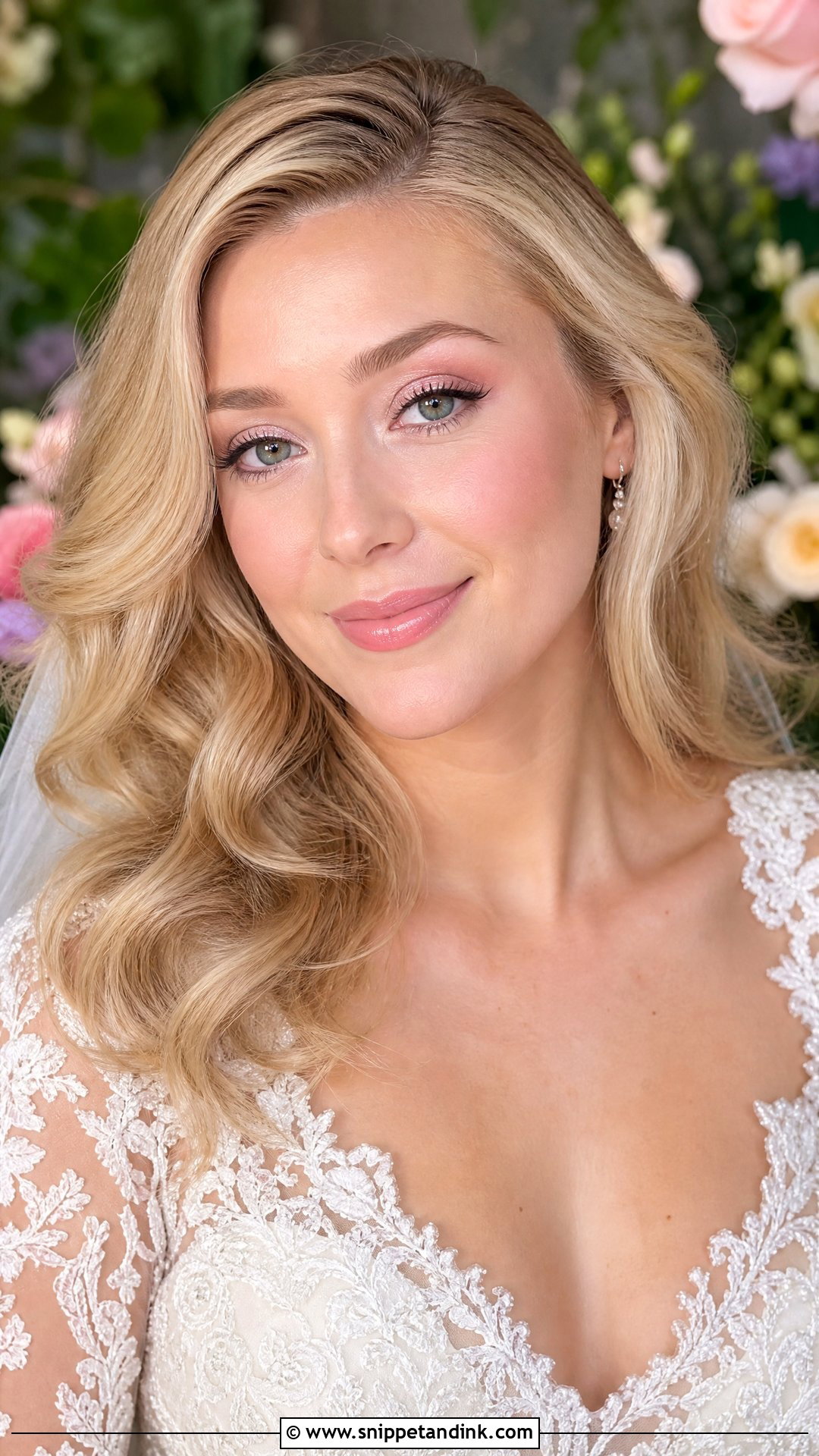
Baby pink can look chalky if the formula is too opaque, so I choose satin shadows with a sheer base and blend them thin. A touch of pearl highlight in the inner corners brightens things, and the blush goes on the apples, blended upward so it stays visible without looking like a doll’s cheek. Lips get a baby pink gloss or creamy lipstick. To keep it grown-up, I add a little taupe in the crease and a brown liner. It’s sweet for spring and daytime ceremonies.
10. Mauve Pink Wedding Makeup
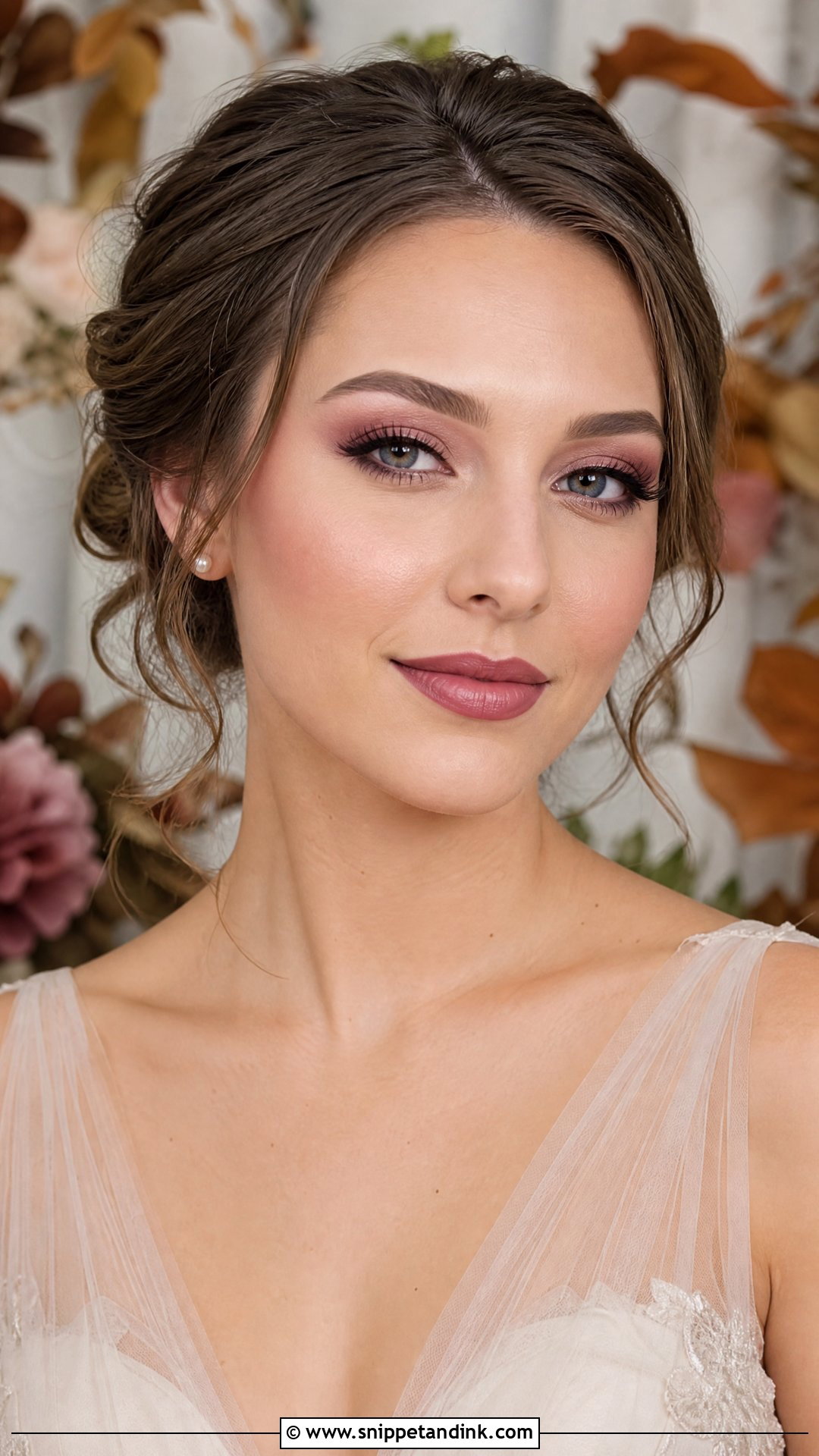
Brides who find pink too sweet often come round to mauve. Mauve pink wedding makeup carries a little purple and brown, which makes it read as sophisticated rather than girlish, and it holds its color well on camera. I take mauve pink through the crease with a soft plum-brown liner and fluttery lashes, then match a neutral mauve blush to a rose-mauve lipstick. The skin can be satin or softly matte depending on your skin type. Fall weddings, evening receptions and ivory, taupe or dusty rose details suit it.
11. Peachy Pink Wedding Makeup
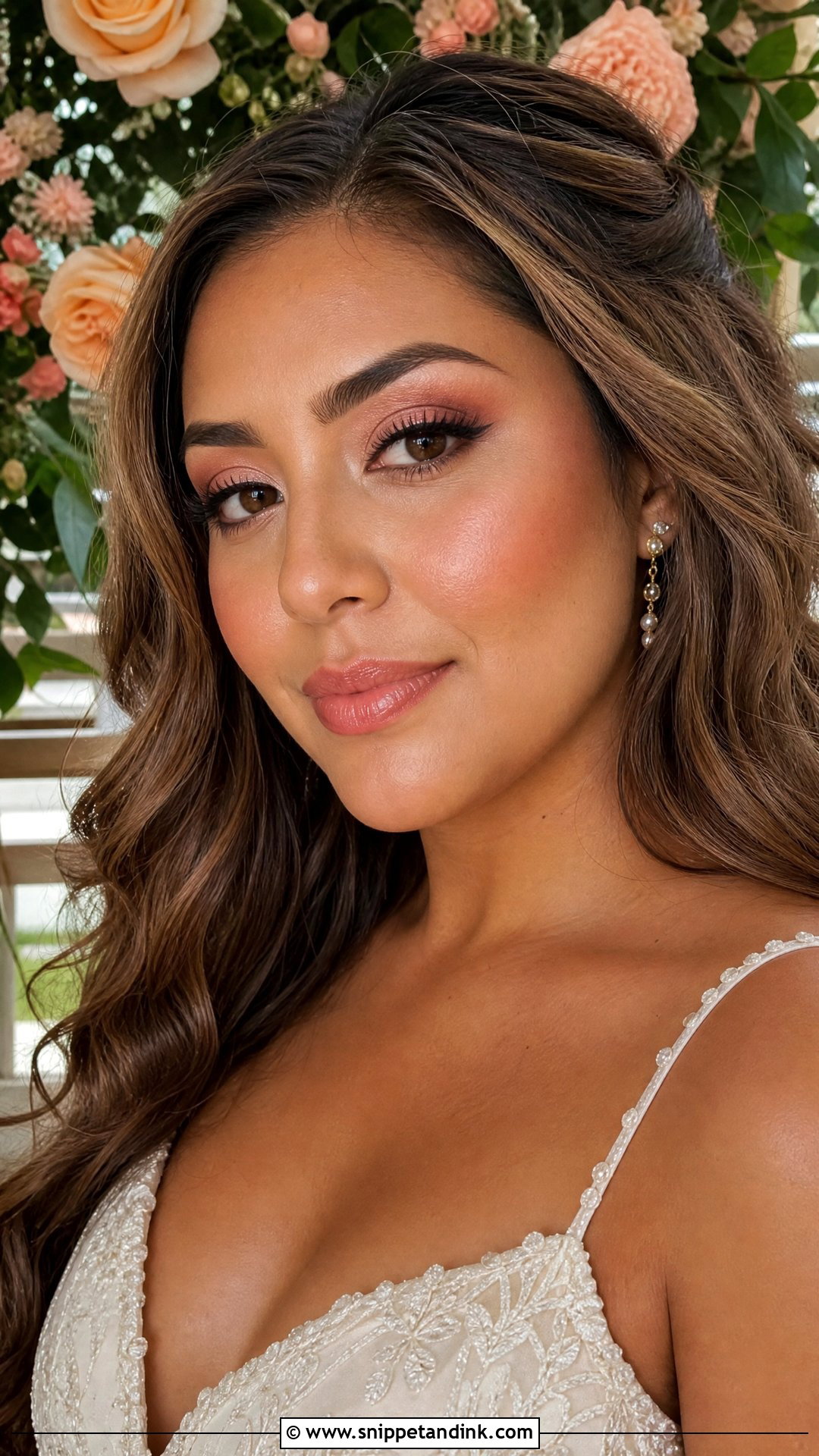
Peach pulls pink warmer and makes skin look healthy, especially in daylight. I sweep peach-pink blush across the cheeks, put a warm pink shimmer on the lids and define the eyes with soft brown liner. The lip can be satin or gloss depending on how fresh you want it, and a touch of bronzer ties the warmth together. It works best when the wedding palette includes cream, coral, peach, champagne or soft gold. If your skin is very cool-toned, peach can make you look slightly sallow, so I’d shift toward rose.
12. Blush Pink Wedding Makeup
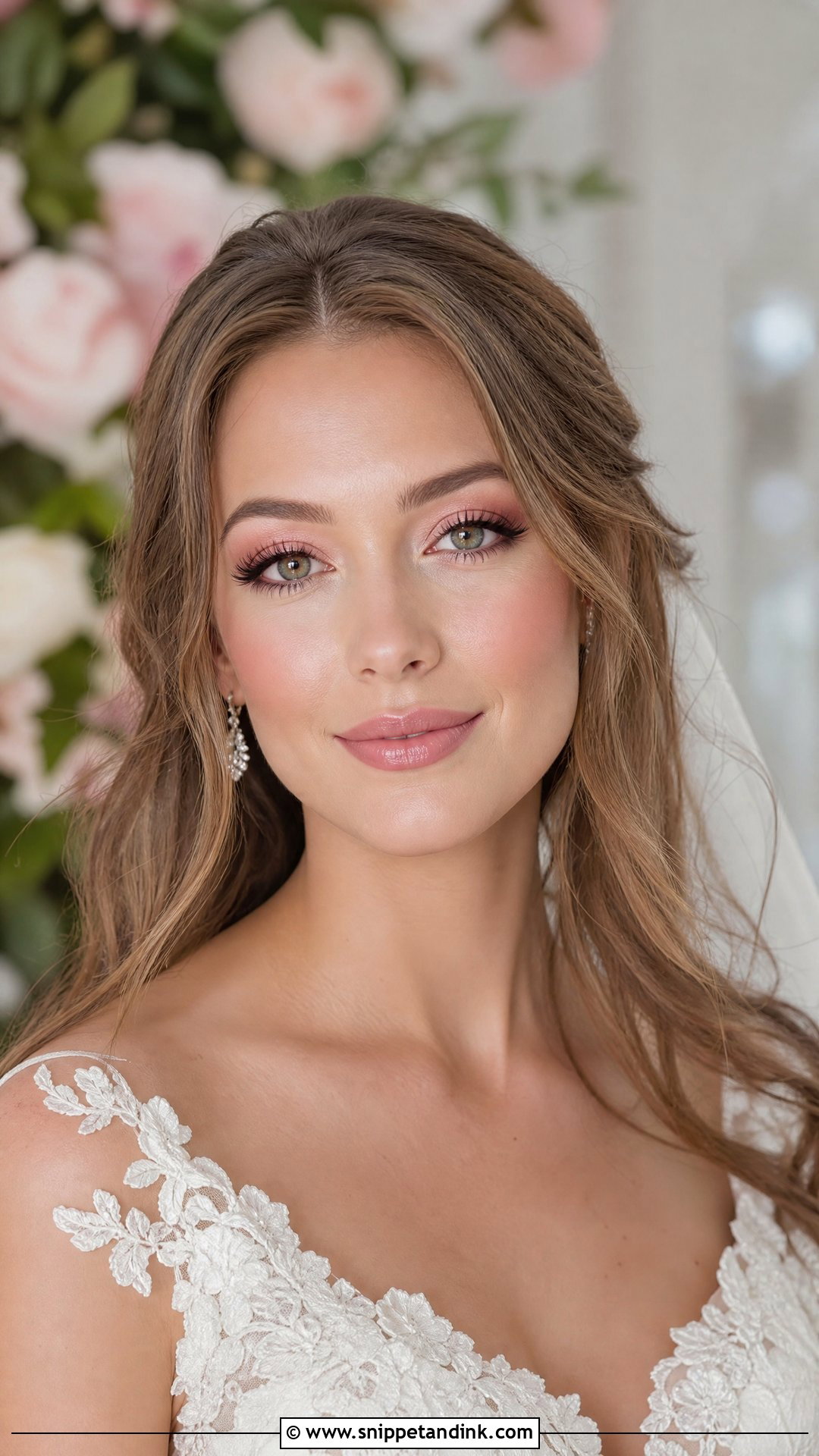
Blush pink should look like a natural flush, not a color choice. A sheer wash goes on the lids, soft rose blush runs from cheek to temple, and the lip is a pink nude. I keep foundation thin and breathable and tap highlight only onto the tops of the cheekbones. Curled lashes and a brown liner are all the eyes need. Garden ceremonies and ballroom receptions both suit it, which is why so many brides end up here after a trial.
13. Pink Wedding Makeup With Winged Liner
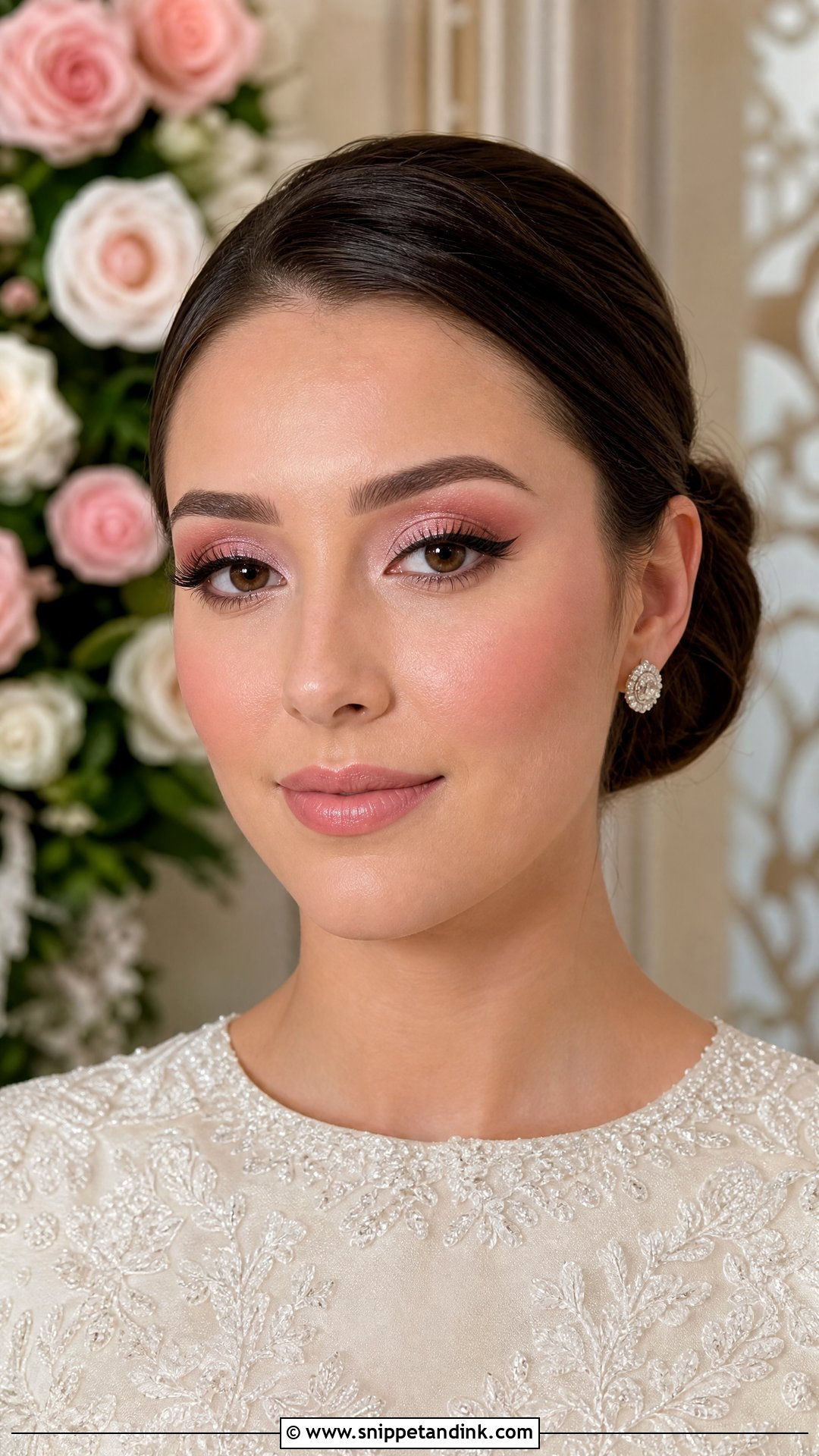
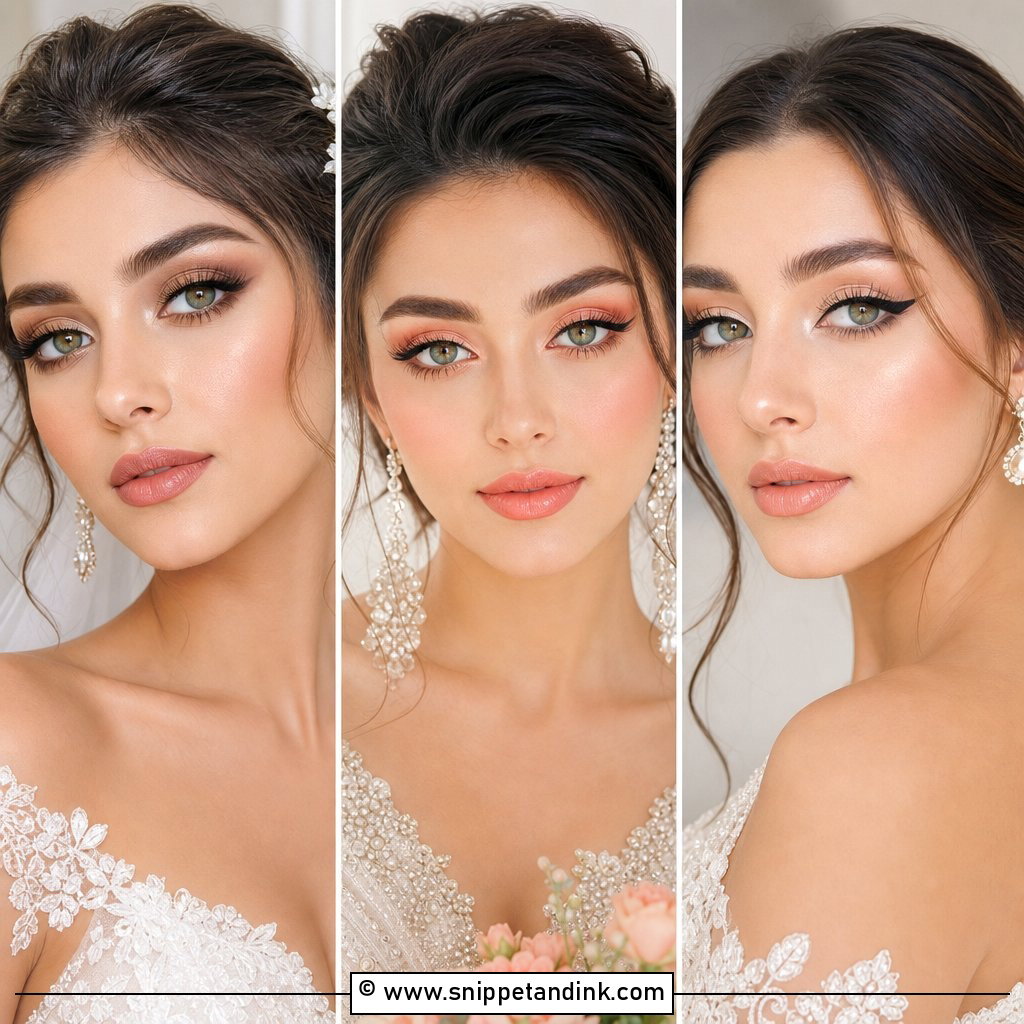
Pink wedding makeup with winged liner gives classic structure to a soft palette. I put pale rose or champagne-pink on the lid and draw a wing in black or dark brown, angled toward the tail of the brow rather than straight out, so it still lifts when you smile and your lower lid rises. Hooded lids need the wing drawn with eyes open, or it disappears into the fold. Satin skin, rosy blush and a pink nude lip balance it, and longer lashes at the outer corners extend the shape. Sleek hair and strapless gowns pair well with it.
14. Pink Wedding Makeup With Glossy Lips
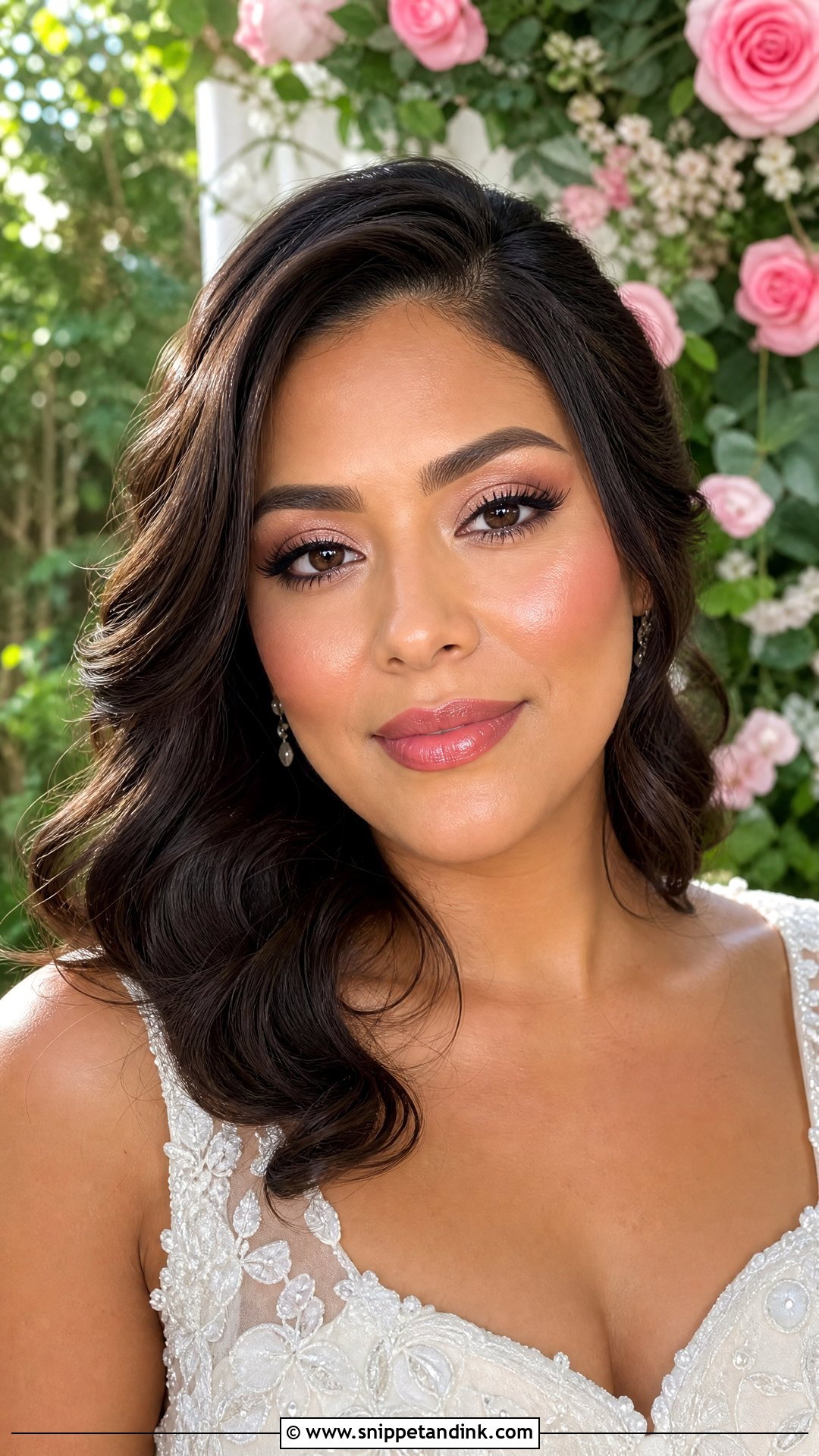
Gloss is the least durable lip finish, and I’m honest with brides about that. To make it last, I line and fill the whole lip with a long-wear pink pencil first, so when the gloss wears off with kissing and drinking there’s still color underneath. On top goes a comfortable, non-sticky gloss, since sticky formulas catch hair the moment the wind picks up or the veil comes down. Eyes stay soft with rose beige shadow, light brown liner and feathery lashes, and a dewy pink blush echoes the lips. Spring, summer and daytime weddings suit it.
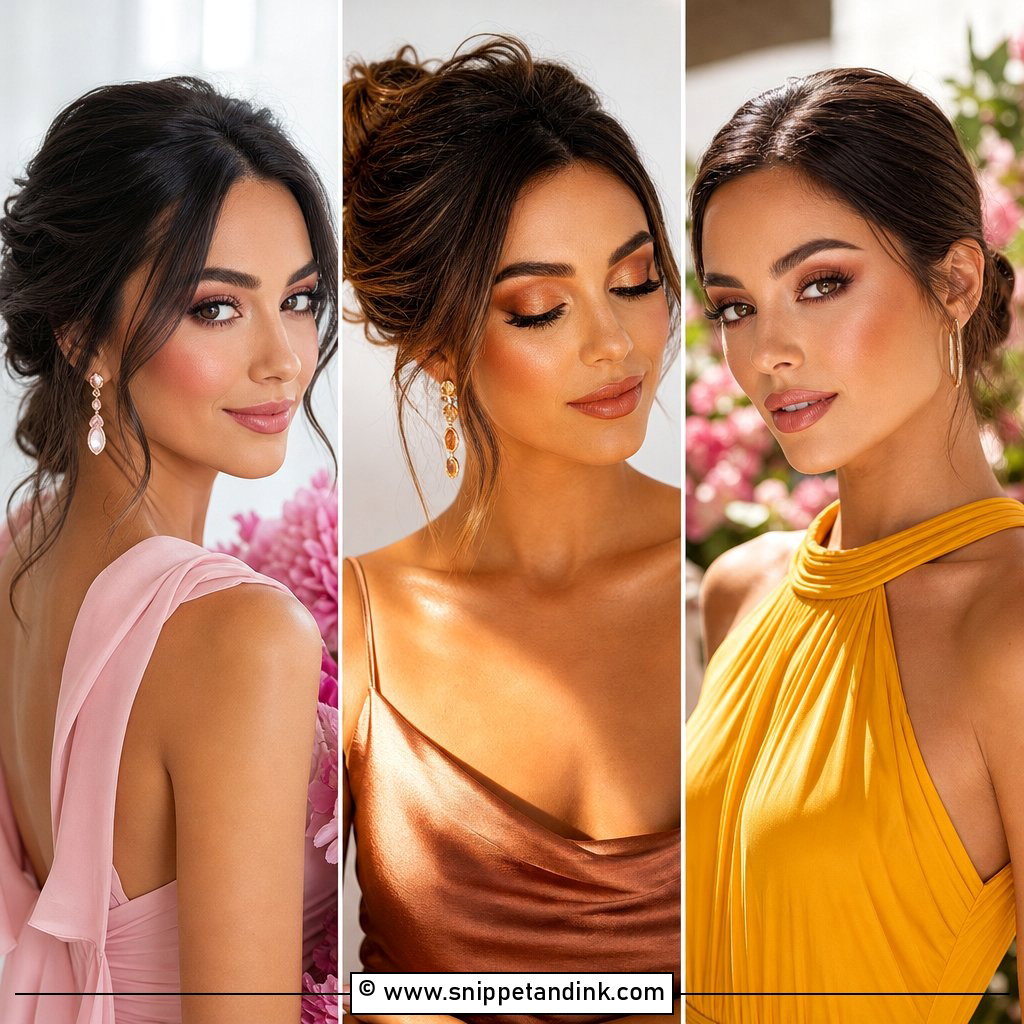
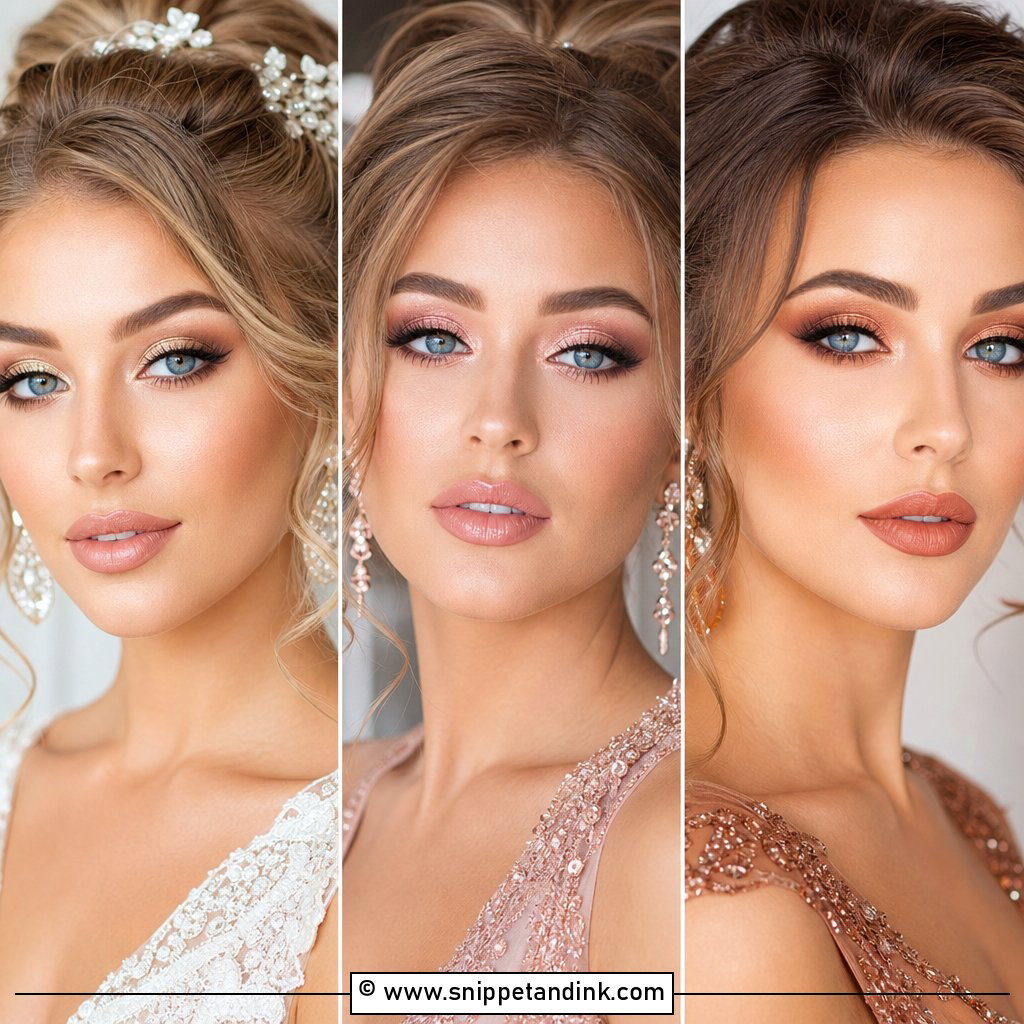
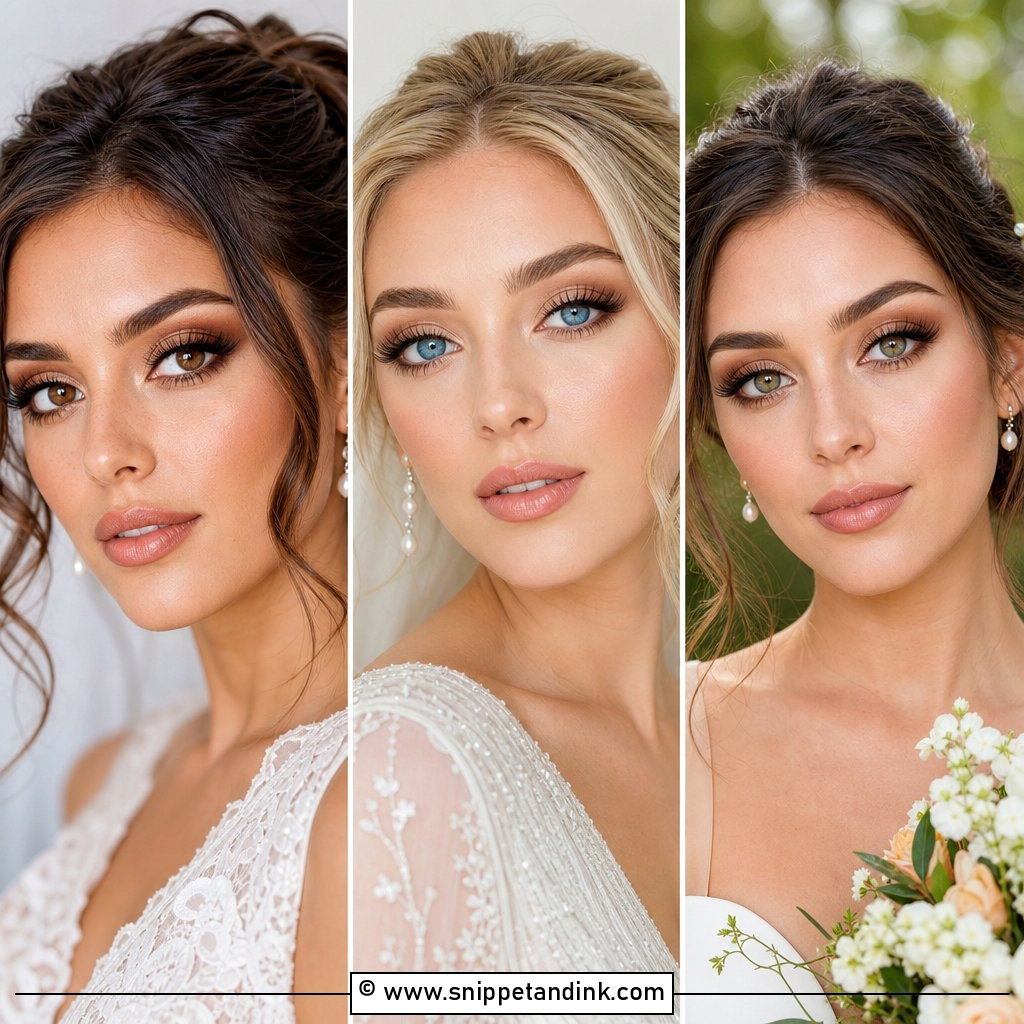
15. Pink Wedding Makeup For Brown Eyes
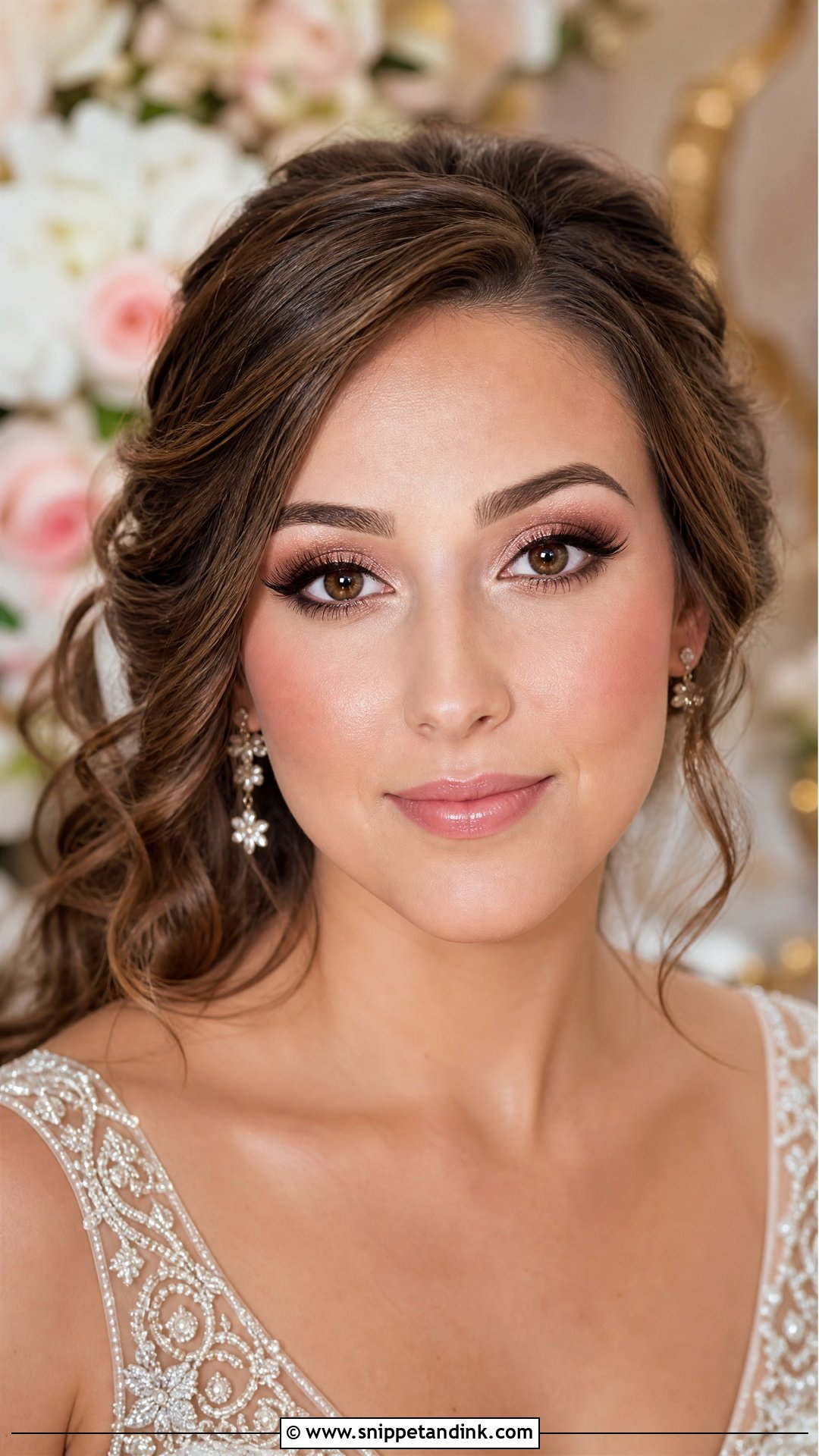
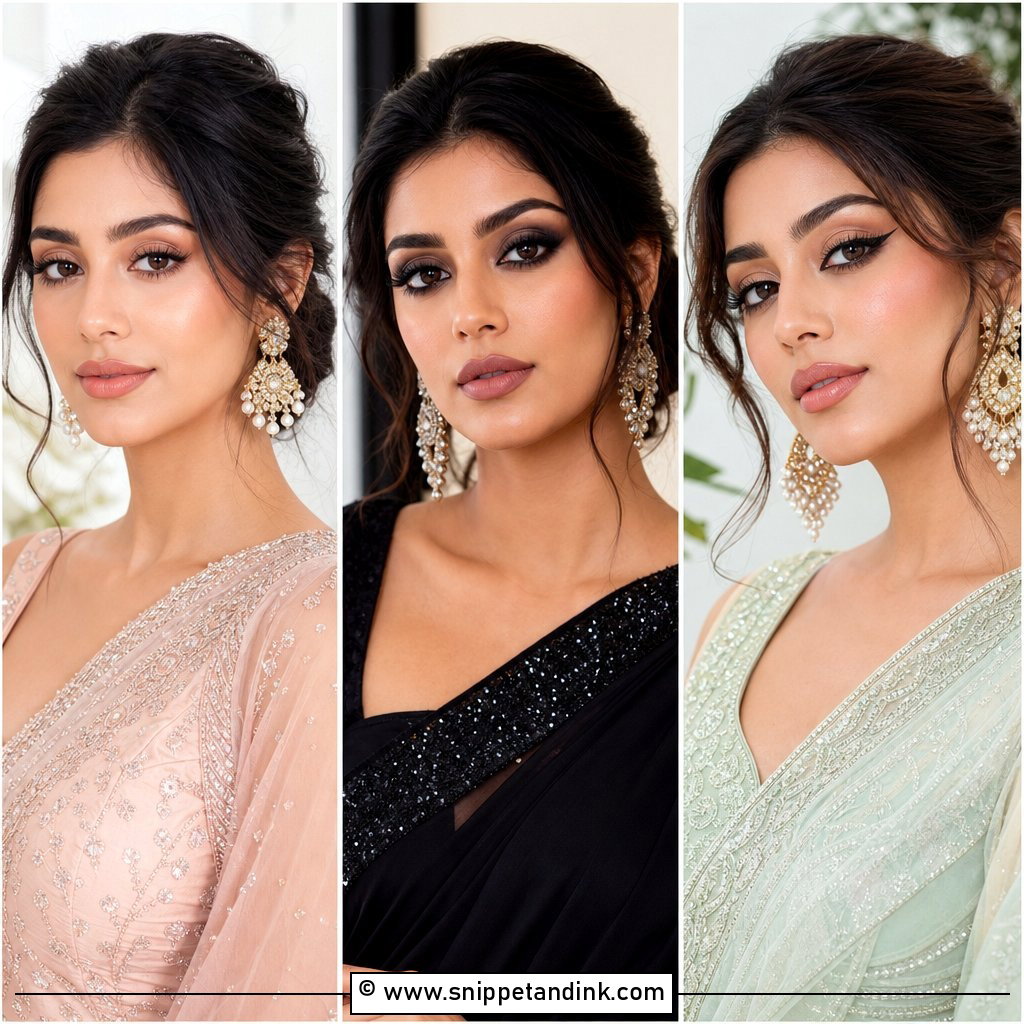
Pink and brown eyes are a reliable pairing, because pink tones make the warmth in a brown iris look richer. Rose, mauve, berry pink and rose gold all work. My usual version: dusty pink through the crease, rose gold shimmer on the lid and chocolate brown deepening the outer corner. A black-brown liner defines without hardening the look. A rosy blush and pink nude lip complete it, and it holds up in both natural light and flash.
16. Pink Wedding Makeup For Blue Eyes
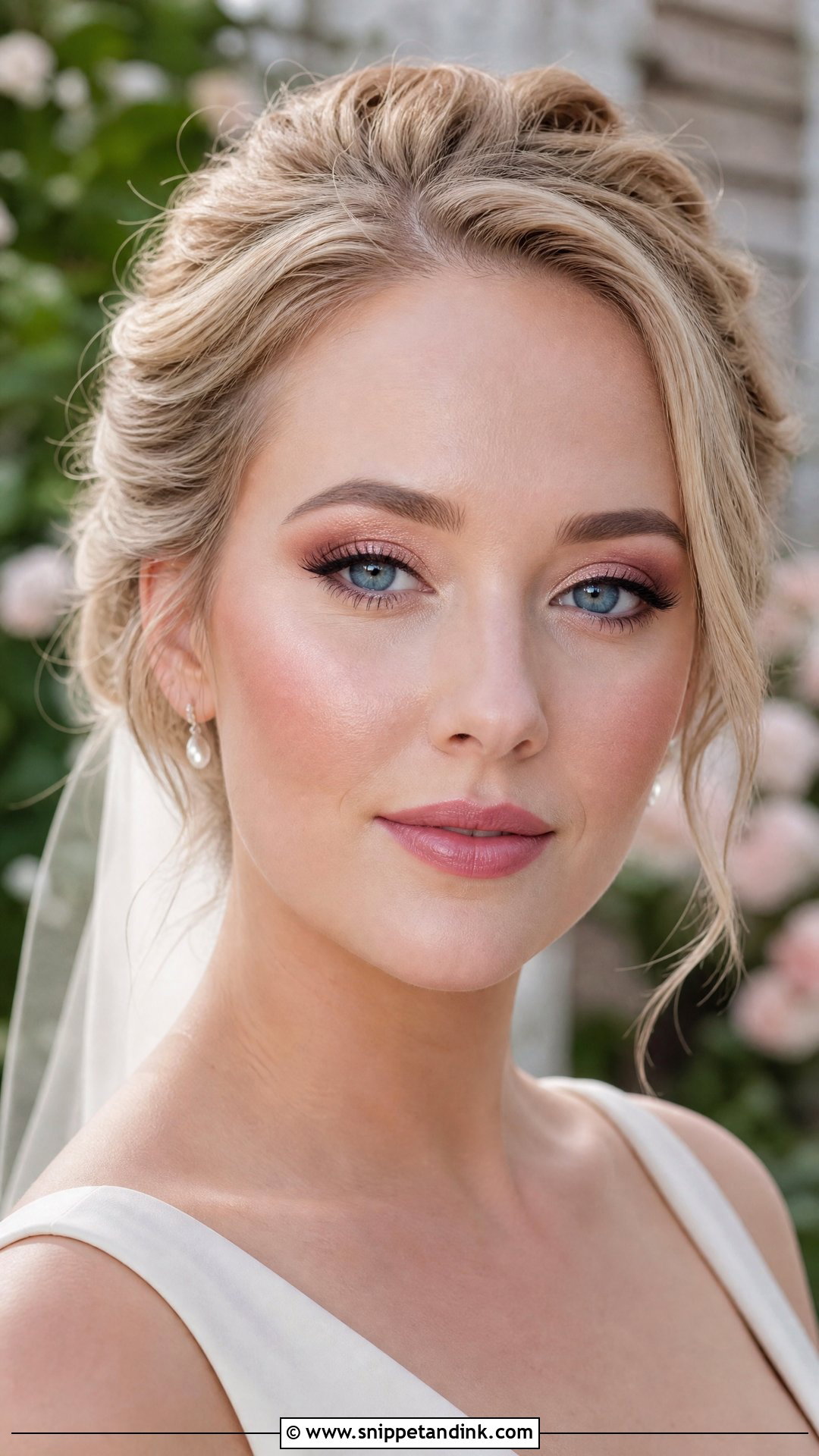
Warm pinks sit opposite blue on the color wheel, which is why soft rose, peach pink and warm mauve make blue eyes look brighter. I keep the lid luminous with champagne pink shimmer and use taupe or brown liner for depth. Heavy black shadow mutes the blue, so I avoid it here. A cool pink blush and soft rose lip finish the face. On fair and light skin it reads fresh; on medium skin I deepen every shade so the contrast holds.
17. Pink Wedding Makeup For Green Eyes
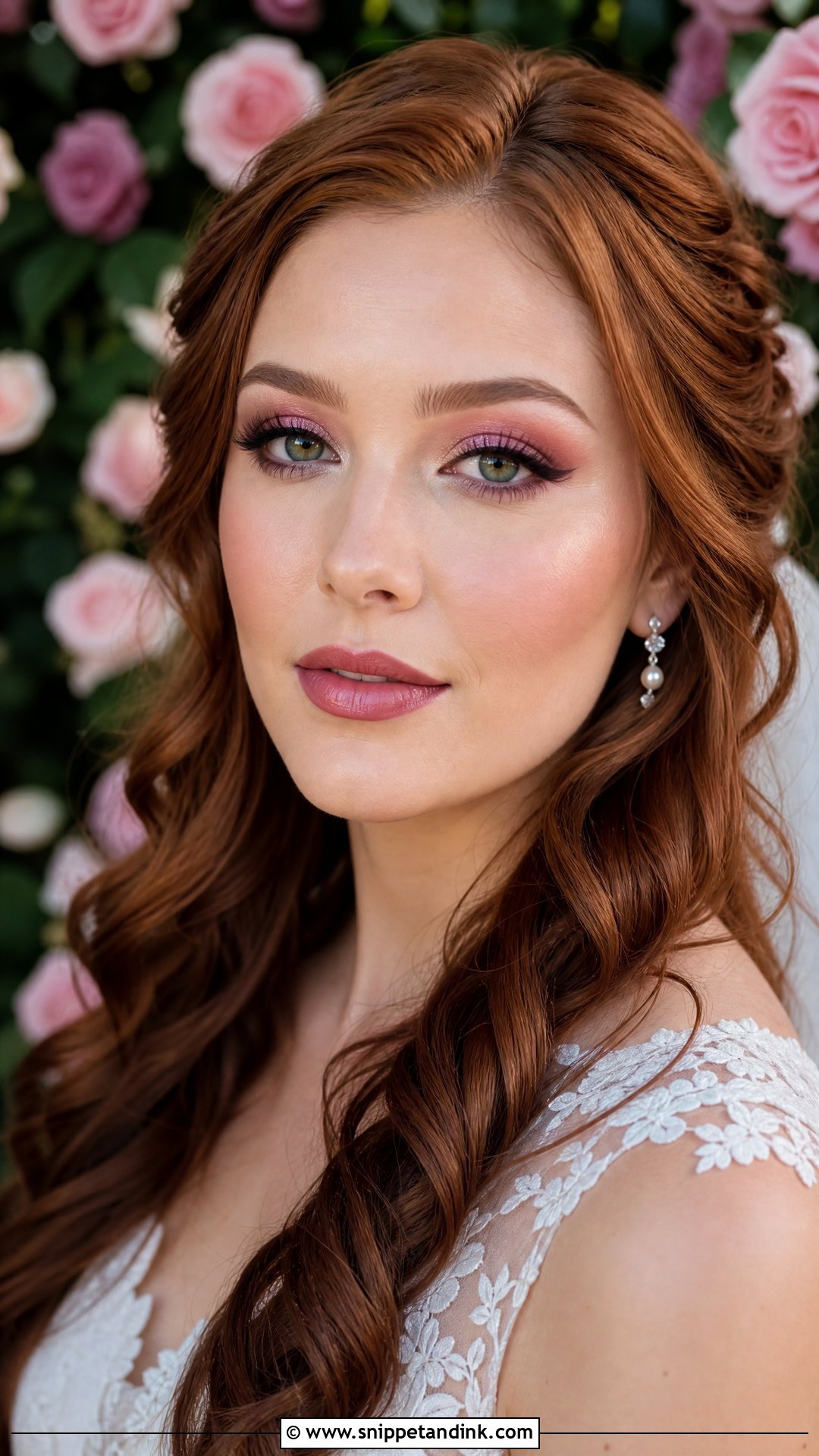
Red sits opposite green, and rose and mauve carry enough red to make green eyes look vivid. I start with a soft mauve-pink crease, a rosy shimmer on the lid and plum brown at the outer corner, then define with a thin brown wing or a smudged liner. Satin skin, muted pink blush and a soft rose lip keep it balanced so the eyes stay the focus. Outdoor and vineyard-style venues suit it well.
18. Pink Wedding Makeup For Dark Skin
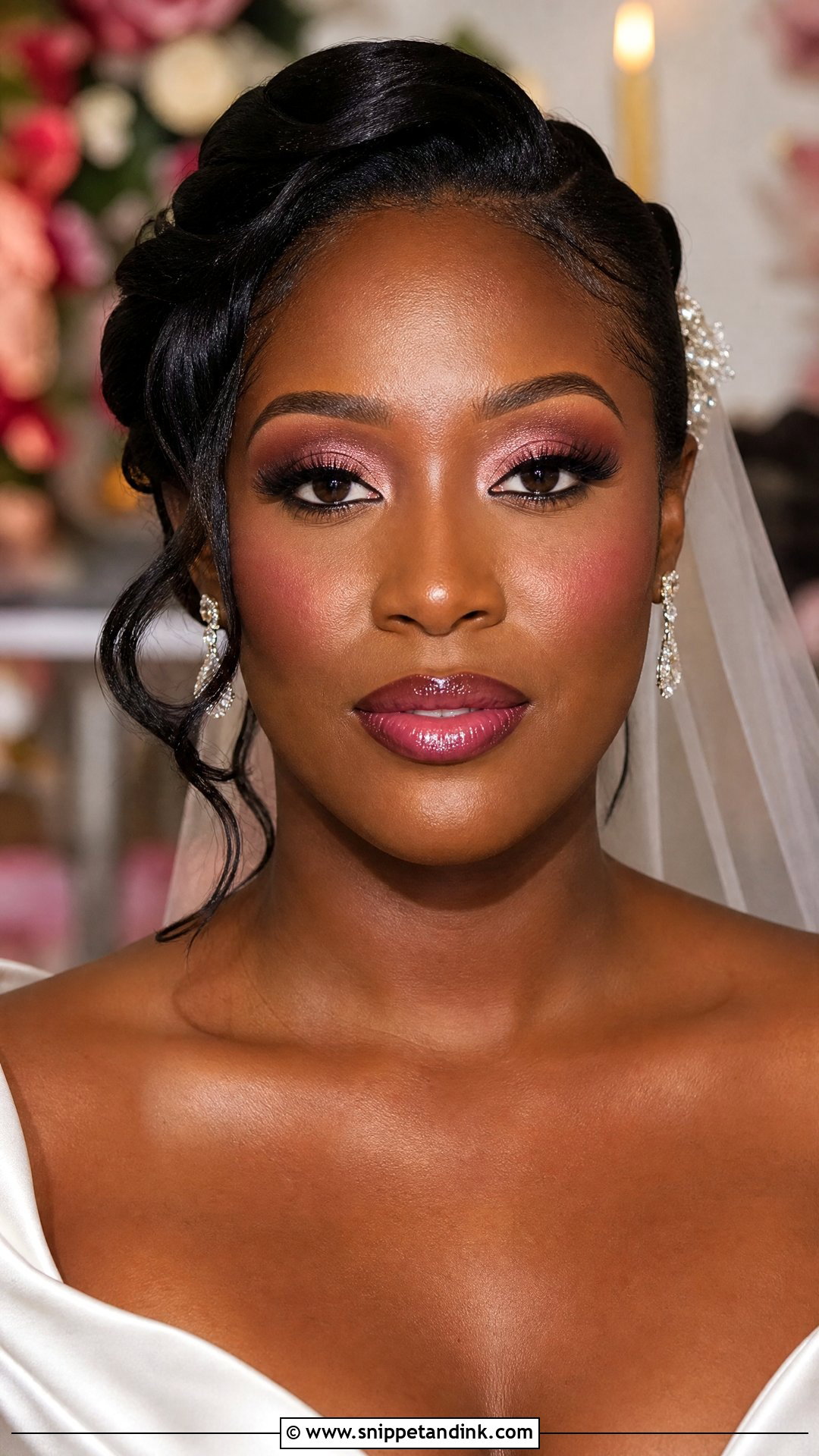
On dark skin, pink needs depth and warmth or it turns ashy. Rich rose, berry pink, raspberry and warm fuchsia all hold their color; pale chalky pinks sit on top of the skin and look grey in photos. I build a glowing base, sculpt the cheeks softly and add a luminous highlight, then bring the face to life with a berry-pink blush. On the eyes, rose gold, cranberry pink or plum pink shadow pairs with deep brown liner and full lashes. A rose-brown lip liner under a pink berry lipstick or gloss keeps the lip defined. Evening weddings suit it especially, because those deeper pinks stay visible under warm lighting.
19. Pink Wedding Makeup For Olive Skin
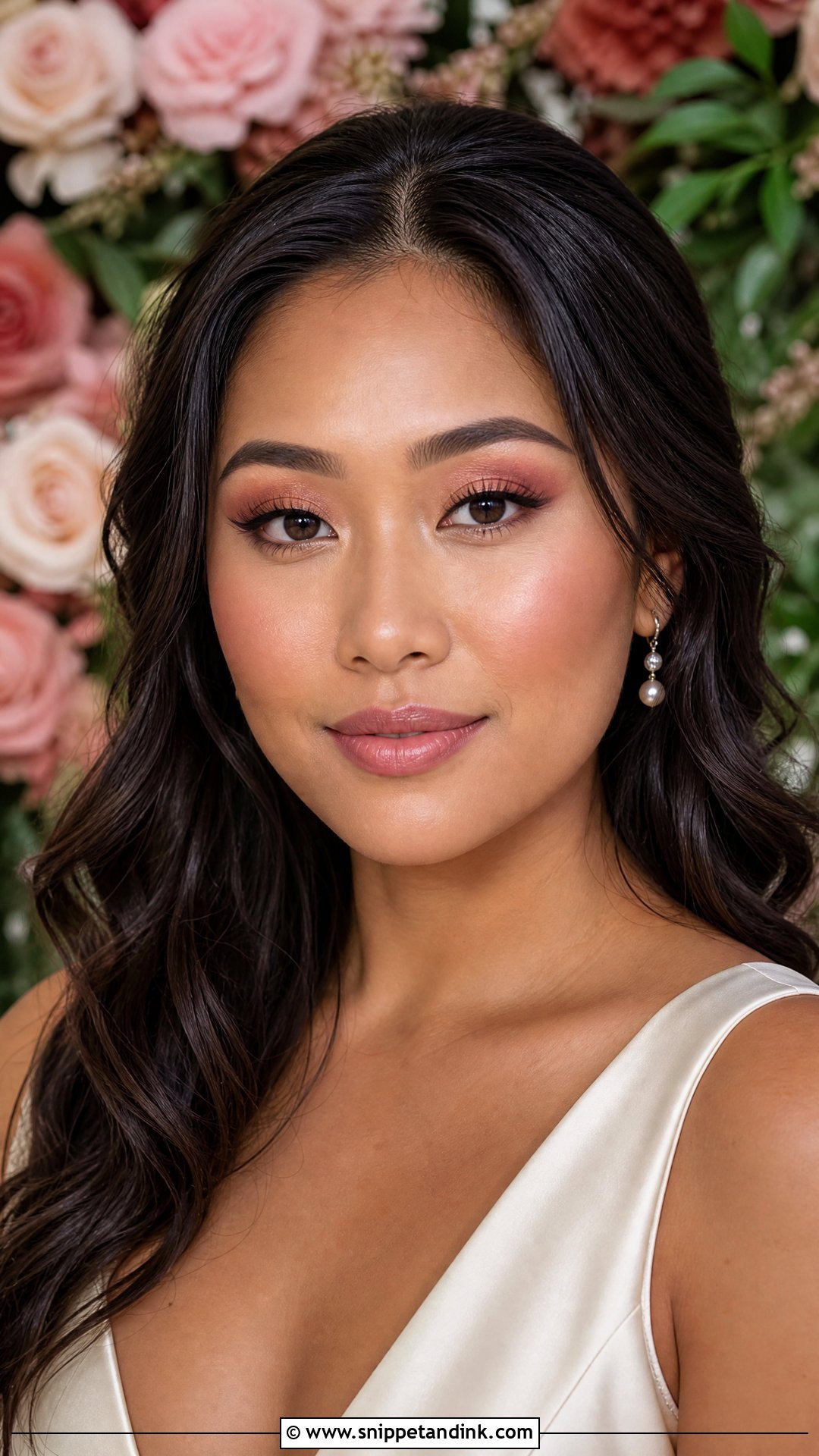
Olive skin has a green-leaning undertone, so cool pastel pinks can turn grey on it. I reach for dusty rose, warm mauve, peachy pink or rose gold instead. A satin foundation keeps the skin natural, and a little bronzer around the edges of the face adds warmth. On the eyes, rose-mauve shadow, brown liner and soft lashes. Blush sits high in a muted pink, and the lip is a pink beige or mauve nude. It flatters green, hazel and brown eyes and sits well beside ivory and champagne dresses.
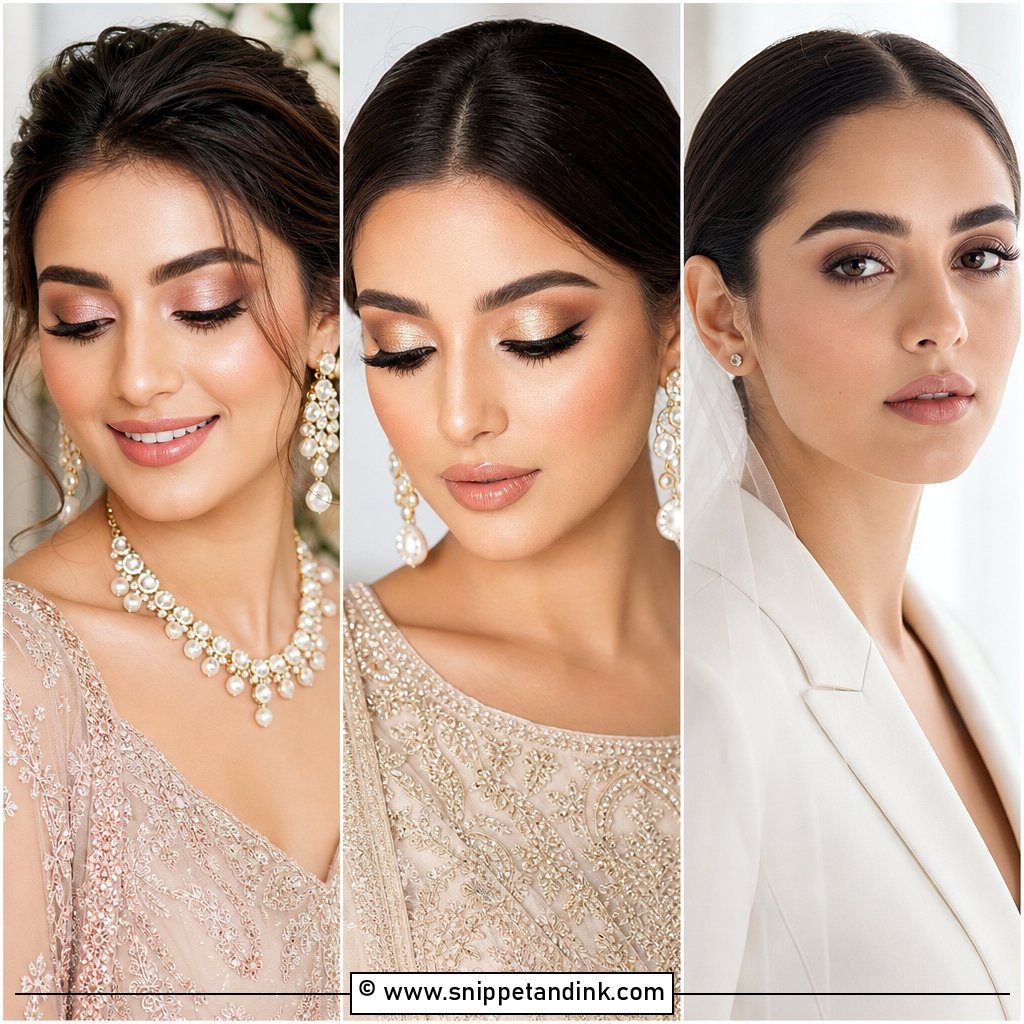
20. Full Glam Pink Wedding Makeup
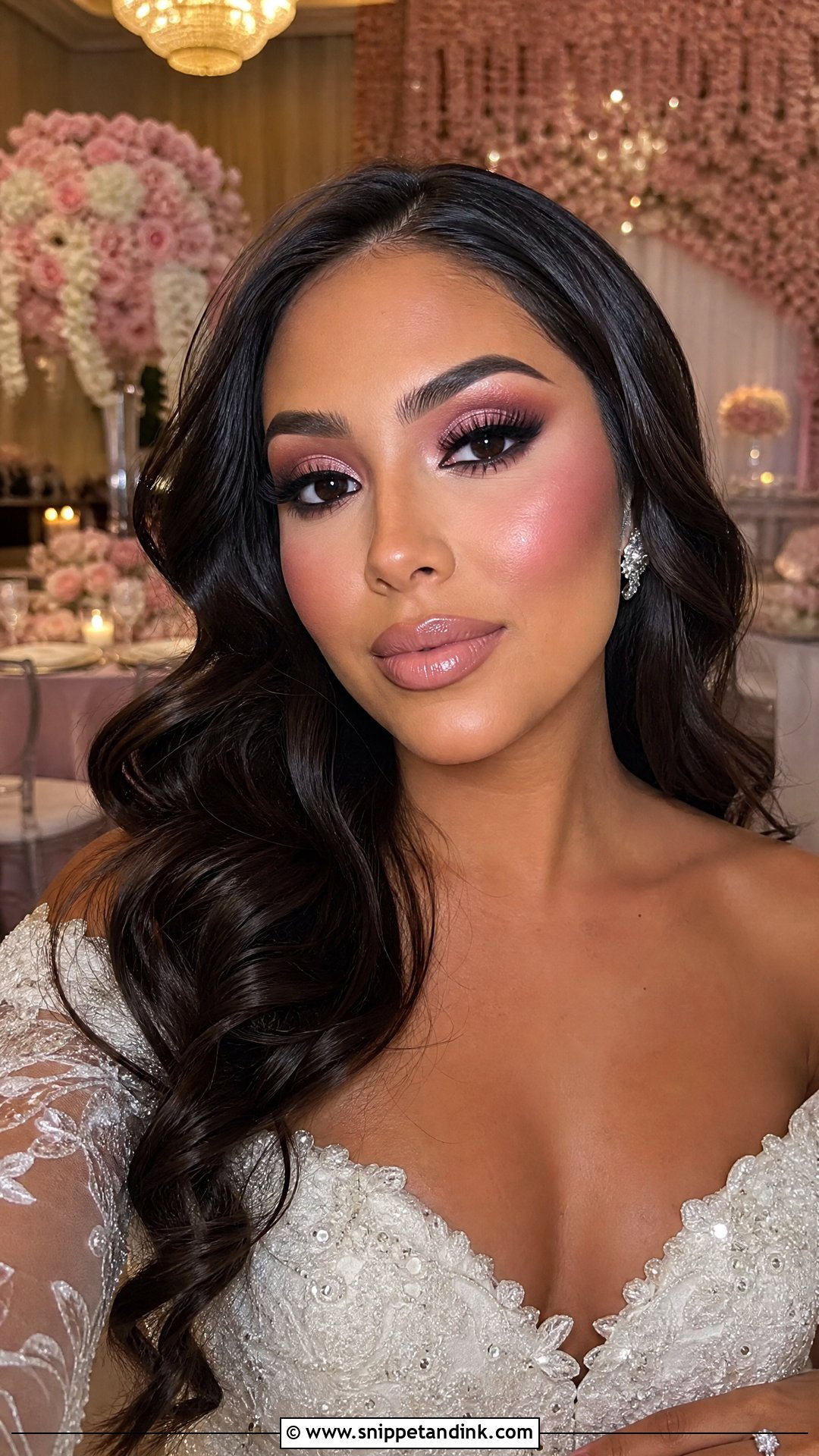
Full glam keeps the pink palette but turns up every element. The base is long-wearing and smooth, with soft contour, brightened under-eyes and a polished glow on the cheeks. Eyes get mauve pink, rose shimmer and deep brown blended in a lifted shape, with fuller lashes and precise liner. I let the blush be more visible, still blended out at the edges. The lip is sculpted with liner, lipstick and a touch of gloss in the center. Large weddings, formal gowns and evening receptions are where it belongs. In a small daylight ceremony, it can look heavy up close.
Your Trial Is Where the Pink Gets Decided
I schedule bridal trials a few weeks to a couple of months before the wedding, ideally on a day you can wear the makeup for hours afterward. Wear something close to your dress neckline in white or ivory, because a white top changes how pink reads on the face. Bring your actual earrings if you can.
During the trial, pay attention to three moments: how it looks right after I finish, how it looks after lunch, and how it looks in a phone photo taken with flash that evening. A look that only works in the first moment needs adjusting. Tell me honestly what bothers you. A lip that feels too bright or a lash that pinches is easy to fix in the chair, and much harder to fix on the morning itself.
What Goes in the Clutch for a Pink Lip
Pink lips wear unevenly, fading in the center first and leaving the liner behind. Ask your maid of honor to carry a small kit: the exact lipstick and liner used on you, a pack of blotting papers and a cotton bud. Blot shine instead of powdering over it, since powder layered on through the day turns cakey. Before dinner, line the center of the lip back in and press the lipstick over it with a fingertip. It takes about a minute, and it gets you back to how you looked during the vows.
Your Undertone, Your Light, Your Pink
Pink stays one of the most reliable bridal color families because it can be soft, glowing, classic or glamorous. The version that suits you depends on your undertone, your venue and dress, and how much makeup you’re comfortable wearing. As a rough guide, fair skin suits baby pink and rose beige, olive skin comes alive in mauve and rose gold, tan skin glows in peachy pink, and deep skin looks radiant in berry and raspberry. Test in natural light, take photos with and without flash, and pick textures that last. Then let it be the face you’d recognize in the mirror on any good day.
You'll Like These Ideas:


Leave a Reply